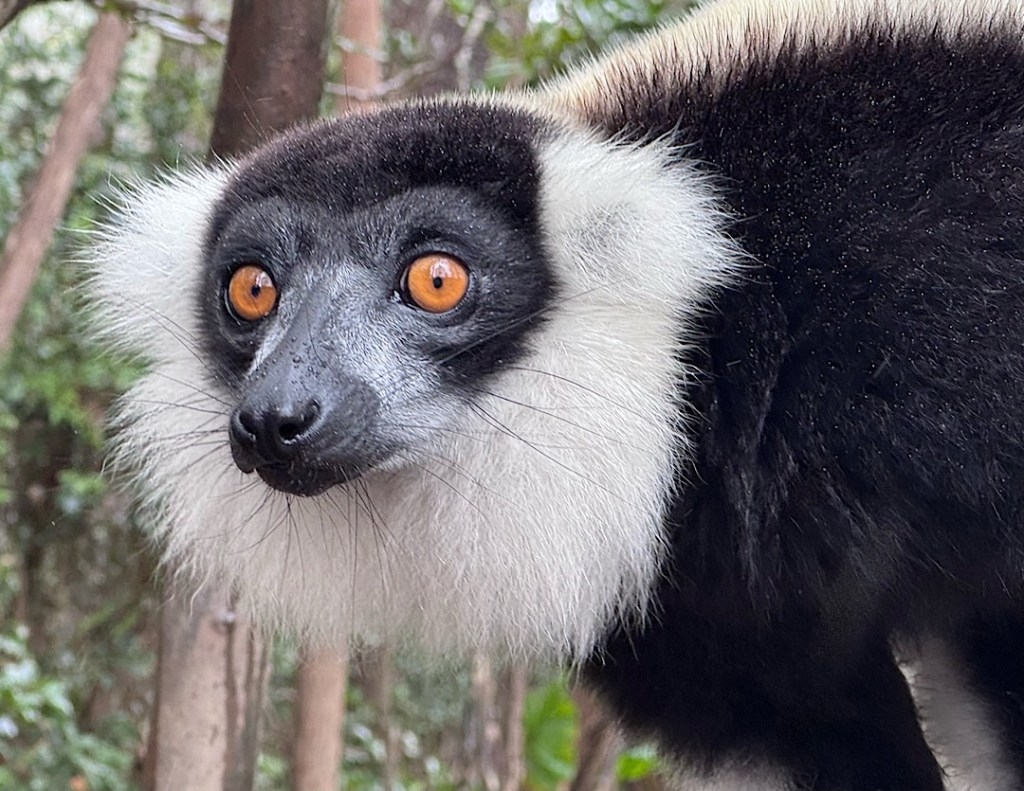
Lemurs aren’t the only thing that draws tourists to Madagascar. The abundant avian variety (including more than 100 species found nowhere else) attracts birders. French folks flock to the Gallic hotels and resorts, but at least according to our driver/guide, they aren’t interested in nature. They come to soak up the sun and recapture some of their past glory as colonial overlords. The magnet for the vast majority of other visitors is probably the lemurs, but that wasn’t the case for Steve and me.
I never disliked them, and I’m sure Steve didn’t either. Who could? I just never paid them much attention, even though I’ve seen at least a few in the San Diego Zoo. In the course of our 9-day road trip, however, two things happened: I saw way more lemurs than I expected. And I was smitten.
Before we got here, I wasn’t sure what we’d find. From the other side of the world, the plight of these guys — unique primates that evolved and live only in Madagascar — sounds dismal. Although the island once teemed with them, lemurs now rank as the planet’s most endangered mammals, with all but 3 or 4 of the more than 110 species threatened or in danger of extinction, many critically. Poachers hunt them (to eat or sell as pets), but the biggest threat is the massive amount of habitat they’ve lost as humans have replaced trees with rice fields or cut down old growth forests for the hardwood — or to make charcoal.
I think Malagasy travel outfitters all just assume tourists are desperate to see lemurs. Guides try very hard to deliver, and for us they succeeded splendidly. Here’s some of what they led us to in dripping rain forests and rocky, dramatic dryscapes.
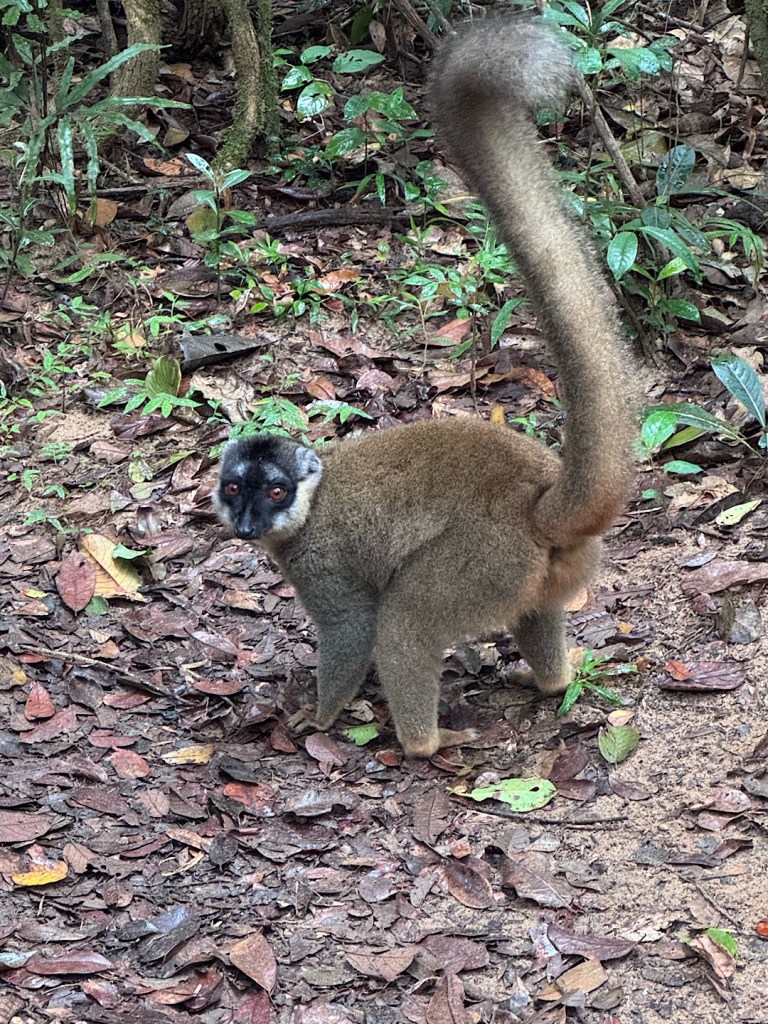
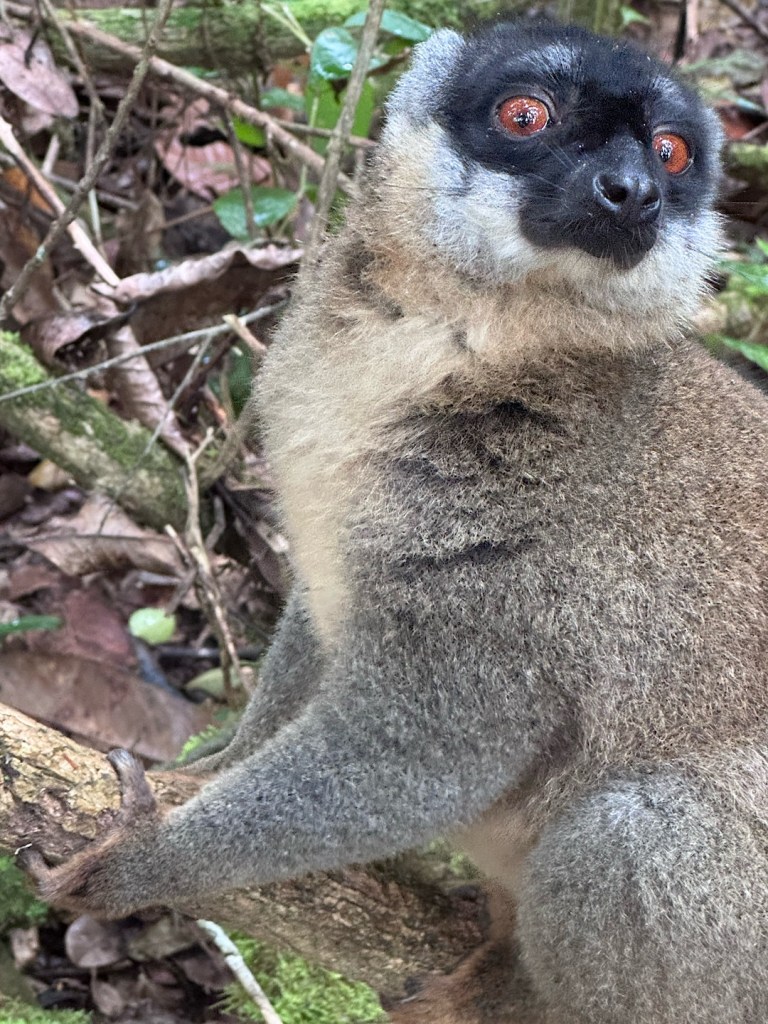
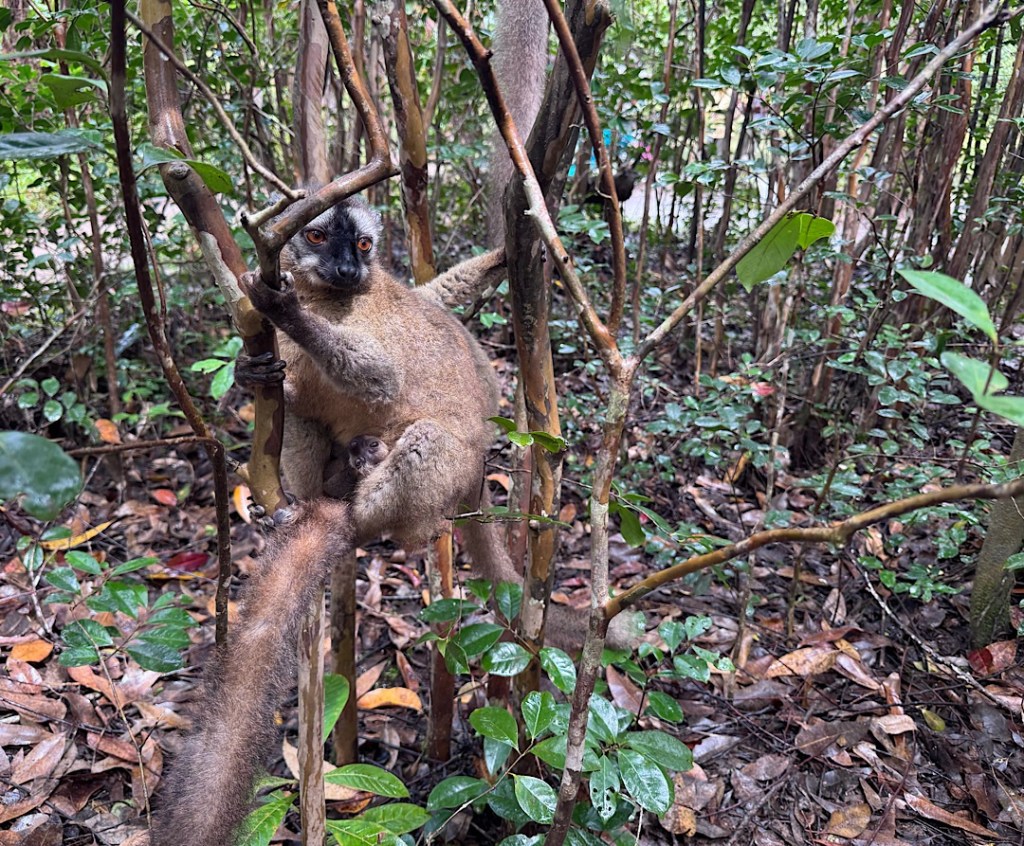
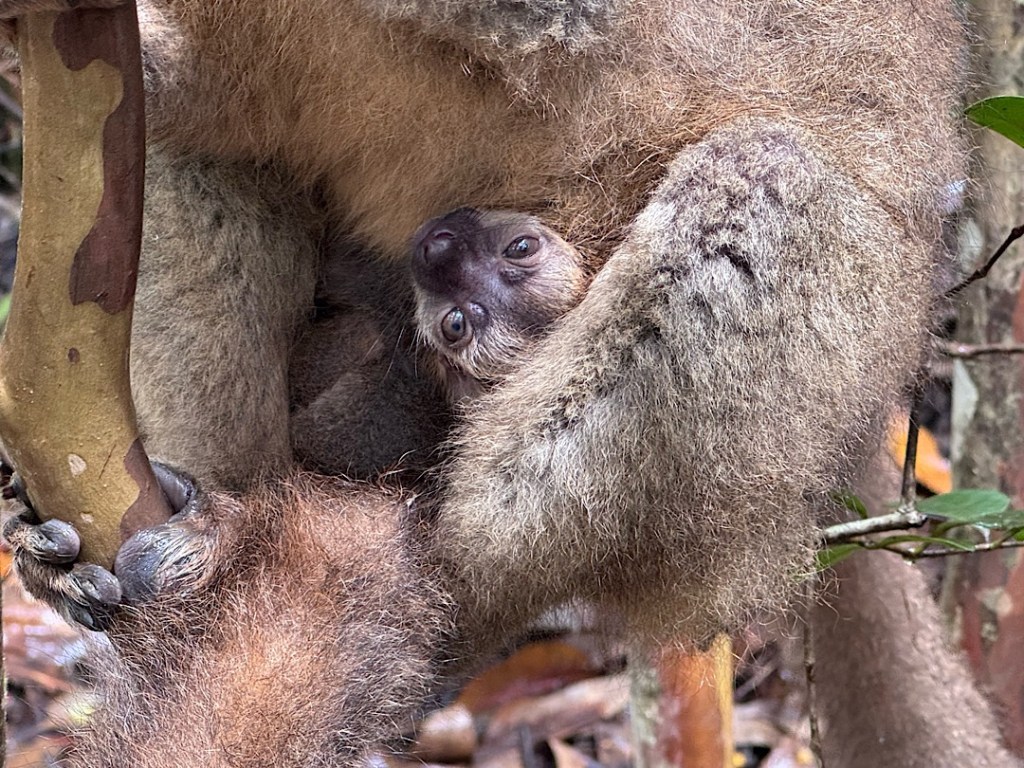
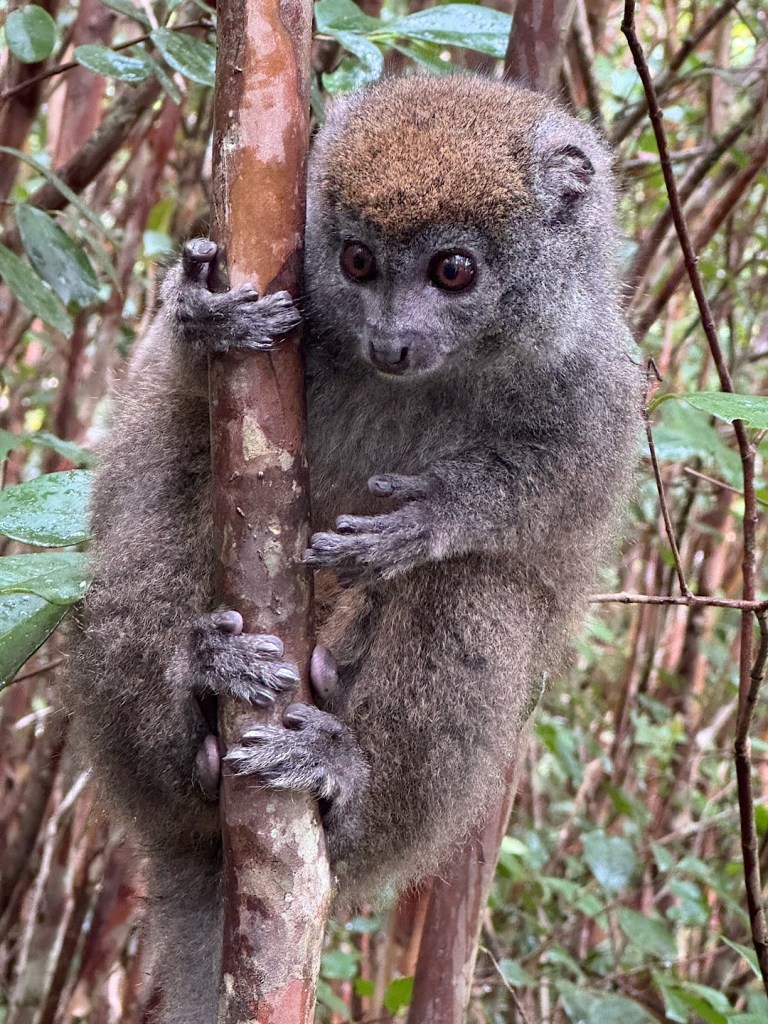
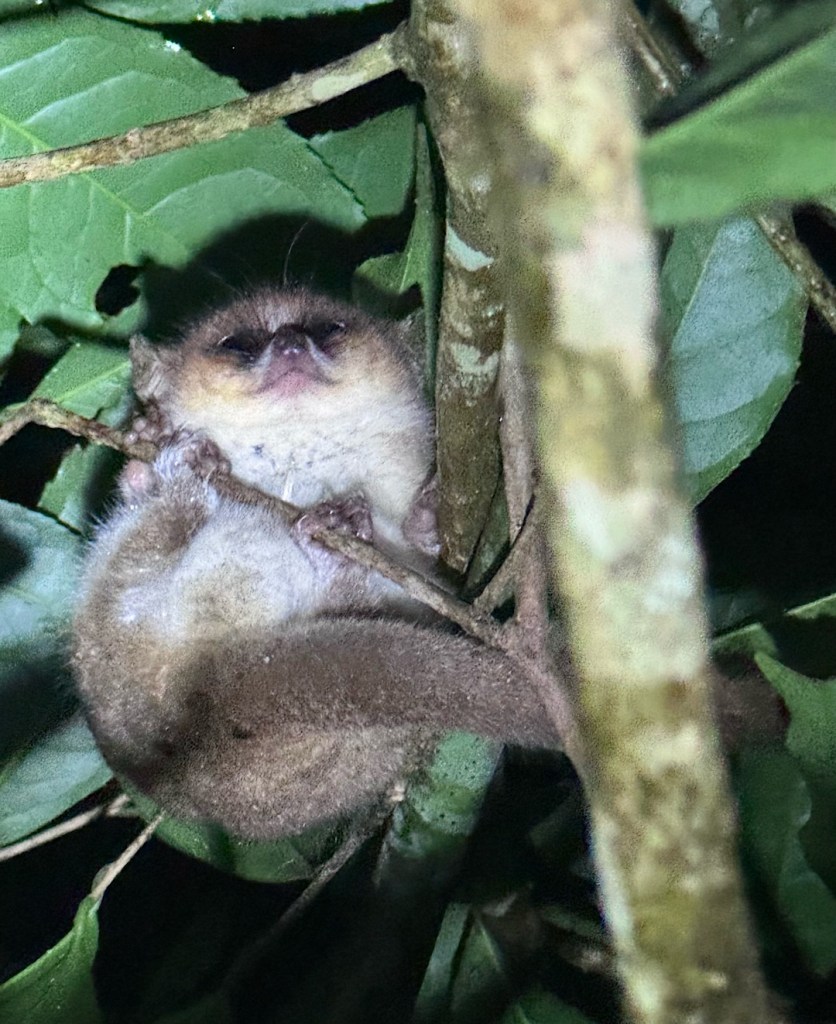
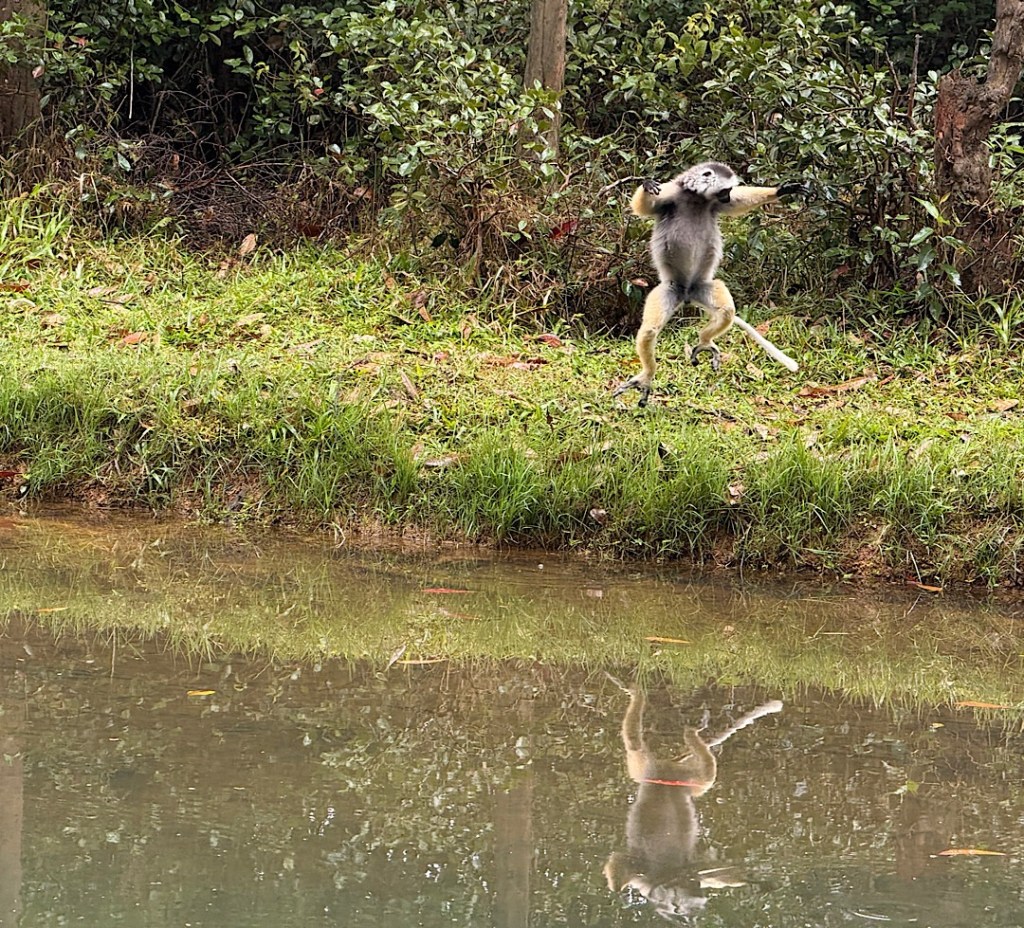
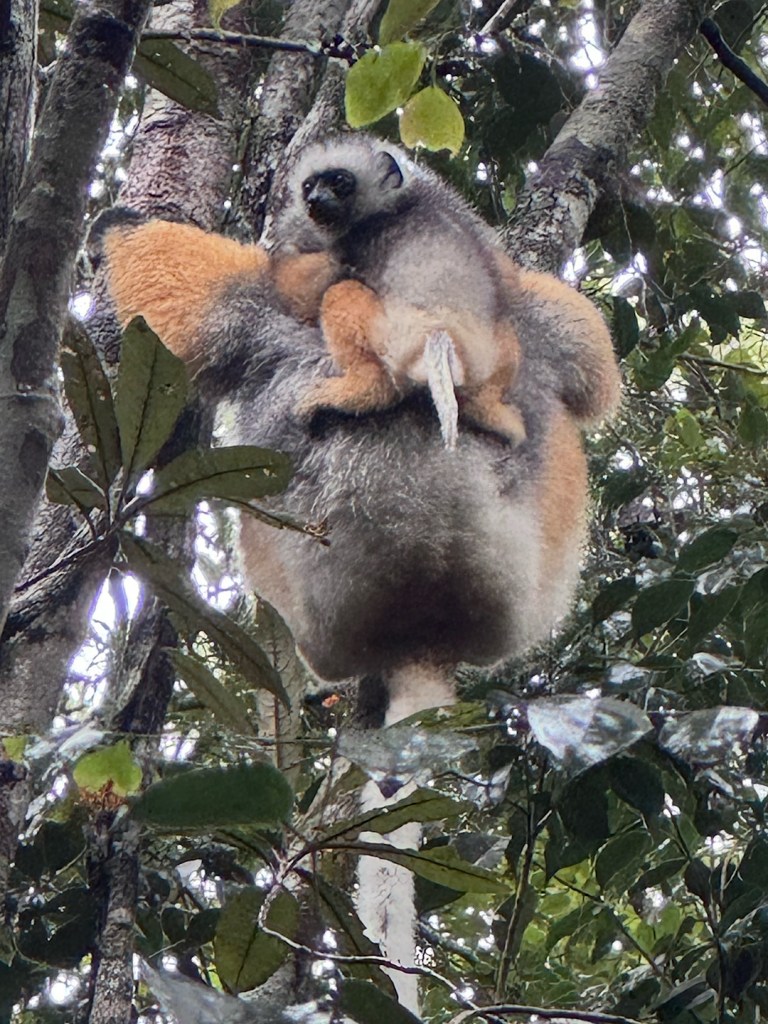
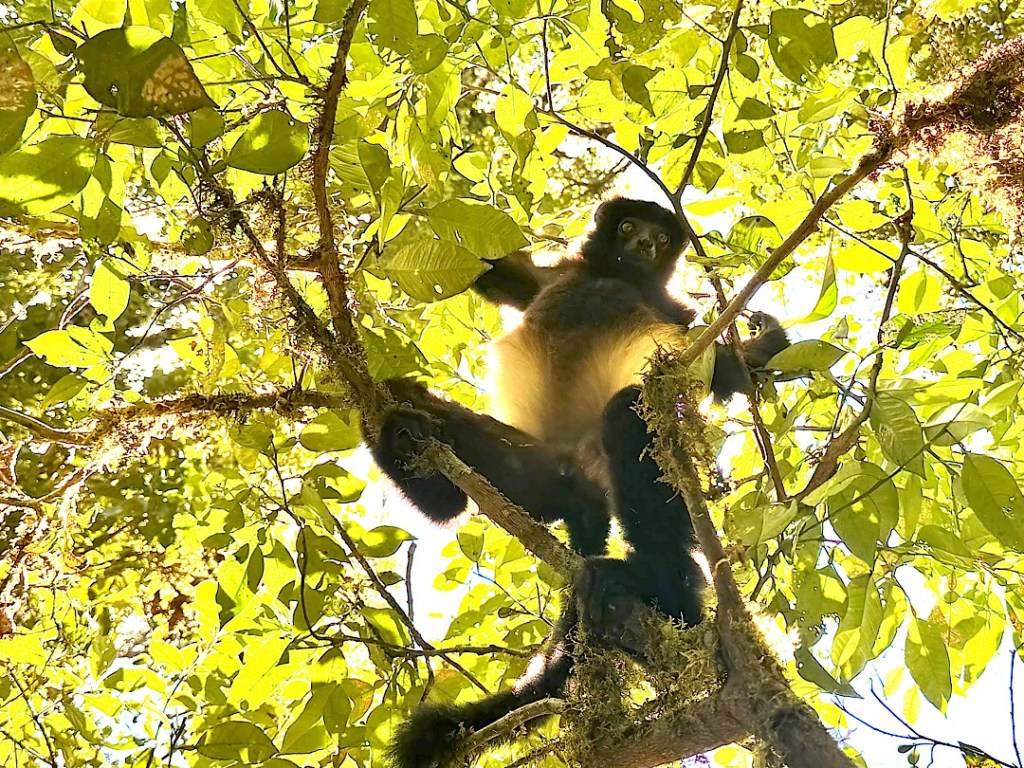
We chatted with our guides as we tracked and observed all those animals, and on the endless drives from one stop to the next I often used my iPhone to ask AIs other lemurian questions. The result is that I now know quite a bit about lemurs. I find it riveting, but I won’t try to share most of it; I’m aware that not everyone has succumbed to lemur love. Two things dazzled me so thoroughly, however, I can’t restrain myself.
The Sex Lives of Ring-tailed Lemurs
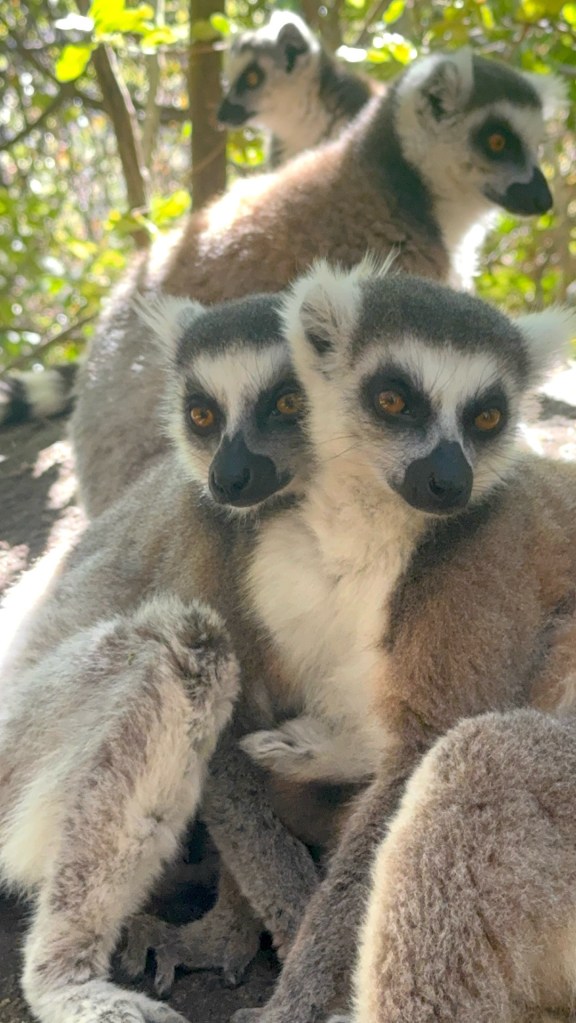
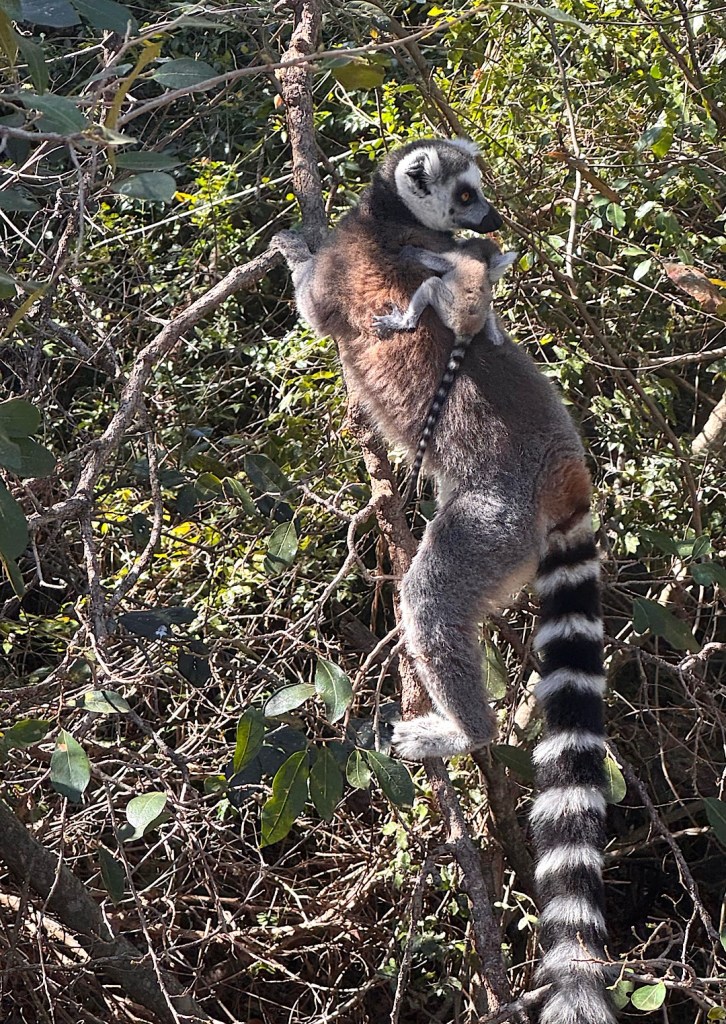
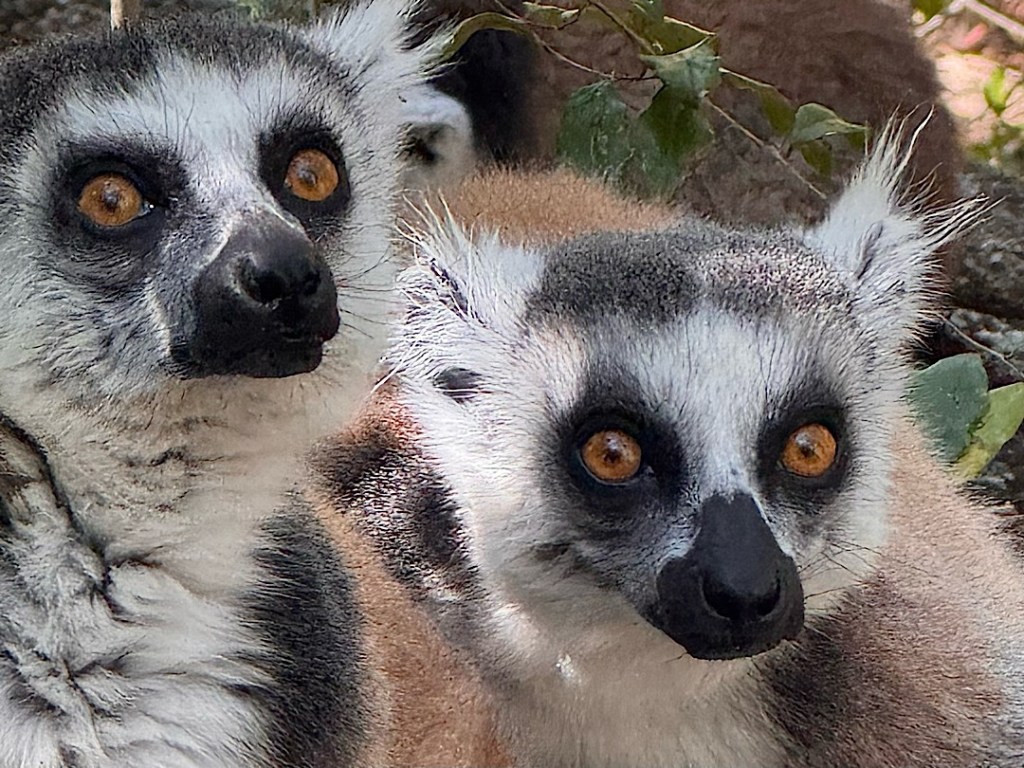
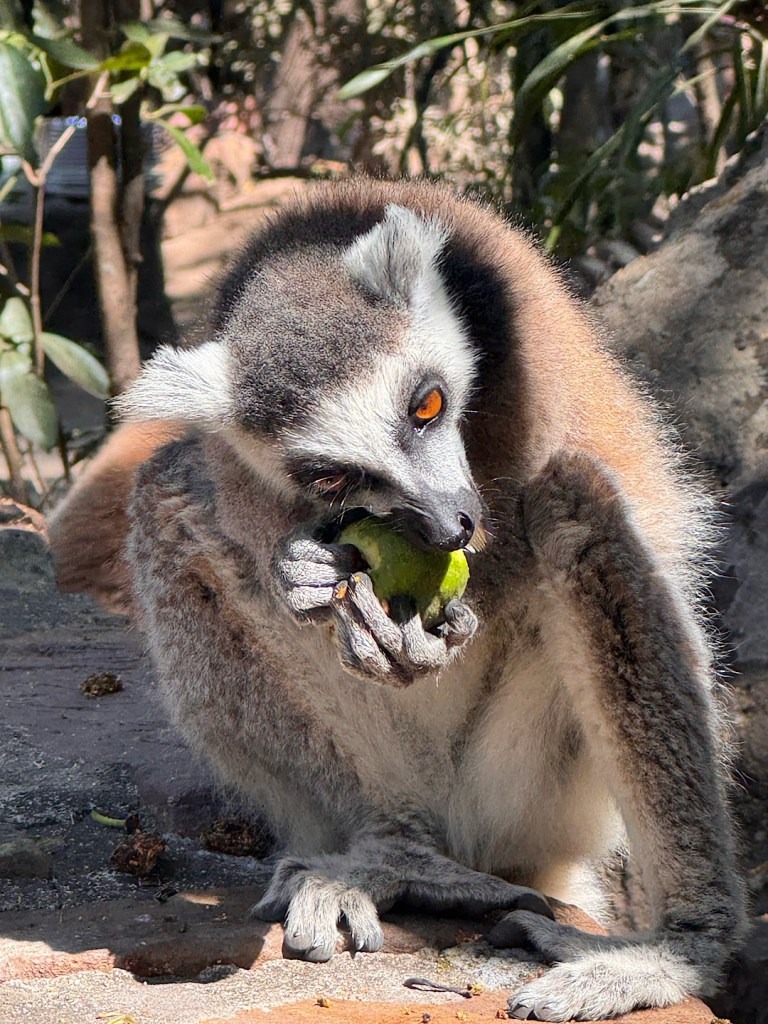
First, in most lemur societies (unlike the vast majority of mammals), females run the show. Moreover, ring-tailed groups each have an alpha female. She and all her fellow lady lemurs only go into estrus and become receptive to mating for a 24- to 36-hour window that comes once a year — typically all within days of each other! Imagine what this does to the males.
But who could imagine what my AI pals described? The male ring-tails, flooded with testosterone, undergo an amazing transformation. The sweat glands on their chests and wrists stop emitting their normal bitter, leathery odor and begin pumping out a fruity, flowery perfume (“suggestive of ripe pears.”) The guys rub their gorgeous tales on their enticing scents and wave them around the females — “stink-flirting,” the scientists call this. The courtship can degenerate into vicious “stink-fighting battles,” the winners of which get selected by one or more lemur ladies.
We saw nothing of this, of course. It takes place in April. I’m almost tempted to come back then to try to see it. (At the very least, it is the first thing I will search for on Youtube when I get home.)
The Call of the Indri
Indris are the biggest of all lemurs, and they live only in the wild. Humans have tried to keep them in zoos, but the indris won’t have it. In captivity they just die. Critically endangered, the ones that survive in Madagascar inhabit the patches of rainforest down the escarpment several hours east of Antantanarivo.
On the second morning of our road trip, a wonderful guide named William who’s been studying the forests around Andasibe for 25 of his 50 years led Steve and me straight to an indri family breakfasting in the foliage overhead.

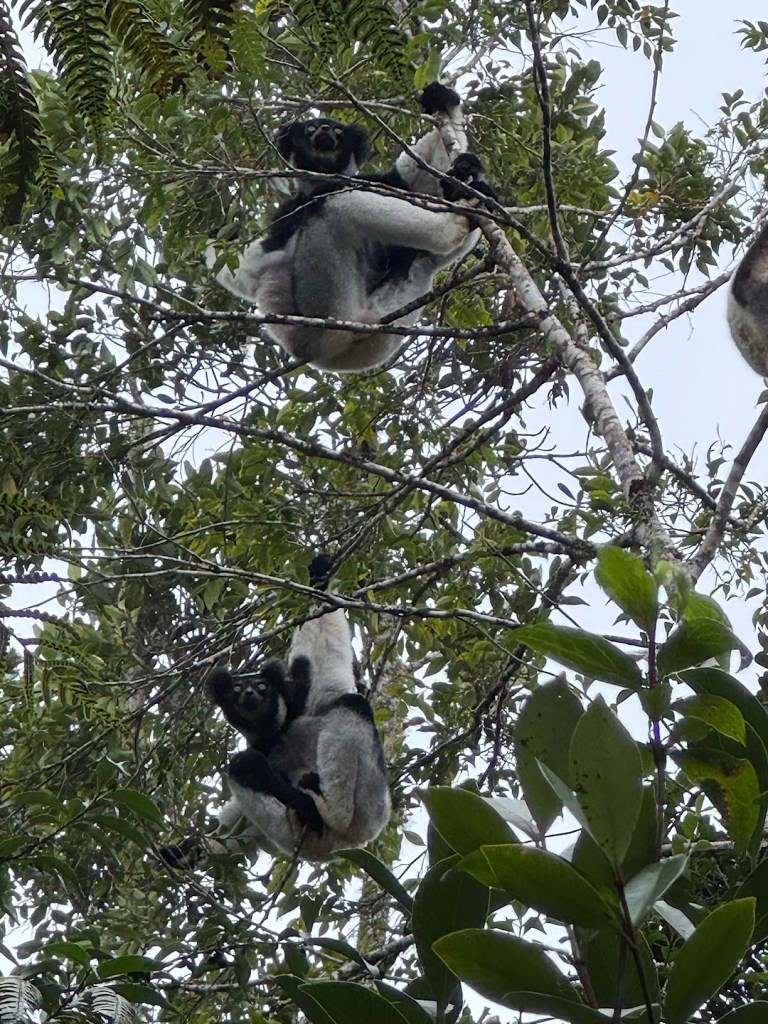
My first sight of one made me cry out in wonder. An indri looks “like a child in fluffy pyjamas,” in the words of John Gimlette, author of the one of the best travel books I’ve ever read (The Gardens of Mars: Madagascar, an Island Story, 2021). This largest lemur “never goes anywhere, never adapts, and never eats anything but leaves.”
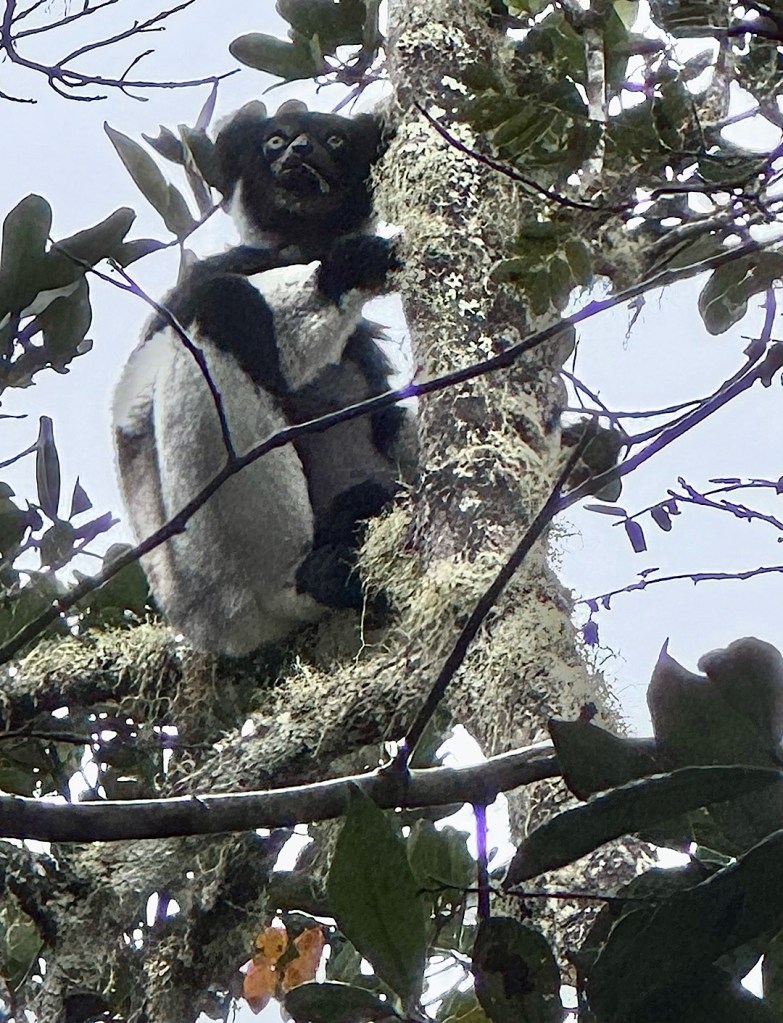
William pointed out a baby, just weeks old, clinging to the back of its mom. We watched the family members leap amazing distances as they grazed. Then the unthinkable happened: they indris began emitting some of the loudest sounds I’ve heard from any living creature. Gimlette compares it to an air raid siren, but it reminded me of whale song, amplified and arboreal. They do it to mark their territory, the scientists say. It seems so foolhardy — how could you make it any easier for a hunter to find you? The indris don’t care. Their days may be numbered; their homeland shrinking. Every morning they sing their songs, spine-tingling, defiant. You must pay attention.
 At home and abroad