Tuesday, August 18
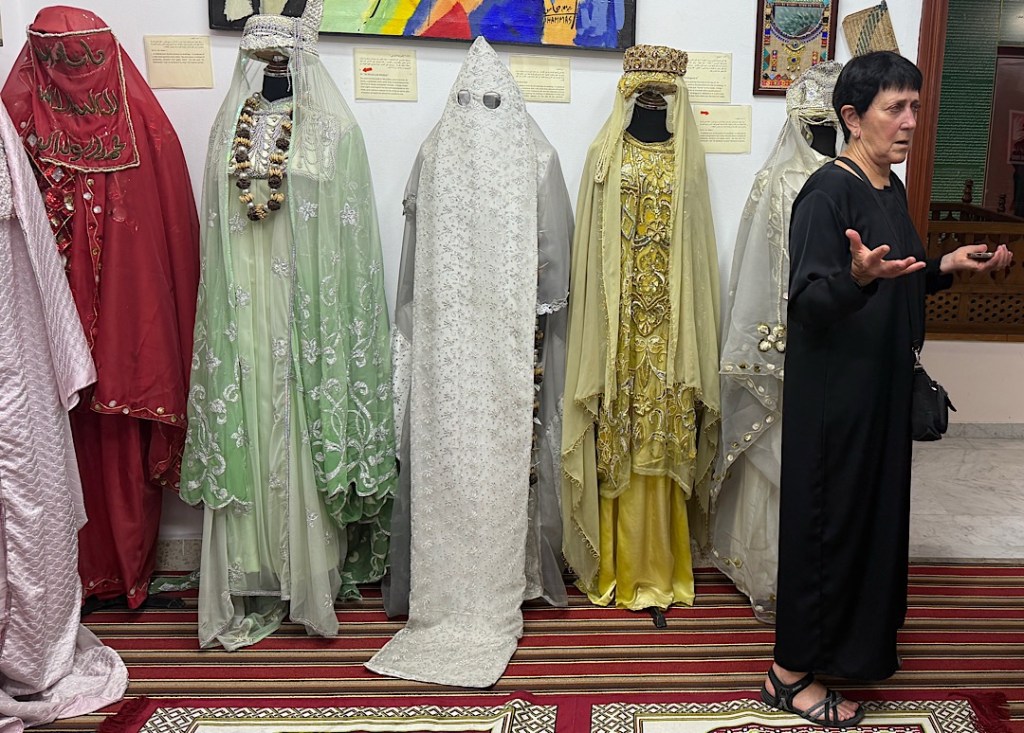
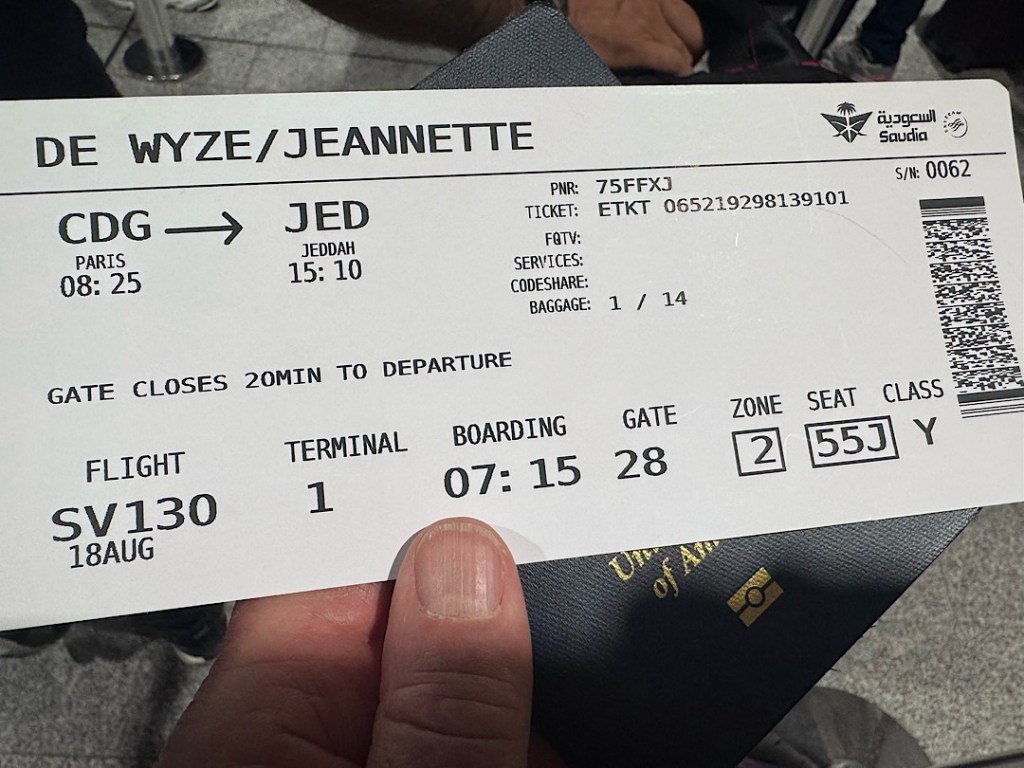
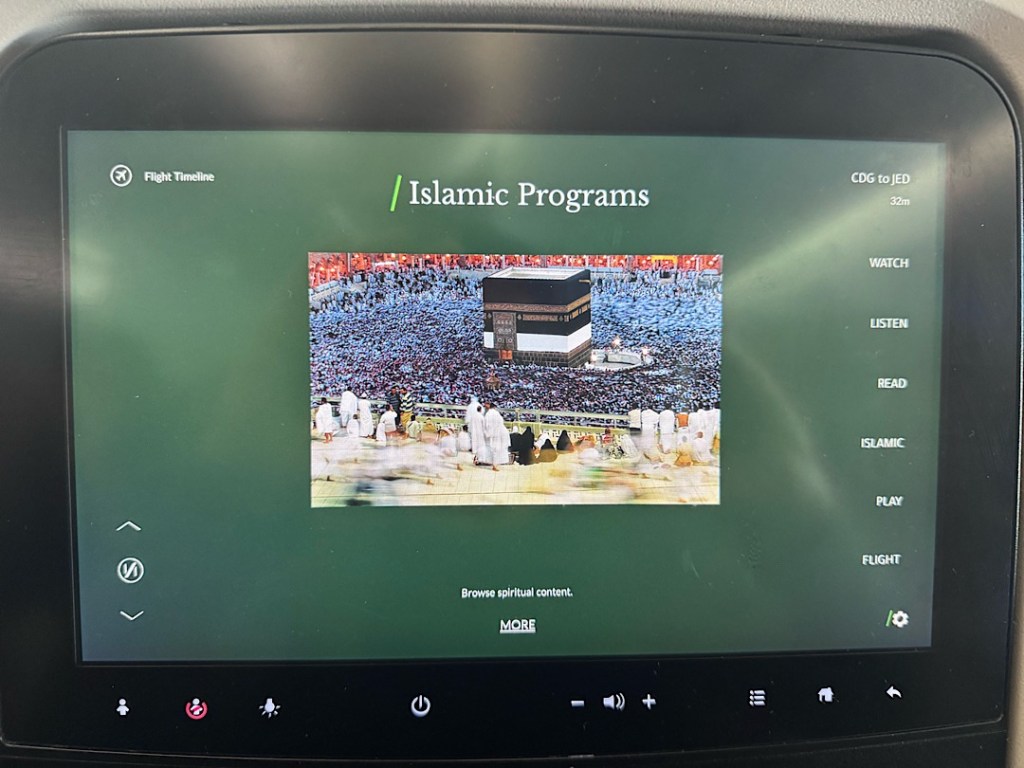
Lots of women in Paris wear abayas. Not me. I board our flight from Charles De Gaulle to Jeddah on Tuesday, August 18, wearing the green pantsuit in which I crossed the Atlantic the day before. All the advice to female visitors says the key to proper Saudi Arabian attire is dressing modestly. Cover your arms and torso and everything from mid-shin up, and you’re good. Although almost all of our fellow passengers, male and female, are be-robed, I don’t feel like anyone is staring at me either on the plane or once we land in the airport.
I don my abaya only after we’ve checked into our hotel room, a Holiday Inn on Jeddah’s waterfront. Although I’d worn it in San Diego several times over the years, here its thin synthetic fabric and loose fit startle me. With only a bra and underpants beneath it, I feel like I’m in a flimsy nightgown. Uneasy, I stand in front of our window overlooking the Red Sea and order Steve to check its transparency. He insists he can’t see anything beyond the black, so we sally forth.
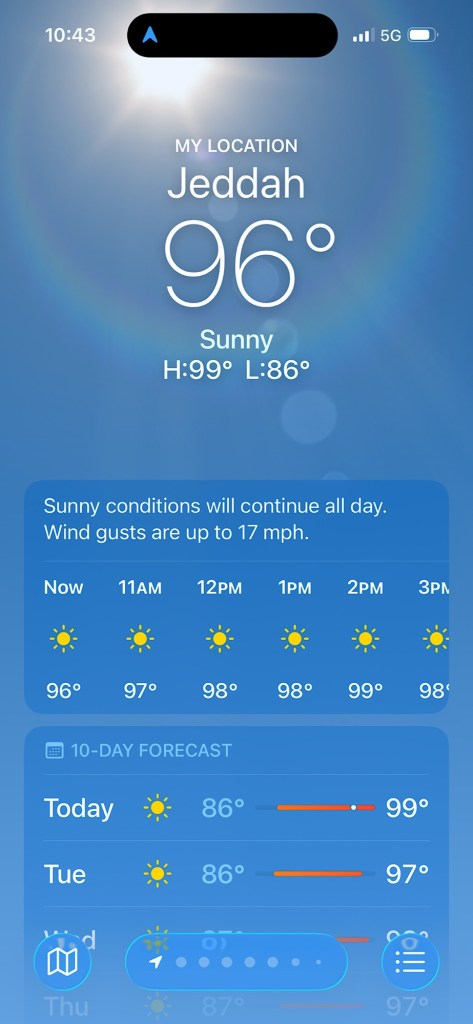
The sun is minutes from setting and there’s a nice breeze off the water, and it’s still close to 100 degrees. But dressed this way feels almost like wearing nothing. Steve and I stroll along the corniche, taking in the sight of families picnicking near the water. We catch an Uber to a good seafood restaurant adjoining the municipal aquarium, and I’m comfortable throughout the meal. I decide wearing an abaya is fine with me.
Wednesday, August 19
Getting out of bed, it hits me: I don’t have to give any thought to what to wear. Score another point for abaya-wear!
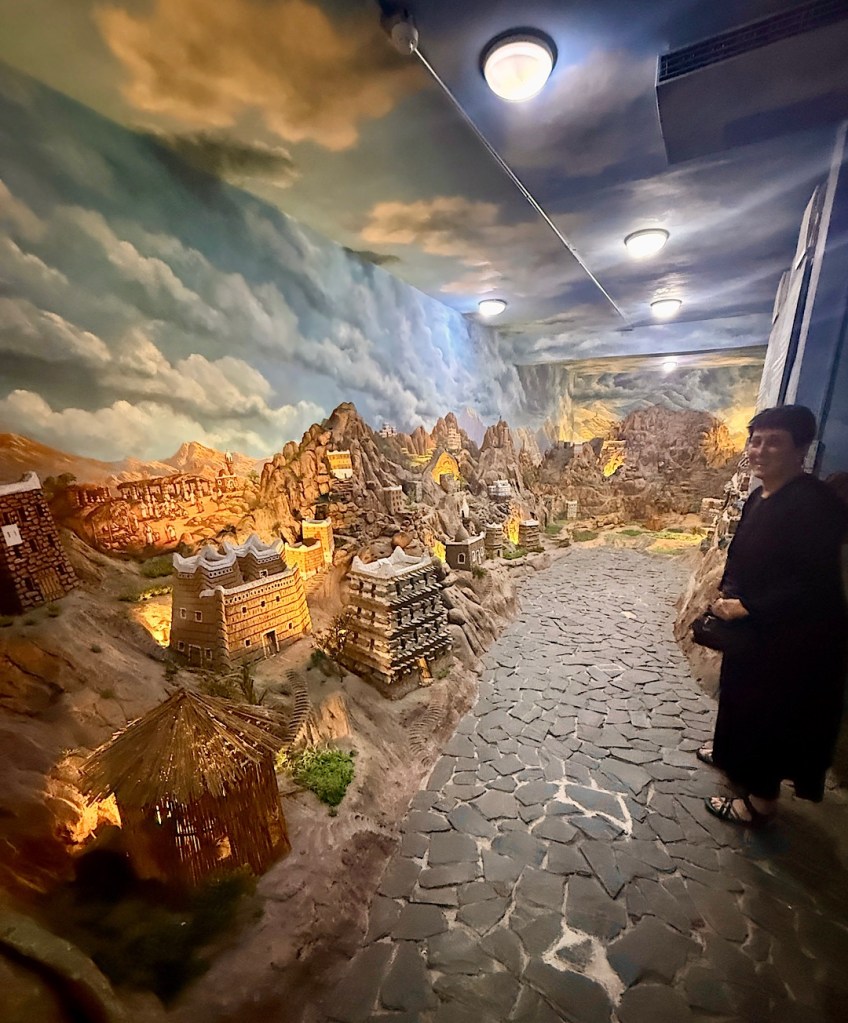
We’ve allotted this full day to exploring Jeddah. We start by Ubering to Al Tayibat City Museum for International Civilization, a private institution we’d read about. Built by a local businessman who spent almost 50 years collecting tens of thousands of rare cultural and historic artifacts, it opened in 1999. Steve and I walk inside and are stunned by the richness of its collections. Hundreds of rooms on multiple levels fill at least a dozen buildings, many built in the exquisite traditional style.
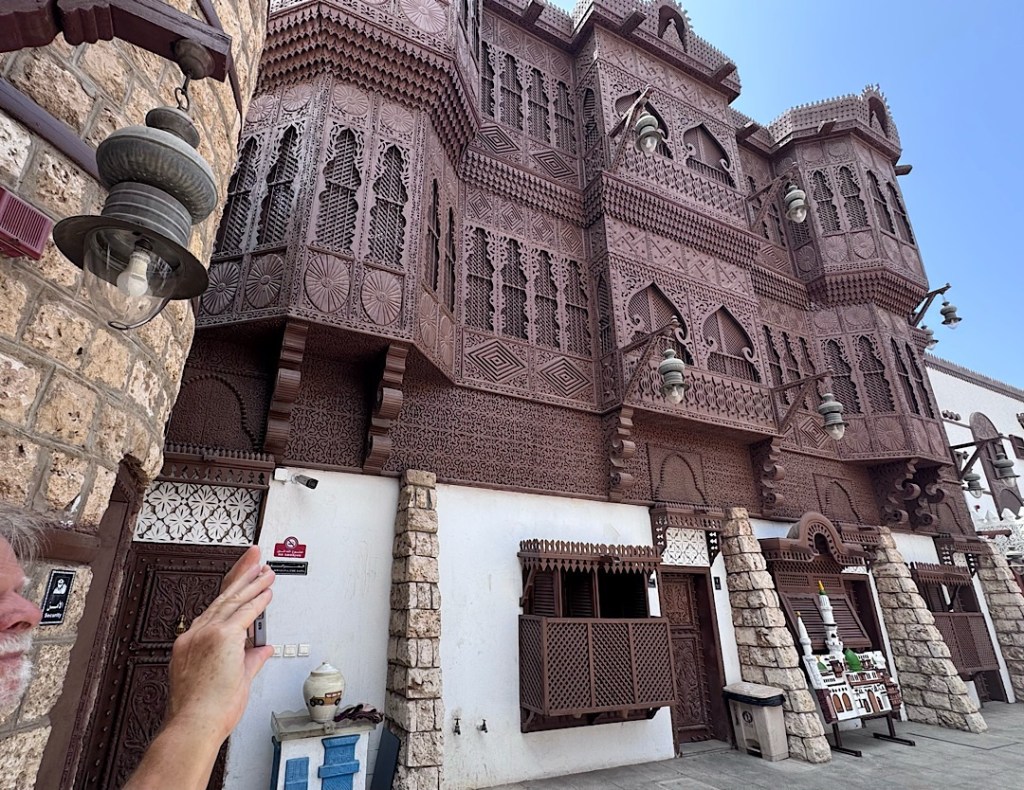
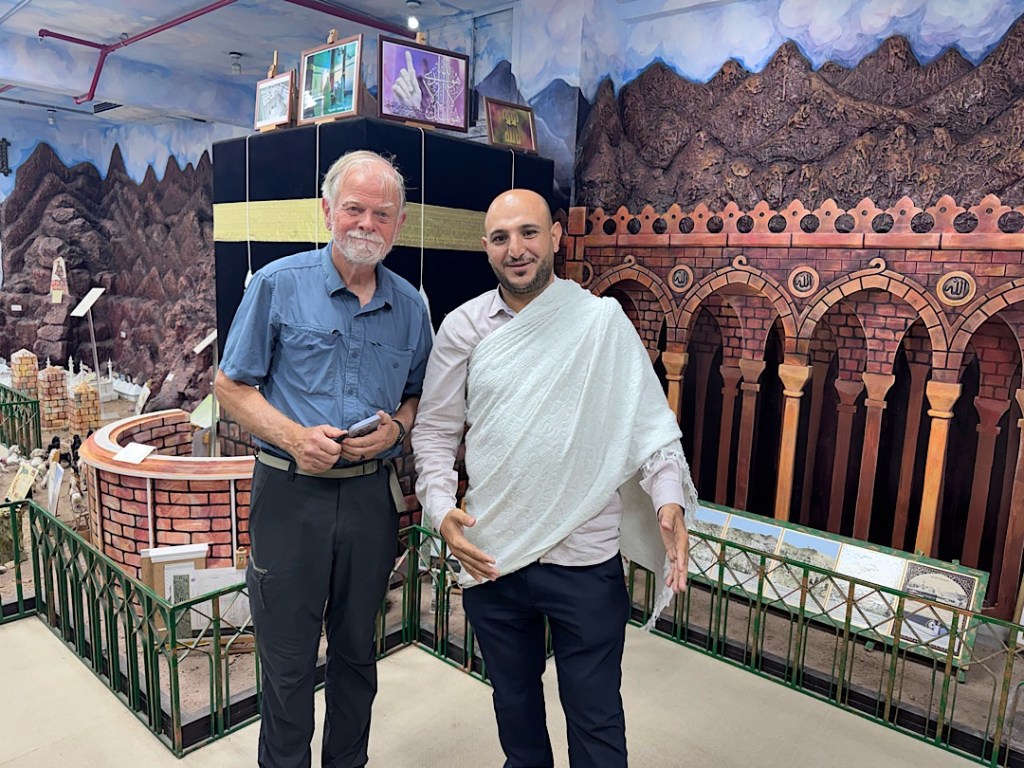
We seem to be the only visitors, and it turns out the massive complex will close at 1 pm, giving us only about two hours to explore it. A charming Egyptian ex-pat archeologist emerges to show us around. He’s amazingly knowledgable and teaches us a lot before we have to go.
After leaving the museum, Steve and I eat a quick sandwich near our hotel, take a nap, and devise a plan for the rest of the day. To my dismay, I’ve realized that I’ve lost the pretty black head scarf I packed for this trip; probably dropped it in the Paris airport, where it was too hot for a scarf. Not having any scarf is a problem. The one place all women must cover their hair is in mosques, and Steve and I want to visit a one nearby, the Al Rahmah Mosque, famous for being built so that at high tide it appears to be floating on the water. Fortunately, it’s close to one of the best shopping malls in Jeddah.
Malls are also a big attraction in this city, where the heat shuts down almost everything else for half of every day. They’re social centers where people can shop and graze and mingle in air-conditioned comfort. Steve and I resolve to find me a replacement scarf at the Red Sea Mall.
It’s three stories of apparently endless commercial possibilities, gleaming and seductive.
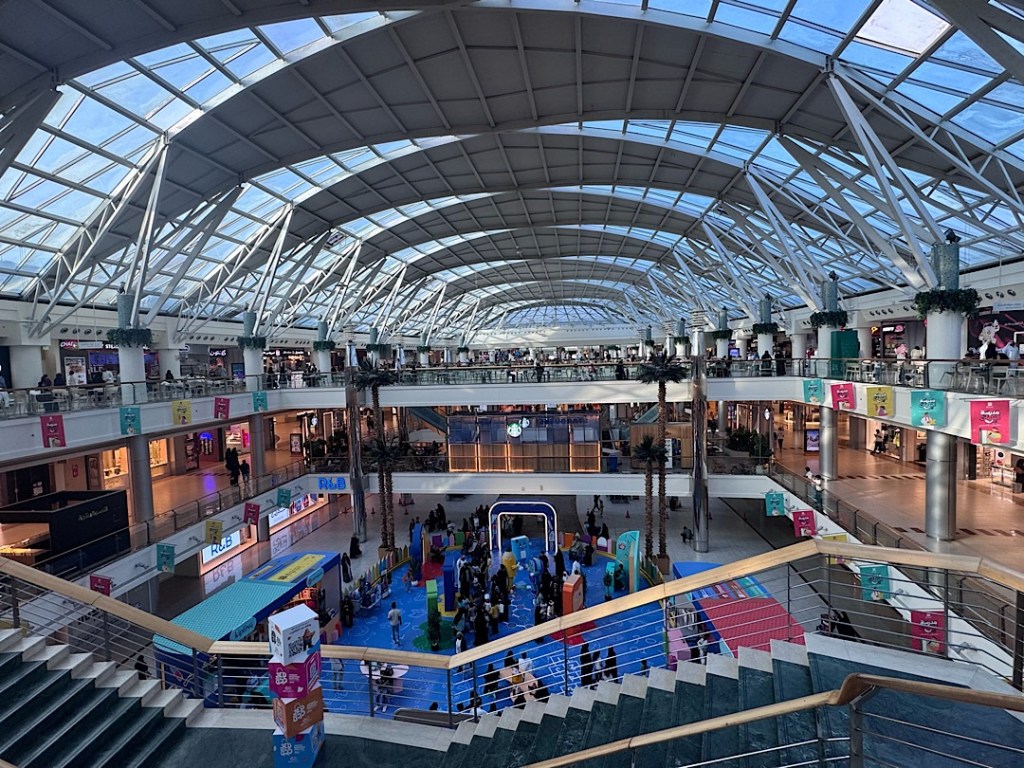
Perhaps because of its enormity, we struggle to find a place that sells scarves, but we finally make our way to the right level and section. The ladies in one shop pluck out a simple black one and in seconds whip it into a tidy containment apparatus for my (admittedly minimal) hair. I remove it, pay the 25-riyal price (about $6.65). Then Steve and I get a cup of coffee nearby and watch the shoppers stream by.
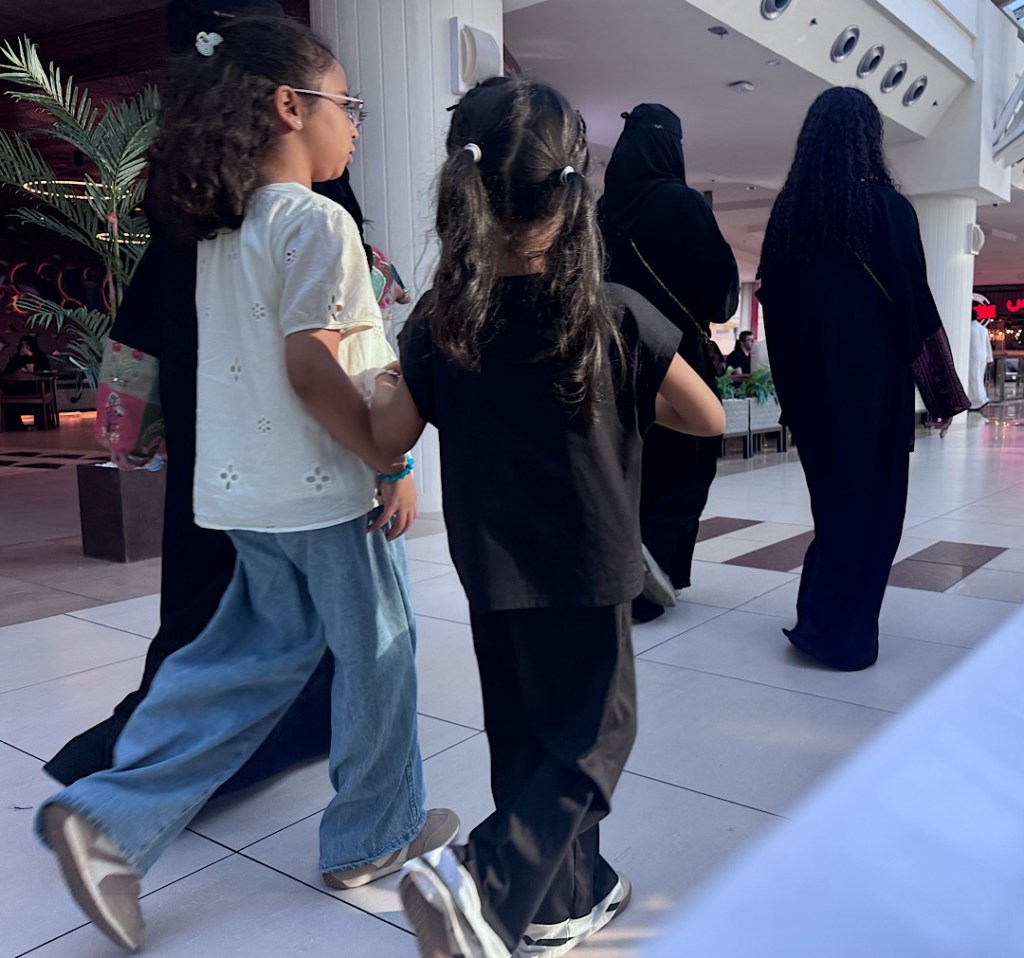
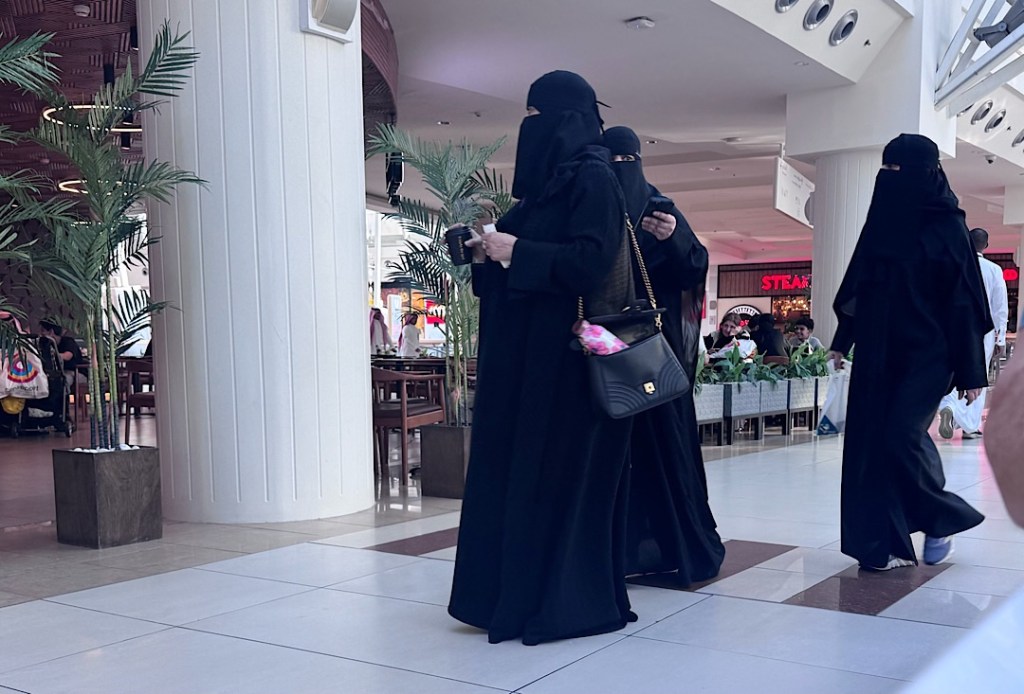
The guidebooks say women in Jeddah don’t have to cover their hair, but we see almost none who are bare-headed (as I am). The vast majority also are wearing athletic shoes. It makes me resolve to start using my single pair of trainers instead of the sandals I have been wearing. Maybe I’ll fit in better. I’ve begun to feel self-conscious about the mousiness of my abaya. The gowns of the women in the mall and on Jeddah’s streets are pleated or tailored or inset with panels of embroidered black fabric or adorned with other subtle refinements. I’ve also begun to wonder what’s under their robes. I’m starting to suspect it’s not almost nothing, like I’m wearing. I stew over this.
When we leave the mall, I avoid direct sunlight and keep my legs closer together as I walk. At the mosque, I fail to cover my hair with anywhere near the efficiency of the shop ladies.
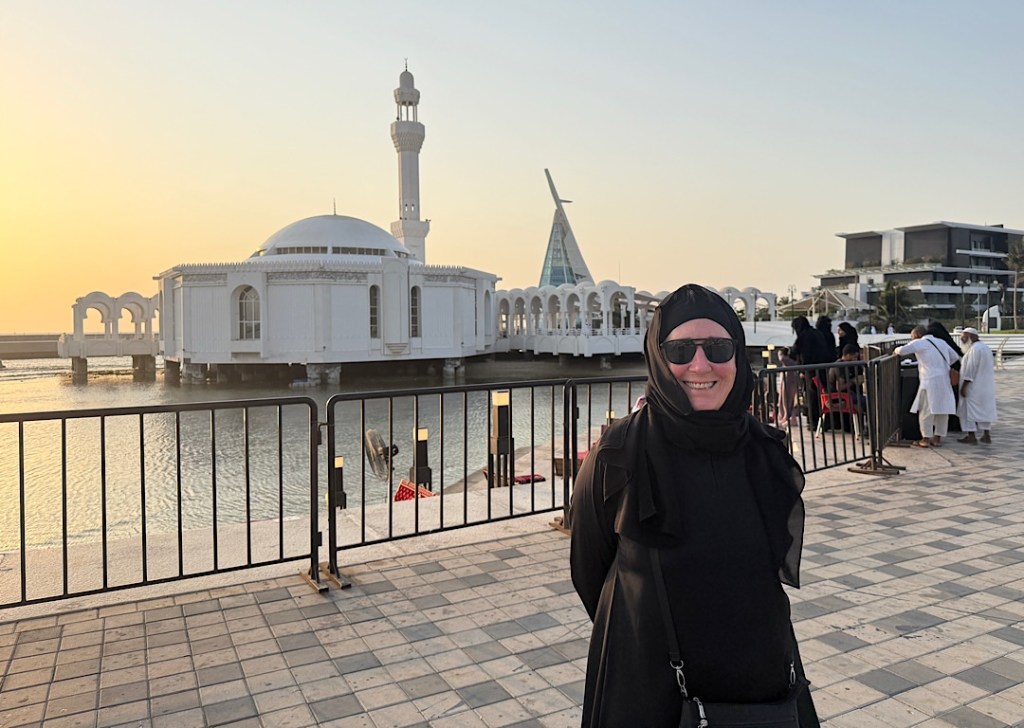
As it turns out, the mosque is closed. So is the nearby Jeddah Yacht Club, which looks to us like it may still be under construction. We get luckier on the restaurant front and eat good seafood for a second night.
Thursday, August 20
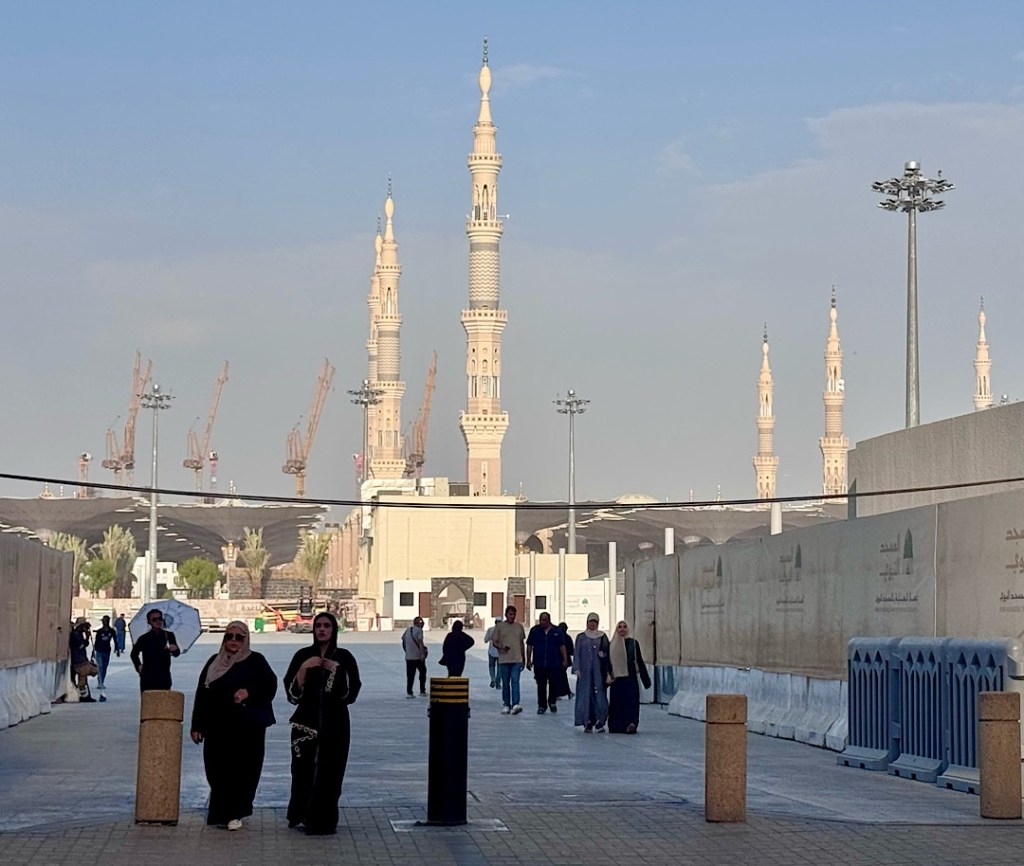
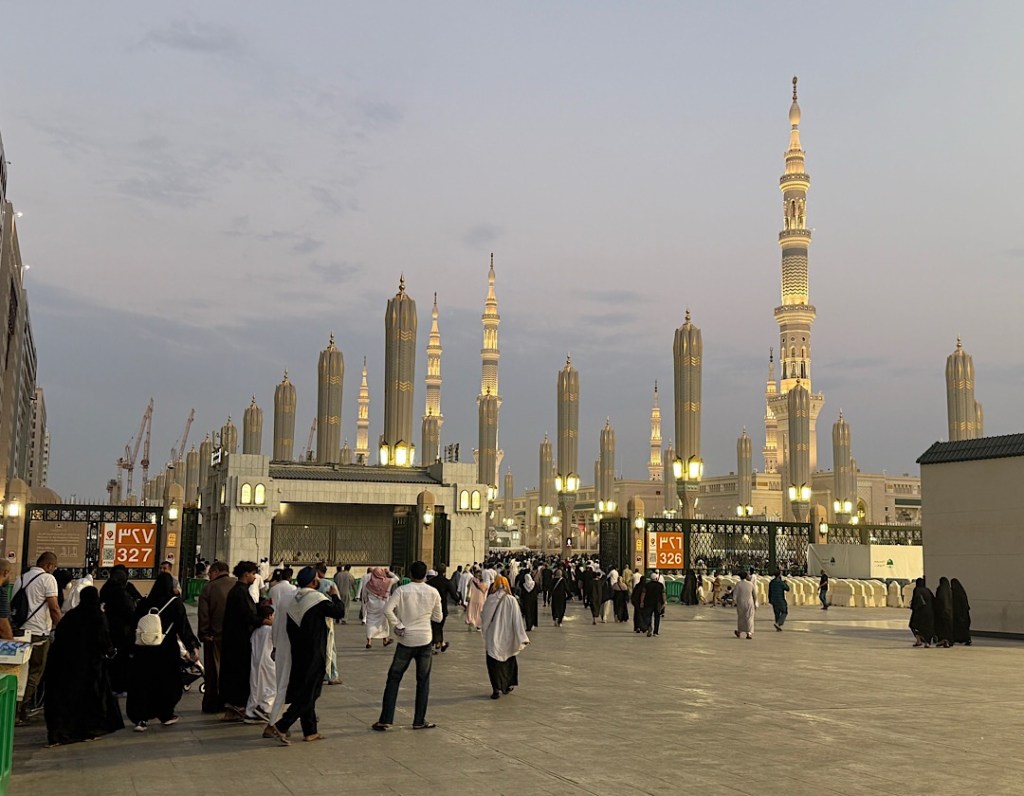
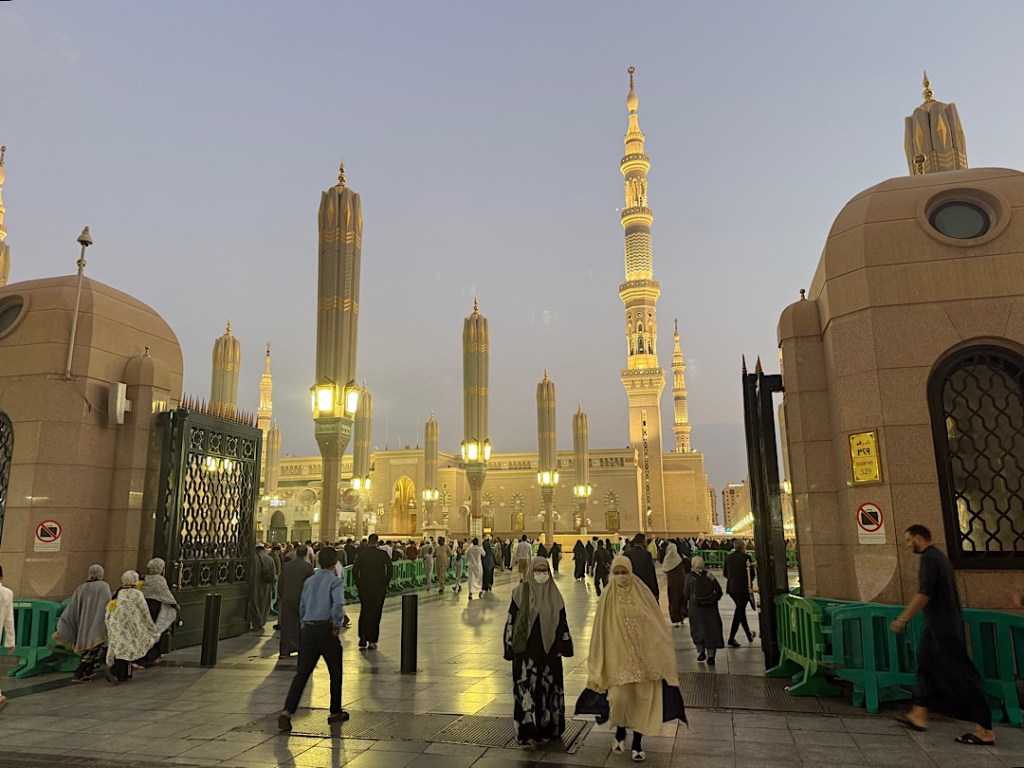
Because we are not Muslims, Steve and I cannot visit the city of Mecca, the holiest city in Islam. Until 2021 we also would have been prohibited from entering large parts of the second-holiest city, Medina. Then as part of Saudi Arabia’s modernization, the rules changed. In Medina, non-Muslims still may not enter the inner hallways of the Prophet Muhammed’s Mosque (the first he ever established), nor may they visit his grave. But now they can get pretty close to both, and we want to do that.
We have seats on a 1:30 pm high-speed train that will take us from Jeddah to Medina. That gives me time in the morning to ask Gemini: is it okay to wear only underwear under my abaya? The AI bot’s answer shakes me. It advises me to consider my abaya as “an outerwear layer” only, rather than my “primary garment.” Accidental exposure of my unclothed person in public could “result in fines, detention, or significant distress.”
This doesn’t quite make sense. My abaya has no snaps or bottoms. It can’t accidentally open, and it’s too narrow to get blown up by some unexpected breeze. Still, I once again badger Steve to scrutinize its transparency. He sticks to his insistence no one can see through it.
Gemini also alerts me that even though Saudi law says women don’t have to cover their hair, Medina is such a conservative and religious city, hiding one’s hair is highly recommended for all women. I’ve come up with a new plan for using my scarf to do that.
I don’t implement it until after we pull into the station (after a fast and comfortable ride).

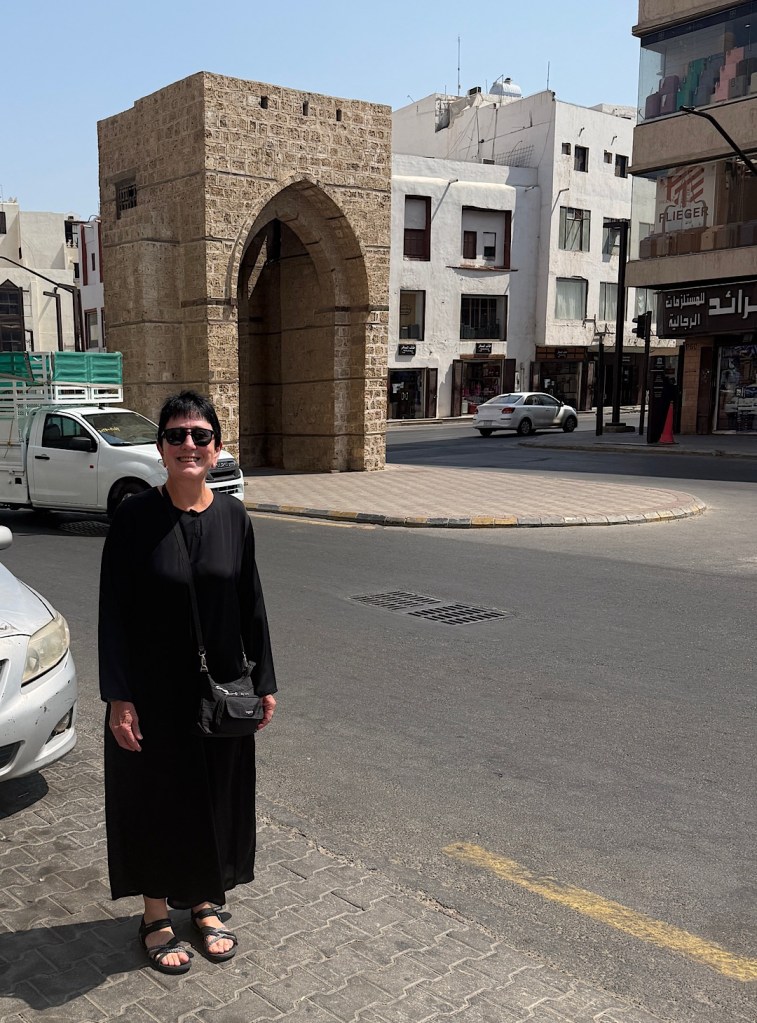
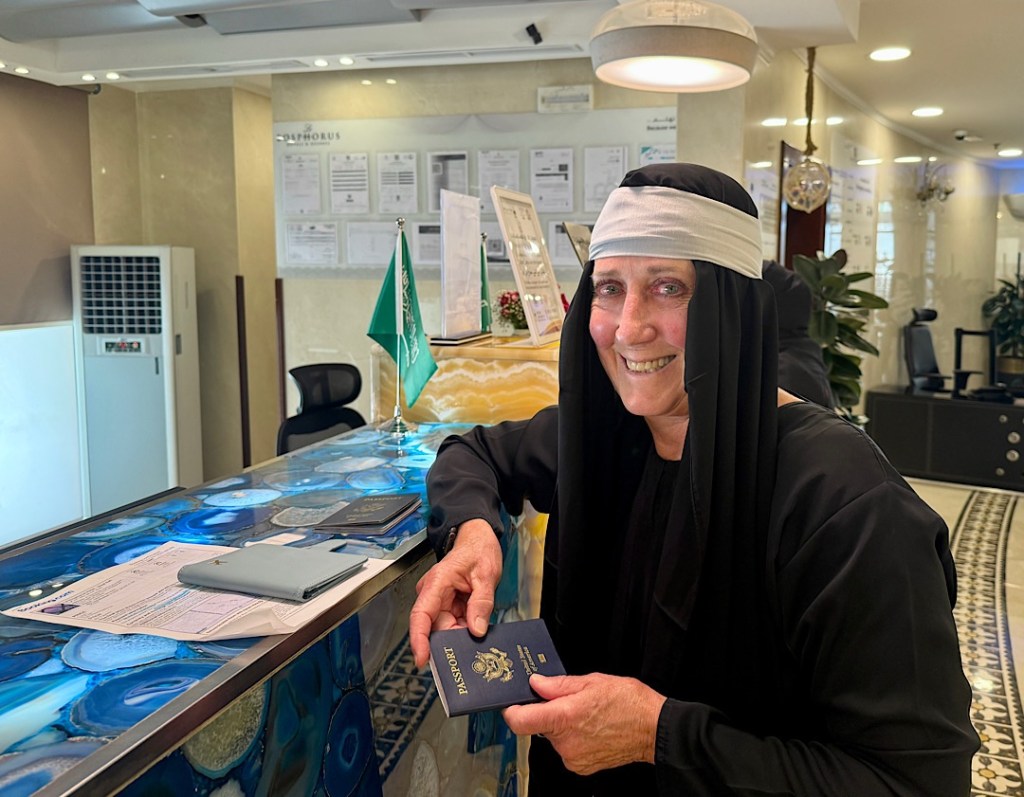
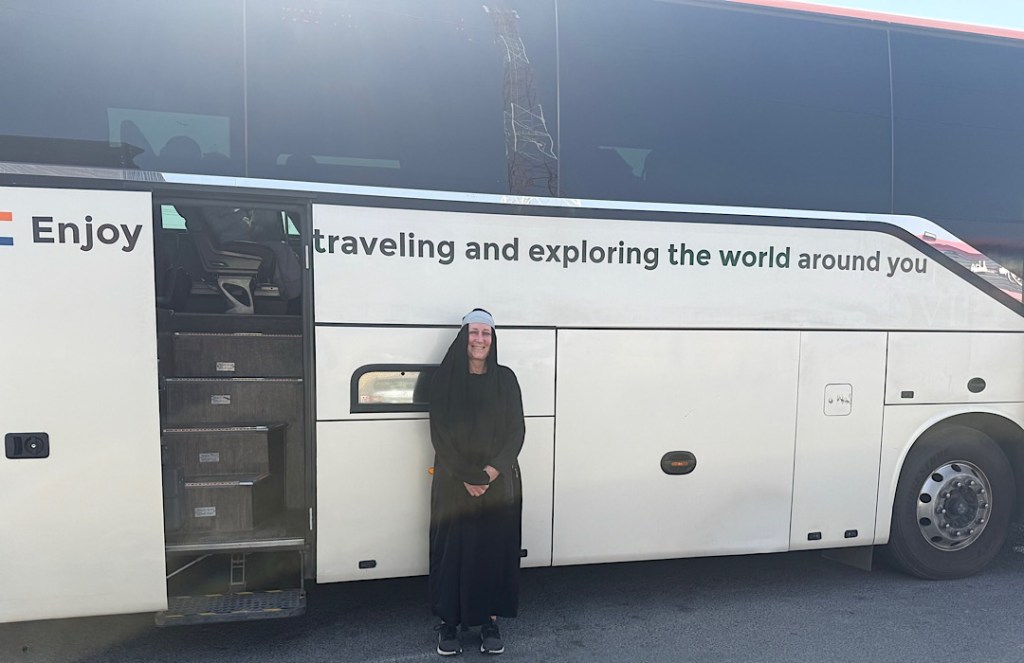
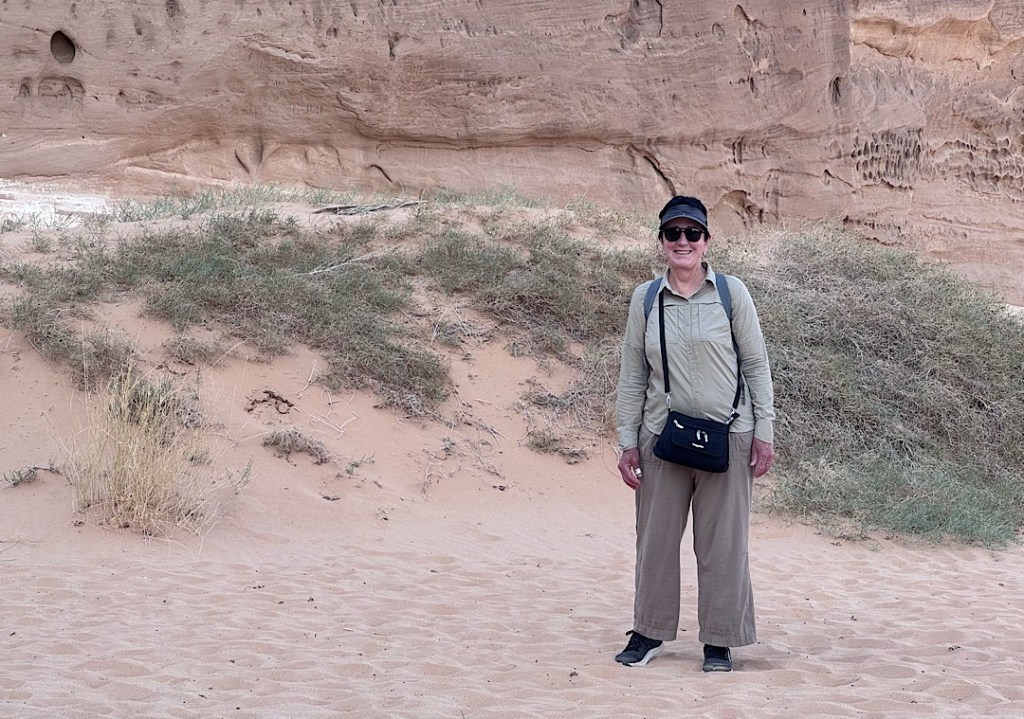
In one of the train station’s women’s washrooms, I put the scarf over my head, then over that secure the gray headband I got in the two-headband pack I bought at my CVS back in La Jolla. (I’ve somehow already lost the black one I used in the photo above.) The result makes me feel like I should be be starring in some Christmas pageant, but at least it’s secure and reasonably comfortable.
Friday, August 21
Today we’re heading north to the archeological and geological wonderland that is Al Ula. Our experience there deserves its own post; I’ll try to write that next. Here I’ll just say I’m still wearing both my abaya and my improvised head covering when I get on our 8 am bus from Medina.
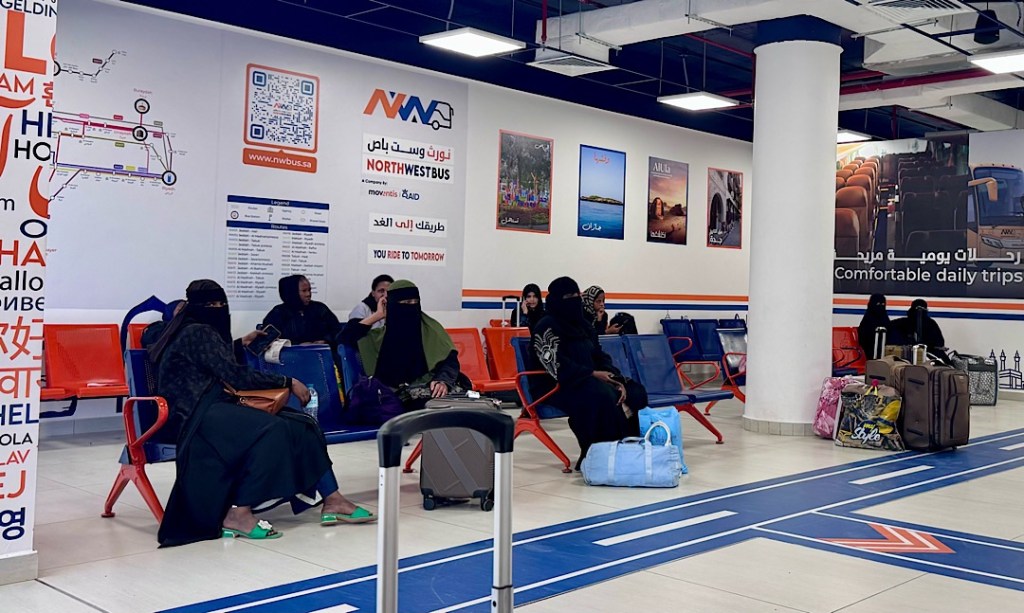
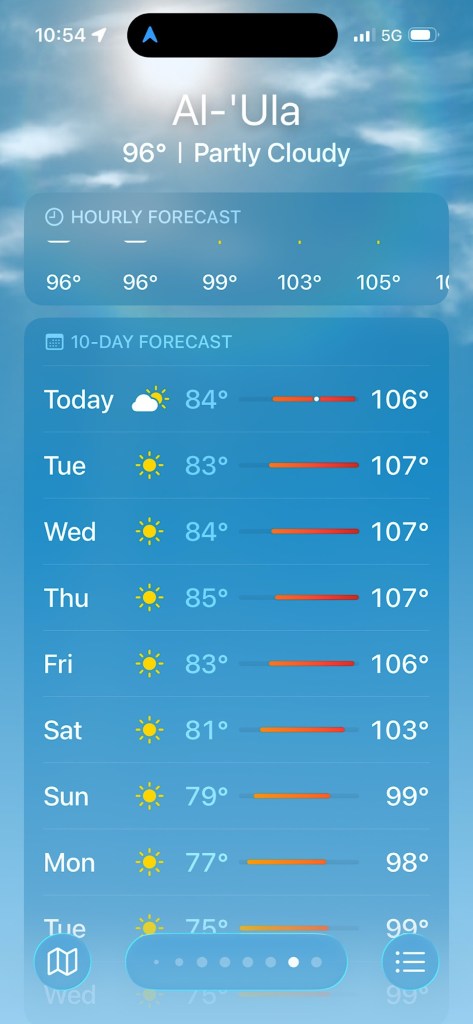
Steve has read that Al Ula is one of the most permissive places in the kingdom. So when we arrive, I ask our innkeeper-cum-tour guide Abu Faisal if it’s okay for me to switch to Western garb. He is effusive in his assurance that lady visitors can wear almost anything here. Shortly before sunset, when he takes us to the town’s most famous formation, Elephant Rock, there’s instant confirmation of the sartorial laxity.
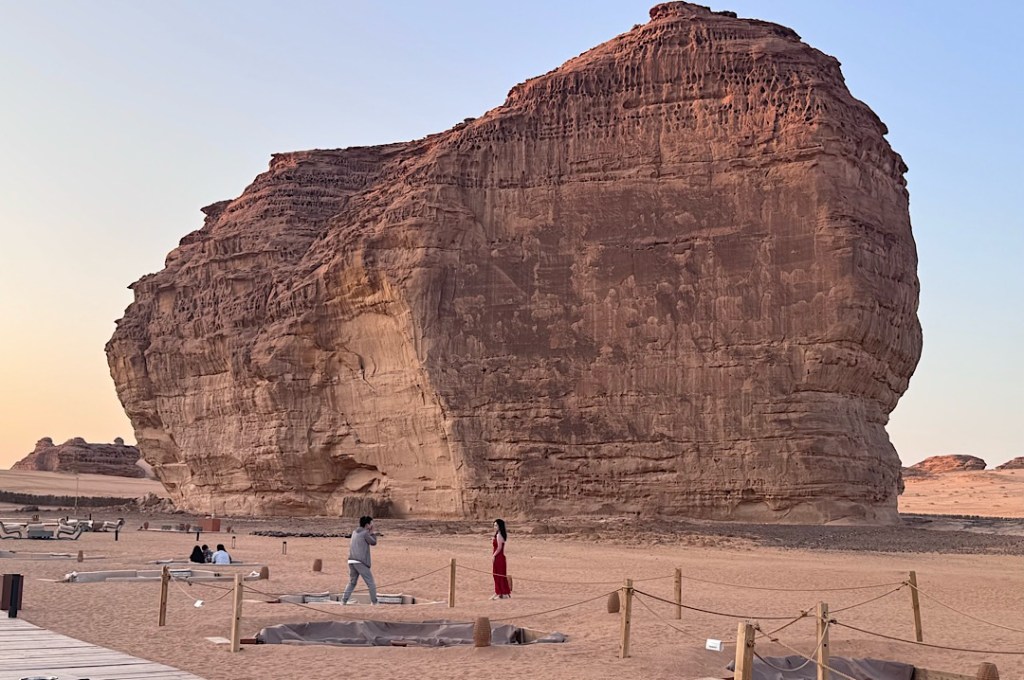
Over the next two days, I switch to drab safari pants, a long-sleeve shirt, and my visor. I’m more constricted than I would be in my abaya, but I never once worry about getting fined or embarrassed by what might show as I’m scrambling over the rocks.
Sunday, August 23
Flying back to Jeddah from Al Ula, I wear my Western clothes on the plane, then switch back into the abaya when Steve and I head out for dinner. At first the familiar black robe feels like a welcome reprieve from the constrictions of my pants and long-sleeve shirt. But over the course of the next two days, our last ones in the kingdom, I finally hit the limits of the August heat and my offbeat costume.
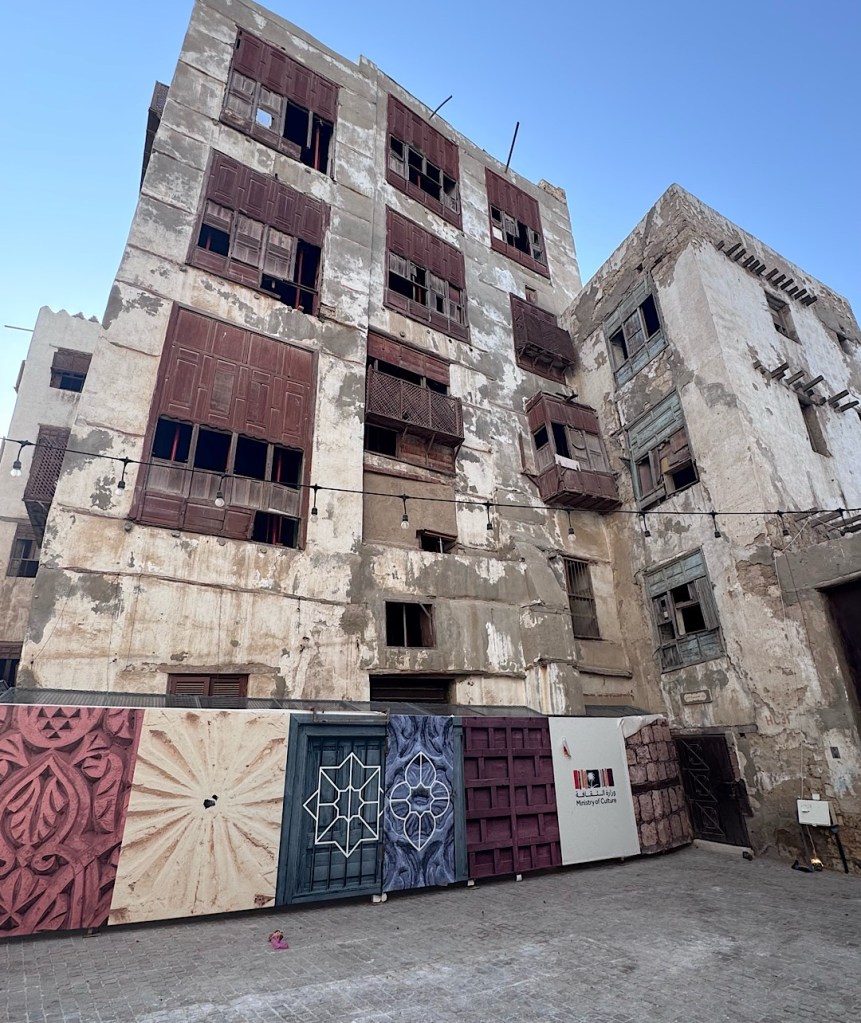
We’re staying in the oldest part of the city, Al Balad. At the core of the Old Town are narrow twisting lanes dating back to the Middle Ages. Many are in ruins.
Others that have been renovated and look magnificent.
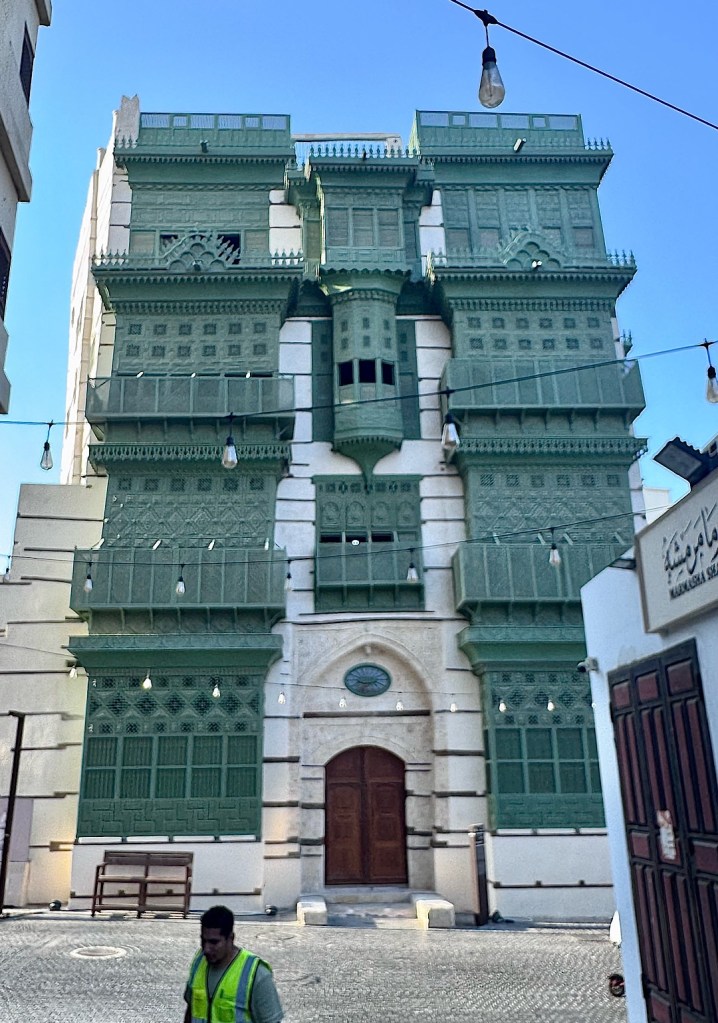

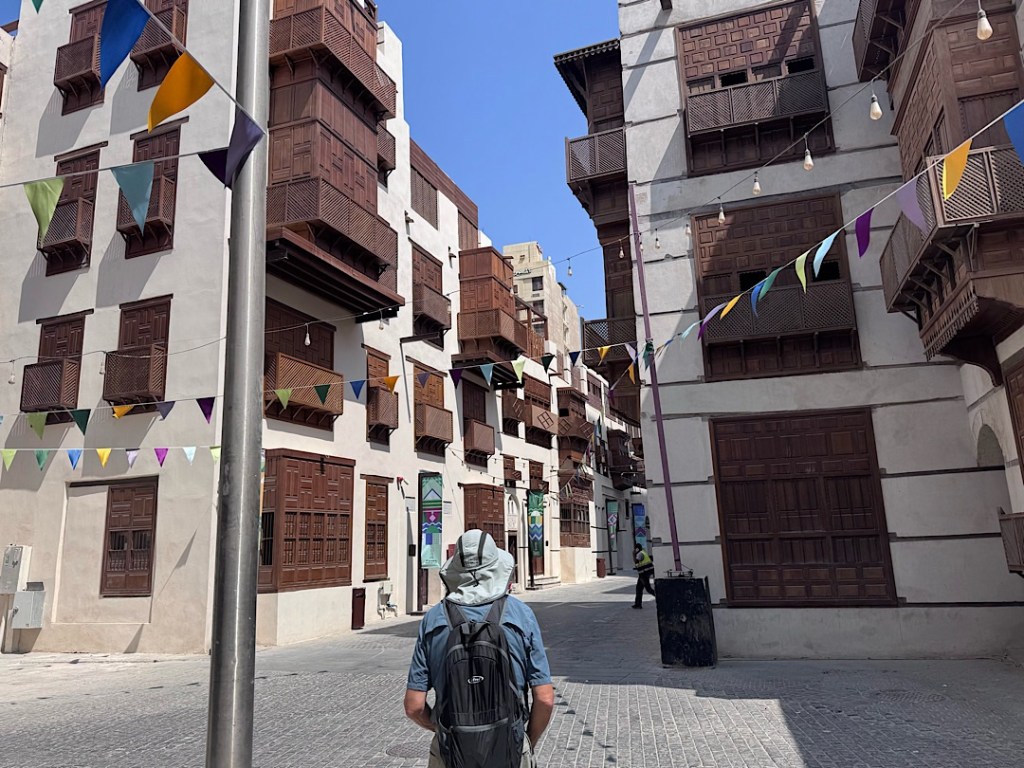
After dark, the market streets fill with shoppers and pulse with commerce and convivial interactions. If the quarter were all fixed up, I think it could be enchanting, a vision apparently held by the crown prince (MBS). In recent years, the urban authorities have gobbled up large blocks of the properties inside and adjoining the old city, forcing longtime residents to move. Within the heart of the Old Town, the Ministry of Culture has blocked off so many of the passages it’s hard to get around.


Deterred by all the construction roadblocks on Sunday night, Steve and I walk Monday morning to a museum that sounds like it should be fascinating. (The restored home of a wealthy merchant, it reportedly includes a ramp that enabled his camels to have access to the rooftop.) One site has told us it will be open until noon; another says 11. So we arrive around 10, but it’s closed up with no signs hinting it will ever be open. We look for a couple of other restored mansions, but can’t find any.

We finally give up and spend the rest of Monday relaxing in our air-conditioned hotel room. On our final morning in the kingdom, we try sightseeing one more time, setting out a bit before 7 am. We hope it will be easier to meander before the sun gets too high.
Wrong again. We last only 45 minutes before dragging back to the hotel. So much sweat is pouring from me, it makes my abaya stick to my arms, turning it skin-tight. Back in our room I strip it off and hope it will dry out before we have to pack and leave for our flight to Africa.
You may be wondering what shape it was in after the week of almost-constant service. Before we left San Diego I had hand-washed it and noted with delight that it dried in just a few hours. I had planned to wash it every night I wore it in Saudi Arabia. To my amazement, however, it never seemed to need laundering. It still looked impeccable just before I packed it back into my suitcase — spotless and unwrinkled. I detected just a hint of my Dove Advanced Care Deodorant.
So I guess that’s another point in favorite of my abaya. I’d wear it again any Halloween.