Abu-Faisal was supposed to give us a full-day tour of Al Ula for $400. I wasn’t sure how he defined “full day.” I imagined Steve and I probably would spend most of Saturday (Aug 22) being driven around the highlights of the ancient Arabian crossroads. That would be it.
Didn’t turn out that way. Here I should probably confess how little I knew about what we were getting ourselves into. Planning our Saudi stay, I’d read that less than 500 miles north of Jeddah, you could visit a site where people more than 2000 years ago had carved magnificent tombs into the tawny sandstone cliffs. The people were the Nabateans, who created the world-renowned complex at Petra in Jordan. That had dazzled Steve and me when we visited it in 2008. The chance to see another Nabatean marvel was all it took to inspire me to build Al Ula into our itinerary.
A bit of online research indicated we could get there by taking a train to Medina and then a bus to Al Ula. When I researched accommodations, I was taken aback by what it cost to stay at the opulent desert resorts — hundreds of dollars per night for a room in low season. (In the high season you pay $1000 or more at Our Habitas or the Banyan Tree or The Chedi.) Then I read about a B&B (without the breakfast) called the Friday Suites. Located in town, it had glowing reviews and cost $90 a night. The reviewers on booking.com seemed particularly besotted by the proprietor, Abu-Faisel.
I made a reservation and asked if we could hire Abu-Faisel to show us around. He said we could. He wrote that it was just a short walk from the Northwest Bus station to his place.
When our bus pulled into the station a little after 1 that Friday afternoon, we stepped down into pizza-oven heat. Taking a taxi or Uber wasn’t an option; none operate in Al Ula’s off-season. Before we could hoist our backpacks and set off, my watch buzzed with a Whatsapp from Abu-Faisel. To save us from trudging under the merciless sun, he would come get us, he declared.
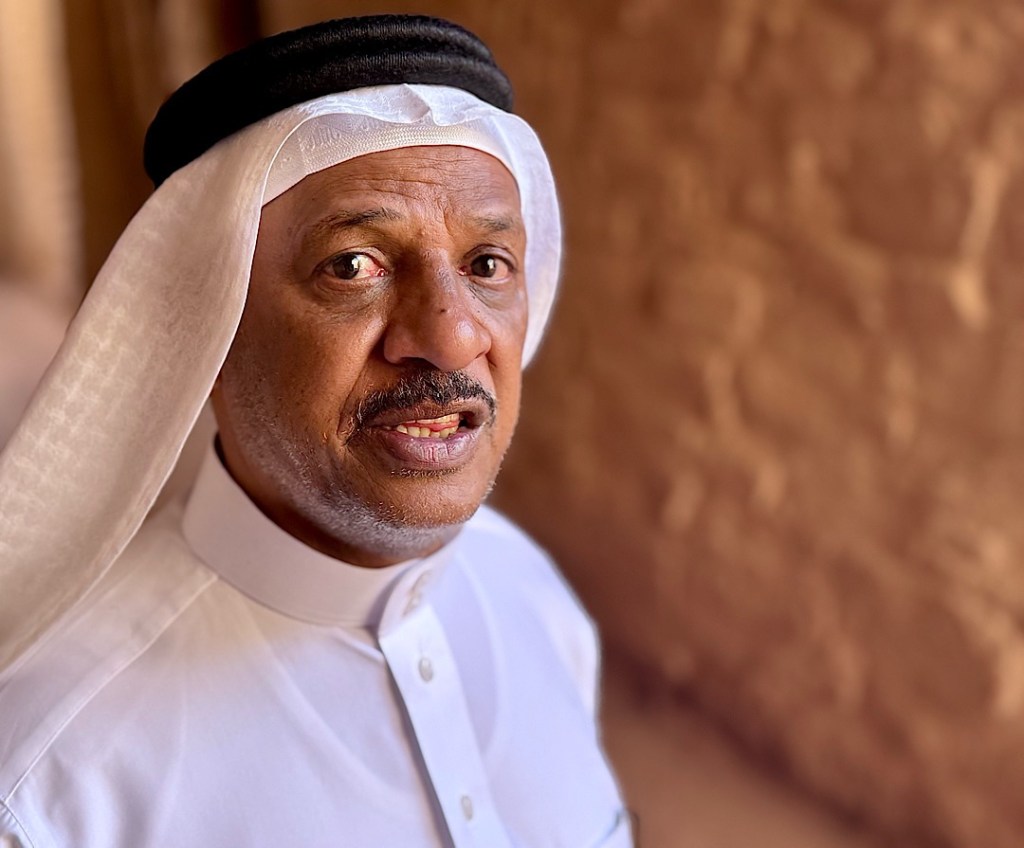
Five minutes later, he was loading us into his GMC Yukon Denali. As short as the ride was, it gave us time to start learning his story. He’s 63, a native of Al Ula, and has lived in the village all his life except for when he was studying pharmacology in Riyadh. He returned home to work as a pharmacist and later as a hospital administrator. He retired from all that five years ago and started the tourist business, having decided he would rather be outdoors, enjoying the natural beauty and dishing up a heaping dose of Arab hospitality to visitors from around the world.
A short, vigorous fellow, Abu-Faisel dresses in the traditional long white thobe and white headscarf crowned with a circle of rope. In short order, we also learned how strong his opinions were about what we ought to do, and when, and how. Many of his suggestions took into account factors about which we had no clue, e.g. which businesses were closed during this hottest time of the year, when the locals ate, what were the best spots for him to drop us off and pick us up, and so on.
We balked at a few things, but almost always he actually did know best. We learned to submit as we spent long hours of not one but three days seeing the area’s highlights under his direction. These included:
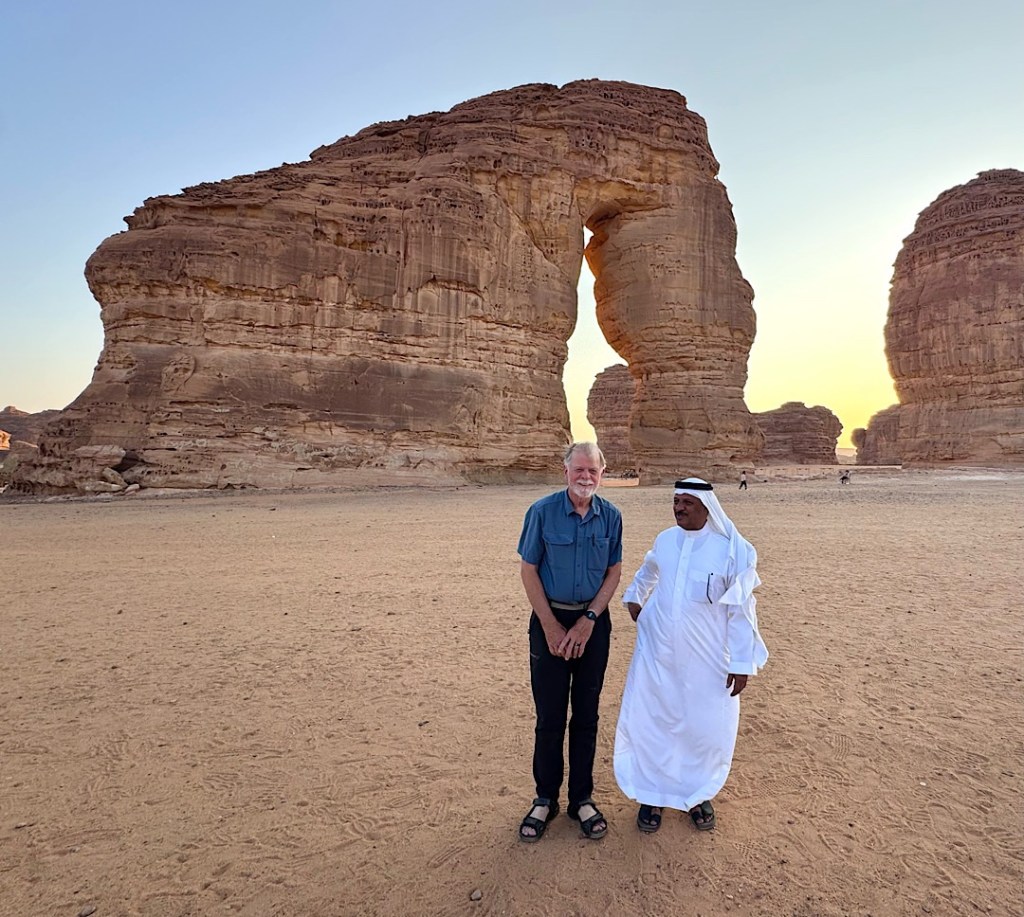
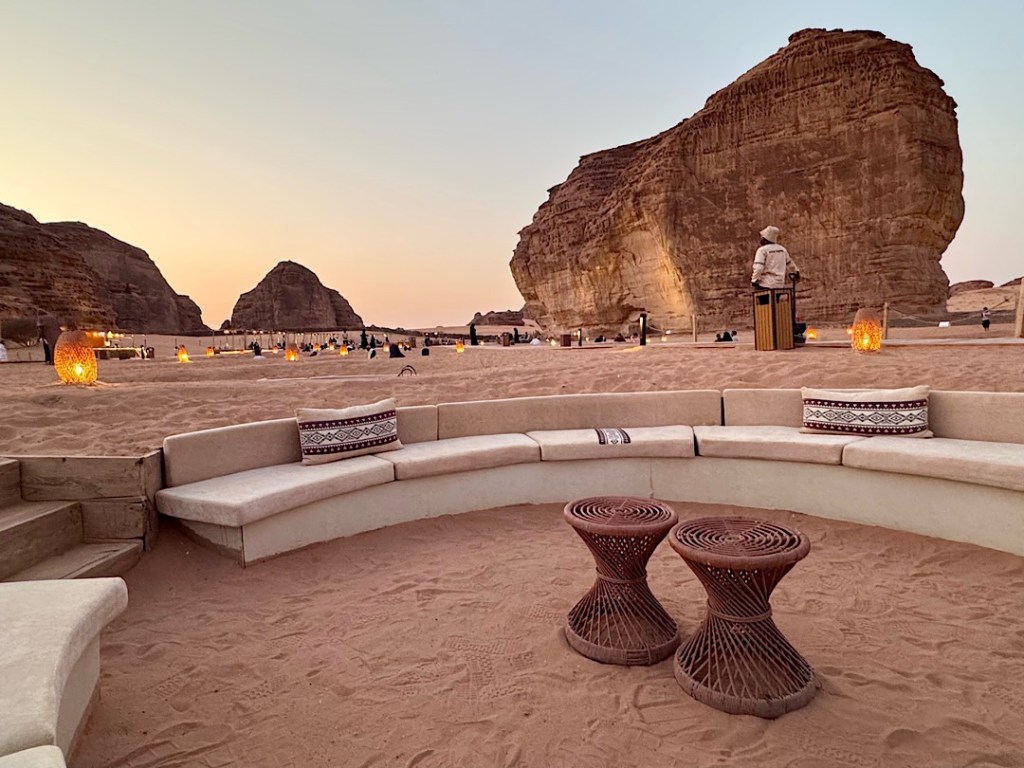
— Elephant Rock at sunset Friday night
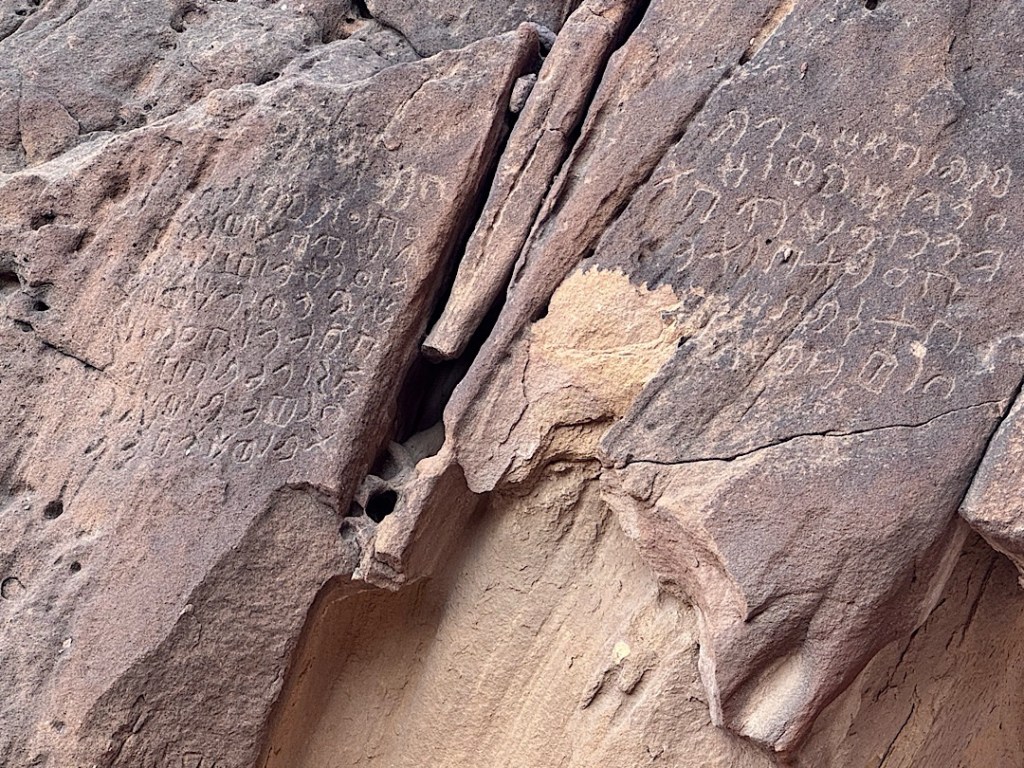
— Saturday morning we joined a ranger-led tour of the most spectacular Nabatean tombs (at Hegra).
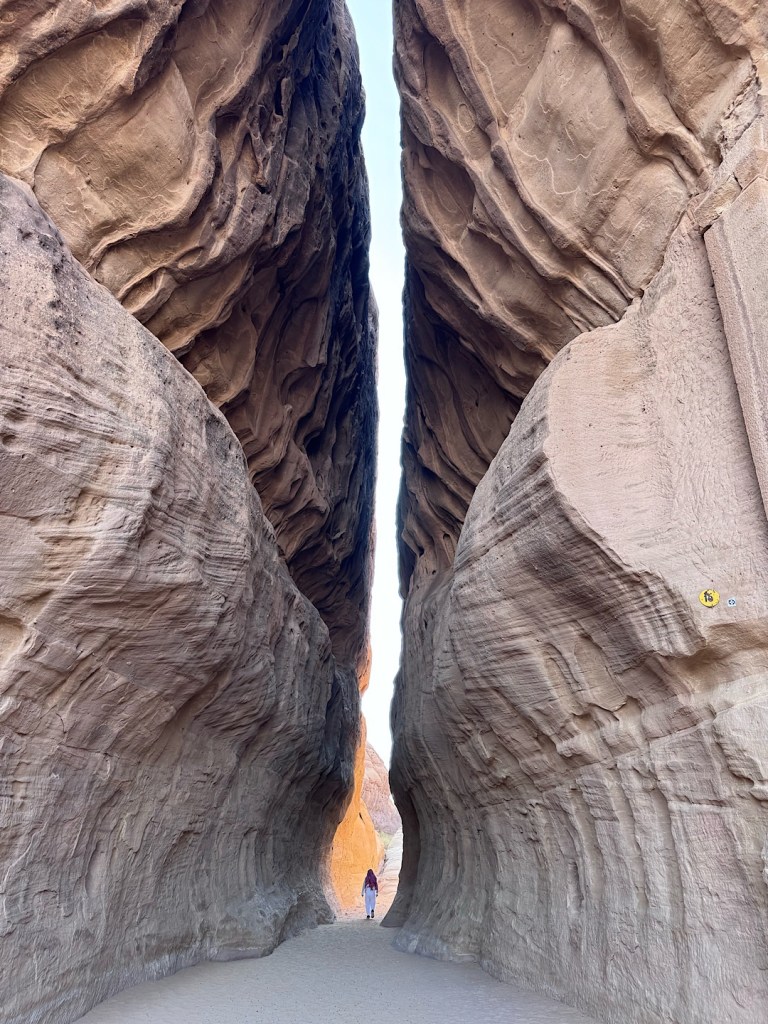
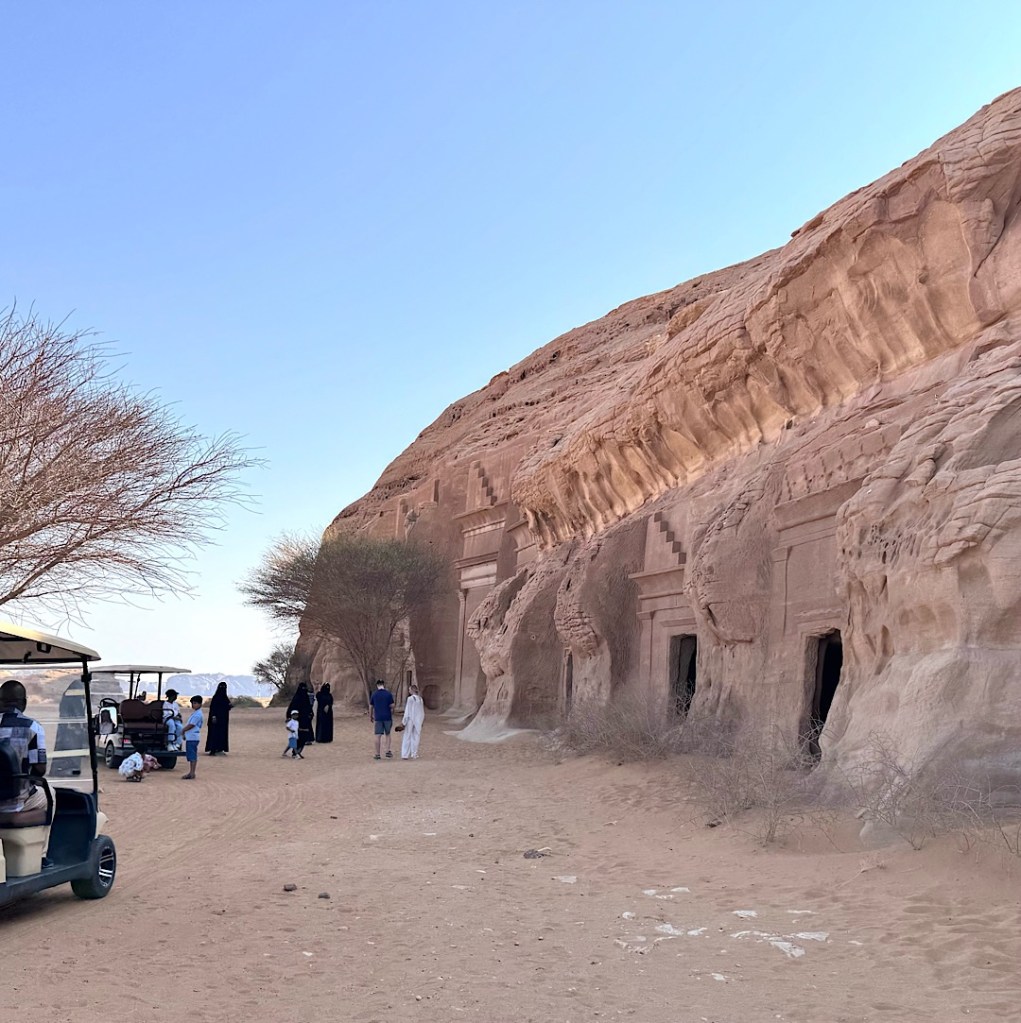
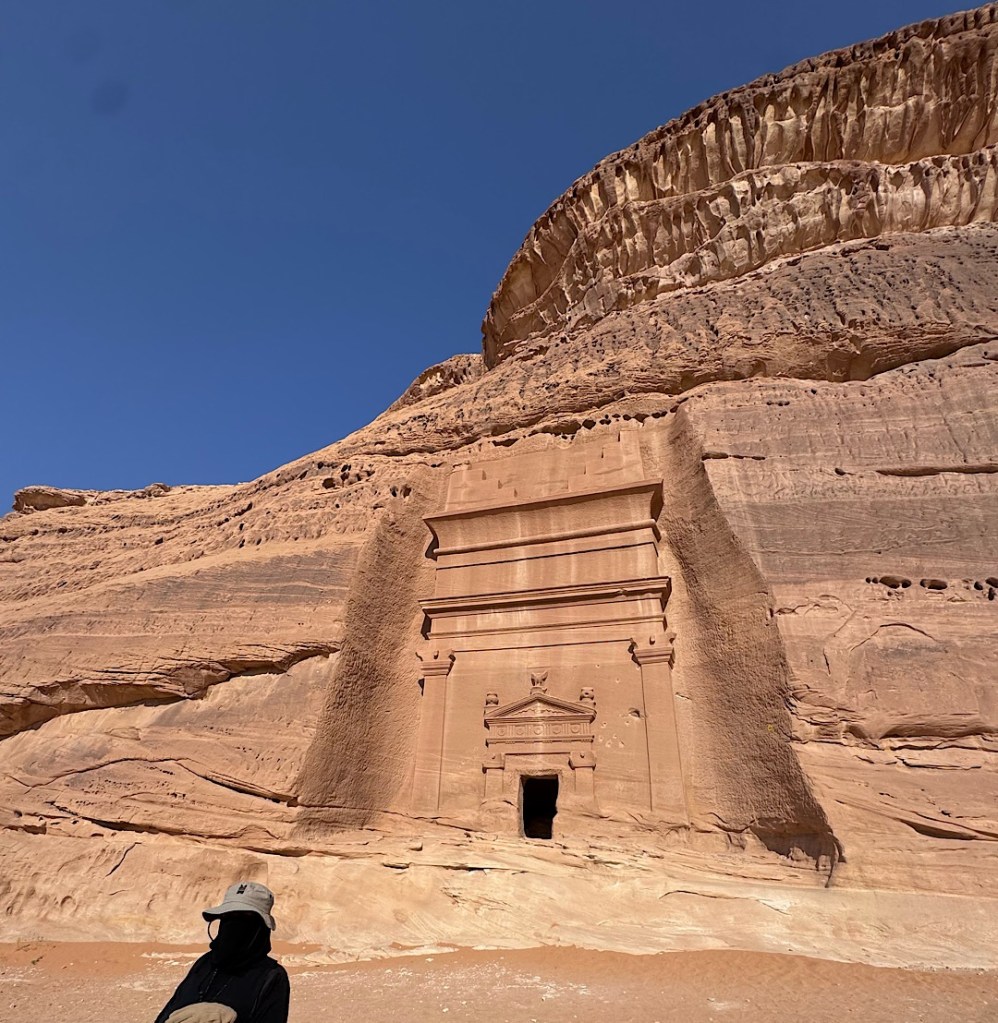
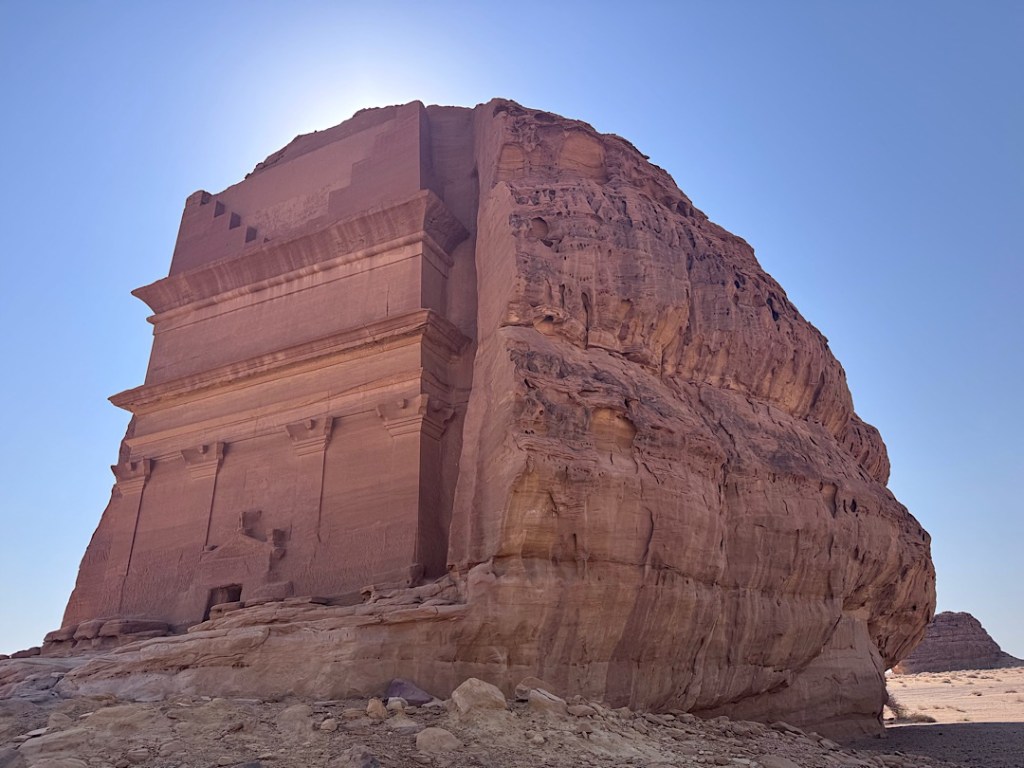
— After Hegra, Abu-Faisel drove us to a hike through a slot canyon that opened up to a pleasant outdoor cafe.
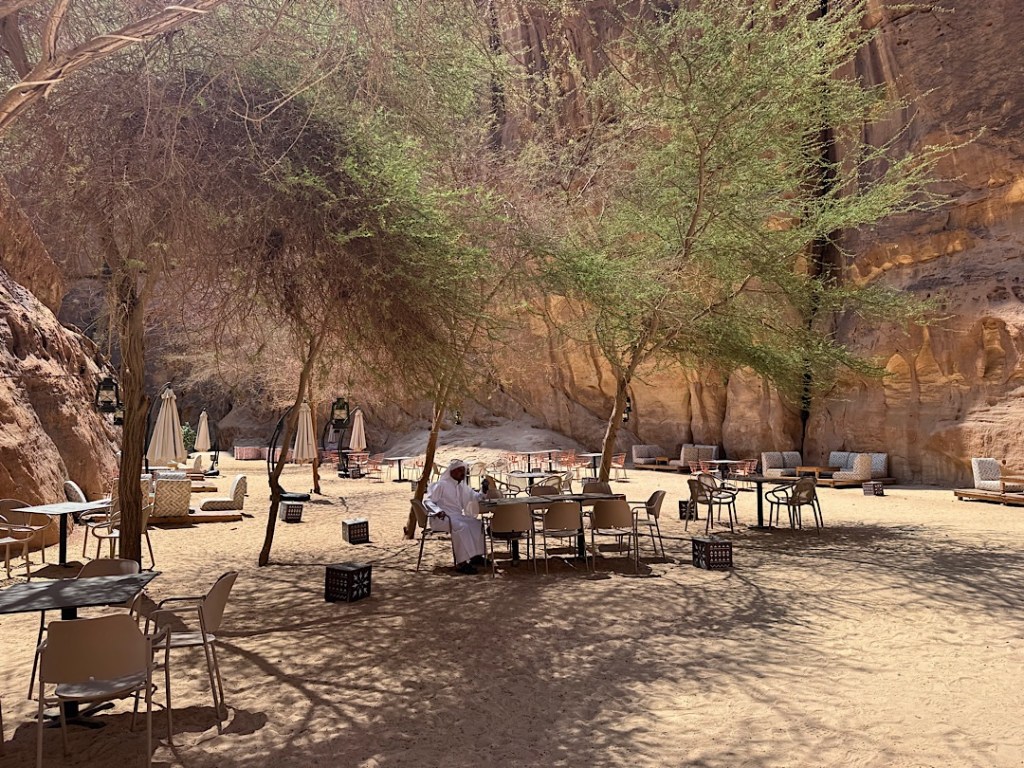
— We grabbed lunch, enjoyed a brief nap back at the Friday Suites, then took another ranger-led tour of Dadan.
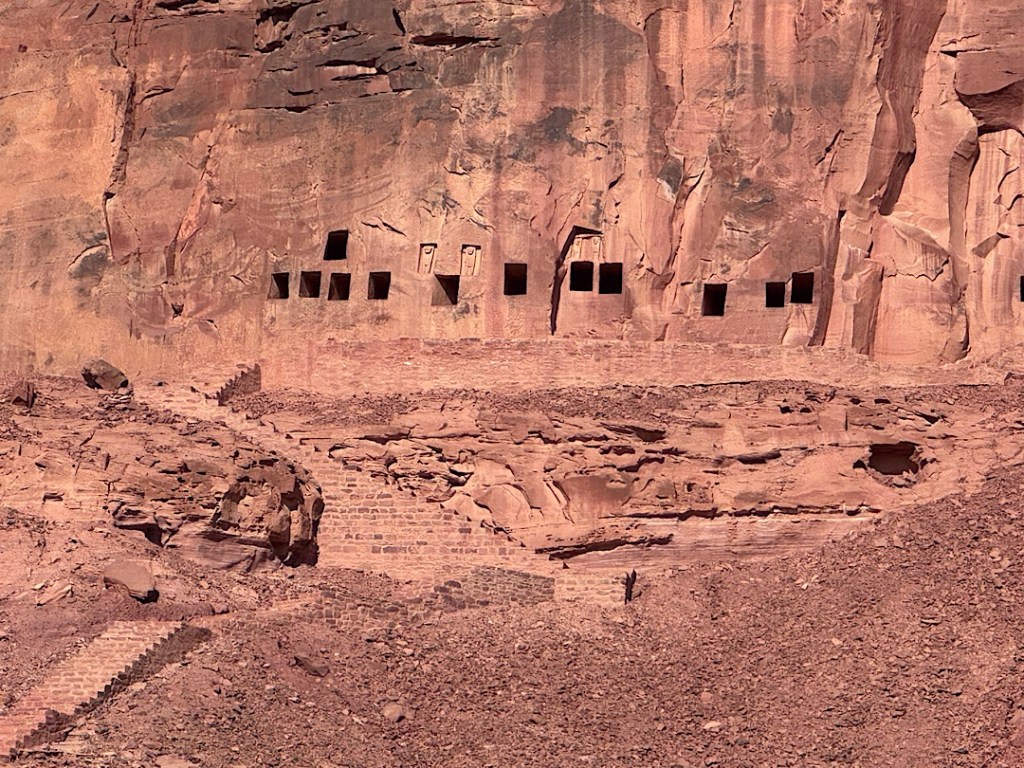
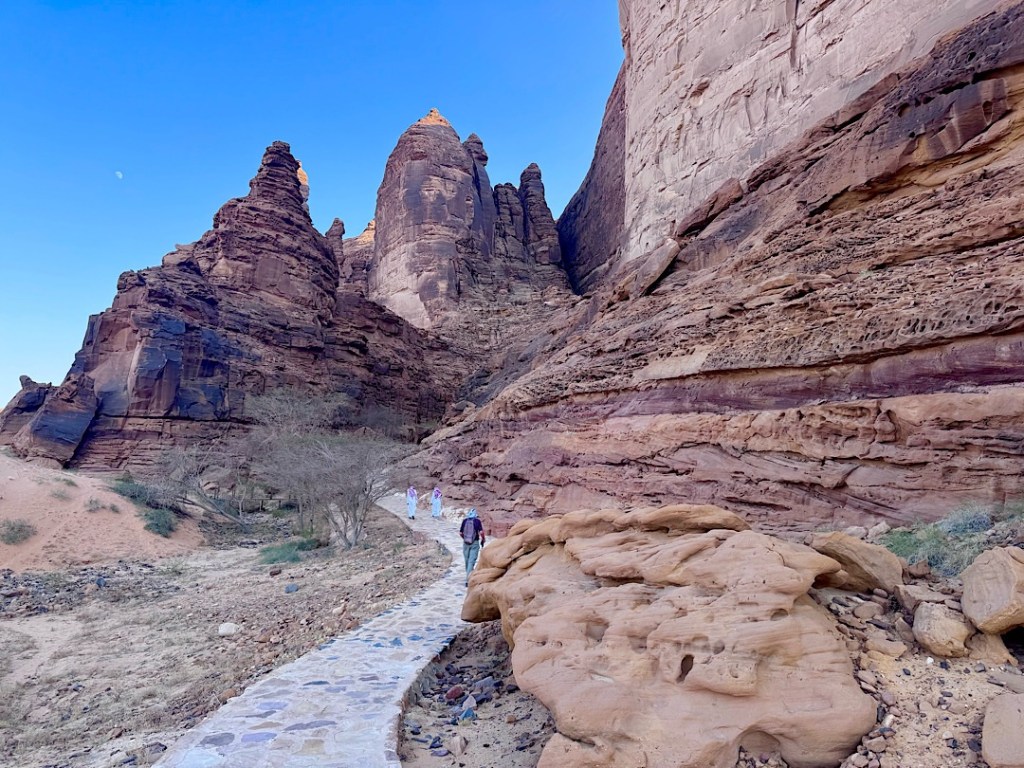
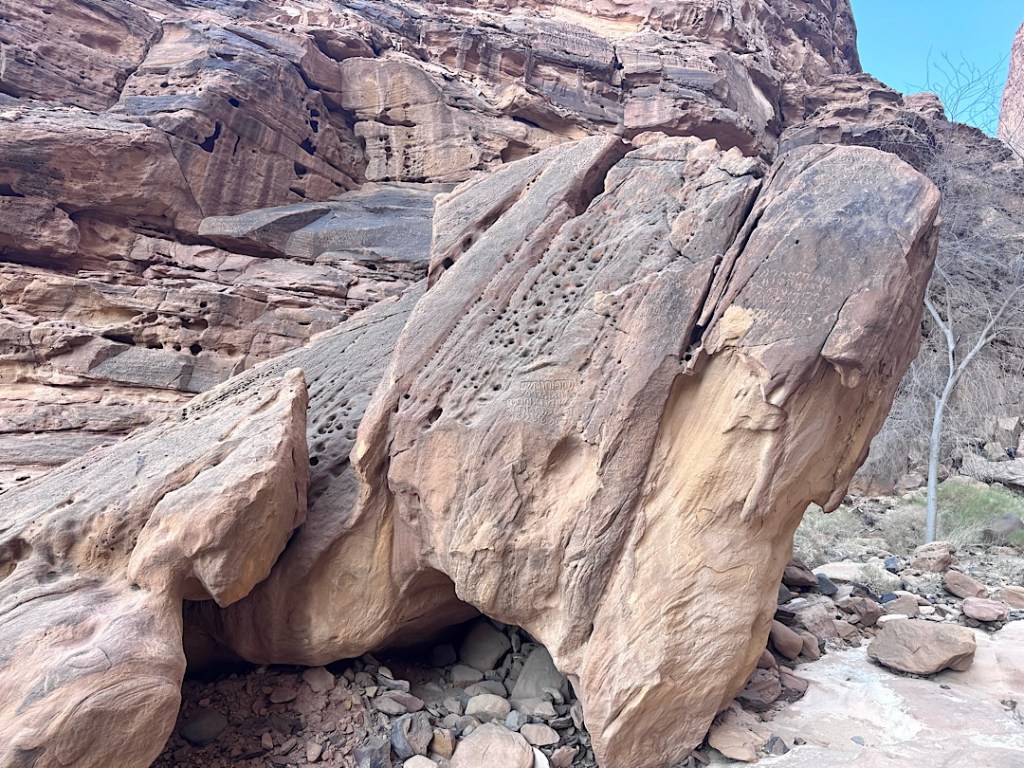
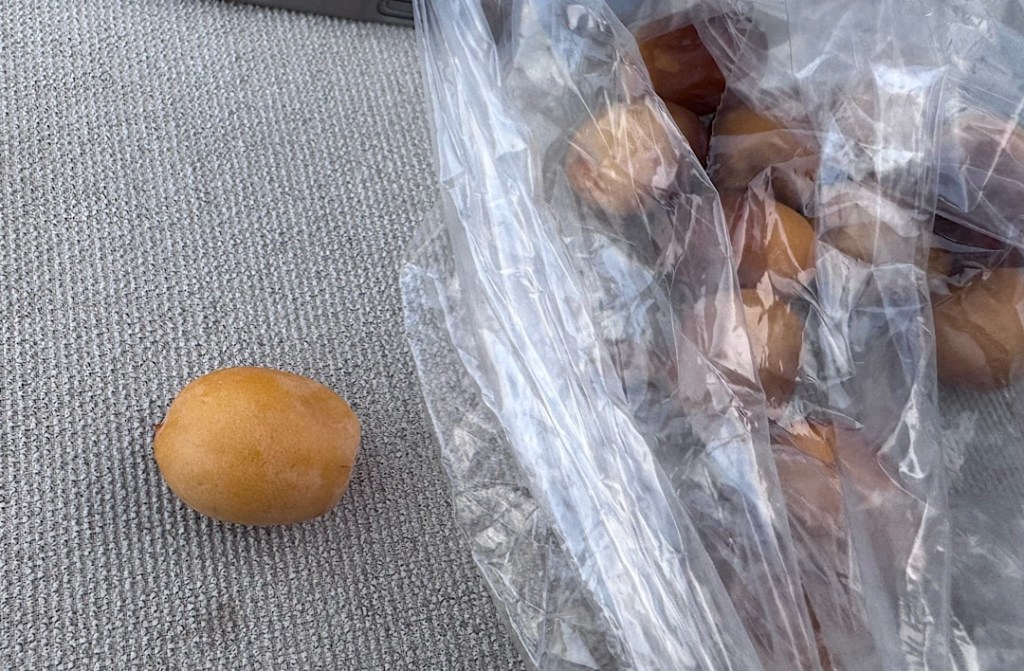
— Shortly before sunset Saturday night, Abu-Faisel drove us up to a viewpoint overlooking the whole valley. We sipped Arab coffee and munched on green dates.
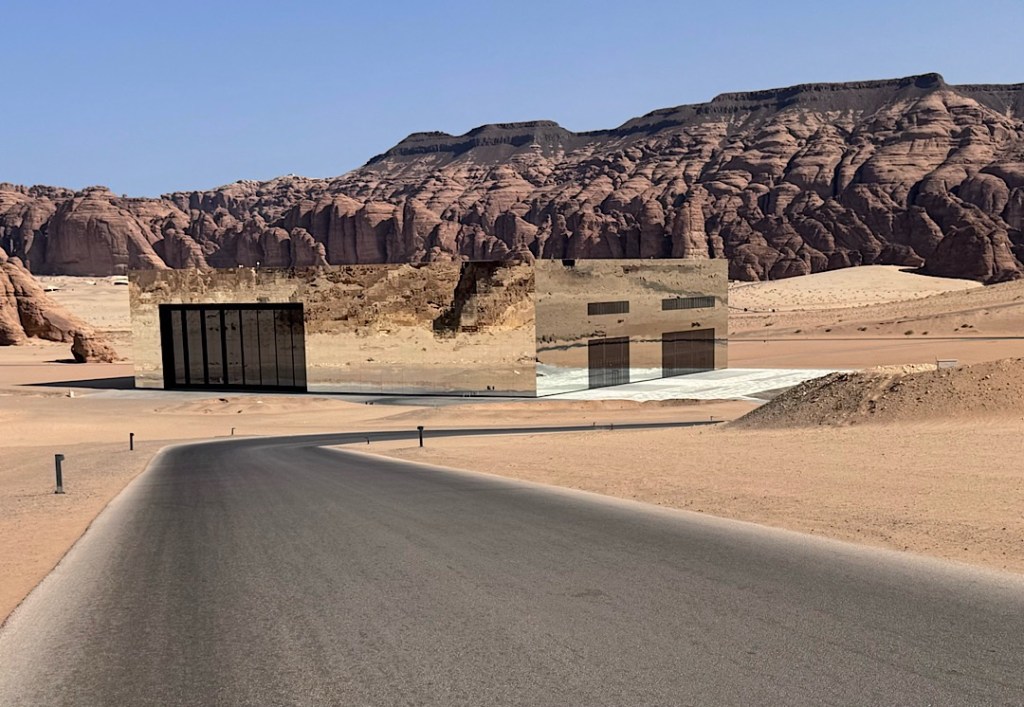
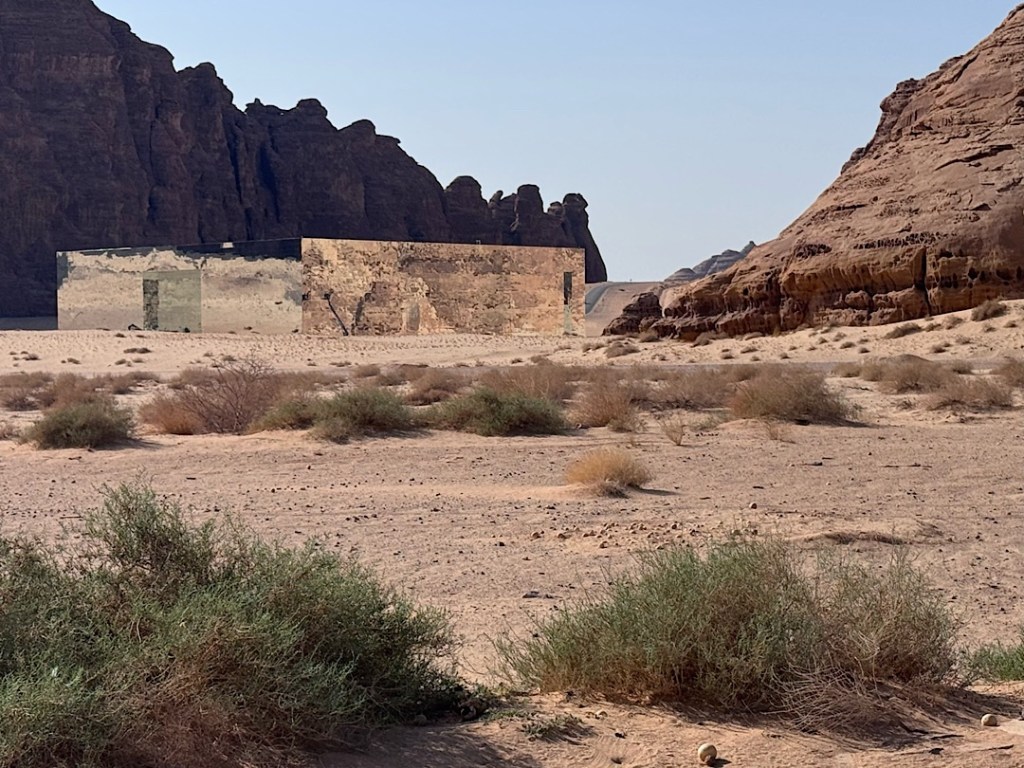
— Early Sunday morning we drove to the stunning glass-clad Maraya Auditorium, then walked around its exterior.
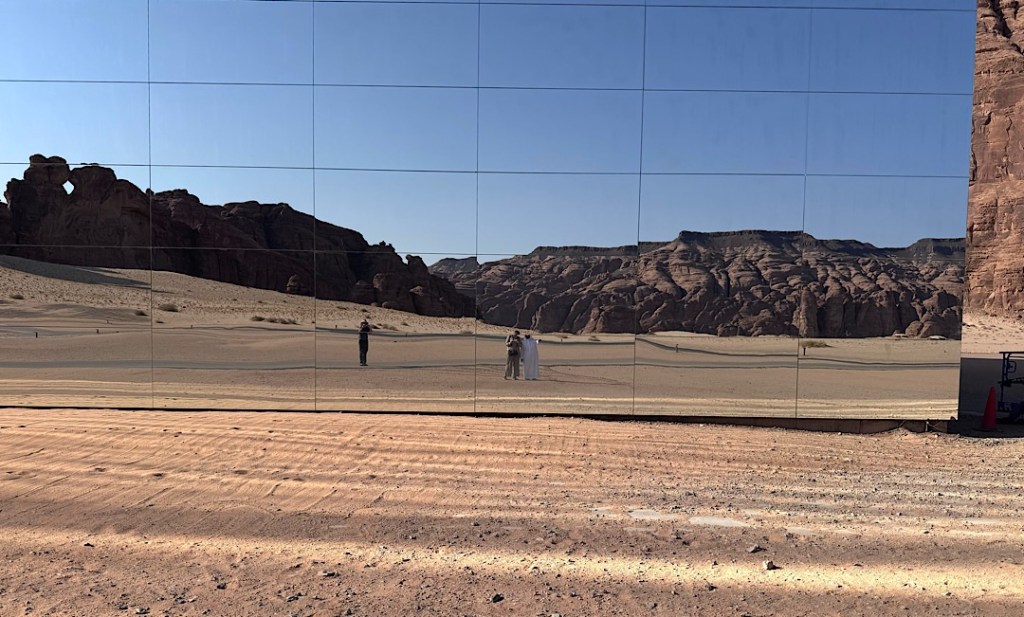
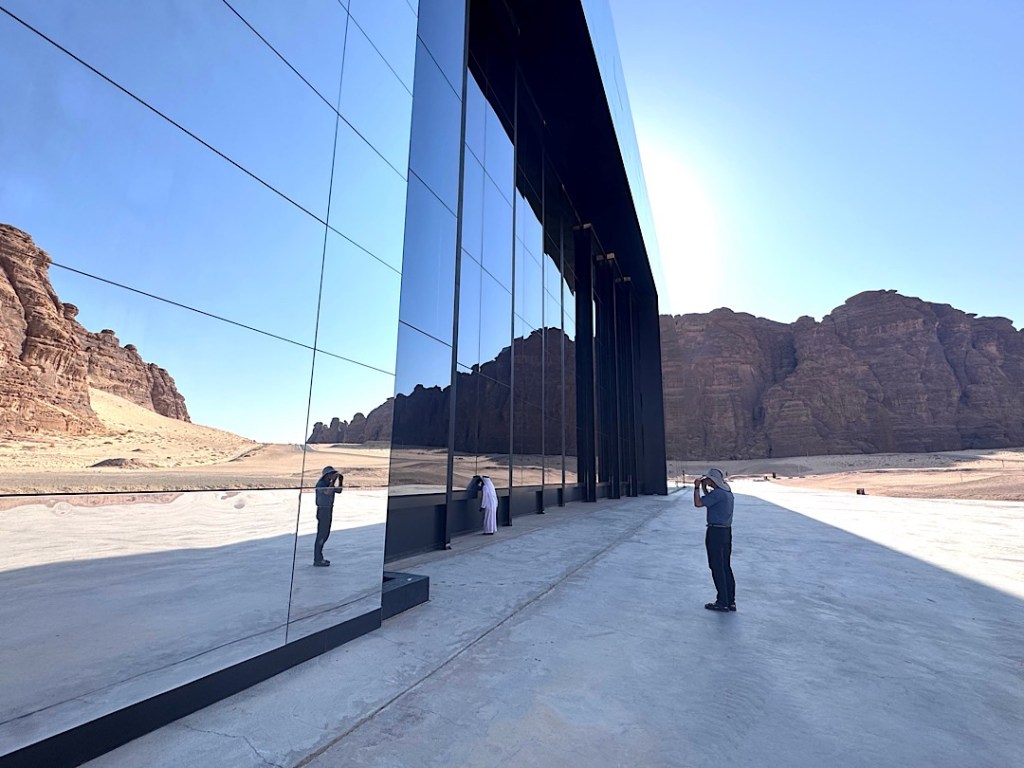
We enjoyed all these activities, but the one that impressed me most was walking through the residential section of Al Ula’s Old Town. Abu Faisel tacked this on Sunday morning — after our visit to Maraya and before he took us to lunch and then drove us to the airport. Built in the 12th Century, the warren of mud-brick dwellings was Abu-Faisel’s home for his first 11 years. Then in the early 1980s, the community got tired of living without electricity and plumbing and abandoned the quarter. Abu-Faisel’s family moved to the nearby 500-tree date farm owned by his father.
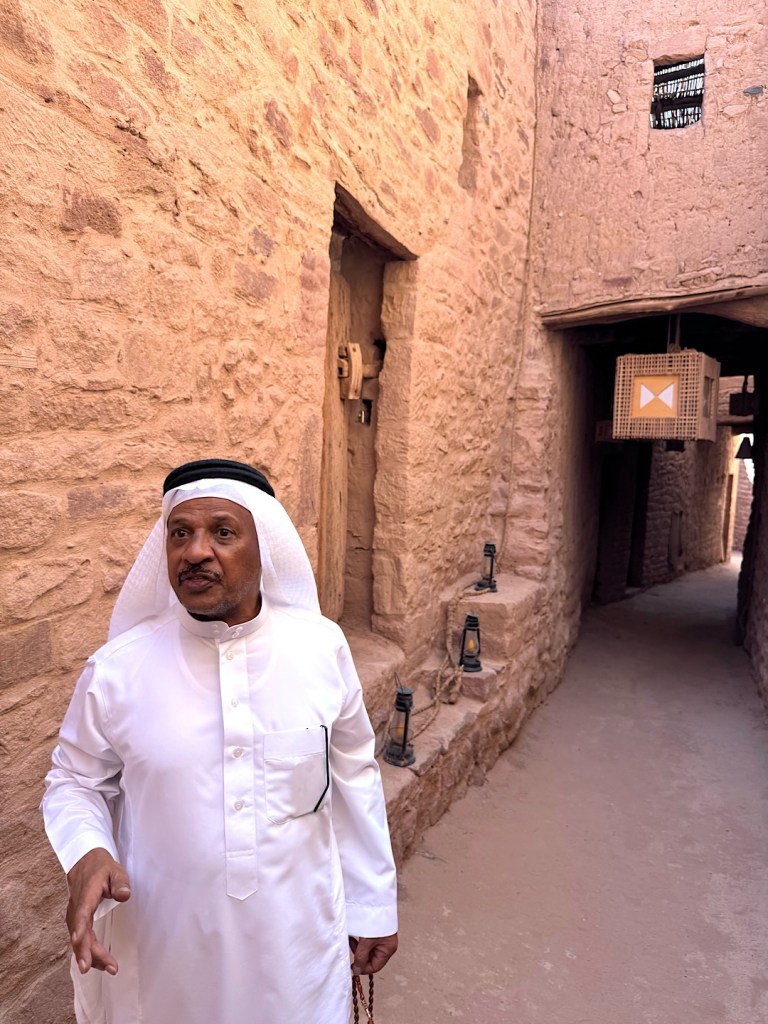
Abu Faisel showed us the building where he was born and the well from which he and his brothers fetched the family’s water.
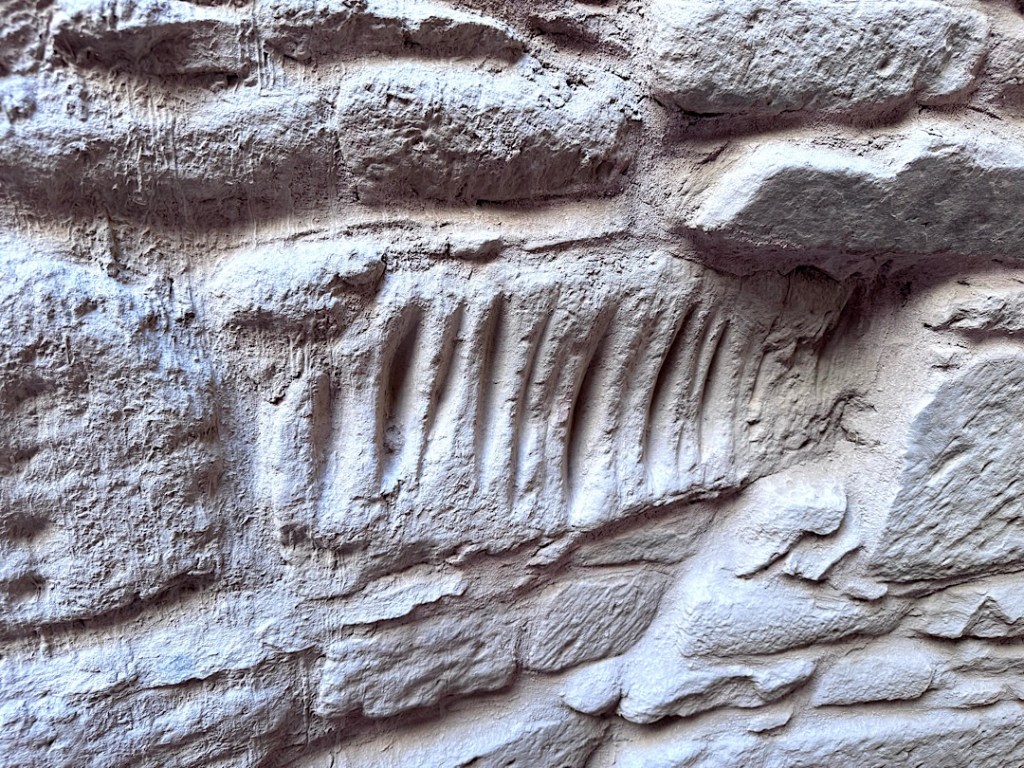
Since UNESCO (in 2008) declared Hegra to be a World Heritage Site (Saudi Arabia’s first), Al Ula’s Old Town has come within the sights of the crown prince and his planners. Today many of the structures have been renovated. Some are filled with interesting educational displays. More reconstruction and ornamentation is planned.
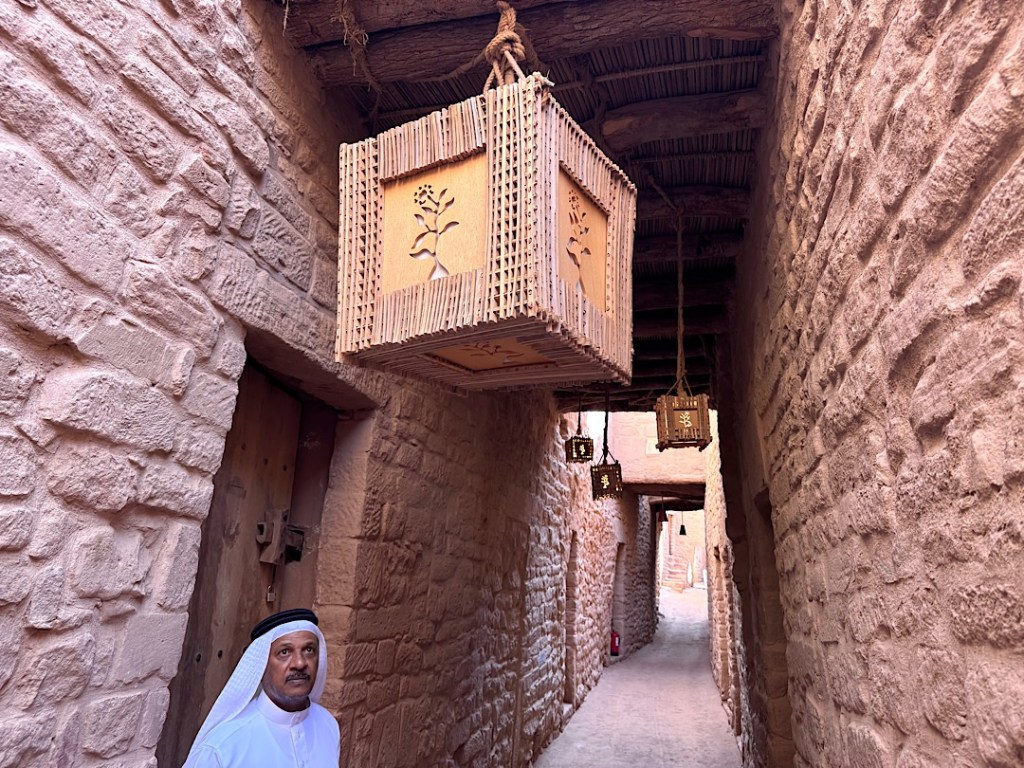
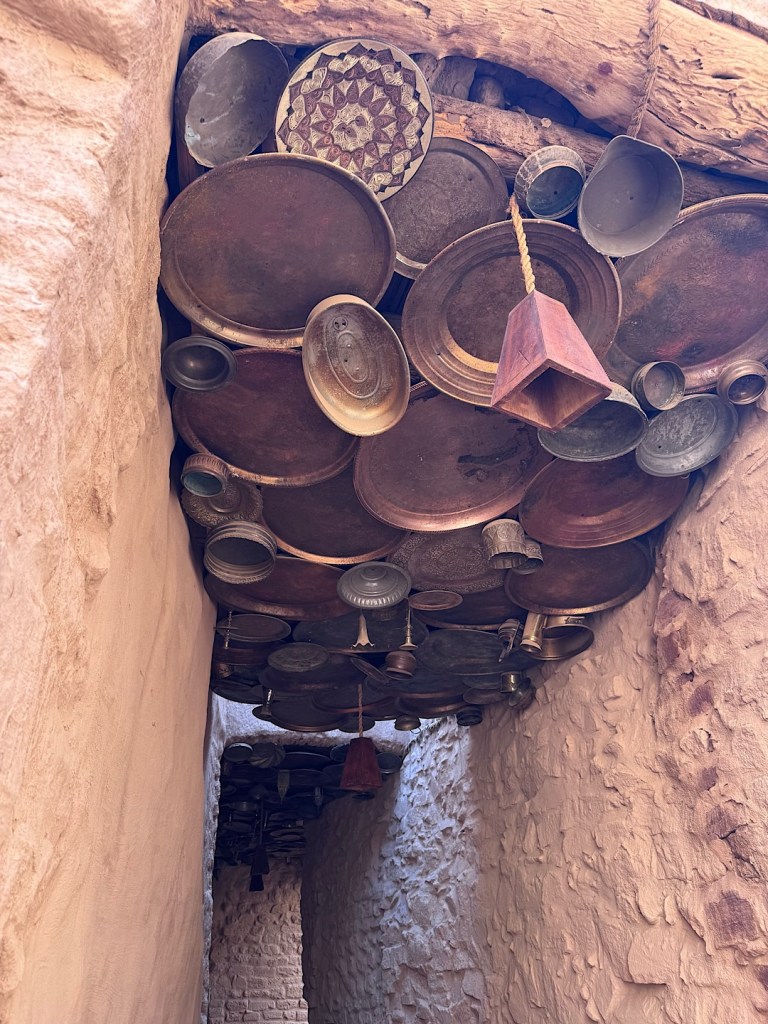
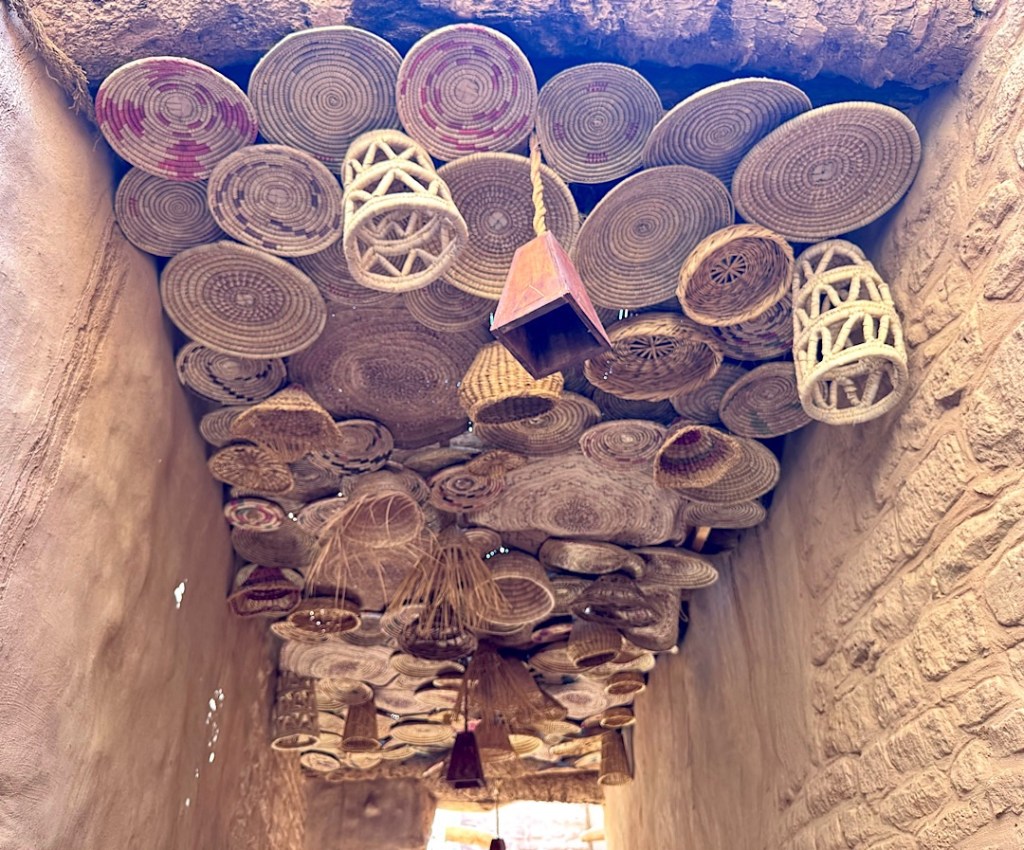
As this has happened, the Saudi government has condemned and demolished big chunks of the adjoining parts of the central city. Five years ago, they took Abu-Faisel’s family farm through eminent domain. Before this whole process started, Al Ula had 85,000 residents. Now the number is around 50,000, and the Powers That Be plan to continue making longtime residents move out of town until the population is down to about 25,000. Abu-Faisel couldn’t (or wouldn’t?) say why, but Steve and I noted that as the number of tourists expands, this plan will limit the number of Saudis exposed to corrupting foreign influences. (All those bikini-clad women lounging around the fancy resort pools! Alcohol! We heard a rumor it was already available at one of the resorts — the only source in the whole kingdom, except for certain secret sources in Riyadh. But how can more bars not be on the horizon?)
Abu Faisel never ranted or expressed anger about any of this. For the most part he sounded philosophical. Saudi citizens aren’t allowed to protest.
As for us, we were grateful for the insight into how things worked. The crazy heat was a small price to pay for having one attraction after another almost to ourselves. In the winter, all the parking lots are full, Abu-Faisel says. Food stands have long lines; at some restaurants you need a reservation.
Being in Al Ula at this time of year, at this stage in its development felt like being in Sedona or Petra before anyone ever heard of them. The changes already taking place only deepened my sense of enchantment.
By the way, Abu-Faisel wouldn’t tell us how much we owed him for all the extra hours — the extra days! — of guide service until it was time to head to the airport. Then he stuck with his initial $400 price. He said if we didn’t feel we had gotten good value, we didn’t even have to pay that. I laughed.


Another brilliant arm chair trip to a place that I find fascinating. Thank. you so much! i’m getting too old to do adventure travel, but still am able to do a bit. Had a great trip, with my partner, last fall to the Utah canyons, Bryce, Zion and Grand. Lucky for us to spend time at the the beautiful lodge before it burned. Glad we traveled when we did. This fall would have been a very different story. Thanks, again, :Love, Ann
>
What an adventure! I doubt we’ll go to Saudi Arabia, but this makes me interested. A good guide makes a place come to life.
Christy ************************************* Christy Zatkin 6346 Via Maria La Jolla, CA 92037 619-204-9530
>