Trekking with pygmies

Our epic gorilla trek took place Tuesday. Wednesday we met some of the people whom the gorillas displaced. Of course, it wasn’t the gorillas who did it, but about 20 years ago, the Ugandan government ordered all the pygmies to move out of the forests that had been their home for millennia. The last of the hunter-gatherers in this part of the world, the Batwa (as they call themselves; pygmy is the word the English applied to them) had always co-existed with the forest creatures. But as an exploding human population drove more and more people to cut down forests and farm, and the once boundless rainforest was reduced to mere islands, it was felt that the Batwa were putting too much pressure on what was left. So they were kicked out and forced onto the African equivalent of reservations. It was probably good for the gorillas and other forest animals and good for the non-Batwa Ugandans. Gorilla tourism is an economic engine, benefitting many ordinary folks. But it’s been devastating for the remaining Batwa.

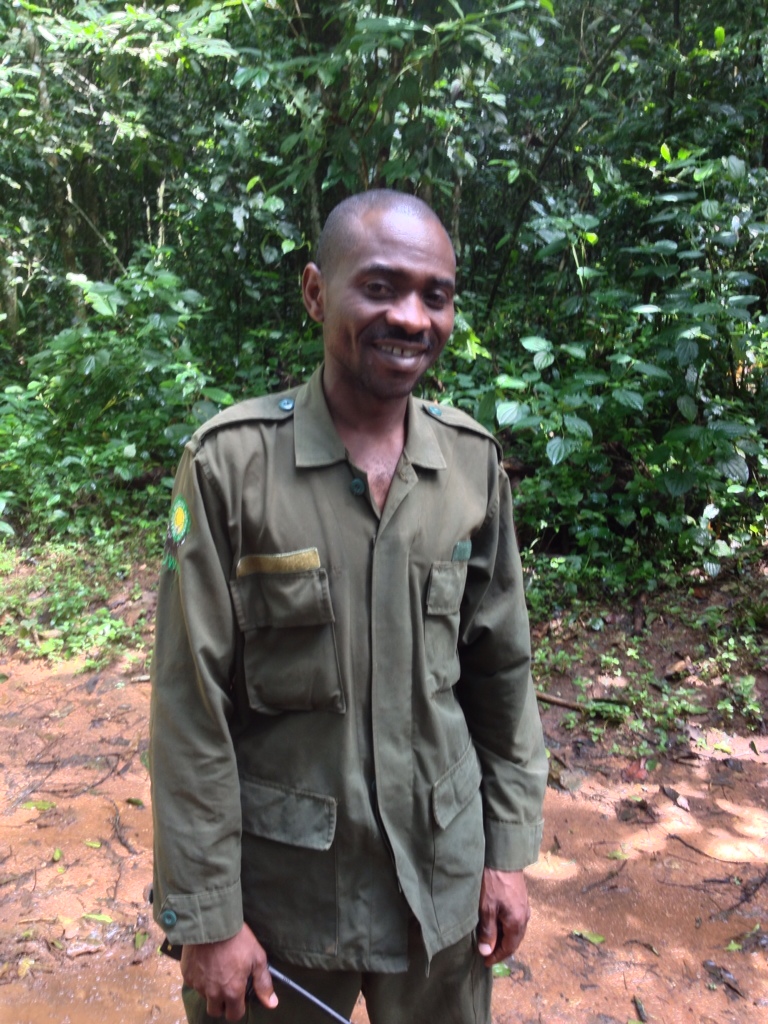
One effort intended to help them preserve some remnant of their culture (and earn money) has been the creation of what’s called the Batwa Trail. This is what S and I signed up for.After a bit of a muddle over where we would start (there are two trail heads), we all assembled at the one withIn Mugahinga National Park. We set off with a ranger/translator (Benjamin), the two standard AK47-toting guards, and four Batwa ranging in age from 36 to 51. They had all grown up in this non-materialist culture (where you built your home from sticks and leaves and inhabited it for just a few months before moving on with just what you could carry.)

They all wore clothes made of animal-skins. Two of the four carried weapons (a spear and bow and arrow). To my surprise, they weren’t terribly small — maybe in the low 5-foot range. They led us briskly down a trail strewn with fresh-looking Cape Buffalo dung. I found myself thinking that it would be exciting to encounter one (and have one of the guards scare it away!) But the most menacing creatures we saw were legions of safari (aka fire) ants. We both avoided being bitten by any, thanks to the solicitous warnings of the Batwa.

They proved even better at entertaining us. Steven, the leader, had enormous presence, and in the course of frequent stops, he and the other fellows explained the use of various plants both for sustenance and medicine. Much more unexpected (and entertaining) was the way his comrades acted out various scenarios from their former life: setting a snare (and accidentally getting caught in it – har-har!); using a dog bedecked with bells (played by one of the guys) to catch a wild animals (played by a carved wooden hippo). “They’re like the Marx Brothers!” Steve whispered to me at one point.

The grand finale took us into a huge underground lava tube where the Batwa king used to hang out and his subjects stored crops plundered from surrounding farms. Normally, Batwa ladies hidden in the cave’s inky inner recesses surprise visitors by singing, softly at first and then building to a rousing conclusion. But they weren’t there on this particular day; someone said something about their having to go get food instead. I was a little disappointed, but 6 ladies were assembled when we emerged from the cave and they gave us at least a taste of what we had missed.

The guys and we also had shared our own magic moment a little earlier, when we had stopped in a clearing. They gave us a wildly animated demonstration of how they started fires, using two sticks. Then we all flopped down in an ant-free patch of ground to eat our picnic lunches. Steve and I asked lots of questions, and they seemed happy to answer. Then it occurred to me that they might enjoy hearing how we had learned about them. Benjamin translated as I described driving in my car one day several months ago and listening to an NPR reporter who also had experienced the Batwa Trail. Intrigued, I had googled them when I got home. What I read had made me resolve to find them. We all laughed at the crazy connections. “You’re famous!” I told them. Their eyes shone. I promised to tell other people about them, and they liked that a lot.


Gorilla country

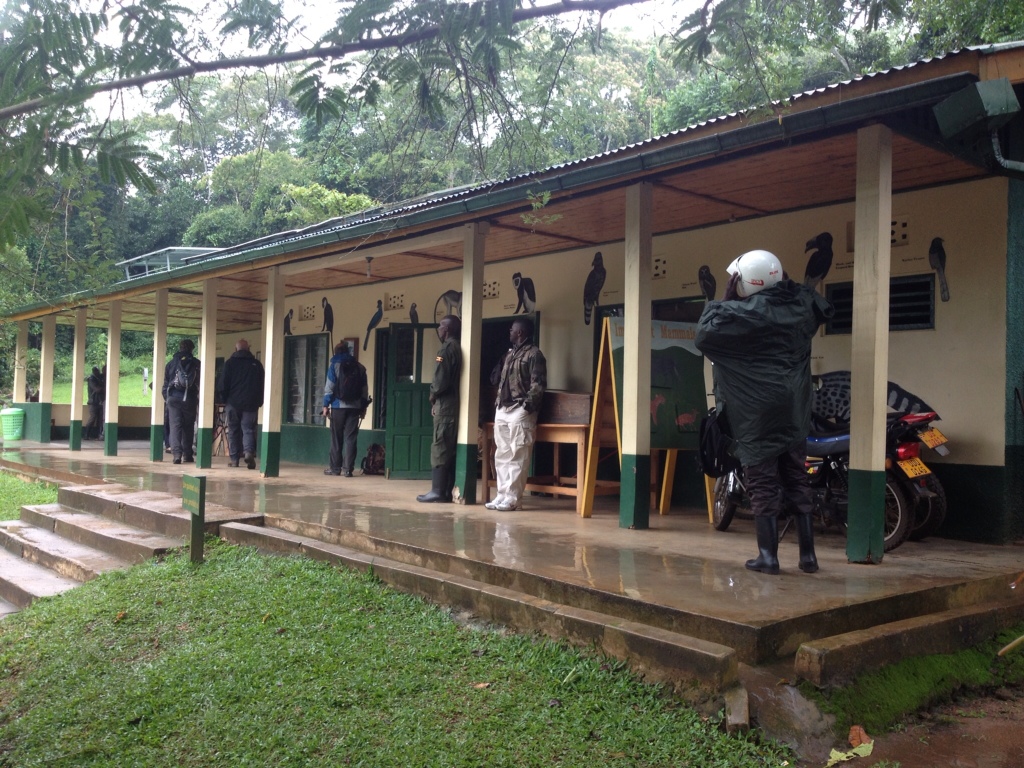
When we got back to the Uganda Wildlife Authority office Tuesday afternoon (6/5), after a grueling but satisfying 7 hours of tracking 14 of the remaining 700 mountain gorillas left in the world, one of our ranger/guides conducted a brief, corny ceremony in which she read each of our names and handed out ornate gorilla-tracking certificates. Steve and I and the 50-year-old Dutchman and his lanky 18-year-old son had finished the trek earlier than the 4 Sri Lankans who were the other members of our party. We stood up and applauded each other as we received our certificates. It was cute. Then the Dutchman spoke, and somewhat to my surprise, I almost burst into tears. He thanked the guides not only for doing such a good job in leading us to the gorillas, but also for the work they’re doing to preserve this place: the Bwindi Impenetrable Forest. It is one of the rarest and most beautiful places on earth, and having the chance to walk in it was profoundly moving.

For Steve and me, the chance to see the forest was at least half of what made the day so spectacular. Probably for more folks, it’s all about the gorillas. I’ve never been ga-ga about them; never found them as enchanting, for example, as bonobos (pygmy chimps) or chimpanzees. But even for us, the chance to see these animals in the wild was intoxicating enough to make us want to pay for the permits required of anyone tracking them. Those permits not only are expensive, but securing them was daunting. I wired off the (non-refundable!) money for ours back in February, and then the date was set in stone. Had anything gone wrong, we simply would have been out of luck. Once we’d gotten ourselves to this distant (southwesternmost) corner of Uganda, the challenge was hardly over.

Here’s the way the tracking works: mountain gorillas live in two of Uganda’s national parks, but Bwindi has the largest concentration (about 300). They live in family groups, and about 10 of those have been habituated to humans. But only four of the 10 can be visited by tourists (I guess only scientists get access to the others). Moreover only 8 tourists are allowed in any group at a time, and they can only spend one hour with the troupe. Which means that — at most — 32 tourists may interact with Bwindi’s gorillas on any given day — IF they find the gorillas at all.

In our case, we were reasonably confident we’d find them. We’d been assigned to the Nkuringo family — 14 animals (8 male and 4 female), one of the troupes most accustomed to humans, and one with a reputation for being tolerant and even curious about visitors. I think we were designated to track them partly because I got my permit so early and partly because we’re old (for once, that felt like a delicious advantage!) Still finding any troupe is never a certainty. Our lead guide (named, comically, Modern), told us once he didn’t find them till 2:30 in the afternoon; he and his group didn’t get back to the base camp till 11 p.m. (something I find almost unimaginable, given that by 7 p.m., it’s always dark in this forest, which is also home to elephants, unhabituated gorillas, jaguars, pythons, and other deadly vipers.) Modern said just 6 months ago the rains were so torrential the gorillas were virtually invisible, hiding in the underbrush. Visitors slipped in the muck; they broke bones.

At the other extreme, Modern told us he’s found the gorillas 40 minutes down the trail. In such cases, the visitors still can only spend one hour with the troupe; they never get to see the forest at all.

Steve and I were gloriously lucky. We set our alarm for 5 a.m., ate breakfast at 5:30, then set off from the Traveler’s Rest by 6. We reached the park headquarters (elevation: 6,850 feet) around 7:45, where our group assembled and was briefed. At 8:30, we departed: not only the 8 tourists in our group, but also Modern, two guards armed with AK-47s (to scare off any random elephants!) and several porters. I felt a bit like Deborah Kerr setting off with Stewart Granger in search of King Soloman’s mine’s.

The weather was cool and cloudy at first, perfect for hiking. Almost immediately, we began descending into a deep, deep valley, as green as anything I’ve seen in Ireland. Modern was communicating with two tracker-rangers who’d preceded us and gone to where the gorillas had been the day before. (They usually don’t move more than a kilometer or two per day.) Very soon, the trail become not only steep but encrusted with treacherously slippery pebbles. Over and over again, I thought about how peeved I would be if I fell off a ledge or twisted an ankle or otherwise screwed up, now that we were finally so close. Rarely have I been so grateful to have my hiking poles.

After an hour and a half of this, we turned off the path that skirts the forest, to enter Bwindi itself. If our chimp tracking in Kibale last week didn’t feel like a jungle adventure, this more than made up for it. The “impenetrable” in Bwindi’s name is no exaggeration. This is as thickly tangled, buzzing, twittering greenly amazing a place as I’ve ever seen (except perhaps courtesy of Hollywood.) Instead of pebbles underfoot, there was oozy muck. Two and a half hours after leaving the trailhead, we reached the spot where our trackers had homed in on the group. We left the muddy trail. Underfoot was springy, compressed vegetation, the like of which I’ve never walked on before.

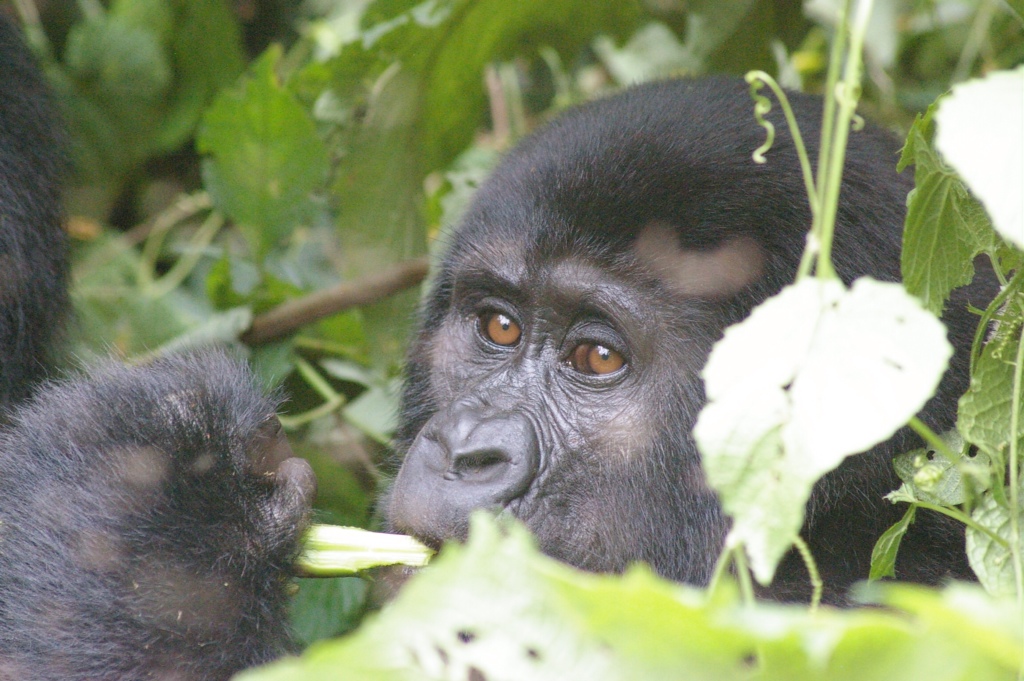
The next hour was magical, though our first gorilla was a recalcitrant young silverback known as Stubborn. He was lying on the ground with his back to us, and he never so much as turned to look at us, despite our noisiness and the fact that we were close enough to reach out and tickle his toes. We ventured on, with the rangers directing us where to go and how to behave. Ultimately we were able to approach 12 of the 14 members of the family. Two of the smallest ones even came out into the open, cuddling and grooming each other.

I could go on, but I’m afraid only a Jane Goodall would be interested in reading much more. I’ll wrap up with just a few final observations. At one point, the number of mountain gorillas in the world had plunged to 200. It has more than tripled since then, but their future survival is far from assured. At this moment, though, they’re out there, foraging, sleeping, playing, mating, giving birth. I’m a witness, and a deeply grateful one.


A brief interruption for whining about the Internet

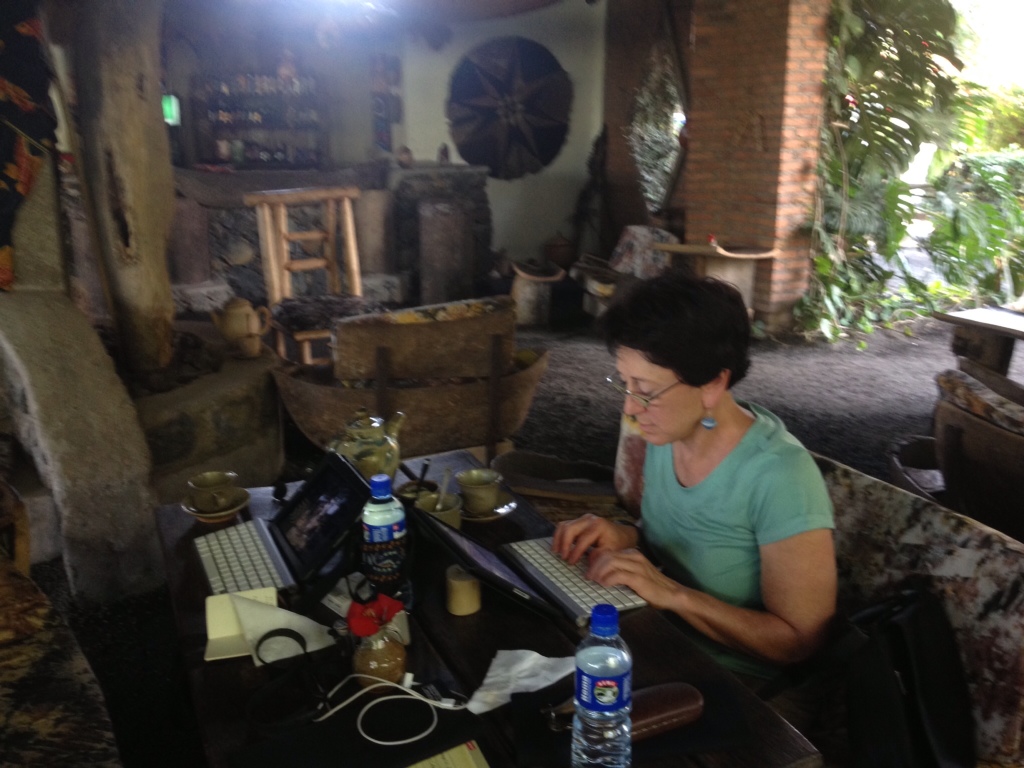
I don’t really want to whine. Just to note that once again, I feel like Charlie Brown, year after year believing Lucy when she promised not to take away the football. Somehow, I really thought Internet access would be easier on this trip. But once again, it’s been amazingly challenging to get online. Our hotel in Kisoro, the Traveler’s Rest (which gorillista Dian Fossey reportedly considered to be her second home), claims on their website to have wifi. But we didn’t even have electricity for parts of our stay there. There was a decent Internet cafe 5 minutes from the hotel. But both full days that we were in Kisoro were crammed with hiking — one day tracking gorillas and the other trekking with local pygmies.

Both those experiences deserve posts of their own, and I’m going to try to write them now from the Hotel Paradis Malahide. It’s about 90 minutes from the border crossing where we passed from Uganda into Rwanda this morning. The hotel is a rustic place on the shore of Lake Kivu. They say that early in the morning, when the air is clear, we’ll be able to see the Congo on the far side of the lake. Tomorrow we’ll go biking in the Rwanda hills with Tom Tofield, an expat Englishman who runs a tour company. But this afternoon it feels delicious to hunker down and catch up — with e-mail, blog posts, and photo organization.

With luck, our good Internet access should continue for at least another week or so. But here (NOW I remember!) you never know. When we can’t get online, I’ve also been tweeting (@jdewyze) with my Twitter feed linking to the blog page (though now that we’re in Rwanda, we’re having trouble with our cell phones.)


Big game country

Who associates Uganda with big game? I never did. Mountain gorillas, maybe. But sweeping savannah dotted with grazing elephants and antelope? We were startled when yesterday we saw all that and more.

I had expected the day to be somewhat tedious, one in which our main objective would be to travel from our lodging near the chimpanzee forest down to the southern end of Queen Elizabeth National Park. Originally, I’d planned an itinerary that would have had us stop in the middle of the park and then enjoy a day of game driving. But an opportunity arose to be useful to Women’s Empowerment (WE) International — the San Diego-based microlending organization we’ve admired since its inception — so we jumped at it and cancelled the park day. We would only stop at the southern end to break up the long journey to Nyaka village and its grannies who were potential recipients of WE’s micro-loan funds.

The Land Cruiser carried us down from the mountains and southward, taking us across the equator (photo op!) a bit after 11. Lunch was at the tent camp adjoining a large channel between two lakes where we’d originally planned to stay. It looked lovely, and it would have been thrilling to watch the hippos come into the camp for their nightly grazing session (reportedly they don’t bother humans who don’t threaten them.) But we pushed on, and it was then that we began spotting the elephants, antelopes, cape buffalo, baboons, and monkeys.

Before making the final approach to the simple camp where we were staying, Robert surprised us by announcing we’d make a quick sweep of one area of the national park to look for lions lounging in fig trees –the most sought-after tourist attraction in this area. It was a long shot; Robert said he’d spent days on some previous trips looking for them with no success.

All lions can climb trees, he pointed out. But what makes the Ishasha area of the national park famous for its tree-climbing lions is that a few huge fig trees are scattered (widely) amidst the legions of acacia. And, unlike the short acacias, the mature fig trees grow stout horizontal branches that make wonderful resting places for lions. High off the ground, they’re well-positioned to catch a cool breeze, escape attack from the tsetse flies that infest this area, and spot the most likely direction in which dinner might lie, come the evening hunting session.

Robert had popped up the top of the Land Cruiser, and Steve and I stood up, finding it not unlike jogging through the savannah — without having to exert any more effort than that required to avoid being jounced out. We’d driven for maybe 20 minutes, and I had just muttered to Steve that I didn’t see ANY fig trees, when he retorted, “There’s one!” The path took us around a bend and up to the tree — which was occupied by three beautiful lions.

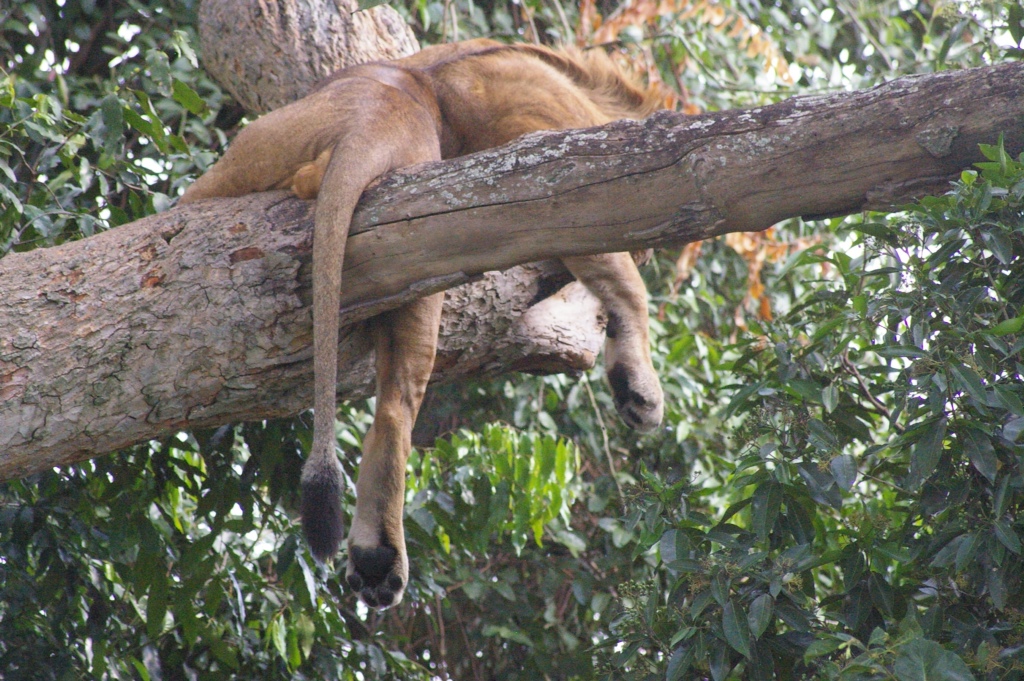
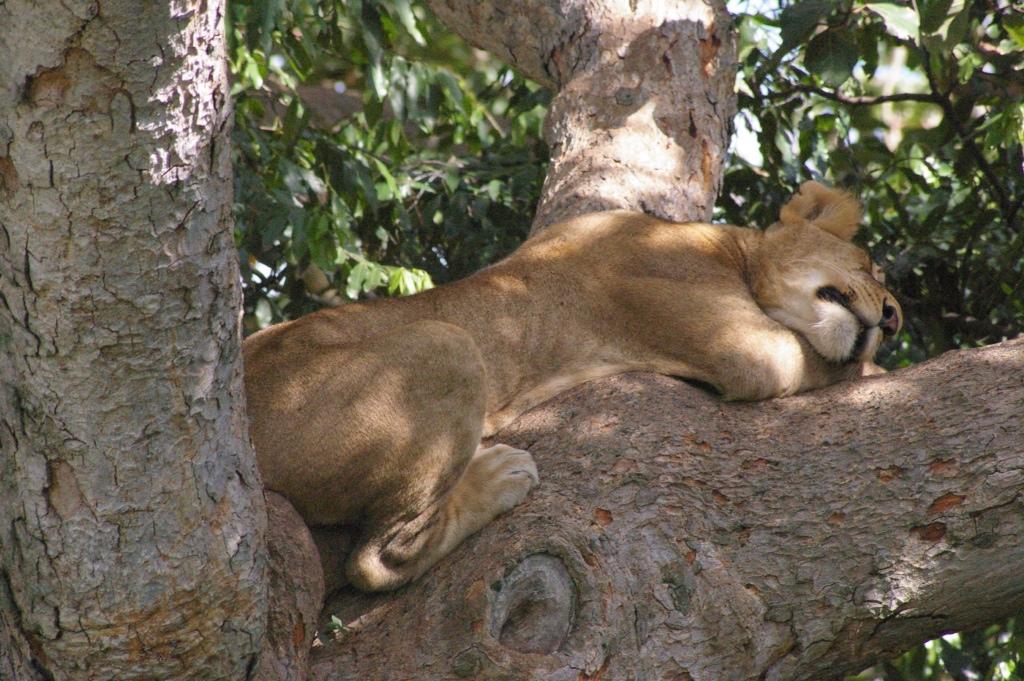
I’m sorry, but if there’s anything cuter than drowsy giant cats draped over fig branches, I don’t know what. Robert told us these were a mom and her two youngsters, male and female. They all were dozing, loose-limbed and looking so comfy I imagined if we could just get a bit closer, we’d hear the purring (assuming that lions purr.) we spent a long time drinking in the sight, while Robert shared some lion lore, asserting, for example, that they’ll never attack, as long as you’re staring in the eyes. (Conversely, you NEVER want to run.)

Finally, we pulled away, and Robert drove us to the banks of the Ishasa River, where on the far bank, the Democratic Republic of the Congo looked close enough to be hittable by someone with a good arm and a pebble. Hippos often play on these banks, but all we could see were two hippo head tops and four pairs of ears that emerged and then re-submerged in the distance.

So we pushed on to our rest stop for the night, a homely but well-tended collection of tents and “chalets” overlooking another nearby river, the Ntungwe. The only guests, we sat in an elevated pavilion, drinking in the splendid countryside and, after sunset, dining on excellent roast goat, assorted vegetables, rice, and the most delicious banana dessert I’ve ever tasted.

I slept well, though I had my earplugs in. I never heard the chomping noises or the raucous cries of young men. I only heard about them from the plump young American property manager. A recent international studies graduate, she recently took this gig after completing a 6-month stint with a Kampala-based NGO. She thought the chomping was a hippo, and commented, “It sounded close!” I was just as happy to have missed it. I prefer for my encounters with wild animals to be during the day — and for the wild animals to be exclusively non-human.


Wild chimpanzees

I could tell you that my favorite moment yesterday was watching Steve, his head lathered up in the shower of our guest cottage, singing (to the tune from South Pacific), “I’m gonna wash that chimp pee outta my hair, I’m gonna wash that chimp pee outta my hair, I’m gonna wash that chimp pee outta my hair, and send it down the drain!” But I’d be lying. It was only one highlight of many.

I understand that chimpanzees live in 6 of Uganda’s 10 national parks, but the one where Steve got his head peed on was Kibale. It boasts having one of the densest concentrations of primates in the world — not only chimps but a dozen or so other species. Moreover, our chimp-tracking guide, Bosco, made the case that Kibale provides the best opportunity in the world to interact with wild chimps. Some 1450 individuals (living in 13 areas) were counted in the last census three and a half years ago. One of the groups, containing about 120 animals, has been habituated to humans for years. As a result, 90% of the time, chimp-trackers wind up seeing what they came for.

We arrived at the park headquarters around 8. I was already in an exultant mood, thrilled to be in my first true African rainforest. It wasn’t at all steamy and jungly. It had rained in the night, and a cool mist continued to drizzle down. Along with a dozen or so other tourists, we assembled for a briefing by Bosco. Among other safety tips, he warned us not to make noises imitating the chimps. We might inadvertently make the wrong call, with negative consequences

One factor working against us was the rain, he said. Like people, chimps prefer not to sit on wet ground. But we would try our best to get as close as possible. We split into three smaller groups, and i felt happy to be in the one led by Bosco, who exuded a calm confidence.

Then we were off! We drove on little more than trails, and Bosco explained that chimp-tracking begins by trying to pinpoint where they’ve been heard. Chimpanzees are a raucous crew, and their vocalizations carry far. We stopped at one place where Bosco gathered information, then we pushed on, into an area of the rainforest where the trees at the top of the canopy reached at least 80-100 feet tall. In a clearing, we all got out, and the vehicles disappeared, taking their diesel clatter with them. In the ensuing relative silence, we listened to the insect chatter and bird calls.

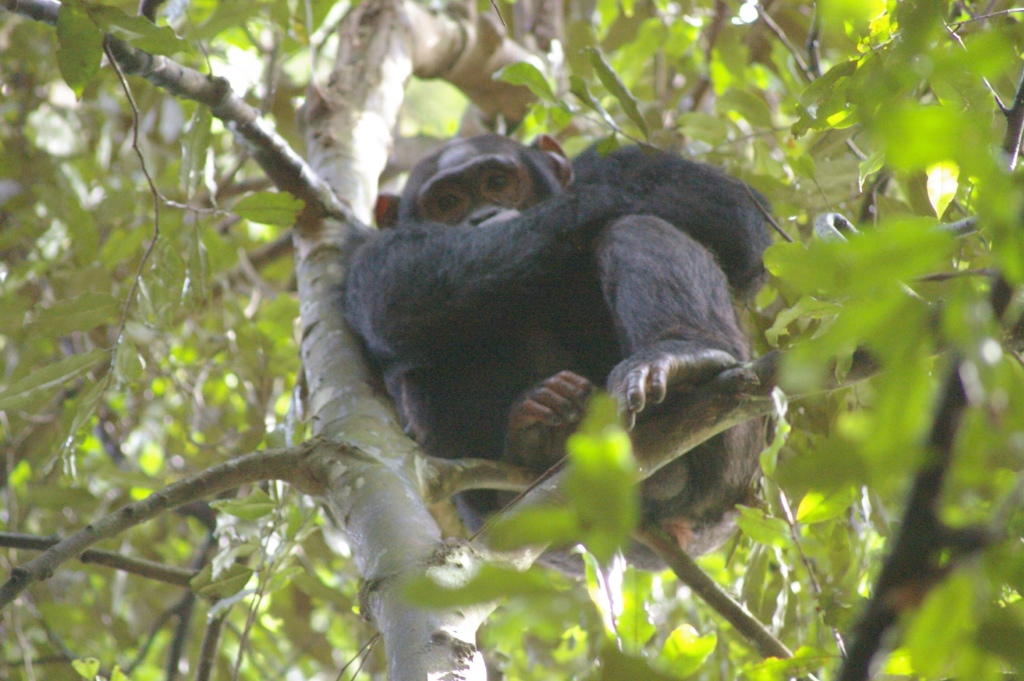
And then — a hooting. Bosco motioned us down the road. He pointed to a dark shape, high overhead. It took a minute or two, but gradually, the simian form emerged. Branches shook, an arm emerged. And then more hooting, unmistakable, hair-raising. Screams, more hoots, movement.

Of all the things we saw over the course of the next two hours, nothing surprised me more than the way chimpanzees sound in the forest. The screams are the wild, deranged noises only emitted by insane humans, but there are so many other noises: hoots and whoops and booming grunts that I would have thought required electronics to achieve such amplification. The cacophony sends a clear message: these guys live near the top of the food chain. (Their only predators are the park’s leopards and an occasional lucky eagle.)

When the chimps moved, we moved, bushwacking through the undergrowth and pausing periodically to observe one thing or another overhead. We watched the apes feeding on berries, then saw a female breaking off branches, high above, to swiftly make her day nest. Bosco explained that each chimp makes a night nest too, typically making a new set of both every day (or else relining an pre-existing one.) A few minutes later, he made a comment about a chimp’s erection. “You can see his erection?” I exclaimed, incredulous. (I couldn’t see the whole damned animal, let alone his diminutive sexual member.)

But most of the fellows overhead had erections, according to Bosco, who also pointed out the reason: a female whose swollen volva so obviously invited attention that even I could see it, 200 feet away. One set of the tourists were able to watch this gal and one of the males copulate. But I missed that (easy enough; the whole interaction lasting only about 6 seconds). If short, sex for the chimpanzee ladies is frequent. They can mate up to 20 times a day. Because of the possibility of getting lucky, the males were lingering up in the trees, Bosco told us. We settled in to try and wait them out, and it was during this interval that the dousings with chimp pee occurred.

Finallly the troupe clambered down, some of the males no more than 20 feet away. We hustled after them, hoping they would finally stop to chill out on the ground, ignoring us (as apparently they commonly do around tourists.) This never happened, though, and Bosco finally announced that we needed to head back to our vehicles. Rather than feeling disappointed, I was grateful to have come as close and see as much as we had.

It was only noon. We drove to a lodge for lunch, then continued on to 3-plus hour guided hike around a swamp that’s part of an inspiring community-development project. Steve and I loved it, and ordinarily I’d be happy to report the details in depth.

But the chimp-tracking was one of the most exciting natural adventures I’ve ever head, and I’ve run on about it too much already. I can’t imagine how the gorilla-tracking will compare. But that’s 2 and a half days away. Between now and then Steve and I have another mission that promises to be both challenging and fascinating, in other ways.


On the road, Ugandan-style

I’m writing this as we jounce along over badly gouged dirt roads on our way from Kibale to Queen Elizabeth NP. It’s the third morning we’ve awakened in Uganda, and I found myself wondering: why are we here? And: why aren’t more Americans?

I think the answer to the second question is that all that most Americans know about this place, if they know anything (if they saw The Last King of Scotland or are old enough to have lived at the time of the history it recounted) is that the country endured a long spell of lunatic violence under Idi Amin, and later, devastating civil war. Also, “We have no writers!” as our driver/guide Robert pointed out yesterday over lunch. Meaning, I took it, no white foreign Afropromoters like Isaak DInesen or Beryl Markham or Ernest Hemingway to propel Uganda into the consciousness of farflung tourists.

Why Steve and I are here nonetheless is a mixed bag of reasons. We flew here using frequent flier miles, and American’s partner, British Airways, serves Entebbe. We know people who’ve been to Rwanda in recent years, and their reports made me want to go there. Uganda borders it, and as I began reading about the region, the enthusiasm expressed by recent travelers here impressed me. Now that we’ve begun to explore it, I understand why Uganda had been called the pearl of Africa. This place is a hidden gem, a lustrous surpprise, something you feel thrilled and grateful to discover.

It’s physically breathtaking, maybe the most beautiful landscape I’ve seen anywhere: rolling hills and muscular mountains, crater lakes and deep valleys, and everything so green, a hundred shades of it. Unlike the Omo Valley in Ethiopia, this land is gaudily, opulently fertile, In the last two days, we’ve passed plantations growing a half dozen varieties of bananas, but also tea and coffee, as well as farmers growing pineapple, avocados, papaya, sorghum, watermelon, corn, mangos, beans, tobacco, tomatoes, cucumbers, vanilla, melons, and more, Robert says all the beef, chicken, fish, pork, rice, flour, oil (sunflower and corn), and virtually everything else we’ve been eating or will eat during our stay here was grown in this country the size of Oregon. Mixed in with the agricultural abundance, as if the land was so potently fecund it simply couldn’t control itself, are brilliant tropical flowers that attract jewel-like butterflies and more than a thousand (!) species of tropical birds.

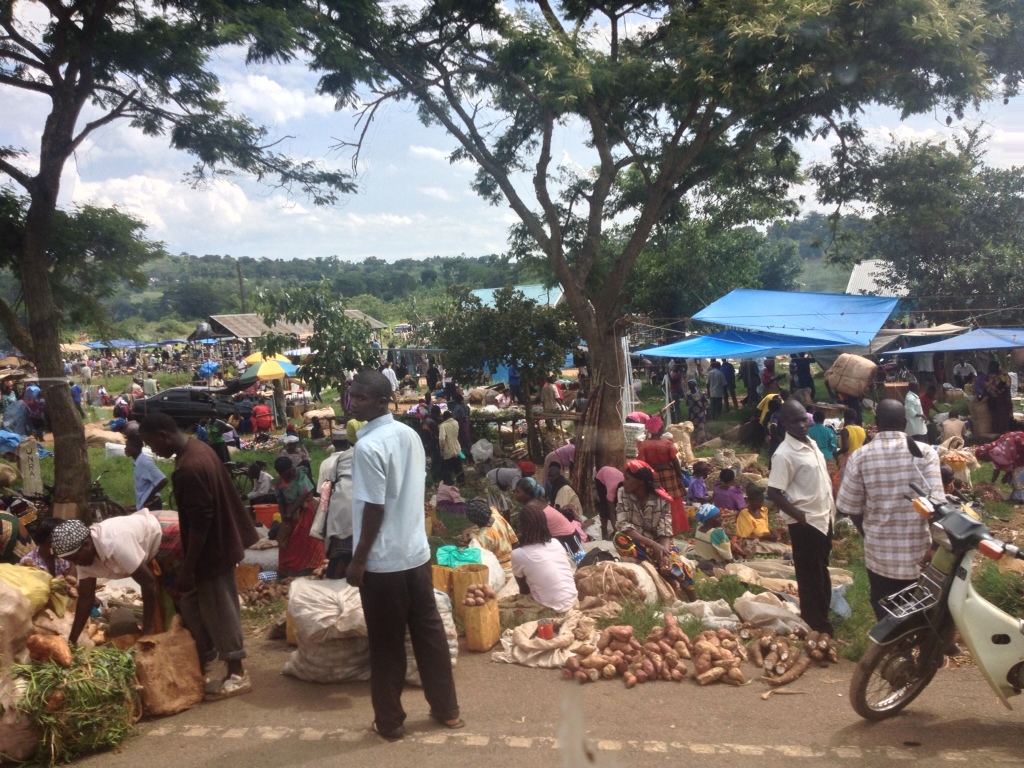
We drank in all these sites on the long drive Wednesday from Entebbe to the Chimpanzee Forest Guesthouse, along with the endlessly diverting pageantry of life along African roads: farmers carrying produce to tiny village markets, pilgrims converging on a religious festival, mini-buses bursting with passengers and dodging the motorscooters that serve as the taxis for urban areas. (We assumed their name — “boda-bodas” — came from the sound they make, but Robert says it sprang from their origin in Kenya, where they travel from border-to-border.) We didn’t notice any traditional billboards, but Robert pointed out that Ugandans use a cheaper alternative. Various companies pay home- and shop-owners to paint their residences with brilliant colors and announcements about their products. “Airtel,” they shriek, or “Sadolin,” and it doesn’t mean you can buy Airtel minutes or Sadolin paint there. They’re just adspace, rented for a certain period of time (and then covered over with a fresh, noncommercial coating as part of the arrangement.)

By mid-afternoon, we were deep into the country, in a more heavily forested region. At one point, Robert slowed the Land Cruiser, and it took me a beat or two to realize that the dark forms next to the side of the road were a troupe of wild olive baboons. They barely blinked as we photographed them, just a few feet away.

About the Chimpanzee Forest Guesthouse, where we stayed for two nights, let me only say that it was wonderful, with excellent food, attentive service (we were the only guests the second night), lovely gardens, and beautiful views in every direction. About that chimpanzee forest… well, that deserves a post of its own.

An auspicious beginning

Of our five trips to Africa, none has begun as well as this one.

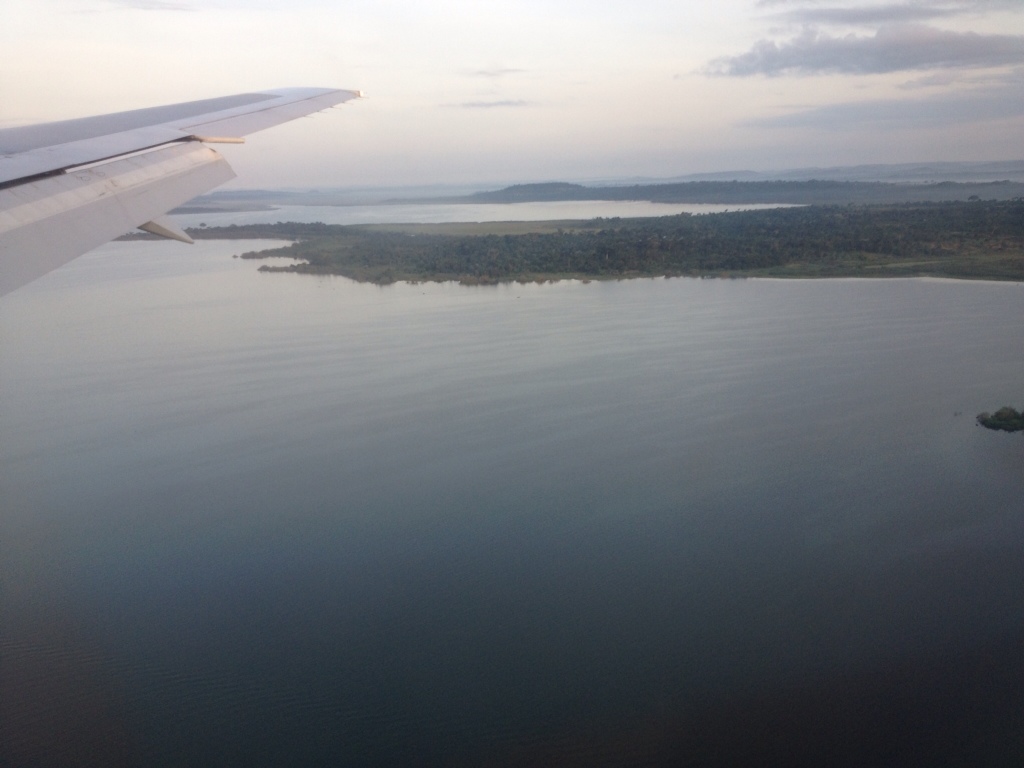
The flight was on time, and during the final descent, I devoured the sight of the landscape as it emerged in the growing light of dawn. Green, very green, with low hills but few visible roads. This was my first look at equatorial Africa, and it excited me as much as John Wesley Powell must have been felt at his maiden encounter with the Colorado river.

A slight glitch in our pick-up from the airport was recitified quickly, and within minutes we were riding to our guesthouse. I had braced myself to inhale the stew of jungle funk and burning garbage I’ve grown to associate with the developing world. But instead, the morning smelled fresh. In the course of the short ride, I was struck repeatedly by what was missing: garbage, graffiti, any obvious signs of poverty. The town looks rural. Few streets are paved, and even those that are sealed are dusted with the brick-red earth. Scattered pedestrians and an occasional cow strolled down wide byways lined with huge trees and bushes bending with the weight of their flowers. From time to time, we glimpsed verdant, gentle hills and expanses of Lake Victoria, the largest body of fresh water in Africa.

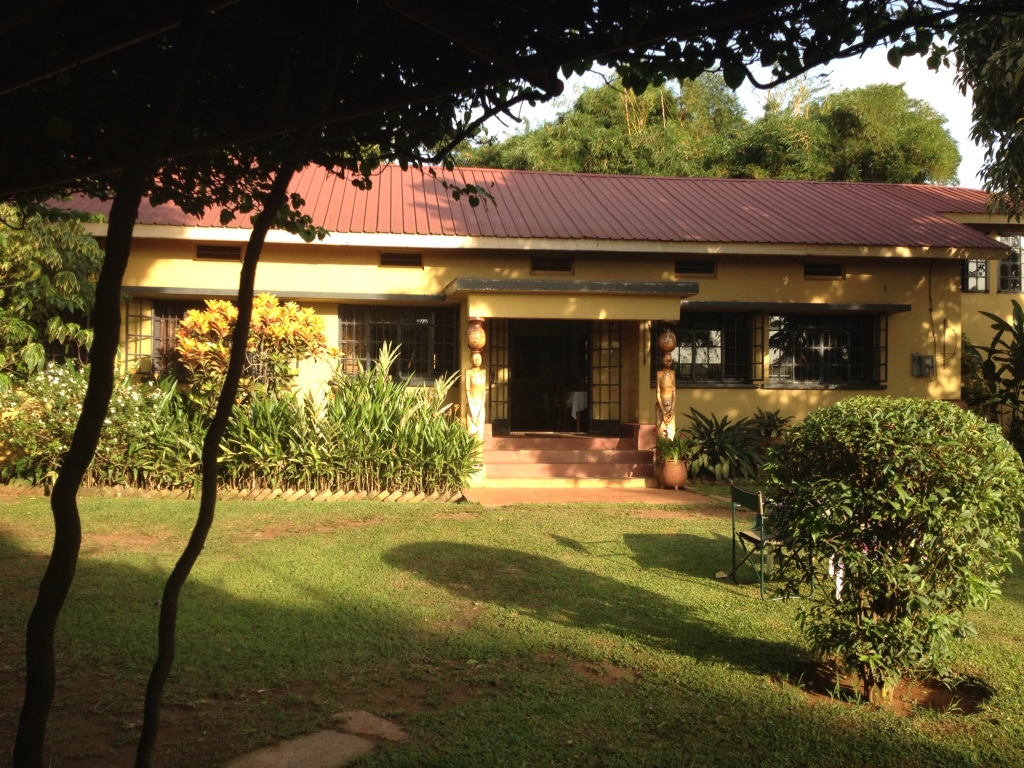
I fell instantly in love with the guesthouse, a large compound composed of cottages and service facilities built around a beautiful central garden. Because it was so early, our room wasn’t quite ready, but we consumed delicious papaya, pineapple, and tiny bananas, then watched the giant resident Rottweiler (Simba) romping with his German master.

Before long, though, we had settled into our spotless cottage and set off to explore the town on foot. The neighborhood ATM spat out 500,000 Ugandan shillings (less than $200) and a jaunty guy in a mobile phone stall put both our cell phones in service and stocked them with 60 minutes for about $17. In the hours that followed, I felt surges of gratitude that we hadn’t raced off to Kampala, Uganda’s reportedly charmless nearby capital, noted for its noisy, often traffic-gridlocked streets. Our map was pathetic, so we got lost, but found our way to an outdoor cafe where we drank passionflower smoothies and ate a bacon and avocado salad, a cheese/tomato sandwich, and good fries. We walked and didn’t glimpse a single other white person. The byways weren’t exactly thronged with Ugandans either, but everyone we chatted with was gracious and welcoming (and spoke English! — long ago the place used to be a British “protectorate.”)

Eventually we found our way to the 5 star (almost deserted) Imperial Hotel overlooking the almost-mystical lake (source of the Nile?), and we wandered through Entebbe’s more-thn-100-year-old botanical garden, a splendid primeval preserve. After rambling for more than six hours, we were too beat to tackle the local wildlife center; the end of the afternoon evaporated in a cloud of showers, email, and cocktails.


Dinner was served at 6:30 on tables out in the garden, and it was wonderful: pumpkin soup and more flavorful avocados, grilled beef and fish fresh from the lake, tasty rice and chapattis and delicate green beans, capped off with fruit crumble still warm from the oven. At another long table, a group of student and teacher midwives from British Columbia celebrated in advance of setting off the next day for six weeks of work and study. We’d chatted briefly earlier in the day with their leader, a decisive looking woman who was here in Uganda for her tenth visit. “This is the best guesthouse in the country!” she’d declared, more than once. That’s easy to believe. Tomorrow Steve and I will depart for Kibale National Park to track chimpanzees and hike in a swamp. But having at least sampled Entebbe, I wish everyone’s first taste of Africa started out as well.


On our way!

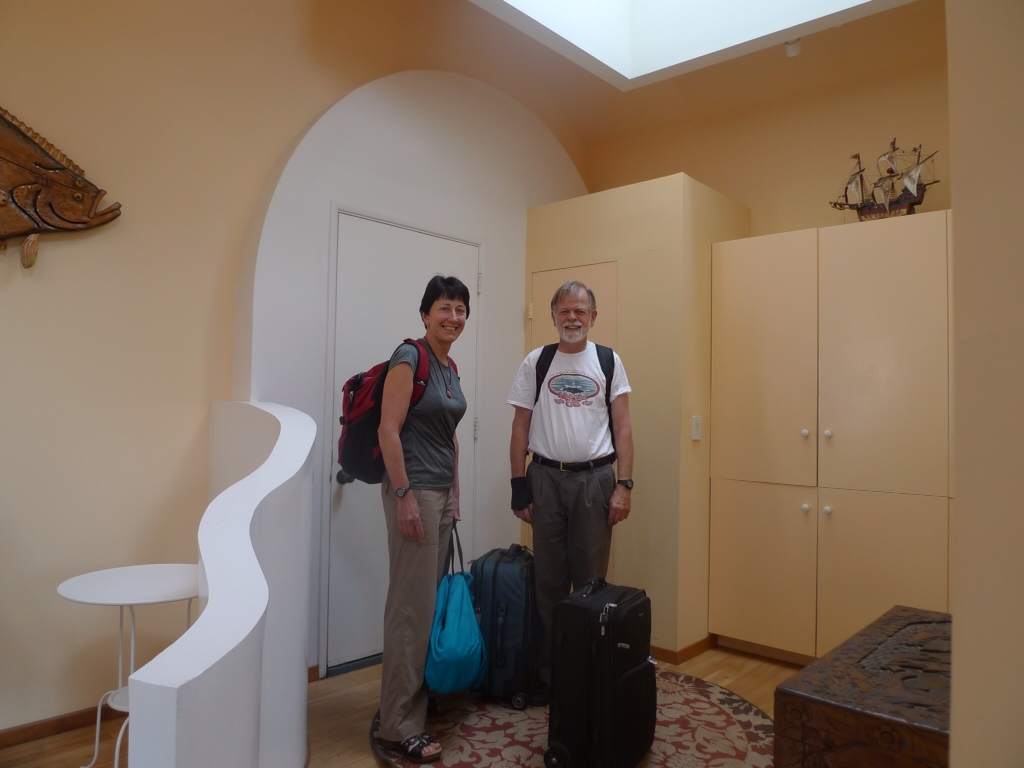
Steve says we STILL have too much stuff, but I disagree. Two carry-on rolling bags, two small backpacks and one little duffel that we checked (and only because we really, really wanted to take our trekking poles). I think that’s respectable for four-plus weeks in Africa!

Our flight to Entebbe (Uganda) via London should take off in one hour.


Final thoughts

January 17, 2012

According to our seatback monitors, we’ve just crossed the border into Northern Sudan. My feelings on leaving Ethiopia are mixed. We didn’t have a chance to see many things that probably would have been great: the castles of Gondor and churches hewn into the rocky cliffs of Tigray; the ancient stellae of Axum. Other travelers spoke highly of Awassa in the south and the little-visited western provinces.  And the Afar Depression, lowest and hottest place on earth, where great camel caravans still carry salt and a spectacular volcano simmers, is something I’m truly sorry to have missed.

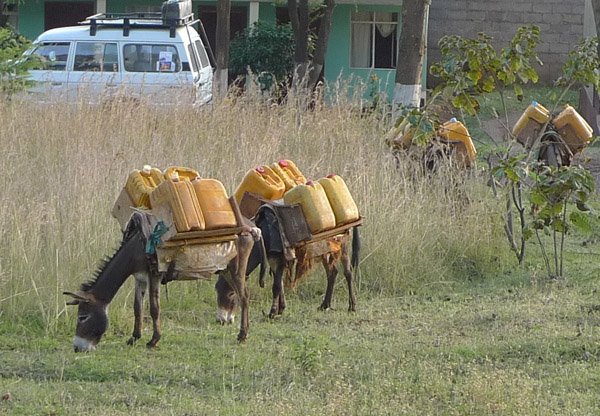
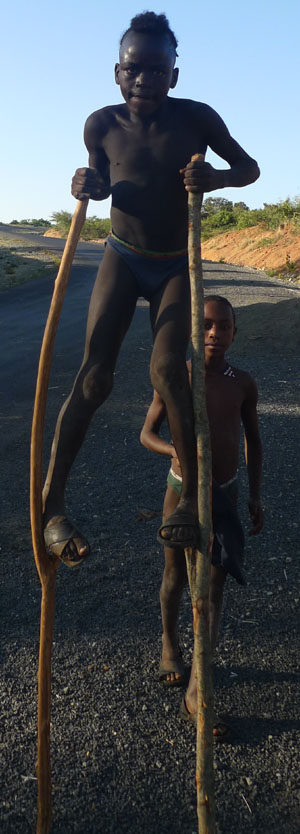
Still, we saw so many amazing things, it felt like we were journeying via time-travel machine, rather than planes and Land Cruisers. In the south, prepubescent shepherd boys would ignore their flocks to race down and perform weird tribal welcome dances, in the hopes of our stopping to exchange the photo op for a handful of birr. One day we passed a gruesome sight — a dead horse on the shoulder being feasted upon by a host of condor-sized vultures, hopping up and down with excitement about the feast (or so it appeared.) Ubiquitous were the donkeys and people laden with yellow plastic 6-gallon jerrycans. The cans hold the water that must be gathered at wells or tanks. It seems so ironic that Ethiopia, the “water tower of Africa,” source of a big portion of the water that flows to the Nile, would be so stingy with it’s own parched residents. But getting the water to the hands of workaday Ethiopians (or the random tourist passing through) requires big investments in pumping and purification stations, pipes, and the like. Lacking that, staying healthy is a constant challenge.

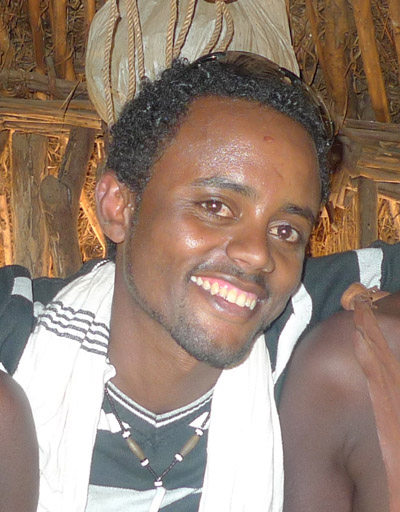
Endalk (Michael) Bezawork
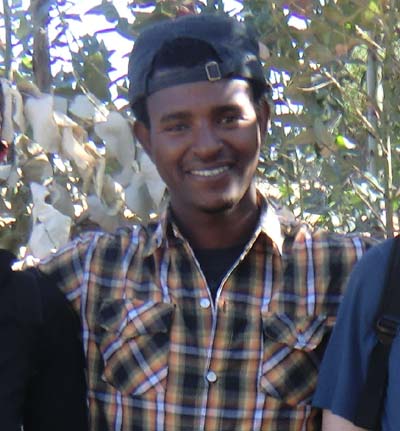
Belay Hailemariam

Apart from the strange and marvelous sights, what impressed me most were the Ethiopian people we got to know. If our time with the Omo Valley tribesmen was short and constrained, other encounters were just the opposite. We spent 8 long days with Endalk and Sharom in the south, and over the course of that time, we developed deep affection for the intelligence and impish charm of the former and profound respect for Sharom’s careful driving skills. We had only three days with Belay, our highlands trekking guide, but conversations with him ranged even farther; we discussed everything from Robert Mugabe’s mental health to US foreign policy to how Belay should use Internet marketing to build his guiding business. In Addis, we stayed at the guest house on four separate occasions, the last one for the better part of two days. Each time we returned, we developed a keener sense of what made the cast of characters there tick.

I had trouble falling asleep last night, thinking about one of the waitresses in the guesthouse restaurant (where we ate hamburgers on three separate nights). She spoke perfect idiomatic English, and last night we heard a tiny bit of what’s likely a long and complicated story. When she was little, her mother and stepfather got visas for America. So she lived in various parts of Southern California: Orange County, Pomona, even San Diego for a while.  But her mother had died, and her stepfather had “become a bad guy.” She’d returned to Ethiopia to live with her grandmother, but the grandmother had died too.  She’d gone from living high to struggling for survival, she said, matter-of-fact but wistful. “Could you fit me into one of your suitcases?” she’d asked.

This woman was so astute, so competent, I could easily imagine her running an emergency room in an American hospital or doing something equally demanding. But twists of fate had brought her to waitressing at a budget hotel in Addis Ababa. If my suitcase had been big enough, I would have been honored to transport her. Instead all I can do is give her a few sentences here.

Addis Ababan Airs

January 16, 2012

Ethiopia has an awful lot going against it. While long and colorful, its history has had several hideous chapters, and even today little protects the rights of ordinary citizens. Many of its 80-plus million residents live in dismal poverty, and the deformed beggars are appalling. The pickpockets are wily and skillful (Steve has now added Addis to his growing collection of Places Where His Pocket Has Been Picked). To me, though, the worst thing about Ethiopia is the abysmal quality of the air.

In the country, riding through hour after hour of powdery road dust and breathing the smoke of indoor wood fires at night gave both of us coughs that still are plaguing us. Here in Addis (elevation 7,500 feet), the already thin air reeks of diesel and gasoline fumes churned up along with road dust, construction dust, cooking fires, and all the unburned hydrocarbons, oxides of nitrogen, carbon monoxide, and other substances that modern air-pollution-control devices mostly have purged from the developed world’s air. Walking home this afternoon, both of us felt a tightness in our chests. For the first time since our arrival, I yearned to leave.

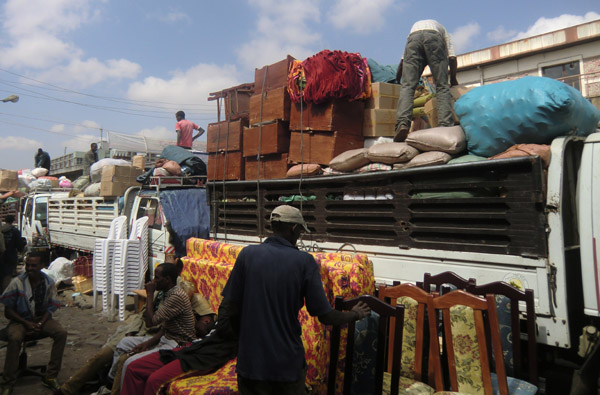
In the Merkato

 Otherwise, our stay in the capital has been satisfying. Although plain, the Addis Guest House has dazzled us with its amenities: transport to and from the airport (only 5 minutes away), good breakfasts, laundry service, ubiquitous wi-fi, and an amazingly friendly staff managed by a guy who literally grew up in San Diego before returning to Ethiopia at 22. All this for $55 a night. This morning Jonas also helped us secure a driver/guide who took us to the enormous Merkato district, where we walked among the wholesalers of everything from mustard seeds to mattresses. Then we drove to the main campus of the university, to visit the Ethnographic Museum housed in a former palace of Emperor Haile Selassie. While it was okay, we felt like our Omo Valley trip had already exposed us to much of the content, and more vividly.

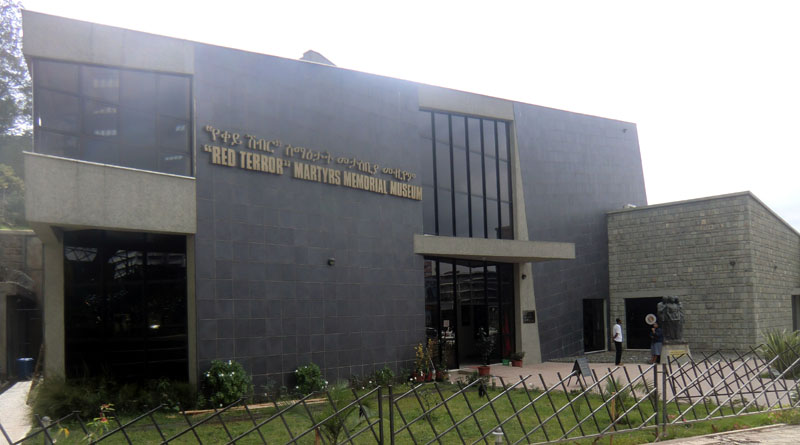
 After lunch, Steve and I decided to forego a stop at the National Museum in lieu of visiting a much newer facility next to Meskel Square about which we’d heard from a fellow traveler in Harar. The “Red Terror” Martyrs Memorial Museum describes the horrors that unfolded after Haile Selassie was assassinated in 1974 and Ethiopian Stalinists unleashed their barbarities. The docent who was there when we visited had spent 8 years in one of their prisons. The suffering he recounted moved me deeply; I was glad to be able to bear witness to what he endured.

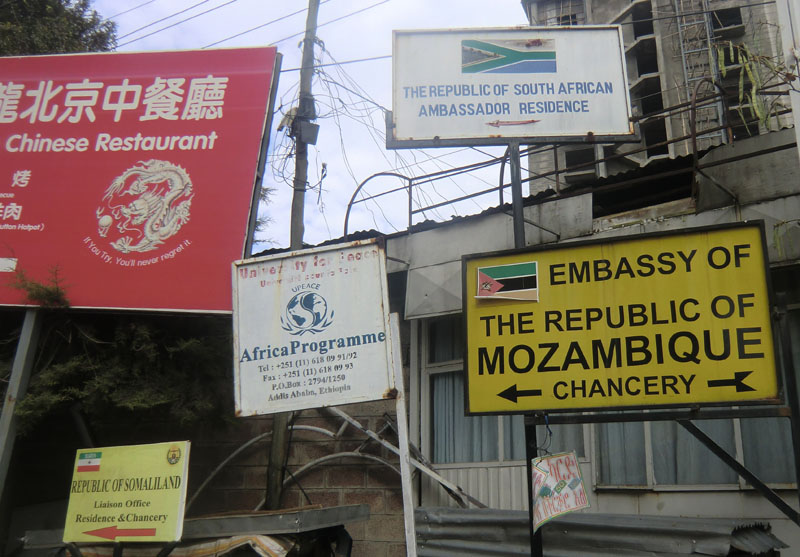
 We walked home along Bole Road, the artery feeding the homes of some of this country’s wealthiest families. We passed one weird embassy after another (Cameroon! Ukraine! North Korea! Angola! Congo!) The multiplex at the Edna Mall was showing War Horse, along with J. Edgar (neither one of which we’ve seen yet). In a nearby gourmet cupcake shop, we broke down and bought “double choc” and red-velvet goodies — the first true desserts we’ve eaten since Christmas in San Diego.

The cupcakes were good, though I expect we’ll get better in Frankfurt tonight. What Frankfurt (or San Diego) can’t match is the chaos of Addis Ababa. Most Germans and Americans would probably be revolted by it, and God knows I wouldn’t want to live here. But the grace with which the Ethiopians cope with it provides me with endless amusement — and admiration.

Here’s one example: when we went out for dinner Sunday night, we found a taxi whose driver sounded like he might know where the restaurant was. We bargained with him over the price, struck a deal, then piled in. Only when I took my seat in the back did I notice the 3-year-old girl strapped in next to me. She was impeccably dressed, wearing shiny zebra-striped shoes and other finery. She sat silent; drowsy but conscious. The driver (her dad)  made it clear that he adored her; indeed her name in Amharic meant “love.” Then, apologetically, he asked if we would mind if he dropped her off at his home. We told him to go ahead, and he turned off the main street, driving down unpaved roads illuminated only by our headlights and the occasional cooking fire. After a couple of minutes, he pulled up to a gate, scooped up the now-nodding toddler, and tenderly deposited her in the arms of a waiting woman.

We sped off, and not long after, we approached the street where our restaurant was located (our taxi driver in fact hadn’t known it, but he called a friend who did.) But there had been an accident, and cars from every direction were stalled, while the driver of one of the injured cars made chalk marks in the street to record what had happened. It seemed a colossal mess, the sort of thing that would halt everyone’s progress for hours, were it in San Diego or New York. But within minutes, the damaged car limped off, and our taxi driver moved centimeter by centimeter into the automotive mosh pit. Somehow he made the turn and deposited us at the Jewel of India only minutes after our 7 p.m. reservation. The food was spicy but delicious.