Steve and I are now deep into what we have come to think of as our Mop-Up Tour of California. Cut off by corona-restrictions from doing any foreign travel, we’re using this three-week road trip as an opportunity to at last see some of the sights we’ve managed to miss over the last 46 years. For me this includes pretty much everything north of the Napa and Sonoma wine country; I’d never before laid eyes on about half my state.
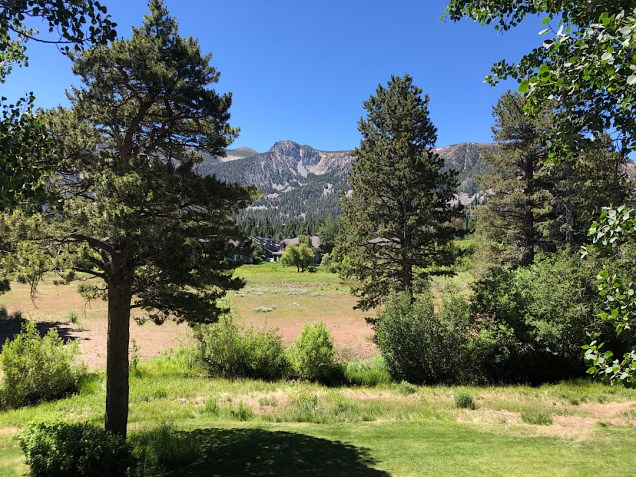
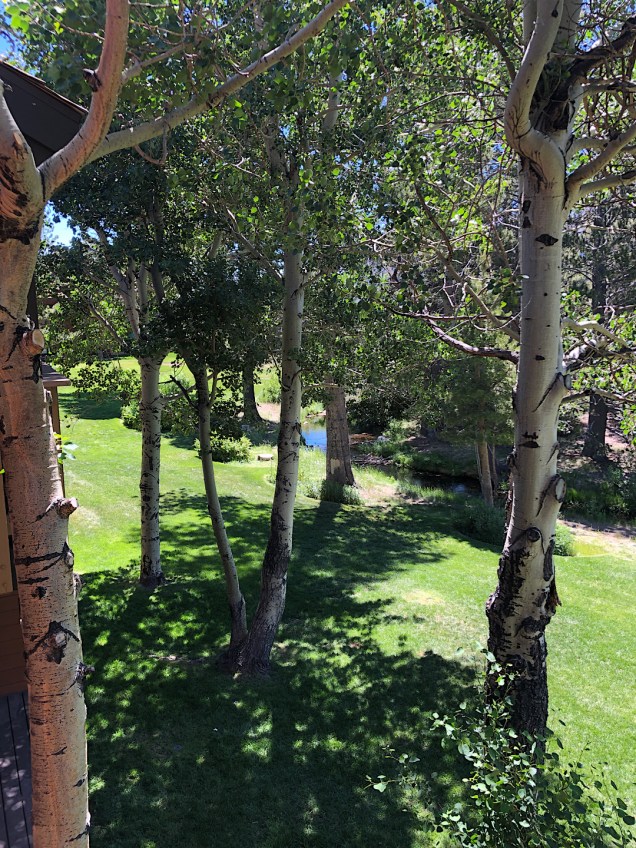
As mentioned in my last post, we started with a five-day stay in Mammoth in a townhouse we exchanged for our home in San Diego. We had passed through the area years ago but never spent much time there. For this visit, the weather was perfect, and the cozy townhouse made a great base for some excellent day hikes, as well as our excursion to the ancient bristlecone pine forest.
We left Mammoth last Wednesday (July 8), and since then the touristic highlights have included the following.
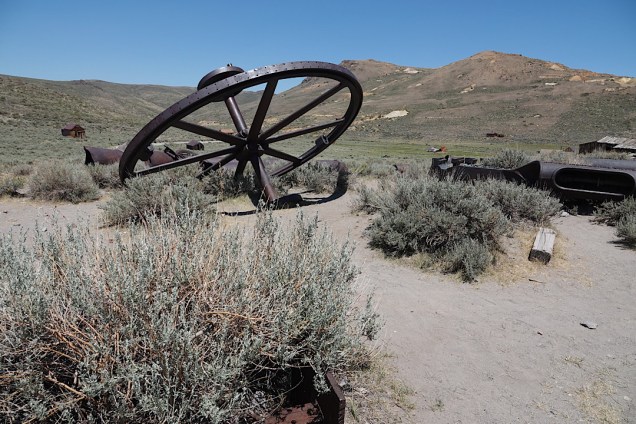
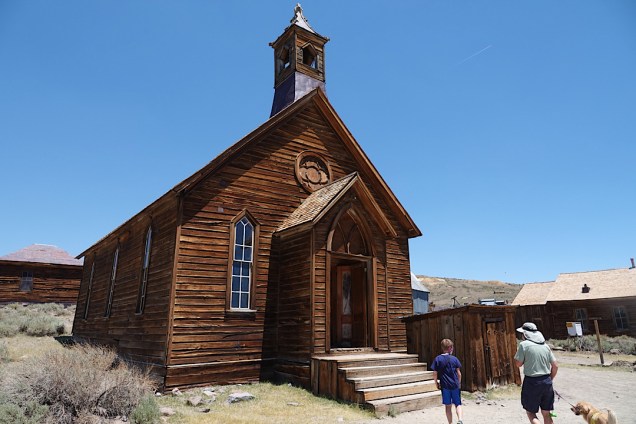
— A visit to Bodie.
As ghost towns go, Bodie is more than respectable. In the late 1870s, it was a bustling gold-mining center, home to more than 10,000 fortune-seekers and the tradespeople who served them. It continued to be a functional mining center into the 1940s, when the feds shut it down (something about needing copper for the war effort.)
About 13 miles down empty, partly dirt roads off Highway 395 southeast of the town of Bridgeport, it appears beyond a bend in the road, a vision of the Wild Western past.  Except that there’s an entrance booth manned by a state historic park ranger…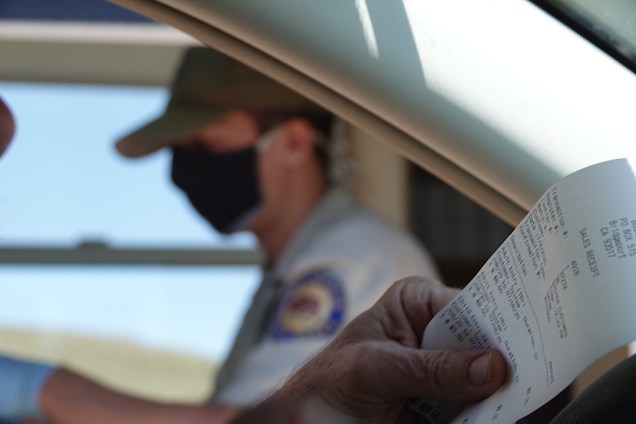
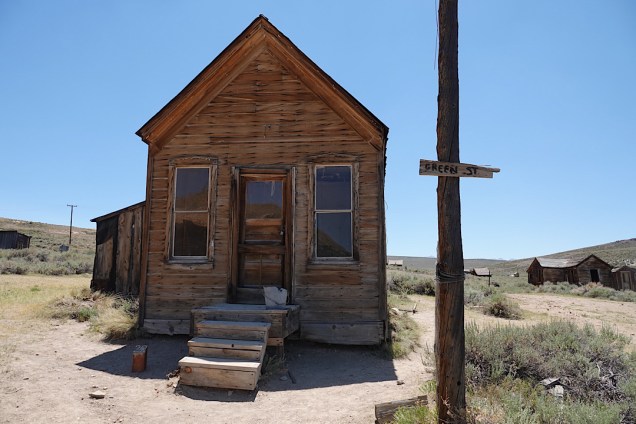
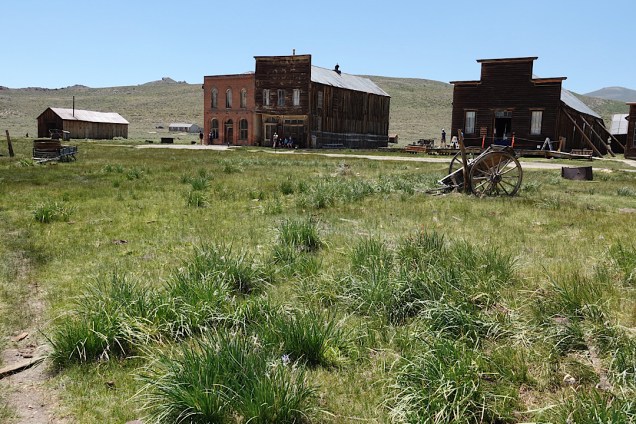
As in the bristlecone forest, the elevation softened the mid-summer heat, so it wasn’t unpleasant to stroll past the dozens of abandoned buildings. Even in non-pandemic times, visitors can enter only three or four of them. At the moment, they’re all closed, even the little gift shop. So a visit to Bodie is a strikingly non-commercial experience. All there is to do is wander the dirt byways and peer into various windows that reveal the dusty remains of a former world. Still, that’s not a bad way to spend an hour or two.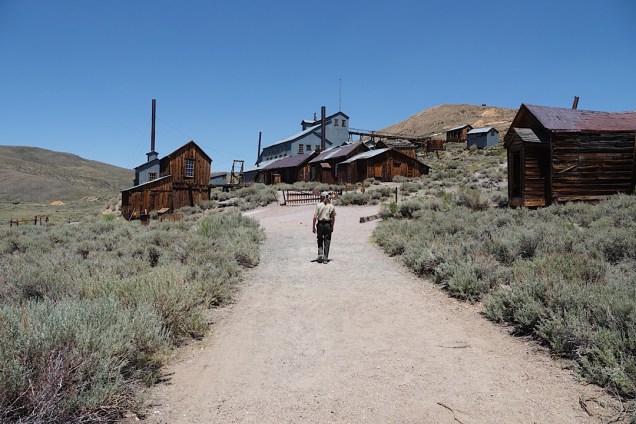
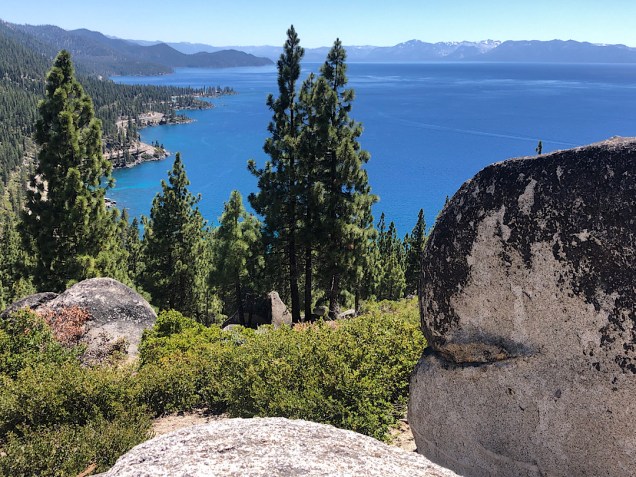
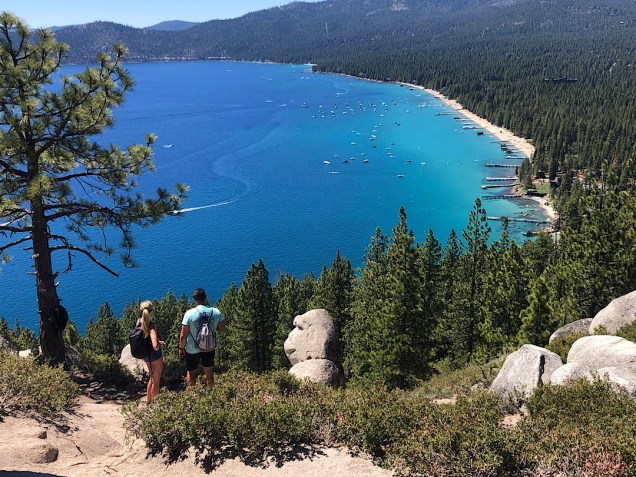
— Hiking to the monkey’s head above Lake Tahoe.
Our destination after Mammoth was Reno, home to our son Michael and his family (girlfriend Stephanie, her son Nicolas, and their standoffish corgi, Felina.) On Thursday, all of us (except Felina) drove to Lake Tahoe to hike. This wasn’t our first visit to Tahoe. But for me every visit feels new; I never seem to be able to remember that so much beauty can be concentrated into one location.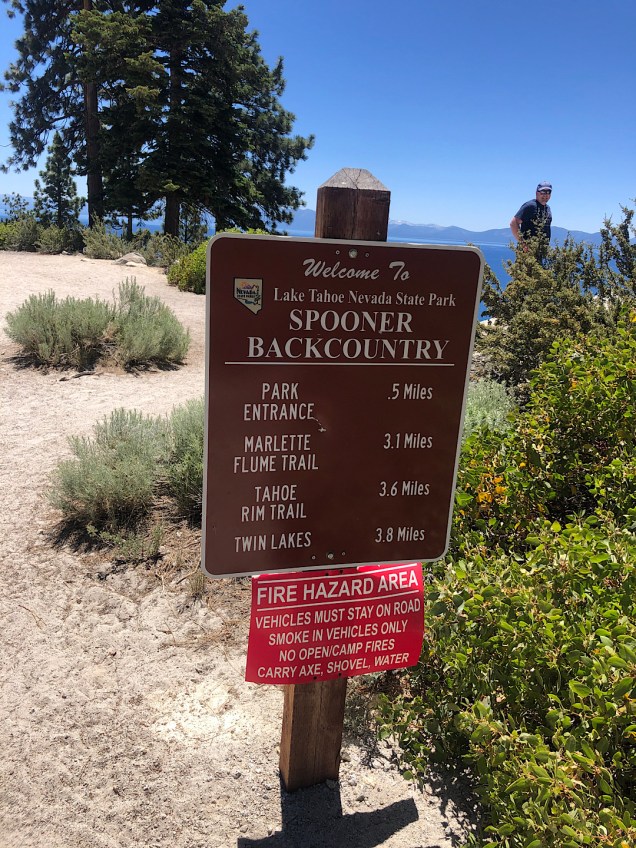
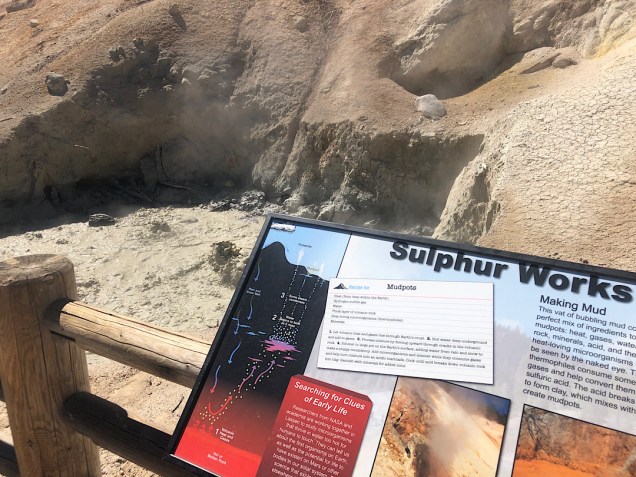
— Mt. Lassen Volcanic National Park.
Our next destination was another home-exchange in the far-northern reaches of the Sacramento Valley. On the way, we stopped at this national park, established in 1916 (shortly after the mountain last erupted.) The park headquarters building was coronavirally shuttered, but Steve was still able to get a sticker for our national park book in the little gift shop and a map from the temporarily outdoor ranger station.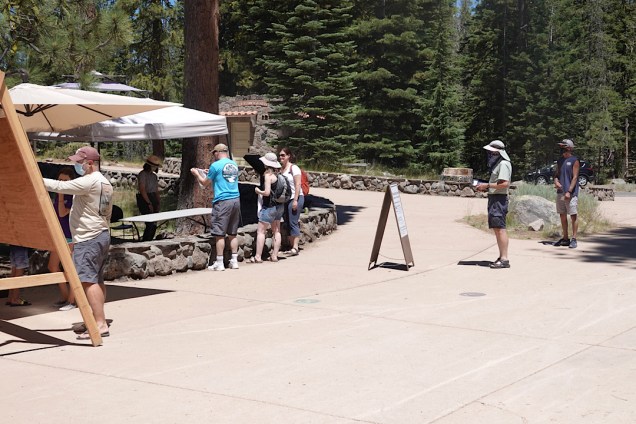
Considering that we only had the afternoon, we saw and did a lot, including…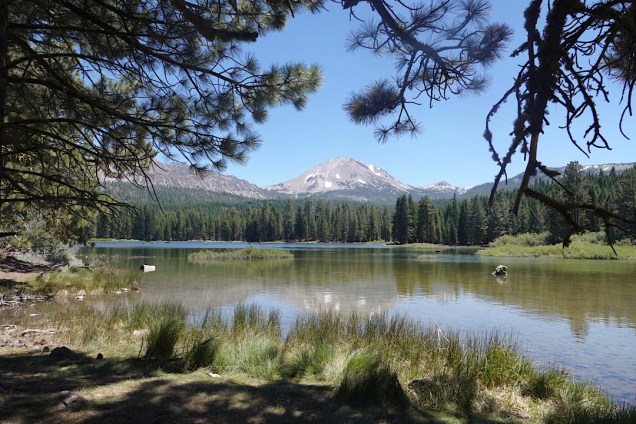
…and making the hour-long drive from the park’s north entrance to the southern one.
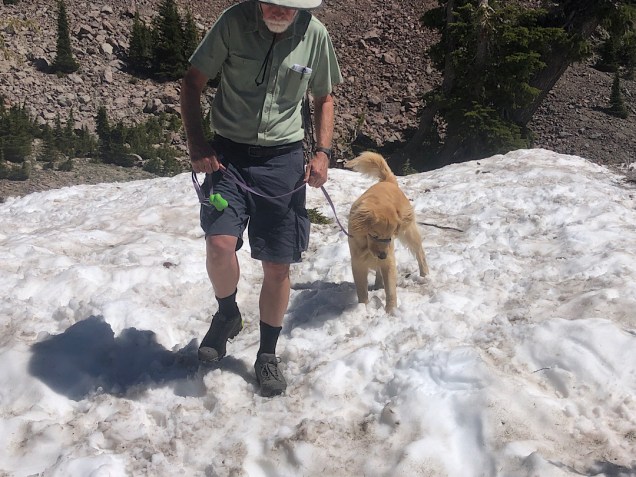
— Mt. Shasta and the headwaters of the Sacramento River.
You can see Mt. Shasta from where we’re staying (about 70 miles to the south of it). It towers over the landscape, so dramatic that a pilgrimage seems mandatory. Not that we had any interest in climbing it. Crampons and ice picks are recommended even in mid-summer.
Instead we drove to the town at its foot, where locals tout the Headwaters of the Sacramento River as one of their touristic highlights. I’m a sucker for riverine starting points, having previously visited those of the Mississippi River, the Colorado River, and (sort of) the Nile. We parked in the Mt. Shasta City Park and made our way to this spot: 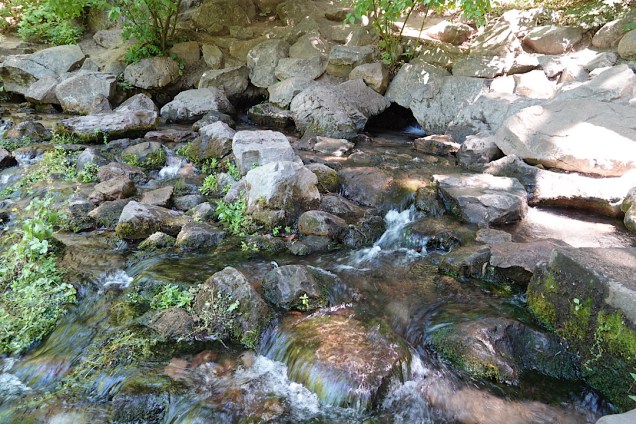
A public sign shattered some of the romance, explaining that actually the Sacramento River has many sources, so others arguably share the Headwaters title. Still, we enjoyed gazing at this humble pond. The park also provides a time warp back to the Sixties, being filled (at least during our visit) with psychedelically painted buses and folks wearing vintage Hippie wear, most of whom appeared to be chemically altering their consciousness.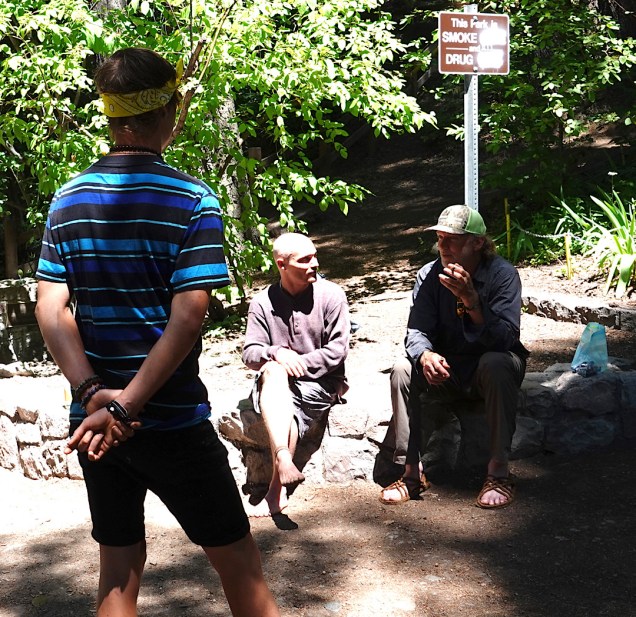
— Waterfall country.
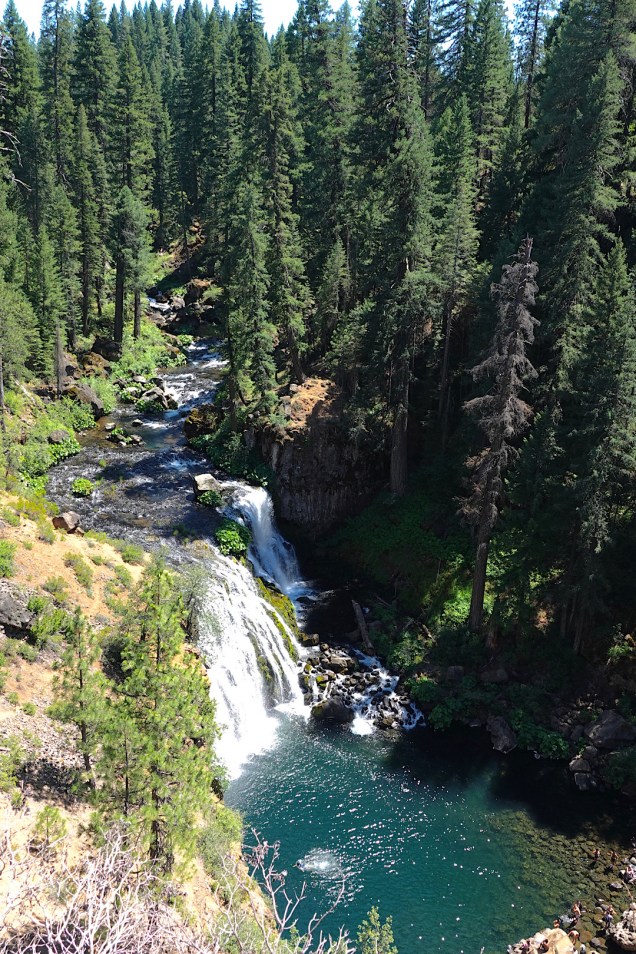
If you love waterfalls, the section of roads southeast of Mt. Shasta should be on your bucket list. Steve and Dilly and I first stopped at a trail on the McCloud River that led us up past three beautiful cascades.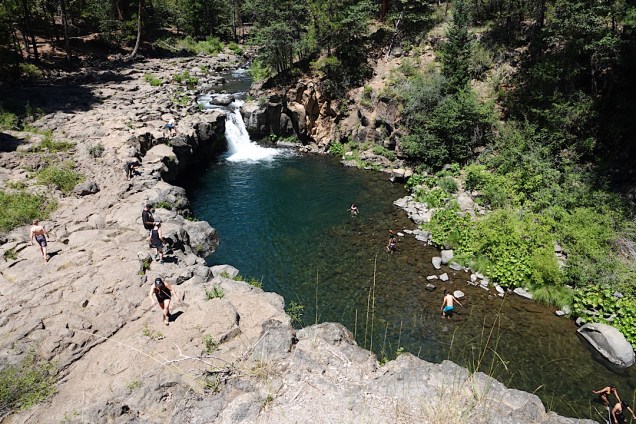

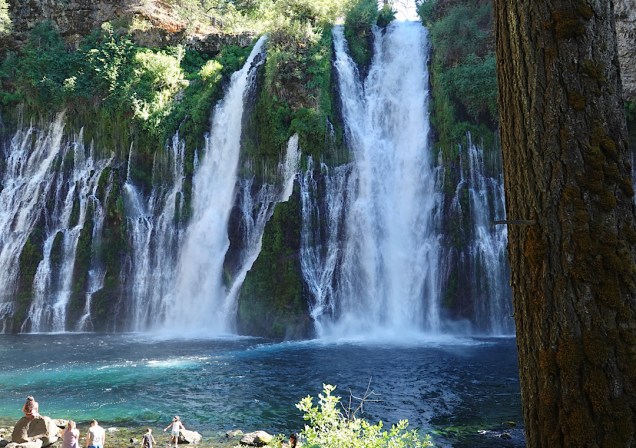
Beautiful as they are, Burney Falls outdoes them. Gushing out of the rock walls of this canyon, exuding cool mists, this is a place to linger in for more time than we gave it.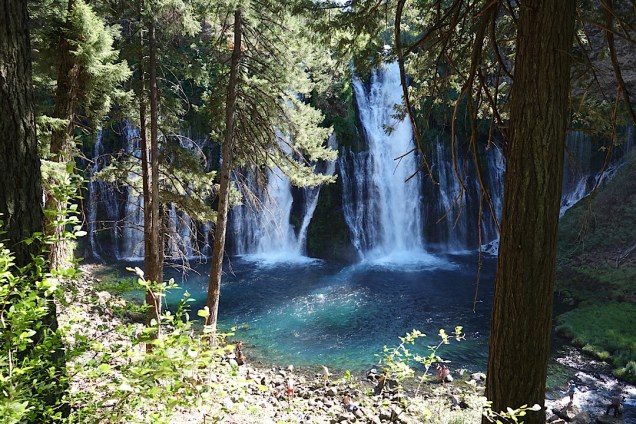
— The Sundial Bridge in the town of Redding.
The house where we’re staying is about a half hour outside the town of Redding. This morning we drove to Redding’s 16-year-old Sundial suspension bridge. Famed both for its construction materials (largely glass) and striking design, I can now report that as a sundial, it seems pretty useless. But it’s well worth strolling across.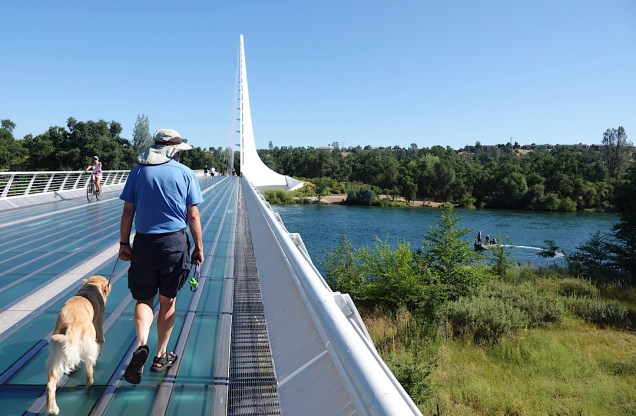
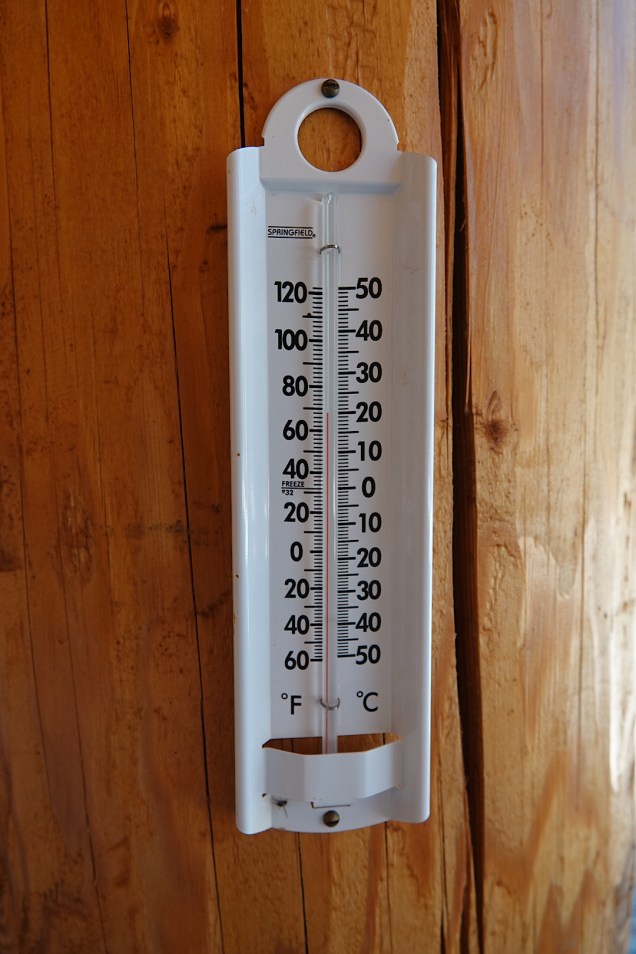
Only, however, in the morning at this time of year. As I type this (in the late afternoon,) the thermometer outside our back door reads 102. The weather app on my phone claims the temperature will reach 109 tomorrow (our last day here). In my next post I hope to explain how we’ve been having a marvelous time here anyway.

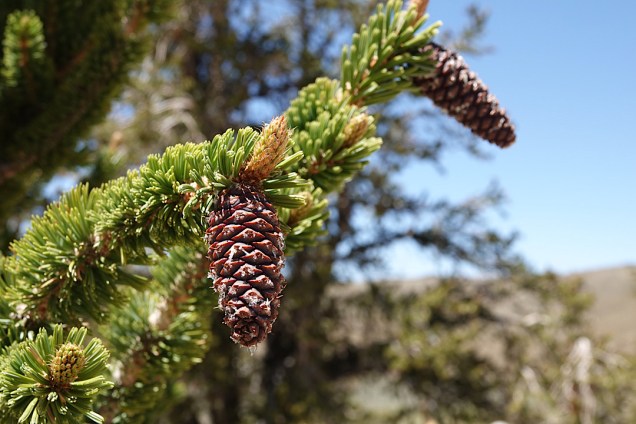
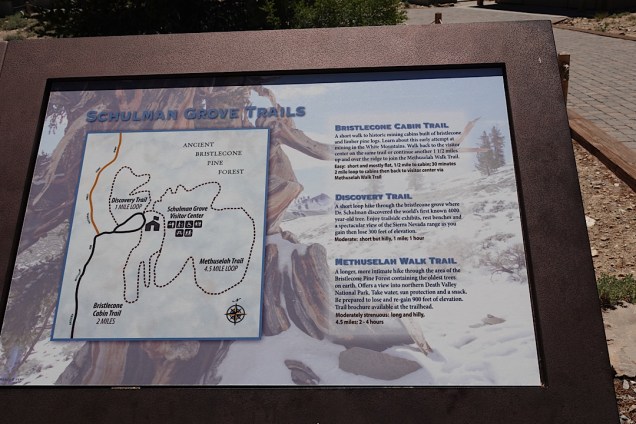 We chose the mile-long Discovery Trail. It led us to the section where in 1953 a dendrochronologist named Avery Schulman learned one night that he had just cut a core out of a tree whose rings indicated it was more than 4000 years old.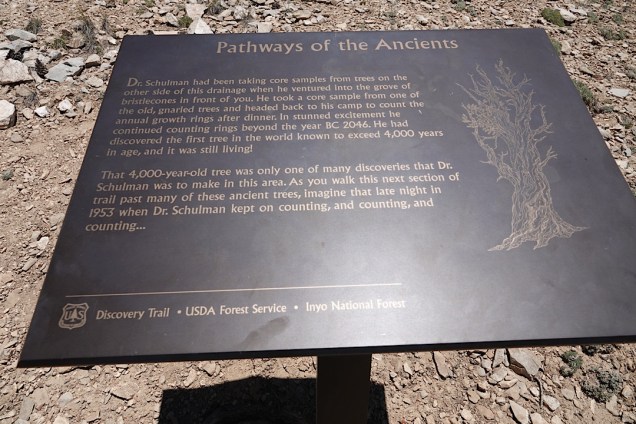
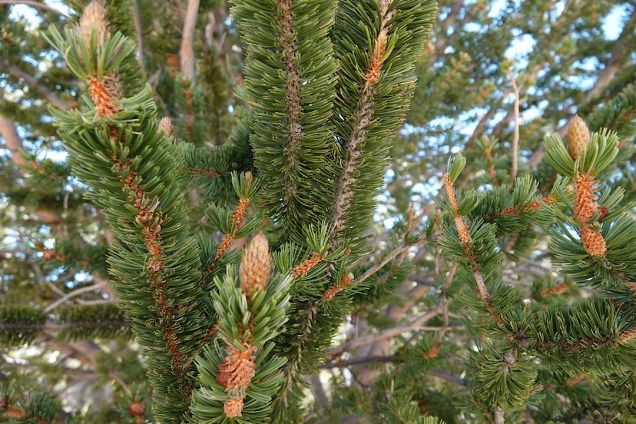
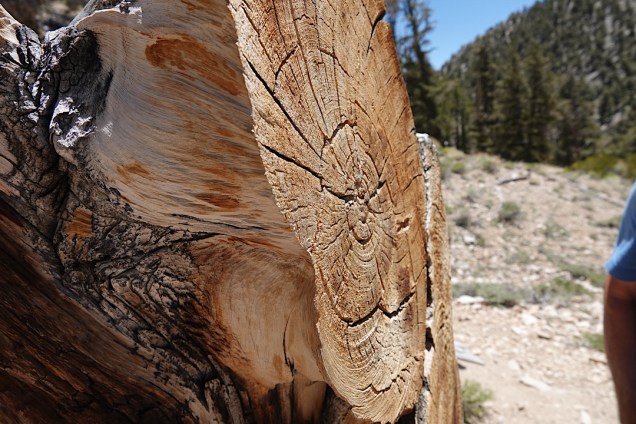 Over the millennia the bristlecone pine wood twists into weird sinuous forms, many of which are bare of vegetation.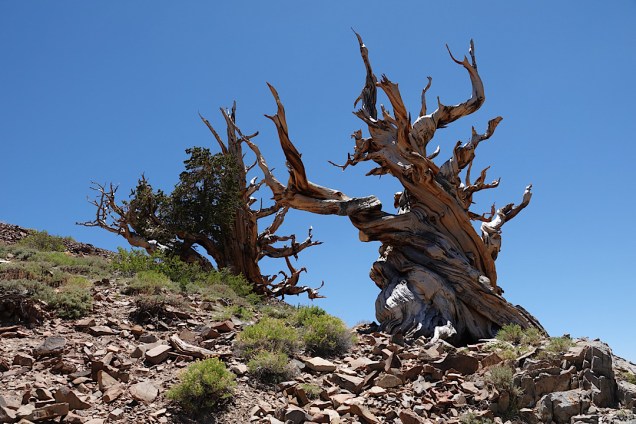
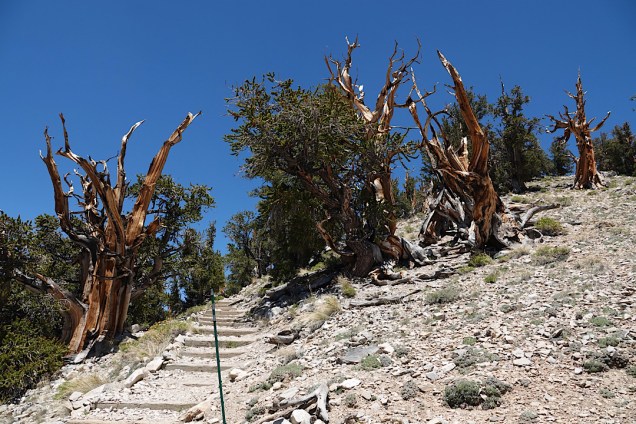
 But green branches cluster low to the ground. They make it clear that, though the trees may look half dead, they’re still very much alive. When Nero was burning Rome, some of these very specimens were already more than two thousand years old.
 We checked in, sizing up our fellow singers, a range of ages but mostly white folks who all looked like NPR listeners. Before long, our bus set off southward, and it didn’t take long to reach the park. We disembarked, trying to scope out what the heck we would be doing. In January of 2018, Steve and I attended another cross-border performance. That one was
 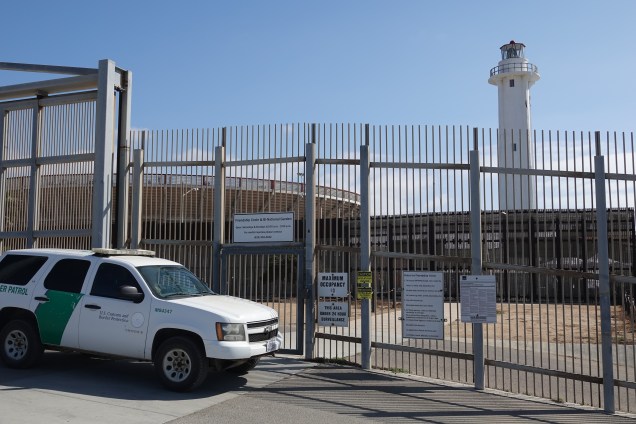 Instead we were directed onto the beach, where we could see a small stage and a sound truck.
 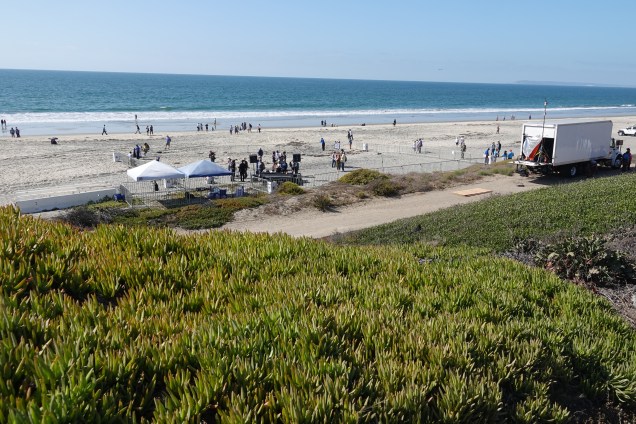 Stern signs, police tape, and an intimidating roll of coiled razor wire prohibited us from approaching the barrier there.
 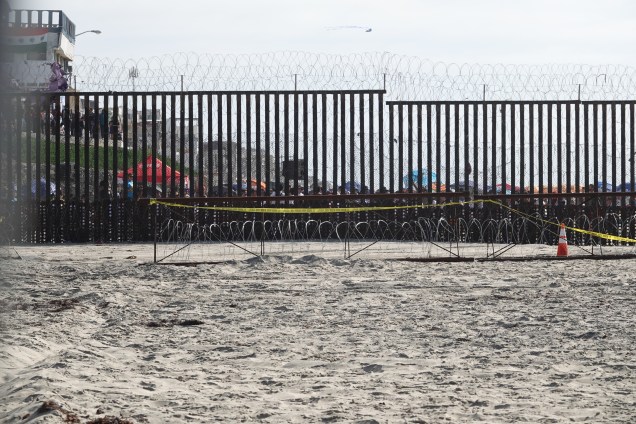 Beyond it, a sea of beach umbrellas and people were barely visible. I’m pretty sure there was beer on that side. And tacos. Probably music too.
 Up above us, armed guards, some with dogs, looked down, stony-faced.
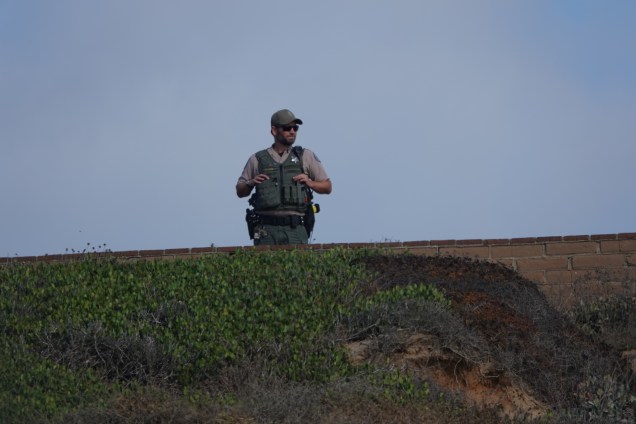 “This is kind of interesting,” commented the guy standing next to me. “I’ve been to the beach before. But never in a cage.”
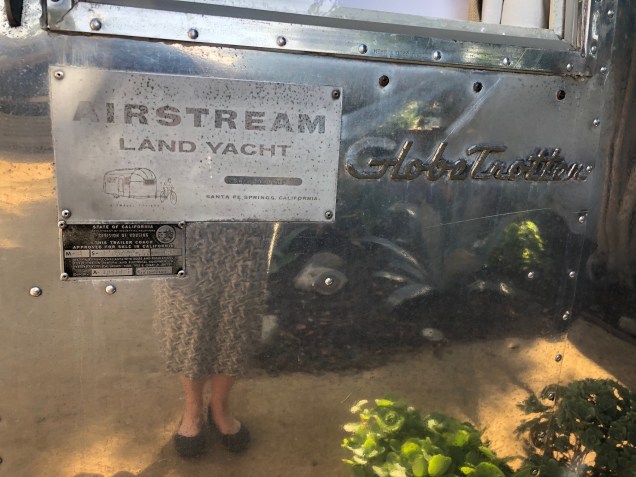 I can’t say it has always been my dream to sleep in an Airstream, one of those iconic shiny aluminum travel trailers. Still, every time time I notice one out and about, the stylish design tickles me. So when the opportunity arose to experience one on a recent night in greater Los Angeles, I couldn’t resist.
 Restored to pristine condition, the interior seemed roomy enough, and when we slept on it later that night, the queen-size bed was surprisingly comfortable.
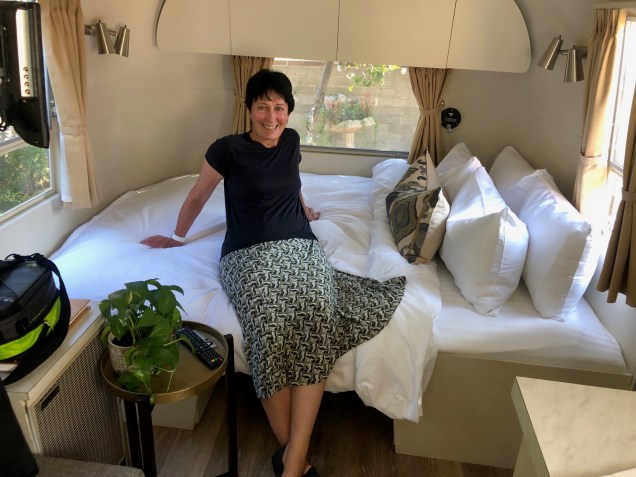 Still, I can now report that spending the night in a nice, clean Airstream felt pretty indistinguishable (to me) from spending the night in any nice, clean garden-variety trailer. I’ll probably continue to admire the zoomy exterior design whenever I see one, but I won’t be shopping for an Airstream of my own any time soon.

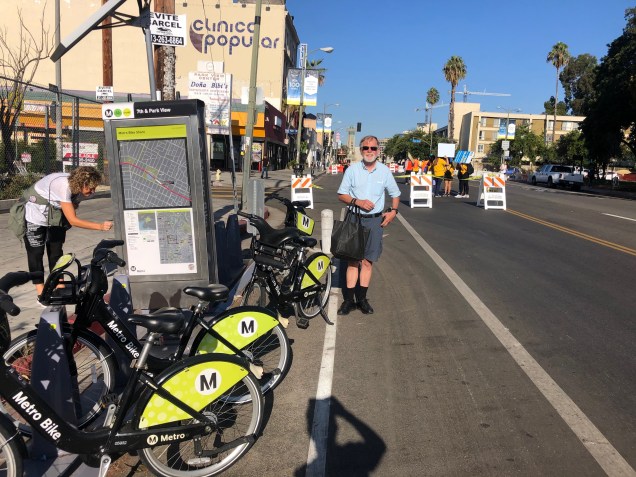
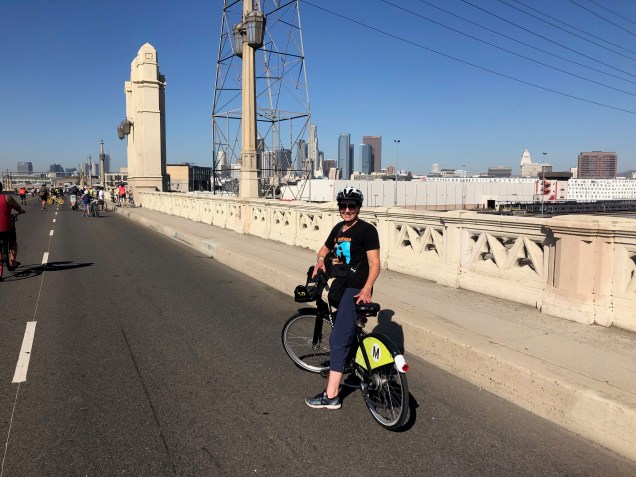 Sadly, we ran out of time and had to turn back before making it to Mariachi Plaza in Boyle Heights. We missed altogether the arm that went to Chinatown.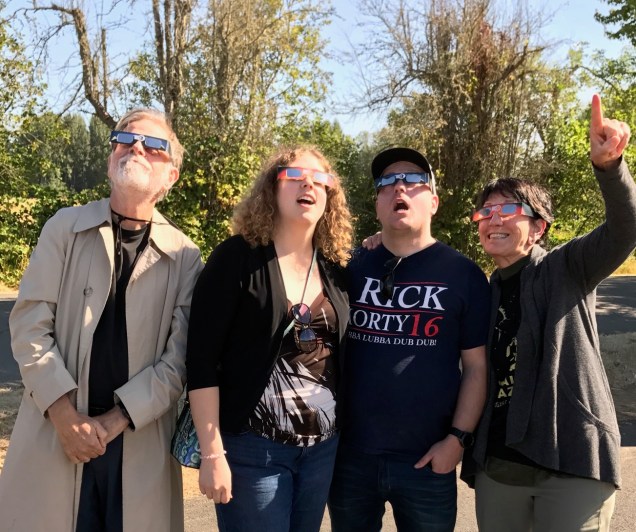





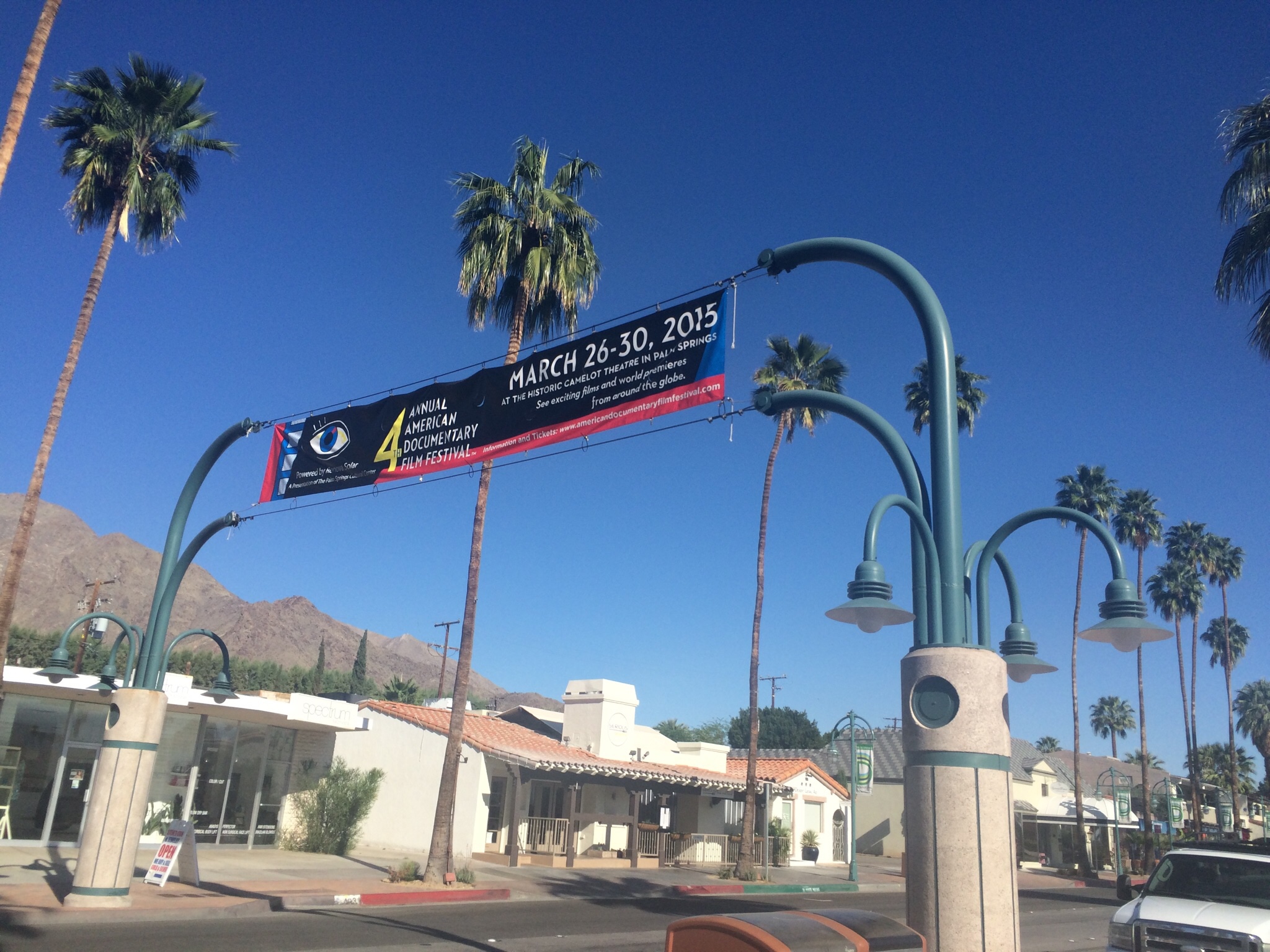
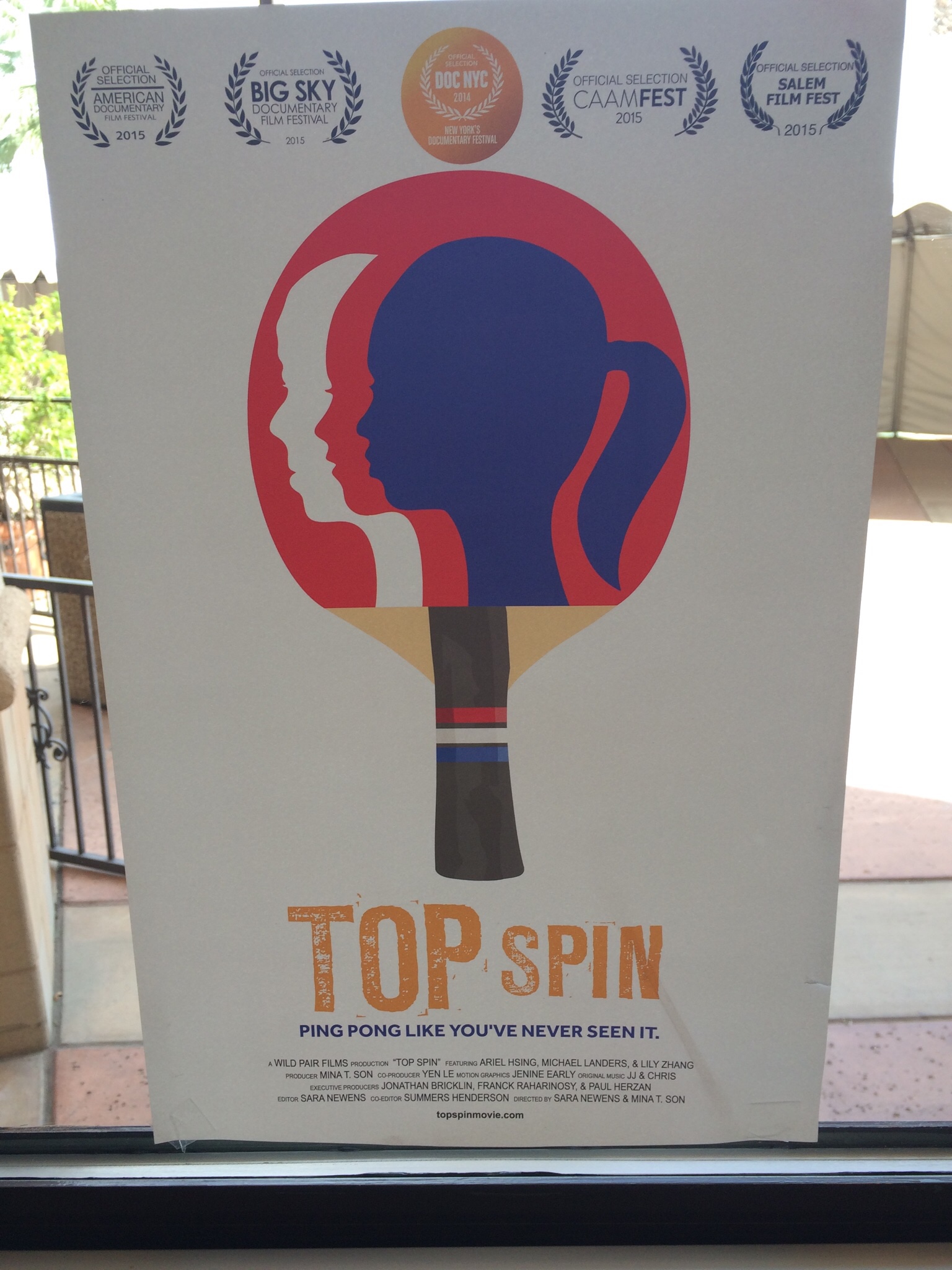
 Posted with Blogsy
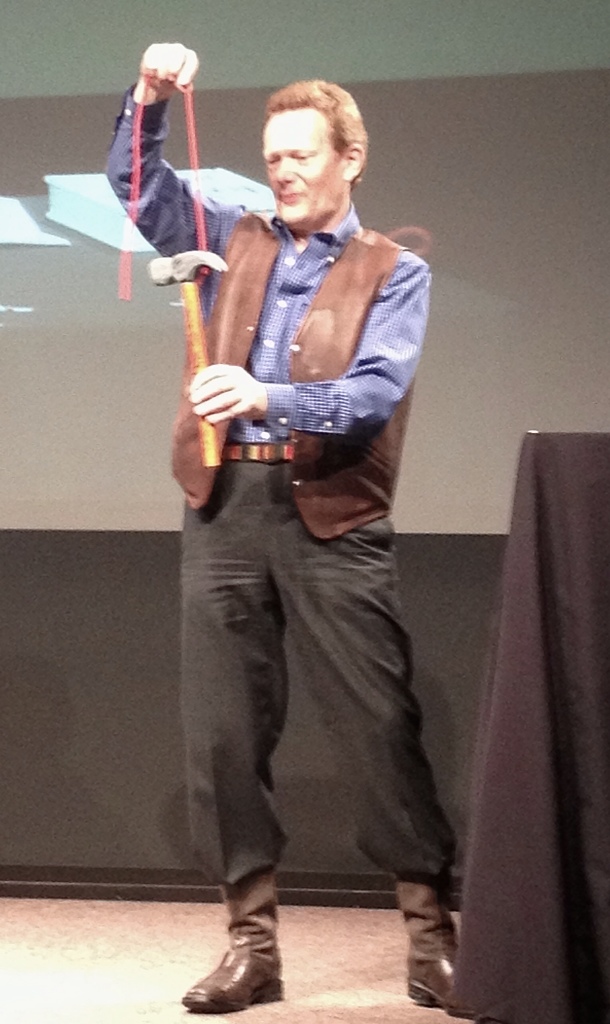
 The reason I missed the first 9 years is that every year back then when I studied the upcoming schedule, none of the events seemed irresistible enough to justify the long drive up and the cost of a hotel room. I finally took my friend Leslie’s word on faith (that I would like it). Once there, I got it — got the fact that the main point (for me, at least) is the opportunity to spend some time with a whole bunch of ideas that people have recently put into book form. Some of the events showcase a single writer, often in the form of an onstage interview. This year the roster of big names included Carol Burnett, Debbie Reynolds, Demetri Martin, Margaret Atwood, Orson Scott Card, Anna Quindlen. A larger number of the events are panel discussions (which the festival organizers have begun calling “conversations.”)


 At home and abroad