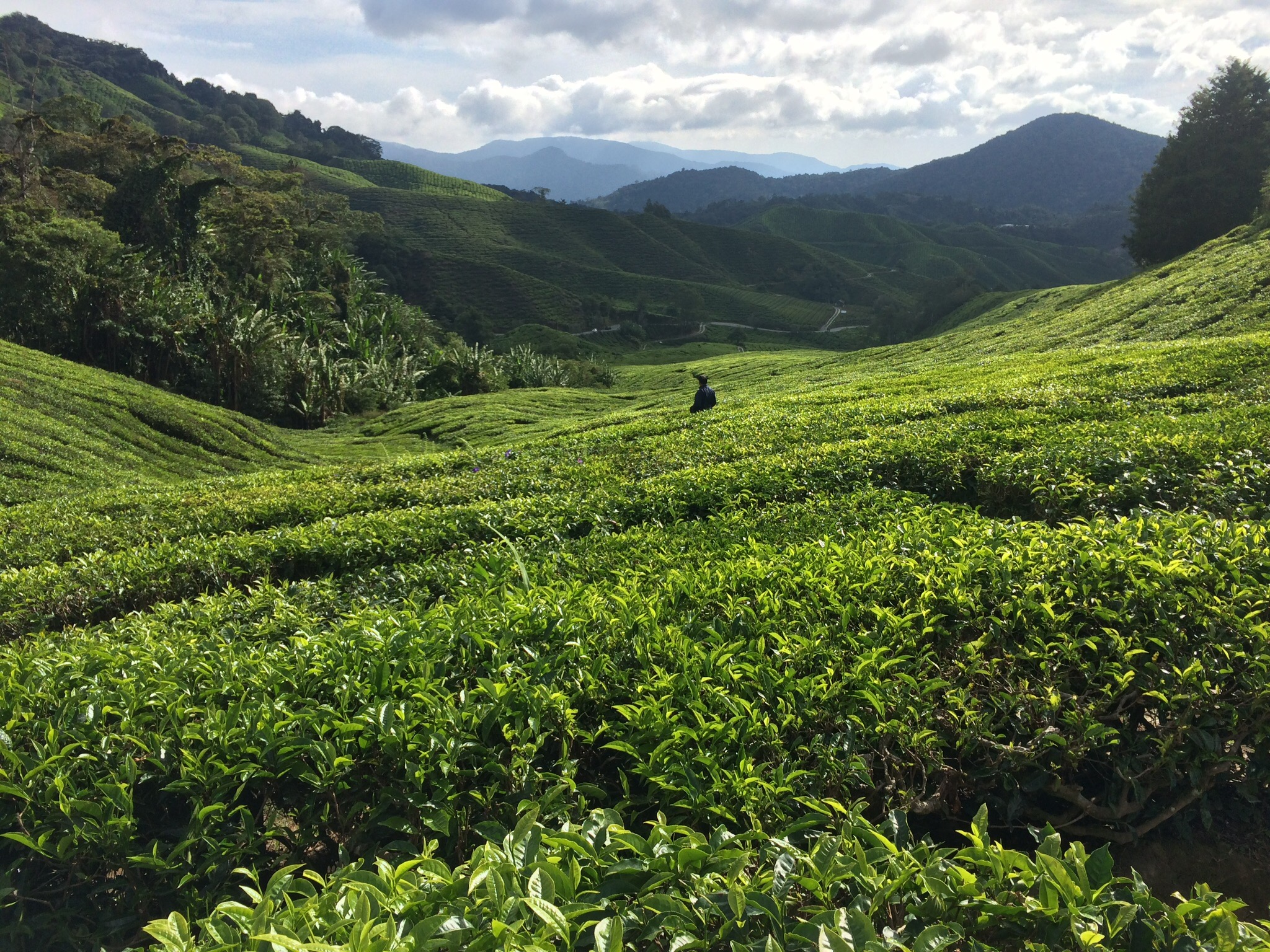
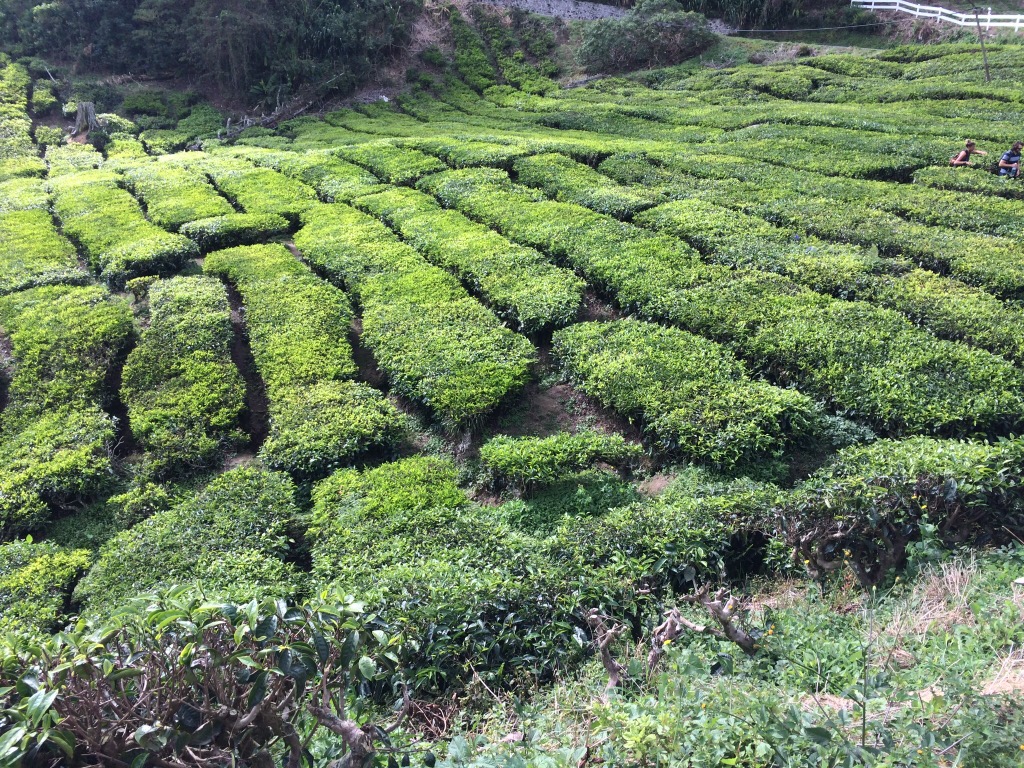
Steve and I now know how the tea gets into our teabags (on those occasions when we drink tea instead coffee, i.e. rarely.) We learned all about it Friday in Cameron Highlands. This region of Malaysia is an archetypal former British “hill station,” shockingly cool, high, and misty — in all ways perfect for growing Camellia sinensis. I’d been on a tea plantations in Uganda and Rwanda, but had forgotten how glorious they can be. Few agricultural crops are more beautiful. In Cameron Highlands the sculpted bushes blanket the steep slopes and rolling valleys in a quilt of greens so bright and intense they make the Irish countryside look insipid.
We had arrived in the town of Tanah Rata late Thursday afternoon, after a trying almost-7-hour journey from the jungle, so we didn’t feel like doing more than checking into our charming B&B (the comically named Do Chic In), dropping off our dirty laundry in town, having a few drinks, and eating a good Indian dinner. Also, after consulting with one of our hostesses at the guesthouse, we had her book us into a half-day tour of some of Cameron Highlands’ most popular activities.
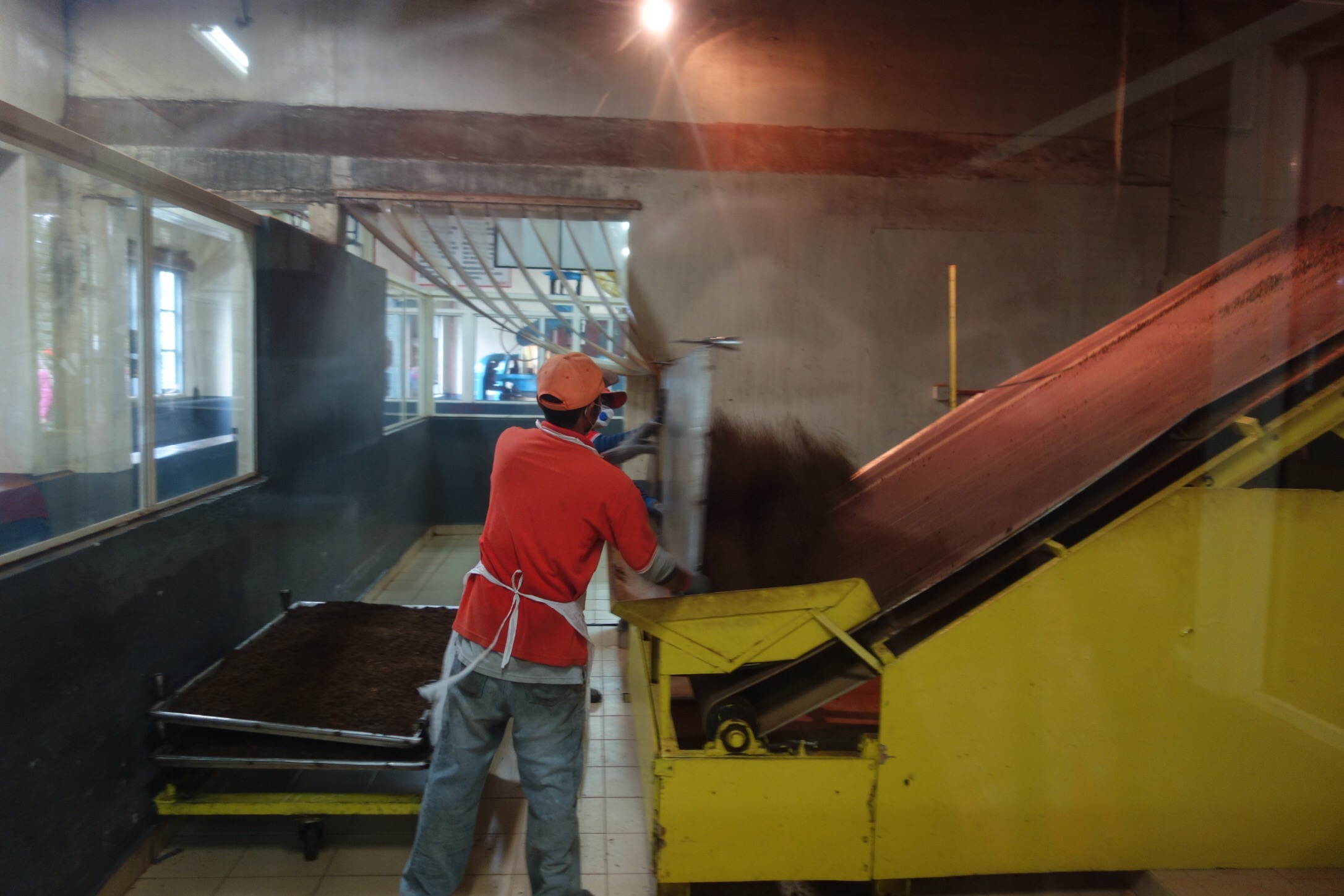
Visiting the Boh tea factory (founded in the 1920s by a Scottish family that still owns it) is near the top of the list, though as it turns out, tea-processing isn’t anywhere near as complicated as wine-making; we blew through the factory pretty quickly. Basically you dry the freshly picked leaves overnight, then crumble them, let them “ferment” for an hour or two, toast them, and screen them into different particle sizes. All this was being done on the original machinery installed in the factory almost 90 years ago.
Dried tea leaves being loaded into the toasting machine.
I popped briefly into the gift shop, and Steve and I tasted two varieties of the Boh in the tea room, but the hour allotted to our stay at the plantation felt more than adequate. In contrast, I wished we had more time in the Mossy Forest that lies further up the mountain. Less than a week before, we’d been dazzled by the magnificent artificial Cloud Forest biome in Singapore, where we’d learned about the wonders of these rare and fragile ecospheres. Now, suddenly, unexpectedly, we were in an actual example of one!
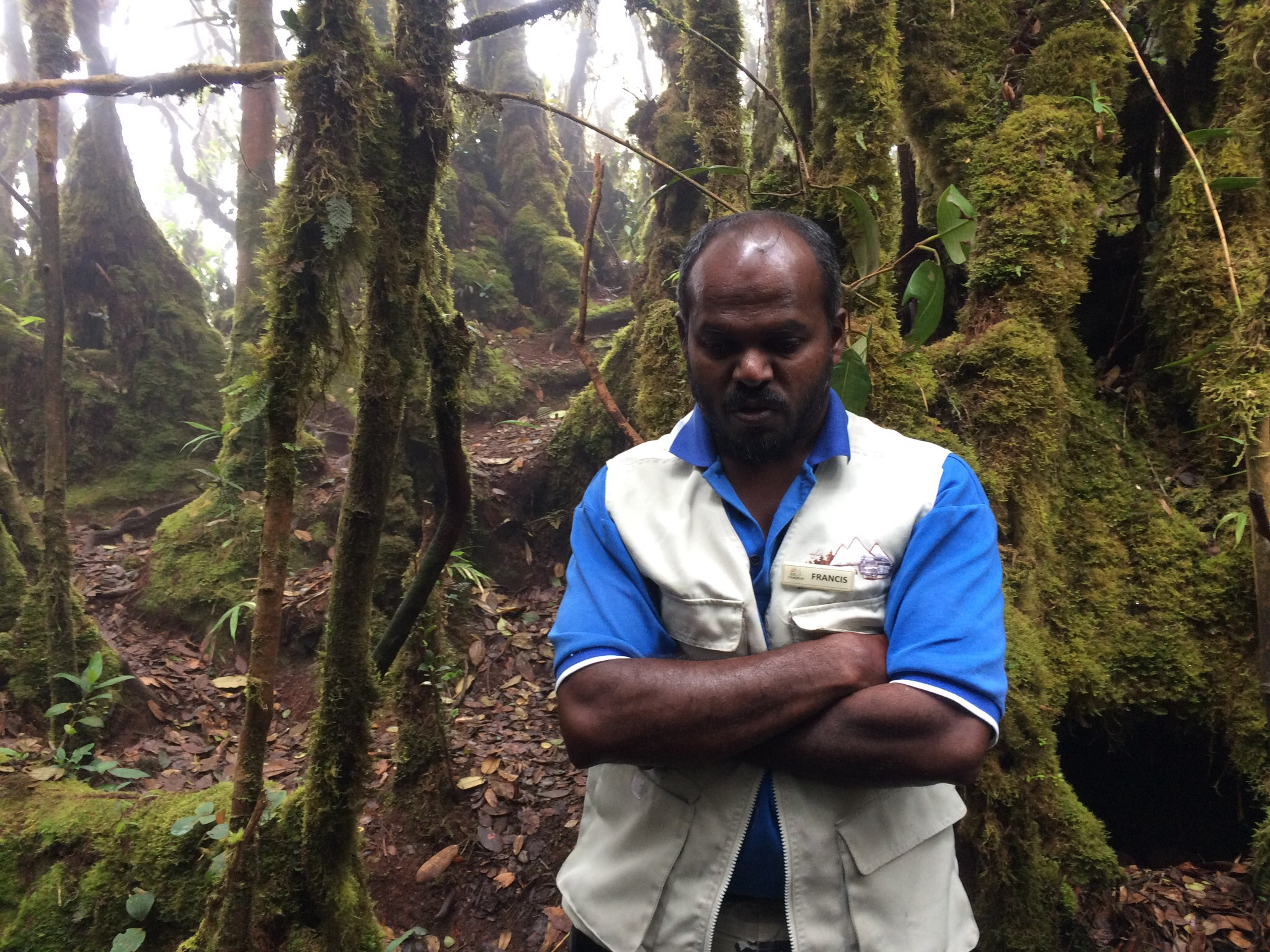
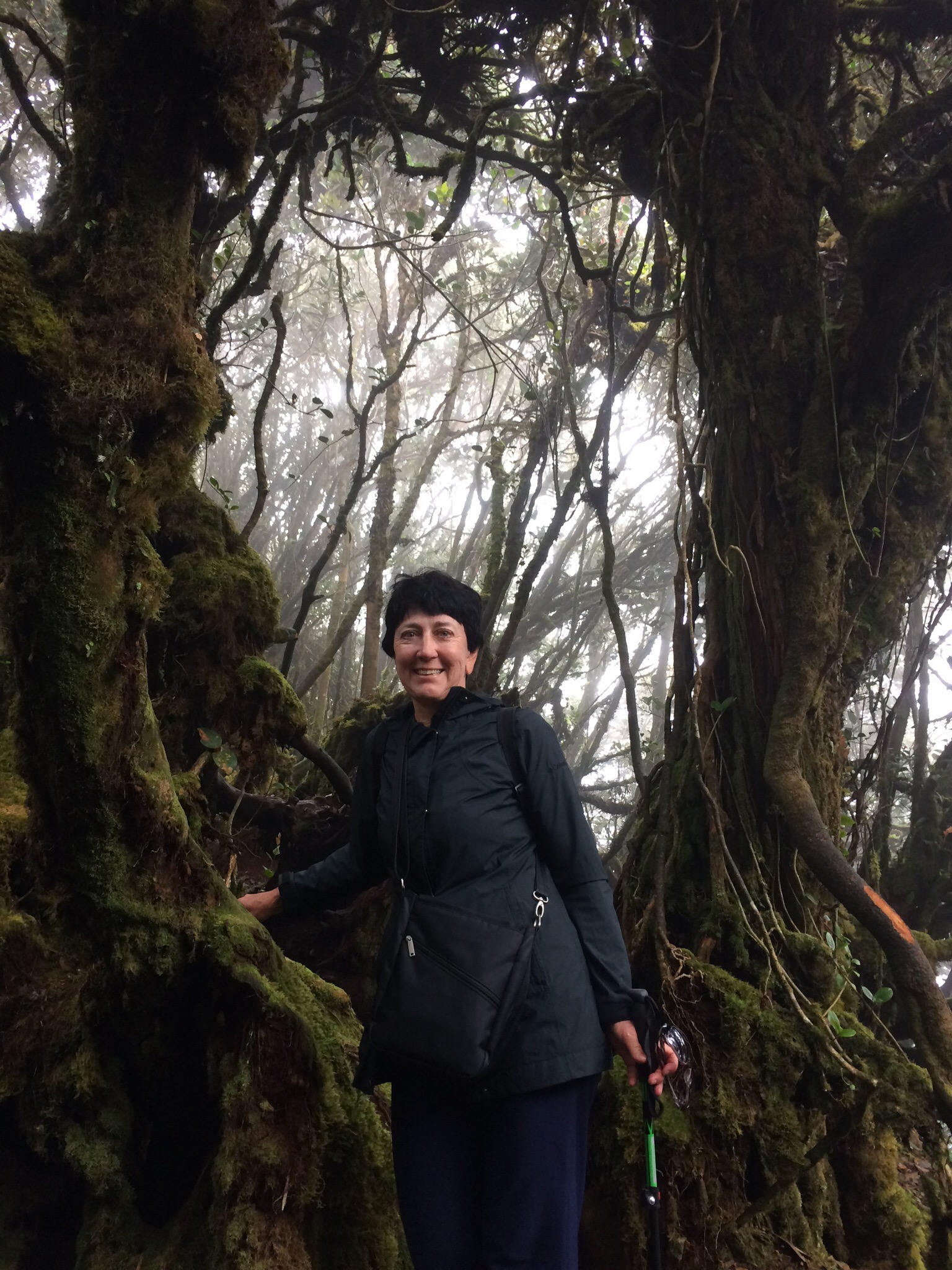
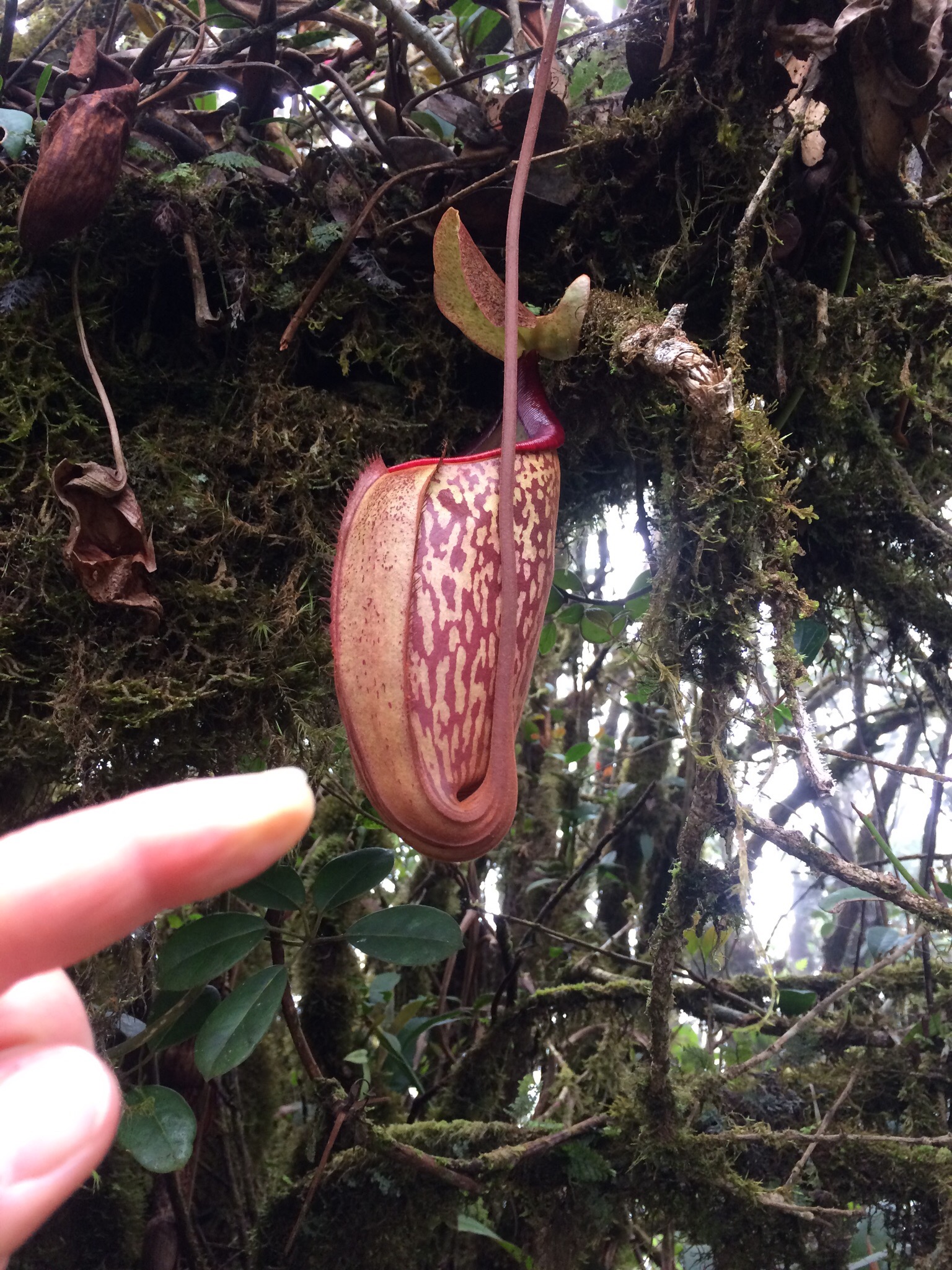
It was magical. A penetrating fog pressed in around us, but there was enough light to take in the spectacle of moss covering almost every surface. The sole exception was underfoot, where the layers of compressed compost had built up over the ages to a depth of 12-15 feet. It gave a bouncy quality to walking on the flat stretches, though mostly the path wound upward for the short distance it extended. Our guide Francis was 40, born and raised in Cameron Highlands. His grandparents immigrated here from south India. It may look a bit creepy, but it felt like the setting for a fairytale with a happy ending. The massive rhododendrum trees were dripping with huge and fantastically colored (carnivorous) pitcher plants.
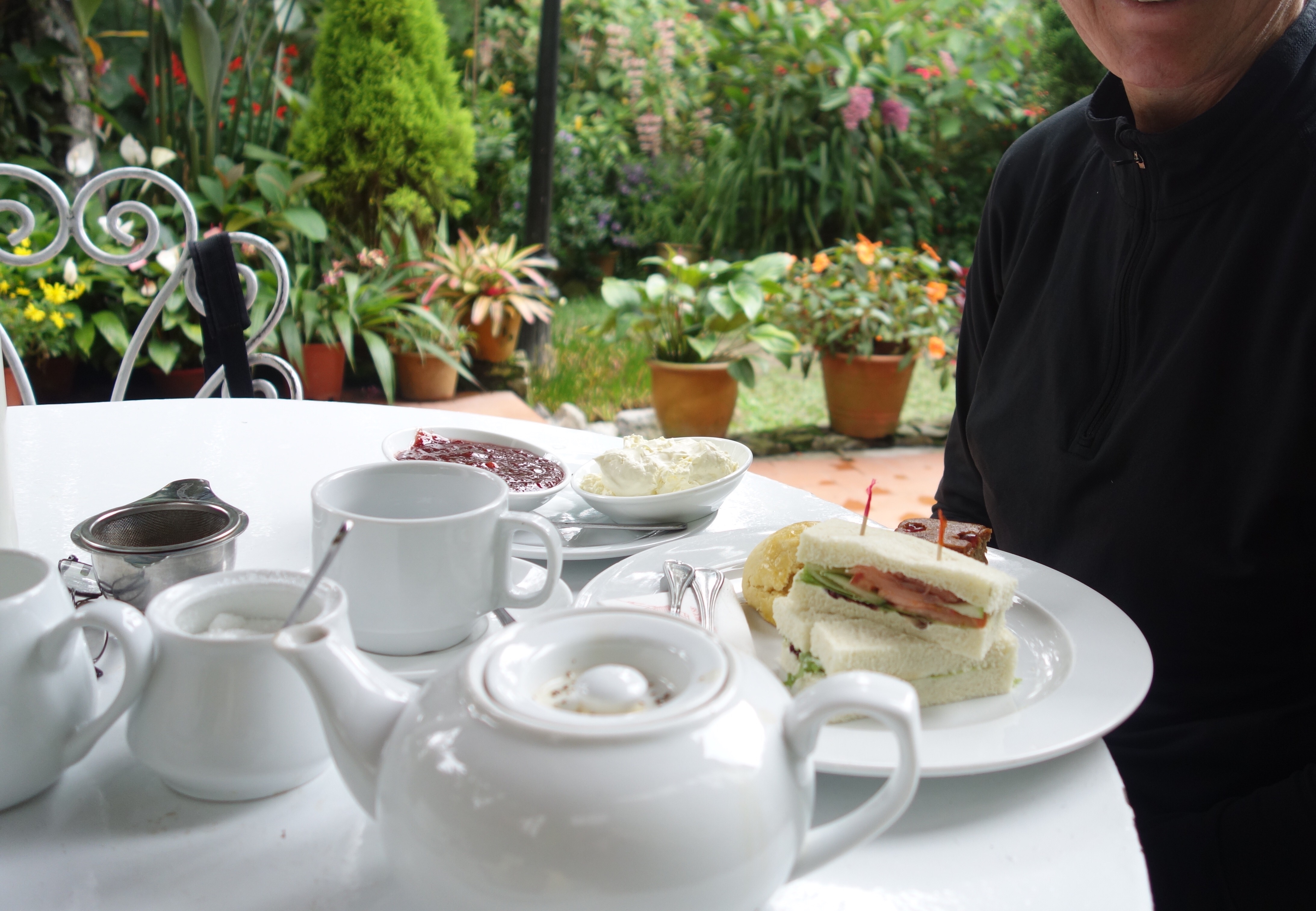
After the forest, everything else we did in the highlands was an anticlimax, if pleasant. The whole area is all so British; we got the most intense dose of that when we had tea and tea sandwiches and scones and clotted cream in a dead-perfect clone of an English country pub.
We tried to burn off some of the calories by taking a long walk back to the guesthouse, detouring through a state park with a beautiful waterfall. Then I got my head and neck massaged (less than $10 for 30 minutes with a master), while Steve did email in a nearby coffee shop. In the evening, we ate a Chinese feast cooked by the guesthouse owners (for about $6.50 per person) and discussed politics with the two Dutch couples also staying there.
Now we’ve moved on to our final stop in Malaysia, the city of George Town on the island of Penang. Once again, we’re sweating profusely and eating some of the best food in Asia.
A big percentage of the Malay peninsula was traditionally covered with tropical rainforest, but big chunks of it either have been or are being clear-cut, often to create palm-oil plantations. We’ve passed many logging trucks and sawmills laden with the stout corpses of mahogany and other tropical hardwoods, many a hundred or more years old. But we have the sense that harvesting and selling the wood isn’t the main driver of this environmental devastation; rather it’s the boundless appetite for the oil to fry up all the rice and samosas and other savory dishes.
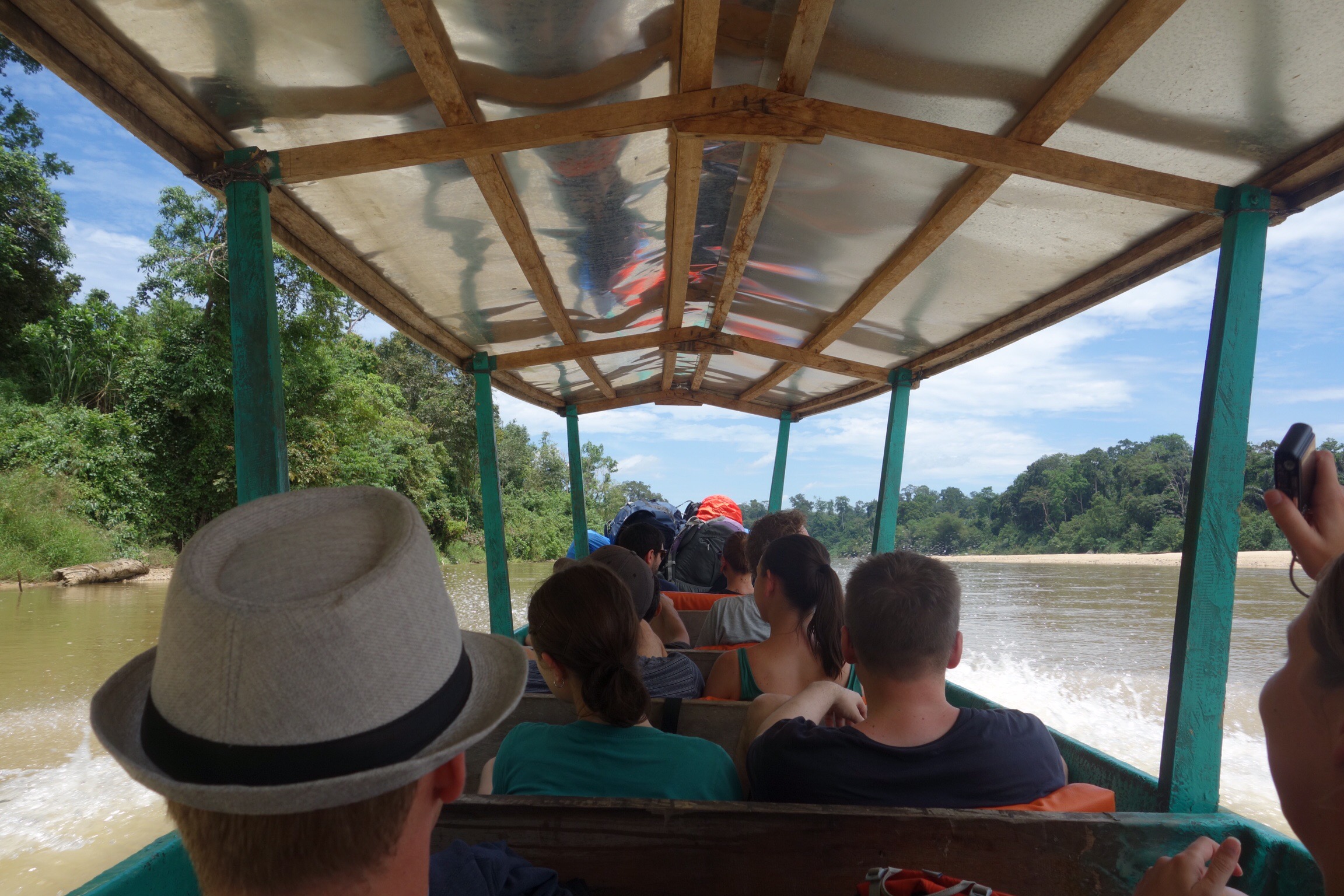
Still, some nature preserves have been created, and a huge one is the Taman Negara National Park, said to be at least 130 million years old. It’s not on the railway line, so not easy to get to. But Steve and I were determined see it. Monday we endured a twisty 3-hour ride from Kuala Lumpur in a van owned by a big Chinese Malay outfit. The van took us to the Tembeling River where, after a quick lunch, we climbed into a motorized pirogue for the 3-hour river trip to the national park.
I have to report: there are aspects to trips like this that I find enchanting. You’re low enough so you can dip your hand into the cafe au lait water, and the reflections of the jungle along the bank often take my breath away. But three hours is hard on the butt and back and knees (mine, anyway). The heat and whine of the engine and monotony of the passing scenery are natural soporifics. Both of us dozed for part of the ride, and by the time we reached our destination, we agreed we’d prefer to take the van only for the return trip.
We had only one day (two nights) at the “resort” next to the river, just within the park boundaries. With so little time, we practically raced from one activity to another. If a bit frantic, this schedule certainly gave us a taste for the place, which, if you like ancient equatorial rainforests, is magnificent.
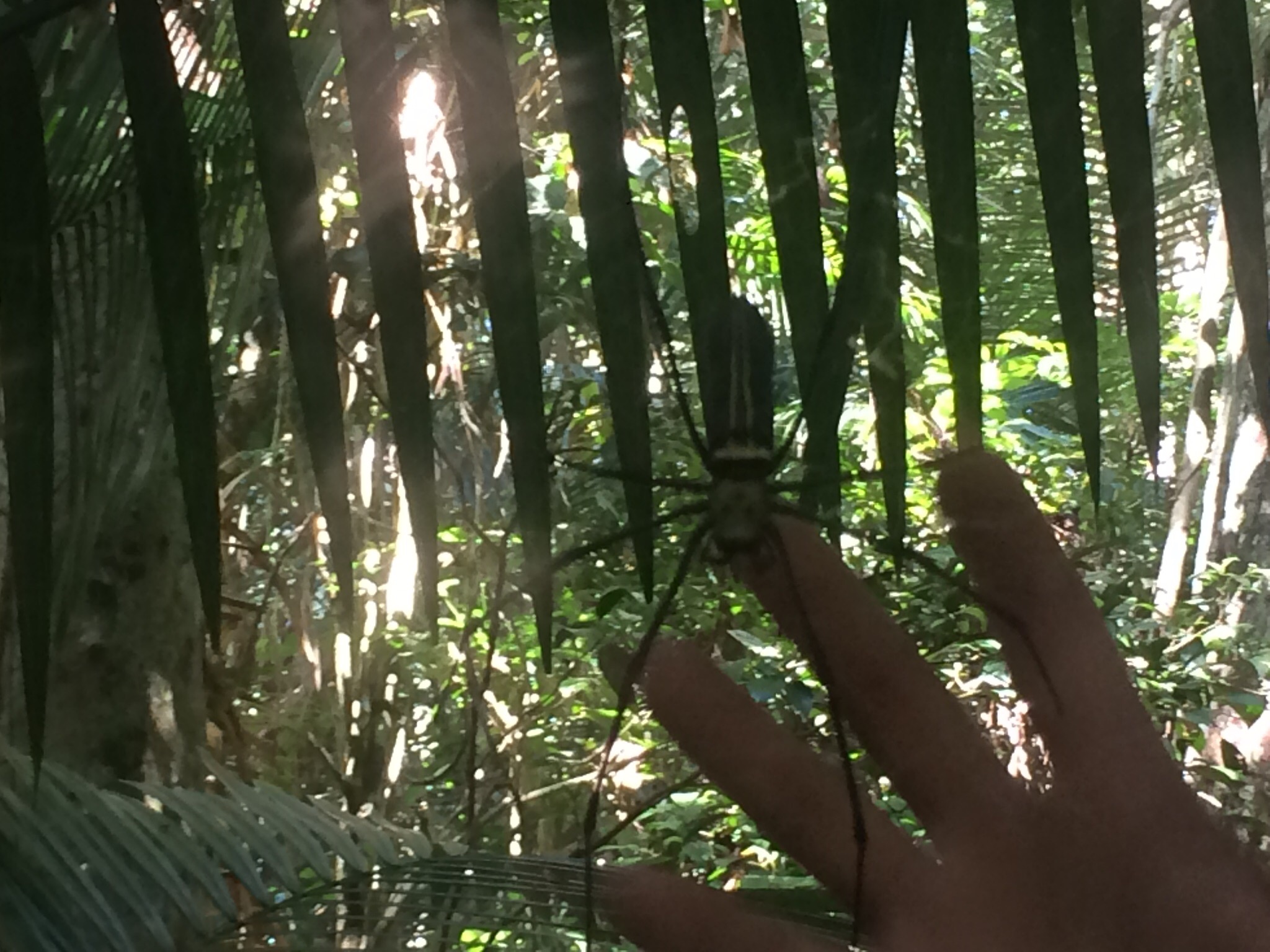
Highlights for me were the daytime outings. First thing on Tuesday morning, we trekked 3 hours, climbing from the riverbank a thousand feet up to a vantage point that offered great glimpses of the surrounding country. The change in elevation took us from the steam bath at the bottom to sections that felt almost temperate. And the forest was fantastic, dense and tangled and home to creatures ranging from pit vipers to macaques and gibbons to aboriginal humans who still hunt with blowpipes and poison darts. (The scariest jungle denizen we saw were just the huge golden orb spiders still clinging to the elaborate webs they construct daily).
Our guide wasn’t actually touching this one, just putting his hand in back of it. He told us these spiders are only moderately poisonous.
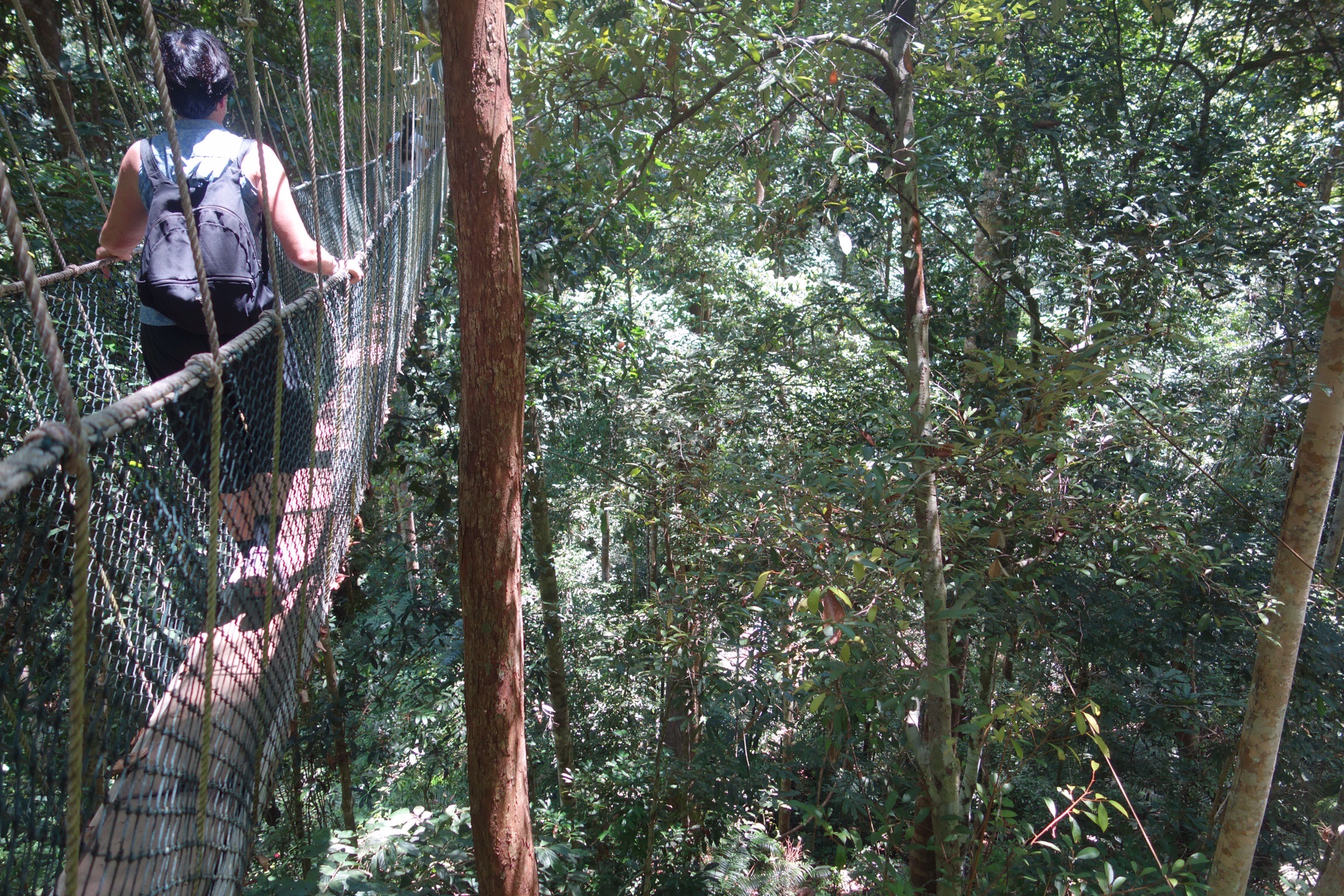
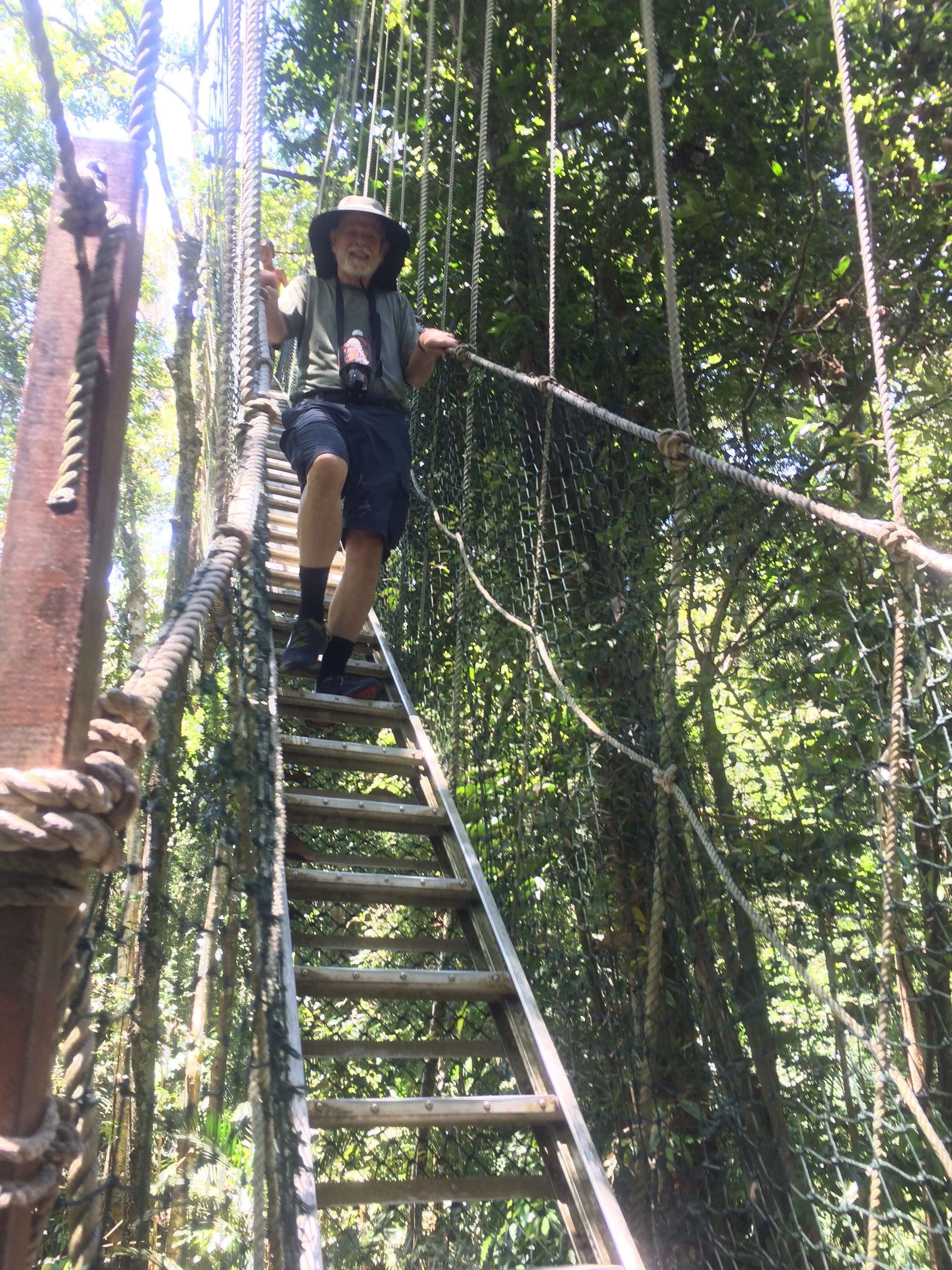
The flashiest part of our jungle trek (and most-advertised to tourists) was a canopy walk said to be the longest in the world, more than a half-kilometer long and strung from a series of six or seven platforms affixed to huge trees. At the highest point, it swayed almost 150 feet above the forest floor. Even there, at the center of it, the tallest trees stretched far higher over our heads.
Pretty scary. We’re weren’t supposed to stop mid-span. Even scarier were the steps we had to descend to get to the final platform.
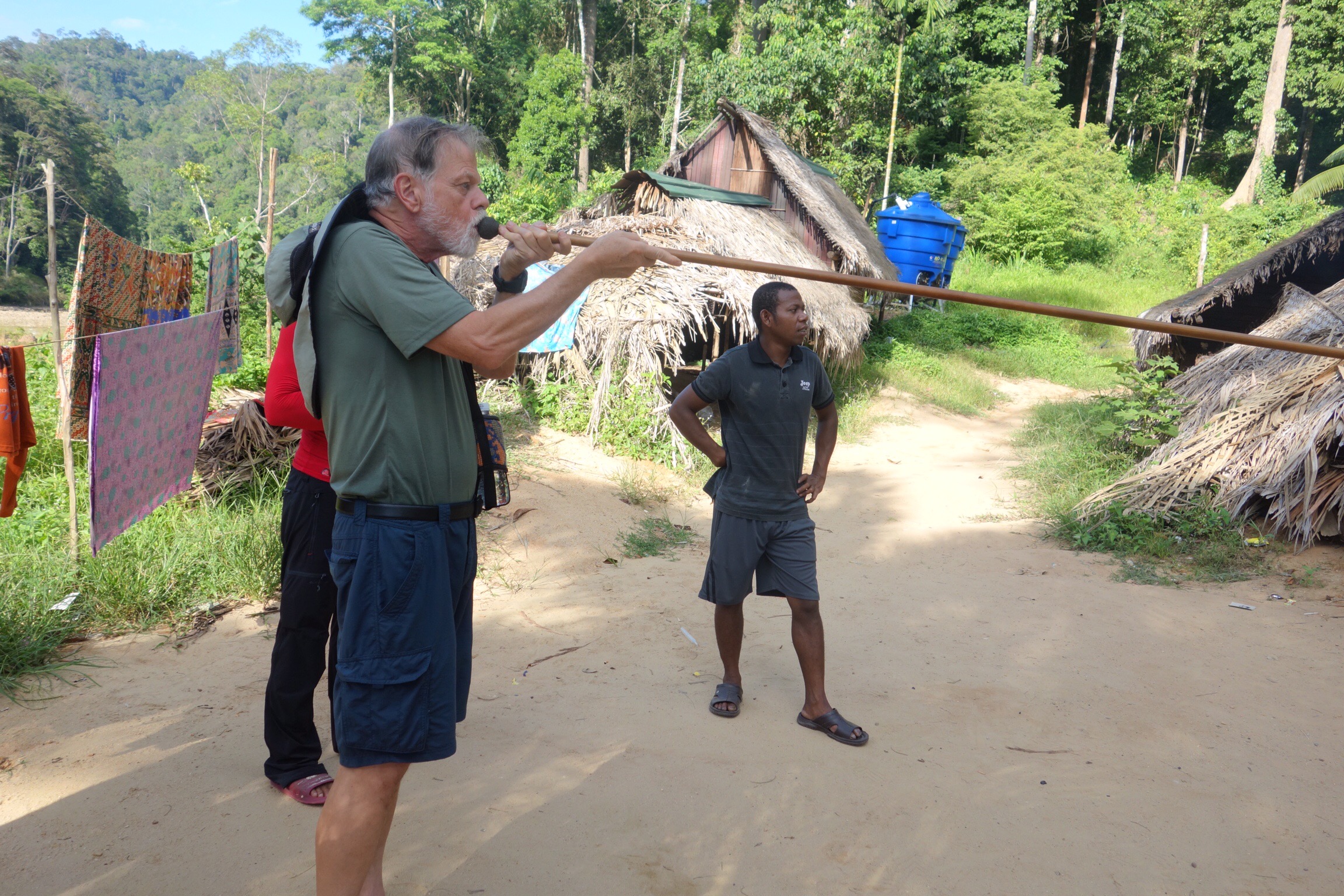
In the afternoon, we took a riverboat upstream to visit a tiny village of Bateq people — some of Malaysia’s Orang Asli (“original people”). They and other tribes ARE the people who still support themselves largely by hunting forest animals with poison darts. In fact, a big part of our time with them consisted in learning how they make the blowpipes and darts — and trying our skill at hitting a target with them. Some of the details of Bateq’s lives are pretty astonishing: it sounds like they’re still largely hunter-gatherers, with some tribes more nomadic than others. Our guide claimed that the villagers we were visiting pack up their simple belongings and move pretty often — every time one of the group members dies. He further explained that the Bateq dispose of their dead by wrapping them up in leaves, putting them on platforms, and hoisting them up huge trees deep in the jungle.
Steve didn’t hit the target, but he came pretty close.
I don’t regret doing either of the night activities we engaged in. On the first evening, we set off a little before 9 pm on a walk in search of exotic jungle fauna. We didn’t spot any sun bears or black panthers or elephants or Sumatran tigers (mostly they’re glimpsed in remoter areas of the park). But we did ooh and ah over a very large black scorpion and a couple of shy green tree snakes. Even if we’d seen nothing, we heard enough buzzing and clicking and chirping and croaking to make me feel Yoda would have felt right at home here.
Steve felt the second night’s activity was a bust, but I found it both wild and educational, in its own way. It had been billed as a “night safari” in which one would be driven along the edge of the park to look for bigger wild animals from the comfort of a vehicle. But the vehicle turned out to be a small extended cab pick-up truck. The back was open and equipped with two rough benches running down the long axis. Five of us crammed in there, including Steve and me, while two other guys and a spotter/guide had to sit on the roof. (“Just don’t tell my mother about this,” yelped one of the tourists, a tall, good-humored rheumatologist from Amsterdam.)
We tore down the highway and within minutes stopped to admire something marvelous: a white sloth running along an electrical wire. I’ve never seen a sloth before and didn’t think they could run that fast. He must have been scared of us. In a moment or two, however, he settled into that famous, cartoonish and comical slow-motion amble along the high wire. We drove on, and after a while turned off onto a rough dirt road that at first took us through a palm-oil plantation. I found it creepy, dense and vaguely menacing with all those thick palm fronds not far overhead; I kept thinking about the huge bird-eating spiders that live in these parts. But soon we moved out of the plantation and for an hour or so drove through ruined countryside littered with the corpses of dead palms and occasional clumps of human garbage.
The spotters shone powerful flashlights out both sides of the truck. They lighted little of interest: some wandering cows, a large owl, a small feral cat. Distant lightning flashed. For mile after mile, we saw nothing moving in the moonscape all around us. It seemed exactly what one should find when you cut down a magnificent forest, plant palm trees, and later abandon them: almost nothing that’s alive and wonderful.
[I wrote this a few days ago, but couldn’t post it from the jungle, where the Internet was slow as a sloth.]
When I’m planning a visit to a city in a country I know little about, I often google the phrase “36 Hours in [City Name].” “That’s the title of the popular New York Times travel column that offers itineraries for slapdash visits to intriguing locations around the world. It’s been mocked for its unrealistically fast pacing. But I’ve gotten good ideas from it for locales as far-flung as Hanoi and Bogota.
I didn’t have time to do much research in preparation for our one-day visit to Kuala Lumpur, the capital of Malaysia. But while I blogged on our train ride Sunday from Singapore, Steve burrowed into the aging library copy of “Lonely Planet Malaysia, Singapore & Brunei” that we brought along. He supplemented it with some fact-gathering courtesy of Google and learned enough to create an entertaining day. I’ve summarized it here for anyone planning a visit to Kuala Lumpur soon.
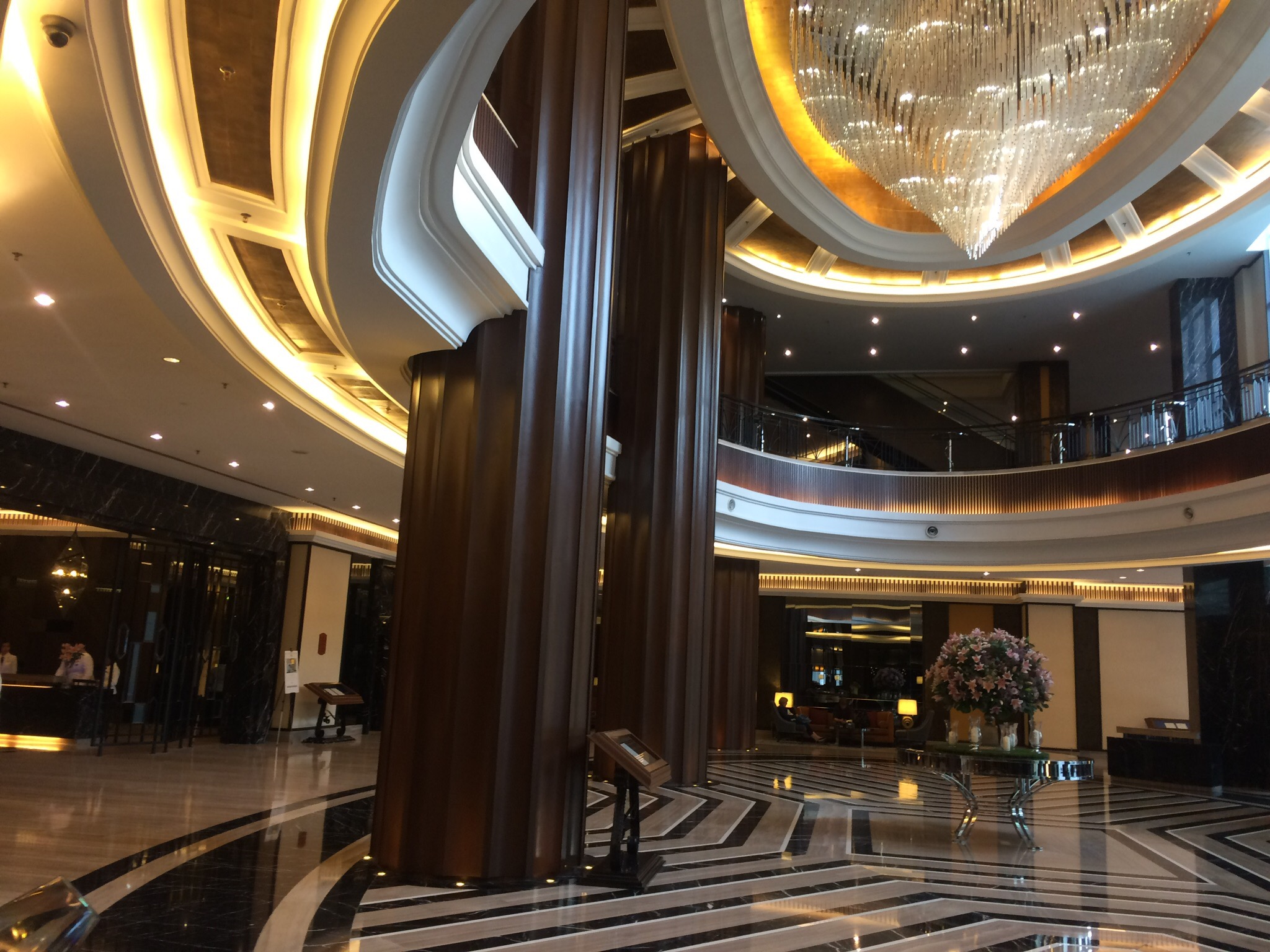
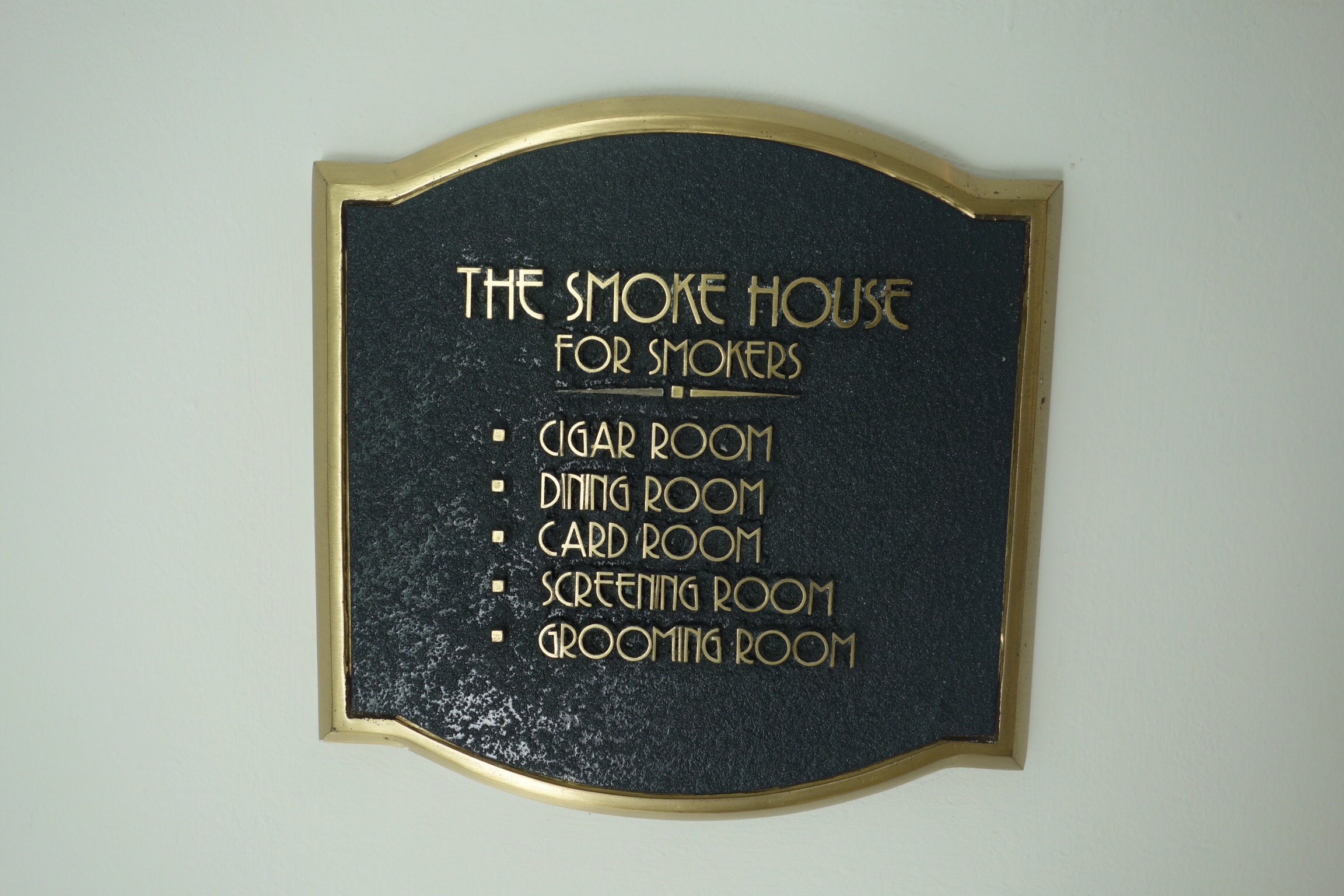
5:15 pm Sunday — Arrive at Kuala Lumpur’s central railroad station and buy a $2.17 ticket for the taxi ride to our hotel, the Majestic. The Majestic is a much better class of joint than we normally stay at. People compare it to the Raffles in Singapore, where the least expensive rooms these days fetch around $700 a night. When I learn that I can book a double (Majestic) room for less than $100, I can’t resist. And when we check in, the desk clerk murmurs that for an extra $60 or so per night, we will get access to their sumptuous buffet breakfast along with a large suite in the historic old building (instead of the prosaic new tower) and a butler who will serve us our breakfast in our suite if we wish. We can have our dirty clothes laundered for free. We can drink up all the contents of the minibar, again at no charge. And we can participate in the high tea and cocktail hour with all the booze and munchies we want. This too will be complimentary. I find it irresistible, and it proves to be a decision we do not regret.
Part of the lobby of the Majestic
6:30 pm — In the hotel’s “library,” we are plied with cocktails, good South African wine and enough tea sandwiches and hot hors d’oeuvres to extinguish 90% of our appetite. We nonetheless tipsily make our way to the “Colonial Cafe,” where we consume one Colonial salad and one bowl of Mulligatawny soup. We return to our winsomely comfy quarters and are sound asleep by 10.
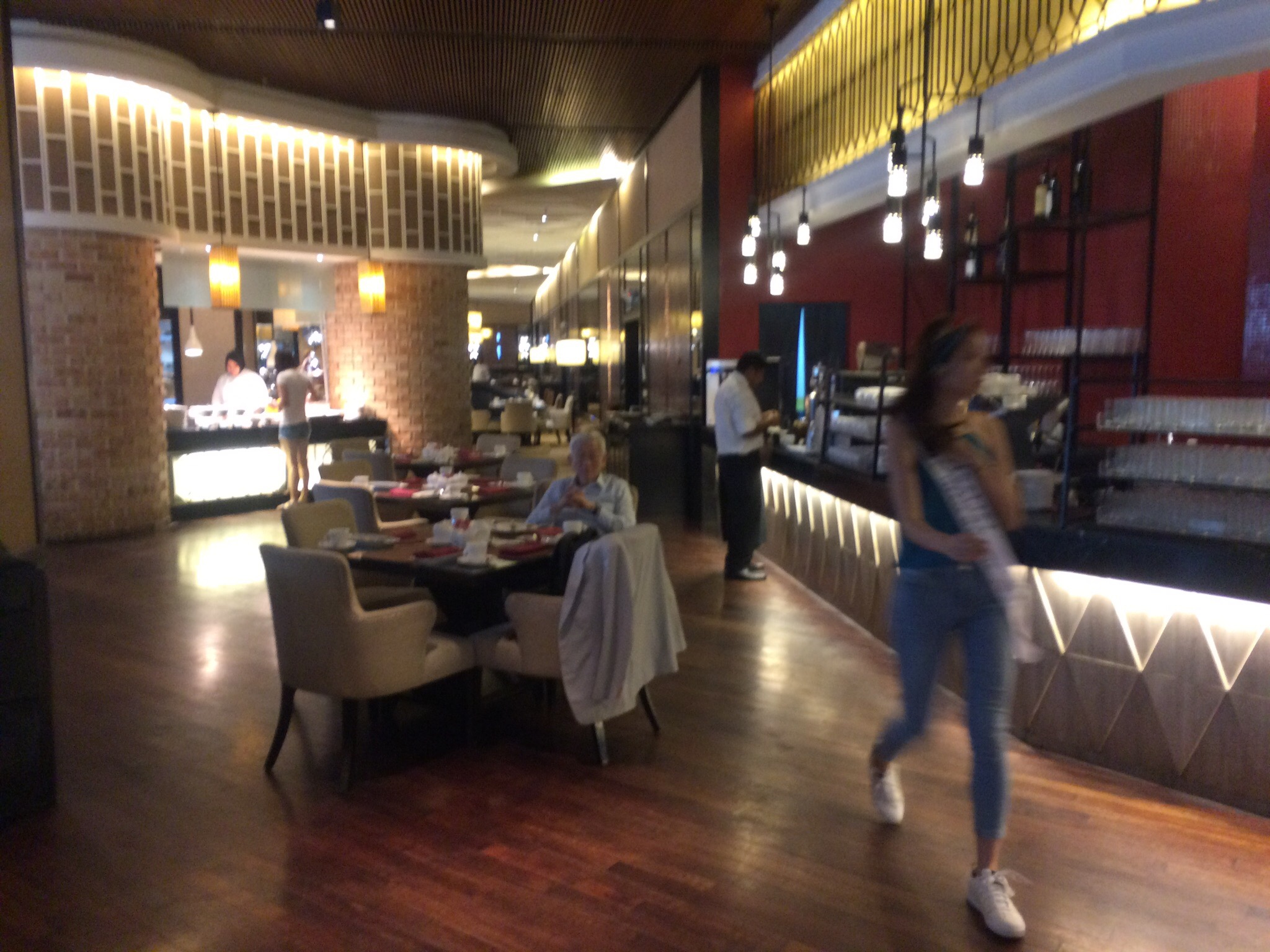
8 am Monday — We eat too much of the buffet breakfast, but cannot help ourselves because the Malay pastries and crepes are so intriguing (if kind of creepy). Also, the contestants for Miss Malaysia Universe 2017 are in the hotel this day for 12 hours of instruction in makeup, hair, and comportment. It’s fascinating to watch them file in and pick at their Malaysian pastries.
9 am — We hit the street, and it’s our lucky day. Instead of yesterday’s gray, rainy, sweltering weather (which made the city look bleak), the skies today are sunny and blue. Under them, Kuala Lumpur looks jaunty and energetic. The Majestic is very close to the Tun Abdul Razak Heritage Park, and we follow a winding path through it, noting its how many alluring attractions it contains: the world’s biggest aviary, an inviting planetarium, a butterfly garden, an orchid garden. We don’t have time to visit any of them. But if we had an extra day, we could readily pass it here. Instead we get lost, trying to find our way out of the park. The temperature is climbing well past 90. Our printed street map is not to scale, and Google maps is lnon-functional. It takes a while, but we finally make our way to Little India.
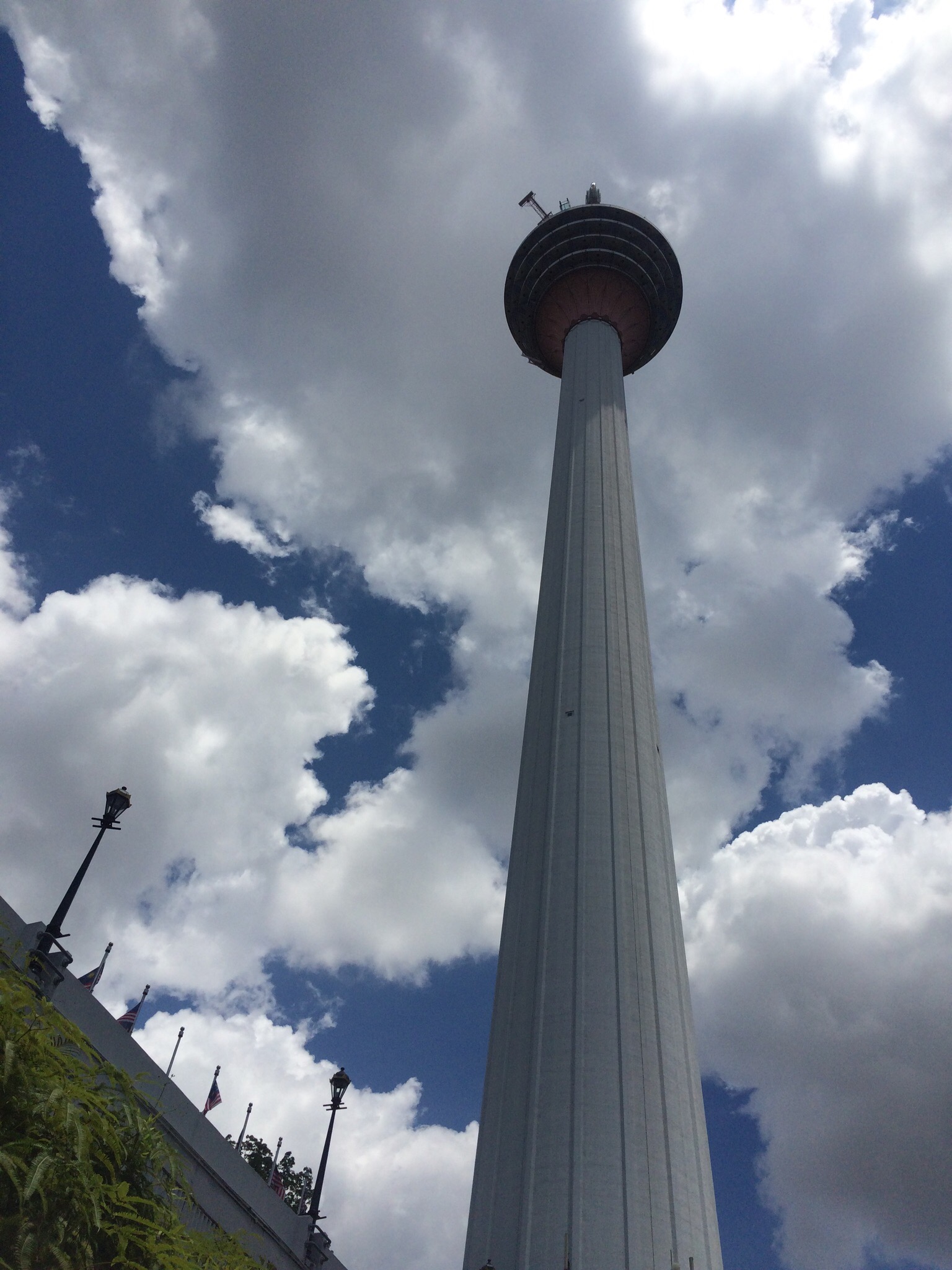
11 am — A huge chunk of the ethnic enclave appears to be torn up for reconstruction. Many big chunks of the city are, which compounds the inherently confusing jumble of streets. We resolve to come back to Little India in the evening, when it’s not so hot and explore further. For now we head to KL Tower, one of the tallest structures in the world. Kuala Lumpur has many skyscrapers, but somehow the city feels very different from Singapore. The infrastructure is more dilapidated. Walkways are crumbling. Signage is poor, and it’s much harder to find our way around. That said, Steve’s research online has made us aware that Malaysia is about as prosperous as Greece, Poland, and Portugal, and many times richer than Thailand, the Philippines, or Indonesia.
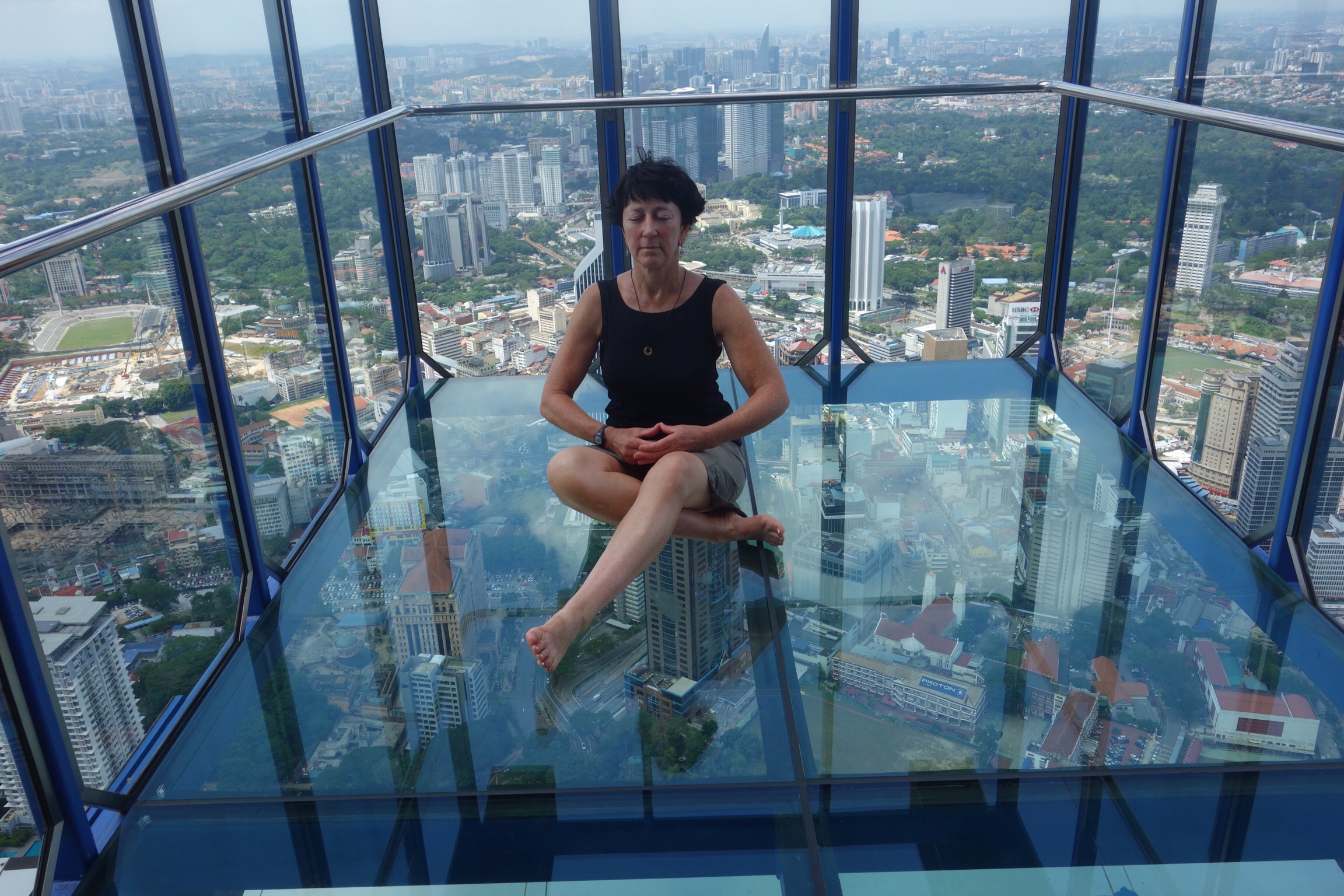
Noon — Kuala Lumpur’s tallest buildings, the Petronas Towers, are closed on Mondays, and this happens to be a Monday. But the KL Tower is almost as tall and equipped with the glass-bottomed viewing platforms that have become a minor fad in recent years. For about $22 per person, we spend a highly satisfying hour ogling the 360-degree views and experiencing the glass-bottom viewing experience.
The KL Tower…
…and the great view of the Petronus Towers, even taller.
1 pm –We walk to Jalan Alor, an open-air dining street in the city center where the guidebook promises one can get every imaginable Malay or Chinese dish. Indeed there are many frog dishes on the menu of the place we plop down in, along with about 200 other choices. We eat rice, barbecued pork, savory soup dumplings, and beer for less than $18 for two.
2:30 pm — We’re not far from the city’s monorail line, and we quickly figure out how to use it to get to the Chinatown. But we’re appalled that the automatic gates that should keep people from falling 30 feet to the street below are broken. It gives a whole new urgency to the injunction “Mind the gap!”
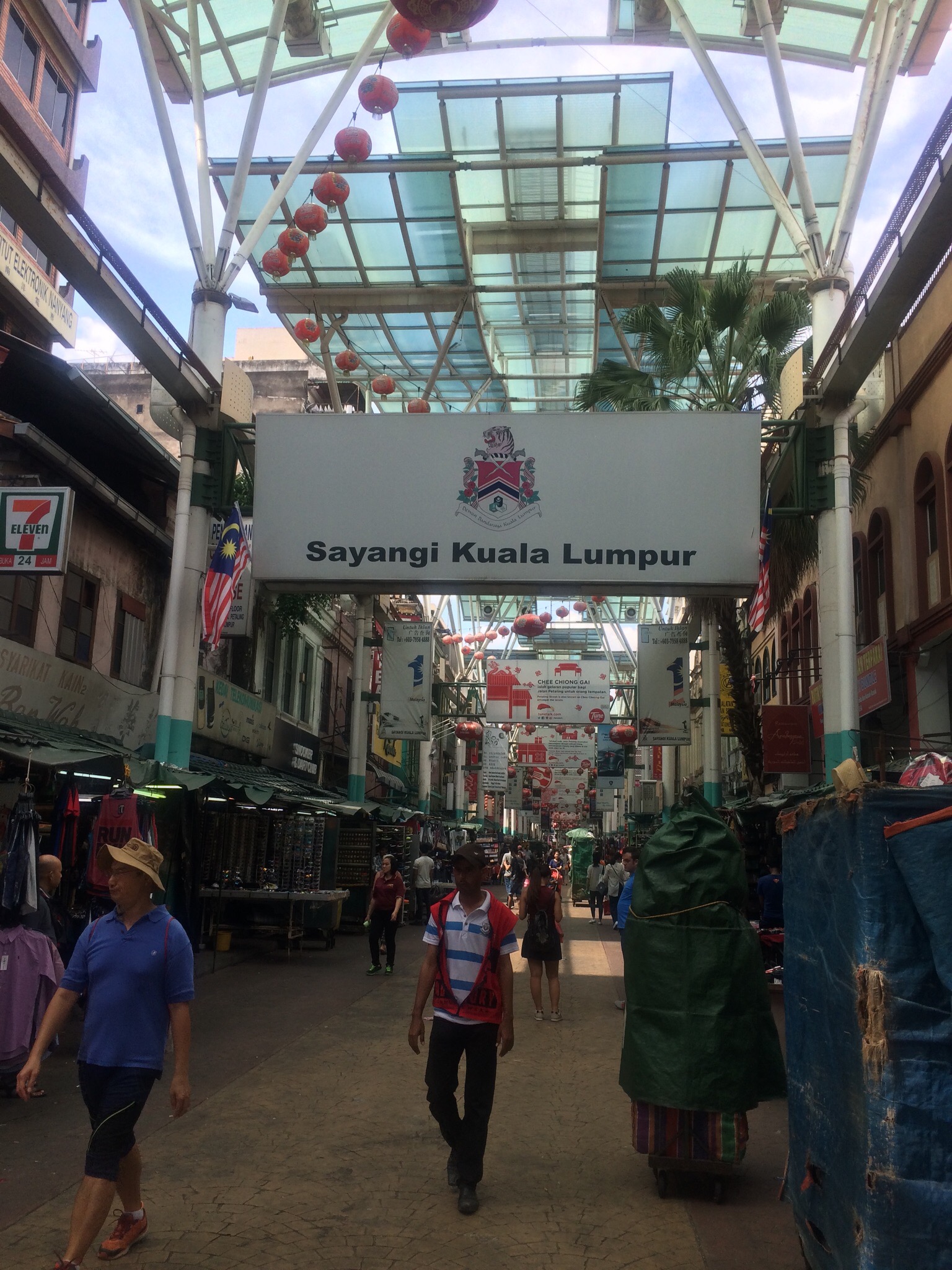
2:45 pm — We stroll up the main pedestrian street in the Chinatown, and I buy a chillable eye mask for a little under $2. But we don’t linger. The day is still sweltering, and even though the Chinatown is close to our hotel, it can be devilishly hard to navigate from one point to another in this town.
The main pedestrian street in KL’s Chinatown
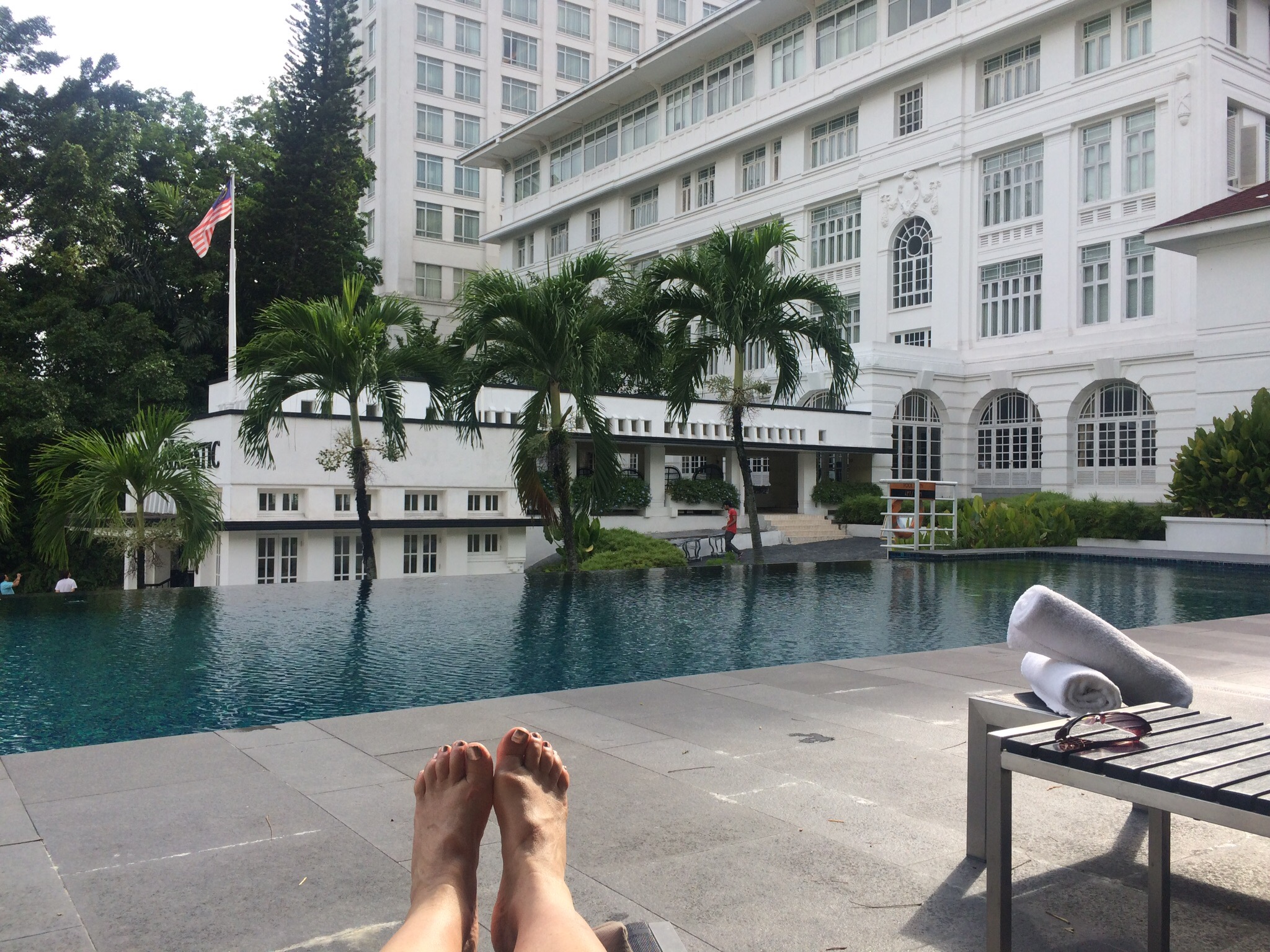
3:30 pm — Back at the Majestic, we gratefully ease into one of the two disappearing-edge pools. It feels like paradise. We linger, then shower, then I finish writing my last blog post about Singapore.
6 pm — We return for more of the South African wine and filling cold and hot snacks. The staff dazzles us with their attention and solicitousness. They promise to book a taxi to take us to the travel agency where we need to go first thing the next morning.
7:15 pm — We decide we’re so full we don’t even need soup or salad. We also can’t muster the energy to make our way to Little India in the heat. Instead we chill in the air-conditioned comfort of our suite.
10 p.m. — Asleep again.
5:22 am Tuesday — I hear the first Muslim call to prayer of the morning, issuing from the large mosque next to our hotel. It’s more melodic here than what I remember in the Middle East and North Africa. Somehow it reminds me of a Gregorian chant. It almost soothes me back to sleep, but we have to pack, eat more of the monster buffet breakfast, and head to the travel agency, where a van will transport us on the next phase of our Malaysian adventure: a journey to Malaysia’s vast national park in the middle of a 130-million-year-old tropical rainforest.
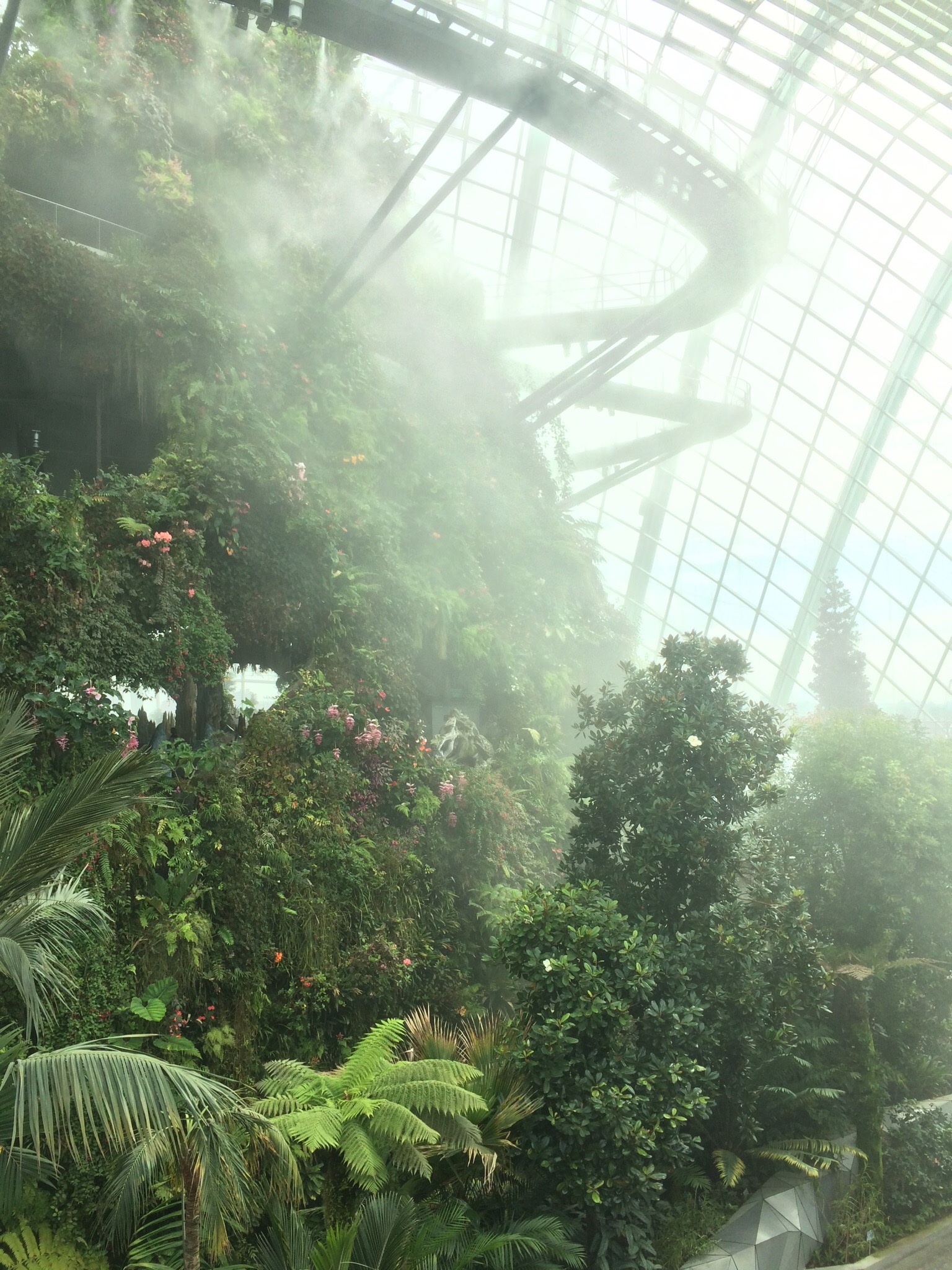
For our last day in Singapore, we took a closer look at a couple of the city’s most dumbfounding landmarks. One, weirdly, is a public park, the Gardens by the Bay, built in 2012 at a cost of more than a billion Singapore dollars, and now one of the city’s premier tourist draws. It’s free to enter much of it, but you have to pay to enter the two enormous “biodomes.” One of them, the Cloud Forest, was the most fantastic plant-exposition-space I’ve ever seen.
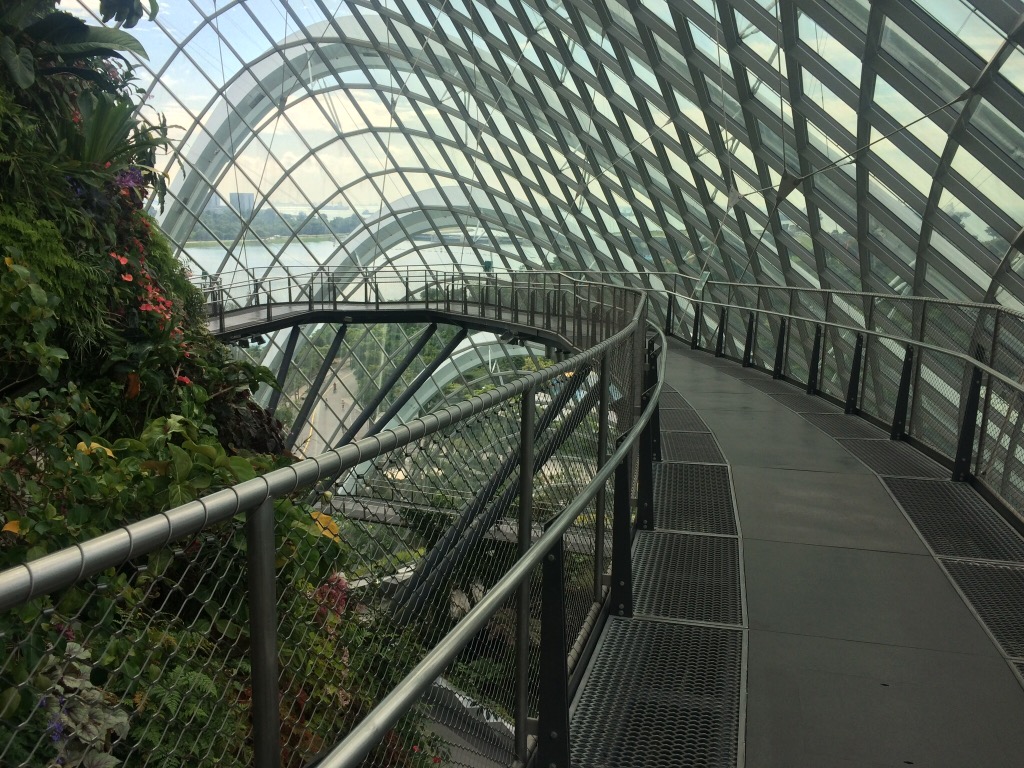
We got there early to beat the crowds and took the elevator up to the top of the 10-story-tall artificial mountain that’s at the dome’s heart. It’s been planted with many of the rare and beautiful plants that grow at high altitudes in the tropics. From the top, you stroll down walkways that simultaneously bring you close to the exquisite flora while taking in dizzying views of Singapore’s science-fictional skyline.
I was almost rubbing my eyes like a cartoon character at all the beauty — botanical, architectural, sculptural. After we staggered out, all but dazed by it, we moved on to visit the adjoining Flower Dome, which proved to be well done but paled in comparison to the wonders of the Cloud Forest and seemed much more mundane (probably because it showcases plants from the world’s drier Mediterranean regions — like our home.)
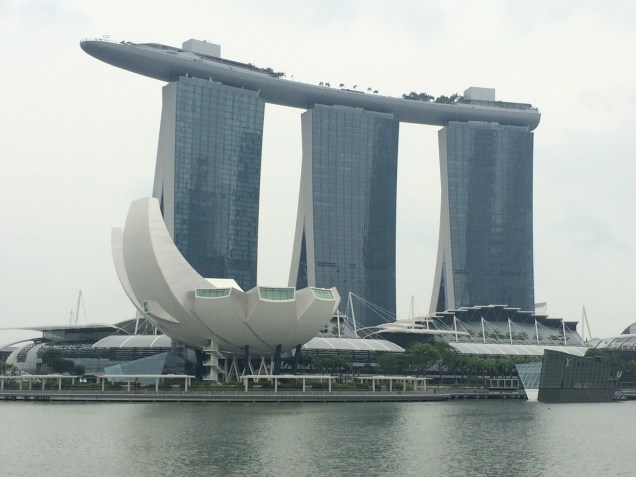
We ate lunch at a hawker center within the park then did a lightning tour of Marina Bay Sands, the eye-popping hotel and casino that adjoins the urban gardens. It’s very Vegas (perhaps in part because it’s owned by Nevada gaming magnate Sheldon Adelson).
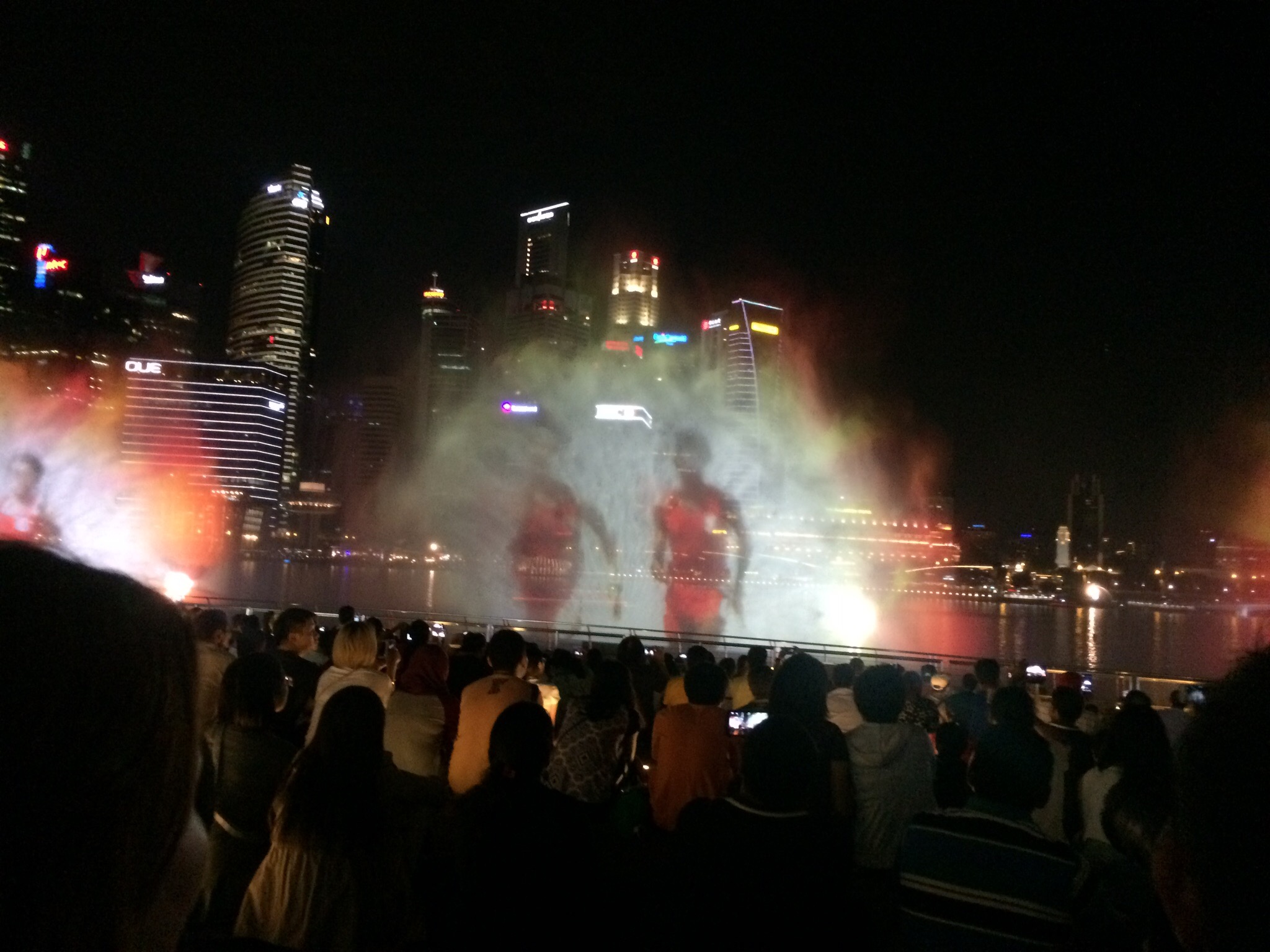
But we weren’t sneering at it; that’s hard to do. In fact, after returning to our hotel to pack and eating our final dinner (in Chinatown), we returned to the enormous plaza between the Sands and the reservoir (aka Marina Bay). We’d heard that a free, superb sound and light show was presented nightly at 8. When we arrived shortly before then, hundreds of people had gathered in anticipation of it.
I wondered: what do you do to impress a 21st-century horde? I found out that what works pretty well is to puff a wall of fog at several spots along the waterfront, with the glittery Singaporean nightscape behind it. Then with rousing music surrounding the crowd, you project on that ephemeral misty “screen” primal images of human happiness: young lovers kissing, parents gazing rapturously at their babies, children romping in the surf, beaming elders. If incoherent, it also somehow felt magical.
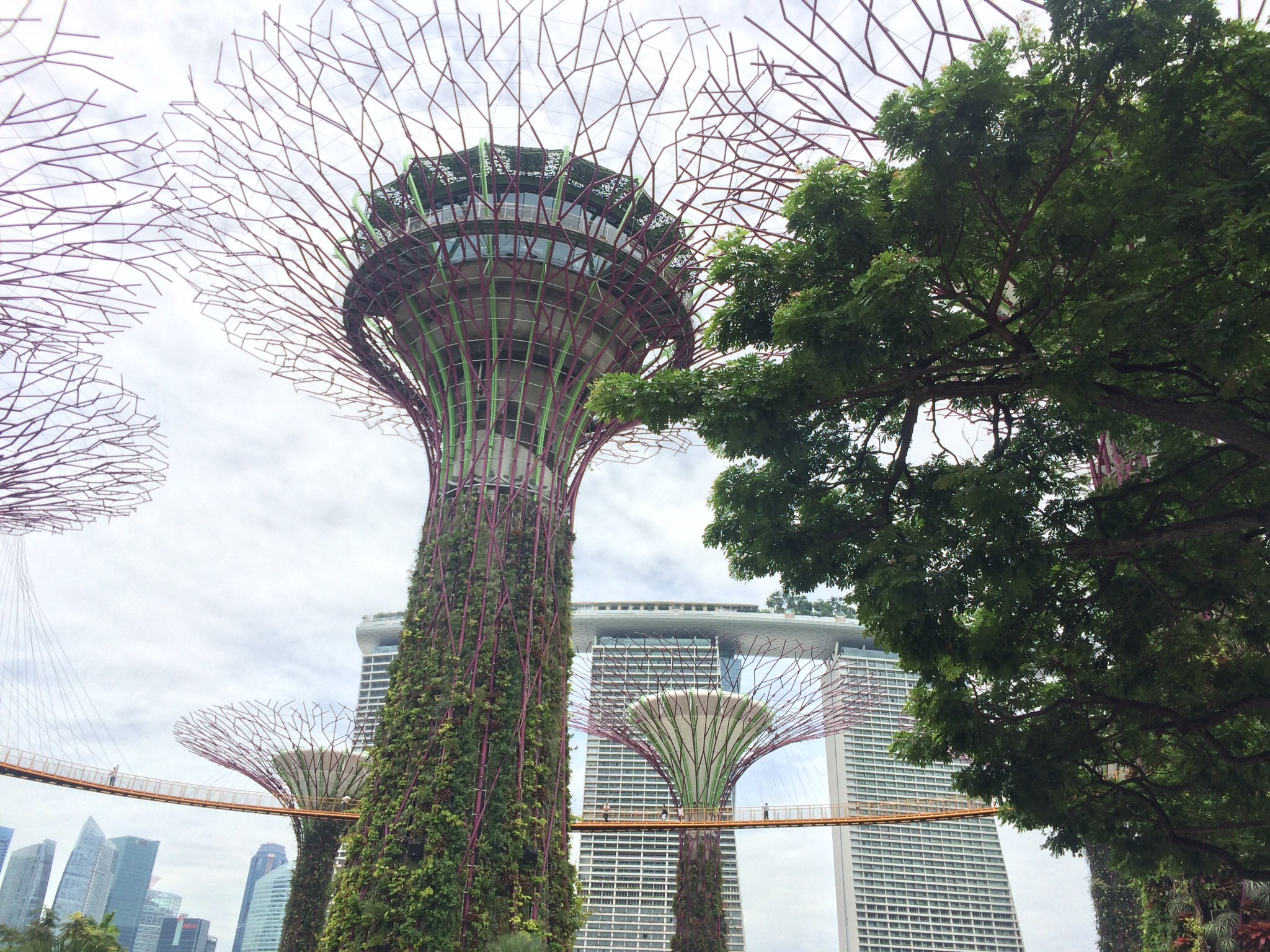
We didn’t linger, but rather, as soon as the mist dissipated, Steve and I raced through the passageways back to the Gardens by the Bay, to ascend to the top of one of its “supertrees.”
Here’s what the supertrees look like in the daytime, with the Marina Bay Sands in the background. At night they shine.
On the roof, we sipped wine and gazed some more at the incomparable skyline, until a few minutes before 8:45, when we descended to take in the free spectacle staged nightly in the supertree plaza. Music began to pulse, and the trees sprang to lighted life — changing color and all but dancing to the sound track, which consisted exclusively of songs from late 20th-century American and British musicals: Chicago, Evita, Les Miserables, Fiddler on the Roof, and more. This was both oddly beautiful and simply odd, and once again I felt ecstatic to be a part of the epic cultural mash-up.
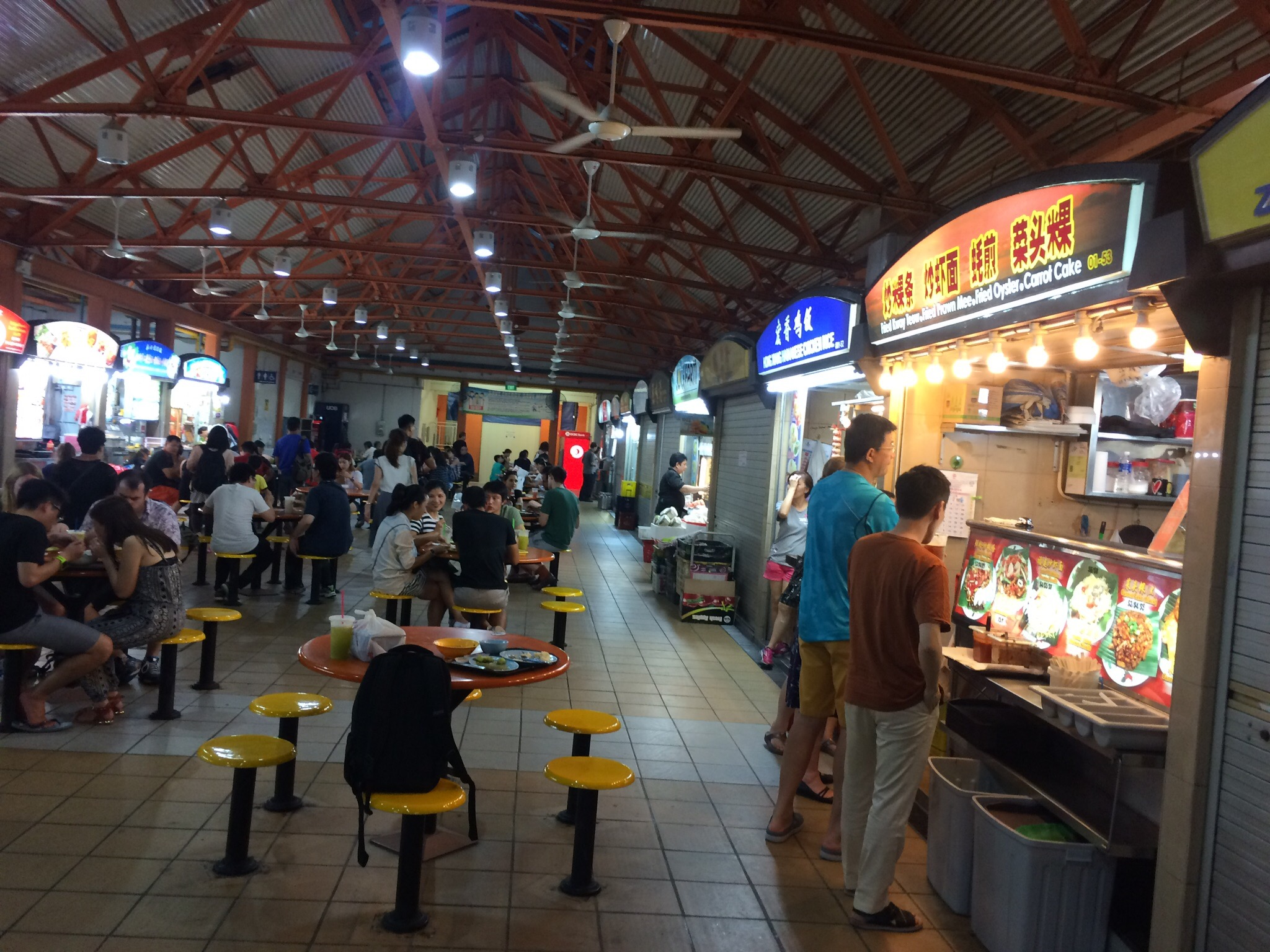
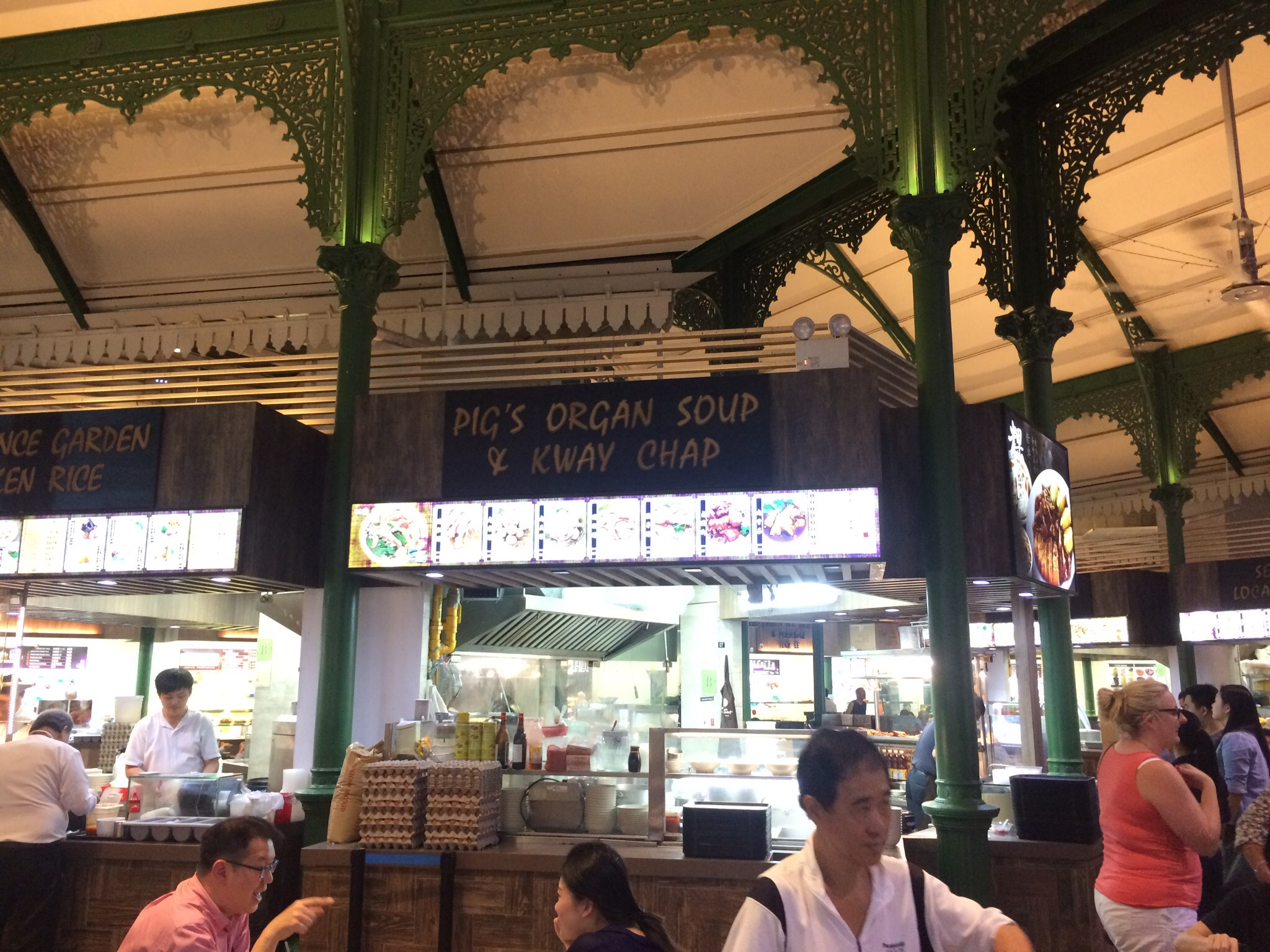
Among the many delicious aspects of our visit to Singapore has been the food. Our guide on the bike tour that first morning was blunt. “Every single Singaporean is a foodie,” he declared. Most people don’t cook at home, he said, at least in part because they can choose from such a vast profusion of excellent dishes, many available at rock-bottom prices. Of course it’s also possible to pay a lot in restaurants. Singapore regularly shows up on lists of the world’s most expensive cities. But it also is blessed with dozens upon dozens of so-called “hawker centres,” each offering a head-spinning number of Items to eat.The Lao Pa Sat center in the downtown business district. We ate there two nights.The Maxwell Street centre in Chinatown
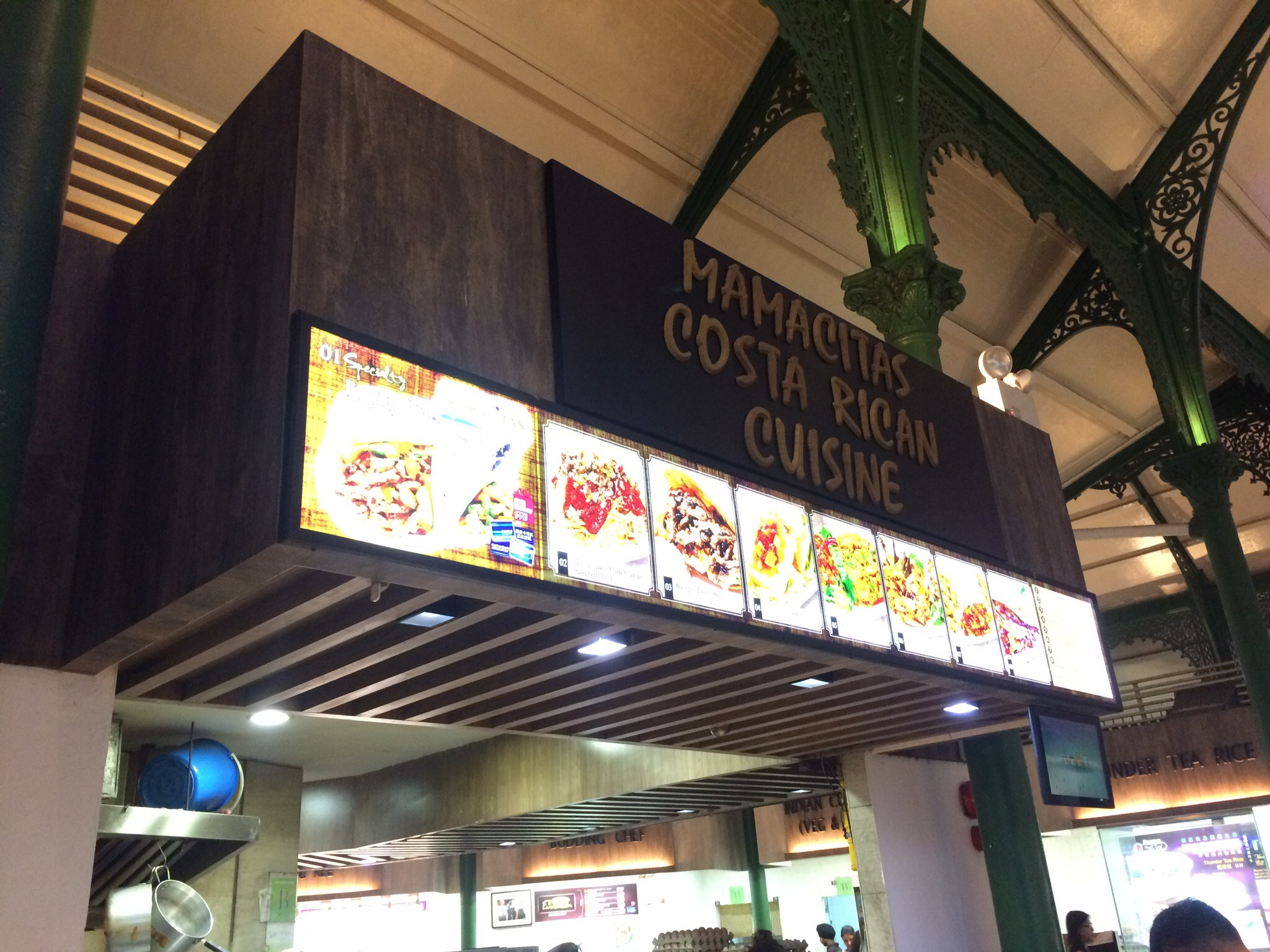
We did most of our eating in the centers. They’re are a bit like American food courts, except they lack air-conditioning and an industrialized approach to food production. A handful may have branches in a couple of centers, but most aren’t chains. Everything is cooked on the spot after the order has been placed. I read that Michelin’s recently published guide to Singaporean dining includes a number of hawker centre stalls.
Some of the offerings were too weird for us to consider:
In other nearby stalls, I noted salted egg and barbecued crayfish, various kinds of squid, prawn balls, fried fritters and fried oyster egg, salted egg with bitter gourd, and shark’s fin soup for sale.
I’d happily try this in LA. But in Singapore? No way.
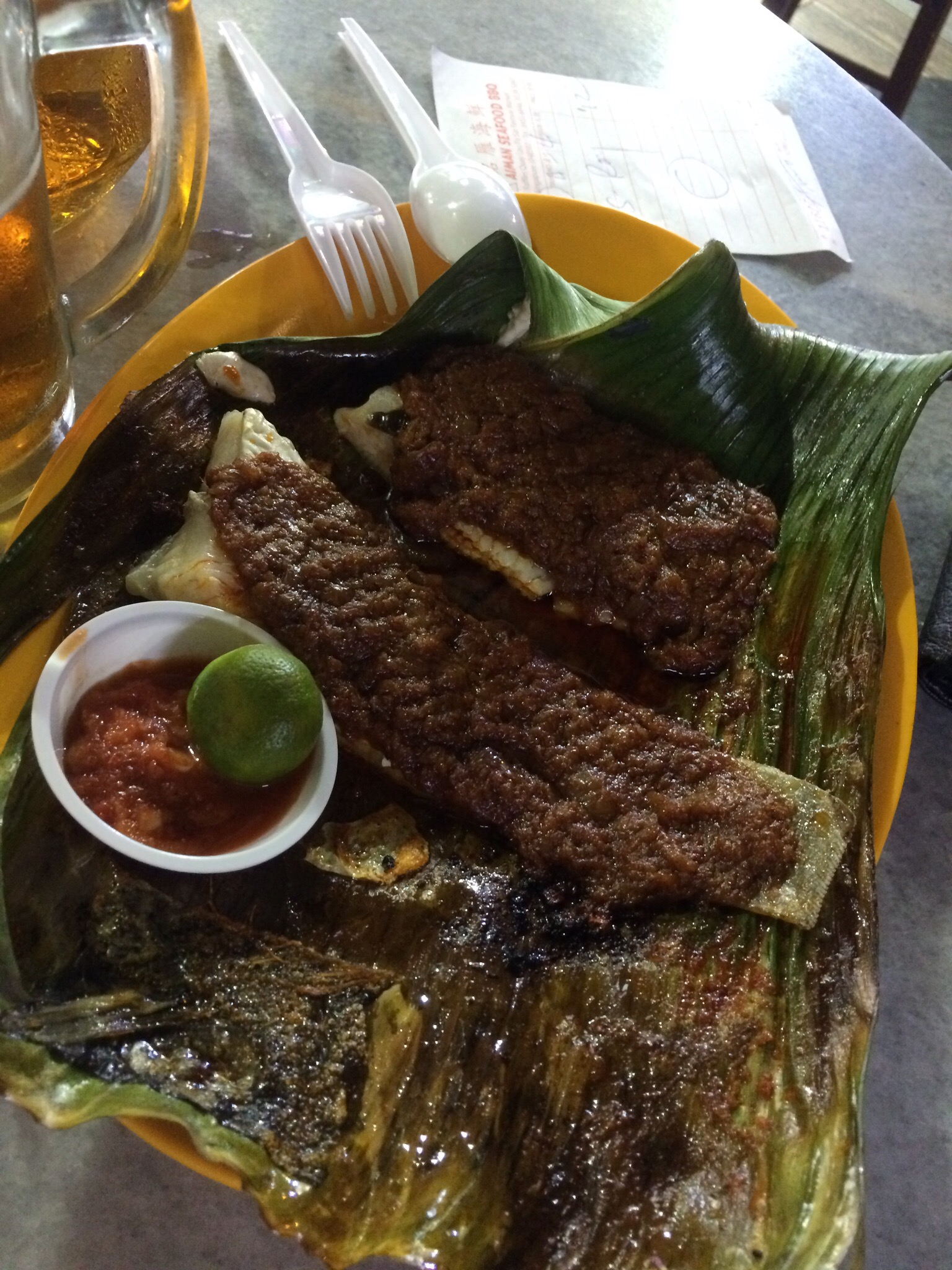
Still, we were reasonably adventurous. At the recommendation of our bike-tour guide, we ate barbecued sting ray…
The texture reminded me of sole!.
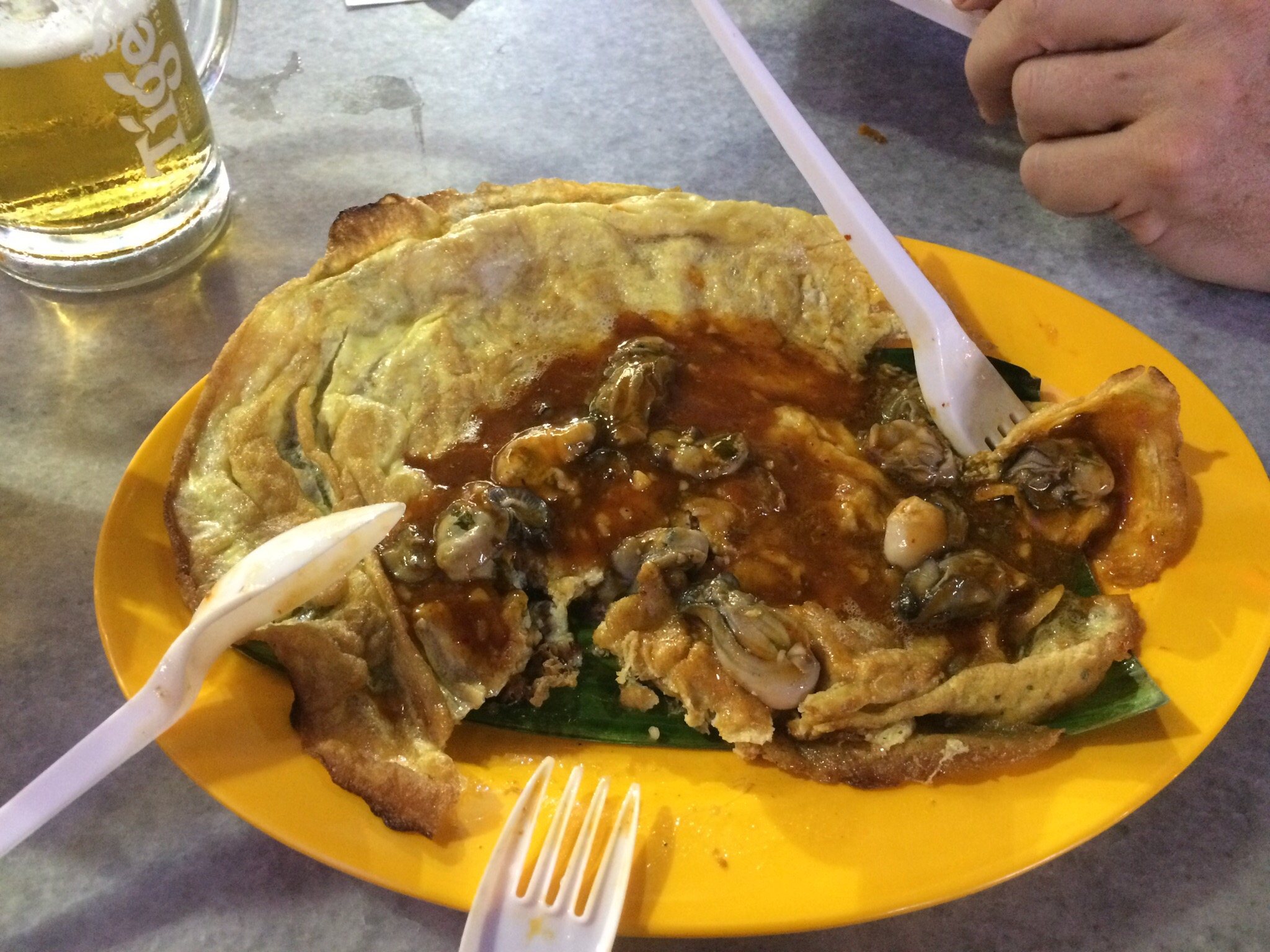
… and oyster omelette…
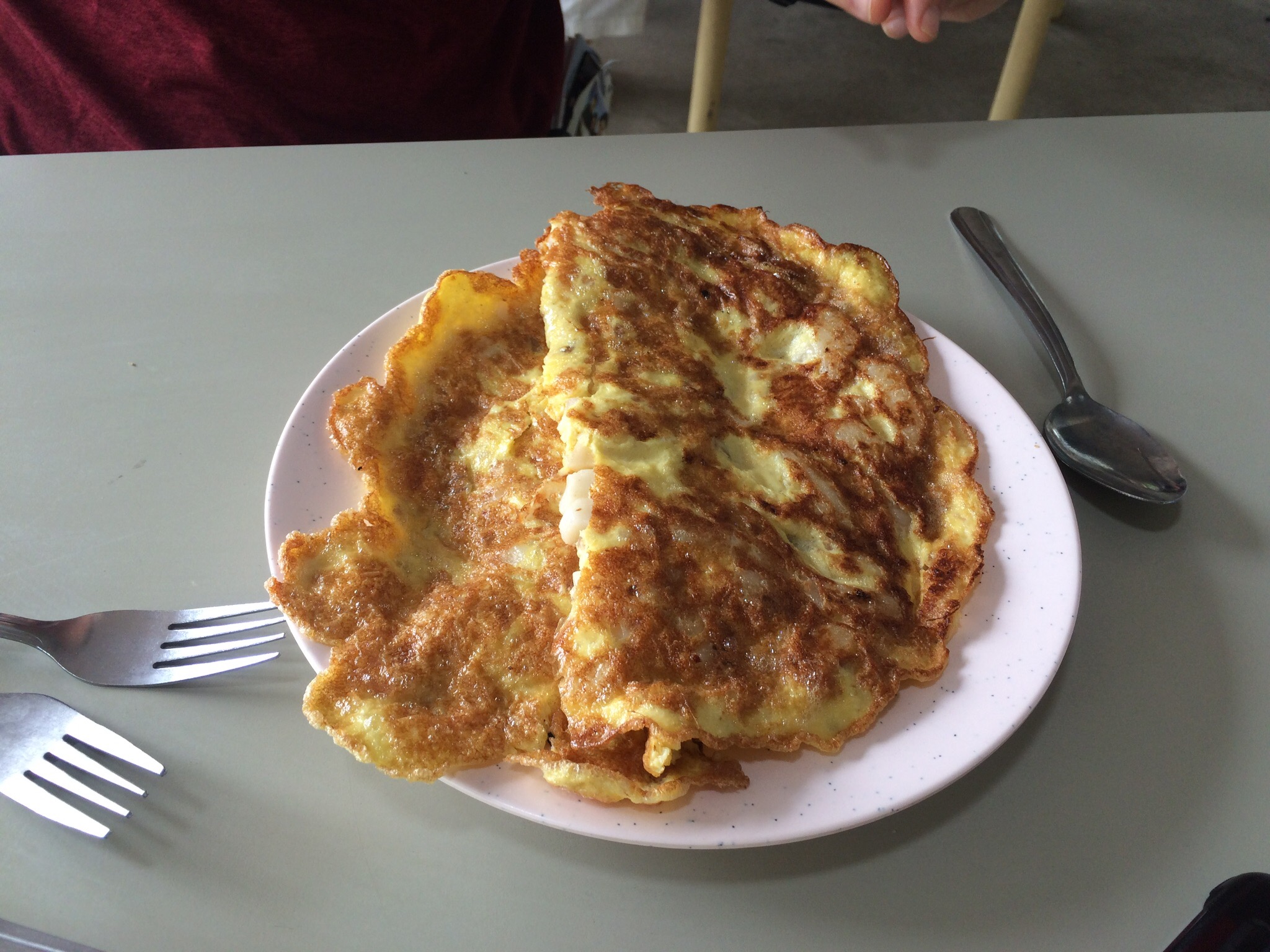
….and something that the locals call “carrot cake.”
Looks a lot like omelette too. But it’s filled with chunks of a mysterious ingredient.
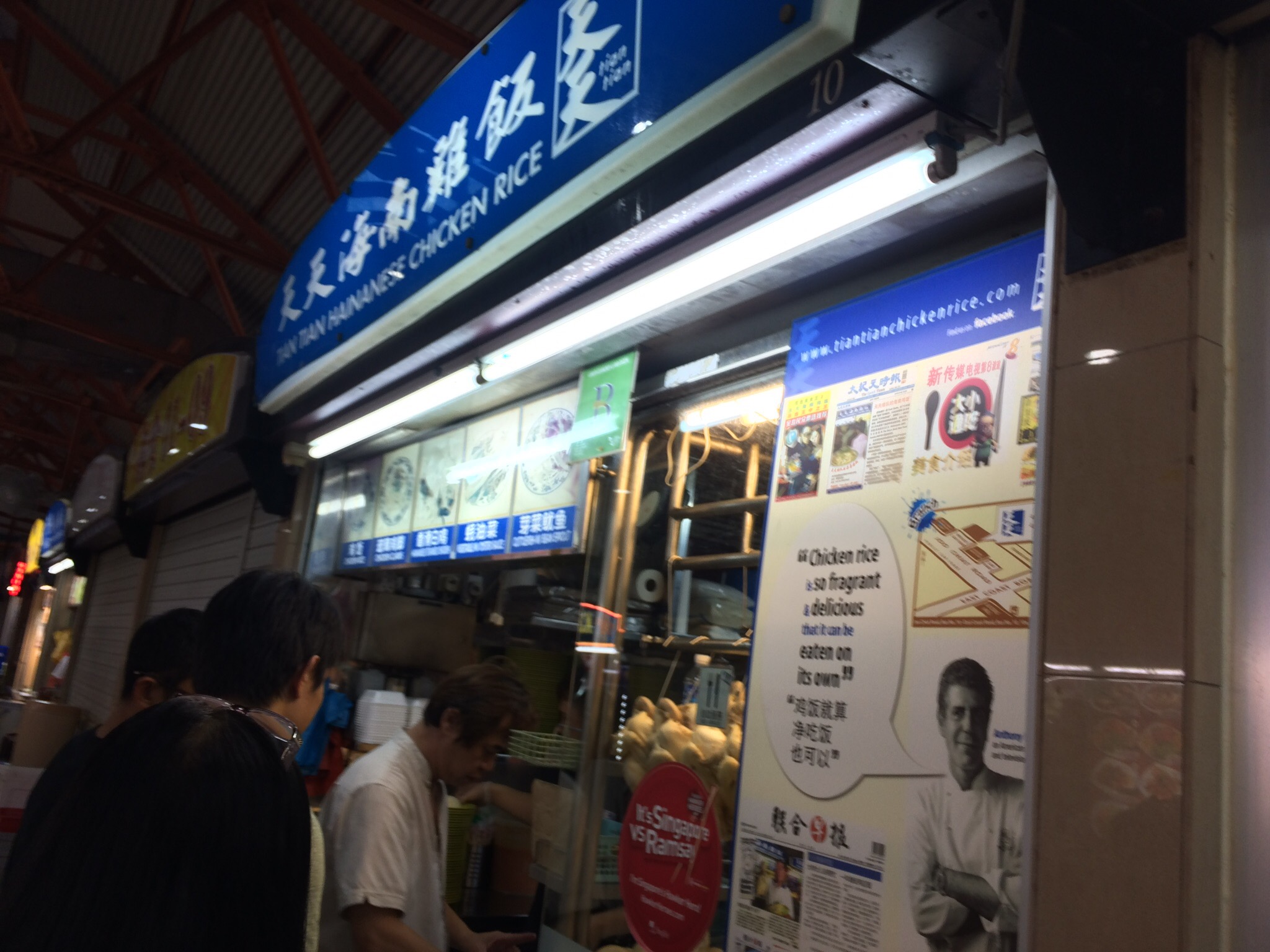
On our last night, we sought out one of the most beloved local dishes — Hainan chicken rice — at the stall in Chinatown where Anthony Bourdain swooned over its deliciousness (His photo is prominently displayed on the Tian Tian stall.)
It was tasty, but we thought our noodles with roast duck was even more irresistible. We gobbled both dishes down with stir-fried bean sprouts and good Singaporean beer, and the total came to just over $15 for the two of us.
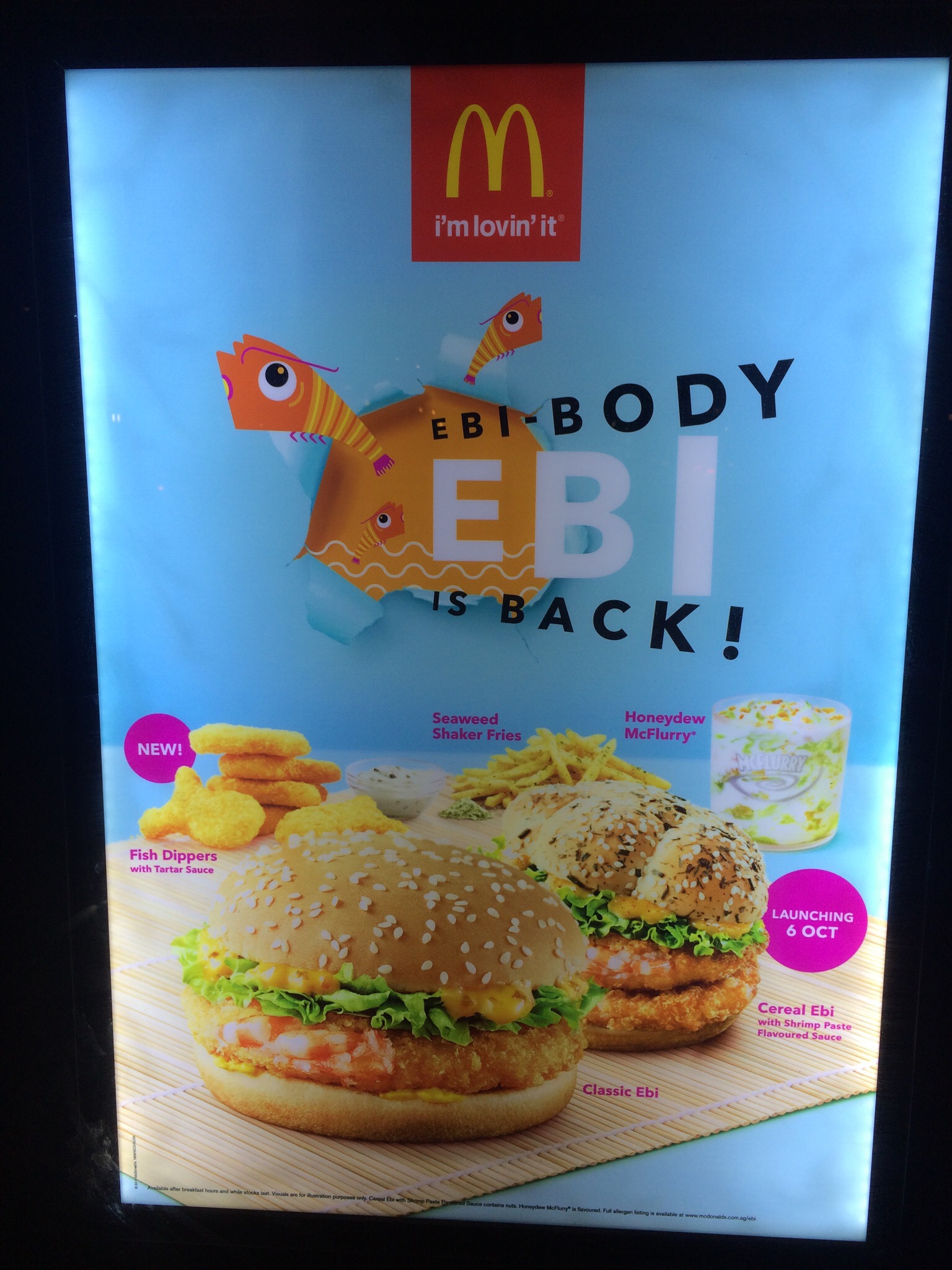
There are so many things we didn’t have time to try — even at McDonald’s!
Since “ebi” in Japanese means shrimp, I assume that these were shrimp burgers. But what the heck is a honeydew McSlurry?!
It makes me imagine coming back just to eat more.
Late Wednesday afternoon, a few hours after we arrived in Singapore, I was re-reading a long blog post that I had printed out months ago about taking the train from Bangkok to Singapore (a journey that Steve and I will begin, in reverse, on Sunday). In writing about his time in Singapore, the post’s author had mentioned that he’d taken a bike tour of the city — something I had completely forgotten, even though Steve and I had a wonderful experience touring Bogota, Colombia by bike in May. I all but slapped myself on the forehead. We did some quick research; made a quick call. Found that we could join the morning tour the next day.
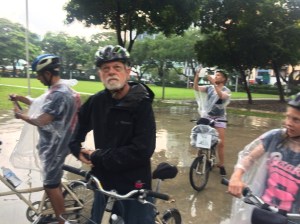
That’s how we came to be in Singapore’s financial district, wearing bike helmets and ready to set off at 8:30 Thursday morning with Alfian, our 27-year-old bike-tour guide. Our fellow bikers were a British guy of Indian descent named Joe, and a Norwegian woman traveling with her 12-year-old daughter. Alfian had given us our orientation lecture, and we were ready to roll out the door, when the skies opened up, unloosing a drenching downpour.
Alfian seemed only a little dismayed. He predicted it wouldn’t last long and advised us to get a coffee at the nearby Starbucks. We did, but by 9, it was not only still raining, but crackling with lightning and explosions of thunder. Alfian made a phone call to someone and pronounced that the rain was actually only gentle. He suggested that we carry on, and everyone in the group agreed. So off we pedaled into the thunderstorm.
He was right. The downpour and pyrotechnics didn’t last much longer, and the part we experienced felt emblematic of this place overall — dramatic and beautiful and refreshing and actually quite safe. For the vast majority of our three-plus hours with Alfian, we pedaled on level sidewalks or bike paths. None of it was in scary, chaotic traffic. My sleeveless arms were damp, and the breeze generated by the biking cooled me; it was a little like generating our own air conditioning. Best of all, biking and chatting and stopping for photos was a perfect way to see some of Singapore’s many marvels.
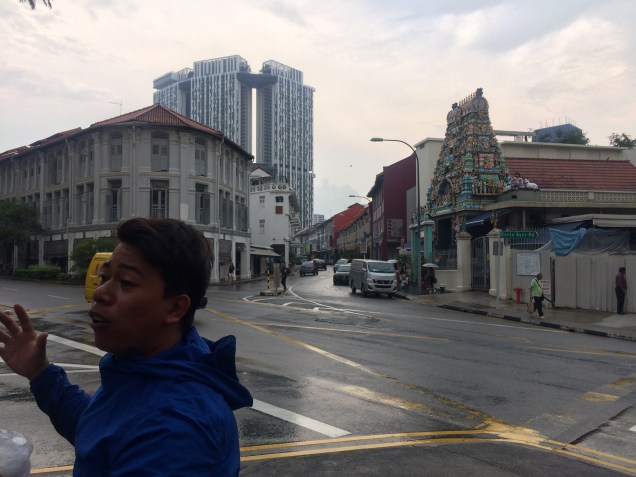
I’m embarrassed to admit how little I knew about the place before coming here. But we’ve made up a lot of ground in the last 24 hours. I now understand how this little island at the tip of the Malay peninsula came to be an independent country (no doubt about that!) in 1965, and I’ve gotten a little insight into how the humble one-time fishing village (symbolized by the mermaid) has become transformed into the economic lion it is today — one of the wealthiest and most productive societies in the world. The bike tour yesterday made it crystal clear that the city center is a physically astounding place. Parts of it retain the grandiose classical and Victorian edifices built by the one-time British rulers. The humble but colorful vernacular architecture of their one-time inhabitants (Chinese, Malay, Indian) has been preserved in a couple of enclaves.
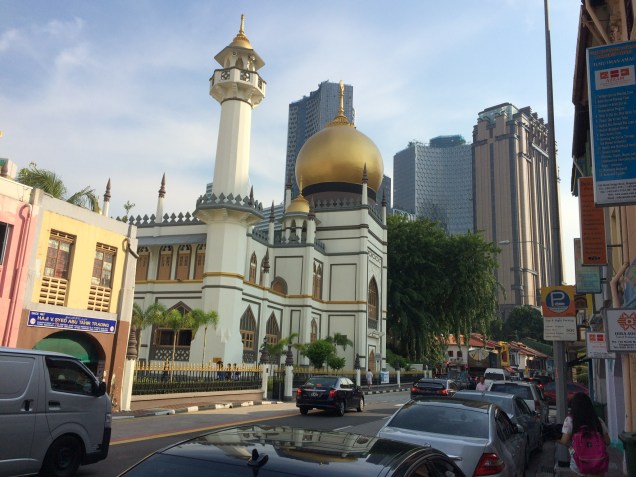
A park in the Little India areaThe iconic Sultan Mosque, in the center of the historic Muslim district
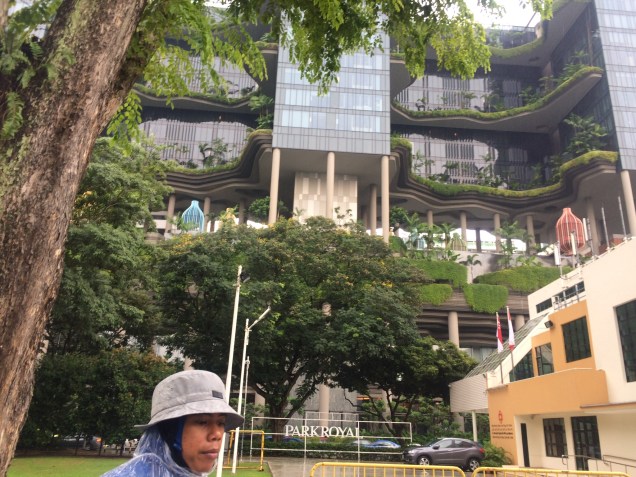
Elsewhere the Singaporeans have constructed some of the most incredible looking high rises I’ve seen anywhere. They rival (or surpass) the wonders of today’s Shanghai skyline.
The population is multinational — though 74% are ethnic Chinese (many of whose antecedents poured in here in the early 1800s, when Singapore first began thriving as a free port. But about 12% are ethnic Malay, and a similar number are Indian. (Everyone else makes up the other 2%). What charms and delights me is that although the city-state looks and feels intensely Asian, for the most part, people are speaking English (or Singlish, as the weirdly inflected local tongue has been nicknamed). All children study it in school (along with their “native” ethnic language). You can walk anywhere, day or night, and be safe; talk to everyone, and be understood.
Thursday afternoon we spent an hour at the National Museum. Friday we covered a lot more ground; took the metro and a city bus out to the city’s zoological complex in the rainforest. Although the zoo here is reputed to be one of the world’s best, we figured didn’t have the time to do it justice. But Steve and I are total suckers for rivers, and we couldn’t resist a quick visit to the adjoining “River Safari” park devoted to showcasing 8 of the greatest rivers in the world (the Mississippi, Nile, Congo, Mekong, Yangste, Amazon, Ganges, and Mary).
The entrance to the River Safari park — an homage to some of the manatees who are featured prominently
Then we metro’d to the Orchard Street, Singapore’s over-the-top concentration of insanely expensive designer shopping palaces.
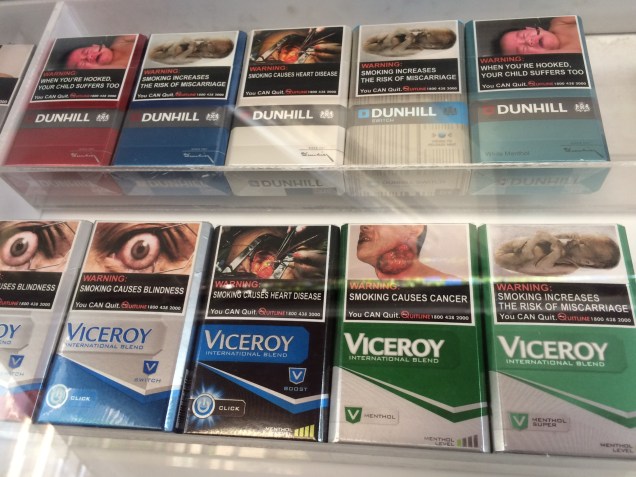
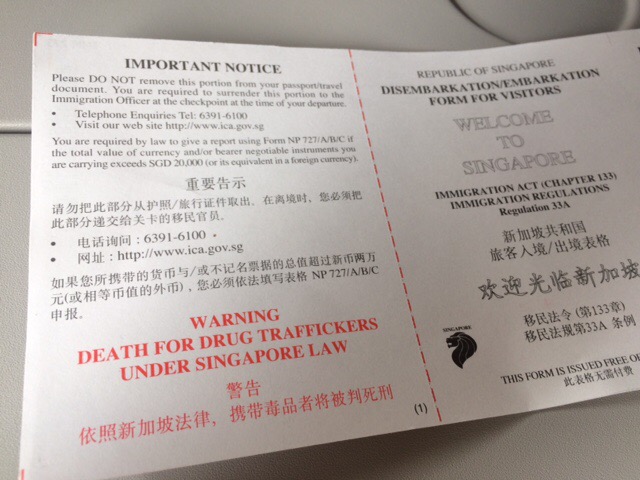
Along the way we have been amused by a few reminders that the infamous Singaporean social control still persists. There was that notice about executing drug dealers (on the immigration form). And Alfian told us they still cane rapists and other criminals here. I haven’t seen any warnings about chewing gum (though they probably don’t sell it in the stores), but I did gasp at the cigarette packages.
Every package of every brand is plastered with a grisly image.
This is a food-obsessed society, but vendors no longer can sell their wares on the street, where it’s too hard to police their sanitary standards. Instead they’ve been moved into wondrous indoor facilities. But that’s the subject of another post. For now, we only have one day left to begin absorb what would probably take a month – or a year to begin to understand.
A little sad that we wouldn’t see Taiwan’s beautiful countryside, I felt intrigued by the recommendation I read from a couple of travel writers. They said a 40-minute metro ride could take one to one of the hot springs towns created by the Japanese during their 50-year occupation of this island last century. The outing sounded almost too good to be true: bucolic, potentially relaxing, and something that could be accomplished in just a few hours. So yesterday morning, off we went.
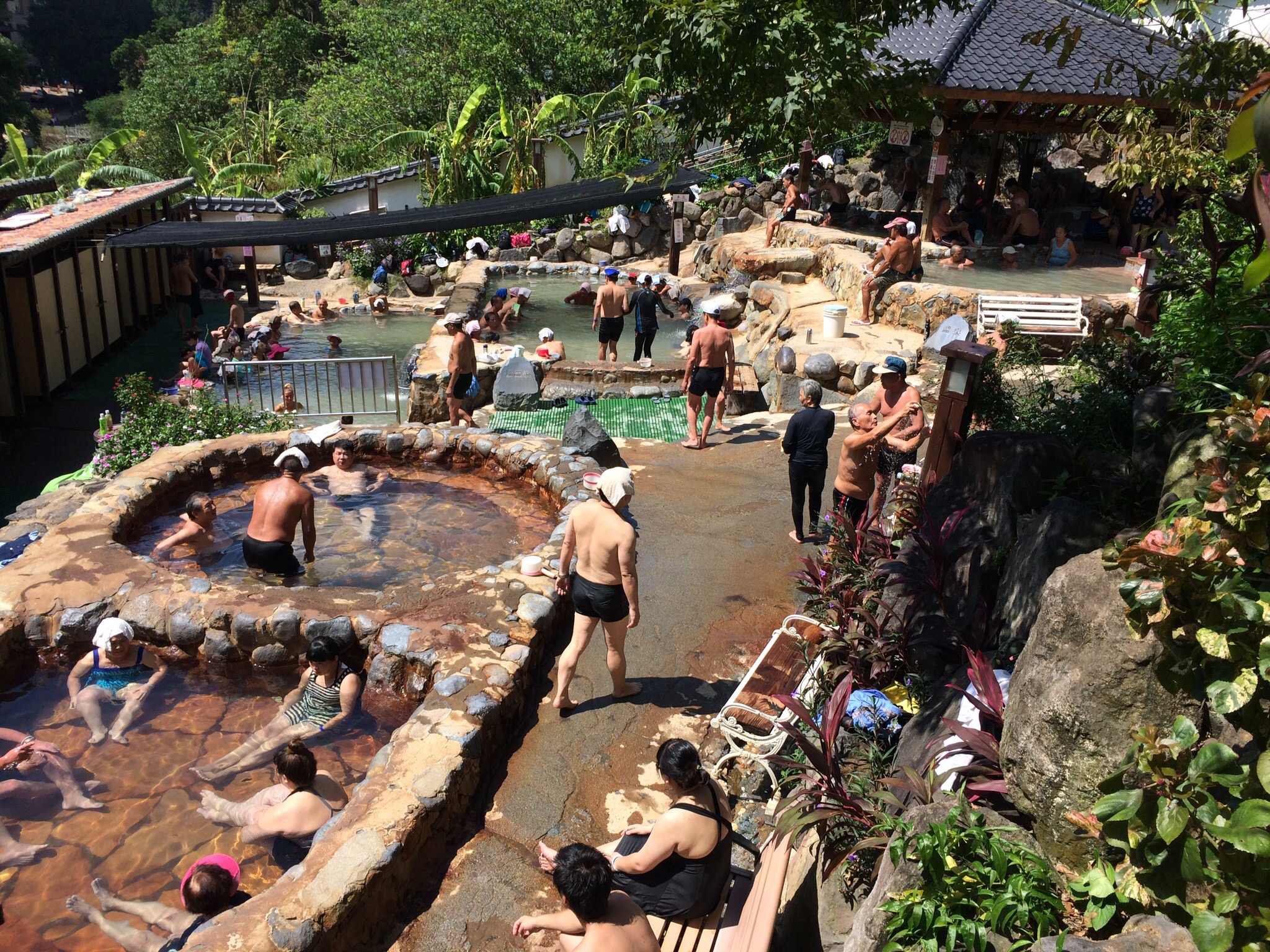
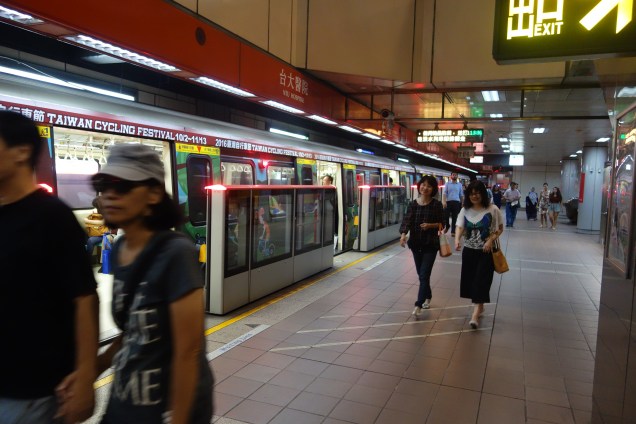
Using the splendid Taipei metro system, it was cheap (about $1.10 per person) and easy to reach Beitou. But it sure didn’t feel like the ride took us out into the country; the town feels more like a prosperous suburb, albeit one surrounded by not-so-distant lush and rugged and potentially undeveloped mountains. Even though our stop was the end of the line and it was a Tuesday morning in October, the train discharged a bunch of passengers along with us: young couples, families, and older folk. A thick knot of restaurants and shops surrounded the station, but everyone seemed to stream toward a long woodsy park created along both sides of the Beitou Stream, so we went with the flow.
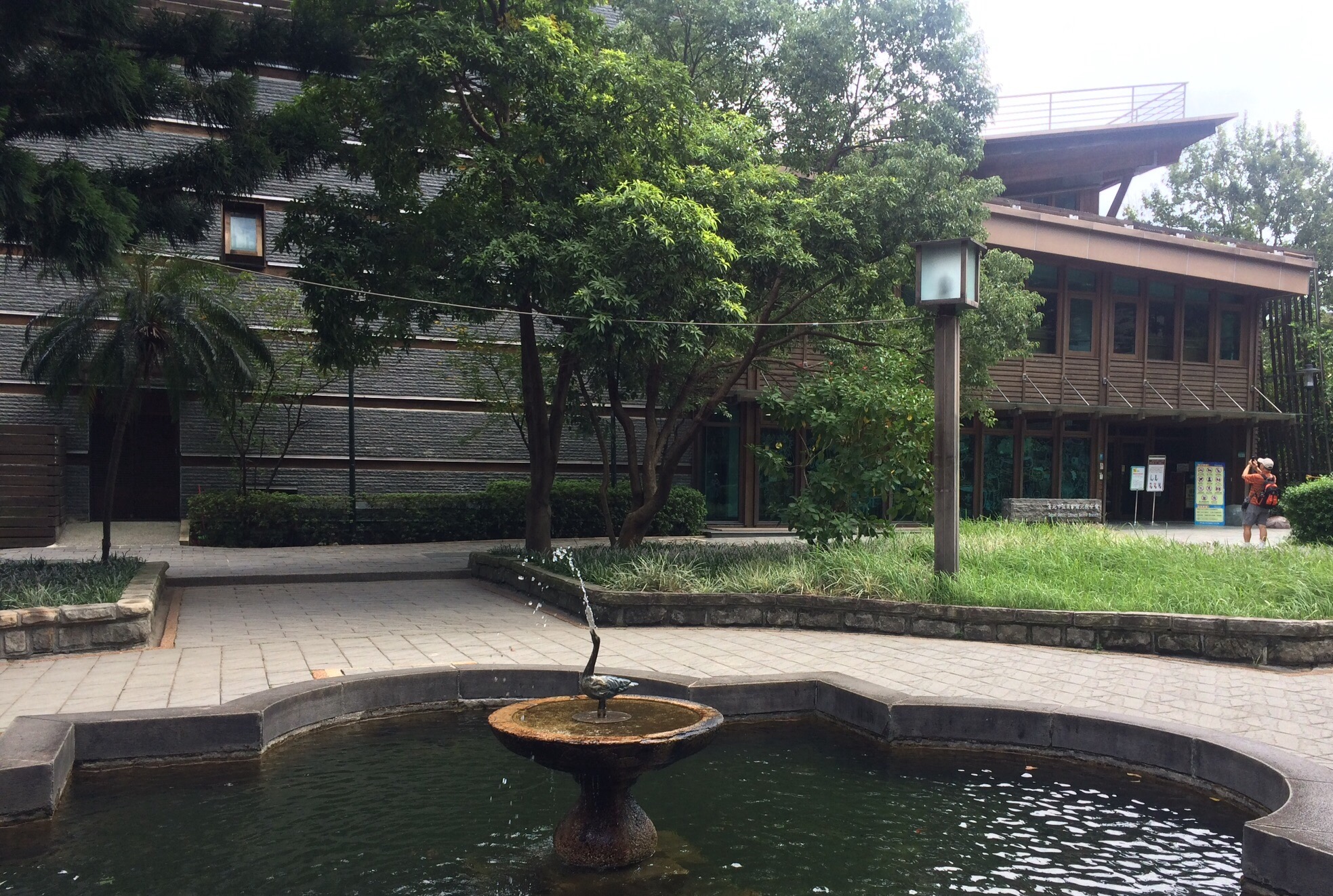
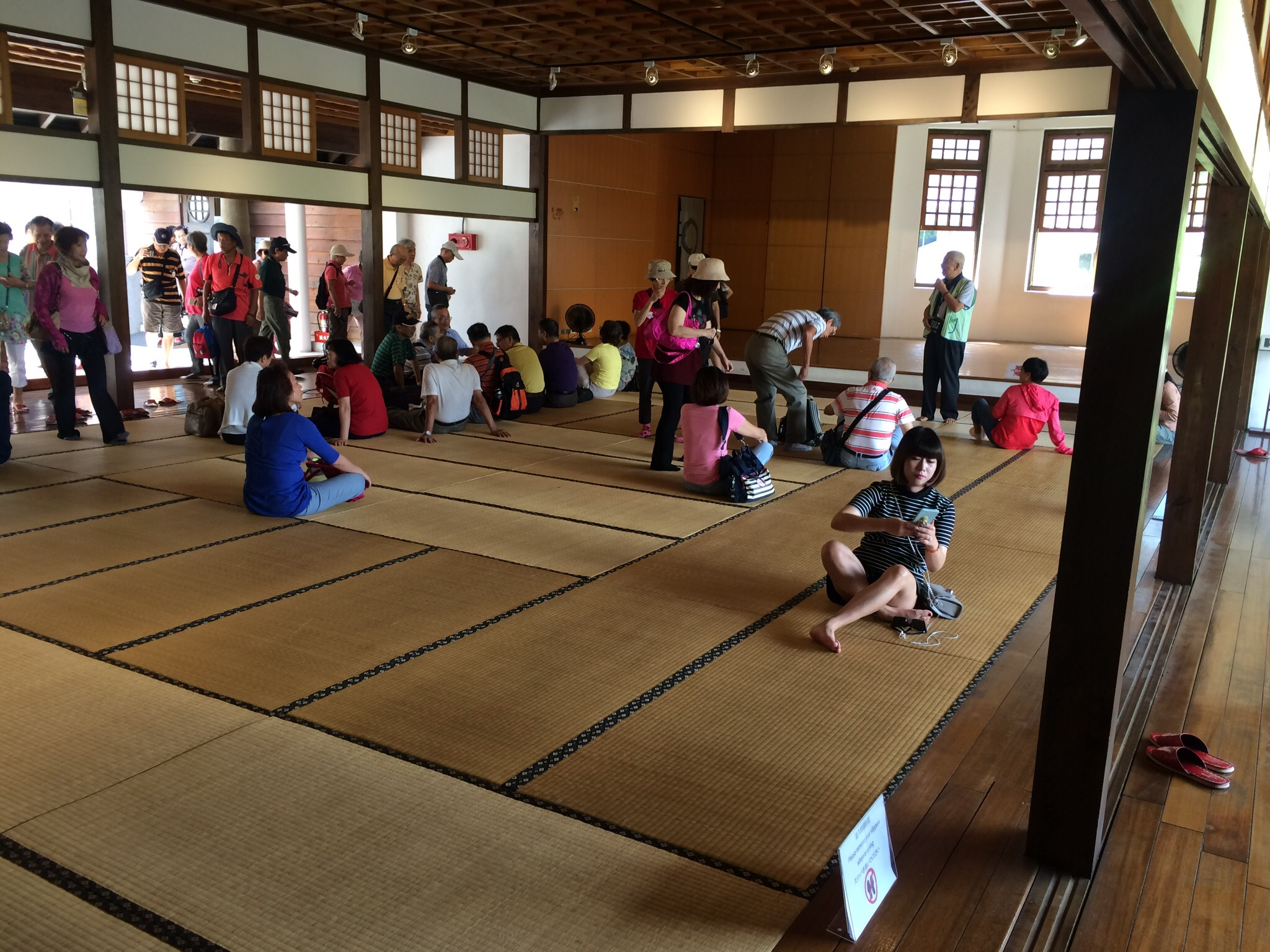
It swept us to the town’s principal sights. These included a beautifully ecosensitive branch of the Taipei city library, designed with a plethora of nooks so tranquil I longed to stay and study something in one of them. A few minutes further down the path, we found the town’s hot spring museum. It contained a few replicas of soaking pools and a huge tatami-lined hall where the Taiwanese tourists seemed to get a big kick out of sitting on the straw mats and pretending to be Japanese.
The Millenial Hot Springs facility was a bit further down the trail. We’d read that this was the cheap date in town for getting a soak, and since we were more interested in the sociology than the actual hot springs, we paid the 80 Taiwan dollars (about $2.55 US for two) and soldiered in. (We’d brought our bathing suits but not towels, so buying a flimsy one set us back another $1.60)
Inside we changed and eased into the first pool of hot water, which a sign declared to be 38-40 degrees C (100-104 F). It was hot but tolerable, and after a few minutes we moved up to the next dipping station (104-109 F), which we found to be hotter but still bearable. In the final pools at the top, we could only submerge ourselves in the 111-113-degree water for a minute. But we’d seen enough. If we’d come with a bunch of friends, the way the locals did, it would have made sense to move back down to the cooler levels to gossip and absorb more of the supposedly healing minerals. Alternatively, Beitou has plenty of tonier, more expensive spas we could have patronized. But then we would felt obliged to linger. And what we lacked more than anything was time.
Seeing Beitou’s last two major sights took no more than a half hour.
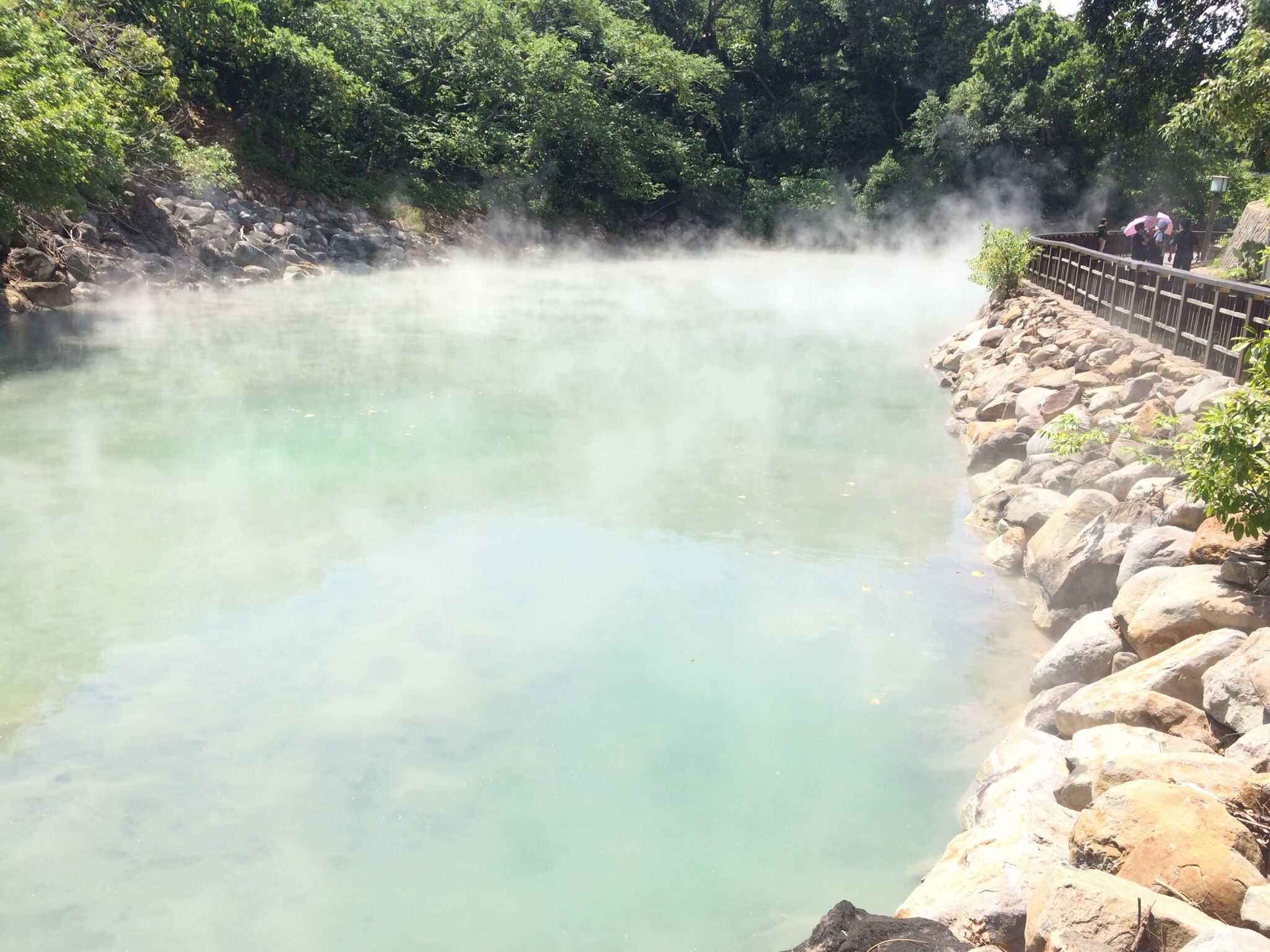
This most interesting of these was the very short walk up the “Thermal Valley.” It felt like strolling past a gigantic pot of sulfurously smelly boiling water.
Then it was time to find lunch and return to central Taipei, where we spent what was left of the afternoon resting and walking more and packing for our morning flight Wednesday.
Now I’m writing this at 35,000 feet, bound for Singapore. I have to add that Taipei’s airport and this EVA Air plane have both shown us some additional sights that made our eyes widen. In the airport, we noted rooms where waiting passengers can go in and shower (they looked similar to private bathrooms). I’ve never seen that before. But the airport is very, very short on the sort of sundries ubiquitous in America airports. I had 140 Taiwanese dollars left (about $3.50US) after we changed money, and though we searched and searched, we almost couldn’t find anything to spend it on. There were mountains of designer purses and French perfume and high-end luggage and other fancy goods, but not a single package of gum or a chocolate bar for sale. Finally, I found a little box of cookies that I’m sure will fill my sugar craving some night.
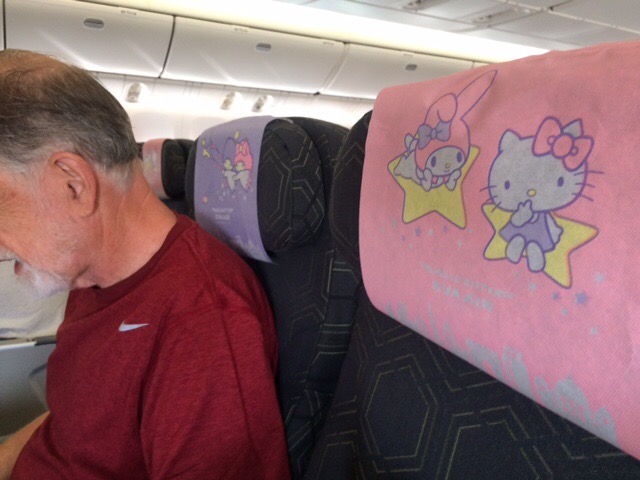
We passed a “reading lounge” stocked with books, and much weirder, a “Hello Kitty”-themed lounge open to the public. A couple of adult men and women seemed to be hanging out in it, but no kids.
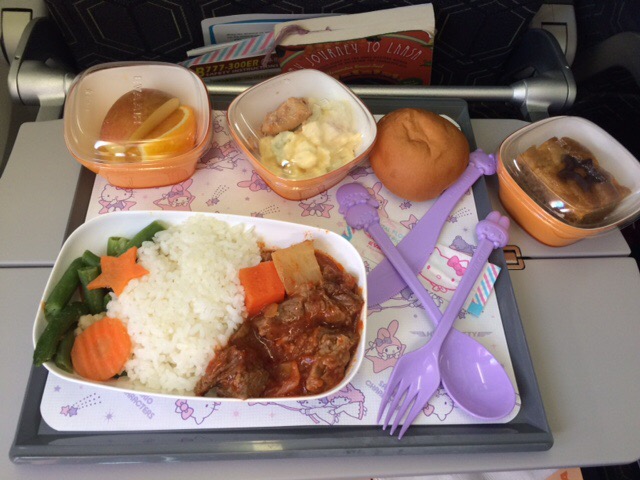
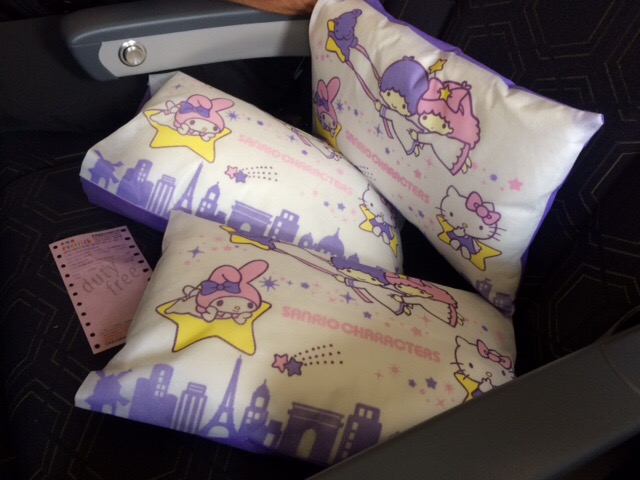
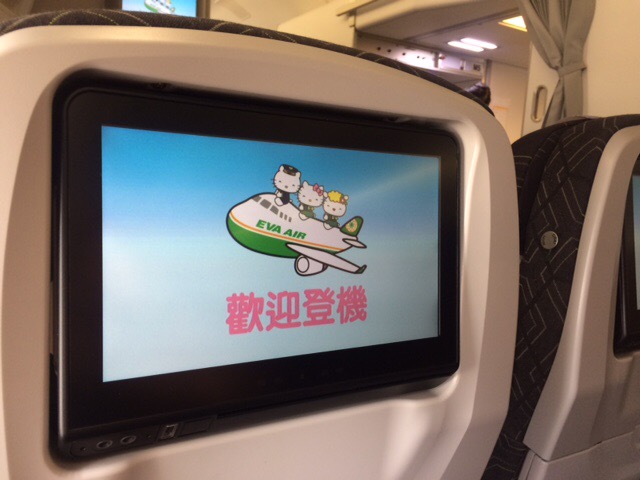
For anyone allergic to Hello Kitty, this flight also would be a trial. The interior of our 777 is soaked with the iconic Japanese brand.
I have no idea why it is nor time to find out. I have to fill out my arrival form for Singapore — while silently giving thanks that I haven’t packed any narcotics for sale on this trip.
To be honest, one of the reasons we came to Taiwan is because I wanted to add another country to the list of those I’ve visited. That wasn’t the only reason. Because we were flying to Singapore on EVA Air (Taiwan’s well-respected airline), we could spend a few days on this beautiful island off the coast of China at no extra cost for the transportation. Such a stop would help break up the grimly long trip from Los Angeles (13-plus hours just to Taipei alone). Steve could once again see the city that he and his mom toured for a day (via bicycle rickshaw!) back in 1958 (when it took them 3 weeks to cross the Pacific by freighter).
So yesterday, when I learned (was reminded?) that Taiwan is not universally recognized to be a separate country, I was dismayed. (Somehow, I thought the Chinese along the line gave up their claims to it. Which, apparently they haven’t.) But after some reflection, I’ve decided I don’t care. I think Taiwan deserves to be on my list at least as much as Tibet and Palestine. And even if isn’t a separate country, after less than 24 hours here, we’ve seen much to justify a visit. Here are three things that have most impressed us:
1) Taipei has one of the best public subway systems we’ve used anywhere in the world. We figured it out almost instantly. Even though we can’t read most of the signs, they include enough Roman lettering to enable non-Chinese speakers to get by. All the trains are immaculate and quiet and they come along every 5 minutes or less.
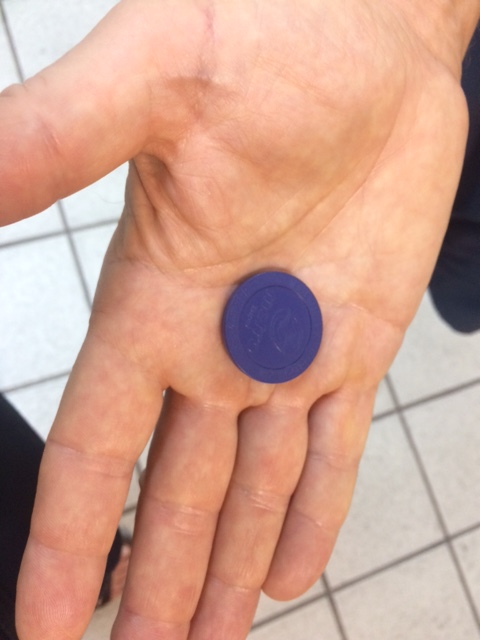
Best of all is the brilliant way the systems handles single-ride payment. From easy-to-use machines, you buy tokens that look like cheap poker chips.
But they have some kind of electronic signaler in them, so when you touch them to a pad at each turnstile, they make the gates open. At the end of your ride you insert them into a slot that lets you exit. Most rides cost about 60 cents.
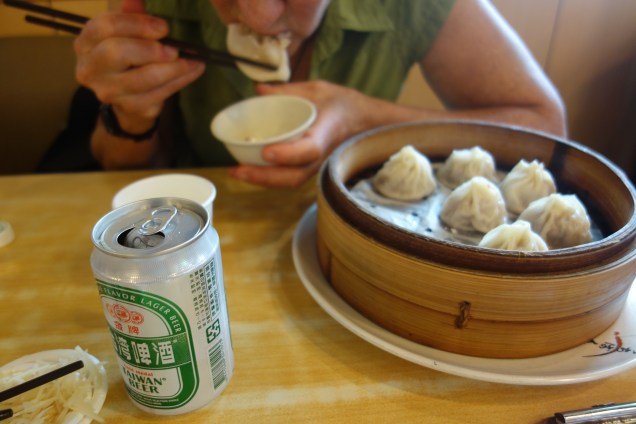
2) This is a city of passionate eaters. That seems true of most of the Chinese-influenced cities I’ve ever visited. But it meant on our very first day, we had two great meals, both in atmospheric joints. For lunch, we made our way to one of the supposedly best sources of meat-stuffed dumplings in the city — a gritty jammed second-story room above a sweltering kitchen open to the street. We ordered two types of dumplings, fat ones filled with seasoned ground pork and smaller ones served with soup broth, and each one felt like a gift.
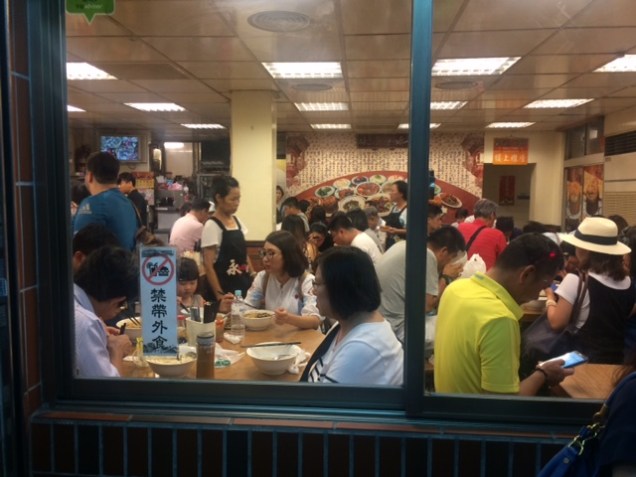
You bit into the delicate packaging of pasta to encounter a delicious present within. We ate dinner in another dive reputed to have the best beef noodles in the city. The line to get in stretched out into the street even when we arrived after 7:30.
But all the families and working folk inside ate fast and paid fast; no sitting around and gabbing and digesting at those tables. We followed suit, then hit the street in search of a current fad in Taipei — soft-serve ice cream.
3) Though Taipei feels extremely Chinese in many ways, almost everyone seems to speak at least a bit of English. Children start to study it in grade school and continue into secondary school. And folks young and old don’t seem afraid to use it. That’s one thing that makes the place feel friendly. Within just a few hours of our taking to the street, we had a late-middle-age guy stop his bike and roll it up to us to ask if we needed help finding someplace. (We actually did — but just didn’t realize it when he asked us) Despite their linguistic skills, the locals never seem to use them to hustle or harangue visitors to buy stuff. That may be because so few Westerners come here. Steve and I counted no more than a dozen or two out of the thousands upon thousands of people we walked by our first day here. It also may reflect how prosperous people are here. According to the CIA Fact Book, the Taiwanese rank just behind Germany in their economic output per person — ahead of Britain, France, Canada, and Japan!
One thing they spend their money on is karaoke. Every floor of the Party World building is devoted to it. Our walking tour guide told us many young people like to start around 11 p.m and sing until dawn.
If we had more time to range out into the country, I’m sure we’d find even more to dazzle us. But we have only one more full day in Taiwan before pushing on to the strange little city-state of Singapore.
This afternoon I was reading about Typhoon Megi, a storm with winds as strong as a Force 4 hurricane. It hit Taiwan Tuesday, killing 4 people and injuring more than 100. Hundreds of flights into and out of Taipei’s airport were canceled or delayed, and more than 2 million households lost power. Normally, I probably wouldn’t care, but Steve and I are taking off on a flight to Taiwan Saturday, so I’m paying more attention to that part of the world. We could have planned to go 6 days earlier, or the typhoon could have arrived 6 days later. But we dodged that disaster, and I’m optimistic we’ll avoid others over the coming weeks.
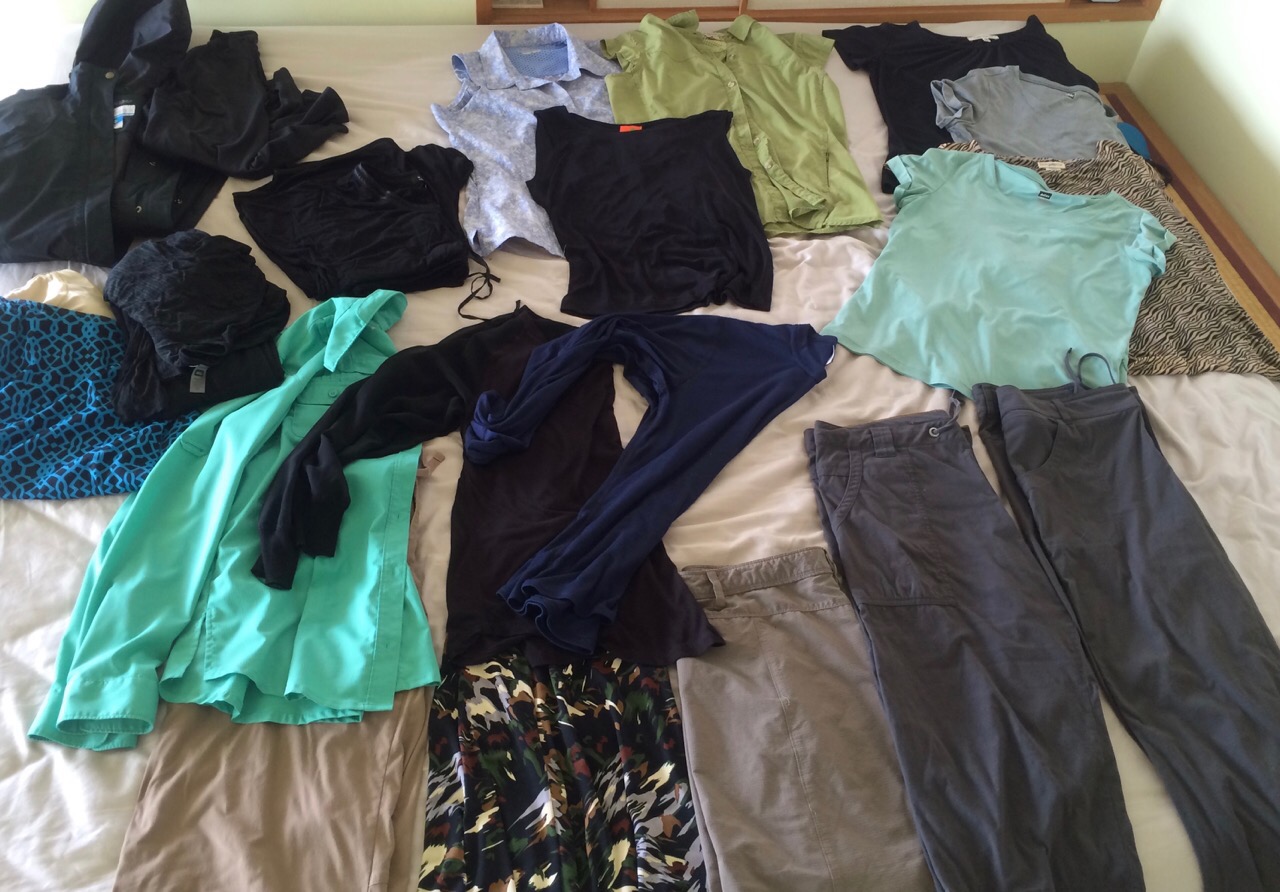
Not that this trip won’t pose some challenges. We’ve never been on the road for as long as we’re expecting to be this time — 4 weeks and 5 days. We’re sticking to our “carry-ons-only” rule, even though we’ll spend more than 2 weeks near the equator, followed by a return to the Himalayas near the end of October. Here are most of the clothes I’m taking:
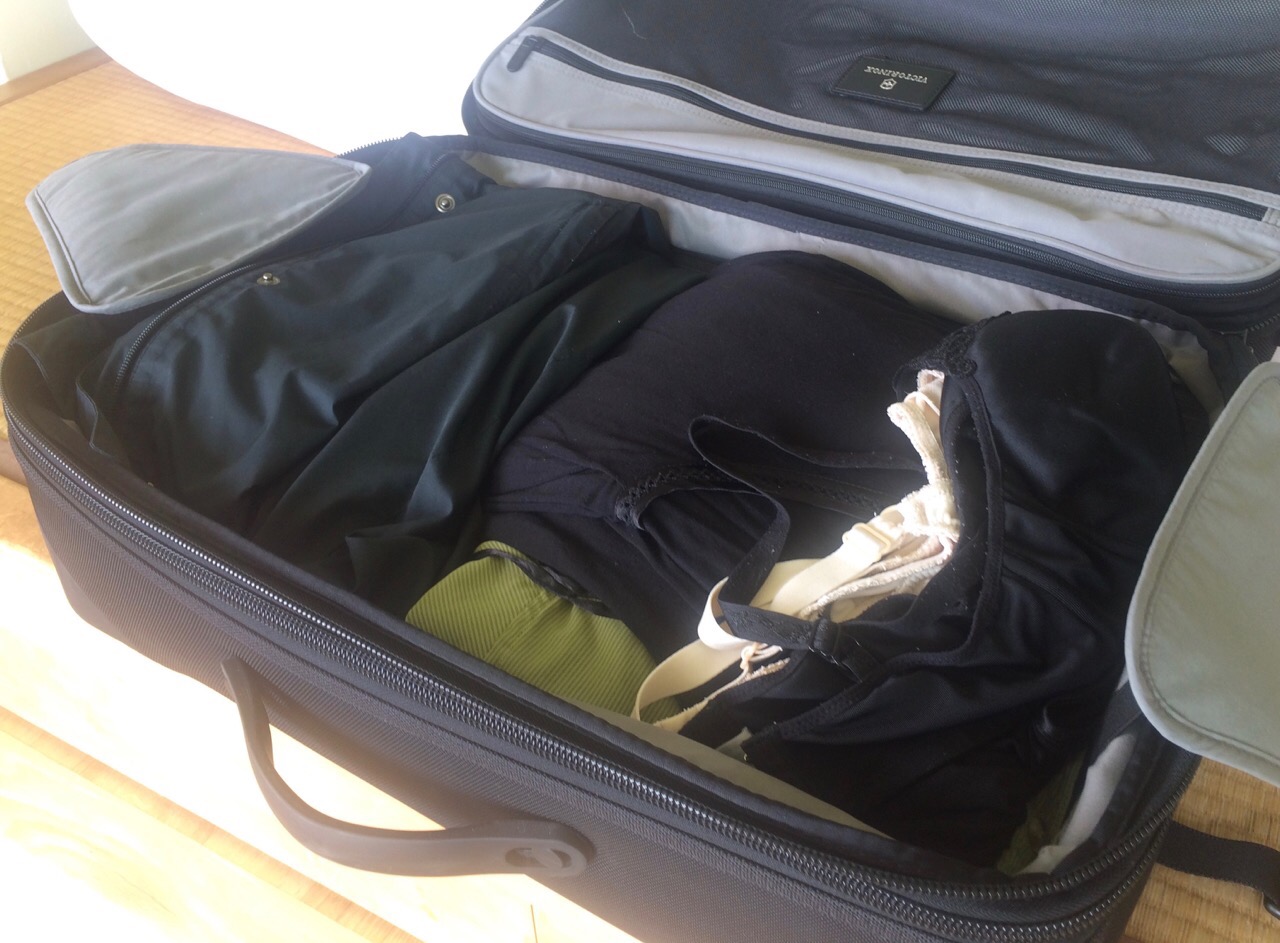
They fit easily within my carry-on:
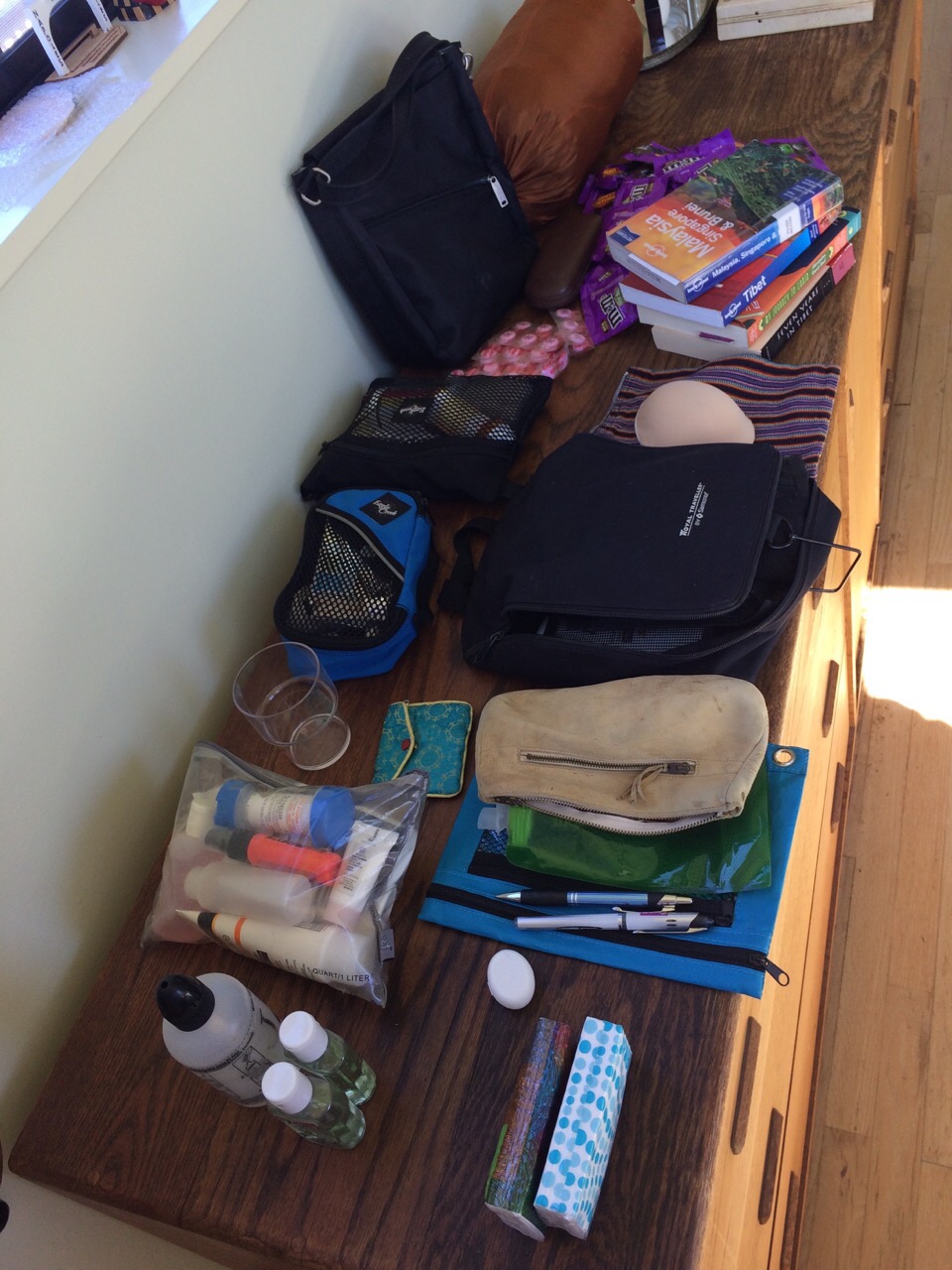
But then there’s all the rest of the Stuff — the daily and emergency medicines, the books, the toiletries, the hiking poles and emergency M&Ms. The down jacket (in the orange stuff sack). And more.
We think all of that will fit too, but we’ll have to push down when we zip. Will we have taken enough? We’ll see. One of the things we’re NOT taking is any dictionary. Instead we’ll be relying on Google Translate, and another question for me is: how well will it work in these countries where we not only speak not one word of the language (Malay in Malaysia; Tibet) but are also illiterate (Taiwan and Thailand and China)?
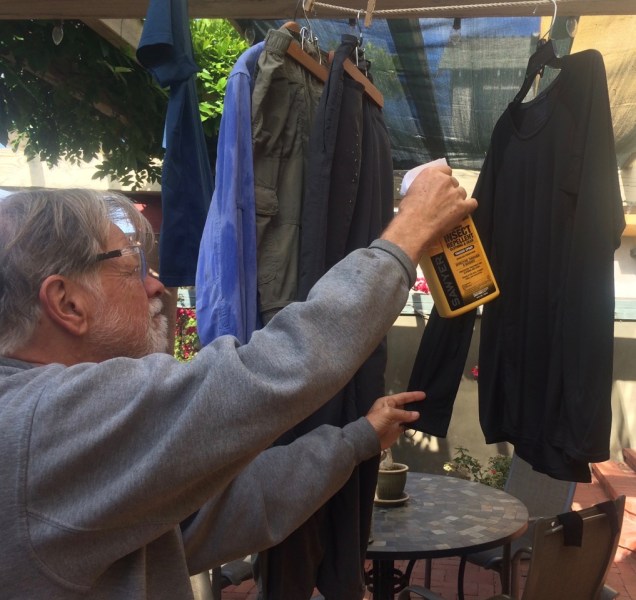
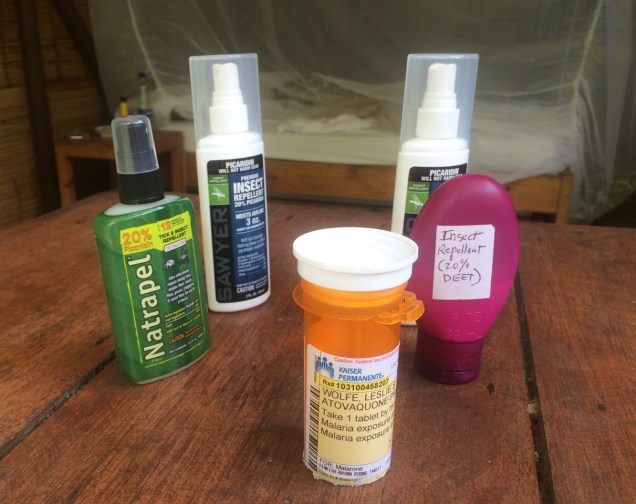
We bought our tickets for Colombia last summer, long before the word Zika entered the daily headlines. By last winter, when it became clear that Colombia had the second-greatest number of cases (after Brazil), I began joking about our upcoming trip to Zikalandia. I don’t think any of us seriously considered not going — but we did get serious about trying to avoid exposure. We bought large bottles of permethrin at REI and sprayed several sets of clothing with it.
We stocked up on various forms of bug repellant, plus Steve and I got anti-malarial medication to help protect us from that danger during our stay in the jungle.
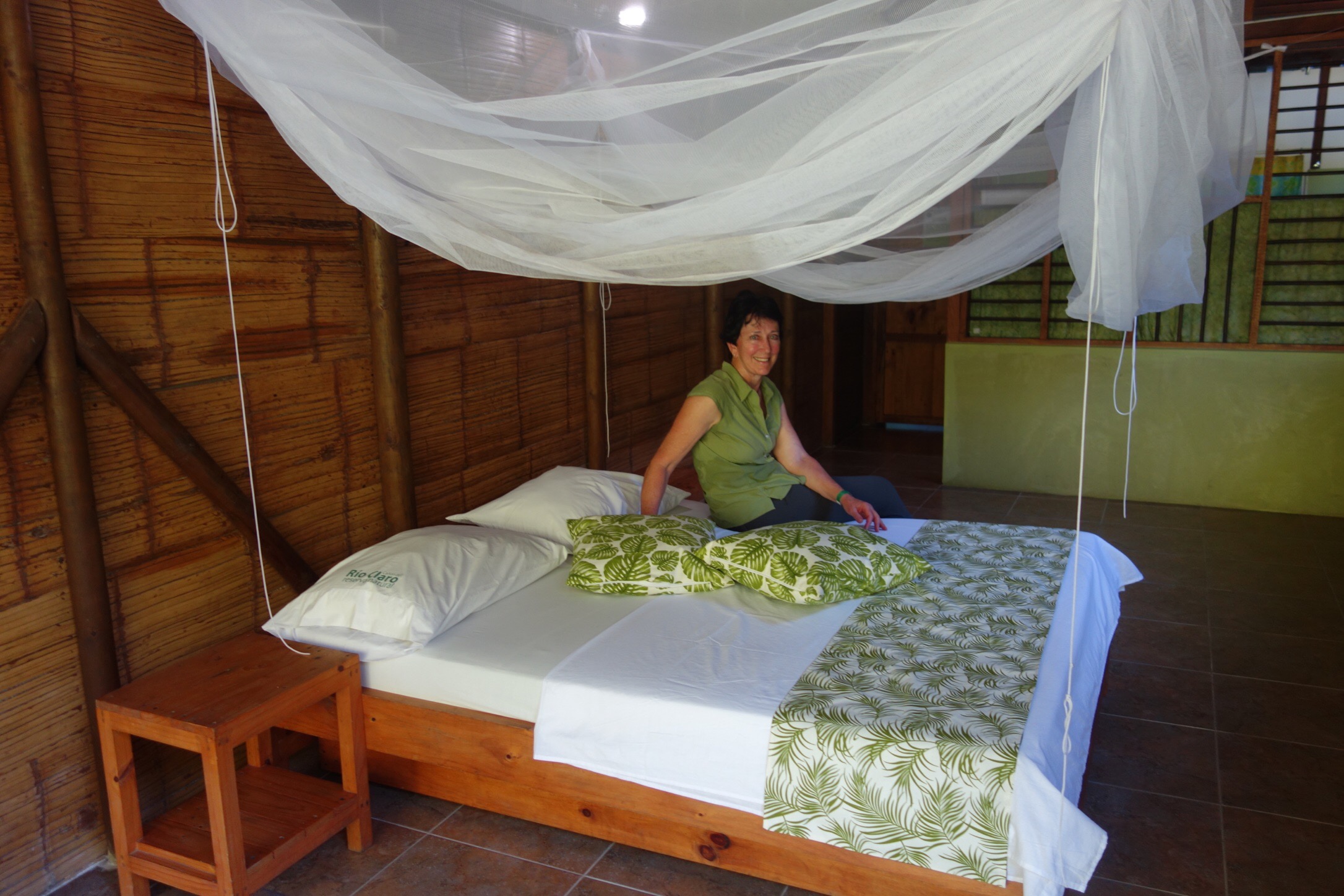
I was more consistent than I’ve ever been about spraying myself with picaridin or smearing on DEET (or both). And when I saw the mosquito netting over our bedroom in the cabana at Rio Claro, it gave me a warm and fuzzy feeling.
And yet…we were aware of very few mosquitoes — indeed few bugs of any kind — anywhere during the trip, even in Cartagena and the river valley. None of us ever heard that creepy high-pitched whine, and none acquired any itchy welts. I noted a few tiny suspicious bumps, and Steve had one obvious red splotchy spot that looked like a bite. But from what? A spider? A mite? Something else?
Now that we’re home, we have 4 more nights of the anti-malarial medication to down. I guess it will take a few weeks to see if any final souvenirs of our travels in Zikalandia develop.




 You bit into the delicate packaging of pasta to encounter a delicious present within. We ate dinner in another dive reputed to have the best beef noodles in the city. The line to get in stretched out into the street even when we arrived after 7:30.
 But all the families and working folk inside ate fast and paid fast; no sitting around and gabbing and digesting at those tables. We followed suit, then hit the street in search of a current fad in Taipei — soft-serve ice cream.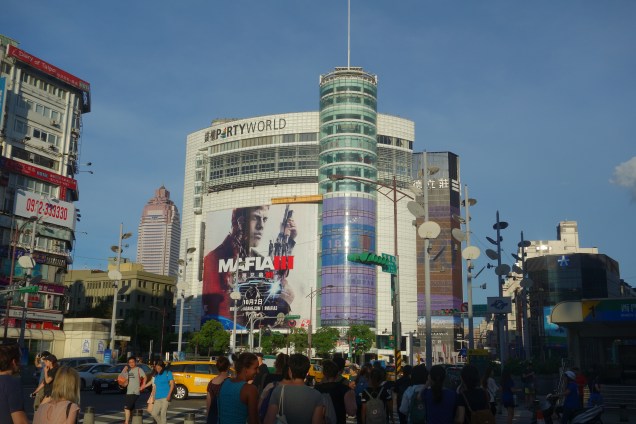
 At home and abroad