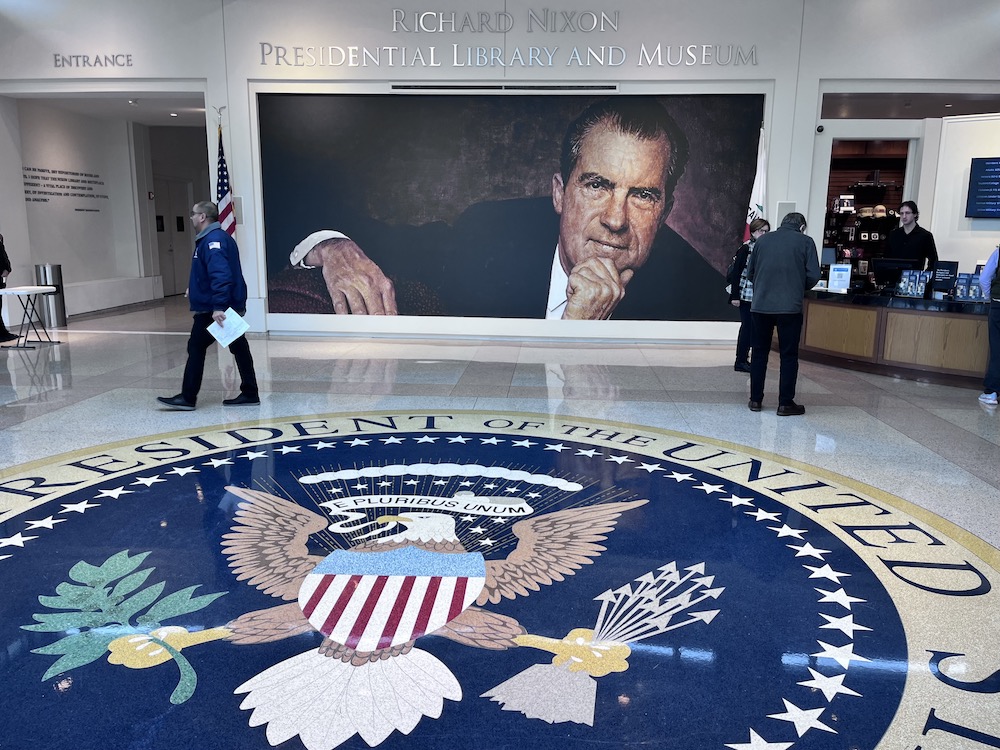
I probably never would have visited the Presidential Libraries in Southern California were it not for our friends Donna and Mike Guthrie. Donna is an imaginative traveler with a passion for big creative projects. To name just one, she and Mike recently visited every National Park in anticipation of a big birthday. Among their current missions, they are targeting all the Presidential Libraries. They started with Harry Truman’s (in Independence, MO) and Lyndon Johnson’s (in Austin, TX), then suggested that a few friends from San Diego might accompany them on a short excursion to all (two) of California’s Presidential Libraries. Steve and I privately wondered how much fun this would be. Those facilities celebrate the lives and administrations of Richard Nixon and Ronald Reagan, neither of whom we ever came close to idolizing. But we assented, and the experience surprised us.
It was so interesting and entertaining I felt driven to write this post (one of my rare reports on adventures At Home.) Three days into the new year, we left San Diego for the Reagan facility, located in Simi Valley (about 40 miles northwest of downtown Los Angeles.) Traffic was good and it took only about 2.5 hours to reach the sprawling property, set amidst lovely rolling hills. This is not the site of the famed Reagan Ranch (that’s further north, near Santa Barbara), but rather land acquired by Reagan supporters to house the complex. We grabbed a quick lunch in the cafeteria, then spent several hours making our way through the head-spinning concentration of films, photographs, artifacts, memorabilia, and exhibits documenting the 40th American president’s life.
What quickly charmed me was the fact that this facility is not merely a Great Man Monument but also an excellent history museum — one focused tightly on the 90-plus years when Ronald Reagan was alive in the United States of America (1911-2004). I was paying at least some attention to the world around me for at least part of that period, but it was amazing to see how much I’d forgotten, and fun to have it be brought back to life. The museum conjures up moments that shook the world — the internationally televised demand Mr. Gorbachev tear down “that wall” is an example.
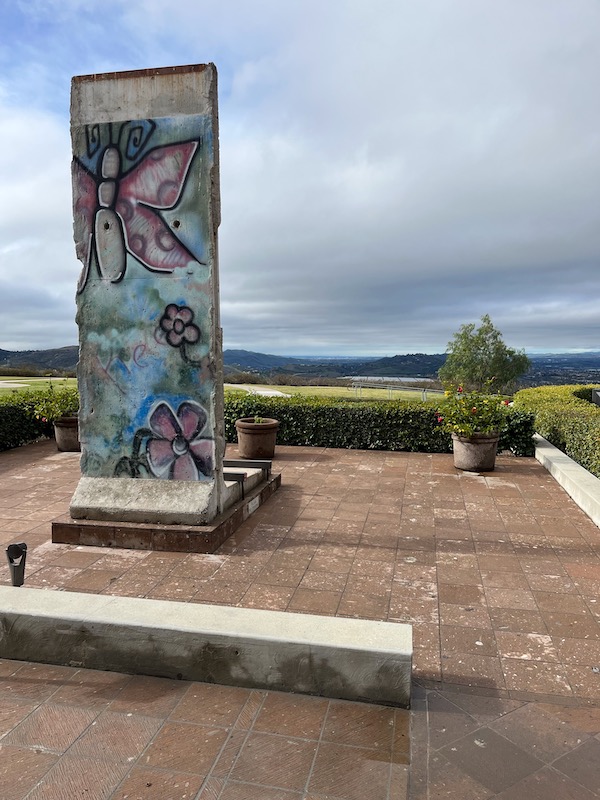
Others, like Reagan’s Golden Retriever, Victory, wagging his 3D tail next to his animatronic master on the ranch are sweetly mundane. I found almost everything engaging.
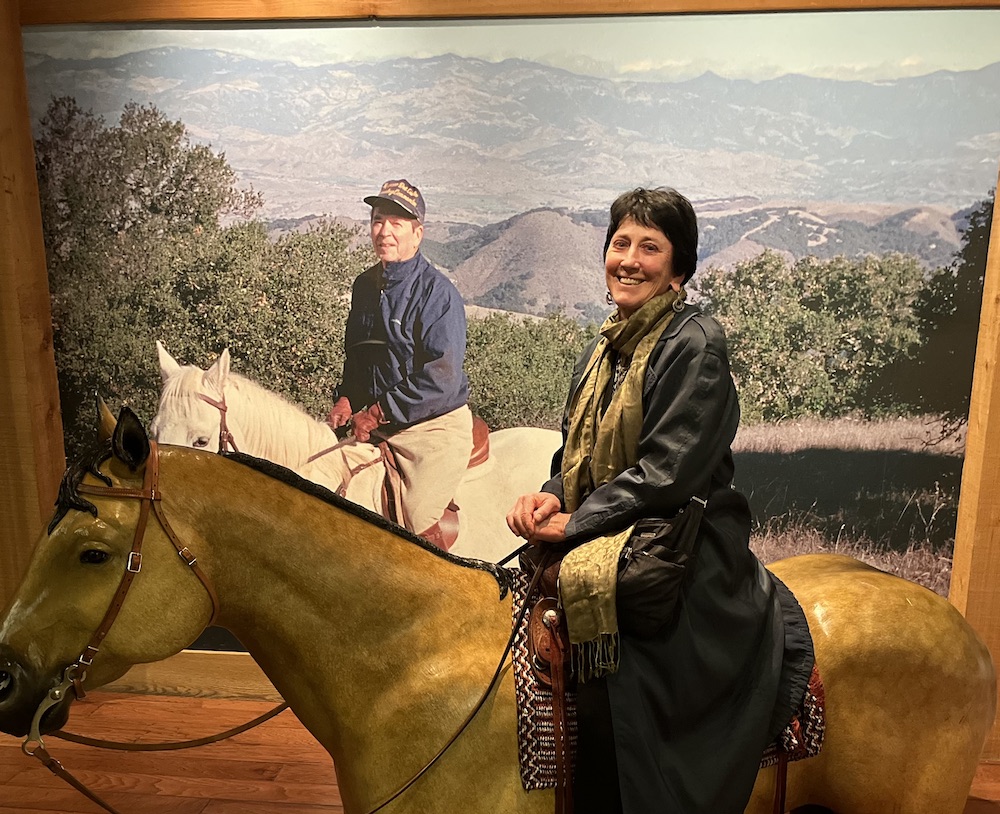
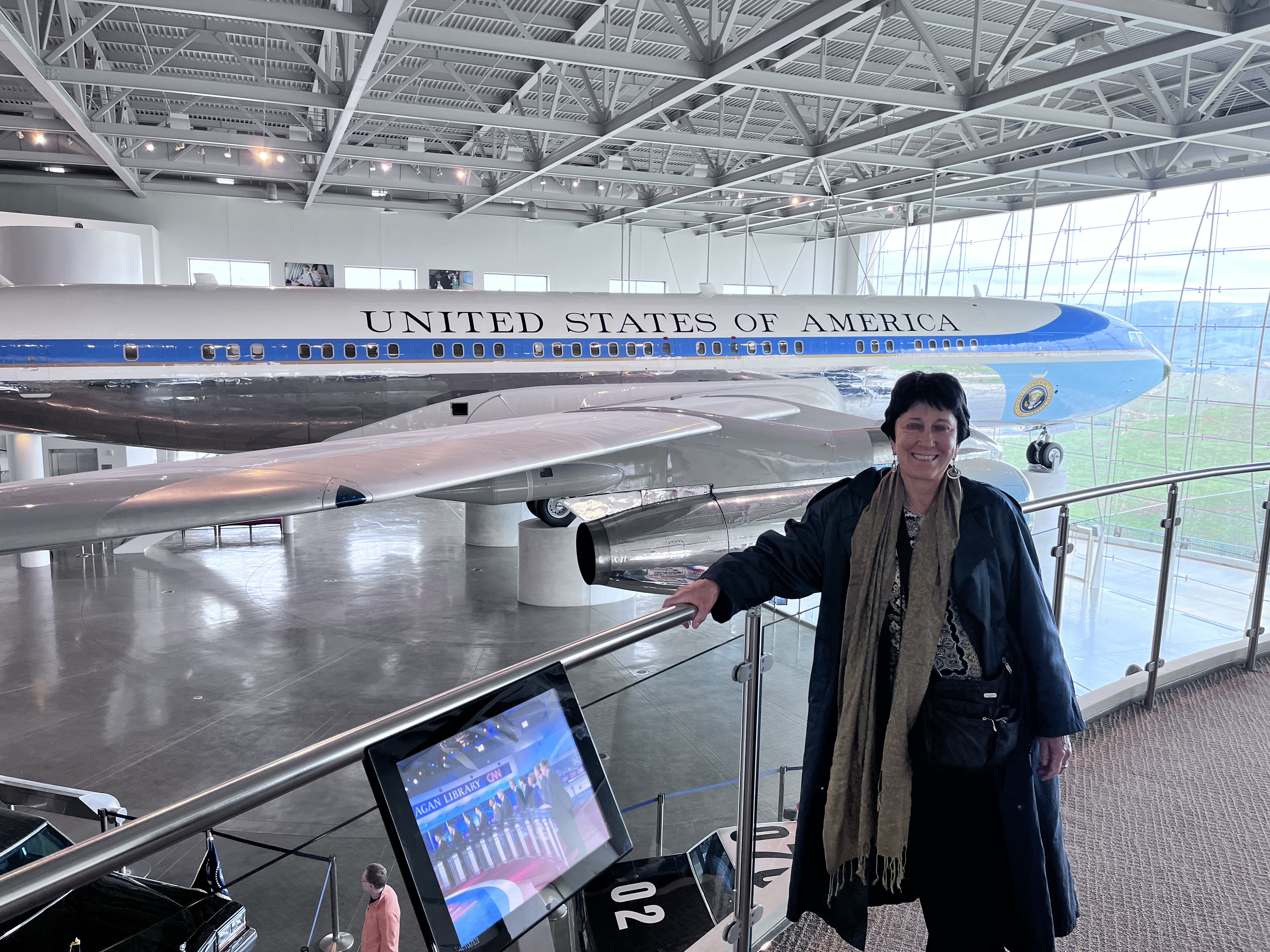
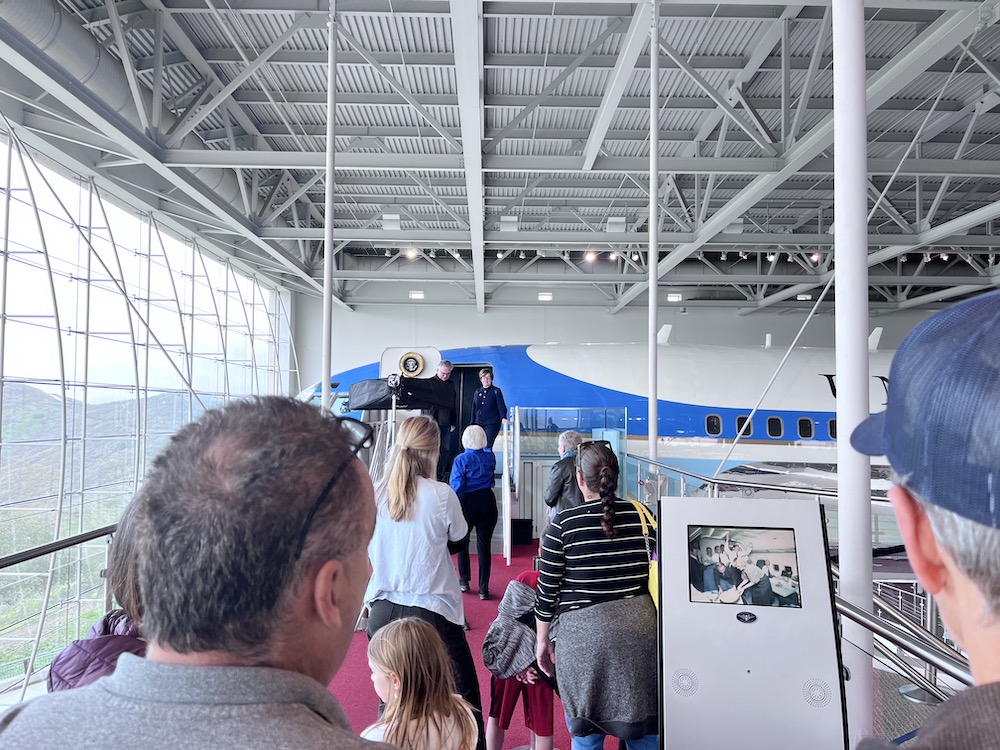
The Reagan museum/library also immerses visitors in some settings most of us have only glimpsed. You get to walk into a life-sized reproduction of the Oval Office the way it looked during the former movie star’s administration. Even better: you can board and stroll through the very first Air Force One. Kennedy rode in its presidential cabin on his way to that fateful rally in Dallas; LBJ was sworn in as his replacement on the return trip, JFK’s corpse close at hand. Nixon and Kissinger plotted their strategies on this plane when they journeyed to China for the first time.
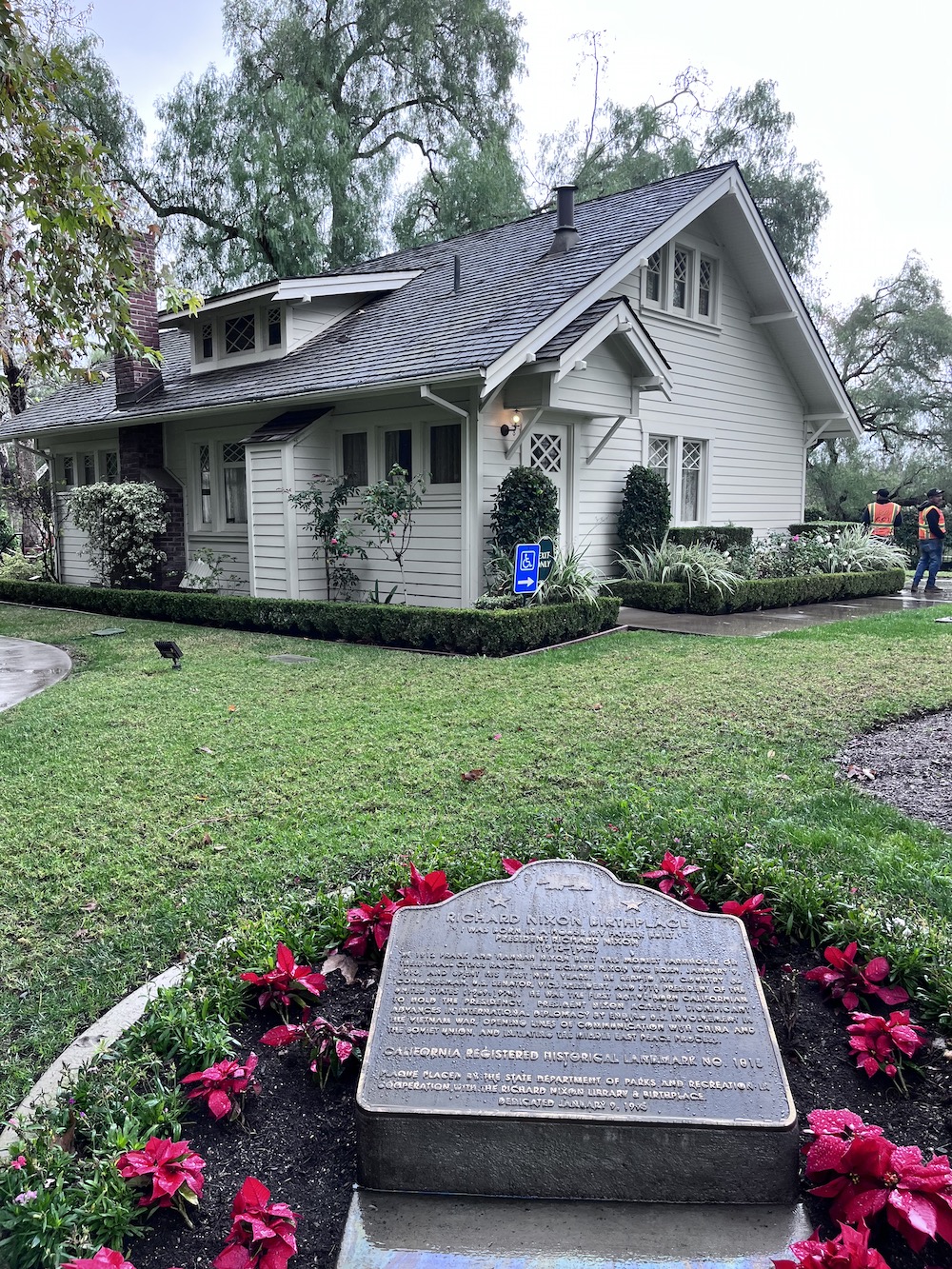
After touring the Reagan site, we spent the night in Pasadena, then headed south the next day with Yorba Linda programmed into our Google maps. It was on a modest Yorba Linda ranch that Nixon’s father erected a home for his young family, using a mail-order construction kit. A year later the Nixons’ second son, Richard, was born in the building. It’s way too small to hold a Presidential Library; the large museum/library structure lies just a short walk away. But having the family home located on the property somehow makes it feel intimate and meaningful.
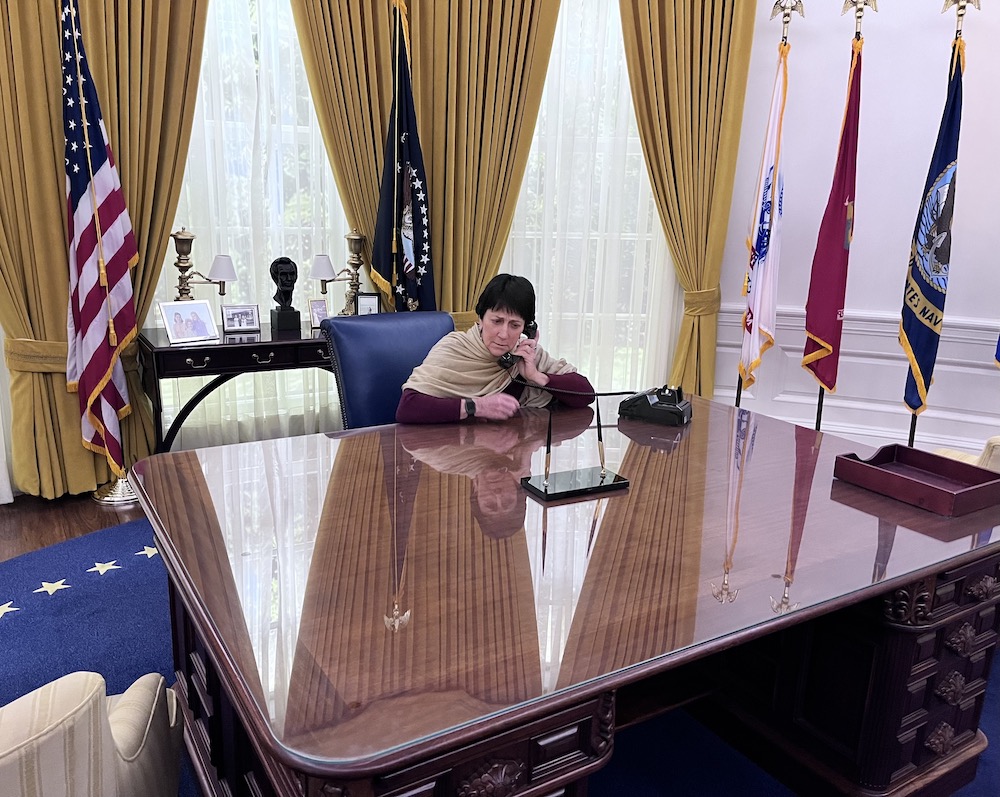
No one in our little group was ever much of a Nixon fan, and we’d thought we might breeze through the complex in an hour. To our surprise, we wound up staying for almost three hours and concluding it was the better of the two sites. The years when Nixon sat at the highest levels of American political power were at least as epic as the Reagan’ years, and the displays seemed better organized and more coherent. Moreover, the Nixon facility feels less hagiographic, more balanced, with extensive attention given to the Watergate break-in, the subsequent cover-up, and Nixon’s resignation in disgrace. No presidential aircraft live here, but in this Oval Office replica — decorated as it was when Nixon occupied it — no rope barriers prevent guests from strolling up to the replica of the room’s famous Resolute Desk and taking the helm, if just for a moment.
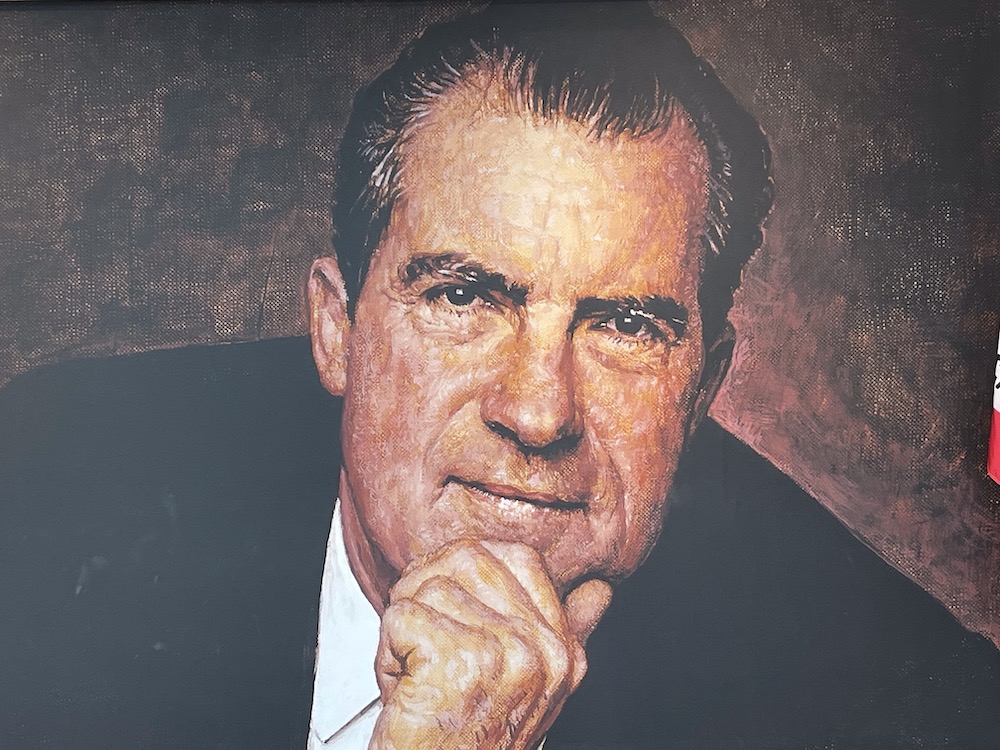
If you had asked me on New Year’s Eve what I thought of both Reagan and Nixon, my reply would have been withering. But the libraries reminded me of what I can easily forget: both men were complex characters, brimming with qualities both admirable and odious. Here are two examples of things I learned about Richard Nixon that enriched the way I think of him. In a section filled with pictures of his early childhood, a display explained that by 14, the future president knew how to operate a motor vehicle, and every morning he would get up early, drive to the produce market in Los Angeles, stock up on fruit and vegetables, return to Whittier, and set up what he’d bought in his family’s fruit stand. Then he’d go to his classes at the high school. Caught up in the Watergate, he may have been vindictive and paranoid and conniving. But he was also once that spunky kid.
I found maybe an even better example at the display explaining the recording system Nixon ordered set up in the White House. It captured everything at all times. Visitors to the Yorba Linda facility can select various recordings to listen in on. The damning one in which President Nixon ordered the CIA to block the FBI’s investigation into the Watergate break-in is not among them. The one I chose instead captured one of Nixon’s daughters, I think Julie, calling him to talk about whether the family could go out to a restaurant for a dinner on Valentine’s Day. She sweetly suggests that Trader Vic’s has a nice secluded table and good food. He seems willing to make his girls happy, but kind of clueless. He says she should check with “Mommy,” and if Mommy wants, they can all go out to Trader Vic’s. The museum shares this absolutely private, pedestrian moment and reminds those who listen that Tricky Dick also could be a good dad and a nice guy. That’s some accomplishment.

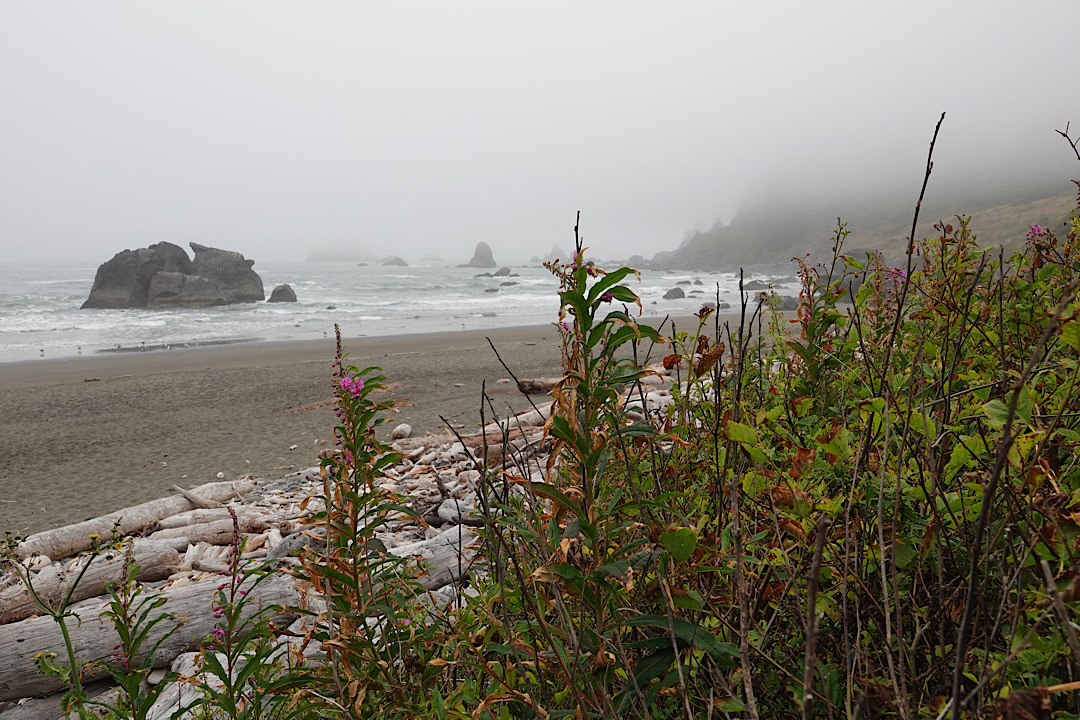
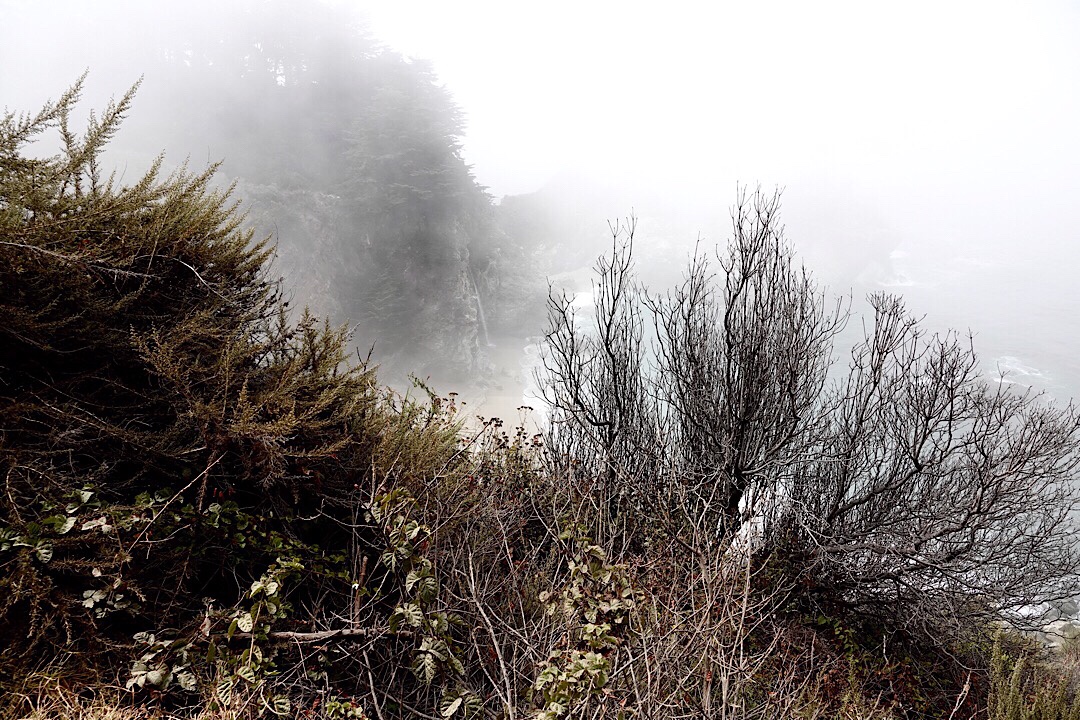
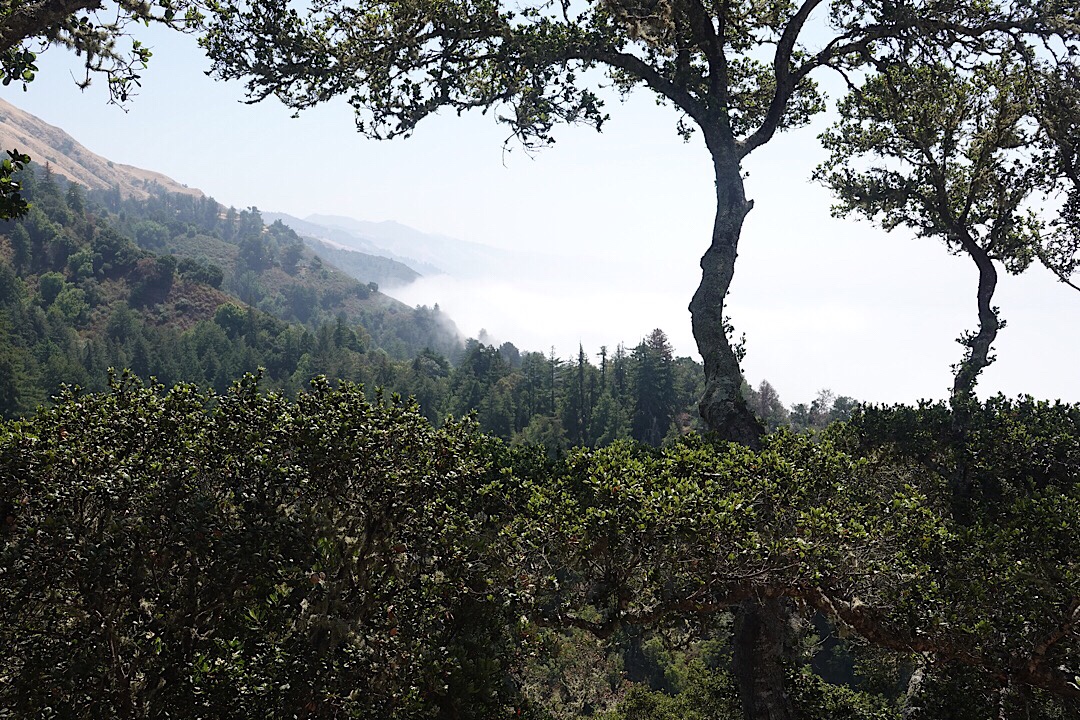
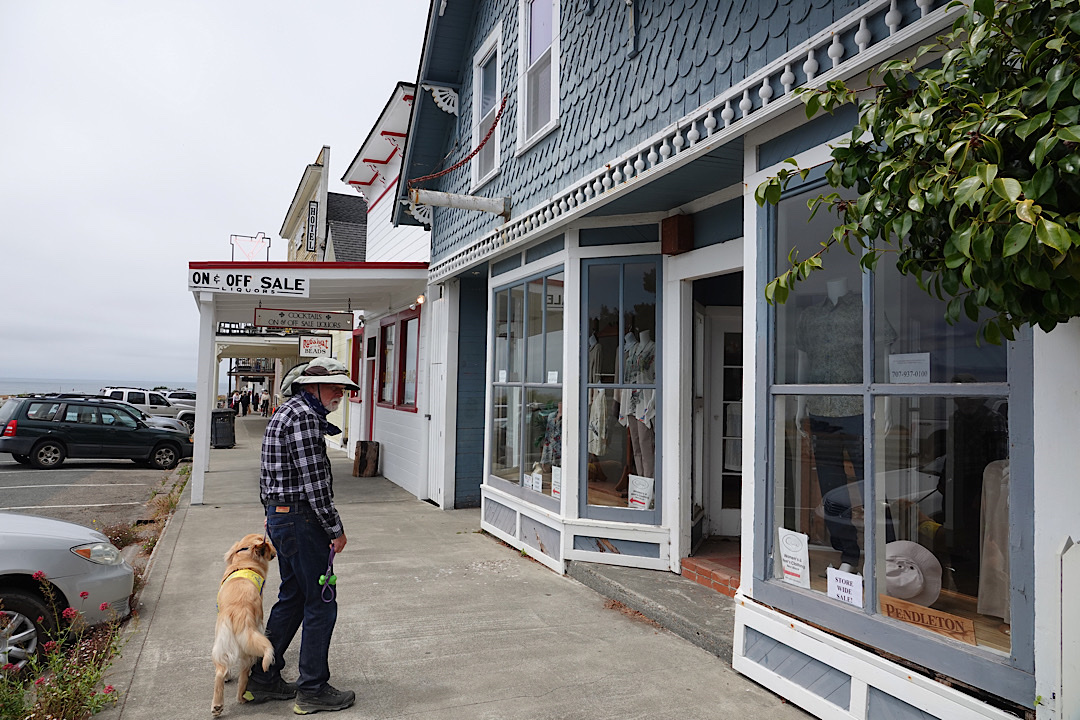 The coastal vistas were as beautiful and empty as any I’ve seen anywhere.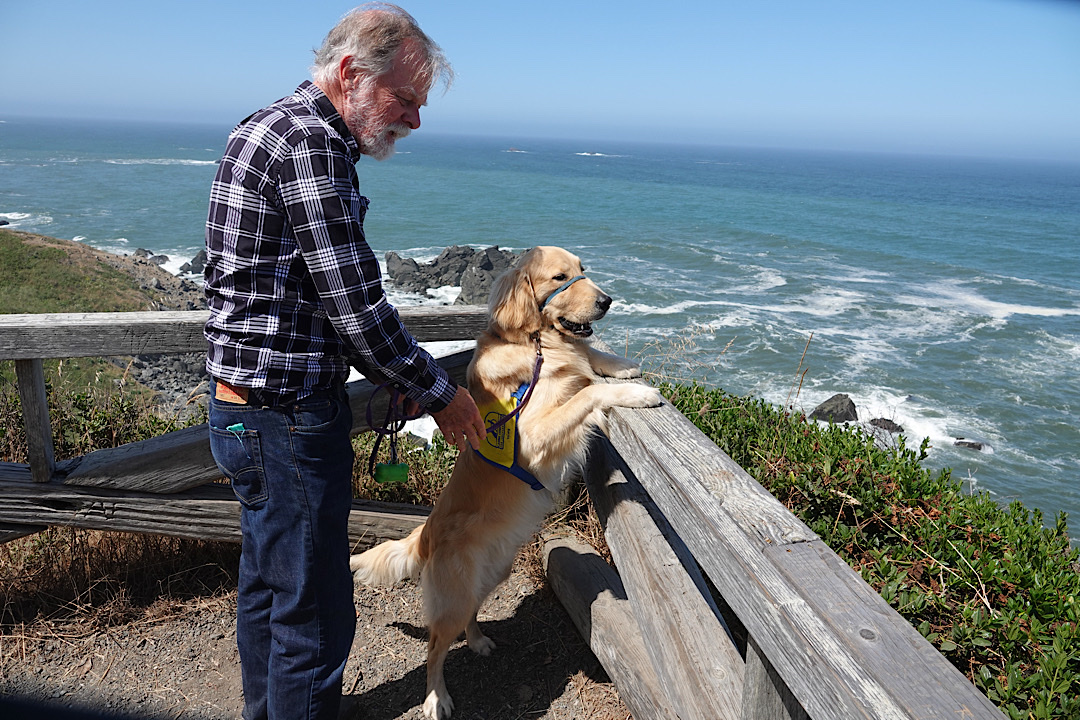
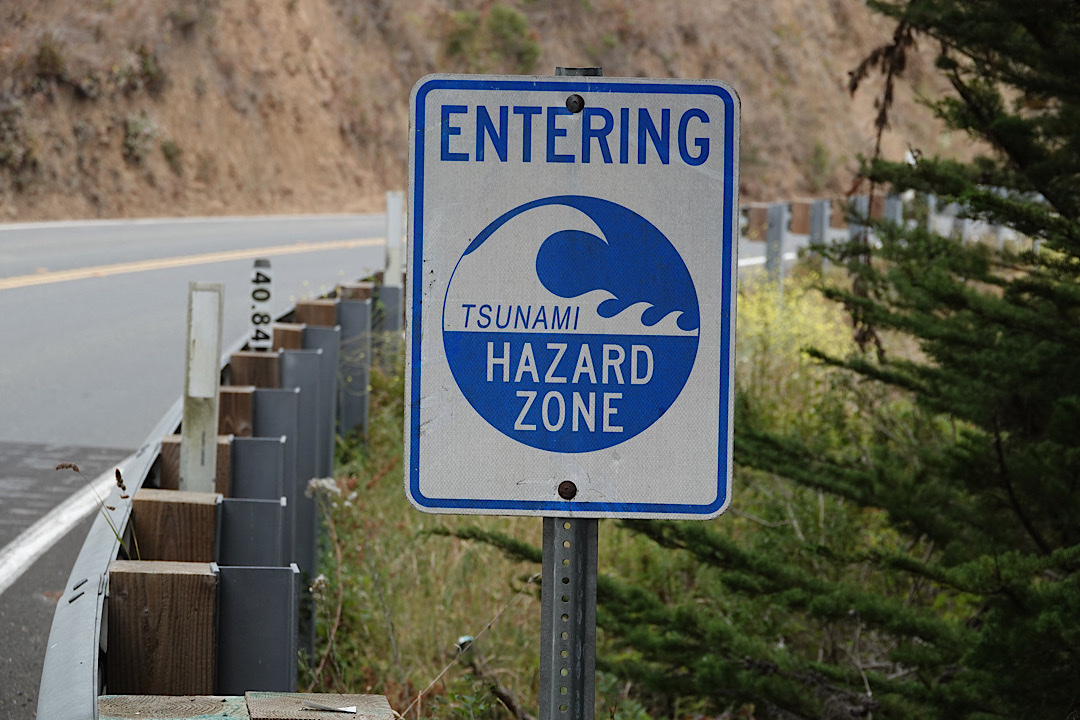 Then there’s the weather — gray, sodden, and dreary for much of the year. In the height of summer, we enjoyed some sunny spells, but the daytime highs rarely surpassed 60. Nights, the temperatures dipped into the 40s.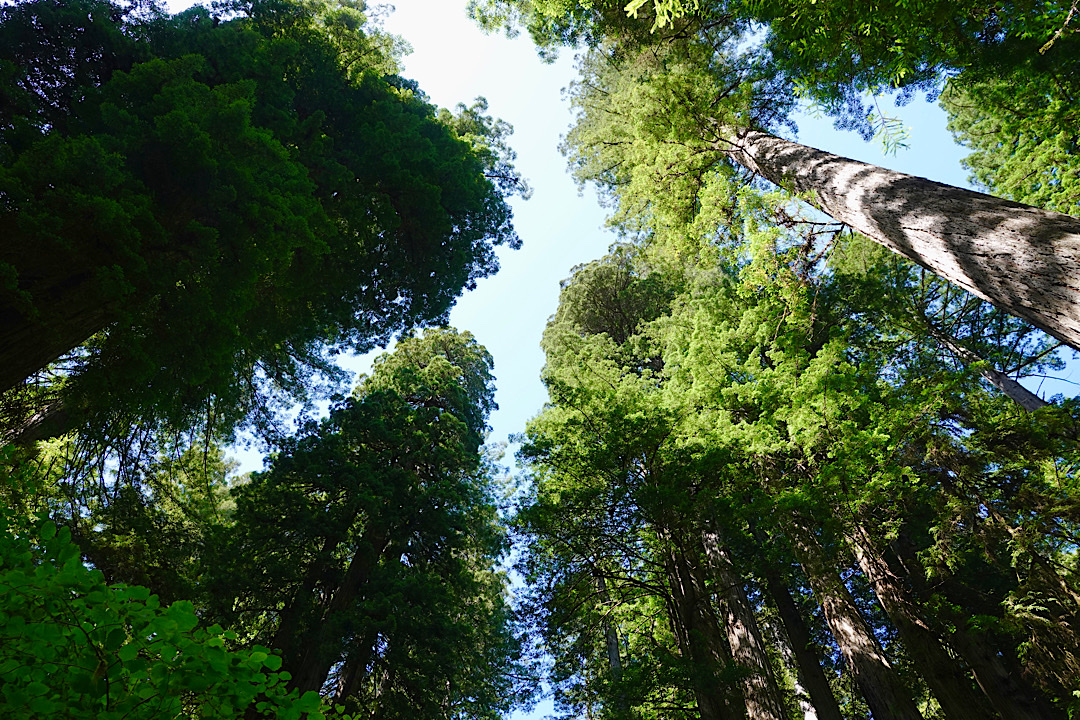


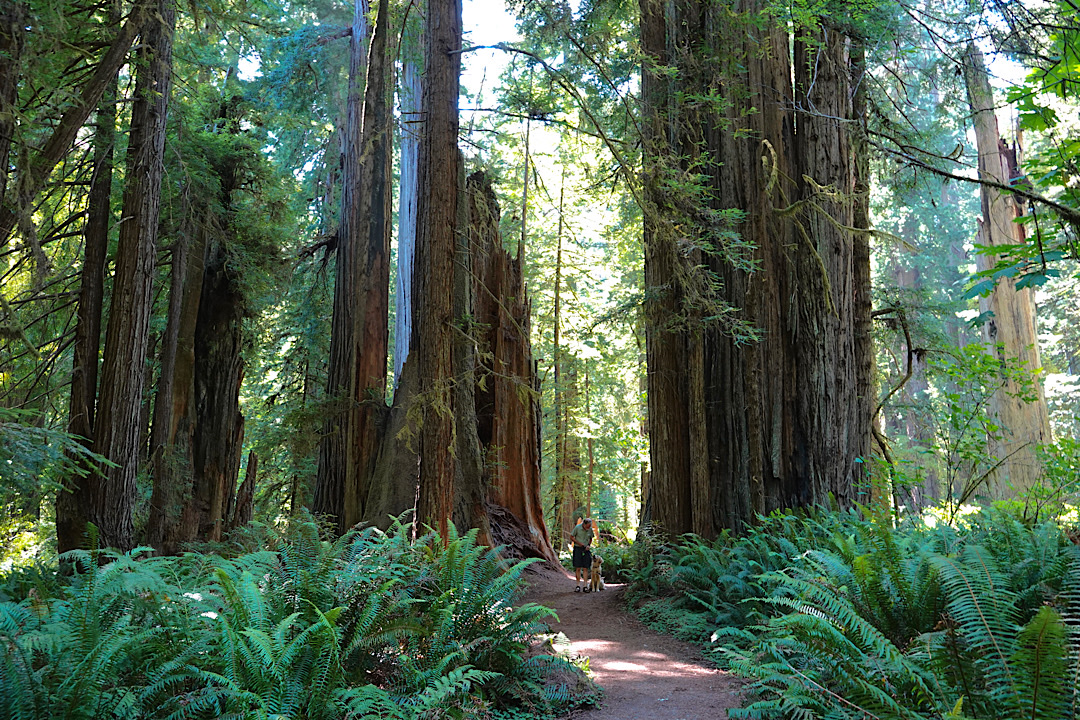

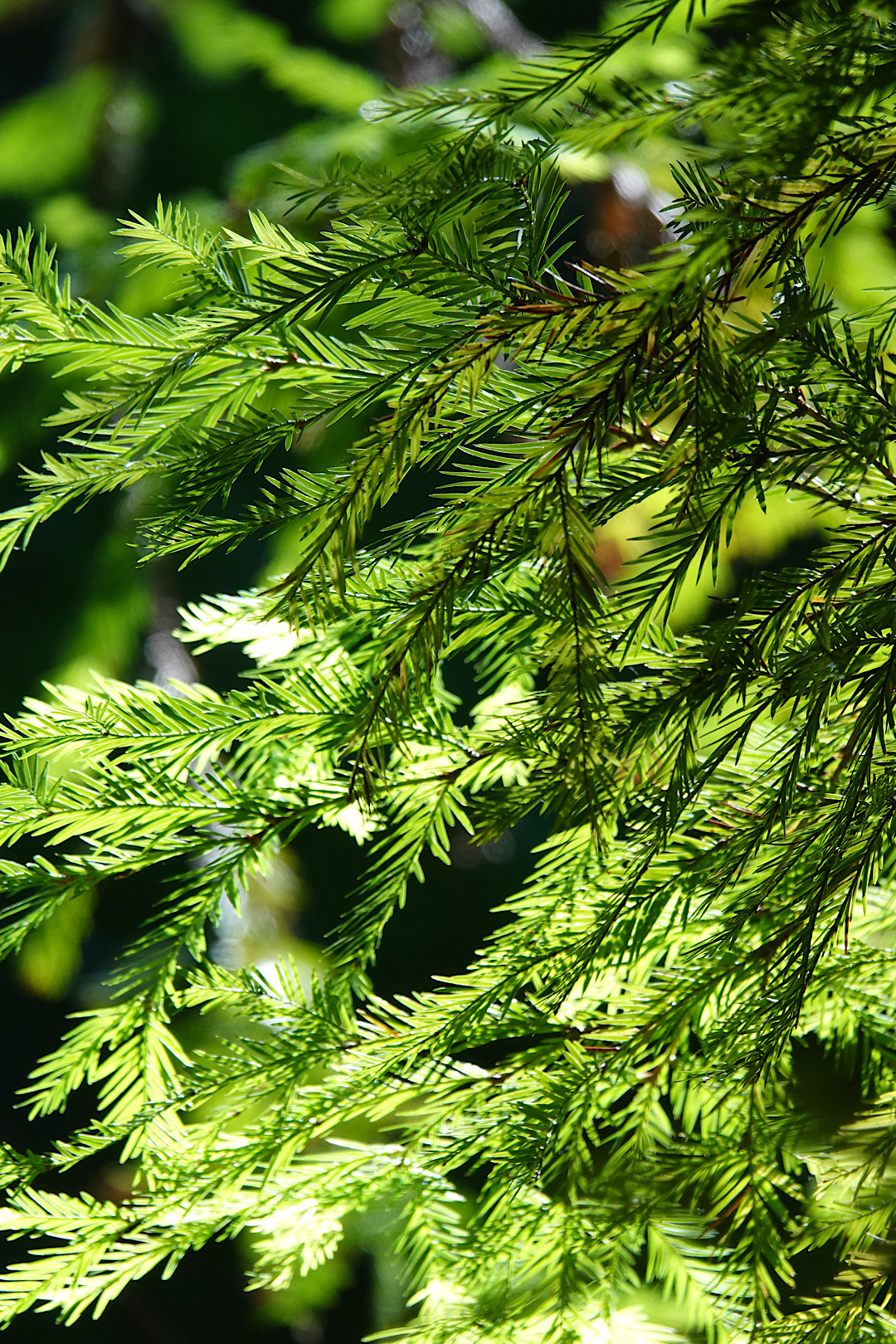 The path ahead of us invariably looked shorter than the trees were tall. The scented air invigorated me, and the sculpted shapes surrounding us often stopped us in our tracks.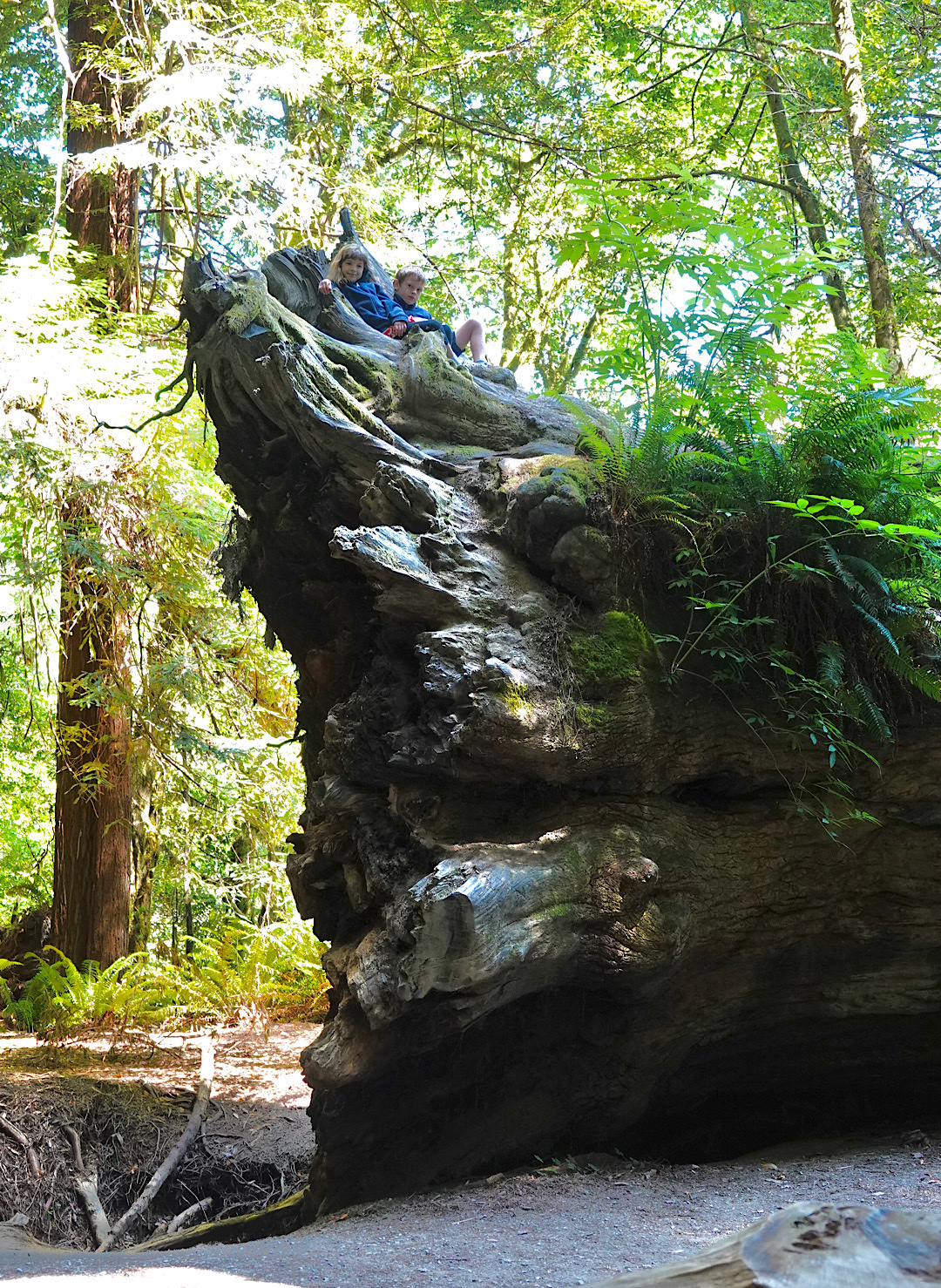
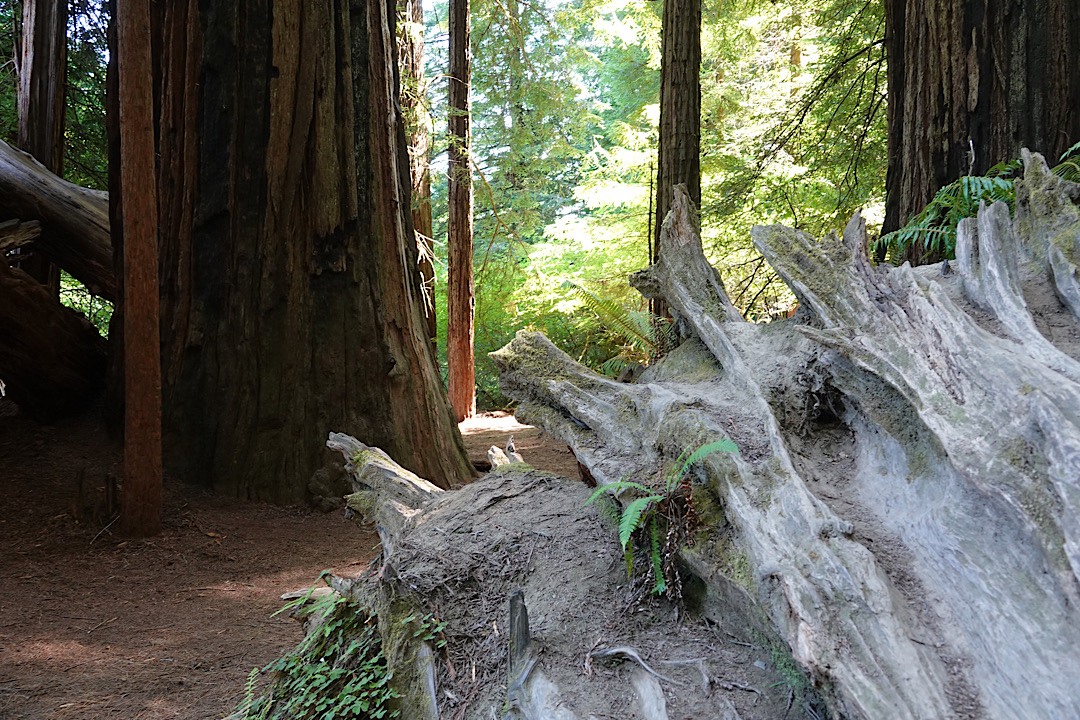
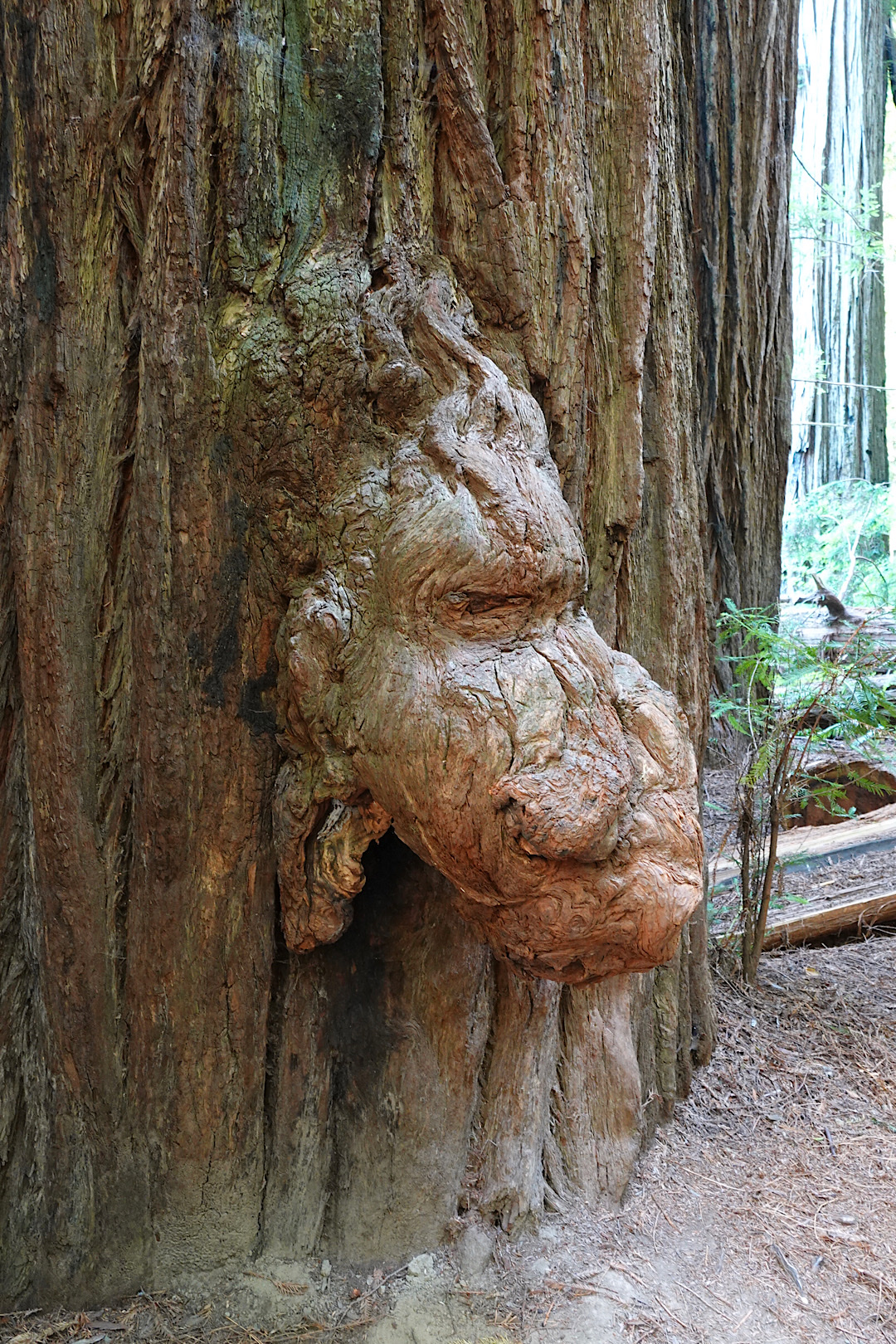
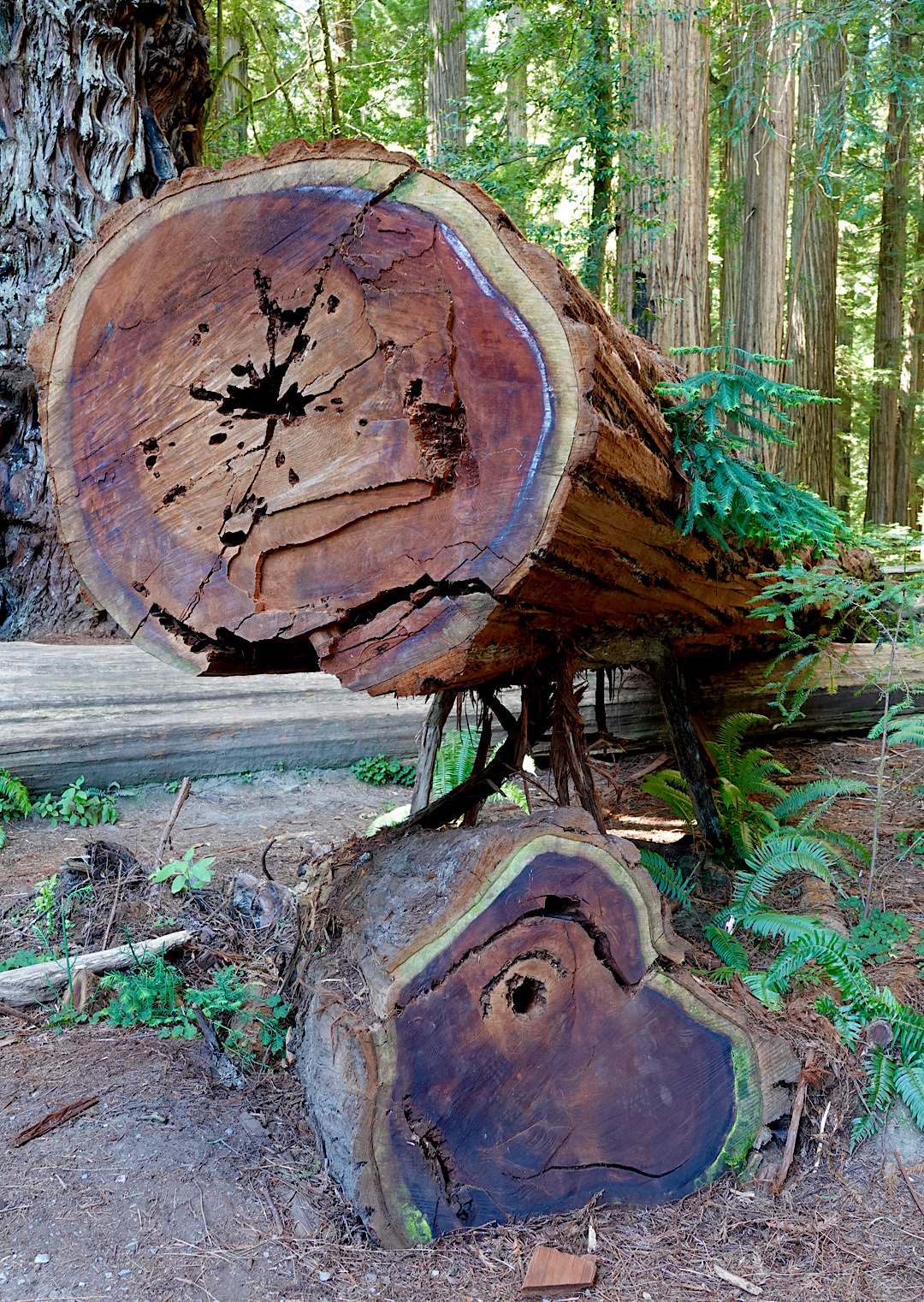
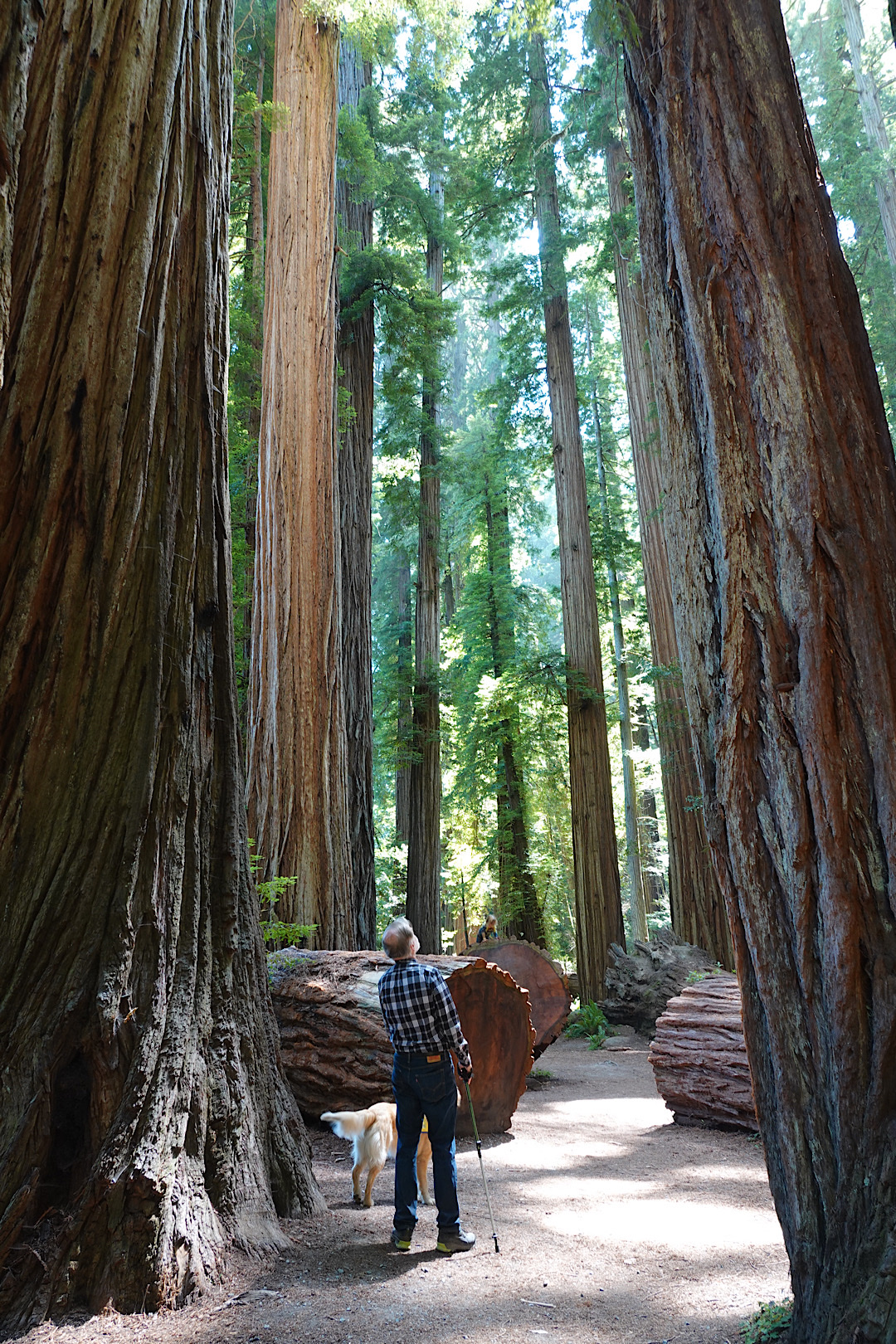 It’s a landscape that competes with the most breathtaking anywhere, I think, and yet it rarely shows up on lists of the natural wonders of the world.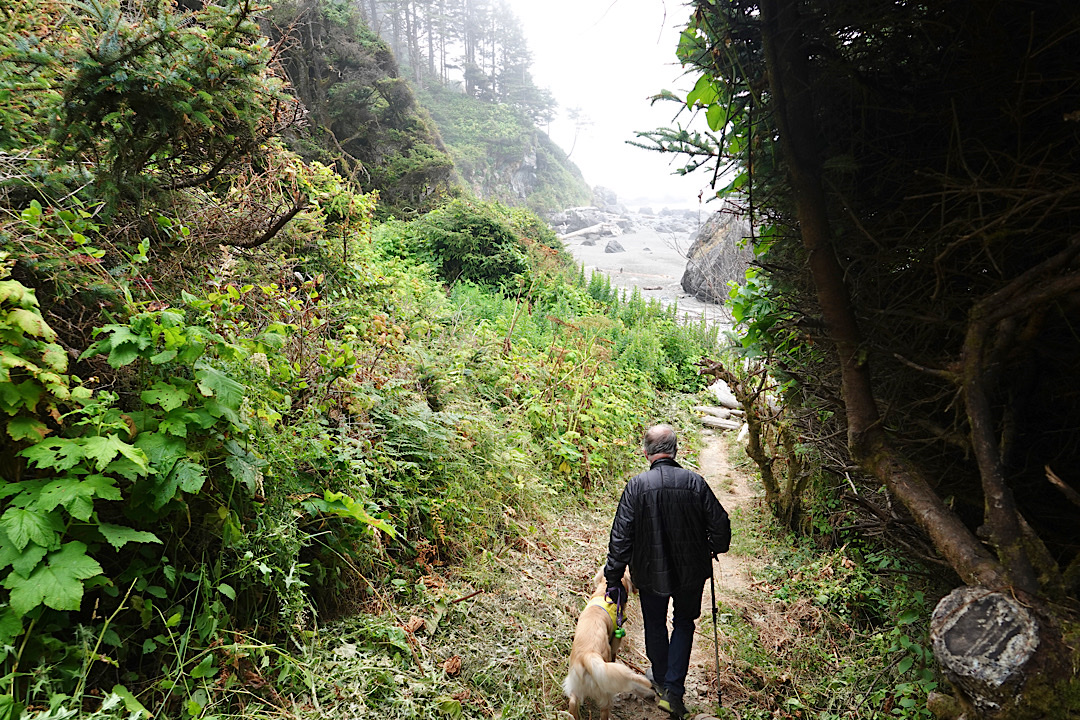
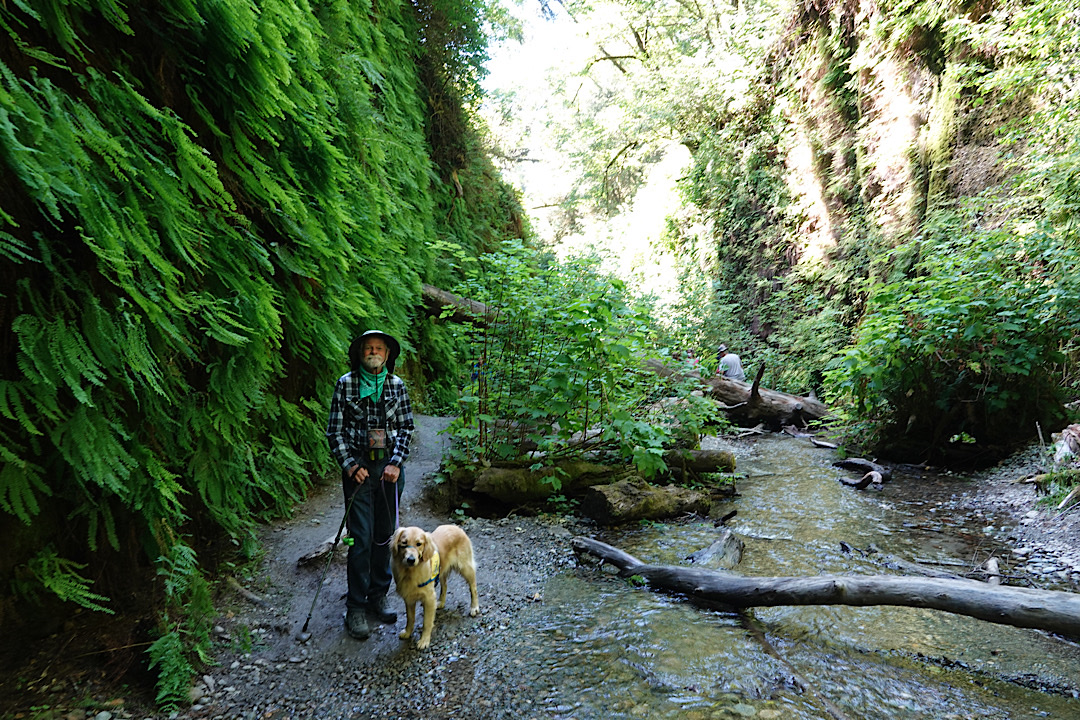
 We spent an afternoon exploring a canyon whose walls are coated with ferns.
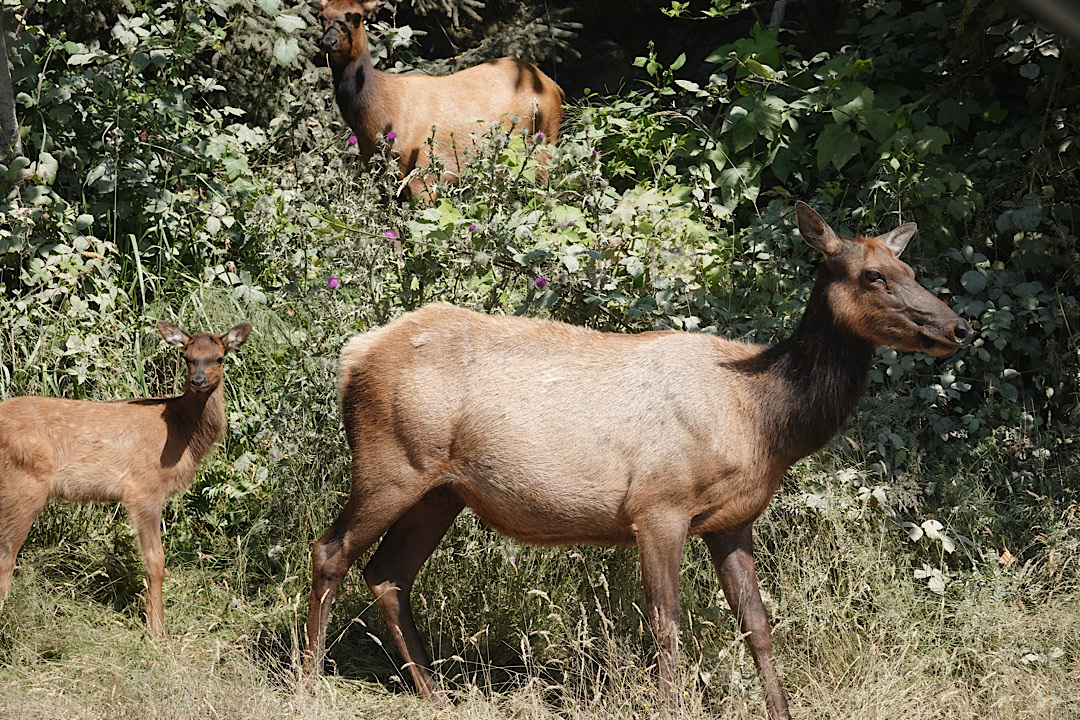
  We got close to wild elk.
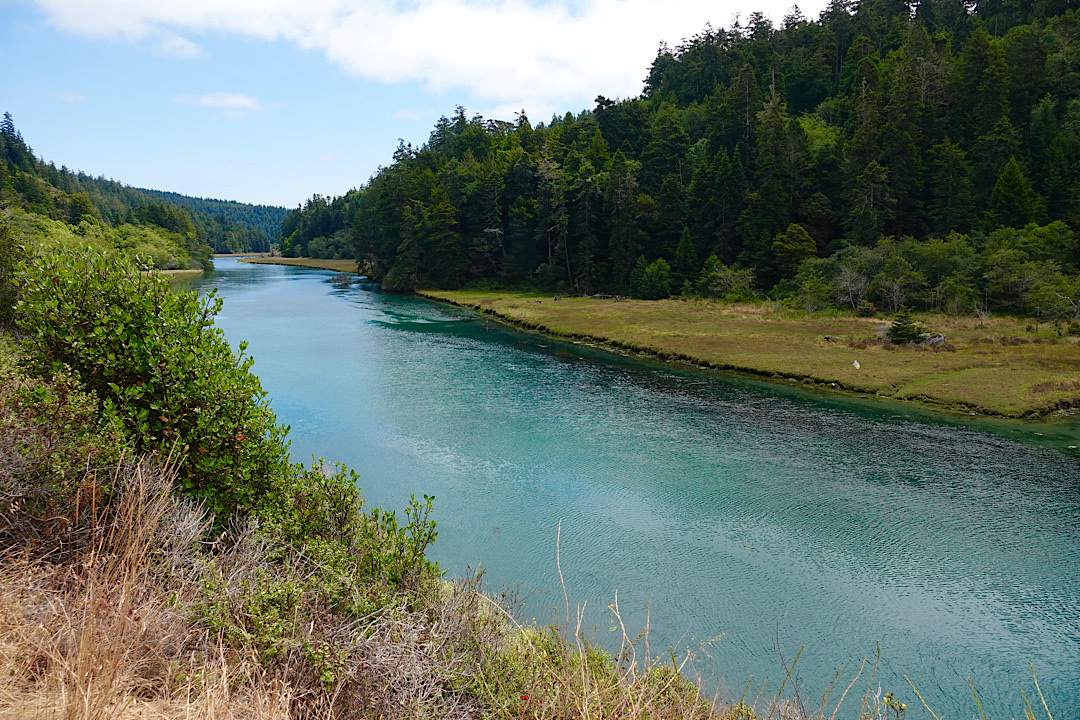
  Another morning we hiked up the mouth of the Big River.
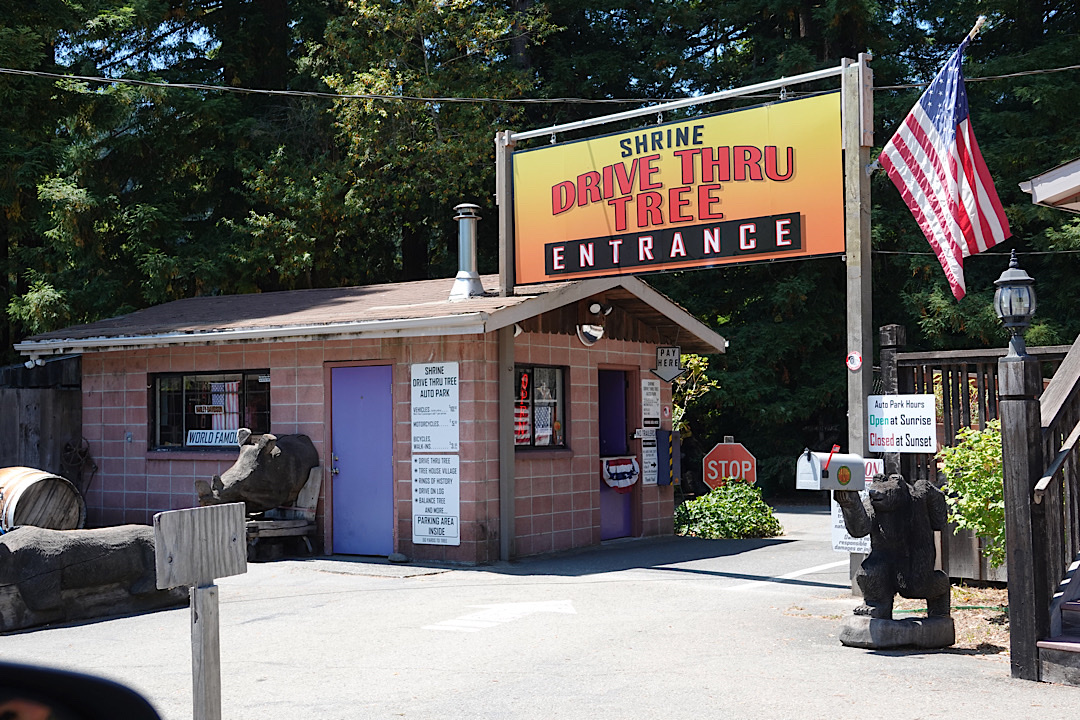
 We resisted paying to drive through one of the touristic tree wonders.
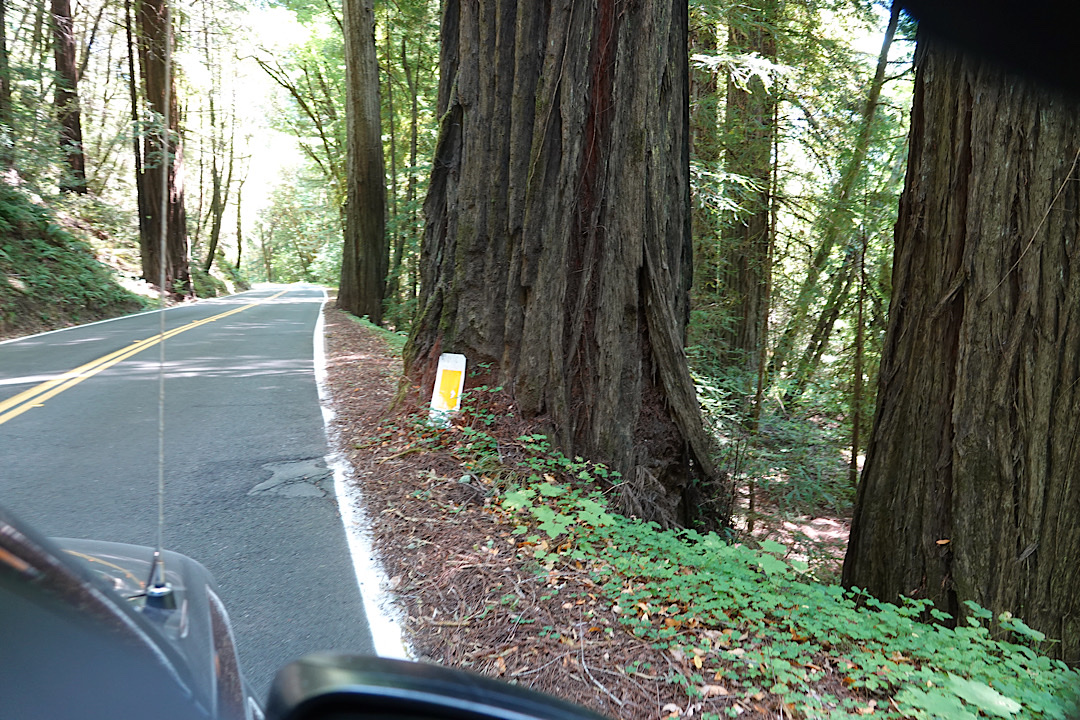
 But we drove the Avenue of the Giants, where the huge trees crowd so close to the road people put reflectors on them as a warning.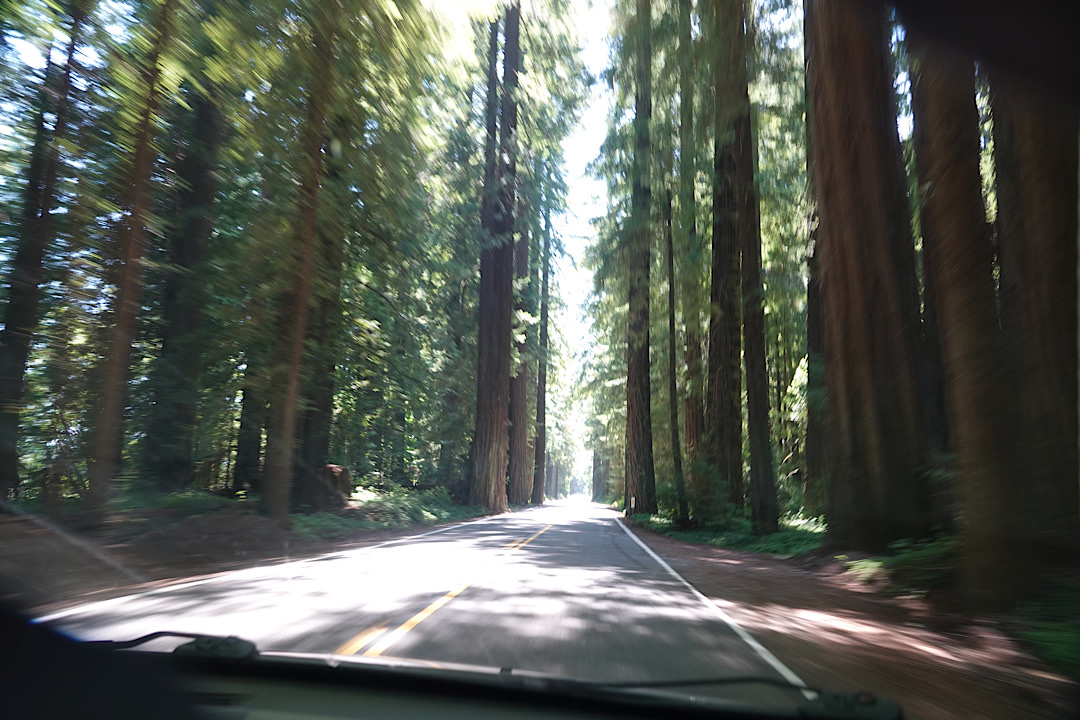
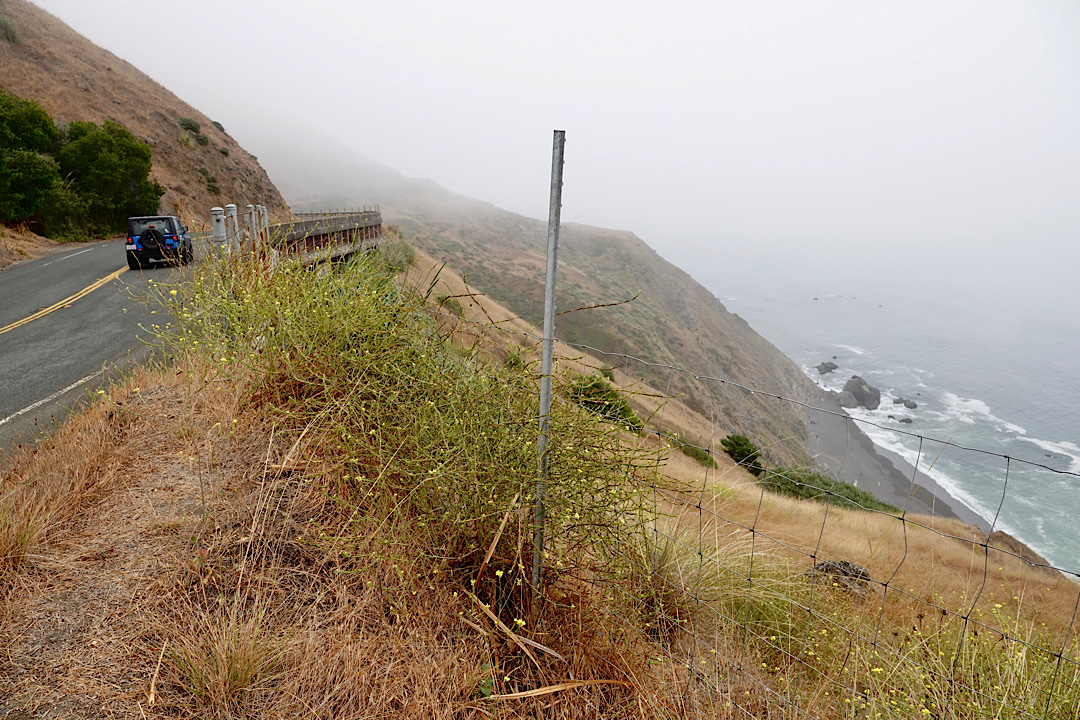 …until we crossed the Golden Gate Bridge and were back in Civilization. We slept in Santa Cruz last night and will spend our final night on the road in Santa Barbara. All that will be anticlimactic. Those hikes through the otherworldly, timeless woods were the climax.
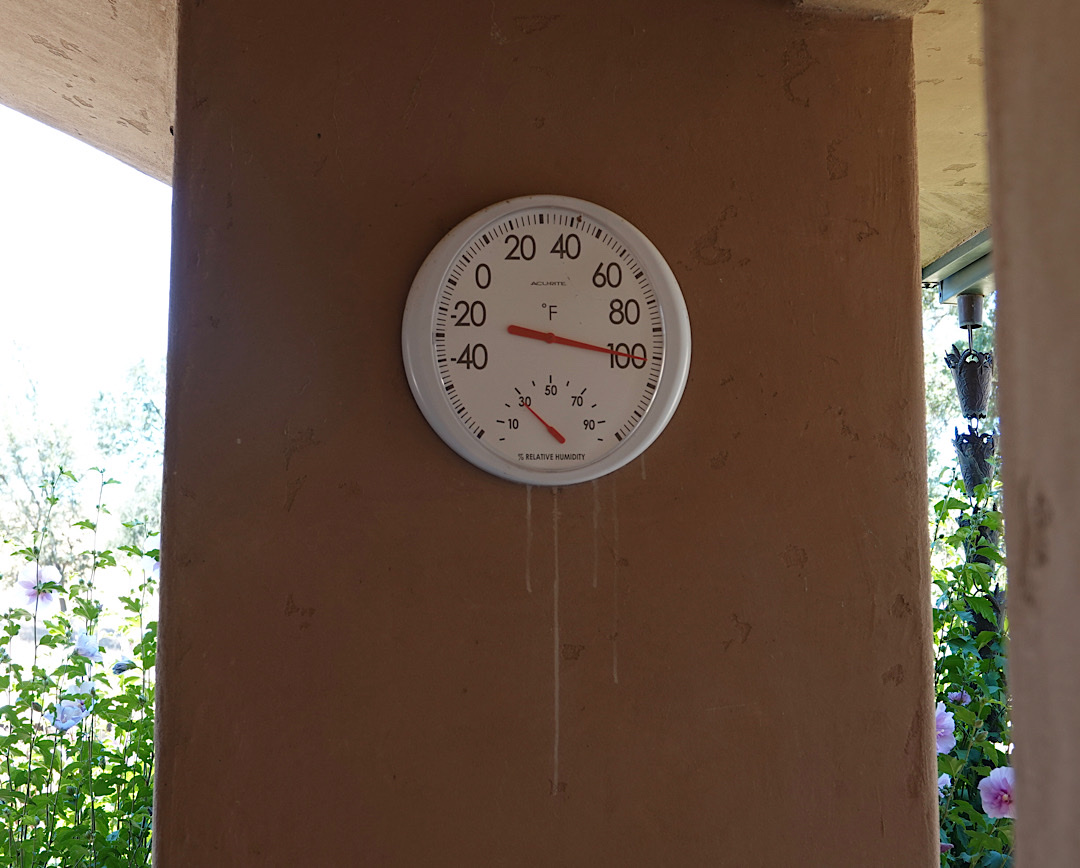 This summer marks my 30th anniversary as a home-exchanger. It was 30 years ago that Steve and I first traded our house in San Diego, that time for a spacious ground-floor apartment in a cool stone building in the most chic neighborhood in Paris. It had a private garden that opened onto a larger shared green space. After that we were hooked. Since then we’ve done almost 20 exchanges all over the planet.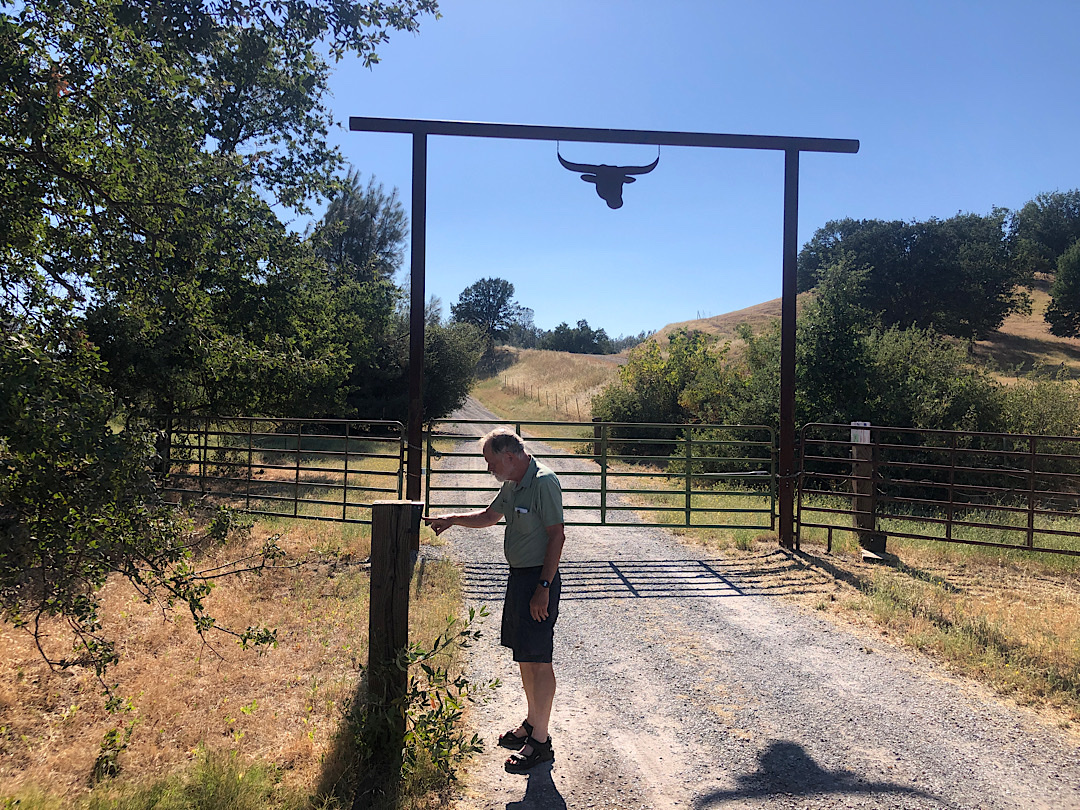
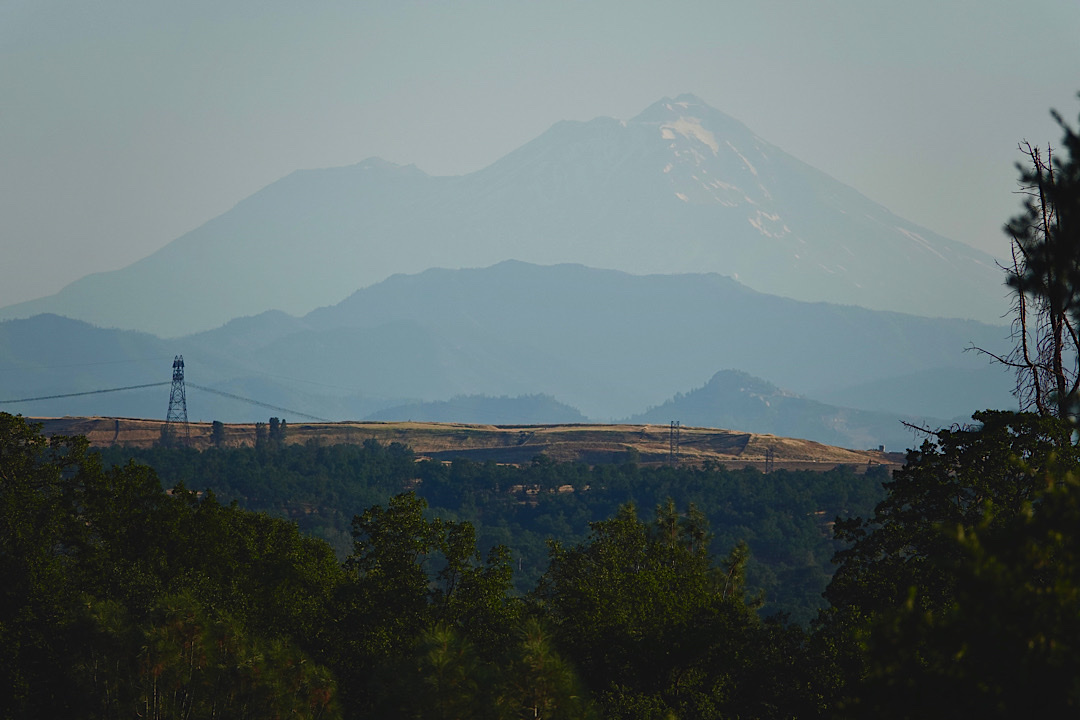
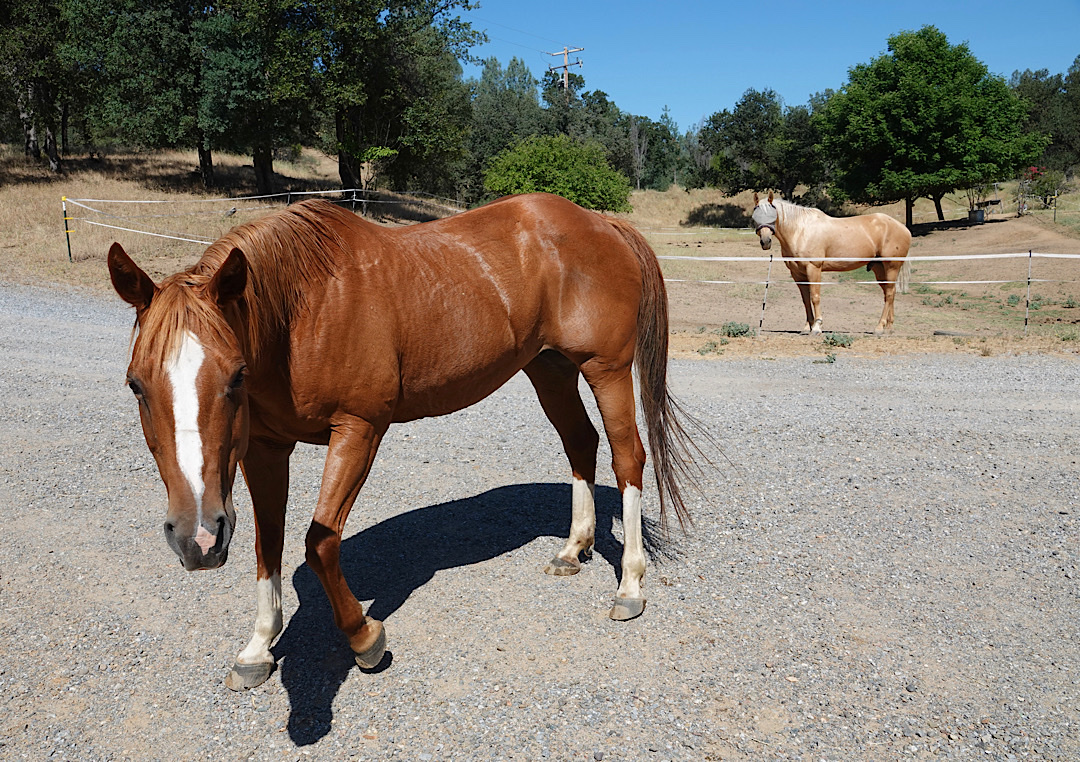
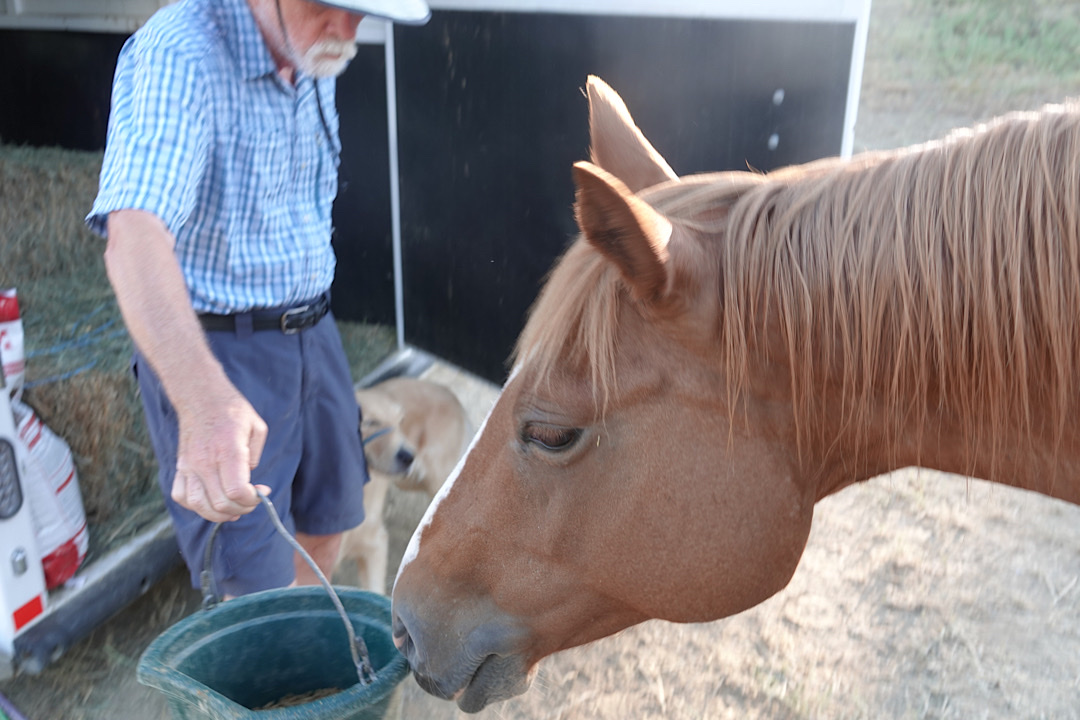
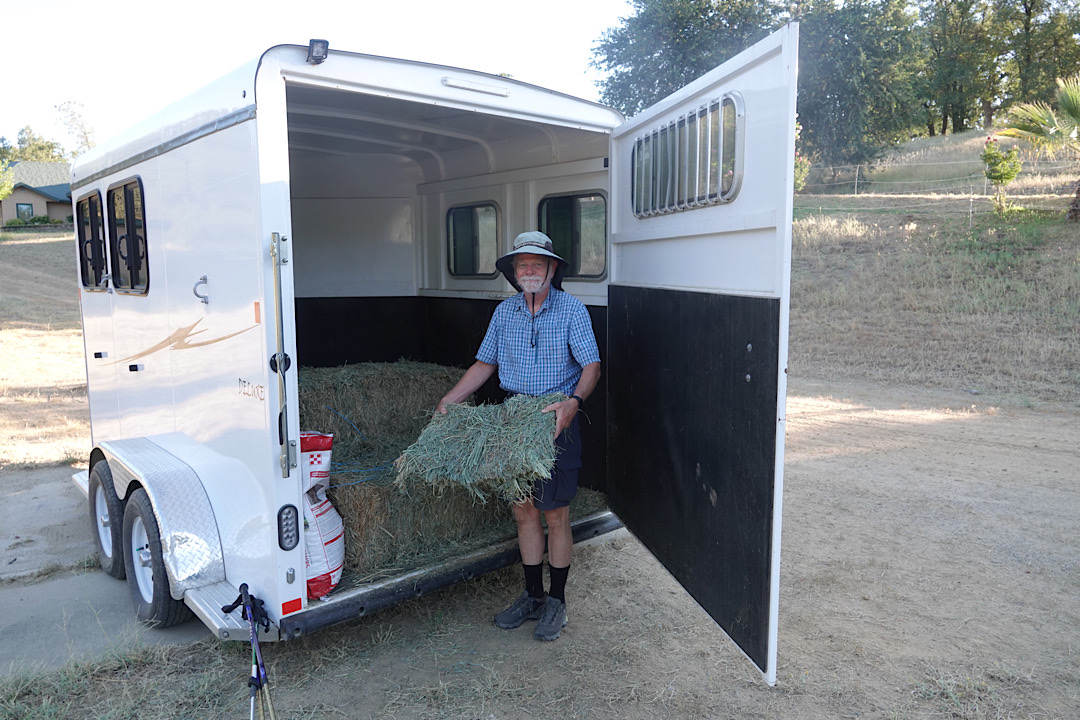
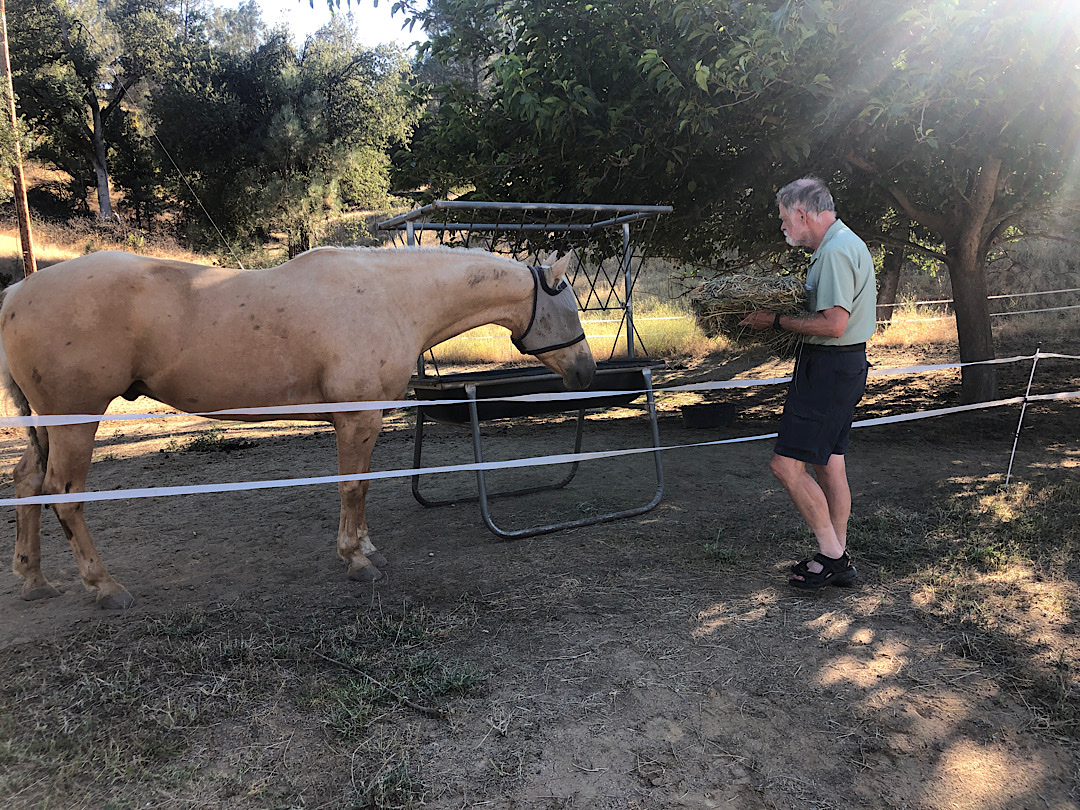
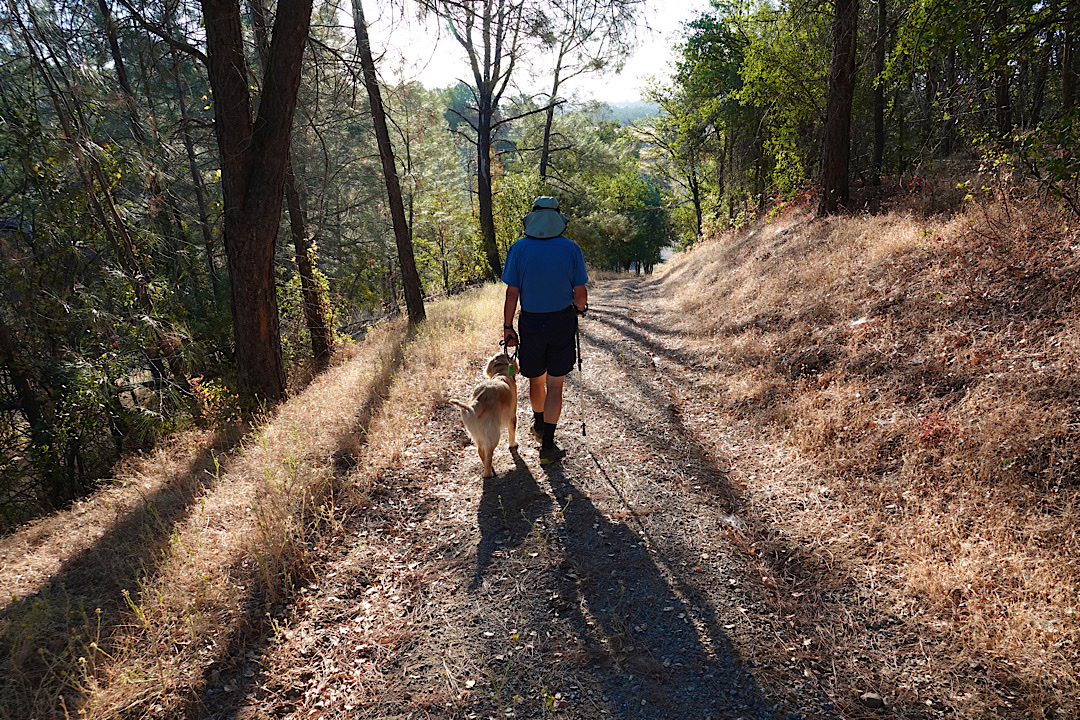 It’s a magical place filled with oak trees…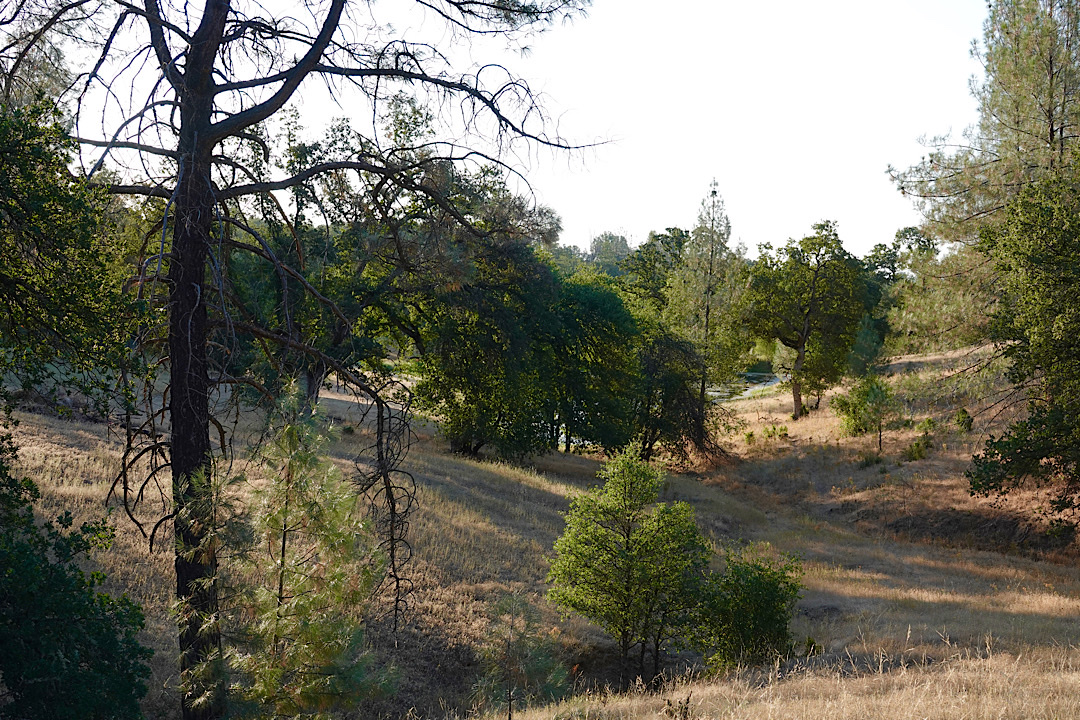
 manzanita…
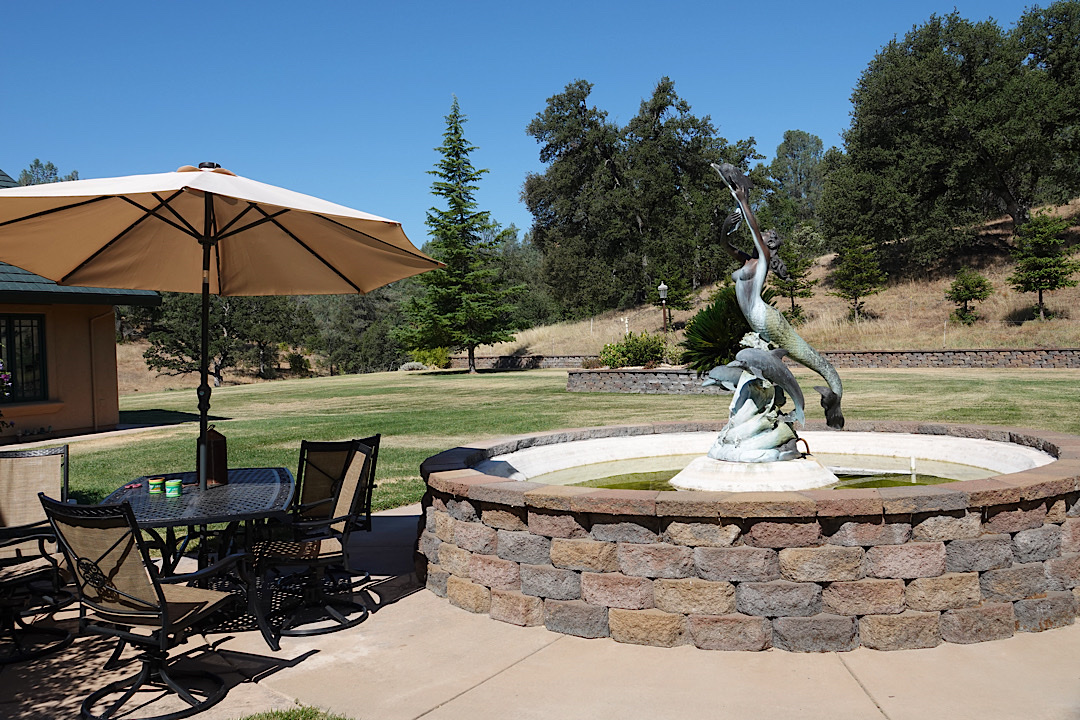
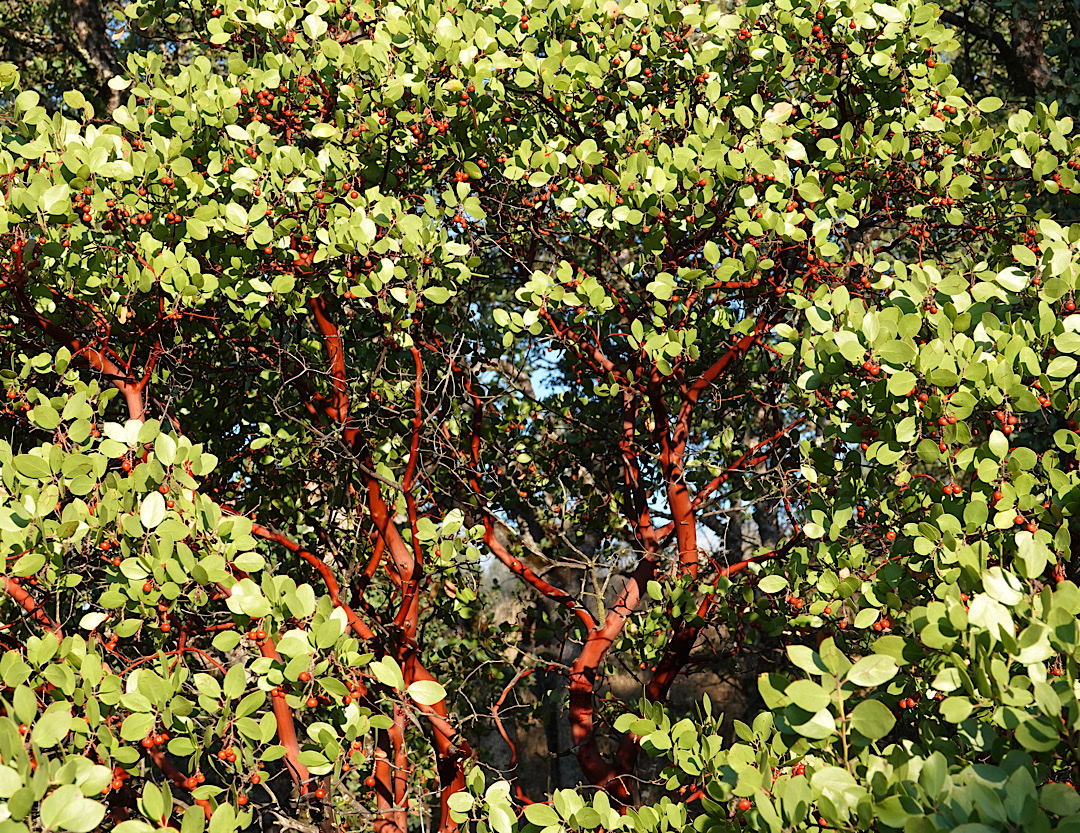 …and other native flora. Near the house, we can there’s a pond ringed with emerald grass.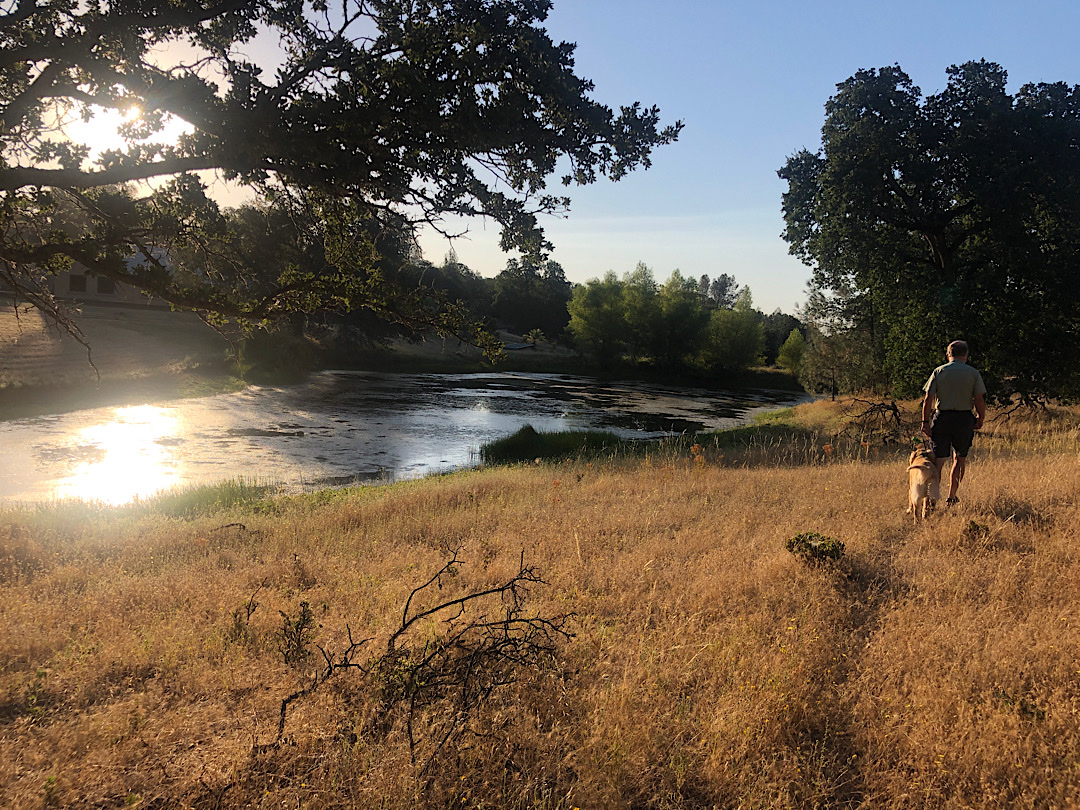
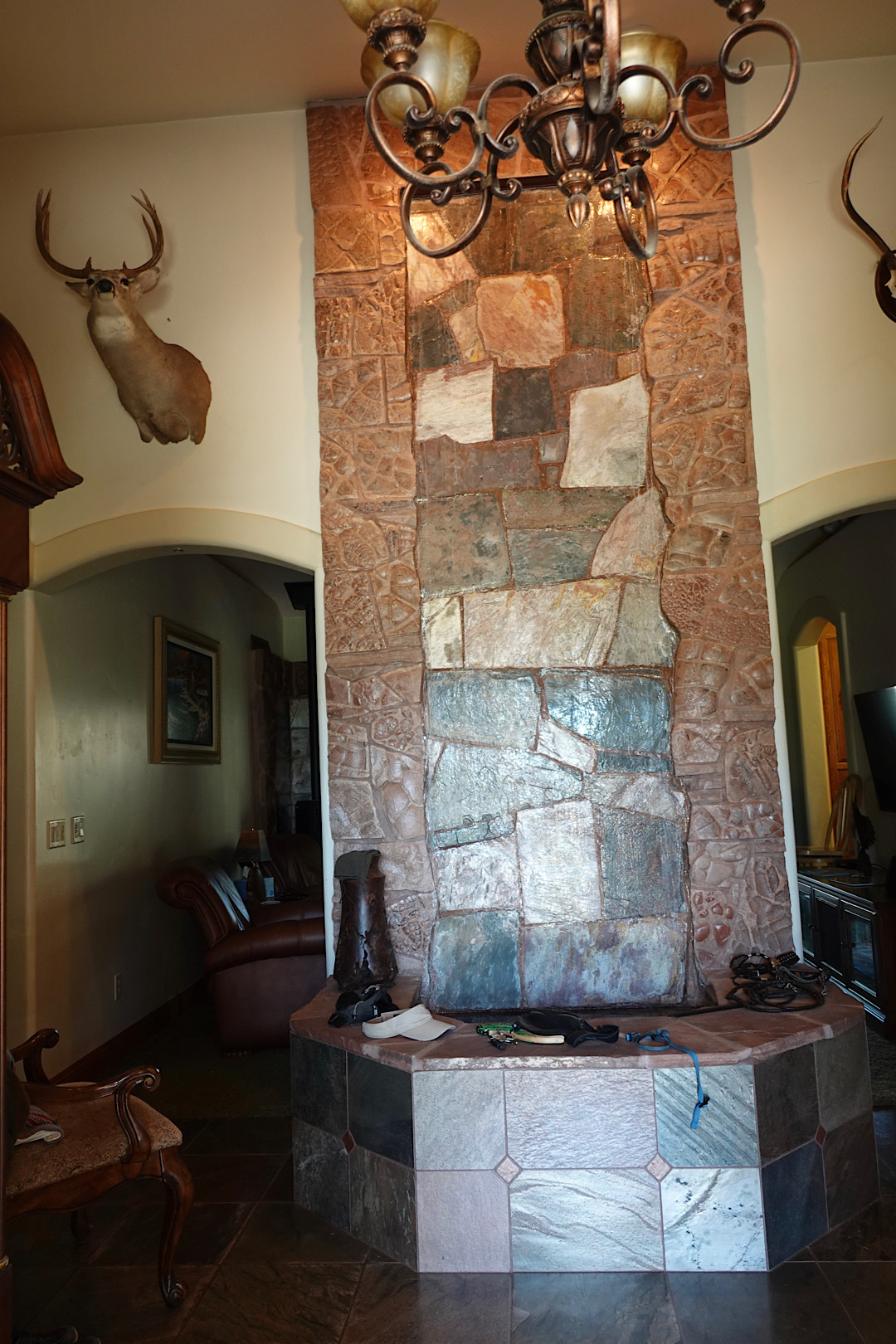
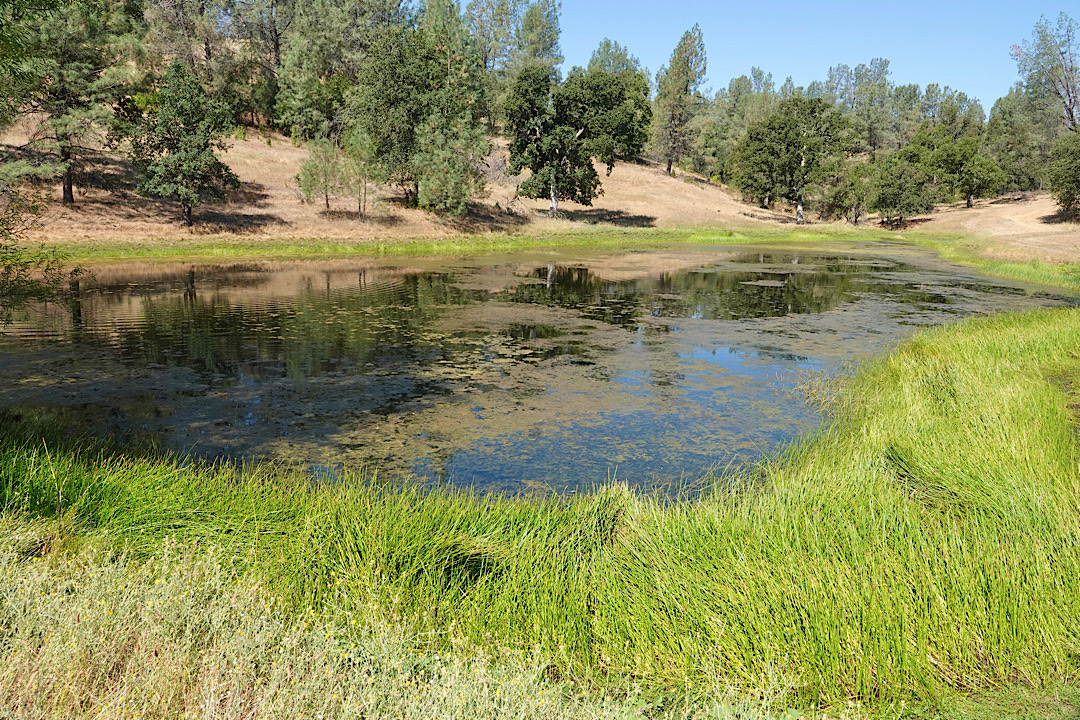 On the afternoons when we decided not to venture out, we’ve hung out in the sprawling, baronial manor house. A swamp cooler protects the interior from the heat. (To my surprise, this system works as well as any air-conditioning unit and apparently costs a fraction of the price to run.)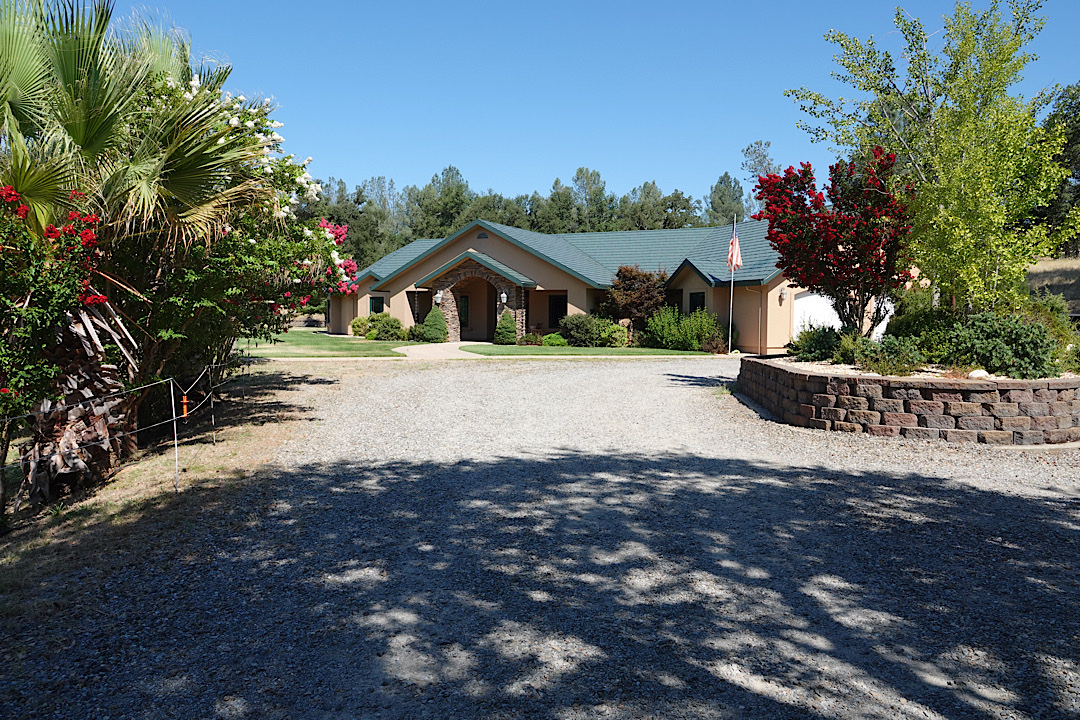
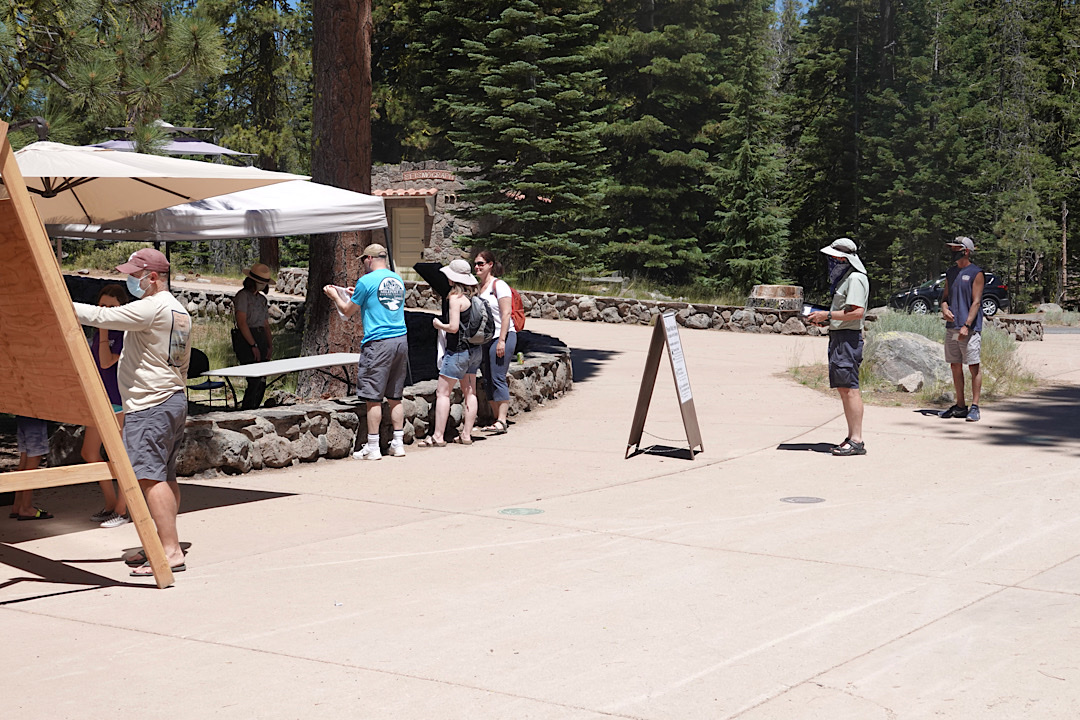
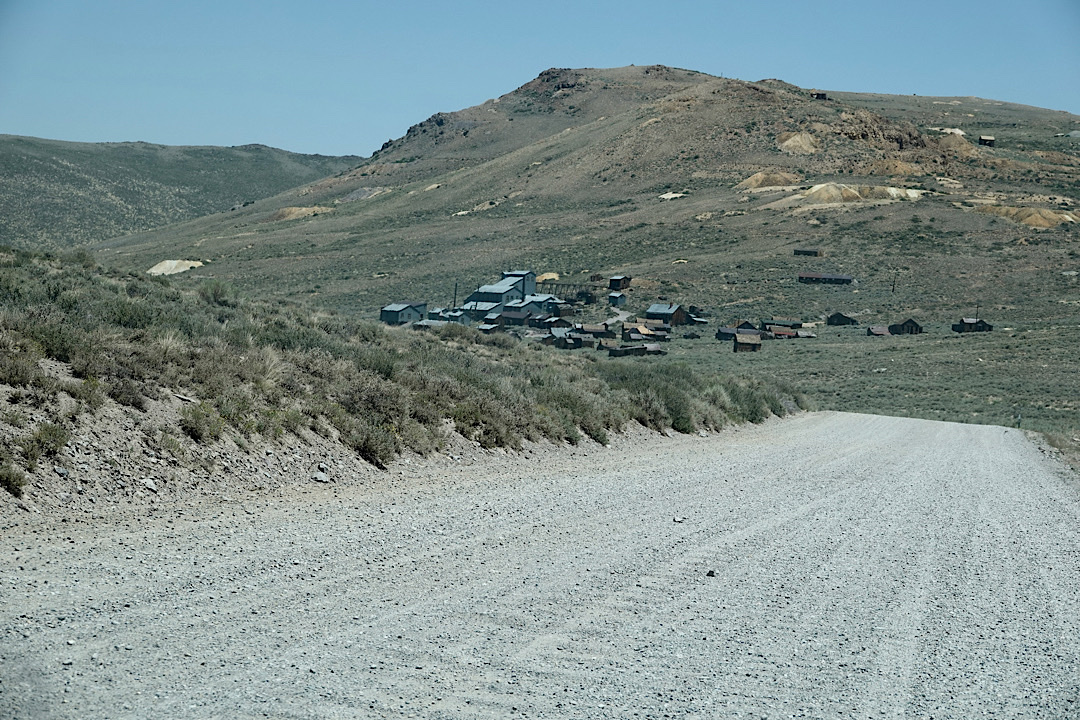 Except that there’s an entrance booth manned by a state historic park ranger…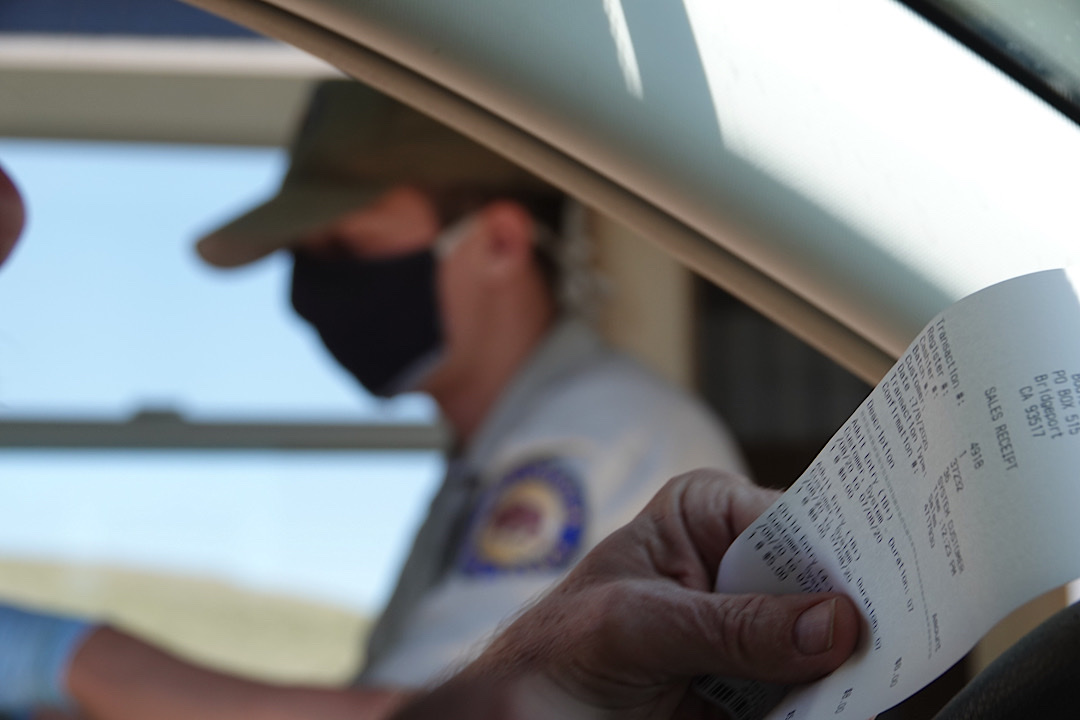
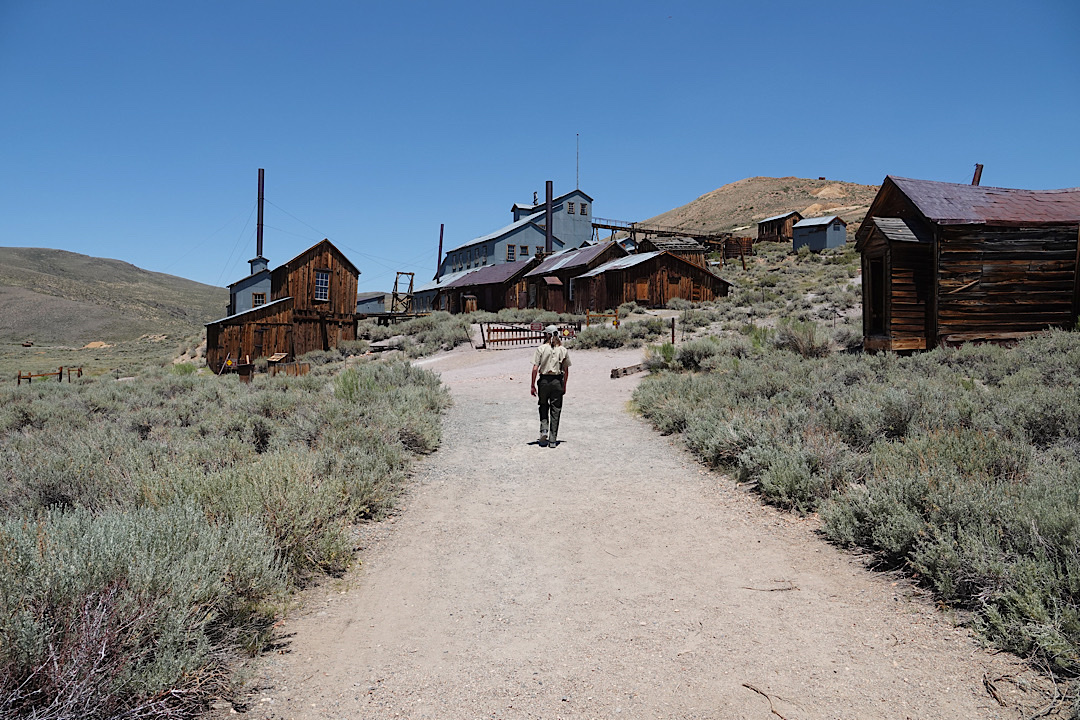
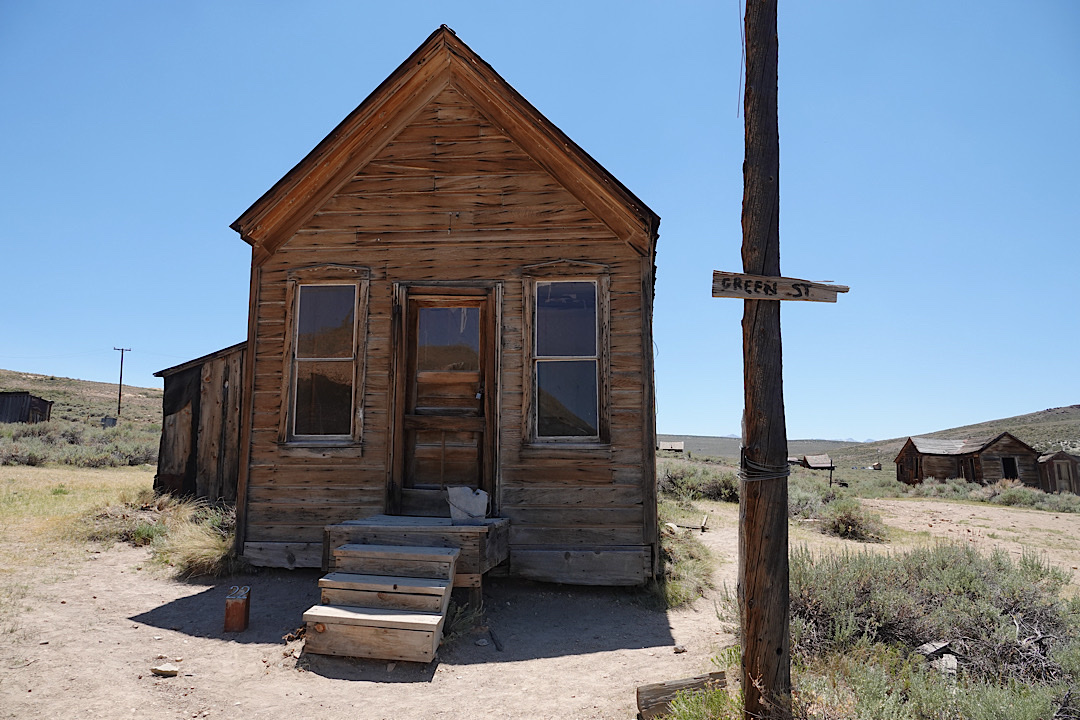
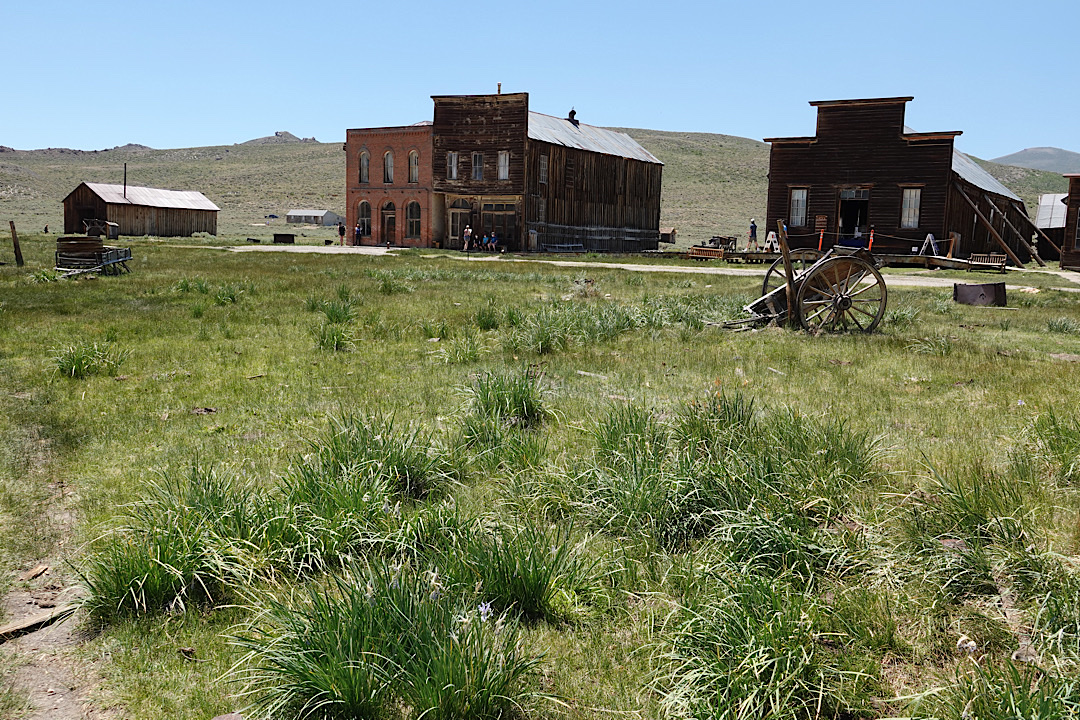

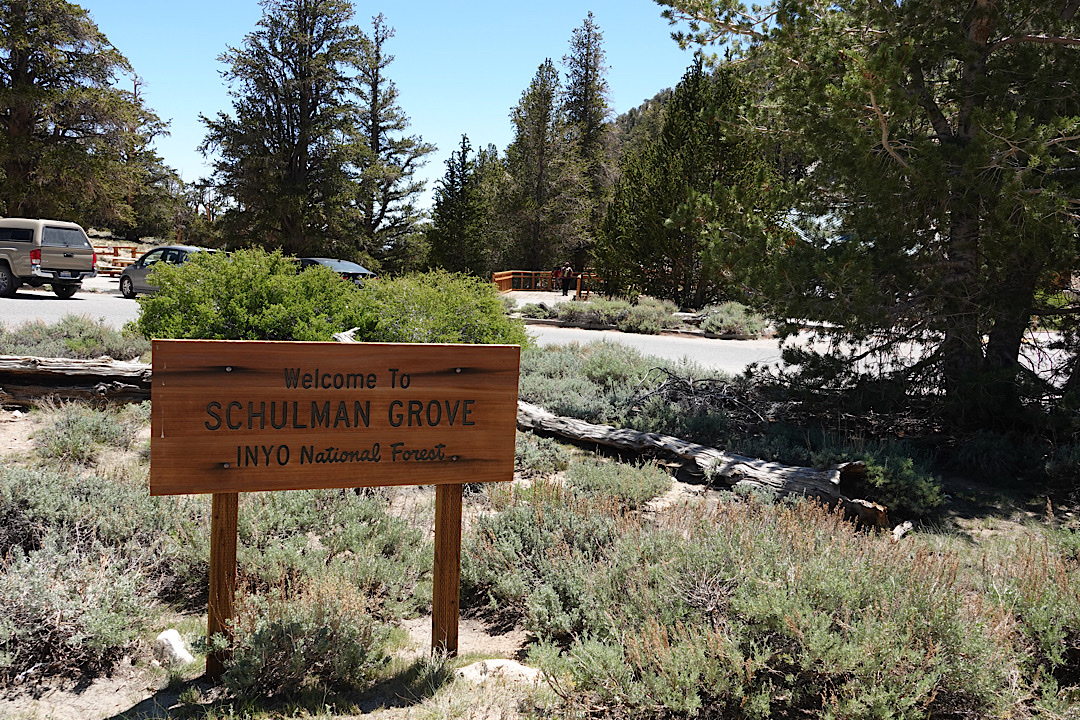
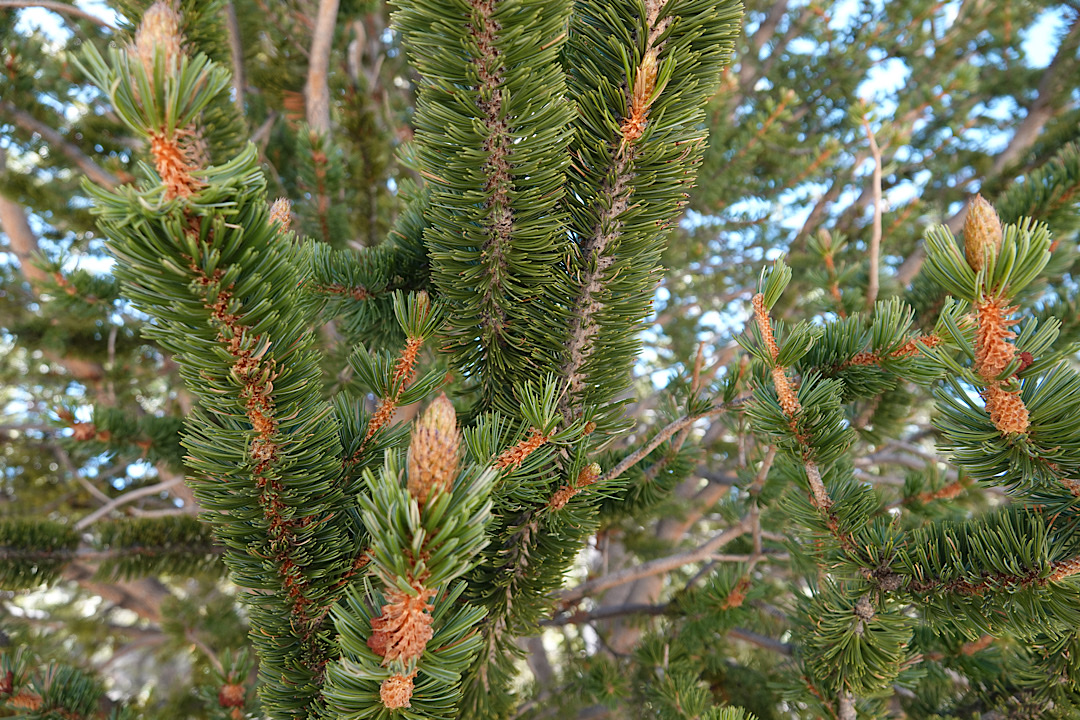
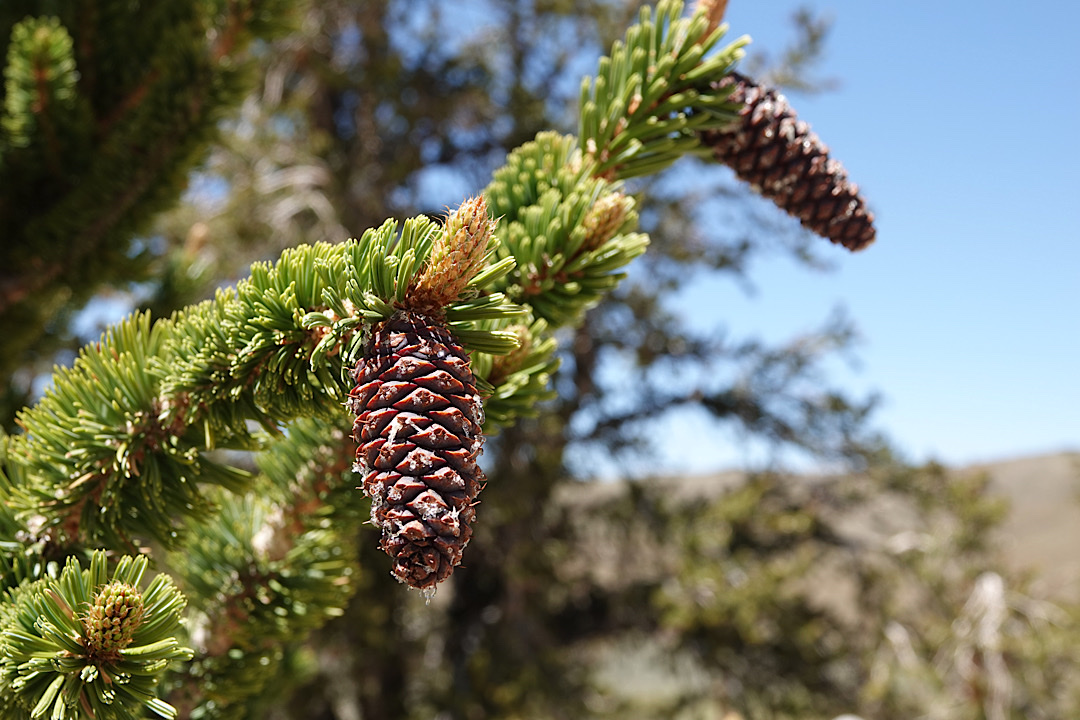
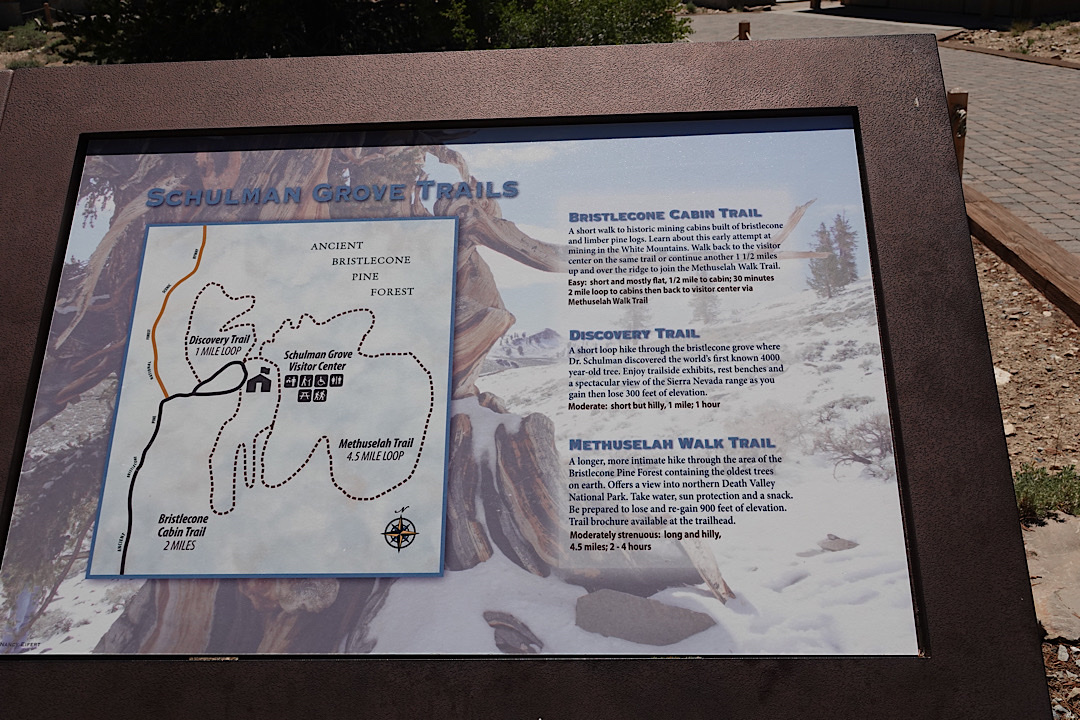 We chose the mile-long Discovery Trail. It led us to the section where in 1953 a dendrochronologist named Avery Schulman learned one night that he had just cut a core out of a tree whose rings indicated it was more than 4000 years old.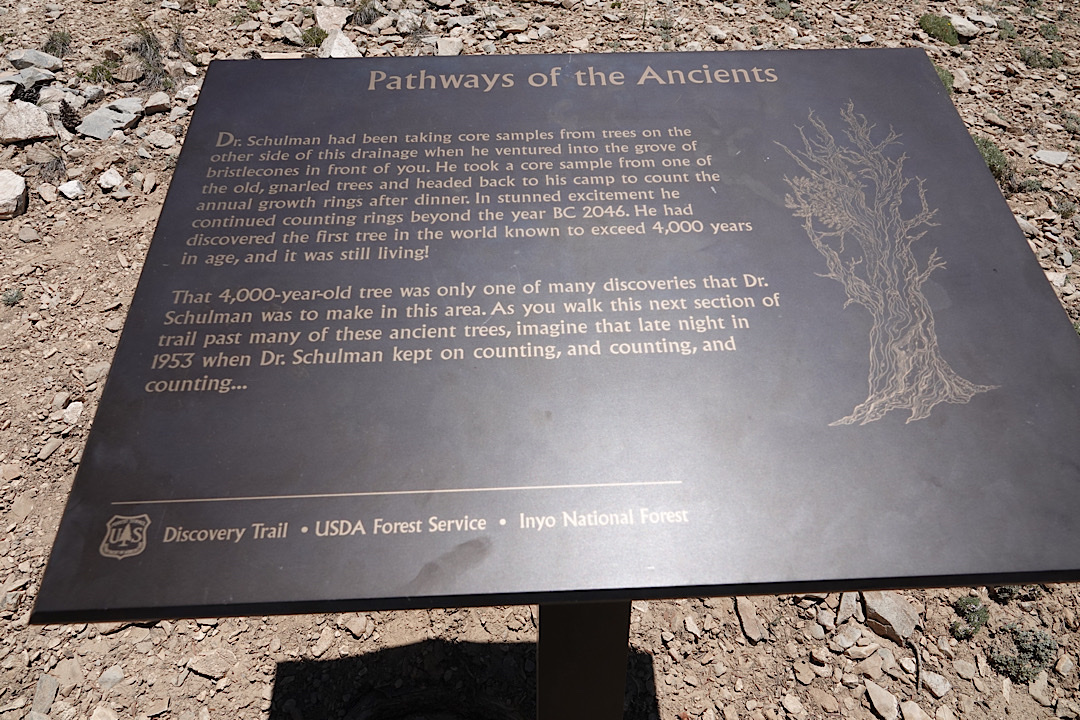
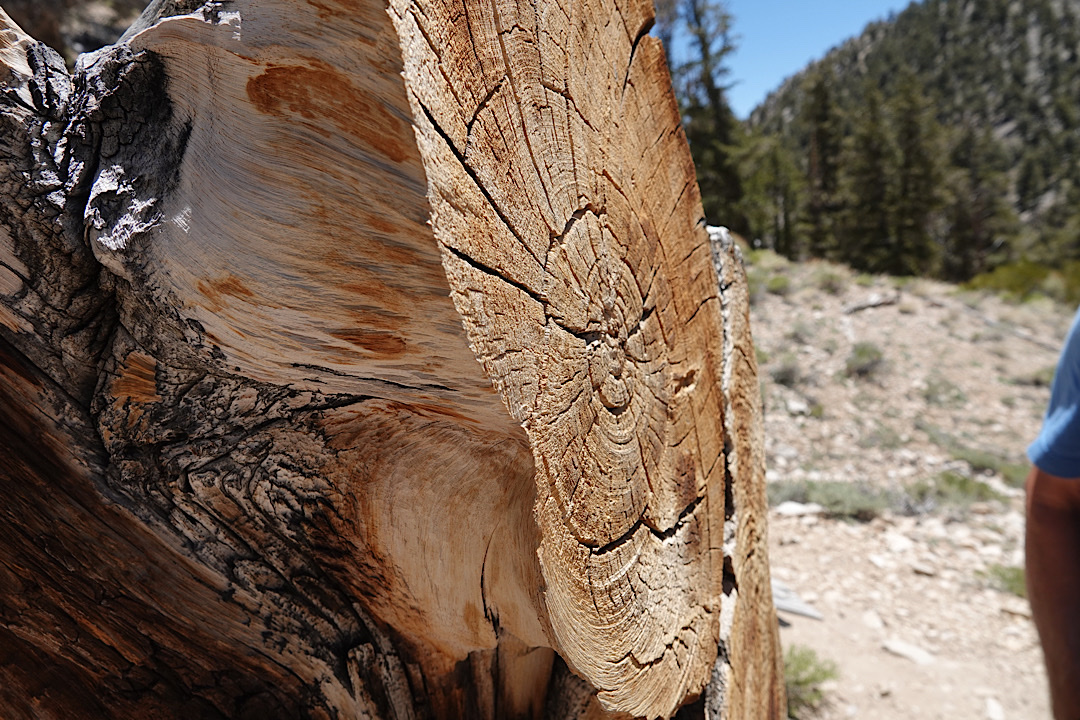 Over the millennia the bristlecone pine wood twists into weird sinuous forms, many of which are bare of vegetation.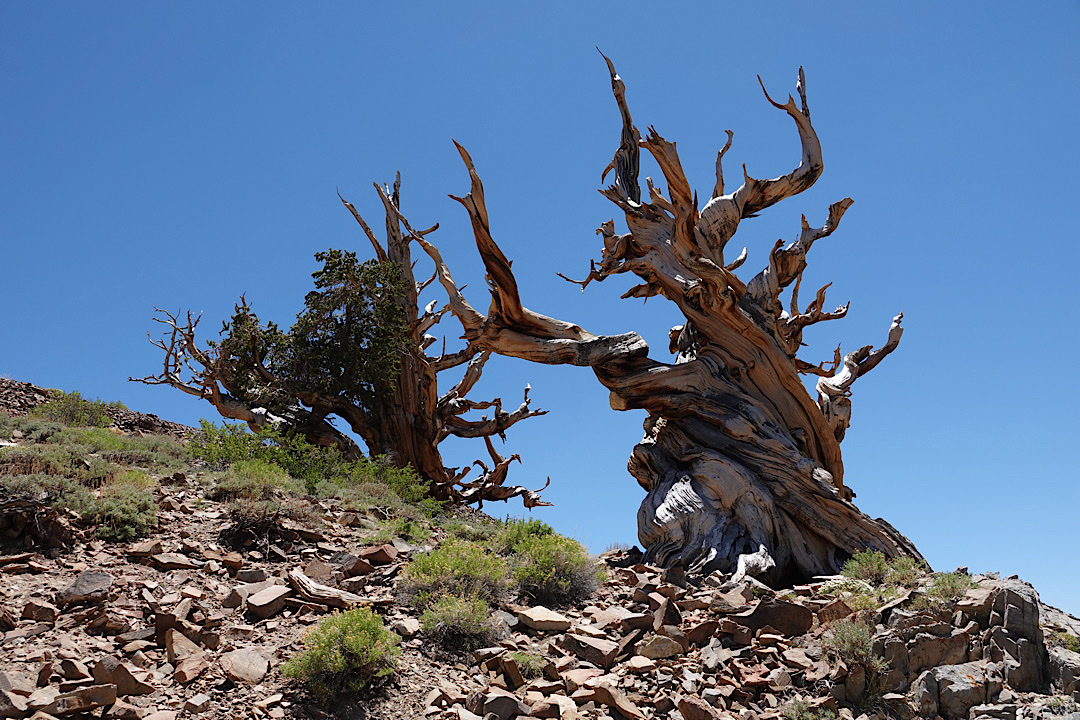
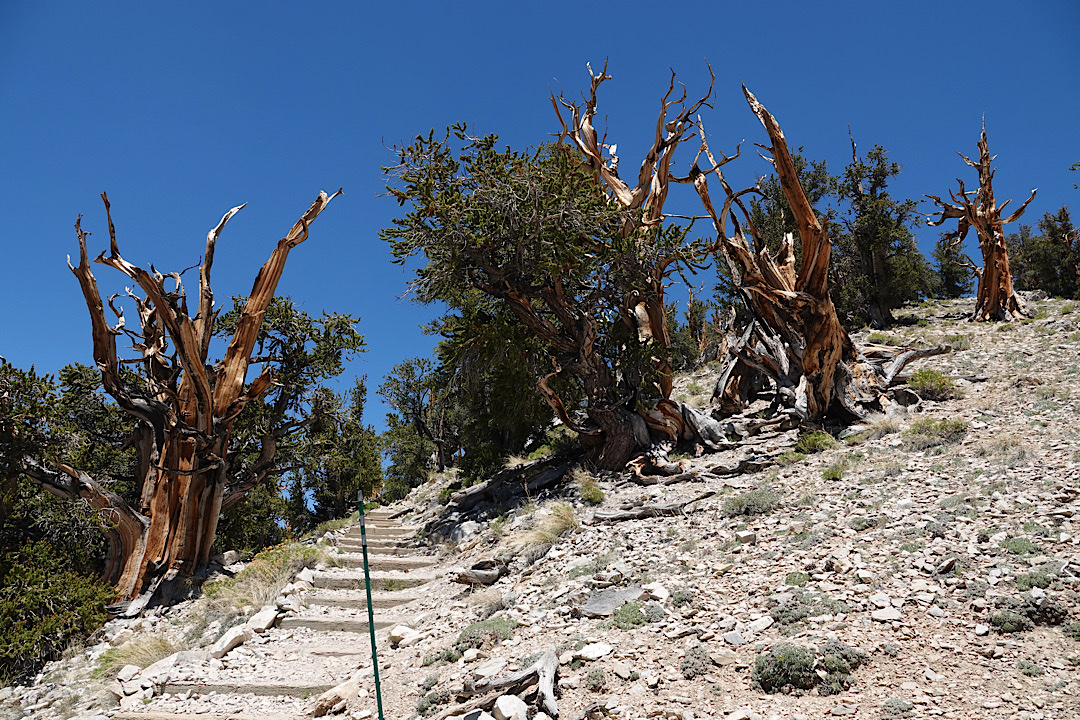
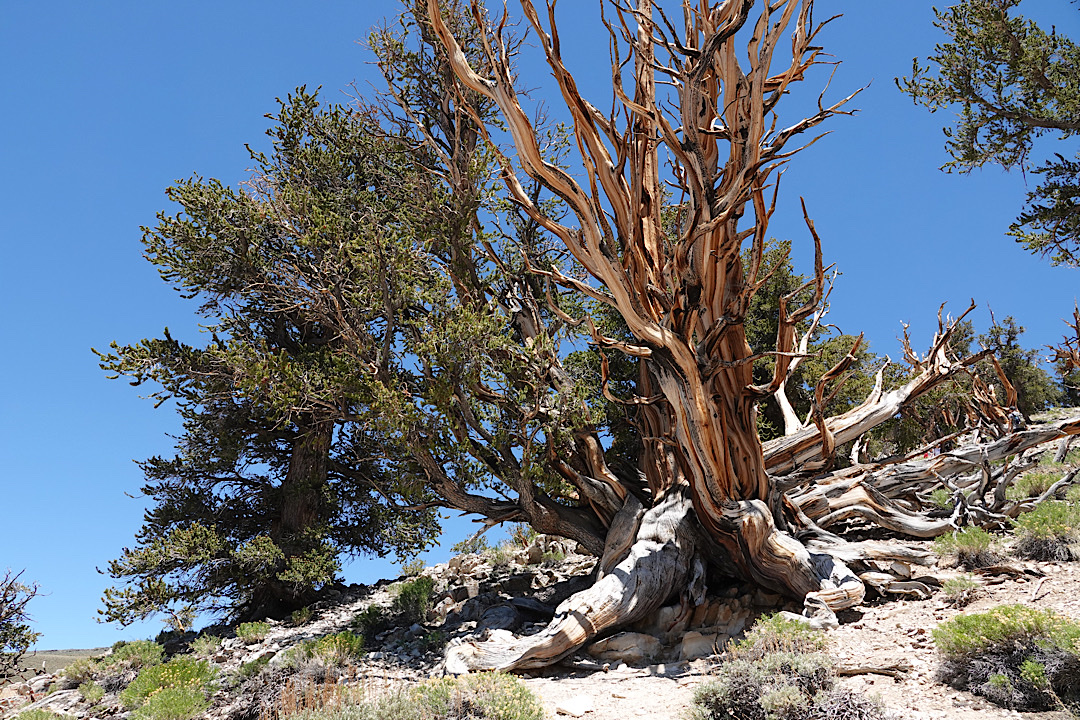 But green branches cluster low to the ground. They make it clear that, though the trees may look half dead, they’re still very much alive. When Nero was burning Rome, some of these very specimens were already more than two thousand years old.
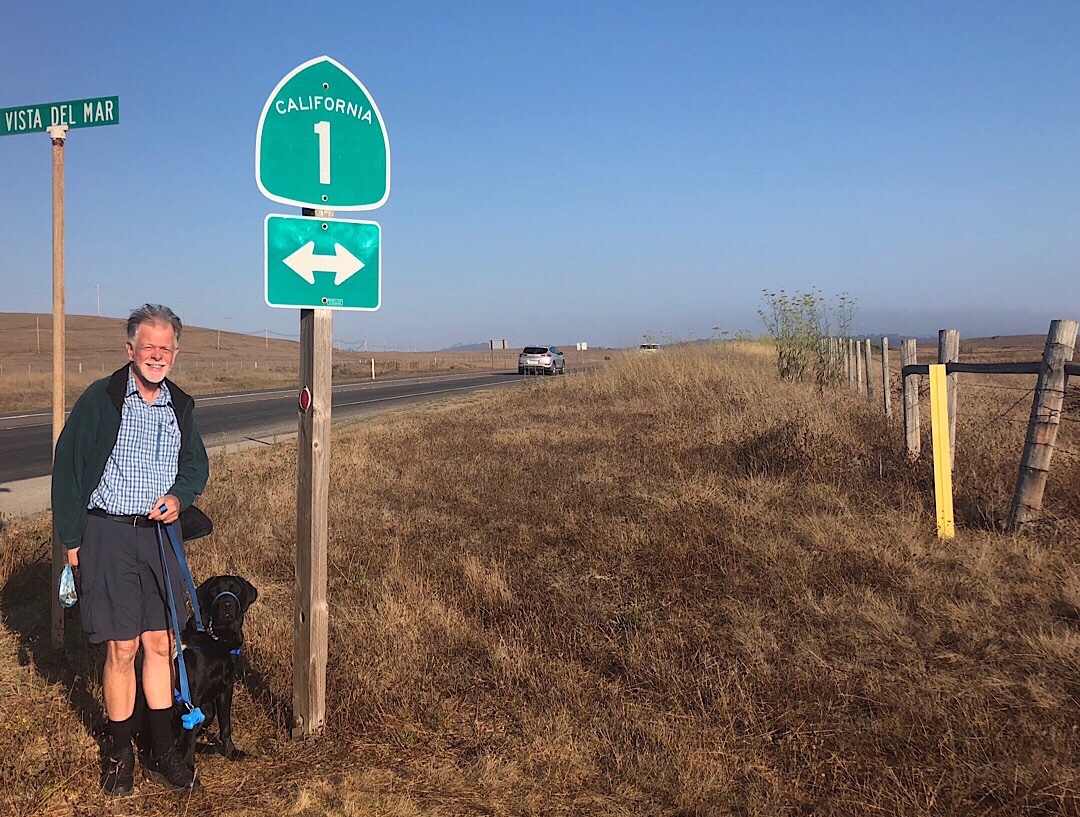 California’s Pacific Coast Highway, aka Highway 1, shows up often on lists of the most scenic drives in the US, even the world, but it’s not the most practical way to get from Southern California to the Bay Area. Planes fly from San Diego to San Francisco in just 90 minutes. Google Maps says the drive up Interstate 5 can be covered (at least theoretically) in 7 to 9 hours. Going up the coast road adds a minimum of 4-5 hours to the journey, but you trade the hot, flat, dusty Central Valley panoramas for sublime seascapes.
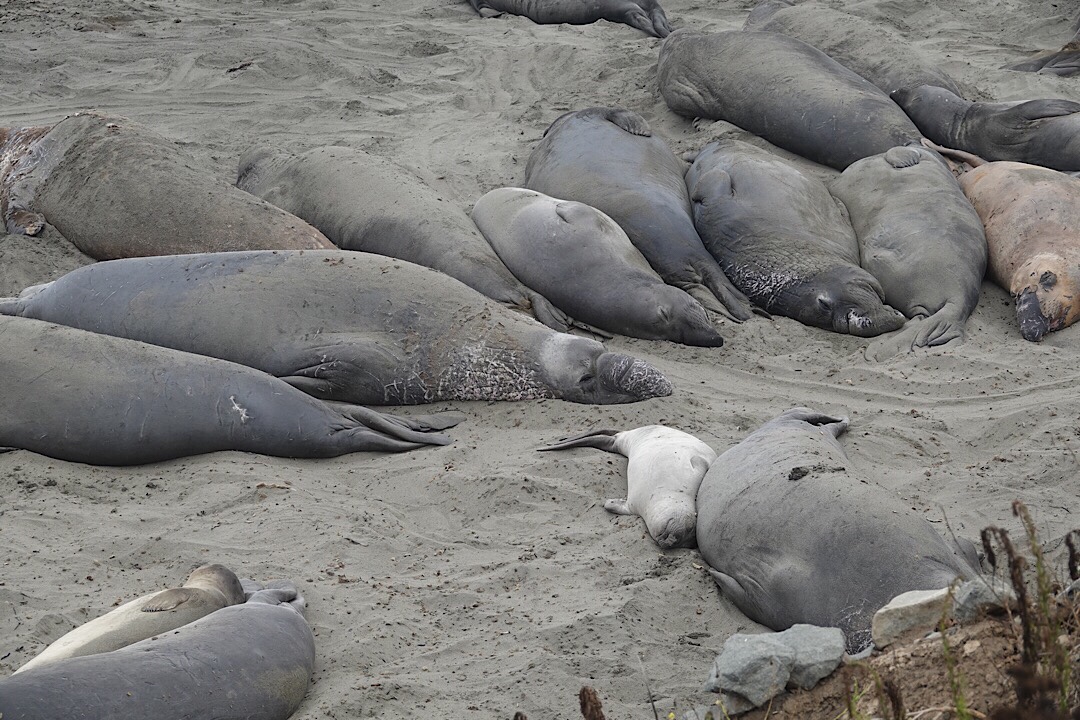
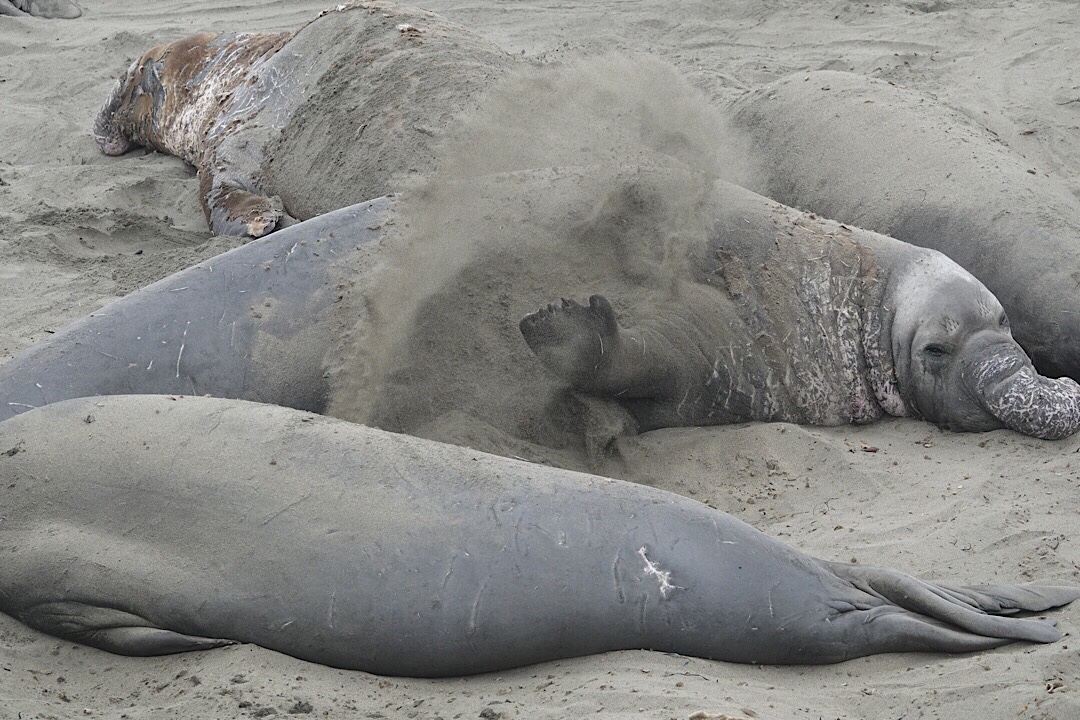
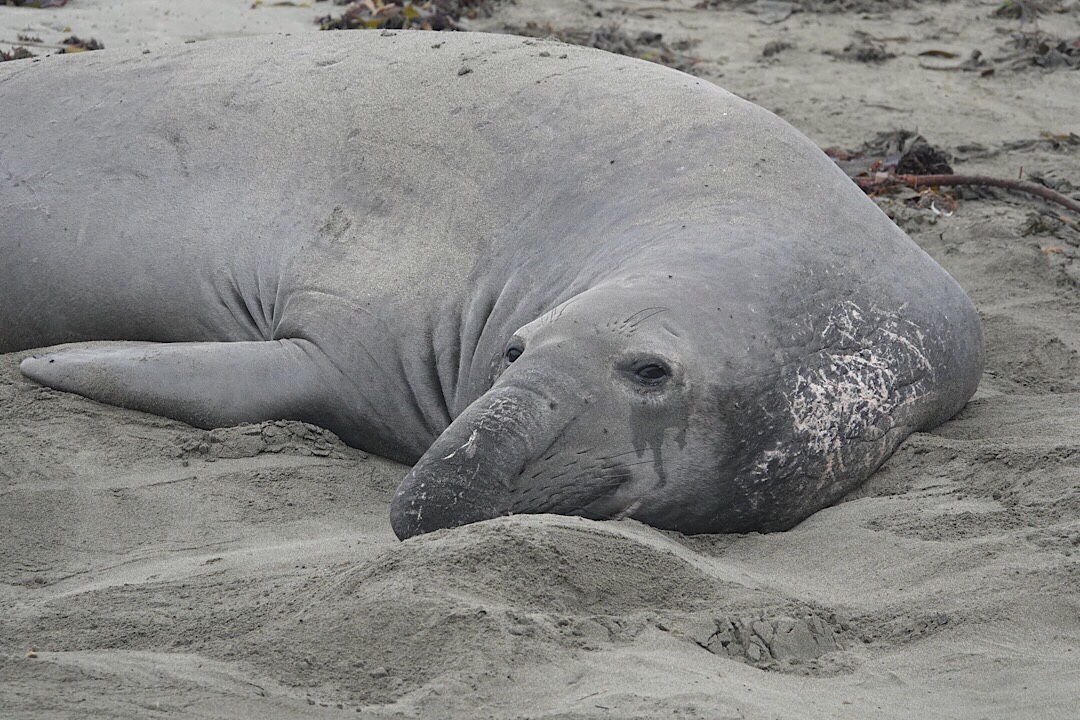
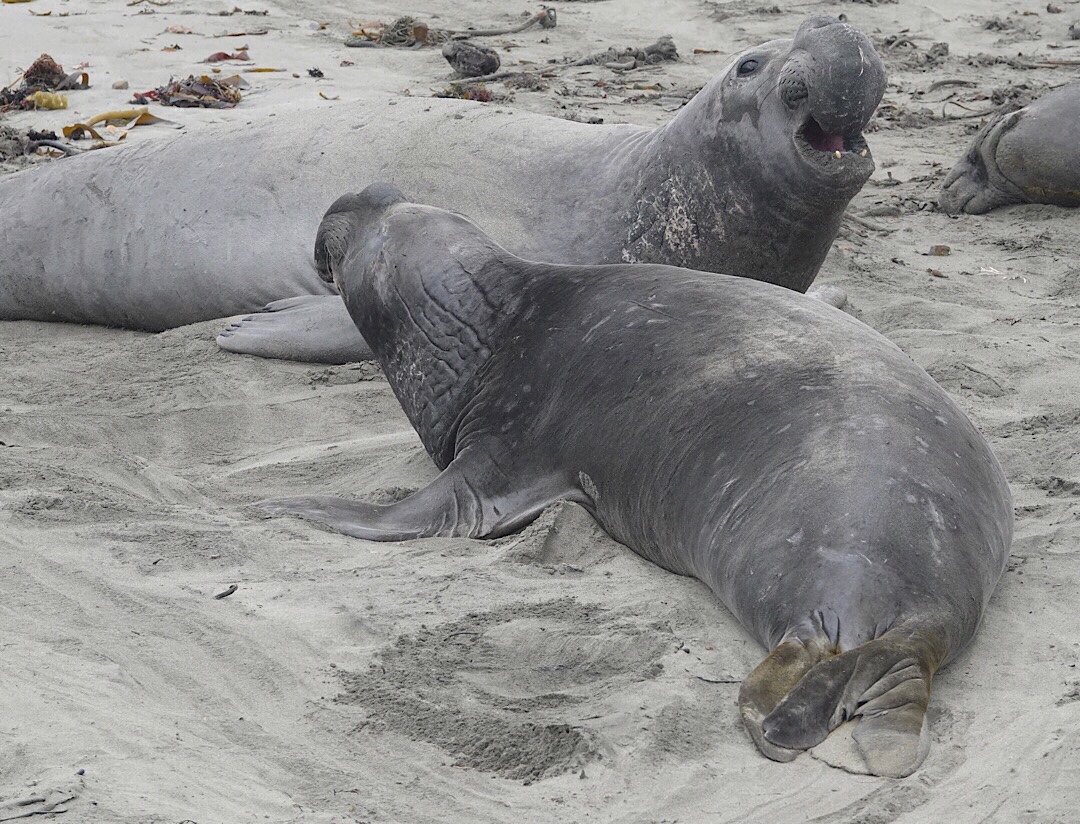
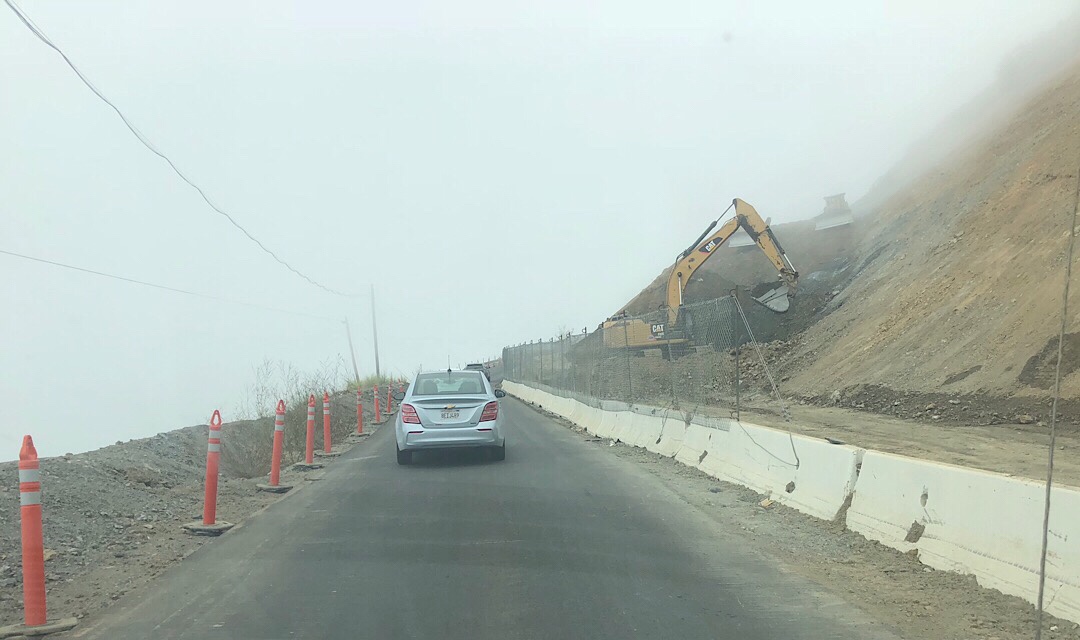
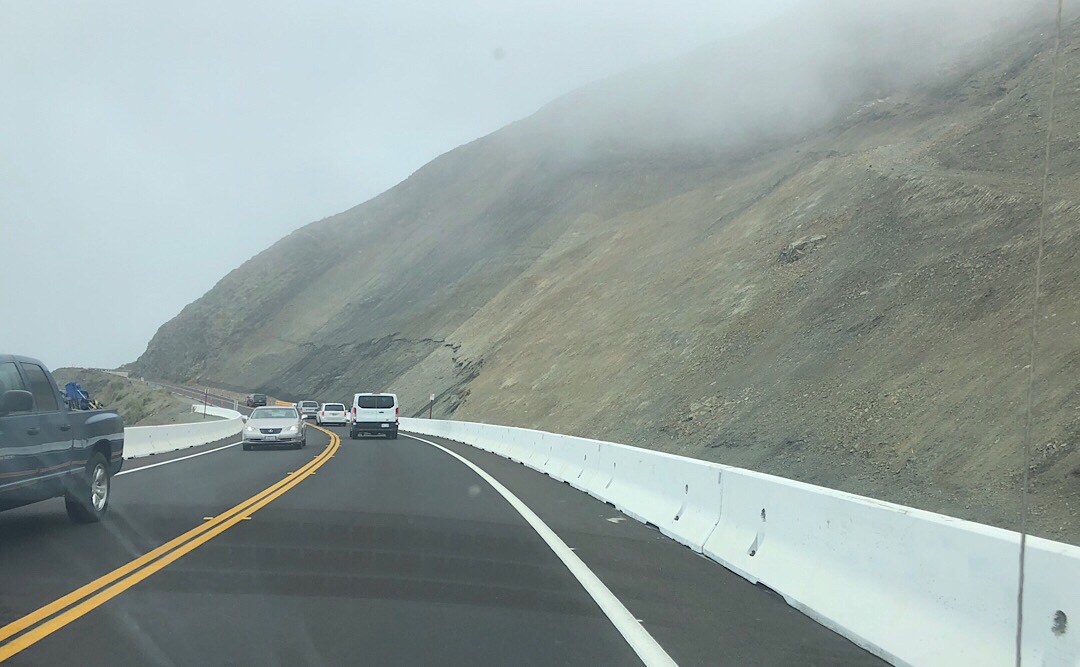
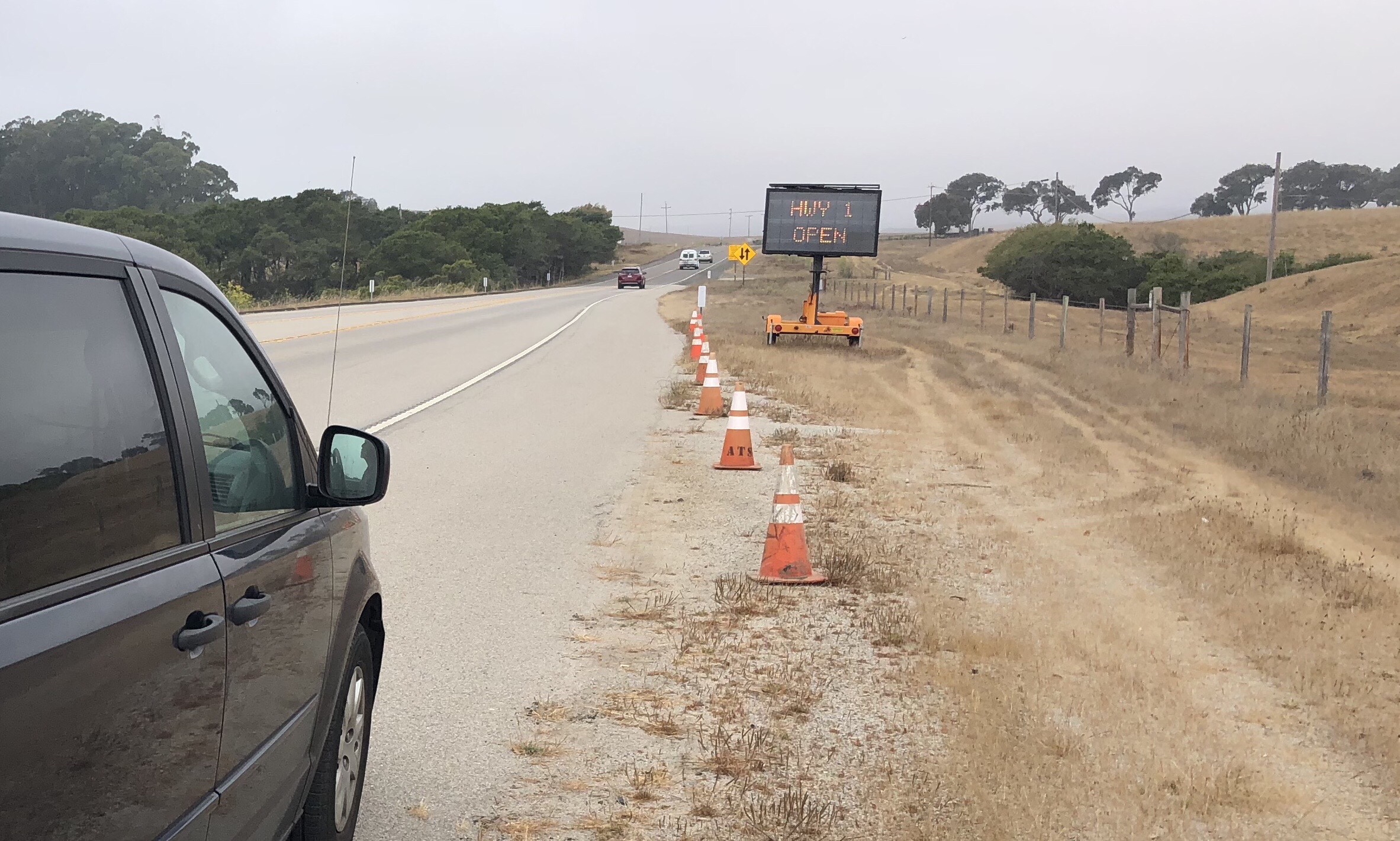 And to our delight, we heard at the end of July that — after 18 months — Highway 1 was once again open to travelers. On August 15, we drove from San Diego to San Simeon, spending the night in a little hotel set a few blocks from the ocean.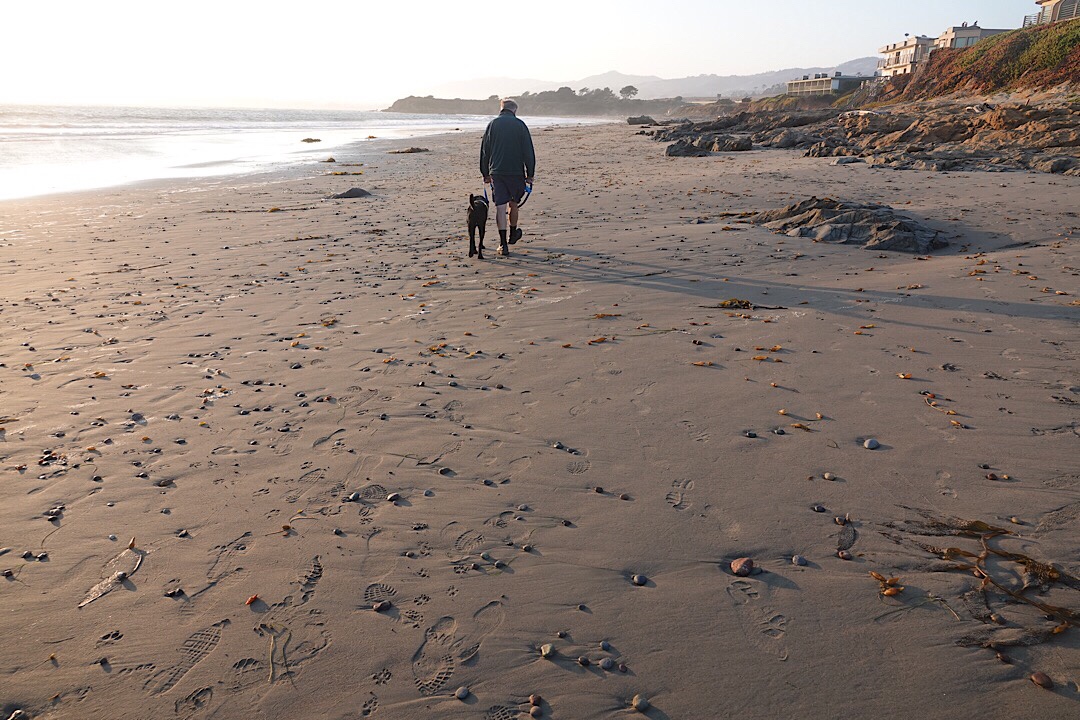
 At home and abroad