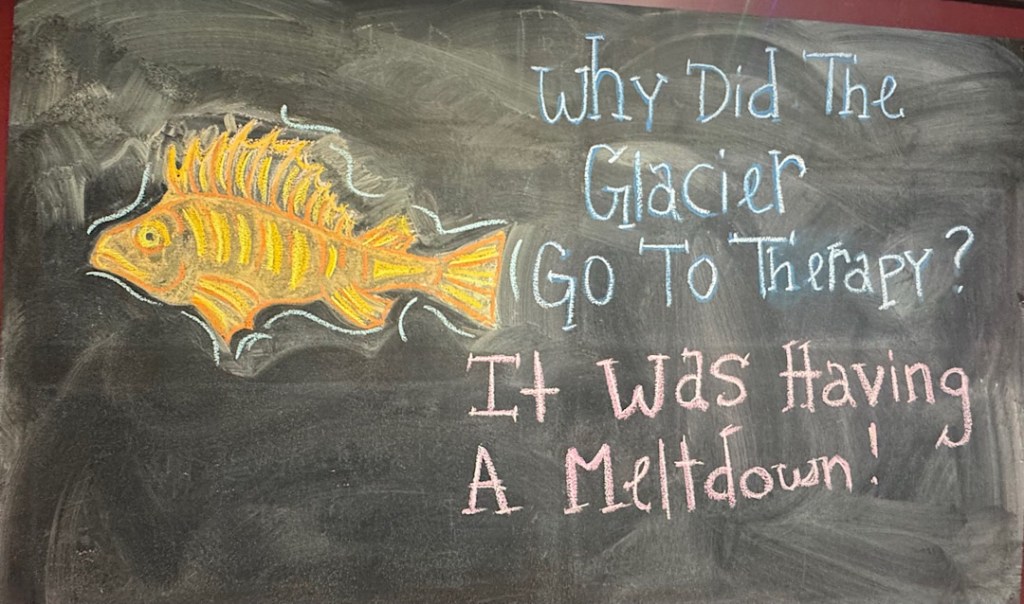
This trip has reminded me that going out in search of famous natural wonders can resemble playing poker in Vegas. You may be able to shift the odds of hitting travel targets in your favor: study weather patterns. Pick reputable guides. But for all the time and effort and money you put in, bad luck still can strike; you can bust or hit gold.
Our biggest, most challenging target here was Alaska’s great glaciers — those moving rivers of ice that are melting all over the planet. We aimed to see them in two places: Kenai Fjords and Glacier Bay national parks. Because of our train disaster, our arrival in Seward (Gateway to the Fjords!) was a bit frazzled, but our first afternoon there lifted my spirits. The sun broke through as Steve and I strolled around the town’s little core and a browsed an art fair in front of the Alaska SeaLife Center. Giant dandelions glowed in the sunshine along the waterfront.

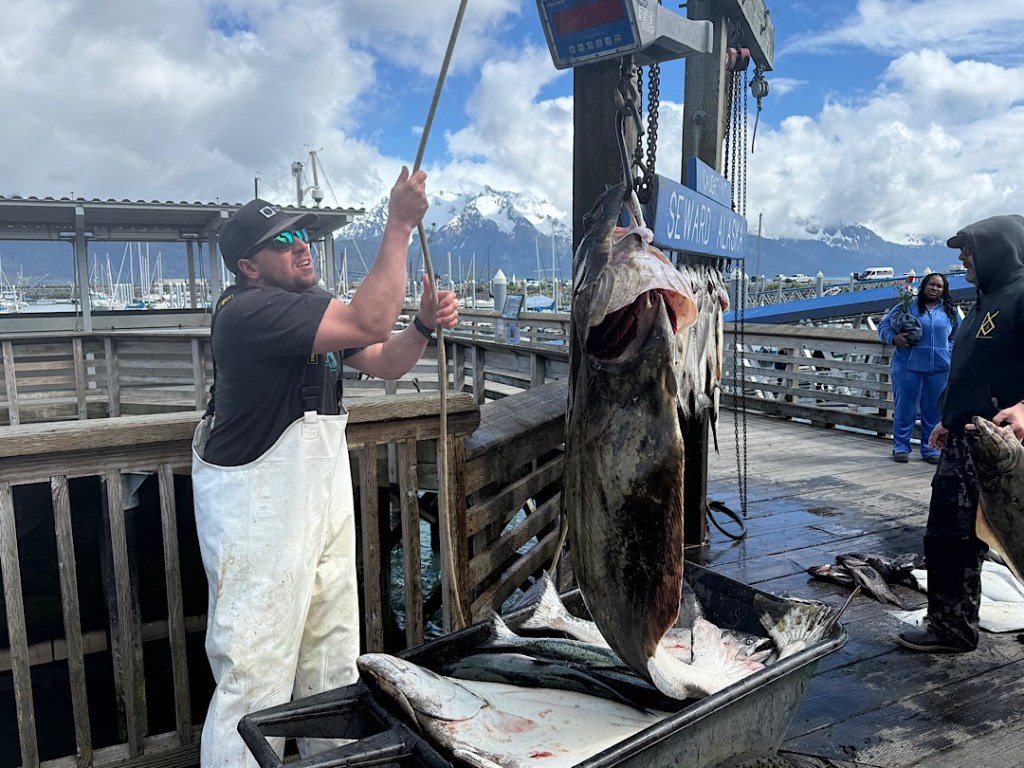
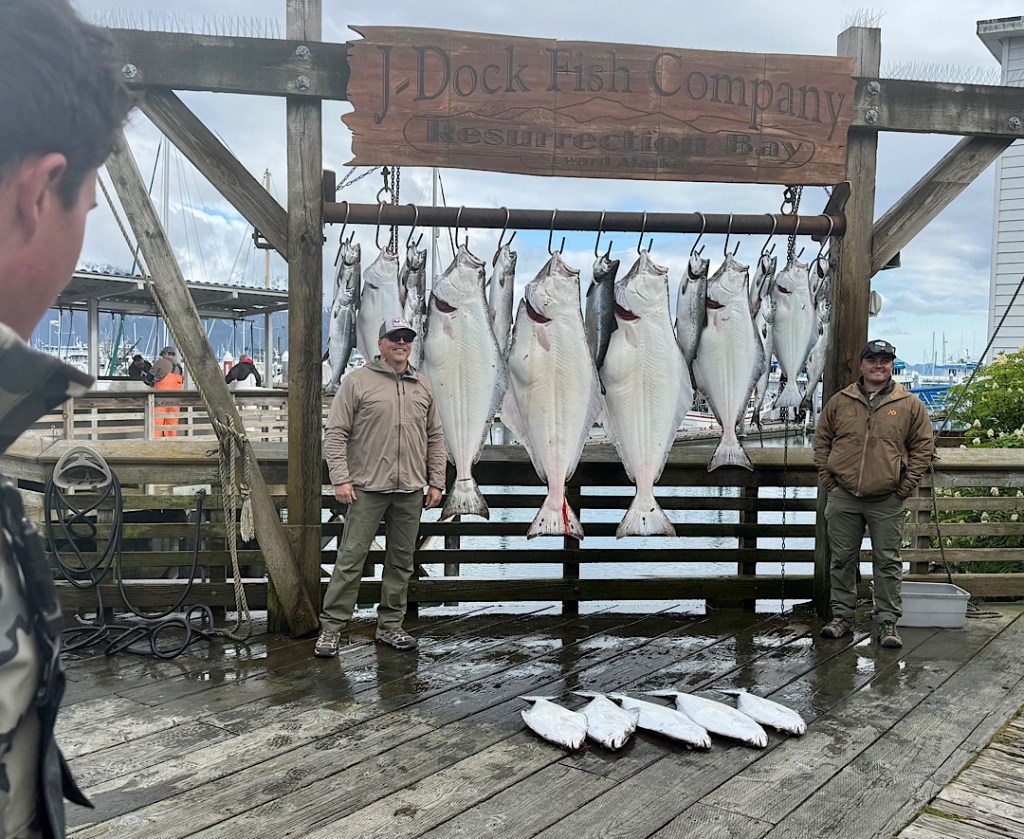
Ebullient fishermen weighed their catches.
From our table at dinner, we watched a massive Stellars sea lion diving for his dinner among the boat slips.

The world looked darker and colder when we got up the next day (Sunday). I checked in for our 8.5-hour-long cruise to the glaciers, and the girls behind the counter wore pained expressions. They warned that if the sea got much rougher, our captain might have to cut our trip short. Things could possibly improve a bit the next day, they suggested, so we switched Sunday’s glacier tour for the four-hour orca cruise we’d been scheduled to take Monday.
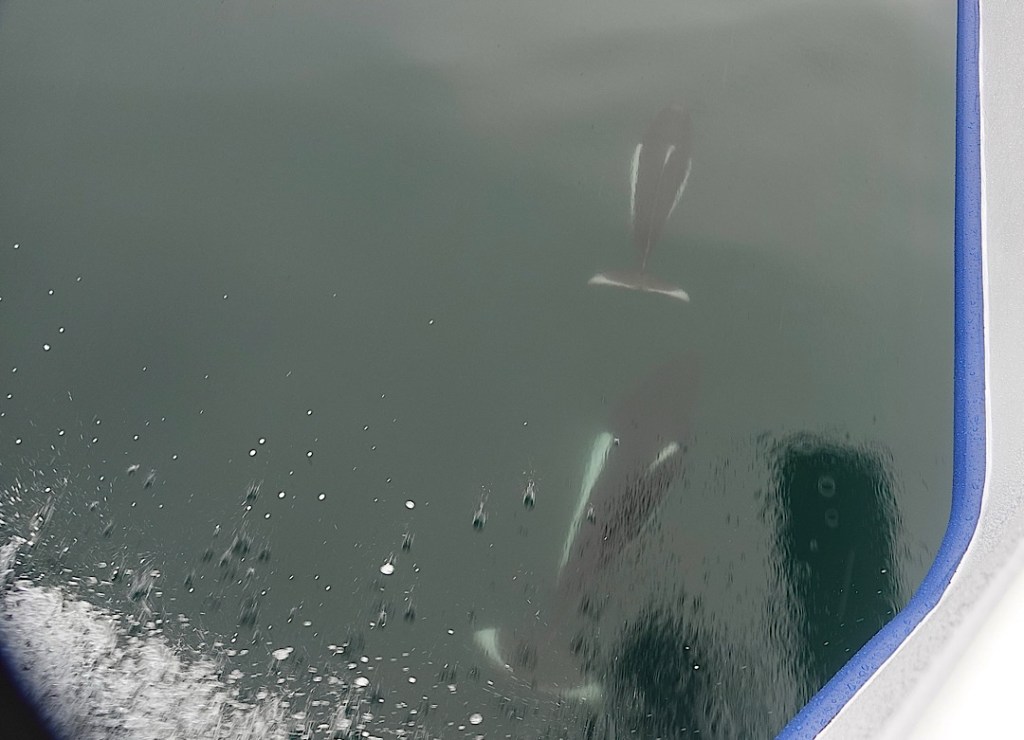
The whale-watching wasn’t a complete disaster. In short order, we found a pod of killer whales, their black and white coloring unmistakable. But the park rules dictated we stay so far away even the longest telephoto lenses couldn’t capture much. For anyone like Steve and me who at one point in our lives spent many hours at SeaWorld with our Shamu-besotted kids, it was underwhelming.
More entertaining were the Dall’s porpoises who surfed our bow wave for at least ten minutes.
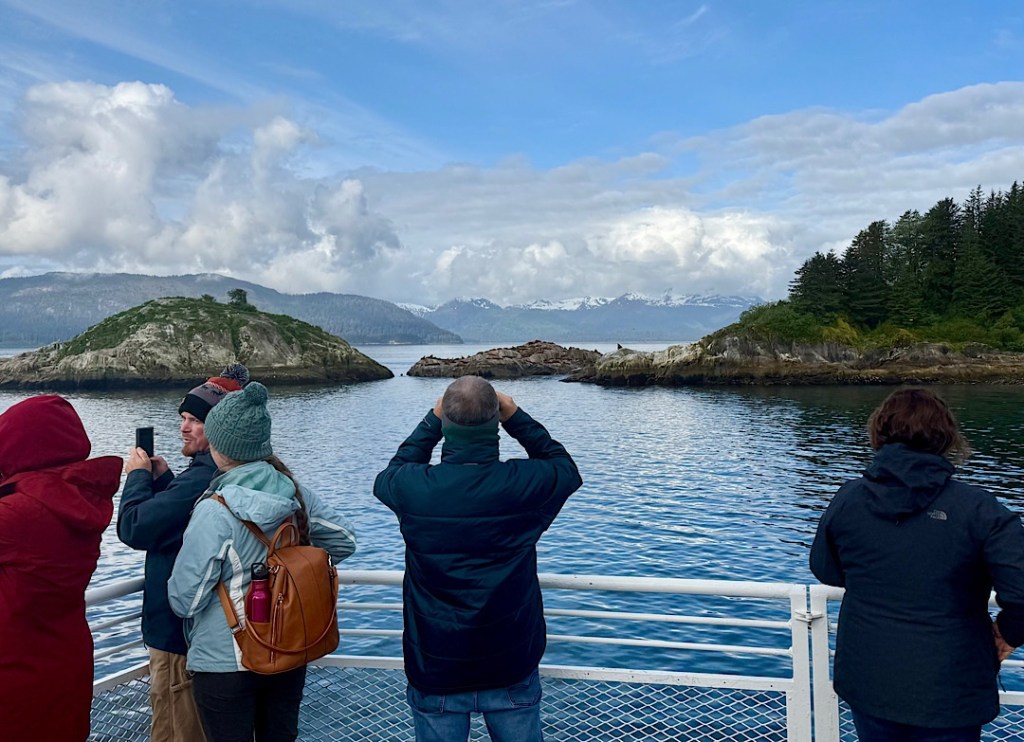
Our cheery captain found a few other things to show us: a sprawling sea lion colony; legions of birds.
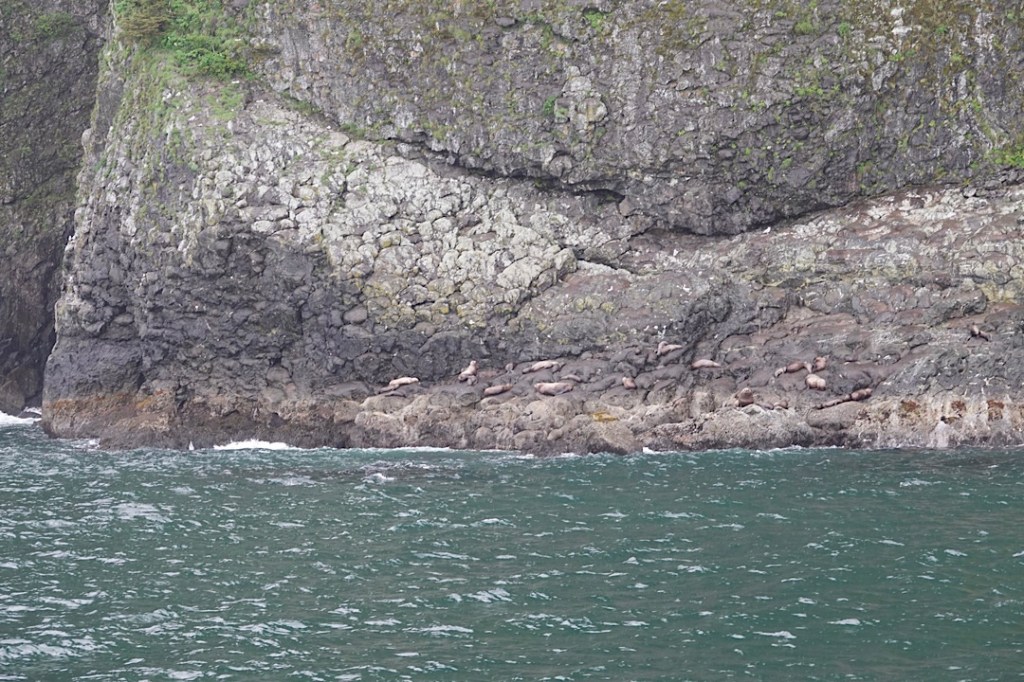
But the rain never stopped, and icy winds stabbed us every time someone opened one of the doors leading into the enclosed second deck.

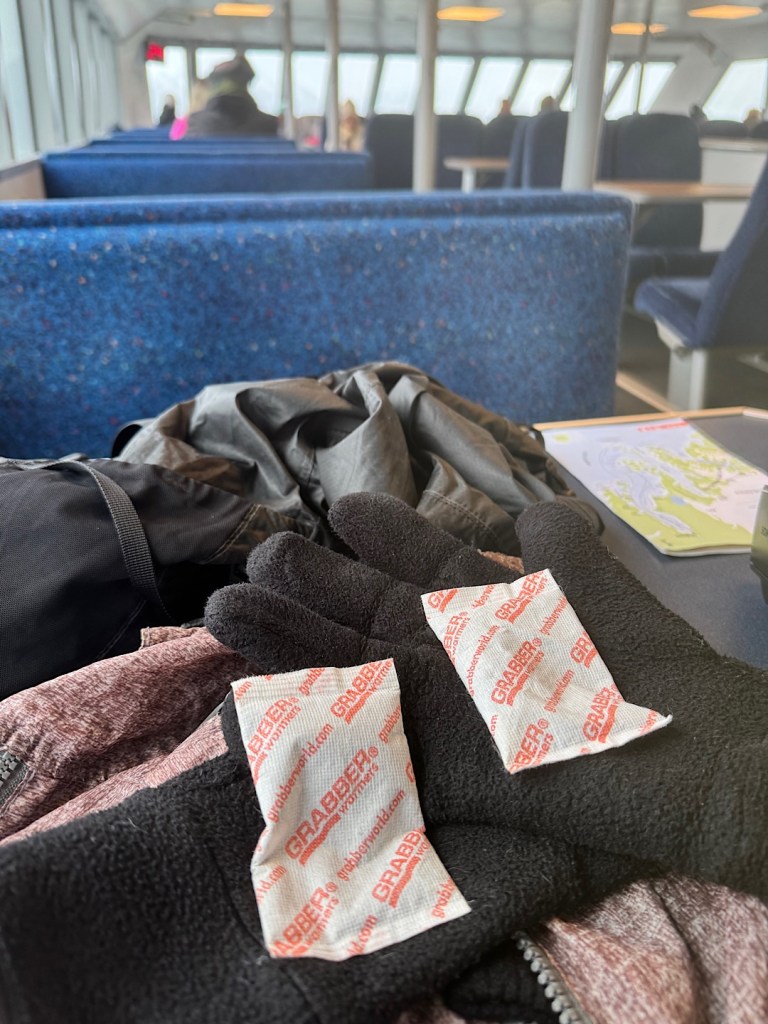
The next day the Great Dealer in the Sky dealt us an even worse hand. At first the rain was light; the skies brighter. Our glacier-cruise captain reported that the winds seemed to be dropping. But it would take us a few hours to motor out of Resurrection Bay and through the stretch of the Gulf of Alaska that would take us to the fjord containing some of state’s most famous tidewater glaciers. By the time we reached the decision point at Pilot Rock, the sea was heaving; 15-foot swells made our boat tilt to unnerving angles. The folks who had started feeling queasy an hour before looked awful. (Happily, neither Steve nor I were among them.) But the wind was building, the captain reported, so prudence dictated he turn back.
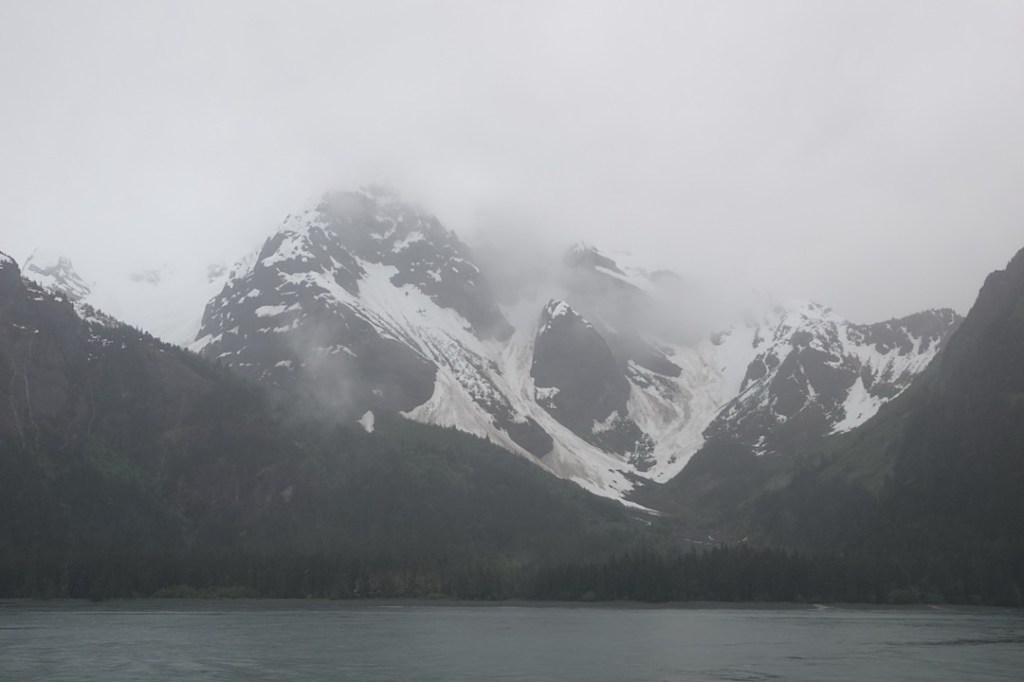
That’s how we missed seeing Discovery Glacier (or anything glacial other than smears of distant white glimpsed through the rain.) I felt philosophical. At least I’d learned what the Gulf of Alaska feels like on a nasty day (without suffering a whiff of seasickness). And we could still hope for better luck in Glacier Bay.
Glacier Bay’s “gateway” is the tiny town of Gustavus, which we reached by taking a mellow, uneventful five-hour ferry from Juneau. We checked into the national park lodge and strolled a bit under sullen gray skies.
Once again, I had booked an all-day outing on a high-speed catamaran for the next day (last Friday, 6/6). About 30 passengers had boarded it by 7 am. We shoved off. Wavelets covered the water, but overhead the clouds dispersed enough to show us promising patches of blue.
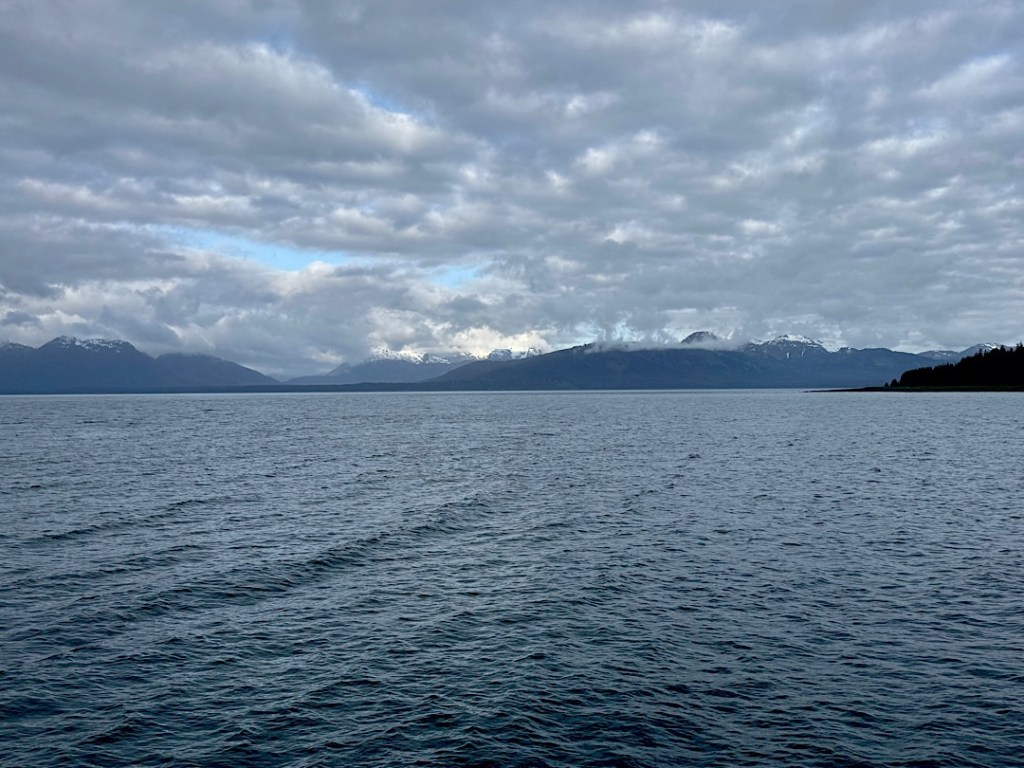
It wasn’t too cold to stand outside on the deck and admire the wildlife…
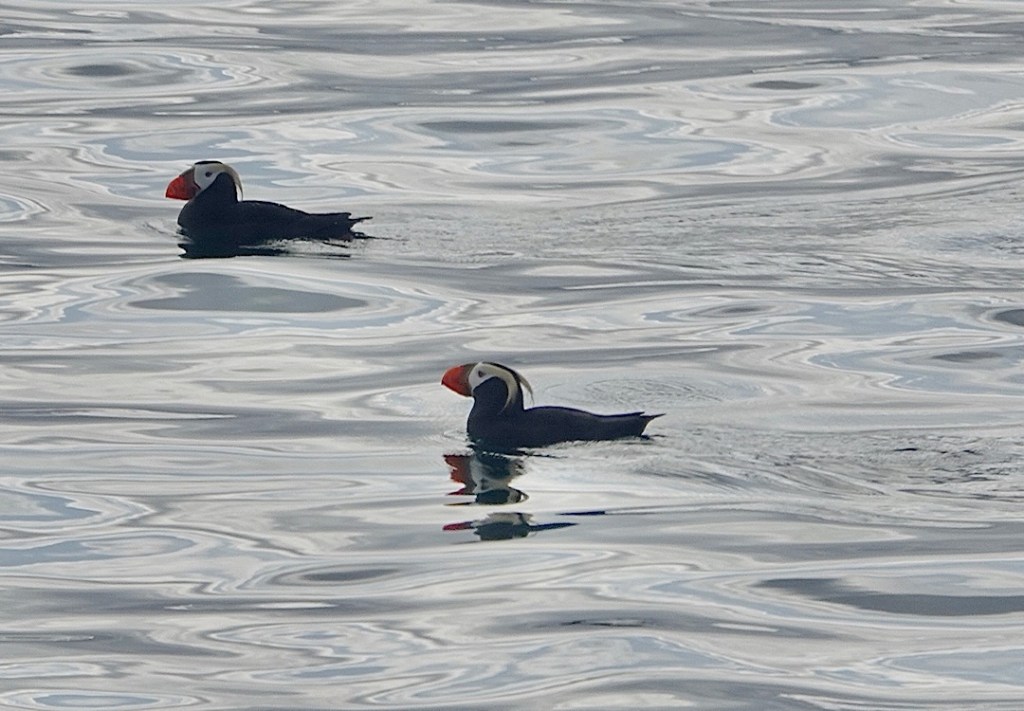
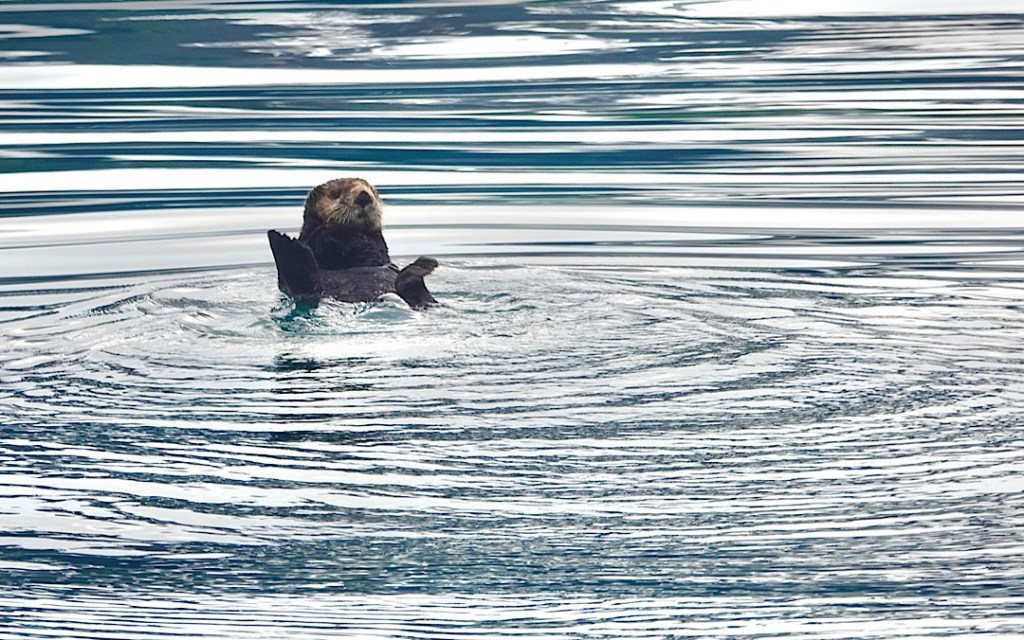
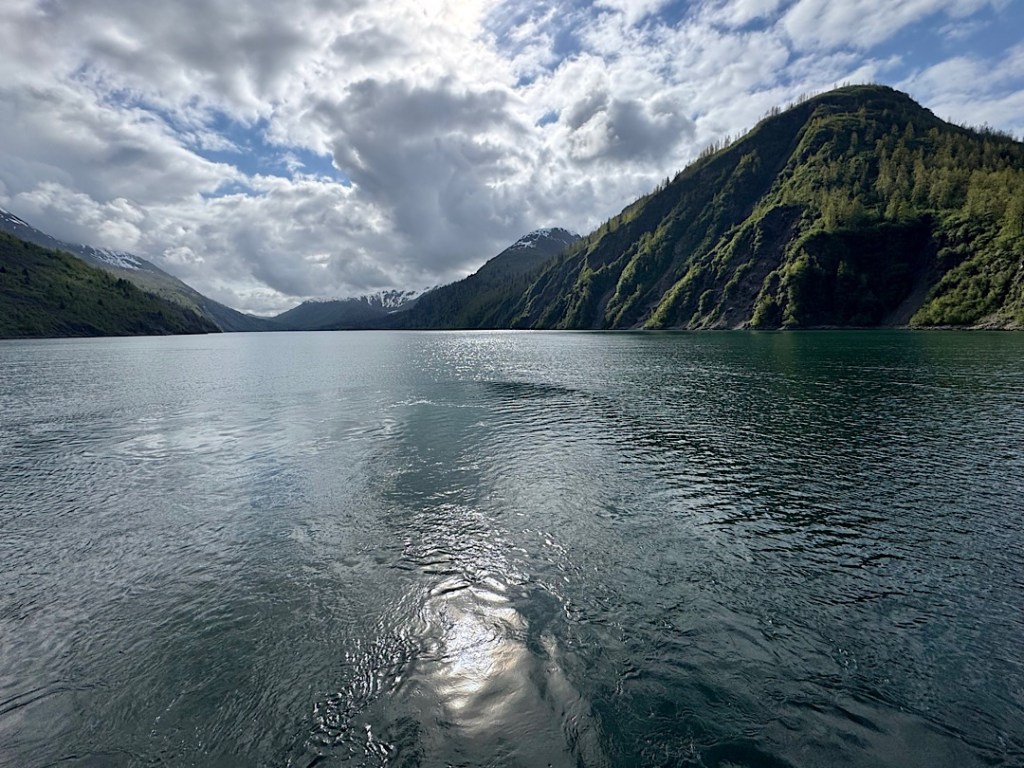
We glimpsed many humpback whales (who are protected in the national park). All these guys all rank among the world’s most charming animals, but soon I was feeling at least as awestruck by the vistas.
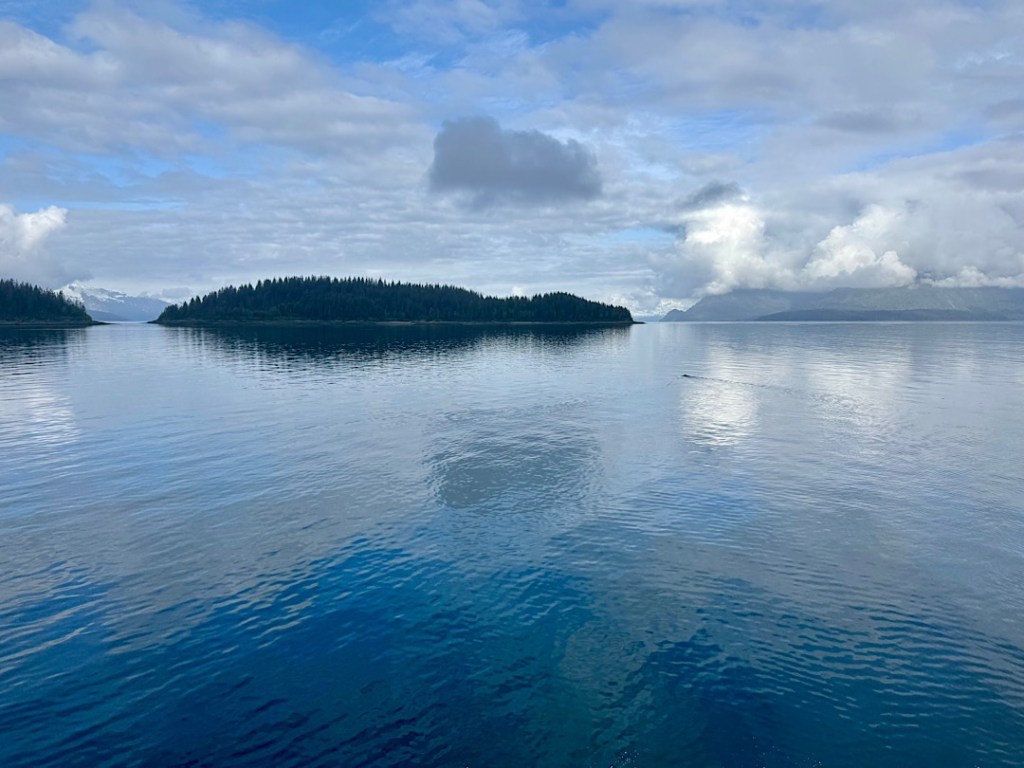
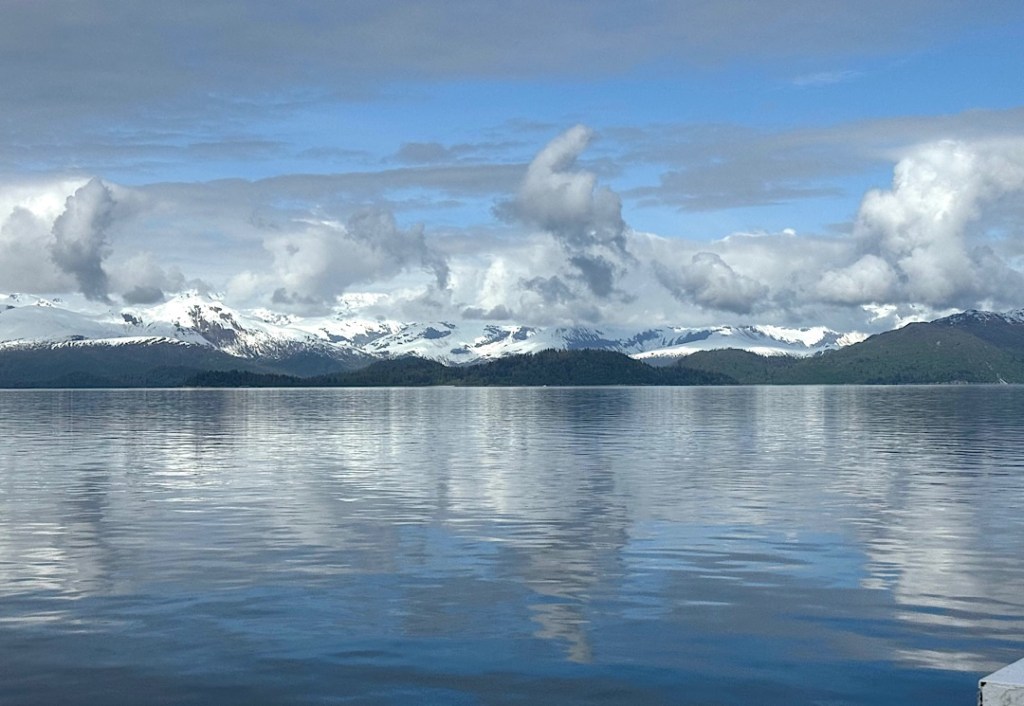
A bit after 9:30, someone shouted and pointed to two dots in the distance: two moose swimming across the fjord!
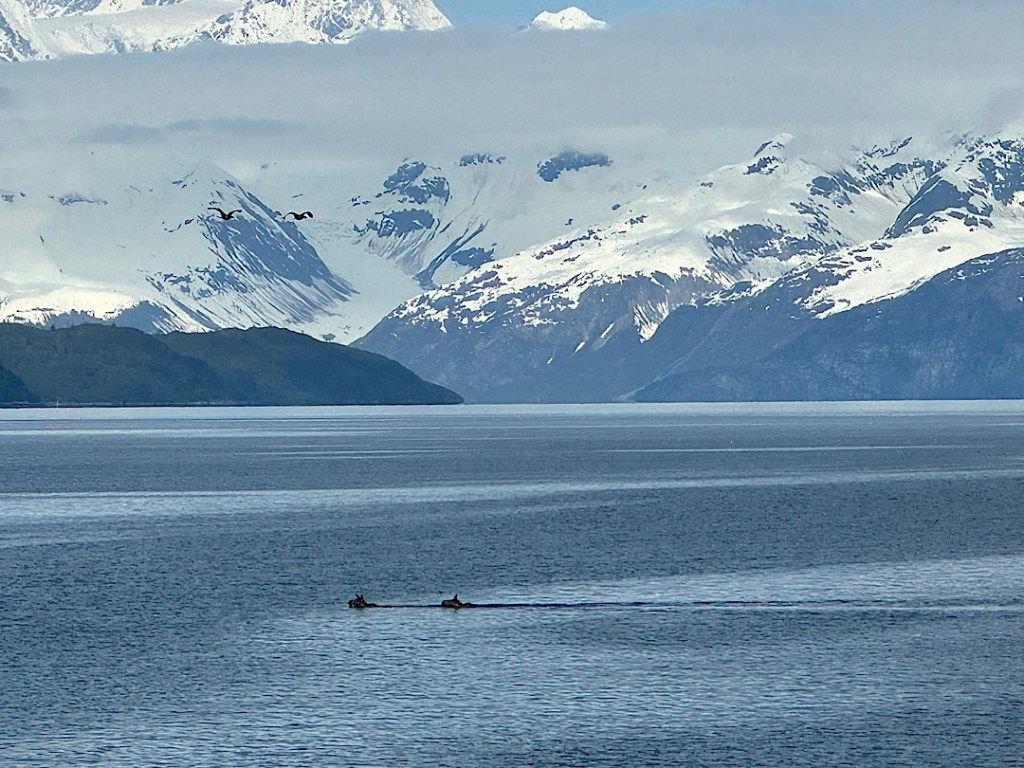
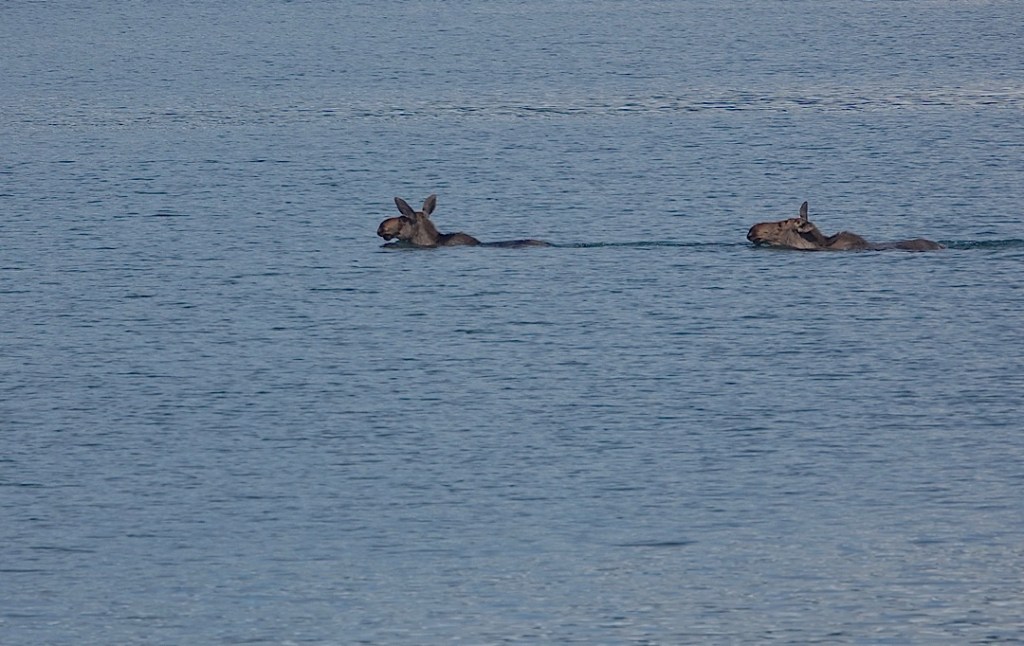
The boat’s crew members told us how rare this sight was. And mysterious! Moose lack heavy insulating coats or significant body fat. What would motivate them to cross the freezing channel? Even our onboard park ranger (Hailey) seemed mystified. The sight would have enthralled most boatloads of tourists for some time. But a new cry shifted our focus to the other side of the catamaran. On the cliffside ahead, the form of a brown (aka grizzly) bear was moving.
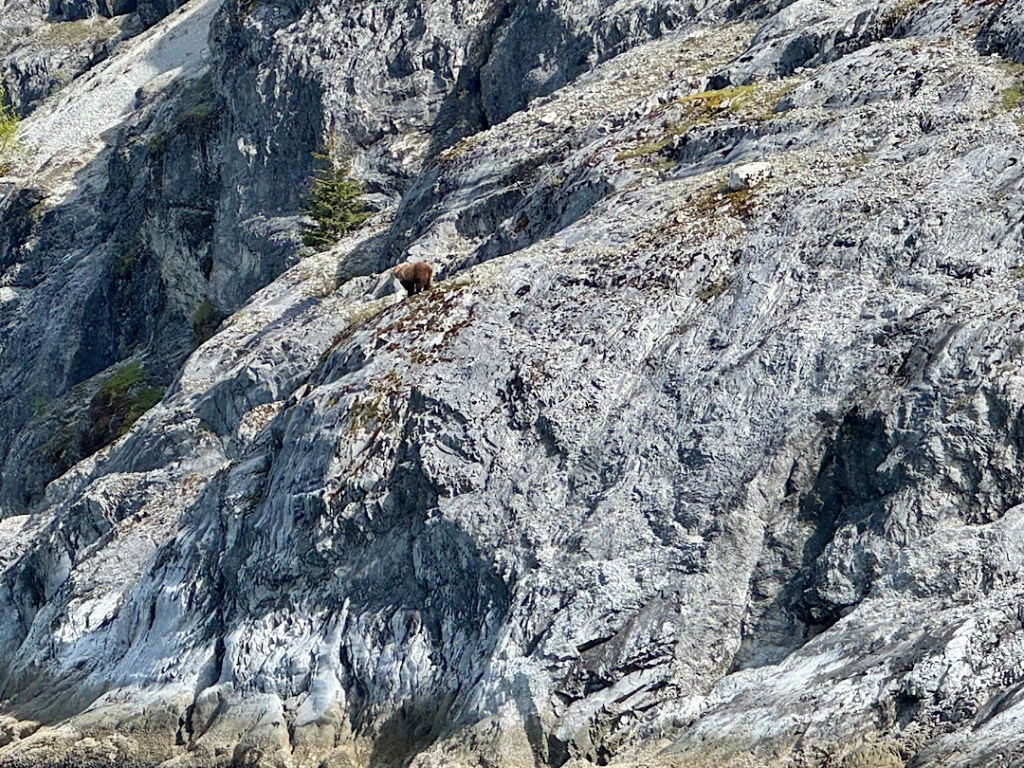
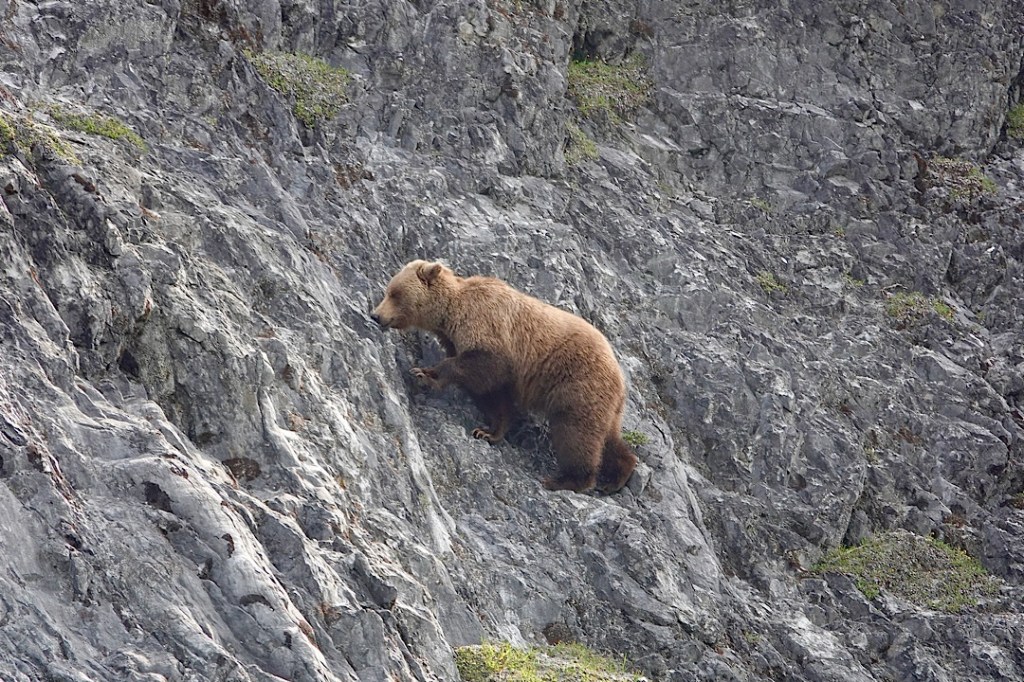
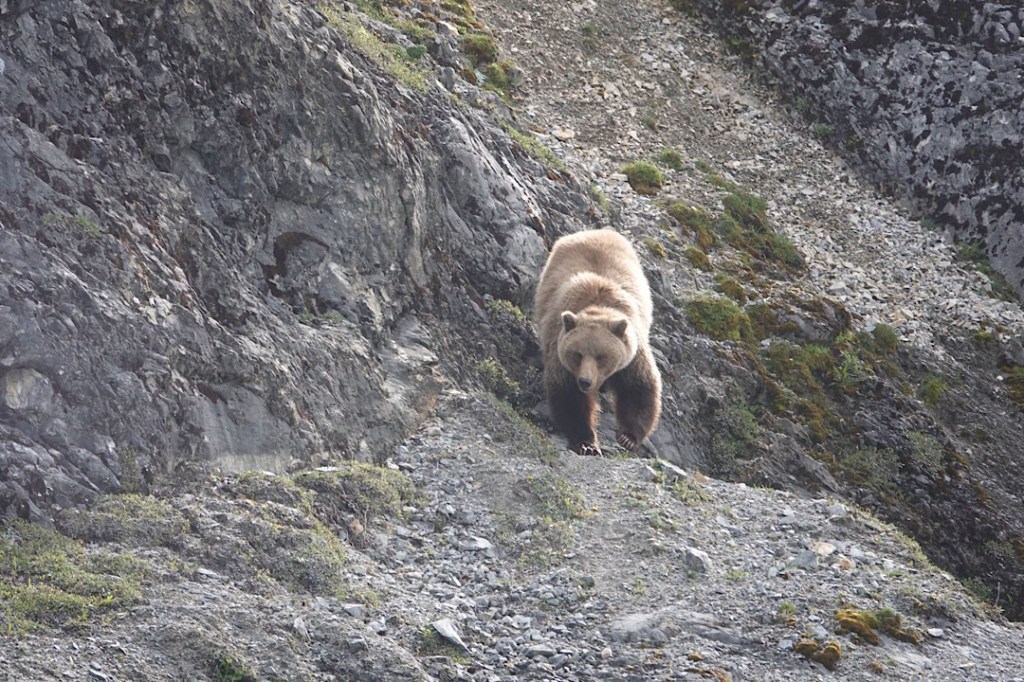

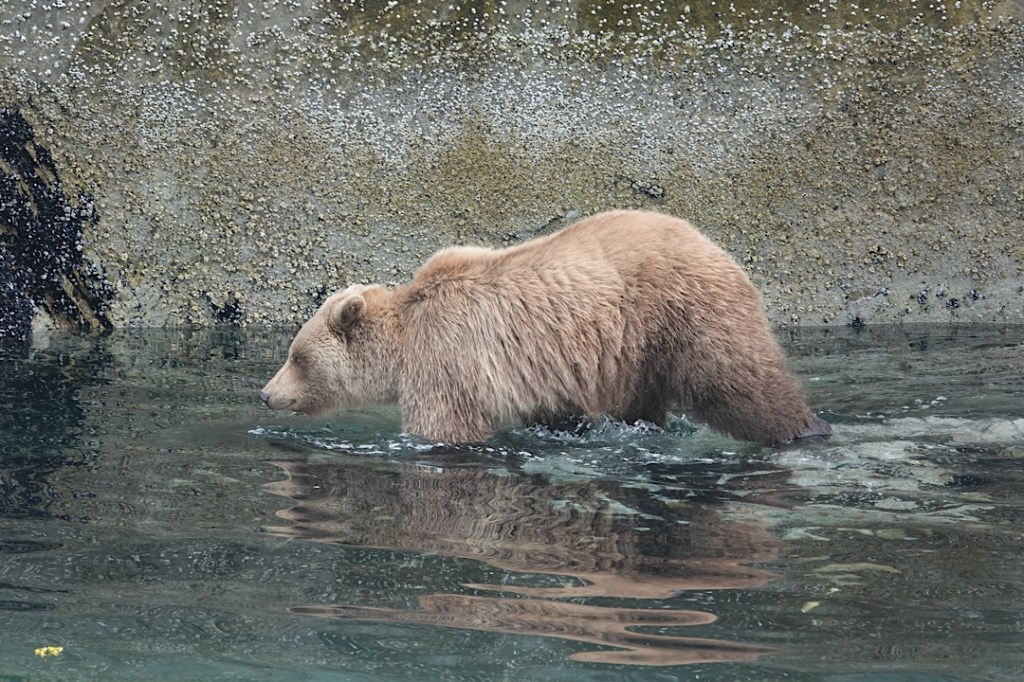
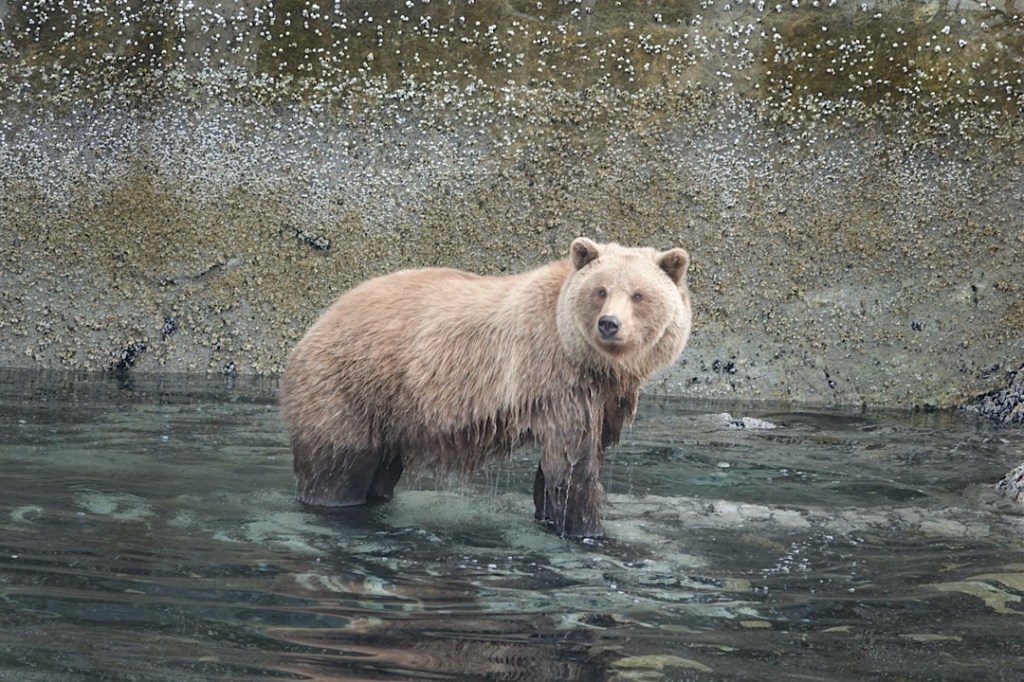
When we finally moved on after almost 15 minutes, we rounded a bend and got a likely explanation of what the bear had been seeking.
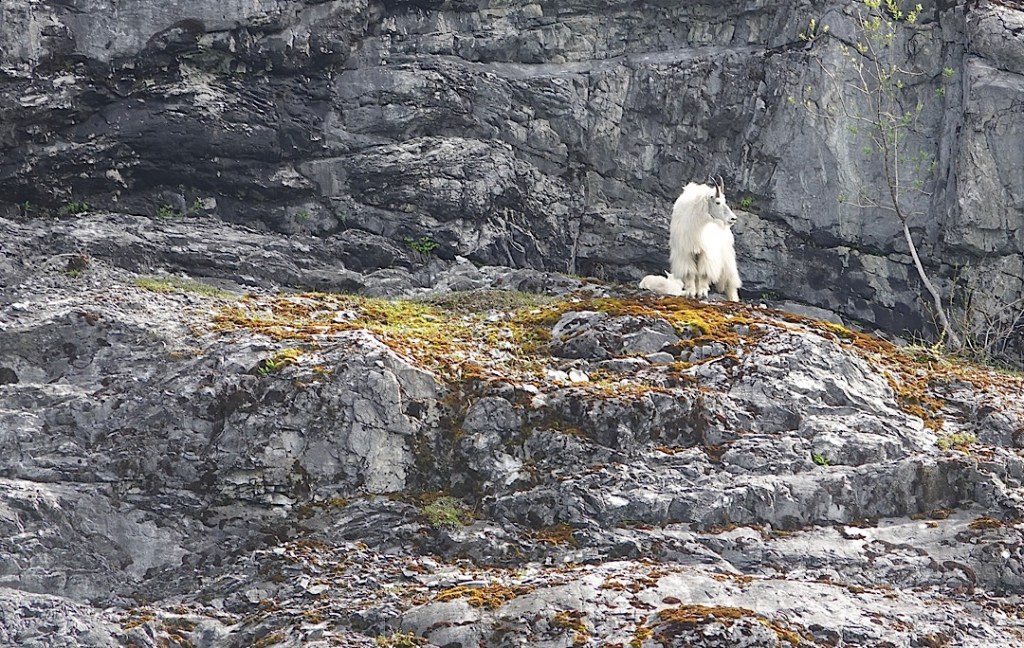
After all that drama, glaciers might have felt anticlimactic. But they weren’t.
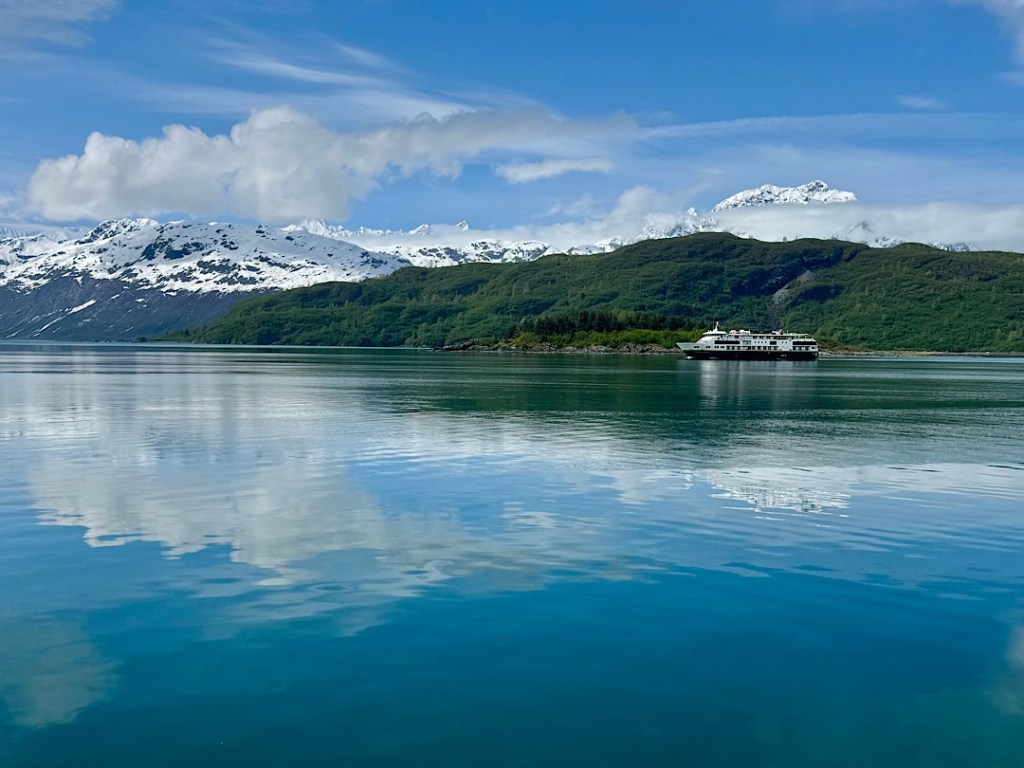
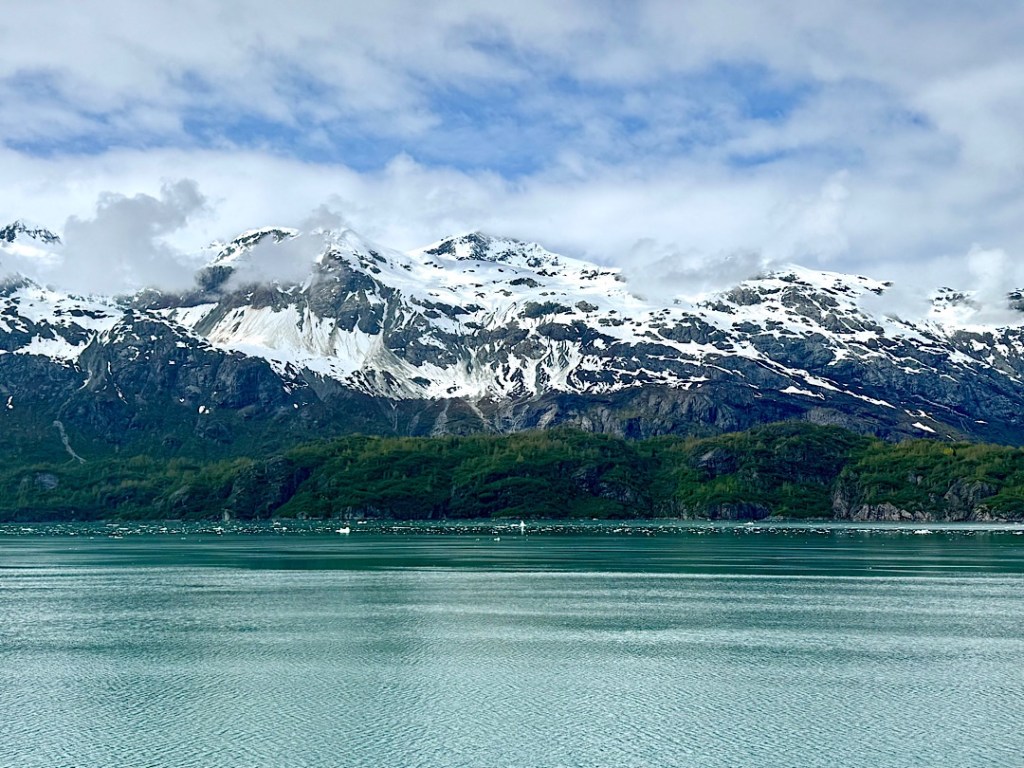
In any other place, the geology would have been riveting. We could literally see where the Pacific tectonic plate butted up against the North American plate.
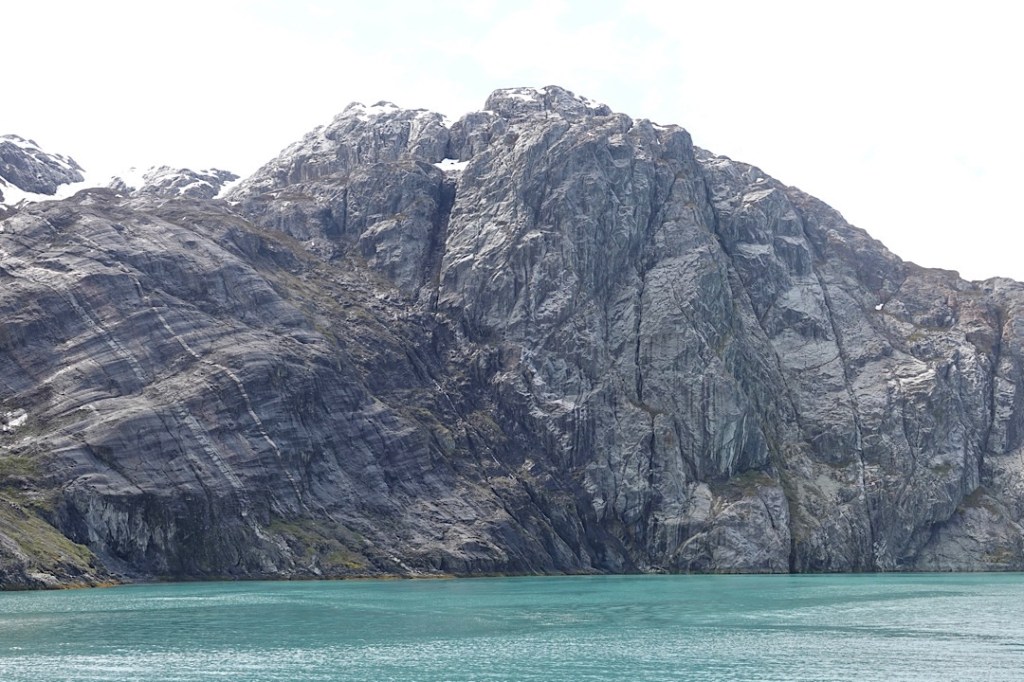
But the icy wonderland grabs most of the attention here. Over the next hour or so, moving slowly through it, I learned a lot about glaciers. The six we saw demonstrated how varied they can look.
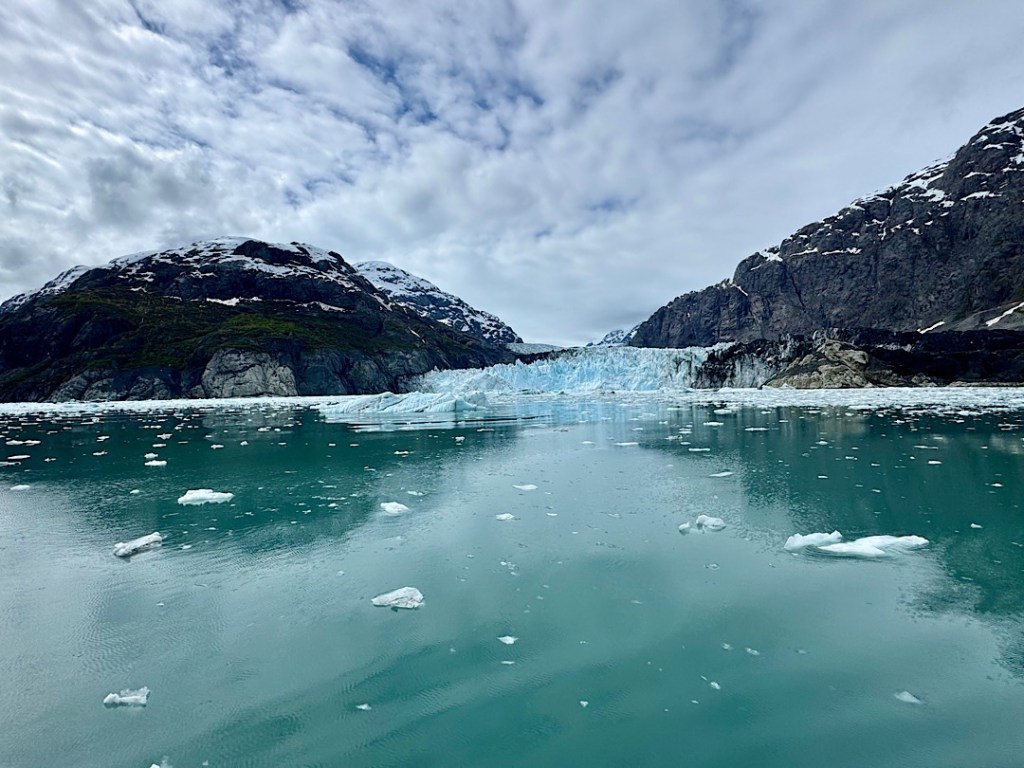
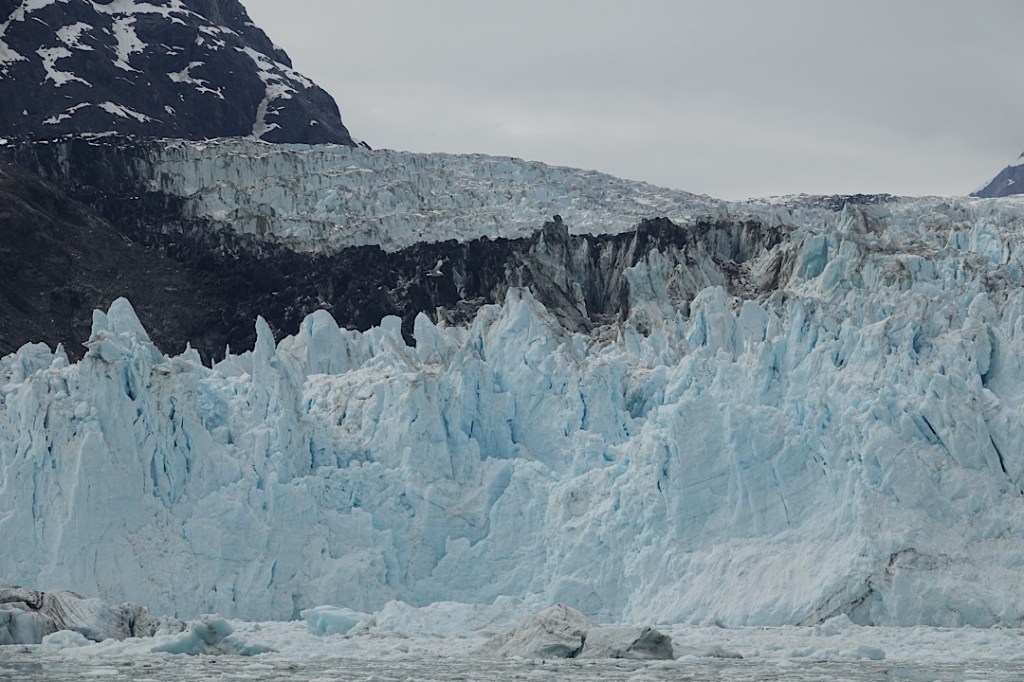
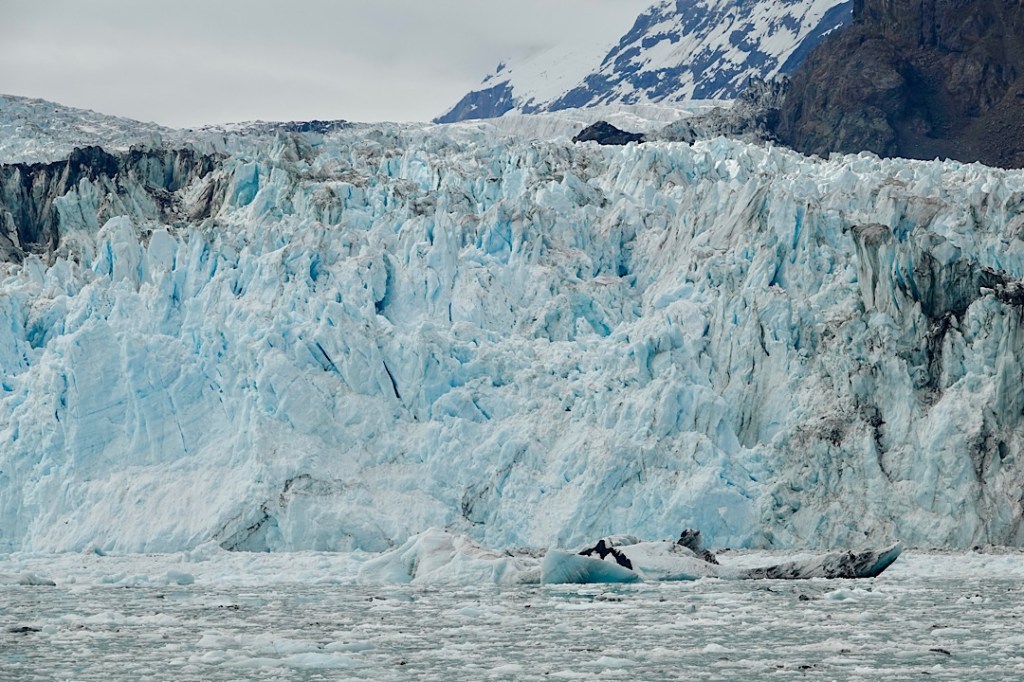
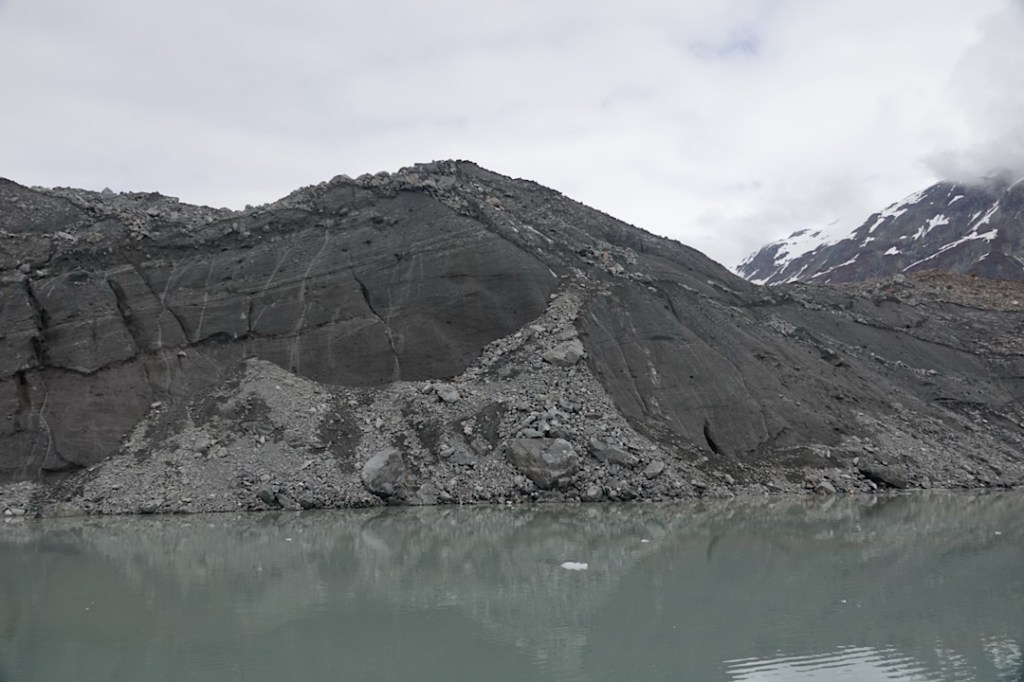
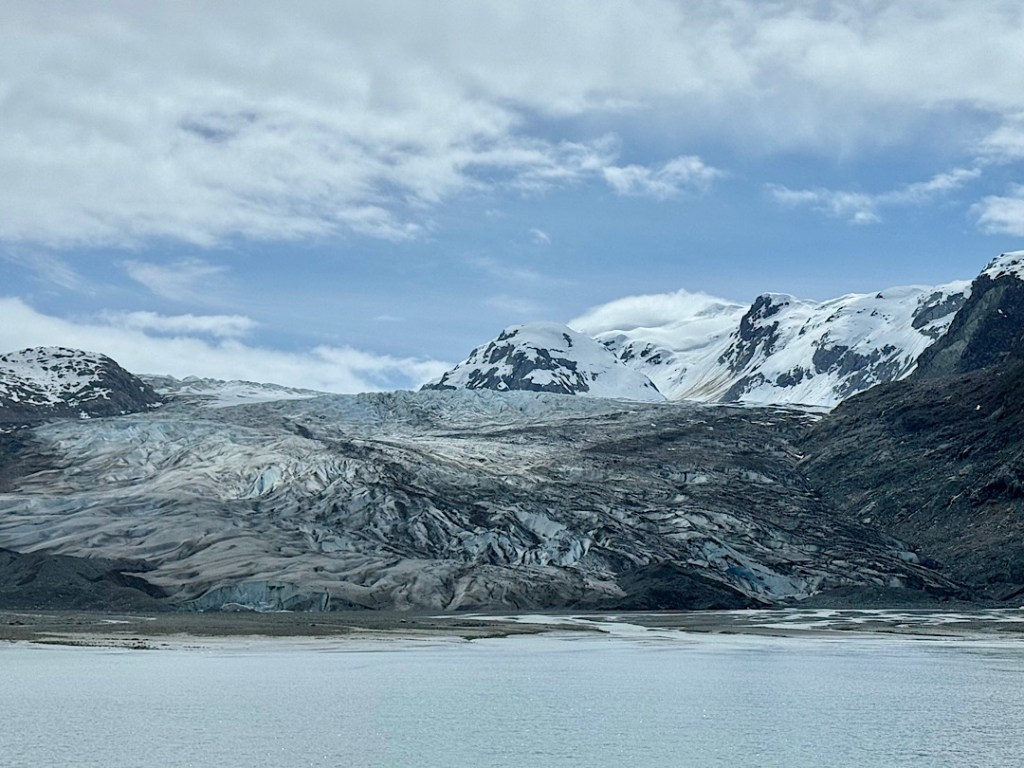
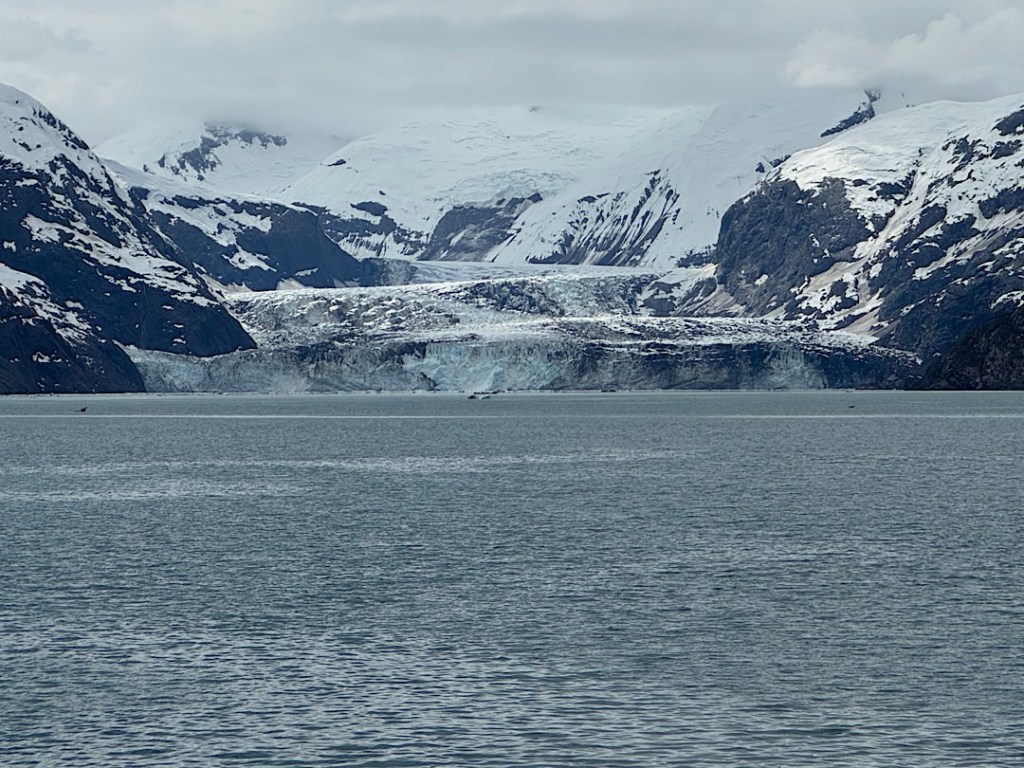
We spent the most time hovering in front of the Majorie Glacier. Ranger Hailey said it “calves” almost daily: huge chunks of ice can break off and smash into the water.
For us that didn’t happen. That would have like getting a royal straight flush. You can’t win ‘em all.
 At home and abroad
Thanks, Jeannette, for more excellent descriptions and for taking us with you to Alaska, a place I
Thanks, Ann!