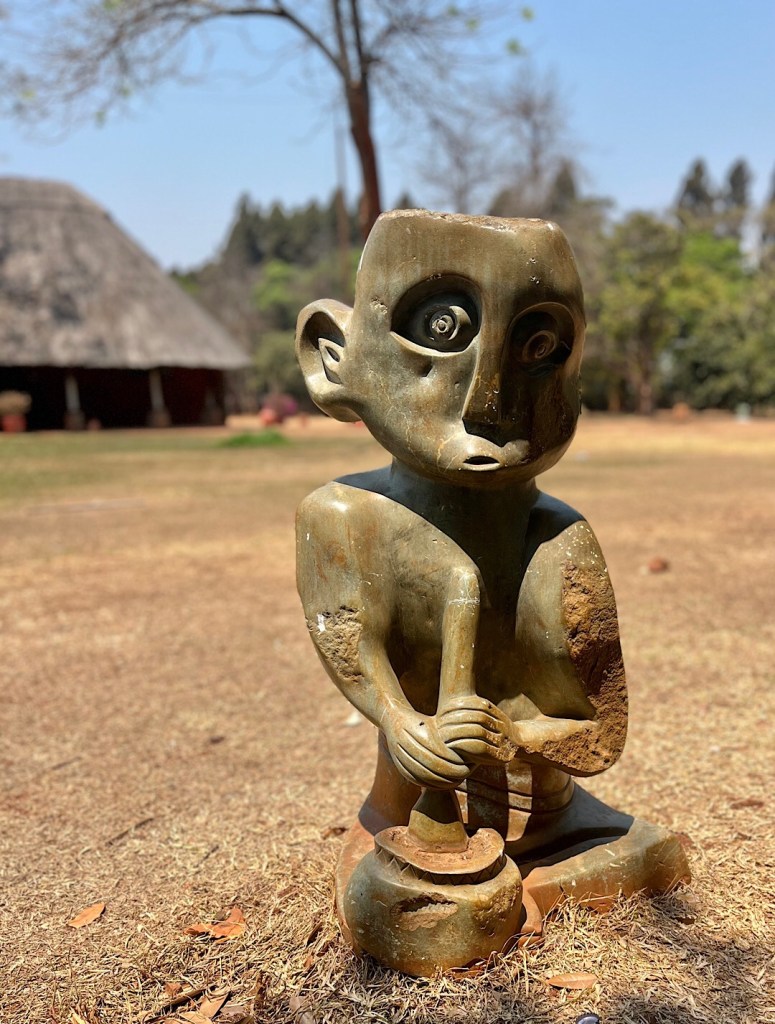
I’m starting this post around 7:30 pm in a farmhouse in the Zimbabwean northern highlands, very close to the Mozambique border. Thanks to Apple battery power, my iPad screen is lighted, so I can see what I’m writing. But when my touch-typing fails me, it’s tough to make out the keyboard. Steve and I are alone in the house, and a single candle provides all the illumination except for the dim glow from the big stone fireplace. We need that fireplace, as the temperature outside has plummeted. This doesn’t feel much like Africa.
We’ve now been in Zimbabwe for a bit more than two days, and Zim’s eccentricity is starting to feel routine. Our Rwandair flight Saturday morning from Kigali could not have been smoother or more pleasant, and we touched down at Harare Airport a few minutes early. We were sitting at the very rear of the plane, so when we got to the Passport Control booths (just outside the luggage-collection area), long queues had formed at the two booths designated for foreigners. We chose the shorter one, and it still took almost a half hour to get to the official. “We want a KAZA visa,” I told him.
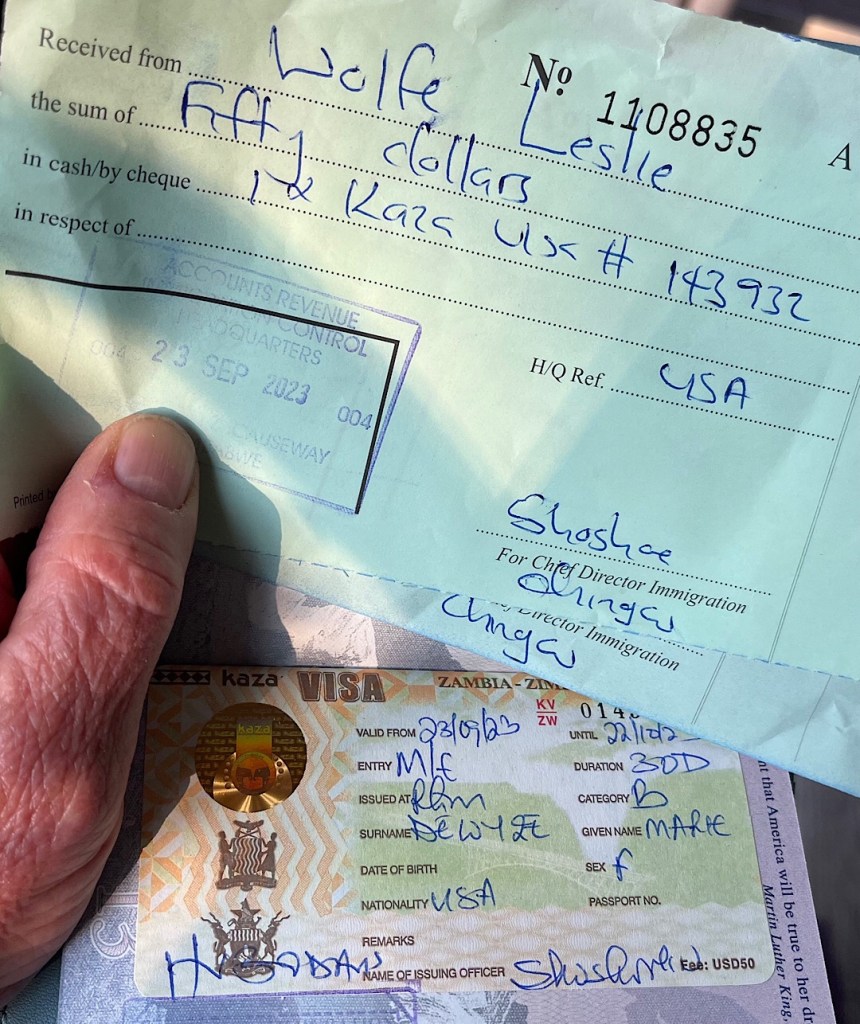
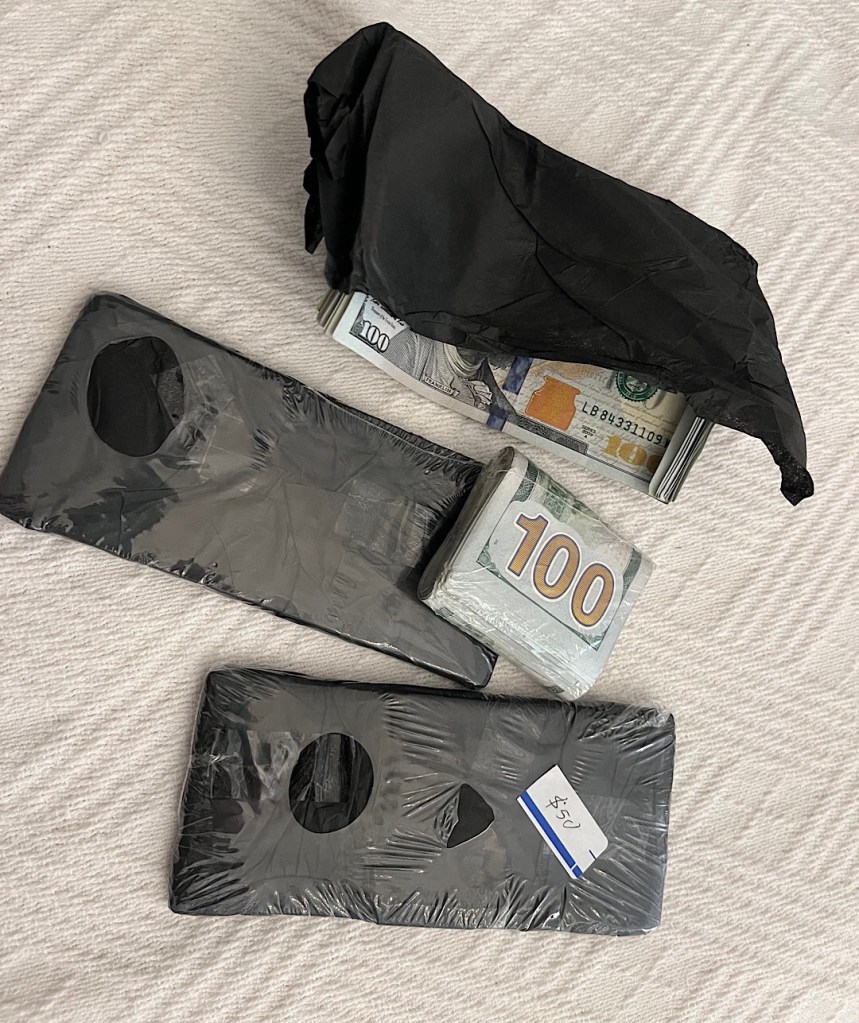
“Over there,” the man in the booth barked, gesturing to the other line, which was at least as long as it had been 30 minutes earlier. It seemed to consist mostly of young Chinese men and a few women. But our tour outfitter had told us to insist on a KAZA visa. Such a stamp allows you to enter Zimbabwe and Zambia multiple times and cross back and forth between the two countries, something that will be important when we wind up at Victoria Falls 10 days from now. Surely anything would be better than having to get a second Zimbabwean visa AND a Zambian one (and paying $50 a pop for each one). So we gritted our teeth and moved to the back of the long line.
A solid hour passed as we inched forward, watching the sole bureaucrat in the booth doing lots of stamping and writing on each passport that finally made its way before him. By the time we reached the booth, literally every other passenger on our plane was gone. The luggage carousel had stopped running. “We want a KAZA visa,” I said, considerably less perkily.
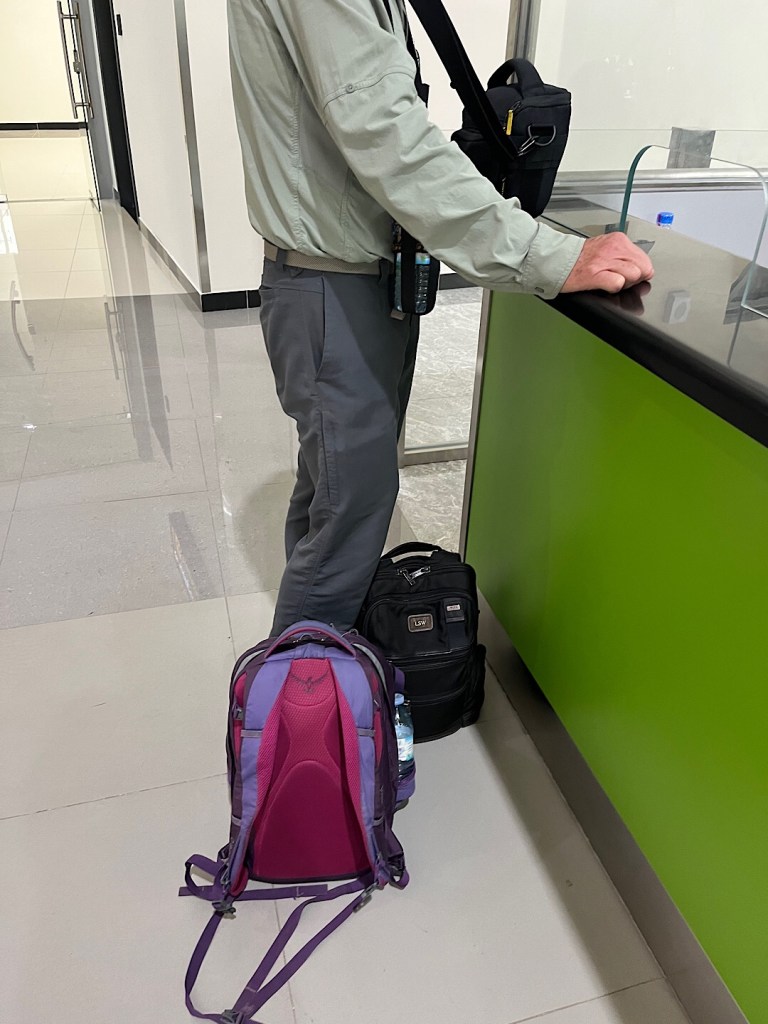
The official knew what that was. But it soon became obvious he couldn’t find his pad of KAZA stickers. He left the booth. Came back frustrated but full of reassurances he and his colleagues WOULD find the pad eventually. More folks joined in the hunt. More time passed. I began losing hope. But damned if they didn’t eventually locate the missing book. The official collected our $50 per, releasing us to pounce upon our bags (which were still, miraculously, on the deserted carousel.)
Outside, I was thrilled to finally meet Ant Bown.
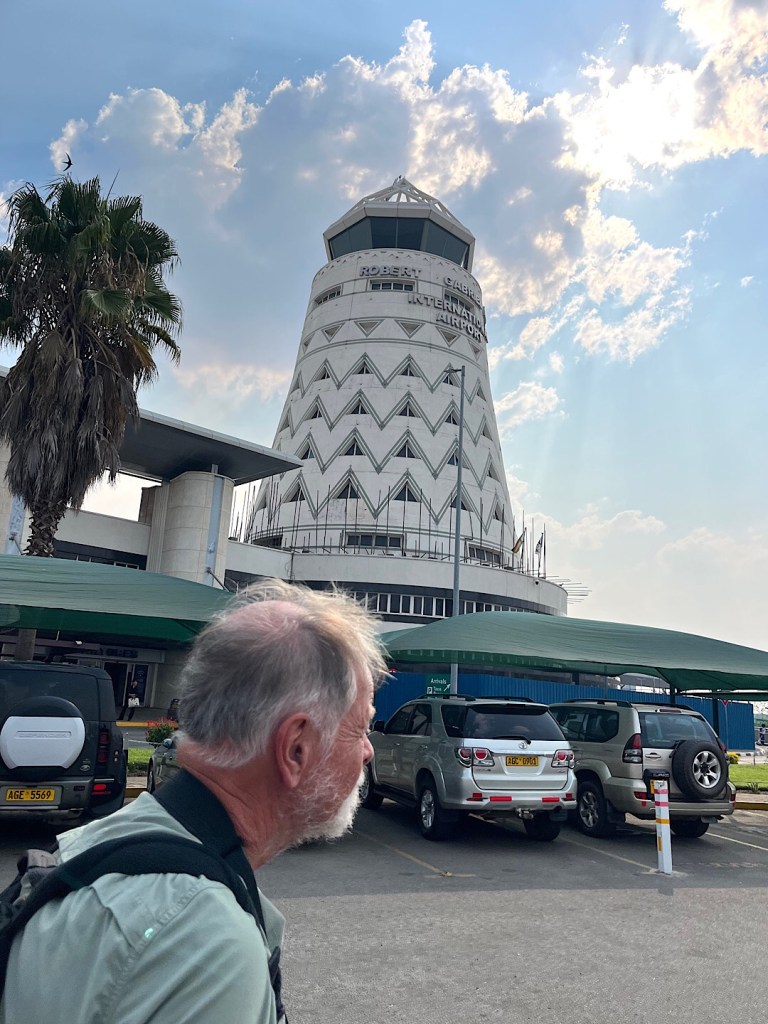
Ant, 47, started Mana Pools Tourism Services Ltd., a “self-drive safari” company, about 6 years ago. His grandfather moved to Zimbabwe back in 1935, when the country was known as Rhodesia, and his mother for years had run the country’s safari company operators’ association. Ant got a degree as an agricultural economist and for 15 years lived in South Africa. But he missed Zim and returned to Harare in 2010. Today he’s passionate about his birth country’s attractions and optimistic about its future.
When I started planning this trip, almost a year ago, I had no desire to tour it with Steve at the wheel. I say that with no disrespect for Steve’s driving skills, which are competent even in places where traffic flows on the left. Just 20 years ago, Zimbabwe appeared hellish. Between 2000 and 2004, all but about 300 of the country’s 4000 or so white farmers had been forced off their land; many were beaten or hacked with machetes, and about a dozen were killed. The farmers’ black workers also lost their jobs, and the UN later estimated that a million people were displaced. In the years that followed, the Zimbabwean dollar became worthless, as annual inflation exceeded 900%.
Today the official economy is still dismal, although the “informal” sector — businesses and side hustles so small they can escape government notice — is booming, according to Ant, who thinks Zimbabweans rank among the most entrepreneurial folks on earth. There’s effectively no banking system. Most people use dollars — the paper ones — for almost all their transactions. But political violence has all but disappeared, crime is low, and racial animosities have evaporated. Steve and I were curious to see how today’s Zimbabweans were faring, after their torturous experience in the 20th century. But still, I didn’t want to DIY it.
So I got the latest copy of Lonely Planet’s Zimbabwe and emailed probably a half-dozen of what sounded like the best tour operators, seeking one that would drive Steve and me around. No one responded, even through I tried a couple of approaches with some. I finally contacted Ant’s 4×4 rental company, thinking maybe he could recommend a driver. Ant and I wound up chatting extensively in email and then via WhatsApp, and in the end, he convinced me we could handle self-driving.
I came to trust him partly because of how quickly he responded to my every query and how well-organized he was. But he also charmed me with his directness and good humor. He’s very emphatic and often funny and he didn’t seem to be whitewashing the realities of life here. Zimbabweans were atrocious drivers, he told me early on, but we would be okay if we drove slowly and defensively. The electrical grid was a joke. But his Harare guesthouse never lacked power or hot water because he’d installed solar systems years ago.

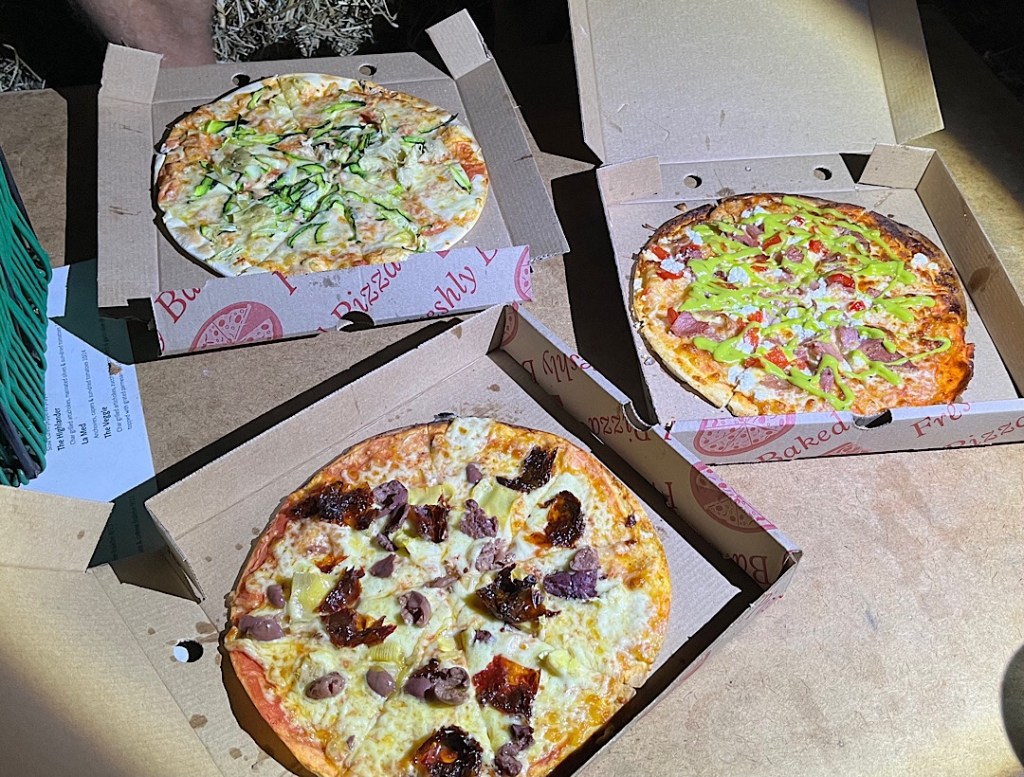
Steve and I got more exposure to Ant’s quick wit and open-mindedness the night we arrived, when he invited us to join him at a local Oktoberfest. It was being held in a private “sports club” that had been brought back to life in the last year or so. We had a blast taking in the high spirits and diversity — tipsy old white guys, black families with kids, a younger black and white cohort, all partying together. Some seemed to be there for the live music; others for the pizza…
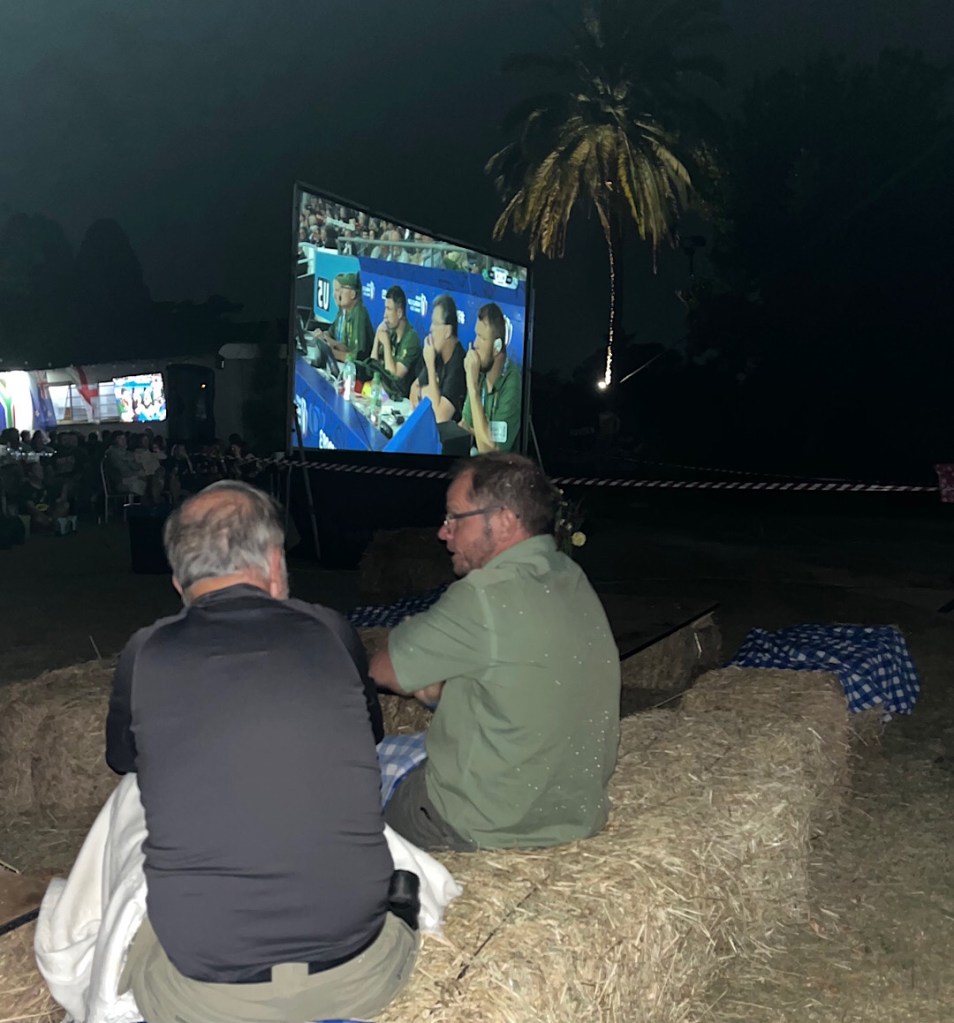
Still others had come for the rugby game that started at 9 (Ireland versus South Africa.) Since neither Ant nor Steve nor I are big rugby fans, we only stayed a few moments to take in the chaotic action on the field. (Steve marveled, “They look like American football players who are all drunk.”)
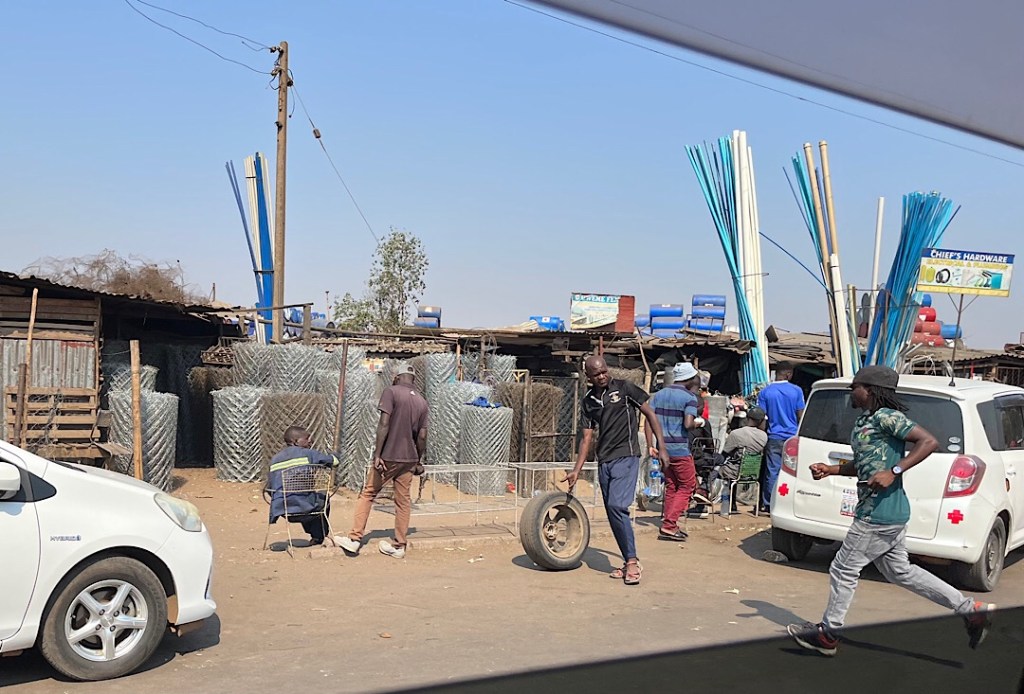
We also wanted to get to bed because we had such a busy schedule lined up for Sunday. First we piled into one of Ant’s small SUVs and got a tour of Harare from Friday Mugwisi, one of Ant’s oldest employees. He took us first to Mbare, the huge, densely dizzying street market near the center of the city. We parked (for $5) then Friday led us throughout the maze of vendors, pointing out one item after another that he insisted was stronger than what you’d find in the big chains and half the price (and often fashioned from recycled materials.) Sadly, we couldn’t take many shots of the wildly photogenic scene. Friday had warned us we’d be pestered for payment if we were obvious about capturing anyone’s image. Still, we caught a few.
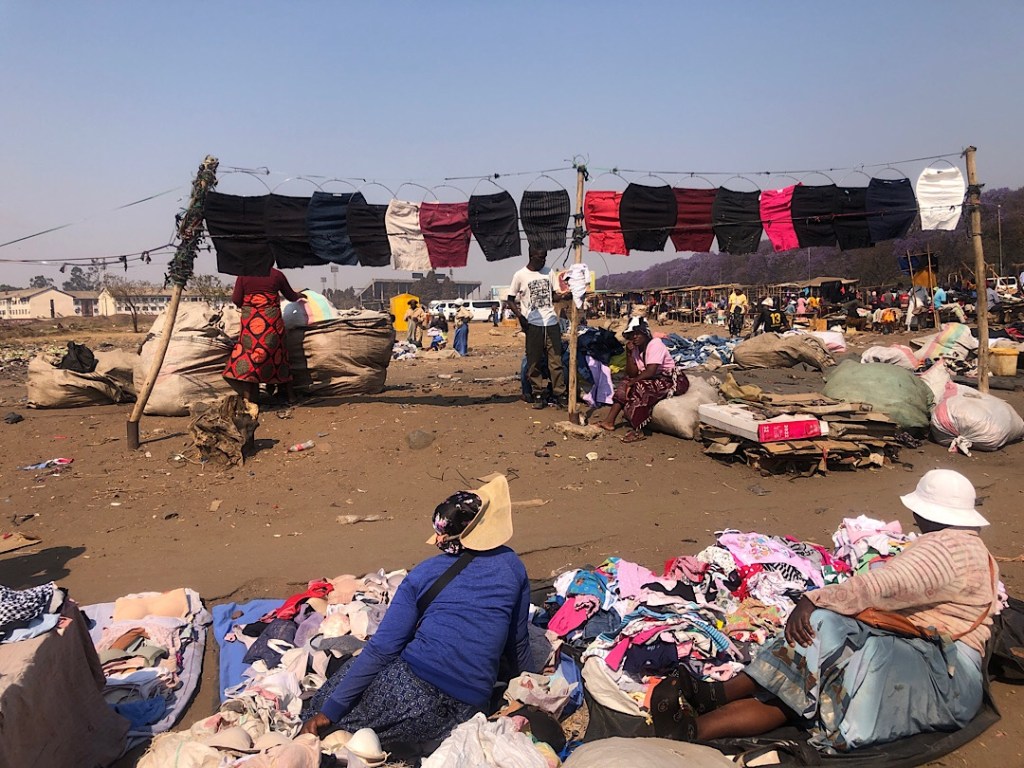

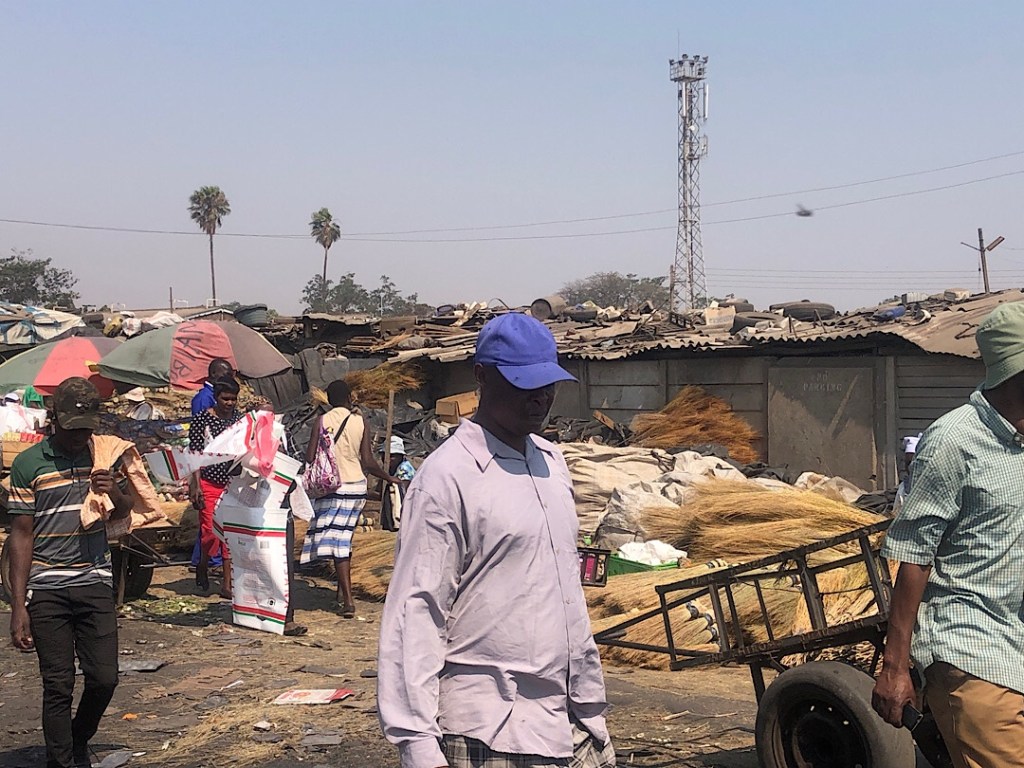
Later Friday drove us through the central business district and past many of the most important government buildings. We made a quick visit to the vast botanical gardens, then Steve and I ate lunch amidst the city’s ruling elite at The Three Monkeys, a chic oasis in an upscale little commercial center not far from Ant’s guest house.
We spent a chunk of that afternoon getting oriented to our Land Cruiser and its ingenious contents. But I’ll save those details for later posts. I know first-hand that too much information and sensory input can leave your head spinning.
 At home and abroad
Sounds like you’re off to a really good start and Zimbabwe. Pictures reminded me of other African markets.