The hitchhiker we picked up on the way back

The idea for this road trip was to see the great sights of the Southwest we’d somehow missed. To make our drive to Austin for the eclipse a kind of mop-up tour. We might undertake other road trips elsewhere sometime, but we could close the atlas on at least this quadrant of America.
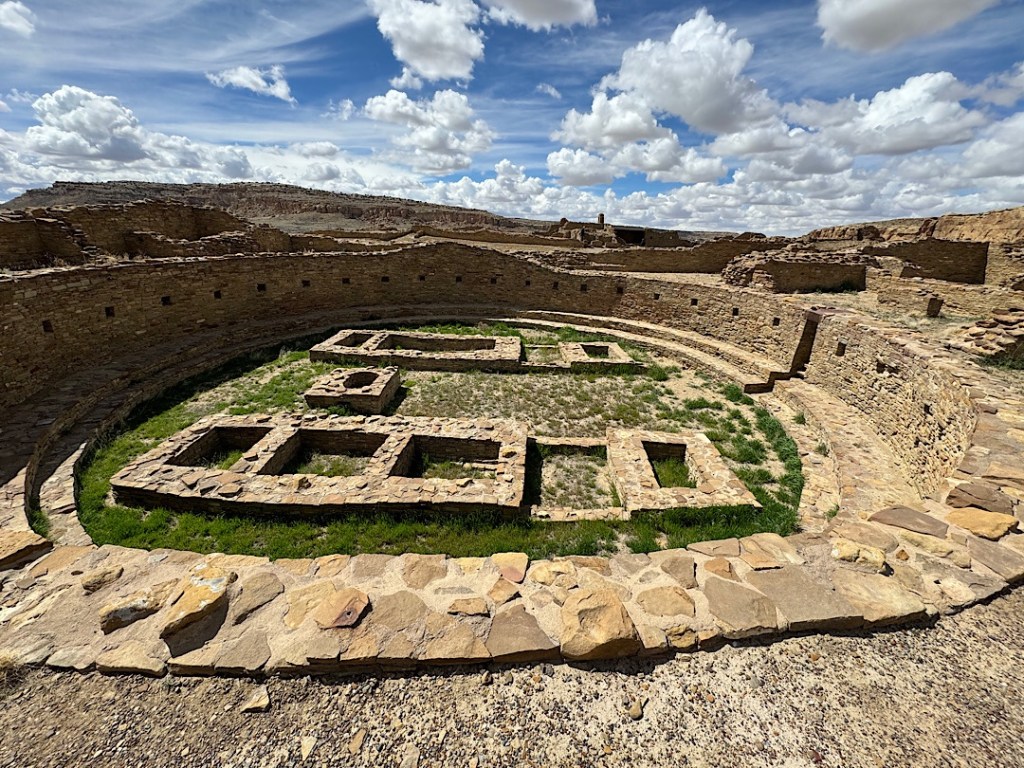
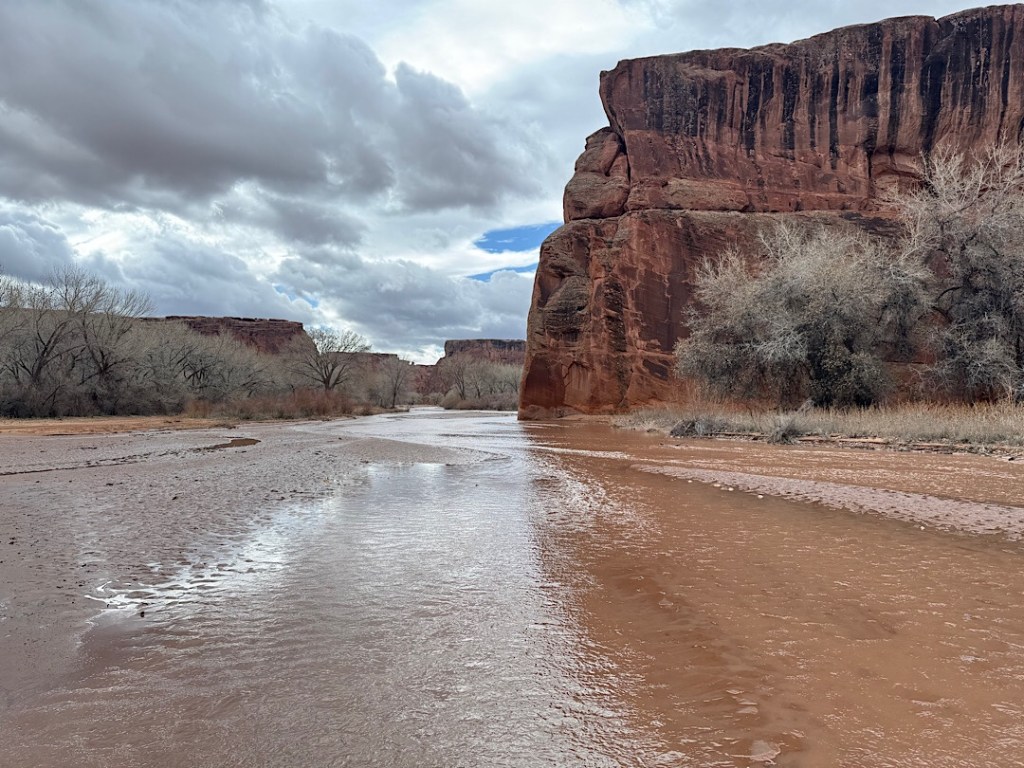
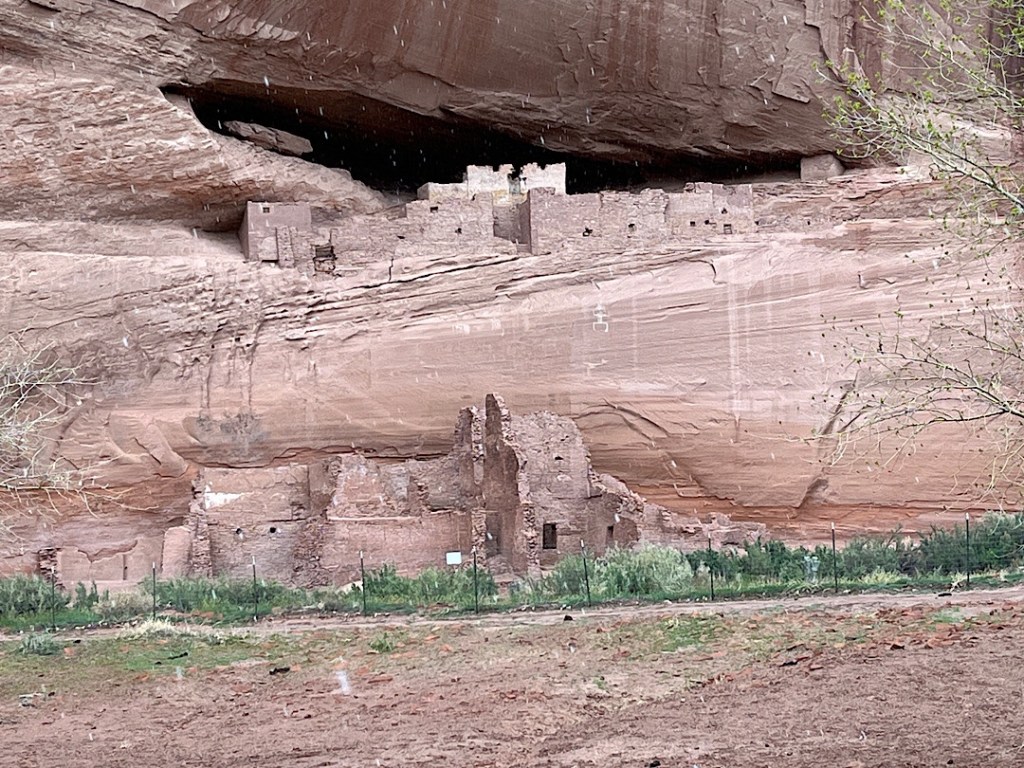
Nice try. Spending time in the ruins of Chaco Canyon (above) and among Sedona’s red rocks; jouncing through Canyon de Chelly and ogling fake aliens in Roswell all rewarded us richly (as I recorded in my earlier posts.) We also fared well on the drive back, even if White Sands National Park somewhat underwhelmed me.

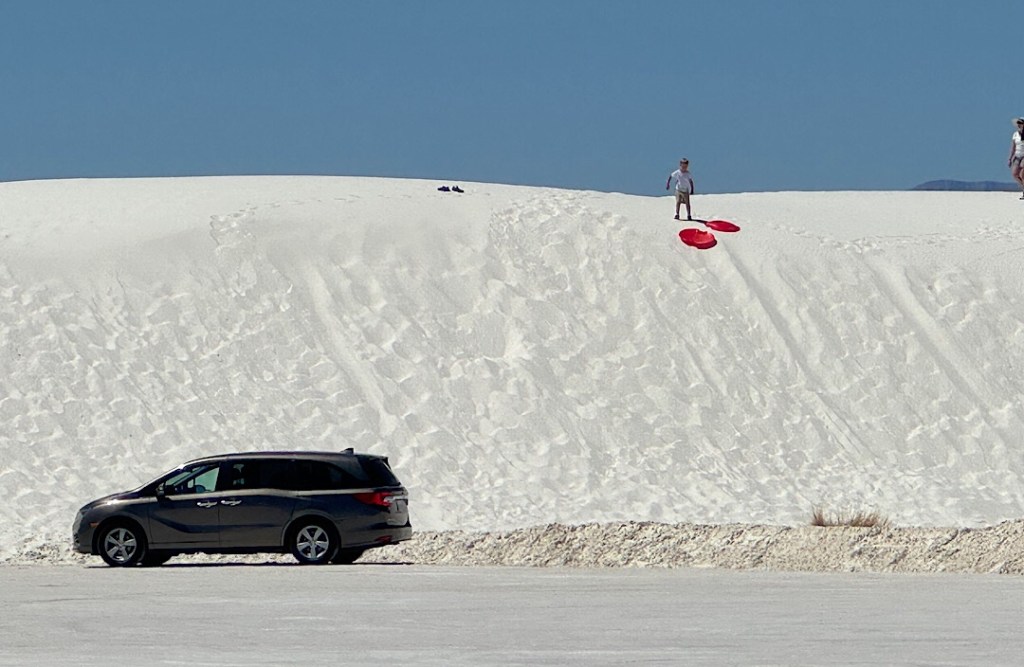
Hiking in the blinding white landscape made me want to dig out the eclipse glasses.
Still, it was interesting to see all that snow-white powdered quartzite even if the dunes’ size didn’t match others Steve and i have visited in the Sahara or Colorado or even just west of Yuma.

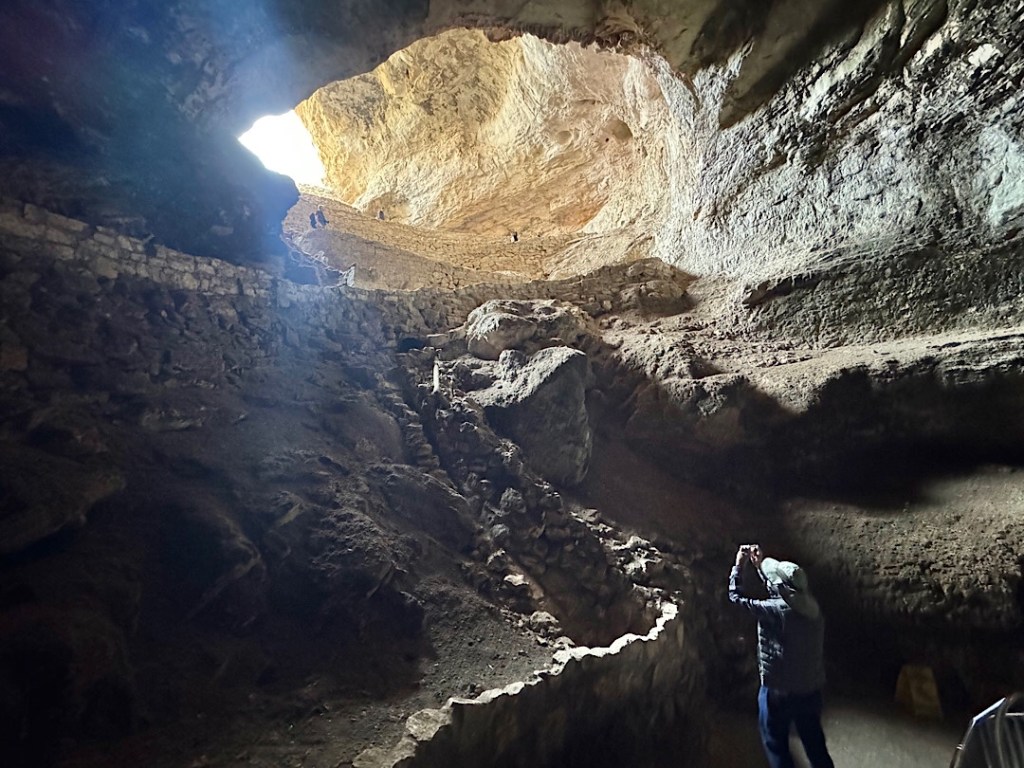
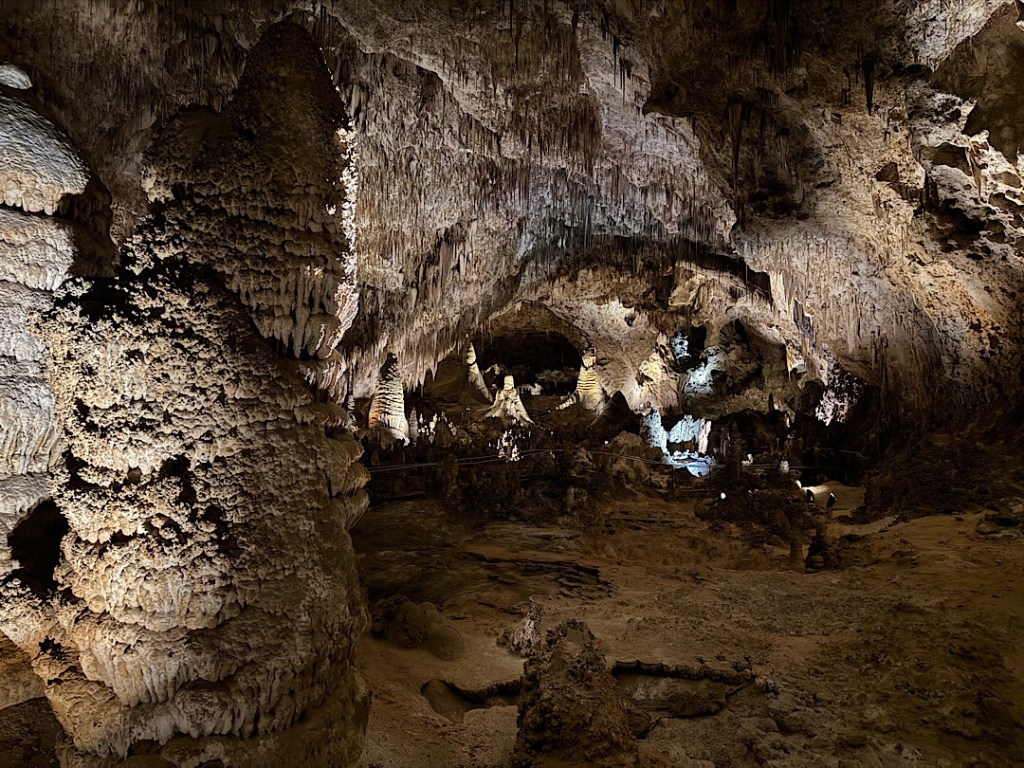
In contrast, our morning in Carlsbad Canyon far exceeded my expectations.
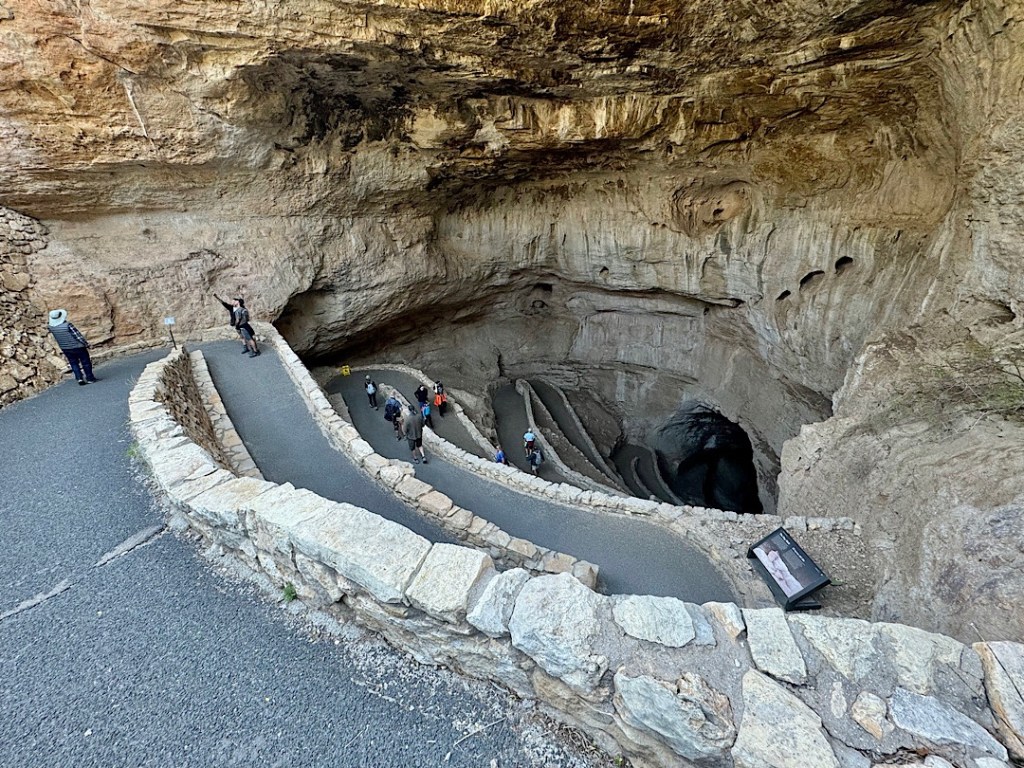
We hiked in through the cave’s original opening, following a path that went down 75 stories.
It may not be as colorful as some caverns, but the vast size and baroque variety of its decorations dazzled me.

What wrecked our “Adios, Southwest!” Plan was listening to the audio version of House of Rain, a kind of detective story written by a naturalist/adventurer/desert ecologist named Craig Childs. Driving east through the Indian reservations, we’d consumed a more classic mystery – one of the Hillerman stories starring Navajo tribal police officers. But I had also downloaded House of Rain hoping finally to learn about the Anasazi people (aka Ancient Puebloans). I knew vaguely they had lived in cliff dwellings in the area where Arizona, New Mexico, Colorado, and Utah come together. The subject of House of Rain was who they were and what became of them – just what I wanted to know.

Visiting the Heard Museum in Phoenix and Flagstaff’s Museum of Northern Arizona and Canyon de Chelly and Chaco gave us droplets of the answer. But listening to Childs on the drive home was like jumping into a roaring flood.

He starts with Chaco. We’d just been there – barely a week before, and yeah, the scale and the height of its elaborate complexes had impressed us. But Childs is as familiar with the place as if he’d grown up there, and he made it come alive, explaining what it must have been like when under construction, more than a thousand years ago. He communicates the wonderment of what these folks accomplished, chopping down trees from forests more than 50 miles away and erecting buildings that remained the tallest in North America until skyscrapers began to sprout in Chicago. Then they built a dazzling network of roads radiating out from the heart of it, and they communicated over long distances with a complex signaling system. All these things happened at a time and place that in my mind had always been just…. blank. Childs filled it.

The Anasazi disappeared from Chaco around 1200 A.D., and what happened to them is the mystery explored by the book. It’s a dense, complex story I’m glad I listened to for all those hours – reading it on paper would have been daunting. I won’t try to summarize, just say that what Steve and I heard made us marvel at our ignorance and stoked a curiosity to see more: Mesa Verde or Aztec Ruins or the pueblos where the Anasazis’ descendants still live today.

Will we get there? Not soon. In less than a month, we’ll fly to Miami, a launching point for a visit to a region Steve has begun referring to as Ground Zero for Where All the Trouble in North America Began: the Caribbean. Our plan is to spend time staying mostly in exchange houses and Airbnbs on Grenada, St. Lucia, Dominica, Puerto Rico, the Dominican Republic, and Jamaica. Stay tuned for details of how that one works out.

Canyon del Muerto

A few days before we set off on this road trip, my friend Kris told me a story about how she almost died in Canyon de Chelly. On their first visit to the renowned Navajo landmark, she and her husband had journeyed to the tourist office and hired an official guide, then had a marvelous experience being driven by him through both Canyon de Chelly and its extension, Canyon del Muerto (Canyon of Death), a name dating back to when the Navajos endured great suffering as the US government seized their lands.

On a return trip to the canyon, Kris and Rich found the tourist office closed. So they hired a freelance guide who picked them up in a battered Suburban and drove them into the canyon, where the vehicle promptly stalled in a river crossing. Its reverse gears appeared to be broken, and the driver/guide eventually shouted that everyone had to abandon ship through the few doors that functioned. Kris said it wasn’t difficult to slog through the water to dry land, where they watched the Suburban sink — and disappear — into the quicksand in which it had bogged down.

The moral of her story, Kris told me, was that we should only hire a trustworthy guide. But because Steve and I had arrived in Chinle so late Saturday afternoon, we settled for arranging a four-hour tour through our hotel. I reflected that we might be doing what Kris had warned us against. But we’d had little choice.

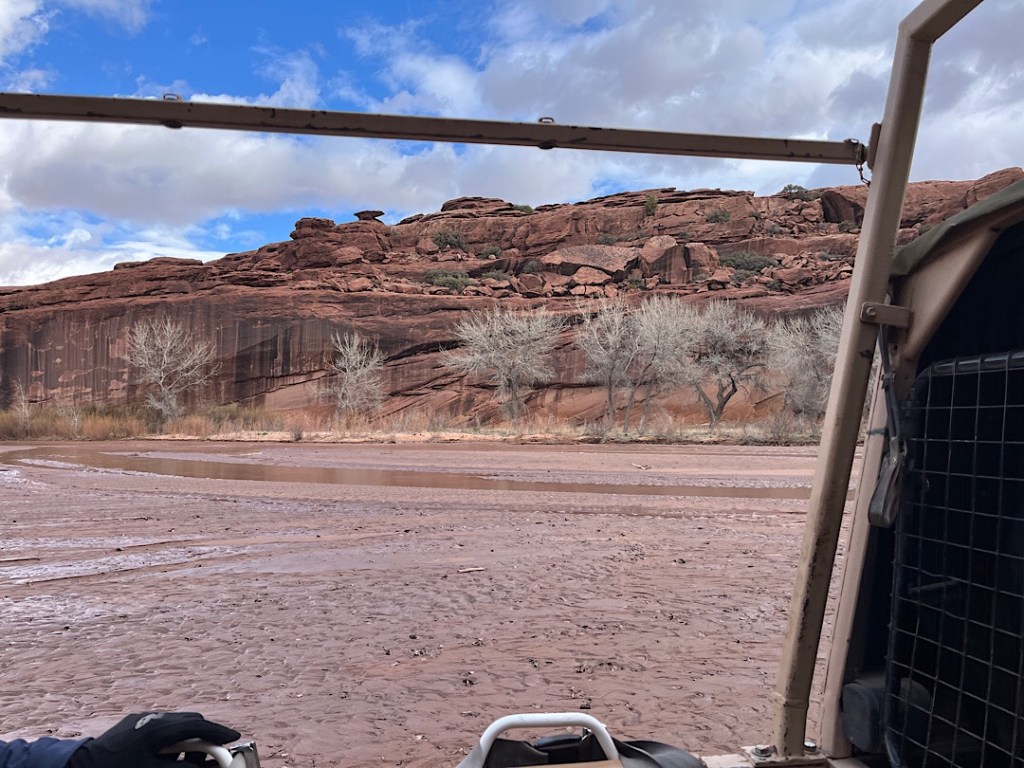
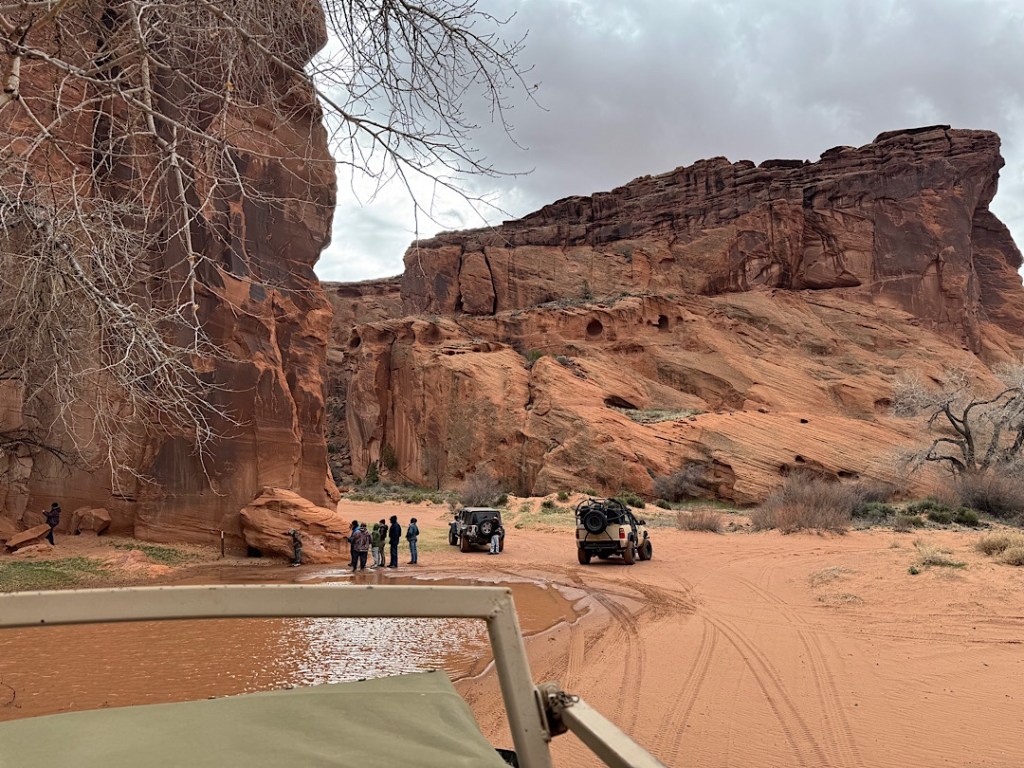
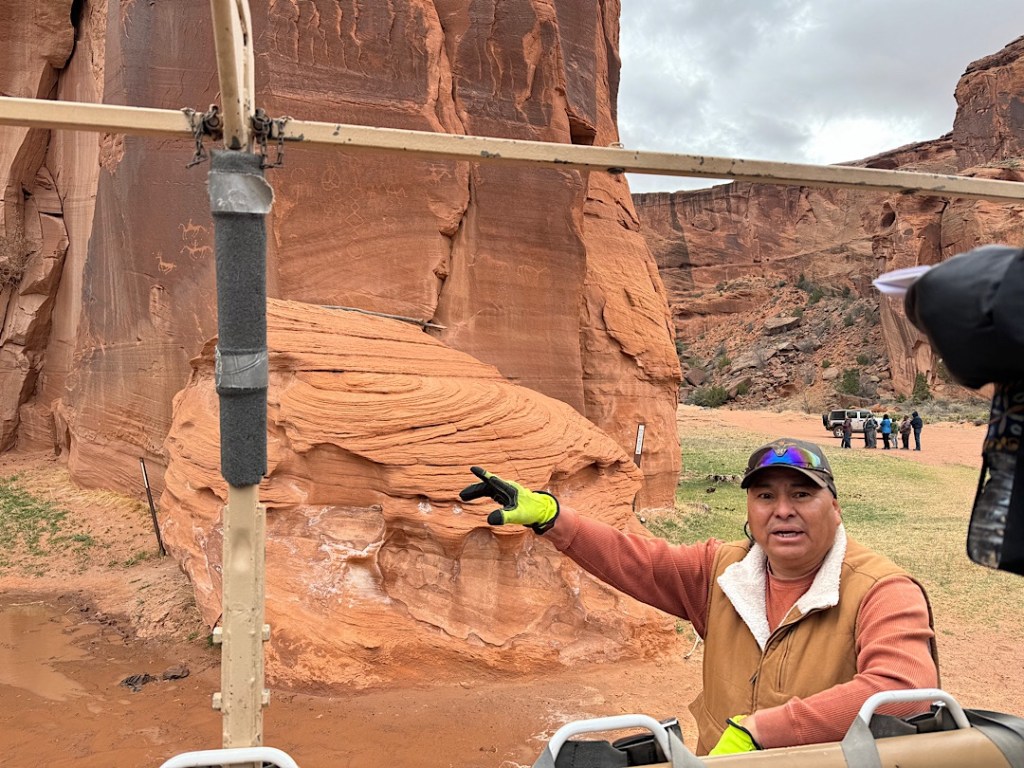
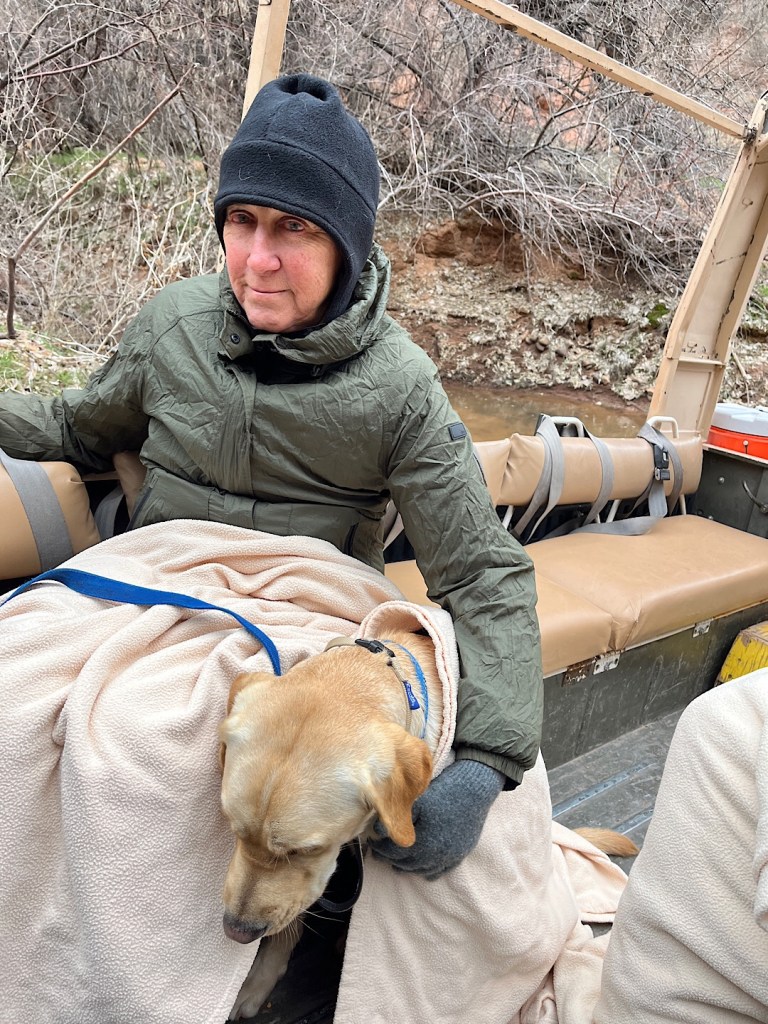
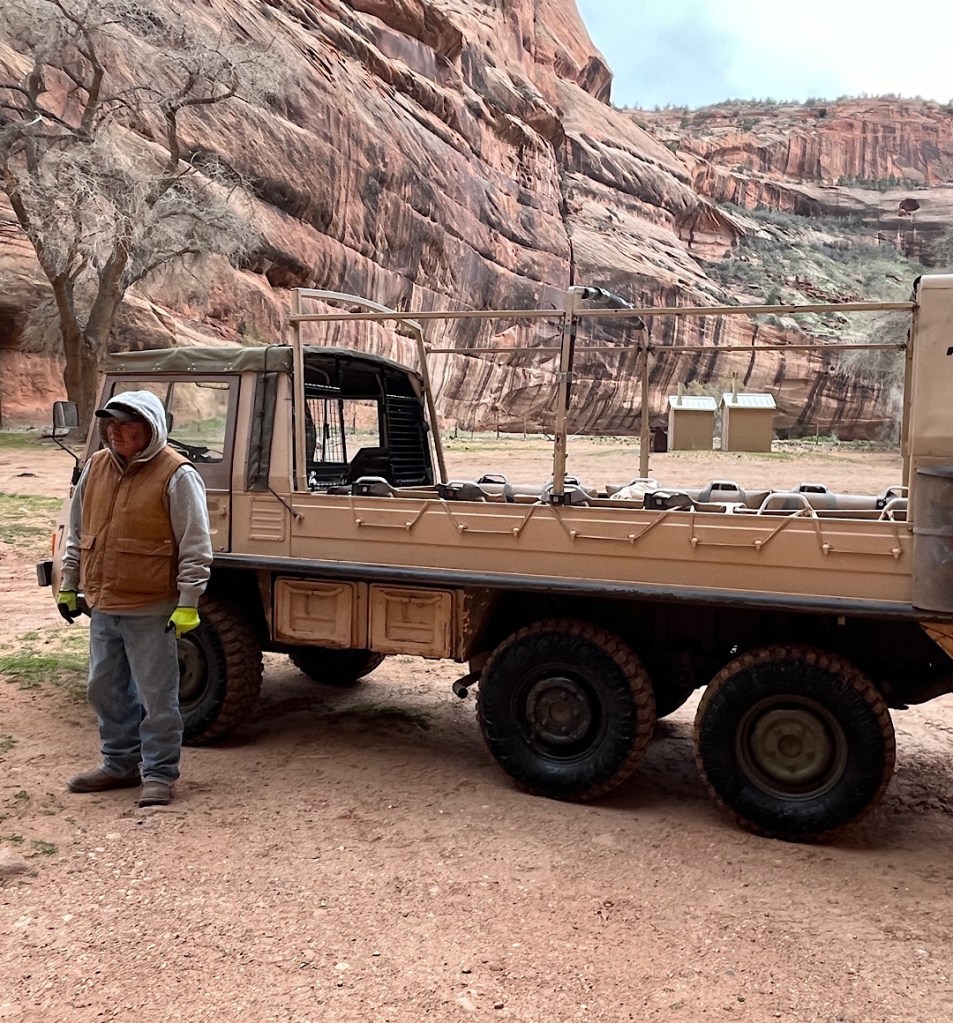
Sunday (Easter) morning, I’d felt reassured by the sight of our vehicle, a 10-passenger Pinzgauer army troop carrier built in Austria with 6WD and three locking axles. With only one other passenger besides us in the vehicle, there was plenty of room for Trent (garbed in his cape, of course.) The driver/guide, Fernando, had grown up in his grandparents’ hogan, deep within the canyon, so that also reassured me. Scattered clouds hinted that rain might be coming, but as we entered the canyon, it was still dry and bright.

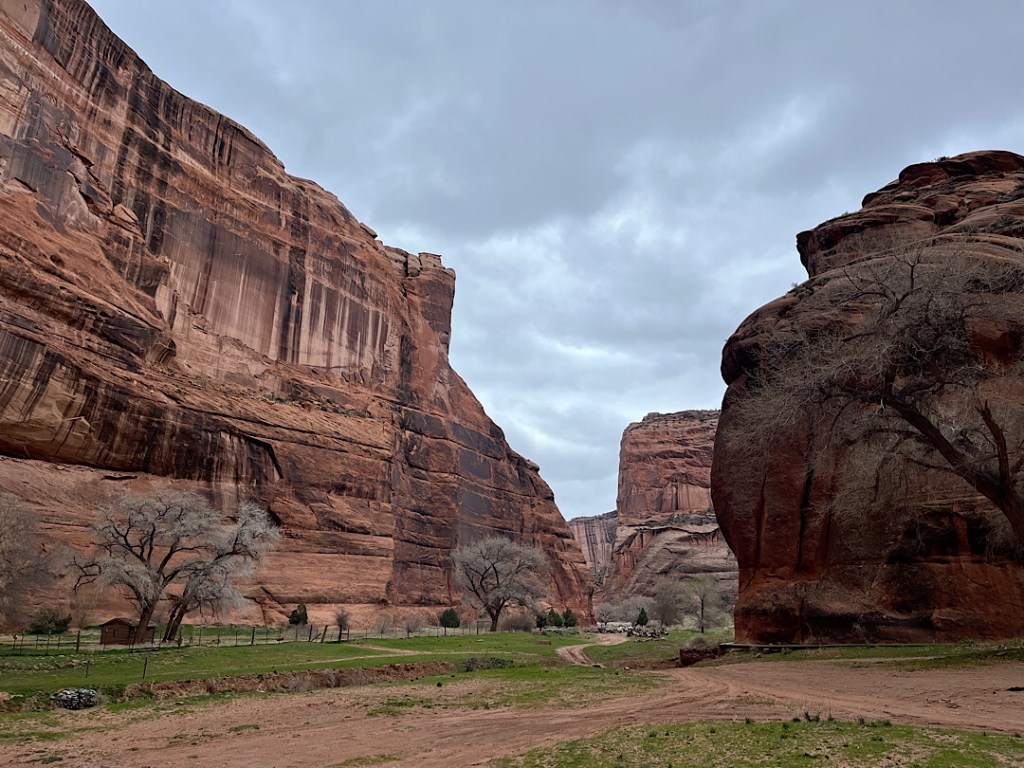
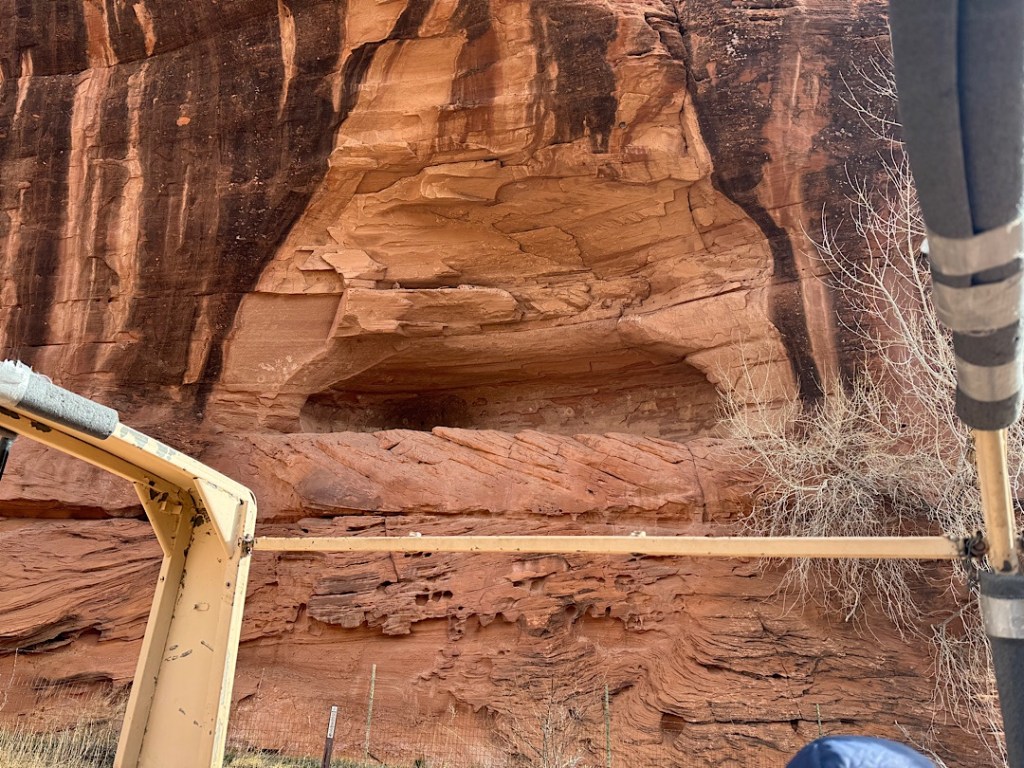
Canyon de Chelly isn’t as overwhelming as the Grand Canyon (what is?), but it quickly became clear its sandstone walls present an extraordinary mixture of color and form. Near the entrance, they start out low…

…but they soon rise to a thousand feet in height.

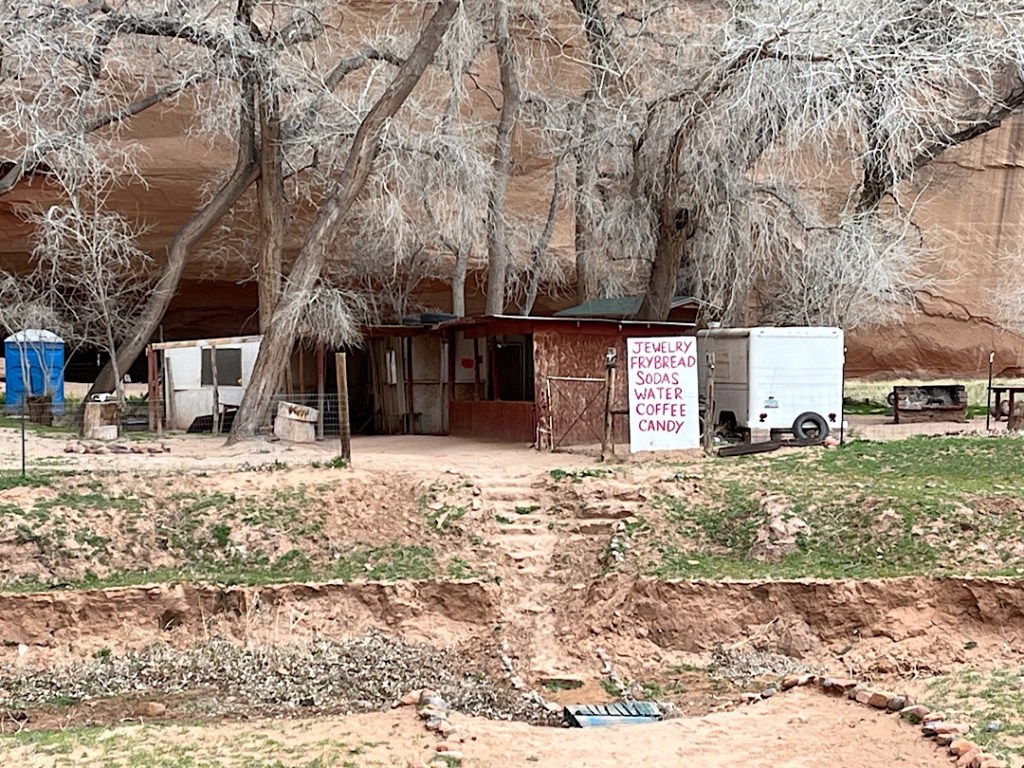
Moreover, this is very much a living landscape. Fernando told us only one family lives in it year-round.

This is their home.

But members of another 70-80 households return each spring to their properties. Somehow they coax crops of corn, beans, squash, melons, stone fruit, and more from the riverbed.

Here’s another homestead. But nobody was there on Easter Sunday morning.

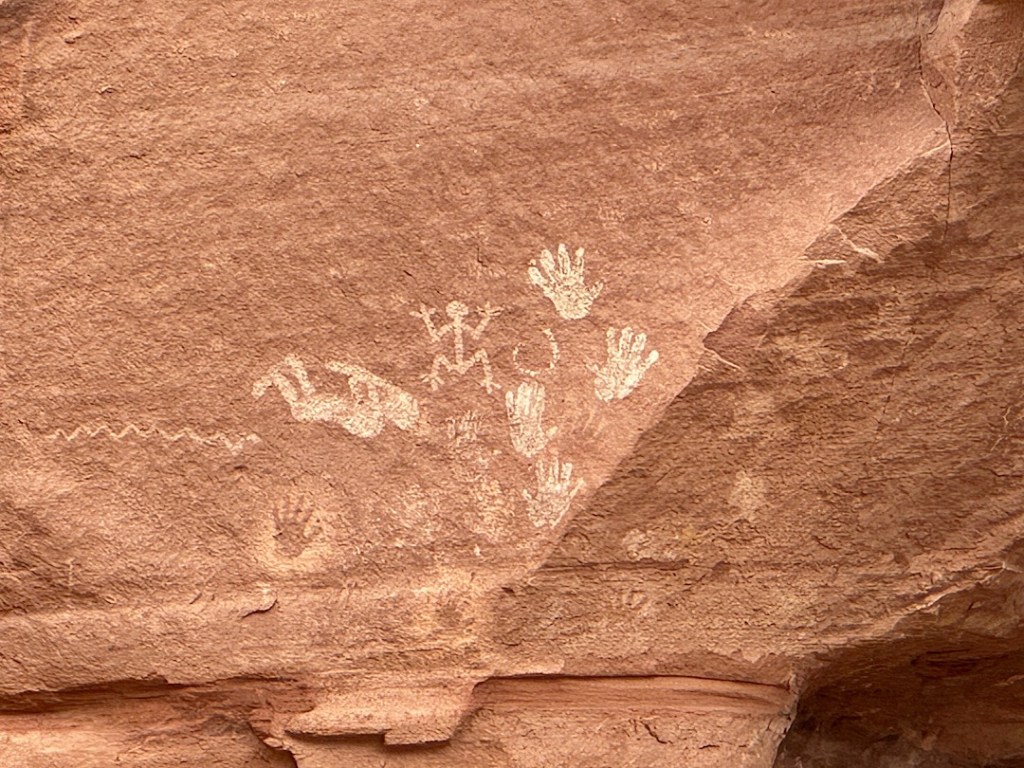
Beyond the current inhabitants, the canyon also holds fascinating evidence of the Old Puebloan peoples who lived here until roughly a thousand years ago. Fernando stopped at at least a half-dozen spots to point out the remnants of dwellings and paintings and other rock art left by the Anasazi ancestors.

We penetrated deeper into the rough terrain, and around noon the sprinkles started. The temperature dropped and the wind intensified, so soon the sprinkles turned into sleet. Or was it snow? It was hard to tell. Most of my attention was focused on staying as warm as possible. Fernando handed out blankets, and I tried to get Trent to snuggle up to me under one. He looked pretty miserable.

On a nice day, we all might have hiked more, taking time to savor the fantastic landscape and all the history that had unfolded within it. But as we headed back, all I could focus on was how little feeling I had left in my fingers or toes.

Fernando dropped us off at the hotel a little after 1, and I staggered to our room on what felt like lifeless stumps. Stripping off my boots and socks and gloves, I remember puffing out little breaths and doing a fair amount of moaning as I soaked my feet and warmed my hands in the tub. I shivered hard for an extraordinarily long time.

When the shivering had mostly subsided, Steve and I downed hot pozole and coffee in the lodge’s cafeteria and agreed we wouldn’t have missed seeing the canyon. I wouldn’t say the price was almost dying of hypothermia. But I’d come closer to that than I ever hope to get again.