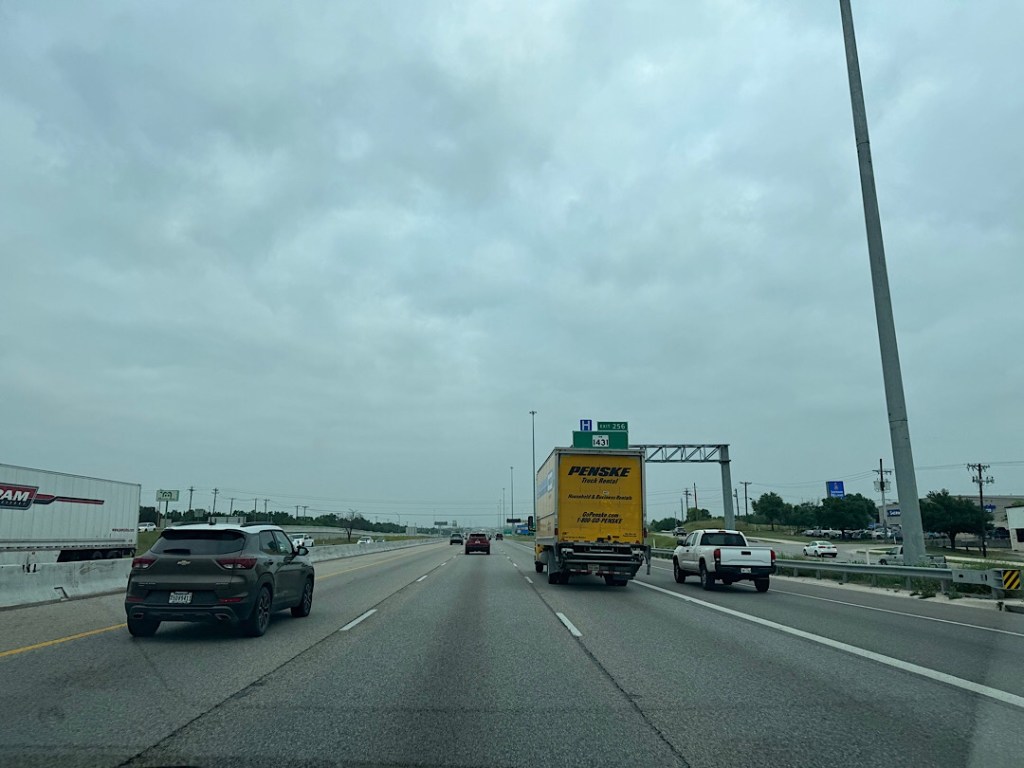
Day 17. Austin to Carlsbad, New Mexico. 454 miles, 8 hours, 55 minutes (including stops).
Our Austin stay lasted almost a week, and we packed in a lot, enough to get a real feel for the place. Not counting the eclipse, which seemed more celestial than tied to any spot on earth, my favorite Austin experiences were…
1) the barbecue (see above). It was a shock to realized I’d never had Texas barbecue before. And a bigger shock to learn how delicious it is. How did it take me so long to discover this?
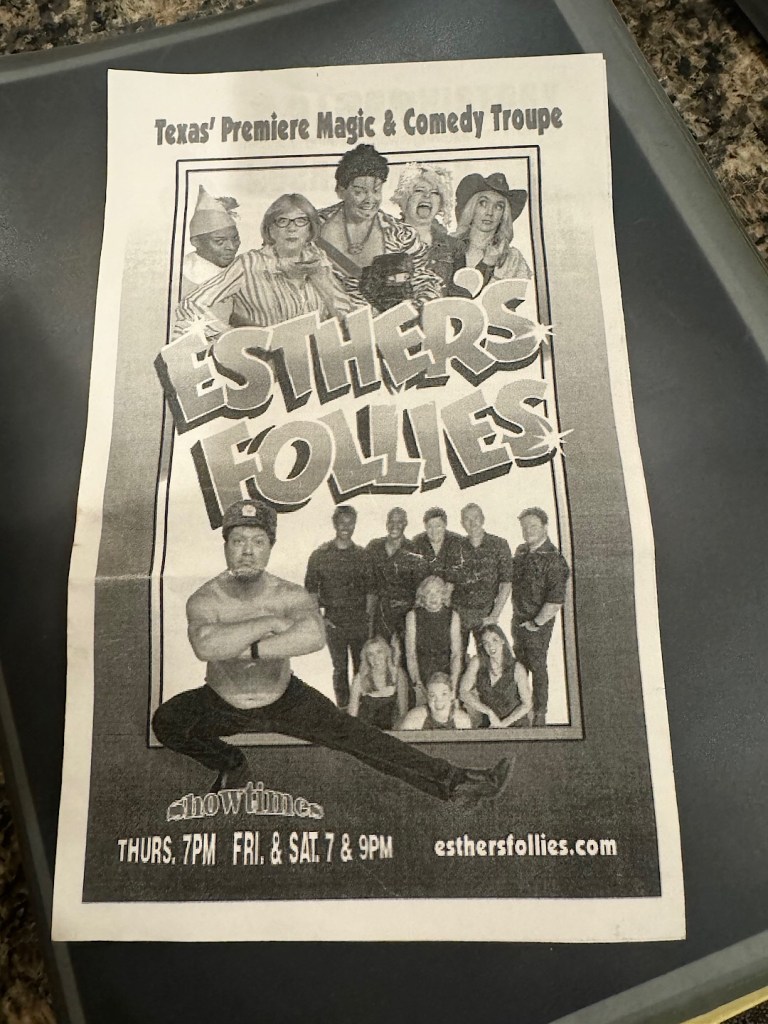
2) Catching a performance at Esther’s Follies, an institution on the ultra-lively Sixth Street. Mixing fast-paced extremely topical comedy skits, music, and big-stage magic, it felt like a weird combination of vaudeville and Saturday Night Live. We laughed a lot.
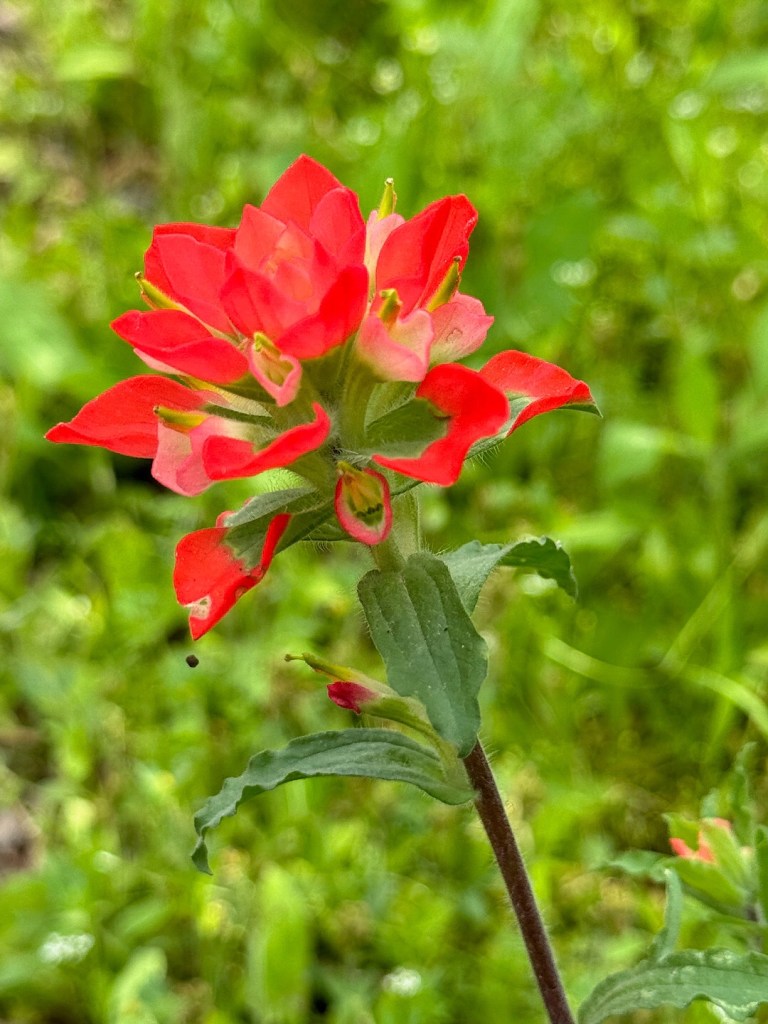
3) On Sunday morning, we visited the wildflower reserve established by Lady Bird Johnson. Its big vistas…
… dazzling close-ups…
… and everything in between filled me with happiness.
But now we’ve left Texas behind and will tackle two national parks in the next two days. Up tomorrow: a visit to the largest underground chamber in North America.
Chasing eclipses is dangerous. The risks aren’t physical but emotional. Traveling anywhere to experience this particular outdoor activity — brief as it is — requires planning and making commitments months or even years ahead of the actual event. If after all that the weather doesn’t cooperate, you can wind up seeing only a fraction of what you’d dreamed about. You could feel devastated.
Steve and I chose to chase Monday’s big American eclipse in Austin mainly because this part of Texas is reputed to have something like 300 days of annual sunshine. (Also, neither of us had ever been to Austin before.) When my iPhone weather app began forecasting Austin’s eclipse-day conditions 10 days ago, my heart sank to see all the clouds. I told myself conditions could change and did my best to put it all out of my mind.
The forecasts got harder to ignore once we arrived here. We’d decided to view the eclipse at a big organized site in Waco (about an hour and a half away, on the centerline, with a consequently long span of total darkness.) But rain had appeared in Waco’s forecasts for Monday and Tuesdays, and by Sunday afternoon, it looked like violent weather — thunder and lightning, huge hail, maybe even a tornado or two — could rip through the area some time Monday afternoon. (Totality would begin at 1:38.) The thought of getting stuck on a freeway in post-eclipse traffic with a Texas tornado spinning toward us was scary enough to make us all consider staying in Austin, even though the moon would cover the sun for only a minute or so (versus more than 4 minutes in Waco). We finally resolved to wait and see what Monday morning brought.
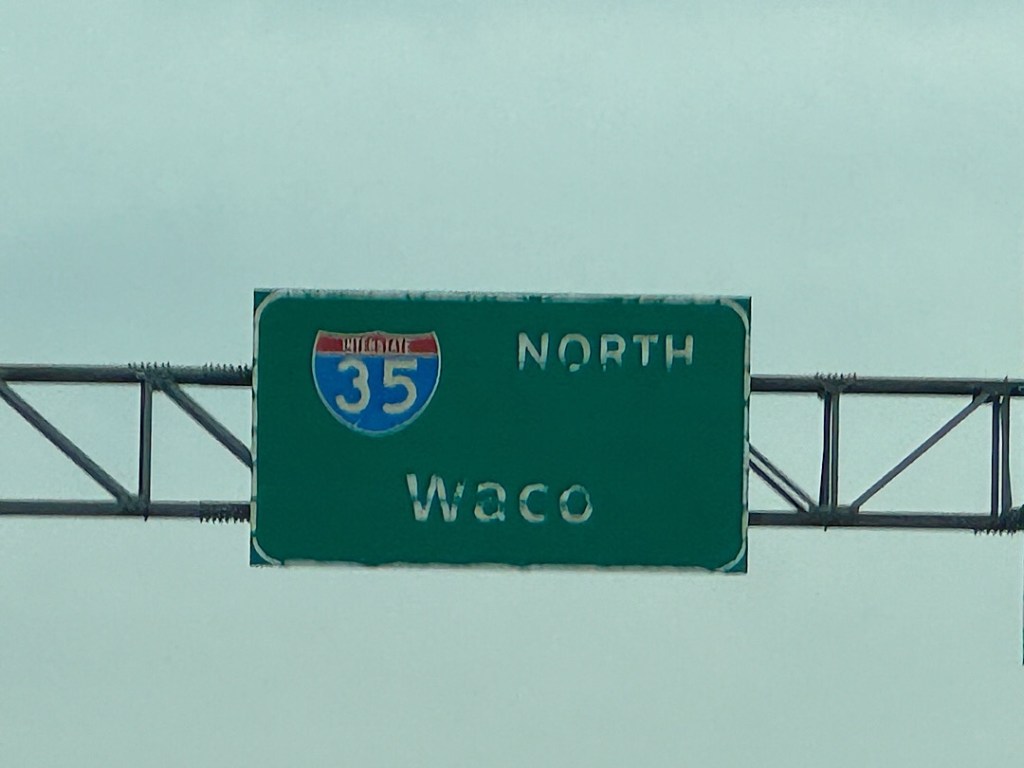
By then, the weather predictors seemed to be suggesting any violent storms would not take shape until late afternoon. So we piled into our van and headed north, under skies that still looked unfriendly.
The outlook began to brighten about a half hour later. Tiny patches of blue sky appeared, illuminated by glimpses of sun.
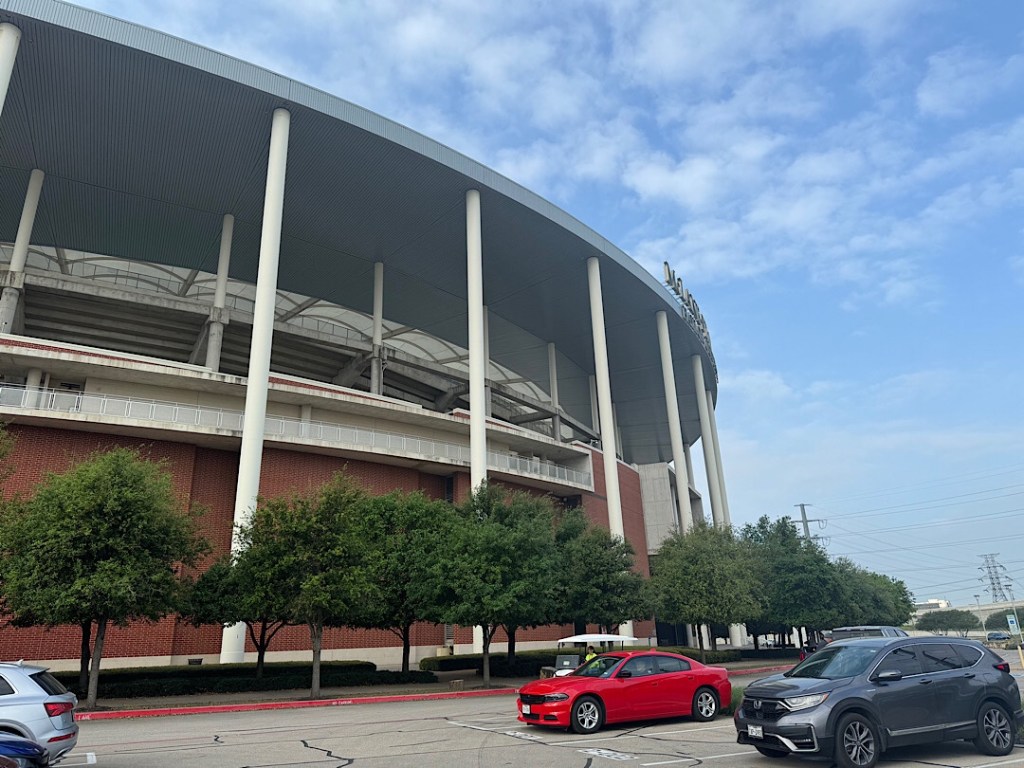
By the time we reached the parking lot at Baylor University, site of our Eclipse Over Texas tickets, it almost felt like a sunny day.
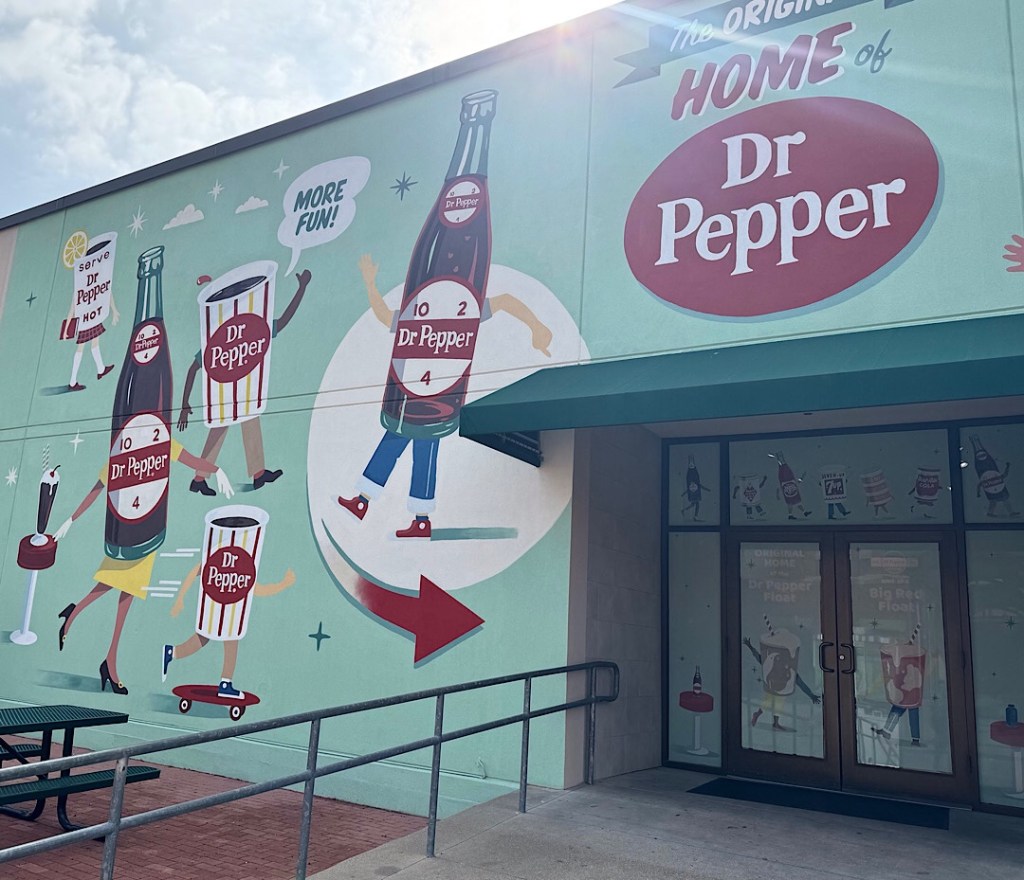
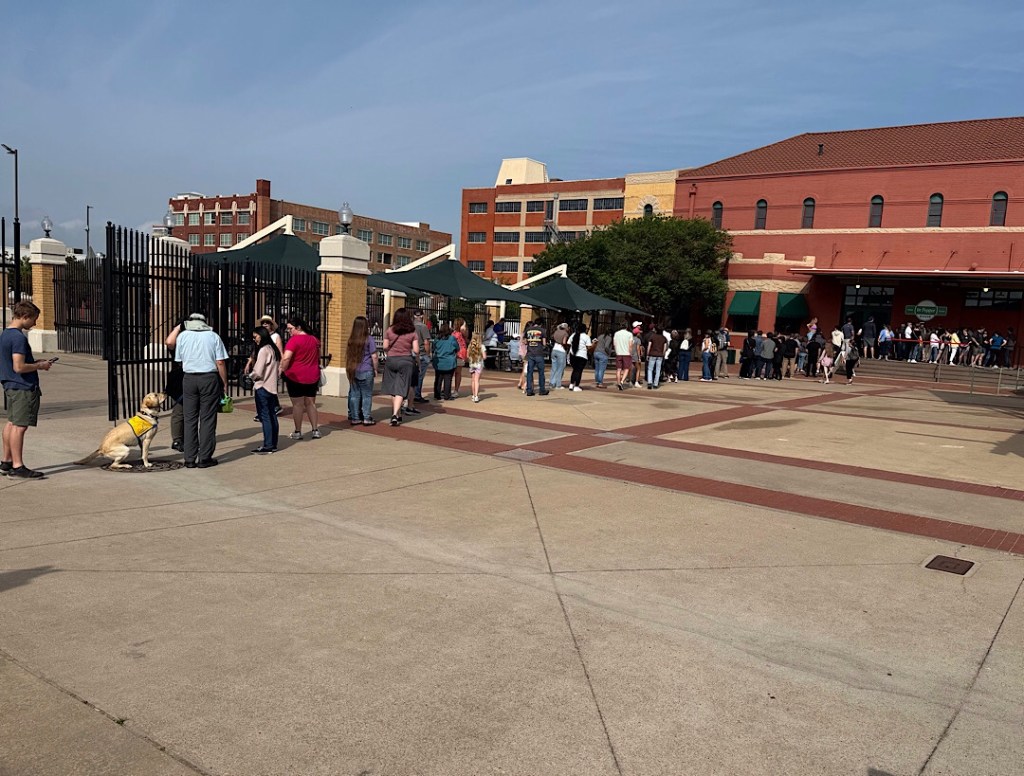
With four hours to go until totality, we walked a little over a mile to the Dr. Pepper Museum in the center of town, where we learned that too many other eclipse-chasers had had the same idea.
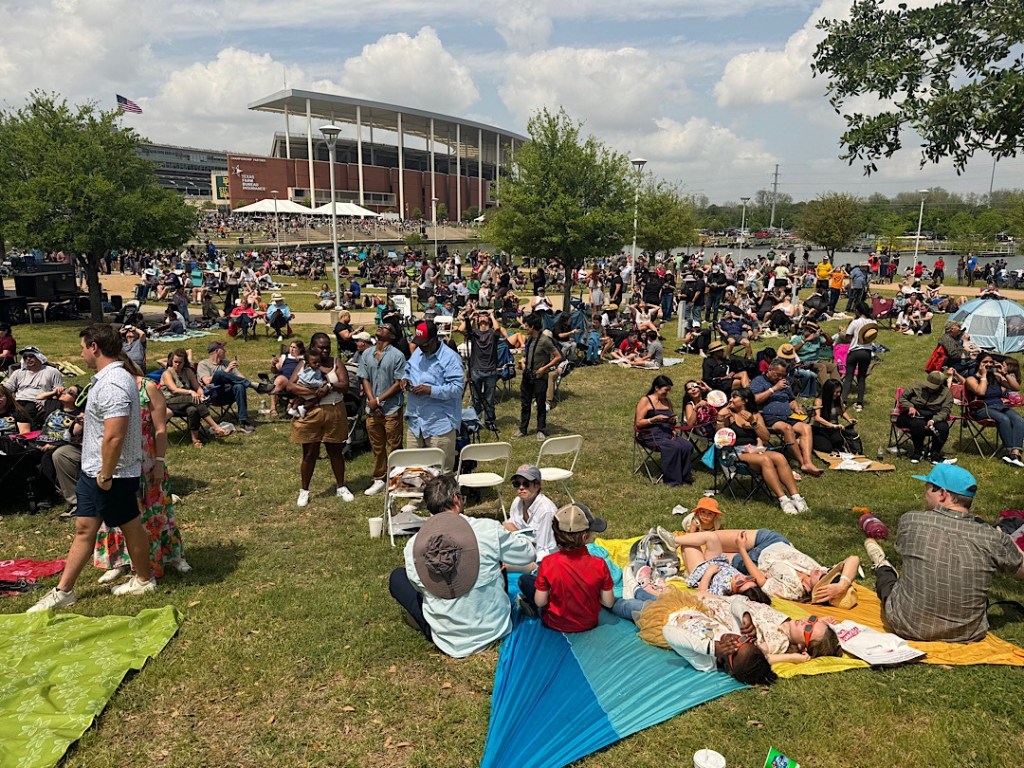
The sun was blazing by then, but the line crawled. After a while, we gave up and returned to Baylor’s eclipse-viewing area. The crowd was growing.
We found our friends Donna and Mike, who had driven in from Colorado.The sky still held promise.
I didn’t mind the two-hour wait for totality. Steve and our friend Leigh braved horrendous lines to buy some of the overpriced food-truck offerings. (Event organizers had forbidden bringing in any picnic fare.) I chatted with Donna and Mike; the people-watching also was amusing.
Like so many others in the crowd, I kept an anxious eye on the sky.
The moon sliced its first thin piece out of the sun around 12:20. You could see this marvel through your eclipse glasses, but as I’ve learned from previous total eclipses, no immediate impact on the earthscape is detectable. On Monday, it took at least another 30 minutes for the light to strike my eye as colder, somehow deader than normal. This sense intensified as more and more of the sun was lost.
The scene went from looking like this……to this.
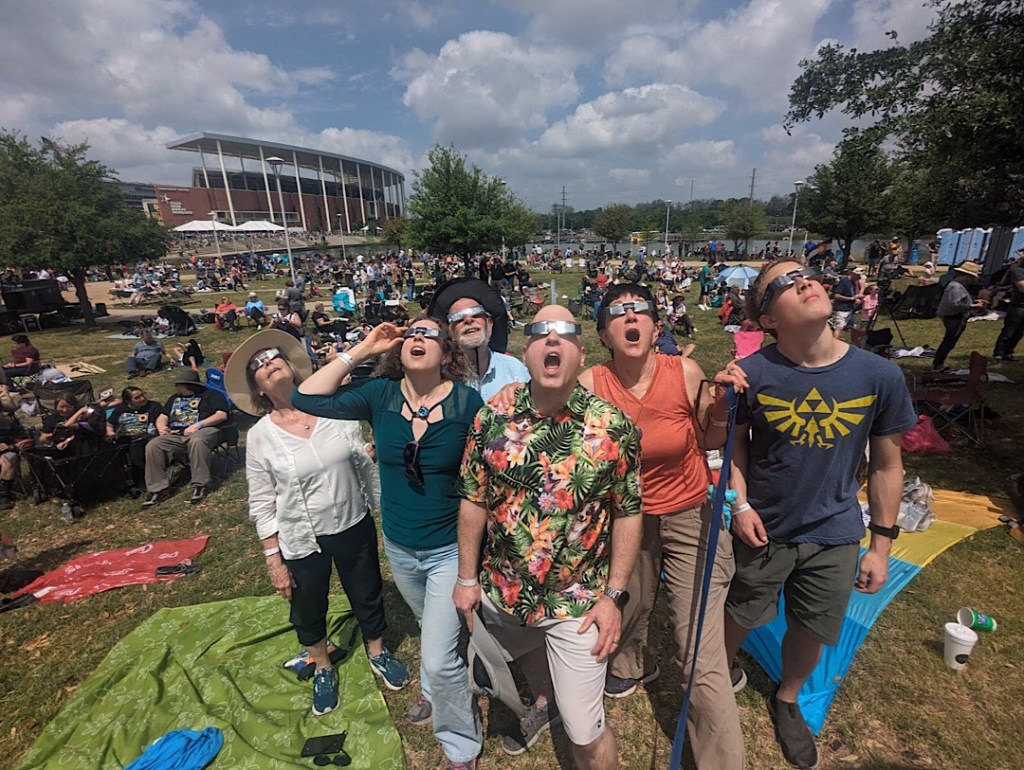
In those last few minutes, I felt a surge of pure joy. Forecasts be damned! The fragile crescent of remaining sun faced no threat of obliteration from mere clouds. We would see everything as it slipped behind the moon and the world chilled and dimmed, abruptly. Thousands of us simultaneously dropped our cardboard glasses, tilted our heads back, and gaped. People cheered. Some of us screamed.
I noticed different things, this fourth time of viewing a total eclipse. Dark as the sky became, I saw no stars, only Venus and Jupiter. (I have no idea why it would have appeared less dark in Texas than in some of my previous total eclipses.) Even without a telescope or fancy camera and lens, we all could see a glowing orange protuberance at about the 4 o’clock position of the orb: solar flares that someone later said were likely the size of a couple of Earths and more than 10 million degrees.
Something about that perfect alignment — the sun, the moon, my brain, surrounding by the cold gloom of space — electrified me. Then the burst of the first bit of sun re-emerging, more dazzling than anything on earth.
En mass, the crowd scrambled to gather our possessions and begin streaming to the parking lot and shuttle buses. Even though the sun would continue to be uncovered for another hour, mundanity was fully restored.
We tore back to Austin at 70 miles an hour; no traffic ever materialized. It was just one more miracle, one more thing to add to the deep sense of wonder and gratitude.
Trent slept through totality. He didn’t understand what all the fuss was about.
Steve and I are mad at American Airlines. We’ve been frequent fliers with them for almost three decades, and our loyalty has enabled us to fly free to countless destinations, both domestic and abroad. But in recent years, it’s become harder and harder to use our miles to go where we want. The most recent example is my effort to use miles to get us to Europe for Paul-Louis’s wedding.
I started trying to find passage back in late December, but all I saw were flights that required us to fly through London’s Heathrow Airport. The problem with this routing is that Heathrow charges hundreds of dollars per passenger in taxes. In contrast, if we fly direct from a US airport to Paris, we pay only about $11 per person.
But the only choice the new (mean and stingy) American Airlines was offering me was to fly from San Diego to Dallas-Ft. Worth Airport one day, then continue on to Paris at 5:50 pm the next day. Repulsive as this choice was, I booked it.
I hoped that eventually better flights would become available (ones that wouldn’t require the Texas sleepover.) At one point, I was checking the AA website two or three times daily. But nothing opened up. Then one day it occurred to me that I had a good reason to spend a day in the Dallas/Ft. Worth area: Ft. Worth is one of the only zoos in the US that includes bonobos in its collection!
In recent years, I’ve become a fan of bonobos — our highly endangered primate cousins, so much more likable than chimpanzees. (We share more than 98 percent of our DNA with both.) Matriarchal in their social organization, bonobos are far more peaceful and sexy in their social interactions. This spring I wrote a cover story for the Reader about the colony at the San Diego Zoo — the first place bonobos were brought from Africa to the Western Hemisphere, and the place where the vast majority of groundbreaking research has occurred.
That reporting was a great experience, and it whetted my appetite to see the other bonobos in captivity in America. The Ft. Worth Zoo is one. So Friday after taking our flight to DFW, we rented an inexpensive car, slept at a cheap hotel, then set out Saturday morning for Ft. Worth (about 30 minutes west of the airport.)
It was instructive. Admission to the Ft. Worth institution only cost $24 for the two of us. (I think it’s close to $100 in San Diego.) Although the temperature was in the high 80s (and headed to the high 90s), the zoo was pleasant, shaded by mature trees.
It’s much smaller than the San Diego Zoo, and it seems much more fearless about promoting its ape collection. The great ape compound was highlighted at the entrance, where the Texans boasted that their primate center includes “all the great apes” — gorillas, orangutans, chimpanzees, and bonobos (who are mentioned by name. In contrast, for reasons that never were clear to me, the San Diego Zoo seems intent on almost hiding its bonobo collection.)
Despite the weird reticence of the San Diegans, I can now tell you this: if you want to have a close encounter with one of our closest animal relatives on the planet, the San Diego Zoo is a better place to do it than Ft. Worth. In San Diego, the bonobos enjoy a huge enclosure, and there are three or four windows into it that enable a lot of up close and personal interaction with these charming animals. We saw six bonobos at the Ft. Worth facility. Two were in an indoor enclosure, the size of which made me cringe. Steve had to remind me that the alternative for bonobos (living wild and free in the Congo) carries the constant risk of being killed and smoked by poachers.
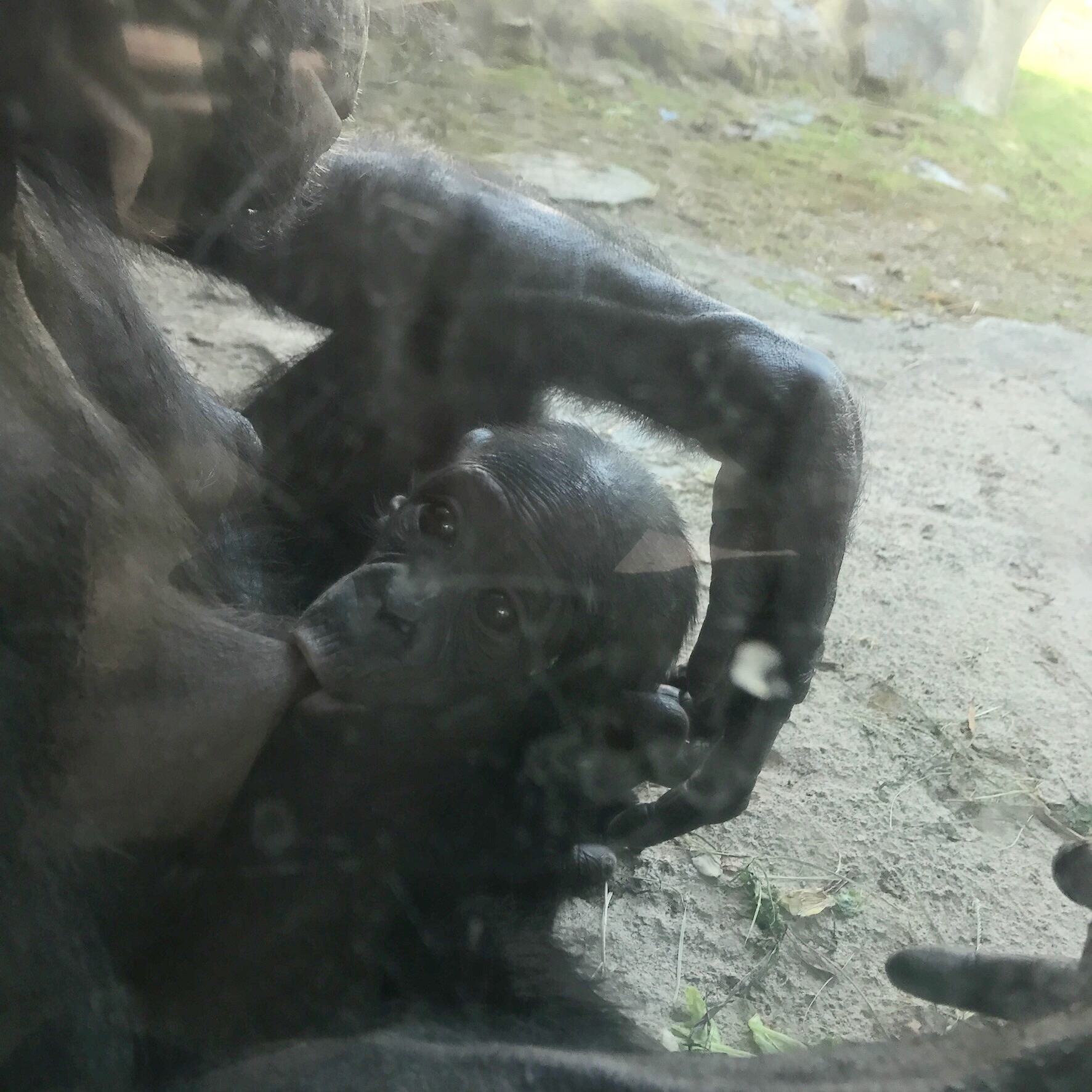
In the Ft. Worth Zoo’s outdoor viewing area, we were able to catch a glimpse of four more bonobos (two females adults, one male, and a baby). Then, to my delight, the mother and baby moved right next to the only viewing window, near where we were standing.
.
The baby looked very young — less than a year? The mother settled into the corner near the glass, and the baby began nursing. We were inches away, albeit viewing all this through scratched, milky windows that made it hard to take good pictures. The baby sucked at one of its mother’s breasts. It moved to the other side and gazed at its mother adoringly, but also periodically focused its attention on Steve and me. We stared back. I tried to communicate some sense of solidarity with the pair, to project my respect and admiration.
I don’t think they got it. But I’m still glad we went.








 At home and abroad