Steve thinks weather can color first impressions of wherever you’ve landed. That was true of our arrival in Papua New Guinea Sunday morning. We had a pleasant two-hour flight from Honiara to Pt. Moresby, PNG’s capital. But we descended to the airport through skies filled with menacing clouds. On the ground, gusty winds matched the evil reputation of this city, which regularly ranks among the most dangerous in the world.
We reached our hotel around 3 and were assigned a room on the fifth floor. It had huge windows overlooking the nearby beach, but the wind was shaking them so violently I could imagine them shattering. The racket continued all evening and was still so loud when I went to bed I had to wear earplugs.
Everything I’d ever read about Pt. Moresby suggested it was not safe to go out and walk around. So even though Monday morning dawned bright and calm, both Steve and I were content to hang out in our room. He worked on his travel journal; I wrote my last blog post. At 2 pm we were supposed to meet up with our tour leader, Christopher Bartlett, in the hotel bar. But mid-morning, a disturbing message popped up on our WhatsApp group chat: Christopher and a half-dozen other tour members were delayed in New Britain, where they’d been scuba diving. With luck, they might land around 4:30. A while later, Christopher Whatsapped again, suggesting we get a ride from the hotel down to Ela Beach, where festive activities celebrating the 50th anniversary of PNG’s independence from Australia were supposed to unfold.
This took a while to organize, but Steve and I and five other members of our 20-person group eventually piled in a van and drove down the hill. It occurred to me that the US State Department wouldn’t approve. PNG is already on their “Reconsider Travel” list because of the crime, particularly in Pt. Moresby, and political unrest in the western highlands. The anniversary celebrations would draw large crowds that might become violent, one bulletin advised, so they should be avoided.
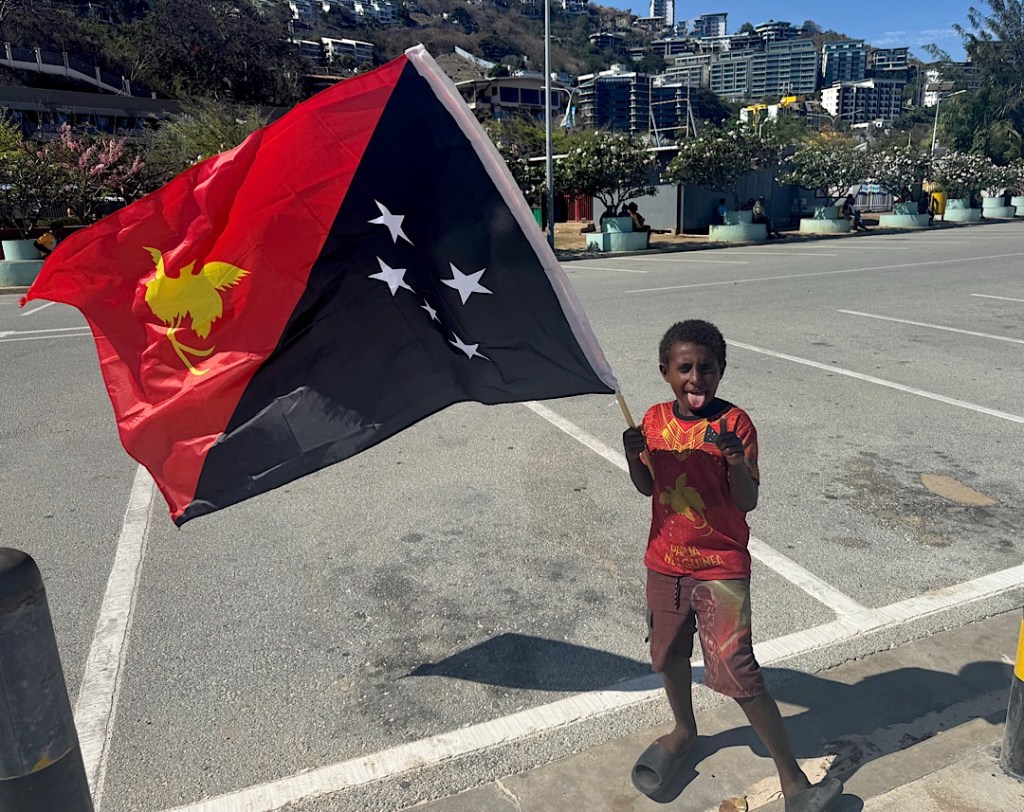
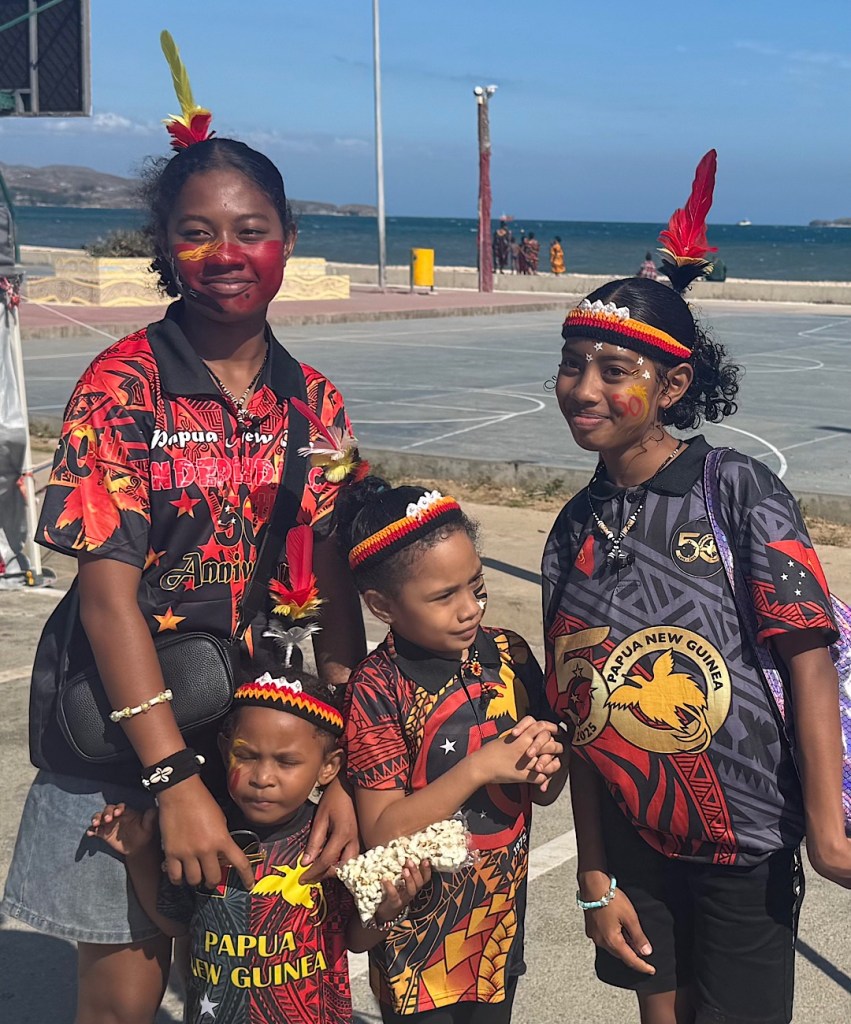
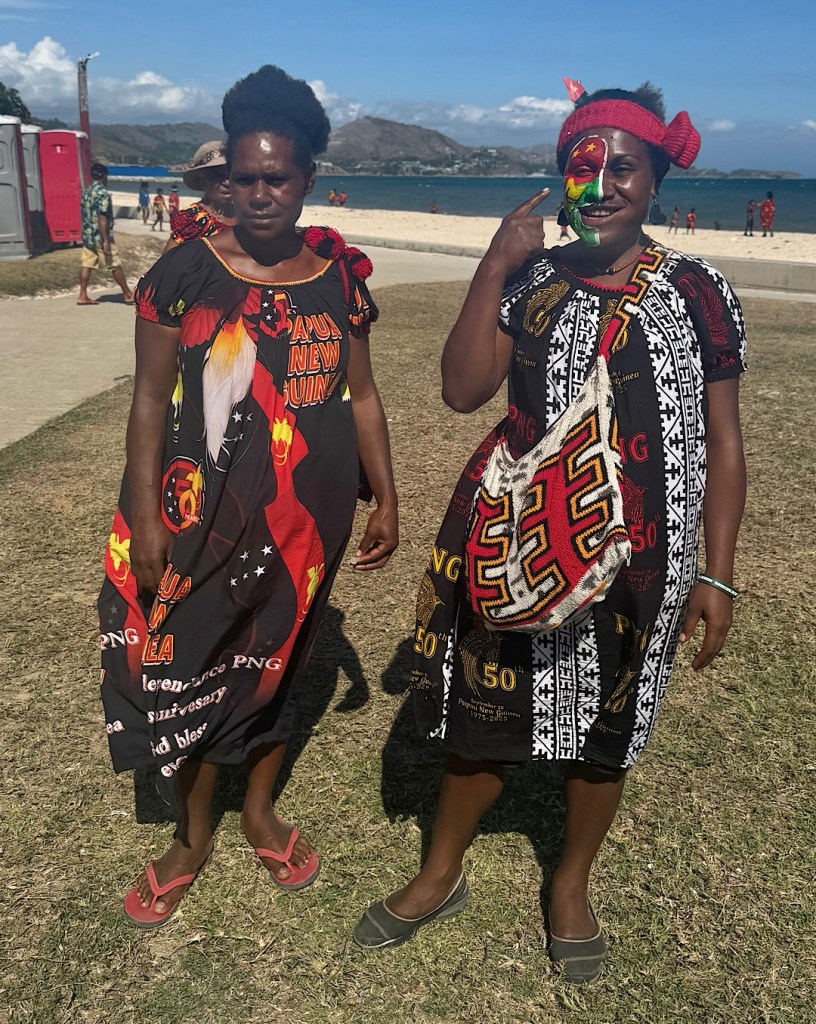
When the van disgorged us next to the beach, however, it was obvious little to no danger lurked here. The balmy day and cool breeze off the ocean would have made anyone feel cheerful, and the women and children and families we encountered on the boardwalk were in an extra ebullient mood. Everyone smiled at us and returned our “hellos” and most were dressed in the red, black and gold national colors, Many waved large PNG flags. They sang out “Happy Independence Day!”and we chorused back the same.
Kate, the only English member of our group, charmed everyone with her enthusiasm. My photo doesn’t show it well, but this guy had painted half his body coal black and the other half red, with a gold bird of paradise on his left chest.
Along the busiest part of the boardwalk, vendors had set up tidy booths where they were selling clothing and jewelry and other crafts. So we shopped and took pictures and made our way to a stage where we caught a few music and dance performances. Then Steve and I and Kate decided to walk back up the hill to our hotel, rather than catch a taxi. No harm befell us.
I don’t doubt that visitors to Pt. Moresby routinely get robbed or even worse. Still, my experience that afternoon and in the next few days made me think anyone who wouldn’t dream of visiting Papua New Guinea because it’s too dangerous should reconsider their travel plans.
PS — I’m writing this in the Eastern Highlands. We’ve been on the road for three days, and we’re immersed in the cultural experiences at the heart of this part of our itinerary. Internet connections are getting worse and worse. I’ve decided to keep my posts short, limit the number of photos, and send them whenever I catch a good, brief online connection. But that’s likely to be sporadic for the next few days.
Arriving in Honiara, capital of the Solomon Islands, last Wednesday afternoon, I felt a rare emotion: culture shock. It wasn’t triggered by the fact that all the people looked African. In Fiji we had already passed into the Melanesian sphere of influence. Melanesians are part of the enthnographic family that includes Australian aborigines. Their ancestors came from Africa (as did those of all Homo sapiens) but in the tens of thousands of years since humans arrived in this part of the globe, their faces have continued to reflect where they started out.
Instead, it was the airport that startled us. The terminal building is clean and big enough, but it contained almost nothing that airports in other capital cities hold. We found a single ATM machine and a little currency-exchange stand. But no gift shops were evident. No counters offered cars. No one was selling any SIM cards that would get you local phone service.
Taxis queued up outside seemed to be offering a flat rate to our destination, the Honiara Hotel. This had not been my first choice for accommodation. Back in January, when I was first planning this trip, my online sources made me want to stay at the Heritage Park Hotel, located in the center of this small but lively capital. To my bewilderment, the Heritage Park was already completely booked for our dates.
Understand that the Solomon Islands consistently ranks among the 10 least-visited countries in the world. How could any hotel on any of its 900 islands be sold out 9 months in advance?
I later learned we just happened to be arriving the week when, for the first time in ages, Honiara would be hosting the annual Pacific Islands Forum. The heads of 18 countries and territories would be gathering to discuss regional issues in Oceania; they and their aides had already gobbled up the best digs in town! So I reserved a room at the Honiara; it didn’t sound bad.
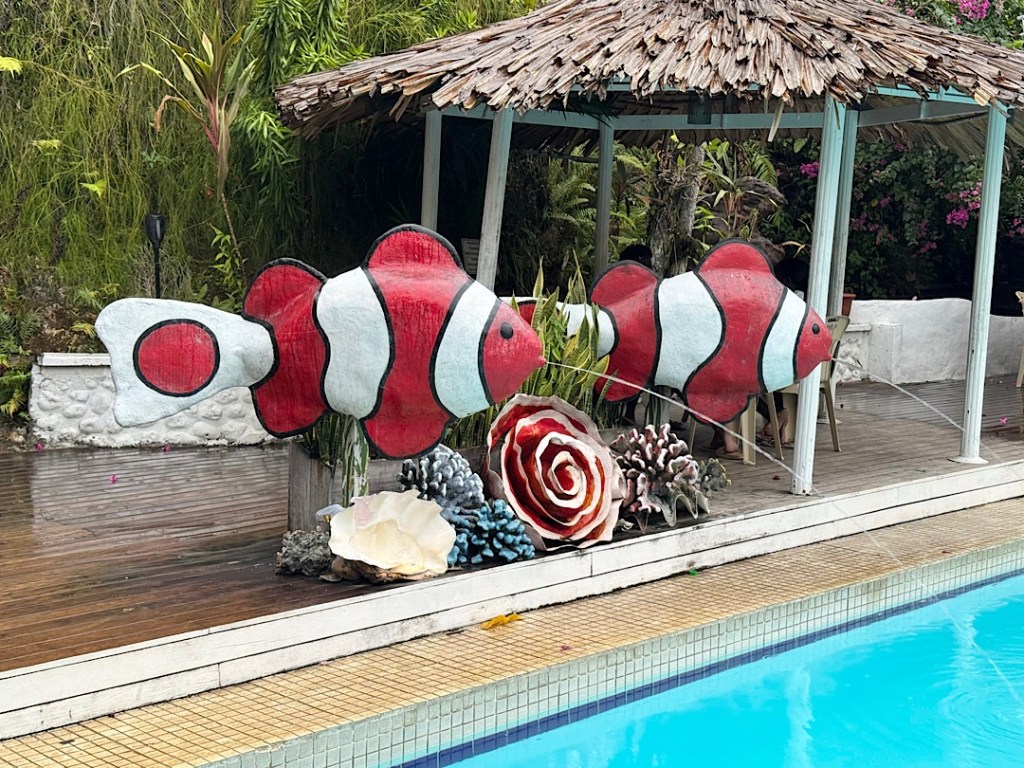
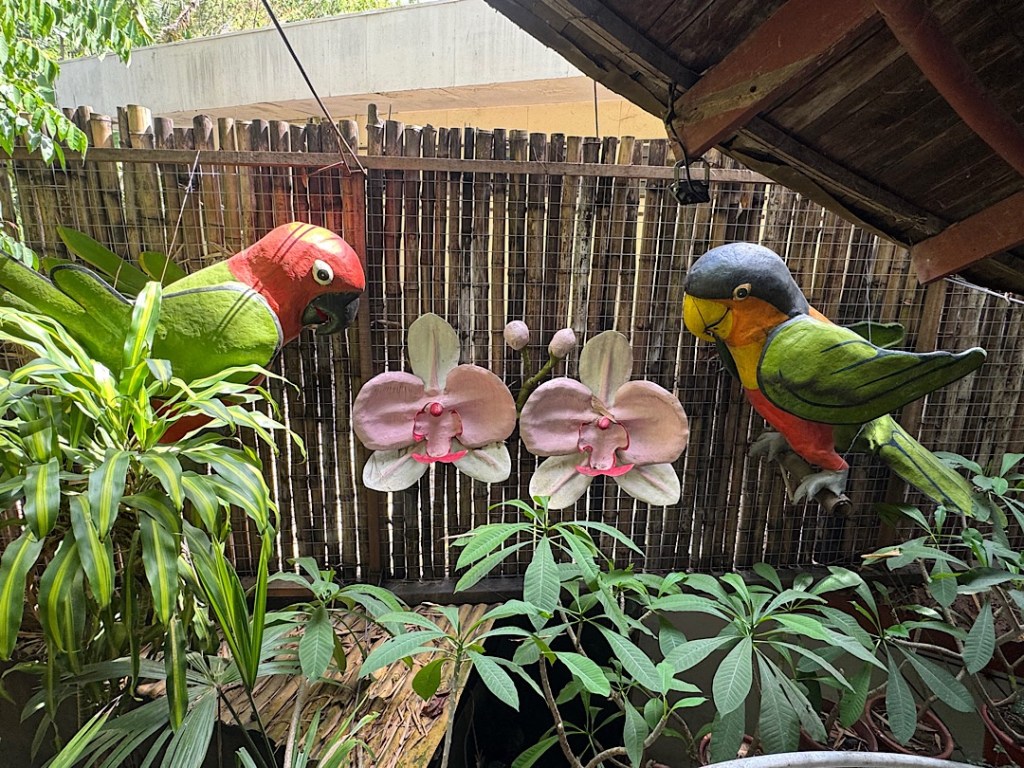
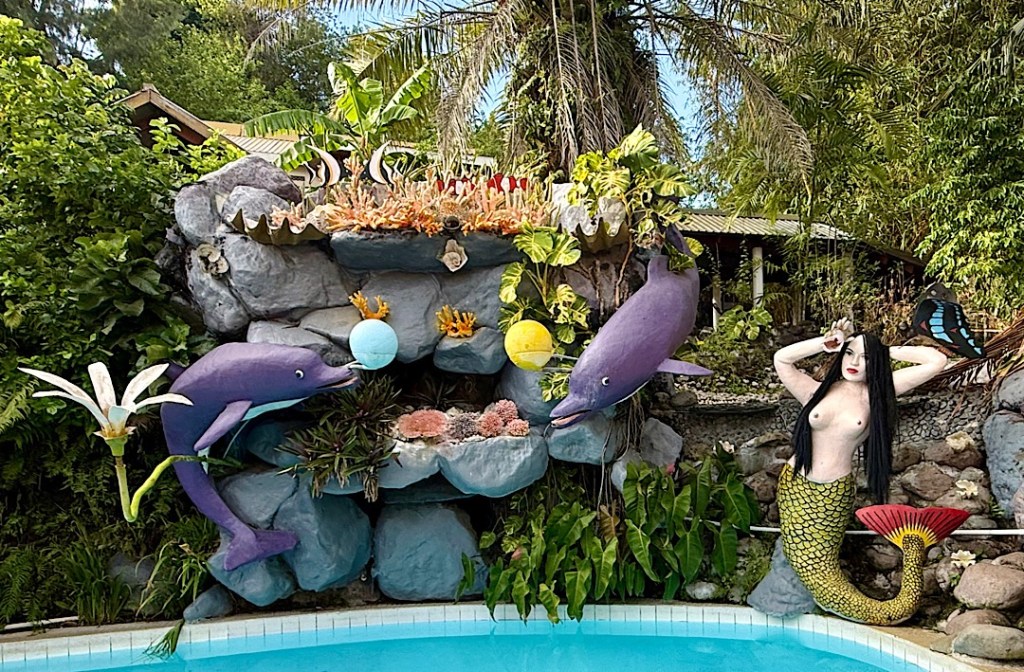
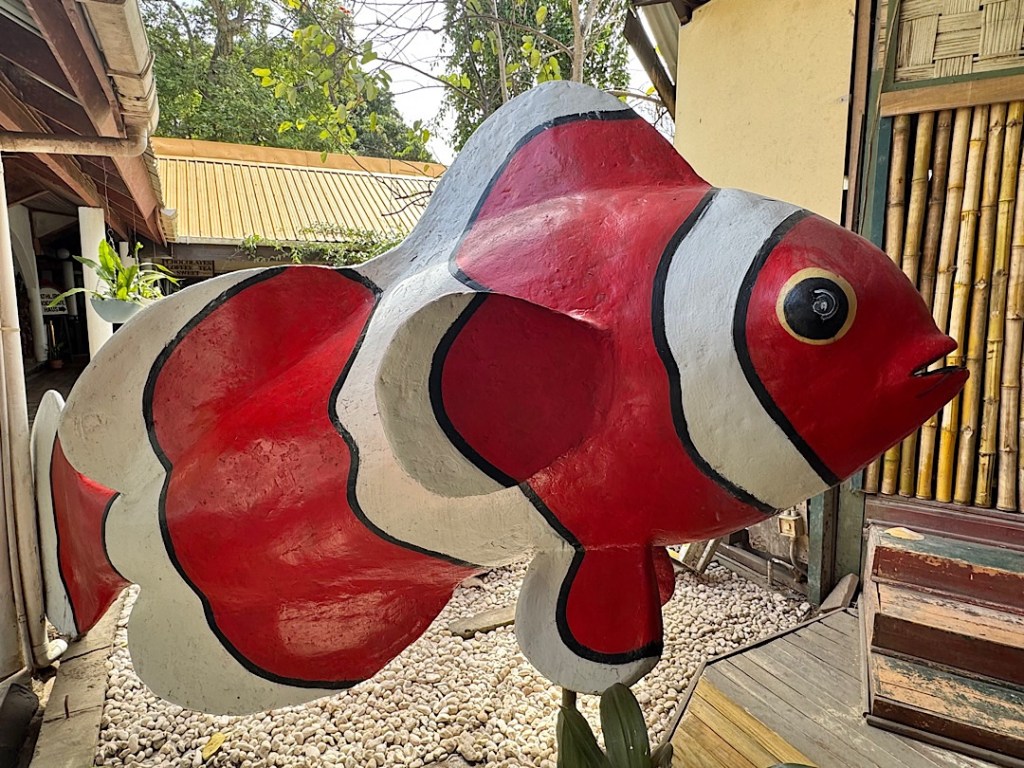
As it turned out, the Honiara was not to be missed. The buildings ramble over a hillside with good views of the water. Concrete staircases lead guests past a head-spinning assortment of giant wildly colorful sculptures. They make the place feel psychedelic.
Why, you might be wondering at this point, did we choose to visit the Solomon Islands? Call it an accident of the air-service network. Honiara is among the few cities in the world with nonstop flights to Pt. Moresby (the capital of Papua New Guinea, our ultimate destination.) And it’s only a three-hour jump via Fiji Airways from Nadi (Fiji) to Honiara. So I booked flights that allowed us to spend four nights in Fiji, followed by two in the Solomons. Then the airline changed its flight schedule, and we wound up with the longer stay in a place about which I knew virtually nothing.
I figured we’d wing it.
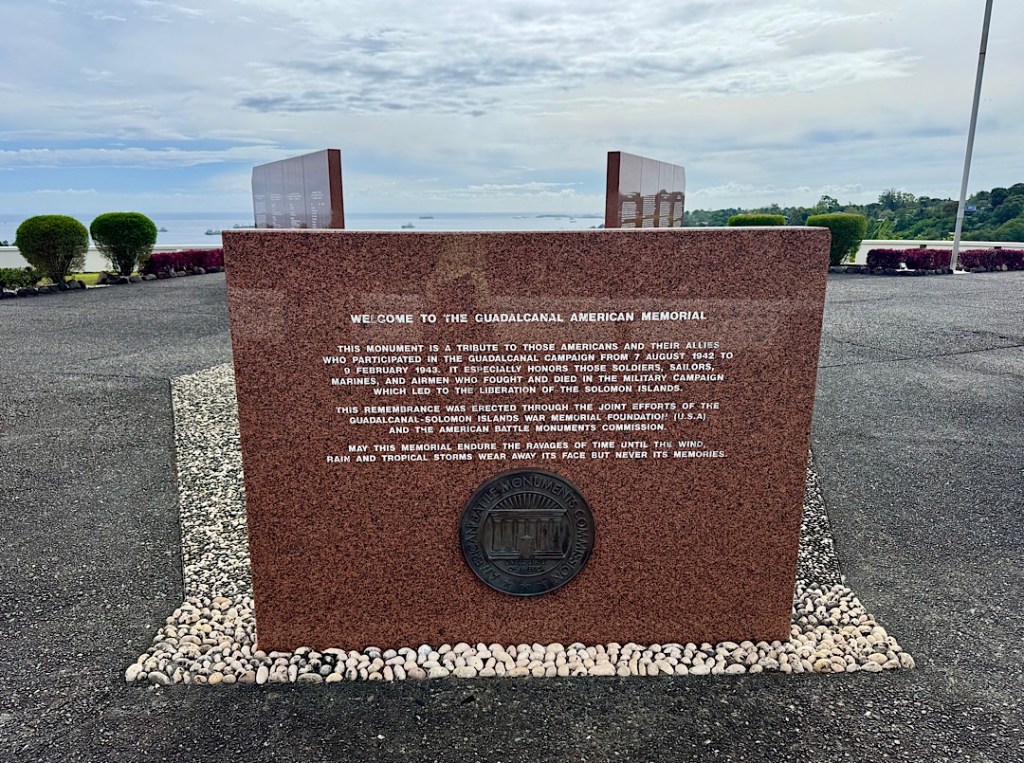
We asked George, the taxi driver who drove us from the airport to our hotel, to pick us up the next morning. He suggested we pay a quick visit to the Guadalcanal American Memorial just down the road. Set high on a hillside, it pays homage to a critical battle in the Pacific theater of World War II. (Honiara is located on Guadalcanal, the largest and most important of the islands that make up the Solomons.)
The outdoor memorial contains a host of granite monuments holding more historical information about the battle than I could ever absorb. WWII is one thing that draws some tourists here.
We then asked George to drop us off at the National Museum in the center of town, where we were the only visitors. That was no reflection on the quality of the exhibits.
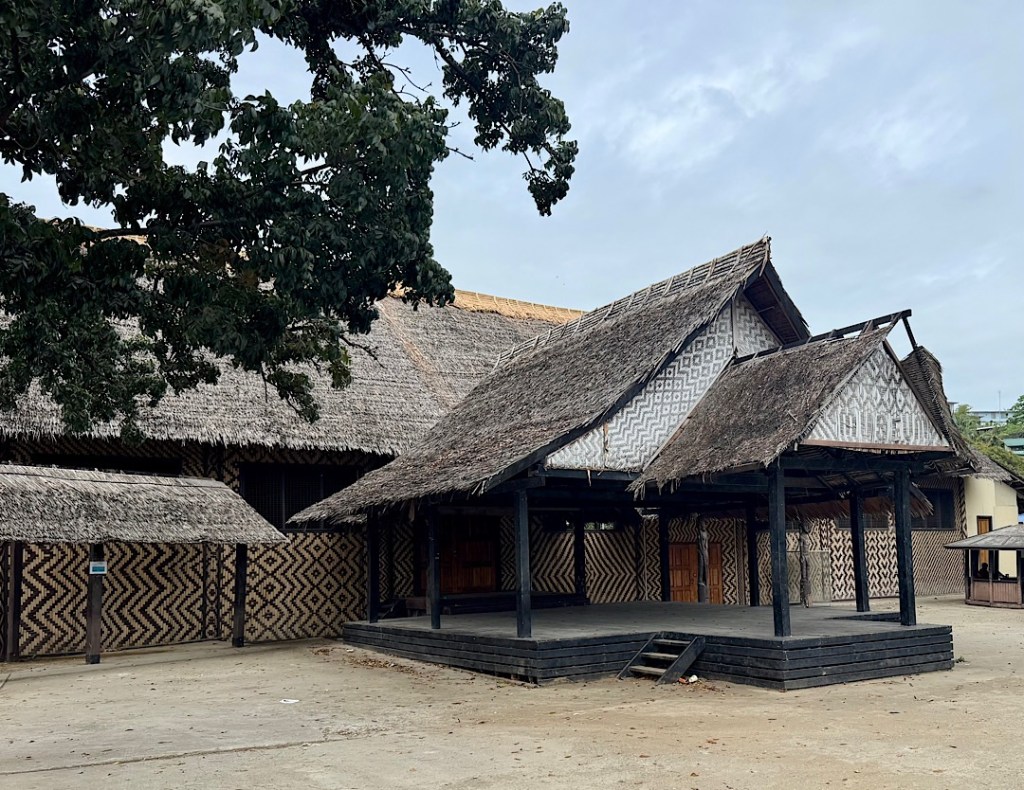
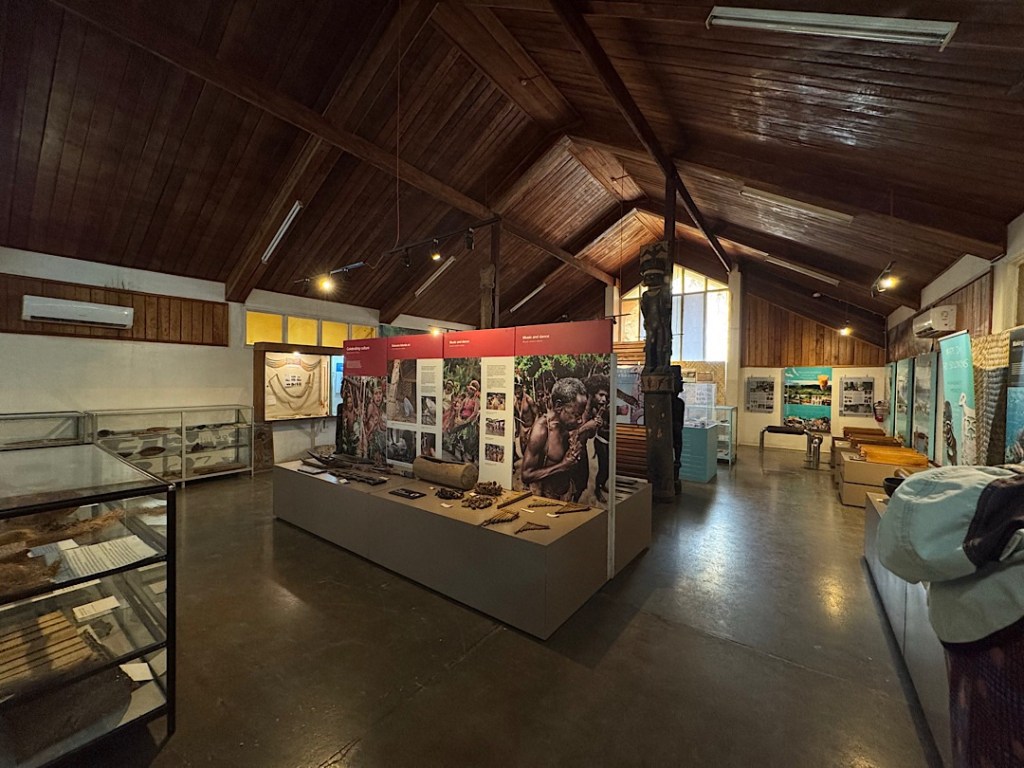
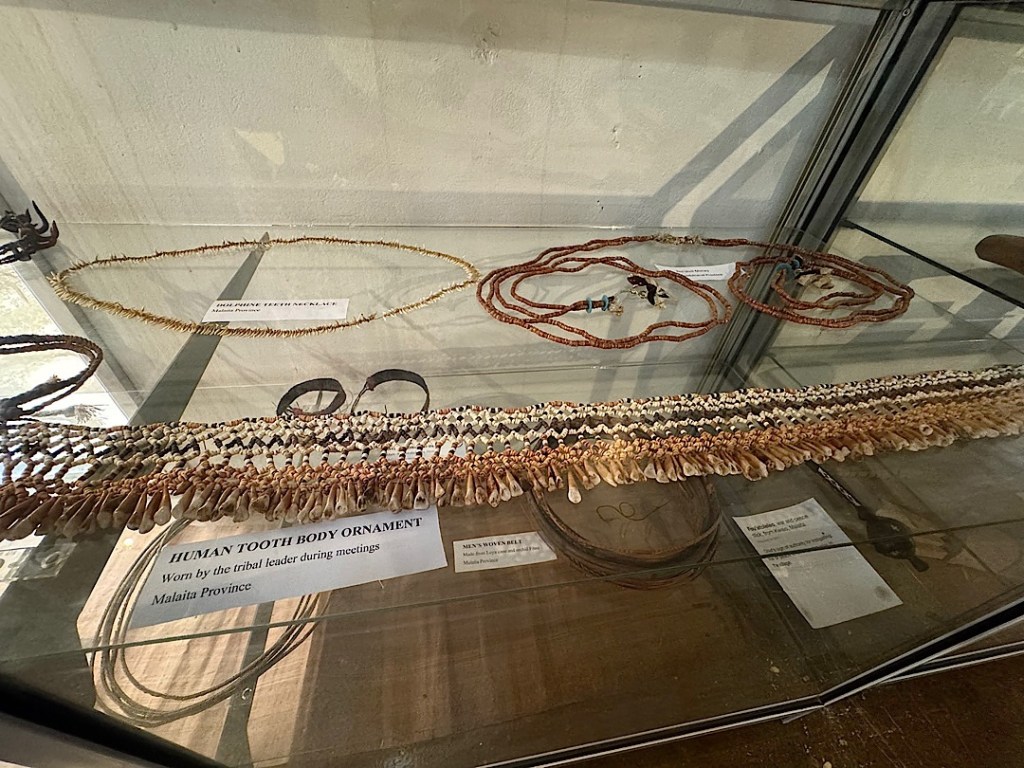
We didn’t go into this impressive structure.But we spent the better part of an hour in this exhibits hall, filled with many fascinating objects……like this belt made of human teeth. We saw lots of “bead money” and many bizarre weapons.
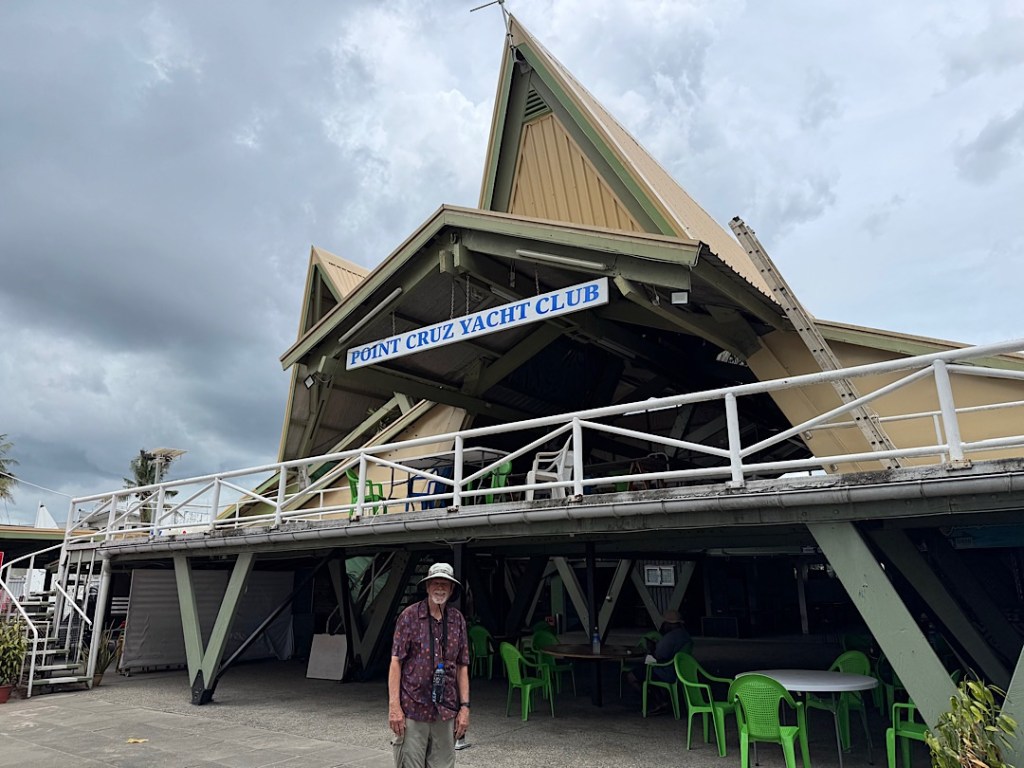
We popped into the nearby Solomon Islands visitor center then walked about a block to the Point Cruz Yacht Club to check out its restaurant; we’d heard it might be a place to eat.
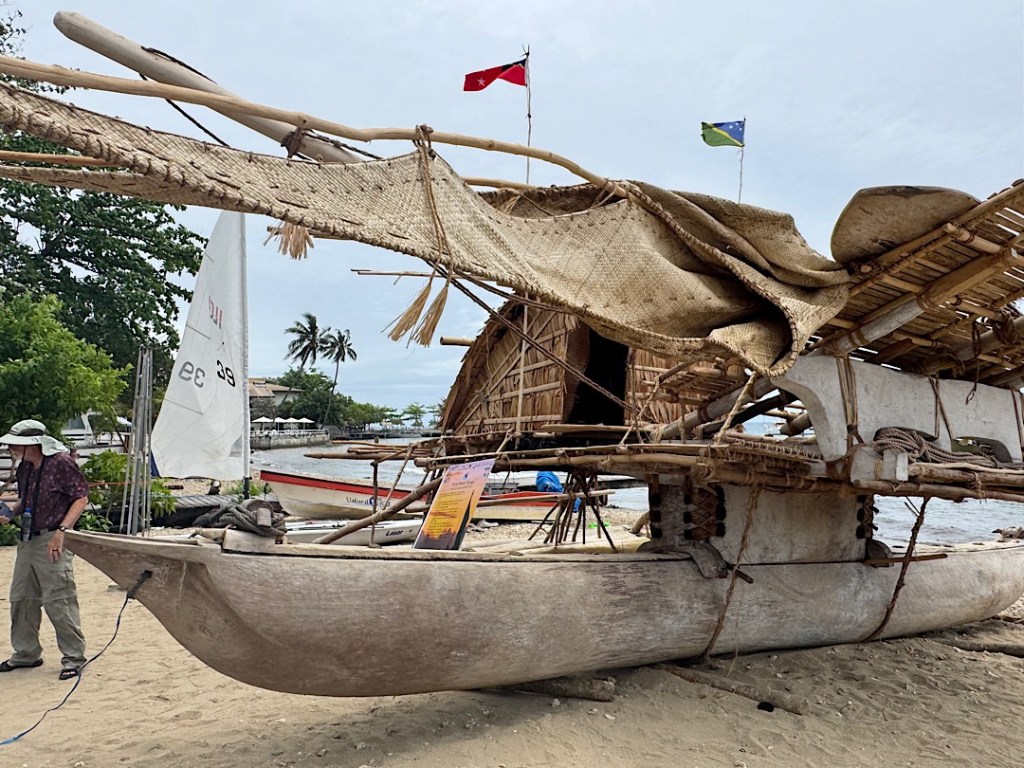
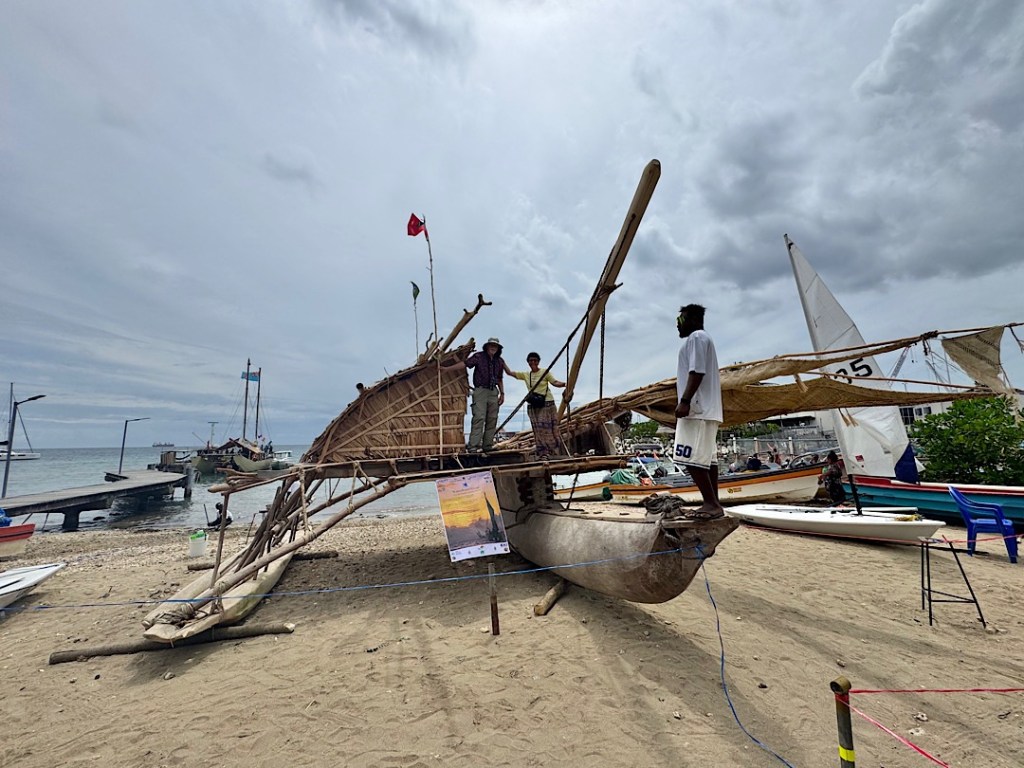
The dimly lighted central building looked like an okay place to shoot pool and drink beer with the guys. But on the beach out back, we found something quite extraordinary: a small “Tepuke”-style outrigger canoe built entirely from traditional materials in the traditional manner developed by ancient Pacific mariners.
This particular vessel had recently been constructed in the far easternmost part of the country; a six-person crew sailed it for 5 days from there, arriving in time to kick off the big political pow-wow. Steve and I had read about such sailing ships in the marvelous recent book, Sea People, and now here was one, steps away from us.
We chatted at length with a friendly, burly man who introduced himself as Bennett. He urged us to climb up so he could take our picture on the little outrigger.
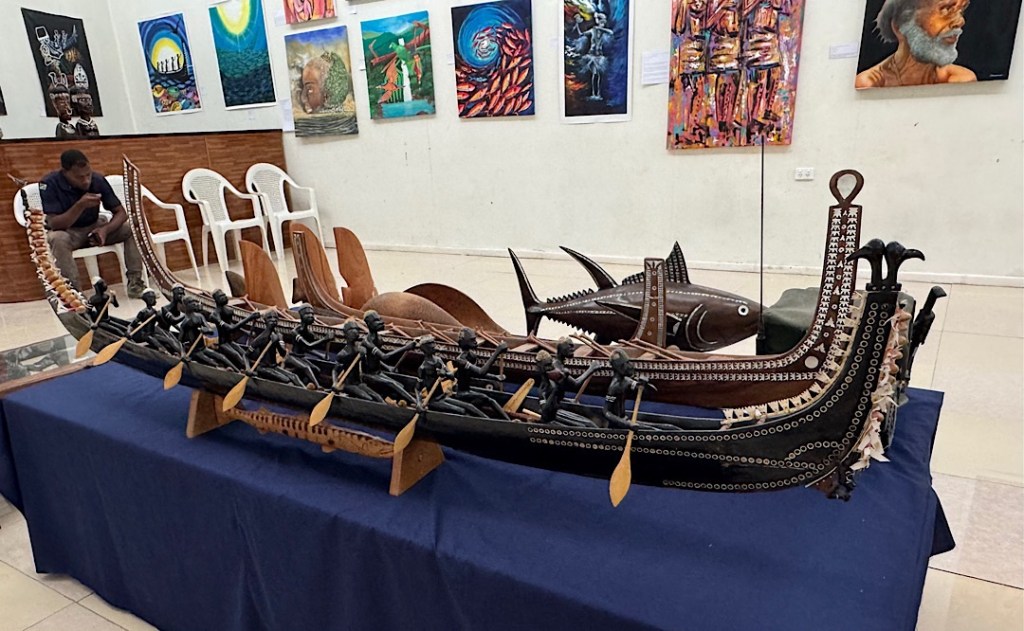
That afternoon we did several other things. We visited an art gallery that was small but filled with some interesting things.
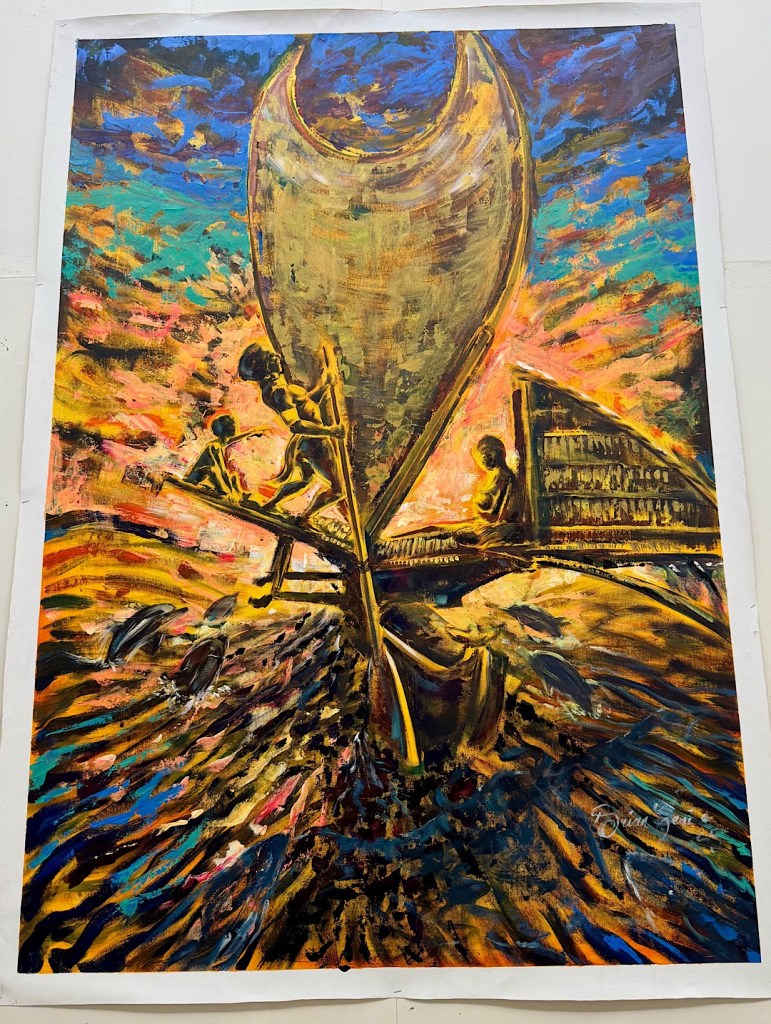
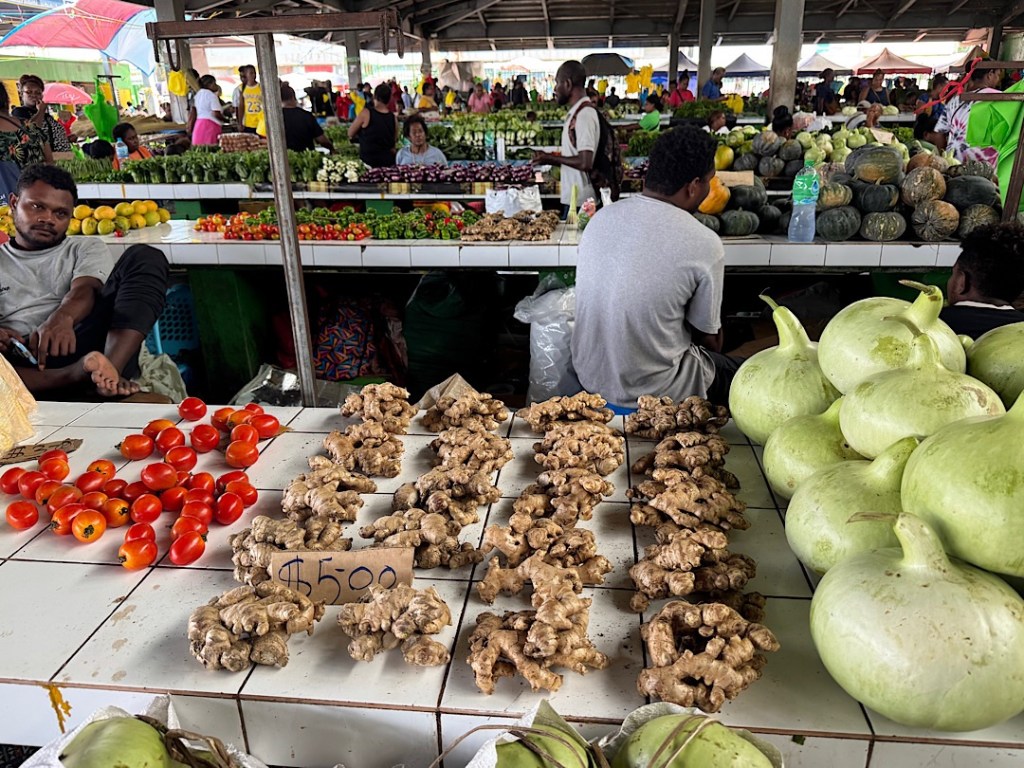
This painting captures what I imagine it must be like to sail an actual tepuke outrigger.We strolled through the central fish and produce market, which seemed to be extraordinarily clean and tidy.It’s a good place to buy ginger. These large ones were going for the equivalent of 60 US cents.
By mid-afternoon the heat and humidity had reached daunting levels, so we caught a taxi back to the hotel and, after a swim and a nap, began to fret in earnest about occupying ourselves for the next two days. The front-desk clerk had a suggestion. She knew someone with a little tour company who might be able to help. Lisa punched a number into her cell phone, and minutes later, Keren Fono’ota pulled into the Honiara’s parking lot.
Born on Vanuatu (another island country about 800 miles east of Honiara), Keren had moved to the Solomon Islands about 25 years ago. She went to school and worked for a few years as a journalist, but then she started Iumi Tour Solomons. Warm and charismatic, she didn’t have to work very hard to sign us up for two of her outings: a cultural visit to a village on Friday and a full-day beach excursion for Saturday.
It did not bother us that on Fiji we had just done BOTH a cultural village visit AND an island day trip. I’ve come to realize that in tropical tourist destinations, those are like fish and chips. It’s hard to avoid them. Moreover, we’d greatly enjoyed the Fijian offerings, and as luck would have it, Keren’s versions turned out to feel much less touristy and more authentic than their Fijian counterparts.
The village to which she drove us, Hotomai, was an offshoot of a larger community on the other side of Guadalcanal. Although the Birau people in the satellite village earned some money from welcoming the occasional visitors, they also grew subsistence crops and sent their kids to local schools. For our visit, some of the ladies gave us a musical greeting.
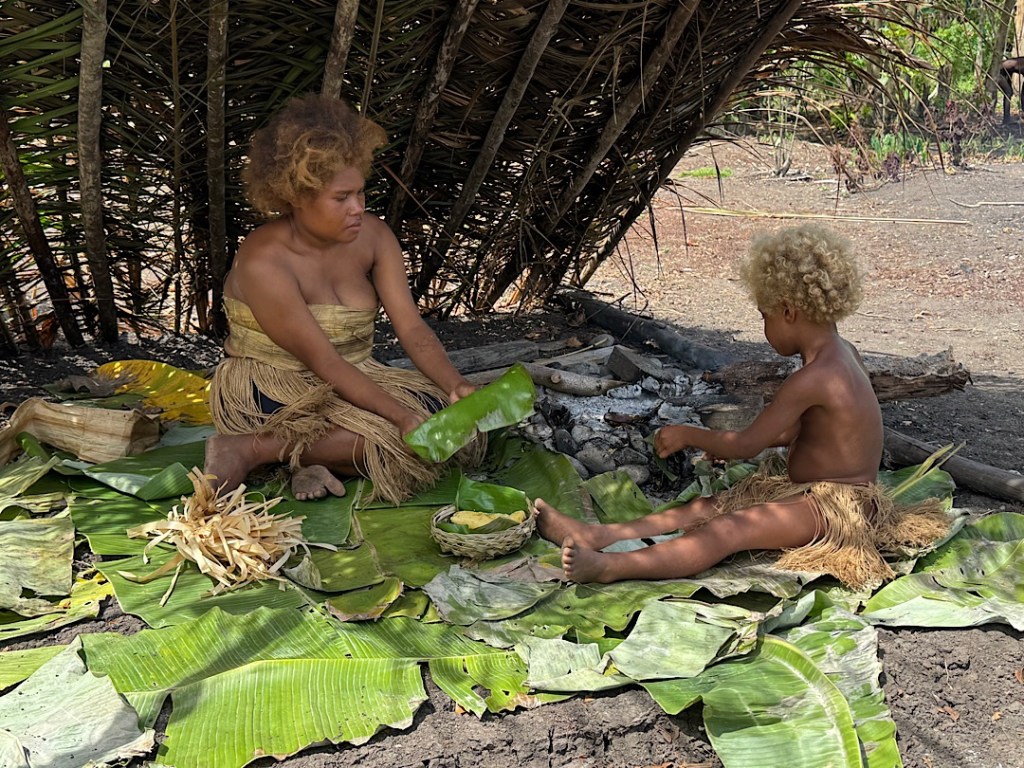
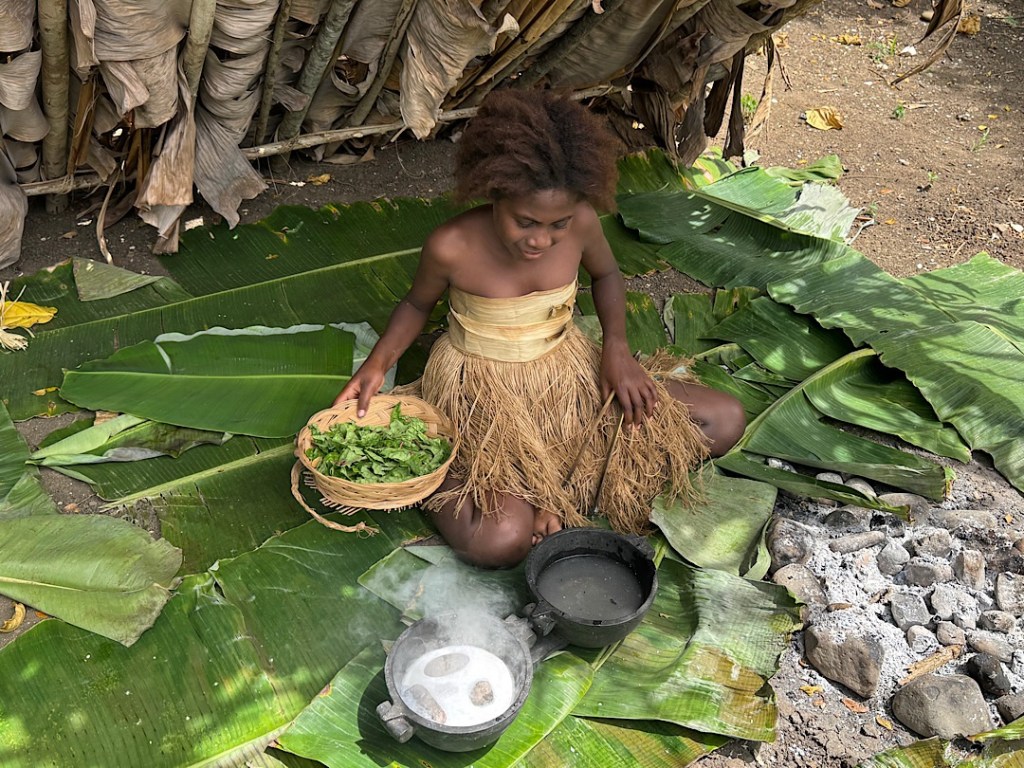
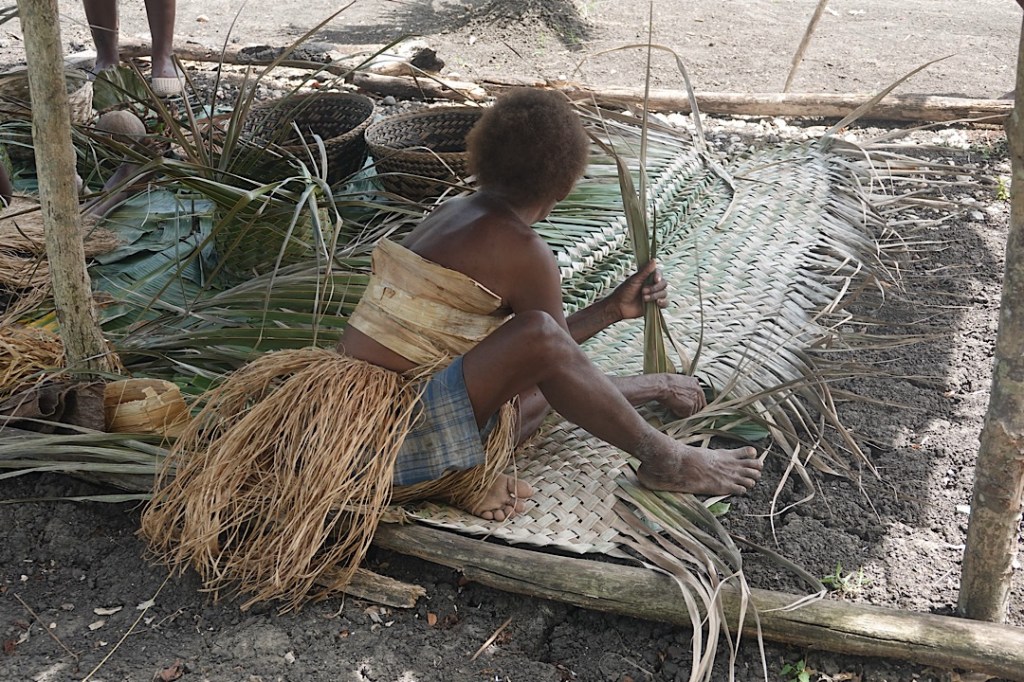
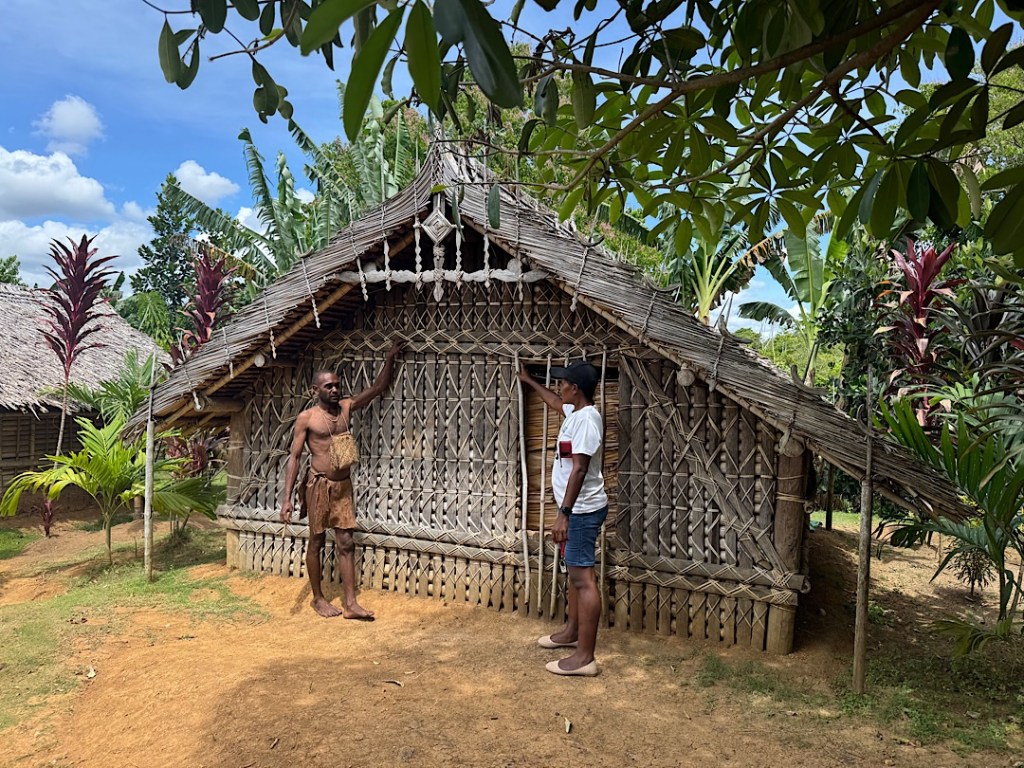
We got lessons in how to plant taro and cook traditional foods……such as bananas……and greens. The rocks in front of this young woman were red hot. She picked them up with her tongs, rinsed off the ashes, then put the hot rock in coconut milk. Then she simmered the cabbage-like greens in the hot milky stew.This lady is turning palm fronds into all sorts of useful objects.Here are Keren and one of the tribal leaders in from of a community room built without any nails.
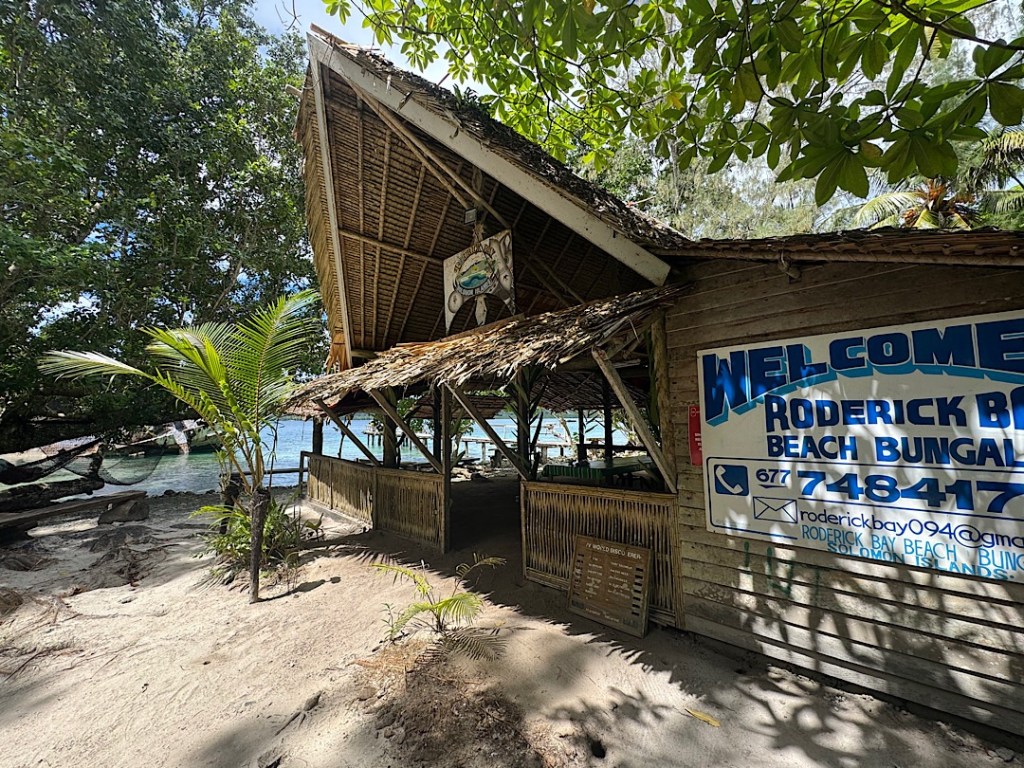
We took the village tour along with an Australian couple, but for Keren’s outing to Roderick Bay the next day, Steve and I were the only customers. Keren had told us we would travel in a speedboat for 90 minutes out to one of the Florida Islands.
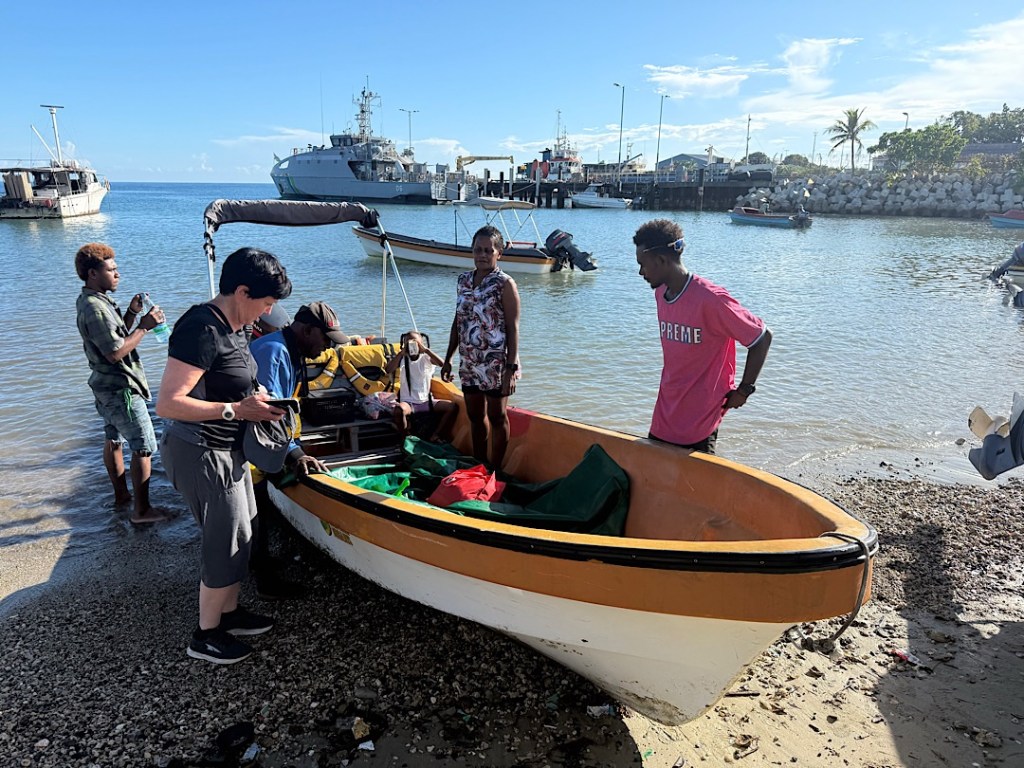
When we arrived at the yacht club Saturday morning, we realized the “speedboat” was what Solomon Islanders call a banana boat. In Baja California, folks know it as a panga: an open fiberglass motorboat about 25 feet long, powered by a Yamaha outboard motor.
Steve and I and Keren and her two kids, 6 and 8, piled in and the captain coaxed the motor into action. “Look at it this way,” Steve murmured to me, “You could be riding in this with 20 Mexicans. In the dark.”
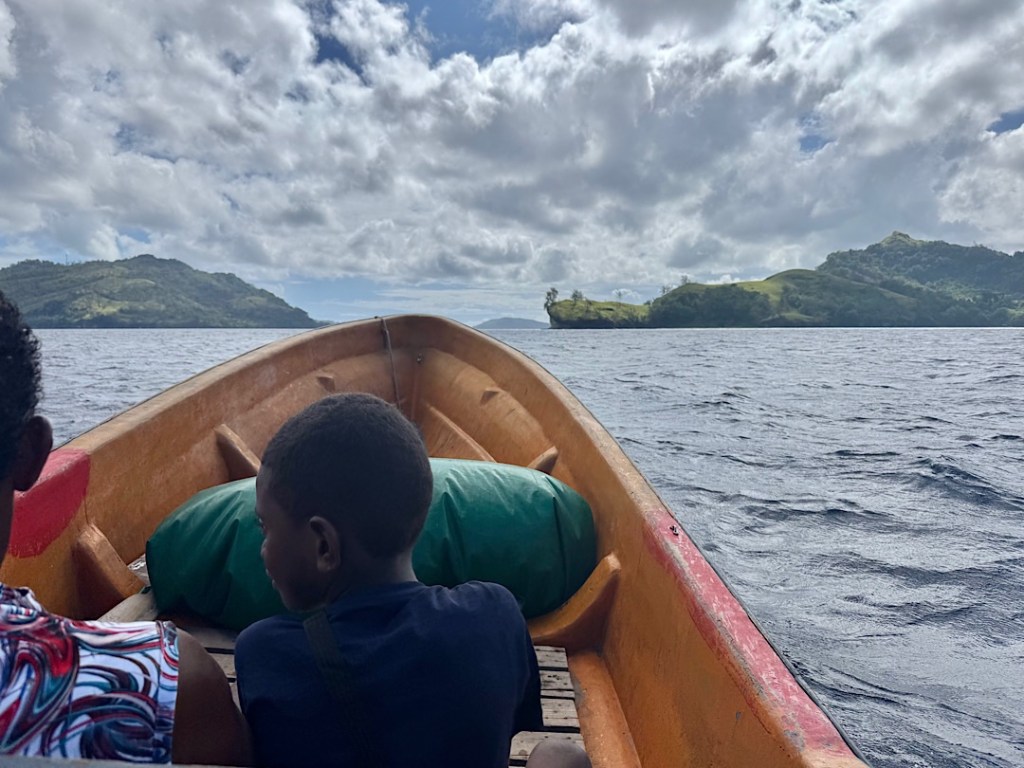
We roared out to sea, and I felt a rush of exuberance that lasted for maybe 10 minutes. Then the miserable part began. The wind stiffened, shattering the relatively flat sea surface into a million geometries that caught our little craft and made it bob this way and that. Frequently we were lifted up then slammed down with a force that made me worry about the impact on my spine. Soon we were out of sight of land. Swells rolled in that made us roll tilt even more, and I felt grateful neither Steve nor I get seasick. I soon was soaking wet, from the salt water that blew in over me.
I tried to distract myself by reflecting on our location: smack in the middle of “Iron Bottom Sound,” a nod to the Japanese and American ships that went to the bottom in the ferocious fighting that exploded here 83 years ago. Not far away, future US president John F. Kennedy’s PT boat was struck by Japanese fire and sank. Surely that must have been more unpleasant than this passage, I told myself.
I would have bet money that the destination wouldn’t justify the journey. But then we approached the entrance to the bay.
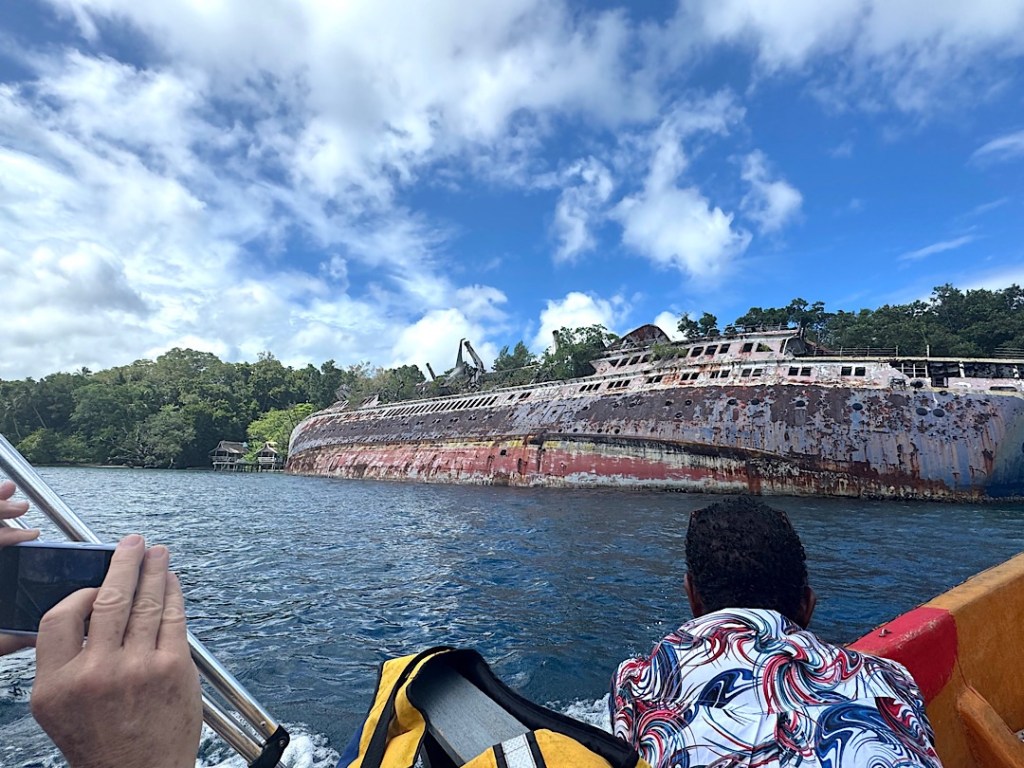
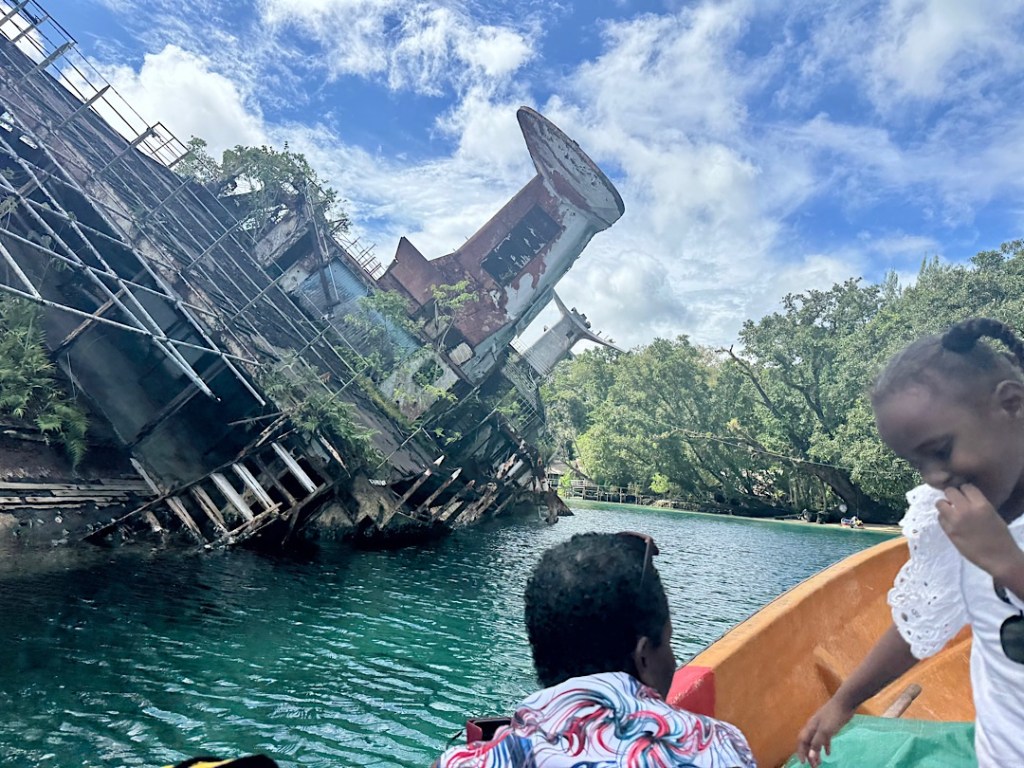
The world became calm again; the sun came out. After some moments we approached a bizarre sight: a German cruise ship that had hit a reef 25 years ago and limped into this inlet before sinking. Behind the wreck, a scene of extraordinary peace and beauty came into view.
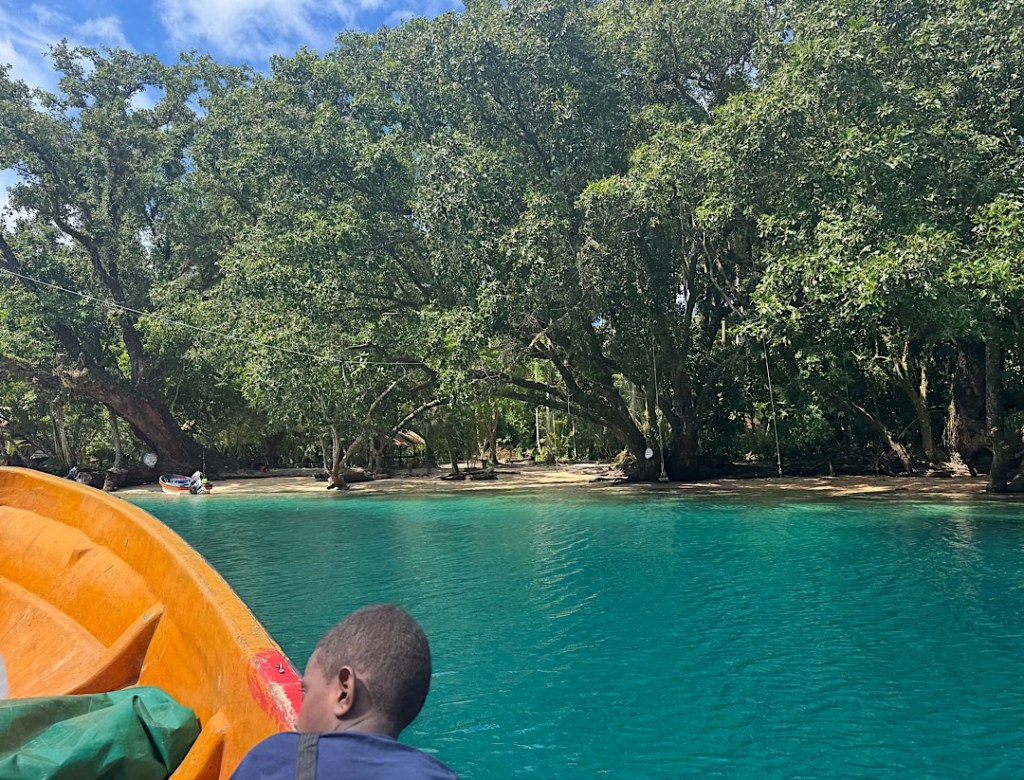
A small tropical garden appeared to be growing on the wreck. We approached a sandy white beach under magnificent trees.
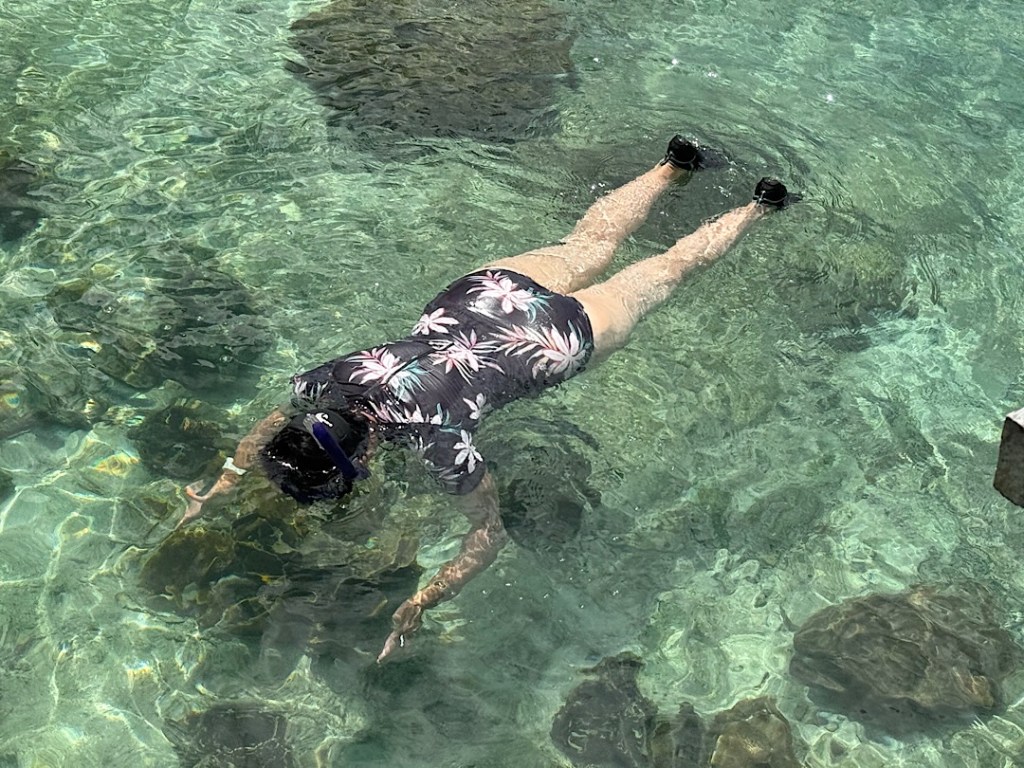
We rented snorkels and marveled at beautiful fish hanging out in the little reef off the beach . I spotted a clam as wide as my hands are apart in the photo below.
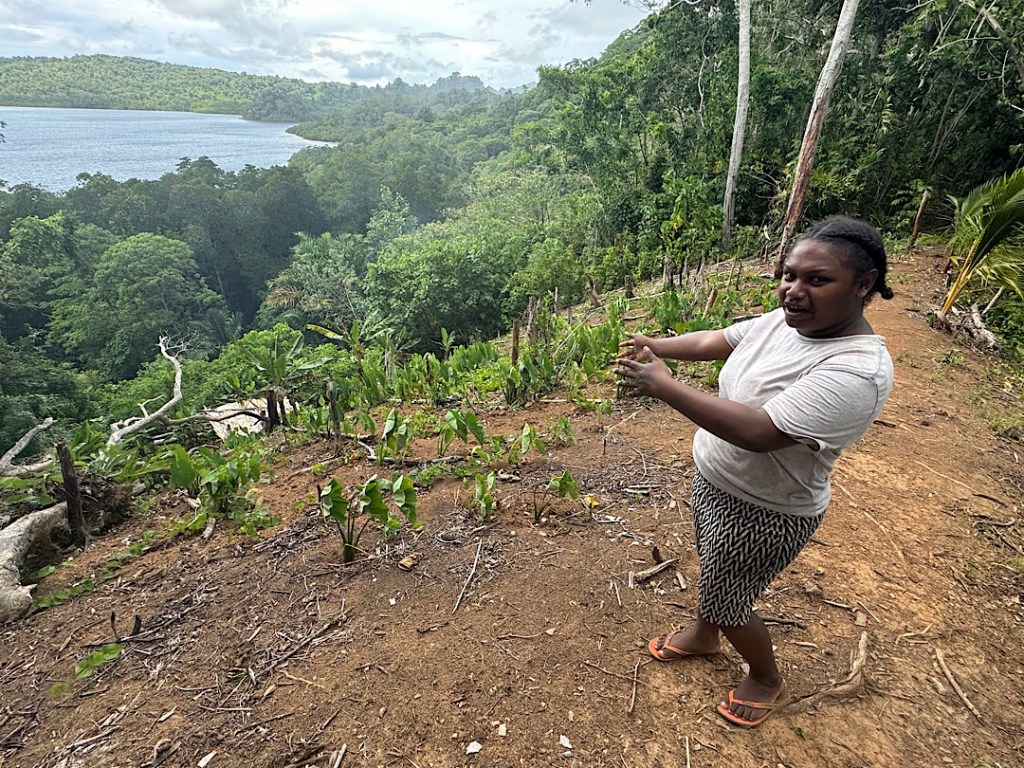
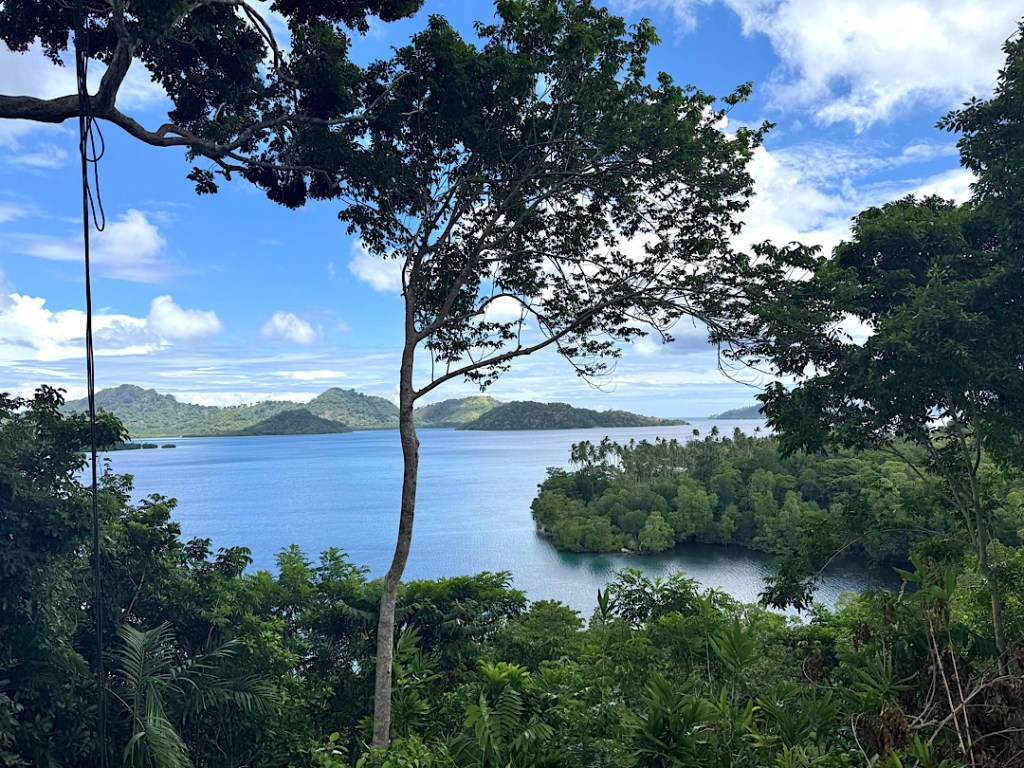
We had a simple lunch then hiked up to a lookout point on top of the ridge. Tracy, the daughter of the property owner was our guide.We could have stayed overnight in a primitive cabin. But we had a plane to catch the next morning.
So at 2 p.m. we piled back into the banana boat. The ride back wasn’t better but it wasn’t any worse and most importantly nothing catastrophic happened.
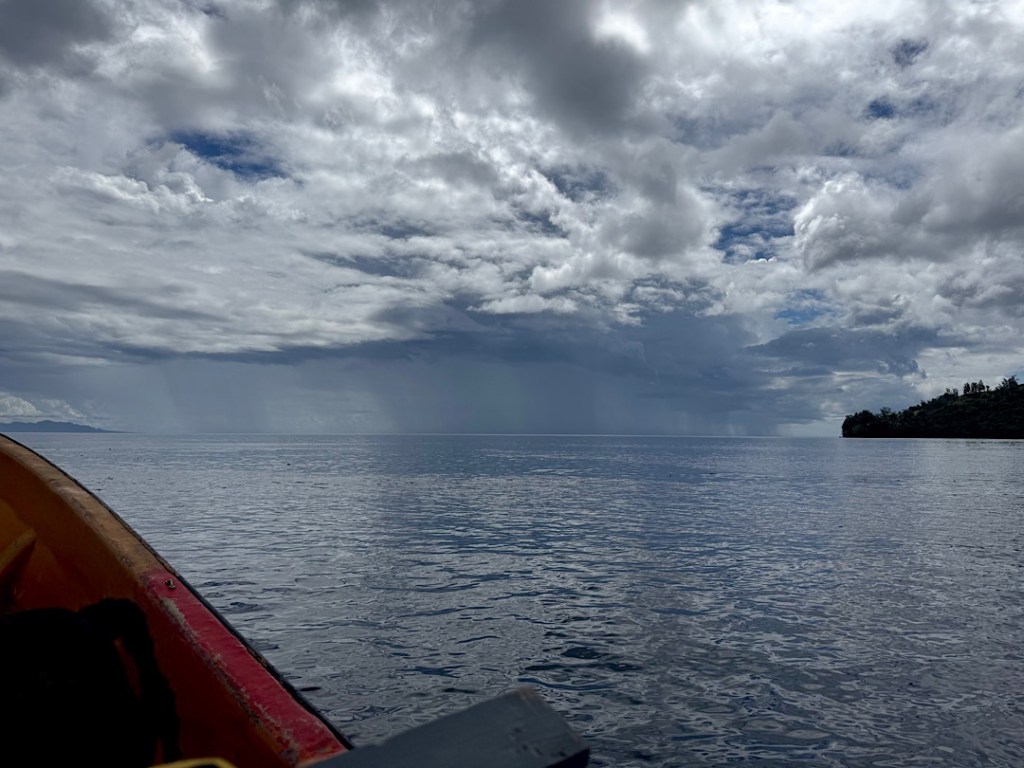
This rain in the distance looked ugly, but the downpour blew away from us.
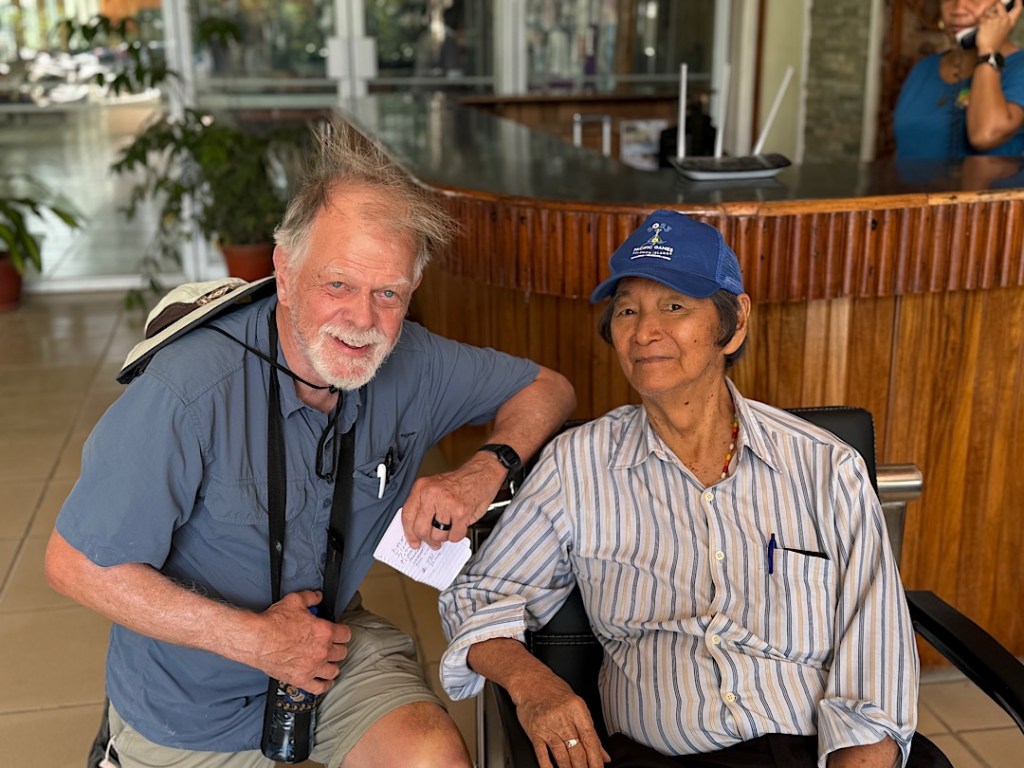
Steve and I had to pack up and check out by 9 yesterday morning, then head to the airport for our flight to Pt. Moresby in PNG. At breakfast, I had spotted Sir Thomas Chan in the dining room. A frail Asian gentleman, Sir Tommy (as folks call him) is the 82-year-old owner/creator of the hotel and the artist responsible for all the hallucinogenic art work. Photos and other memorabilia posted in the lobby provide flashbacks of his life.
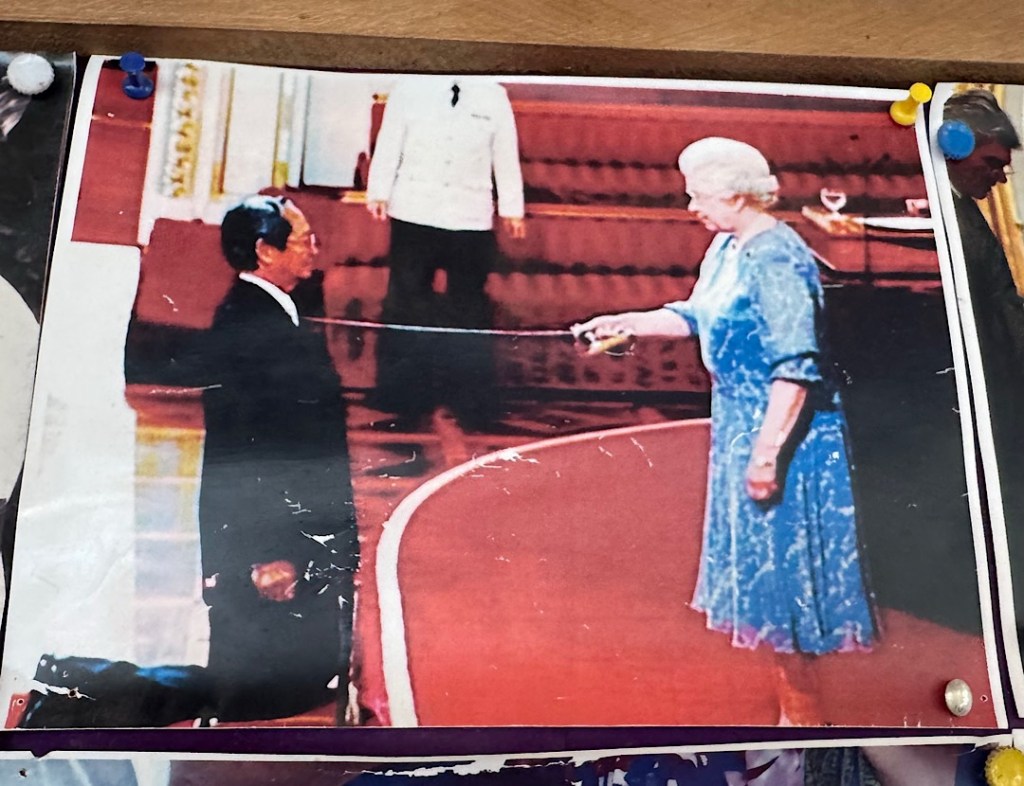
There he is waterskiing! Catching huge fish! Greeting dignitaries, including Prince William and Princess Kate back in 2012. In another photo, you see him kneeling before Queen Elizabeth as she touches a ceremonial sword to his shoulders (the title apparently granted in recognition of his charitable work.)
Steve and I had run into him in the lobby a few days earlier while waiting for Keren to pick us up. Sir Tommy told Steve a bit about his business career.
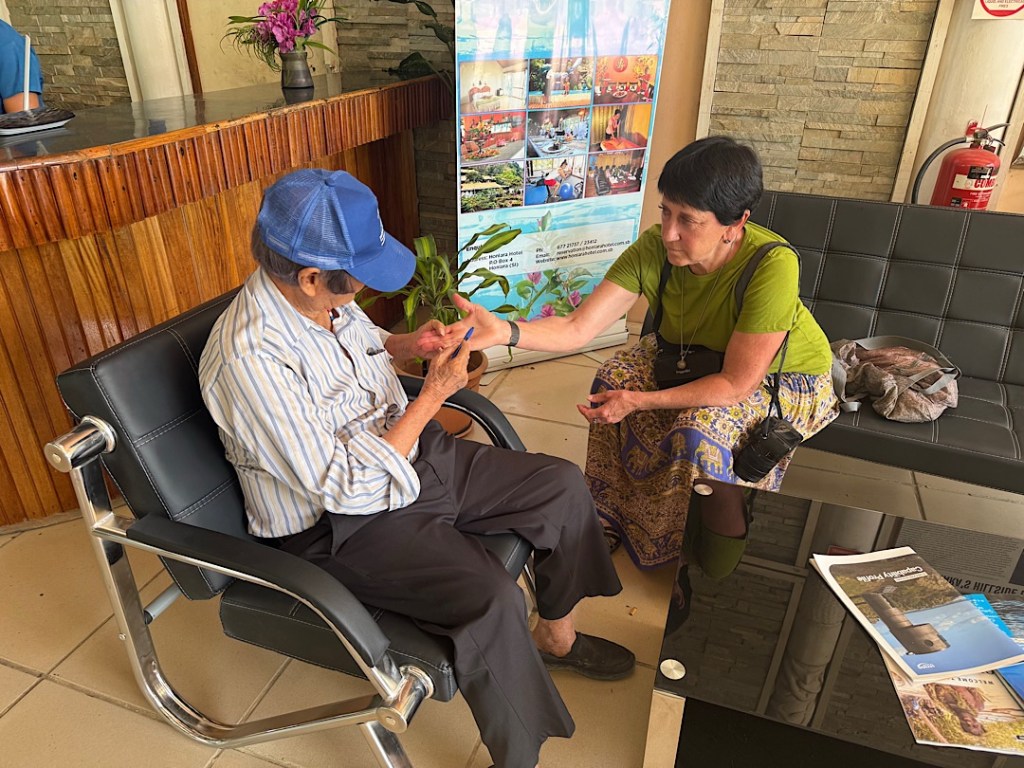
Then with a twinkle in his eye, the octogenarian asked if I would like him to read my fortune. How could I resist? He took my hand in his and studied my palm, noting that I have a long life line. I could keep going strong for another 10, 20, even 30 years, he declared, if I avoided fried foods, didn’t get fat, and engaged in a lot of exercise (the way he does.)
It crossed my mind to ask him about the travels that still lay before us, but I refrained. Sometimes you can have the most fun when you don’t know just what’s coming.
Early next Wednesday morning (May 14), Steve and I will fly north to spend a month in Alaska. I keep reminding myself we will still be in the United States (home!) thus at least theoretically able to fill in for anything we forget to pack. But I’m expecting (hoping) it will feel a bit like being in another country. Abroad.
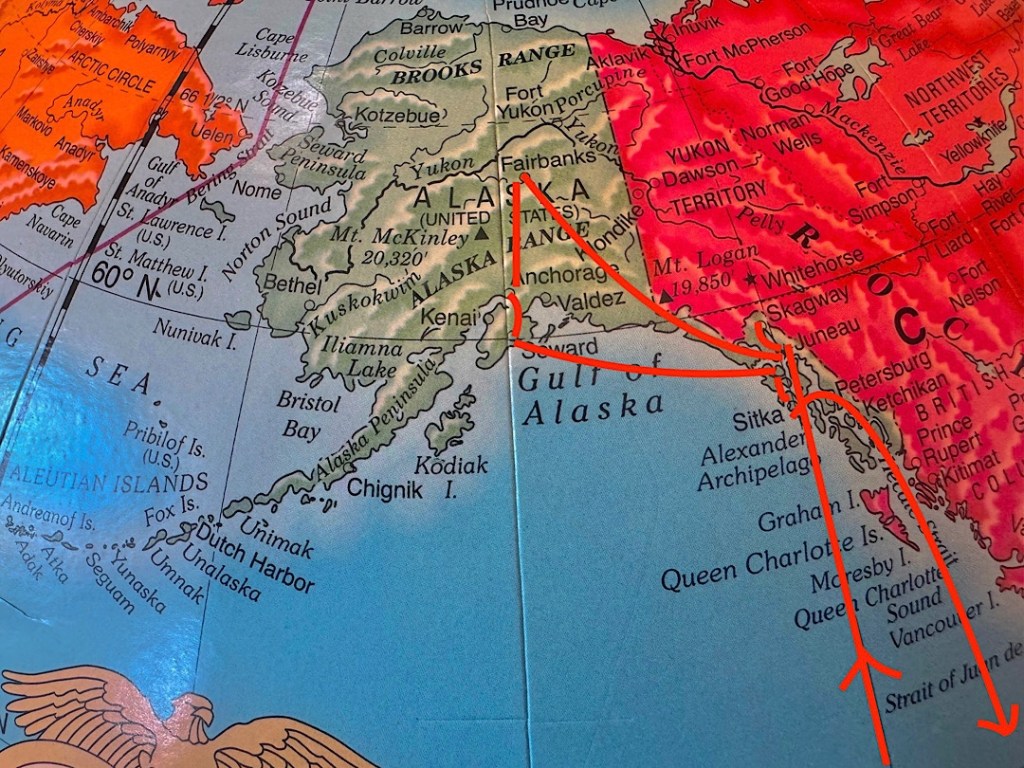
Neither of us have ever set foot in Alaska before. We decided it was time to make up for that, and several months ago I started my planning by making the same mistake I made last year when planning our travels in the Caribbean: assuming we could get around substantially on ferries. I soon learned that although Alaska at one time had an extensive ferry system, that’s now a shadow of its once glorious self. Some ferries still operate, and in the end, I was able to book passage for us on two, one from Juneau to Gustavus (aka the gateway to Glacier National Park), and another from Sitka to Bellingham. (We’ll spend two nights on that one in a cabin with actual beds.)
I also booked a ferry from Juneau up to Skagway, but then I got an email informing me the Alaska Marine Highway System operators had canceled it. So we will instead fly in a seaplane (another first) up to Skagway and back to Juneau.
Otherwise, we’ll be relying heavily on Alaska Airlines and the Alaska Railroad to get us around. Even with a full month, we still won’t see many parts of the state that sound interesting. This is a HUGE place, I’ve come to appreciate, bigger than Texas, California, and Montana combined.
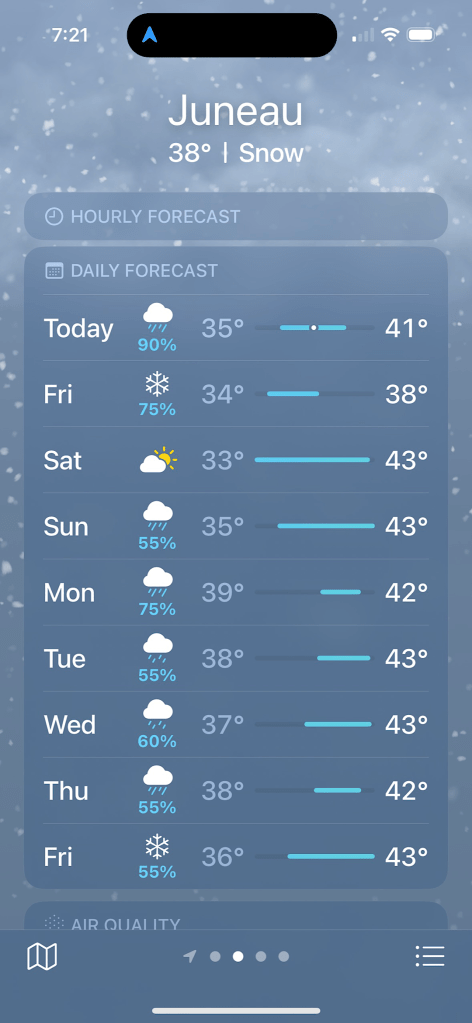
To my delight, I was able to secure home exchanges with a couple in Juneau and another in Anchorage. We’re counting on those stays to give us some deeper insight into Alaskan life. On the other hand, the weather (at least in Juneau) looks worse than I originally expected. (I took this recent screenshot of Apple Weather just a few weeks ago. The forecasts haven’t improved much since.)
We’re preparing as best as possible, telling ourselves we can always buy more clothes if necessary.
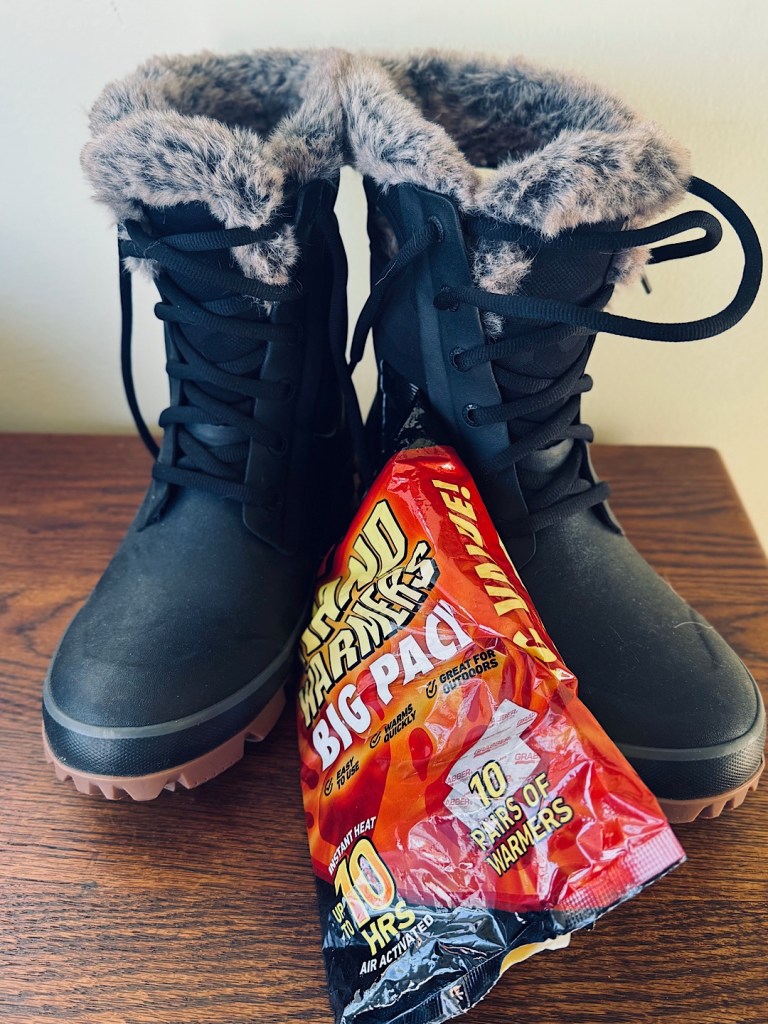
I plan to wear this footwear on the plane. Another first.
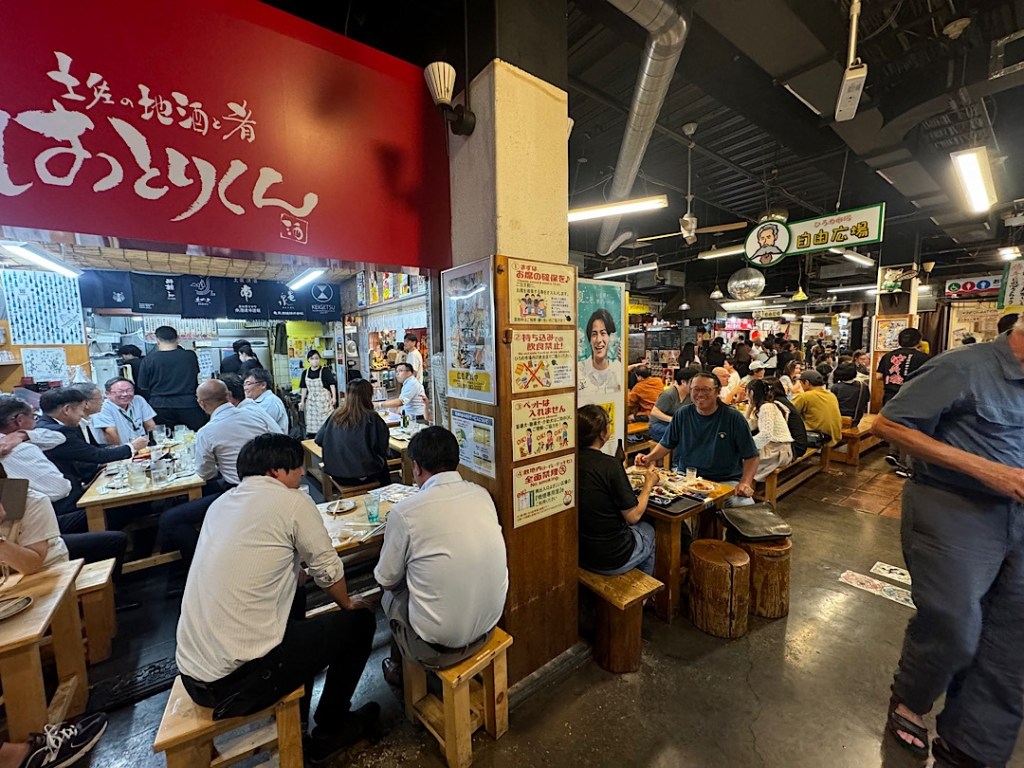
From my last post, you might think the main reason for visiting Shikoku is the food. Steve makes this case, and I have a hard time arguing with it. We consumed amazing meals; tasted the freshest seafood we have ever eaten. We ate most of it in simple, inexpensive settings, like the marvelous food court in central Kochi.
Hirome Ichiba contains dozens upon dozens of stalls selling all kinds of food and drink. On the Monday night we were there, the scene was every bit as lively as the beer halls of Munich or Singapore’s hawker centers.
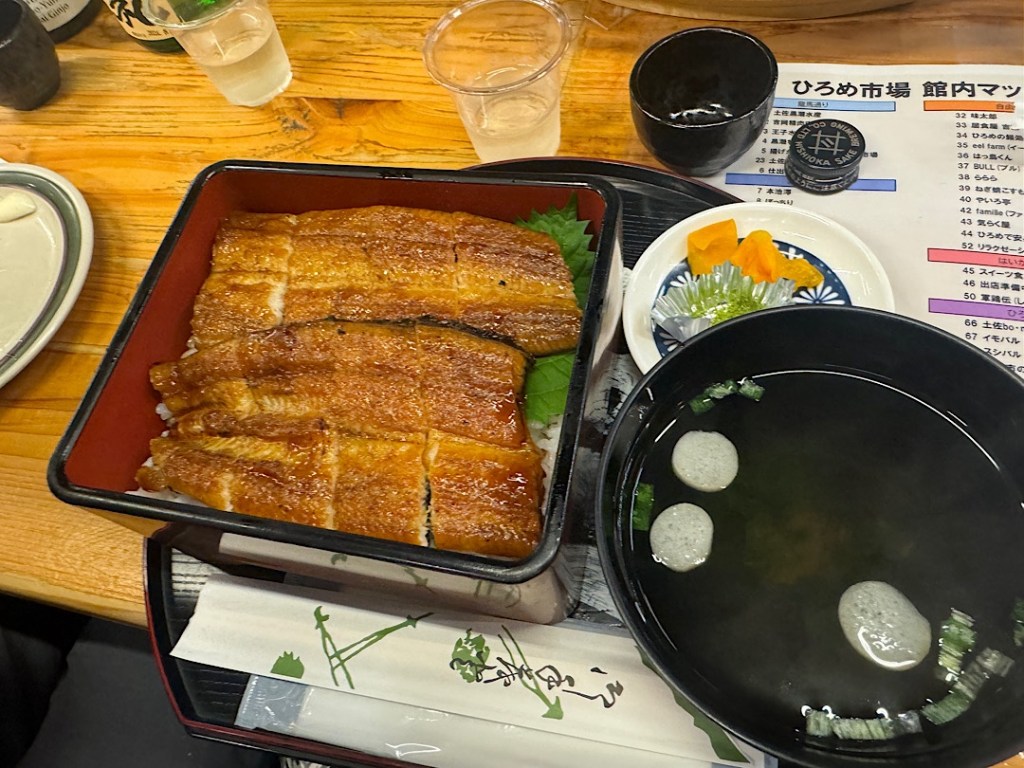
We ordered several dishes. One was this delicious eel, one of my favorite types of seafood.
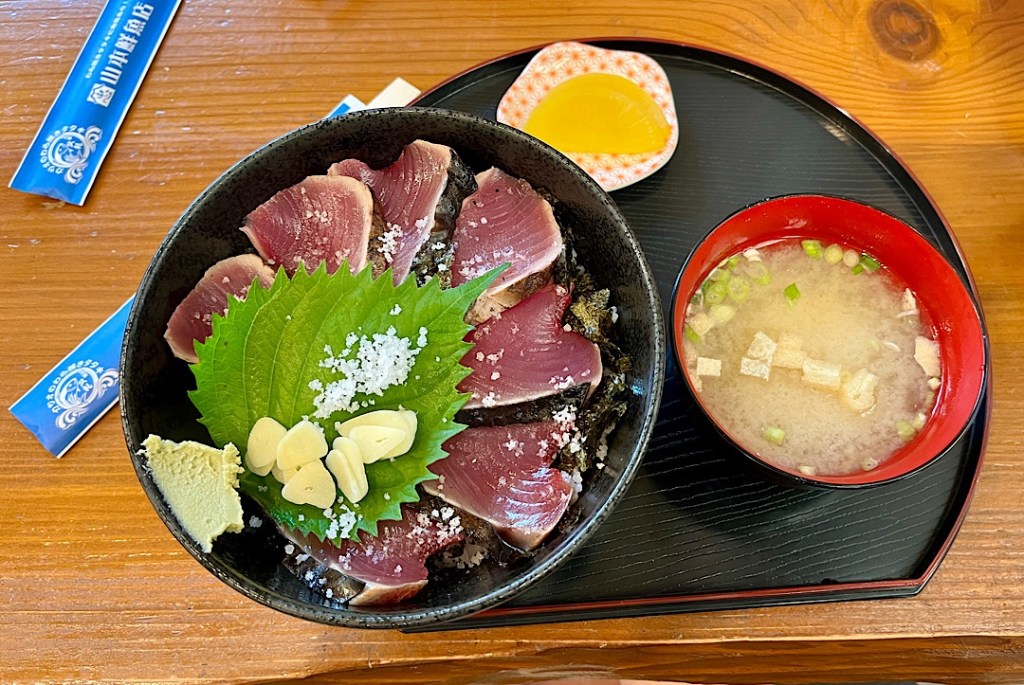
I doubt I’ll ever forget the seared bonita we got for lunch the next day in a little fishing village on Shikoku’s Pacific coast.
Its freshness was stunning. And the total bill for both of us was $12.75.
Still, we enjoyed more than just the food. Think of the following as postcards from some highlights.
Our time in the mountain villages took us back in time.
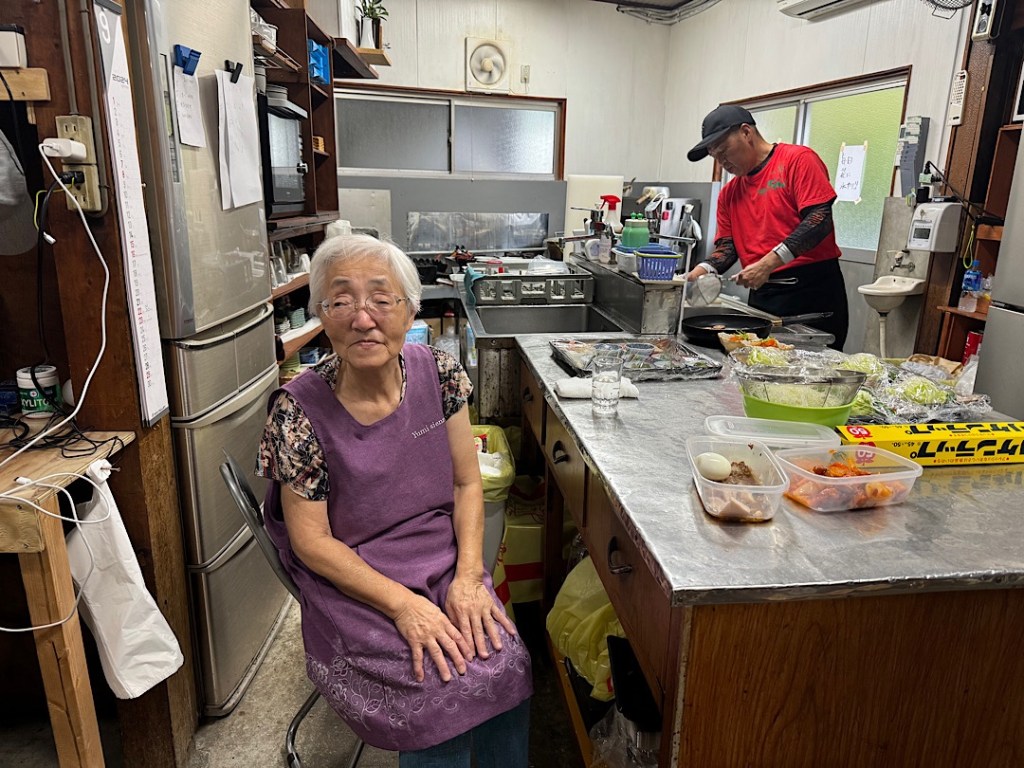
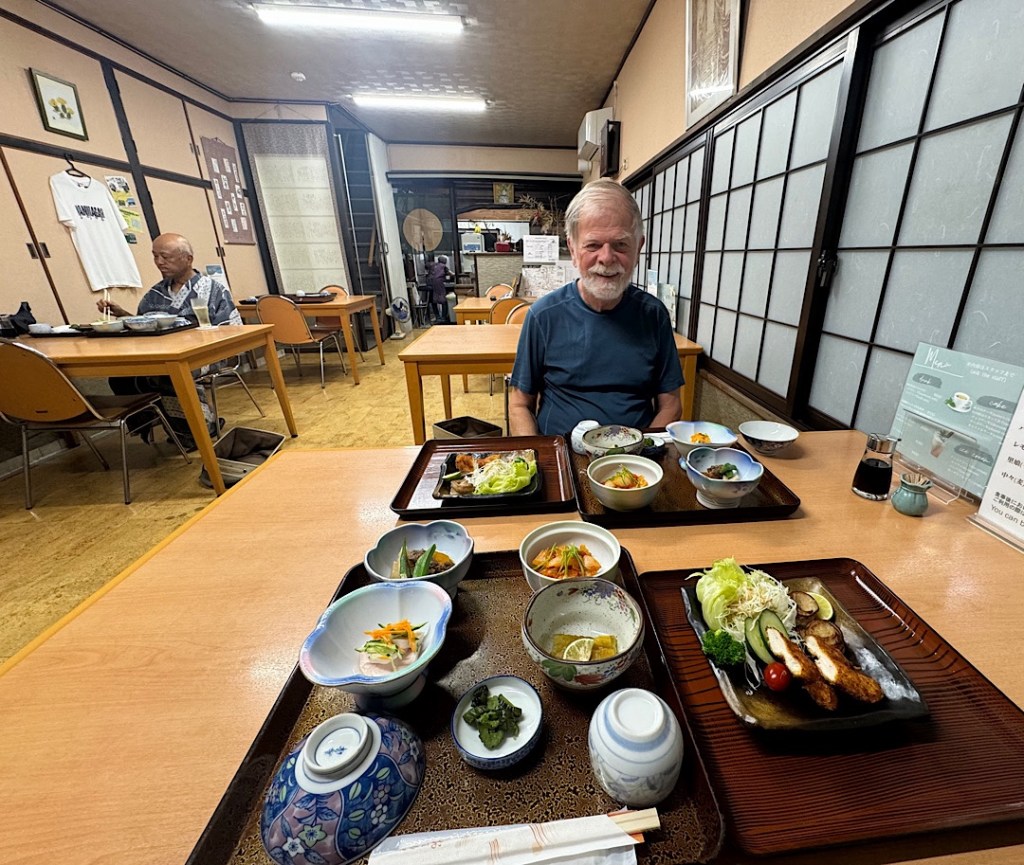
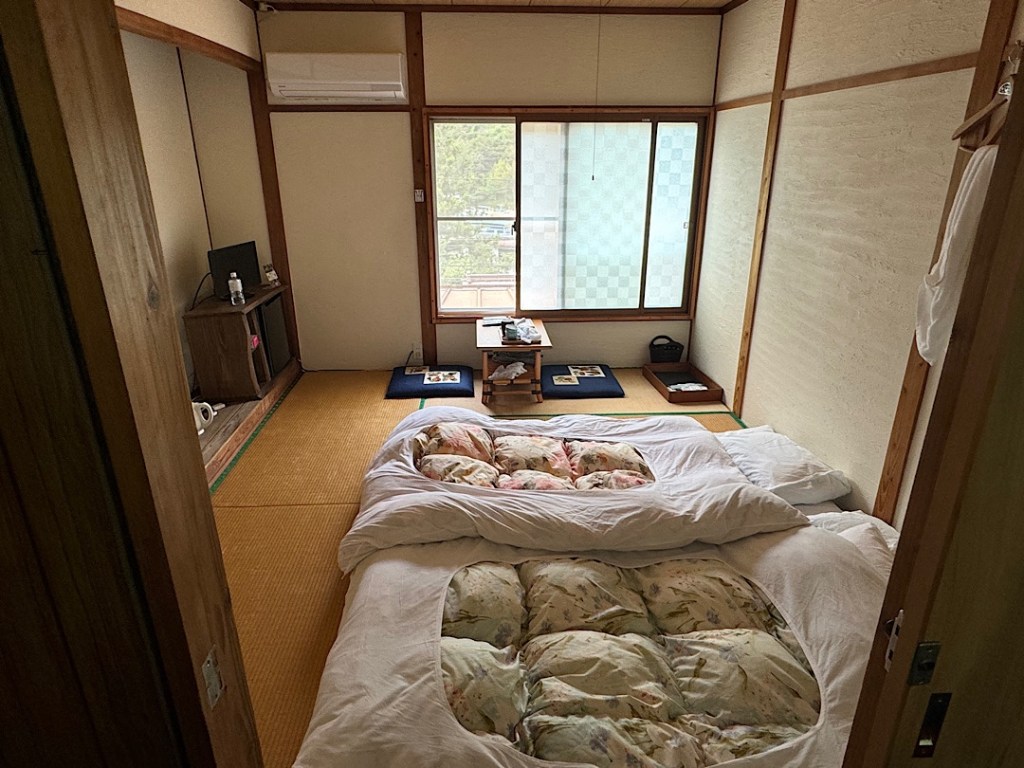
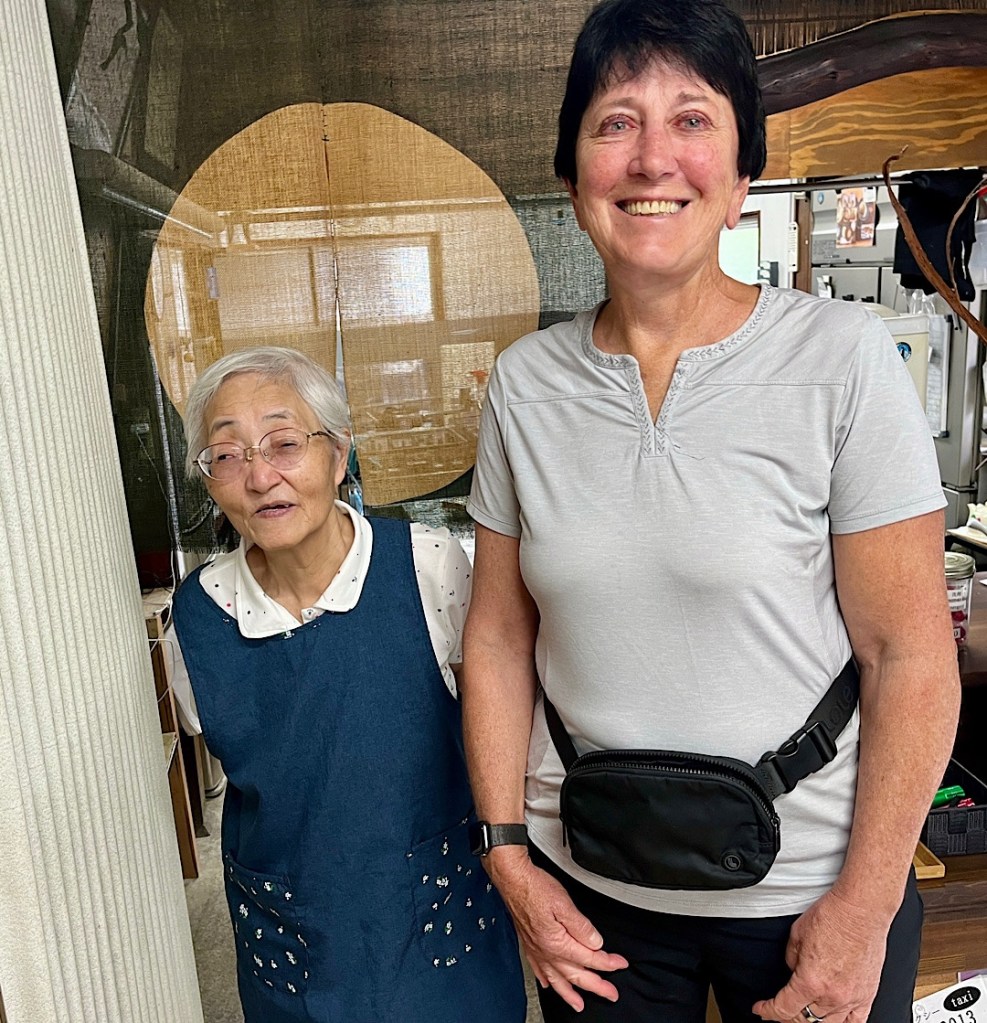
This is the matriarch of a family that for four generations has run the Japanese inn where we stayed. She still appears to do a lot of the cooking.The dinners and breakfasts included with our stay were delicious.All the rooms are Japanese style. This was ours.Our hostess was tiny in stature but bright and welcoming in spirit.
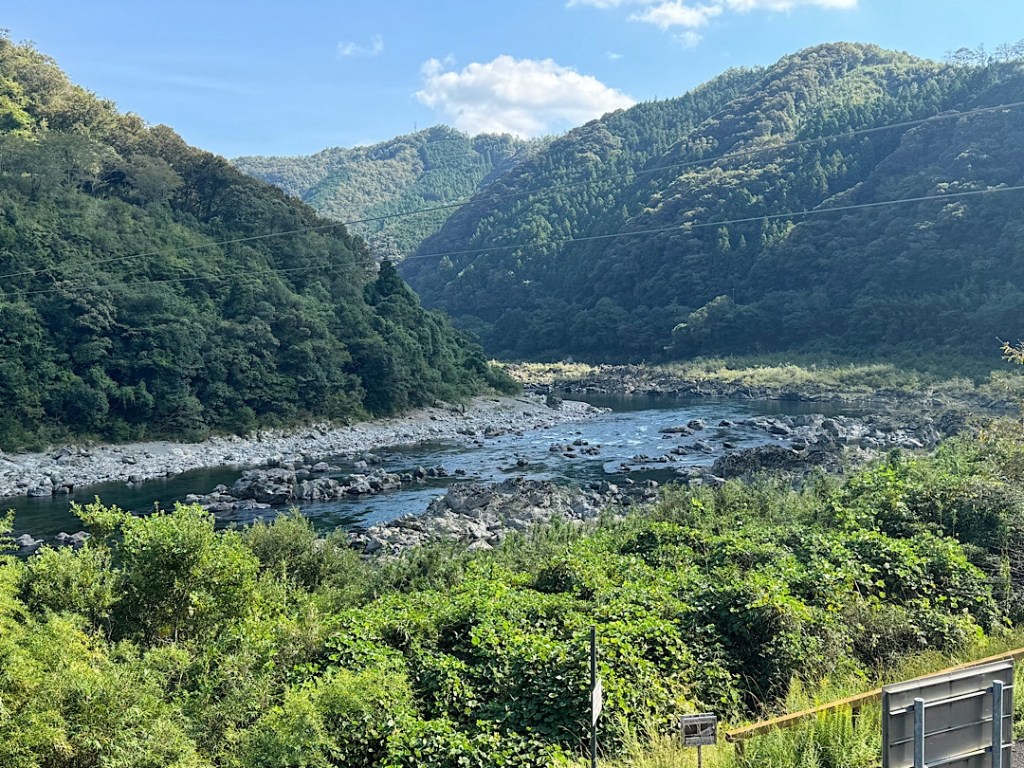
Not just the mountains on Shikoku are wild. So are most of the rivers.
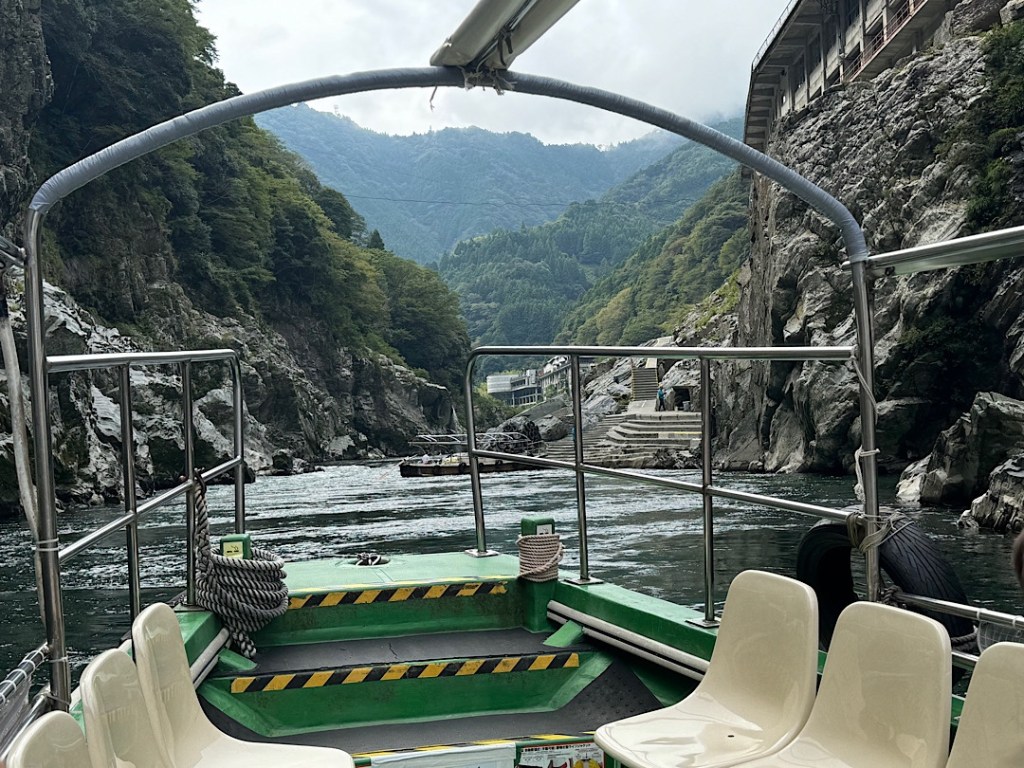
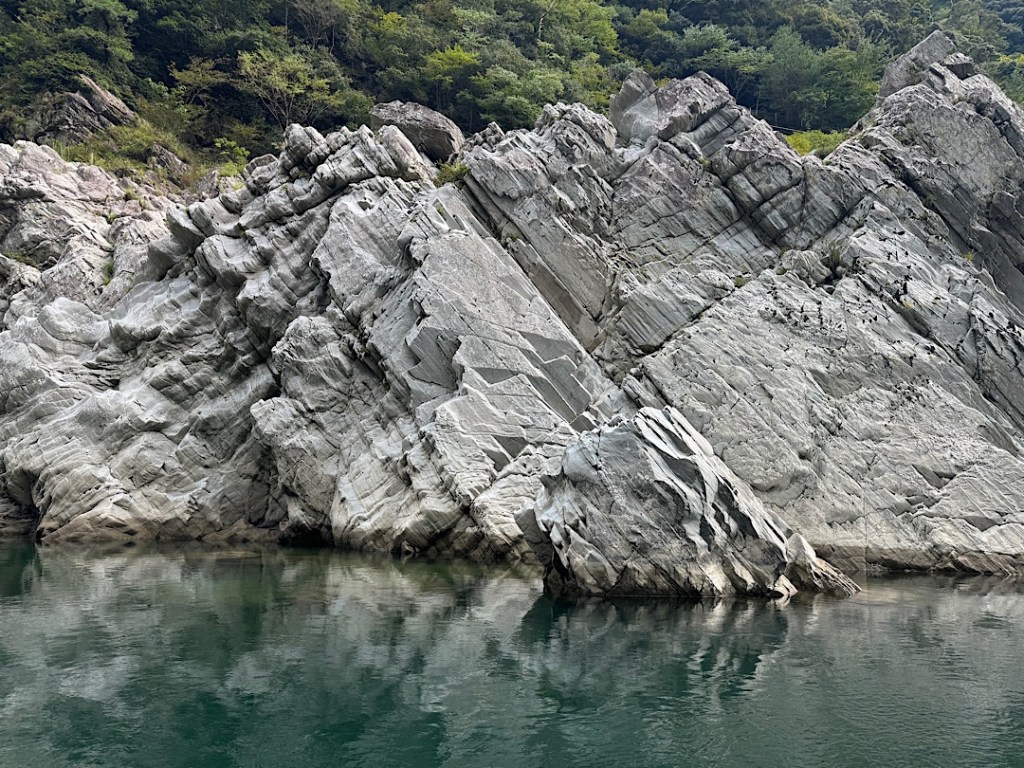
We took a short, placid cruise on the Yoshino River through Oboke Gorge. but if we’d wanted to ride some rapids, that was an option just downstream.The geology of the gorge is striking.
The next day we drove along the Shimanto, known as the last wild river in Japan. No dam has been built along its course.
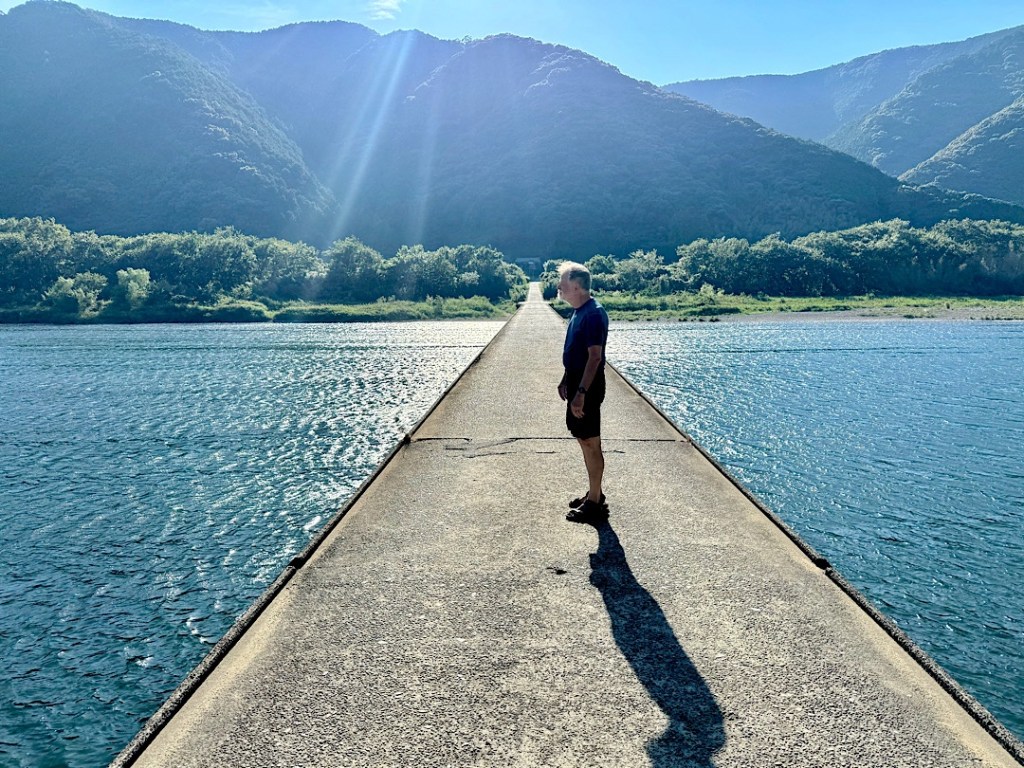
Many bridges like this one span the Shimanto. The absence of railings is intended to make the structures less vulnerable to being swept away by floods. Neither of us was eager to walk all the way across one of the chinkabashi. But it was fun to watch a steady driver motor across.
We got a strong reminder of the potential menace of the sea in the little fishing village where we ate the world-class lunch.
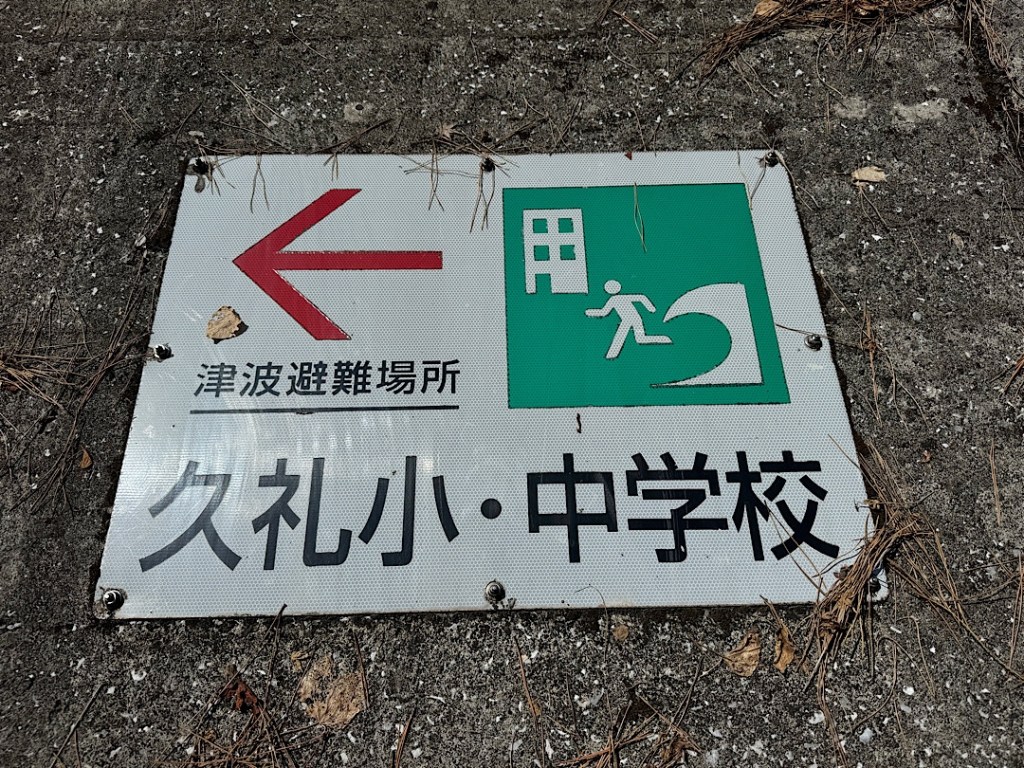
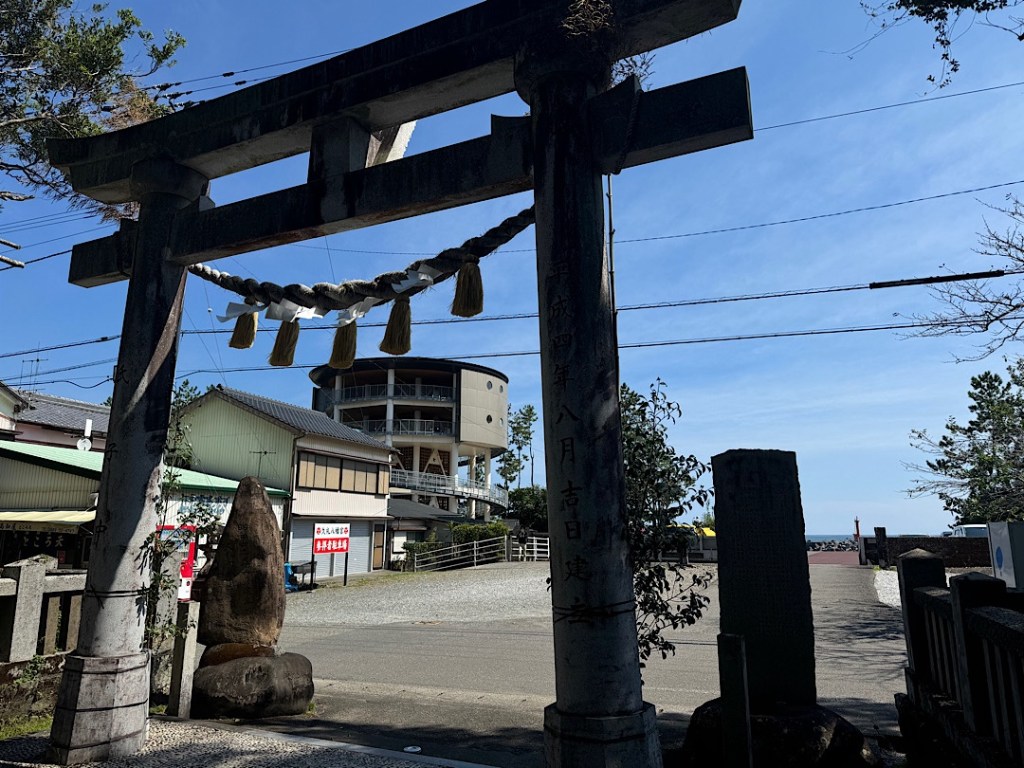
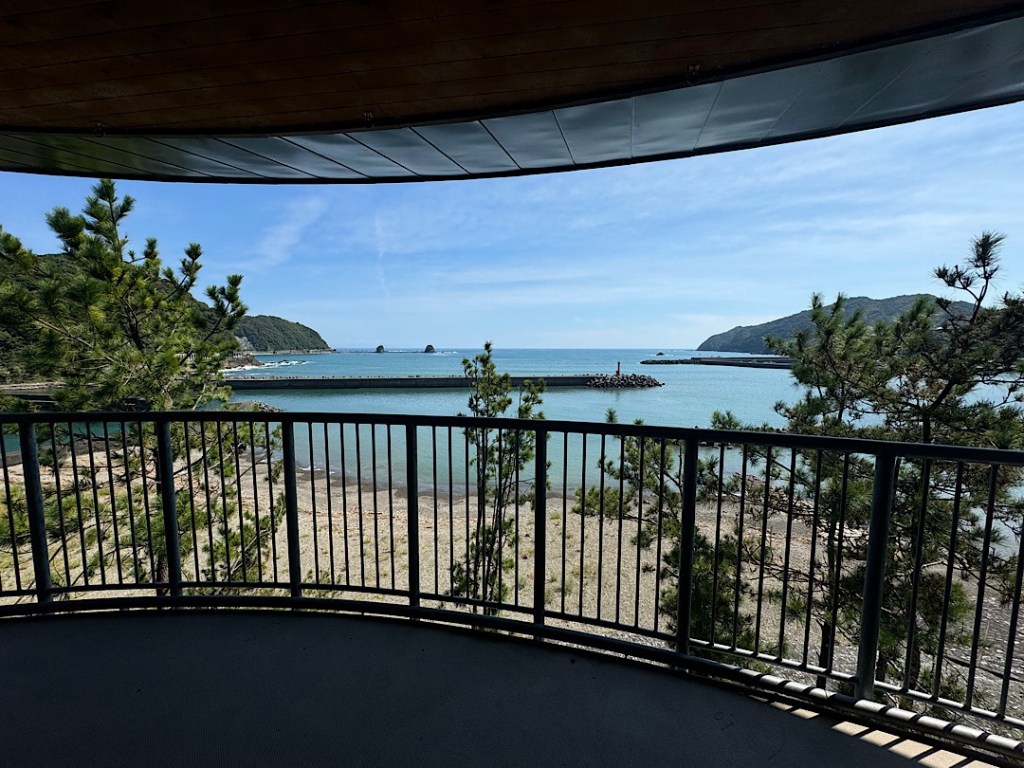
This way to a tsunami evacuation shelter. Posters warned that a tsunami could roll in and wreck havoc within minutes of a quake offshore.Steve and I found one of the town’s tsunami evacuation towers. It’s that round thing in the distance.We climbed it and at the top enjoyed a lovely seascape. A couple of local old guys were also up there, shooting the breeze.
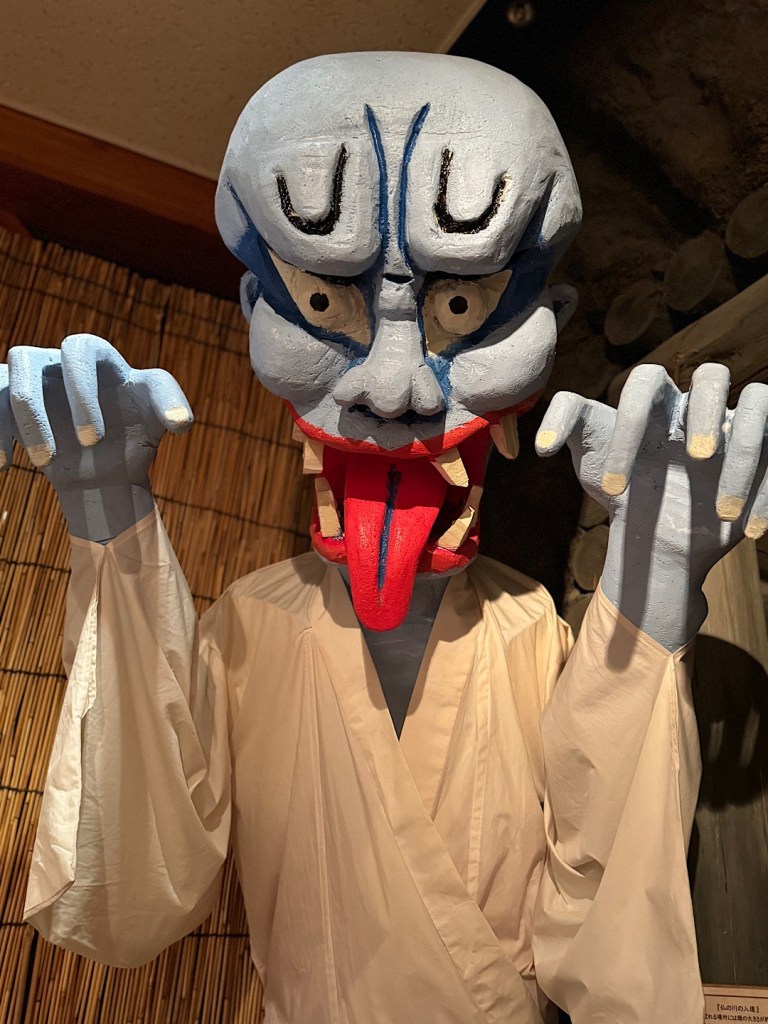
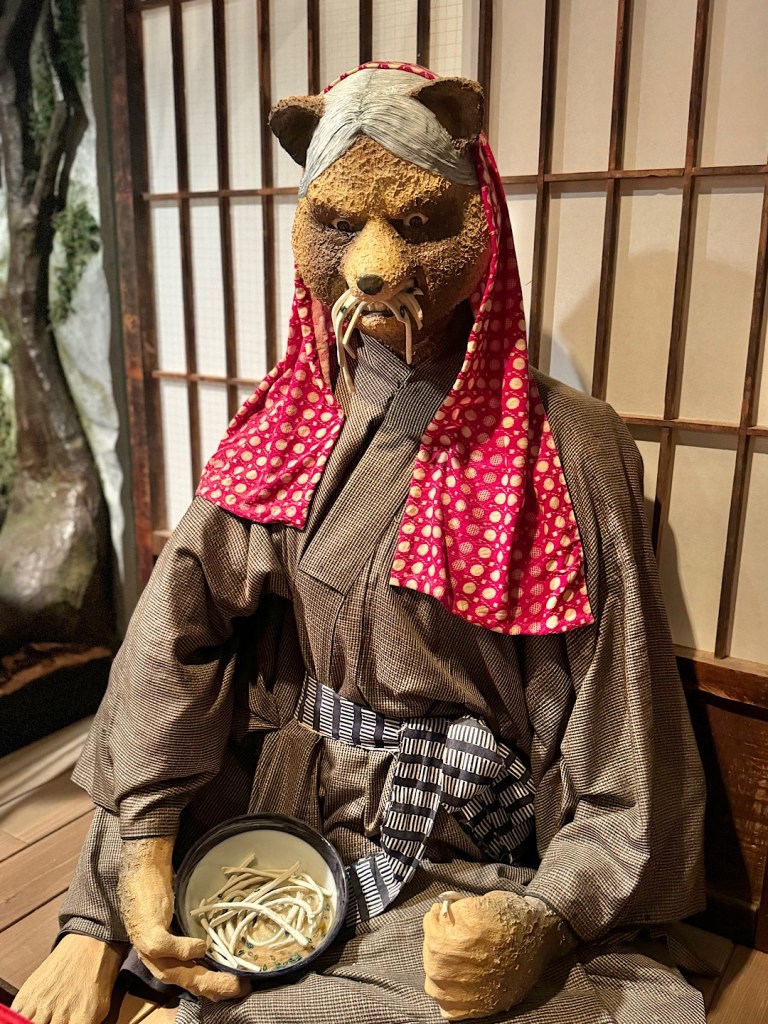
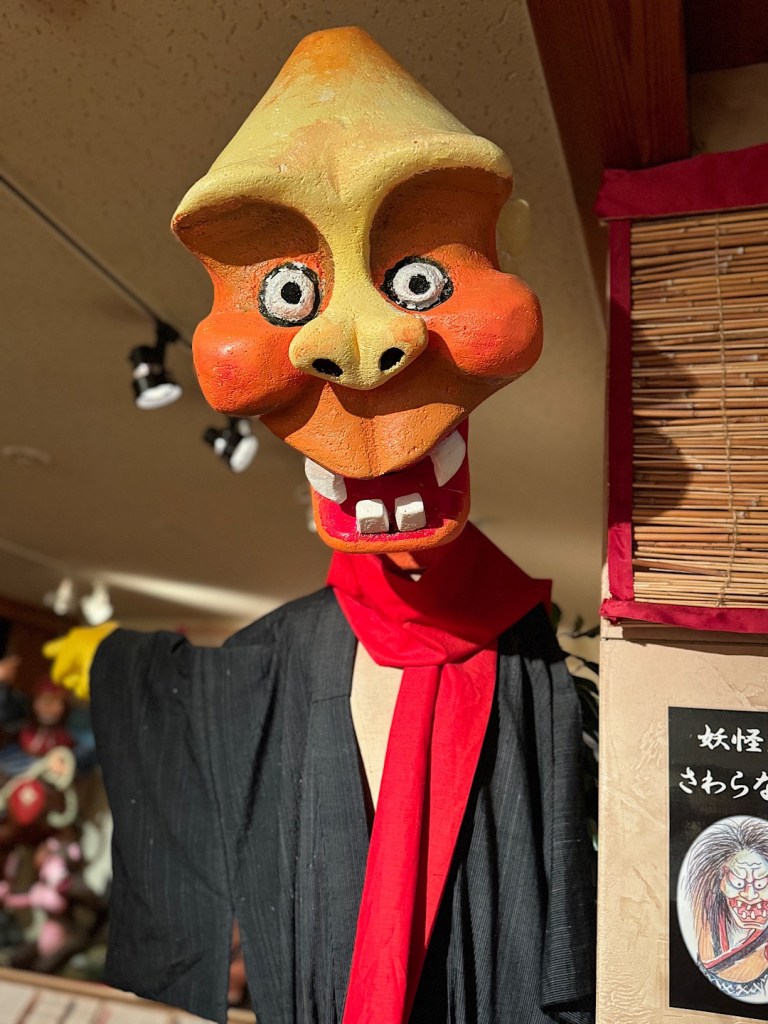
With all the danger on land and sea, I could understand how Shikoku residents might develop a rich mythology about the creatures — occasionally helpful but often evil or malicious — lurking in the landscape. They’re called yokai, and we spent an entertaining hour at a museum in the Oboke Gorge that explains a lot about them.
This is a tanuki, an evil “raccoon dog.”
Who wouldn’t want to visit a place inhabited by the likes of those guys? So my answer to the question of whether it’s worth visiting Shikoku is an emphatic hai!
We didn’t spend all our time on Grenada seeking out blood-soaked sites. We indulged in classically touristic pastimes too, the most fun being the snorkeling tour we took Friday morning. Steve and I don’t snorkel often, but whenever we’ve done it in recent years, we’ve loved it. Grenada is surrounded by warm waters and a healthy community of sea life, and it also boasts something unique: the world’s first underwater sculpture park. We couldn’t miss that.
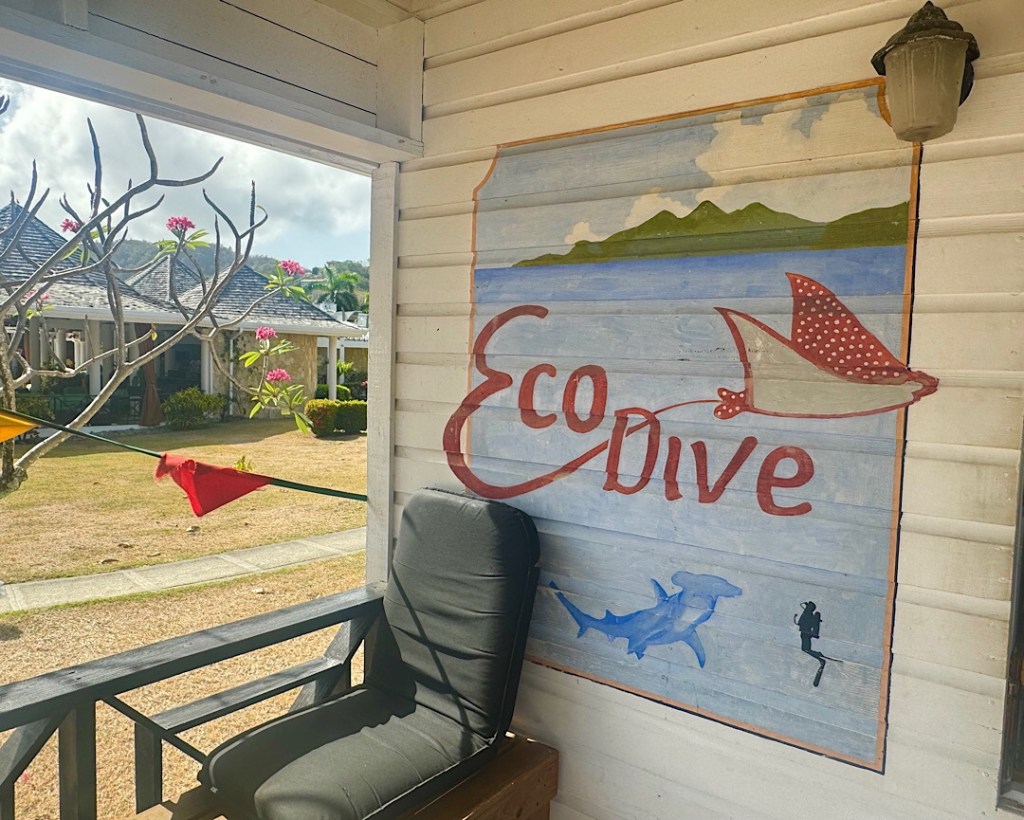
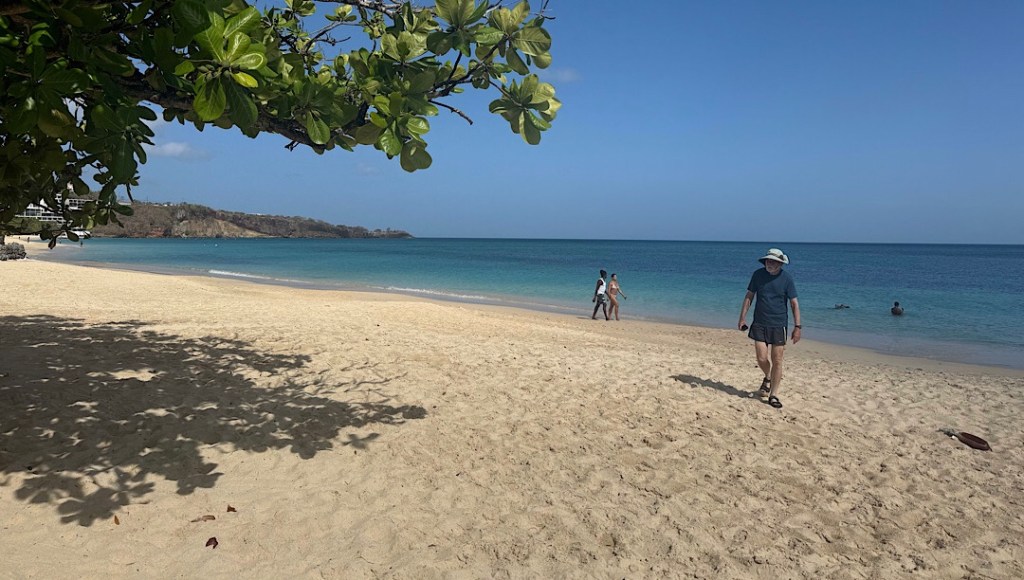
We woke up to hot sun and clear skies, and when we arrived at the Eco Dive outlet on Grand Anse Beach shortly before 9, the mood among the customers gathered there was ebullient. Just seeing Grand Anse is enough to lift one’s spirits. Consistently ranked among the world’s best beaches, its powdery sand arcs for a couple of miles beside placid turquoise water.
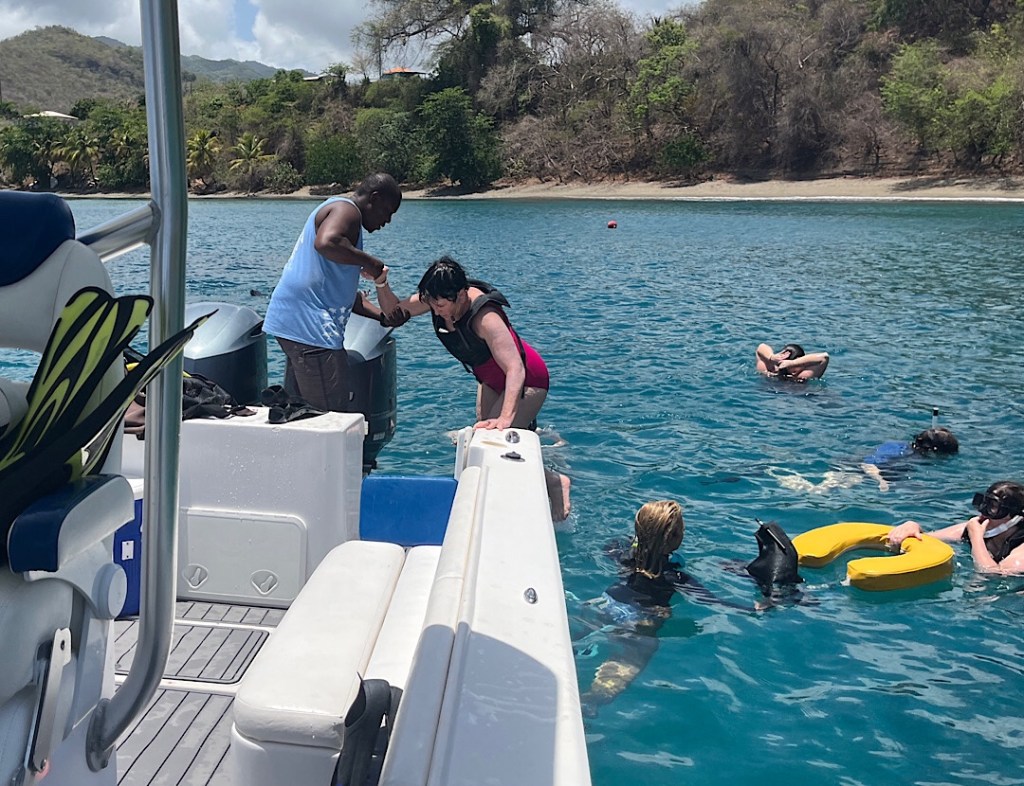
The dive shop outfitted us with flippers, then we climbed aboard a powerboat big enough to hold about a dozen snorkelers (almost all Brits, Americans, and Canadians) and a crew of two. Soon we were motoring north toward Molinere Bay.
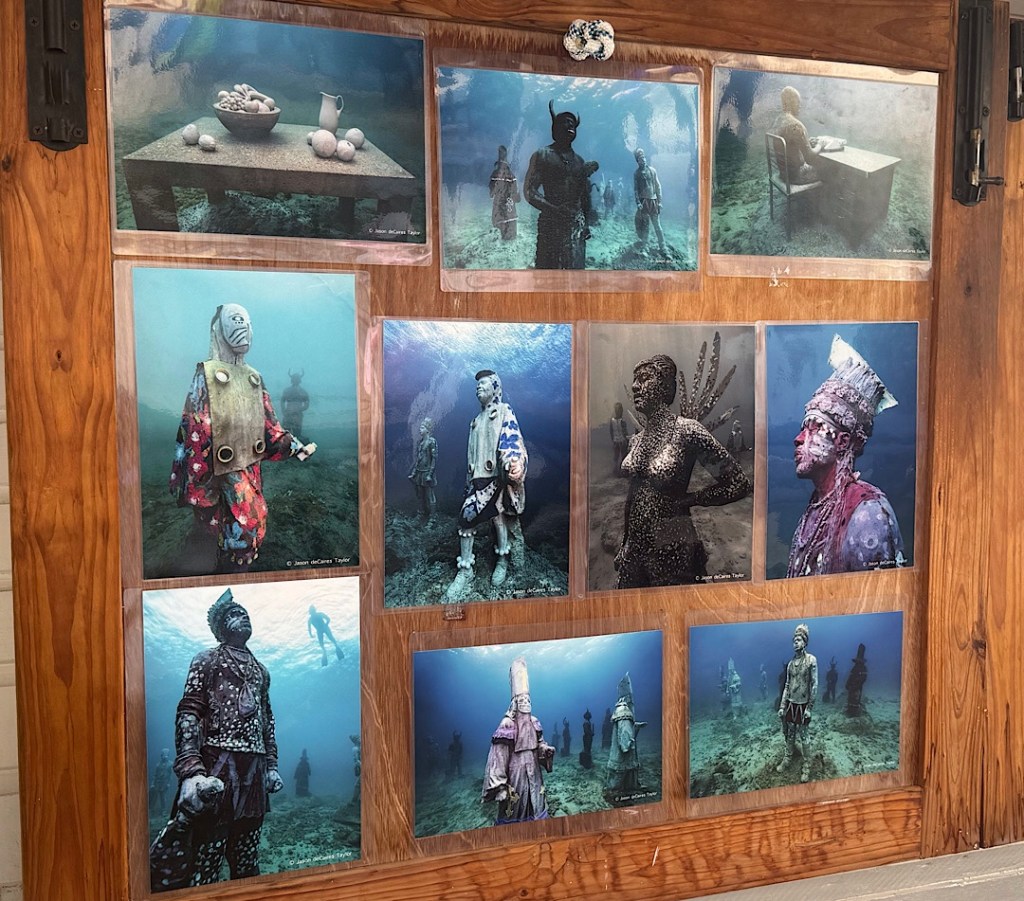
The autumn of 2004 was a very bad time to be anywhere on Grenada, including this bay. In early September, a hurricane named Ivan began smashing its way through through the Caribbean. That megastorm blew down most of the island’s nutmeg and cacao trees. It tore up its coral reefs, killed 39 people, and wrecked some of the most prominent human buildings. In the aftermath of the devastation, a British “eco-artist” named Jason de Caires Taylor got the idea of placing a bunch of concrete and stainless steel art pieces in the ruined coral beds to spur the blooming of new underwater life. The Grenadian governmemt signed off on the plan and today marine biologists say all these efforts have worked. Coral is growing on and around the sculptures, and a host of fish and other creatures has settled into the neighborhood. The park also has become a powerful tourist attraction.
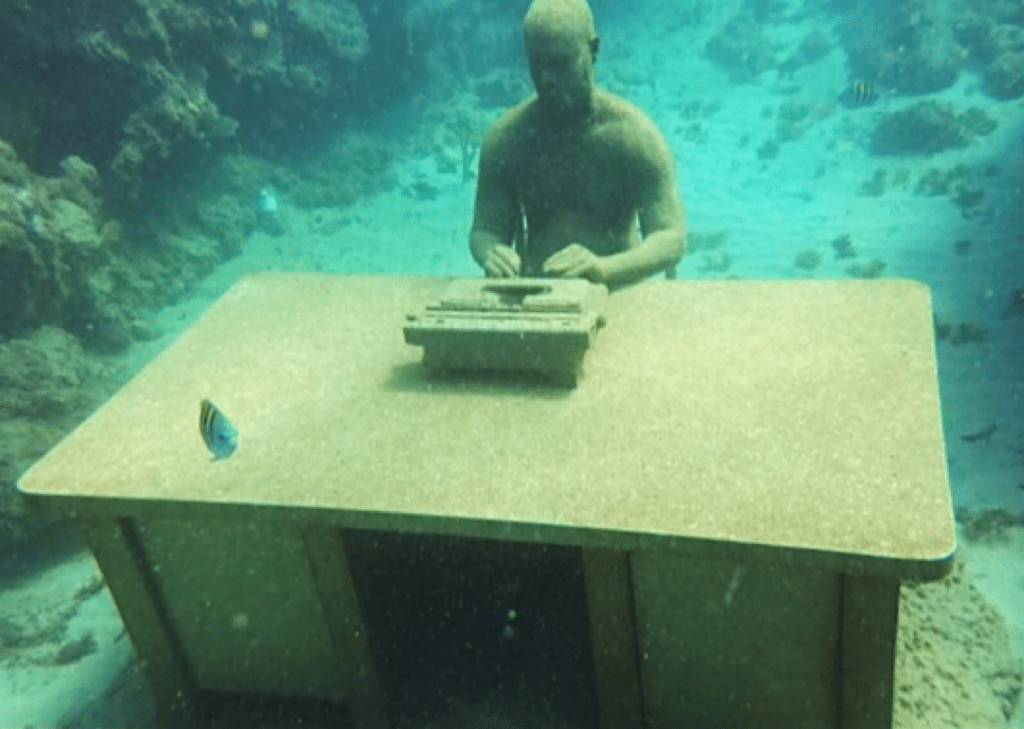
I wasn’t wearing scuba gear and didn’t carry an underwater camera, so I didn’t capture the striking images one can take amidst the submerged art pieces (though you can see some here.) In exchange for traveling light, I got to float over the art pieces, feeling a bit like a human drone, flying without effort in the company of myriad beautiful fish. Over time, the effect of saltwater and sea life has been eerily transforming the sculptures, which are placed at depths ranging from roughly 10 to 25 feet. It might have been cool to get nose-to-nose with them, but I never exerted the effort to dive down. And it also was great to swim alongside a guide who could explain what they all represented. My favorite was one called The Lost Correspondent.
After snorkeling in the sculpture park, we also spent an hour in the more traditional coral reef at Flamingo Bay.
Most of our other touristic endeavors unfolded in the capital of the island, St. George’s, which over the centuries has climbed haphazardly up the steep hillsides surrounding a pretty little bay. Sadly, when we tried to visit some of the town’s most important sites, we found them closed for renovation, including the old fort where Maurice Bishop and his top advisors were gunned down 40 years ago. Only one gallery in the Grenada National Museum was open (but it focused on the indigenous population, which was our strongest interest.)
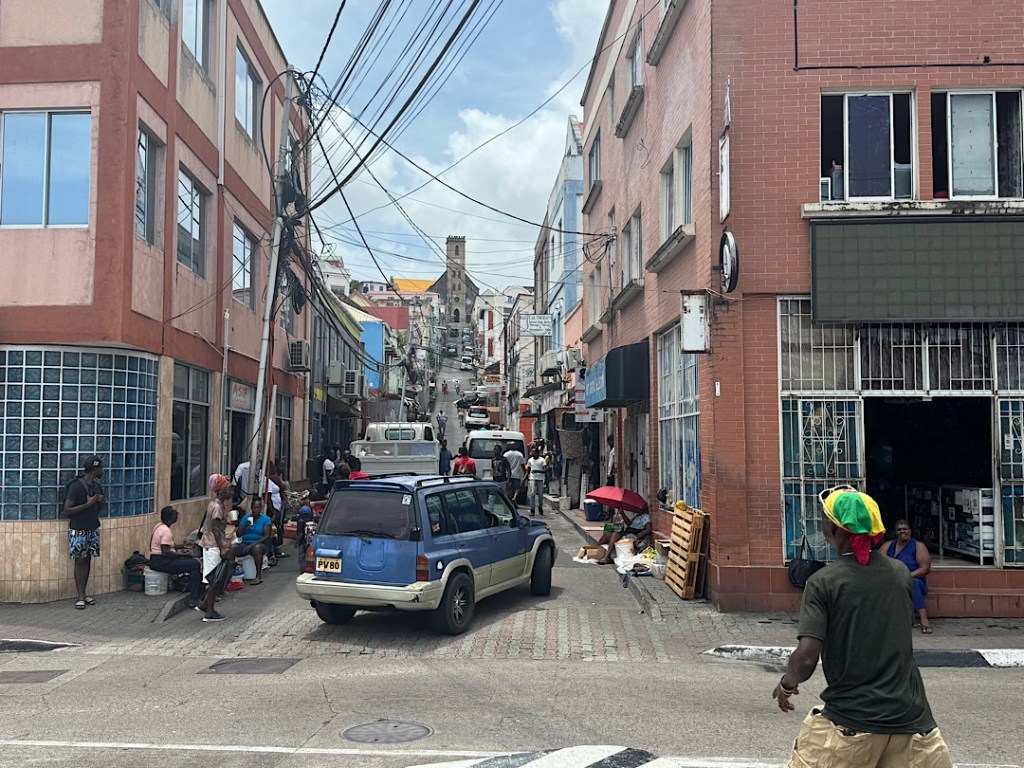
Just strolling through the town was fun.
When we were driving around the island, Grenada most reminded me of Bali — all those spectacular seascapes and steep green mountains. But when I voiced this observation, Steve scoffed, pointing out that unlike Bali, Grenada has no ancient Hindu or Buddhist temples. Plus it’s filled almost entirely with black people, more than 80% of whom are descendants of African slaves.
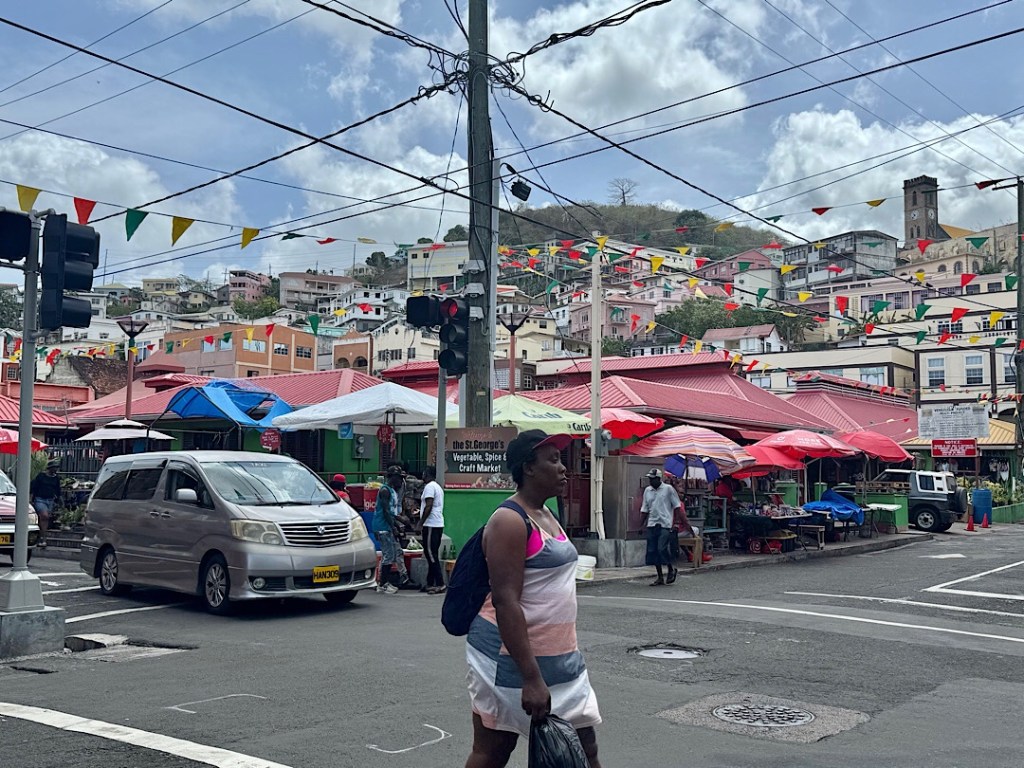
As dreadful as that history was, I have to say virtually everyone we interacted with could not have been more friendly. (Everyone speaks English here.) When we prowled through the spice market in St. George’s Saturday morning, no one pestered us to buy stuff. They did ask if we were enjoying our time on the island, and when we said yes they shone with delight.
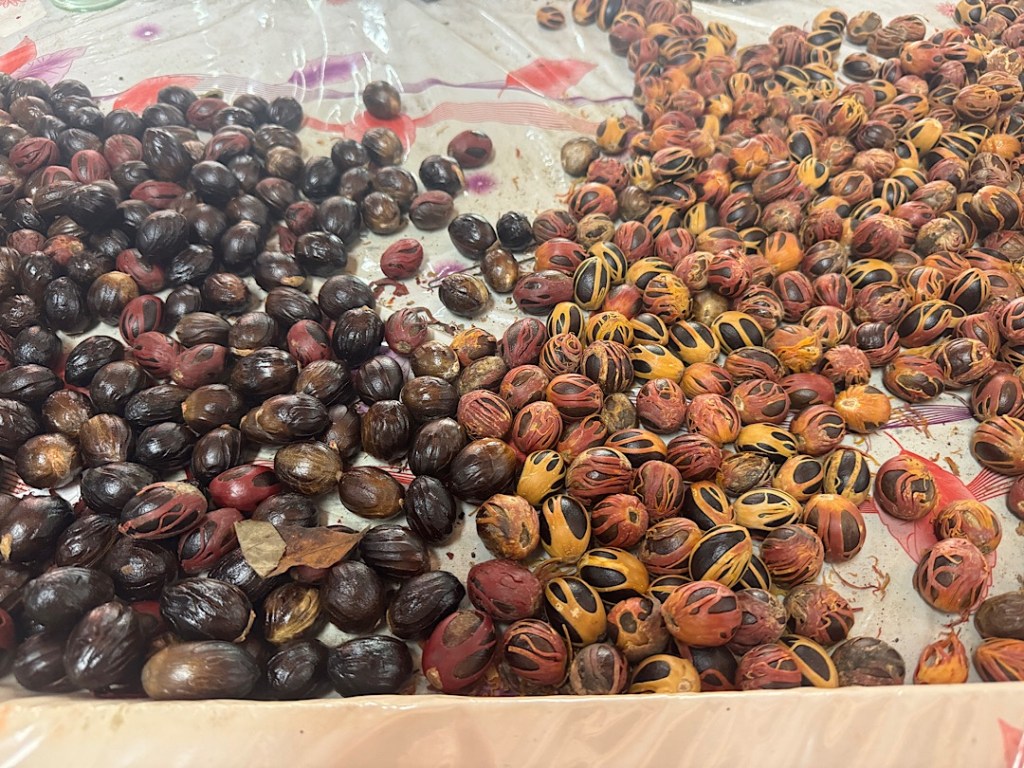
The central marketThis lady sold me a little bag of mace for about two US dollars. Mace is the yellow webbing surrounding the nutmeg shell. It’s considered to be a separate spice.
I never expressed to the Grenadians my nagging worry that if luxury villas continue being built and cruise ships bring more and more visitors, getting around on Grenada’s twisty narrow roads could turn into the nightmare that getting around Bali has become. Bad as it is here, it’s nowhere near that bad yet, and maybe Grenada is far enough off the beaten path to avoid Bali’s fate.
Anyway, it’s behind me now. Last night we made the 25-minute flight from St. George’s to the airport at the southern end of St. Lucia, where we only have two full days to try and experience this little country. Is that possible? Stay tuned.
Steve and I wanted to visit the spot where — almost 400 years ago — some of Grenada’s last indigenous people leaped off a cliff, rather than live as French slaves. This flamboyant act of resistance took place on Grenada’s northern coast. Since our arrival here Tuesday afternoon, we’ve been staying in a villa near the island’s southernmost reaches (a place we obtained using our HomeExchange.com Guest Points.) Google Maps told us we could make the 28-mile drive to “Leaper’s Hill” in about 80 minutes. It was our first lesson in the folly of blindly trusting in Internet-based guidance in the Caribbean.
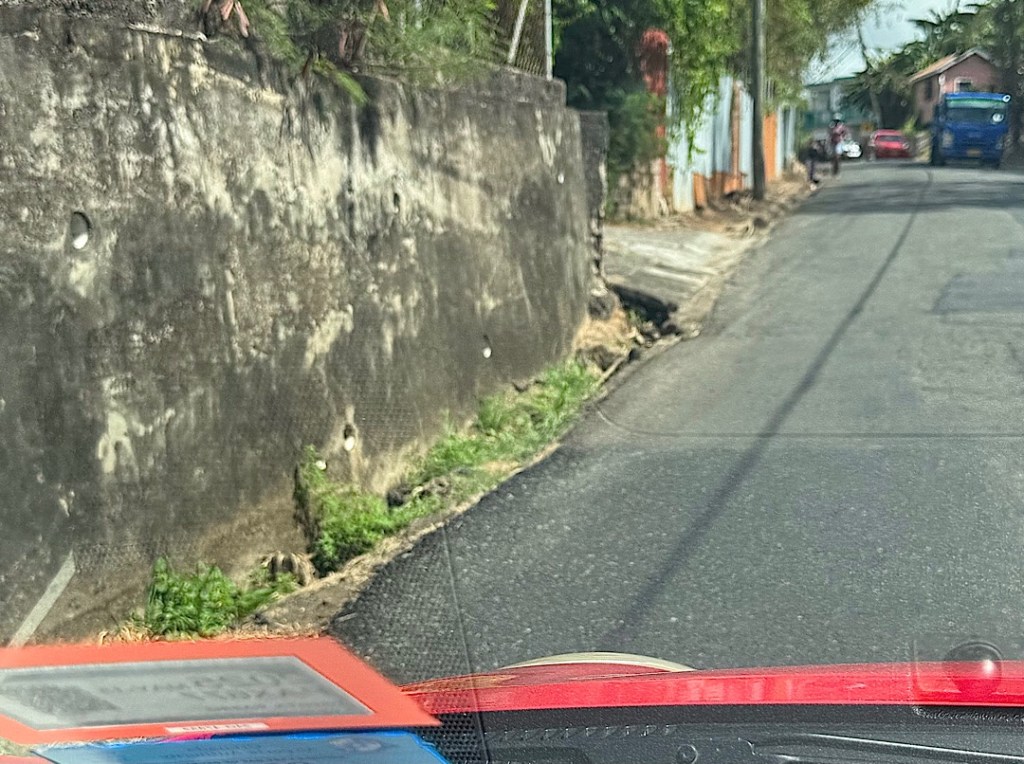
What Google Maps didn’t (couldn’t?) take into account was how much more slowly Steve drove than all the folks with whom we shared the roads. Some of them beeped their horns at us, but I understood Steve’s caution. The surfaces were not a problem; you can find more potholes in La Jolla than we saw from our bright-red Toyota Passo (smaller than a Tercel). But carved out of the sides of a vertiginous landscape, the Grenadian roads are narrow, and instead of shoulders, deep drainage ditches line the vast majority of them.
I would hate to know how many times I yelped or shrieked at the proximity of our left tires to the trenches below my passenger window as Steve veered away from the concrete mixers and Coke trucks and minivans and other vehicles barreling at us from the right-hand side of the road. Then you get people PARKING on the streets! This often forces everyone to stop and play chicken to get through the remaining single lane. On top of all that, most folks drive fast. If any tourist here gets tired of lazing on the beach and downing rum punch, taking a rental car for a spin can provide an alternative form of entertainment — immediate immersion in a real-life version of some video game like Need for Speed Unbound.
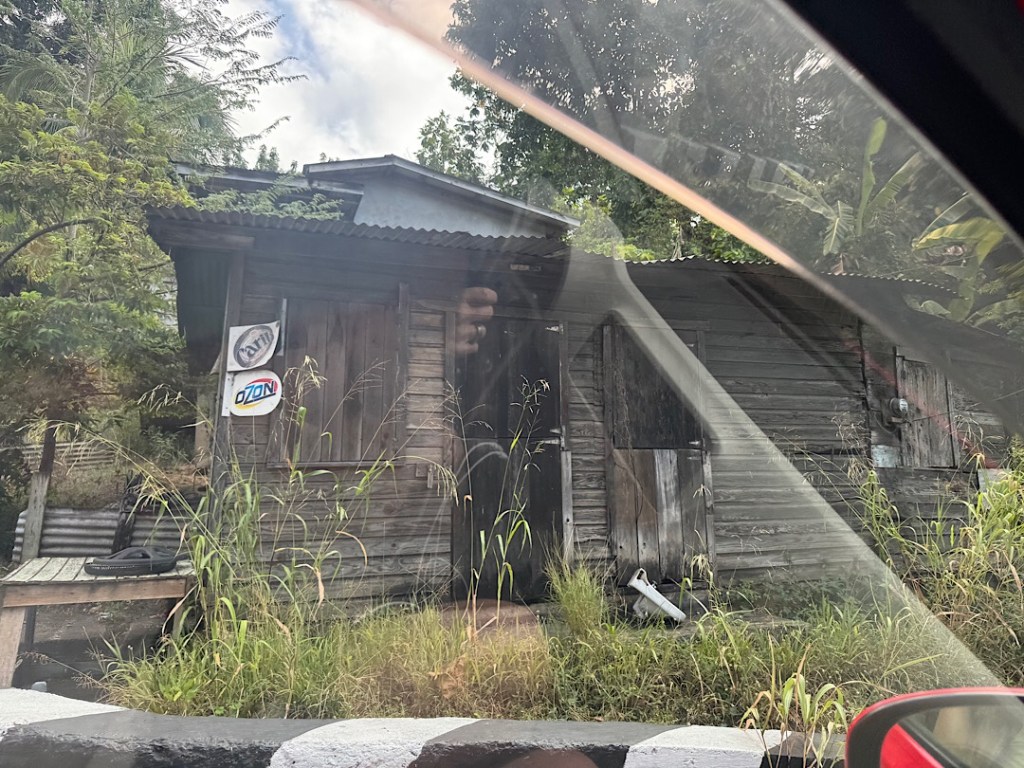
The drive north took us almost two hours. If nerve-wracking, it provided countless interesting sights. We passed humble shelters…
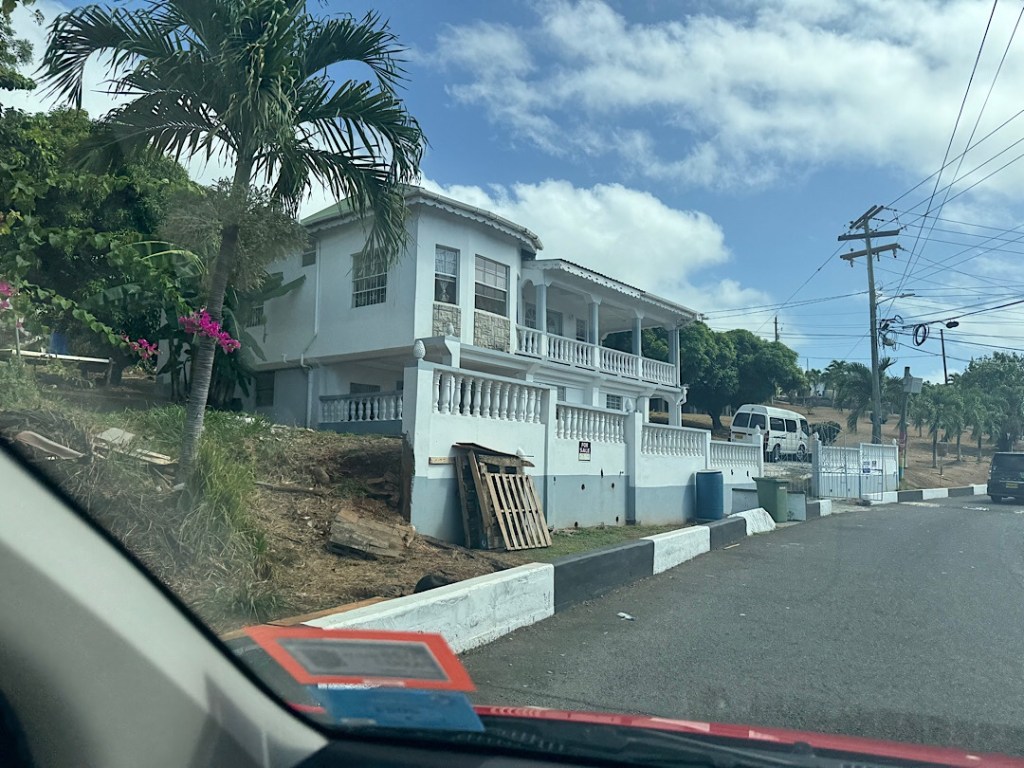
…but also plenty of impressively sturdy ones
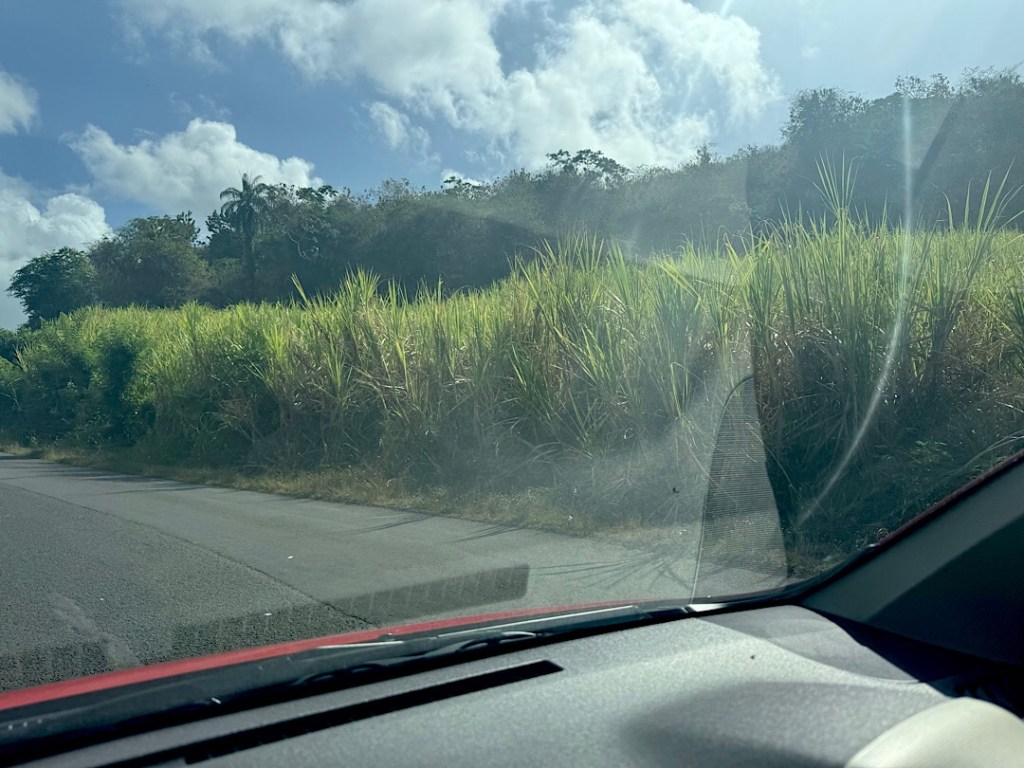
…and I loved how many homeowners choose paint colors that echo the local fruits — mango and plantain green and cocoa-pod yellows — or the azures and turquoise shades of the sea. We passed through stands of sugar cane.
Today it’s used exclusively to make rum.
Around 10:30 am we reached the town of Sauteurs (literally, “jumpers” in French).
We didn’t miss a turn following Google’s directions to “Leaper’s Hill.” But instead of finding the monument whose image I had seen online, the road ended at a cluster of abandoned buildings on the edge of a cliff where there was just enough room to park.
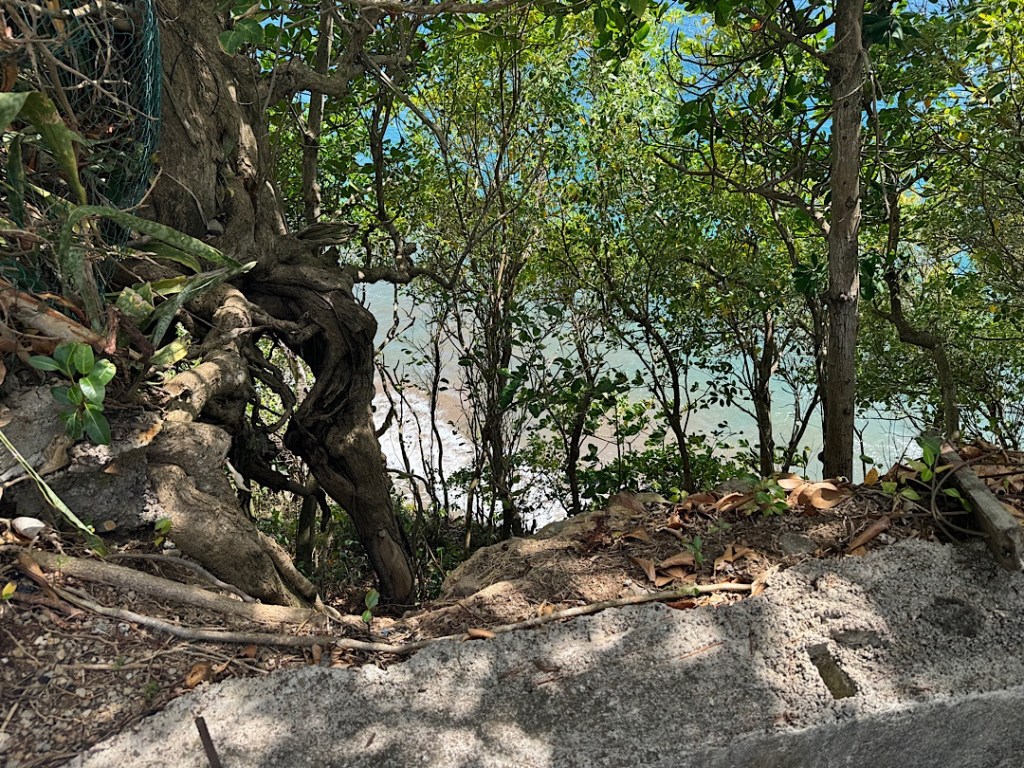
Next to where we left the car, we could make out the beach at the base of the drop off.
A vague path led along it, past a few creepy abandoned structures but it seemed to end at a ledge below an old cemetery.
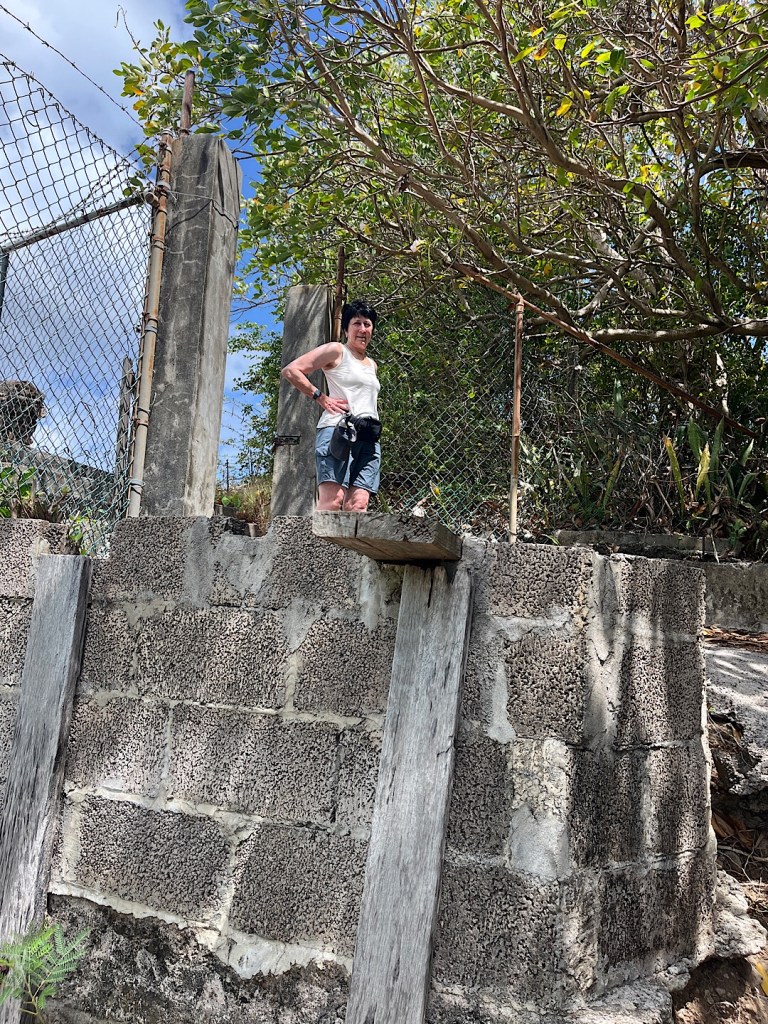
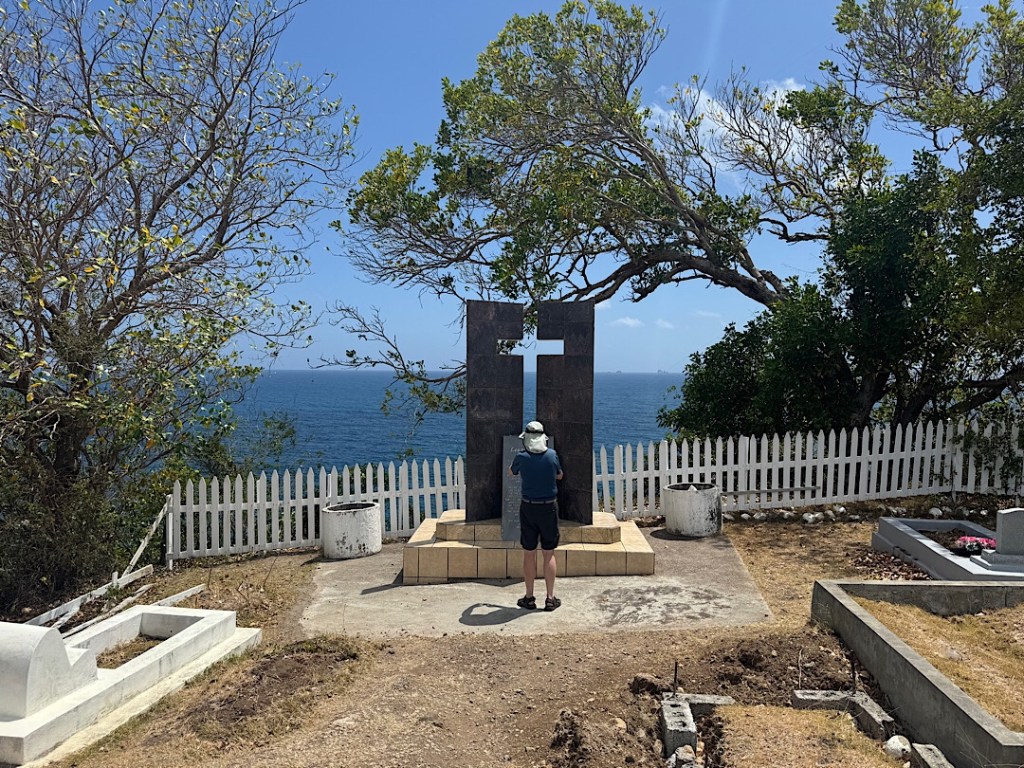
We scrambled up the ledge, squeezed into the graveyard, and there in the distance, I spotted the monument.
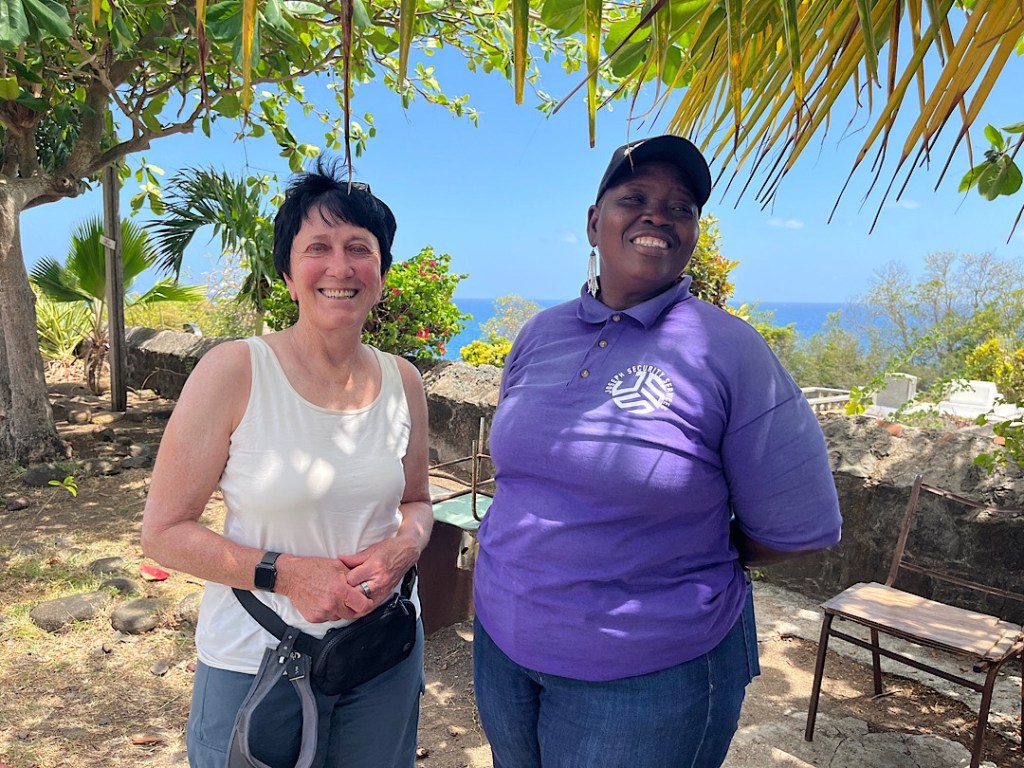
Whether the Caribs committed suicide or were driven off the cliff by their French conquerors (accounts vary), it was a beautiful place to die. Eventually, we realized there was a front entrance to the cemetery. We strolled to it and introduced ourselves to the guard, whose 53rd birthday, we learned, was that very day. Beverly (a Sauteurs native) filled us in on her village, where life is slow and pretty much crime-free. She said most residents survive either by fishing or farming on the nearby little Grenadian islands. Or they take minibuses to work in the capital, St. George’s, about an hour away.
The cemetery also, weirdly, is the final resting place of the first person ever to be diagnosed with sickle-cell anemia. We felt more than satisfied, touristically, as we headed south again.
Along the way, we stopped at the Belmont Estate, a former slave plantation dating back to the 1600s. For $6 each, we got a two-hour tour of the 400-acre operation.
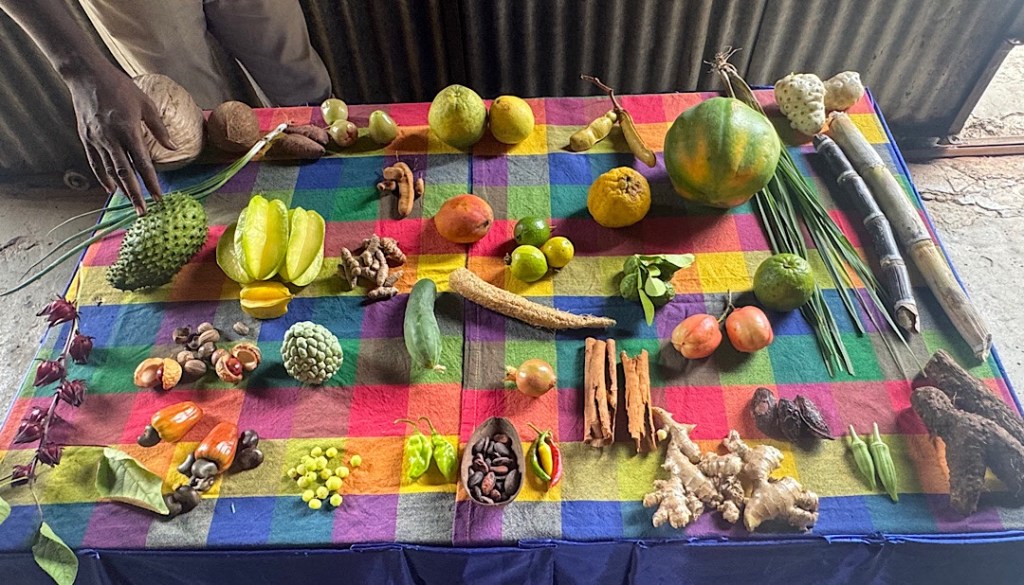
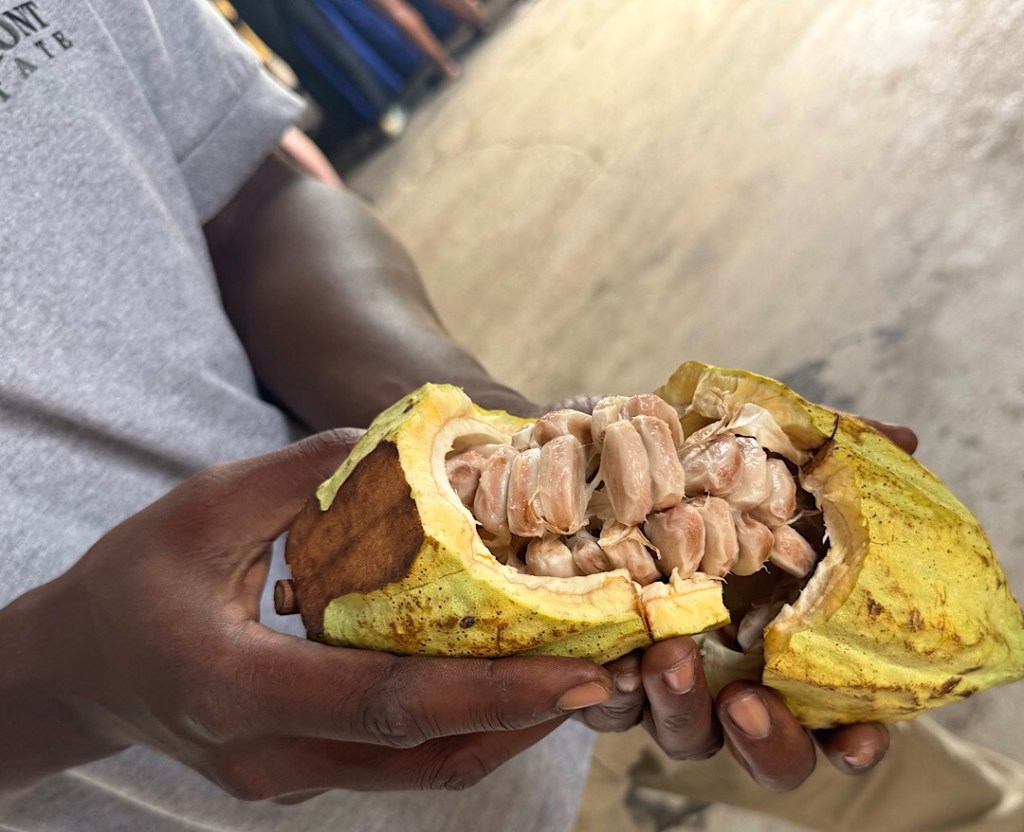
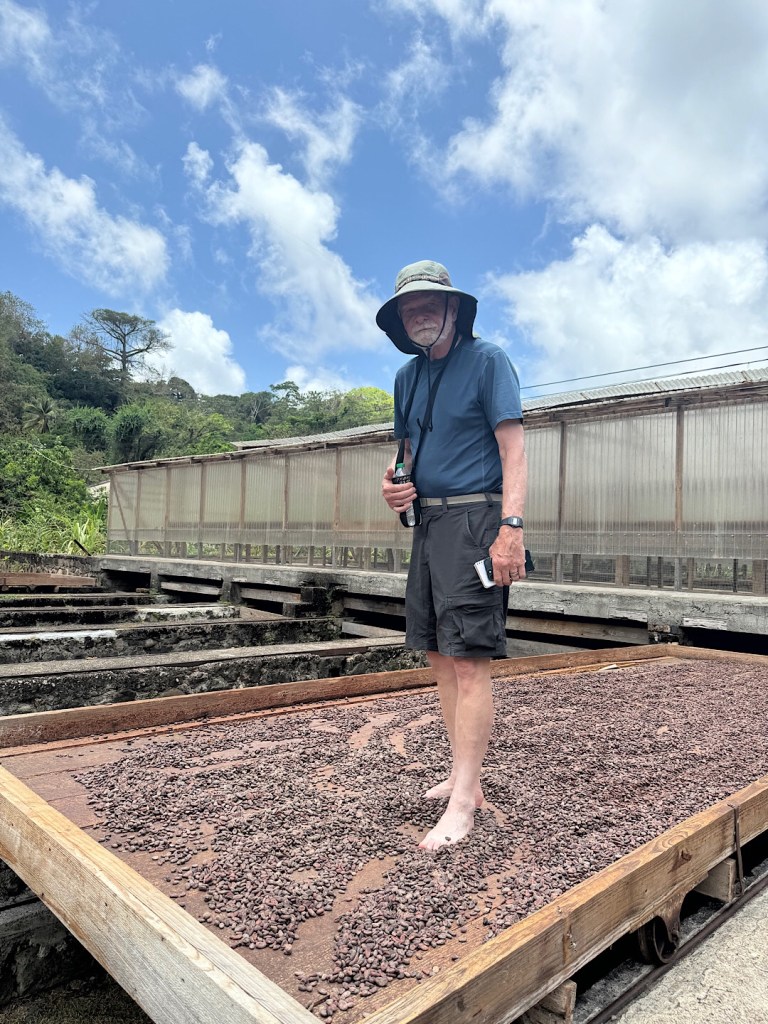
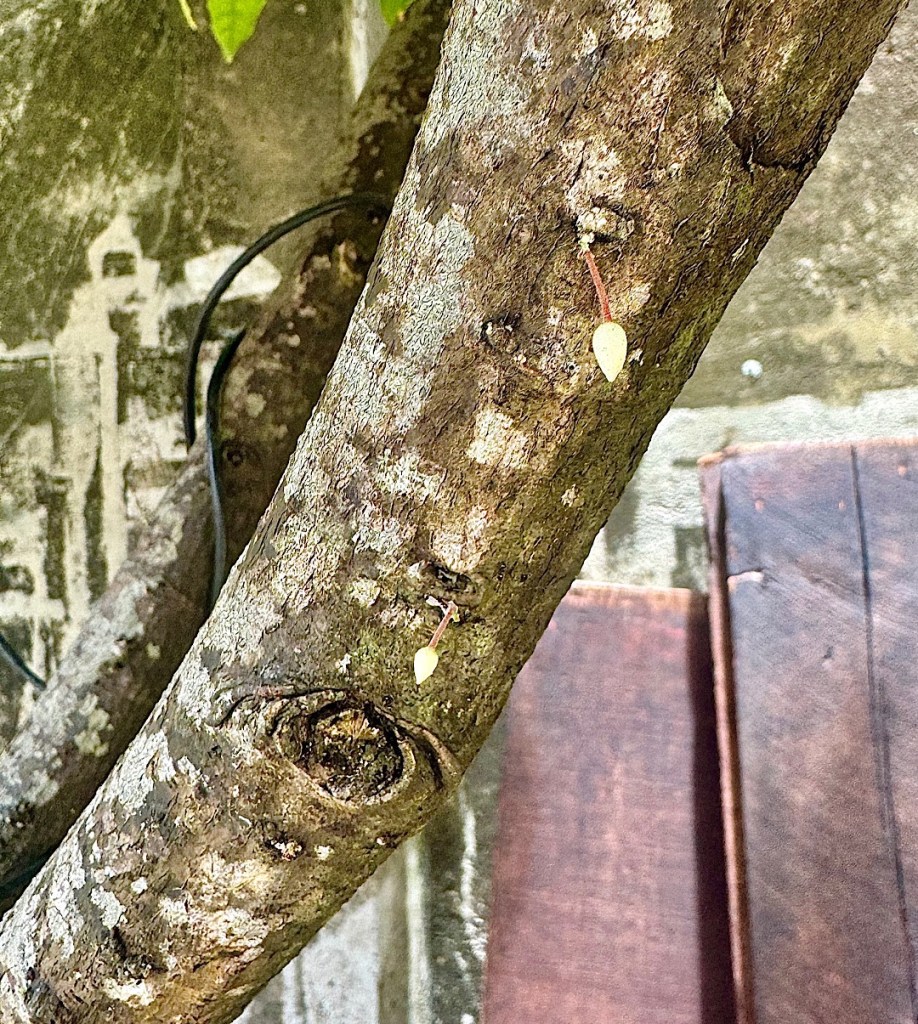
Today they produce an eye-popping assortment of tropical fruit and other agricultural goods.Today cocoa beans and nutmeg are the biggest moneymakers. Our guide showed us the whole process, from the extraction of the beans from the cocoa pods, through their fermentation, drying, sorting, grinding, aging and turning into smooth, shiny bars. Farm workers like this one used to shuffle through the drying beans to mix them up.I was most delighted to learn that chocolate starts its life cycle as a tiny delicate flower that sprouts directly from the plant’s trunk.
After a decent lunch that included the first nutmeg ice cream I’ve ever tasted (an island speciality,) we climbed into the Passo again, thinking our next stop would be in the Grand Etang National Park. There we wanted to hike to the famed Seven Sisters Waterfalls. But Google Maps let us down again. Although the waterfalls were clearly listed as a destination, we saw no turn-off to them as we whizzed through the high dense jungle. It began pouring rain so we gave up and returned to our villa for a pre-dinner nap.
Staying at this villa is a different kind of home-exchanging experience than we’ve had before. The classic model is a direct trade, where you go and stay in the home of folks who simultaneously take over your house. We’ve done dozens of those over the years, including our recent trade in Austin. But another option nowadays is to use “Guest Points.” These give you a lot more options. For example, if you’re like Jennifer and Mark Solomon and you own a little resort off the beaten Grenadian path and it’s the off-season and most of your units are empty, you can list one of them on homeexchange.com, get points for it, and use them to secure lodging when you visit your relatives in London.
Steve and I have amassed bunches of Guest Points over the years, and for this Caribbean trip we’ve used them to secure a variety of accommodations, including the villa within the Solomons’ 473 Grenada Boutique Resort. The complex has an in-house chef whose services we’ve mostly been using for dinners, since in this part of the island there are almost no restaurant services. We did hear about a restaurant at another resort just 10 minutes away, however, and Thursday night we decided to dine there.
On the way, we made another off-beat stop. We wanted to see what was left of the old Army camp where Maurice Bishop’s body was dumped 40 years ago. Bishop was the charismatic young socialist who became prime minister in 1979 — six years after Grenada gained its independence from Britain. On October 18, 1983, he and six of his top lieutenants were executed in a bloody coup led by more-hardcore-Marxist Grenadians, and the assassination triggered Ronald Reagan’s decision to invade the island (remember “Operation Urgent Fury”?)
Here I have to say: last Sunday morning when I published my first post about this trip, neither Steve nor I knew almost anything about this (fairly recent ) history. That afternoon a friend who read my post alerted me we should check out a recent 7-part Washington Post podcast, “The Empty Grave of Comrade Bishop,” that focused on that tempestuous chapter of Grenadian history. I started listening as we flew east Monday, and I finished up the last two episodes between Miami and here, spellbound throughout. If mystery still surrounds exactly what happened to the bodies of Bishop and his team, I came away feeling like at least I had learned what had caused all the bloodshed.
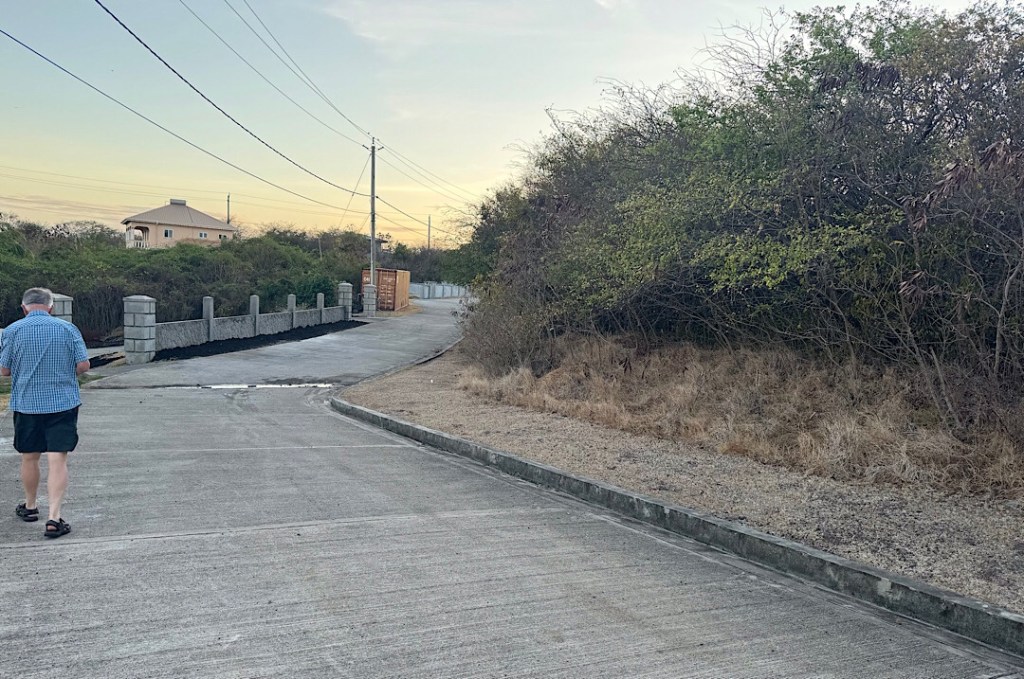
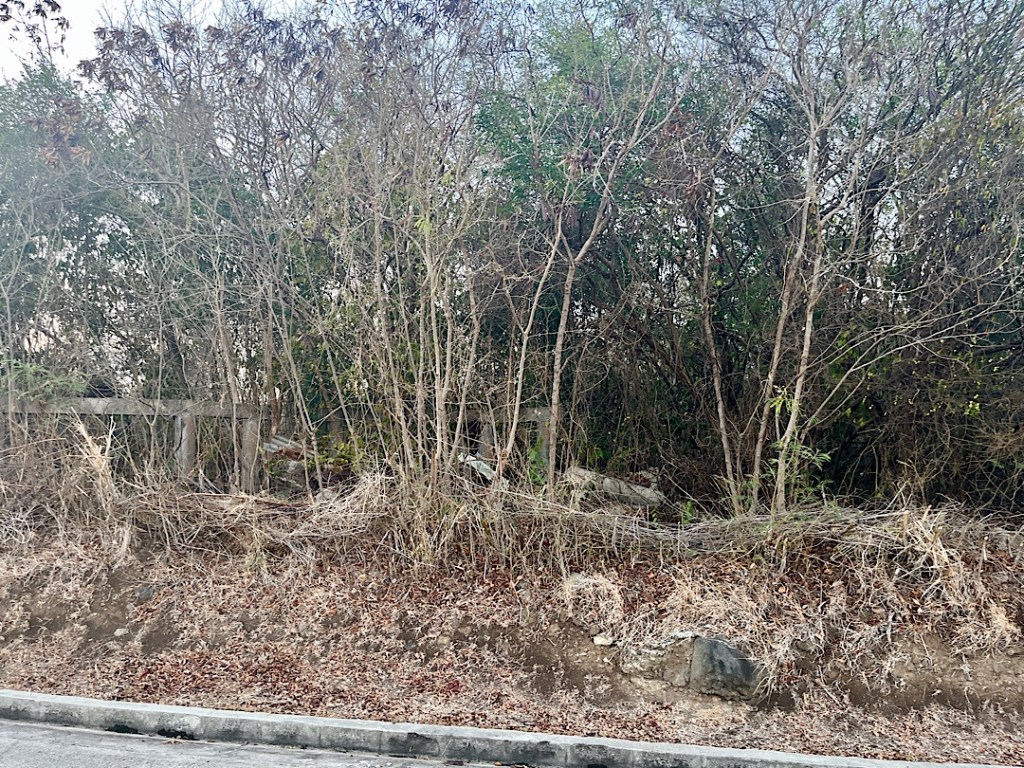
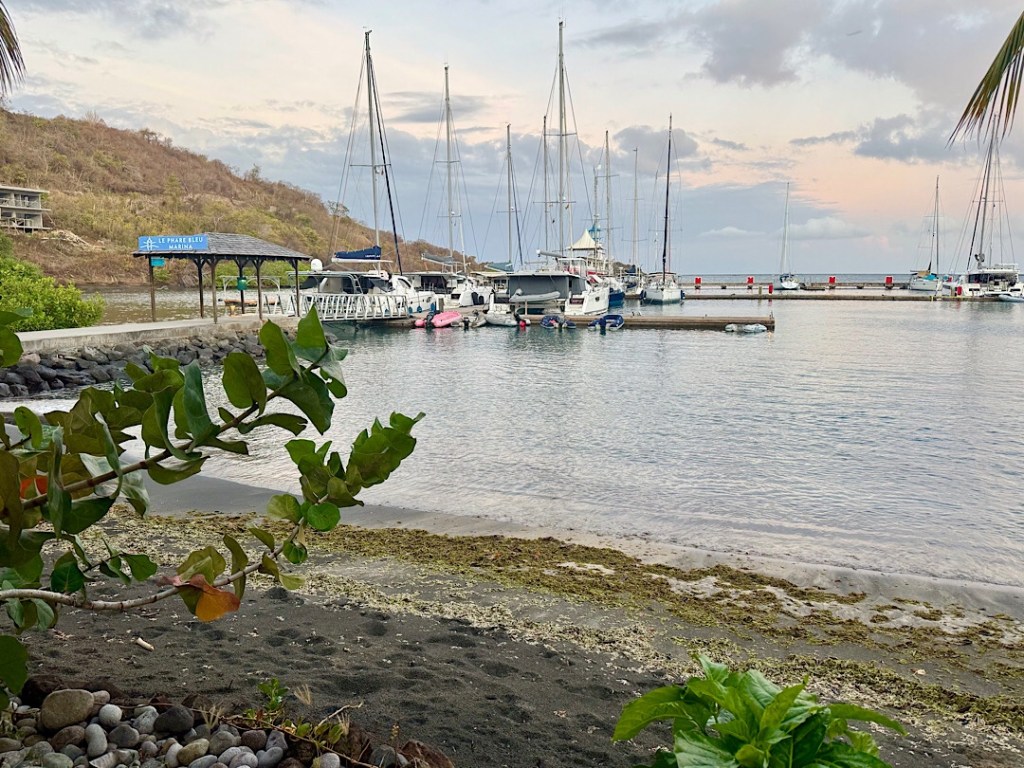
Today there’s still no gravesite or memorial for Bishop, but Steve did some research and realized one of the bloodiest sites of the coup and subsequent invasion was just 5 minutes from La Phare Bleu (where we had decided to dine). We told Google Maps we wanted to make a stop there, and this time the app led us directly to a road that climbed to the top of the Calavigny peninsula. At the coordinates, we found a wildly overgrown lot surrounded on all sides by a very new, obviously upper crust housing development.
The heart of the Grenadian army compound was in that bushy patch on the right.This is the house across the street from it.We think some of the most gruesome scenes from the podcast probably took place in there.
Foreboding and ominous, the former Army property didn’t inspire either of us to tromp around in it (filled as it could be still with unexploded ordinance.) So we just snapped a few photos and went on to the restaurant, where we sat at a dockside table, drank ruby-red rum punch, and shared a whole roasted lionfish.
My chair faced Calavigny’s brown hillside. The scene was postcard-lovely. But I imagined that night 40 years ago, when the US military was bombing it to smithereens, dropping 500-pound bombs and cluster munitions and thousands upon thousands of rounds of other ammunition, aiming for anywhere enemy fighters might be hiding. For me, knowing about the hellish brutality unleashed by the United States didn’t make it any less pretty. I do appreciate prettiness. But it’s also satisfying to get a peek at the backside of the postcard.
Day 7: Chinle to Chaco Canyon to Gallup. 265 miles; 8.5 hours.
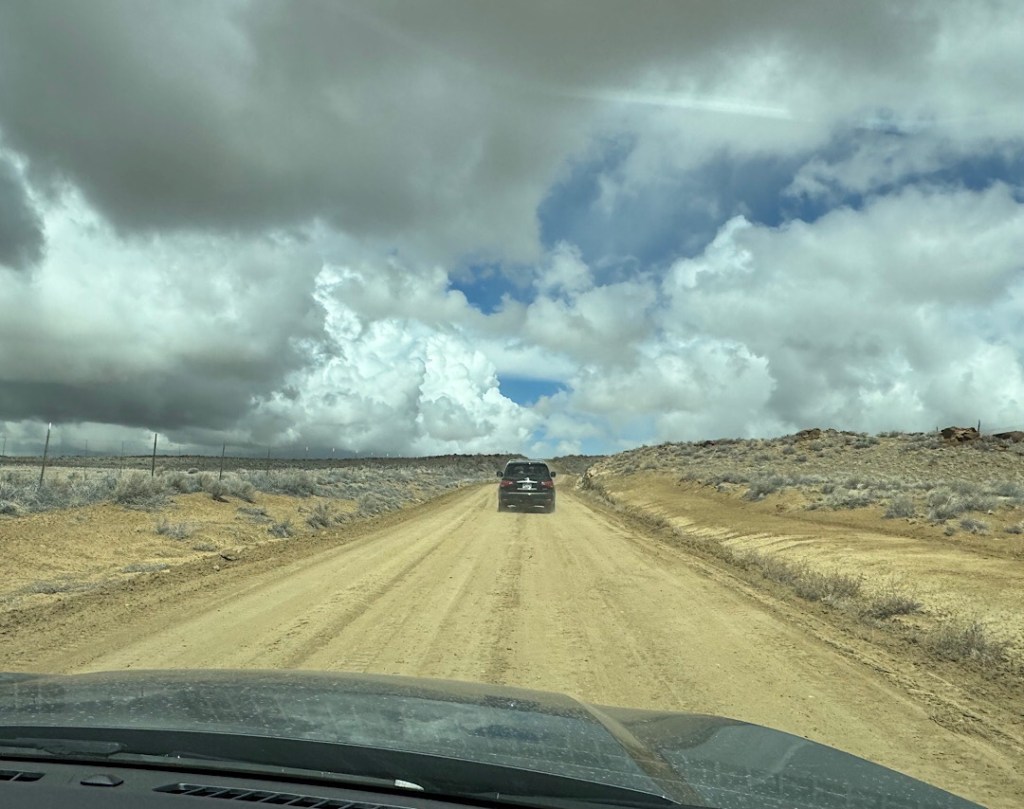
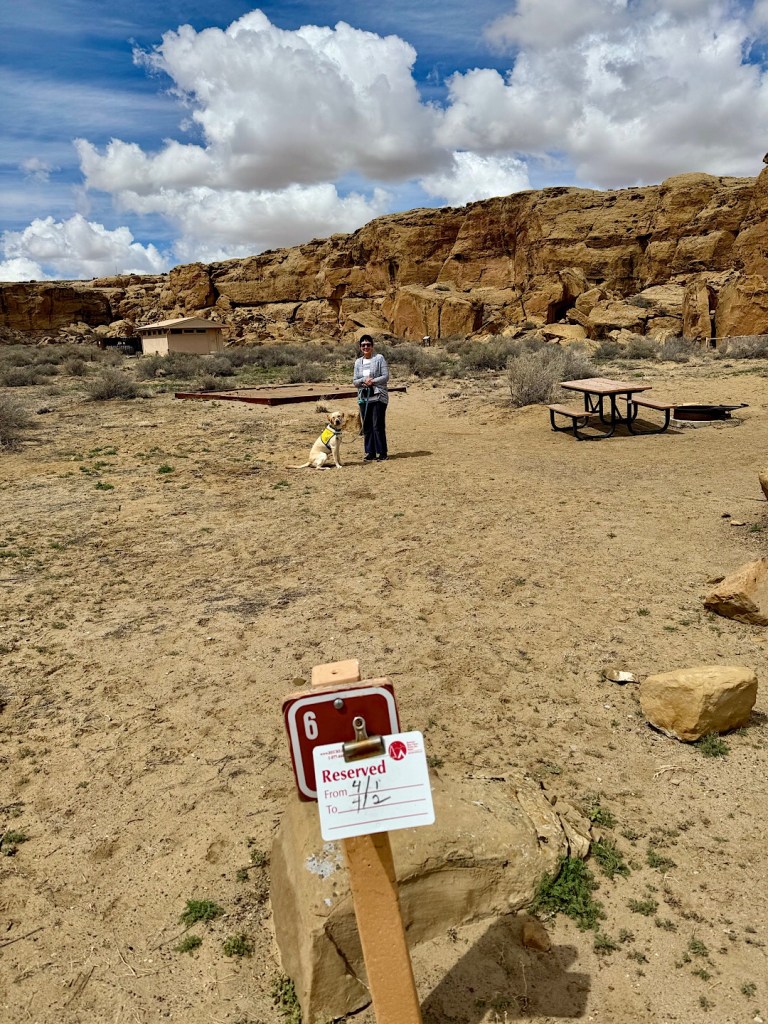
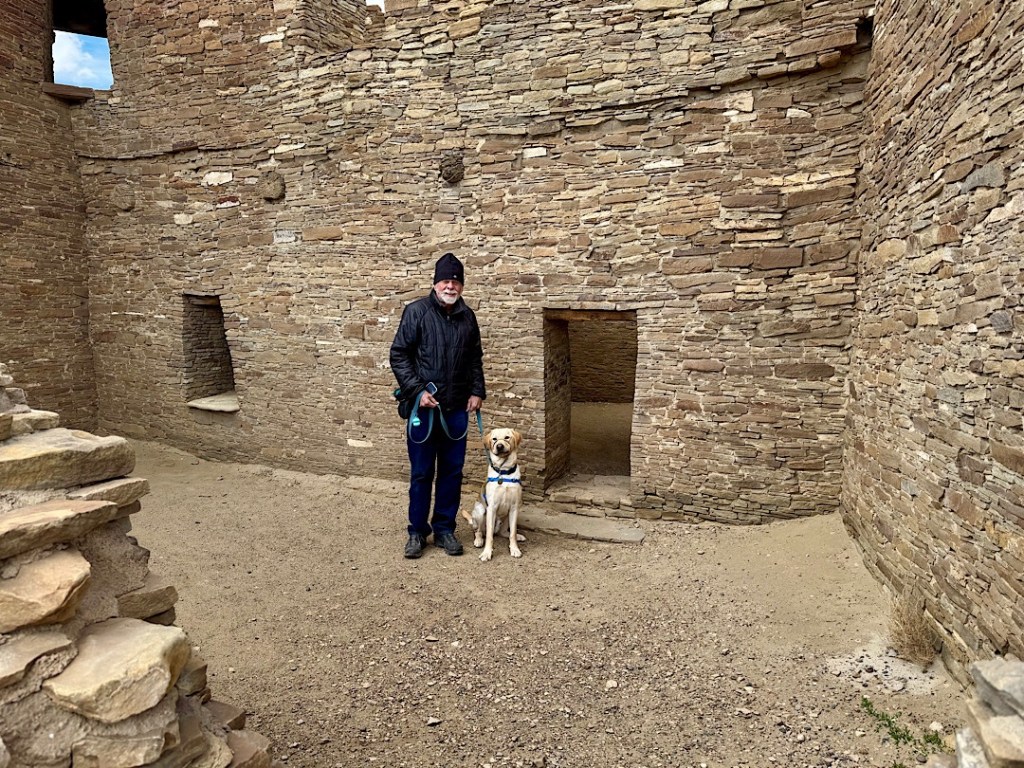
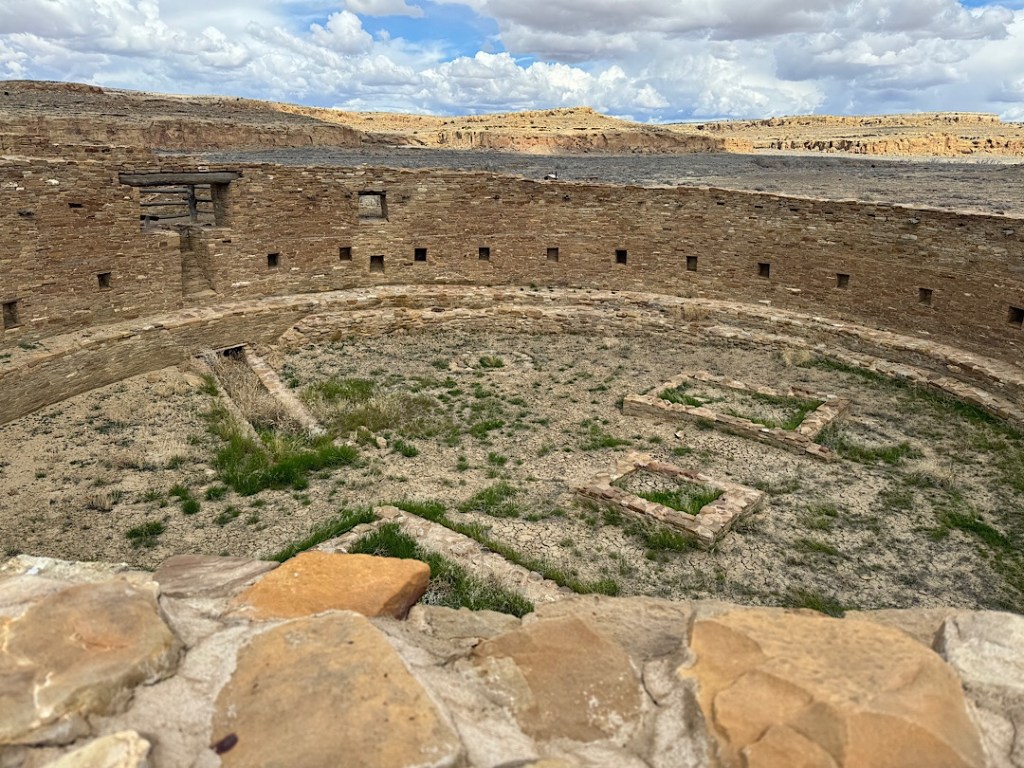
The Navajo Nation can be wintry in early April. We worried that more rain Monday morning might close the roads to Chaco Canyon, which we really wanted to visit.Although it was almost 12:30 by the time we reached the 20-mile dirt track leading in to the park, we decided to chance it, and reached the visitor center a little after 1. I couldn’t resist visiting “our” campsite — where we would have slept Monday night were it not for the frigid forecast.Visitors access most of the park’s trails and major sites by driving on a paved loop road. Then you park and walk to sites like Pueblo Bonito, the largest building site in the broad shallow canyon.People started living here and building complex free-standing brick structures almost 1200 years ago.The Pueblo Bonito complex covered three acres and contained around 600 rooms four stories tall.Archaeologists think much of this site was ceremonial. The Chaco residents also built an impressive network of wide roads, and people trekked here from afar to trade all manner of goods.We saw enough to get a sense of what’s here, then made it out over the dirt road to head for the section of the old Route 66 that passes through Gallup.
Day 8: Gallup to Zuni Pueblo to Albuquerque. 199 miles, 7 hours, 10 minutes.
We were sad to miss the Hopi Pueblo in Arizona, but decided we could pop into the ancestral lands of another tribe: the Zuni, whose primary village is just 45 minutes south of Gallup. We visited a private museum, a trading post, and the visitor center there but were not supposed to take any photos. All very interesting, but with nothing to share in the way of images.
The other highlight of our day was an afternoon stop at the Albuquerque home of the couple who are raising one of Trent’s litter mates, Tex. They have a huge, fenced pasture behind their home, where the brothers romped ecstatically.
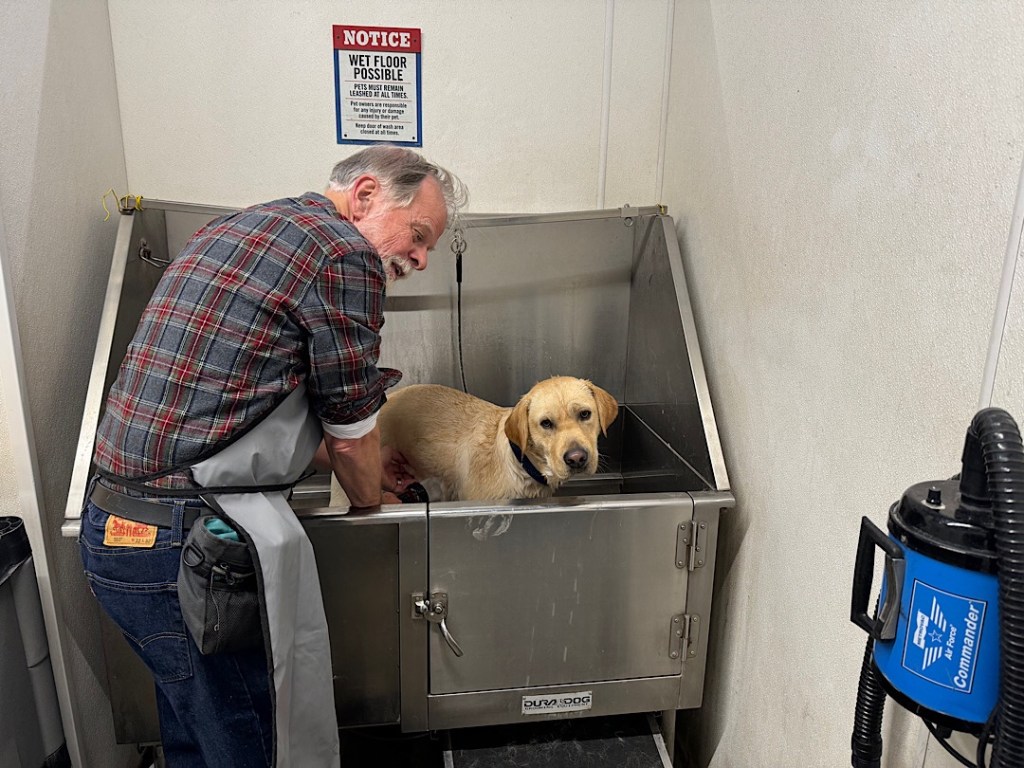
Equally thrilling to Trent was his discovery of the muddy drainage ditch coming off the irrigation channel at the back of the property. In it, he transformed himself from a lab/golden mix into something more closely resembling a chocolate lab. (Or a pig?)
We hosed some of the mud off but still needed to take him to a nearby doggy self-wash facility to make him presentable again.
Day 9: Albuquerque to Roswell to Lamesa, Texas. 170 miles, 8 hours, 45 minutes, including stops.
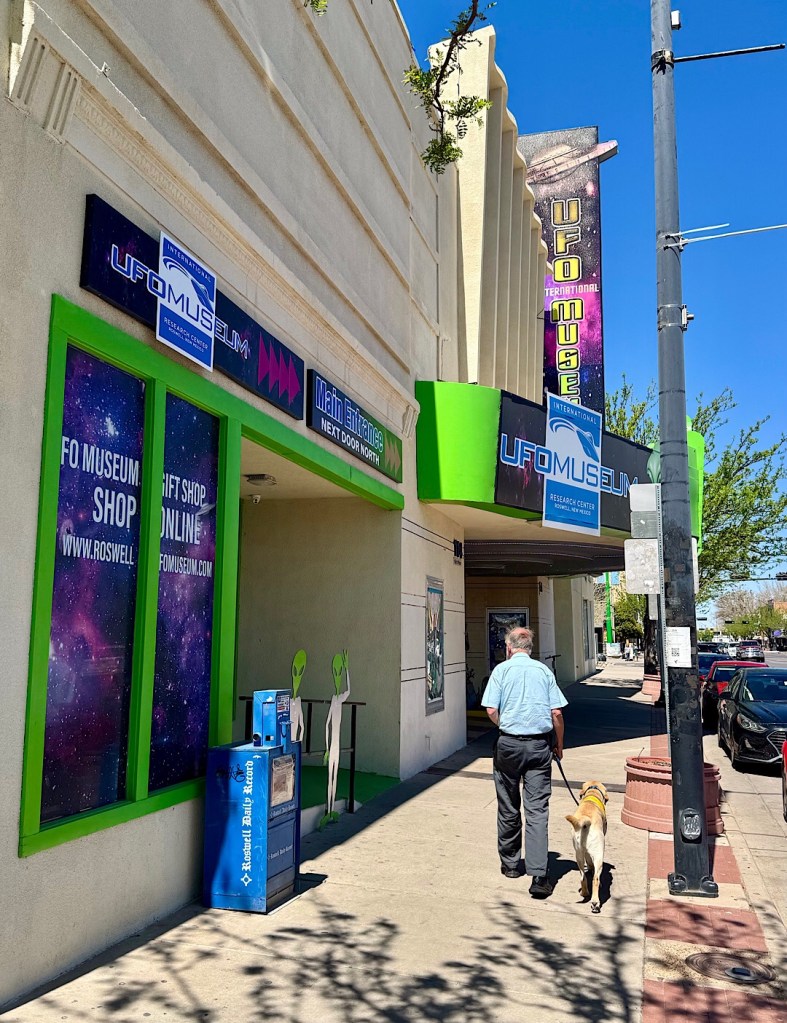
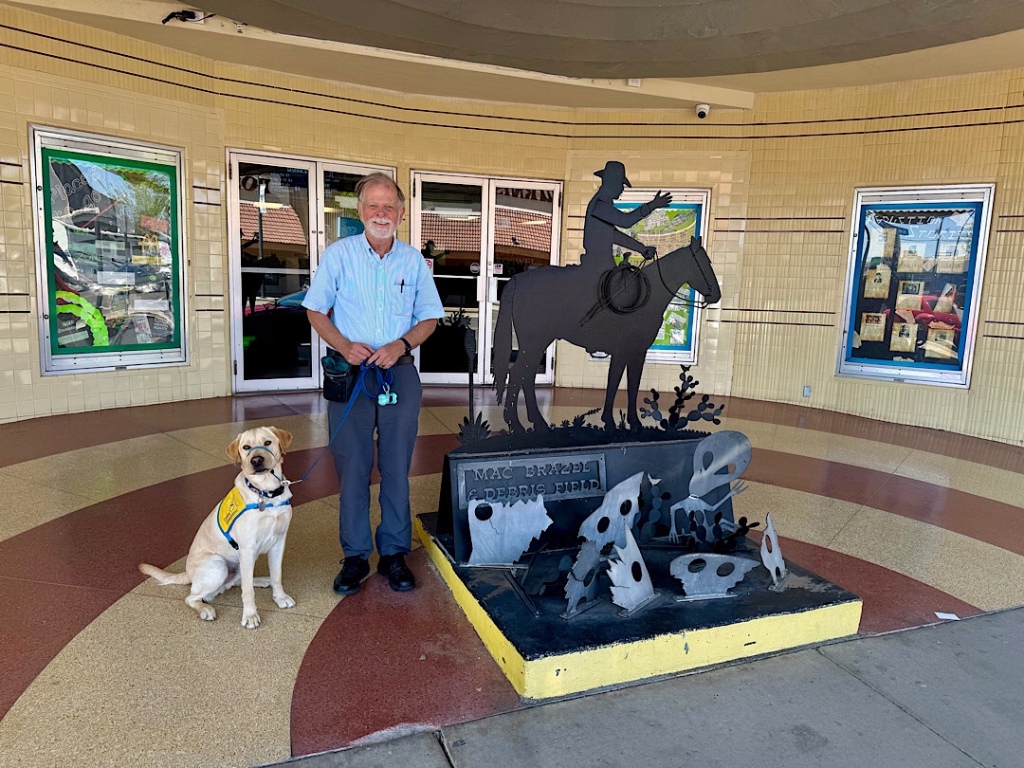
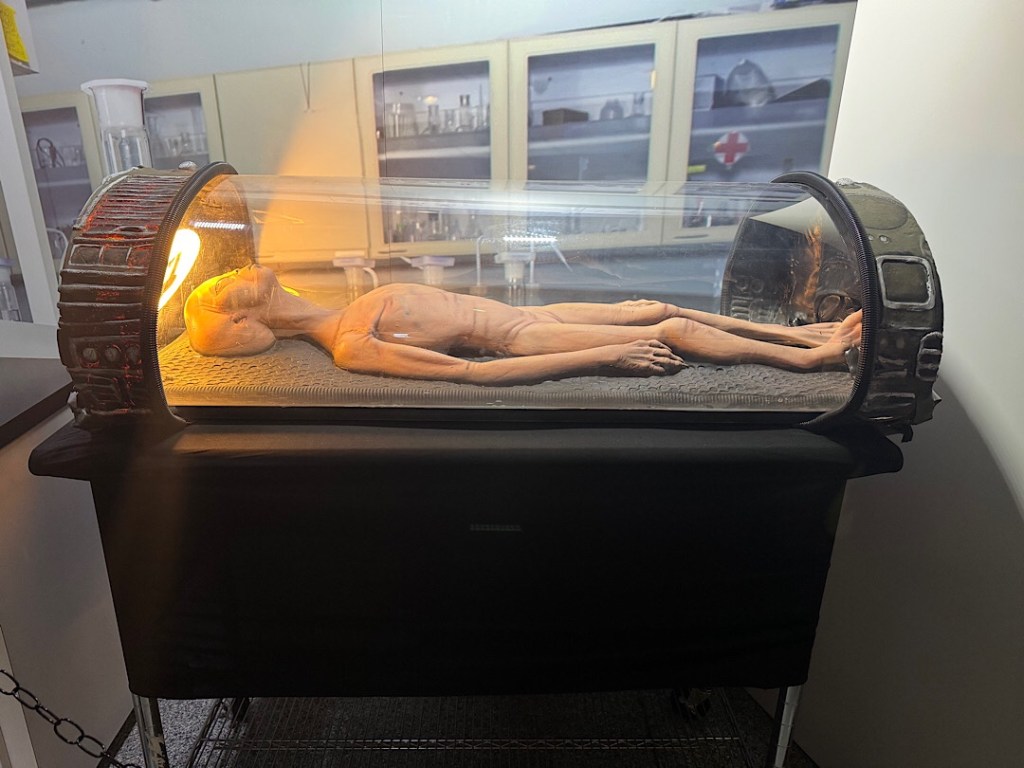
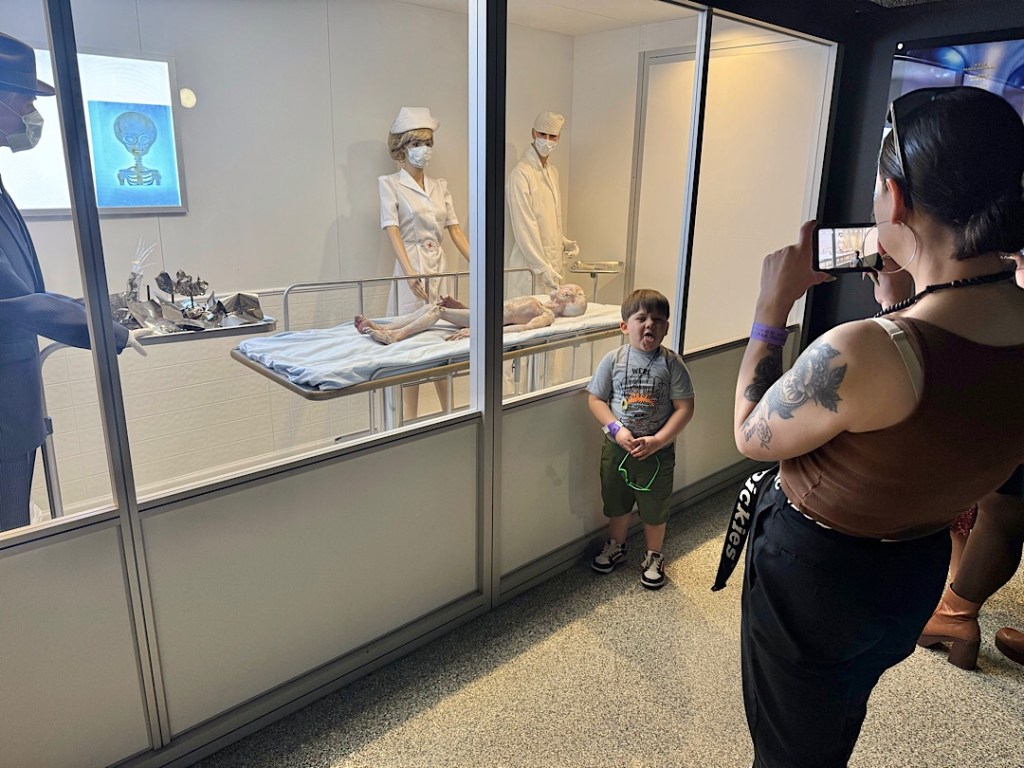
Roswell, New Mexico is the town that many people believe was the site of an alien spaceship crash in 1947. The incident and subsequent theories about the US government’s attempts to cover it up have created a substantial tourist industry in Roswell, a town that otherwise wouldn’t get a lot of attention.
We had expected the UFO Museum to be cheesy, but it surprised us by how large and complex it was. Trent seems to be sneering — but is it because of the alien presence… or the hype
To break up the journey, we spent the night in the small but friendly town of Lamesa, Texas.
Day 10: Lamesa to Austin. 348.8 miles, 6 hours 10 minutes.
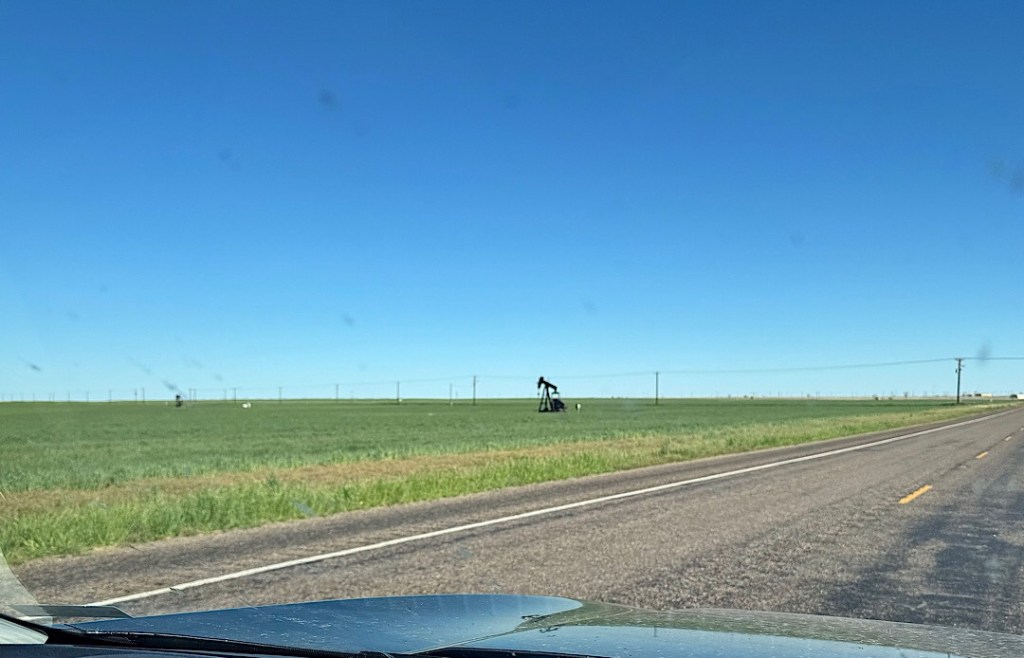
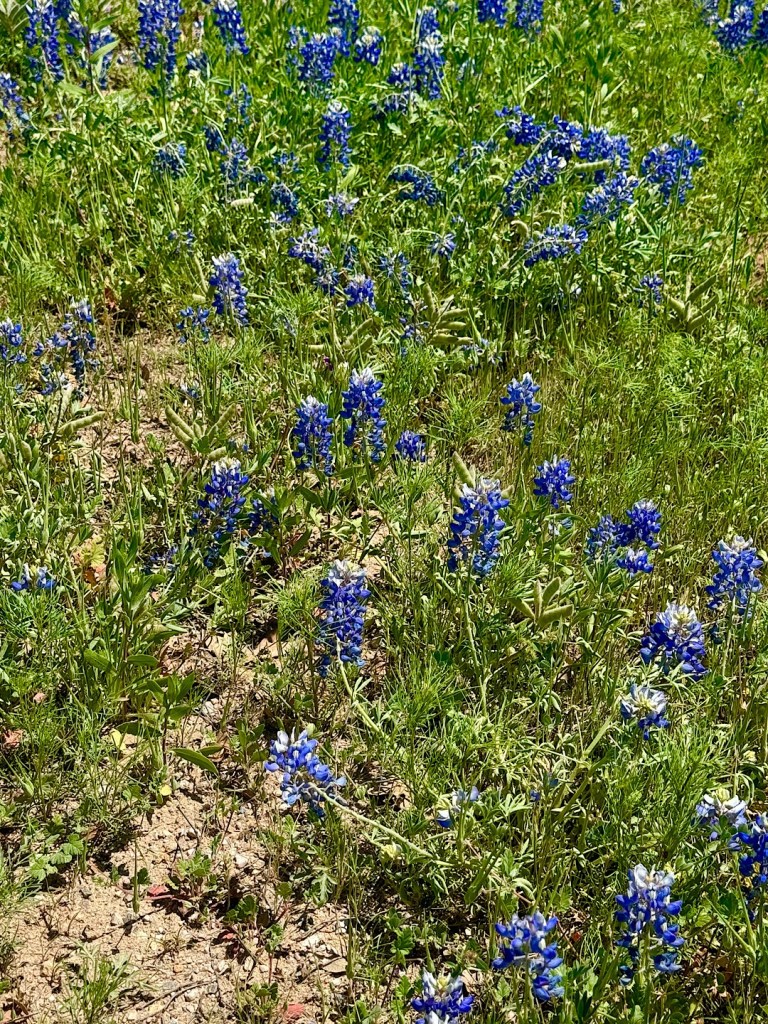
Almost immediately after crossing into Texas, the landscape changed. I’d never seen that combination or enormous fields, dotted with oil wells. Even more impressive was the bloom of bluebonnets and Indian Paintbrush and other wildflowers once we hit the hill country west of Austin.The bluebonnet is the official state flower of Texas.
We arrived at our home-exchange base in Austin a little after 2, having covered 2,034 since leaving our garage. Our son and his family from Reno landed at the airport a few hours later. Now the next phase of this adventure has begun.
Lots of eating,A bit of sightseeing.Mounting anxiety over the question hovering over Monday’s big event: will the building clouds obscure it?
Day 2: Phoenix to Sedona. 118 miles; 2 hours, 12 minutes (including a stop for gas).
“This red earth is tantalizing, with a hint of mystery,” Trent seemed to think.
Day 3: Sedona. Not a lot of miles but 16,851 steps.
Sometime after 8 pm last night I tried to draft a blog post about our second day on the road. Exhausted and cranky, I churned out a couple of tedious paragraphs, but when I showed them to Steve, he enjoined me, “Don’t publish that.” Too tired to argue, I yielded to his judgment.
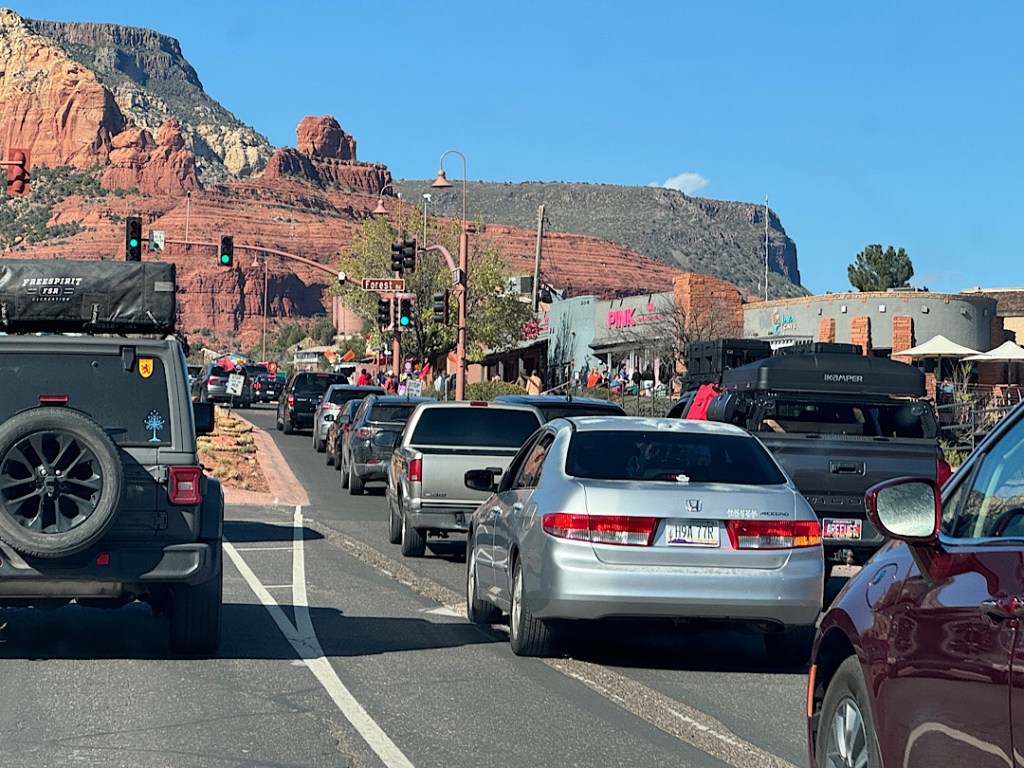
I awoke at 5:20 this morning and had a flash of insight. If we got up then and made it out the door quickly, we would have a shot at getting a parking spot at the trailhead for the Boynton Canyon Trail, which a close friend had recommended most strongly for a hike. Steve went along, and we whizzed from our lodge through central Sedona on streets that had been choked with traffic upon our arrival Wednesday.
The tacky Uptown areas, with its overpriced restaurants, had helped to sour my mood Wednesday night.
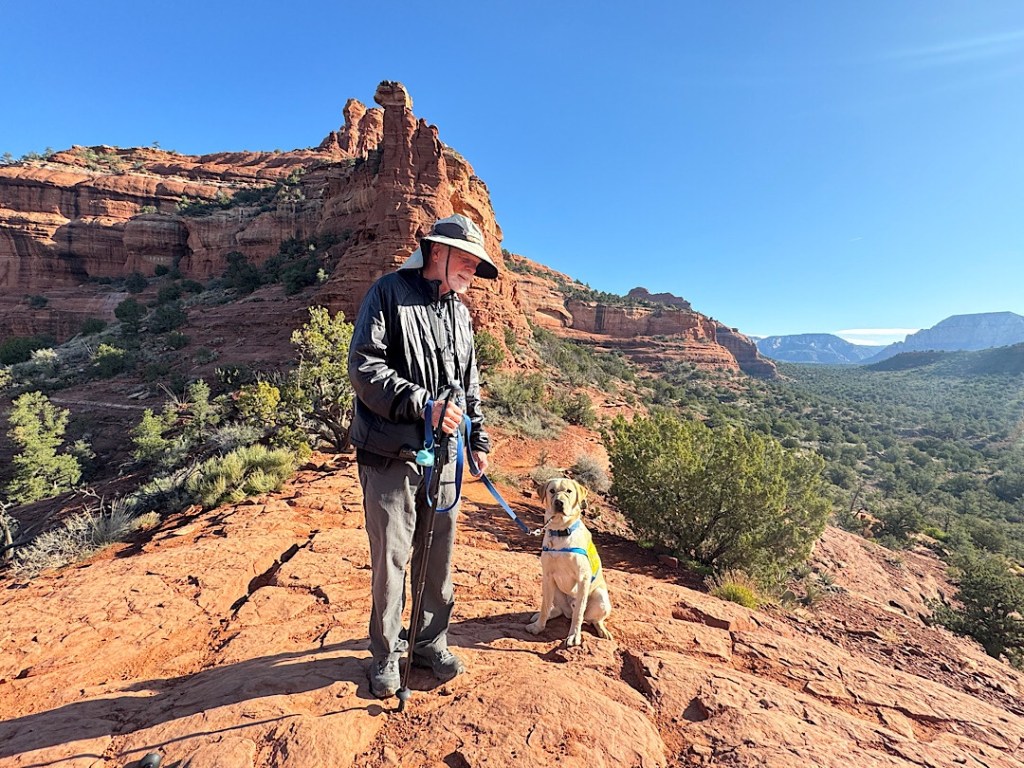
But everything went splendidly this morning. We arrived at the trailhead at 7:06 am and got the last parking space. (Yesterday we’d learned that because of the Easter and spring break combo, this is the busiest week of the year, and the cause of the agonizing traffic jams that contributed substantially to my crankiness yesterday.) Getting out the car, I found the extra room key I thought I’d lost. (Bracing myself for a hefty key-replacement fee also had upset me.) The morning was chilly, but the skies were crystal clear and sunny, and the landscape (which neither Steve nor I had seen before) explained why so many of our friends are wild about Sedona.
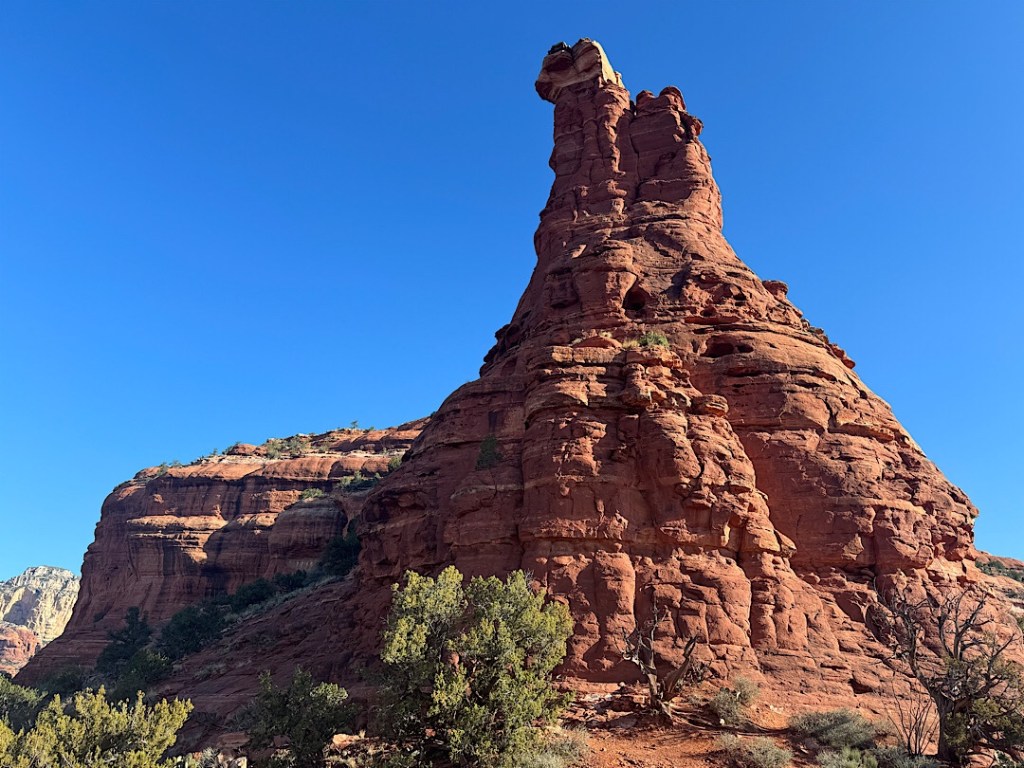
Sedona’s soaring red rock, so architecturally monumental, lies at the heart of their devotion. But guidebooks and other hypesters also talk about this area harboring mysterious vortexes, “swirling centers of energy that are conducive to healing, meditation and self-exploration….places where the earth seems especially alive with energy.” Boynton Canyon is supposedly a vortex hotbed, one of the reasons I’d wanted to hike there. The visitsedona.com website had promised, “It is virtually guaranteed that you will leave feeling better than when you arrived.”
I wouldn’t have bet money that would prove true. But it did.
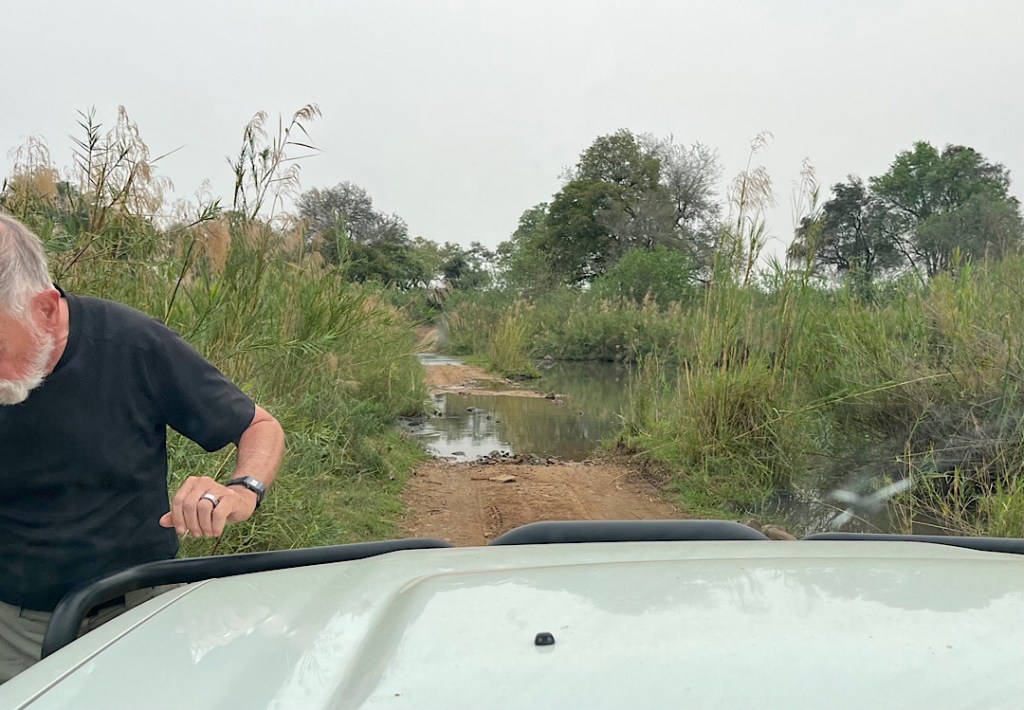
Throughout the course of our travels, Steve and I have stayed in a handful of places that felt like the ends of the earth. Our time in the Save Valley Conservancy adds another to that short list. After turning off the Mutare-Masvingo highway, we had to jounce for almost two hours over fawn-colored dirt washboard. Steve had to drive the Cruiser through the Turgwe River. During the dry winter and spring, it shrinks to a fraction of its high-water levels, but enough water still flows through it to get my adrenaline pumping.
Steve locking the hubs to engage the 4WD, to help us get through the water ahead.
The guard at the gate off the main road had radioed that we were on the way, so a guy on a motorcycle was waiting to lead us to our lodging on the Humani Ranch: “Goma 2.” It’s very clean and comfortable, and after a delicious dinner, I felt cozy and relaxed. Around 7:30, a sound shattered the night. A growl verging on a roar exploded close enough to be on our porch. This lion sounded murderous. He (or she) emitted its blood-curdling threats 3 o 4 more times. Then another scream pierced the night. The shrieks went on and on, terrified and pleading (if an animal can plead). I don’t know what it was (maybe a bush pig someone suggested the next day) except that it was prey about to be eaten alive.
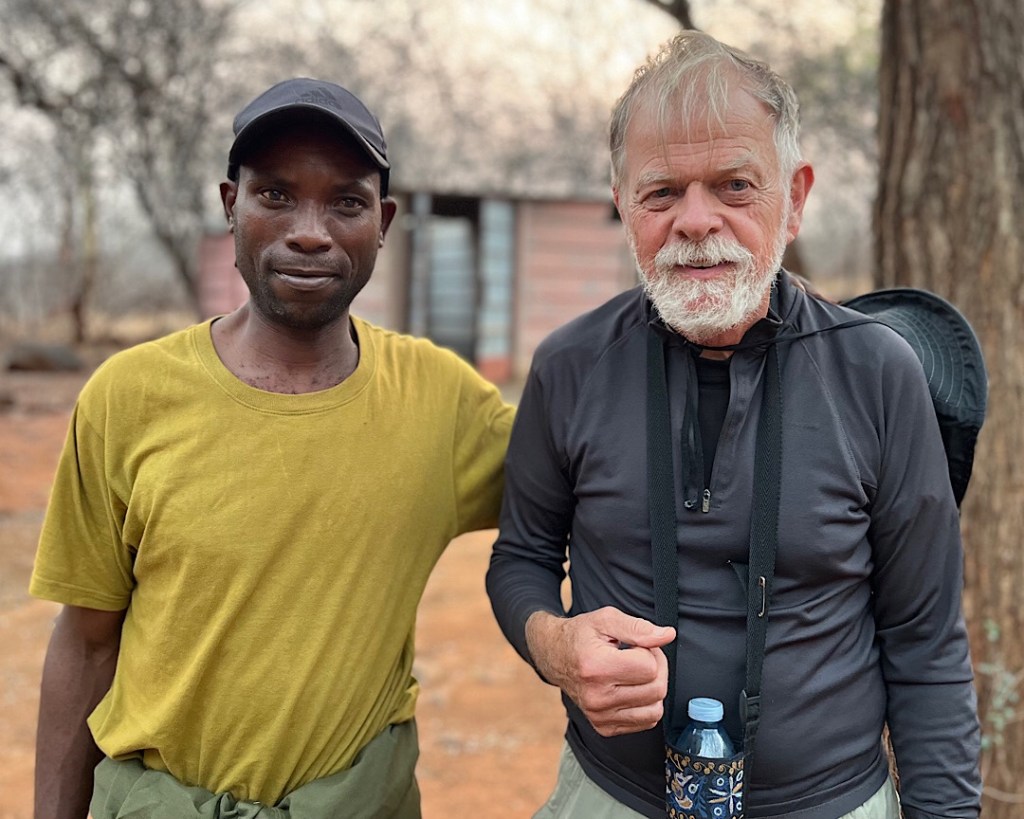
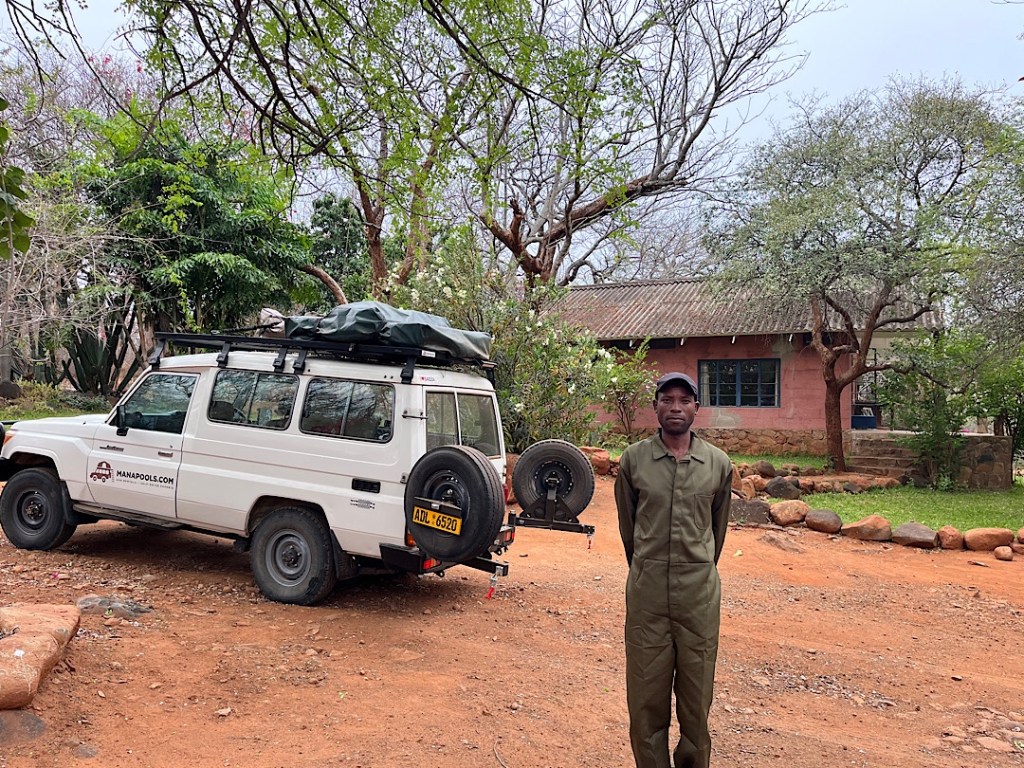
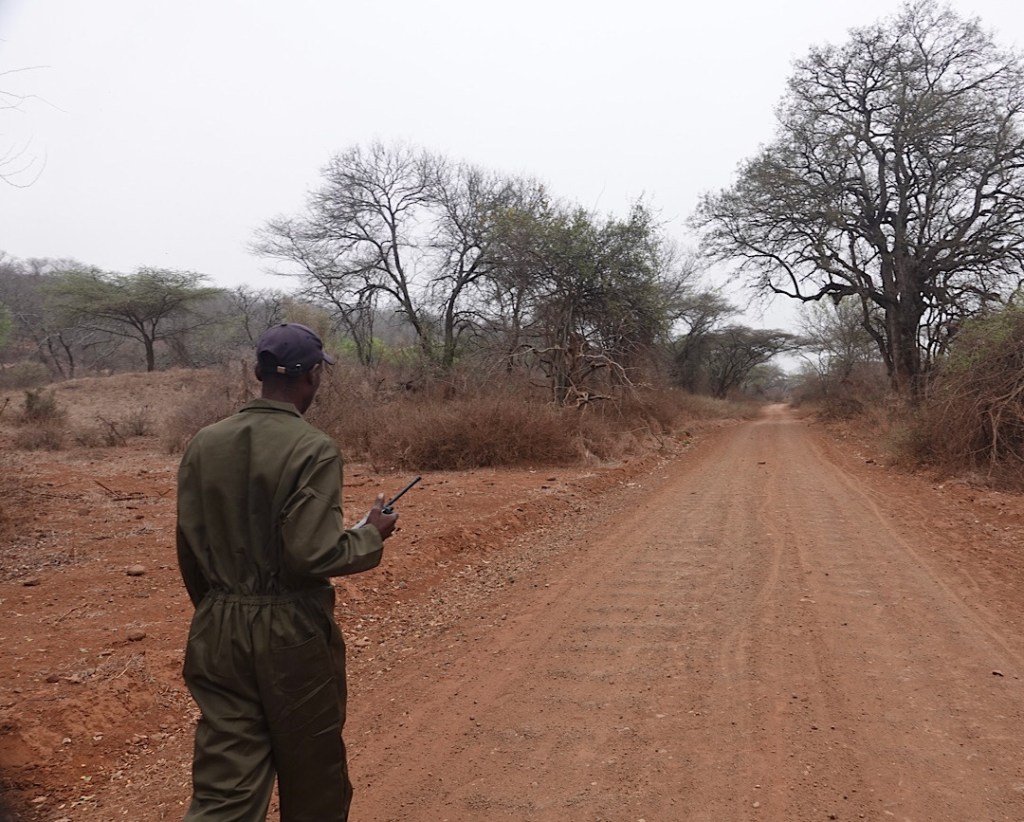
I felt astounded to be so close to such noisy exotic violence but not particularly scared. Goma 2 was built from stout concrete blocks. It has big windows, but a lion would only crash through one of them in a Hollywood movie. And soon this would not be a hungry lion. I did feel a bit nervous the next morning, as Steve and I set out on a walk led by a 32-year-old guide named Justice. He wore a green uniform and had a handheld radio but brandished no weapon.
It soon became clear his English was minimal. He knew the word “lions” but didn’t understand my question: “Are they dangerous?” I tried “Will they hurt us?” He still looked uncomprehending. I went for something simpler: “Will they eat us?” He said they wouldn’t.
We walked for awhile alone a broad dirt road, and at one point passed a gaggle of kids of various ages heading to the ranch’s school complex. If little kids could be out by themselves, I figured, we three grownups would probably be okay ambling through Lion Country.
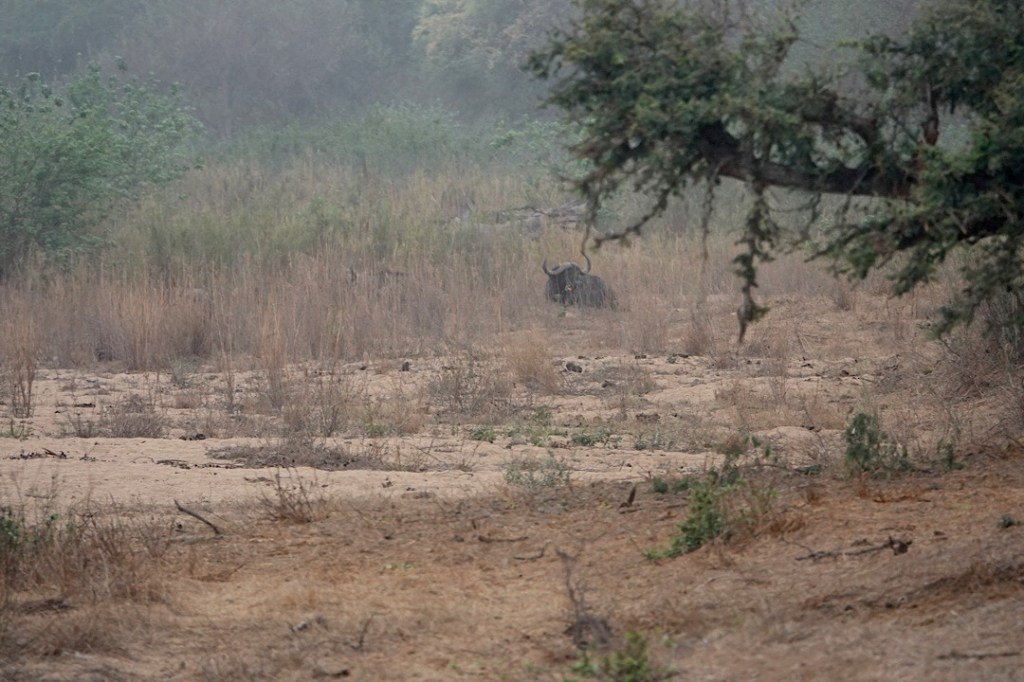
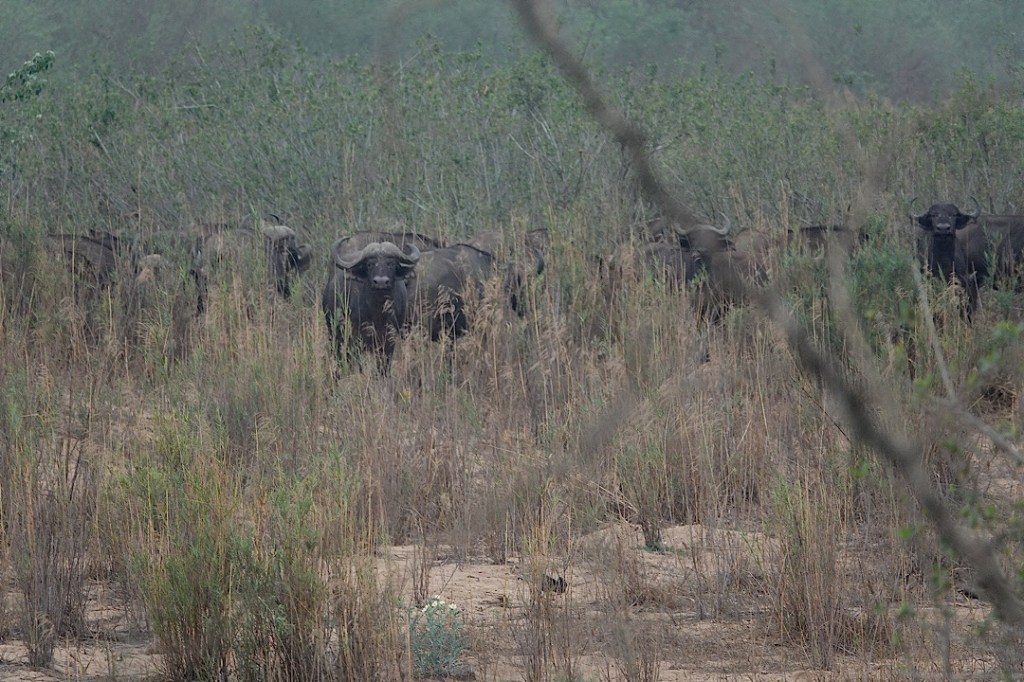
After a half hour or so, we left the main road and struck off through a lightly wooded area toward the Turgwe. Descending into the riverbed, the terrain was so open, it seemed clear no killer animals were close enough to menace us. Soon, however, Justice pointed out a buffalo far in the distance.
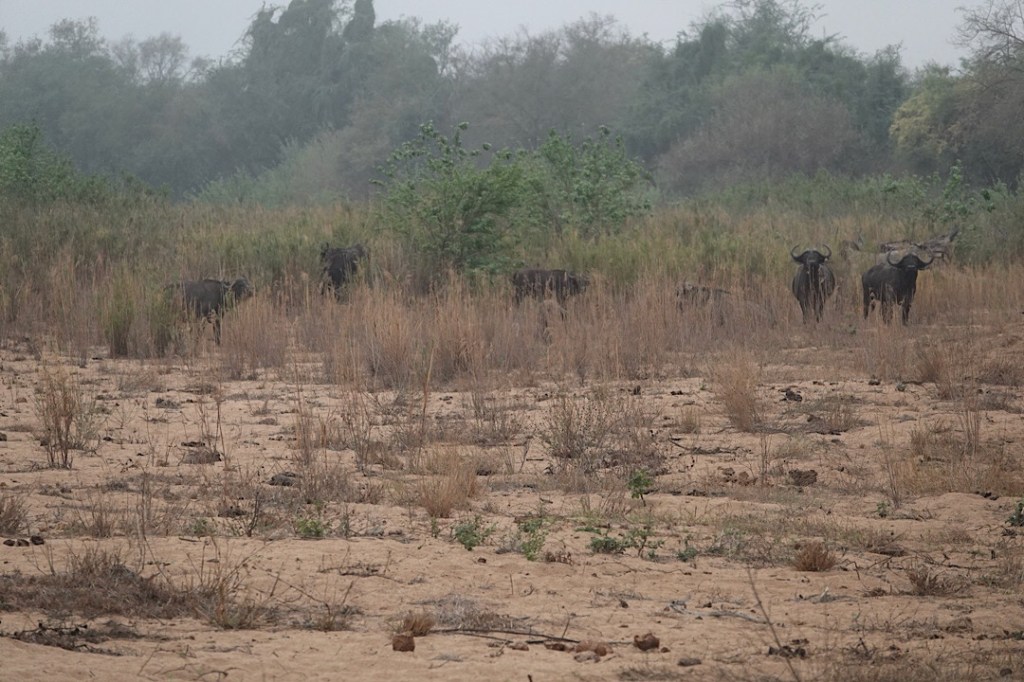
We advanced toward it, and I realized it was part of a group.
Closer still, we could see them watching us, wary.
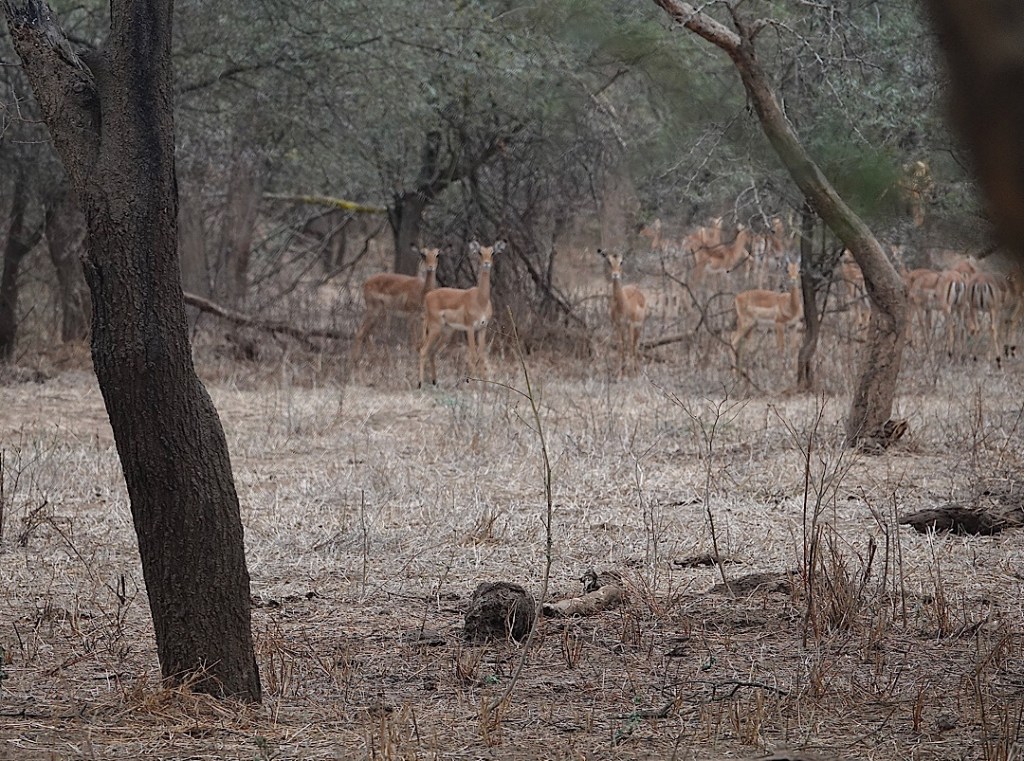
We’ve read, recently, that African buffalo aren’t as dangerous as their reputation. Only the cranky old solitary males are life-threatening, Justice told us. But he didn’t imply the rest were petting-zoo animals, and we soon left the riverbed. The buffalo herd thundered off, surprisingly fast. Over the course of the next few hours, Justice pointed out bushbuck, eland, kudu, and the always charming impala.
Shocking fast, they also leap higher than you can imagine.
He spotted some kind of monkey high in a tree (I only saw the branches swaying.) We noted a pair of warthogs trotting across a field, and we laughed at baboons stealing oranges from the farm’s huge grove.
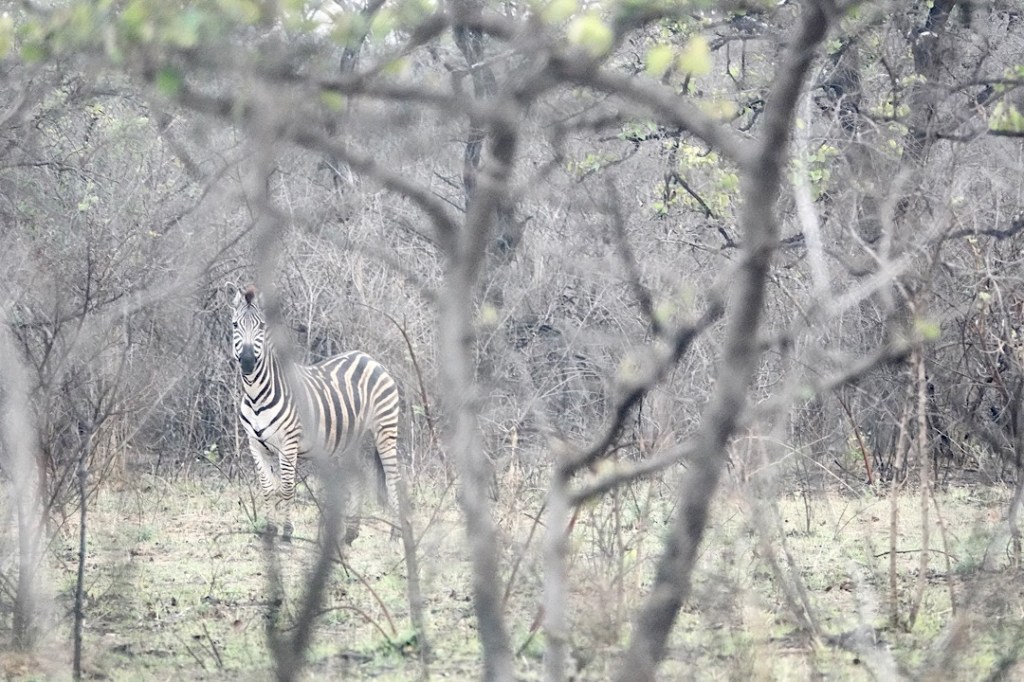
Toward the end of our walk, our guide directed our attention to a solitary zebra, camouflaged by the thicket of branches.
We saw no lions or black rhino or elephants, all of which live here. What flabbergasted me about the game walk, though, was how present all those big animals felt too. There! A fresh black rhino track.
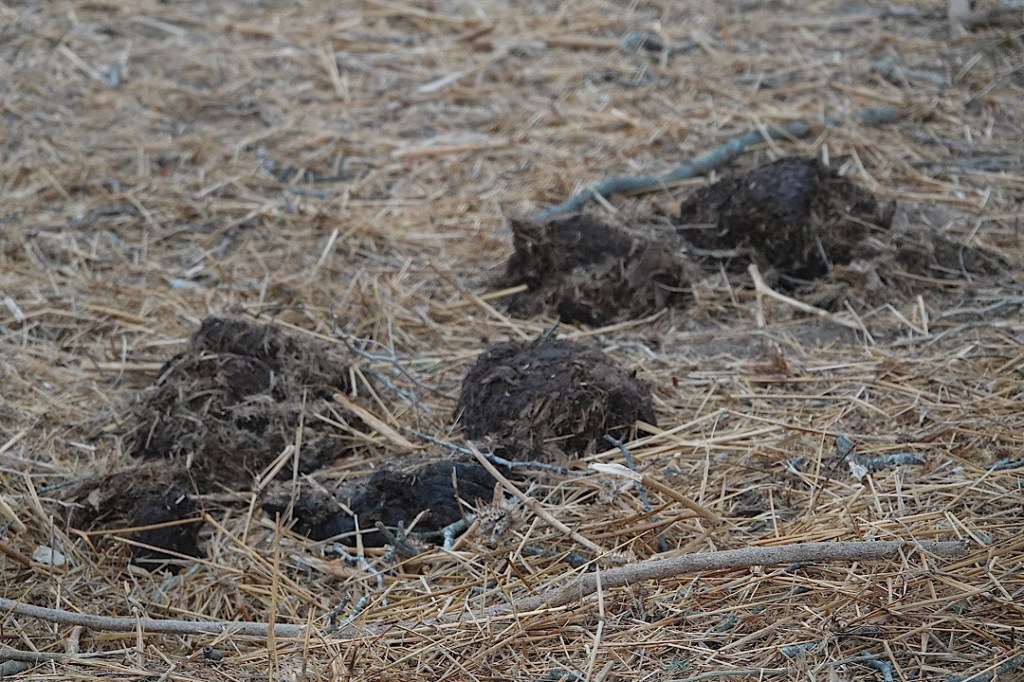
Enough elephant poop to fertilize a substantial organic garden.
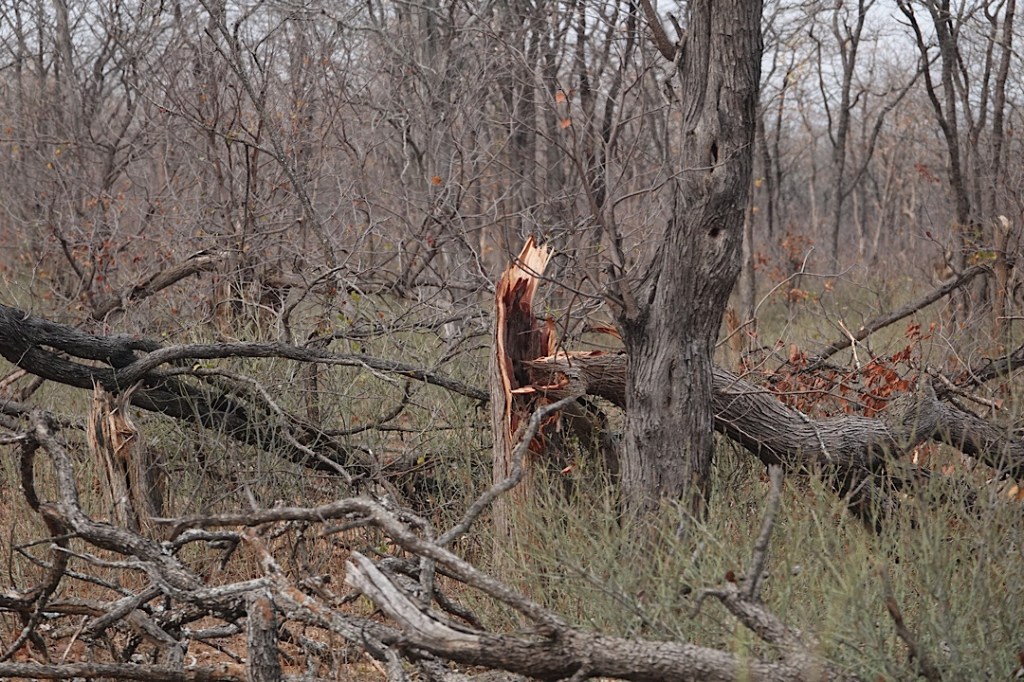
Trees smashed up in the unmistakable manner of elephants. (SUCH messy eaters.)
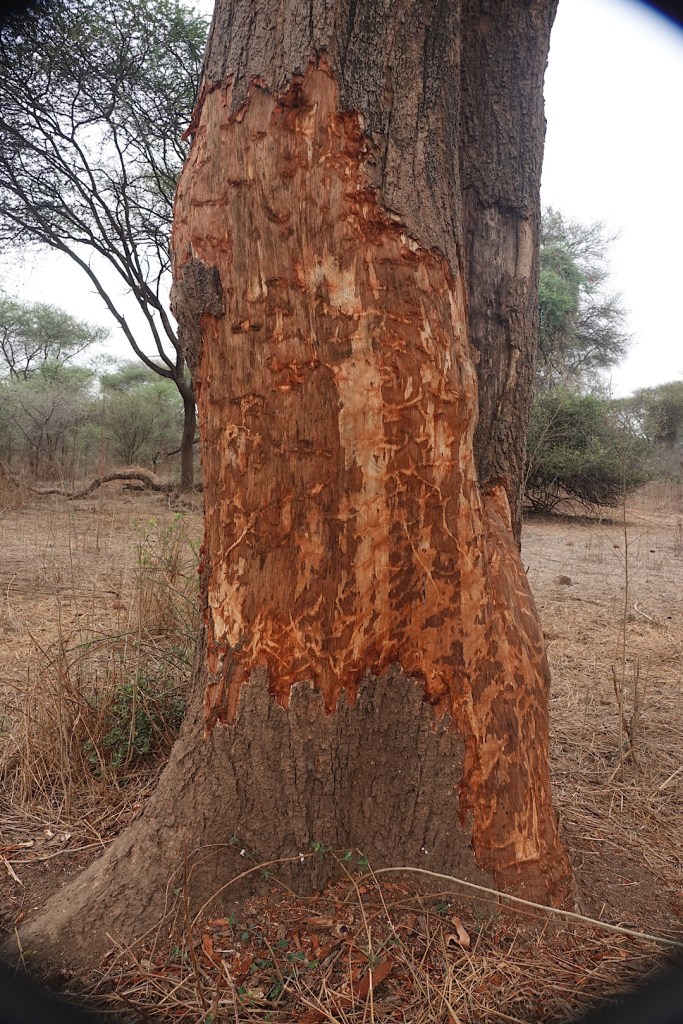
Our guide explained that a hungry elephant had stripped the bark off this tree (which would die as a result.)
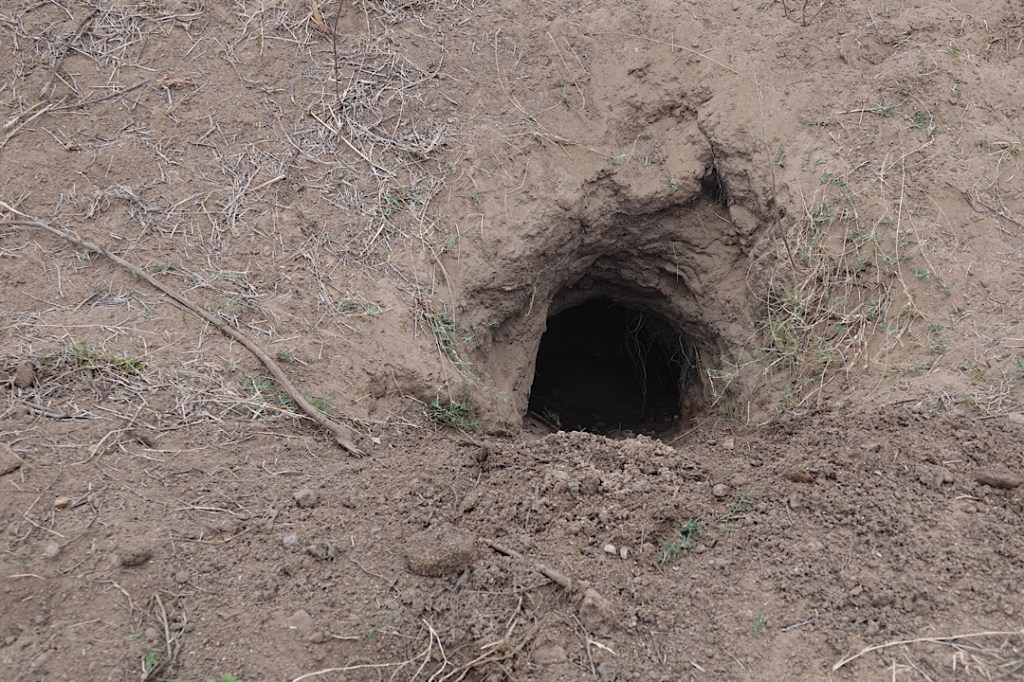
Justice said the mysterious holes in the ground were the work of “antbears” (later clarified for us by Google as aardvarks.)
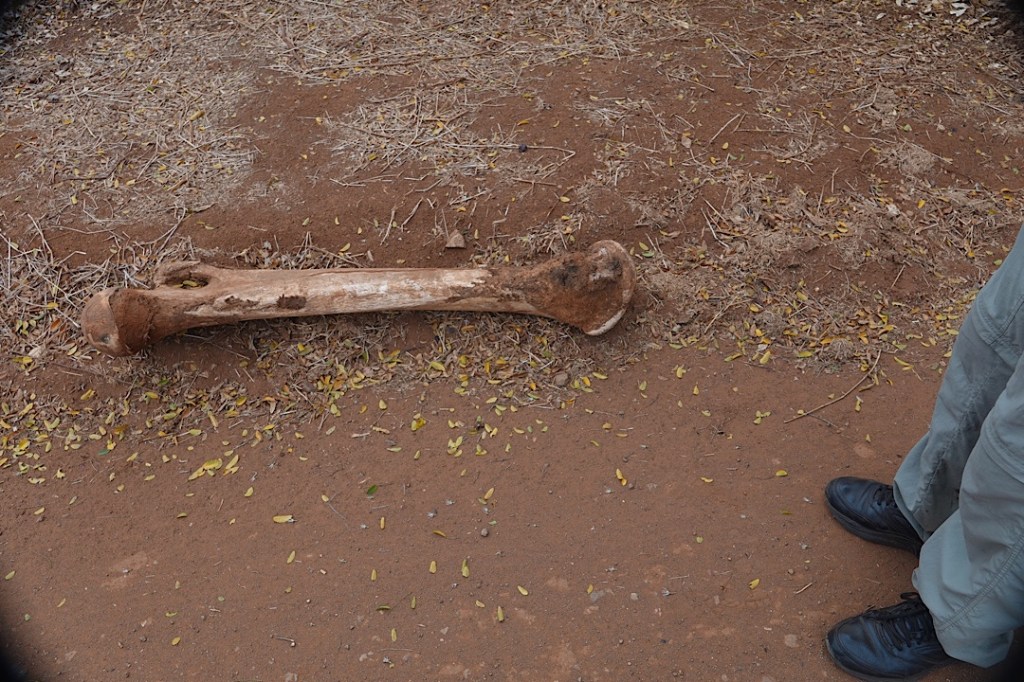
When we found this single elephant bone…
…Steve asked, “Where’s the rest of him?” Justice replied, “Hyenas.”
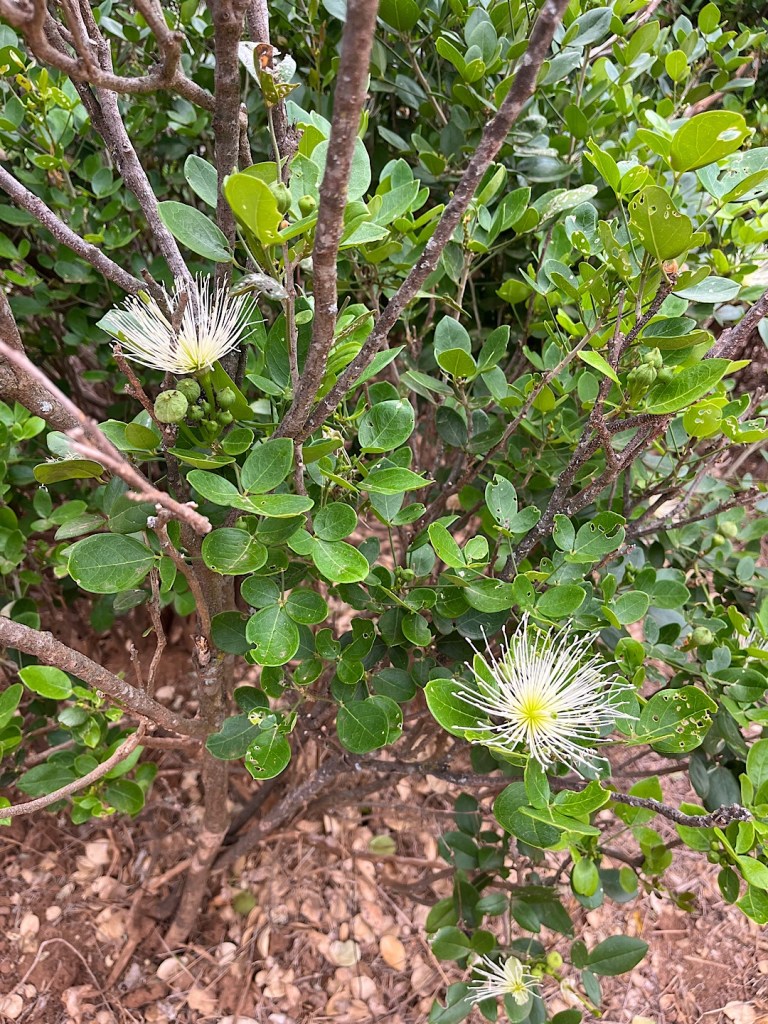
On foot we drank in the sight of things we would have missed entirely in a vehicle: spring blossoms…
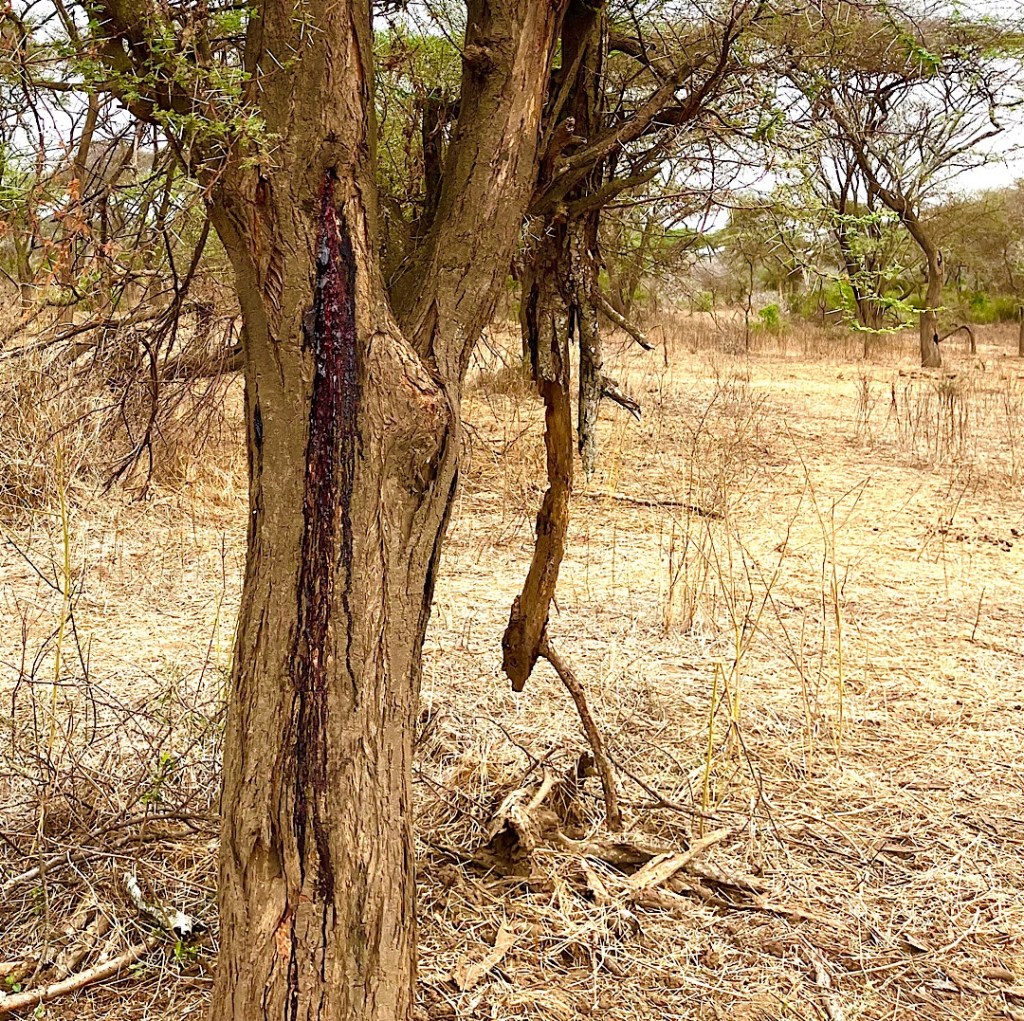
Wine-colored sap bleeding from a tree…
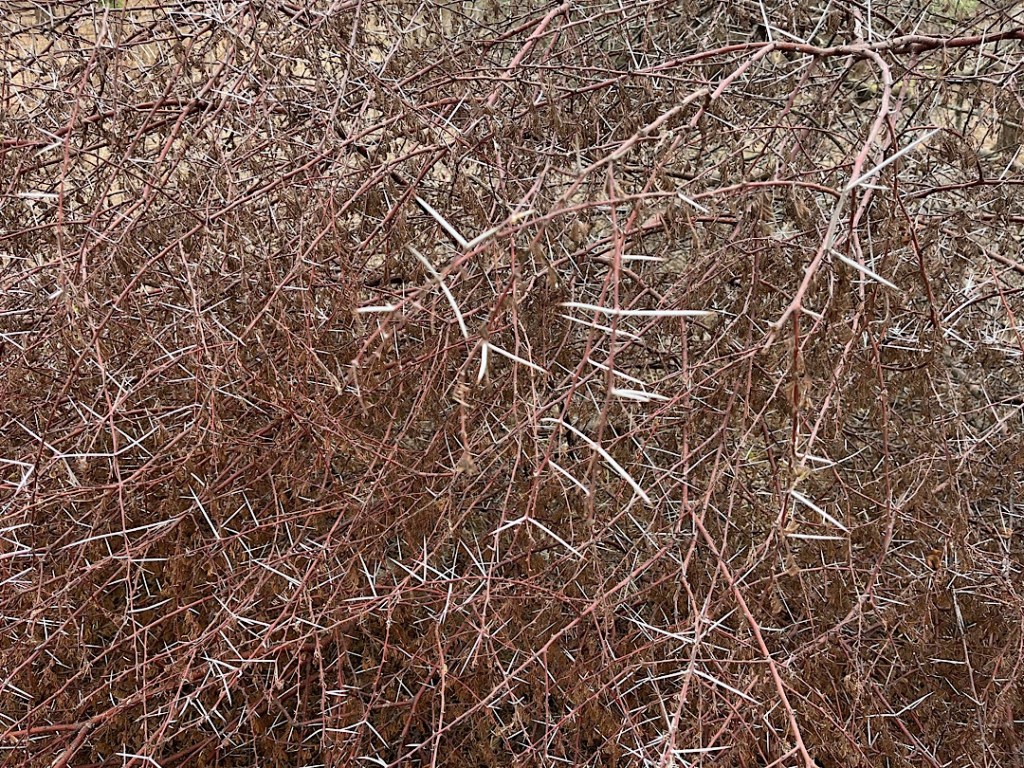
The beauty of thorn-tree needles up close…
By the end of our walk, I felt completely at ease. My epiphany was: of course! Humans evolved living with these animals for tens of thousands of years. Long ago we got established as the top predator along with a couple of others. (That lion!) But in a game reserve, we don’t compete with lions or leopards or buffalo for resources. That doesn’t mean we can blunder into their spaces or threaten them. But if we’re careful and respectful we can walk among them without fear.
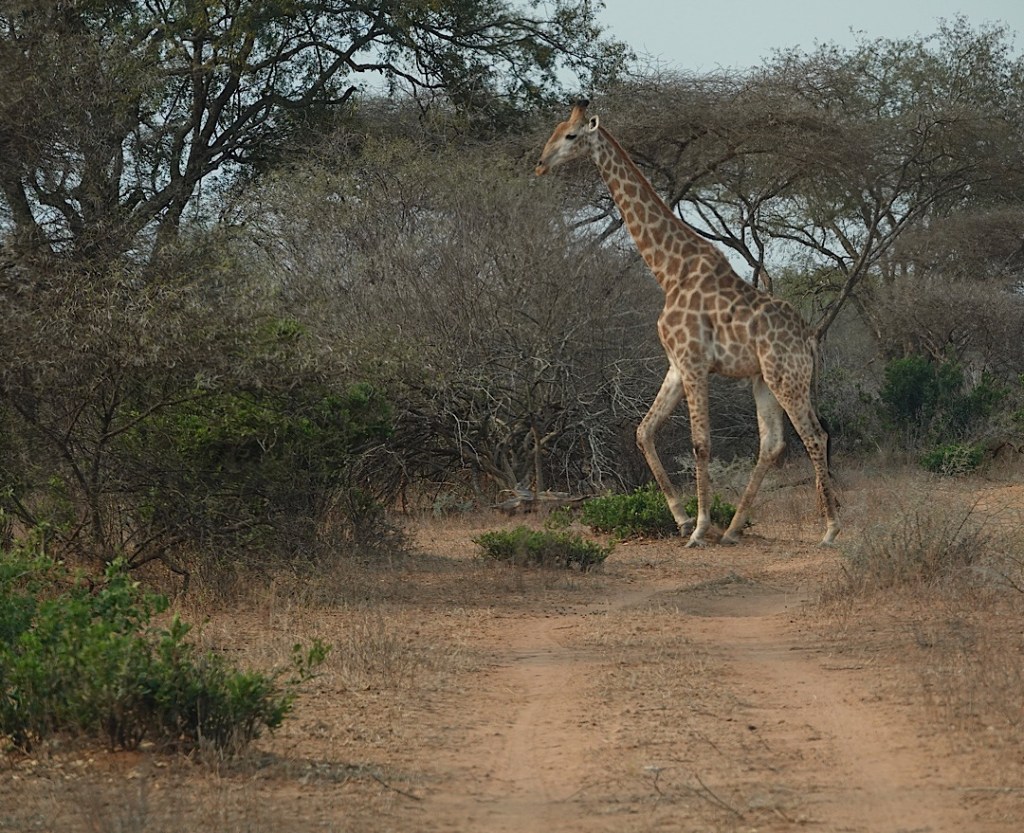
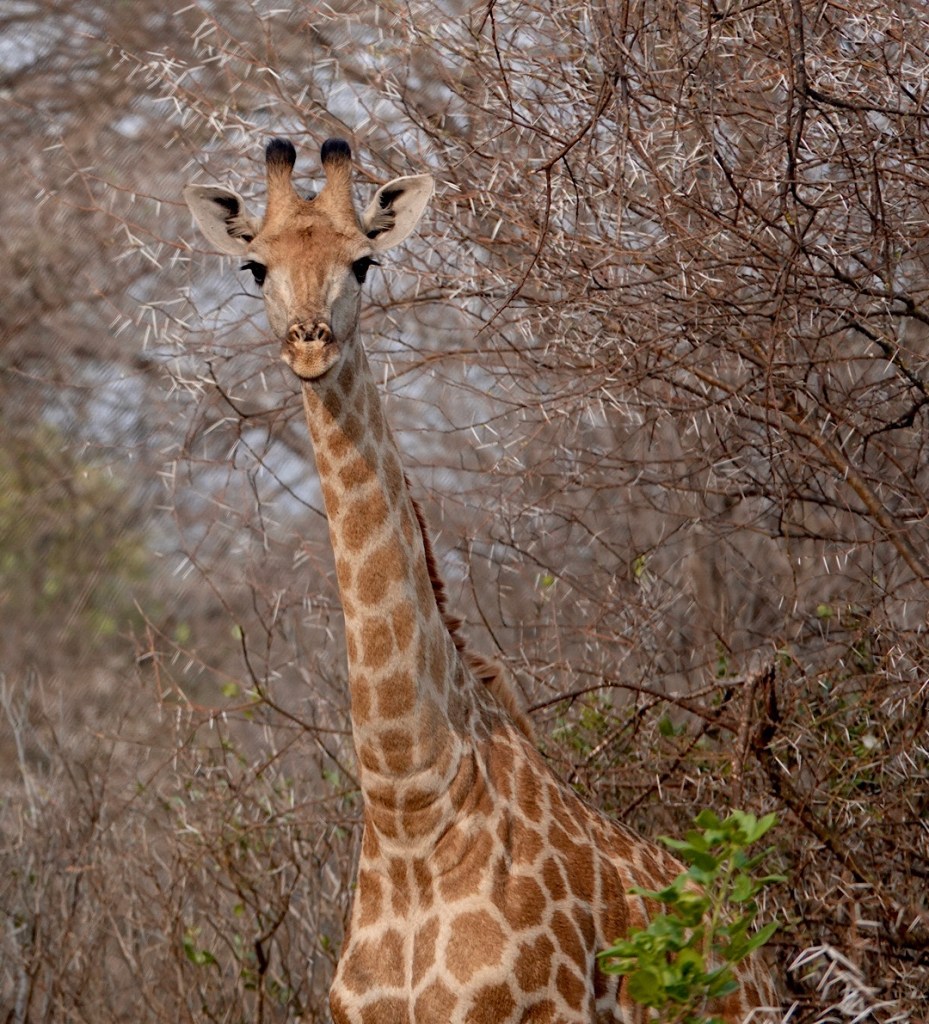
After a break for lunch and a rest, Justice came back around 2:30 to accompany us on another outing, this one in our Land Cruiser, with Steve at the wheel. Crashing through the bush, we filled in some gaps in what we’d seen. We passed giraffe that reminded me how much I love those guys.
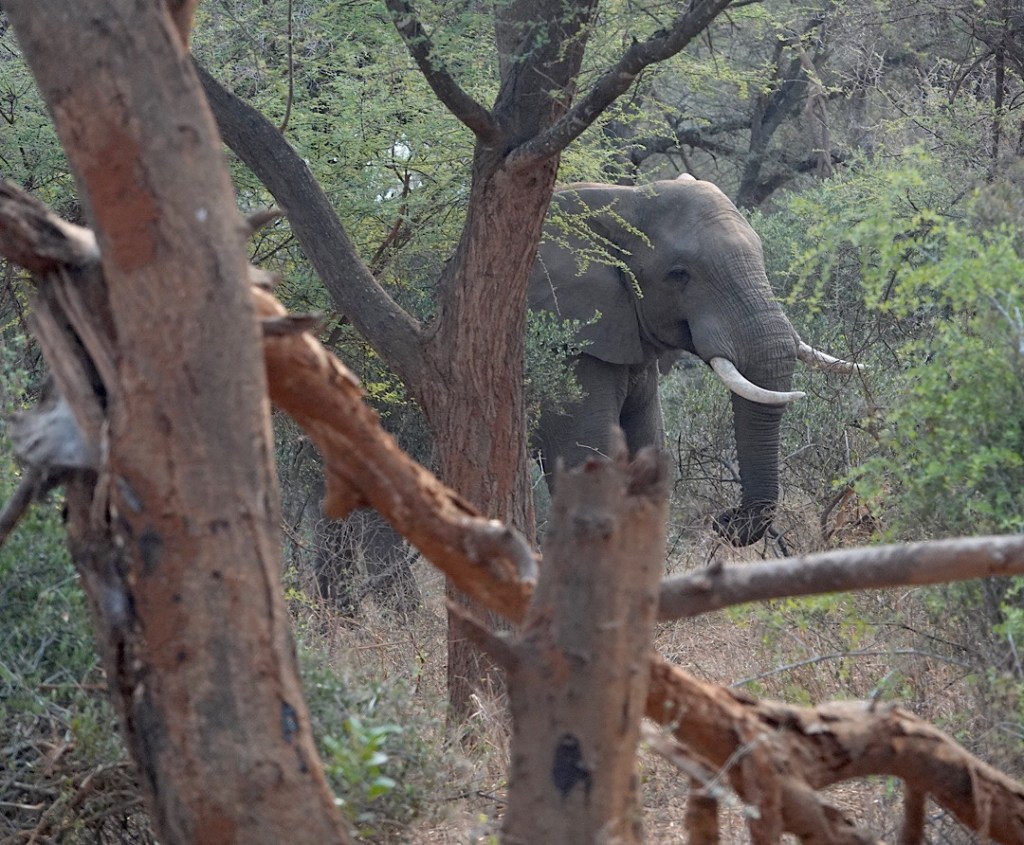
We watched a solitary elephant bull happily chowing down on dinner.
And at the wheel, Steve had a wildly macho experience that he loved.
Throughout our time together, Justice never grew more talkative. At first, his lack of English disappointed me. I would have asked so many questions, if he could just understand them! By the end of the day, however, I was happy about his linguistic limitations. If he’d been more fluent, we would have spent a lot more time yakking. Being quiet forced me to see more,
My one big regret was that we never met the owners of the Humani Ranch. Everything I know about the ranch and Conservancy comes from my guide book and the Conservancy’s website. The Whittal family sounds larger than life: former cattle ranchers and legendary big-game hunters who were leaders in getting their neighbors to tear down their fences, fencing only the perimeter and creating what the guidebook says is the largest private game reserve in the world. I had hoped to write more about all this but it’s too complicated. I give up. I can just say I’m happy to have glimpsed the life there.
I’m starting this post around 7:30 pm in a farmhouse in the Zimbabwean northern highlands, very close to the Mozambique border. Thanks to Apple battery power, my iPad screen is lighted, so I can see what I’m writing. But when my touch-typing fails me, it’s tough to make out the keyboard. Steve and I are alone in the house, and a single candle provides all the illumination except for the dim glow from the big stone fireplace. We need that fireplace, as the temperature outside has plummeted. This doesn’t feel much like Africa.
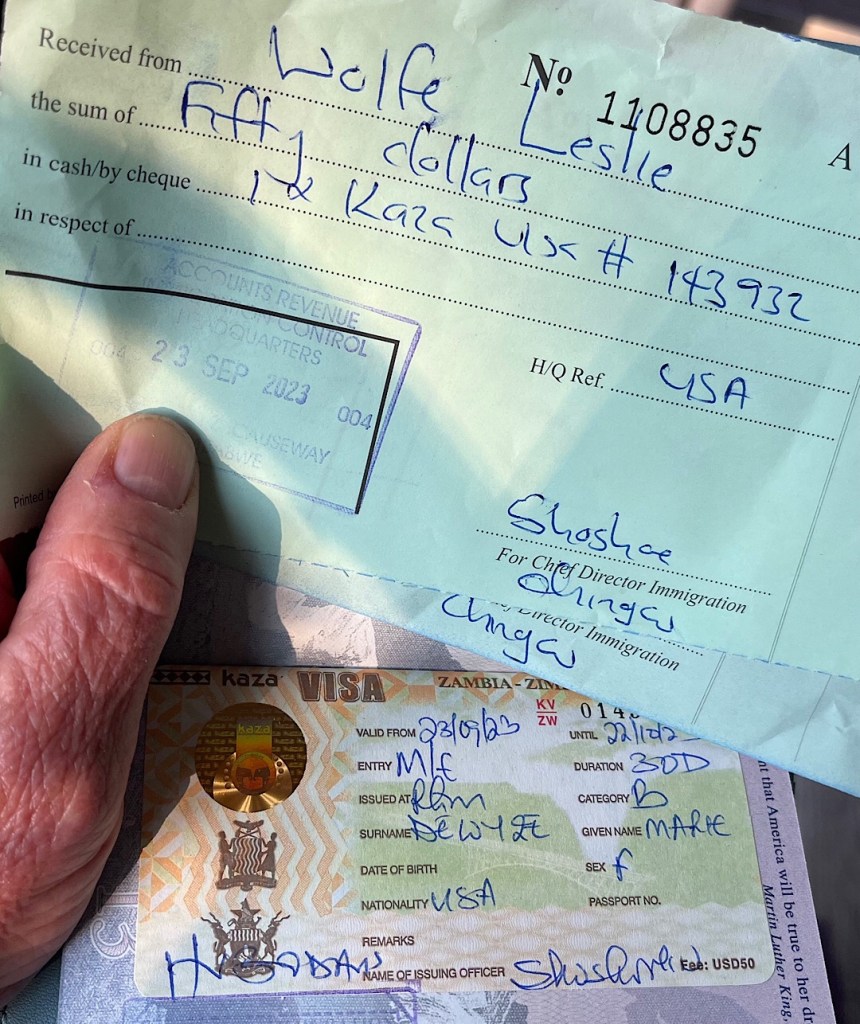
We’ve now been in Zimbabwe for a bit more than two days, and Zim’s eccentricity is starting to feel routine. Our Rwandair flight Saturday morning from Kigali could not have been smoother or more pleasant, and we touched down at Harare Airport a few minutes early. We were sitting at the very rear of the plane, so when we got to the Passport Control booths (just outside the luggage-collection area), long queues had formed at the two booths designated for foreigners. We chose the shorter one, and it still took almost a half hour to get to the official. “We want a KAZA visa,” I told him.
“Over there,” the man in the booth barked, gesturing to the other line, which was at least as long as it had been 30 minutes earlier. It seemed to consist mostly of young Chinese men and a few women. But our tour outfitter had told us to insist on a KAZA visa. Such a stamp allows you to enter Zimbabwe and Zambia multiple times and cross back and forth between the two countries, something that will be important when we wind up at Victoria Falls 10 days from now. Surely anything would be better than having to get a second Zimbabwean visa AND a Zambian one (and paying $50 a pop for each one). So we gritted our teeth and moved to the back of the long line.
A solid hour passed as we inched forward, watching the sole bureaucrat in the booth doing lots of stamping and writing on each passport that finally made its way before him. By the time we reached the booth, literally every other passenger on our plane was gone. The luggage carousel had stopped running. “We want a KAZA visa,” I said, considerably less perkily.
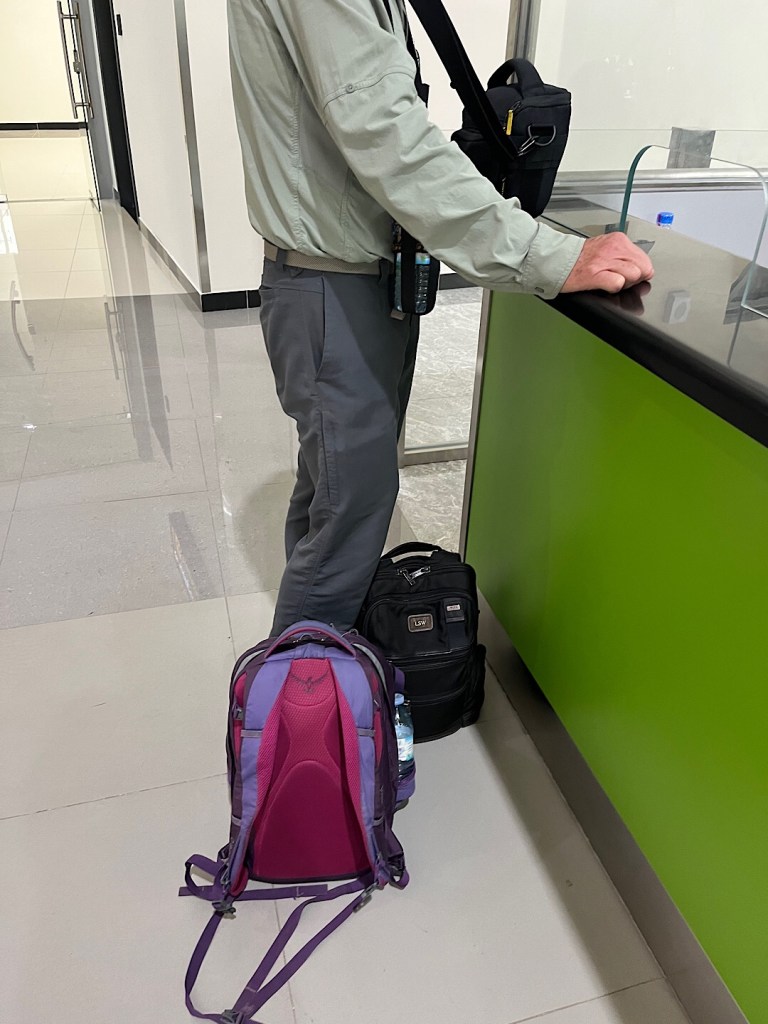
I sneaked this photo of Steve at the window. (Taking pictures of immigration officials anywhere is a risky business.)
The official knew what that was. But it soon became obvious he couldn’t find his pad of KAZA stickers. He left the booth. Came back frustrated but full of reassurances he and his colleagues WOULD find the pad eventually. More folks joined in the hunt. More time passed. I began losing hope. But damned if they didn’t eventually locate the missing book. The official collected our $50 per, releasing us to pounce upon our bags (which were still, miraculously, on the deserted carousel.)
The visas are VERY fancy, with lots of writing on them and our receipts.
Outside, I was thrilled to finally meet Ant Bown.
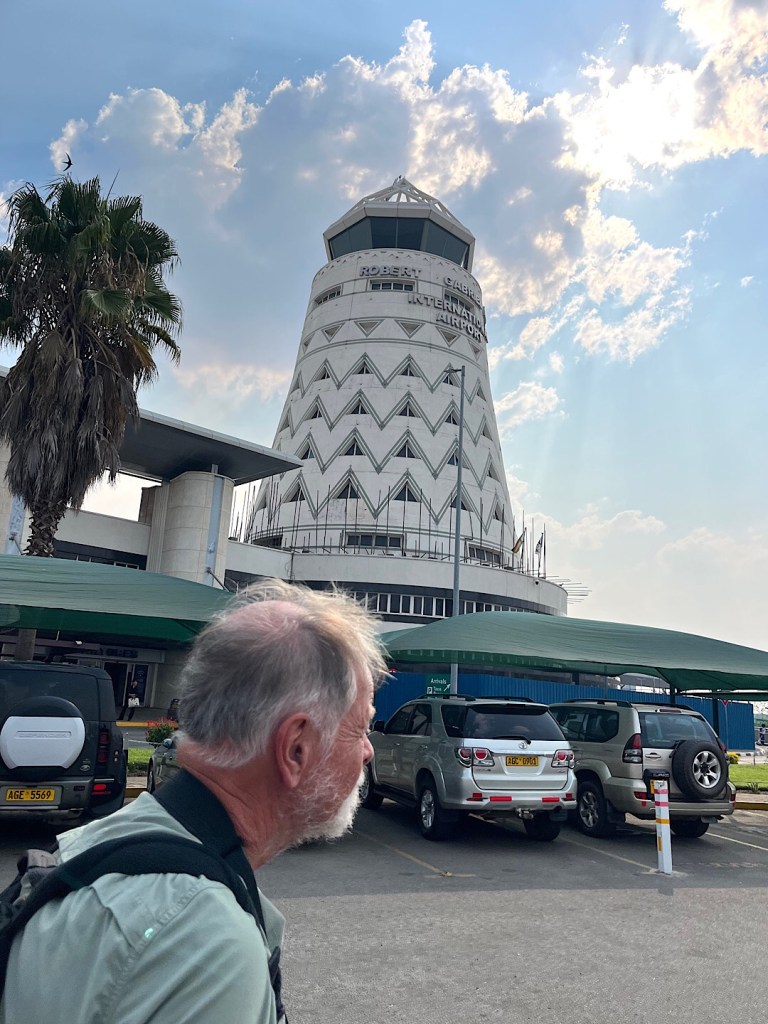
Outside the Robert Gabriel Mugabe International Airport and about to meet our outfitter.
Ant, 47, started Mana Pools Tourism Services Ltd., a “self-drive safari” company, about 6 years ago. His grandfather moved to Zimbabwe back in 1935, when the country was known as Rhodesia, and his mother for years had run the country’s safari company operators’ association. Ant got a degree as an agricultural economist and for 15 years lived in South Africa. But he missed Zim and returned to Harare in 2010. Today he’s passionate about his birth country’s attractions and optimistic about its future.
When I started planning this trip, almost a year ago, I had no desire to tour it with Steve at the wheel. I say that with no disrespect for Steve’s driving skills, which are competent even in places where traffic flows on the left. Just 20 years ago, Zimbabwe appeared hellish. Between 2000 and 2004, all but about 300 of the country’s 4000 or so white farmers had been forced off their land; many were beaten or hacked with machetes, and about a dozen were killed. The farmers’ black workers also lost their jobs, and the UN later estimated that a million people were displaced. In the years that followed, the Zimbabwean dollar became worthless, as annual inflation exceeded 900%.
Today the official economy is still dismal, although the “informal” sector — businesses and side hustles so small they can escape government notice — is booming, according to Ant, who thinks Zimbabweans rank among the most entrepreneurial folks on earth. There’s effectively no banking system. Most people use dollars — the paper ones — for almost all their transactions. But political violence has all but disappeared, crime is low, and racial animosities have evaporated. Steve and I were curious to see how today’s Zimbabweans were faring, after their torturous experience in the 20th century. But still, I didn’t want to DIY it.
So I got the latest copy of Lonely Planet’s Zimbabwe and emailed probably a half-dozen of what sounded like the best tour operators, seeking one that would drive Steve and me around. No one responded, even through I tried a couple of approaches with some. I finally contacted Ant’s 4×4 rental company, thinking maybe he could recommend a driver. Ant and I wound up chatting extensively in email and then via WhatsApp, and in the end, he convinced me we could handle self-driving.
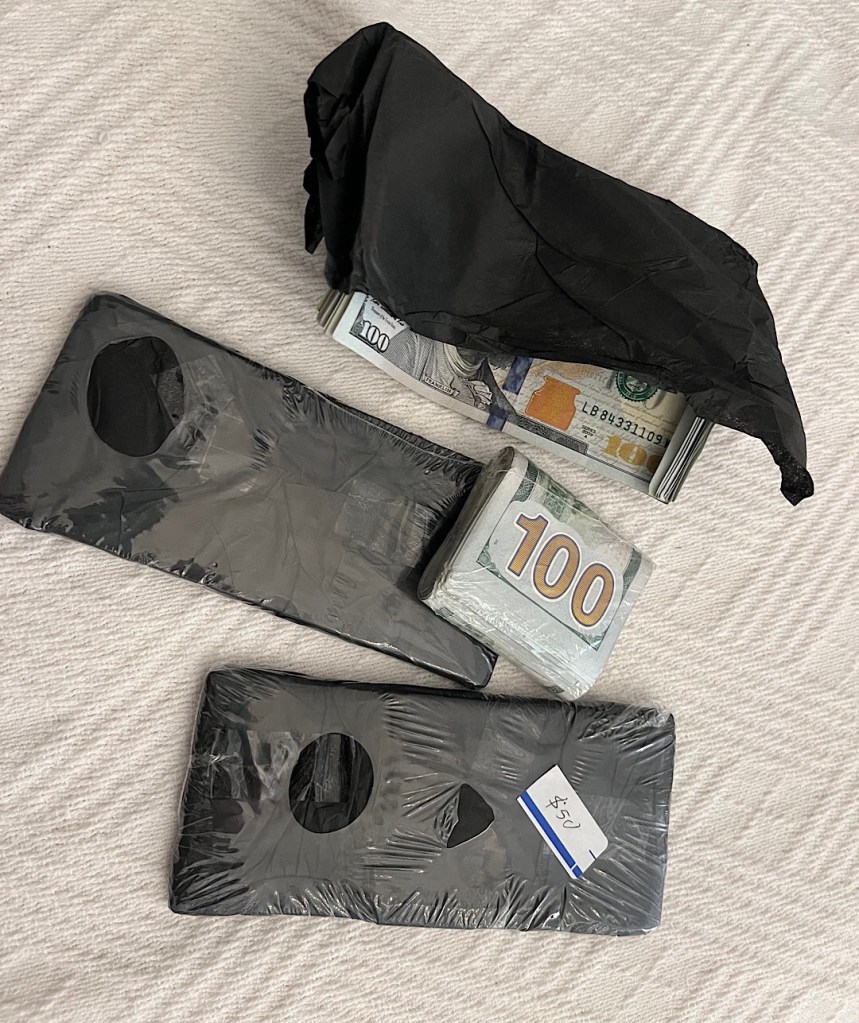
Since we wouldn’t be able to get any money from banks or ATM machines, we had to bring all the cash we envisioned spending in Zimbabwe, including paying Ant for our two-day stay in his guesthouse, the 11-day Land Cruiser rental, and a bunch of food provisions.
I came to trust him partly because of how quickly he responded to my every query and how well-organized he was. But he also charmed me with his directness and good humor. He’s very emphatic and often funny and he didn’t seem to be whitewashing the realities of life here. Zimbabweans were atrocious drivers, he told me early on, but we would be okay if we drove slowly and defensively. The electrical grid was a joke. But his Harare guesthouse never lacked power or hot water because he’d installed solar systems years ago.
At the Oktoberfest gathering.
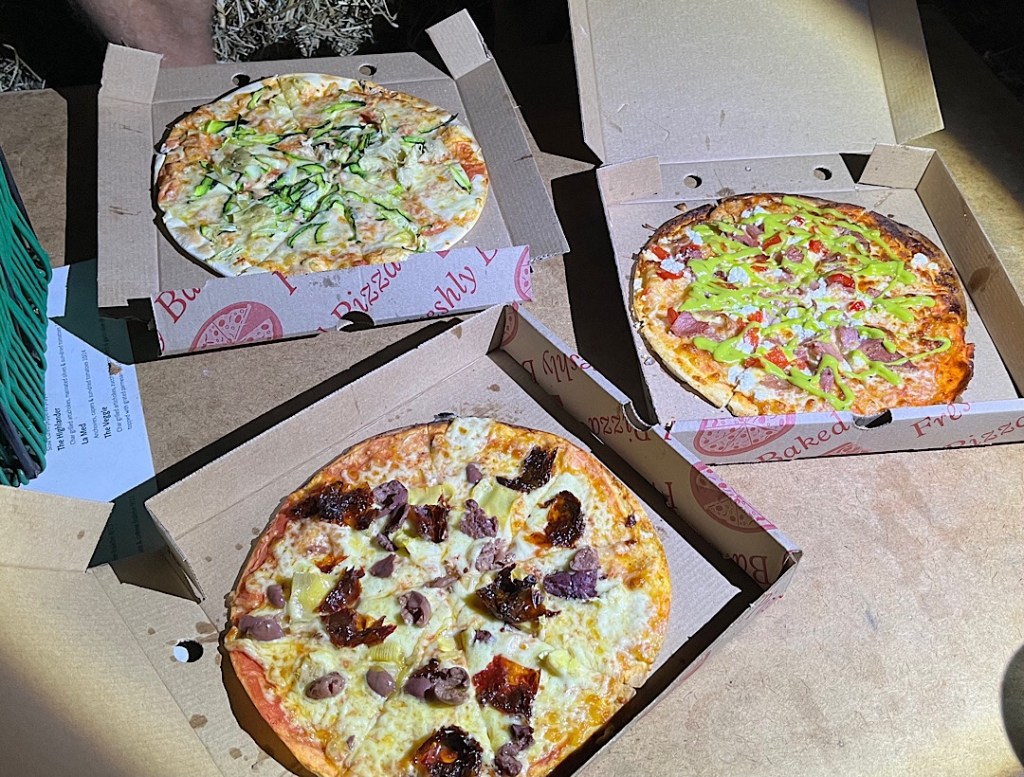
Steve and I got more exposure to Ant’s quick wit and open-mindedness the night we arrived, when he invited us to join him at a local Oktoberfest. It was being held in a private “sports club” that had been brought back to life in the last year or so. We had a blast taking in the high spirits and diversity — tipsy old white guys, black families with kids, a younger black and white cohort, all partying together. Some seemed to be there for the live music; others for the pizza…
…which was delicious.
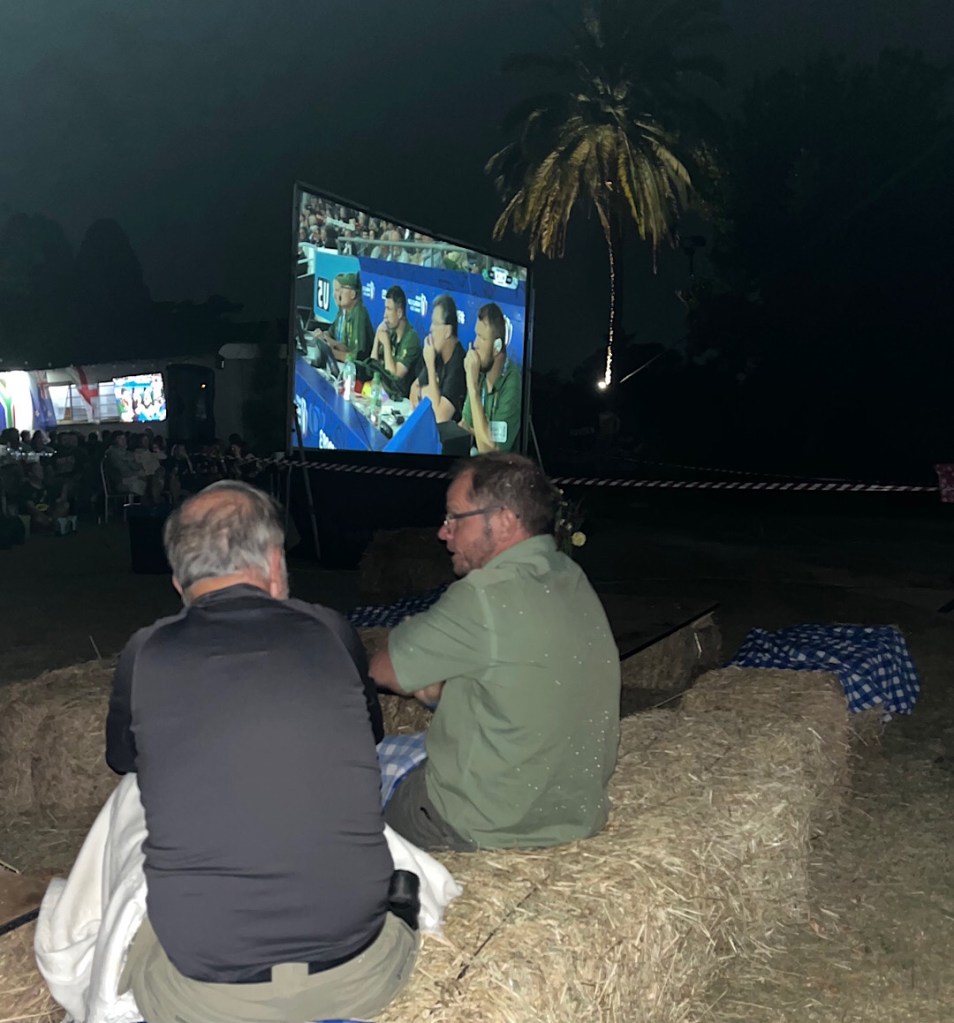
Still others had come for the rugby game that started at 9 (Ireland versus South Africa.) Since neither Ant nor Steve nor I are big rugby fans, we only stayed a few moments to take in the chaotic action on the field. (Steve marveled, “They look like American football players who are all drunk.”)
We were looking at the outdoor screen backwards, but it didn’t matter.
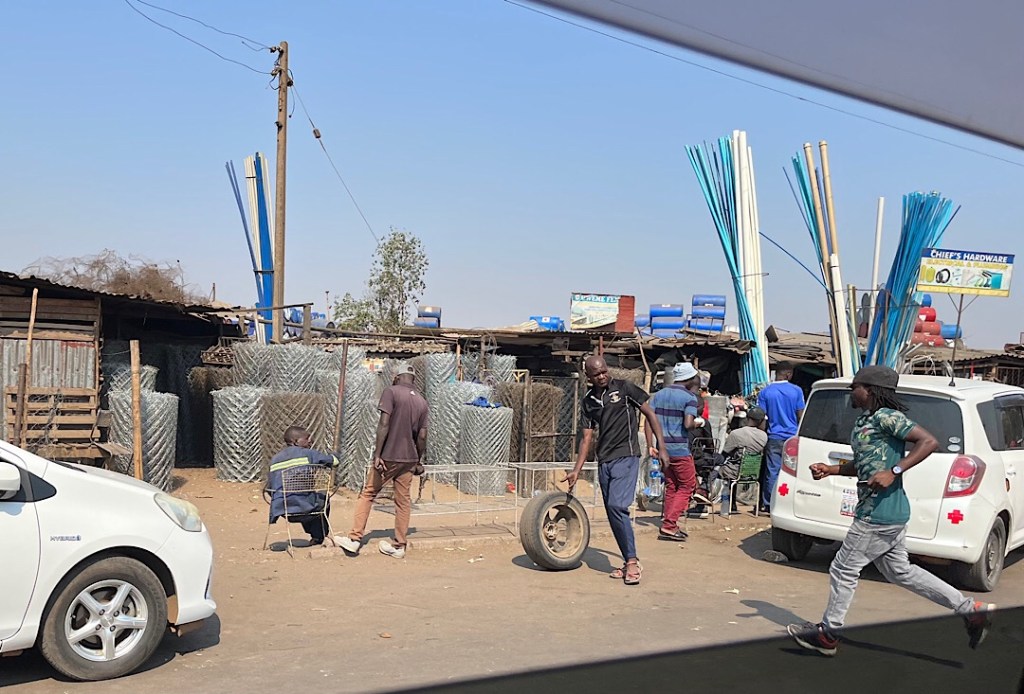
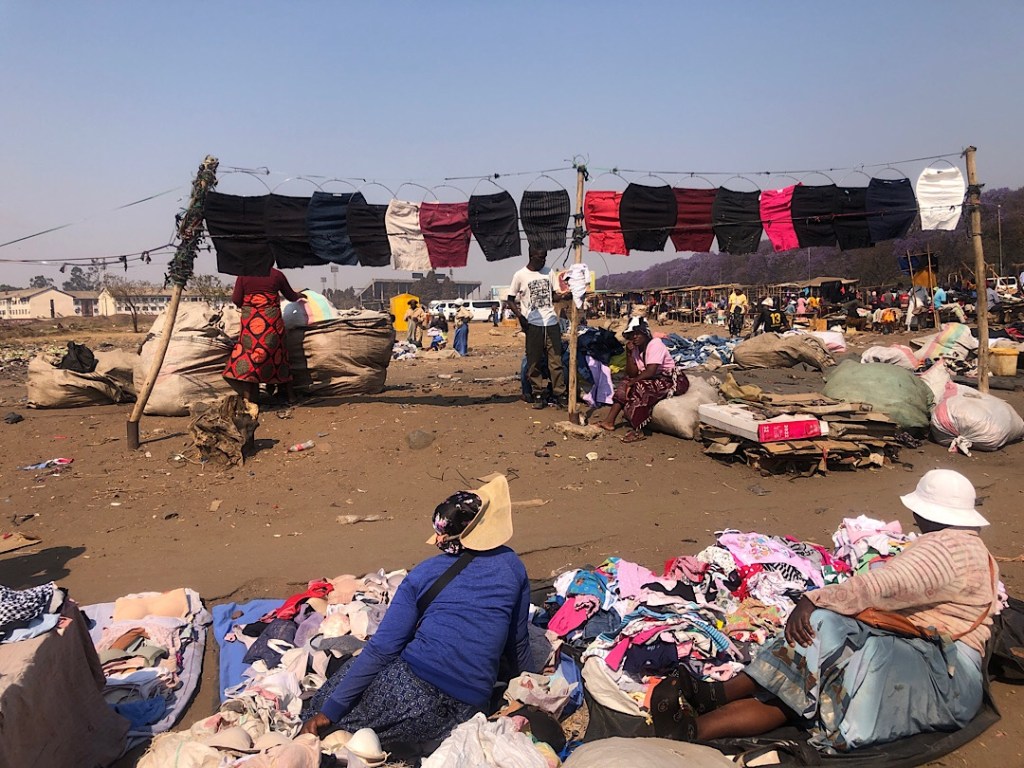
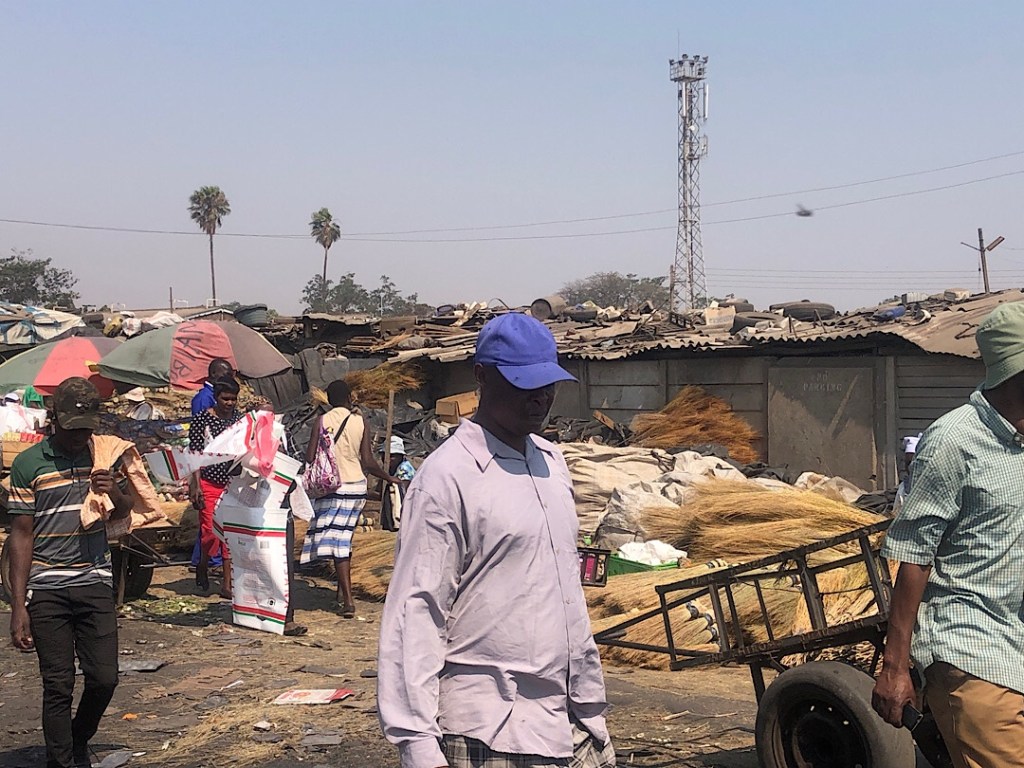
We also wanted to get to bed because we had such a busy schedule lined up for Sunday. First we piled into one of Ant’s small SUVs and got a tour of Harare from Friday Mugwisi, one of Ant’s oldest employees. He took us first to Mbare, the huge, densely dizzying street market near the center of the city. We parked (for $5) then Friday led us throughout the maze of vendors, pointing out one item after another that he insisted was stronger than what you’d find in the big chains and half the price (and often fashioned from recycled materials.) Sadly, we couldn’t take many shots of the wildly photogenic scene. Friday had warned us we’d be pestered for payment if we were obvious about capturing anyone’s image. Still, we caught a few.
Later Friday drove us through the central business district and past many of the most important government buildings. We made a quick visit to the vast botanical gardens, then Steve and I ate lunch amidst the city’s ruling elite at The Three Monkeys, a chic oasis in an upscale little commercial center not far from Ant’s guest house.
We spent a chunk of that afternoon getting oriented to our Land Cruiser and its ingenious contents. But I’ll save those details for later posts. I know first-hand that too much information and sensory input can leave your head spinning.























 At home and abroad