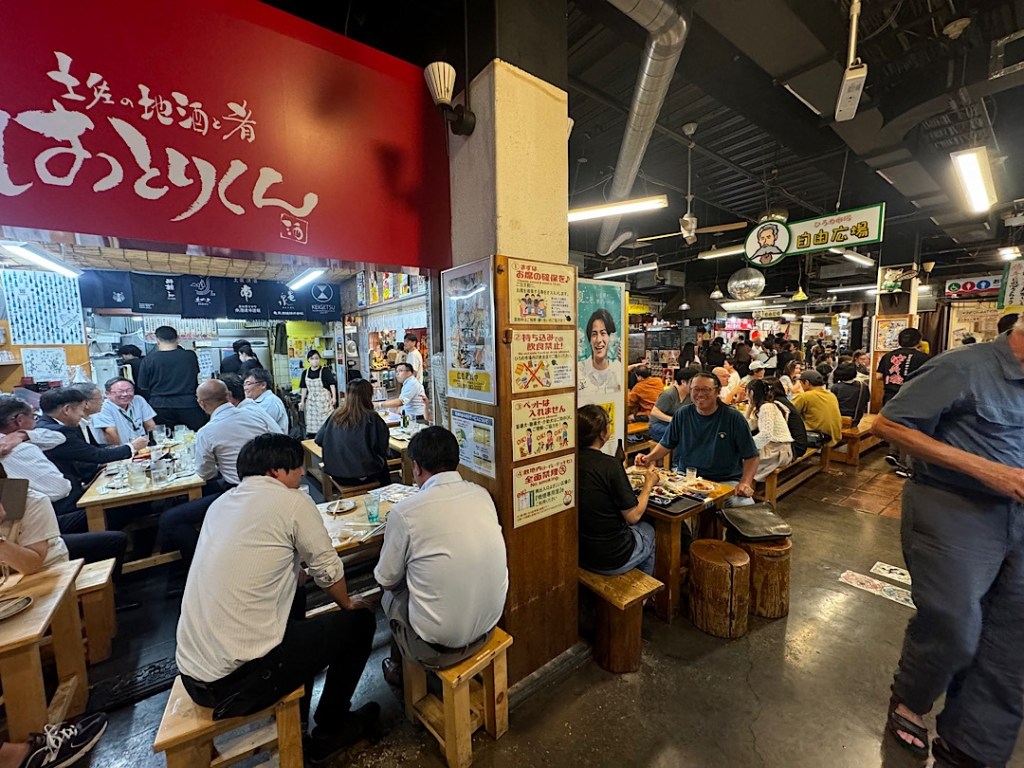
From my last post, you might think the main reason for visiting Shikoku is the food. Steve makes this case, and I have a hard time arguing with it. We consumed amazing meals; tasted the freshest seafood we have ever eaten. We ate most of it in simple, inexpensive settings, like the marvelous food court in central Kochi.
Hirome Ichiba contains dozens upon dozens of stalls selling all kinds of food and drink. On the Monday night we were there, the scene was every bit as lively as the beer halls of Munich or Singapore’s hawker centers.
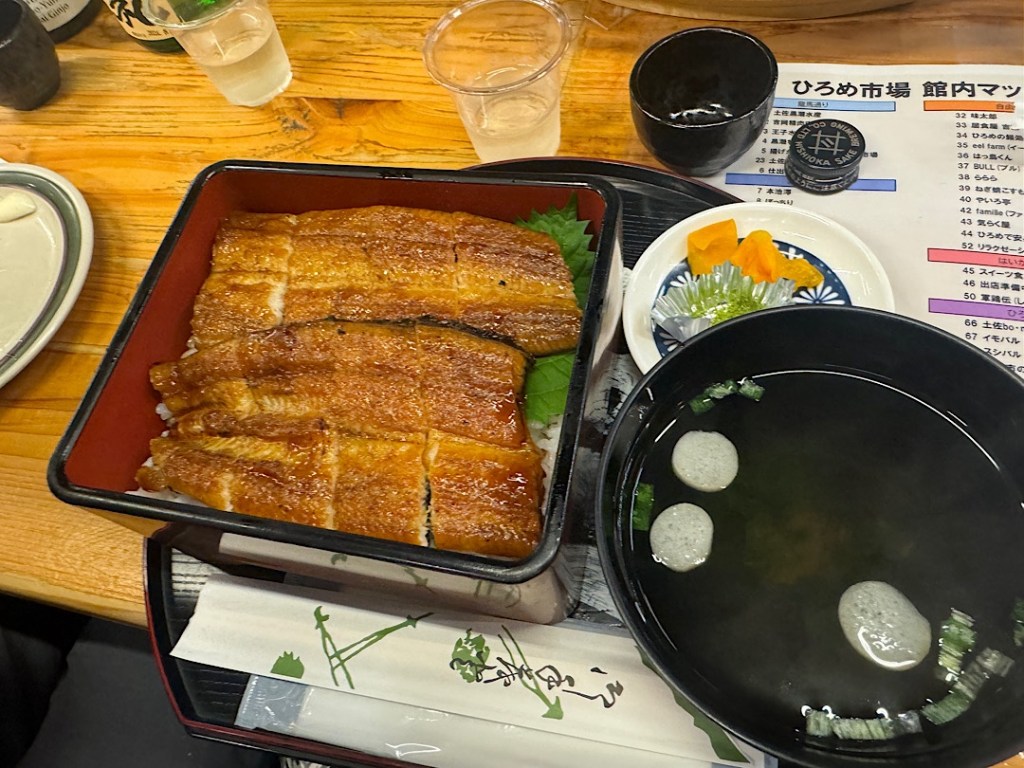
We ordered several dishes. One was this delicious eel, one of my favorite types of seafood.
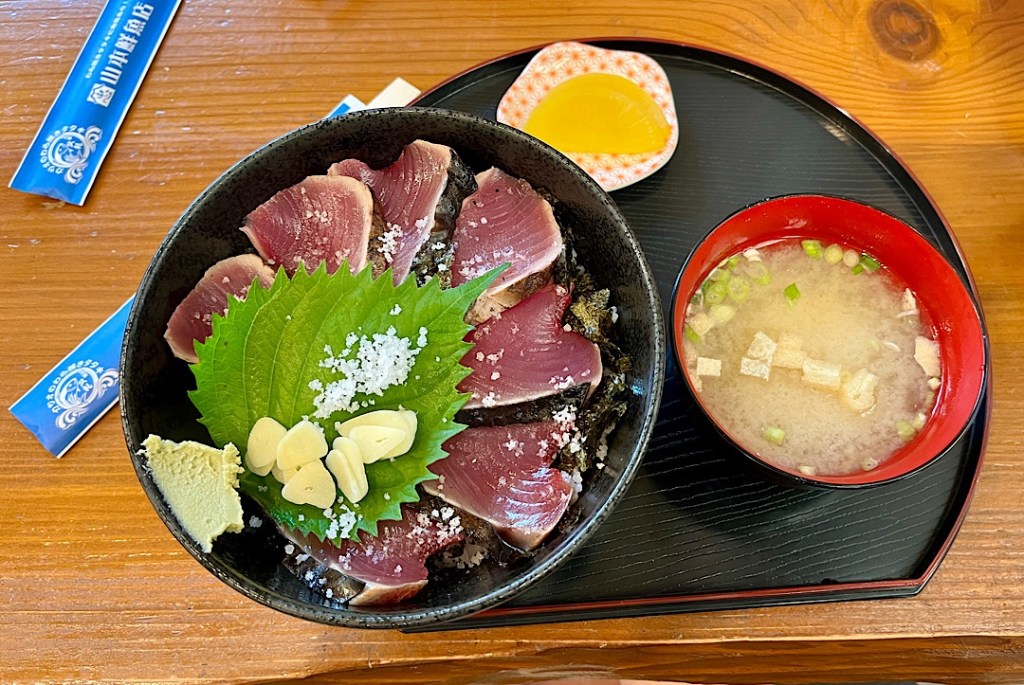
I doubt I’ll ever forget the seared bonita we got for lunch the next day in a little fishing village on Shikoku’s Pacific coast.
Its freshness was stunning. And the total bill for both of us was $12.75.
Still, we enjoyed more than just the food. Think of the following as postcards from some highlights.
Our time in the mountain villages took us back in time.
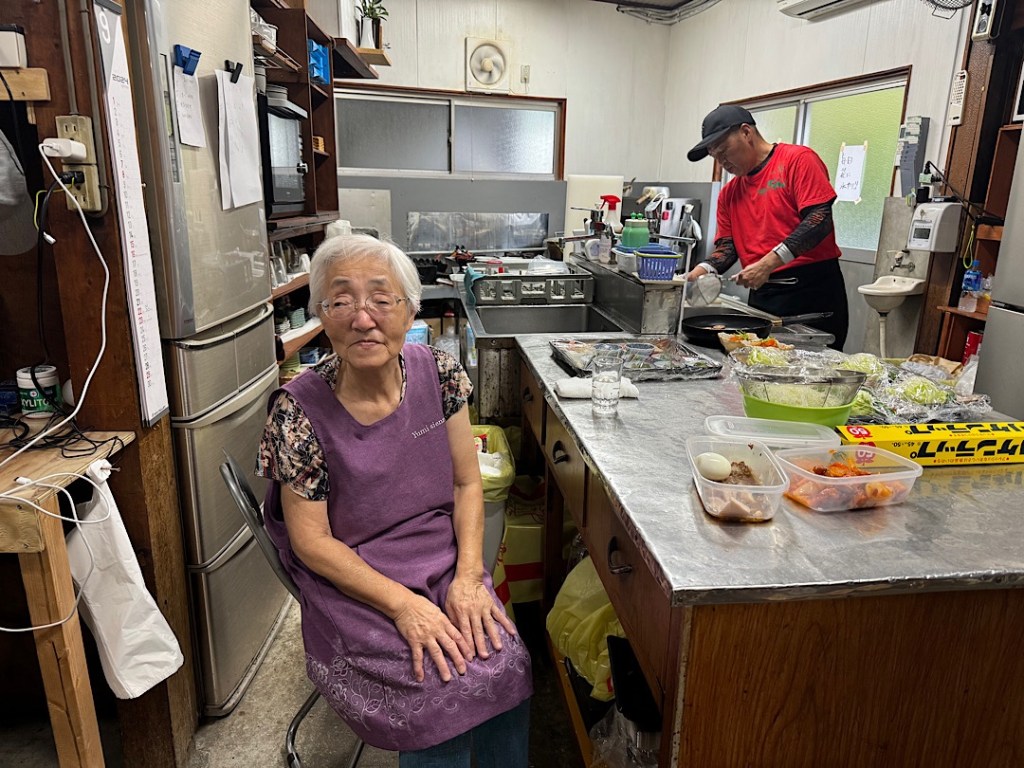
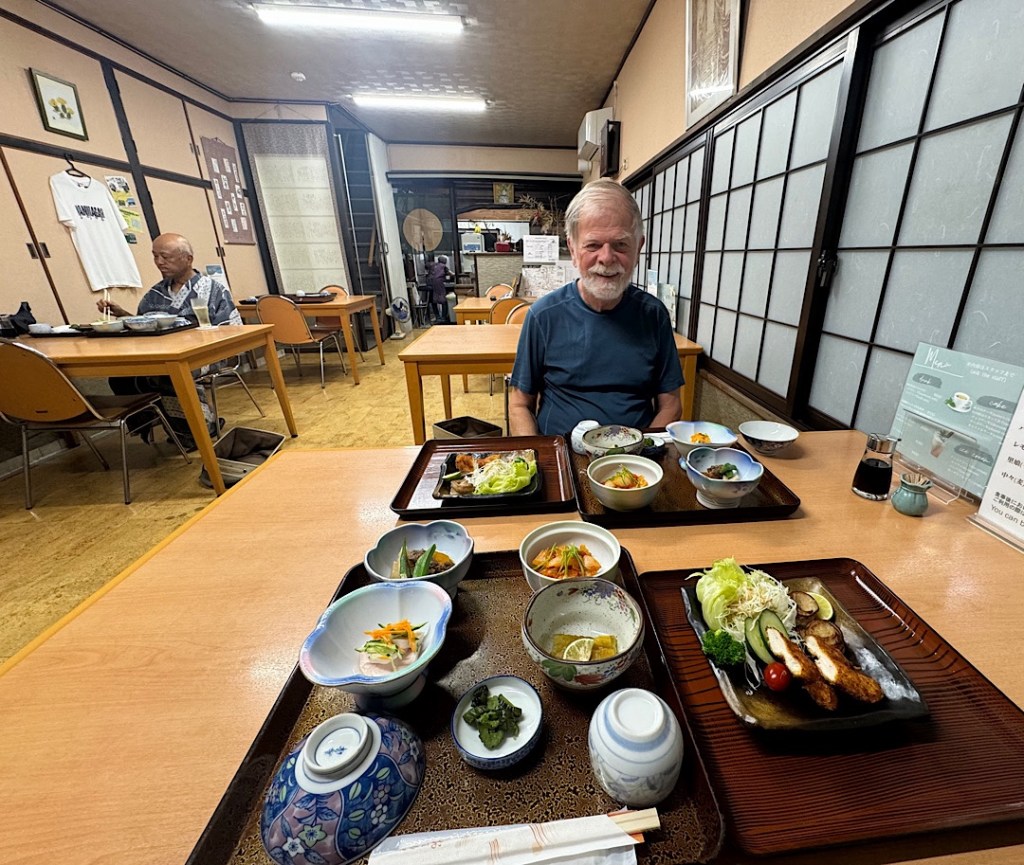
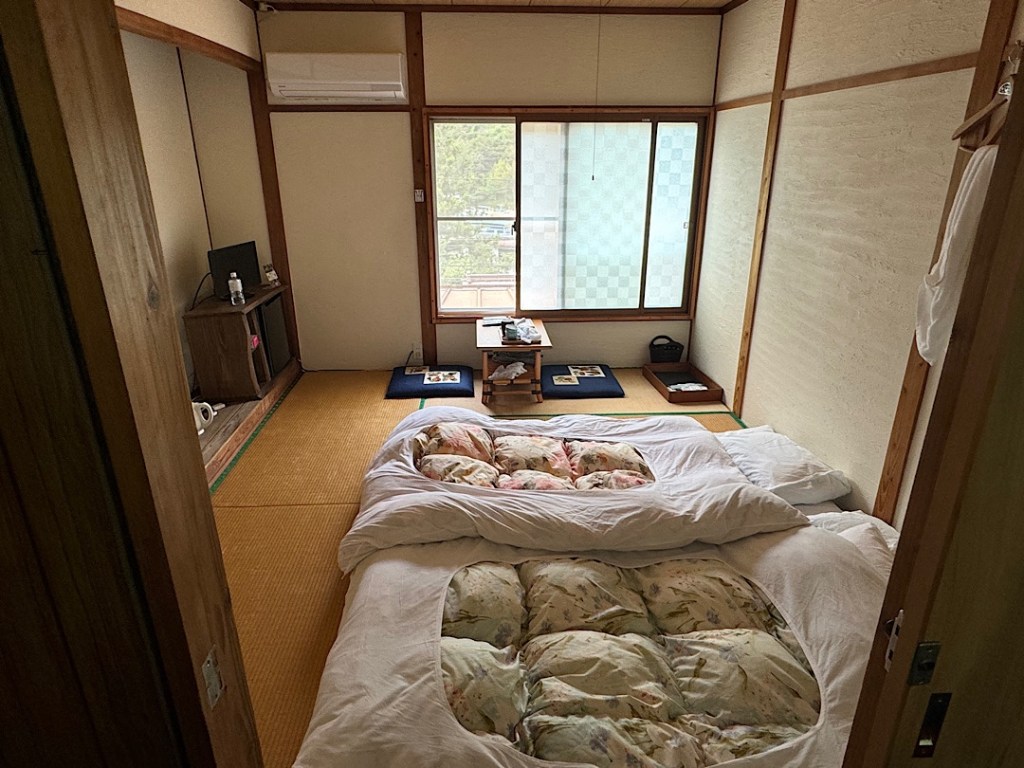
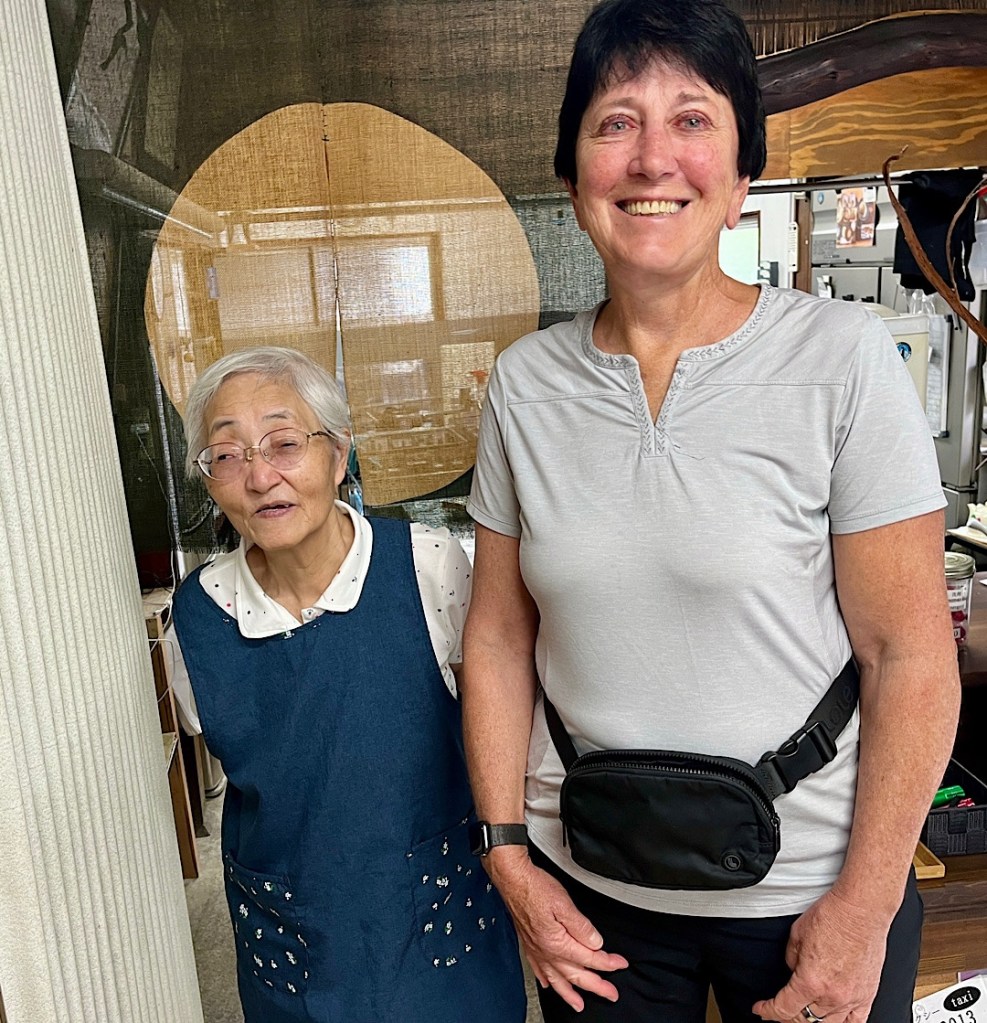
This is the matriarch of a family that for four generations has run the Japanese inn where we stayed. She still appears to do a lot of the cooking.The dinners and breakfasts included with our stay were delicious.All the rooms are Japanese style. This was ours.Our hostess was tiny in stature but bright and welcoming in spirit.
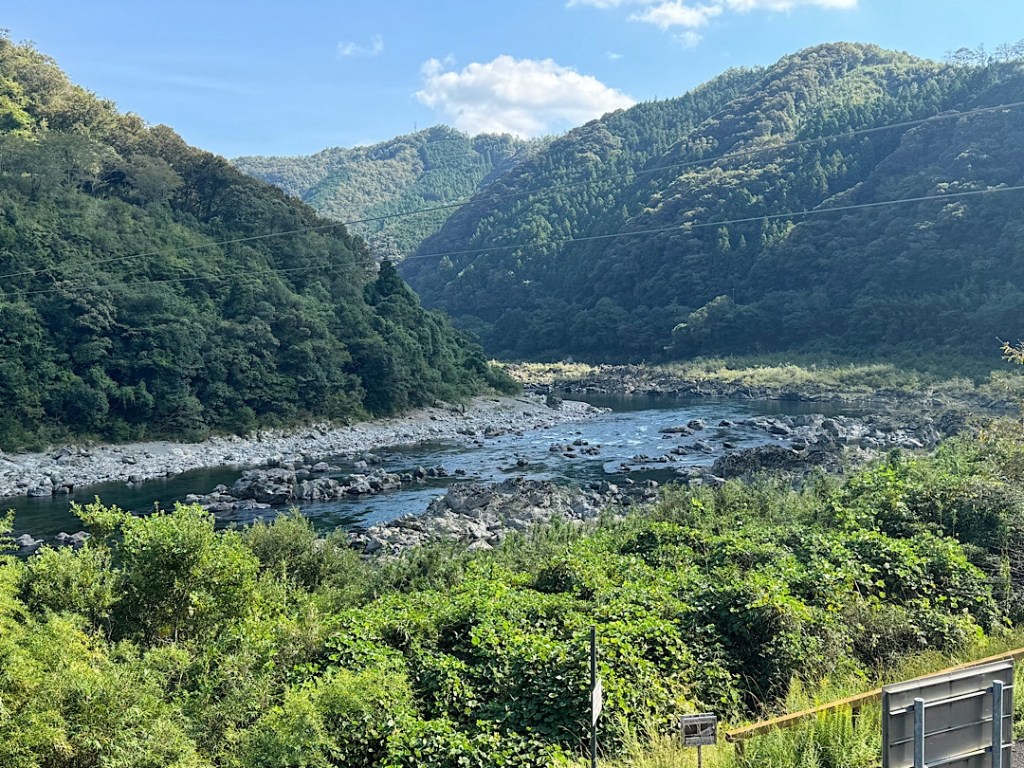
Not just the mountains on Shikoku are wild. So are most of the rivers.
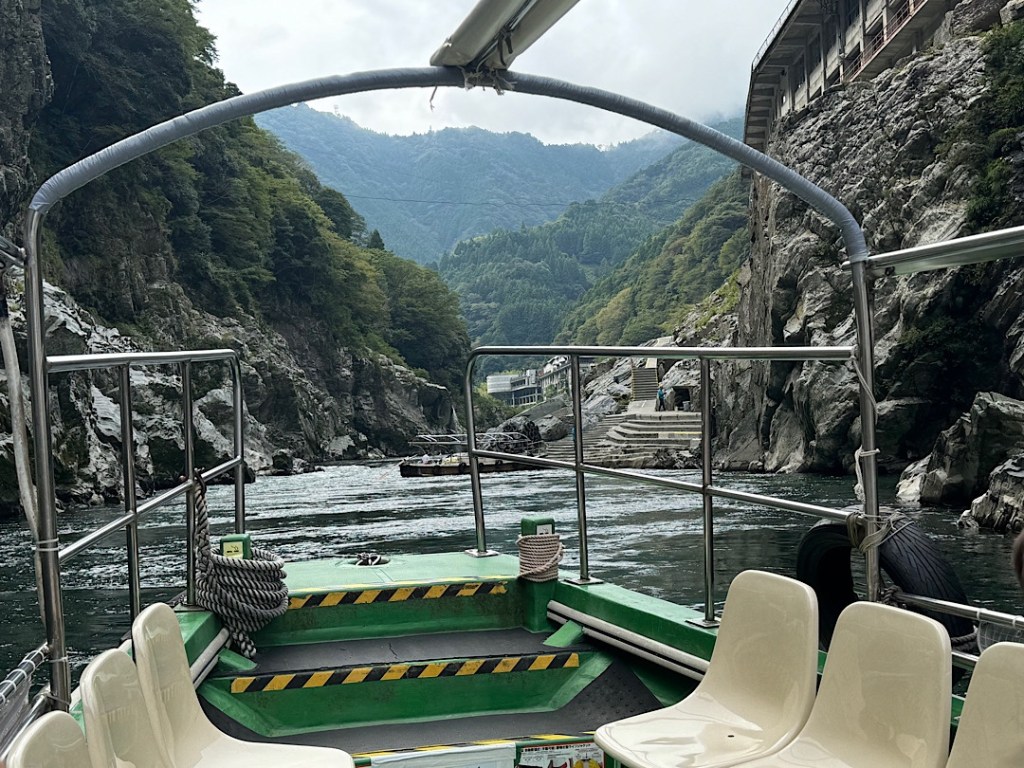
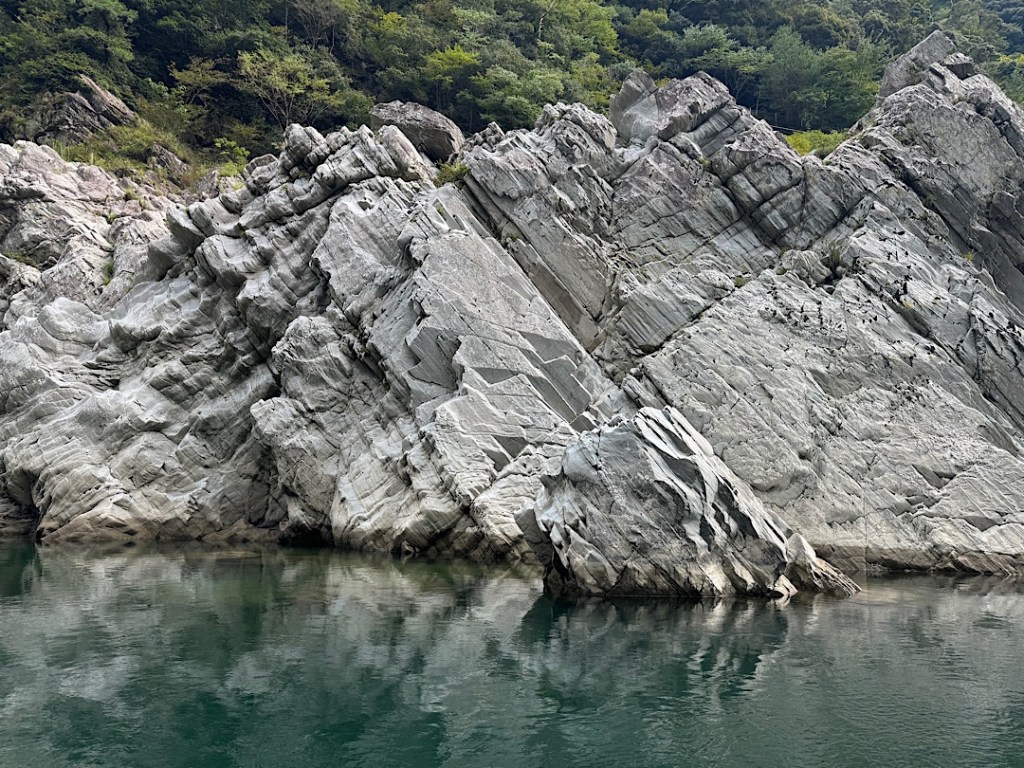
We took a short, placid cruise on the Yoshino River through Oboke Gorge. but if we’d wanted to ride some rapids, that was an option just downstream.The geology of the gorge is striking.
The next day we drove along the Shimanto, known as the last wild river in Japan. No dam has been built along its course.
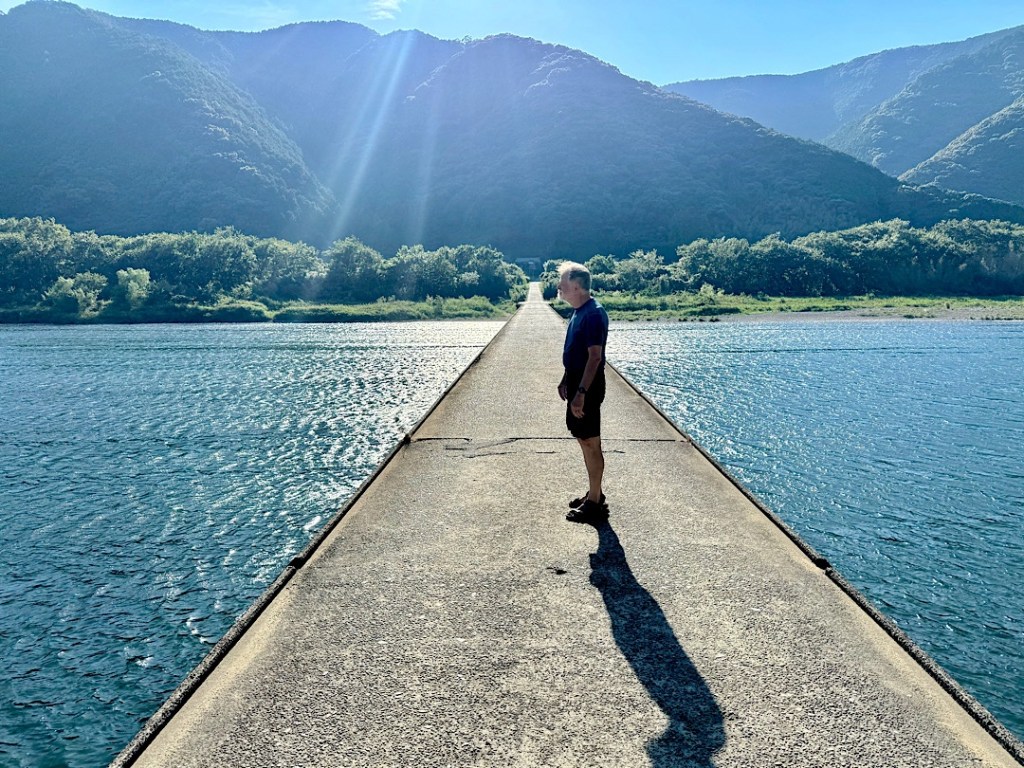
Many bridges like this one span the Shimanto. The absence of railings is intended to make the structures less vulnerable to being swept away by floods. Neither of us was eager to walk all the way across one of the chinkabashi. But it was fun to watch a steady driver motor across.
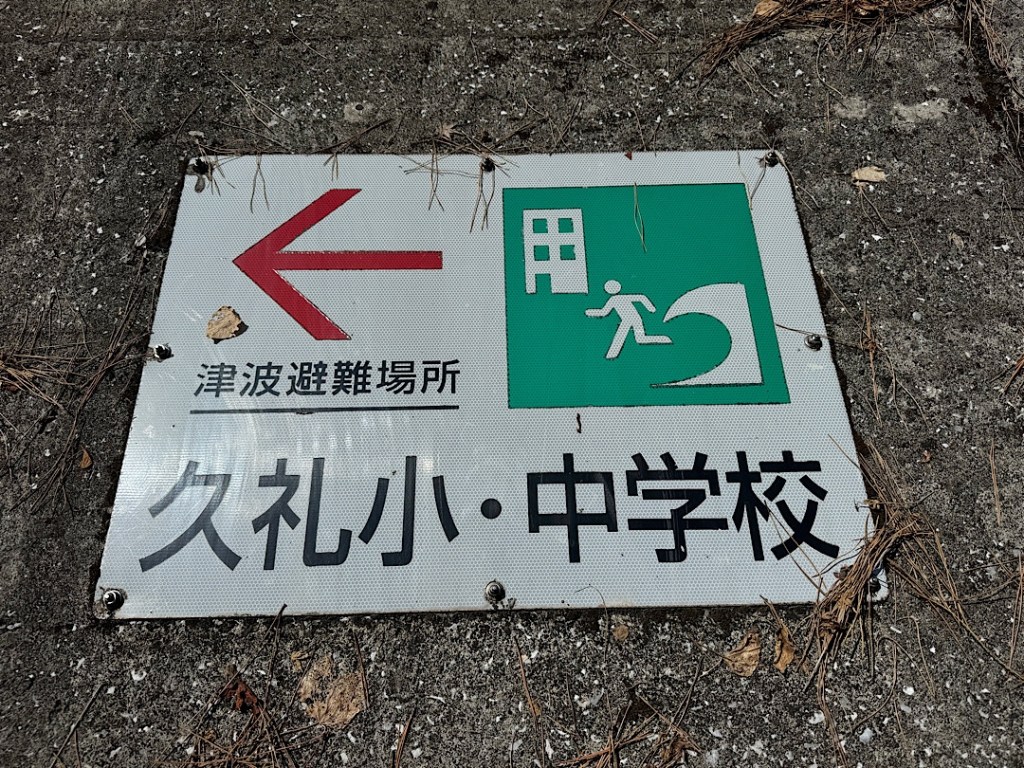
We got a strong reminder of the potential menace of the sea in the little fishing village where we ate the world-class lunch.
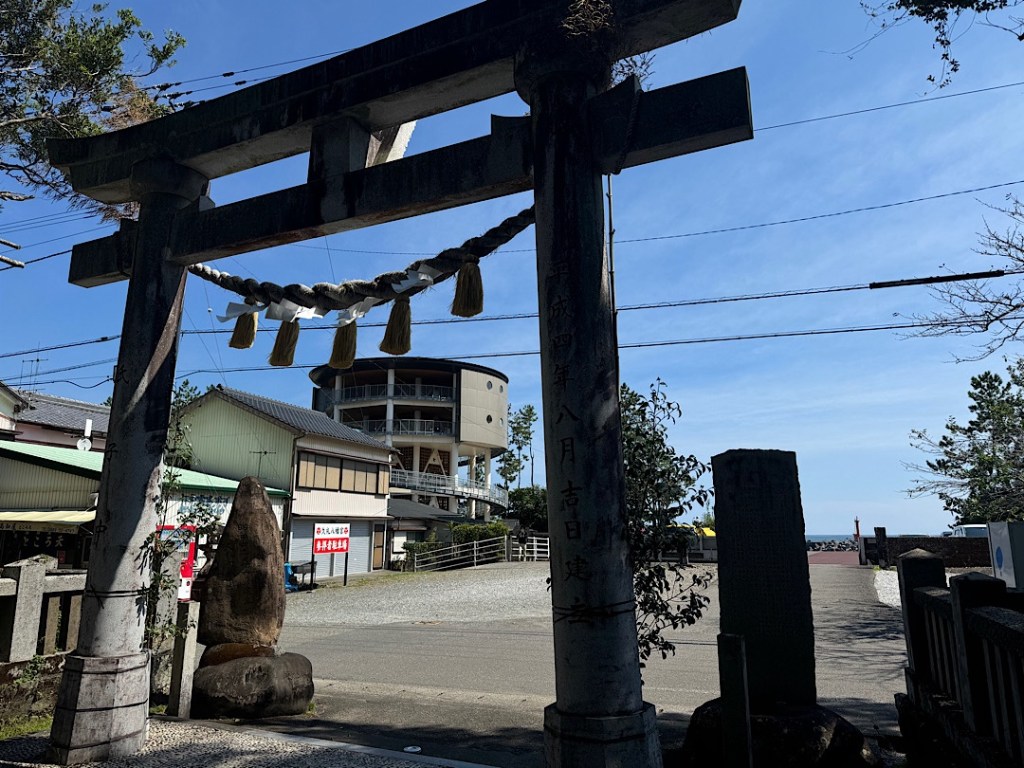
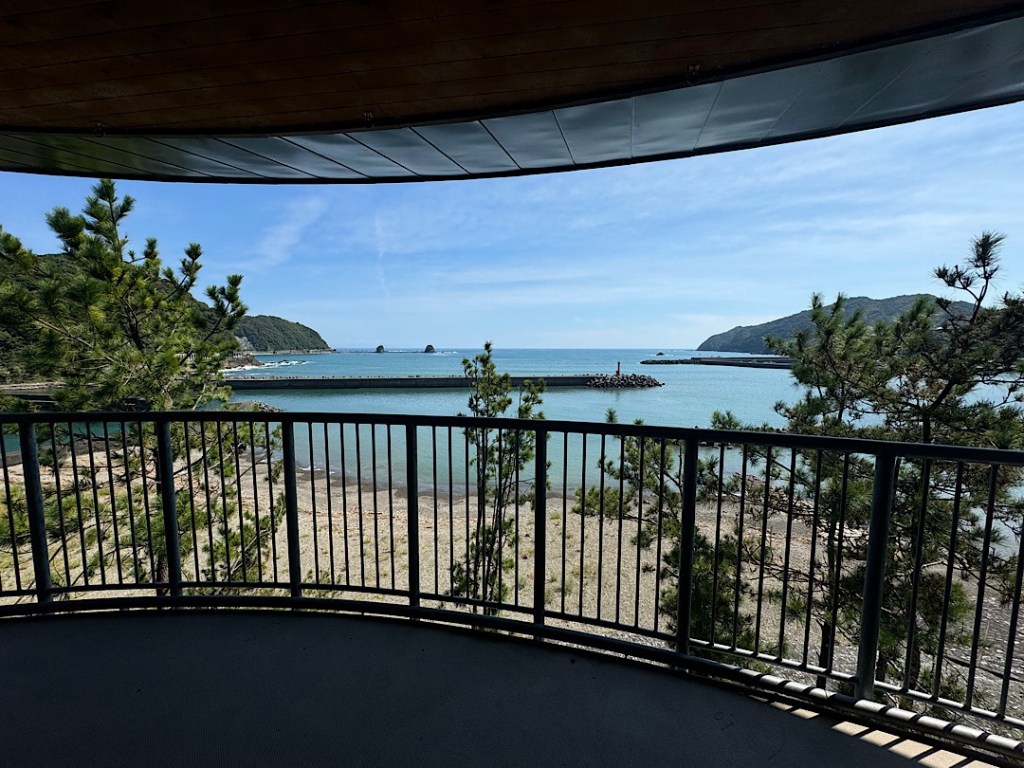
This way to a tsunami evacuation shelter. Posters warned that a tsunami could roll in and wreck havoc within minutes of a quake offshore.Steve and I found one of the town’s tsunami evacuation towers. It’s that round thing in the distance.We climbed it and at the top enjoyed a lovely seascape. A couple of local old guys were also up there, shooting the breeze.
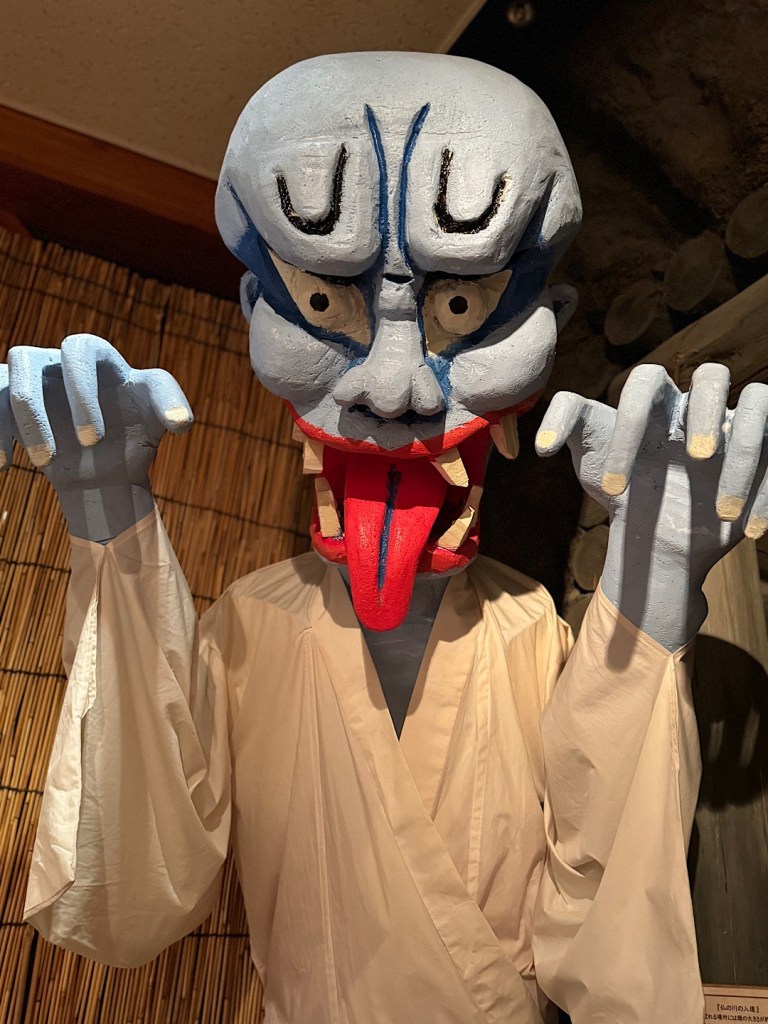
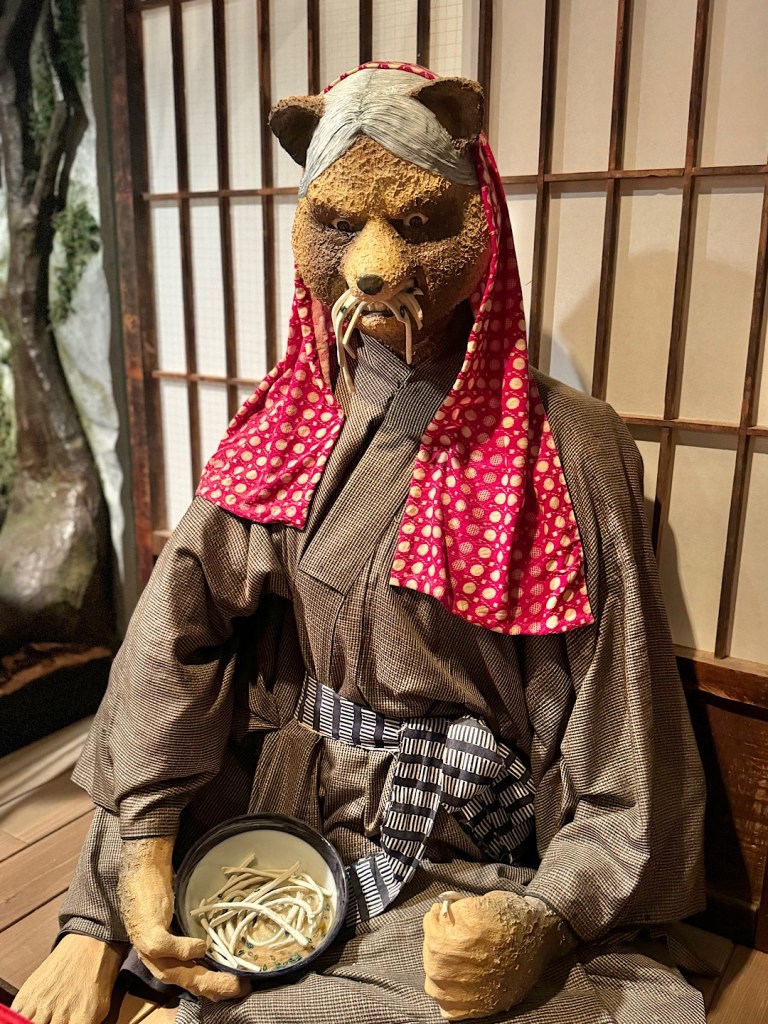
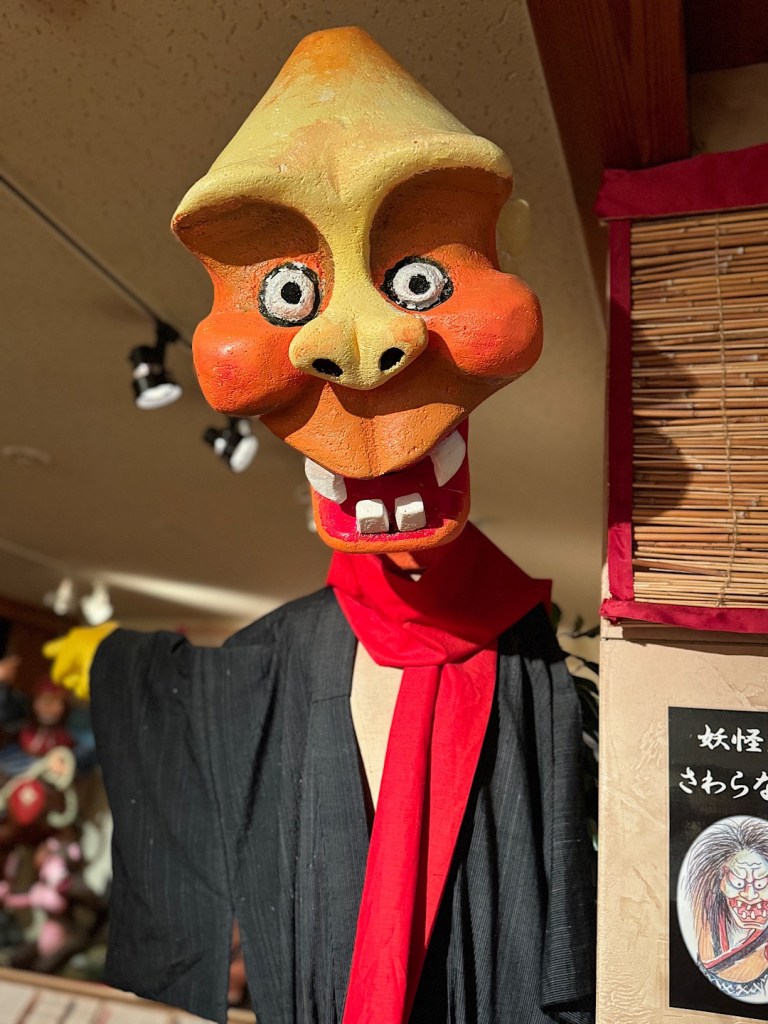
With all the danger on land and sea, I could understand how Shikoku residents might develop a rich mythology about the creatures — occasionally helpful but often evil or malicious — lurking in the landscape. They’re called yokai, and we spent an entertaining hour at a museum in the Oboke Gorge that explains a lot about them.
This is a tanuki, an evil “raccoon dog.”
Who wouldn’t want to visit a place inhabited by the likes of those guys? So my answer to the question of whether it’s worth visiting Shikoku is an emphatic hai!
Our final stop on Shikoku was Matsuyama, the island’s biggest city. We only had a day and a half, but we made it to three of the city’s most highly praised sights:
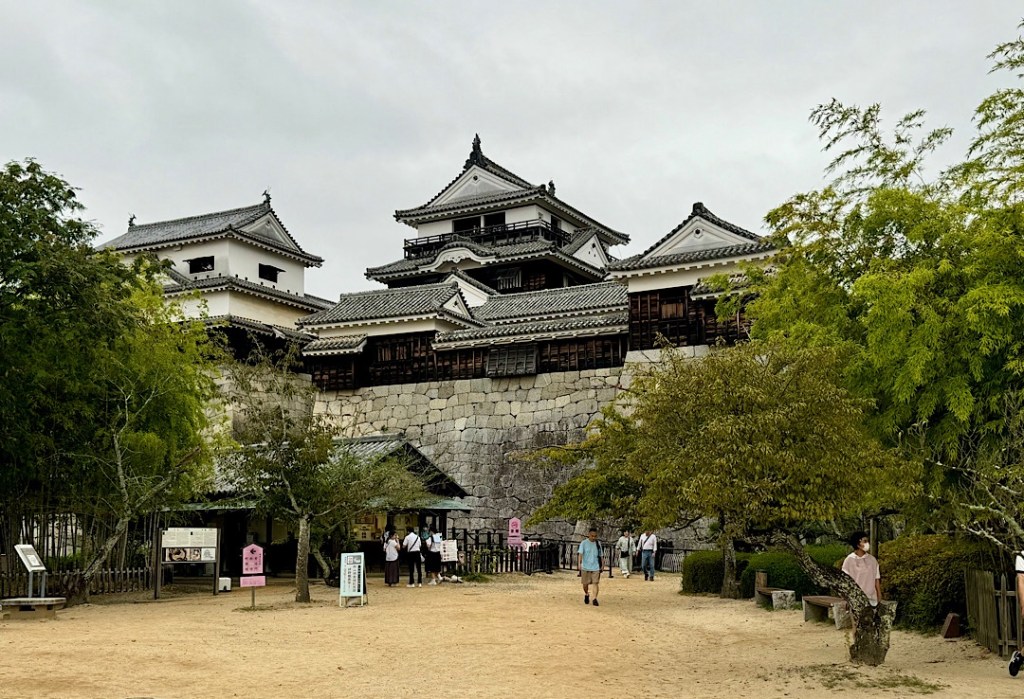
One was Matsuyama Castle, one of the largest and best-preserved fortified dwellings in all Japan. We went on a rainy afternoon when it was easy to conjure up the samurai ghosts. (Good English translations of the displays helped.)
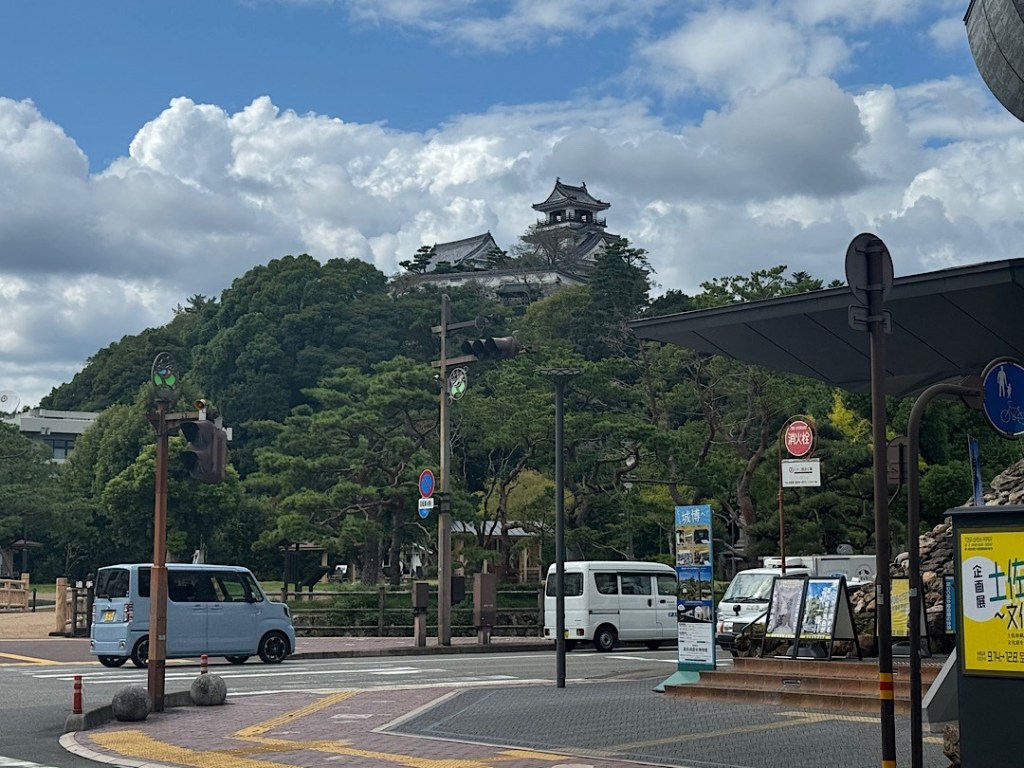
It was even more impressive than Kochi’s well-preserved castle, which we visited while there. The weather was better in Kochi, so when we climbed to the top-most level of the tower, we could better appreciate the great views.
The second major site we visited in Matsuyama was Ishite-Ji, one of Matsuyama’s many Buddhist temples. There I was disappointed to find the main building under renovation. But the grounds were wonderfully atmospheric…
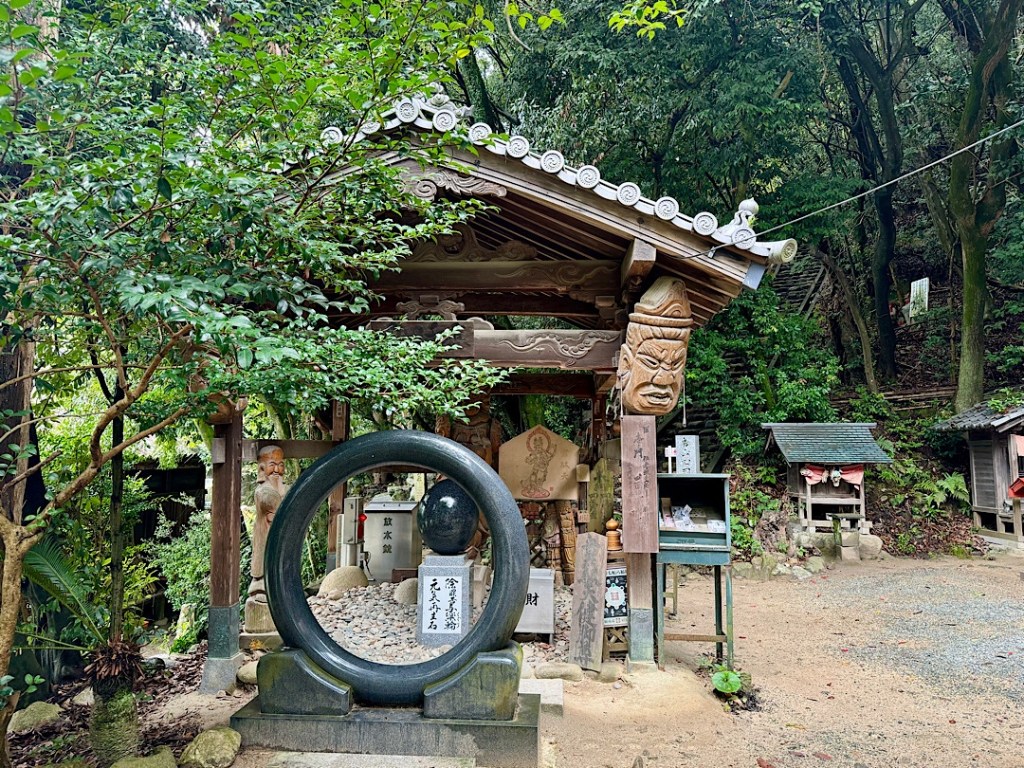
…filled with nooks and crannies, some quirky, some beautiful.
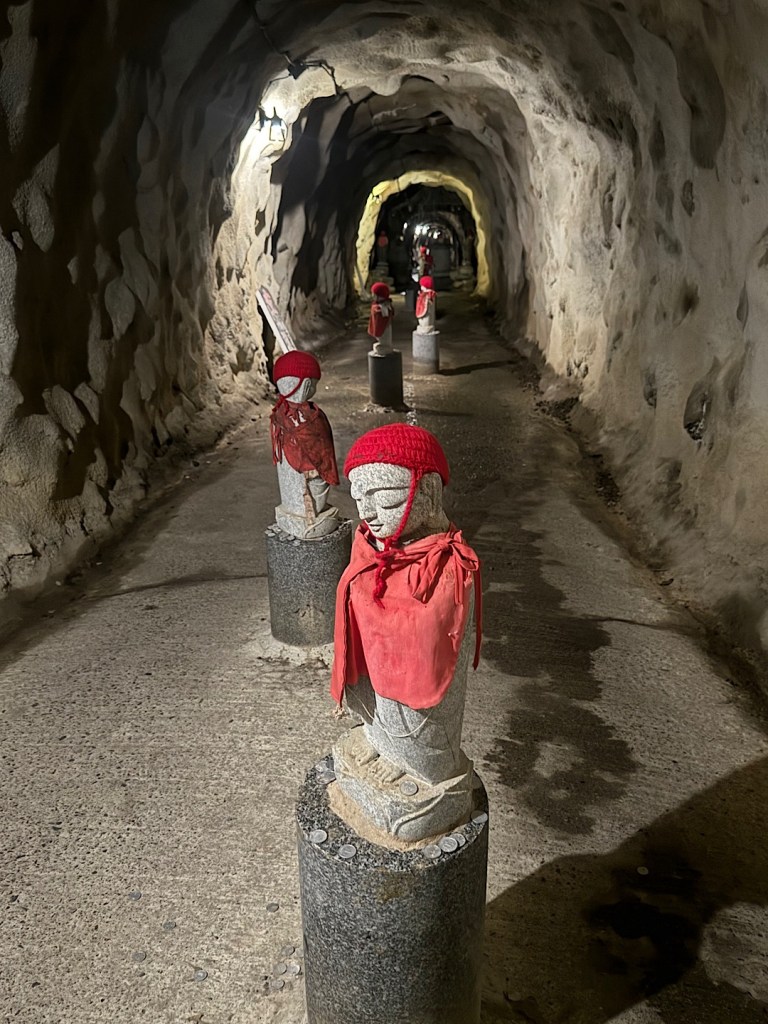
We also crept into a a weird meditation tunnel chiseled into the rocky stone that abuts the temple complex.
It looked much darker and creepier to our eyes than it looks here, as captured by my iPhone camera.
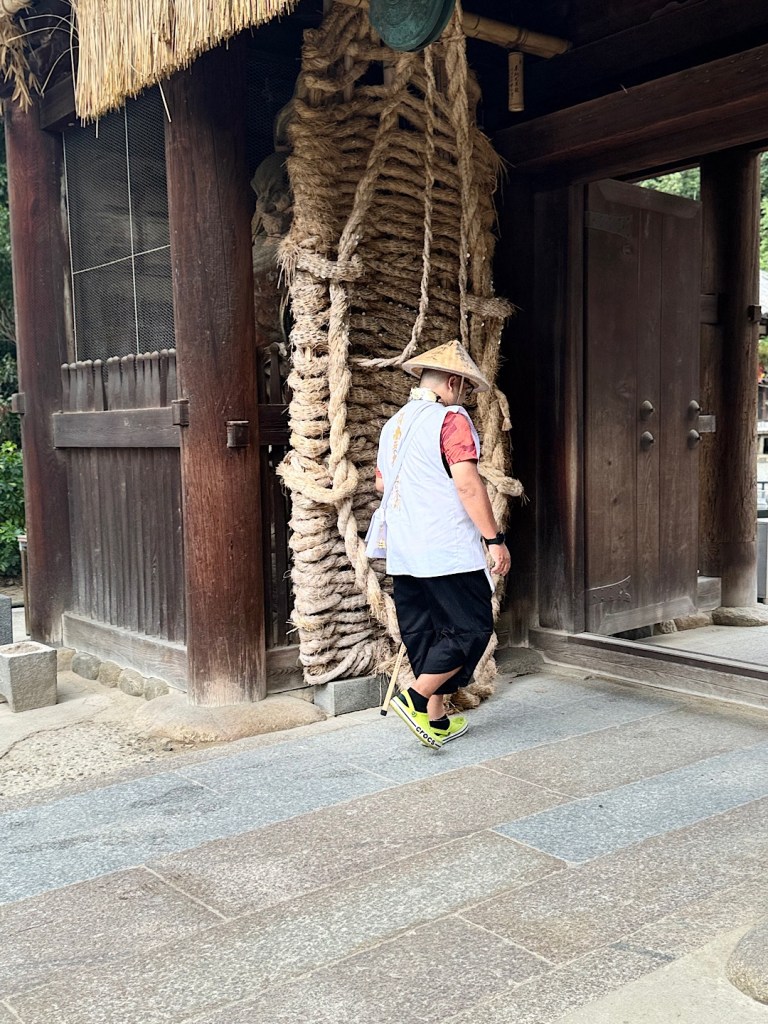
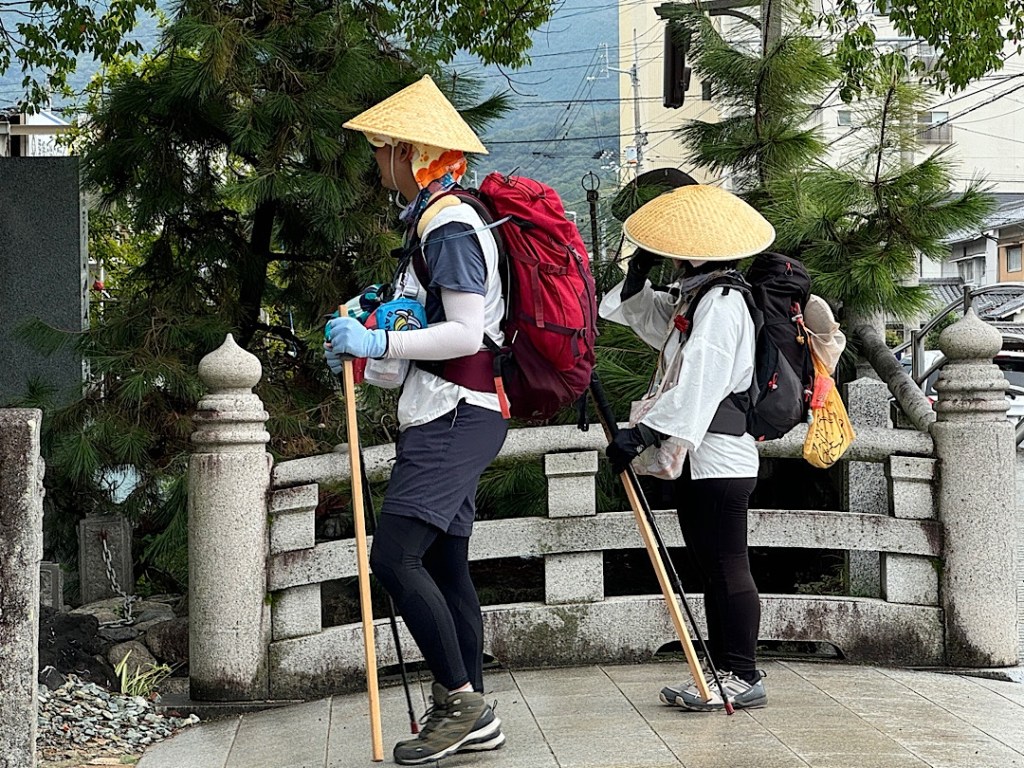
Most exciting to me was catching sight of several arriving pilgrims. The Shikoku Pilgrimage is kind of a big deal on the island. Religious devotees try to follow a circuit that includes 88 temples; reportedly it takes 2-3 months to do it on foot. While achieving this would give one great bragging rights, it’s not on my bucket list. Still I was happy to glimpse some of those who were called by it.
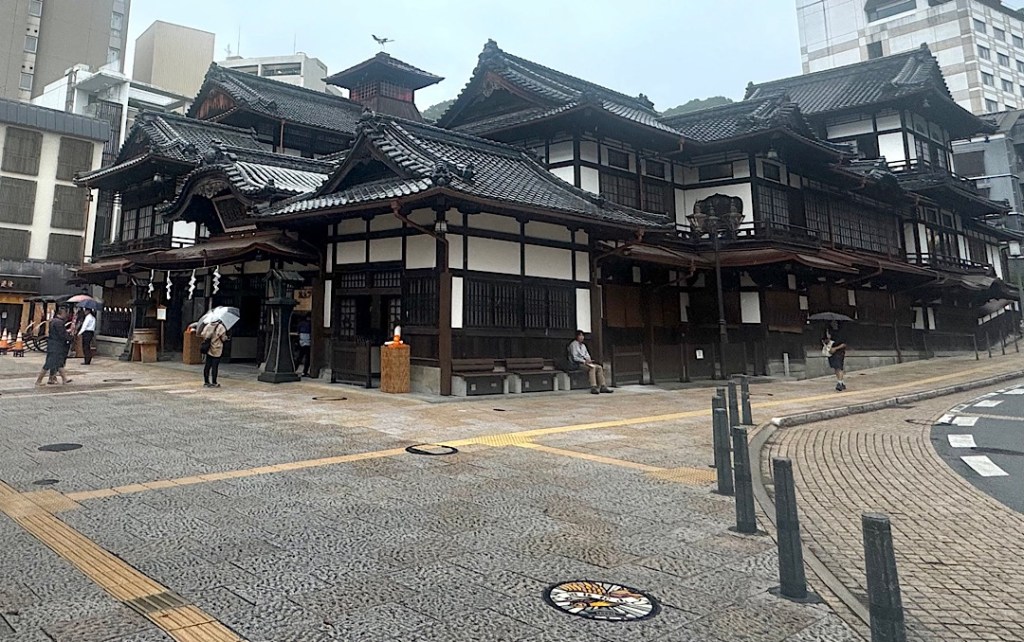
The third Big Attraction in town is Dogo Onsen (onsen are hot springs and the bathing facilities around them). This one is said to be the oldest in Japan (3000 years old? So they say.) You have to pay an admission fee to enter the 130-year-old main resort building (Dogo Onsen Honkan). Because we had failed to bring towels and robes with us, we paid about $27 for the two of us to enter, bathe, and get not only towels and robes but also tea and cookies.
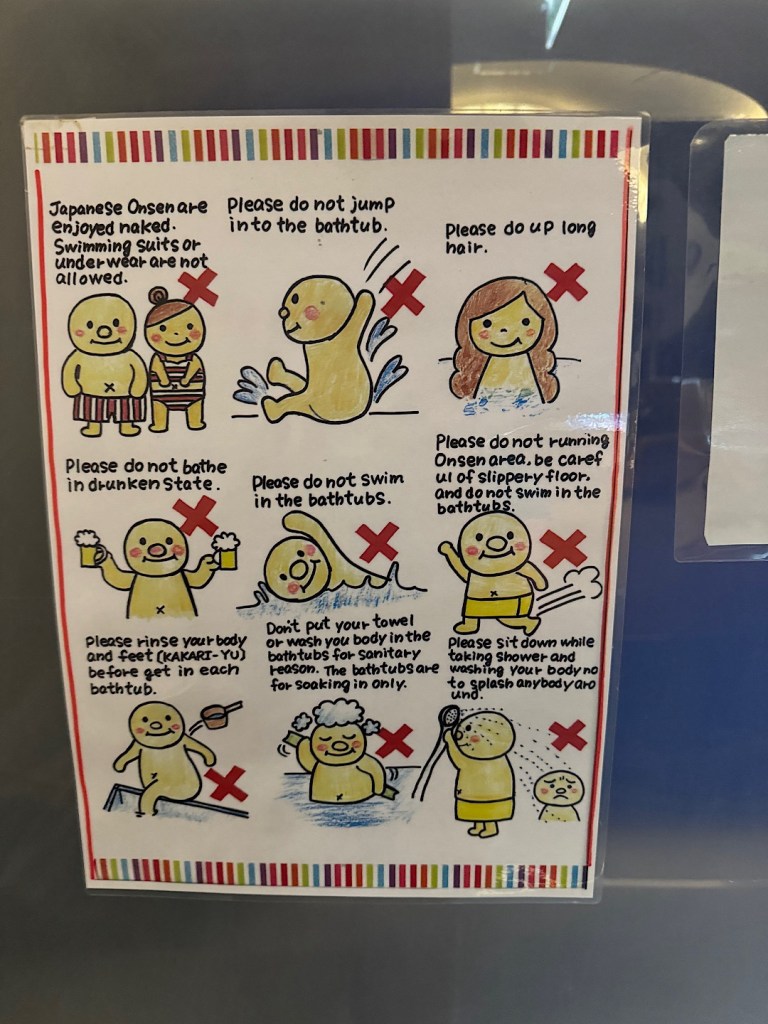
I should explain here that Steve’s not a huge fan of Japanese bathing, which we have done many times over the years. In 1979 we visited a town where the streets were filled with freshly scrubbed people strolling around in just robes and sandals. In 1982 we went to an onsen in the north where men and women soaked together, au natural, in lovely outdoor pools. On this trip, we used the communal baths at two places, both of which reminded Steve he finds nothing appealing about sitting in hot water with a bunch of other naked men. I’m more of a fan of the whole experience. I learned the rules of Japanese bathing way back on my first trip to Japan.
Here’s one rendering of the rules I saw recently.
Steeping myself in very hot pools alongside other naked women is so wildly different from anything back home, I find the rituals interesting — and the hot-water dips relaxing.
At Dogo Onsen, Steve was a good sport and accompanied me into the spa (though we couldn’t soak together. In most places, it’s a sex-segregated activity.)
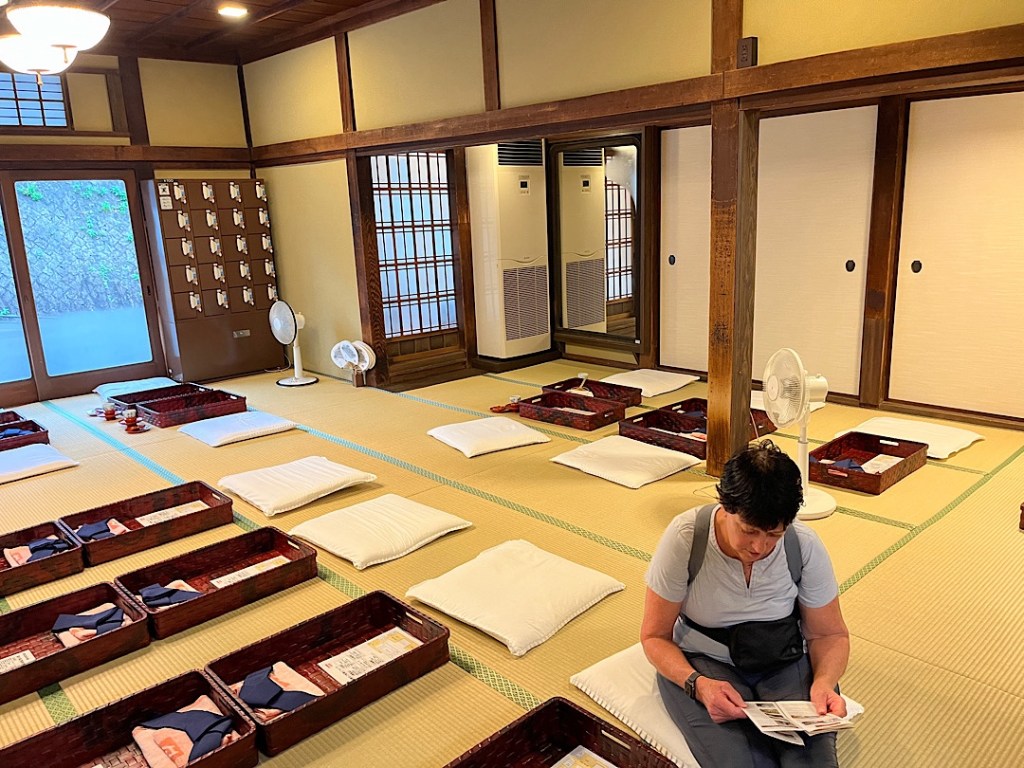
We were allowed to sit together in this room for our after-bath tea and cookies.
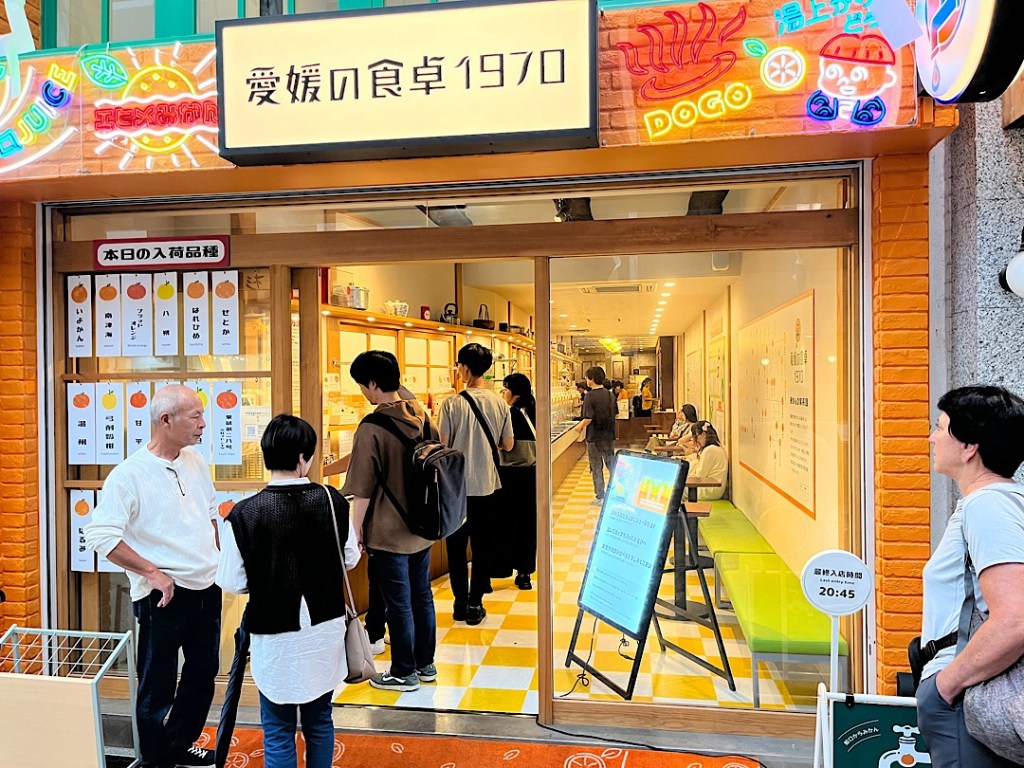
We enjoyed all three of these activities, but two other things happened that seemed more wonderfully, quintessentially Japanese. We stumbled on one while walking to the onsen through one of the town’s pleasant covered malls. An odd sight caught my eye:
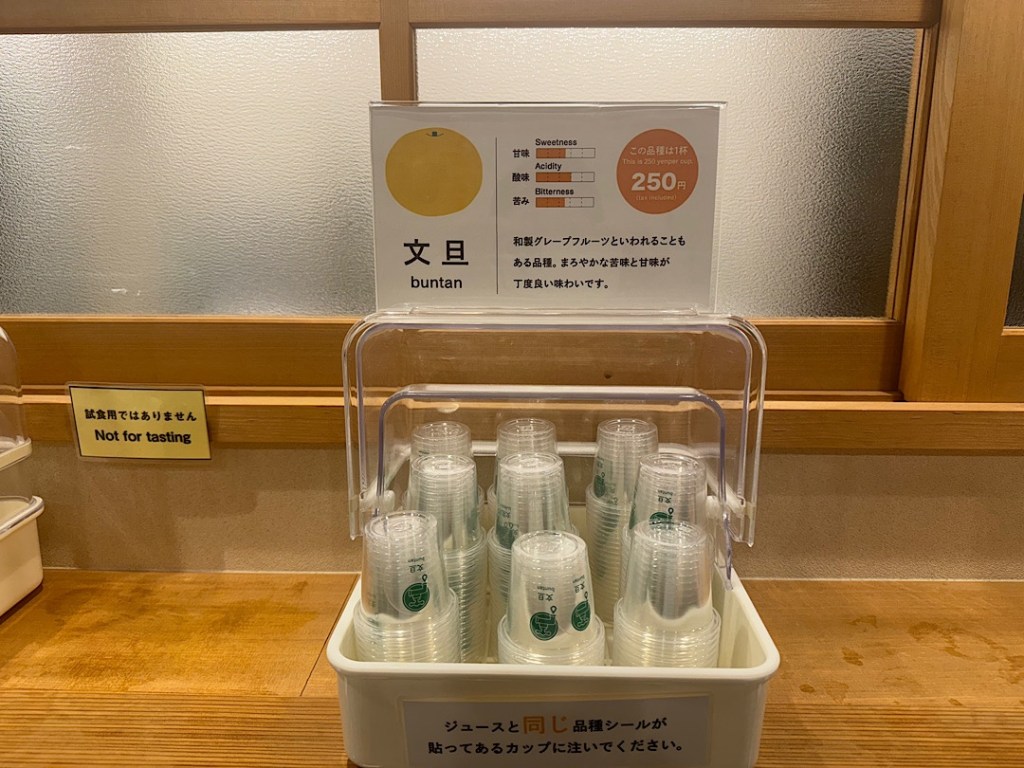
A colorful store containing a long wall lined with spigots.We realized the spigots poured tastes of maybe two dozen kinds of citrus juice.
It seemed the juice was squeezed from varieties of fruit hybridized and grown in Ehime Prefecture. We recognized a few like blood orange. But most were alien: Seminole juice? Buntan?
A taste of the buntan, for example, cost $1.68. The displays showed the sweetness, acidity, and bitterness levels of each offering.
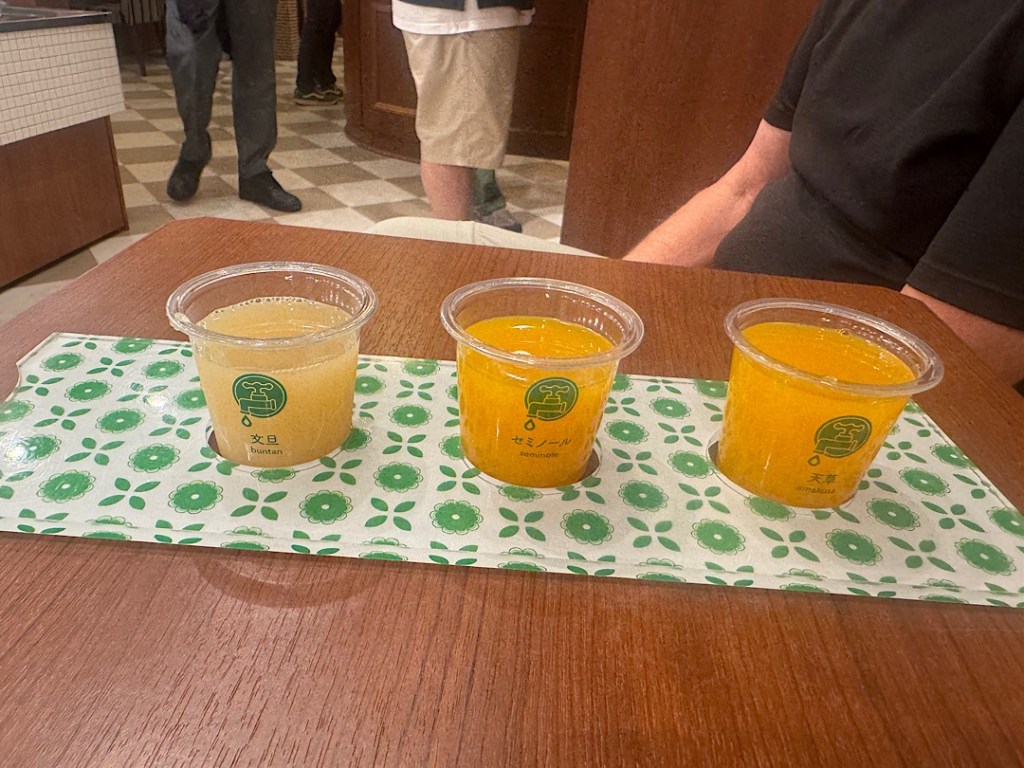
We picked out three to share; the total came to $5. None of them tasted exactly like the orange juice or tangerine juice or grapefruit juice we know from home.They weren’t blends of those, but squeezed from wholly different fruit, clearly related but different. As we walked in, customers of all ages were streaming in, happy to be trying something new, as people here tend to be.
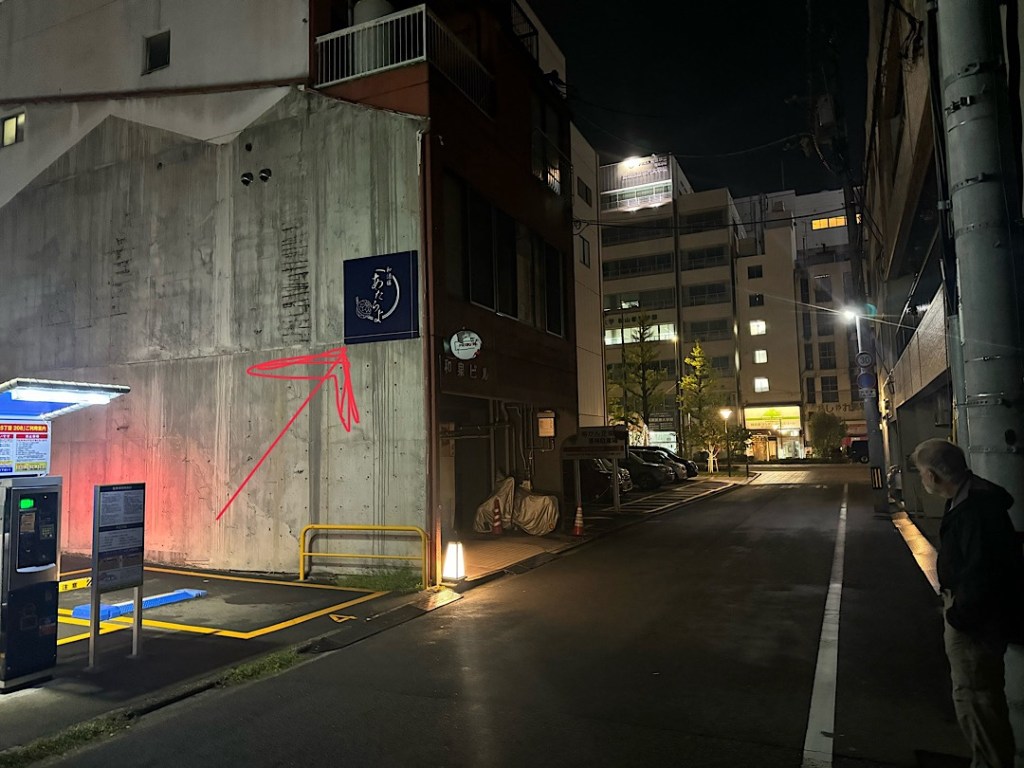
Our other striking experience came on our final night on Shikoku. We’d wanted to eat somewhere good but close to our hotel; Google Maps showed us at least a dozen candidates within a 5-minute radius. We selected a highly rated one which looked to be just a half block down a little street almost directly across from where we were staying. We followed Google’s directions and were baffled to find a dark alley containing no sign of any commercial establishment (even though Google said it should be open.) We walked in various directions, increasingly frustrated. Steve was certain Google was simply wrong. But I pushed for one more careful walk through the alley before we caved and went to the nearest burger joint. And there it was!
A sign for the restaurant we were seeking.
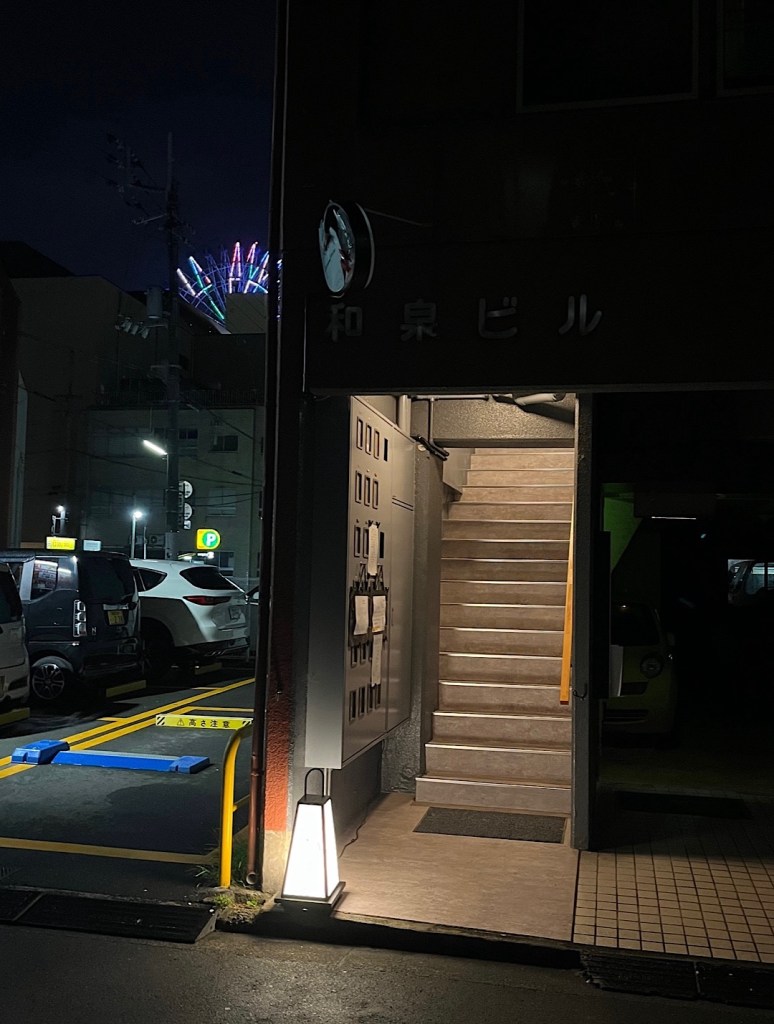
We climbed an unpromising set of stairs…
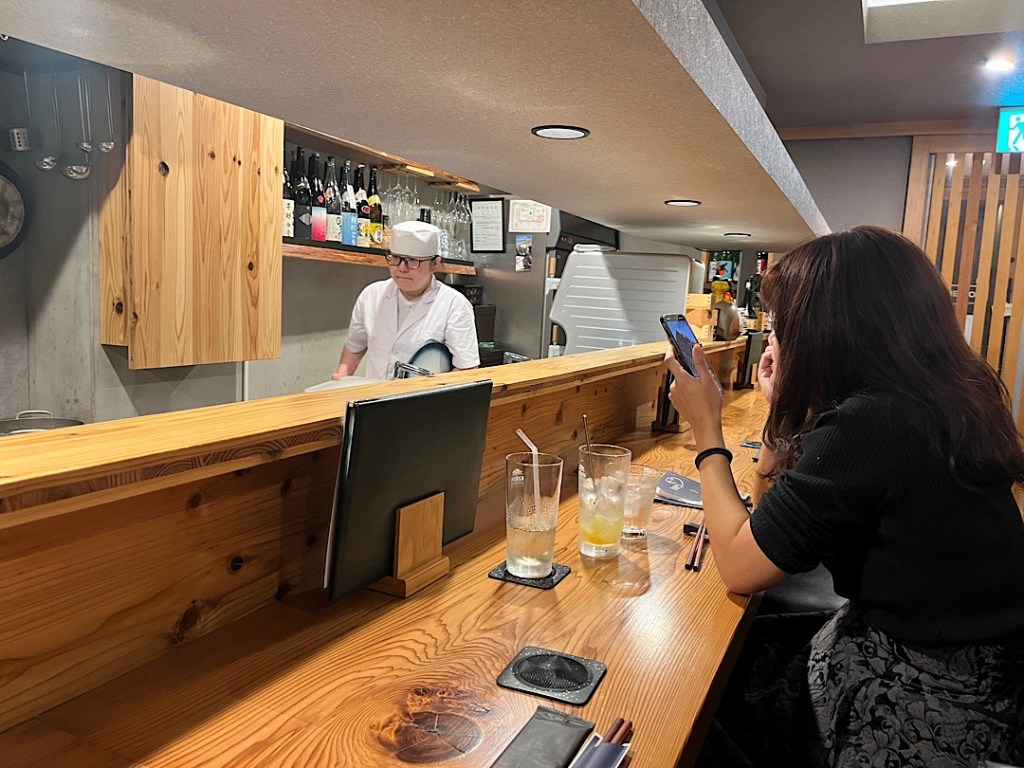
…pushed open the door, and were greeted with a cry of welcome from the solitary figure working behind the counter. The room was lovely — sleekly elegant with lots of warm wood tones. Music played softly in the background. The only other person in the place was a single woman nursing a drink at the bar.
Steve and I wound up splurging on the Matsuyama Special. But what a fabulous range of deliciousness it included.
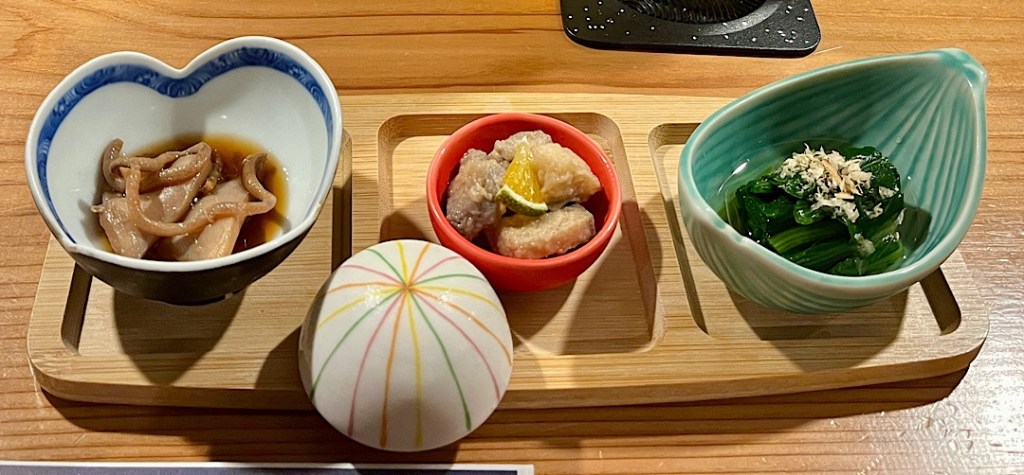
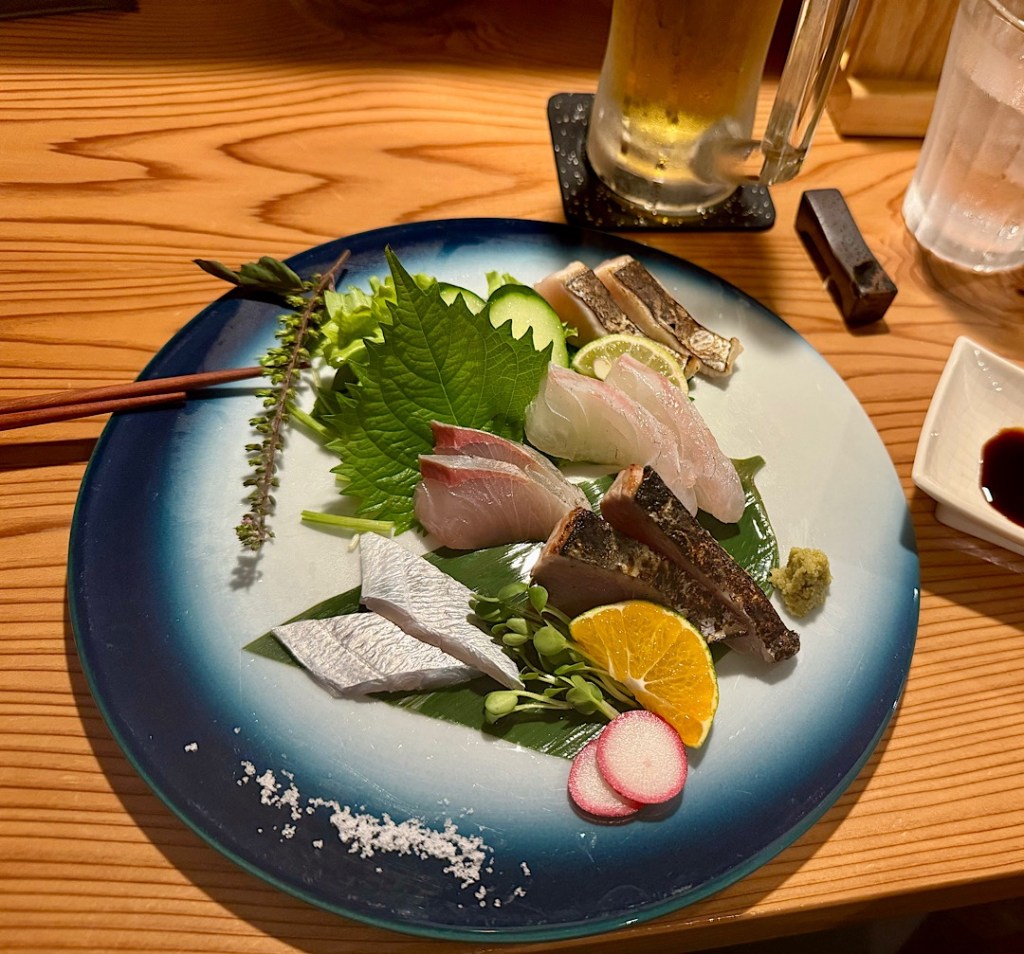
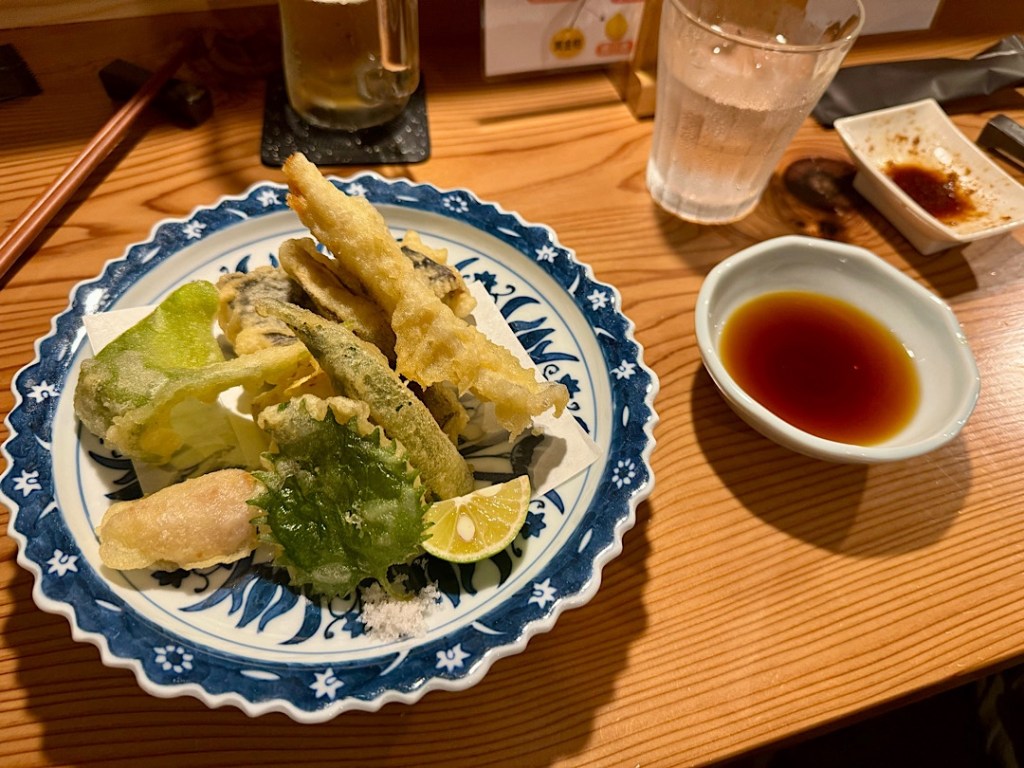
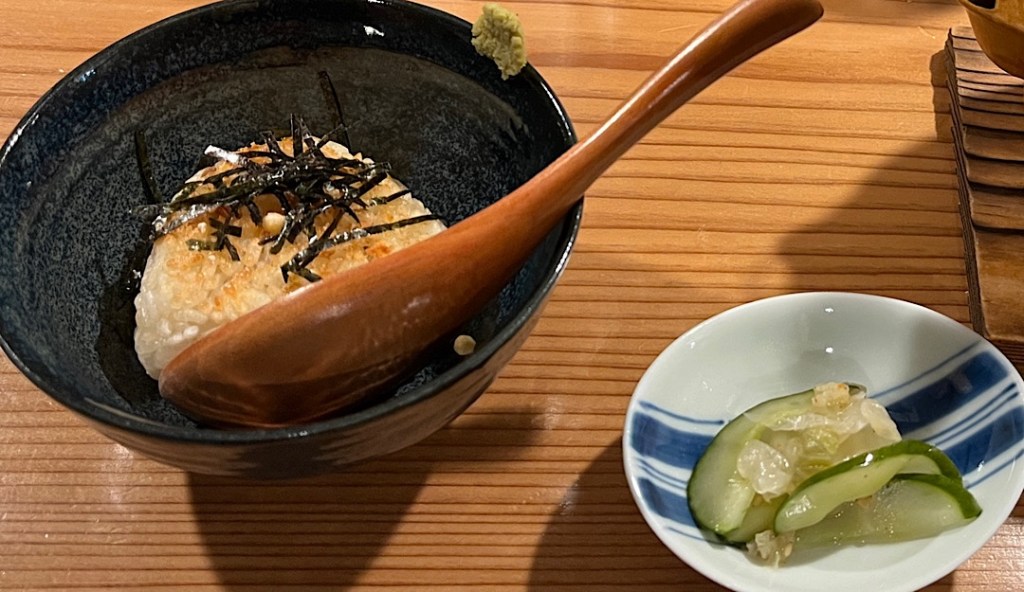
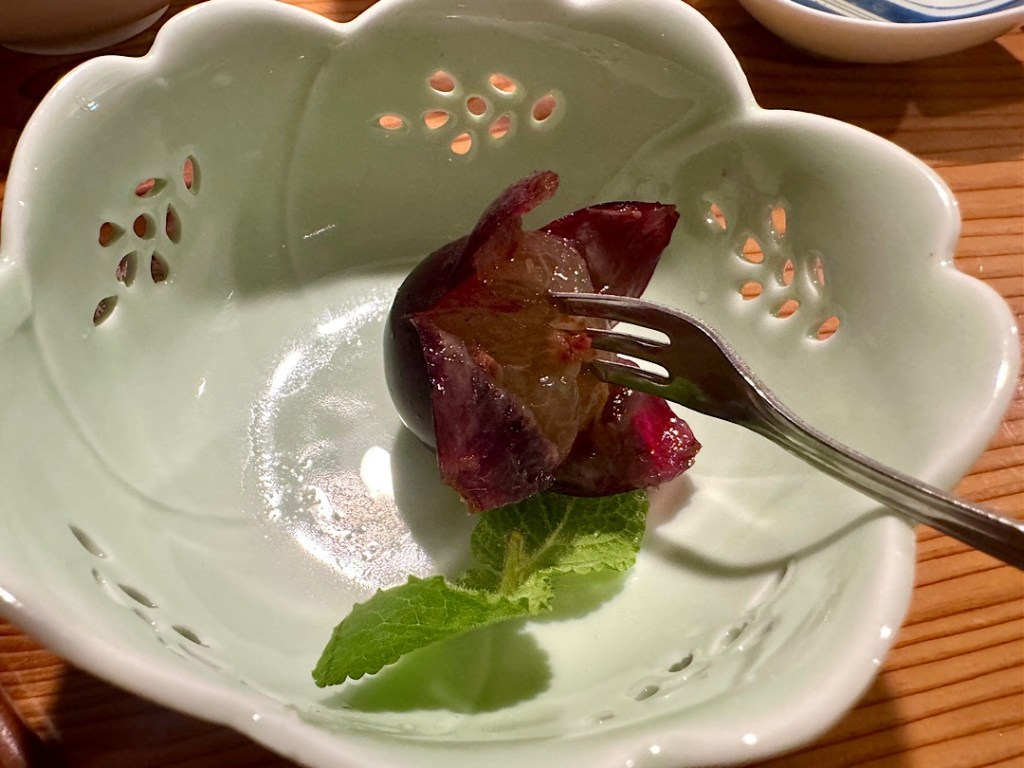
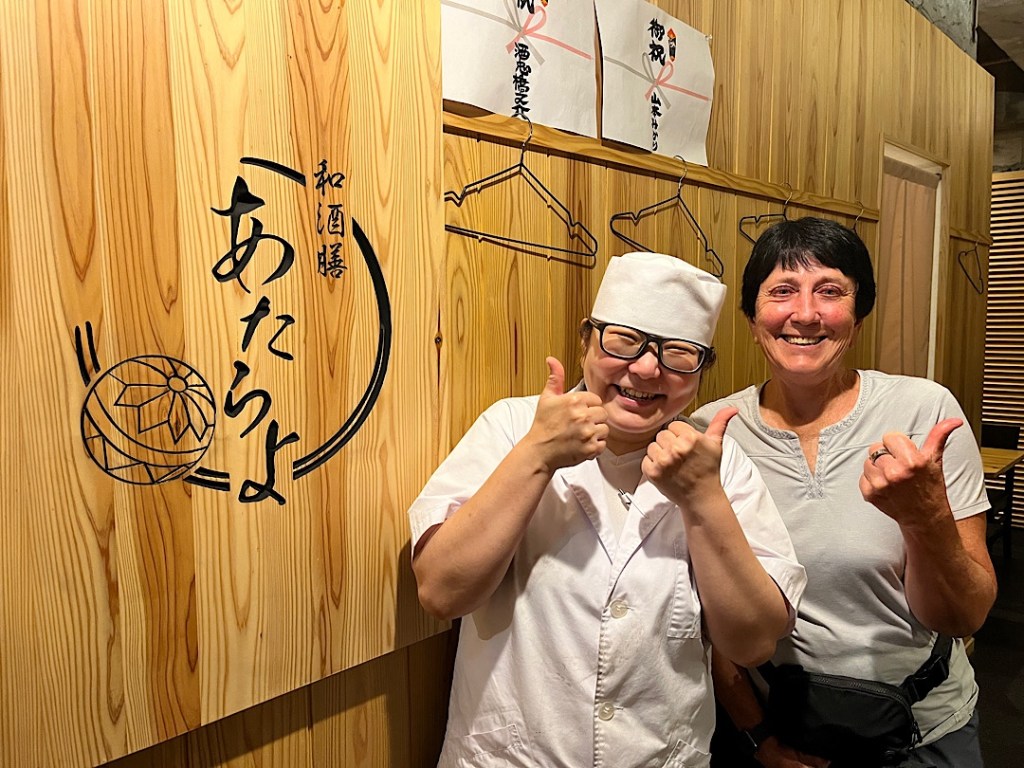
It started with three kinds of appetizers. (The one in the middle is fish. The others are vegetables.)The sashimi made both of us swoon with pleasure.Then came more vegetables and fish dipped in a delicate tempura better and deep fried.The rice was eaten with a broth. The creamy, eggy custard contained fresh mushrooms.Dessert was two of these strange fruits, which the chef seemed to be saying were grapefruit. They tasted like Concord grapes to me, but huge and very juicy.This lady did it all, single-handed. We paid $115.69 for all that food, two beers, and tax. (There’s never any tipping or charge for service in Japan.)
Then she presented us with a pretty paper bag containing Japanese snacks and some candy. Her gift to us for coming to dinner.
We’re alive after more than two days of driving around, but I’ll wait to share what it’s been like behind the wheel (and in the front passenger seat.) I don’t want to jinx us before we turn in our little Suzuki WagonR in two and a half days.
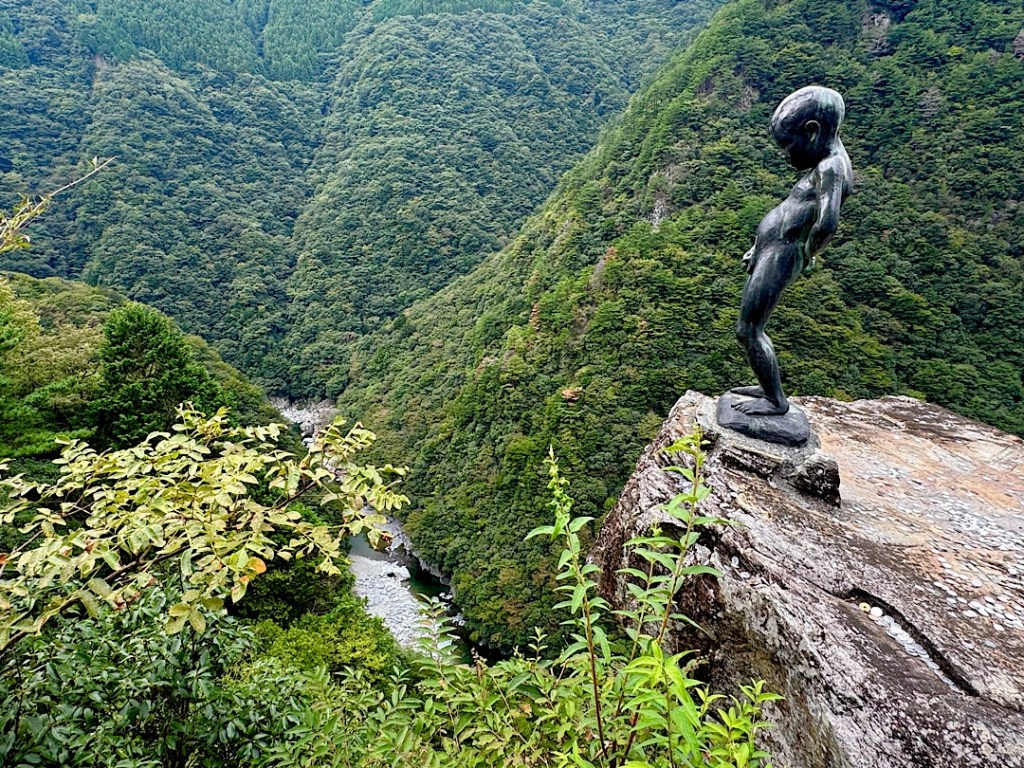
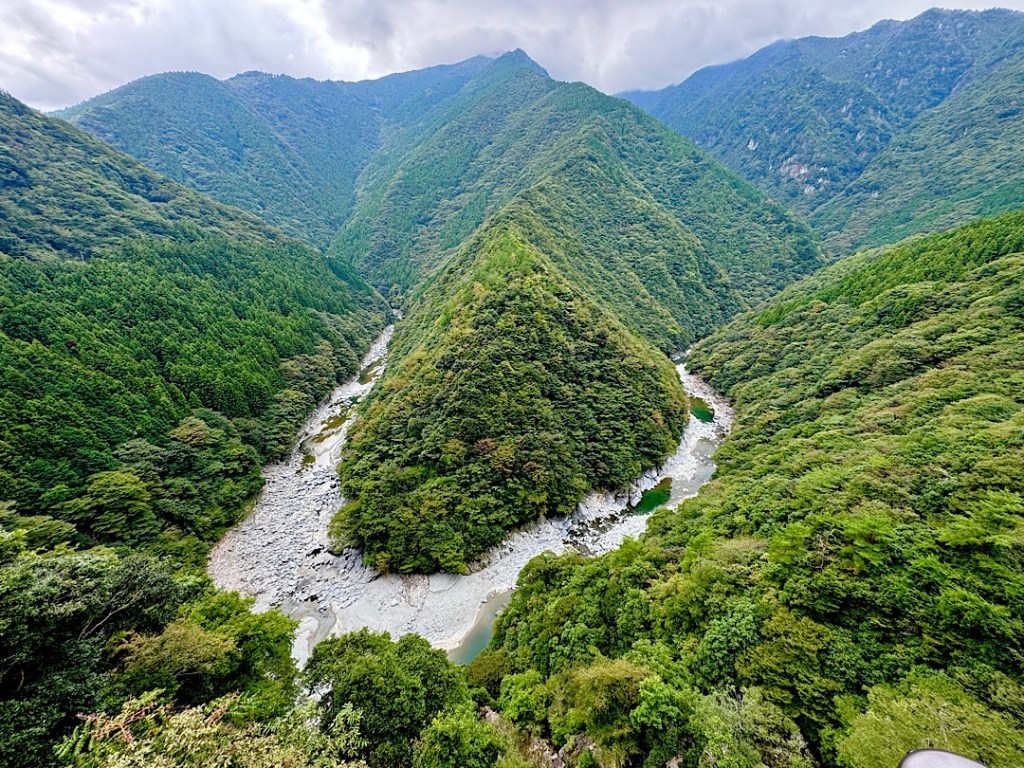
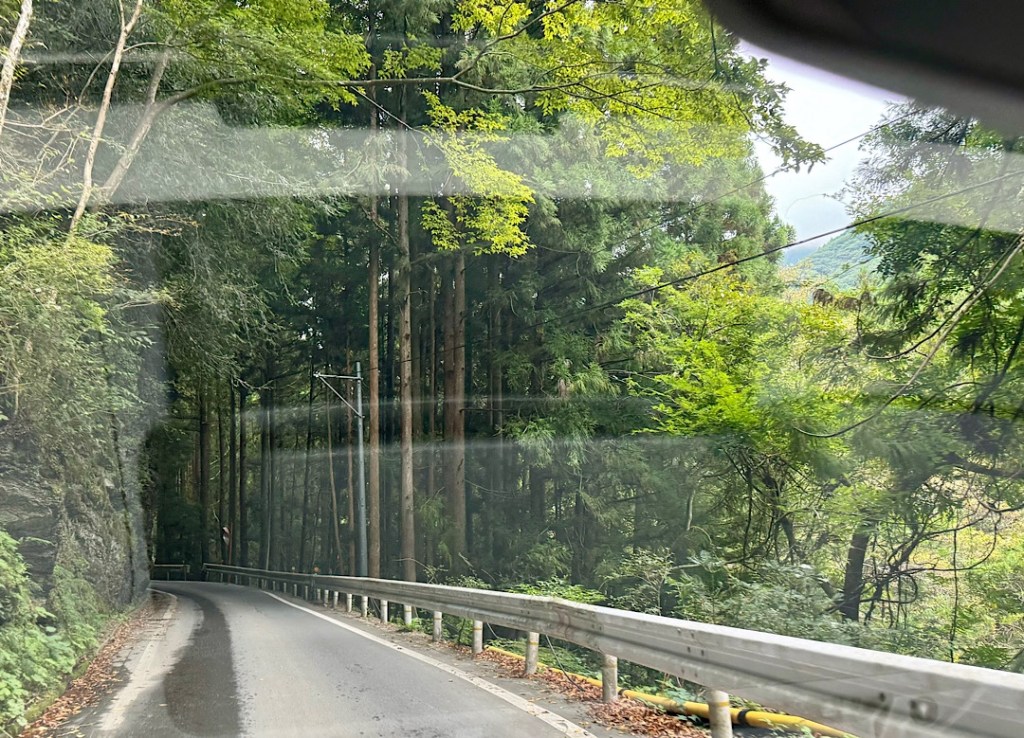
We rented the car because we wanted to visit some of the wildest terrain in Japan, places where the trains don’t penetrate, deep within the mountains of Shikoku (one of Japan’s four main islands.) Yesterday afternoon we drove into the densely forested Iya Valley on roads notched out of almost-vertical cliffs, byways that often narrowed to a single lane.
The boy peeing into the valley cut by the river far below is an iconic figure.A photogenic bend in the river.One of the one-lane sections of the road.
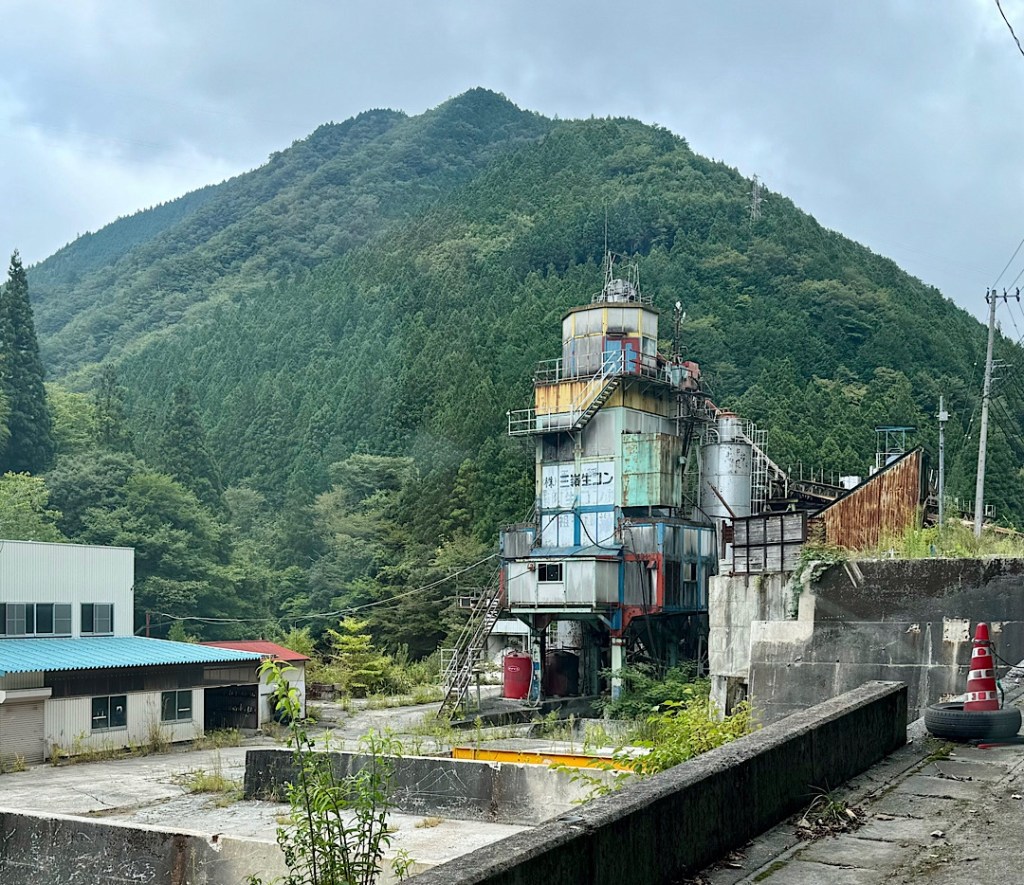
The urban buzz in Tokyo and Kobe and even Takamatsu to me felt more advanced and sophisticated than anything I’ve experienced anywhere else on earth. After 10 days of that, it was jolting to begin passing buildings and one-time enterprises in the Iya Valley that showed signs of decay. Like this facility:
What was it? What did people once do here?
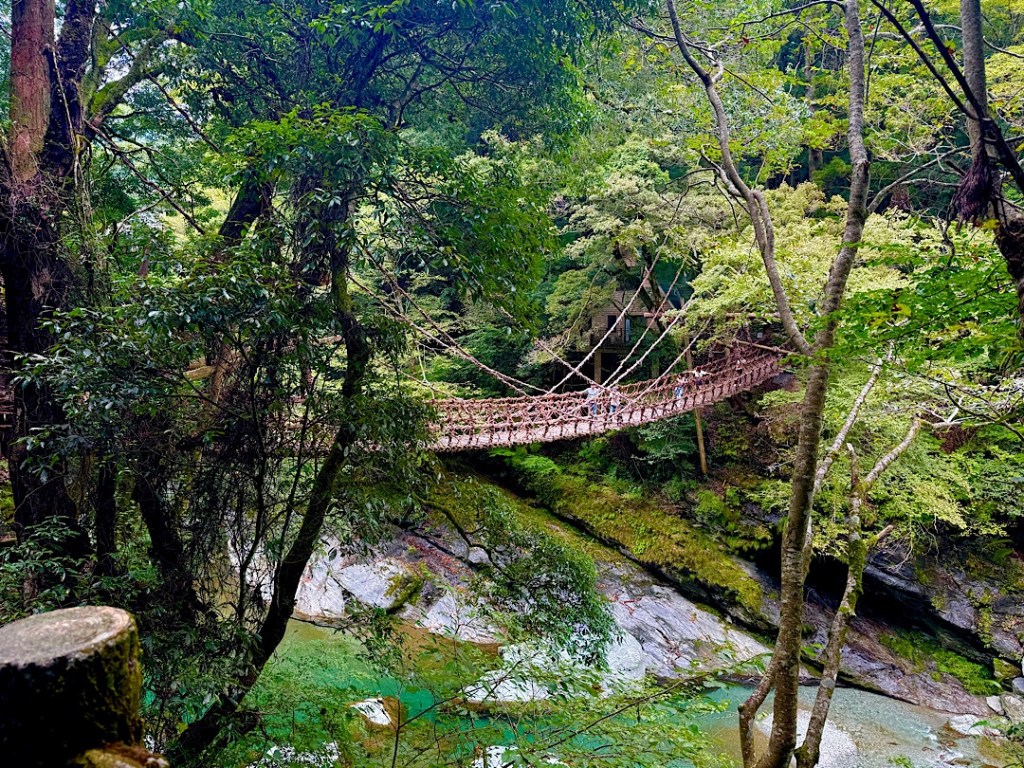
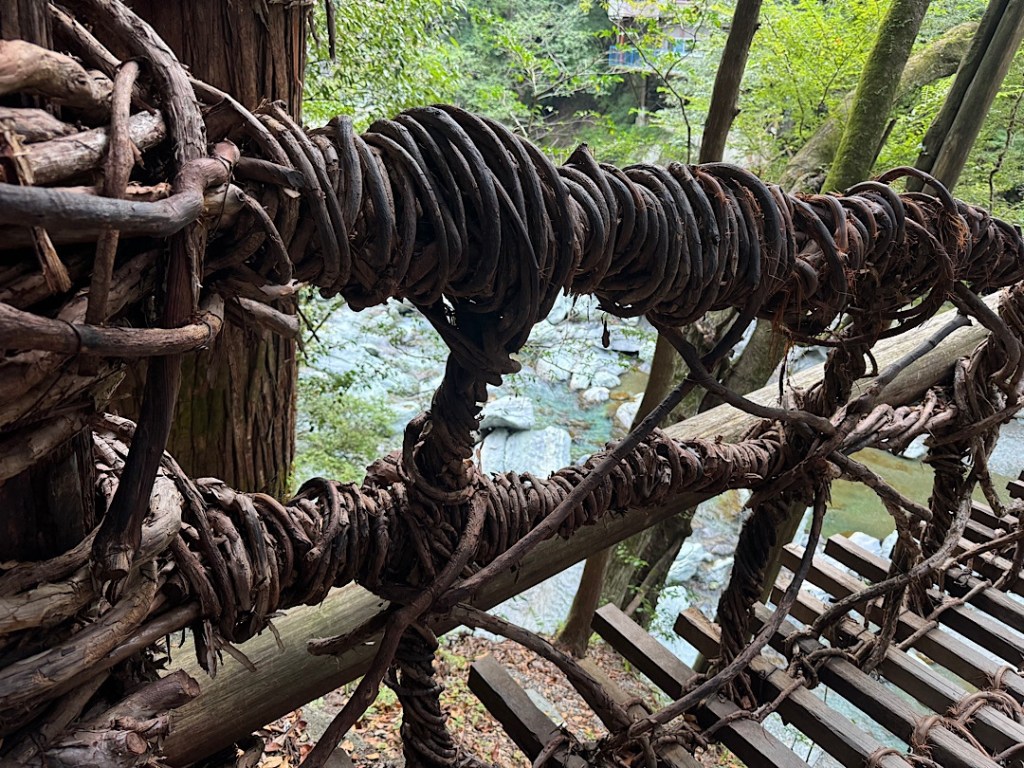
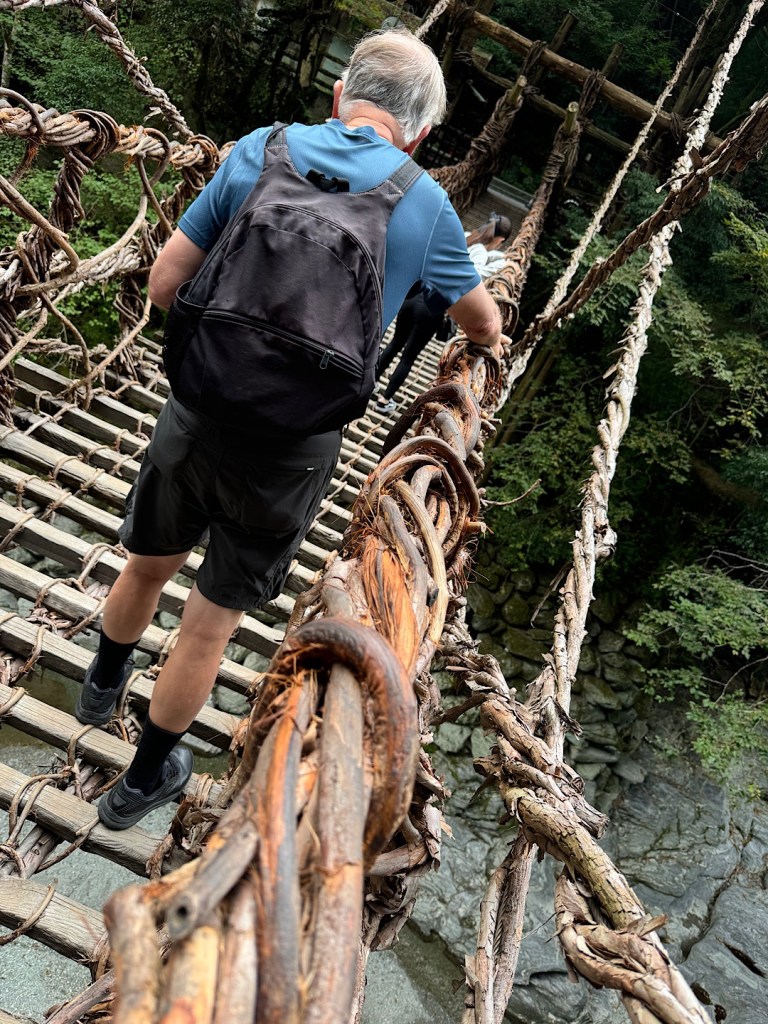
Steve and I were staying in the town of Miyoshi, a base for tourist activities in the area: hiking and mountain climbing. Bathing in hot springs. Walking across bridges that historians think are 800 to 1200 years old, built entirely from vines and planks.
The venerable Kazurabashi bridge was 5 minutes from our Japanese inn.Six tons of vines are required to hold it together.It was surprisingly scary to walk across!
Only about 2300 people live in Miyoshi. If there’s a convenience store in town, we couldn’t find it. It felt like at last we were seeing the effects of Japan’s deadly demographics: an aging population, young people opting not to marry or have children. Countrysides emptying out.
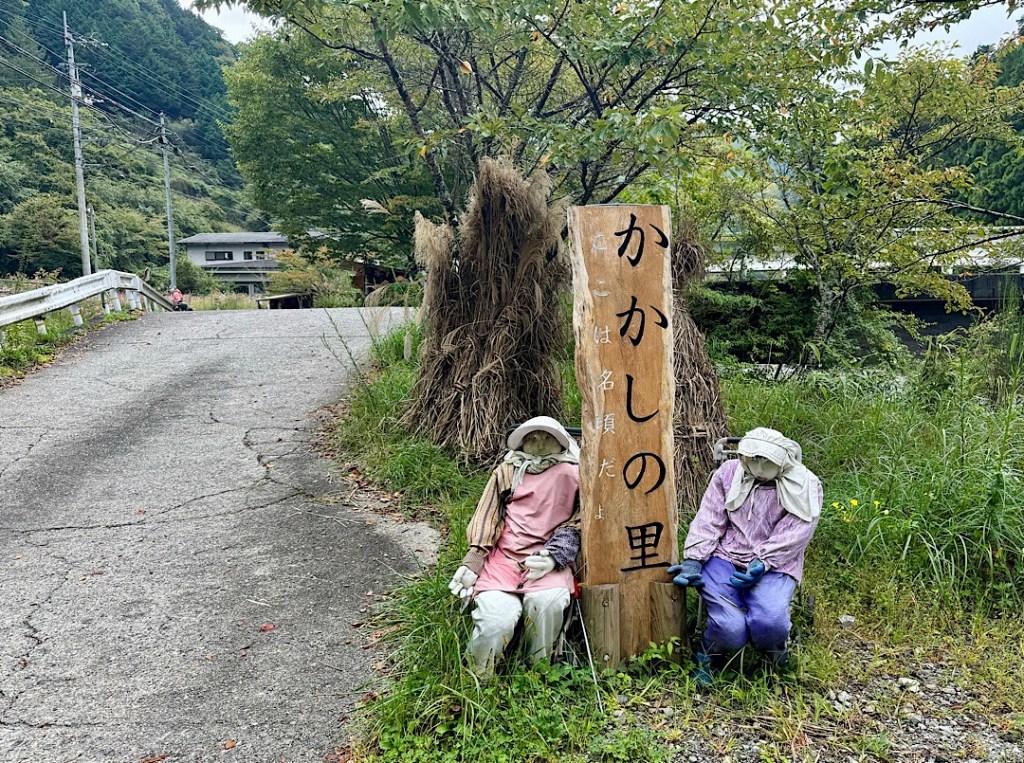
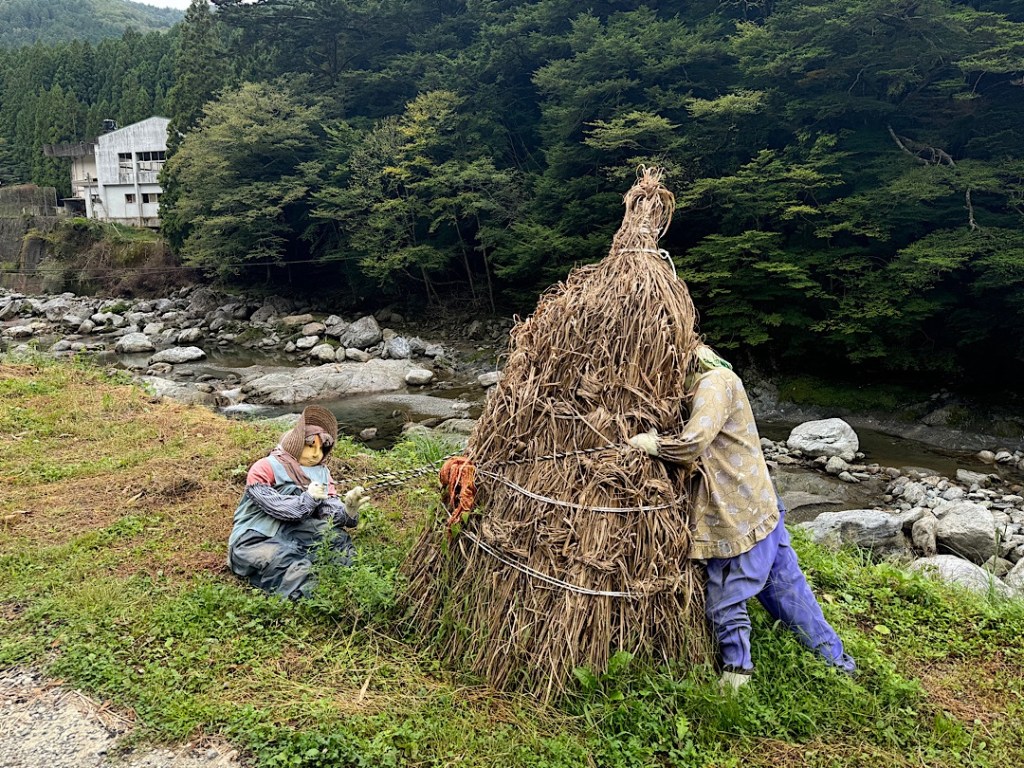
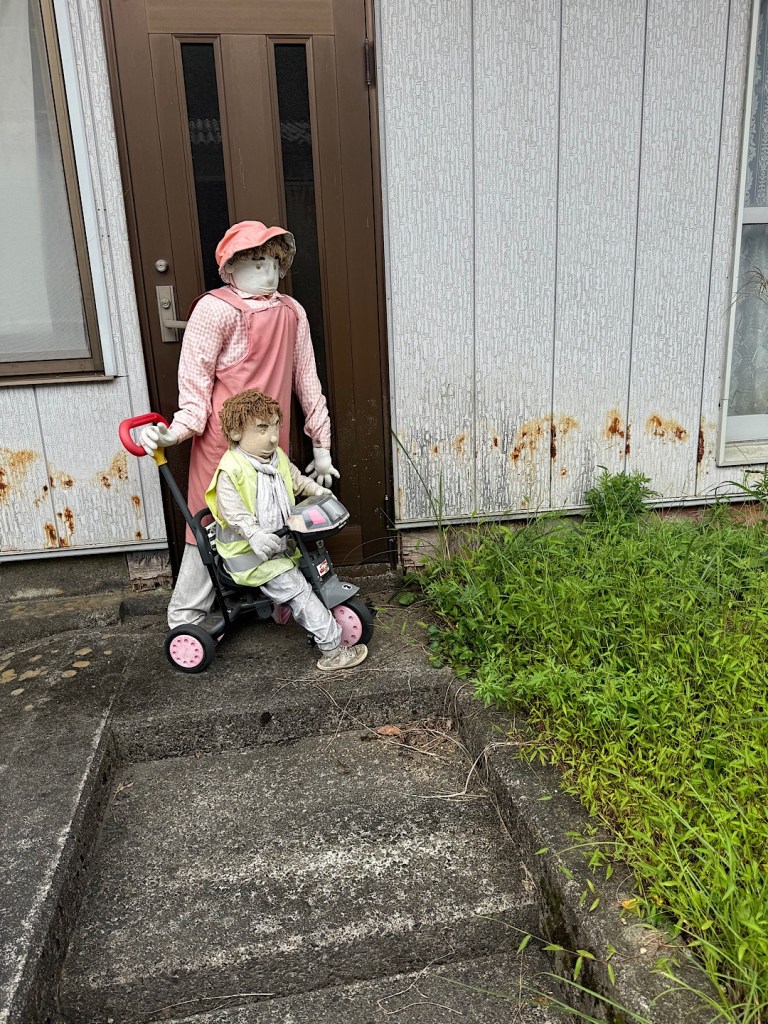
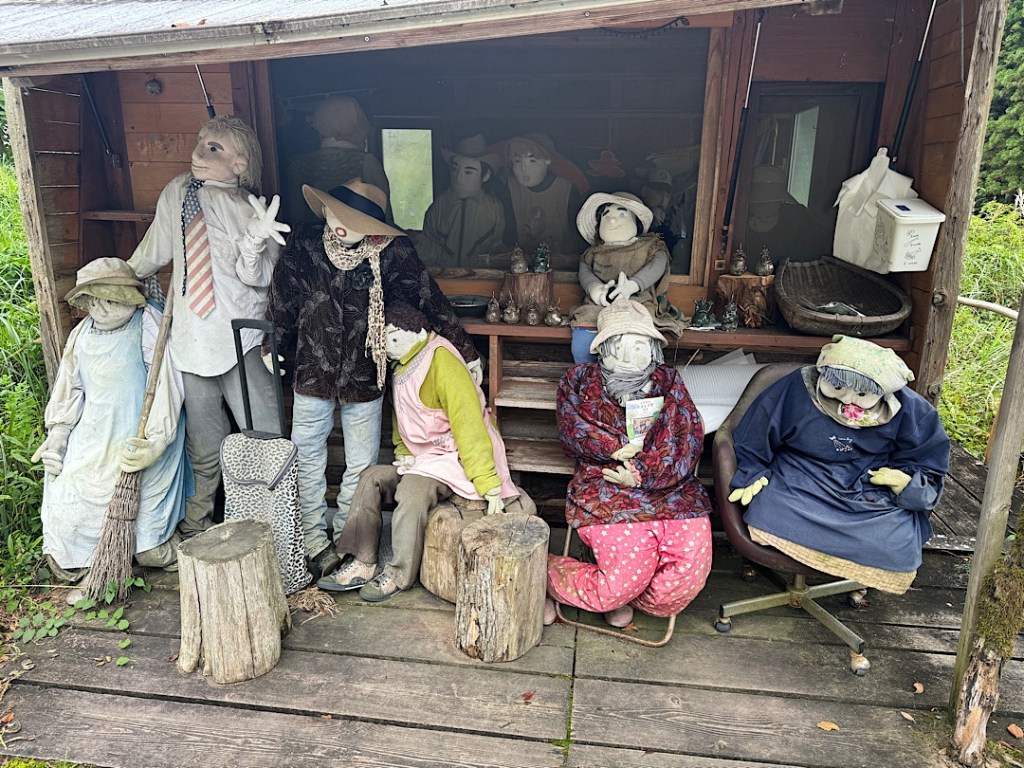
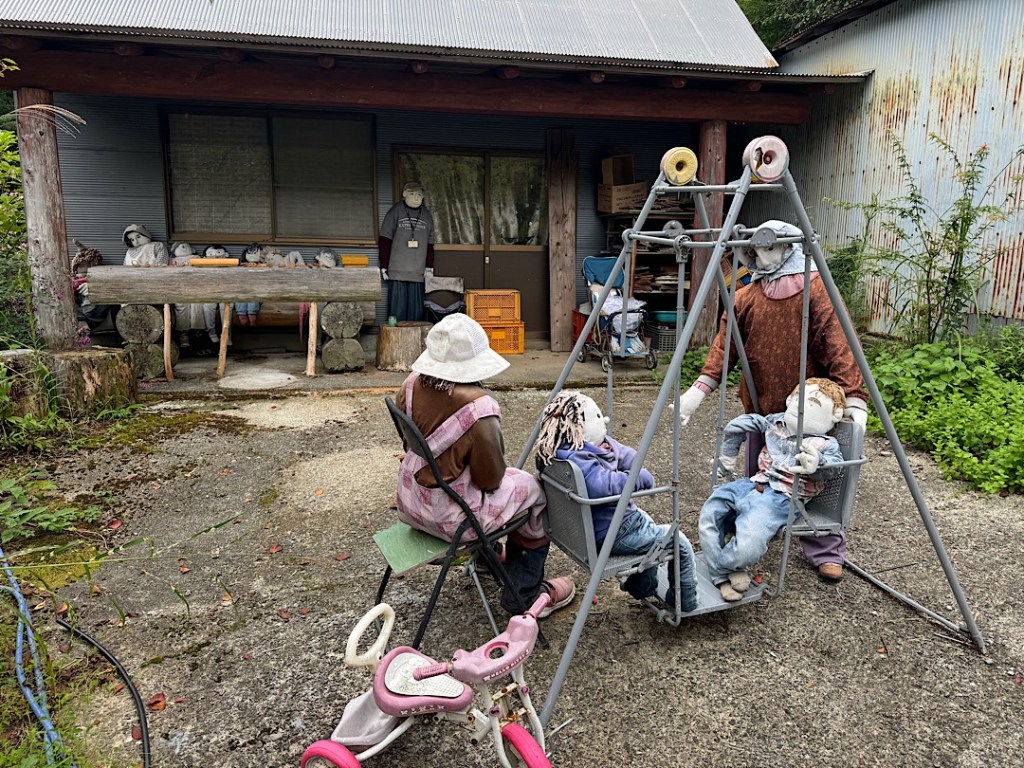
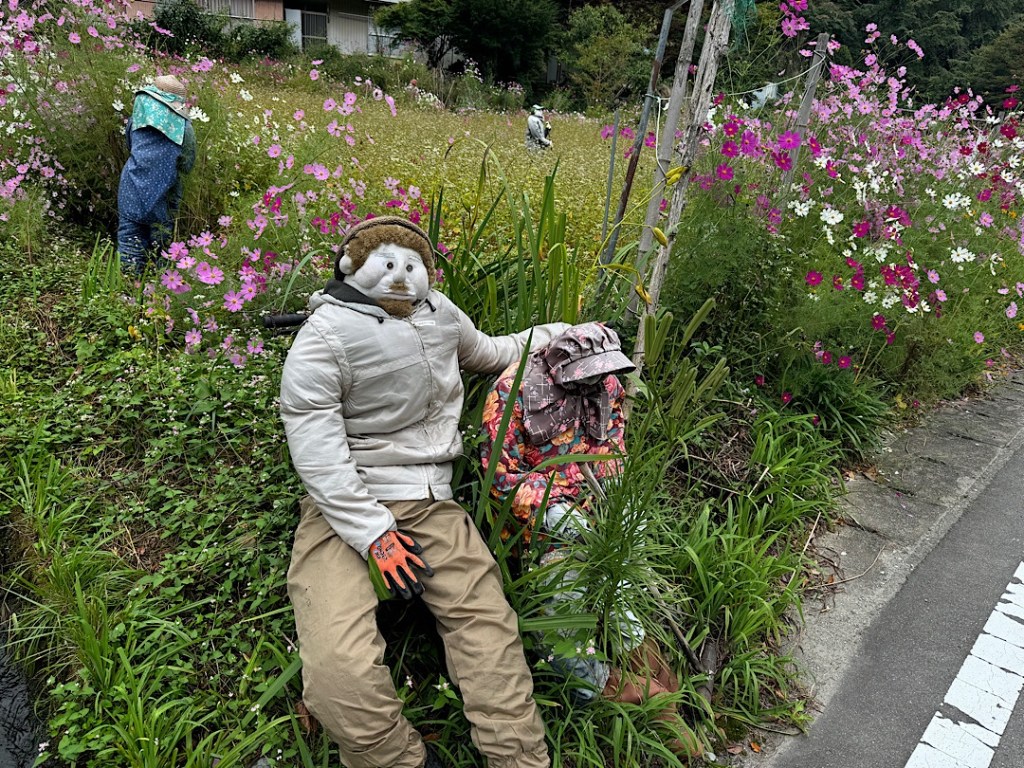
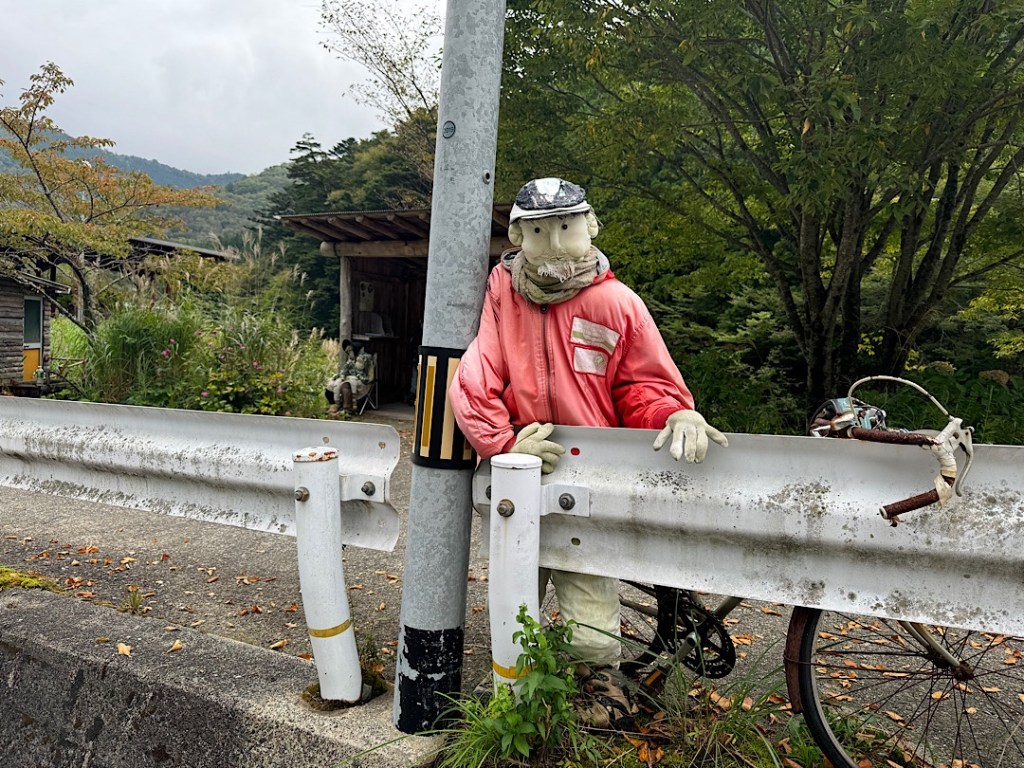
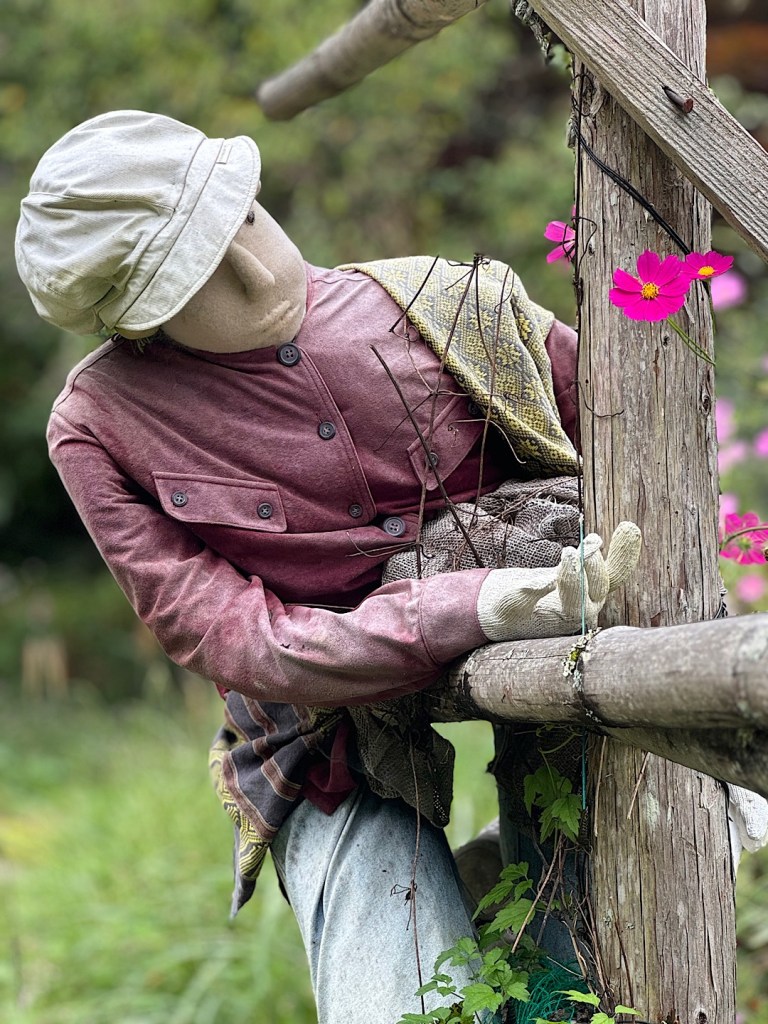
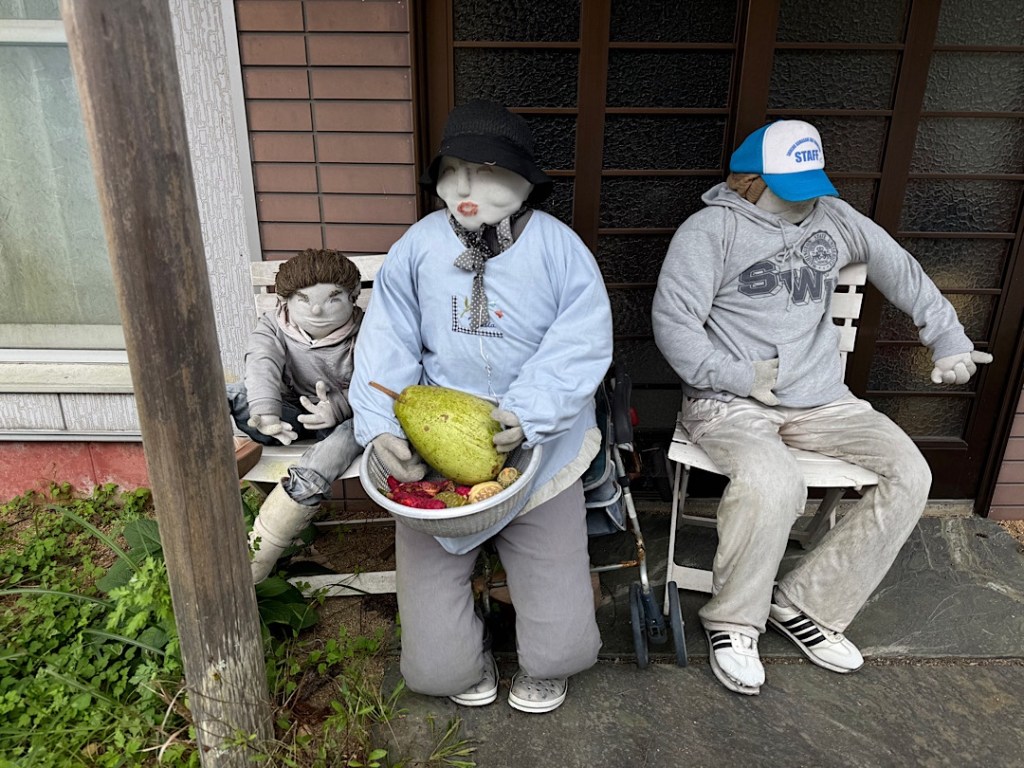
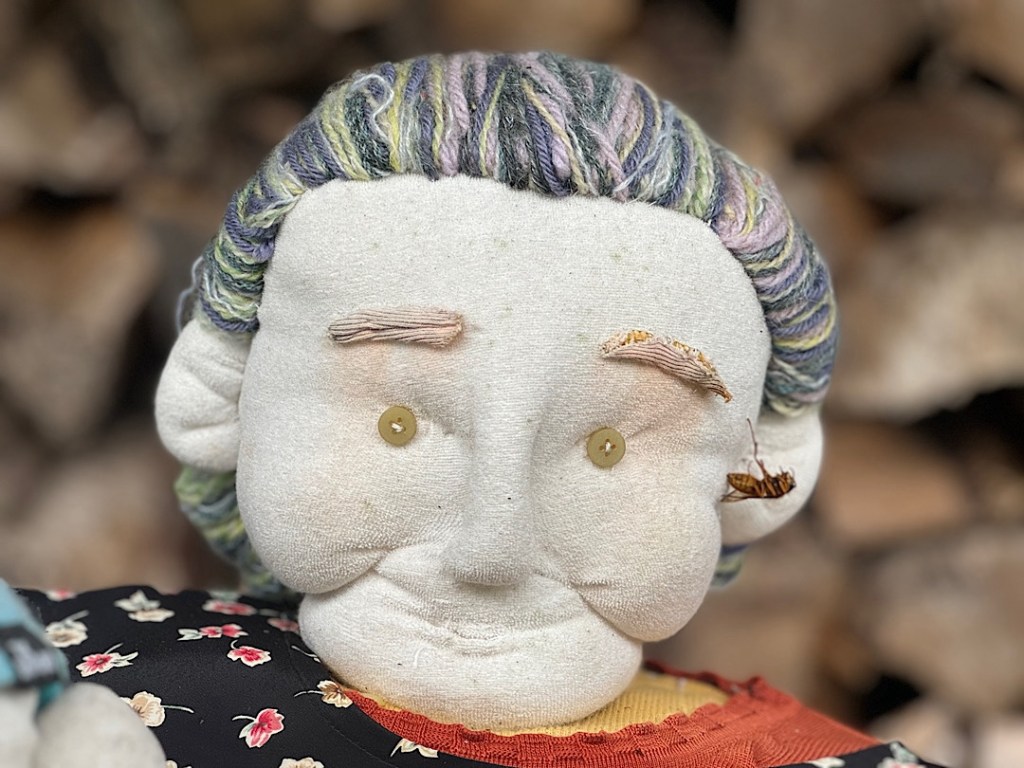
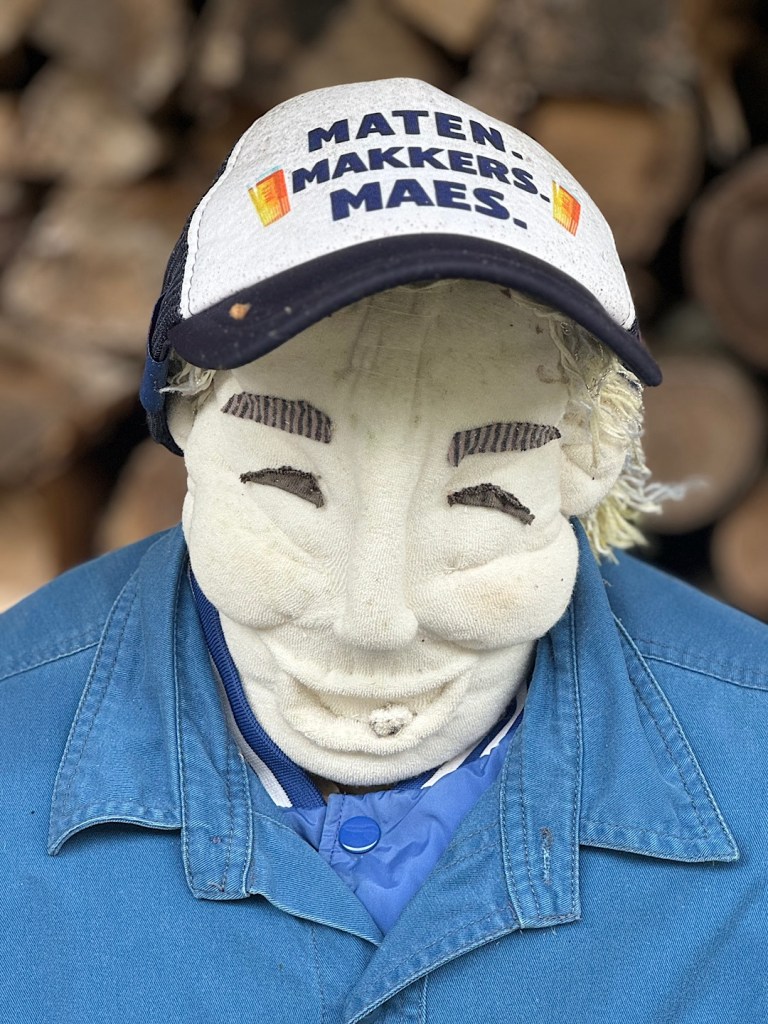
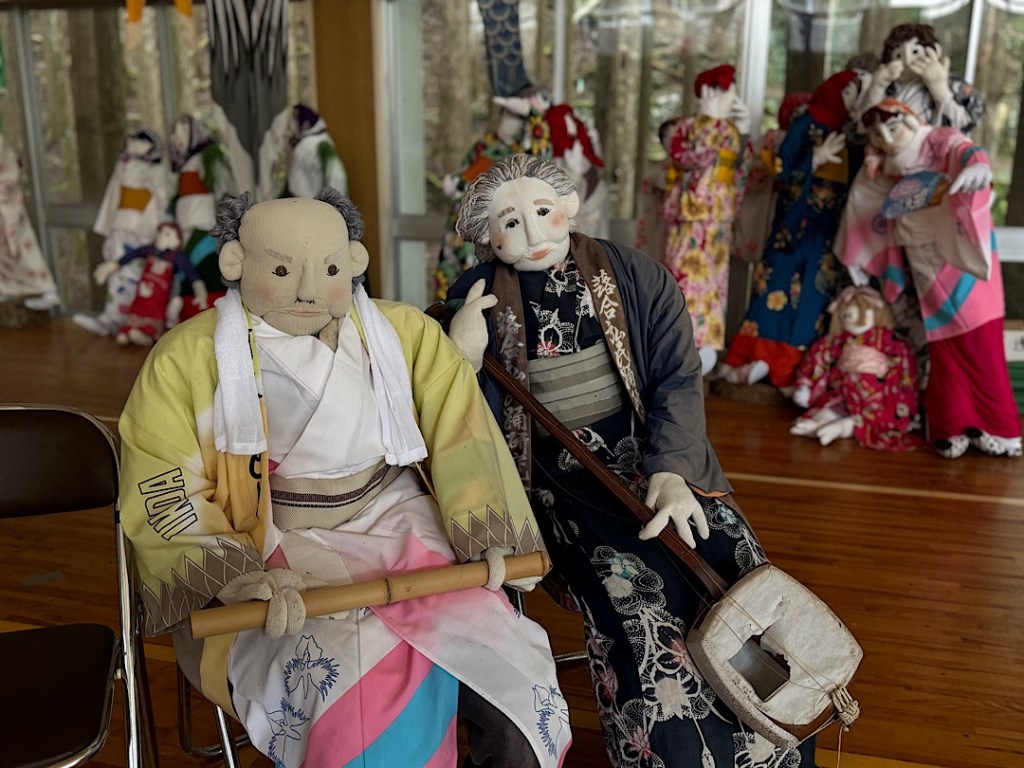
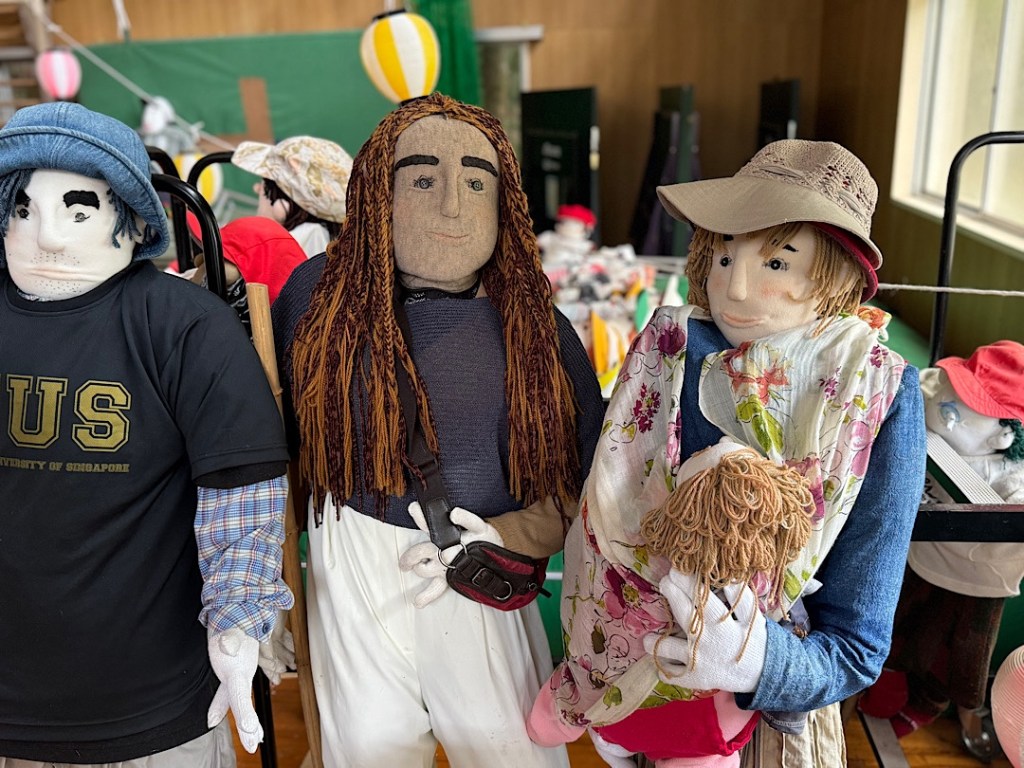
The village of Nagoba, about 45 minutes from Miyoshi, experienced this in dramatic fashion after authorities automated the local dam that had been the town’s biggest employer. From a couple of hundred people, Nagoba’s population plummeted to a few dozen. In 2003 an artist from the village named Tsukiji Ayano returned from living and working in Osaka. Shocked by the change in her home town, she started creating replacement people made of cloth stuffed with newspapers. Since she began, Ayano has made hundreds of the scarecrows (kakashi). She’s brought the village back to life in a manner that’s both charming and eerie, as Steve and I learned when we visited it this morning.
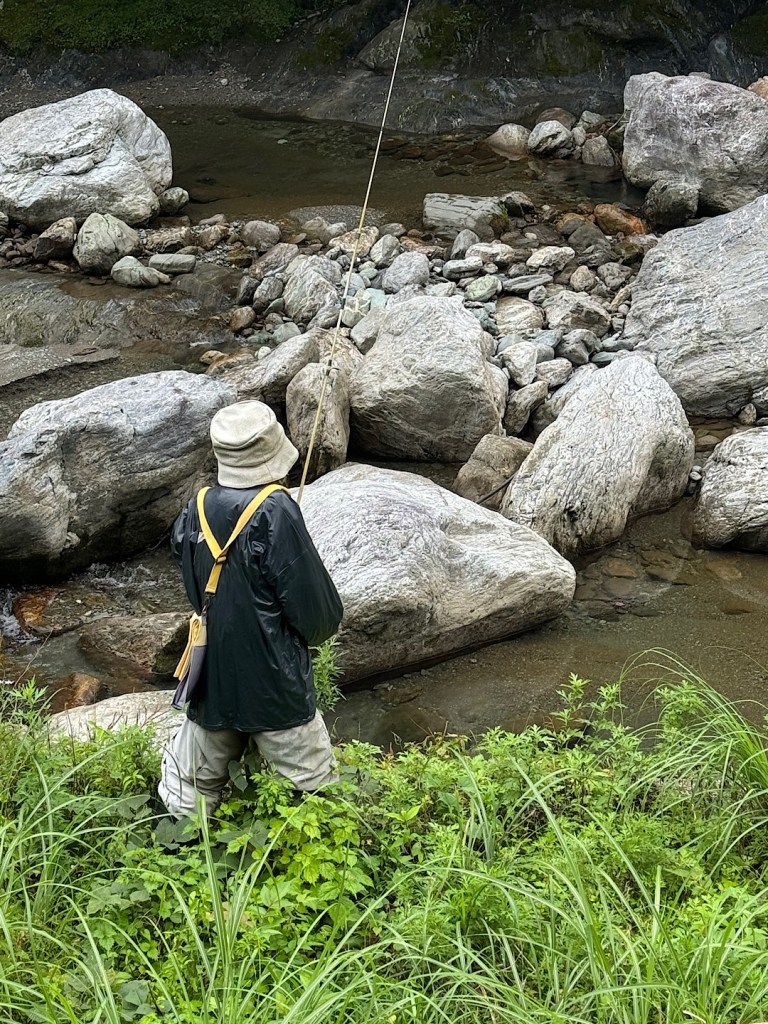
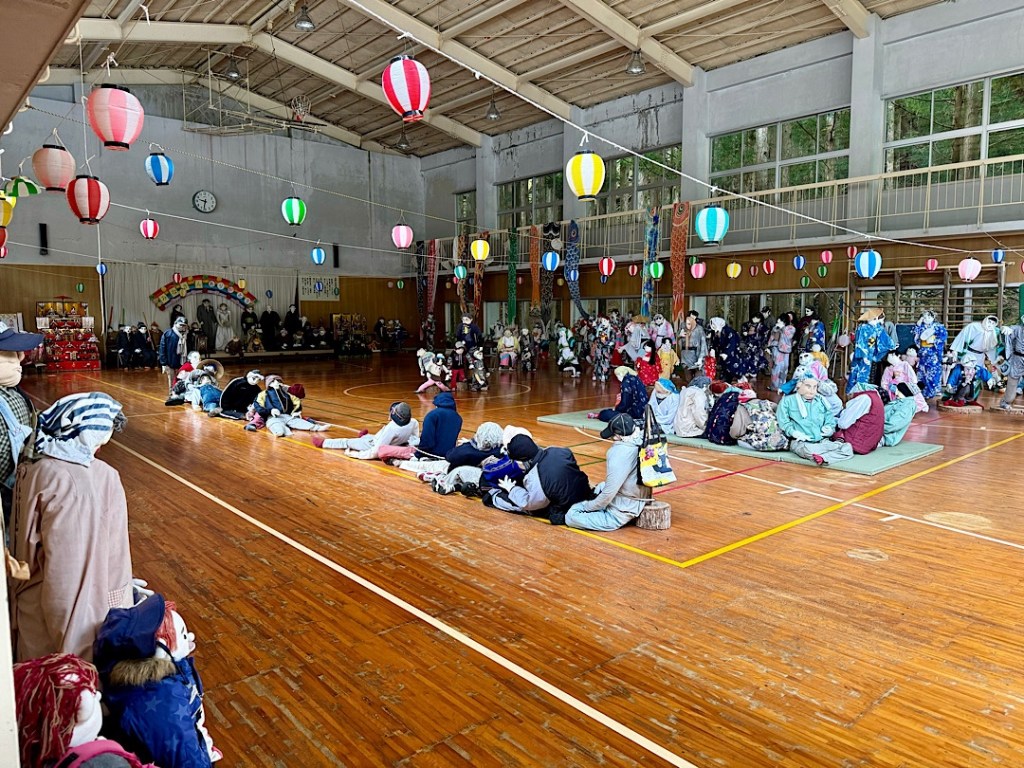
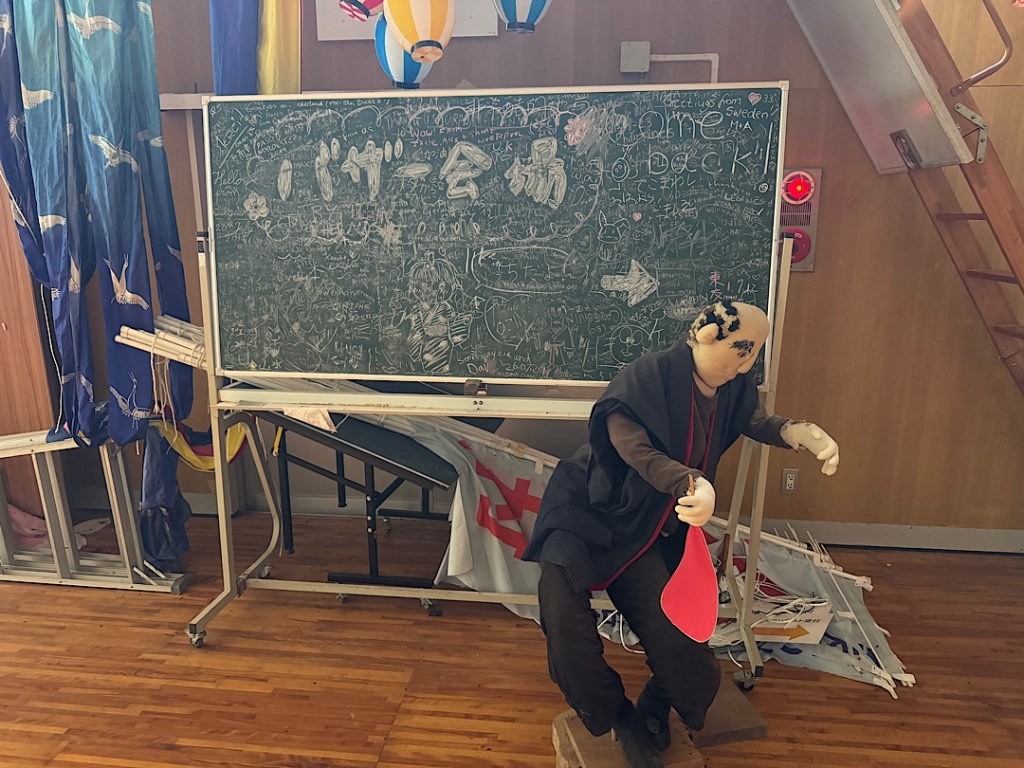
Scarecrow people work at village tasks.A mother and child, long absent in the flesh.I think these folks are waiting at a bus stop. No signs explain what you’re seeing. That would shatter the illusion.We arrived a little after 10 in the morning. For a while, we encountered nobody but the scarecrow people.Scarecrow people sat at the side of the road. Scarecrow people toiled in the front yards.We read online that Ayano has tried to reincarnate everyone who lived in the village of her childhood.Certainly the scarecrow people feel like individuals.I was amazed to note that most of the figures have eyes made from buttons. They feel so lifelike.Some eyes are created differently.The scarecrow people fish…They surprised me, like this guy, hanging out in a tree.Ayano has filled the former kindergarten and elementary school with scarecrow children and their families. She’s packed the school gym with personalities.Grandparents present for a performance?Parents of a future student?
Steve and I wandered around for almost an hour; toward the end of our visit other tourists were trickling in. We never saw any sign of Ayano, however, although we read that she lives in the village and works in her studio there. We were never asked at any point to pay anything; we have no idea how Ayano survives to create her art. It felt like a gift.
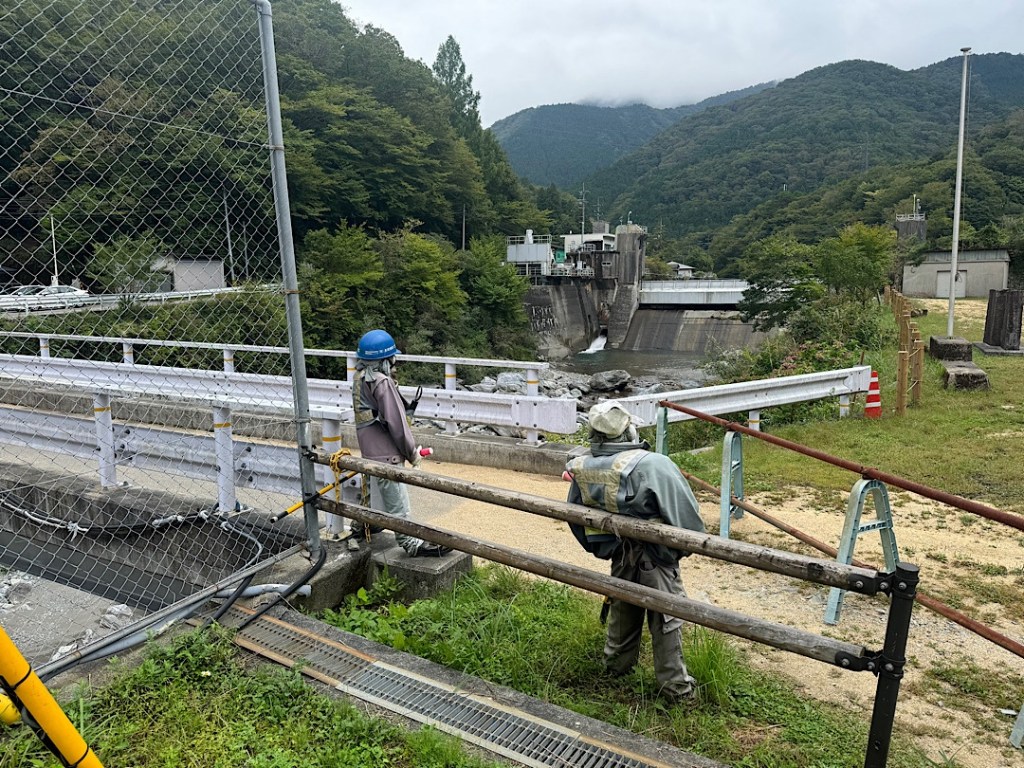
I particularly appreciated these guys. Had they worked at the dam? (You can see it in the photo in the distance.) How had they felt when their jobs disappeared? Where did they go? I’ll never know.






 At home and abroad