Leaf-peeping in Hokkaido

An iconic image of Japan’s fall colors, as seen on the seatback screen on our flight to Hokkaido

After spending 10 days hop-skipping- and jumping across the Pacific, followed by two weeks in wild Papua New Guinea, who in their right mind would then tack on a week and a half in Japan?

That would be moi. I had several reasons. 

  1. I scored awesome seats for us (Business Class on Singapore) to LAX from Tokyo using points. 

2) My love for Japan is bottomless; I will embrace any chance to spend time there.

3) Steve and I had never visited Hokkaido, the large island in the north of Japan.  Maybe a detour there in early October would give us what we’d never experienced before: exposure to Japan’s magnificent fall foliage.

As readers of this blog may recall, we traveled in Japan last year for the first time in ages. I had hoped to experience the celebrated autumn colors then. But we were mostly in the south (Kobe, Shikoku, Hiroshima, Kyoto and Osaka), and we saw only subtle hints of the vivid palette that would soon cover the landscape. Hokkaido, on the other hand, is the northernmost of Japan’s four main islands. I studied websites devoted to predicting when and where the leaves in Hokkaido would turn, and I planned a post-Papuan itinerary accordingly. 

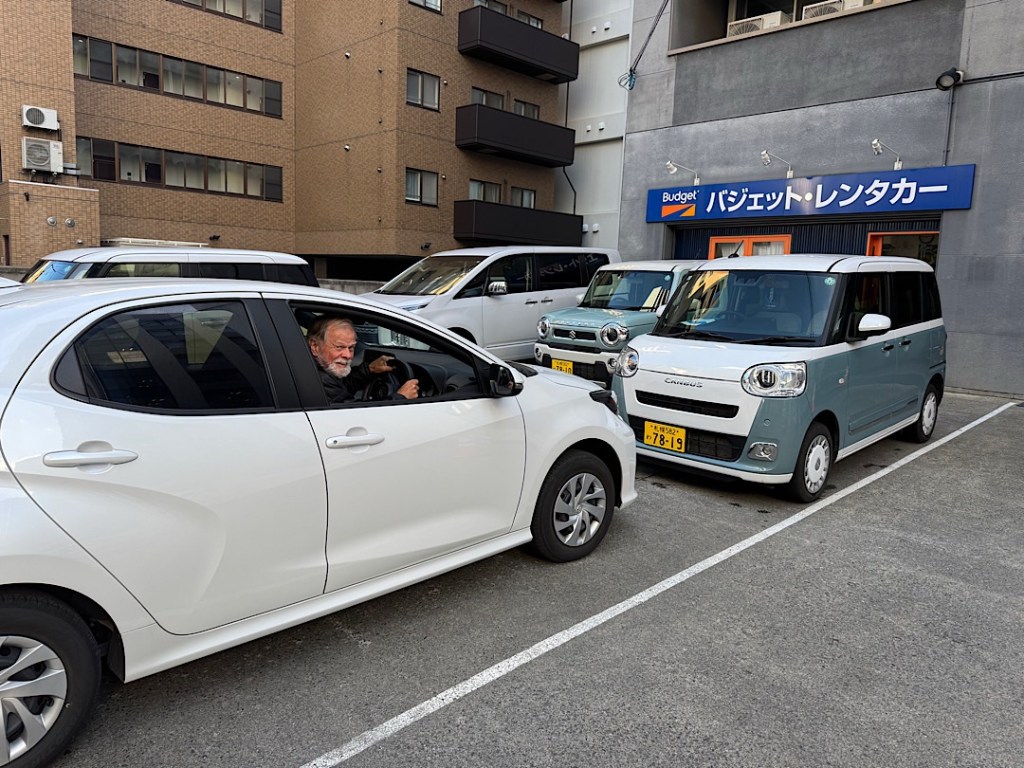
We didn’t see much of anything when our flight landed at Hokkaido’s main airport late Thursday afternoon (October 2). We’d reserved a car, and by the time we got off the shuttle bus at Budget’s office, filled out the paperwork, and checked out our wheels (a Toyota Yaris), the sun was sinking fast. The 90 minutes that followed began well; Google maps (in English!) worked using AirPlay. But when we turned off the tollway onto the road leading into the mountains, things got harrowing. With the light almost gone, a deer leapt out of the brush and crossed the road a few car lengths in front of us. Not long afterward the sky was black; we glimpsed another deer lurking by the roadside. 

Only our headlights illuminated the switchbacks, and the worst moment came when our windshield began to fog up and I couldn’t figure out how to defrost it. (Have I mentioned the road had no shoulder and almost no pull-outs?) We finally arrived, unscathed, at our hotel around 6:45 pm but to me it felt like it was close to midnight.

The next morning I opened the curtains to see…
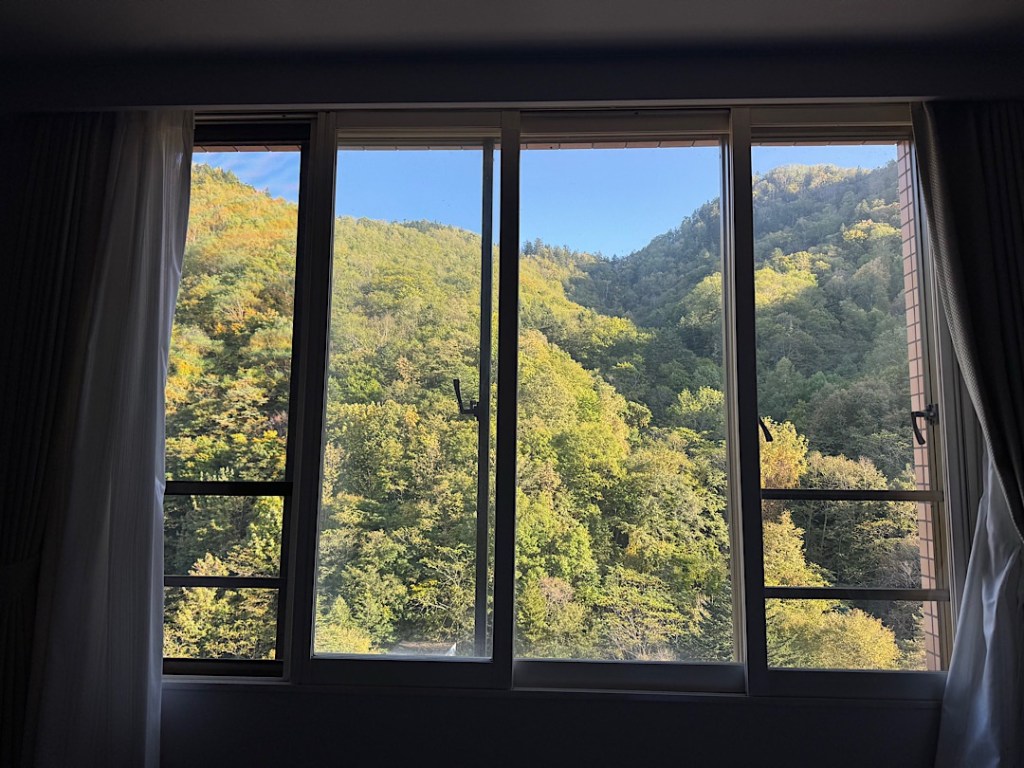
…only the faintest hints of yellow and russet dusting the hillside across the road.

The weather was so glorious, however, nothing could dampen my mood. Steve and I spent the day poking around Jozenkai Onsen — a long-established mecca for hot springs lovers. In the center of the tiny town, you could…
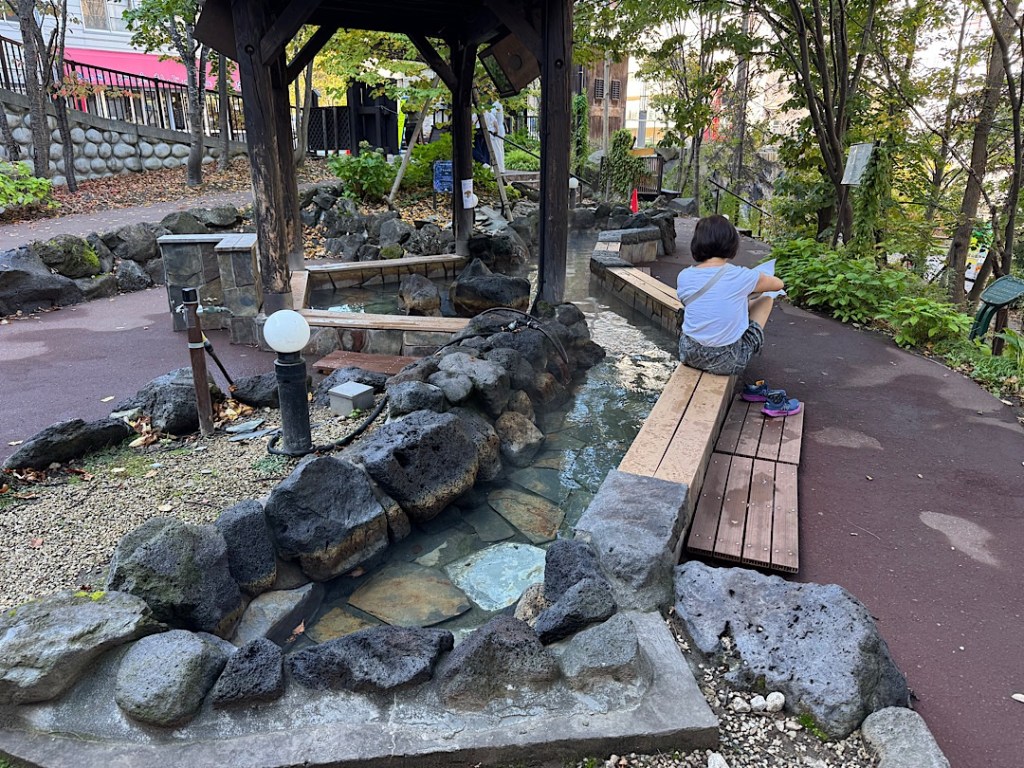
…meditate at a steamy shrine.
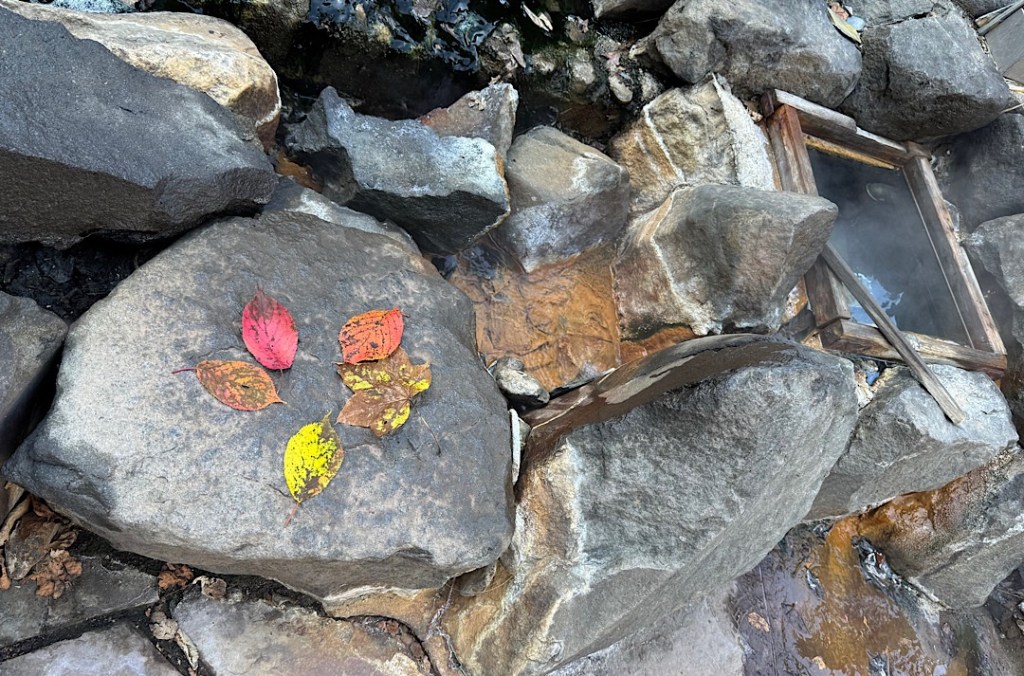
…cook an egg in that enclosed area on the right. (It’s a Japanese thing.)

A sign warned that brazen crows might snatch your eggs if you weren’t careful.

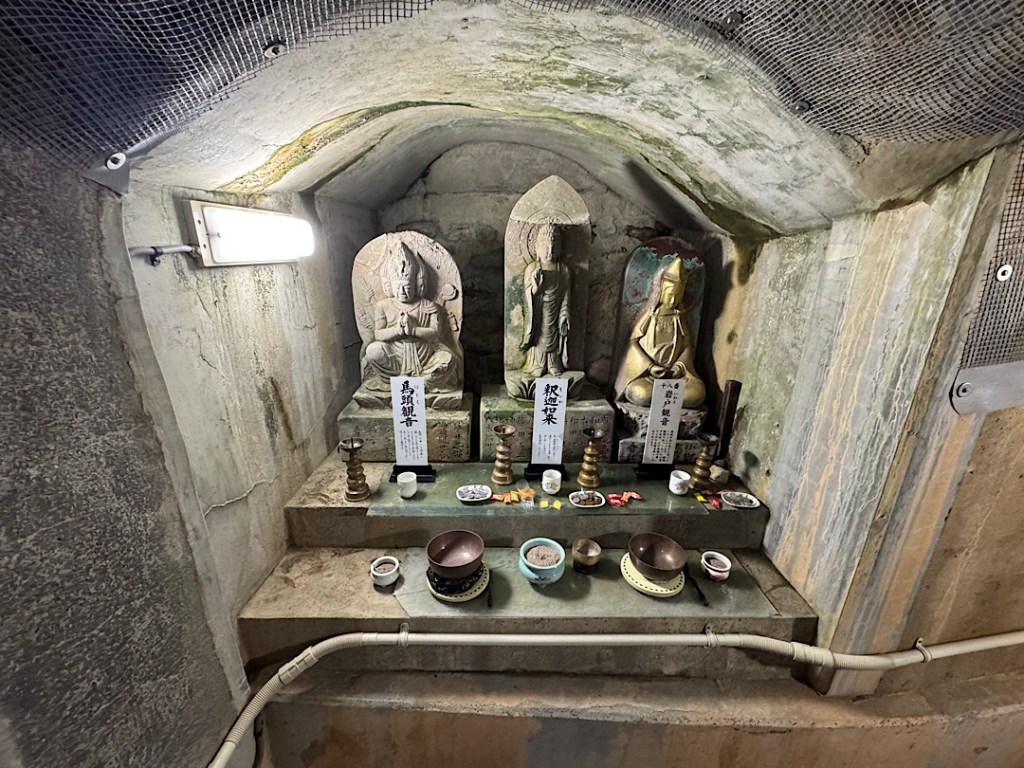
We  prowled through a cave filled with statues of Buddhist deities…
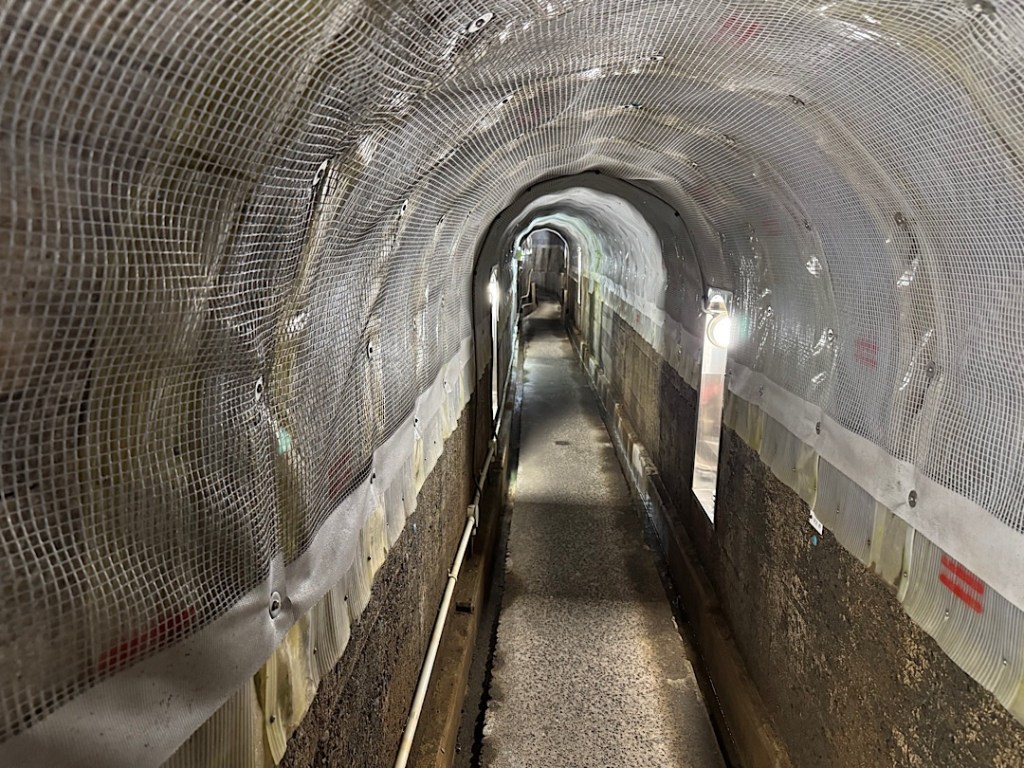
…decided NOT to hike into the bear-infested woods.

…admired the (mostly green) trees surrounding the town’s picturesque bridge.

We also stopped in at the local tourist office to ask if we might find more fall colors anywhere nearby. A helpful staffer suggested we visit the Sapporo Kokusai ski resort about 30 minutes away. She said we might find a more classical autumnal scene at the top of the ropeway there. 

When we arrived at the resort Saturday morning, people were bustling about, setting up for the day’s “autumn foliage festival.” Burly chefs were slapping big chunks of pork on an outdoor grill; food stalls were opening. We hopped on one of the gondolas and did see more mustard and vermilion hues as we neared the top.
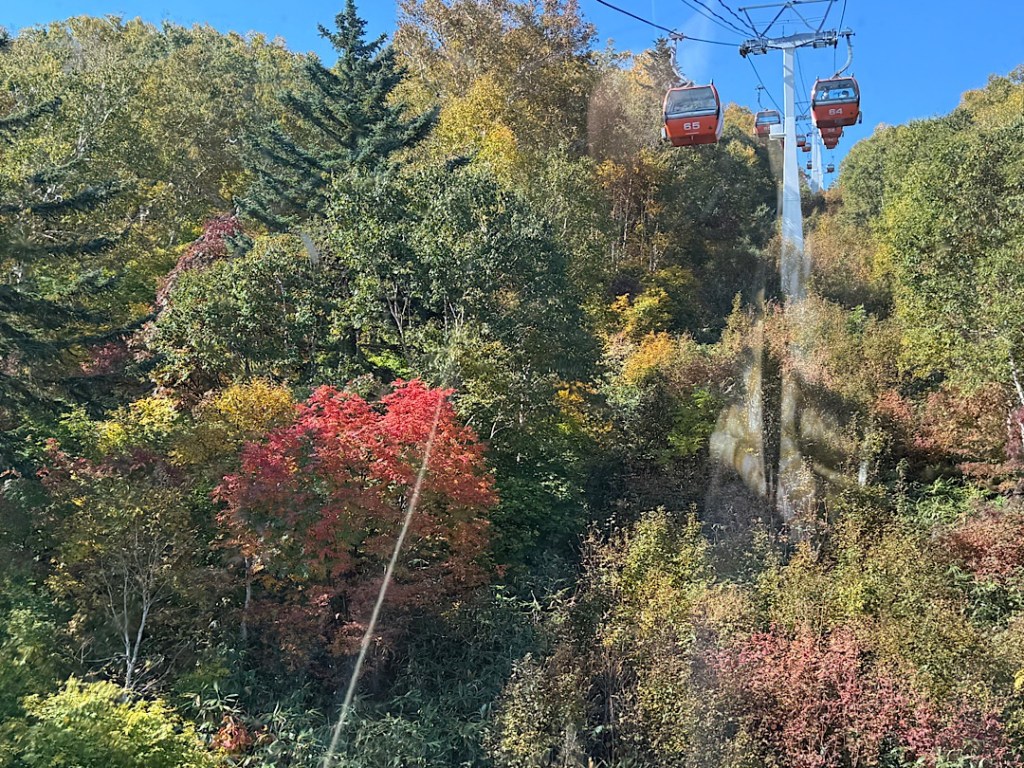
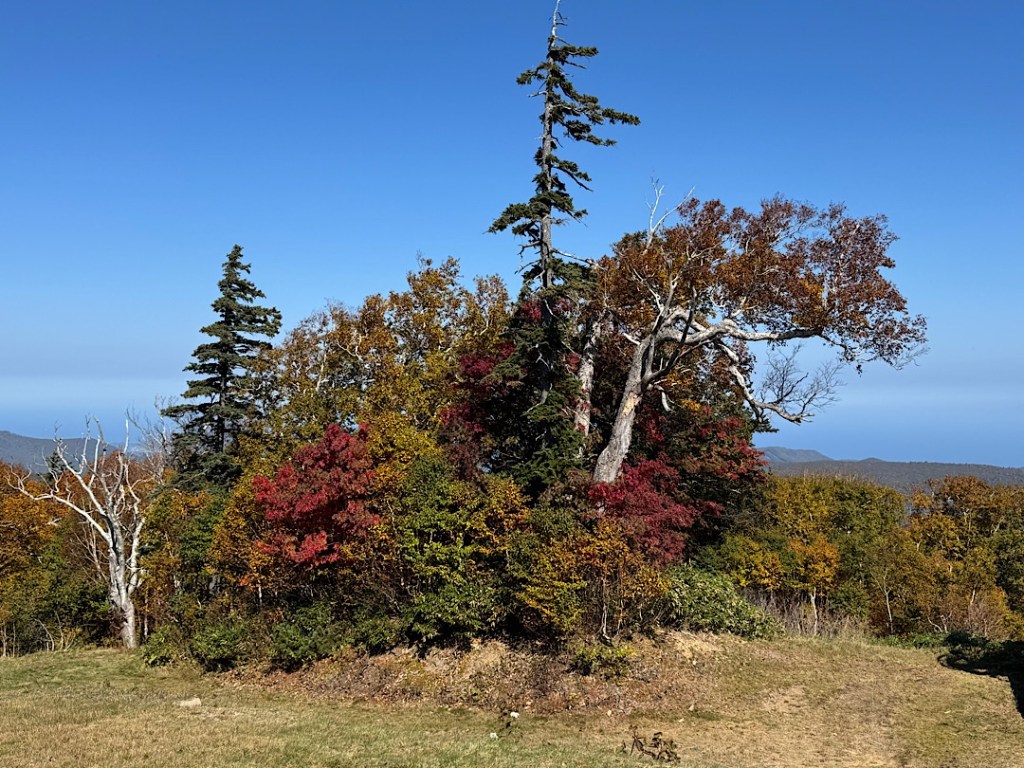
We couldn’t linger at the festival because we had to drive several hours to reach Daisetsuzan, the largest national park in all Japan. It’s smack in the middle of Hokkaido, encompassing a chain of mountains, of which Mt. Asahidake is the tallest. I’d wanted to spend two nights at a lodge at the base of the mountain because I’d read that this is the part of Japan where the trees usually change color first. 

Once again, we didn’t reach our lodgings until late afternoon. We took Japanese baths in the lodge’s in-house spas (supplied with hot water from the local springs.) Like the other guests, Steve and I wore our lodge-issued pajamas and slippers to the restaurant, where a multi-course French mea was included with our room cost. The next morning, we walked to the nearby “ropeway” up the mountain, and I realized most of the trees had already turned color and lost their leaves.
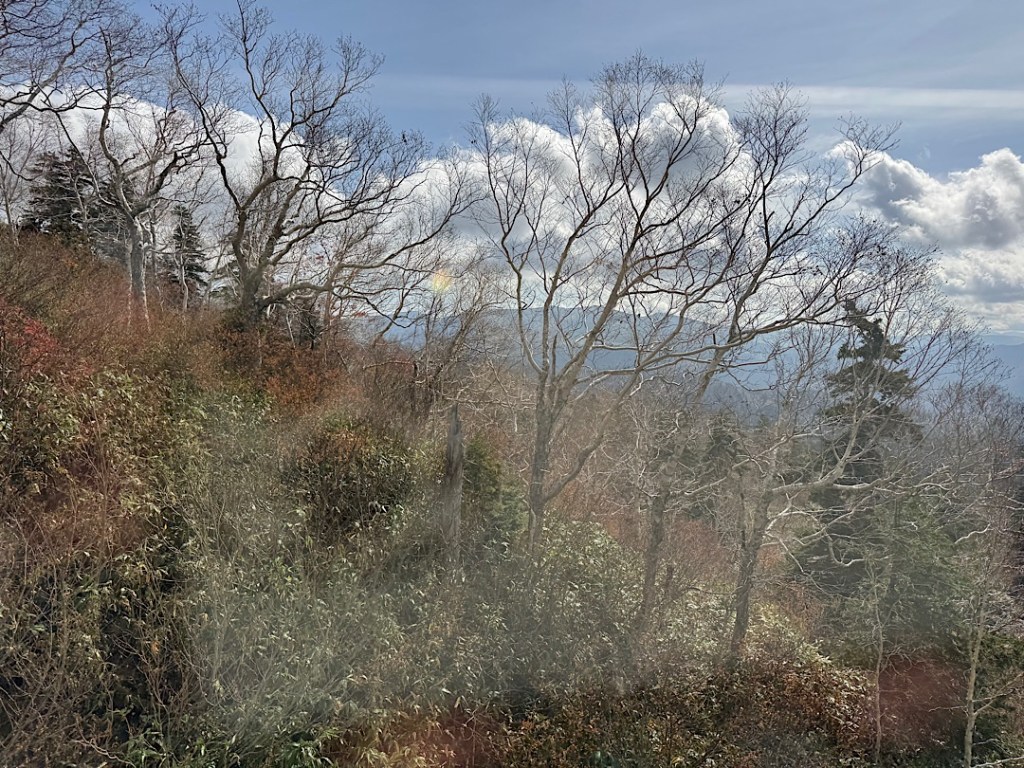
It was impossible to feel too disappointed, given the marvelous views from the loop trail at the top.
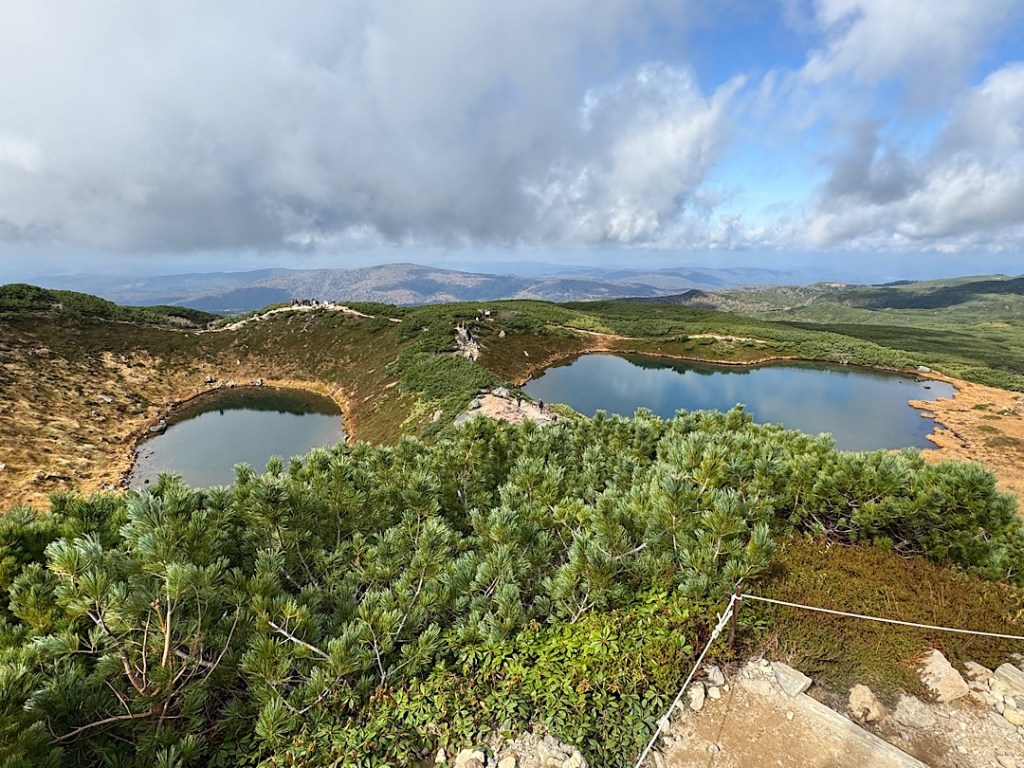
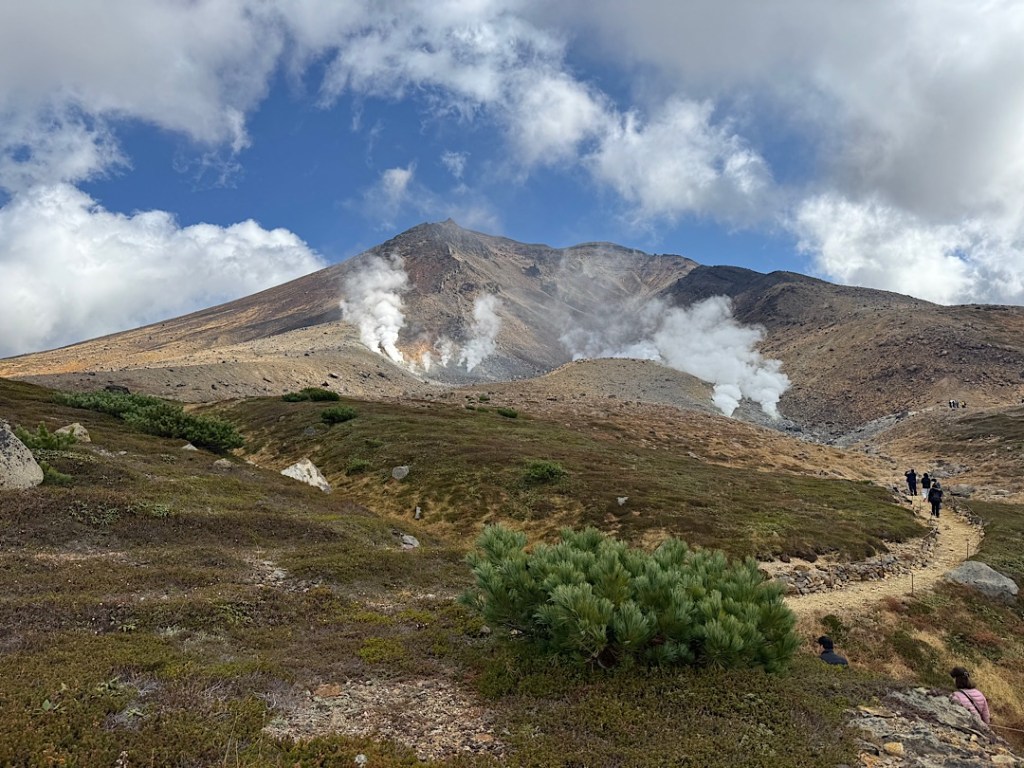
Fog swirled in and out, but at times the stark splendor of Mt. Ashahidake was fully revealed.
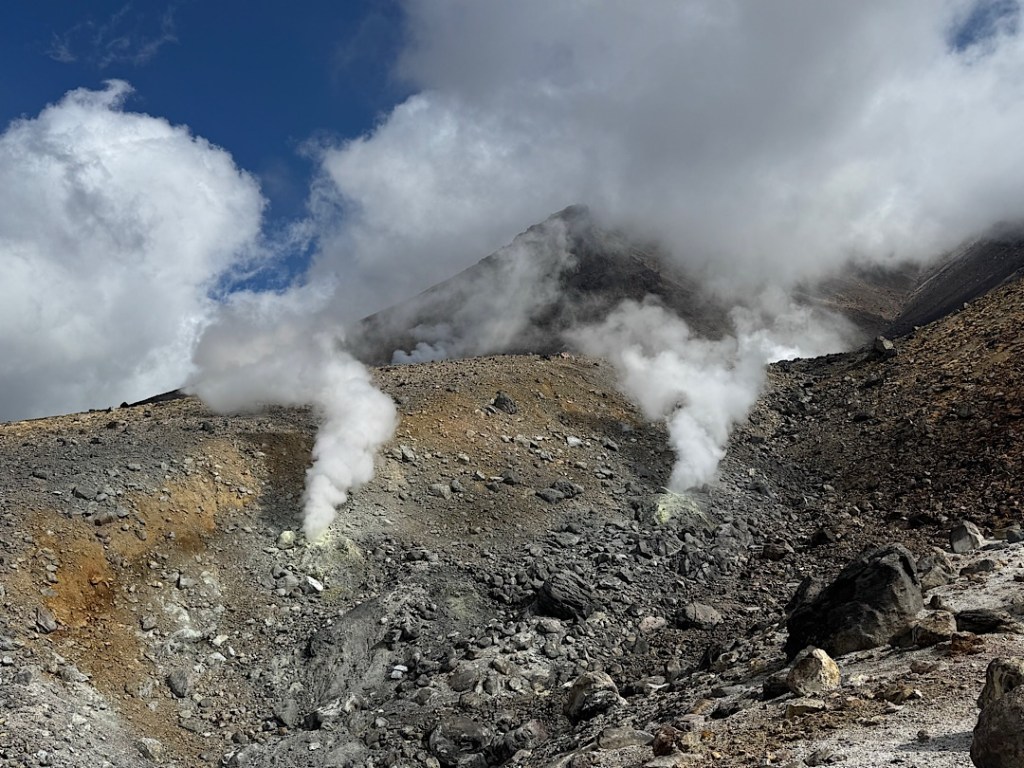
It hasn’t erupted in a long time, but the many fumaroles testify to the fact that it’s still an active volcano.

That afternoon we took more baths; gorged on a Japanese teppanyaki meal in the restaurant. On our drive the next day to Sapporo, last stop on our Hokkaido tour, I decided it was next to impossible to plan a visit to Japan specifically to see the leaves. If you lived in Japan you could check online sources and dash out to one site or another when the time was right. Or maybe you could enjoy what you saw from your front door. But when you’re booking plane tickets to fly in from more than 5000 miles away, who could predict the complex phenomenon? (Remind me never to try to catch the peak cherry-blossom bloom.)

Our drive to Sapporo was pretty colorful, winding as it did through a region known for flower crops.
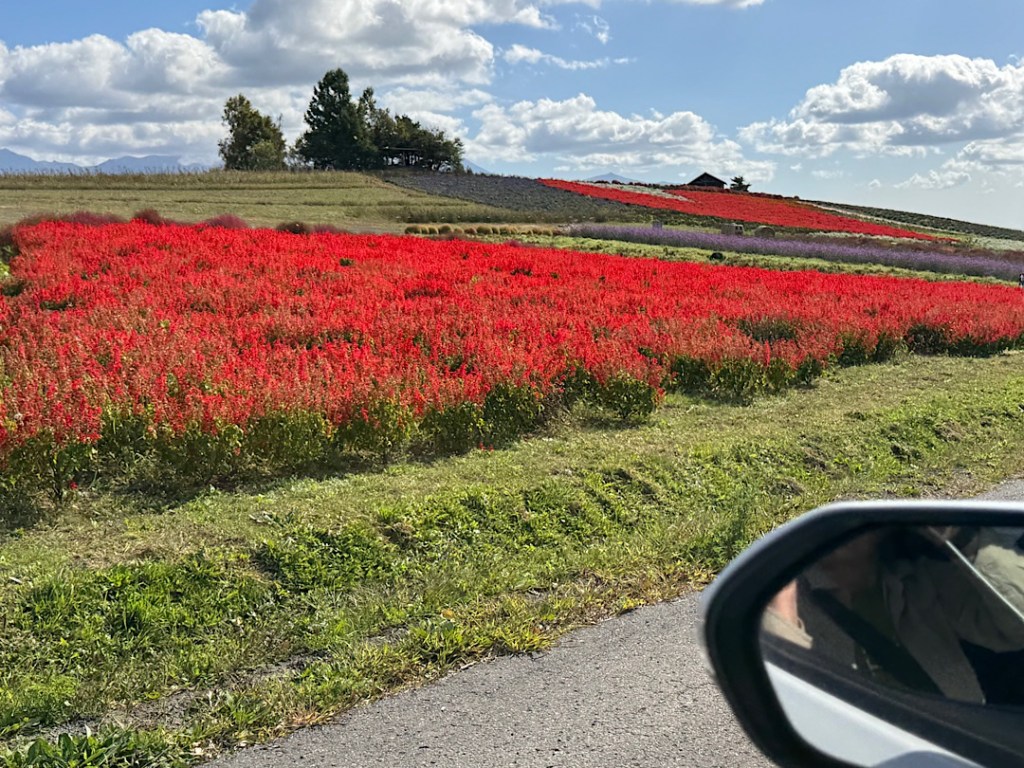
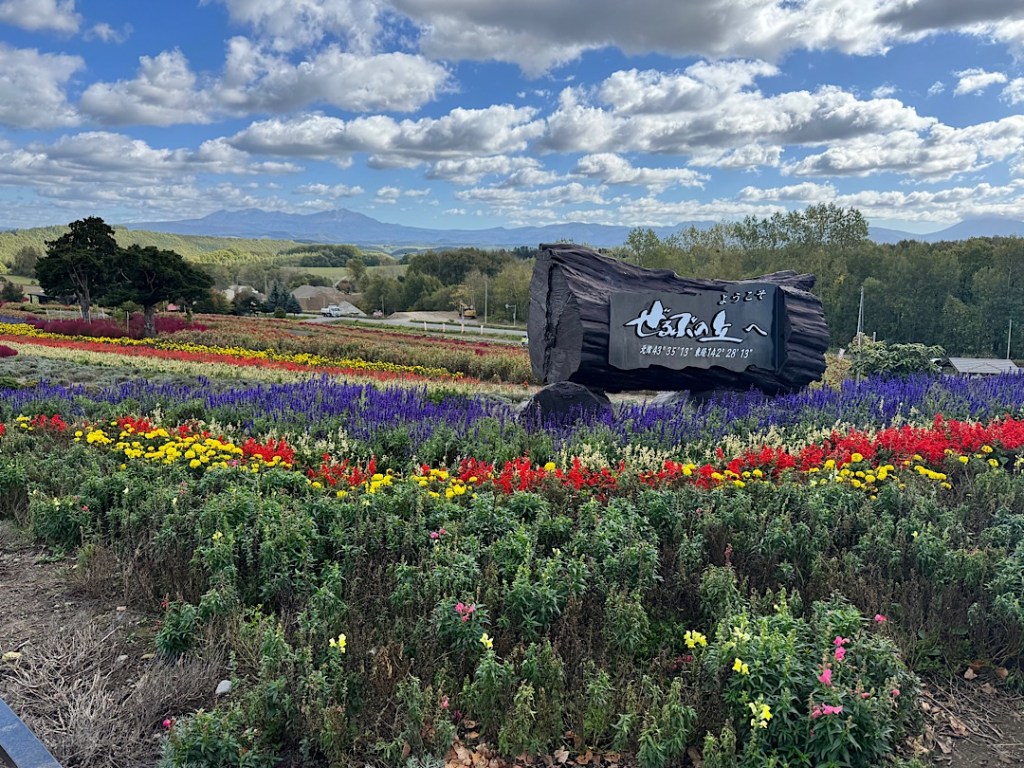
We stopped along with a large knot of Japanese tourists paying homage to this famous oak tree. Apparently it was used on the package of Seven Stars cigarettes back in the late 1970s.

We turned in the rental car…

Always a huge relief!

Then we had three nights and two full days in Sapporo, Japan’s 5th largest city. We filled them with pleasant activities.
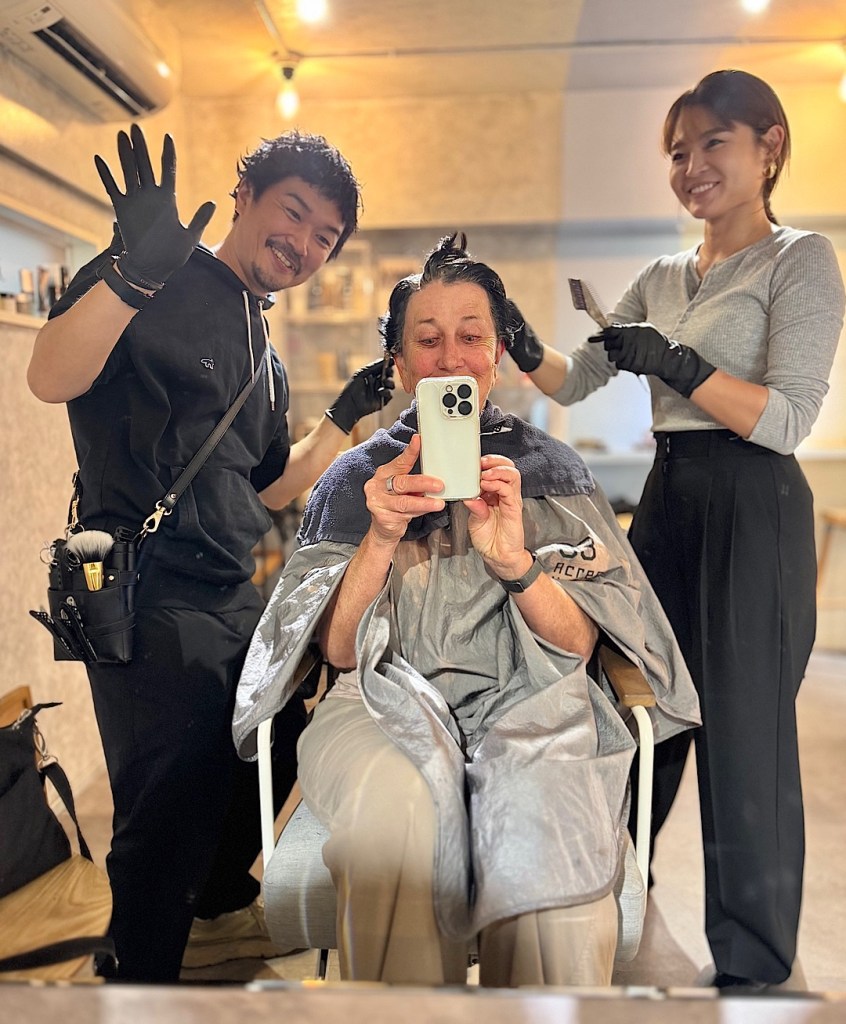
I got my hair done.
We ate “seasonal dishes” at a beautiful restaurant in a downtown high rise.

Local folks also were gobbling up seasonal street food.

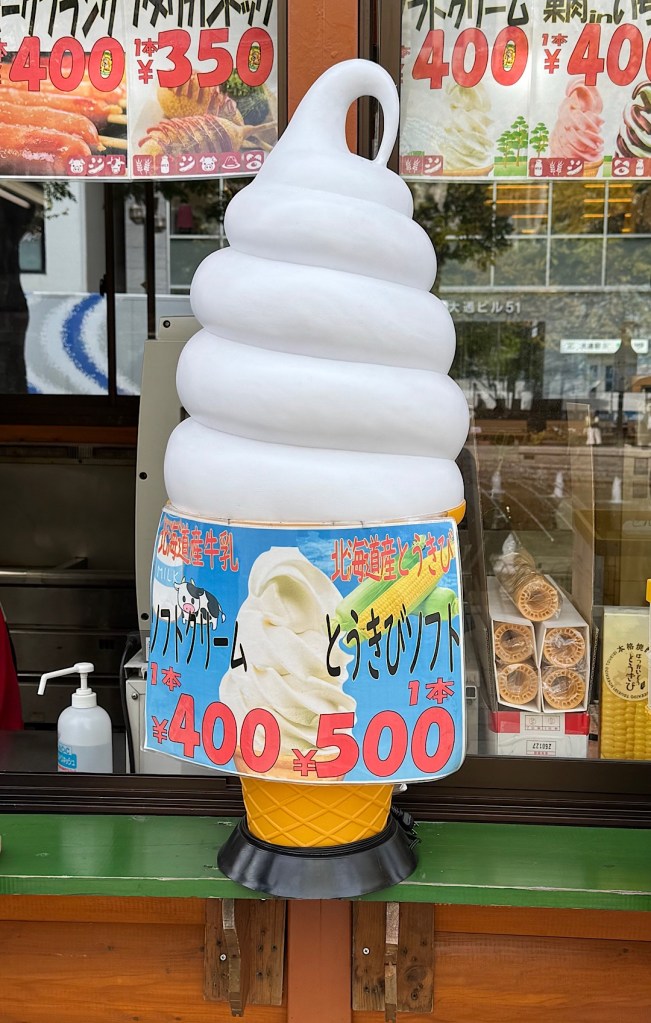
Corn, roasted on the cob and packaged in plastic, was all over the place.
Here it’s a flavoring for soft-serve ice cream.

In a couple of local museums, we learned about Hokkaido’s history. This reinforced our impression that Hokkaido is Japan’s Alaska. Its native population (the Ainu) lived in ways Alaska’s natives would have understood. When the monied powers from Honshu took over the island in the mid-1800s and made it part of Japan, they oppressed the Ainu people in ways that depressingly resembled what was going on in Alaska around the same time. Like Alaska, Hokkaido has big landscapes, big animals. (All those bears! All those deer.) People tend to feel more free to experiment.

Seibei Nakagawa was such a young man. One hundred and sixty years ago, when he was 17, he stowed away on a boat heading for Europe (an action punishable by death at the time.). In Germany he learned how to brew beer and became the first certified Japanese beer brewer. When he returned to Japan, he became the first brewmaster at the first-ever Japanese brewery, named after the city where it was founded in 1876.

For our last dinner in Japan, Steve and I headed to the beer garden on the grounds of that original Sapporo Beer facility. We’d made an online reservation for a meal that would allow us to quaff an unlimited amount of beer and consume an unlimited quantity of one of Hokkaido’s most famous dishes — jingisukan.  That word is a Japanese rendition of “Genghis Khan.” The dish requires diners to grill their own meat and vegetables on a cast-iron dome-shaped skillet supposedly inspired by the shape of Genghis Khan’s helmet.

The Sapporo Brewery’s “Biergarten” has several restaurants. We chose the largest one, which was rocking with laughter and conversation when we arrived a little after 6. At our table we found a skillet, a cube of lard, and two plates, one holding thinly sliced mutton. The other was heaped with sliced onions, cabbage, and bean sprouts.  

We selected our first steins of beer from among the five types on draft. Back at our table, we melted the cube of fat and grilled the lamb (delicious, dipped in a salty sauce). We cooked and ate the veggies, then felt bewildered. Where were the other meats and vegetables supposedly included in our meal?
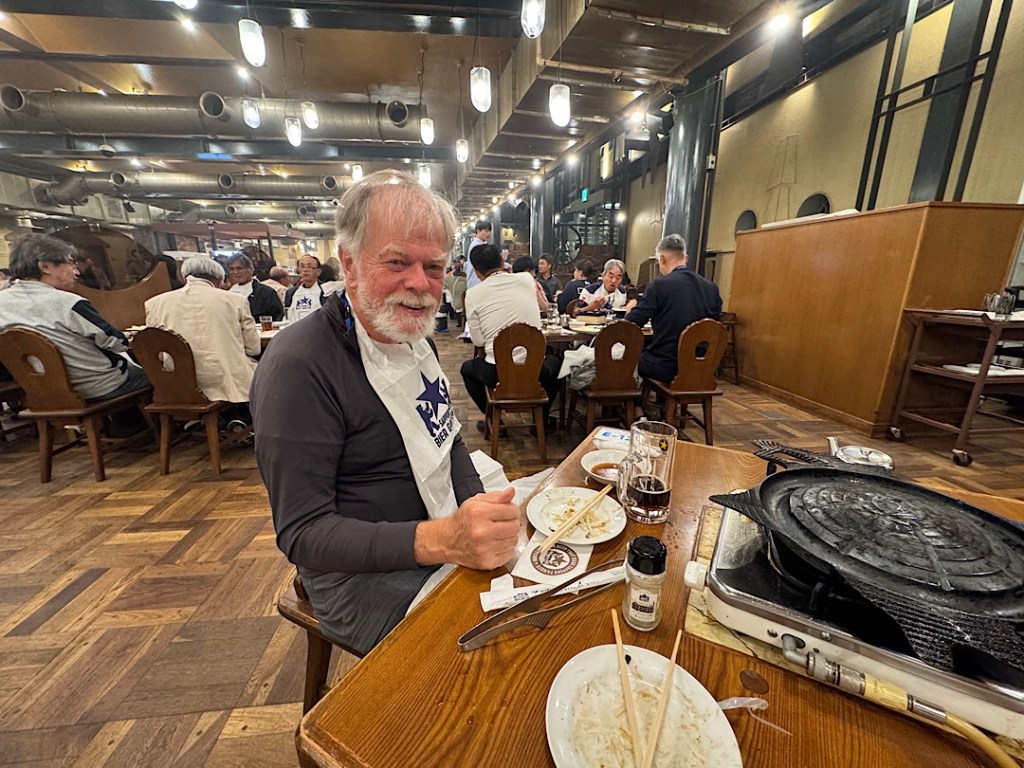
Finally, we figured out that we had to select them using a special digital tablet on our table. Once ordered, one of the many robots circulating throughout the room would bring the additional dishes to us.
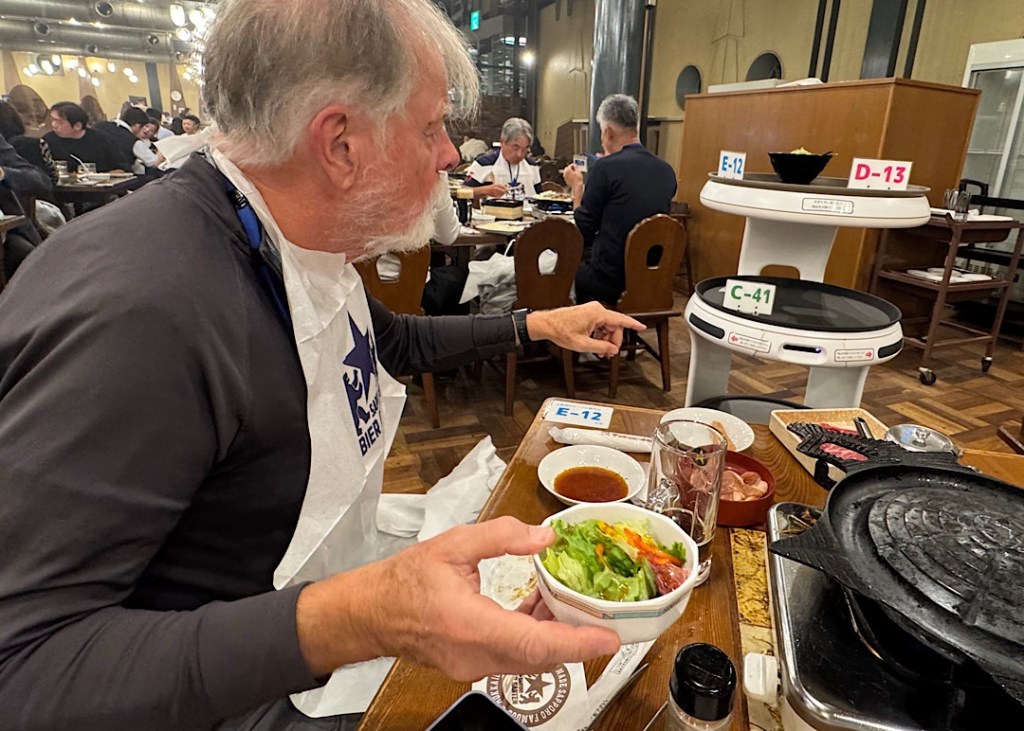
Here’s Steve transferring some of what we ordered from the robot waiter to our table (#E12). The robot carried our table number next to the dishes intended for us.

Fueled by the beer, entertained by the cooking and the robots, sated by all the grilled lamb and beef and pork and chicken and some veggies, we walked out into the windy night. Again it was too dark to see much color anywhere. Again, that was okay. 
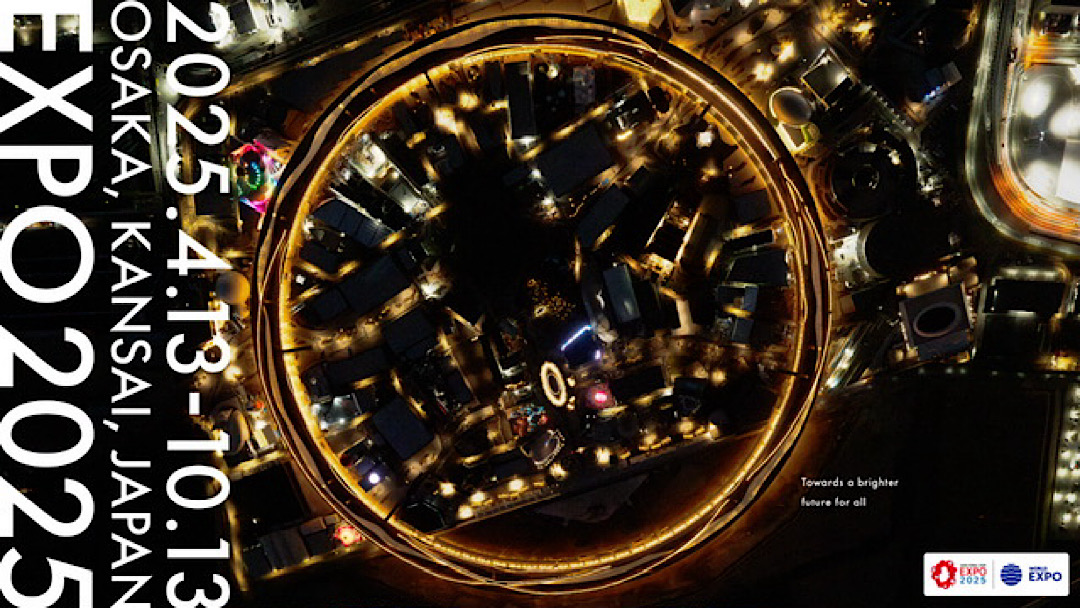
It was just us and 200,000 other folks

A poster for the event, showing a view of the fairgrounds from overhead at night.

On Wednesday, Steve and I went to the fair.  Technically, it’s called Expo 2025 Osaka, but it’s a world’s fair. Some 158 countries are participating, and more than 22 million people have attended since it opened April 13. The only reason I knew it was happening is because we visited Osaka last fall and saw posters promoting it. When it turned out we were going to be in Osaka again this October, the Expo called to me.

Throughout my life I’d read about the great early international expositions of the late 19th Century: Paris, London, Chicago. We have at least one friend who attended the 1964-65 New York City world’s fair and still recalls its wonders with awe. But neither Steve nor I ever had the chance to go to one. So in July, I bought tickets online.

Now I know I should have done that months earlier. For one thing, the ticket-buying process was almost unimaginably complicated. The official Expo registration manual was more than 30 pages long.

I printed them out.

After hours of study this past summer, I secured one-day admission for us. (This cost about $41 per person.) But I could only get tickets that let us enter the gates at 10 a.m.; the earlier slots were all gone. Worse: I had missed the deadline for making reservations to enter the pavilions at the heart of the fair-going experience. 

There were one or two lotteries in which one might snag such reservations closer to the day we would be attending, but it was all so arcane and confusing (and we were traveling by then), I never succeeded. So we set off Wednesday morning with limited expectations:

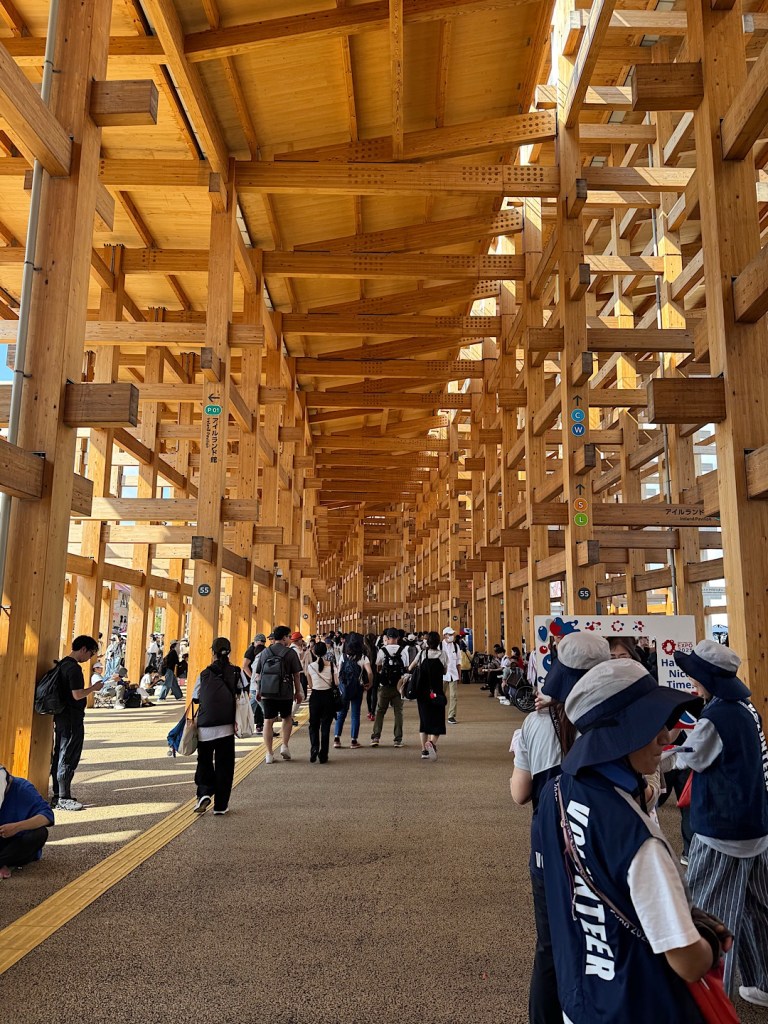
  1. I wanted to walk the “Grand Ring.” To accommodate the expo, the Japanese built an artificial island in Osaka Bay. Then, encircling the heart of the fairgrounds, they built what’s being billed as the largest wooden structure in the world — a beautiful, elevated wooden walkway. No tickets were necessary to amble along it and take in the views of the bay, the city, and most importantly, the festival pavilions.
  1.  Some pavilions didn’t require a reservation. I hoped to visit as many of those as possible until we ran out of energy.

I also had been hoping the crowds that jammed the Expo in its initial months would diminish by the time we got there. What a laugh. My heart sank when we read in an English-language Osaka newspaper that this event had proven more popular than the Expo held in Aichi, Japan in 2005. Total visitors were expected to amount to around 25 million, with daily attendance building as the end of the event approached. 

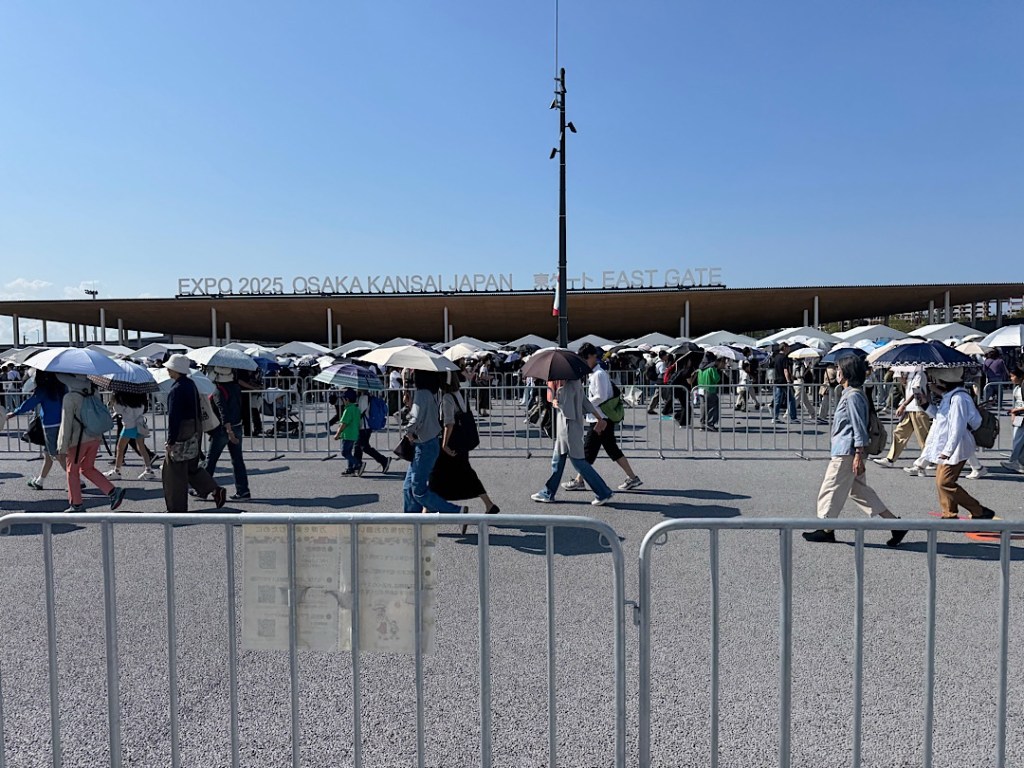
We took the metro from our hotel. As we neared the Yumeshima station just before 10 a.m., I began to believe it: more than 200,000 people DID share our plans for the day.
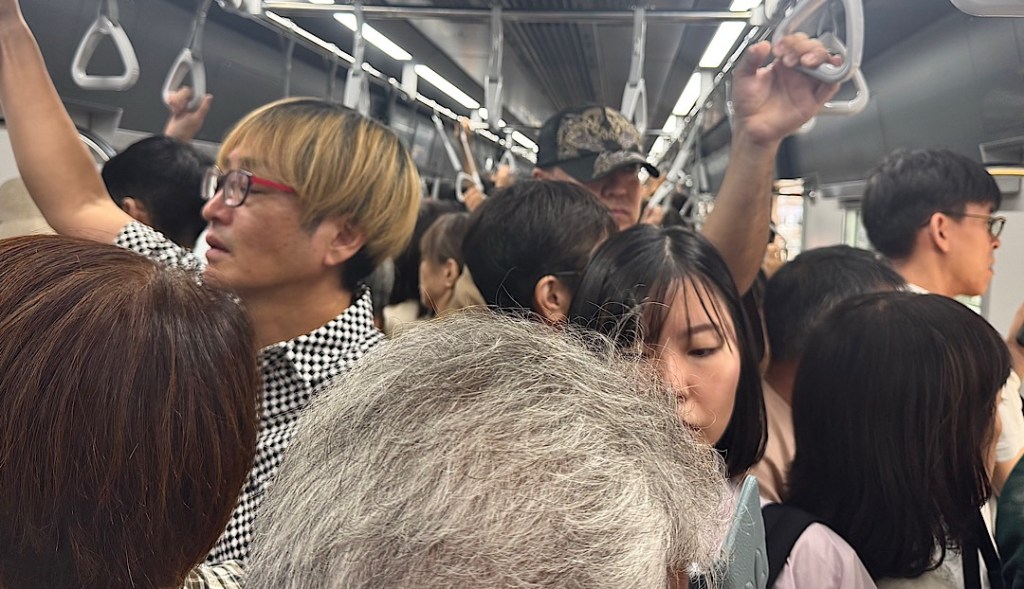
Our car in the subway was as crowded as any I’ve experienced in Tokyo.
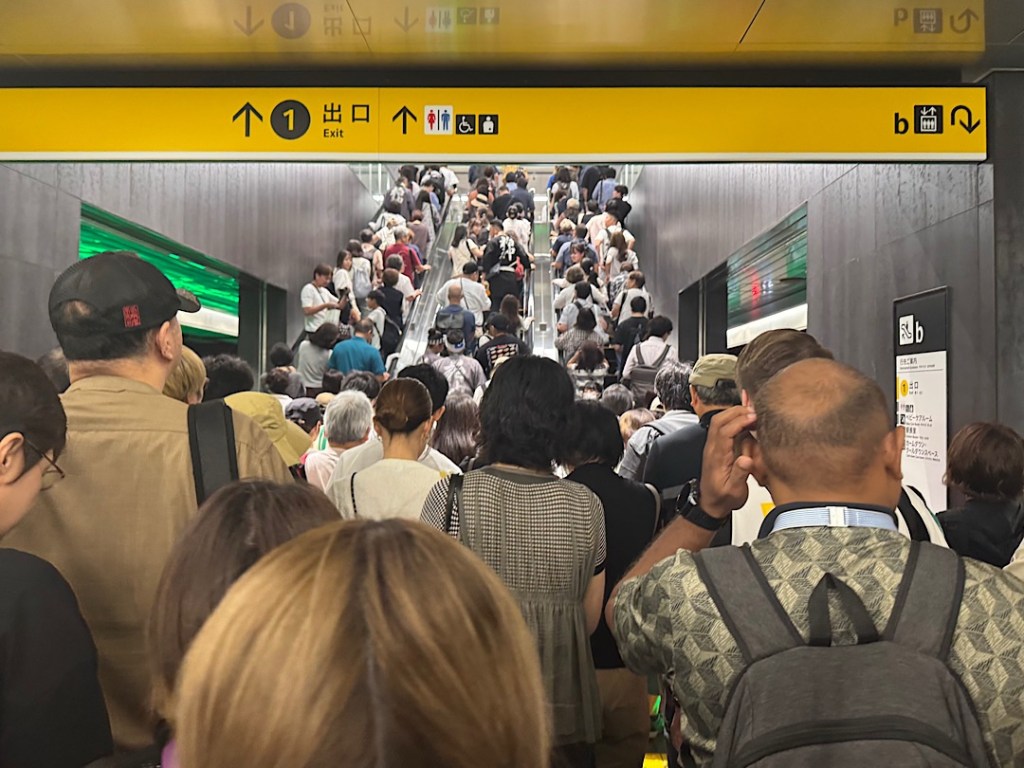
At the end of the line, we all poured out and onto the escalators.
The crowd was in a festive mood as we approached the exit.
This dampened a bit when we all trudged into a huge queue for the security screening.

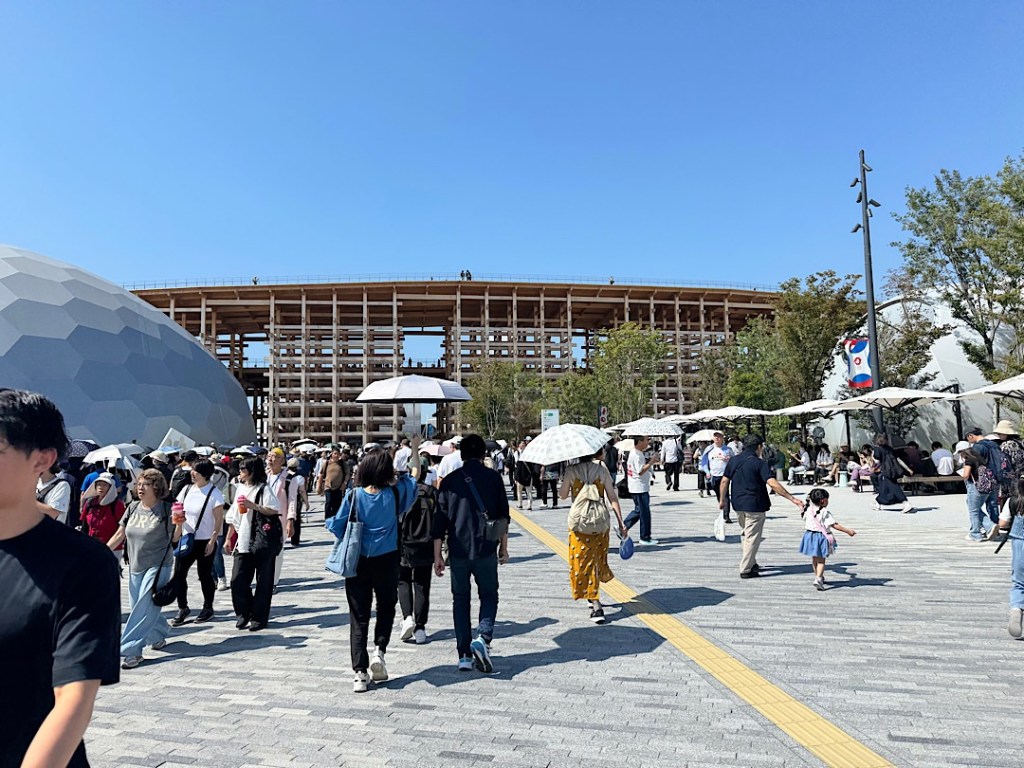
After about 40 minutes, we finally reached the security screeners, tapped our QR codes on a reader, and walked into the entry plaza. To orient ourselves we headed for the Grand Ring.

Here’s how it looked as we approached it.
The space underneath the walkway was striking.
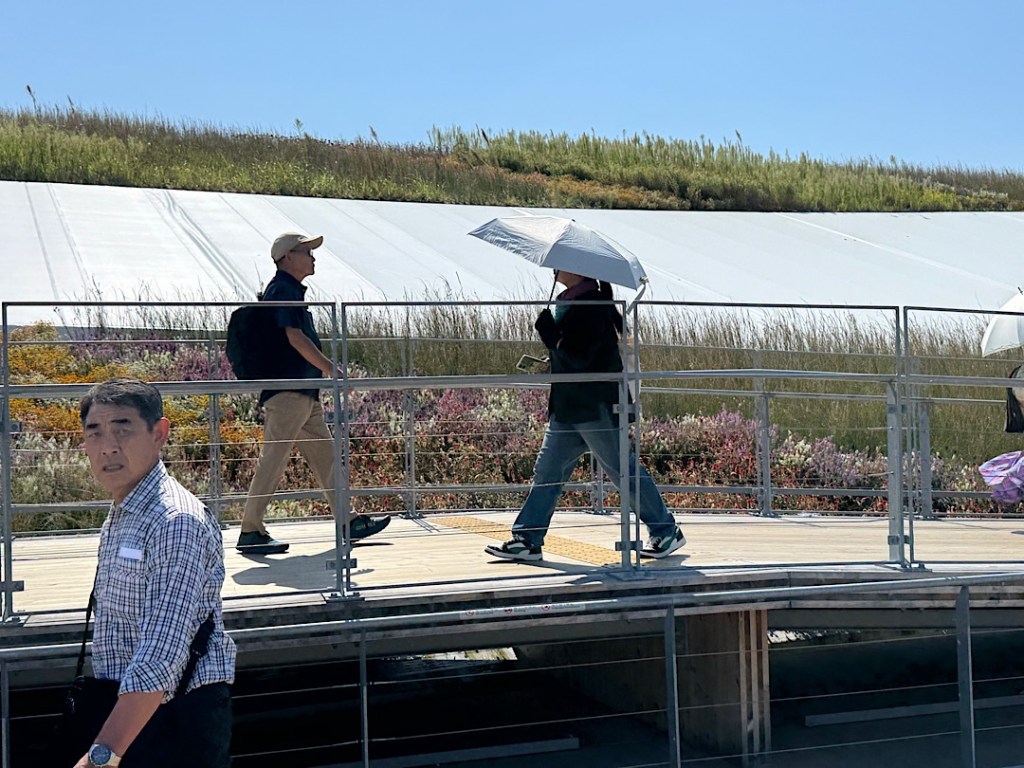
Up on top, we found two levels of walkway, one adjoining an embankment planted with grass and wildflowers. At certain points, you could look over it to take in Osaka Bay.
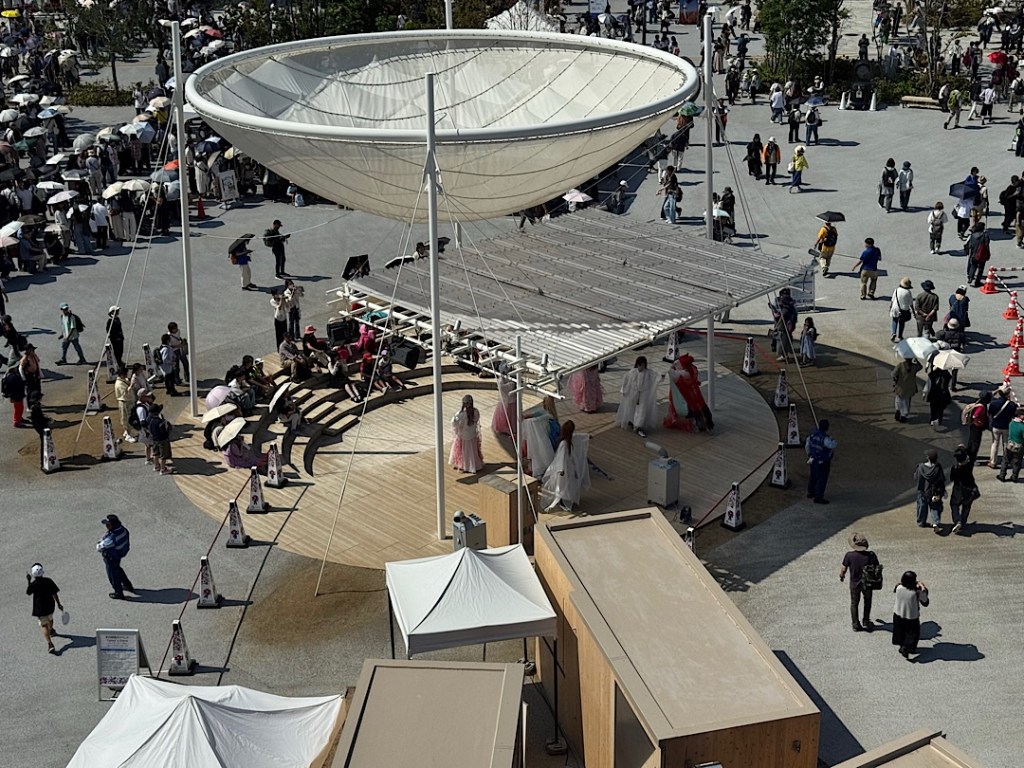
Looking down from the other side of the walkway, we saw scattered performances taking place, like this one by some Japanese traditional dancers.
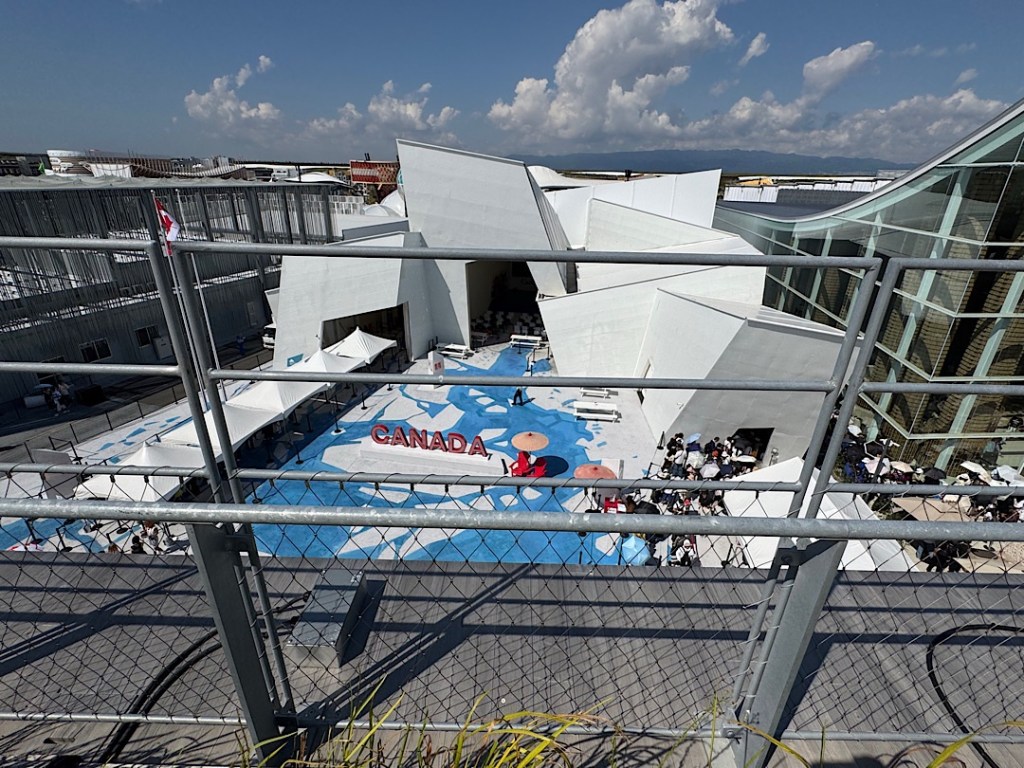
It was also a great place to see some of the pavilions. This was Canada’s.
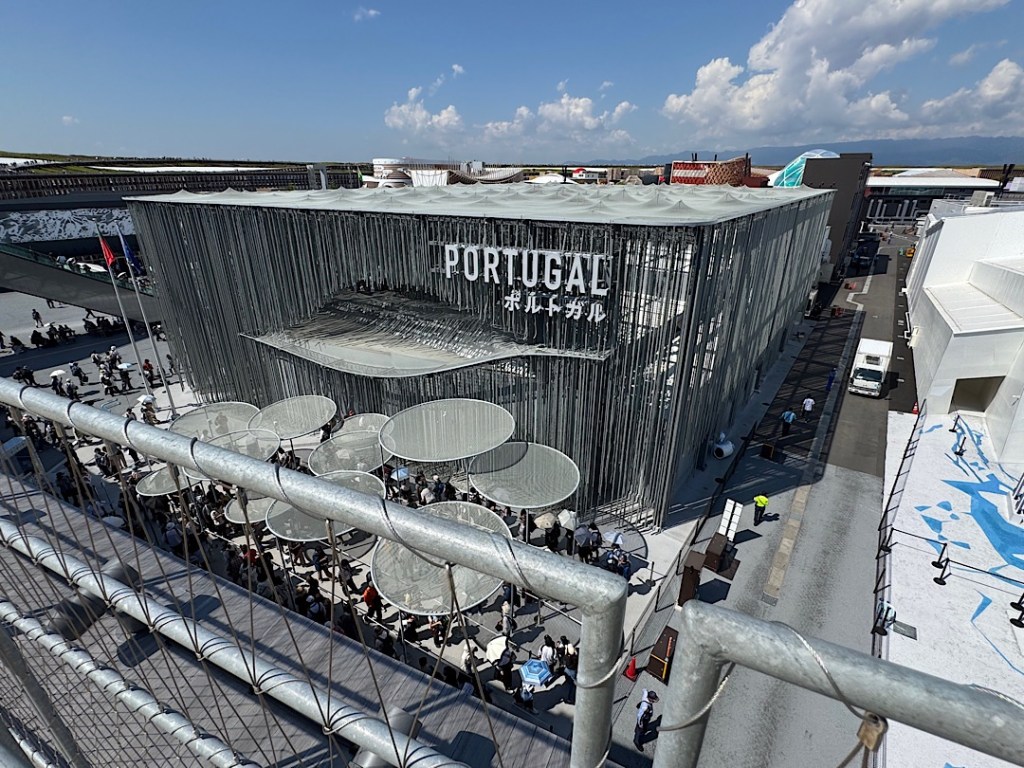
Here’s Portugal’s.
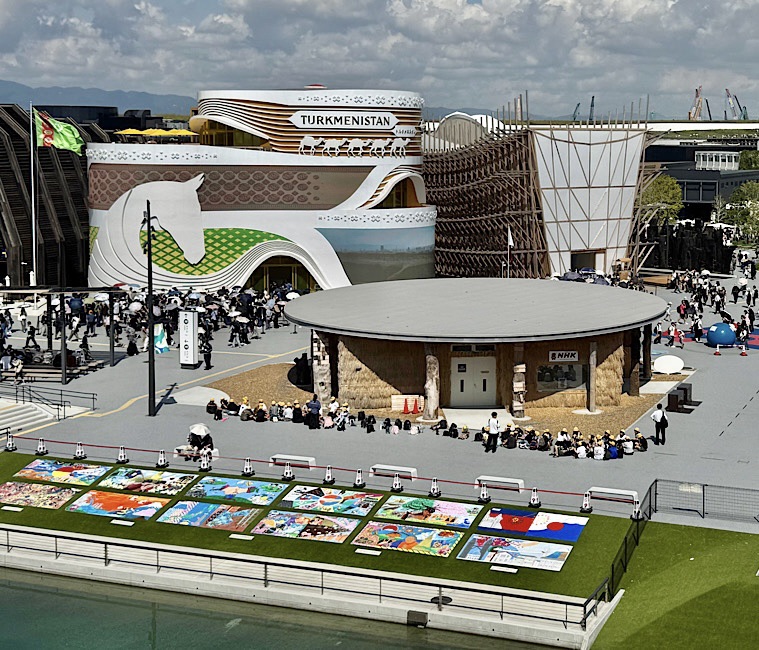
Turkmenistan’s pavilion looked particularly snazzy. Turkmenistan?

About halfway around, we were starting to feel hungry, so we descended to the fairgrounds to search for lunch. Long queues were already forming. We braced ourselves to join them when, miraculously, I spotted a second-story dining room that seemed overlooked by the mob. At the top of the stairs, a sign announced that it was fully booked. But to our relief and amazement, the hostesses said we could have a table if we promised to be out within an hour. 

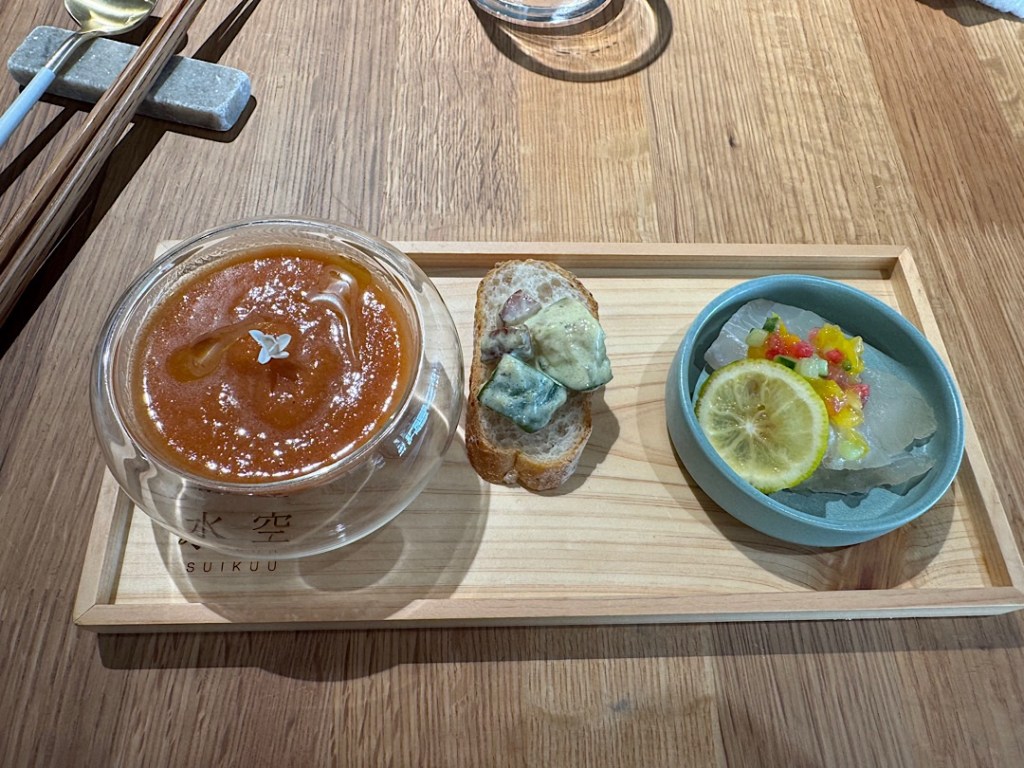
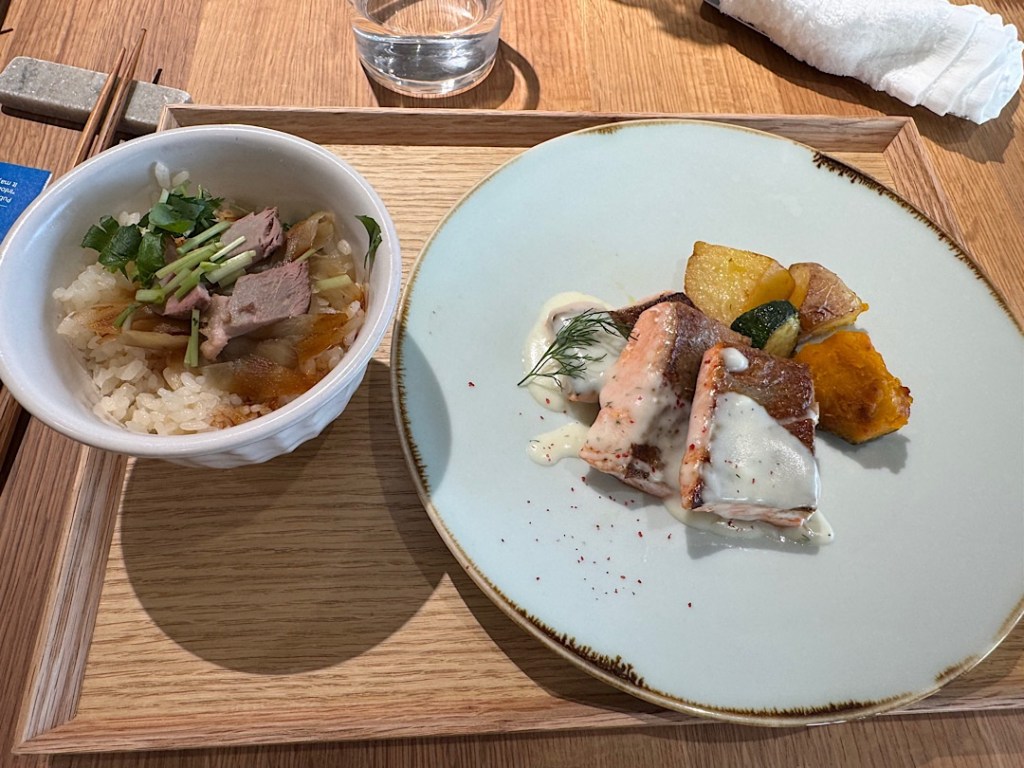
It was worth every one of the 8,400 yen it cost the two of us (about $57) to sit in the cool, serene room, listen to soft classical music, and eat artful, delicious food.

Those are the appetizers on the left. The main course on the right. We followed that with excellent coffee. I felt revived. That didn’t last for long.

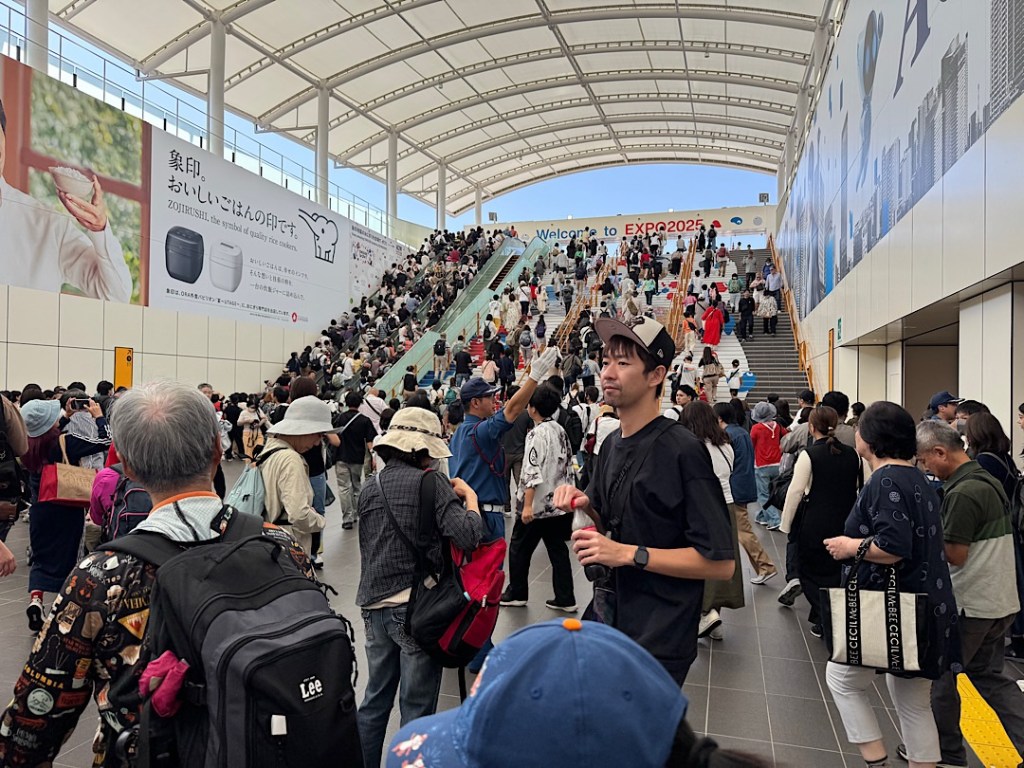
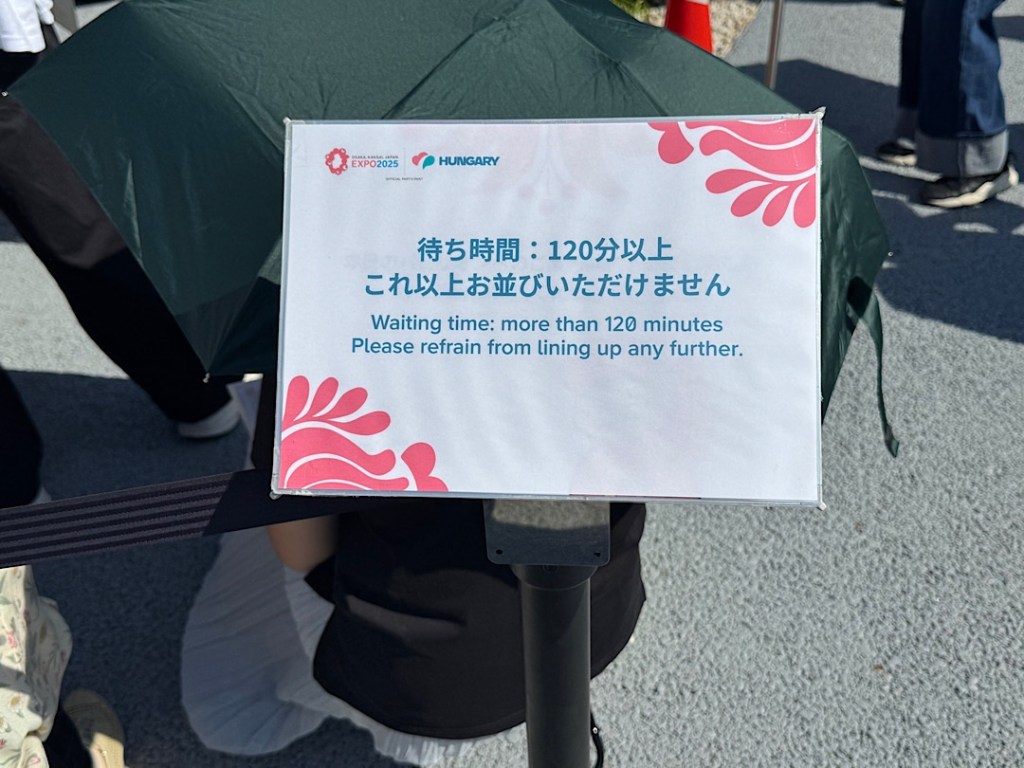
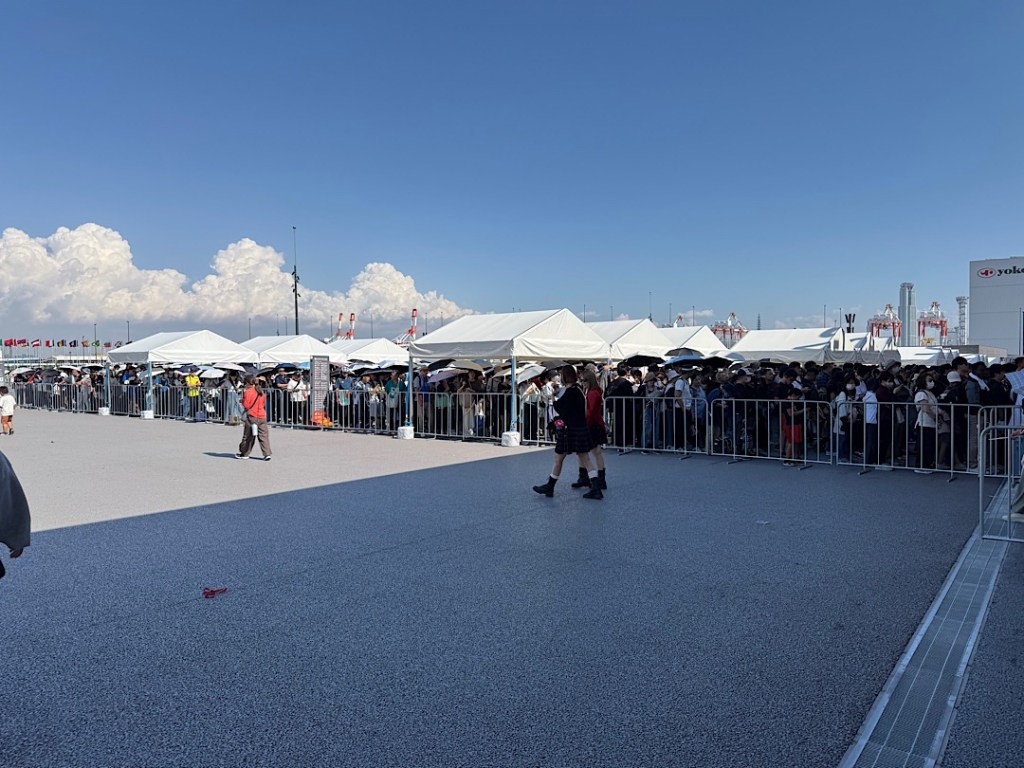
Outside again, the crowds had grown to mind-blogging proportions. Inching through the mob under a merciless sun, it became clear every major pavilion had an endless line encircling it.

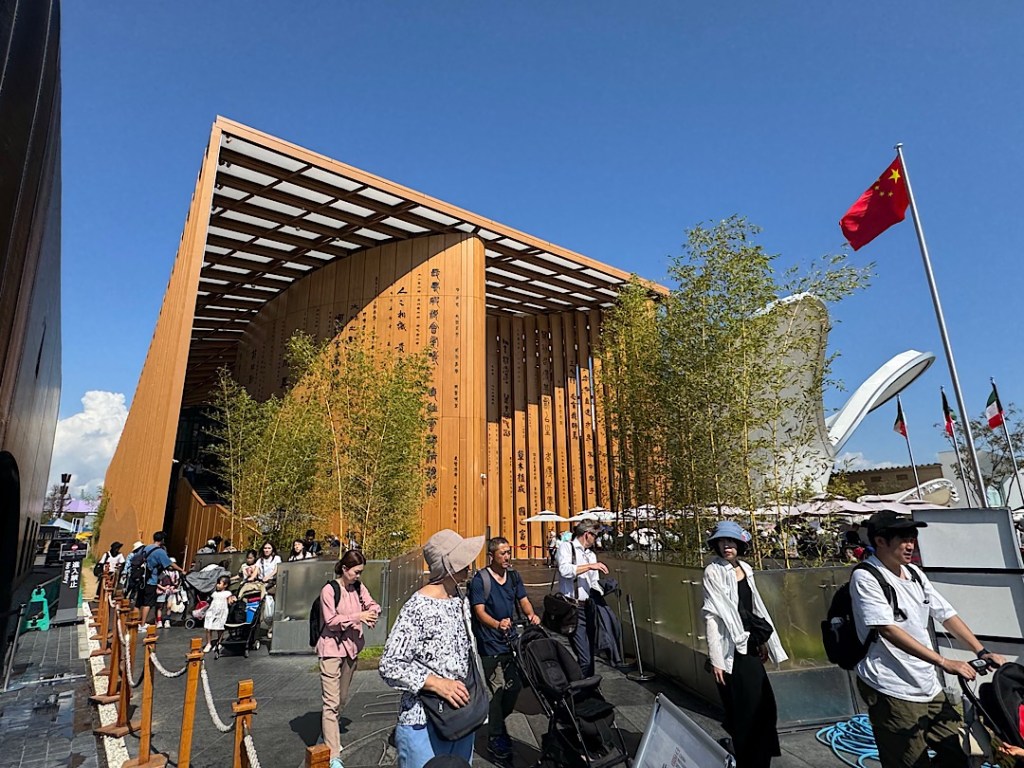
It would have been great to visit China’s. But that was impossible.
Austria’s building was designed to evoke a musical notation, but there was no getting into it.
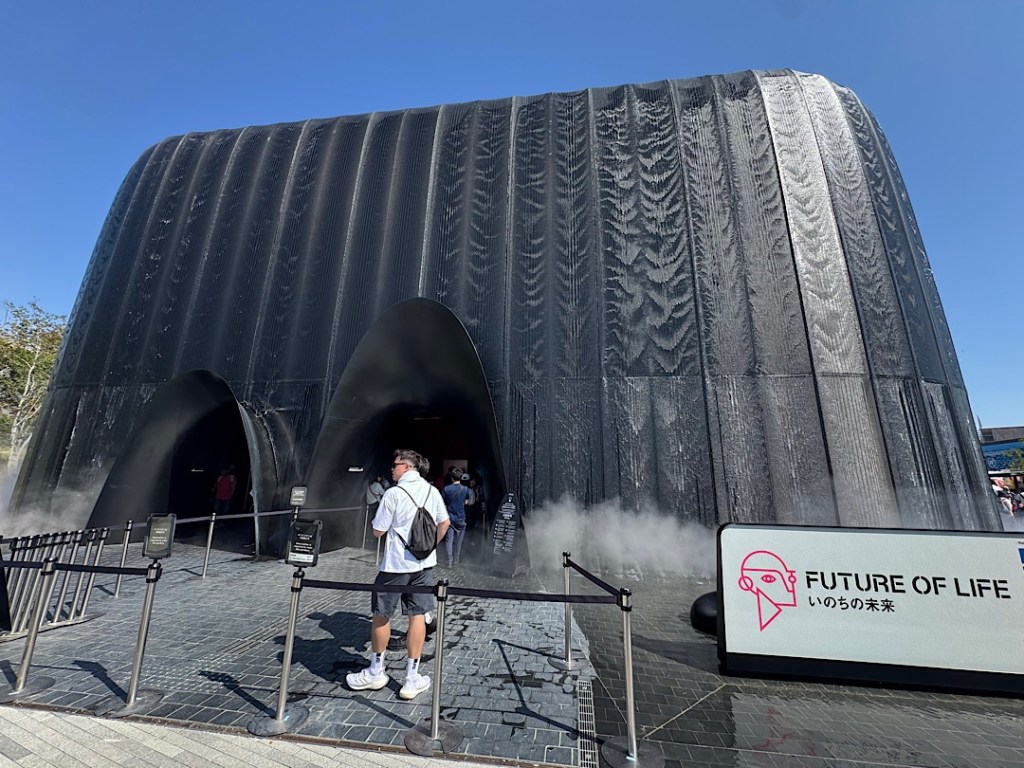
Steve and would have loved to check out the Future of Life Pavilion. No dice.
Here’s what we found outside Portugal’s pavilion.

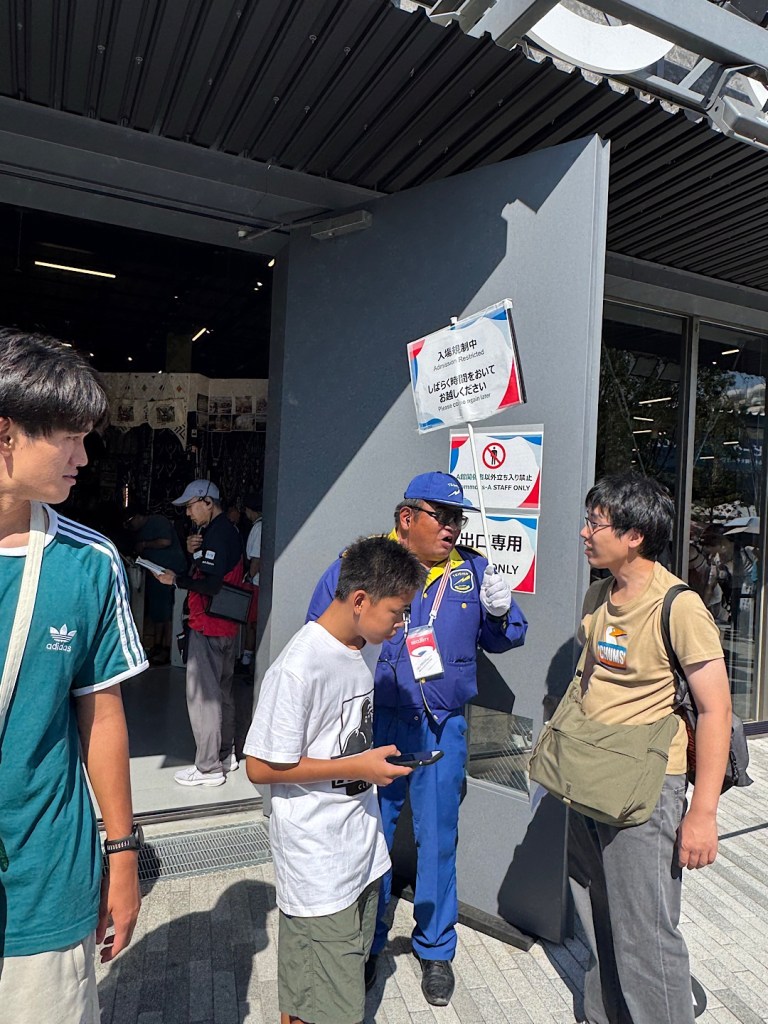
As a last shot, we made our way to one of the large “commons” halls containing countries too little to have their own pavilions.  You didn’t need a reservation to enter Commons A. It housed Barbados, Burundi, Bolivia, Comoros, Eswatini, Ghana, Grenada, Guinea Bissau, Kenya, Kosovo, Krygystan, North Macedonia, Malawi, Mauritius, Palau, Papua New Guinea, Rwanda, Saint Kitts and Nevis, Saint Lucia, Samoa, Seychelles, the Solomon Island, Suriname, Sri Lanka, Trinidad and Tobago, Tonga, Uganda, Yemen and Vanuatu. I had particularly wanted to visit this building because in Honiara we’d met an artist named Simon who’d told us he’d be there, representing the Solomon Islands. We’d promised to visit him. But a surly guard at the door held a sign announcing that admission was restricted. “Please come again later,” it read. 

He yelled at me when I took his picture.

That was it. Sweaty and discouraged, we headed for the exit.

We passed the folks with 2 pm entry tickets, waiting for their chance to get in.

I’ll say this. If you have to be crammed into a relatively small space on a hot, sunny day with a couple of hundred thousand other humans, try to do it with Japanese. They never shove or shout with exasperation. Confronted with horrible lines, they seek out the end to join in, ever stolid. Their accomplishment at creating this event was as impressive as so many other things are in this country. Neither Steve nor I regretted going. It was worth just seeing the scene. 

Still, giving the choice of attending another world’s fair or another Goroka festival, I’d take the naked, painted stone-age folk any day.

A Cautionary Tale

Here’s a warning: be very cautious about buying anything big overseas.

Neither Steve nor I are big shoppers at home or abroad, and we particularly try to limit any purchases while traveling. We almost never check baggage, and our carry-ons only hold so much. But on our recent trip to Japan we made a big exception — to our eventual regret.

By way of background, almost 40 years ago, when we were remodeling our house, we built a platform in our bedroom to hold a Japanese-style bed. From a local (San Diego) supplier we bought three tatami (woven rice-straw) mats that fit by design into the platform. We placed traditional Japanese futons on this base and slept on (and under) them. Eventually we traded the (very hard) bottom futon for a regular mattress, which we’ve replaced a few times over the years. But we never replaced the tatami mats. As we approached our recent trip, it occurred to us that it might be a great opportunity to do so.

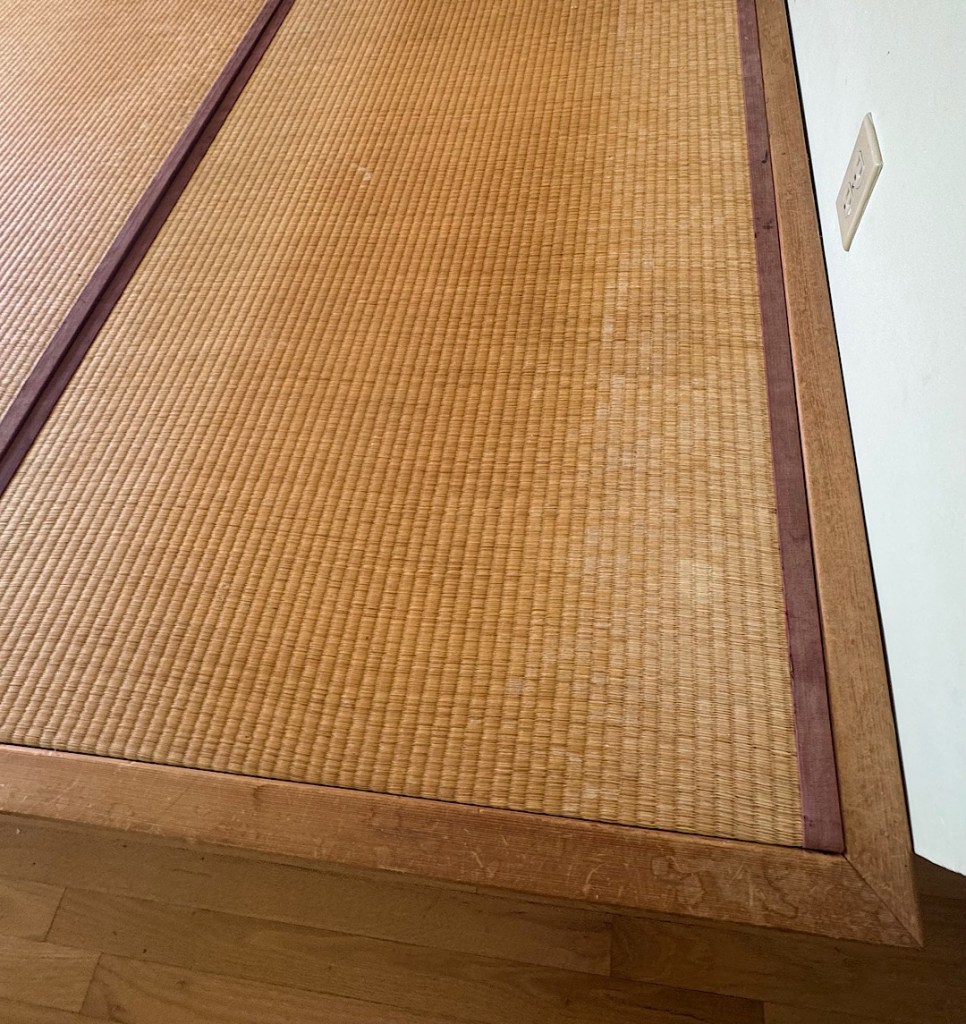
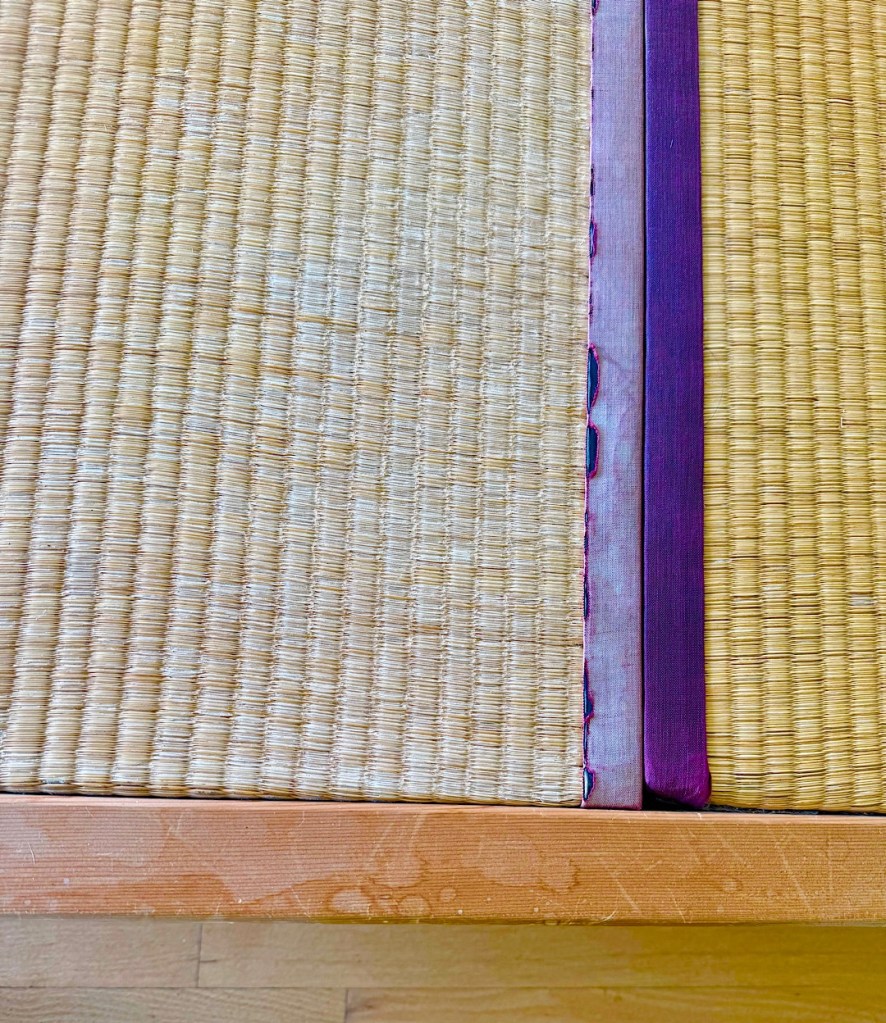
After 40 years, the old mats were worn and discolored.
The cloth edging was frayed. (I don’t know why it looks purple in this photo. Actually it was brown.)

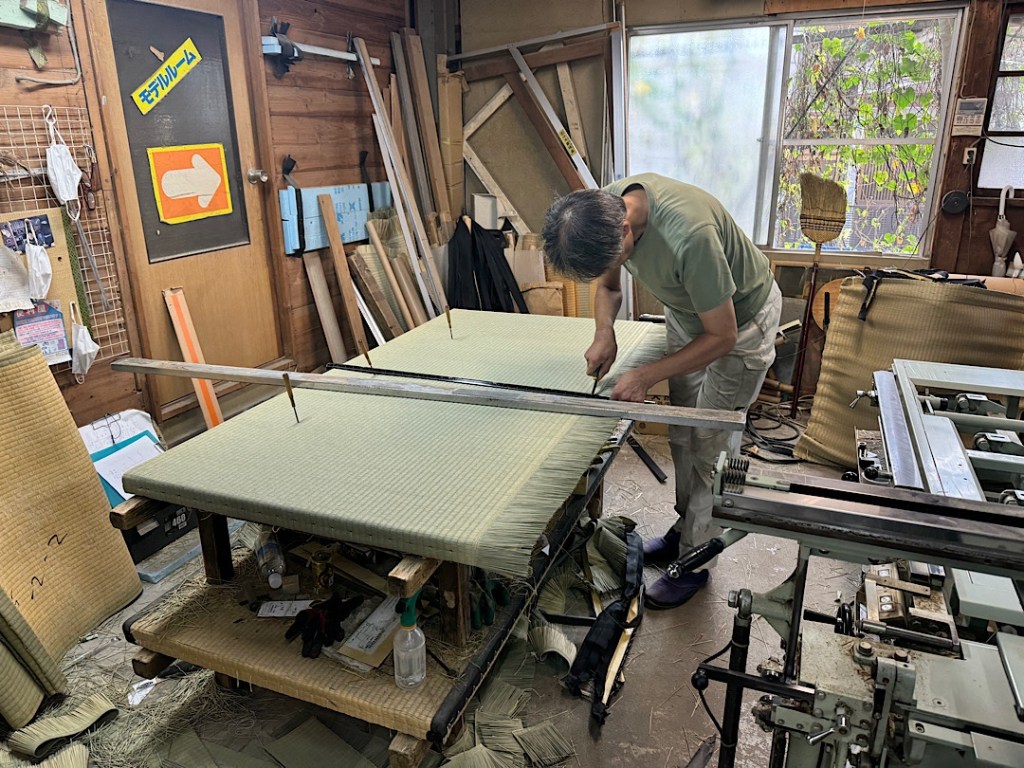
In an earlier post I explained how we asked our old friend Yoshi for help; he kindly found a modest tatami-making business near our Tokyo hotel. Steve and I had a great time going there with Yoshi one afternoon and chatting with one of the chief artisans.

The storefront of the tatami shop.

We picked out what we wanted but decided not to place the order until we could recheck all the dimensions back at home. The shop owner didn’t want to be paid until his crew had made the mats for us, but we insisted on giving him the $350 in cash, figuring it would be easier than trying to transfer the funds electronically. (To a startling degree, the Japanese still rely on paper money.) Steve and I felt certain, even cocky, that finding a way to ship the mats to San Diego would be a piece of cake.

After all, many Americans move to Japan (and back again). Surely shippers must exist to transport their household items. Steve dove into trying to find one not long after we got back in October. That’s when reality set in. He learned the mats were too large to be handled by a “common carrier” like Fed Ex or UPS. We needed an international freight company.

He called several including DHL and Yamato, one of Japan’s largest freight and package-delivery services. Some were polite but said they didn’t do business with individuals, only companies that ship a lot of stuff. Yamato said surface shipping our mats would cost $1,400 and they wouldn’t arrive for weeks. Another tatami maker quoted us $1,700. A smaller Japanese freight forwarding company strung us along for a couple of weeks, then wrote to say they couldn’t help at all.

As we were getting desperate, Steve found an online business called Tokyo Tatami. In their online photos, the company’s operation looked a lot like the shop we had visited. But Tokyo Tatami has clearly found a niche in making tatami mats for folks all over the planet — and getting the mats to where they need to go.

We sadly let the first folks know we would not be able to place an order with them after all. Then in startlingly short order, we were able to use Tokyo Tatami’s well-designed web site to order what we needed. We received a detailed quotation the next day and follow-up e-mails in good English asking if we had any questions. After placing the order, the mats showed up on our doorstep in just over a week.

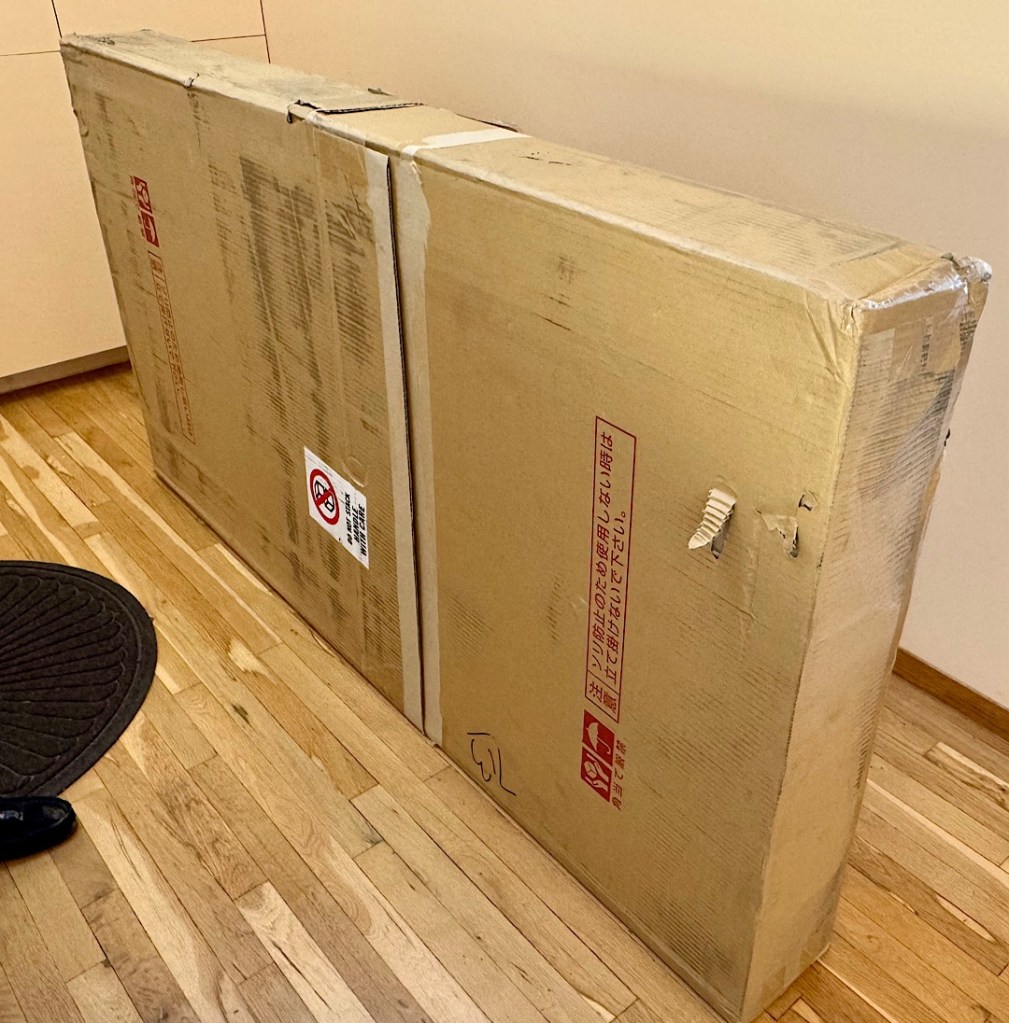
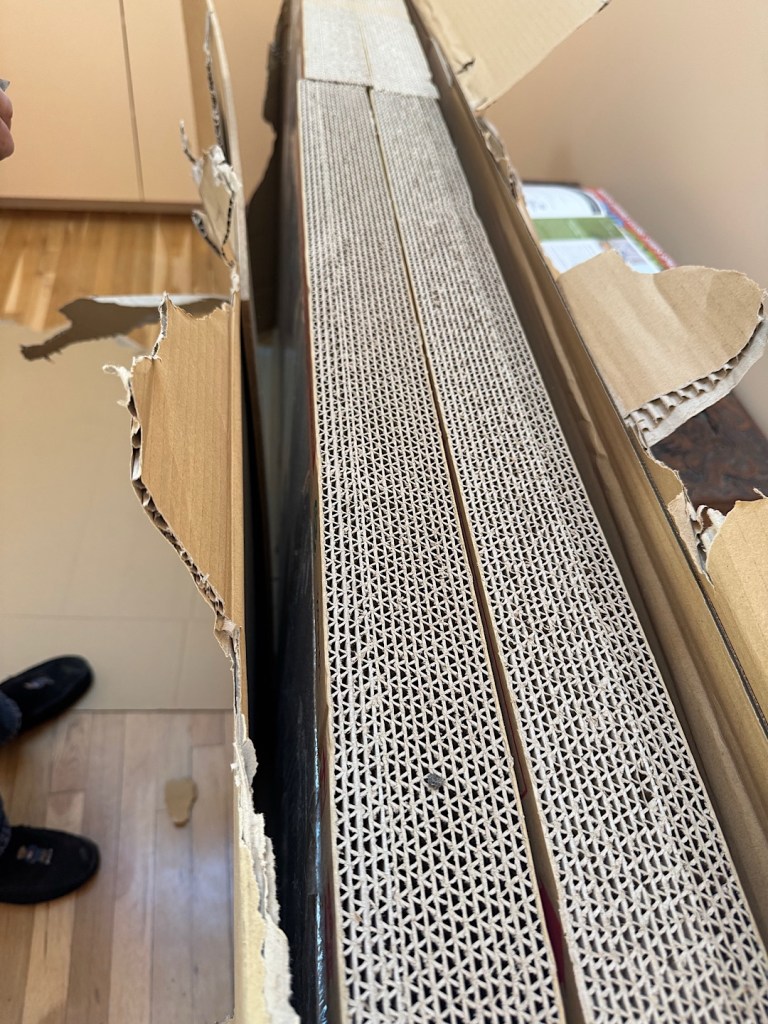
The packing was very complicated and effective. The panels arrived in perfect shape.

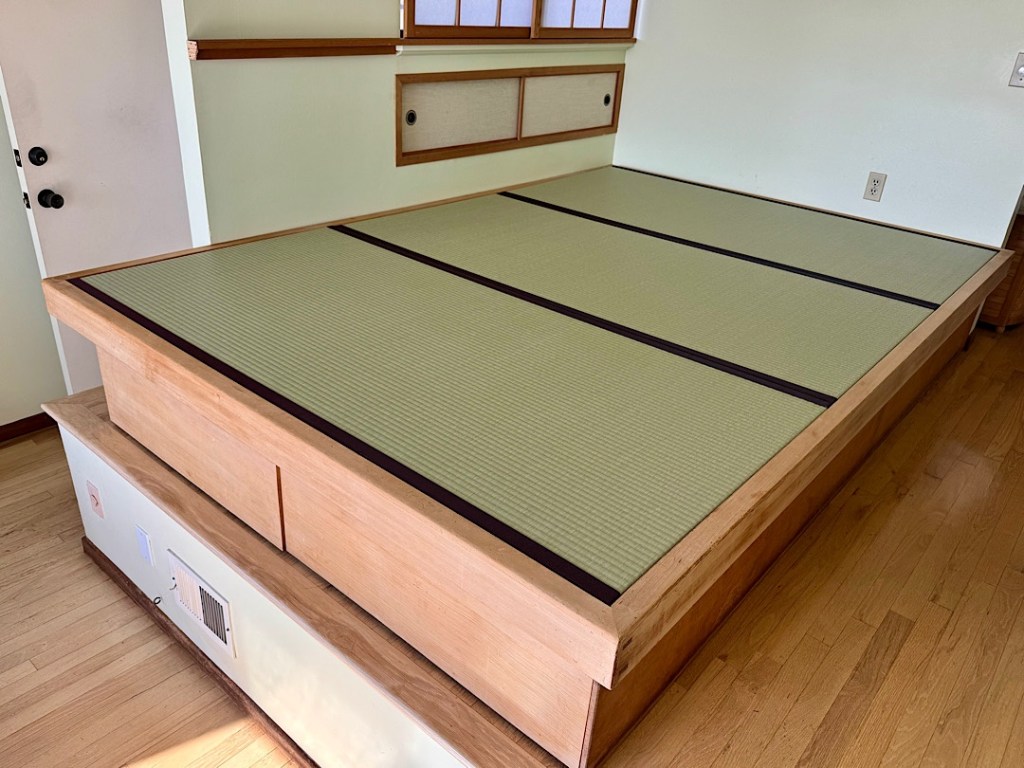
The total price for the mats and shipping was more than the original $350 (for the mats alone) but less than all of the quotes Steve got for shipping alone. To our enormous relief, the new mats fit perfectly. We hand-sanded the wood platform, and now it looks almost like new.

The downside was that our poor friend Yoshi had to travel from Yokohama back to Tokyo to reclaim our cash payment. We’re hoping his daughter will help him send it back to us via PayPal.

We regret having dragged him into all this. We promise not to do it ever again. (But our new tatami does look great.)

One thing the Japanese do not do well (imho)

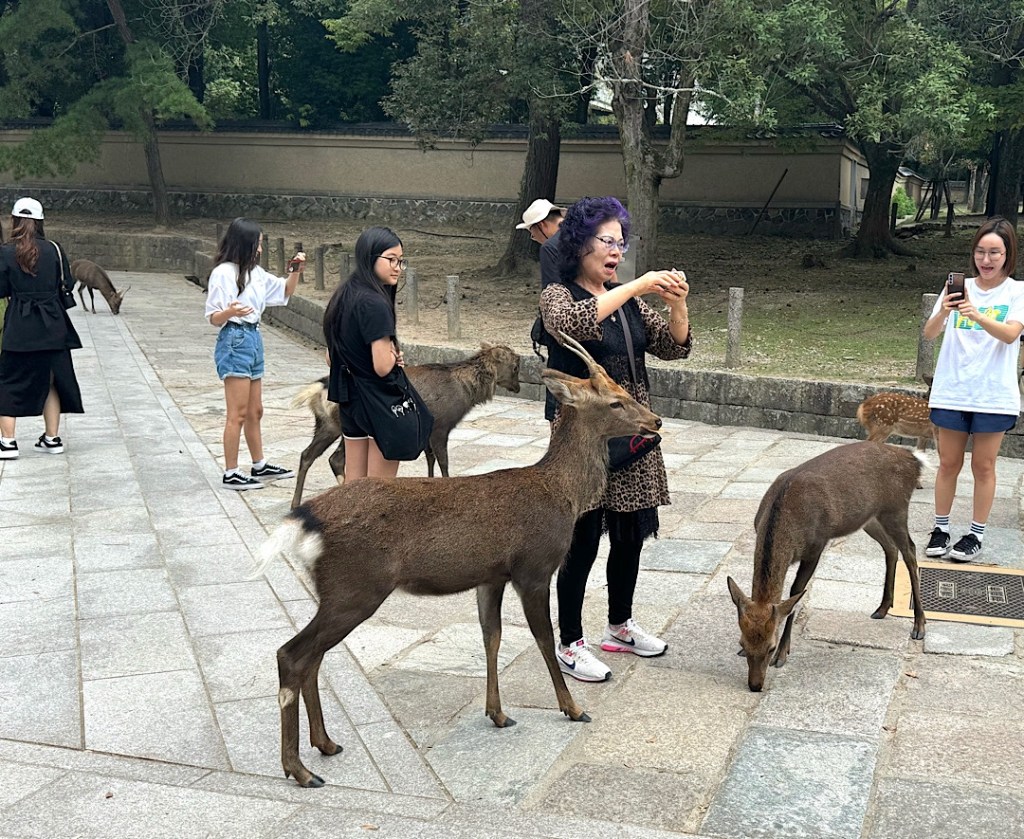
I’m publishing this post from my desk in San Diego, where I’m immersed in Re-Entry. I’ve been tempted to blow off writing anything more about Japan. Our time in Osaka was gratifying and fun, but maybe not so interesting to read about. We made a quick day trip to Nara, the ancient Japanese capital and a magnet for visitors who come to feed special crackers to the vast numbers of semi-wild deer.

Considered sacred, the animals seemed pretty chill.
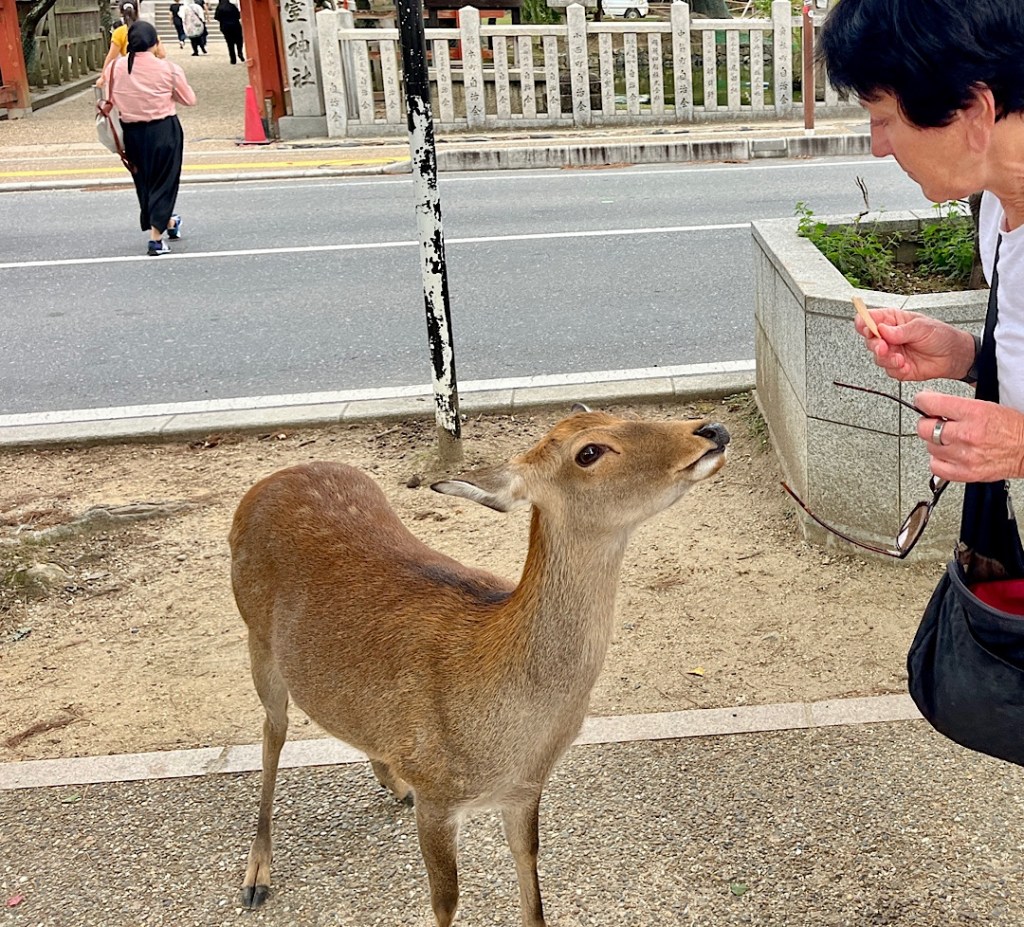
Some of them dip their heads in what’s said to be a bow, when seeking snacks. I tried to use my puppy-raising skills to tune up some of their bowing skills.

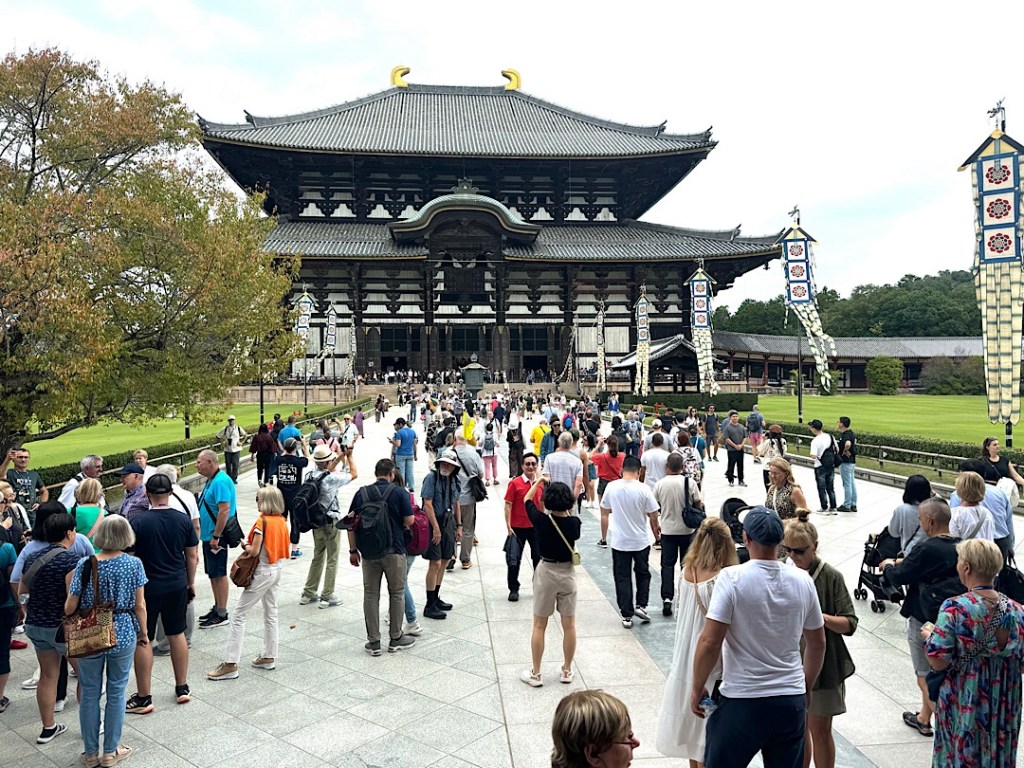
Nara Park contains some fabulous creations, including Tōdaiji Temple, where the largest wooden building ever constructed…

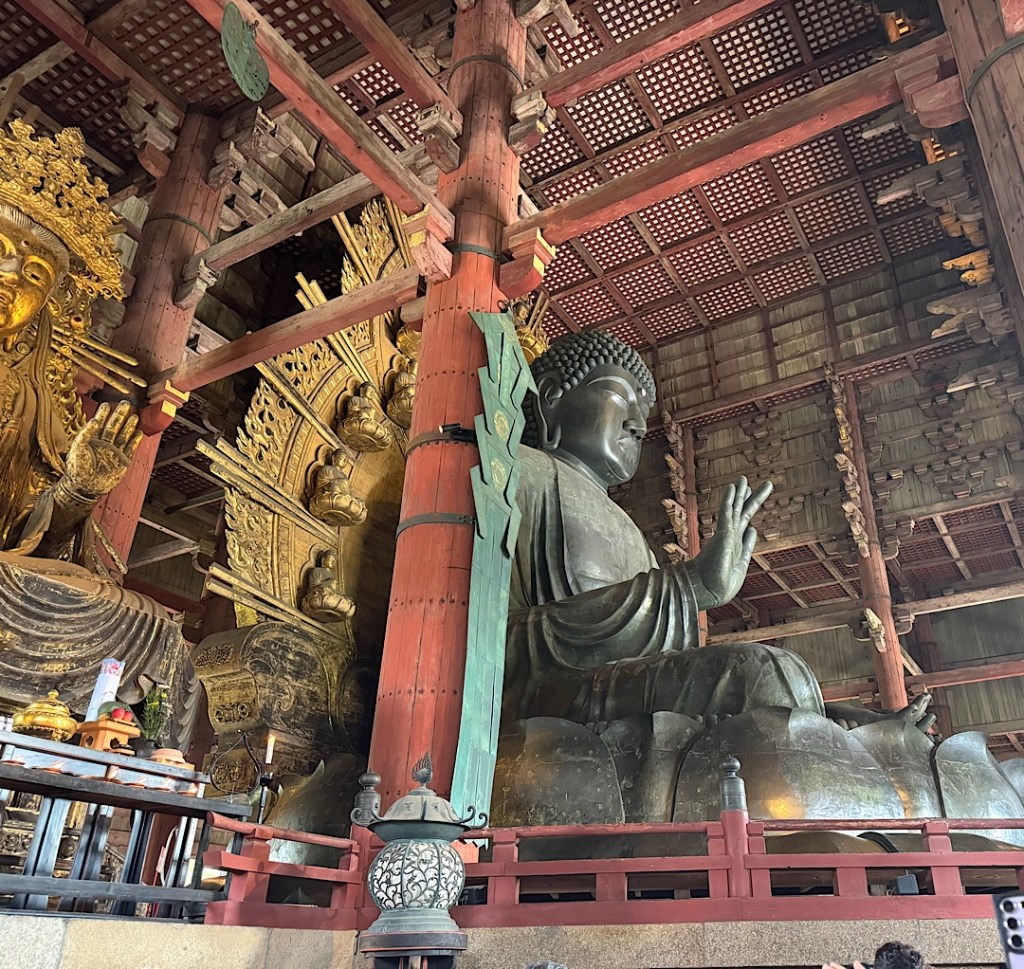
…shelters one of the world’s largest statues of the Buddha.

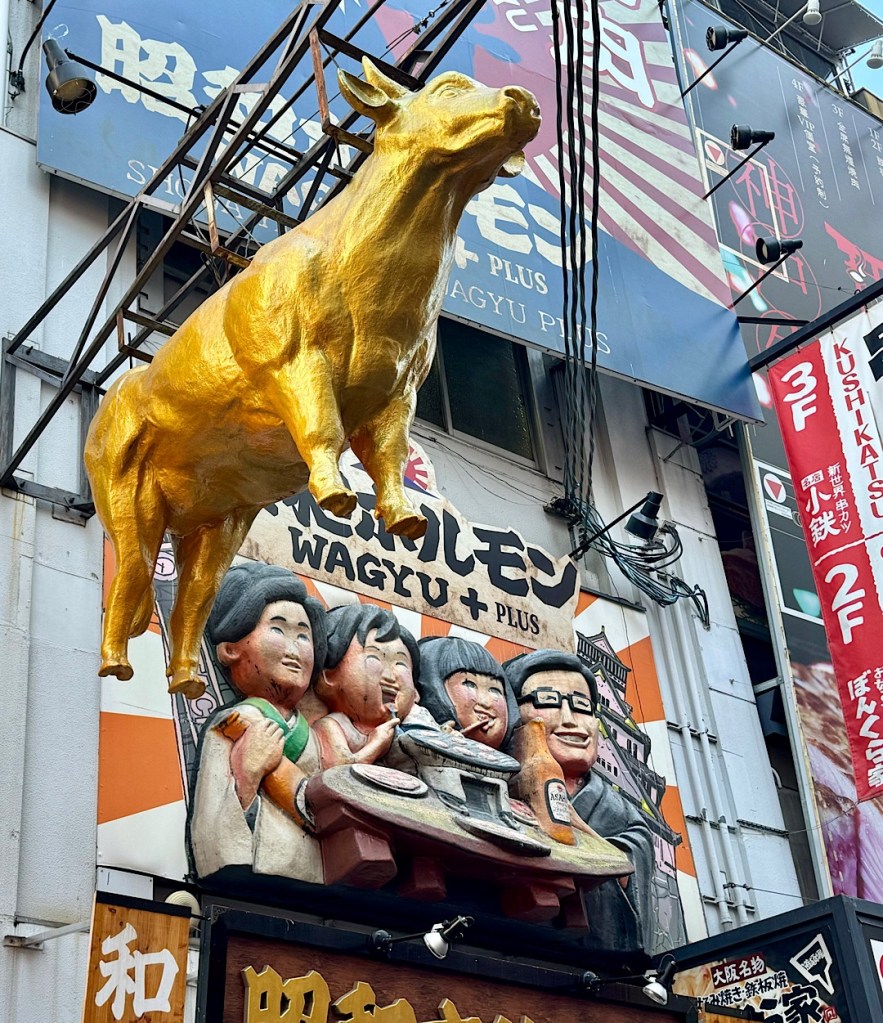
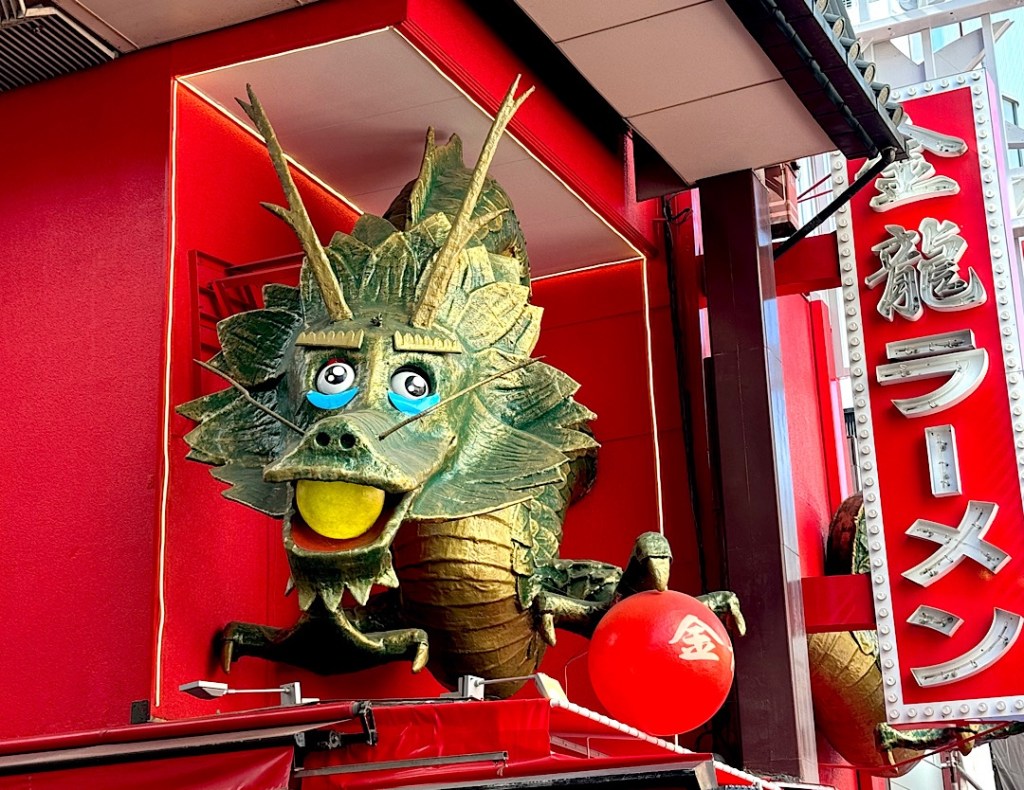
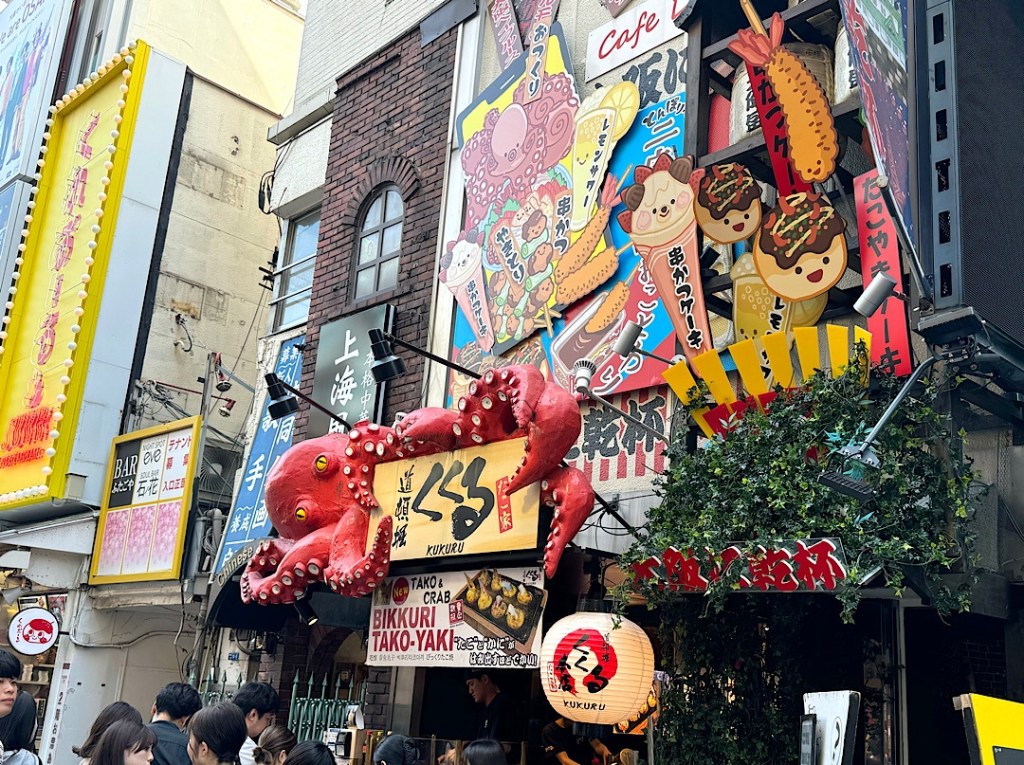
Steve and I also briefly strolled the grounds of the mighty Osaka Castle. But mostly we concentrated on food in this city known as “the grocery store of Japan.” One morning we spent a couple hours roaming the area around Dotonbori Street, a vortex for delicious street food and outrageous building decoration.

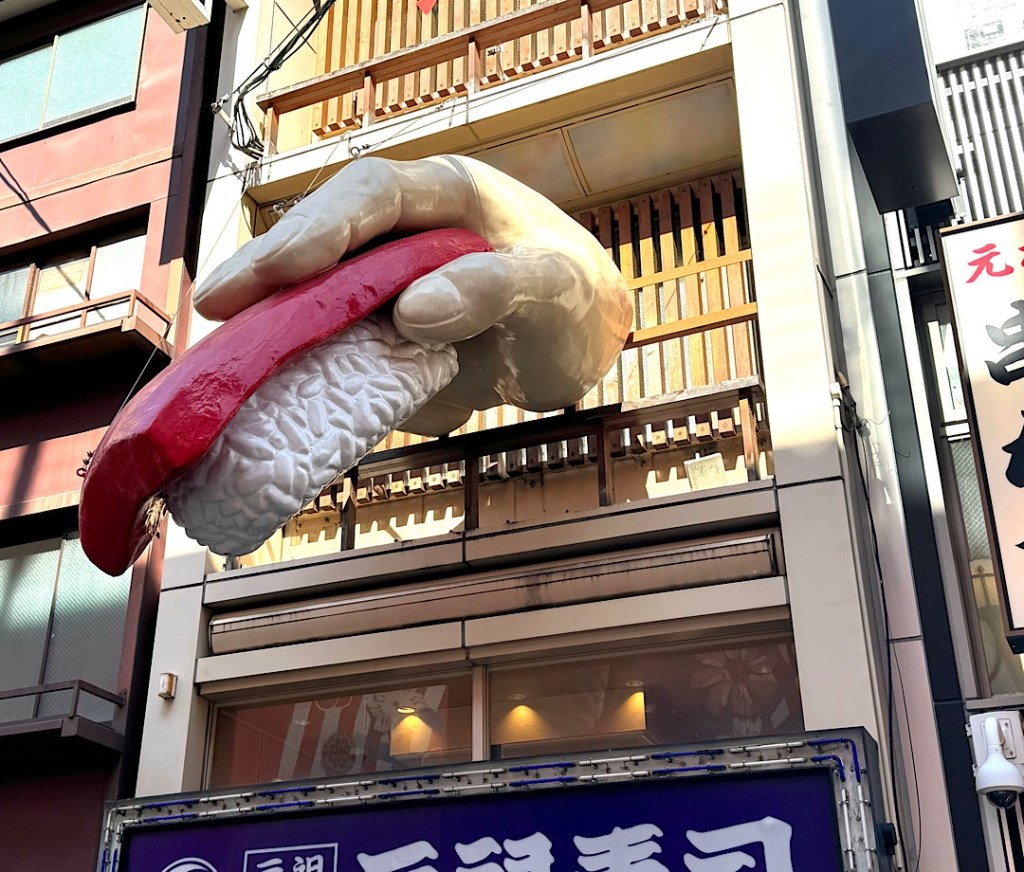
Want sushi?
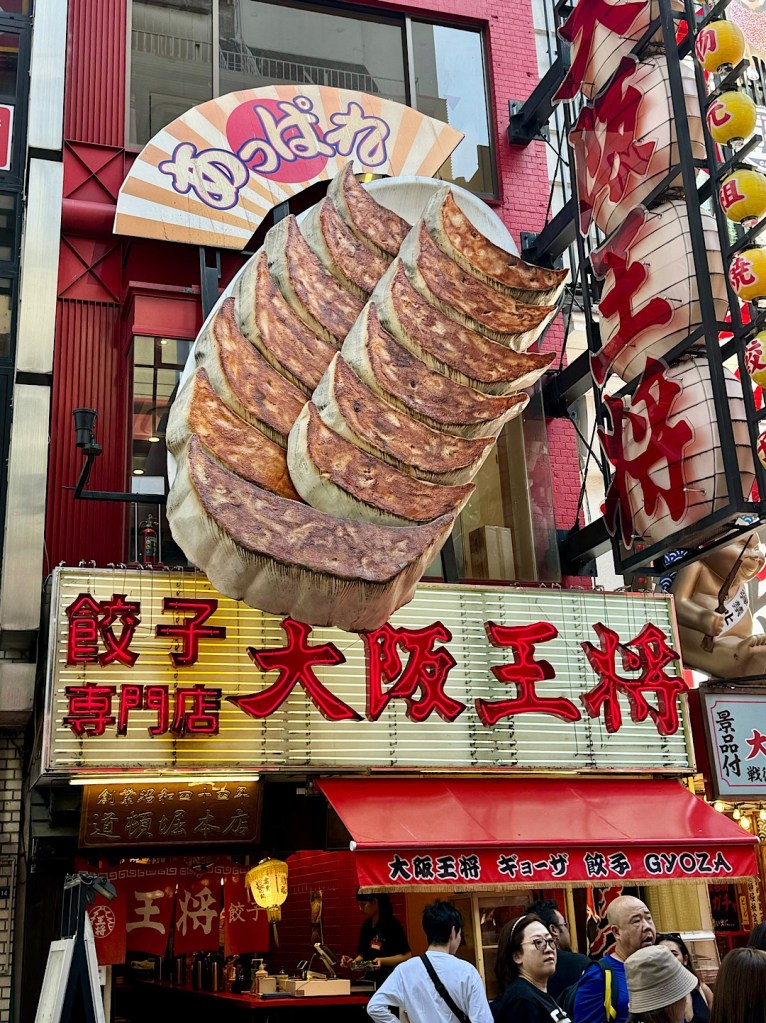
Or gyoza?
Beefy delights here!
I’m pretty sure people don’t eat dragons, but there’s nothing like them for catching the eye.
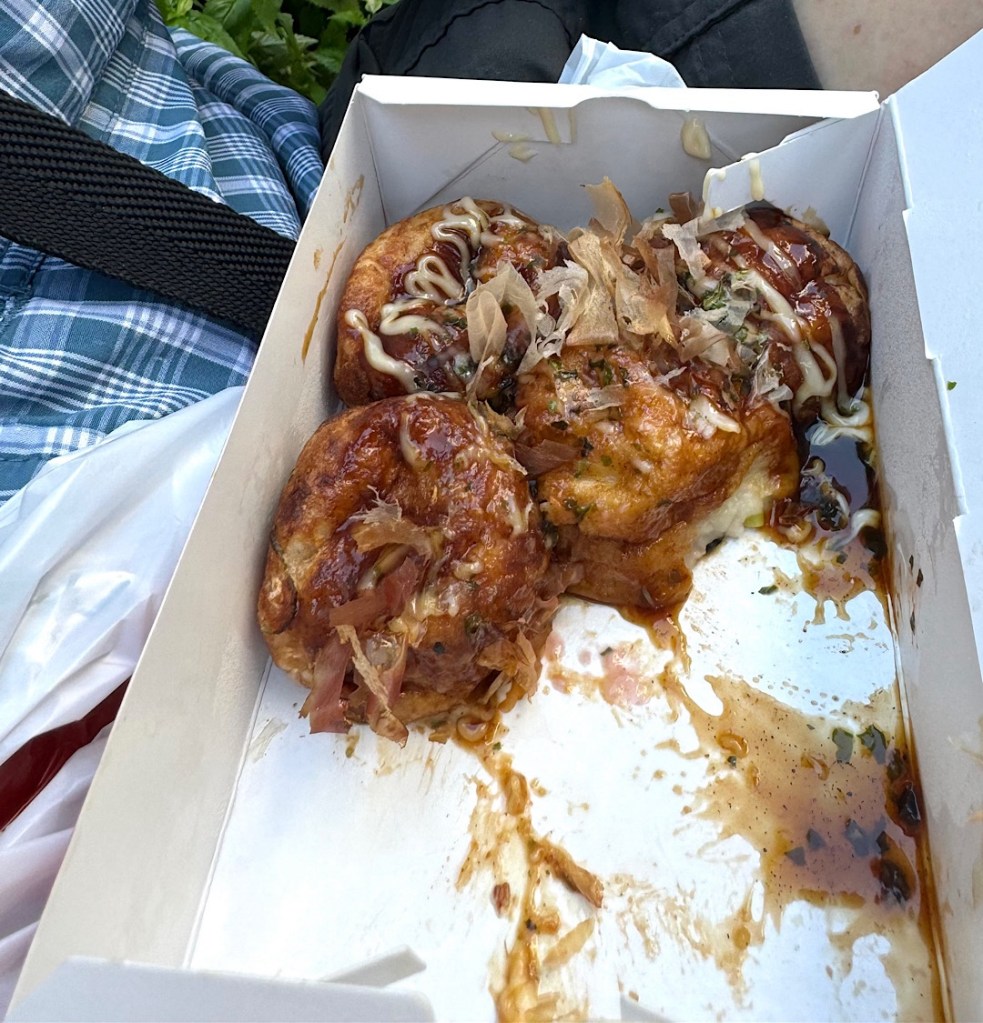
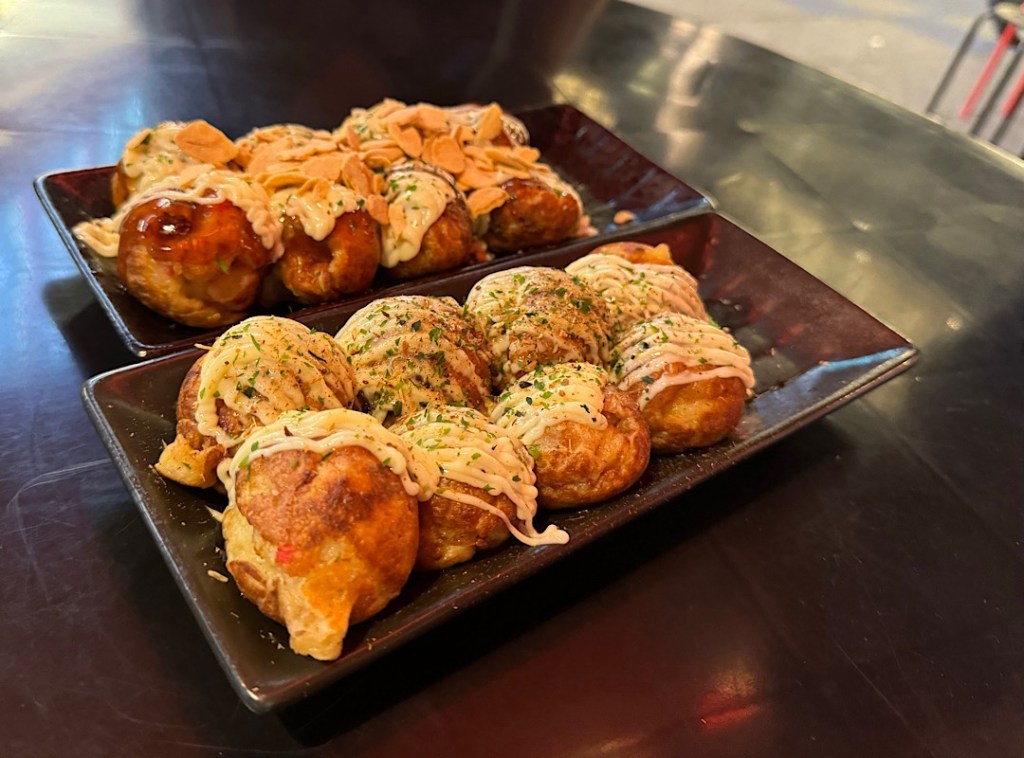
Octopuses are enormously popular, both on building facades and chopped up to be embedded in wonderful, creamy fried batter (takoyaki).

Everywhere we looked, we saw people lined up in the street; we despaired of getting a taste of any of it. But on a quiet byway we finally scored some marvelous takoyaki.

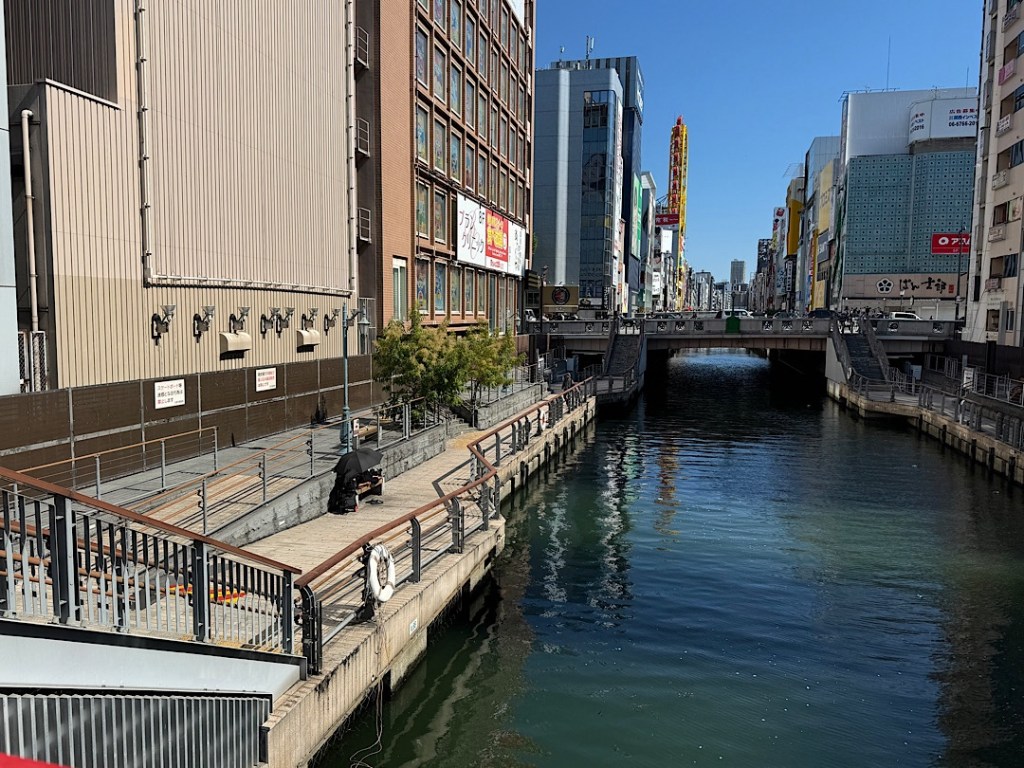
On that walk I also spotted a homeless person — the first I’ve ever seen in Japan.

He was sleeping on that bench overlooking the river.

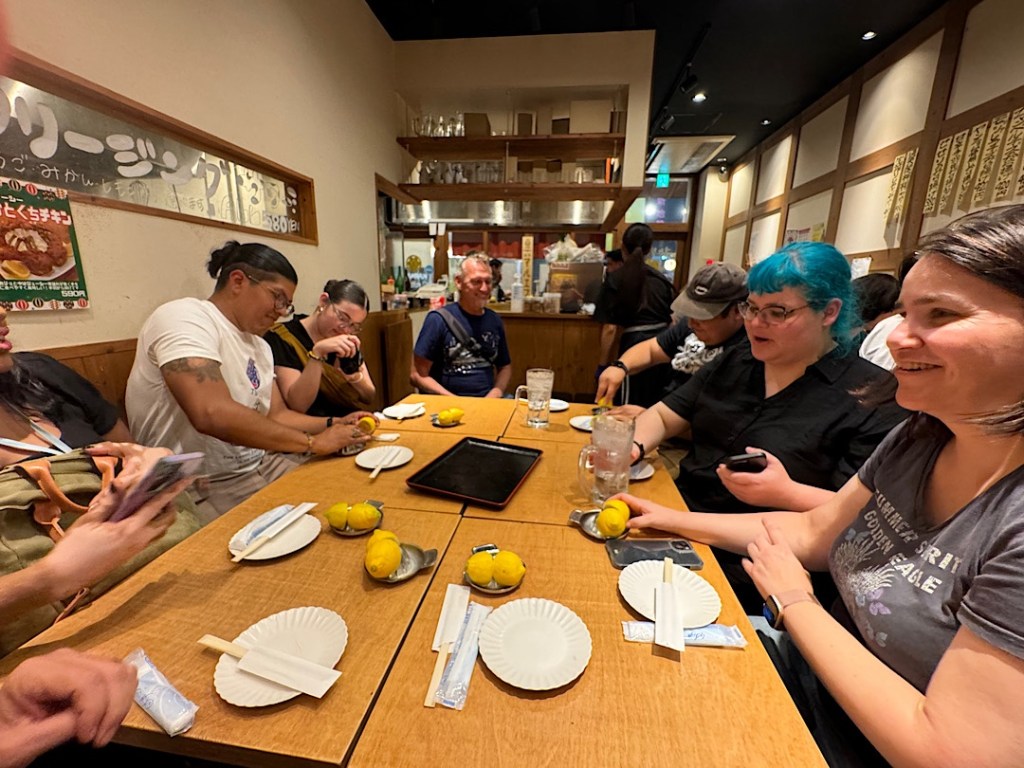
That evening we joined an “Osaka food tour” that introduced us to more than a dozen local specialties.

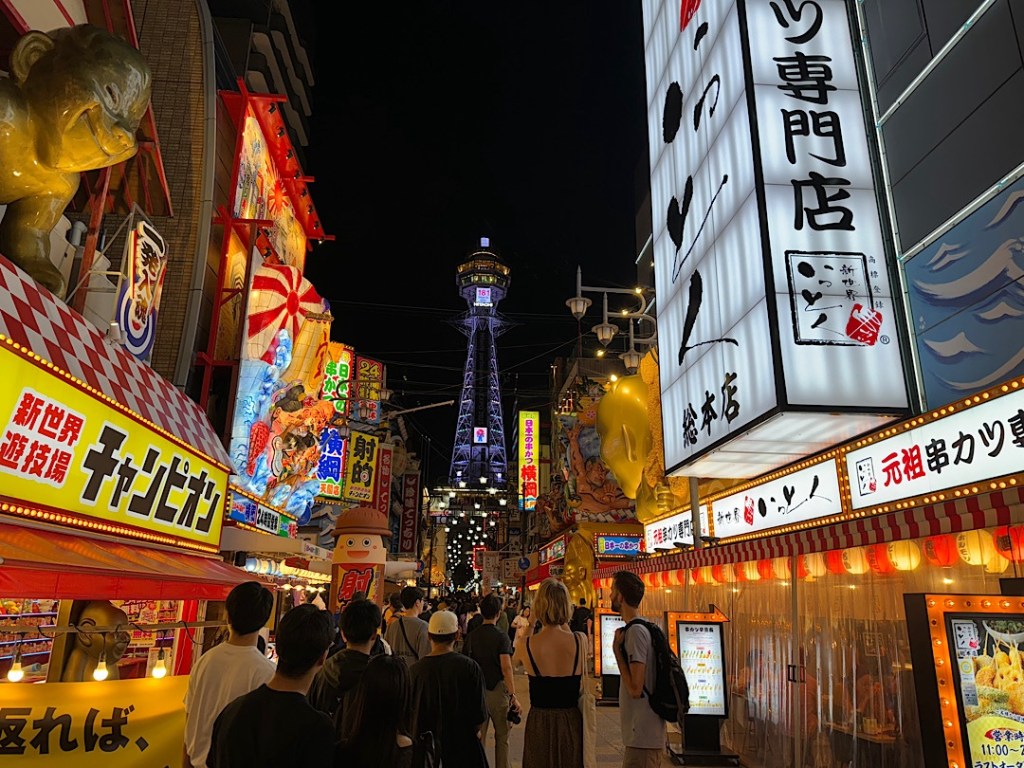
Shinsekai is another famous Osaka food center, part Coney Island, part faux Paris.
Our fellow group members were a lively bunch.
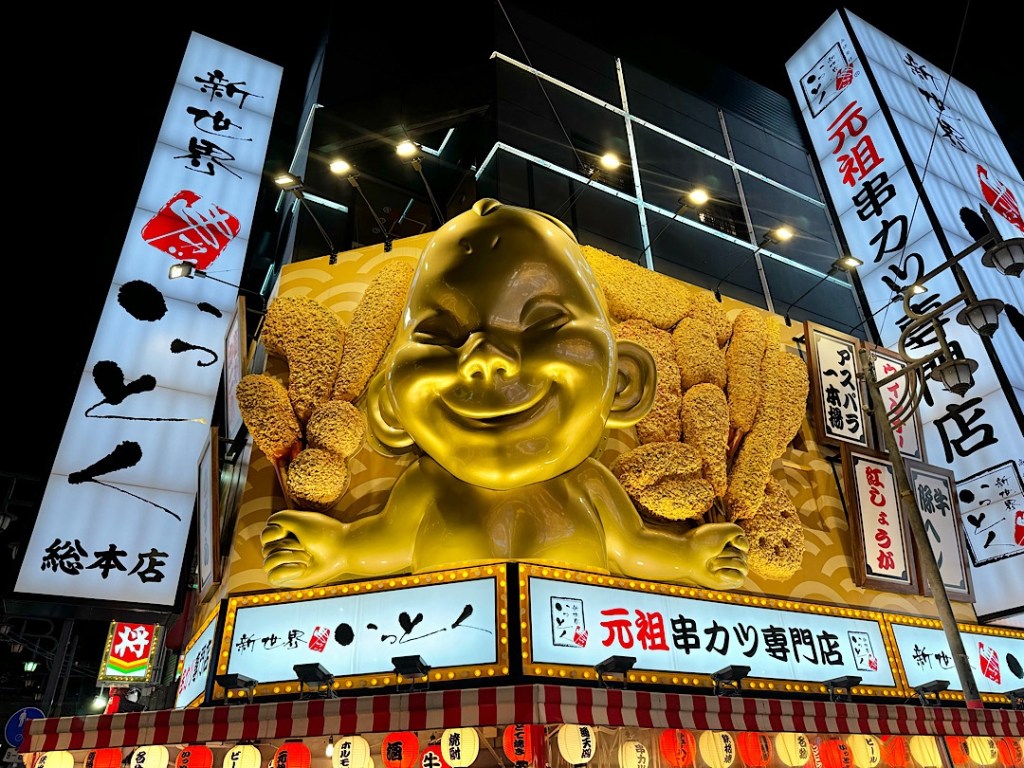
We learned about the Billiken, which started out as St. Louis University’s mascot, but long ago became beloved in Japan, and today has achieved quasi-religious status: the Shinto “god of things as they ought to be.”
And of course we ate more takoyaki — as well as more than a dozen other delicious dishes.

I’ve been so bowled over by and enthusiastic about our experiences on this trip, I’m a little worried I may sound undiscriminating. So I decided I should chronicle at least one thing at which we found the Japanese to be mediocre: They don’t explain themselves well to foreigners.

Over and over, even in famous, important sites, we found a shocking dearth of signs or placards or other educational material in English (or any language other than Japanese.) To some extent, we could overcome this by using Google’s Translate app or Google Lens. We’ve never used either much before, but today they’re game-changers in a country where you can’t read. They liberated us to waltz into restaurants without worrying if an English menu would be available (as often as not, it wouldn’t be.) They helped us figure out air-conditioning controls and all manner of street warnings and how to work a coin-op washer/dryer.

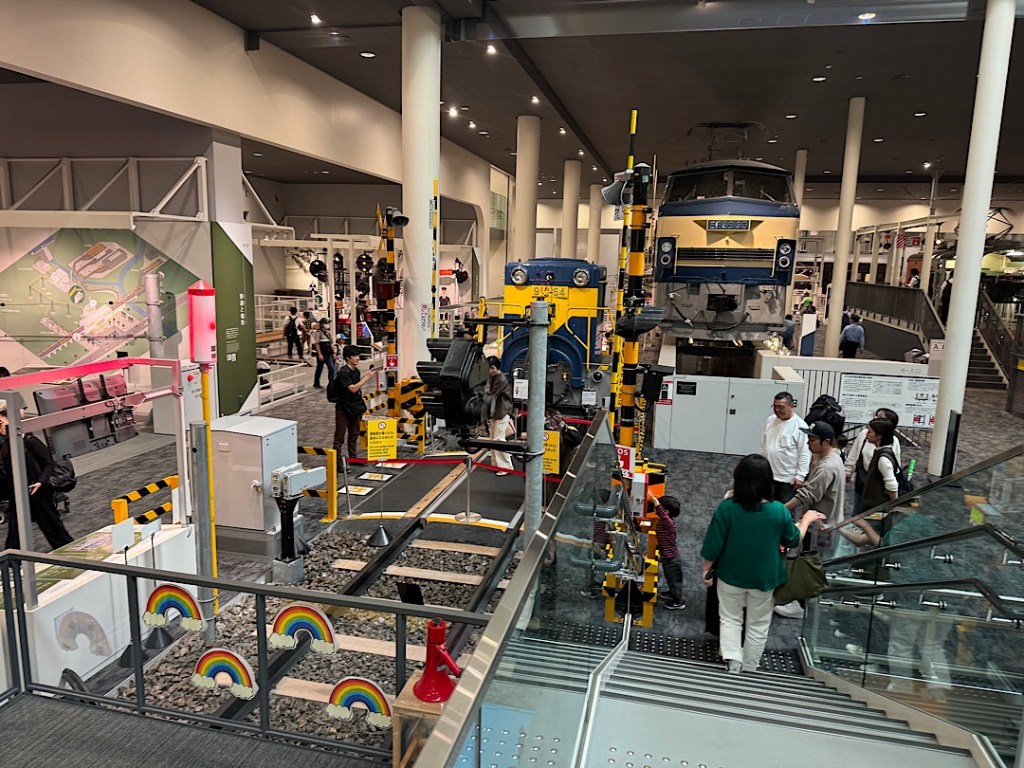
But in situations where there’s a ton of information being conveyed, for example at the Kyoto Railway Museum, the language apps don’t work that well. They take time to do their translating, and they require good Internet. (Our T-Mobile service was often tooth-grindingly slow.)

Our experience at the railway museum was particularly disappointing. The facility is enormous, and everything in it is bright and shiny and beautiful.

Steve and I went to the railway museum because our respect for Japanese railway technology knows no bounds. The country’s urban train systems are a wonder of the world — a stunning profusion of companies and services, with most trains arriving on time to the minute. For longer trips, the Shinkansen bullet trains have changed the world since the first one went zooming down the rails (50 years ago this month.)

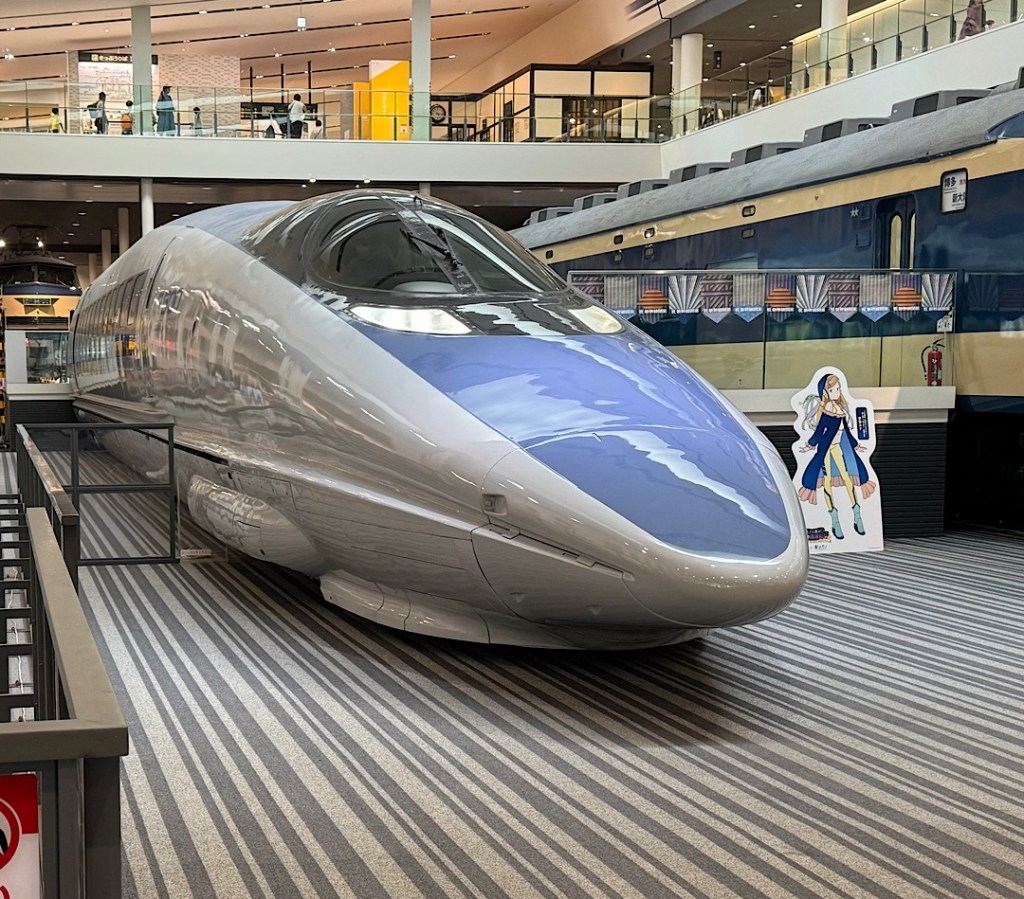
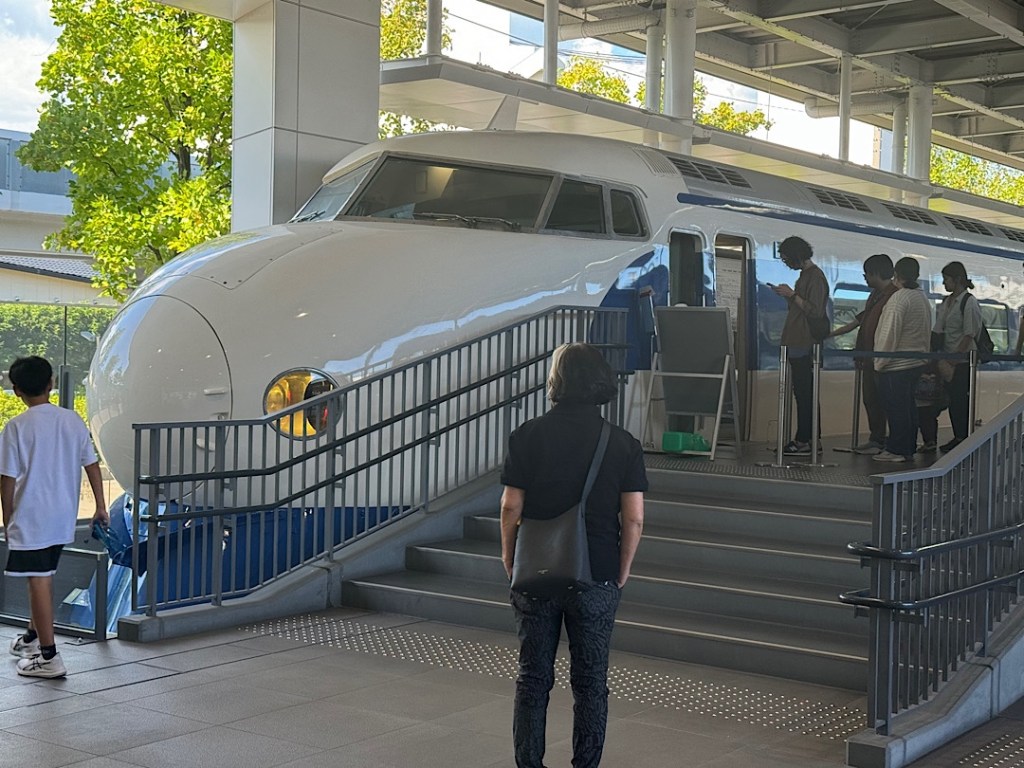
The museum houses newer versions of the bullet train…
…as well as older incarnations like this one.
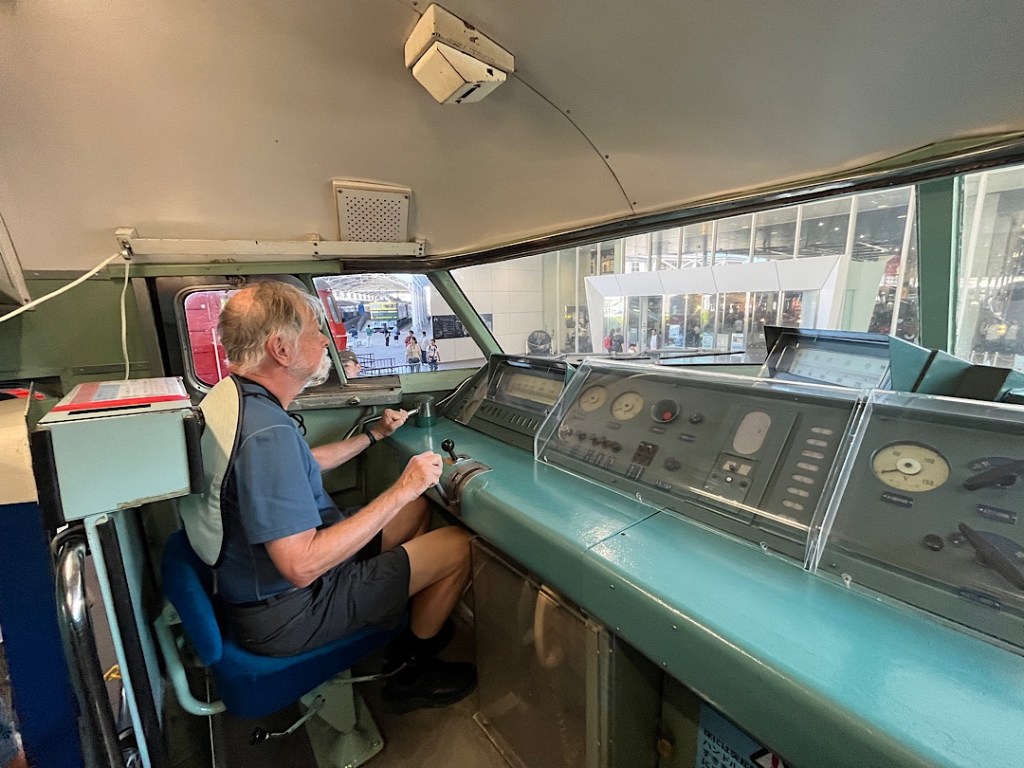
Steve got to sit at the controls and pose as a train engineer.

We had hoped to learn the bullet trains’ story — to hear about the initial vision for high-speed rail; get insight into what the biggest challenges were and how they were solved. But almost none of the museum’s relevant signage was in English, and even the Japanese-language information seemed sketchy. I’ll probably forget our whole visit there within weeks.

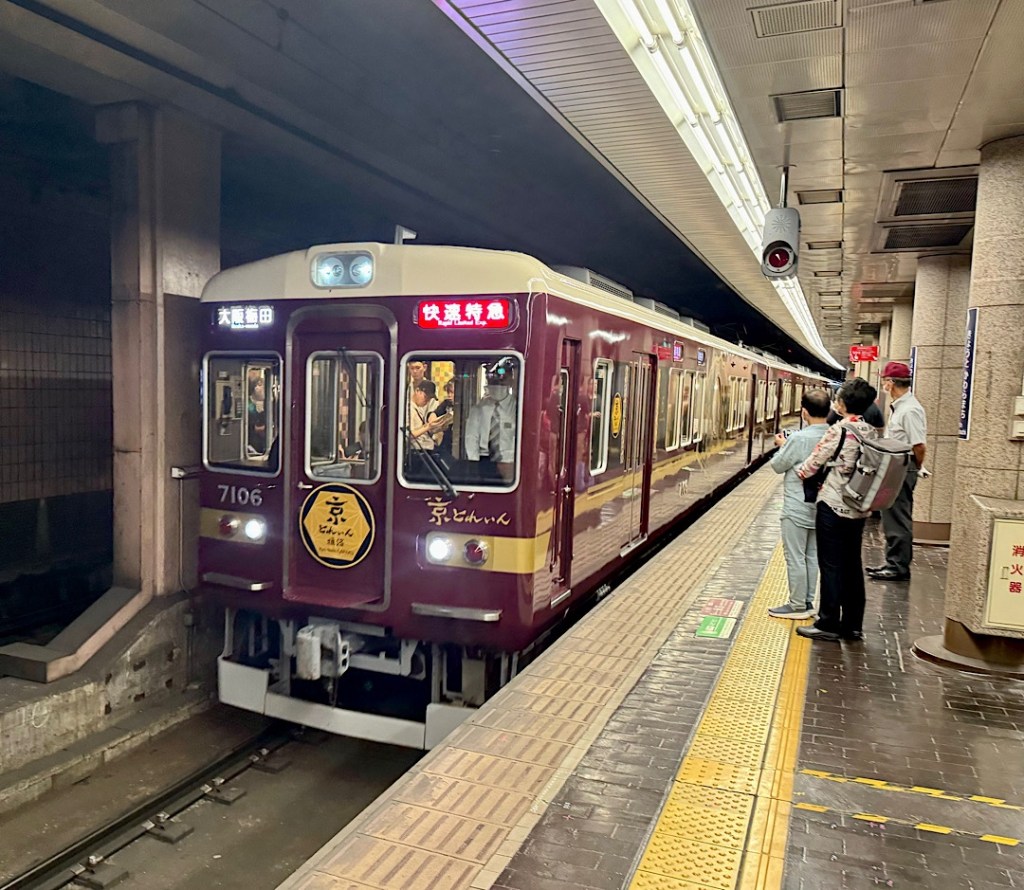
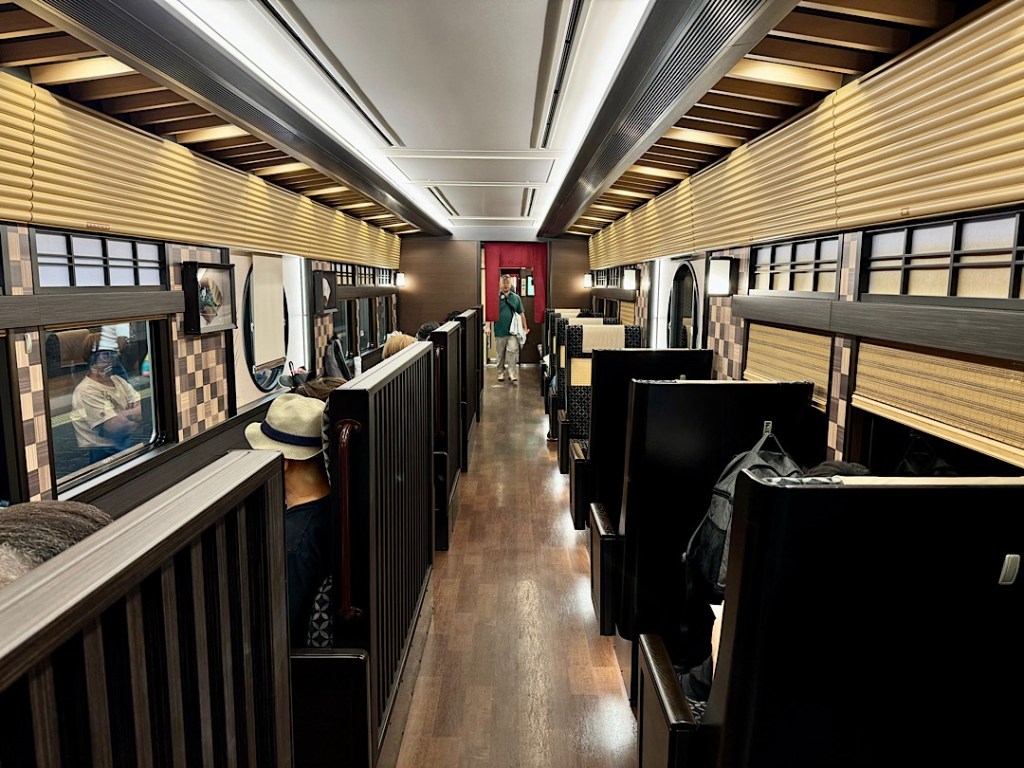
I can’t say that about the actual train that carried us from Kyoto to Osaka last Sunday. It wasn’t a bullet train. I don’t even remember how I learned about it. (Maybe a one-line mention in some guide book I consulted?) The Kyo-train GARAKU, as it’s called, only operates on weekends and holidays. The one we caught (the first of four making the round-trip that day) wasn’t mobbed with tourists. Many of our fellow passengers were Japanese. We didn’t have to buy any special ticket. We just used our marvelous “IC” cards (which worked on every bus, train, and metro line we took throughout the country, except for the Shinkansens.)

The 45-minute one-way trip from Kyoto to Osaka cost 410 yen, just under $2.75 per person. It was the most beautiful train I’ve traveled on anywhere.

Here it is, pulling into Kyoto-Kawaramachi station.
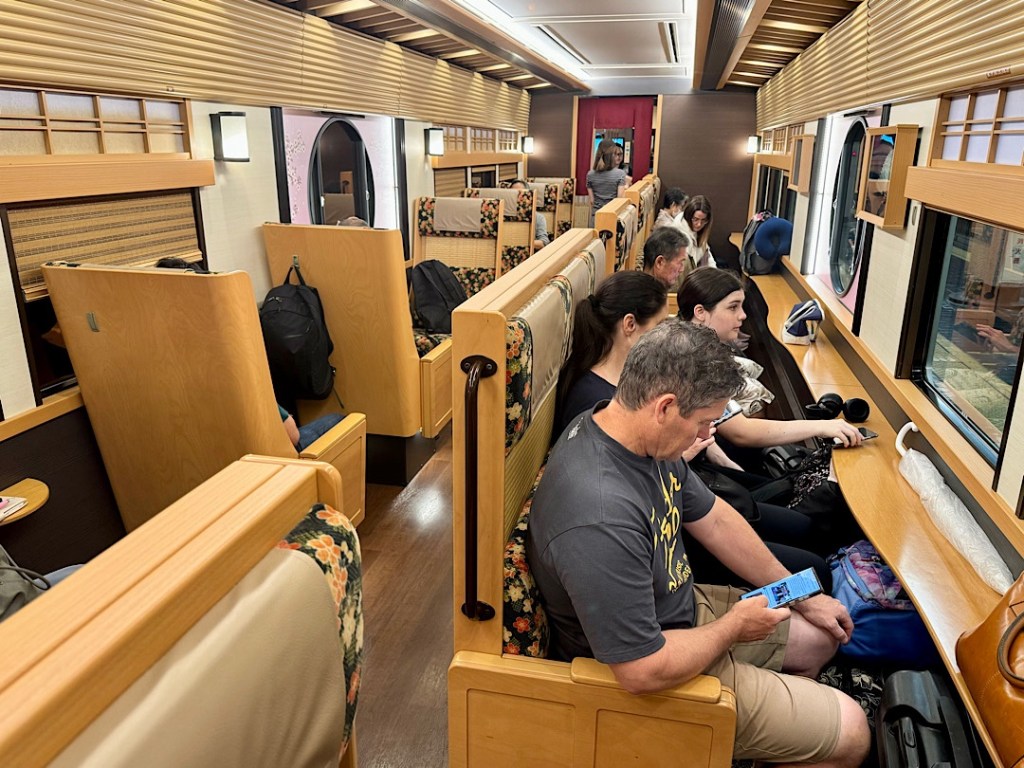
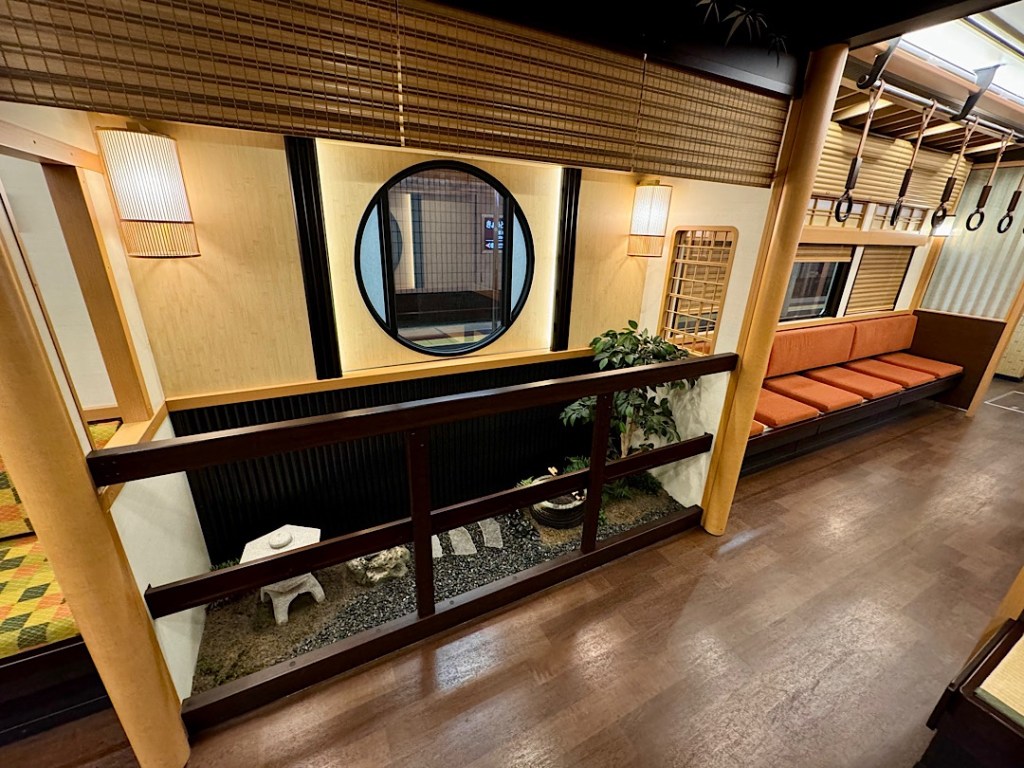
Here’s the car Steve and I sat in. Every car was unique in its decor.
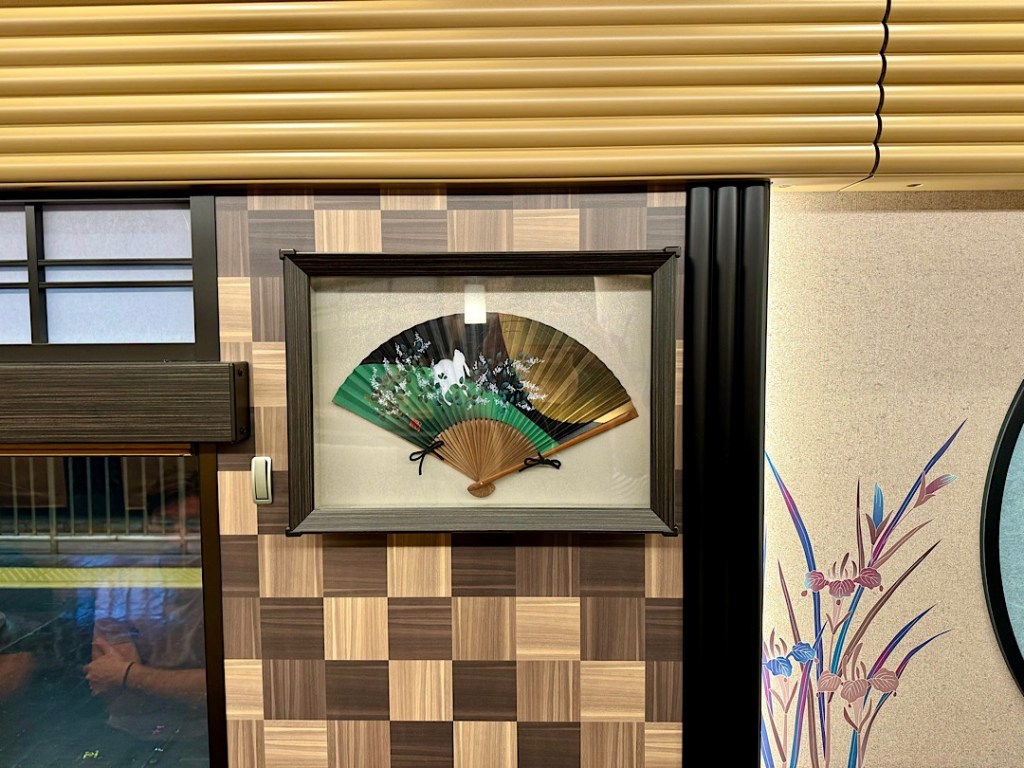
Art adorned the walls.
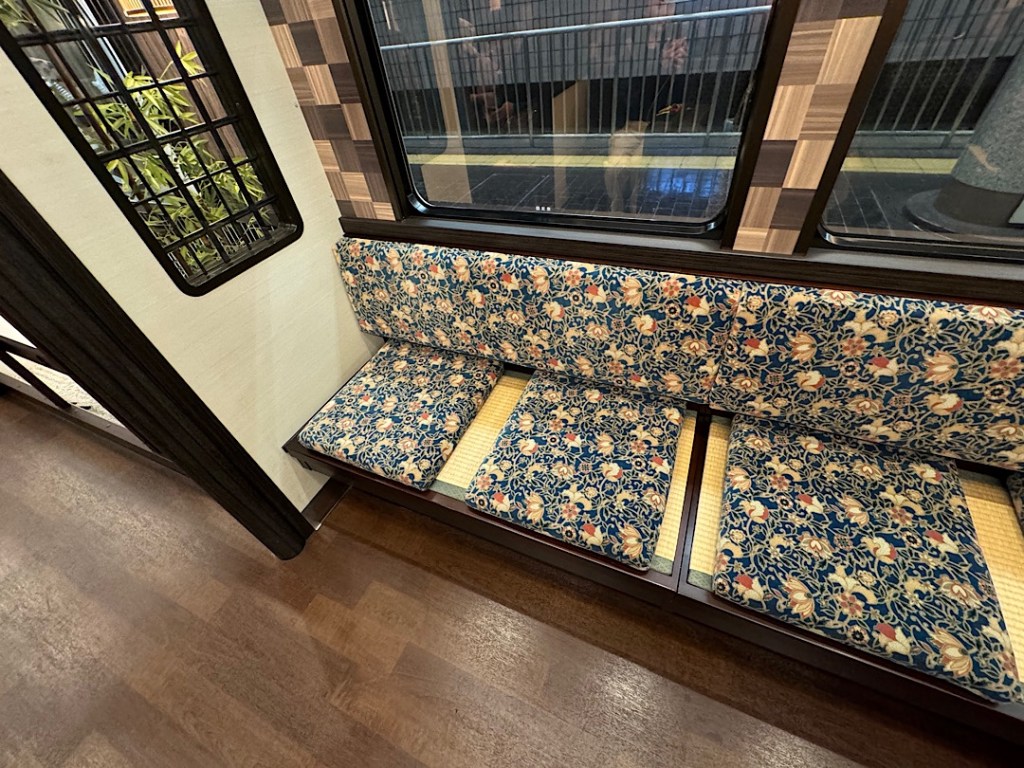
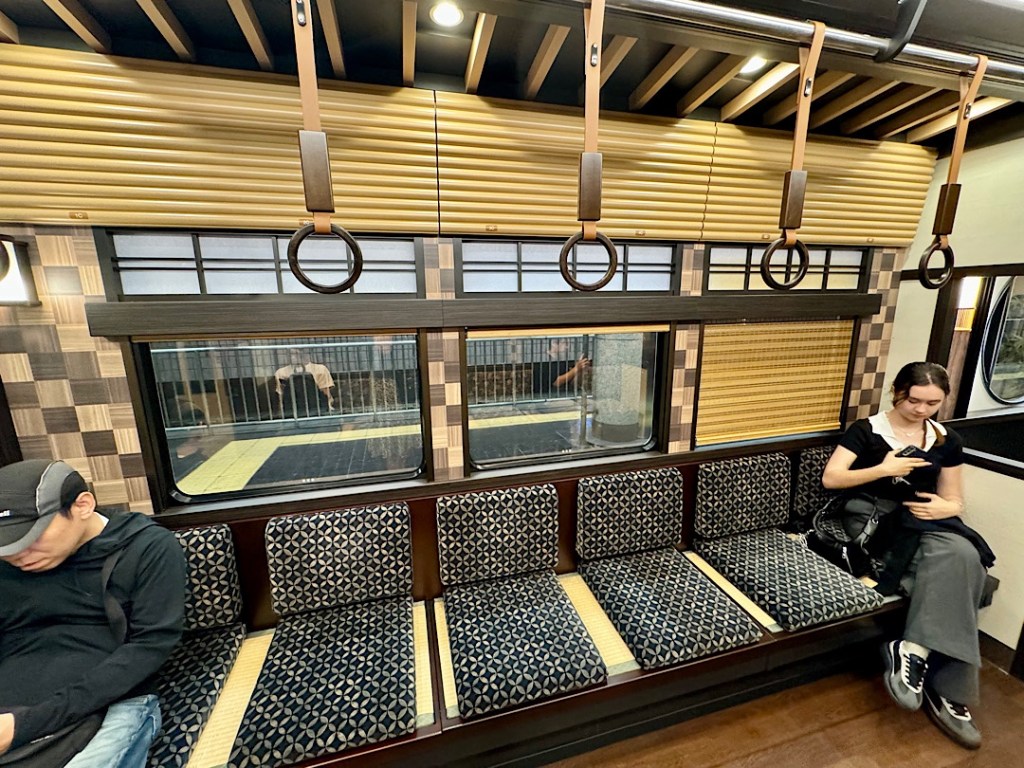
Some of the seating emulated traditional tatami (straw mats).
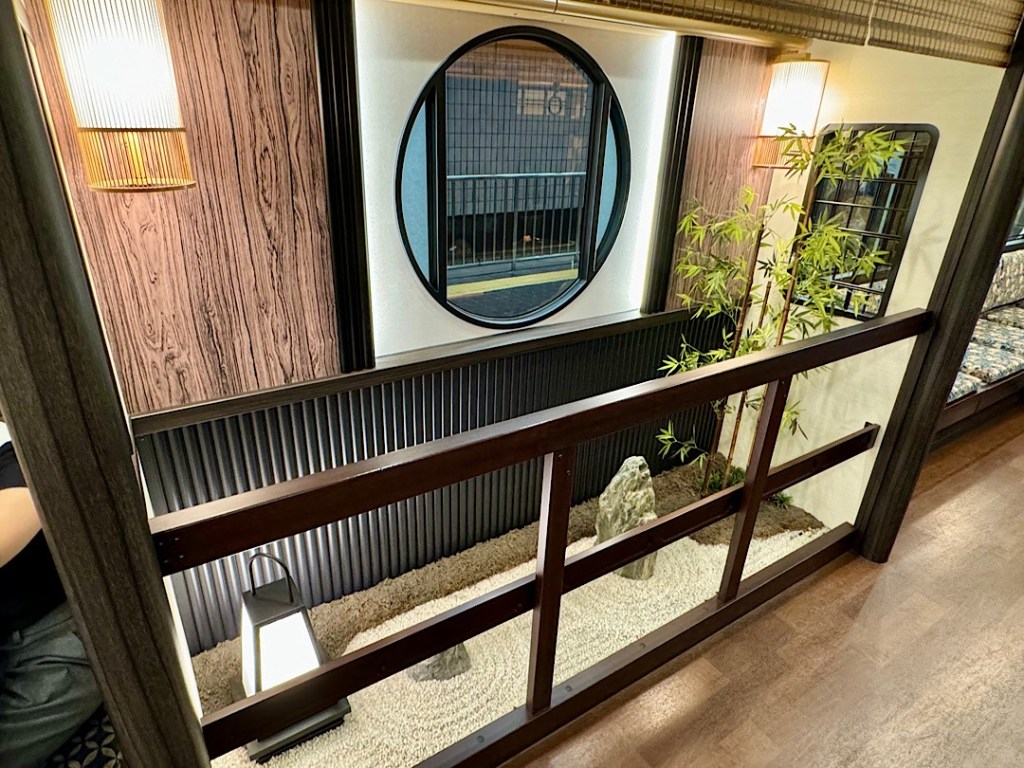
The train had not one but two gardens. This one included a little fountain.
This one had a Zen vibe, complete with raked sand.
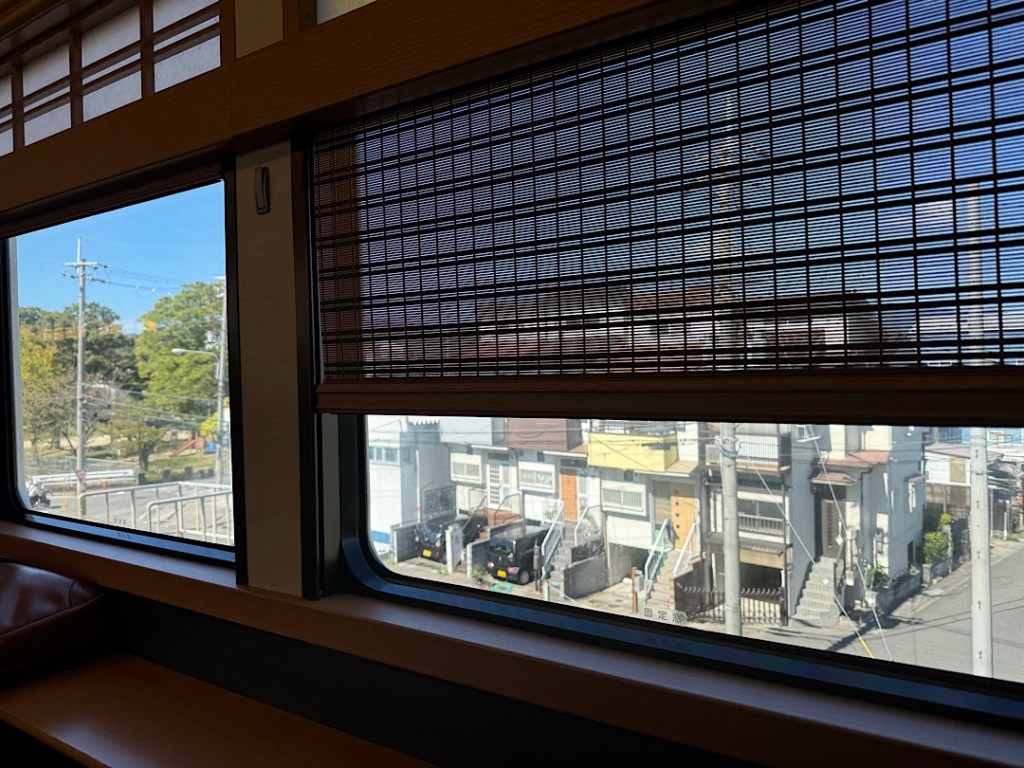
Woven wood shades could be pulled down.

Why did the Hankyu Railway (a private company) build this thing? Why do they charge so little for it? Why go to so much expense and effort to carry some passengers between Kyoto and Osaka (something Hankyu does routinely every day)?

As usual, there were no signs, no brochures answering any of my questions. We just had to enjoy it, in wonder.

How I wound up cuddling little pigs in Kyoto

The short answer is we got templed out. Kyoto has more than 2000 temples and shrines. When I was planning our Kyoto itinerary back in San Diego, visiting a dozen or so over the course of four full days seemed reasonable. Got that one wrong.

For one thing, I wasn’t prepared for how overcrowded the most popular sites would be. I had read that tourists were overwhelming Kyoto but I didn’t take it seriously; I figured the mobs would be gone by mid-October. I also read up on the times of day to best avoid crowds. But it turns out it’s hard to succeed at that.

The famous Fushimi Inari Shrine is open around the clock. If we had gotten there at 7 in the morning, we probably would have encountered few other visitors. But we didn’t make it there till a bit after 8, when people were beginning to stream in.
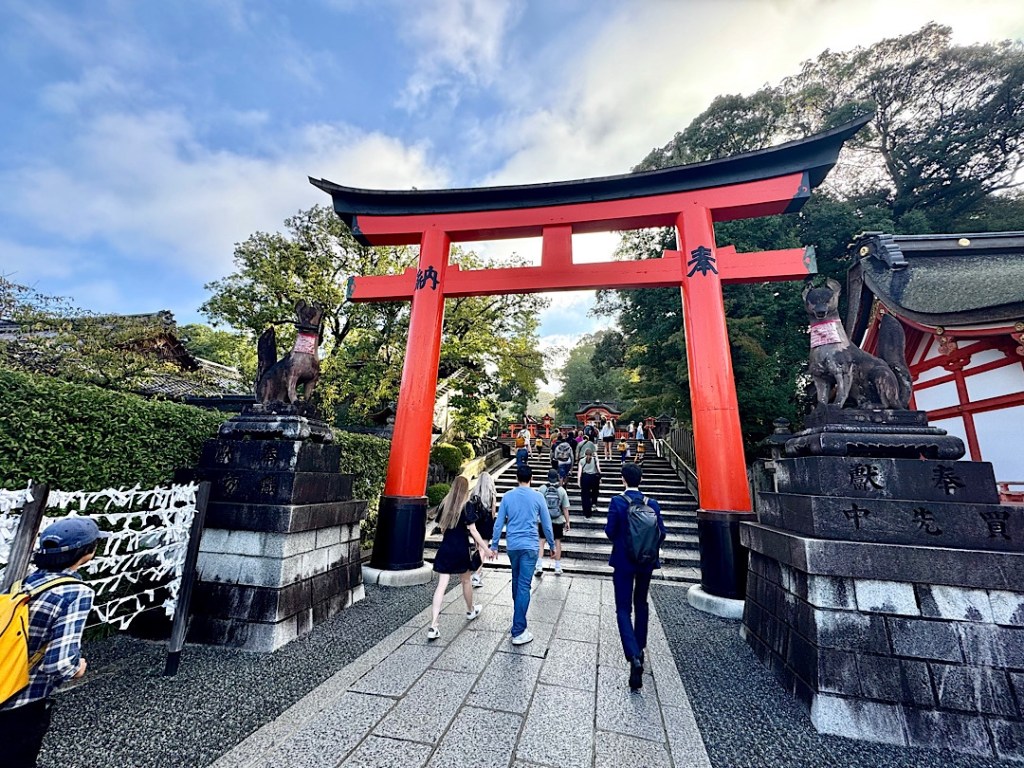
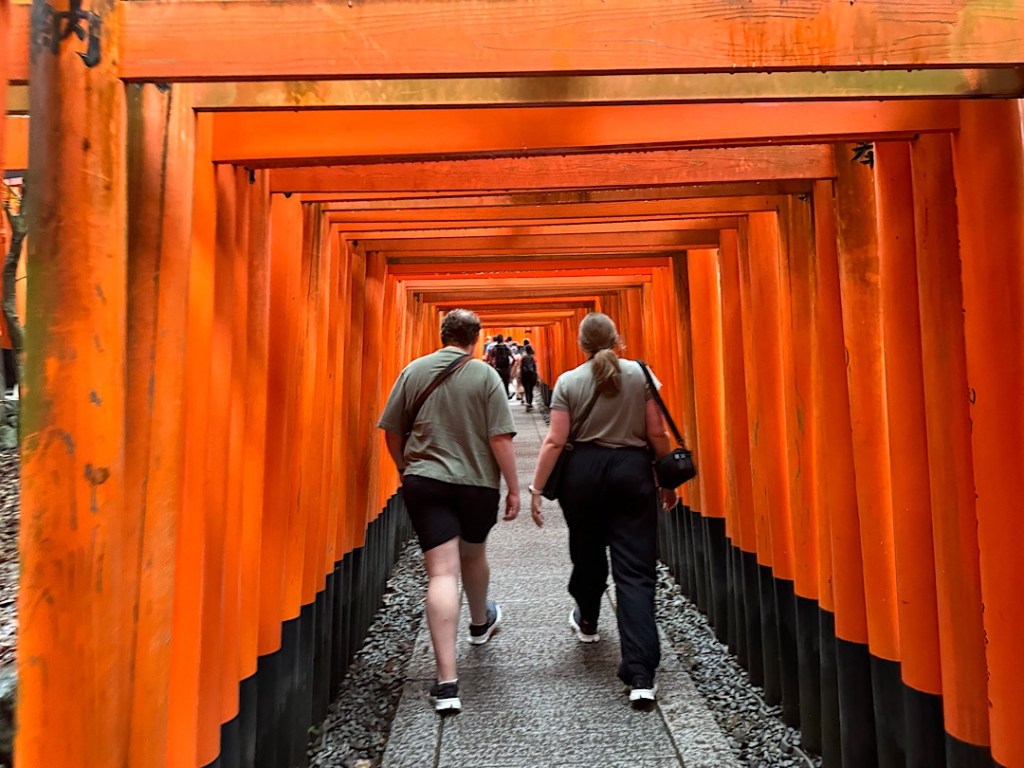
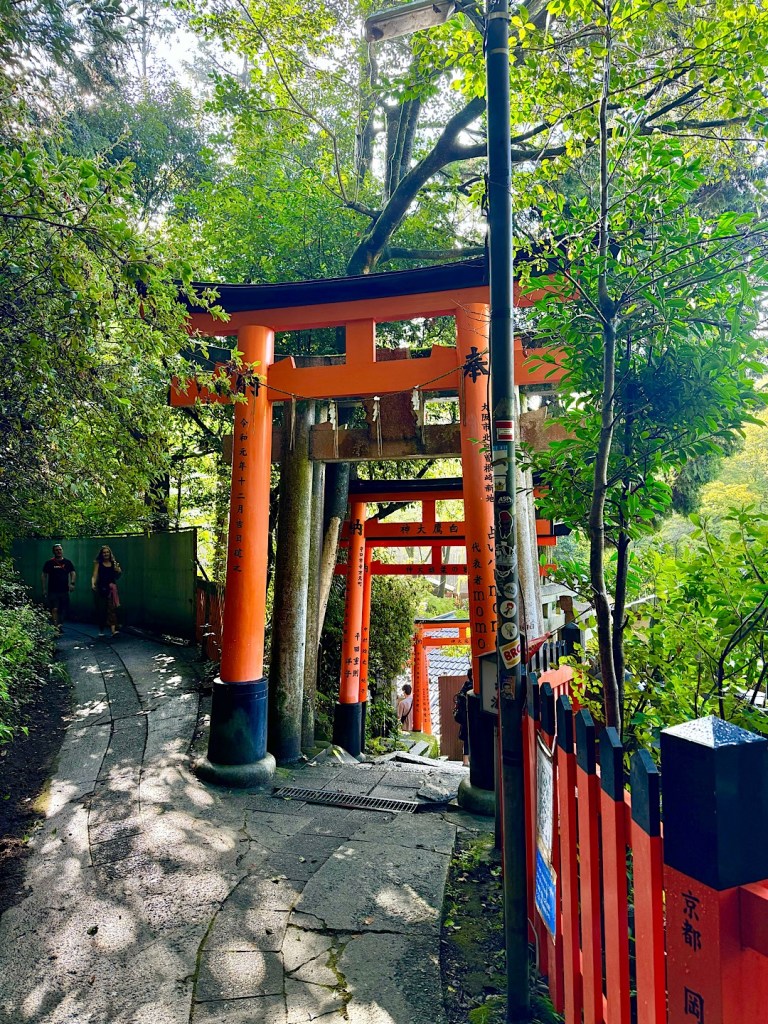
The shrine is notable for its tunnels of traditional Shinto gates.
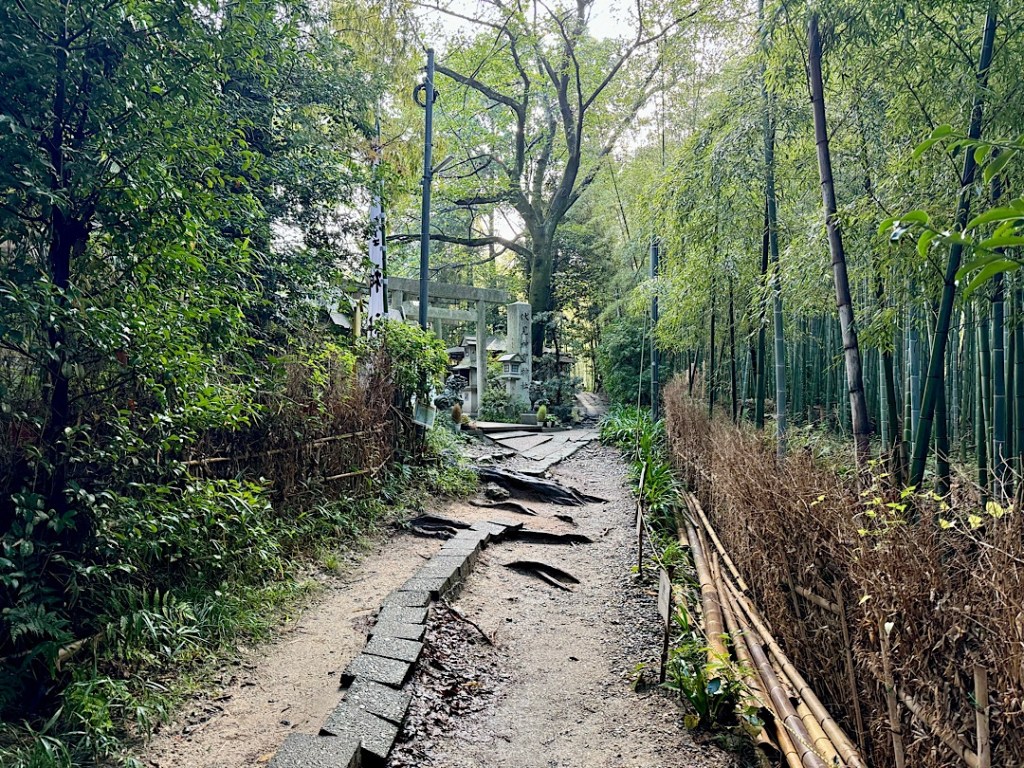
In search of some solitude, we found a side path up the mountain, which, though gateless, was eerily beautiful.
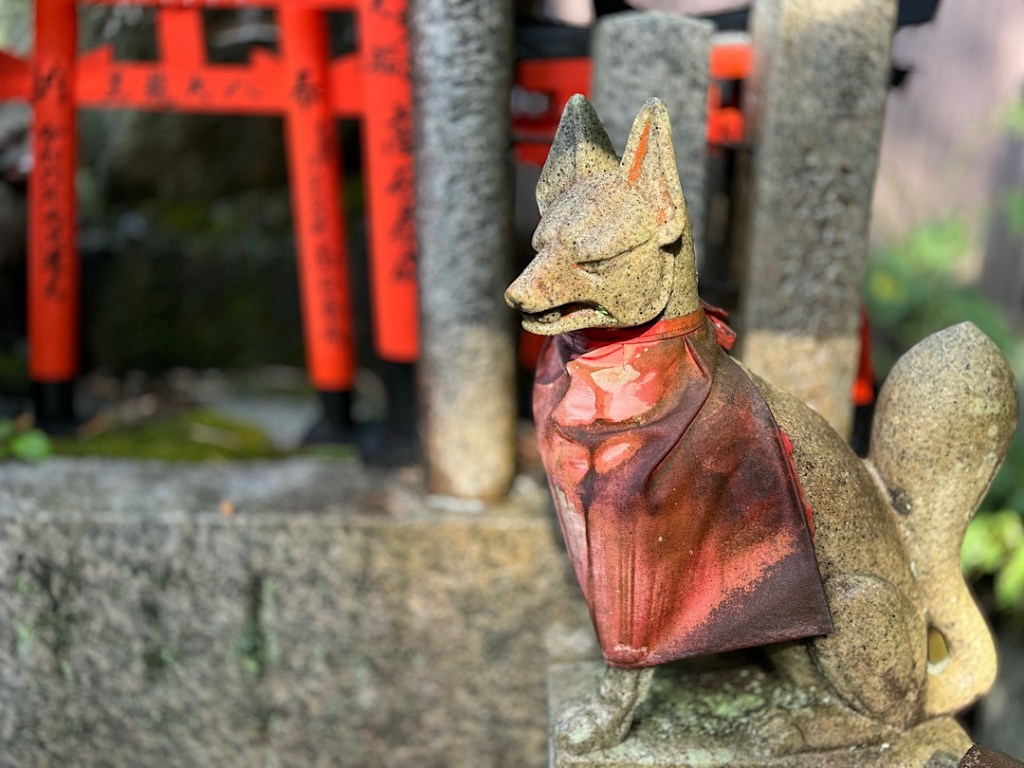
We found small weird side shrines filled with innumerable foxes, the ancient god of rice and the reigning presence at this shrine.
People also place miniatures Shinto gates in the side shrines.
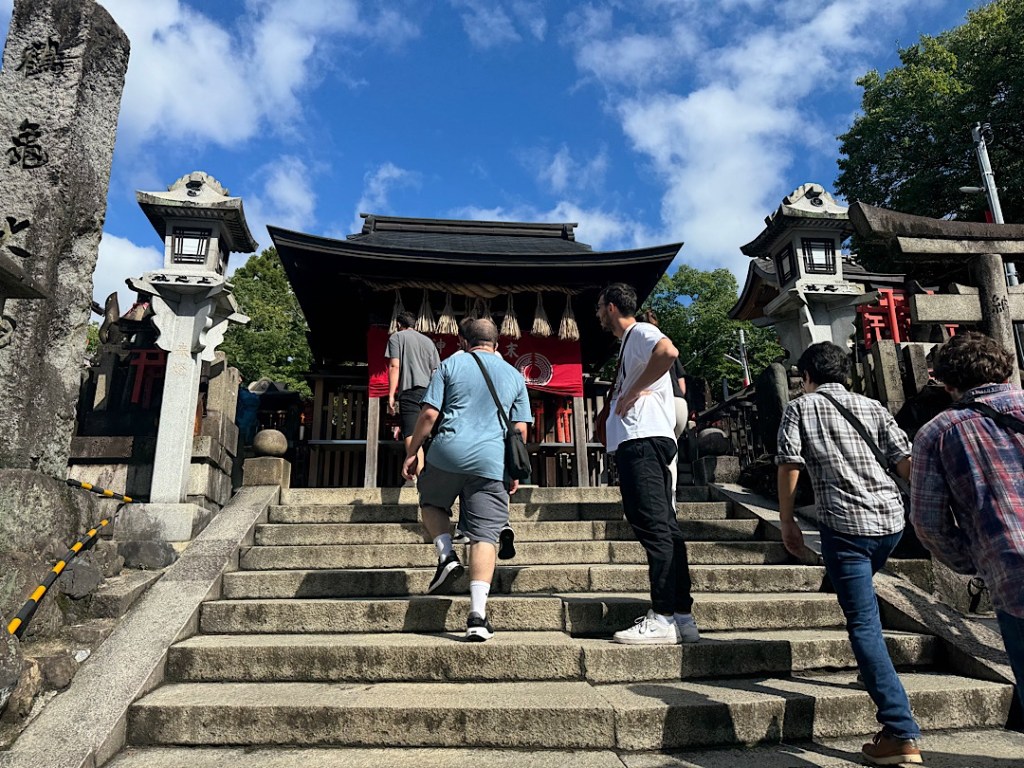
Toward the top of the mountain the gates — and other tourists — started to multiply.
The further we went down the main path, the more crowded it got.

The only other time Steve and I have been to Kyoto — back in 1979 — the city reportedly attracted 6.5 million visitors. I just read that in 2023, more than 75 million came. We saw more foreigners than we had in Hiroshima, and at every major attraction we encountered the kind of crowds that fill Disneyland the week after Christmas. It takes energy to push your way through that.

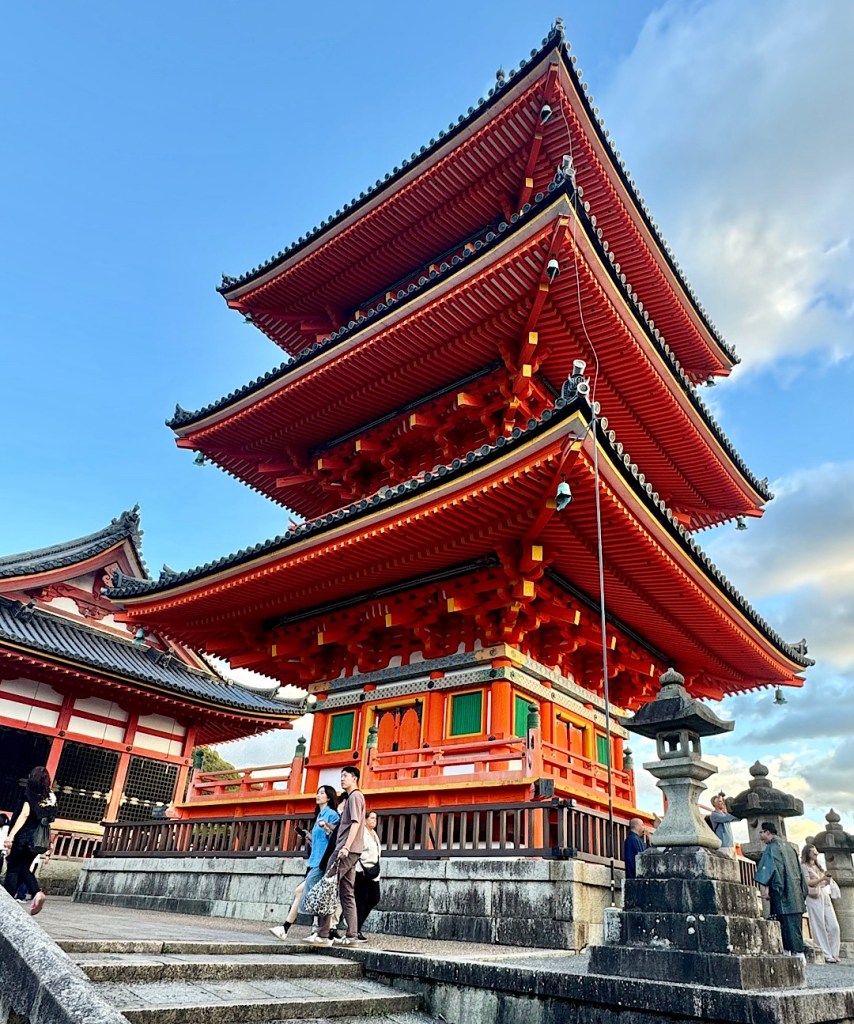
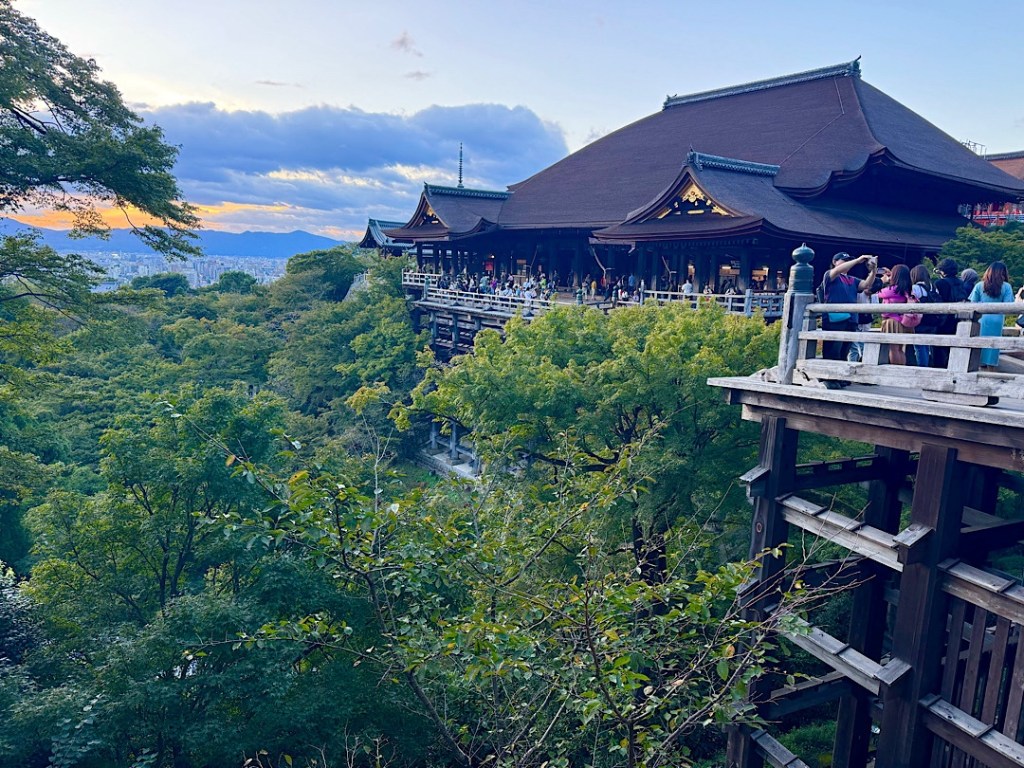
After Fushimi Inari’s congestion, Steve and I returned to our Airbnb and took a short nap. Around 4 that afternoon we set off for another of Kyoto’s most popular temples: Kiyomizu-dera —more than 1200 years old and filled with great architecture…

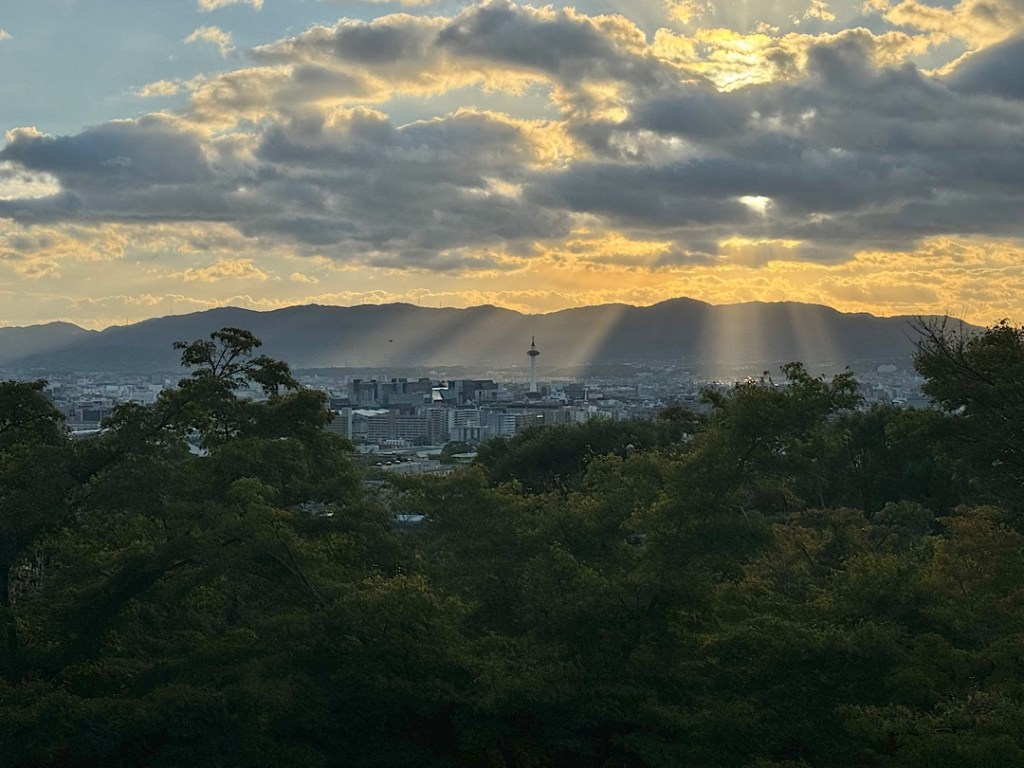
…wonderful city views…
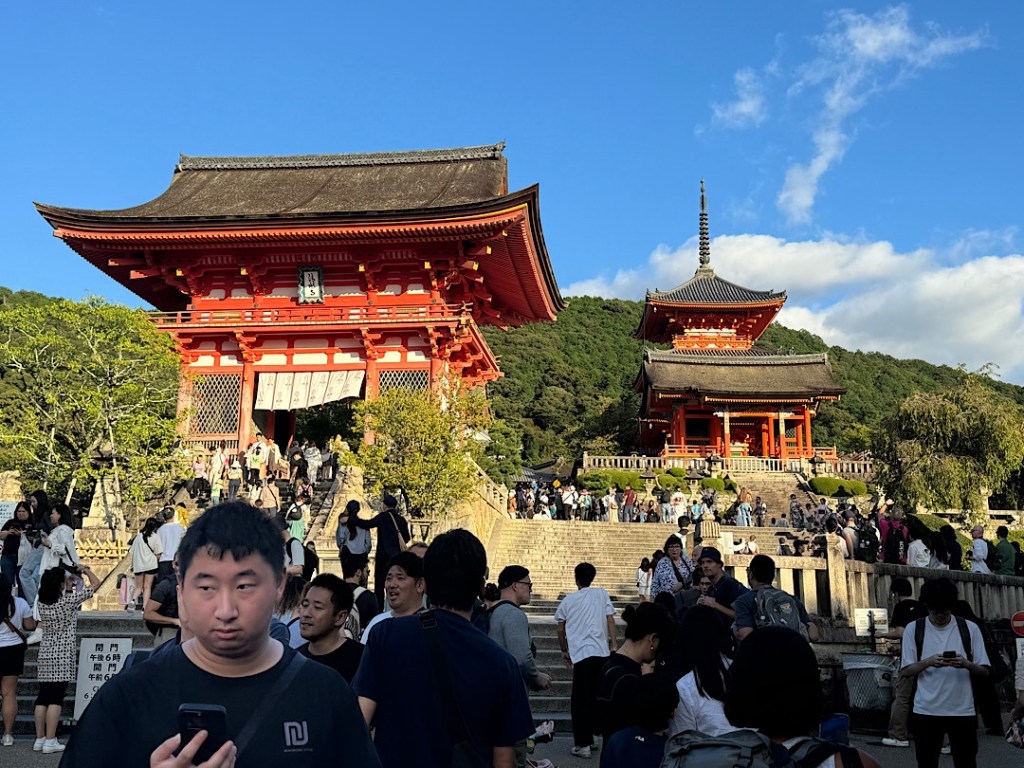
…also many, many other visitors (contradicting what I’d read about how they would be largely gone by sunset.)
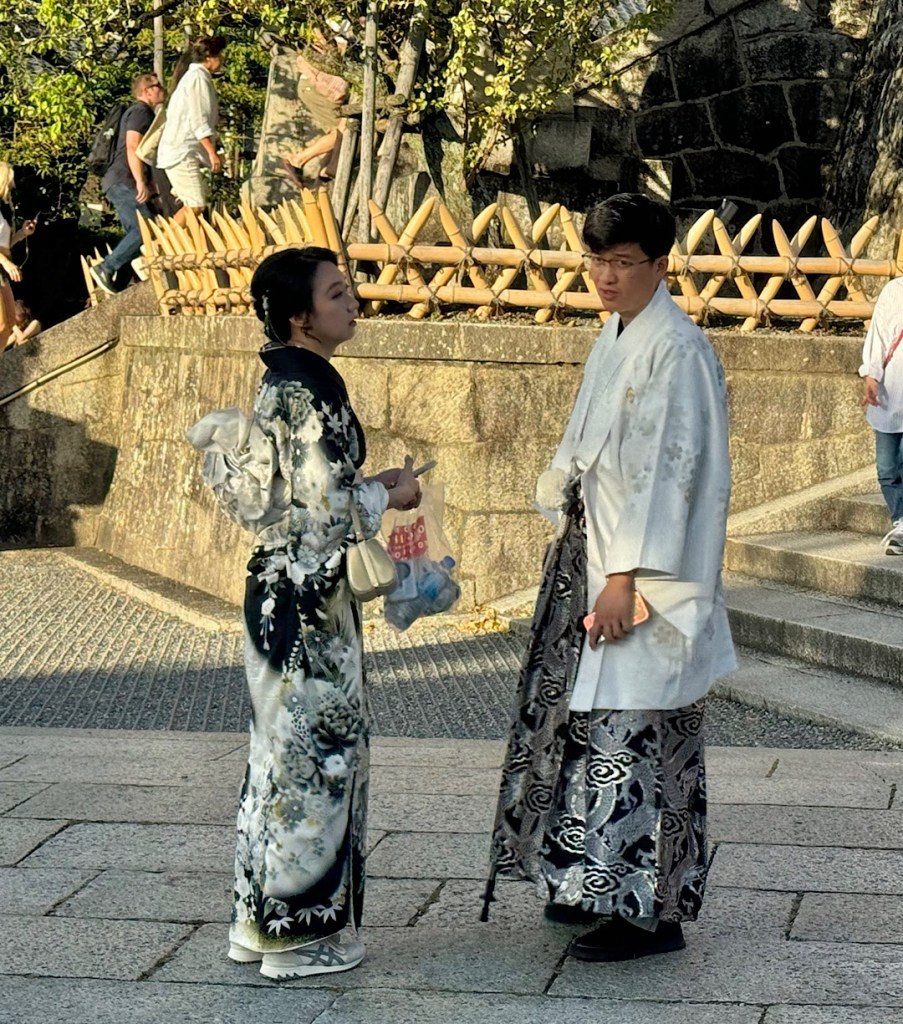
Many of the tourists wander around in rented kimonos, apparently to better savor the ancient Japaneseness of the place. These two looked Japanese but were speaking English with American accents.

Steve and I enjoyed taking it all in. Still, the concentration of visitors shocked us: all the clueless individuals blocking pathways as they posed for selfies; the surround-sound chatter; the constant need to change your pace to squeeze through clusters of bodies.

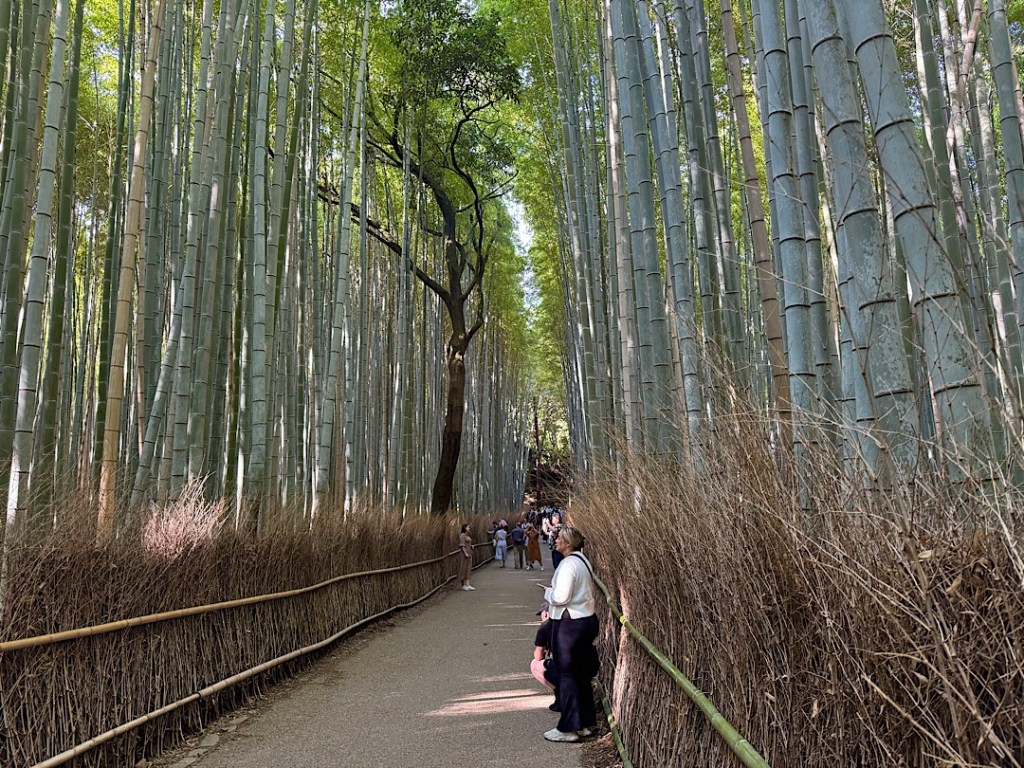
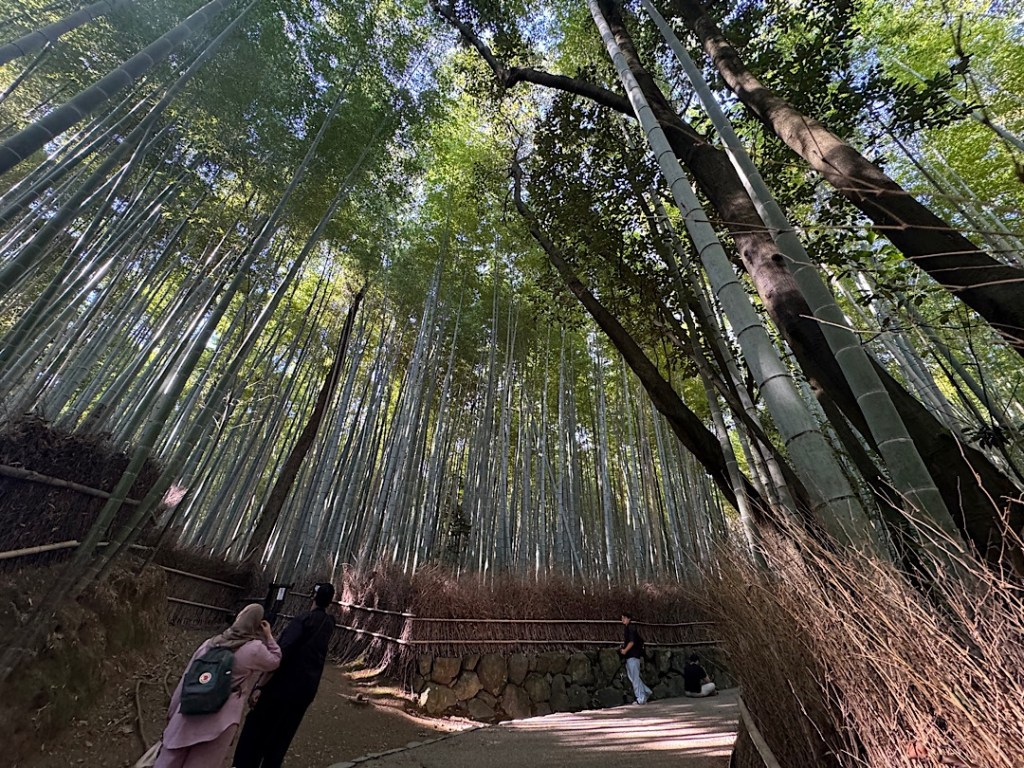
The next morning we tried even harder to get to our next touristic vortex as early as possible. But Arashiyama is on the far western edge of Kyoto, and it was 8:45 by the time we woke up, walked to the necessary train station, rode the train, and found our way to the famous pathway through the dense bamboo forest.

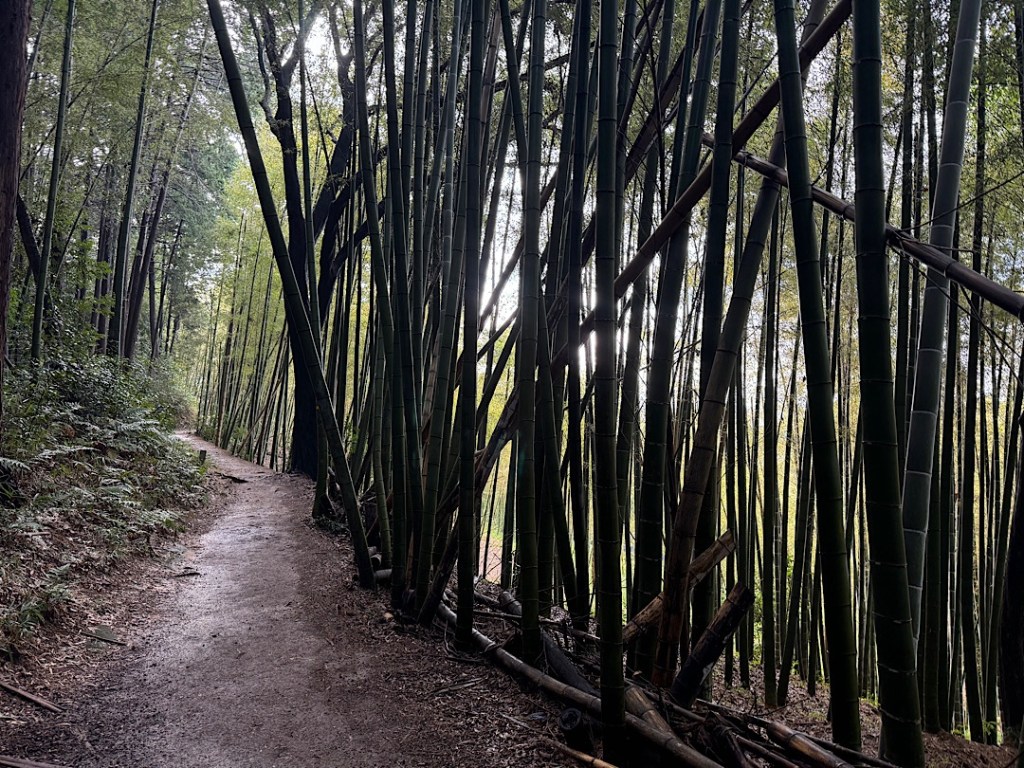
This is what it looked like when we first arrived.
Breathtaking.
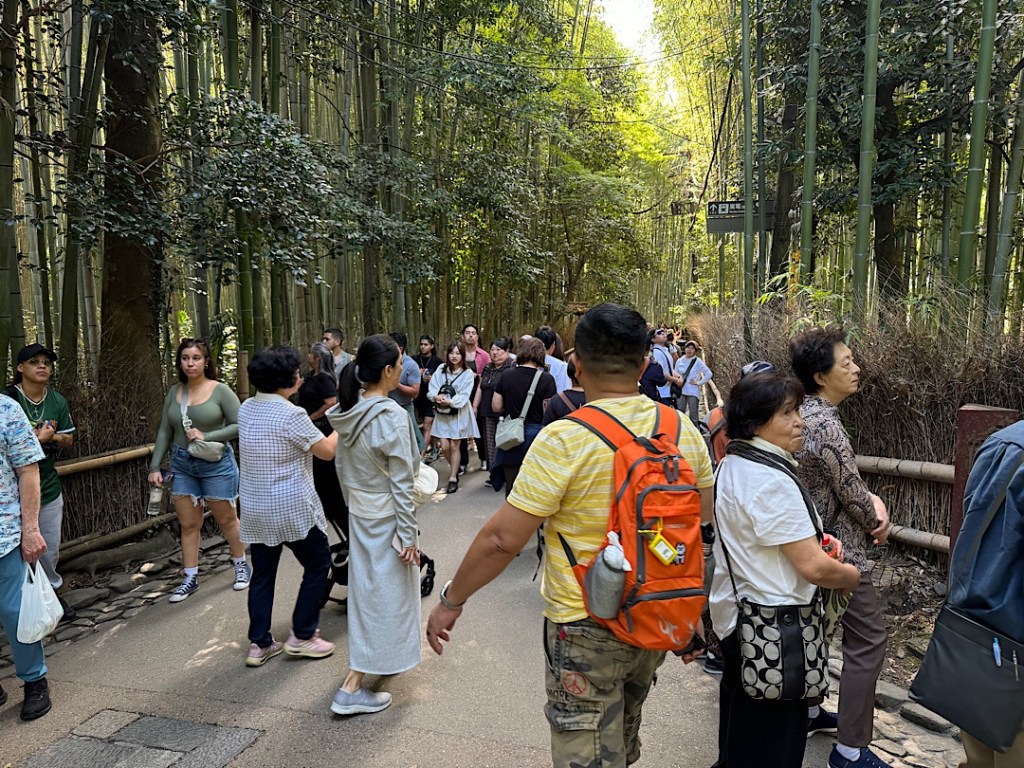
Around 9 the buses began arriving and disgorging their loads.

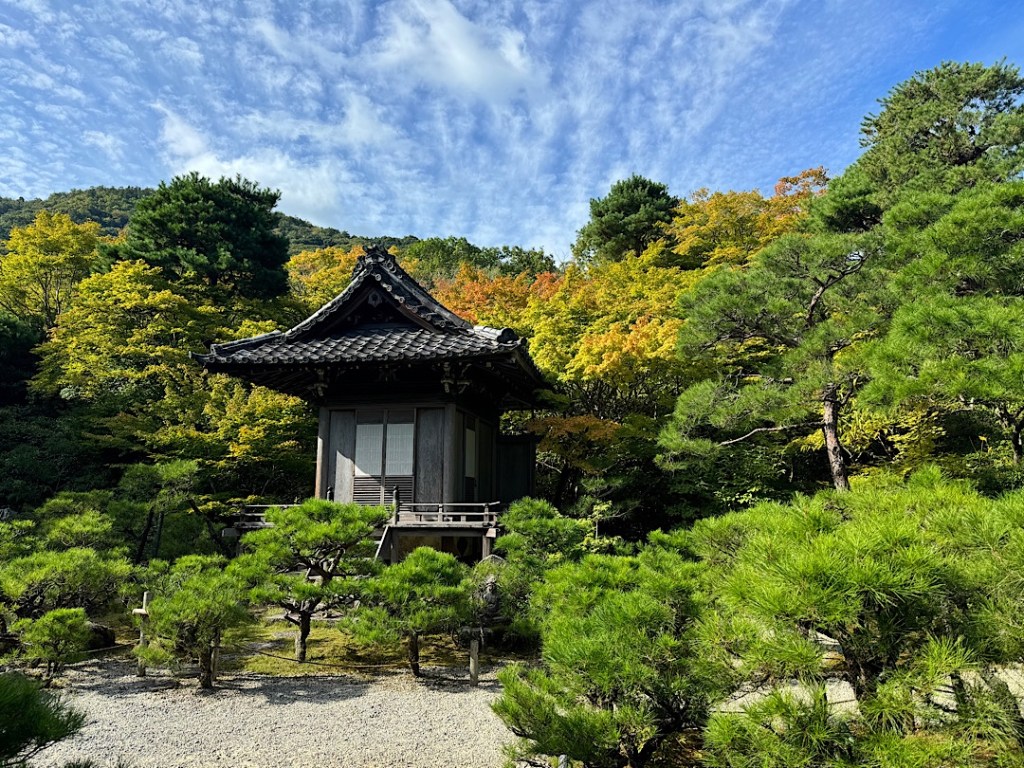
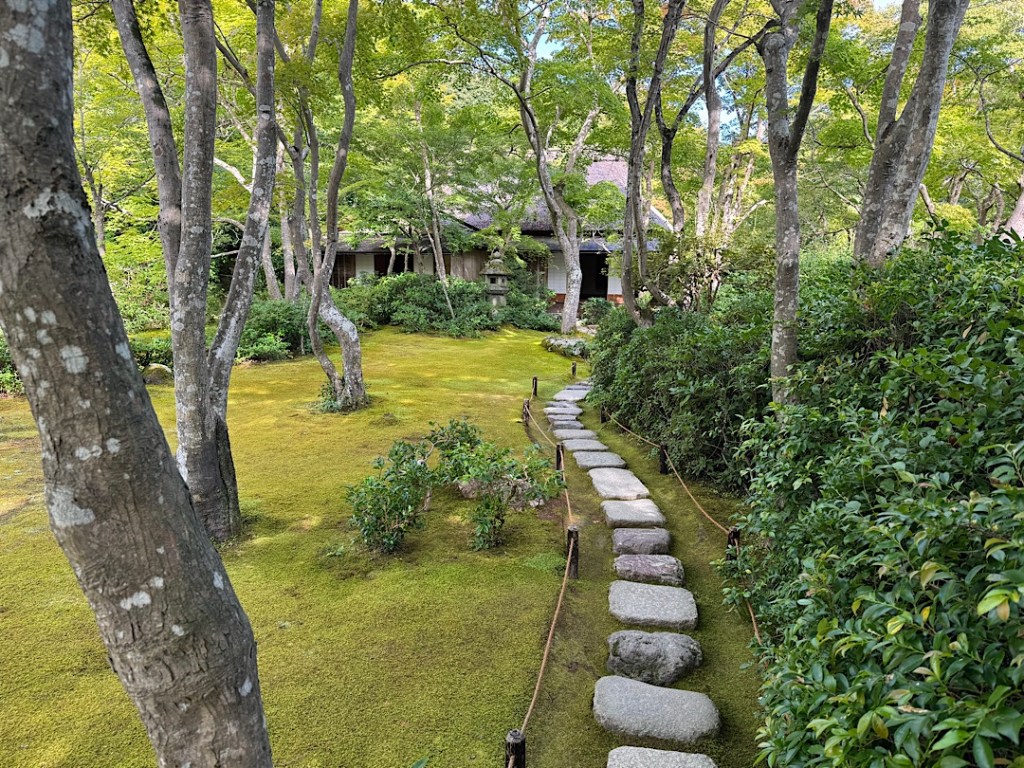
We did find some calmer enclaves to explore in the vicinity. We had the beautiful garden created by a Japanese movie star famous in the 1920s almost to ourselves.

Here and there we saw the first evidence of the approaching autumn.

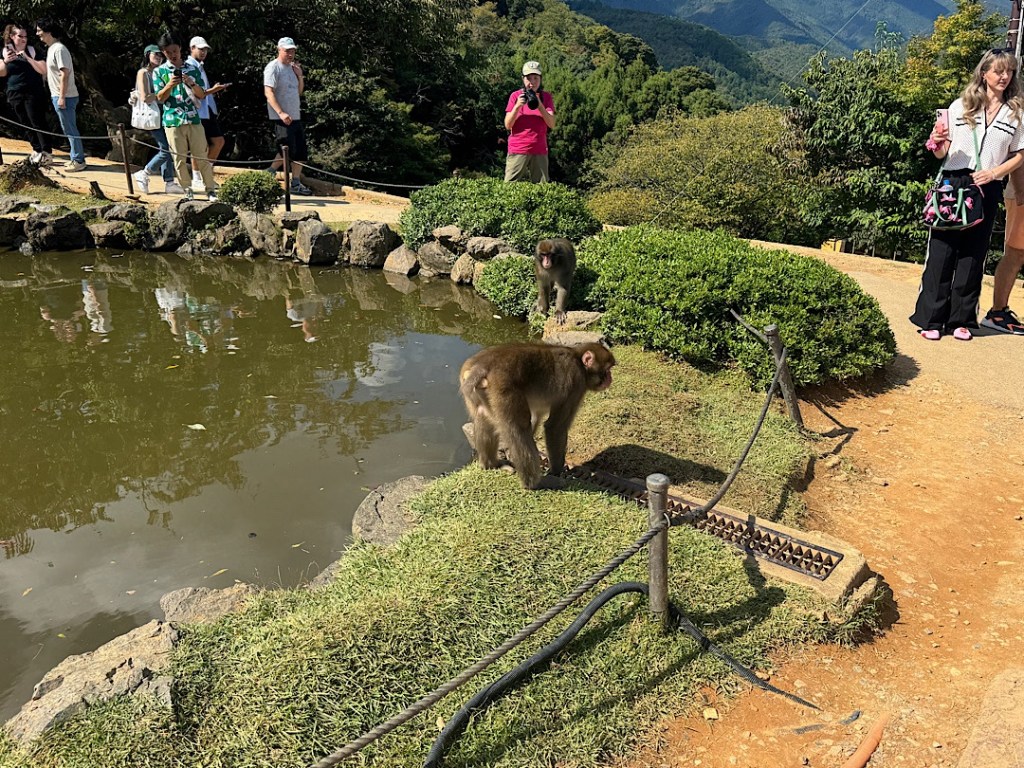
Back in the center of town, it was a steep 20-minute climb up to the Arashiyama Monkey Park, a preserve that’s home to wild native snow monkeys (the northernmost species of monkeys on earth.) The climb surely must have discouraged some visitors. But not that many, or so it appeared.

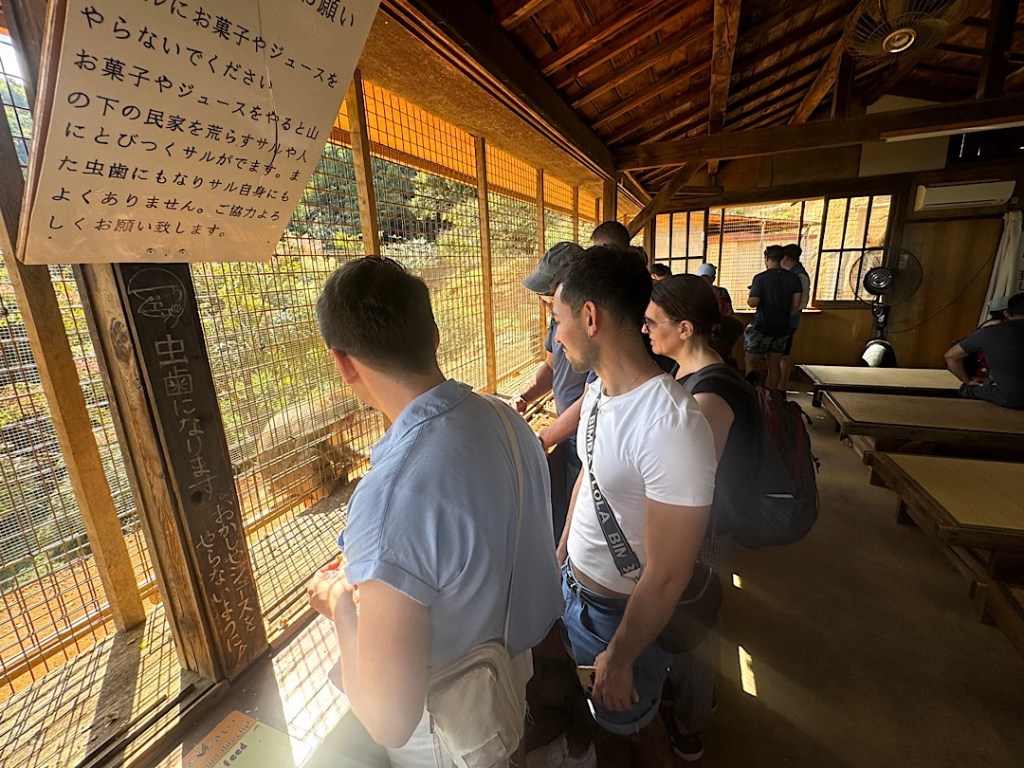
Hilariously, the humans had to enter a big cage in order to feed the monkeys who were peering in at them from outside.

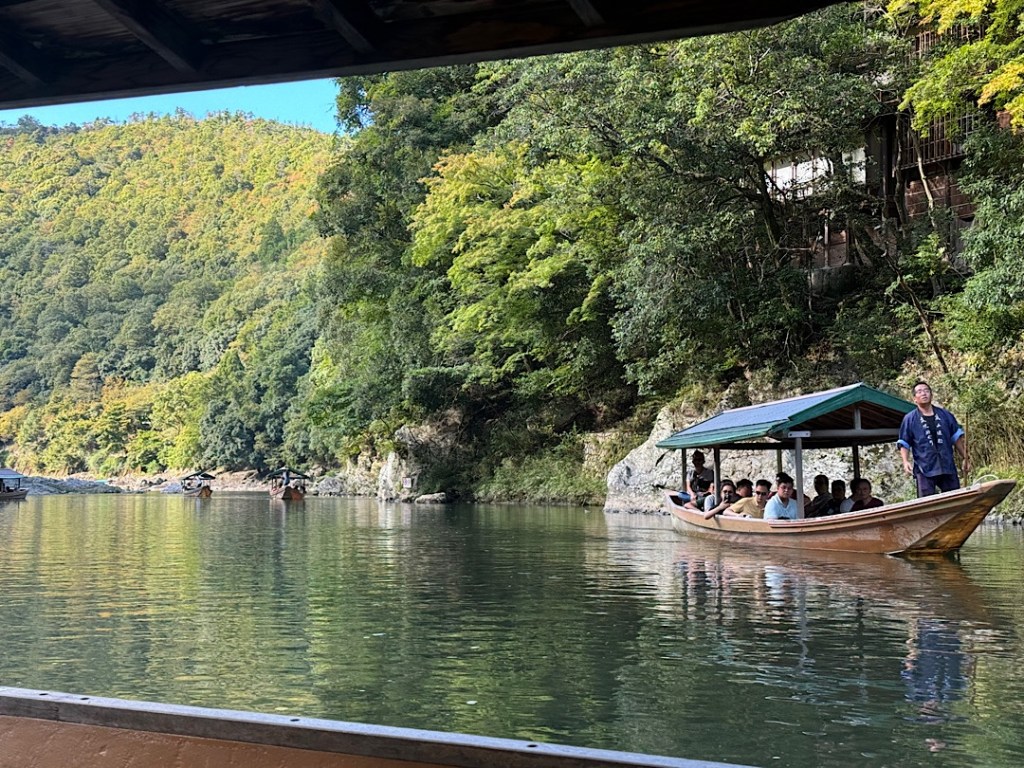
A half-hour boat ride on the Hozu River felt soothing.

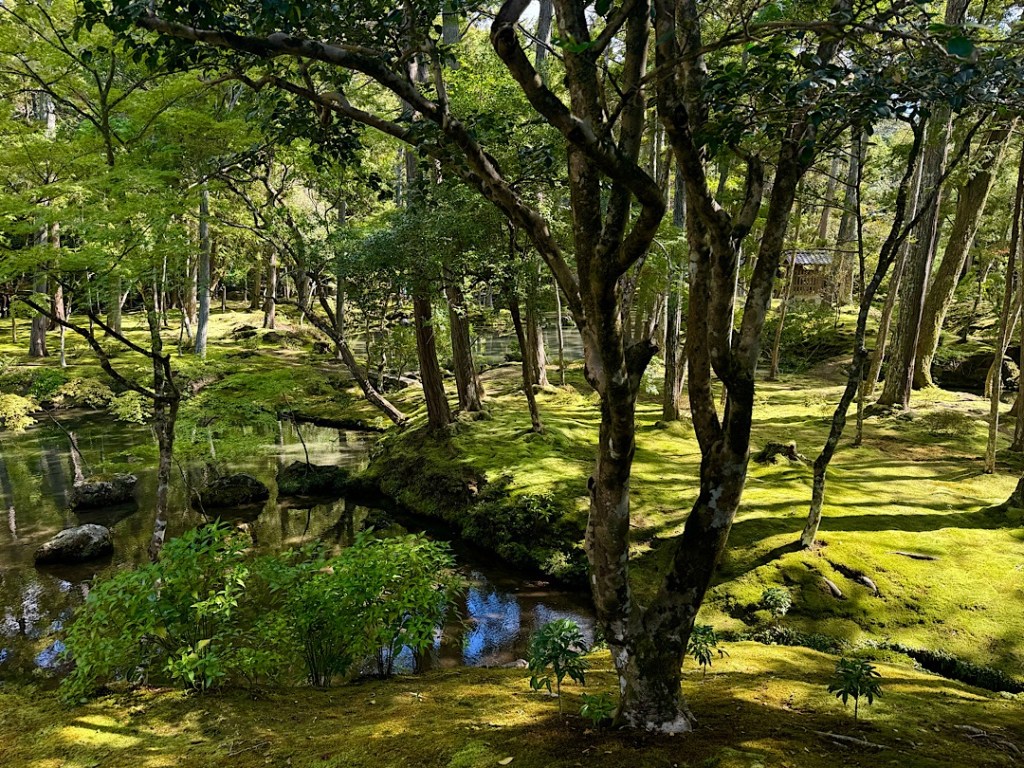
Even more serene was our visit Friday morning (Oct 11) to Saihoji (aka Kokedera), a Zen Buddhist temple renowned for its beautiful central pond…

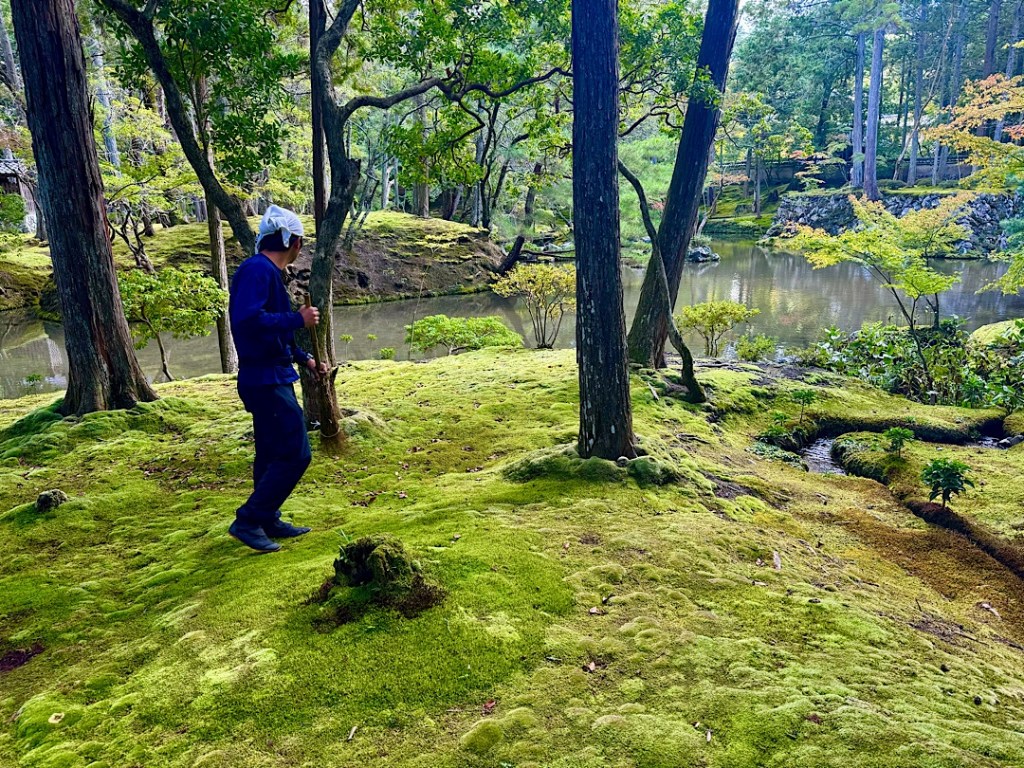
…and vast expanses of emerald moss. It’s an exceptionally peaceful place to meander.

No leaf blowers allowed here!

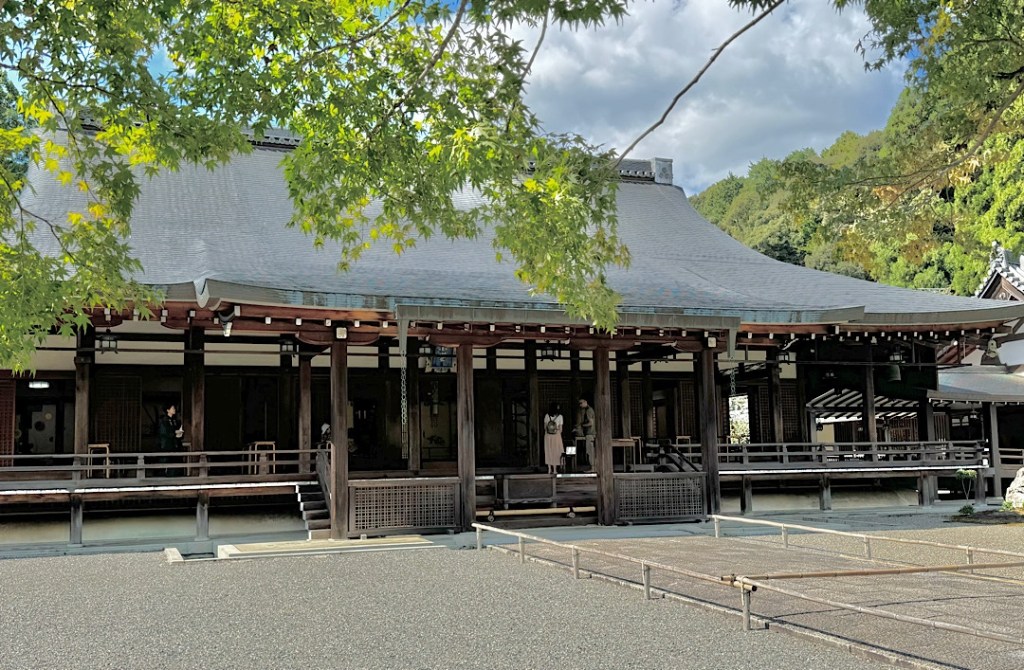
The only reason it wasn’t crawling with tourists is because the temple managers strictly limit the number of people they let in every day. (I had to make my reservation months in advance.) Each visitor also must begin his or her visit by sitting in silence and copying a kōan (a sort of Buddhist religious verse) to settle the mind.

We weren’t allowed to take photographs in the central hall, where we did the copying. But this is what it looked like from the outside.

As delightful as the Moss Temple was, by the time we made our way home, I felt like I had used up all my temple-visiting energy, at least for this visit to Kyoto. Steve shared my feelings, so we decided to scrap the rest of my careful plans, in favor of… shopping.

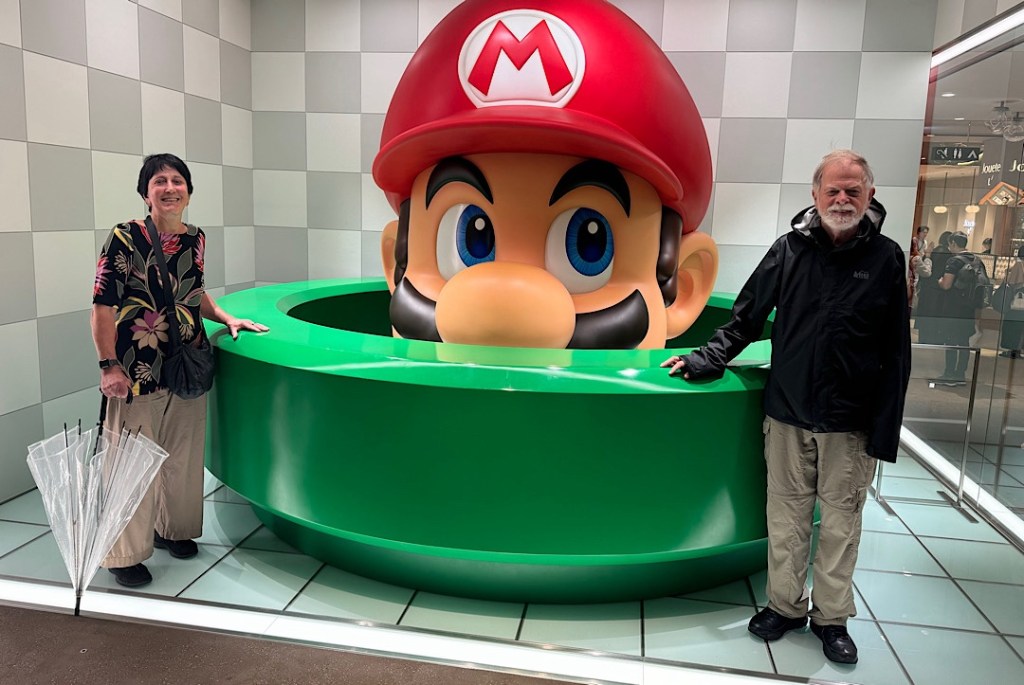
Nintendo’s headquarters are in Kyoto, and the company has recently opened several retails stores throughout Japan. The Kyoto branch, just ten minutes from where we were staying, was another mob scene. But fascinating!

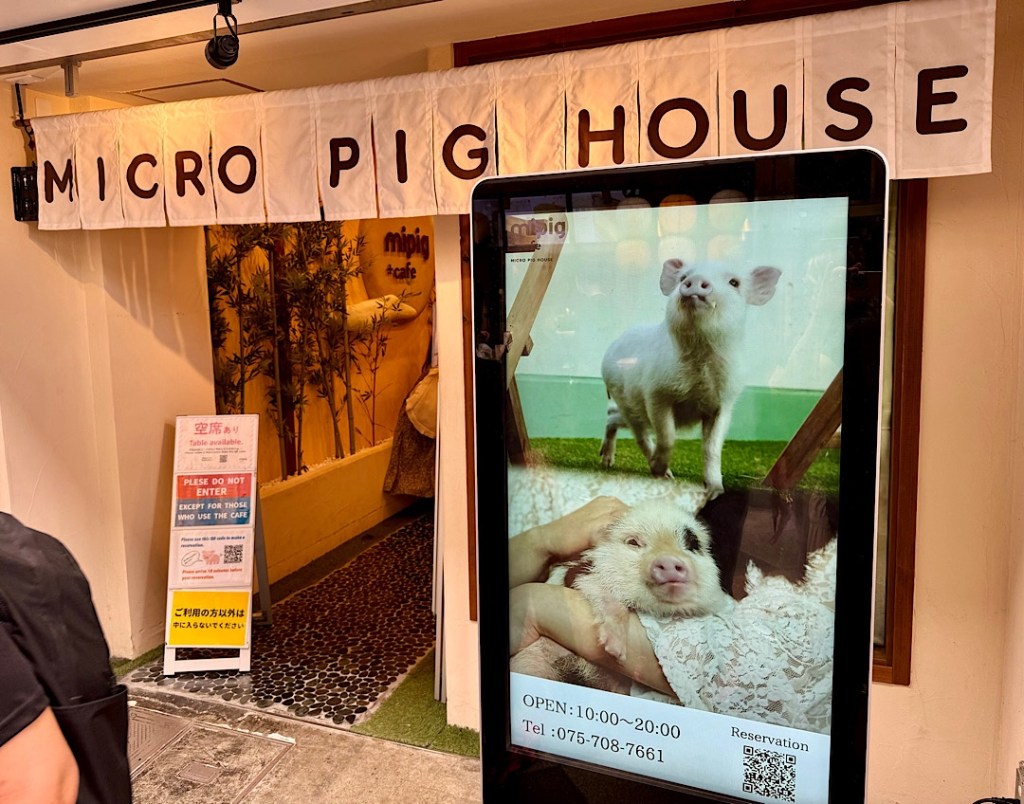
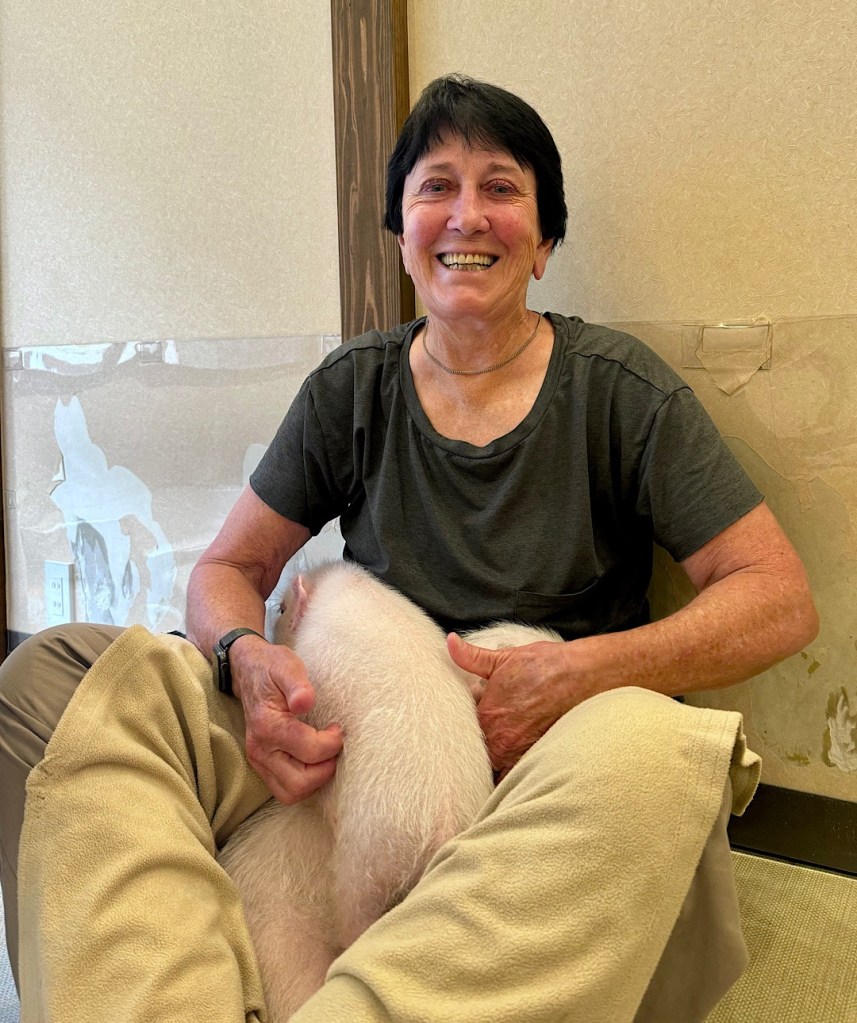
We also visited the Kyoto Railway Museum. And I spent some time in the pig cafe near our Airbnb.

Pig cafes are a spin-off of the cat cafes that first appeared in Japan about 20 years ago; those are havens in which one can relax, relieving stress by stroking purring felines. Dog cafes followed some years later; the pig cafes are a further iteration.

I’d read about such places, and talking with the Czech tourist at our beef dinner in Kobe fanned my desire to visit one. She’d been to a pig cafe in Osaka and raved about the experience. Steve was mildly revolted by the idea of paying money (a little under $15) to interact with farm animals. But he couldn’t talk me out of it, so I made an appointment for a 30-minute session at the MiPig Cafe in one of the shopping arcades near our Kyoto Airbnb.

I had to take off my shoes, stow them in a locker, and climb to the second floor of the narrow building. An attendant assigned me to one of the four low tables in a room containing 8 pigs — two older ones and 6 youngsters all about 7 months old. My companions at the other tables were a German family (mom, dad, and three adorable kids) and a couple from somewhere in Latin America.

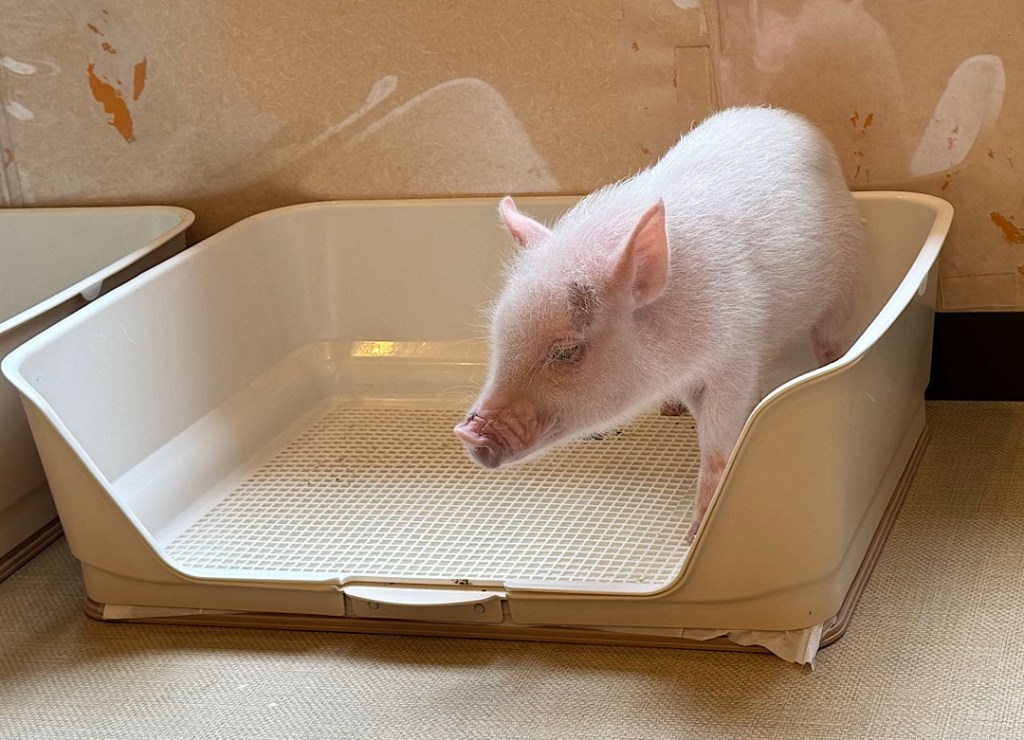
I can now understand why the Czech woman fell in love. The young “micropigs” have outrageously long eyebrows, and they wag their tails as vigorously as puppies. They looked and smelled very clean. When they needed a toilet break, they leapt to their hoofs and trotted over to a piggy version of a litter box to relieve themselves.

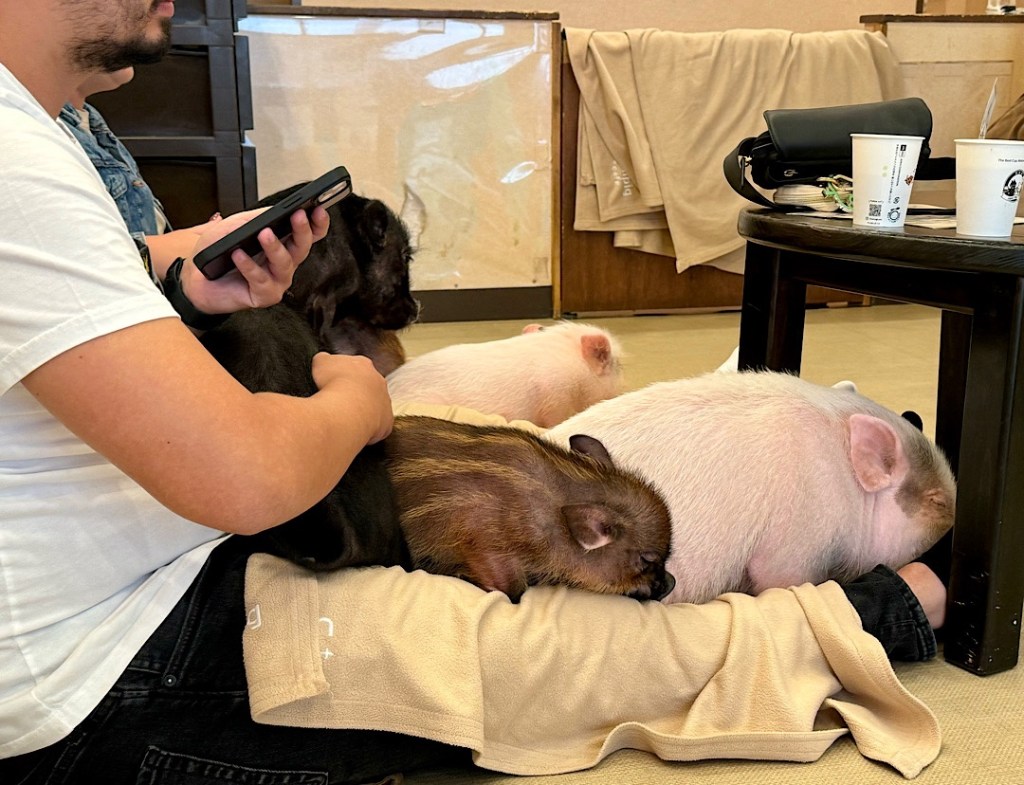
One of the mother pigs immediately settled in on the Latin American guy’s lap, and several of the youngsters soon followed her.

I’m sorry to report: they did not steal my heart. It seemed clear to me that what the pigs most loved was to snuggle up with other pigs.

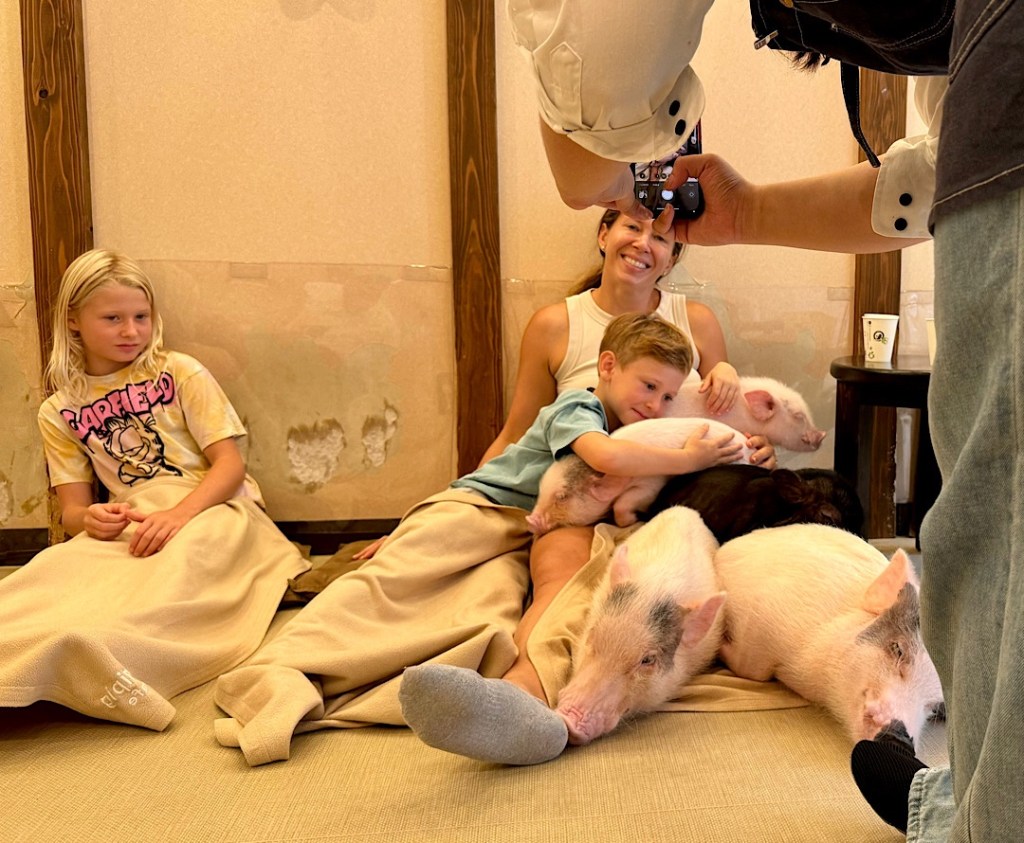
It took a while, but the German lady won over the two big pigs and two youngsters.

One of the sweet young attendants kept trying to entice at least one piglet to me. But for the longest time, they kept returning to Señor Pig Whisperer.

Finally, “Bobby” settled into my lap, and a sibling joined him. The attendant took a photo, documenting my success.

I petted them a bit. They snoozed, oblivious. I really wanted to feel Bobby’s snout, but the attendant warned against this. It might provoke him to bite me, she said.

Puppies, I later pointed out to Steve, would be a different experience. Maybe I should check out a dog cafe! He retorted that I will have my own puppy to snuggle soon enough. We fly home tomorrow evening and pick up Vanessa (our current service-dog trainee) on Friday.

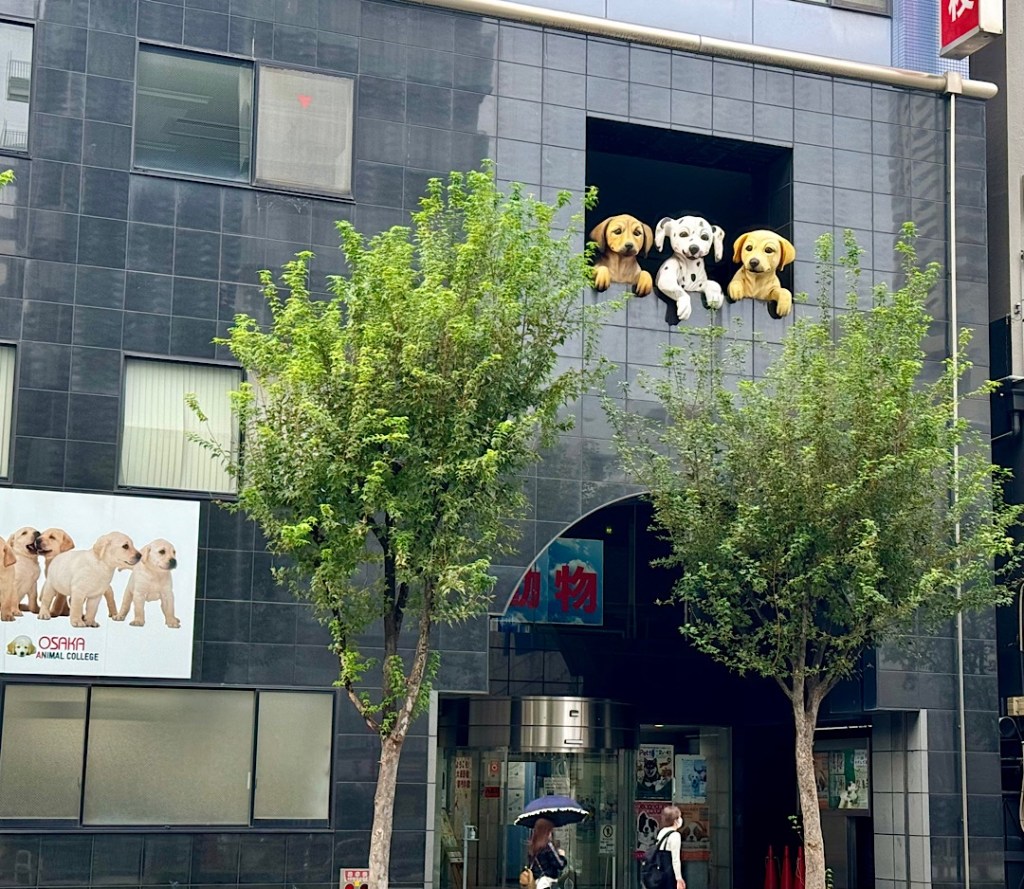
I resisted this puppy cafe across the street from our Osaka hotel. But barely.

Little Boy’s Target

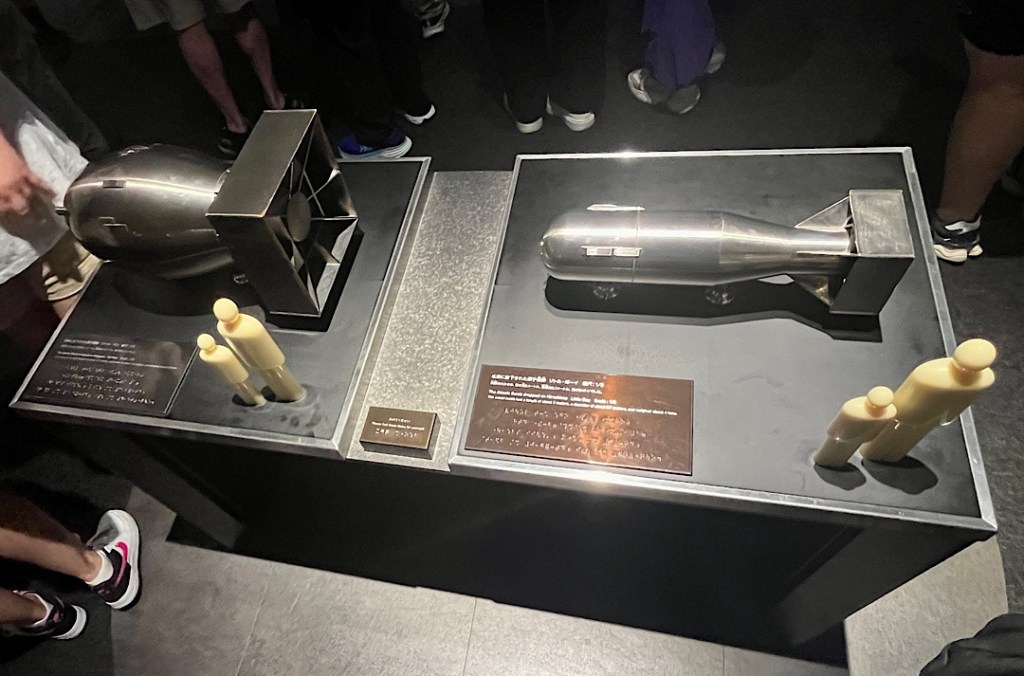
One-tenth scale model of the bomb dropped on Hiroshima: “Little Boy” on the right. “Fat Man” on the left hit Nagasaki three days later.

I didn’t need to visit Hiroshima to understand that terrible things happen when you drop an atomic bomb on a city. I learned that lesson as a little girl, growing up during the Cold War; everyone knew about duck-and-cover drills and bomb shelters (the likes of which of course my family couldn’t afford). As a 7-year-old, I knew a single bomb could incinerate me and everyone I loved in an instant, and I thought poisons would linger in the air and ground for an unimaginable aftermath.

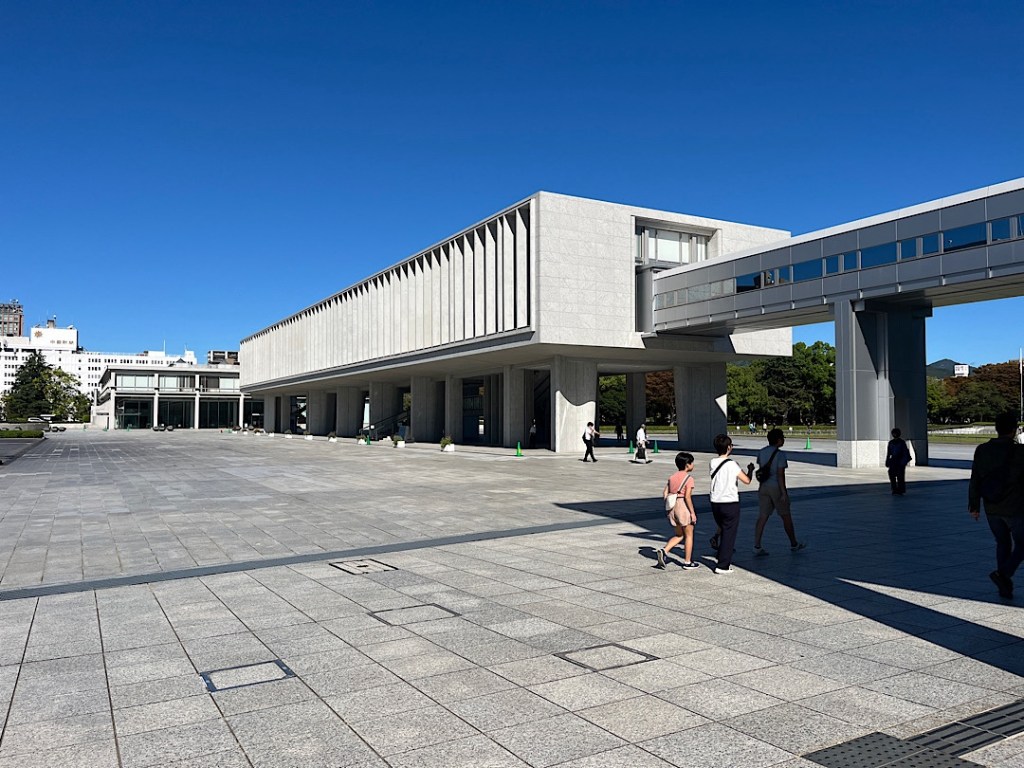
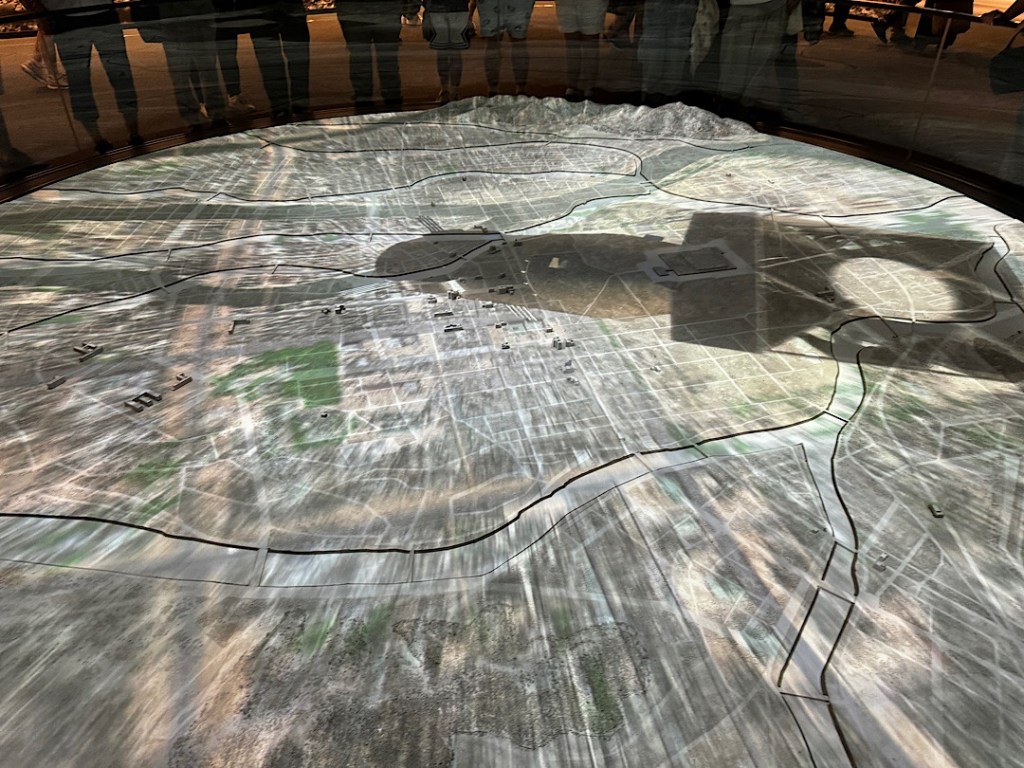
Visiting Hiroshima reminded me of all those things. Steve and I had three full days in the city, and the first thing we did on our first morning was walk to Peace Memorial Park, minutes from our hotel. We spent more than two hours in the Hiroshima Memorial Peace Museum.

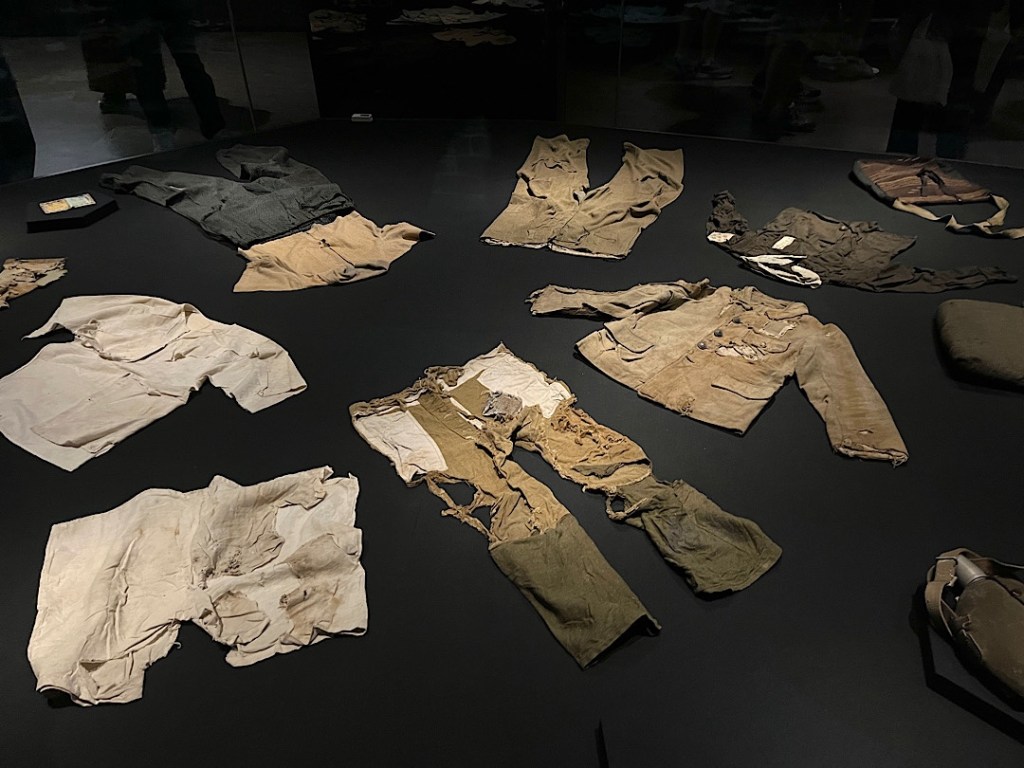
It contains displays that plead for peace and inveigh against future nuclear holocausts. But mostly, the museum is a literal chamber of horrors — evoking in shocking, gritty detail what a single bomb did to the city and the 350,000 men, women, and children who lived in it.

This video recreation was gripping. First you see the city on the morning of the bombing. Streetcars and pedestrians move through the busy urban core. Then the viewpoint swoops up to that of the US pilots at 30,000 feet. You follow the bomb as it hurtles down. The world explodes and when the dust settles almost everything has been flattened, annihilated.
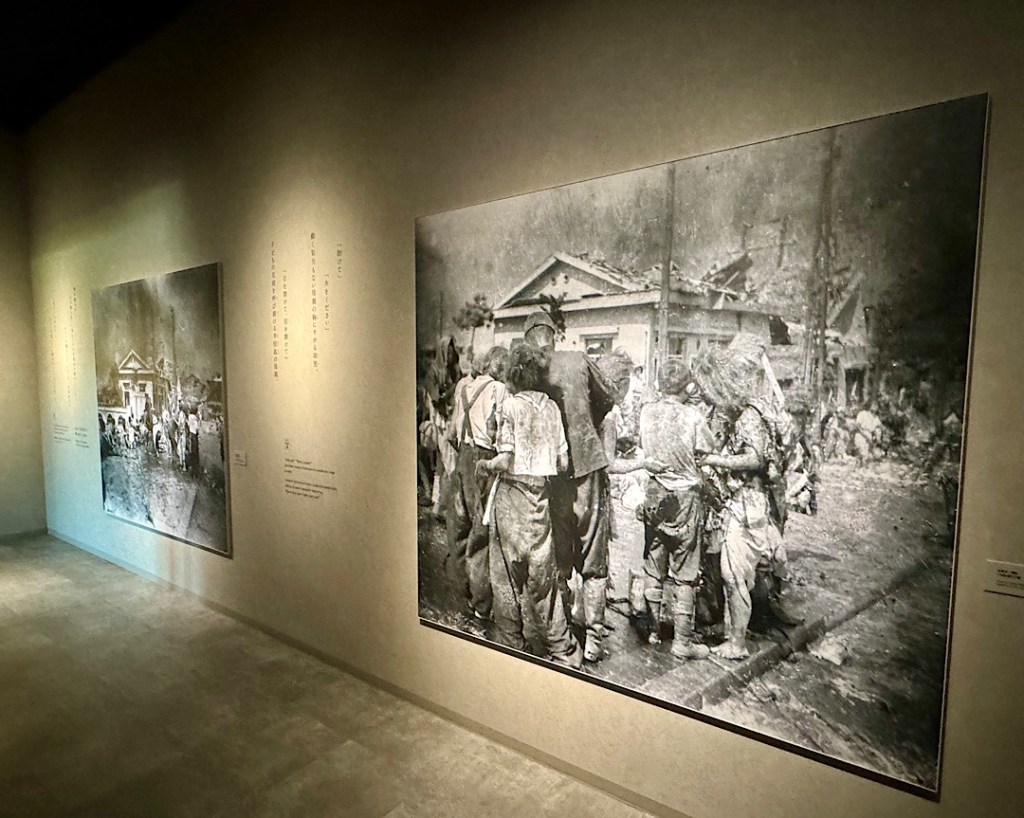
I was riveted by these, the only two photographs from that morning. You can almost smell the burned hair on the dazed survivors. You see flesh peeled off, hanging from the bodies.
The museum tells so many stories, both horrifying and heartbreaking.

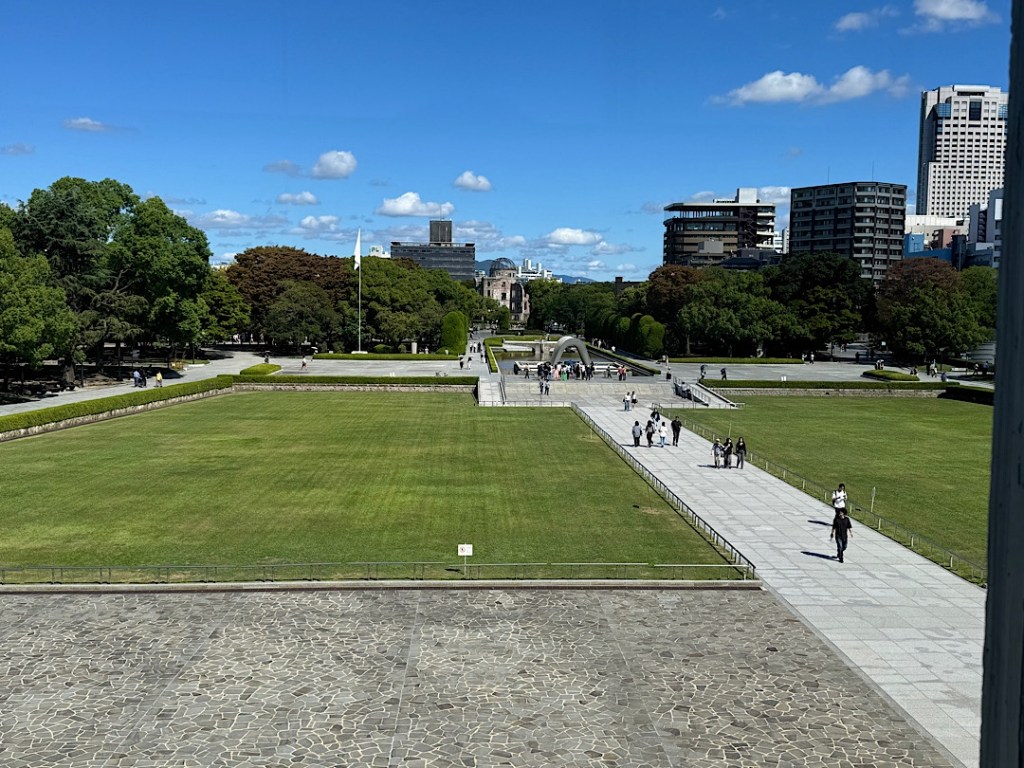
When we had absorbed as much as we could bear, Steve and I walked through the surrounding park in bright autumn sunshine.

Parts are grand. Parts, like the pathways through the trees, are soothing.

We appreciated several other striking monuments, including the Atomic Bomb Dome.

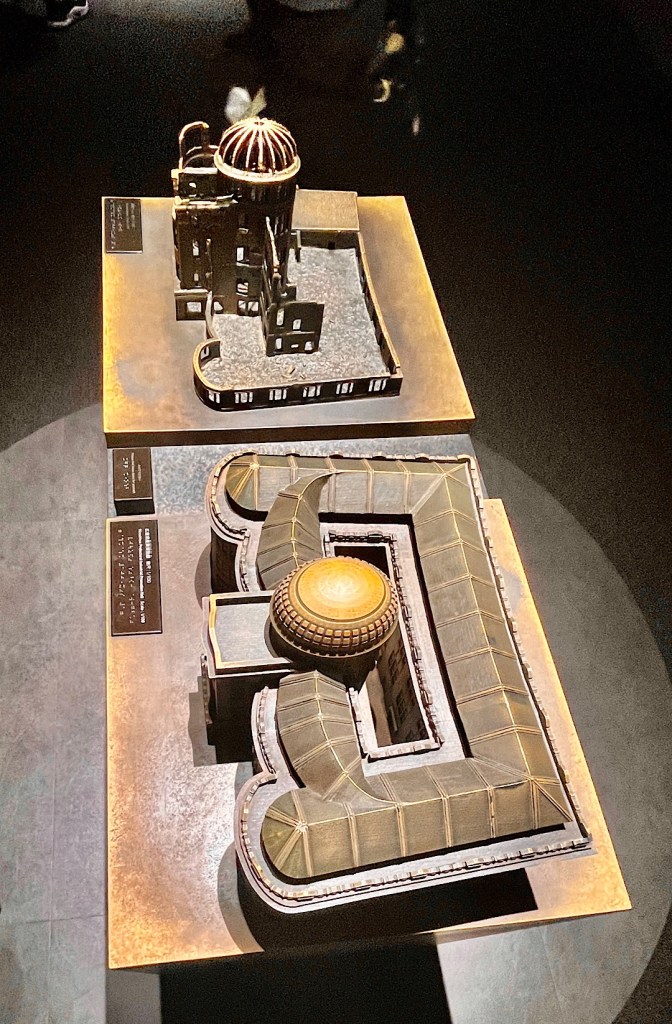
The museum contains models of what the Hiroshima Prefectural Industrial Promotion Hall looked like before and after the bombing.
Today it’s the only remaining building of the few in Hiroshima that survived the initial blast and subsequent firestorms. Many people wanted to tear it down, but a decision was made to keep and rename it the Atomic Bomb Dome.

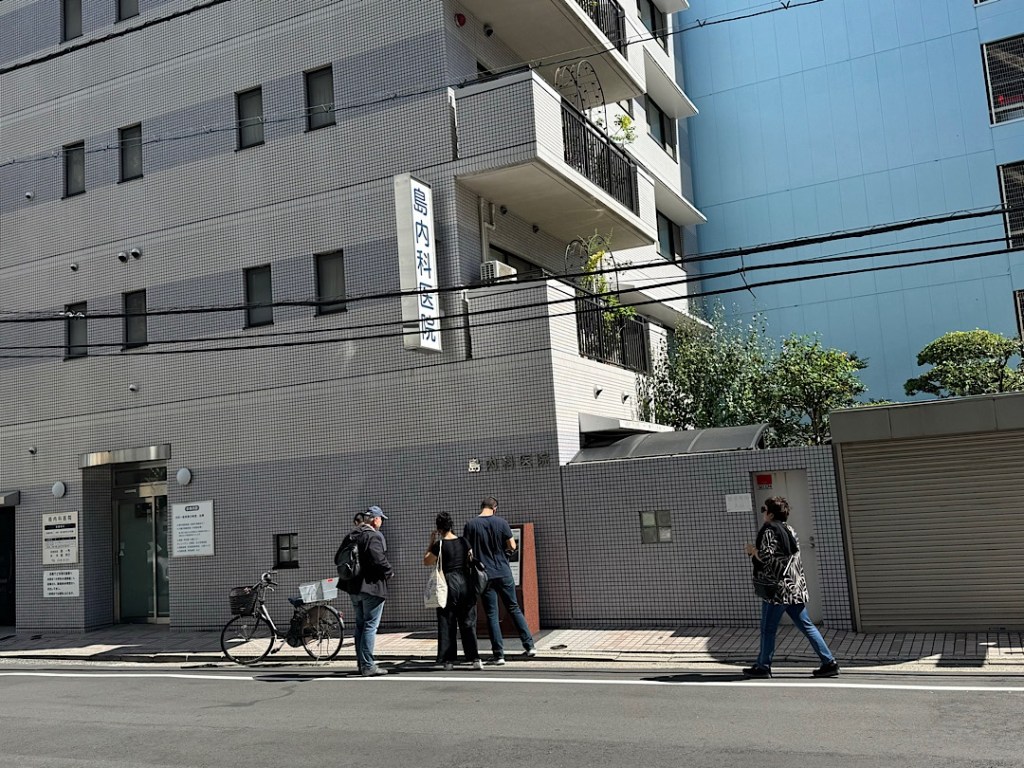
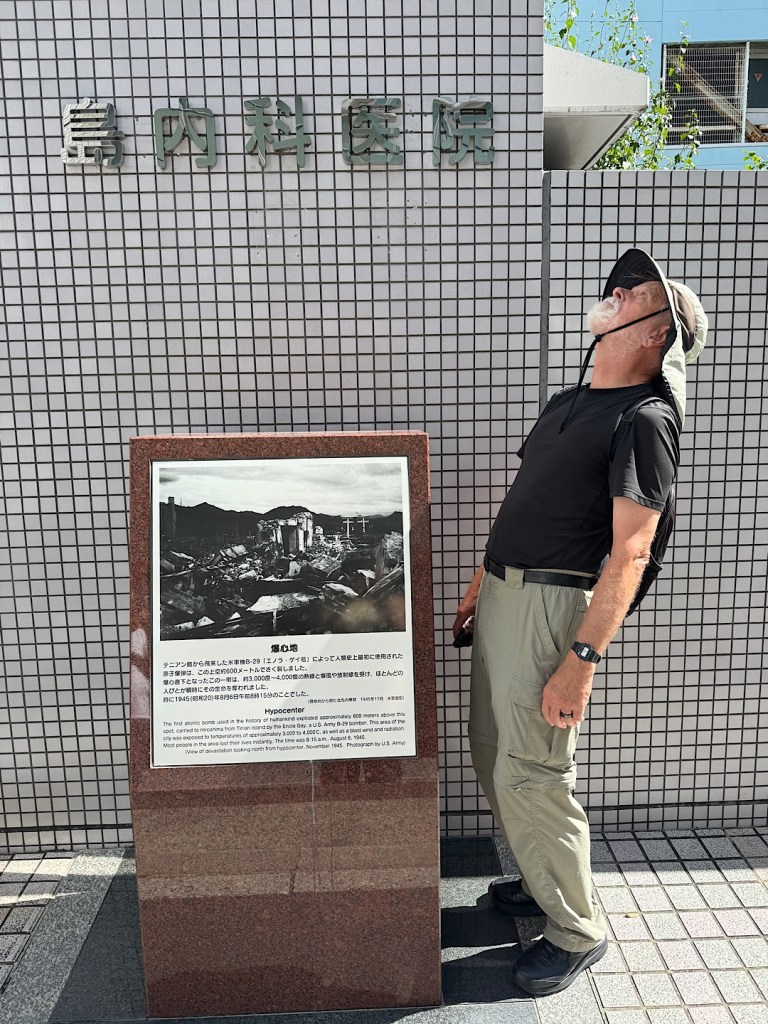
It’s a haunting landmark, but nearby Steve and I found something that fascinated us even more. We’d read about the bomb’s “hypocenter” — the spot directly below where it exploded. In the case of Little Boy that was about 2000 feet above the ground (roughly four blocks overhead.) We looked for the hypocenter in Peace Memorial Park, but it’s not there. Google Maps led us to it, a 3-minute walk from the Atomic Bomb Dome, outside the park and down a short block with a 7-Eleven on the corner. It’s so inconspicuous you could walk right by and miss it. But there is a little plaque, and looking up next to it gave me chills.

That was the sum of our A-bomb tourism. With the rest of our time, we did several fun things. On Sunday we rode a local train for about an hour to the town of Saijo, renowned for its concentration of craft sake breweries.

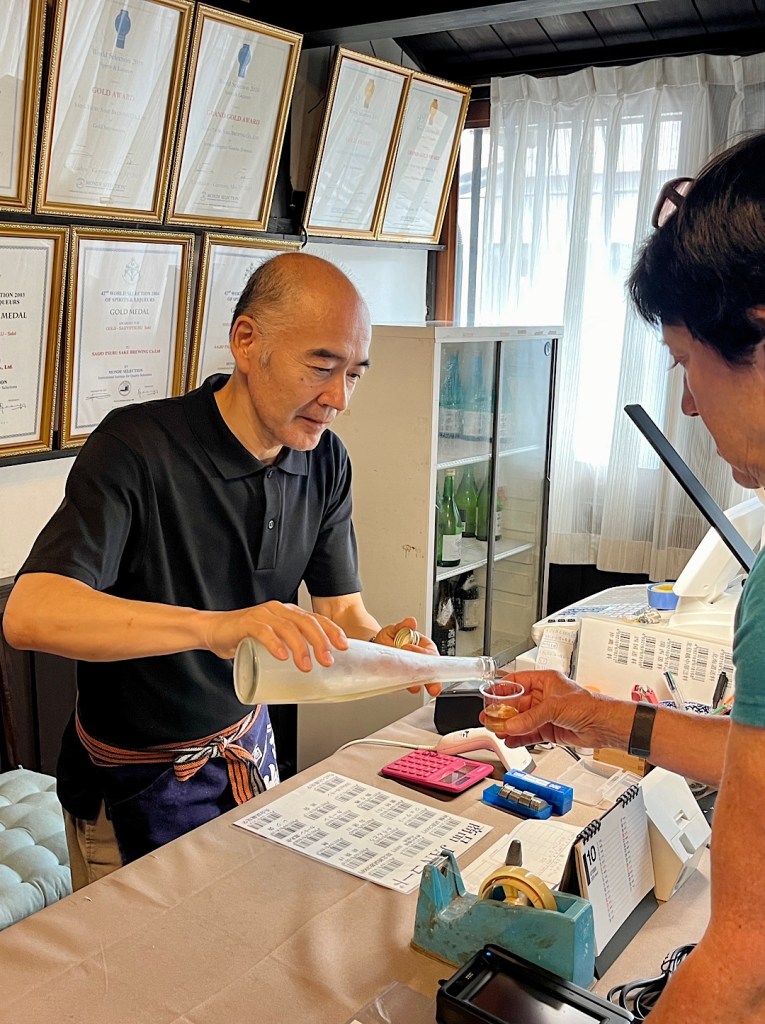
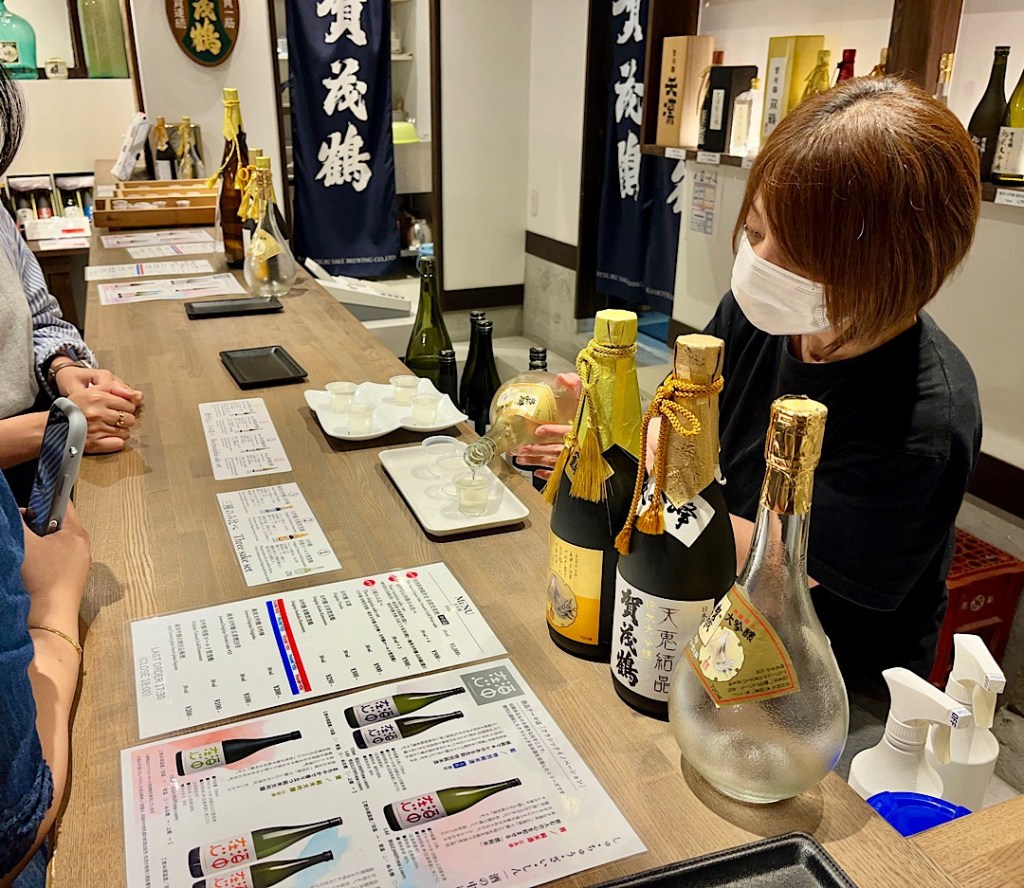
We tasted sake at three.
It reminded me of an outing in the Napa Valley.

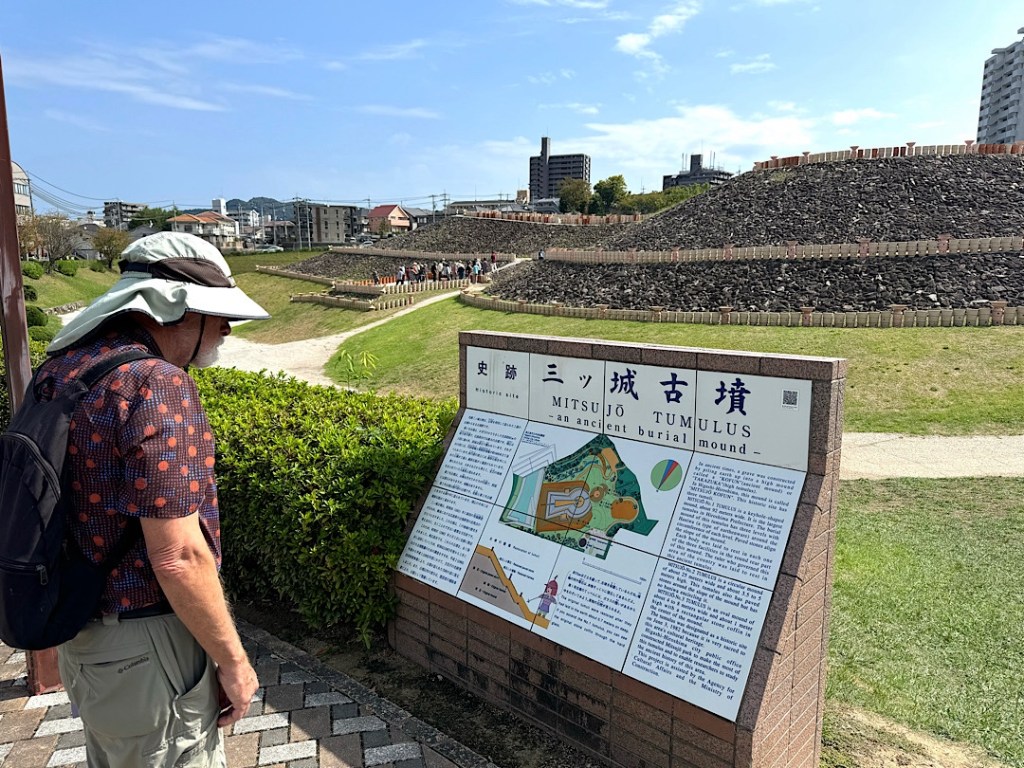
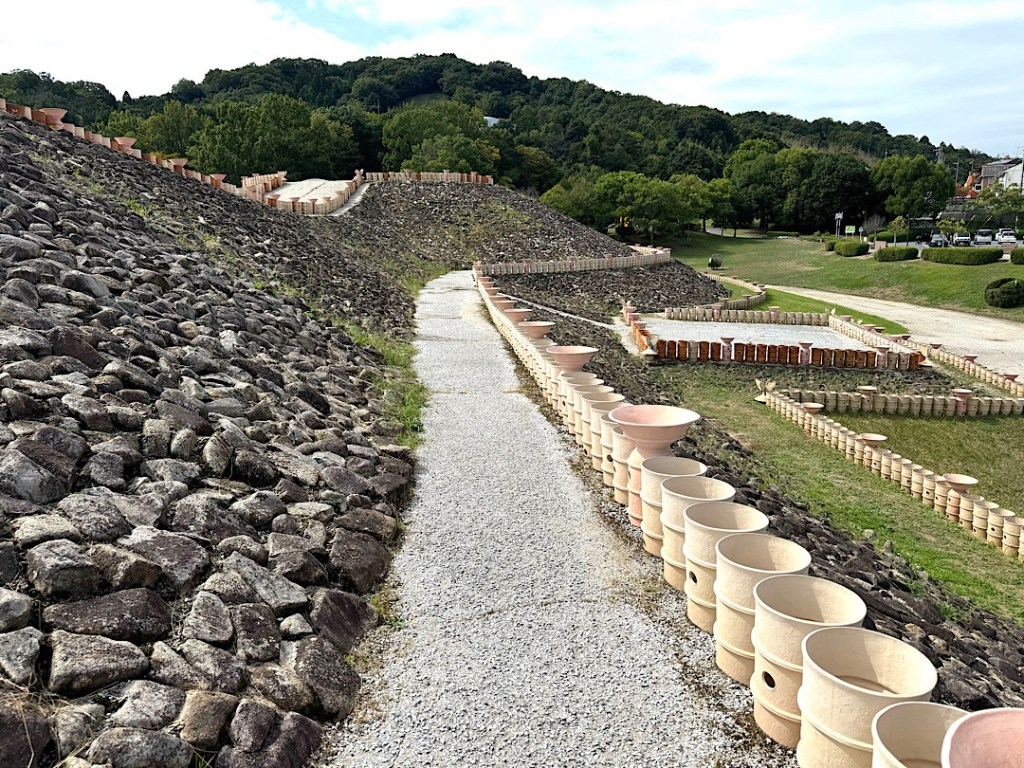
The town also boasts an archeological park containing a 1400-year-old kofun — one of the mysterious keyhole-shape burial mounds in which ancient Japanese rulers were interred.

The kofun were ringed with levels of ornamental vessels (today represented by plastic replicas.)

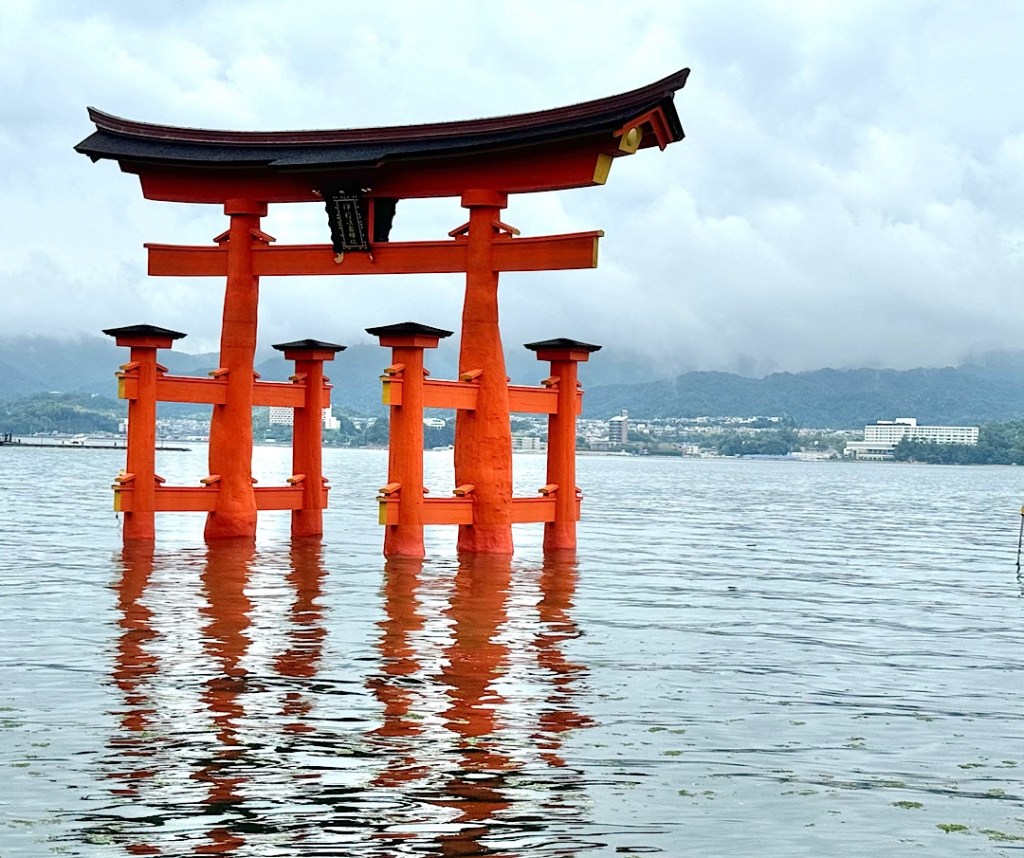
The next day we took a river ferry from Peace Memorial Park out into the Inland Sea to reach Miyajima Island, famous for its striking Shinto shrine torii (ceremonial gate).

We ate more wonderful meals, strolled through gleaming commercial streets, and reeled at the thought that not in our lifetimes but close — so close! — everything everywhere here in all directions was smoking rubble. You’d never dream that was possible if you didn’t know better. Hiroshima today looks more prosperous and well-maintained than San Diego, and experts say radiation levels long ago dropped to no higher than they are anywhere else on earth.

I found that inspiring — evidence of how resilient people and their environments can be. Steve and I both were also struck by how many non-Japanese we encountered in Hiroshima —- more than anywhere else we’ve been on this trip. Large buses disgorge Germans and French and Americans and others. I heard people speaking Spanish and Hebrew and Russian and Korean and other languages I didn’t recognize. I wondered if maybe people all over the world feel Hiroshima belongs to all Earthlings — a warning.

Steve at one point expressed the wish that Putin and Biden and Bibi and Trump and Kamala would go to that museum and just look, long and hard, at those displays. Would it impact any of them? Maybe not.

So what’s a girl to do?

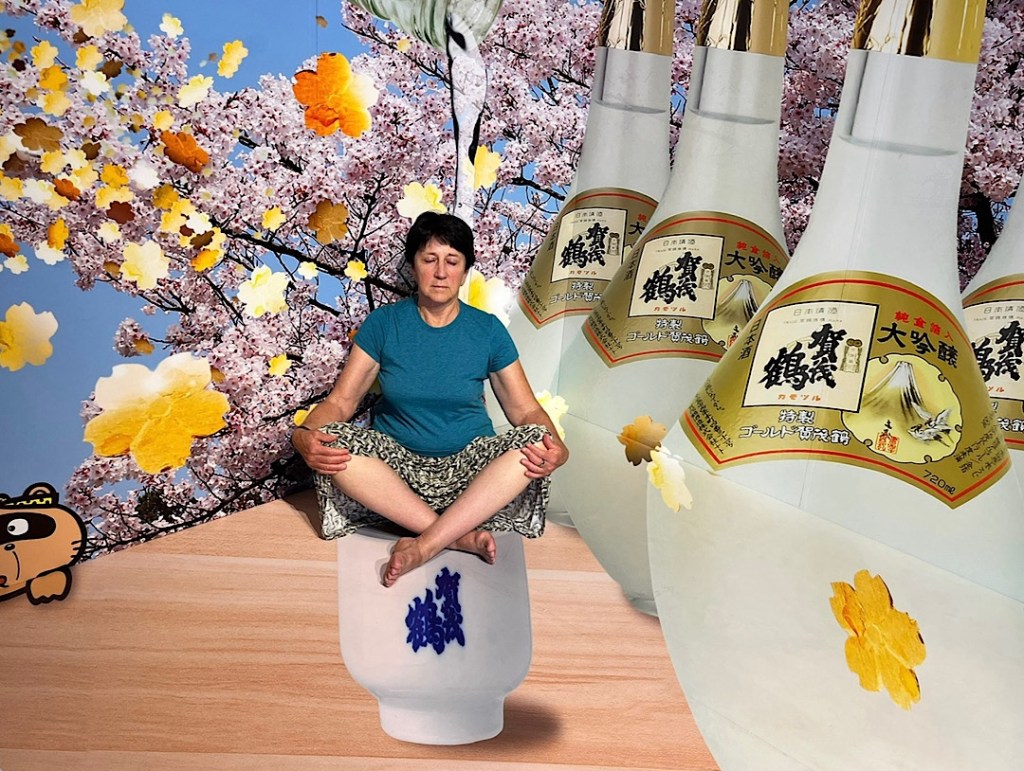
Pray? Meditate? Drink a lot of sake?

Is it worth going to Shikoku? Part 2

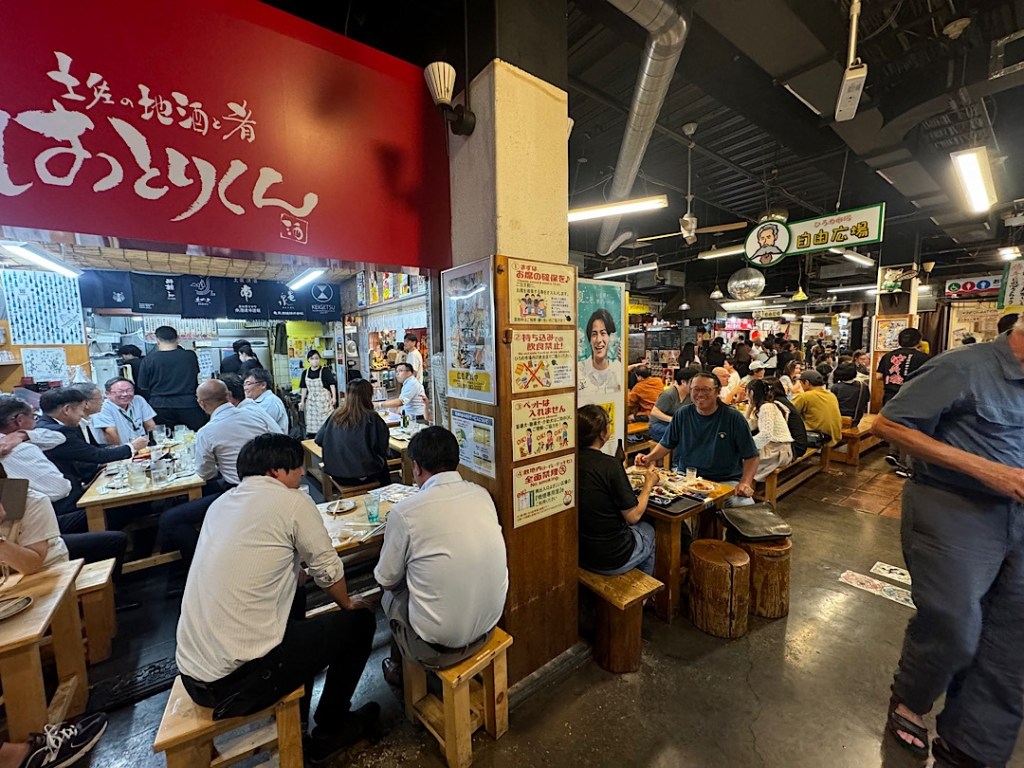
From my last post, you might think the main reason for visiting Shikoku is the food. Steve makes this case, and I have a hard time arguing with it. We consumed amazing meals; tasted the freshest seafood we have ever eaten. We ate most of it in simple, inexpensive settings, like the marvelous food court in central Kochi.

Hirome Ichiba contains dozens upon dozens of stalls selling all kinds of food and drink. On the Monday night we were there, the scene was every bit as lively as the beer halls of Munich or Singapore’s hawker centers.

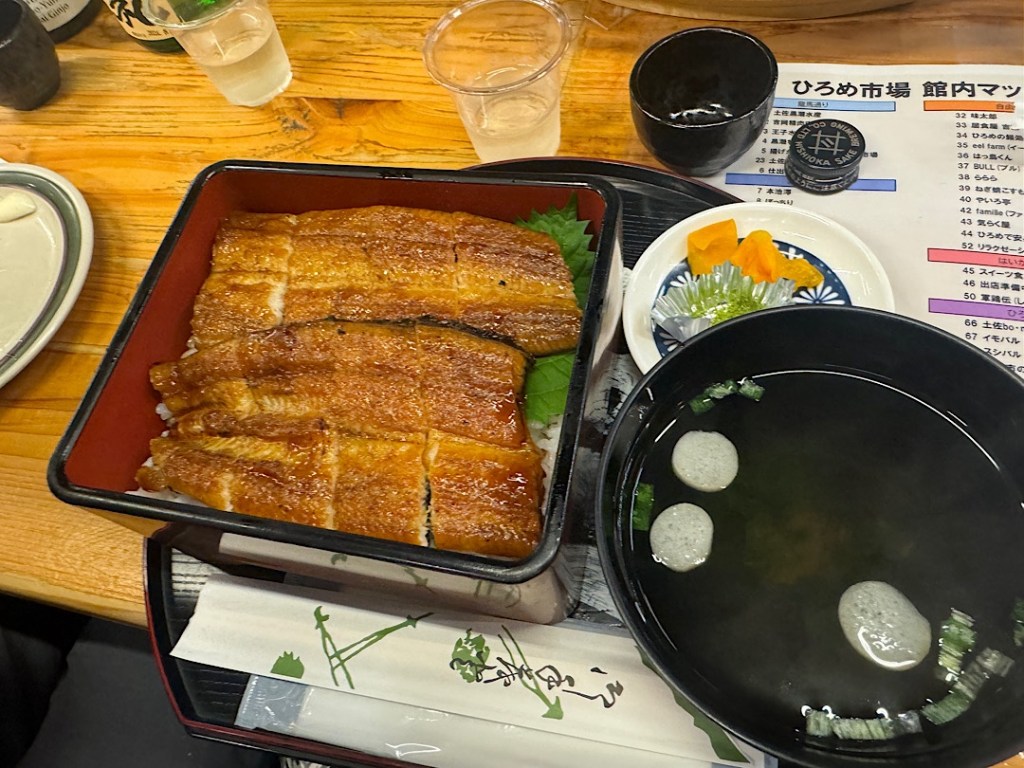
We ordered several dishes. One was this delicious eel, one of my favorite types of seafood.

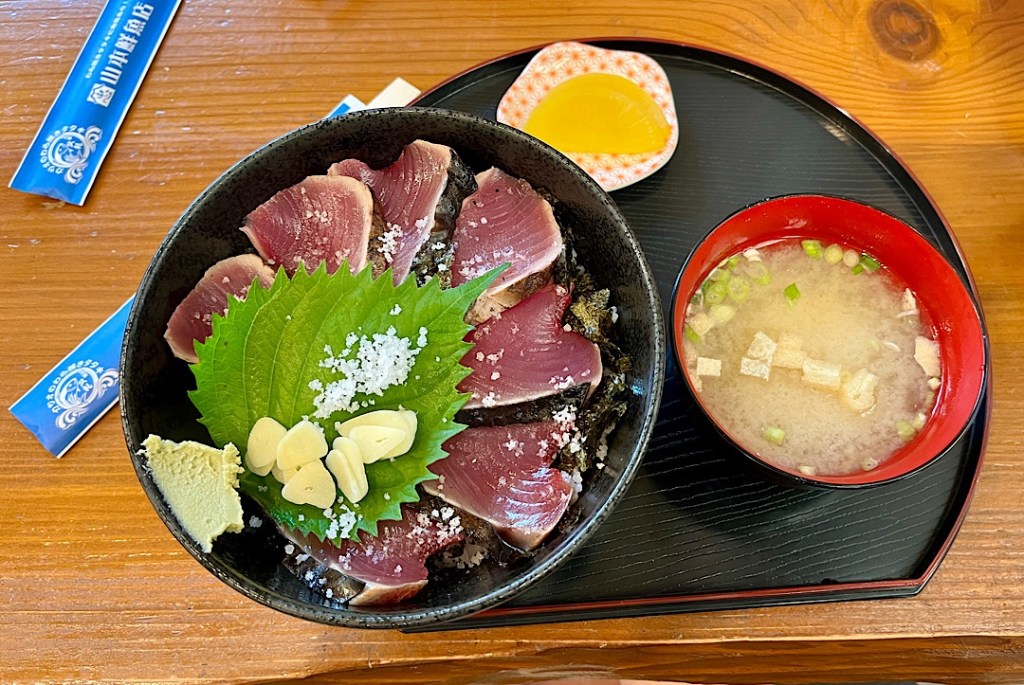
I doubt I’ll ever forget the seared bonita we got for lunch the next day in a little fishing village on Shikoku’s Pacific coast.

Its freshness was stunning. And the total bill for both of us was $12.75.

Still, we enjoyed more than just the food. Think of the following as postcards from some highlights.

Our time in the mountain villages took us back in time.

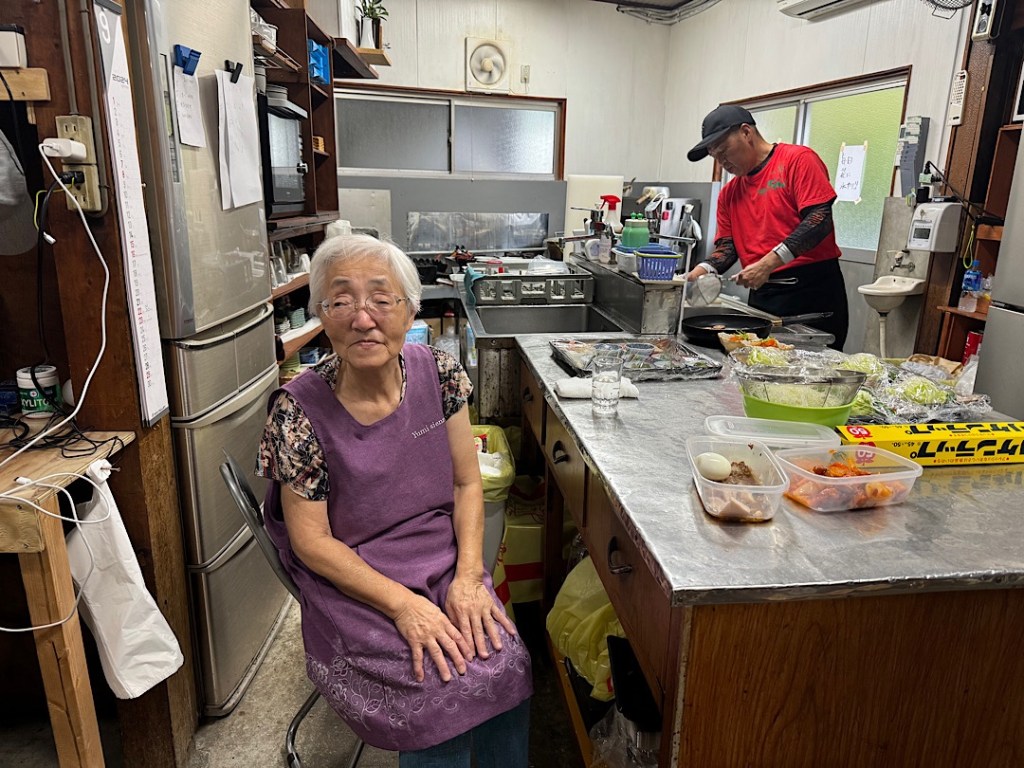
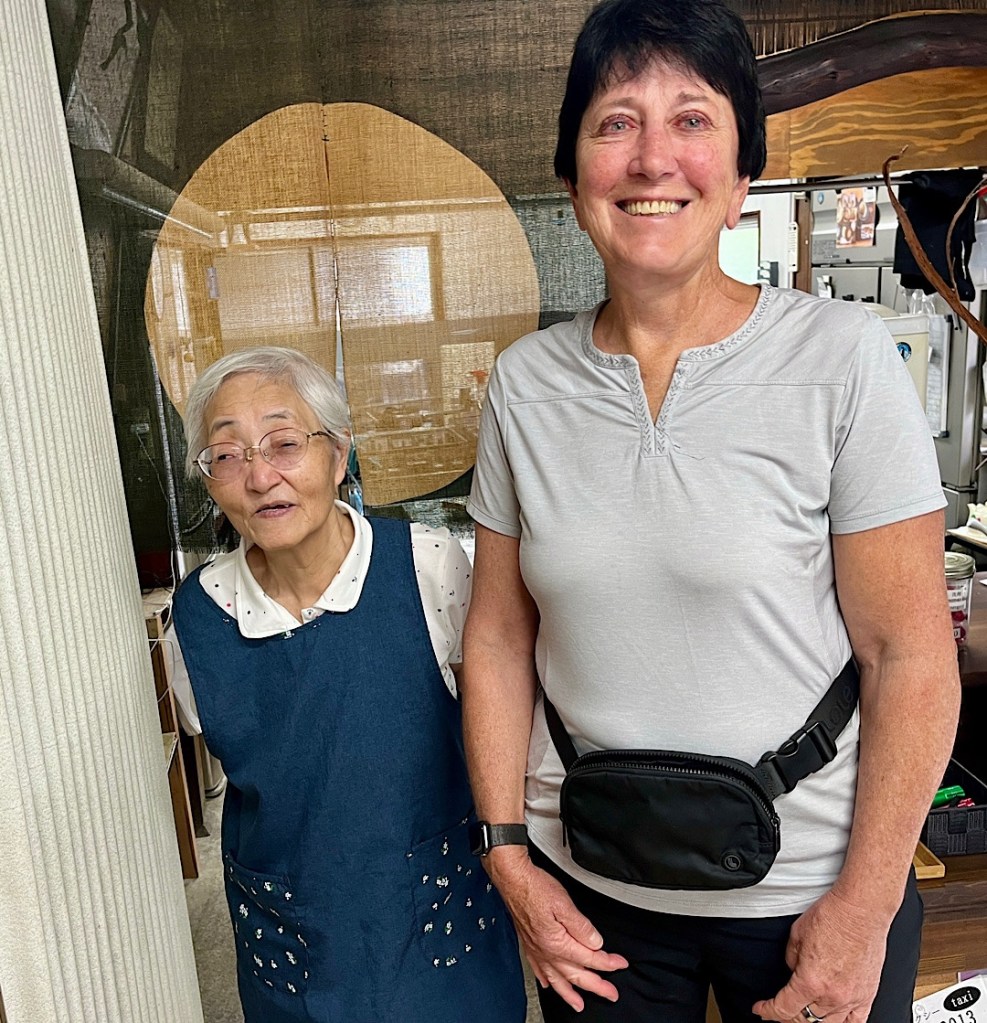
This is the matriarch of a family that for four generations has run the Japanese inn where we stayed. She still appears to do a lot of the cooking.
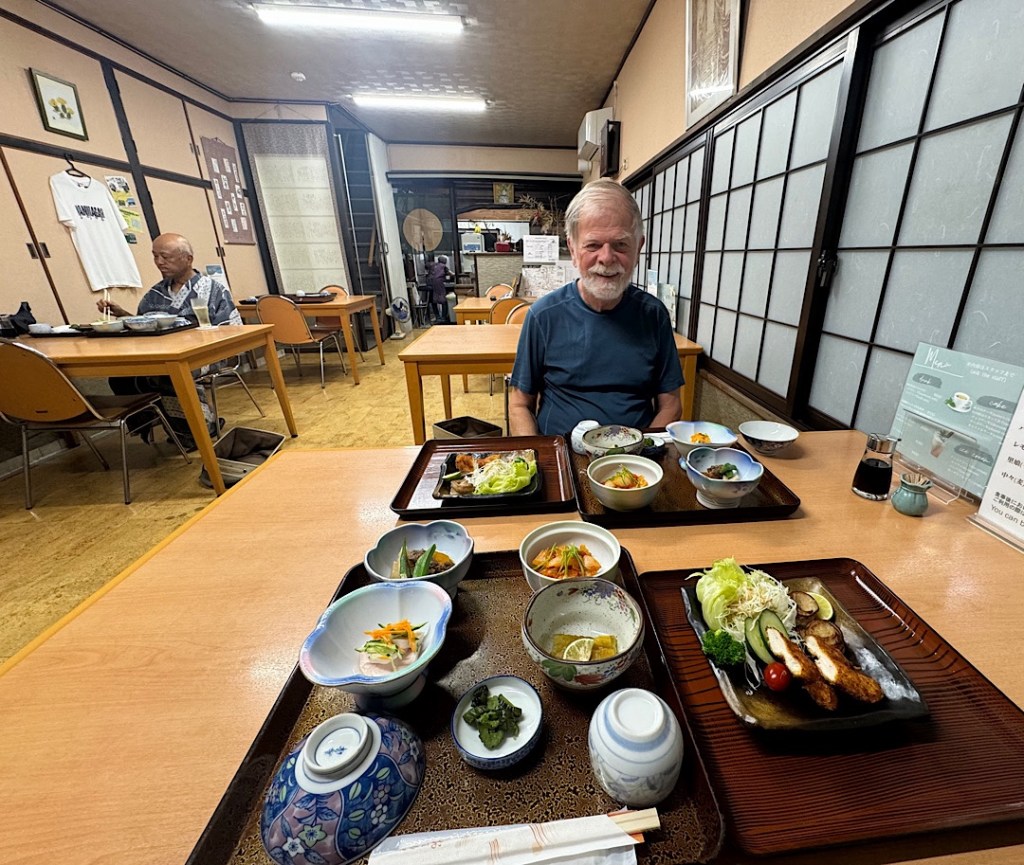
The dinners and breakfasts included with our stay were delicious.
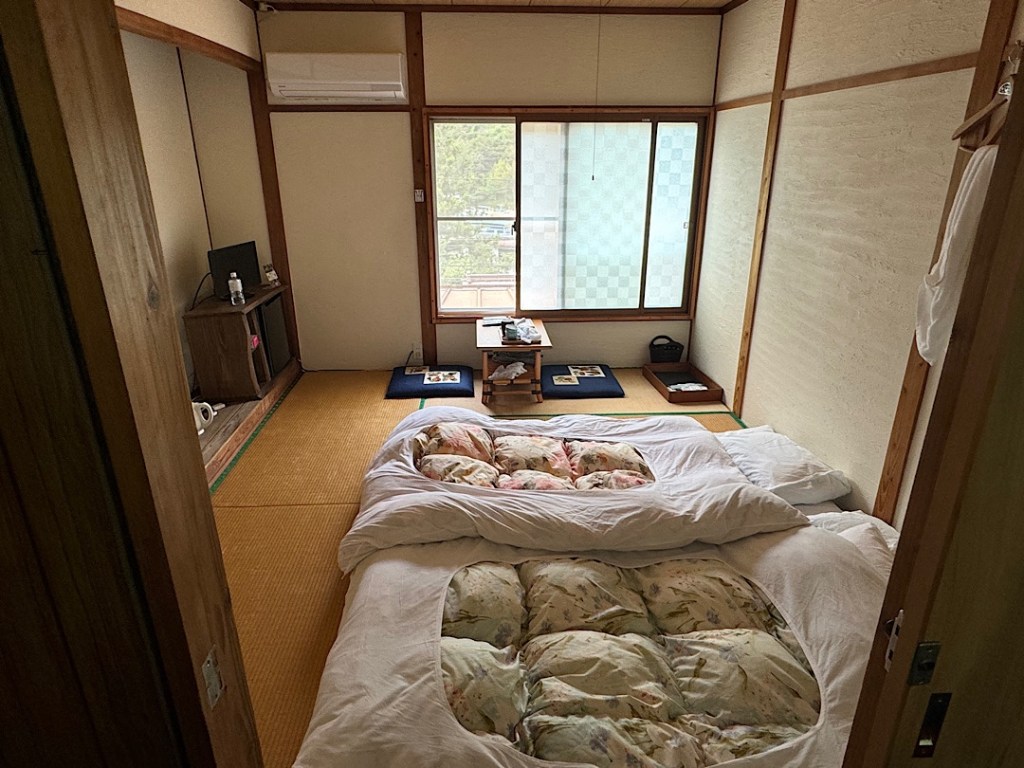
All the rooms are Japanese style. This was ours.
Our hostess was tiny in stature but bright and welcoming in spirit.

Not just the mountains on Shikoku are wild. So are most of the rivers.

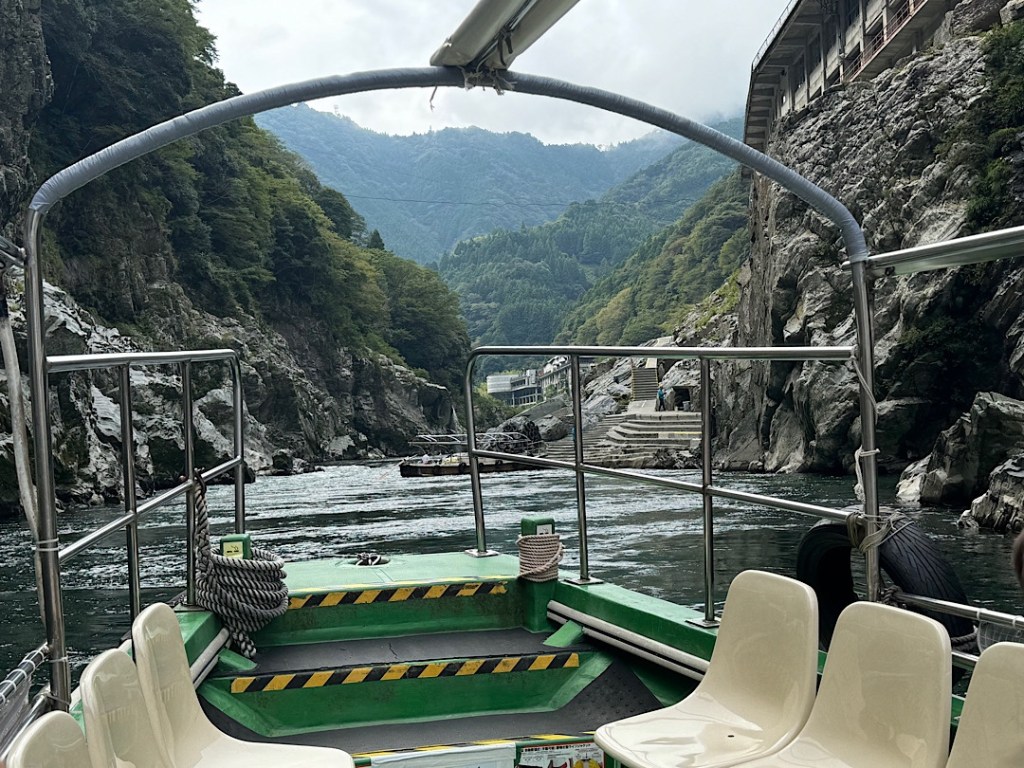
We took a short, placid cruise on the Yoshino River through Oboke Gorge. but if we’d wanted to ride some rapids, that was an option just downstream.
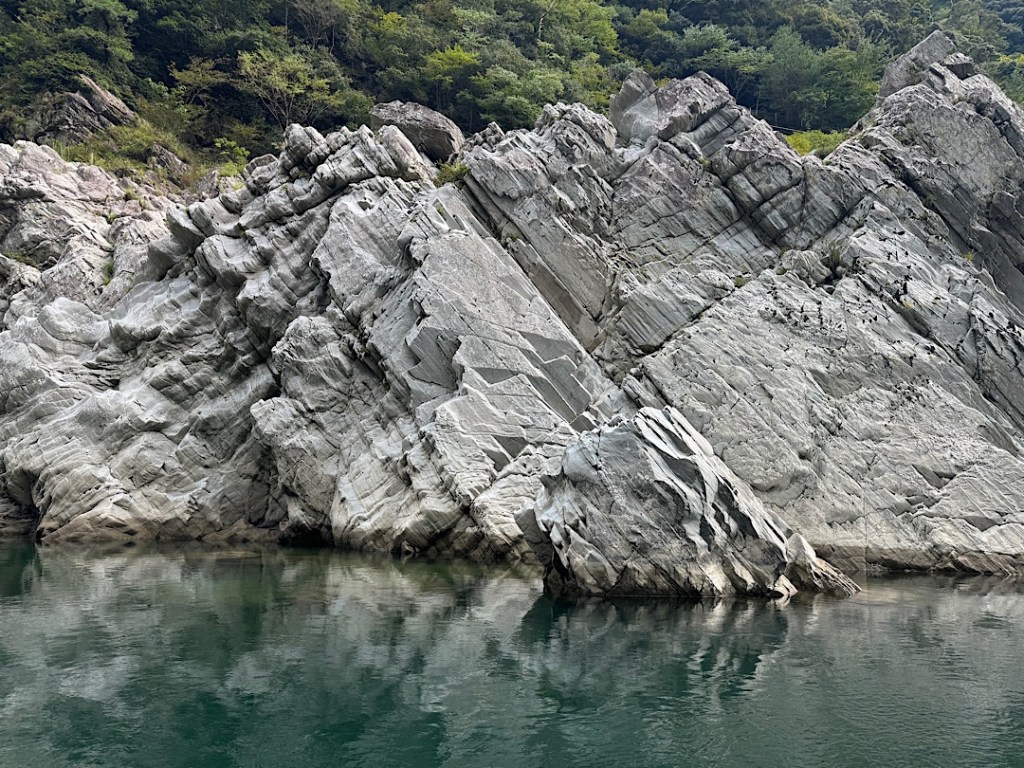
The geology of the gorge is striking.

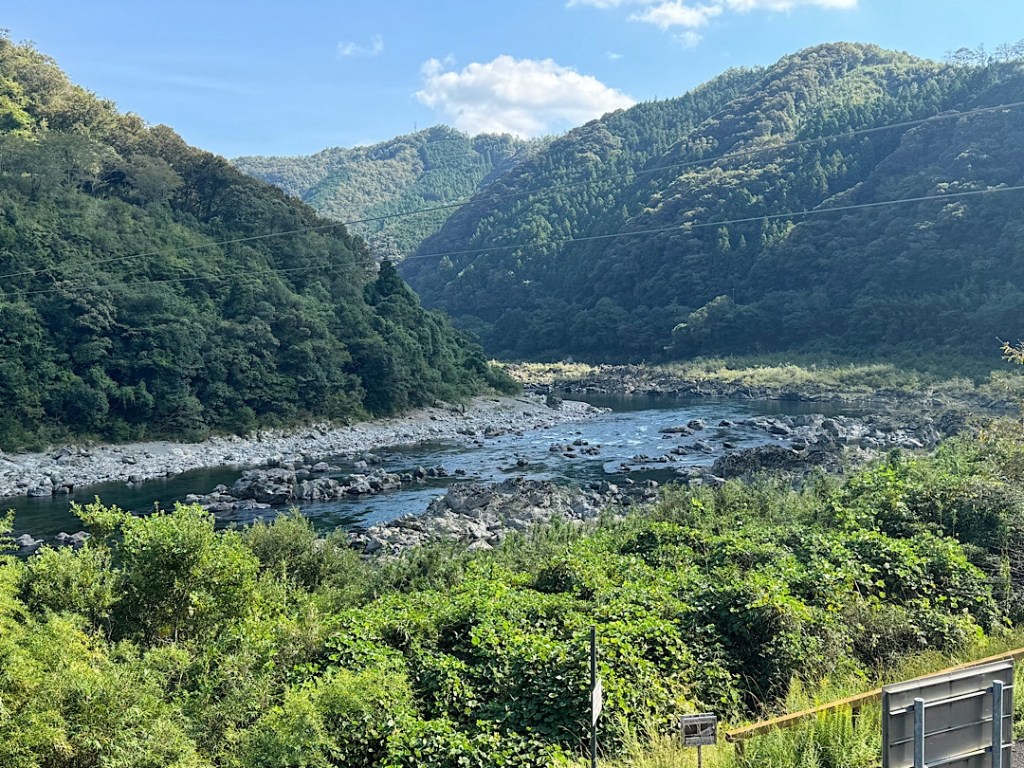
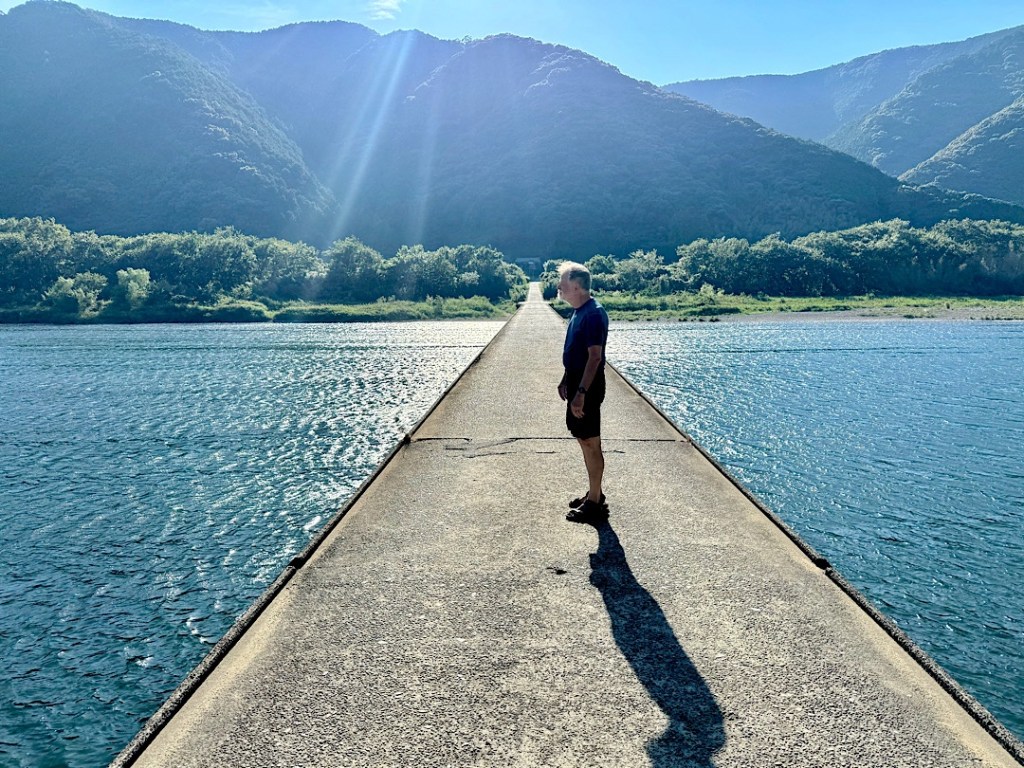
The next day we drove along the Shimanto, known as the last wild river in Japan. No dam has been built along its course.

Many bridges like this one span the Shimanto. The absence of railings is intended to make the structures less vulnerable to being swept away by floods. Neither of us was eager to walk all the way across one of the chinkabashi. But it was fun to watch a steady driver motor across.

We got a strong reminder of the potential menace of the sea in the little fishing village where we ate the world-class lunch.

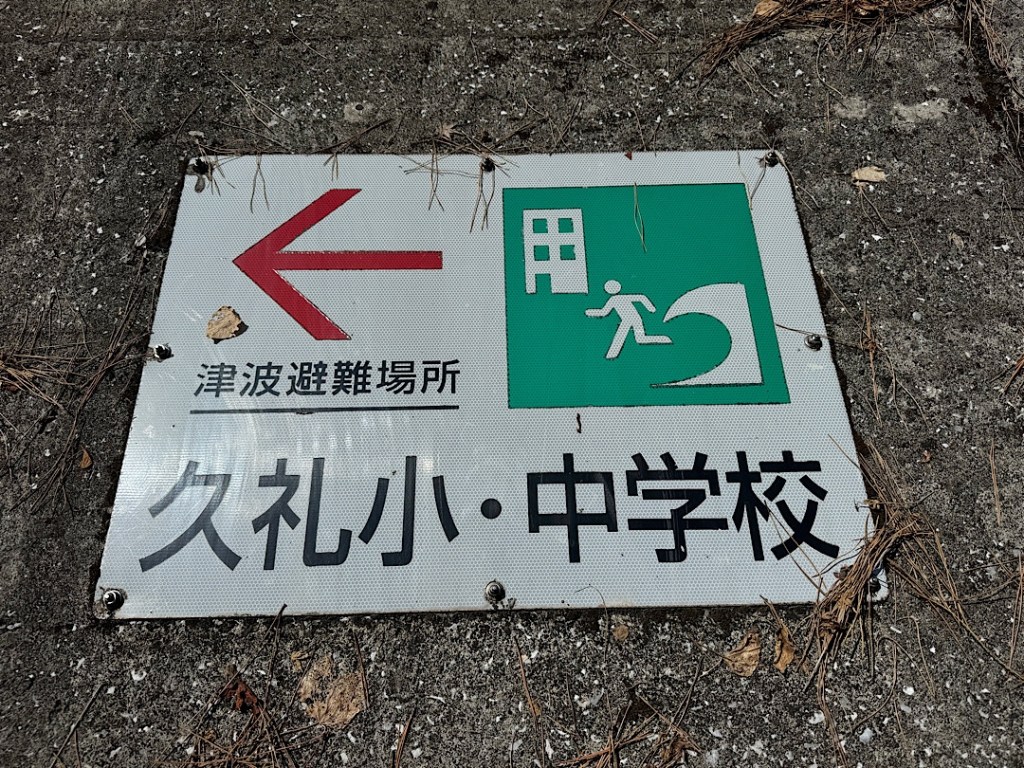
This way to a tsunami evacuation shelter.
Posters warned that a tsunami could roll in and wreck havoc within minutes of a quake offshore.
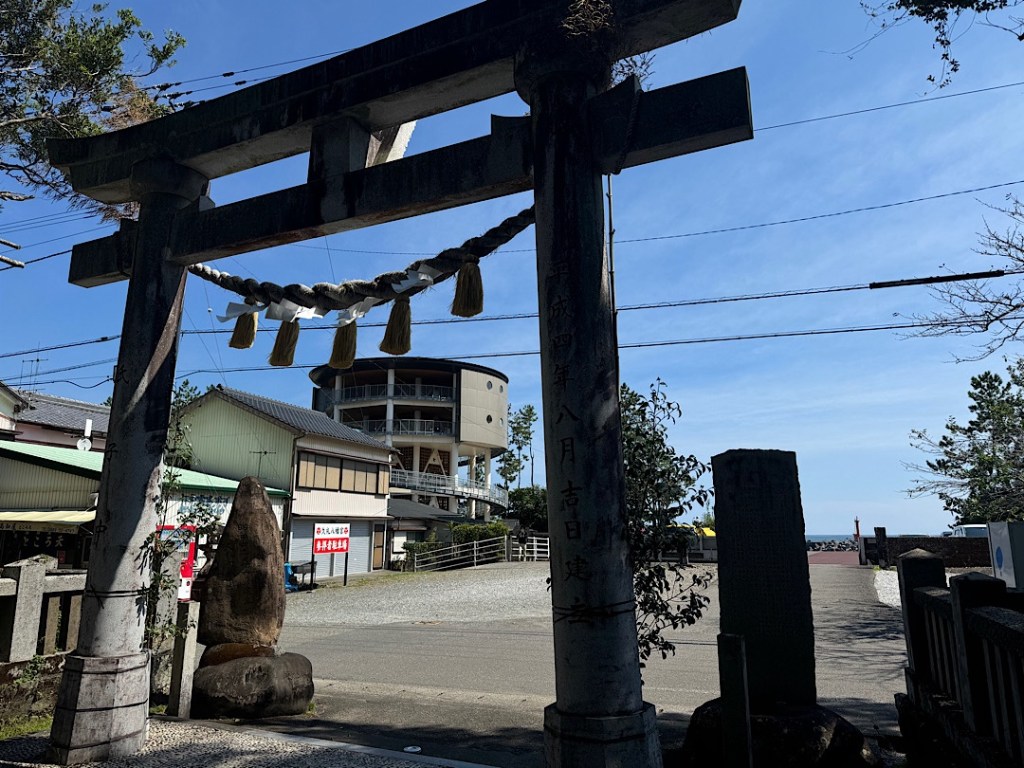
Steve and I found one of the town’s tsunami evacuation towers. It’s that round thing in the distance.
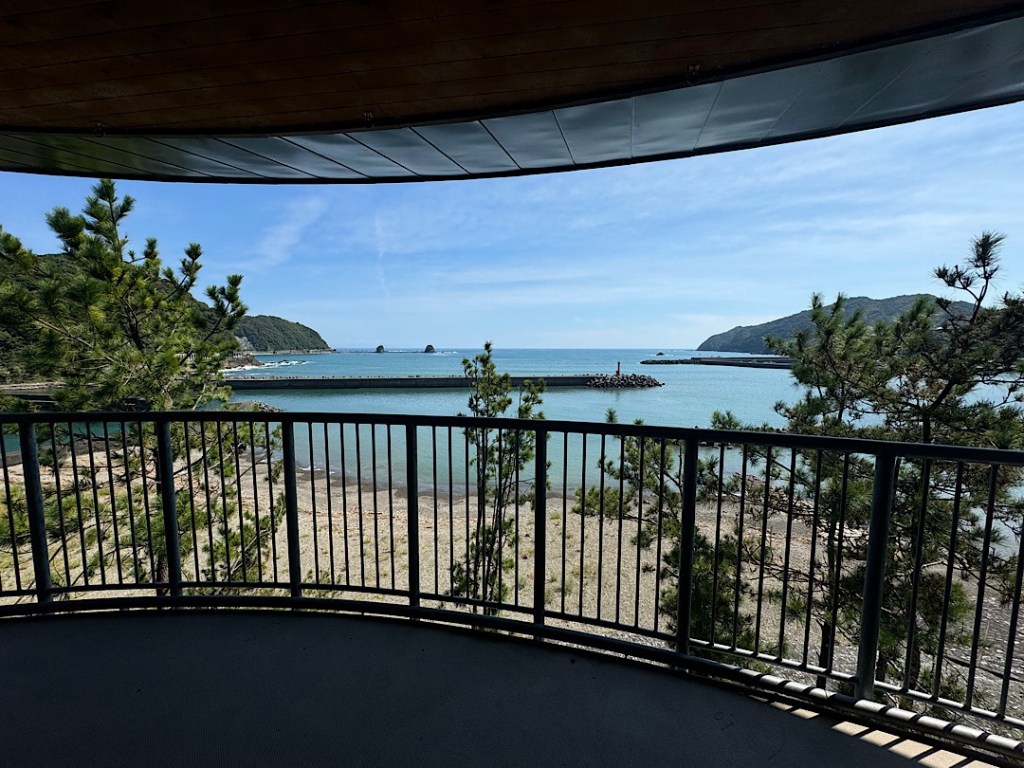
We climbed it and at the top enjoyed a lovely seascape. A couple of local old guys were also up there, shooting the breeze.

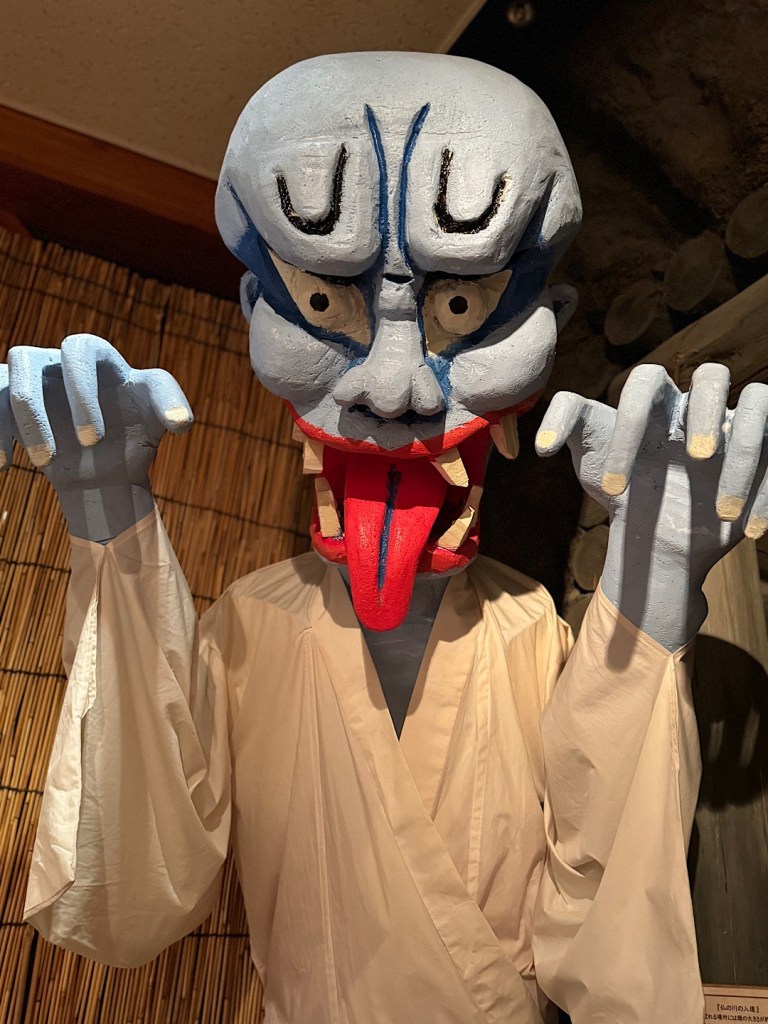
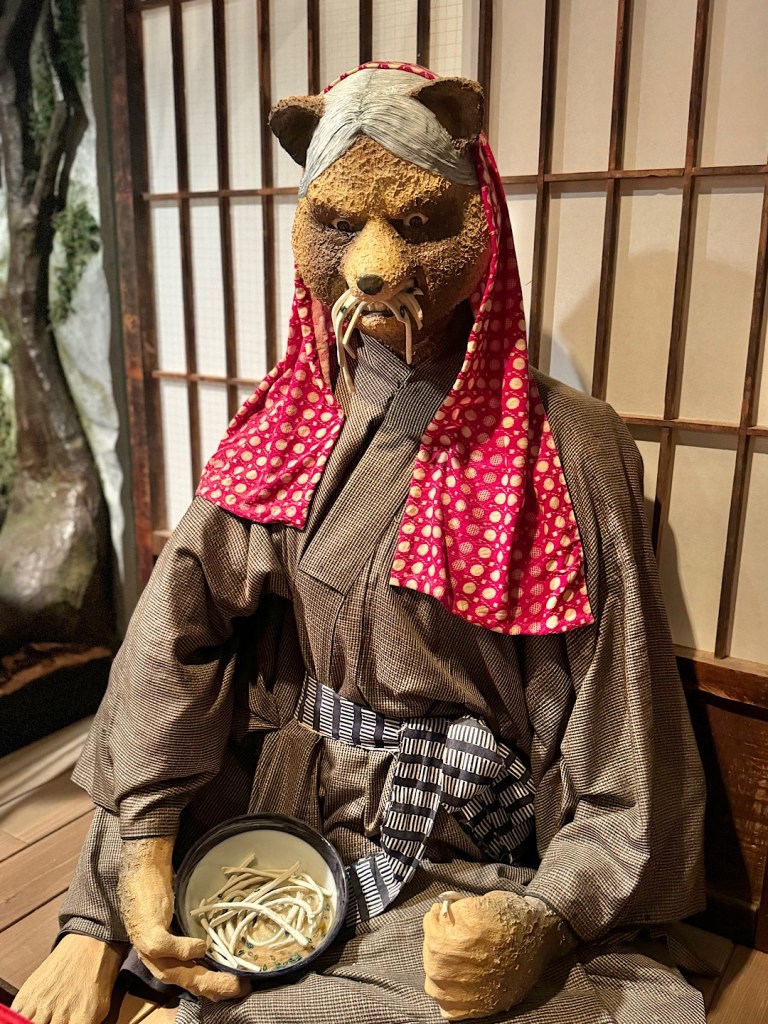
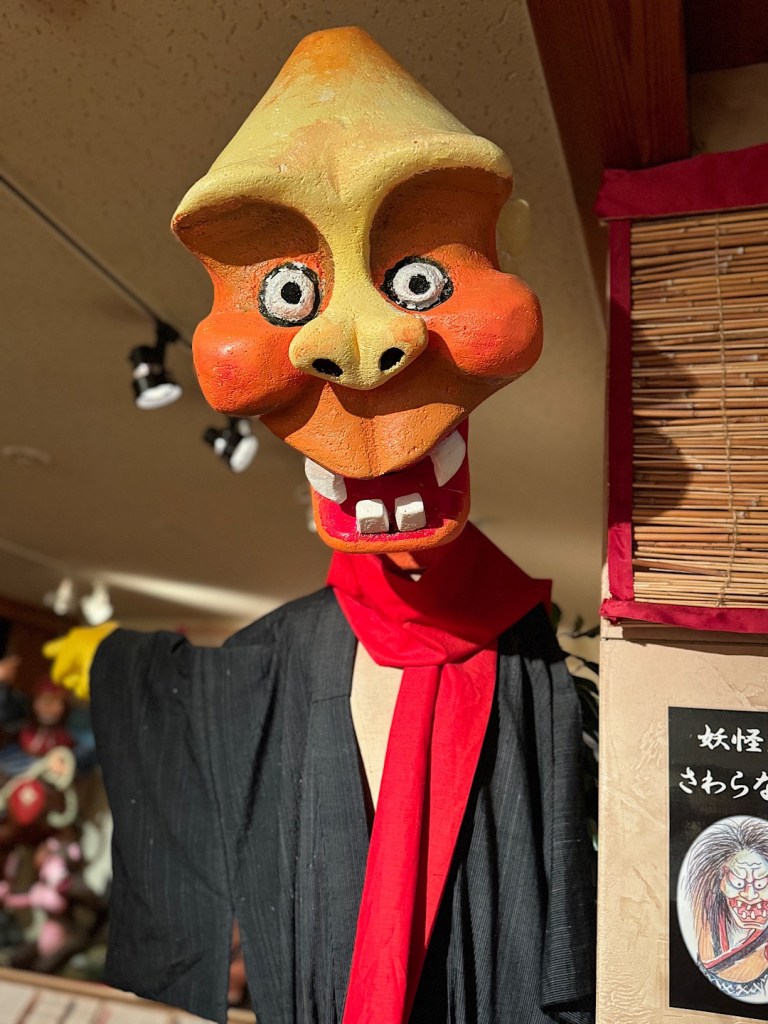
With all the danger on land and sea, I could understand how Shikoku residents might develop a rich mythology about the creatures — occasionally helpful but often evil or malicious — lurking in the landscape. They’re called yokai, and we spent an entertaining hour at a museum in the Oboke Gorge that explains a lot about them.

This is a tanuki, an evil “raccoon dog.”

Who wouldn’t want to visit a place inhabited by the likes of those guys? So my answer to the question of whether it’s worth visiting Shikoku is an emphatic hai!

Is Shikoku worth visiting? Part 1

Our final stop on Shikoku was Matsuyama, the island’s biggest city. We only had a day and a half, but we made it to three of the city’s most highly praised sights:

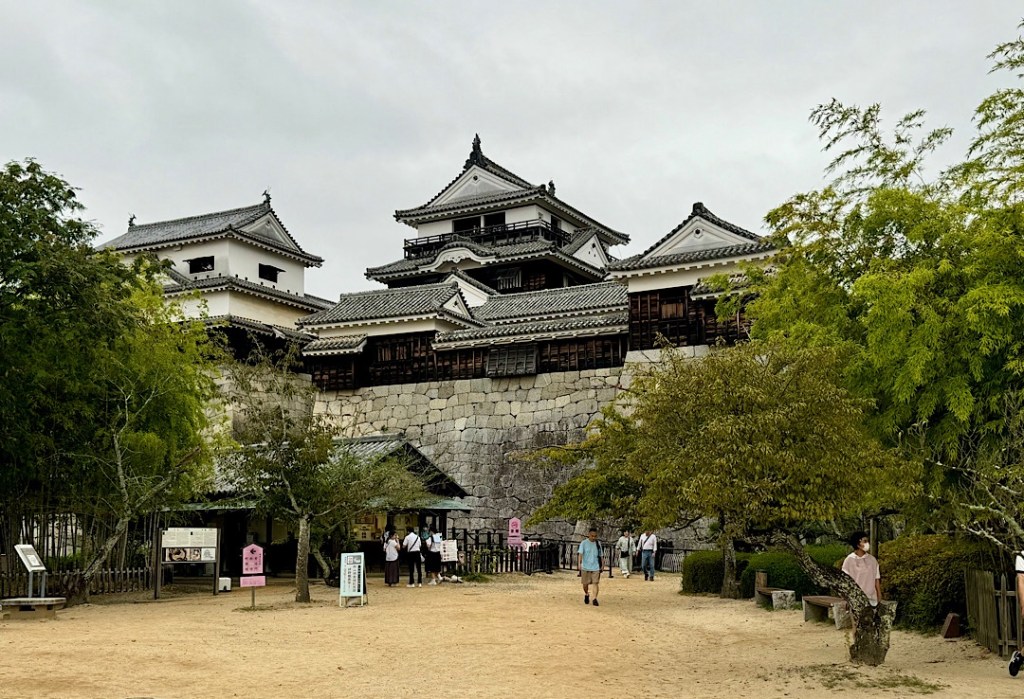
One was Matsuyama Castle, one of the largest and best-preserved fortified dwellings in all Japan. We went on a rainy afternoon when it was easy to conjure up the samurai ghosts. (Good English translations of the displays helped.)

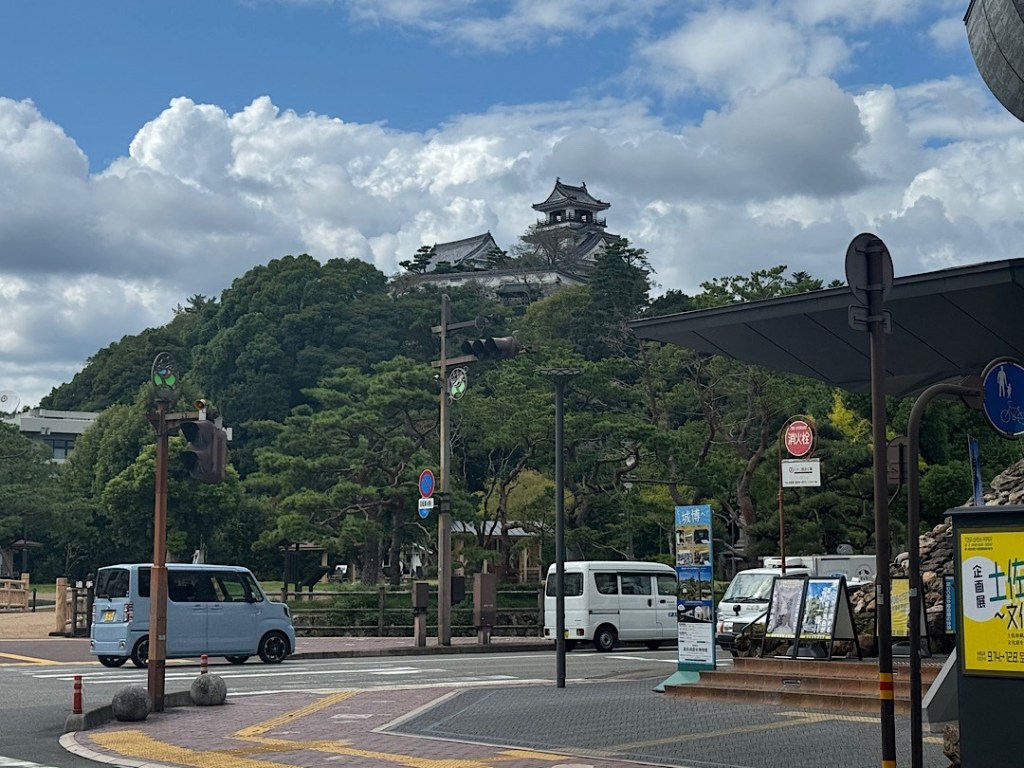
It was even more impressive than Kochi’s well-preserved castle, which we visited while there. The weather was better in Kochi, so when we climbed to the top-most level of the tower, we could better appreciate the great views.

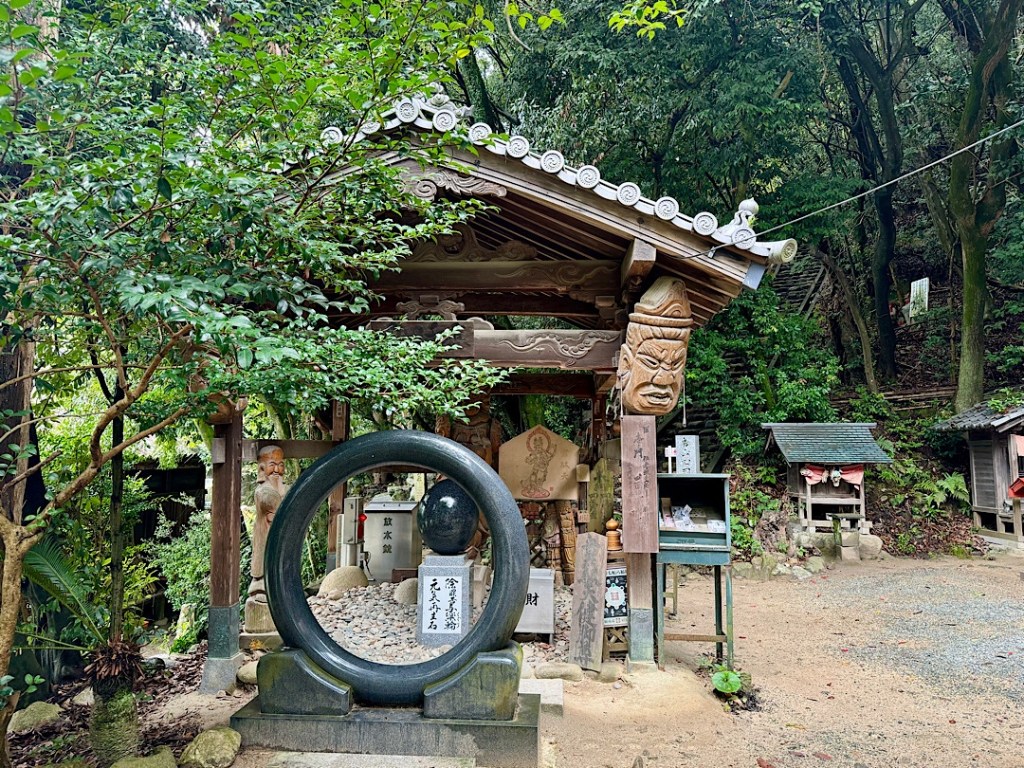
The second major site we visited in Matsuyama was Ishite-Ji, one of Matsuyama’s many Buddhist temples. There I was disappointed to find the main building under renovation. But the grounds were wonderfully atmospheric…

…filled with nooks and crannies, some quirky, some beautiful.

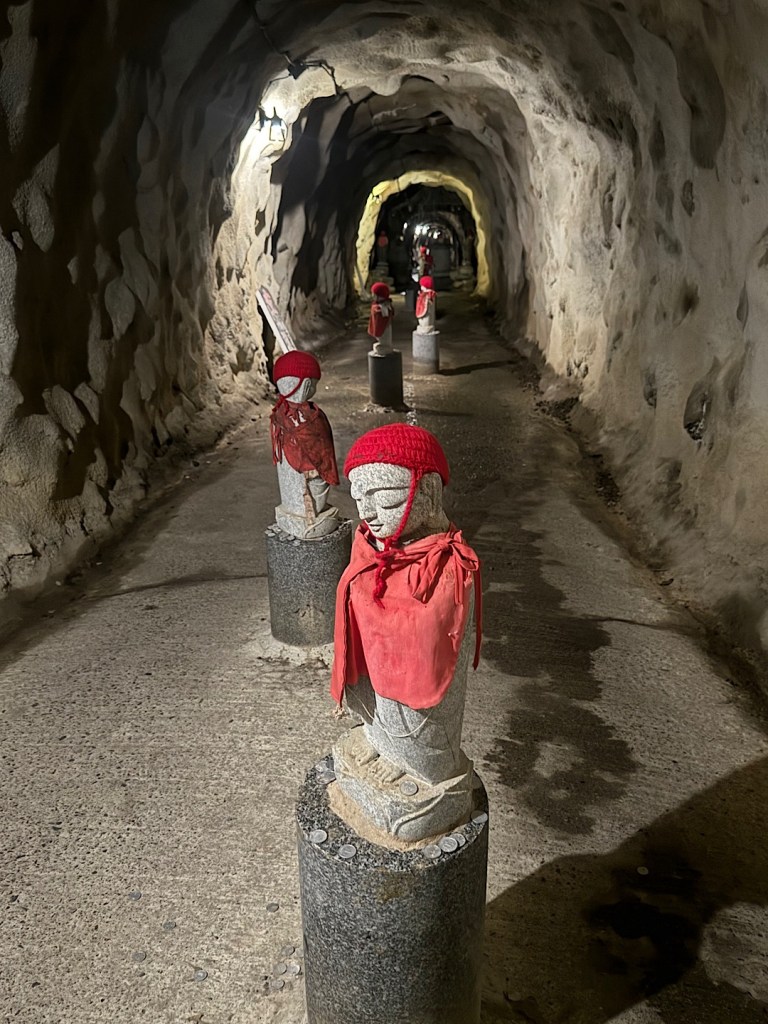
We also crept into a a weird meditation tunnel chiseled into the rocky stone that abuts the temple complex.

It looked much darker and creepier to our eyes than it looks here, as captured by my iPhone camera.

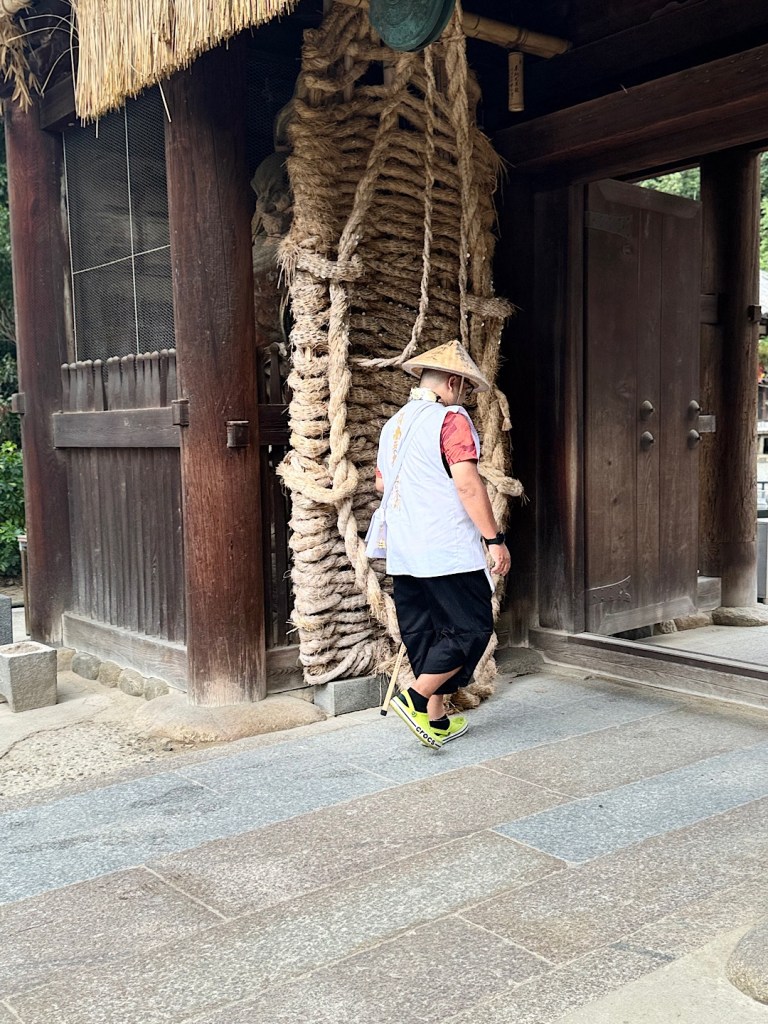
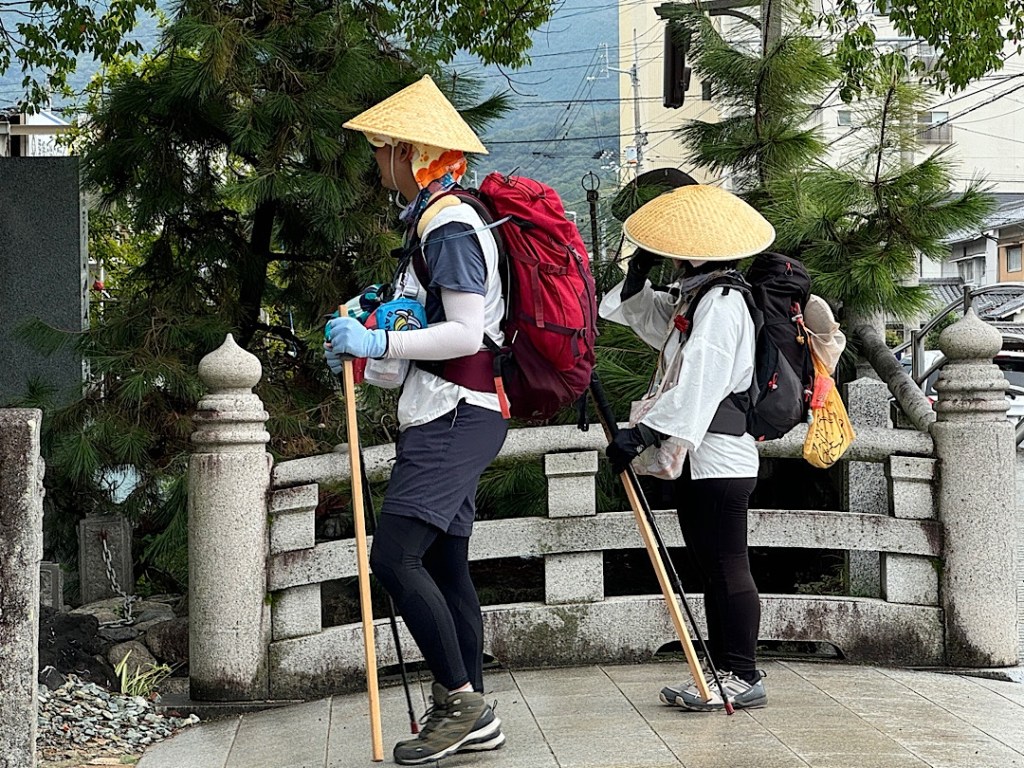
Most exciting to me was catching sight of several arriving pilgrims. The Shikoku Pilgrimage is kind of a big deal on the island. Religious devotees try to follow a circuit that includes 88 temples; reportedly it takes 2-3 months to do it on foot. While achieving this would give one great bragging rights, it’s not on my bucket list. Still I was happy to glimpse some of those who were called by it.

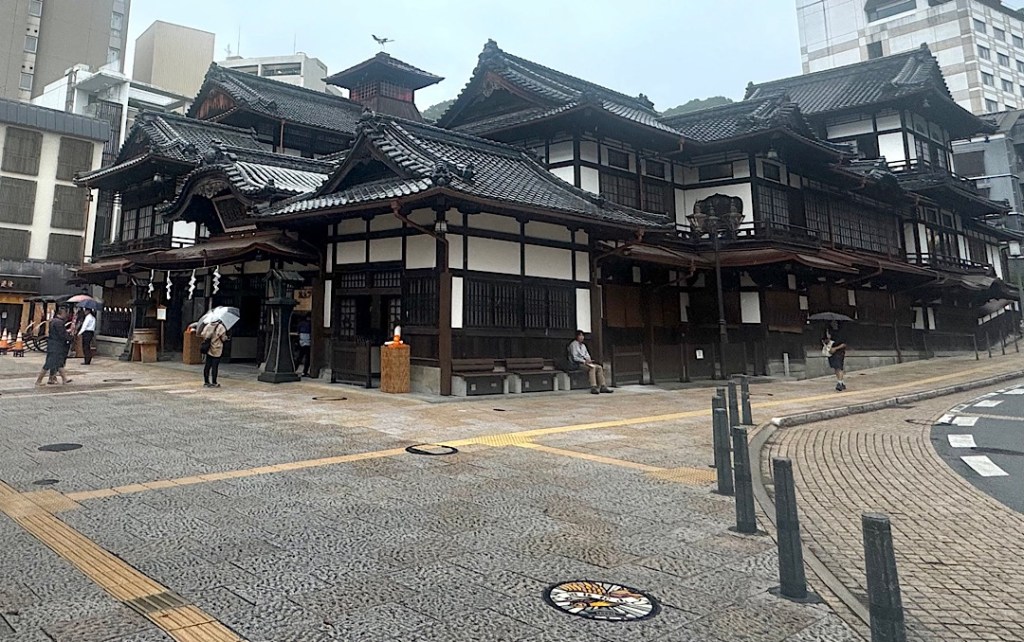
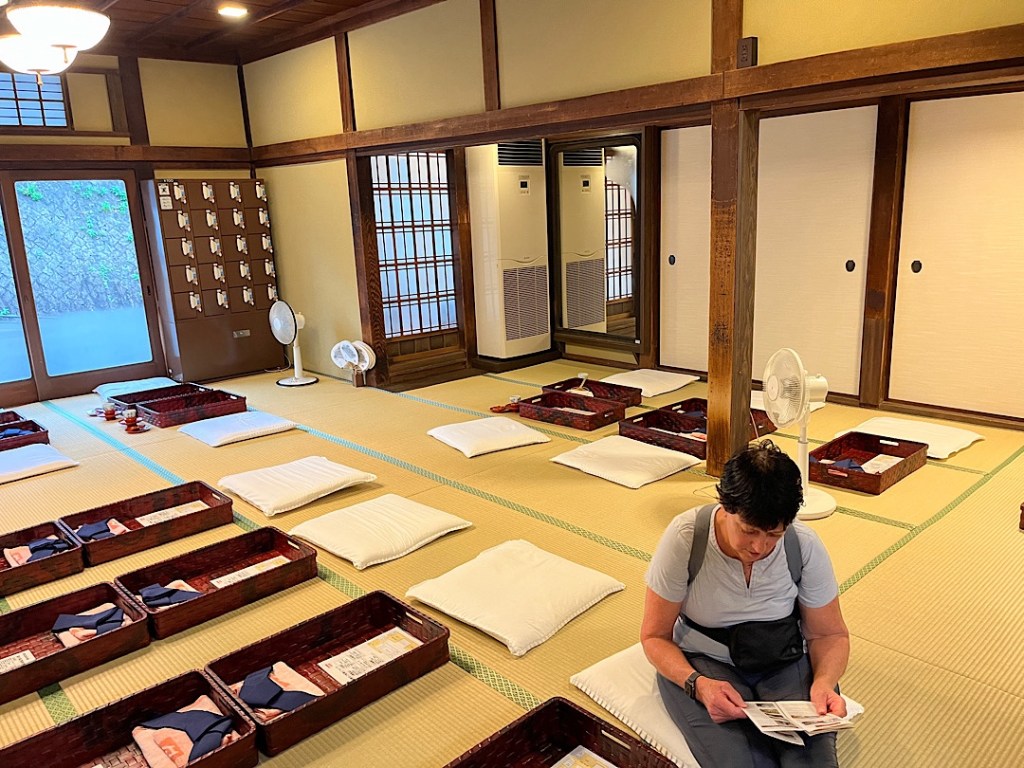
The third Big Attraction in town is Dogo Onsen (onsen are hot springs and the bathing facilities around them). This one is said to be the oldest in Japan (3000 years old? So they say.) You have to pay an admission fee to enter the 130-year-old main resort building (Dogo Onsen Honkan). Because we had failed to bring towels and robes with us, we paid about $27 for the two of us to enter, bathe, and get not only towels and robes but also tea and cookies.

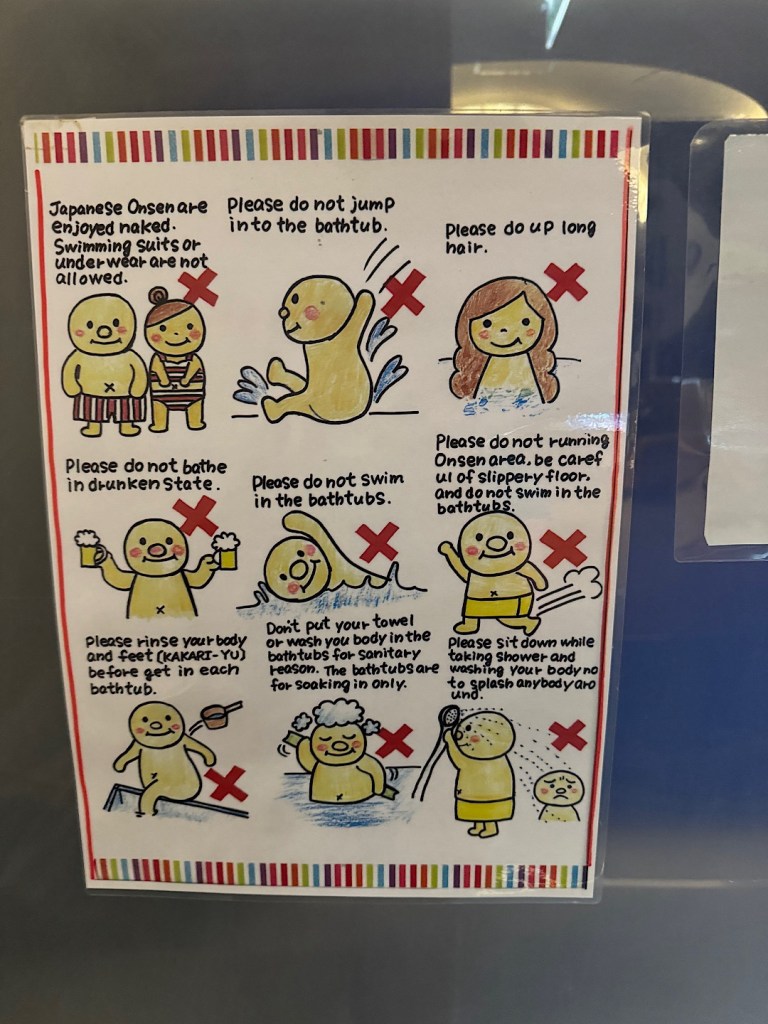
I should explain here that Steve’s not a huge fan of Japanese bathing, which we have done many times over the years. In 1979 we visited a town where the streets were filled with freshly scrubbed people strolling around in just robes and sandals. In 1982 we went to an onsen in the north where men and women soaked together, au natural, in lovely outdoor pools. On this trip, we used the communal baths at two places, both of which reminded Steve he finds nothing appealing about sitting in hot water with a bunch of other naked men. I’m more of a fan of the whole experience. I learned the rules of Japanese bathing way back on my first trip to Japan.

Here’s one rendering of the rules I saw recently.

Steeping myself in very hot pools alongside other naked women is so wildly different from anything back home, I find the rituals interesting — and the hot-water dips relaxing.

At Dogo Onsen, Steve was a good sport and accompanied me into the spa (though we couldn’t soak together. In most places, it’s a sex-segregated activity.)

We were allowed to sit together in this room for our after-bath tea and cookies.

We enjoyed all three of these activities, but two other things happened that seemed more wonderfully, quintessentially Japanese. We stumbled on one while walking to the onsen through one of the town’s pleasant covered malls. An odd sight caught my eye:

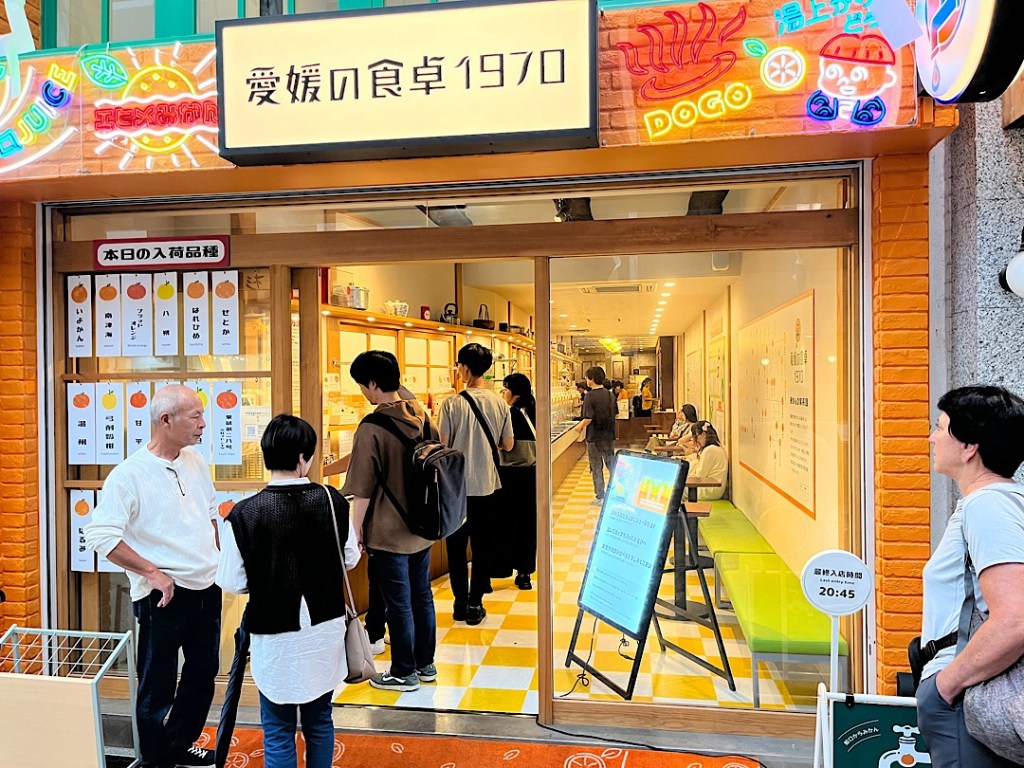
A colorful store containing a long wall lined with spigots.
We realized the spigots poured tastes of maybe two dozen kinds of citrus juice.

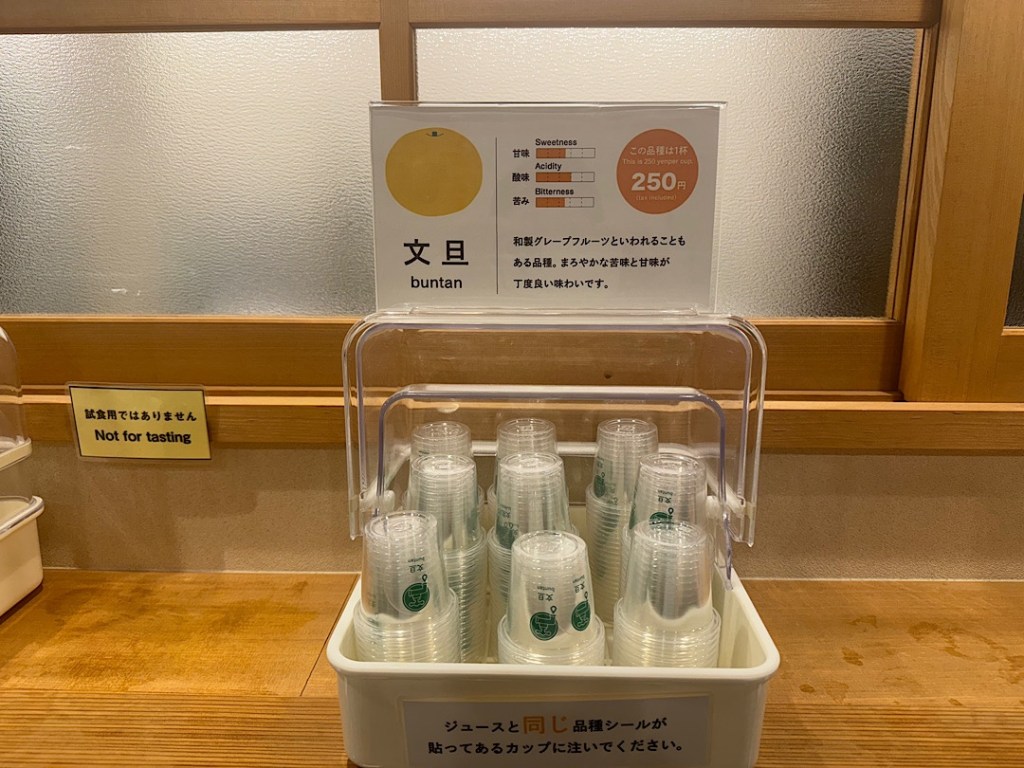
It seemed the juice was squeezed from varieties of fruit hybridized and grown in Ehime Prefecture. We recognized a few like blood orange. But most were alien: Seminole juice? Buntan?

A taste of the buntan, for example, cost $1.68. The displays showed the sweetness, acidity, and bitterness levels of each offering.

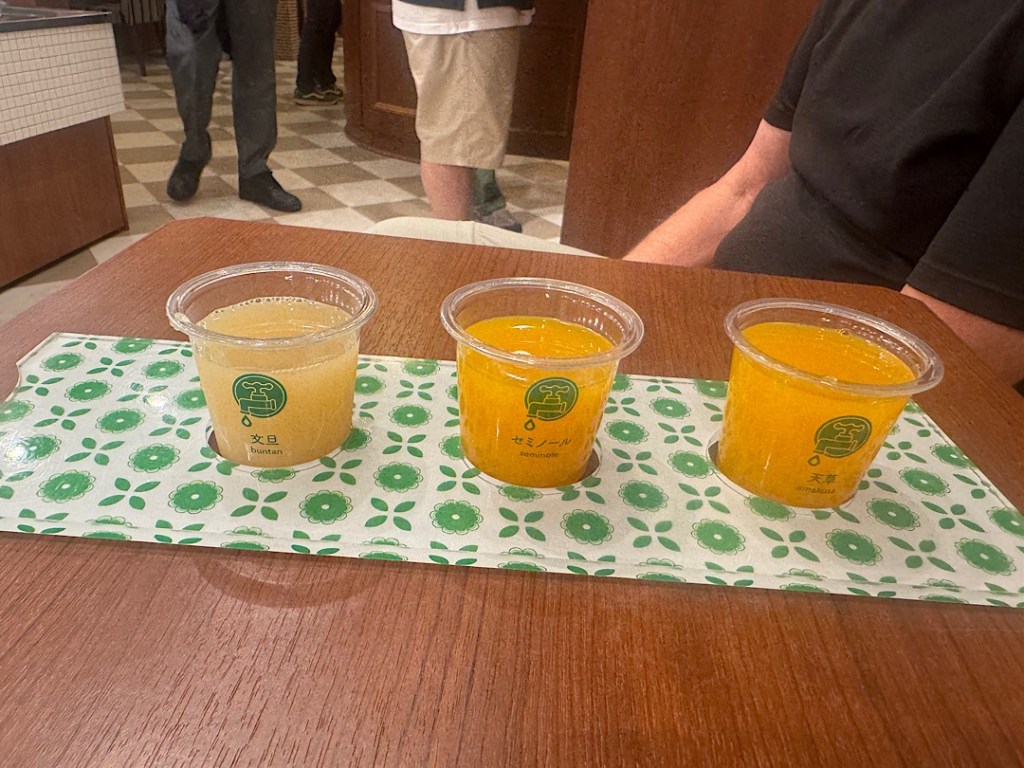
We picked out three to share; the total came to $5. None of them tasted exactly like the orange juice or tangerine juice or grapefruit juice we know from home.They weren’t blends of those, but squeezed from wholly different fruit, clearly related but different. As we walked in, customers of all ages were streaming in, happy to be trying something new, as people here tend to be.

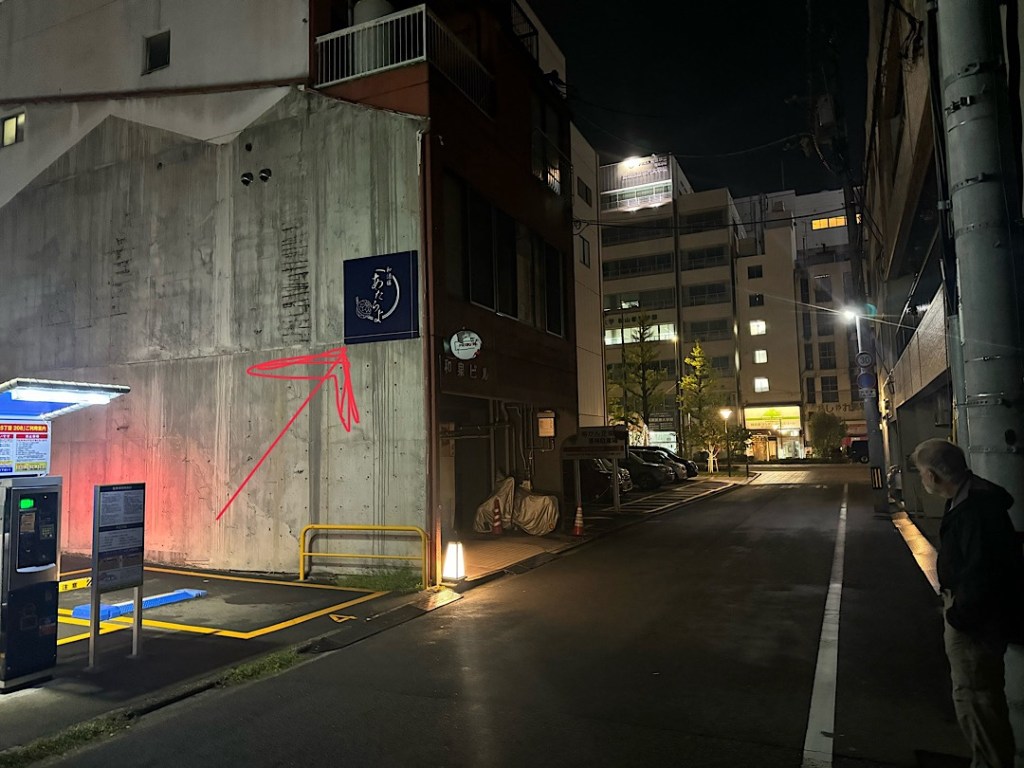
Our other striking experience came on our final night on Shikoku. We’d wanted to eat somewhere good but close to our hotel; Google Maps showed us at least a dozen candidates within a 5-minute radius. We selected a highly rated one which looked to be just a half block down a little street almost directly across from where we were staying. We followed Google’s directions and were baffled to find a dark alley containing no sign of any commercial establishment (even though Google said it should be open.) We walked in various directions, increasingly frustrated. Steve was certain Google was simply wrong. But I pushed for one more careful walk through the alley before we caved and went to the nearest burger joint. And there it was!

A sign for the restaurant we were seeking.

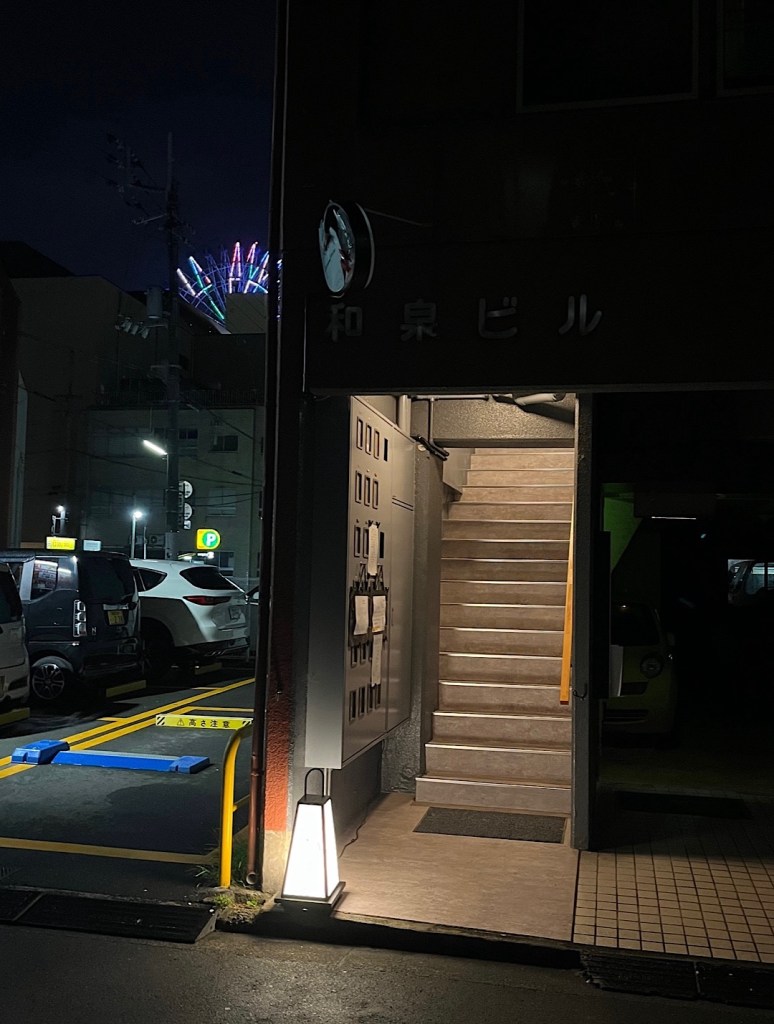
We climbed an unpromising set of stairs…

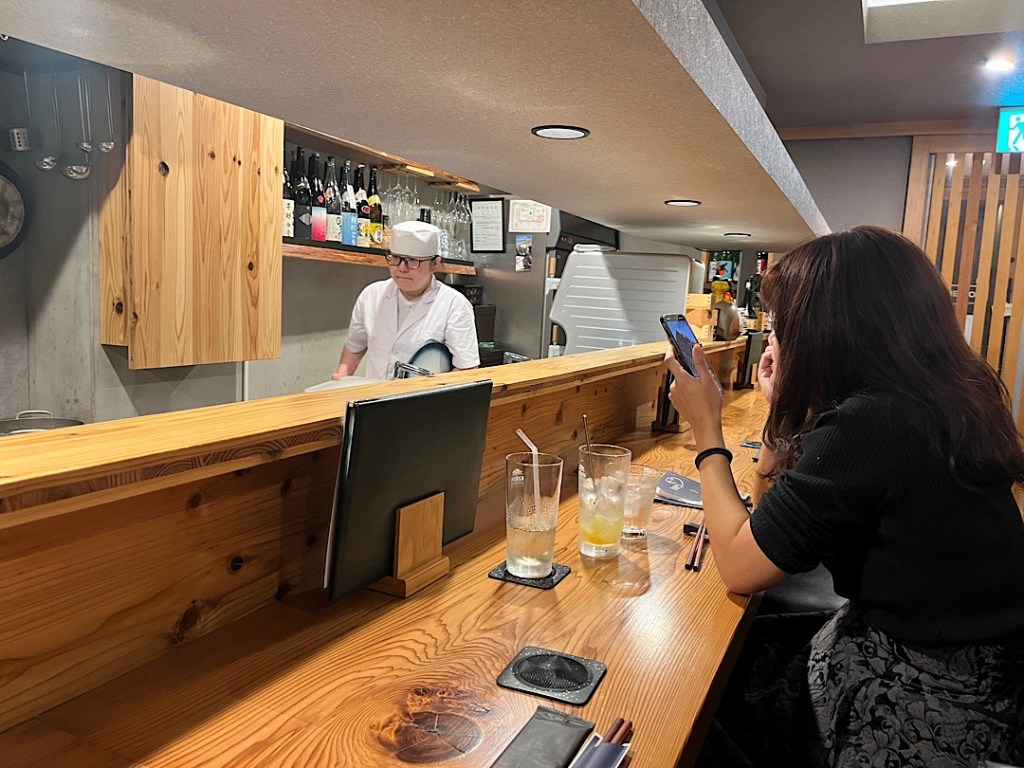
…pushed open the door, and were greeted with a cry of welcome from the solitary figure working behind the counter. The room was lovely — sleekly elegant with lots of warm wood tones. Music played softly in the background. The only other person in the place was a single woman nursing a drink at the bar.

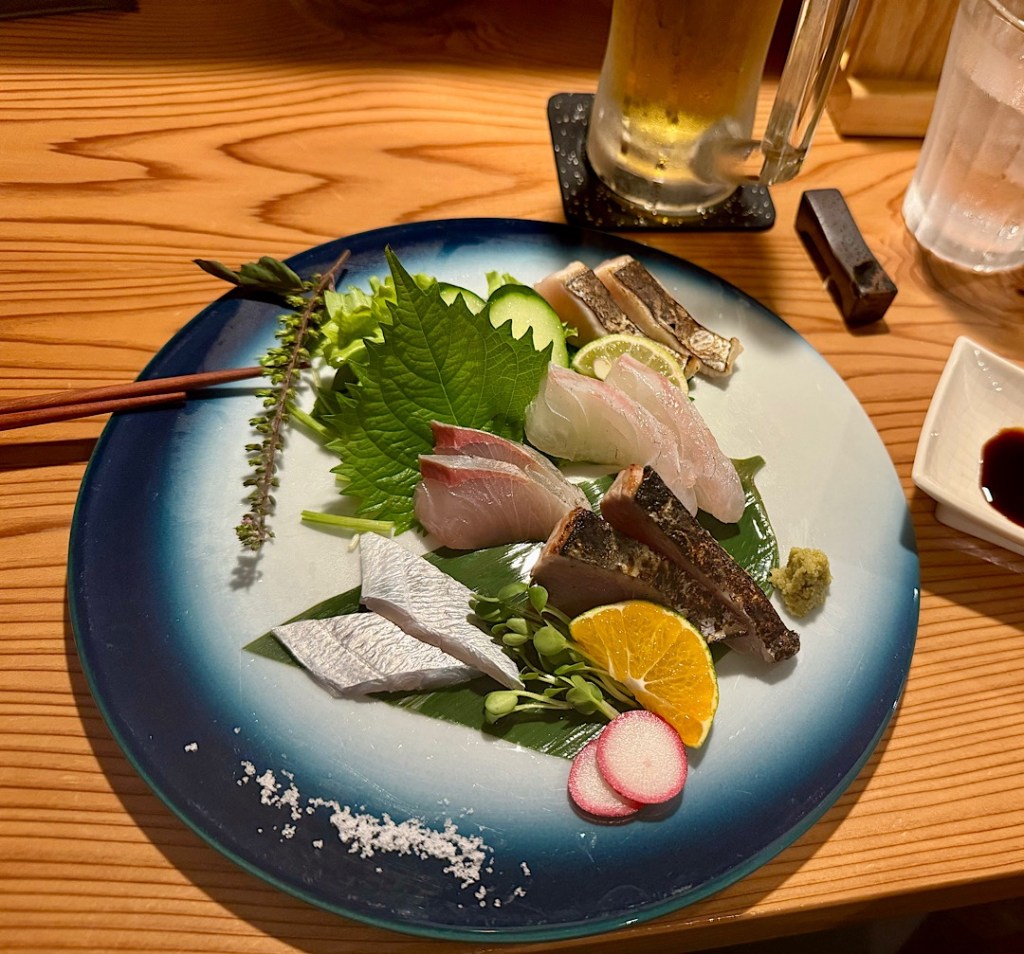
Steve and I wound up splurging on the Matsuyama Special. But what a fabulous range of deliciousness it included.

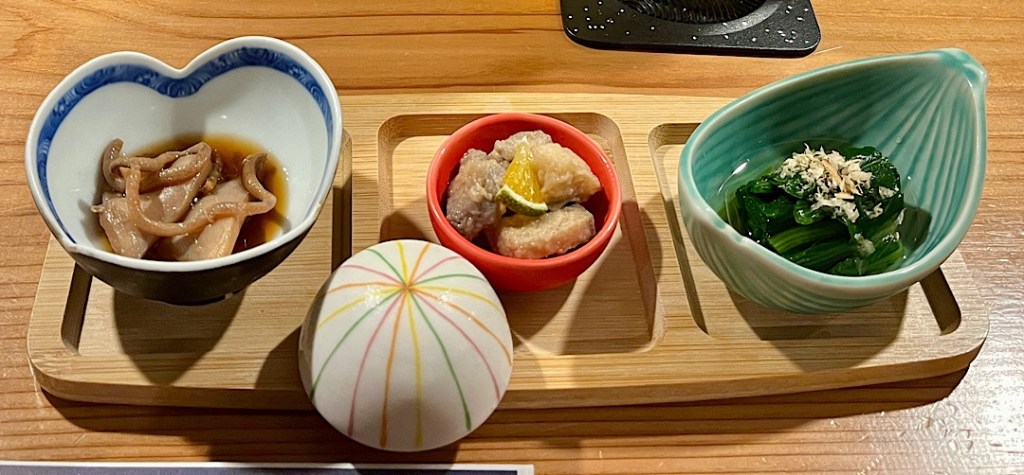
It started with three kinds of appetizers. (The one in the middle is fish. The others are vegetables.)
The sashimi made both of us swoon with pleasure.
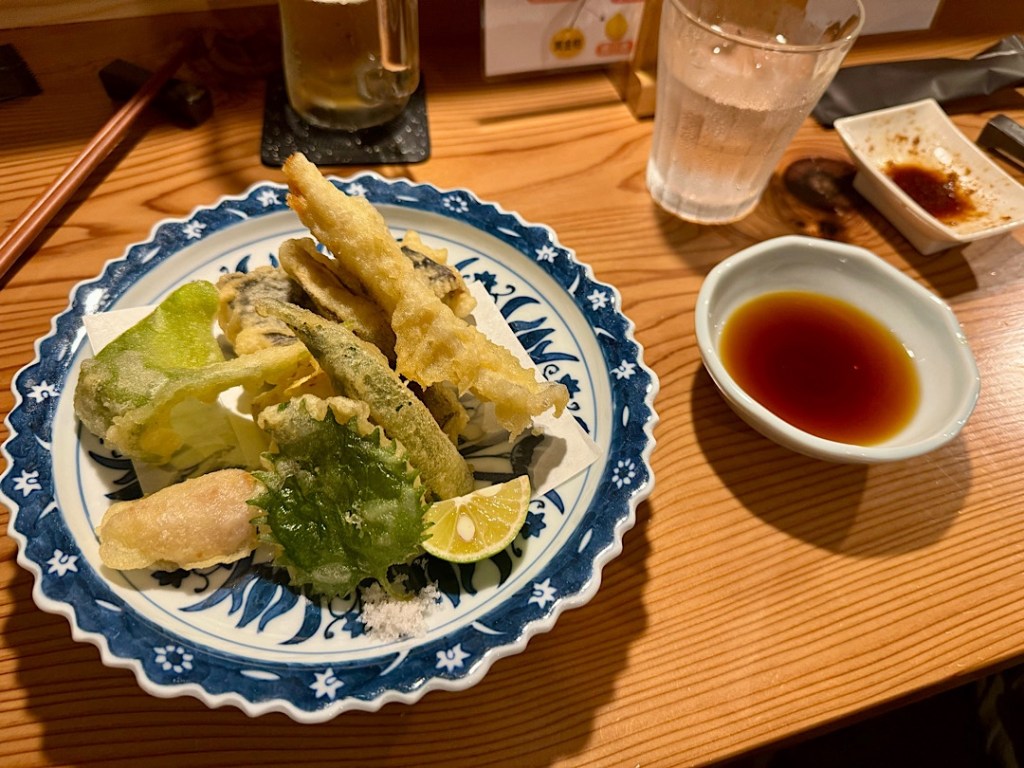
Then came more vegetables and fish dipped in a delicate tempura better and deep fried.
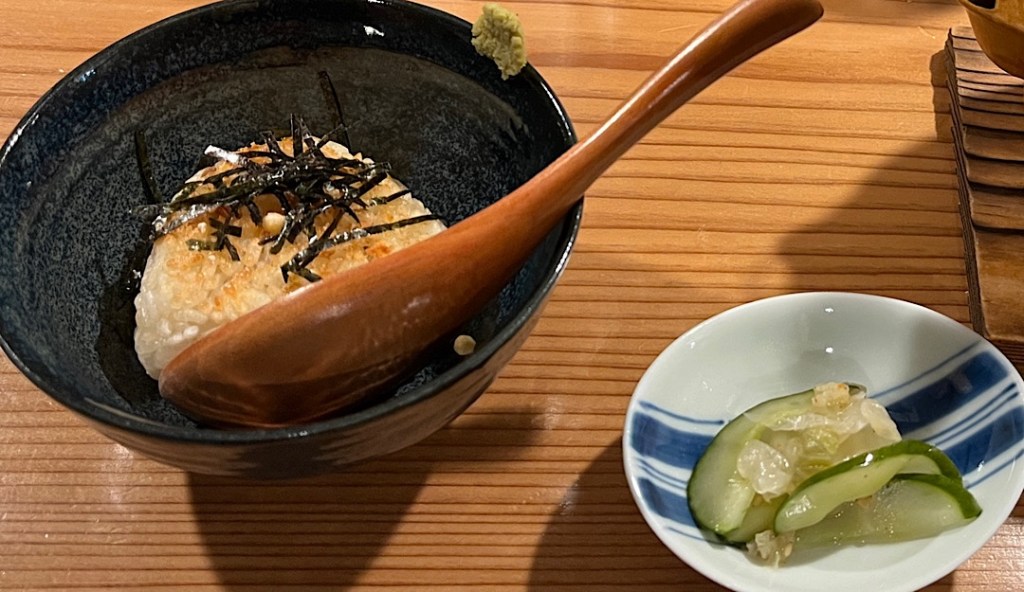
The rice was eaten with a broth.
The creamy, eggy custard contained fresh mushrooms.
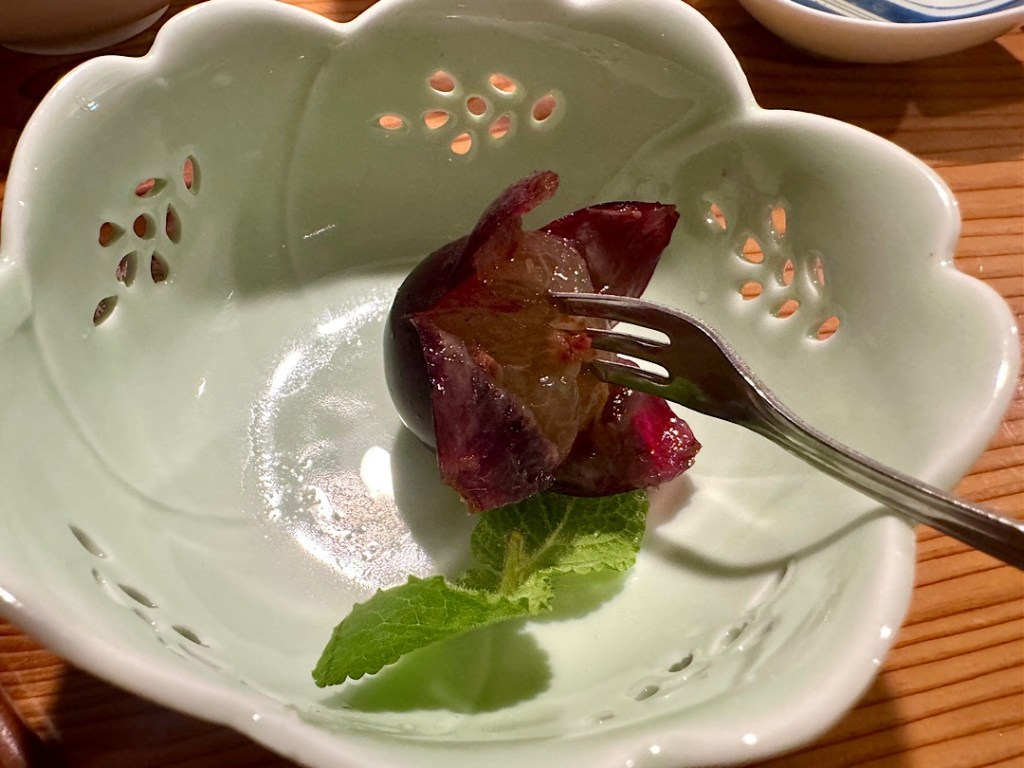
Dessert was two of these strange fruits, which the chef seemed to be saying were grapefruit. They tasted like Concord grapes to me, but huge and very juicy.
This lady did it all, single-handed. We paid $115.69 for all that food, two beers, and tax. (There’s never any tipping or charge for service in Japan.)

Then she presented us with a pretty paper bag containing Japanese snacks and some candy. Her gift to us for coming to dinner.

Driving illiterate

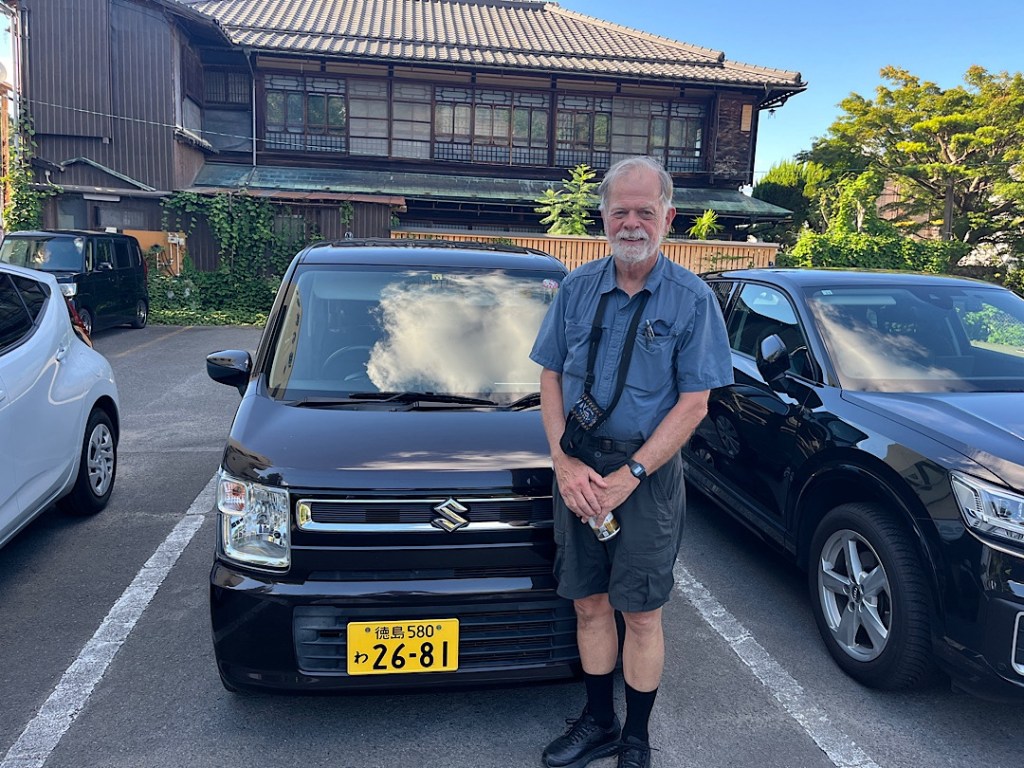
It looked tiny, but our little kei car handled well and felt surprisingly roomy inside.

After making a big loop around Shikoku, in the course of which we logged 579 kilometers (360 miles) on the odometer, we safely delivered our cute little Suzuki hybrid to the Budget car rental office in Matsuyama yesterday afternoon (Wednesday, 10/2). The experience taught me a lot about driving in Japan, and I’m happy to share some key lessons learned.

The bad:

Traffic flows on the left, and that requires some adjustment. However, after all Steve’s driving experience this past year (including our motoring all over Zimbabwe and braving four left-hand-drive Caribbean countries over really bad roads crammed with terrible drivers), he has never been more tuned up for driving on the left. He said the switch hardly required any mental adjustment.

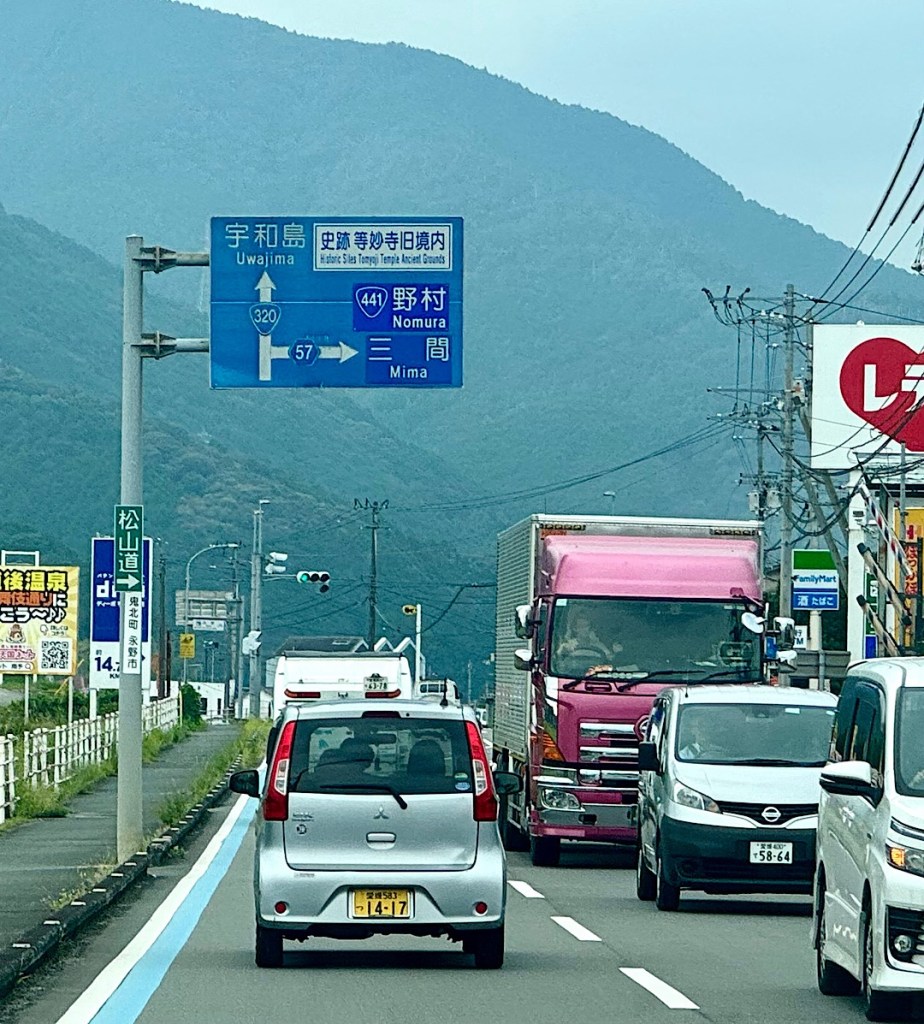
But both of us are essentially illiterate here, and Japanese road designers communicate a lot of information via signs. Although most big intersections included town names written in Roman letters…

Like this one

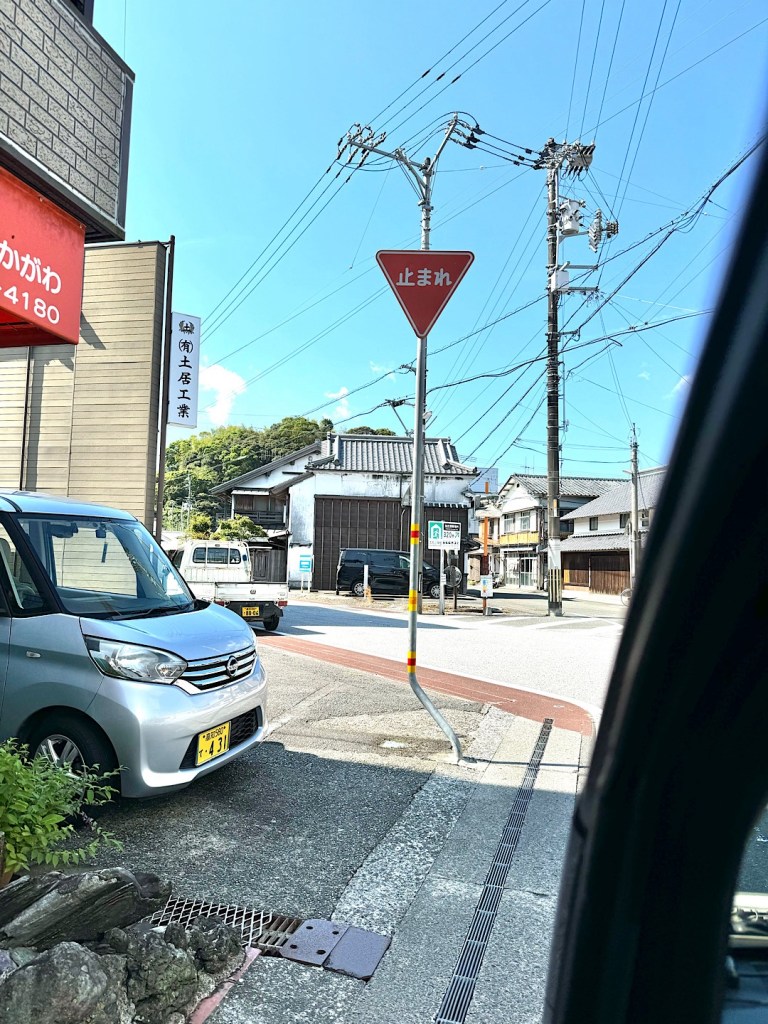
…many warnings were incomprehensible. It all required adjustment.

Would you recognize that this is a stop sign? it took us a while.

Google Translate has been indescribably helpful on this trip, but we couldn’t use it while moving at 30 or 40 or 50 miles an hour.

This was a rare case where we were able to figure out the sign meant “Road construction ahead” because the traffic stopped long enough for us to use Google Translate.

Google Maps worked reliably and made it almost effortless to navigate. Still, being unable to read the signs was often unnerving.

The good:

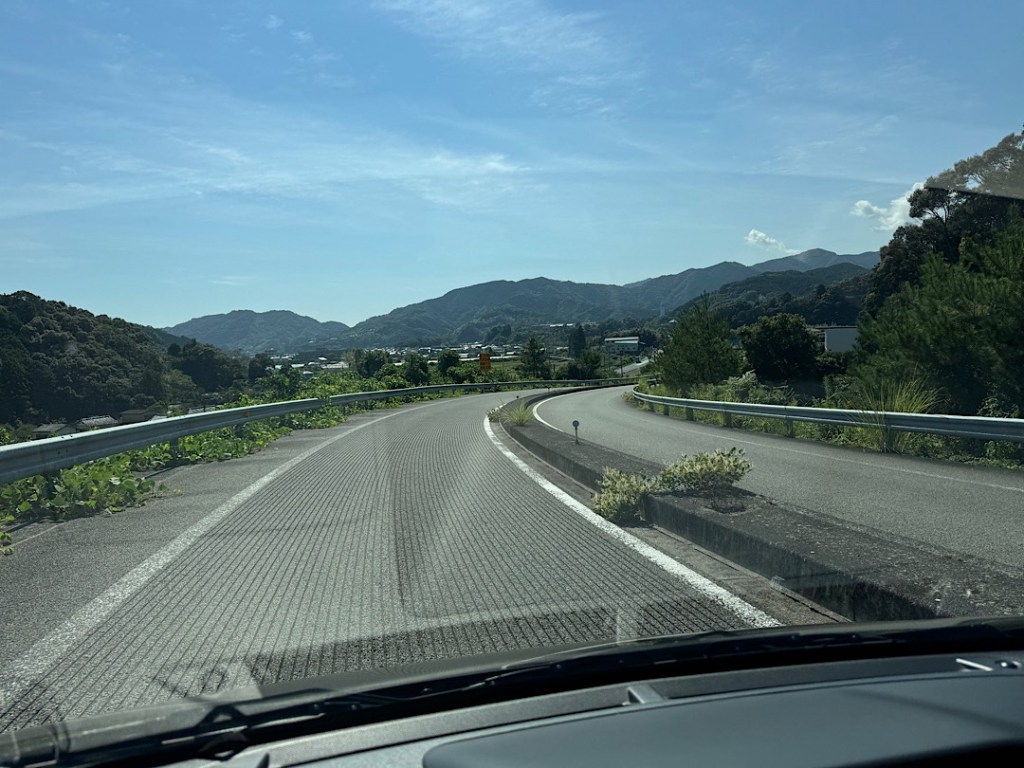
There’s a lot to love about road-tripping in Japan. Every highway we traveled was in excellent condition, with never a pothole in sight.

We didn’t see a single wreck anywhere, not even any traffic cops. The other drivers were perhaps the best we’ve ever shared the road with — universally law-abiding and courteous. No one tried to pass us, even when we were going slower than they obviously wanted to go.

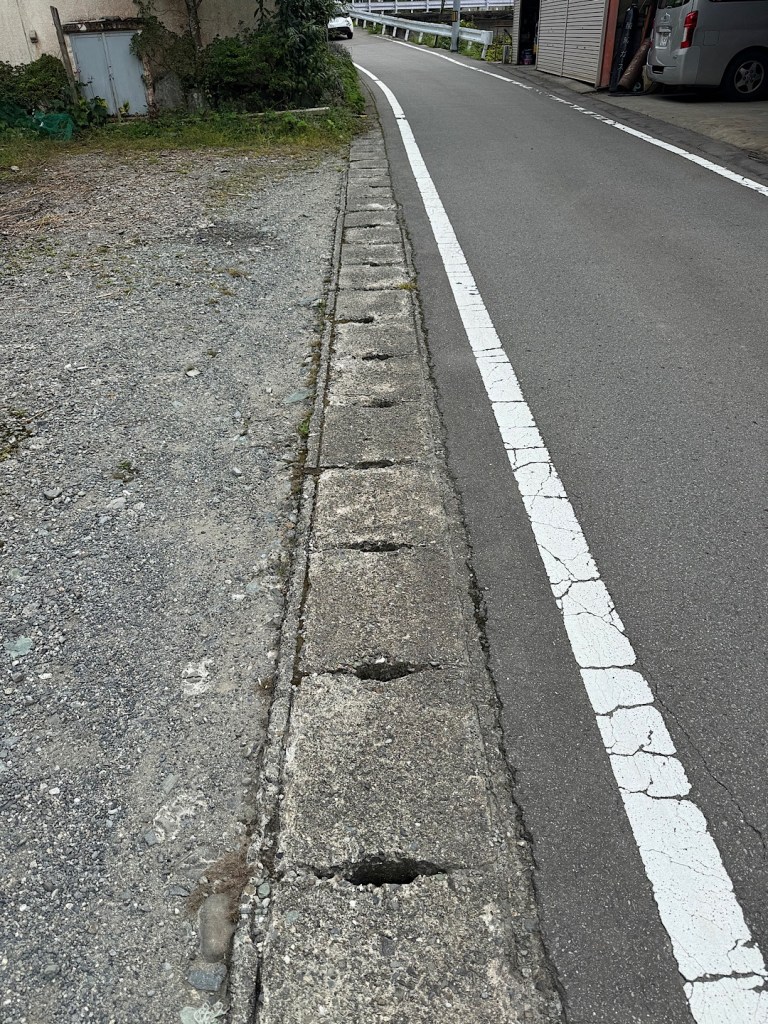
Most of our travel was in mountainous areas where drainage ditches were necessary to channel rainwater. But unlike in the Caribbean, the Japanese neatly cover almost all their drainage channels, so I never was terrified we would edge into one of them and wreck our vehicle.

On Grenada or Jamaica or elsewhere in the Caribbean, this would be an open, menacing hazard.

The ugly

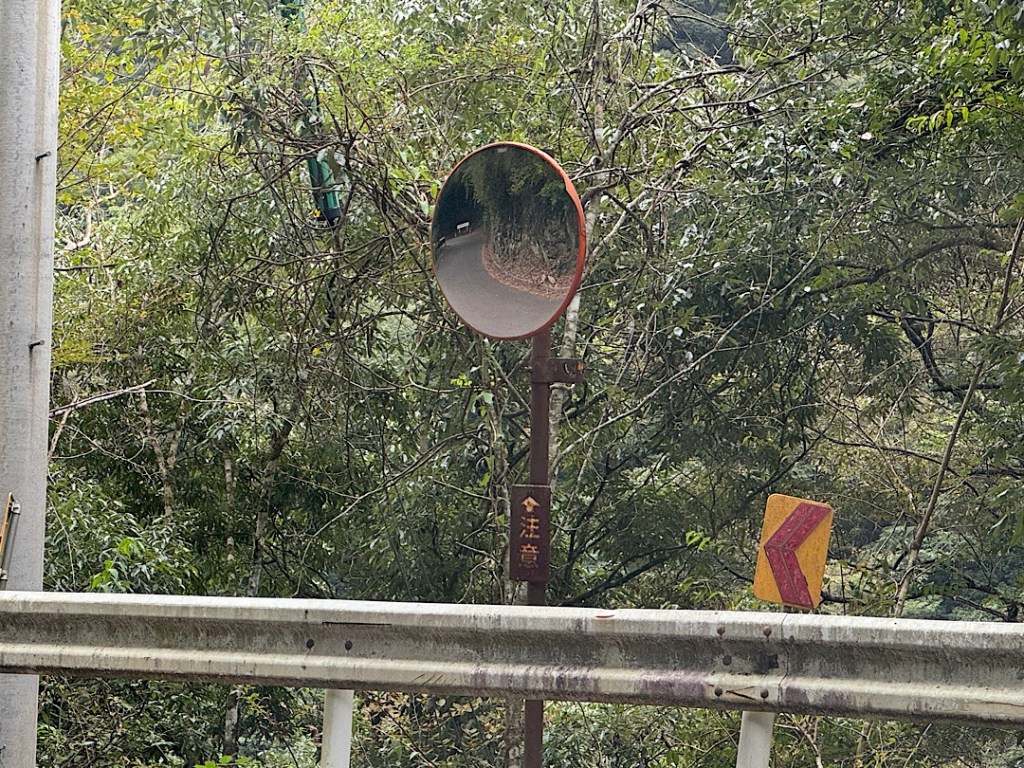
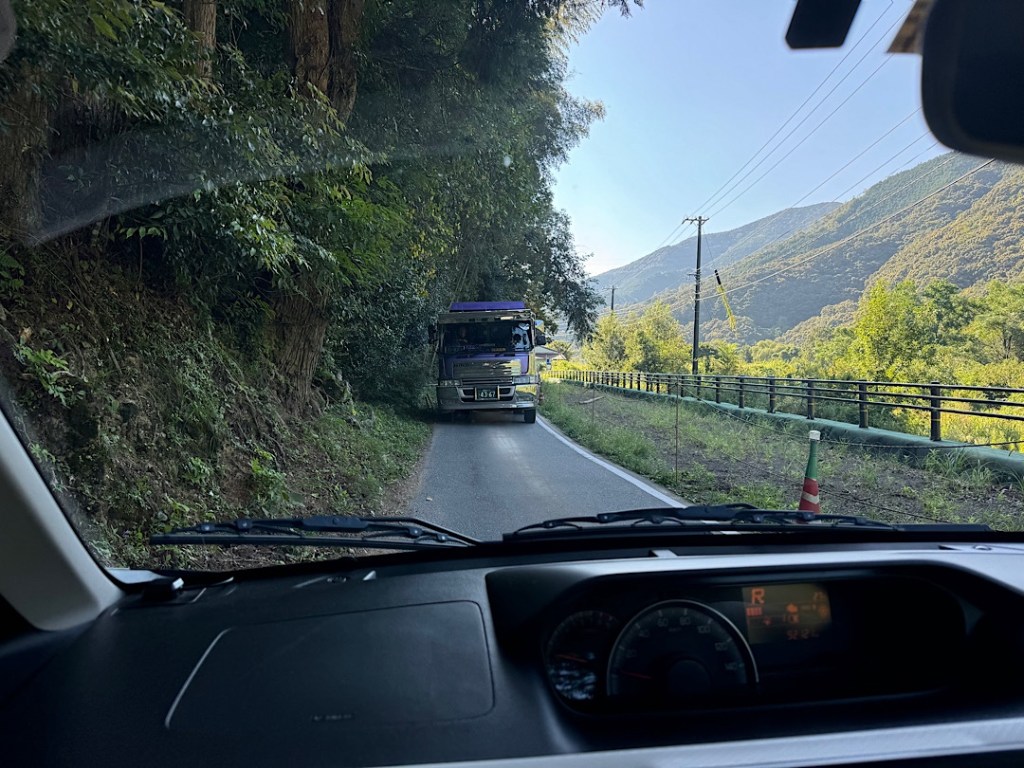
We rented the car because we wanted to visit some very isolated rural areas. In such areas, we found a fair number of one-lane roads. These would have been much scarier (and more dangerous) had the Japanese not installed countless mirrors that enable drivers to see around the bends. I got adept at spotting the mirrors and checking to see if someone would be coming at us.

Here the coast was clear.
Only once did we come to an impasse. In this case the solution was obvious: we backed up, as did the two cars behind us, until we got to a spot in the road where the truck could pull around us.

The quintessentially Japanese

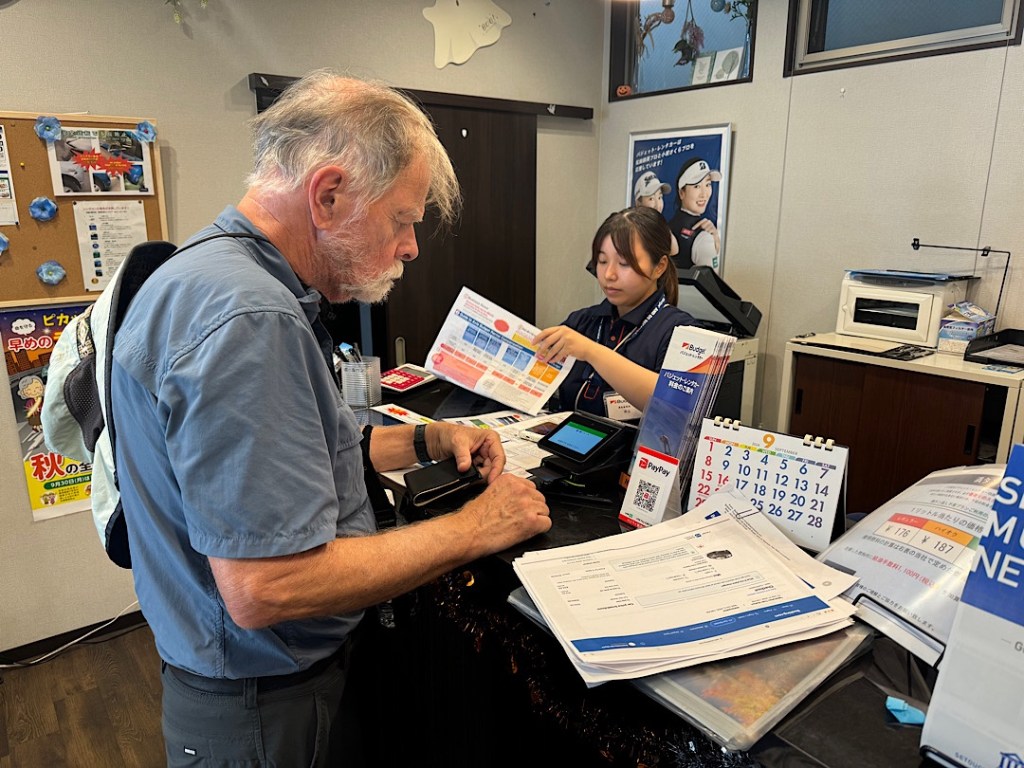
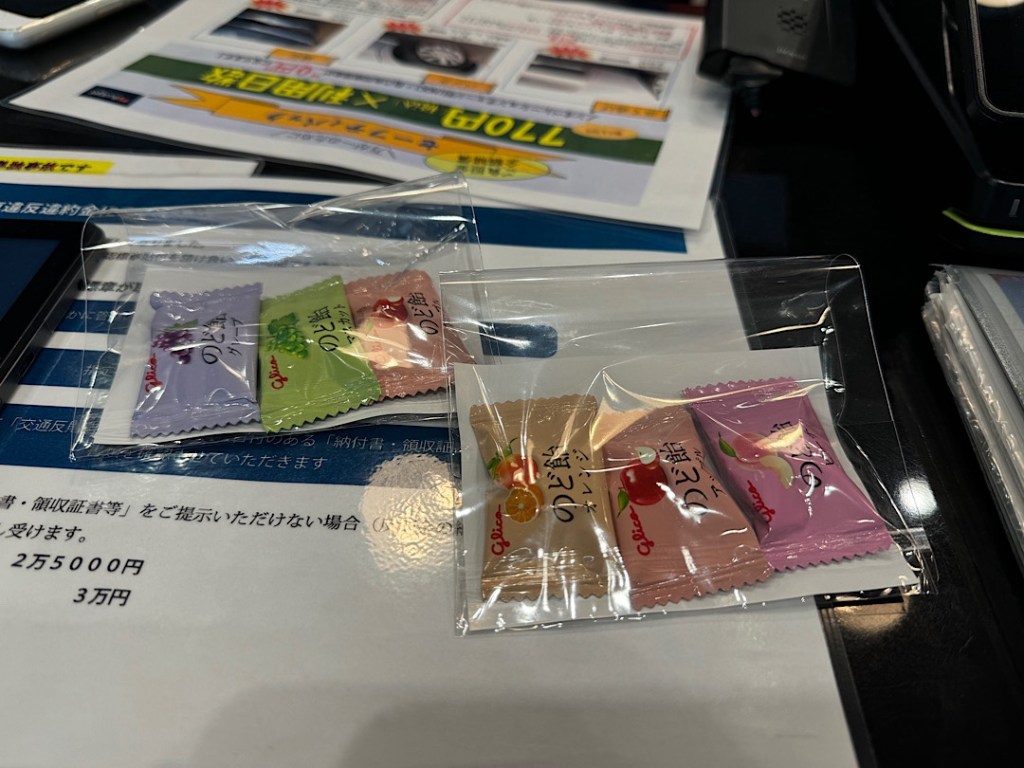
Picking up the car from the Budget office in Takamatsu was fascinating. We had to fill out many forms and the frazzled young woman behind the counter required us to watch a video on her tablet that illustrated in graphic detail all the bad things that could happen if we didn’t watch out for bicycle riders, or we sped around corners, or we broke other common-sense rules of the road. Before we left the office to check out the vehicle, the clerk presented both of us with a small gift.

Two packets of candy!

All these steps took so long she didn’t spend a ton of time explaining the GPS system to us, so we never really understood it.

The robotic GPS lady voice chided Steve every time he went over the speed limit or braked too hard or turned too abruptly to suit her, which was annoying. Then she started giving us driving instructions that contradicted the sensible ones from Google Maps. After a few days, we began thinking of her as an addled vagrant who’d somehow found shelter under our dashboard where she muttered to herself and occasionally called out misinformation. Finally we figured out how to turn her off entirely.

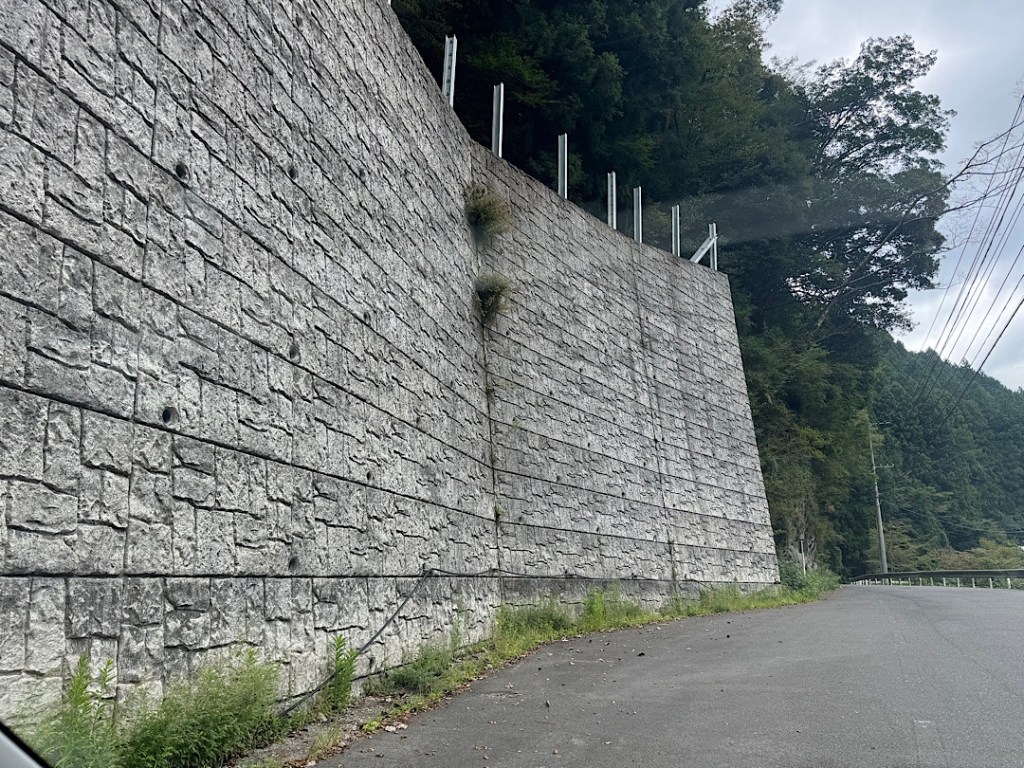
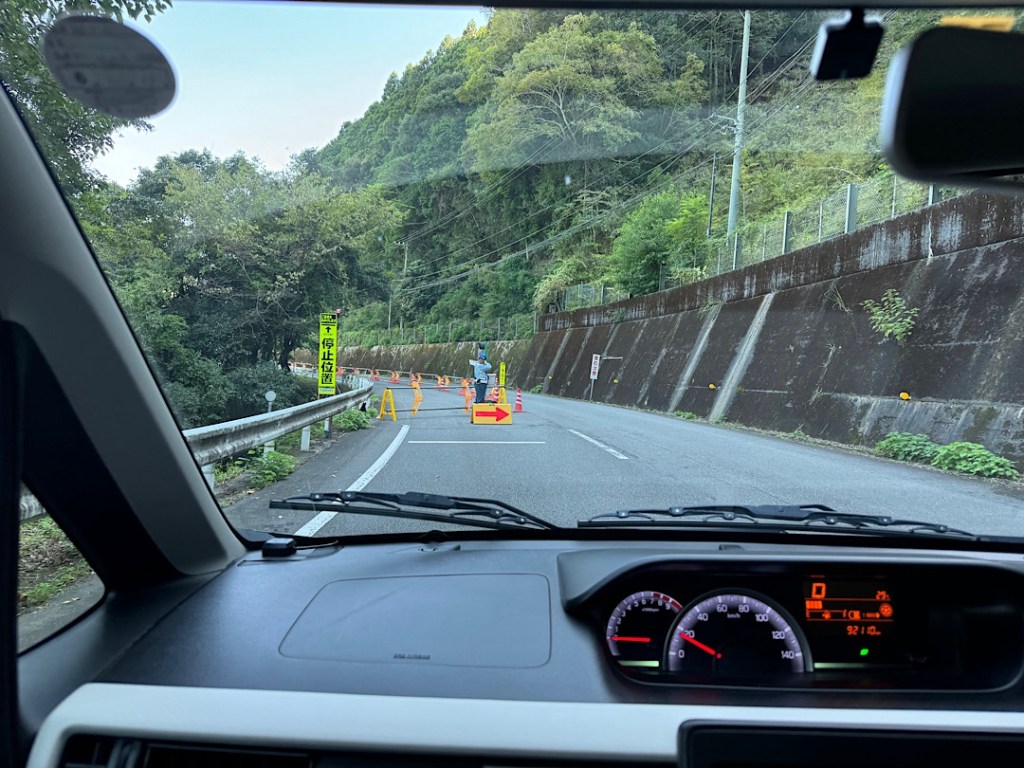
Although the roads we traveled were sometimes single-lane, we were astonished by the enormous amounts of work — and concrete! — the Japanese have put into shoring up steep roadsides to prevent landslides and damage from falling rocks.

Here’s one example.
Here’s another — and a flagman signaling that workers up ahead were adding more.

Steve says a big reason the Japanese economy has stagnated for several decades is because the politicians have borrowed so much money to spend on huge infrastructure projects. He notes that they have borrowed the money from themselves (Japanese bond holders) and the expenditures have resulted in Japan having great roads and trains and other public infrastructure (this in contrast to many other countries that shall be nameless.) But that’s a subject for another kind of blog.

We’ll be on Shikoku for one more day, using public transportation again, including the ferry we hope to take to Hiroshima (back on Honshu) tomorrow.

The scarecrow village

We’re alive after more than two days of driving around, but I’ll wait to share what it’s been like behind the wheel (and in the front passenger seat.) I don’t want to jinx us before we turn in our little Suzuki WagonR in two and a half days.

We rented the car because we wanted to visit some of the wildest terrain in Japan, places where the trains don’t penetrate, deep within the mountains of Shikoku (one of Japan’s four main islands.) Yesterday afternoon we drove into the densely forested Iya Valley on roads notched out of almost-vertical cliffs, byways that often narrowed to a single lane.

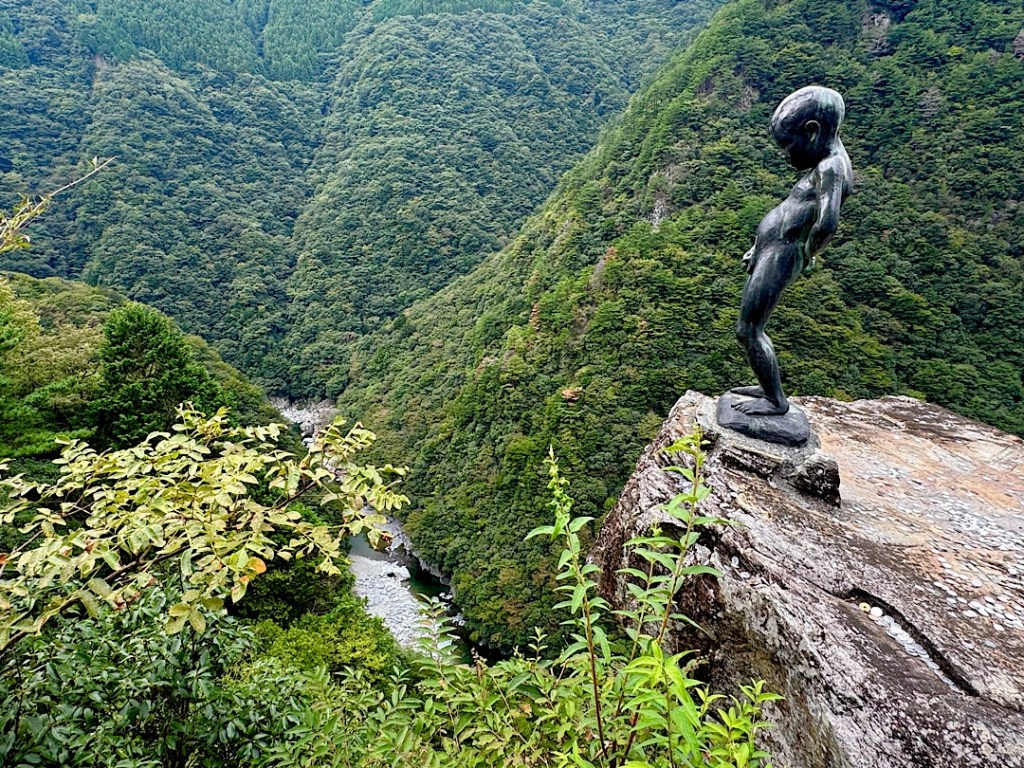
The boy peeing into the valley cut by the river far below is an iconic figure.
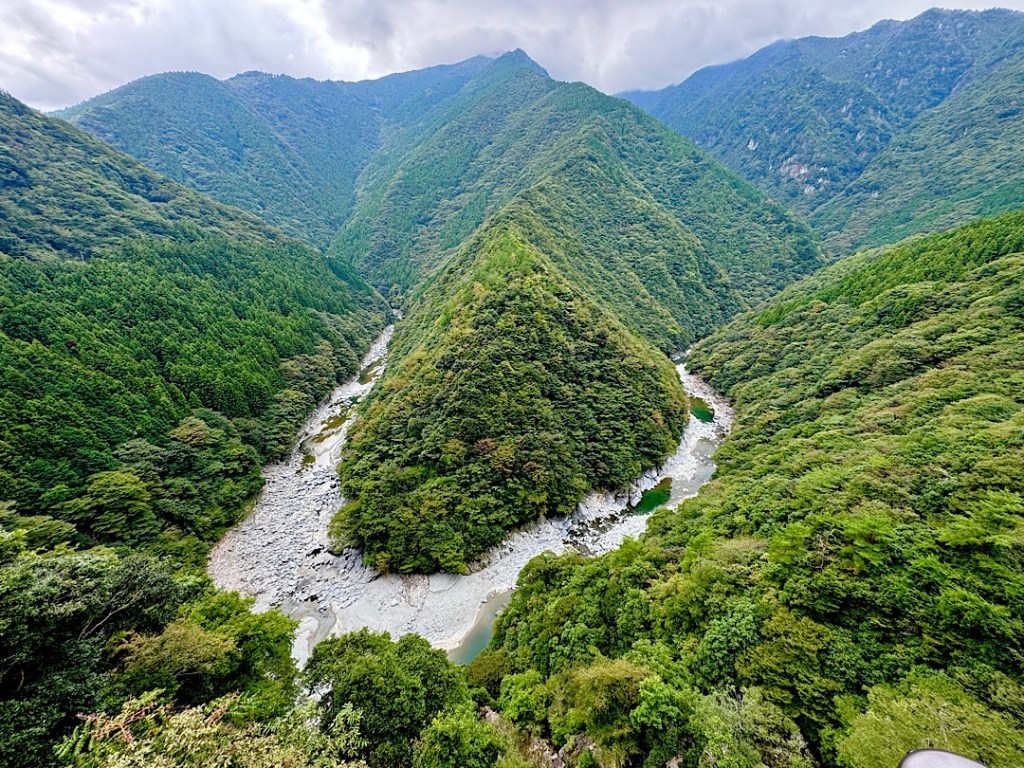
A photogenic bend in the river.
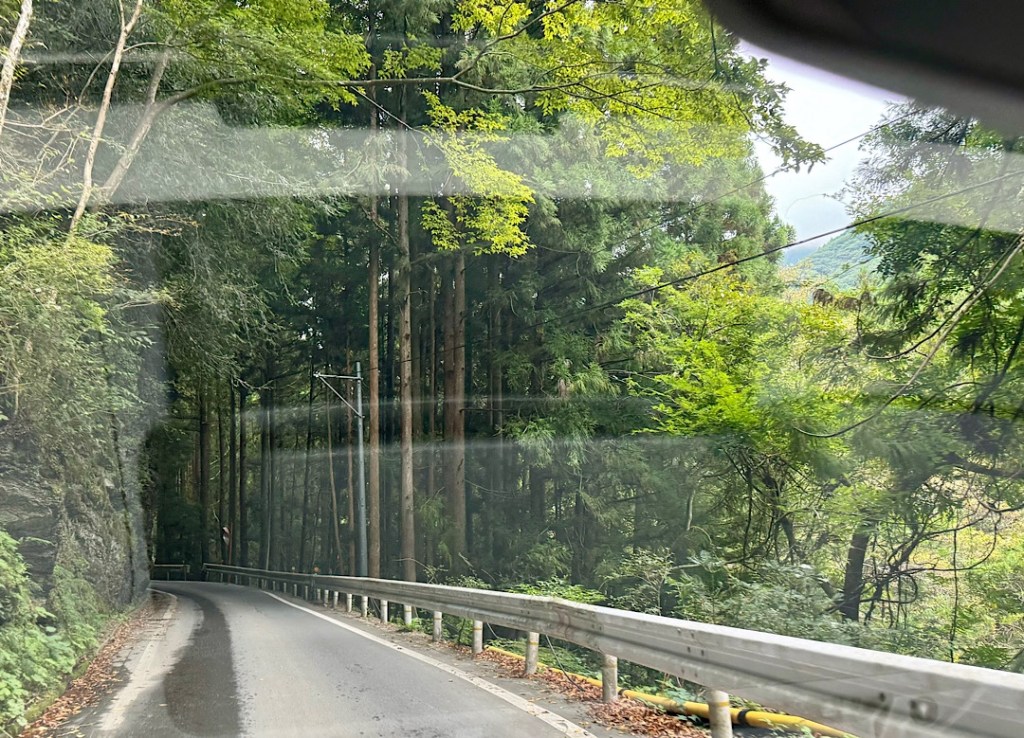
One of the one-lane sections of the road.

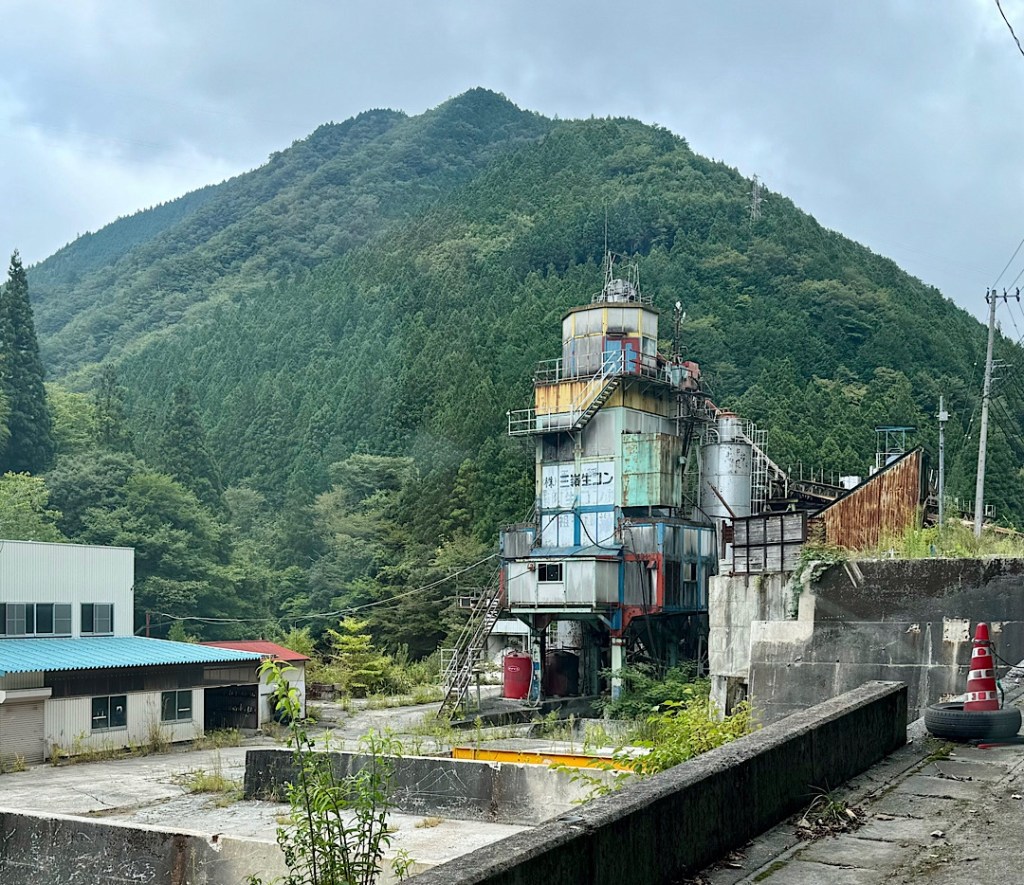
The urban buzz in Tokyo and Kobe and even Takamatsu to me felt more advanced and sophisticated than anything I’ve experienced anywhere else on earth. After 10 days of that, it was jolting to begin passing buildings and one-time enterprises in the Iya Valley that showed signs of decay. Like this facility:

What was it? What did people once do here?

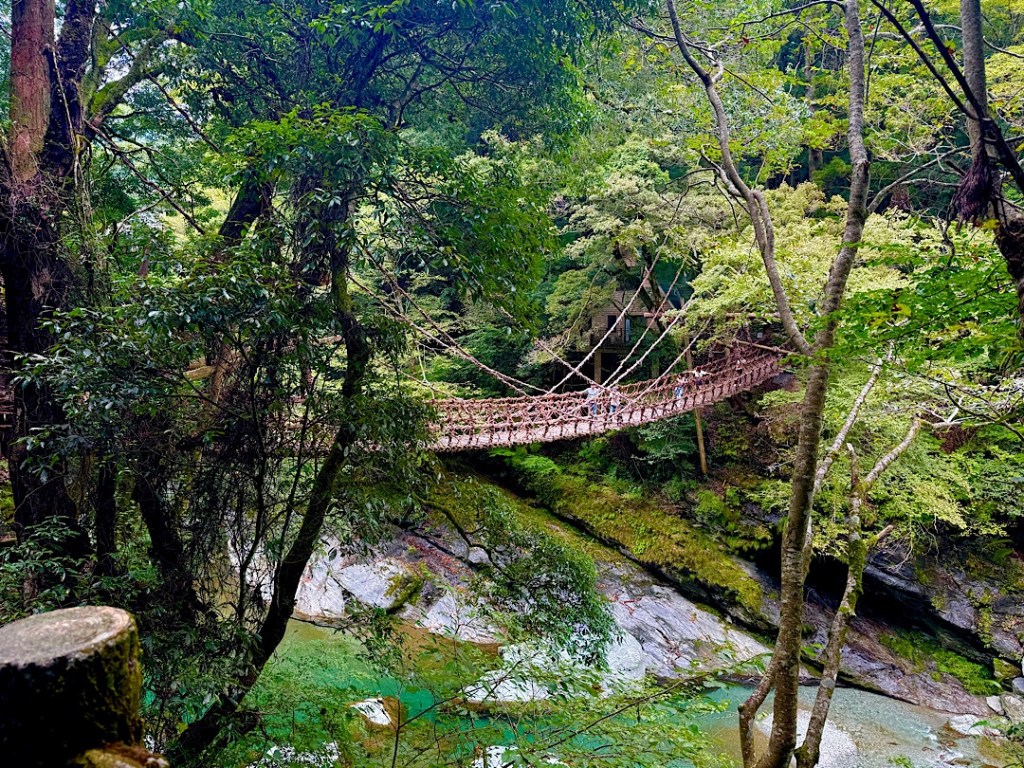
Steve and I were staying in the town of Miyoshi, a base for tourist activities in the area: hiking and mountain climbing. Bathing in hot springs. Walking across bridges that historians think are 800 to 1200 years old, built entirely from vines and planks.

The venerable Kazurabashi bridge was 5 minutes from our Japanese inn.
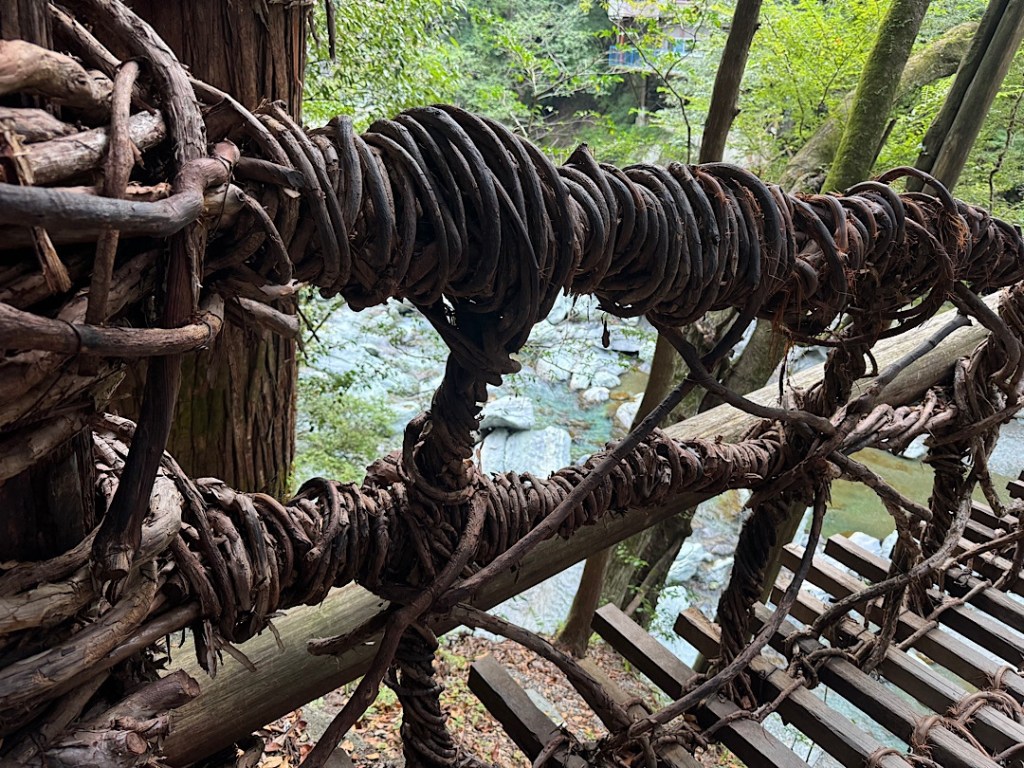
Six tons of vines are required to hold it together.
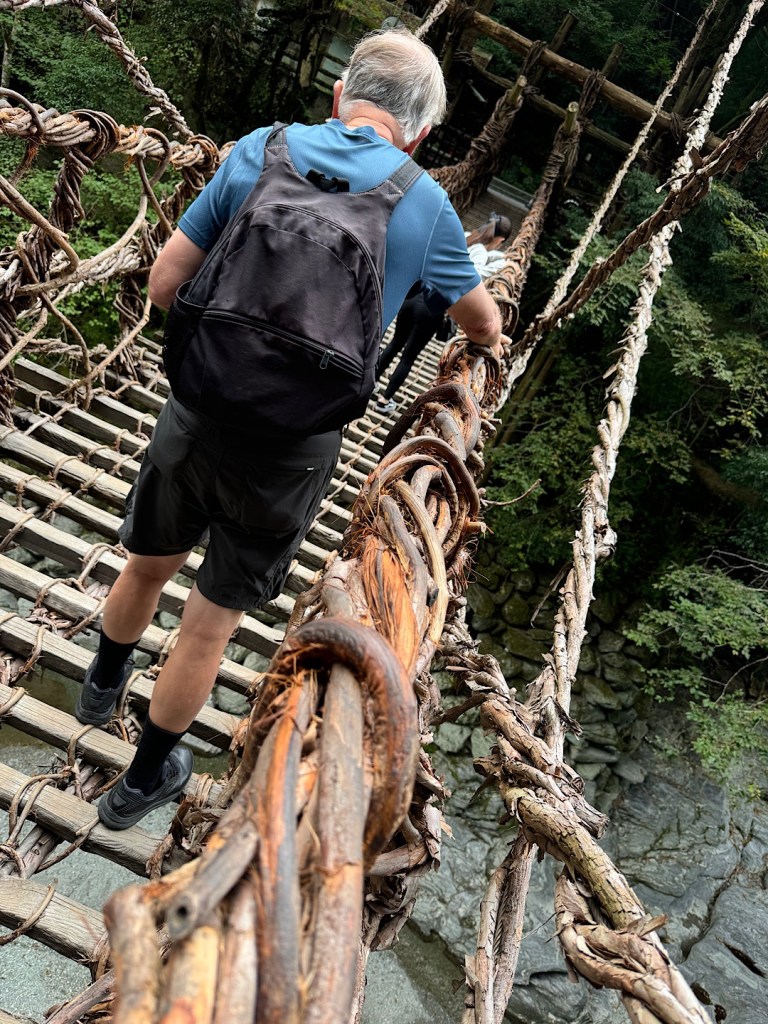
It was surprisingly scary to walk across!

Only about 2300 people live in Miyoshi. If there’s a convenience store in town, we couldn’t find it. It felt like at last we were seeing the effects of Japan’s deadly demographics: an aging population, young people opting not to marry or have children. Countrysides emptying out.

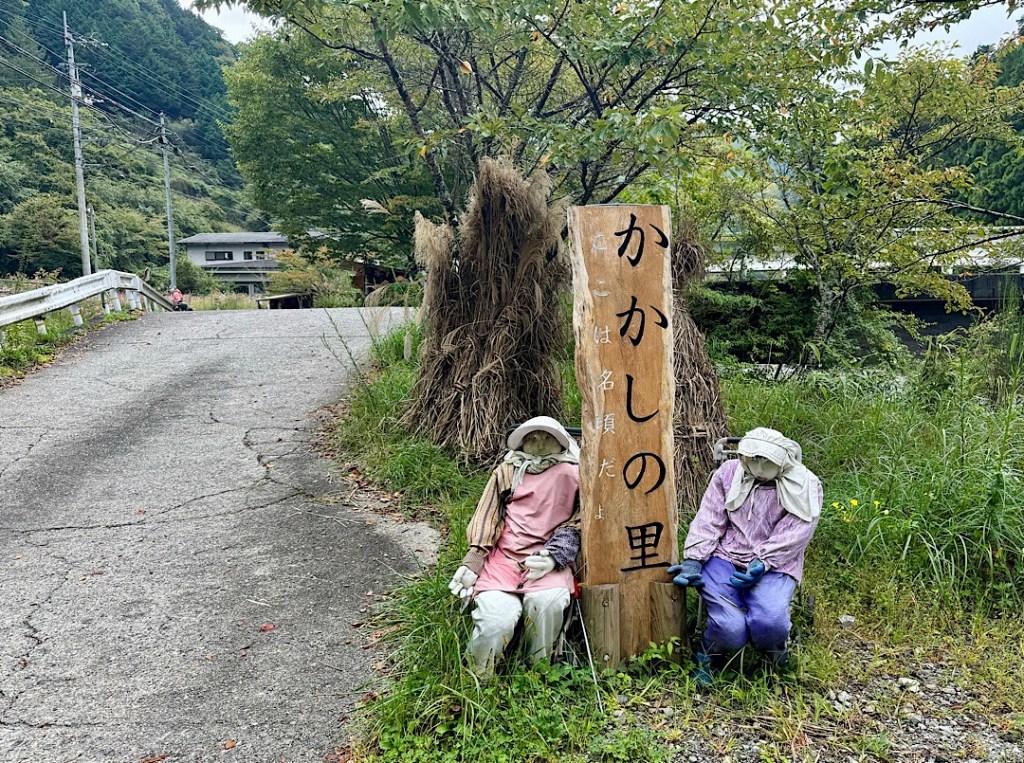
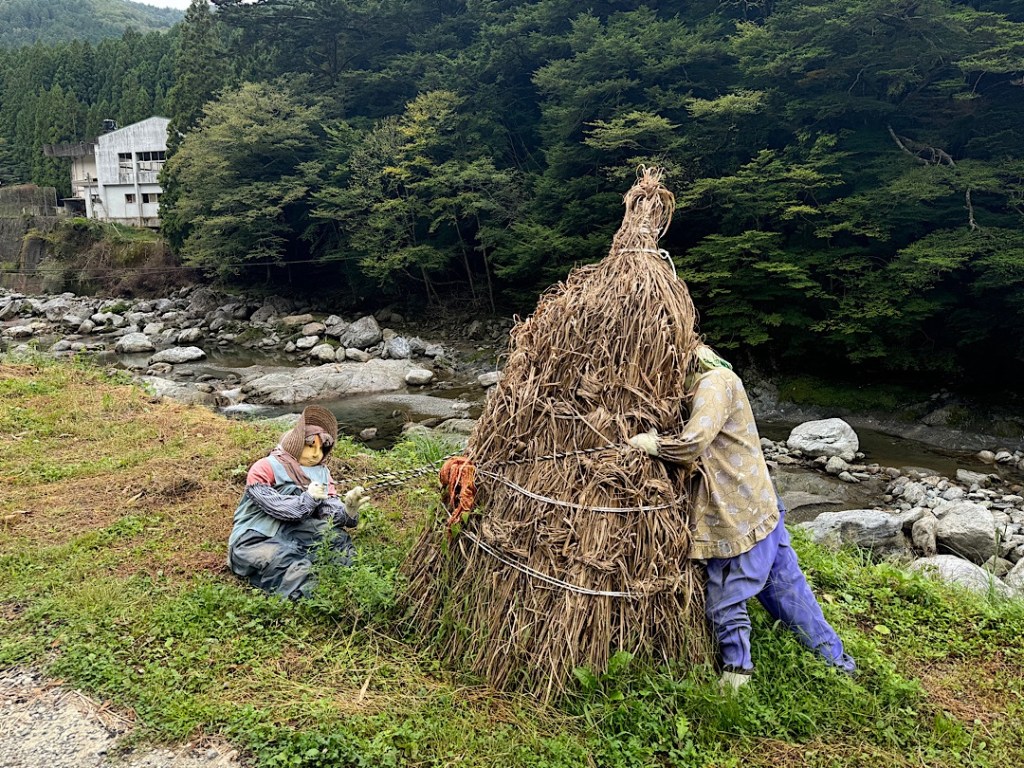
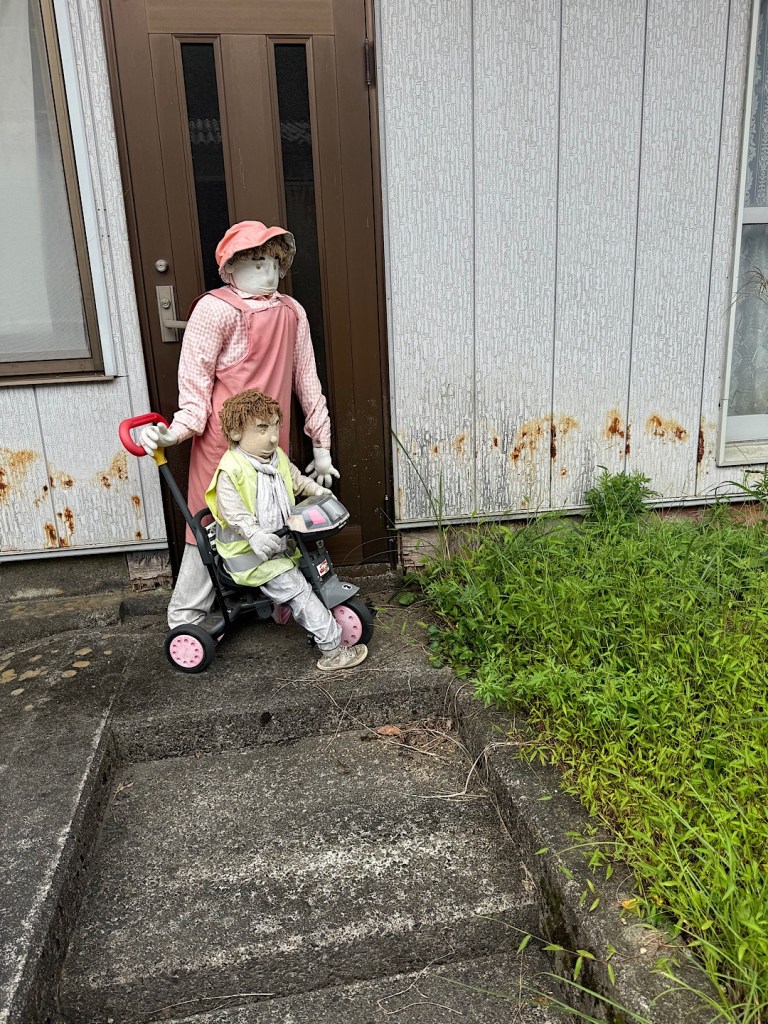
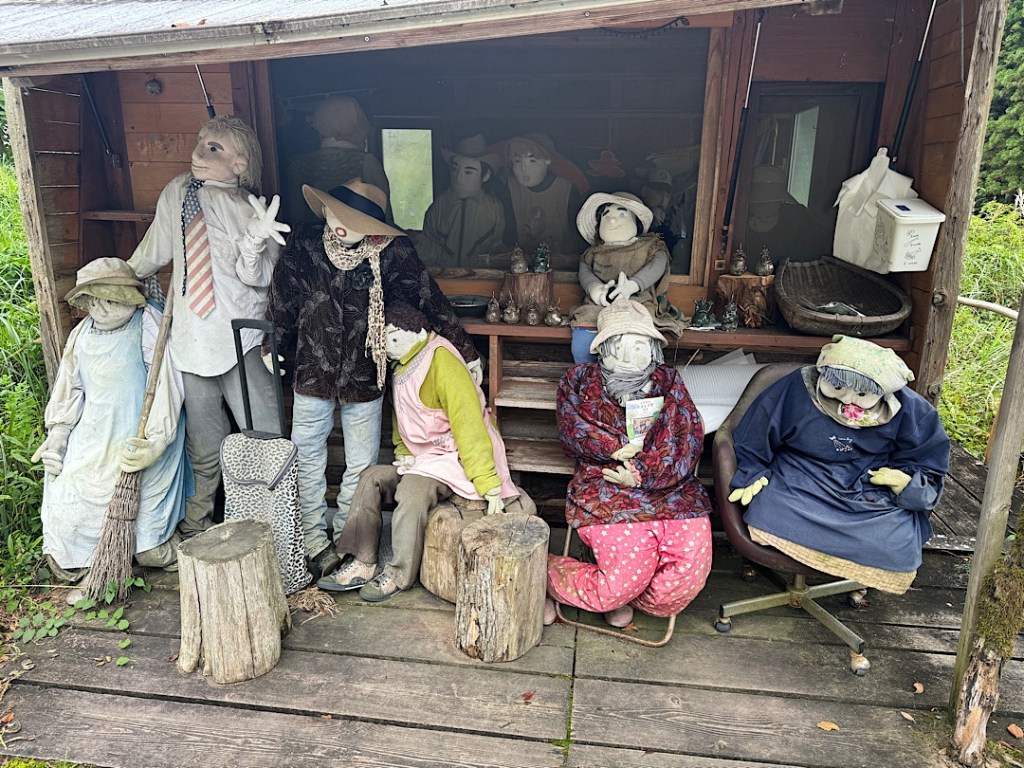
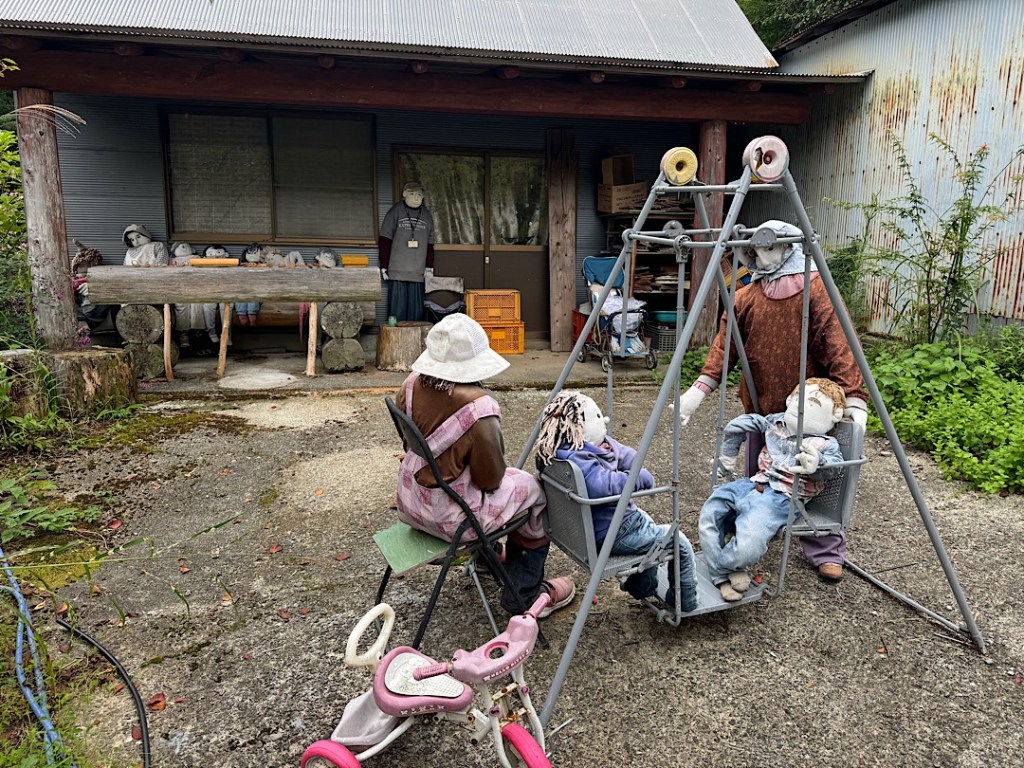
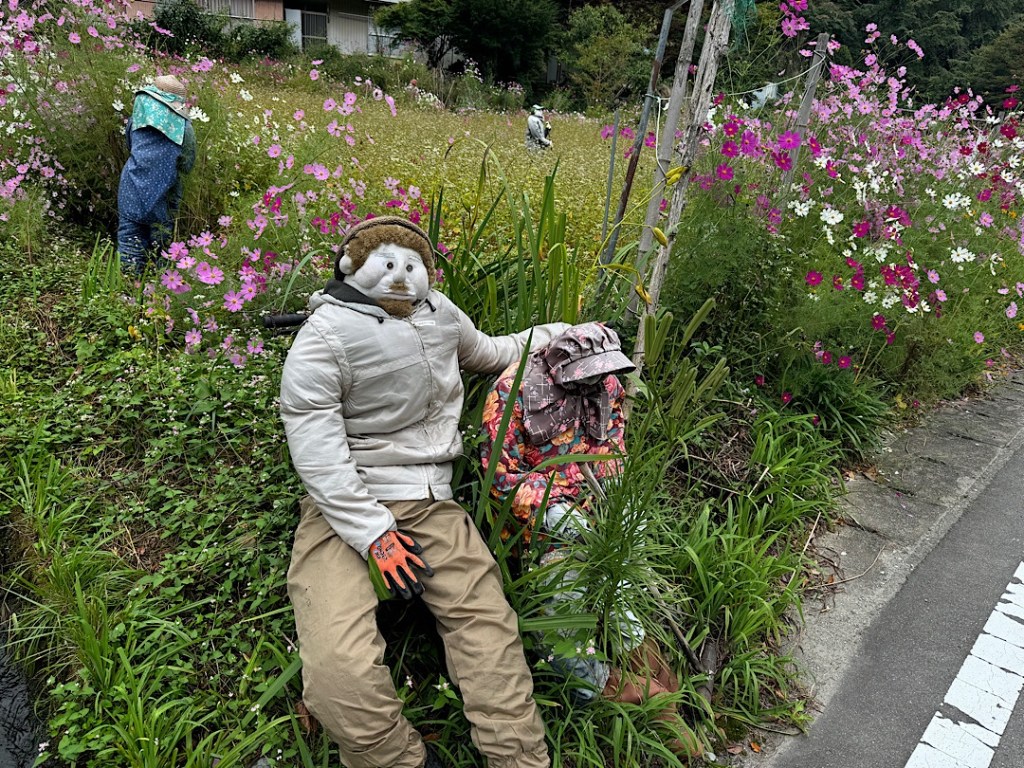
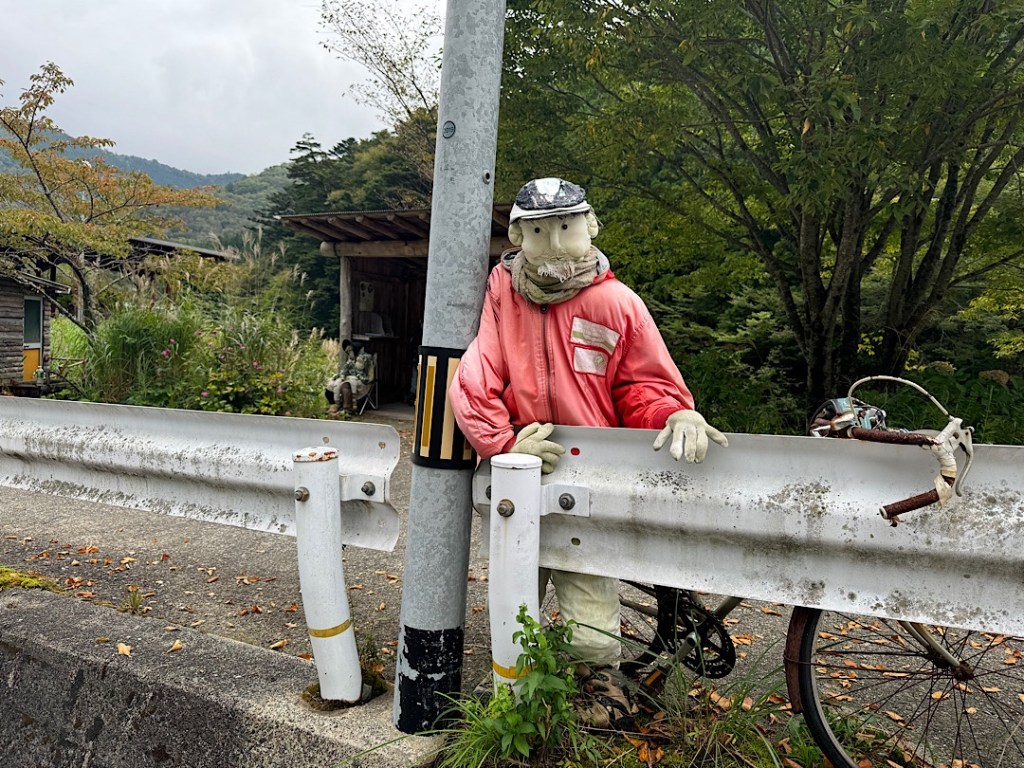
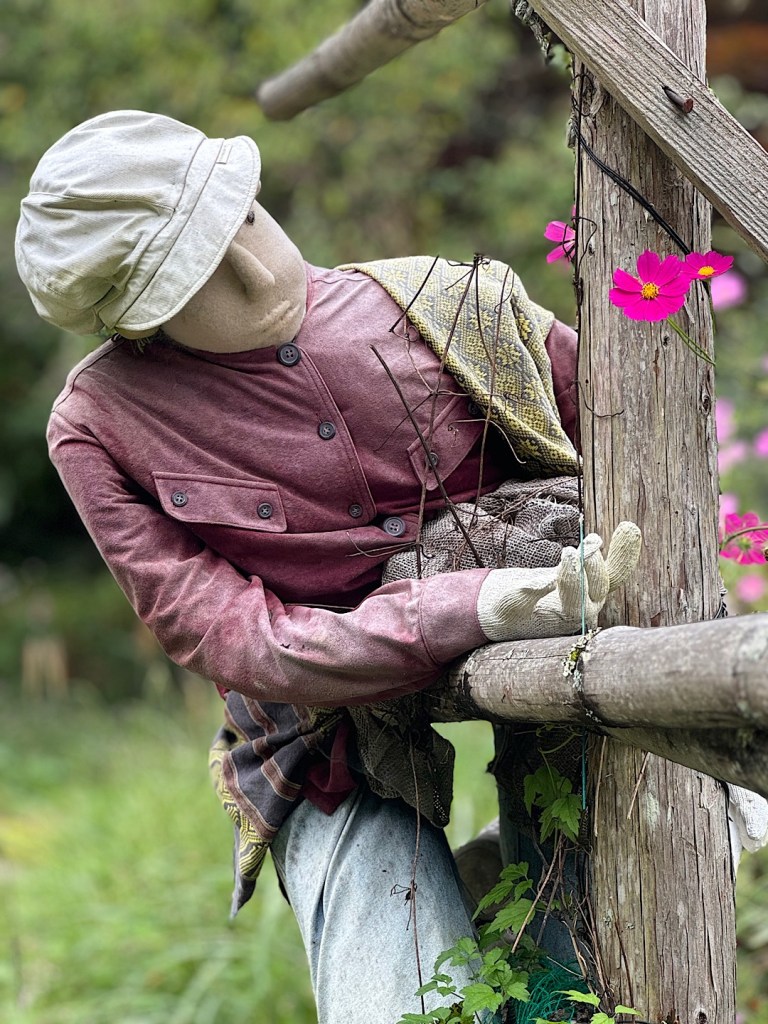
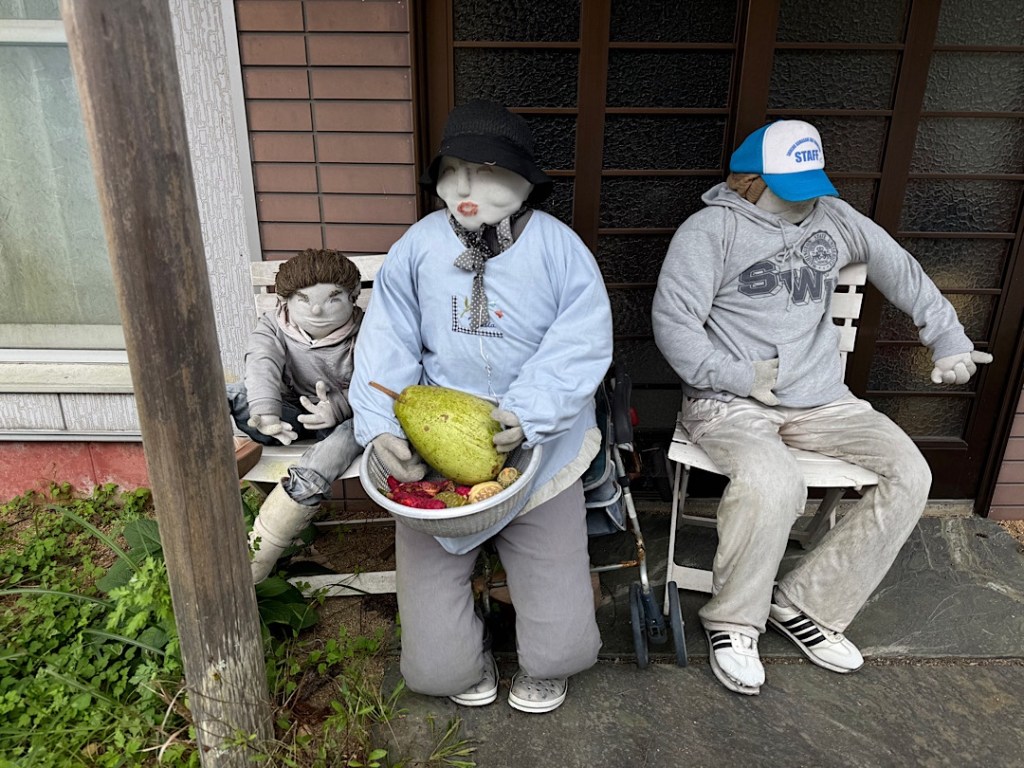
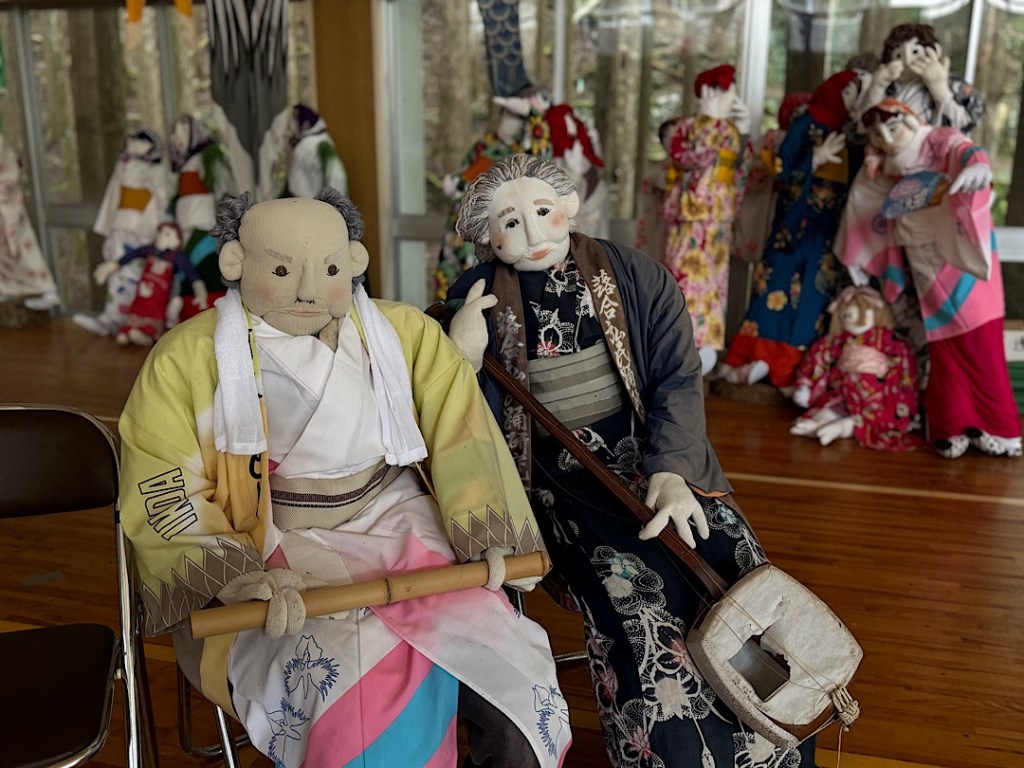
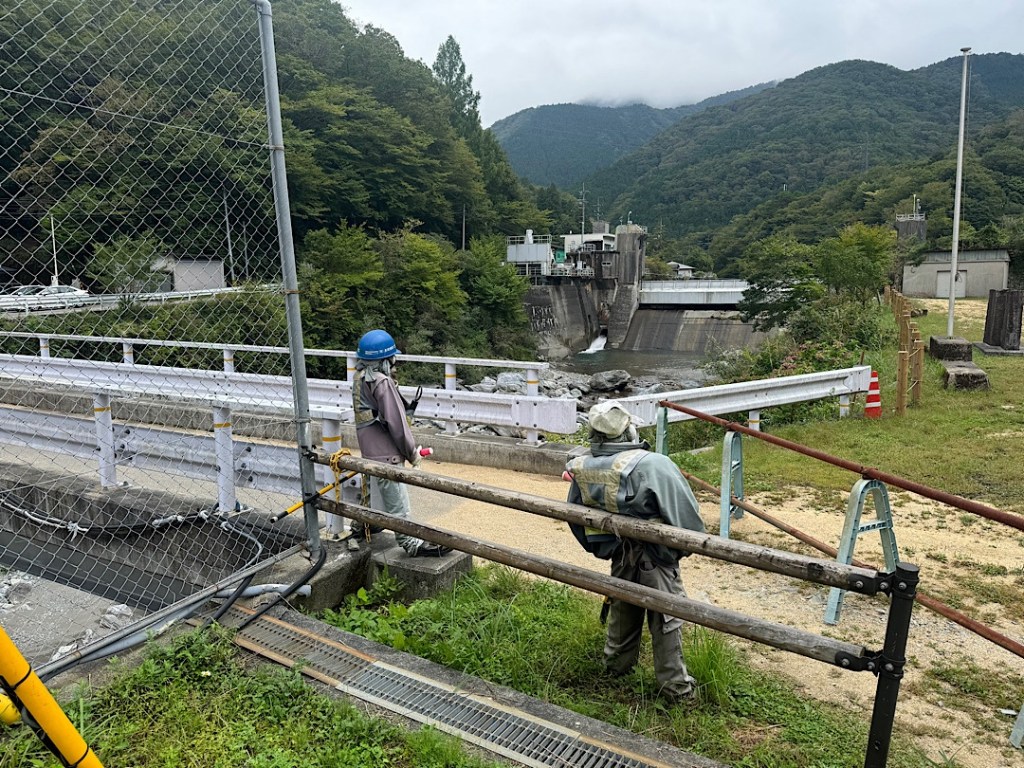
The village of Nagoba, about 45 minutes from Miyoshi, experienced this in dramatic fashion after authorities automated the local dam that had been the town’s biggest employer. From a couple of hundred people, Nagoba’s population plummeted to a few dozen. In 2003 an artist from the village named Tsukiji Ayano returned from living and working in Osaka. Shocked by the change in her home town, she started creating replacement people made of cloth stuffed with newspapers. Since she began, Ayano has made hundreds of the scarecrows (kakashi). She’s brought the village back to life in a manner that’s both charming and eerie, as Steve and I learned when we visited it this morning.

Scarecrow people work at village tasks.
A mother and child, long absent in the flesh.
I think these folks are waiting at a bus stop. No signs explain what you’re seeing. That would shatter the illusion.
We arrived a little after 10 in the morning. For a while, we encountered nobody but the scarecrow people.
Scarecrow people sat at the side of the road. Scarecrow people toiled in the front yards.
We read online that Ayano has tried to reincarnate everyone who lived in the village of her childhood.
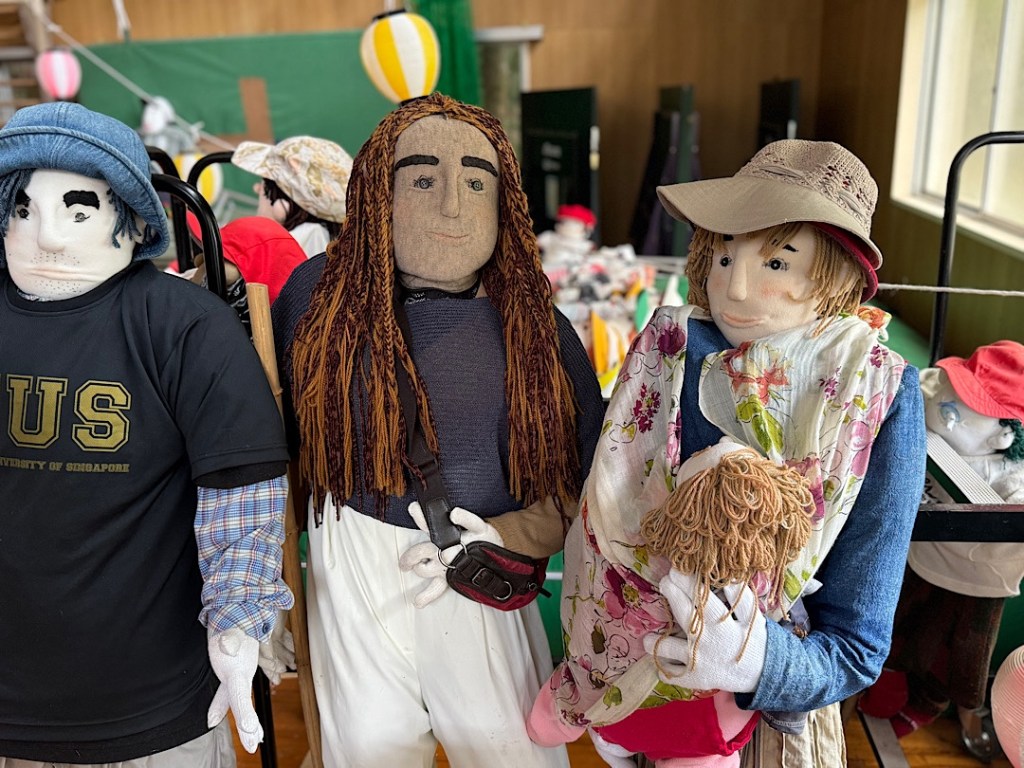
Certainly the scarecrow people feel like individuals.
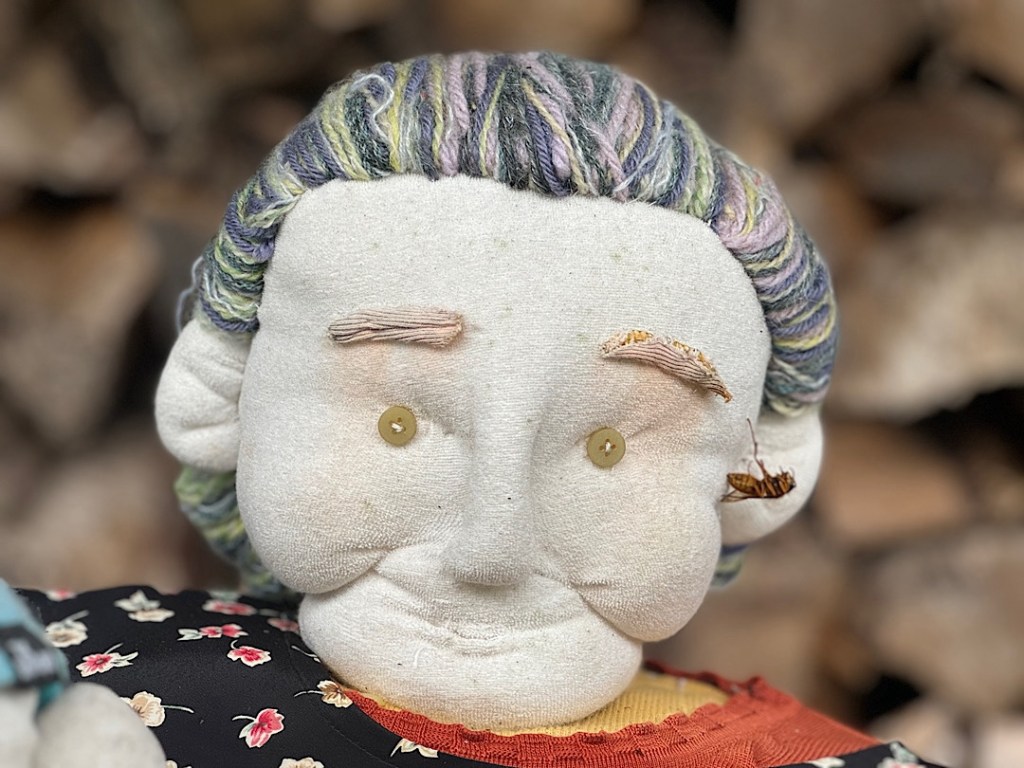
I was amazed to note that most of the figures have eyes made from buttons. They feel so lifelike.
Some eyes are created differently.
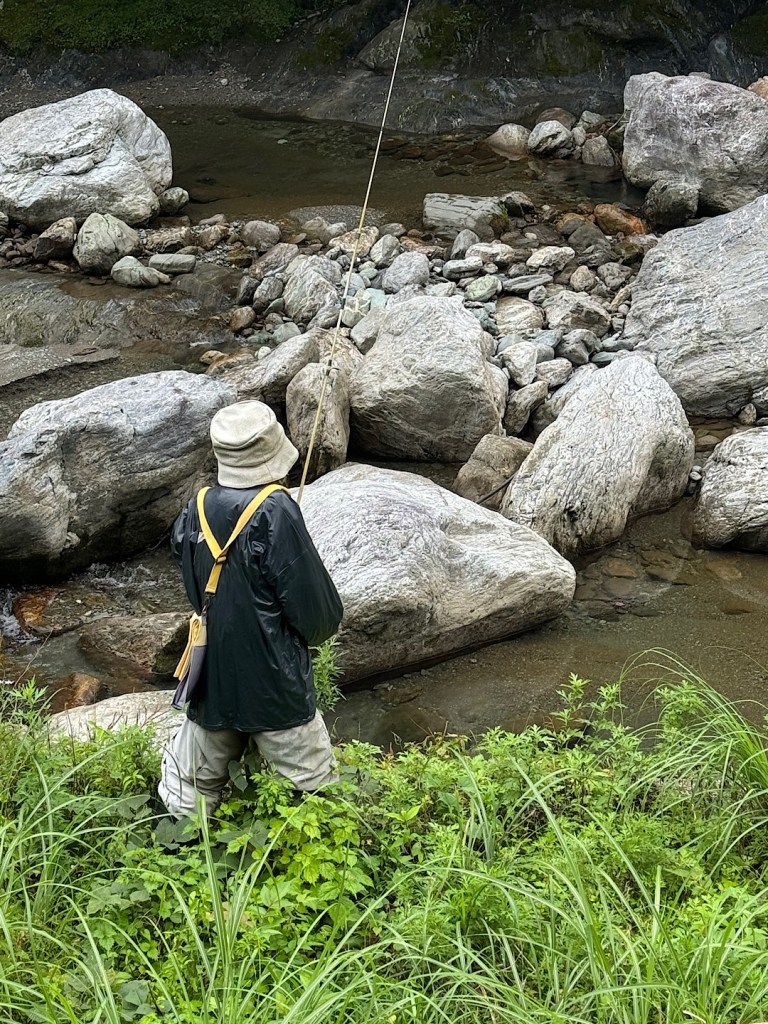
The scarecrow people fish…
They surprised me, like this guy, hanging out in a tree.
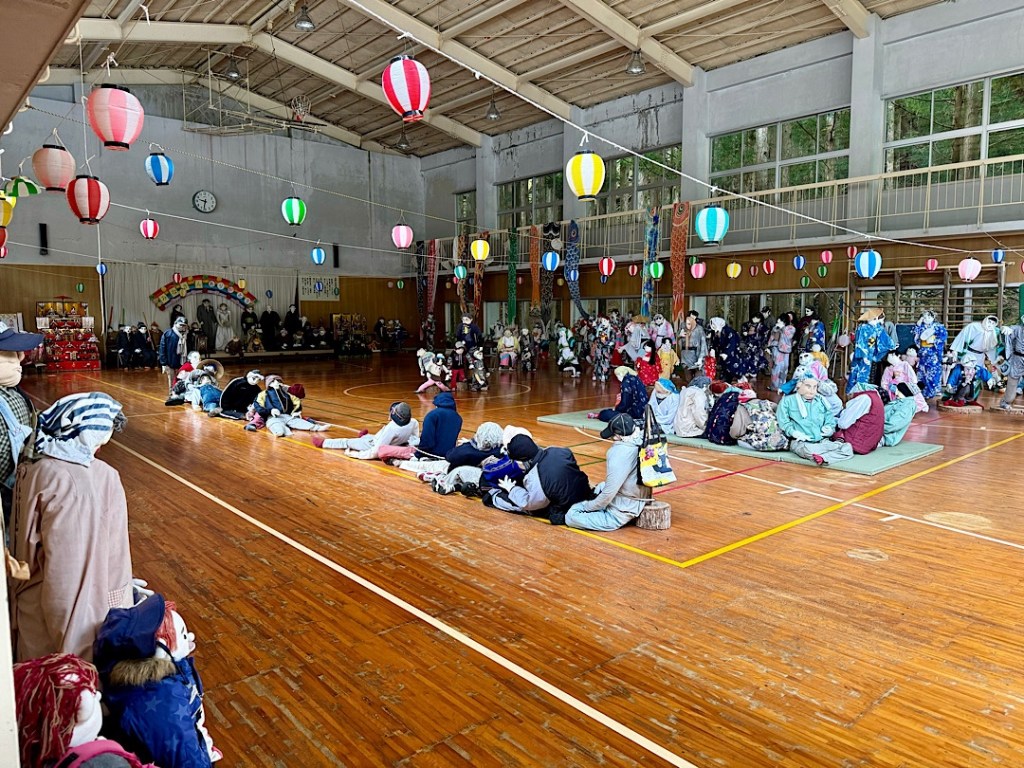
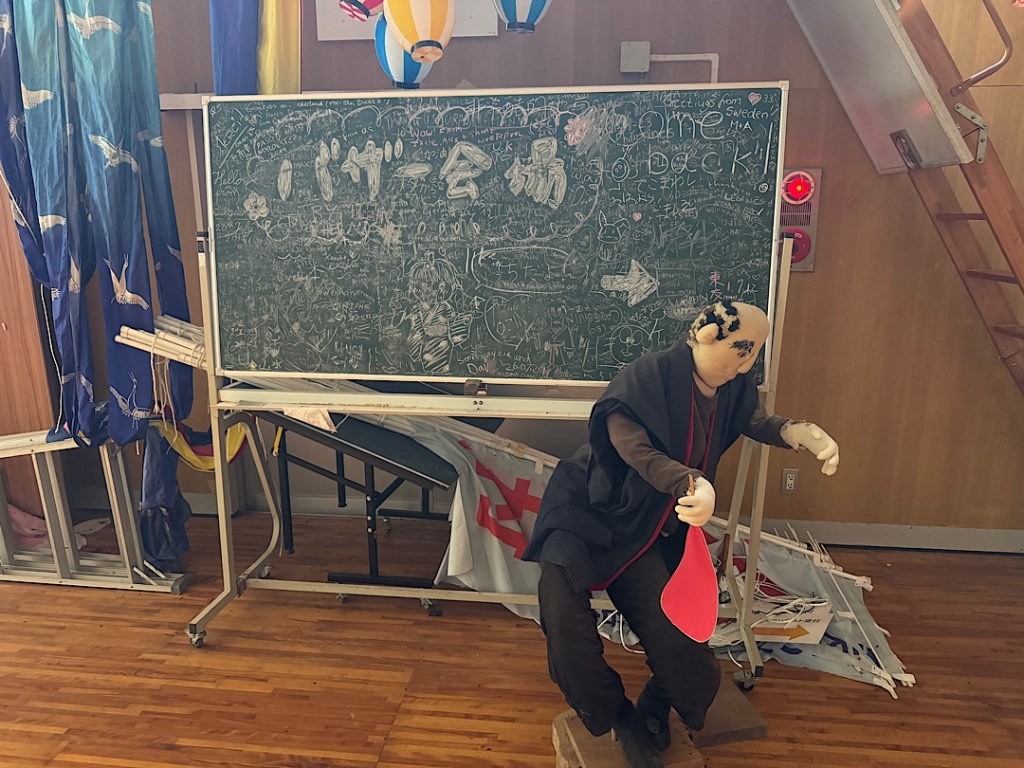
Ayano has filled the former kindergarten and elementary school with scarecrow children and their families. She’s packed the school gym with personalities.
Grandparents present for a performance?
Parents of a future student?

Steve and I wandered around for almost an hour; toward the end of our visit other tourists were trickling in. We never saw any sign of Ayano, however, although we read that she lives in the village and works in her studio there. We were never asked at any point to pay anything; we have no idea how Ayano survives to create her art. It felt like a gift.

I particularly appreciated these guys. Had they worked at the dam? (You can see it in the photo in the distance.) How had they felt when their jobs disappeared? Where did they go? I’ll never know.