Cruising the enchanted bay

In 2008 Steve and I took the first cruise of our lives, down the Nile. There are other waterways we’d liked to cruise some day, but we’ve saving them until we’re older and infirm, unable to handle the rigors of more adventurous travel. We made an exception to that rule for Halong Bay; spent Thursday and Friday nights sleeping on the Treasure.
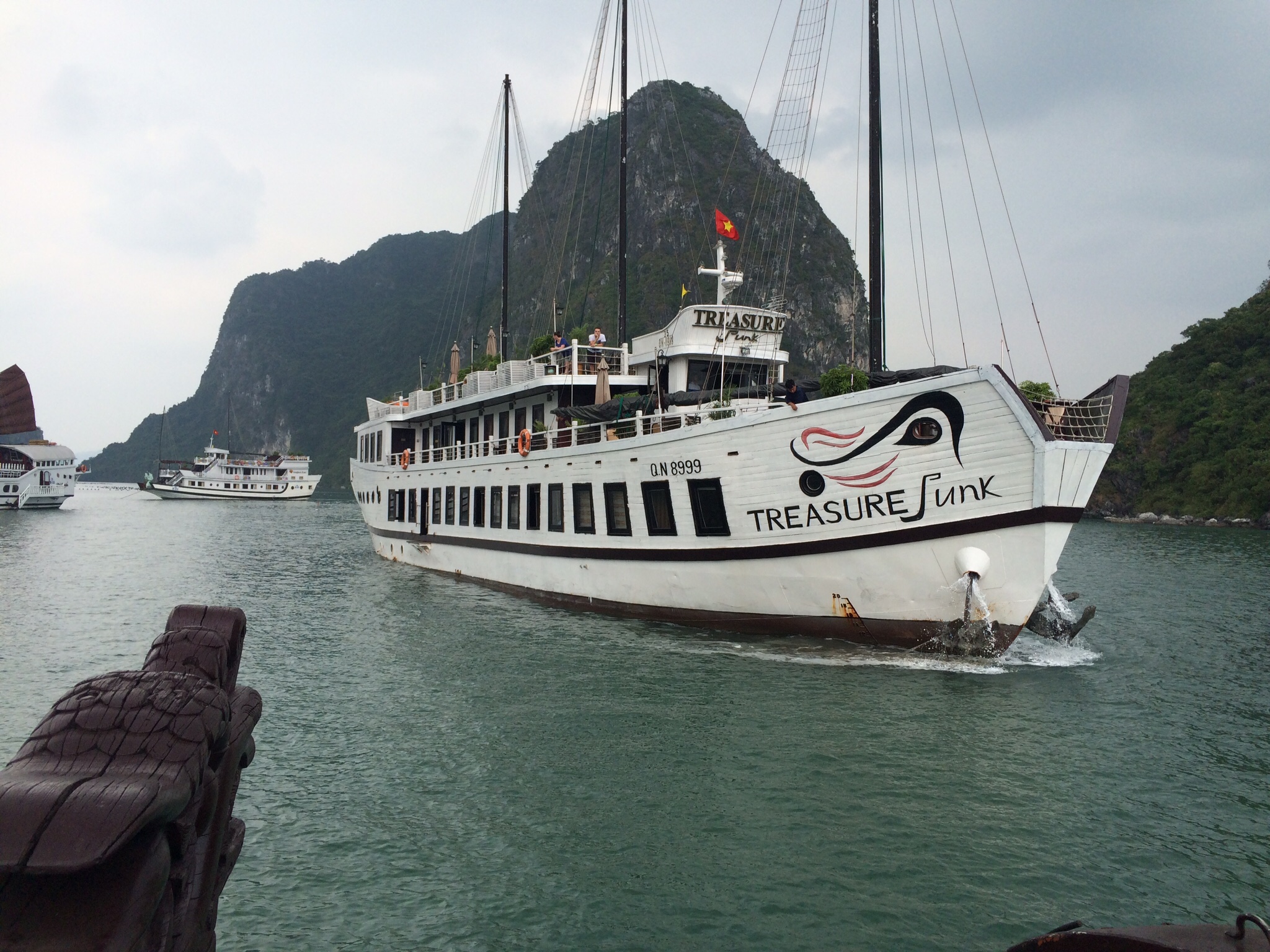

Our cruising home

It is possible to see the bay on a day boat, but that would be arduous. The bus ride from Hanoi takes more than three and a half hours. We boarded our bus at 8 a.m. Thursday, reached Halong City shortly before noon, and boarded a small pontoon boat that transported us to the junk, a handsome motorized sailing ship that sleeps about 30.

The Treasure was lovely: dark polished wood and rich upholstery, our cabin well-designed and comfortable. Meals consisted of multiple courses, many of them tasty sea creatures freshly harvested from the bay. Steve and I did all the activities: tai-chi lessons on the deck at dawn,
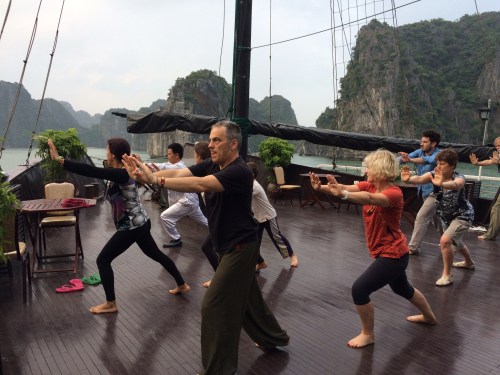
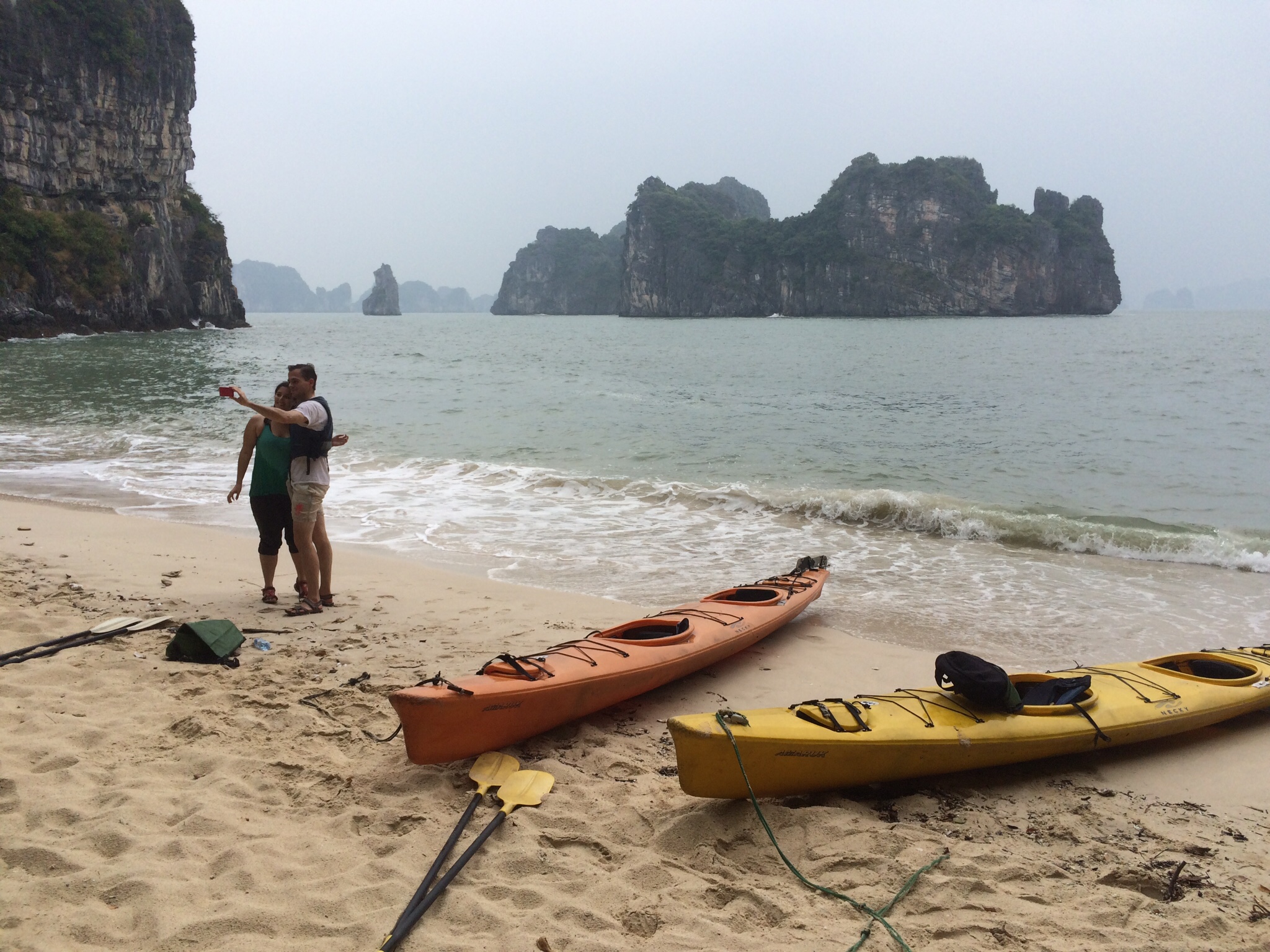
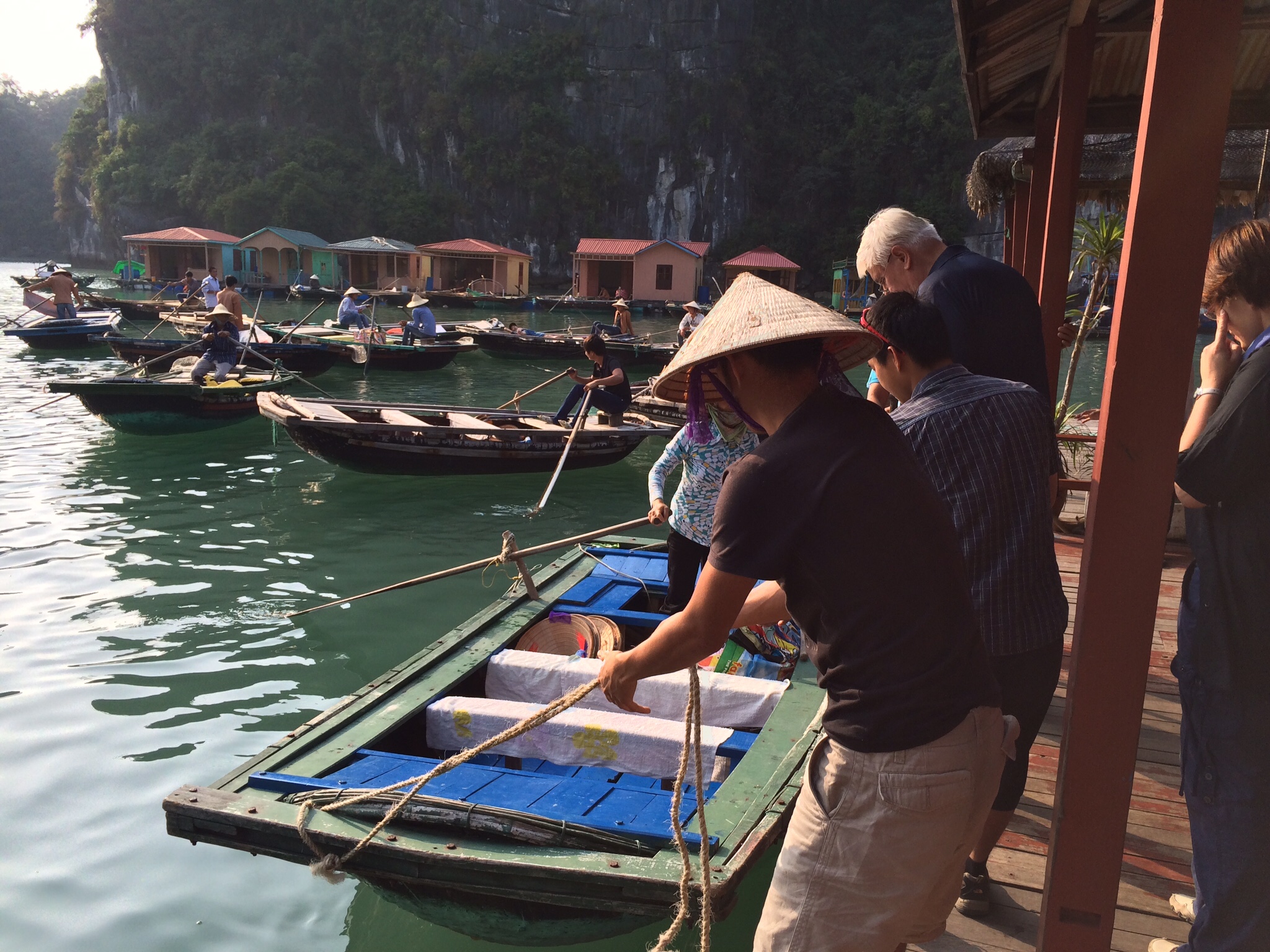
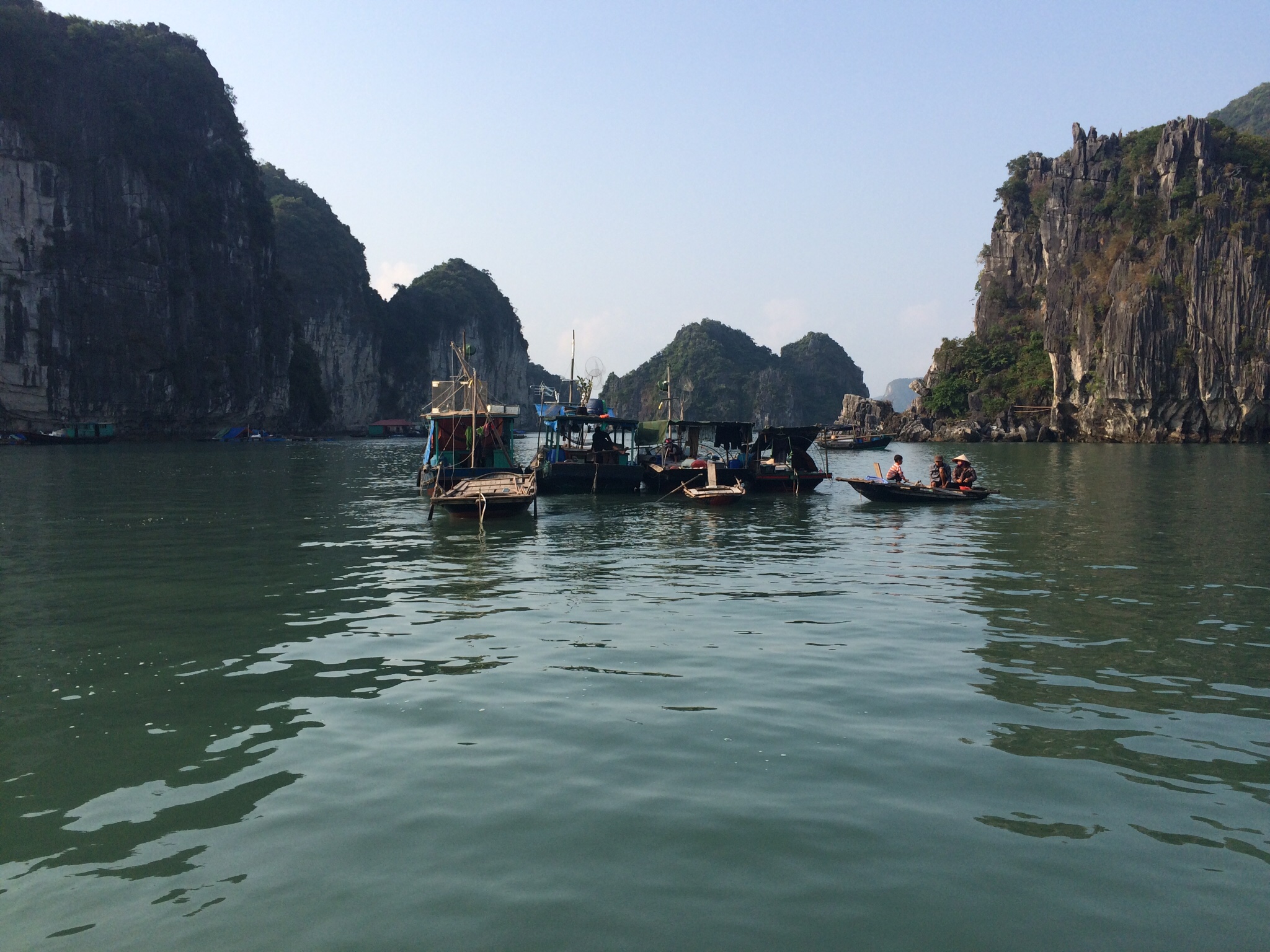
Vietnamese cooking lessons both evenings at 6 p.m. In between, we climbed into a sturdy double ocean kayak and paddled for hours, following our guide around the islands. We paddled to a deserted sand beach (one of the few left in the bay, we learned, due to shellfish farmers stealing the extraordinarily fine-grained sand to use in their aquacultural enterprises.) We toured a sea cave and a floating village, home to about 100 of the bay’s 500 resident fishermen. All of it was fun.
Getting into reed boats for a tour of the fishing village

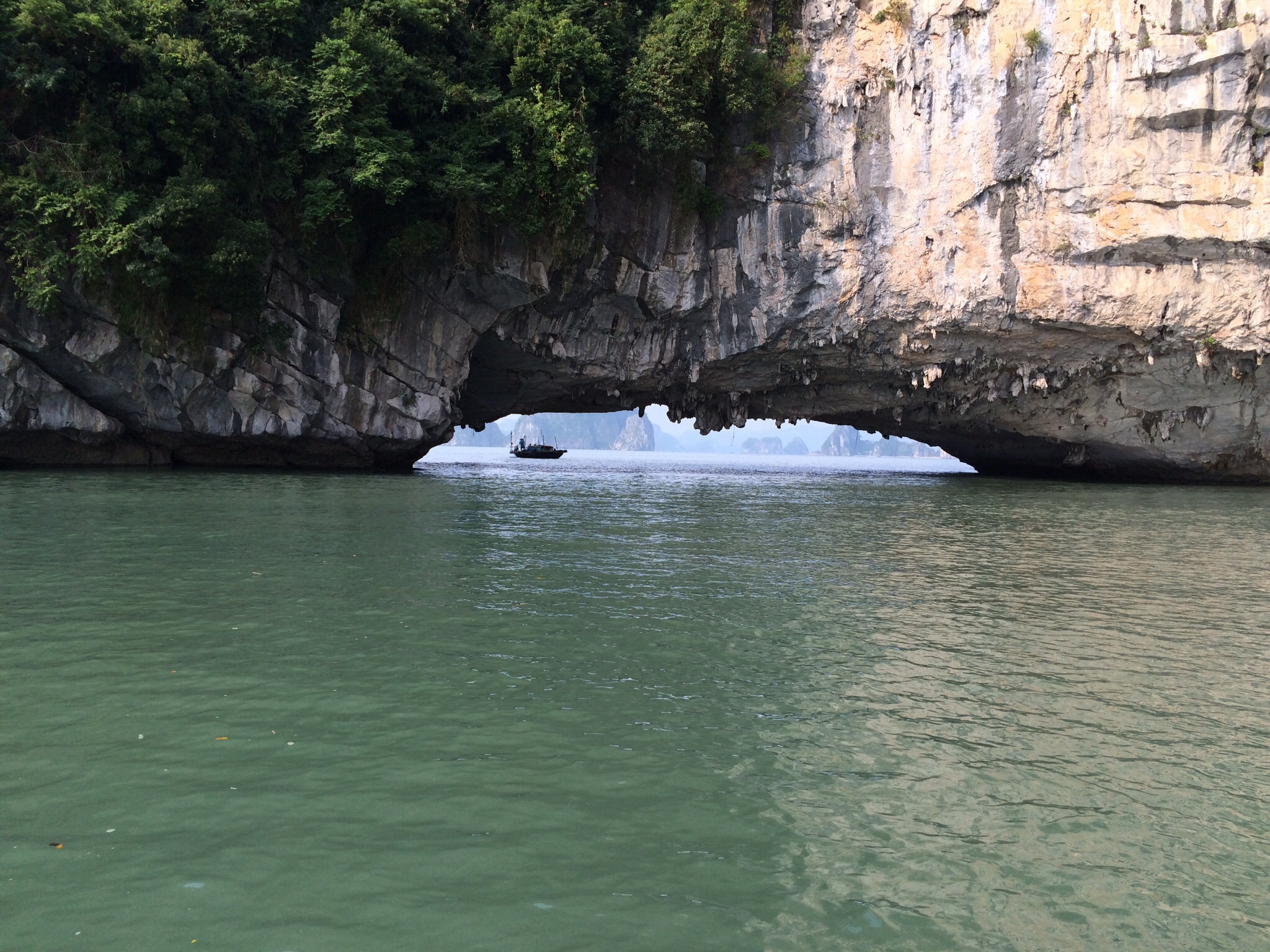
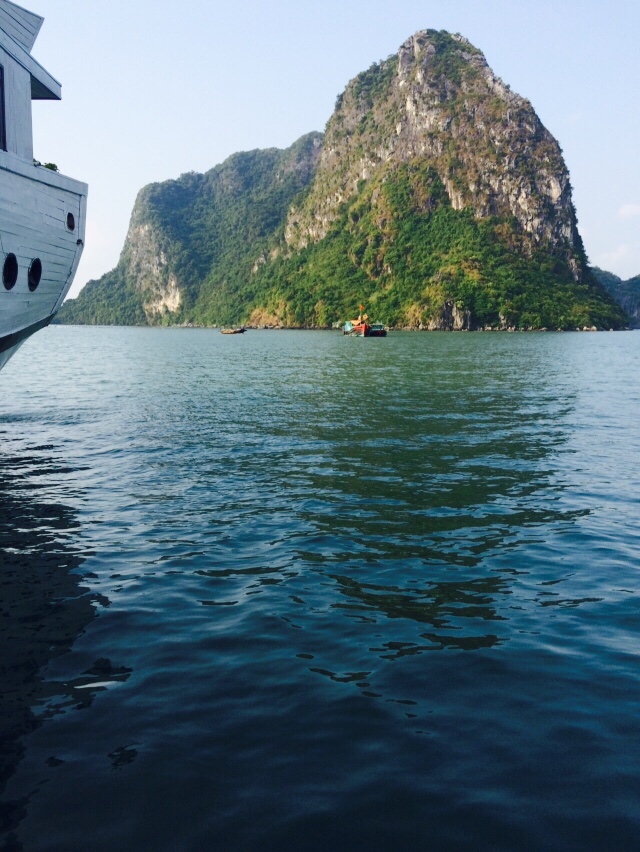
None of that compared, however, to the pleasure of simply gazing at the staggering beauty surrounding us. Halong Bay has been included on at least one of those recent lists of Seven Natural Wonders of the World. It’s been declared a World Heritage Site on two counts — for nature and beauty. We couldn’t quibble with those designations. The place is as spectacular, in its own way, as the Grand Canyon or Table Mountain in South Africa. What makes it so special are the 1,969 islands that stud it. Composed of highly eroded limestone, what makes them so special, in turn, is their great height. The legend goes that they sprang up from seeds of jade spit out by dragons protecting the local folk from an invading army. Today they’re covered with jade-green plants, and they indeed look magical.

I was somewhat prepared by how splendid the bay would be. What was unexpected was how superbly our expedition company (Handspan Tours) managed to organize our itinerary to keep us out of sight of other cruisers. The first tours of Halong Bay began just 10 or 11 years ago. Steve and I have friends who visited in 2005 and were the only passengers on their junk. Now, however, some 500 tourist boats play the water daily — 300 for daytrippers and 200 for overnight cruisers. I’d read warnings online of how traffic-jammed the bay can seem, marred by the sight of garbage floating on the water. But the Treasure steamed to a relatively pristine section. Once moored, we often were the only visitors in sight.

I’m not a good enough writer to describe the bay and islands adequately. So here are a few digital impressions:
I’m hoping all these photos will upload because the Golden Sun Palace, our hotel in Hanoi’s Old Quarter, has very good wifi. We arrived back late yesterday afternoon and already my neurons are overloaded with the effort to take this place in. I’ll let them calm down, then I’ll try to describe some fraction of it.

Transported

Laos once was known as the land of a million elephants, but today authorities say only 1600 or so are left. About a third of them toil as slaves for the Laotian logging industry, hauling the heavy trees being taken from the forest. A handful of lucky pachyderms have been rescued from this servitude and transferred to sanctuaries. They still have to work for their keep, which is considerable (around 500 pounds of food per animal per day). But instead of 8-9 hours of daily heavy labor, they only have to put up with tourists for a part each day.

Steve and I got to meet some of these animals Wednesday, having impulsively signed up for the excursion the preceding day. An air conditioned van picked us up at 8:30 and drove us out into the country, where the Elephant Sanctuary leases land from the local authorities. The project we visited was started in 2003, we learned, brainchild of a visionary German. Over the years, the property has grown to encompass an exquisite cliff-top resort with manicured grounds and white-curtained cabanas that overlook the broad Nhom Khai river and fantastically dramatic distant mountains.

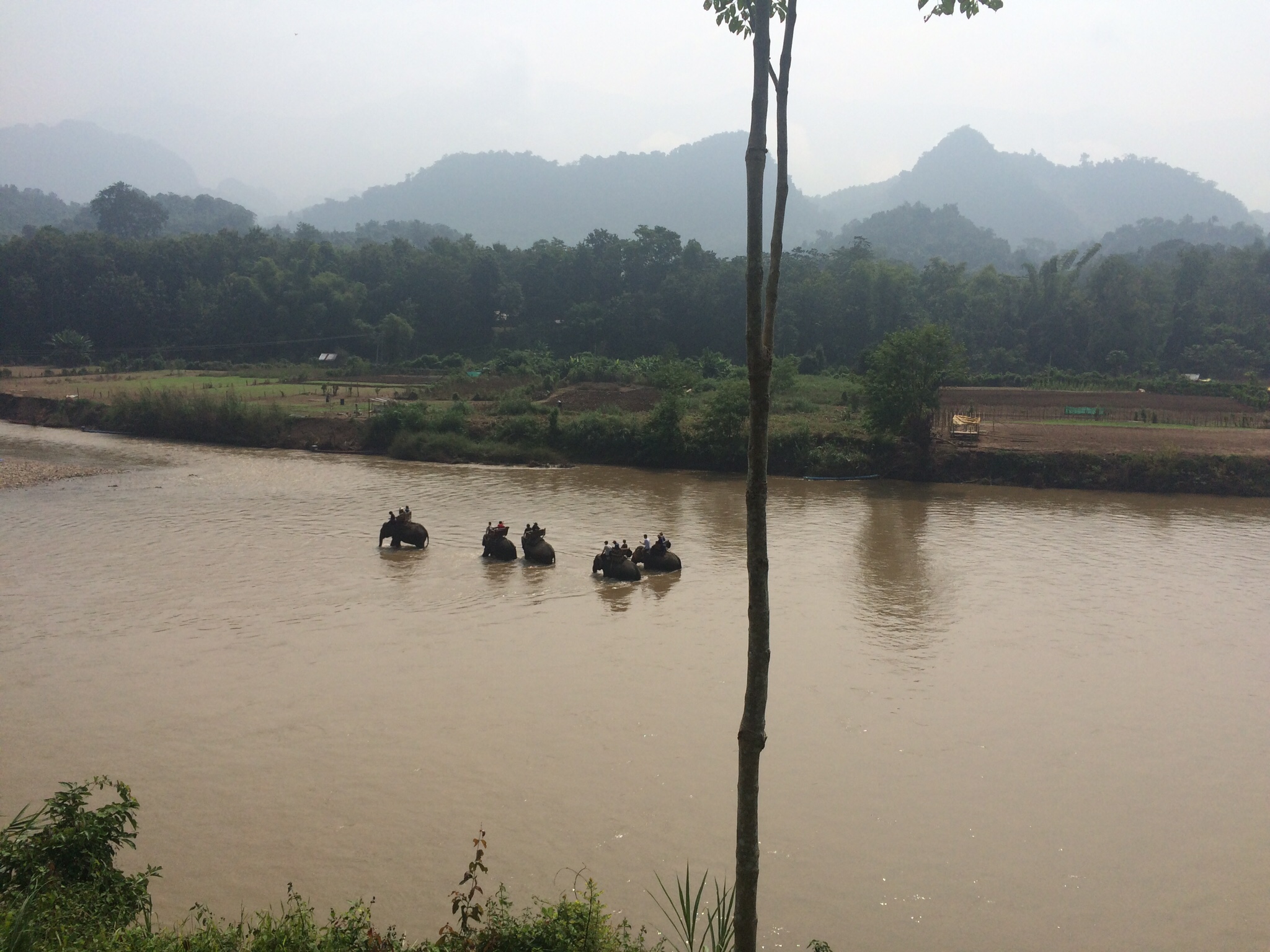
Some folks opted the ride their elephants across the river and give them baths. But the forest ride called to us..

We sat in one of the cabanas and sipped coffee while our guide, Cha Vang, told us a little of the history of the place. Then we walked down to the riverbank and hopped into a long-tail boat that ferried us to the other side.

One of the newer females in the compound gave birth 5 months ago to a mischievous little male christened Maksi. The two of them spend most of their time on long chains that give them a measure of freedom to enjoy the surrounding forest. But for a few hours every day they move to a small enclosure, There Steve and I and Londoners Dominic and Sophie (the two other members of our group) hand-fed small yellow bananas to the mother. She scarfed them down –skin, knobby stem, and all — like potato chips, but Maksi’s immature digestive system required that we peel the fruit before placing it in his eager, searching little trunk.

Maksi

After a while, Steve and I climbed up onto one of two nearby bamboo platforms. From it, we had to step out and onto the howdah, the wooden bench strapped onto the back of Mea Khammee, our ride for the morning. Every elephant here has her own mahout, the trainer/driver who directs and controls her. Mae Khammee’s mahout slipped in front of the howdah, wrapping his legs around her neck. And then we were off.

I’ve traveled on the backs of horses, mules, and camels; I’ve ridden in cars, boats, trains, buses, and planes, big and small. To my mind, nothing beats being transported by elephant. Granted, it would be impractical on Garnet Avenue, not to mention the 405 freeway. But for moving up a rugged mountainside through a teak forest, it’s quiet. Soothing. Majestic.

After about an hour, Cha asked if either of us wanted to switch places with our mahout, to ride on Mea Khammee’s bare neck and from that position do our best to control her. I had a sudden vision of losing my balance and tumbling from that 10-foot perch, breaking a leg or my back and being paralyzed for life. So at first I demurred. But 20-something Sophie was slipping onto her elephant’s neck, calling out that it wasn’t bad, and I couldn’t resist seeing for myself.

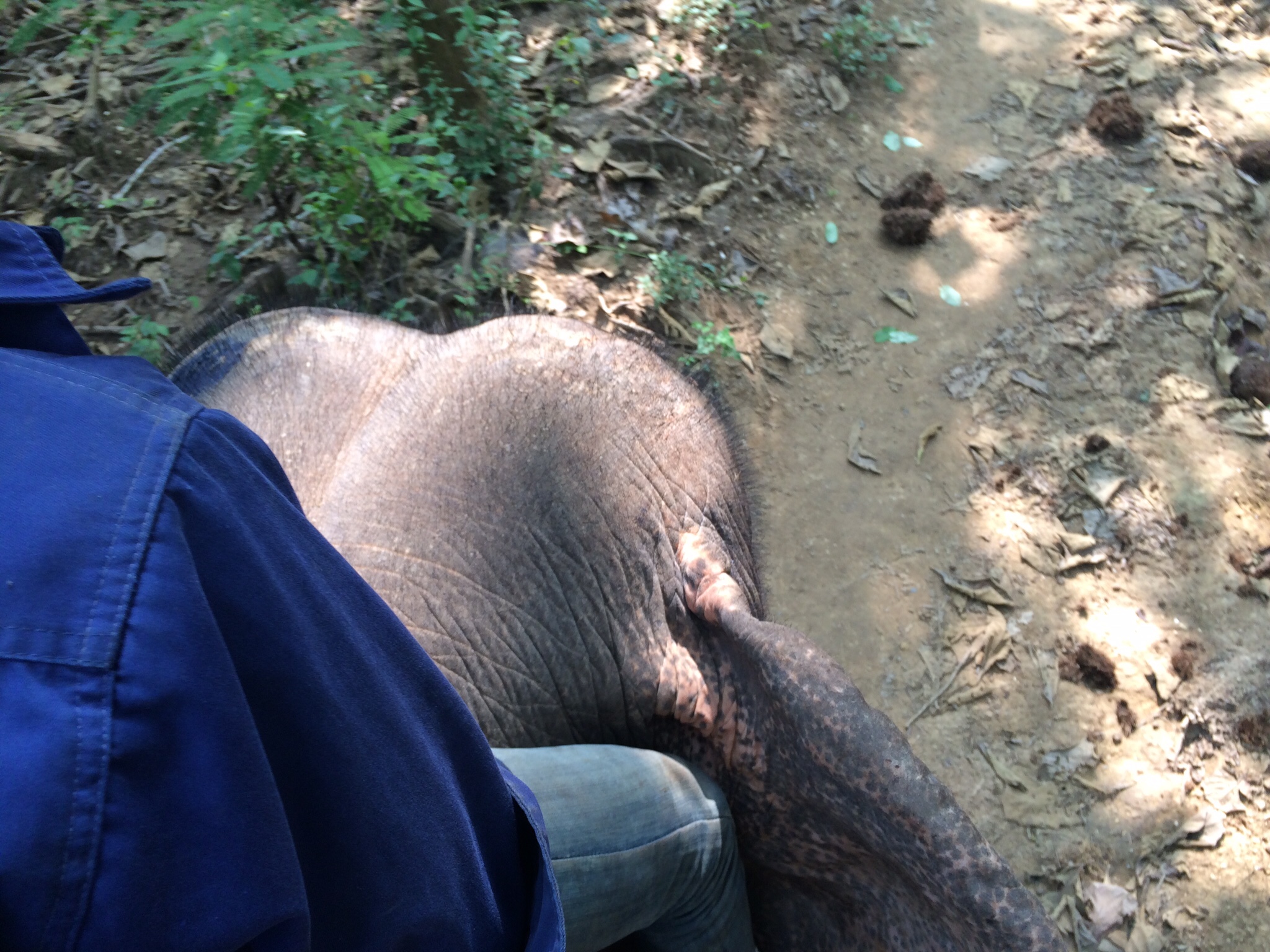
The view over our mahout's shoulder


I stretched out my legs then inched my butt off the polished wooden bench; eased my legs around the rough gray curve. Then Mea Khammee was bearing all my weight, and the Laotians were urging me to move forward; to tuck my knees behind her ears.

And we were off! Rocking a bit, yes, and there was no saddle or rope or pommel to grip. But I found that if I rested my palms on the great round knobs that constitute the back of the elephant’s head, that was sufficient to steady me. More remarkable than the motion was the way I could feel her huge muscles moving beneath my thighs. She flapped her great ears often, and when she did, they gently slapped my bare knees and calves.

At first I was most aware of the sinewy motion of her neck muscles. But after a while, I sensed her legs beneath me too, each stride fluid and sure. If there’s an elephantine version of a centaur, I seemed to become that — my pelvis fused to her upper back, her great legs become mine. We trod on that path through that impenetrable profusion of green, and it gave me a new goal in life: to lie on my deathbed years from now, ancient and fading, and remember when I strode through Laos, half-elephant, half me.

Eventually, I inched back into the howdah, to return to a more prosaic state for our final ascent up the mountain and give Steve a chance at the elephant ecstasy (he declined). From the top, we hiked down. Before we did, we fed a bunch of bananas to Mea Khammee. She seemed to enjoy them, but to me it felt like miserly thanks.