After losing my iPad, our luck did not improve. In short order, we got caught in a flash flood, fell victim to a wily Jamaican scammer, and discovered we had booked ourselves into the first truly unacceptable lodging of our long home-exchanging lives.
Ironically, if I had not forgotten my iPad in the Arajet seat pocket, we would not have gotten caught in the flood. The sun was still peeking through clouds when we started inspecting our Yaris out in the parking lot. But then I spent at least an hour trying to retrieve the iPad (unsuccessfully) in the terminal, and when we finally got rolling, the sky had turned an evil shade of black. The downpour started almost immediately after I programmed our destination into Google Maps: Ocho Rios, on the northern side of the island.
A good thing about the rain is that it partially distracted me from the mean streets our course took us through. Jamaica is the only country on this trip that the US State Department warns against visiting, and that’s because of the high crime — principally in Kingston. The narrow streets of Spanish Town have been decaying for what looks like centuries. The folks on the street who eyed our shiny touristic faces did not look friendly.
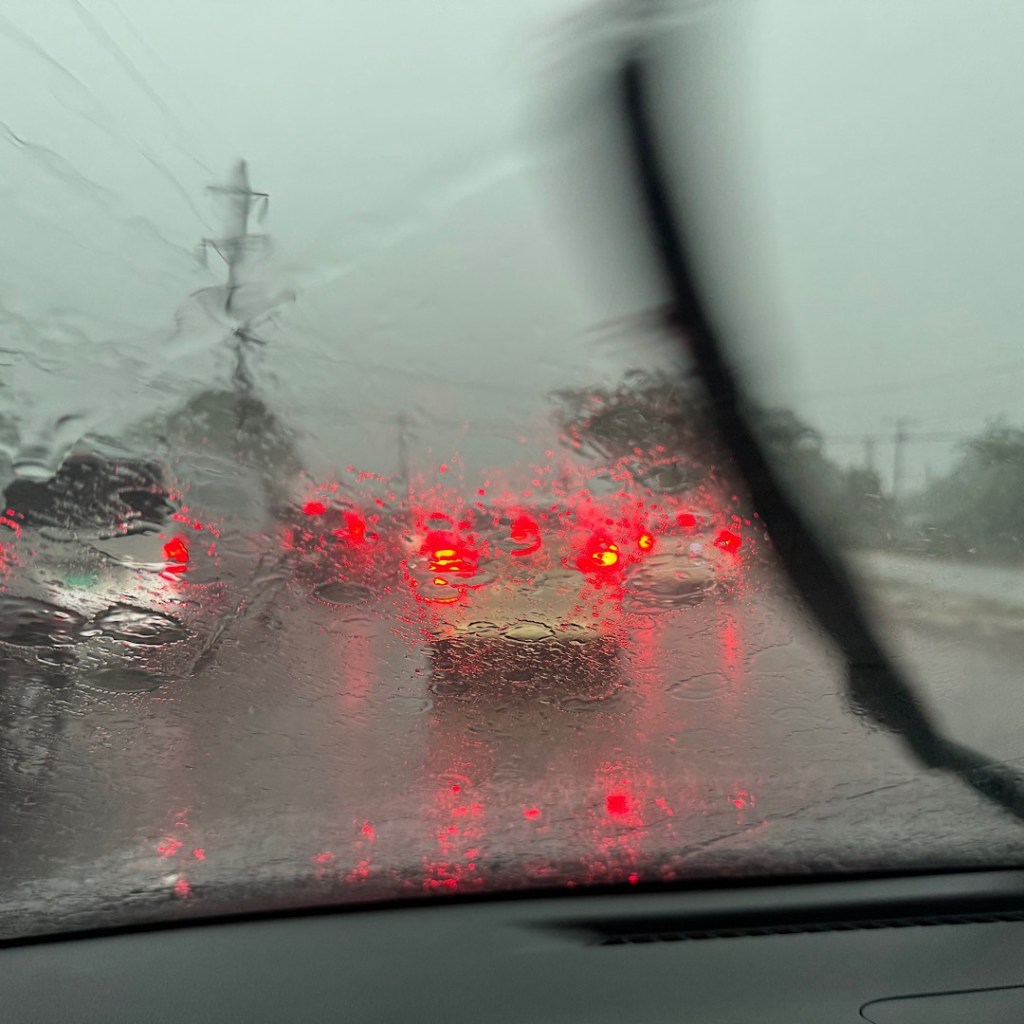
But I wasn’t paying much attention to them. The intensifying rain commanded everyone’s focus. Traffic slowed to a crawl; Google Maps announced a 20-minute slowdown. We assumed someone up ahead had crashed, but later we concluded it was just because the low, ancient byways were filling up with swirling brown water.
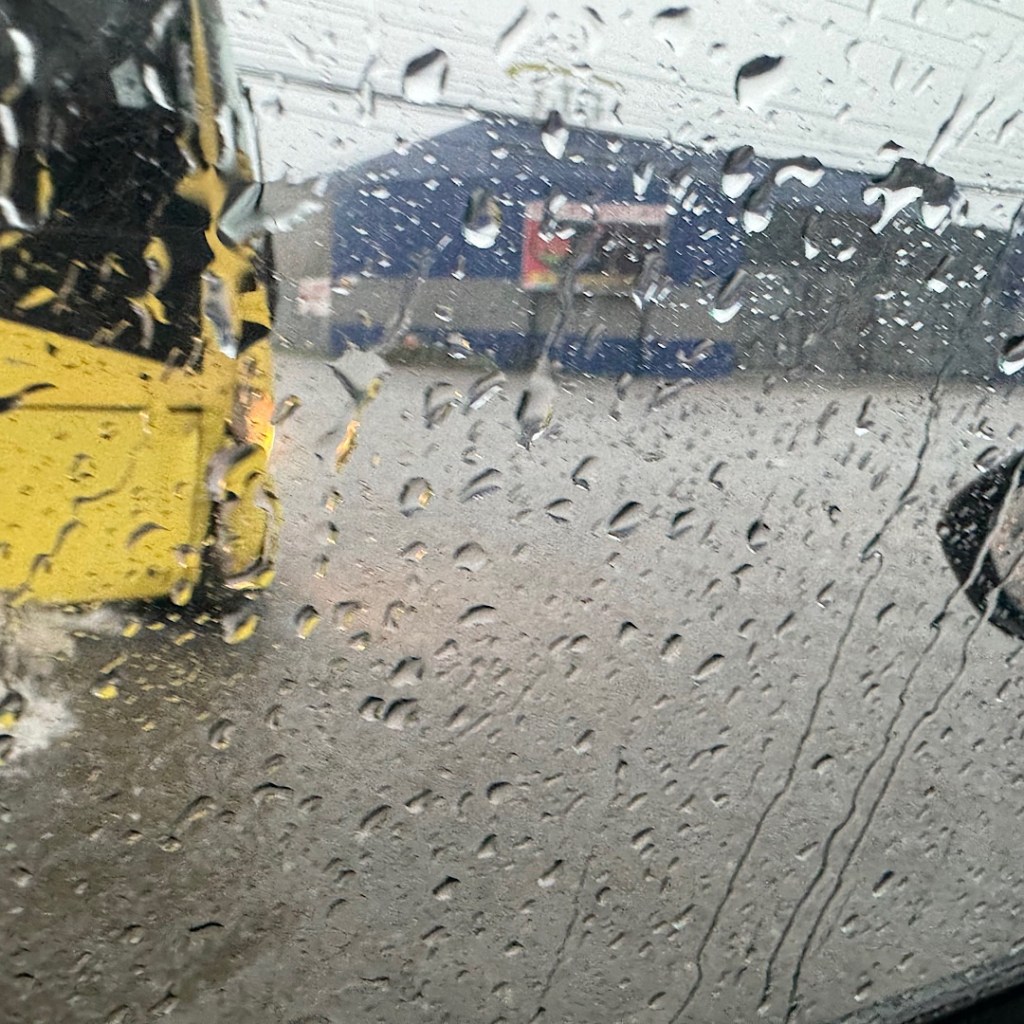
The thought occurred to me that another panicky driver could simply plow into us. We’d been instructed that if we got involved in any crash, we had to wait for the police to arrive and take a report, otherwise none of our insurance would cover anything. But waiting for a police report here and now was unimaginable.
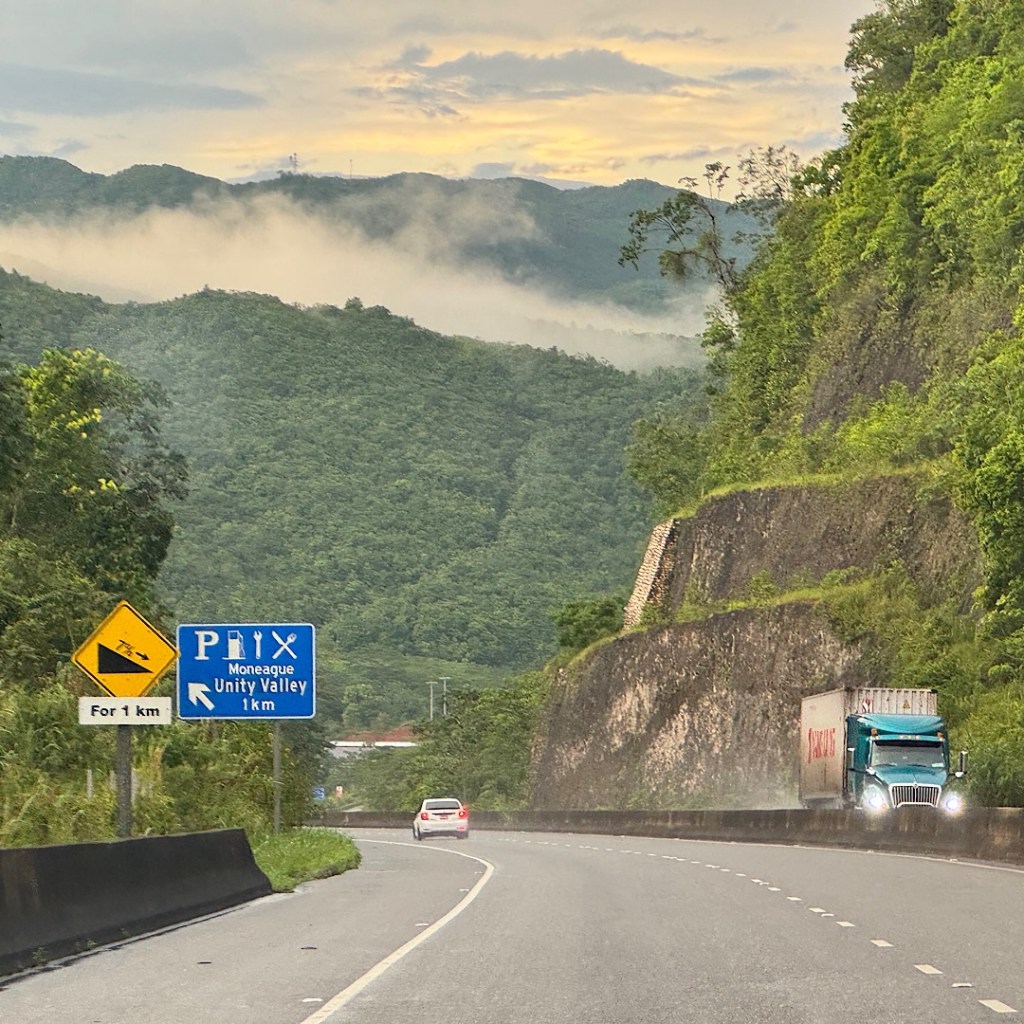
I pushed that thought away, as the water covered the road. Lightning slashed the near skies, and bone-rocking thunder came a few seconds later. Steve was grimly intent on maintaining control of our vehicle, and long minutes crawled by before we finally made it to the tollway — a wide, well-engineered road leading through beautiful country.
The scammer
We met him the next day when we were driving from Ocho Rios to Negril, site of the home-exchange house we’d arranged to stay in for three nights. Our route took us through Montego Bay, and we wanted to get at least a glimpse of it. We set course for a pork restaurant with great reviews, but when we pulled into its parking lot, the diner looked closed.
A guy in another car in the lot rolled down his window and told us it wouldn’t open until noon. Then he exclaimed, “I know you guys! I saw you in the car-rental lot at the airport!” Steve recognized him in turn. It seemed an almost comically cool coincidence to bump into him on the other side of the island. He suggested another lunch spot with good food and prices, not far away, and when he offered to lead us there we couldn’t refuse.
I’ll condense. “Steve Smith” (as he called himself) drove ahead of us to a mini souvenir mall and then took us to the restaurant deep within it. Then he plopped down at a table beside us and ordered himself a bottle of Guinness. As we ate (decent but hardly inexpensive lunch plates), he regaled us with stories about Jamaica and Montego Bay, then insisted we follow him on foot on a brief walk through the city center.
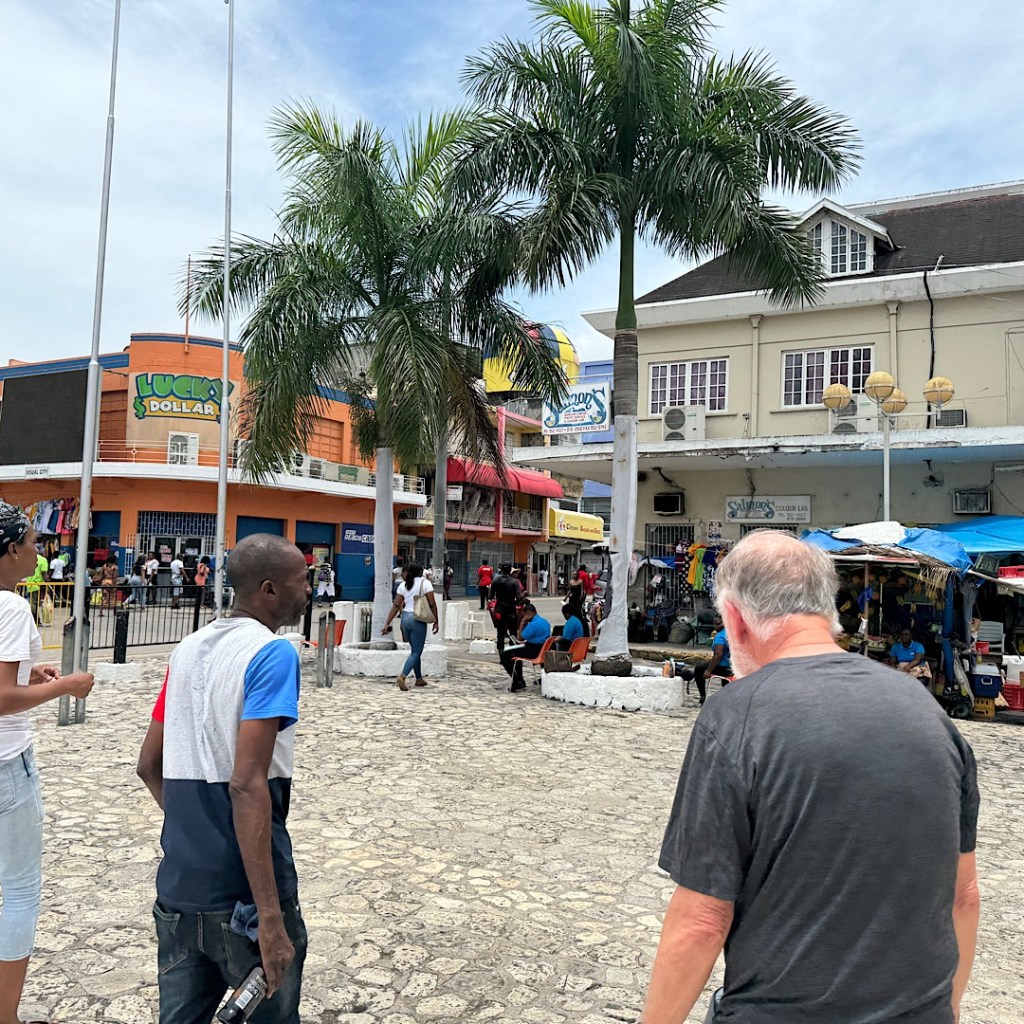
To be honest, both my Steve and I were delighted to have someone lead us on a lightning tour of the heart of the town. But the stroll went on and on, and I finally made it clear we needed to get back on the road. “Steve” didn’t resist, but back at our car, he was adamant about wanting to send us off in the right direction on the main road. He jumped in the back seat, directed us for a block or two, then said we should pay him 18,000 Jamaican dollars for all his help — about $115 US.
This was so clearly ridiculous, we laughed at him. My Steve pulled out a 2000 Jamaican-dollar bill ($12.85). I’m embarrassed to admit I eventually gave Scammer Steve 12,000 (about $77). What galled me most is that this was essentially the very same scam we fell for in Bombay back in 2018!!! (That guy claimed to be a worker at our hotel out on his day off.) I now think $20 and the Guinness would have felt right for Scammer Steve’s “services”. As we drove on, we consoled ourselves that at least were were saving money on our lodging for the next three nights.
The home exchange
Negril is a big resort town on Jamaica’s far western end. Hotels line its famed Seven-Mile Beach, starting at the north end with all-inclusive resorts charging up to $2K US per day then giving way to more middle-income hotels whose clientele become darker-skinned as you approach the center of town.
Our home-exchange place was located beyond that, where the beach disappears and turns into cliffs. I knew it wasn’t on the cliff and that it would be a bit rustic. But its British owner assured me it had great access to a welcoming Jamaican community.
My heart sank when Valerie’s directions took us off the crummy paved main road and onto a jumble of dirt and rocks. Maybe a mile uphill from the “highway,” we turned into “our” even rougher driveway.
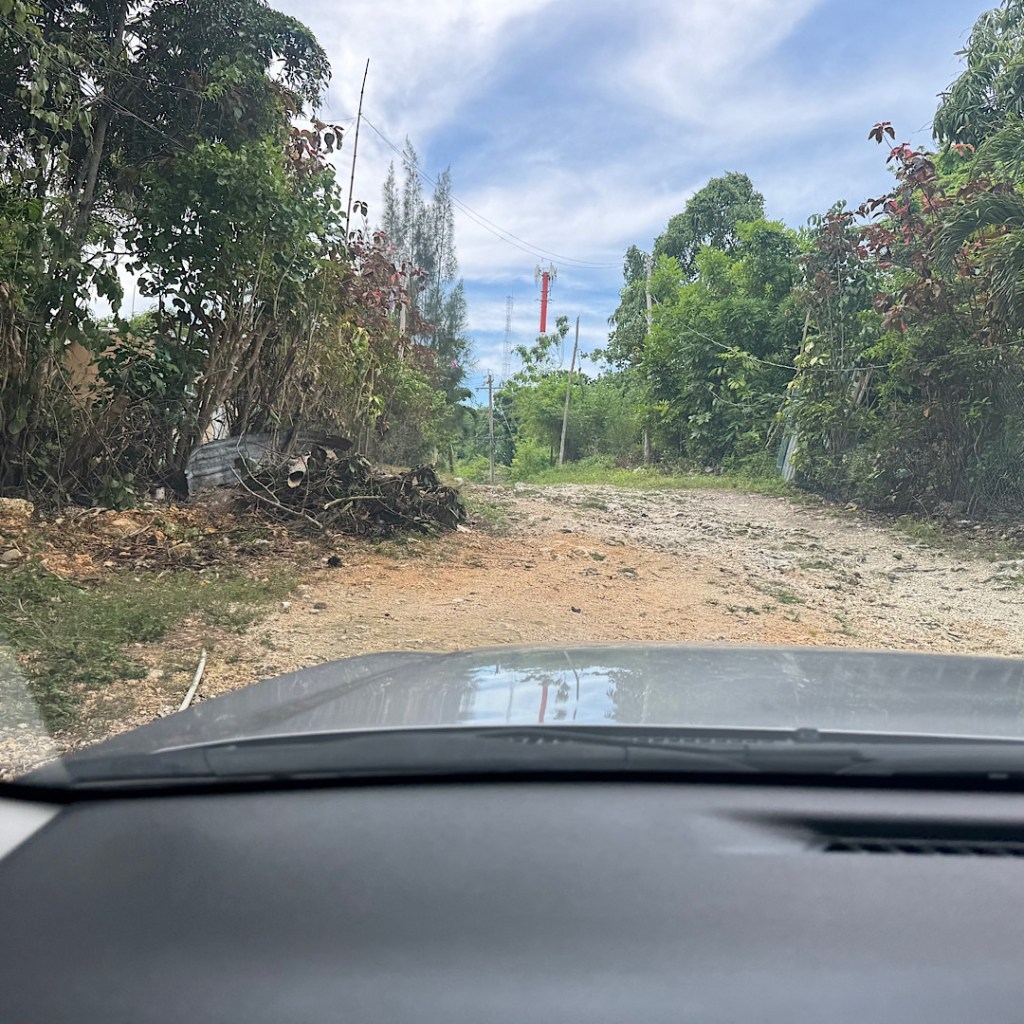
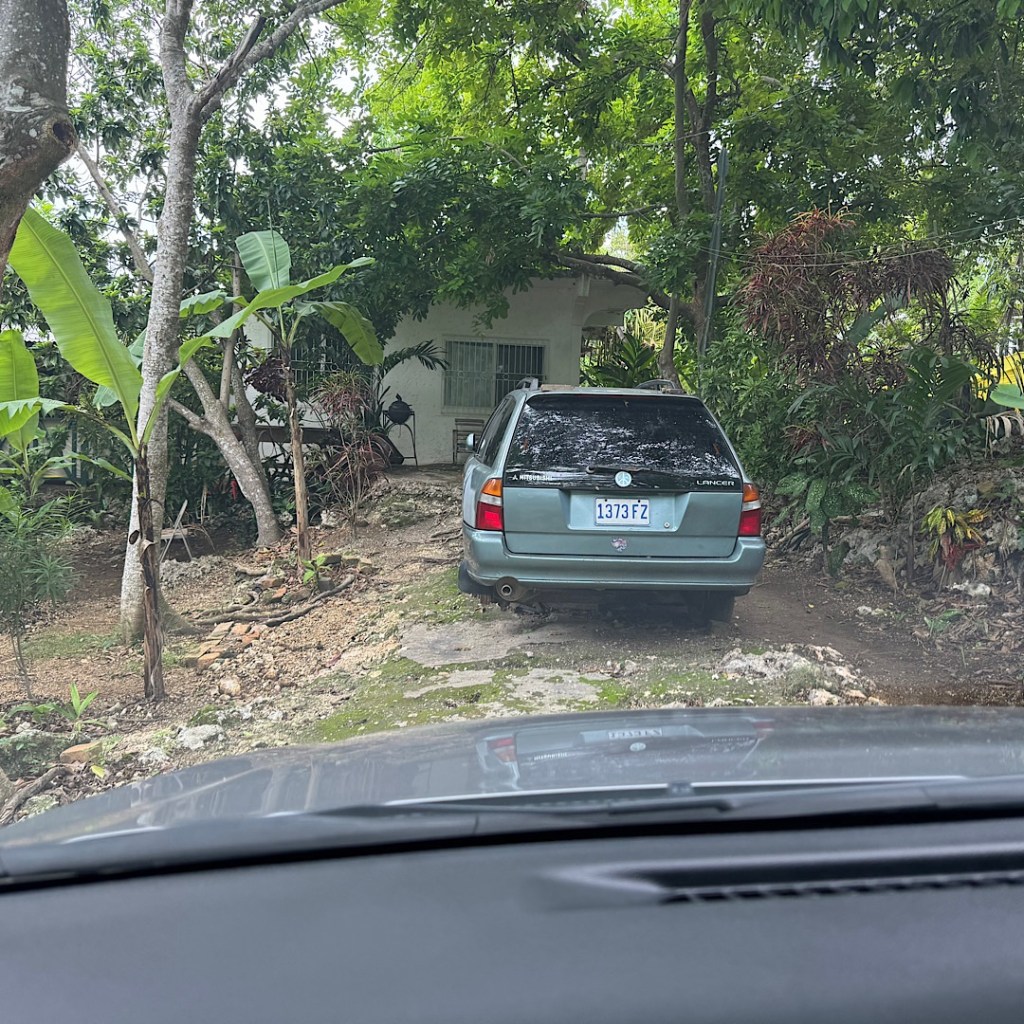
On hand to greet us was Valerie’s caretaker, John. Handsome and quiet, John showed us around the spacious two-bedroom house. He went off to buy a 5-gallon jug of drinking water for us, and as soon as he went out the door, Steve and I agreed: we didn’t want to stay there.

I look at that photo and think, gosh, it doesn’t look bad. And seen up close, it WAS immaculate. The AC seemed to work. But it was spartan, furnished minimally and lighted with only a dim fluorescent bulb per room. Hanging out in it would have been grim. More than anything, we couldn’t face the thought of jolting down that hill in search of dinners and returning in the dark, maybe through driving rain.
So when John got back we broke the news that the place was just too rustic for us. Valerie could keep all the Guest Points I had given her, but we wouldn’t be paying the $100 cleaning fee she had asked for. John looked crestfallen. He tried to assure us we would be completely safe, and I told him in complete sincerity that I believed him.
We drove off and within an hour or two we’d found a pleasant room right on the border of Seven-Mile Beach’s racial divide.
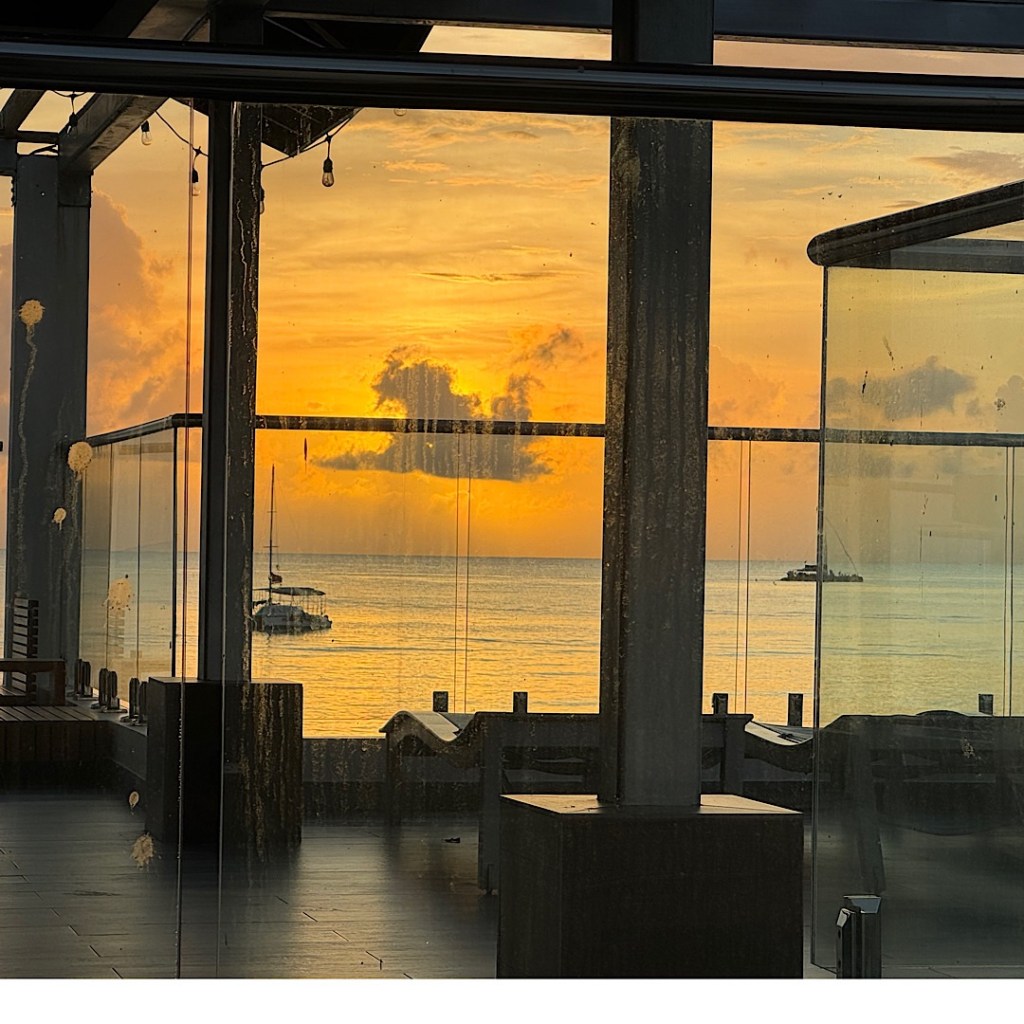
I felt bad about John. I didn’t reflect on this on the spot, but we later speculated that $100 cleaning fee might have fed him and his family for some time. Bad luck for him too, mon.
 For our week in Bali, I used Guest Points we’ve acquired on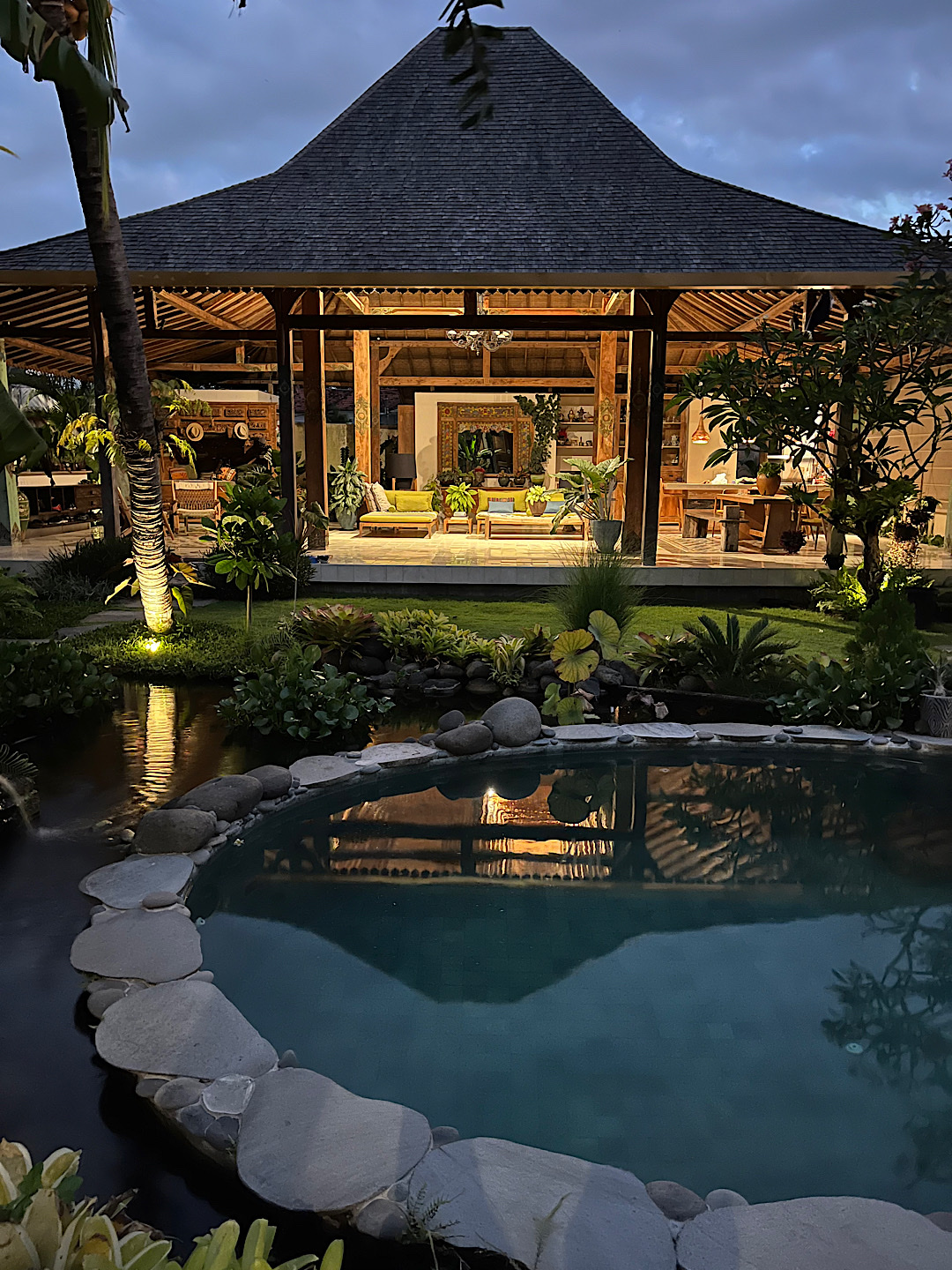
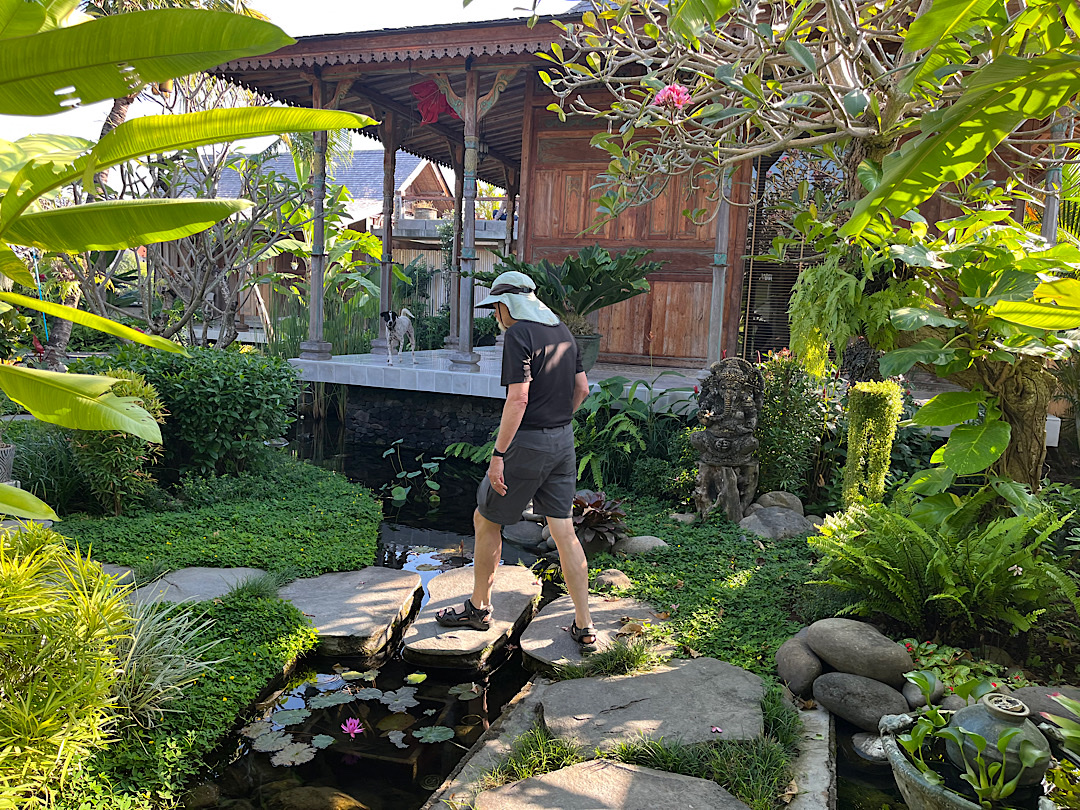
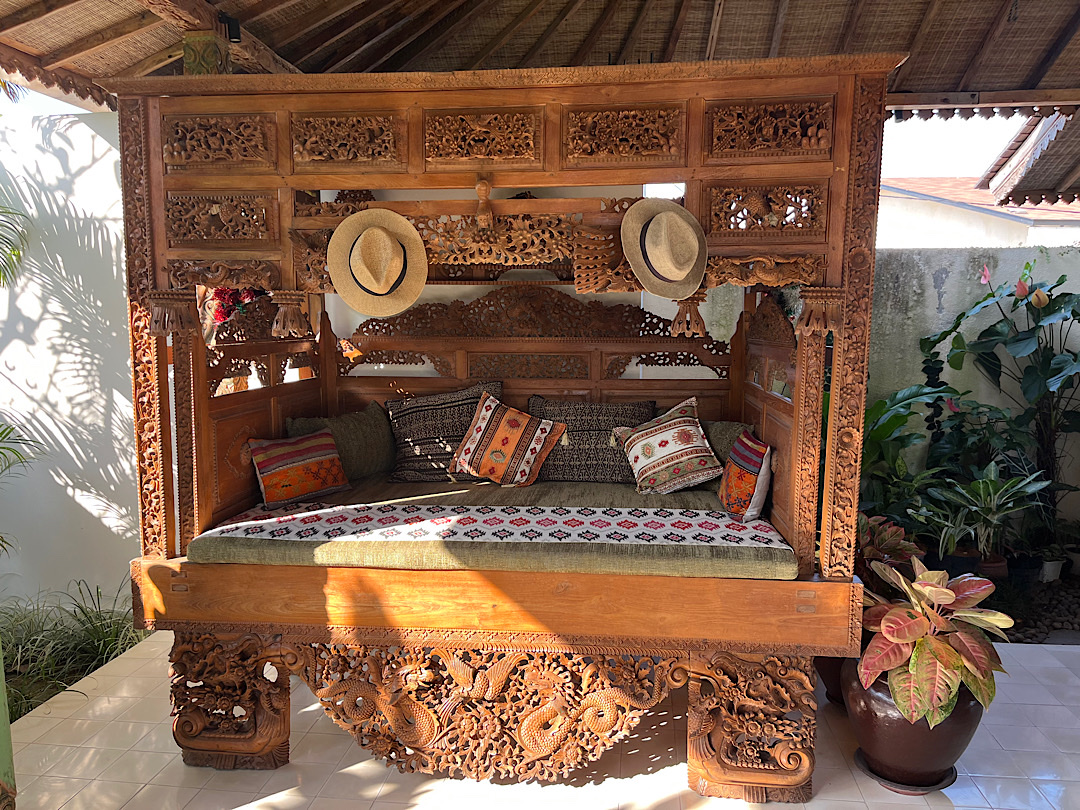
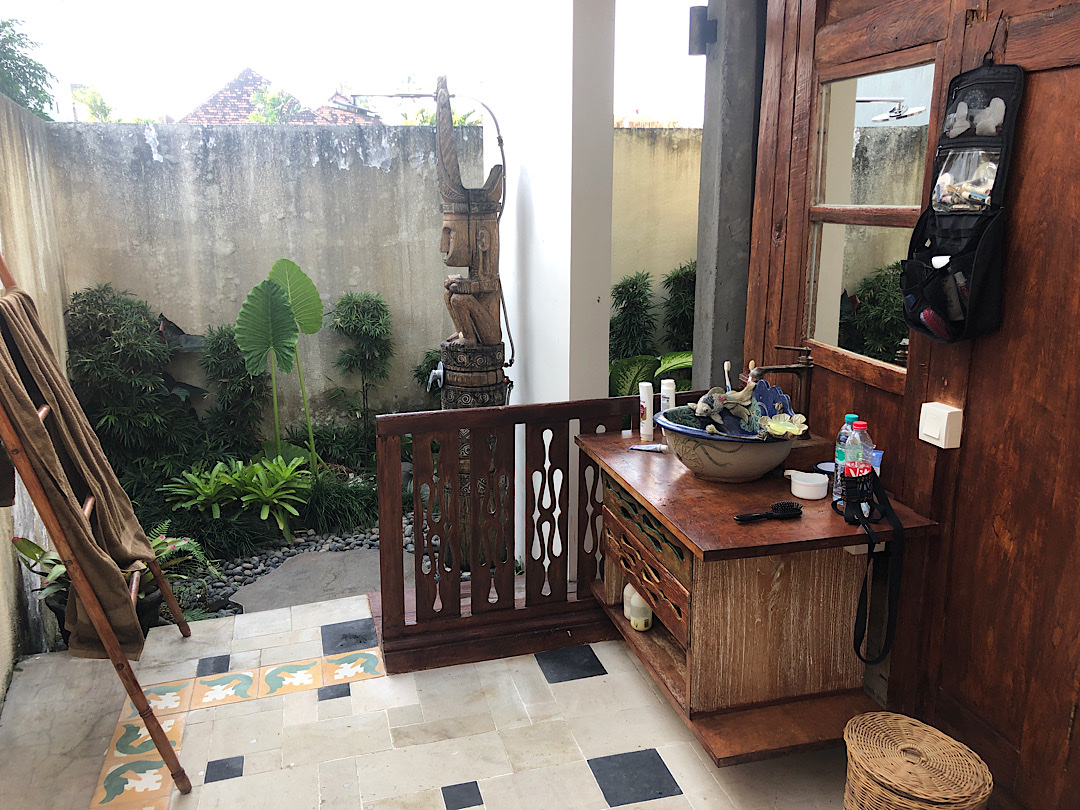 The bathroom attached to our bedroom also was open to the elements. That’s the shower next to the plants against the wall, with the sink inside the little gate. The toilet was behind me to my right.
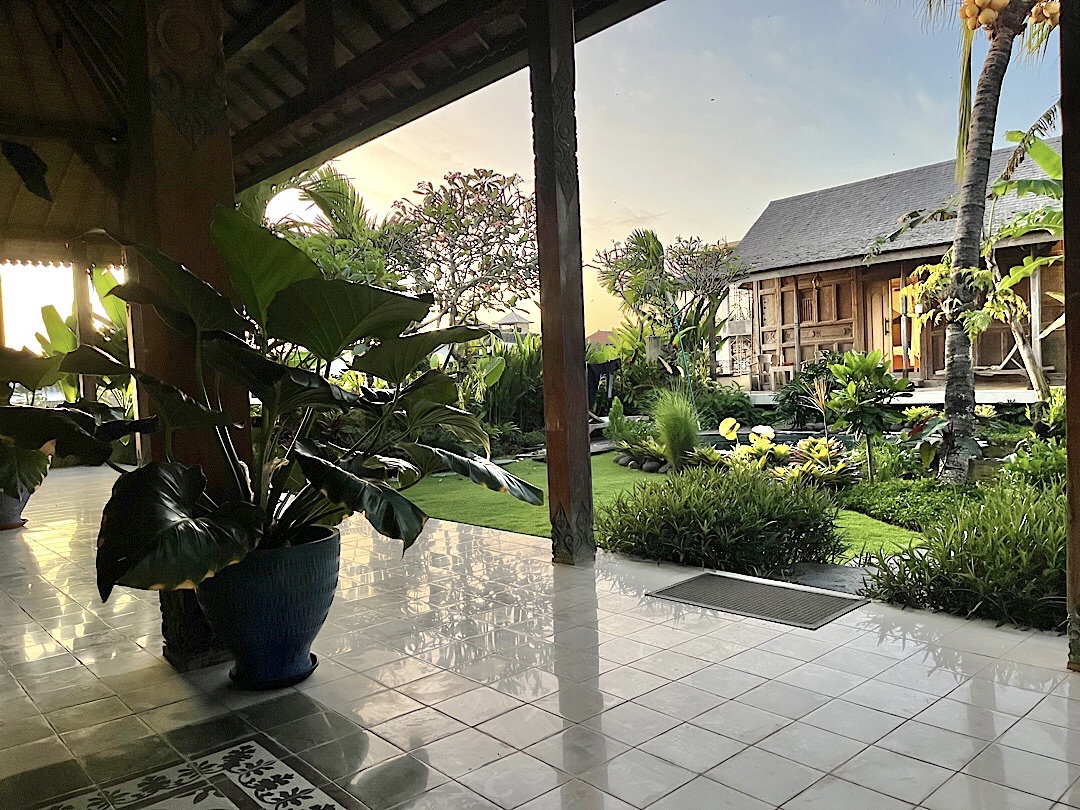 Here’s the view from the living area of the building containing Steven and Christina’s bedroom.
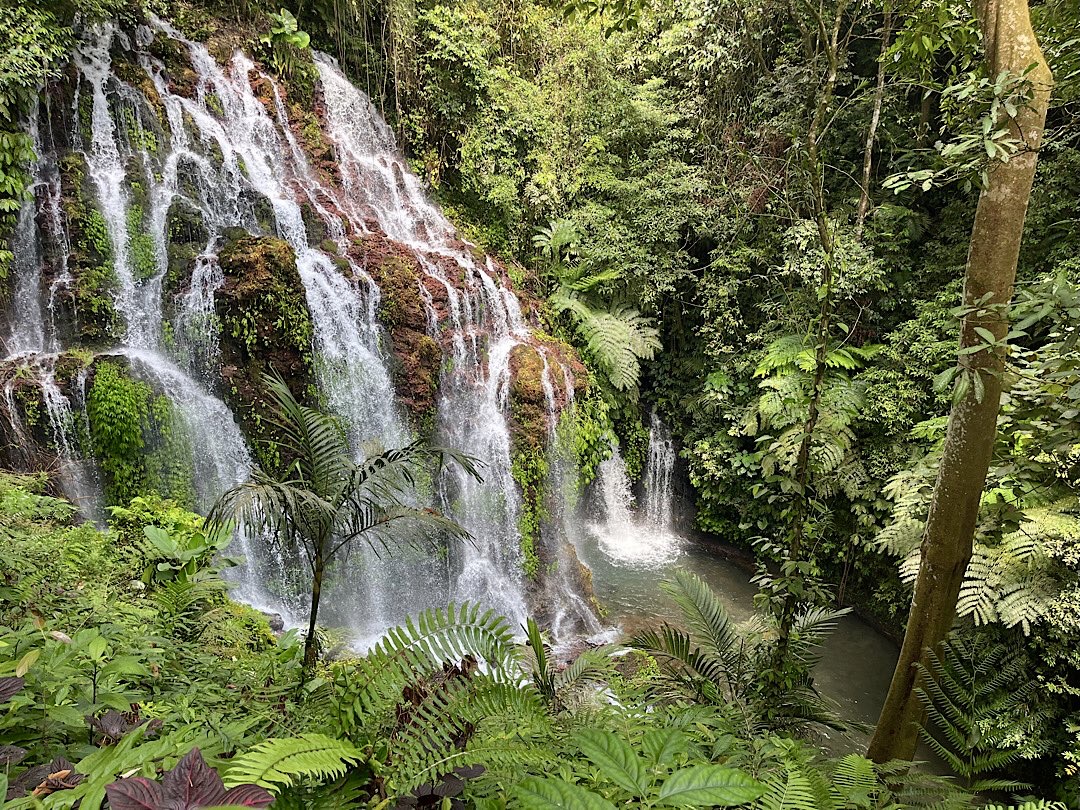
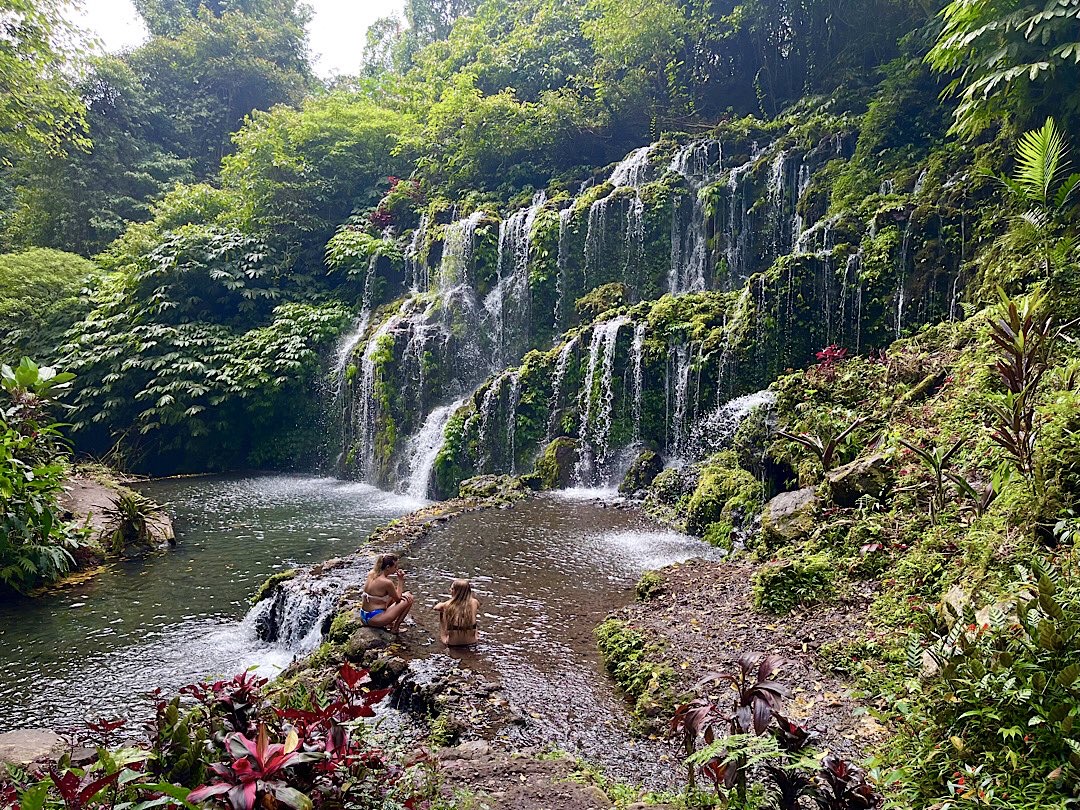
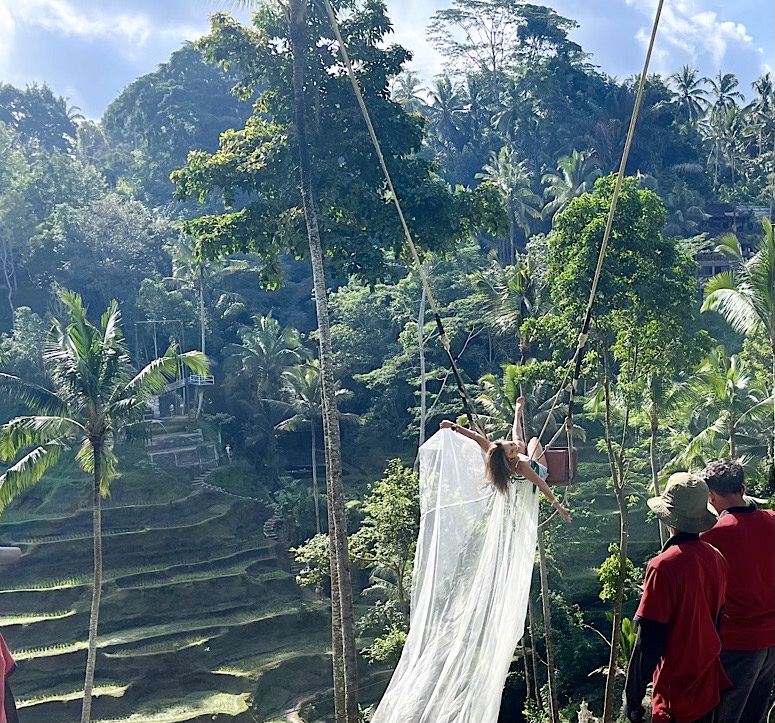
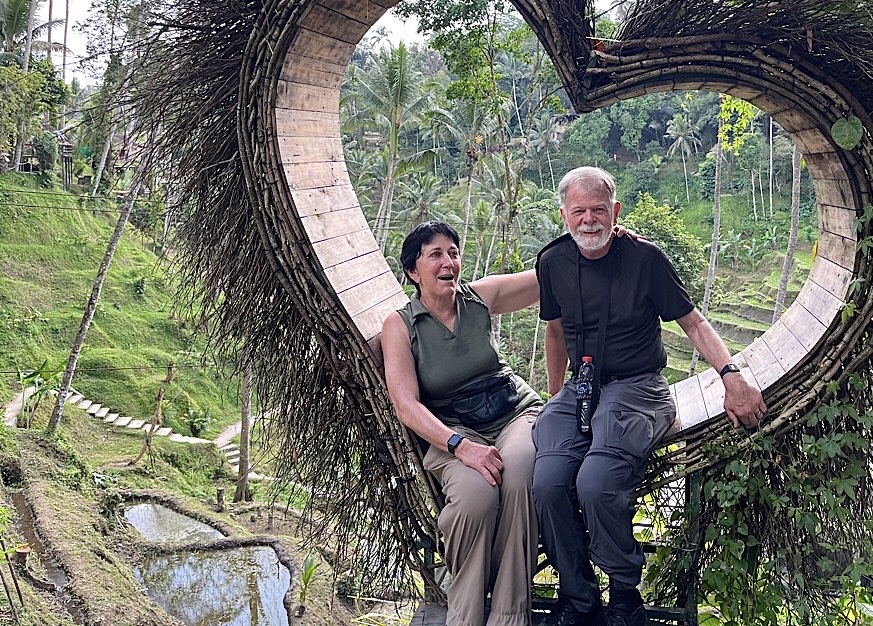 This was one of the free photo opp sites.
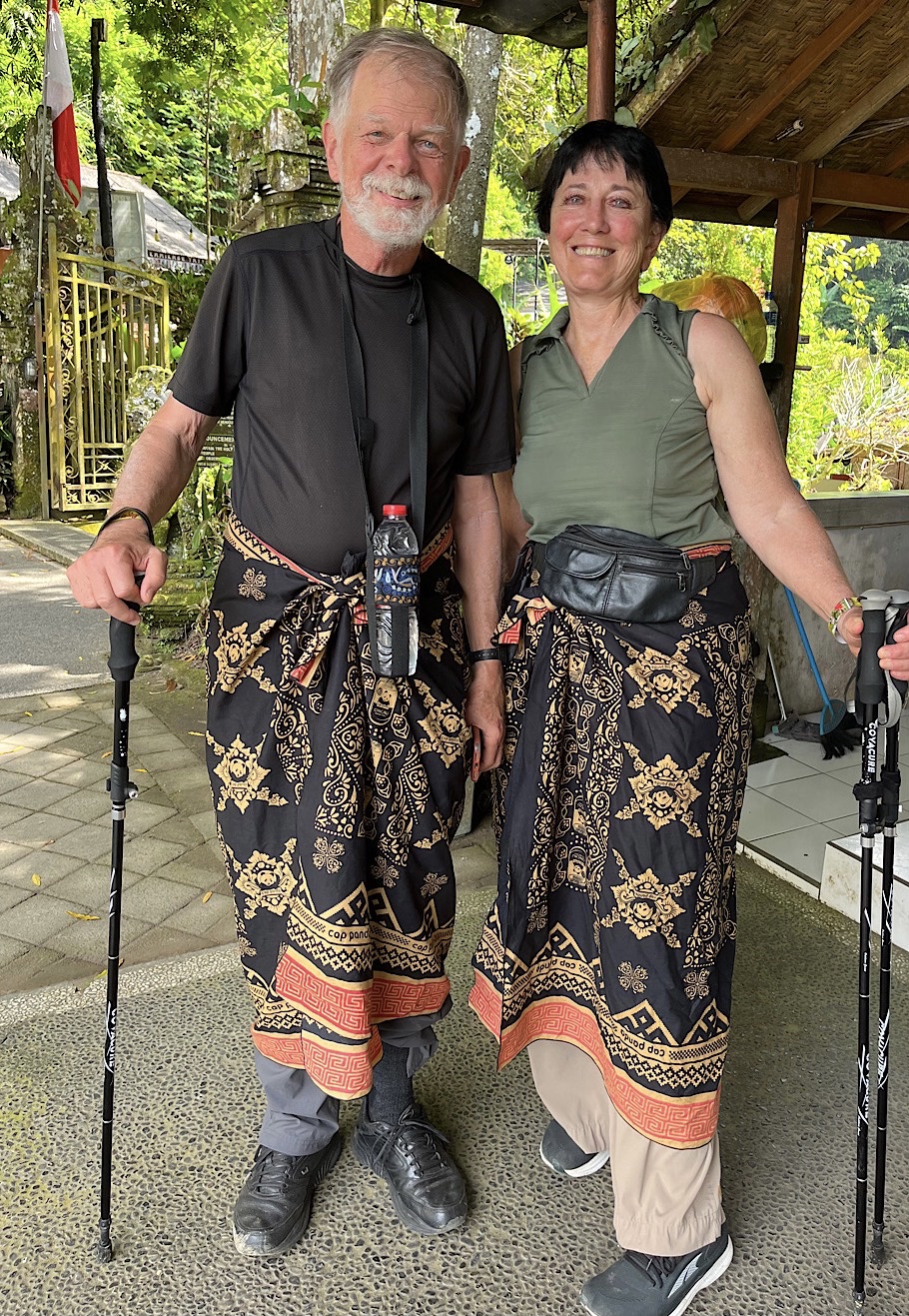 To get in, we had to don proper Balinese garb, i.e sarongs (which we borrowed for free from the temple.)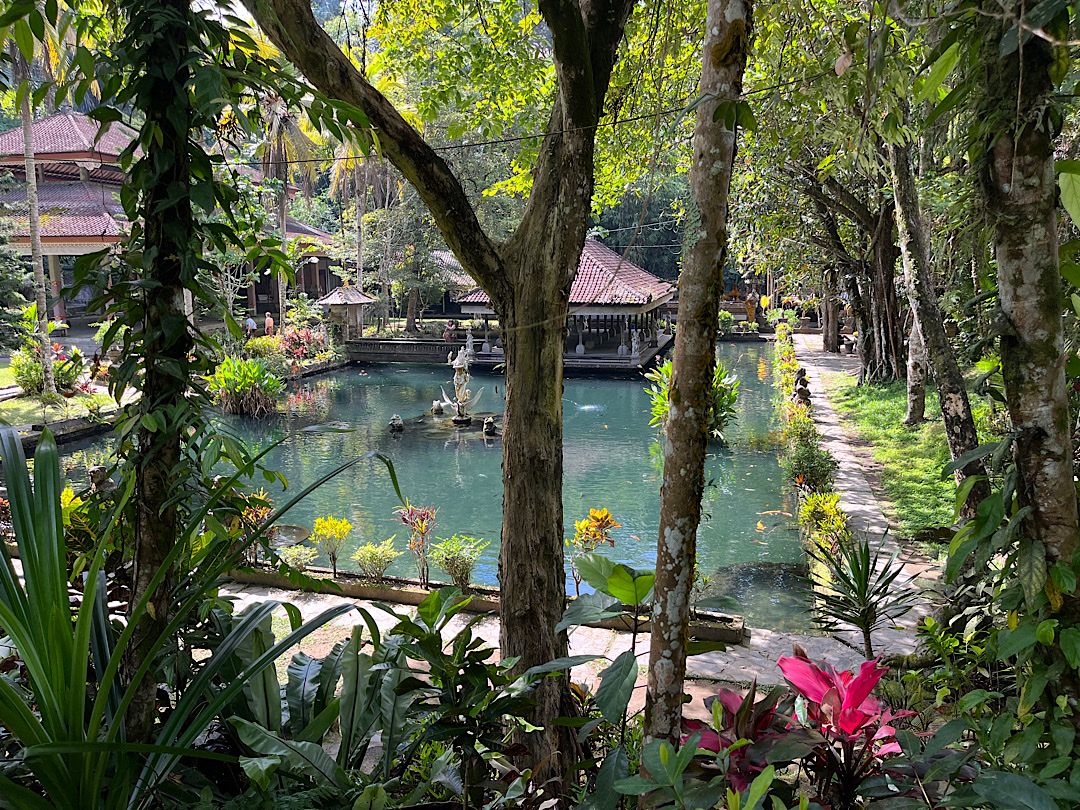
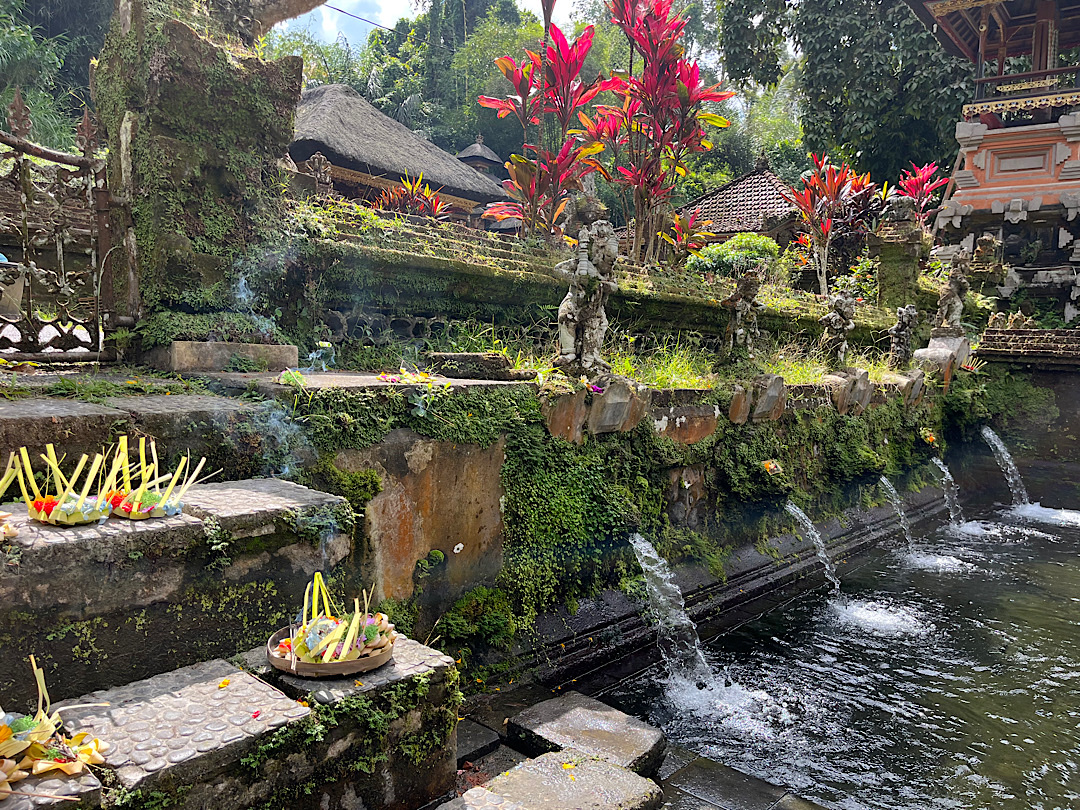
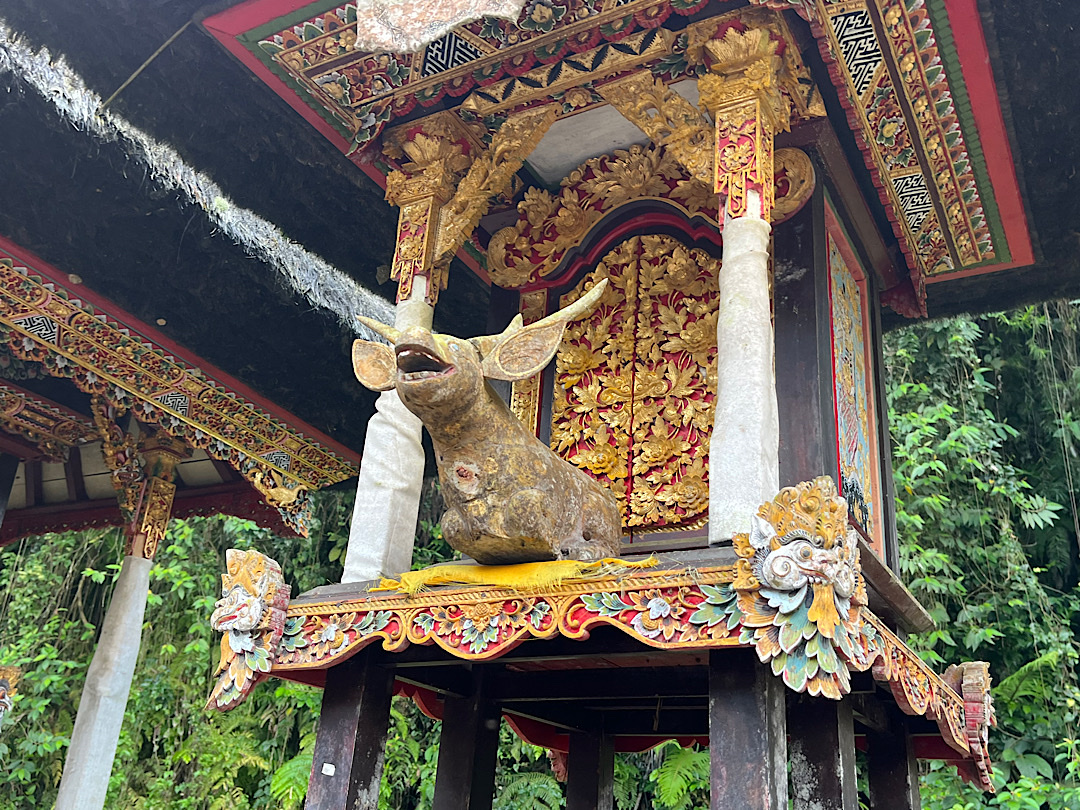
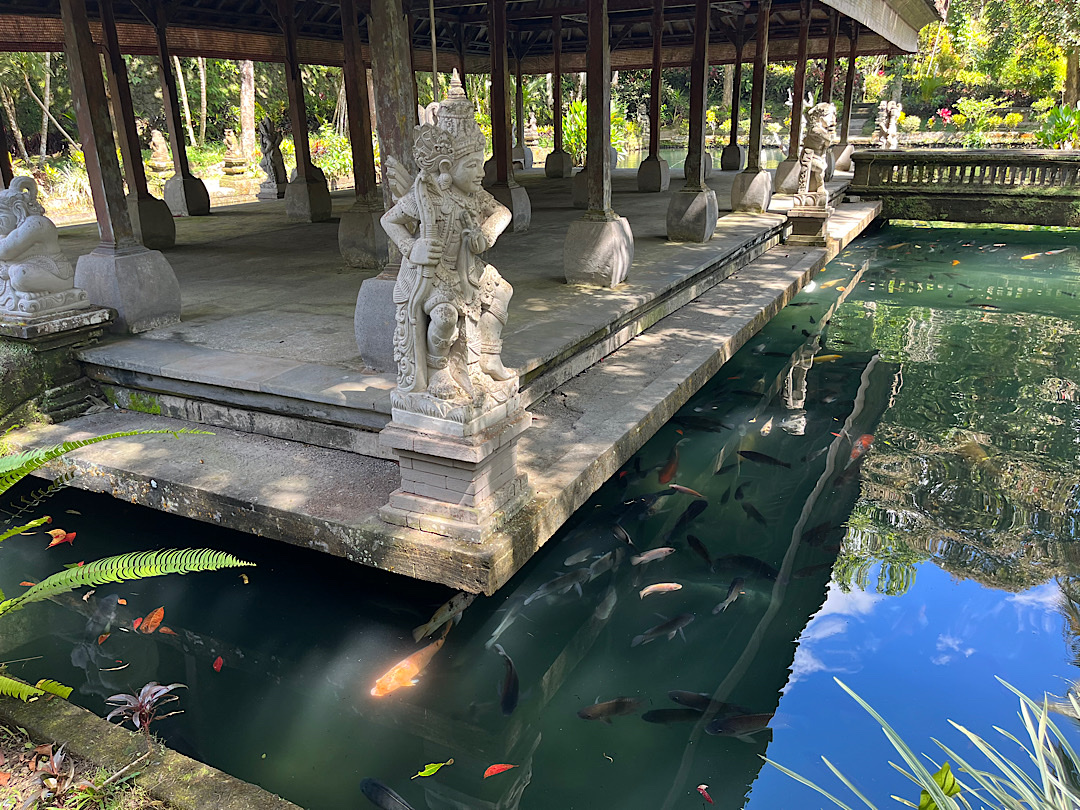
 So it cracked us up to see that for the equivalent of about $3.50, you could pay to have a park employee entice one of the monkeys onto your lap and photograph you.
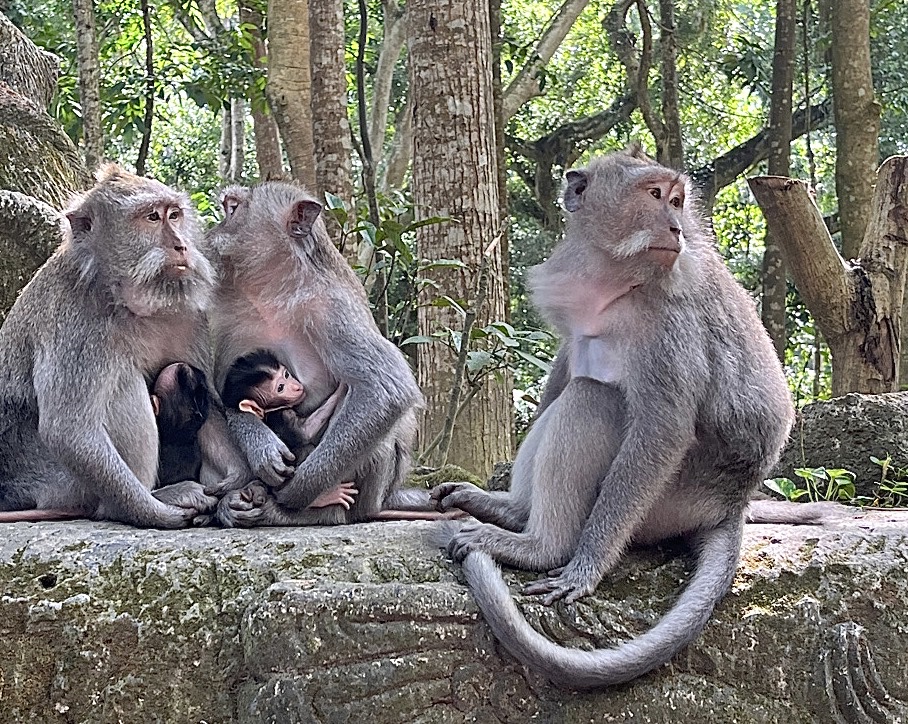
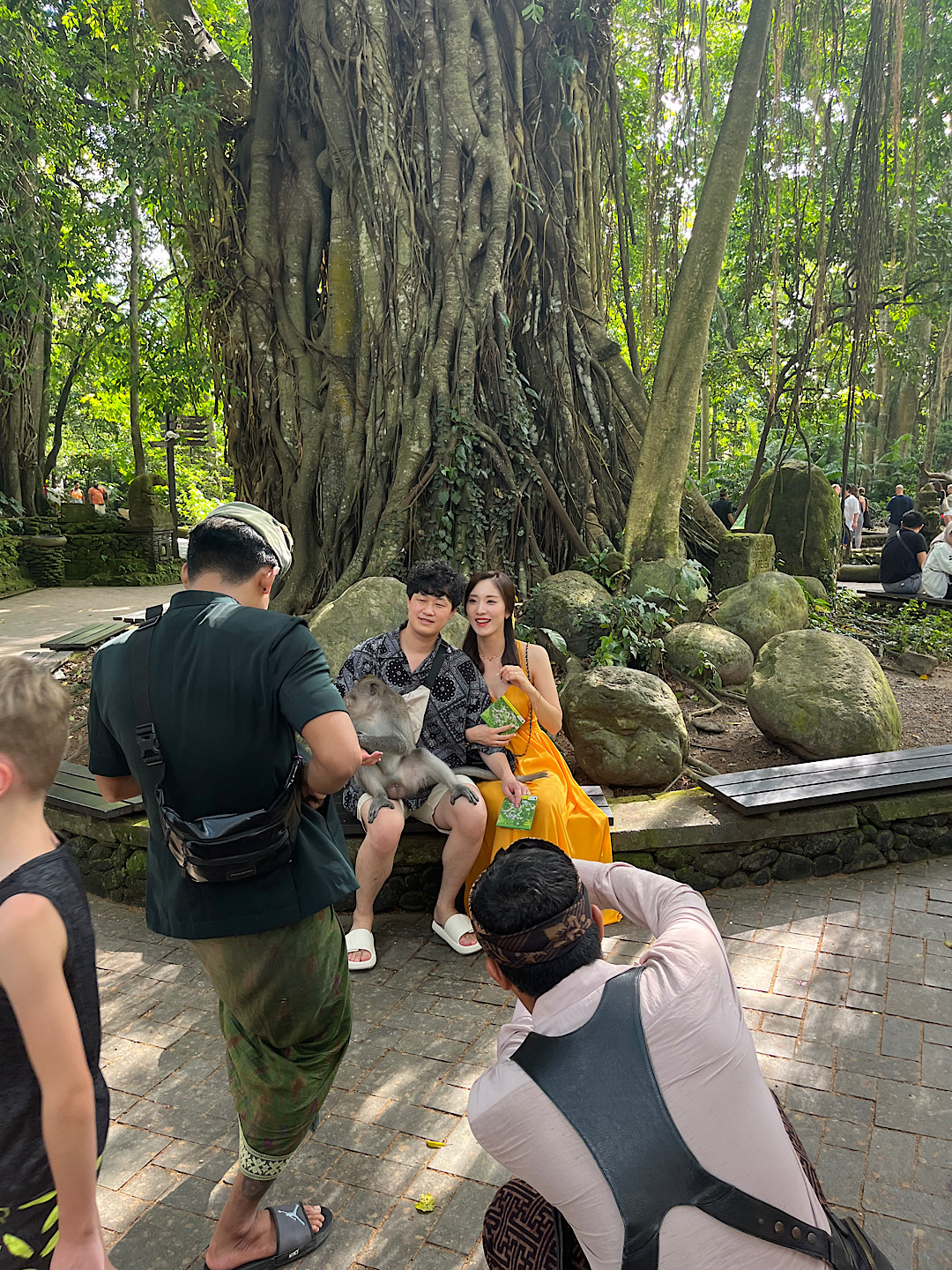 We resisted, but managed to capture a few images of the adorable baby macaques without making their moms mad (as the signs claimed could happen.)
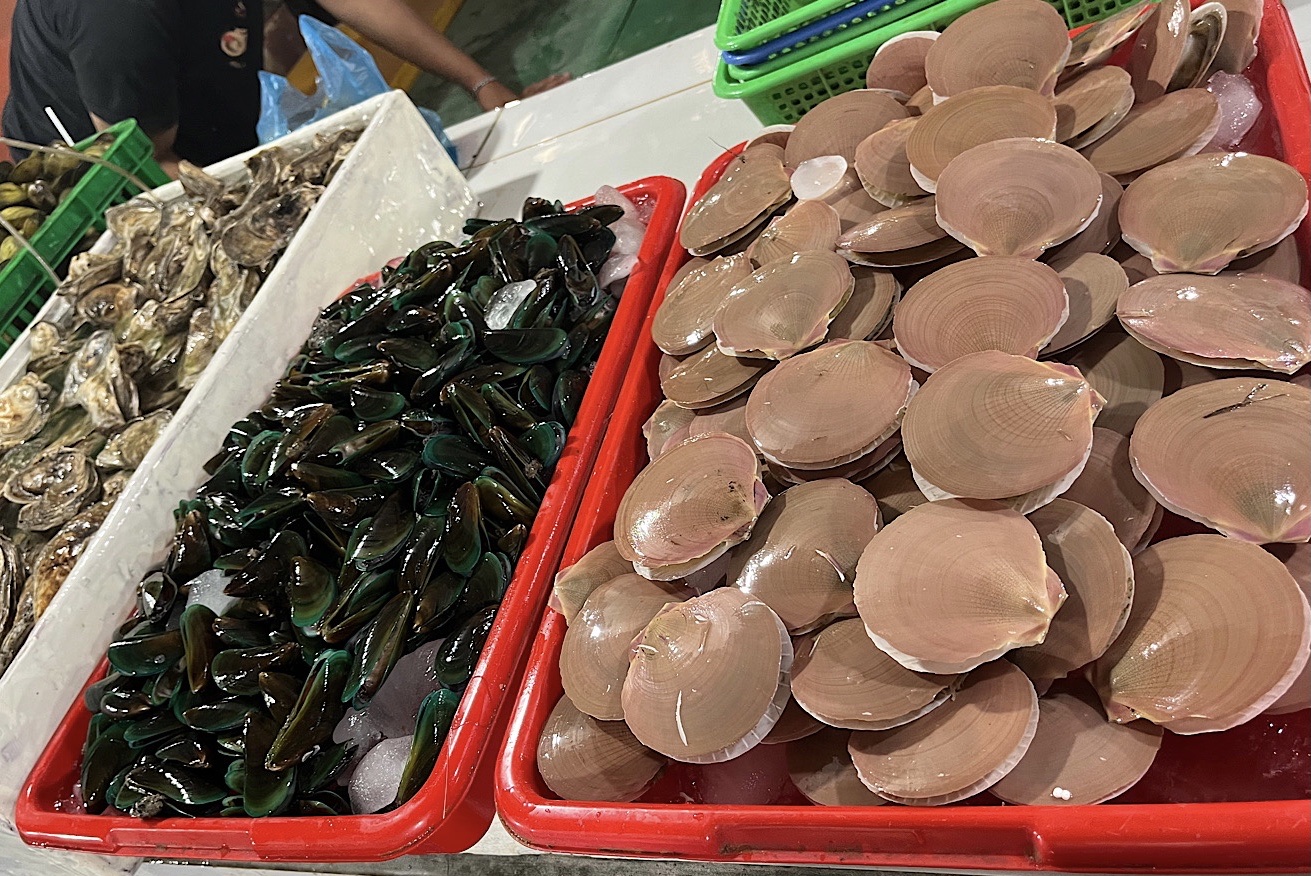
 Despite being tethered to the villa, we packed in a lot throughout the rest of our stay. Most fun was the morning we spent with Chef Mudana, who offers popular classes in Indonesian and Balinese cooking. We met him and our only fellow student (a network security expert named Sanjay from Sydney) last Saturday morning at the Jimbaran fish market, a wonderfully chaotic, stinky warren of fishermen unloading their wares and vendors selling the staggering variety of protein from the sea.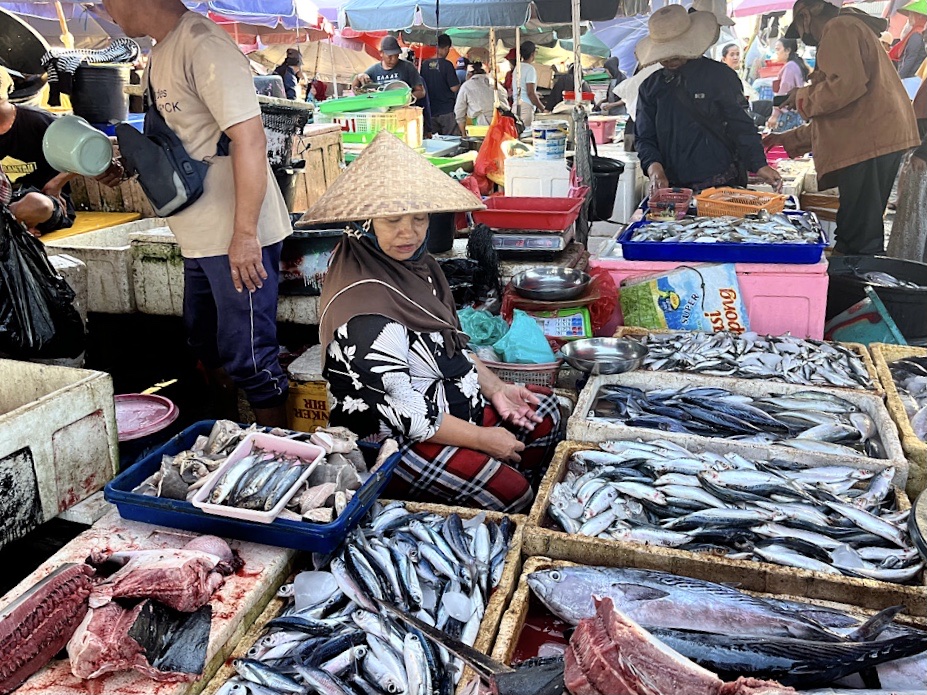
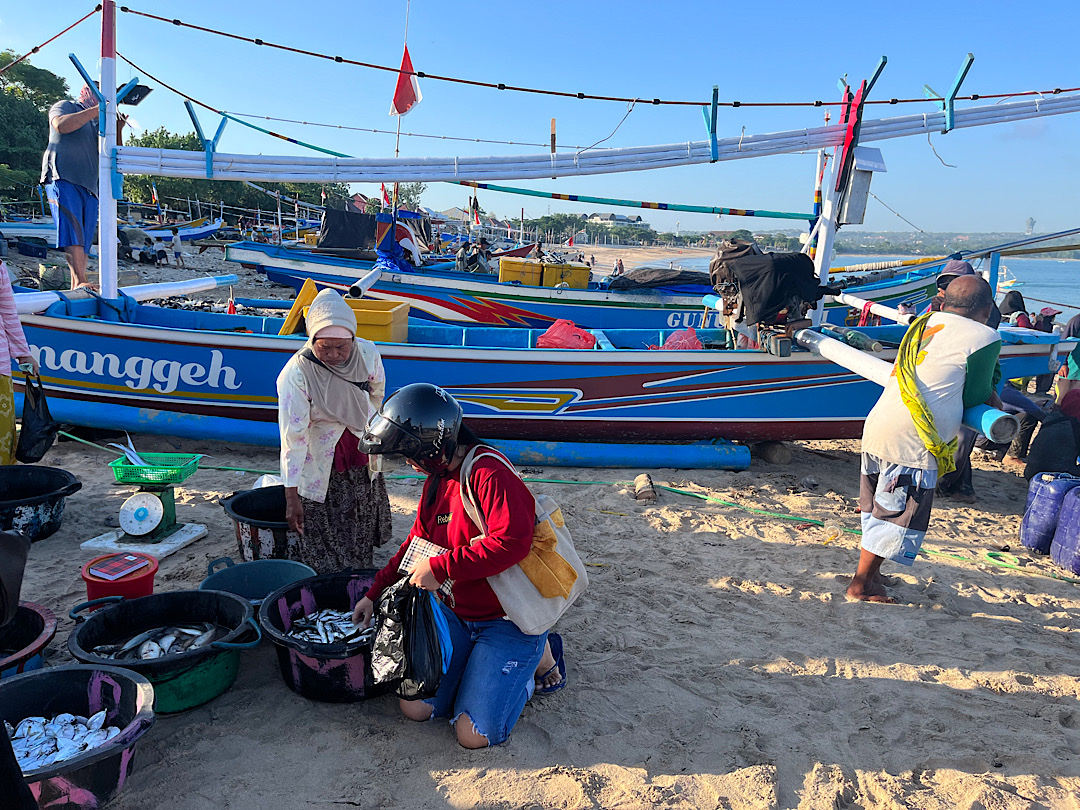 No doubt about the freshness of this stuff. We watched it coming off the boats.
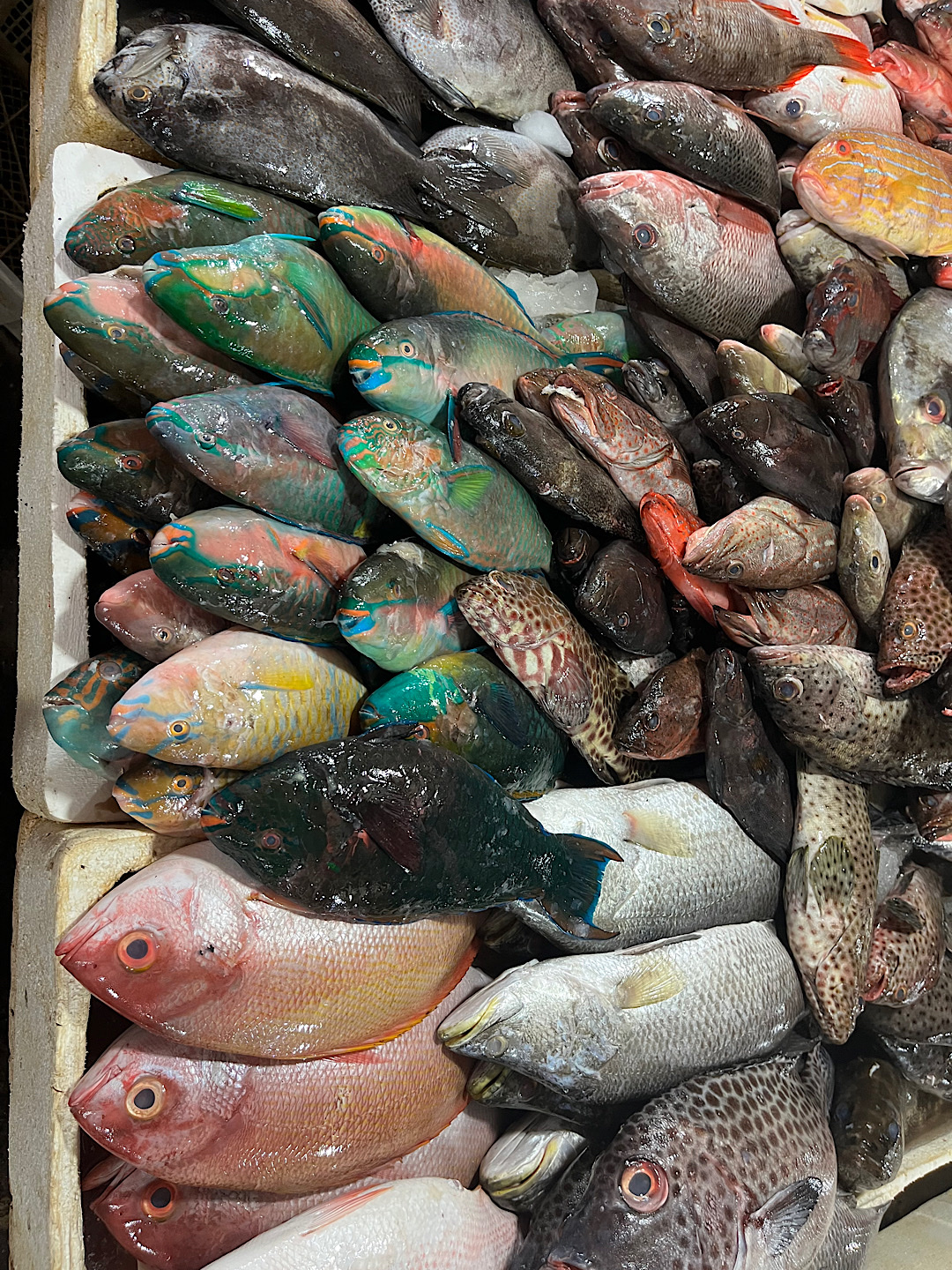 Some of it looked too beautiful to eat.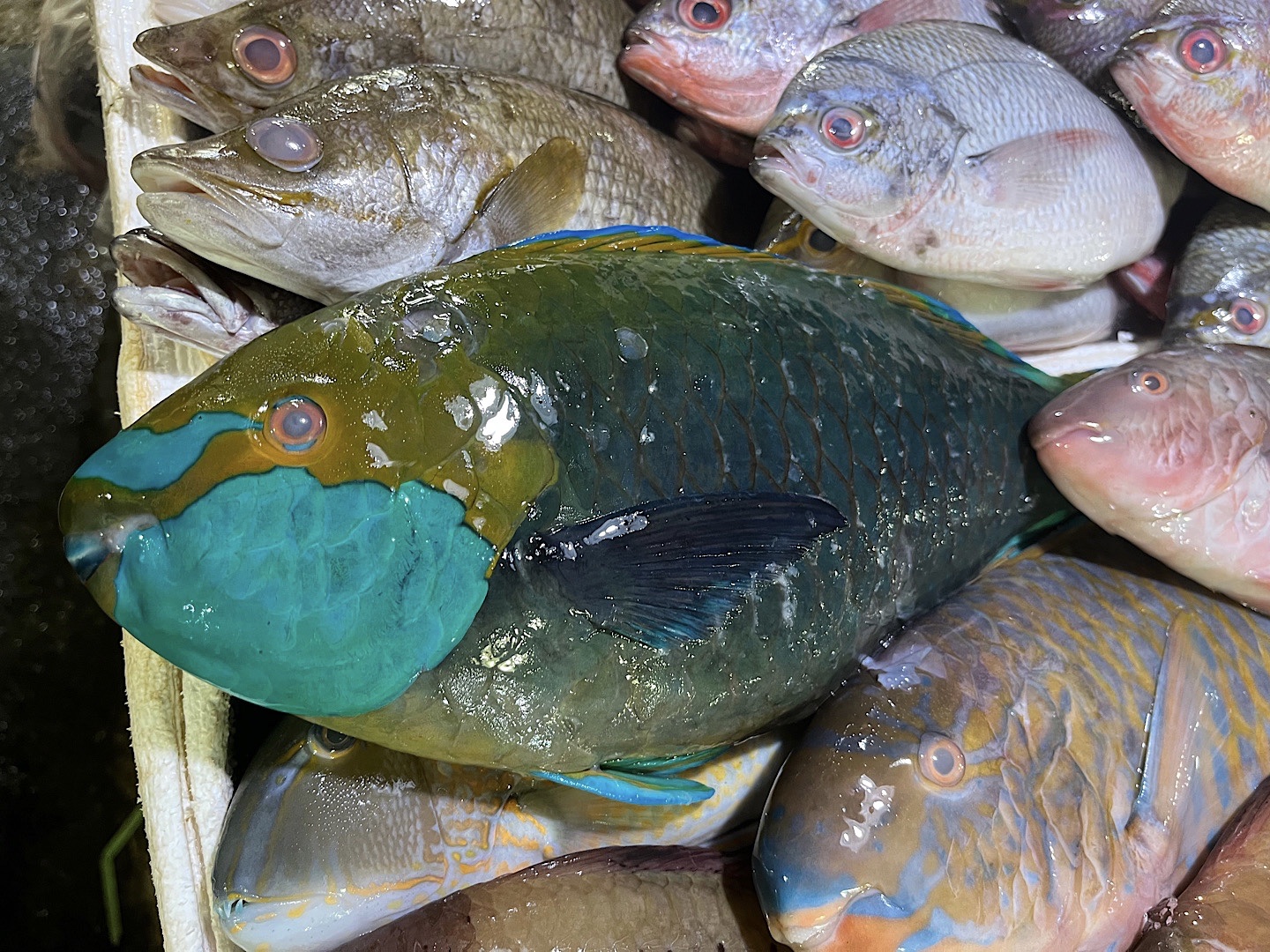
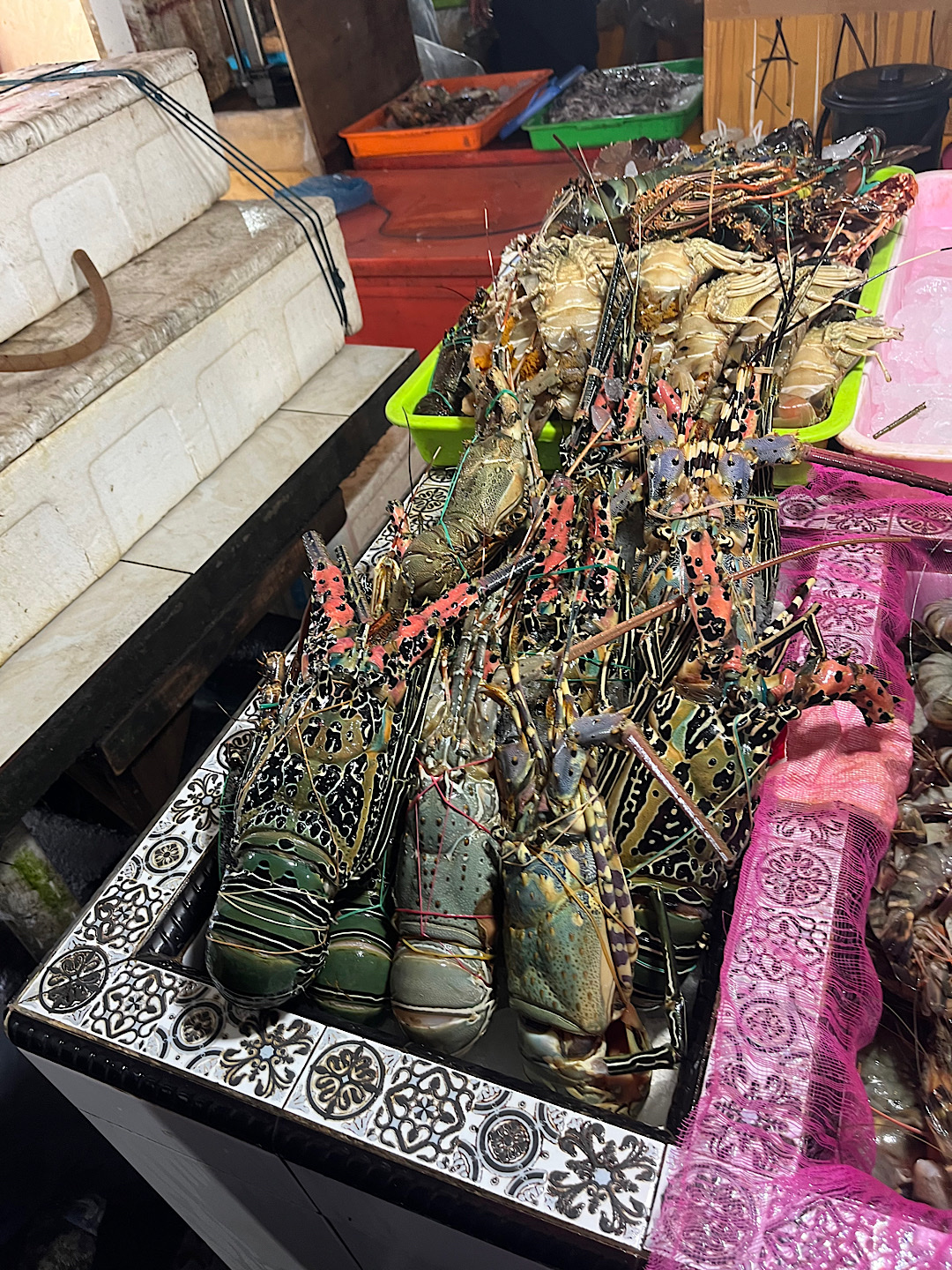
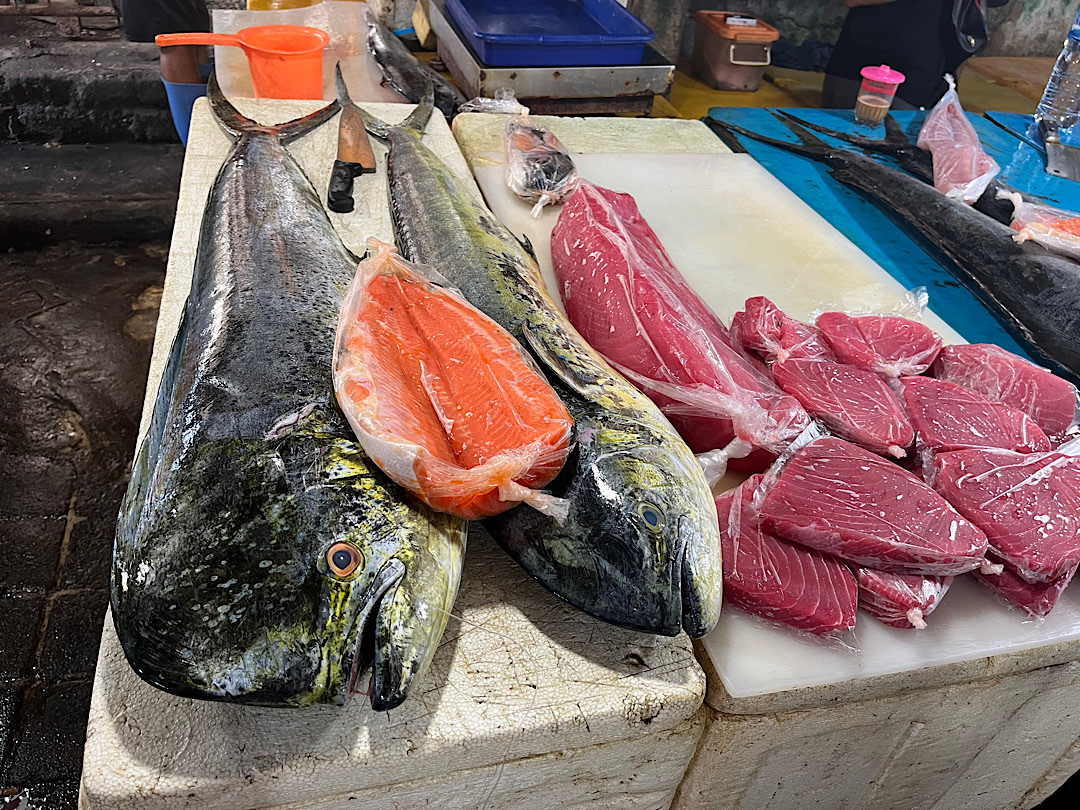
 Mudana purchased a beautiful piece of mahi-mahi, and we made a quick run through the adjoining produce market to pick up what we needed for the class.
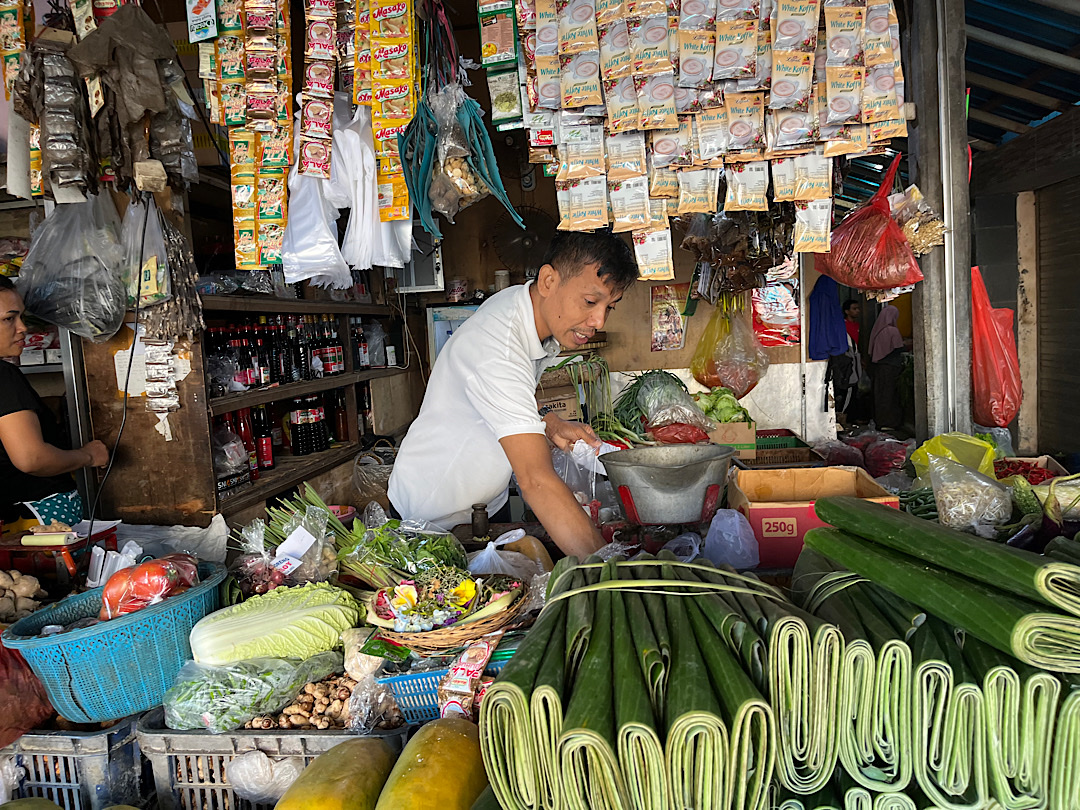 Then we drove to his base in the community of Sanur, a combination of family home, restaurant, and the classroom in which Mudana teaches foreigners how to cook like a Balinese. Here’s the street front:
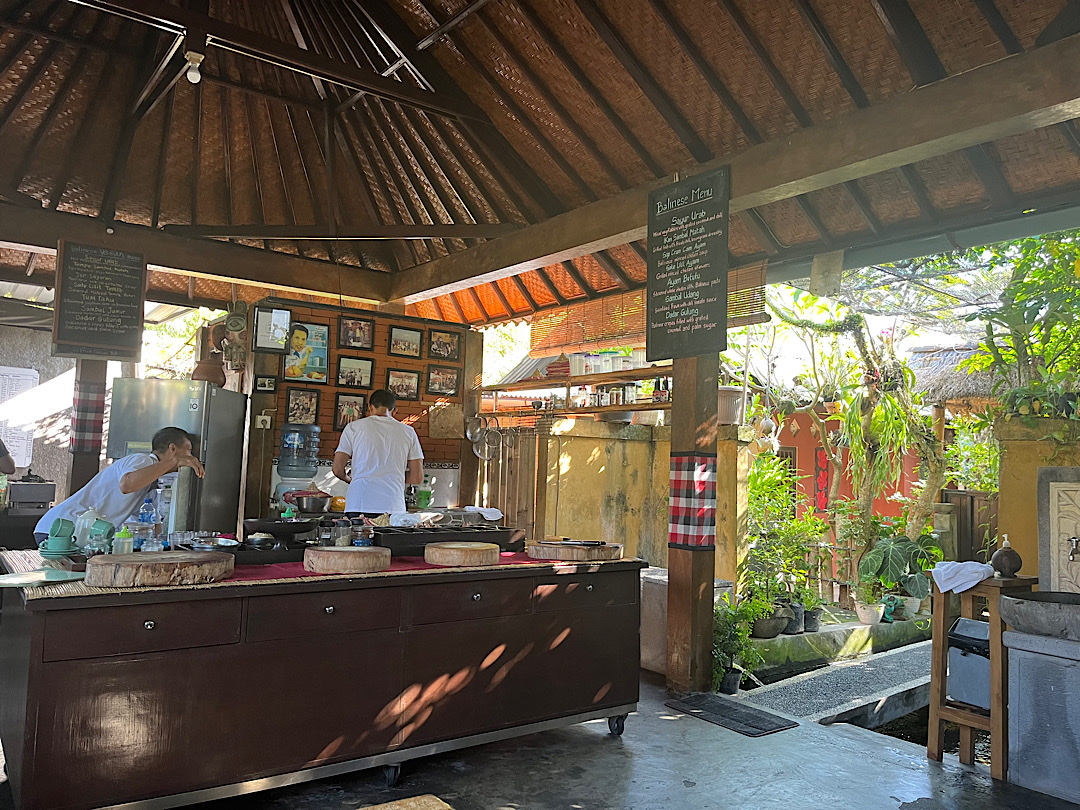 And the room where we had our class.
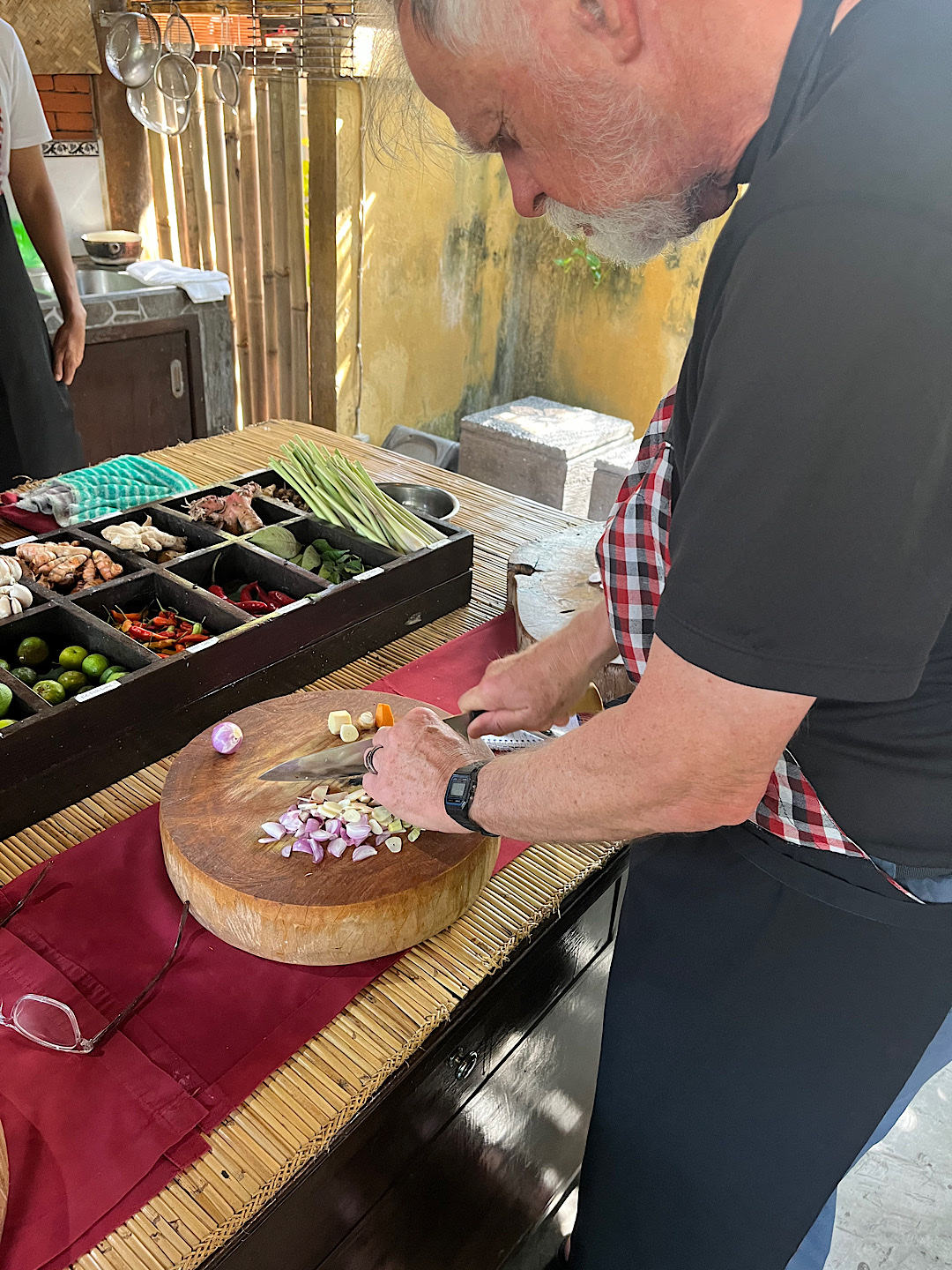 …into a delicious seven-course meal. I plan to try to do this at home in San Diego.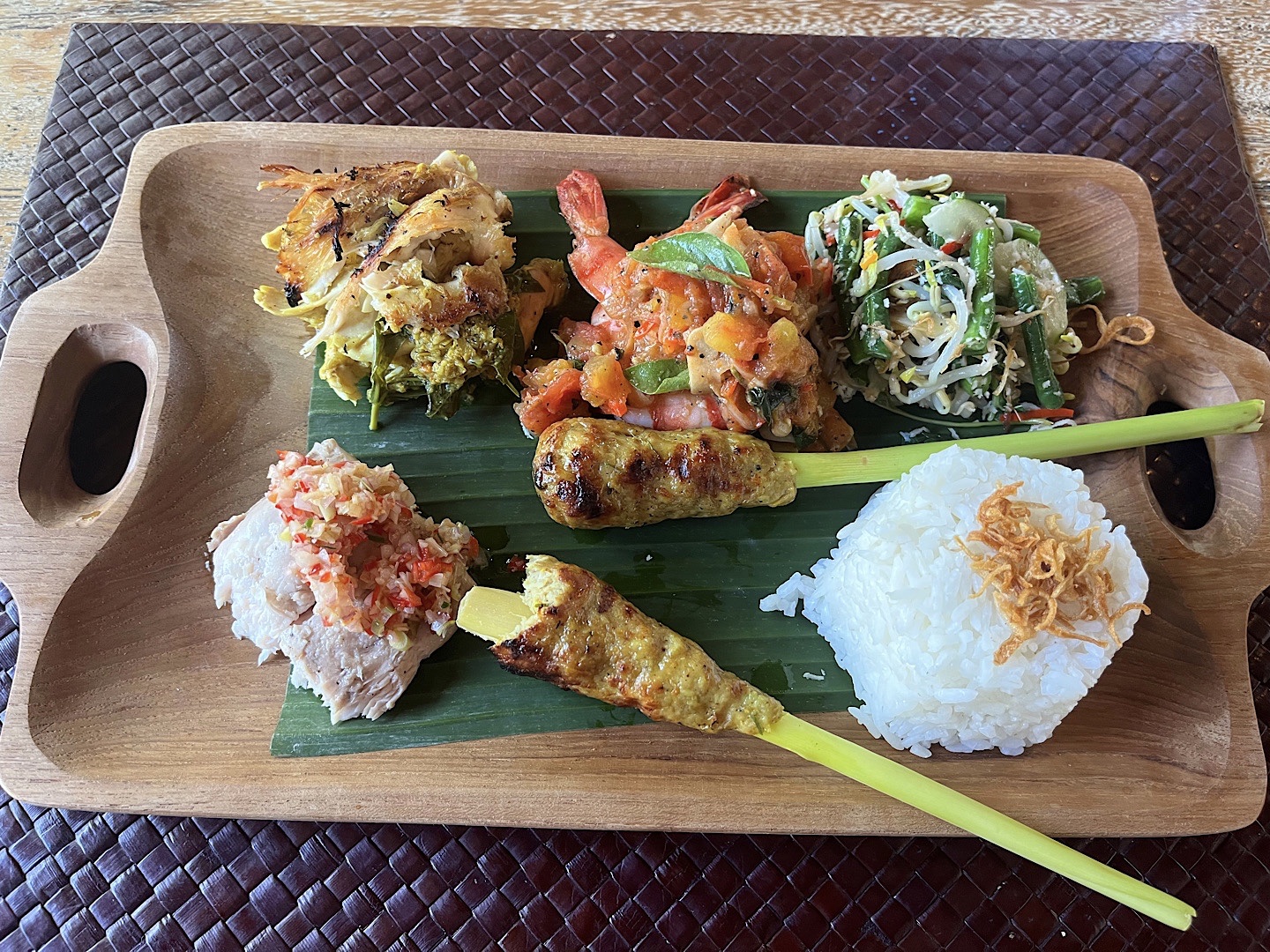

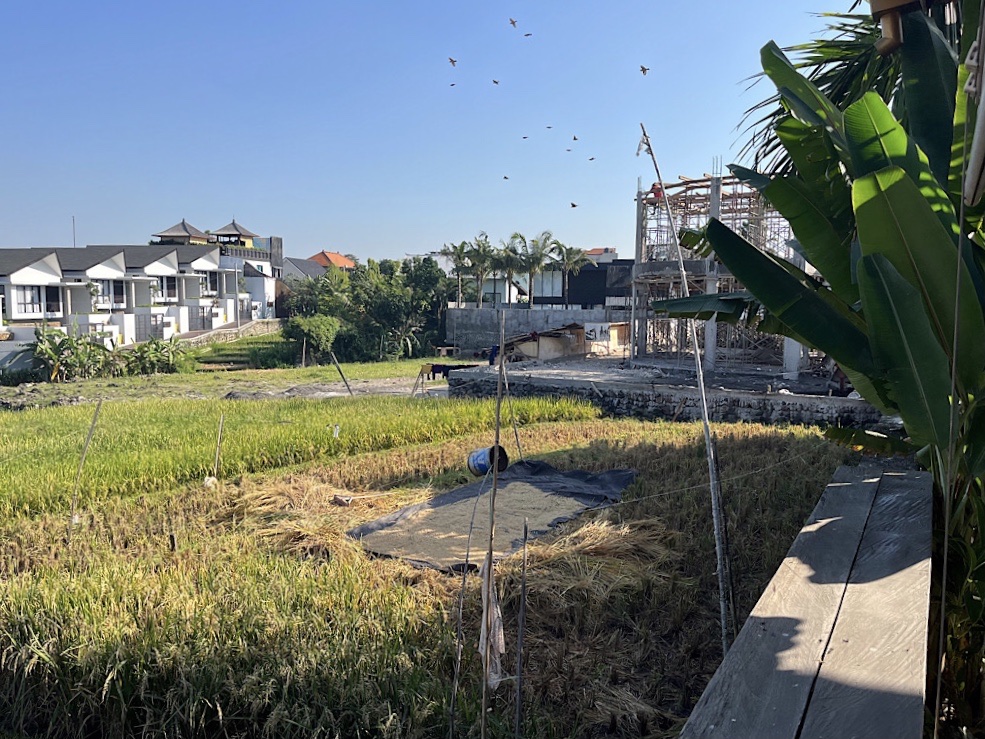 One small patch of rice field still meets up with their property, but in just the last two years a stunning amount of development has gobbled up the rest of their bucolic surroundings. This has occurred despite the lack of such basic infrastructure as sidewalks and water services.
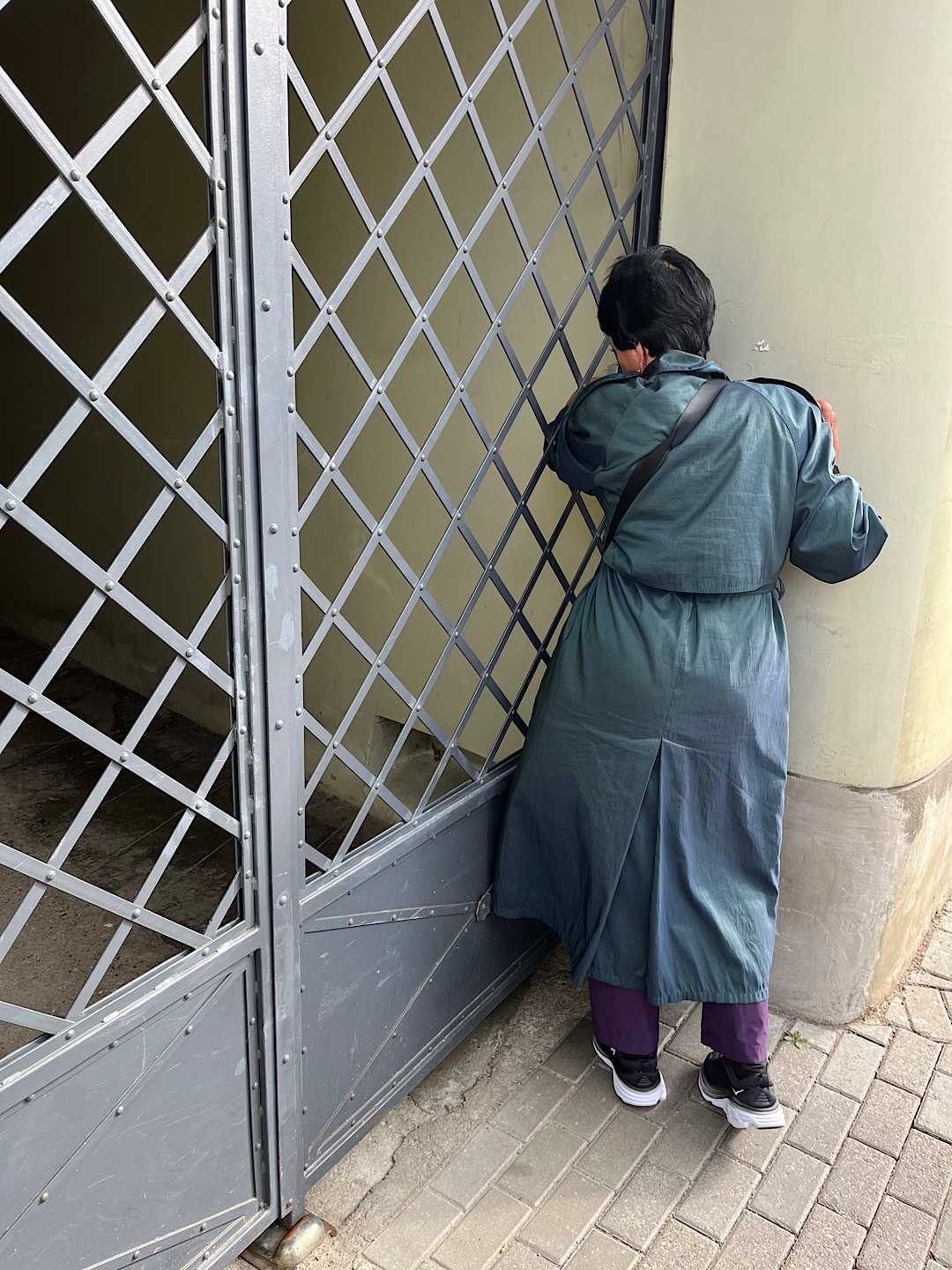 In an inner courtyard, we used the key from Daiva to get into the correct building, and up on the third floor, the key functioned perfectly to admit us.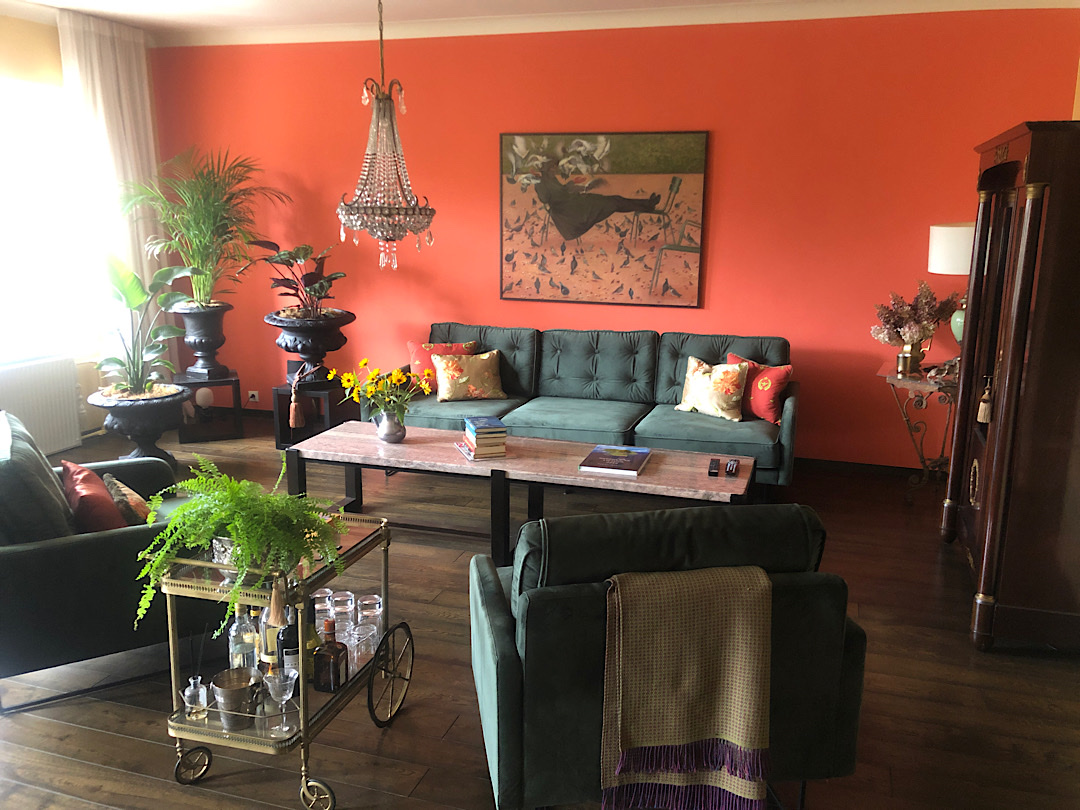

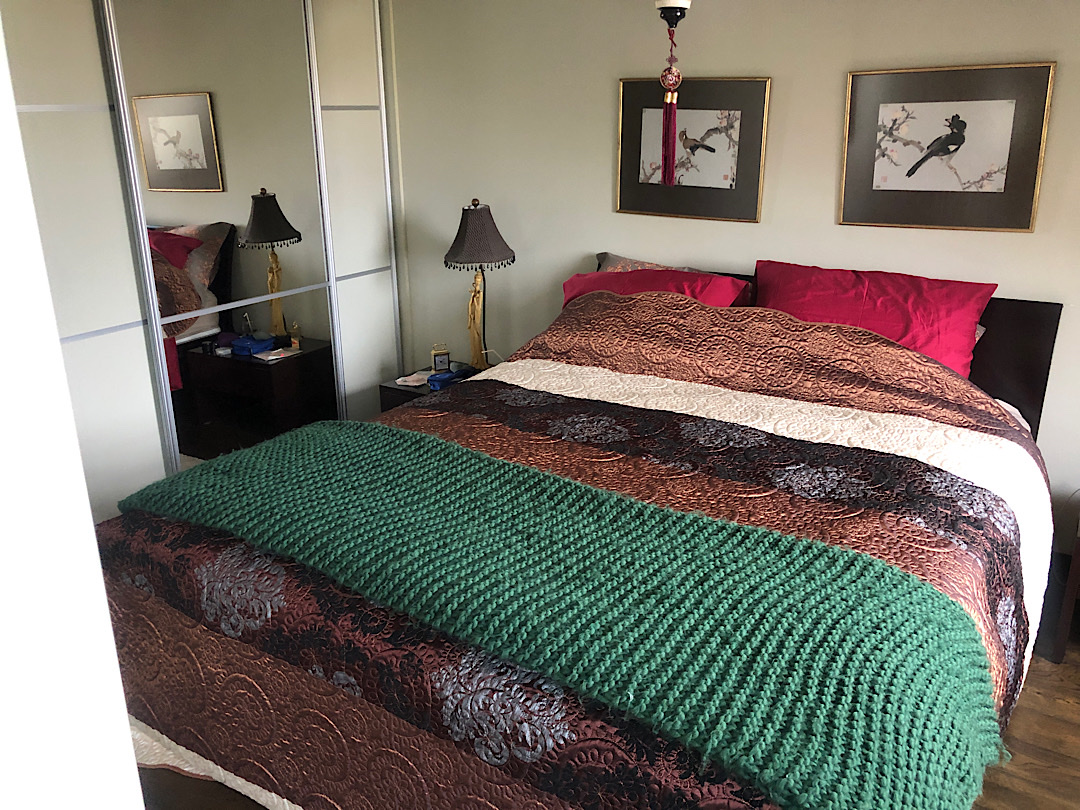
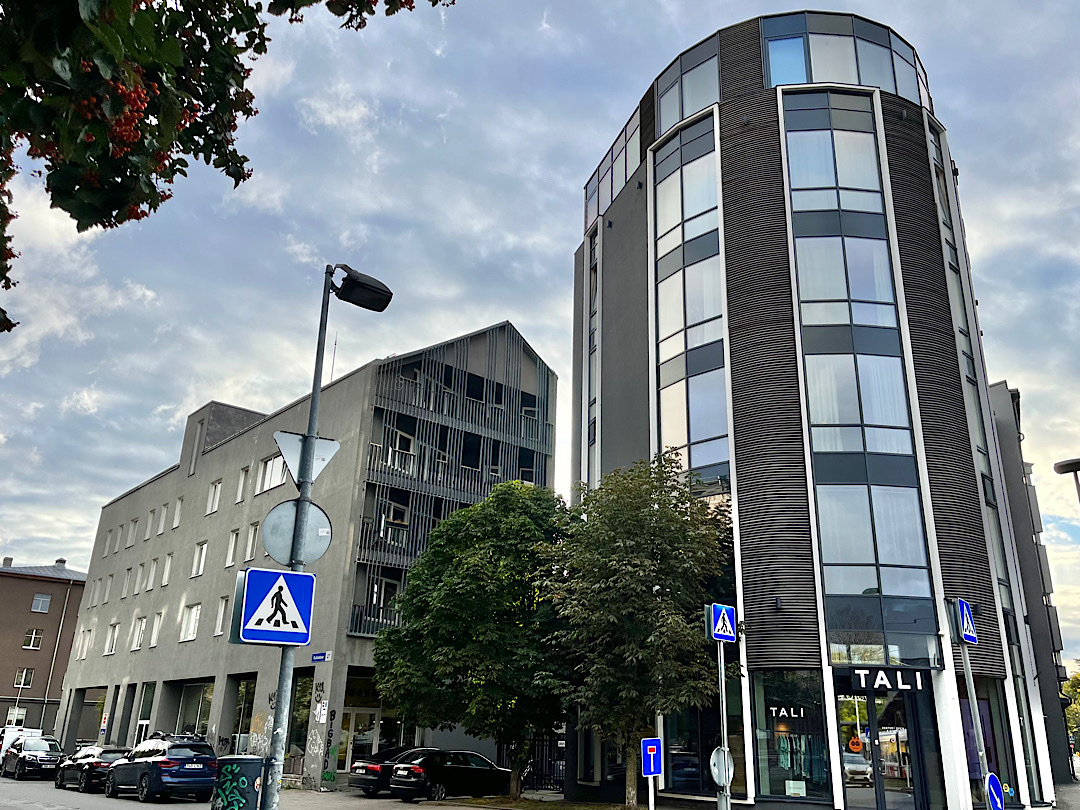
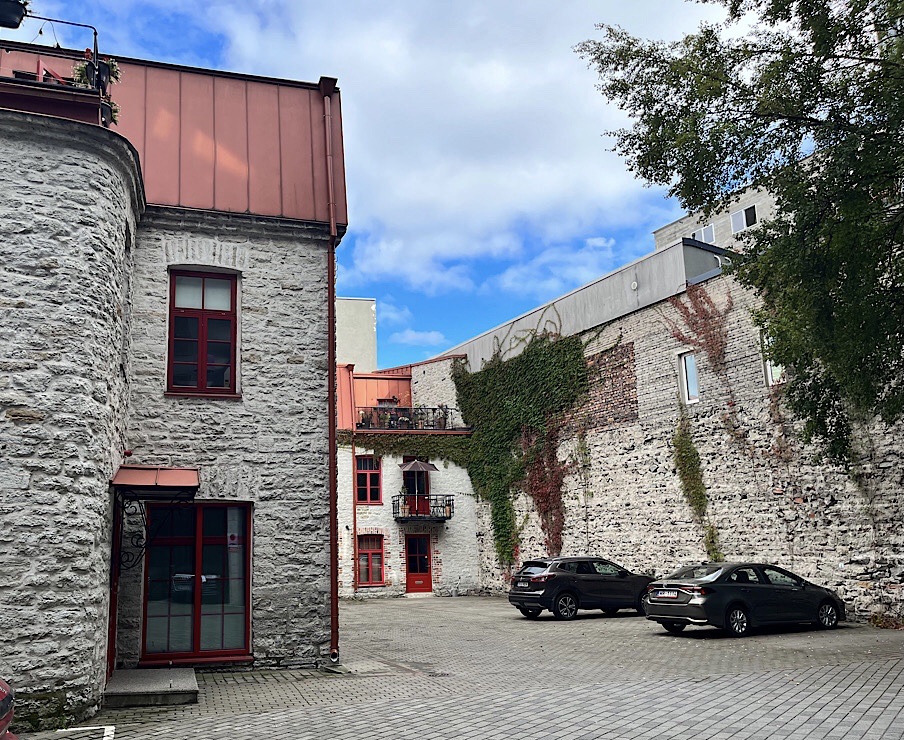
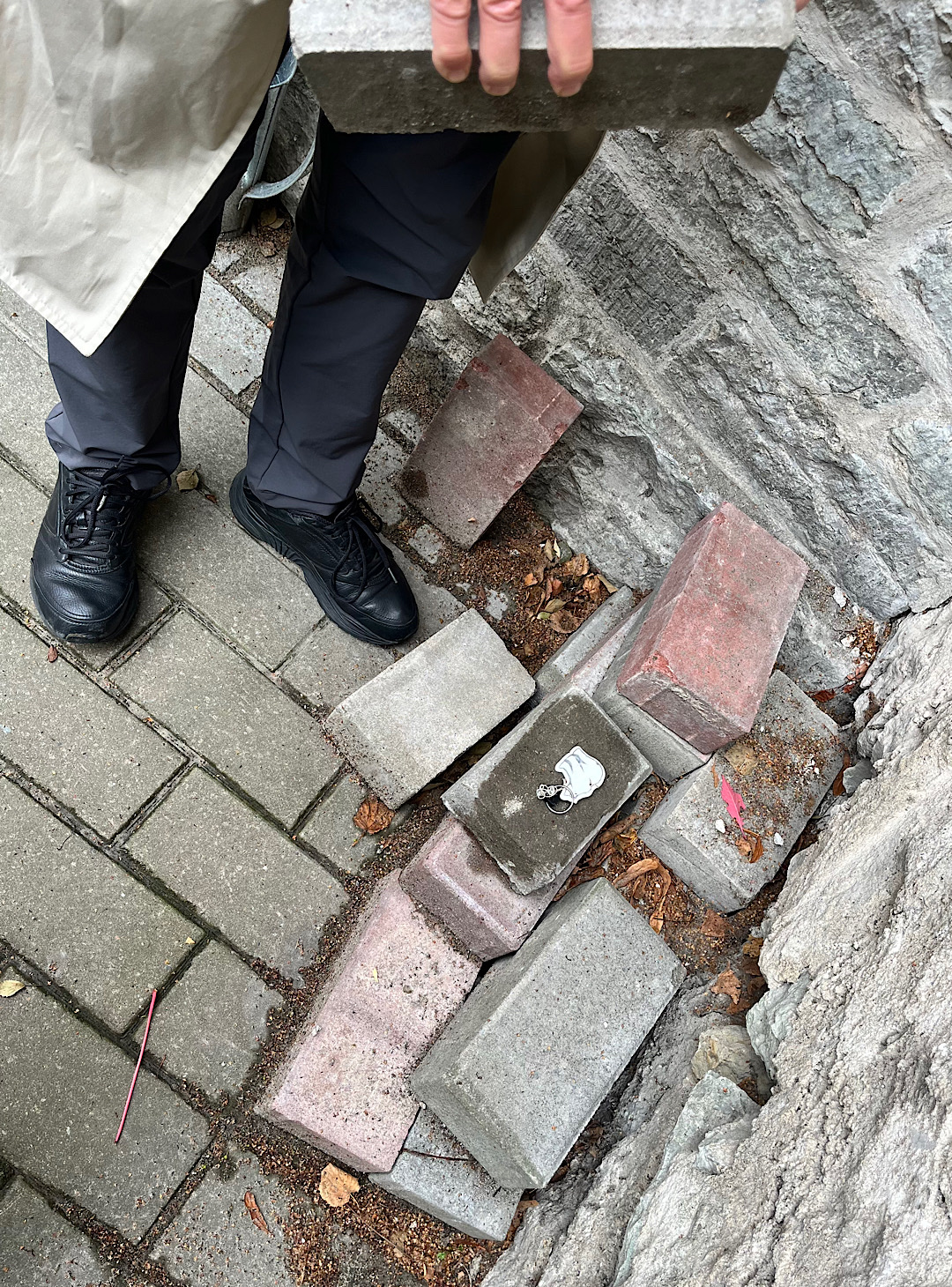
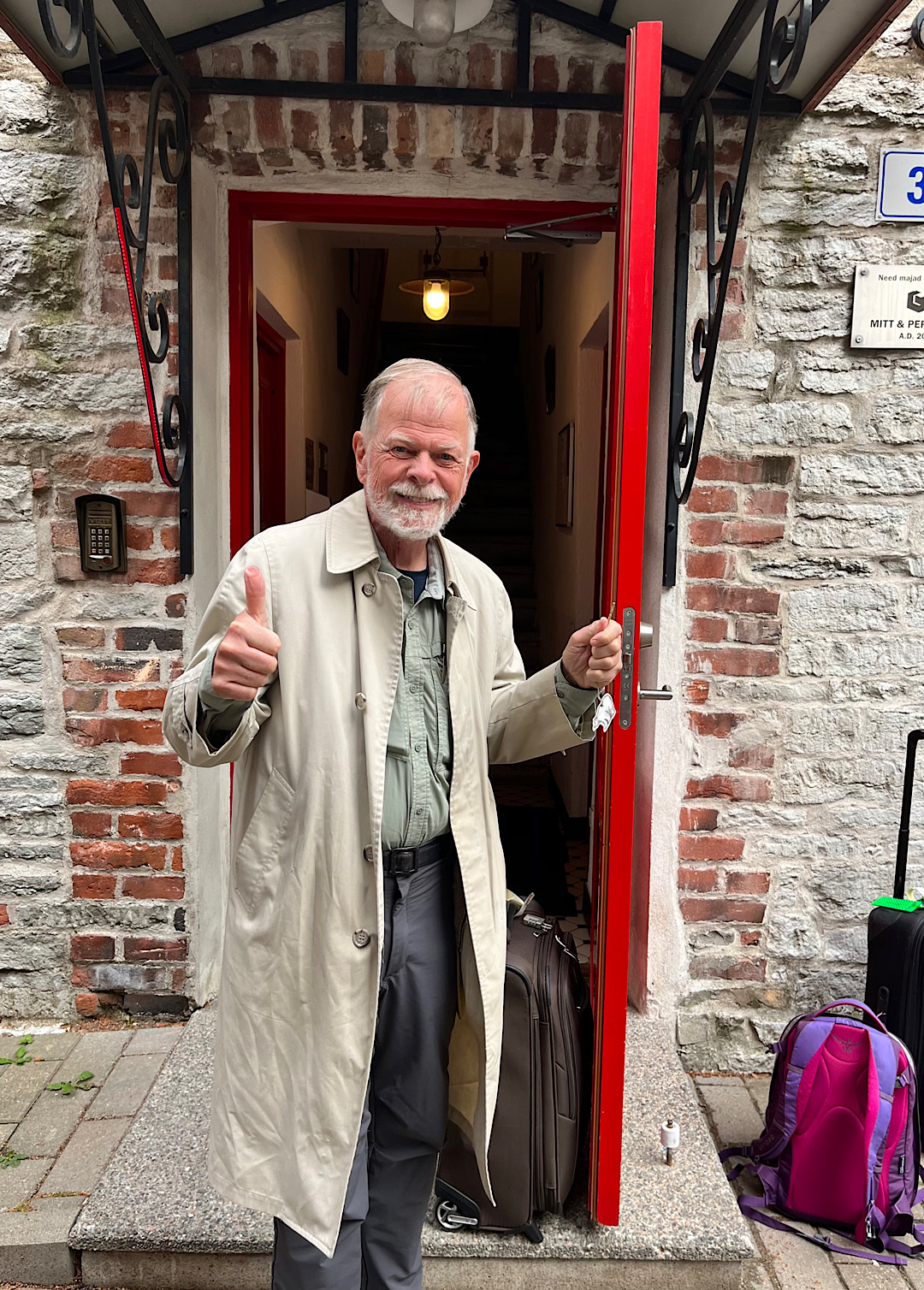
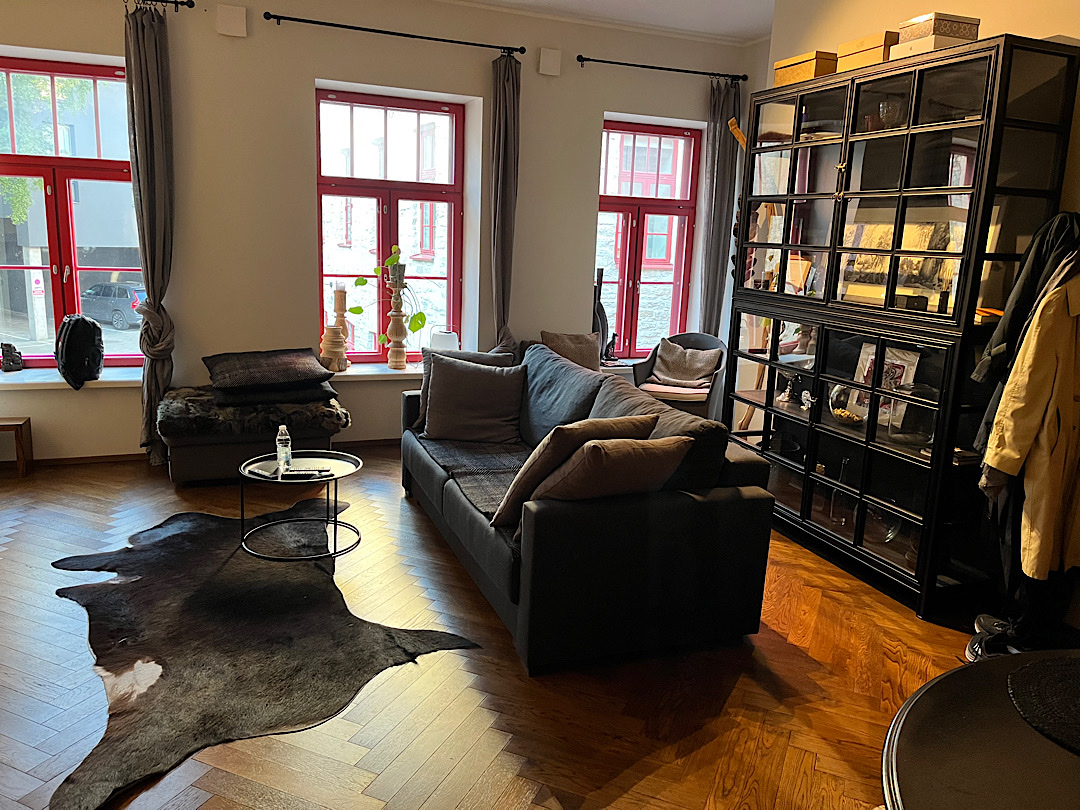
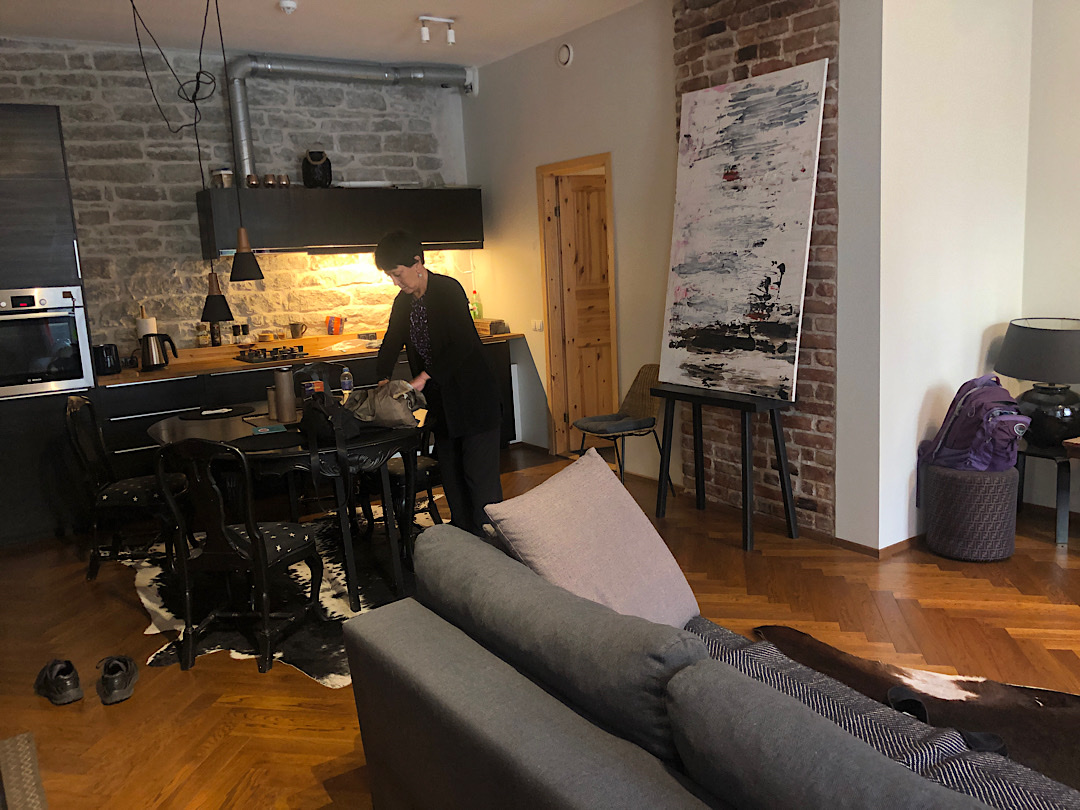
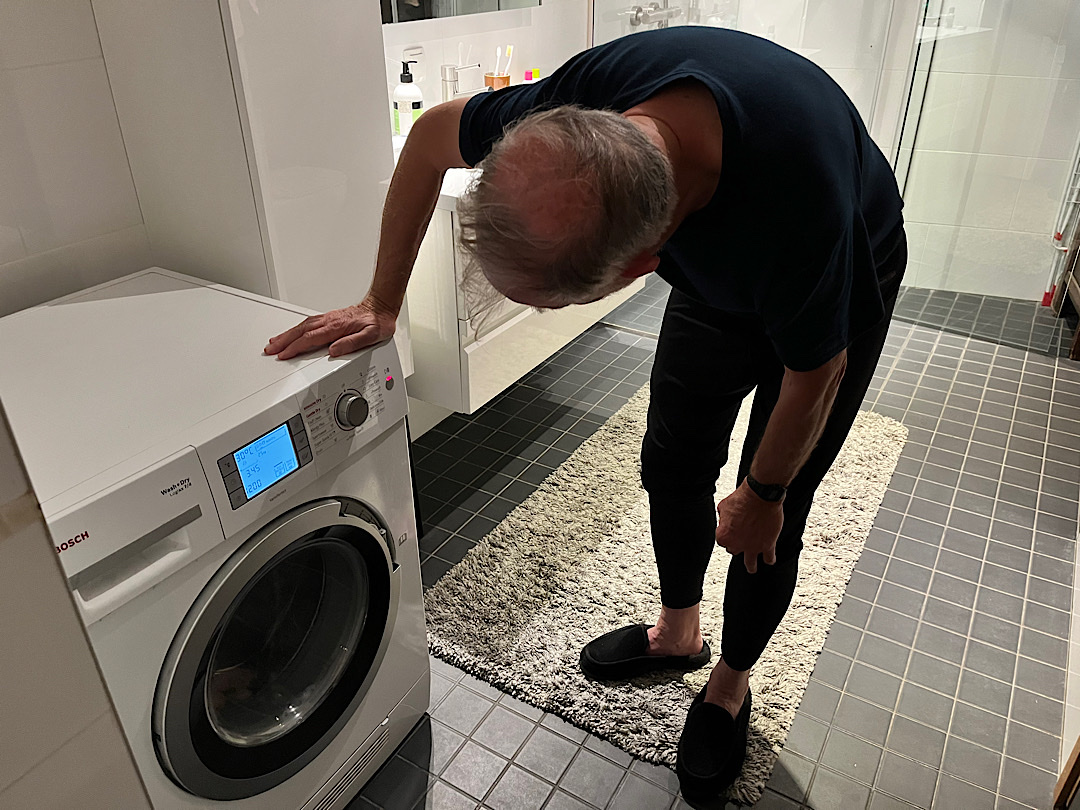
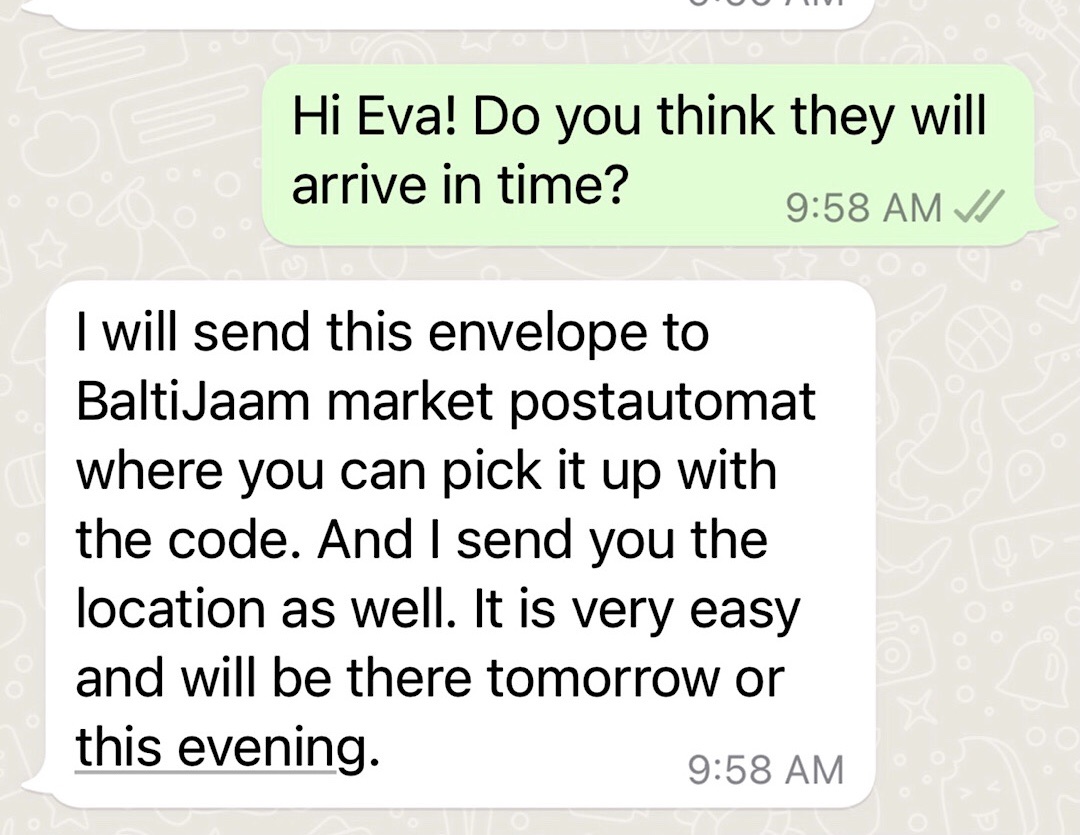
 When Lina finally texted me the six-digit code, I keyed it into the screen and one of the little doors popped open. Voila! There was the envelope containing the house key.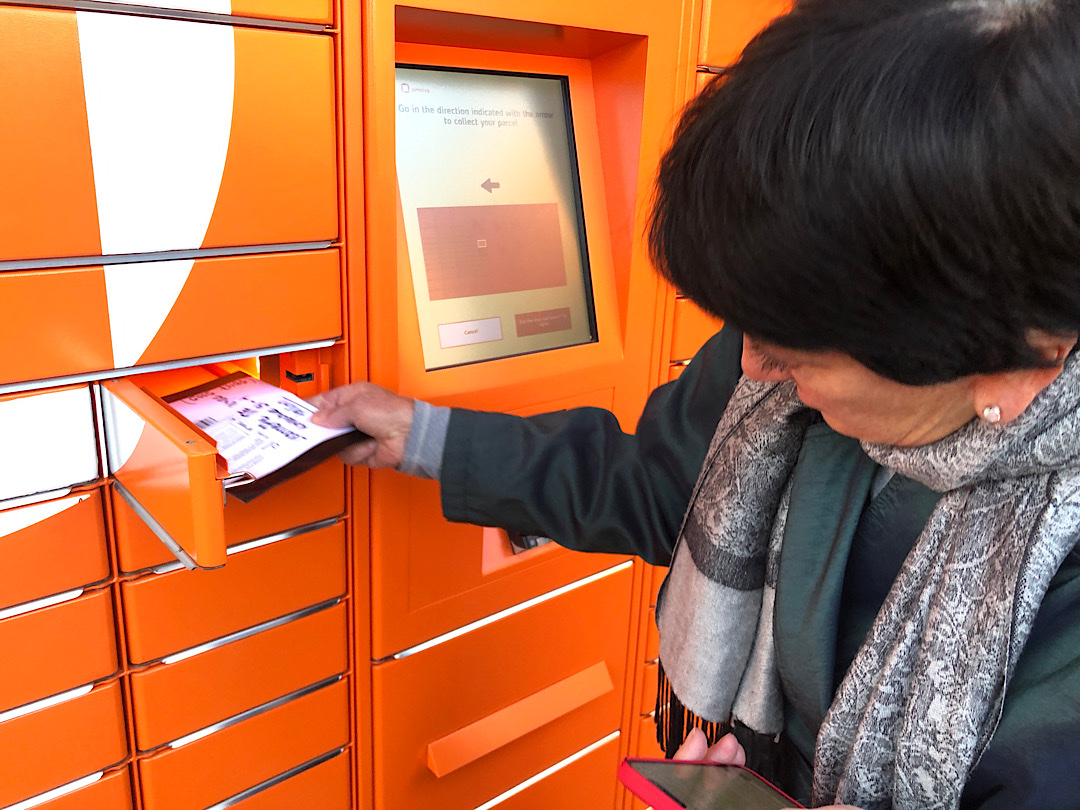
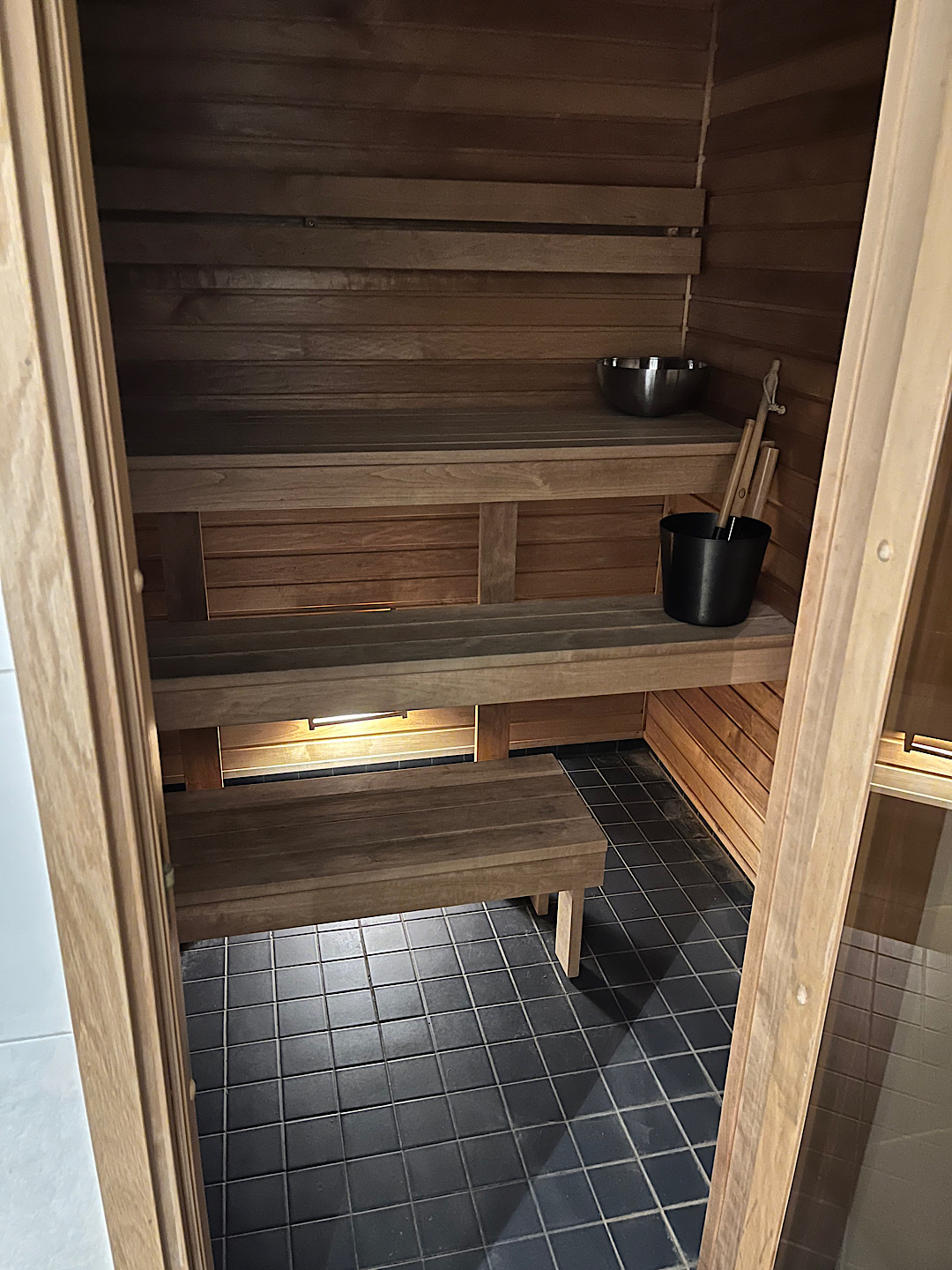 Lina’s scanty home instructions said it could be warmed up in 45 minutes. I had every intention of using it until Miina (our private guide on Tuesday) said the newspapers were reporting that heating up a home sauna just once would cost 50 euros (due to the sky-high cost of electricity.) I felt so kindly toward Lina by then that I resisted cranking up her sauna.

 At home and abroad