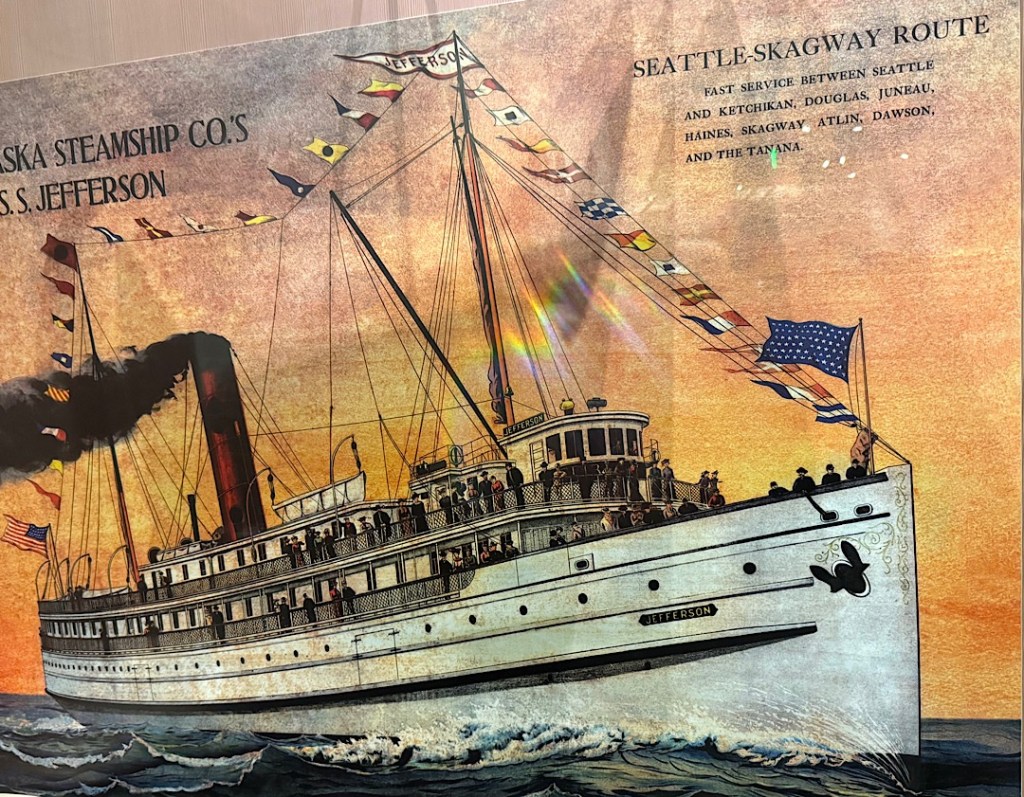
Almost 45 years ago, I rode a train I will never forget. Steve and I boarded it at night in London and settled into a sleeping car that was hauled to somewhere on the British coast. I remember waking up to a lot of clanging and banging as our car was uncoupled from the British engine and loaded on the vessel that would carry it across the English Channel. On the other side, the French hooked it up to another engine that pulled us all the way to Paris, where we disembarked. Although once an emblem of the glory days of rail, the “boat train” was being discontinued; I no longer remember how we managed to get tickets on its final run. But I’ve thought of it as we’ve ridden on an Alaskan ferry these last two and a half days.
No plans have been announced to end the the 62-year-old Alaska Marine Highway System — yet. But I had to wonder how much longer it will survive. Annual ridership reportedly has declined from 400,000 passengers (in the early ‘90s) to 185,000 (last year). The fleet has shrunk from 11 vessels to just 7, and many are rusting their way toward unseaworthiness. The state struggles to staff them and at times has had to cancel scheduled sailings for lack of officers and crew. The routes that do manage to operate are complex, and the boats don’t run often. I first became aware of all this when I was planning our trip six months ago. Trying to figure out a way to use the ferries to get where I wanted to go (and when) was one of the biggest touristic challenges I’ve tackled.
Alaskan politicians have been squabbling over funding for the system for ages. Some folks have argued the ferries should pay for more of their costs, while others retort that roads aren’t expected to do that (mostly). Yet the ferries do fill the role of roads here, sometimes the only connection to the outside world (besides planes or small water craft) for many communities.
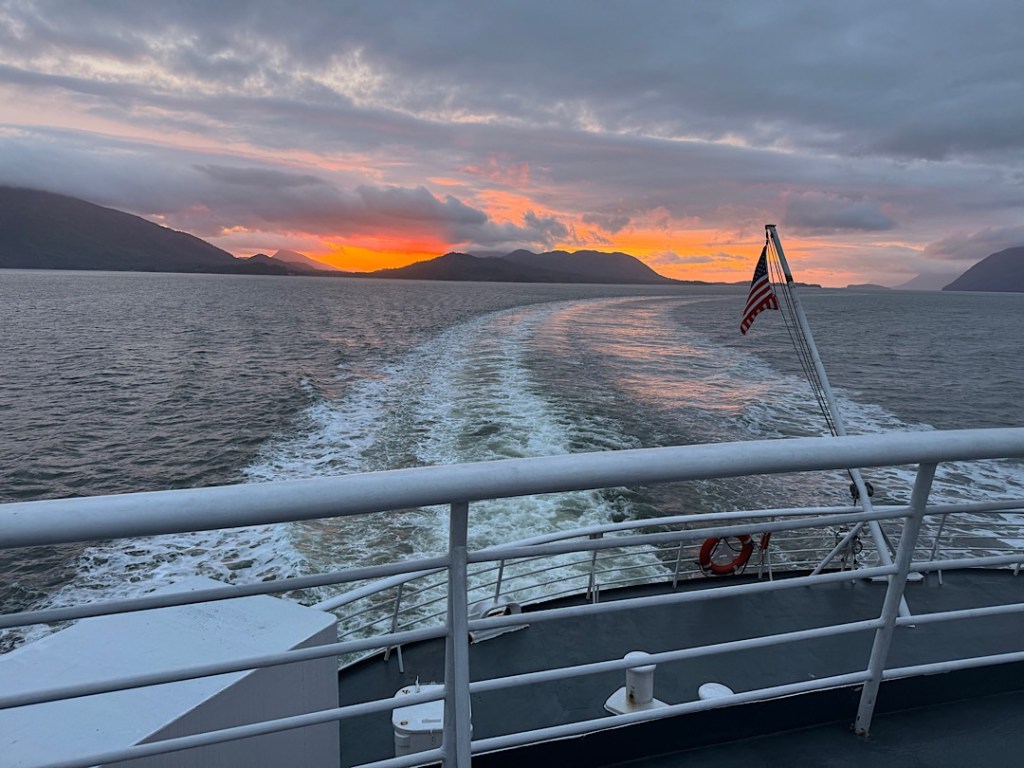
I’m not sure what could or should save the ferries. But I can — now — say IF Alaska’s ferries disappear I’ll be sad. Steve and I rode for 5 hours on the MV Hubbard from Juneau to Gustavus, then we wrapped up our Alaska adventure by spending almost 60 hours on the MV Columbia as it bore us almost 1000 miles from Sitka to Bellingham in Washington. Both rides were extraordinarily soothing.
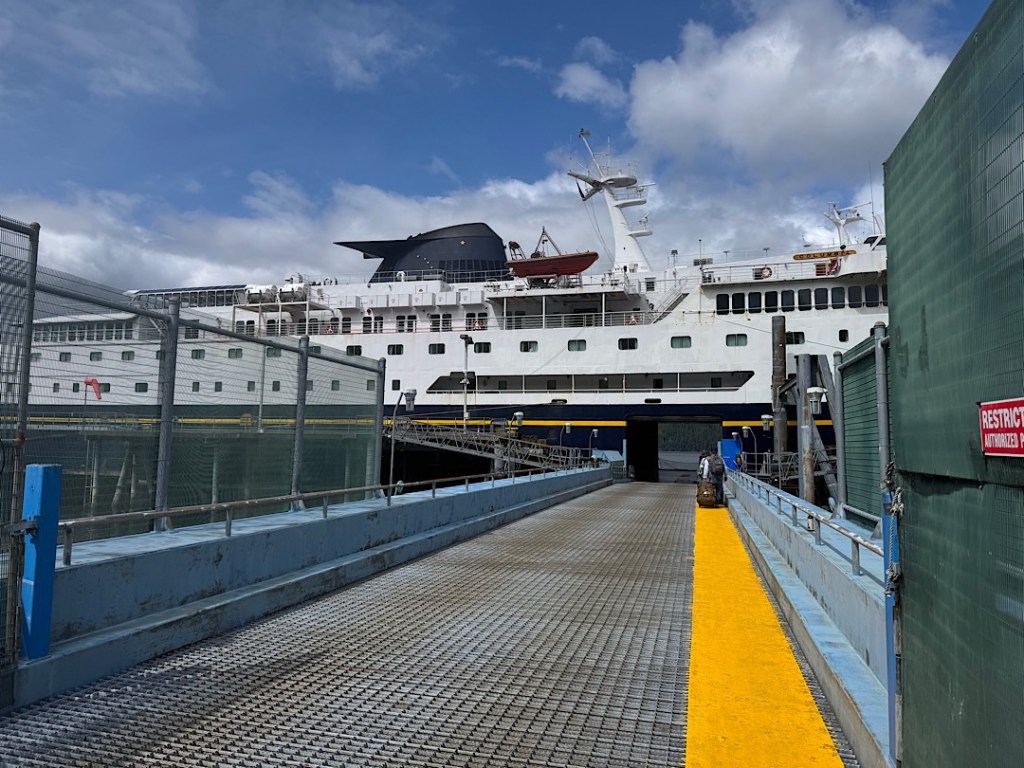
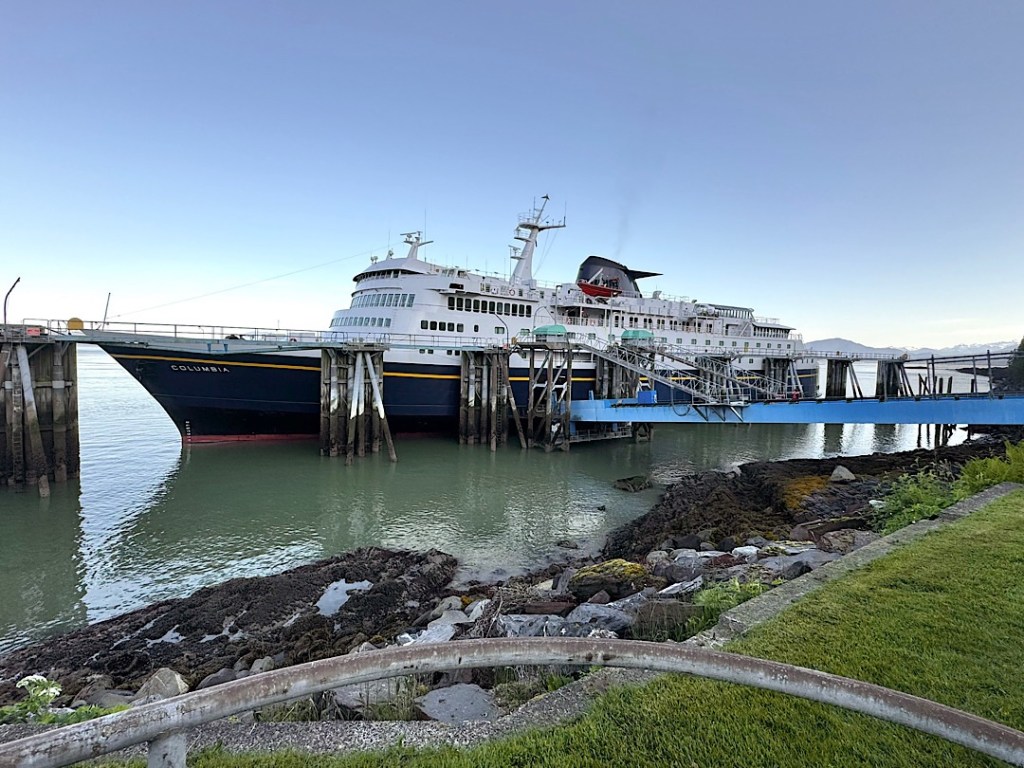
We’d booked one of the Columbia’s 75 cabins, a plain, utilitarian space containing two sets of bunk beds and a private bathroom. Roomier than any train compartment, the lighting was decent, augmented by a big window. I slept well in my lower berth.

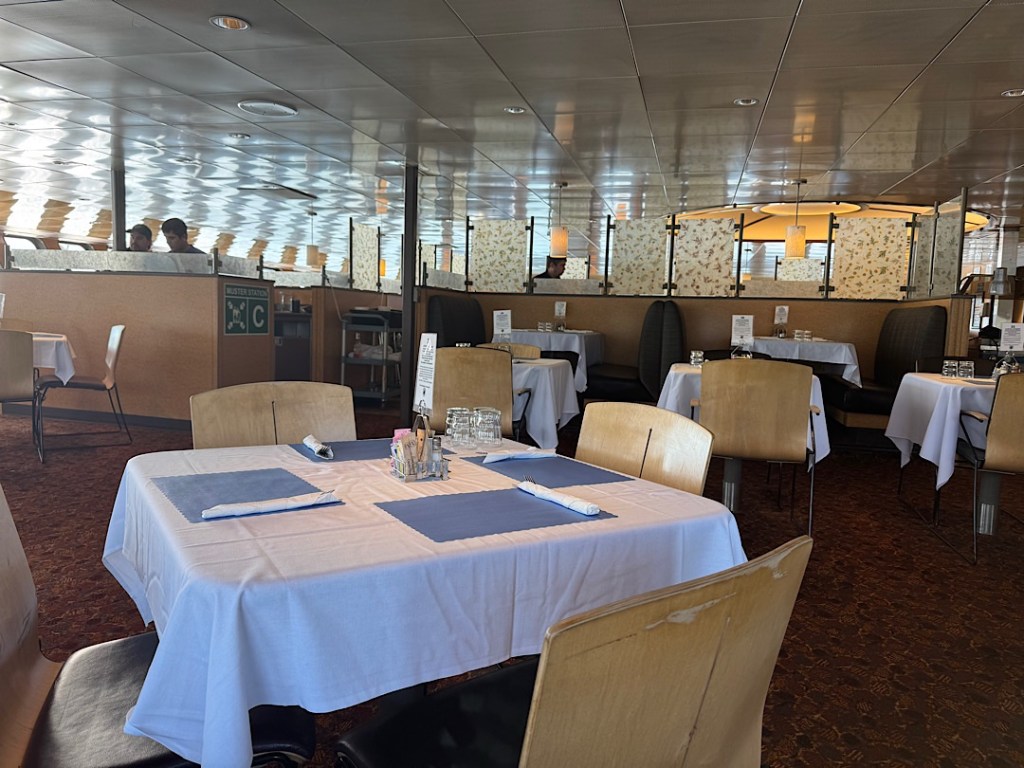
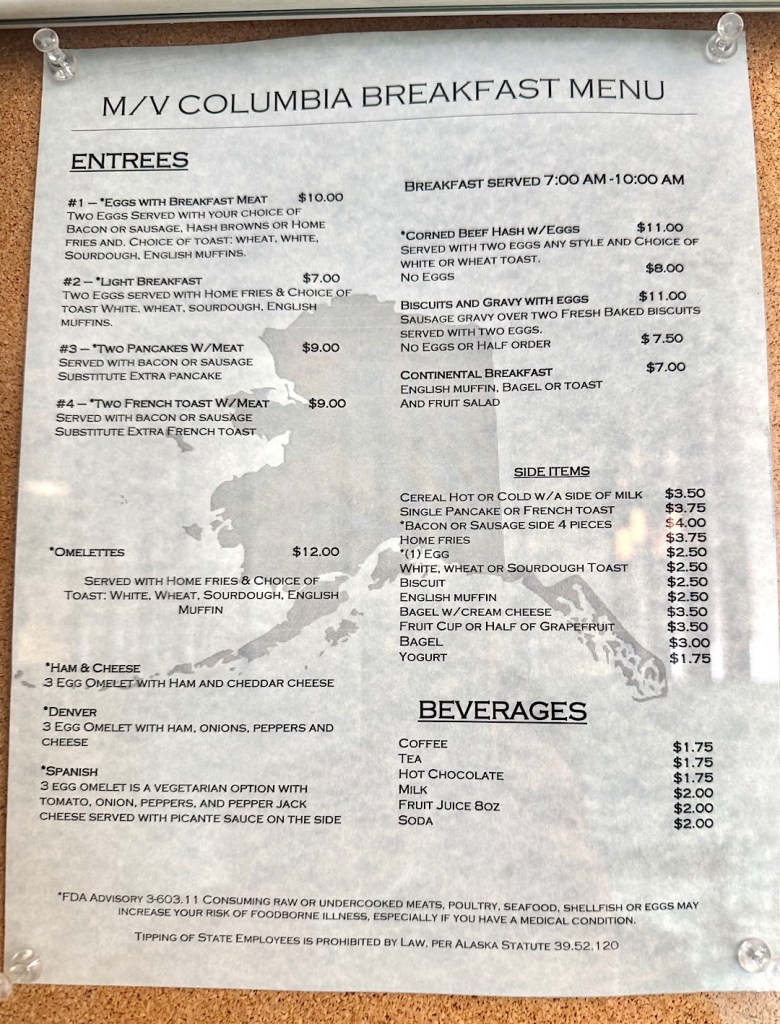
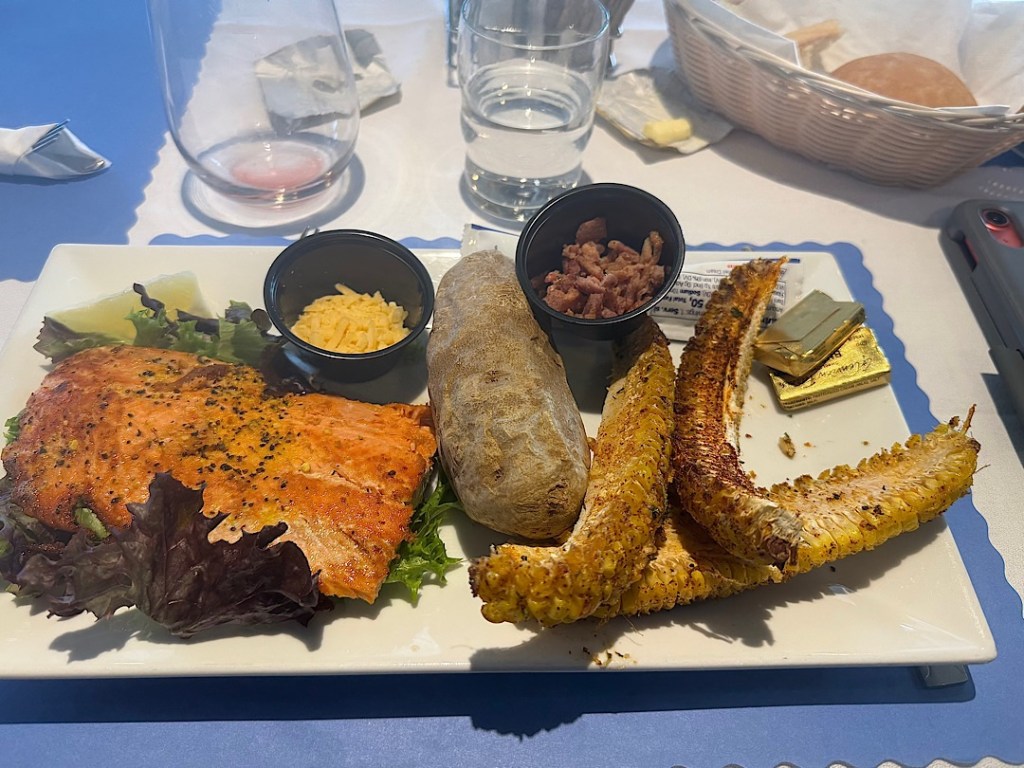
In the ship’s pretty, old-fashioned dining room, uniformed waiters served breakfast and dinner daily, and the prices were startling — roughly half what we’d seen anywhere else in Alaska.
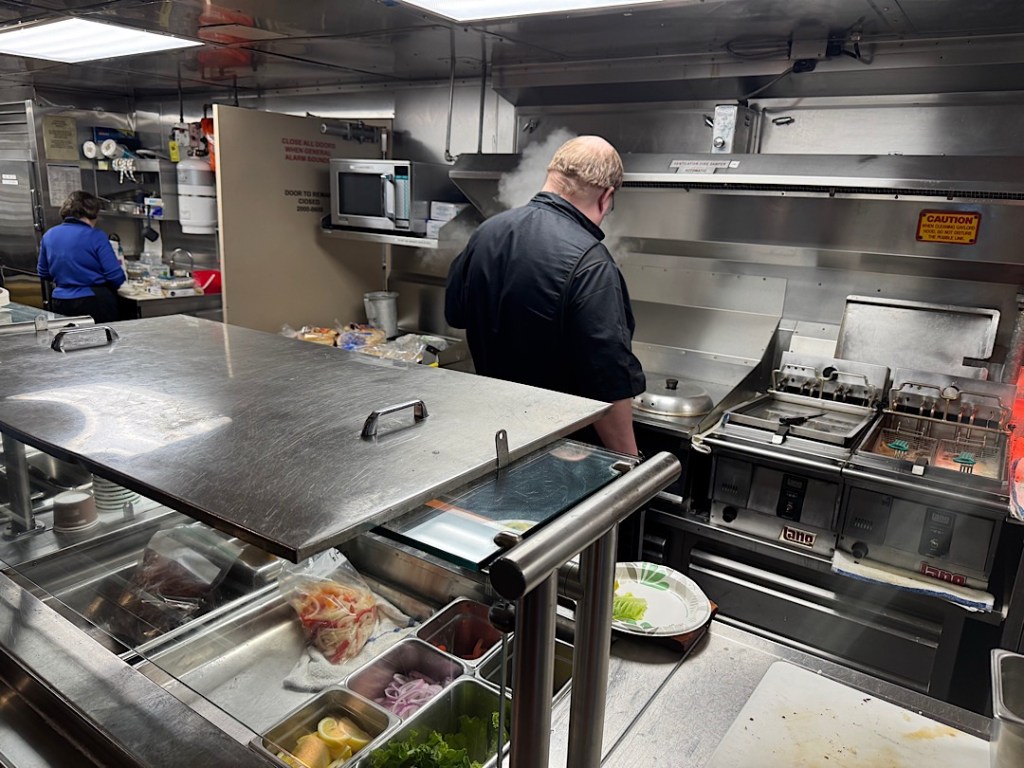
A more informal snack bar provided basic options: grab-and-go sandwiches; fish and chips and burgers served up by a burly old-school fry cook.
Budget travelers could also save money by forgoing a cabin and sleeping in a tent outside. Or you could put your sleeping bag on one of the Solarium’s lounge chairs where overhead heaters tempered the cold.

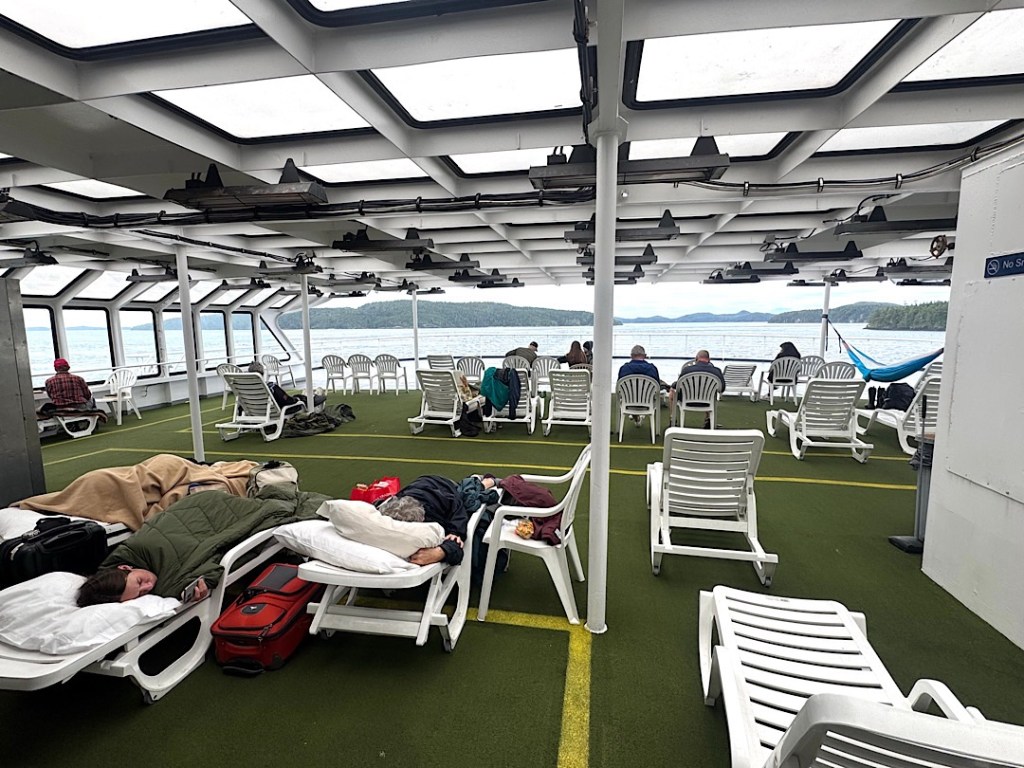

I learned we were sharing the boat with 170 other passengers, only a third of the Columbia’s capacity. It does fill up occasionally, the purser told me. “But,” she grimaced, “that gets ugly.”
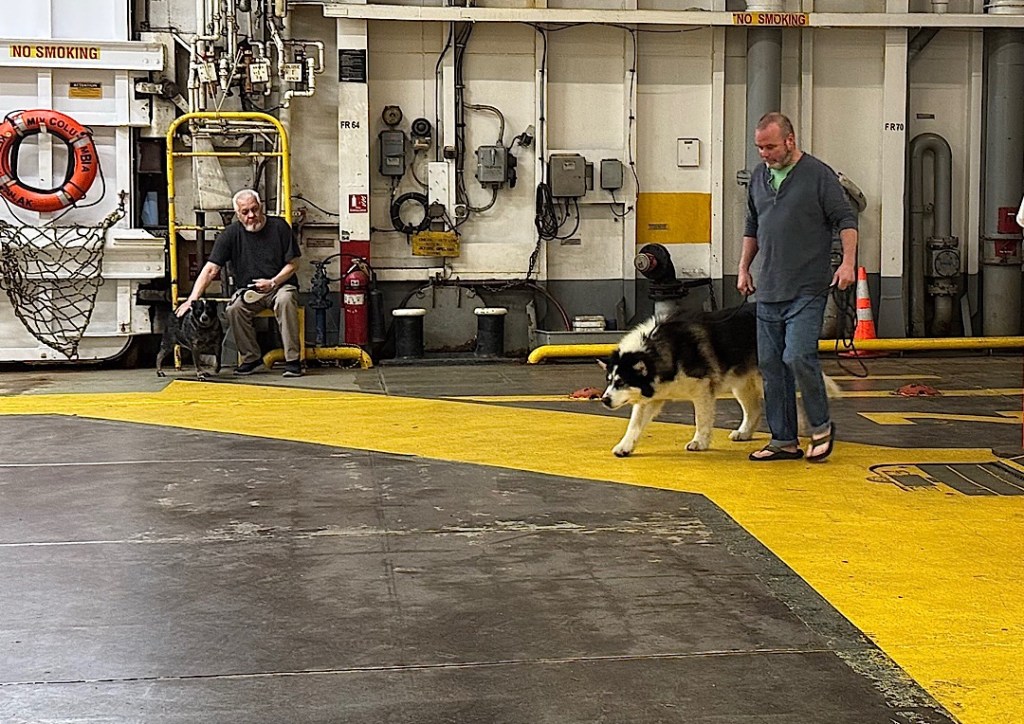
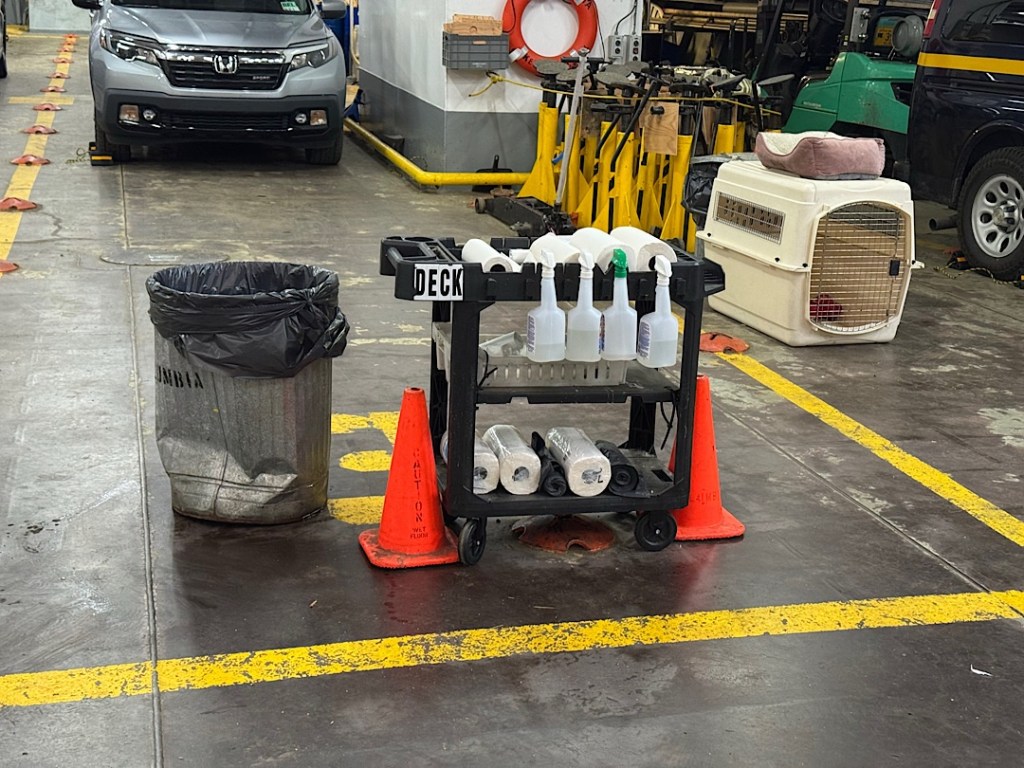
Other quirks enlivened the ride. At regular intervals, announcements informed us the car deck would be opening soon, so if you’d brought your dog and stowed it in your car or kennel, you could descend to walk (and clean up) after it for 20 minutes.
Between Deck 7’s forward lounge and the snack car, we found a bar that at first glance looked grand, filled with lights and mirrors; a real piano; a giant chess set. But the bartender only stocked canned cocktails, five-ounce bottles of bad wine, and beer. Behind her, a sign cautioned she could only sell each patron one drink per hour. Other onboard signs prohibited tipping.
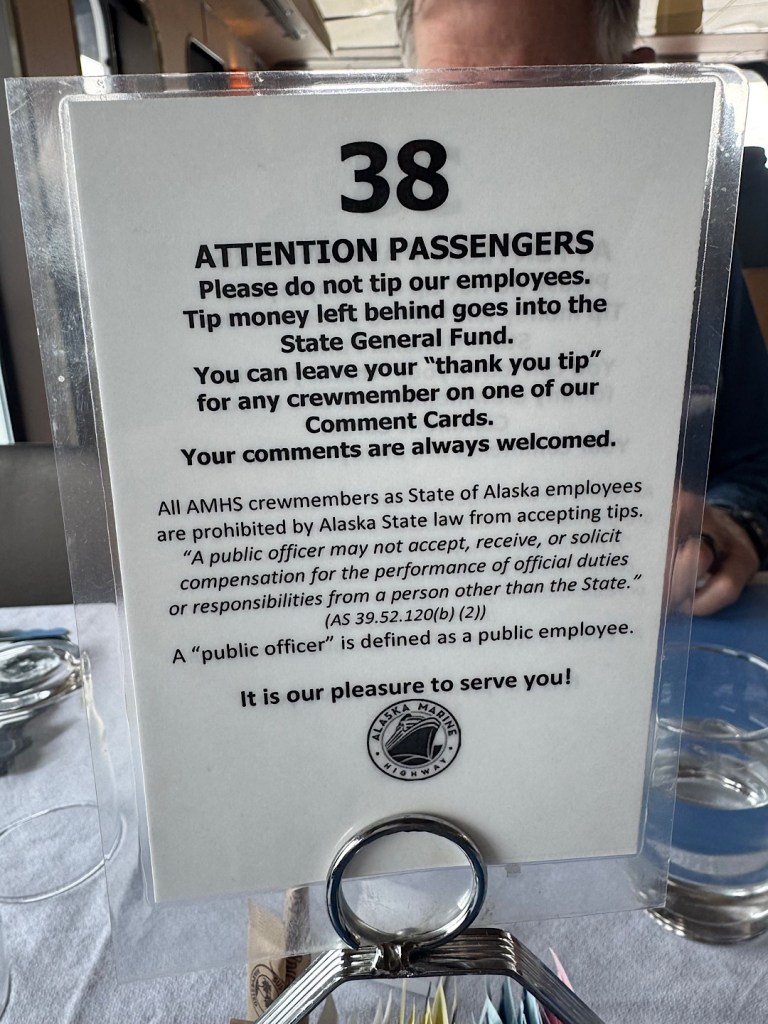
Despite that, the large restaurant staff somehow exuded good spirits.They botched our orders and made mistakes on the checks. But they couldn’t have been more friendly or hospitable.
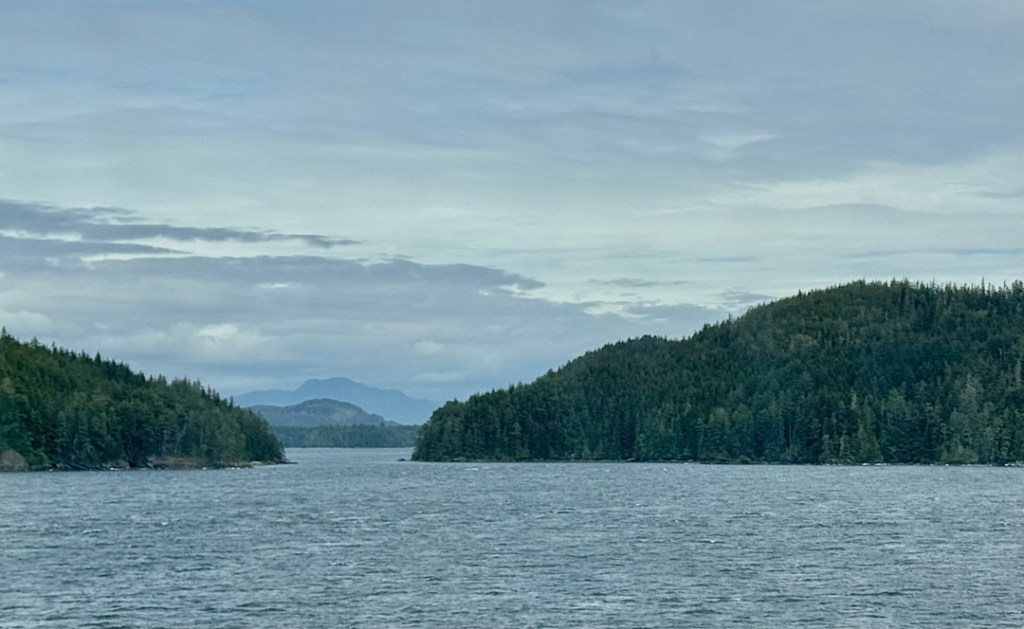
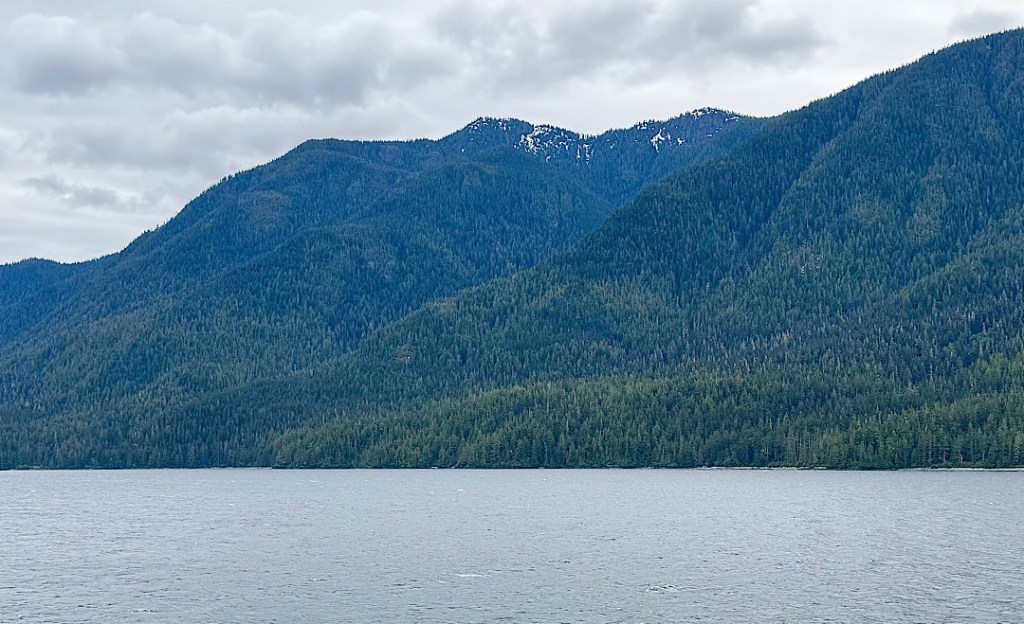
Most important: we tied up in Bellingham minutes before 8 am Friday, just as scheduled. If the occasional swells made anyone seasick, I wasn’t aware of it. I enjoyed hour after hour of views of the Inside Passage, a waterway that had intrigued me as long as I can remember. In my mind, it’s real now, a gift no flyover can bestow. If the Alaska ferries cease to exist, this ride will rank right up there with the boat train.






 At home and abroad