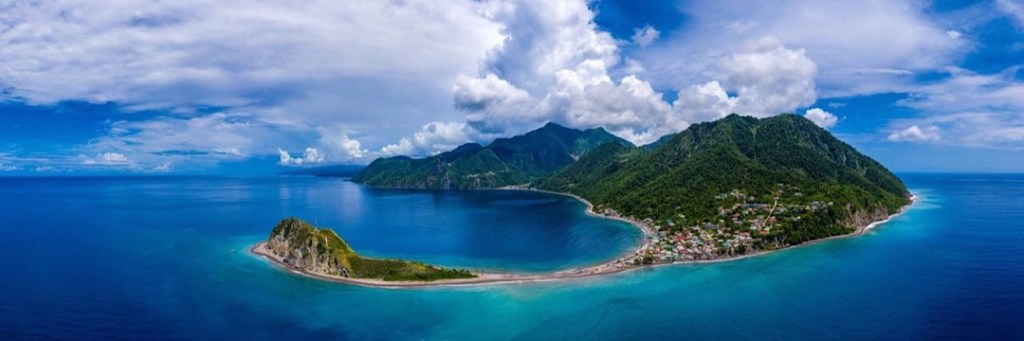
The missing iPad and the missing blog post

I have given up on ever recovering from Arajet the iPad I left on my flight from Santo Domingo to Kingston, Jamaica. A few days ago, I bought a new iPad and electronically erased the old one. Then miraculously, when I checked the Pages app on my new device, I found most of the blog post I had drafted about our travels in the Dominican Republic!

Don’t ask me how this happened. I don’t know why I couldn’t see that draft in iCloud until after I had acquired the new Pad. I just want to put it all behind me — except for the lesson of NEVER slipping another iPad in any airplane seatback pocket ever again.

In the sake of completeness, however, here’s that post, belatedly.

**********

“Hey, Columbus thought he was sailing to Asia. Sometimes you don’t always get to where you think you’re going.” Steve reminded me of this as we stood (Sunday, June 2) in the soggy ruins of San Francisco Monastery in the old colonial heart of Santo Domingo (capital of the Dominican Republic). Months ago, when I started planning our travels in the Caribbean, I had read about the free concerts given there every Sunday night by a beloved local ensemble, Grupo Bonyé. I’d seen photos and videos of the boisterous crowds dancing to merengue and bachata; I’d absorbed the advice of one blogger who declared, “If you’re visiting Santo Domingo, schedule your trip around being there on a Sunday just to attend this free, open-air concert.” 

So I did. I set up all the dominoes to put us in this spot on a Sunday evening. Now it was raining. We saw the stage where plastic sheets covered musical gear that had been set up. But no musicians; no fans. Just some stagehands who were starting to reload it all into a truck.
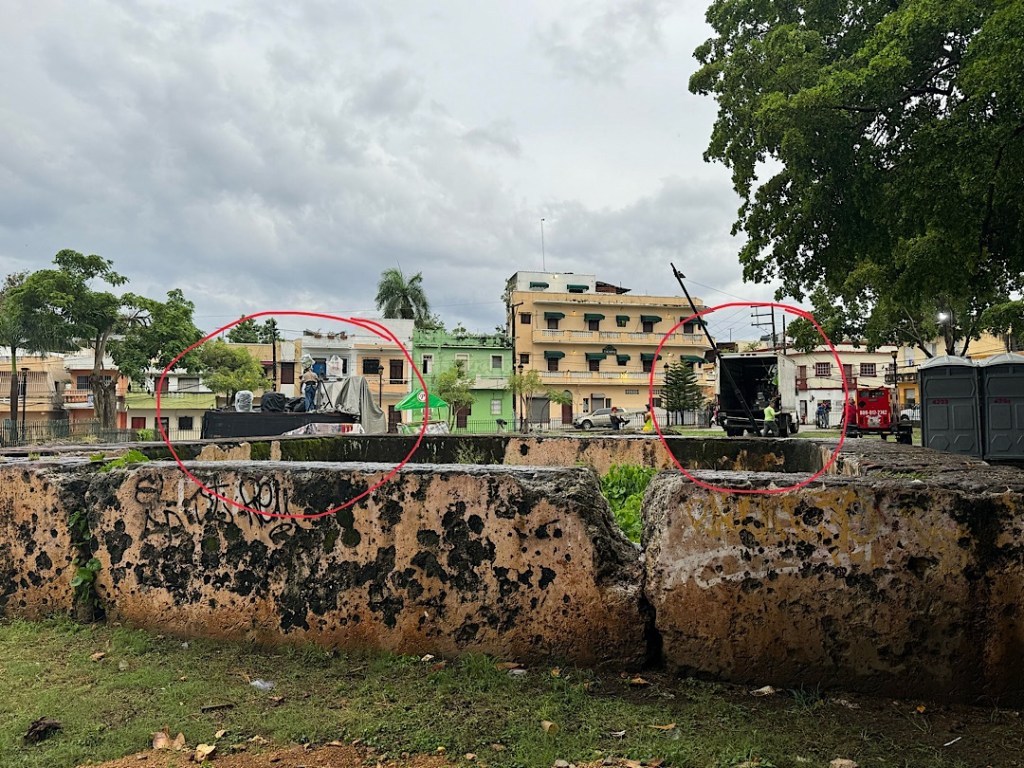
That’s the would-be stage on the left and the truck on the right.

I felt disappointed — not the only time I would feel that way during our 9-day visit to the country that shares the island of Hispaniola with Haiti. Like Columbus, I couldn’t complain, though. Unexpected pleasures compensated for the downsides.

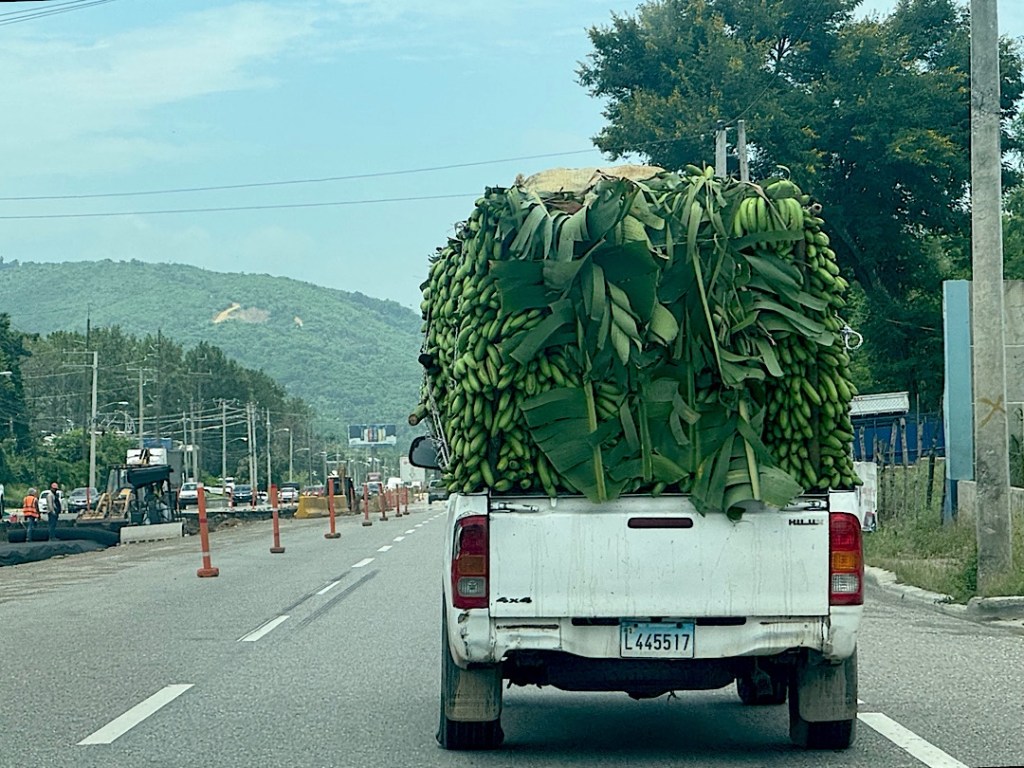
The worst nightmare was the way people drive. Compared with the little islands where Steve and I started our Caribbean travels, the DR is not just way bigger but much more prosperous. For more than 50 years, it’s grown on average faster than any other country in Latin America. This had led me to expect better roads and drivers. Instead I learned the Dominican Republic ranks as the deadliest country in the world in terms of road deaths – almost 65 fatalities per 100,000 people in one recent survey (compared to just under 13 in the US. Or 41 in Zimbabwe, the second deadliest.) I looked up the numbers because we were so appalled by what we saw after picking up our little Suzuki Dzire — drivers routinely ignoring not just stop signs but traffic lights. Speeding and passing and zooming down the wrong side of the road to avoid potholes. No highway on-ramps. Astonishingly overloaded vehicles.
Having the car did enable us to see more of the DR’s many facets. We started by driving to the beautiful, relatively undeveloped Samaná peninsula, which forms the island’s northeast corner. There we stayed for three nights in a charming French-owned B&B.
We spent a day enjoying the beach town of Las Terrenas.
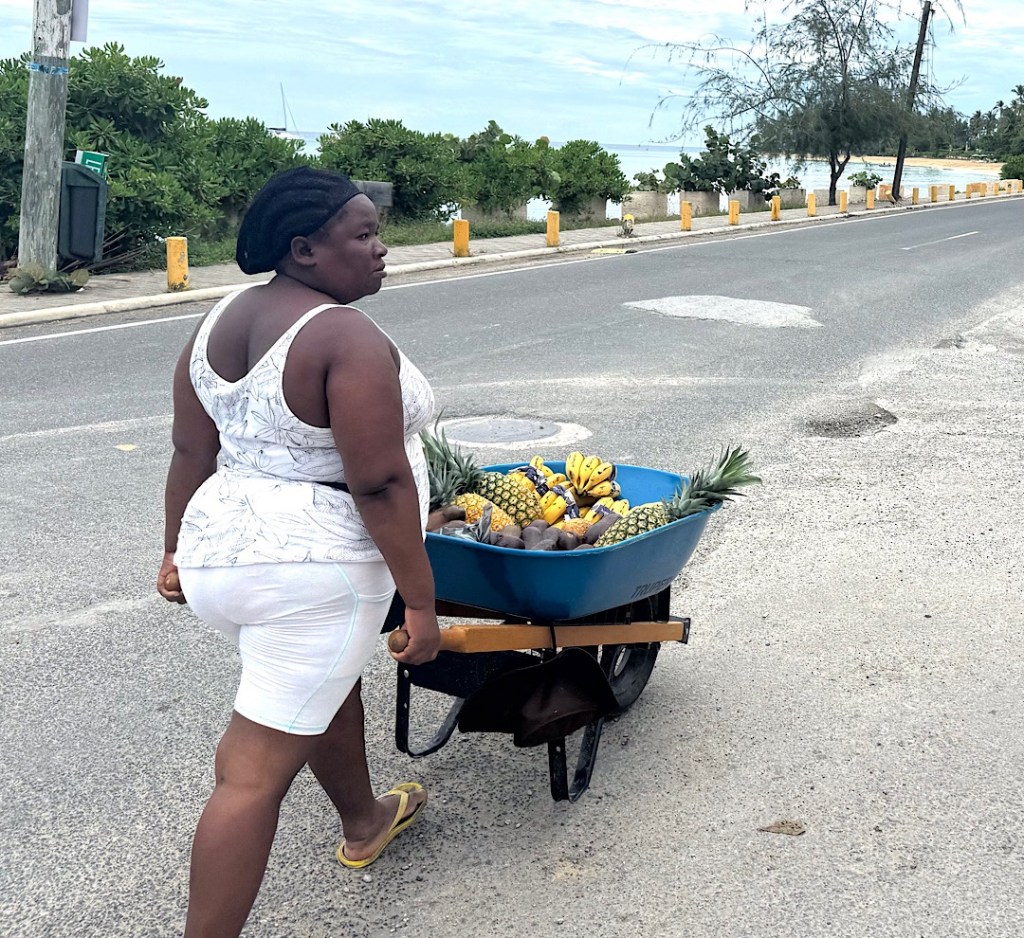
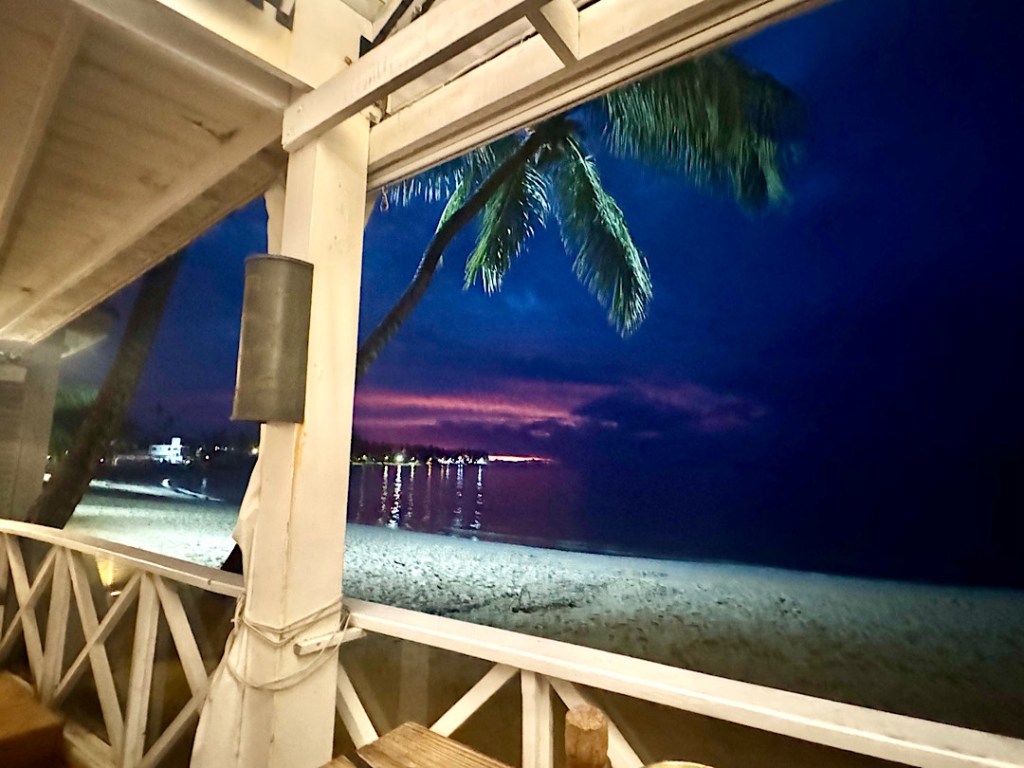
We dined at local restaurants on the sand.

Our second full day we joined a group that was bused to the regional capital and loaded on a catamaran for a day trip to Los Haitises National Park.
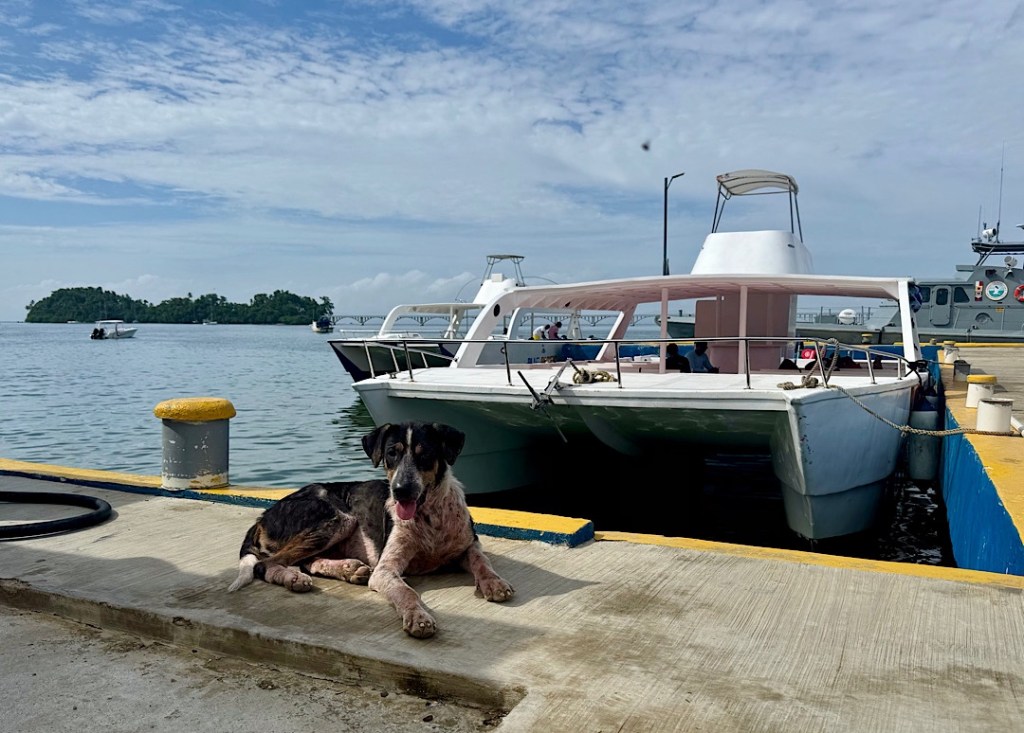
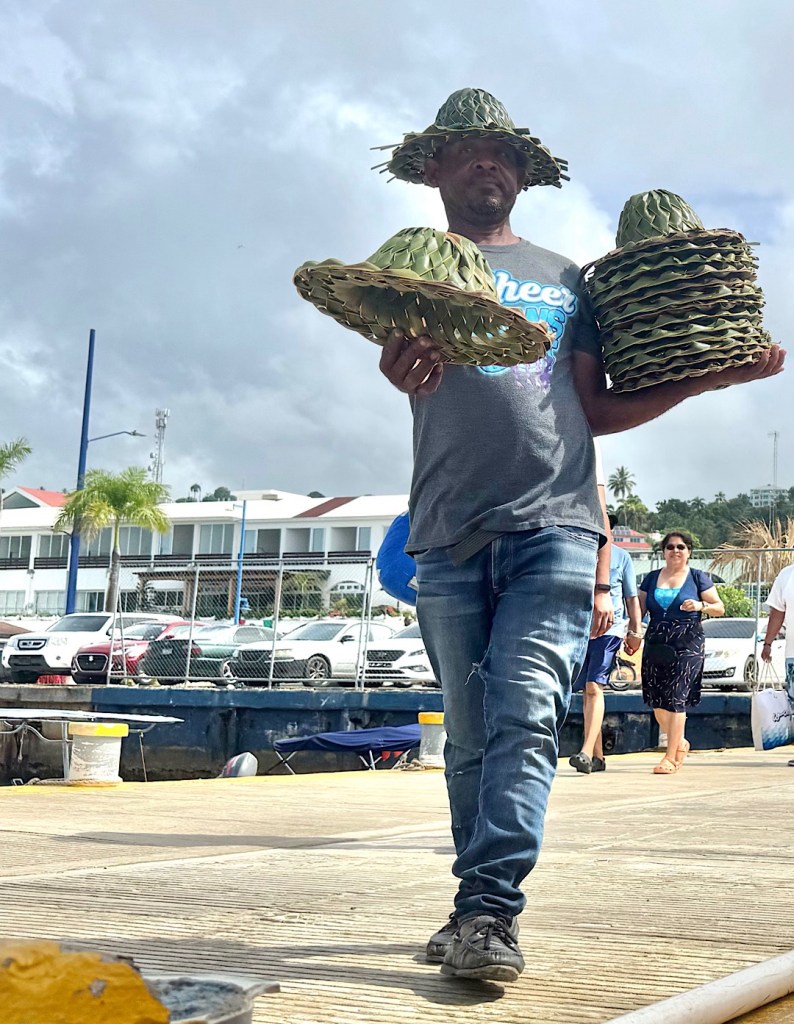
The day was so overcast, I didn’t need a straw hat. But they looked cool.
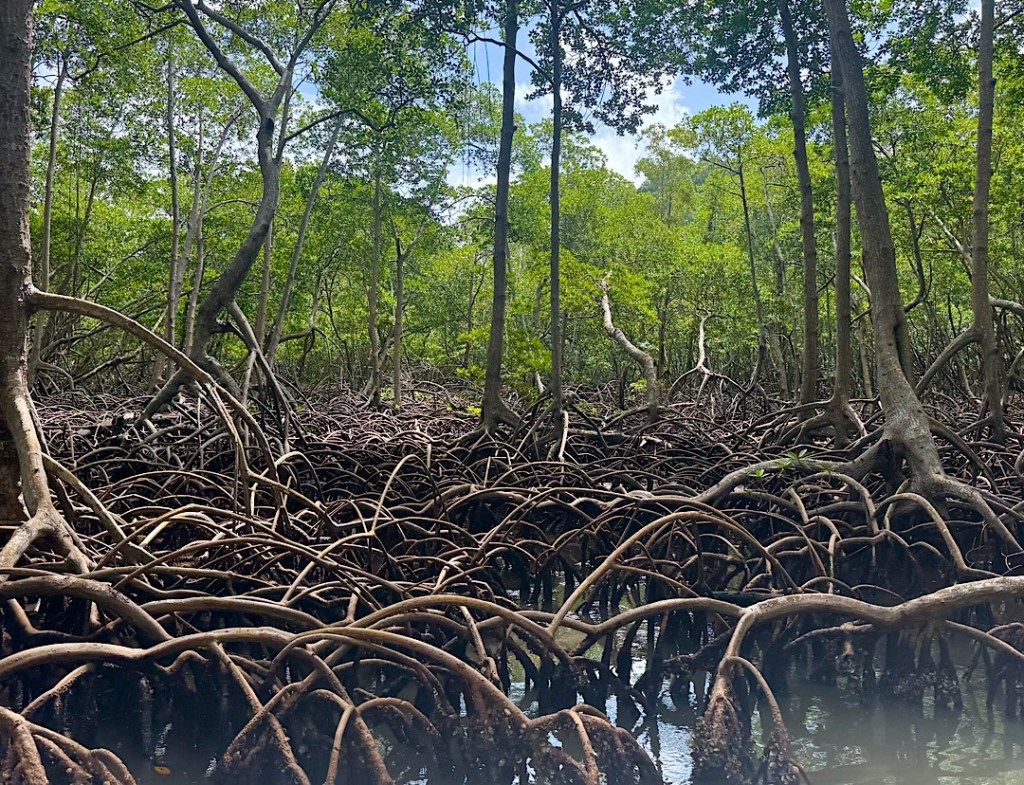
At the park we motored through tall mangrove forest.
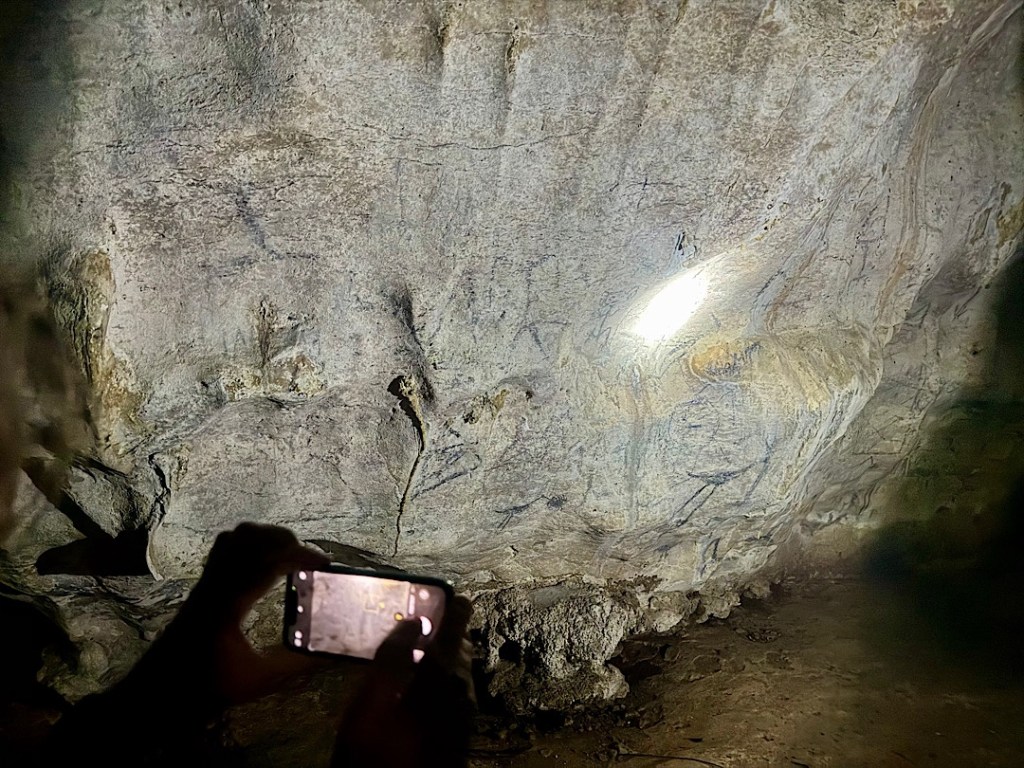
We disembarked and hiked into some of the caves.
Parts are covered with paintings that are 1,600 years old.

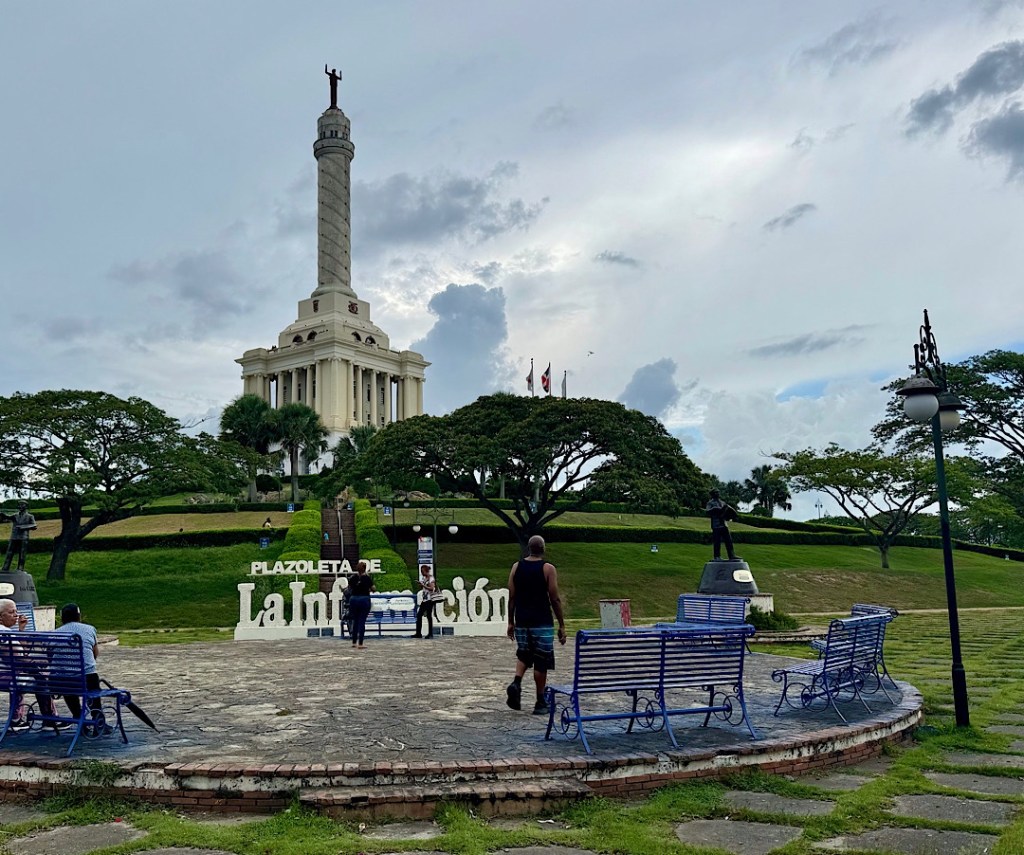
The next day we drove to the second largest city, Santiago de los Caballeros, and climbed the impressive monument that honors Dominican heroes from the country’s insanely complicated history.
The morning after that, on Friday, May 31, we headed for the mountain towns of Jarabacoa and Constanza, where the higher altitudes bring the temperatures down from “hellishly hot” to pleasant.
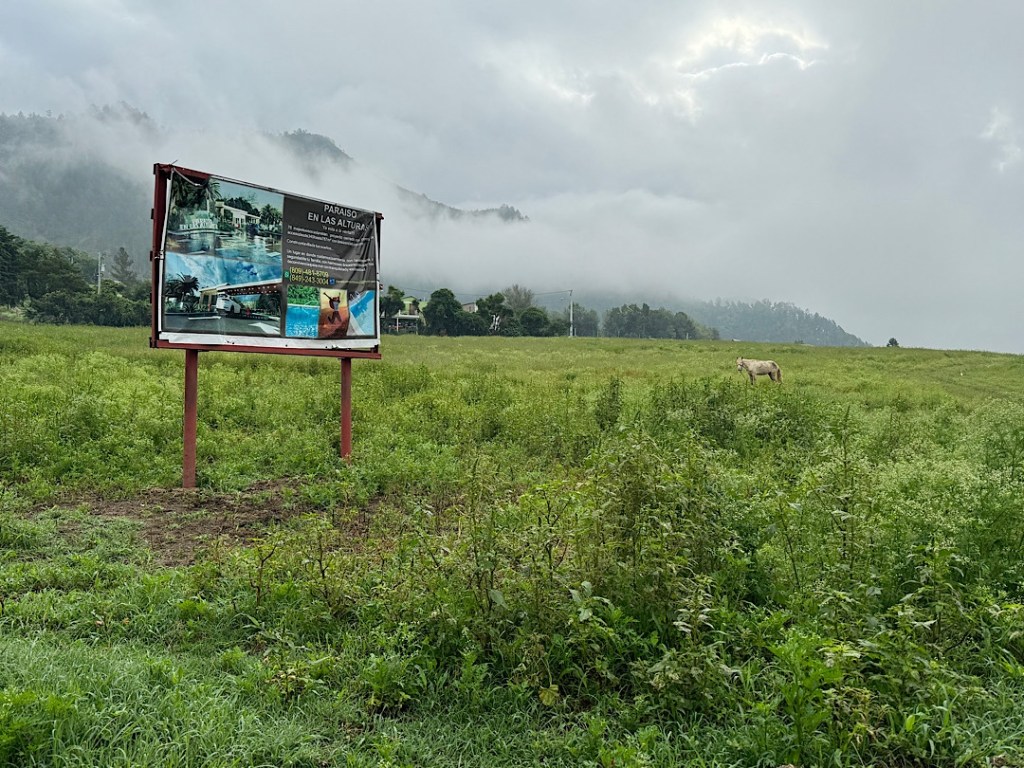
The sign says “High-altitude Paradise is still for sale!”

I’d wanted to do some hiking in the so-called Dominican Alps, so Saturday morning we told our phones we wanted to go to the Parque National Valle Nuevo, and we followed Google Maps’ directions up this road…
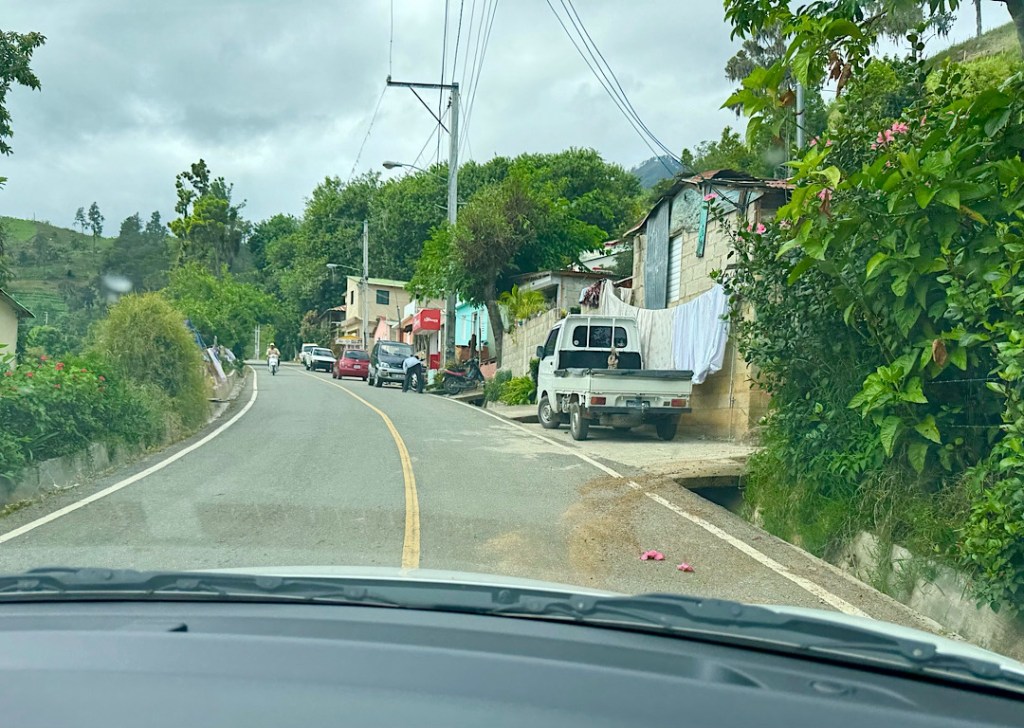
…to a dead end, where we could find no hint of any park of any sort.

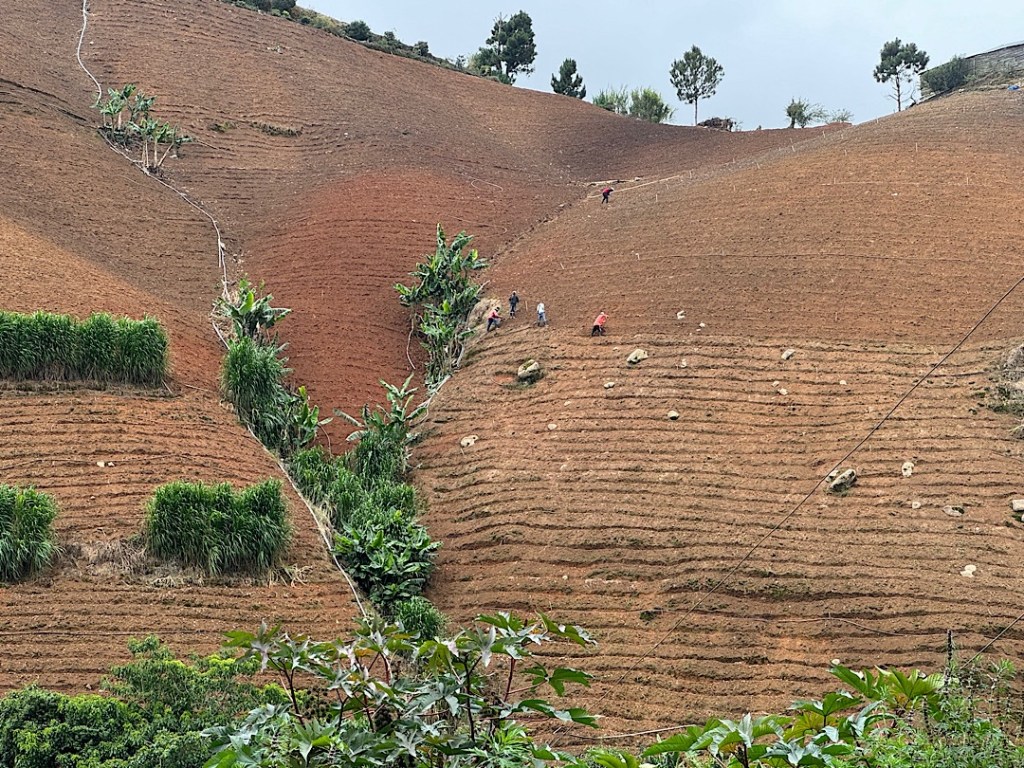
Undeterred, we plotted a new course to a well-recommended waterfall (Salto Aguas Blancas). We failed to reach it too but got close. And the road leading up to it took us through one of the most striking landscapes I’ve seen anywhere.
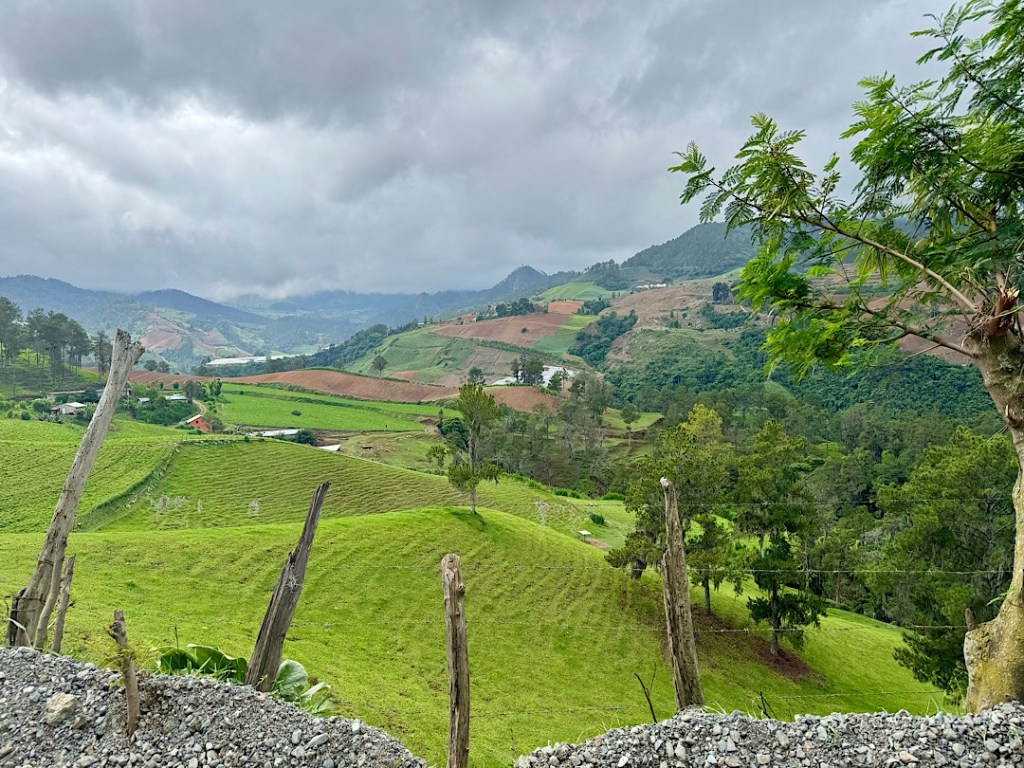
An incredible variety of crops blanketed the hills.
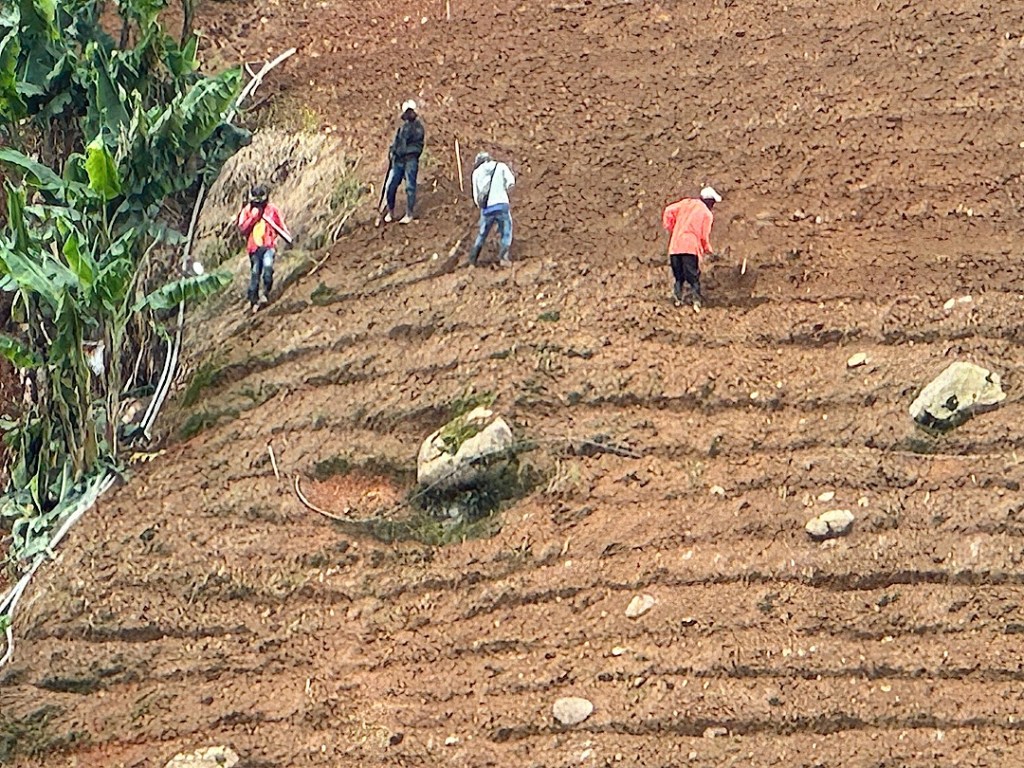
We marveled at the thought of tractors cutting such tidy furrows on the rugged hillsides.
Then we realized, the furrows weren’t being created by machines.
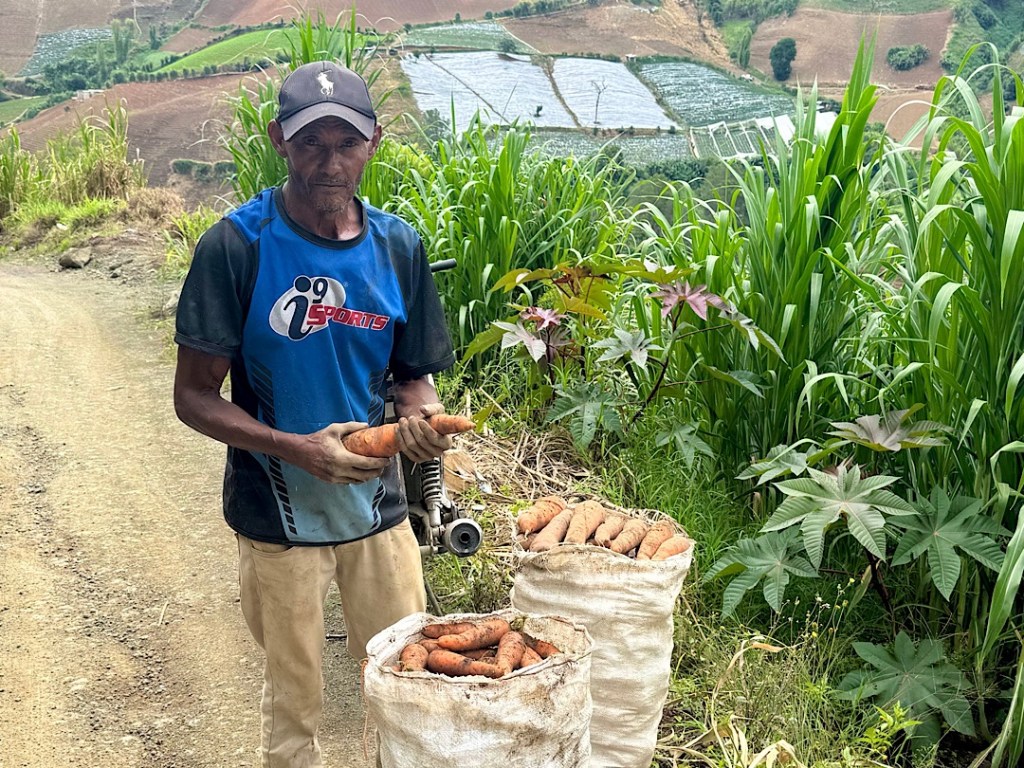
On our hike, we came upon this fellow, harvesting his carrots.

It’s hard to describe how relieved I felt when we reached the airport Saturday afternoon and returned the car without incident. From there an Uber transported us to our 4th home-exchange of the trip, a spotless two-bedroom flat owned by a Parisian couple who apparently use it to escape dreary Northern European winters.
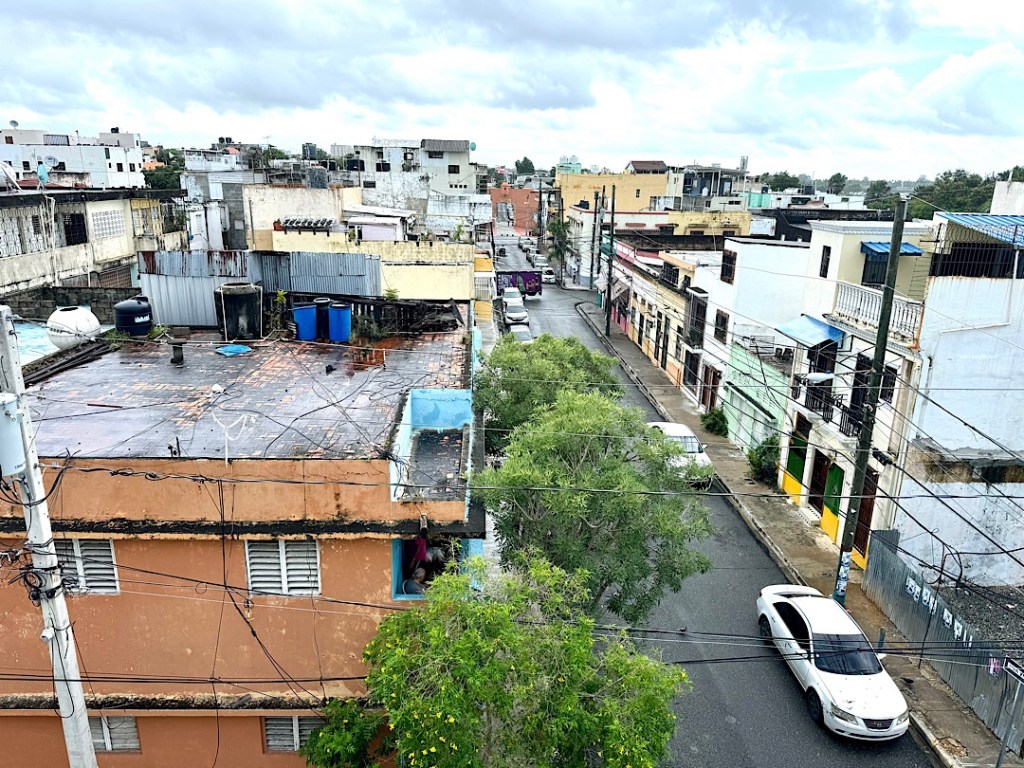
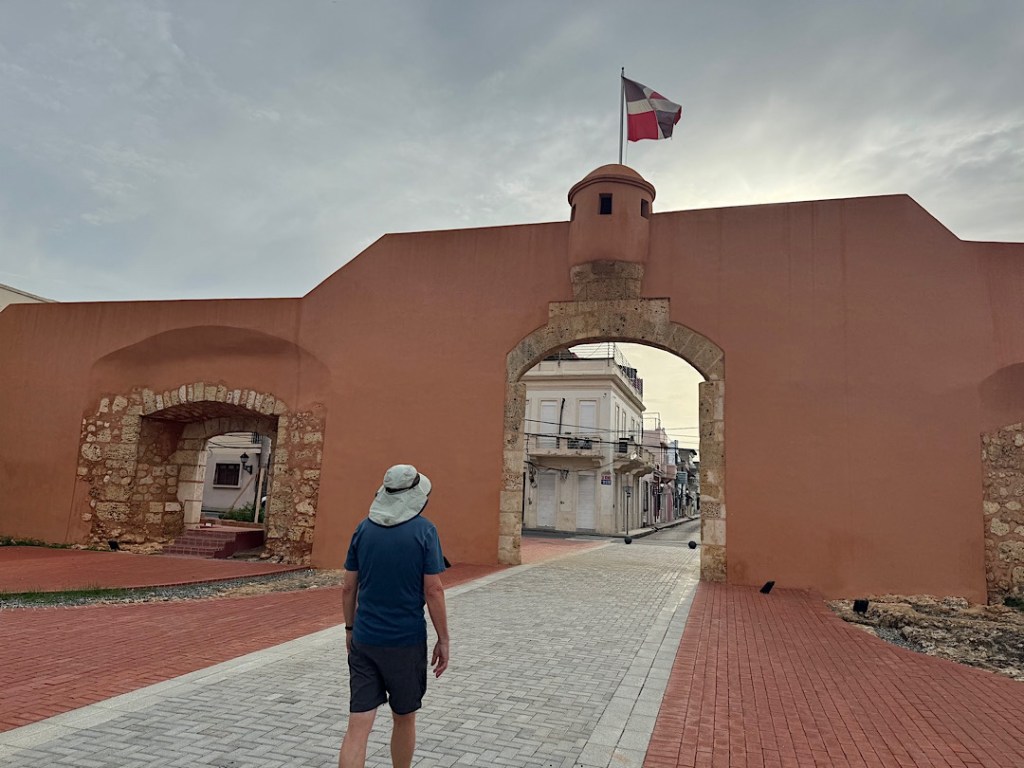
The view from the apartment to the city gate down the block.
Steve approaching the gate on foot

The flat had two spacious, air-conditioned bedrooms, but it lacked potable water. We were supposed to get that from the 5-gallon jug sitting on a plastic bench in the kitchen.
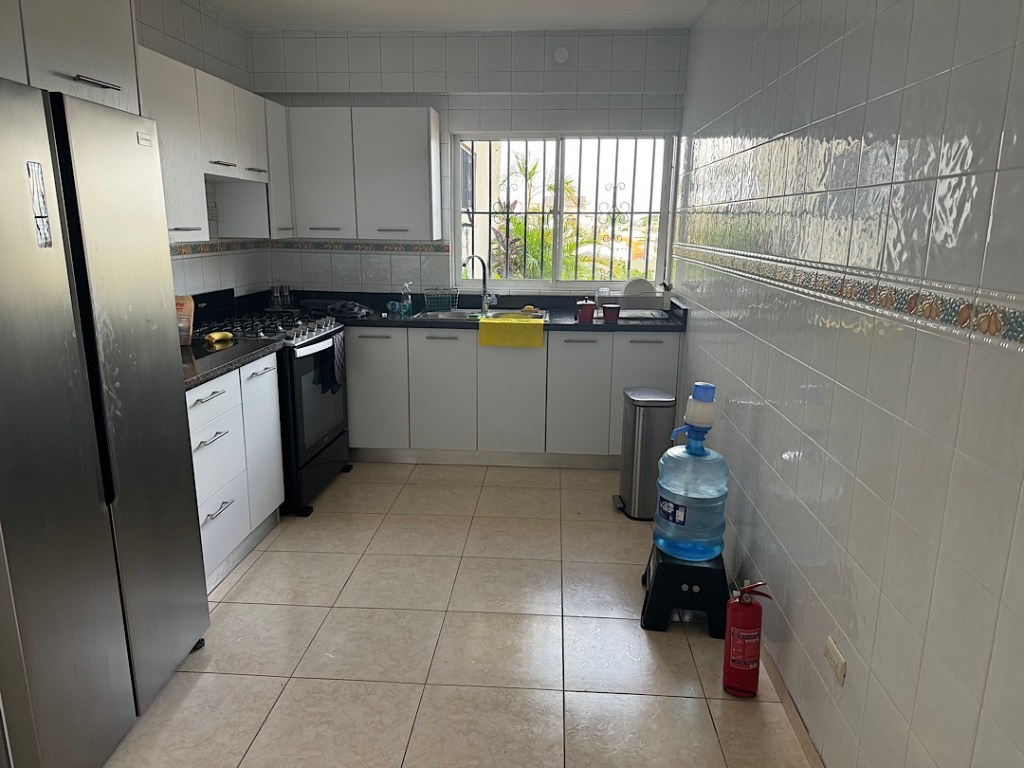
It was empty when we arrived, but Yisel, the owner, had written we could buy more water from the colmado across the street. I’ve patronized a lot of bodegas throughout Latin America, but the colmados of Santo Domingo are something else, places where you have to walk up to the counter and ask for every item you want.
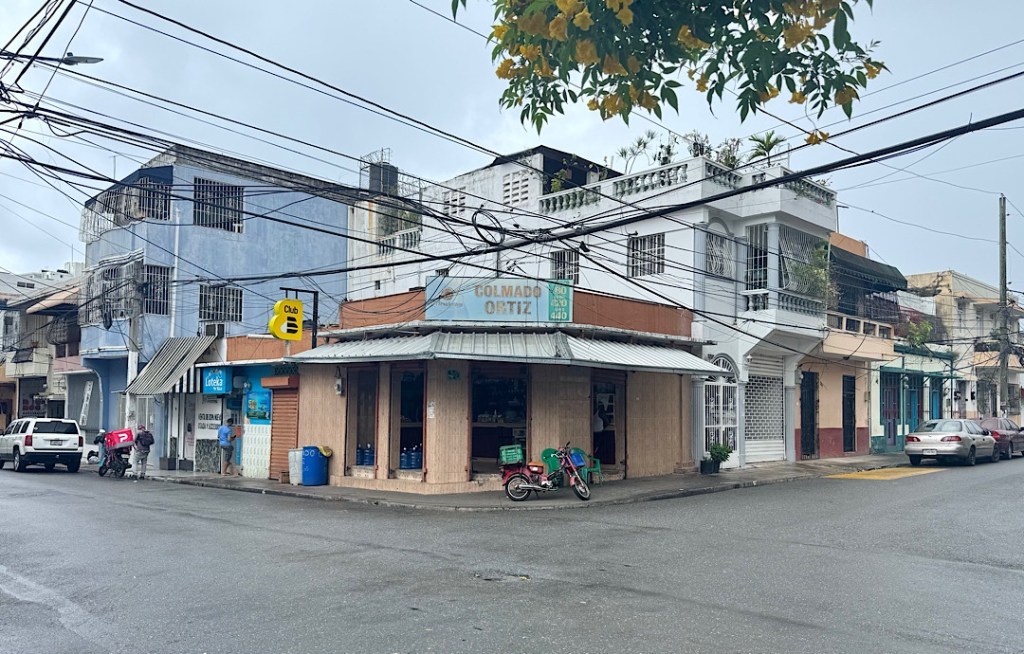
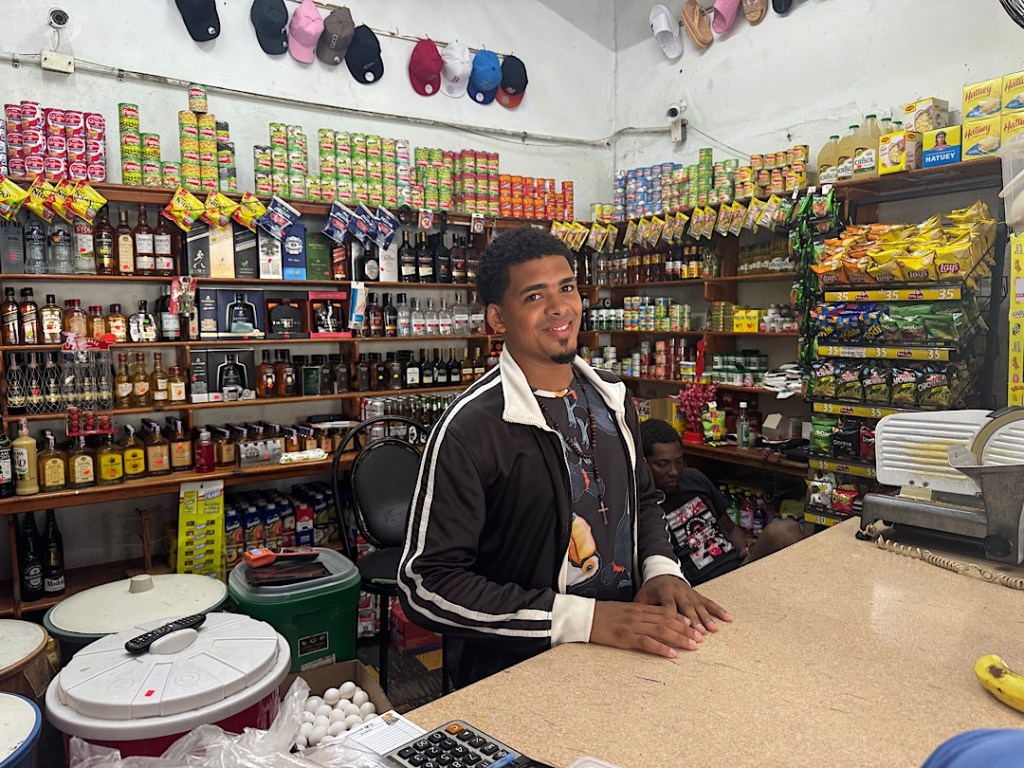
When I inquired about breakfast cereal at the one across the street from our building, for example, one of the shopkeepers pointed out the choice in two big industrial jars: heavily frosty corn flakes or something that looked like Cocoa Puffs. I picked the flakes and he scooped some into a little plastic bag and weighed them. (I forgot what they cost, but it wasn’t much.)

I do recall the price for the 5-gallon water jug: just 70 pesos (about $1.20). Mercifully, that included having it lugged across the street and up the steep sets of stairs to our flat. 

The most disconcerting thing about Yisel and Phillippe’s place was all the security: deadbolt locks and heavy iron barriers and padlocks to secure the barriers. Yisel also recommended never walking anywhere after dark. (Happily, Uber drivers were ubiquitous.) 

We were worried less about crime than we were about museums being closed on Sunday. Google assured us, however, that Santo Domingo’s anthropology museum was open. We called an Uber to take us to the city’s Plaza de la Cultura. The driver deposited us inside the gates of a huge complex containing the national theater, a museum of modern art, and several other imposing buildings. It all would have been impressive, were it not for the fact that almost no other visitors were in sight. When we found our target, the Museum of Man, its front doors were locked; nothing so much as hinted at when they might re-open.
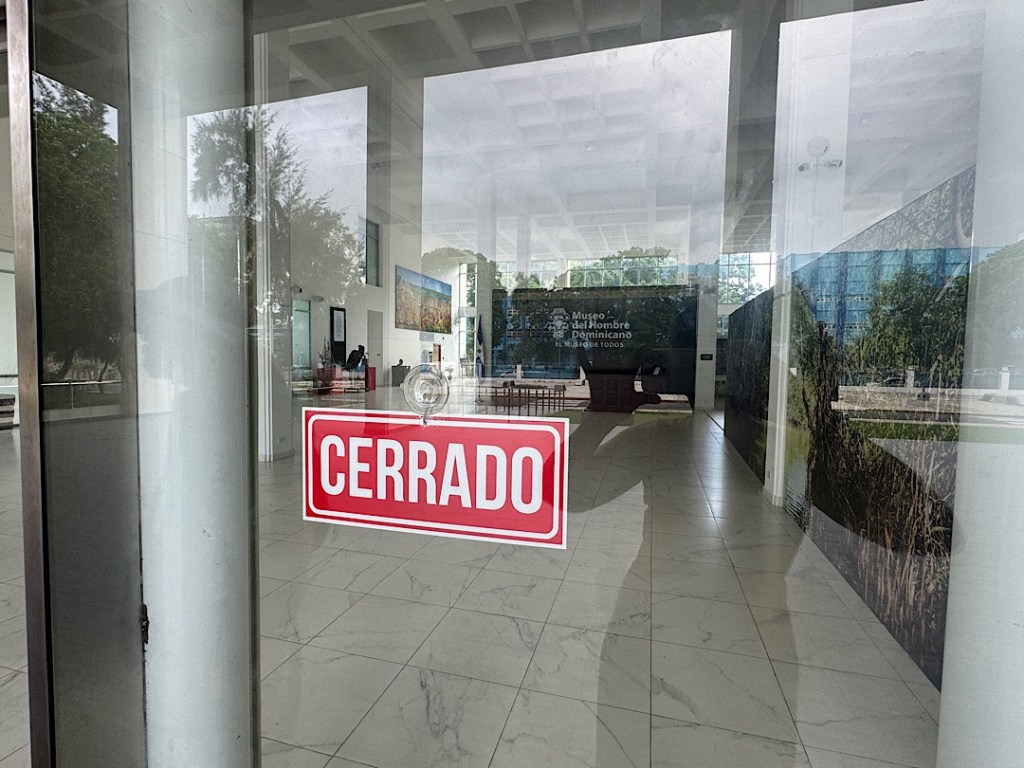
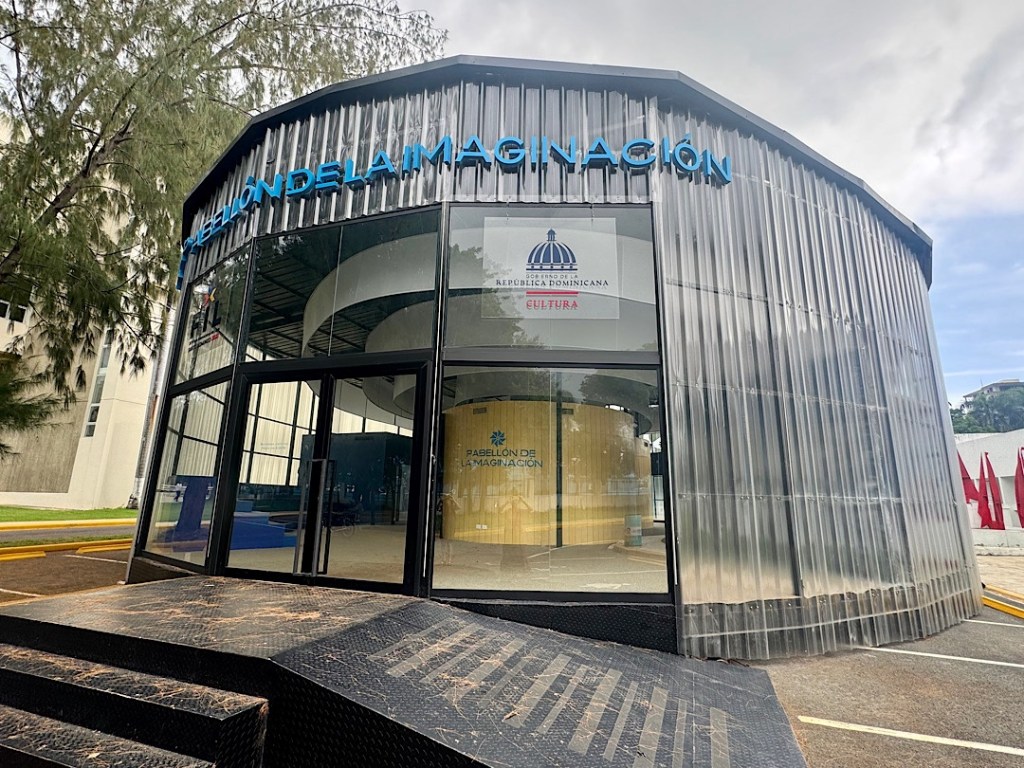
It looked like it might have been good. If it had been open.
Imagination appeared to be in short supply at the Salon of Imagination.

We took another Uber back to our flat and chilled out, hoping the rain would stop and the Sunday night concert could go on. When that didn’t happen, we ate an excellent dinner in a building that originally housed the city’s oldest restaurant and one of its earliest brothels.
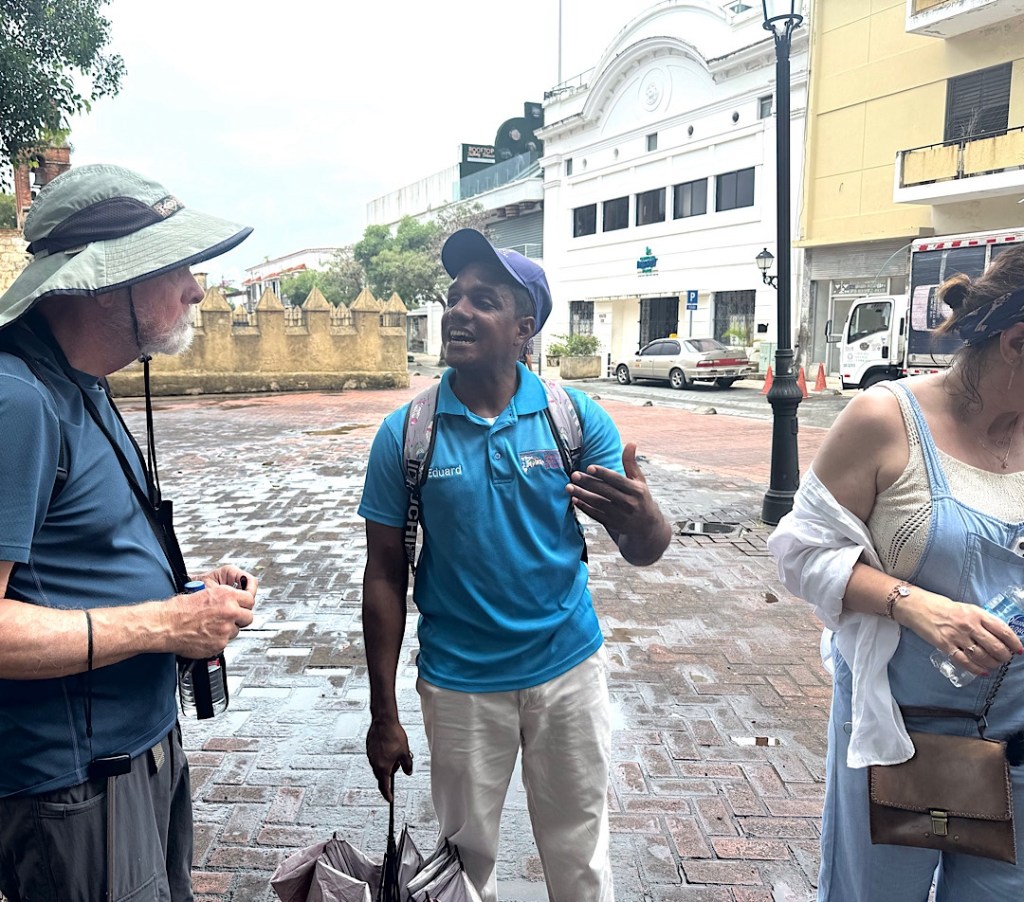
Eduardo

We heard that last tidbit from Eduardo, our guide on the walking tour we took Monday morning, another rainy day.

These poor students were gamely posing for school photos.

That two-hour ramble reinforced my impression of what an influential place Santo Domingo once was. Columbus lived here for a couple of years; his son built a palace overlooking the Ozama river.
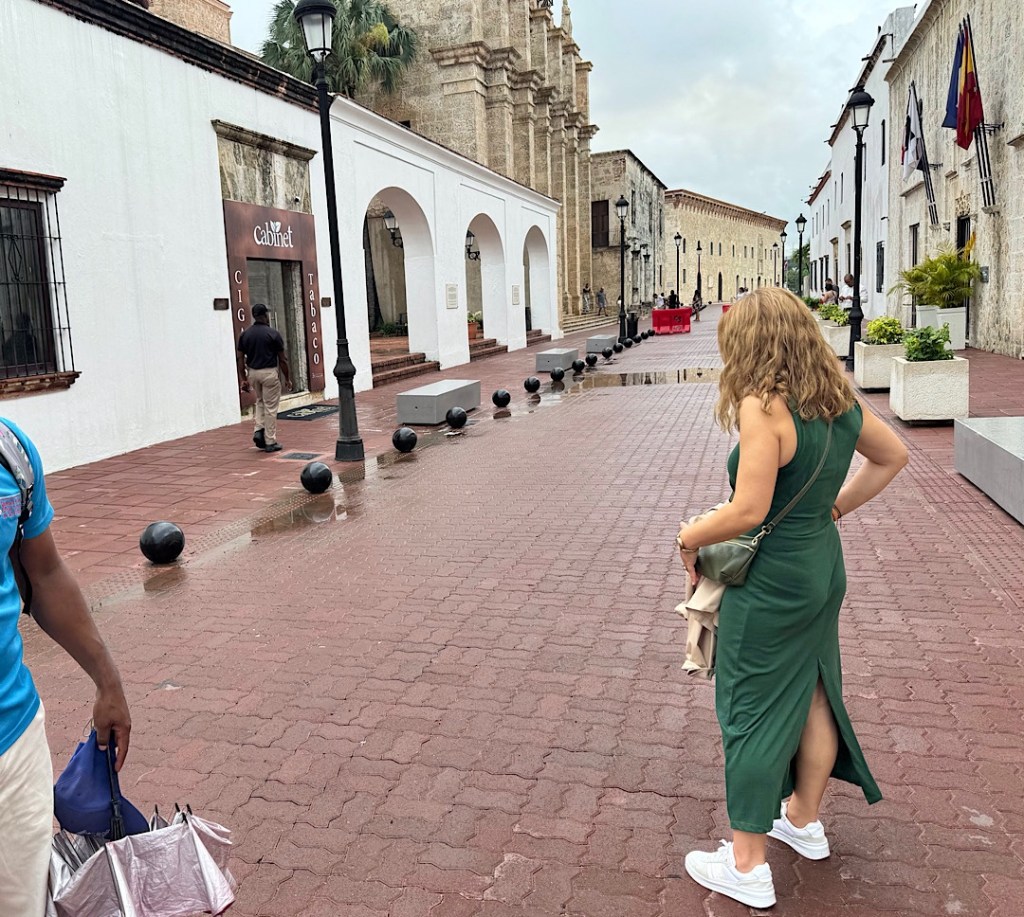
Some of the world’s most notorious conquistadors — including Hernán Cortés, Ponce de Leon, and Vasco Núñez de Balboa — lived in the Calle de las Damas, which claims to be the oldest paved street in the Americas.

Sadly, because it was Monday, most of the historic buildings were closed. The Cathedral was open, but it’s pretty run of the mill. I thought the coolest thing about it was that back in 1877 some workers in the church found a lead box filled with bones and inscribed with the declaration that they were the remains of Christopher Columbus.

Those bones are definitely not in Santo Domingo’s Cathedral today. What’s left of the Admiral hasn’t exactly disappeared. But a mystery surrounds the question of where he is.

What’s clear, as I understand it, is that he died in Valladolid, Spain in 1506, but he had asked to be buried in the New World. In 1537, the widow of his son Diego sent the bones of Diego and his legendary father from Spain to Santo Domingo’s new cathedral. They lay there for more than 250 years. But when Spain gave Hispaniola to the French in 1795, the Spanish reportedly didn’t want Columbus’s bones to fall into foreign hands, so they shipped them first to Havana and then to Seville.

Today the Sevillanos say they have the Admiral. They say they did DNA testing 20 years ago that confirmed this. But in 1992, 500 years after Columbus first set foot on an island in what’s now the Bahamas, the Dominicans inaugurated a colossal mausoleum/monument in Santo Domingo. Built in the shape of an enormous cross to celebrate the “Christianization” of the Americas, the so-called “Columbus Lighthouse” contains what’s left of the Admiral, according to the Dominicans. They say those bones show signs of advanced arthritis (from which Columbus suffered). But authorities so far have refused to allow any DNA testing.

The mausoleum was closed on Mondays, so we missed it too. I’m not a big fan of the Admiral, so I was only a little disappointed.  
Jolly in Jamaica

Steve says when we hit the road, it’s not a vacation, it’s a trip. For us, the best trips blow our minds; expand our consciousness. We don’t come back rested, as many vacationers do. But if we’ve filled in some of the blank sections of our mental maps of the world, we’re happy.

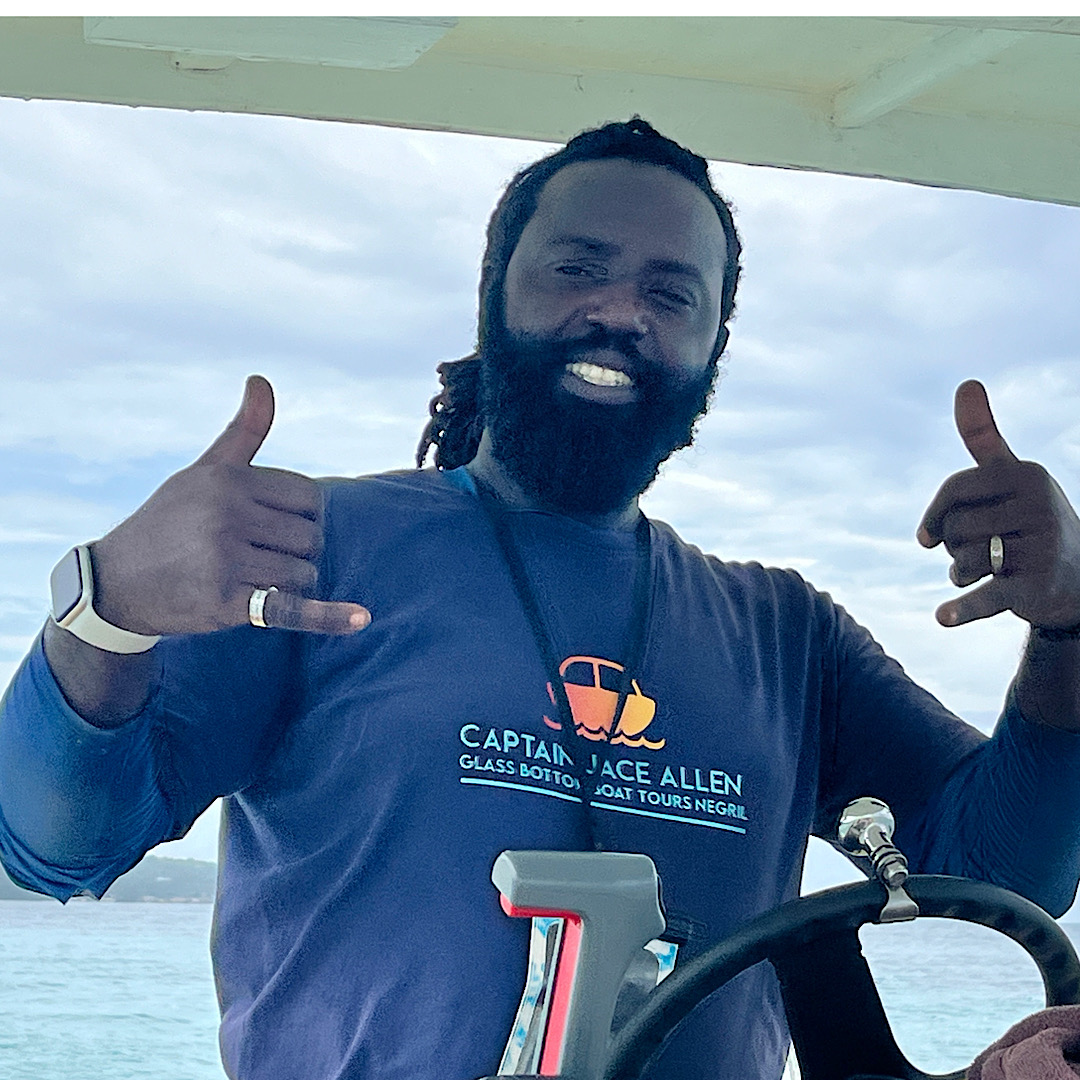
Despite our rough start in Jamaica, I was more than happy with the 6 days we spent there. The morning after we settled into our beachfront digs in Negril, Captain Jace Allen drove his glass-bottom boat right up on the sand in front of our hotel, then he motored north along the coastline, cluing us in about the various resorts we were passing. Most titillating was the notorious Hedonism II, where guests sunbathe naked and sex is a more important group activity than beach volleyball. Then we headed for the local reef, donned our fins and snorkels, and swam through the teaming aquatic life, guided by the watchful captain.

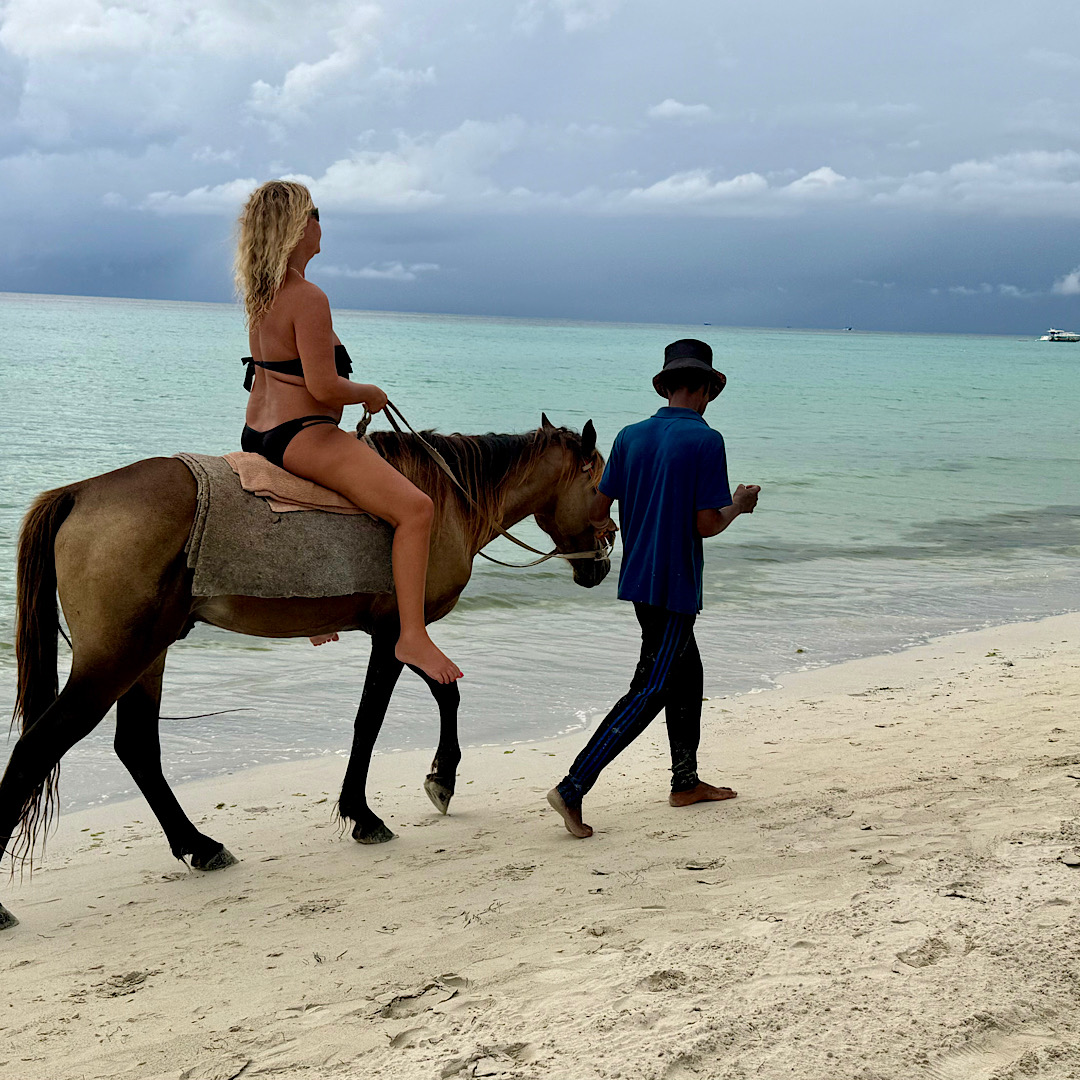
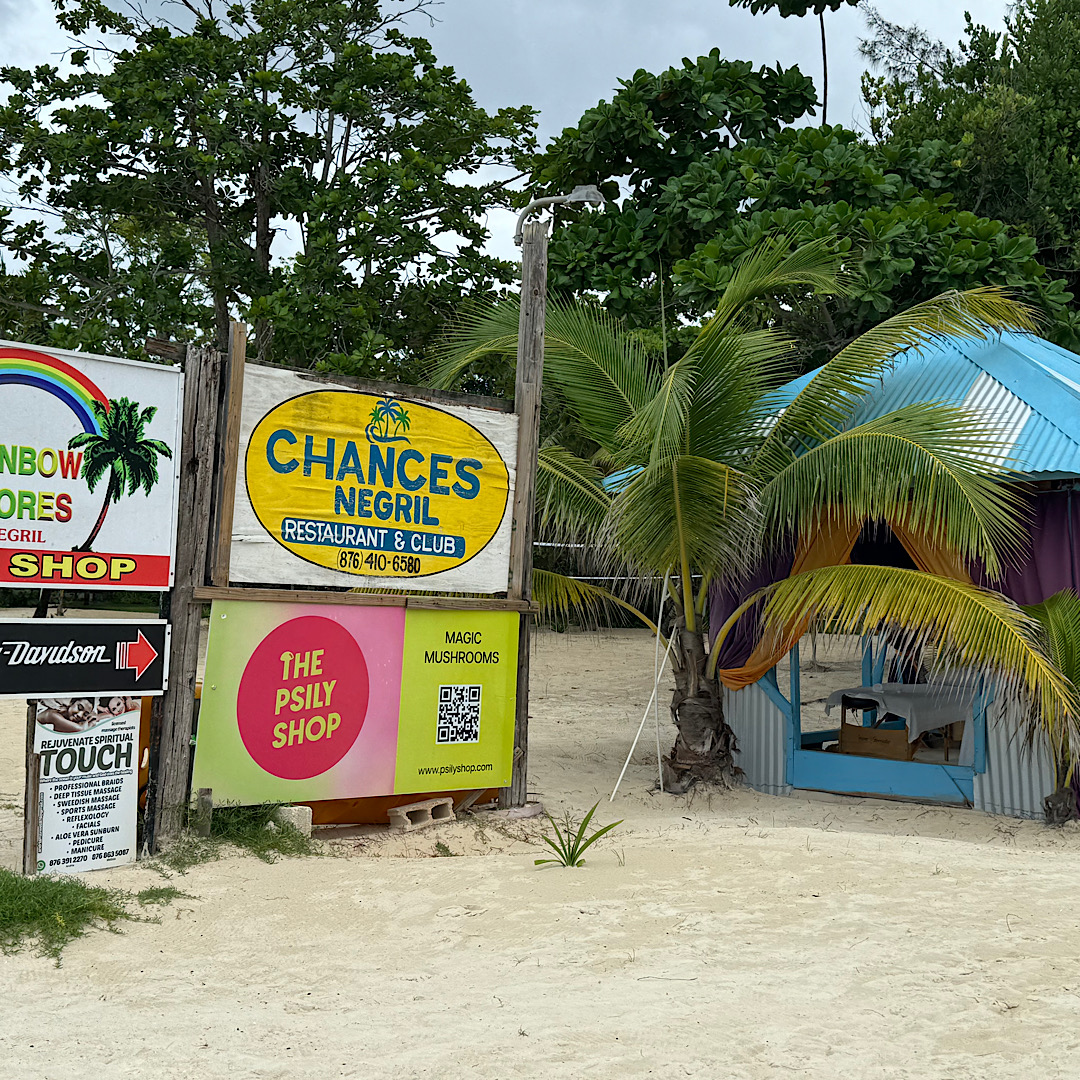
I didn’t have an underwater camera with me, and we weren’t allowed to photograph the naked hedonists, but walking along that beach later in the day, Steve and I took in many sights we don’t see on our local sands back home.

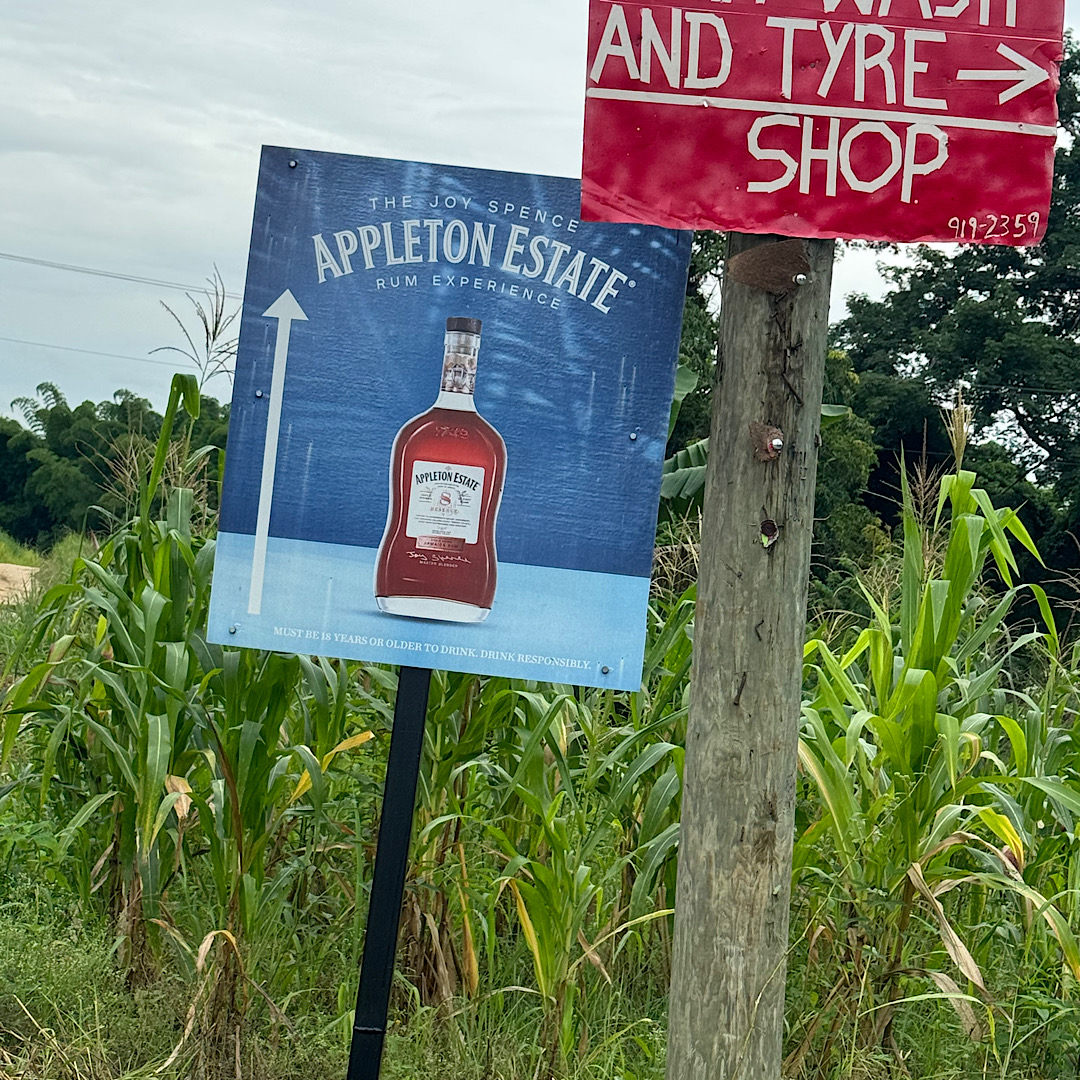
Because we’d abandoned our three nights at the Negril home-exchange, we decided on impulse to spend only two nights at the beach, then drive to Black River, a town on Jamaica’s southern coast about half the way back to Kingston. This allowed us to visit the most important rum distillery on the island, Appleton Estates (established in 1749, and still Jamaica’s toniest brand.)

After more than two hours of driving on terrible roads, I was braced to find it closed. Or no longer giving tours. But it was not only open. It proved to be a slick, commercial operation. Ironically, we pulled into the parking lot on the heels of a busload of Illinois parents on the island to see their soccer-playing kids face off against some Jamaican players. 

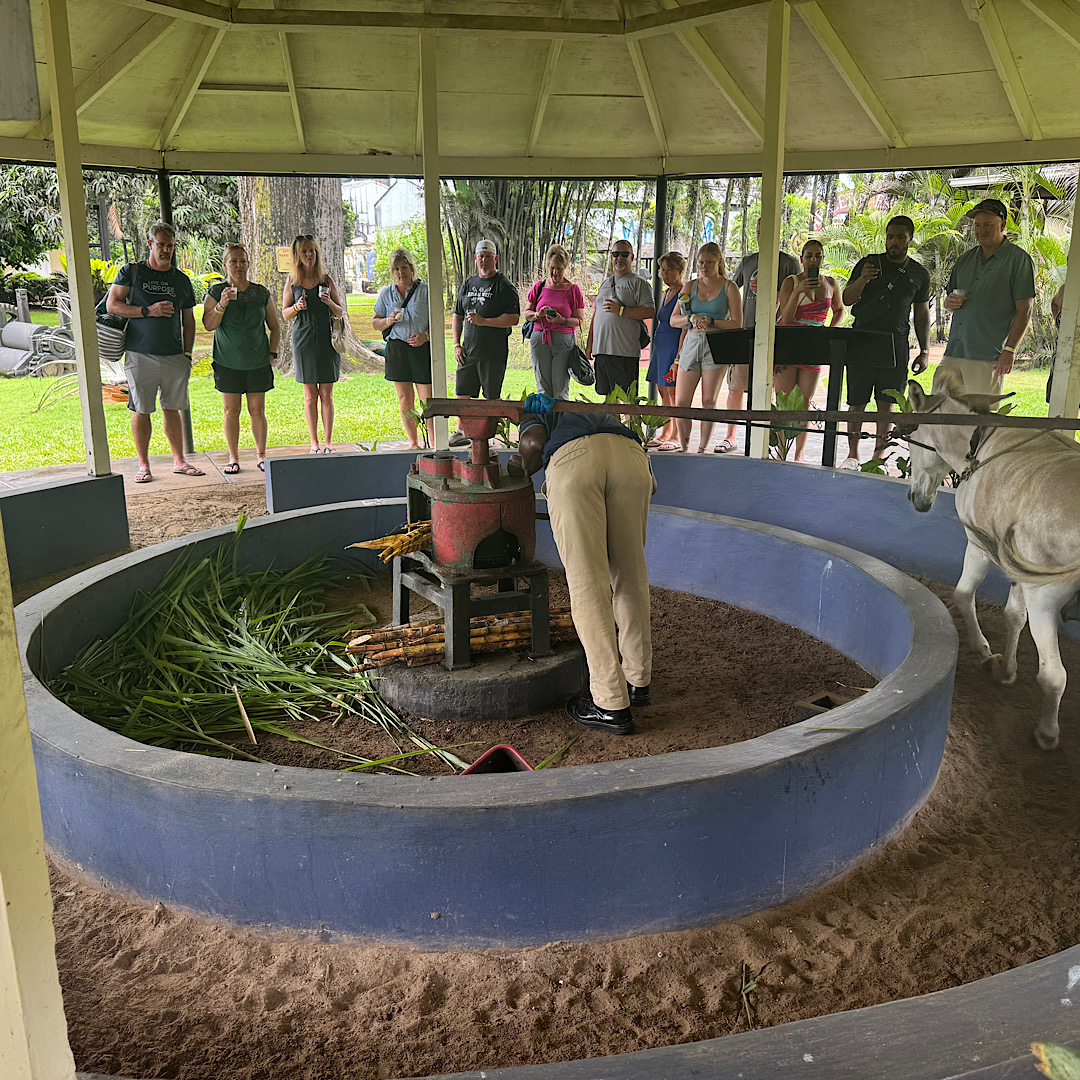
The tour was okay. We watched a donkey driving a press that squeezed juice out of the cane…

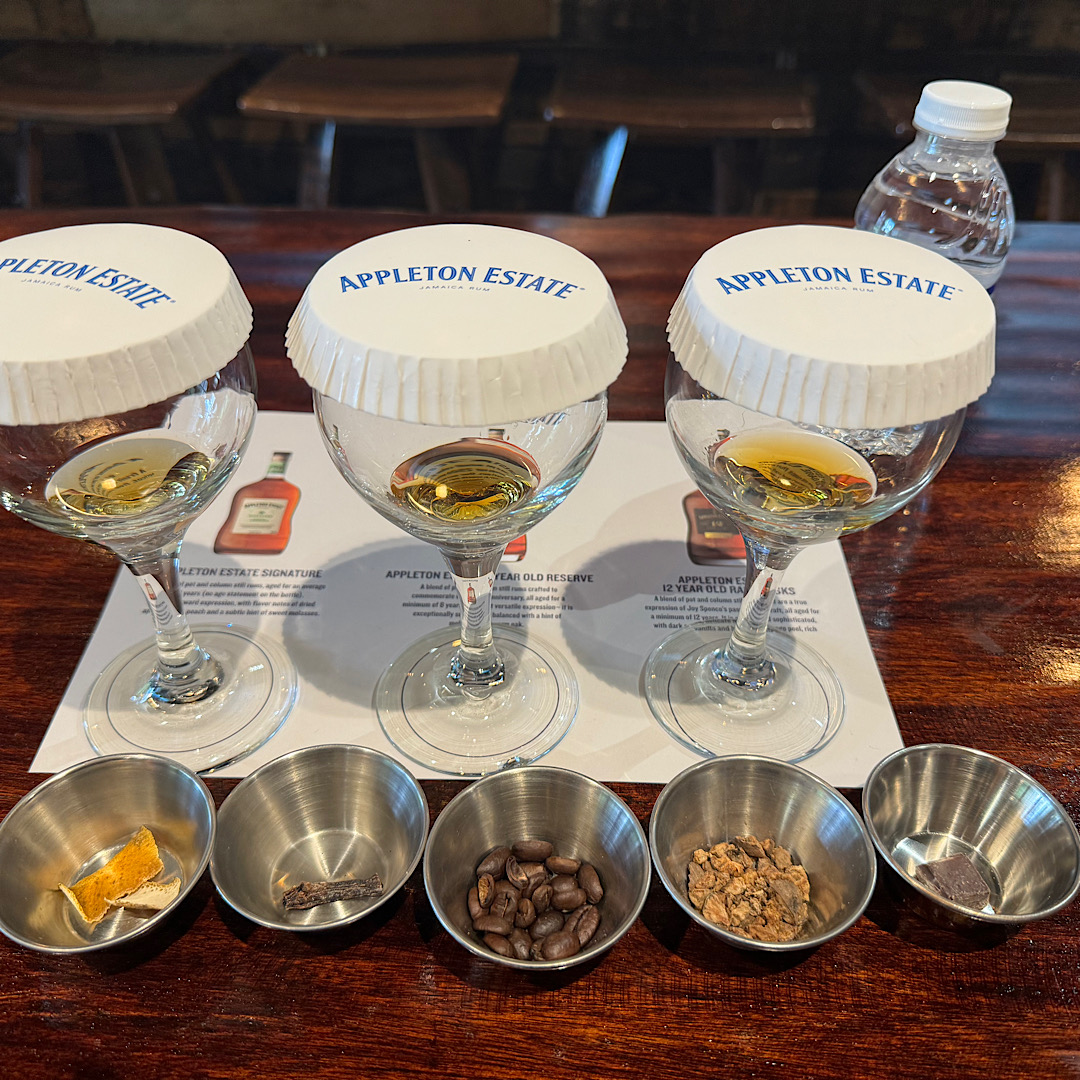
…and it was fun to taste the impact of aging on rum.

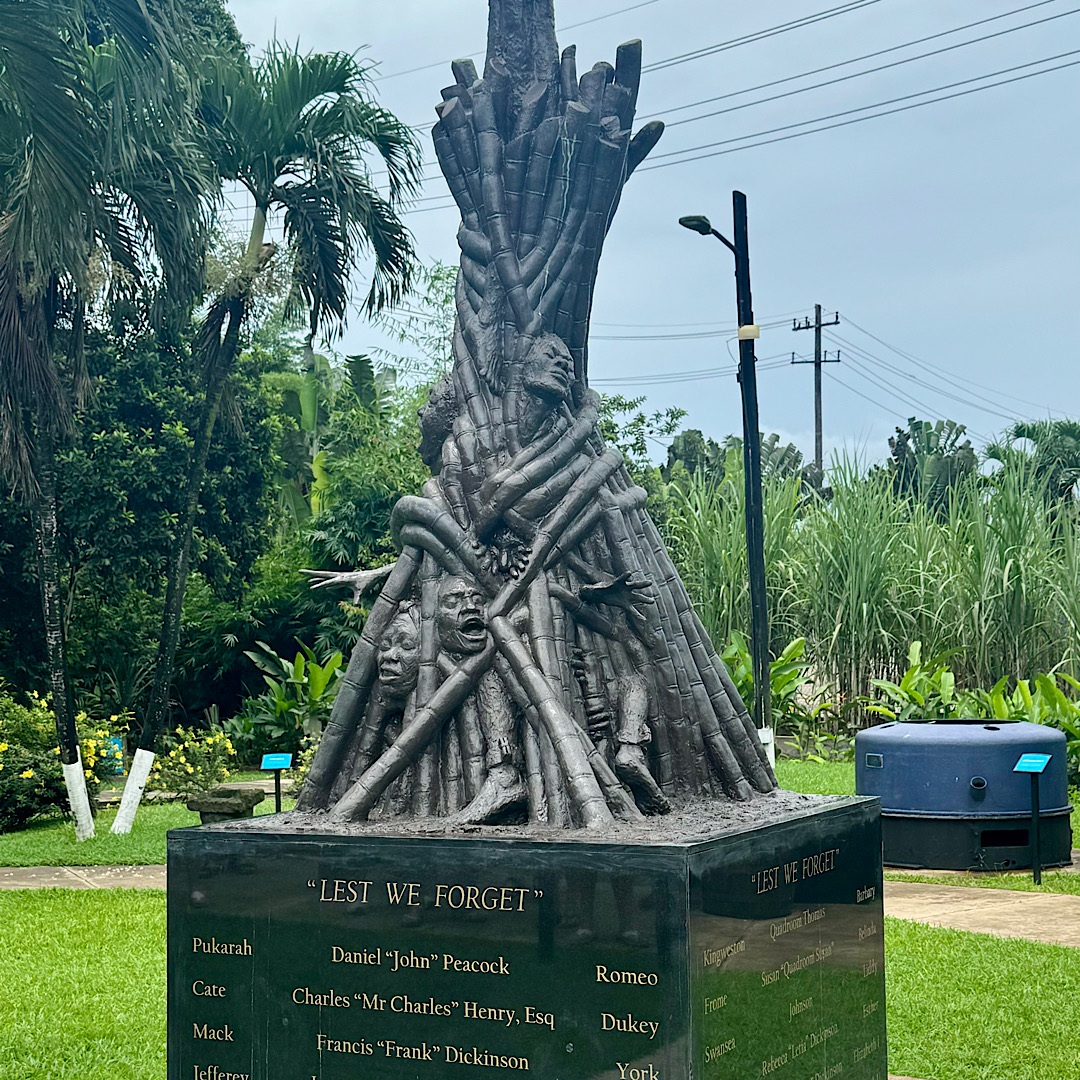
Somewhat short shrift was given to the suffering endured by all those folks who were kidnapped in Africa and brought here to cultivate cane sugar on these grounds.

This sculpture was the only reminder of the hideous things that happened in the cane fields.

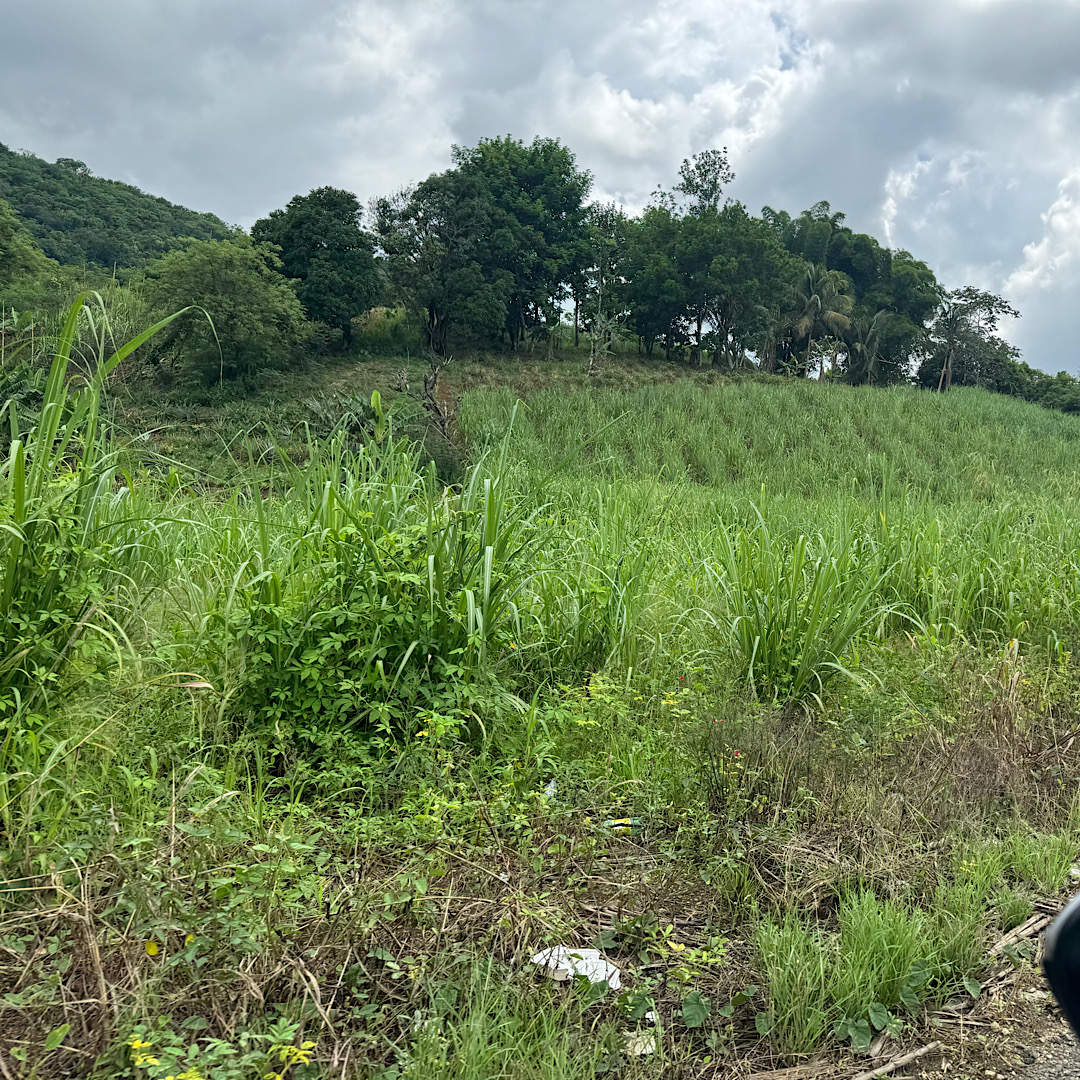
I also was disappointed that we learned nothing about how sugar cane is grown and harvested today. We only glimpsed the fields.

Still the rum stop was moderately entertaining, and even better was our next stop: YS Falls, one of the world’s more impressive displays of water cascading downhill.

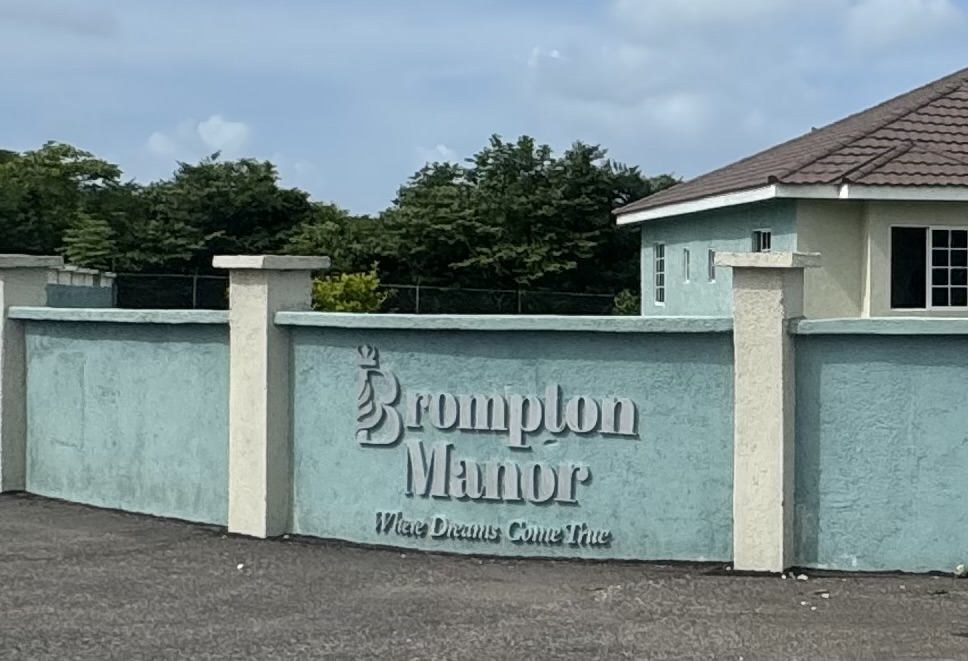
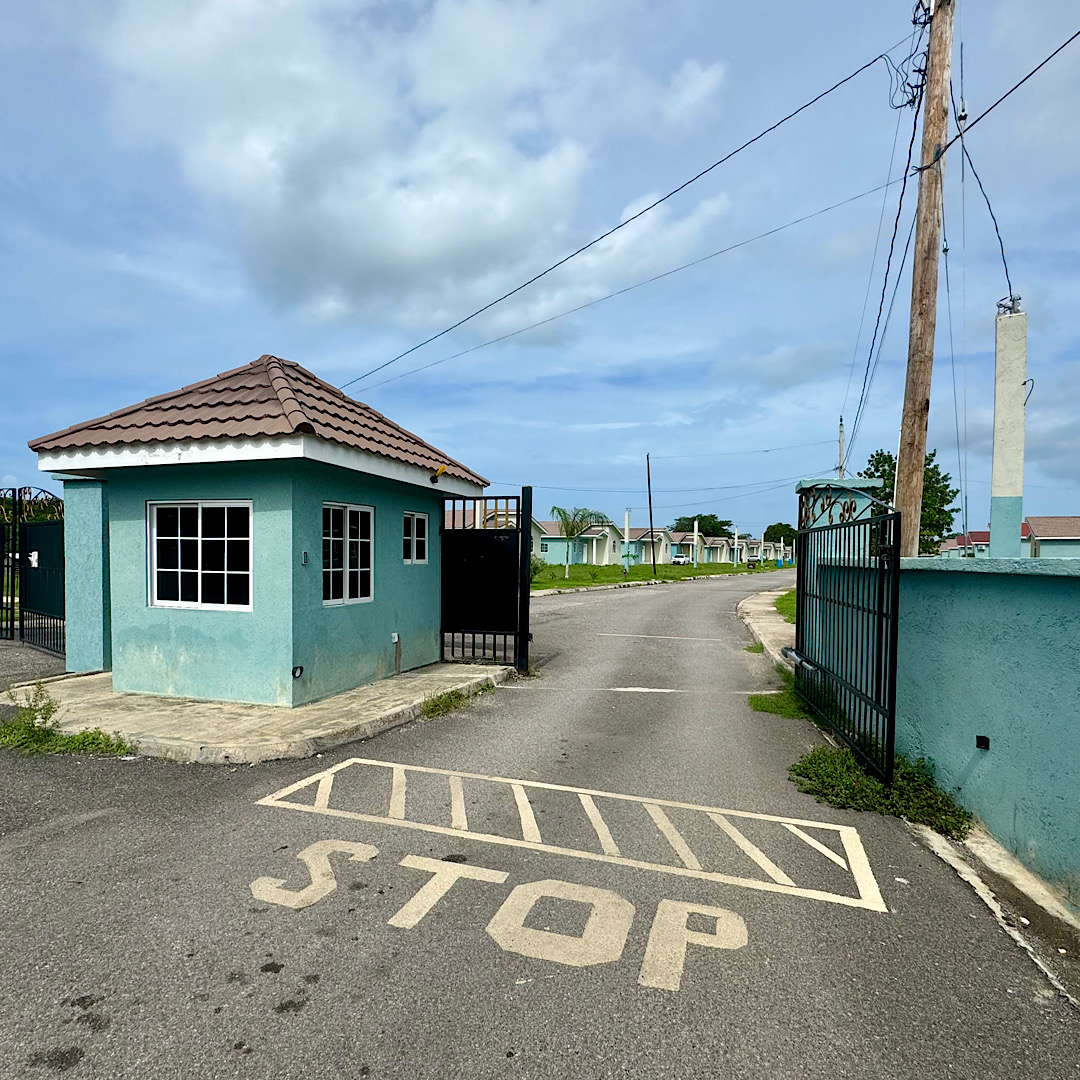
If we’d been channeling our inner Jamaicans, we would have spent several hours swimming and drinking and “liming” the hours away. But we needed to find the place we’d booked for the night: a two-bedroom house in a gated community called Brompton Manor.

When I hear the phrase “gated community,” I think of neighborhoods in La Jolla. This wasn’t like them; the entrance looked more like it was guarding a work camp.

But the house was fine, albeit a bit isolated. We’d seen nothing like a restaurant or market as we’d approached it. We finally figured out that a fishery with great scores on Tripadvisor was less than a 15-minute drive away, just beyond the town of Black River. At Cloggy’s, a friendly lady named Joann emerged from the kitchen to explain what they could offer us. She opened up her freezer and showed us our choices for the fish. We picked a snapper, to be cooked in brown sauce and accompanied by “bammy” (fried cassava bread). We took the hot bags of food back to the house where, washed down with Red Stripe lager, it was delicious. 

It felt like a victory to turn in the rental car, unscathed, at Kingston’s airport Saturday afternoon (June 8). We Ubered from there to a good hotel in “New Kingston” for our last two days, and online reserved spots on a three-hour walking tour of the city Sunday morning. 

I was relieved to learn we wouldn’t be walking for much of it. At 9 in the morning, the day was already sweltering. Instead our guide, a bright, articulate guy named Everton, took us on a sweeping odyssey through the city where he’d lived for more than 20 of his 36 years. We passed a large squatter community that reminded me of places I’d seen in India. Then we drove into one of the most dangerous neighborhoods in the city, the deceptively named Tivoli Gardens. It surprised me that all our windows were down. I asked Everton is that was that safe. He said what would be dangerous was having them up. The tough young men we saw everywhere acting as informal sentries might assume we were drive-by shooters, with unfortunately consequences possible. Instead Everton seemed to allay their wary looks with chatting with them briefly; alerting them we were just tourists.

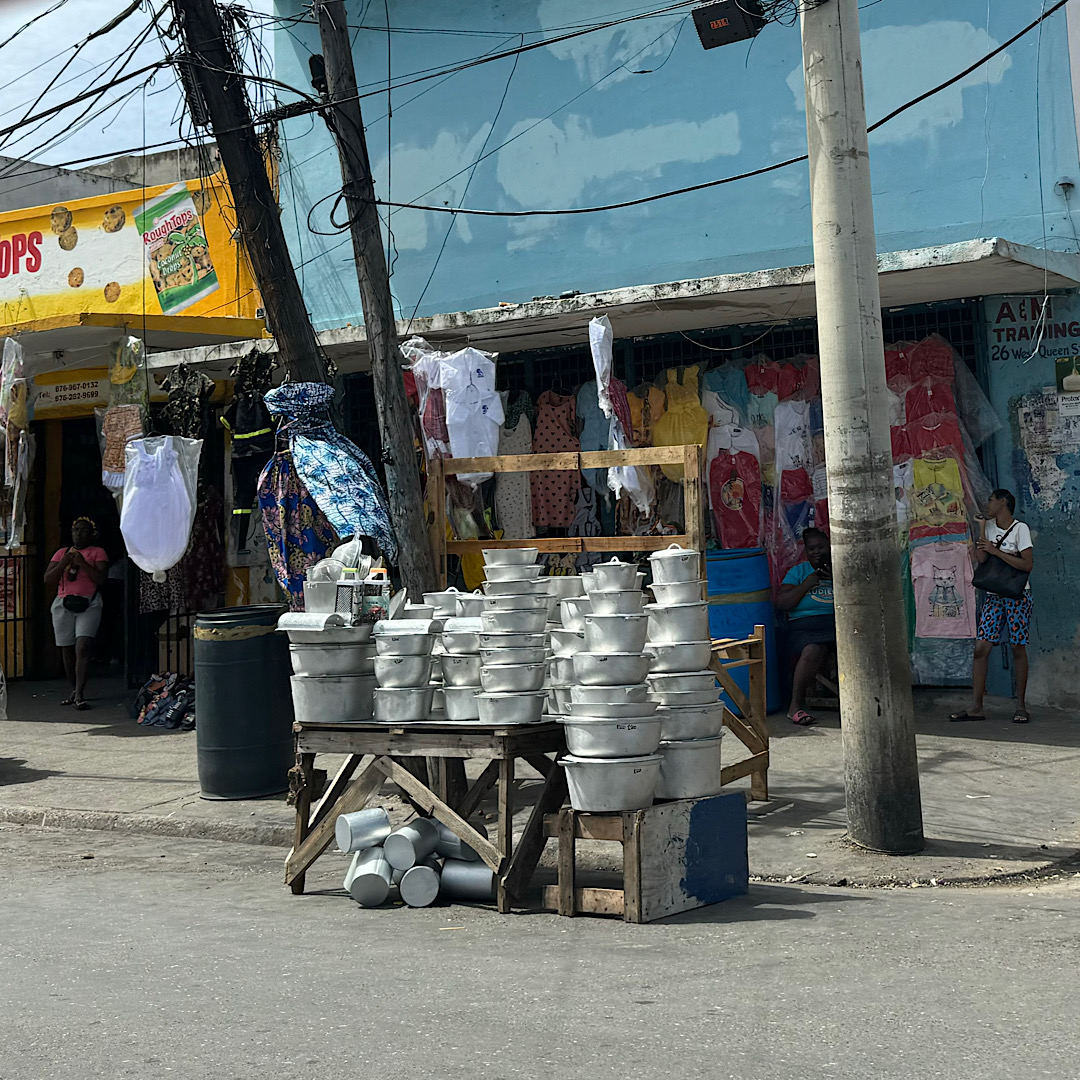
In the heart of the city, we parked and strolled through streets that normally crackle with commercial activity but were quiet because it was Sunday morning.

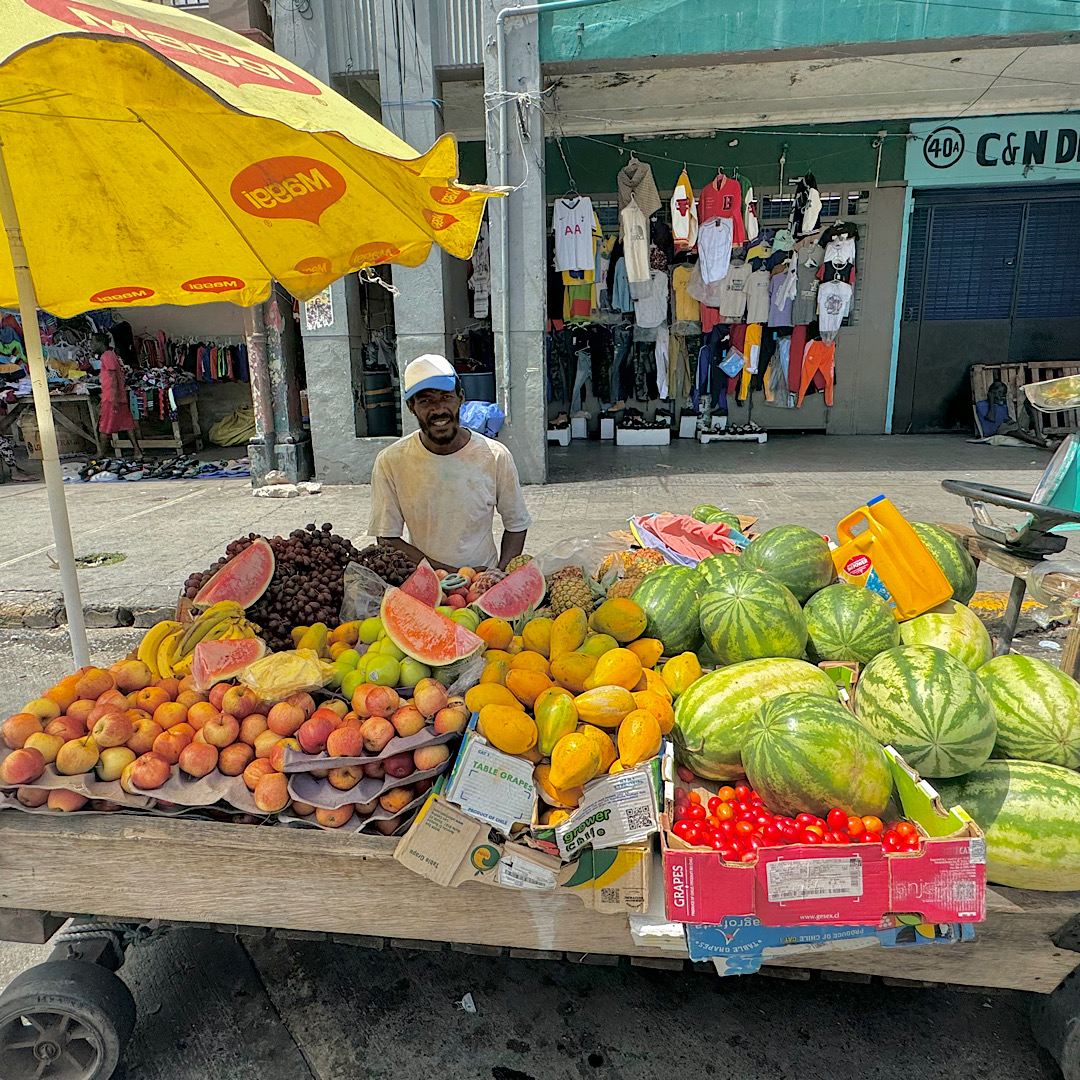
A few folks were open for business, selling essentials like cooking pots and fresh fruit.
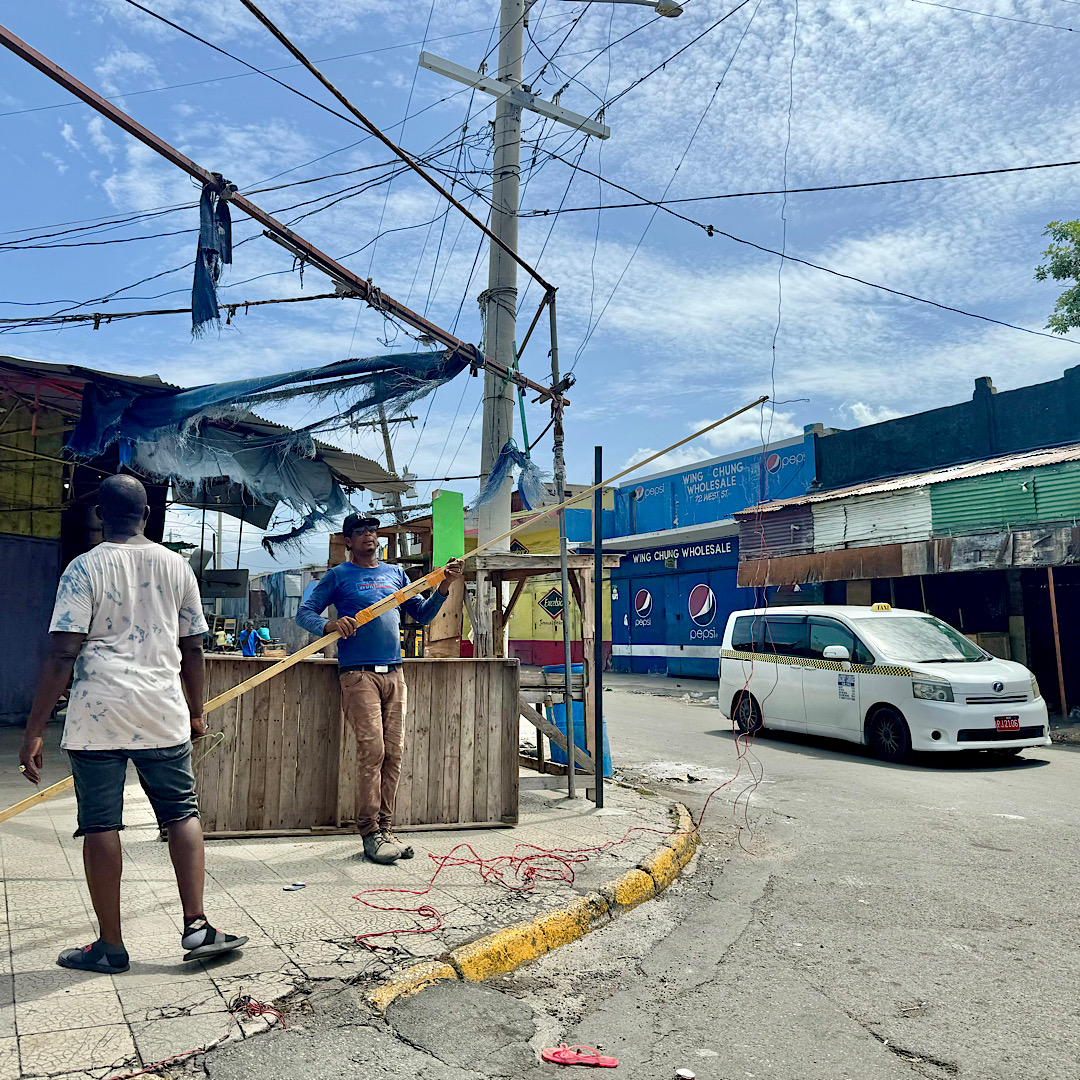
Everton said this was a quintessentially Kingston sight: someone helping himself to free electricity.

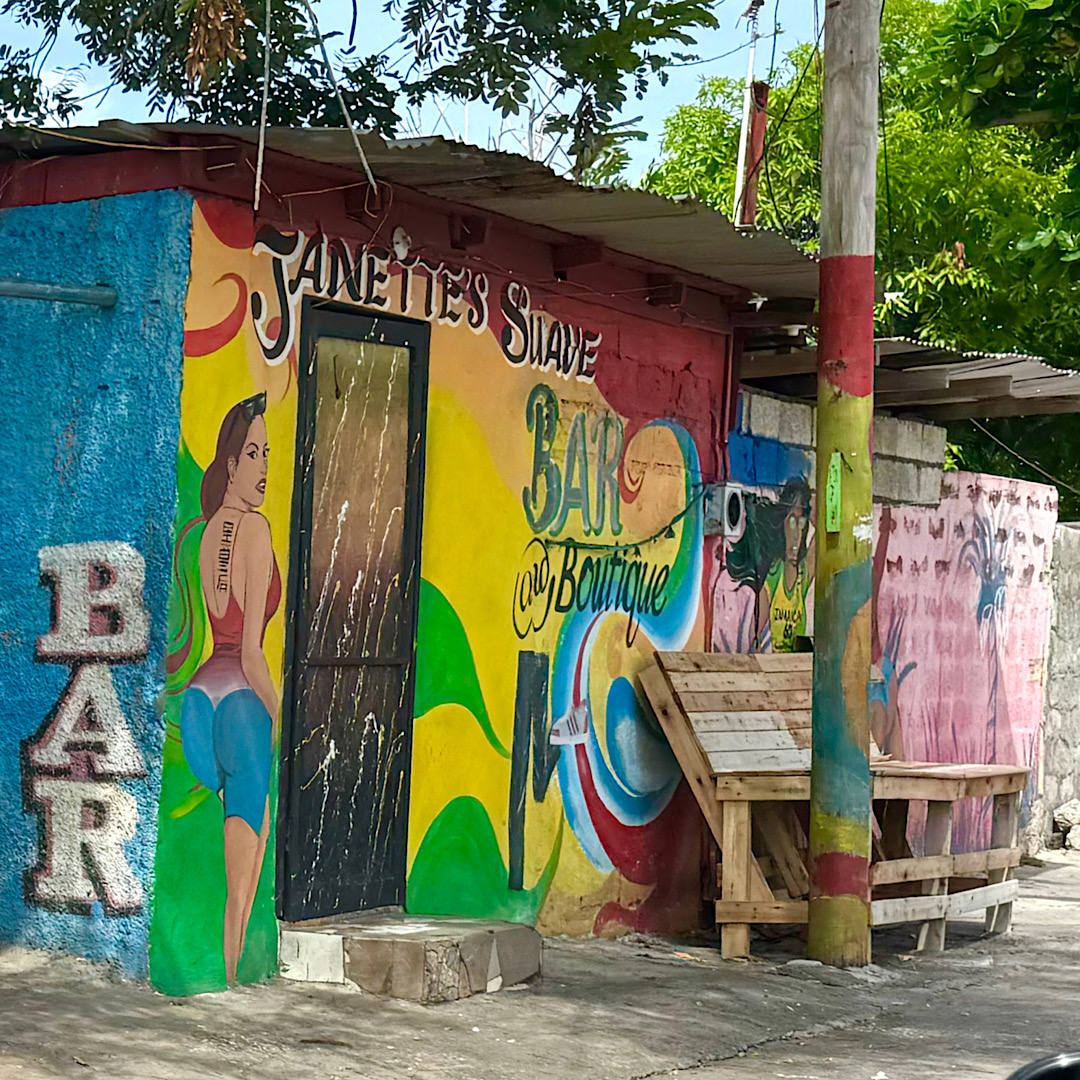
We finished by driving through Trench Town, the neighborhood once home to Bob Marley and other reggae legends. By then I’d decided to move to Kingston and open a combination bar and boutique, where I could get my portrait painted on the facade to draw in customers.

Just joking.

The truth is I doubt I’ll ever go back to any of the six islands we visited. Aside from losing my iPad, however, this trip could hardly have gone better. Now I feel like I could use a vacation, but I won’t get one of those for a while. Steve and I will head to Carlsbad Airport tomorrow (Wednesday, June 12) to pick up Vanessa, the 12th Canine Companions puppy we’ll be raising. That’s a different kind of trip altogether.

Bad luck, ya mon

After losing my iPad, our luck did not improve. In short order, we got caught in a flash flood, fell victim to a wily Jamaican scammer, and discovered we had booked ourselves into the first truly unacceptable lodging of our long home-exchanging lives.

Ironically, if I had not forgotten my iPad in the Arajet seat pocket, we would not have gotten caught in the flood. The sun was still peeking through clouds when we started inspecting our Yaris out in the parking lot. But then I spent at least an hour trying to retrieve the iPad (unsuccessfully) in the terminal, and when we finally got rolling, the sky had turned an evil shade of black. The downpour started almost immediately after I programmed our destination into Google Maps: Ocho Rios, on the northern side of the island.

A good thing about the rain is that it partially distracted me from the mean streets our course took us through. Jamaica is the only country on this trip that the US State Department warns against visiting, and that’s because of the high crime — principally in Kingston. The narrow streets of Spanish Town have been decaying for what looks like centuries. The folks on the street who eyed our shiny touristic faces did not look friendly.

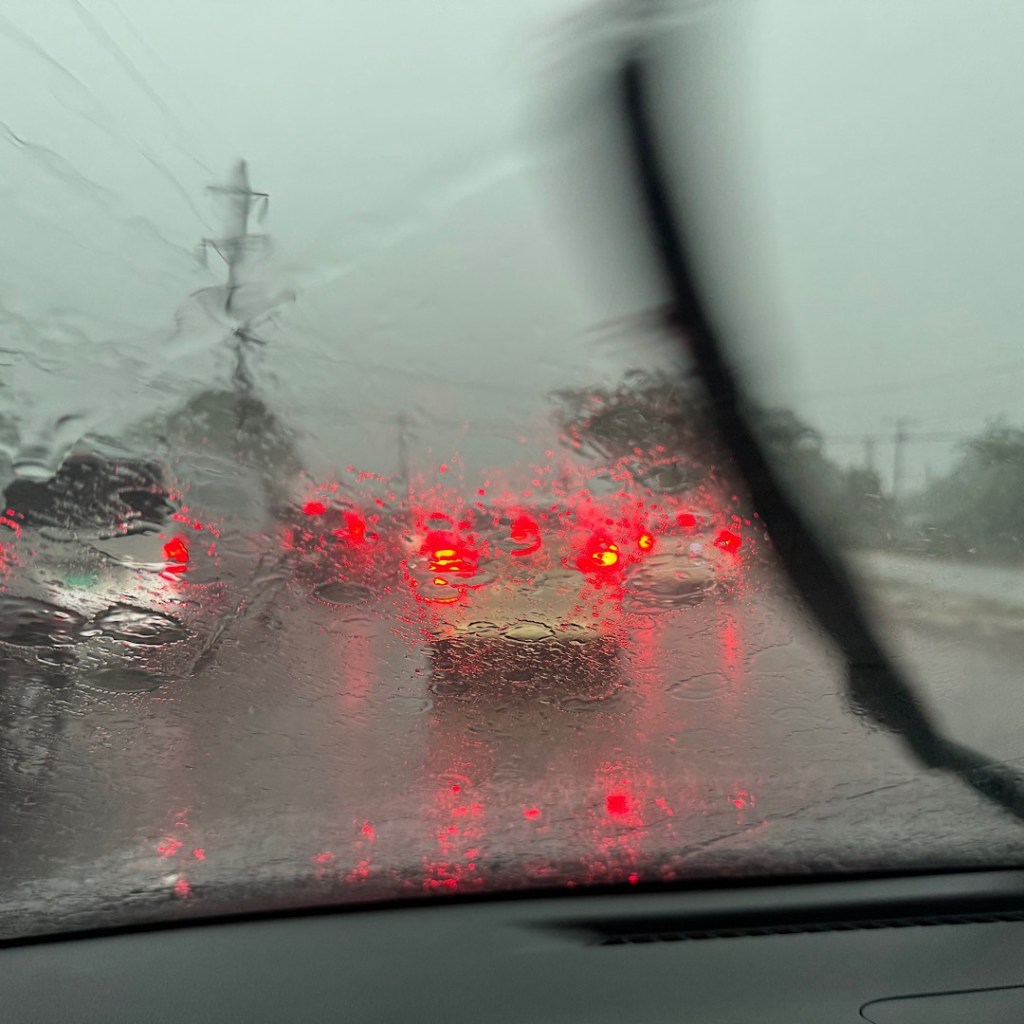
But I wasn’t paying much attention to them. The intensifying rain commanded everyone’s focus. Traffic slowed to a crawl; Google Maps announced a 20-minute slowdown. We assumed someone up ahead had crashed, but later we concluded it was just because the low, ancient byways were filling up with swirling brown water.

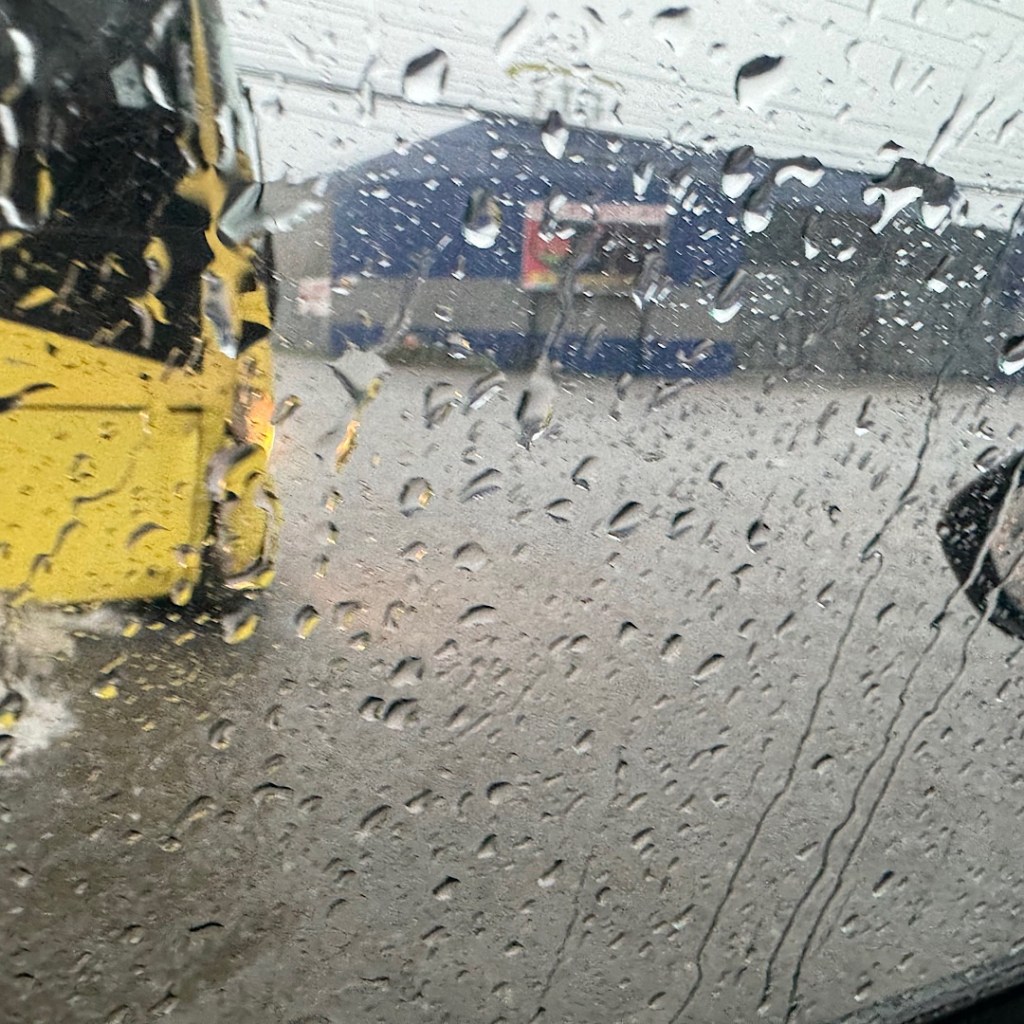
That’s a bus next to us, fording the impromptu river.

The thought occurred to me that another panicky driver could simply plow into us. We’d been instructed that if we got involved in any crash, we had to wait for the police to arrive and take a report, otherwise none of our insurance would cover anything. But waiting for a police report here and now was unimaginable.

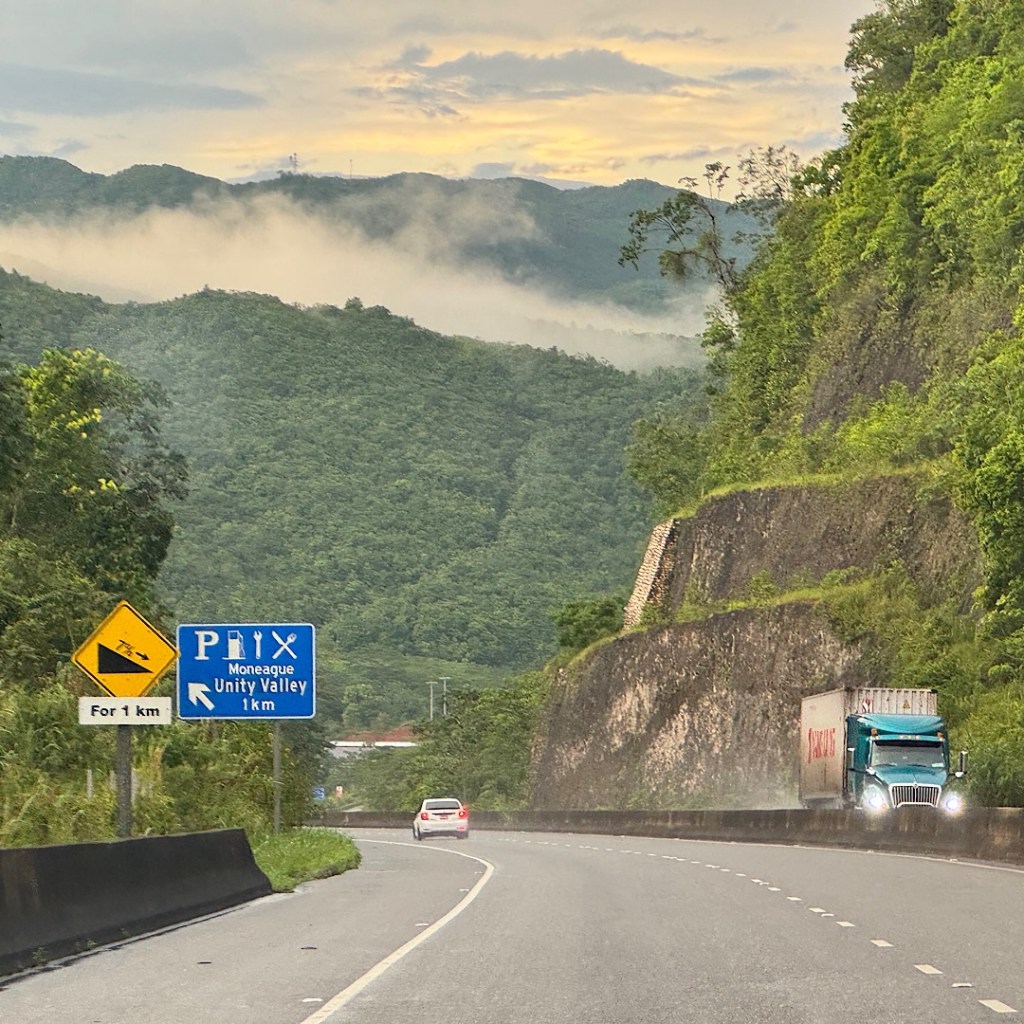
I pushed that thought away, as the water covered the road. Lightning slashed the near skies, and bone-rocking thunder came a few seconds later. Steve was grimly intent on maintaining control of our vehicle, and long minutes crawled by before we finally made it to the tollway — a wide, well-engineered road leading through beautiful country.

The scammer

We met him the next day when we were driving from Ocho Rios to Negril, site of the home-exchange house we’d arranged to stay in for three nights. Our route took us through Montego Bay, and we wanted to get at least a glimpse of it. We set course for a pork restaurant with great reviews, but when we pulled into its parking lot, the diner looked closed.

A guy in another car in the lot rolled down his window and told us it wouldn’t open until noon. Then he exclaimed, “I know you guys! I saw you in the car-rental lot at the airport!” Steve recognized him in turn. It seemed an almost comically cool coincidence to bump into him on the other side of the island. He suggested another lunch spot with good food and prices, not far away, and when he offered to lead us there we couldn’t refuse.

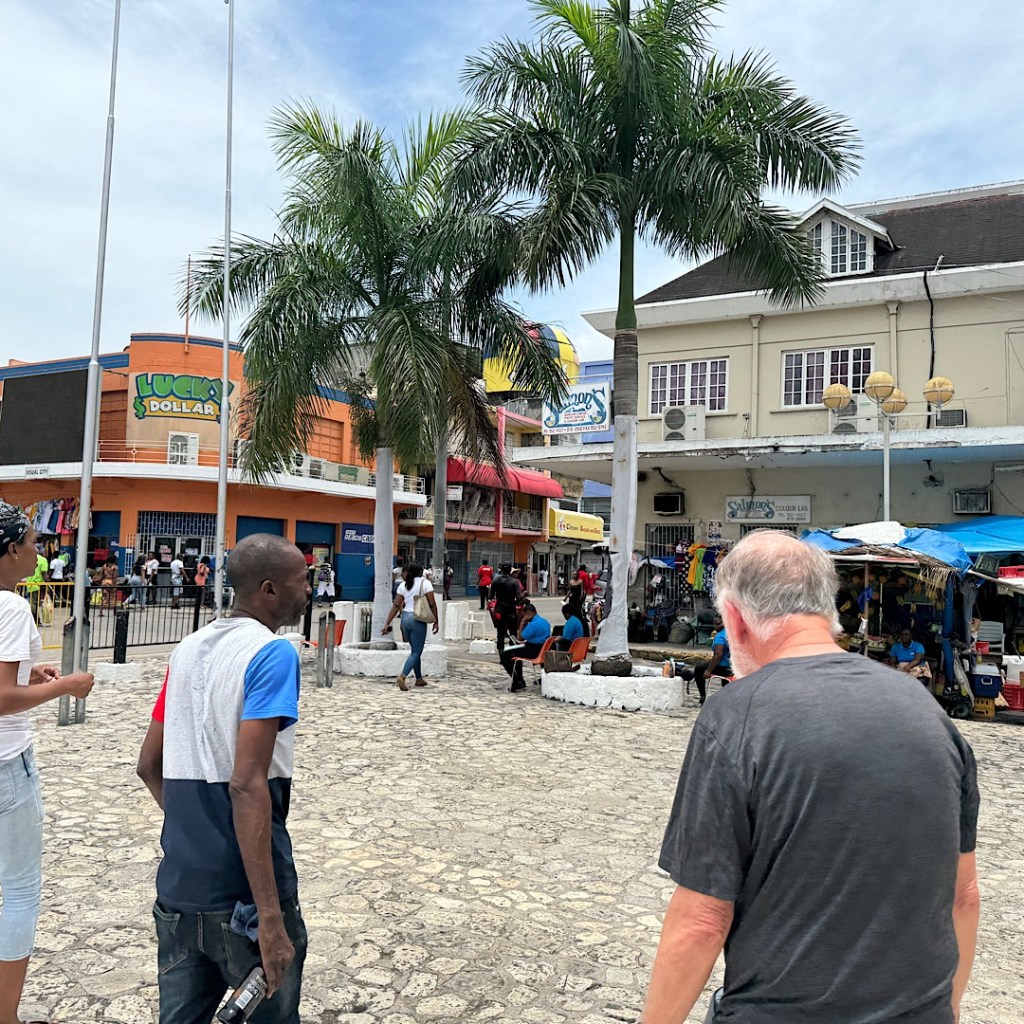
I’ll condense. “Steve Smith” (as he called himself) drove ahead of us to a mini souvenir mall and then took us to the restaurant deep within it. Then he plopped down at a table beside us and ordered himself a bottle of Guinness. As we ate (decent but hardly inexpensive lunch plates), he regaled us with stories about Jamaica and Montego Bay, then insisted we follow him on foot on a brief walk through the city center.

Scammer Steve and Good Steve

To be honest, both my Steve and I were delighted to have someone lead us on a lightning tour of the heart of the town. But the stroll went on and on, and I finally made it clear we needed to get back on the road. “Steve” didn’t resist, but back at our car, he was adamant about wanting to send us off in the right direction on the main road. He jumped in the back seat, directed us for a block or two, then said we should pay him 18,000 Jamaican dollars for all his help — about $115 US.

This was so clearly ridiculous, we laughed at him. My Steve pulled out a 2000 Jamaican-dollar bill ($12.85). I’m embarrassed to admit I eventually gave Scammer Steve 12,000 (about $77). What galled me most is that this was essentially the very same scam we fell for in Bombay back in 2018!!! (That guy claimed to be a worker at our hotel out on his day off.) I now think $20 and the Guinness would have felt right for Scammer Steve’s “services”. As we drove on, we consoled ourselves that at least were were saving money on our lodging for the next three nights.

The home exchange

Negril is a big resort town on Jamaica’s far western end. Hotels line its famed Seven-Mile Beach, starting at the north end with all-inclusive resorts charging up to $2K US per day then giving way to more middle-income hotels whose clientele become darker-skinned as you approach the center of town.

Our home-exchange place was located beyond that, where the beach disappears and turns into cliffs. I knew it wasn’t on the cliff and that it would be a bit rustic. But its British owner assured me it had great access to a welcoming Jamaican community.

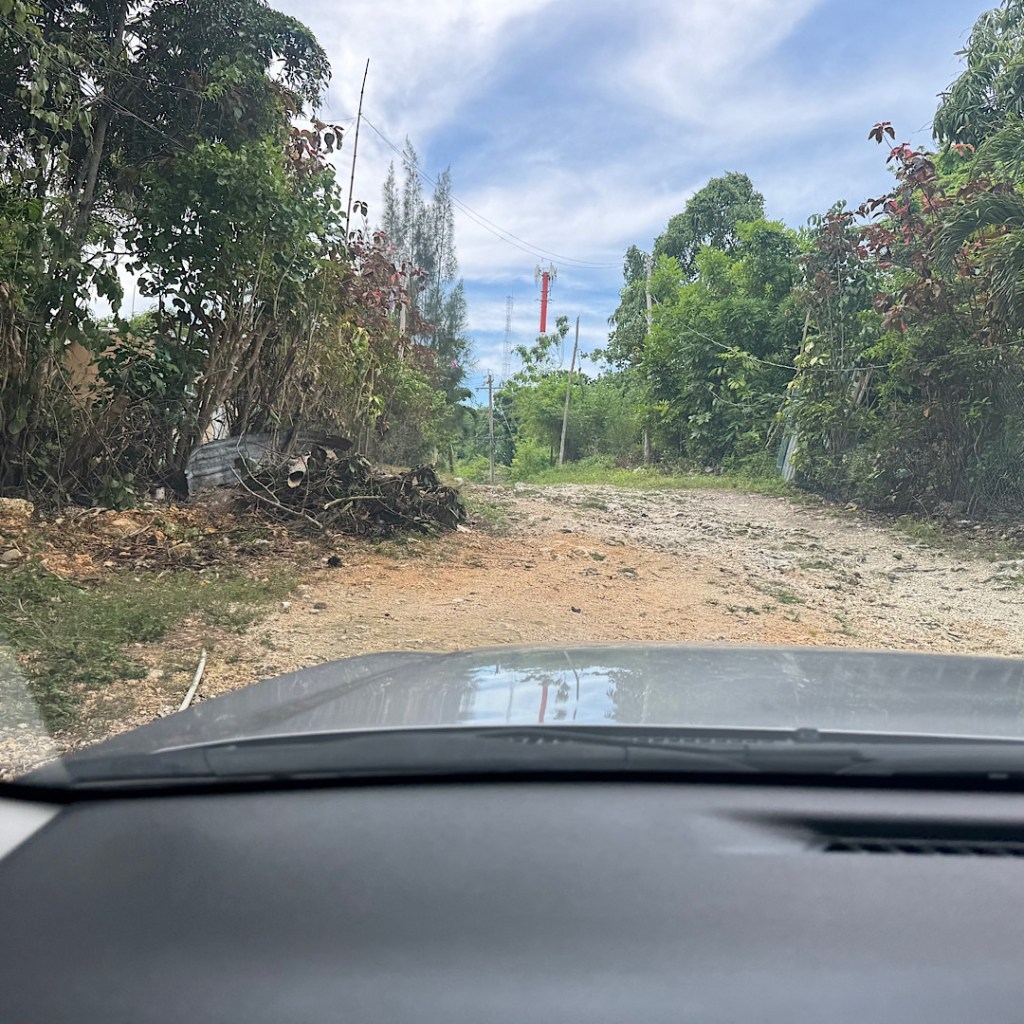
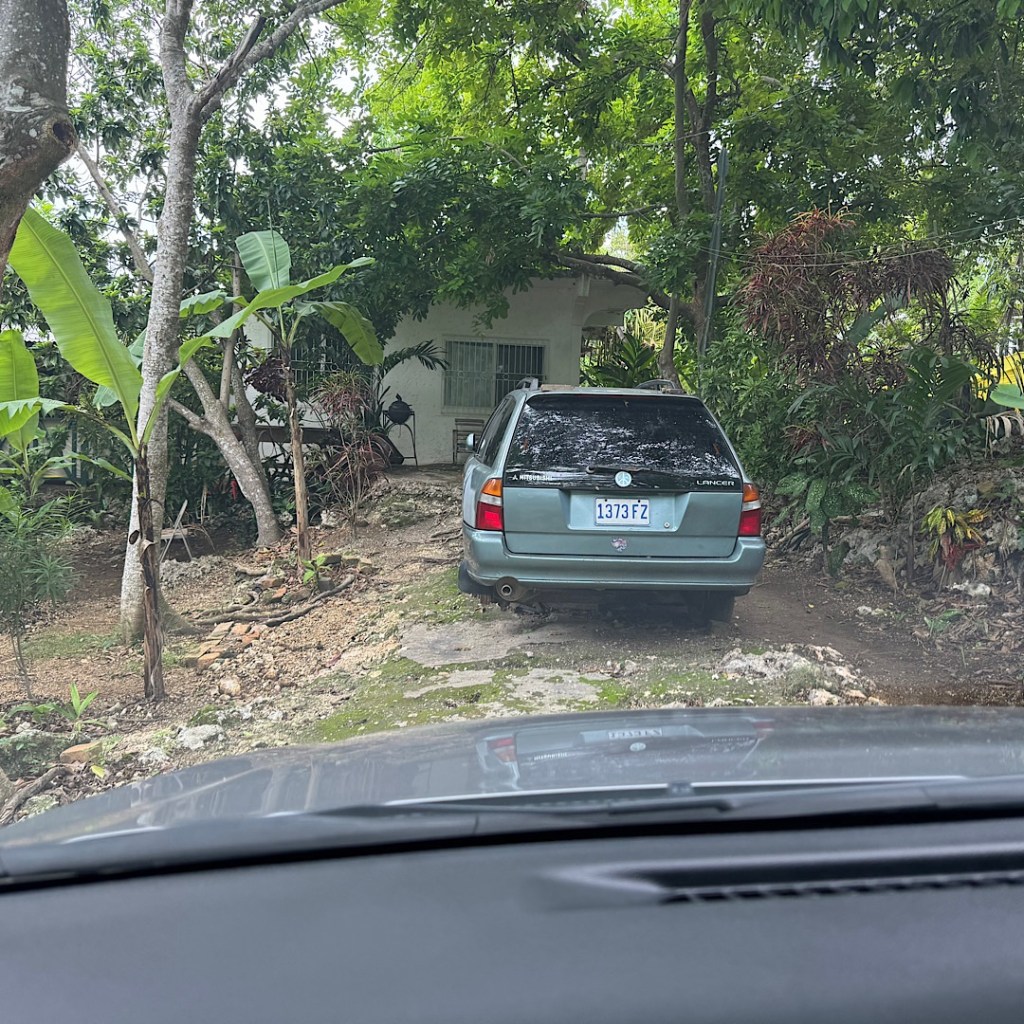
My heart sank when Valerie’s directions took us off the crummy paved main road and onto a jumble of dirt and rocks. Maybe a mile uphill from the “highway,” we turned into “our” even rougher driveway.

That’s Valerie’s place behind the dead car.

On hand to greet us was Valerie’s caretaker, John. Handsome and quiet, John showed us around the spacious two-bedroom house. He went off to buy a 5-gallon jug of drinking water for us, and as soon as he went out the door, Steve and I agreed: we didn’t want to stay there.

I look at that photo and think, gosh, it doesn’t look bad. And seen up close, it WAS immaculate. The AC seemed to work. But it was spartan, furnished minimally and lighted with only a dim fluorescent bulb per room. Hanging out in it would have been grim. More than anything, we couldn’t face the thought of jolting down that hill in search of dinners and returning in the dark, maybe through driving rain.

So when John got back we broke the news that the place was just too rustic for us. Valerie could keep all the Guest Points I had given her, but we wouldn’t be paying the $100 cleaning fee she had asked for. John looked crestfallen. He tried to assure us we would be completely safe, and I told him in complete sincerity that I believed him.

We drove off and within an hour or two we’d found a pleasant room right on the border of Seven-Mile Beach’s racial divide.

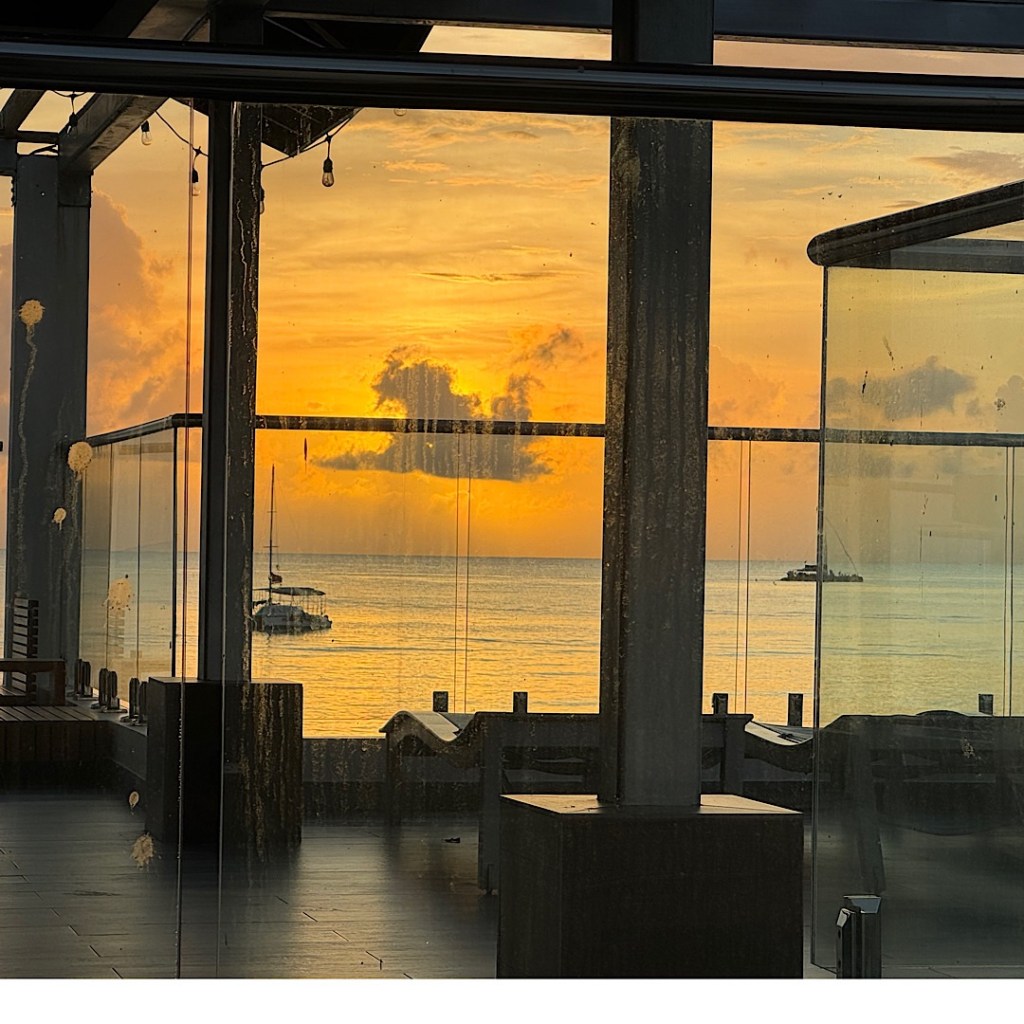
Sunset from one of our windows there.

I felt bad about John. I didn’t reflect on this on the spot, but we later speculated that $100 cleaning fee might have fed him and his family for some time. Bad luck for him too, mon.

52 hours in the colony

Steve keeps referring to Puerto Rico as “America’s biggest colony” even though I know that’s politically incorrect (both literally and socially). But I’m used to him being provocative. What we agree on is how weird it felt to be in a place where all the residents are entitled to carry US passports, but everyone speaks Spanish, and the capital city looks like Havana would probably look had Cuba not been governed by brutal Communist dictators for the past 65 years.

For our visit, I brought along the article that appeared in the New York Times last month: “36 Hours in San Juan.” Steve and I actually had 52 hours, all of which we spent in the oldest part of this oldest European city in the Western Hemisphere. A vast metropolis surrounds the old town, but I know nothing about it, except that our ride from the airport felt like we were back in the US.

Judgments based on such limited exposure are bound to be pathetic. Still, I’ll share four of my strongest impressions.

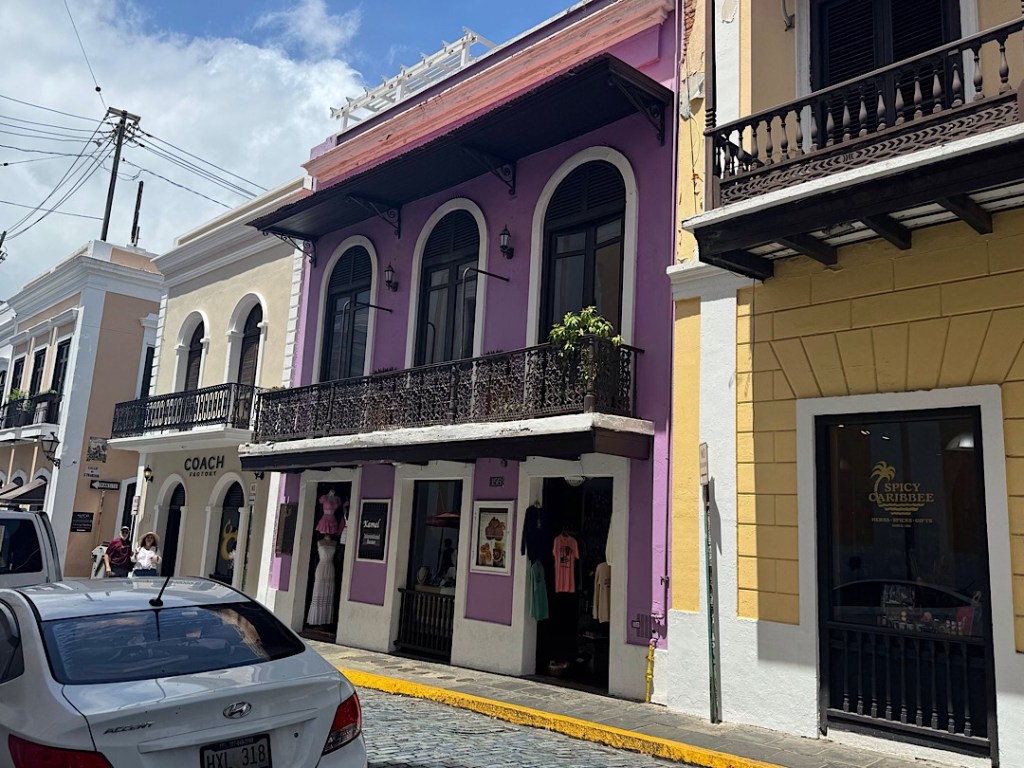
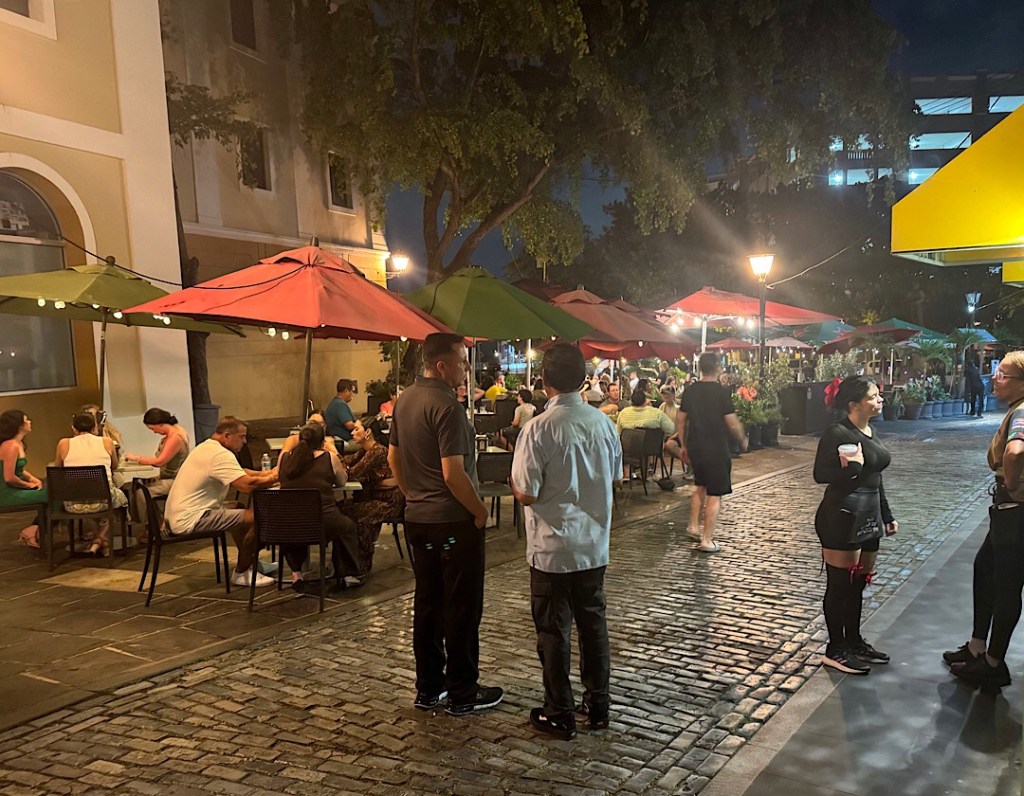
— San Juan’s old town looks great, particularly considering that two monster hurricanes (Maria and Irma) rampaged through 7 years ago, leaving in their wake apocalyptic destruction. The hurricanes knocked out all the power and shut down nearly all the digital and physical highways. However, from our vantage in the old town (an Airbnb just down the street from the 500-plus-year-old cathedral), we saw no remnants of that disaster. The Puerto Ricans cleaned up and have rebuilt their lives, and today throngs of tourists are strolling among the brightly painted buildings, shopping, consuming prodigious amounts of rum, and gobbling down ice cream.

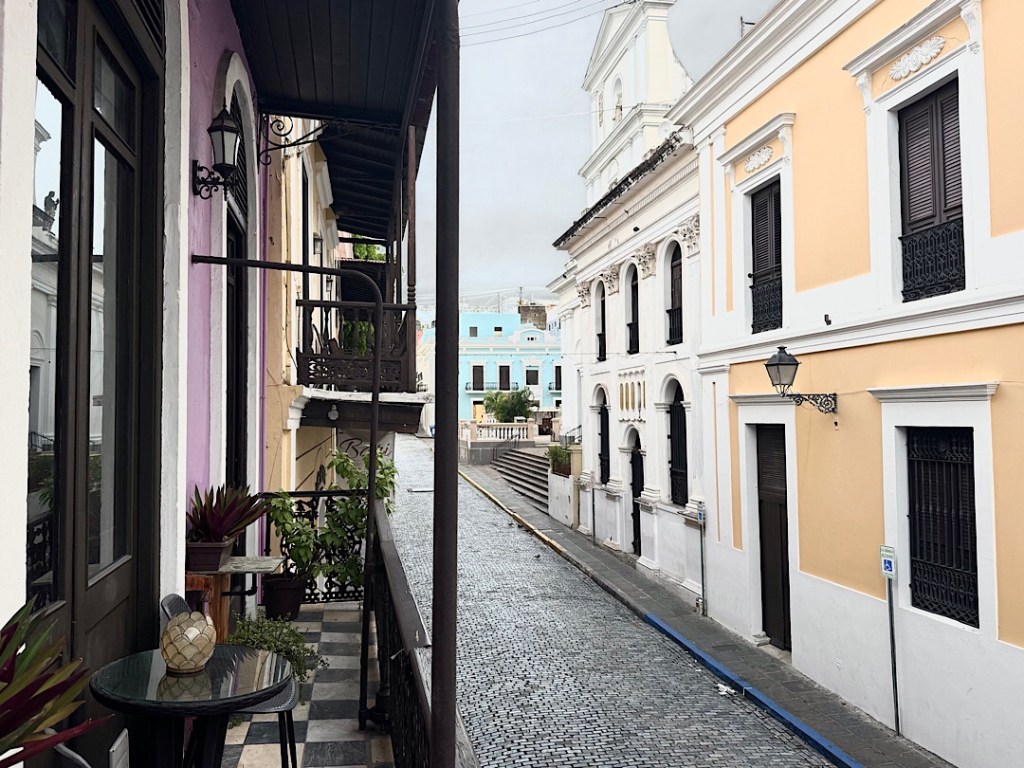
Our Airbnb filled the second story of that purple building.
The view from our balcony. Those steps down the block on the right ascend into the Cathedral.
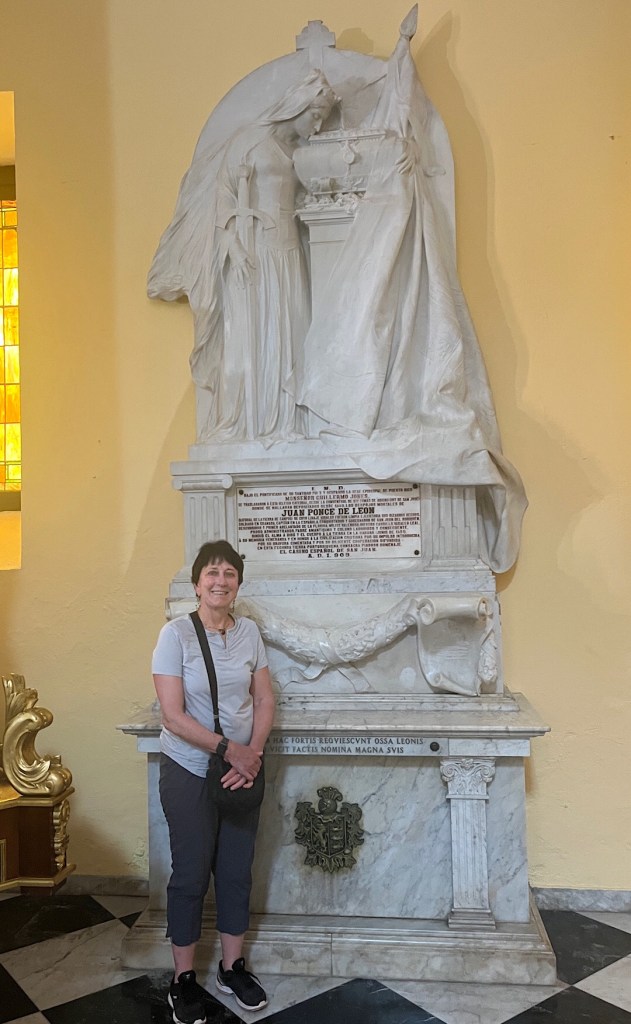
Within it, this tomb provides evidence that Juan Ponce de Leon failed to find the fountain of youth.
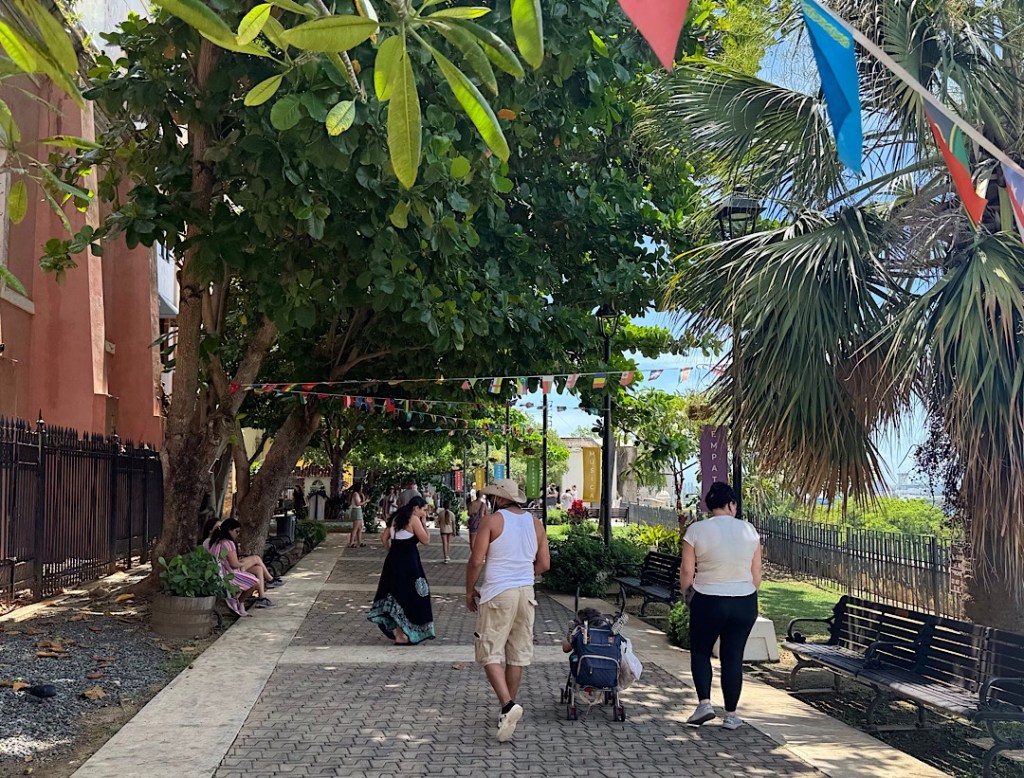
I loved the plethora of tree-shaded benches…
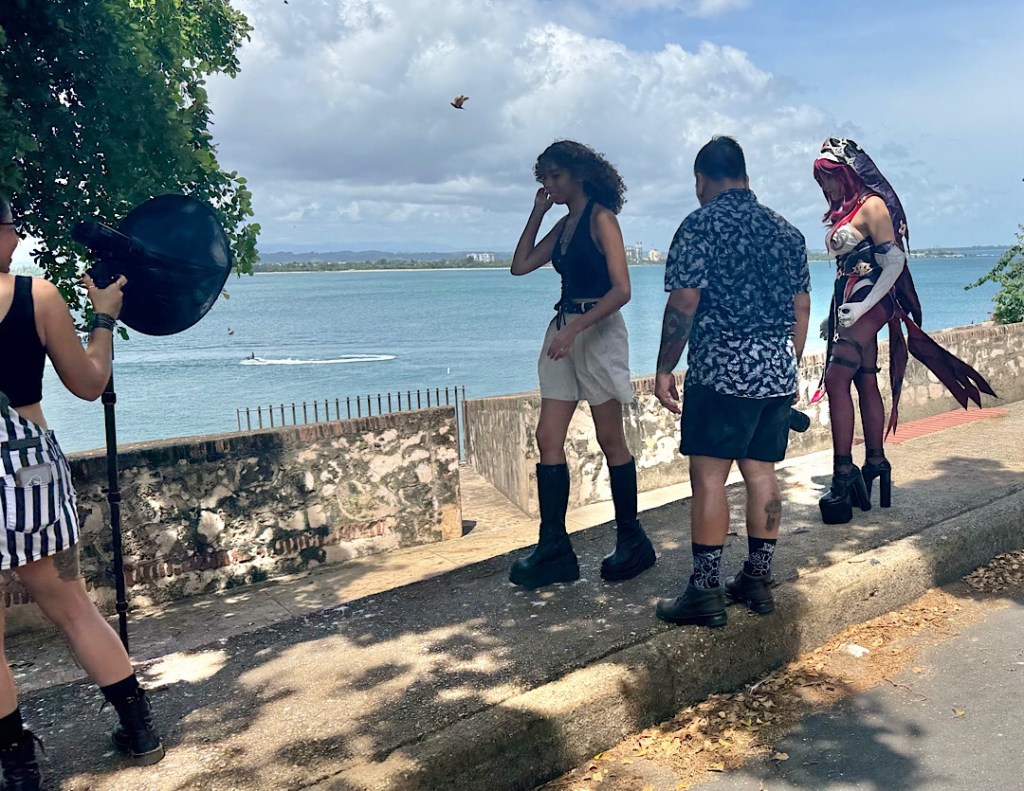
…and interesting street scenes.
Day and night

— The temperature hit 90 both weekend days, with so much humidity sweat dripped from us like drops of rain. This was a good thing. Old San Juan was so pretty and lively, had the weather been excellent, I might have felt tempted to move here. But not with weather like that.

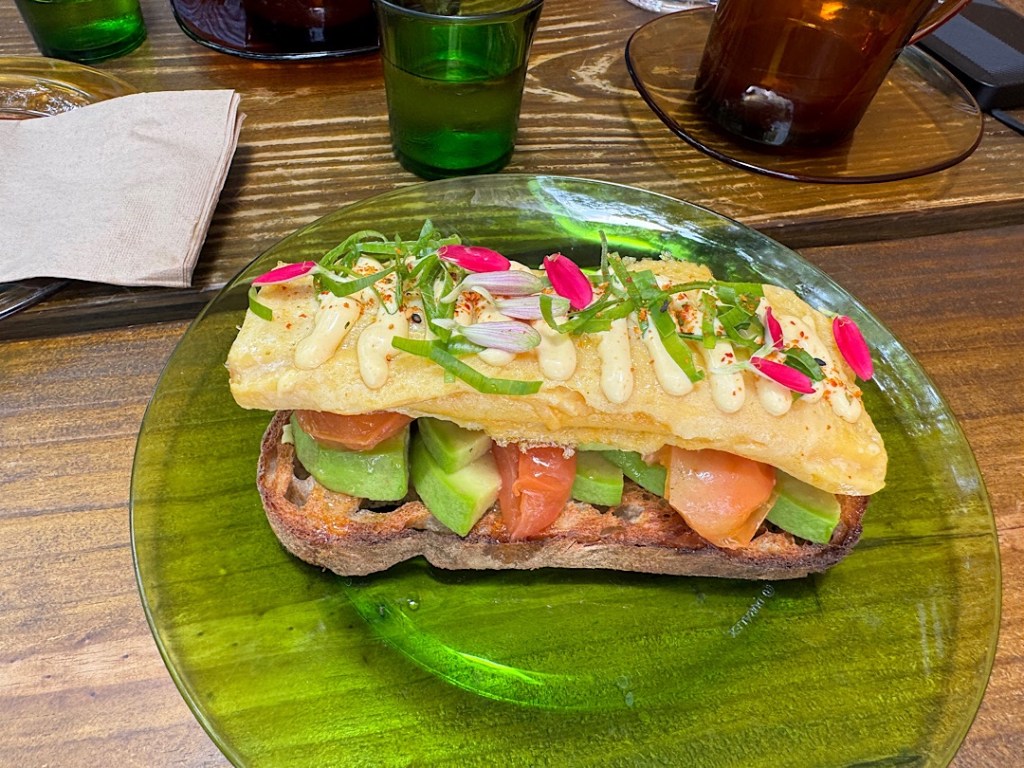
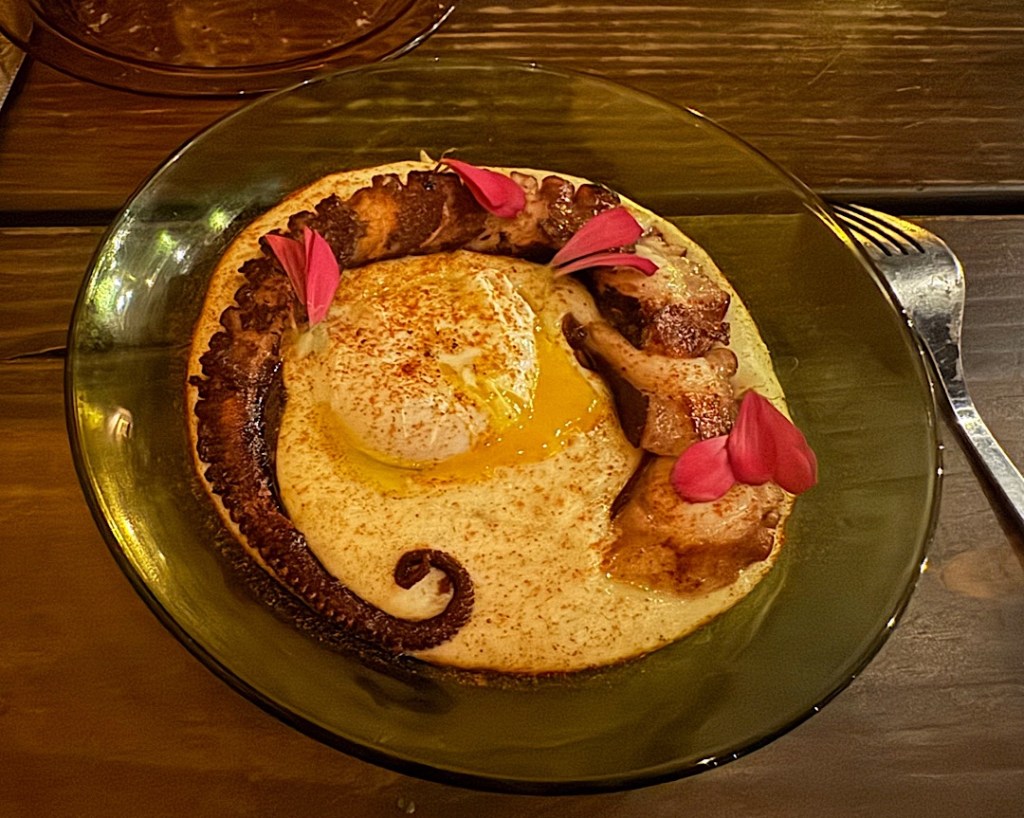
— We ate four meals in restaurants (two lunches and two dinners), and all of them were better than anything we ate in the Lesser Antilles. There the food was solid but unexciting. Not so in San Juan.

The “Japanese omelet sandwich” I had for lunch the first day.
That little street cafe was so good we returned for dinner.
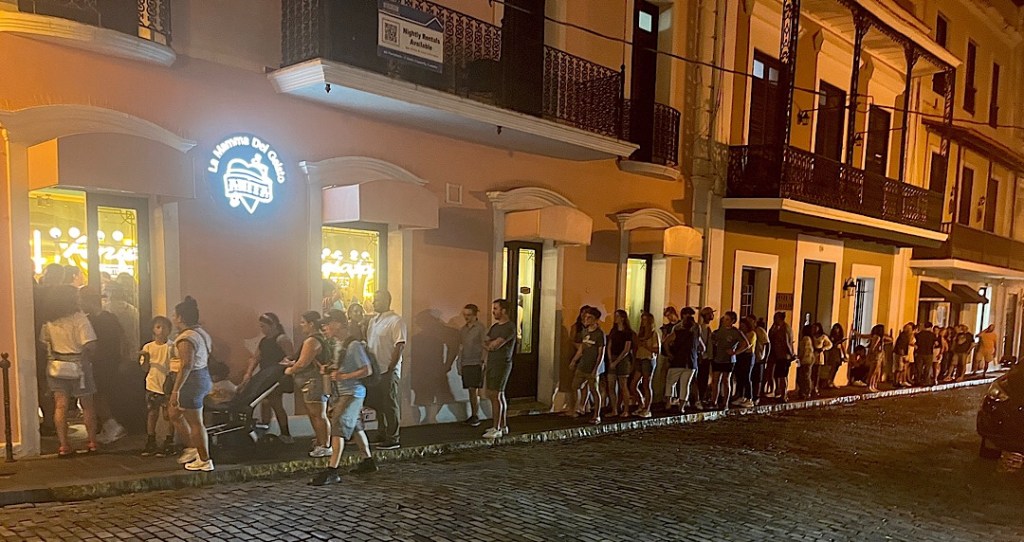
The line for ice cream at Anita’s.

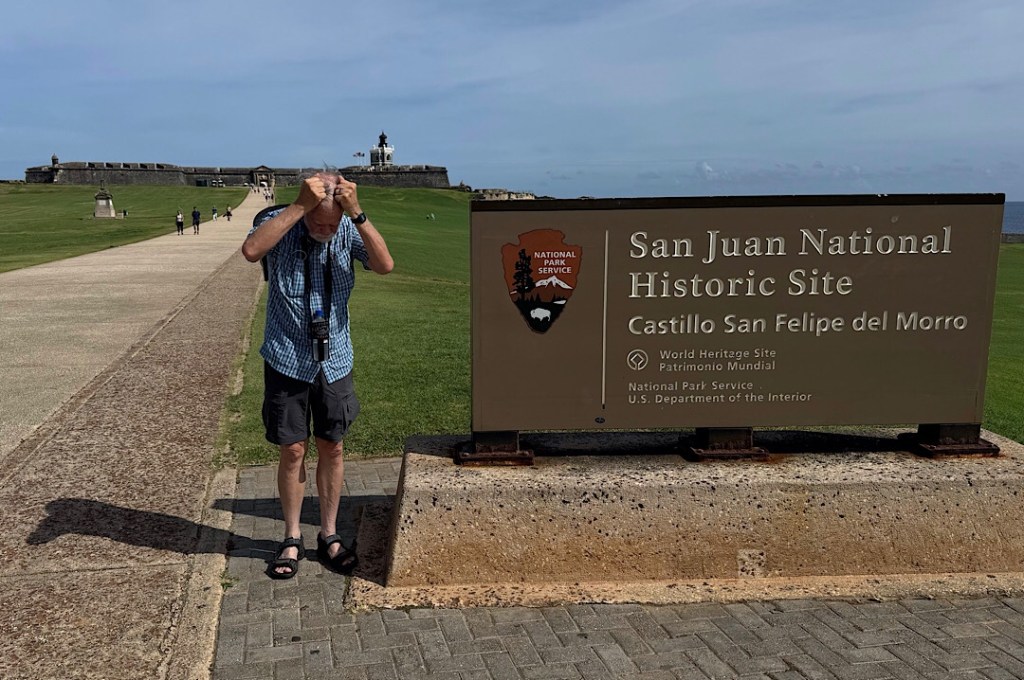
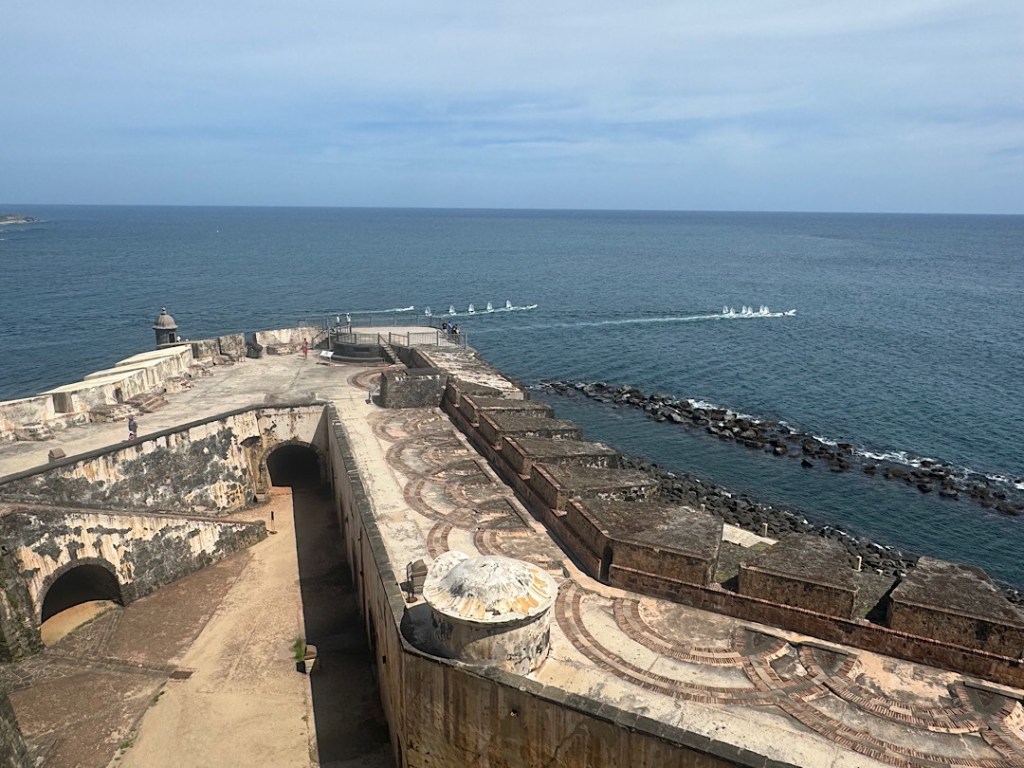
— The town’s biggest attraction — El Morro — belongs on any list of the Most Impressive Forts in the World.

It occupies a strategic point at the entrance to San Juan’s magnificent harbor.

Sir Francis Drake tried (and failed) to overcome it. A second attempt by the British navy at the peak of its imperial power ended with the English slinking away in defeat. Today the United States park service shows a film there that nicely recounts the history of Puerto Rico and the role played in it by El Morro. The only bad thing about our visit was that Steve forgot to bring along his National Park Pass (which we would have allowed us to enter free).

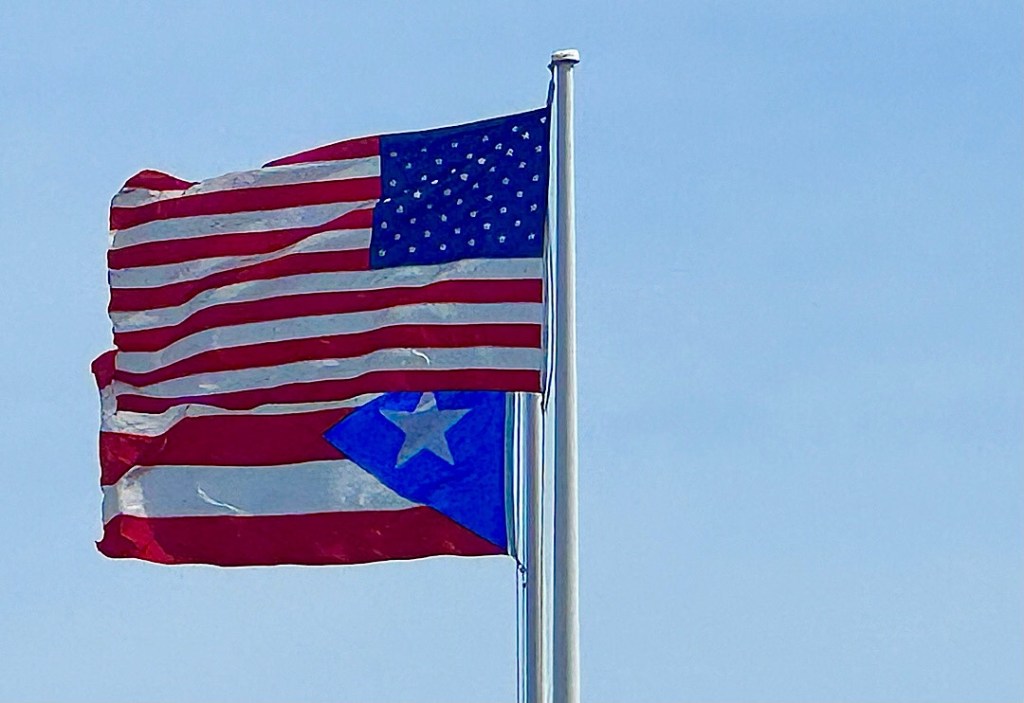
The price of forgetting that Puerto Rico is part of the United States.

Now, once again, we have no need for it. Yesterday afternoon we took the 40-minute flight on JetBlue from San Juan to the Dominican Republic, second largest island in the Greater Antilles.

The luckiest island

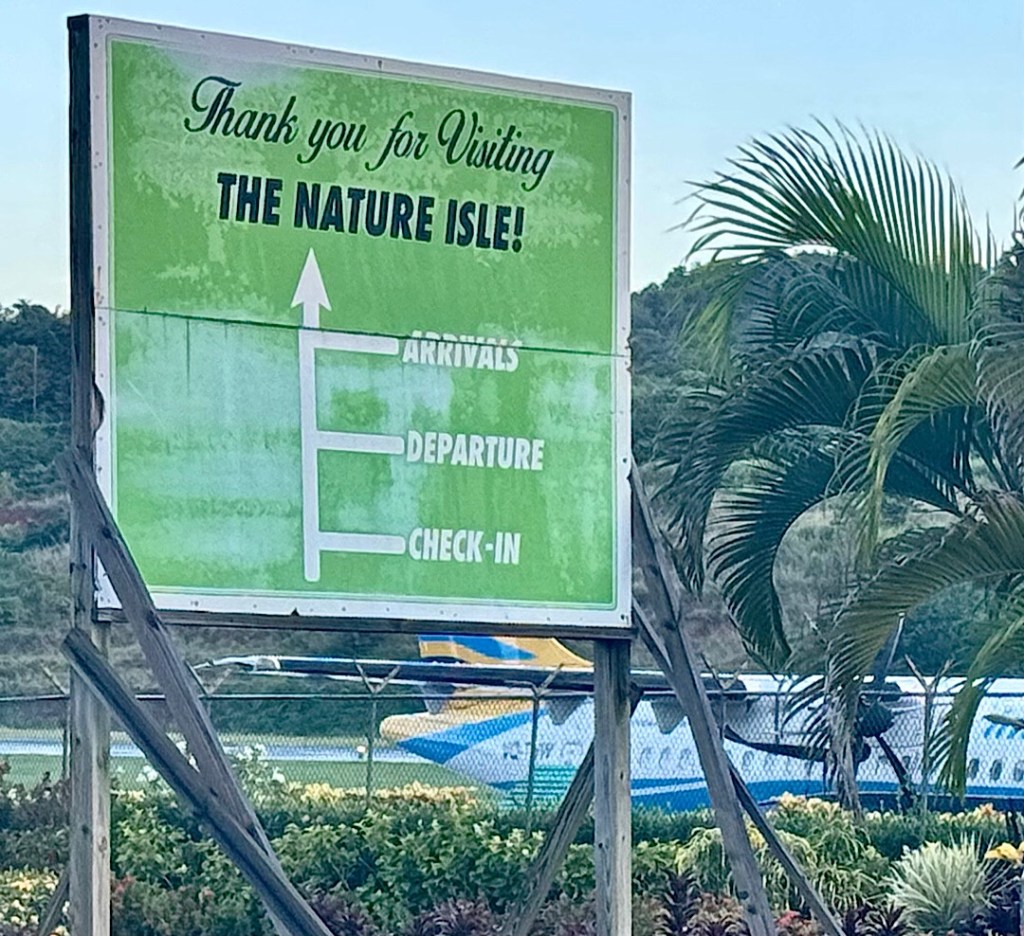
Dominica has been dubbed the Nature Island, just as Grenada is known as the Spice Island. For us, though, it was the Lucky Island.

A couple of things about this place (which folks pronounce “Do-min-EE-ka”) were lucky for its pre-Colombian inhabitants. Unlike most of the Lesser Antilles, Dominica has no good natural harbor. It’s also the youngest land in all the Caribbean. Created by volcanoes about 25 million years ago (compared to its 50-million-year-old-ish neighbors), it still has 9 active volcanoes (supposedly the highest concentration on Earth.) Because it’s so young, the terrain is steeper and more rugged, with few flat places suited for growing sugar cane. At first no Europeans were even sure they wanted it. (Then the English and French squabbled over it for a couple of centuries.)

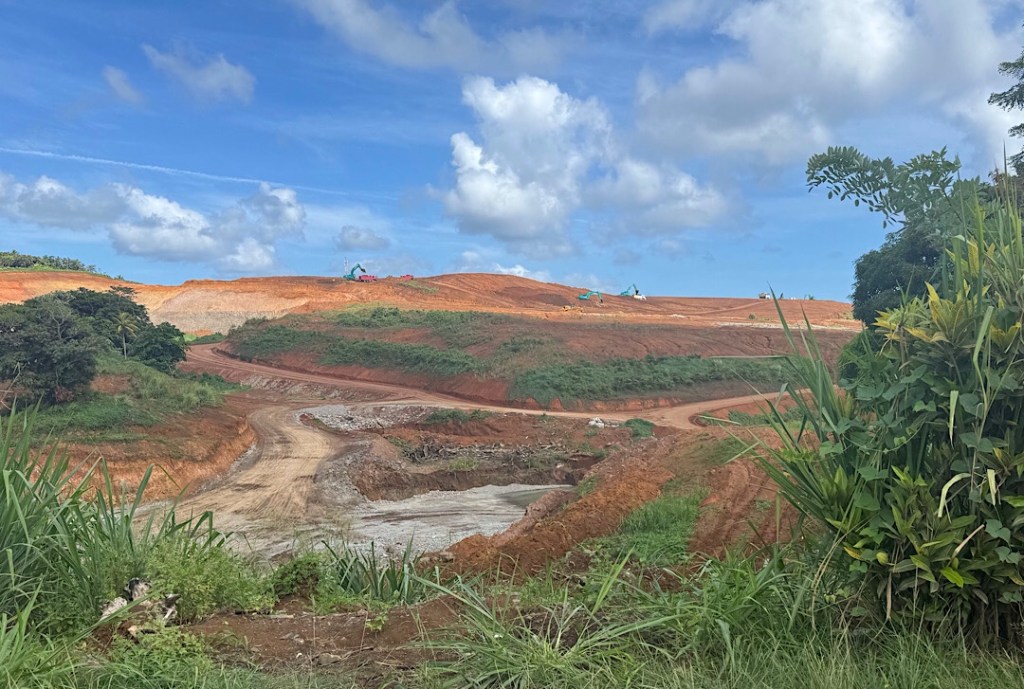
No roads were built anywhere on Dominica until the 1960s. Today big development plans are brewing. Someone’s erecting what supposedly will be the world’s longest aerial tram up to Boiling Lake at the top of the island. Construction on a new international airport has turned a part of the northern coast into a scene of stunning destruction.

This photo does not convey the staggering scale of the earth-moving underway.

Despite all this, much of what we saw of Dominica felt wild, barely influenced by humans.

Our luck started with where we wound up staying. As for all our Caribbean destinations, I searched for offerings on homeexchange.com where I could use my fat store of guest points. There weren’t many choices, but I found a little boutique hotel, Pagua Bay House, whose owner, Rick, messaged me that I could use my points to book one of his six rooms if he still had free ones three months before our arrival. (He did.)

In his written communications, Rick was terse, and I worried about what we might find when we got there. But the place turned out to be lovely, and at breakfast Wednesday morning, Rick and his wife Alicia dazzled me with their warmth and charm.

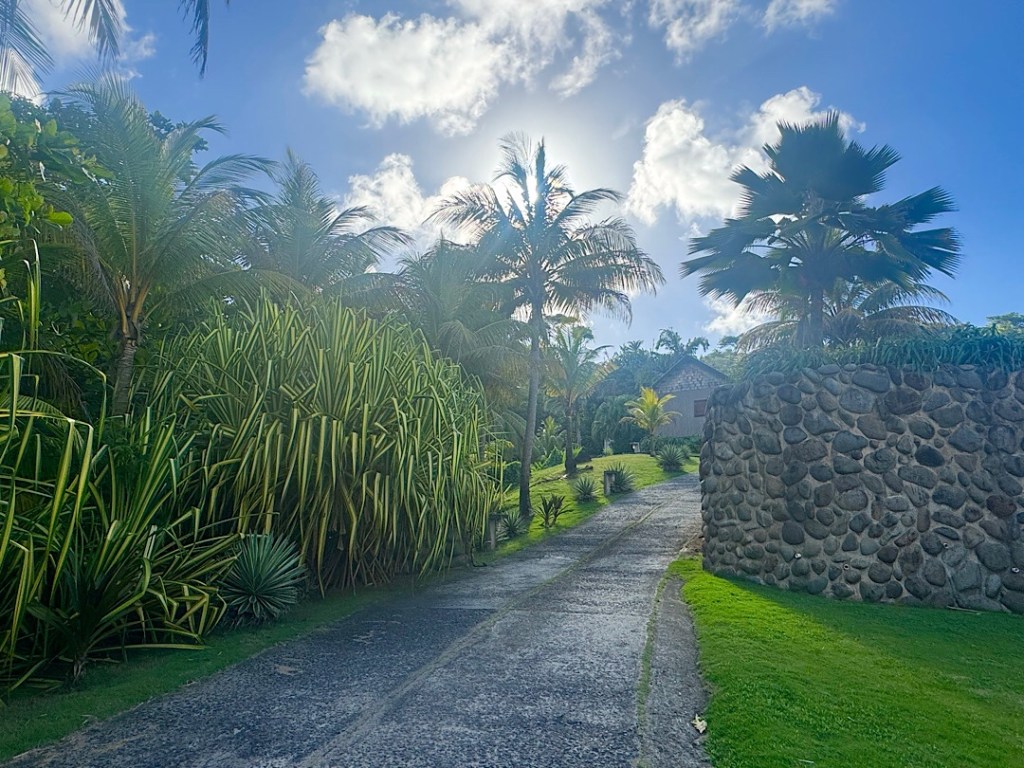
The entrance to the property
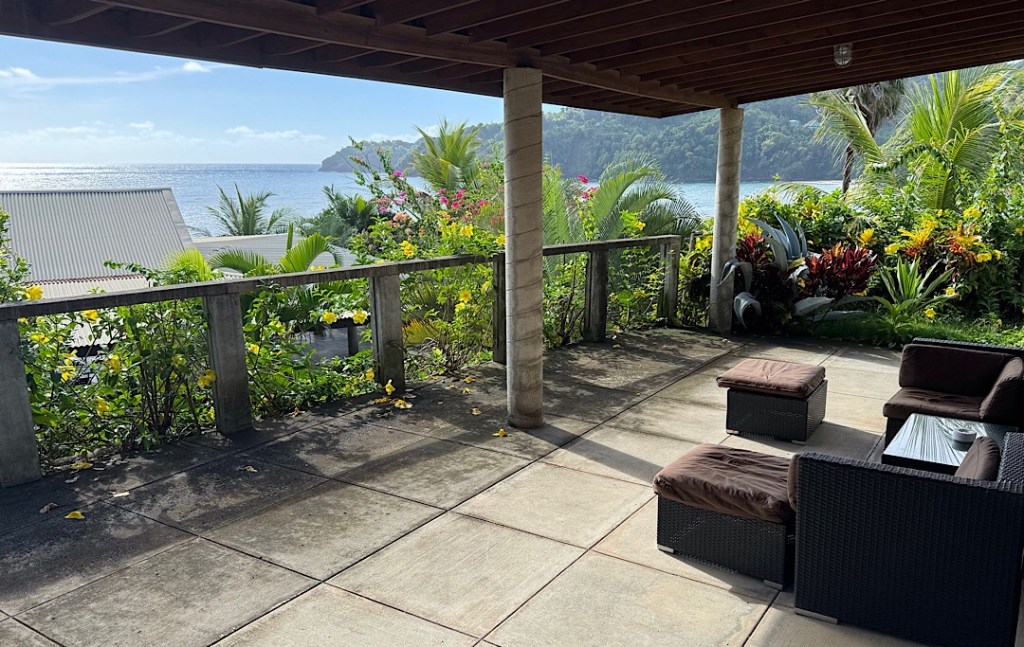
Our room had a private terrace overlooking the Atlantic Coast.
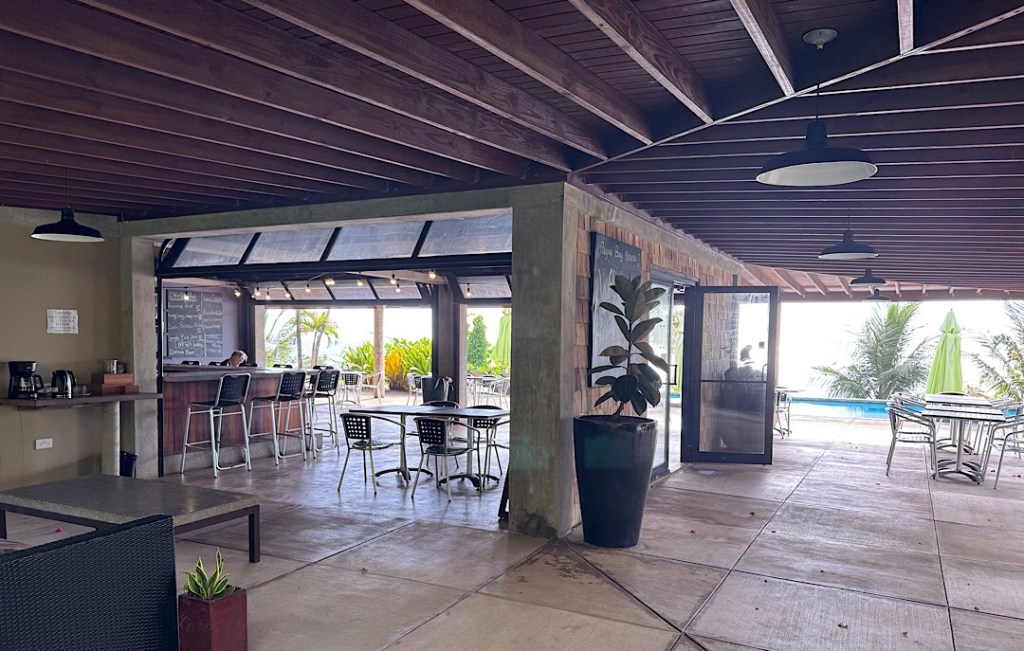
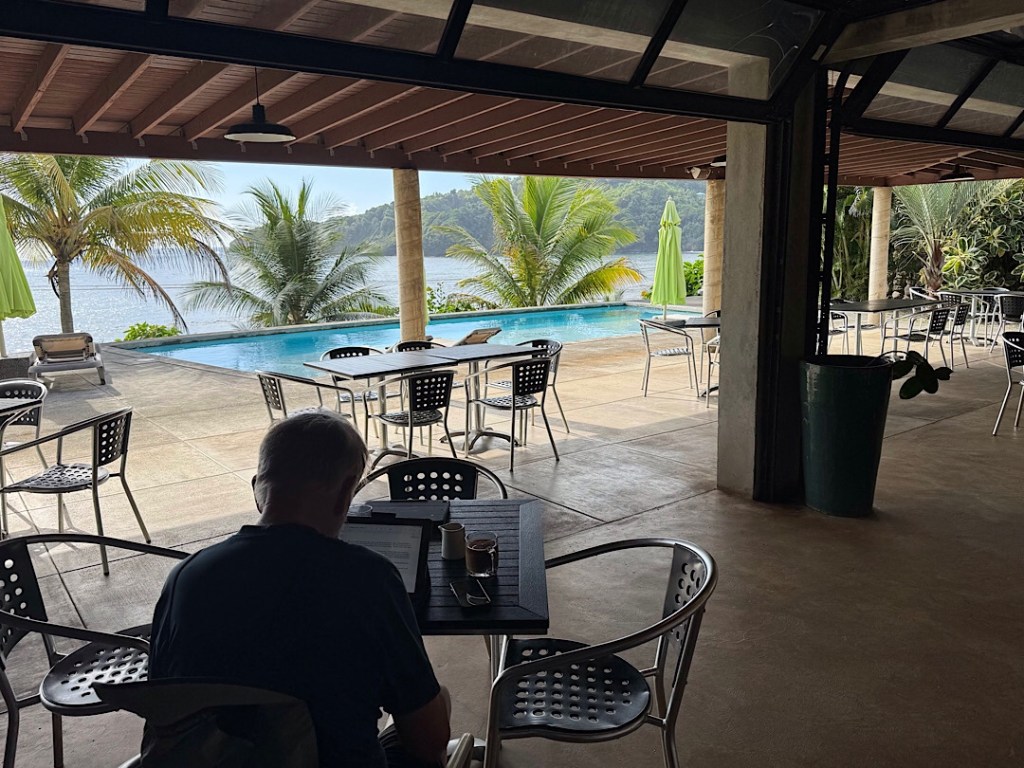
The entrance to the restaurant
Looking out to the pool deck
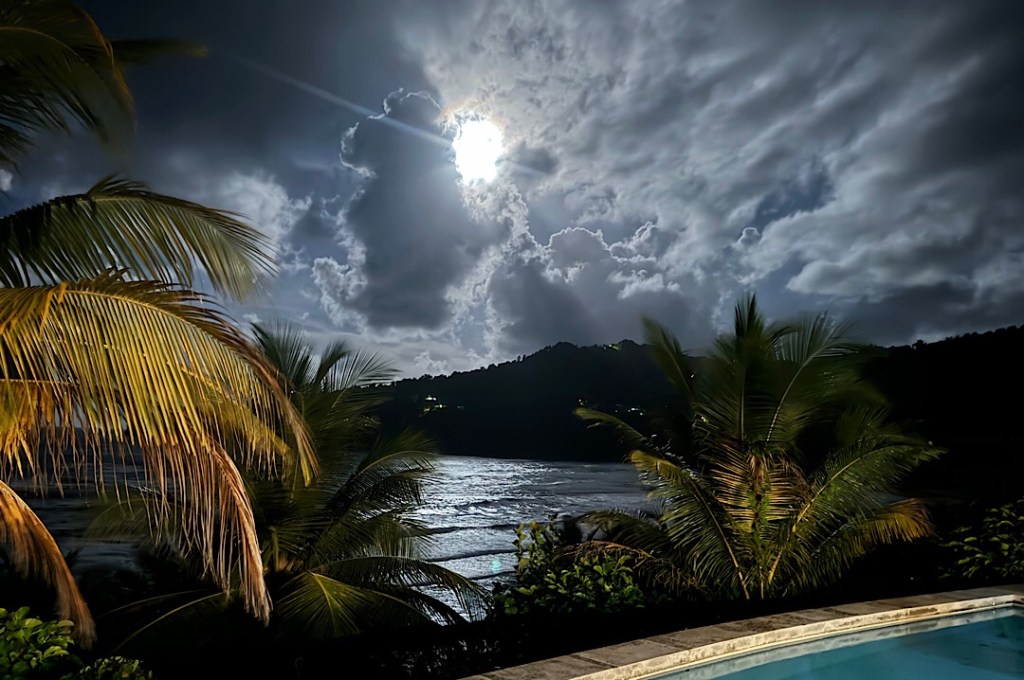
The view from our table at night

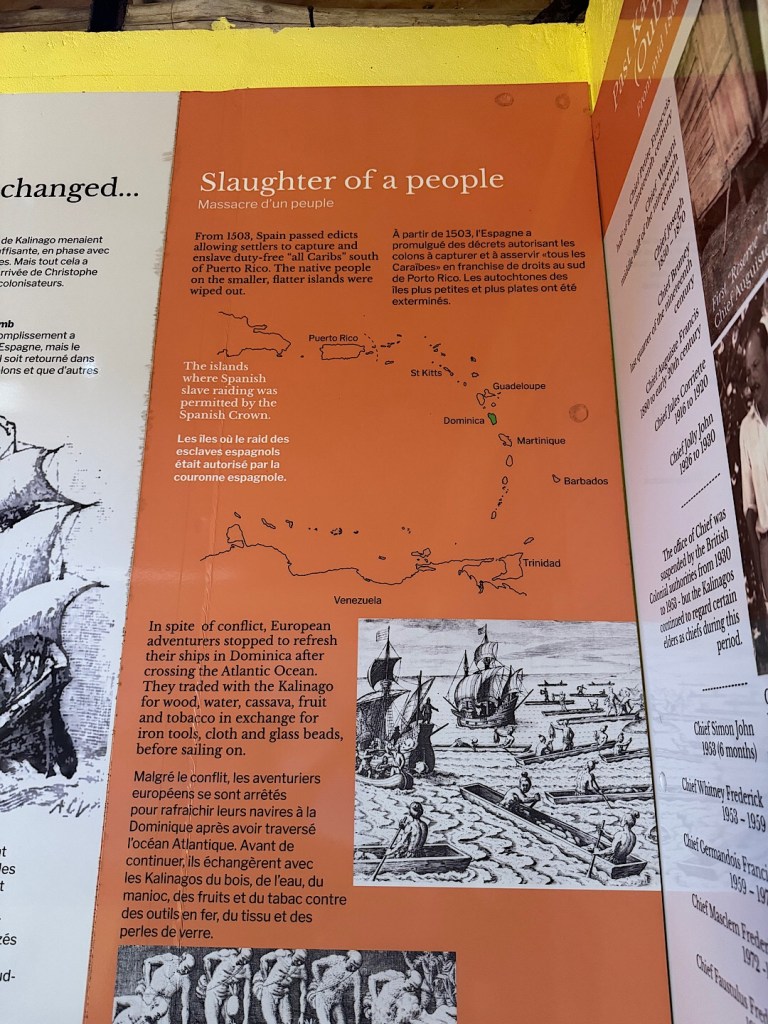
Wednesday morning Alicia was bursting with suggestions for how we could spend our time; she offered to set us up with guides on Thursday and Friday. She also confirmed that Pagua Bay House is situated less than 5 miles from the largest enclave of indigenous people remaining in all the Caribbean. The history of those who lived here before the Europeans arrived and what happened to them interests both Steve and me, so we headed for the Kalinago Territory as soon as we finished our breakfasts.

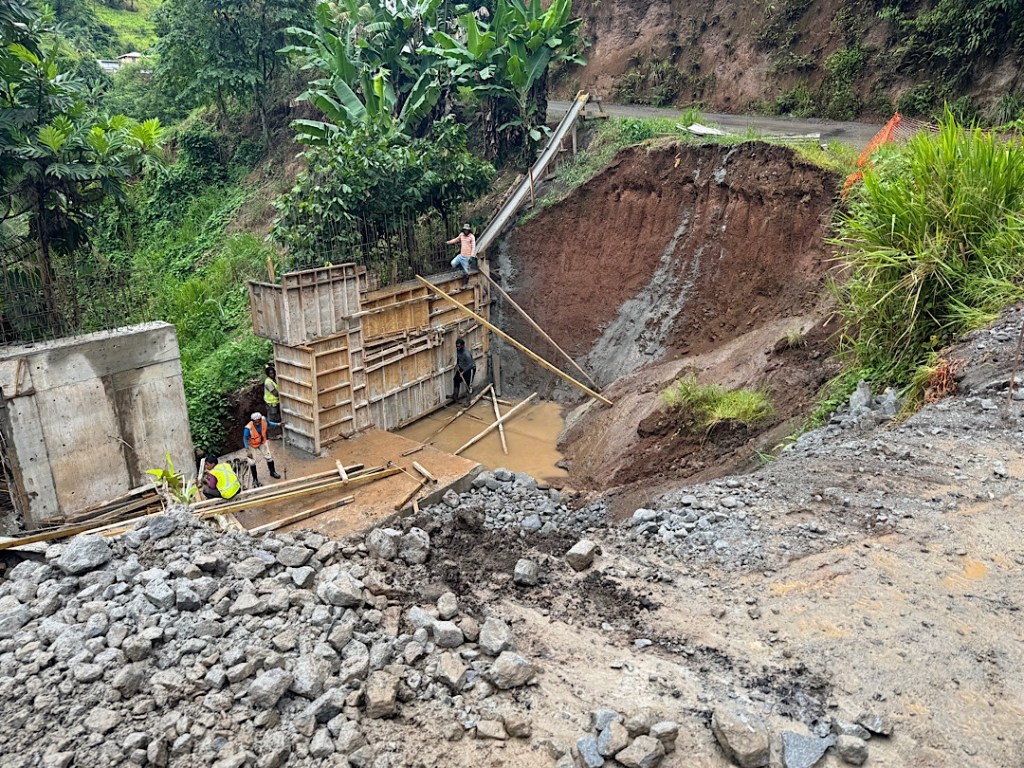
The road to the territory was dreadful, but crews were working to repair it.

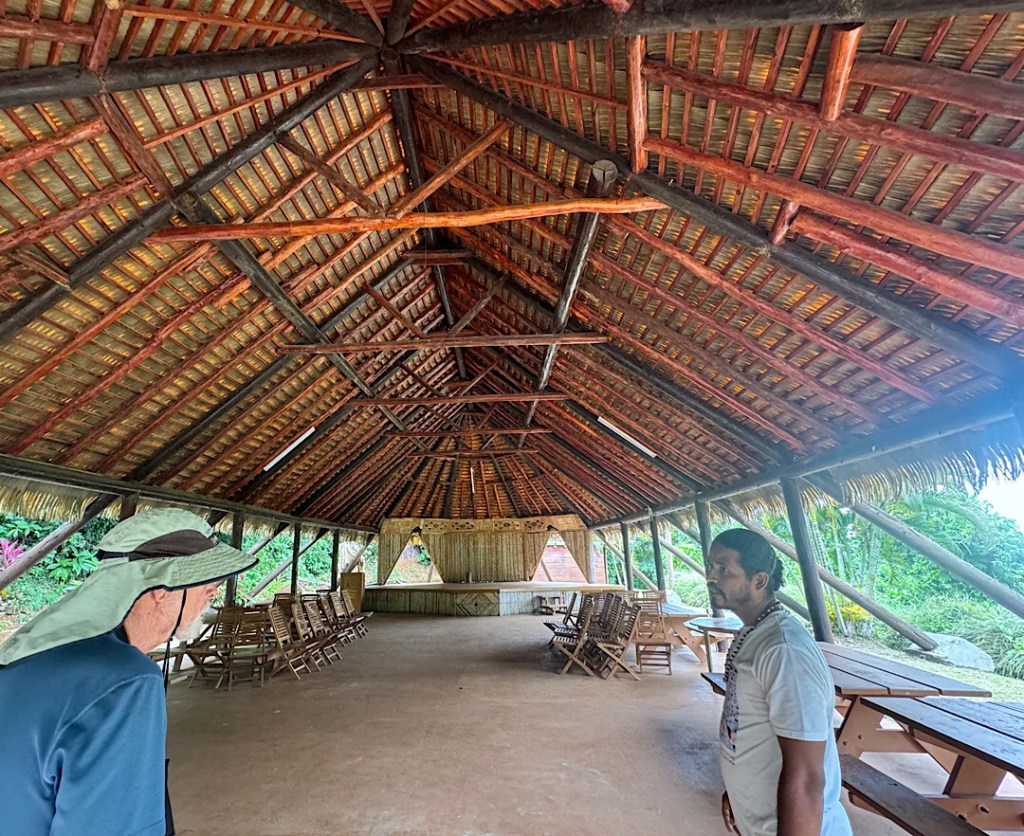
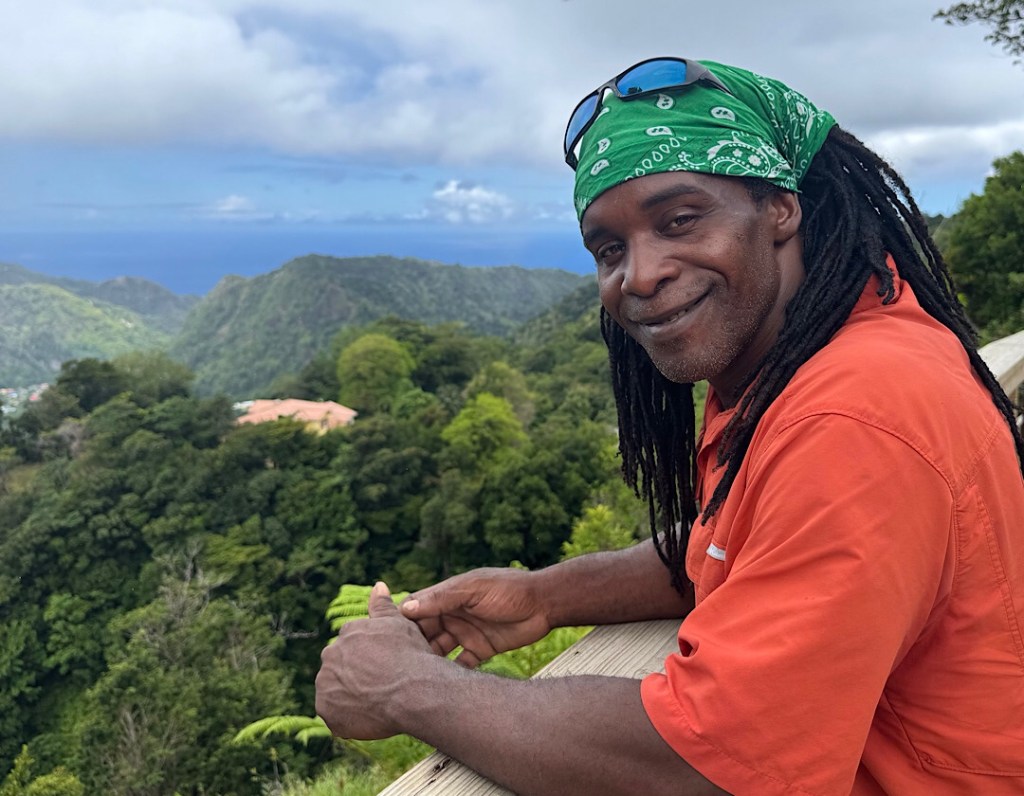
At the end of the road we found a thoughtful visitor center and a bright young man named Kendrick who toured us around the heart of this community of 3500 people.

We learned a lot, but it was nothing compared to what we got the next day from Elvis. Steve and I drove for almost 90 minutes back to Roseau (where our ferry landed), then we spent more than 6 hours exploring the Morne Trois Pitons national park (a World Heritage Site) with this guy. “Like drinking from a fire hose,” Steve summed up the experience.

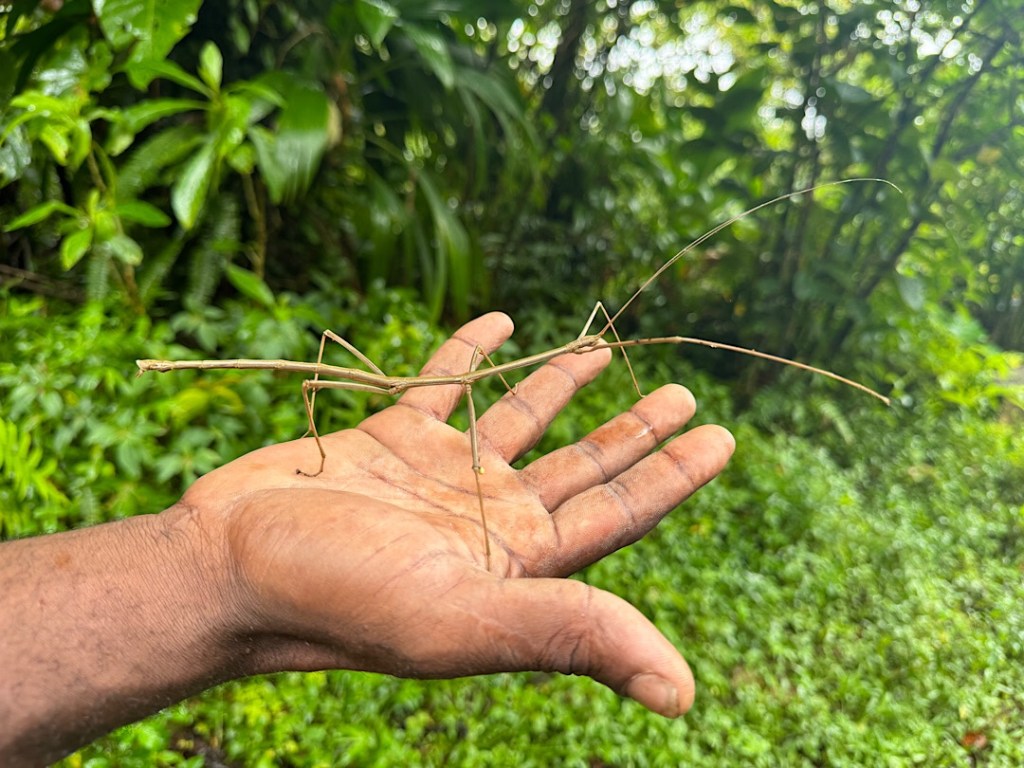
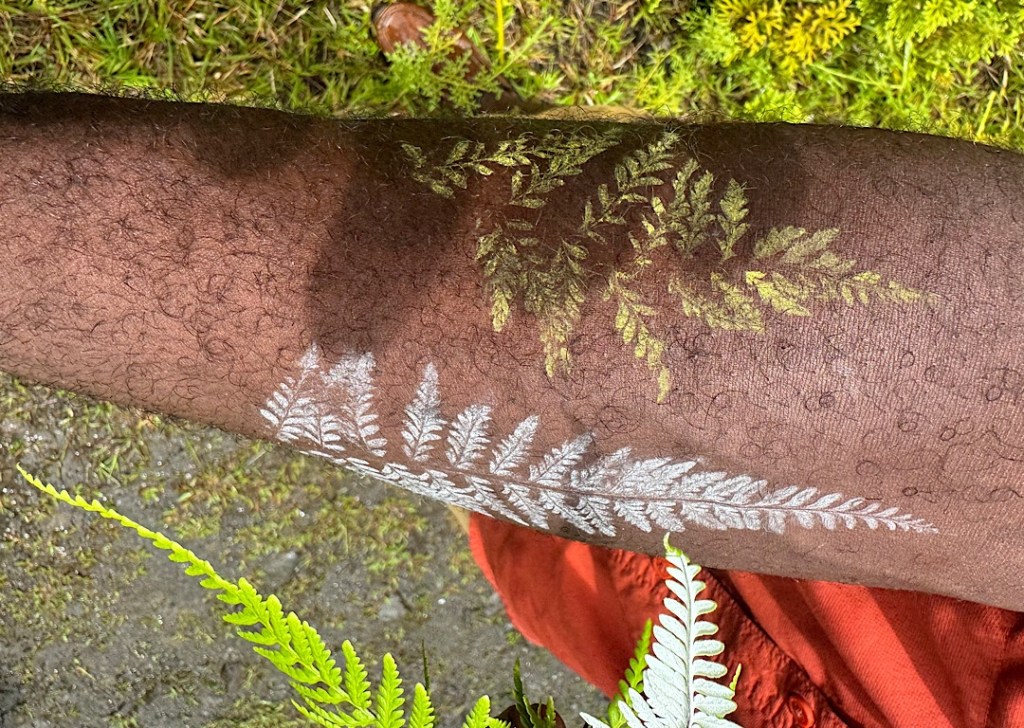
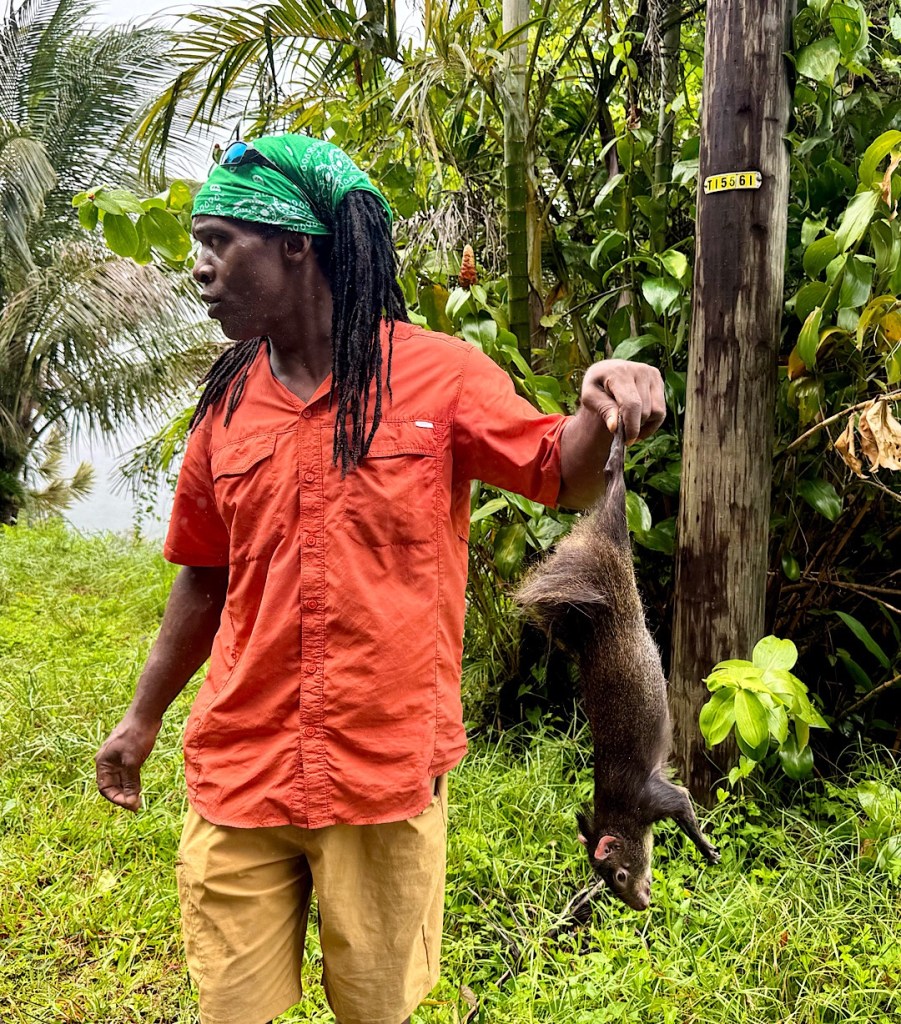
Elvis commandeered the wheel of our rental car and drove us up through transitional forest, then rainforest, then cloud forest. He was the kind of keen-eyed expert who could spot a walking stick on a tree yards away and pluck it off for us to admire…

…Who could tattoo his forearm with the spores of fern fronds.

…Who when we came upon a freshly killed agouti in the middle of the road, retrieved and cached the beast for a friend who would cook it for dinner.

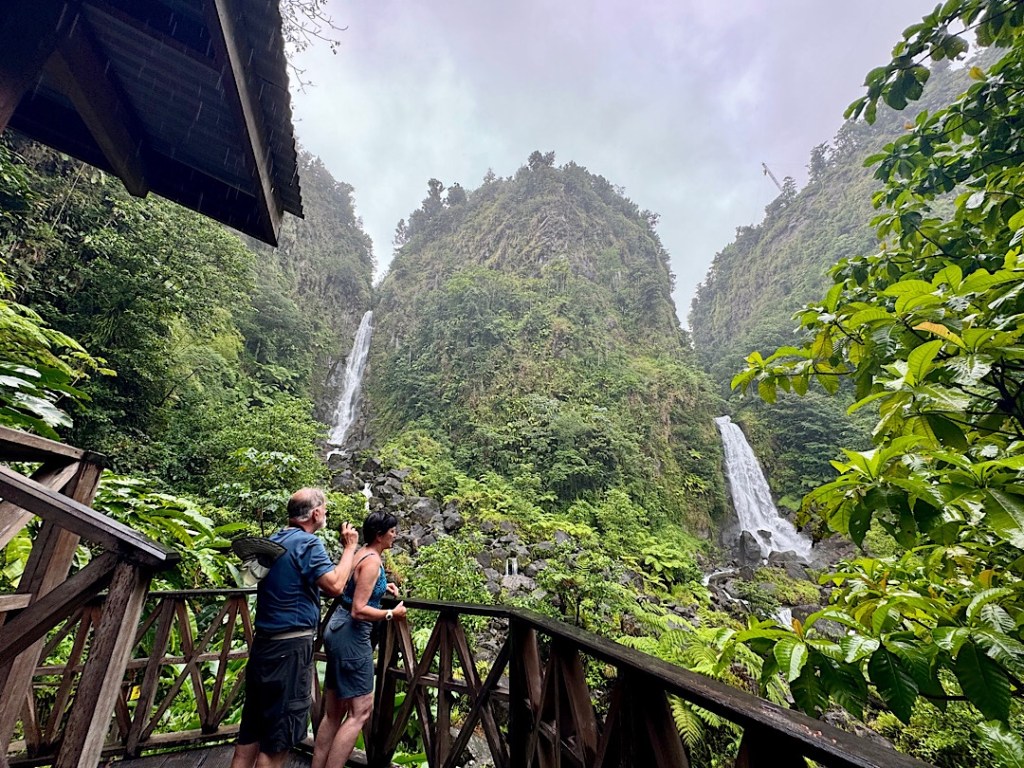
He took us to the impressive Trafalgar Falls…

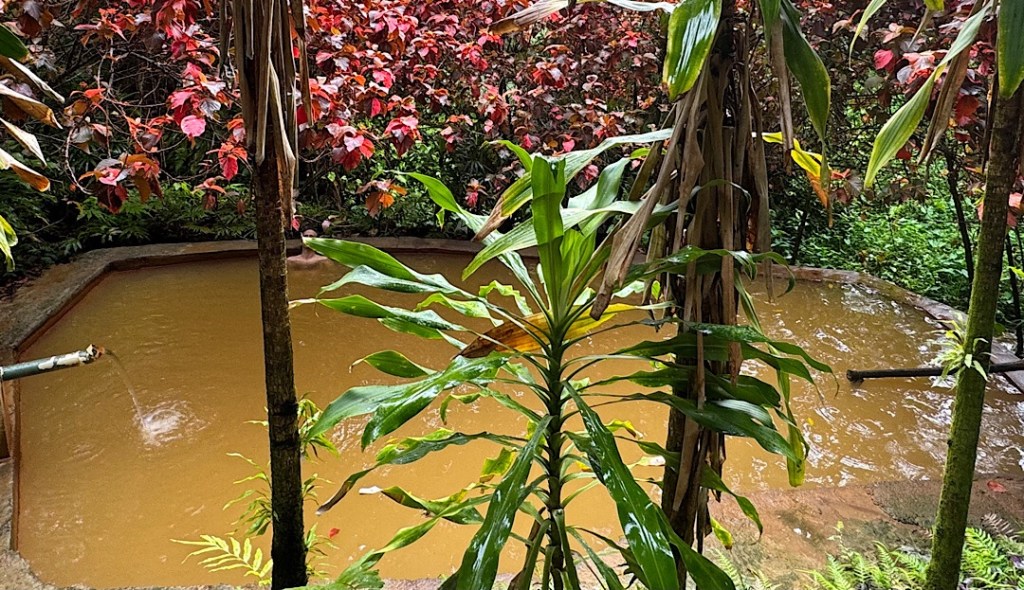
…and to a little hot springs off the beaten path where the three of us literally soaked in beauty.

His knowledge of the profusion of plants was encyclopedic, and Elvis seemed to know almost as much about Dominica’s history, archeology, and geology.

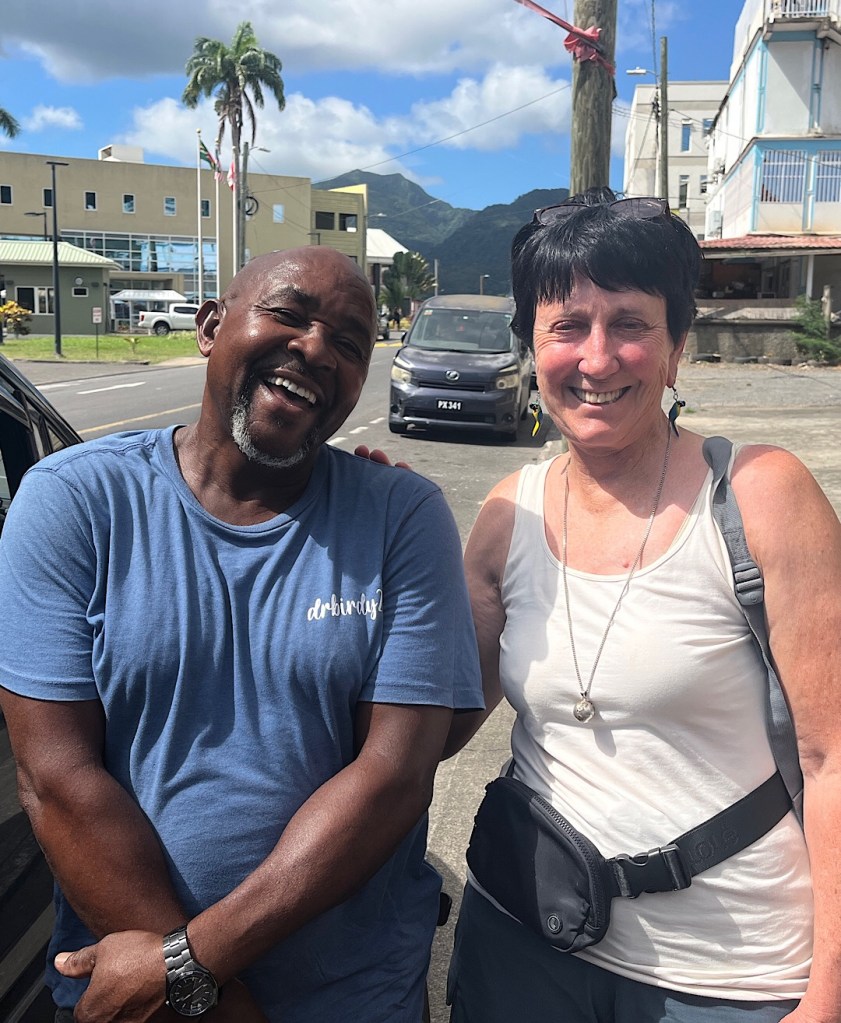
I’ve learned over the years that a good guide can change your view of the world; add layers of insight and meaning to what’s around you. Elvis was a world-class guide, and it was purest luck (and the fact that late May is the beginning of the low season) that we were able to book him at the last minute. The same fortuitous combination enabled us to spend a big chunk of Friday with Bertrand Jno Baptiste, aka “Dr. Birdy.”

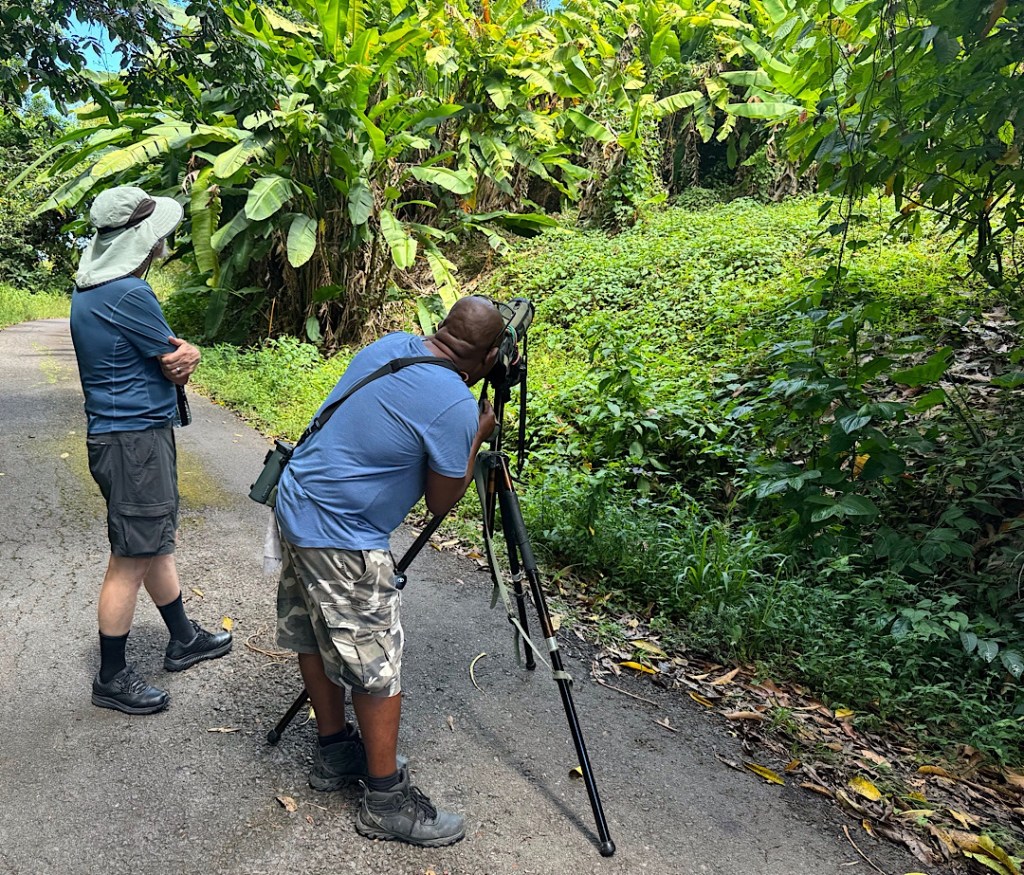
Birdy, who’s now 63, fired a slingshot at a beautiful local bird when he was 11, and you can still hear some of the horror in his voice when he recalls watching it die in his hand. He vowed to never again kill any bird. Instead he started learning about them. That became a passion and it led him to a career with Dominica’s national wildlife service. Birdy now knows more about the Dominican avian community than anyone in the world; he wrote the definitive Birds of Dominica (published in 2005). He has a hearty, effusive spirit that made our time together a pleasure.

He drove us high up into the Morne Diablotin national park in the northeast section of the country, stopping periodically to check certain trees where he knew certain birds hang out.

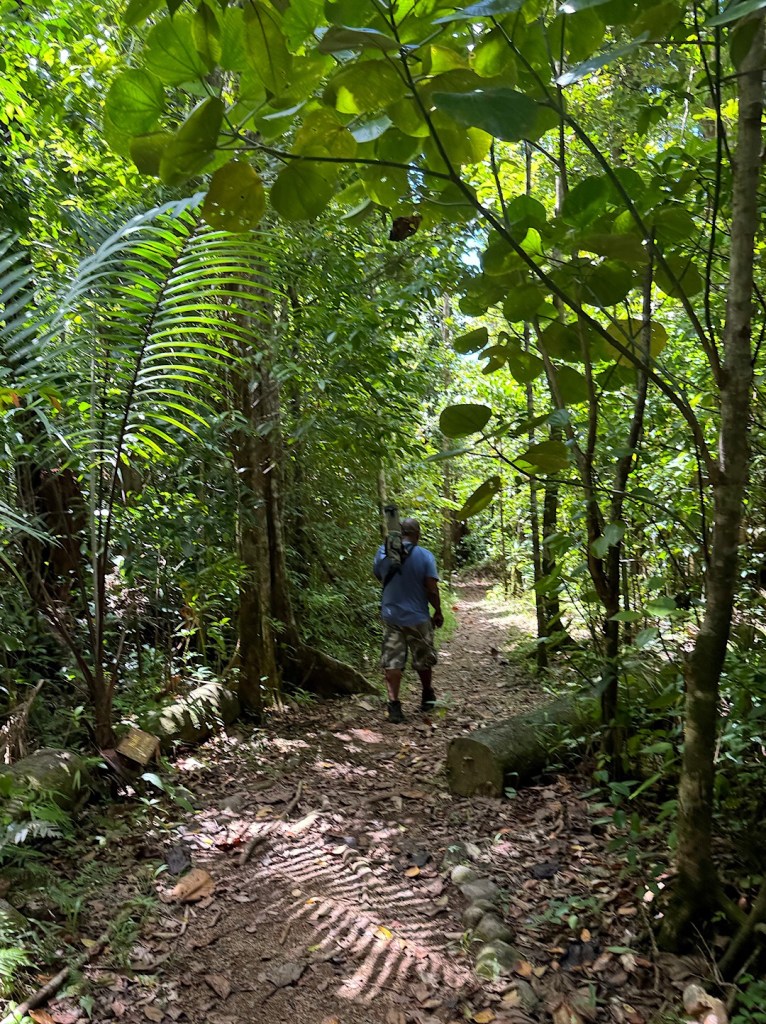
Finally, we parked and hiked into the old-growth forest, a cool, magical realm that’s home to the rarest of all Amazon parrots, the hefty Amazonas imperialis, aka the Imperial Parrot or the Sisserou.

The Imperial Parrot is the national bird. That’s it on Dominica’s flag (on the right).

Under Birdy’s tutelage we spotted more than a dozen types of birds, including a charming, tiny Antillean crested hummingbird (smallest of the four types of Dominican hummers.)

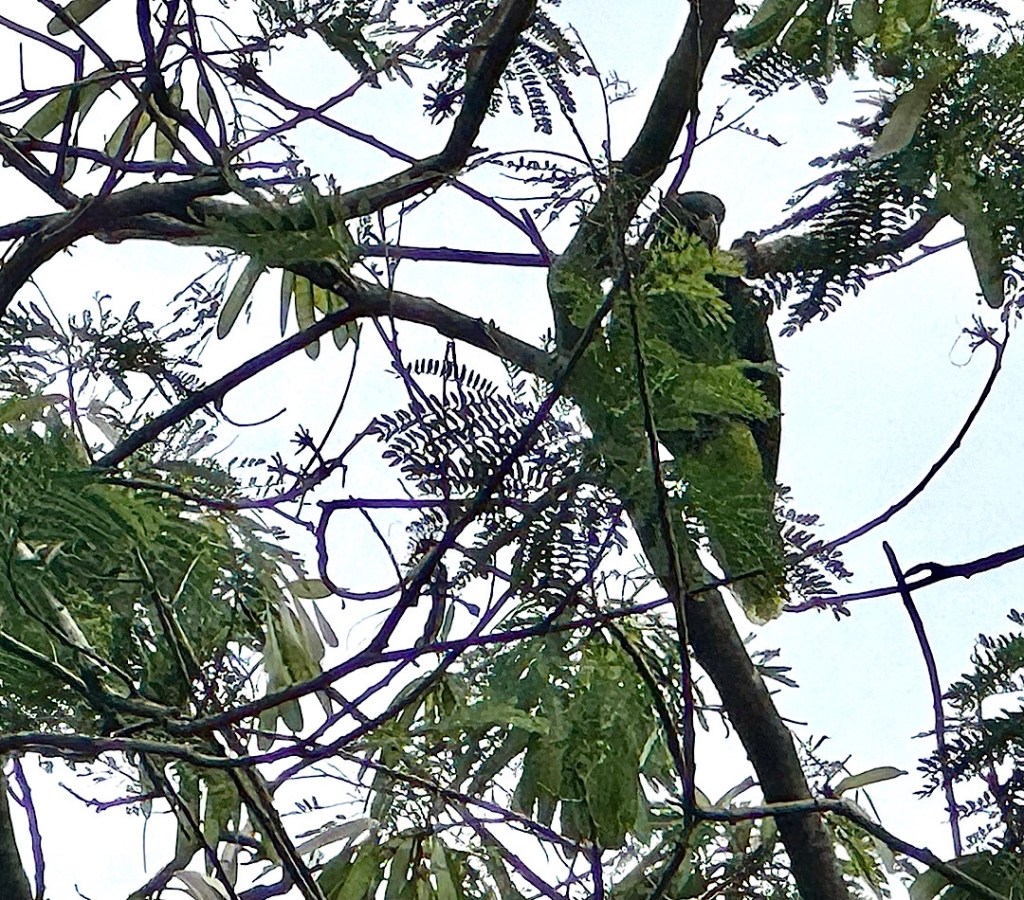
We could also hear parrots. But they seemed to be hiding. For a while I thought our luck had run out. Then driving to the exit, Birdy braked hard and pointed to a presence on a nearby branch: a young male member of the island’s other resident parrot, the smaller red-necked or “Jaco” species.

It wasn’t an Imperial. You can’t win them all, but it felt like we had at least partly filled our quest. And then Steve and made it back to Pagua Bay without getting killed on the road. That felt very lucky.

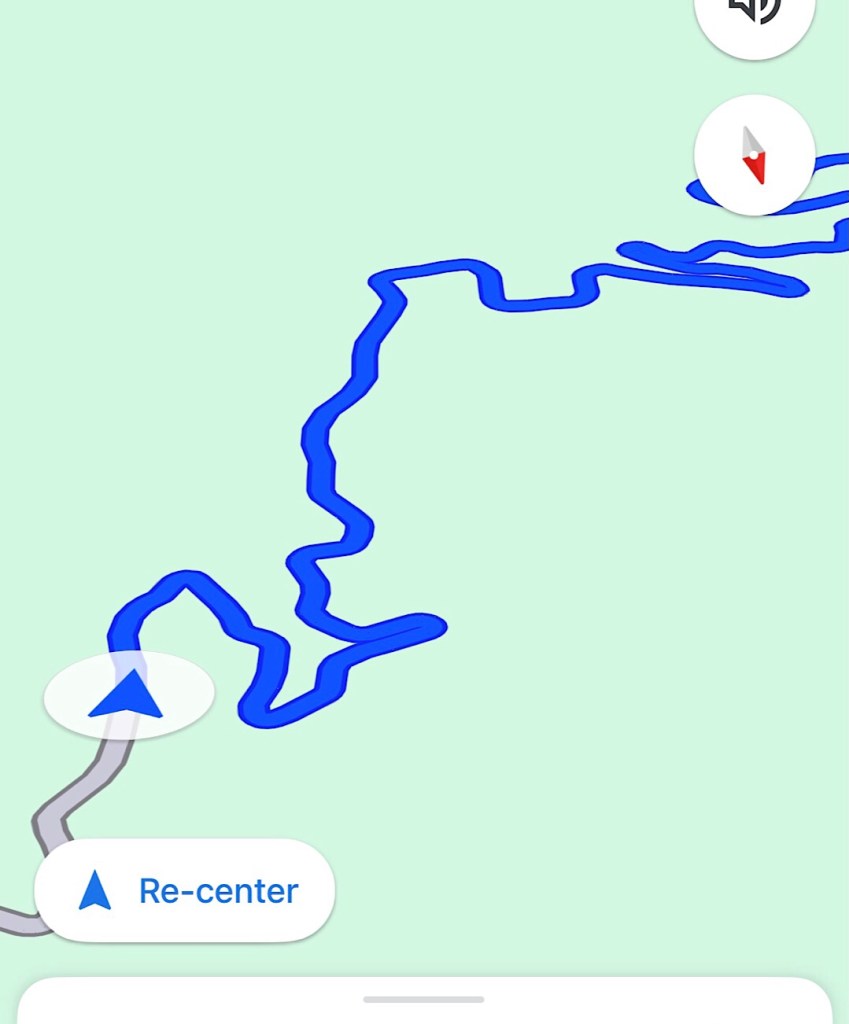
Most of the roads we traveled on Friday looked like this on Google Maps. In reality, they looked worse.

Ferry fizzle

In some sense, our travels in Indonesia last year inspired me to undertake this present adventure. A healthy network of local ferries connects the vast Indonesian archipelago, and although we only took one (from Java to Bali), that experience made me wonder if we might explore the much closer archipelago in the Caribbean using ferries too.

Nope. Digging into it, I learned that you can rent boats to sail yourself around, but that seemed super-expensive and pretty time-consuming. You can take cruise ships, but Steve and I were interested in learning about life on an assortment of islands rather than lounging on cruise-ship decks and making lightning calls at ports packed with gringos. In the end, I was only able to book passage for us on two local aquatic lines. One was on a car ferry that sails overnight from San Juan in Puerto Rico to Santo Domingo in the Dominican Republic. I also got us seats on the much shorter L’Express des Îles line that runs from St. Lucia to Dominica (via Martinique). Then one day last month I got a call informing me the Puerto Rican car ferry wouldn’t be running on May 28 after all; they needed to do some “maintenance” work on it.

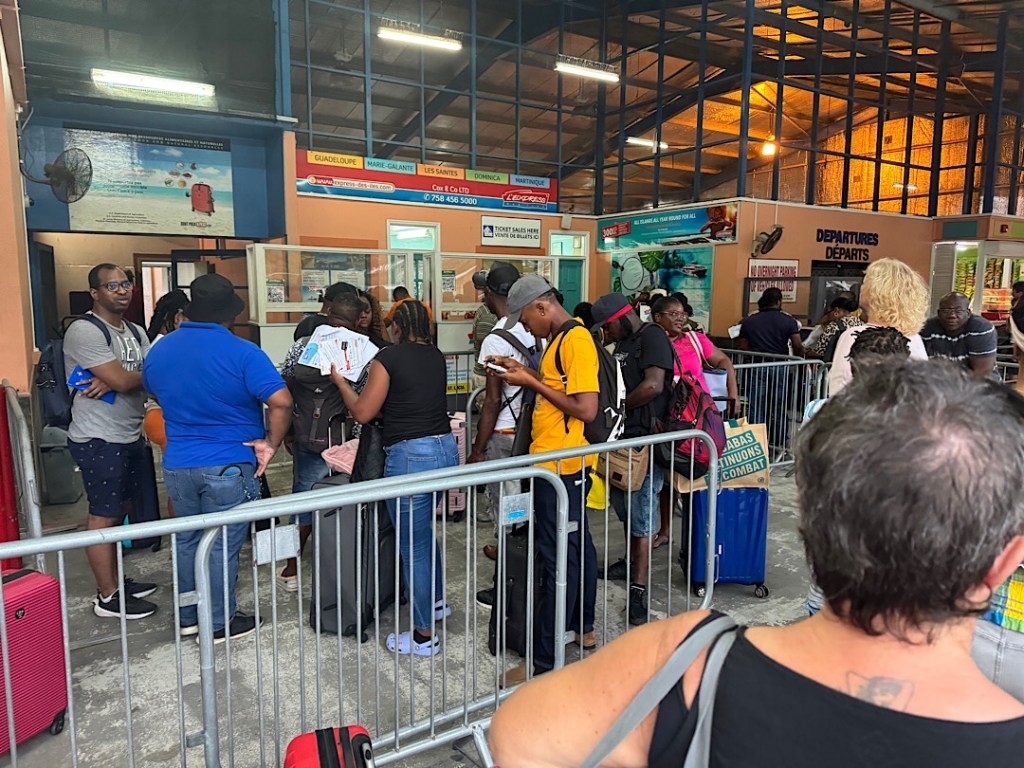
That left only L’Express des Îles, on which we sailed Tuesday morning. My rating: “meh.” We had to get up at 3:45 a.m. to be driven to the ferry dock in Castries (on the opposite side of St. Lucia from where we were staying.) Buying the ticket online had been easy, and check-in at the port wasn’t bad.

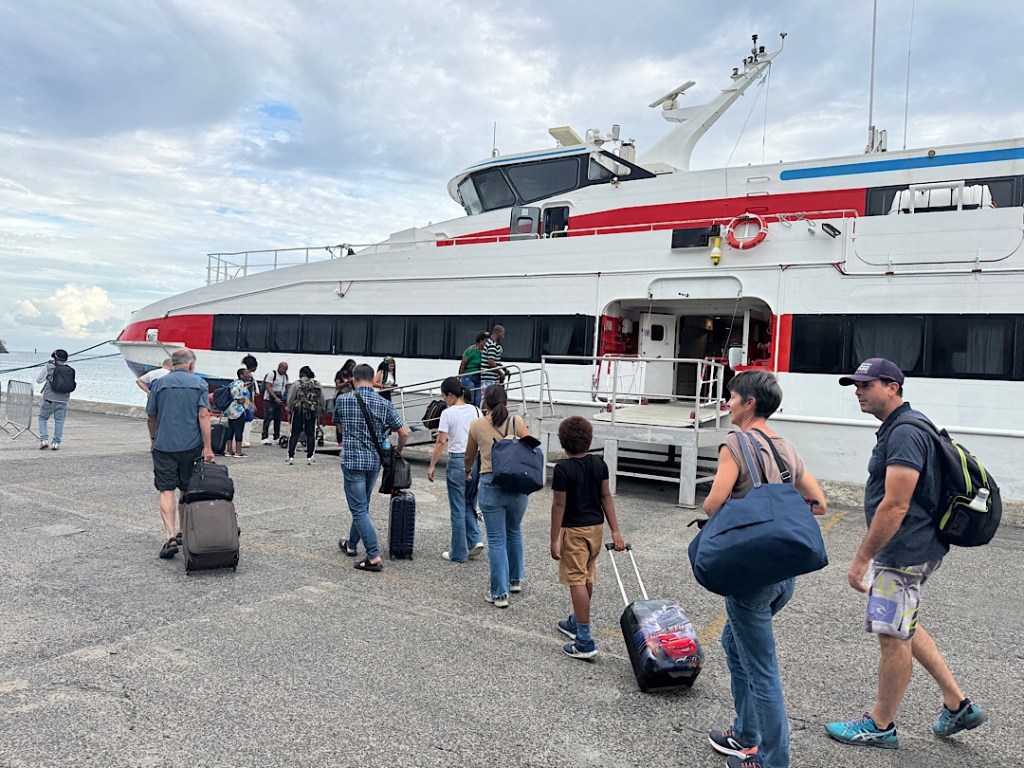
The boarding went smoothly.

But then the big catamaran didn’t pull out of the harbor when it was supposed to leave (at 7 a.m.) Instead we waited about 70 minutes as passengers continued to trickle on board. At one point Steve and I wondered if the captain hadn’t decided he wouldn’t cast off until they rustled up enough customers to fill his vessel.

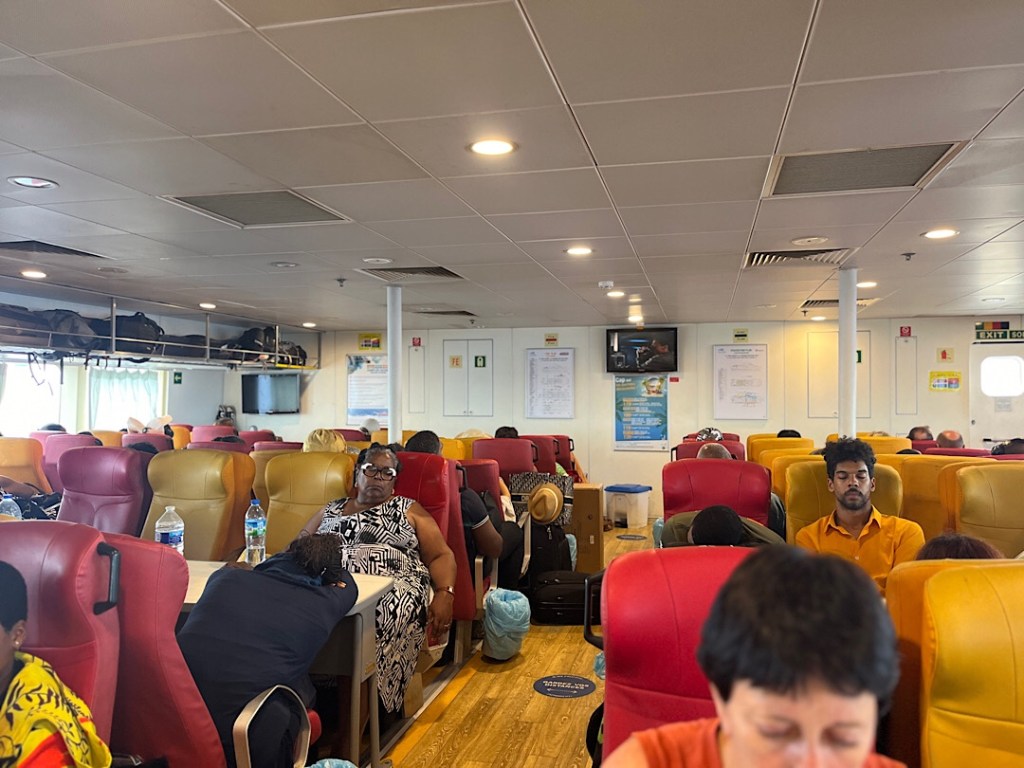
The boat had just two levels: an air-conditioned lower deck where you really couldn’t see anything.

The one above it was hotter and filled with harder, more uncomfortable seats.

A small outdoor section in the rear contained no seats but better views, and Steve spent a fair amount standing at the rail there, but someone had to guard our seats and bags, so I did most of that.

At the end of my last blog post, I posed the question of how well one could experience St. Lucia in just a short stay. Now I can say: more time would have been better, but the two days we had were extraordinarily pleasant.

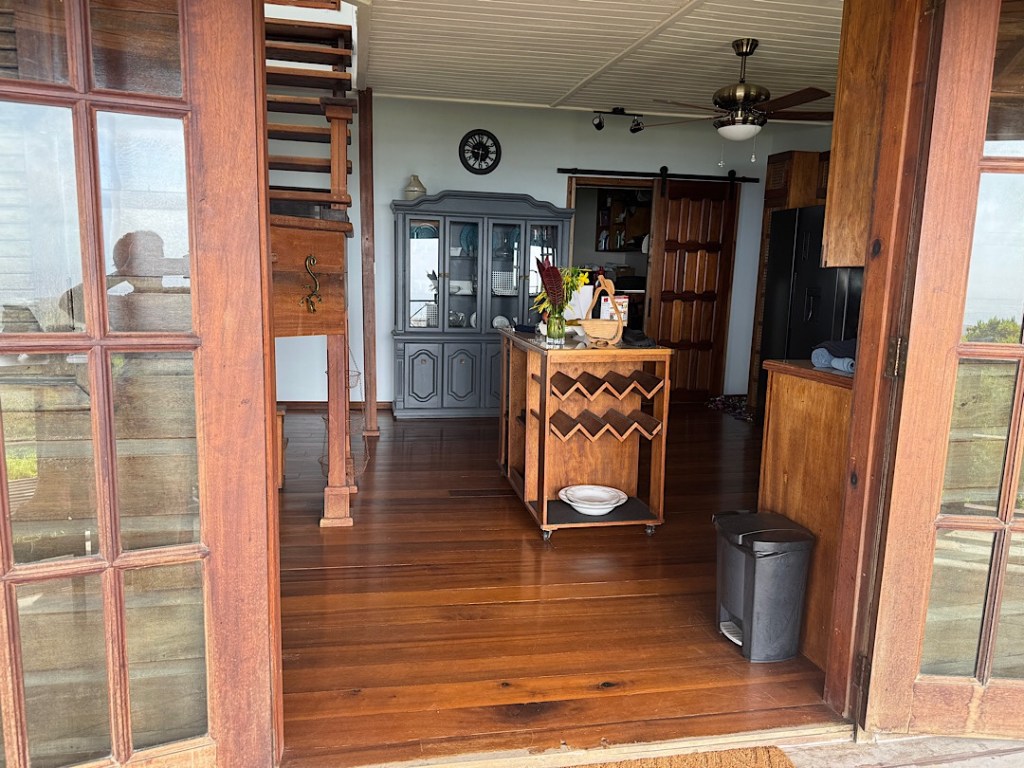
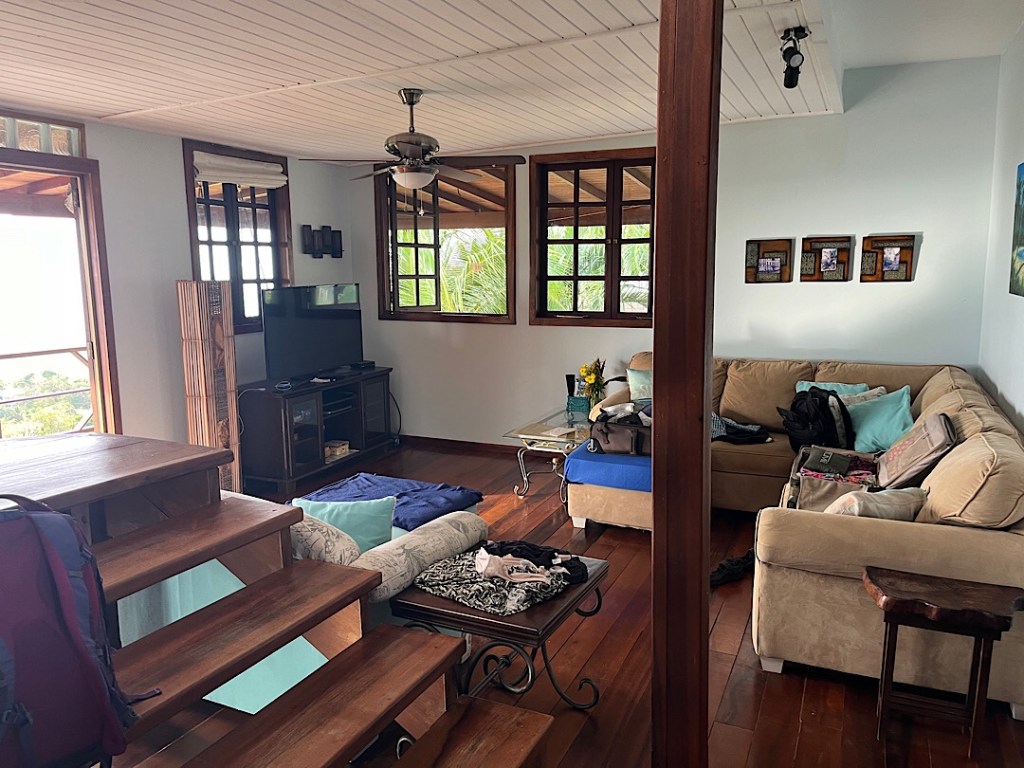
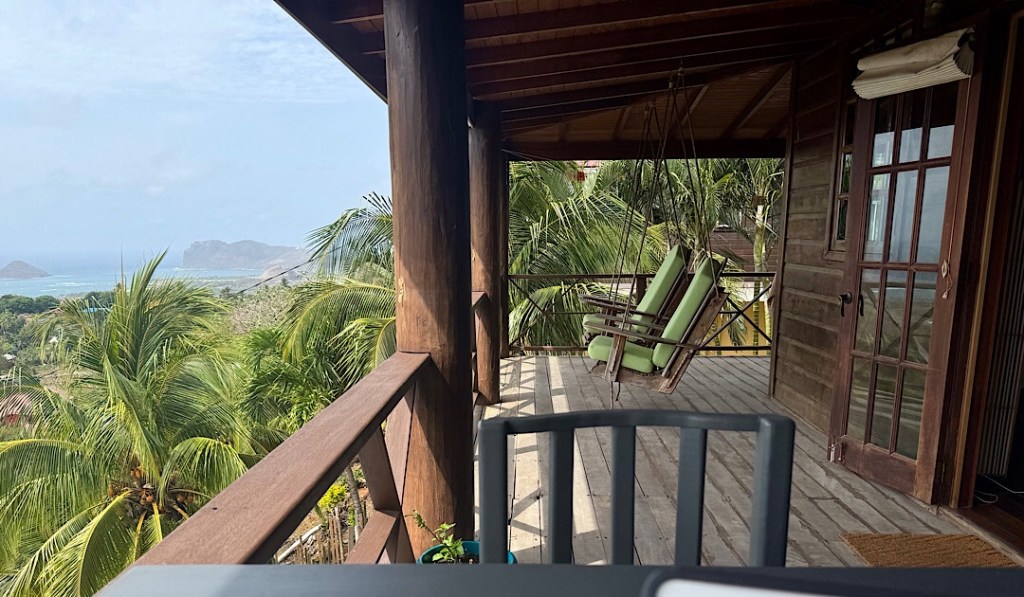
“Coco View Villa,” which I secured with HomeExchange.com guest points, turned out to be a rambling wooden, four-story structure that took in much of the southern sweep of the island, so comfortable and expansive neither of us wanted to do much more on Sunday than hang out in it.

It had a nice big kitchen.
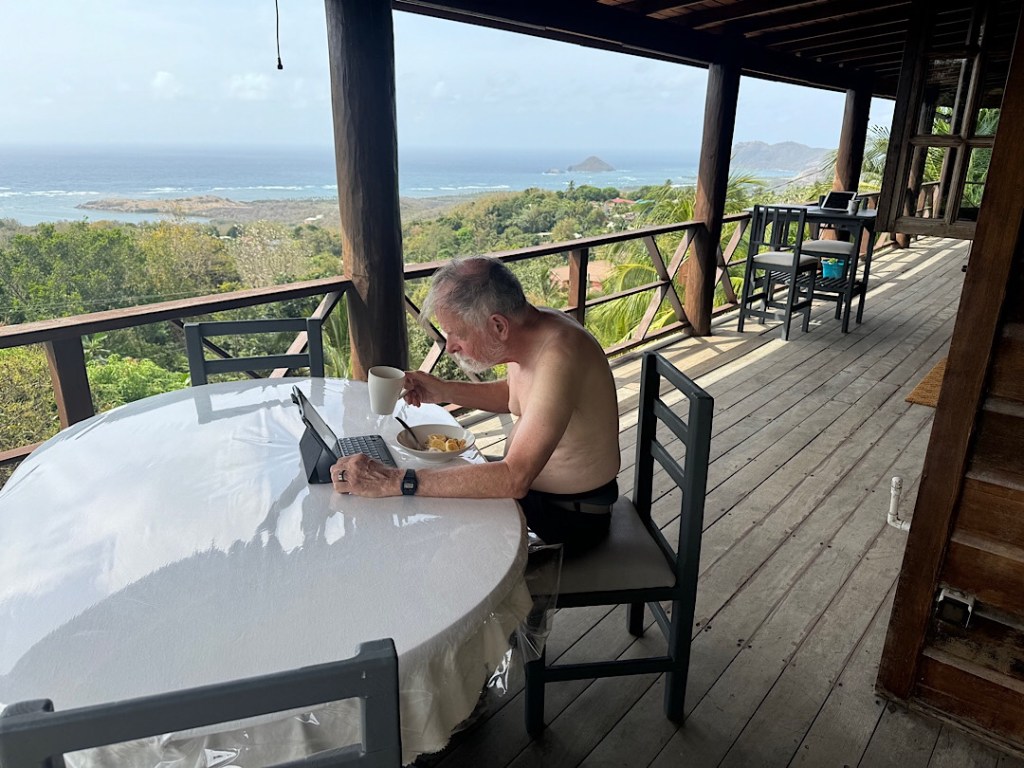
And a living room opening onto the wonderful deck.
Here’s Steve sitting at one end of it.
A pool deck on the first level overlooked the abundant gardens.
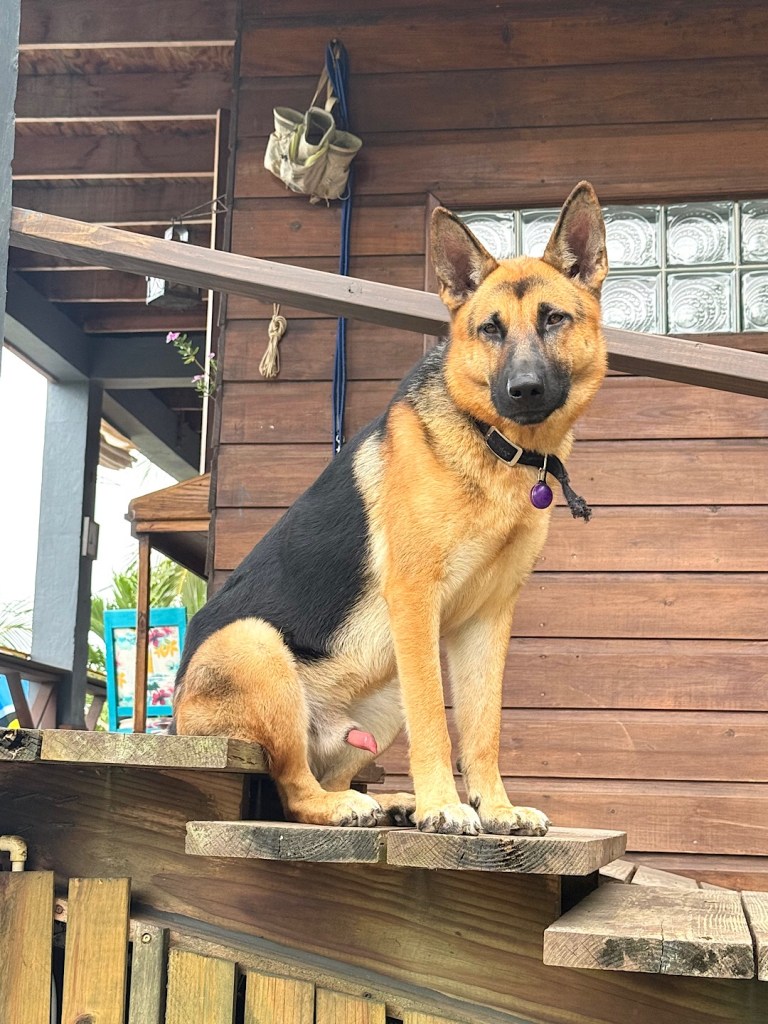
This cute, if somewhat excitable, guy kept an eye on everything, along with three smaller dogs.
The hanging chair swings were a marvelous place to take in the sweeping views.

We made a few small runs that first full day…

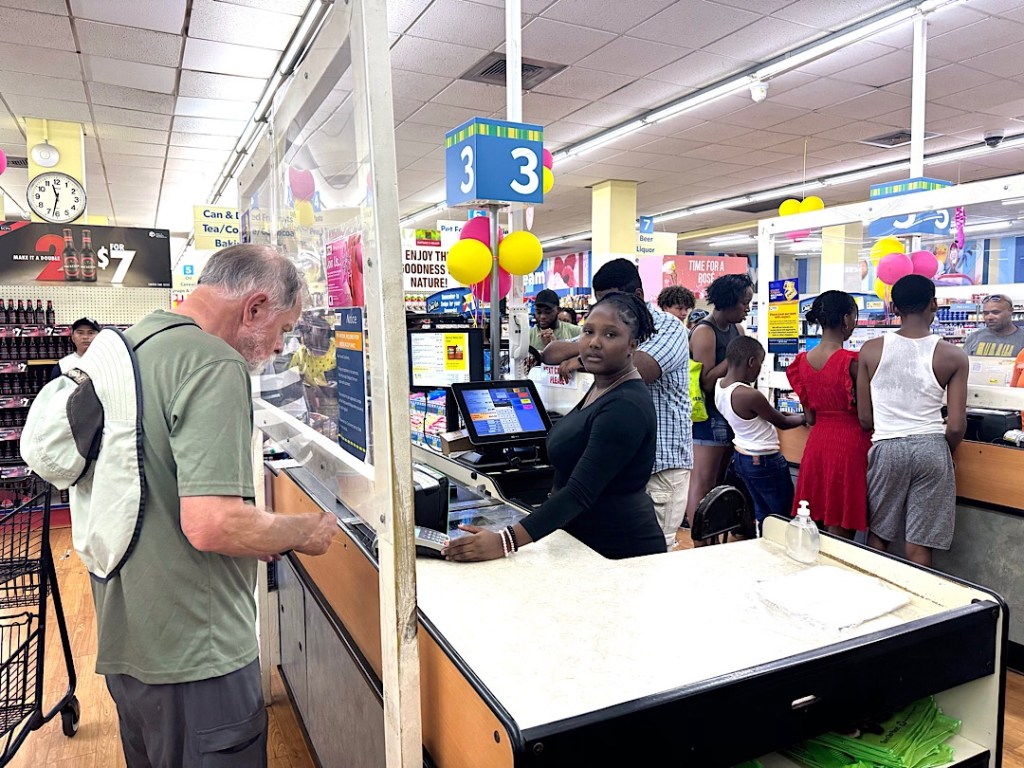
Picked up some groceries at the supermarket in Vieux Fort.
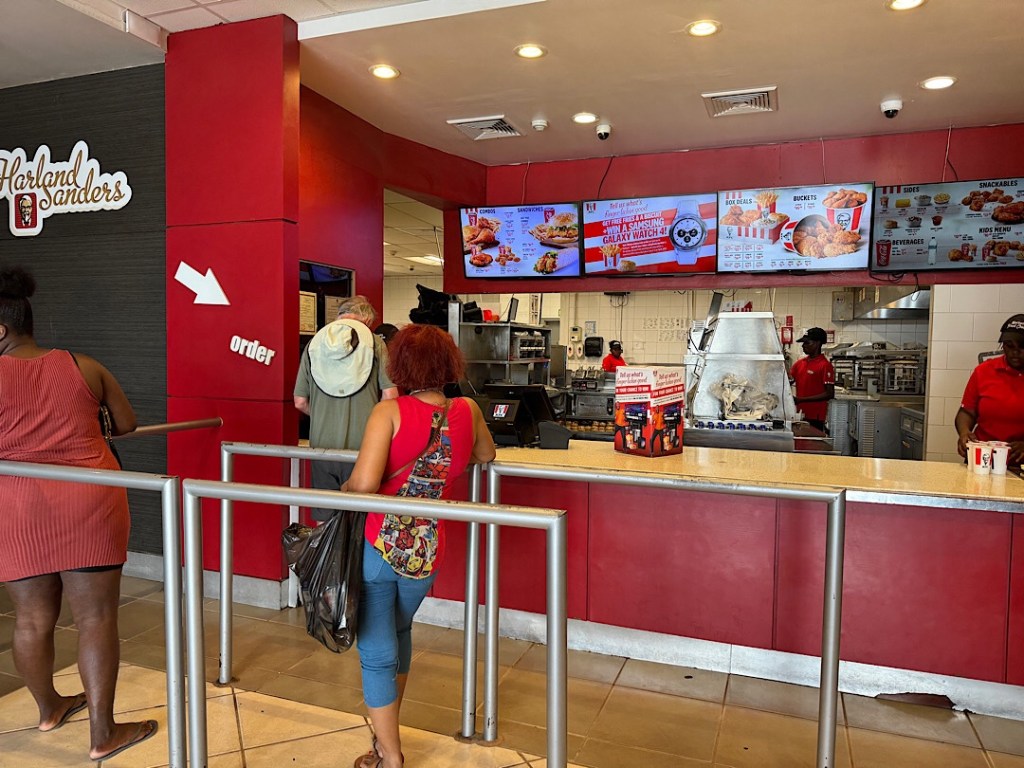
Bought a three-piece lunch from the Colonel.
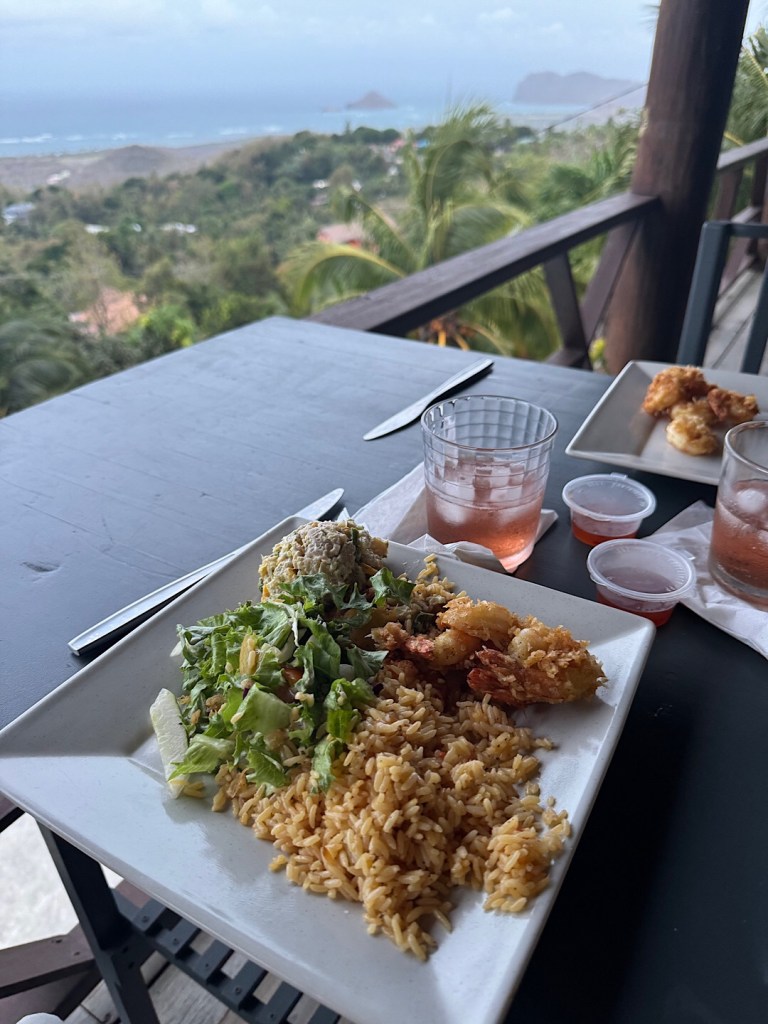
The coconut shrimp that we took out from a local joint for dinner was delicious.

We revved up our touristic engines Monday, driving ourselves to the southwestern side of the island, where some of the biggest visitor attractions are situated.

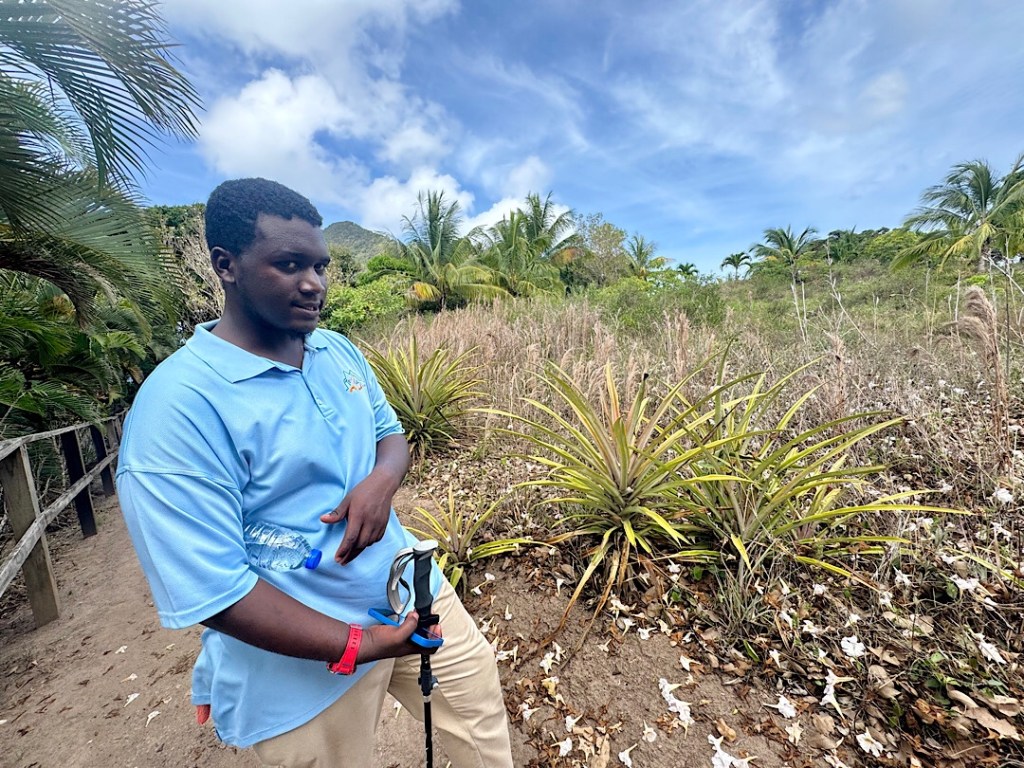
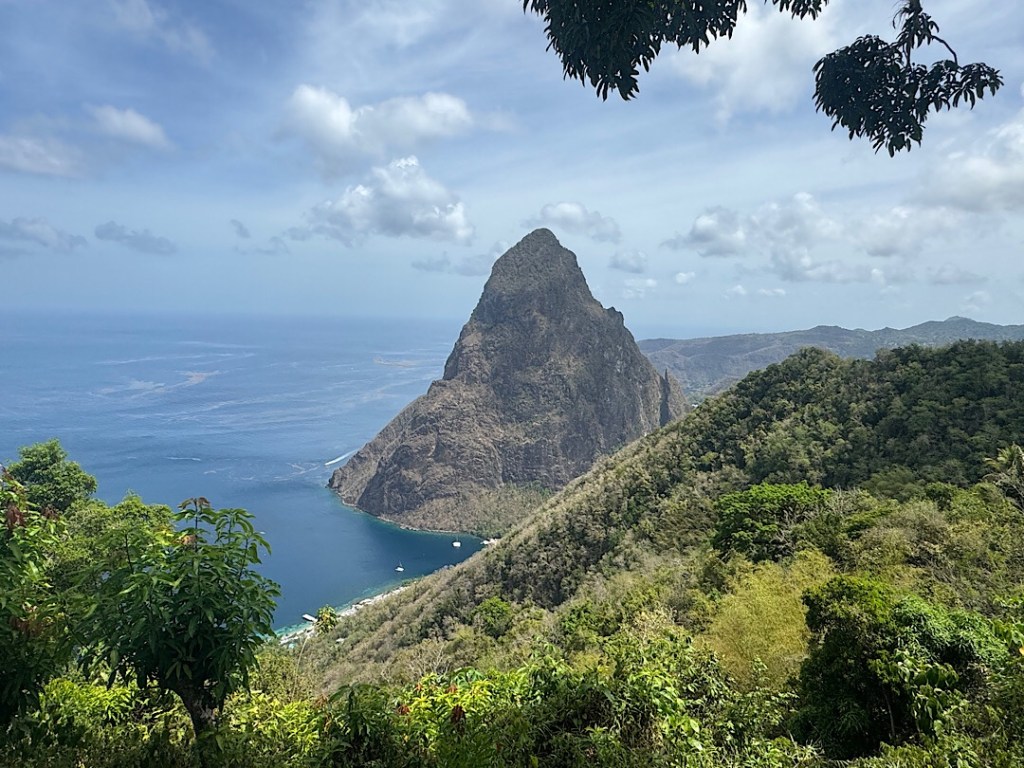
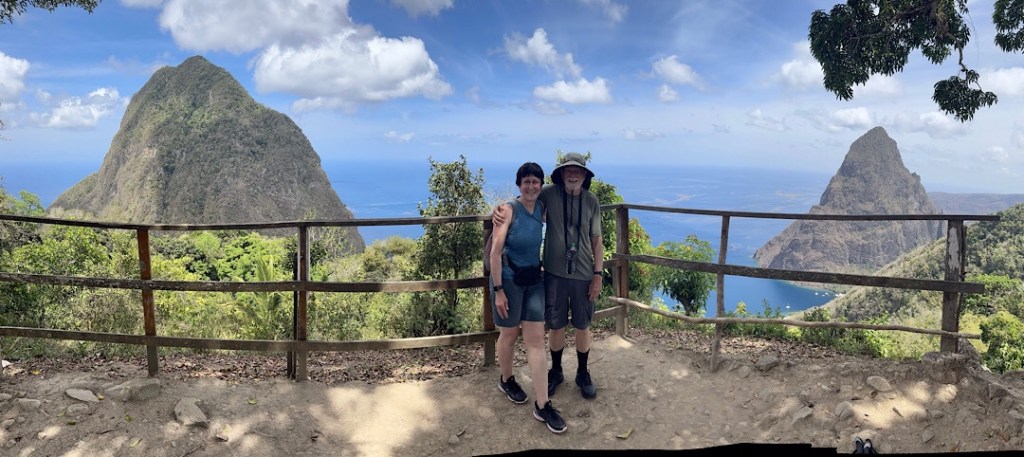
We started with a walk up a hiking trail that led to stunning views of St. Lucia’s two dramatic Pitons (peaks.) This was our charming guide, Shervin.
Petit Piton
Both Pitons and us
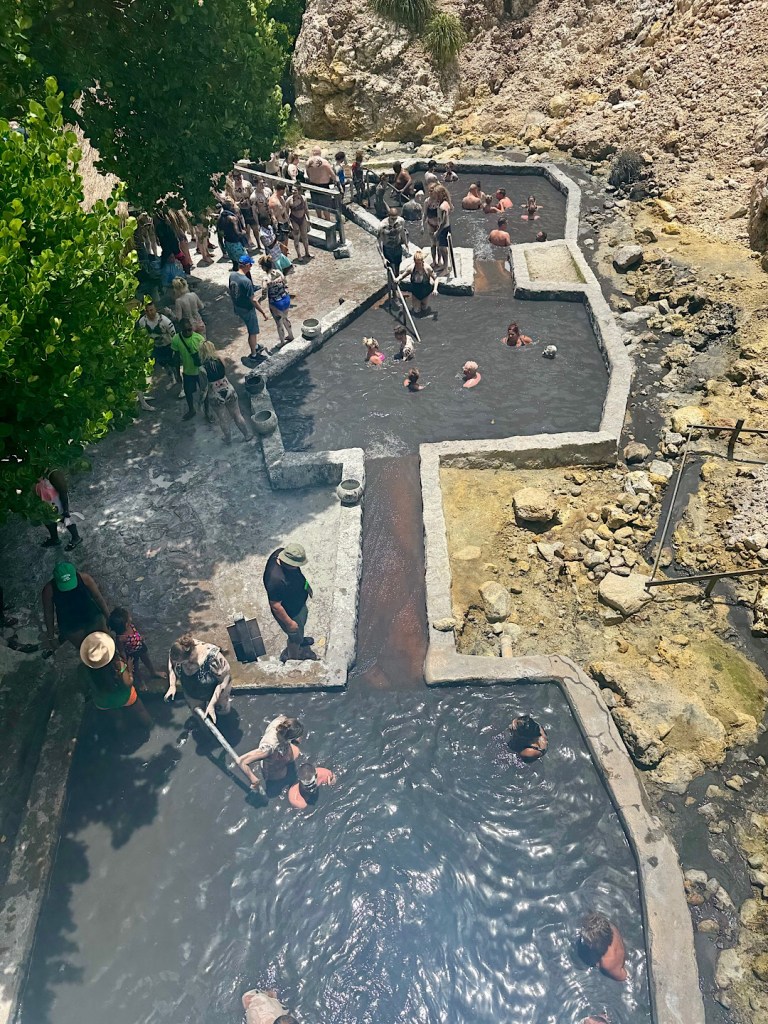
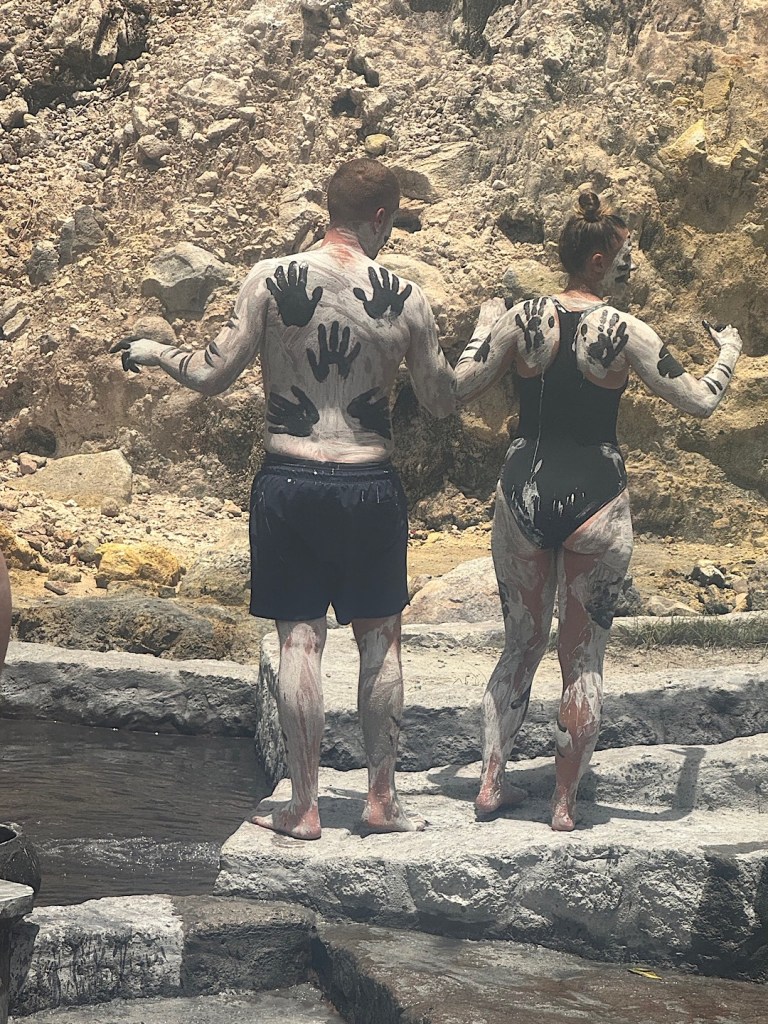
Next we drive to Sulphur Springs, a place to take a “mud bath” brewed by the underlying volcano.
You move through five pools that get progressively cooler. They were nowhere near as muddy as the mud volcano in which we immersed ourselves in Colombia.
Mud-slathering assistants decorate many patrons, but Steve and I stuck to enjoying the pools.
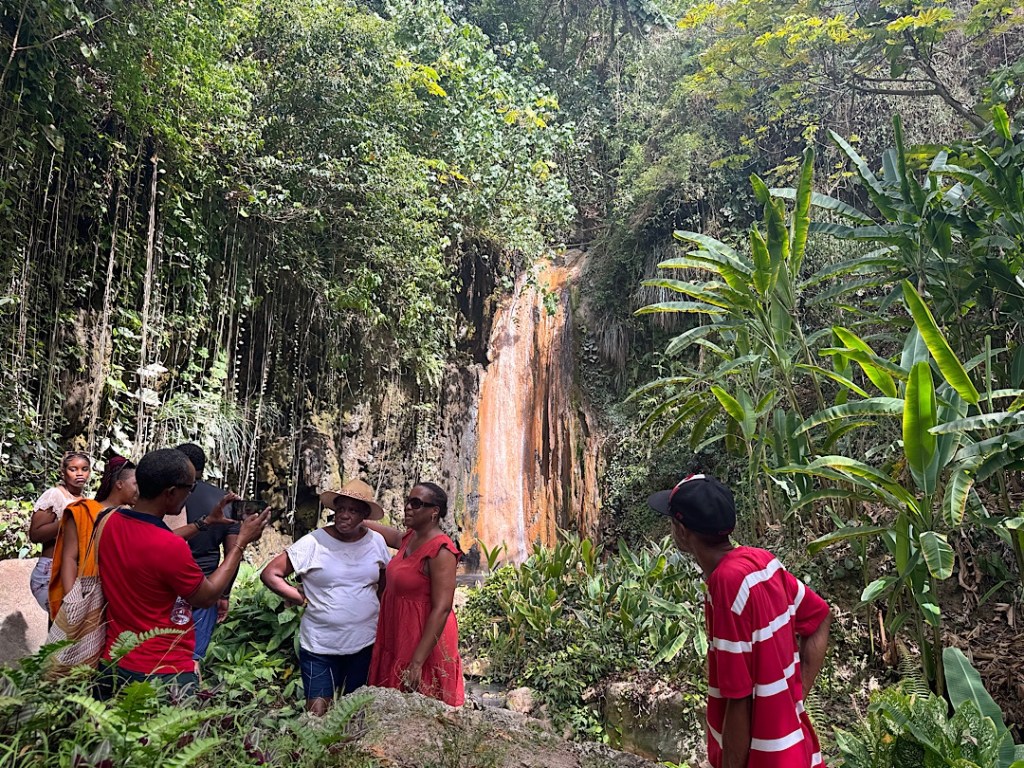
After lunch, we visited Diamond Falls. We strolled through exquisite plants to get to the waterfall.

Yes, had we more time, we could have done more. But now we’ve moved on to Dominica, where I’m grateful to have every minute in our schedule

Grenadian tourists

We didn’t spend all our time on Grenada seeking out blood-soaked sites. We indulged in classically touristic pastimes too, the most fun being the snorkeling tour we took Friday morning. Steve and I don’t snorkel often, but whenever we’ve done it in recent years, we’ve loved it. Grenada is surrounded by warm waters and a healthy community of sea life, and it also boasts something unique: the world’s first underwater sculpture park. We couldn’t miss that.

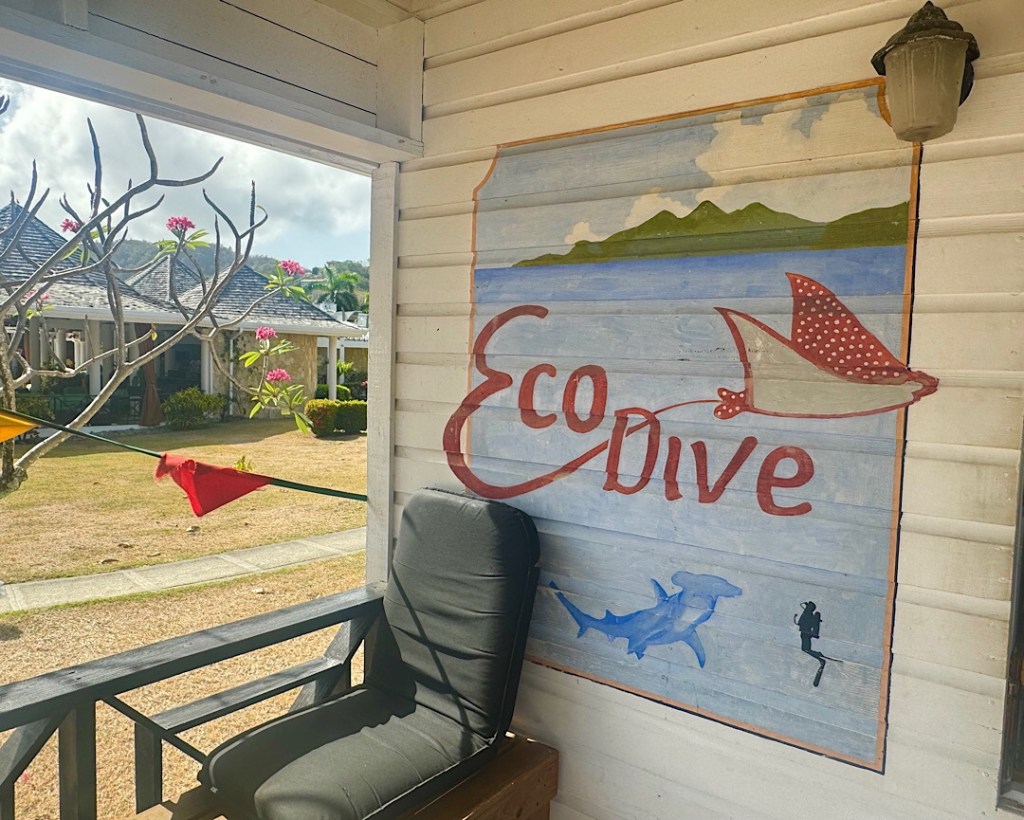
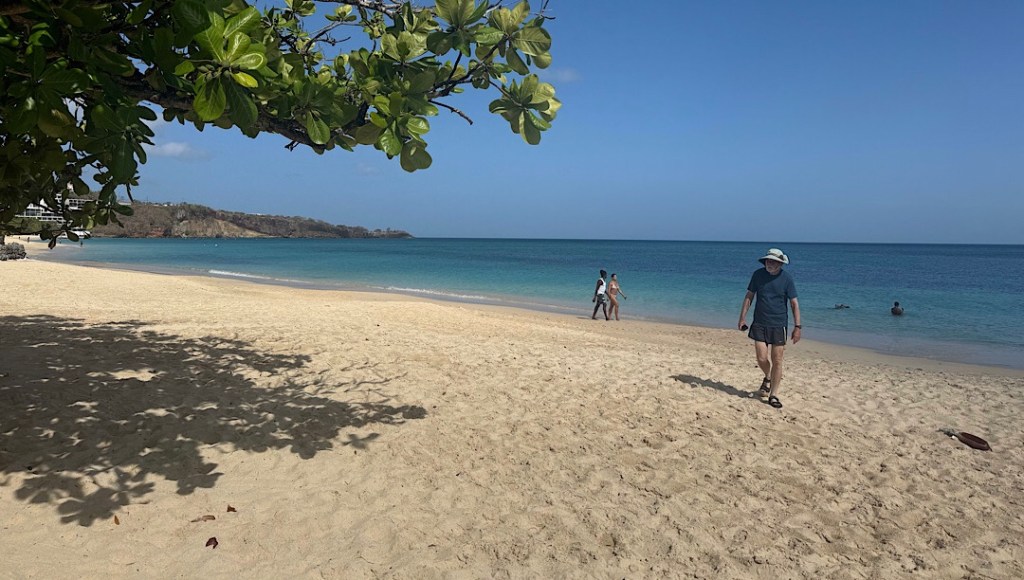
We woke up to hot sun and clear skies, and when we arrived at the Eco Dive outlet on Grand Anse Beach shortly before 9, the mood among the customers gathered there was ebullient. Just seeing Grand Anse is enough to lift one’s spirits. Consistently ranked among the world’s best beaches, its powdery sand arcs for a couple of miles beside placid turquoise water.

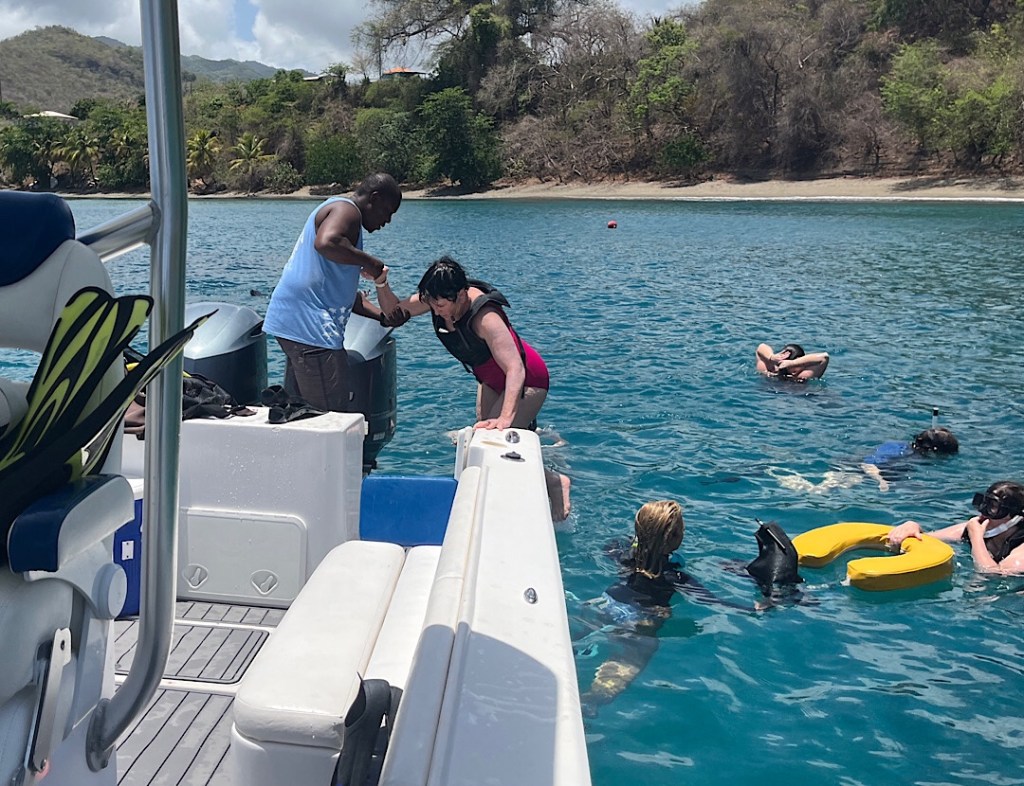
The dive shop outfitted us with flippers, then we climbed aboard a powerboat big enough to hold about a dozen snorkelers (almost all Brits, Americans, and Canadians) and a crew of two. Soon we were motoring north toward Molinere Bay.

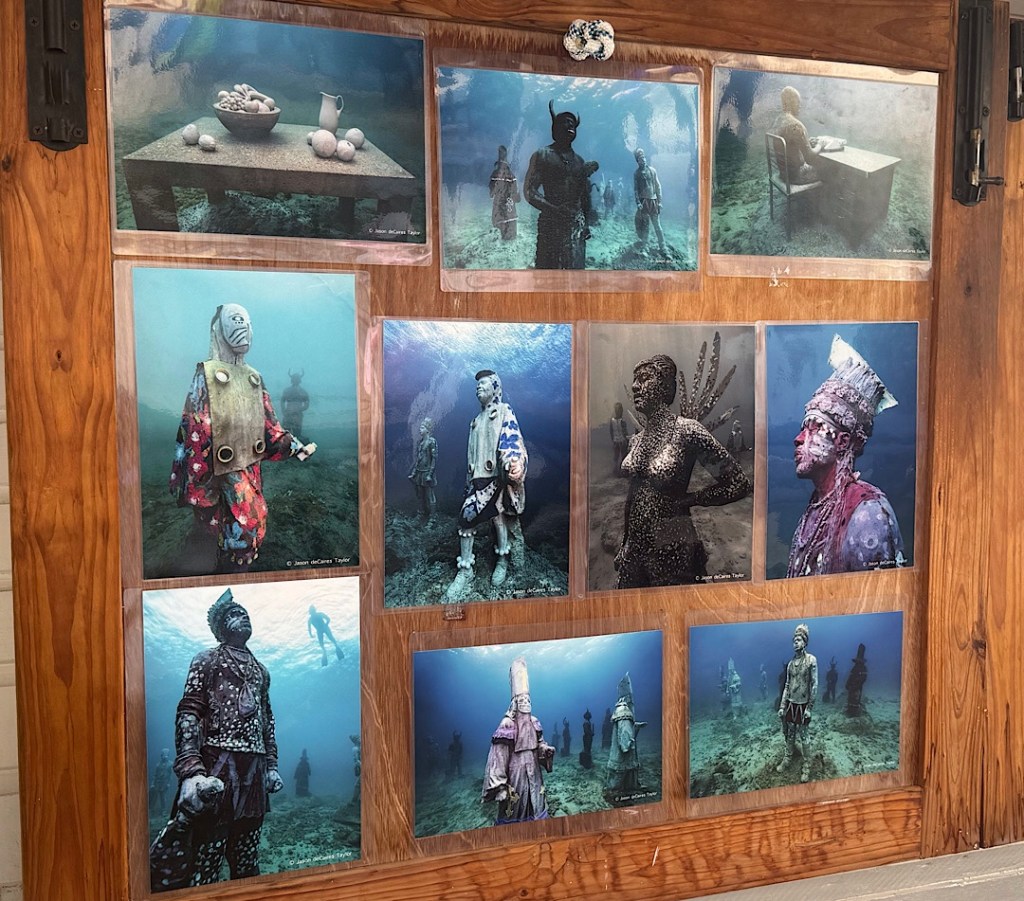
The autumn of 2004 was a very bad time to be anywhere on Grenada, including this bay. In early September, a hurricane named Ivan began smashing its way through through the Caribbean. That megastorm blew down most of the island’s nutmeg and cacao trees. It tore up its coral reefs, killed 39 people, and wrecked some of the most prominent human buildings. In the aftermath of the devastation, a British “eco-artist” named Jason de Caires Taylor got the idea of placing a bunch of concrete and stainless steel art pieces in the ruined coral beds to spur the blooming of new underwater life. The Grenadian governmemt signed off on the plan and today marine biologists say all these efforts have worked. Coral is growing on and around the sculptures, and a host of fish and other creatures has settled into the neighborhood. The park also has become a powerful tourist attraction.

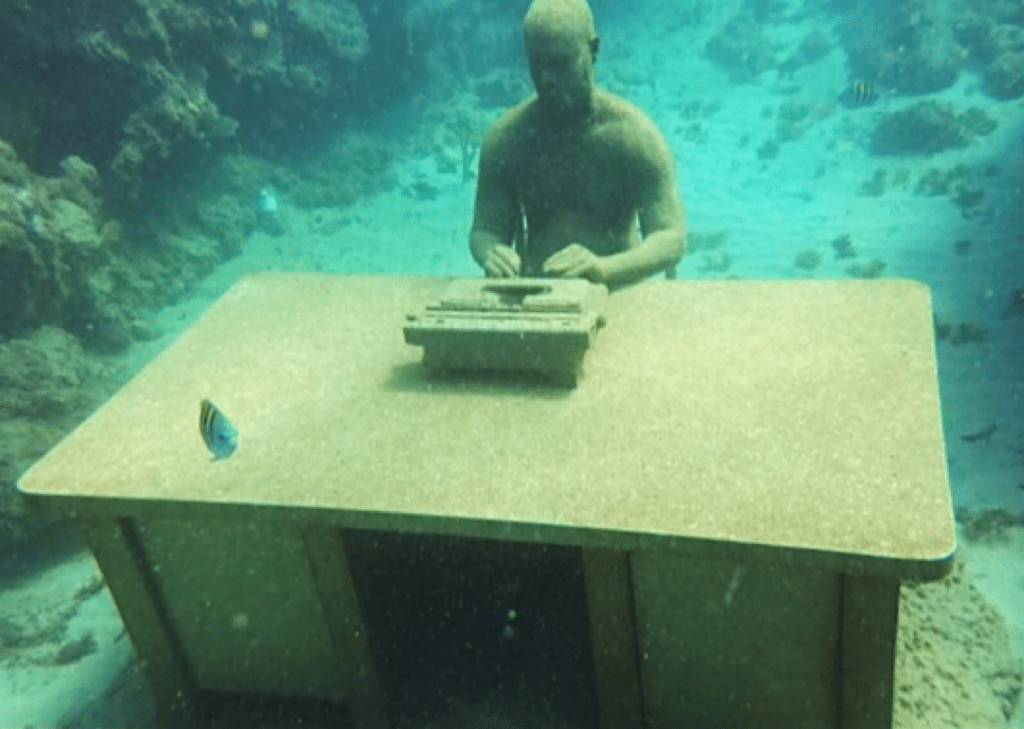
I wasn’t wearing scuba gear and didn’t carry an underwater camera, so I didn’t capture the striking images one can take amidst the submerged art pieces (though you can see some here.) In exchange for traveling light, I got to float over the art pieces, feeling a bit like a human drone, flying without effort in the company of myriad beautiful fish. Over time, the effect of saltwater and sea life has been eerily transforming the sculptures, which are placed at depths ranging from roughly 10 to 25 feet. It might have been cool to get nose-to-nose with them, but I never exerted the effort to dive down. And it also was great to swim alongside a guide who could explain what they all represented. My favorite was one called The Lost Correspondent.
After snorkeling in the sculpture park, we also spent an hour in the more traditional coral reef at Flamingo Bay.

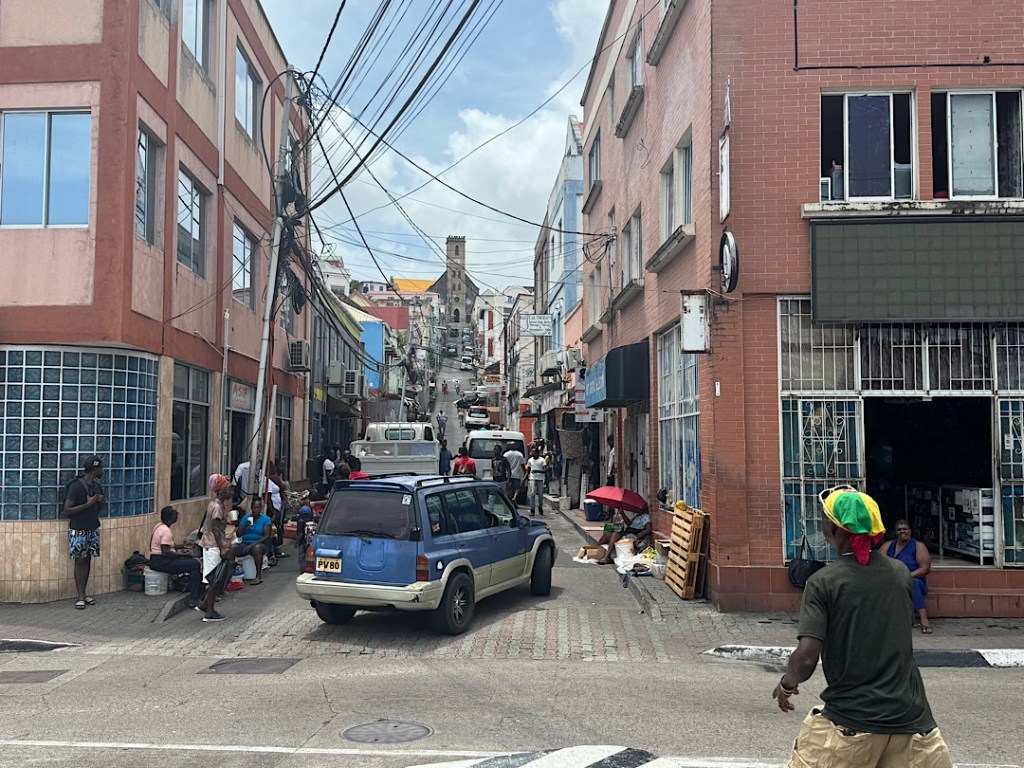
Most of our other touristic endeavors unfolded in the capital of the island, St. George’s, which over the centuries has climbed haphazardly up the steep hillsides surrounding a pretty little bay. Sadly, when we tried to visit some of the town’s most important sites, we found them closed for renovation, including the old fort where Maurice Bishop and his top advisors were gunned down 40 years ago. Only one gallery in the Grenada National Museum was open (but it focused on the indigenous population, which was our strongest interest.)

Just strolling through the town was fun.

When we were driving around the island, Grenada most reminded me of Bali — all those spectacular seascapes and steep green mountains. But when I voiced this observation, Steve scoffed, pointing out that unlike Bali, Grenada has no ancient Hindu or Buddhist temples. Plus it’s filled almost entirely with black people, more than 80% of whom are descendants of African slaves.

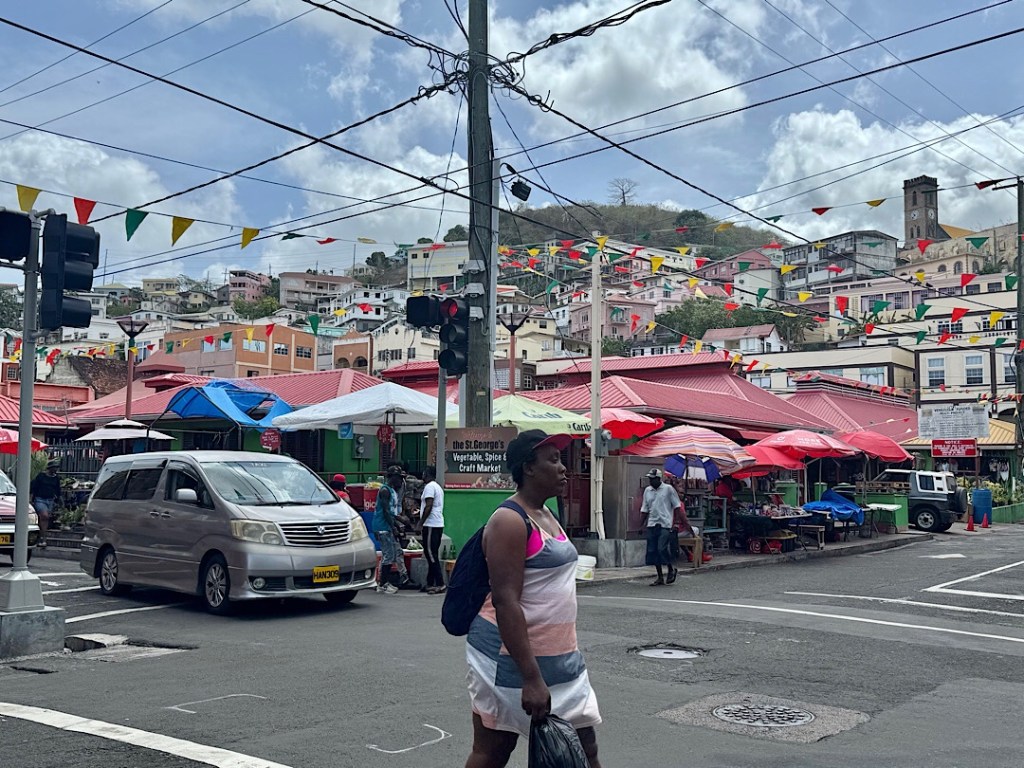
As dreadful as that history was, I have to say virtually everyone we interacted with could not have been more friendly. (Everyone speaks English here.) When we prowled through the spice market in St. George’s Saturday morning, no one pestered us to buy stuff. They did ask if we were enjoying our time on the island, and when we said yes they shone with delight.

The central market
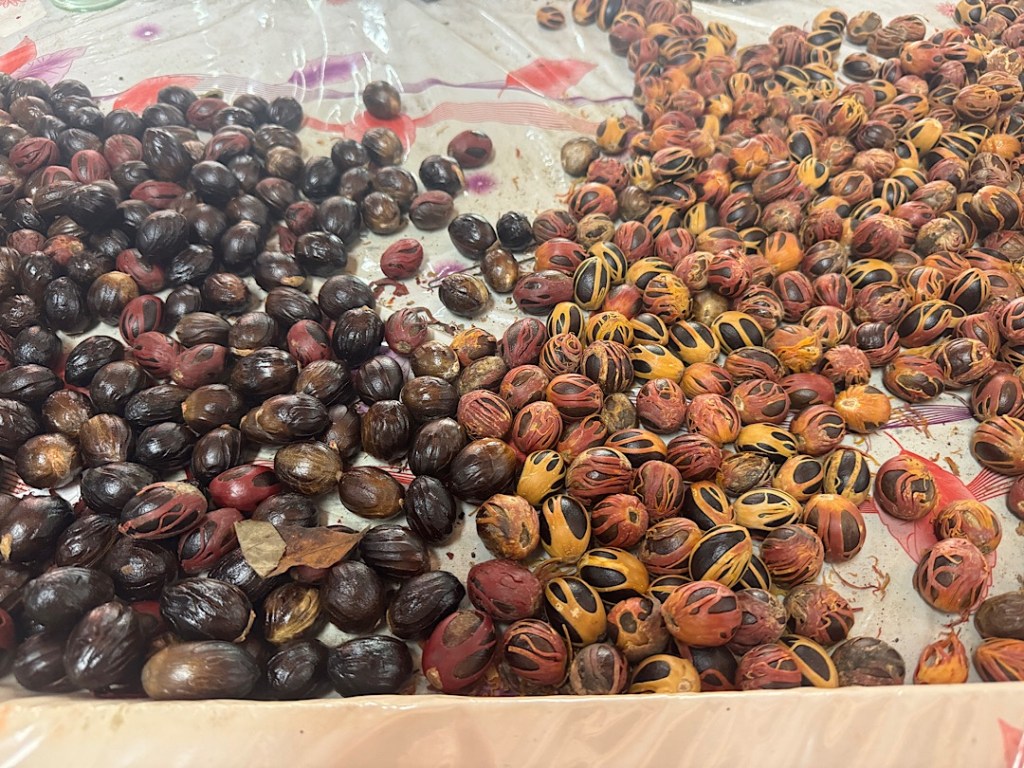
This lady sold me a little bag of mace for about two US dollars.
Mace is the yellow webbing surrounding the nutmeg shell. It’s considered to be a separate spice.

I never expressed to the Grenadians my nagging worry that if luxury villas continue being built and cruise ships bring more and more visitors, getting around on Grenada’s twisty narrow roads could turn into the nightmare that getting around Bali has become. Bad as it is here, it’s nowhere near that bad yet, and maybe Grenada is far enough off the beaten path to avoid Bali’s fate.

Anyway, it’s behind me now. Last night we made the 25-minute flight from St. George’s to the airport at the southern end of St. Lucia, where we only have two full days to try and experience this little country. Is that possible? Stay tuned.
Islands ahoy

Back in 1977, Steve and his friend Roy Wysack wrote the science-fictional Handbook for Space Pioneers. It described 9 planets open for human settlement in the year 2376. Among the choices open to aspiring immigrants, the place that most appealed to me was Poseidous, a watery world with no major land masses – just hundreds of thousands of islands on which wildly diverse human cultures were taking shape.

As Steve and I approached our trip last year to Indonesia, it struck me that the Asian island nation might be more like Poseidous than anywhere I’d been on Earth. But now we’re about to travel to a region where that’s even truer. We leave tomorrow for Miami, then fly the next day to Grenada, the first of six Caribbean islands we’ll be exploring.

Our only prior Caribbean experience was our 2012 trip to Cuba. (Although I had created this blog by then, I didn’t post anything about that adventure because Americans weren’t supposed to be traveling there.) We had a great time, but the Communist stronghold’s neighbors didn’t much interest us. Steve and I both thought of most Caribbean islands only as magnets for beach and resort-lovers. While we live just 5 minutes from a nice beach, neither of us ever go there to lie on it.

Only recently did it dawn on me there could be other reasons to visit the region. Its cultures might not be as manifold as those of Poseidous, but more than a dozen sovereign nations and almost as many dependent territories occupy the balmy water adjoining the Gulf of Mexico. Chris Columbus discovered the New World here, and the anguished cries of African slaves filled the Caribbean breezes before they became commonplace in America. Big Sugar got its start in the islands, and pirates spiced up the scene for decades. Maybe it wouldn’t be boring, after all.

I quickly figured out we couldn’t go everywhere. My early dreams of getting from one Caribbean country to another via ferries also didn’t take long to evaporate. If you’re not cruising or sailing your own boat, it can be weirdly challenging to get around, I learned.
I wound up with an itinerary that will take us from Miami to Grenada, followed by stays in St. Lucia, Dominica, Puerto Rico, the Dominican Republic, and finally Jamaica. If we wind up doing a lot of sunbathing and snorkeling, I may not post much. But if we have any interesting experiences, I’ll do my best to report on them here.