South to Alaska

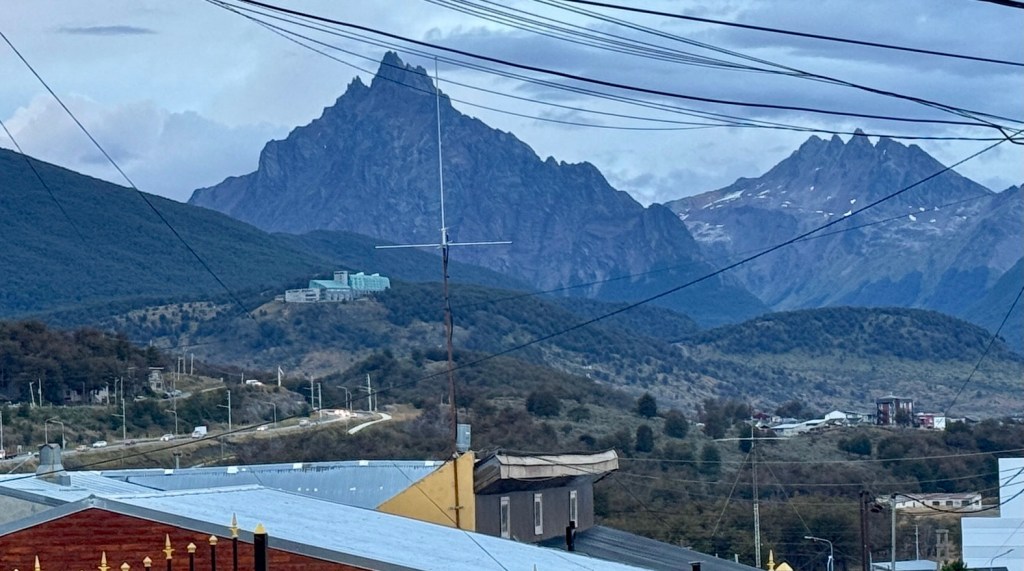
“It’s an interesting mix of Tijuana and Alaska,” Steve remarked, minutes into our first walk around Ushuaia (capital of Tierra del Fuego and our base for the last five days.) I laughed; knew just what he meant. Tijuana because of the busted sidewalks, the Spanish language, and ramshackle quality of many of the houses in the neighborhood where we were staying. Alaska for other reasons, none of which I expected.

Like Juneau when we were last May, Ushuaia in these last days of the Southern Hemisphere’s summer felt colder than San Diego on its frostiest winter days. It’s not part of a huge land mass, as Alaska is, and as a result, Tierra del Fuego never gets anywhere near as cold as the 50th US state. Tierra del Fuego is an island, shared by Chile and Argentina, and about 100 miles north of Cape Horn, the southernmost point of the Americas.
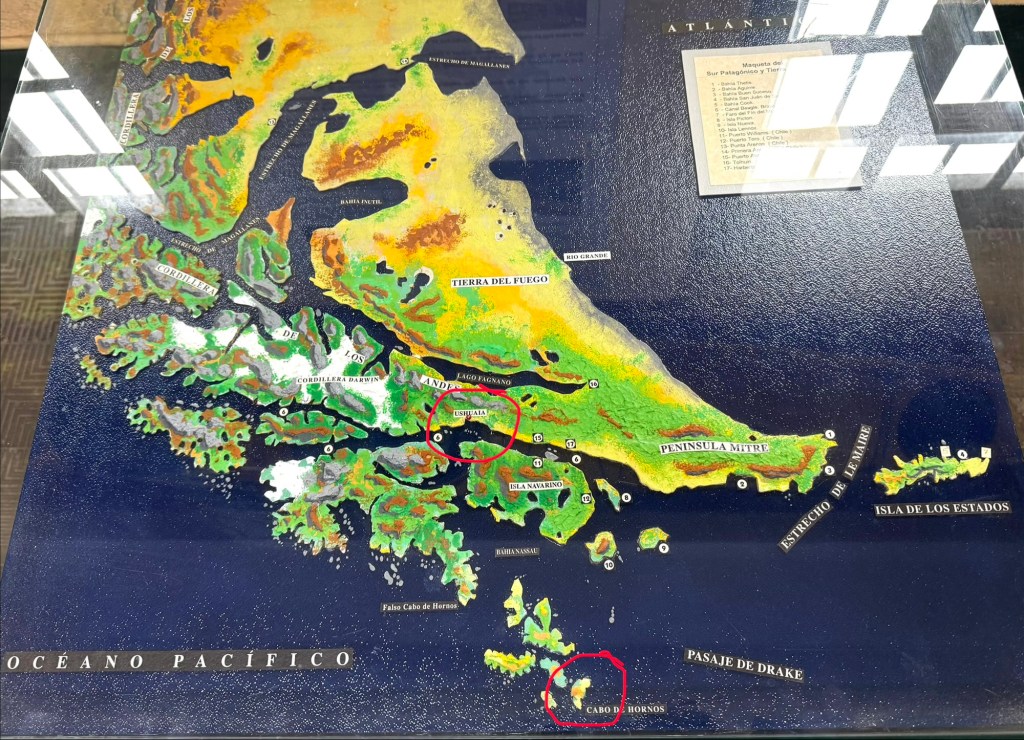
Ushuaia lies within the upper circle I’ve drawn on the map. Cape Horn is actually an island (the lower circle) a geographic factoid previously unbeknownst to me.

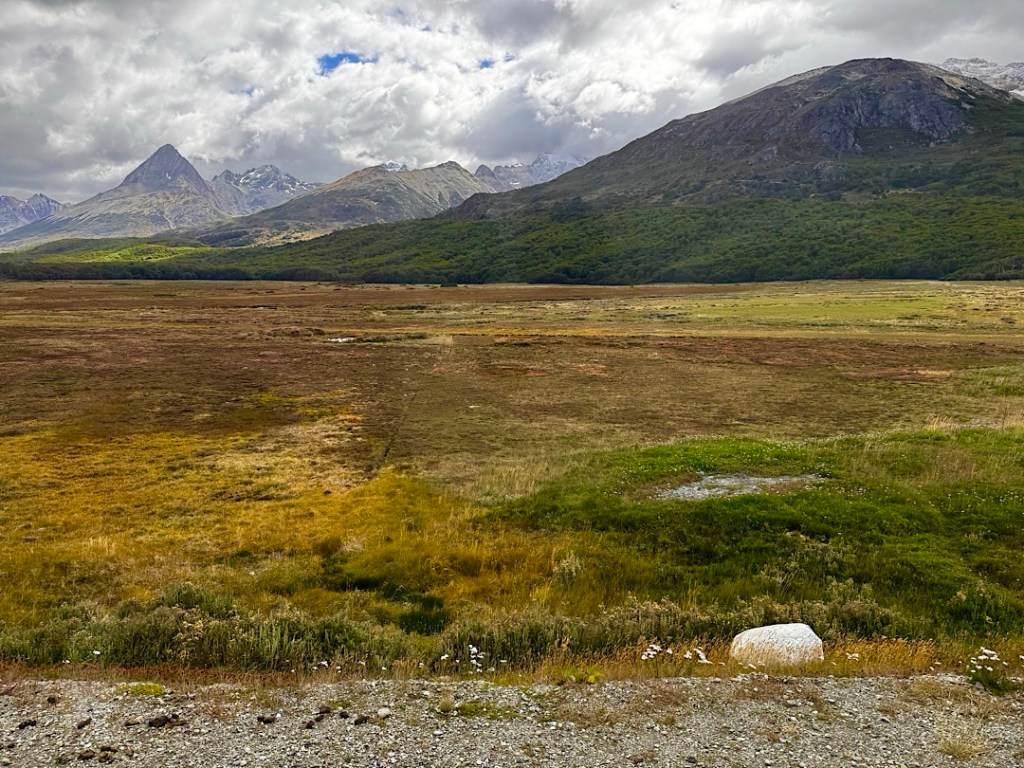
Patagonia’s pretty meadows are girdled by starkly vertical mountains, peaks that spear jaggedly skyward, as do their counterparts in Alaska. Both areas also share a lack of biodiversity. Just three tree species — all beeches — grow in this part of the world.
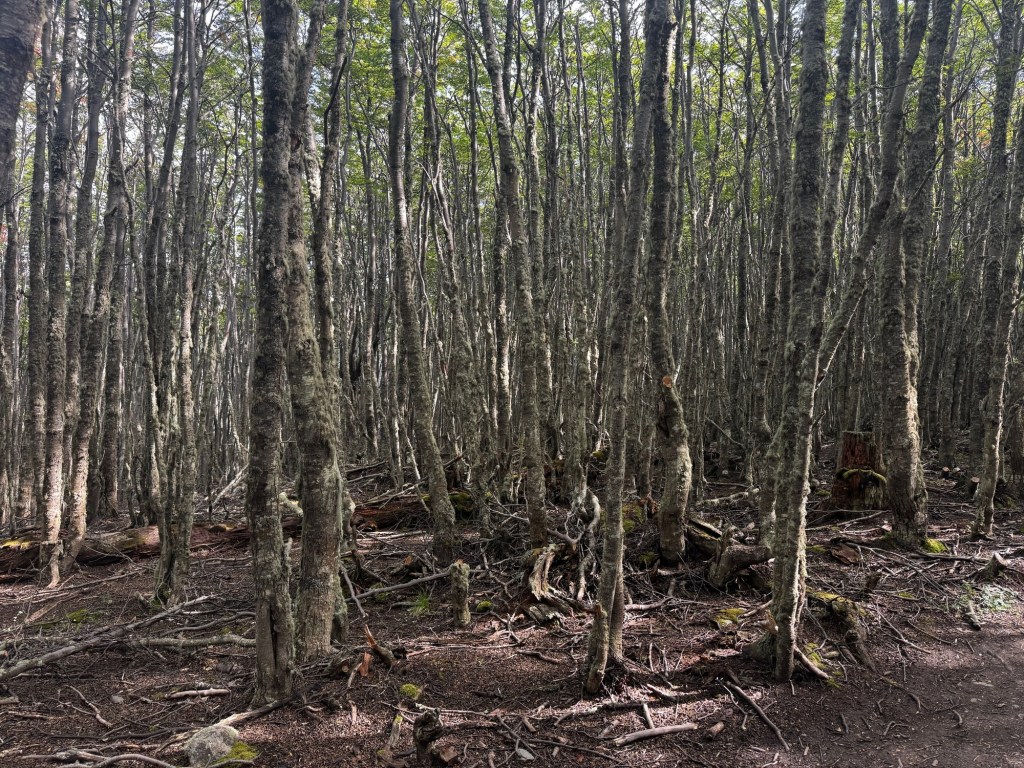
No snakes live here and almost no amphibians or lizards. The biggest mammal is the guanaco (a relative of the llama), and no key predators exist to eat them. One result of this is that the 20 Canadian beavers brought here for a (hare-brained) scheme to start a fur trade have now proliferated to where they pose a significant threat to local forests.

During our stay, we learned that hare-brained schemes, mostly dreamed up by various Argentine rulers, go a long way to explain why any city exists on this distant and uninviting edge of the map. To ward off incursions by the Brits and Chileans, the Argentine government more than 100 years ago established a penal colony in Ushuaia. They reasoned that not only brutal guards but also the isolation and harsh weather would ensure almost no one escaped from the so-called Prison at the End of the World.
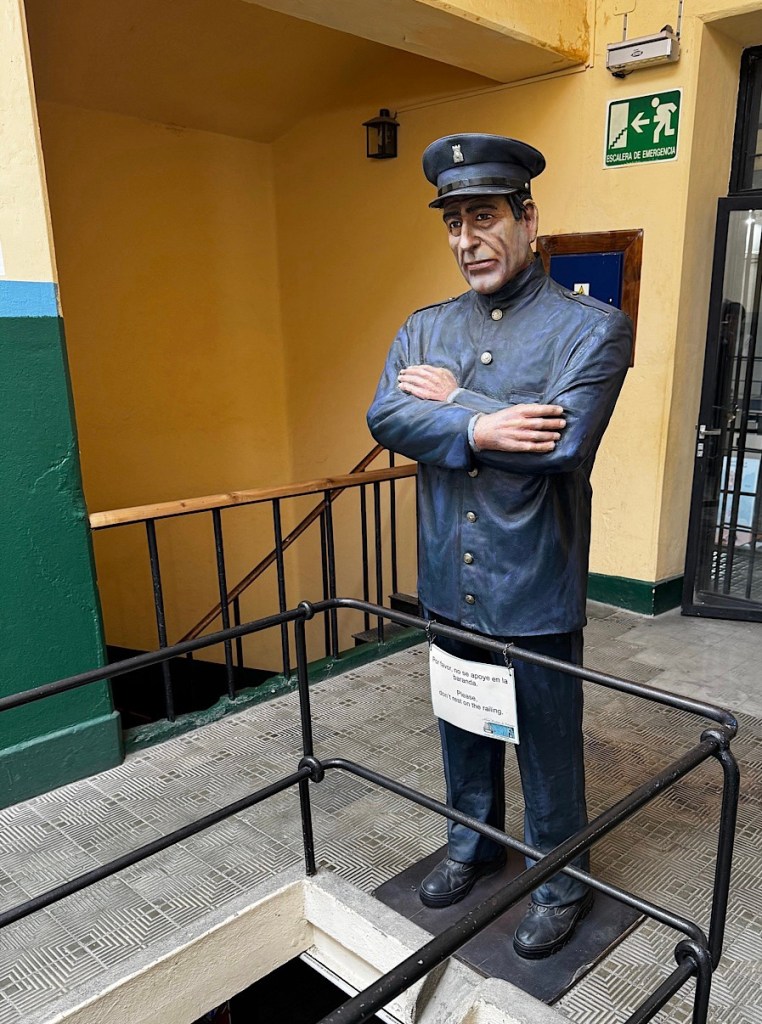
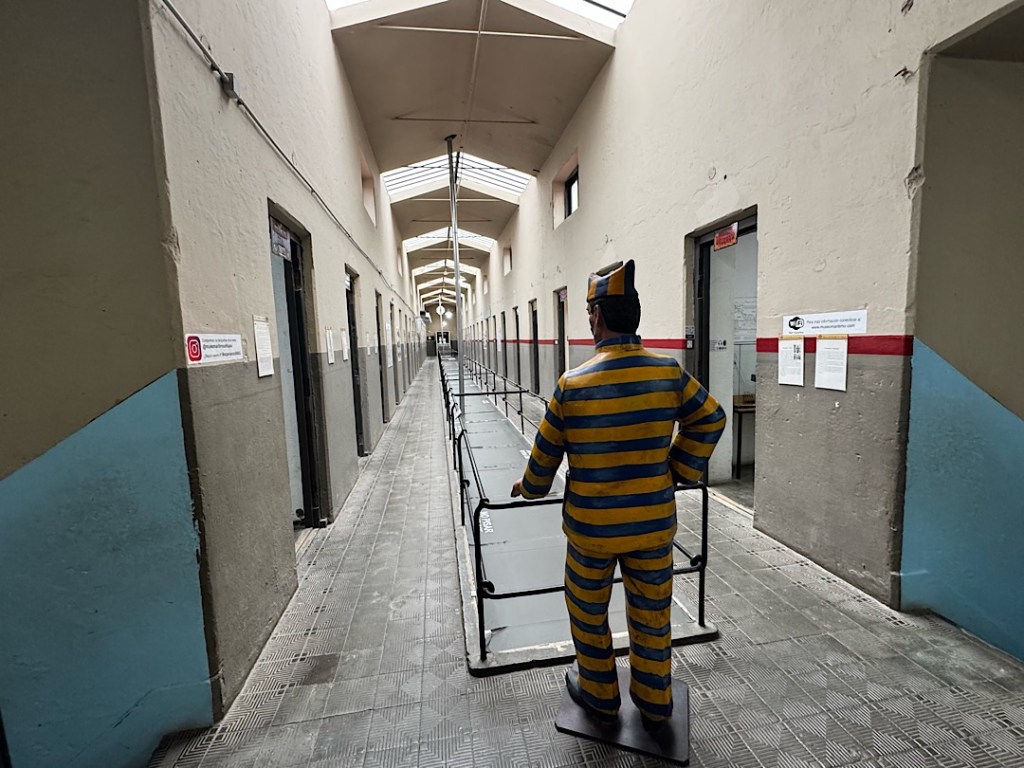
The one-time penitentiary has now been turned into a big museum complex. Prisoners lived in the small cells that dotted the long corridors.

In subsequent years, the feds tried other things to lure porteños south: They made Ushuaia a tax-free zone, built public housing, gave subsidies to industries with few other reasons to set up operations in southern Patagonia.

On one level, this all sort of worked. Ushuaia now counts somewhere between 80,000 and 200,000 inhabitants. Most of them are employed by the government, supplementing their income with jobs in the Antarctic and winter-sports tourism that has developed over the last 30 years. But the town is also full of folks giving Uber rides for $3 to $4 a pop. Oscar, who drove us to the spiffy Arakur resort Wednesday afternoon, had just been laid off from an unprofitable air-conditioning factory that was closing. He’d received two months of severance but sounded scared about the prospects for supporting his family.

The resort was beautiful and comfy and it had one of the coolest pools I’ve ever swum in. One night here was included in our Antarctic cruise package.
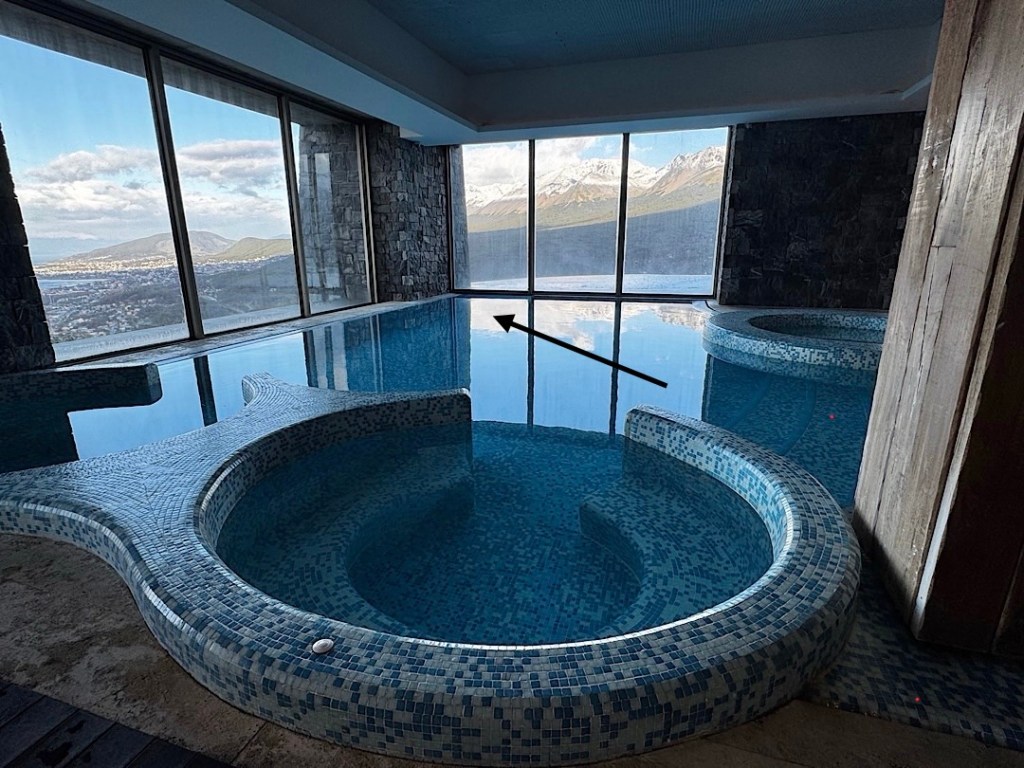
The water in this pool was over 90 degrees, which was great, but the awesome part was that you could swim under that window which I’ve pointed to with the arrow. Outside the water was just as warm, even though the air temperature barely topped freezing.

For the other four nights, we stayed in a little flat I acquired using home-exchange points. Unlike Catalina’s apartment in Palermo Soho, Freddy’s place was no dream find. It lacked any elevator, so we had to lug our 50-pound duffle bag and two roller bags up the narrow outdoor stairs (in the rain). The window shade wouldn’t roll up, and the shower curtain fell off the walls when you looked at it cross-wise. The shampoo and conditioner dispensers were empty. The view of the Beagle Channel down the hill was in the process of being blocked by an ugly hulking structure taking shape directly across the street.
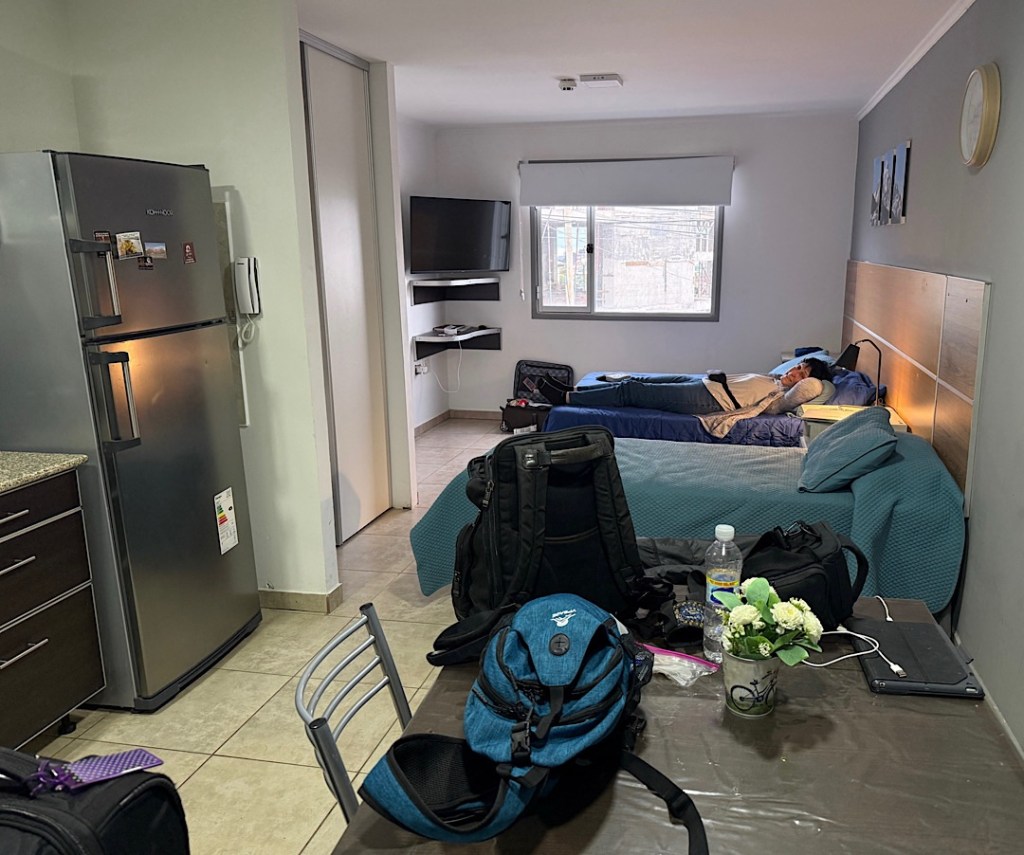
Our pied a terre thanks to Freddy and the folks at homeexchange.com.

On the other hand, it was clean and warm and well-lighted, and Steve and I loved the way it gave us a glimpse into life in a middle-class Ushuaian neighborhood. We usually walked the 20 or 30 minutes downhill to the town and took one of the cheap Ubers back. (They always showed up just a minute or two after we summoned them.) We got to know the local dogs.

Immediately next door to Freddy’s, a convenience store served customers around the clock. At first glance, I thought maybe it only carried wine and liquor and a stunning variety of snacks and candy. But eventually we unearthed some boxed milk and coffee and a couple of bananas (the only fruit). For our foray to Tierra del Fuego’s national park on Tuesday, the shop’s friendly proprietor made us ham and cheese sandwiches, which he secured in plastic wrap packaged tidily with napkins.
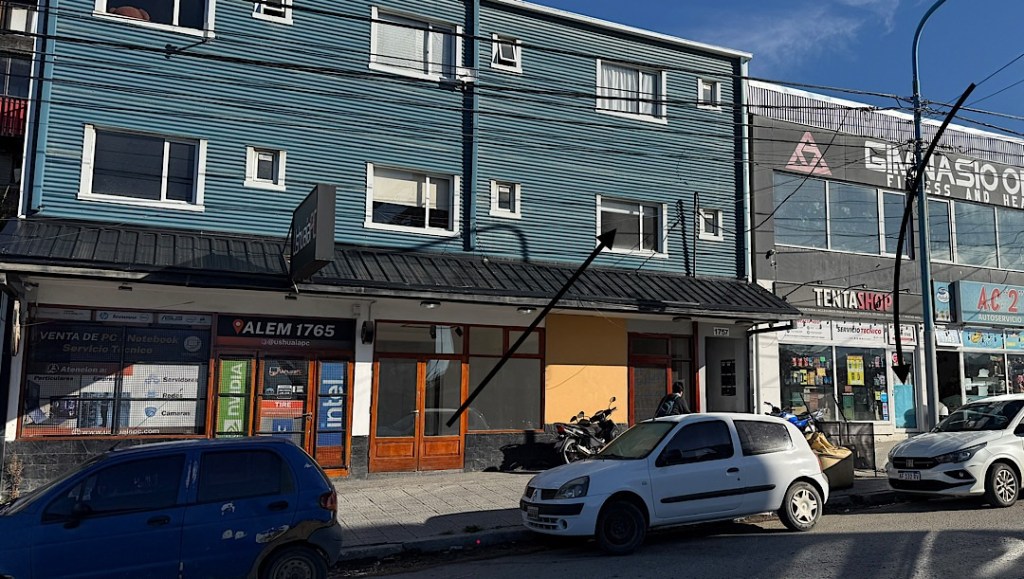
The arrow on the left points to our window at Freddy’s. The other is the little convenience store.

We found plenty of activities to fill our four days in Ushuaia.
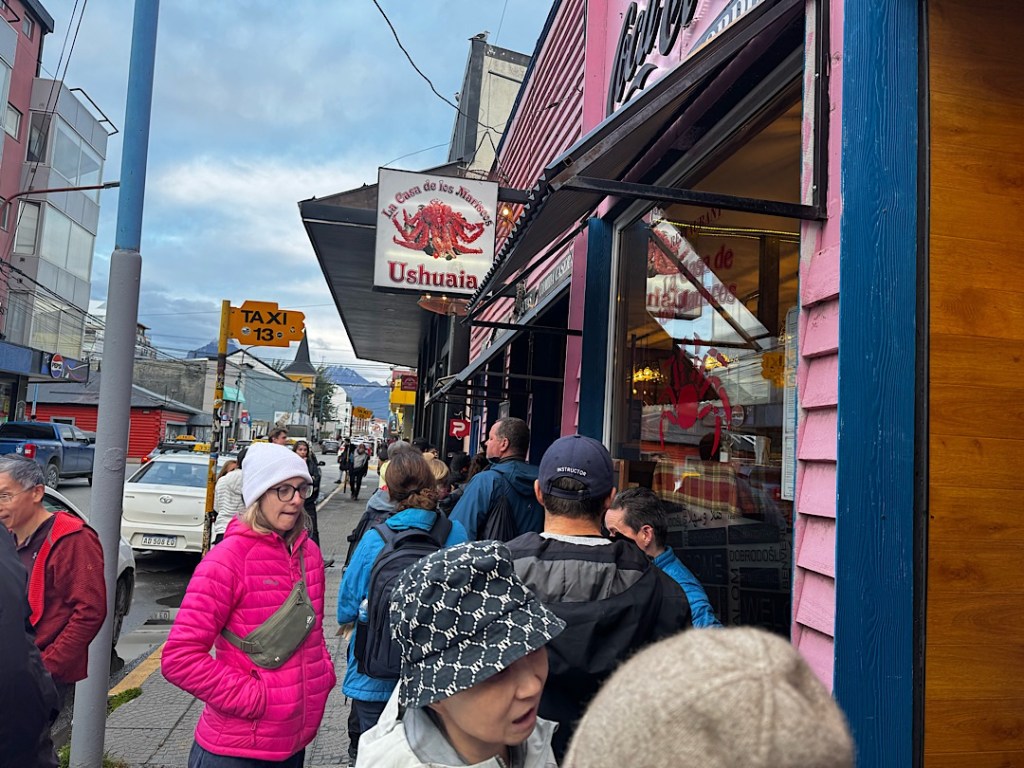
The seafood was terrific.
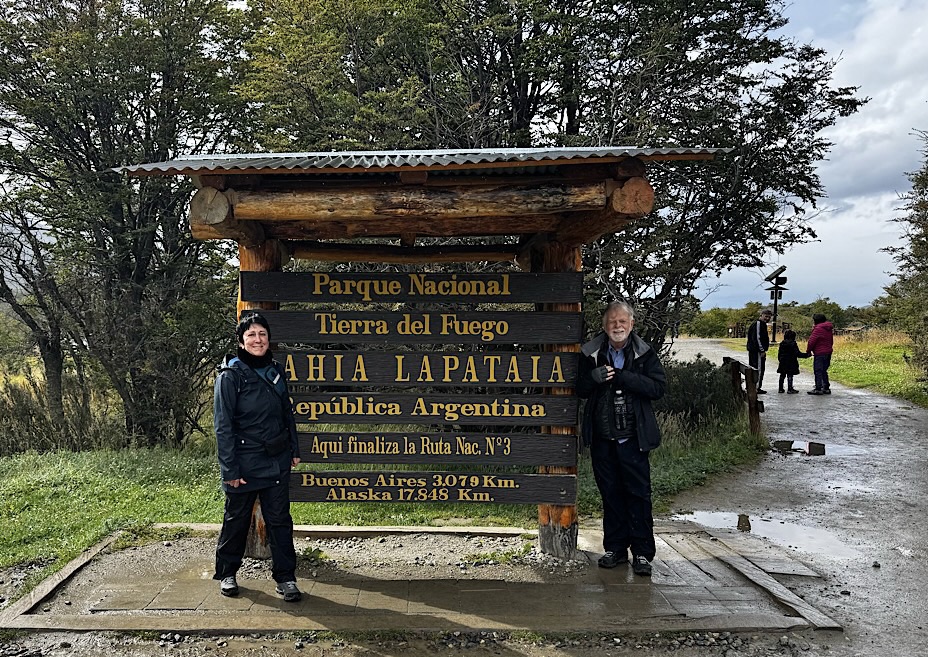
We took one bus tour to Tierra del Fuego National Park, within which the Pan-American Highway ends. You can drive along it from here to Alaska.
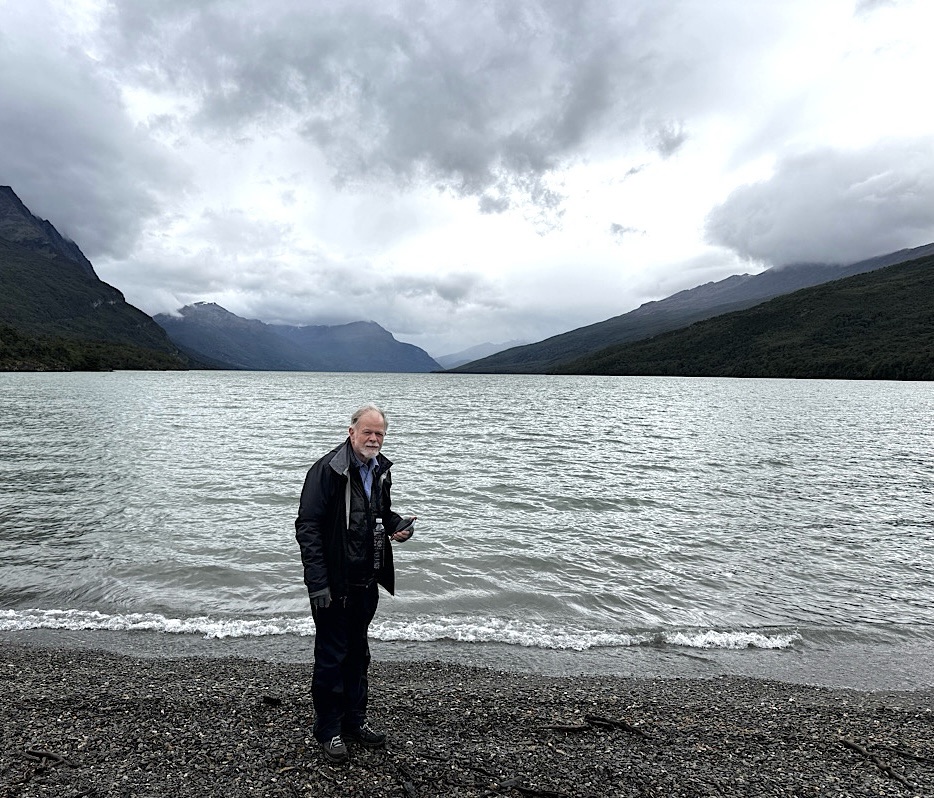
This lake in the park sits on the border. Those hills in the near distance all are part of Chile.
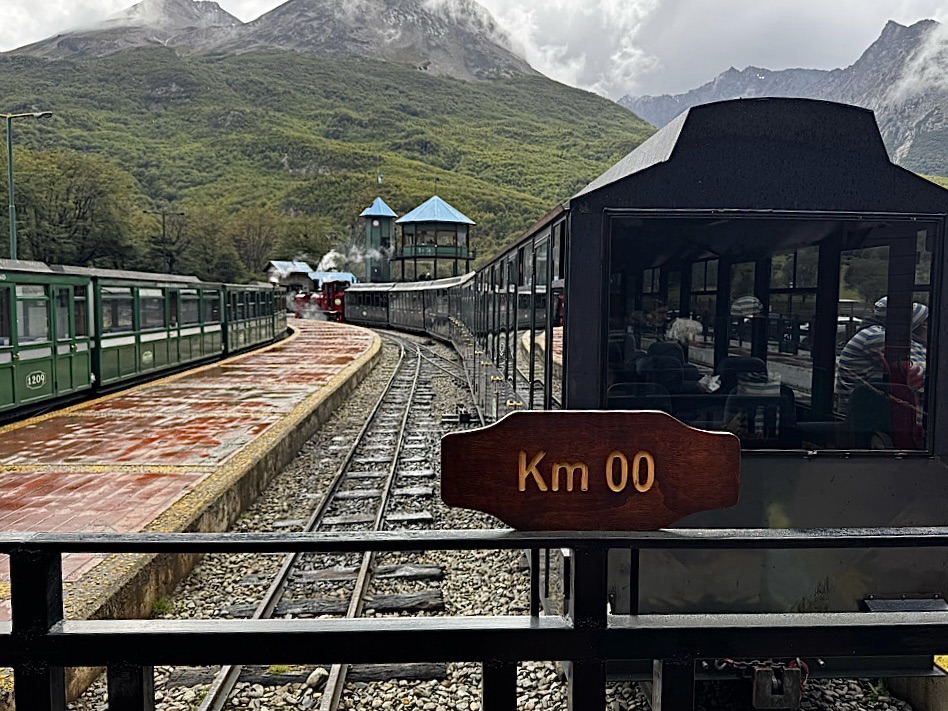
From the park you can ride almost all the way back to Ushuaia on this train, pulled by a steam engine. It was originally built by the prisoners, who rode it daily out to where they worked as lumberjacks.
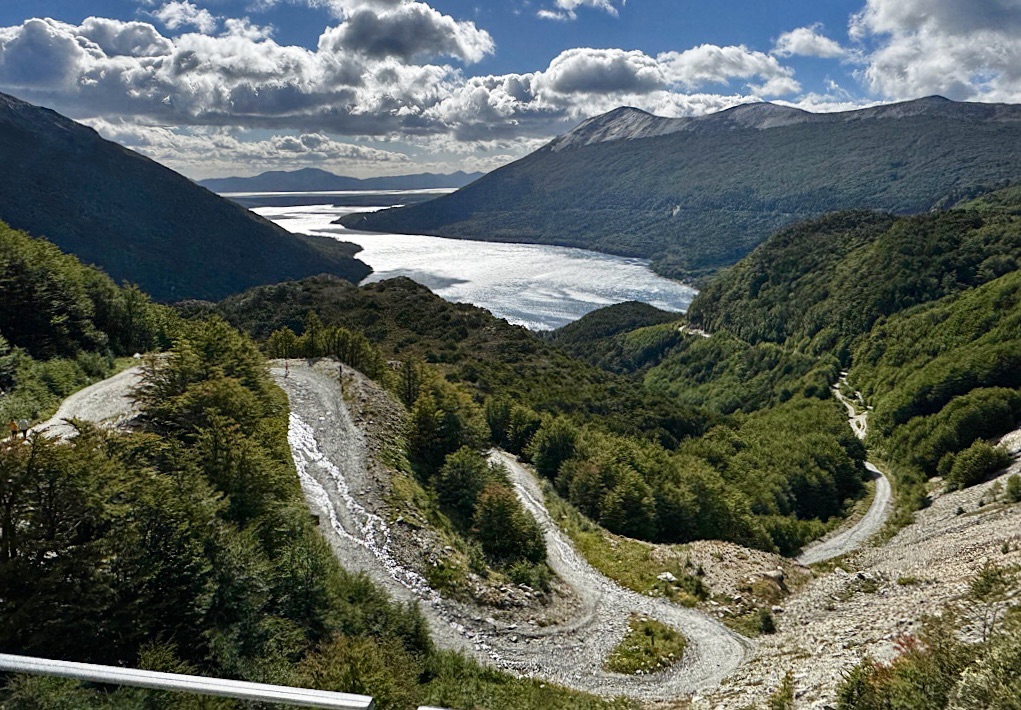
We took another bus tour that included a stop near the lovely Lake Escondido.
Between the rugged mountains, we saw meadows filled with peat bogs.

If we’d had more time,we could have gone for more hikes through the world-class scenery. Still, all our time in Ushuaia was mere prelude to the mind-boggling larger journey before us. Last night we cast off on a 4600-mile-long sea voyage through the Southern Ocean that, with luck, will take us to the Antarctic Peninsula, South Sandwich Islands, South Georgia Island, and the Falklands. With luck we’ll pull back up to the dock in Ushuaia three weeks from today.
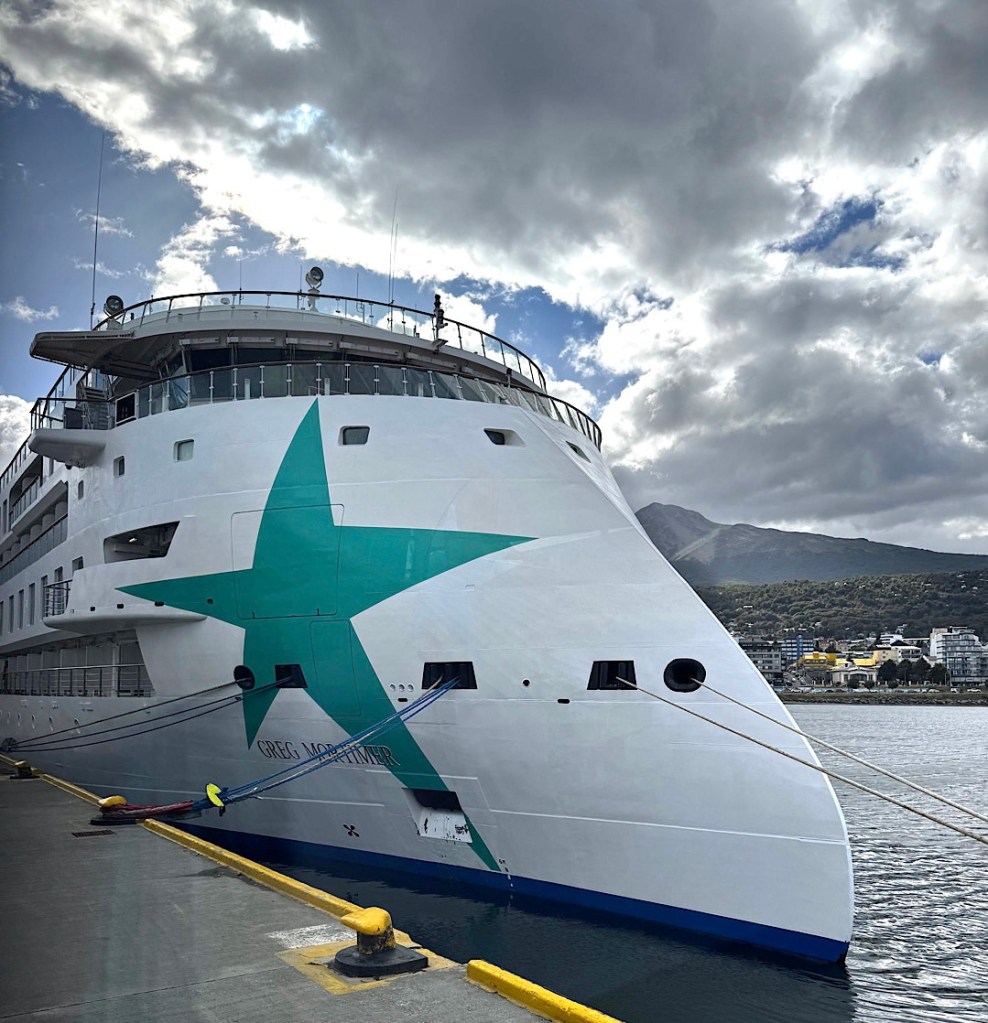
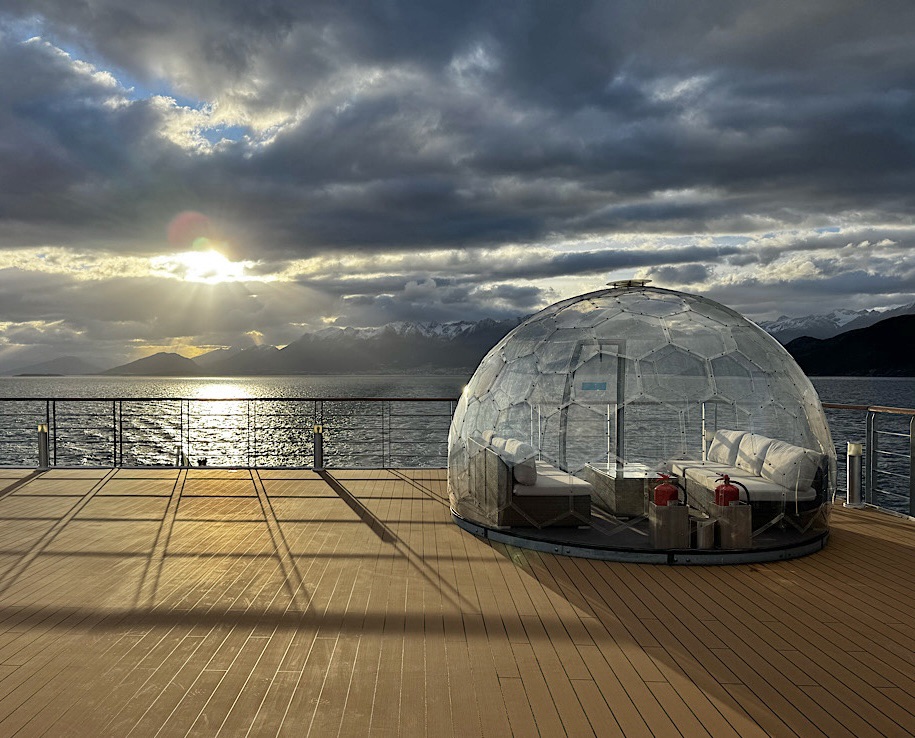
Our ship, the Greg Mortimer.
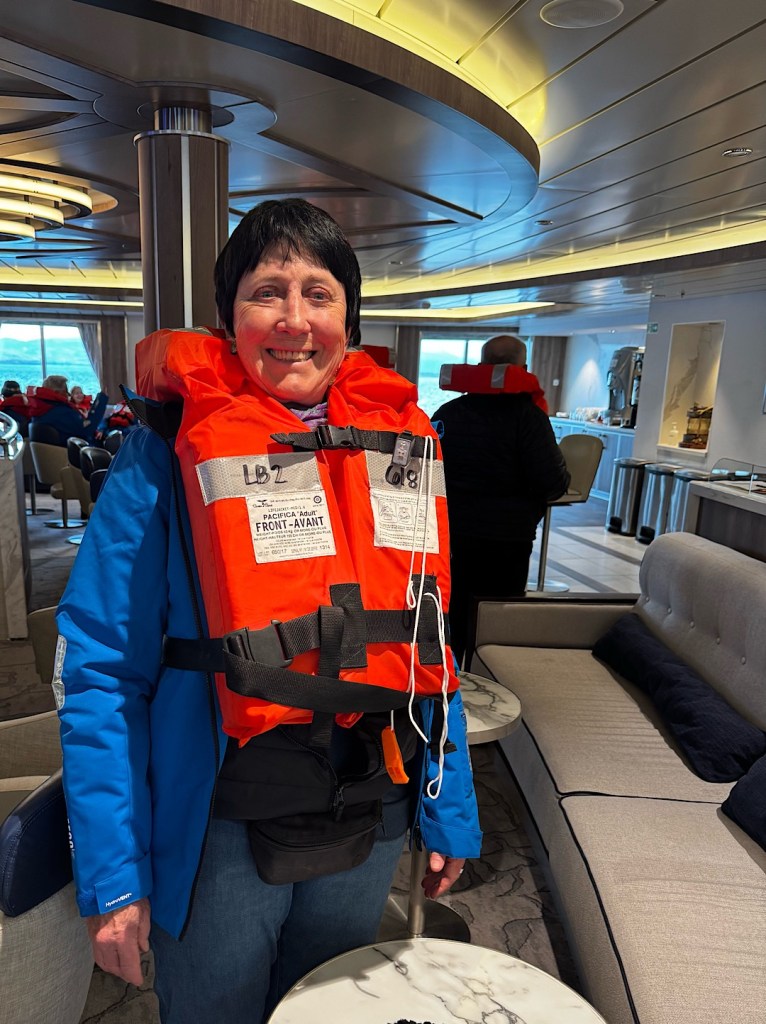
Within minutes of casting off, we practiced putting on our life jackets.

Ushuaia in the wake of our departing ship. (That’s a cozy place to hang out.)

PS: I wrote, edited, and published this post from the Southern Ocean, thanks to Elon Musk’s Starlink system.
My new favorite

I’ve been asked more than once what my favorite country is. Unlike the impossible “favorite book” or “favorite food” or (God forbid) “favorite child,” the country question feels easy. But my answer has evolved over the years.

For a long time, it was simple: France. That love-affair began in my first high-school French class and intensified the first time I landed in Paris at 20. France remained my automatic answer until a few years ago, when I was flying home from Rome’s airport, and the stern-faced immigration officer unexpectedly popped the question, and without thinking, I blurted out, “Italy!” He broke into a warm smile, and I suddenly realized… it was true! Italy had joined France.

Since then Japan (which I’ve explored at least a half-dozen times since 1977) has not only made my list but shot to the top of it. Uganda (not any city but the country overall) now has a place too, along with Istanbul. My favorite-places list is still small but this week it acquired another member: Buenos Aires.

This is not some love-at-first-sight infatuation. Steve and I spent a couple of weeks in Argentina back in 2014, and we had a terrific time. Then, however, our time in Buenos Aires had a focused mission: immersion in tango. We’d been studying the dance in San Diego for several years, and while never good, we were hooked. On that first trip to Buenos Aires we danced at as many milongas (dance gatherings) as possible. We joined free open-air tango sessions. We took a lesson with a renowned local performer. I shopped for shoes at the most famous boutique for flashy footwear in the tango universe (hidden away on an upper floor of a high rise near the center of town.)

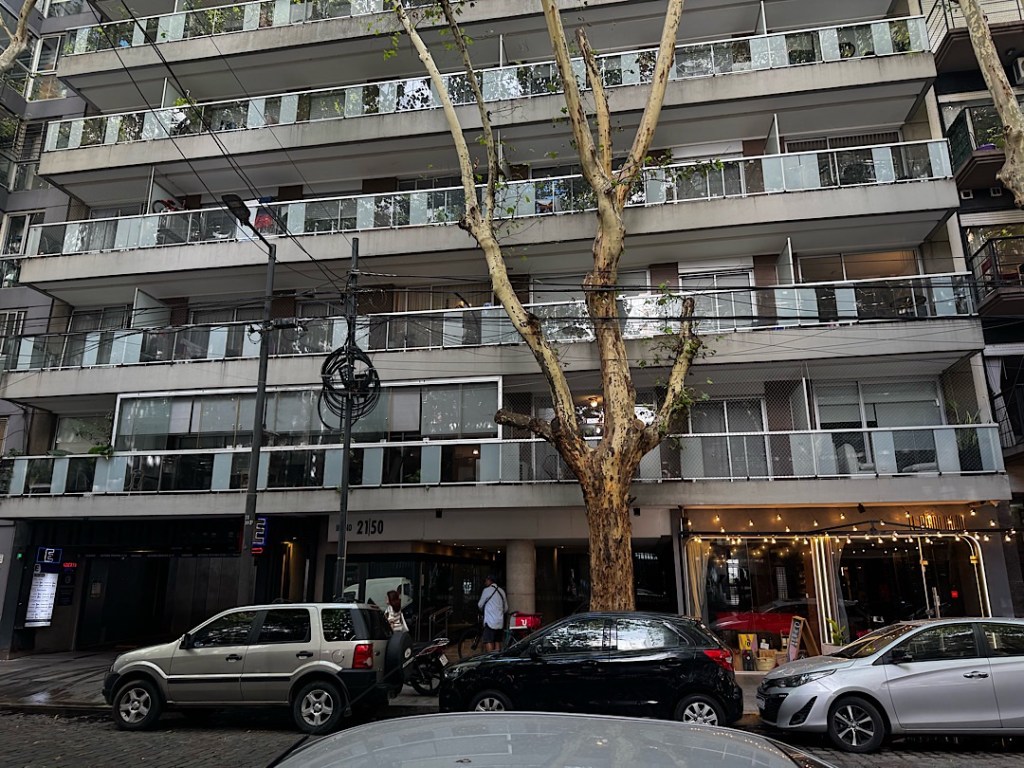
The visit we just completed was much shorter (only three nights), and it was much more aimless. We’d decided in advance there’s be no tango-dancing. We’re too rusty, and we didn’t want to take along the requisite shoes and clothes. Nor were we trying to tick off touristic highlights. We stayed in a little sixth-floor flat we secured with home-exchange points, on a cobblestone street in the heart of hip Palermo Soho.

This was our building.

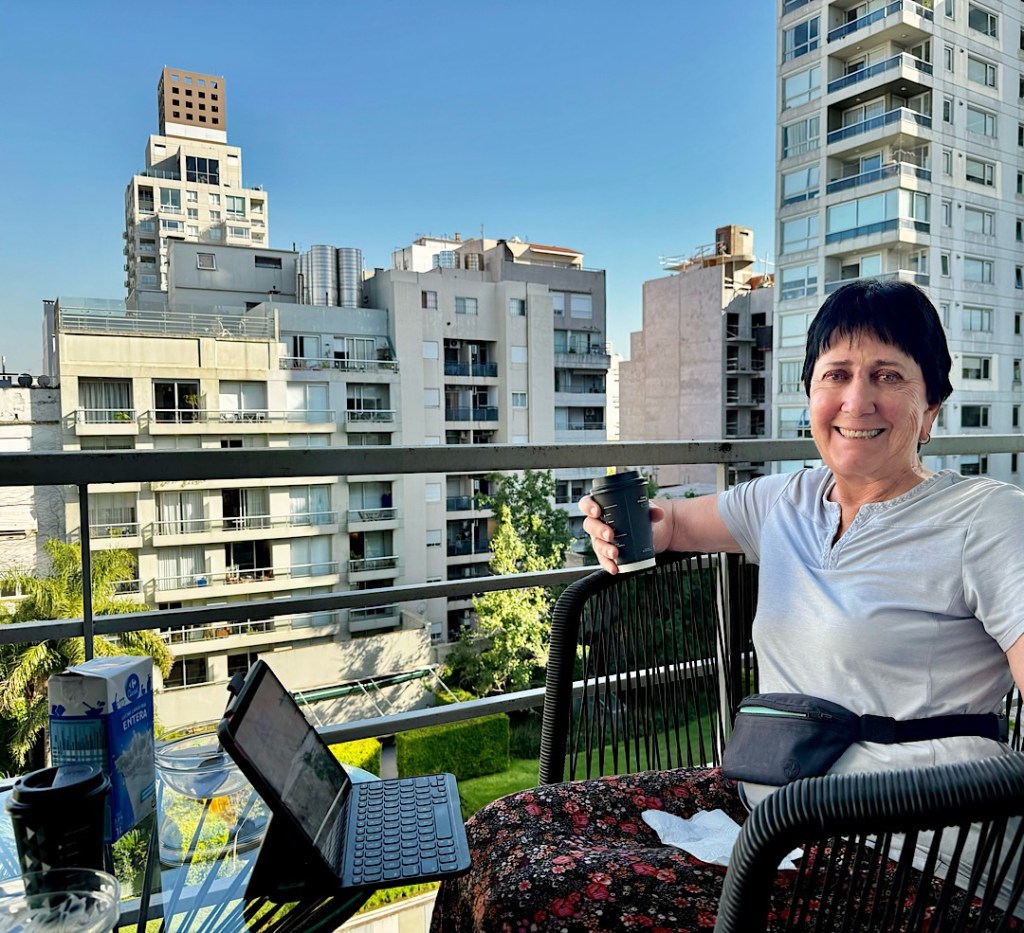
Every morning we popped out to coffee shops less than a block from our front door, and took our cups back to eat with cereal and milk and fruit that we bought at the little grocery store across the street. We sat out on our tiny balcony and took our time to read news and go through email.

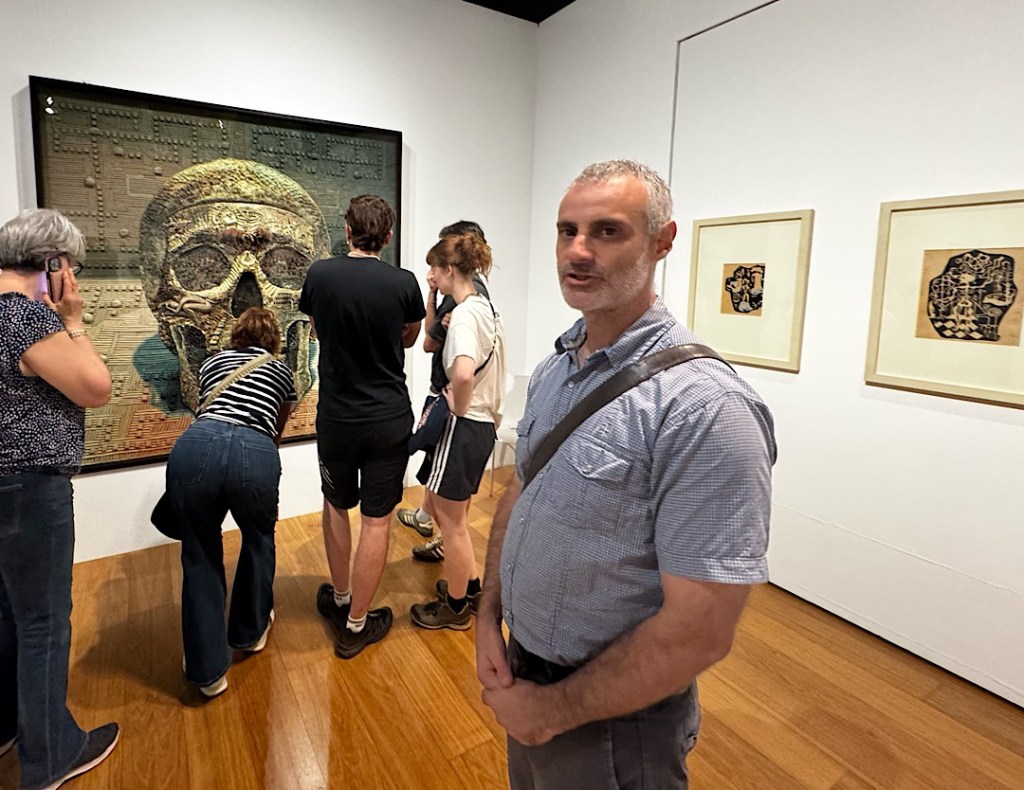
Wednesday I racked up more than 20,000 steps, as we prowled our neighborhood and some of the beautiful parks adjoining it. Thursday afternoon we spent a couple hours with a private guide at the MALBA (a sleek museum that’s home to one of the most important collections of modern and contemporary art in Latin America.) Jonathan Feldman, a university-level art professor and gallery curator, took us on a head-spinning tour of the permanent collection and the dazzling current special exhibition.

That skull and the fantastic images within it were created entirely with Play-Doh.

Then he led us out to nearby byways pulsing with street art.

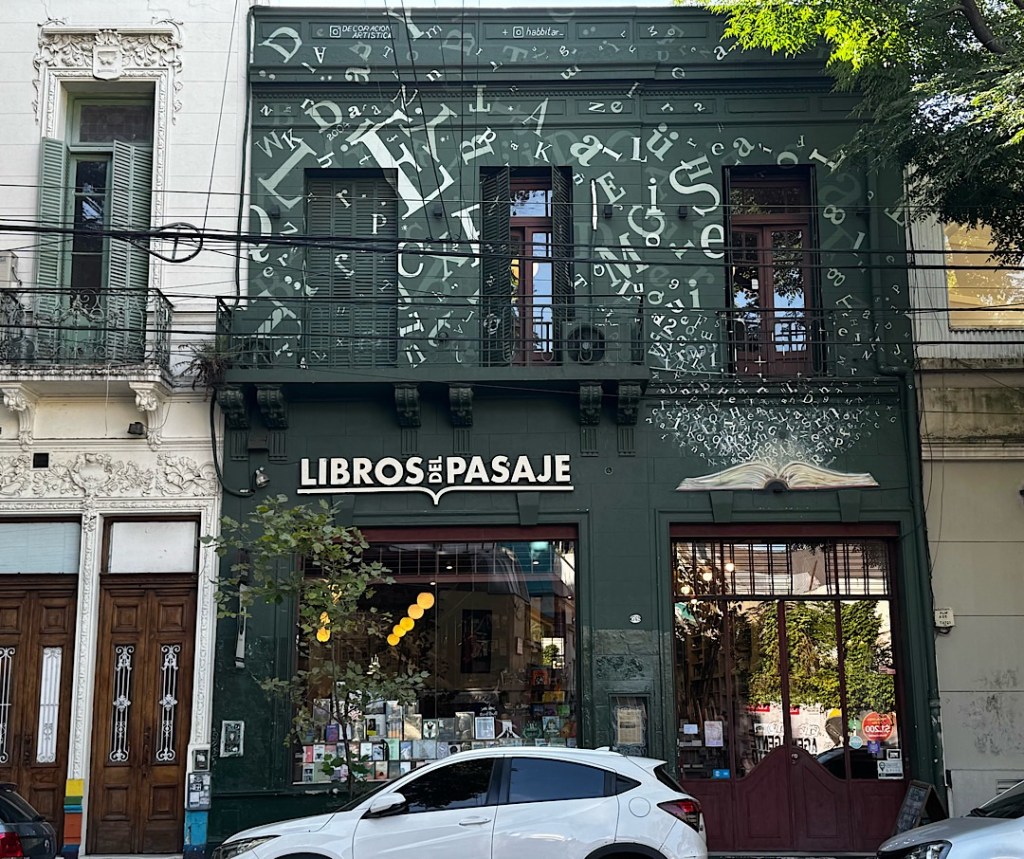
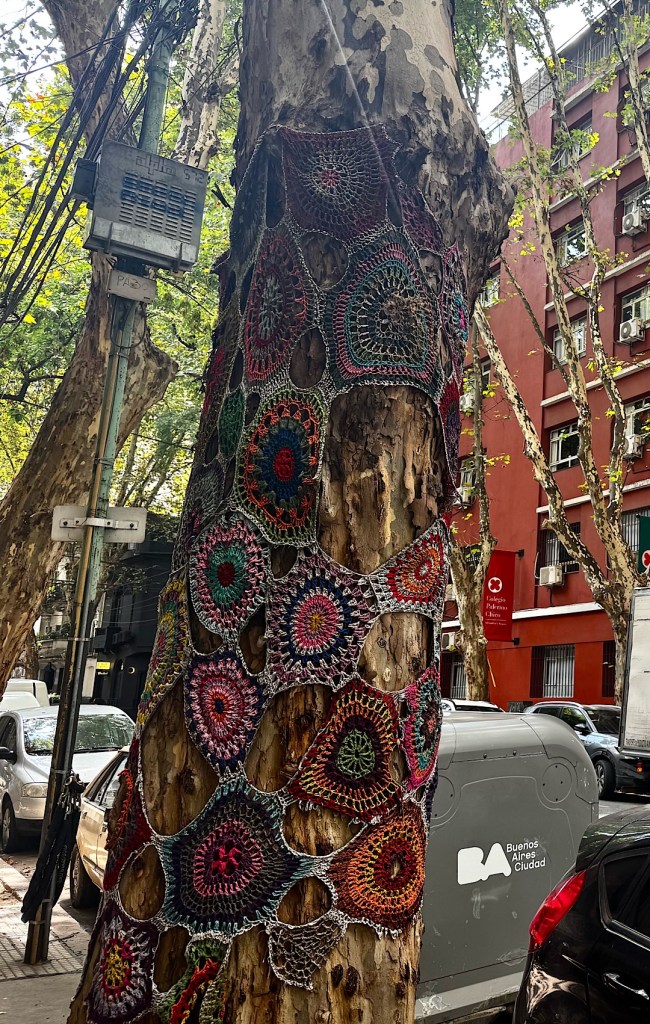
Mature jacaranda and other trees grow thickly along most of those narrow avenues. They shaded us as we strolled past more bookstores than I’ve seen anywhere in a long time.

Jonathan raved about the art books sold by this one.
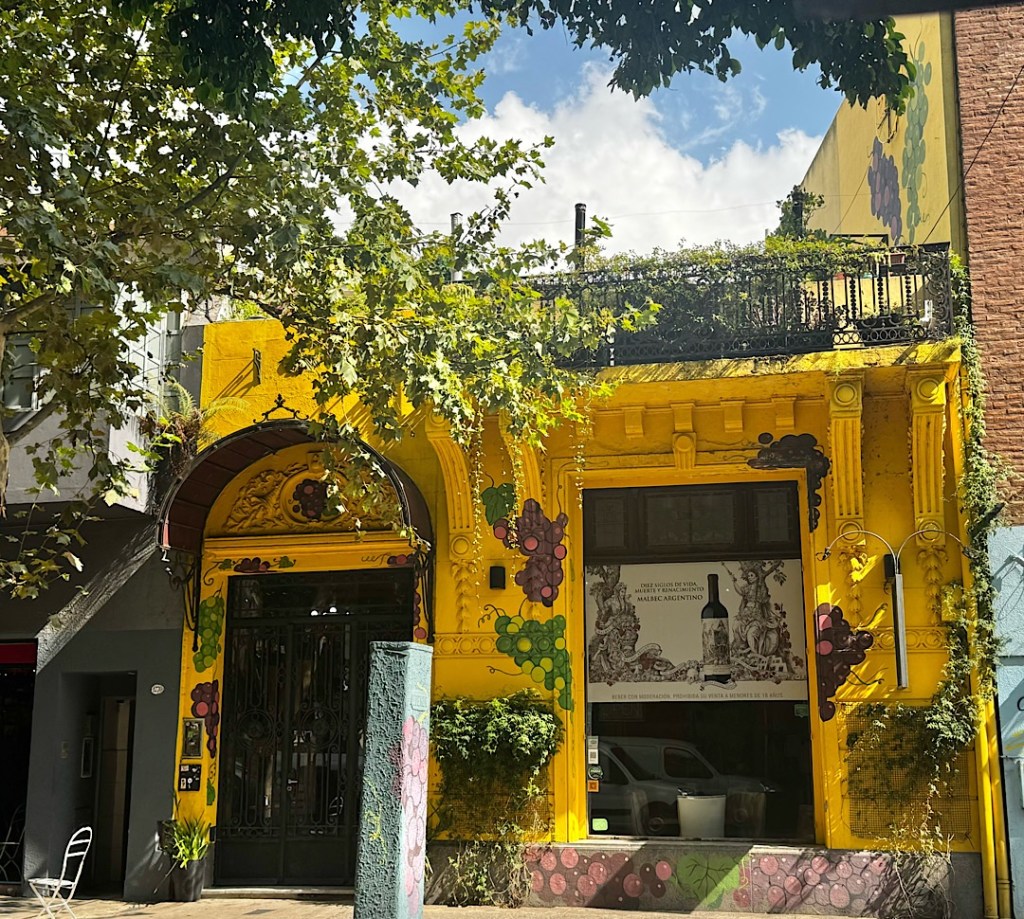
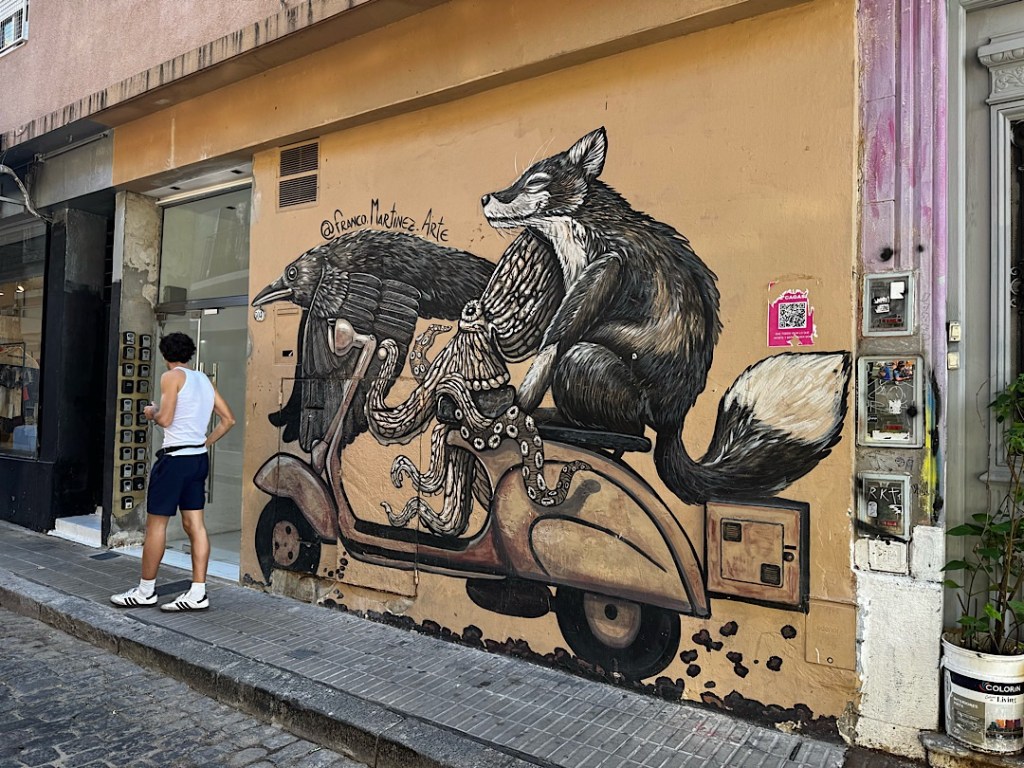
Some of the street art is subtle.
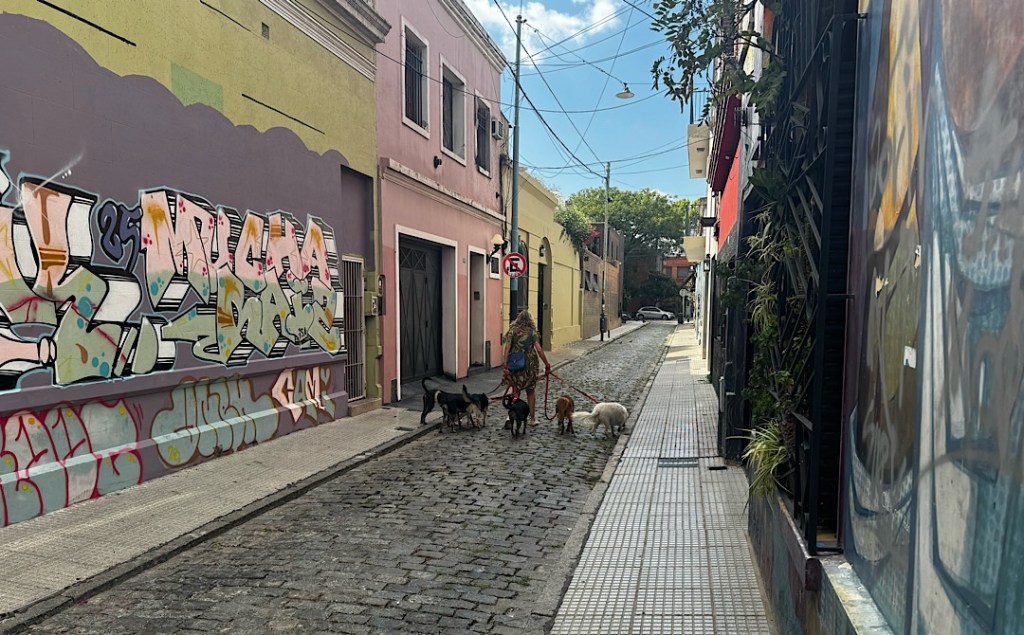
Some less so.

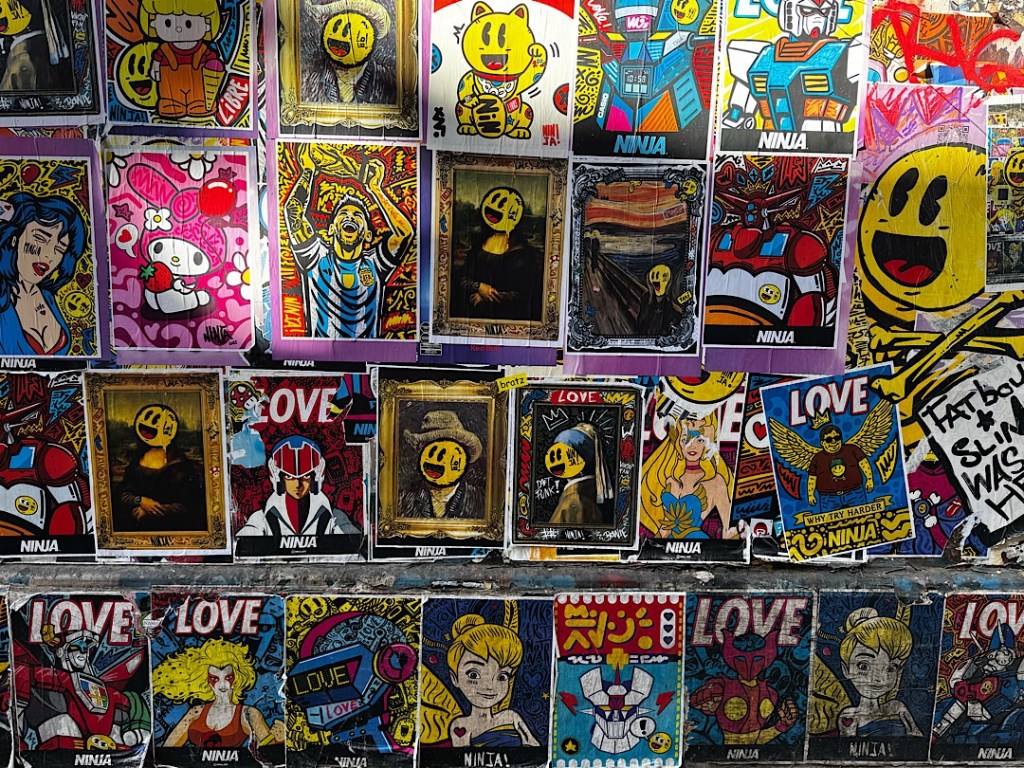
Some of it isn’t painted on walls.

I took in the countless bars and restaurants, the barbershops and car-repair garages and hardware stores and tiny veterinary clinics. Professional dog-walkers wrangled their large peaceful packs past all this and more.

I saw such things on that earlier visit, but now the city looks more prosperous. At the moment, Argentina has the world’s only libertarian chief of state. Although the jury’s still out on how well Javier Milei and his government will do, some changes are evident. Inflation’s down from more than 200% per year to about 30% — still high but more bearable. The city’s dreadful housing shortage all but evaporated overnight, as the Milei regime ended BA’s price controls. The sidewalks seemed in better shape; sounds of construction projects, large and small, surrounded us.

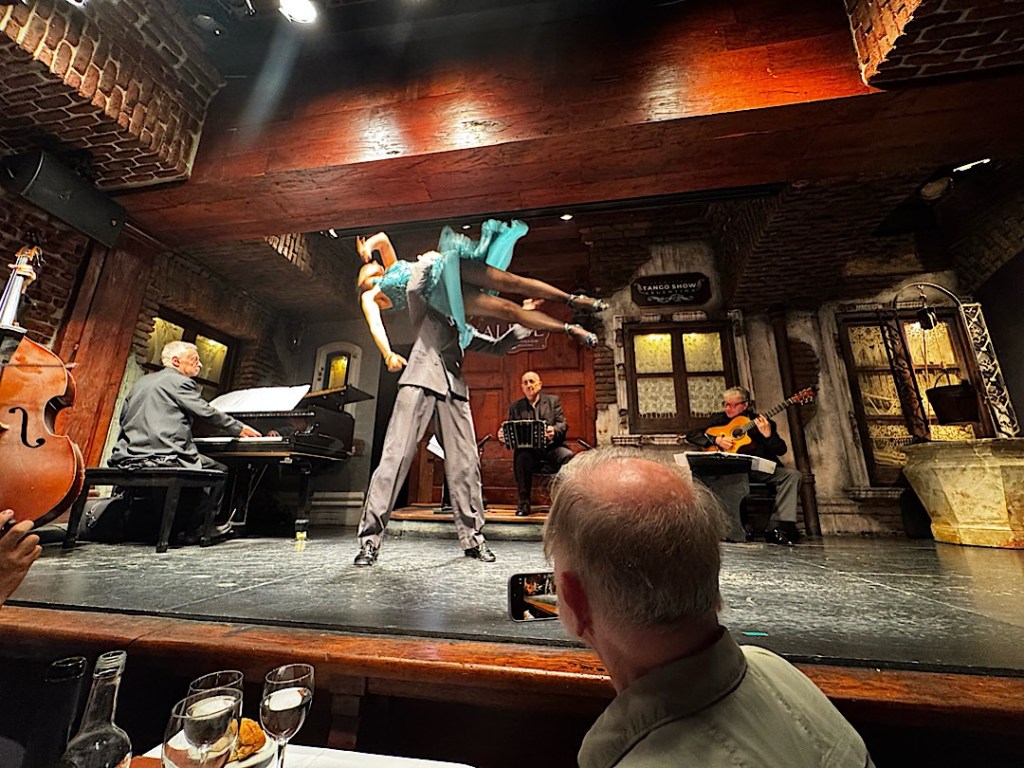
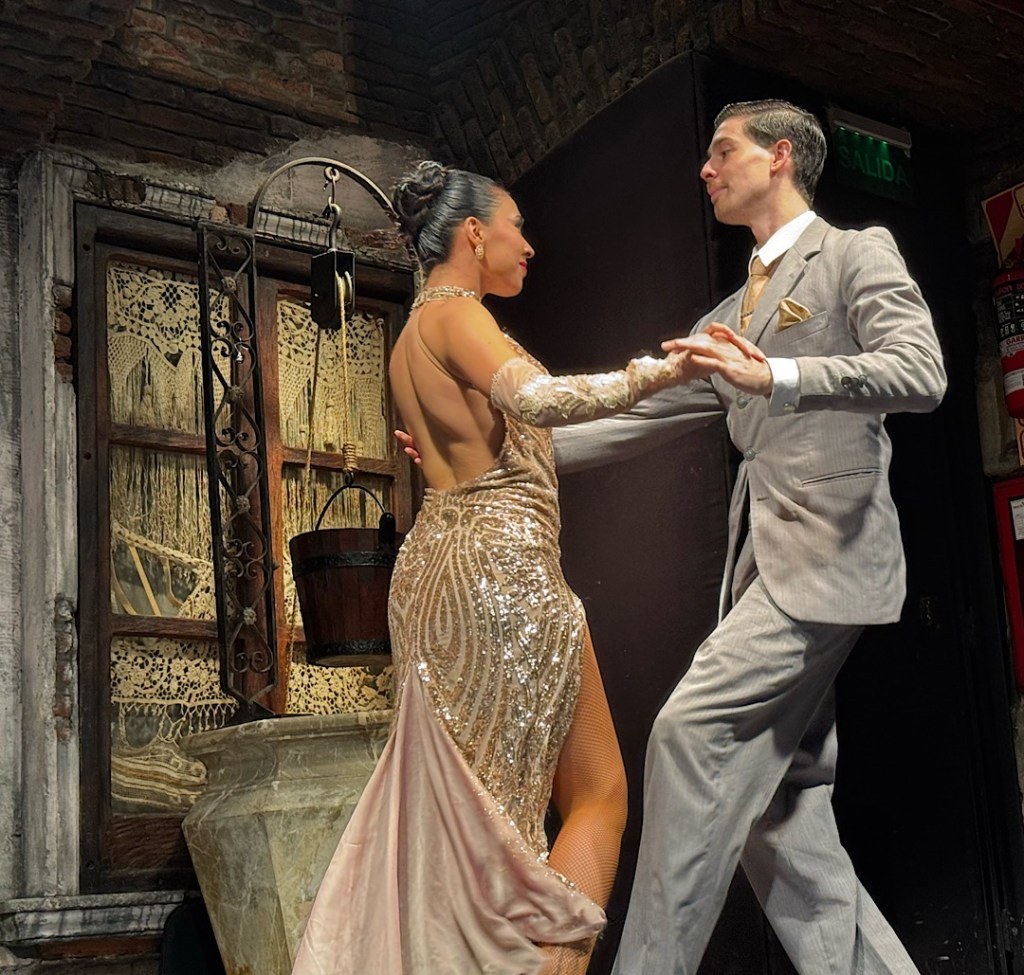
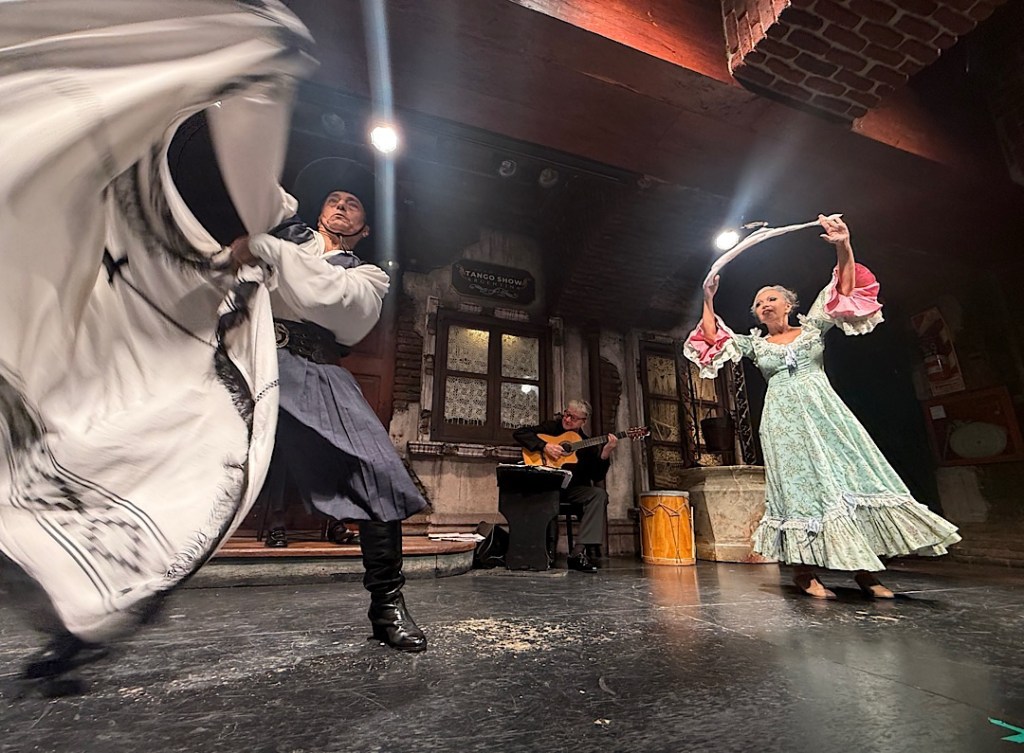
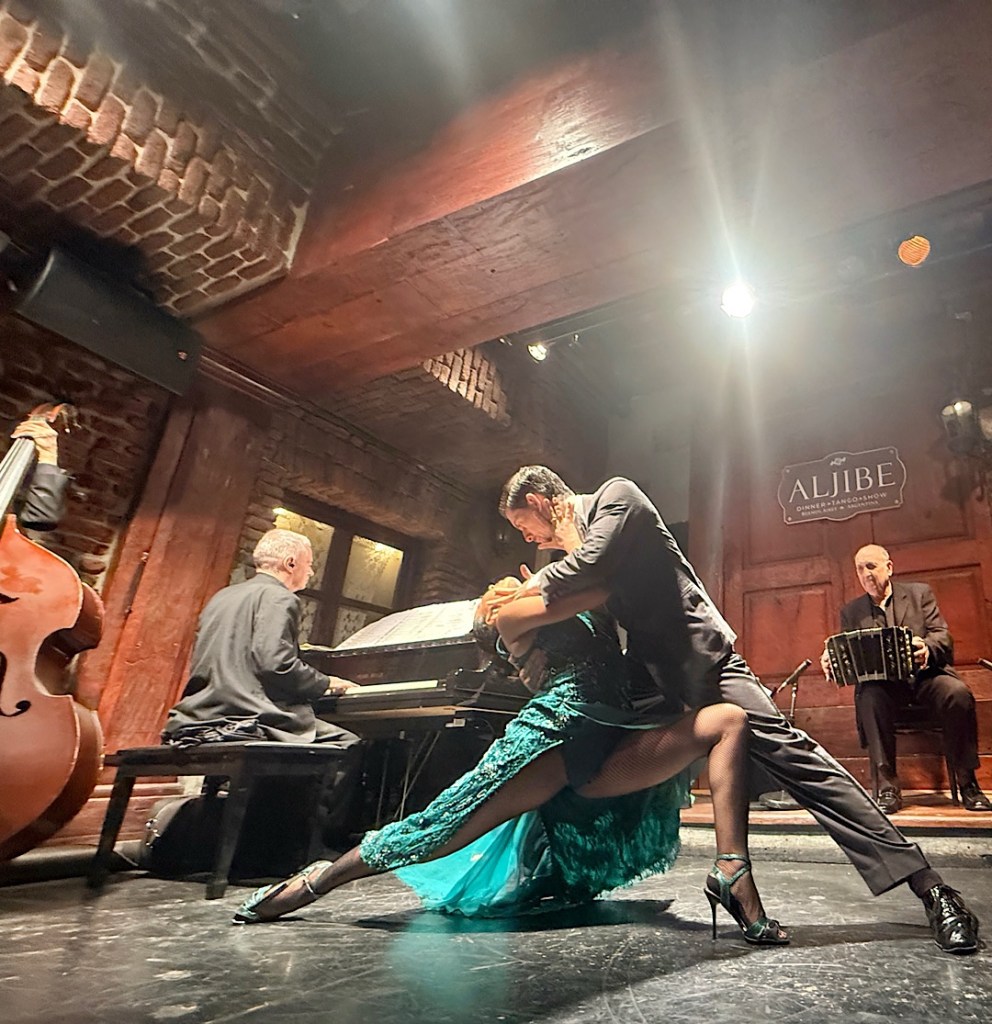
On our last night, Friday, we did do something classically touristy; took an Uber to a tango dinner club just a few blocks from the Casa Rosada (the official seat of the Argentine government). The Aljibe club was packed with tourists but Steve and I got lucky and were seated at a table right next to the stage. Most of the show consisted of what I think of as performance tango. For this, exquisite looking young people show off the flashiest of moves.

It’s impressive and entertaining but not what you see on the floor at real milongas. But at least one number gave the audience a taste of that, and a singer crooned a few classic songs, and two older dancers demonstrated some gaucho moves.

This all was backed by a little four-man tango band: a pianist, bass player, guitarist, and a fellow on the little accordion-type instrument called a bandoneon.

It’s the bandoneon that gives tango music its unique flavor; that and the complex rhythms. Watching the show, I realized that during Steve’s and my tango years, I was drenched in that sound, that music. I’d forgotten how deeply it seeped into my mind and spirit. It’s emotional music, by turns expressing longing and pleasure, suffering and joy, the full panoply of life in a glorious place. That place is Buenos Aires, and for me, maybe because of the music, maybe because of everything else I find so lovable, Buenos Aires now ranks among those spots on earth I love the best.

Our eclipse party

In the Mendoza Airport yesterday, I heard a woman talking about someone she knew who had seen 20 total solar eclipses. I know such people exist; they more or less dedicate their lives to traveling the world to wherever it is the sun will next be totally blocked out by the moon. (This happens only once every year or two.) When I saw my first total solar eclipse in 1999, it affected me so powerfully I vowed to see as many as I could for the rest of my lifetime. I’ve since decided this requires a level of nuttiness that, nutty as I may be, I lack. Seeing only three has taught me how many decisions you have to make, any one of which can turn out to be disastrous.
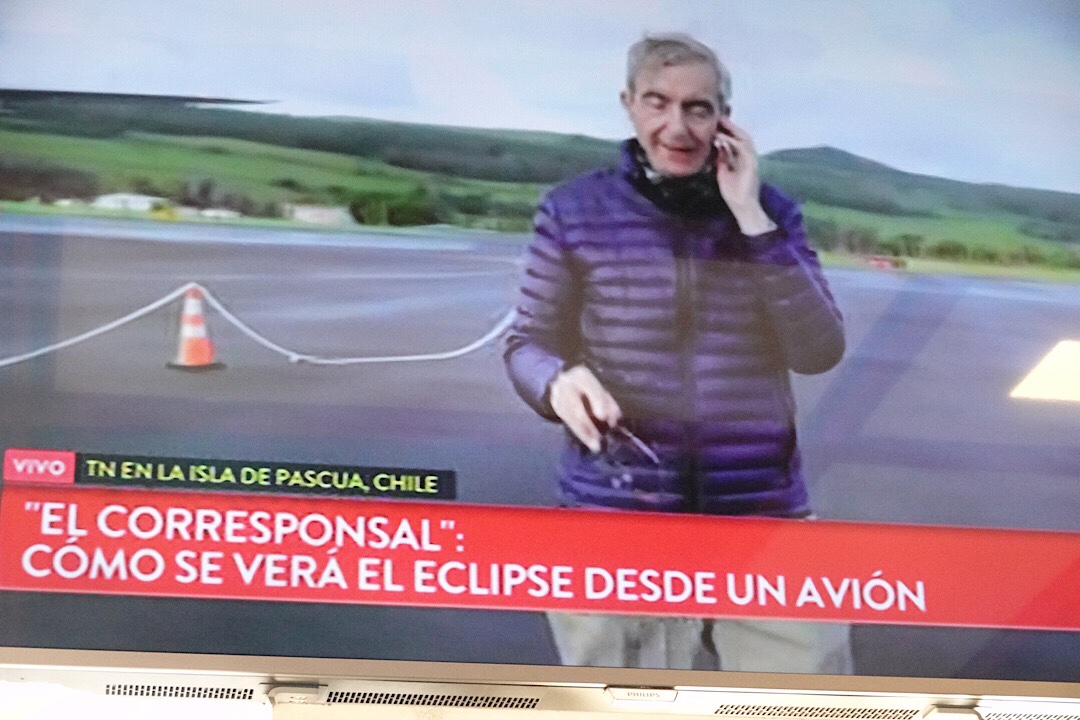
Solar eclipses follow an arc, so first you have to pick which point along the arc you want to aim for. The eclipse that just took place sliced across southern South America from (roughly) La Serena in Chile to Buenos Aires in Argentina. Steve and I have already explored Buenos Aires, plus we knew the eclipse there would take place almost at sunset. We’d never been to Chile, so that was most attractive to us.

On the other hand, this is winter in Chile, when rain and fog (the arch-enemies of eclipse-viewers) plague the coastline west of the Andes. That happens less as you move north of Santiago (where La Serena is), but if the weather wasn’t good, it wouldn’t be possible to drive to somewhere better, given how the mountains and the sea constrain this long, skinny country. That’s why we chose to spend a few days sightseeing in Santiago, then fly the short hop across the Andes to Mendoza in Argentina. If the weather looked ominous, we might have a few more options.

As it turned out, everyone lucked out. Days ago, the weather forecast for everywhere along the ecliptic path predicted sun. But there were still decisions to be made.

In Mendoza, we got our first sense of the excitement building. At dinner Sunday a fellow at the next table turned to us and asked in English if we had come for the big event. He was an amateur astronomer from Montreal, and we traded information and good wishes. Monday afternoon, we made the drive to San Juan (north of Mendoza) in just under two hours, and we saw non-stop TV coverage that evening and the next day at lunch. San Juan would be on the far southern edge of the eclipse arc, we knew, but the sun would only be totally covered there for about 30 seconds. In contrast, if we drove north to the center of the path, the eclipse would last close to two and a half minutes. Totality is so spectacular, you want it to last for as long as possible. But what I learned as I researched all this (months ago) is that there aren’t a lot of options for getting around in this part of western Argentina. Professional astronomy sites said the towns of Rodeo and Bellavista were likely to be best, but I had trouble finding them on any map (even Google’s). The only roads leading to them from San Juan crossed a mountain spur, and I could find no clue to what their condition would be.
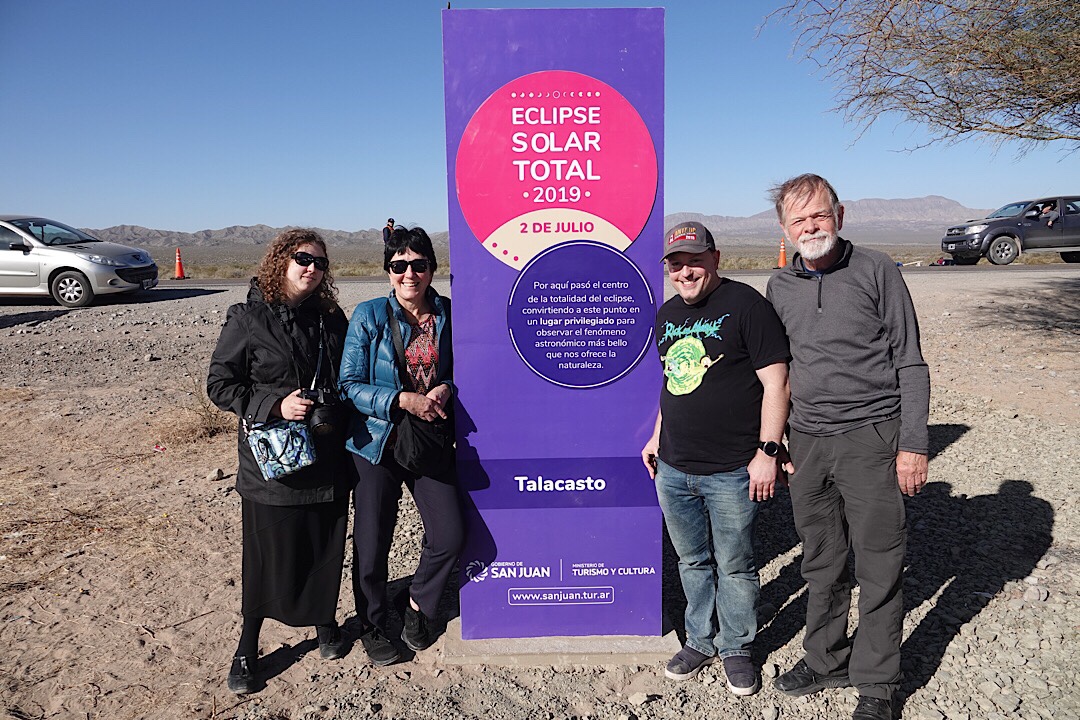
We finally figured out that if we drove north from San Juan on the main highway (Ruta 40) for about an hour, we would come to a tiny settlement called Talacasto where totality would last two minutes and 11 seconds. We decided to trade the extra 20 seconds we would lose by NOT going to Bellavista for the extra hour or two it would take to get there (and drive back, probably in heavy traffic, after dark.)

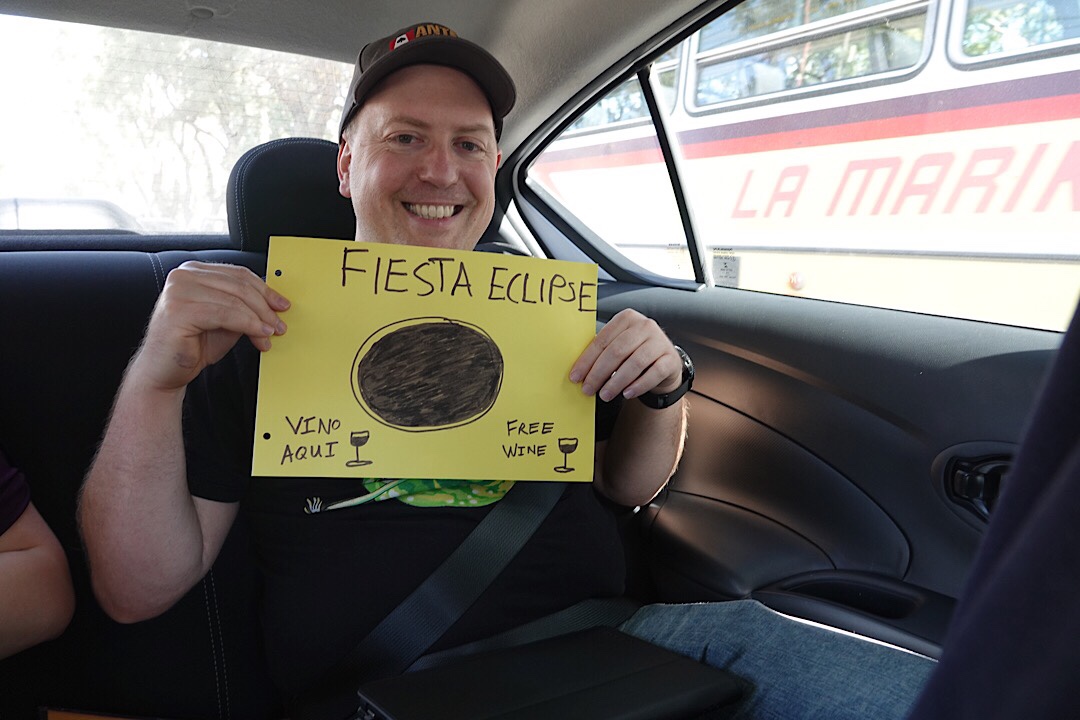
With our destination settled, and the weather looking good, one additional concern bothered me. At the two previous eclipses I’ve seen (in Bavaria in 1999 and Oregon in 2017), part of what thrilled me was the reaction unfolding all around. We weren’t in a huge crowd either time, but there were enough fellow viewers to make the experience collective; to hear the chorus of exultation and wonder; to see the tears, the upraised fists. I fretted we might wind up in a lonely place where we four were the only spectators. Steve and Mike couldn’t imagine this, but Mike had a solution: “We’ll pick up some wine, make a sign, and invite anyone who sees it to join our eclipse party.”

So it was that we stopped at the Carrefour in central San Juan, where we bought several bottles, disposable glasses, paper, and a marker. Michael worked on the sign…

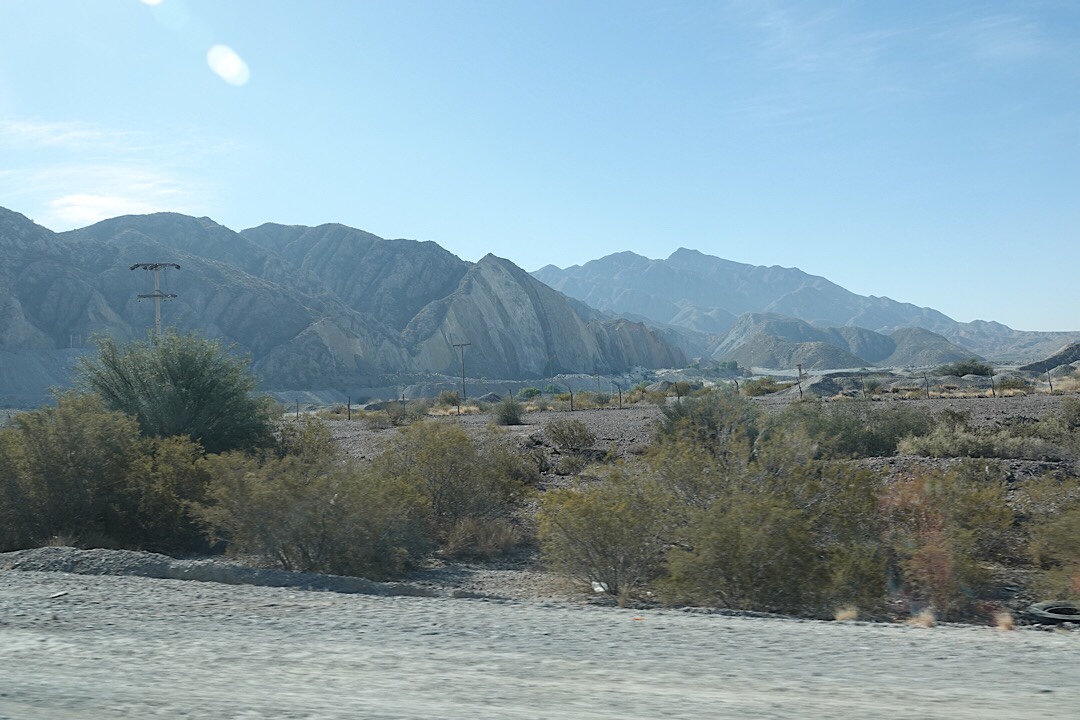
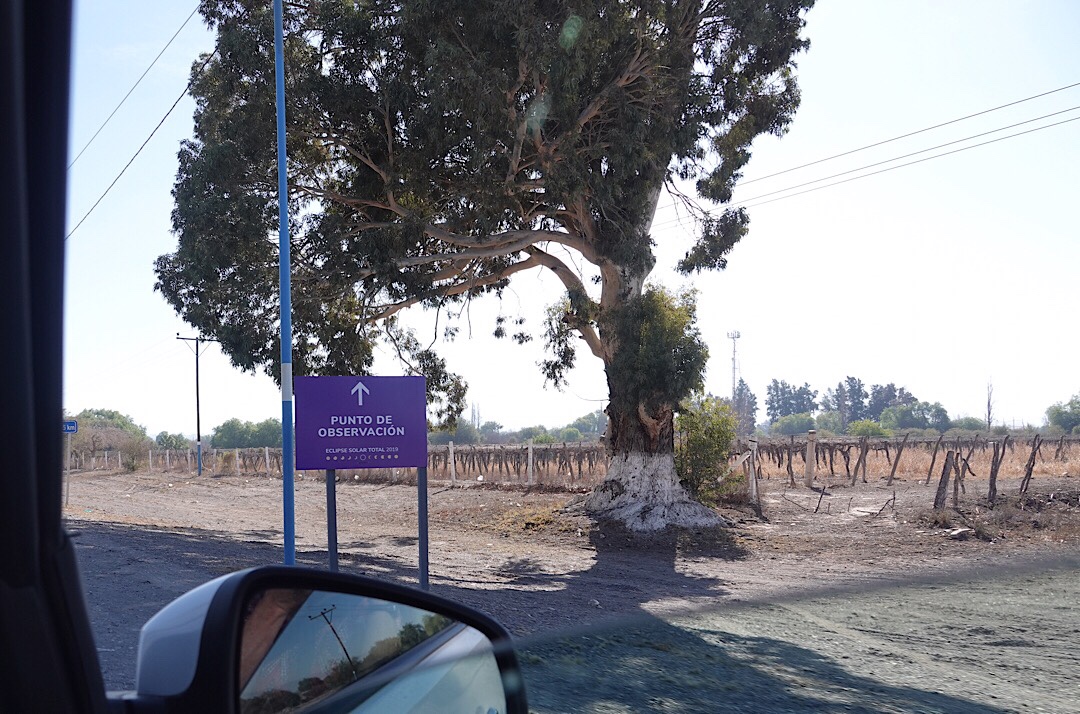
…while we drove north through countryside that surprised us by its resemblance to Southern California: the Mojave desert (in places) and Anza Borrego (in others).Along the road, we spotted the first of a series of signs announcing a “Punto de Observacion” (eclipse observation point) ahead, which in itself reassured me. (If there was an official observation point, clearly we wouldn’t be alone.)It also dispelled another worry: If the road led us to a point too close to the Andean foothills to the west of us, the sun might actually be behind them by 5:39 pm (when totality would start). But if locals had picked an observation point and then created and posted glossy signs leading to it, surely they must have chosen a site where the mountains wouldn’t block our view.
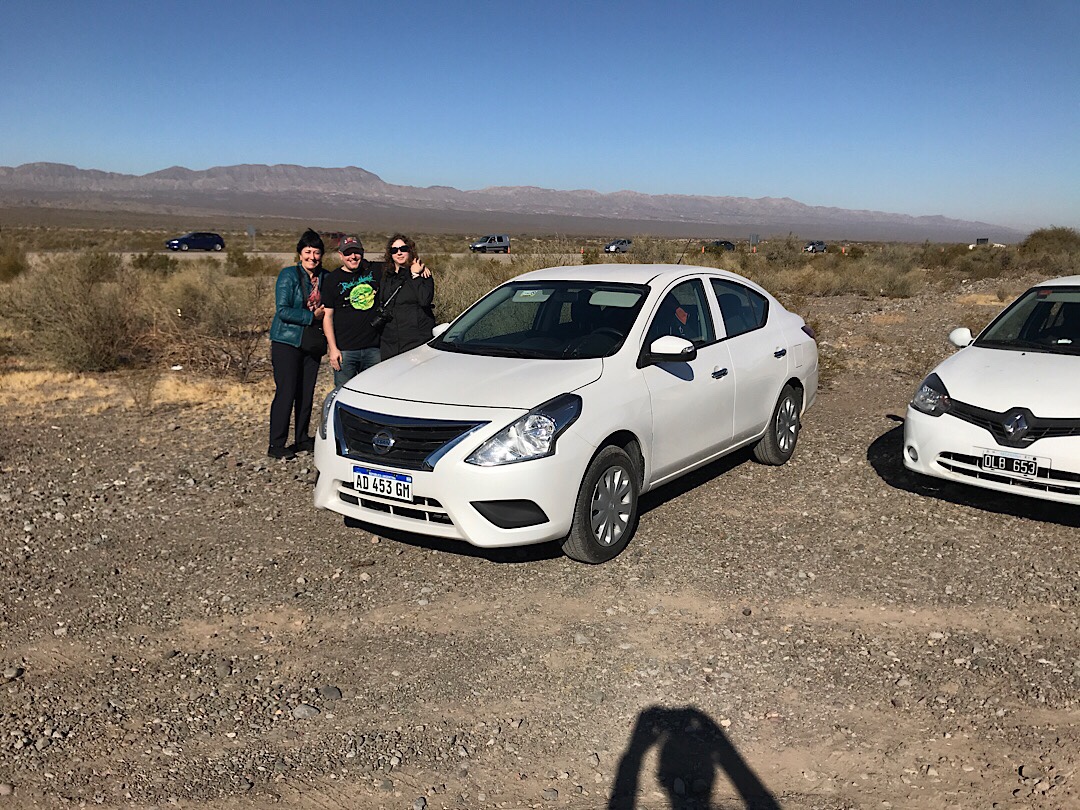
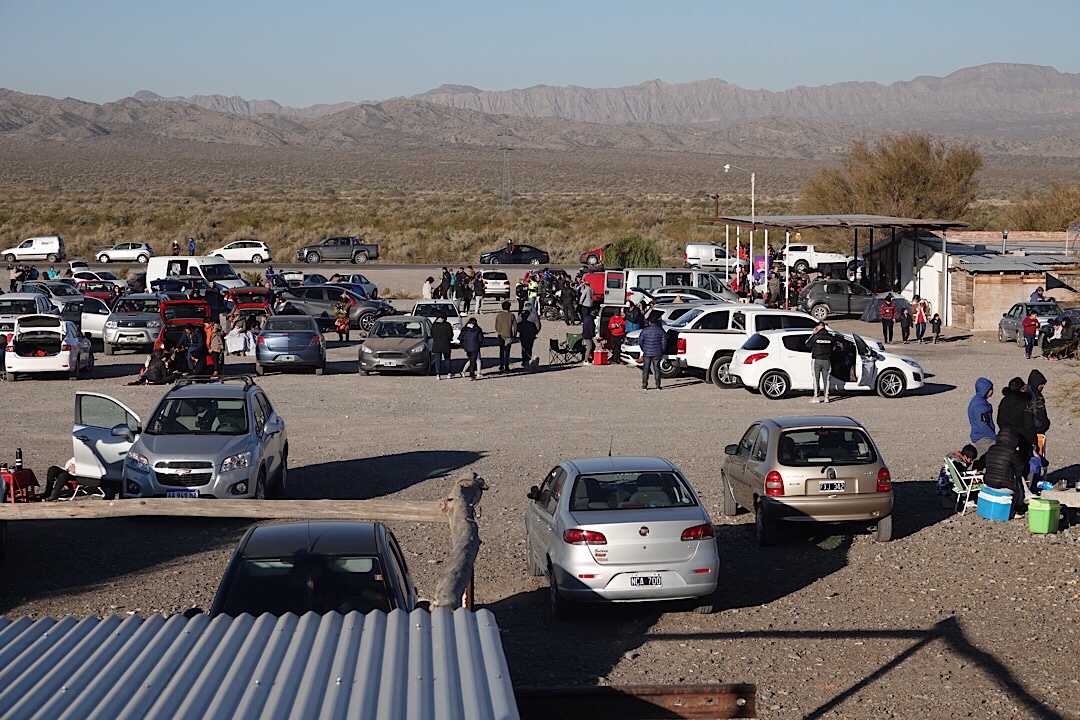
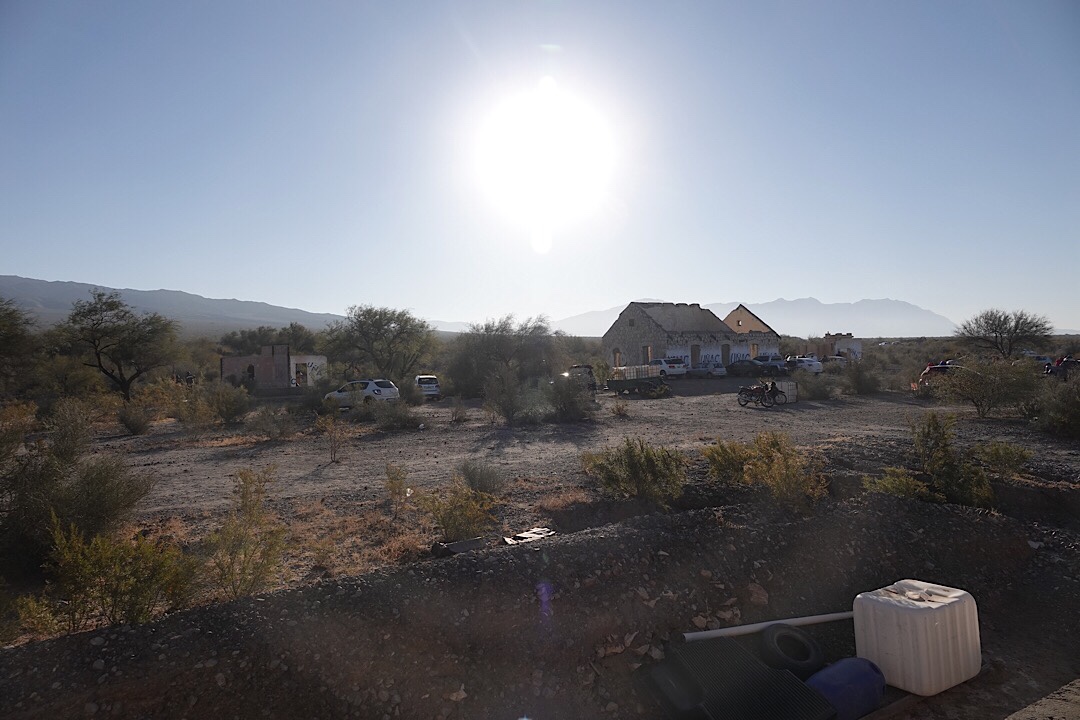
We got to Talacasto around 3:30 and found a large area already filled with at least 100 cars, yet still containing plenty of room for more..We had no folding chairs like most of the local folks, but Michael scouted out a spot behind a half-built stone building that sheltered us from the wind.Climbing up on its roof offered excellent views both of the sinking sun…and the surrounding crowd.We anchored our sign with a cinder block and uncorked one of the bottles, poured ourselves a glass, and settled in to wait.
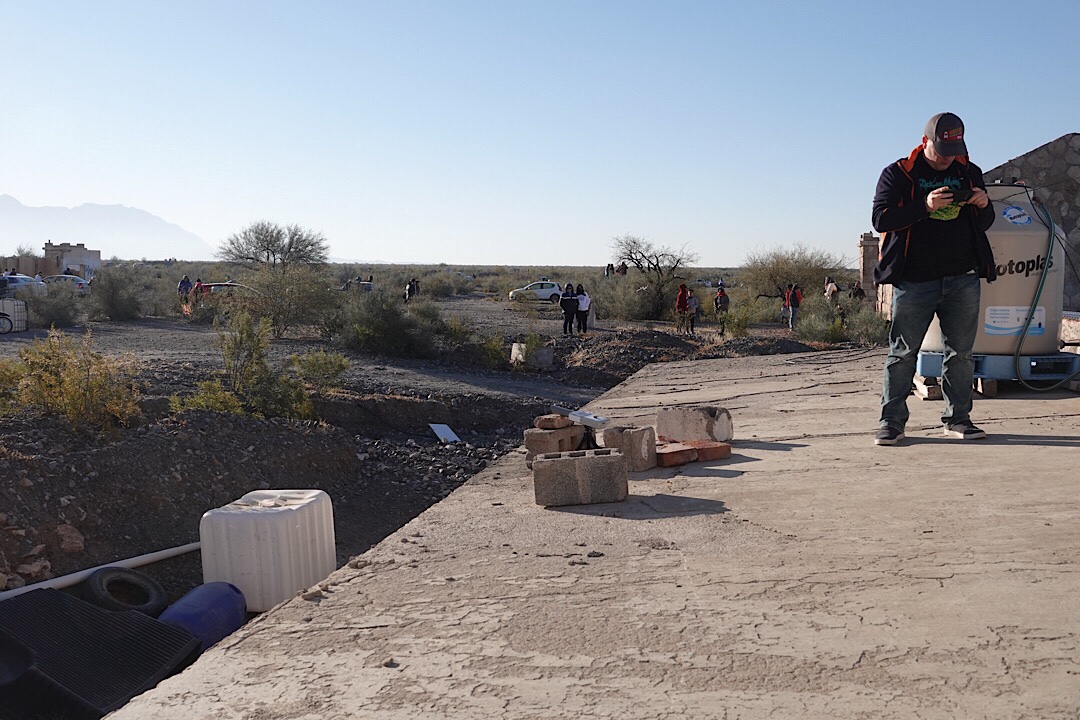
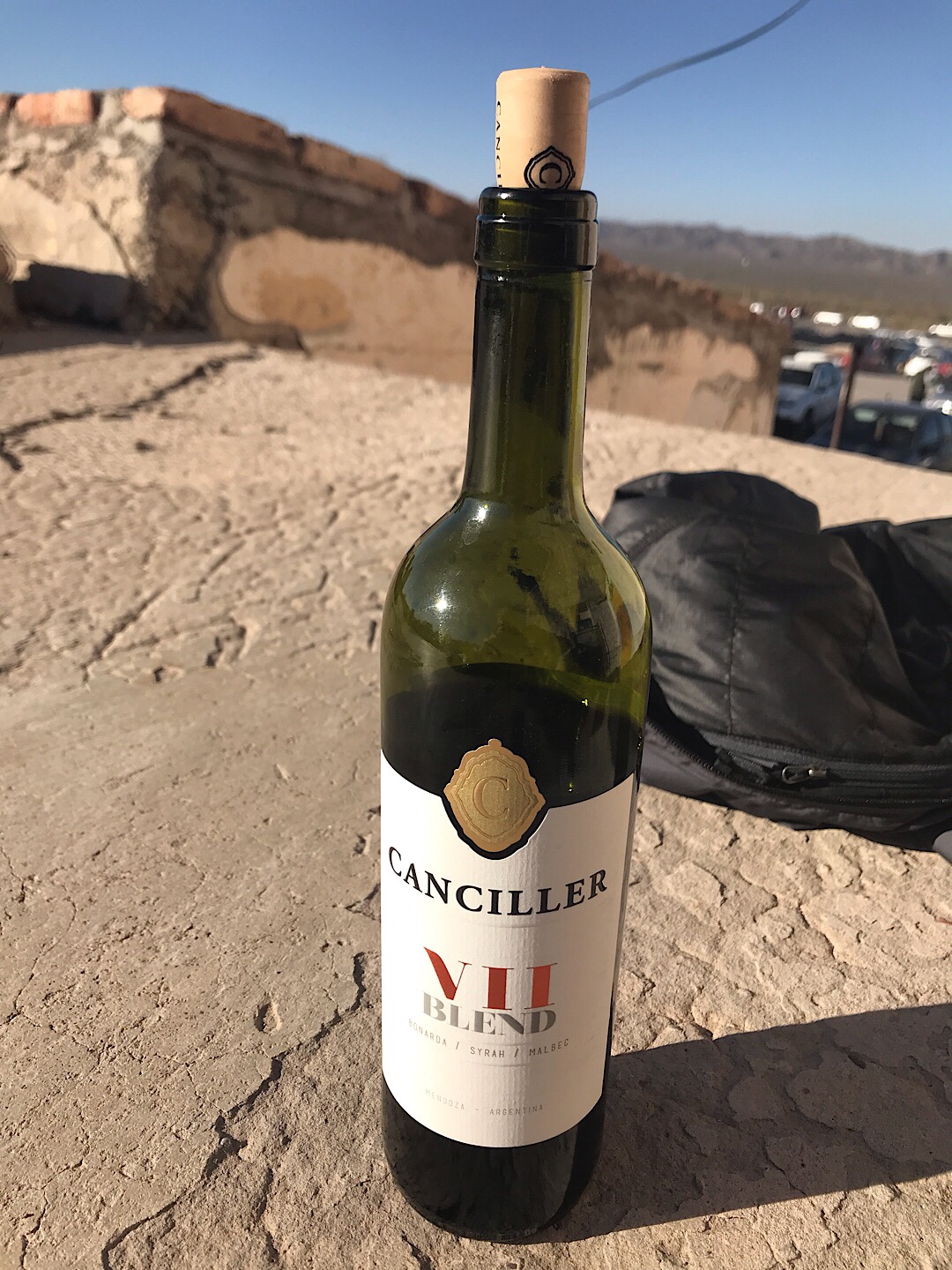
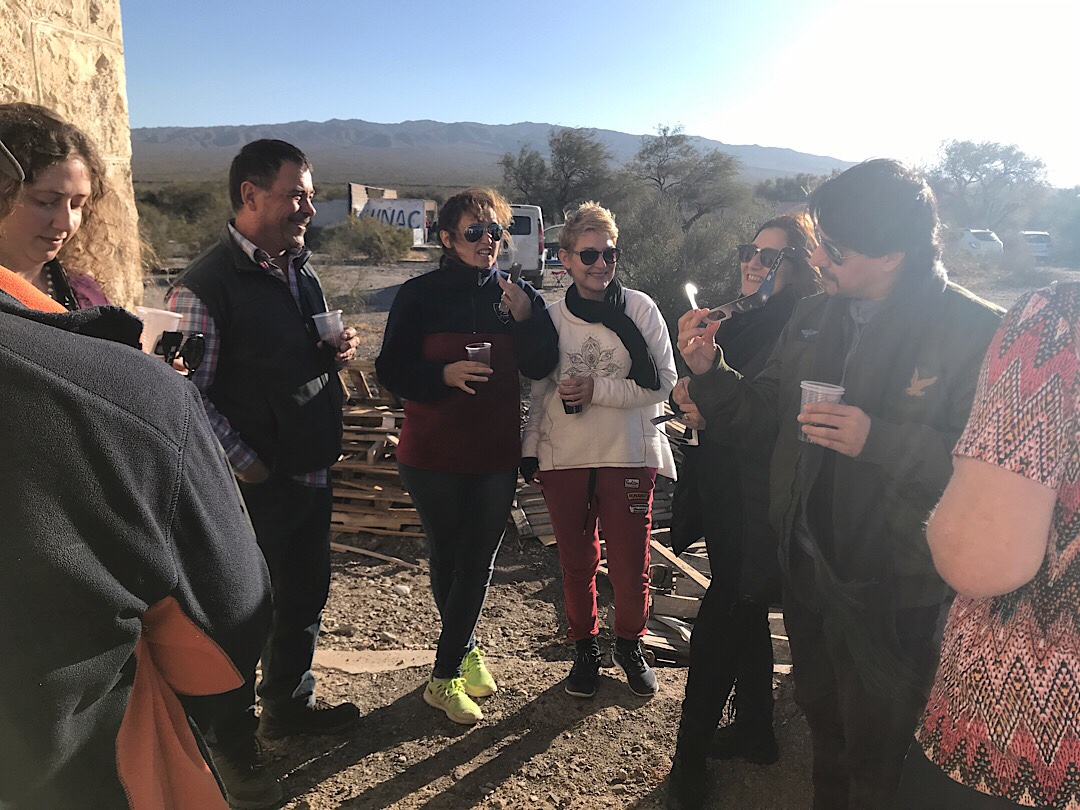
It didn’t take long for an Argentine couple to stroll by. I asked if they had eclipse glasses. (We had extra because I’d bought a 10-pack from Amazon.) They were thrilled by the offer, since they’d forgotten to get some. At first they demurred accepting the wine, but they broke down after a while, and we had a lot of fun chatting in English and Spanish with Edgardo (a CPA and aspiring website developer) and Nancy (a painter and art teacher). I offered more glasses (and wine) to a family of three from San Juan encamped nearby us, and they too accepted with delight. They eventually left their rig and brought mate (Argentine herbal tea) and cookies to share with our fiesta. We toasted the eclipse, toasted being alive in this enchanted spot to share this amazing experience together.

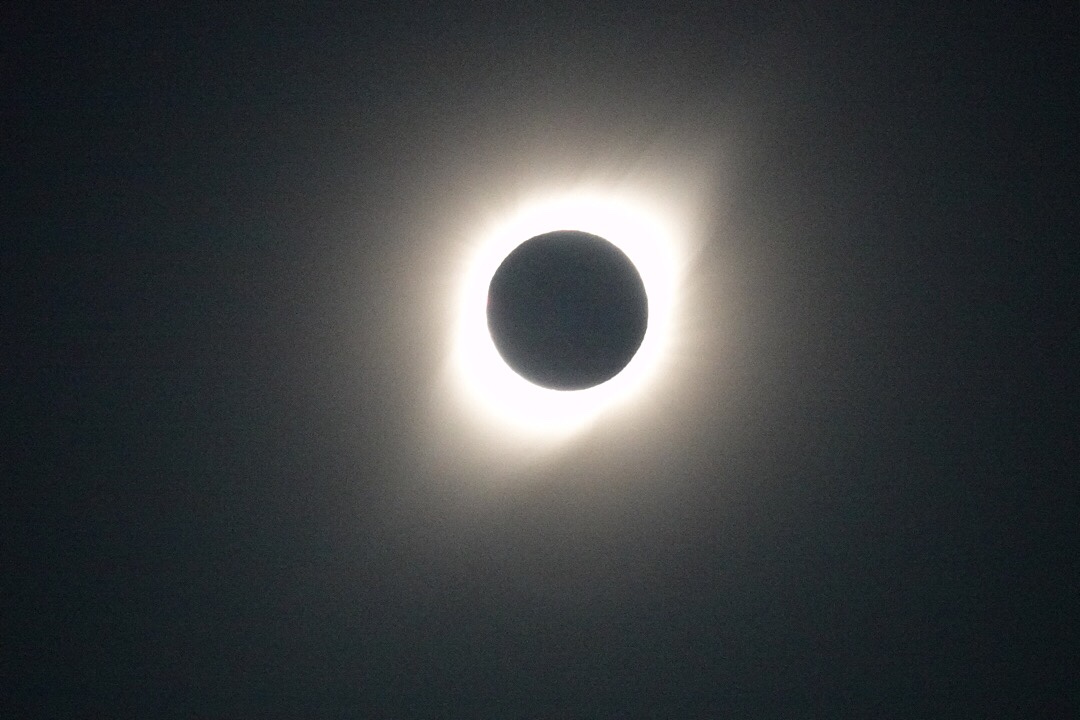
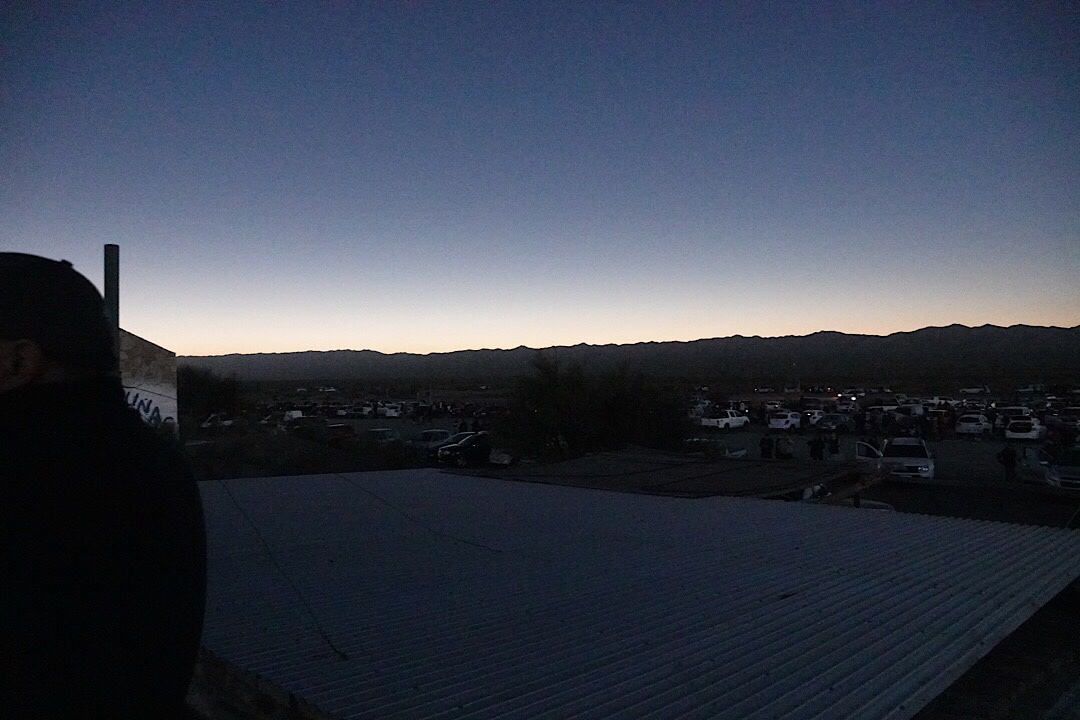
Because it was so late in the day, the light shortly before totality may have looked a bit more weirdly gray. But almost everything else echoed what I remember from Bavaria and Oregon. There was that same awe as the crescent seen through my glasses grew thinner and thinner then shrank to the magnificent jewel in what folks call “the wedding ring.” I took my glasses off just as its jewel of light blinked out and the sky turned from azure to navy. I remember seeing at least a few stars. But I was also drinking in the sunset glow at the horizon — not just in the west but for 360 degrees around us. I was making incoherent noises, at least one or two full-throated screams, and laughing.

Why do humans make so much noise during total eclipses? Birds grow silent. They sing when the sun re-emerges and the light comes back. Humans make noise then too. It’s time to celebrate. The sun is not lost forever. Life on Earth will go on.

After that, everything else was mundane and not worth writing about. Except one curious detail. No one seemed to be making any money off the eclipse (except the hotels and restaurants back in the towns and the tour operators who brought in large groups of gringos). The single restaurant in Talacasto (around which we all parked) was selling more drinks and snacks than it will ever again in all its lifetime, but no one was charging for parking or to use the restaurant’s bathrooms. Not one soul had created eclipse t-shirts or other eclipse-themed souvenirs (nor had they in Bellavista, according to other folks we talked to who had traveled there). I can’t explain this. It seemed amazing, though nothing, of course, as amazing as those two minutes and 11 seconds.

Winter wonderland

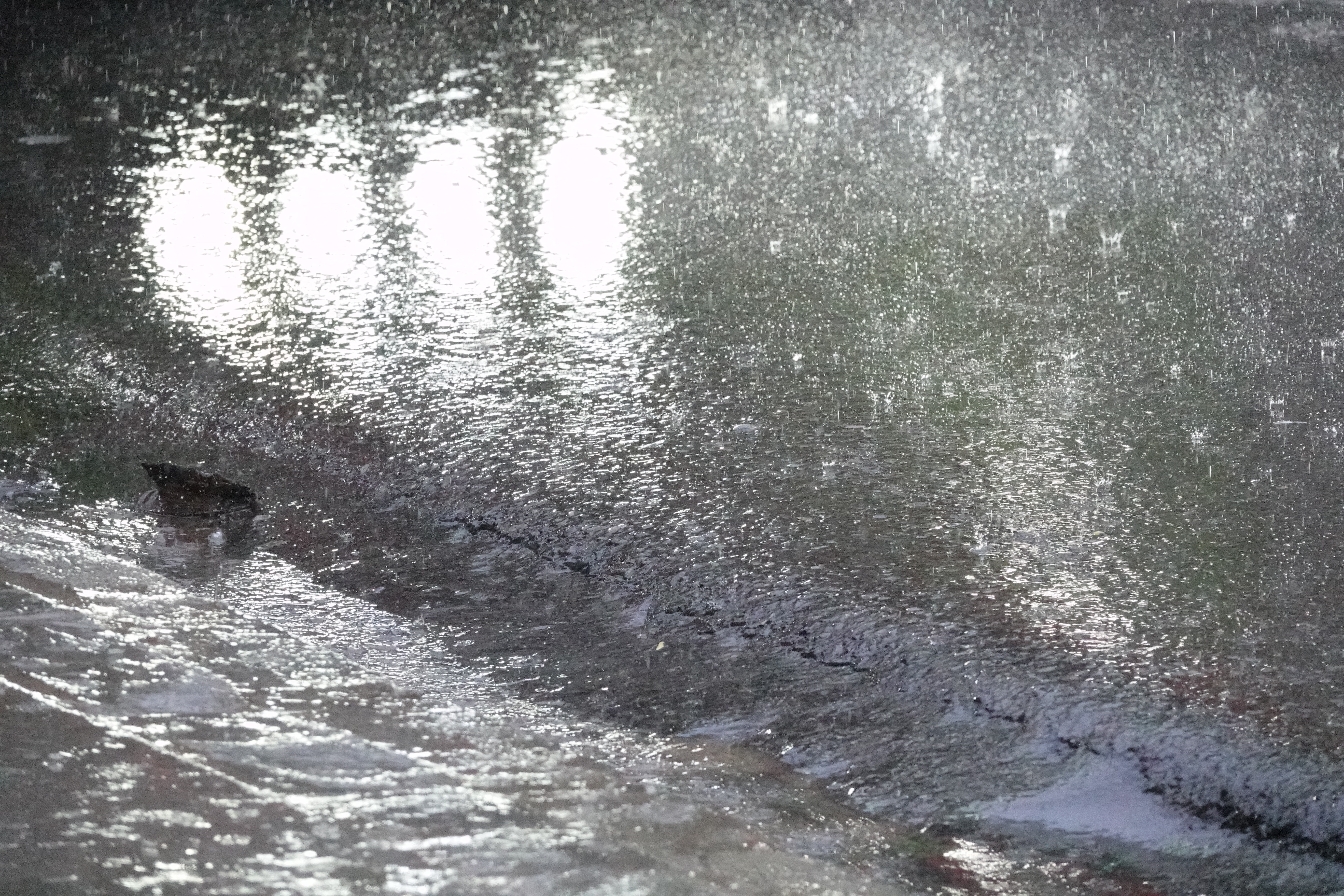
This is what the street in front of our hotel Saturday morning looked like.

We travel so rarely to wintry places it’s hard for me to remember the risk involved in doing so: the weather may be too cold or rainy to enjoy the destination. In the case of our current adventure, there was no avoiding winter if we wanted to see the total eclipse that will occur here tomorrow, July 2. July is winter in the Southern Hemisphere. Since the whole of the continent (from north of Santiago in Chile to Buenos Aires in Argentina) falls within the path of totality, we did have to choose where to try and experience it. We’d never visited Chile before, so that made us want to go there. But the weather west of the Andes is notorious for being gray and rainy in winter. We finally decided to start out in Chile but then make the short flight to Mendoza, Argentina on the eastern side, where the skies were much more likely to be clear. Still, with weather, any choice made months ahead is a gamble.

As I wrote in the last post, we lucked out in Santiago when the rain that had been forecast didn’t materialize on Monday until late in the afternoon, then Tuesday turned bright and sunny. Clouds moved in again on Wednesday, the day we drove into the countryside to see the wine country (an experience I hope to report on later). The gloom there never turned into rain, but my spirits sank when I saw my Apple Weather app was predicting downpours for both Friday and Saturday, the days I had earmarked for taking walking tours around Valparaiso and its tony neighbor, Vina Del Mar.

Happily, apps sometimes get it wrong. All day and into Friday evening, the sky only looked threatening. Steve and I spent hours enjoying a guided “free” (i.e. tips-supported) walking tour, while Michael and Stephanie roamed the city on their own. All of us enjoyed the place. Valpo (as it’s known) has had it’s share of hard knocks over the past 100-plus years. It developed on the shores of a fabulous natural harbor, but one so plagued by pirates in the 1500s that the original Spanish rulers decided to build their capital (Santiago) about 60 miles inland.

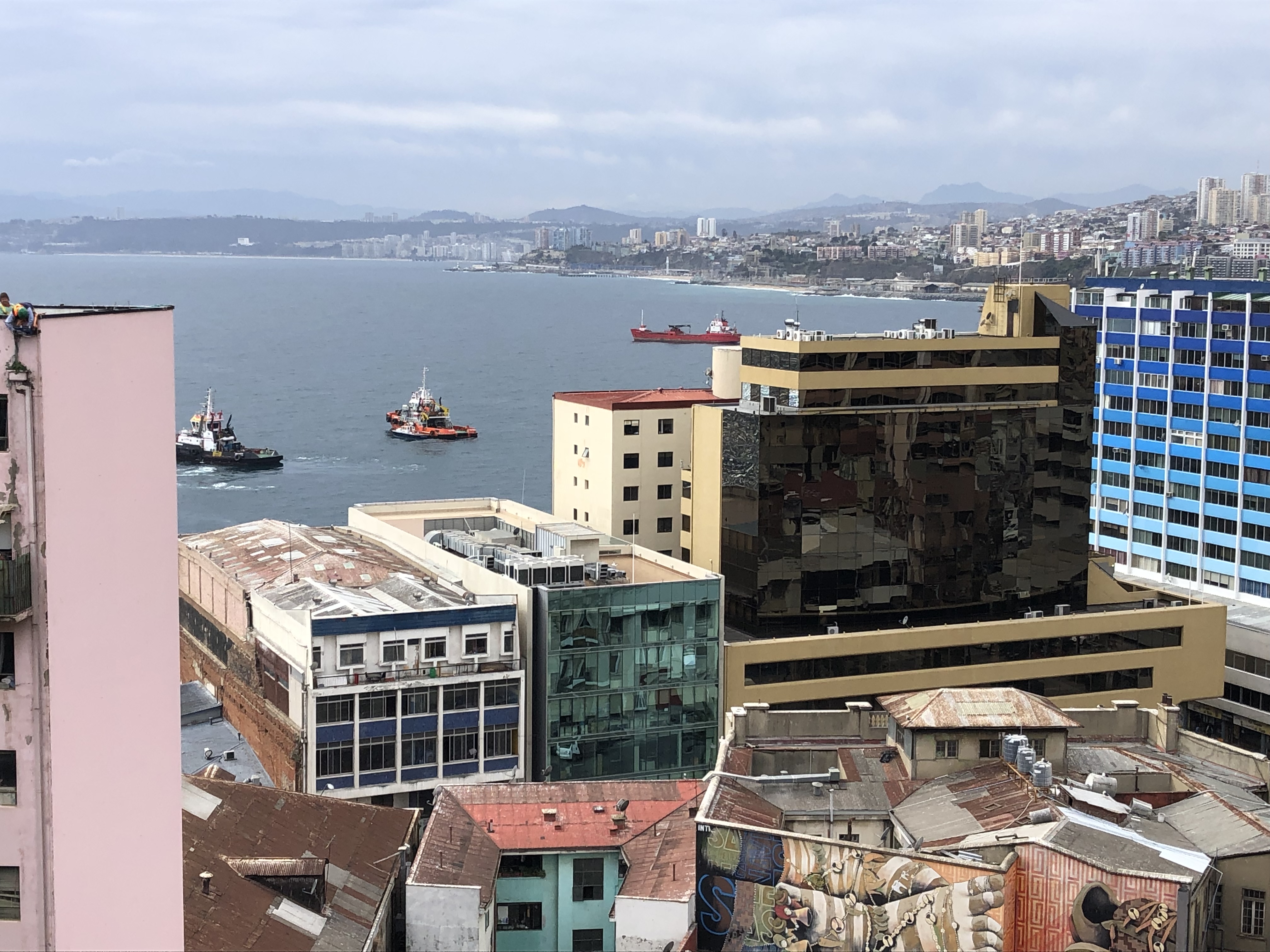
Looking down from one of the hillsides in Valparaiso. Vina Del Mar can be seen in the distance, across the bay.

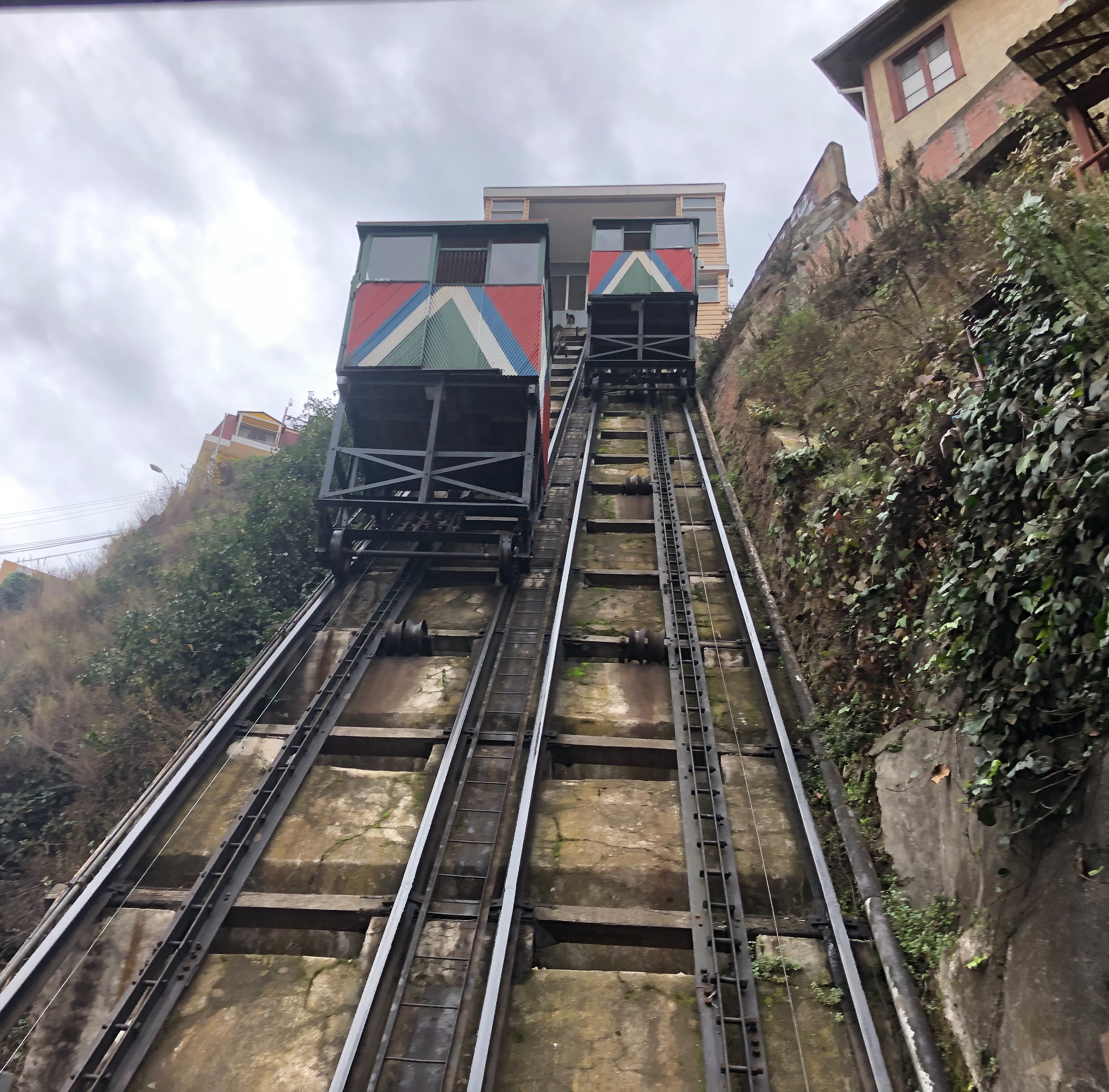
Mining and seafaring activities made the coastal city boom in the late 1800s, when more than 30 steep funicular elevators were built to help locals ascend and descend the town’s vertiginous hills.

Sadly, only 8 are still working.

But then a quake in 1906 devastated the place, and the opening of the Panama Canal in 1915 took more wind out of its sails. When the Germans invented a way to make a synthetic substitute for saltpeter chemically, that decimated the mining that had fueled the city’s short-lived boom. Valpo declined steeply throughout most of the 20th century, earning a reputation as a place of crime and decay.

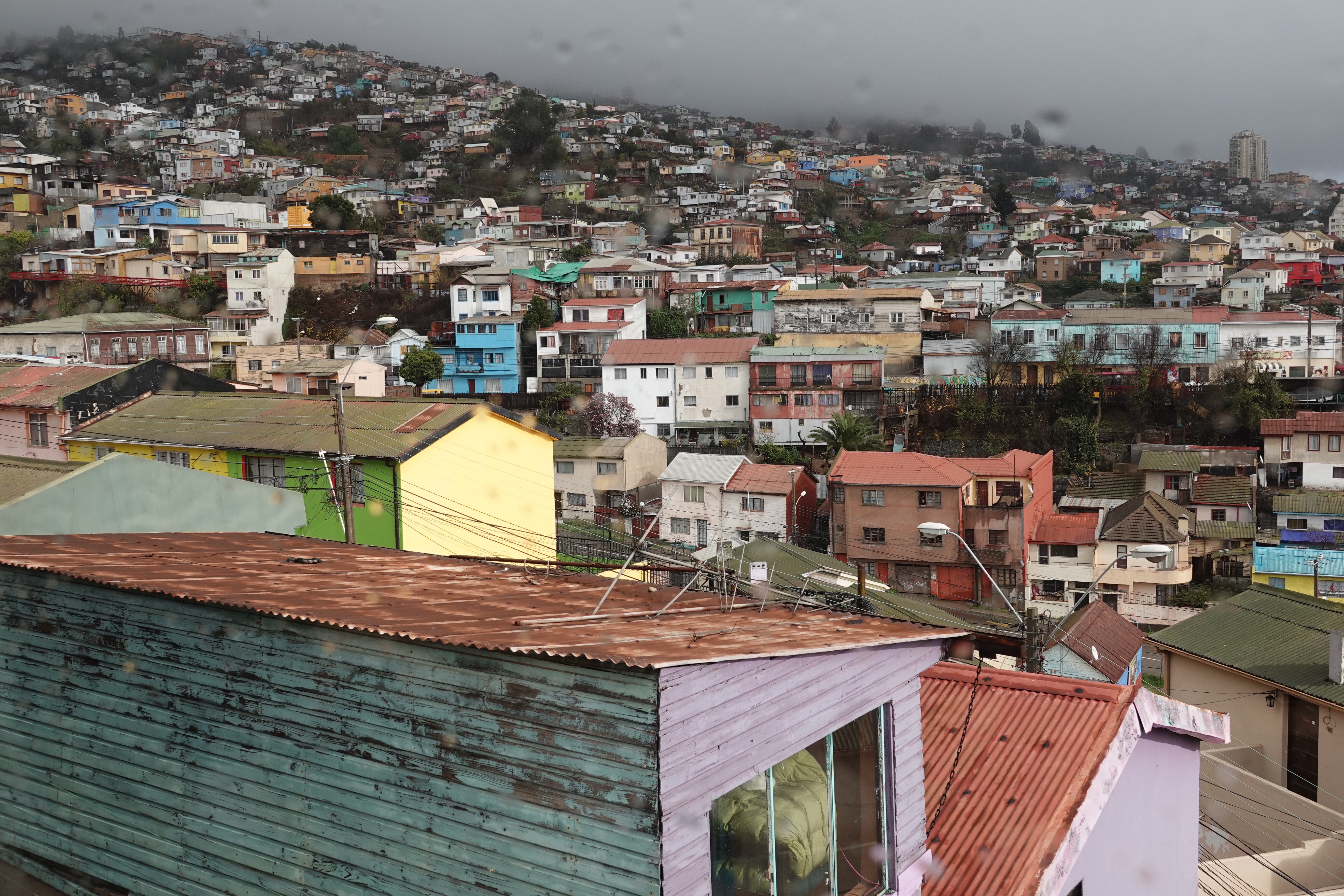
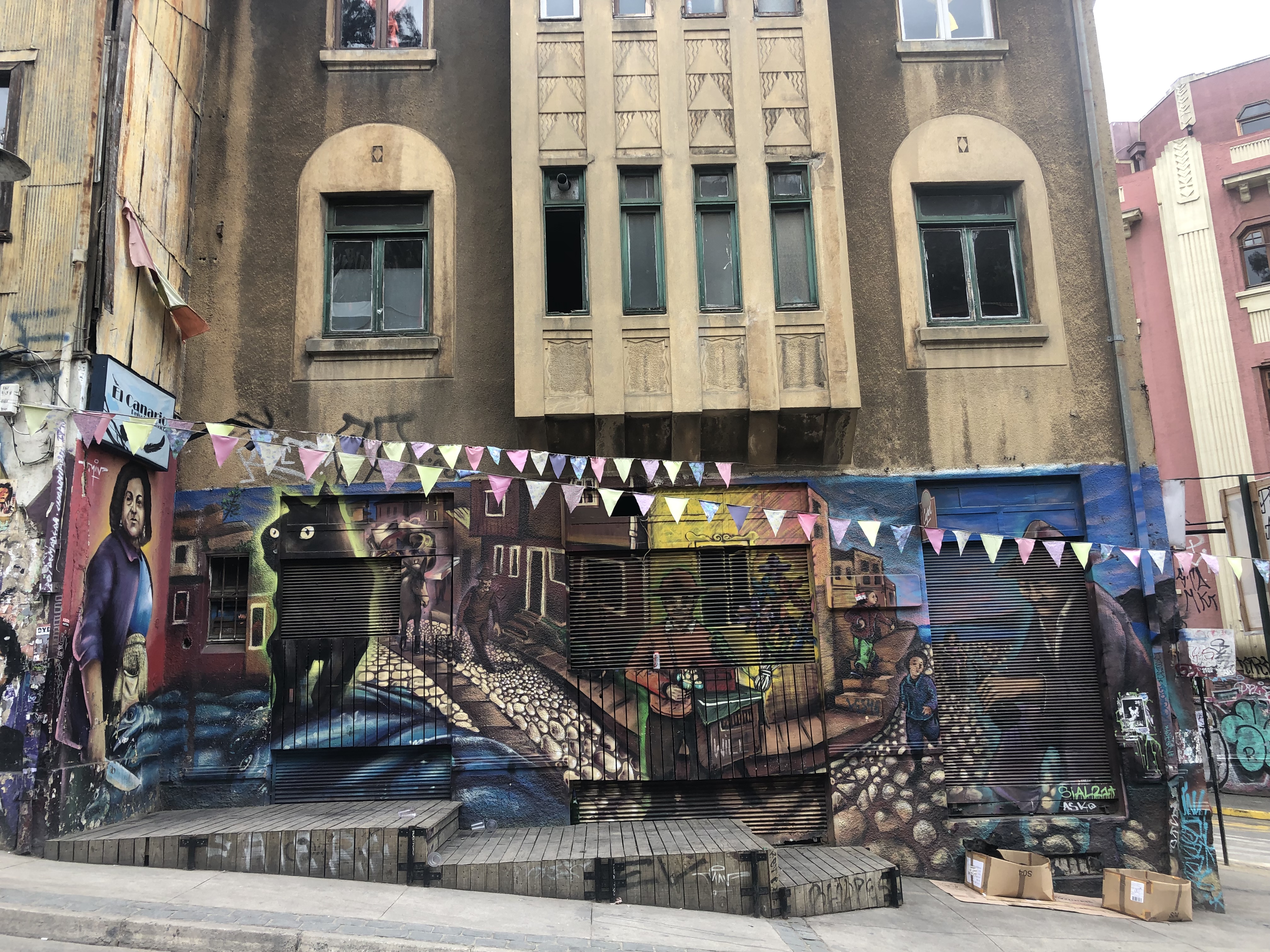
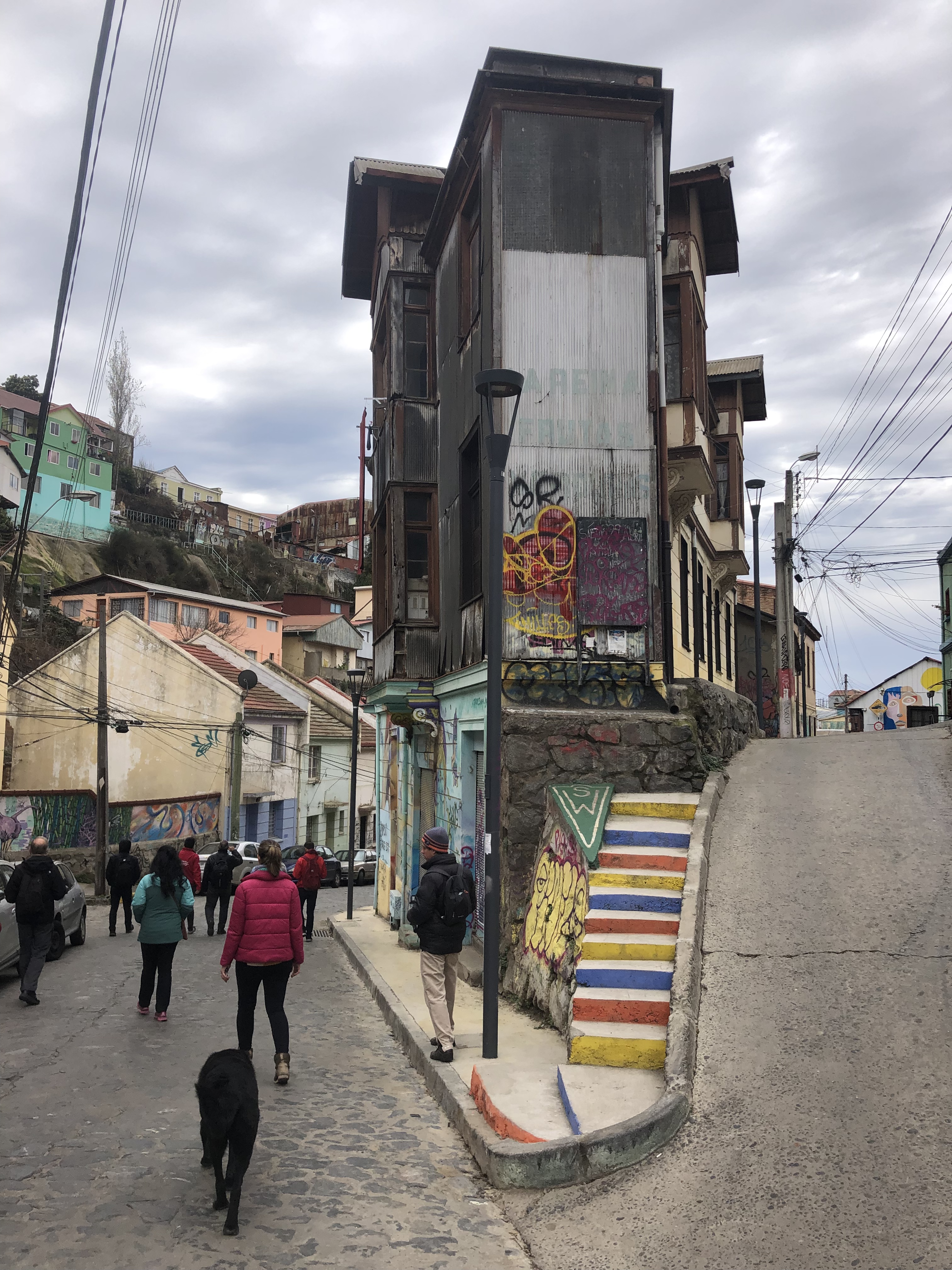
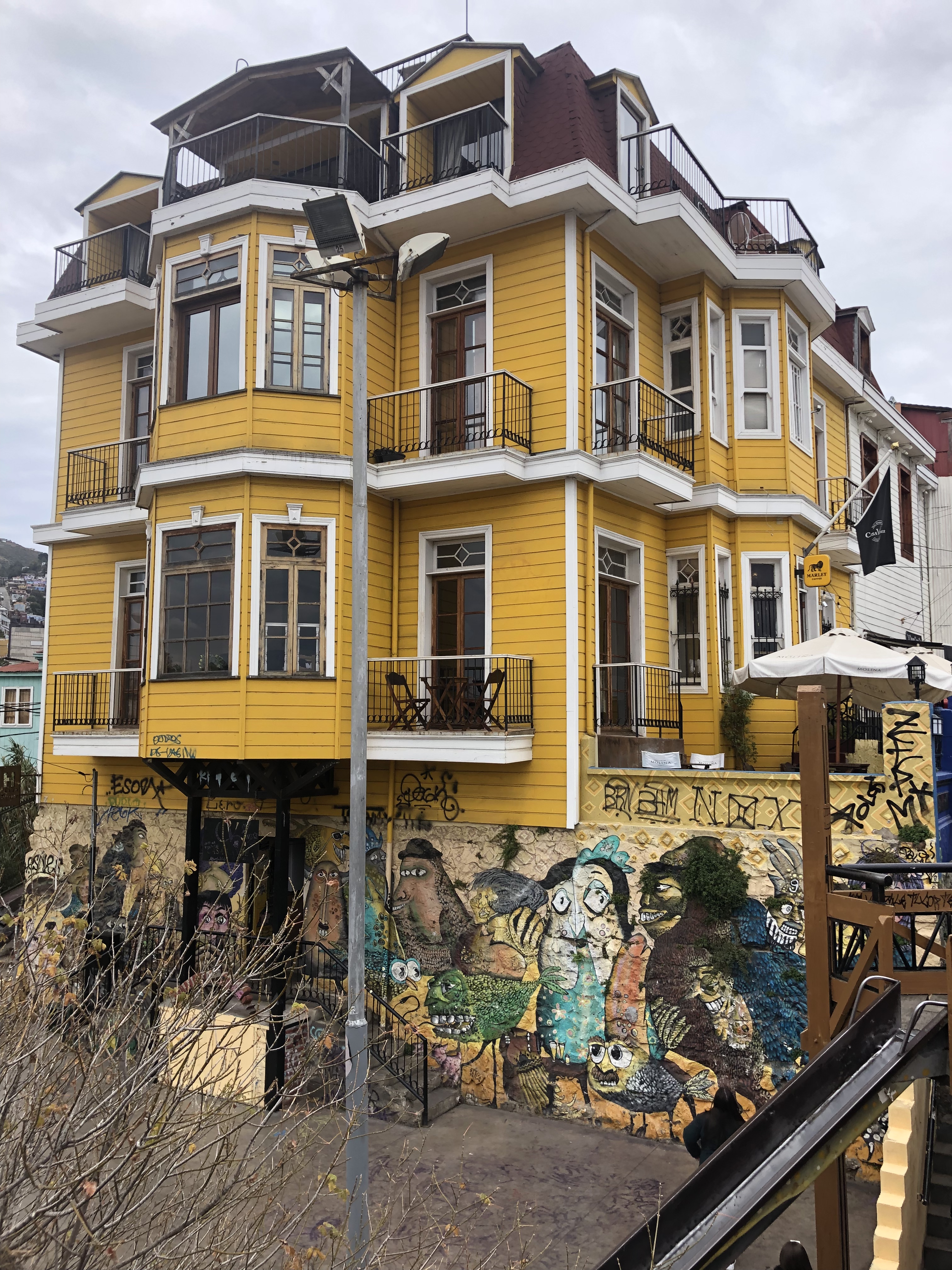
When several of its oldest neighborhoods were declared a UN World Heritage Site in 2003, that attracted tourists whose presence has helped to turn things around. It also imposed a thicket of bureaucratic regulation, and we heard that local property owners have been divided over whether the UN designation has been worth it. From the visitor’s viewpoint, the wild architectural jumble that now exists is lots of fun to look at.

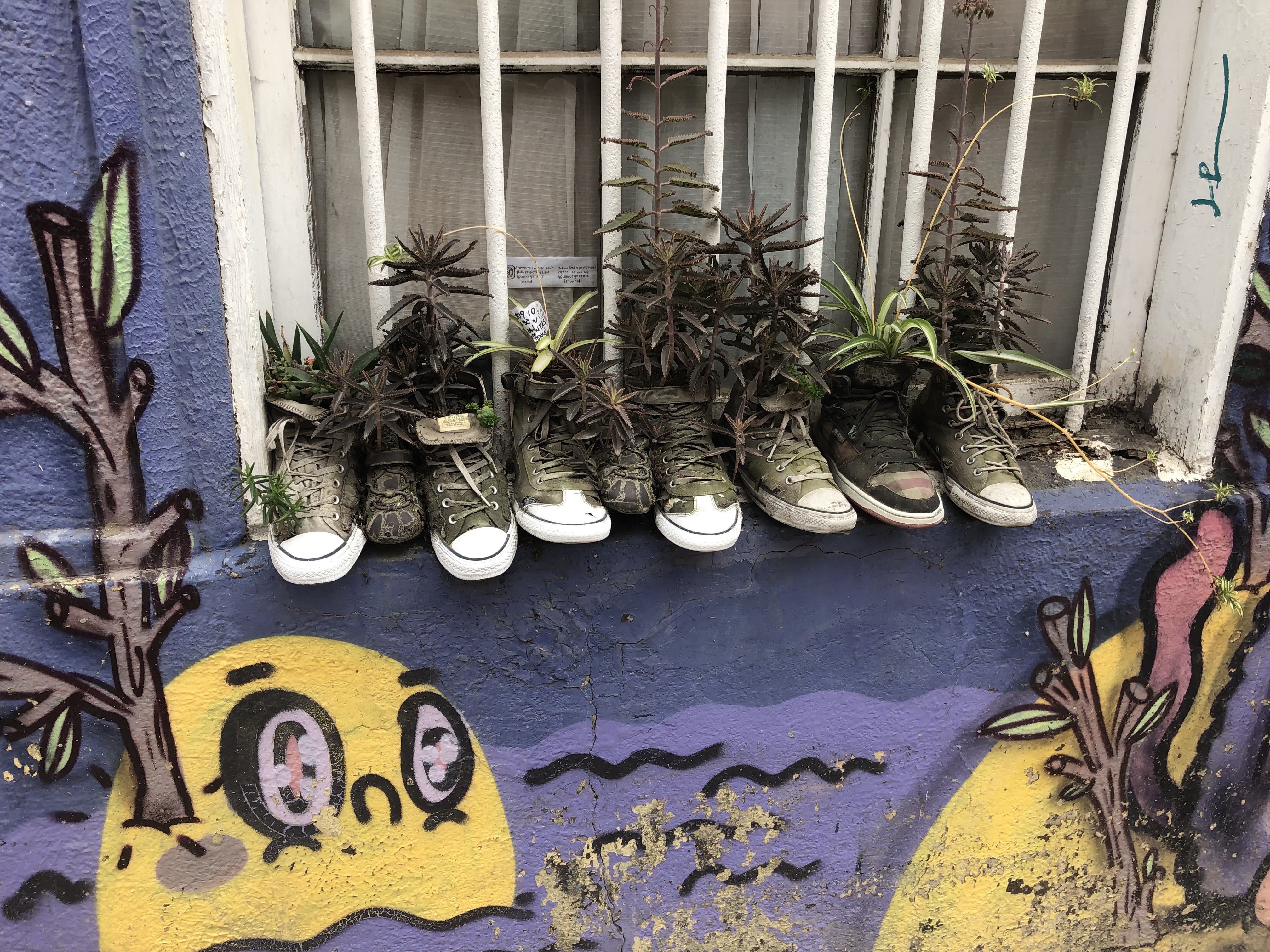
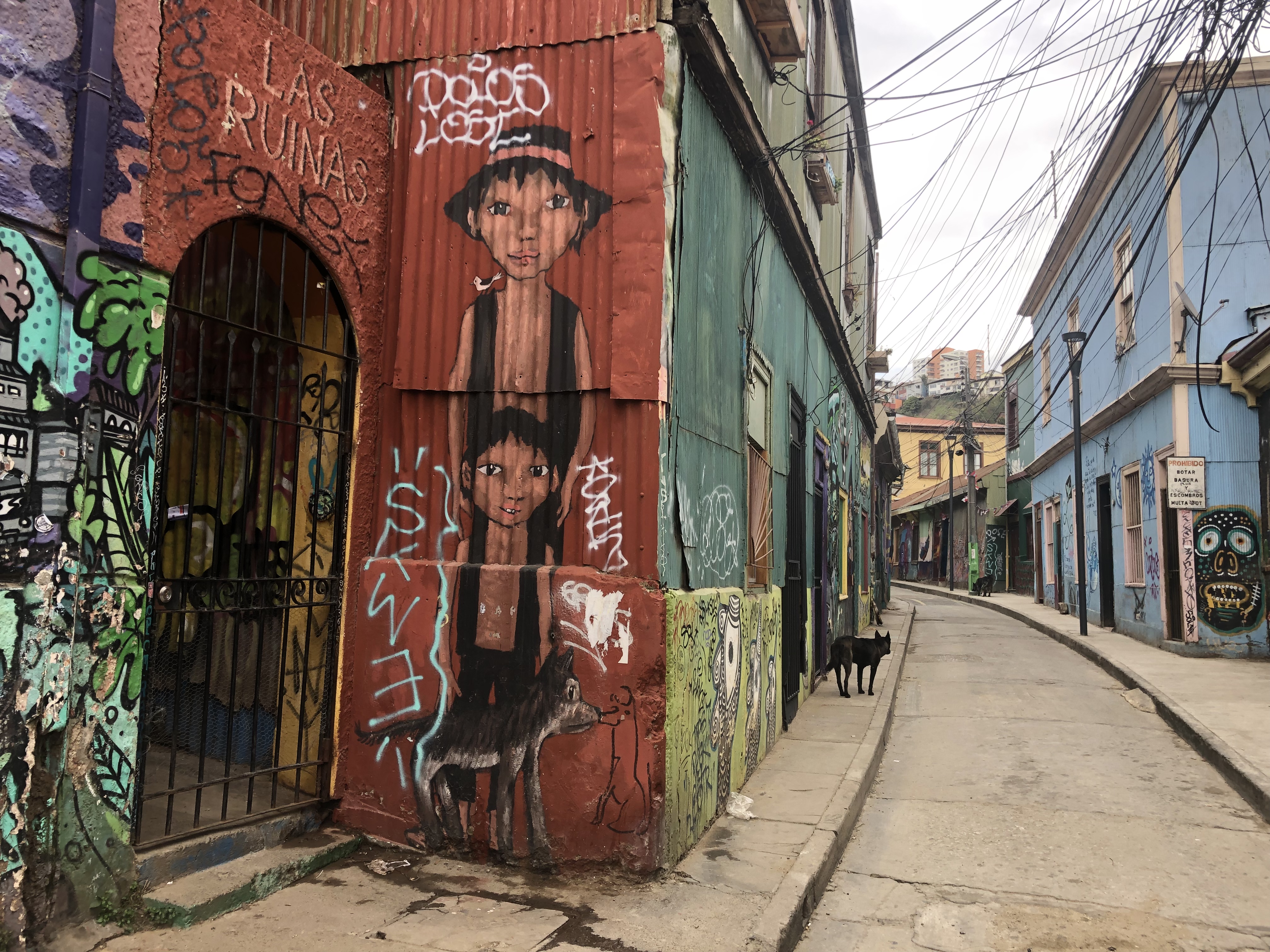
Some buildings have been beautifully restored, while some have been abandoned because the costs of fixing them up are now so prohibitive. Most buildings are brightly painted, and a burgeoning mural scene has added to the eye candy.

We met up with Mike and Stephanie after lunch, planning to take a walking tour of Vina del Mar together, but it wound up being canceled (because, we were told, the guide’s home had been broken into and burglarized), so we wound up seeing some of the sights on our own.

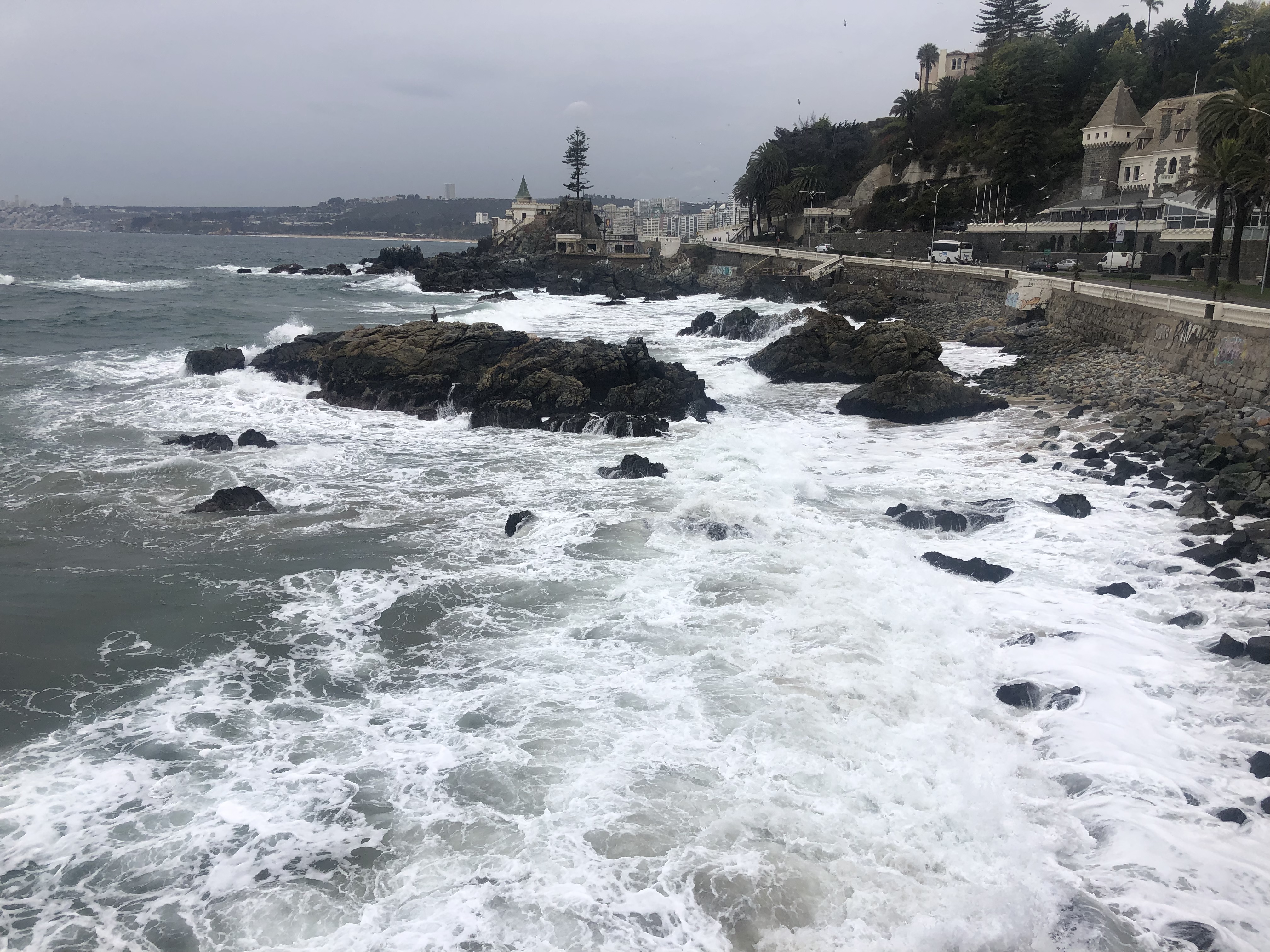
Parts of Vina reminded us of La Jolla, while other parts looked more like Rio.

Only by late afternoon did light sprinkles (and tired feet) drive us back to our hostel for a break.

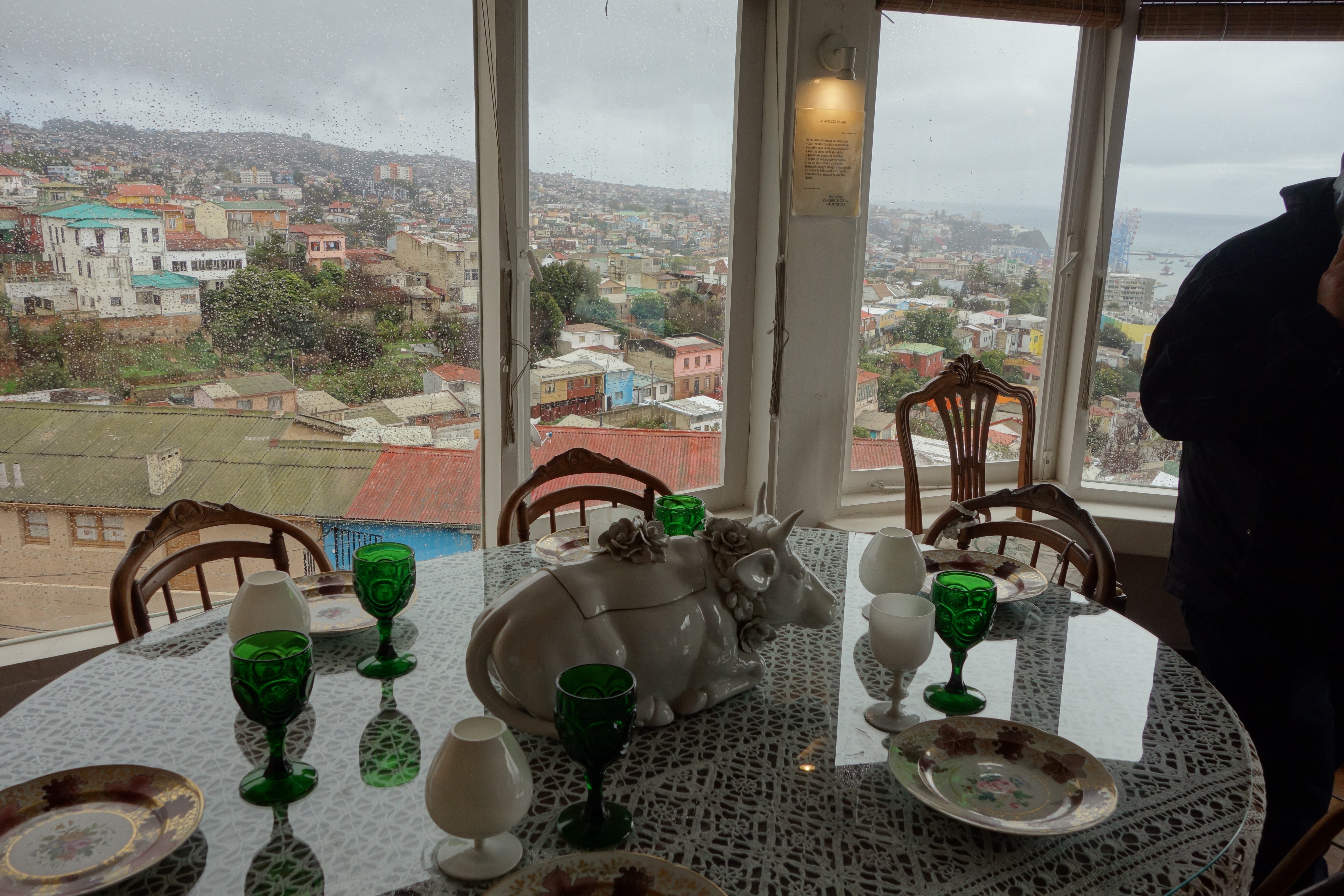
The rain started in earnest Friday night and we woke Saturday morning to the sound of such a deafening downpour it made me want to snuggle down in bed and stay there all morning. Instead we checked out of our rooms, left our bags at the hostel’s front desk, and took an Uber to the one-time home (now museum) in Valparaiso of Chilean poet/diplomat/politician Pablo Neruda. La Sebastiana, as it’s known, is an enchanting place, full of color and art and interesting insights into Neruda’s large life.

The cow on the table was a punch bowl. Neruda hosted lots of parties.

Like magic, when we left the house, the rain had cleared, and we were able to walk for a while before catching another Uber, returning to the hostel, and hitting the road back to Santiago’s airport.

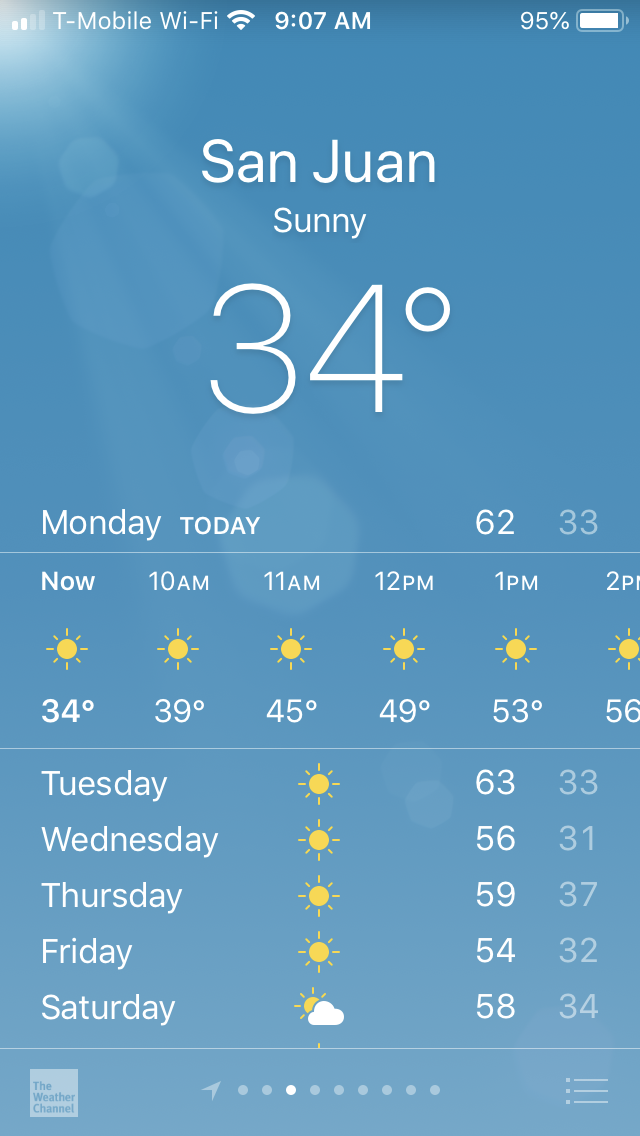
The weather’s been good since we landed in Mendoza Saturday night. Lots of clouds yesterday, but they cleared by Sunday evening, and today the weather app prediction for San Juan looks like this:

We plan to drive to San Juan, a few hours north of Mendoza, this afternoon. We’ll use it as our launchpad tomorrow: Eclipse Day. If the weather stays clear, that’ll be great, since it will let us concentrate on the other big looming challenge: figuring out where to go to watch the celestial drama.

A dark journey

Someone at the gym this morning asked me, “Why are you going to Chile and Argentina in the middle of [their] winter?” It’s a fair question, and we have a clear answer: the trip Steve and I are setting off on tomorrow was inspired by the total eclipse of the sun that will be visible all across southern South America on the afternoon of July 2. We’ve seen two total eclipses before: our first in Germany on Steve’s birthday in 1999, and then the one that swept across the entire US mainland in August of 2017. We caught that event near Portland, Oregon, and like the first, it dazzled us. I wouldn’t say we’ve exactly joined the ranks of total-solar-eclipse fanatics. But we’ve edged close enough to them to plan an entire trip around seeing the world go dark once again.

We will start by flying tomorrow to Mexico City, a capital we once knew pretty well but haven’t visited in decades. After two days of remedial sightseeing, we’ll head to the capital of Chile (a country we’ve never been to before). In Santiago, we’ll meet up with our son Michael and his girlfriend Stephanie, who joined us for the Portland eclipse adventure two summers ago. Because the skies on the other side of the Andes, in western Argentina, are more likely to cloud-free, we will fly to Mendoza for the actual eclipse, after which Mike and Stephanie have to return home to their jobs immediately.

But Steve and I, being freer birds, will go on to explore Ecuador for about two weeks. (We’ve never been there either, so those two will be my 61st and 62nd countries.)

We’re excited about this itinerary, but it has posed one of the biggest packing challenges I’ve ever faced. As my gym-mate noted, it’s winter in the southern hemisphere. We may see snow, and temperatures at night may approach freezing. Ecuador, on the other hand, is named after the equator because that balmy line passes right through it.

IMG_4872.jpeg

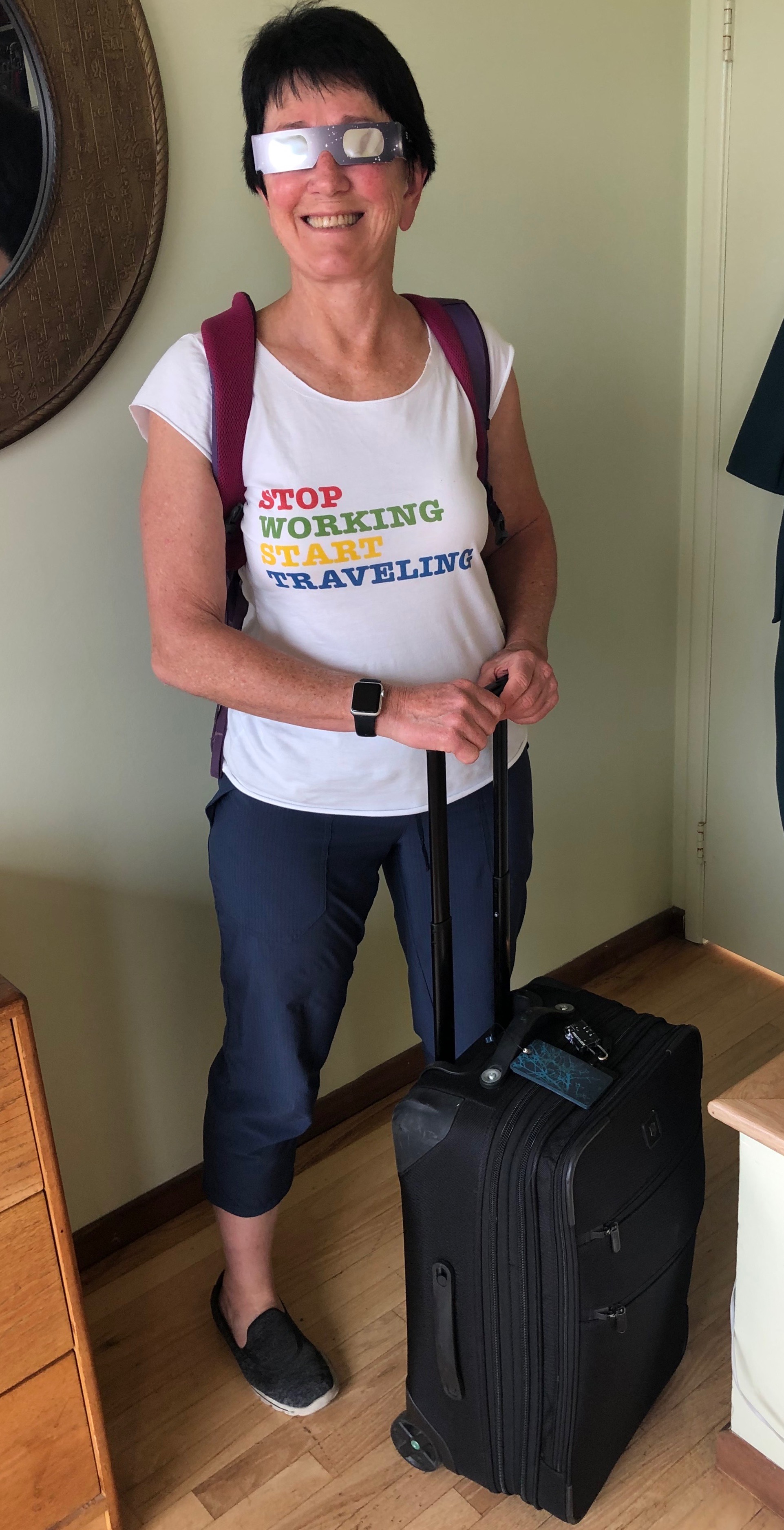
I’ve now got everything for the next four weeks crammed into my carry-on and backpack (save those eclipse glasses. I’ll tuck them in a side pocket.) My fingers are crossed it will be enough.