The Uh-Oh Moment for us passengers on the Greg Mortimer came about 9:10 pm last night (Sunday March 15), when our expedition leader’s voice broke in over the loudspeaker. She requested that we gather in the lecture room for some important information about our voyage.
Uh-oh.
Ten minutes later, when she walked up to the podium, Gaby looked glum. She delivered the bad news bluntly. Someone onboard had developed a life-threatening medical emergency. We would have to immediately head for the town of Stanley in the Falkland Islands. About 800 nautical miles away.
This was obviously bad news for the sick person, about whom we’ve been told nothing. (From the purser, a little while ago, Steve wormed out the fact it’s a passenger, not a crew member who’s been stricken. But due to medical privacy concerns, the crew has shared no other details of the crisis.)
It was also sharply disappointing news for everyone on board. Our original itinerary had called for four days on South Georgia Island, but when we couldn’t stop at the South Sandwich Islands, that meant we could have had up to a full week on South Georgia. Gaby had sounded thrilled when she first told us this; almost no one got that much time in the storied outpost. It could be wonderful.
Indeed we did savor two splendid South Georgian days. I’ll describe them a bit in my next post. And before last night’s dinner, Gaby had outlined delicious plans for Day #3 — a morning Zodiac cruise in a protected cove, followed after lunch by another landing among what promised to be more mind-bending animal nurseries.
Then less than three hours later, we were turning northwest for three days of laboring through nasty seas. One peevish passenger asked why a medical helicopter couldn’t be flown in to pick up the patient. (A million dollars worth of medical-evacuation insurance coverage had been mandatory for everyone.) But Gaby said no helicopter has an 800-mile range. South George has no permanent residents. And nothing like an airstrip exists.
Some of the passengers seem pretty disgruntled, but some of us are trying to channel Ernest Shackleton, whose spirit hovers over South Georgia. It was he and his shipmates on the Endurance, who in 1915 got stuck in the ice on their way to Antarctica. On the strength of his character and inspiring leadership, Shackleton endured almost unimaginable hardships and eventually got all 21 of his men home alive. Shackleton would never have ignored someone’s life-threatening disease so he could get better photos of the sea creatures.
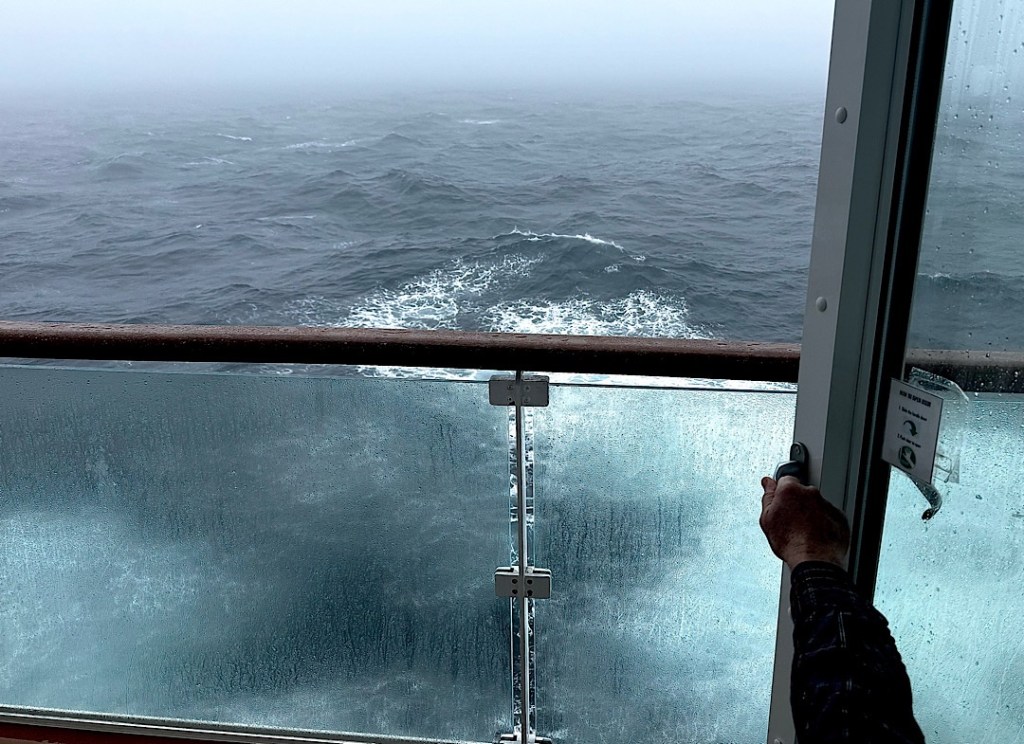
As for me, I can note some good news and some not so good. On the plus side: I’m not seasick, which feels like an accomplishment, given how much the ship is rolling and bucking and shaking and trembling. It’s at least twice as bad as our crossing of the Drake Passage. It’s really hard to walk. If you don’t keep a hand on a railing, you can be thrown off your feet.
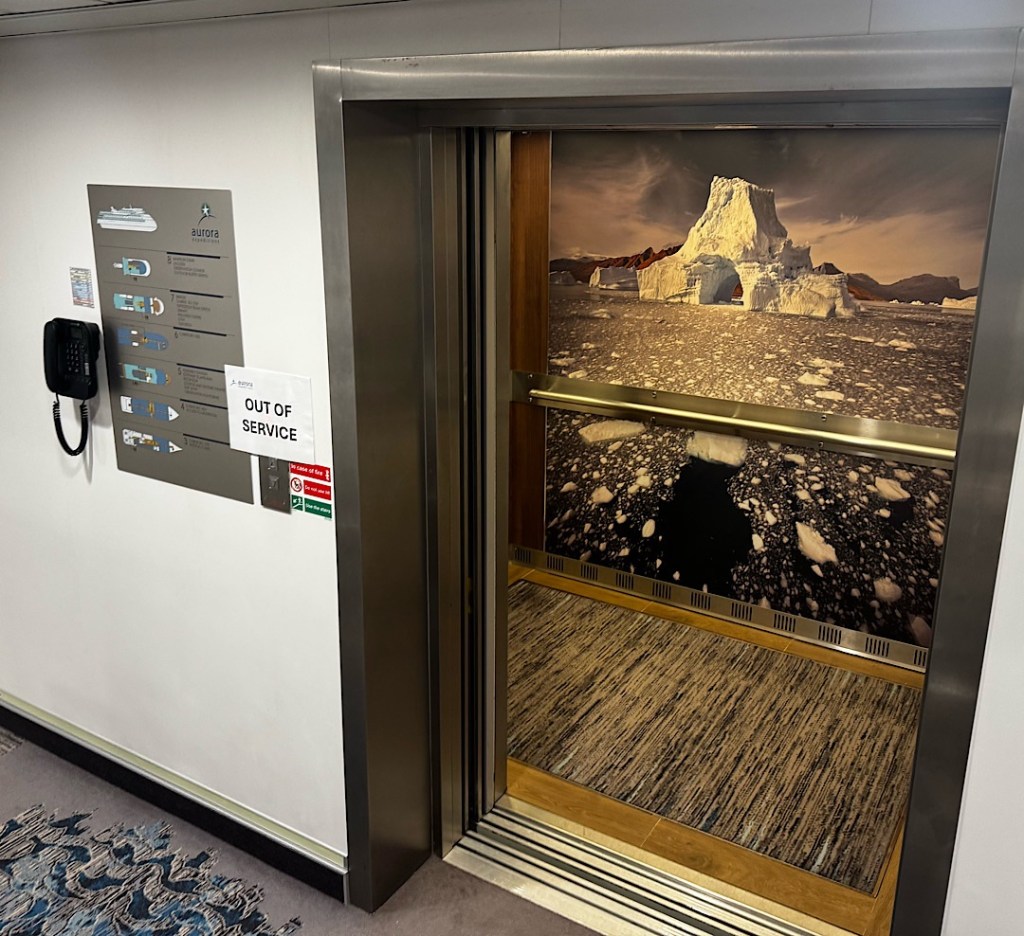
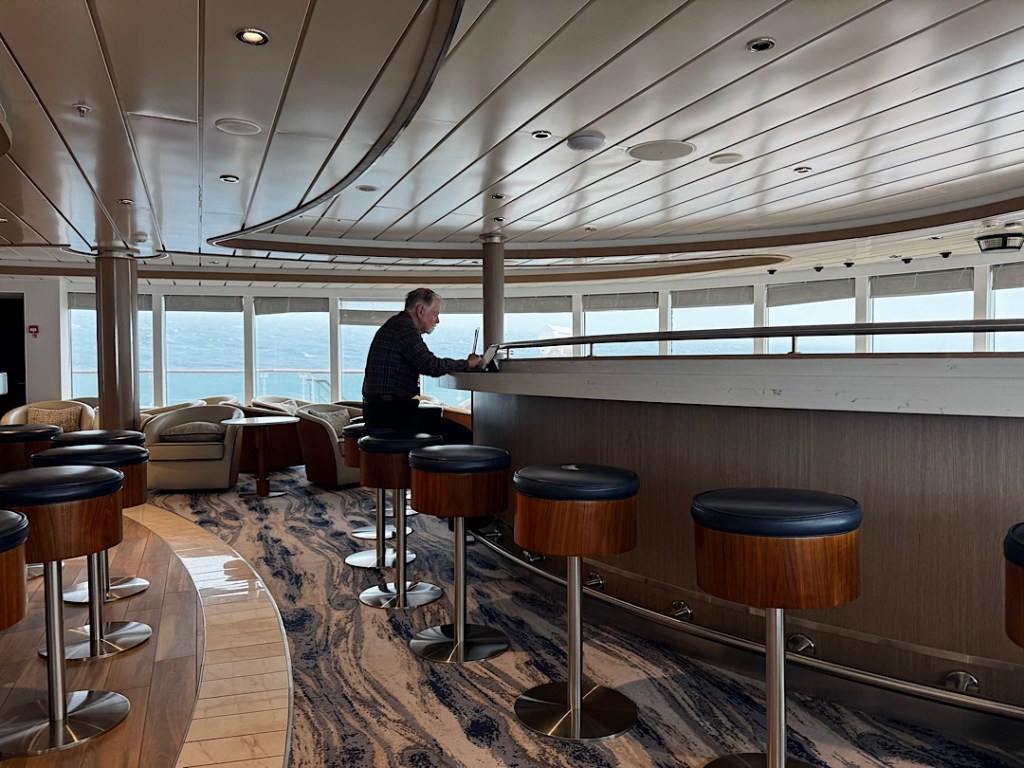
One crew member told me that because there’s so much turbulence, the ship’s drainage isn’t working properly, so water has leaked into several areas. This isn’t obvious, however. Our cabin and the public spaces still feel warm and luxurious. The breakfast buffet included eggs benedict, along with dozens of other offerings. I’ve made an appointment for a massage at 2 pm.
On the minus side, I feel unnerved by being surrounded for hundreds of miles in every direction by cold, angry water. Moreover, the plan for what we’ll do then is still unclear.
It underscores what Steve has been saying for days. We’re not on a cruise. It’s an expedition.
 At home and abroad
bad luck.
You know that you are in the middle of nowhere when the town of Stanley is your closest point to human civilization. And its 800 miles away.
People I know went there in 1981 to persuade the Argentines to tango back home, described the place in a way that has kept it off my “must visit” list.
I will be fascinated to hear the story.
This is not a cruise, and more than an expedition- its an adventure.
An adventure indeed. We’re still more than a day from the Falklands, but my fingers are crossed that we will be able to get into the harbor at Stanley. Stay tuned….
I know you’ll be a good sport, but I’m so disappointed for you. Wh
It’s a bummer, but adventures are unpredictable–that’s what makes them adventures!
Yup!