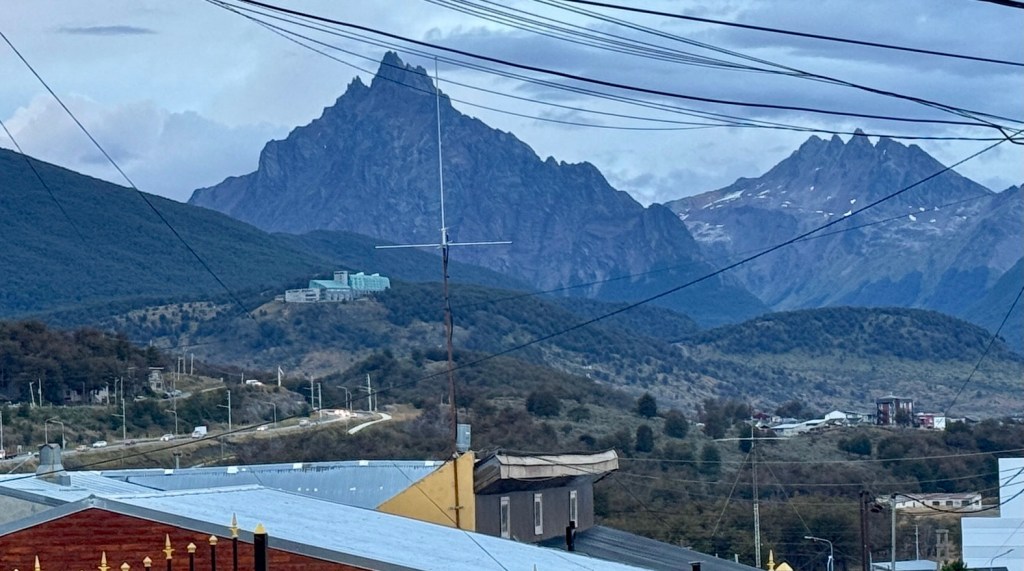
“It’s an interesting mix of Tijuana and Alaska,” Steve remarked, minutes into our first walk around Ushuaia (capital of Tierra del Fuego and our base for the last five days.) I laughed; knew just what he meant. Tijuana because of the busted sidewalks, the Spanish language, and ramshackle quality of many of the houses in the neighborhood where we were staying. Alaska for other reasons, none of which I expected.
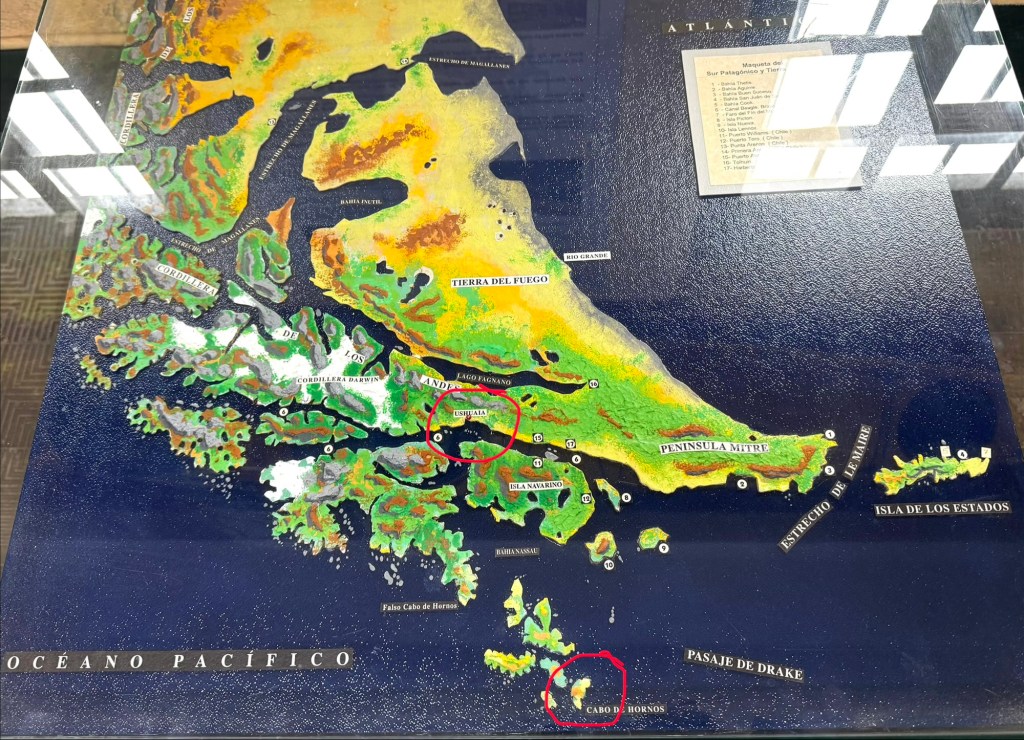
Like Juneau when we were last May, Ushuaia in these last days of the Southern Hemisphere’s summer felt colder than San Diego on its frostiest winter days. It’s not part of a huge land mass, as Alaska is, and as a result, Tierra del Fuego never gets anywhere near as cold as the 50th US state. Tierra del Fuego is an island, shared by Chile and Argentina, and about 100 miles north of Cape Horn, the southernmost point of the Americas.
Patagonia’s pretty meadows are girdled by starkly vertical mountains, peaks that spear jaggedly skyward, as do their counterparts in Alaska. Both areas also share a lack of biodiversity. Just three tree species — all beeches — grow in this part of the world.
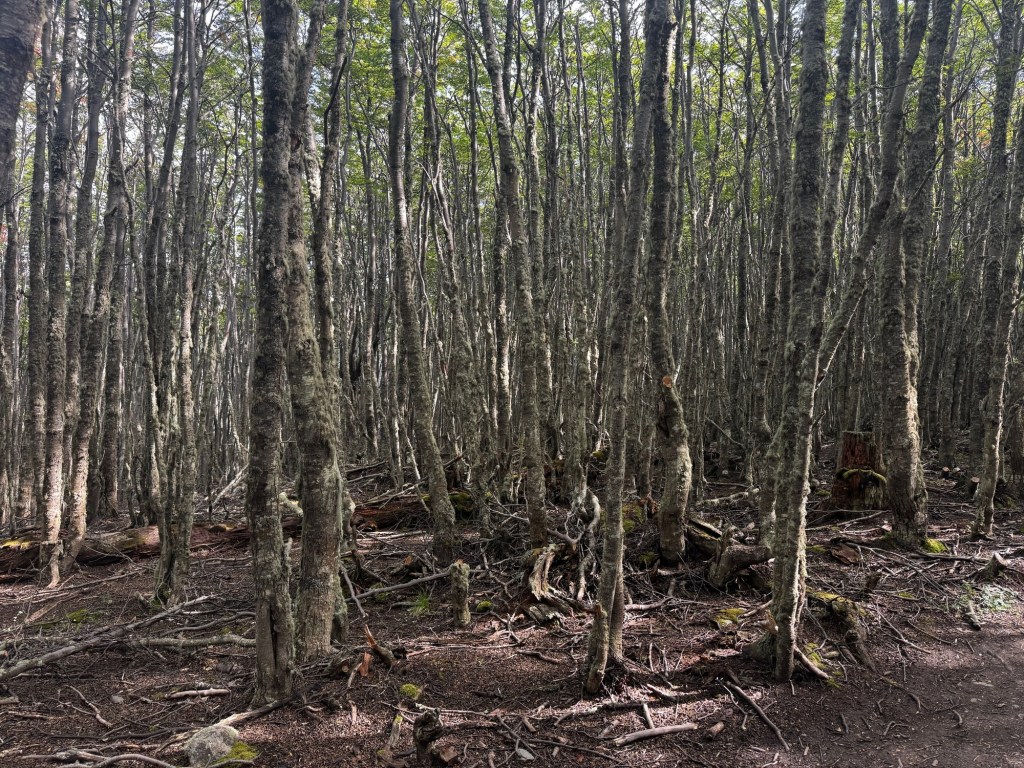
No snakes live here and almost no amphibians or lizards. The biggest mammal is the guanaco (a relative of the llama), and no key predators exist to eat them. One result of this is that the 20 Canadian beavers brought here for a (hare-brained) scheme to start a fur trade have now proliferated to where they pose a significant threat to local forests.
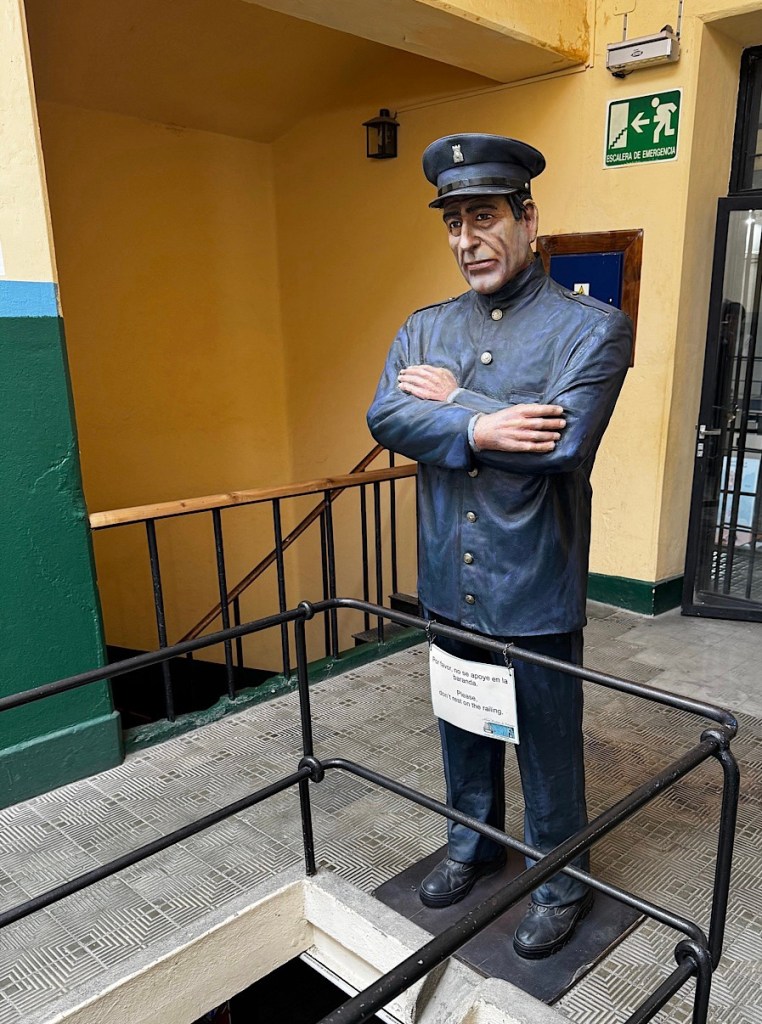
During our stay, we learned that hare-brained schemes, mostly dreamed up by various Argentine rulers, go a long way to explain why any city exists on this distant and uninviting edge of the map. To ward off incursions by the Brits and Chileans, the Argentine government more than 100 years ago established a penal colony in Ushuaia. They reasoned that not only brutal guards but also the isolation and harsh weather would ensure almost no one escaped from the so-called Prison at the End of the World.
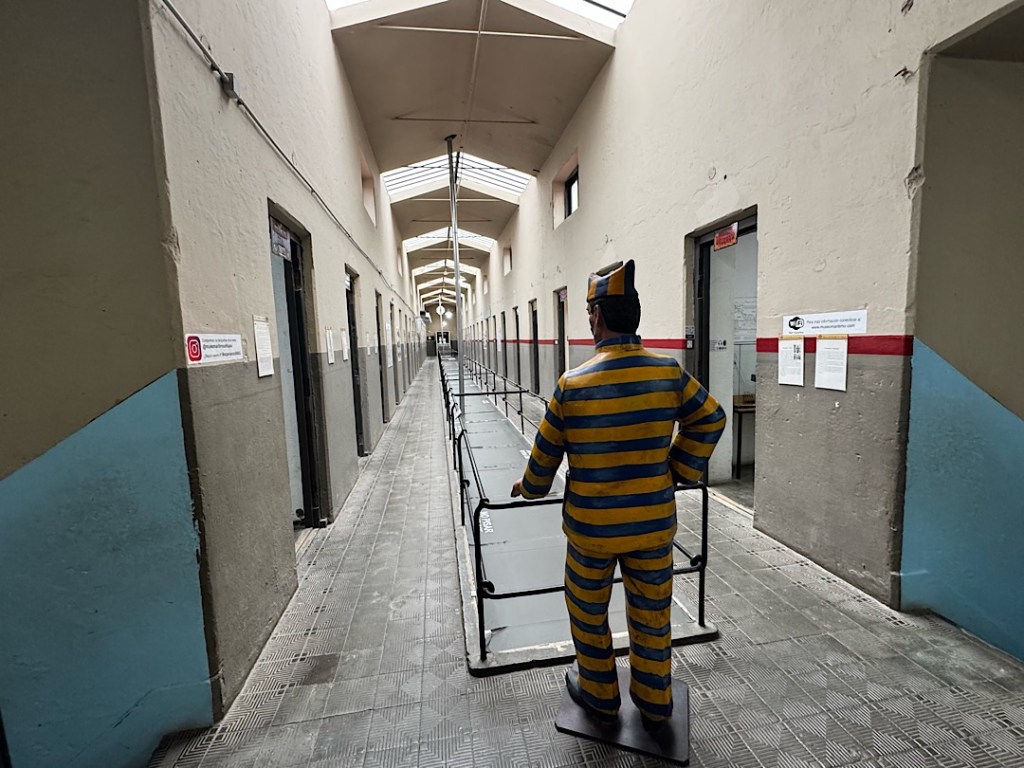
In subsequent years, the feds tried other things to lure porteños south: They made Ushuaia a tax-free zone, built public housing, gave subsidies to industries with few other reasons to set up operations in southern Patagonia.
On one level, this all sort of worked. Ushuaia now counts somewhere between 80,000 and 200,000 inhabitants. Most of them are employed by the government, supplementing their income with jobs in the Antarctic and winter-sports tourism that has developed over the last 30 years. But the town is also full of folks giving Uber rides for $3 to $4 a pop. Oscar, who drove us to the spiffy Arakur resort Wednesday afternoon, had just been laid off from an unprofitable air-conditioning factory that was closing. He’d received two months of severance but sounded scared about the prospects for supporting his family.
The resort was beautiful and comfy and it had one of the coolest pools I’ve ever swum in. One night here was included in our Antarctic cruise package.
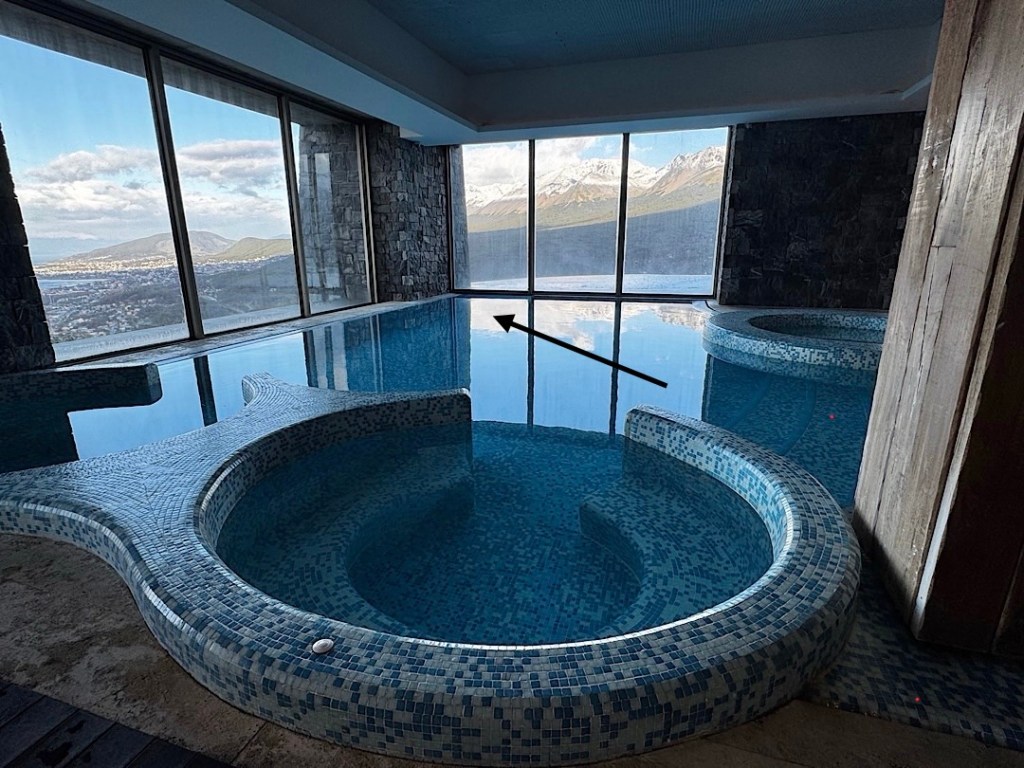
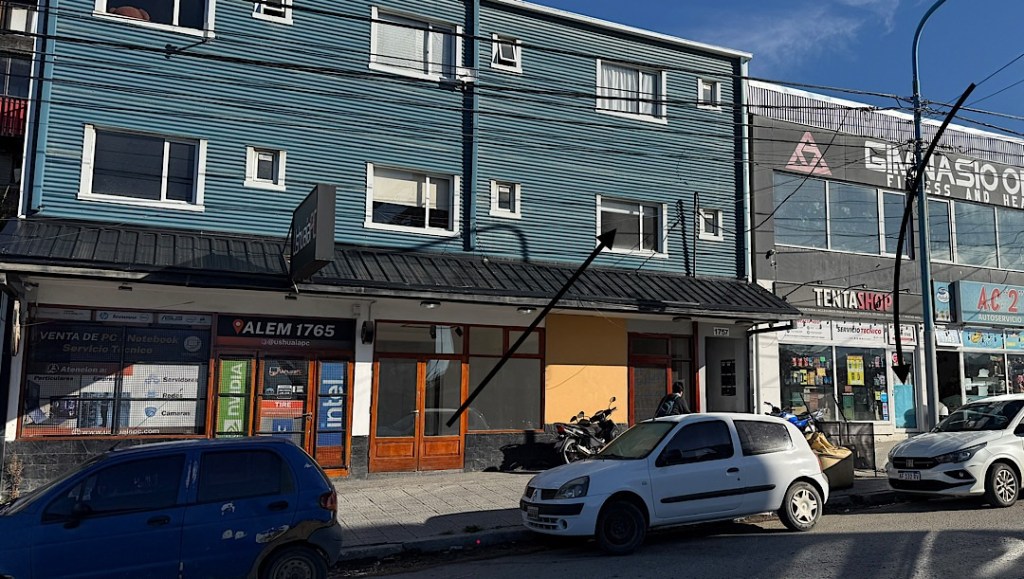
For the other four nights, we stayed in a little flat I acquired using home-exchange points. Unlike Catalina’s apartment in Palermo Soho, Freddy’s place was no dream find. It lacked any elevator, so we had to lug our 50-pound duffle bag and two roller bags up the narrow outdoor stairs (in the rain). The window shade wouldn’t roll up, and the shower curtain fell off the walls when you looked at it cross-wise. The shampoo and conditioner dispensers were empty. The view of the Beagle Channel down the hill was in the process of being blocked by an ugly hulking structure taking shape directly across the street.
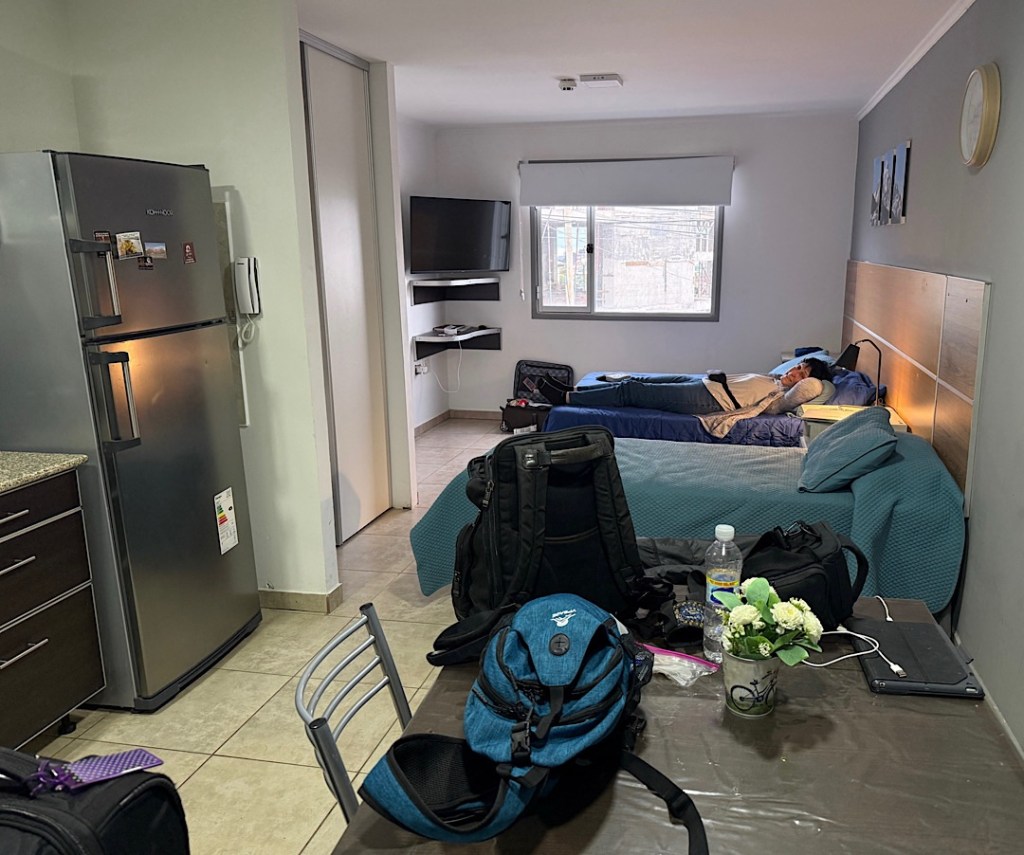
On the other hand, it was clean and warm and well-lighted, and Steve and I loved the way it gave us a glimpse into life in a middle-class Ushuaian neighborhood. We usually walked the 20 or 30 minutes downhill to the town and took one of the cheap Ubers back. (They always showed up just a minute or two after we summoned them.) We got to know the local dogs.
Immediately next door to Freddy’s, a convenience store served customers around the clock. At first glance, I thought maybe it only carried wine and liquor and a stunning variety of snacks and candy. But eventually we unearthed some boxed milk and coffee and a couple of bananas (the only fruit). For our foray to Tierra del Fuego’s national park on Tuesday, the shop’s friendly proprietor made us ham and cheese sandwiches, which he secured in plastic wrap packaged tidily with napkins.
We found plenty of activities to fill our four days in Ushuaia.
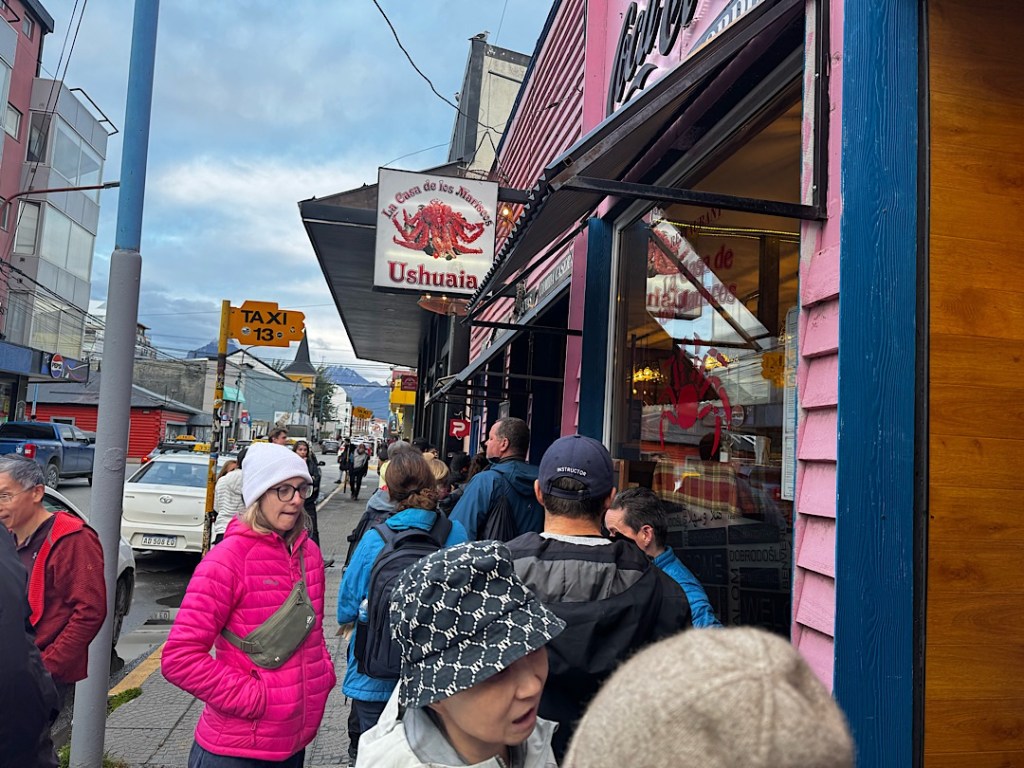
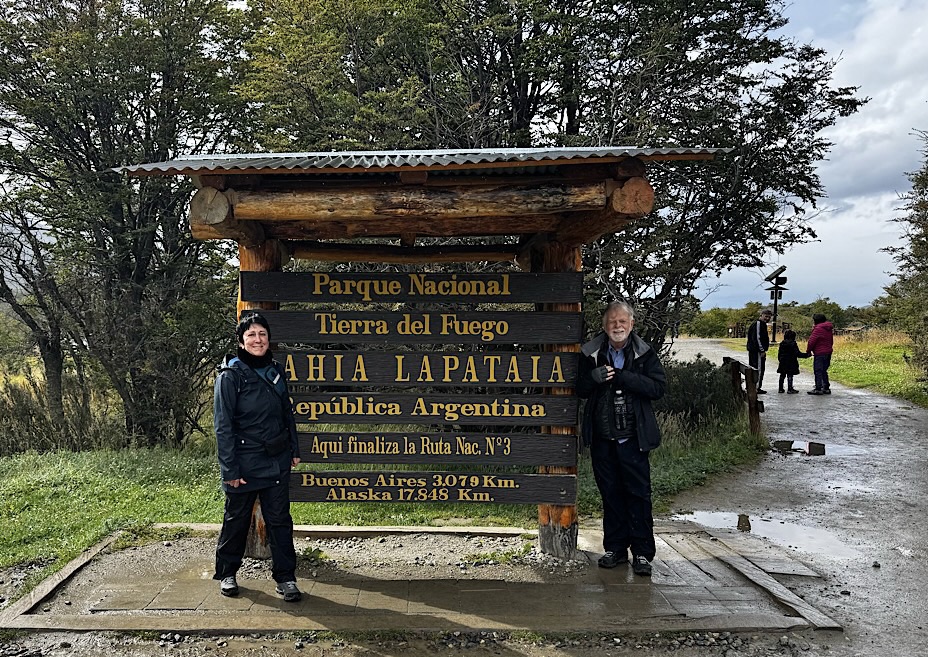
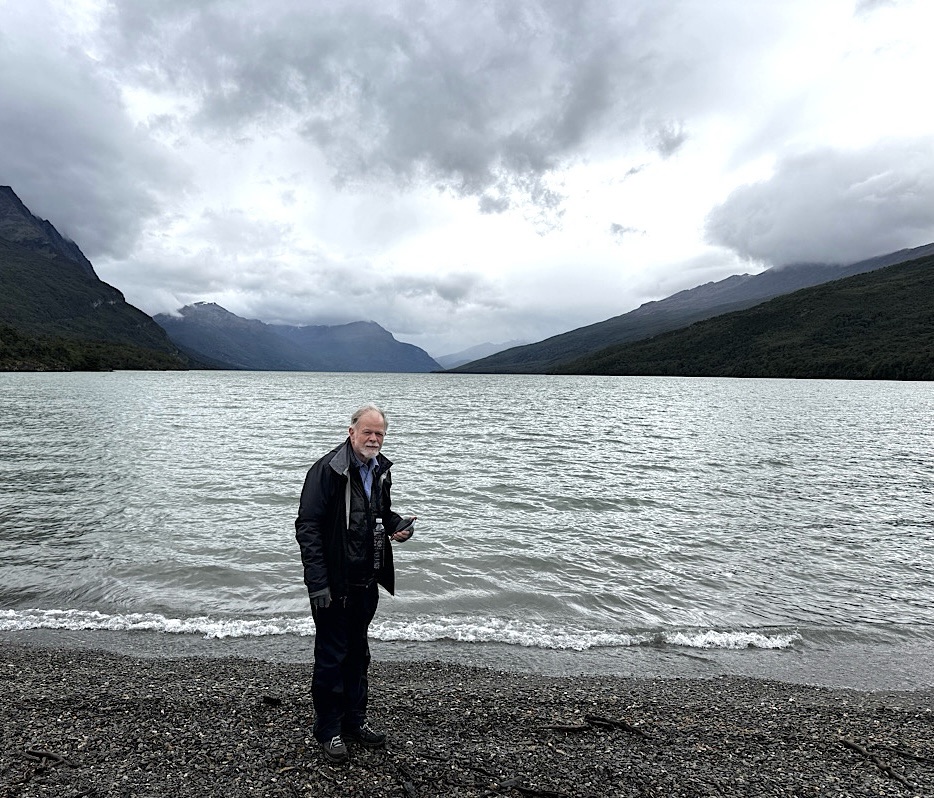
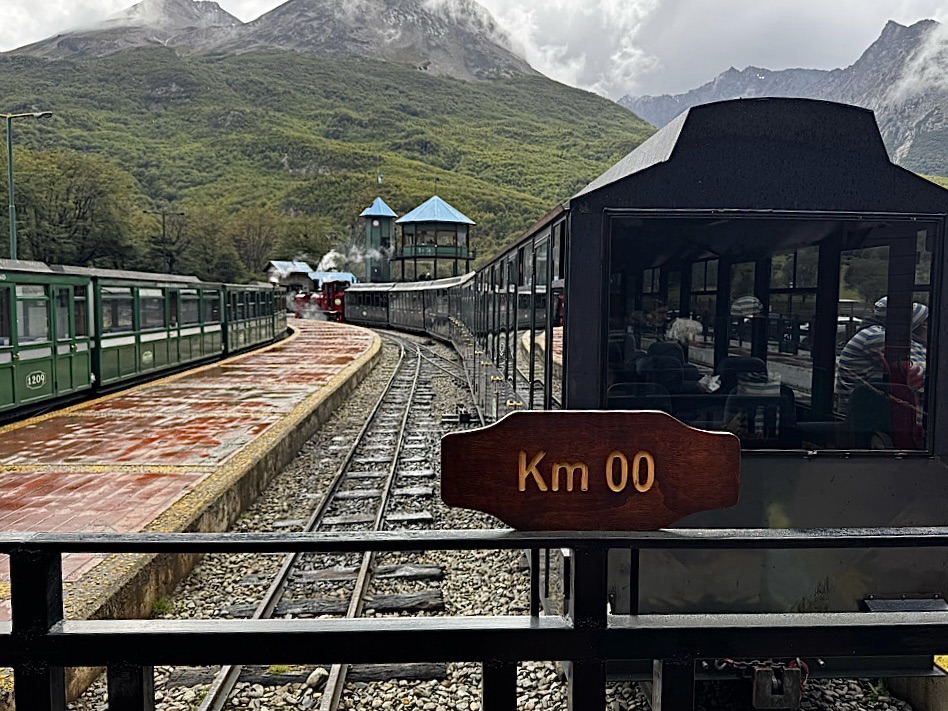
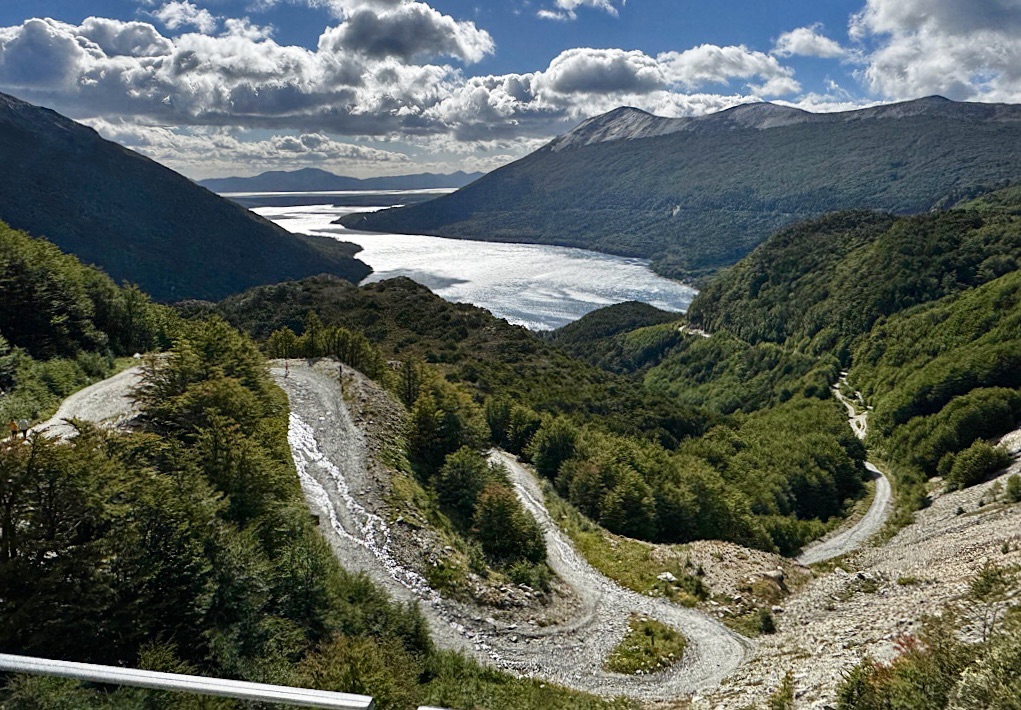
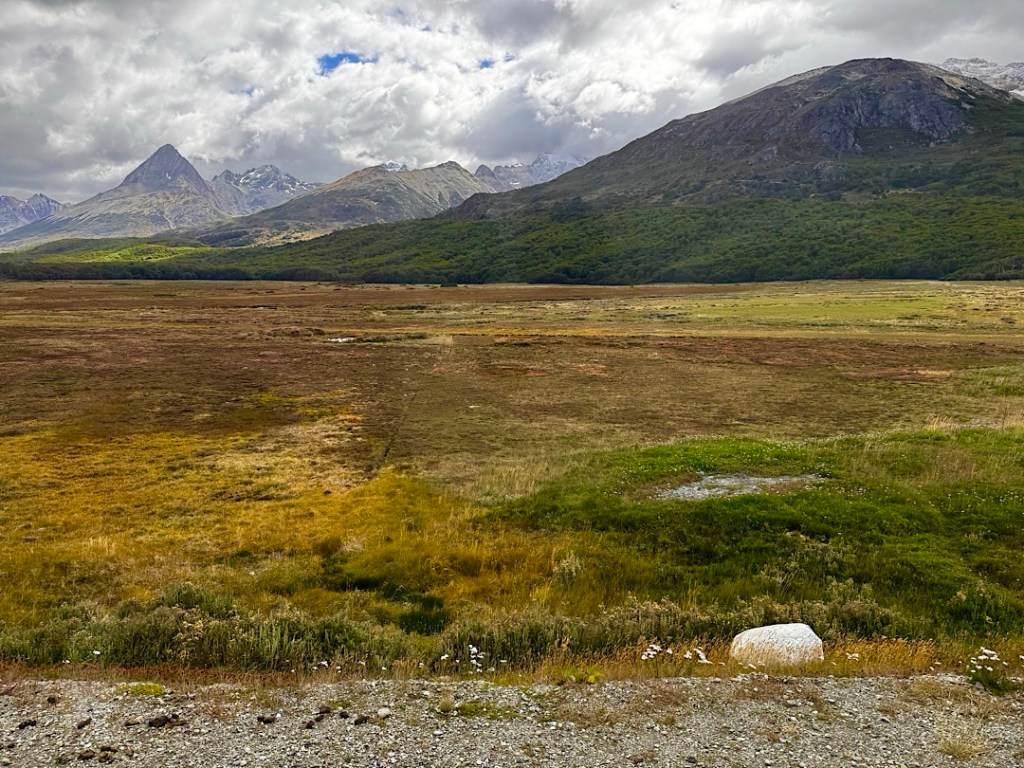
If we’d had more time,we could have gone for more hikes through the world-class scenery. Still, all our time in Ushuaia was mere prelude to the mind-boggling larger journey before us. Last night we cast off on a 4600-mile-long sea voyage through the Southern Ocean that, with luck, will take us to the Antarctic Peninsula, South Sandwich Islands, South Georgia Island, and the Falklands. With luck we’ll pull back up to the dock in Ushuaia three weeks from today.
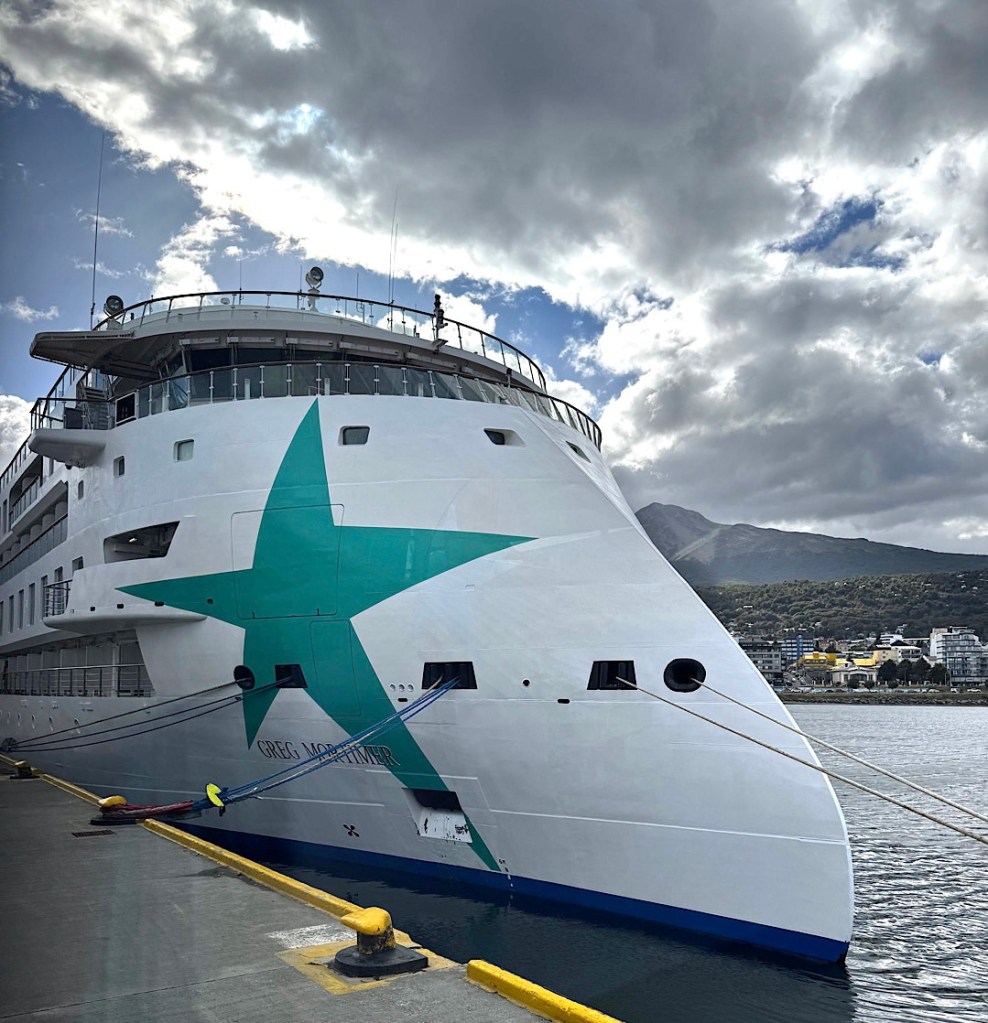
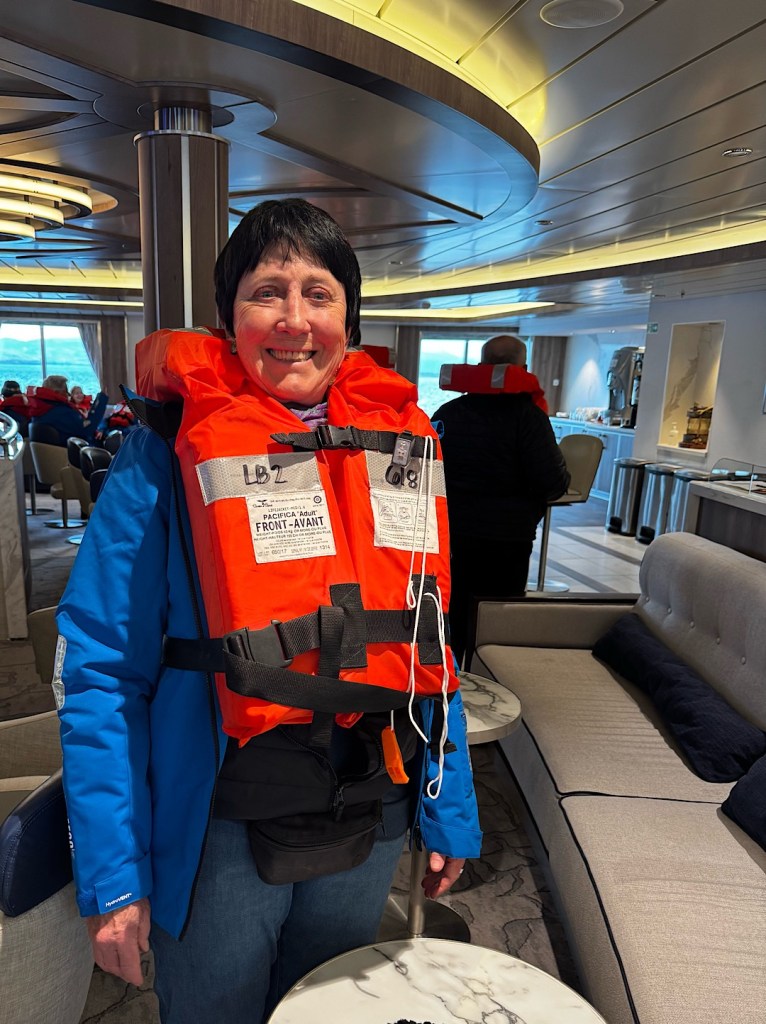
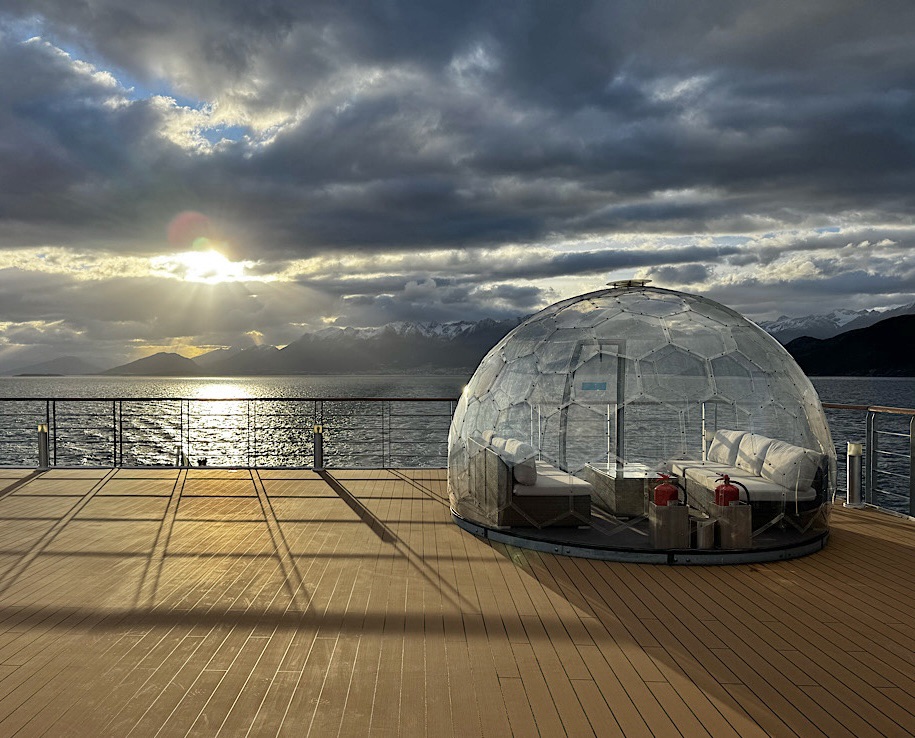
Ushuaia in the wake of our departing ship. (That’s a cozy place to hang out.)
PS: I wrote, edited, and published this post from the Southern Ocean, thanks to Elon Musk’s Starlink system.
 At home and abroad