Arriving in Honiara, capital of the Solomon Islands, last Wednesday afternoon, I felt a rare emotion: culture shock. It wasn’t triggered by the fact that all the people looked African. In Fiji we had already passed into the Melanesian sphere of influence. Melanesians are part of the enthnographic family that includes Australian aborigines. Their ancestors came from Africa (as did those of all Homo sapiens) but in the tens of thousands of years since humans arrived in this part of the globe, their faces have continued to reflect where they started out.
Instead, it was the airport that startled us. The terminal building is clean and big enough, but it contained almost nothing that airports in other capital cities hold. We found a single ATM machine and a little currency-exchange stand. But no gift shops were evident. No counters offered cars. No one was selling any SIM cards that would get you local phone service.
Taxis queued up outside seemed to be offering a flat rate to our destination, the Honiara Hotel. This had not been my first choice for accommodation. Back in January, when I was first planning this trip, my online sources made me want to stay at the Heritage Park Hotel, located in the center of this small but lively capital. To my bewilderment, the Heritage Park was already completely booked for our dates.
Understand that the Solomon Islands consistently ranks among the 10 least-visited countries in the world. How could any hotel on any of its 900 islands be sold out 9 months in advance?
I later learned we just happened to be arriving the week when, for the first time in ages, Honiara would be hosting the annual Pacific Islands Forum. The heads of 18 countries and territories would be gathering to discuss regional issues in Oceania; they and their aides had already gobbled up the best digs in town! So I reserved a room at the Honiara; it didn’t sound bad.
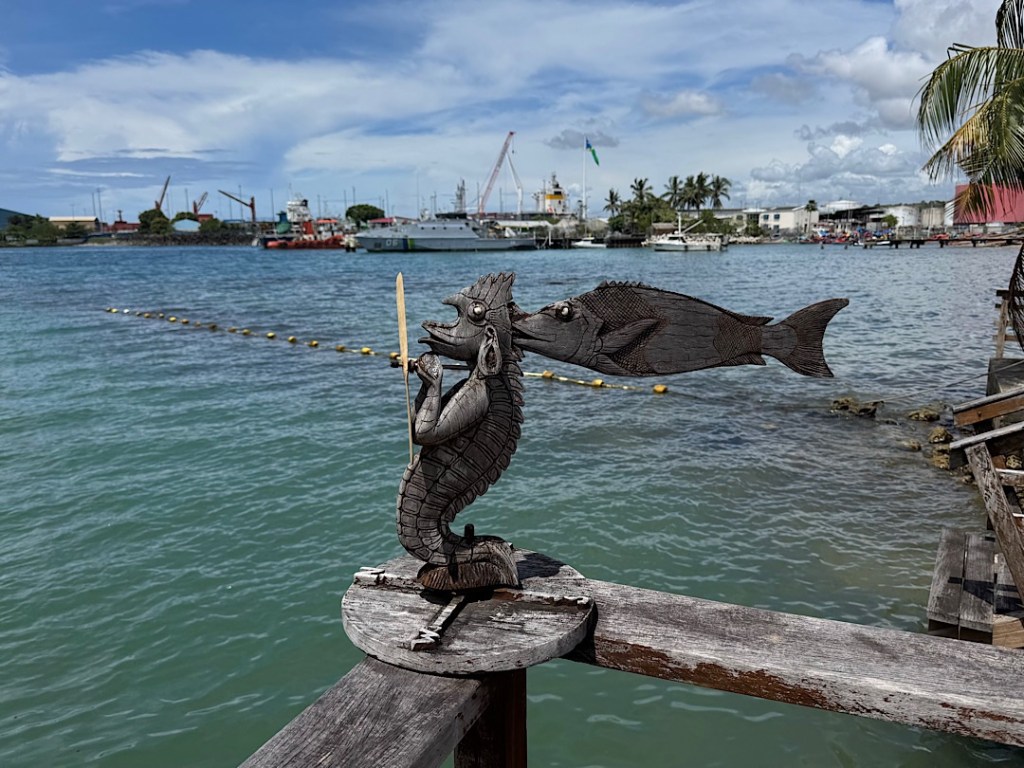
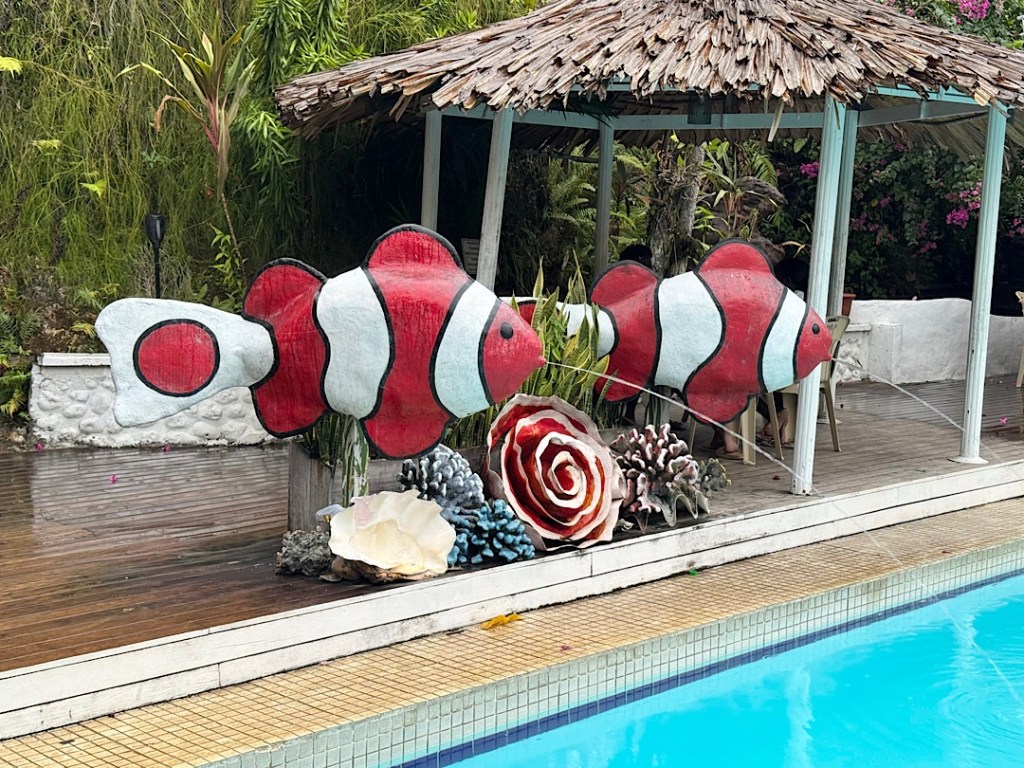
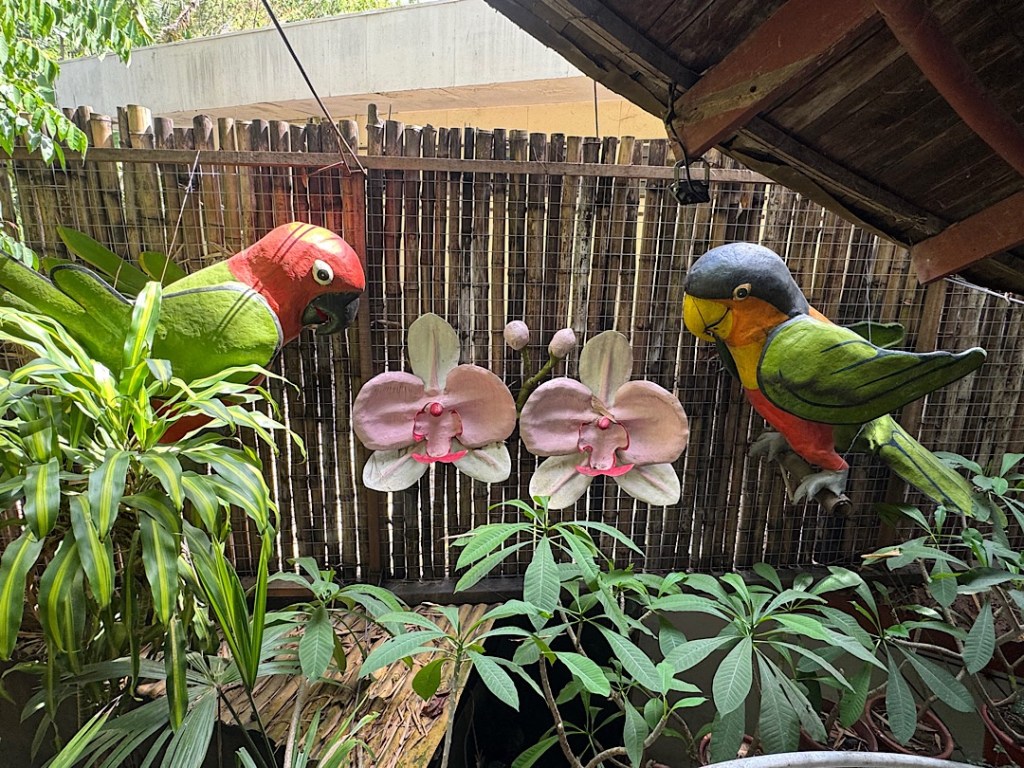
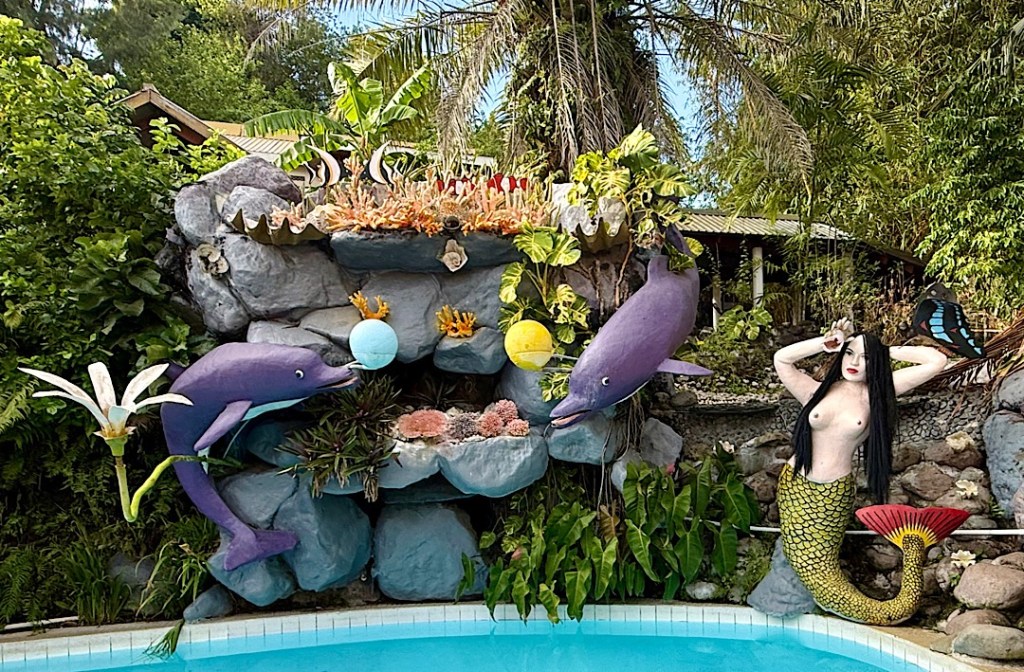
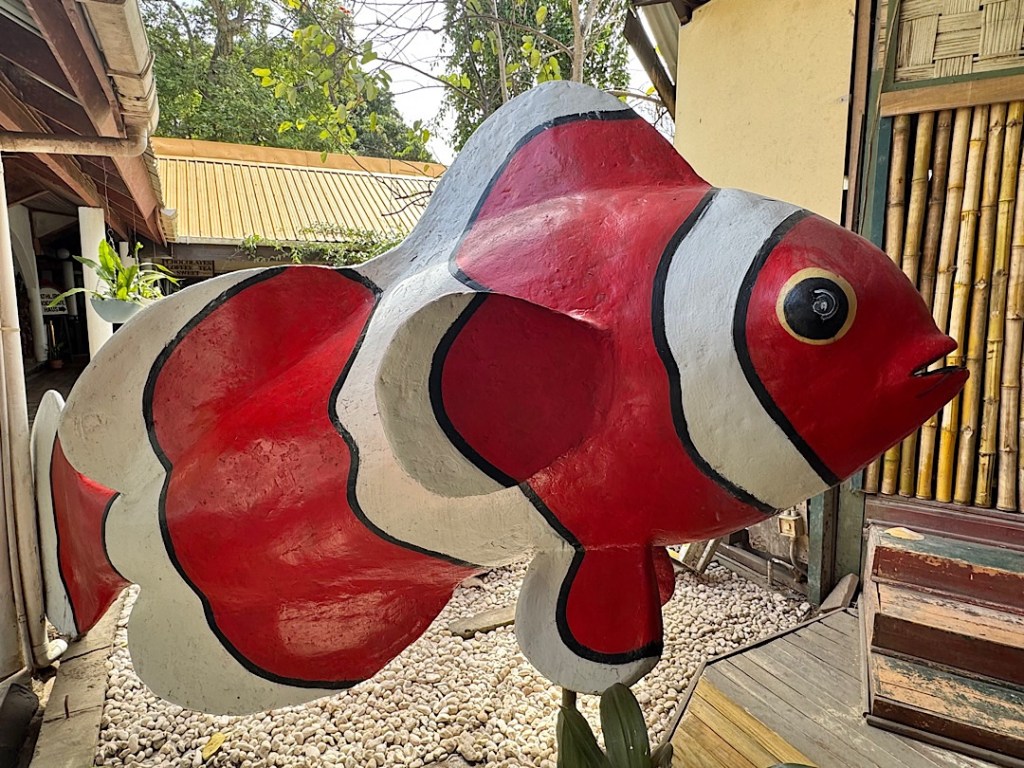
As it turned out, the Honiara was not to be missed. The buildings ramble over a hillside with good views of the water. Concrete staircases lead guests past a head-spinning assortment of giant wildly colorful sculptures. They make the place feel psychedelic.
Why, you might be wondering at this point, did we choose to visit the Solomon Islands? Call it an accident of the air-service network. Honiara is among the few cities in the world with nonstop flights to Pt. Moresby (the capital of Papua New Guinea, our ultimate destination.) And it’s only a three-hour jump via Fiji Airways from Nadi (Fiji) to Honiara. So I booked flights that allowed us to spend four nights in Fiji, followed by two in the Solomons. Then the airline changed its flight schedule, and we wound up with the longer stay in a place about which I knew virtually nothing.
I figured we’d wing it.
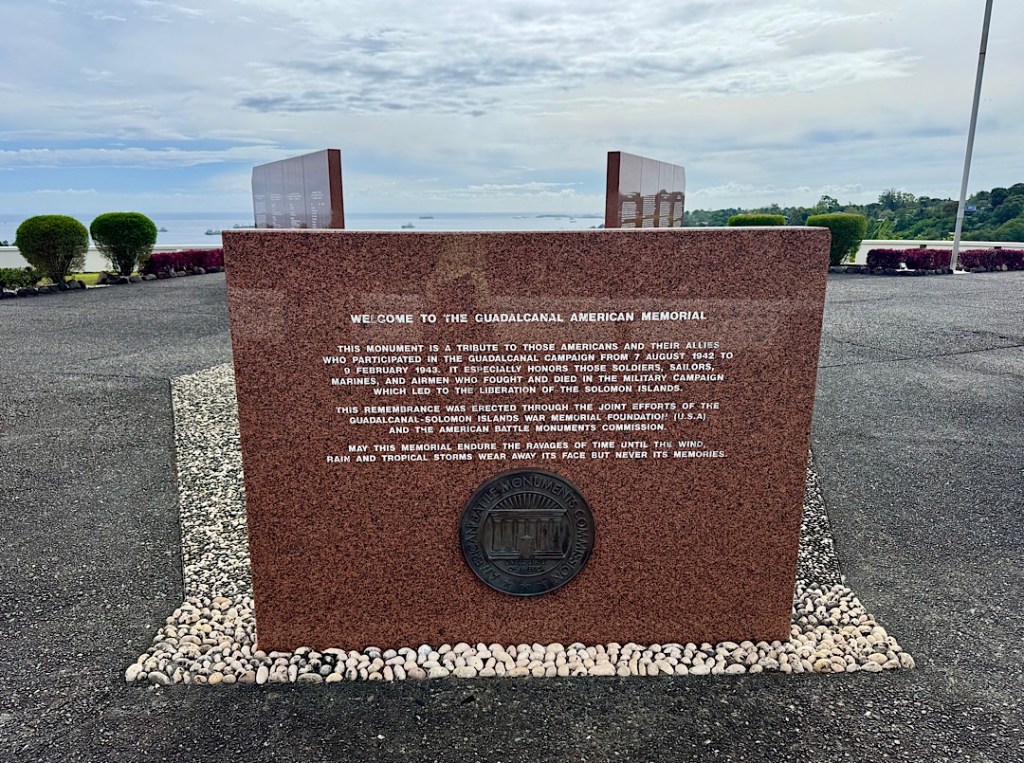
We asked George, the taxi driver who drove us from the airport to our hotel, to pick us up the next morning. He suggested we pay a quick visit to the Guadalcanal American Memorial just down the road. Set high on a hillside, it pays homage to a critical battle in the Pacific theater of World War II. (Honiara is located on Guadalcanal, the largest and most important of the islands that make up the Solomons.)
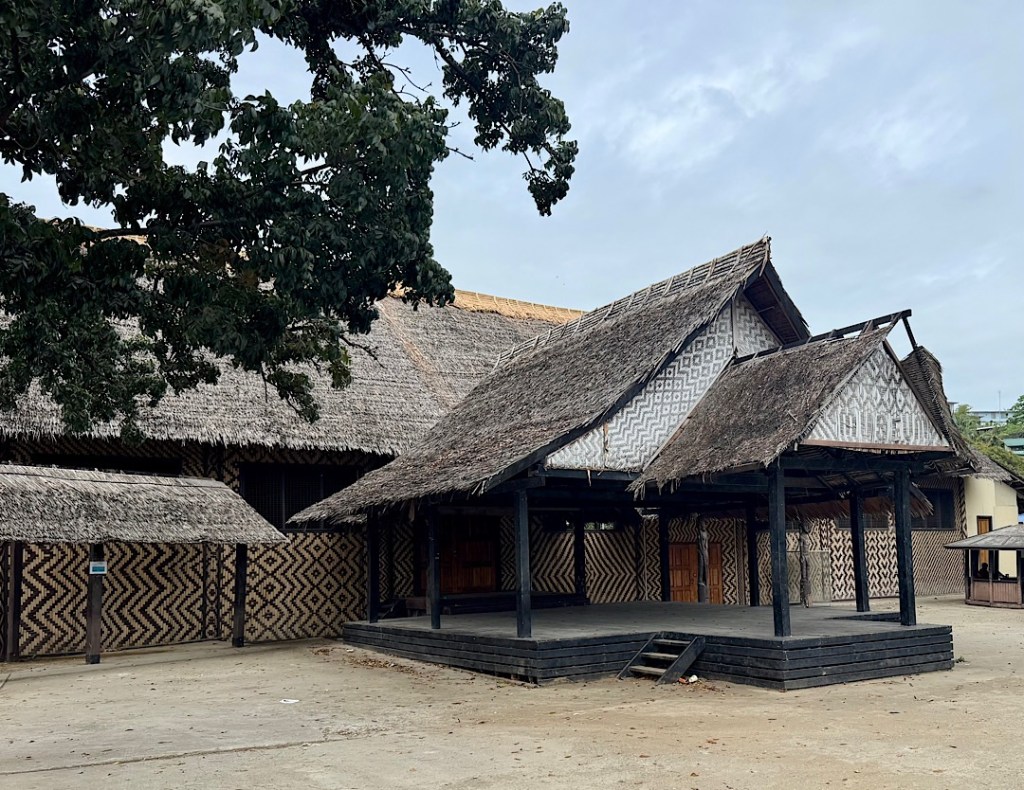
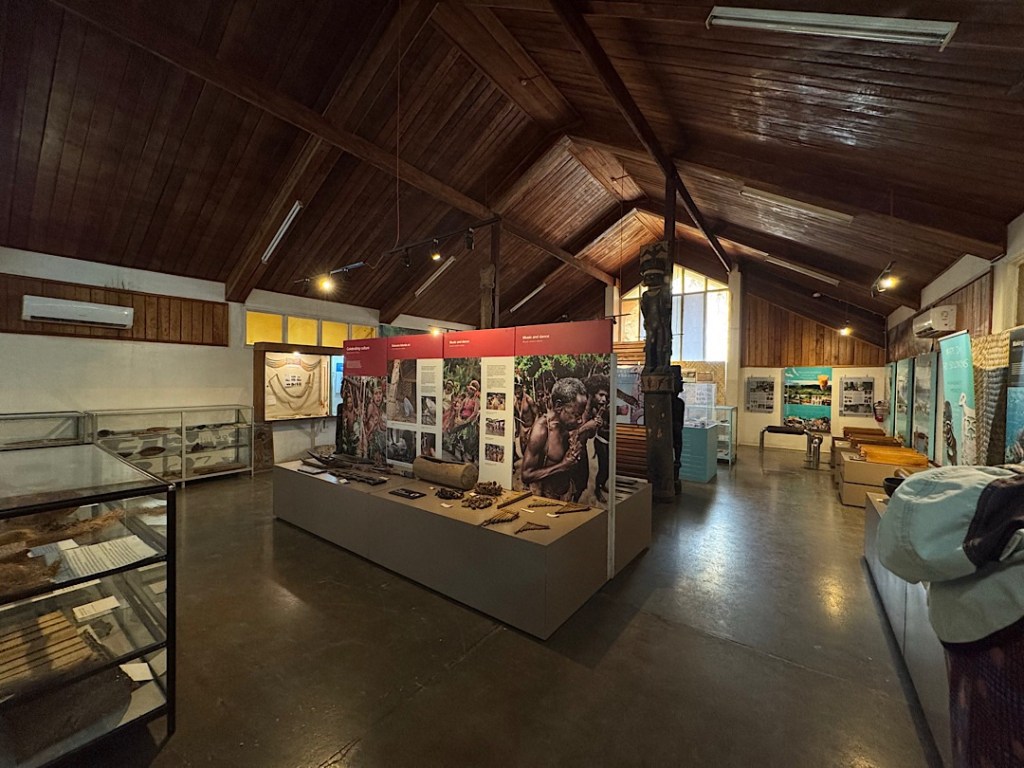
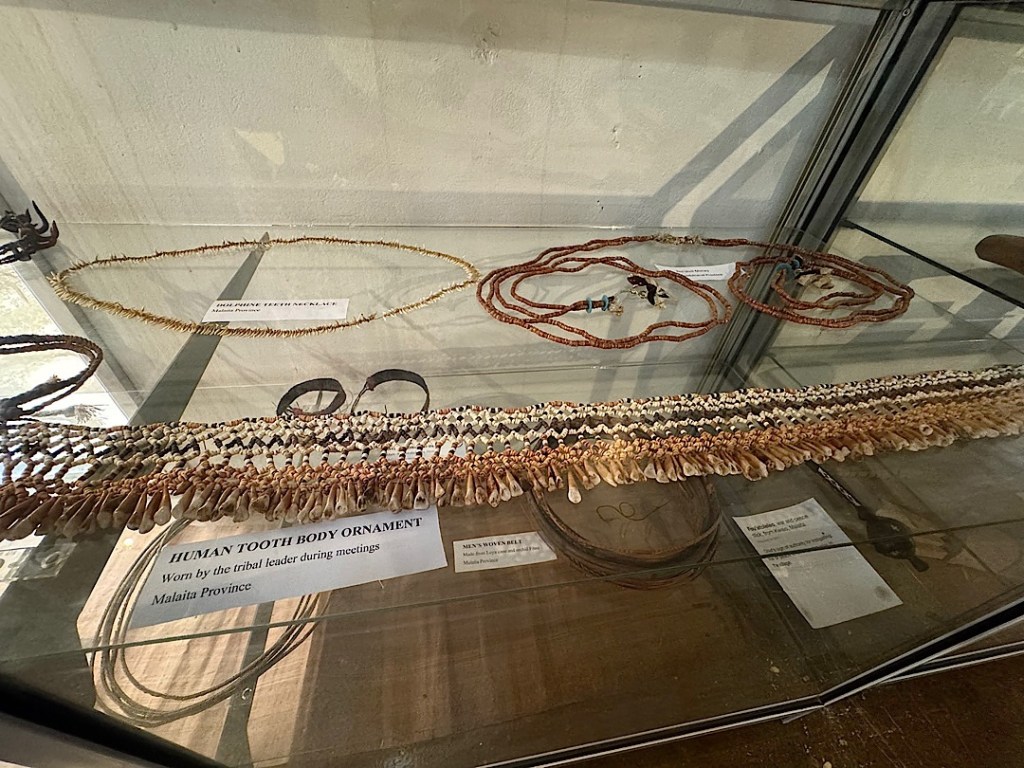
We then asked George to drop us off at the National Museum in the center of town, where we were the only visitors. That was no reflection on the quality of the exhibits.
We popped into the nearby Solomon Islands visitor center then walked about a block to the Point Cruz Yacht Club to check out its restaurant; we’d heard it might be a place to eat.
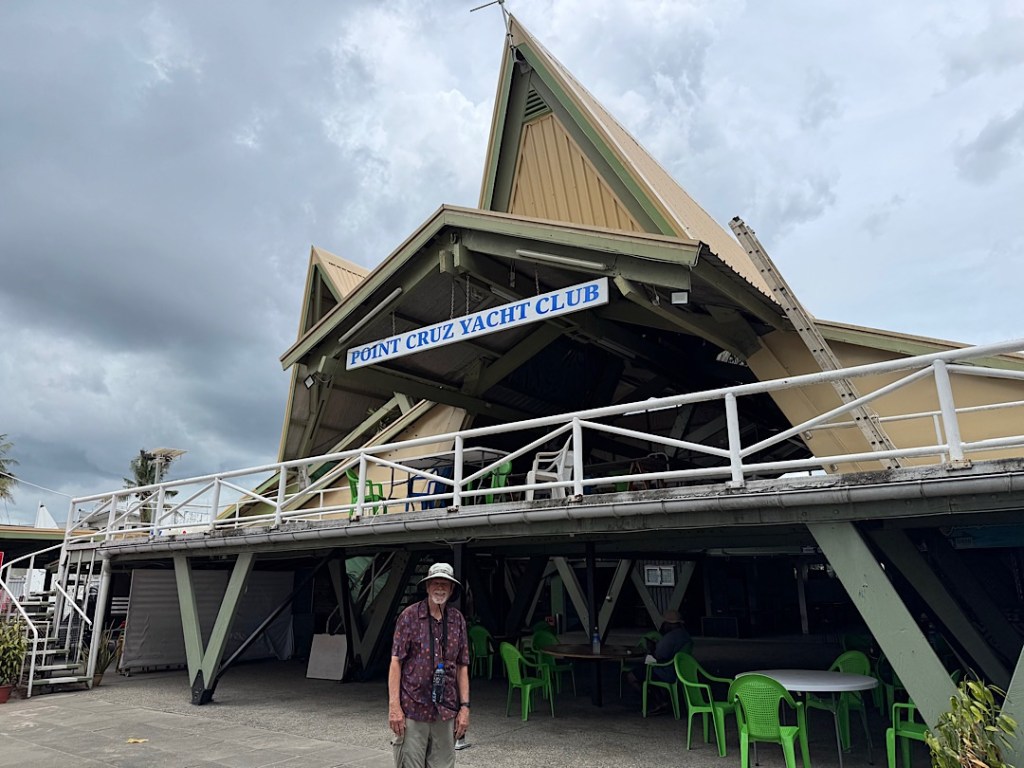
The dimly lighted central building looked like an okay place to shoot pool and drink beer with the guys. But on the beach out back, we found something quite extraordinary: a small “Tepuke”-style outrigger canoe built entirely from traditional materials in the traditional manner developed by ancient Pacific mariners.
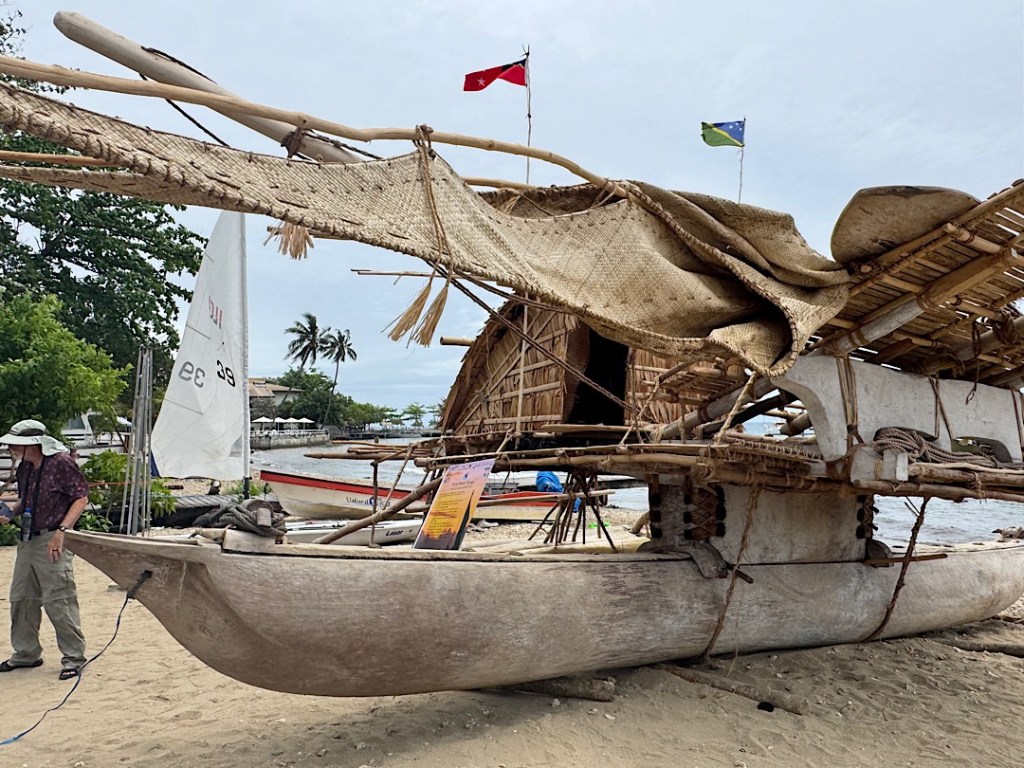
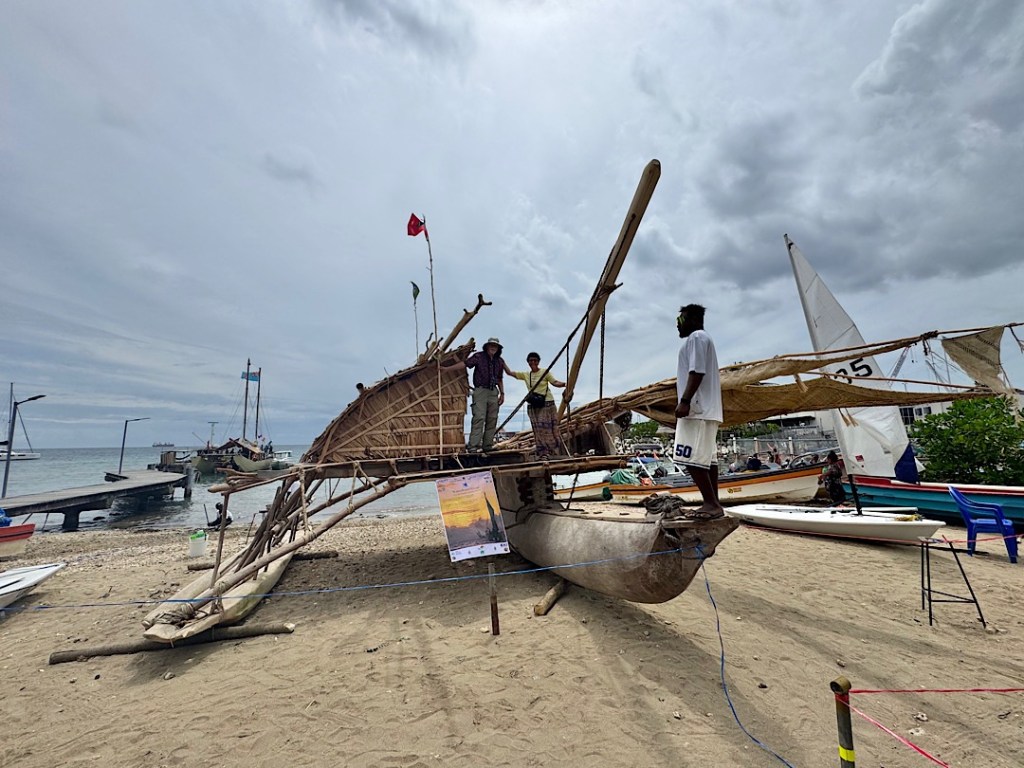
This particular vessel had recently been constructed in the far easternmost part of the country; a six-person crew sailed it for 5 days from there, arriving in time to kick off the big political pow-wow. Steve and I had read about such sailing ships in the marvelous recent book, Sea People, and now here was one, steps away from us.
We chatted at length with a friendly, burly man who introduced himself as Bennett. He urged us to climb up so he could take our picture on the little outrigger.
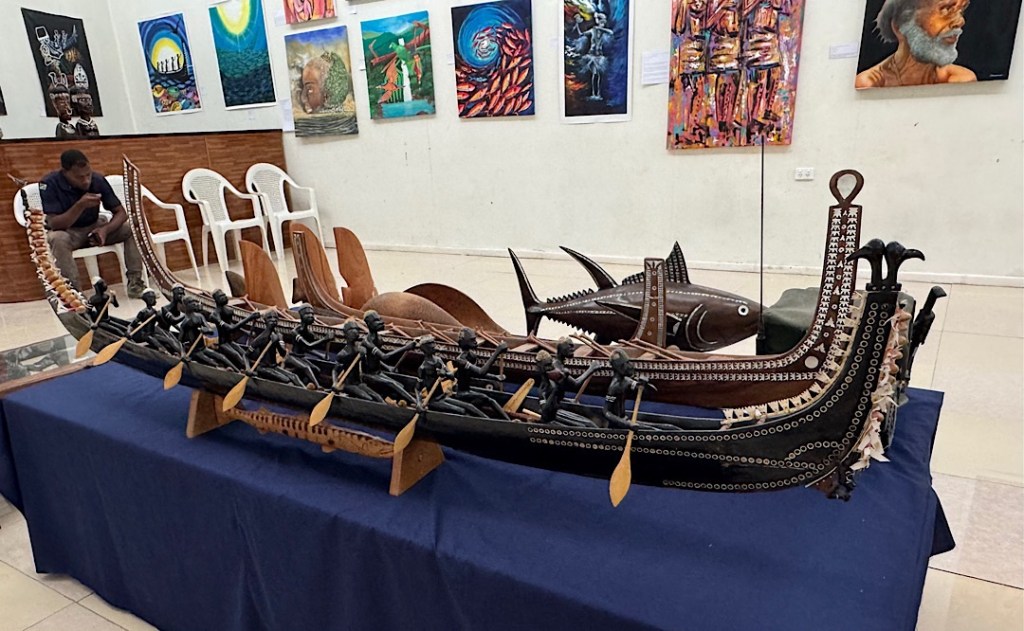
That afternoon we did several other things. We visited an art gallery that was small but filled with some interesting things.
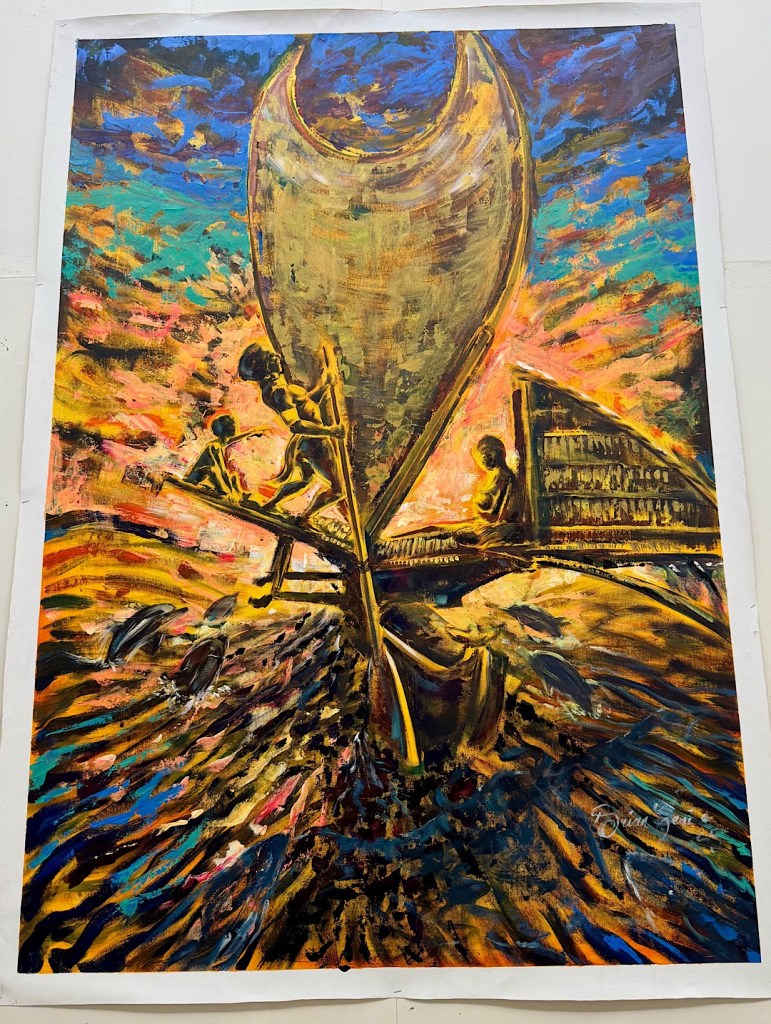
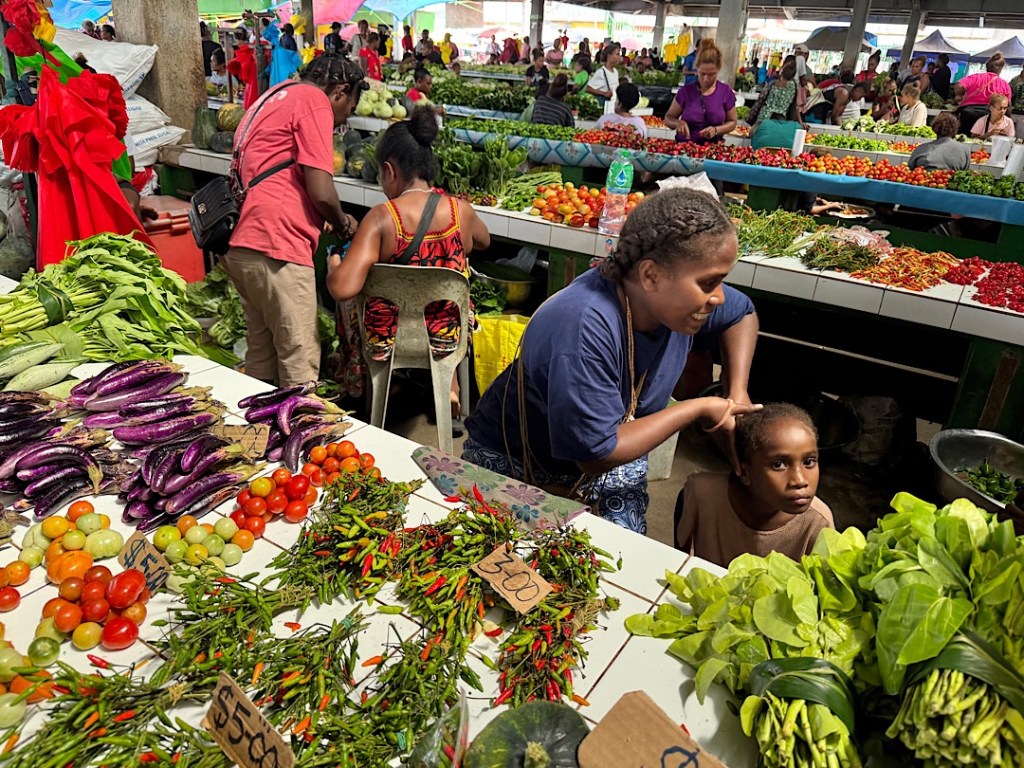
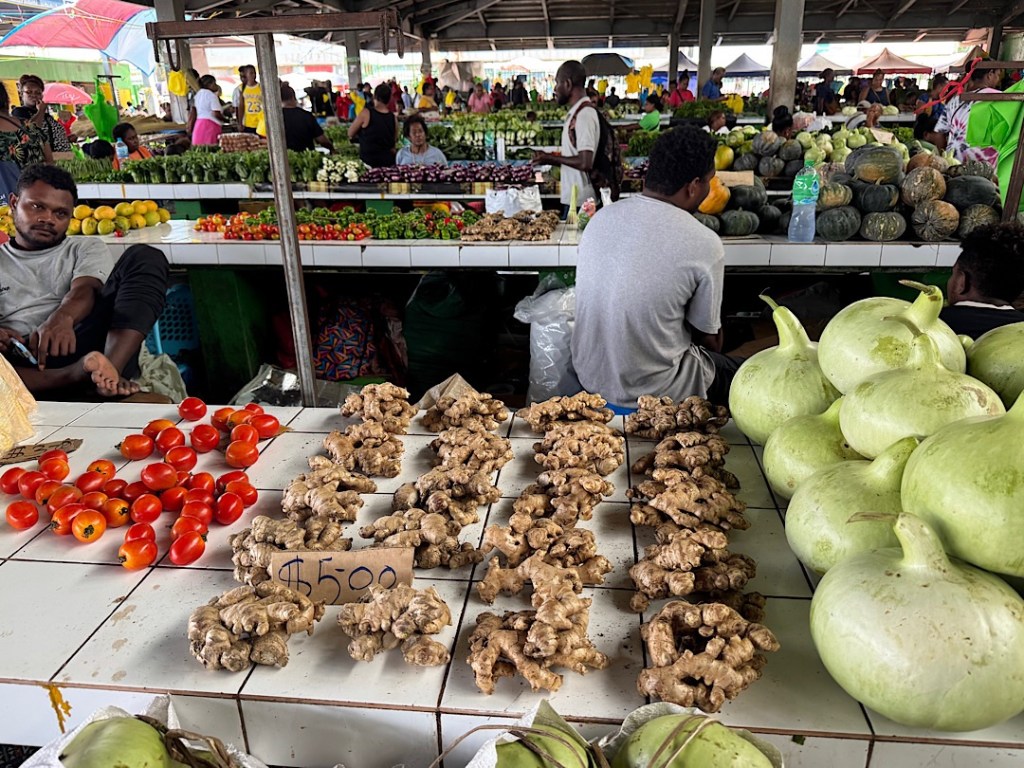
By mid-afternoon the heat and humidity had reached daunting levels, so we caught a taxi back to the hotel and, after a swim and a nap, began to fret in earnest about occupying ourselves for the next two days. The front-desk clerk had a suggestion. She knew someone with a little tour company who might be able to help. Lisa punched a number into her cell phone, and minutes later, Keren Fono’ota pulled into the Honiara’s parking lot.
Born on Vanuatu (another island country about 800 miles east of Honiara), Keren had moved to the Solomon Islands about 25 years ago. She went to school and worked for a few years as a journalist, but then she started Iumi Tour Solomons. Warm and charismatic, she didn’t have to work very hard to sign us up for two of her outings: a cultural visit to a village on Friday and a full-day beach excursion for Saturday.
It did not bother us that on Fiji we had just done BOTH a cultural village visit AND an island day trip. I’ve come to realize that in tropical tourist destinations, those are like fish and chips. It’s hard to avoid them. Moreover, we’d greatly enjoyed the Fijian offerings, and as luck would have it, Keren’s versions turned out to feel much less touristy and more authentic than their Fijian counterparts.
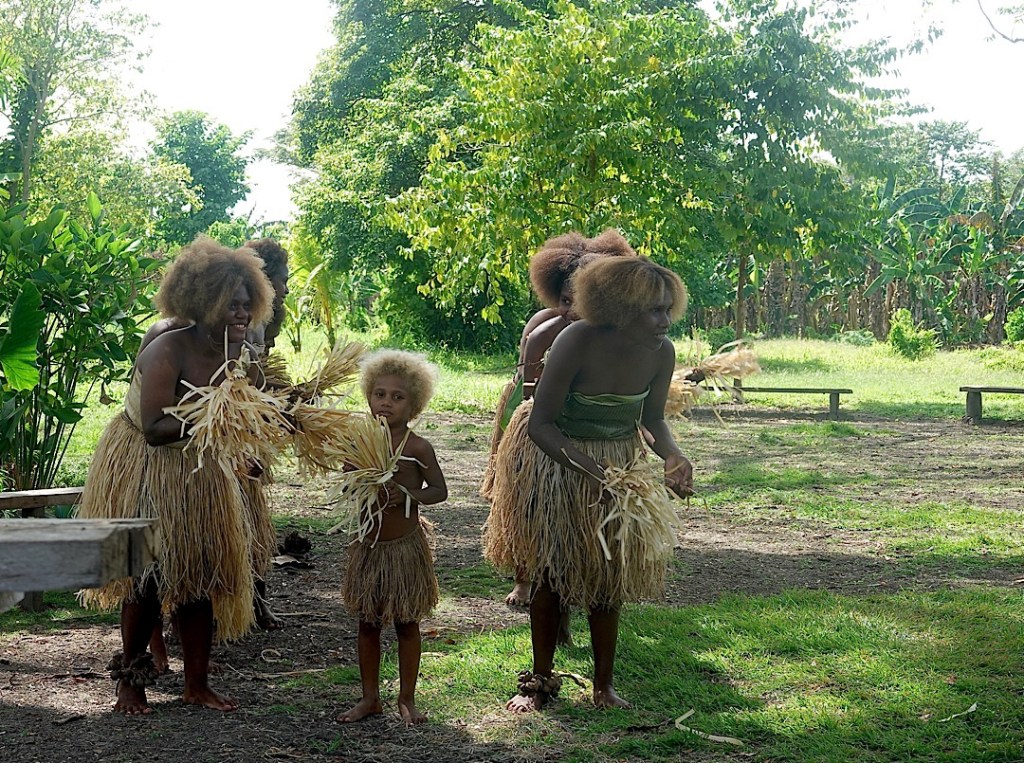
The village to which she drove us, Hotomai, was an offshoot of a larger community on the other side of Guadalcanal. Although the Birau people in the satellite village earned some money from welcoming the occasional visitors, they also grew subsistence crops and sent their kids to local schools. For our visit, some of the ladies gave us a musical greeting.
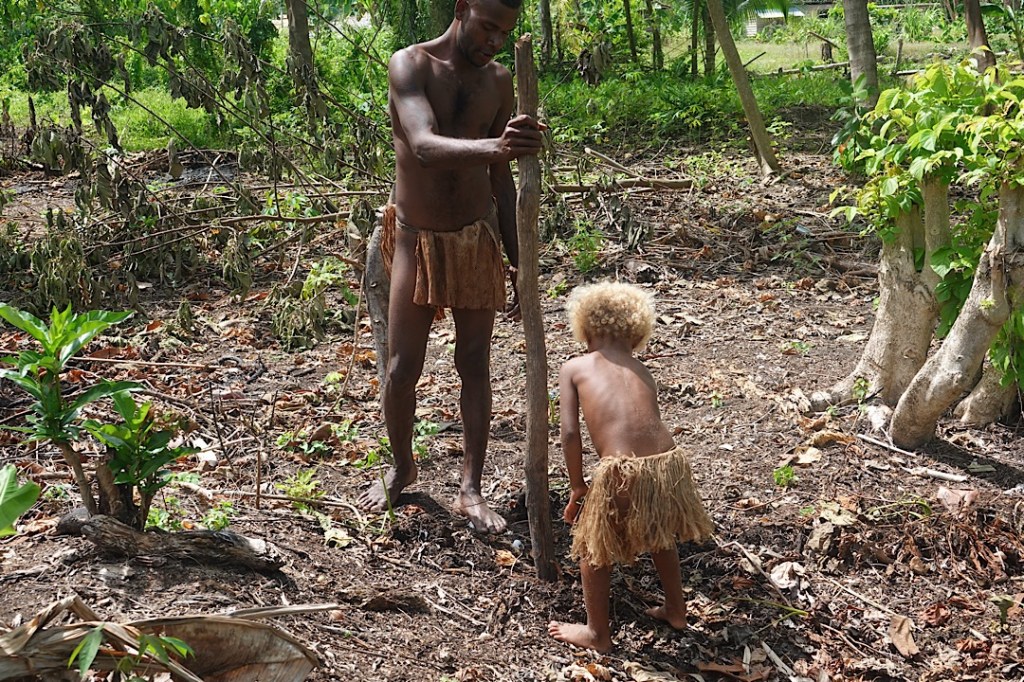
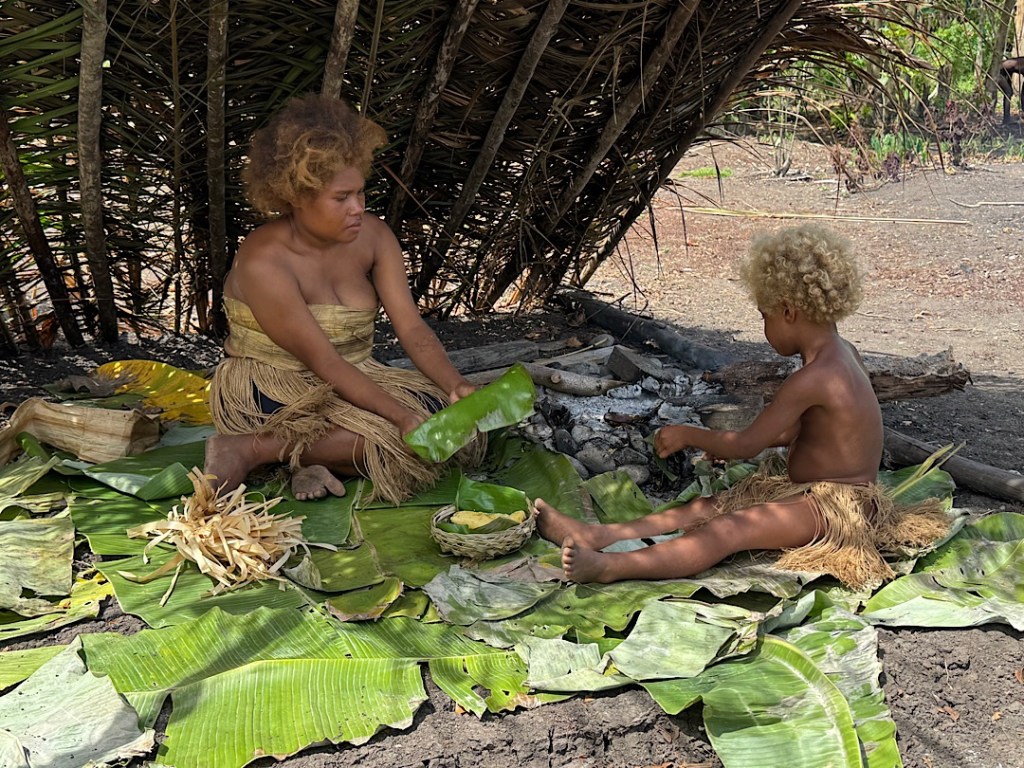
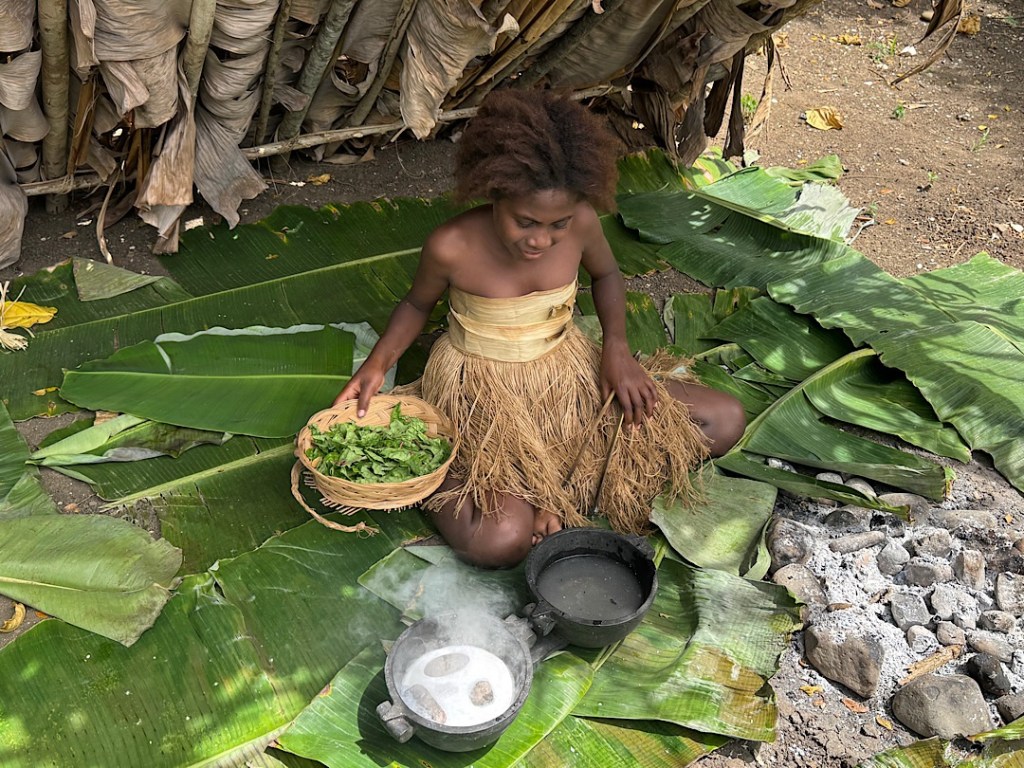
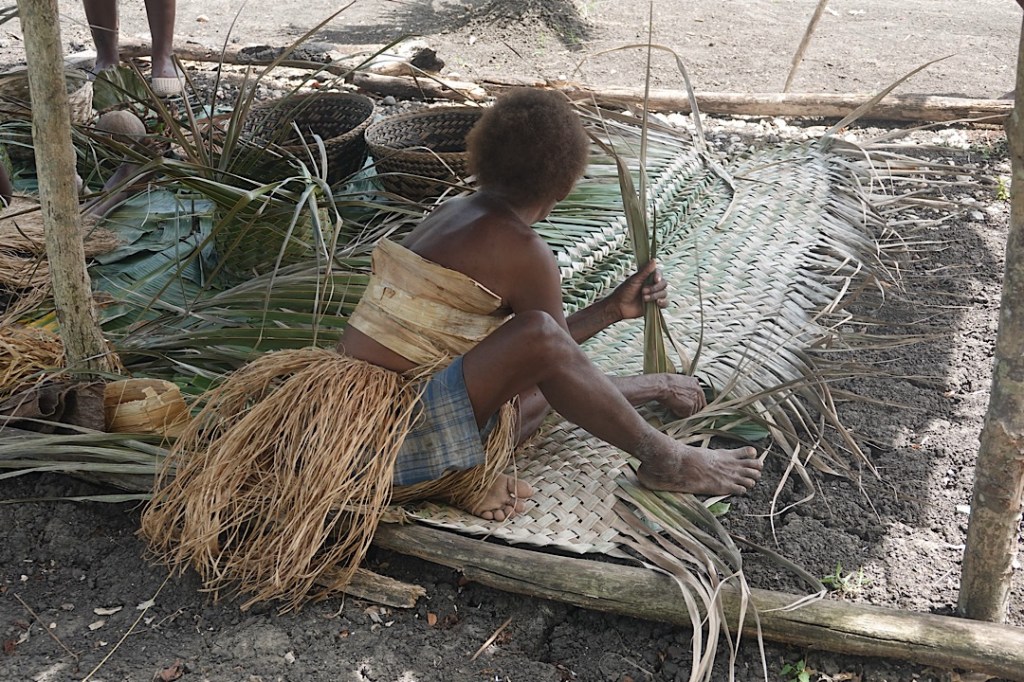
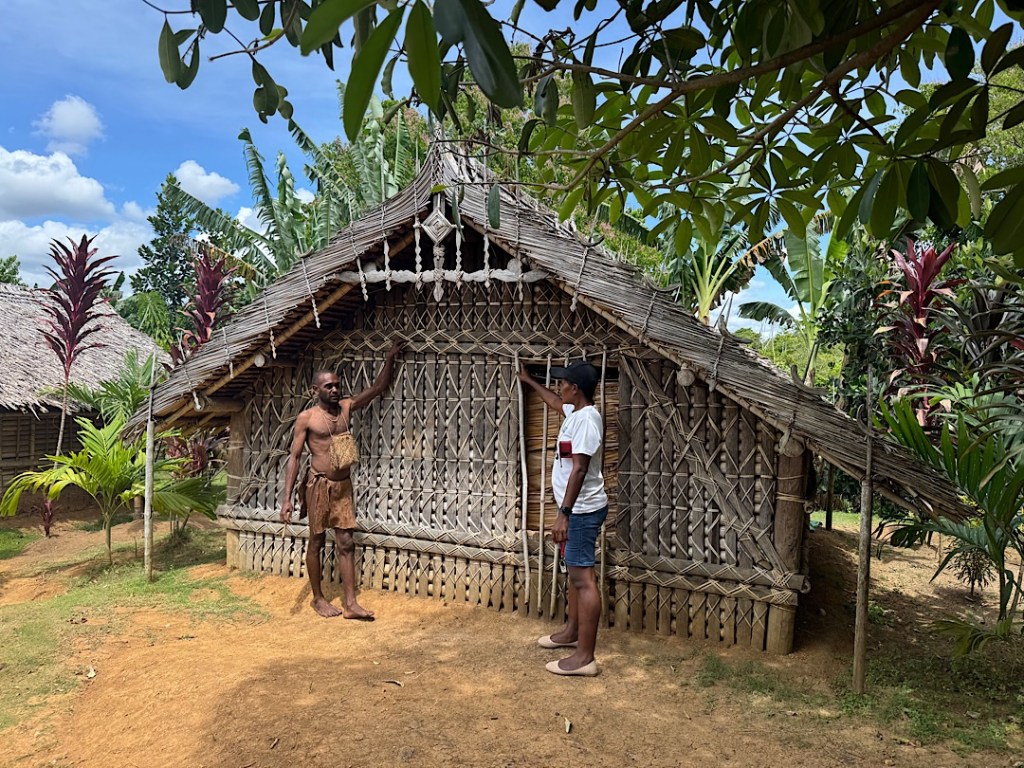
We took the village tour along with an Australian couple, but for Keren’s outing to Roderick Bay the next day, Steve and I were the only customers. Keren had told us we would travel in a speedboat for 90 minutes out to one of the Florida Islands.
When we arrived at the yacht club Saturday morning, we realized the “speedboat” was what Solomon Islanders call a banana boat. In Baja California, folks know it as a panga: an open fiberglass motorboat about 25 feet long, powered by a Yamaha outboard motor.
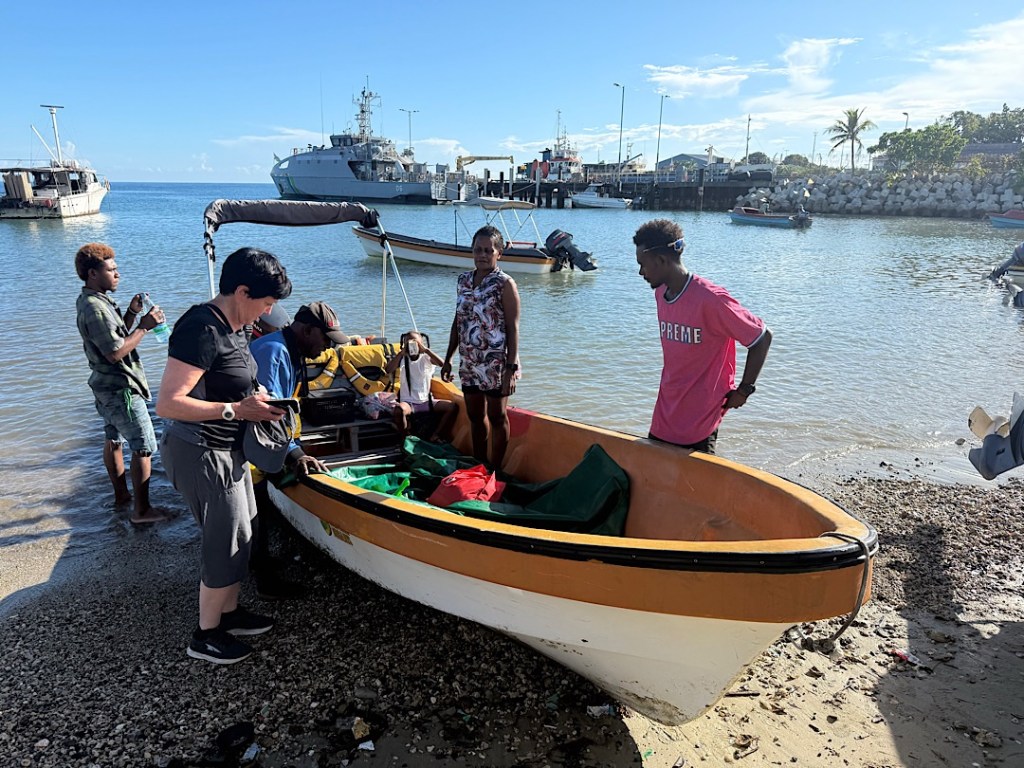
Steve and I and Keren and her two kids, 6 and 8, piled in and the captain coaxed the motor into action. “Look at it this way,” Steve murmured to me, “You could be riding in this with 20 Mexicans. In the dark.”
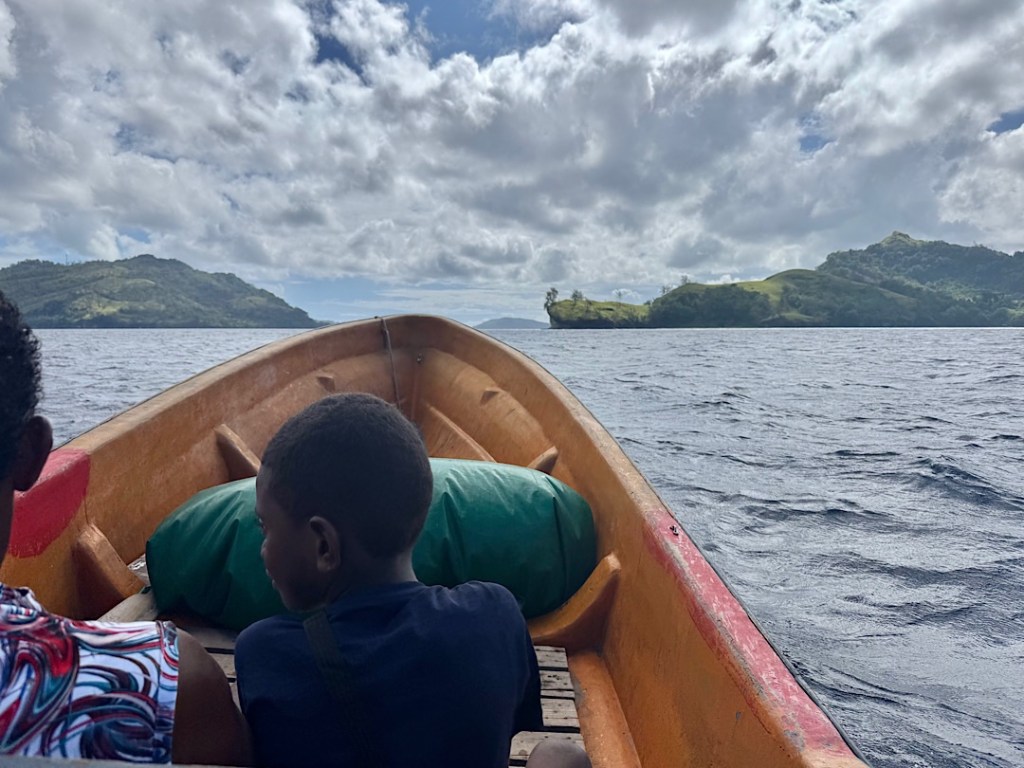
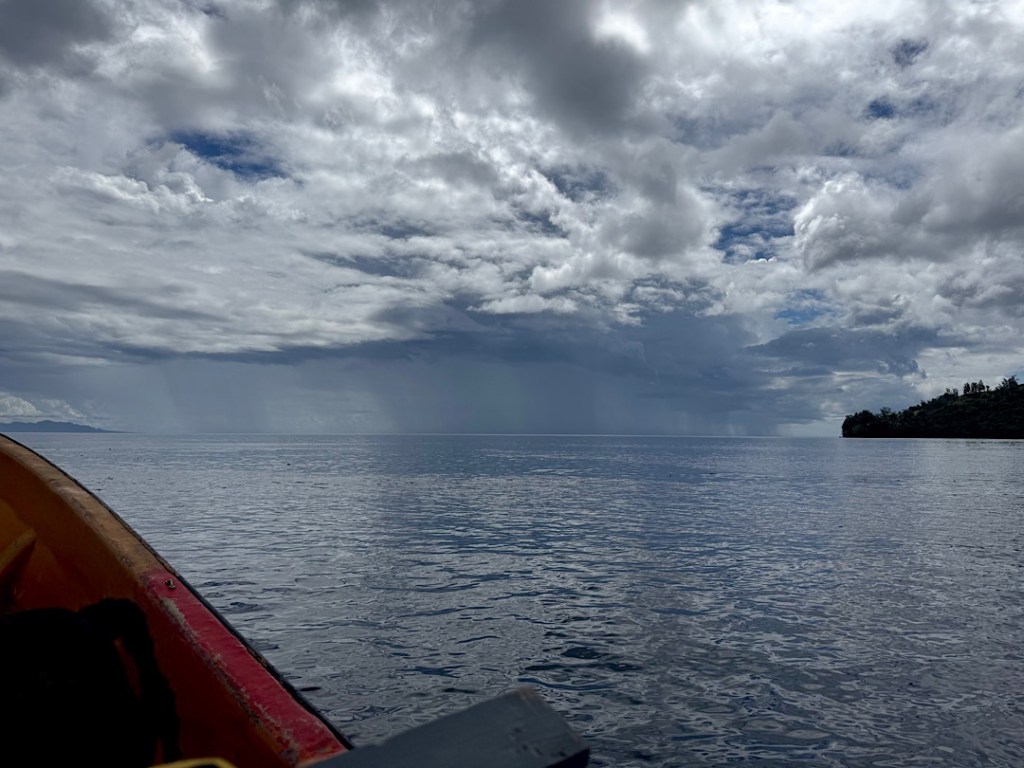
We roared out to sea, and I felt a rush of exuberance that lasted for maybe 10 minutes. Then the miserable part began. The wind stiffened, shattering the relatively flat sea surface into a million geometries that caught our little craft and made it bob this way and that. Frequently we were lifted up then slammed down with a force that made me worry about the impact on my spine. Soon we were out of sight of land. Swells rolled in that made us roll tilt even more, and I felt grateful neither Steve nor I get seasick. I soon was soaking wet, from the salt water that blew in over me.
I tried to distract myself by reflecting on our location: smack in the middle of “Iron Bottom Sound,” a nod to the Japanese and American ships that went to the bottom in the ferocious fighting that exploded here 83 years ago. Not far away, future US president John F. Kennedy’s PT boat was struck by Japanese fire and sank. Surely that must have been more unpleasant than this passage, I told myself.
I would have bet money that the destination wouldn’t justify the journey. But then we approached the entrance to the bay.
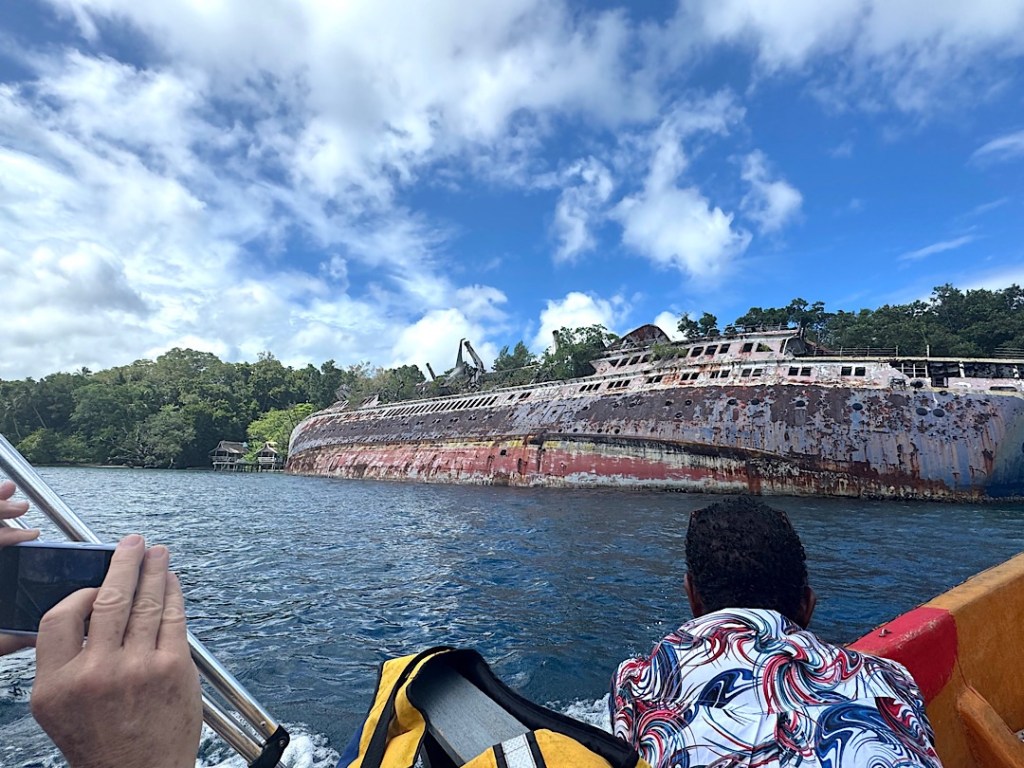
The world became calm again; the sun came out. After some moments we approached a bizarre sight: a German cruise ship that had hit a reef 25 years ago and limped into this inlet before sinking. Behind the wreck, a scene of extraordinary peace and beauty came into view.
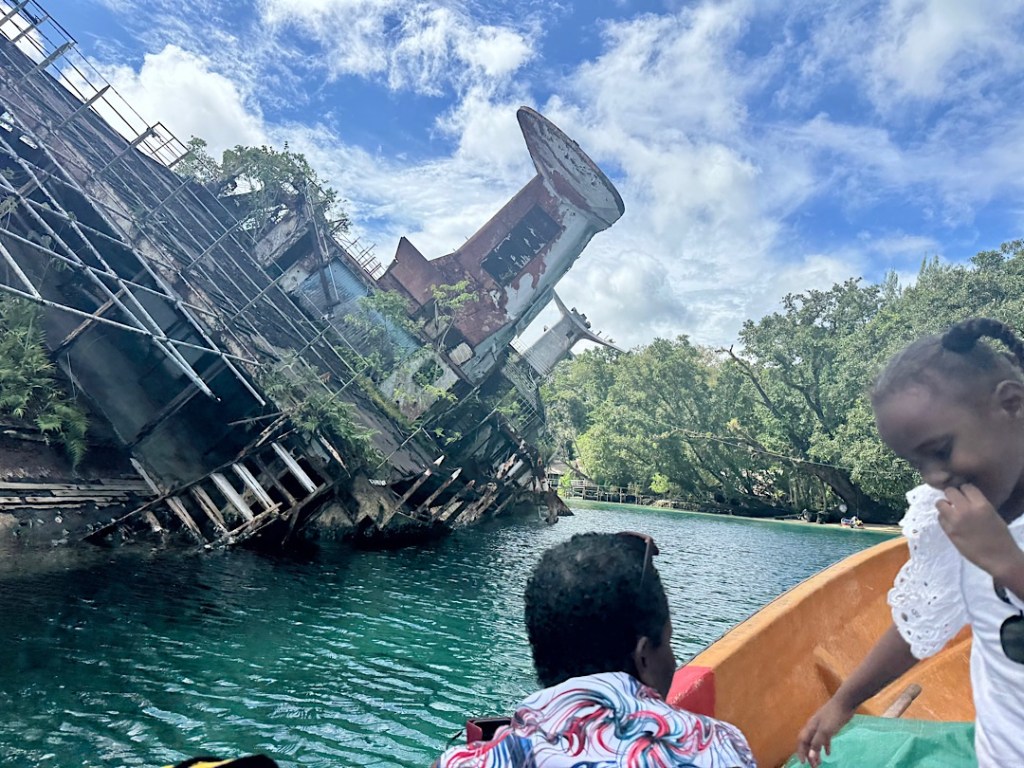
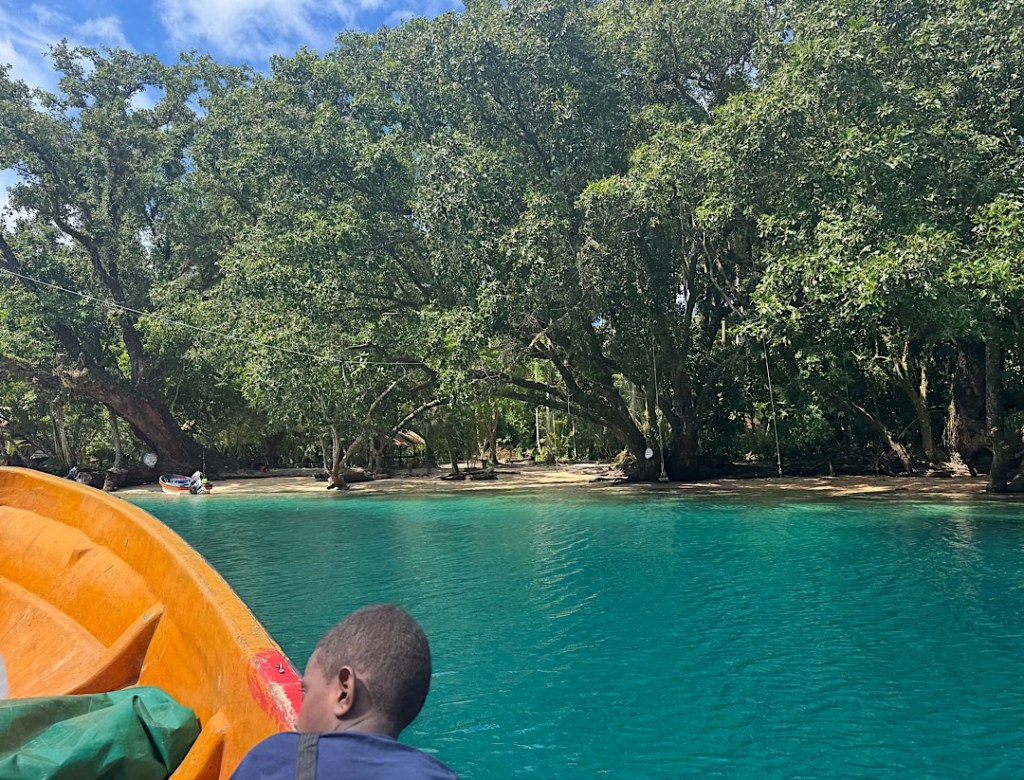

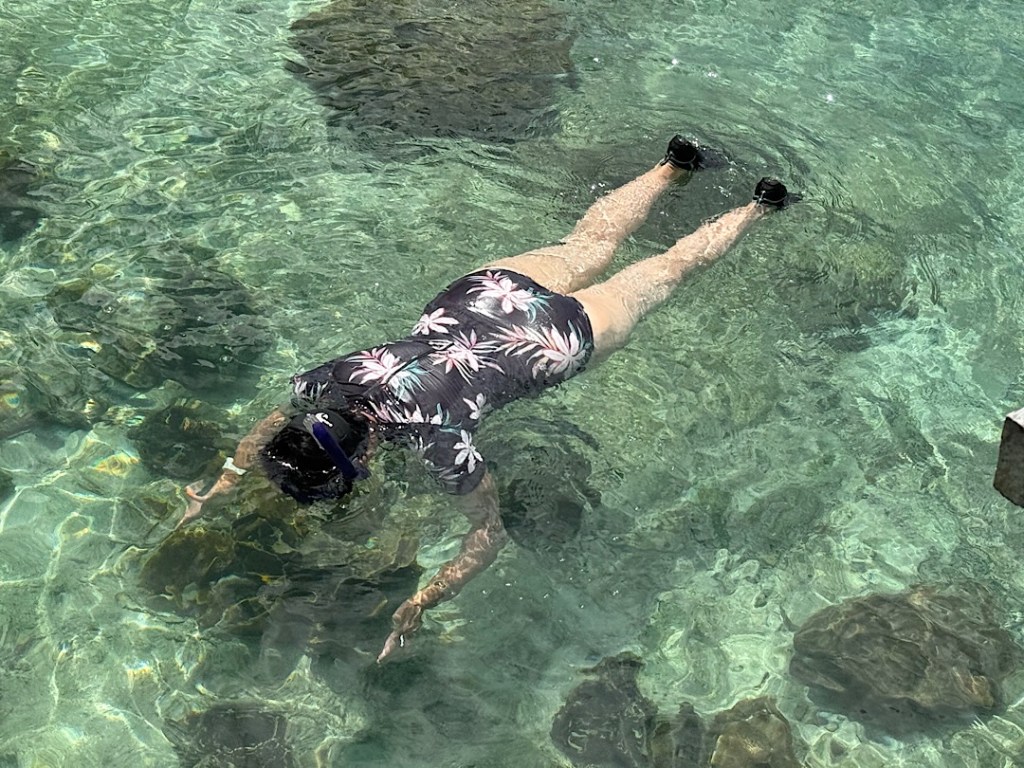
We rented snorkels and marveled at beautiful fish hanging out in the little reef off the beach . I spotted a clam as wide as my hands are apart in the photo below.
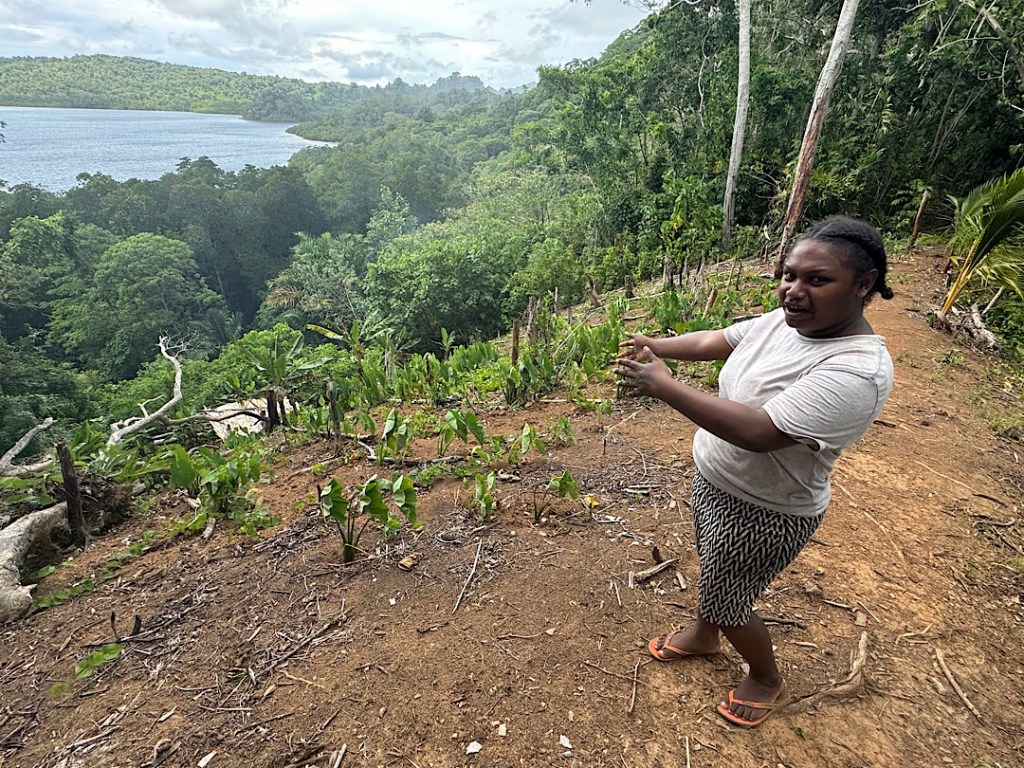
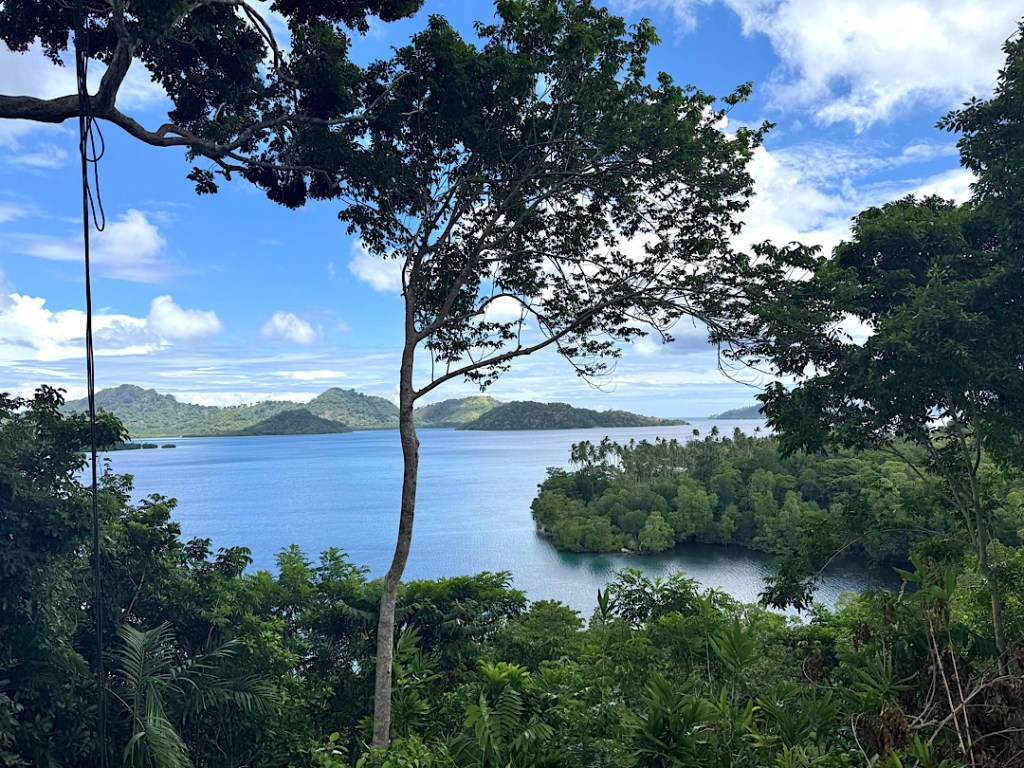
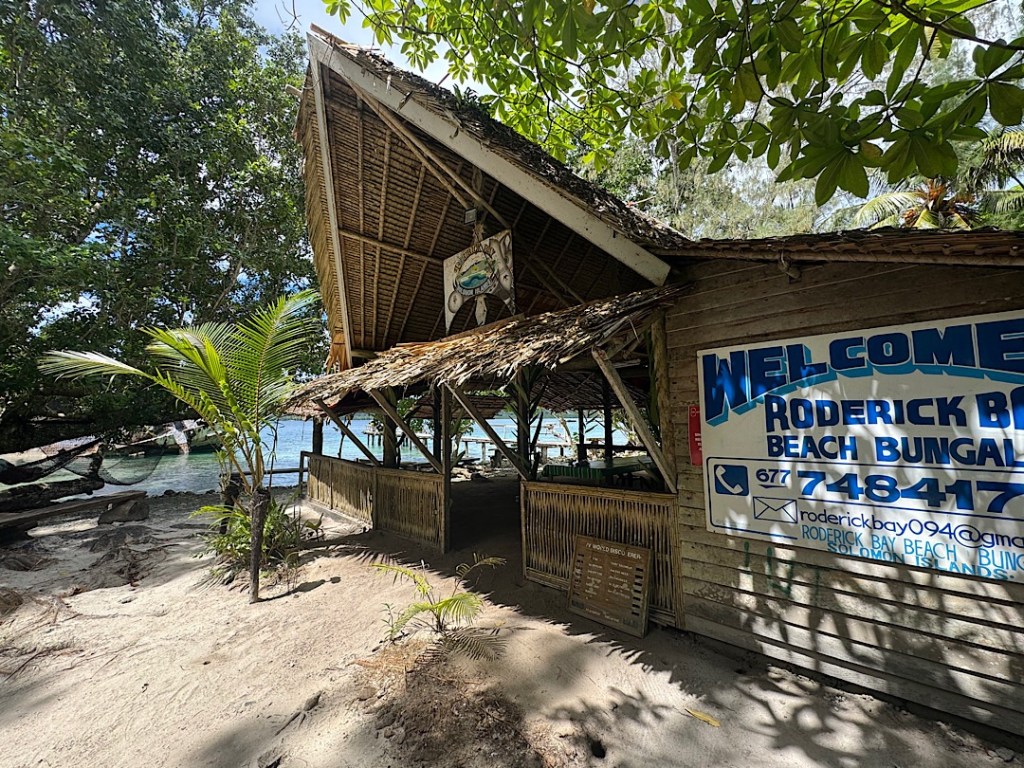
So at 2 p.m. we piled back into the banana boat. The ride back wasn’t better but it wasn’t any worse and most importantly nothing catastrophic happened.
Steve and I had to pack up and check out by 9 yesterday morning, then head to the airport for our flight to Pt. Moresby in PNG. At breakfast, I had spotted Sir Thomas Chan in the dining room. A frail Asian gentleman, Sir Tommy (as folks call him) is the 82-year-old owner/creator of the hotel and the artist responsible for all the hallucinogenic art work. Photos and other memorabilia posted in the lobby provide flashbacks of his life.

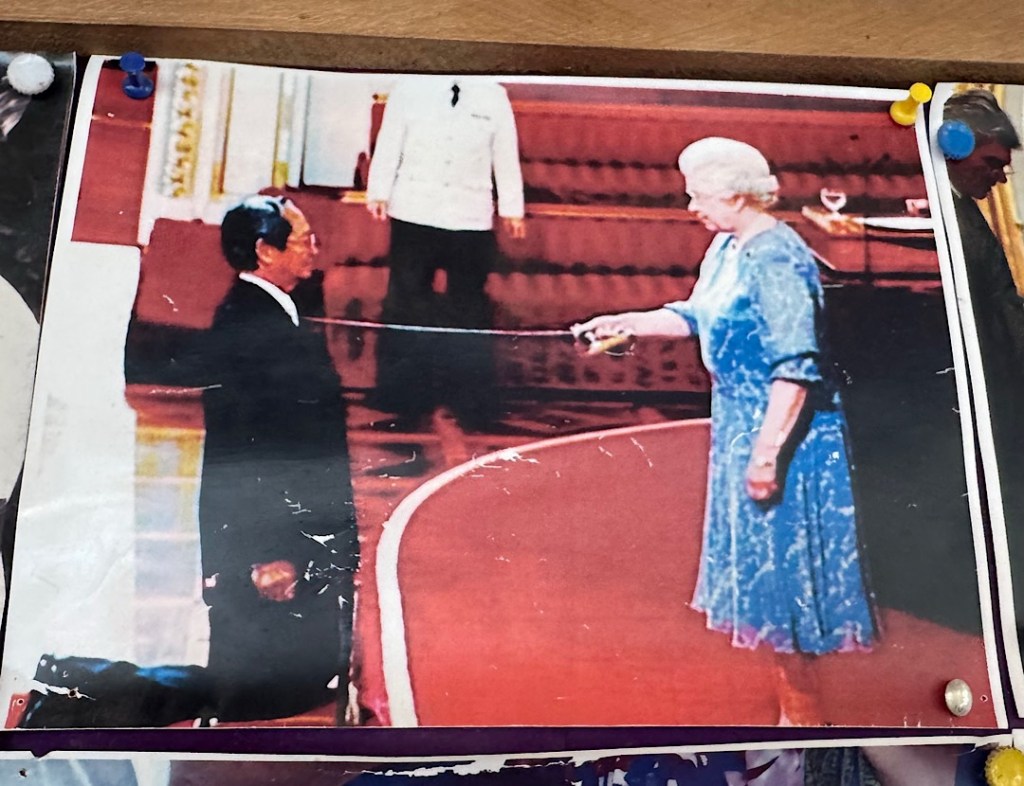
There he is waterskiing! Catching huge fish! Greeting dignitaries, including Prince William and Princess Kate back in 2012. In another photo, you see him kneeling before Queen Elizabeth as she touches a ceremonial sword to his shoulders (the title apparently granted in recognition of his charitable work.)
Steve and I had run into him in the lobby a few days earlier while waiting for Keren to pick us up. Sir Tommy told Steve a bit about his business career.
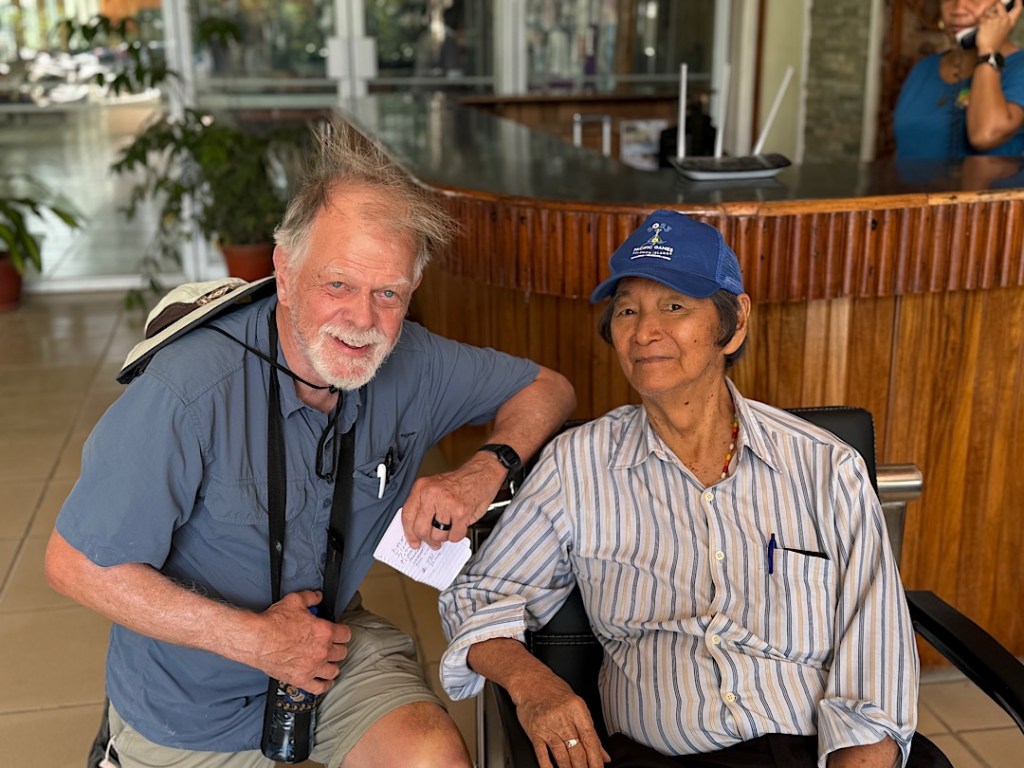
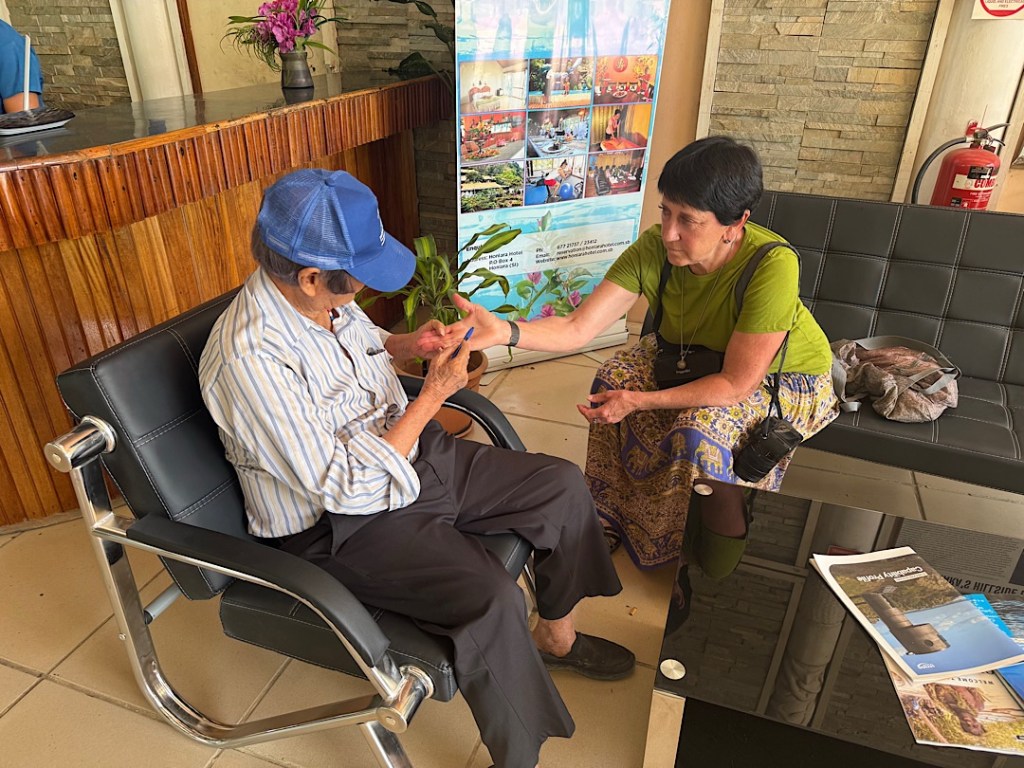
Then with a twinkle in his eye, the octogenarian asked if I would like him to read my fortune. How could I resist? He took my hand in his and studied my palm, noting that I have a long life line. I could keep going strong for another 10, 20, even 30 years, he declared, if I avoided fried foods, didn’t get fat, and engaged in a lot of exercise (the way he does.)
It crossed my mind to ask him about the travels that still lay before us, but I refrained. Sometimes you can have the most fun when you don’t know just what’s coming.
 At home and abroad
Jeannette! I am traveling with you! This is amazing and fun. People on my trip talked about Samoa and Solomon but so great to get to see it! Can’t wait for next episodes! Deb
Loved it.
The trip to the offshore island sounded magical, except for the significant risks of a small boat, with a single, probably elderly and questionably maintained motor in a big, unpredictable ocean. I wish you wouldn’t do that sort of thing.
One minor historical note: PT-109,skippered by the future POTUS, had the unique fate of being rammed (“wishboned” is how it was described) accidentally by a Japanese destroyer.
The PT captain and crew failed to spot the approaching warship, and the Japanese thought they had hit a fishing boat.
Rather than be court-martialed, as might have happened to another man, the PT boat’s commander got the Navy Cross.
American history would have been different if Navy brass took the more obvious decision.
No other PT boat had this happen to it. All other losses were due to shells, reefs and other hazards.
M
your trip is a wow! Thank you for your courage and curiosity!!
Great write up. You two plans the most authentic/interesting trips.
Hi Jeannette and Steve,I especially enjoyed this blog about the Solom
Hi Jeannette,
Have you ever heard any of Uncle Cookie’s or Uncle John’s Guadalcanal stories?
I know Uncle Cookie was on the beach when the US Navy departed and left the Marines with only half their supplies. He helped defend Henderson Field the night of the battle called Bloody Ridge. Bloody Ridge is when fresh Japanese troops landed and they were certain they were going to push the US Marines into the sea. Didn’t work out that way.
With poor communication channels, the Marines had thought they had been abandoned.
Regards,
Daniel