As I said, our hop, skip, and jump approach to getting to the other side of the world is an experiment. I have preliminary results from Phase 1: Samoa.
In premium economy seats on Fiji Airways, the 5 and 1/2 hour flight from Honolulu was unremarkable, except for its 3:15 a.m. arrival. We chose this awful connection only because options were so limited; our schedule so painfully constrained.
Outside the terminal, we clambered into a taxi and were driven for 45 minutes to our hotel, a Sheraton on the waterfront in the capital (Apia). Even in darkness, the tidy highway impressed me. I could see no trash. Instead my eye was drawn to the containers lining the roadside boundary of many homes. Made from stacked tires or metal cans painted and planted with flowers, the blooms would be pretty in the sunshine.
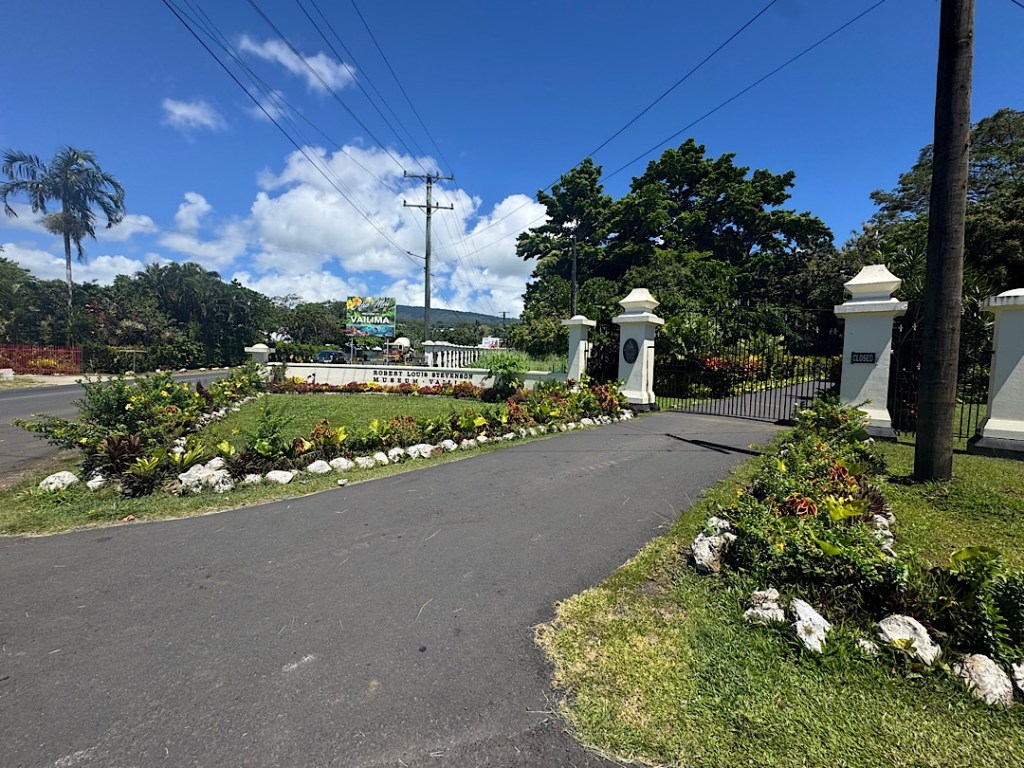
Our taxi driver conformed to Samoan stereotypes. Everything about him was broad: his shoulders, his gut, the nose set in his wide golden face. It was he who alerted us to what would prove to be the worst thing about our quick pass through his country. We would be there only Saturday and Sunday. But Samoans take their weekends seriously. Toie warned us that the Robert Louis Stevenson museum — a fixture on lists of Top Things to Do in Apia — would close in about 7 hours (i.e. at noon Saturday) and would not reopen until Monday. On Sunday, he warned, everything else would shut down except for the multitude of churches.
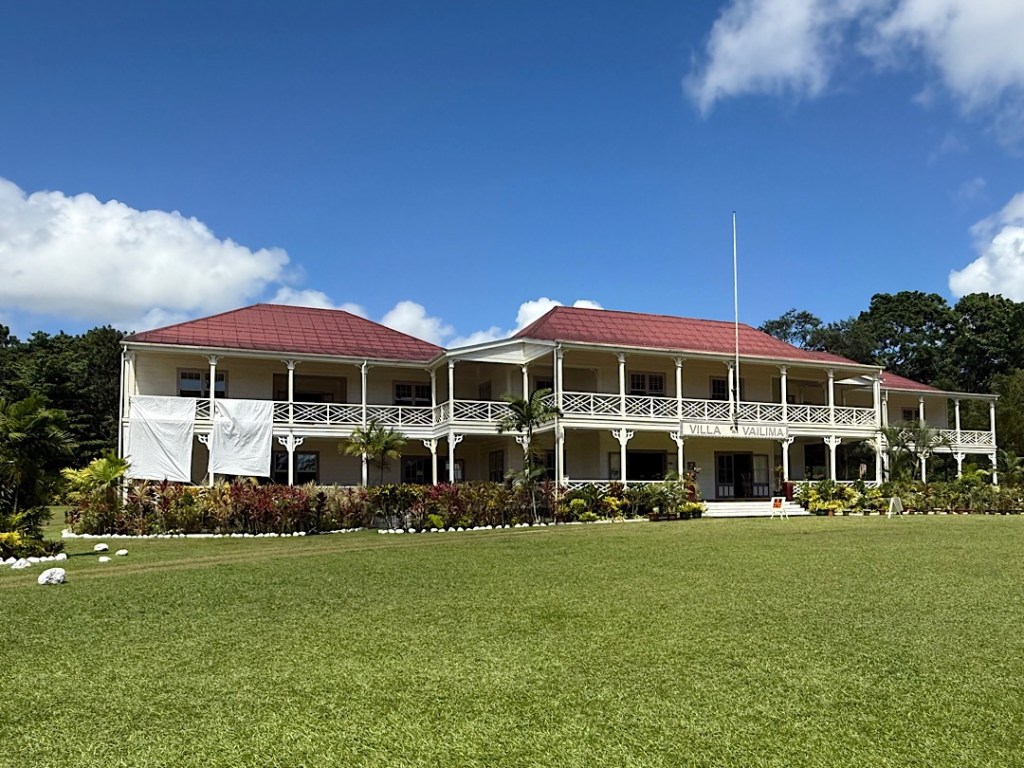
We checked into our room, napped for about 90 minutes, ate a quick breakfast, then took another taxi up a steep hillside to the property developed by the author of Kidnapped, Treasure Island, the Strange Case of Dr. Jekyll and Mr. Hyde, (and more). Robert Louis Stevenson and his wife Fanny came to live in Samoa in 1889. Besotted by the sunshine and tropical beauty, they hoped it would prove a tonic for Stevenson’s longterm lung disease and other ills. It worked but not for long. RLS died of a stroke in 1894, at 44. But in their five years on the island, Louis and Fanny oversaw construction of a beautiful villa and surrounding farms and gardens. Today the complex is a museum open to the public (but only till noon on Saturdays).
That was enough time for us to see why the place enchanted the Stevensons.

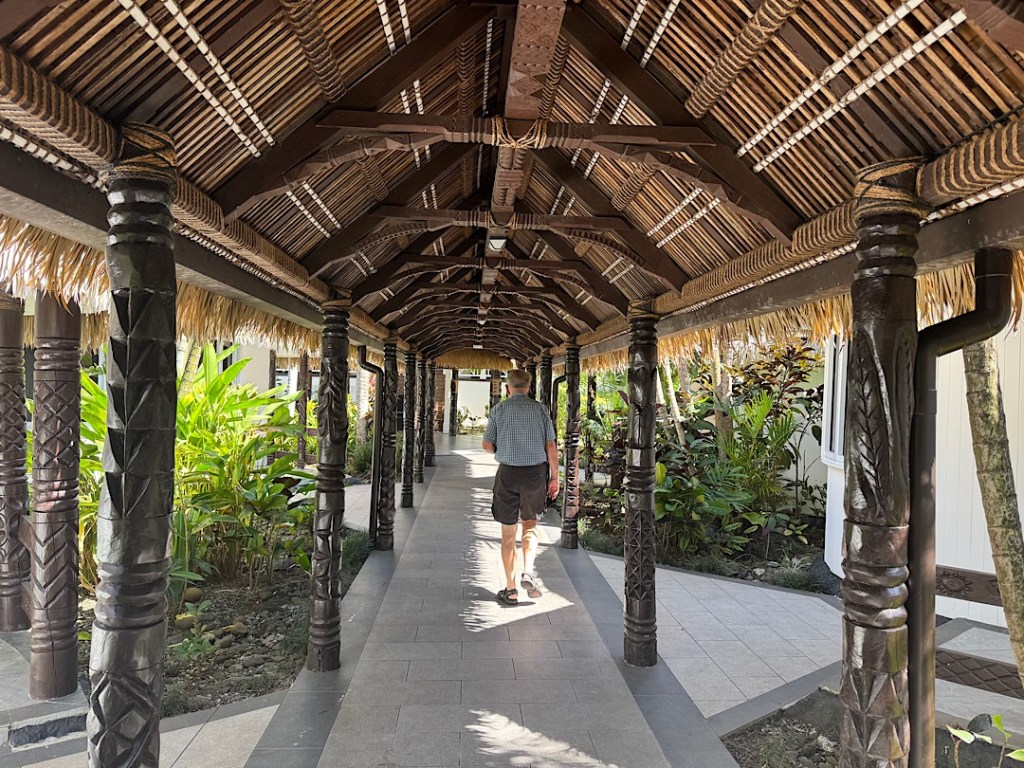
We returned to our hotel, with its beautiful open-air restaurant next to a pretty pool. It wasn’t a hardship to sit there, surf online, and confirm what Toie had said. Almost nothing would be open the next day.
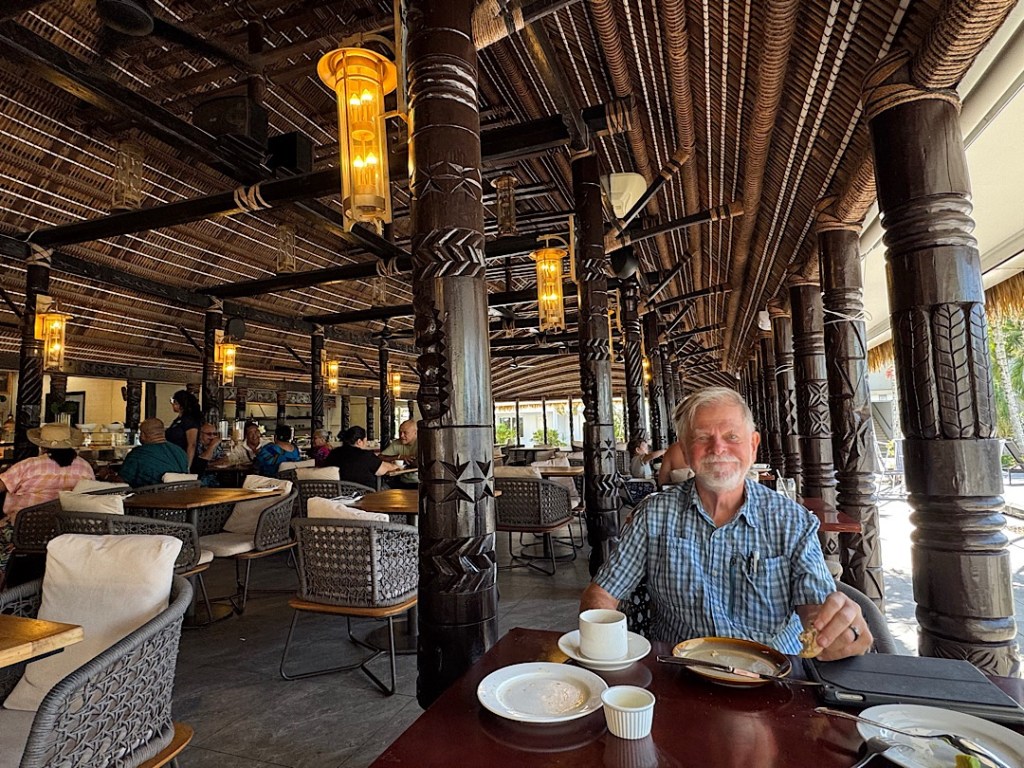
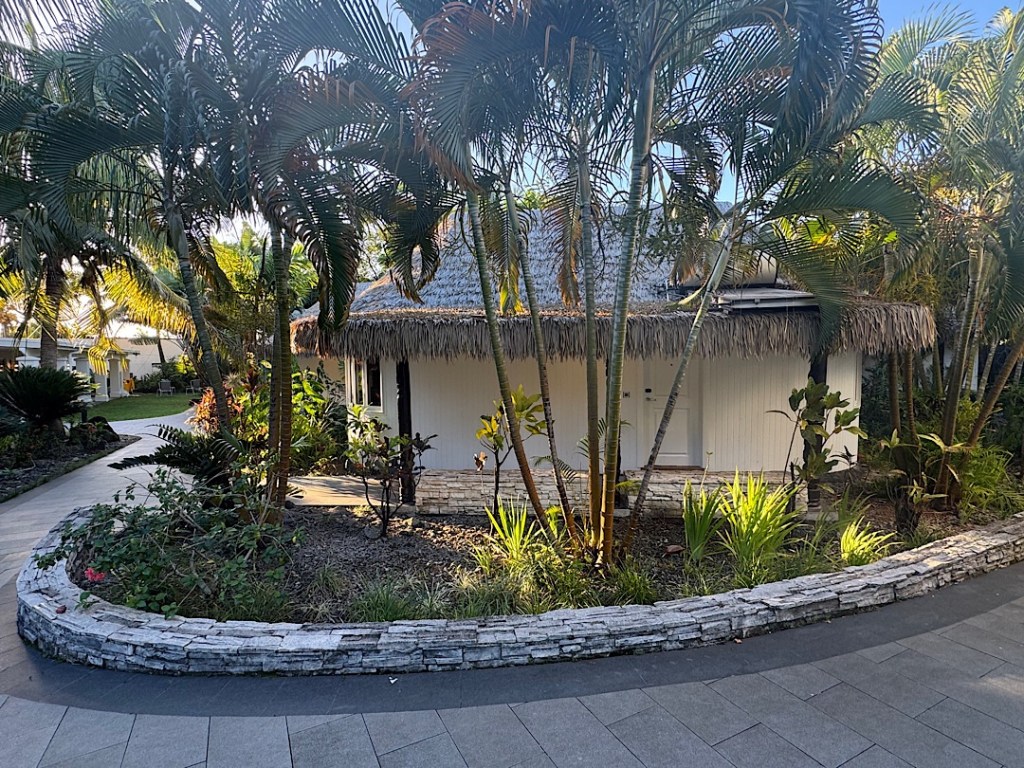
Steve did find a promising restaurant just a few blocks away. We walked to it, arriving at Paddles just minutes after it had opened at 5:00. We got a table and our meal was so delicious and fun we tried to make a reservation for the next night. But oh yeah. Paddles also closed on Sundays.
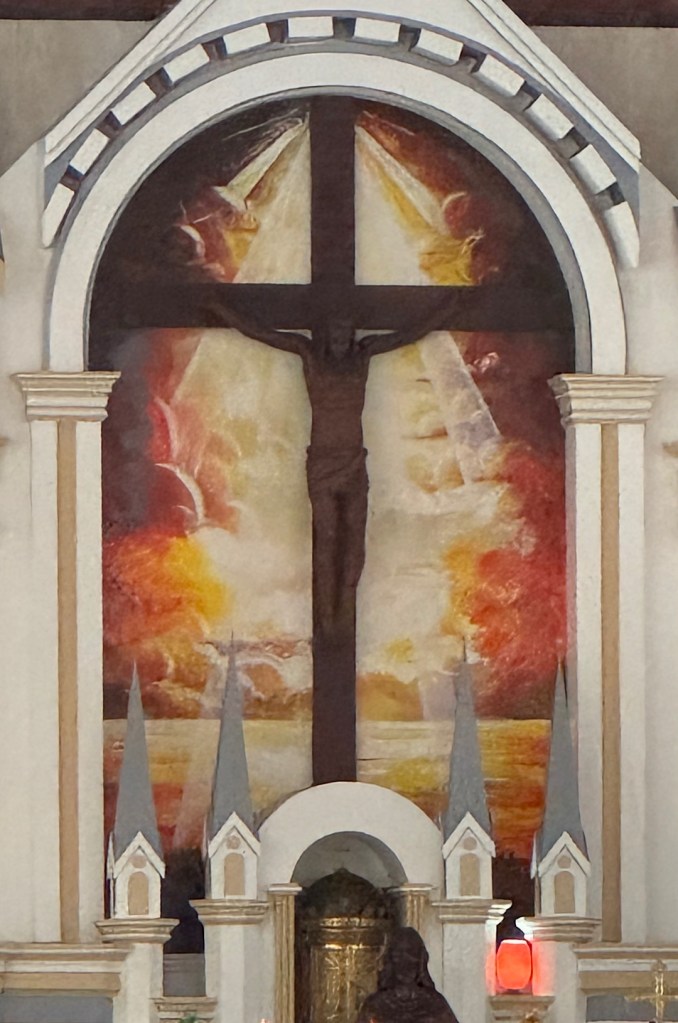
Happily, another Top Sight in Apia is the Catholic cathedral. The next morning Steve and I strolled there, arriving as the 7:45 Mass in Samoan was starting.
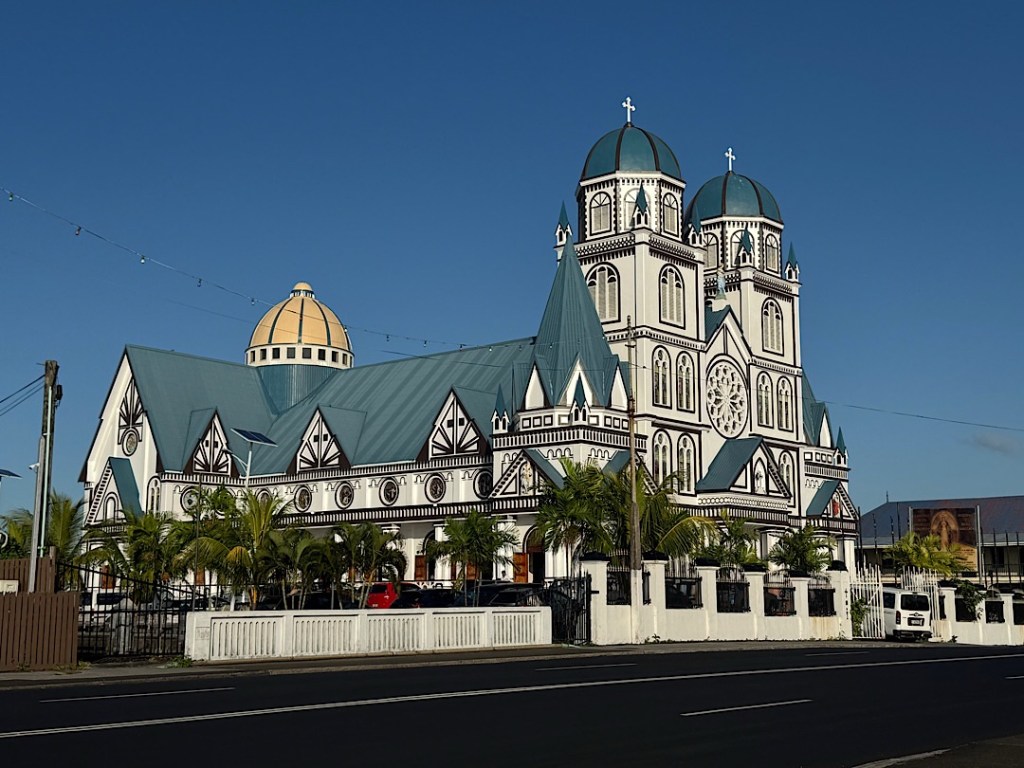
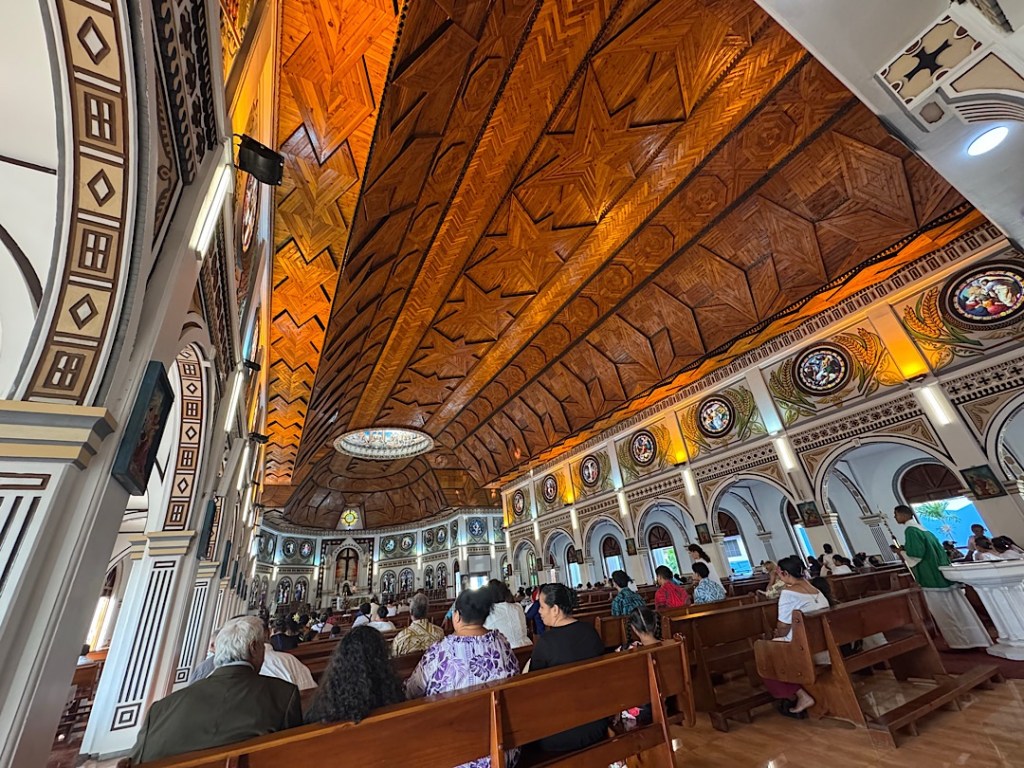
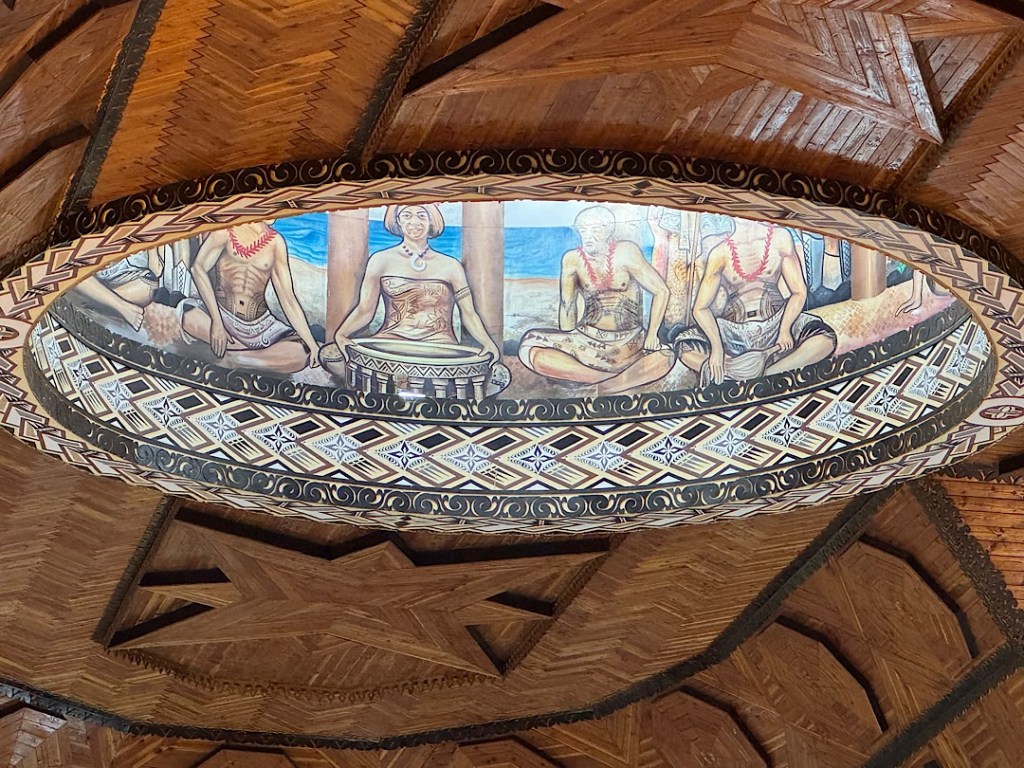
Later in the morning, I got a hotel massage, Steve and I ate another lunch next to the pool. We swam a bit, napped a bit, consumed our dinners in the hotel restaurant. When we chatted with our waiter, he echoed what other Samoans had already told us: that Samoa is a paradise. Even without much money, you can live well; enjoy life. They wouldn’t want to leave it, they testified.
We had to go, however, at 5 am Monday morning, leaving in our wake a number of things we would have liked to see and do. I wished we’d had more time. But we’d had a good rest and at least gotten a glimpse of this beautiful, unpretentious, laidback idyll. It was worth the hop.
Next up: skipping along to Fiji.
 At home and abroad