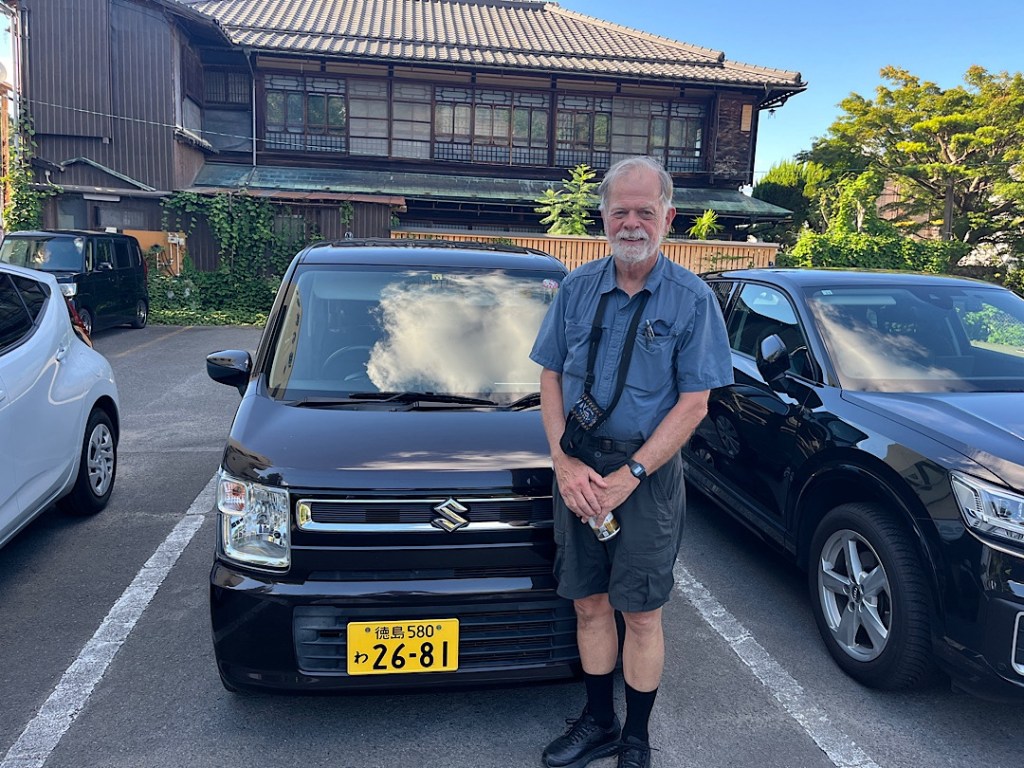
After making a big loop around Shikoku, in the course of which we logged 579 kilometers (360 miles) on the odometer, we safely delivered our cute little Suzuki hybrid to the Budget car rental office in Matsuyama yesterday afternoon (Wednesday, 10/2). The experience taught me a lot about driving in Japan, and I’m happy to share some key lessons learned.
The bad:
Traffic flows on the left, and that requires some adjustment. However, after all Steve’s driving experience this past year (including our motoring all over Zimbabwe and braving four left-hand-drive Caribbean countries over really bad roads crammed with terrible drivers), he has never been more tuned up for driving on the left. He said the switch hardly required any mental adjustment.
But both of us are essentially illiterate here, and Japanese road designers communicate a lot of information via signs. Although most big intersections included town names written in Roman letters…
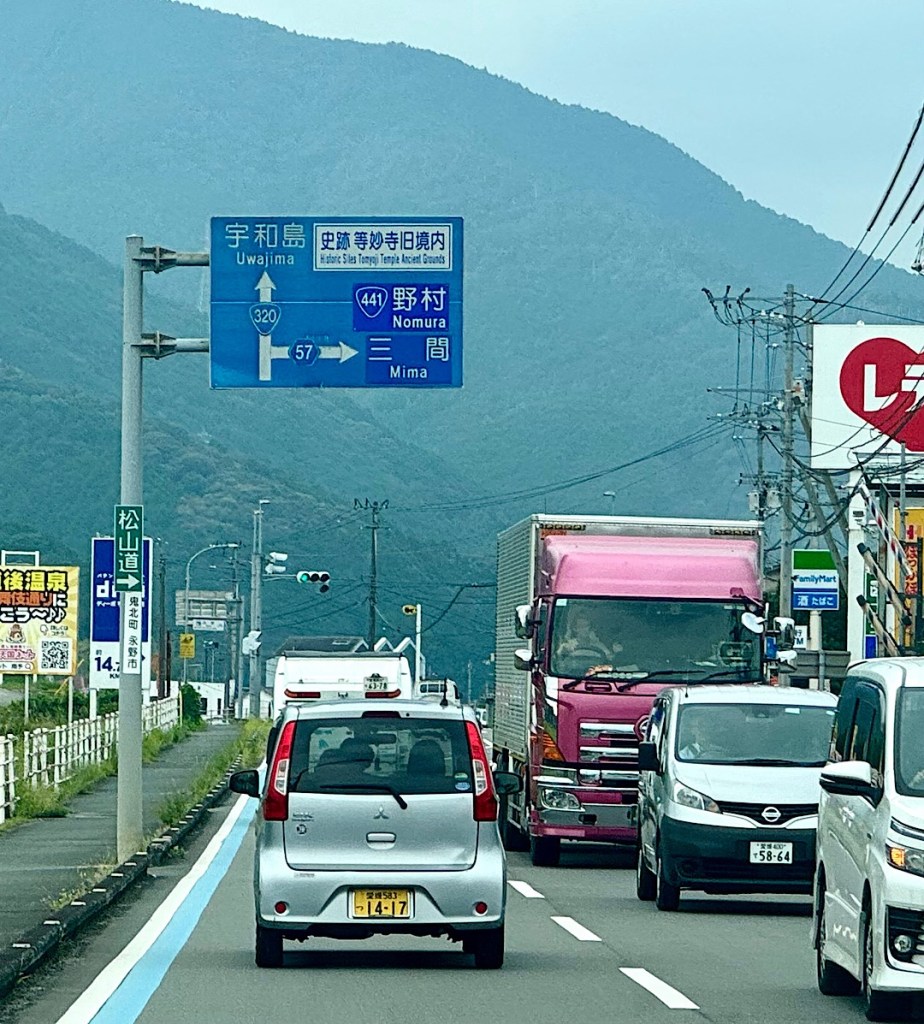
…many warnings were incomprehensible. It all required adjustment.
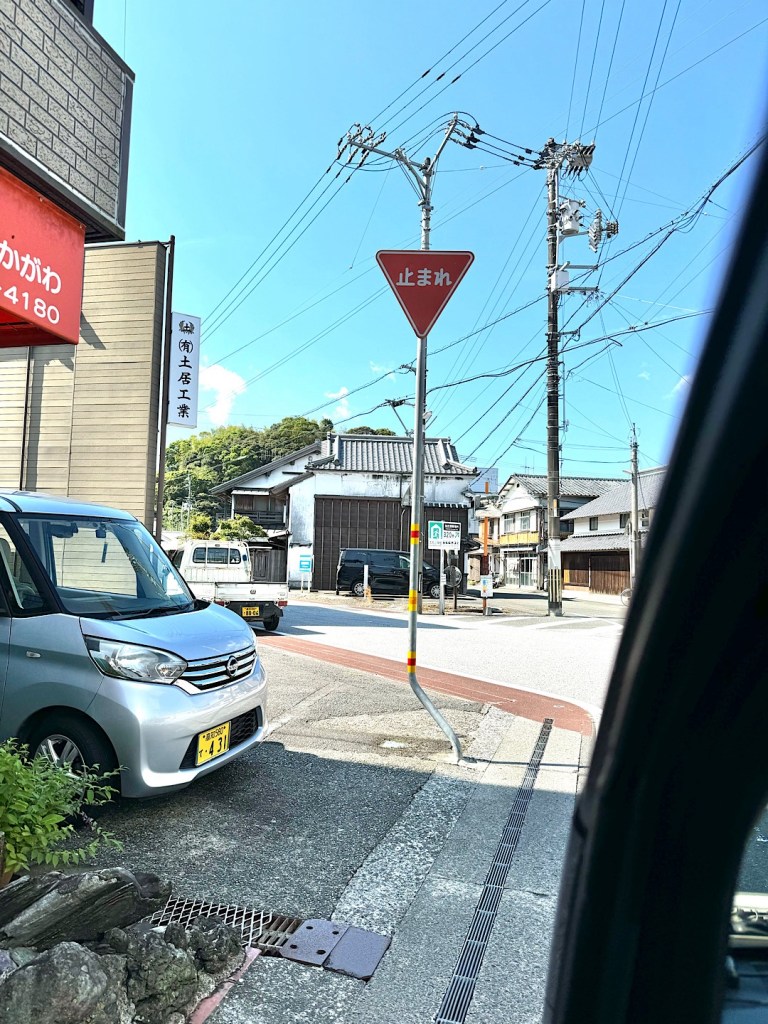
Google Translate has been indescribably helpful on this trip, but we couldn’t use it while moving at 30 or 40 or 50 miles an hour.

Google Maps worked reliably and made it almost effortless to navigate. Still, being unable to read the signs was often unnerving.
The good:
There’s a lot to love about road-tripping in Japan. Every highway we traveled was in excellent condition, with never a pothole in sight.
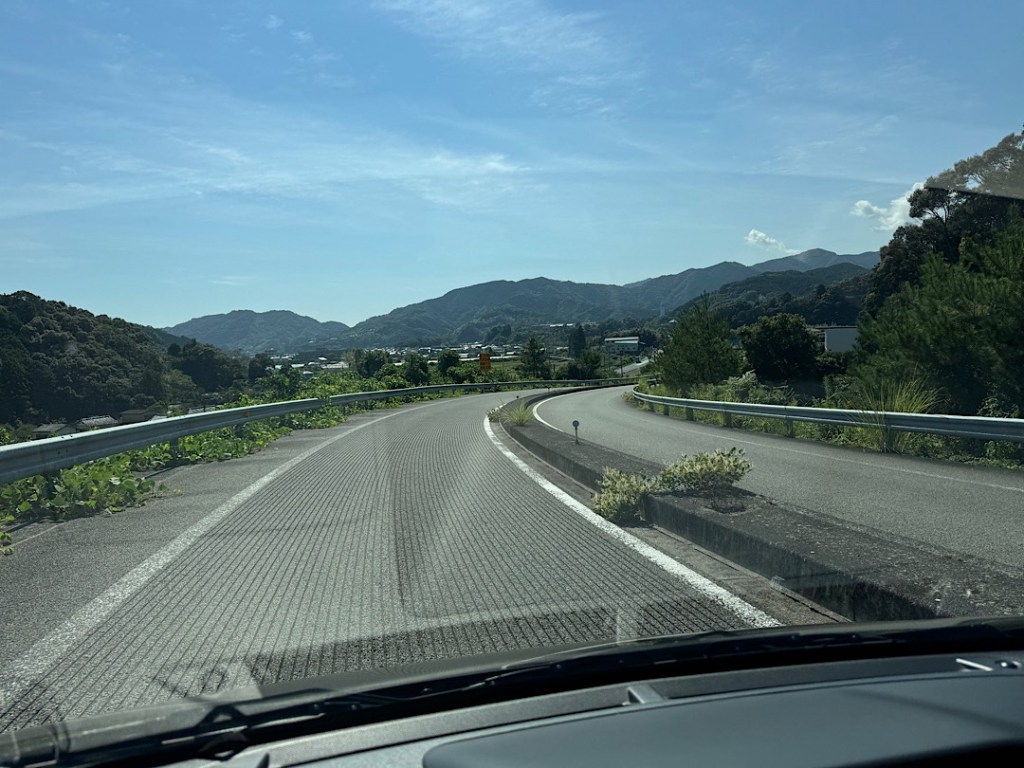
We didn’t see a single wreck anywhere, not even any traffic cops. The other drivers were perhaps the best we’ve ever shared the road with — universally law-abiding and courteous. No one tried to pass us, even when we were going slower than they obviously wanted to go.
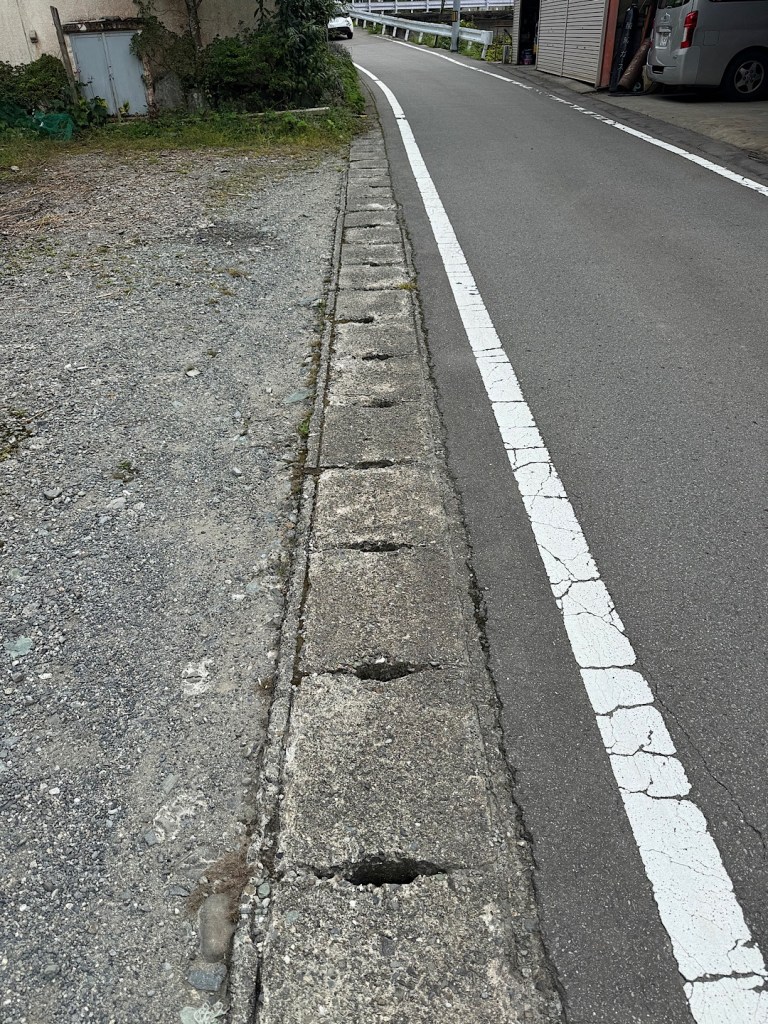
Most of our travel was in mountainous areas where drainage ditches were necessary to channel rainwater. But unlike in the Caribbean, the Japanese neatly cover almost all their drainage channels, so I never was terrified we would edge into one of them and wreck our vehicle.
The ugly
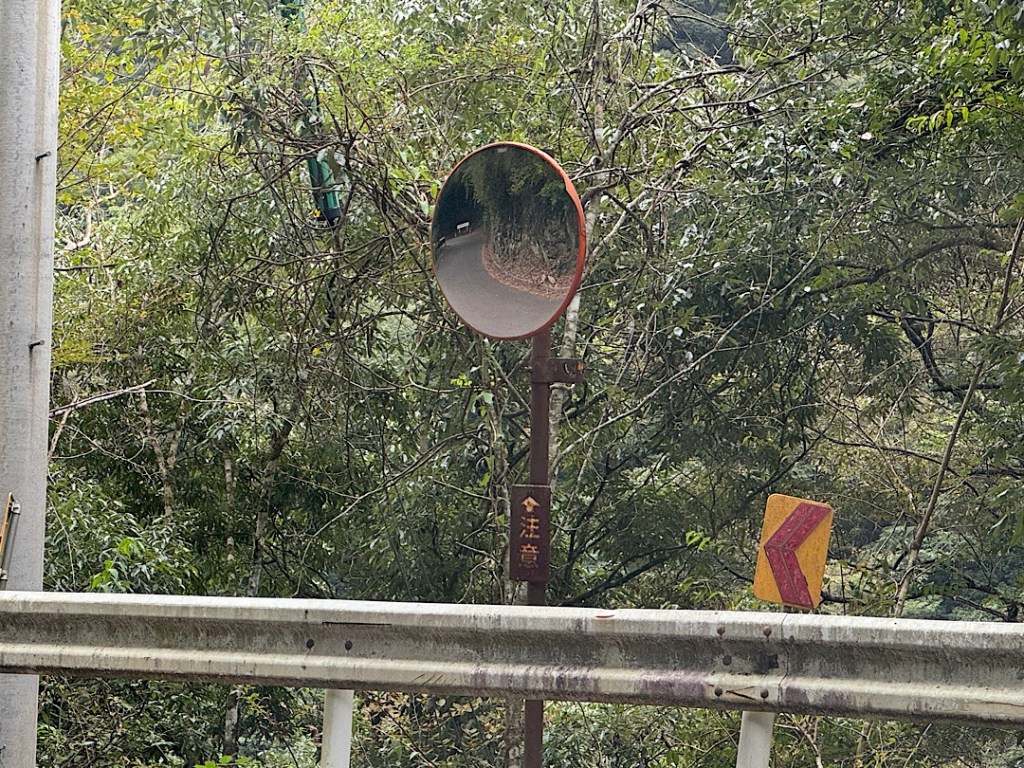
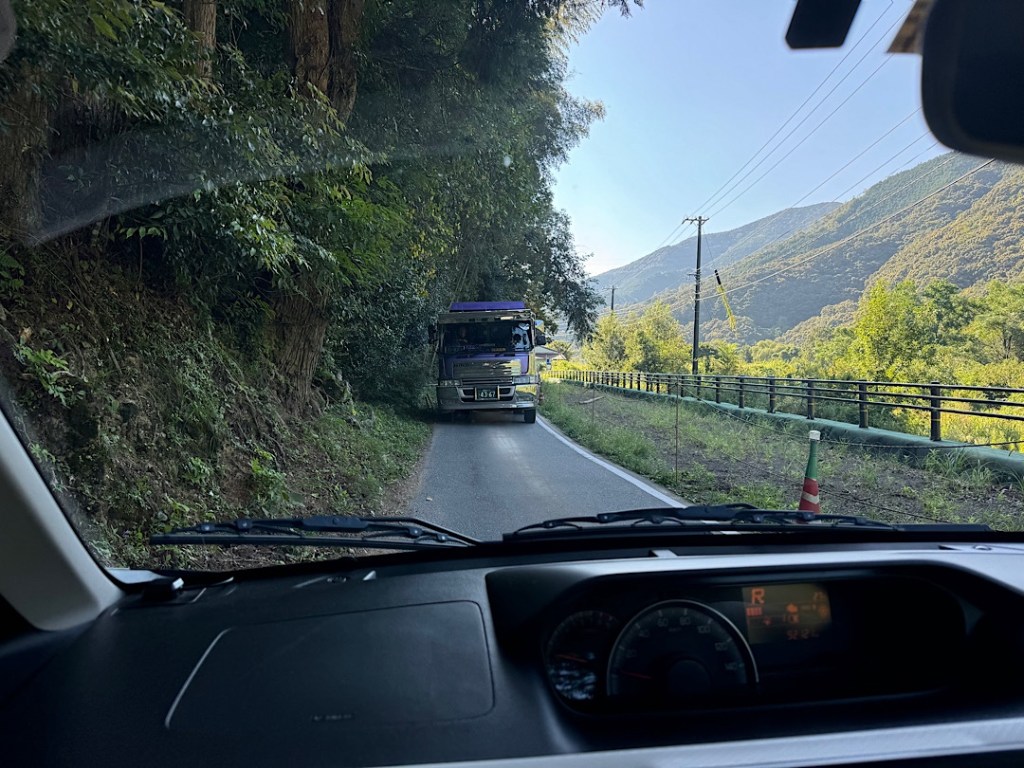
We rented the car because we wanted to visit some very isolated rural areas. In such areas, we found a fair number of one-lane roads. These would have been much scarier (and more dangerous) had the Japanese not installed countless mirrors that enable drivers to see around the bends. I got adept at spotting the mirrors and checking to see if someone would be coming at us.
The quintessentially Japanese
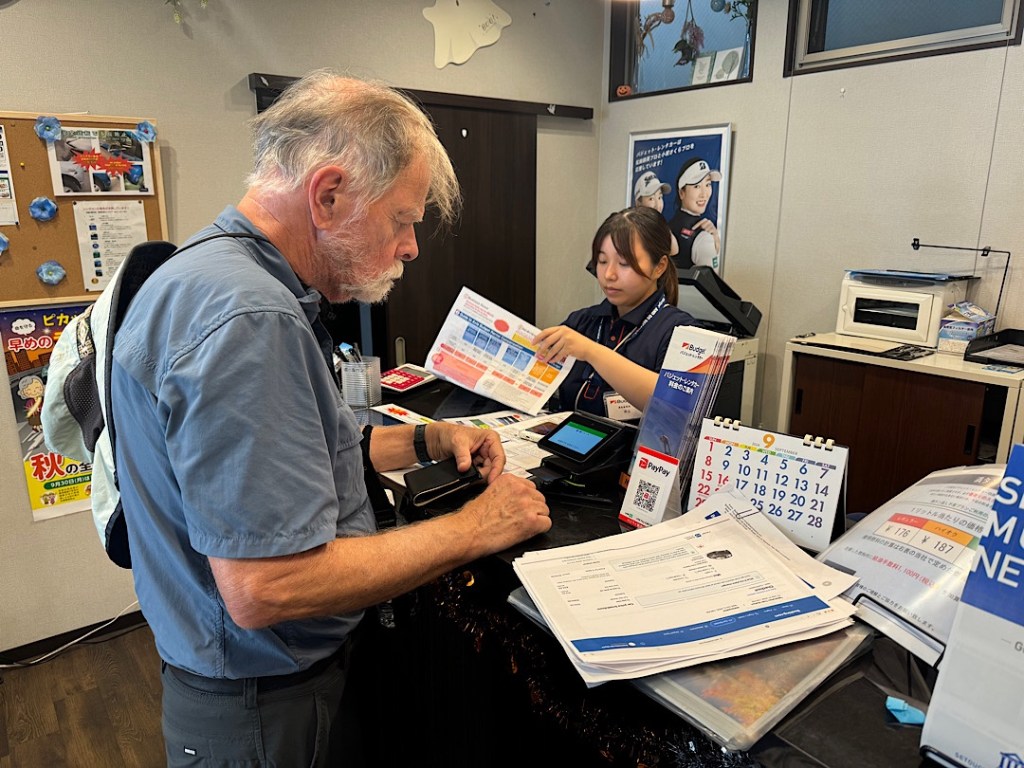
Picking up the car from the Budget office in Takamatsu was fascinating. We had to fill out many forms and the frazzled young woman behind the counter required us to watch a video on her tablet that illustrated in graphic detail all the bad things that could happen if we didn’t watch out for bicycle riders, or we sped around corners, or we broke other common-sense rules of the road. Before we left the office to check out the vehicle, the clerk presented both of us with a small gift.
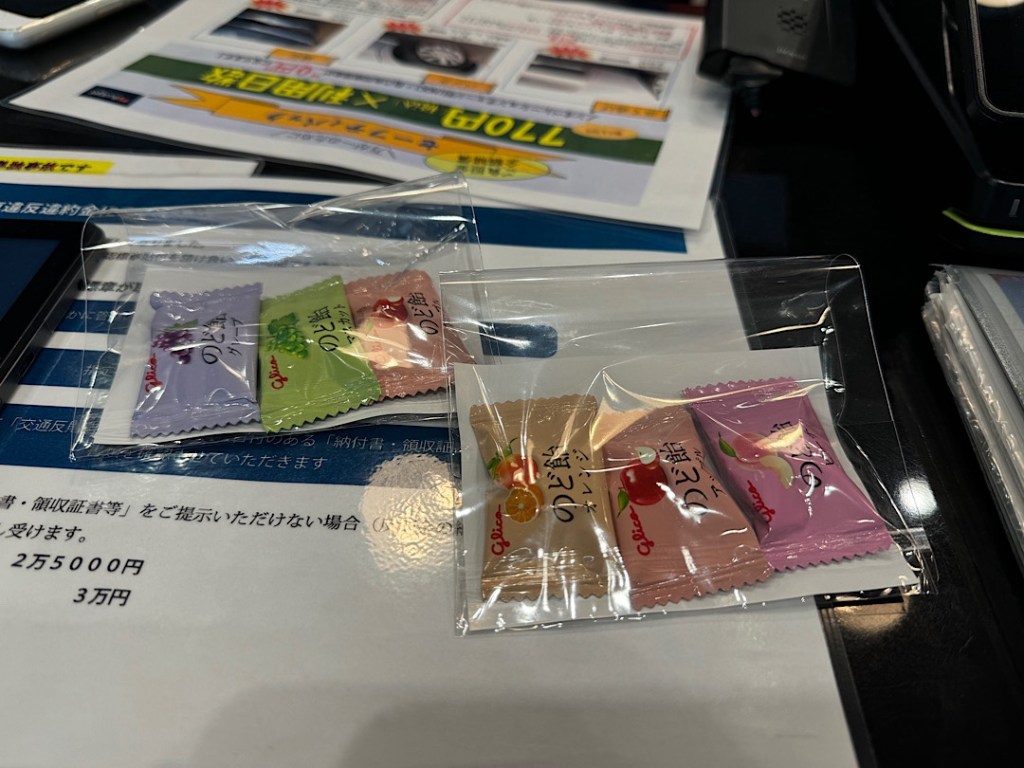
All these steps took so long she didn’t spend a ton of time explaining the GPS system to us, so we never really understood it.
The robotic GPS lady voice chided Steve every time he went over the speed limit or braked too hard or turned too abruptly to suit her, which was annoying. Then she started giving us driving instructions that contradicted the sensible ones from Google Maps. After a few days, we began thinking of her as an addled vagrant who’d somehow found shelter under our dashboard where she muttered to herself and occasionally called out misinformation. Finally we figured out how to turn her off entirely.
Although the roads we traveled were sometimes single-lane, we were astonished by the enormous amounts of work — and concrete! — the Japanese have put into shoring up steep roadsides to prevent landslides and damage from falling rocks.
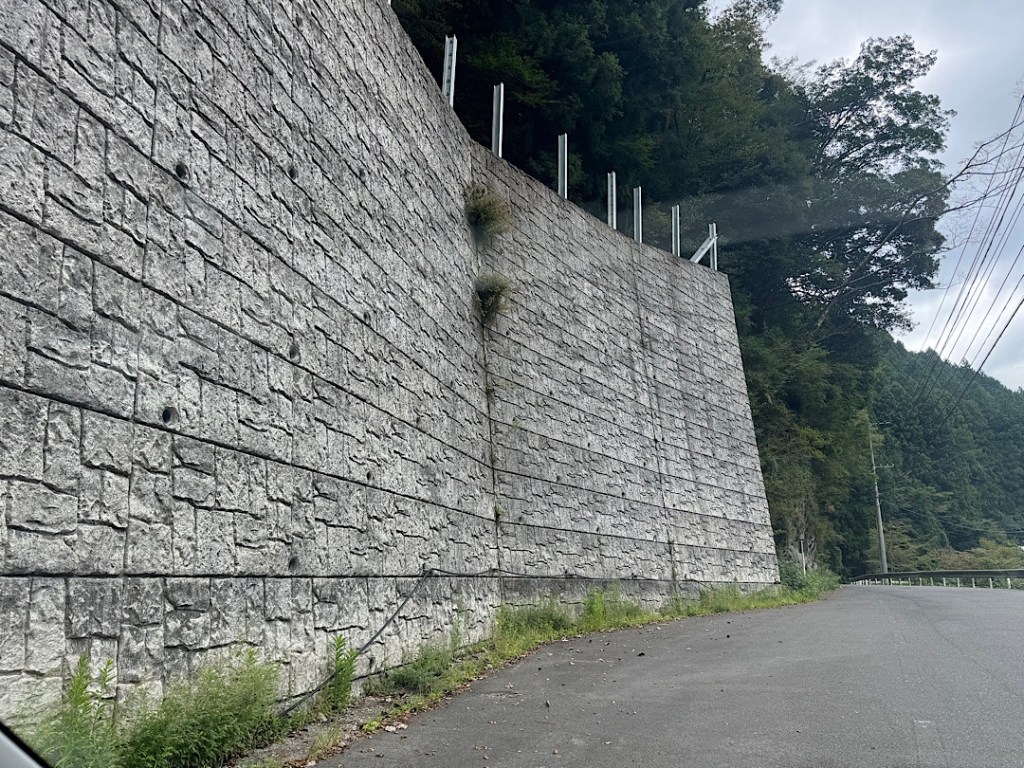
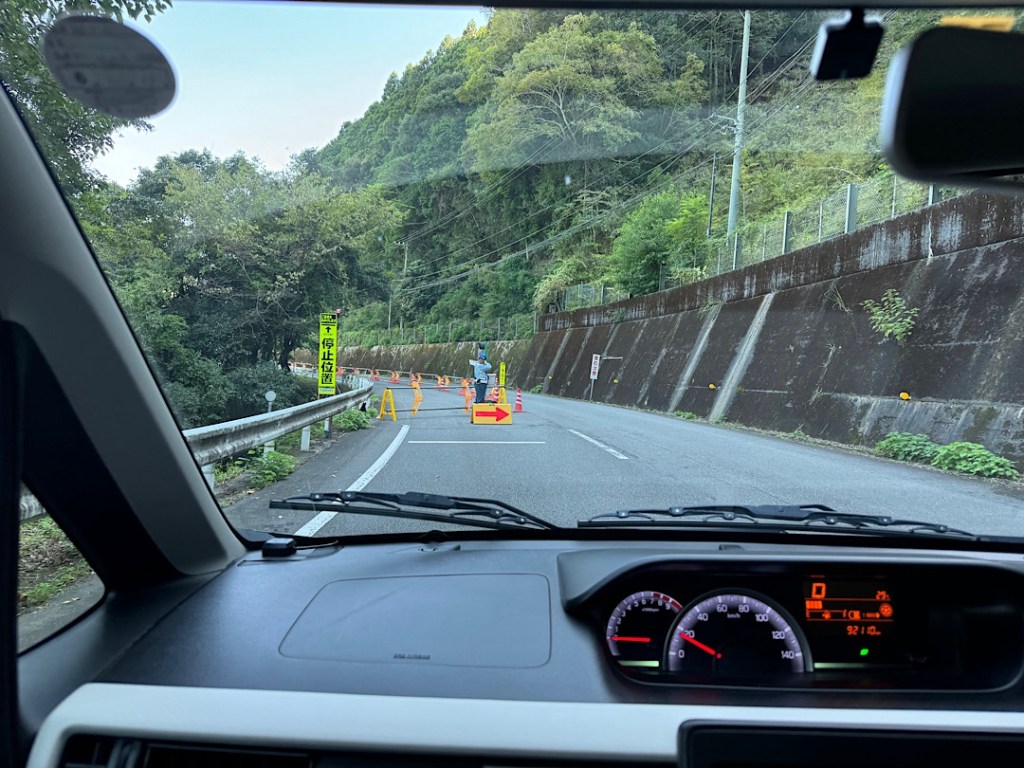
Steve says a big reason the Japanese economy has stagnated for several decades is because the politicians have borrowed so much money to spend on huge infrastructure projects. He notes that they have borrowed the money from themselves (Japanese bond holders) and the expenditures have resulted in Japan having great roads and trains and other public infrastructure (this in contrast to many other countries that shall be nameless.) But that’s a subject for another kind of blog.
We’ll be on Shikoku for one more day, using public transportation again, including the ferry we hope to take to Hiroshima (back on Honshu) tomorrow.
 At home and abroad