I have given up on ever recovering from Arajet the iPad I left on my flight from Santo Domingo to Kingston, Jamaica. A few days ago, I bought a new iPad and electronically erased the old one. Then miraculously, when I checked the Pages app on my new device, I found most of the blog post I had drafted about our travels in the Dominican Republic!
Don’t ask me how this happened. I don’t know why I couldn’t see that draft in iCloud until after I had acquired the new Pad. I just want to put it all behind me — except for the lesson of NEVER slipping another iPad in any airplane seatback pocket ever again.
In the sake of completeness, however, here’s that post, belatedly.
**********
“Hey, Columbus thought he was sailing to Asia. Sometimes you don’t always get to where you think you’re going.” Steve reminded me of this as we stood (Sunday, June 2) in the soggy ruins of San Francisco Monastery in the old colonial heart of Santo Domingo (capital of the Dominican Republic). Months ago, when I started planning our travels in the Caribbean, I had read about the free concerts given there every Sunday night by a beloved local ensemble, Grupo Bonyé. I’d seen photos and videos of the boisterous crowds dancing to merengue and bachata; I’d absorbed the advice of one blogger who declared, “If you’re visiting Santo Domingo, schedule your trip around being there on a Sunday just to attend this free, open-air concert.”
So I did. I set up all the dominoes to put us in this spot on a Sunday evening. Now it was raining. We saw the stage where plastic sheets covered musical gear that had been set up. But no musicians; no fans. Just some stagehands who were starting to reload it all into a truck.
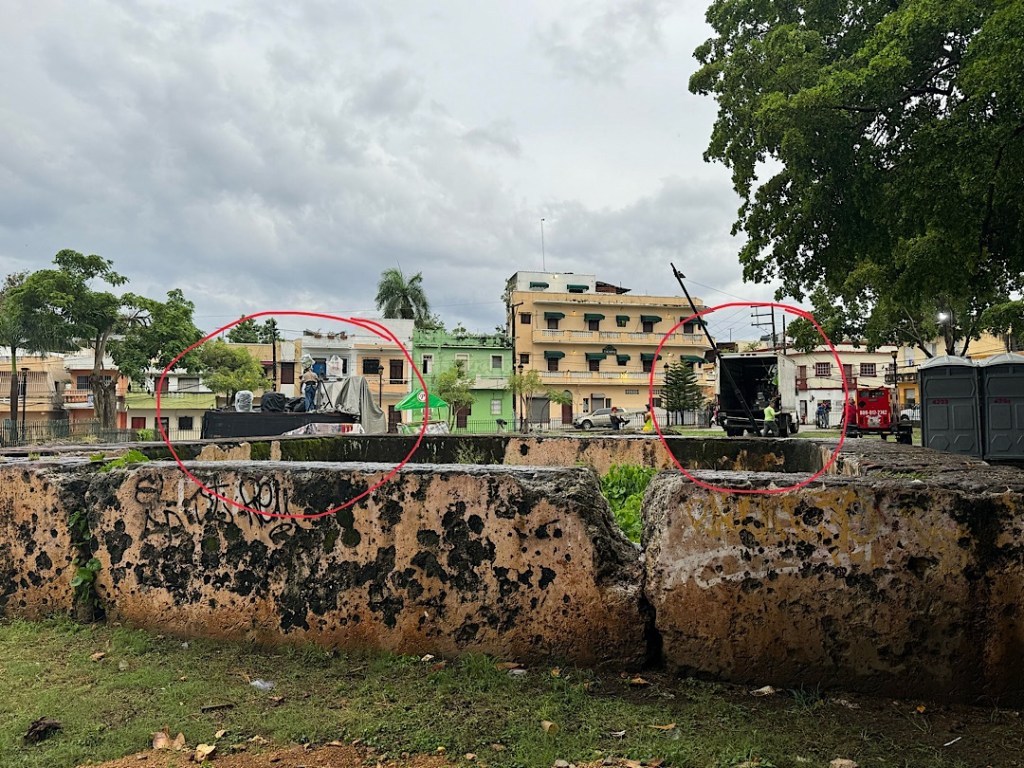
I felt disappointed — not the only time I would feel that way during our 9-day visit to the country that shares the island of Hispaniola with Haiti. Like Columbus, I couldn’t complain, though. Unexpected pleasures compensated for the downsides.
The worst nightmare was the way people drive. Compared with the little islands where Steve and I started our Caribbean travels, the DR is not just way bigger but much more prosperous. For more than 50 years, it’s grown on average faster than any other country in Latin America. This had led me to expect better roads and drivers. Instead I learned the Dominican Republic ranks as the deadliest country in the world in terms of road deaths – almost 65 fatalities per 100,000 people in one recent survey (compared to just under 13 in the US. Or 41 in Zimbabwe, the second deadliest.) I looked up the numbers because we were so appalled by what we saw after picking up our little Suzuki Dzire — drivers routinely ignoring not just stop signs but traffic lights. Speeding and passing and zooming down the wrong side of the road to avoid potholes. No highway on-ramps. Astonishingly overloaded vehicles.
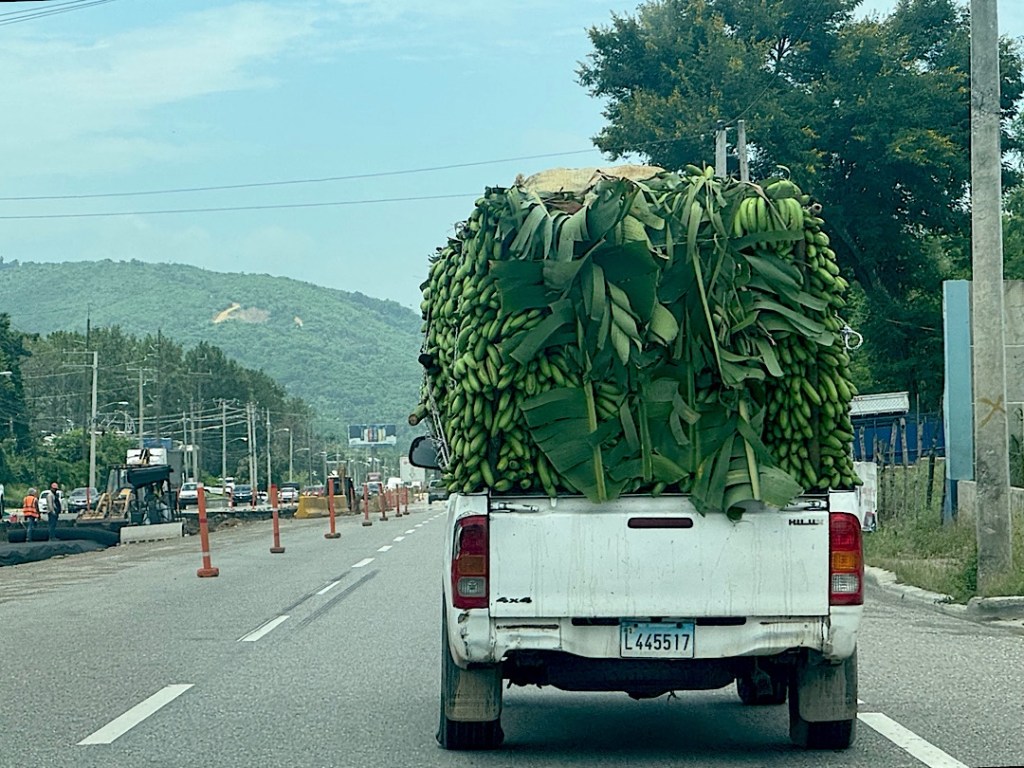
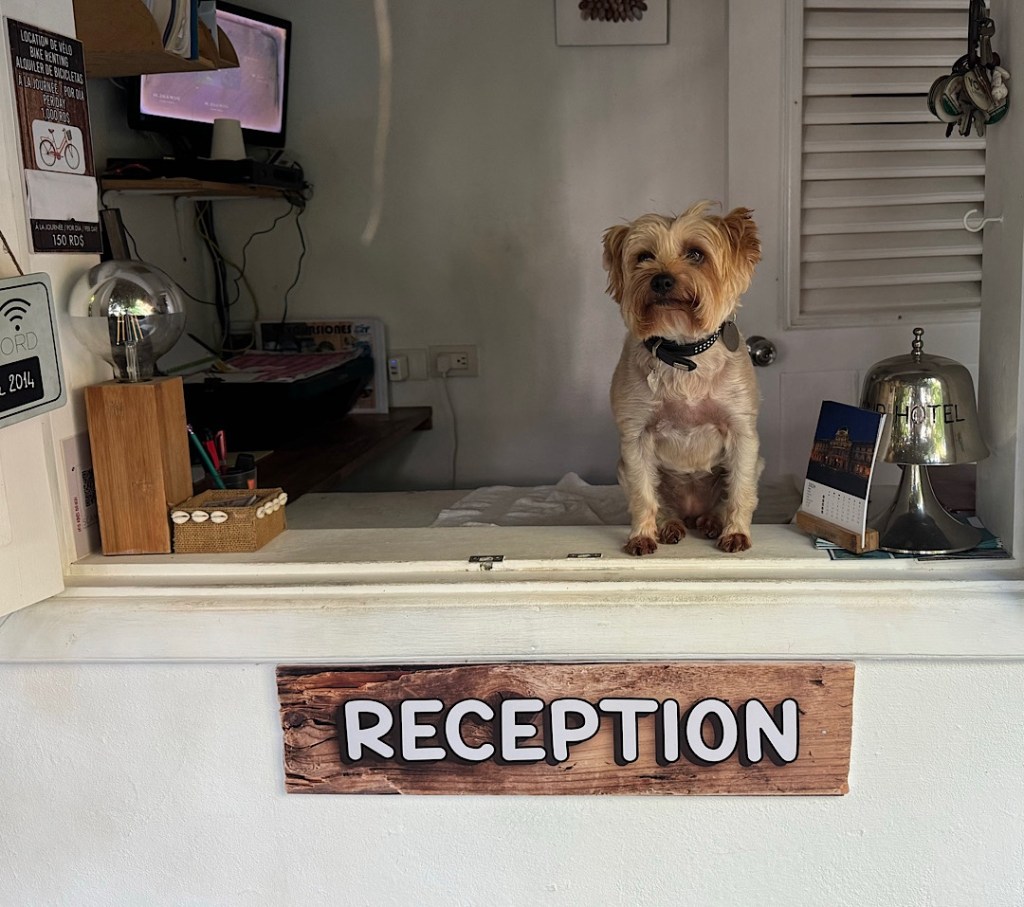
Having the car did enable us to see more of the DR’s many facets. We started by driving to the beautiful, relatively undeveloped Samaná peninsula, which forms the island’s northeast corner. There we stayed for three nights in a charming French-owned B&B.
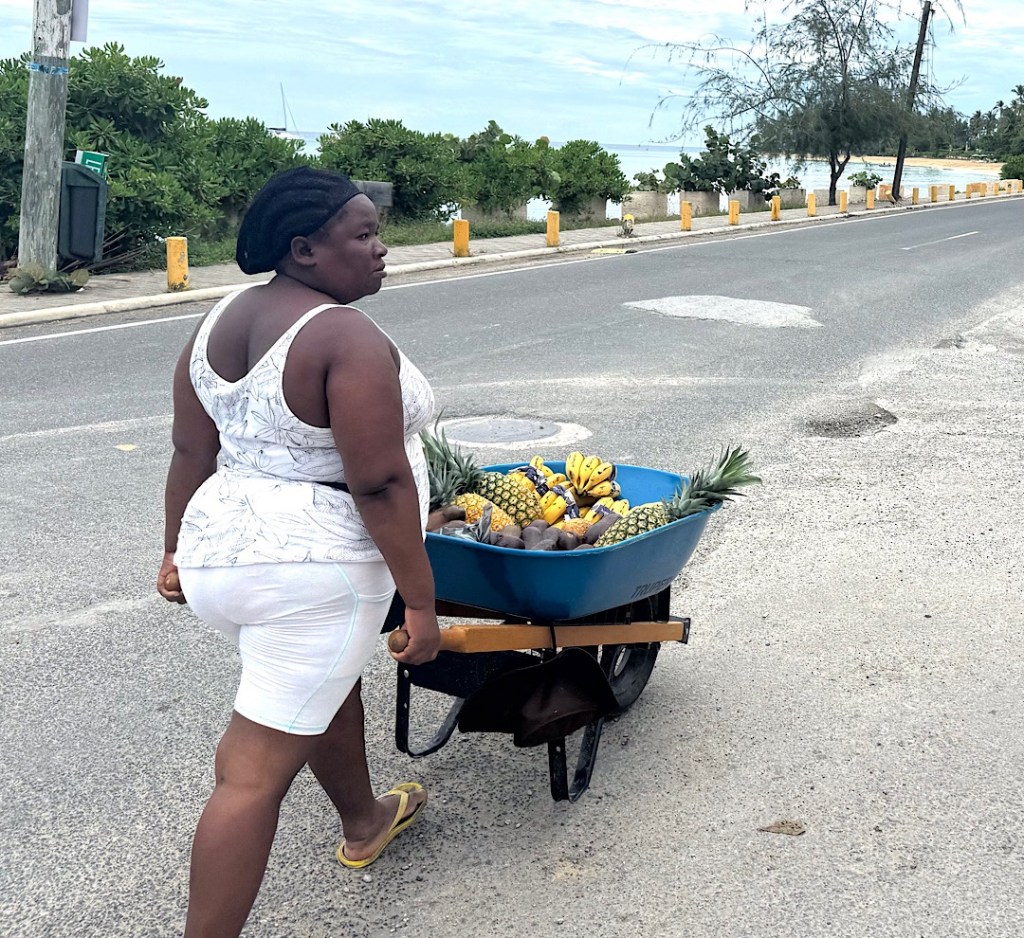
We spent a day enjoying the beach town of Las Terrenas.
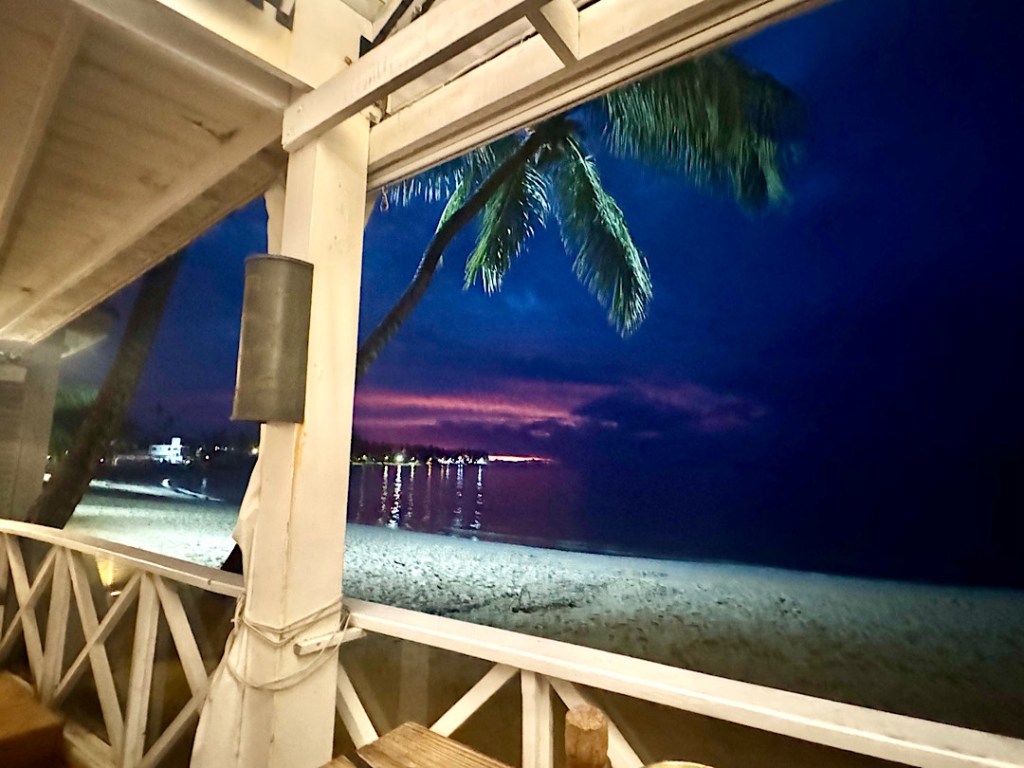
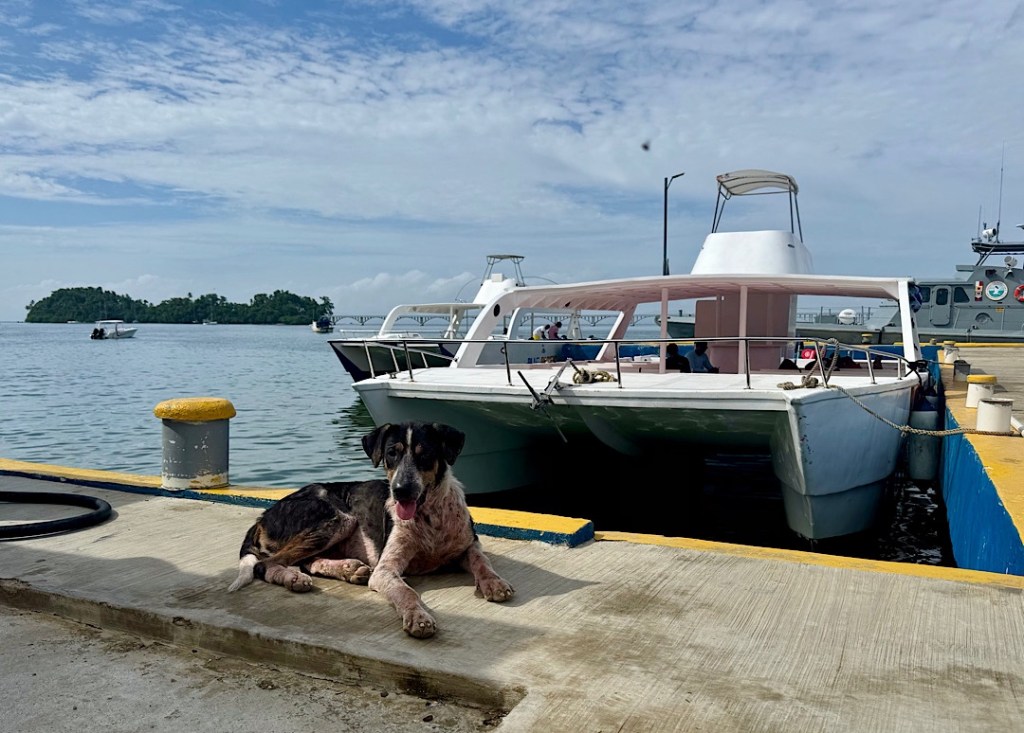
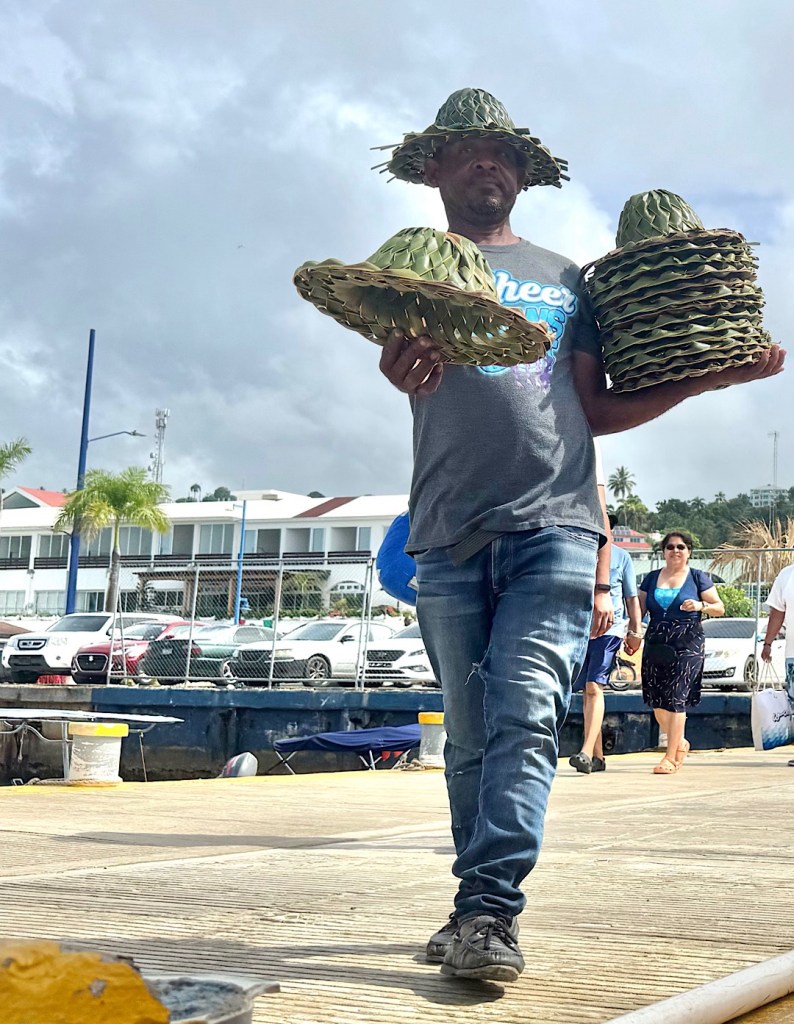
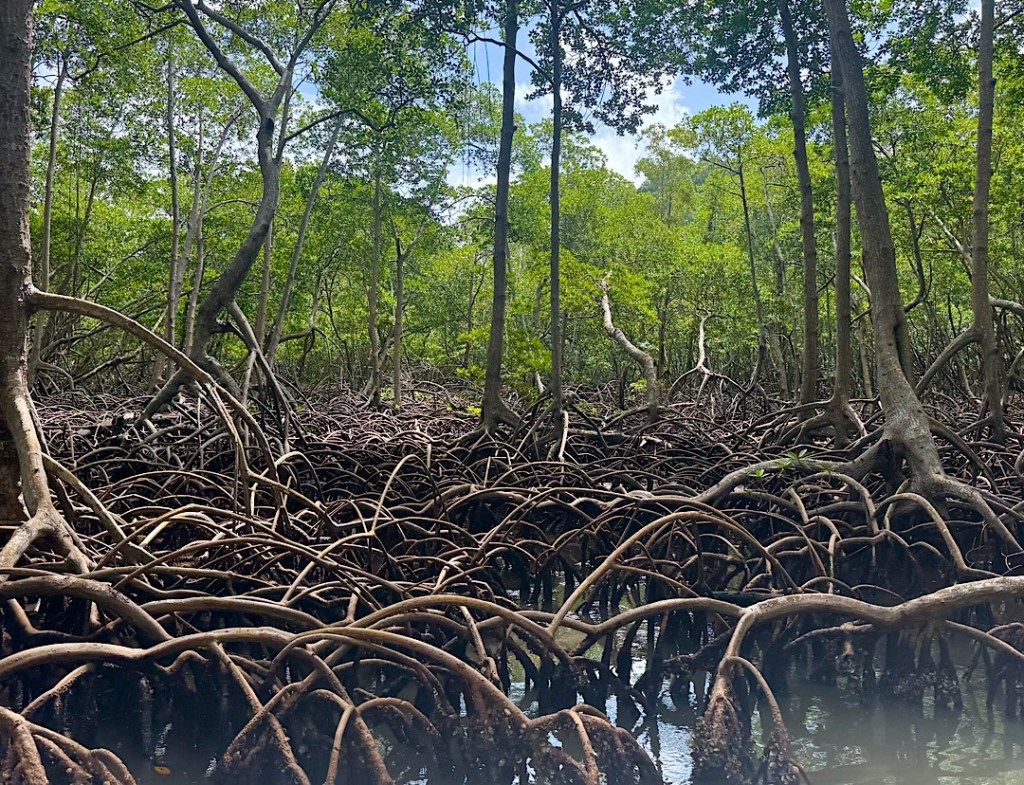
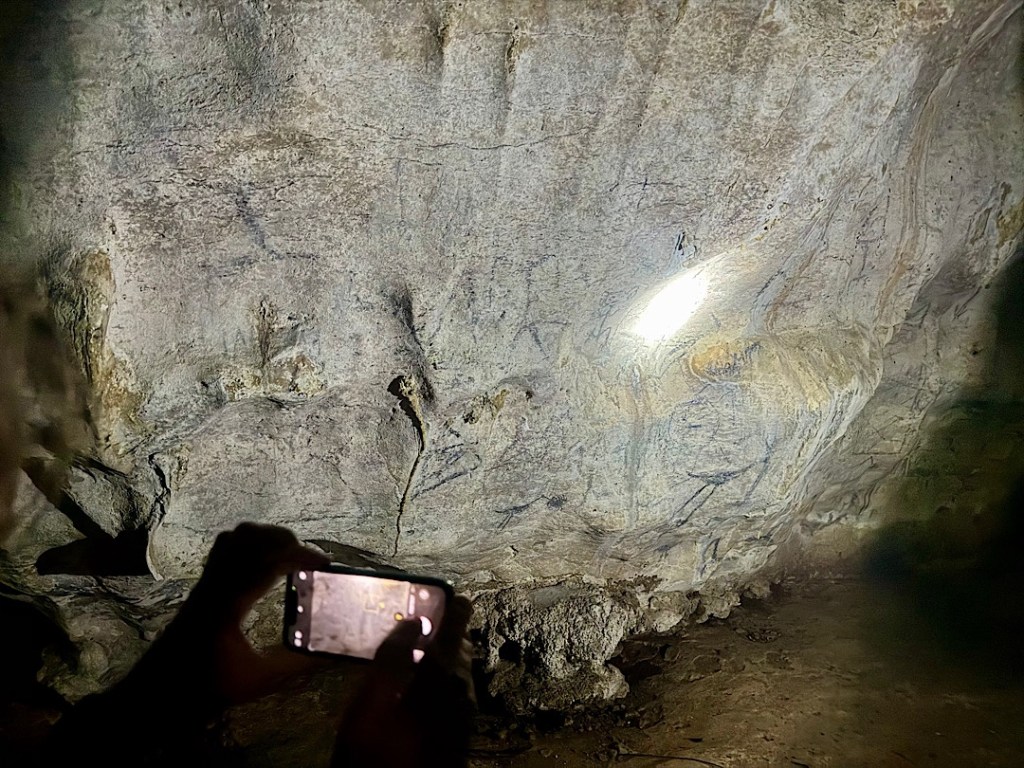
Our second full day we joined a group that was bused to the regional capital and loaded on a catamaran for a day trip to Los Haitises National Park.

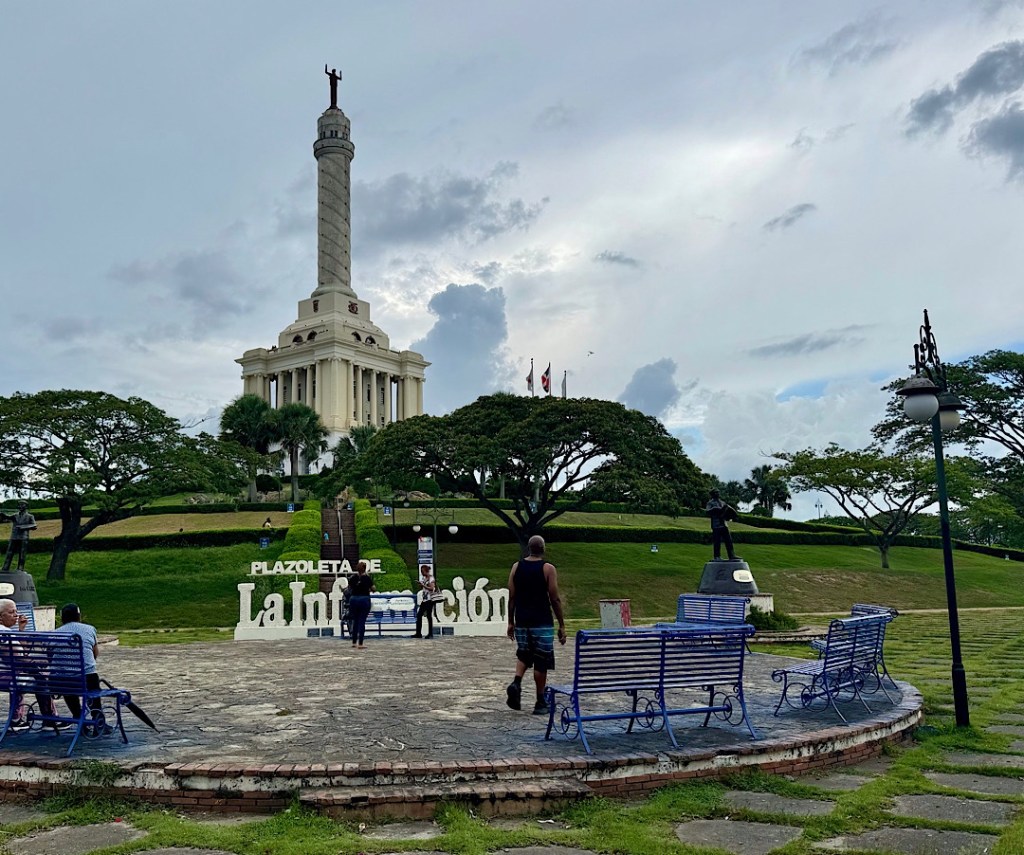
The next day we drove to the second largest city, Santiago de los Caballeros, and climbed the impressive monument that honors Dominican heroes from the country’s insanely complicated history.
The morning after that, on Friday, May 31, we headed for the mountain towns of Jarabacoa and Constanza, where the higher altitudes bring the temperatures down from “hellishly hot” to pleasant.
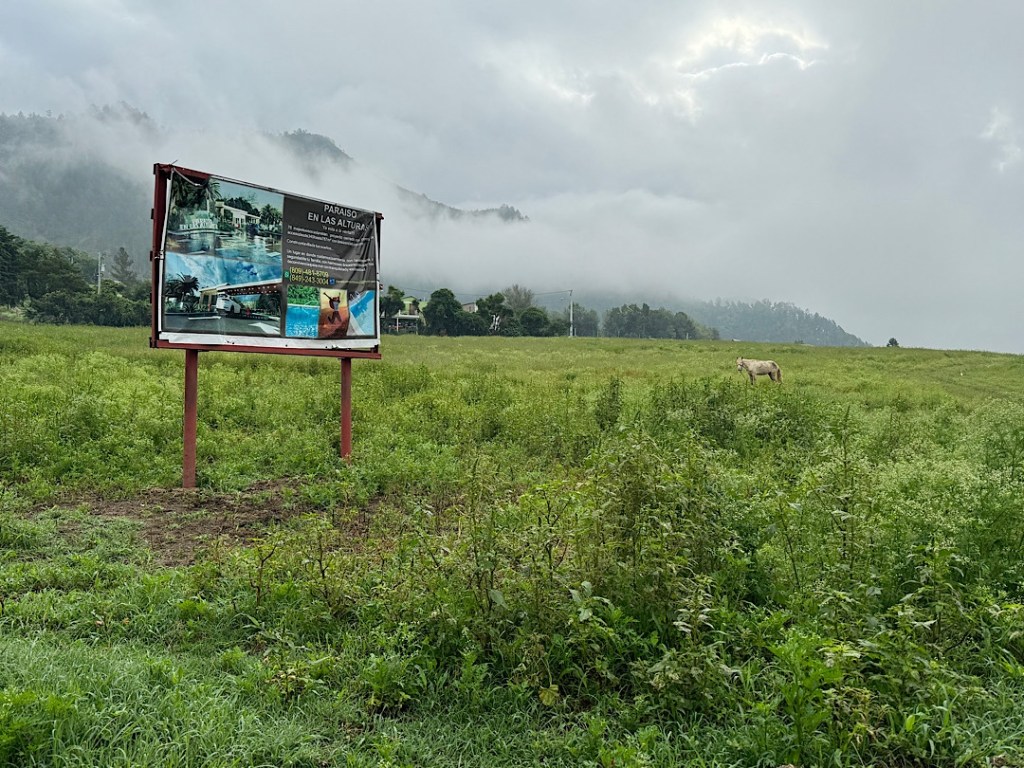
I’d wanted to do some hiking in the so-called Dominican Alps, so Saturday morning we told our phones we wanted to go to the Parque National Valle Nuevo, and we followed Google Maps’ directions up this road…
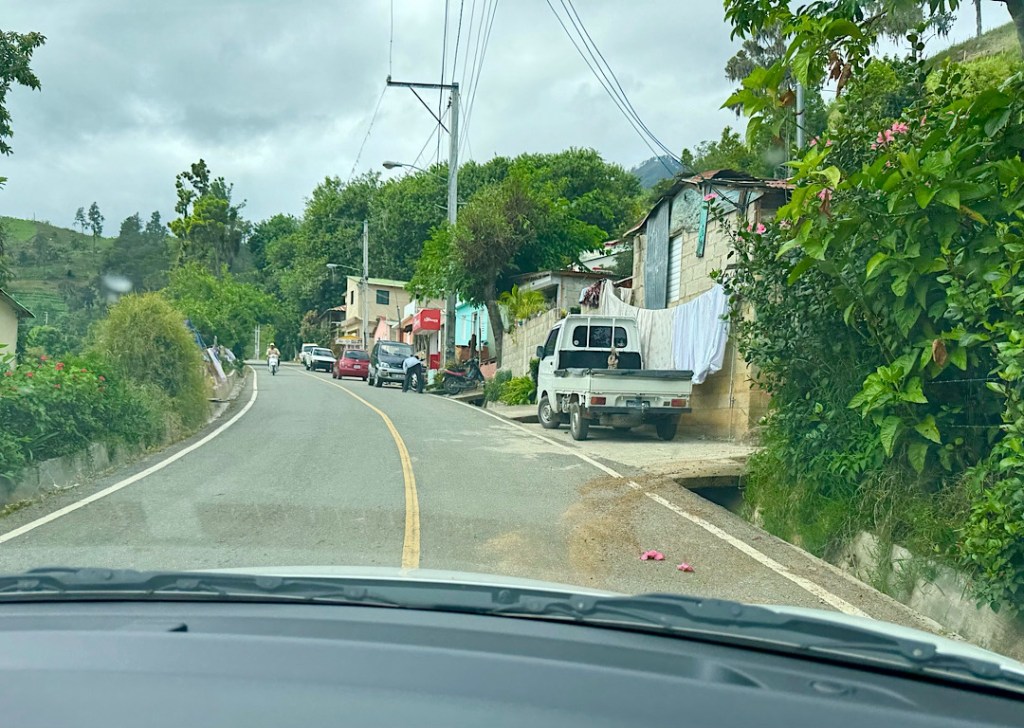
…to a dead end, where we could find no hint of any park of any sort.
Undeterred, we plotted a new course to a well-recommended waterfall (Salto Aguas Blancas). We failed to reach it too but got close. And the road leading up to it took us through one of the most striking landscapes I’ve seen anywhere.
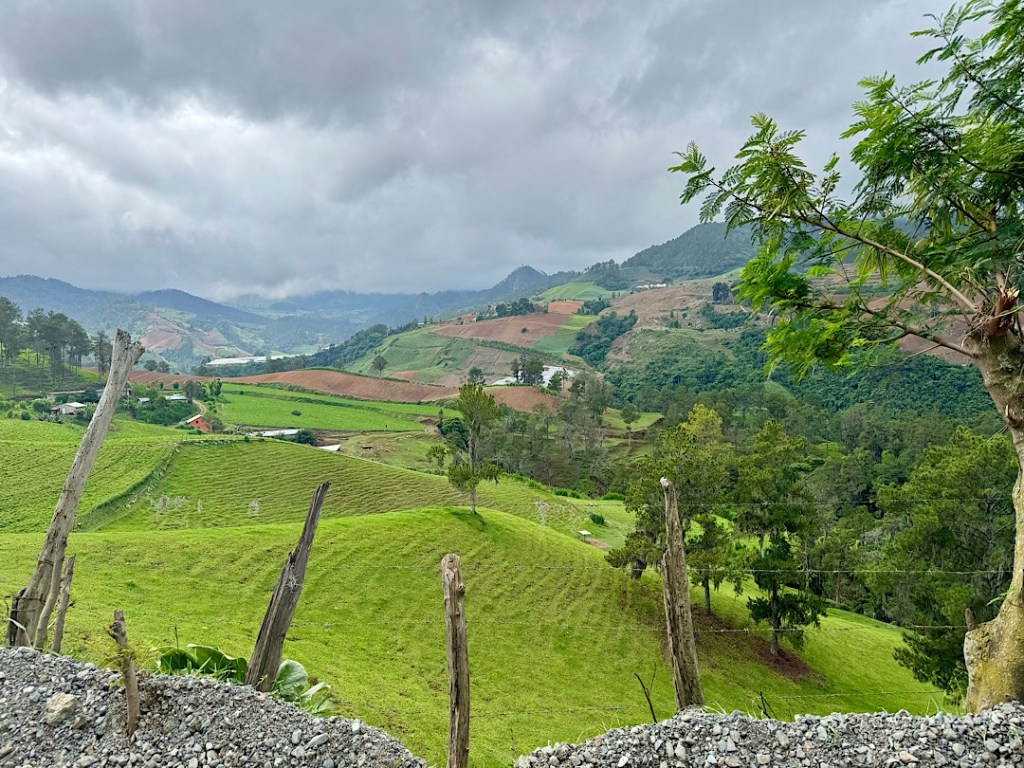

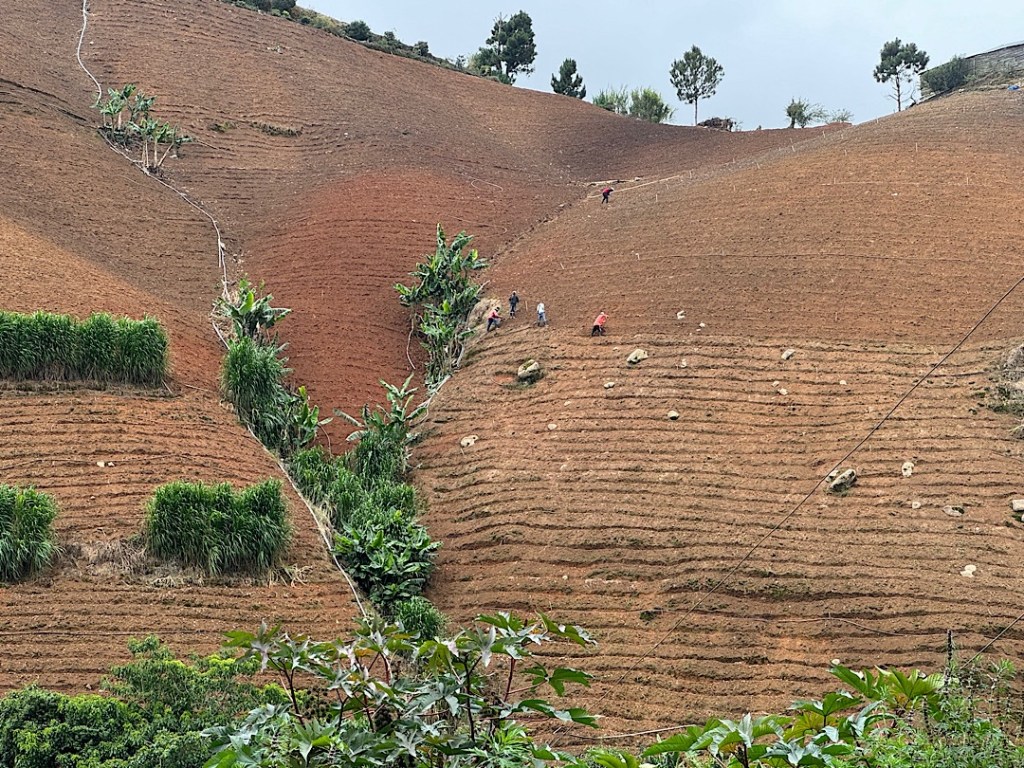
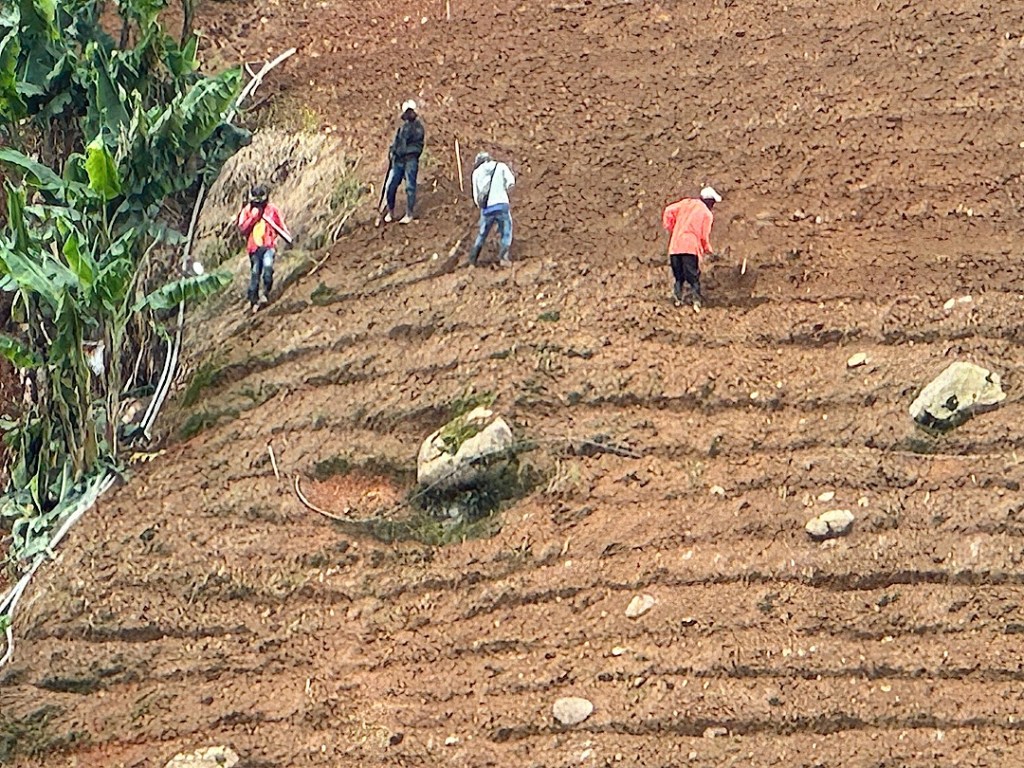
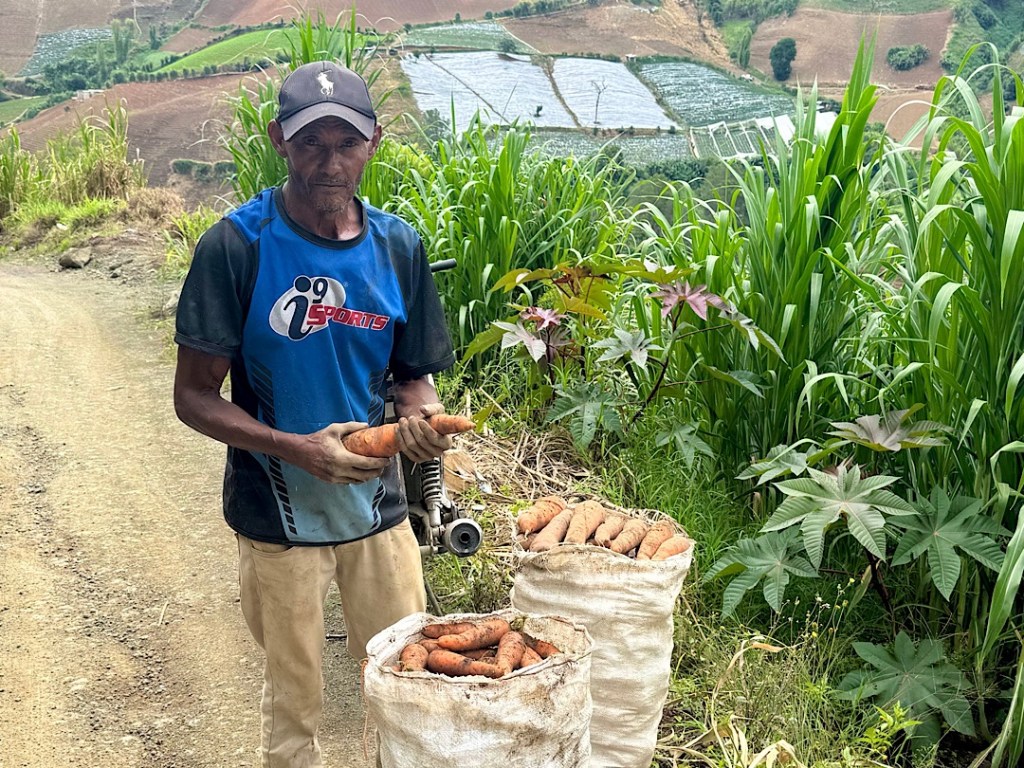
It’s hard to describe how relieved I felt when we reached the airport Saturday afternoon and returned the car without incident. From there an Uber transported us to our 4th home-exchange of the trip, a spotless two-bedroom flat owned by a Parisian couple who apparently use it to escape dreary Northern European winters.
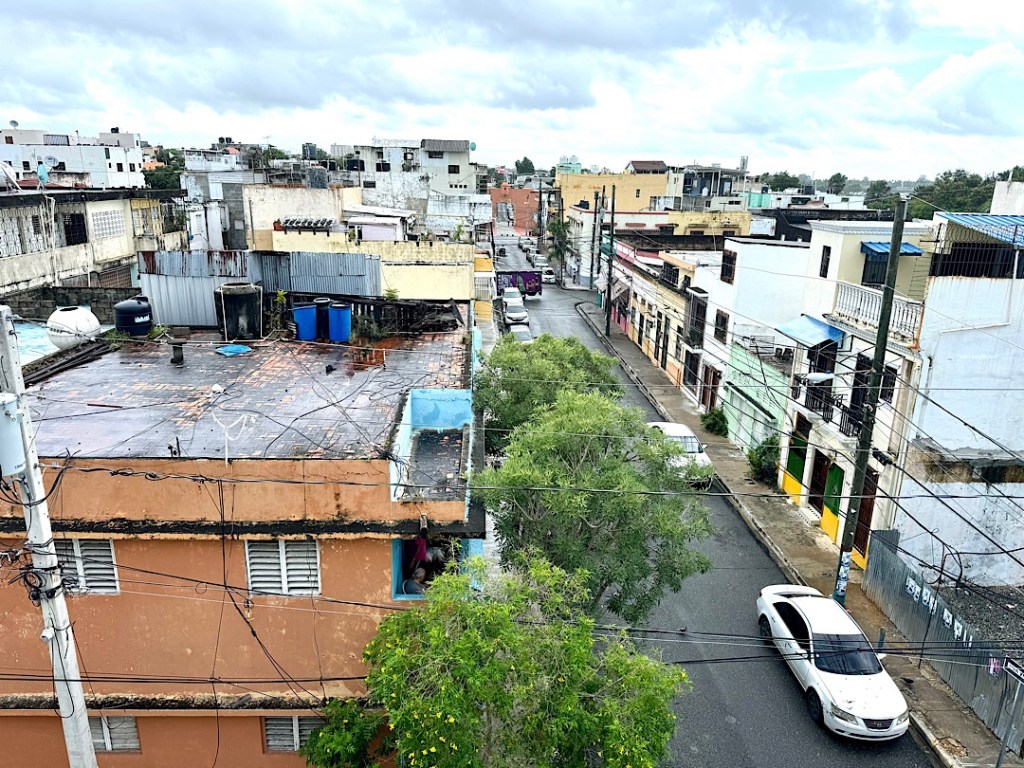
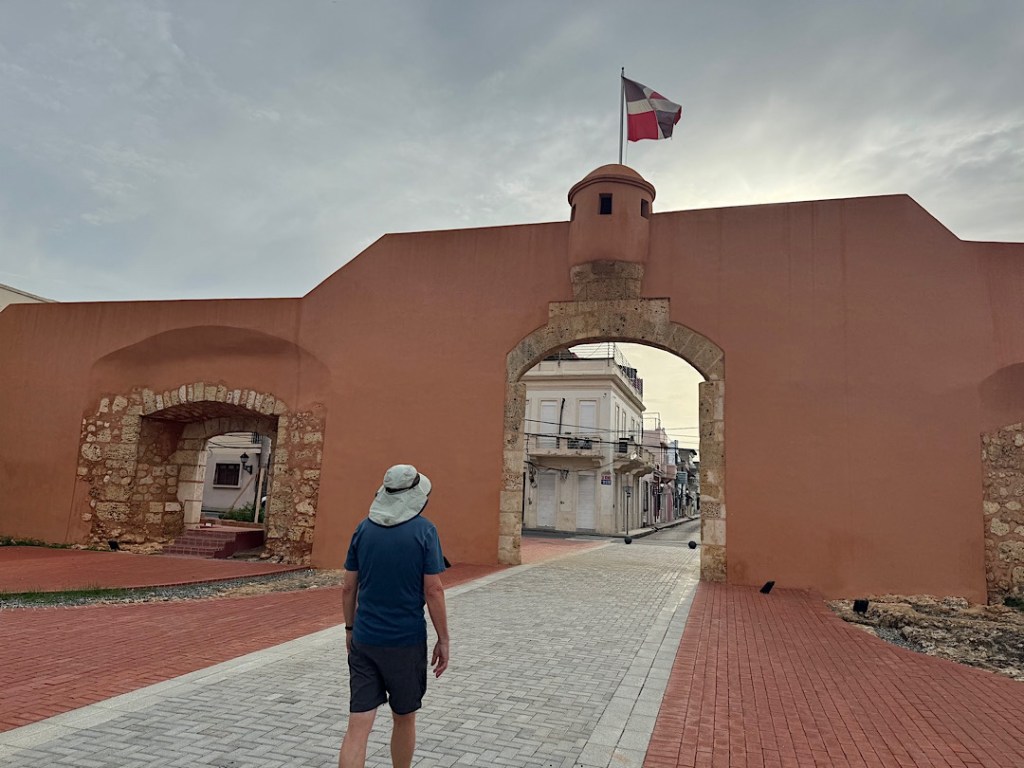
The flat had two spacious, air-conditioned bedrooms, but it lacked potable water. We were supposed to get that from the 5-gallon jug sitting on a plastic bench in the kitchen.
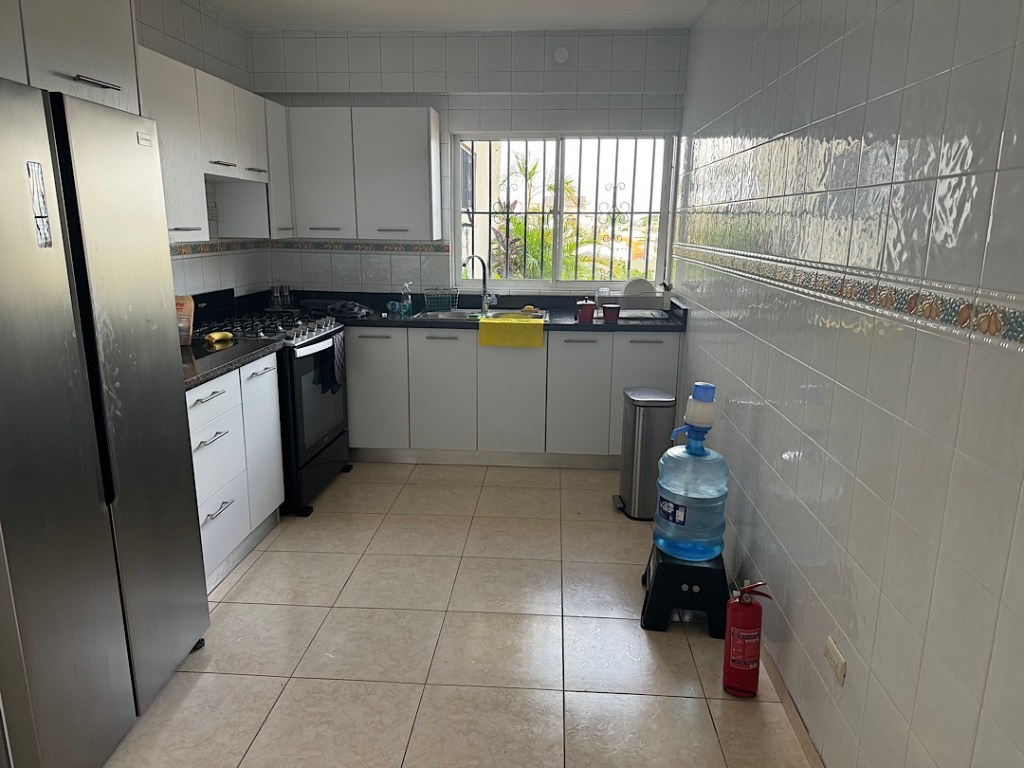
It was empty when we arrived, but Yisel, the owner, had written we could buy more water from the colmado across the street. I’ve patronized a lot of bodegas throughout Latin America, but the colmados of Santo Domingo are something else, places where you have to walk up to the counter and ask for every item you want.
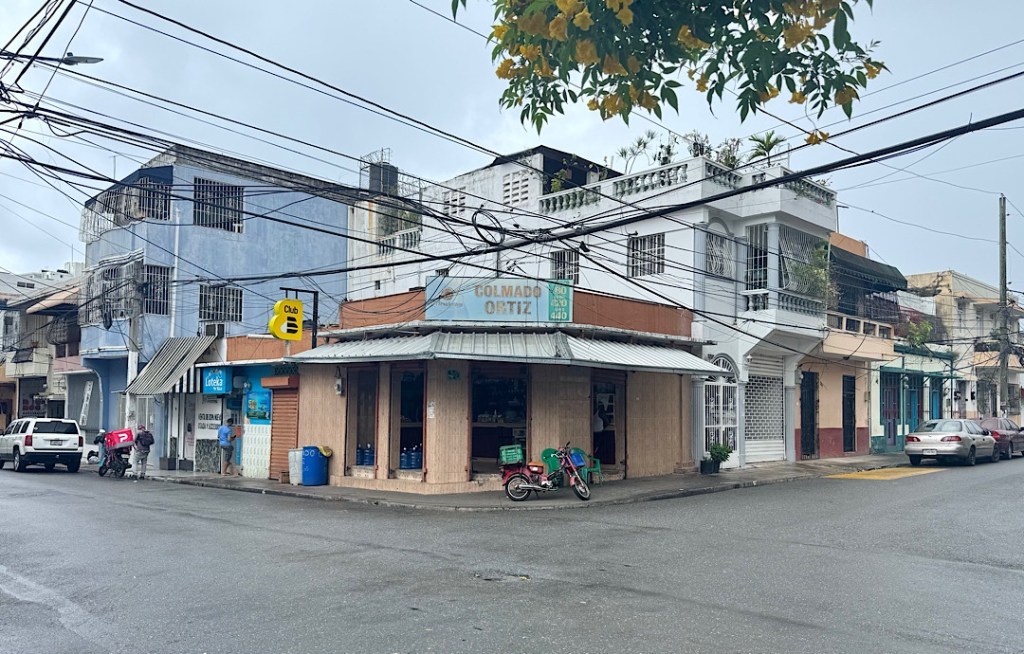
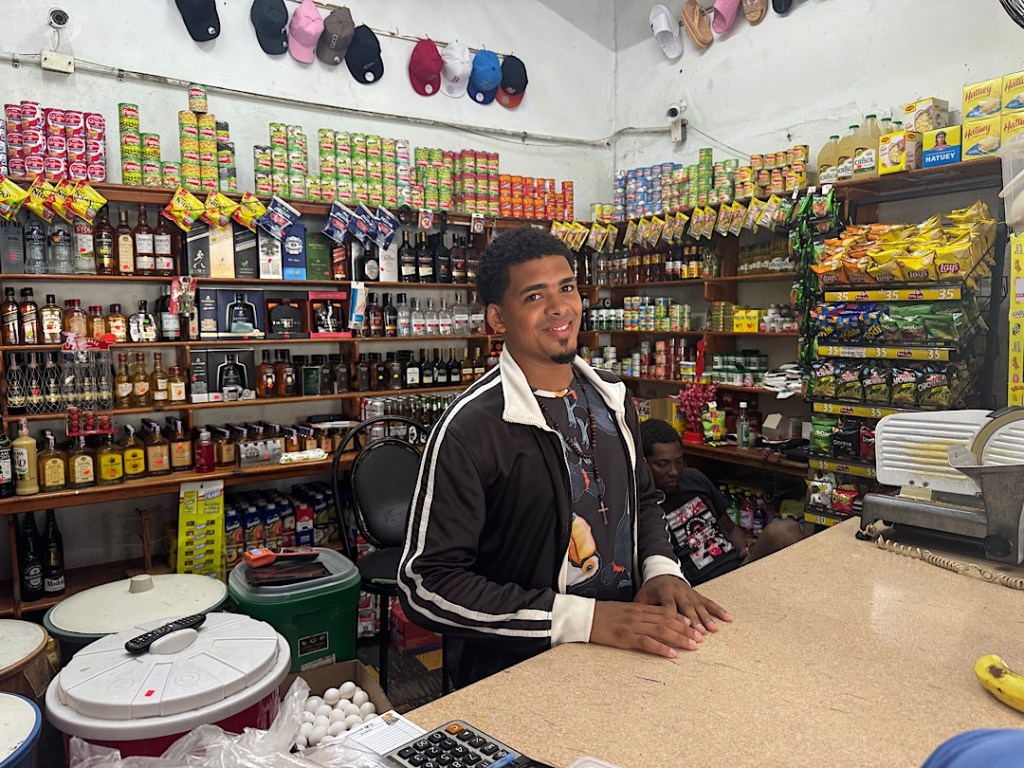
When I inquired about breakfast cereal at the one across the street from our building, for example, one of the shopkeepers pointed out the choice in two big industrial jars: heavily frosty corn flakes or something that looked like Cocoa Puffs. I picked the flakes and he scooped some into a little plastic bag and weighed them. (I forgot what they cost, but it wasn’t much.)
I do recall the price for the 5-gallon water jug: just 70 pesos (about $1.20). Mercifully, that included having it lugged across the street and up the steep sets of stairs to our flat.
The most disconcerting thing about Yisel and Phillippe’s place was all the security: deadbolt locks and heavy iron barriers and padlocks to secure the barriers. Yisel also recommended never walking anywhere after dark. (Happily, Uber drivers were ubiquitous.)
We were worried less about crime than we were about museums being closed on Sunday. Google assured us, however, that Santo Domingo’s anthropology museum was open. We called an Uber to take us to the city’s Plaza de la Cultura. The driver deposited us inside the gates of a huge complex containing the national theater, a museum of modern art, and several other imposing buildings. It all would have been impressive, were it not for the fact that almost no other visitors were in sight. When we found our target, the Museum of Man, its front doors were locked; nothing so much as hinted at when they might re-open.
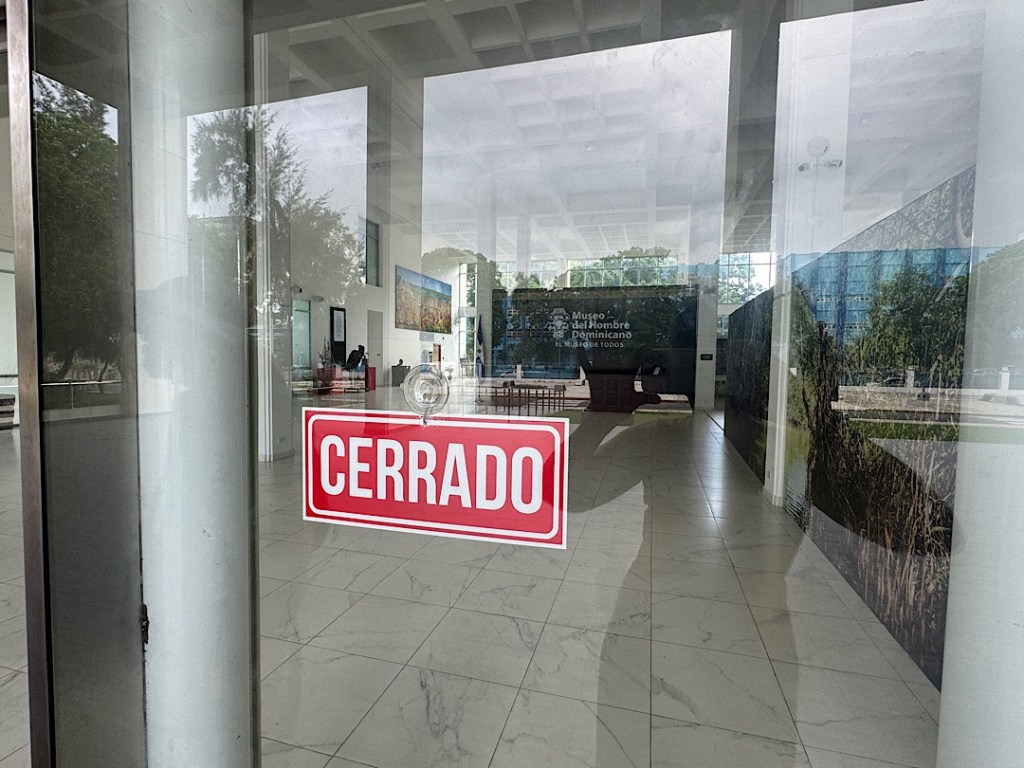
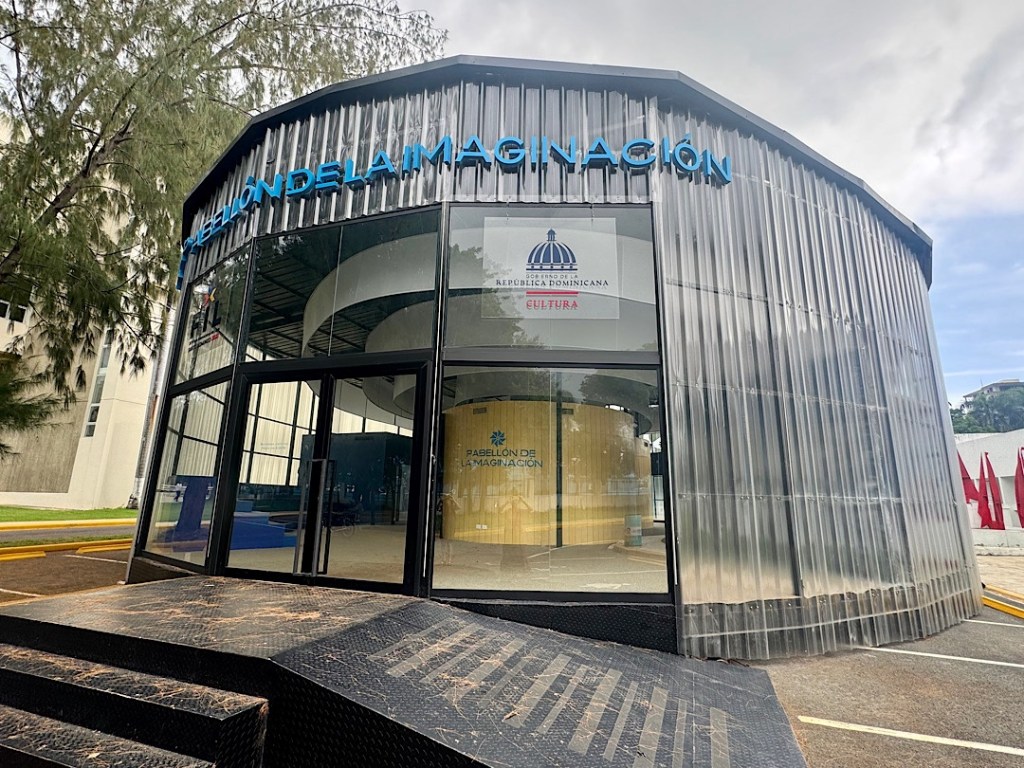
We took another Uber back to our flat and chilled out, hoping the rain would stop and the Sunday night concert could go on. When that didn’t happen, we ate an excellent dinner in a building that originally housed the city’s oldest restaurant and one of its earliest brothels.
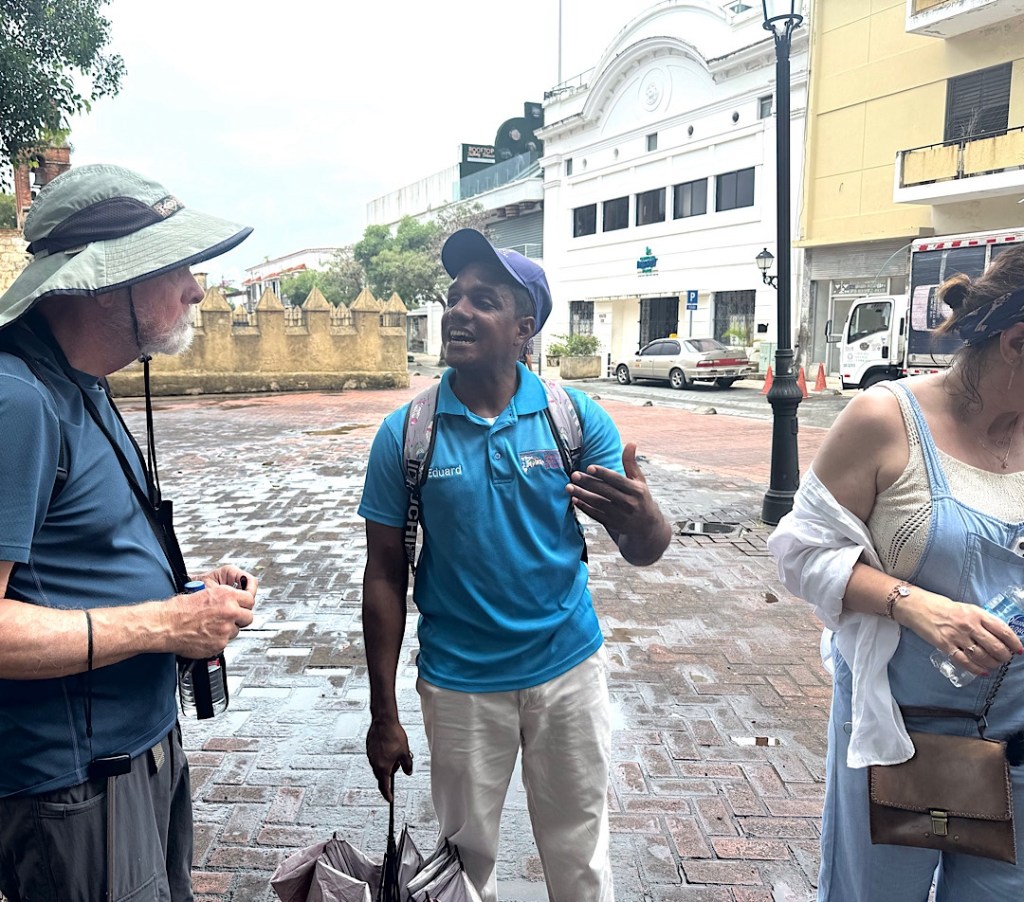
We heard that last tidbit from Eduardo, our guide on the walking tour we took Monday morning, another rainy day.
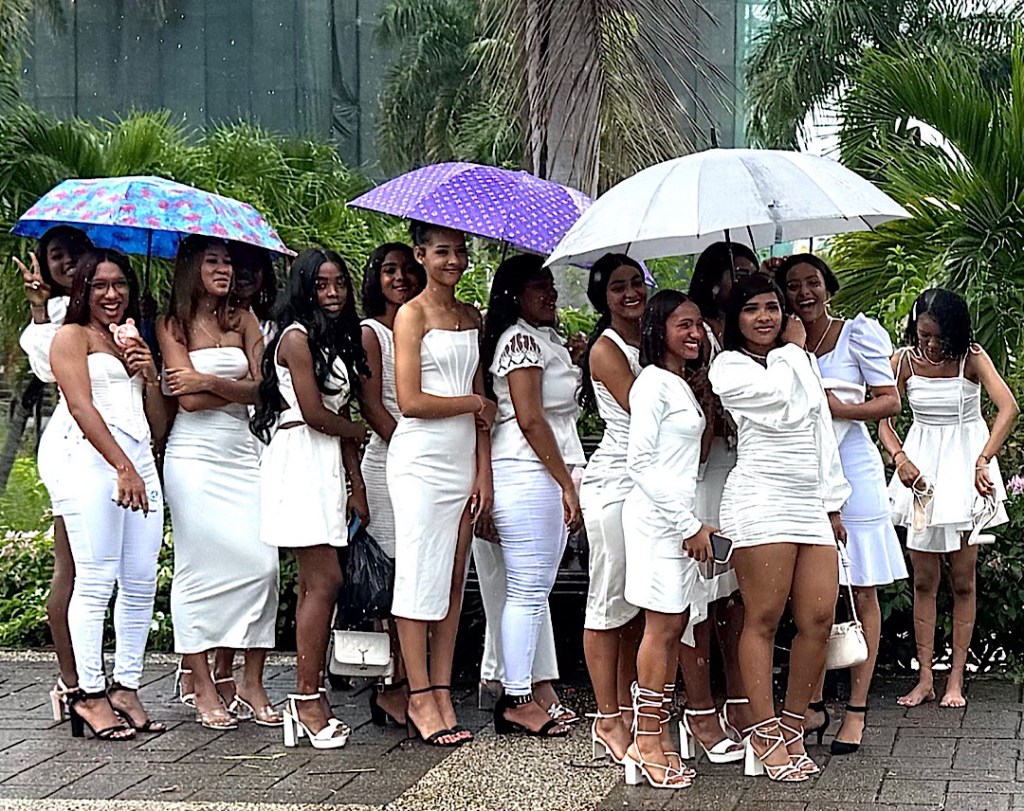
That two-hour ramble reinforced my impression of what an influential place Santo Domingo once was. Columbus lived here for a couple of years; his son built a palace overlooking the Ozama river.
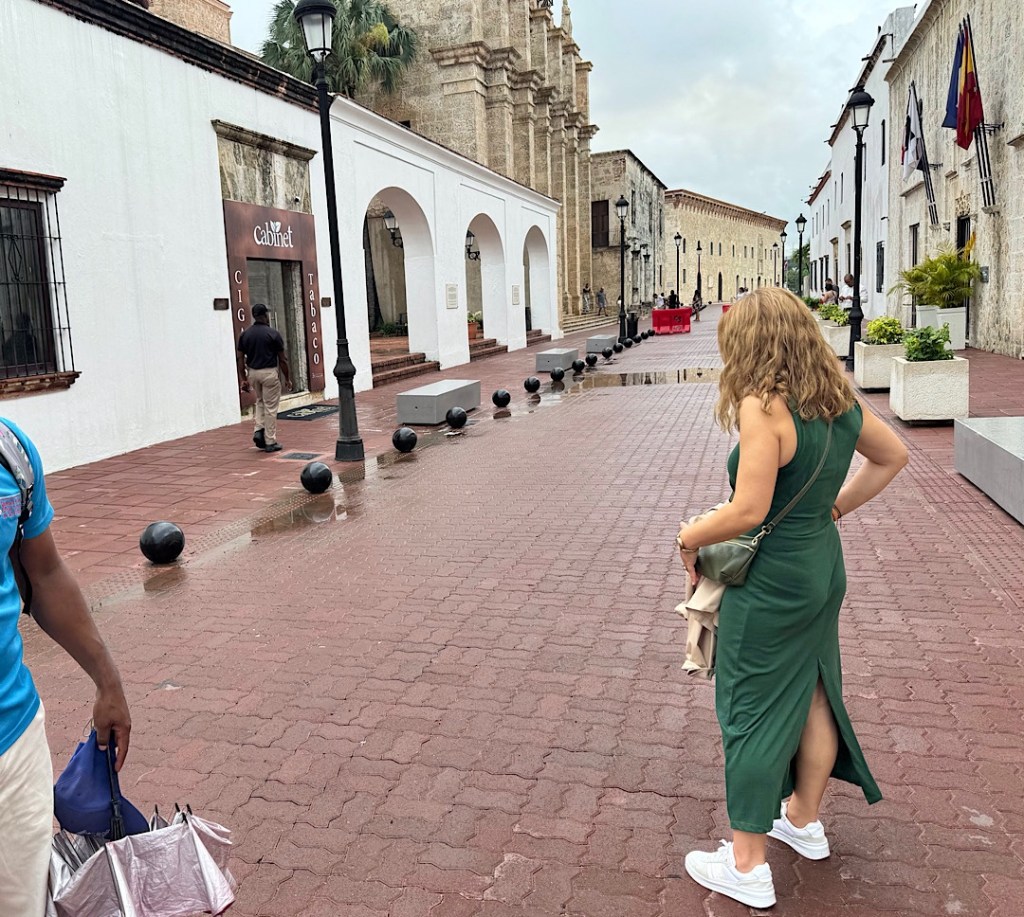
Sadly, because it was Monday, most of the historic buildings were closed. The Cathedral was open, but it’s pretty run of the mill. I thought the coolest thing about it was that back in 1877 some workers in the church found a lead box filled with bones and inscribed with the declaration that they were the remains of Christopher Columbus.
Those bones are definitely not in Santo Domingo’s Cathedral today. What’s left of the Admiral hasn’t exactly disappeared. But a mystery surrounds the question of where he is.
What’s clear, as I understand it, is that he died in Valladolid, Spain in 1506, but he had asked to be buried in the New World. In 1537, the widow of his son Diego sent the bones of Diego and his legendary father from Spain to Santo Domingo’s new cathedral. They lay there for more than 250 years. But when Spain gave Hispaniola to the French in 1795, the Spanish reportedly didn’t want Columbus’s bones to fall into foreign hands, so they shipped them first to Havana and then to Seville.
Today the Sevillanos say they have the Admiral. They say they did DNA testing 20 years ago that confirmed this. But in 1992, 500 years after Columbus first set foot on an island in what’s now the Bahamas, the Dominicans inaugurated a colossal mausoleum/monument in Santo Domingo. Built in the shape of an enormous cross to celebrate the “Christianization” of the Americas, the so-called “Columbus Lighthouse” contains what’s left of the Admiral, according to the Dominicans. They say those bones show signs of advanced arthritis (from which Columbus suffered). But authorities so far have refused to allow any DNA testing.
The mausoleum was closed on Mondays, so we missed it too. I’m not a big fan of the Admiral, so I was only a little disappointed.
 At home and abroad