
A few days before we set off on this road trip, my friend Kris told me a story about how she almost died in Canyon de Chelly. On their first visit to the renowned Navajo landmark, she and her husband had journeyed to the tourist office and hired an official guide, then had a marvelous experience being driven by him through both Canyon de Chelly and its extension, Canyon del Muerto (Canyon of Death), a name dating back to when the Navajos endured great suffering as the US government seized their lands.
On a return trip to the canyon, Kris and Rich found the tourist office closed. So they hired a freelance guide who picked them up in a battered Suburban and drove them into the canyon, where the vehicle promptly stalled in a river crossing. Its reverse gears appeared to be broken, and the driver/guide eventually shouted that everyone had to abandon ship through the few doors that functioned. Kris said it wasn’t difficult to slog through the water to dry land, where they watched the Suburban sink — and disappear — into the quicksand in which it had bogged down.
The moral of her story, Kris told me, was that we should only hire a trustworthy guide. But because Steve and I had arrived in Chinle so late Saturday afternoon, we settled for arranging a four-hour tour through our hotel. I reflected that we might be doing what Kris had warned us against. But we’d had little choice.
Sunday (Easter) morning, I’d felt reassured by the sight of our vehicle, a 10-passenger Pinzgauer army troop carrier built in Austria with 6WD and three locking axles. With only one other passenger besides us in the vehicle, there was plenty of room for Trent (garbed in his cape, of course.) The driver/guide, Fernando, had grown up in his grandparents’ hogan, deep within the canyon, so that also reassured me. Scattered clouds hinted that rain might be coming, but as we entered the canyon, it was still dry and bright.
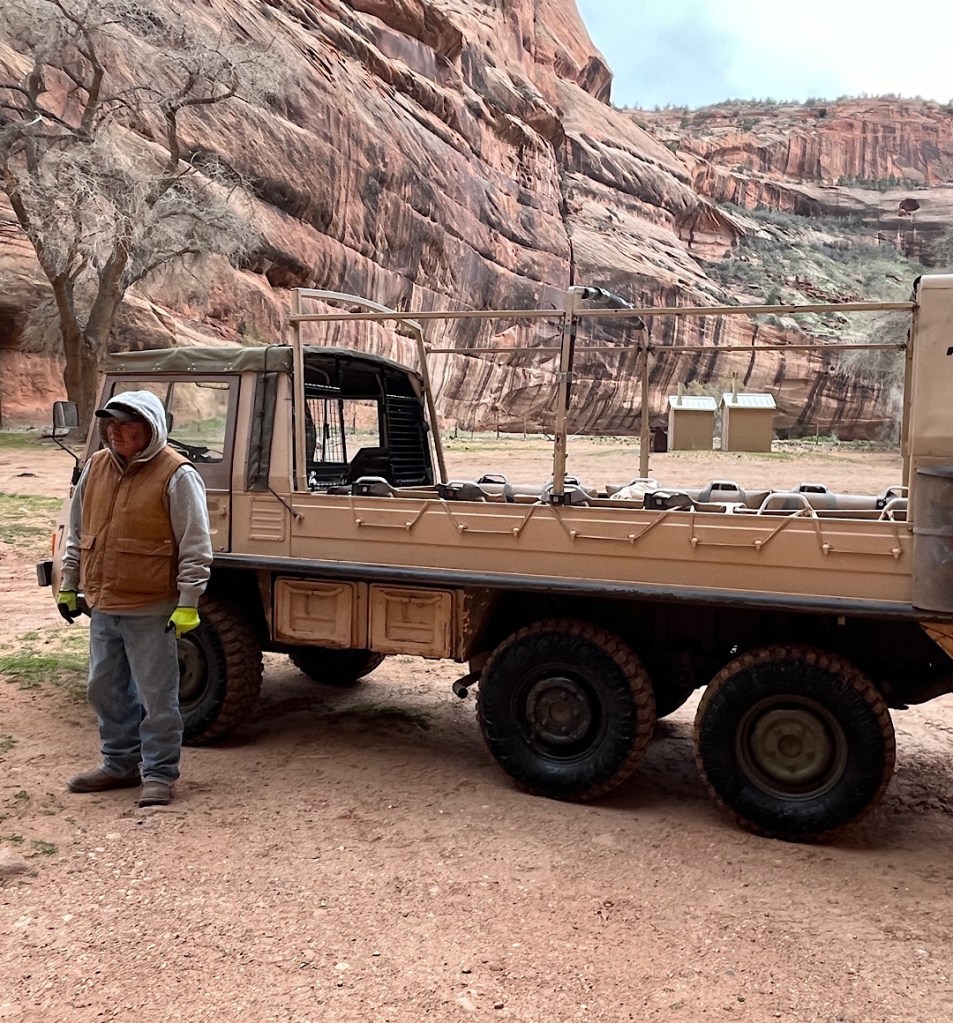
Canyon de Chelly isn’t as overwhelming as the Grand Canyon (what is?), but it quickly became clear its sandstone walls present an extraordinary mixture of color and form. Near the entrance, they start out low…
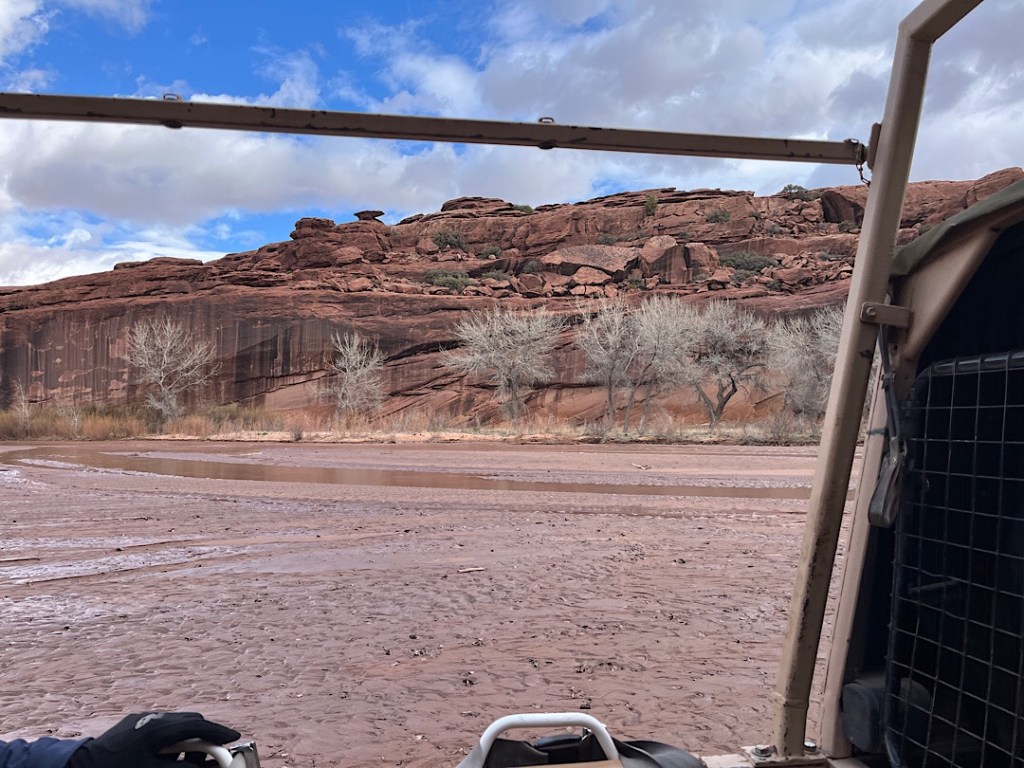
…but they soon rise to a thousand feet in height.
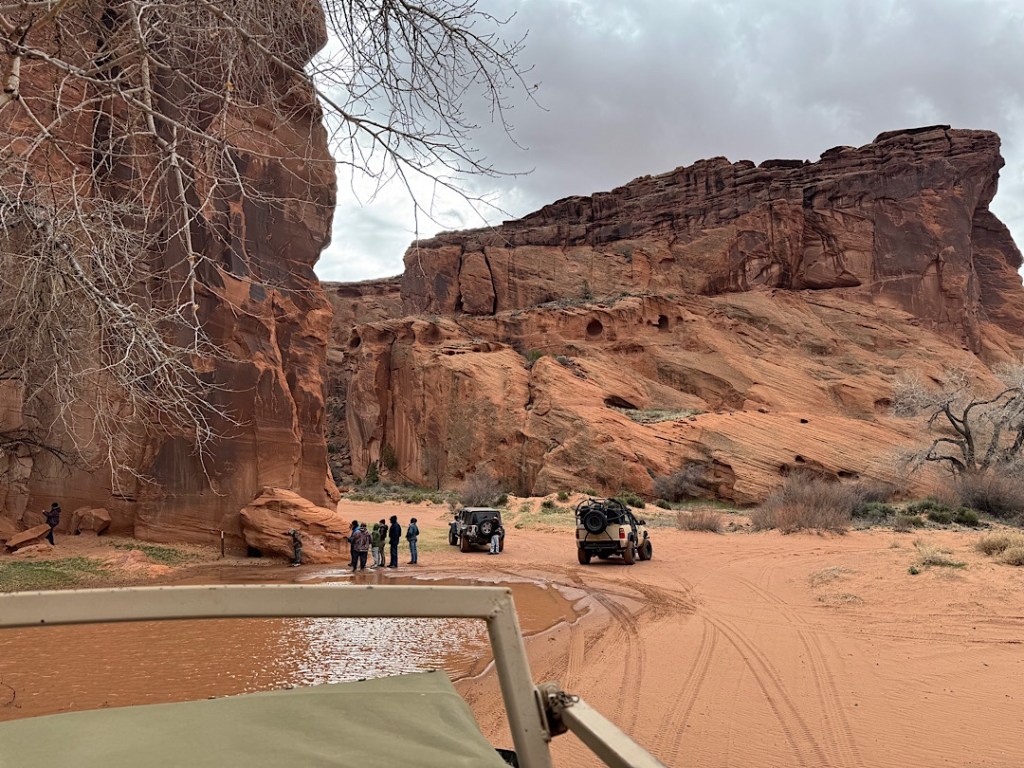
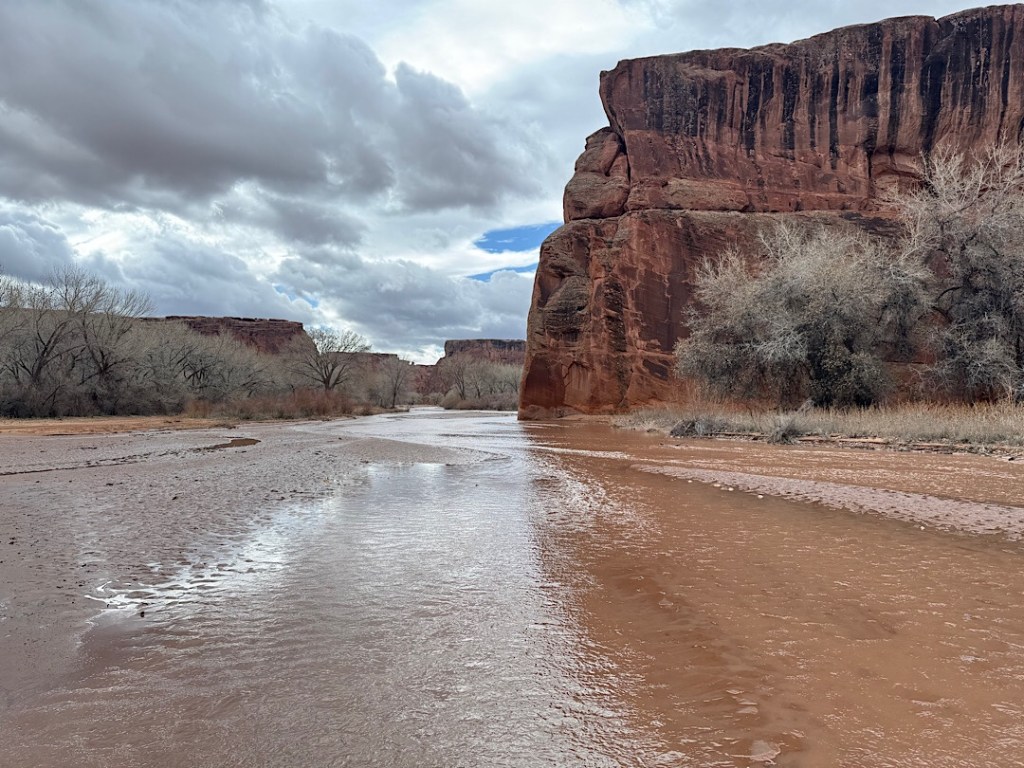
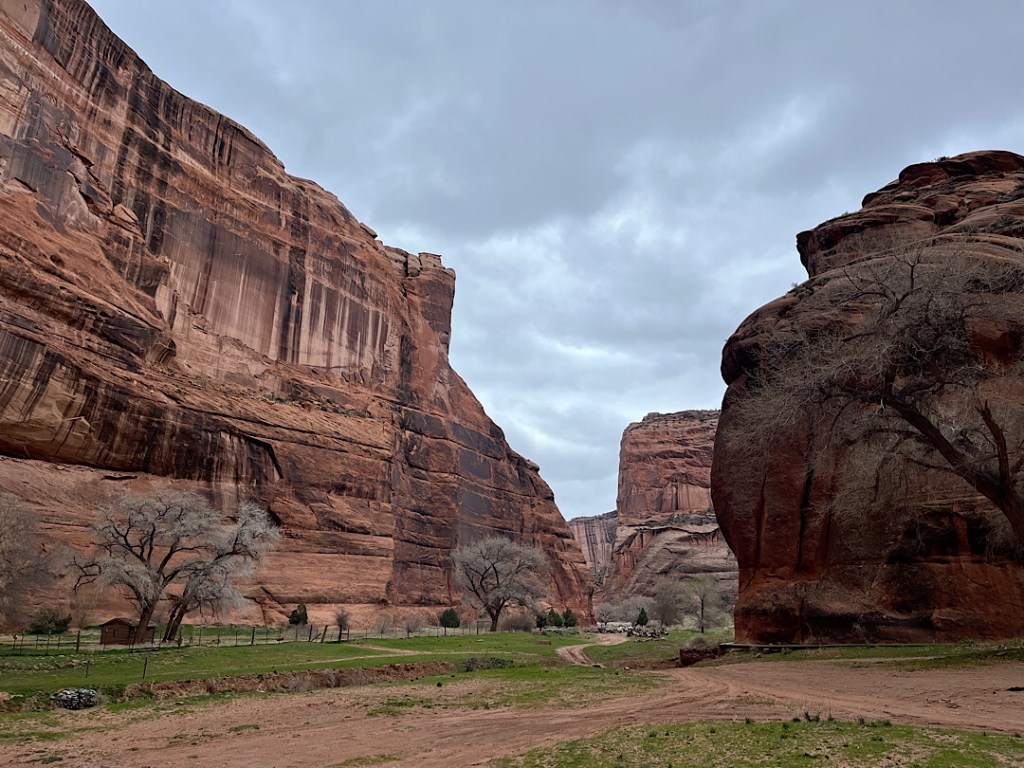
Moreover, this is very much a living landscape. Fernando told us only one family lives in it year-round.

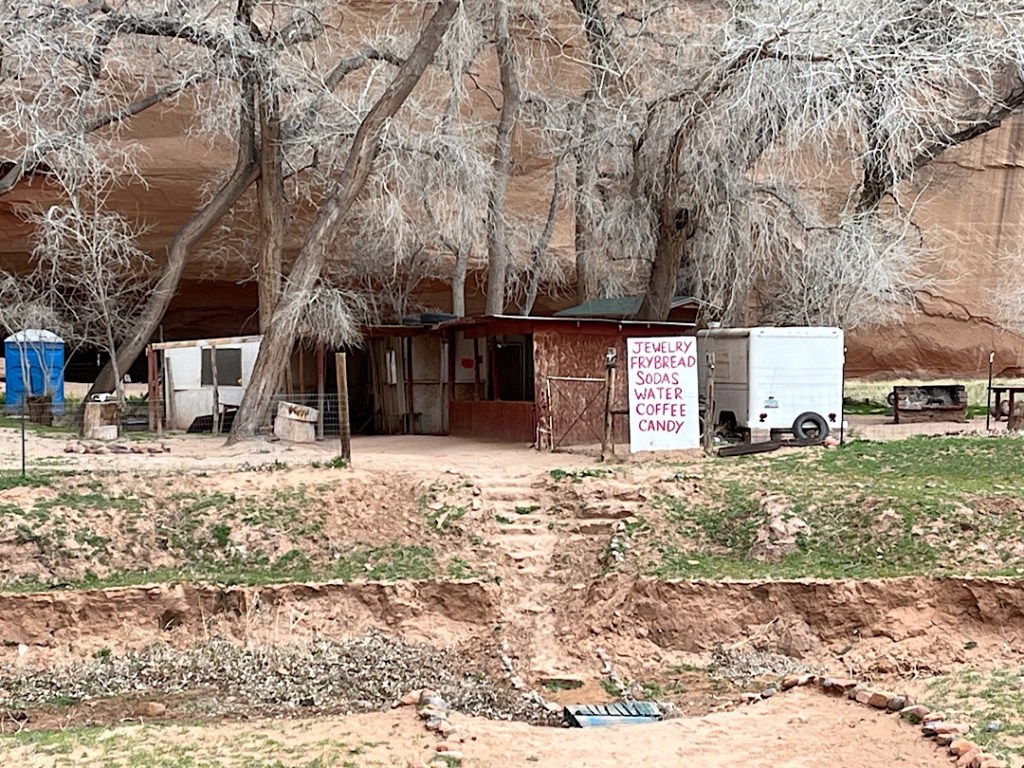
But members of another 70-80 households return each spring to their properties. Somehow they coax crops of corn, beans, squash, melons, stone fruit, and more from the riverbed.
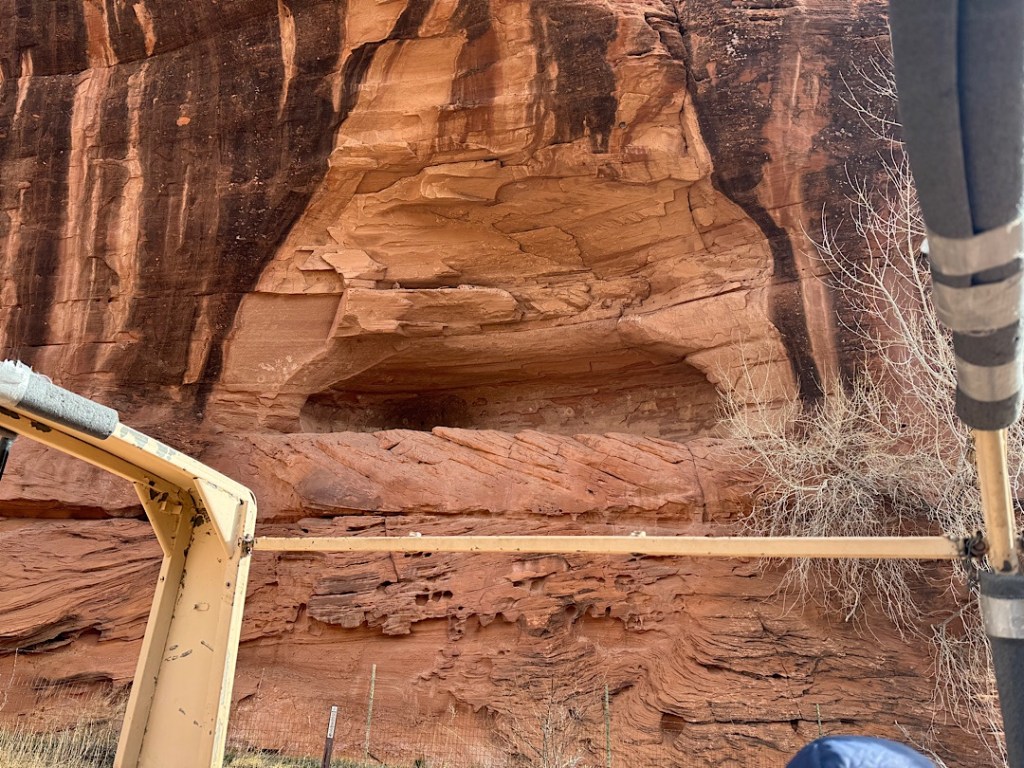
Beyond the current inhabitants, the canyon also holds fascinating evidence of the Old Puebloan peoples who lived here until roughly a thousand years ago. Fernando stopped at at least a half-dozen spots to point out the remnants of dwellings and paintings and other rock art left by the Anasazi ancestors.
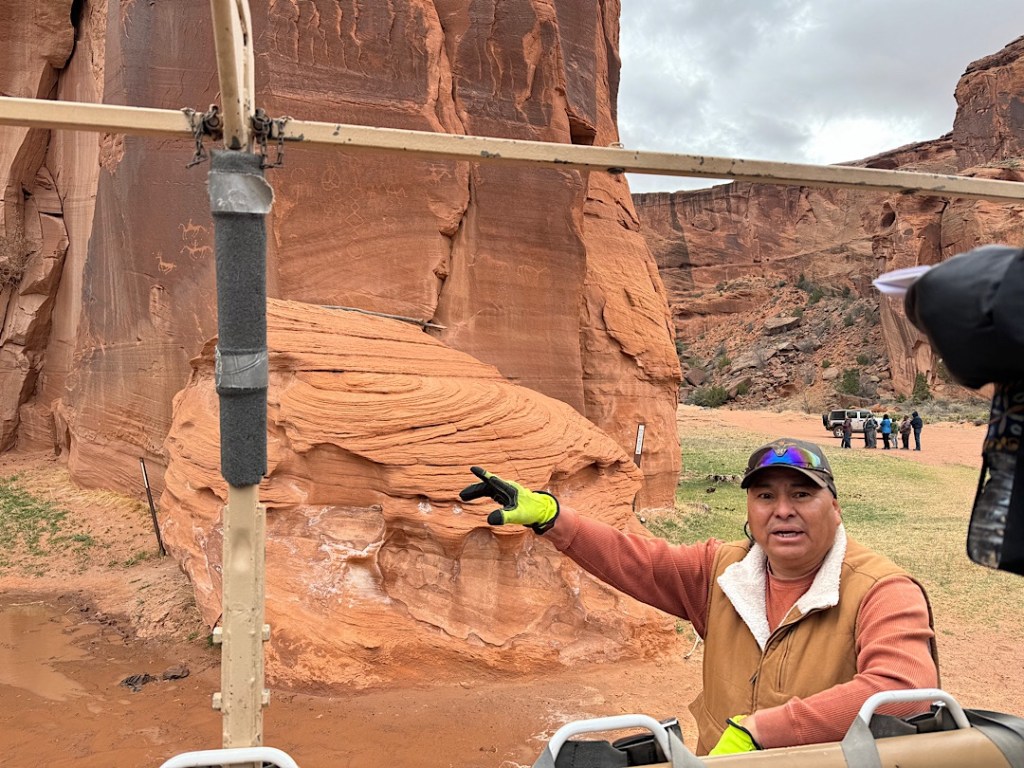
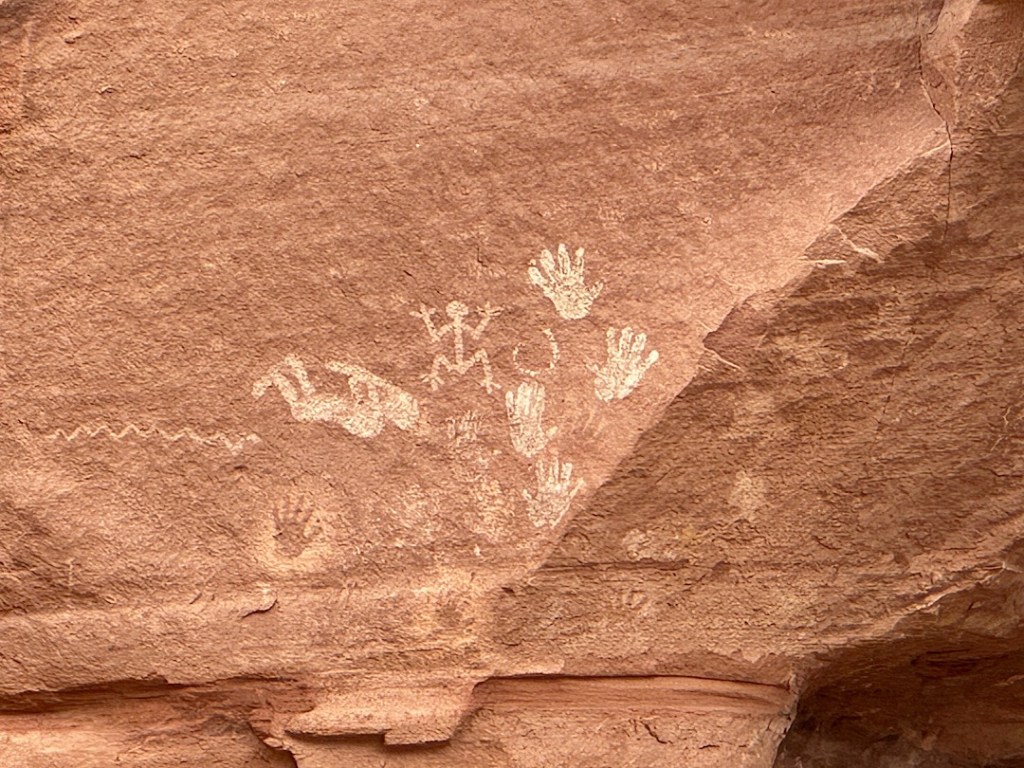

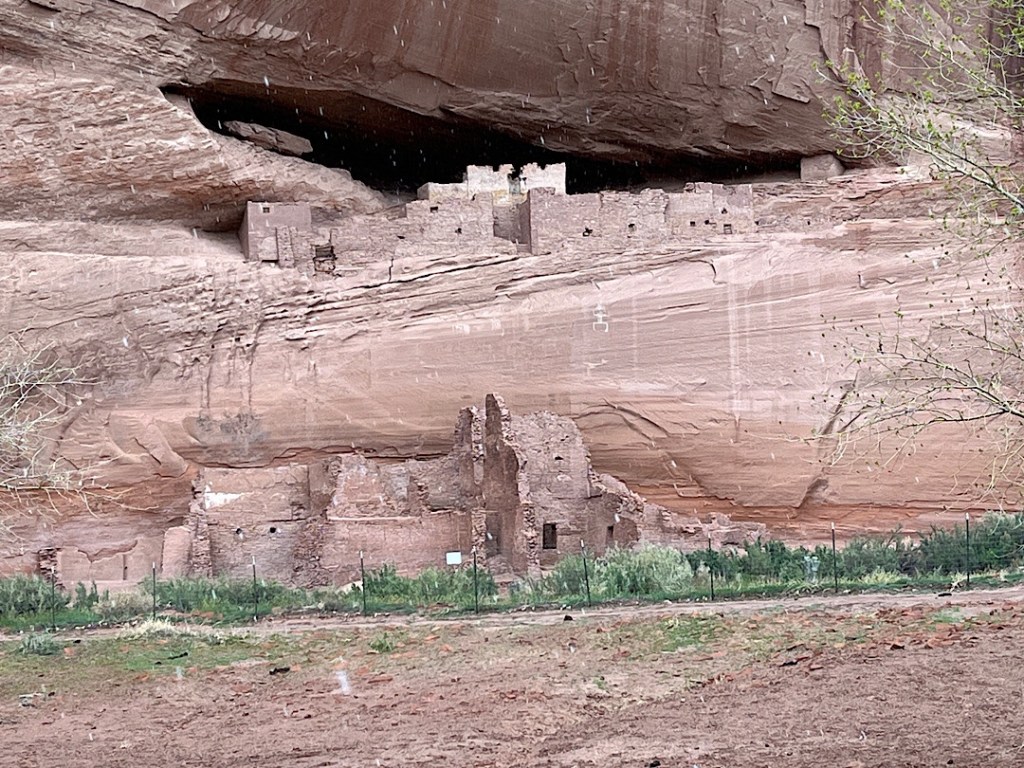
We penetrated deeper into the rough terrain, and around noon the sprinkles started. The temperature dropped and the wind intensified, so soon the sprinkles turned into sleet. Or was it snow? It was hard to tell. Most of my attention was focused on staying as warm as possible. Fernando handed out blankets, and I tried to get Trent to snuggle up to me under one. He looked pretty miserable.
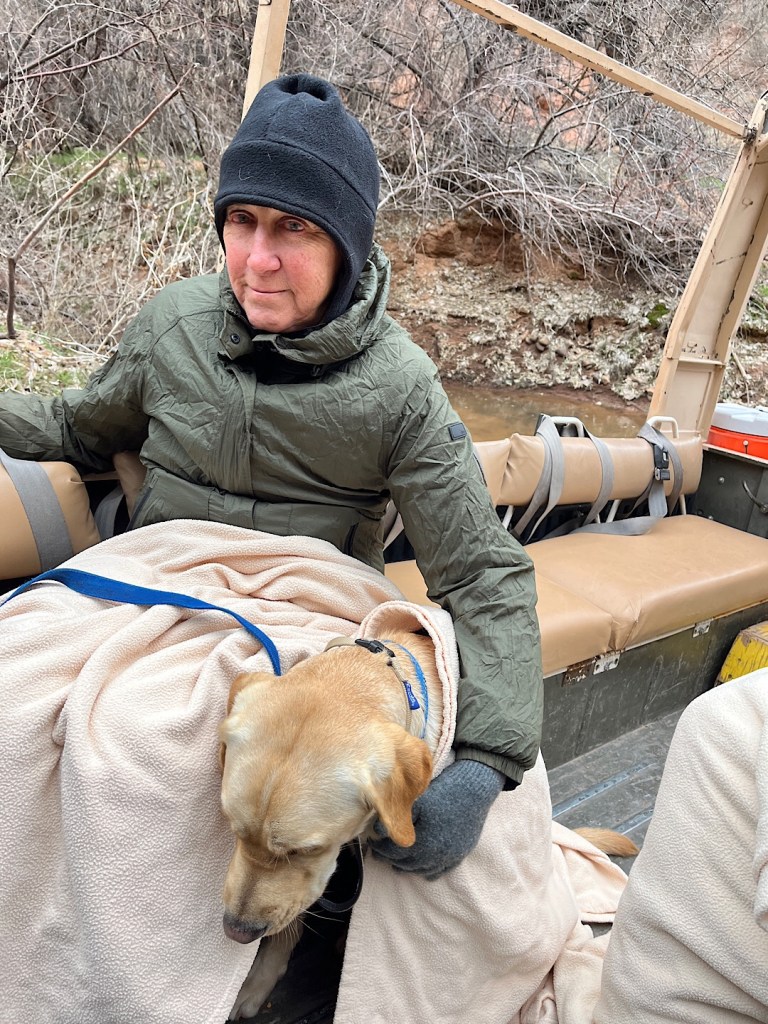
On a nice day, we all might have hiked more, taking time to savor the fantastic landscape and all the history that had unfolded within it. But as we headed back, all I could focus on was how little feeling I had left in my fingers or toes.
Fernando dropped us off at the hotel a little after 1, and I staggered to our room on what felt like lifeless stumps. Stripping off my boots and socks and gloves, I remember puffing out little breaths and doing a fair amount of moaning as I soaked my feet and warmed my hands in the tub. I shivered hard for an extraordinarily long time.
When the shivering had mostly subsided, Steve and I downed hot pozole and coffee in the lodge’s cafeteria and agreed we wouldn’t have missed seeing the canyon. I wouldn’t say the price was almost dying of hypothermia. But I’d come closer to that than I ever hope to get again.
 At home and abroad
What an experience! Given that hypothermia sets in once the body’s temperature falls below 95 degrees, it sounds like you weren’t far from that. Looks like your vehicle could have been set up with rolled up tarps attached, it is strange that it didn’t have them given the environment in the canyon!