Who knew the capital of Lesotho is Maseru (our destination early Wednesday morning)? I learned around 10 years. It was then, a few years before Steve and I had retired, that I conceived a crazy plan for us to go on an epic quest to visit every one of the 54 countries in Africa. I had this notion we would set up a website and attract legions of readers who would be riveted by our adventures as we tried to accomplish this difficult task. Steve gulped but agreed to go along; we announced our plan to a number of friends. I learned the name and capital city of every African country and spent many hours working on routings.
Reality (including the fact Steve’s mom was in her late 90s) finally changed my mind, and now I know it would not have been a good plan. I think it would have quickly worn us down; become drudgery. But I’ve retained some of my huge appetite to see as much as possible of this continent I like so much. That’s part of why we tacked on quick trips to Lesotho and eSwatini (the former Swaziland). Another is that we so enjoyed our visits two years ago to Europe’s smallest microstates. The same questions apply: how do these little chunks of territory surrounded by big burly states survive?
We blew through Lesotho in less than two days, yet even that brief interval delivered a strong taste of the place. I had found a South African company, Roof of Africa, to drive us clean across, and one of their driver-guides, Sandile, met us as we emerged from the brief immigration formalities at the airport. Sandile, 35, spoke excellent English and proved to be thoughtful, well-informed, and curious — an excellent traveling companion.
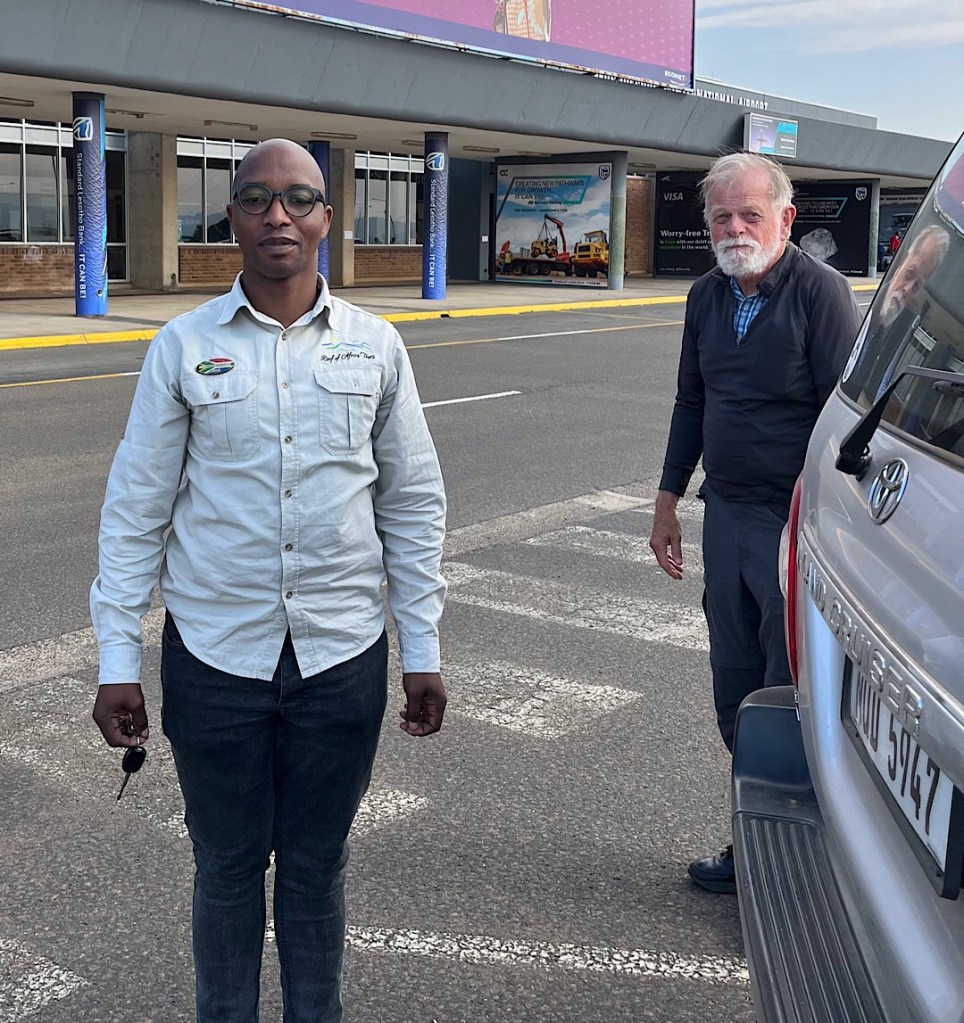
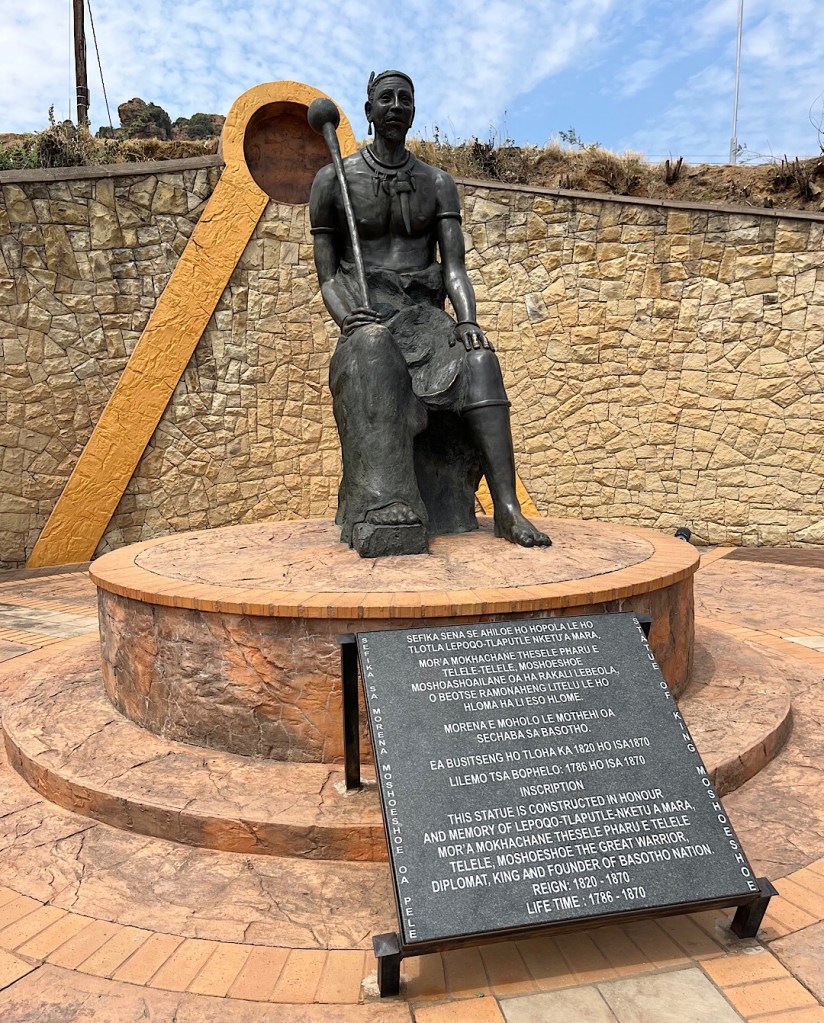
Over the course of the next 34 hours, we learned a lot about each other, as well as the history of Lesotho, which was occupied for millennia by San (aka Bushmen) hunter-gathers. Bantu peoples from the north arrived in the 17th century, and irritated by the Bushmen’s propensity to snatch their cattle, they drove them to the Kalahari Desert and other places no on else wanted to live. Later those Bantu clashed with white Boer settlers and their neighboring Zulus. The modern history of Lesotho began when a charismatic leader named Moshoeshoe united all the Bantu clans, placated the Zulu’s rapacious leader, Shaka, and worked out a deal with the Boers in which he traded a bunch of territory for independence. Sandile took us to the Thaba Bosui, Lesotho’s Plymouth Rock, birthplace of the landlocked little country that still survives.
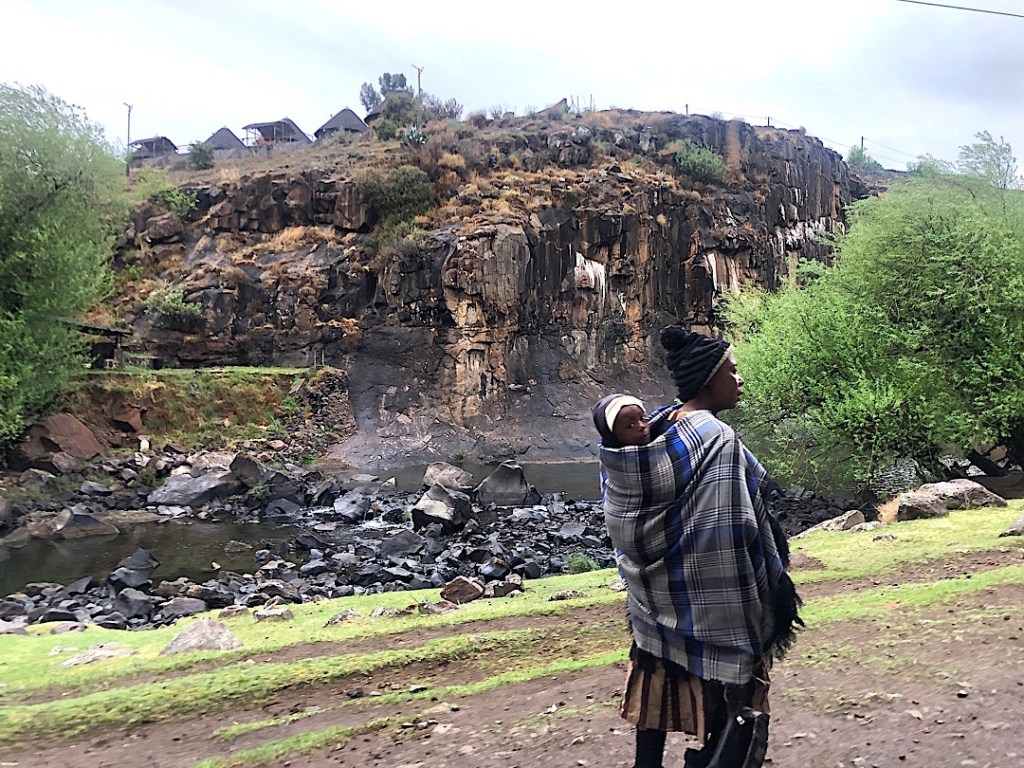
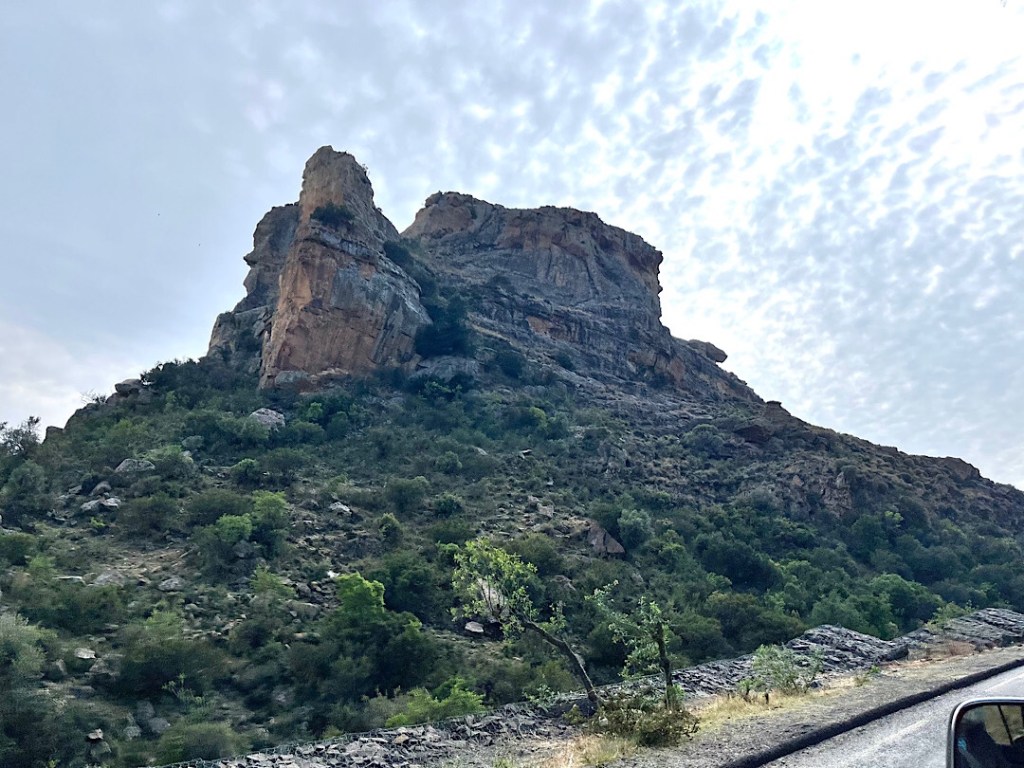
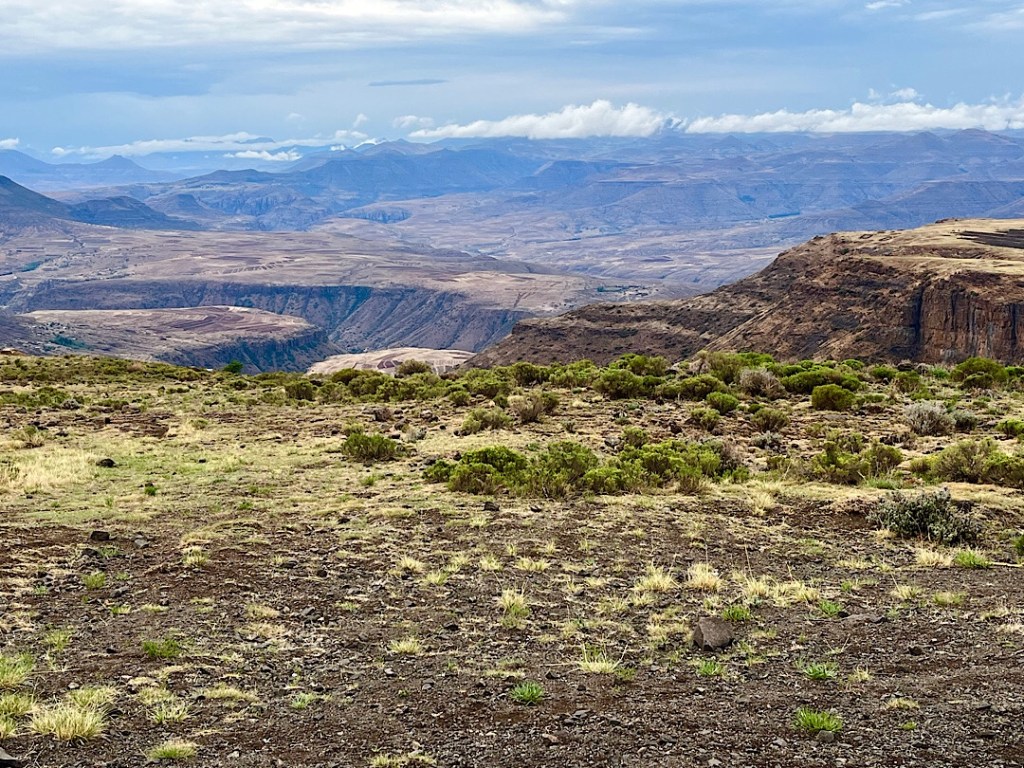
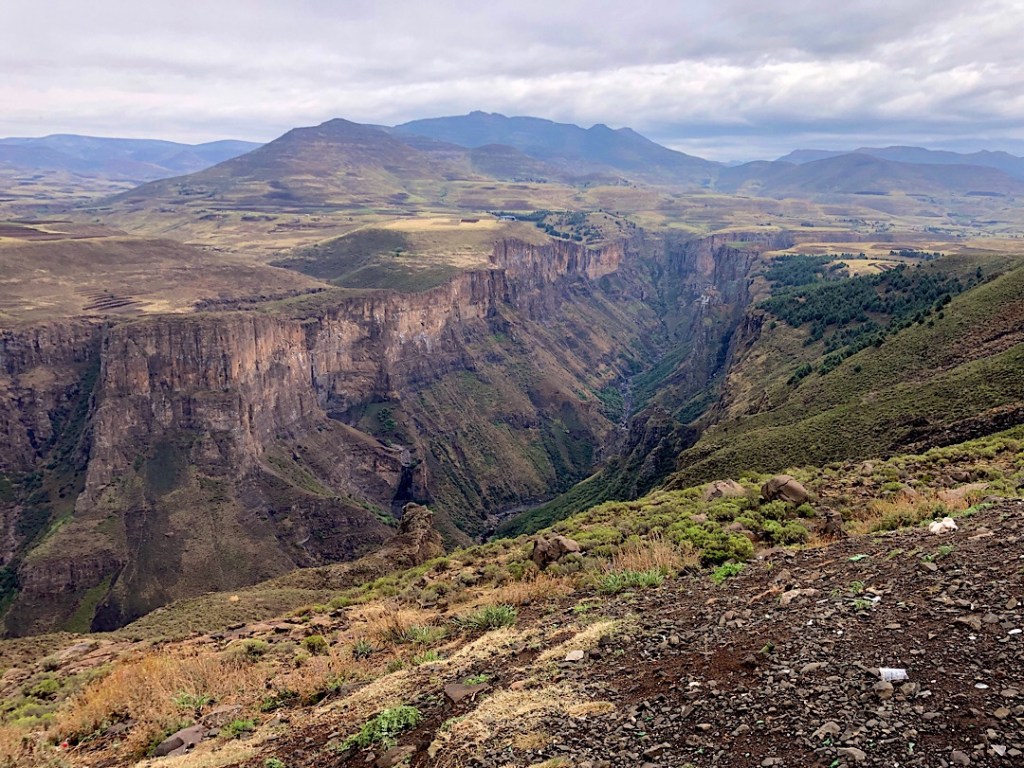
Now that I’ve driven across it, I understand why both Shaka and the Boers decided it wasn’t worth trying to conquer the place. The land is harsh and high (over 9000 feet in many places), and icy winds slice through the passes, even now, in late spring. Massive mesas and buttes reminded Steve and me of a grayer, grassier version of the American West. It looks nothing like anything we’ve seen anywhere else in Africa but at times reminded us of the South American Altiplano or Tibet.
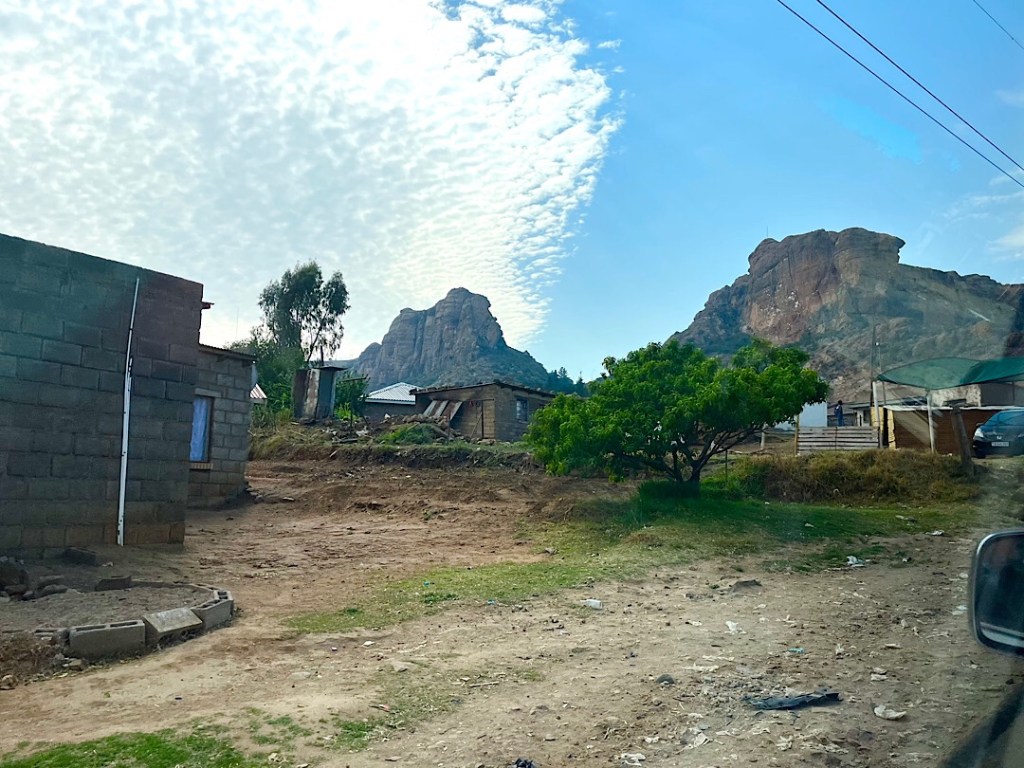
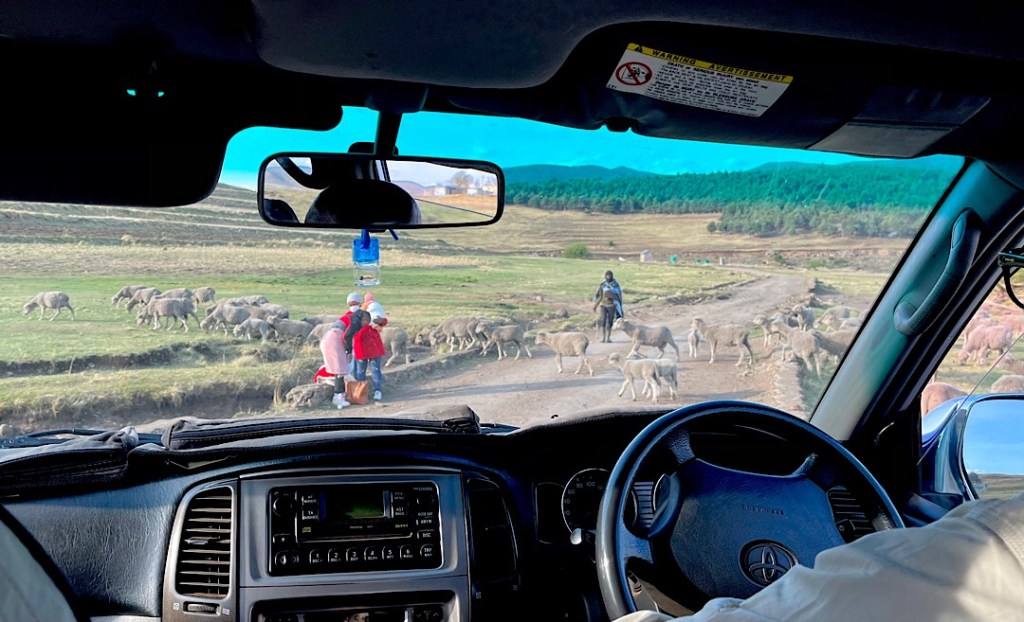
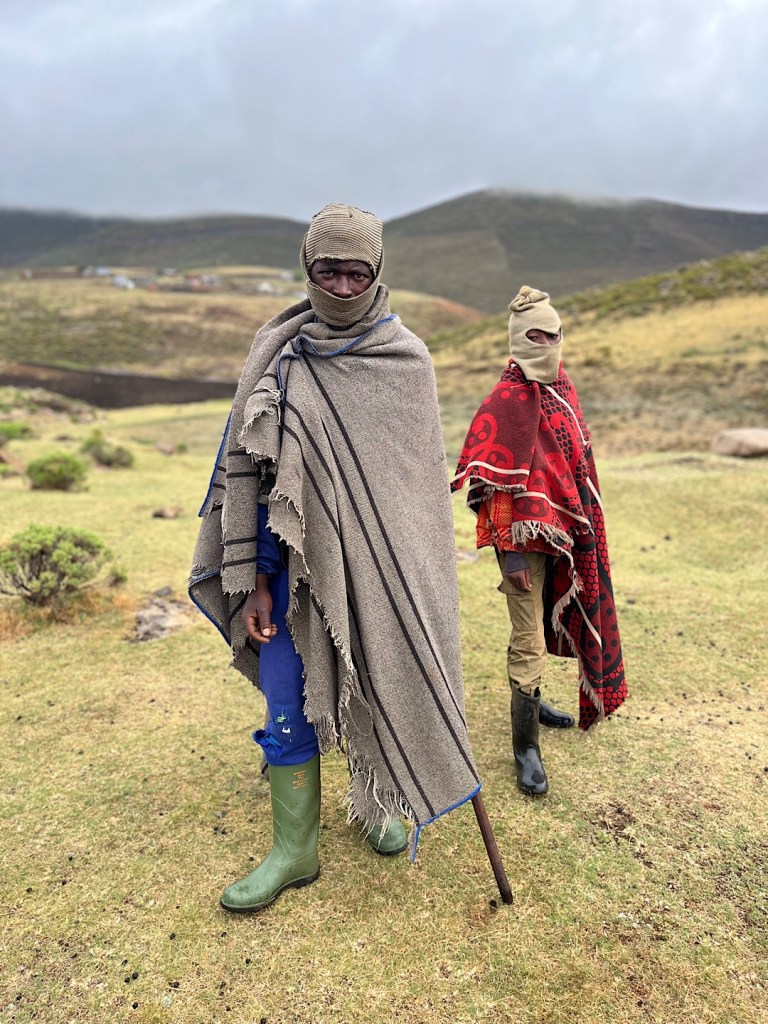
Most of Lesotho’s 2.5 million citizens are very poor. They survive by farming crops like sorghum and wheat, and grazing animals. Nowhere have I seen so many shepherds, young boys who’ve dropped out of school to spend their days and nights looking after various types of sheep (Merinos being most prized) or Angora goats or cattle.

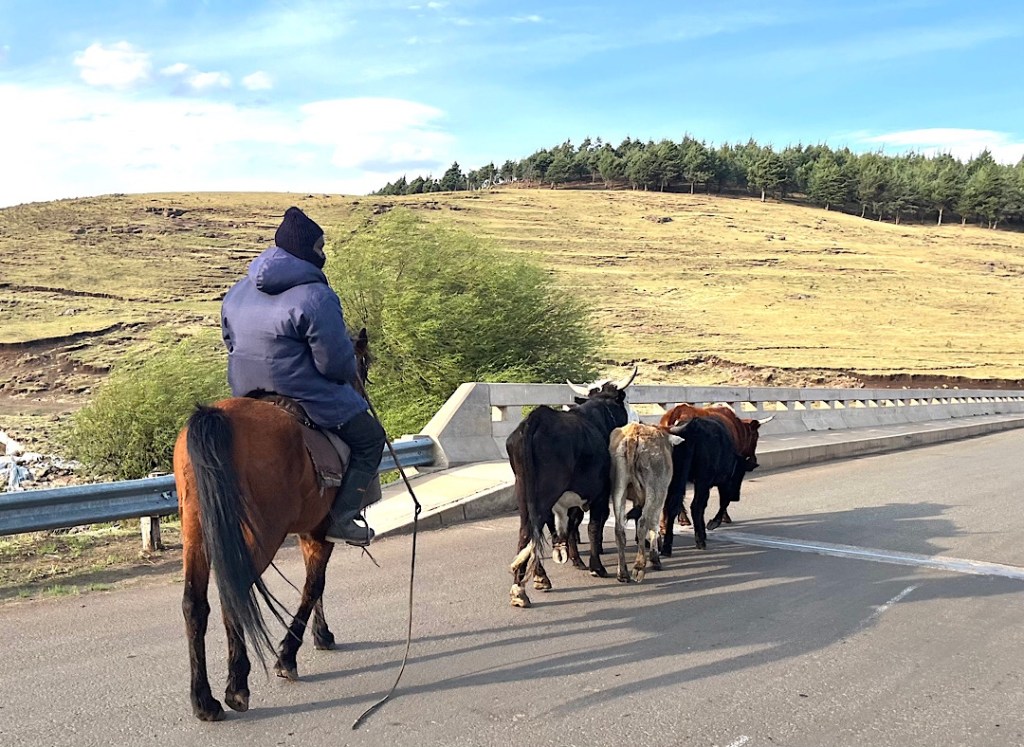
More than once I did a double take when I realized the cowboy riding a horse near the road was black.
The biggest disappointment of this trip came in Lesotho, when I learned Sandile would not be driving us back into South Africa over the Sani Pass. Travel writers rank this road through the Drakensberg Mountains as one of the world’s great driving experiences. When I received Roof of Africa’s proposed itinerary, I assumed we would experience it, as it was on a straight line from our hotel Wednesday night and our destination Thursday (the city of Pietermaritzburg.)
But Sandile explained there was simply no road connecting the dots. Few roads of any kind cut through this brutal territory. Instead we had to cross the border at lonely place called Qacha’s Nek, then jolt for an hour to get back on good South African tarmac. (We learned that many South Africans like the idea of Lesotho residents coming across the border about as much as some Americans welcome Mexican immigrants.)
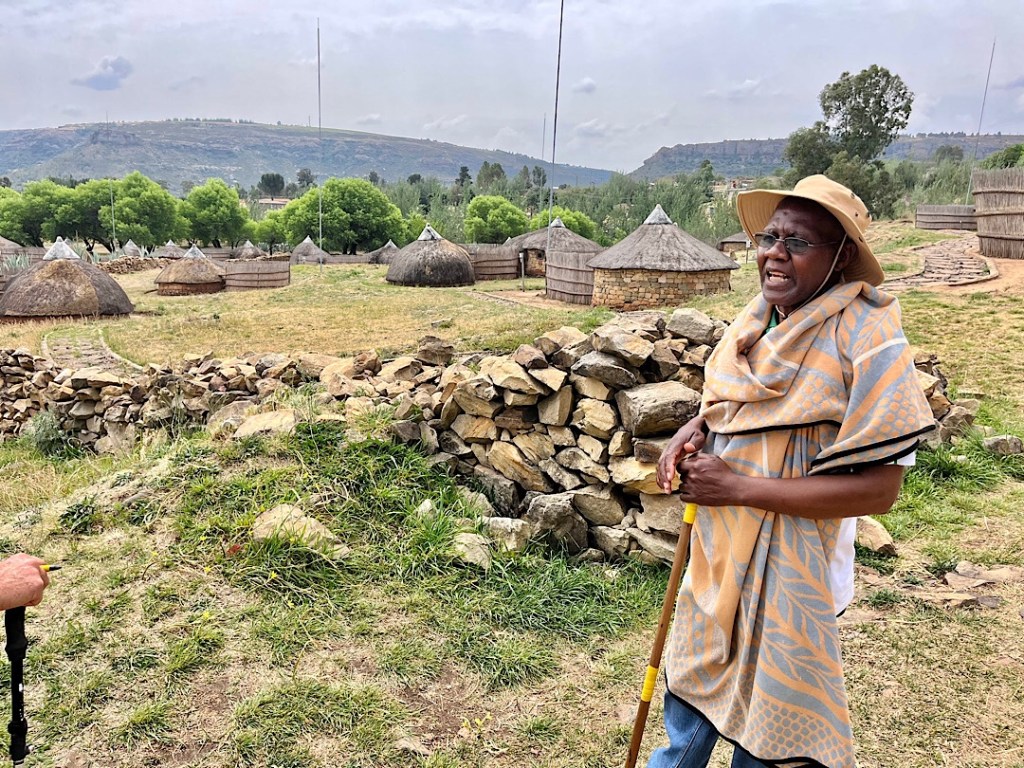
Neither Steve nor I regretted our little dash through the mountain kingdom. It’s fun to be reminded of the existence of places like Ha Moka (another stop we made Wednesday.) A tiny village today, it began in the early 1800s when a guy named Moka moved into a big local cave to hide out from the nearby community of cannibals. (Apparently they had been driven by drought and starvation to start catching and eating humans.) Moka married and eventually invited four other families to live in the cave. They built tidy little clay houses that look more like hobbit homes than anything we’ve seen outside the movie set we visited in New Zealand.
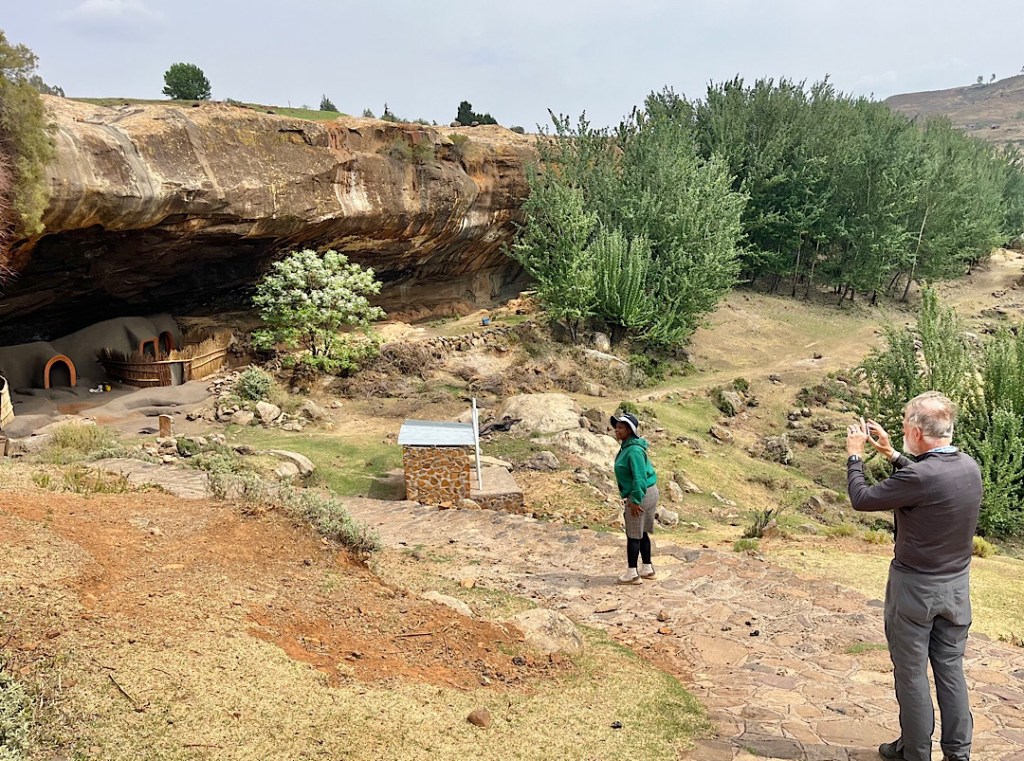
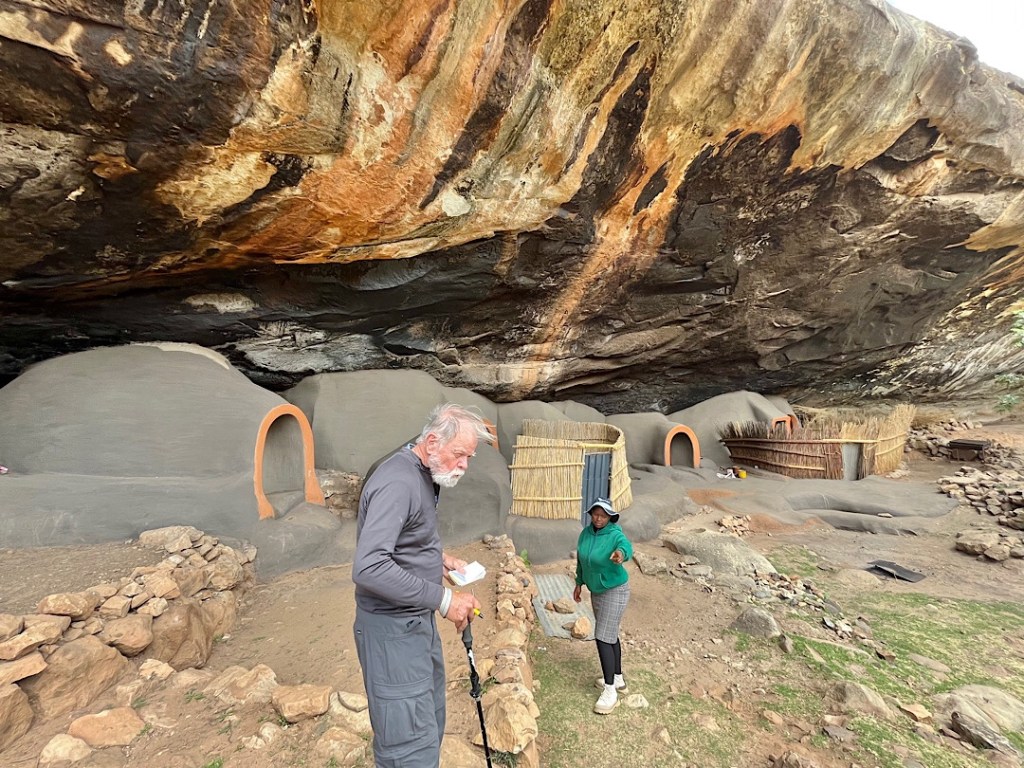
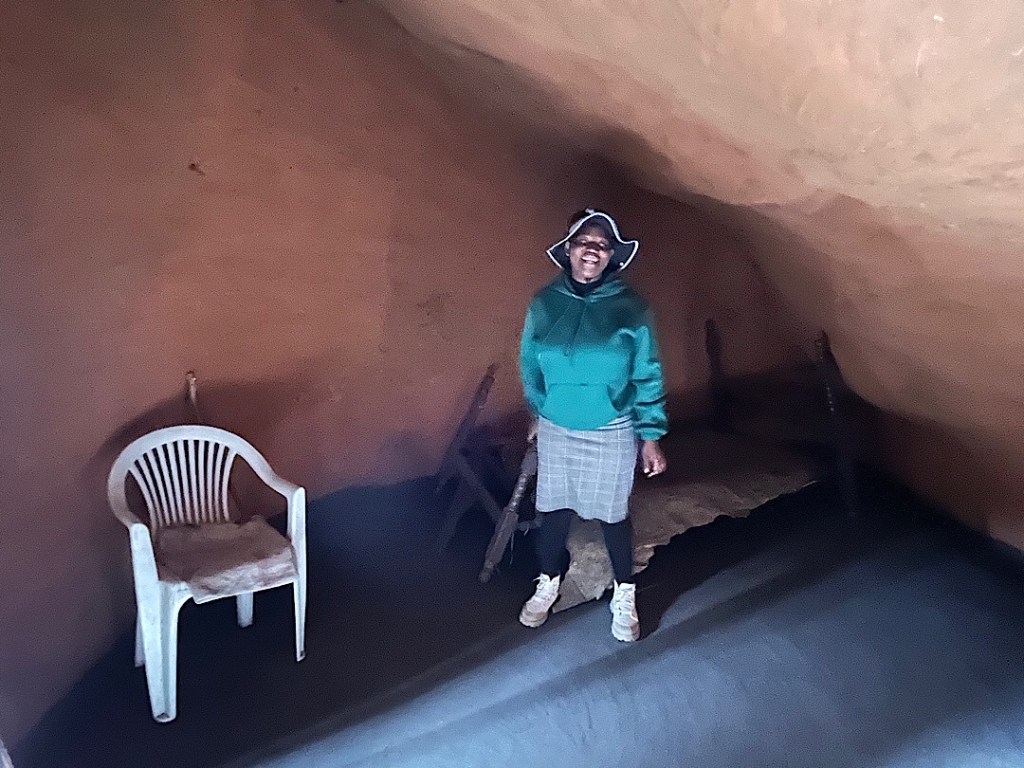
Our guide at the site told us the last member of the fourth generation of the cave dwellers just died last month. She has descendants, but it’s not clear any of them will move into the family’s cave house. As for the cannibals, even though they had eaten his own grandfather, King Moshoeshoe got them to stop their evil ways by giving them some cattle. More proof that he was one of the world’s better kings.
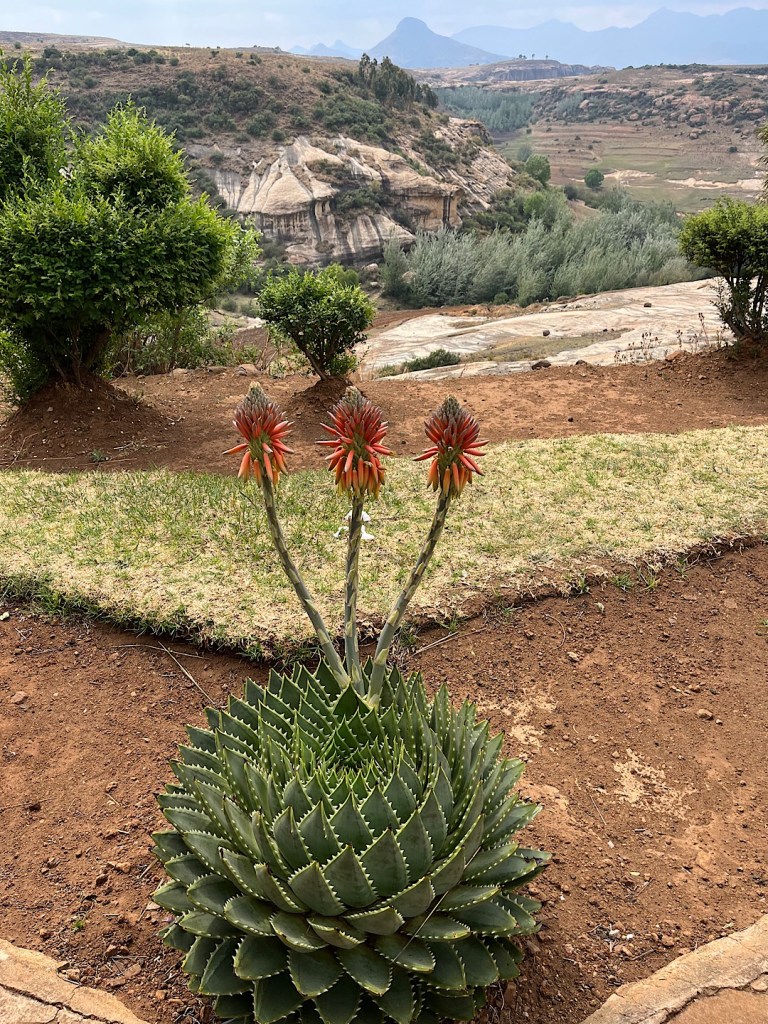
The spiral aloe, the national flower of Lesotho.
 At home and abroad
Thanks, again, Jeannette and Steve, for taking me to places I