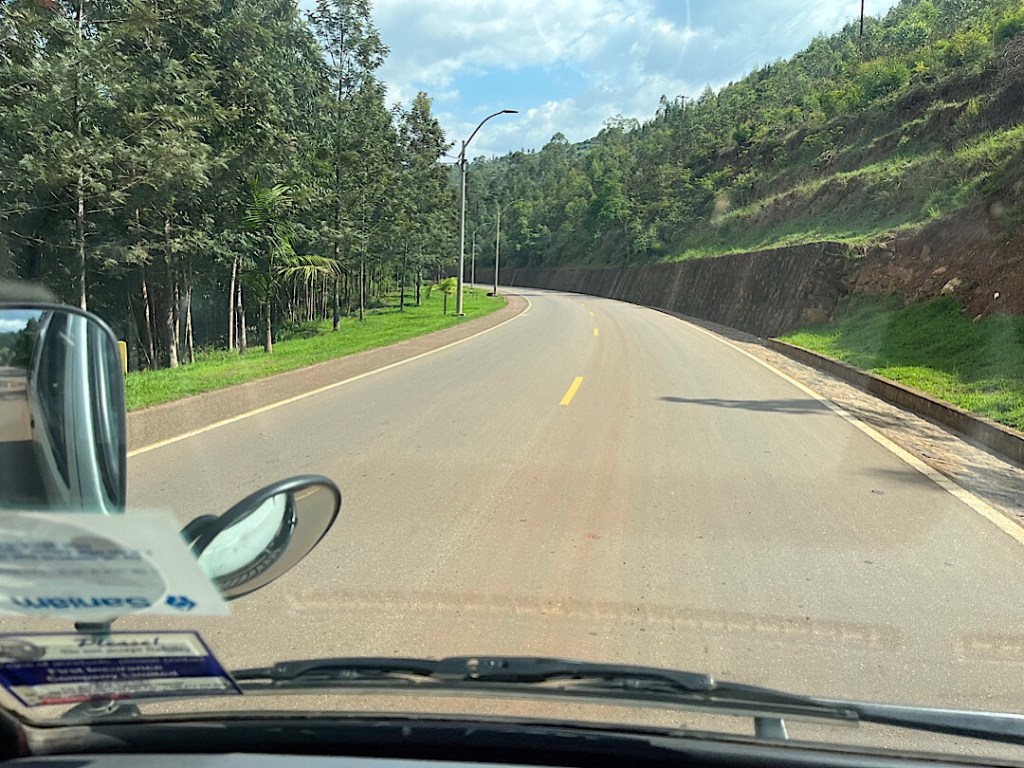
Rwandan roads are at least as good as those in the US, so I’m starting this post from the third row of seats in our 10-passenger van as we drive the two final hours to Kigali, the Rwandan capital. We crossed the border with Uganda a few minutes ago. Writing on the Ugandan byways, which range from good (occasionally) to abysmal (far too common), is pretty much impossible, given the jouncing. Off the road, our three and a half days in Uganda were so packed I couldn’t find a spare minute to get on my iPad when the sun was up. By the time it set, I’d run out of gas.
But I can summarize what we did.
We slogged out of Kampala through mind-bending traffic…


…then moved westward across the country to finally struggle up the broken dirt roads that lead to the village of Nyakagyesi. The trip ate up ten and a half hours — pretty much all of Monday.
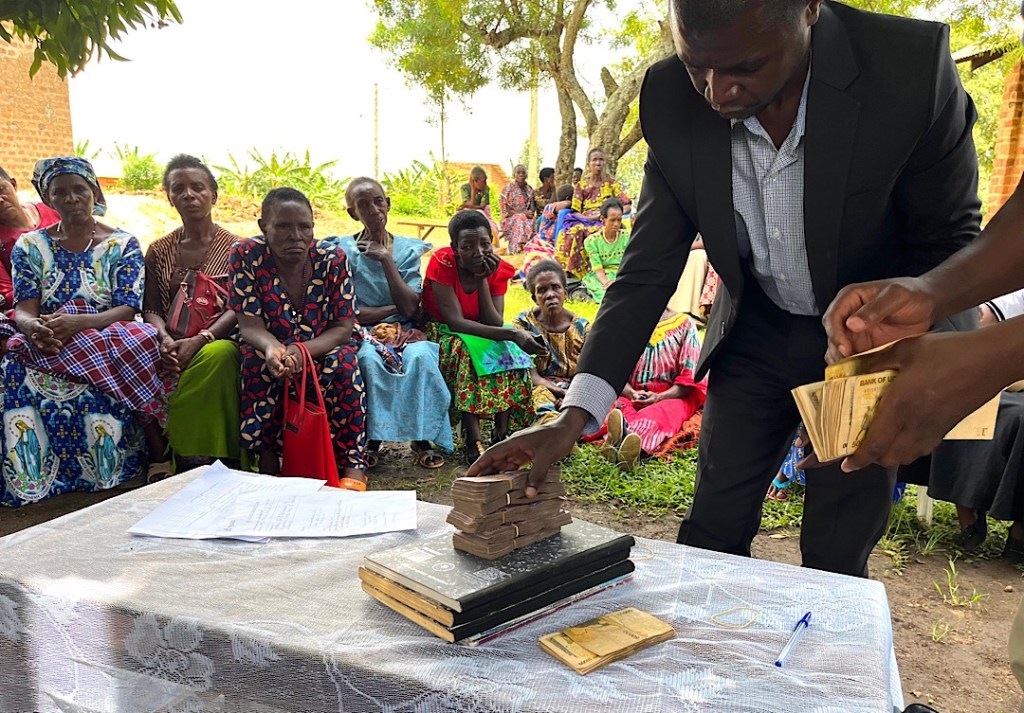
Wednesday we devoted to meeting with the grandmother groups and their members who are receiving micro loans funded by Women’s Empowerment, the San Diego organization for which Steve and I serve as liaisons.
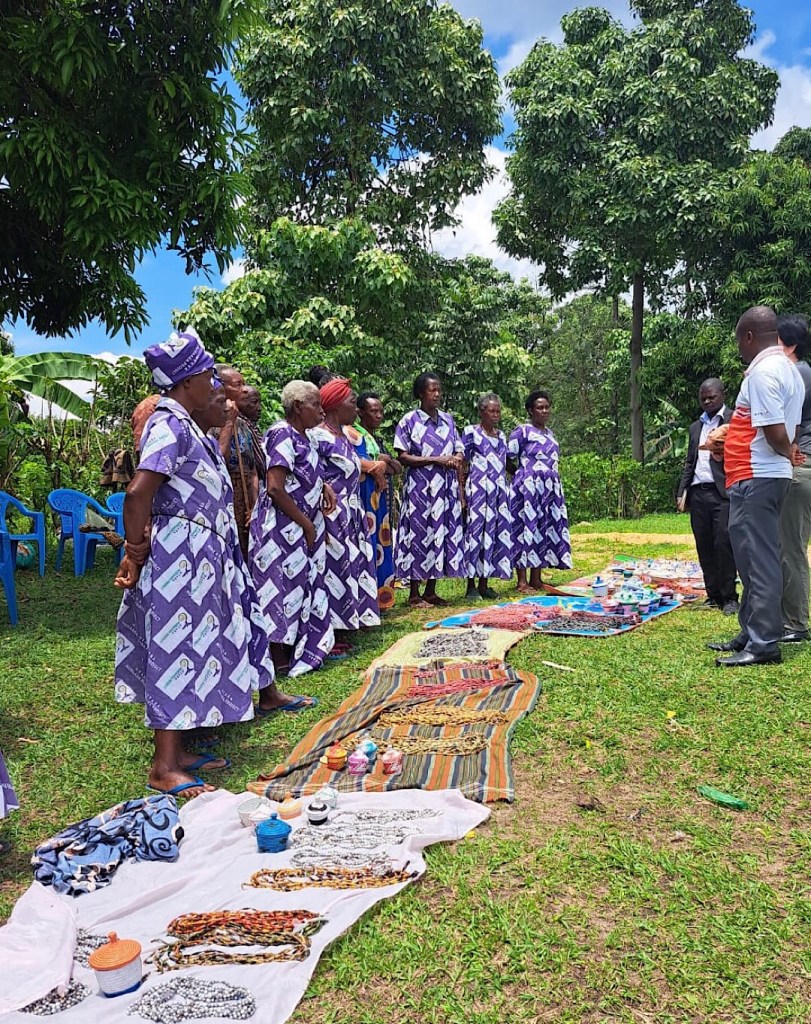
Thursday we toured the first primary school built by the Nyaka Foundation, its beautiful secondary school, and its health center, then we met with yet another set of grandmothers, these specializing in making jewelry, baskets, and other handicrafts.
After that we drove a couple of hours to Buhoma, where you can catch glimpses of the mountains on the other side of the border in Congo. Buhoma is a base for gorilla trekking, but everyone in our group had already done that (Jose and Mari two weeks ago; Steve and I in 2013.) Instead we paid a quick but fun visit to the office of a non-profit organization founded and run (by a woman I know in San Diego) to help the desperately poor local Batwa community.
The setting for all these activities has been a landscape that’s among the most beautiful on earth. A dozen shades of vibrant green, the land is all rugged mountains intermixed with verdant valleys and reddish soil so rich it produces almost every crop you can think of.

This morning an unexpected treat was when our drive to the Rwandan border took us over an 8000-foot pass in the Bwindi Impenetrable Forest (today in fact penetrated by a fairly smooth dirt road.) This forest, home not just to mountain gorillas but also forest elephants, is 100 million years old. Because it didn’t freeze during the last Ice Age, it harbors fantastic biological diversity. We didn’t see any forest elephants on our passage but Deus, our driver, pointed out fresh deposits of their droppings on the road.
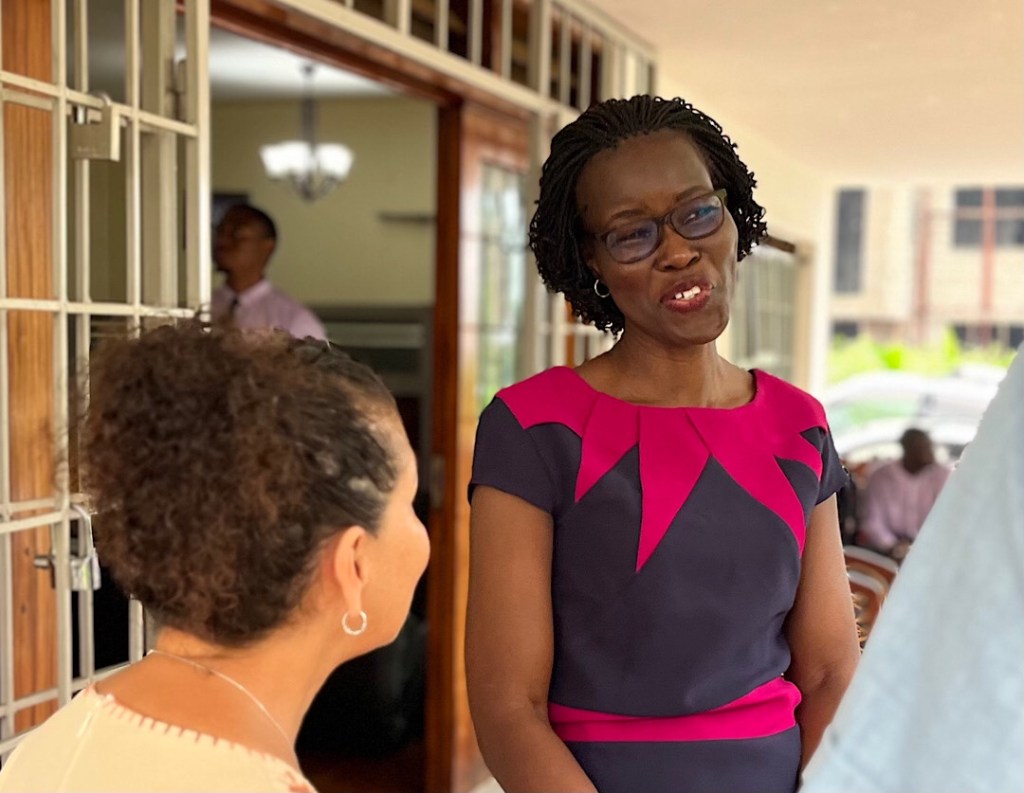
This was our fourth visit to Uganda, and another landscape, an invisible one, has also been coming into focus over the past ten years. It’s the network of relationships we’ve acquired. Some are with people we’ve come to love, like Jennifer Nantale, head of the whole Nyaka organization in Uganda and one of the smartest, toughest women I’ve ever met.
Or Sam Mugisha, the remarkable guy who in his youth jumped at a chance to travel to Japan, became fluent in Japanese, and returned home to start a travel business catering to visitors speaking that language. (He’s also been the outfitter for all our WE trips.)
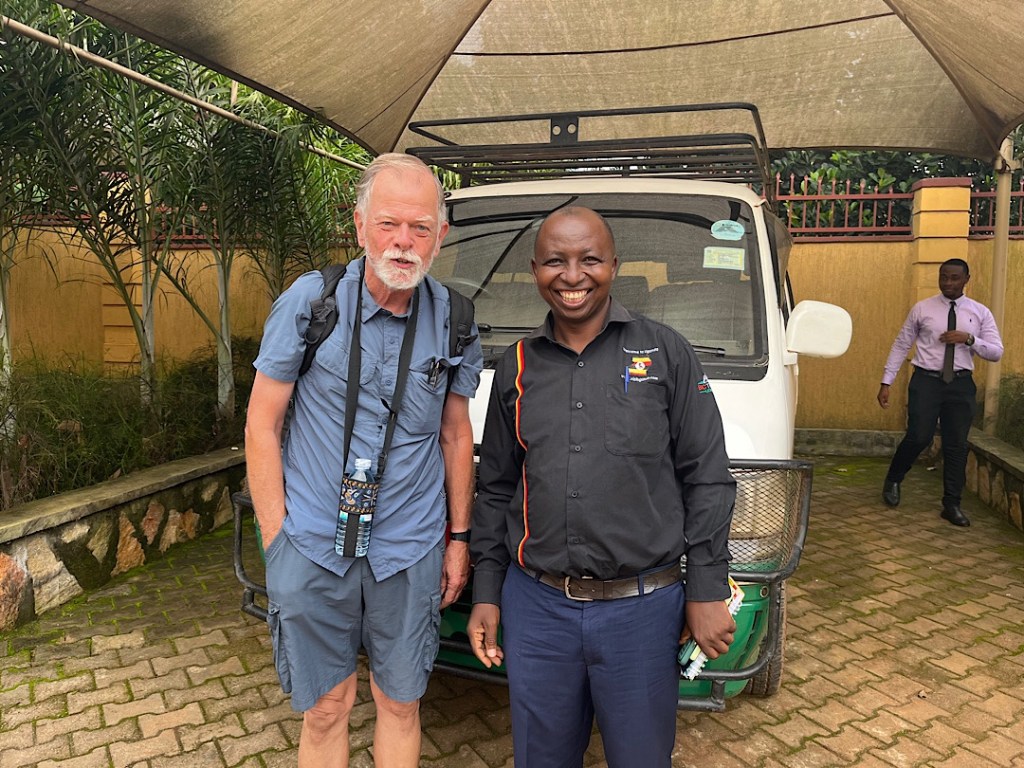
Dozens upon dozens of encounters with various individuals have been more fleeting but still vivid. Some fade quickly, but they’re still part of the tapestry composed of all the warm, kind, hard-working people we’ve gotten to know here. The impression made by others remains sharp for longer, like Norah, whom we met her early Thursday afternoon.
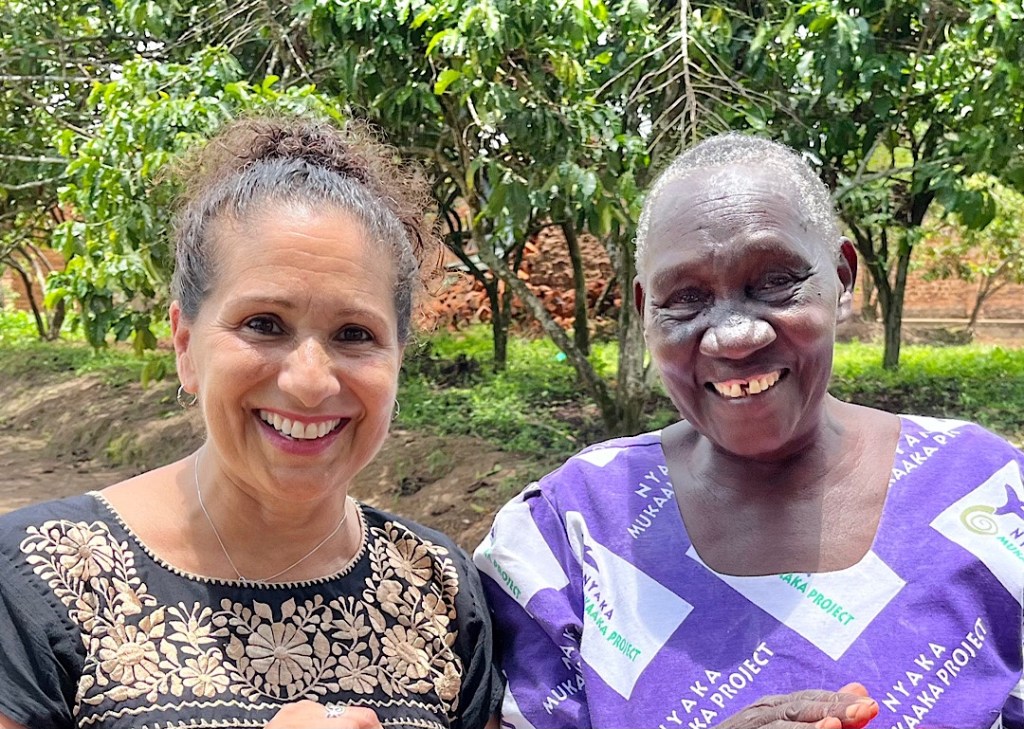
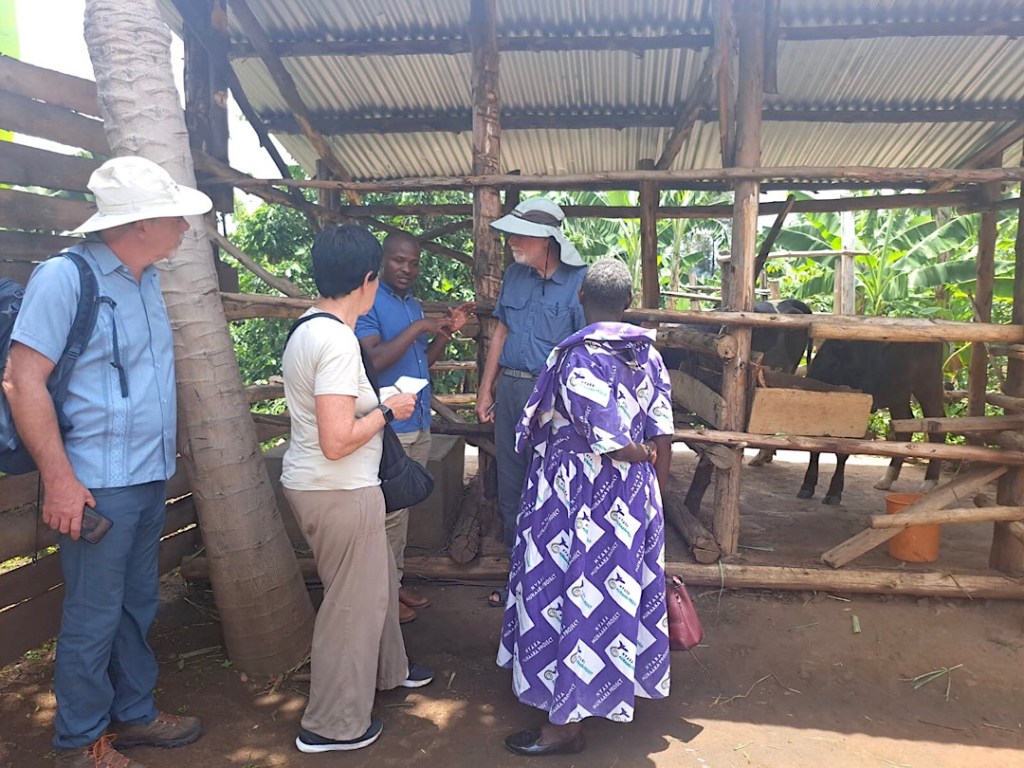
Norah is a 72 widow who’s currently raising four grandchildren ranging in age from 12 to 4. She greeted us with a warm smile and explained that she joined the Kyepatiko granny group four years ago. Now she’s the chairperson. Over the years she’s gotten two loans from the group, the most recent one for 500,000 shillings (about $133). She combined that money with the 3 million shillings she had saved from her coffee crop and used the money to buy a cow and calf. When the calf was a baby, Norah was getting 5 liters of milk a day that she could sell for about 37 cents a liter. But now that the calf has grown, it consumes all its mother’s milk. Still, she had bred the cow about a month before our visit, and she was hoping to have a birth in about 8 months. She would then sell one of the calves.
Norah has a warm and confident presence, and she led us to the back of her substantial house to the clean and well-organized enclosure she has built for her cow and calf.
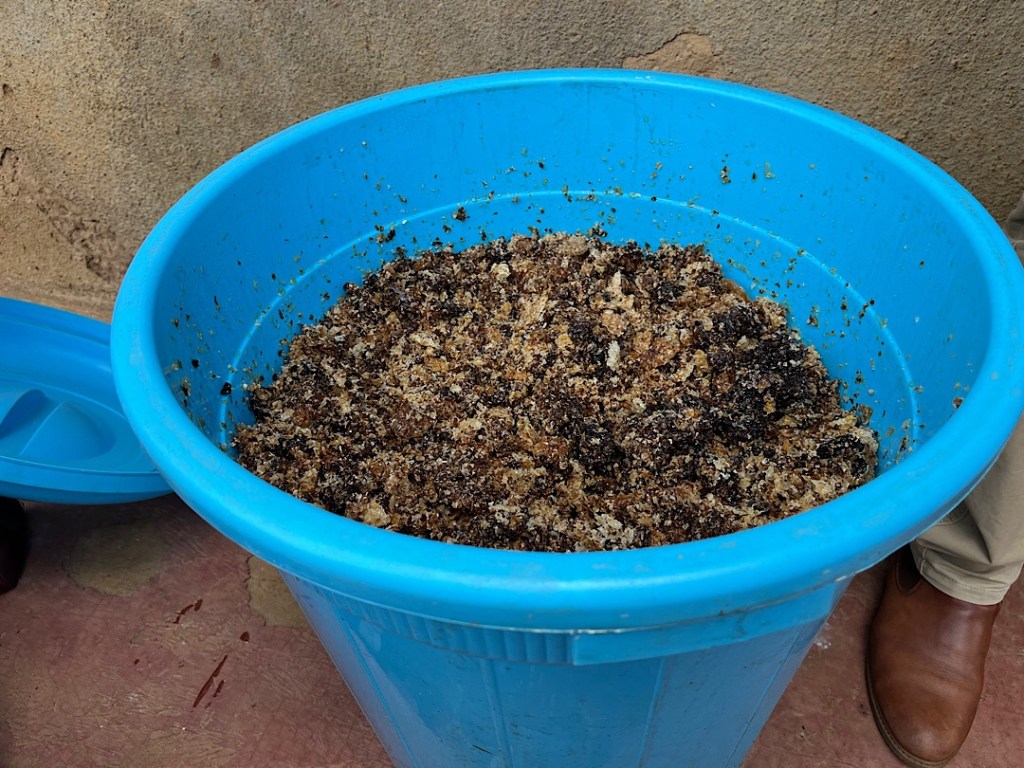
Besides her fledgling dairy business, Norah has also built up an apiary; today it houses 50 beehives. We couldn’t visit it because the bees would sting us during the day. (Norah and her family collect their honey at night when the insects are sleeping.) It’s a good business. The grandmother can charge about $68 for 5 liters of honey. It adds up to more than $500 over the course of a year. Still Norah said she wants to develop the market further.
The path to the apiary passed through healthy coffee trees laden with berries. And Norah also seemed proud of her field of emerald spears of elephant grass. She harvests it to feed to the dairy animals (which can’t just wander around, munching other people’s crops.)
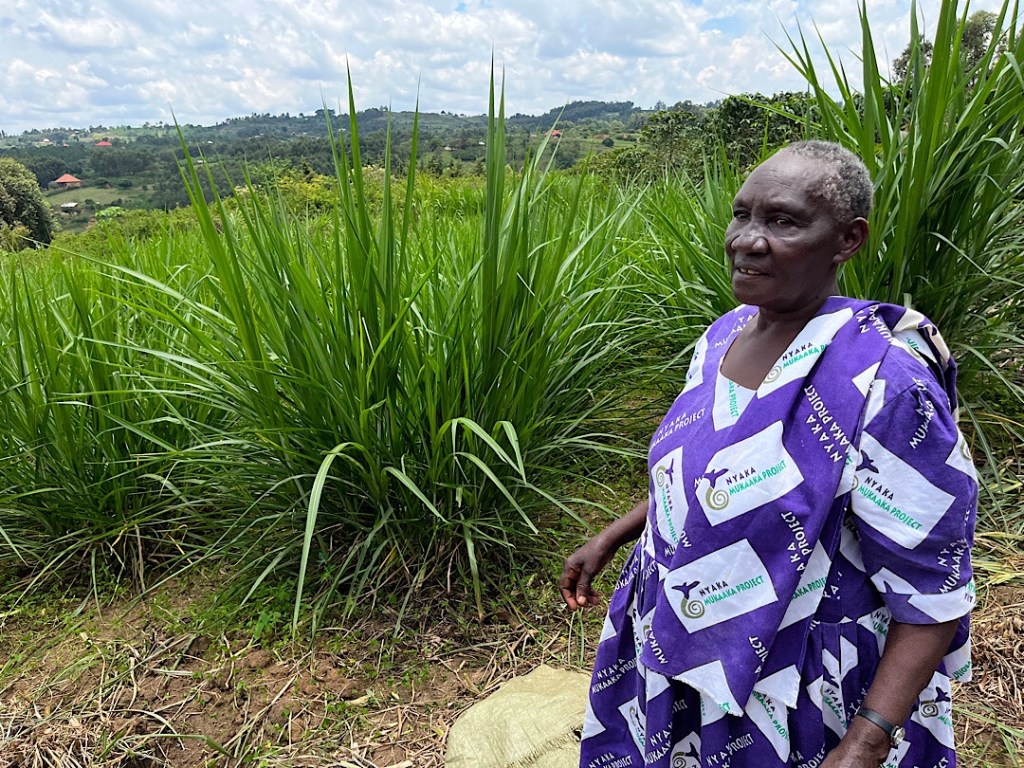
Later, we watched Norah direct the grandmother group meeting. She commands attention with ease. Reflecting on our meeting with her at dinner a few nights later, Jose and Mari and Steve and I agreed she was hard to forget. “If she were in the US, she’s be the CEO at some big corporation,” someone said.
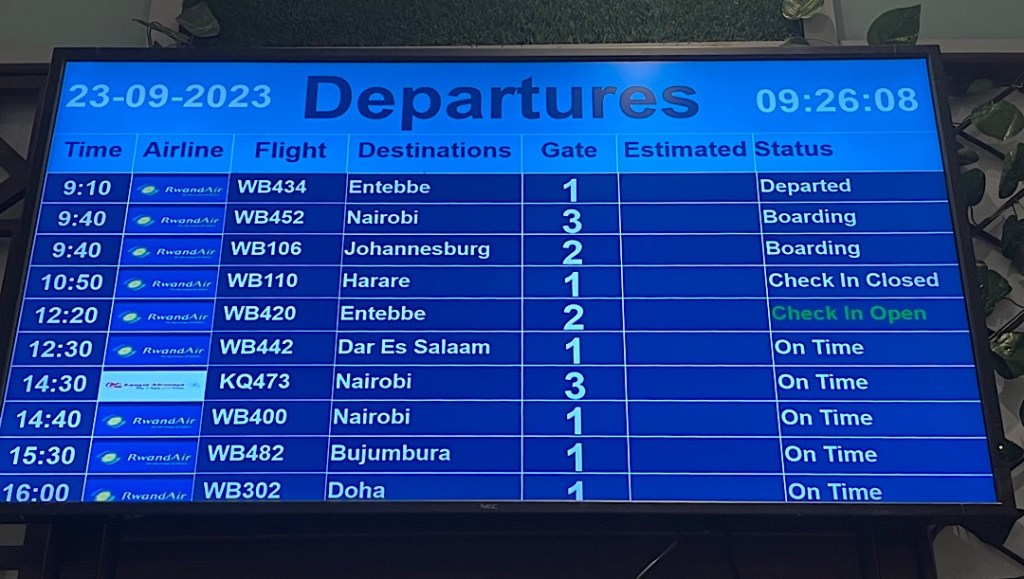
But I have to confess: my attention is drifting away from all that. It’s now Saturday morning and in a few minutes Steve and I will board our flight to Harare. Compared to the cozy familiarity of Uganda, Zimbabwe is terra incognito.
 At home and abroad
I love your comment about an invisible net work. That’s how I feel about Malawi . Your description of the grandmother groups reminds me of Malawi as well, hard-working, warm people.