Turtle power

For four species of giant sea turtles, Oman’s relatively unpopulated tropical beaches are special; mother turtles use them to lay their eggs. At the very easternmost point of the Arabian Peninsula, the Omani government has created a preserve called Ras al Jinz to help the babies survive their perilous journey to the water after they hatch. I read about this place and thought it would be cool to visit — until I learned that high season for the egg-laying and hatching was in the summer — months after we would be passing through. So I didn’t include any reptilian adventures on our itinerary.

Months passed. The more I learned about the challenges involved in getting to the Arabian desert and up Oman’s rough, wild mountain roads, the less I wanted to rent a 4WD vehicle and drive it ourselves. In the end, we decided to hire an outfitter to provide us with a driver/guide (Abdullah) for three days. The itinerary that they proposed included a visit to Ras al Jinz. We shrugged and thought: why not?

On our first afternoon together, I commented to Abdullah that I understood we probably would not see turtles that evening, because it wasn’t the right time of the year for them. But he set me straight. Even though the numbers couldn’t compare with what one would see in the summer, “You are 95% guaranteed to see turtles,” he promised. He explained that we would have two opportunities to see them. Guides would lead guests staying at Ras al Jinz and a limited number of other visitors on a trek to the beach around 8:30 or 9 pm. They would also lead a much smaller group about 5 am. We could do one or both excursions, but in Abdullah’s opinion, the morning outing was the better time — quieter and more peaceful and allowing participants more time to commune with the sea.

Both Steve and I were feeling beat; we crammed an awful lot of sightseeing and driving and swimming into our first day with Abdullah. So we jumped at the chance to opt for the morning turtle foray. We ate dinner at the reserve, climbed in bed by 9:30, and set our alarm for 4:30 am.

Shortly before 5, we joined a small group in the lobby. We set out toward the beach, illuminated only by the wan glow of the coming dawn.


Most of the stars had disappeared, but Venus still gleamed. No one talked. A Goldilocks breeze made me feel just right.
About 30 feet from the surf, our guide instructed us to wait. He would walk up the beach, scanning for egg-laying females, while a fellow guide would search in the other direction. If they found a turtle, they would signal us with their flashlights. We watched our leader grow smaller and smaller as he approached a starkly geometric promontory in the distance.

But he found no egg-laying females, nor did his buddy who scanned in the other direction. I felt let down, like we’d blown it. The night group had been able to observe not one but two turtle mothers obeying the urgent imperative of their instincts. 
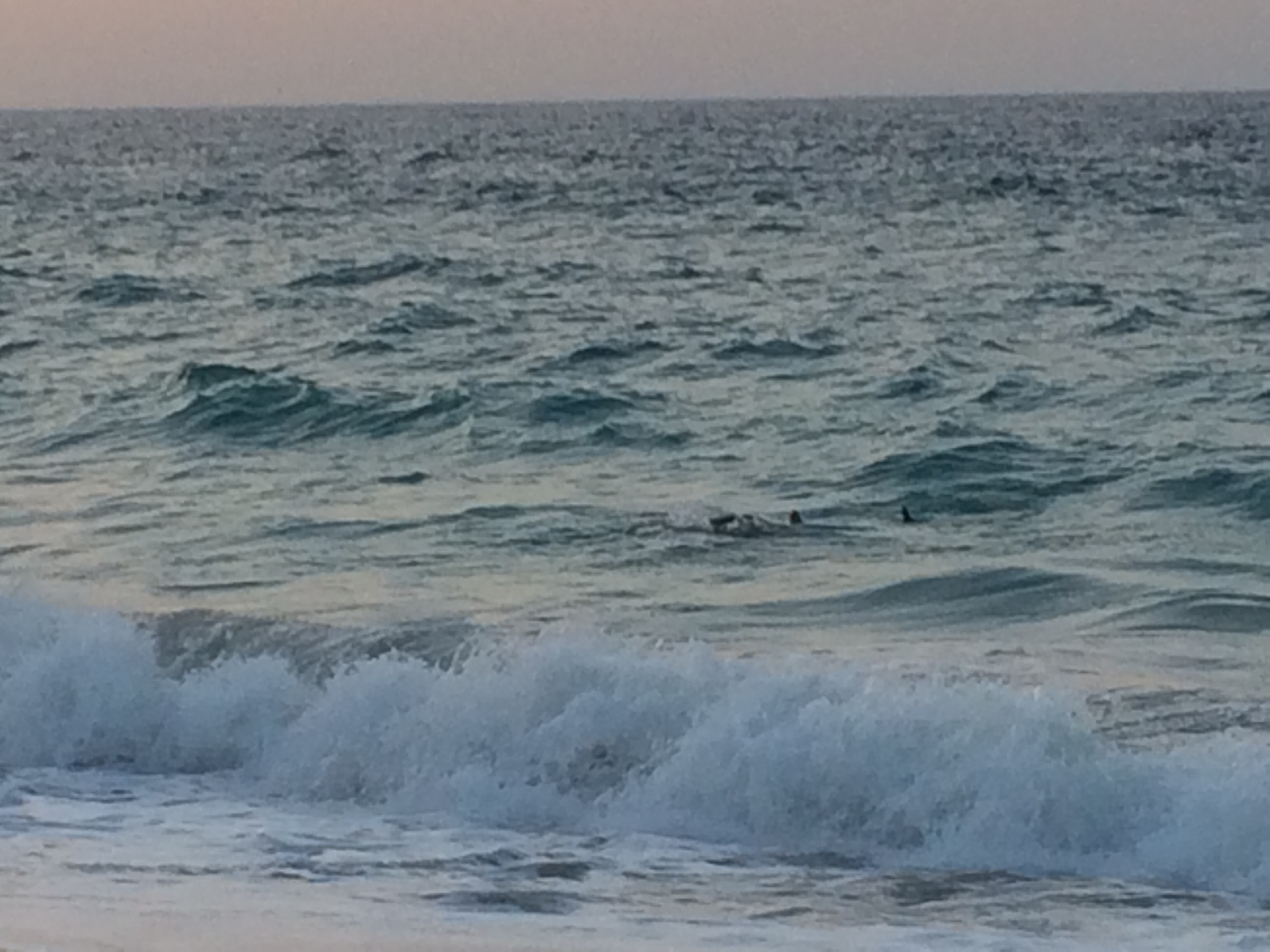
Someone in our group spotted something in the surf zone — giant turtles, copulating. It looked like large dark forms thrashing about. Once in a while, a fin or two could be seen. Everyone watched this for a while, but our guide said the female in such encounters never would come onto the beach immediately. “It will be like three or four days later,” he said. So people started trudging back to the lodge.

See the fins?

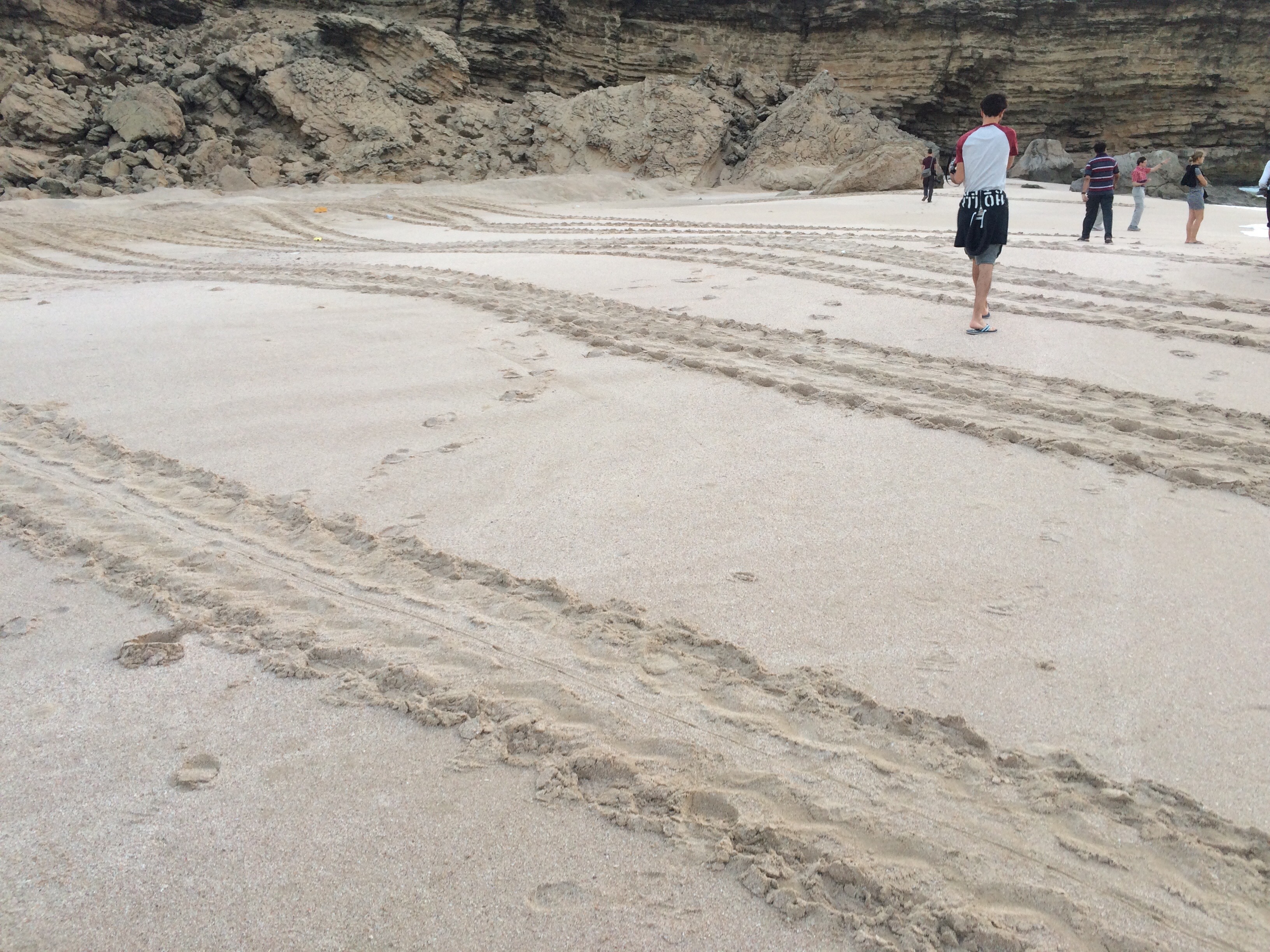
Some of us lingered however. Steve and I marveled at the huge tracks left by female turtles who had obviously been there earlier — they looked like they’d been made by small bulldozers.

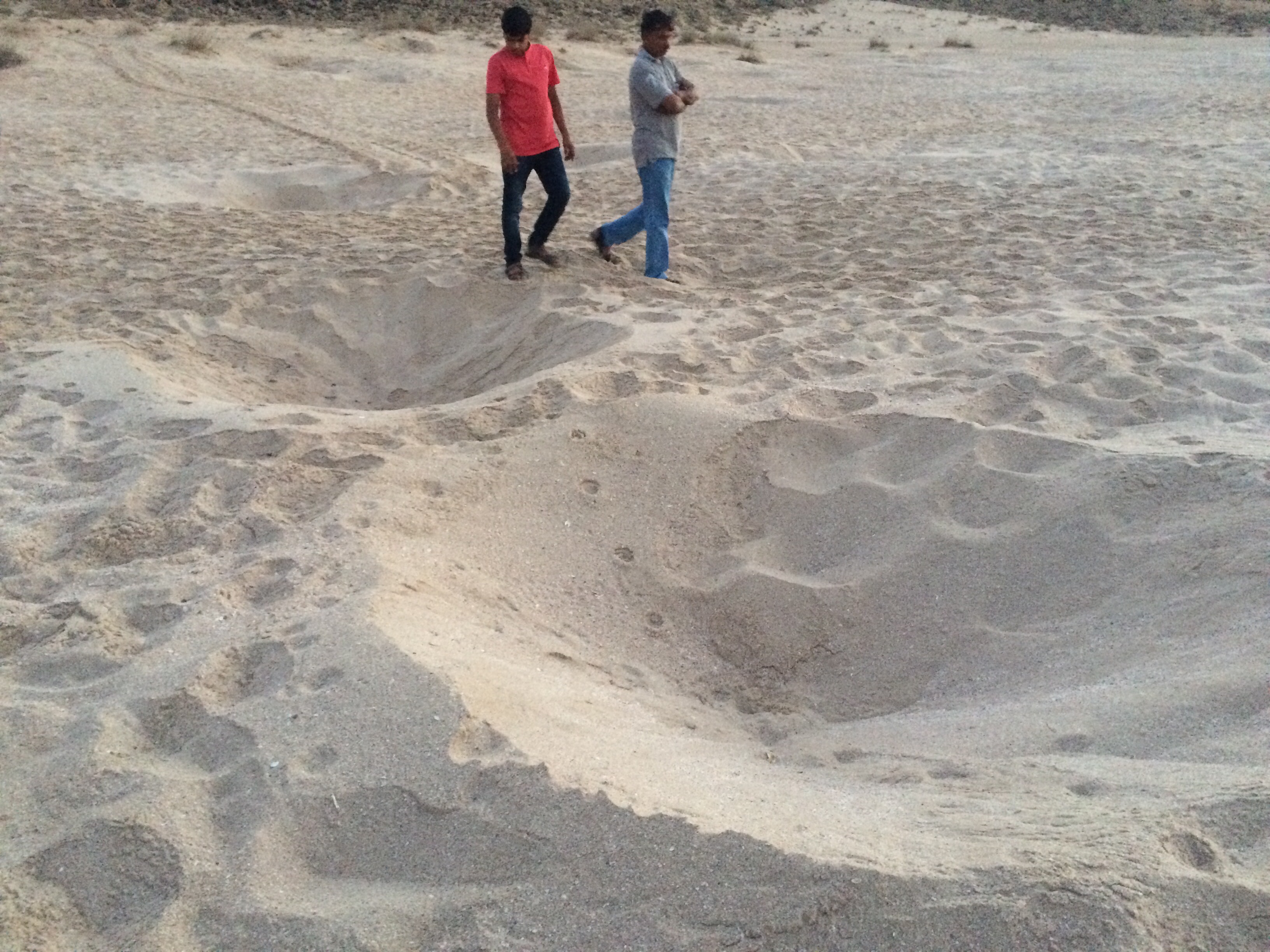
We realized that the depressions dotting the beach had been made by the females.


We assumed these pits were the nests. Egg shells the shape and size of golf balls were strewn around them.

But later we learned that the eggs were actually buried by the huge female turtles about a meter down and away from the depressions, in part to deceive some of the animals that love to eat turtle eggs (including foxes, whose paw tracks we saw in the sand.) 

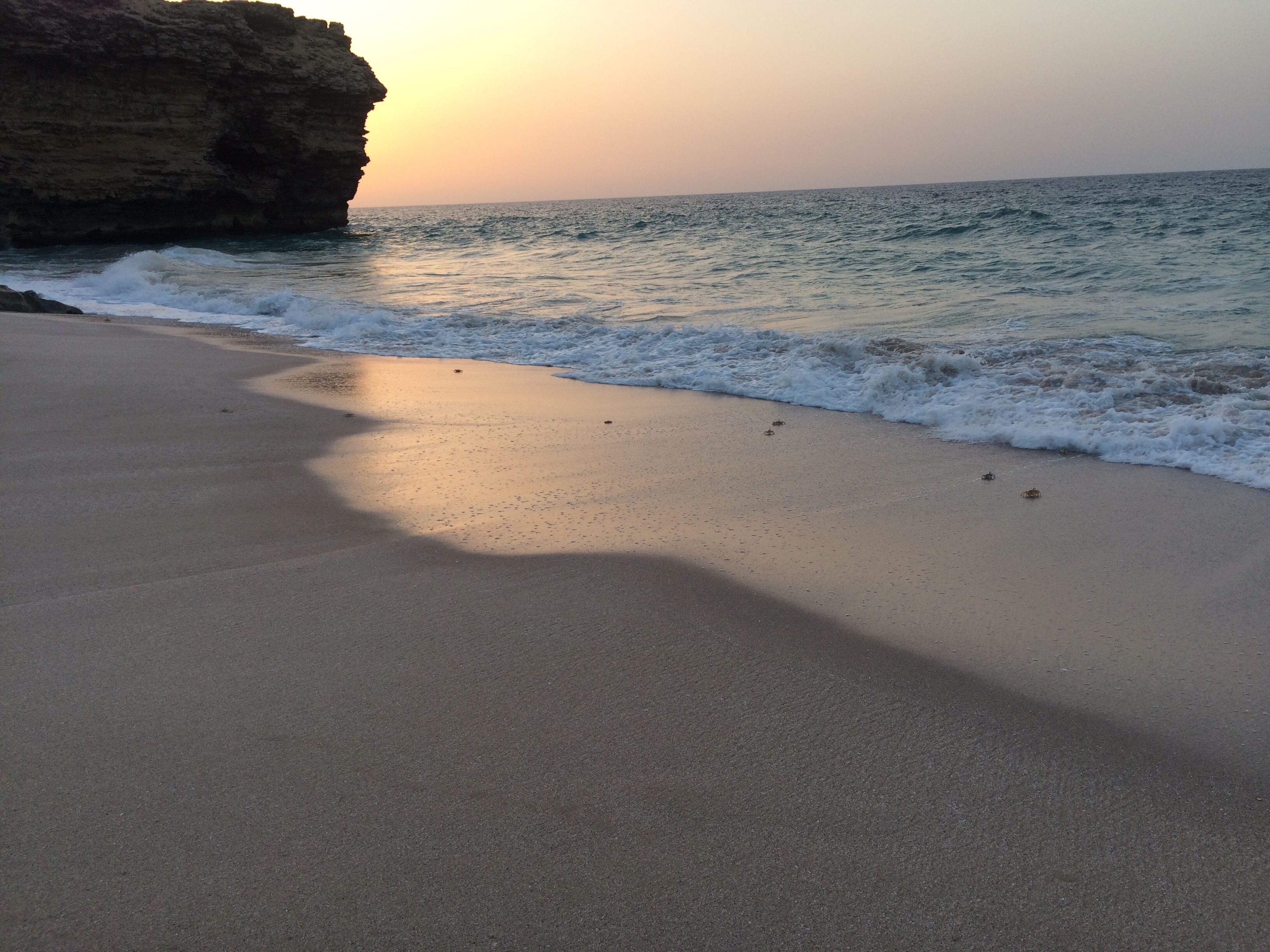
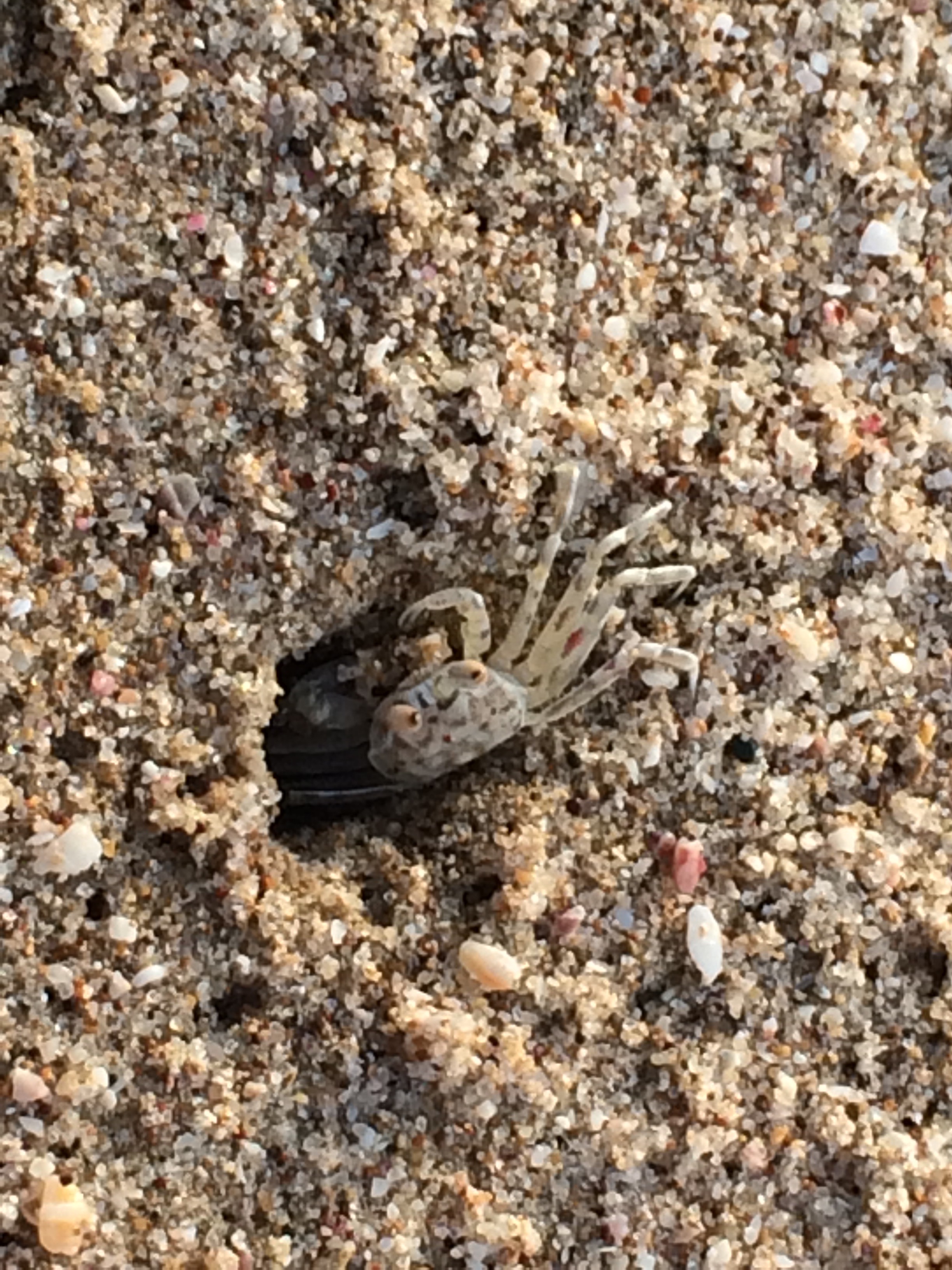
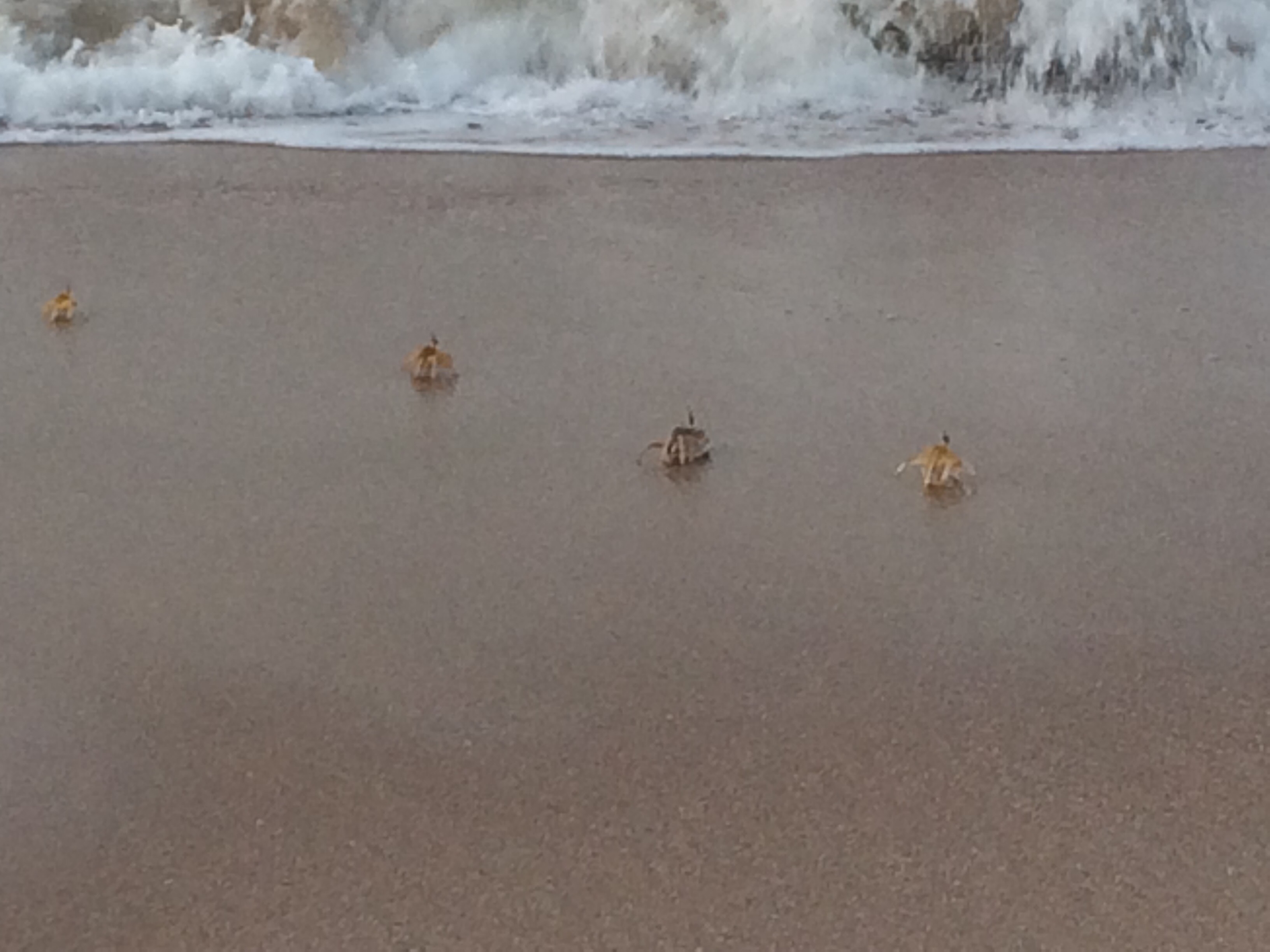
Comical crabs scurried through the waves and played peekaboo in their holes.

If we’d missed the sight of the mother turtles laboring and delivering their offspring, their presence, after a while, felt very close. As did the babies. Only one sea turtle hatchling in a thousand makes it to maturity, to swim the oceans of the world. The thought of the little ones buried all around me, who soon would each give it their shot, almost tempted to be return to Ras al Jinz in the high season. (Daytime temperatures climb well over 100 then.)

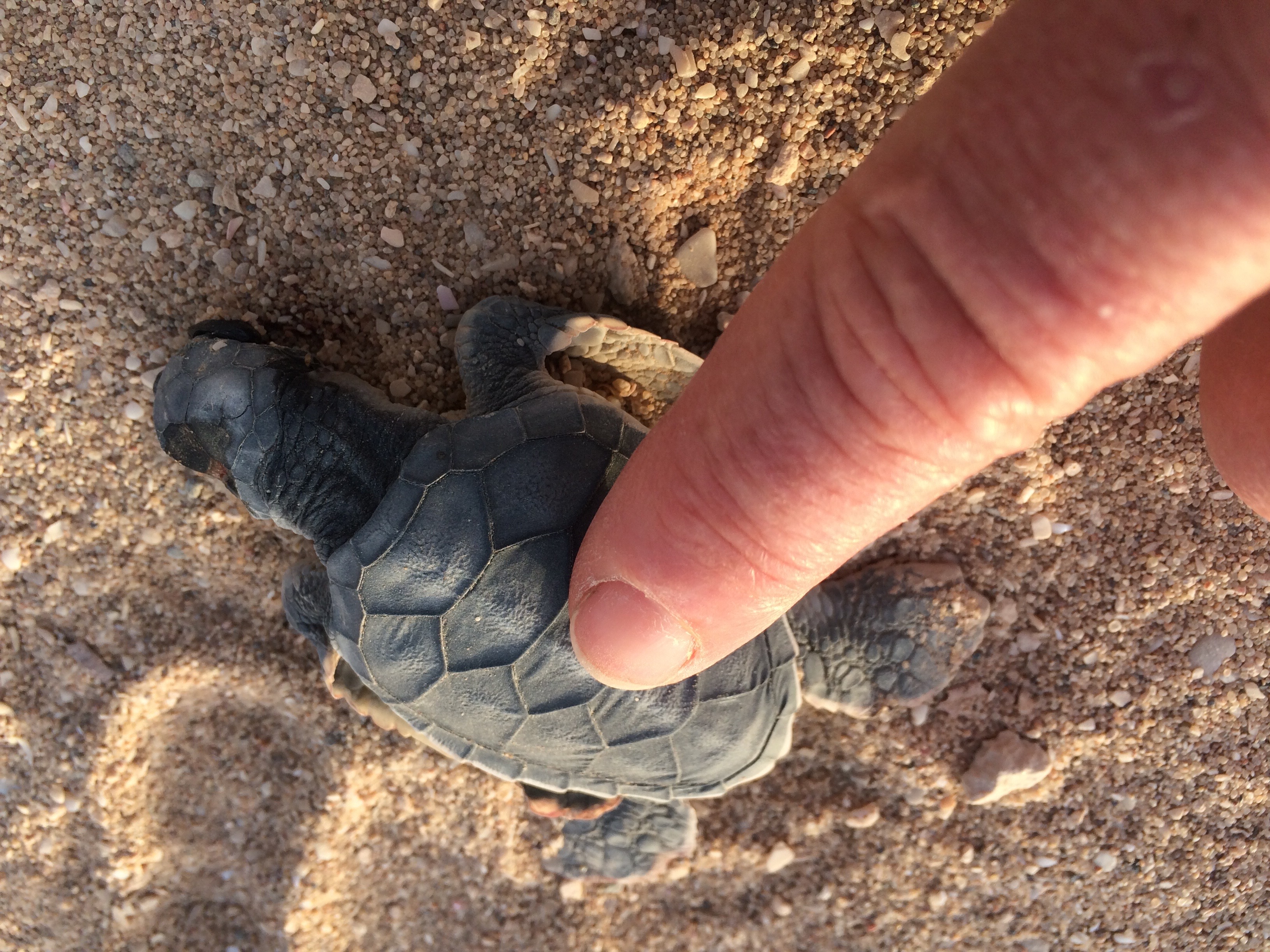
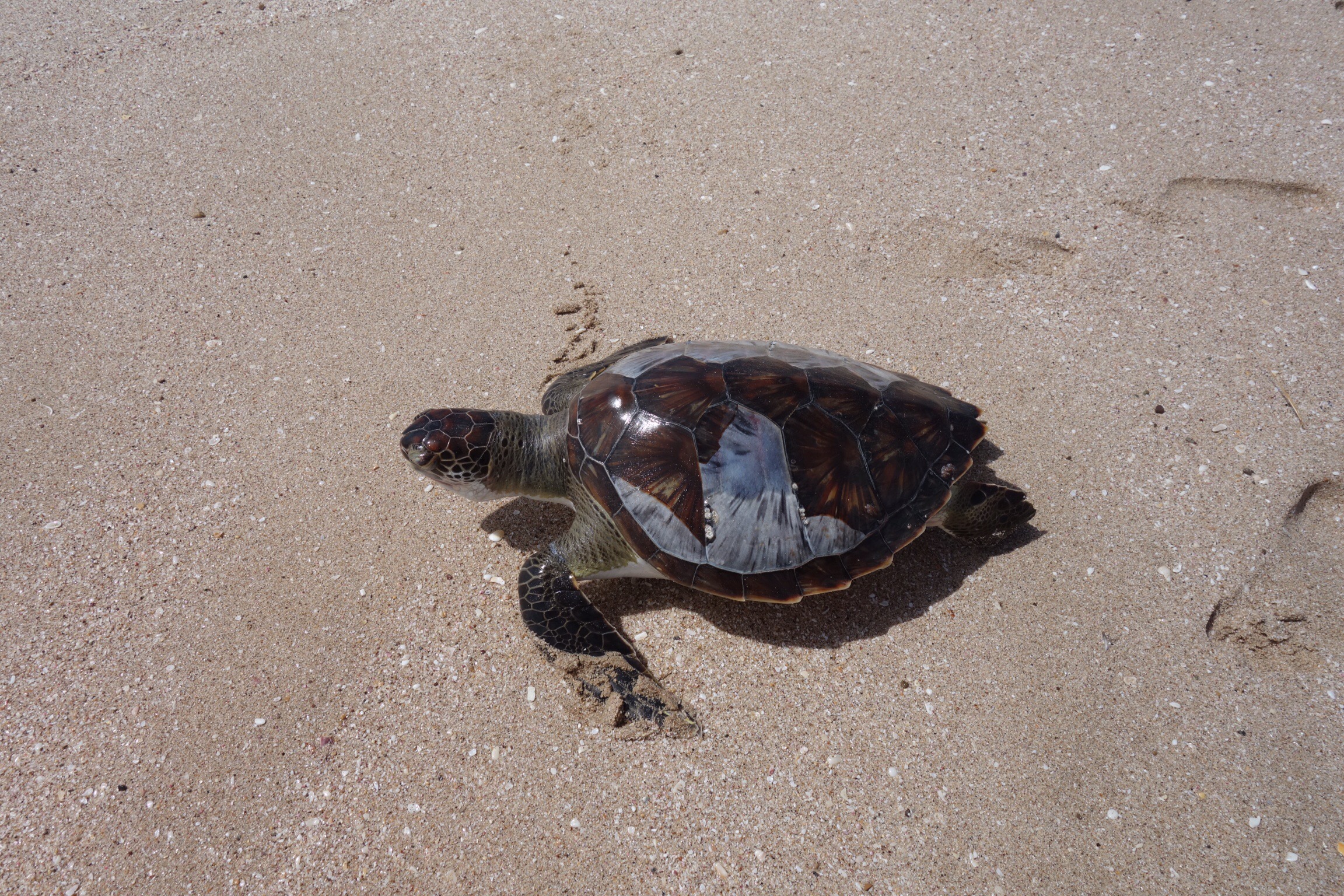
We found this new hatchling dead on the beach. But life is hard even for older turtles. The guy below was at least a foot long. But something killed him too.


Getting places in Oman

How do you find your way in the world? More specifically, what’s the best way to navigate through an unfamiliar city? For most of my life, I used paper maps. Maps from cities spanning from Las Vegas to Leningrad fill a big plastic bin in one of my closets at home. In the last few years, I’ve started using digital guidance from Google or Apple, but they depend on decent Internet to work well, and in many places, we only receive free but slow (2G) service from T-mobile. I can’t count the number of places we’ve gotten lost, due to the obtuseness of these direction-givers (often in combination with our own mistakes).

Last fall in Malaysia, we chatted with a friendly young Canadian backpacker who raved about an app called maps.me. He described how you could download maps for pretty much any place on earth. Combined with the GPS in one’s smart phone, they provide excellent guidance even offline, he told us. So before this trip, I downloaded their maps for the UAE, Oman, and Uganda.

Results so far have been mixed. At times in Dubai they showed our position down to the street corner, with many of the nearby businesses identified. But the app also led us astray at least once. We thought maybe we just weren’t using it right.

When we arrived in Muscat Saturday afternoon, we quickly realized this was a place where maps.me could shine. Oman’s capital is an ancient city, and although it has become a sprawling metropolis, we were staying in the old heart of it, on the waterfront. That area is small; the jagged brown mountains plunge close to the waters of the city’s little natural harbor. Streets in the Mutrah area, where the souq is located, twist around the rocky spurs, forming a confounding maze. Making matters worse, our guesthouse was about a mile from the waterfront.
Only slightly daunted, Steve and I whipped out maps.me and set out for dinner the first night, asking the app to show us the way to a waterfront rooftop restaurant that got great reviews (and served beer!) The route seemed clear for most of the way. But toward the end, we saw no sign of the Marina Hotel. The map indicated we were standing right next to it. But our eyes found no evidence of that. We asked some locals, but no one seemed to recognize what we were talking about. Finally, we got a taxi driver to drive us to the correct location (about a mile away). “Pay me whatever you think is fair,” he said (having no meter). Steve gave him one rial (about $2.60), and he seemed okay with that. 
After dinner, feeling slightly more familiar with the city’s layout, we set out on foot from the Marina to the guesthouse. Again, the path on my phone seemed clear. It led away from the brightly lighted waterfront and into gloomier residential streets, but even though it was nighttime, and the streets were filled with Arab men in turbans and long white robes, I felt comfortable. Black-robed women also were out strolling with their little ones. Clearly, this was a neighborhood, and its residents were enjoying the slightly cooler temperatures of the evening. 
Steve and I plodded on and on, and the number of people around us decreased. Finally, a man approached, looking distressed. “You cannot go on!” he declared. Had he recognized us as foreign infidels? Even worse, Americans? But no! He seemed to be saying (in heavily accented English) that the street was a dead end. If we went on, we would hit a dark hillside, and it would not be safe to try to climb it in the dark. His concern over our safety was unmistakable. He said he would drive us back to the corniche, but his son had taken the family car. Instead he and several neighbors offered instructions on how to make it back to the main thoroughfare (which we did). From there on, maps.me behaved itself.
The next day, Sunday, we had better luck exploring Muscat, and we’ll return there for our final evening, Wednesday. On Monday, however, we switched to another way of getting around: putting ourselves in the hands of an expert driver/guide. Even more than the solicitous stranger in the street, Abdullah is a paradigm of gracious Arab hospitality. He’s 30, the father of two little girls and an 8-year-old son. “Most babies are born crying. This one was smiling!” one of the ladies at the grand mosque told us our first morning — referring to Abdullah. He has a great sense of humor, along with lots of curiosity and candor. After 20 minutes, I knew he was my kind of guide.
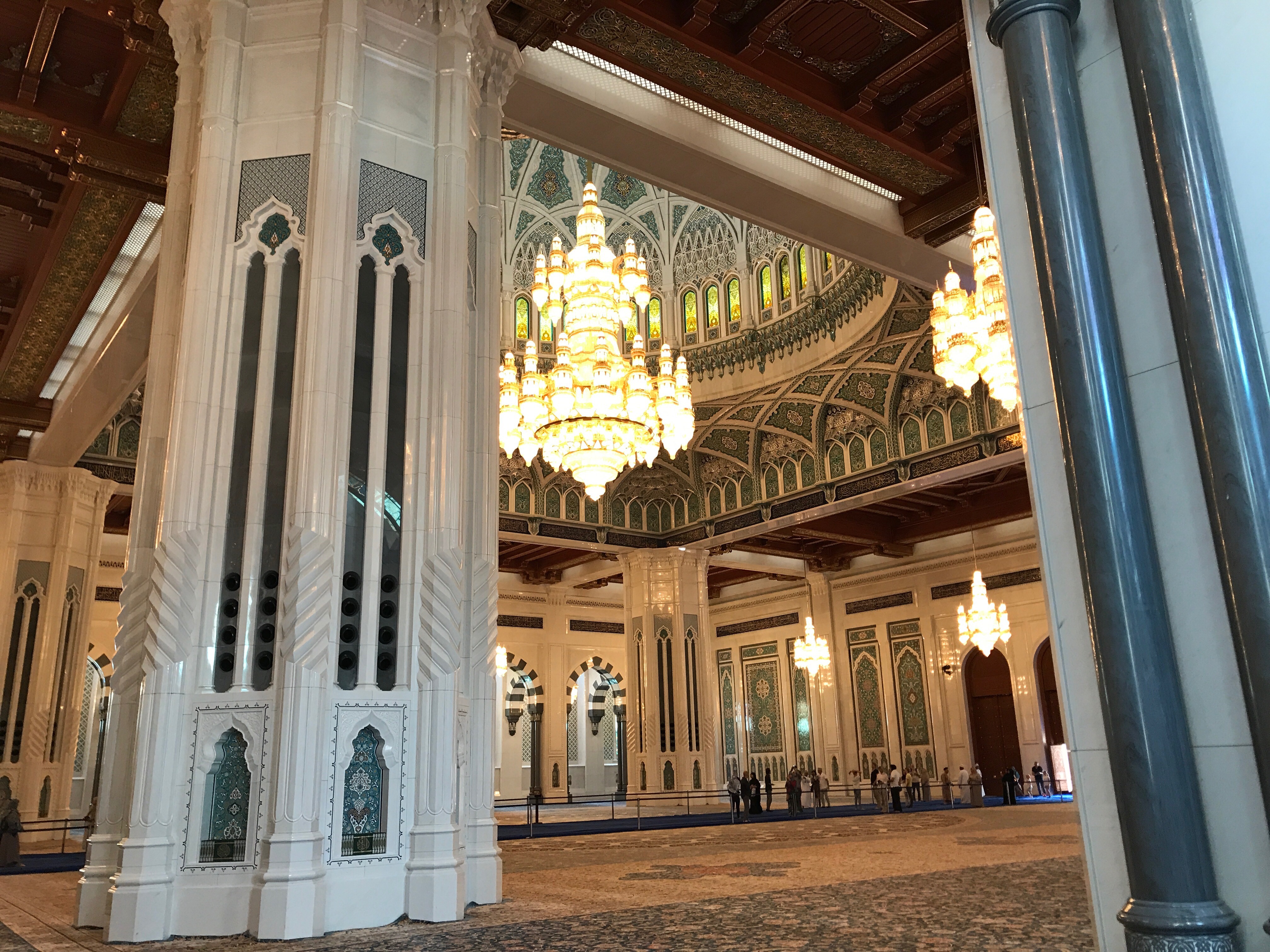
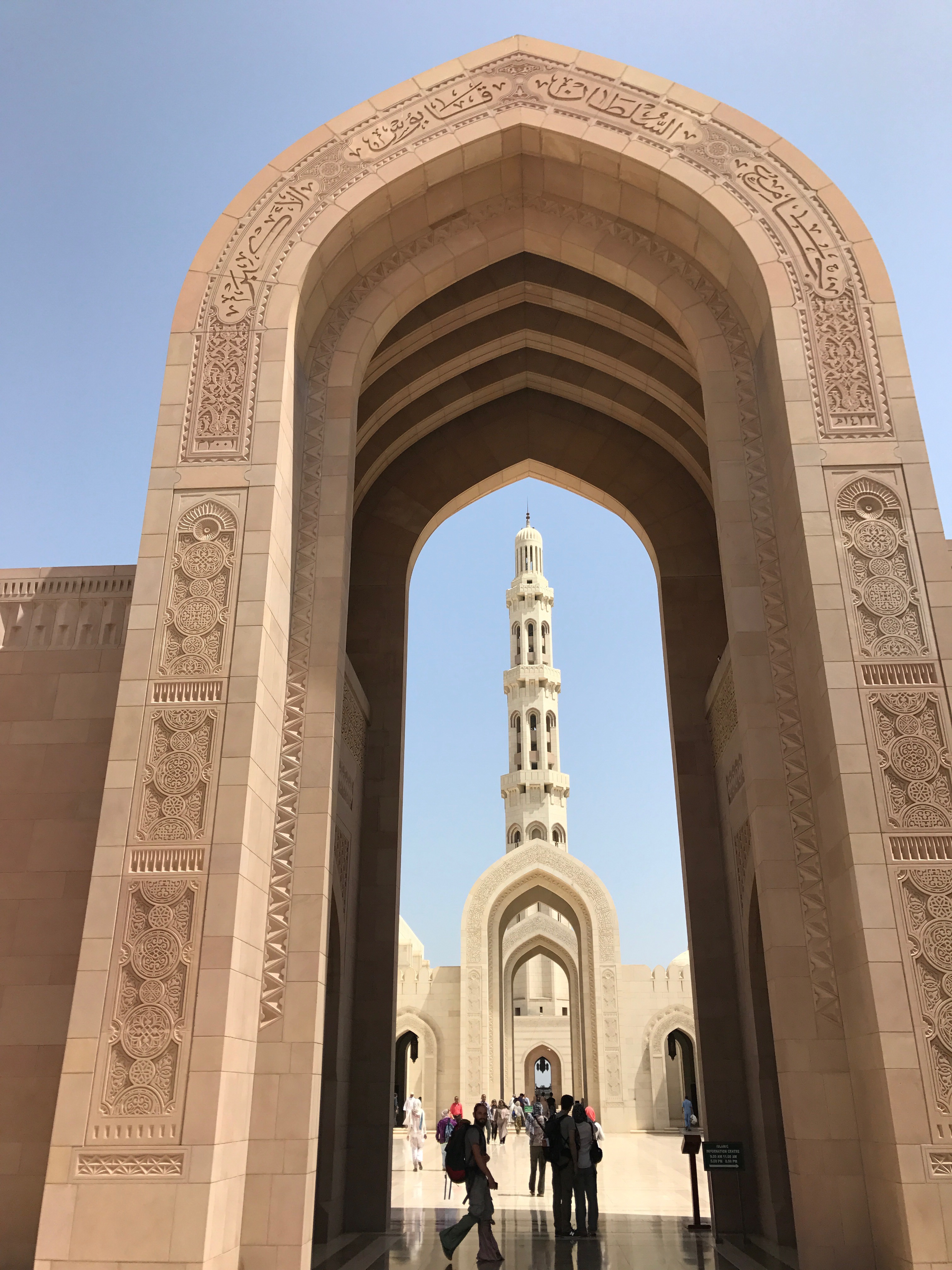
Monday he showed us the mosque, which I think ranks among the most beautiful buildings I’ve seen anywhere.

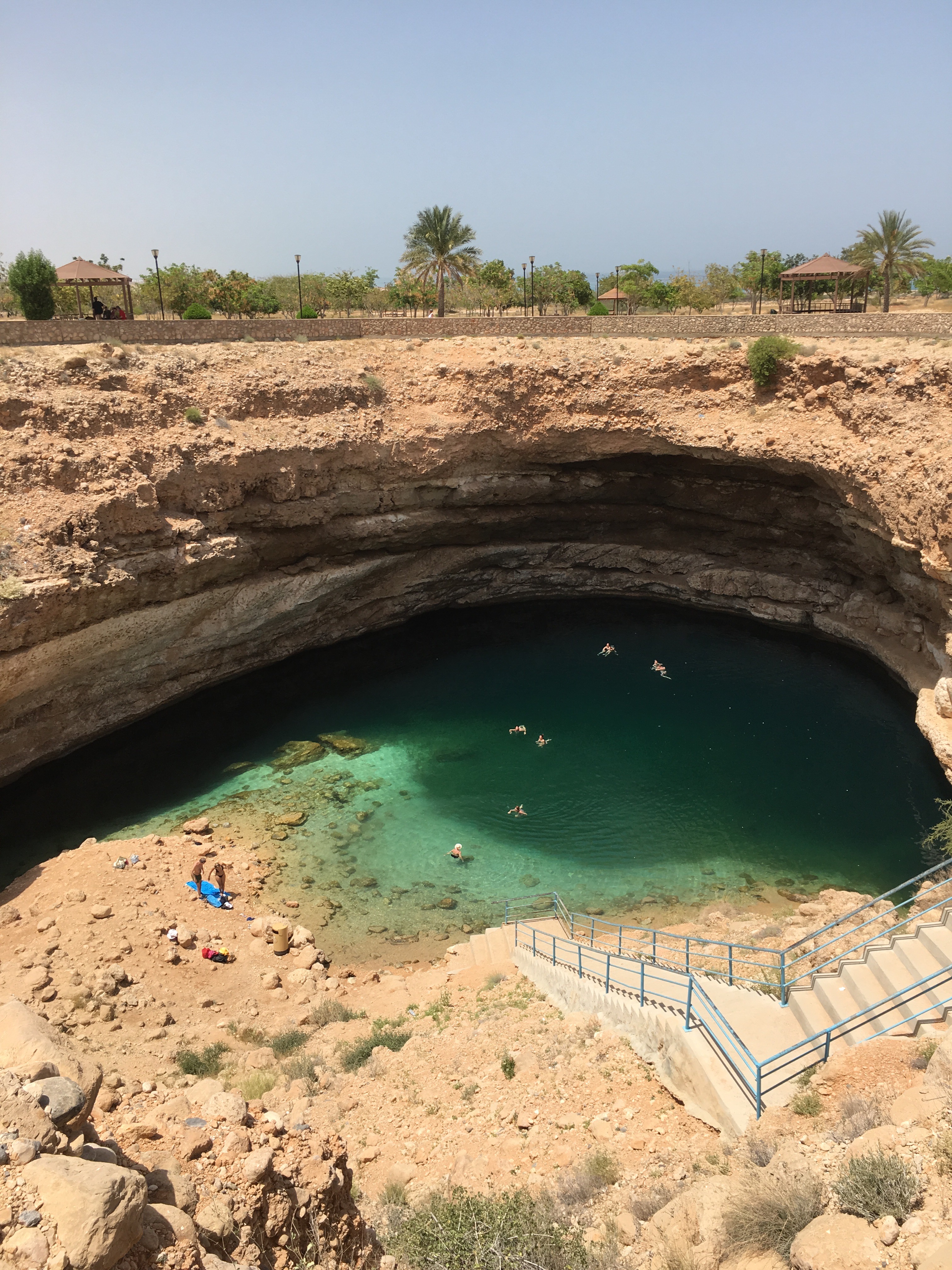
Then he drove us to a magical sinkhole, where Steve and I swam in the cool, azure water.

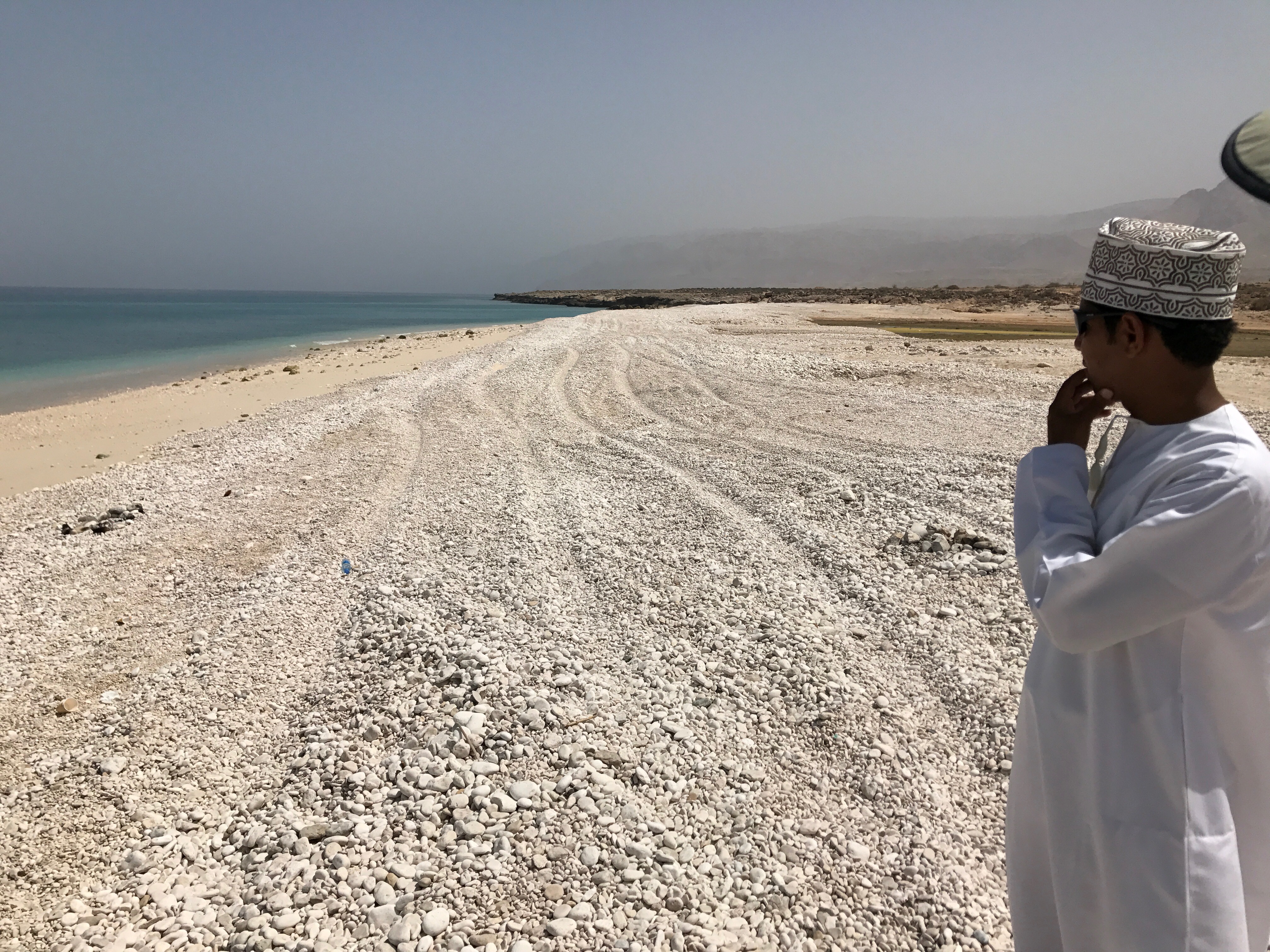
We swam again at a beach lined with white sand and small white stones.


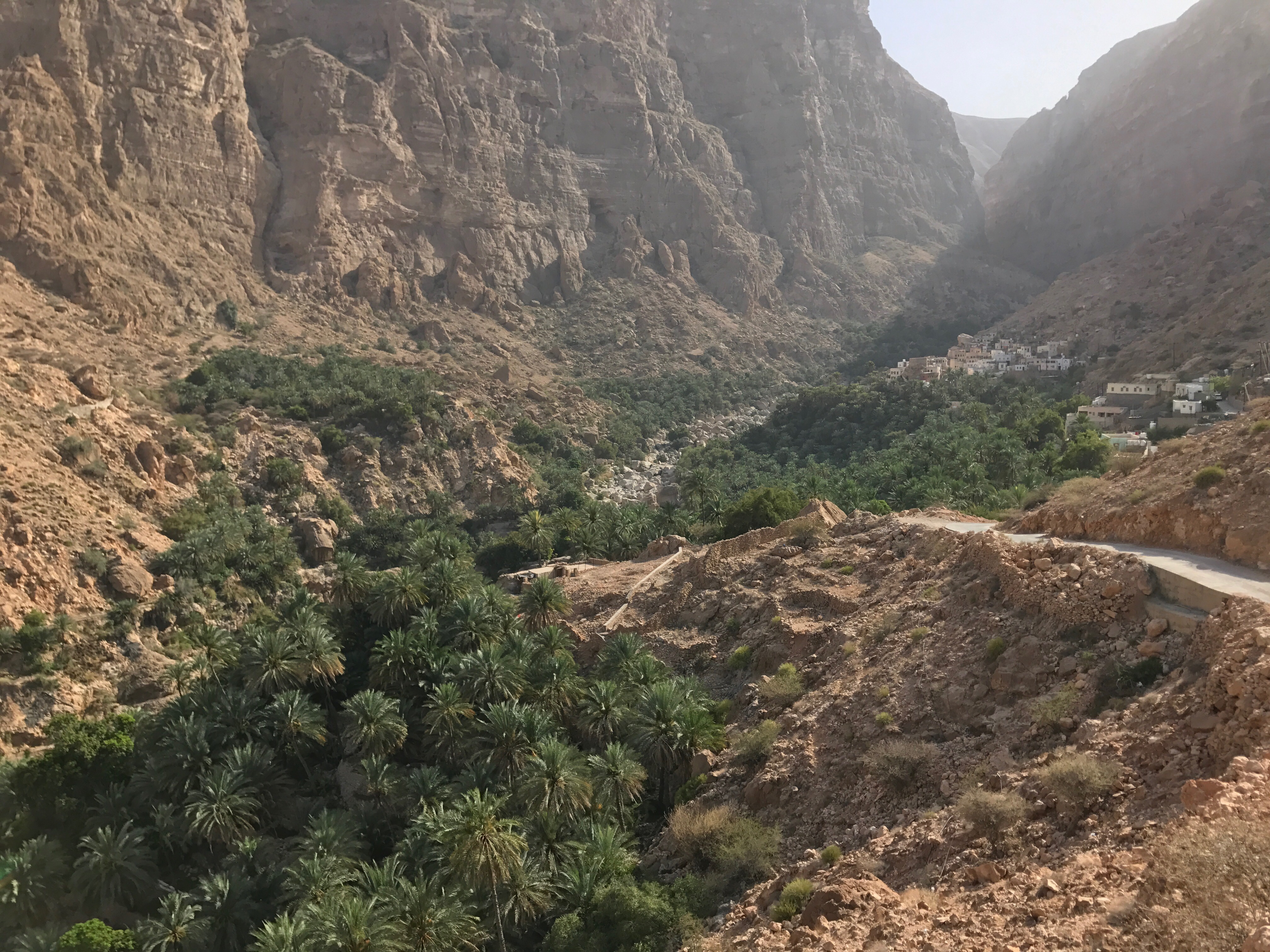
Then we drove for hours through a beautiful “wadi,” a deep canyon through which a stream flows year-round, nurturing a forest of date palms. 


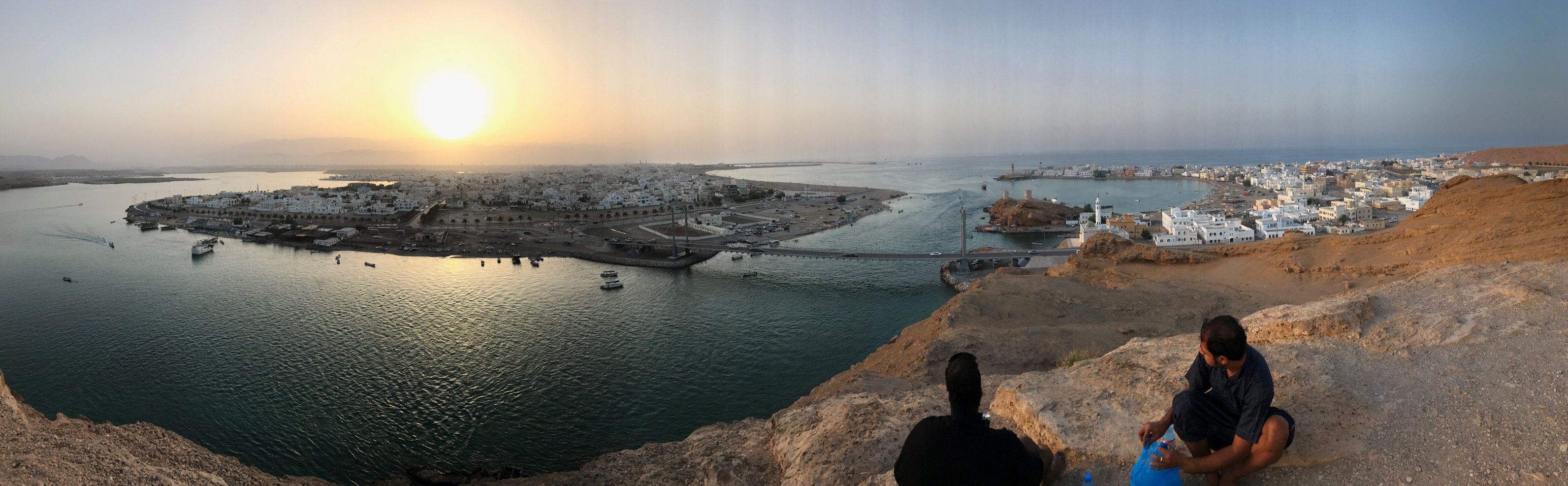
In the city of Sur, we raced up to a watchtower on the hillside, to see the sun set over the lovely cityscape.

Finally,  in the dark, we drove to the Ras al Jinz turtle reserve. After dinner, Steve and I collapsed into bed, where I slept badly, my brain too stimulated by all that Abdullah had led us to that day. 

The lottery

Border crossings often mean trouble, in my experience. Glowering signs warn you not to take any photographs, and one can imagine nasty punishments for scofflaws. Immigrations and customs officials confiscate stuff; some demand bribes outright. Even if that doesn’t happen, excruciating waits are commonplace. For anyone who doesn’t like borders, this part of the Arabian peninsula isn’t the best of destinations.

Within the boundaries of the UAE, the borders between the seven emirates pose no hassles, since they’ve been united into the one country. But a strange situation exists on the Musandam Peninsula, where we headed after leaving Dubai. For reasons that I haven’t had time to read about, the very tip of the peninsula belongs to Oman (a separate country). And not far from there, another small chunk of Oman is completely surrounded by the UAE. While geographically exotic and probably historically interesting, from a border-crossing perspective this arrangement is a pain in the ass. 
When we traveled to Khasab from Dubai, we had to stop at one complex to get stamped out of the UAE, then drive a little way down the road to go through the formalities (and fee-paying) to enter Oman. If we had taken the ferry as planned, we wouldn’t have had to engage in such shenanigans again until our flight out of Oman, as we would have departed on a ferry from one Omani city (Khasab) and disembarked at another (Muscat) several hours down the coast.
Because we had to change plans and make the trip by car, however, we had to stop at one complex to get our passports stamped to certify that we had left Oman. At a second facility nearby, we got stamped back into the Emirates. No money was demanded for this “service,” and it only took about ten minutes. Even though we’d quickly learned that the friendly South Indian guy whom Eldho had found to drive us to Muscat wasn’t legally permitted to provide this service, the border officials either didn’t bother to find it out or didn’t care. 
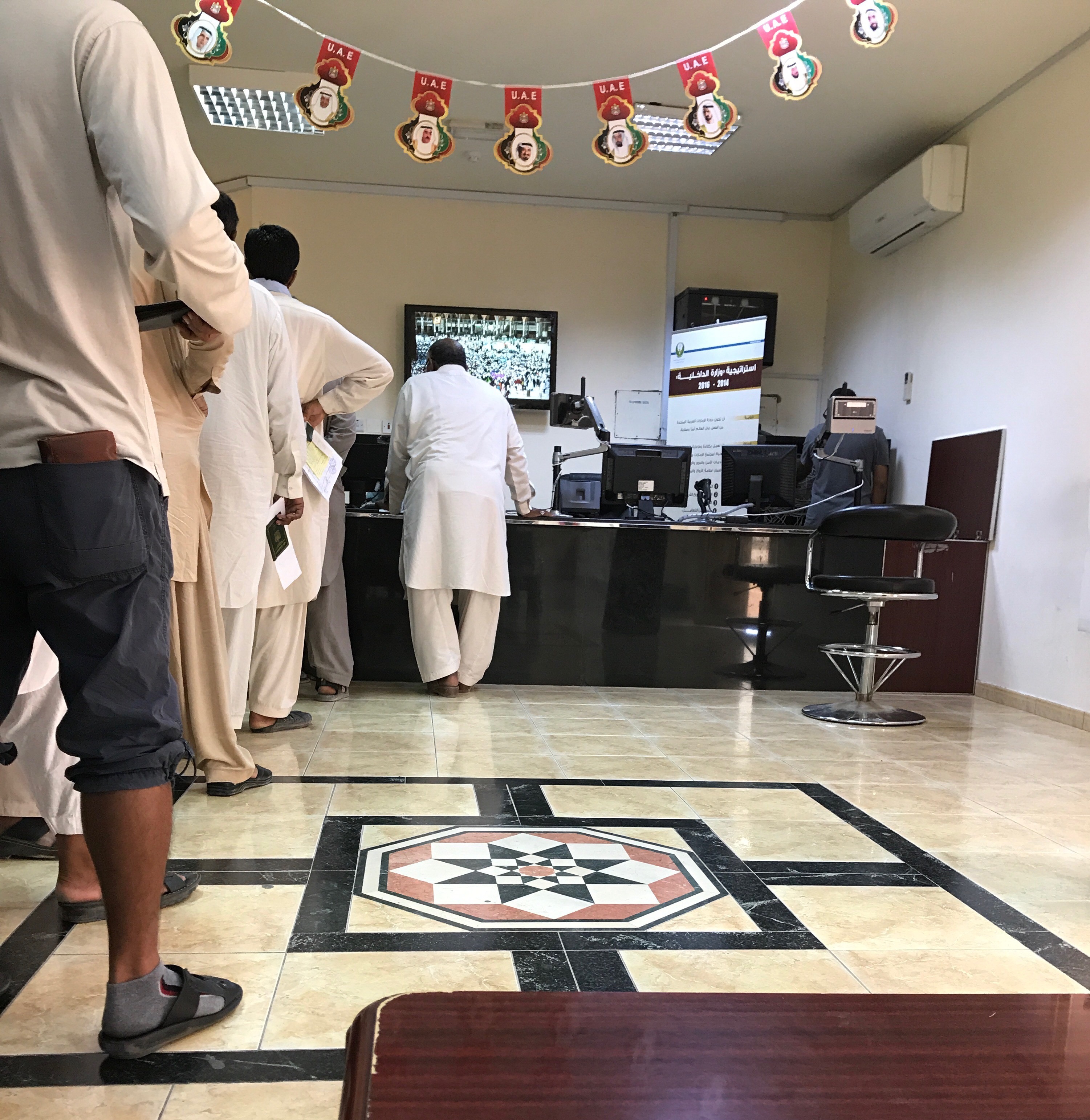
About three and a half hours into the trip, we arrived at the border between UAE and the big (main) part of Oman. Here things got messier. At the Leaving UAE facility, we eventually found our way to a bunch of lanes for cars; the scene reminded us a bit of the San Ysidro border crossing. Unlike it, only one lane was open, and no one else was in it when we pulled up to the guard manning its inspection booth. He ordered us to park in front of one of the closed traffic lanes and go to an office in the distance. There, although we were departing, only the door marked “ARRIVING” was open. We walked in to find a half-dozen truck drivers lined up at a window. One of the officials told us to take a seat. We waited and waited. Nothing happened, except that more truck drivers dribbled in. Eventually about a dozen were in line. It was all quite mysterious and somewhat irritating.

Channeling my inner scofflaw, I took this picture of the line of truck drivers growing, while we sat and waited as ordered. The video of the hajj in Mecca on the TV screen (with accompanying chanting) failed to soothe me.

It took a while, but someone finally came out and motioned for our driver to approach the window. They said he had to pay some kind of fee that amounted to about $26. (Again, mysteriously, Steve and I were stamped out for free.) Our turn to be extorted came when we got to the Arriving in Oman complex (massive, under construction, and confusing). There we learned that even though we had paid for a 10-day tourist visit on Thursday, we would have to pay for another one (another $26 or so for the two of us.) 
If we pulled an unlucky number in the bureaucratic lottery for Omani border-crossing, I have to admit that arcane regulations worked in our favor the night before, when we were seeking some dinner. Our first thought had been to dine at an upscale resort just outside of town that Lonely Planet describes as “Khasab’s best night out,” and just as importantly, “the only venue in town with a bar.” (We hadn’t seen alcohol for sale anywhere in any form since we left Dubai Airport upon our arrival.) But when we mentioned this to Eldho, the extraordinarily helpful manager of our guesthouse in Khasab, he seemed to recoil. This may have been because it would have required a longish ride from the badly situated guesthouse, and one of Eldho’s responsibilities apparently included providing guests with free taxi service. Alternatively, he may have been horrified by the prospect of our spending whatever dinner at the Atana Khasab would have cost. Eldho was more than a little thrifty; he had worked like a fiend to find us reasonably priced last-minute transportation from Khasab to Muscat. 
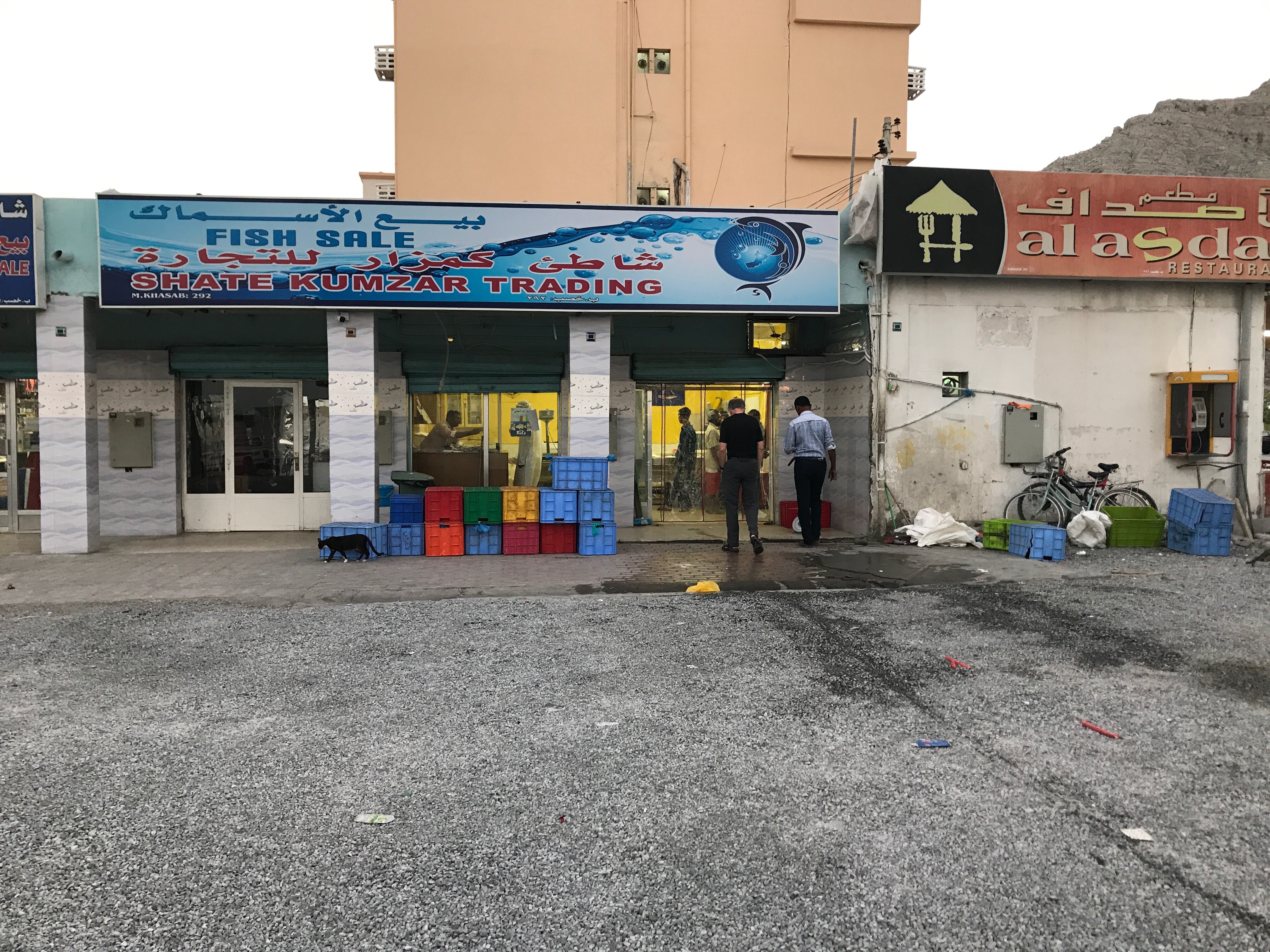
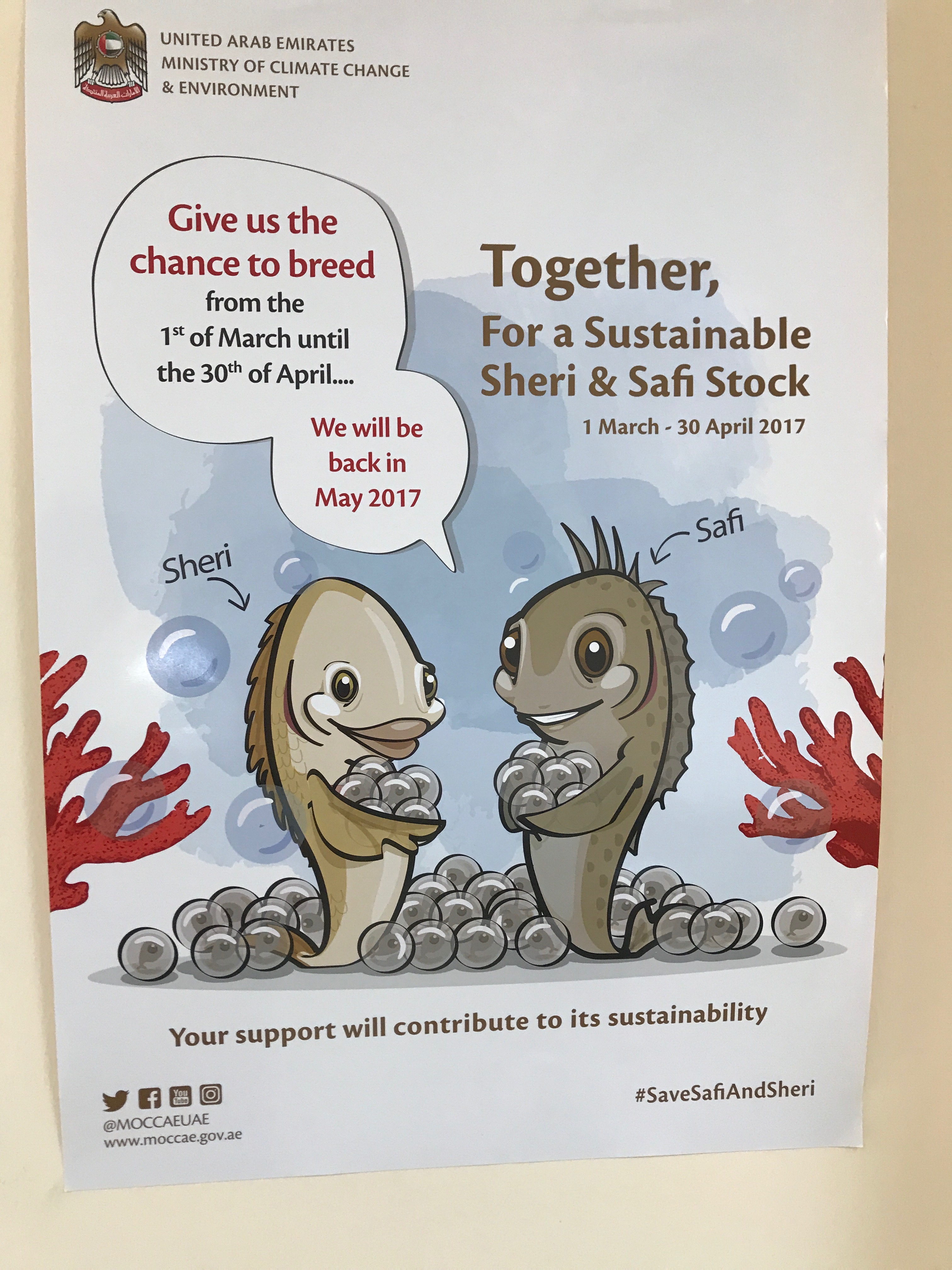
His suggestion was that he should drive us to the local fish market where he would help us buy a sheri (aka spangled emperor fish, aka Lethrinus lebulosus). This delicious local fish had just come in season, he explained, and because of conservationist measures designed to allow the species to breed, it could only be sold here in Khasab at the moment and thus only cost about one rial per kilo (about $1.20 a pound). Once the restricted period ended, and the fish could legally be sold in Dubai, the price would skyrocket, at least tripling in price. We need not worry about what to do with a whole raw fish, he assured us. He would transport us and the fish to a local restaurant that would grill it up for us. 
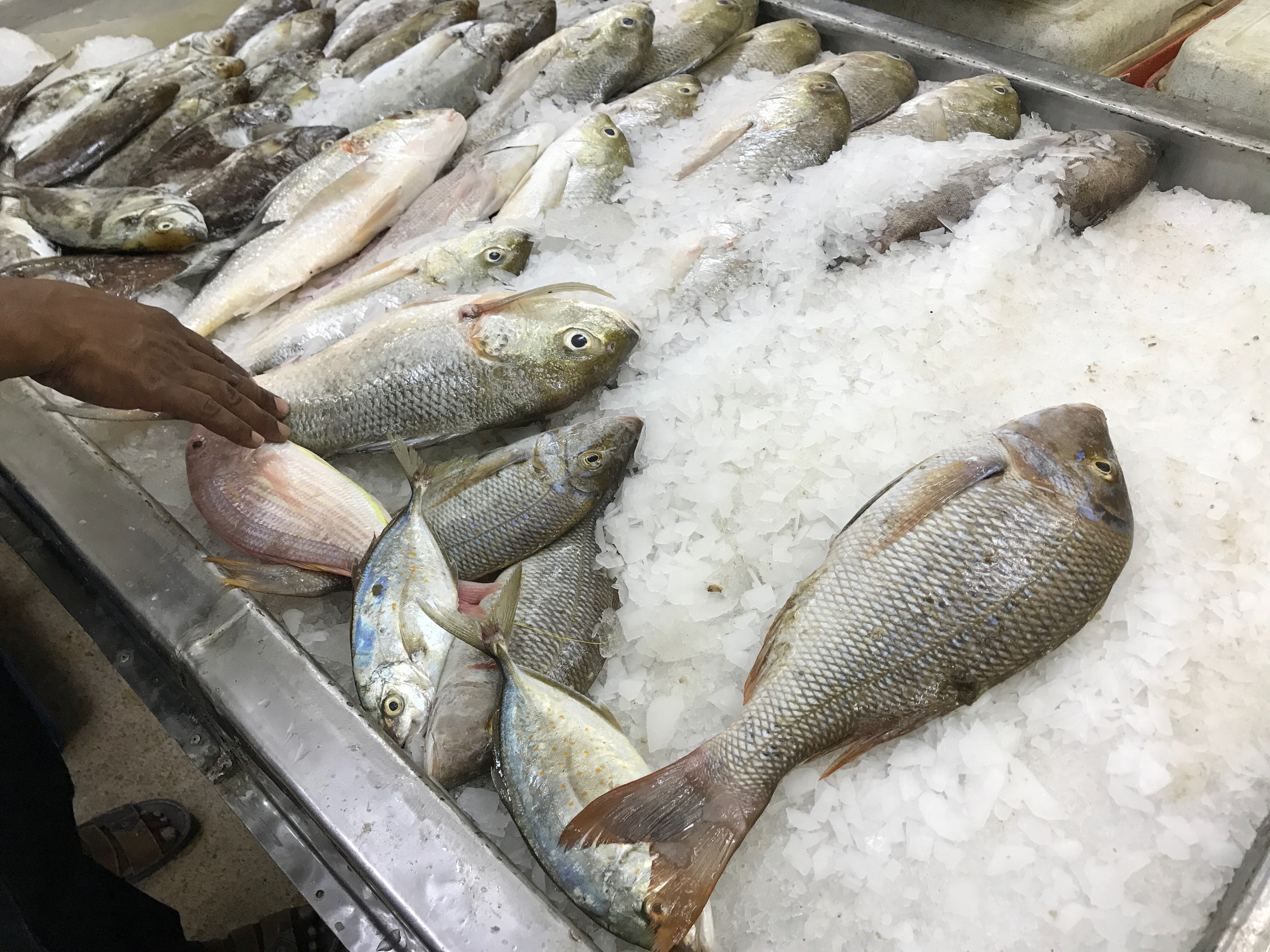
Both of us were yearning for that nice dinner at the resort. But Eldho’s belief that we would love his plan was so palpable, so fervent, we felt compelled to go along with it. At the tiny market, he showed us how to check the fish’s gills; a nice red color confirmed that it had been alive just a few hours before. 


Eldho liked the look of the fellow on the right.

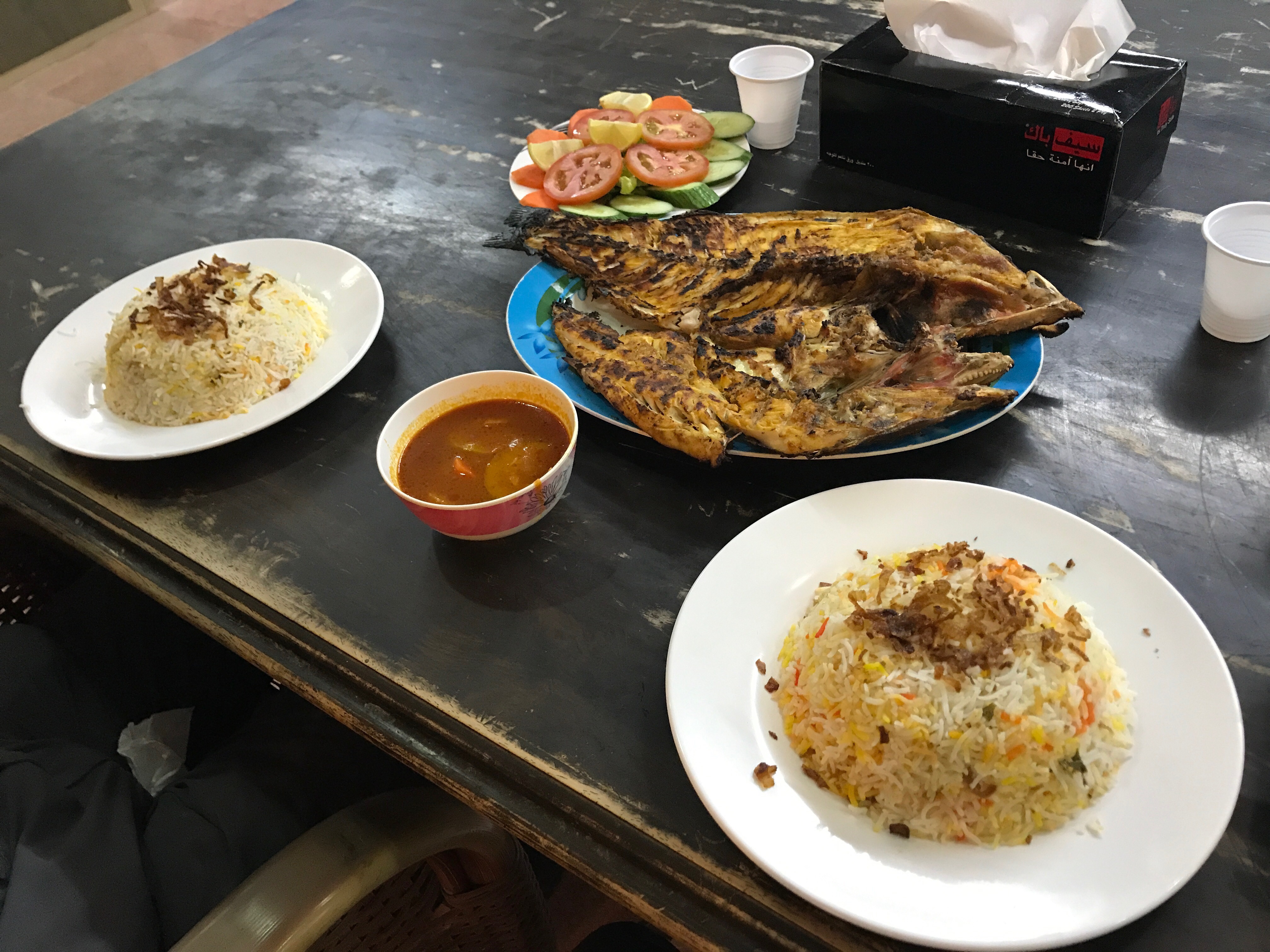
We paid 1.6 rials (about $4.20) for a plump two and a half-pound beauty that Eldho said would be plenty for the two of us (he declined our invitation to join us, pleading other responsibilities — probably driving other guests around!). No other customers were in the tiny restaurant when we arrived, but someone sure did know how to grill fish there. Our purchase (and the rice and salad and sauce that came back with it), were delicious. Along with a frosty liter of water, the tab came to 3 rials (about $7.80). We’ll probably remember the fish longer than we do the border headaches.

The Norway of Arabia

At a recent dinner with friends, the question arose as to what each of us considered to be a relaxing day. I didn’t have much to contribute; I rarely have them. It’s not so much that I’m harried as laden with lists upon lists of things I want to accomplish. Friday, however, my To Do list pretty much solely consisted of one item: cruise an Omani fjord in an Arabian dhow. Accomplishing that turned out to be a world-class way to chill.


A day sail in a dhow (the traditional shallow, wide-beamed vessel in this part of the world) is one of the two main visitor activities in Khasab (the other being the “mountain safari” we did Thursday). When we set out for the dhow harbor around 9:30, yesterday’s fierce winds had disappeared. (Bizarrely, the Saturday ferry remained cancelled. Apparently once the ferry bureaucrats cancel a sailing, even the return of excellent weather does not prompt them to reschedule it.)

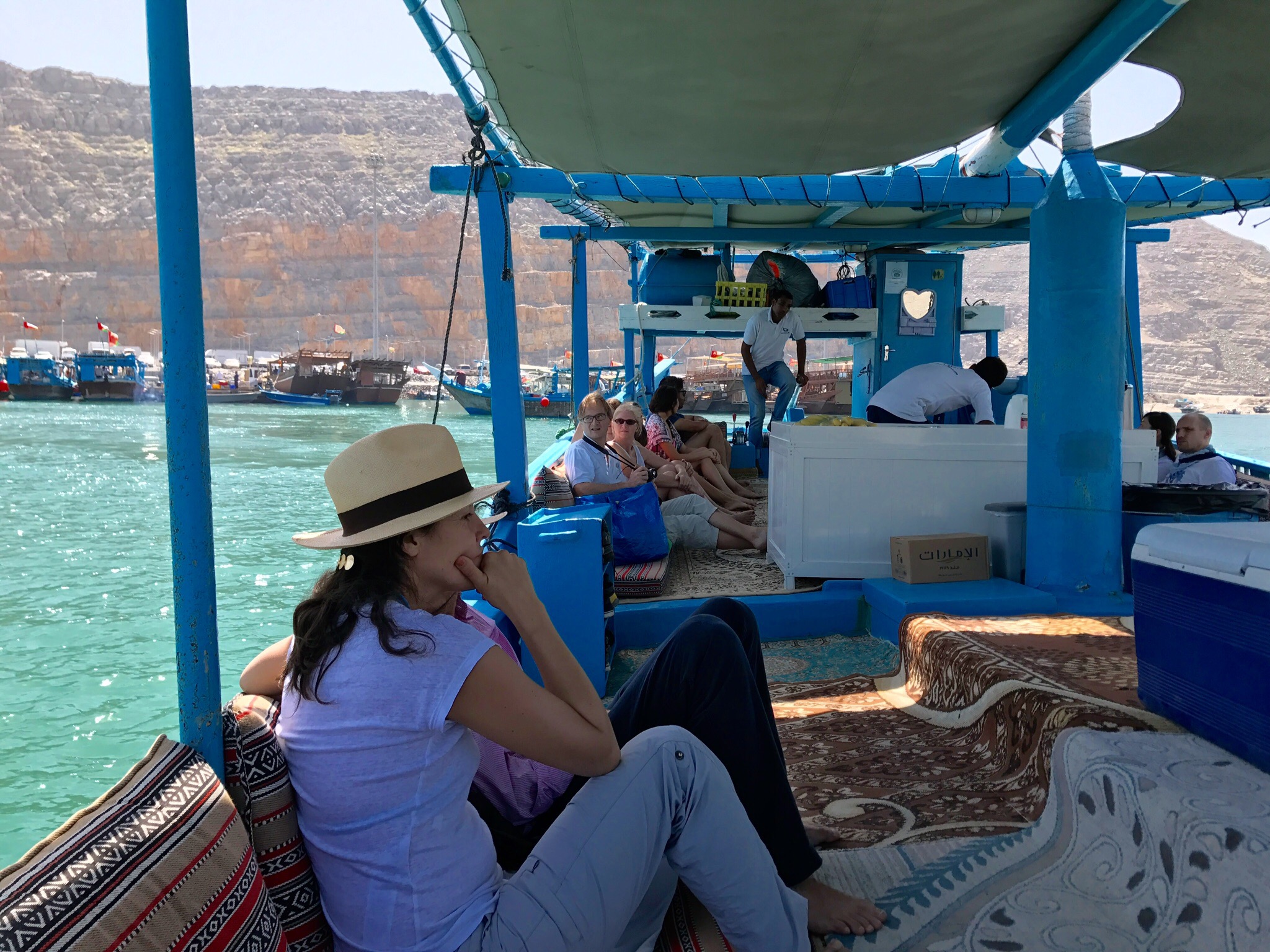
These touristic dhows are immensely charming. Although they’re powered by a motor (rather than by old-style sails), patterned rugs cover almost every inch of the deck. Thick, pretty cushions pad the perimeter, a flagrant invitation to lounge, even sprawl. A heavy canvas canopy protects the passengers and crew from the sun (which even at 10 am was blazing.)


I’ve hinted at the heat in my earlier posts, but it’s difficult to communicate its power to flatten. Highs have been in the low to mid-90s every day since our arrival in Arabia. It’s pretty humid, too, and coupled with the blazing sun, the effect can be staggering. But as soon as our vessel started moving, the breeze and motion made the blast furnace merely balmy. 

If we’d been shipwrecked, a la Gilligan, it would have made for an interesting sit-com. The skipper and his assistant were from Bangladesh, and several of the two dozen passengers hailed from India. Others included several Germans, a trio of Czechs, a gal from Japan with a boyfriend from Kyrgyzstan, two Ecuadorians, Steve and me, and an Omani couple who looked like newlyweds (she decked in full black robes and a conservative head scarf, neither of which she ever removed.)

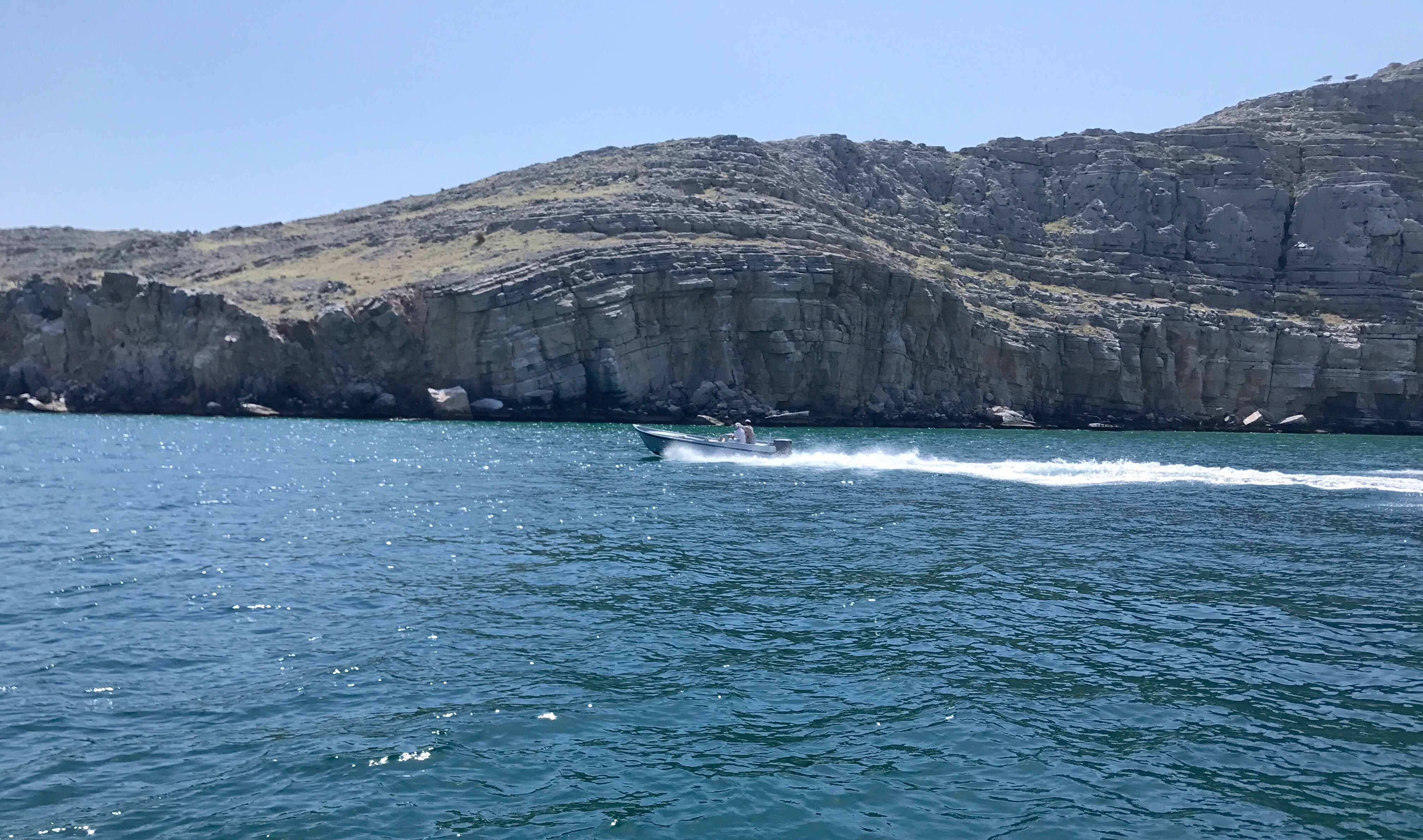
We moved without incident out into the channel, cutting through glittering water shaded royal blue, intense teals and turquoise, emerald green. Every now and then, small speedboats roared past us, likely bearing smugglers bound for the coast of Iran 30 miles away (about a two-hour speedboat ride).


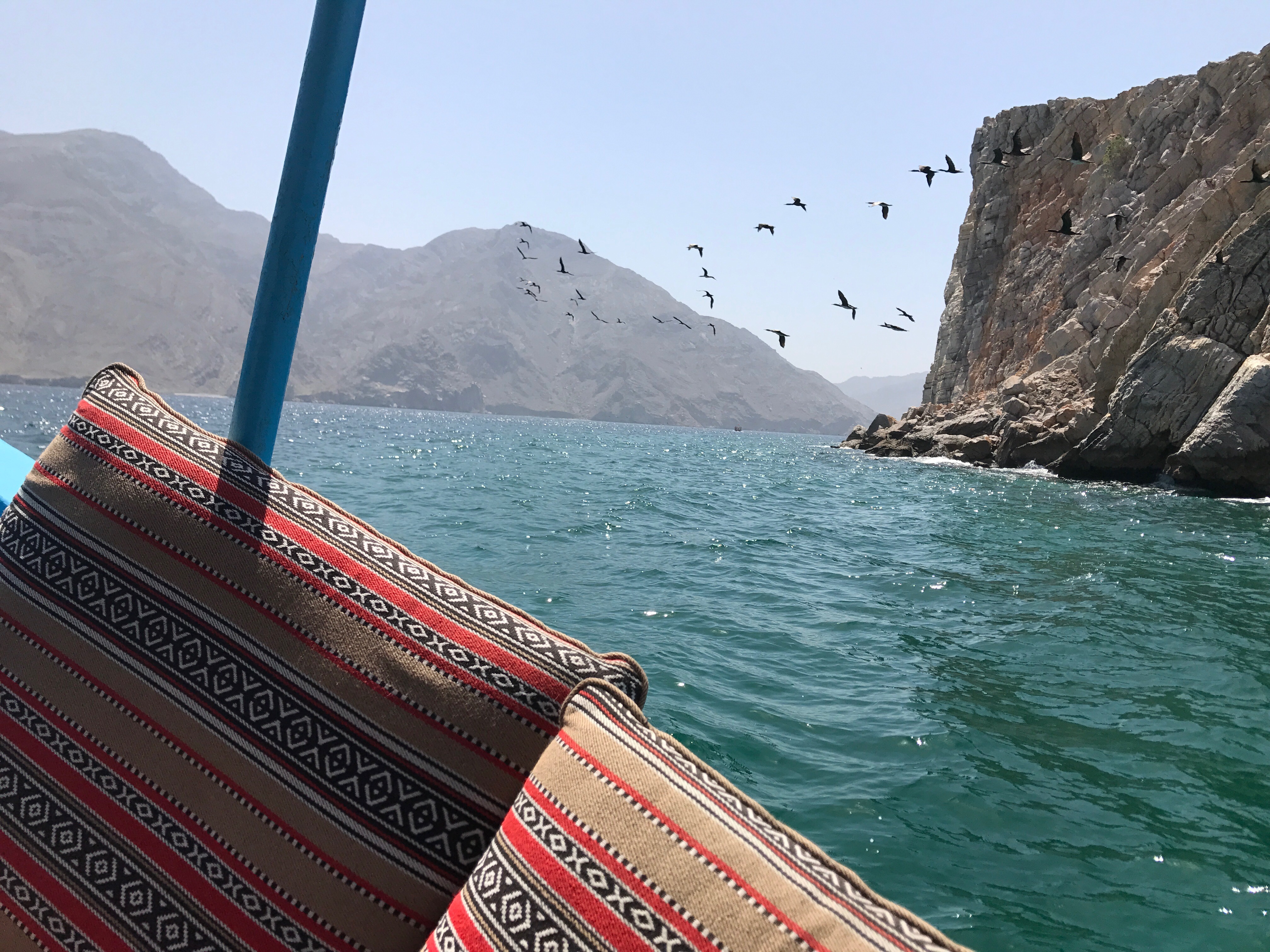
Flocks of cormorants swirled into elaborate formations, rearranging themselves every few seconds into new patterns. 


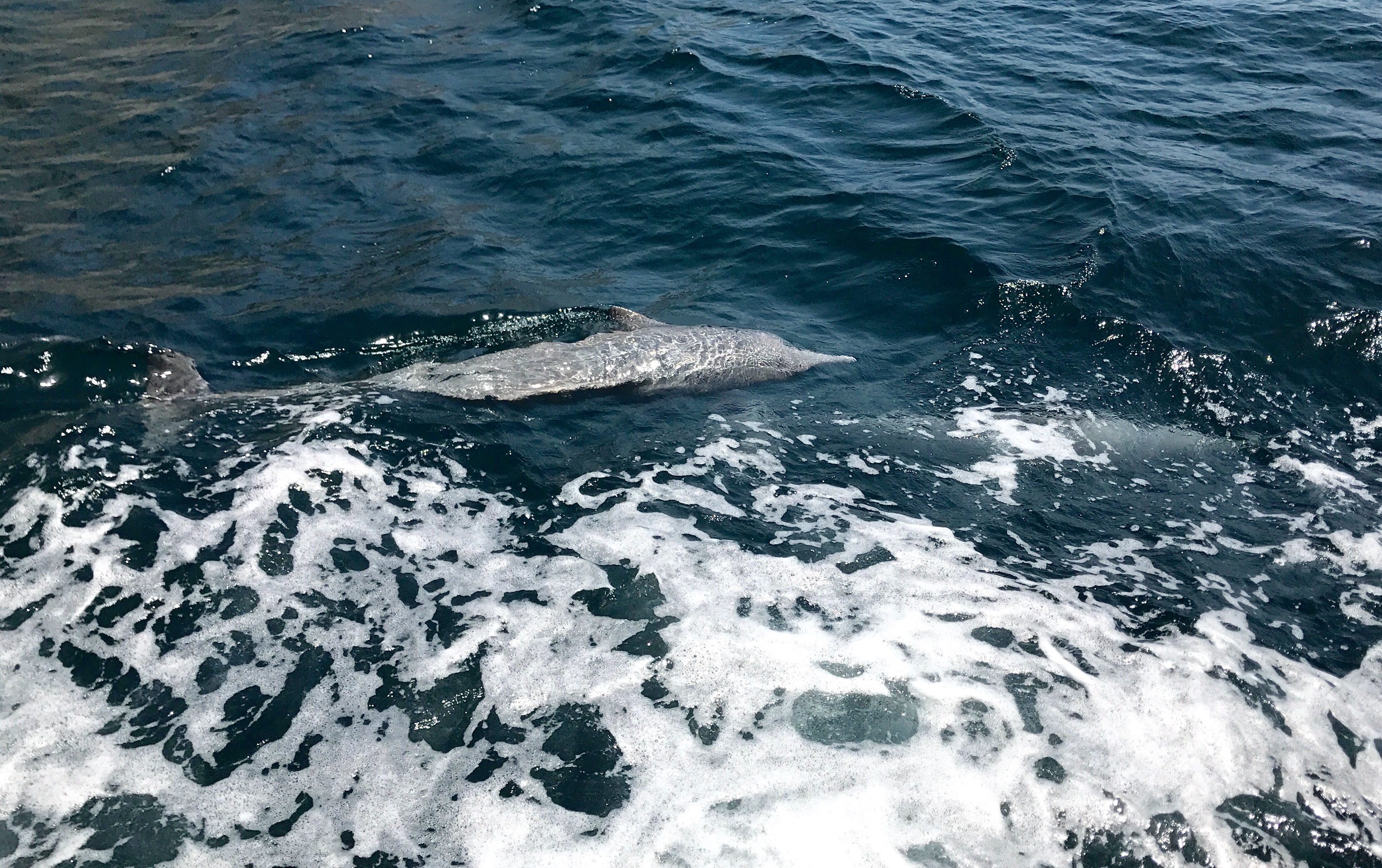
For the first hour or so, everyone scanned for dolphins, and we spotted pod after pod of them. The captain eventually succeeded in luring a small group into surfing our bow wave, and once again I marveled at how much pleasure humans seem to get from close encounters with cetaceans in their element.


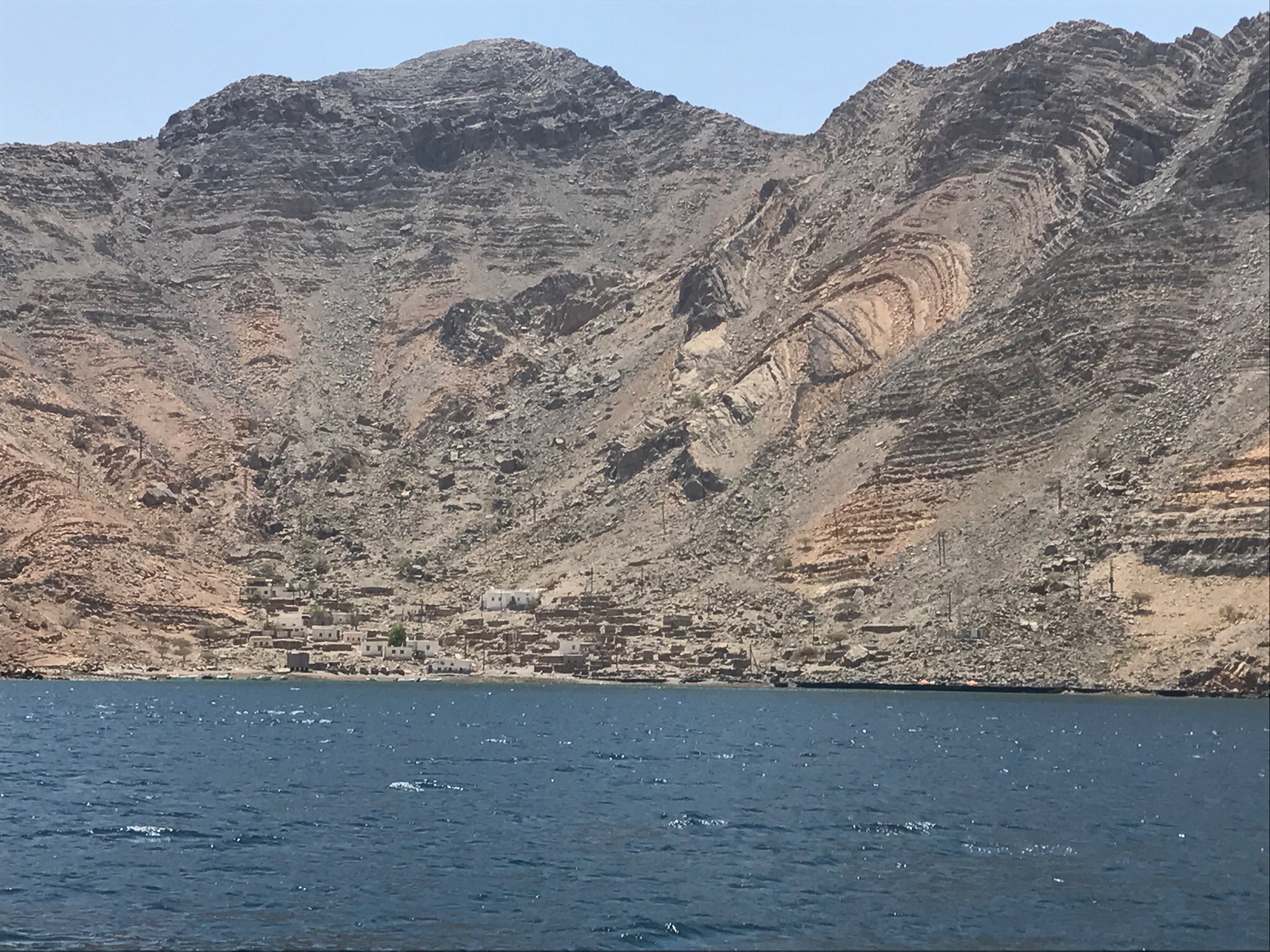
Folks have dubbed this tip of the Musandam Peninsula “the Norway of Arabia.” I’ve never sailed the fjords of Scandinavia, but I suspect they’re a whole lot greener and less tortured looking than the towering mountains that line these narrow Omani inlets. So much violence — wracking, canting, smashing — was done to them over the eons. We sailed past a few improbably tiny villages…


… and the island from which the phrase “to be driven around the bend” supposedly was derived (from the days when British sailors were stationed at the telegraph station there and so many went mad from the solitary confinement). 

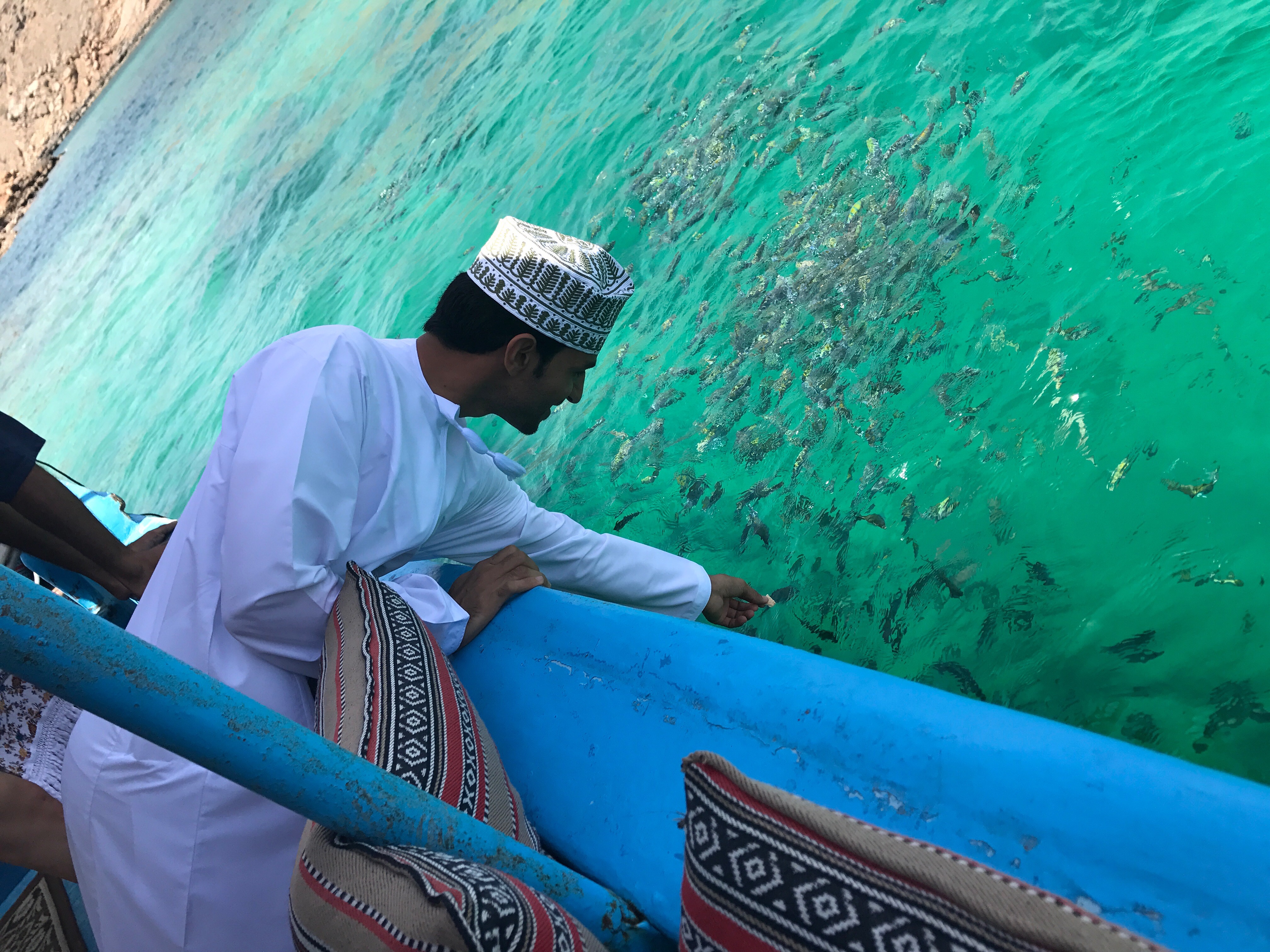
A little before noon, we anchored in a quiet cove, and the crew handed out masks and snorkels. Almost everyone got in the water (except that enshrouded Omani girl). After the shock of first plunge, the water felt just cool enough to be soothing, and our masks revealed dense swarms of various tropical fish, sea urchins, sea hares, manta rays, sea urchins, and coral. I lamented not having an underwater camera, but here’s what the water looked like when you tossed a bit of food overboard:


Speaking of food, the crew set out an ambitious pre-cooked buffet; we finished with sweet spiced tea and cardomon-flavored coffee. Then on we cruised, to more swimming, more flirting with dolphins, lots of lounging. At some point, it all blended for me into a soporific, hypnotic state of complete relaxation. If the topic ever comes up at some future dinner party, I must remember what that felt like.

Ill wind

A few days ago, looking at the weather app on my iPhone, I noticed it was showing swirly lines for Thursday and Friday. “Windy,” the little legend read. Thursday and Friday were the days we planned to travel to the part of Oman that occupies the tip of the Musandam Peninsula. “Shouldn’t be a problem,” I thought. “What harm could wind do?”

I learned the answer to that question a little earlier this morning, after we arrived in Khasab (the Omani city that sits on the end of the peninsular tip). I had arranged for us to be driven to Khasab from the emirate of Sharjah, where we spent Wednesday afternoon and evening. Our Pakistani driver was adept, the road was smooth, and we arrived around 10 Thursday morning to find smoggy looking skies. It was dust, whipped up by the wind, not smog that clouded the air.


We were greeted by the manager of the guesthouse where we would be staying. Eldo, a native of the Indian city of Kerala, seemed tightly wound but conscientious and meticulous. I asked him when we needed to buy our tickets on the car ferry that sails between Khasab and Muscat. The boat only makes that trip once a week (every Saturday) and in fact I had pretty much planned our itinerary in order to be able to take it. The Lonely Planet Oman guidebook writers had rhapsodized about the experience of sailing into the Omani capital near sunset, and I’m not the sort to resist that kind of buildup.

Eldo agreed with what I had read about the ferry tickets — that you could buy them on the morning of one’s departure. But he said they would cost 20% more on Saturday, so we might as well secure them first thing. He drove us to the ticket office, and at the counter, the head-scarved lady agent announced that the wind had caused the ferry to be cancelled. 

Eldo’s reaction when he heard this news was that it was a good thing we had learned this now. There was a once-daily flight from Khasab to Muscat. But many passengers (who already had bought their tickets) wouldn’t learn about the ferry cancellation until they showed up at the dock that morning. Then it would be impossible to make alternative plans. 

He seemed quite jaunty until, in two different travel agencies, we discovered that the single flight on Saturday was already sold out. Long discussions of various alternatives ensued (all conducted in some Indian language spoken by Eldo and the travel agents). What we have settled on is to hire a local guy to drive us Saturday to Muscat, a journey that they say should take about 7 hours. This will cost more than first-class tickets on the ferry but less than it would to schlep back to Dubai and fly to Muscat from there at this late hour. Plus we’ll also get to see a lot more of the Omani countryside than we would have from the water.

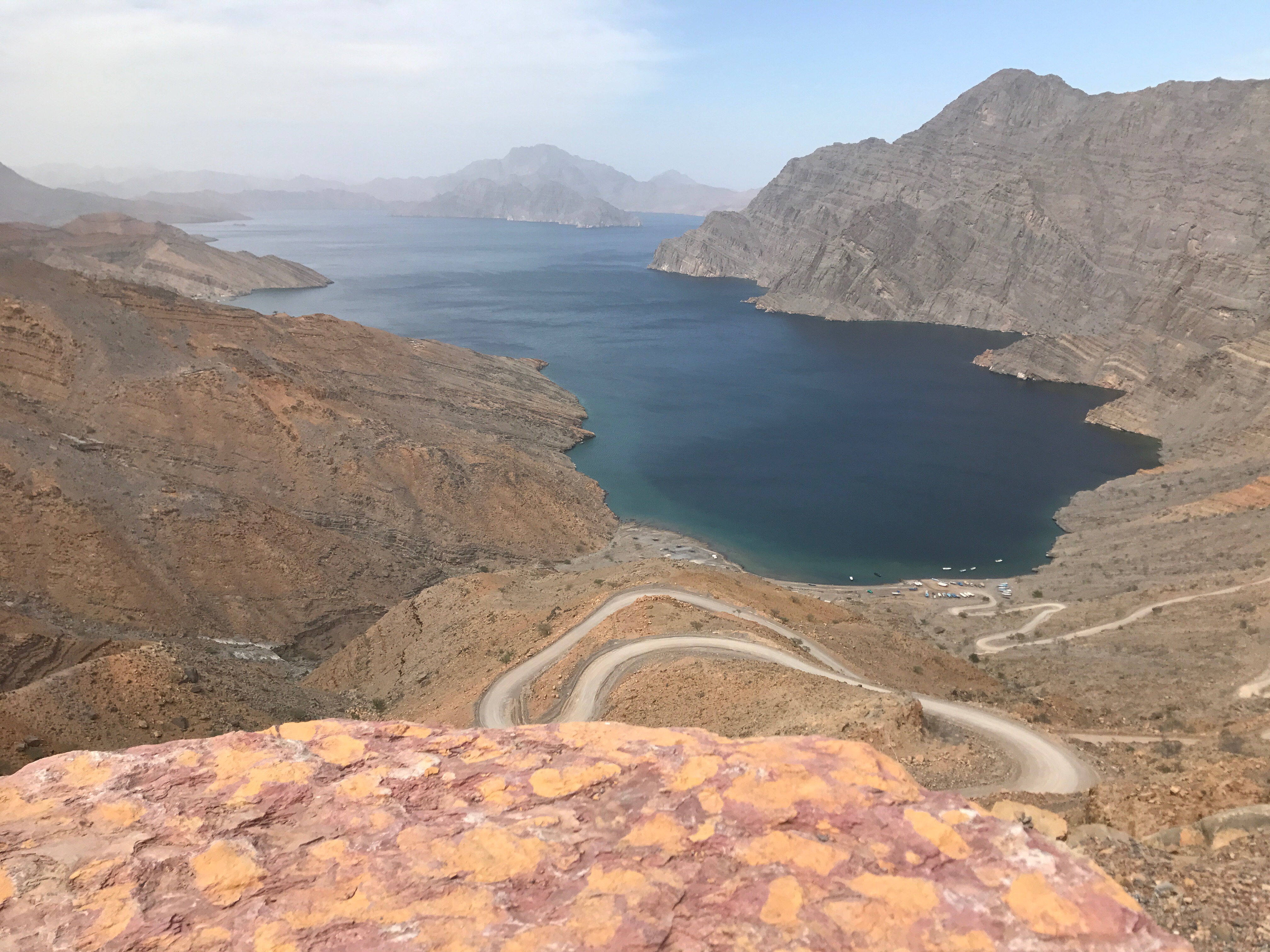
With that beginning to our travels in Oman, I was a little worried that the wind might somehow sabotage our plans for the afternoon: a drive into the rugged mountains that tumble down to the sea here. But it didn’t. First our driver climbed a winding dirt road up to a viewpoint overlooking one of the breathtaking local fjords.


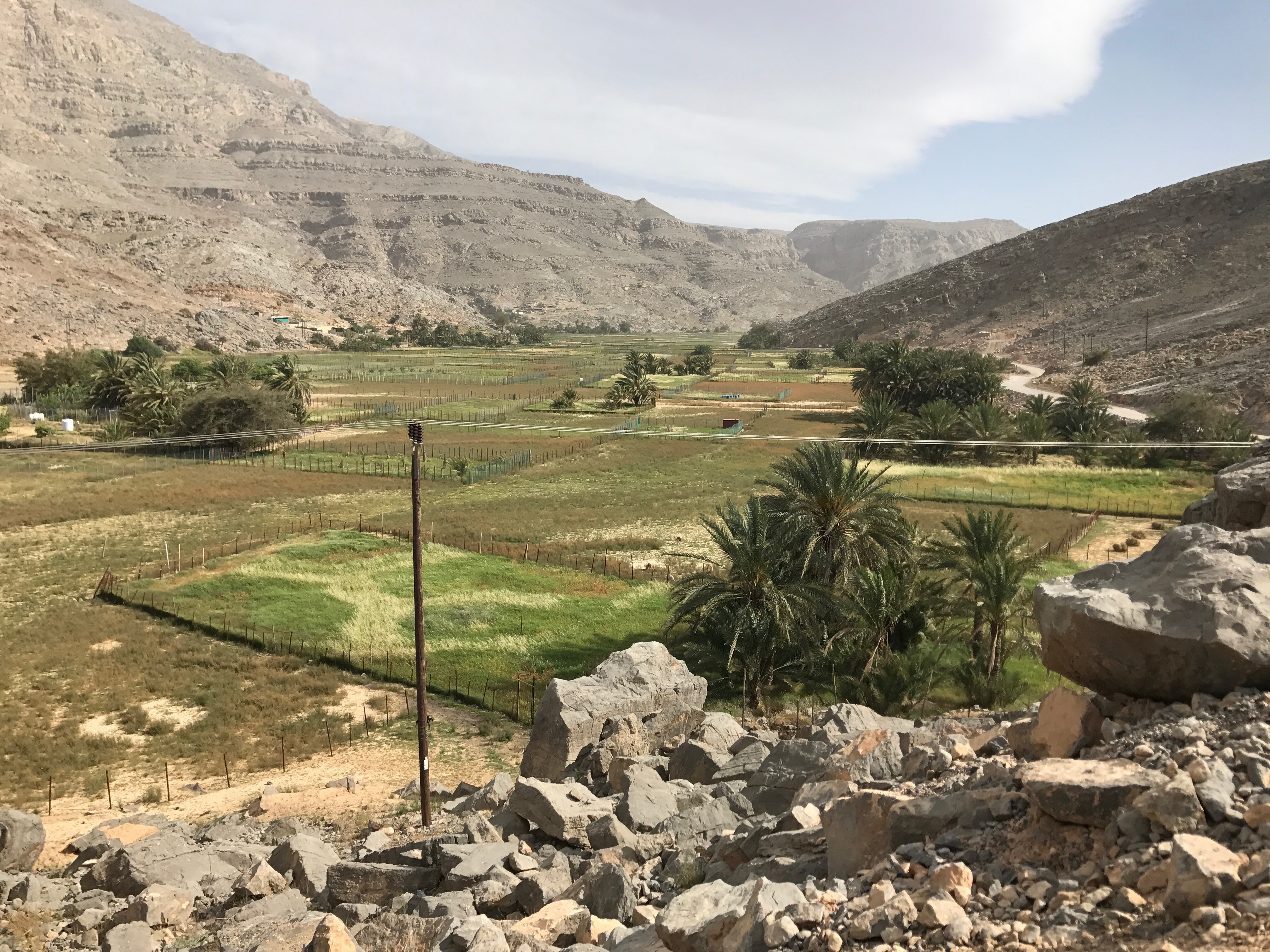
We descended that hair-raising byway then churned our way deep into rugged, sun-blasted warrens where almost nothing grew. Our destination was Jebel Harim, the mountain where local women once hid from marauding Persians while their men were off on trading missions. We climbed and climbed, marveling at the mangled, blasted landscape. Halfway up, we passed a surprising valley, filled with green fields fed by the mountain streams.


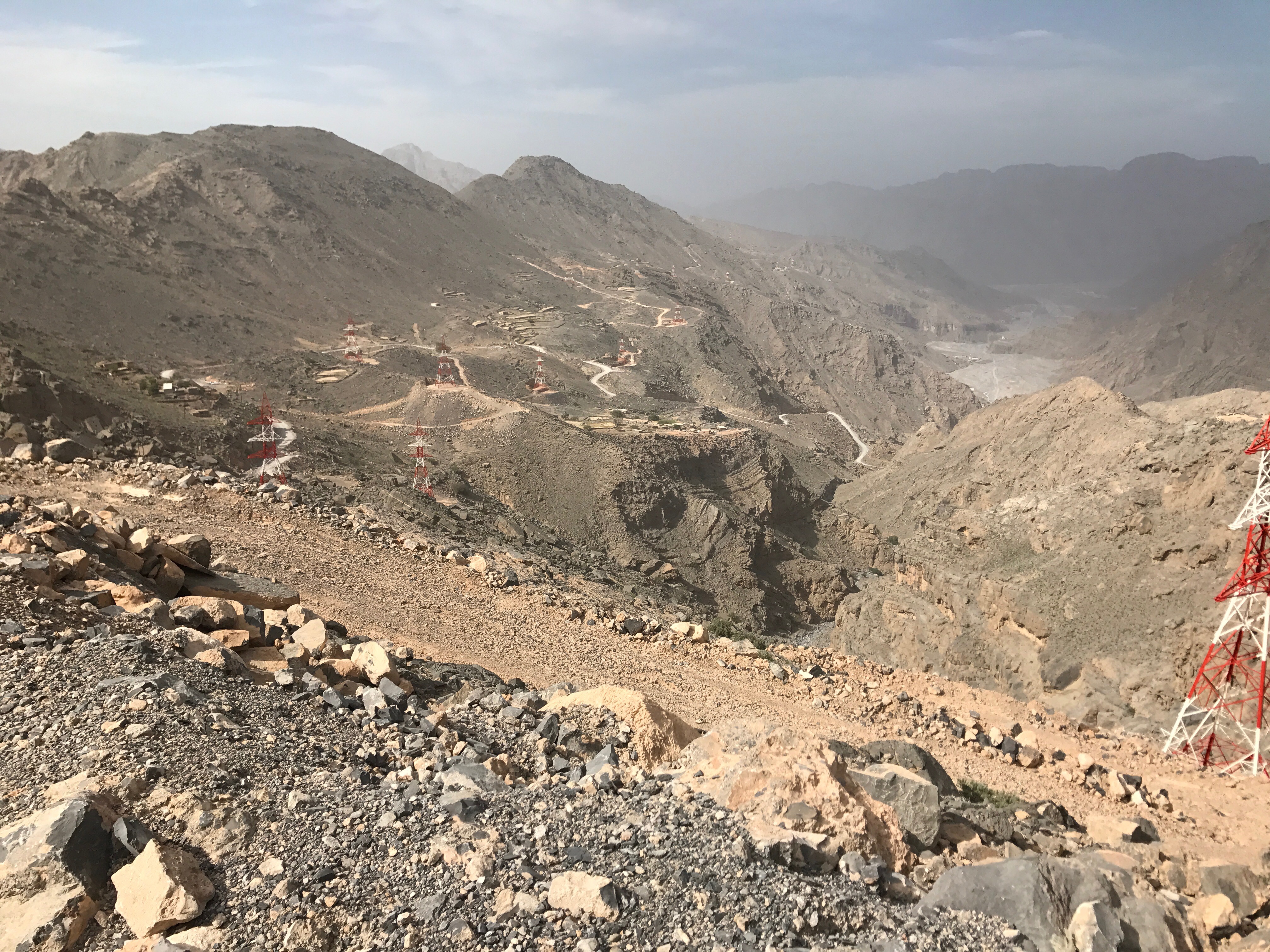
But we quickly returned to a vertiginous moonscape. 


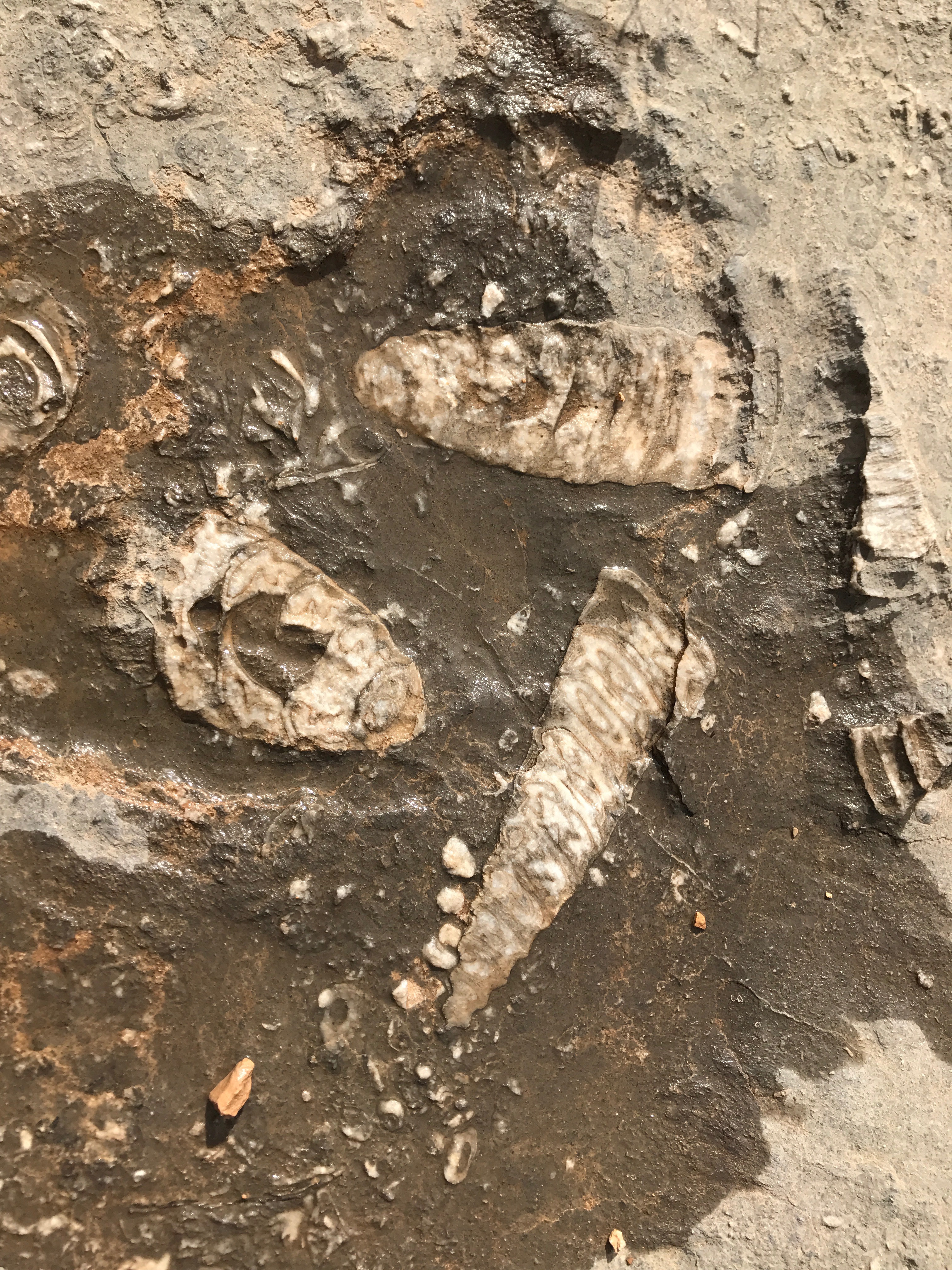
Just short of a mile high, our driver stopped the car, got out and showed us fossils of fish and seashells clearly preserved in the rock, remnants of an ancient seabed. 


How many million years had it taken for the earth to squeeze and elevate them to this spot today? I have to say, the thought helped me put our ferry’s cancelation in perspective.

We’ve also been assured that the wind should not jeopardize our plan for tomorrow — a day-long sail through one of the fjords. I will report on that, but I may not be able to post what I write until we reach Muscat. Our phones have no access to the Internet here, and even wi-fi is scarce. But to put that in perspective, Steve read me this afternoon that as recently as 1970, in all of Oman, you could find only six miles of paved road, only two elementary schools, and not a single high school. So I can hardly complain about the lack of touristic amenities; it feels pretty marvelous to be here at all. 

Oops

Once in a while, the WordPress blogging software and I have a misunderstanding. That happened as I was trying to upload my post about our first two days in Dubai. For some reason, my report on our train ride last fall from Tibet to Beijing was republished. I have since removed it, but in case anyone is confused, we are NOT in China. We’re on the eastern edge of the Arabian peninsula.

Desert mirage

In the past two days, Steve and I have explored the world’s biggest shopping mall, gone almost all the way to the top of the tallest building on the planet, shopped in a gold souk, 

visited two mosques, bought a liter of camel milk in a grocery store (and washed down our M&Ms with it), 

ridden in the gender-segregated sections of the spiffy Dubai subway, 

and walked 22.6 miles (47,628 steps, according to my iPhone.) Yet I feel I little disappointed. It’s not that we haven’t had a good time. It’s all been great fun. But I still have very little clue about how things work in the capital of the United Arab Emirates.

Before this trip, to the extent I ever thought about Dubai (i.e rarely to never), I envisioned it as a sort of mashup between Shanghai (the outlandish architecture) and Las Vegas. It’s more evocative of Vegas, if missing the casinos and alcohol and scantily clad women; the searing heat, wild attractions, and sense of having sprung up just yesterday out of the lonely desert all feel familiar. I’ve seen men in white robes and headscarves crowned with coiled goat-hair rope in Vegas, and women in full black burkas too. You see more of both here — but not so many more. Most folks dress in standard Western garb. 

In an attempt to gain deeper understanding into the history and culture of Dubai, we signed up for a couple of activities sponsored by the Sheikh Mohammed Centre for Cultural Understanding. I particularly had high hopes for the “communal lunch” where we would have the opportunity to “ask questions and exchange  ideas with nationals while enjoying delicious Emirati food.” The complex in which the centre is located was built by the Persians around 100 years ago, and it’s been beautifully preserved and turned into an arts and culture district. A couple dozen of us foreigners sat on richly decorated cushions in an air-conditioned courtyard, and the food was tasty and filling, if not haute gourmet. While we ate it, our Emirati host expounded on local customs. But it was all very basic and bland, kind of Islam for Dummies (or a bit like learning about Abe Lincoln from Walt Disney). 

Far more tantalizing is the neighborhood where we’re staying (Deira, the old heart of the city). Our guesthouse once was the residence of a powerful sheikh. Parts of the large complex that contains is are still being restored. We love the open-beam, 15-foot ceilings; the stained glass windows; the beautiful stone courtyards. The maze of streets that surround us are jammed with what look like tiny retail shops selling every kind of good imaginable. But they’re actually wholesalers! So the casual shopper can’t buy anything from any of them. Nearby souks do sell gold and spices and household items. We strolled through them a bit this morning, then even though the stunning heat was already building, at 9 in the morning, we walked along the canal where a flotilla of dhows are docked. They’re laden with rice from India, saffron from nearby Iran, cheap clothing from China. 

One of the dhows being loaded.

We have no idea how all this commerce interlaces. We don’t have a clue what the different emirates in the UAE think of one another. We’ve read that something like 80% of the people who live in Dubai come from elsewhere: India and the Phillipines and Burma and similar places. Hordes of these guest workers crammed into the metro with us yesterday, but we know nothing else about their lives here. 

It’s a little frustrating. And in an hour or so, we’ll take a taxi on the short (30-minute?) ride to the next emirate down the road, Sharjah (dubbed by Unesco the Capital of Islamic Culture). We’ll also return to Dubai in about 10 days for a final afternoon before we head to Uganda. All we can do is continue to keep our eyes and ears open.

Here Steve photographs the five prayer times of the day. As if we could miss one. The Call to Prayer resounds from many many mosques.


On the road again

I could report that Steve and I are hanging out in the Korean Airlines lounge at LAX in honor of the 105th birthday Kim Jong Il, but that’s not what brings us here (although today is his birthday.) We also are not about to depart for Korea (which, in light of current events, is probably a good thing.) The truth is that in about two hours, we will fly off to the Arabian peninsula, where we’ll be seeing some of the sights in the United Arab Emirates and Oman for the next two weeks. After that, we’ll continue on to Uganda. In Africa, we’ll be on a mission — NOT the religious sort but rather, as emissaries of the Women’s Empowerment (WE) organization. WE provides funds for microloans that help poor Ugandan grandmothers, and Steve and I serve as liasons between the San Diego and African groups.

IMG_1079
Steve is using the free wifi to research the availability of alcohol in the UAE and Oman. It looks pretty grim.

We’re in the KAL lounge because when I got a Chase Sapphire credit card last winter, one of its benefits was the used of a “Priority Pass” that gets you into a variety of airport lounges. The only one in the Tom Bradley International Terminal here in Los Angeles is this KAL facility. (It’s not dazzling. But it is a whole lot nicer than than regular terminal waiting areas.)

As usual, I will make every attempt to report on our adventures as they unfold.


Was it worth going to Tibet?

110916-deity
A temple guardian

On our return journey to San Diego last week, we had about 24 hours in Beijing and less time in Tokyo. We did some fun things in each city and ate some good meals, but none of it merited blogging about. The larger question I never addressed, though, is whether it was worth returning to Tibet. Or more broadly: should anyone consider going there in the first place?

Tibet has a number of strikes against it: mediocre food, complex and expensive Chinese travel regulations. The dry, oxygen-starved air makes any visit at best uncomfortable and at worst dangerous. Steve and I have an almost-religious devotion to never returning to most places. The world is too big and our appetite to see as much as possible of it too keen. Yet we went back to Tibet, and both of us felt good about that choice.

Why?

The world has shrunk so much in our lifetimes. I can go online and within minutes figure out how to get to almost every point on the planet. But Tibet still isn’t that far removed from being a forbidden kingdom. A hundred years ago, no Western woman had ever set foot in Lhasa (the capital city). When Steve was born, there wasn’t a paved road in the entire country. No Tibetans lived with electricity or a car. Then the country was a theocracy, filled with monasteries that often were inhabited by thousands of monks, powerful men who pulled the most important levers within the society. If you travel, as we do, in part to glimpse different ways humans have lived throughout history, Lhasa still provides an extraordinary link with the medieval past.

On our five-day road trip to Everest Base Camp, we visited an important monastery almost every day. All of them suffered terrible destruction in the years after the Chinese took over; things were particularly ghastly during the Cultural Revolution. The places we visited all have been at least partially rebuilt, though the resident monk population has shrunk severely. Tibet isn’t what it was 70 years ago. But it also isn’t like anything I’ve experienced anywhere else.

The temples are gloomy, spooky places, still illuminated (at least in part) by yak-butter lamps. Statues of the Buddha (past, present, future!) and other deities tend to be big and baroque — the stuff of nightmares or dreams. For a country as poor as Tibet, it’s strange to see all the paper money, usually but not always the smallest bills, stuffed into every crevice of most temples. Believers think they gain spiritual merit by donating generously. The temples offer other head-spinning sites. The library off the main assembly hall of Sakya Monastery fills a narrow passage. It’s lined with shelves that ascend probably 35 or 40 feet up every wall. The shelves are crammed full of boxes containing centuries-old manuscripts. Our guide told us the pages on those manuscripts bear gold, silver, turquoise, and coral ornamentation. I could only begin to imagine all the man-hours, the man-lives, required to create them. I couldn’t imagine anyone ever again climbing up to the upper realms and retrieving one of the boxes and using the contents for anything.

111016-temple-interior
The yak butter candles illuminate sculptures made from yak butter.

A handful of pilgrims shuffled through that passageway along with us, but most of them weren’t glancing upward but rather making their way to a huge old book on display in one corner. We passed several young couples who had brought their infant babies to it. Our guide said they believed blessings would result from touching the adult or juvenile head to the sacred volume. In the distance, we heard the periodic sound of a conch shell being blown. Pilgrims pay the monks to blow it. They believe it can enable the suffering souls of evil-doers who are trapped underneath the nearby hills to get a breath of air. Lighting butter lamps was a similar act of kindness, we were told. Doing so is thought to allow the subterranean sufferers to enjoy a brief glimmer of light.

Not all the weird, exotic past is confined to the temples. On the road, we passed a hillside that’s still a site for so-called “sky burials.” In this Tibetan tradition, the dead person’s body is cut up and placed on the mountain-top for vultures to eat. (Really poor families also apparently use less expensive but similar “water burials,” while sick people whose bodies are diseased may be burned.) I questioned Tashi closely about this, and he insisted that sky burials are not a relic of the distant past, but rather the most common way most Tibetans still dispose of their dead today.

Hundreds of pilgrims still shuffle all day long around Lhasa’s Jokhang Temple, the holiest site in all of Tibetan Buddhism. On this visit, we joined in that procession as we did last year and stared at those who believe they get spiritual credits by prostrating themselves fully on the ground, over and over.

110916-lhasa-kora
Religious pilgrims making the circuit around Jokhang Temple, with the Potala Palace visible in the distance. The strolling is pleasant, very different from the full prostrations done by some pilgrims.

It’s a bizarre religious practice. More homey was the kora we joined in Shigatse, on our way home from Mt. Everest. In Tibetan Buddhism, a kora is the practice of walking (“circumambulating”) around a sacred site or object – commonly a special mountain or lake or a temple or religious tower. Again, believers think they accrue merit by this, but I found it pleasantly relaxing and social to join in the group stroll around the great Tashilumpo Monastery near sunset.

110916-shigatse
From the high point on the path, we caught had great views of the magnificent temple below.

Most of the folks walking around the monastery were older. In contrast, teenagers were at the heart of another sight that almost by itself seemed to make our long demanding journey to Tibet worthwhile. At Samye, the country’s first monastery, we watched a large group of girls and boys working to restore a rooftop built in the traditional method. The monks mix special clay and small stones and pebbles then spread the mixture on the room or floor. Workers then must pound the mixture to make it strong. We were told that the kids doing this work were no longer in school and being paid something for their labor. We didn’t ask how much. Clearly this sort of work was another relic from another time long ago.


<p><a href=”https://vimeo.com/191044439″>My Movie</a> from <a href=”https://vimeo.com/user25079241″>Jeannette De Wyze</a> on <a href=”https://vimeo.com”>Vimeo</a&gt;.</p>


If I were being reborn a girl in Tibet today, I’d much prefer to come back as the 6-year-old daughter of the young couple in whose Lhasa home Steve and I dined on our last night. The “family kitchen” of the parents serves up tasty food at their dining room table. While we savored yak dumplings (steamed and fried) and stir-fried eggplant and green beans, the little girl and her friend sang along to songs on an iPad kitted out to be first-grader-friendly.


<p><a href=”https://vimeo.com/191041930″>ABCs</a&gt; from <a href=”https://vimeo.com/user25079241″>Jeannette De Wyze</a> on <a href=”https://vimeo.com”>Vimeo</a&gt;.</p>

It was easy to imagine that little girl learning English (and Mandarin), getting educated, growing up to do something other than pounding the rooftop of a lonely monastery in the middle of nowhere. I hope that happens. At the same time, I’m grateful to have had a glimpse into the fast-disappearing world in which she was born.


Notes from the highest railroad in the world

The highest railroad in the world used to run through the Andes east of Quito, Ecuador. I first heard about it when I read the great rail-traveler Paul Theroux’s chronicle of taking trains through South America (The Old Patagonian Express). Theroux’s description of the distress suffered by him and his fellow passengers as a result of the altitude was both hilarious and riveting. I had no desire to experience it. Yet early Saturday afternoon (Oct 29), Steve and I pulled out of Lhasa’s main station on the rail line that knocked the Ecuadorian train out of first place. 

The line connecting Lhasa with Golmud in China’s Qinghai province (and thus the rest of China) opened in July of 2006. Costing $4.2 billion, it was said to be an engineering wonder, designed to stay safe and strong through some 340 miles of permafrost. Many observers decried it as the final hammer that would enable the dominant Han Chinese culture to obliterate traditional Tibetan society. Indeed, since its inauguration, tens of thousands of Han have immigrated to Tibet, and millions now have vacationed there. Steve and I wanted to take the train from Lhasa eastward, both to experience one of the world’s most remarkable rail lines and to see a big swathe of China unfold through our windows.

Rushing toward the train in Lhasa station. Don’t want to miss getting a space for our suitcases!

The train has three fare classes. “Soft sleeper” tickets don’t cost much more than the next grade down, but the train has only a few such cars, and competition for the berths is fierce. Despite the beguiling name, the 4-person compartments offer little privacy. Picture two sets of narrow bunk beds packed into a very small room. The “hard sleepers” contain two additional bunks (6 beds total), so things are even more cramped. Your only choice is to be lying down (on your bed) or hanging out in the corridor. The third category are like any train seats. You sleep sitting up in them.

Besides being crowded, those hard seat coaches were awfully smoky.

In August, our Tibetan tour operator emailed the good news that he’d managed to secure seats in a soft-sleeper compartment for us. Since our guide Tashi had to meet another tour group Saturday morning, the tour-company owner (Woeser) picked us up at our hotel and accompanied us to Lhasa’s hulking train station, which was obviously designed with the Potala Palace in mind. Woeser shepherded us through the security checkpoint, including a body scan and pat-down. Then we said our good-byes and Steve and I headed for the waiting room. A clear announcement (in Mandarin and English) alerted us when it was time to board. The way the crowd surged aggressively toward the boarding gates also was a clue. The stampede puzzled us; all the seats were assigned. But once we got to our compartment, it was clear why it paid to be early.

At first glance, the compartment looked cozy and inviting. Clean pillows and comforters were piled on the lower berths, and a pristine white table cloth covered the little counter holding a glass vase and (fake) red rose. But… where to stash our suitcases? No space for this seemed to have been provided. One of our compartment-mates, a serious young economics student who spoke pretty good English, carried only a small pack, but the fourth in our foursome was a larger guy lugging a bulky sky-blue suitcase. After some scrambling, we figured out that we could cram all three of the bags onto a shelf near the ceiling. Very close to 12:45, we eased out of the station, and settled in for our 33-hour journey.

1 pm — A cute young Chinese woman in the uniform of a railway worker takes our tickets and gives us plastic cards that we guess we’re supposed to guard. She also hands us two forms. Besides asking for the basics, they require us to confirm that we’re fit enough to tolerate altitudes of 3000 meters (about 9750 feet). This is strange. The highest pass crossed by the line (Tanggula) is more than 16,000 feet. I note the little boxes labeled “Oxygen Outlet” near the head of each bunk. Inside, there are two holes, but nowhere do we find any hoses to connect to them, hoses which reportedly pumped out oxygen in the line’s early days. At the foot of each bunk there’s also a sleek little TV screen, but these also don’t seem to work any more.

4 pm — Steve and I have been staring for hours at the vast and empty landscape north of Lhasa. Rugged snow-dusted hills rim close-cropped ochre grasslands that remind me of felt. We occasionally spot some lonely railroad workers, but the principal inhabitants of this grim country are yaks — so many that Steve thinks some must be wild. (I doubt that).

5:25 pm — We start seeing frost (or is it snow?) laced through the grass. Have we finally reached the permafrost? A huge mistake was our failure to bring a decent map of the country we’re passing through. We also have no train schedule. The only other Westerner we’ve seen on the train, a friendly young Dutch woman who’s on a 6-month-long backpacking adventure, has told us she’s getting off in the city of Xining around 10:15 Sunday morning. From such bits of information, we’re struggling to extrapolate our position. 
6:15 p.m. — For lunch we ate sandwiches purchased in Lhasa, but we’ve resolved to use the train’s dining car as much as possible to see more social action. When we enter it, however, the sullen looking waitress pointedly ignores us. We plop down in an empty booth and wait to see what happens. 
After some time, another train worker comes up to us and brusquely asks, “You want fish?”
“Is there chicken?” I counter. “For two. And beer?” This prompts him to scribble something on a piece of paper and to demand from us 50 yuan (about $7.40). That seems awfully cheap, and we soon find out why. We get only one dish consisting of small pieces of bony chicken and hot peppers, two bowls of rice, and two watery bowls of soup. No beers. 
After polishing off the meager fare, we supplement it with some beer and a can of Pringles purchased from a guy with a cart. But we’re feeling the altitude, and so we refrain from tucking into the Oreos we picked up in a Lhasa supermarket. 
1 am — We turned off all the lights in the compartment shortly after 10, but I haven’t done much more than doze. The train has an unpleasant habit of lurching abruptly every now and then. A train derailment anywhere in the world would be a nightmare, but the thought of it happening in this desolate wasteland is enough to keep me from relaxing. There’s no way to tell if we’ve crossed the highest pass, but I look forward to getting it behind us. The dry heat on the night train has irritated my sinuses so much they’re all but blocking any intake of the already oxygen-depleted air. I feel breathless every time I roll over. Still, there’s no drama unfolding on this train to match what Theroux described in the Andes. Maybe that’s because everyone is already more or less acclimated from their time in Tibet. Climbing up from Beijing may be uglier. 
7:10 am — I’m sitting on one of the jump seats in the corridor outside our compartment, happy to see the eastern sky begin to lighten at last. The imminent dawn reveals still more frozen wilderness. When I peek into the dining car, a few minutes later, I note that someone has hauled a piece of furniture to block admission. I also spot the toes of a railway worker asleep in one of the booths. 
8:15 — Discouraged by our experience with dinner last night, Steve and I buy two boxed breakfasts. The dough balls have no tasty meat in them (as they often do in China), but I’m feeling so veggie-deprived, all the little pickles taste delicious to me. The only calamity concerns coffee. We’ve got plenty of Starbucks Via packets with us, and there’s a spigot near one end of our car that supplies really hot water. But we’ve got nothing to drink it in! I type “2 cups of hot water” into my iPhone and Google translates it promptly and accurately. But in the dining room, one of the chefs snaps that we can get our hot water from the spigot. (We don’t need Google Translate to figure this out; his expression makes it obvious). We meekly request 2 empty cups, but he refuses, contemptuous. (Only after boarding did we realize that every Chinese passenger has sensibly brought a little thermos in which to carry his or her hot water.) 
10 am — We reach the outskirts of Xining in Qinghai province, the first real city we’ve seen since Lhasa and a much bigger, smokier, more industrialized population center. At the big train station here, we’re surprised to see our two compartment-mates prepare to disembark. The nerdy English-speaking economics student tells us he’s switching to the train on the track across the platform. The guy with the big sky-blue suitcase is too. I dare to dream that Steve and I might have our compartment to ourselves for the remaining 12-hour-ride to Xi’an, where we’ll get off and head for a hotel so that Monday we can visit the tomb of the first emperor of China, with its famous army of terra cotta soldier statues. I head for the door to try to photograph the “Lhasa-Guangzhou” sign on our car. But the cute little train attendant, seeing me, starts shouting at me in Mandarin. She’s alarmed. Wait! She seems to be saying that Steve and I must also change to the other train! In a panic, we gather up all our stuff and cross the platform. In car #6, compartment 7 (the same one we had on the first train), we reunite with Sky-Blue and Economics Student. I don’t know why Woeser didn’t warn us that we would have to change, but all’s well. The new train doesn’t depart for several more minutes. And moving to the new quarters gives us an opportunity to extract the plastic cups we’d buried in our carry-ons. With them, we can get our daily java jolt.
12 — The new train has a fancier looking dining car. When Steve pokes his head in shortly after 11, he spies a quartet of young railway workers sitting in one of the booths, snapping the ends off big fat green beans piled high. No passengers were in the car then, but when we decide to seek lunch shortly after noon, every one of the 10 booths has filled up, except for one that has a “Reserved” sign on it. A tall handsome guy in some sort of a police uniform is sitting in it, and we observe him tell several other would-be diners that they may not join him. About 12:25, four higher-ranking officials in civilian clothes push in and take the booth. 
The dining car staff kowtows to them, serving up a variety of dishes immediately and several times offering extra rice. All this helps to distract me from how hungry I am. (Those breakfast pickles lack staying power.) We’ve grabbed a couple of stools and are determined to wait until the first shift of lunch patrons eats and leaves. At one point, a Chinese guys sits down in the remaining stool, and a waitress gruffly shows him the hand-written menu and takes his order. She ignores us. This irritates me. 
Finally one pair of lunch patrons departs and Steve and I charge up the car to claim the seats. I also come up with a plan for ordering. We inspect the three plates of leftovers on our table, and I snap a photo of the two that look best. The next time the surly waitress passes us, we all but physically restrain her and show her the photos on my phone. She gets it and even asks if we want rice to go with the two dishes. This time we pay 75 yuan (about $11). The food is delicious.

On the right is tofu and pork. On the left, some of those excellent green beans cooked with a mystery meat. Whatever it was, it tasted good.

Back in our compartment, we sip Starbucks instant, munch on Oreos, and breathe in air that already feels fuller and more satisfying (if polluted).

1:30 — We arrive in the ancient Silk Road city of Lanzhou, where Economics Student gets off. Lanzhou today is home to some 3.6 million residents. Xining has 2.2 million. Our destination for this night, Xi’an, has around 10 million residents. The chance to glimpse these huge cities that we’d never heard of before this trip is part of what attracted us to the ride. Lanzhou looks like a poster child for China’s environmental woes. The smokestacks and blast furnaces remind me of what the far south side of Chicago looked like in my youth.The smog is worse than it was in LA in when Steve was a kid.

5 pm — We’ve spent the last several hours staring at the muscular mountains of Gansu province. They frame huge valleys, every inch of which is farmed or occupied. Mysterious caves dot many hillsides. Every few minutes, we also see clusters of mind-bogglingly huge apartment buildings. They’re interspersed with more farms and at one point, a sea of greenhouses. 

6:30 — Worn down by our earlier battles to get fed, we gamble that someone eventually show up with beer for sale (he does) and boxed dinners. They prove to be edible, if unexciting.

The pink slabs appeared to be Spam. Not bad.

10 pm (Sunday) — I’m so ready to get off this train. The sun went down several hours earlier, and the train light that replaced it is wan and depressing. Our roommate, Turquoise Suitcase Guy, isn’t a bad fellow, but he’s spent the entire ride watching insipid Chinese TV shows on his Samsung smartphone, napping, or furtively munching on the contents of a large bag of junk food. Although we were supposed to arrive in Xi’an at 9:47 pm, the train rumbles on and on past that hour. Eventually I begin to see huge buildings looming against a night sky that often seems to be tinged with dull red light. In my craving to reach our destination, the passing scene makes me think of Blade Runner.

7:30 am Tuesday — We’re feeling rested and happy after our day in Xi’an. For our last train ride in China, we have to head to a different rail terminus in the northern section of the city. It’s just 5 years old, a gleaming vortex of high-speed rail lines that feels more like a fancy airport than a train station.

The high-speed trains seemed the equal of their peers in Europe.

We find our boarding gate with plenty of time to spare, and settle into our second-class seats on the bullet train. It looks a lot like its counterparts in Europe, and soon we’re ramping up to speeds of about 180 miles an hour. 


1:15 pm — The past four hours have borne us through mostly flat country. At least we think so. We can’t see more than a few miles out either side of the train. Beyond that, everything has disappeared in a murky fog that looks like some of the worst air pollution on the planet. Nonetheless, it’s an entertaining ride. For a while we speed along next to the enormous expanse of the Yellow River. We pass large tree-rimmed fields where all manner of crops are being grown. Some farms look as large as their American counterparts, except we spot within them something we’ve never seen in America: little mounds of earth and stones that obviously mark the graves of ancestors. 

As charming as that is, the thing that makes our jaw drop over and over are the massive apartment buildings — 20 and 30 stories tall grouped together in clusters of 8 or 12 of 20. We scarcely go more than 5 minutes before seeing another mob of them, all the way from Xi’an to Beijing. It’s another glimpse of the reality of sharing life with 1.3 billion fellow countrymen.

Just one example of the hundreds and hundreds we saw while speeding along.