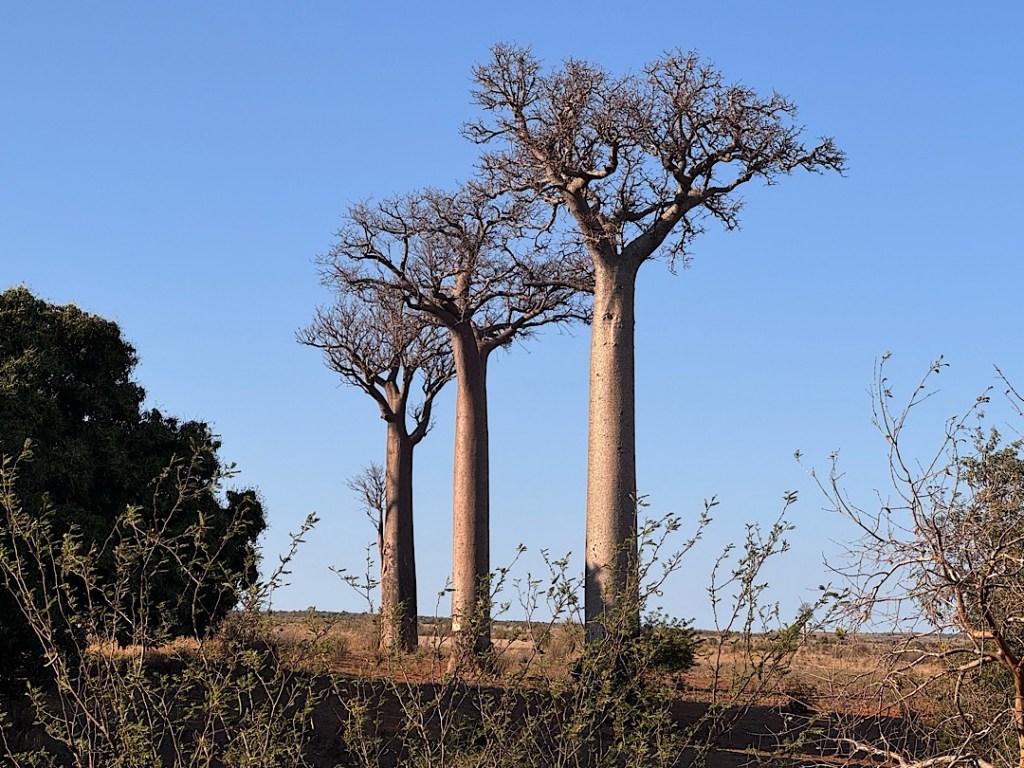
Steve and I wanted to go to Madagascar because it sounded extraordinary. It’s not merely one of the planet’s biggest islands but so different from the nearest continent (Africa) it almost qualifies for continental status of its own. I knew that many of the native forests had been cut down, but I half expected the remaining landscape to look like something drawn by Dr. Seuss. In this I was disappointed.
Everywhere we went I saw old friends — plants that thrive in San Diego County: eucalyptus and jacaranda and bougainvilleas and prickly pear cactus and other exotics imported to replace the natives that lived here once. What I should have been prepared for (but wasn’t) was sights like these:
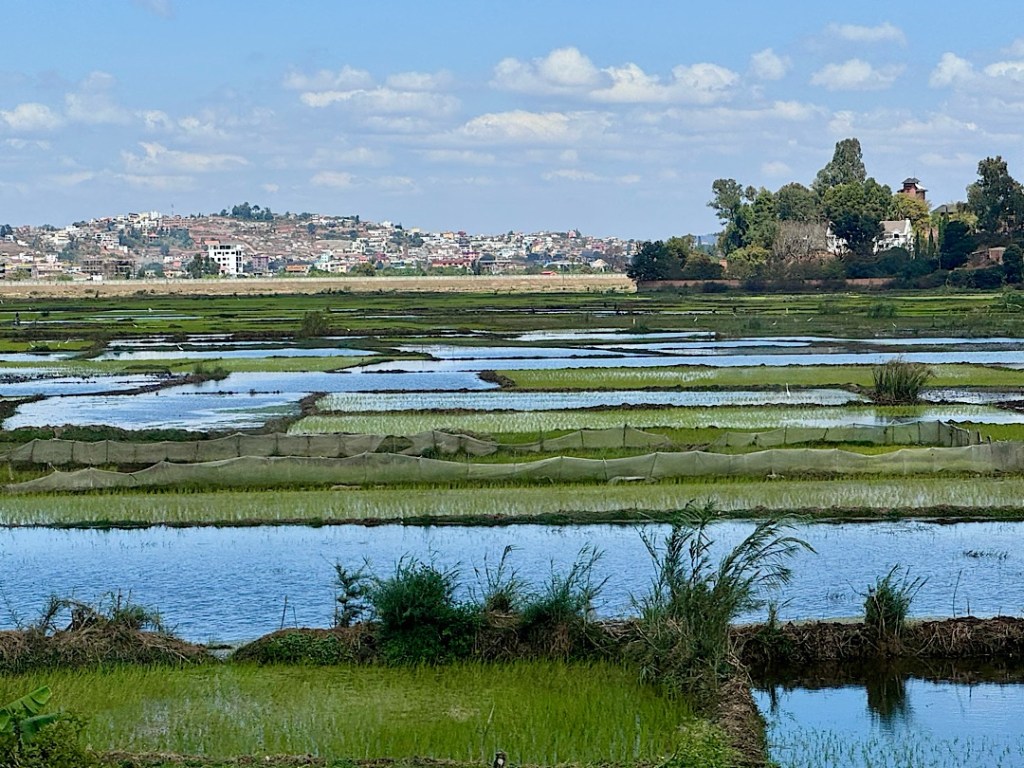
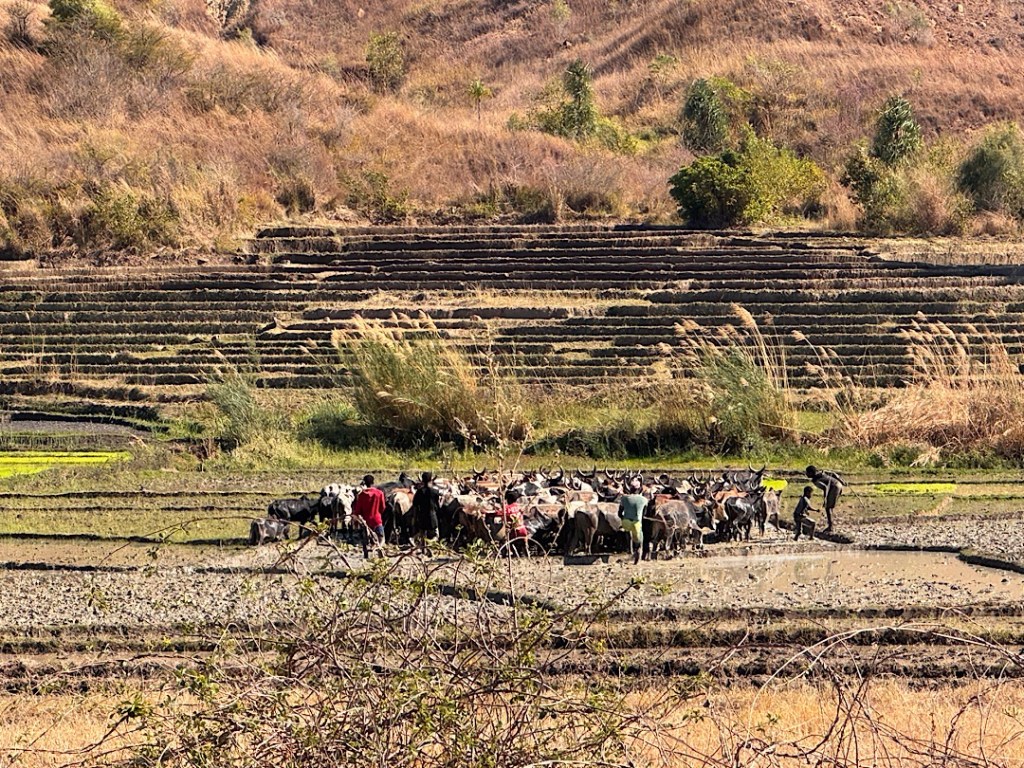
Much of Madagascar’s population descends from people who made their way thousands of years ago from Borneo in Indonesia. They were rice-growing peoples who cut down the Malagasy forests and cleared the land to create floodable fields. Rice paddies today stud the urban canvas of the capital city.
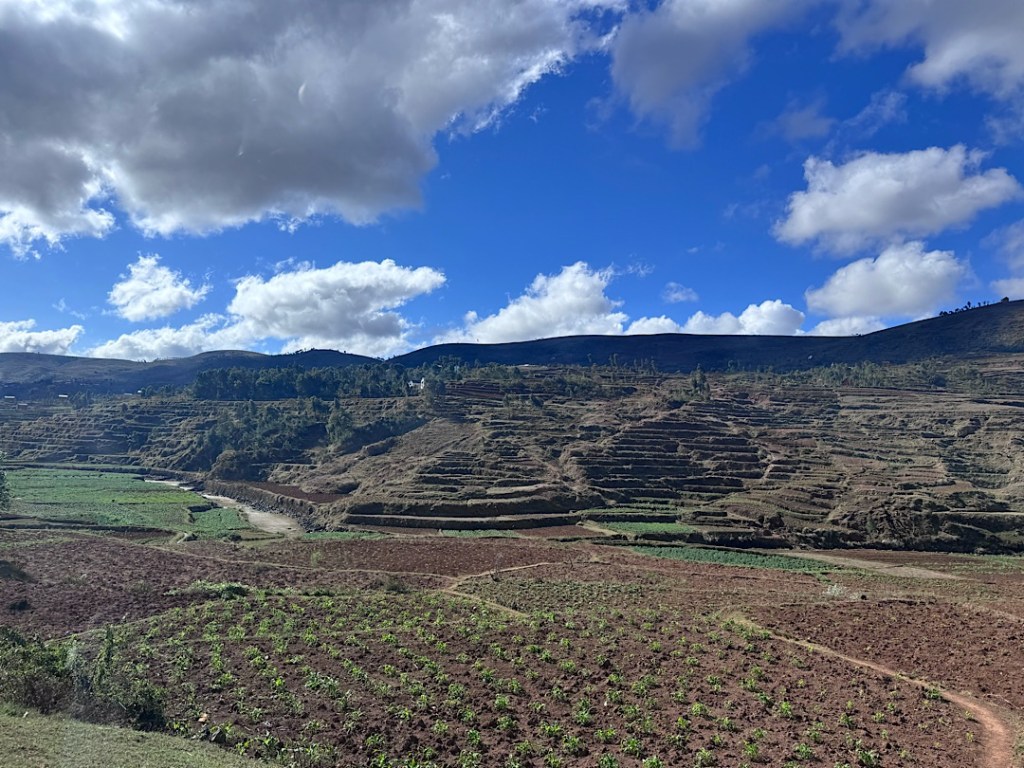
Jigsawed terraces make parts of the countryside resemble Peru (except they cradle not potatoes but emerald rice shoots.)
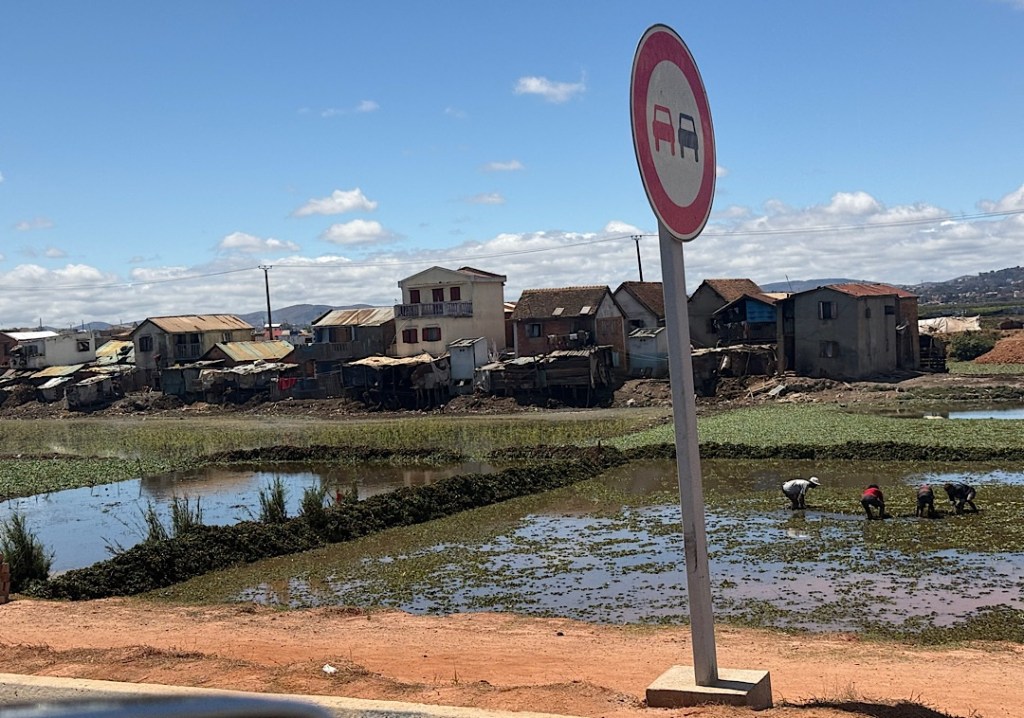
Malagasies even grow rice in the arid southwest, though there they get only two harvests per year instead of three. All these paddies require irrigation systems so complex we couldn’t begin to comprehend how they worked.
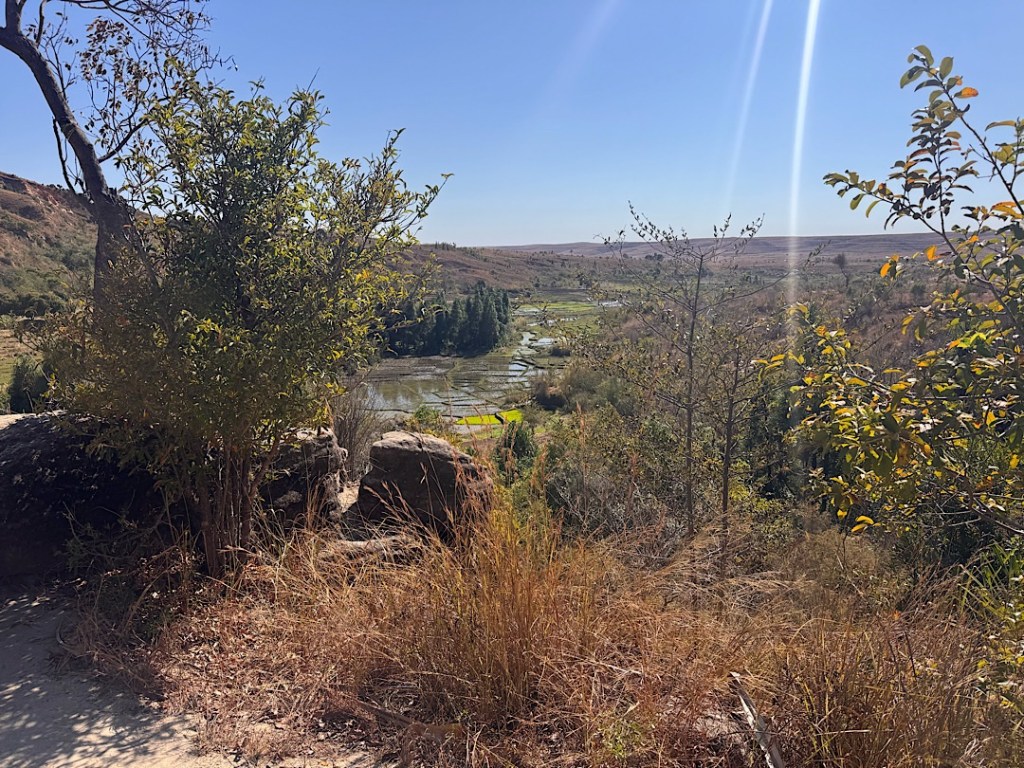
The folks who tend them live mainly in the central highlands but could blend in on the streets of Jakarta. African (Bantu) features are found more frequently on Madagascar’s coasts. Remarkably, everyone speaks the same language (Malagasy), and it’s related most closely to the family of languages still spoken in Borneo.
The Malagasy people we interacted with most (our guides) were warm and thoughtful and seemed extremely intelligent. I kept thinking they’d be college professors, had they been born in America. They all still seemed to be reeling from the political coup that unfolded here 11 months ago. Frustrated by Antantanarivo’s chronic shortages of water and electricity, college students and other desperate residents took to the streets last October (2025) demanding change. The military finally joined their side and the president — a one-time DJ who’d been backed by the French to take power 16 years earlier — fled the country (having accrued a personal fortune reputed to be $200 million). No election has since been held. The colonel who’s in charge says one is being organized that will take place next year. Will life improve then? Our guides shrugged when we asked them. What can they do but hope?
Throughout our 12-day stay, Steve and I kept asking each other: were we having fun? Glad we came? Clearly the answer to the first was: not always. Madagascar’s road system is awful. Billionaires may be able to charter helicopters to fly them to the natural wonders, but everyone else has no choice but to endure hour upon hour of truly life-threatening passing and jouncing and crater-dodging. Here’s a glimpse. Multiply this video a thousand-fold to imagine how we spent a large chunk of our time.
Note that’s a highly flammable fuel truck we’re passing by inches.
And yet. What we encountered along the way made it seem worth it. In the Southwest we drove through a mining town where scrawny, leathery gun-toting Malagasies panned for sapphires in a setting as savage as any from America’s wild past.
In the dripping rainforests, we gaped not only at the lovable lemurs, but other fantastic creatures.
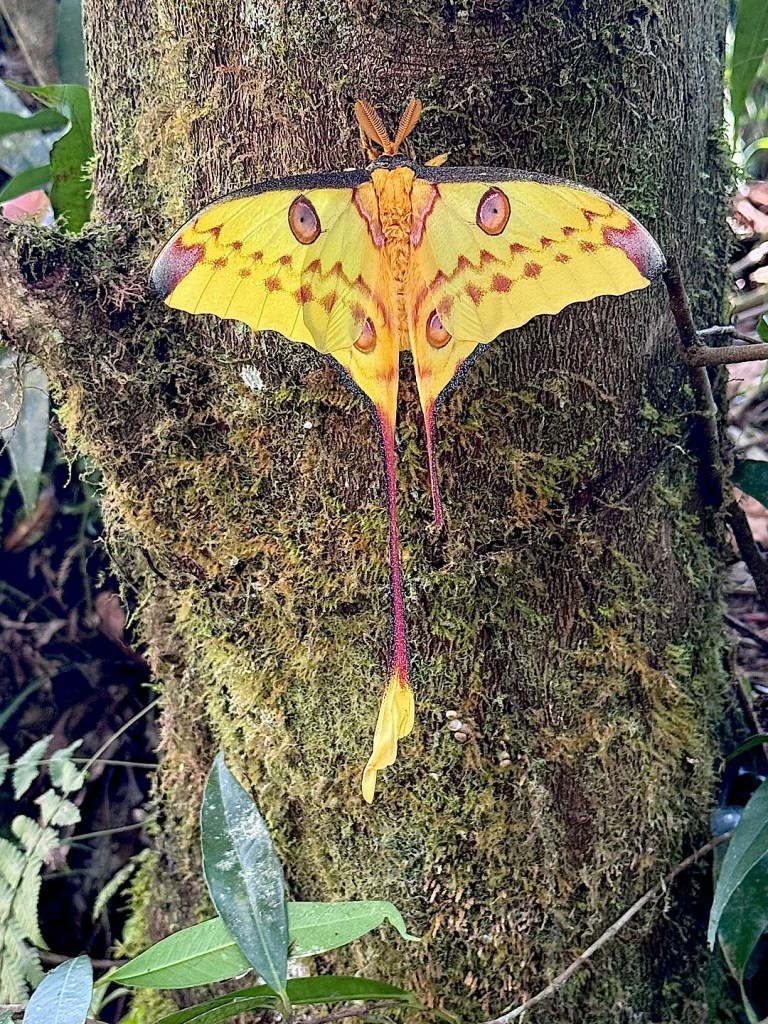
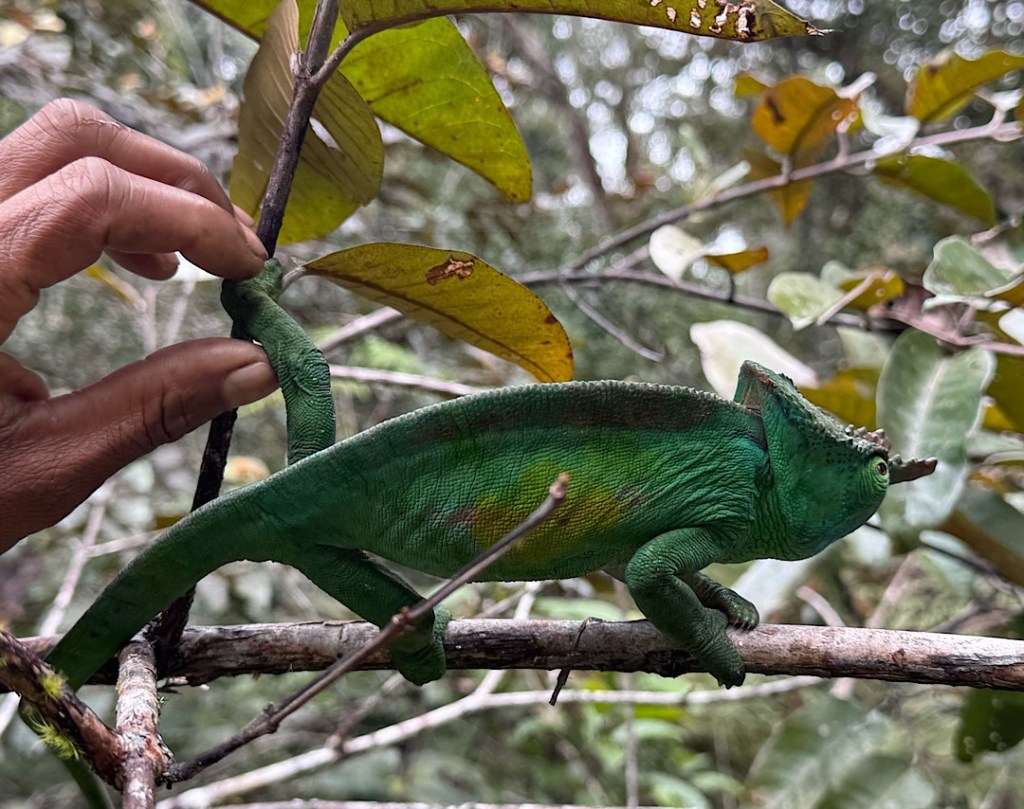
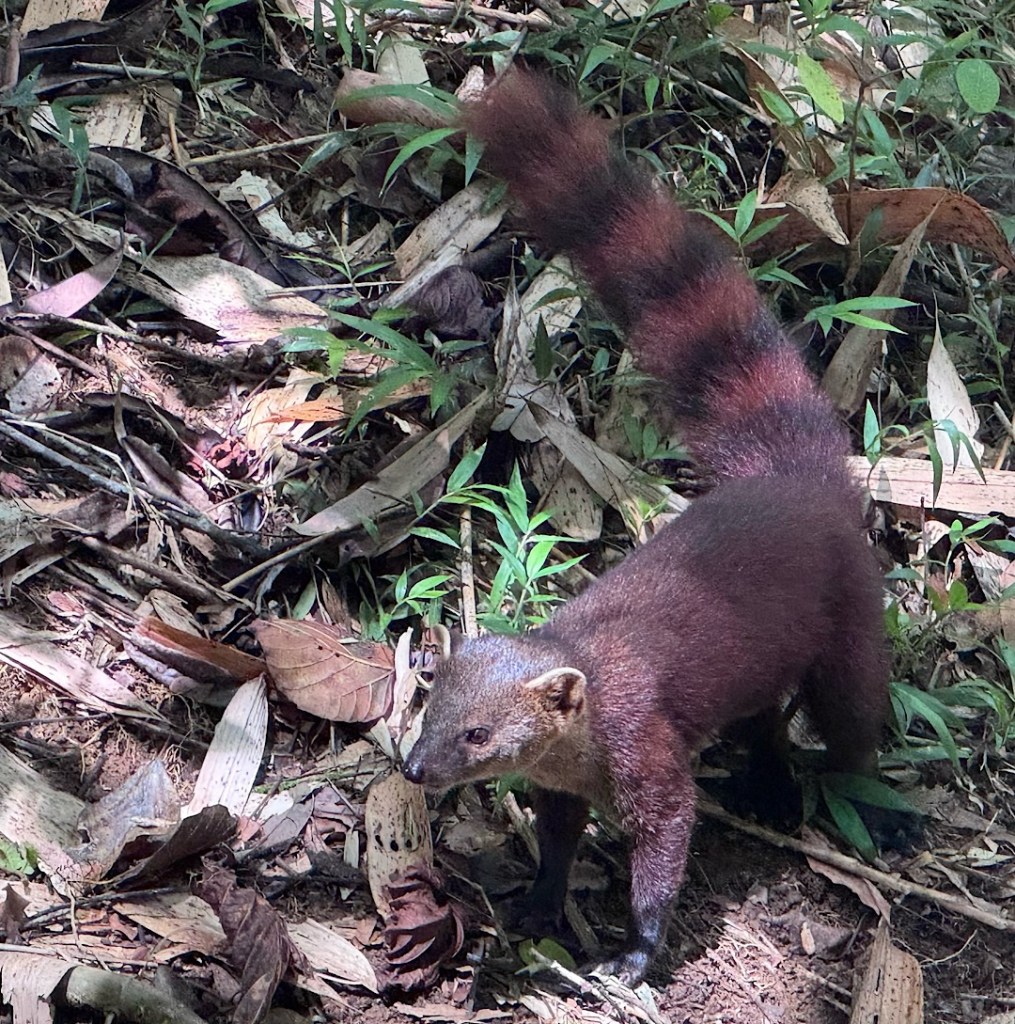
We had experiences I’ve never had anywhere else and will never forget. Let me wrap this up by describing just a few.
Our program called for a stop along the main highway south out of Tana at an aluminum-recycling operation. I was braced for a tourist trap where we’d be offered shiny silver trinkets. I wasn’t prepared for the hellish Dickensian tableau into which we walked.
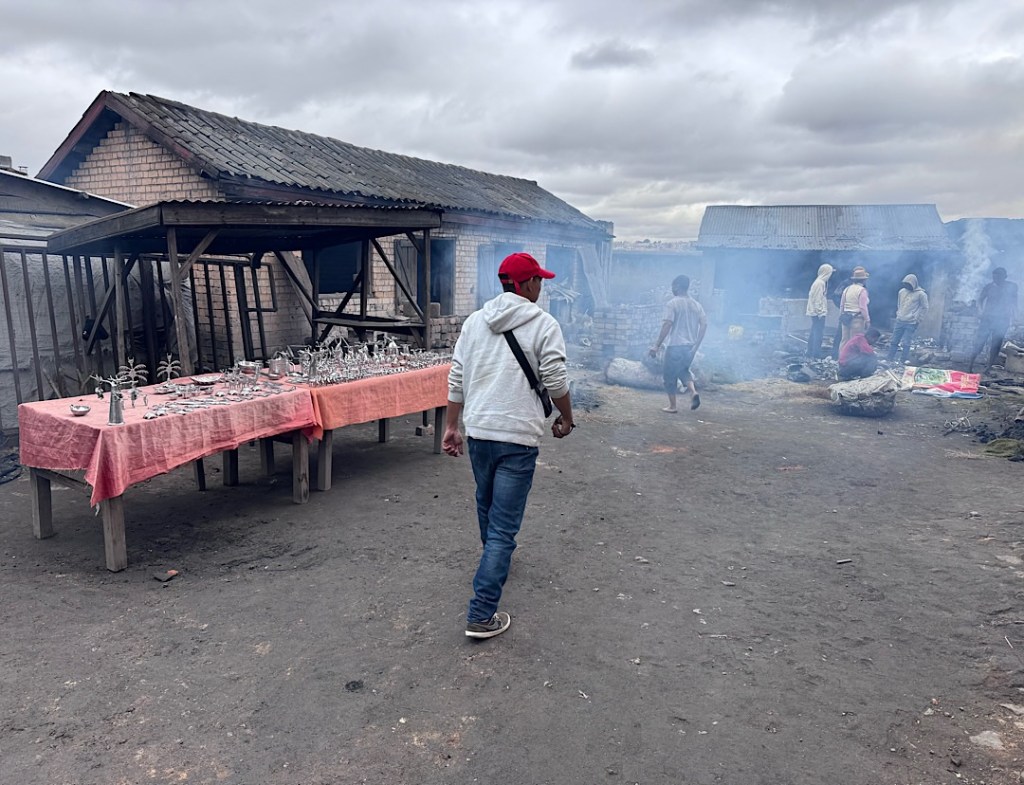
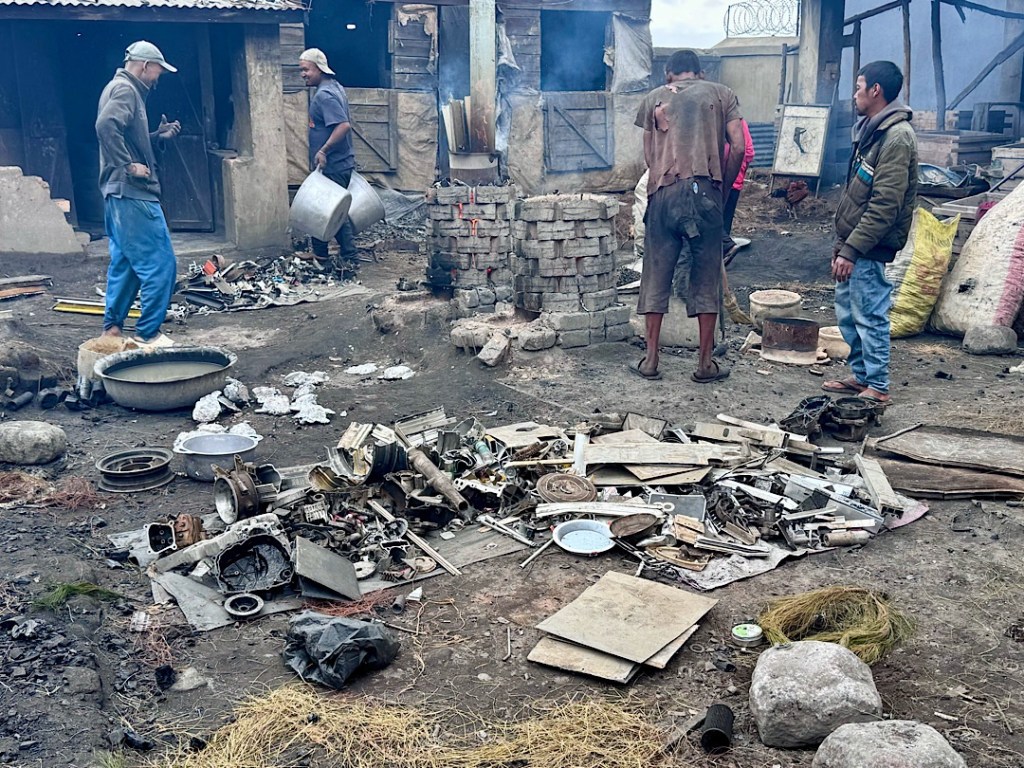
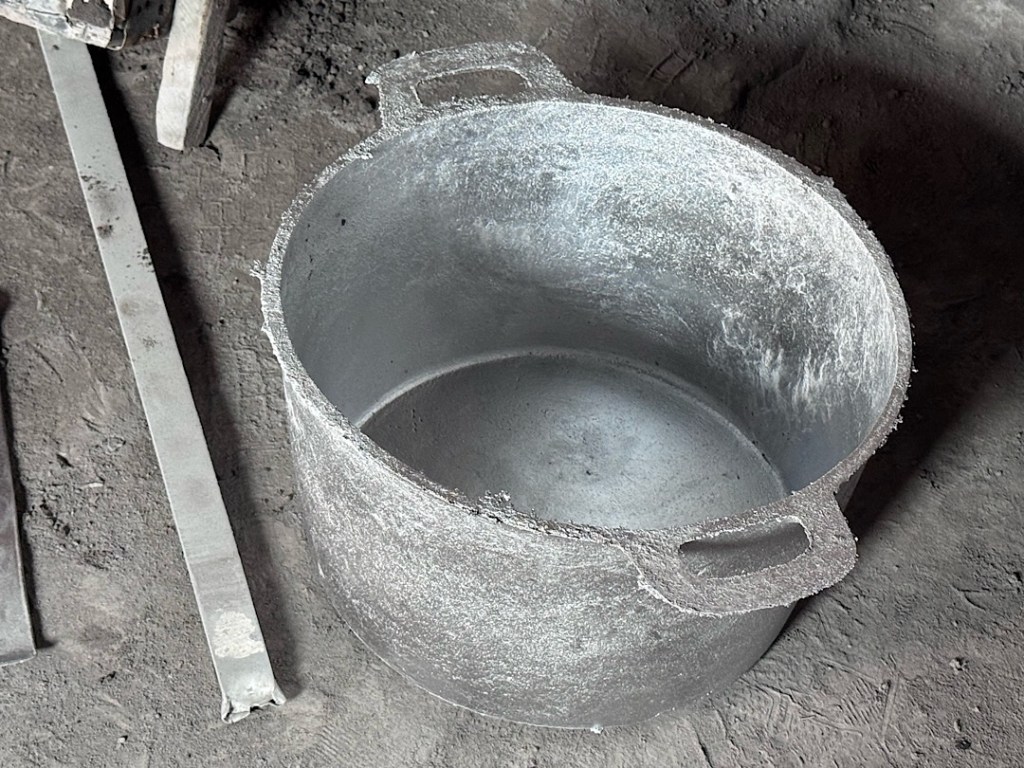
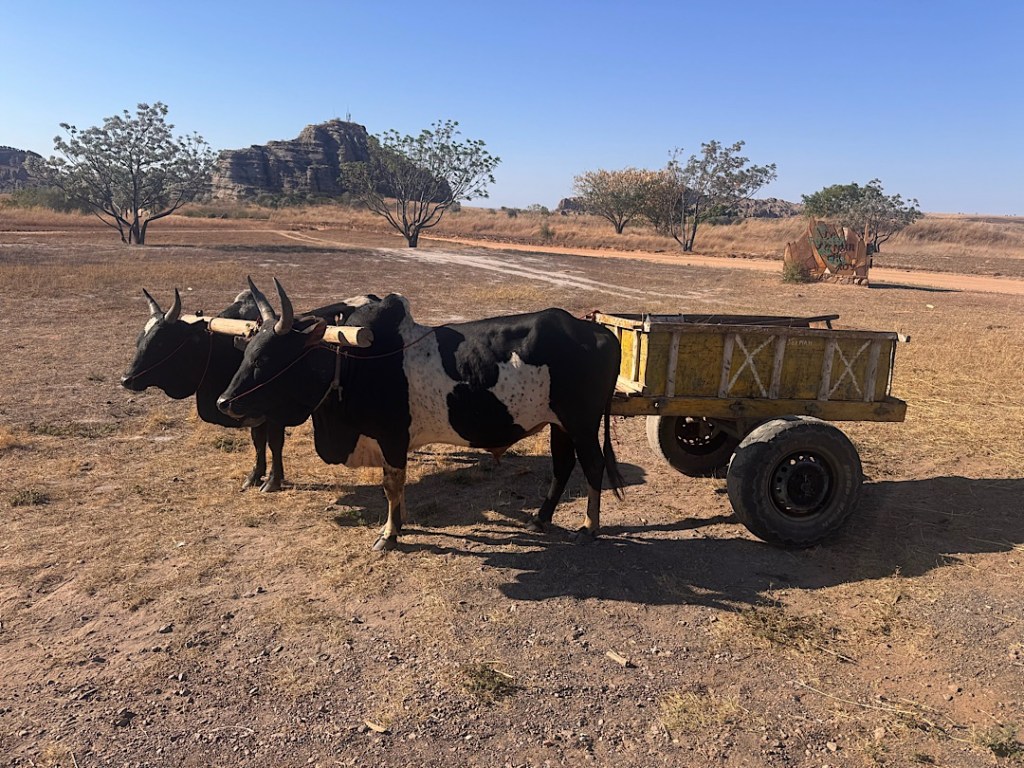
Further south, we spent two nights just outside Isalo National Park, an area where Jurassic-era sandstone has eroded into canyons, gorges, and other natural sculptures interlaced with cascades, pools, and riverine forests.
We hiked for half a day with a marvelous Malagasy naturalist named Peter. He pointed out an anthill that locals had broken into to collect the inhabitants. Apparently they’re good for fattening up chickens.
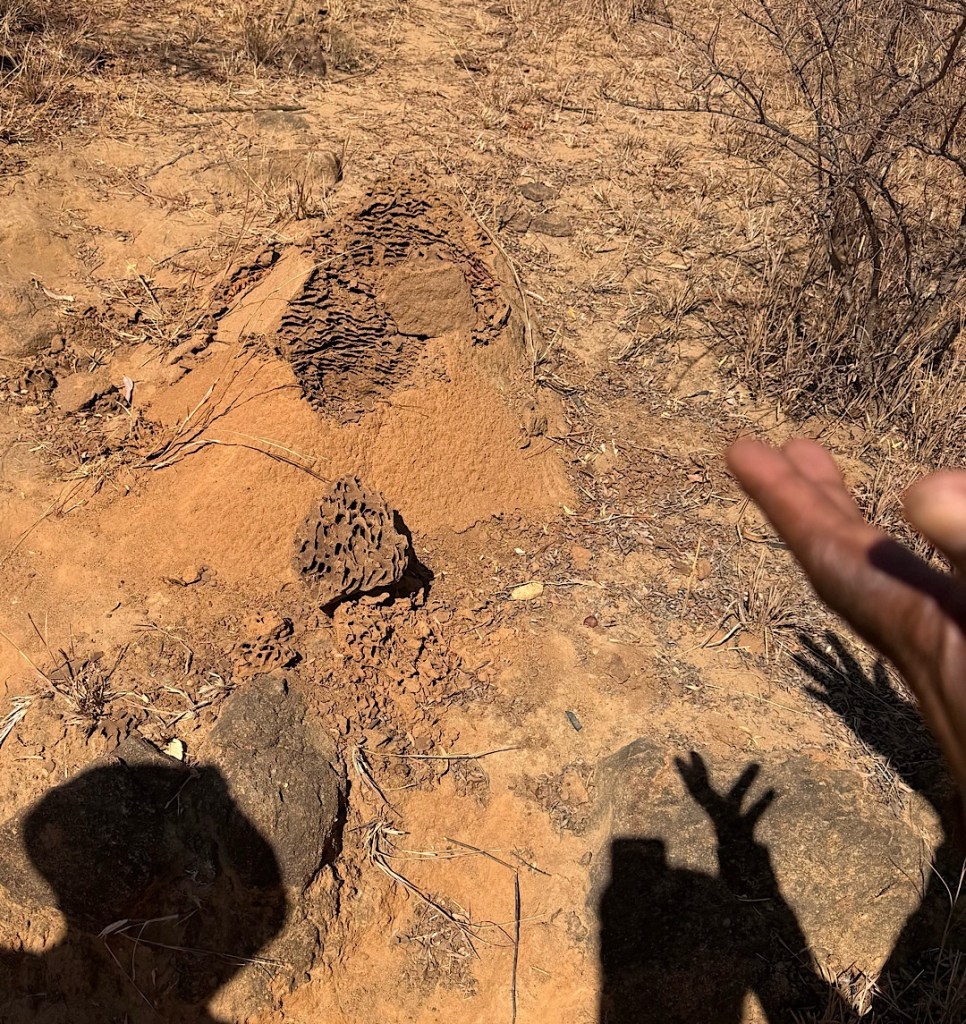
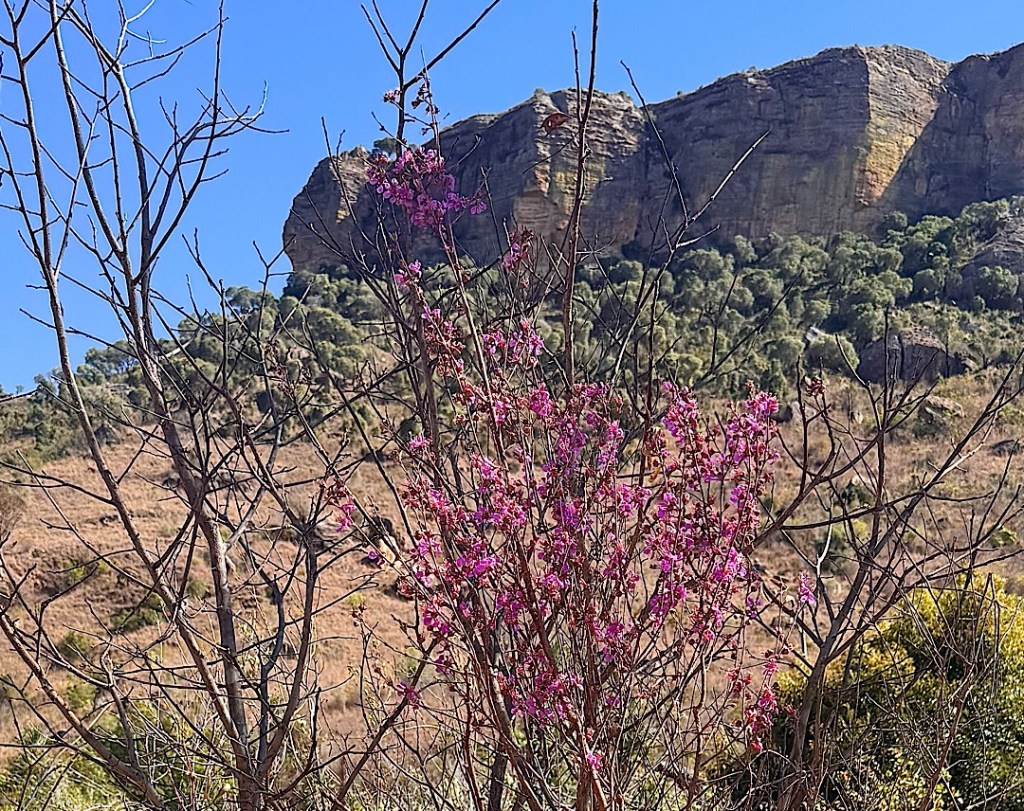
Peter said members of his tribe, known as the Bara, make a tea from these flowers and apply it to the heads of their newborns; it makes the baby’s fontanel close up faster.
Most fascinating to me was Peter’s explanation of the Bara people’s funeral practices. Like most Malagasy, the Bara believe life only really begins after death. Assuming your offspring treat you right, you become a revered ancestor who watches over your relatives, protecting or punishing the living. Even in Tana, treating the dead right means placing them in family tombs and celebrating their arrival there with elaborate parties.
In Bara country, this goes to extremes. First people let the the corpse of a loved one dry out for a couple of weeks in a nearby cave. They then prepare the skeleton by cutting it into pieces that can be packaged in a portable box. A funeral party hauls the box up steep bluffsides to a remote cave close to the sky, where family members never return to visit it. Then back at home, the family invites the entire extended community to a raucous celebration that lasts for days. The more zebu the family can butcher (to feed the partiers), the more the respect they pay to the deceased. (Zebu are the humped cattle emblematic of Madagascar.)
Peter wasn’t telling us about some arcane practice from the past. He said this happens every time one of his fellow villagers dies.
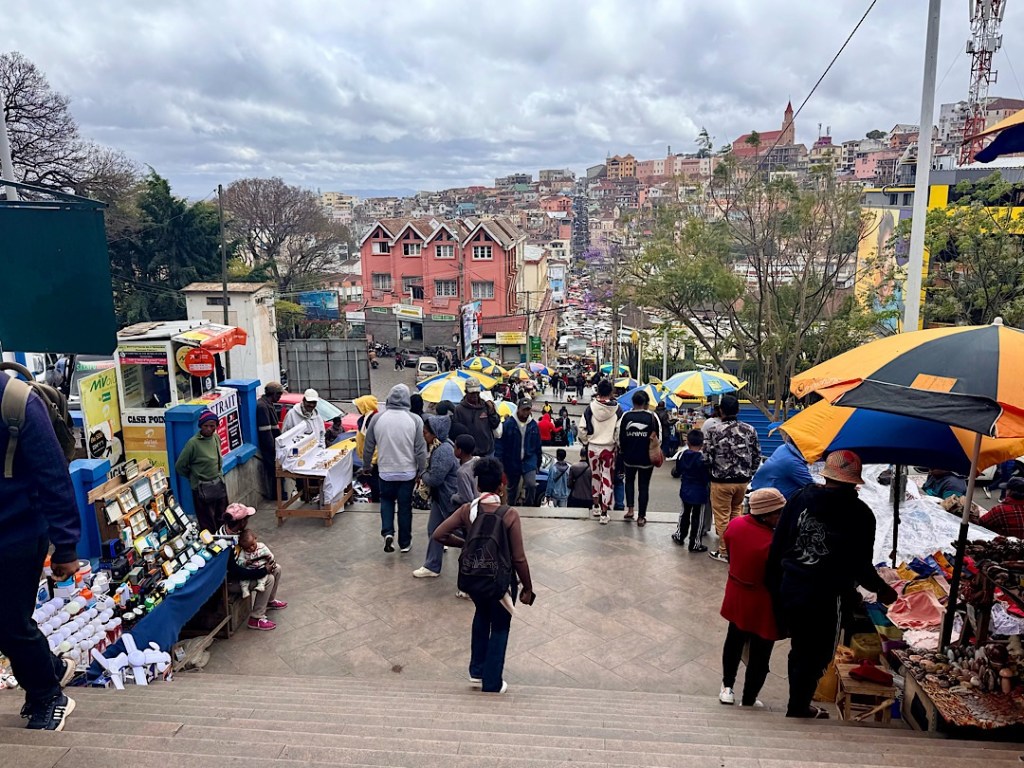
“Malagasy people are very superstitious,” said Andry, the guide assigned to show us around Tana for our last two days in the country. A native of Tana deeply knowledgeable about everything from endemic bird calls to ancient archeological findings, Andry walked us for hours around the middle and lower sections of the city. After lunch, we drove to the upper town where Madagascar’s kings and queens lived for centuries.
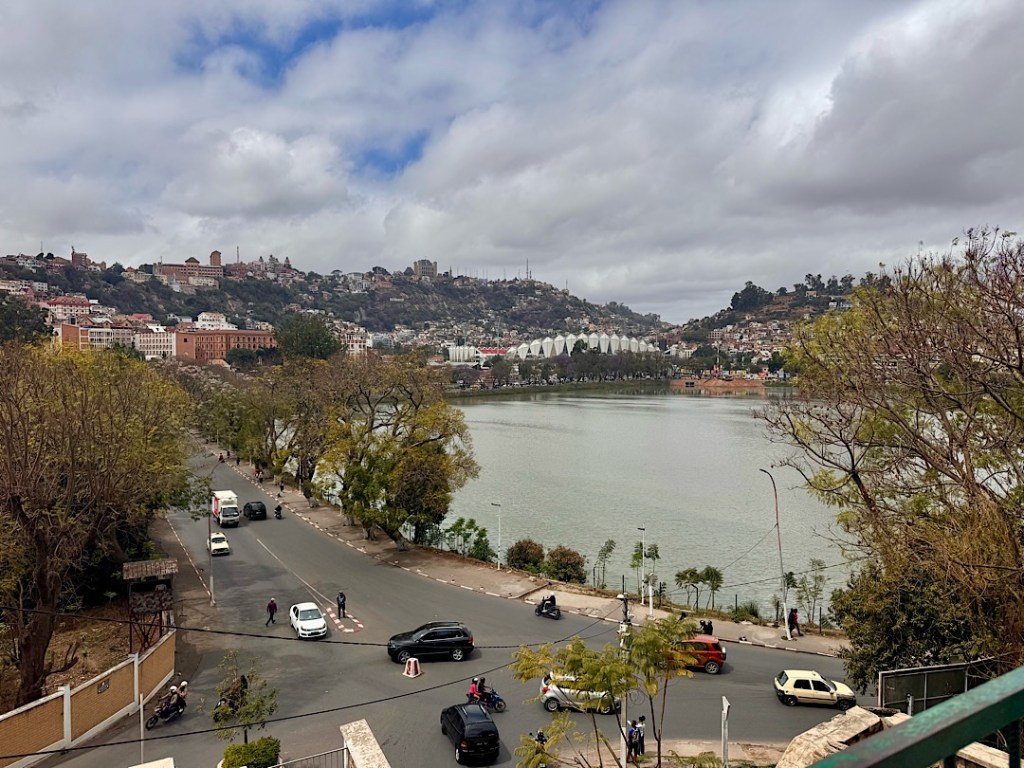
The wooden core of the palace built between 1839 and 1841 by the infamous Queen Ranavalona I burned to ashes about 30 years ago. I knew that interminable work had gone on to restore it, and I was thrilled to learn the restoration had finally finished. So we could go in.
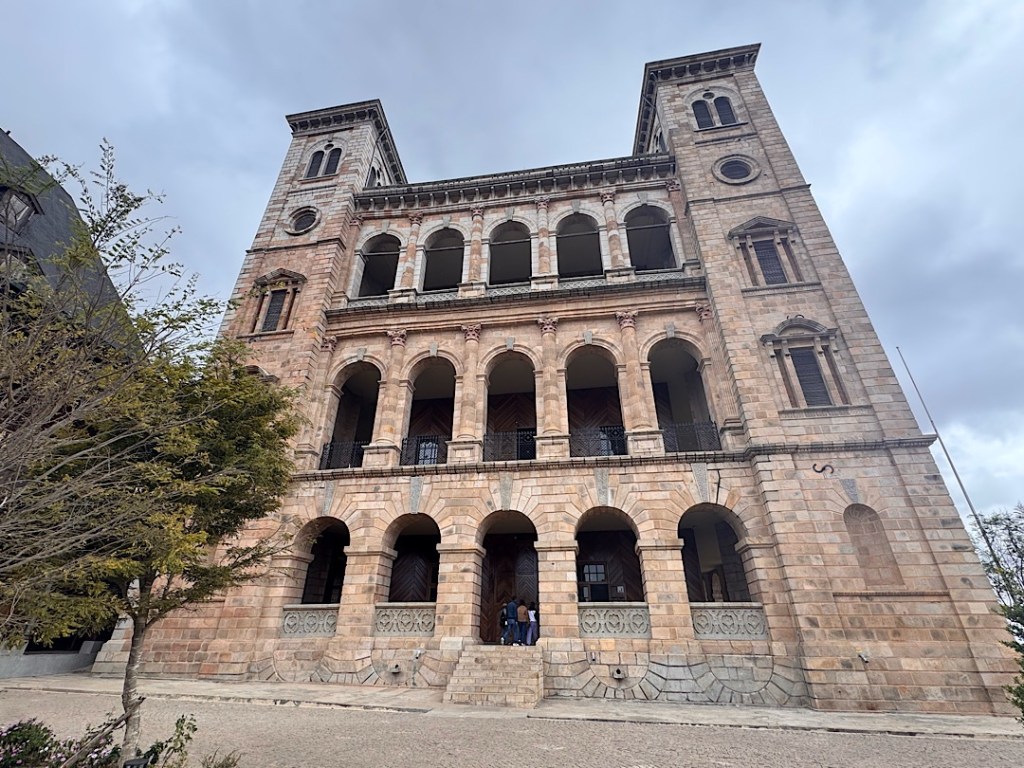
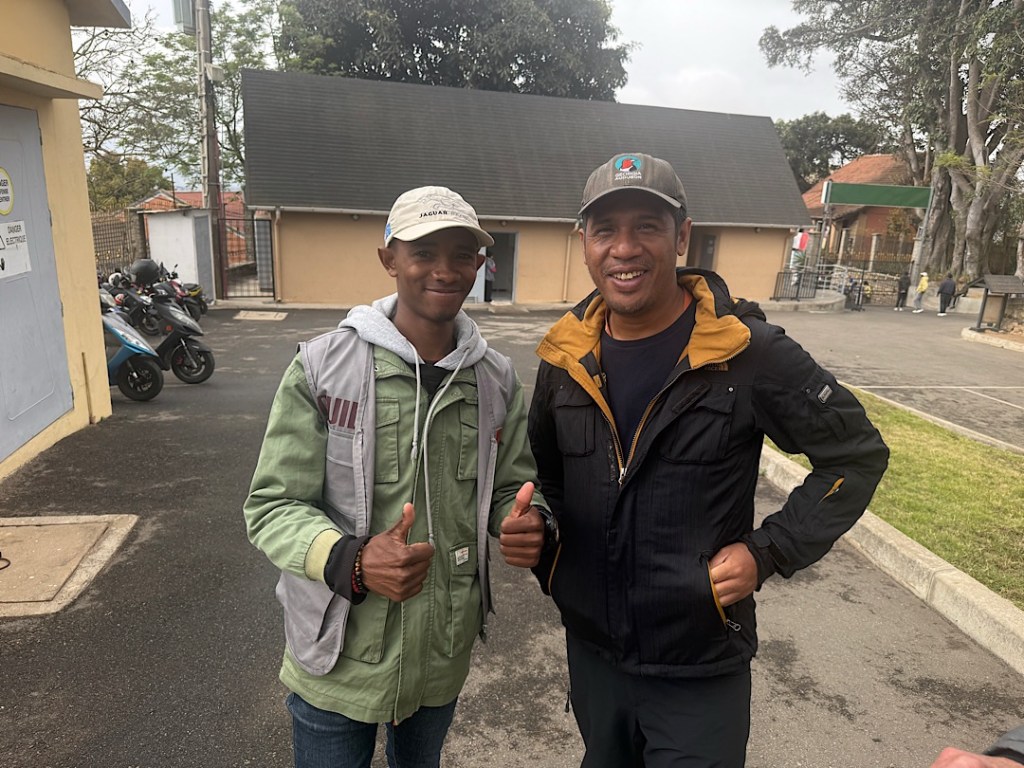
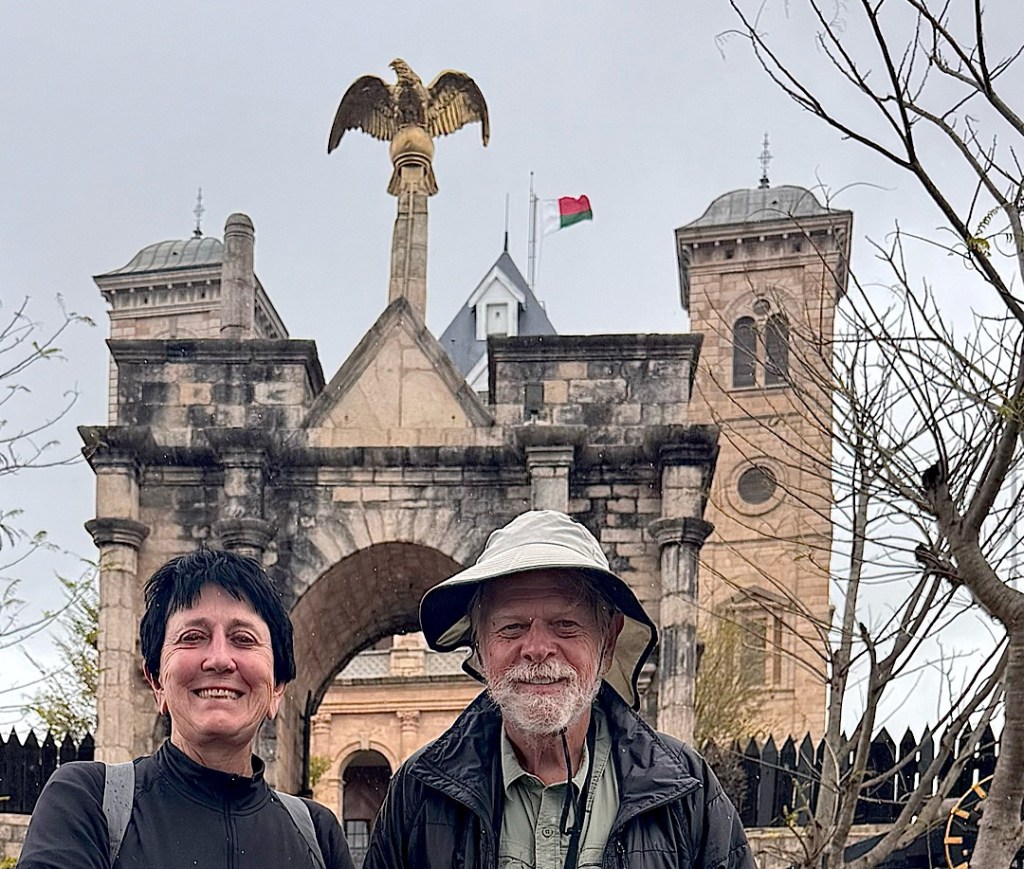
Steve and Andry and I hired a Queen’s Palace guide to show us around, a young, very charming guy named Elias. When the palace burned down local people saved many of the contents; these are now displayed in the reconstruction. Elias led us around the exhibits, explaining them all. Then we walked onto the balcony where he gestured to the gate through which visitors gained access to the royal compound. The eagle on the top was a symbol of power. Next to it was a stone phallus that Elias pointed out was circumcised.
“In order to come through the gates, every man had to be circumcised. And do you know: they checked!” he exclaimed, cackling.
He elaborated. Circumcision was a big deal extending way back in Malagasy culture. Even today, circumcision is pretty much mandatory for every male born in the country. “If you’re not circumcised, you can never marry!” Elias said. “Other men will make fun of you.” You can’t be buried in the family tomb but will be condemned to wander forever as a ghost.
Elias and Andry were both laughing, but it was clear this was serious stuff. They said even today boys undergo circumcision between the ages of 1 and 5, and each boy’s grandfather is required to swallow the foreskin — whole and wrapped in banana.
“Just think!” Elias exclaimed. “When we’re grandfathers we’ll have to do that.” Andry laughed again, but he nodded sheepishly. It was true.
***
On the last day of our road trip, we worried about arriving at the Tuliar airport late and missing our flight back to Tana. So we left Isalo very early and wound up with a bit of extra time. Haja drove us to a garden close to the airport. We ate the box lunches we had brought with us, then Steve and I walked around the gardens with yet another local guide.
He explained that a Swiss amateur botanist had come to Madagascar decades ago, acquired a piece of land, and traveled all over collecting native plant species. He’d fenced the property, a degraded grassland, and started planting the natives.
Today more than 900 plant species, more than 90% of them indigenous to the region, are flourishing in the space. Wandering along the pathways, I realized with a jolt: THIS was the landscape I’d hoped to find, eerily alien.
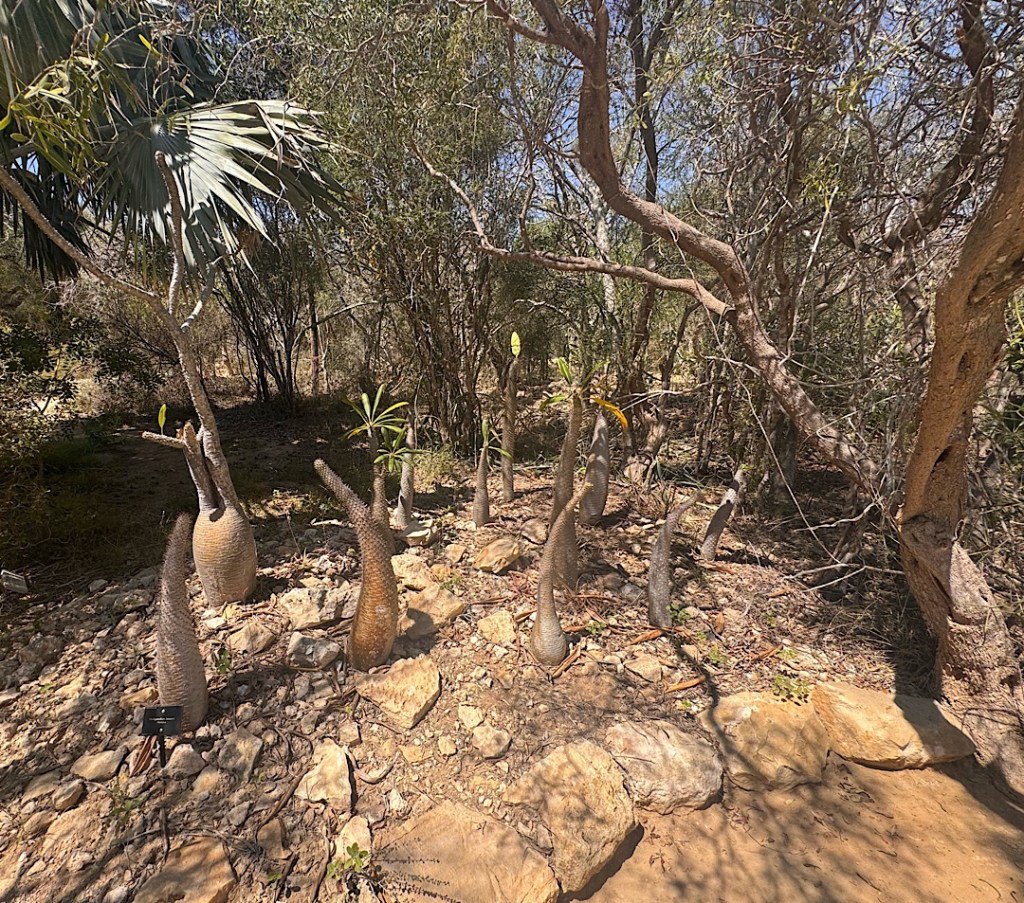
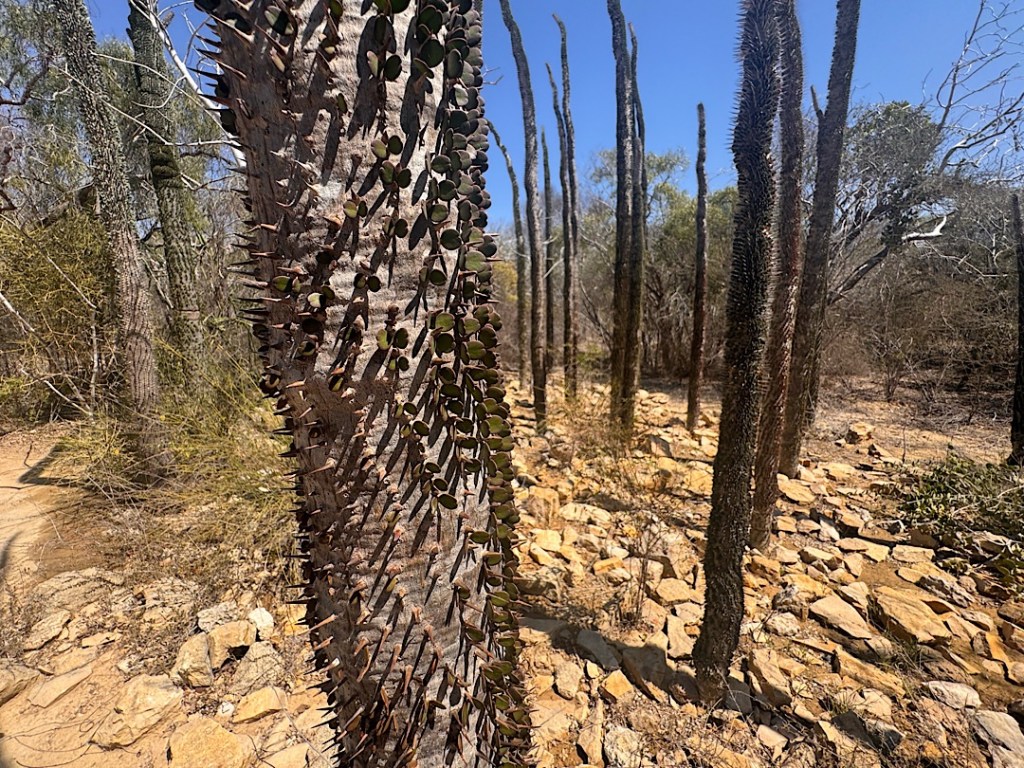
So what if it was re-created by a crazy Swiss guy? He’d recognized some of what’s lovable about Madagascar and worked to keep it alive. Better to have gotten at least this glimpse rather than never have seen it at all.
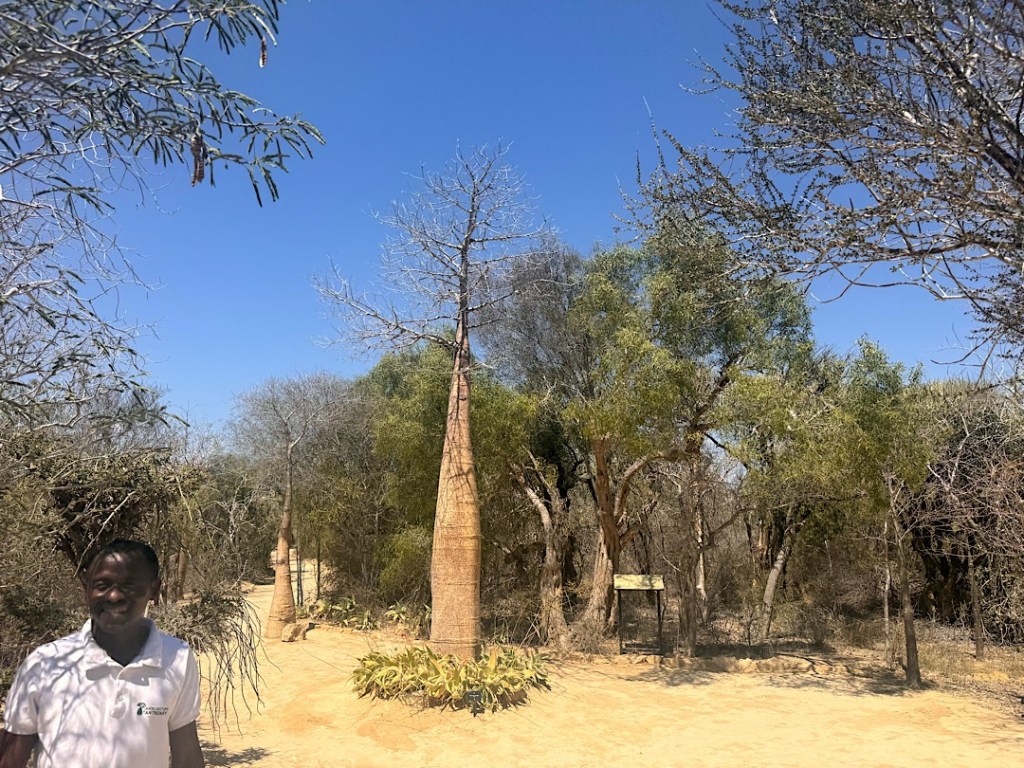
This is the oldest native baobab tree in the garden. It’s about 150 years old. The ones in the photo at the beginning of these post (which we saw growing alongside the highway) are many hundreds of years older.
 At home and abroad