We still have eight more days in India, but I already know what has shocked us most: the retail shopping experience. We’ve been in few countries where so much of the commerce consists of tiny storefronts offering only one category of product. Last May, in the middle of the Amazon, we found a modern grocery store in the small town of Santarem (Brazil). But the only time we managed to find anything vaguely similar here was in Jaipur. Then, when we told our guesthouse operator we wanted a grocery store, we had to hire a taxi to drive us to one because it was too far to walk.
The dearth of general stores — even tiny ones — at times has been maddening. I think of our first night in Mumbai (formerly Bombay), last Tuesday. We’d picked up some vodka and wanted to have a drink in our room before venturing out in search of dinner. You can mix vodka with many liquids; our favorite is Schweppes tonic water or orange juice. People describe Mumbai as the New York City of India, and our hotel was in the Fort district (“a dining and shopping epicenter,” in Lonely Planet’s words.) How hard could it be to find a bottle of mix?
REALLY hard, it turns out! Steve and I tromped through street after street, all of them jam-packed with shops. We found places selling stationery-related products, snuff, laundry detergent, photocopying service, cell-phone covers, clothes, tailoring services, and much more I can’t remember. We passed eateries of all sorts, from nice restaurants to cheap Chinese food outlets to countless varieties of street food. But nowhere did we find tonic or even a boxed juice. We must have searched for at least 20 minutes before finally spying a bottle of sugary orange soda for sale. Grouchy and dissatisfied, we gave in, bought a bottle of that, and returned to the hotel to pour a stiff one.
I don’t want anyone who reads this to think no American-style grocery stores exist in India. We’ve seen photos online of glitzy shopping malls that look indistinguishable from the nicest in San Diego.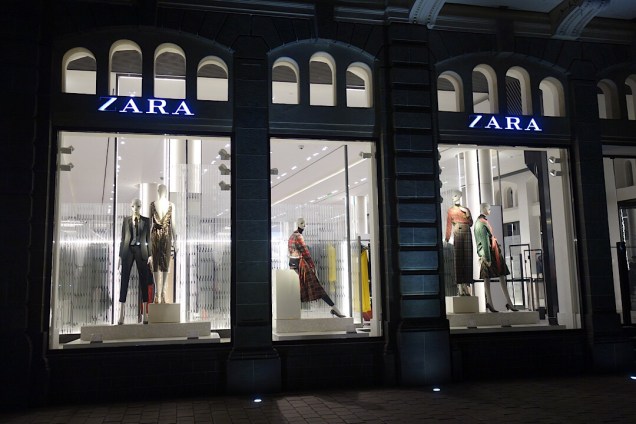
We’ve also seen plenty of expensive looking stores selling Nike shoes and Coach bags and Zara products like this, even on very decrepit streets. I’m sure there must be grocery stores near the the fancy malls. But Steve and I haven’t been staying in wealthy enclaves in major metropolitan suburbs, but rather in staggeringly dense city centers. We started to wonder if there were no grocery stores around our hotels because the Indian government had outlawed them for some insane reason.
That does not appear to be the case. We got some inkling of the true explanation in Udaipur. The day after we took Shashi’s cooking class, we ran into one of the British couples who’d been our classmates and joined them at a coffee shop. The guy, another Steve, was an engineering manager who’d been living in Bombay for 5 years, while his partner, Allison, spent part of her time with him and part back in England. We had a long delightful conversation, during which we asked about the mysteriously missing grocery stories. They reflected for a moment, then suggested there were a couple of factors.
Very poor people probably paid a few rupees less to buy their fruits, vegetables, and milk products from the vendors who brought those products in from the country and sold them on the sidewalk than they would pay at any grocery store. Also, grocery stores weren’t a part of the culture of the Indian poor. “But there are plenty of middle-class people in India now, aren’t there?” I interjected.
This was true, Alison and Steve agreed. But the reality was that middle- and upper-class Indians could have their servants go out and buy anything they needed. Toothpaste? Toilet paper? A can of tonic water? Send out Rahul, or call the store for takeout service. Bombay Steve told us about opening the door of his apartment one recent day to find a guy bearing a cup of Starbuck’s coffee. (He’d wound up at the wrong apartment.) Most middle- or upper-class Indians would find it beneath their dignity to dash off to a grocery store, Alison and Steve said, adding that in fairness, some felt they were providing needed jobs to their fellows by using their delivery services.
I felt a little staggered to realize I was in a place with such vast numbers of extremely poor people that their existence made grocery stores uneconomical. The absence of the grocery stores didn’t mean you couldn’t get anything you might want. It meant other people would go out and find it and bring it to you if you paid them little more than pennies.
They didn’t need to go to a grocery store to find whatever you wanted because they knew what the various scattered sources were. The importance of such local knowledge was driven home to us our second morning in Bombay. We left the hotel early, before the city felt like quite such a steam bath and walked past the fantastic Victorian-era train station. Here’s what a small part of it looks like: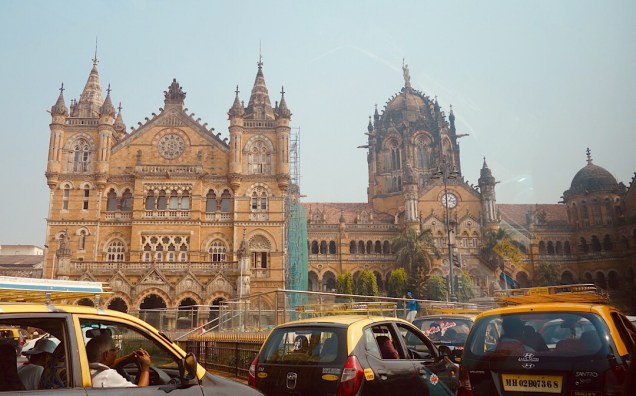 Just north of it begins a series of neighborhoods renowned for their maze-like bazaars. As it turned out, it was too early for many of the shops to be open, but we did pass guys carrying big tubs of fish on their heads
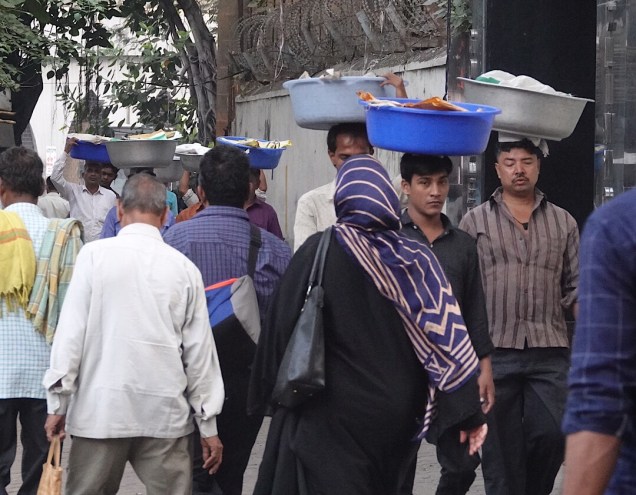 and others selling them from tarps on the sidewalk.
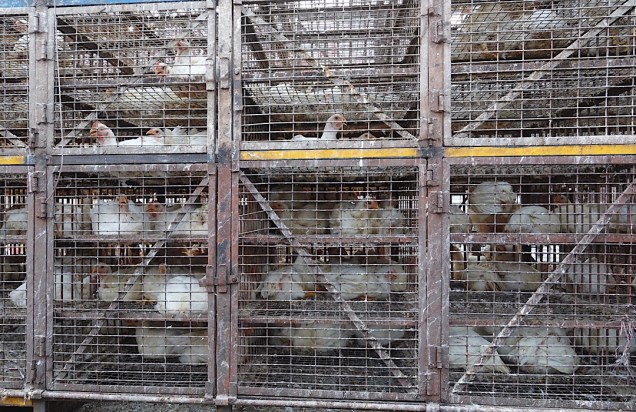
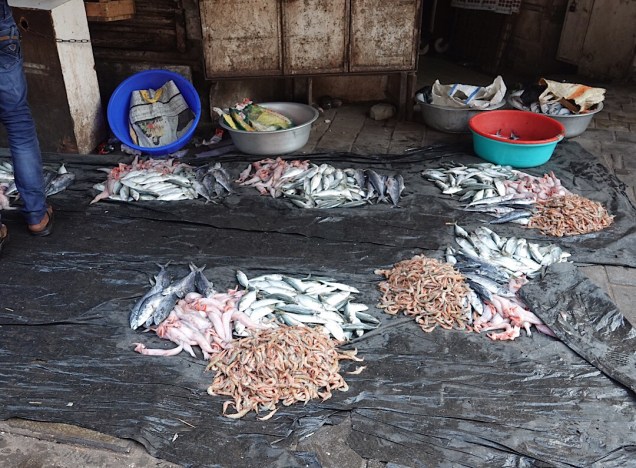 We passed trucks of suffering and doomed chickens that made me (briefly) consider never eating chicken again.
 The old Crawford food market (the exterior of which still bears beautiful sculpture work done by Rudyard Kipling’s father)
 was just coming to life, and within it, I spotted a booth carrying all manner of canned drinks, including our beloved Schweppes (in both Indian and foreign sizes.) Steve was ecstatic. He bought six (Indian) cans from this guy.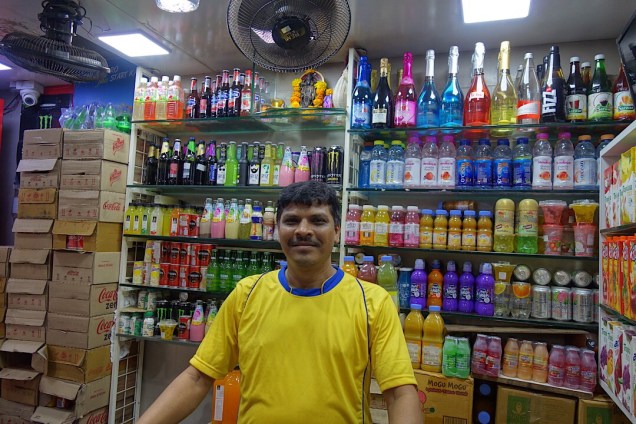
Later that morning, we took an Uber car to another nearby train station (Churchgate). I’d read that the famous dabba-wallahs of Mumbai could be found gathering there every day in the late morning. These guys pick up lunchboxes from restaurants and private homes (where ladies earn some money by cooking tasty lunch items and packing them into tins for their customers) and they fan out across the city around noon to deliver them to office workers. I’d seen a charming movie (The Lunchbox) a few years ago about one such guy, and our guidebook also talked about them. (The sidebar claimed that more than 200,000 meals were delivered daily, and a 2002 Forbes Magazine analysis “found that the dabba-wallahs had…a 99.999999% reliability rating.”)
At our hotel we heard that the dabba-wallahs were in decline; corporate canteens were increasingly putting them out of business. I still wanted to try to find some, but at the train station all we saw was this lonely trio.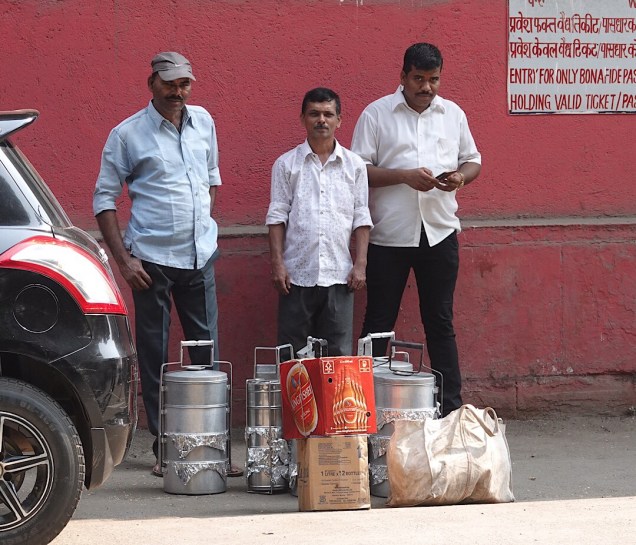 Had we gotten there too late? Were dabba-wallahs as endangered as those Rajasthani camels? I felt a wave of disappointment.
We strolled aimlessly up a prosperous residential boulevard and then down a big commercial street. We popped into a non-self-service pharmacy (where everything for sale is behind counters manned with white-robed clerks) and found the sunscreen/moisturizer I’d been needing. I was too embarrassed to ask those guys if they sold pantiliners (one of my secrets to life on the road with just a few pairs of underwear), but Steve barged into the next pharmacy and emerged moments later with an 88-rupee package of Carefree liners.
Continuing on, we came upon a cluster of men I thought were selling purses or insulated bags. But Steve exclaimed, “It’s them! It’s the lunch guys!”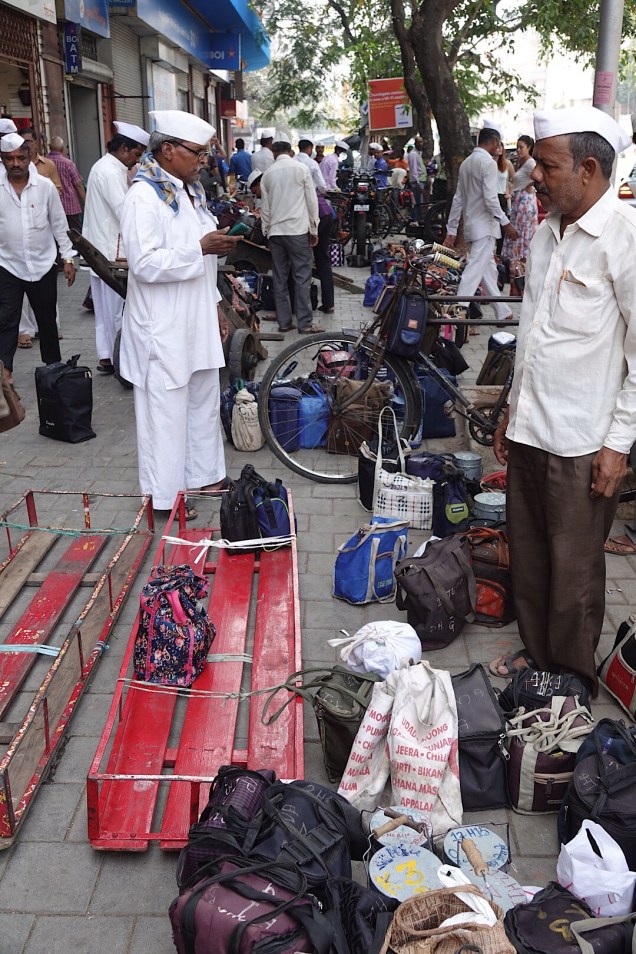 It was indeed a thick congregation of dabbah-wallahs, loading up their conveyances. I hadn’t immediately recognized them because they were using so many insulated bags instead of the traditional tin canisters. Some had dozens of the lunch bags piled up on wooden hand carts…
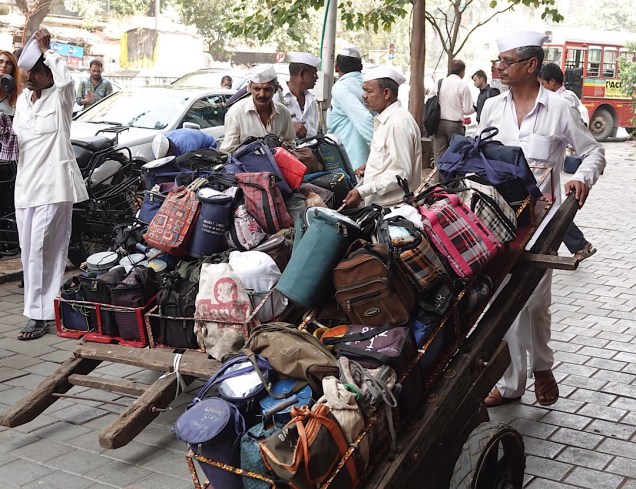 …while others stood by bicycles hung with motley receptacles.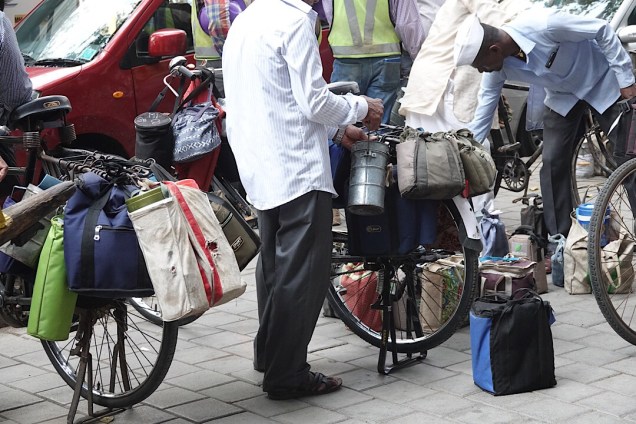
 The face of the modern dabba-wallah.
They milled about for a few minutes, then dispersed to make their deliveries.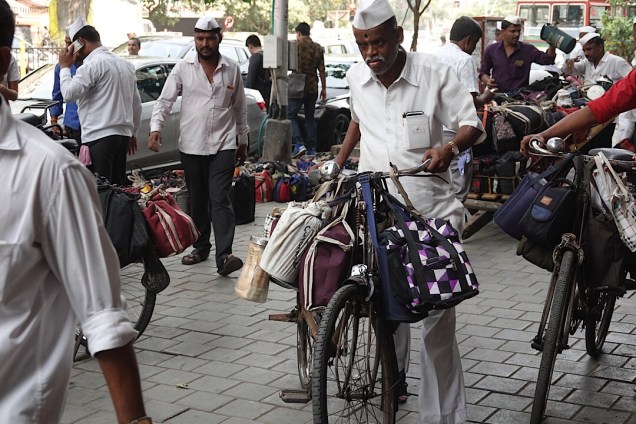
We almost missed them because we didn’t know where to look or even exactly what we were looking for. I think more than a few things in India are like that.
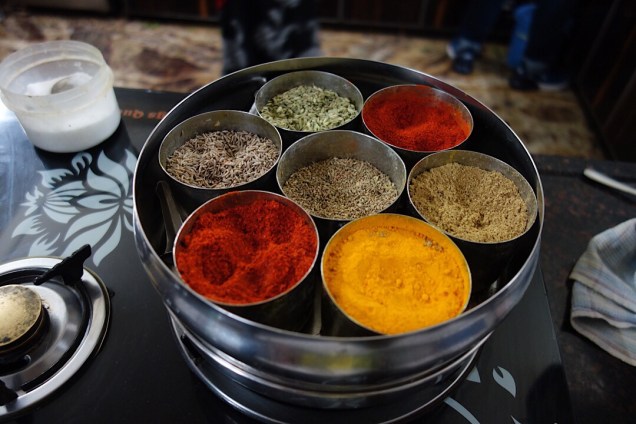
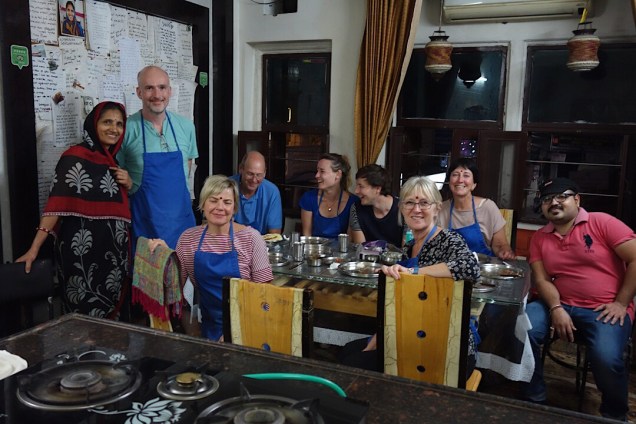
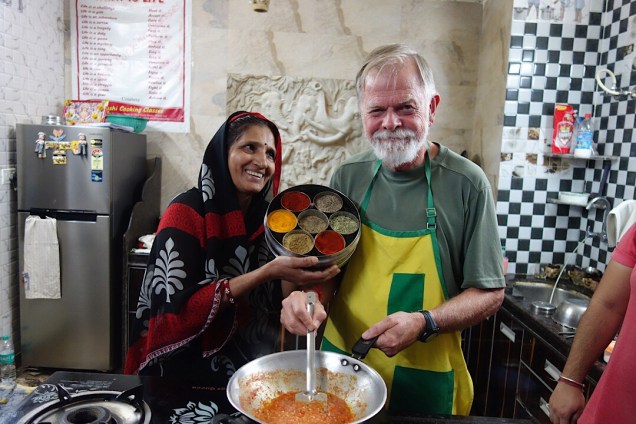 We wound up there because a listing in the “Activities” section of the Lonely Planet’s Udaipur chapter raved about Shashi’s cooking classes. I emailed to see if we could join one and got a response saying the 5:30 pm Saturday (11/17) class had two openings. This was a stretch; on Saturday we had to set the alarm in Jodhpur for 6 am to catch a train. After that five-hour journey, our taxi got stuck in a giant traffic jam. But we didn’t want to miss the opportunity, so precisely at 5:30 pm we walked into a trim little kitchen on the upper floor of a building down the street from our hotel.
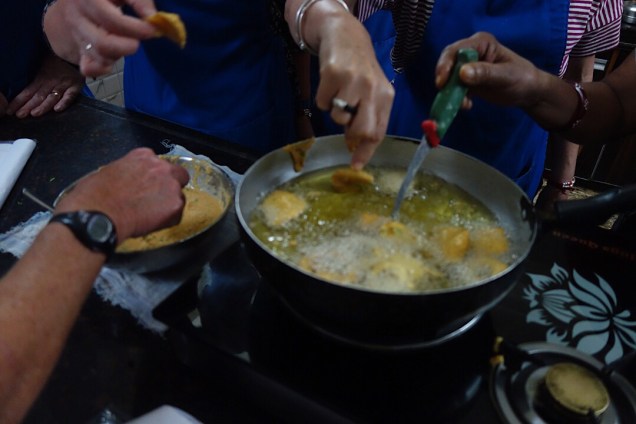 We deep-fried them, then gobbled them down, dipped in two kinds of chutney (coriander and mango) both of which Shashi showed us how to make.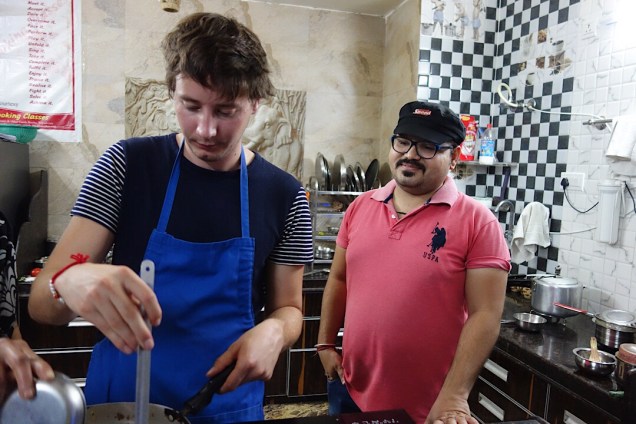
 We made the magic sauce, then we used it to makes several dishes, including curried chickpeas….
 deep-fried cheese in a tomato-butter sauce, and a vegetable pulao.
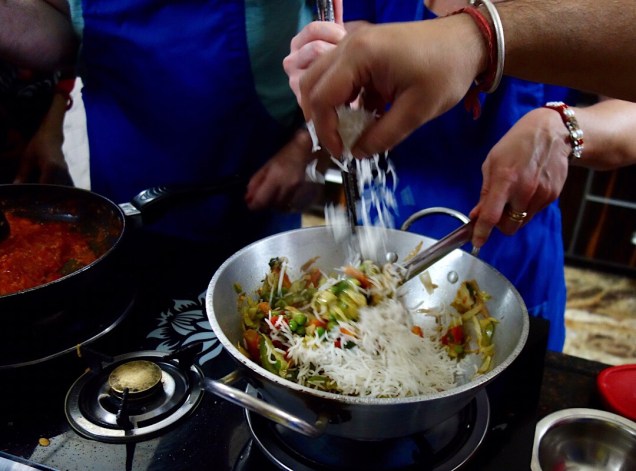 As each dish was completed, Shashi stacked it on its predecessors,
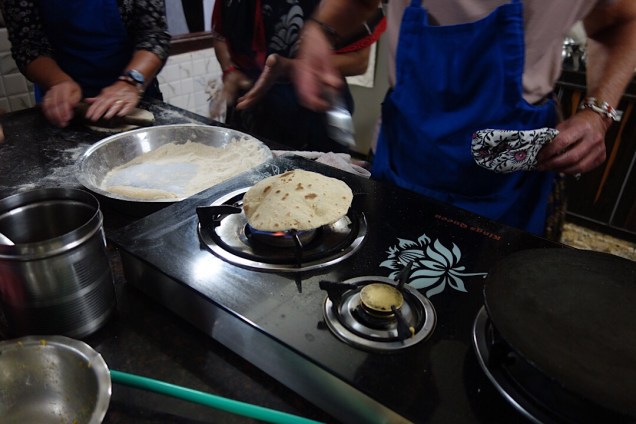
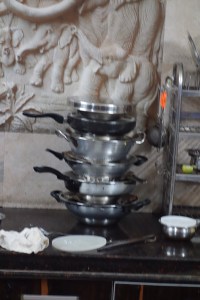 a teasing metal tower that grew more maddeningly tempting as the hours went by, and we grew more and more tired and hungry. But there was more to learn, and lots of joking and laughter to distract us as we toiled. We made chapatti dough; learned out to knead it and cook it on a skillet.
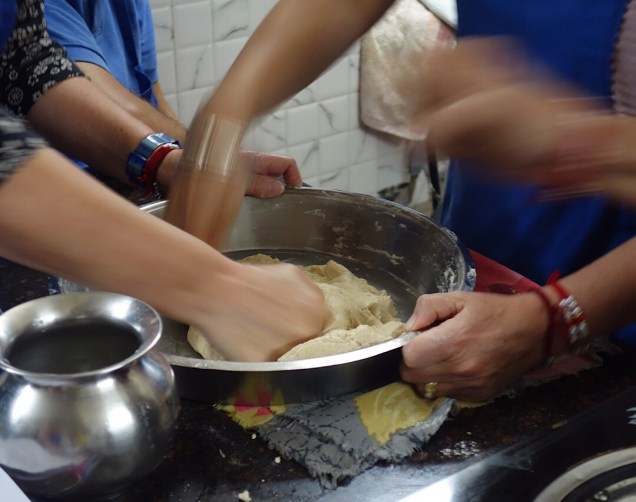 Many hands make good chapatti.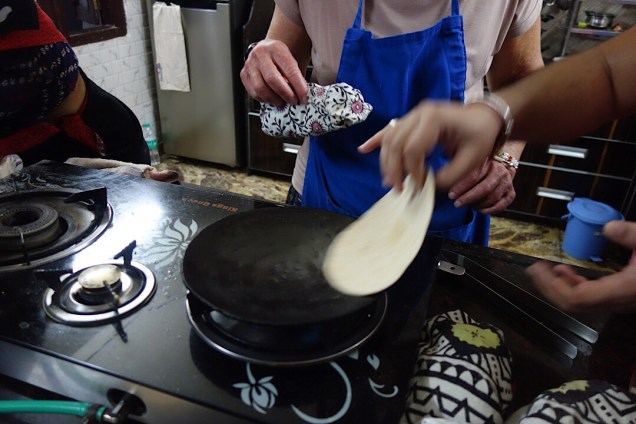
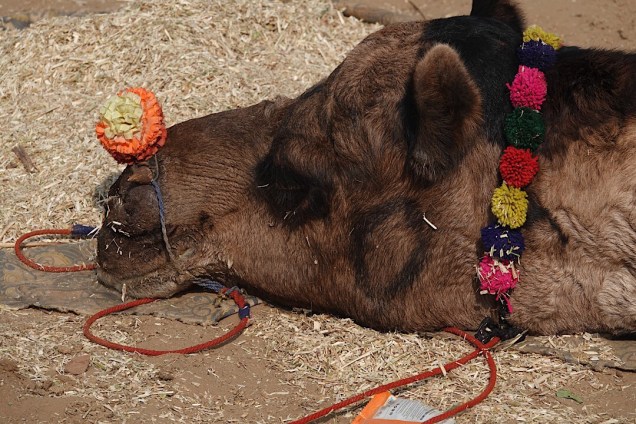 Somehow camels have become one of my favorite animals. I think this started in 2002 when I rode one in Luxor (Egypt), on the edge of the Sahara. It felt a bit like being on a gigantic rocking horse — fun and exhilarating and more comfortable than I expected.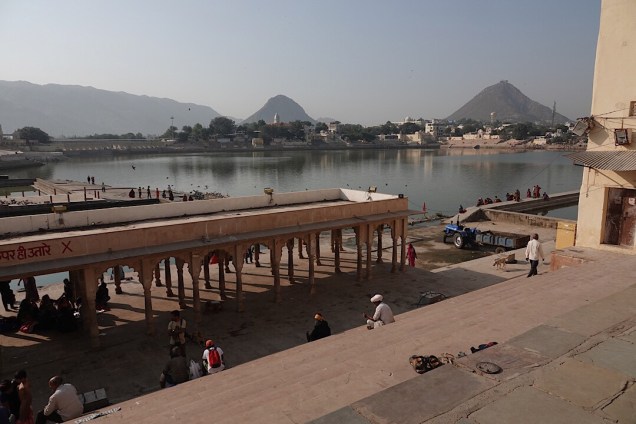
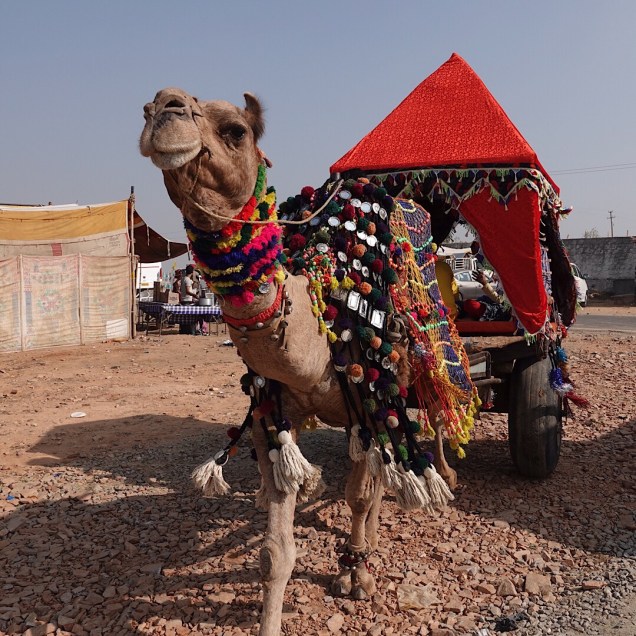
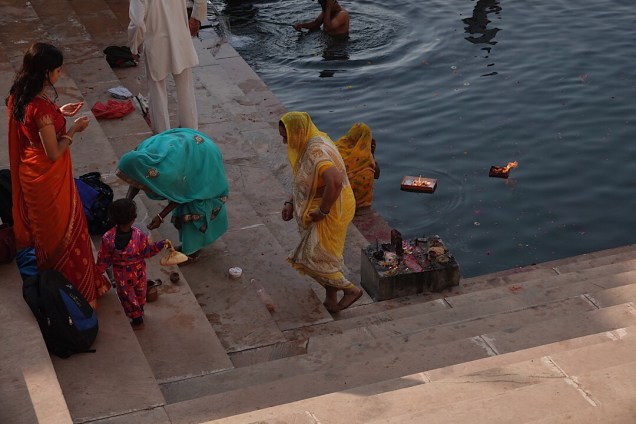 The devotees trickle in over a ten-day period, and they revel not only in the religious activities (praying, visiting various temples, smashing coconuts, launching lighted candles into the lake waters, etc.) but also shopping and enjoying Indian-style tourist attractions. They ride on camels or in carts pulled by them.
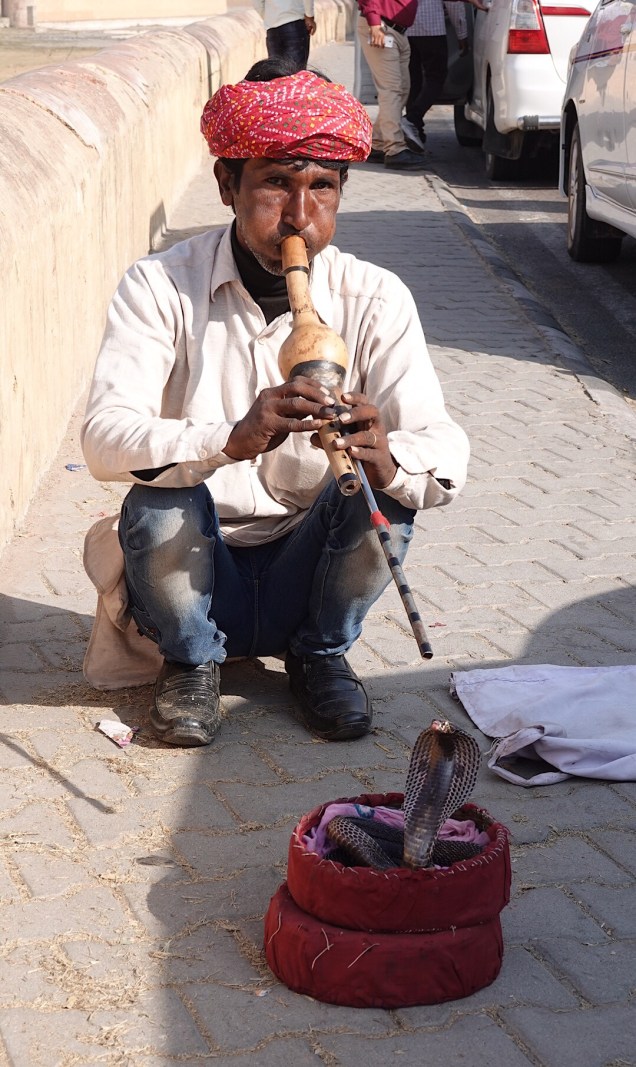
 They photograph snake charmers.
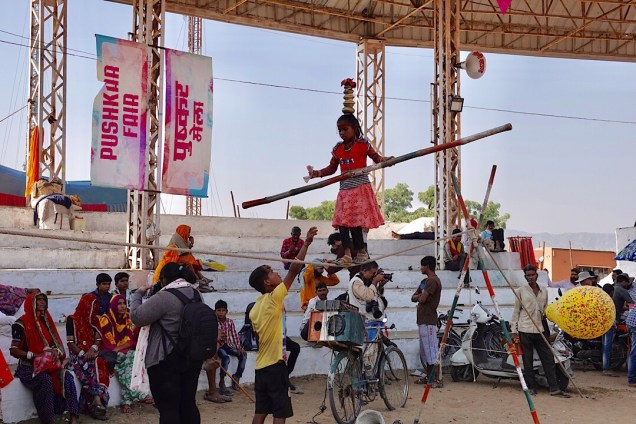
 They ogle little girls walking on tightropes…
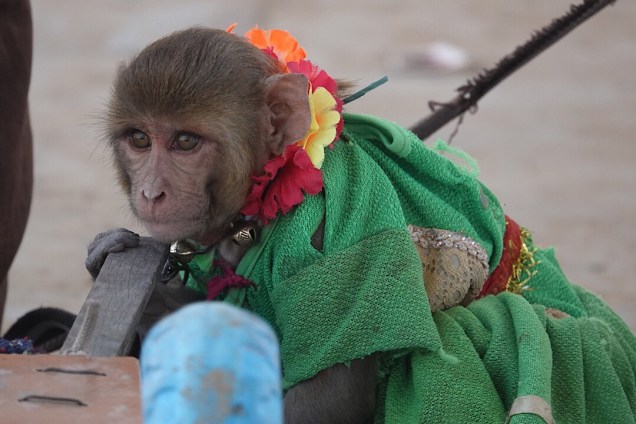
 or monkeys dressed up in little outfits.
 We spent hours wandering among the pilgrims. But I’d come for camels, not religious fanatics, so early on our first full day, we set out in the morning chill to find the hump-backed giants. (By noon, temperatures in Pushkar always climbed to the mid- to high-80s, but they plunged every night.) In the open grounds beyond the Brahma Temple, we found more camels assembled than I’ll ever see again in my life:
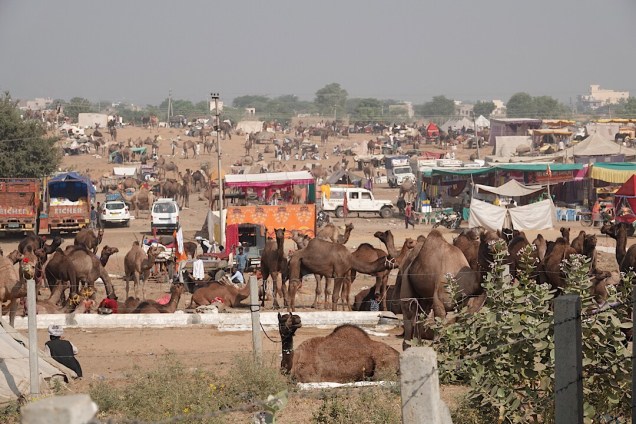 thousands of them, most staked together in small groups or being groomed by their owners.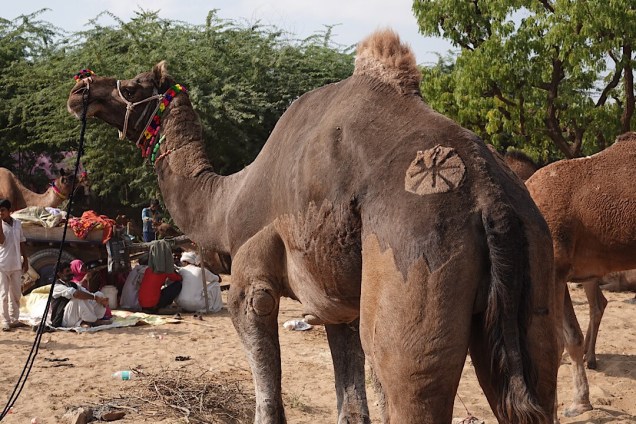
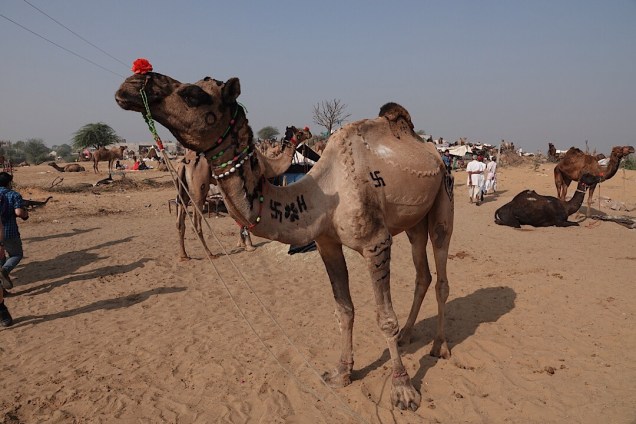 The backward swastika has nothing to do with Nazis. It’s an ancient Hindu symbol. Herders paint their animals in various ways to jazz them up.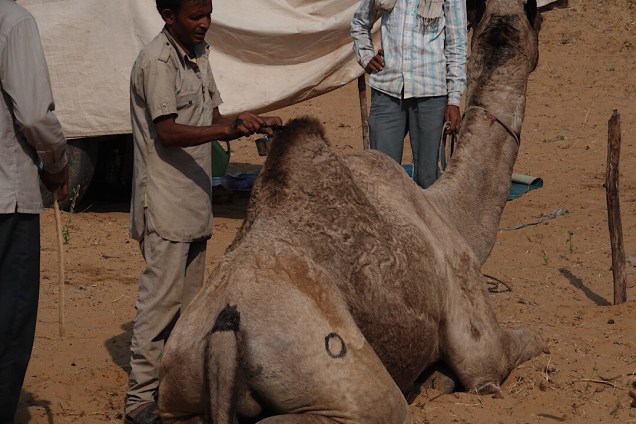
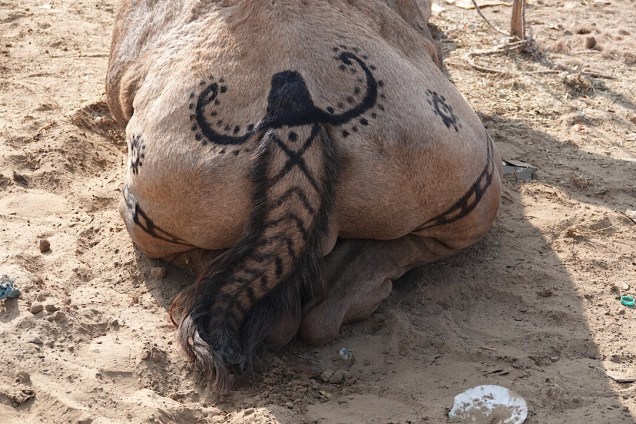 From the humans’ body language, we sometimes identified negotiations in progress. From the camels’, it appeared that some were bored…
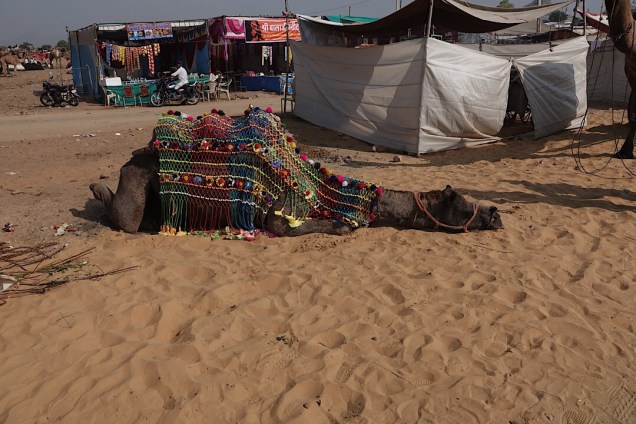 But some were curious.
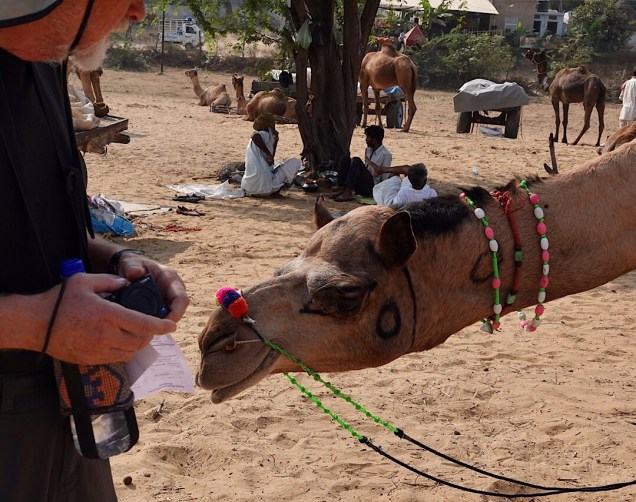 Overwall the scene felt surprisingly low-key, and we returned on our final day to see if the pace had accelerated.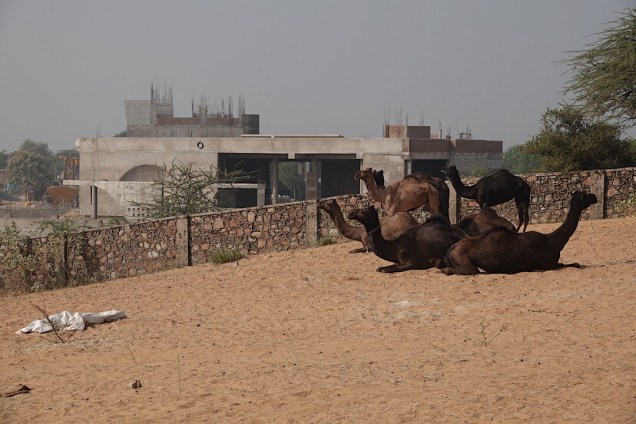
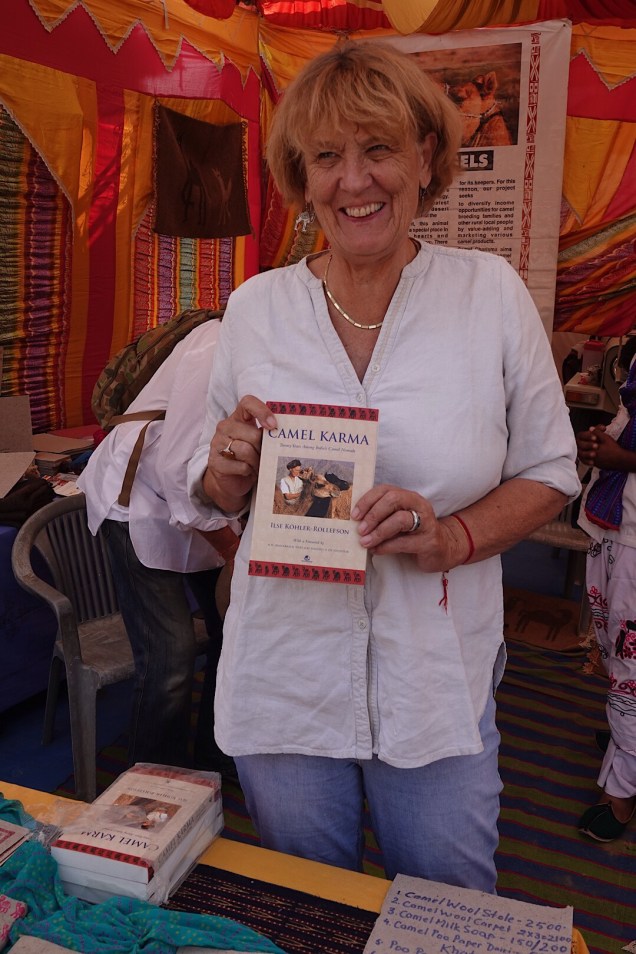 A talk blonde older woman in the back of the booth joined our conversation. She was a German anthropologist named Ilse Kohler-Rollefson who’d spent 20 years living among the camel nomads (and almost as amazingly, had lived for several years in San Diego and taught at San Diego State). She and her colleague explained that the NGO had helped start the first camel dairy in India. They were also lobbying for protection of traditional grazing grounds. The aim was to find ways for the herders to continue earning enough to survive.
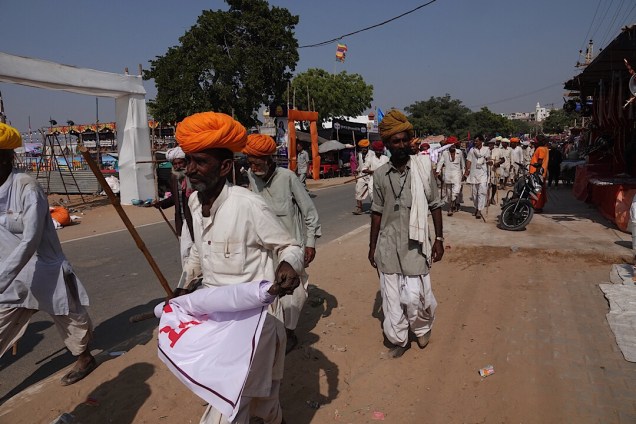 We ran into Ilse too as she was buying an ice cream bar, and she told us that someone had delivered a rousing speech at the municipal center.
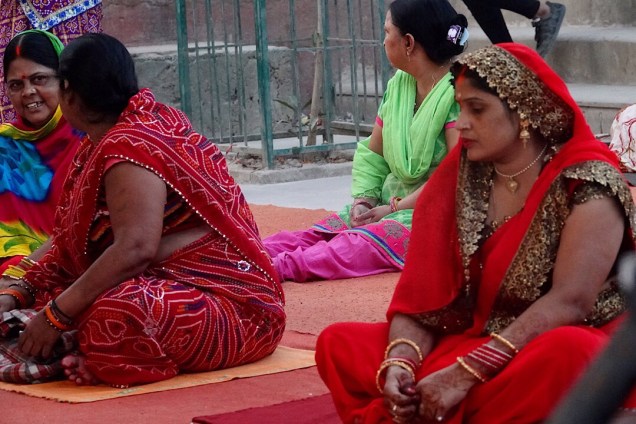 Among middle-aged Indians, the full-figured look is a common one. Now we better understand why.
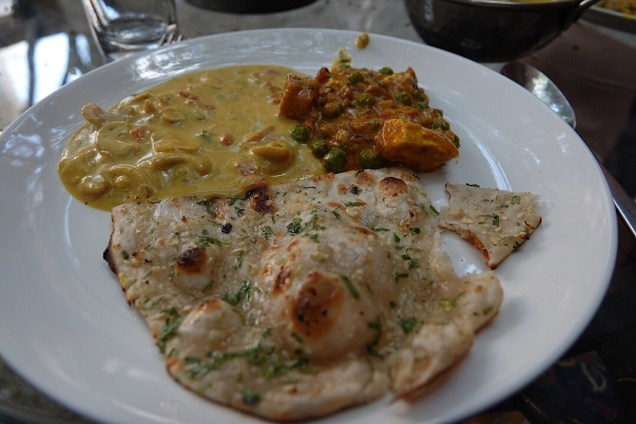 A typical lunch: cashews in a cream sauce, peas and cheese in a mild spicy red sauce and yummy garlic/butter naan.
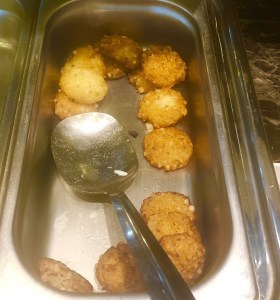 On the breakfast buffet this morning: deep-fried herb-flavored rice patties. We both thought they were yummy.
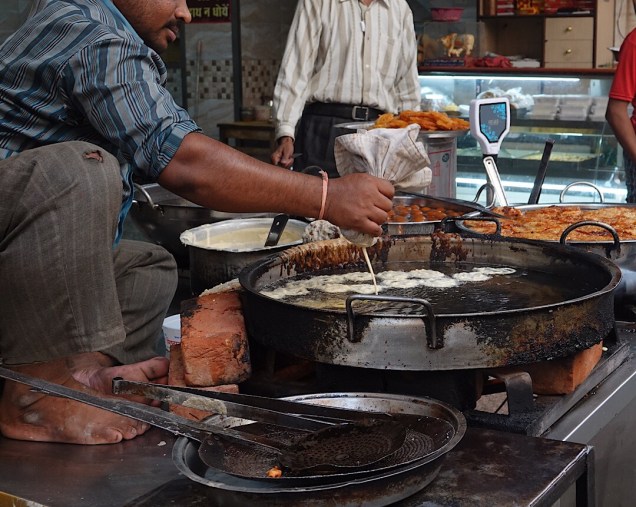 Note that the cook is squirting the batter into the boiling oil. Then you dip the results into sugar syrup and get what’s known as jalebis.
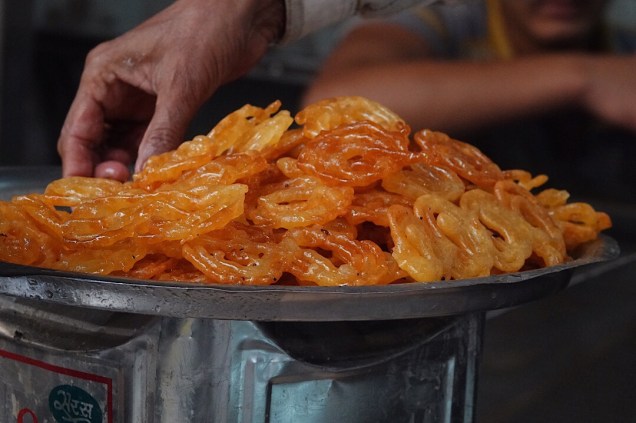 Although we didn’t eat them from the street vendor, the ones we sampled in our hotel were surprisingly likable.
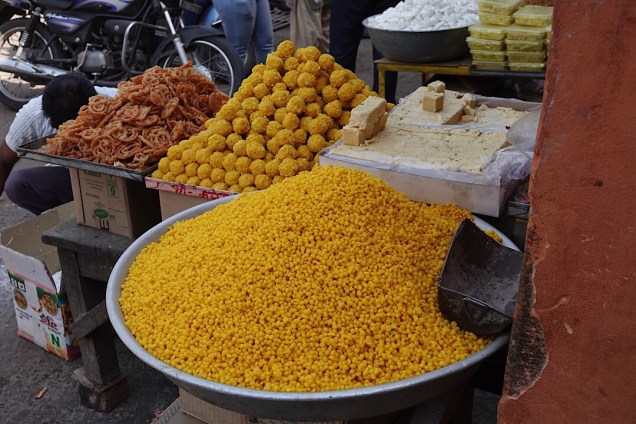 like these…
 and these.
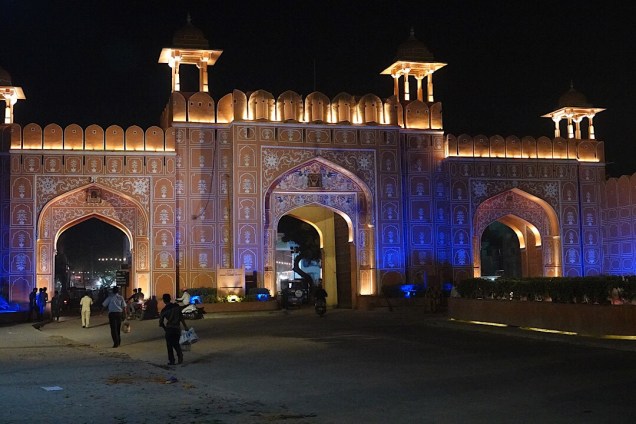 We entered through this gate and saw ladies in their new finery making offerings to various gods.
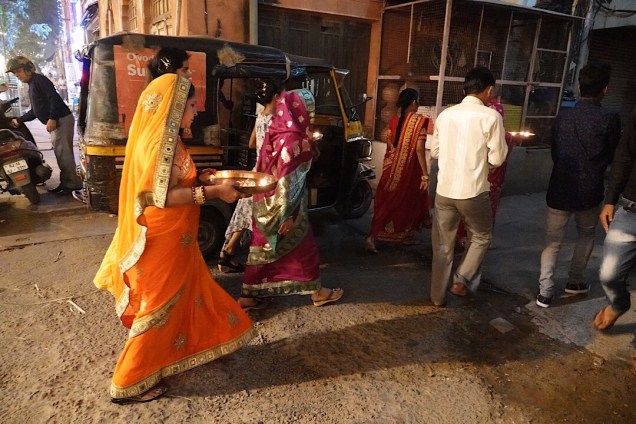 So many men and women and children were out to view the decorations and buy desserts, the honking of taxis and tuk-tuks made it hard to hear the Diwali music blaring over loudspeakers.
 like this street.
 This was more the norm, though.
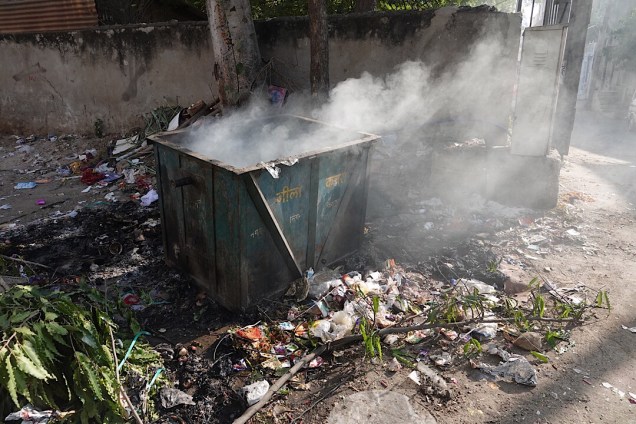 Not smoky enough for you? Burn some garbage!
 The current maharajah, just 20, still lives in the palace at the heart of the city.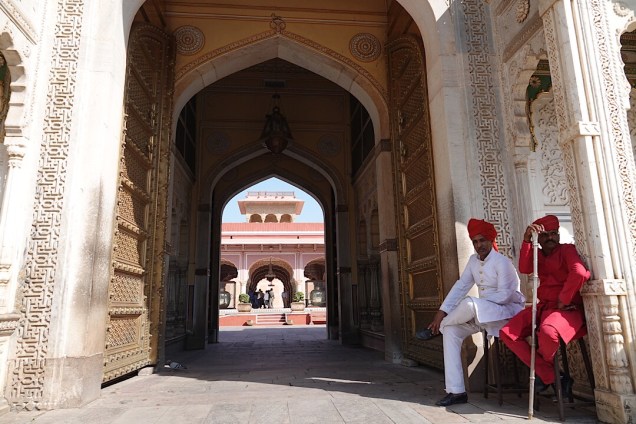
 That’s him, with the sword, surrounded by his grandmother, mom, and siblings.
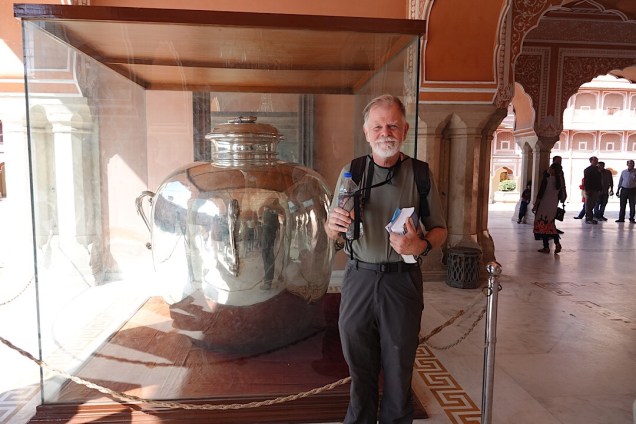 The palace is filled with interesting objects, such as this giant silver vessel. One of the maharajahs had it filled with water from the Ganges, for him to drink on a trip to London. (Note that Steve prefers to travel lighter.)

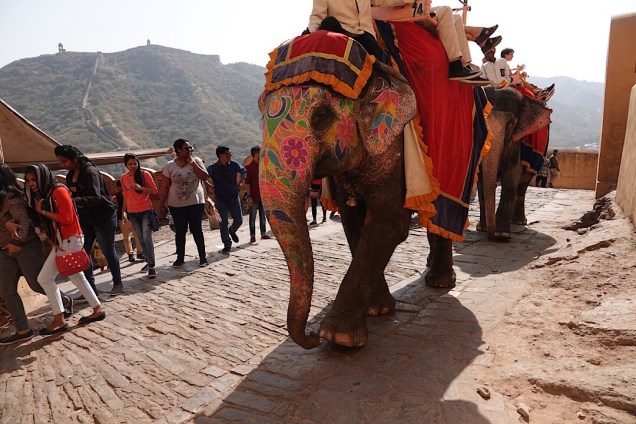 You can ride up the hill to it on an elephant.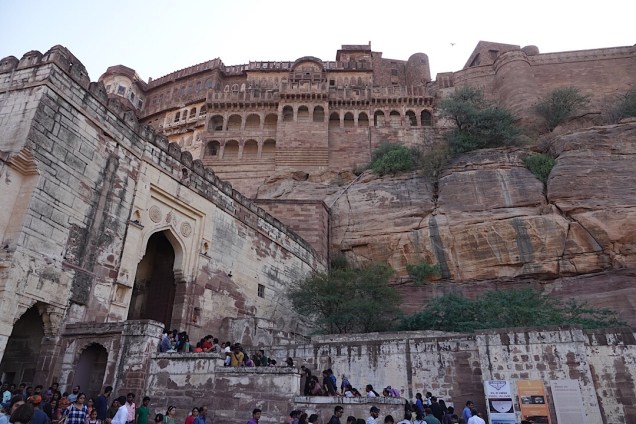
 The spikes in the door were supposed to deter war elephants from battering in the gate.
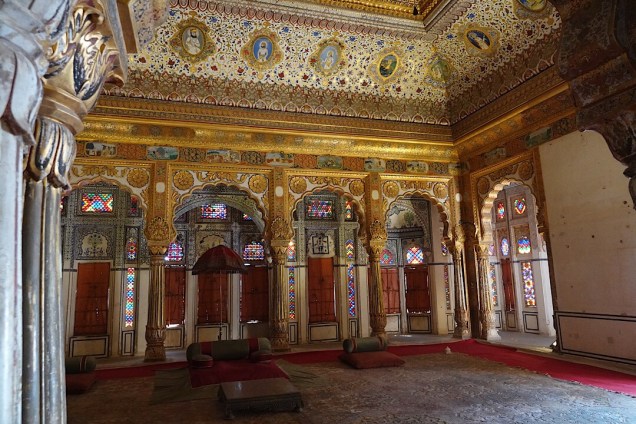 One view of the so-called Pleasure Room in the palace within the fort.
 The ceiling in one of the maharajah’s bedrooms.
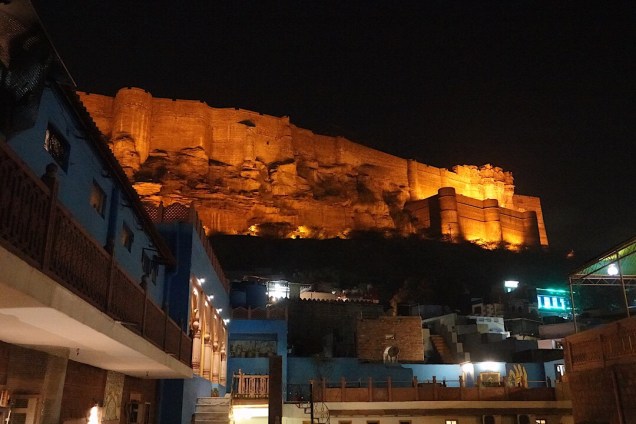 The view of Jodhpur’s Mehrangarh Fort at night, from the little haveli where we stayed.
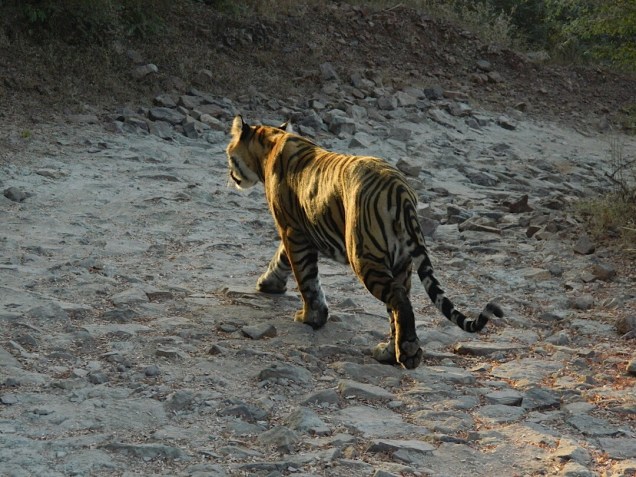
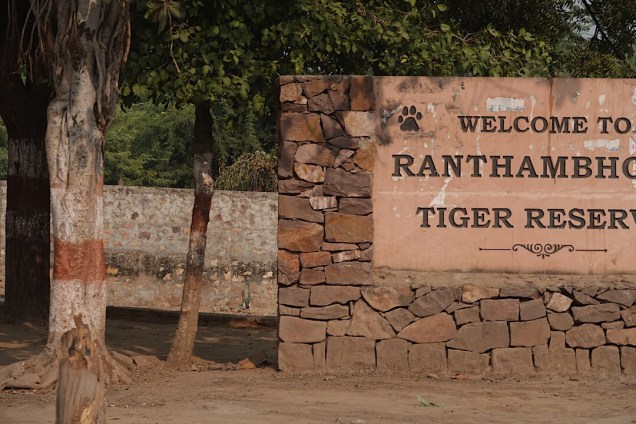 Now I know the secret to seeing a tiger in Ranthambore National Park. Go in May or June, the peak of the dry season. Many of the trees in the park lose their leaves; streams dry up; waterholes shrink. With the undergrowth reduced and the tigers’ drinking sources limited, 90% of safari-goers encounter the animal superstars. The only problem: temperatures at this time of year typically are 110 to 120 degrees.
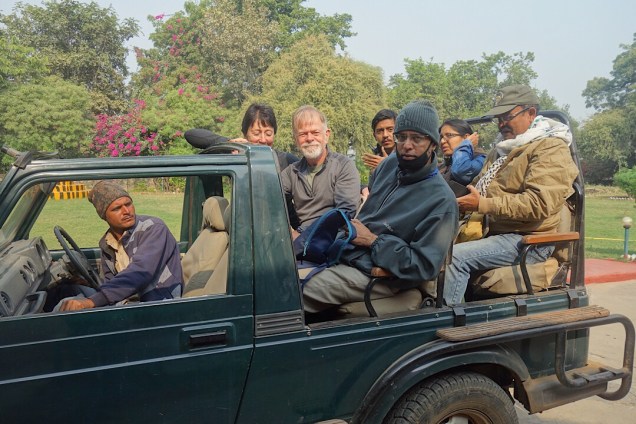 Our crew that morning, minus the guide, who took this photo.
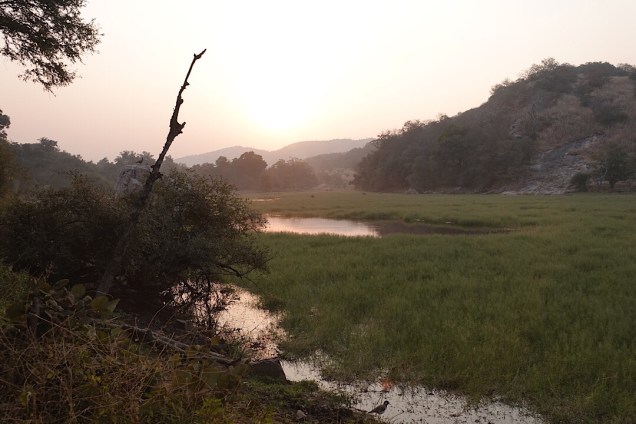
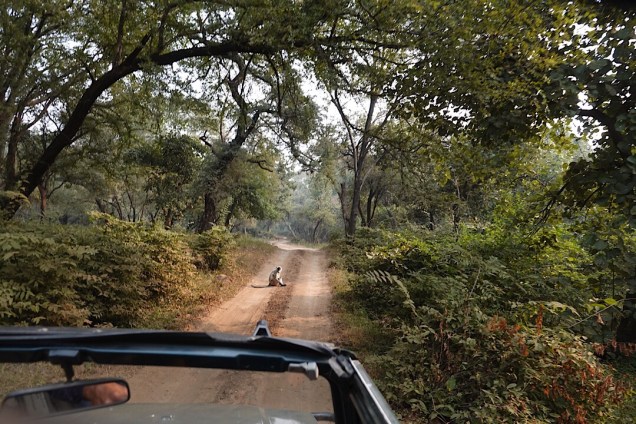 This was India, home to 1.2 billion humans, yet it felt like a less crowded place, say, a (smoggy) forest in Idaho after heavy rains that had made everything lush and green. At times the vegetation pressed in so close we had to duck to avoid being scratched in the face by branches. We passed marshland…
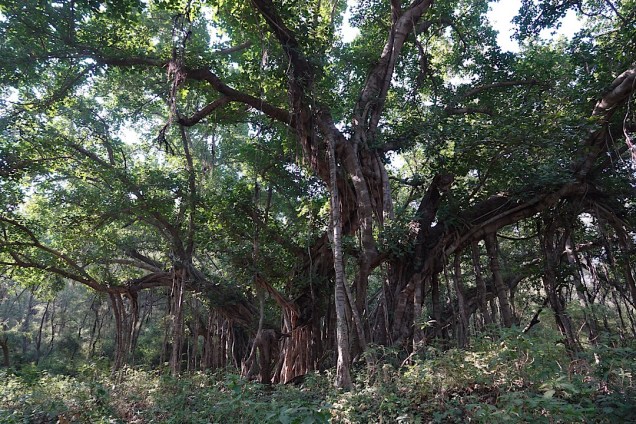
 …and stands of banyan trees that took our breath away.
 Here and there, we glimpsed the 1000-year-old fort that topped a distant cliff top. (Later we read that the wall surrounding it is almost 5 miles long.)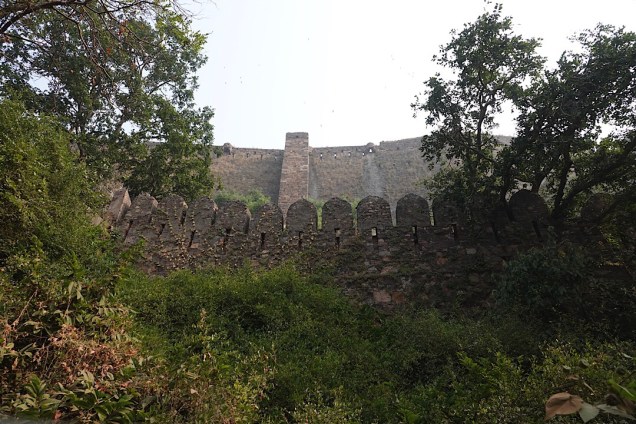
 Spotted deer…
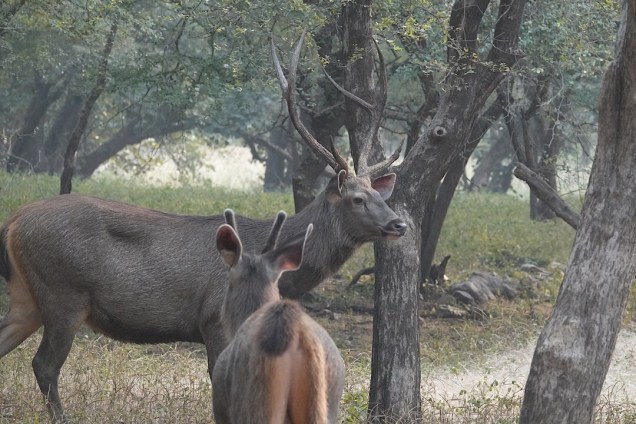 Sambar deer…
 Nilgai (a type of Indian antelope).
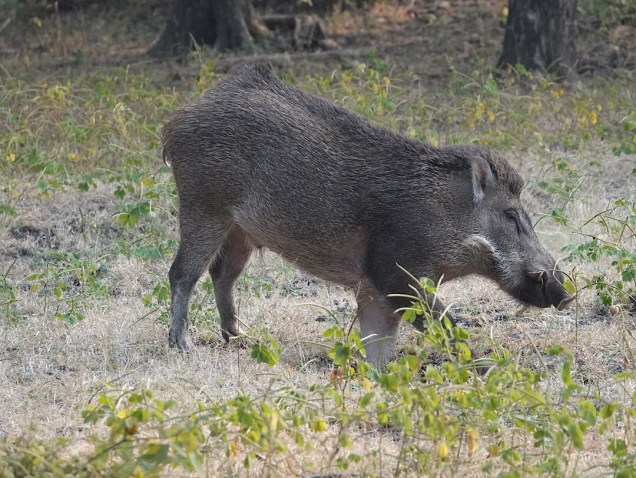 Wild boar…
 Crocodile.
 A cormorant drying his wings in the sun.
 Owls snoozing in a tree hole.
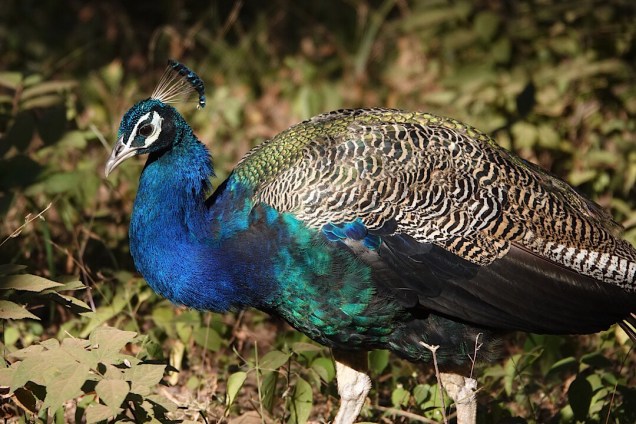 So many peacock they reminded us of seagulls in San Diego.
 This guy is known as the dentist of the jungle. Guides told us that they all but climb into the tigers’ mouths, cleaning their teeth, a mutually beneficial service that the tigers tolerate.
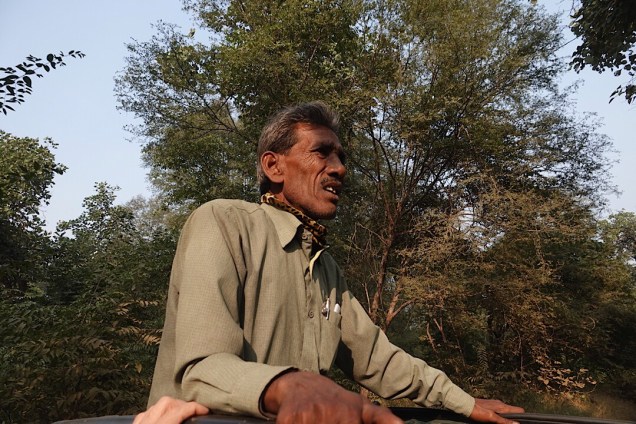 We all but ignored all the other animals we passed. We searched one area after another. With the sun getting closer to the horizon, we waited on a high ridge overlooking a canyon; listened to the birds. Saw no tigers.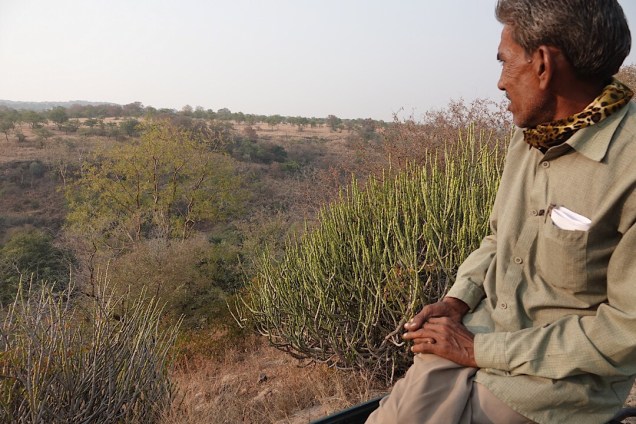
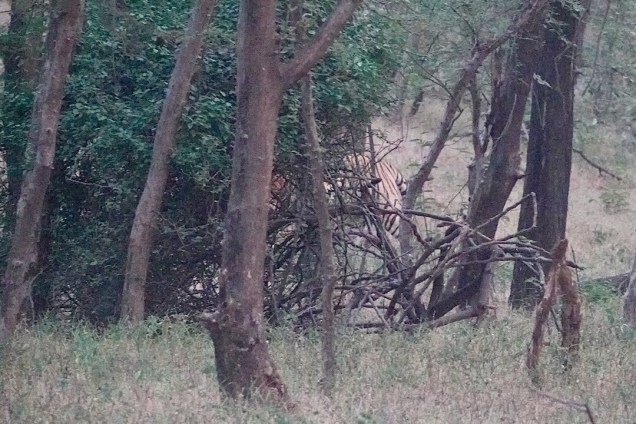 So now I know a second way to see a tiger in India: get lucky.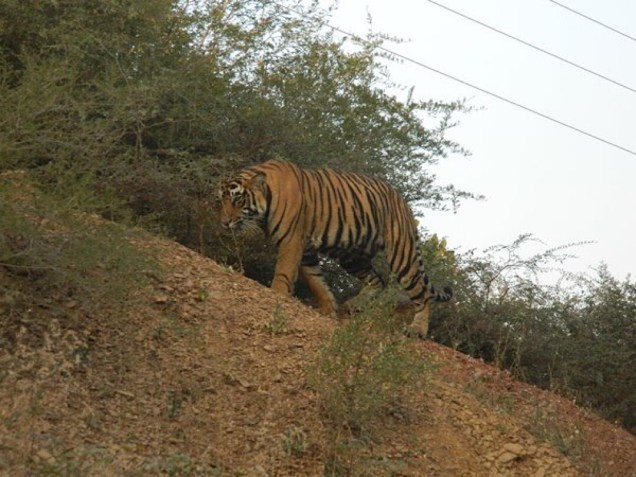
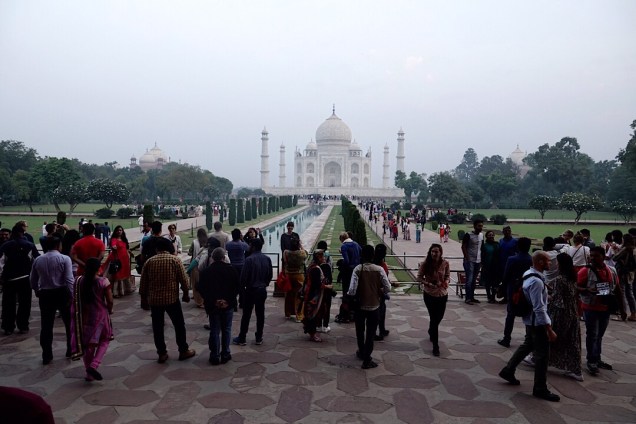
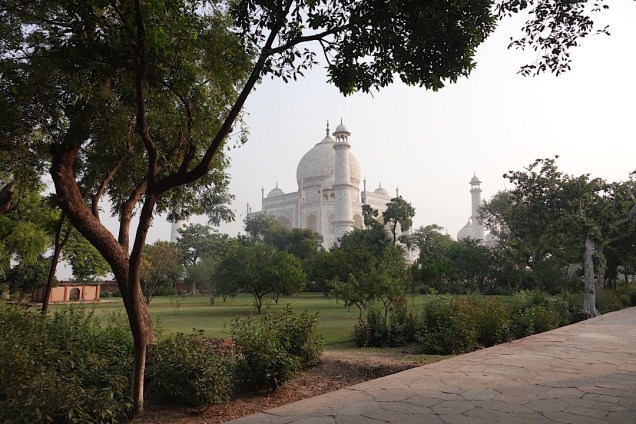 It’s pretty from every angle…
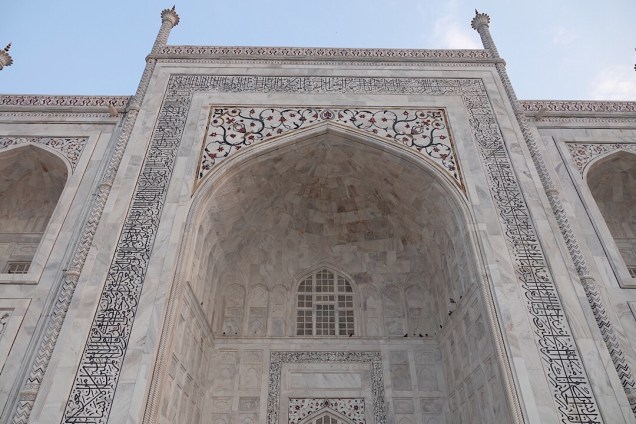 And pretty up close.
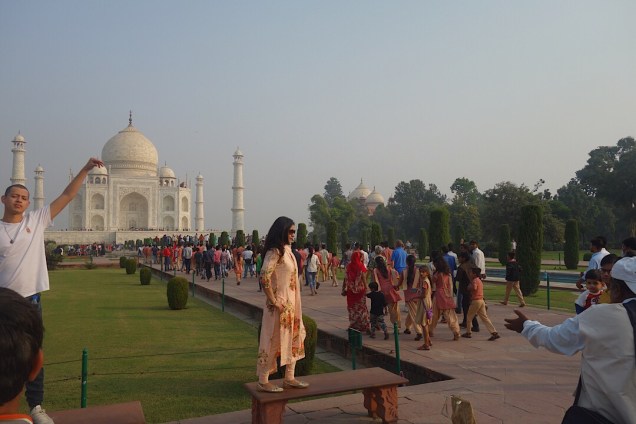 I’d had to guess how many selfies are taken there. Weird posing is also super popular.
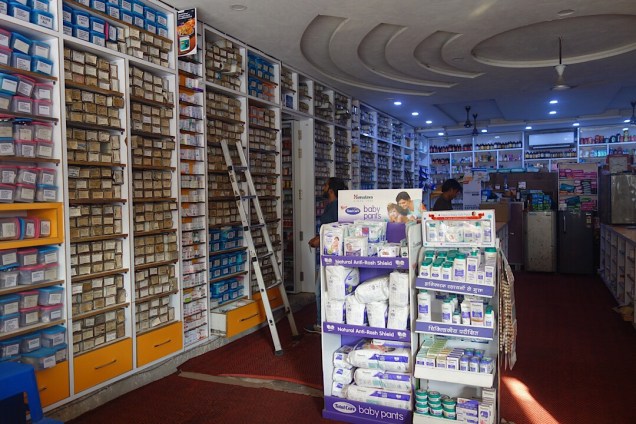 This shows less than half the interior space.
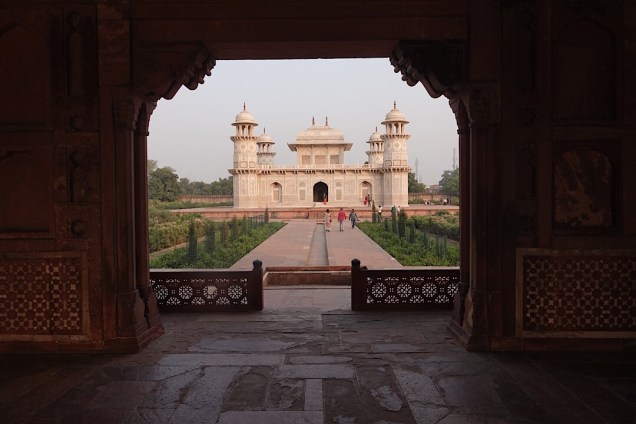 Nice, but nothing like Big Mama.
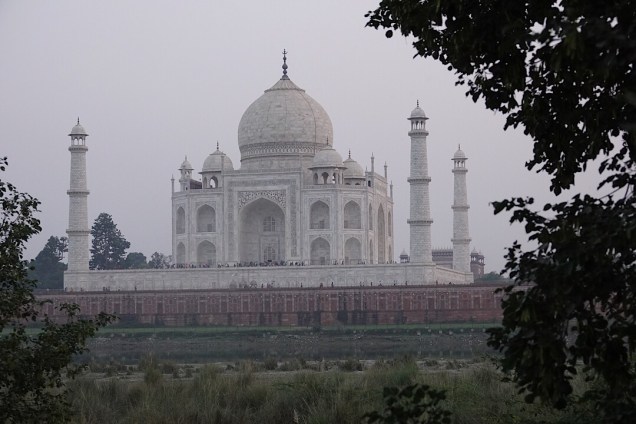 This was as good as it got.
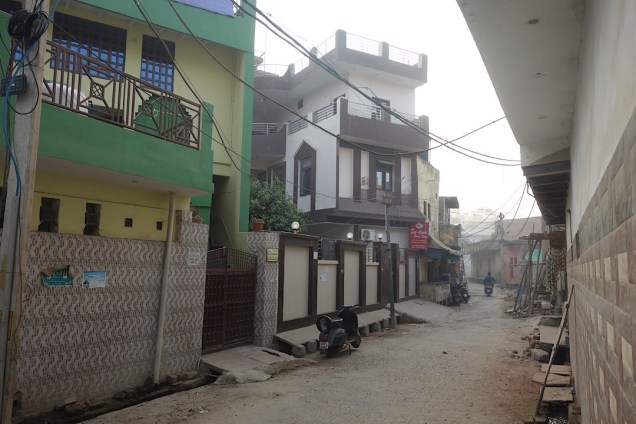 Here’s the street in front of Faiz’s home. The road leading to the Oberoi looks quite different.
 We rode in a beautiful new taxi to the train station, walked in, and learned that our train this morning had been delayed. It probably would arrive at least eight hours late. We called Faiz, who hopped in his own car, drove it to the station, collected us, and helped us arrange a private car and driver.
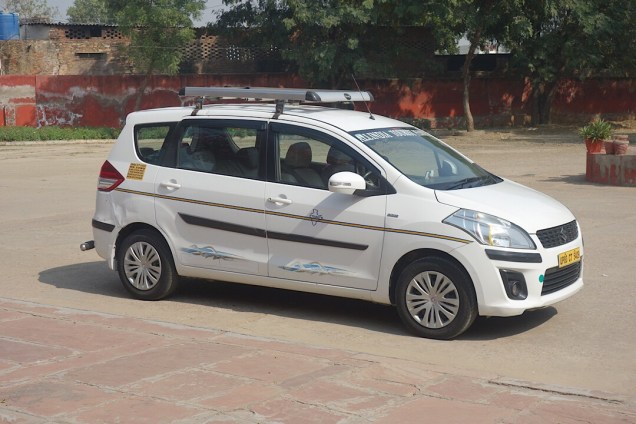 A nice one!
 But I got a message saying there’s no refund “if train is running more than 3 hours late or train is canceled.”
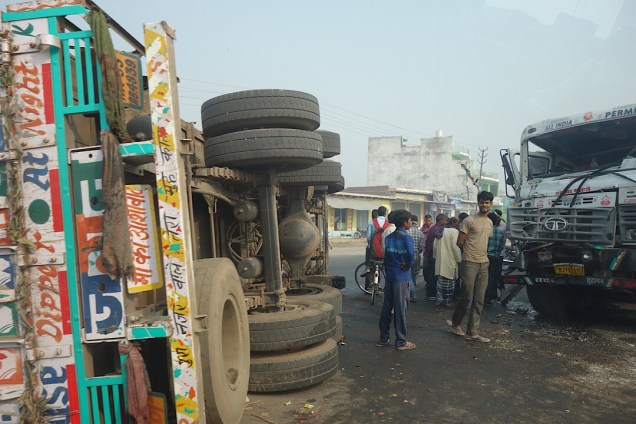 unlike this poor truck that we passed.
 Set among them are about a dozen structures. The area is breathtaking; even at a distance, it ranks among the greatest ceremonial sites Steve and I have visited: Angkor Wat, Machu Picchu, Teotihuacan.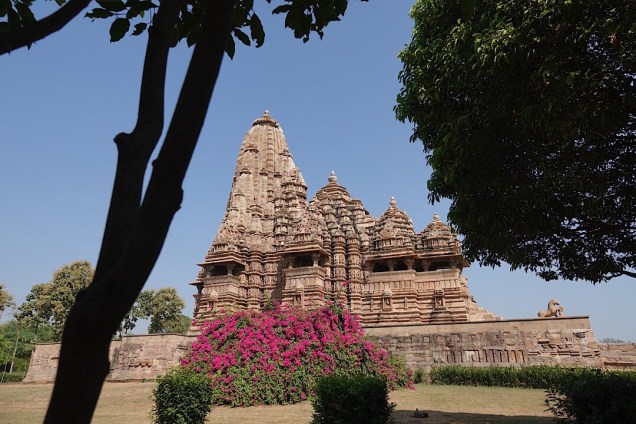
 These ladies were replanting the lawn with individual seeds.
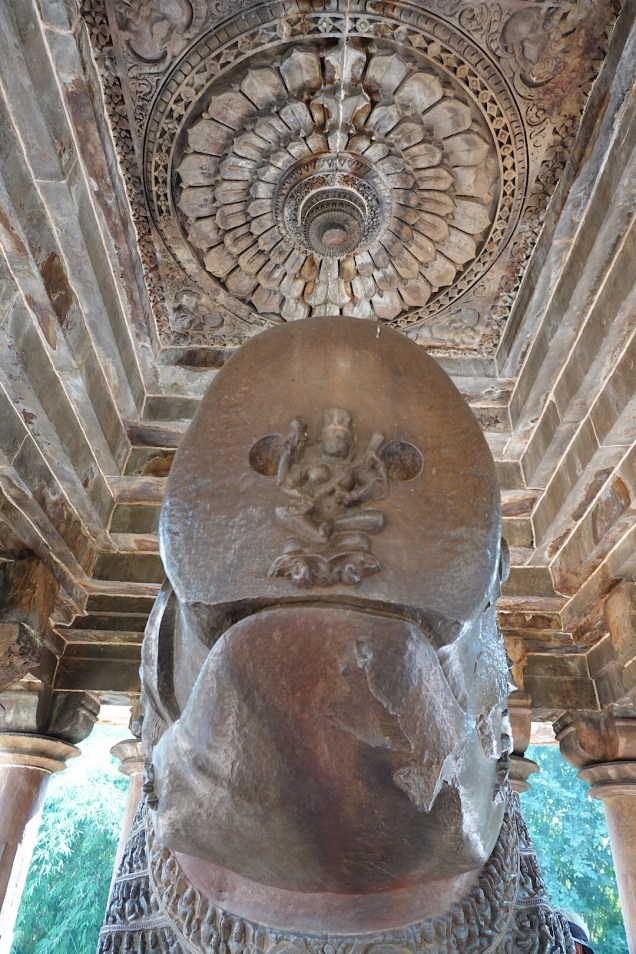 This is a huge sandstone wild boar– the third incarnation of the god, Shiva.
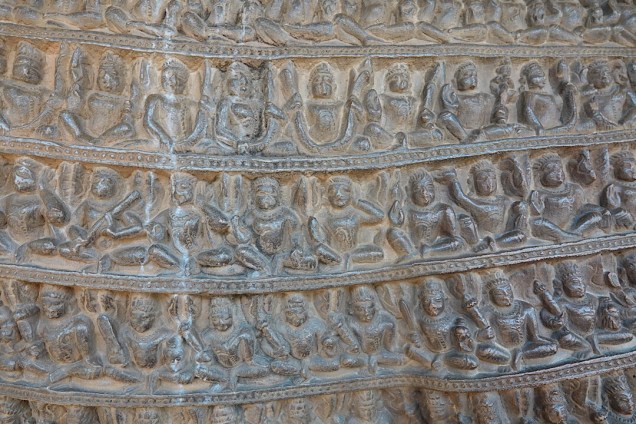 And this is some of what’s carved into his side.
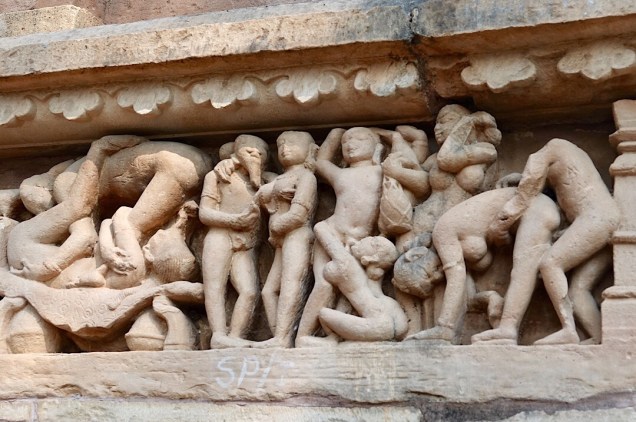 …wacky positions from the Kama Sutra, masturbation…
 …but it feels like every other aspect of human life is also captured. Soldiers slaughter each other with the aid of war elephants. A famous carving depicts a young woman applying her eye make-up.
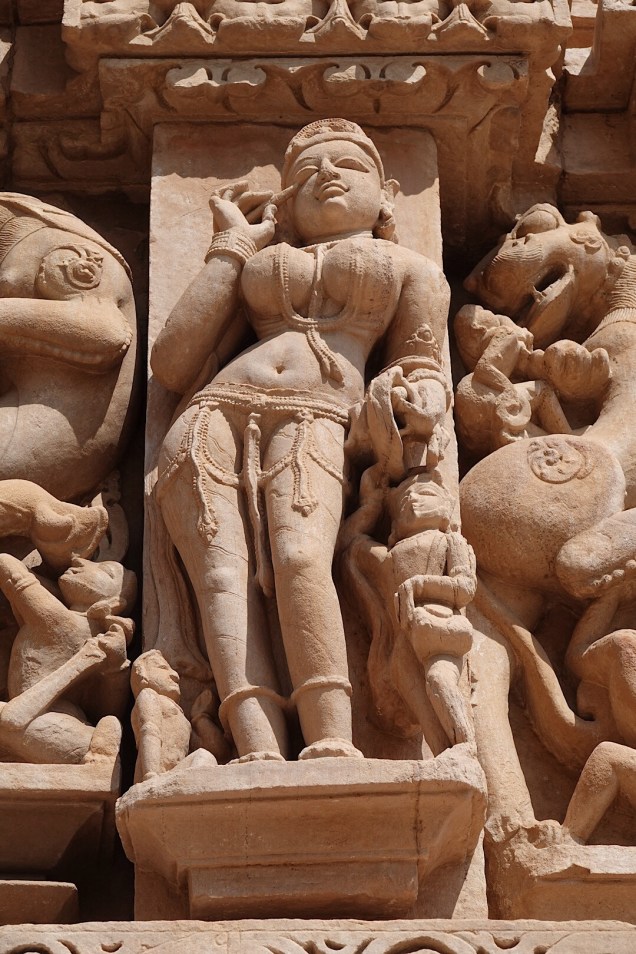 Another girl extracts a thorn from her foot:
 People bathe, stretch, drink together…
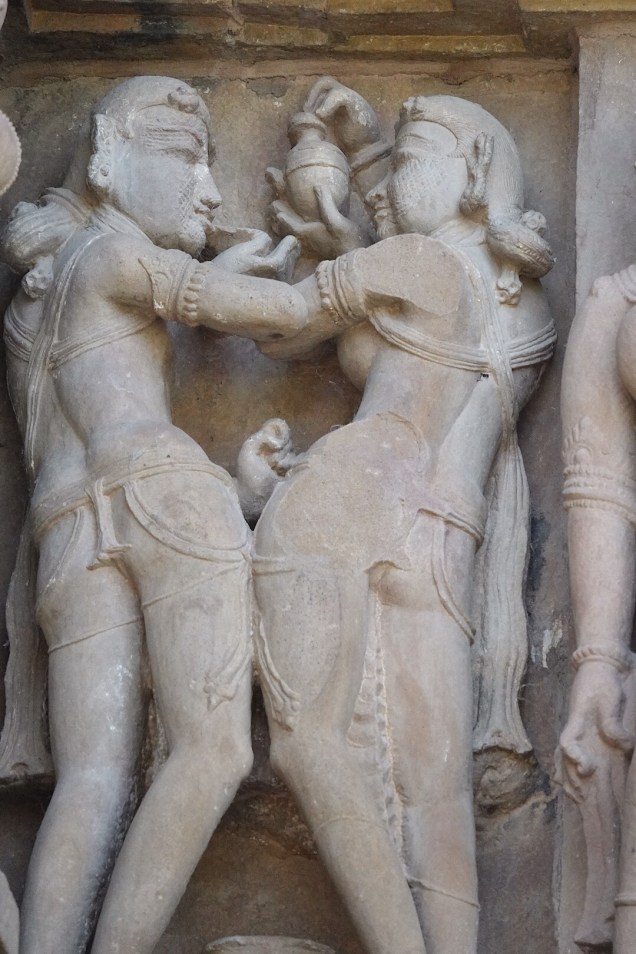 …listen to music.
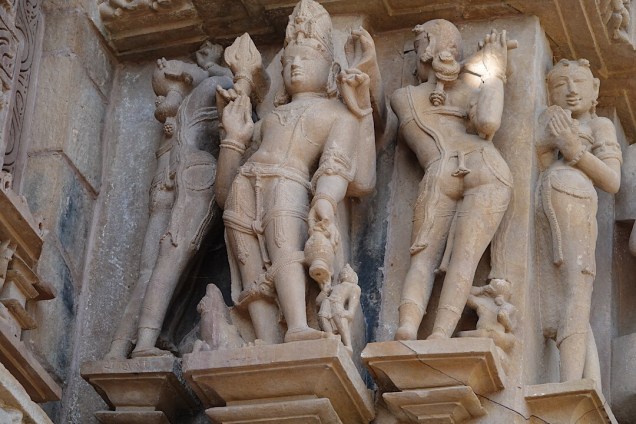 The carvers’ sense of humor is obvious. In one of the most infamous scenes, a man is fornicating with a horse, while two men on each side await their turn. A third covers his eyes in disgust at the barbarism — except that the carver makes it clear he’s peeking.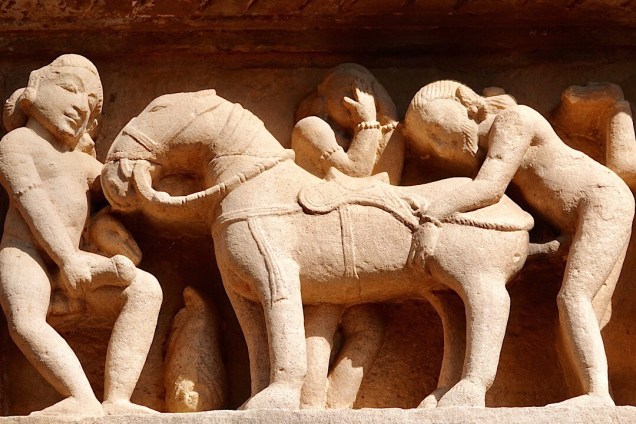
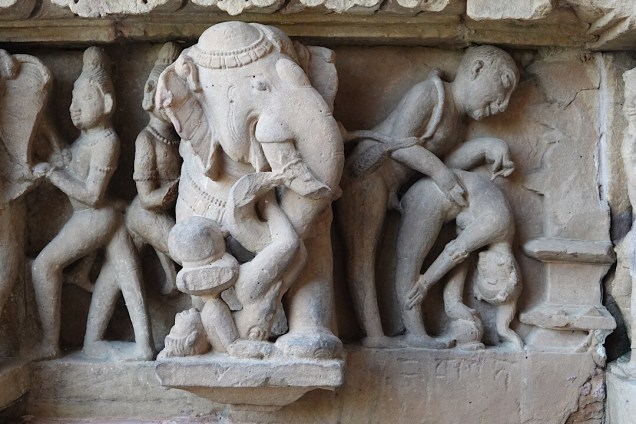 The elephant looks like he’s got a sense of humor too.
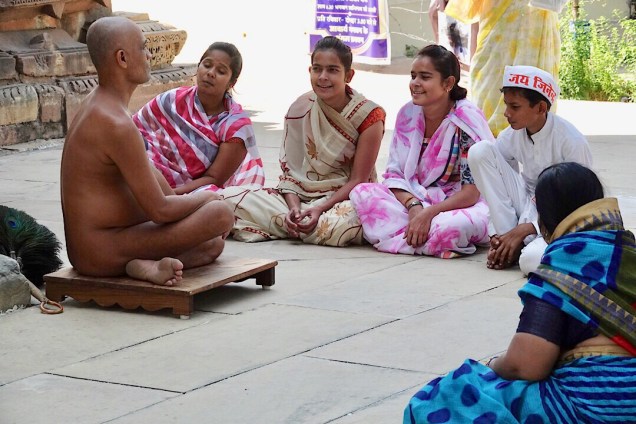 Some of the Jain monks never wear clothes. Like this one. Outside of the four-month-long monsoon season, where they congregate in some location (e.g. Khajuraho this year), the Jain monks wander naked through the countryside, praying and preaching and meditating.
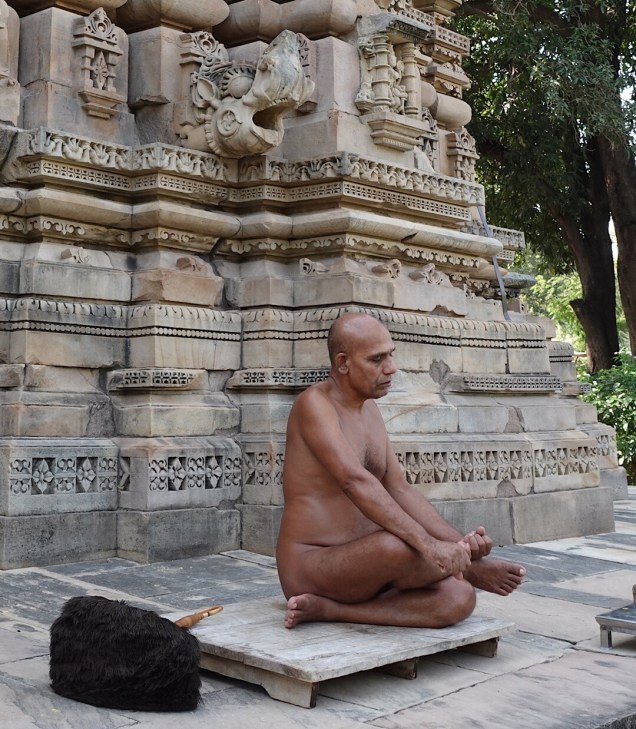 One of their only possessions is the brush they carry to sweep insects out of their path to avoiding injuring them.
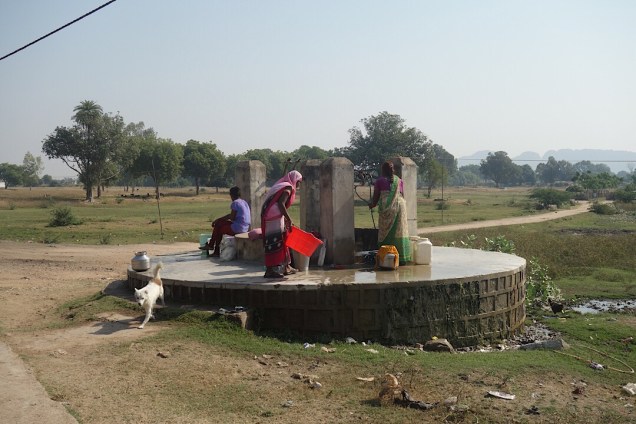
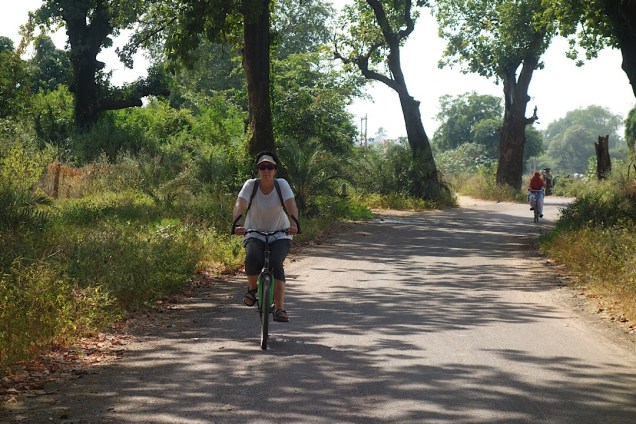 The city isn’t crowded, and there’s little traffic, so it feels quiet. A few temples are located in the surrounding farmland, and we cycled past folks drawing water from a well….
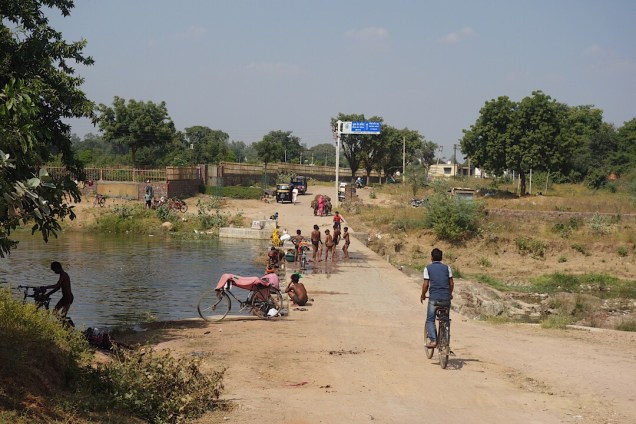
 ..and kids swimming and bathing in a local stream.
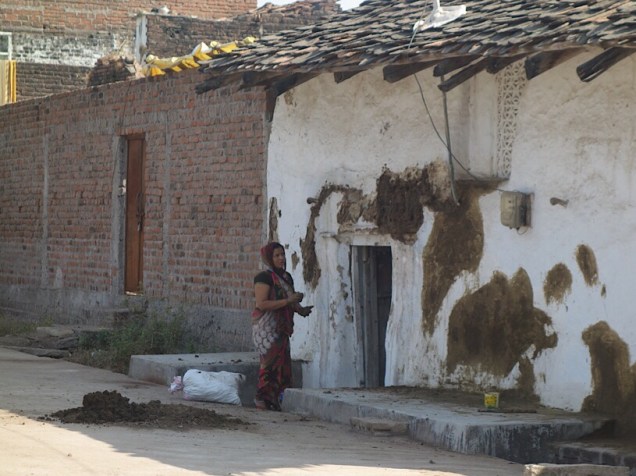
 We pedaled through a village where a woman was slamming handfuls of cow dung on the facade of her house (home maintenance? We weren’t sure.)
 I think it’s the only glimpse we’ll get of rural life in the heart of India. I’ll probably remember it as clearly as the riotous, naughty temple stone tapestry. But we’ve left it behind us now. I’m writing this on a train heading for the heart of Indian tourism. With luck, I’ll post it from our home stay in Agra, about a ten-minute walk from the Taj Mahal.
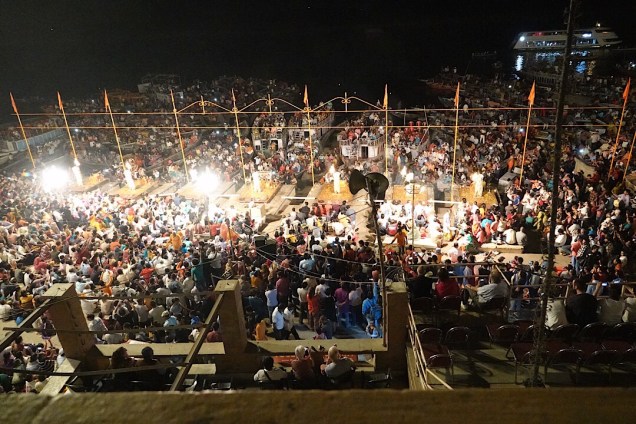 My photo doesn’t do it justice. It doesn’t clearly show all the small boats congregated in front of the seven platforms or the priest standing on each platform, and of course you can’t hear the continuous bells and the plaintive singing. Every night in Varanasi after sunset, before a vast assembly, the priests go through a complex ritual: blowing into conch shells, wafting incense dispensers, waving great silver candelabras. It’s part religious ceremony; part performance art.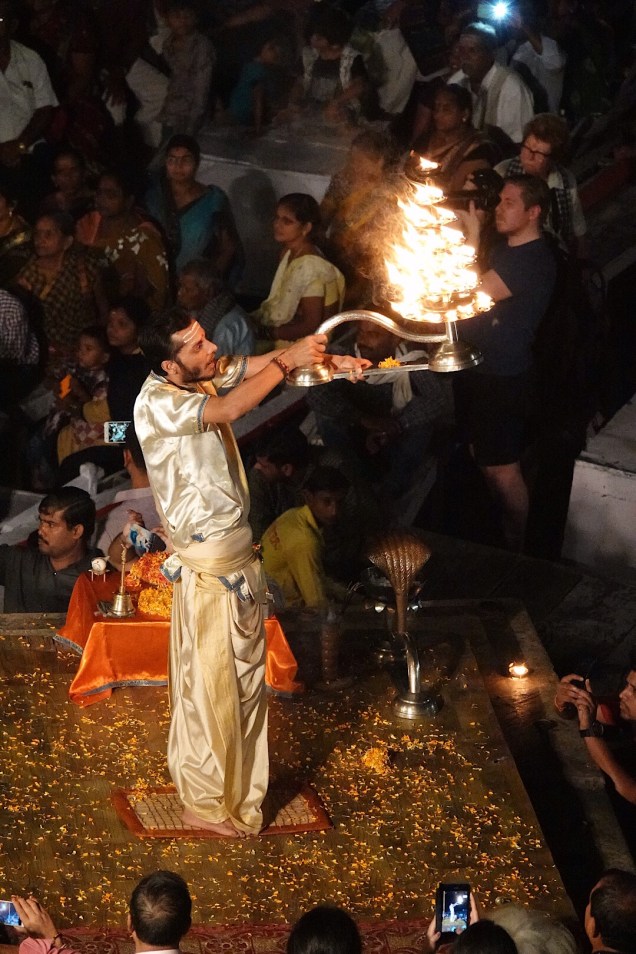
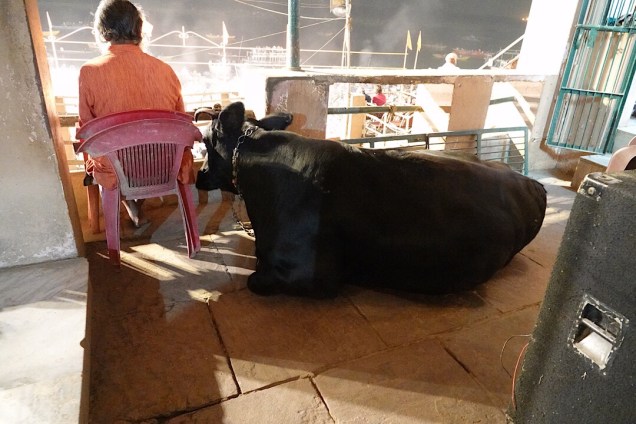
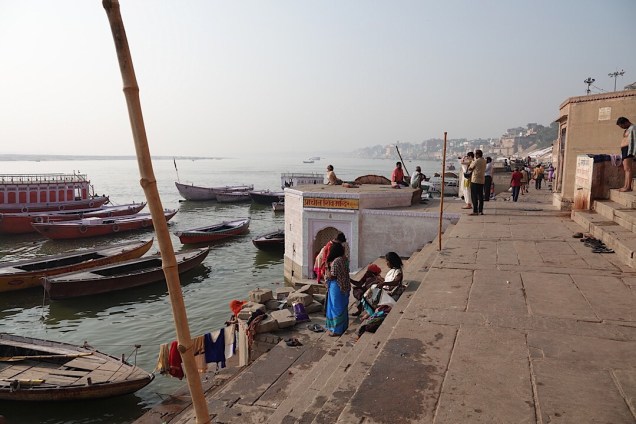 Strolling along these “ghats,” as they’re called, is endlessly entertaining. I’ve never felt more like I was on another planet. You see…
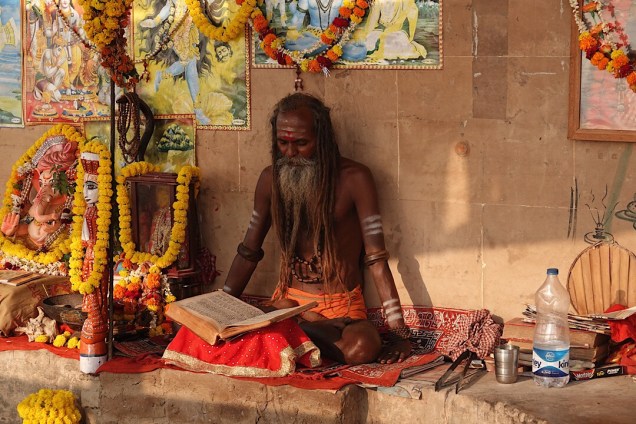 …holy men…
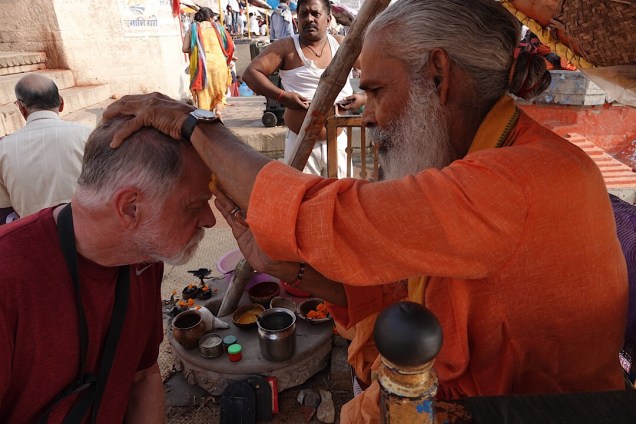 …some of whom will bless you. There are…
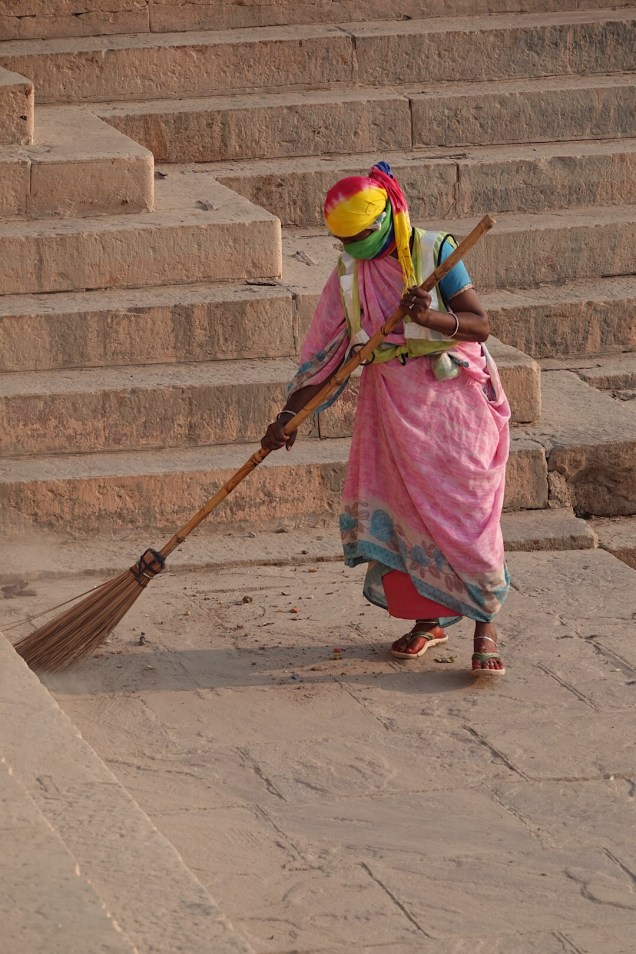 …ladies in saris tidying up…
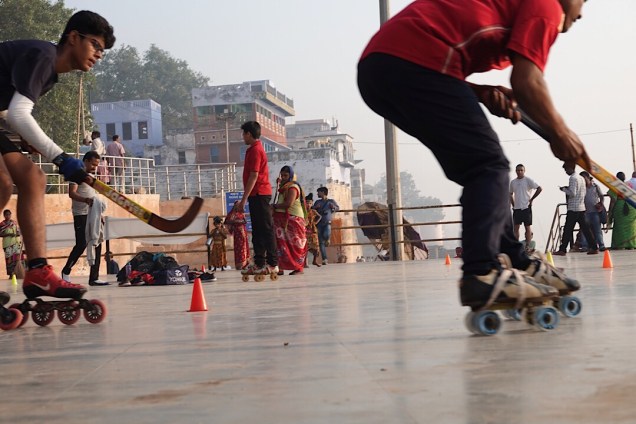 …kids playing street hockey…
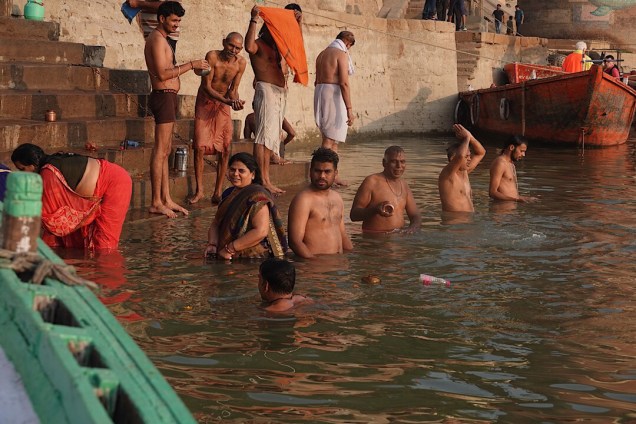 …pilgrims bathing….
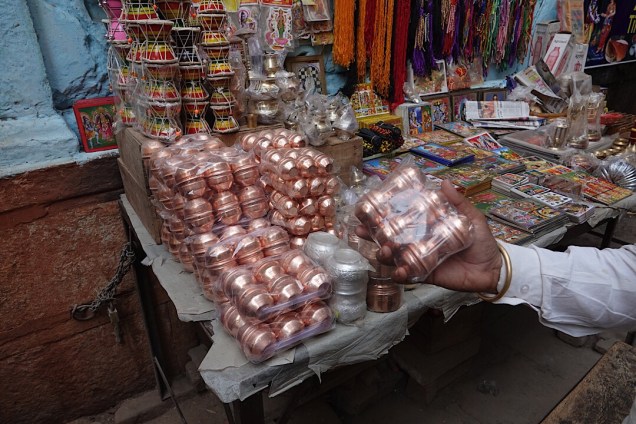 ..and shopping. These are sealed bottles of Ganga water, ready to take home for your friends. (To our friends, sorry. We resisted.)
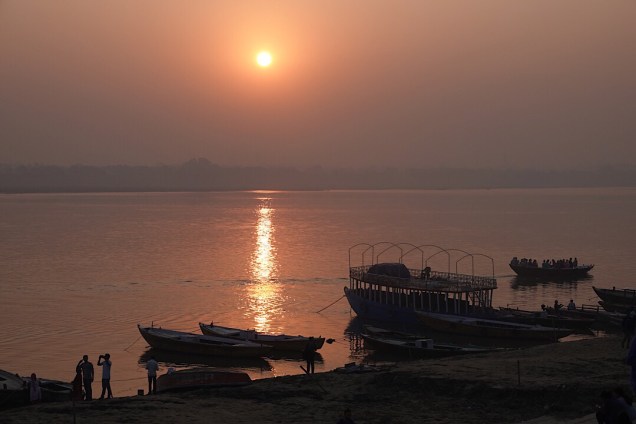 That’s not a typo. It was sunrise, not sunset. Varanasi’s air appears no cleaner than Kolkata’s.
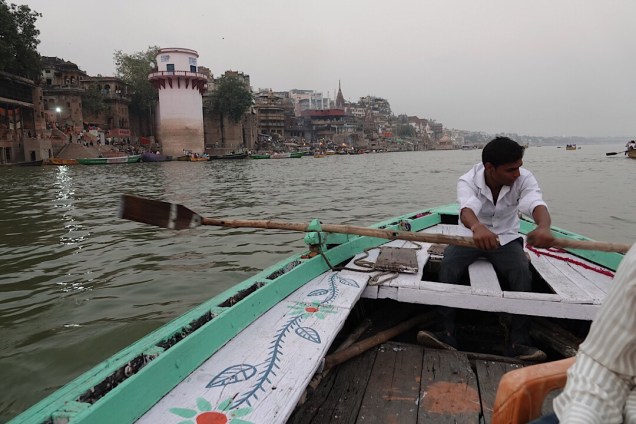 To our surprise, we smelled no ugly odors.
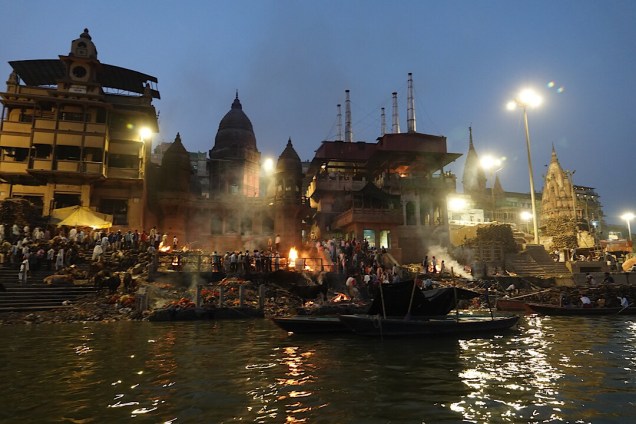 This is because the fires burn deodorizing banyan tree wood mixed with sandalwood, we were told.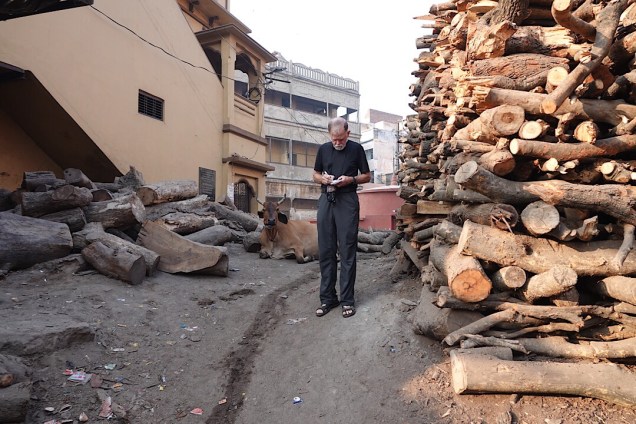
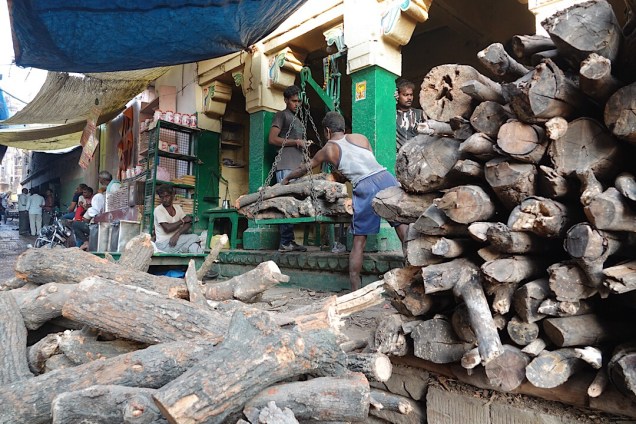 …and carefully weighed for each funeral pyre.
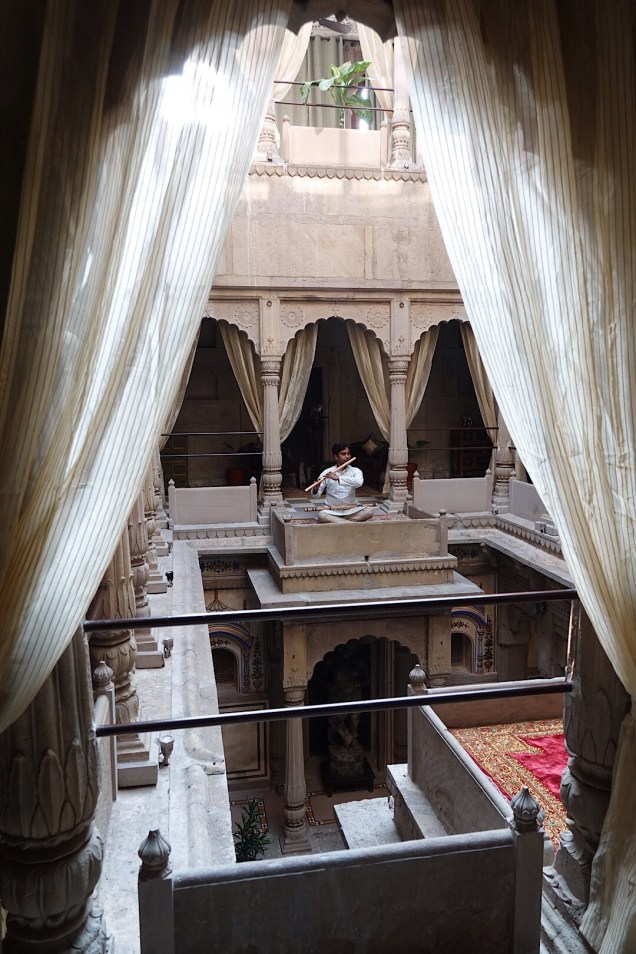 The other two nights we spent in a guesthouse that cost $14 a night. Compared to the palace, it was spartan. The rooms were spotless, but tiny. And the 31-year-old owner/operator was smart and knowledgeable and generous-hearted. When he unintentionally dropped and lost one of the paper clips we kept in our passports to mark the page with the Indian visa (which every hotel must photocopy!), we told him it was no big deal. But two days later he presented us with a replacement that he went out and bought for us. After we checked out to move to the palace, he invited us to return for his special spiced tea (masala chai). In the conversation we had while sipping it, he felt like a treasured old friend.
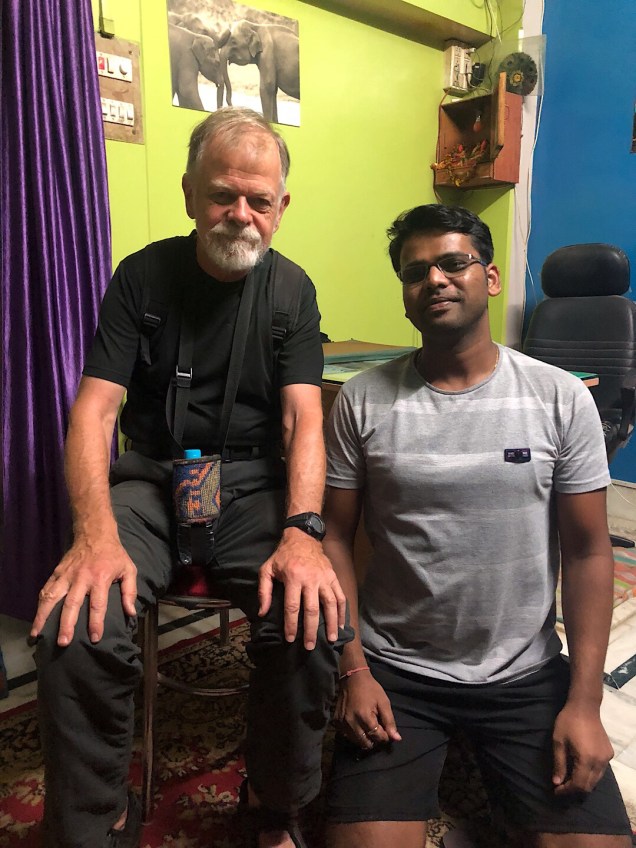 Steve and I sensed a peacefulness on the ghats of Varanasi, and Sonu said he feels it too. As hard as he works and as crazy as the guesthouse operation can get, he told us he tries to spend an hour or so by the river every day. It re-energizes him. I think there’s also beauty there which you can’t miss seeing.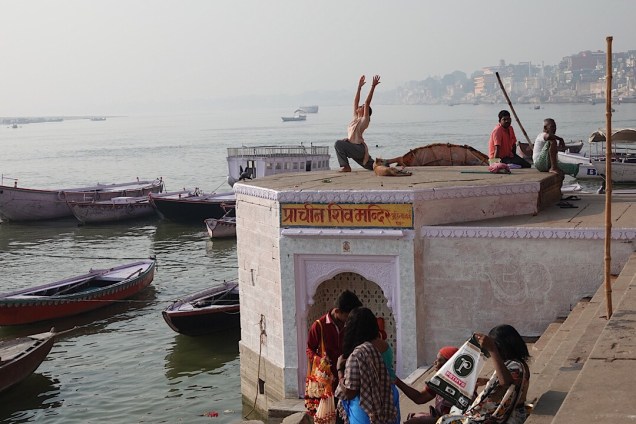
 I don’t call myself a Buddhist, but in recent years, I have found much to admire in the teachings of Siddhartha Gautama (the northern Indian prince who became the Buddha). About 2600 years ago, he famously found enlightenment in a specific place in India: sitting under a fig tree in what is now the small town of Bodhgaya. When I learned that a direct descendant of that tree was roughly on the path between Kolkata and Varanasi, I wanted to see it.
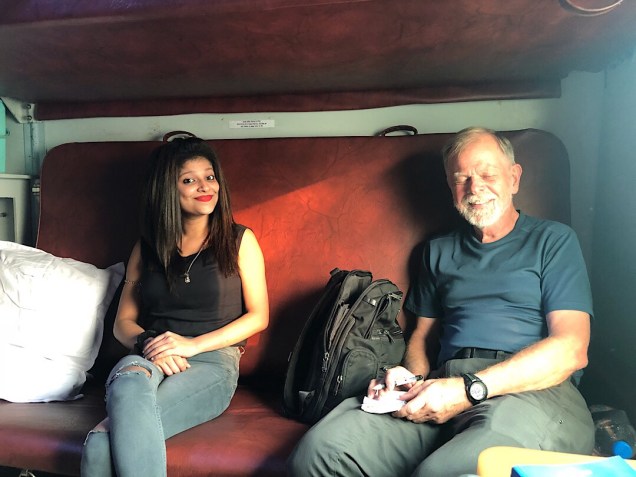 Sometime in the early afternoon, Steve noticed on our maps app that the train seemed to be headed away from Gaya, but we guessed it would take a turn south at Patna (the capital of the state, Bihar), and arrive at Gaya probably hours late. It was only about 3:30 that an announcement in Hindi caught Deepshri’s ears. “This train isn’t going to Gaya!” she exclaimed! “It’s going to Patna instead!”
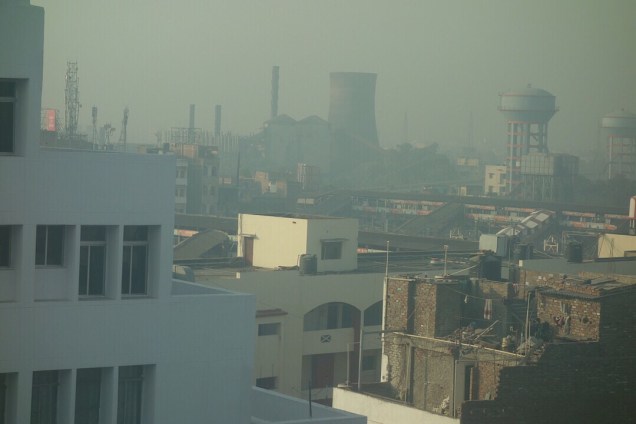 Dawn in beautiful downtown Patna, from our hotel window.
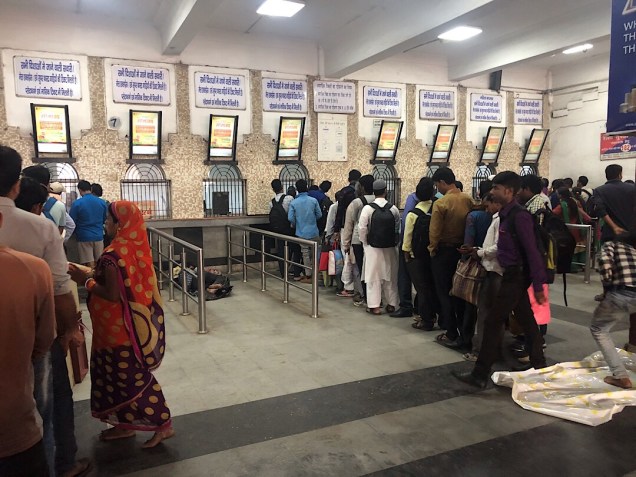 This was a big challenge for our puzzle-solving skills; we missed catching the 6:45 am express train, but we caught the express at 11:15, which not only left Patna on time; two and a half hours later, it also arrived in Gaya right on schedule. En route we were entertained by a wide-ranging conversation with a banker from Patna (to which about 6 other Indian guys in our immediate vicinity raptly listened.)
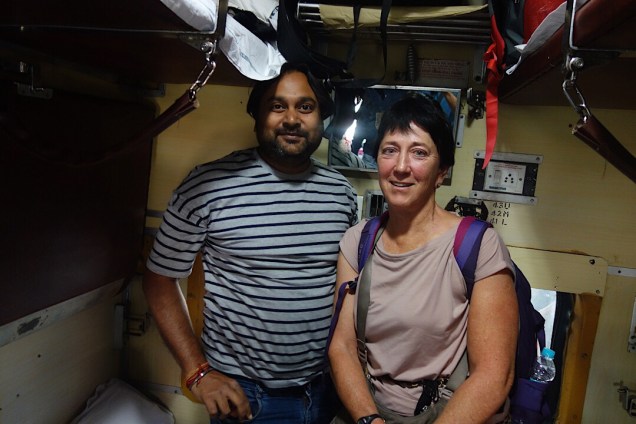 The banker and I
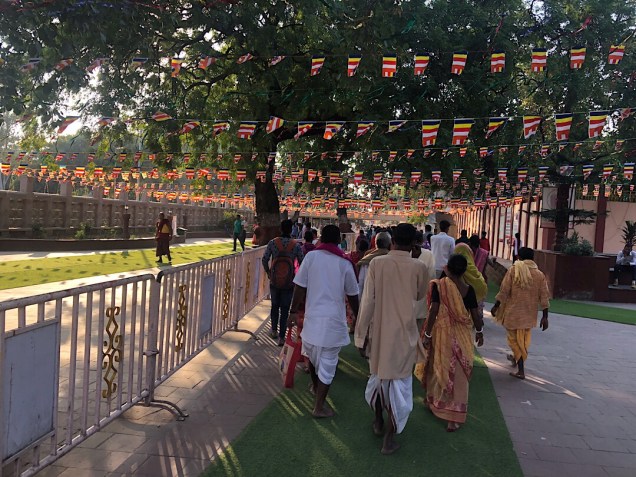 The mood was calm and serene. Outside the main entrance to the most sacred buildings, we had to deposit our cellphones in a locker and pass through a metal detector. (Apparently some wacko set off a bomb a few years ago.) We also hired a guide who turned out to be excellent.
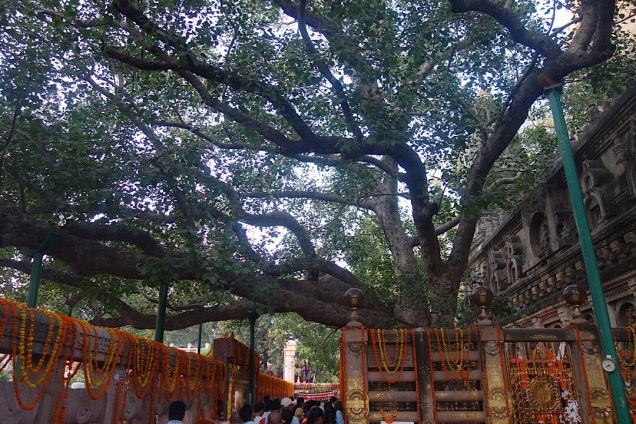 .
.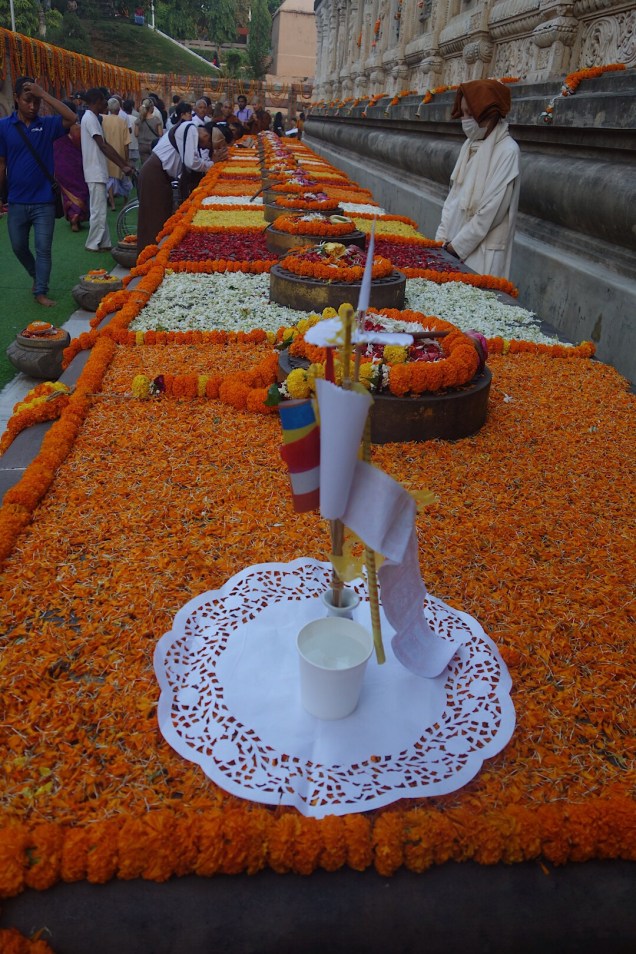 Devotees had prepared this offering to the tree.
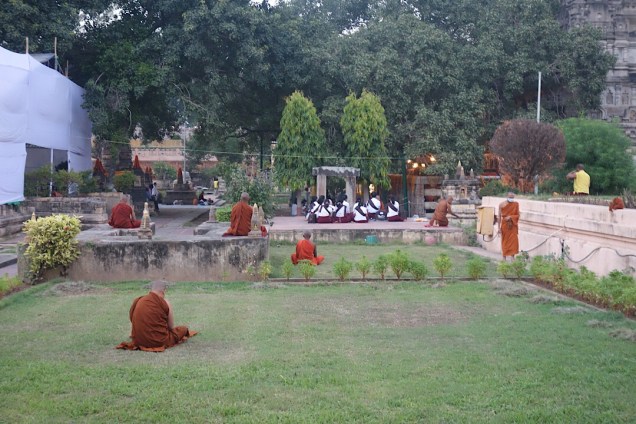 Like this…
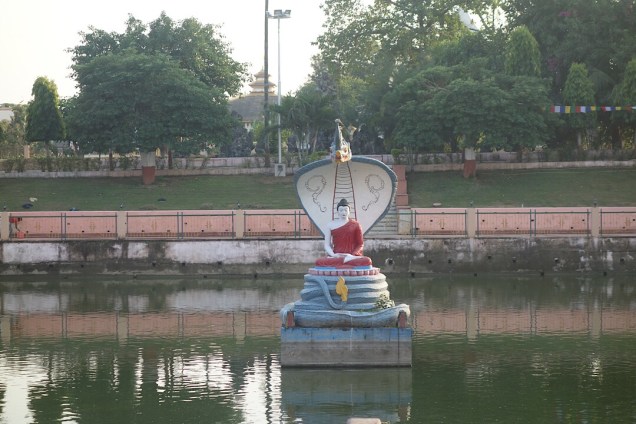 Or this…
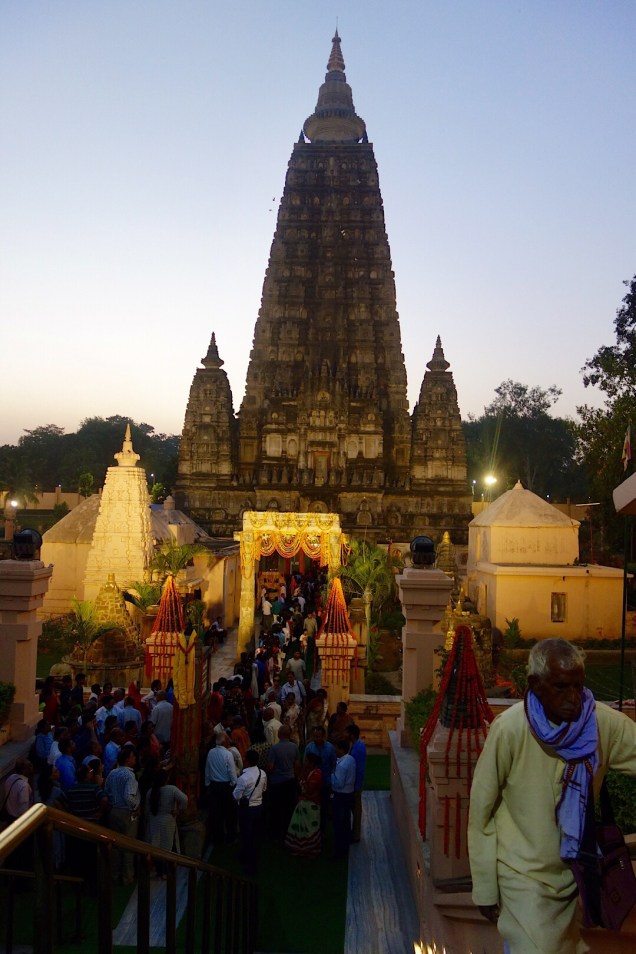 But it was growing dark, so we took another auto rickshaw back to the ugly Gaya flophouse. There we got to bed as early as we could. We knew we had to set the alarm for 4:15 to catch the train to the holiest spot in Hinduism.
 At home and abroad