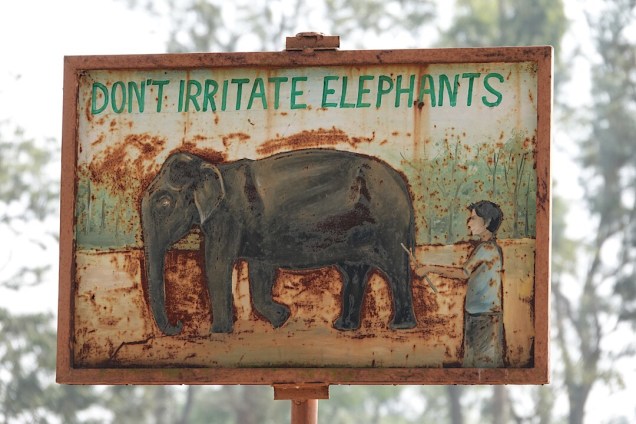
 We didn’t go to Kodagu looking for elephants. We got interested in the area when a friend who has worked and traveled for pleasure in India told us Kodagu was a spice capital of south India, dense with gorgeous jungle. Then another friend put us in touch with an Indian friend who lives in Bangalore and owns two coffee plantations in Kodagu (also known as Coorg, the old British name). I emailed Sheila, asking if we might meet for a lunch, and in an amazing display of generosity, she invited us to stay in the guesthouse on one of her plantations. We made plans to spend three nights.
I haven’t written anything about our time in Bangalore and Mysore because we only had two nights in each. Both look more prosperous than any place we visited in the north, but sadly the air and traffic in Bangalore (“the Silicon Valley of India”) still wasn’t great. By far the highlight for us there was our rollicking three-plus-hour lunch with Sheila — a commanding, cosmopolitan lady with a surfeit of interesting opinions and insights and abundant good humor.
She had worried we might get bored with two and a half days in Kodagu, but this did not come to pass. I don’t know why the district isn’t on every Indian visitor’s list. For centuries (millennia?), Kodagu was an independent little state run by hundreds of clans. The clansmen were warriors but also farmers, growing rice along with spices and eventually coffee. Black pepper grows wild here. Trying to find a way to get to it is what led Christopher Columbus to stumble upon North America.
Kodagu didn’t become part of India until the 1950s, and it sounds like many folks today would like to go back to the independent old days. Living in their fertile valleys, shielded from the rest of the world by rugged mountain forests and the dangerous animals who inhabit them, blessed with clean air and a mild climate, Kodagu is a shangri-la — not just for people but for elephants.
We started our first day with elephants. Sheila’s farm manager, Arthur, found us a taxi ($43 for the whole day), and the driver headed northwest for an hour or so. Our destination was the Dubare Elephant Camp, an operation of the state (Karnataka) forest department. I sort of expected this to be a tourist attraction, and it was, but only in the loosest possible sense of that term.
We parked near a bank of the Cauvery River and joined a long queue of Indians waiting to board launches to ferry them to an opposing bank (43 cents per person for the boat ride; 29 cents for the camp admission).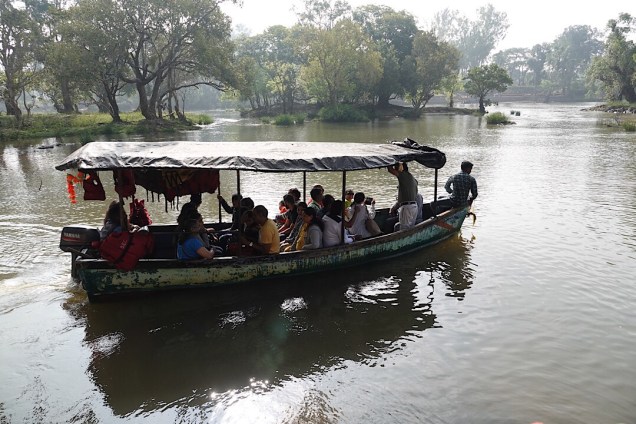 In about 15 minutes, Steve and I made it aboard a boat and quickly reached the camp. In the hour and a half we were there, no person, no signs, no brochures told us anything about what the camp is and how it functions. Maybe the Indians thought it was irrelevant. Most folks didn’t come here for helpings of wildlife education: the draw was watching the residents get their morning bath.
Young men were riding big old males and females and youngsters from an upper holding area down to the river… then using that ancient Asian-elephant-control tool, the hook, to make them lay down in the water…
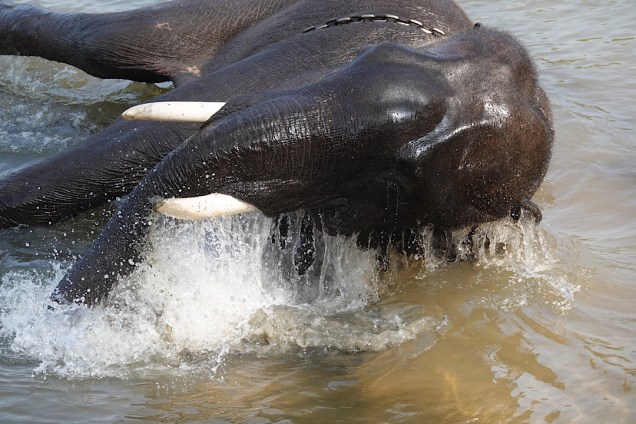 or stand patiently while their tusks were cleaned with a sand-paste rub.
 Poke this baby into the tender spot behind one of those big ears, and you can get a 10,000-pound beast to do what you want!
For an additional 200 rupees ($2.87), one could go down onto the beach and join in the elephant-spa activity. I (naturally) could not resist, but Steve claimed he didn’t want to get wet and so opted to stay on the cliff top and take pictures.
Down on the beach, I edged up to the action, simply watching for a while. It was hard to tell what the elephants thought.
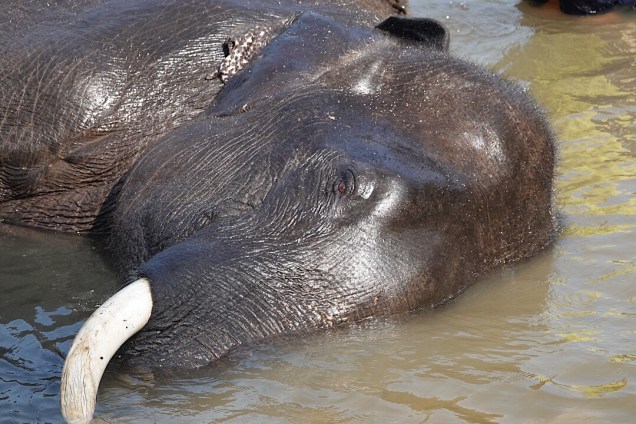 It didn’t look like they hated it. But was it pleasurable?
Once or twice, one of the young mahouts interacted with a visitor…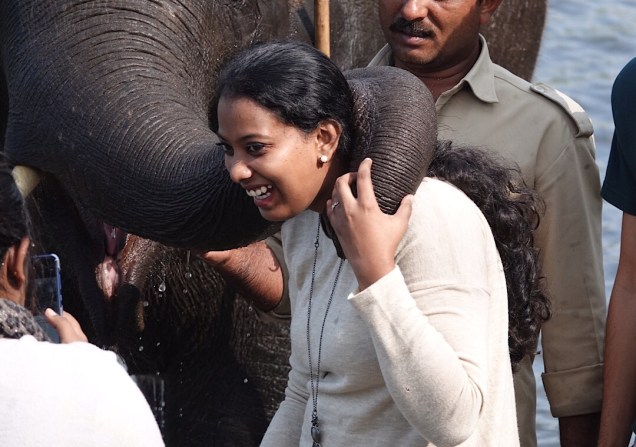 …as when one wrapped his charge’s trunk around this young lady’s neck, in response to a photo request. But most of the guys ignored the crowd gaping at them and concentrated instead on scrubbing the tough hides.
 They reminded me of car-wash attendants, irritable because of the long line of customers awaiting service.
I finally petted several animals… I tried to communicate good will with my touch. I ran my fingers over a few tusks, the source of so much elephant suffering and death. Then I rejoined Steve, and we walked to the high ground, where we found workers wrapping up brown rice within handfuls of hay.
 It did look to me like they enjoyed getting the tasty packages.
We made a couple of other touristic stops that day — toured a nature park; visited a large enclave of TIbetan Buddhist exiles. But our quirky, magical visit to the pachyderms overshadowed everything for me. That and the lunch we had with a friend of Sheila’s.
He met us near the nature park and took us to an exquisite riverside resort for lunch. Madhu is an amazing character: a coffee grower himself, but also a consultant to coffee growers all over the planet. His special (U.N.-recognized) expertise is in sustainable cultivation practices. We talked about coffee-growing and many other things; among them, the local elephants.
“You can kill a man and get away with it,” he declared. “But if you kill an animal here, you’re done for.” The Indian conservation and forestry officials were fierce and effective, he said, and in recent years, the local wild elephant population had grown well. We learned that elephants roam the roads and routinely barge onto fields in Coorg, mainly at night, when they’re foraging. When people harassed them or made them think their babies were threatened, encounters could get ugly. The elephants killed between 15 and 20 Kodagu residents annually, according to Madhu.
“But what does a grower do when a group of elephants comes onto his coffee plantation?” I asked.
The best course was to stay out of their way, Maddhu said. They would soon move on. Trying to chase them away was usually disastrous; frightened, stampeding elephants could do tremendous damage. Left alone, they rarely lingered. And in Kodagu district, an area about a third the size of San Diego County, elephants have lots of alternative eating grounds. Somewhere between a half and two-thirds of the district land is protected tropical rainforest. The only humans who can enter it are forest rangers and hikers with guides.
On our second full day in Coorg, Steve and I got one of those permits and two guides (the minimum acceptable number.) One carried a gun in his backpack, and the other, a 34-year-old guy named Chengappa, had a lot of experience and an okay grasp of English.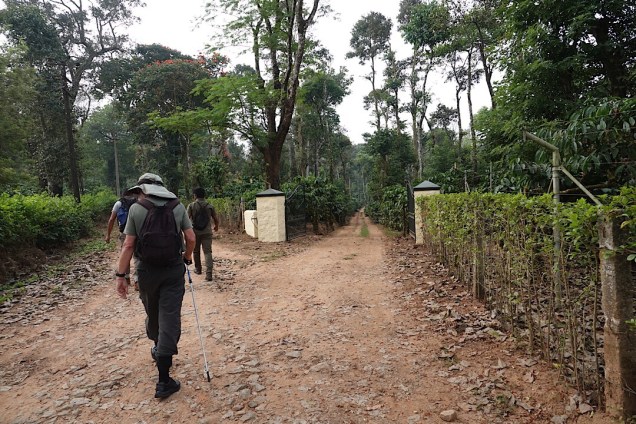 He seemed to know a lot about the local elephants, so I pelted him with my questions. Elephants in India no longer can be taken from the wild and put to work (as they were for millennia), he told us. But the animals at the Dubare camp (all but the babies) were former “rogues,” individuals who had killed a human or otherwise caused great destruction. Such elephants were tranquillized and brought to a center, where they were (essentially) broken in spirit, re-educated, and used for a weird range of activities — everything from getting all gussied up to march in the biggest annual festival in Mysore, to helping with special logging problems, to being taken into the forest to participate in elephant funerals.
Cheng said in his 8 years of working for the forestry department, he’d never heard of a guide or trekker being hurt by an elephant, but it wasn’t unimaginable, and the forest harbored other scary creatures — the Indian gaur (a buffalo-like animal similar in ferocity to the African Cape buffalo), pit vipers, tigers, leopards, jaguars. The only mammal I saw was a civet, swinging through a giant tree, but the ground was dense with spider webs, some of which built complex tube structures.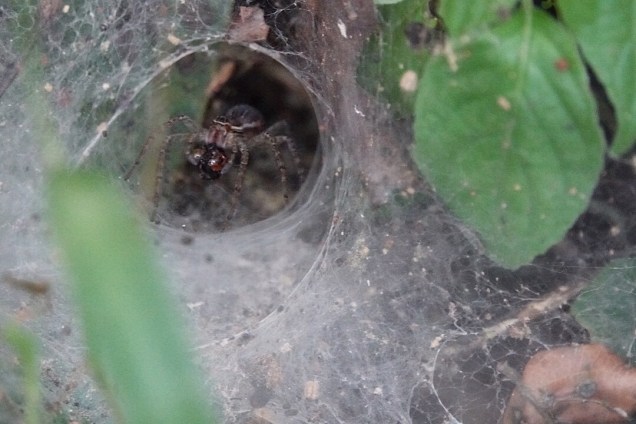 This guy was about a half-inch tall. The forest also teemed with little leeches…
 like this one, about an inch in length.
To protect ourselves from them, we all tucked our pants inside our socks, but several still fell from the trees and tried to attach themselves to my bare arms. Each time this happened I knocked them off with a yelp and a shudder.
We covered an eight and a half mile loop that included more tough climbs and descents than Steve and I have done in a while. The terrain we moved through was so dense and varied it felt Jurassic.
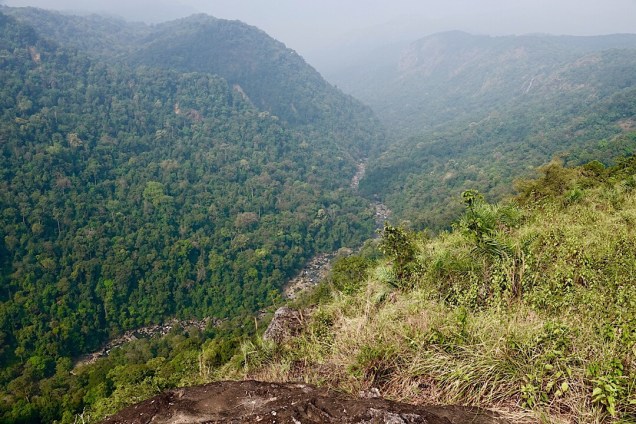
 Sometimes we edged ourselves downward by stepping into little ledges created by the elephant’s footprints, dodging fresh elephant poop. Even though we saw no actual elephants, it warmed my heart to know they still claimed such a breathtaking sanctuary as their home.
Besides sharing that space for a few hours, Steve acquired another souvenir from the hike. When he got back to Sheila’s and took off his shoes and socks, this is what he found:
All the leeches had fallen off, as Cheng said they would. We found them (fat and happy) inside Steve’s shoes, and we discarded them. Strangely enough, not one got to me. Another mystery of nature (or maybe sock mechanics).
 Like this.
 And this.

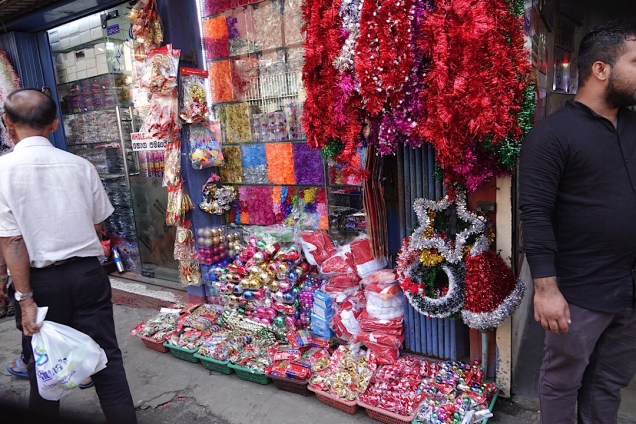

 But after India, I suspect we’ll continue to feel shocked by the peace and quiet right up to the minute we depart for home, eight days from now.
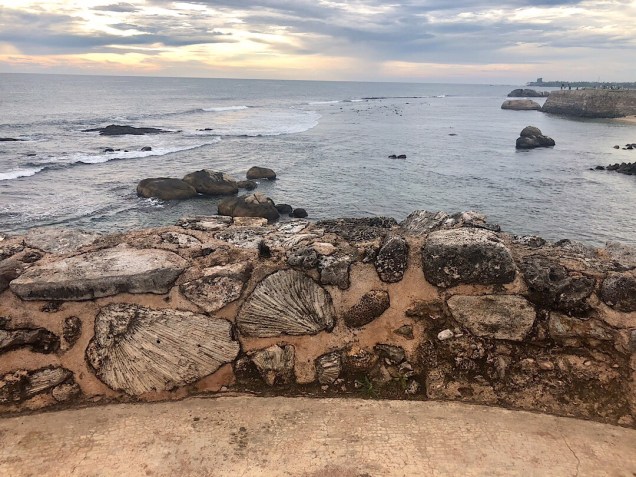 I’m posting this from Galle, about two hours south of Colombo. We’re staying just a few blocks from this seascape. Clean water, clean air, uncrowded — that’s shocking!
 Throughout the seven weeks we traveled in India, I thought more than once about the parable of the blind men and the elephant. It recounts what happened when a group of blind men investigated the strange new creature they had heard about. Each man touched a different part of the beast, and each formed a clear idea of what it must look like. The guy who felt the trunk said the elephant was like a snake. The one who touched its side said that was nonsense; elephants instead resembled walls. The man who stroked its ear concluded they’re like fans, and so on. Each was so convinced the others were wrong they eventually came to blows.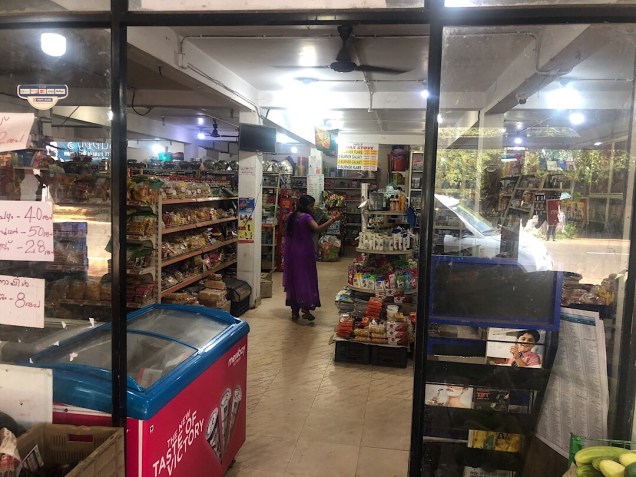
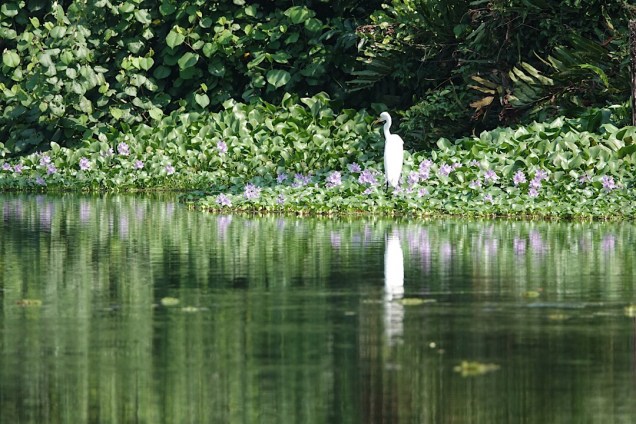 One bad thing about Kerala is its heat and humidity, but in Peter’s big canoe, propelled by a local villager armed with a long pole, a light breeze cooled us. Crossing a broad channel, we sheltered under a big umbrella…
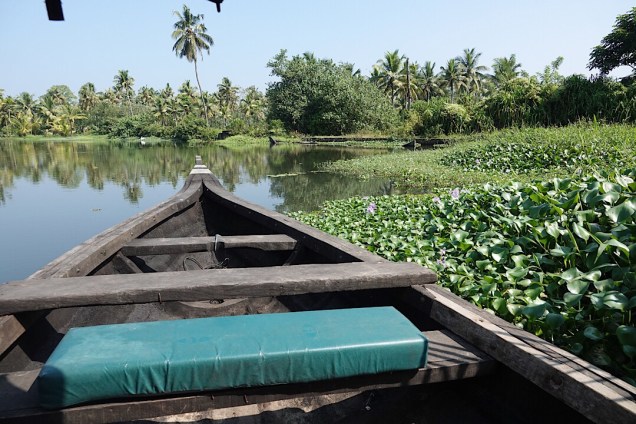 …then slipped under a low gate…
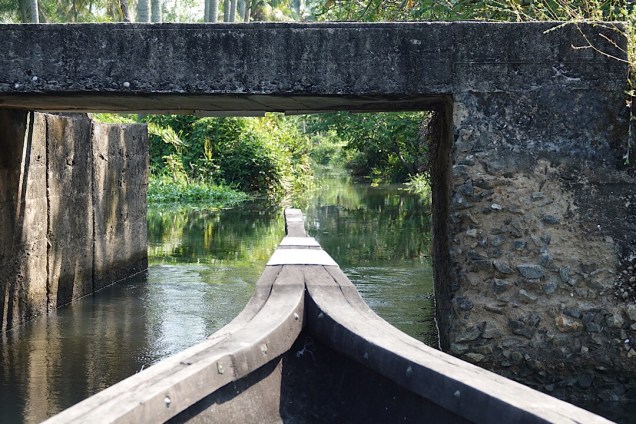 …into a series of narrow canals shaded by coconut palms, mahogany, and other huge tropical trees.
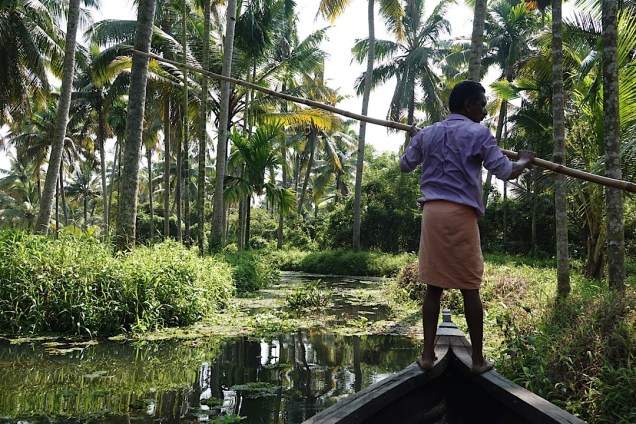 For a long time, Peter stopped talking, and we glided through the passages hearing only the birdsong and the swish of the water moving over the hull.
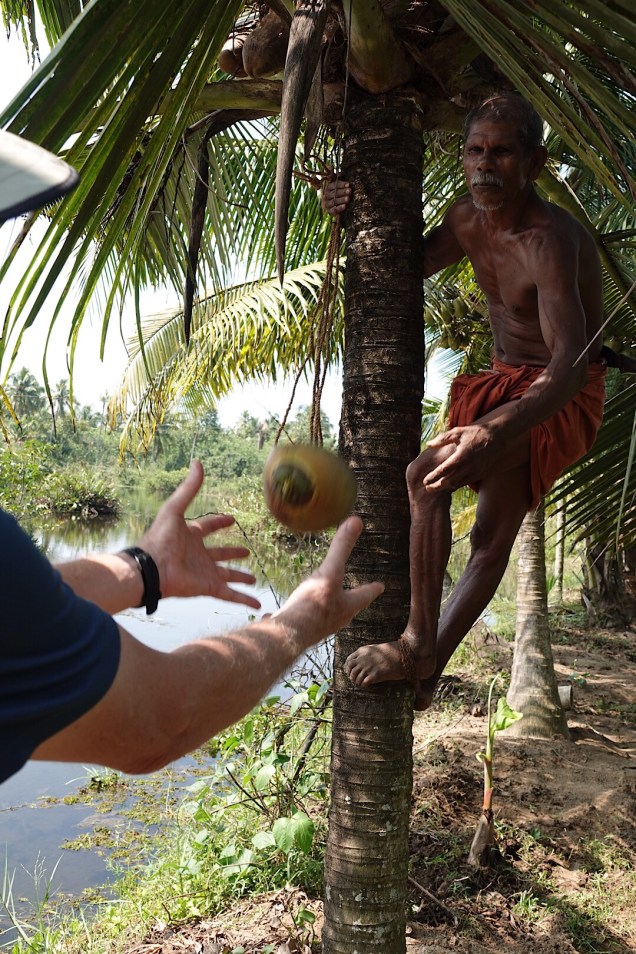 …drink their water…
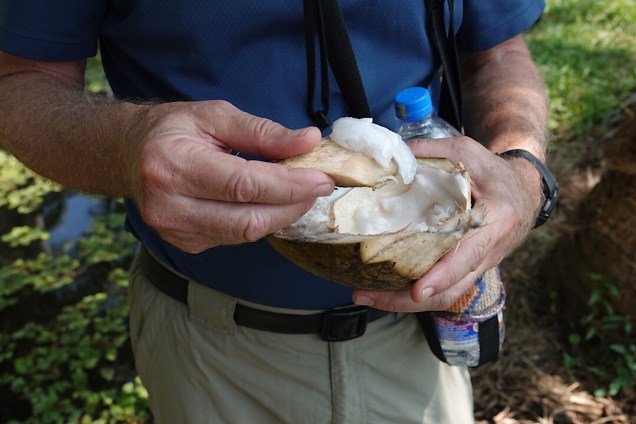
 and taste their custardy insides.
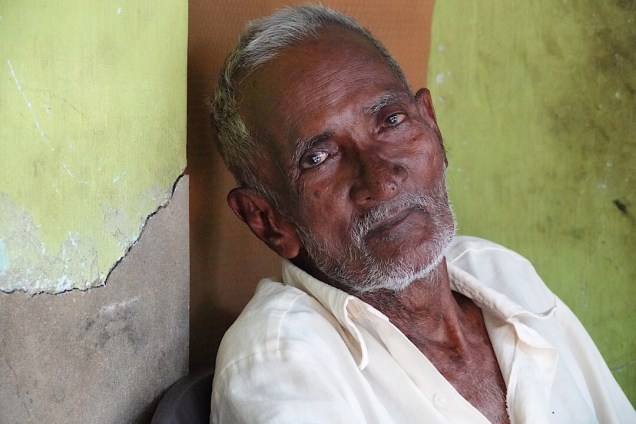
 We continued on to a tiny island and met the man who first settled it and now lives there with his relatives and a few other families.
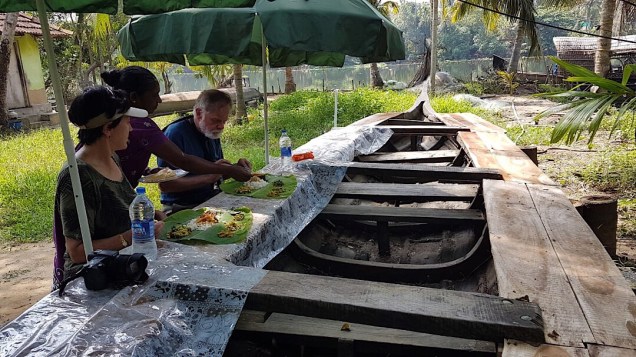
 We ate a delicious lunch prepared by two of the women in the family…
 …and learned how to spin twine out of coconut fiber.
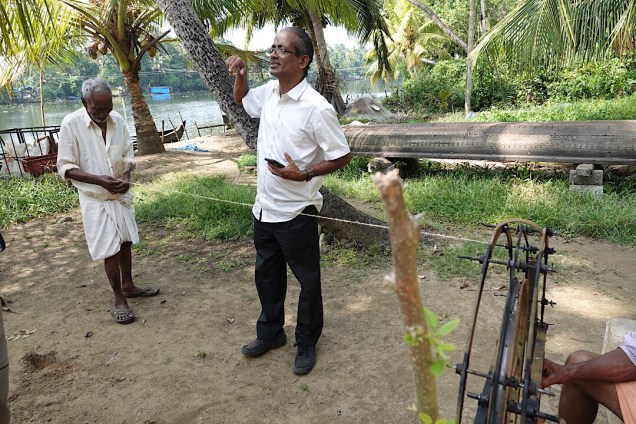 That’s Peter. By the time we got back to our hotel, he felt like an old friend.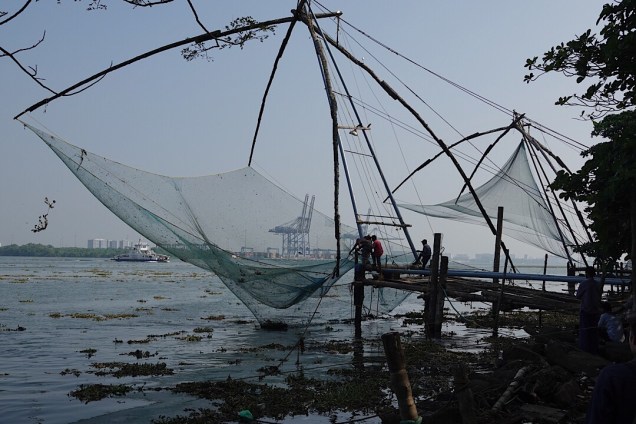
 The heart of old Cochin is 500 years old, and you can sense that.
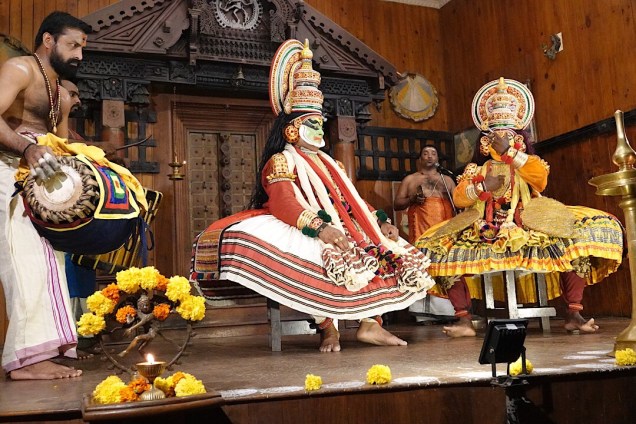
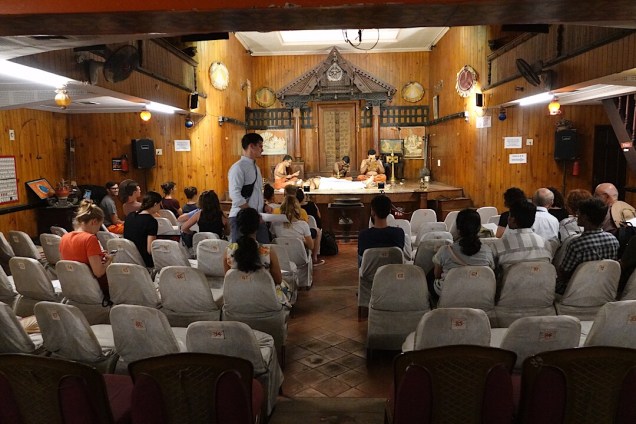 Here’s what the stage looked like when we walked in.
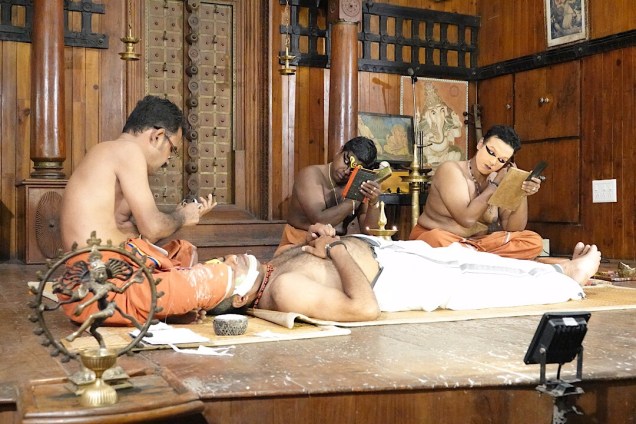 The make-up application had just begun.
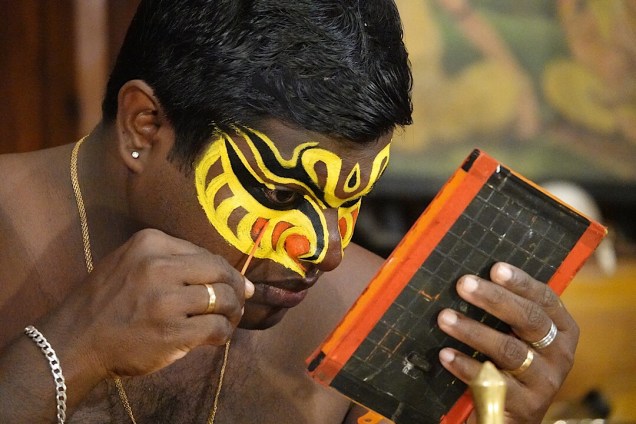 It continued over the course of the next hour.
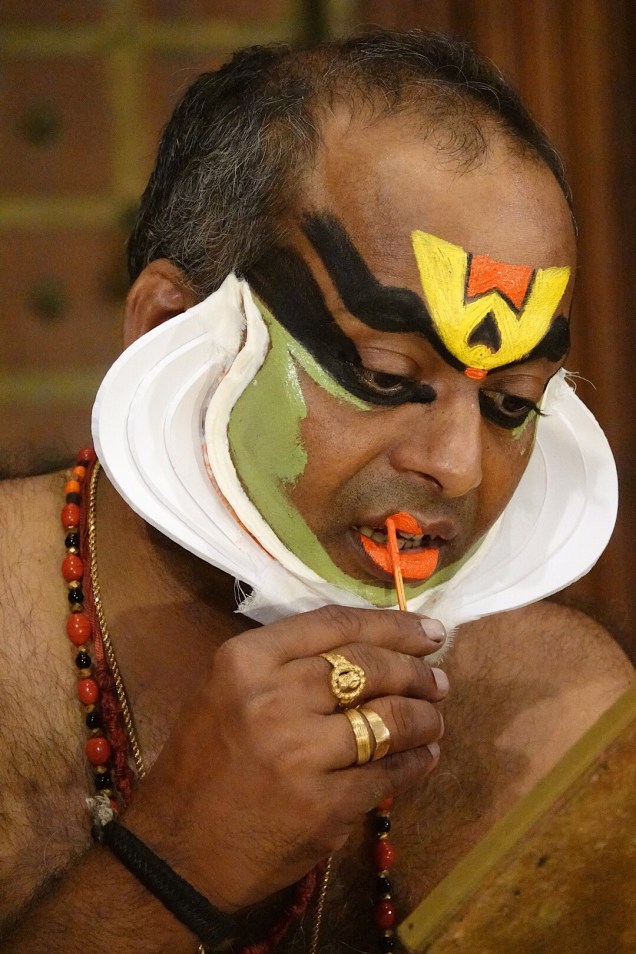 Then we listened to a short lecture about the performance elements. Actors don’t speak but rather communicate meaning with highly stylized hand signs, facial expressions (like this one. I think it was revulsion)…
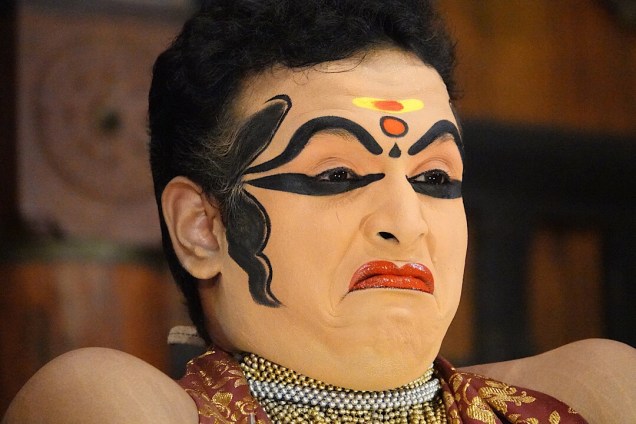 and eye movements. Kathalkali actors must train their eyeballs like athletes. I’ve never seen such amazing control over that body organ.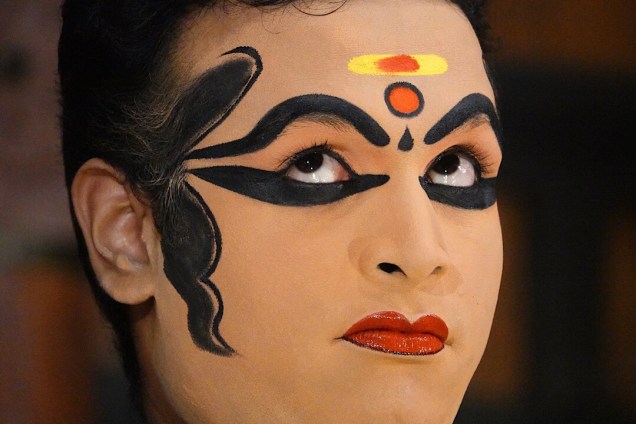

 “But there are plenty of middle-class people in India now, aren’t there?” I interjected.
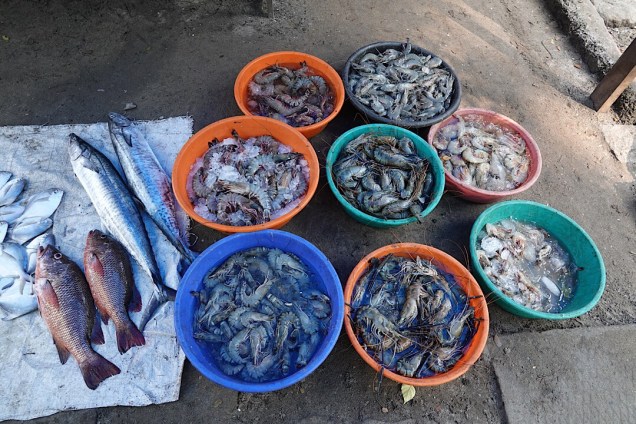
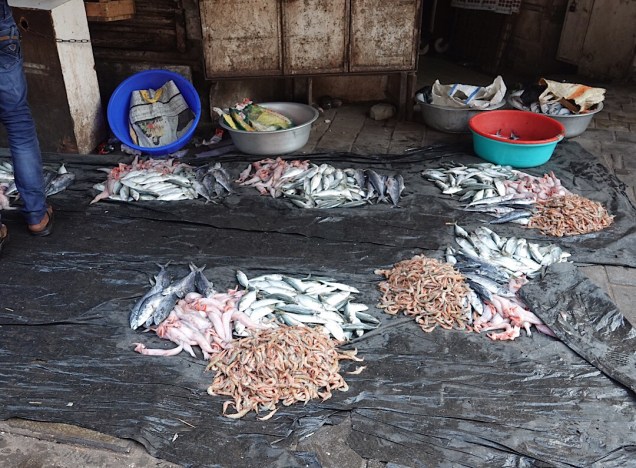
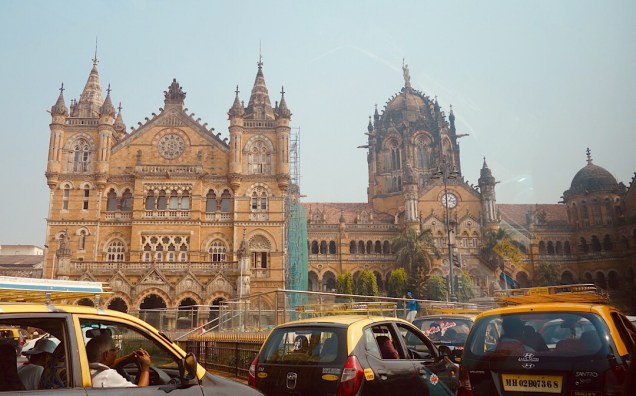 Just north of it begins a series of neighborhoods renowned for their maze-like bazaars. As it turned out, it was too early for many of the shops to be open, but we did pass guys carrying big tubs of fish on their heads
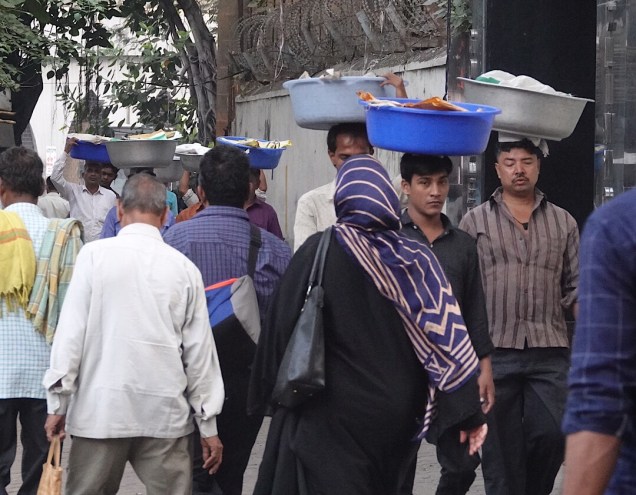 and others selling them from tarps on the sidewalk.
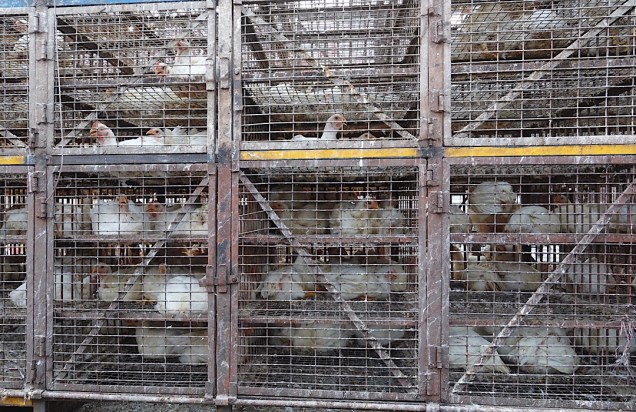
 We passed trucks of suffering and doomed chickens that made me (briefly) consider never eating chicken again.
 The old Crawford food market (the exterior of which still bears beautiful sculpture work done by Rudyard Kipling’s father)
 was just coming to life, and within it, I spotted a booth carrying all manner of canned drinks, including our beloved Schweppes (in both Indian and foreign sizes.) Steve was ecstatic. He bought six (Indian) cans from this guy.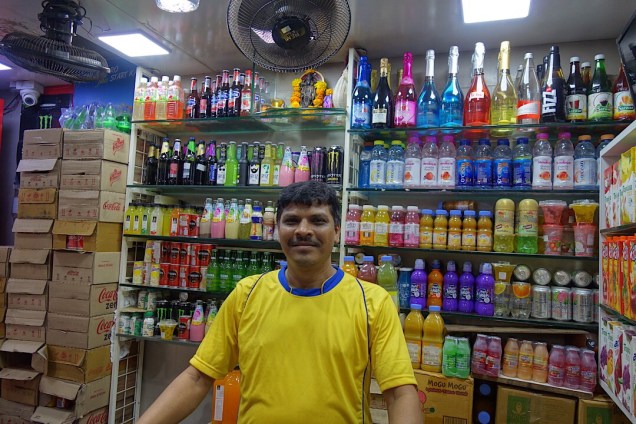
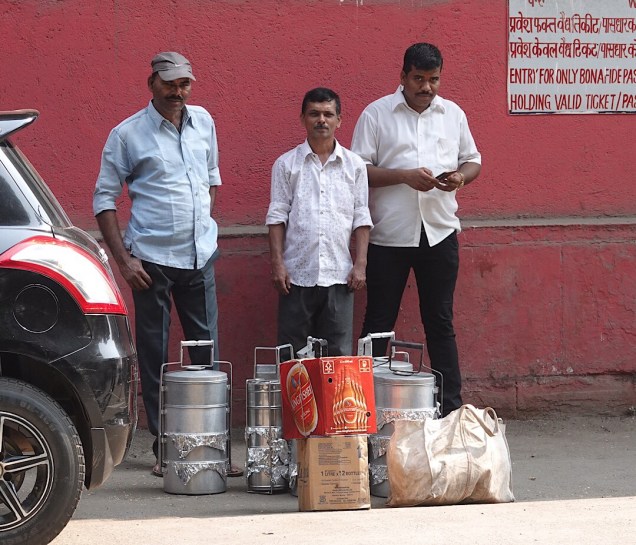 Had we gotten there too late? Were dabba-wallahs as endangered as those Rajasthani camels? I felt a wave of disappointment.
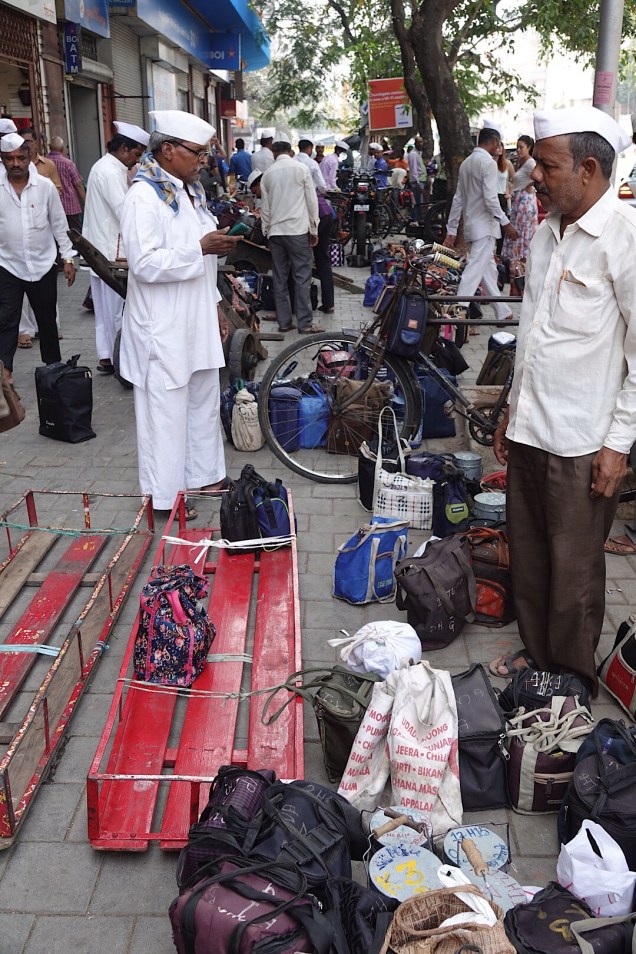 It was indeed a thick congregation of dabbah-wallahs, loading up their conveyances. I hadn’t immediately recognized them because they were using so many insulated bags instead of the traditional tin canisters. Some had dozens of the lunch bags piled up on wooden hand carts…
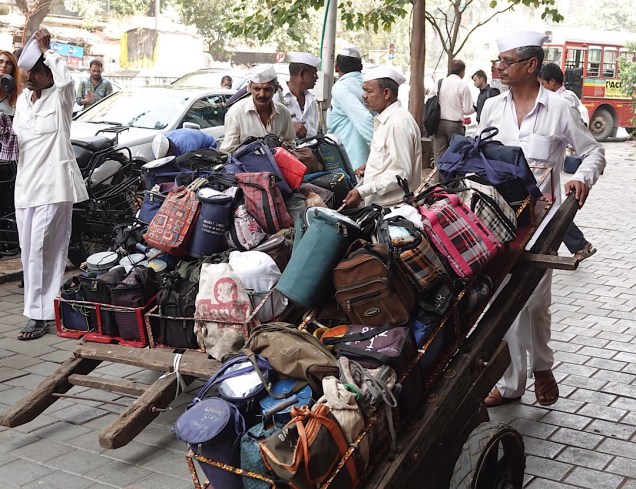 …while others stood by bicycles hung with motley receptacles.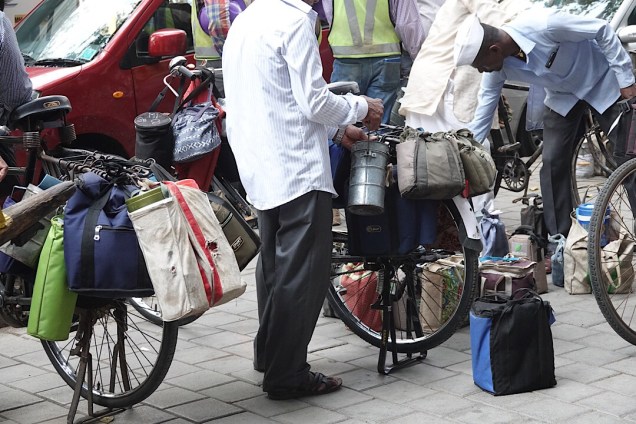
 The face of the modern dabba-wallah.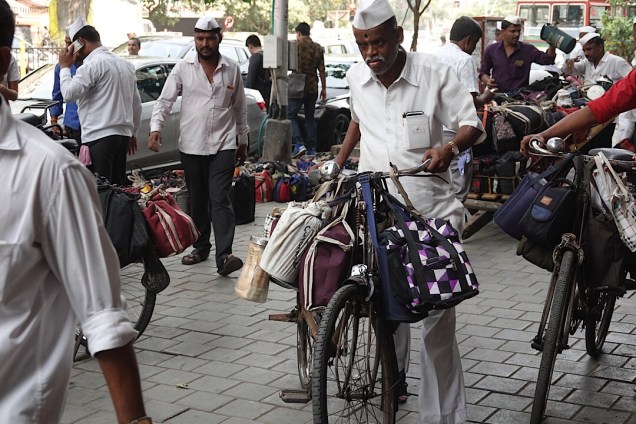
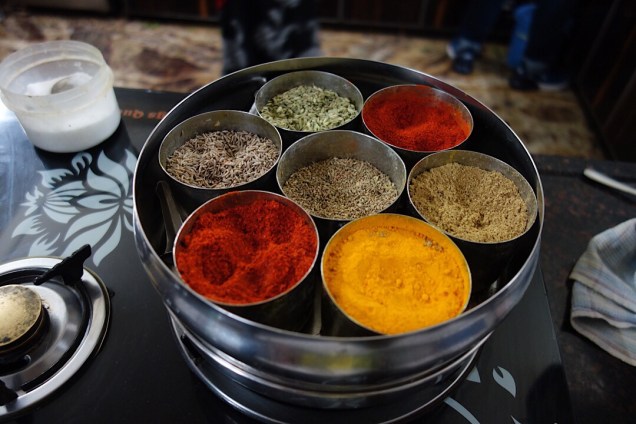
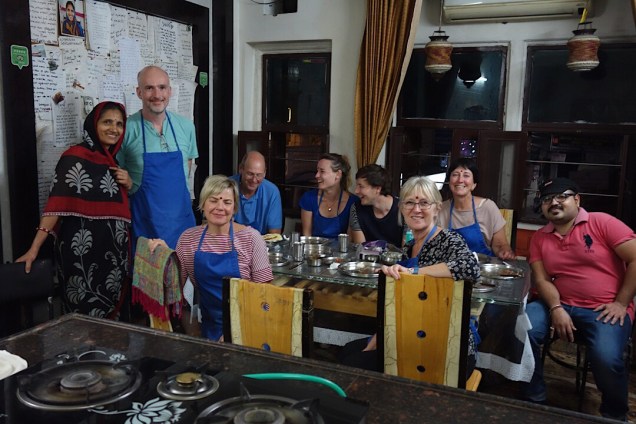
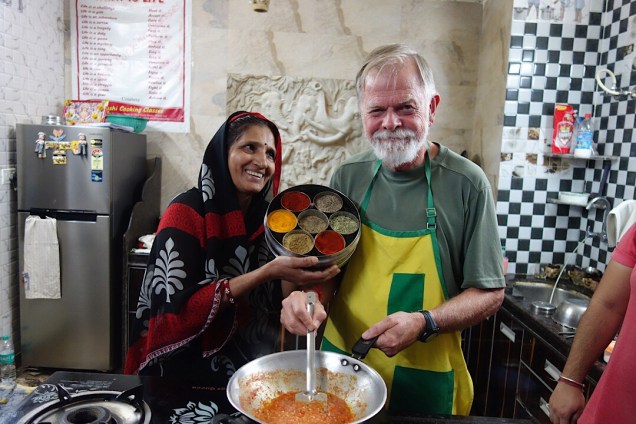 We wound up there because a listing in the “Activities” section of the Lonely Planet’s Udaipur chapter raved about Shashi’s cooking classes. I emailed to see if we could join one and got a response saying the 5:30 pm Saturday (11/17) class had two openings. This was a stretch; on Saturday we had to set the alarm in Jodhpur for 6 am to catch a train. After that five-hour journey, our taxi got stuck in a giant traffic jam. But we didn’t want to miss the opportunity, so precisely at 5:30 pm we walked into a trim little kitchen on the upper floor of a building down the street from our hotel.
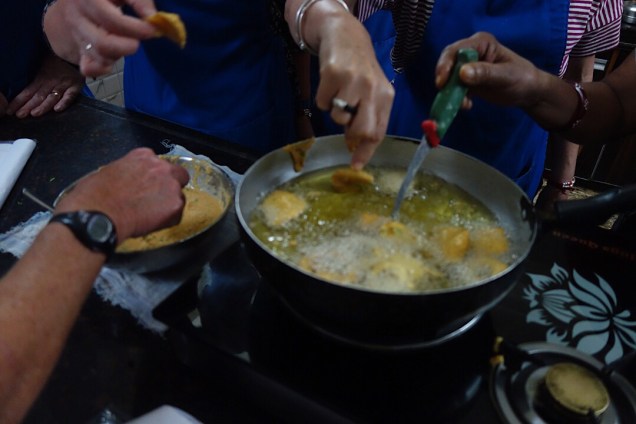 We deep-fried them, then gobbled them down, dipped in two kinds of chutney (coriander and mango) both of which Shashi showed us how to make.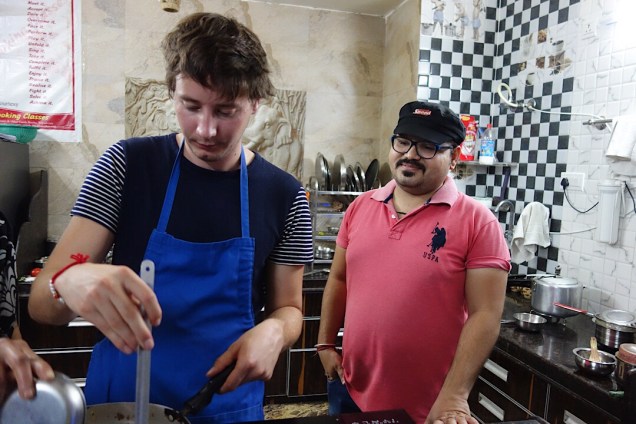
 We made the magic sauce, then we used it to makes several dishes, including curried chickpeas….
 deep-fried cheese in a tomato-butter sauce, and a vegetable pulao.
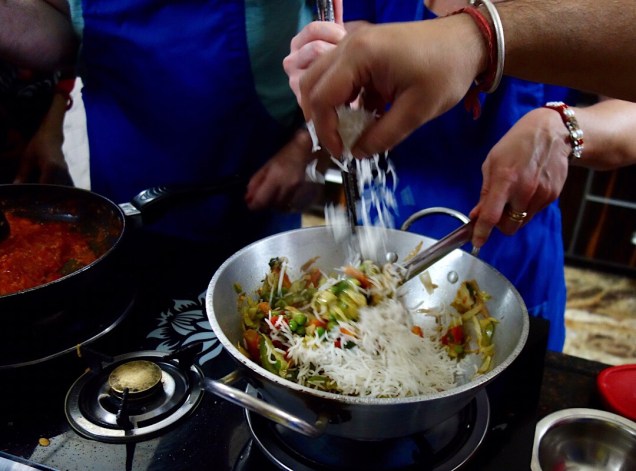 As each dish was completed, Shashi stacked it on its predecessors,
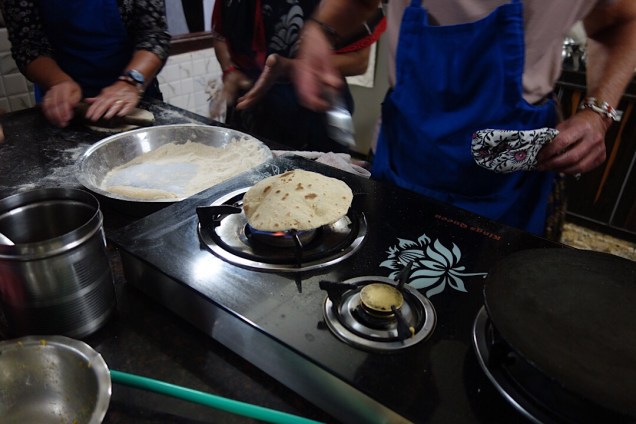
 a teasing metal tower that grew more maddeningly tempting as the hours went by, and we grew more and more tired and hungry. But there was more to learn, and lots of joking and laughter to distract us as we toiled. We made chapatti dough; learned out to knead it and cook it on a skillet.
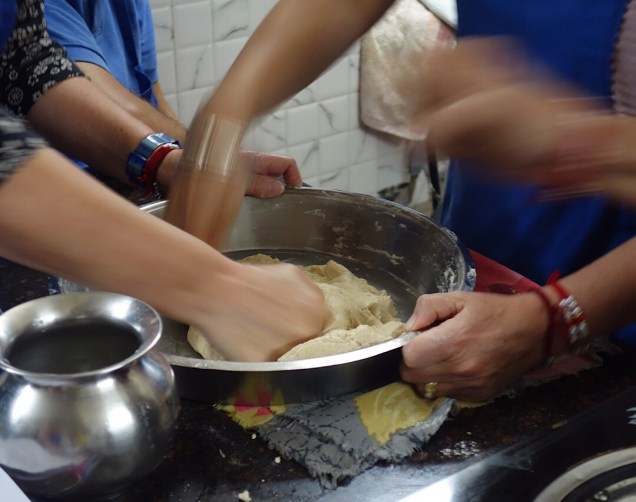 Many hands make good chapatti.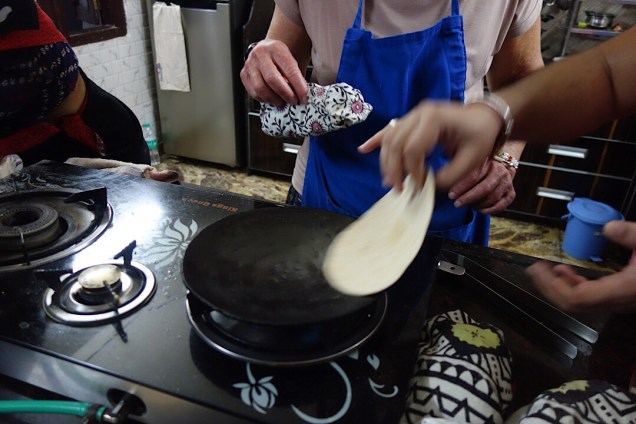
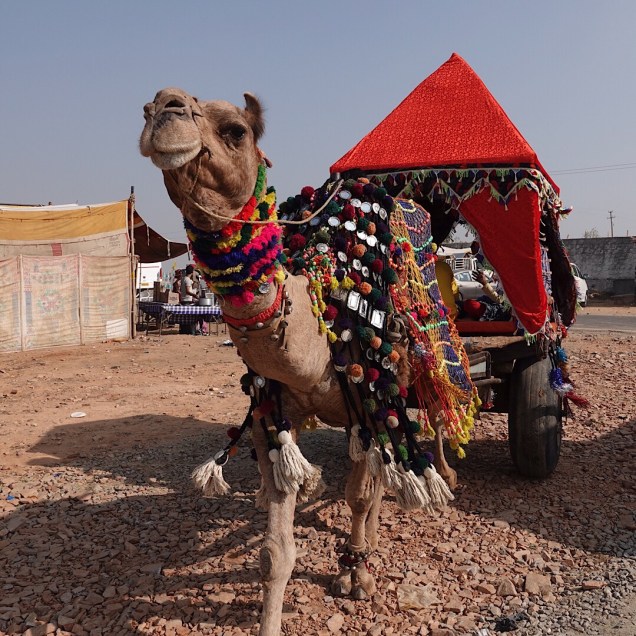
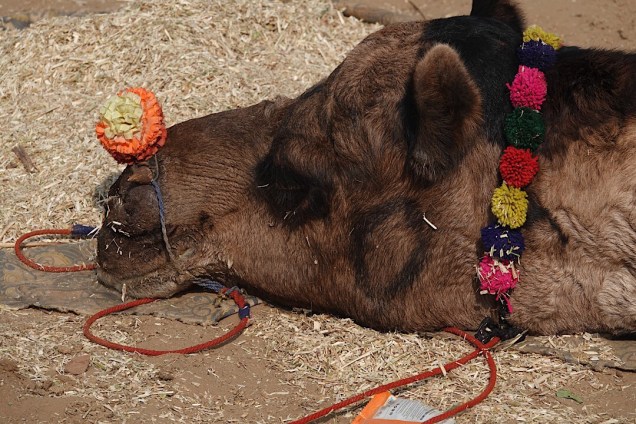 Somehow camels have become one of my favorite animals. I think this started in 2002 when I rode one in Luxor (Egypt), on the edge of the Sahara. It felt a bit like being on a gigantic rocking horse — fun and exhilarating and more comfortable than I expected.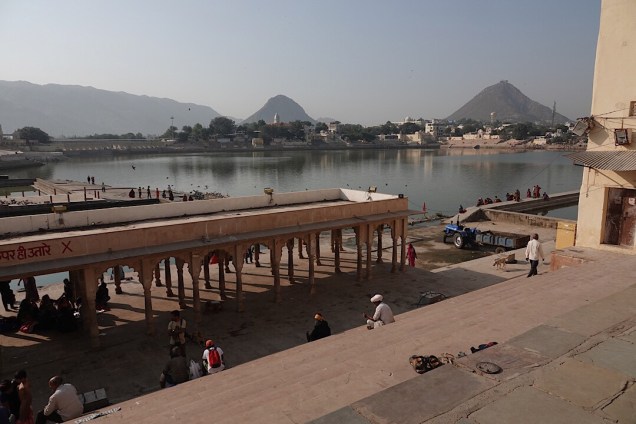
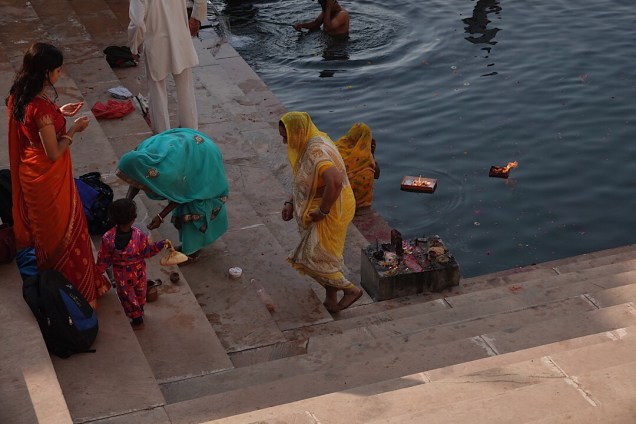 The devotees trickle in over a ten-day period, and they revel not only in the religious activities (praying, visiting various temples, smashing coconuts, launching lighted candles into the lake waters, etc.) but also shopping and enjoying Indian-style tourist attractions. They ride on camels or in carts pulled by them.
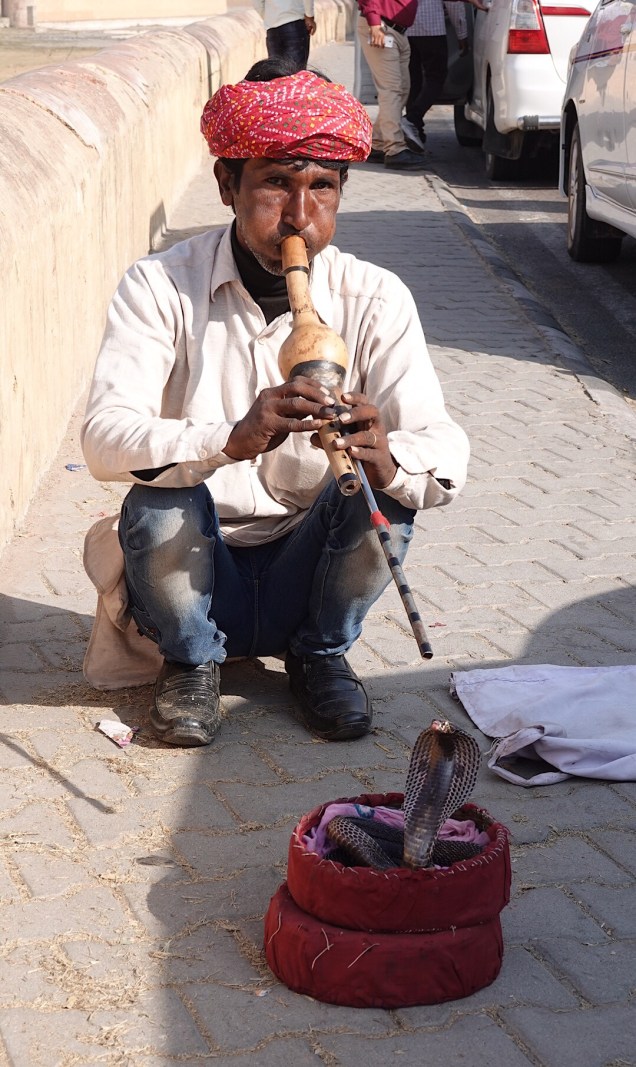
 They photograph snake charmers.
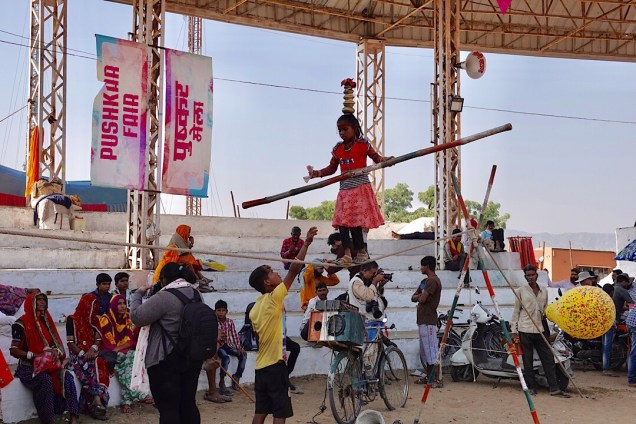
 They ogle little girls walking on tightropes…
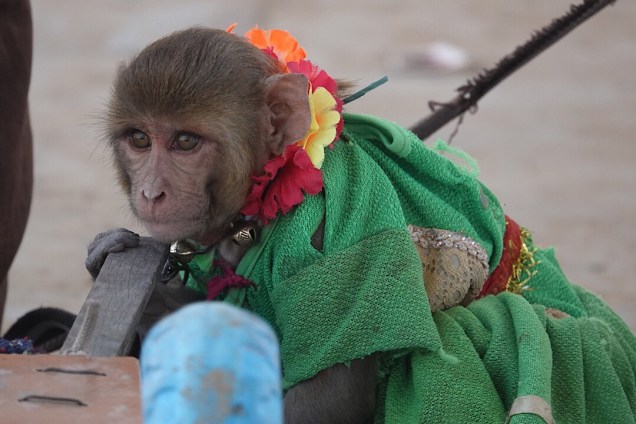
 or monkeys dressed up in little outfits.
 We spent hours wandering among the pilgrims. But I’d come for camels, not religious fanatics, so early on our first full day, we set out in the morning chill to find the hump-backed giants. (By noon, temperatures in Pushkar always climbed to the mid- to high-80s, but they plunged every night.) In the open grounds beyond the Brahma Temple, we found more camels assembled than I’ll ever see again in my life:
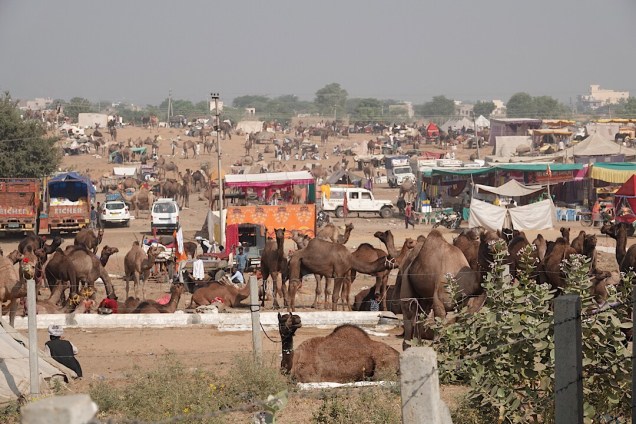 thousands of them, most staked together in small groups or being groomed by their owners.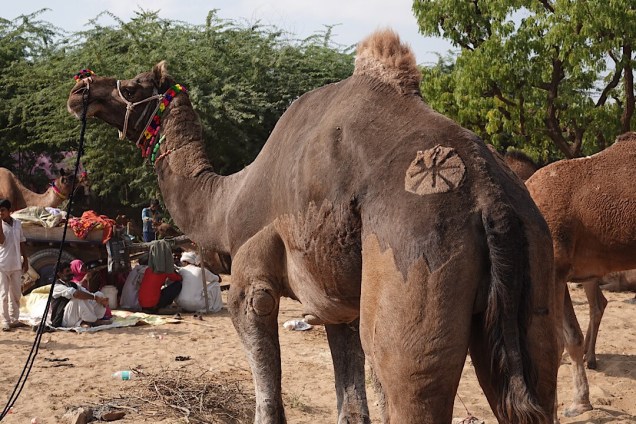
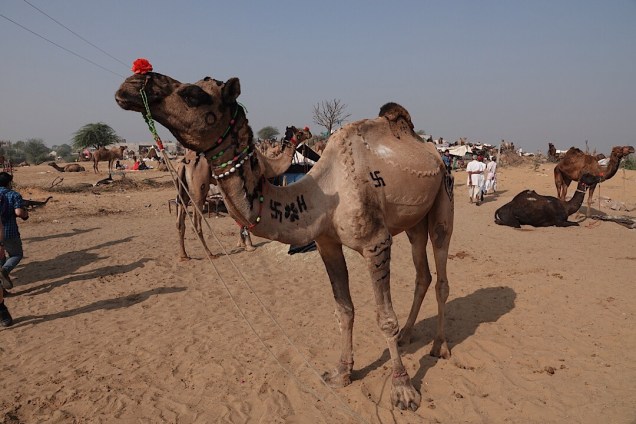 The backward swastika has nothing to do with Nazis. It’s an ancient Hindu symbol. Herders paint their animals in various ways to jazz them up.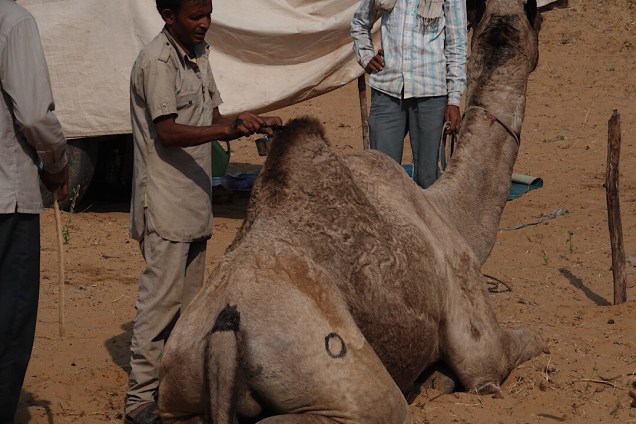
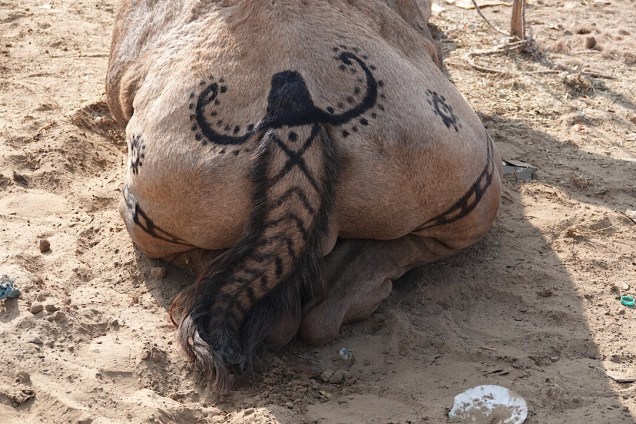 From the humans’ body language, we sometimes identified negotiations in progress. From the camels’, it appeared that some were bored…
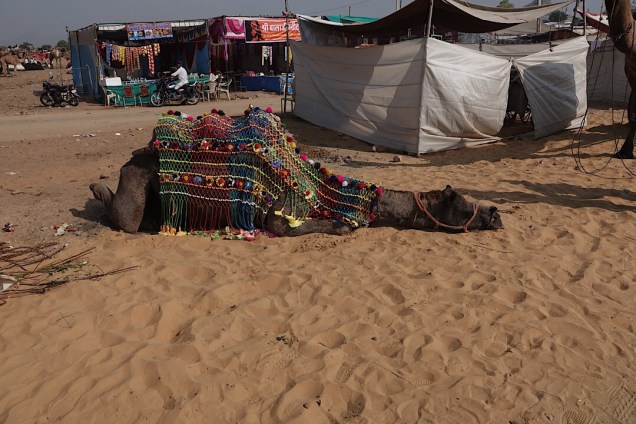 But some were curious.
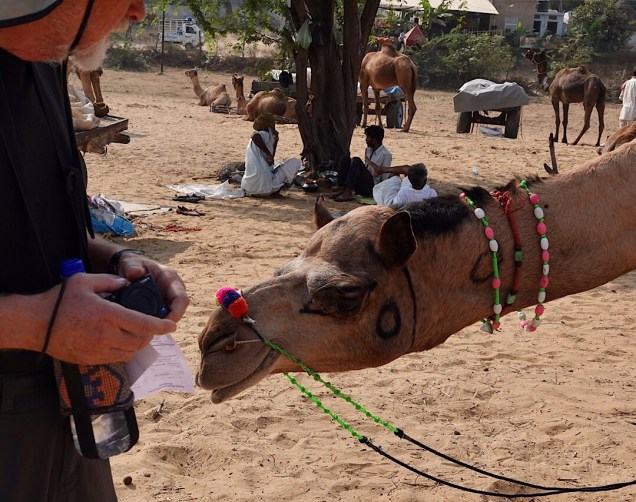 Overwall the scene felt surprisingly low-key, and we returned on our final day to see if the pace had accelerated.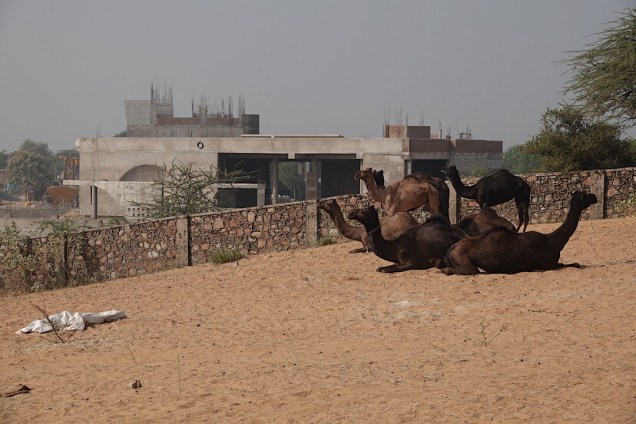
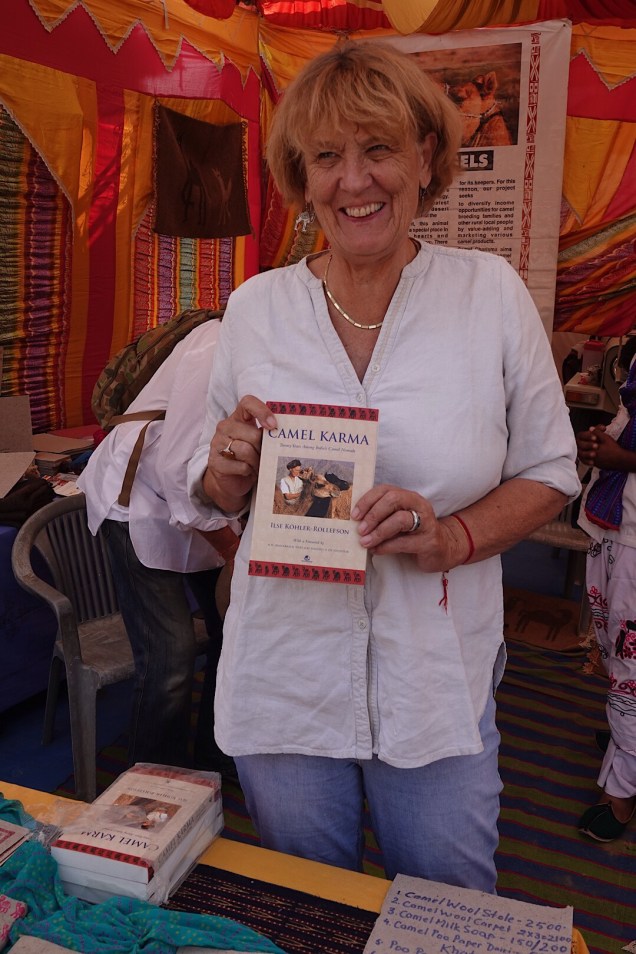 A talk blonde older woman in the back of the booth joined our conversation. She was a German anthropologist named Ilse Kohler-Rollefson who’d spent 20 years living among the camel nomads (and almost as amazingly, had lived for several years in San Diego and taught at San Diego State). She and her colleague explained that the NGO had helped start the first camel dairy in India. They were also lobbying for protection of traditional grazing grounds. The aim was to find ways for the herders to continue earning enough to survive.
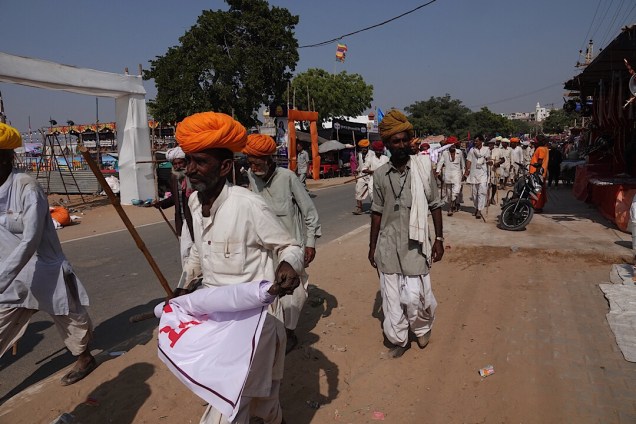 We ran into Ilse too as she was buying an ice cream bar, and she told us that someone had delivered a rousing speech at the municipal center.
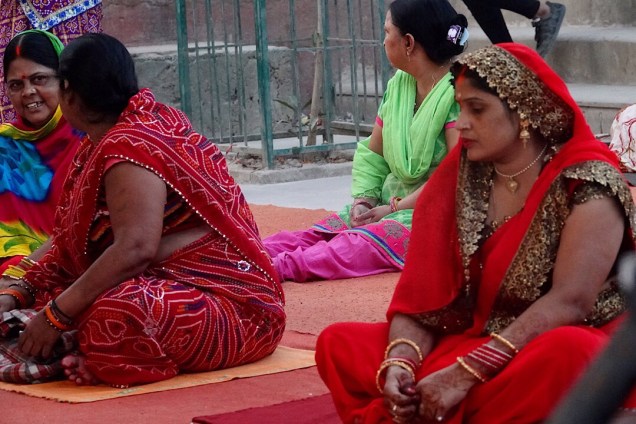 Among middle-aged Indians, the full-figured look is a common one. Now we better understand why.
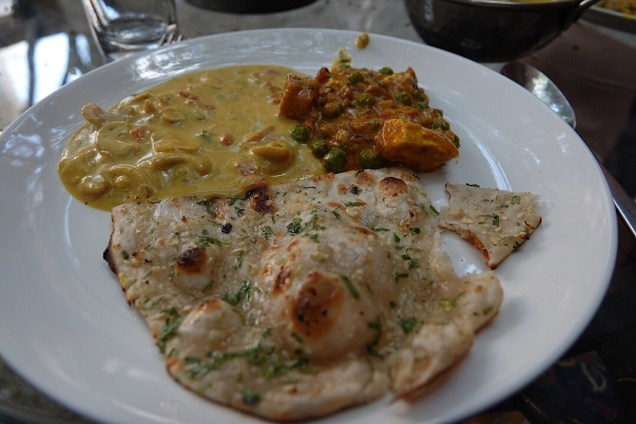 A typical lunch: cashews in a cream sauce, peas and cheese in a mild spicy red sauce and yummy garlic/butter naan.
 On the breakfast buffet this morning: deep-fried herb-flavored rice patties. We both thought they were yummy.
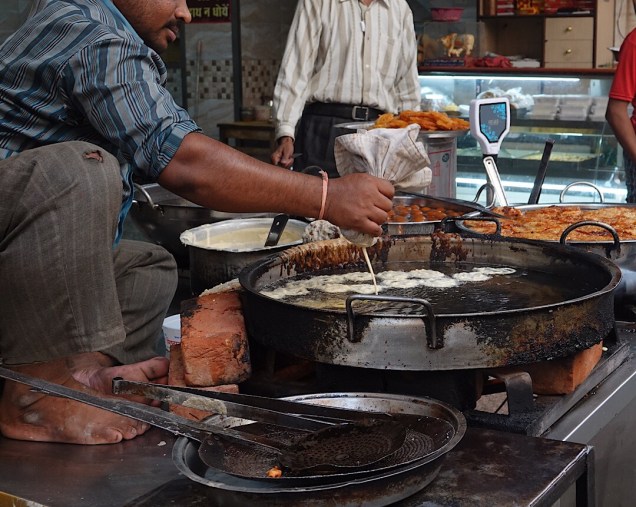 Note that the cook is squirting the batter into the boiling oil. Then you dip the results into sugar syrup and get what’s known as jalebis.
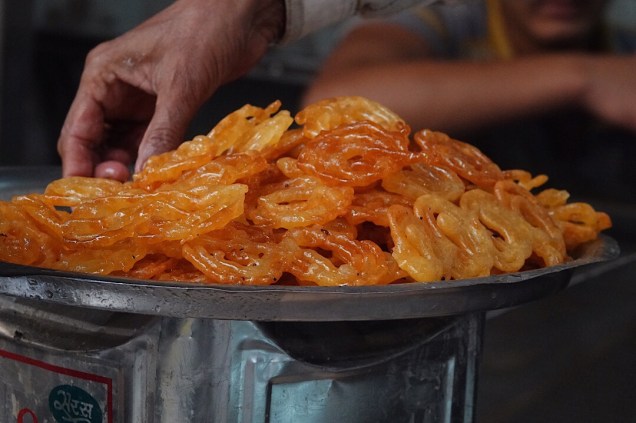 Although we didn’t eat them from the street vendor, the ones we sampled in our hotel were surprisingly likable.
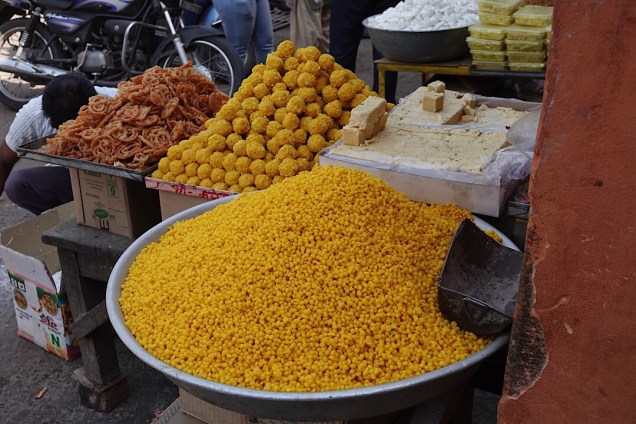 like these…
 and these.
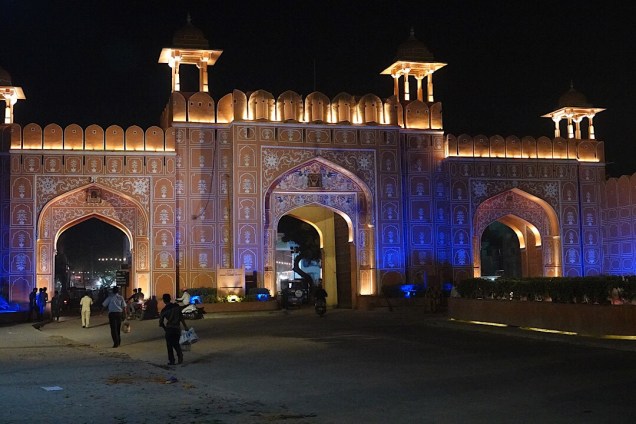 We entered through this gate and saw ladies in their new finery making offerings to various gods.
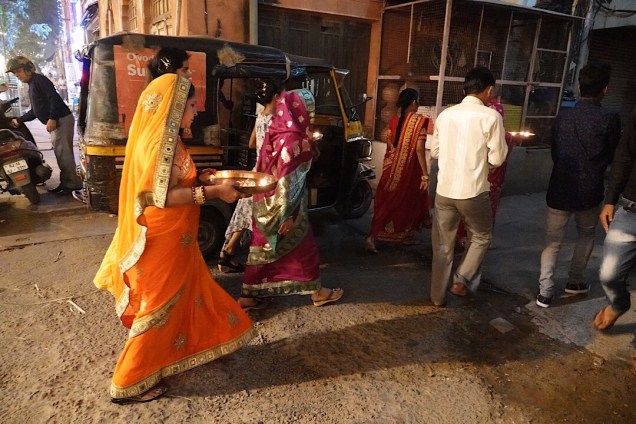 So many men and women and children were out to view the decorations and buy desserts, the honking of taxis and tuk-tuks made it hard to hear the Diwali music blaring over loudspeakers.
 like this street.
 This was more the norm, though.
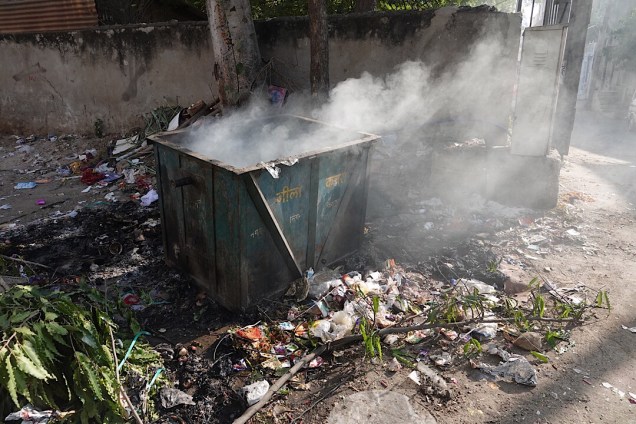 Not smoky enough for you? Burn some garbage!
 The current maharajah, just 20, still lives in the palace at the heart of the city.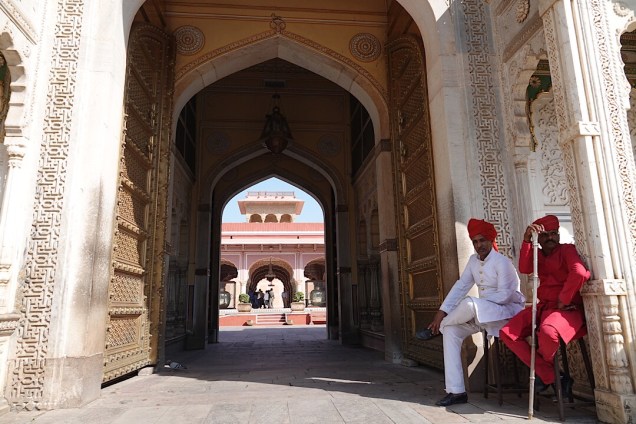
 That’s him, with the sword, surrounded by his grandmother, mom, and siblings.
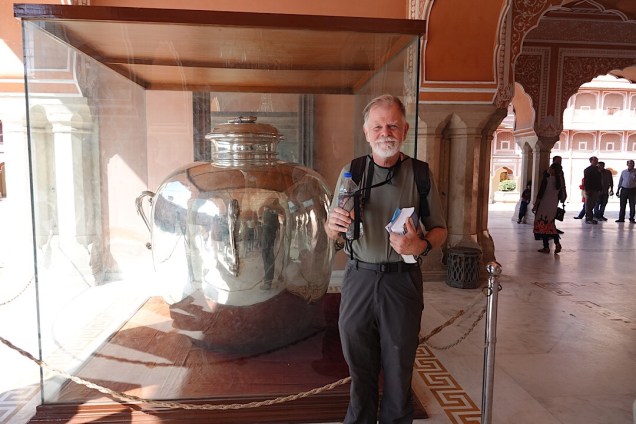 The palace is filled with interesting objects, such as this giant silver vessel. One of the maharajahs had it filled with water from the Ganges, for him to drink on a trip to London. (Note that Steve prefers to travel lighter.)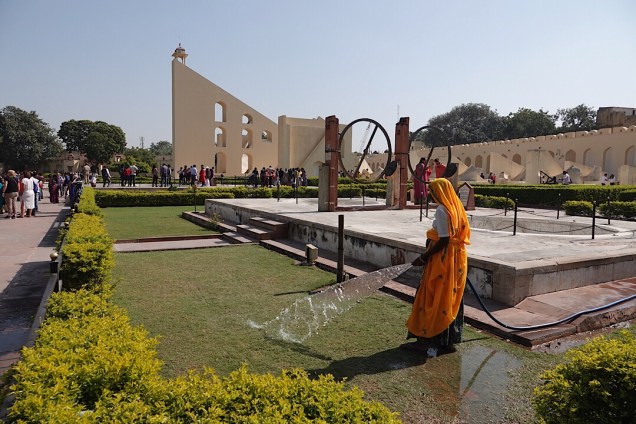

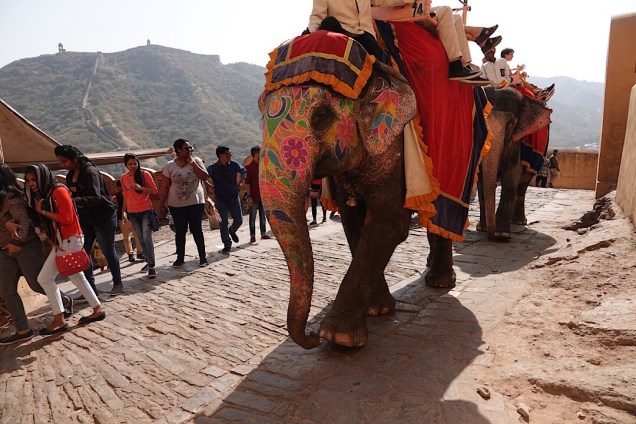 You can ride up the hill to it on an elephant.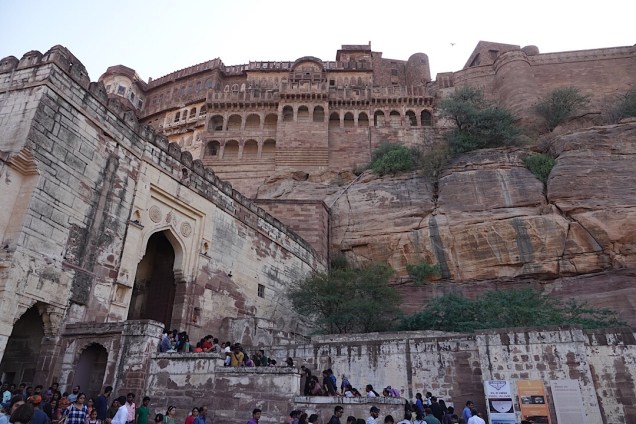
 The spikes in the door were supposed to deter war elephants from battering in the gate.
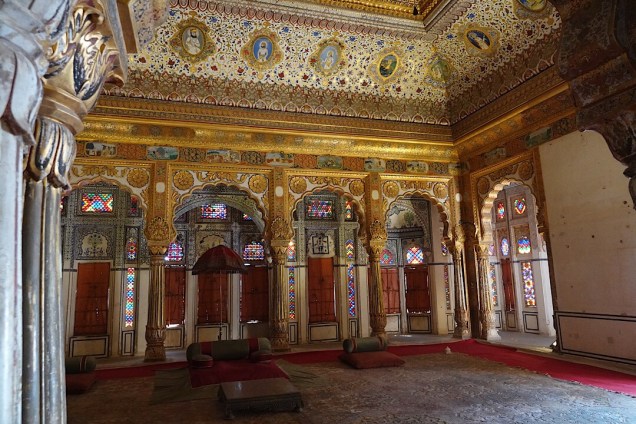 One view of the so-called Pleasure Room in the palace within the fort.
 The ceiling in one of the maharajah’s bedrooms.
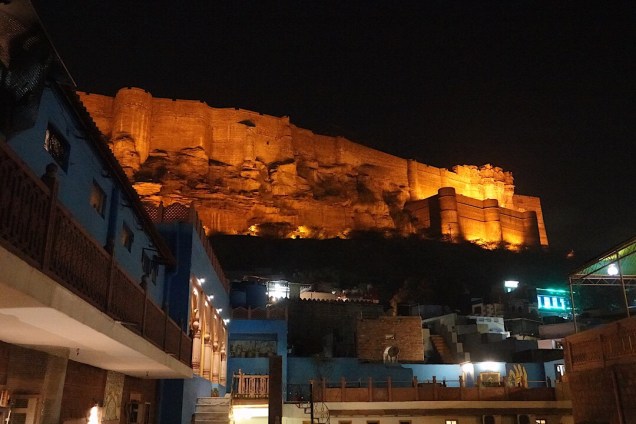 The view of Jodhpur’s Mehrangarh Fort at night, from the little haveli where we stayed.
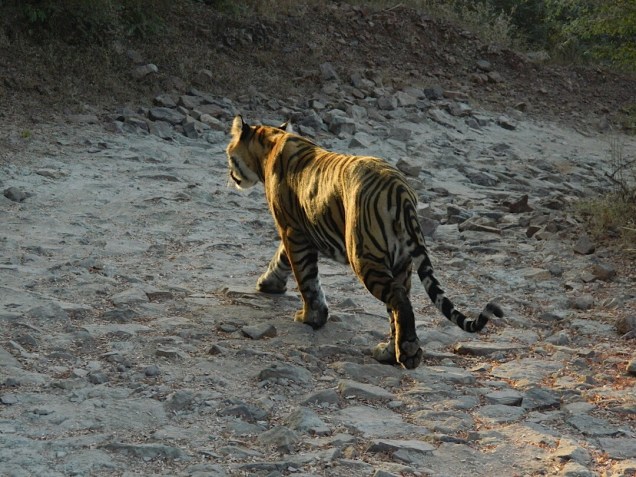
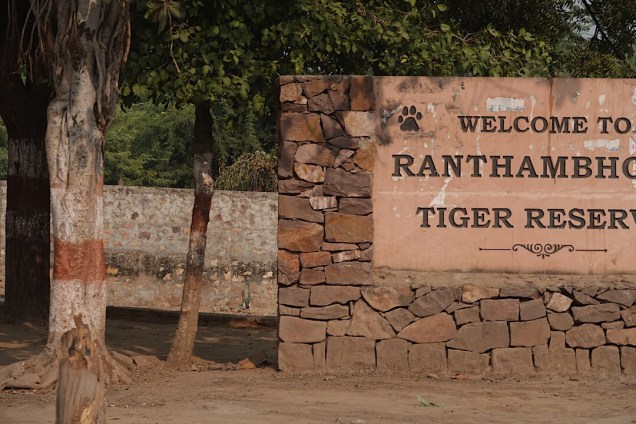 Now I know the secret to seeing a tiger in Ranthambore National Park. Go in May or June, the peak of the dry season. Many of the trees in the park lose their leaves; streams dry up; waterholes shrink. With the undergrowth reduced and the tigers’ drinking sources limited, 90% of safari-goers encounter the animal superstars. The only problem: temperatures at this time of year typically are 110 to 120 degrees.
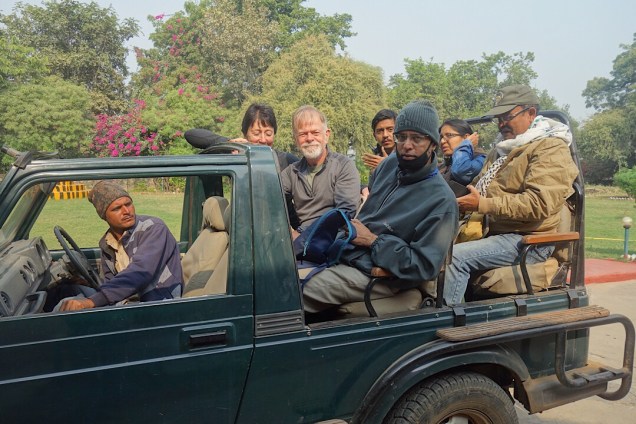 Our crew that morning, minus the guide, who took this photo.
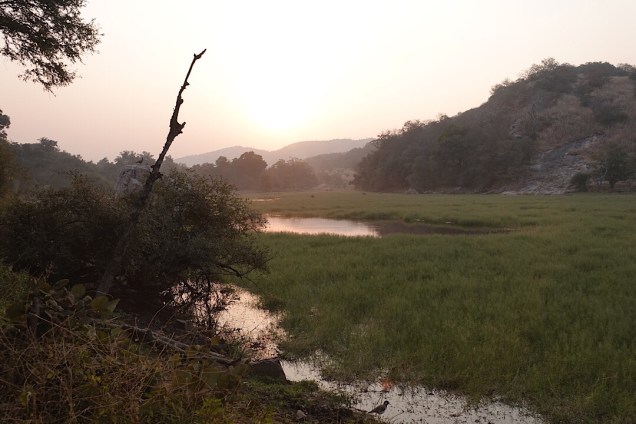
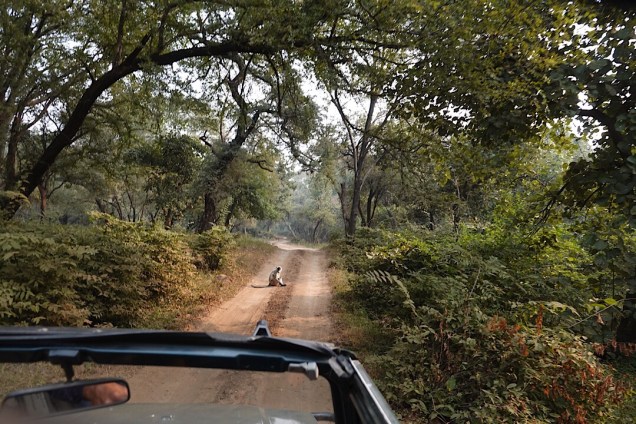 This was India, home to 1.2 billion humans, yet it felt like a less crowded place, say, a (smoggy) forest in Idaho after heavy rains that had made everything lush and green. At times the vegetation pressed in so close we had to duck to avoid being scratched in the face by branches. We passed marshland…
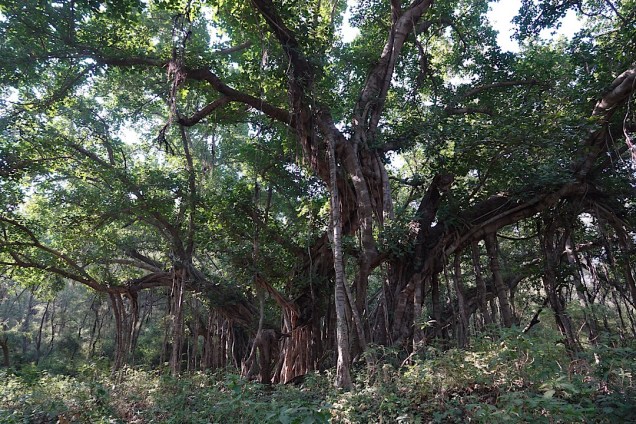
 …and stands of banyan trees that took our breath away.
 Here and there, we glimpsed the 1000-year-old fort that topped a distant cliff top. (Later we read that the wall surrounding it is almost 5 miles long.)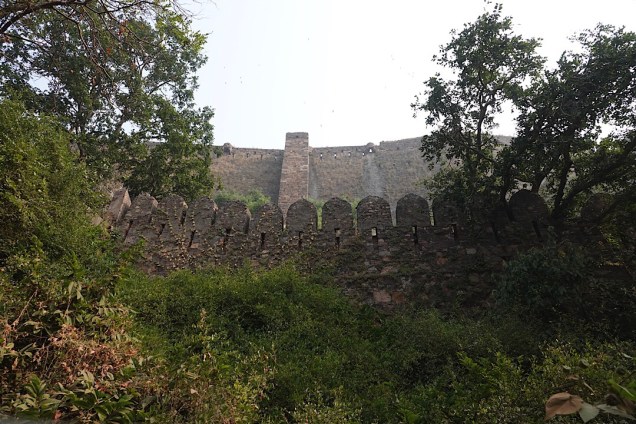
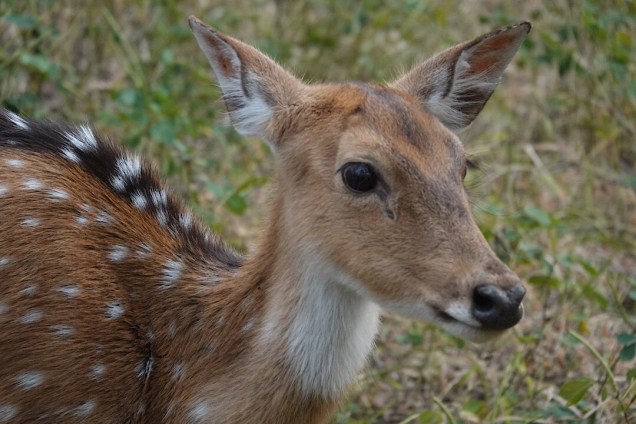 Spotted deer…
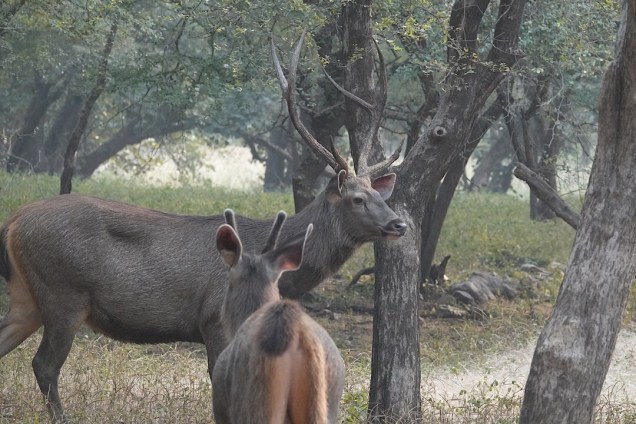 Sambar deer…
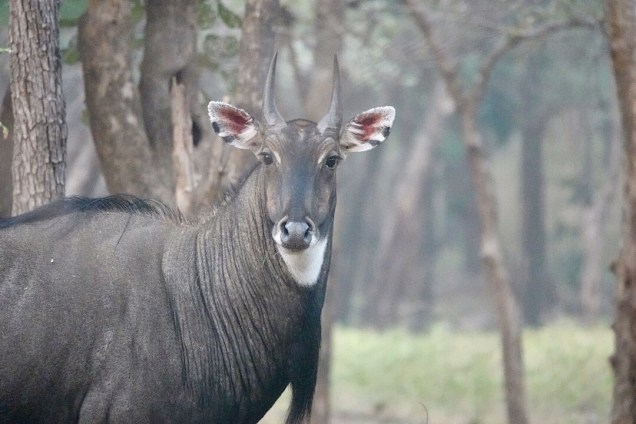 Nilgai (a type of Indian antelope).
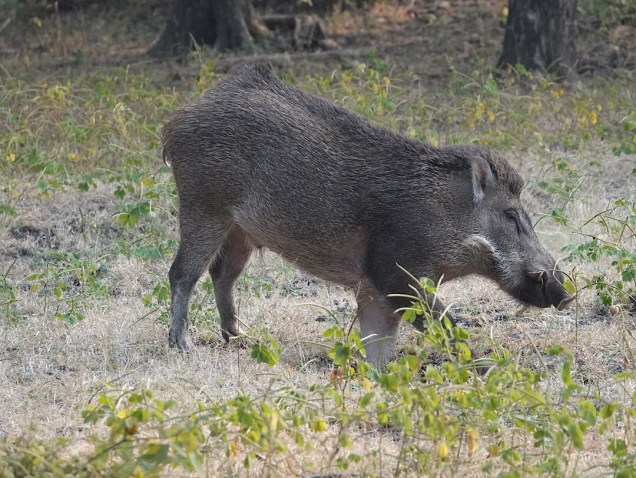 Wild boar…
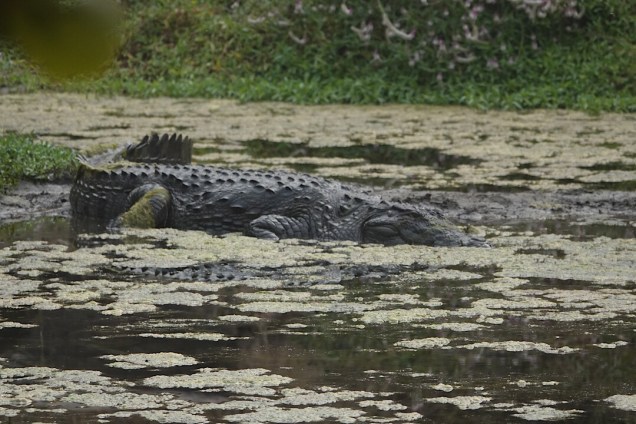 Crocodile.
 A cormorant drying his wings in the sun.
 Owls snoozing in a tree hole.
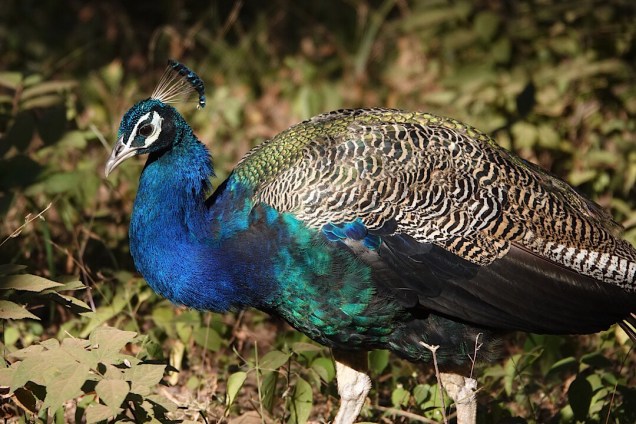 So many peacock they reminded us of seagulls in San Diego.
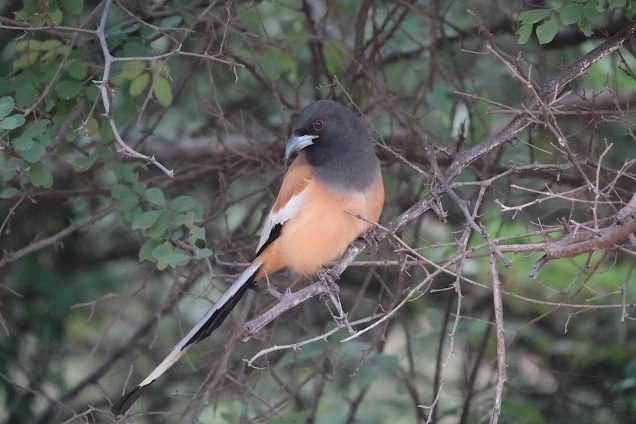 This guy is known as the dentist of the jungle. Guides told us that they all but climb into the tigers’ mouths, cleaning their teeth, a mutually beneficial service that the tigers tolerate.
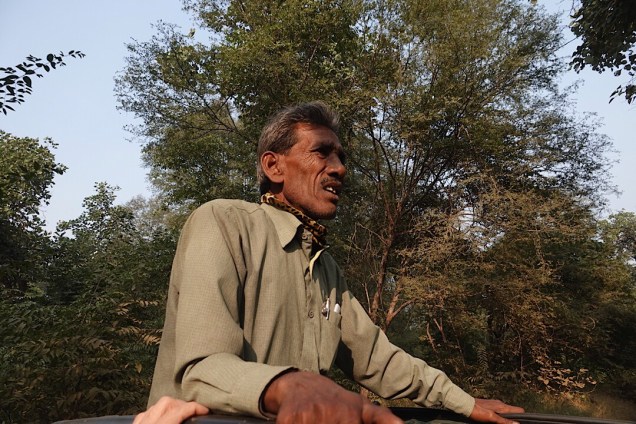 We all but ignored all the other animals we passed. We searched one area after another. With the sun getting closer to the horizon, we waited on a high ridge overlooking a canyon; listened to the birds. Saw no tigers.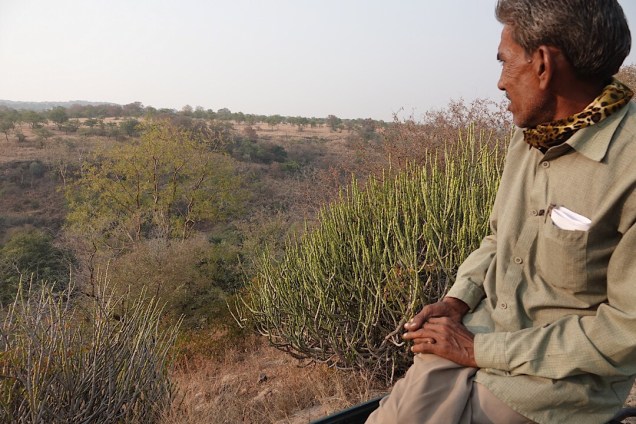
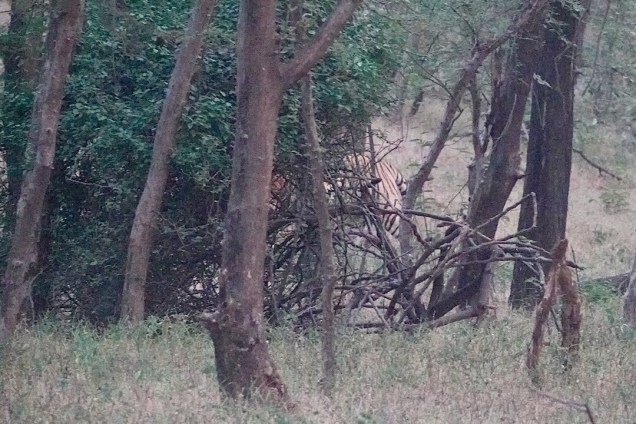 So now I know a second way to see a tiger in India: get lucky.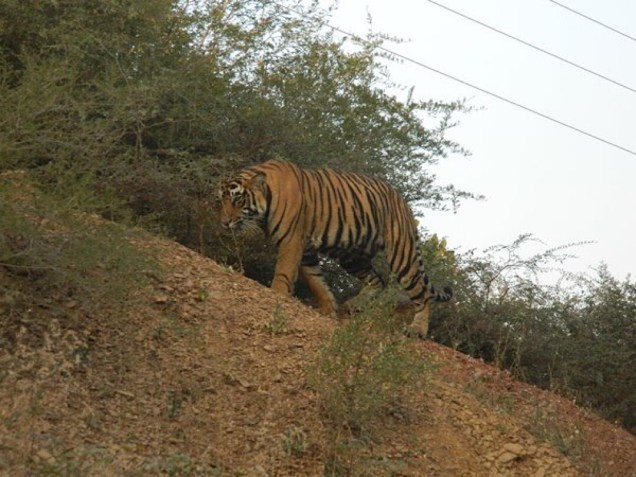
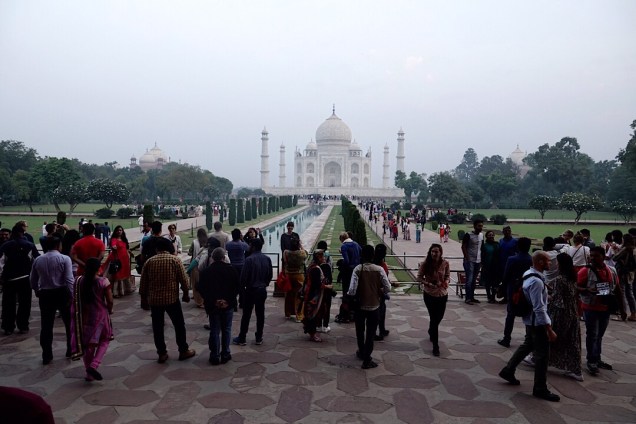
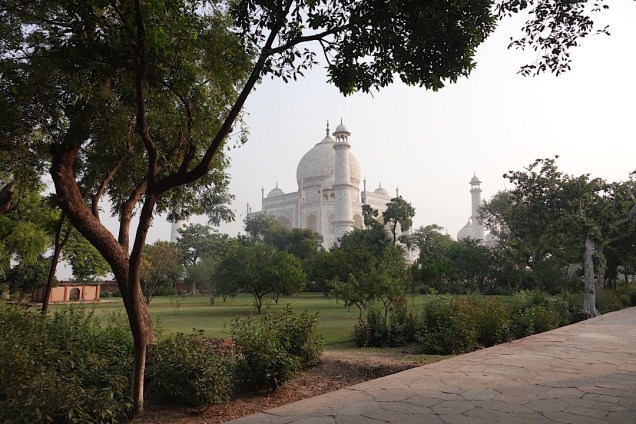 It’s pretty from every angle…
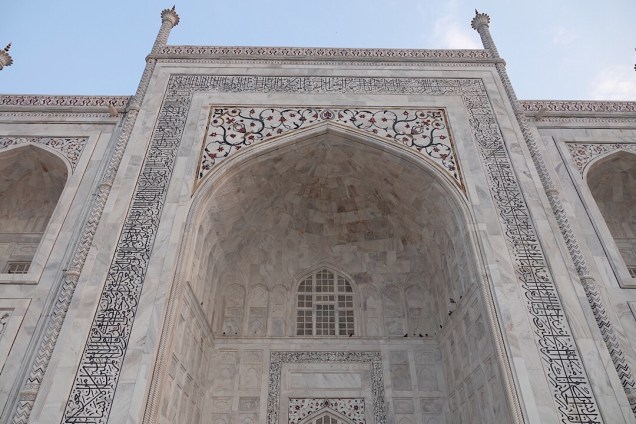 And pretty up close.
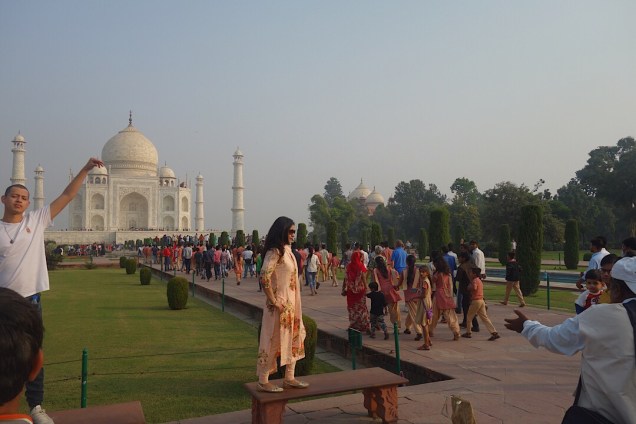 I’d had to guess how many selfies are taken there. Weird posing is also super popular.
 This shows less than half the interior space.
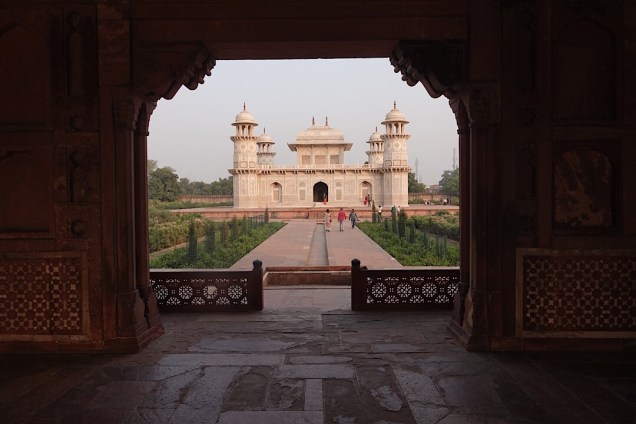 Nice, but nothing like Big Mama.
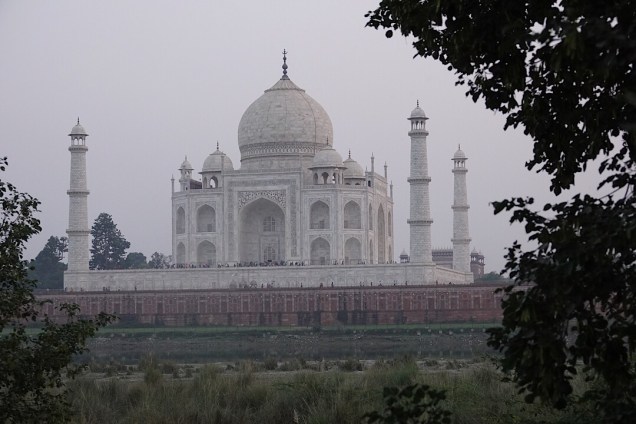 This was as good as it got.
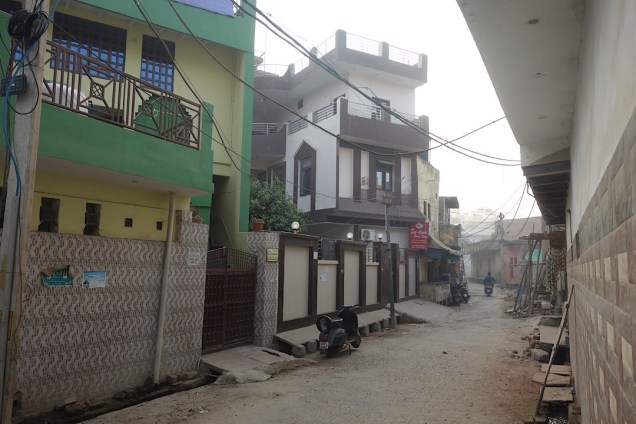 Here’s the street in front of Faiz’s home. The road leading to the Oberoi looks quite different.
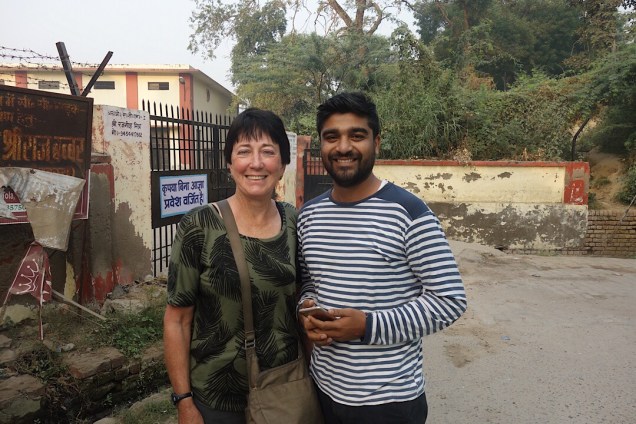 We rode in a beautiful new taxi to the train station, walked in, and learned that our train this morning had been delayed. It probably would arrive at least eight hours late. We called Faiz, who hopped in his own car, drove it to the station, collected us, and helped us arrange a private car and driver.
 A nice one!
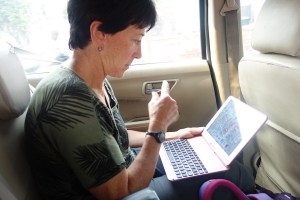 But I got a message saying there’s no refund “if train is running more than 3 hours late or train is canceled.”
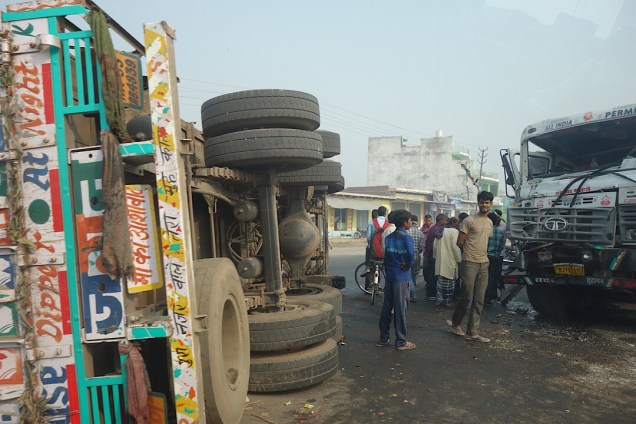 unlike this poor truck that we passed.
 At home and abroad