Part of why I booked us a session at the Löyly sauna was because I thought I might be desperate for bloggable material, desperate enough to try roasting myself and jumping into the freezing Baltic Sea.
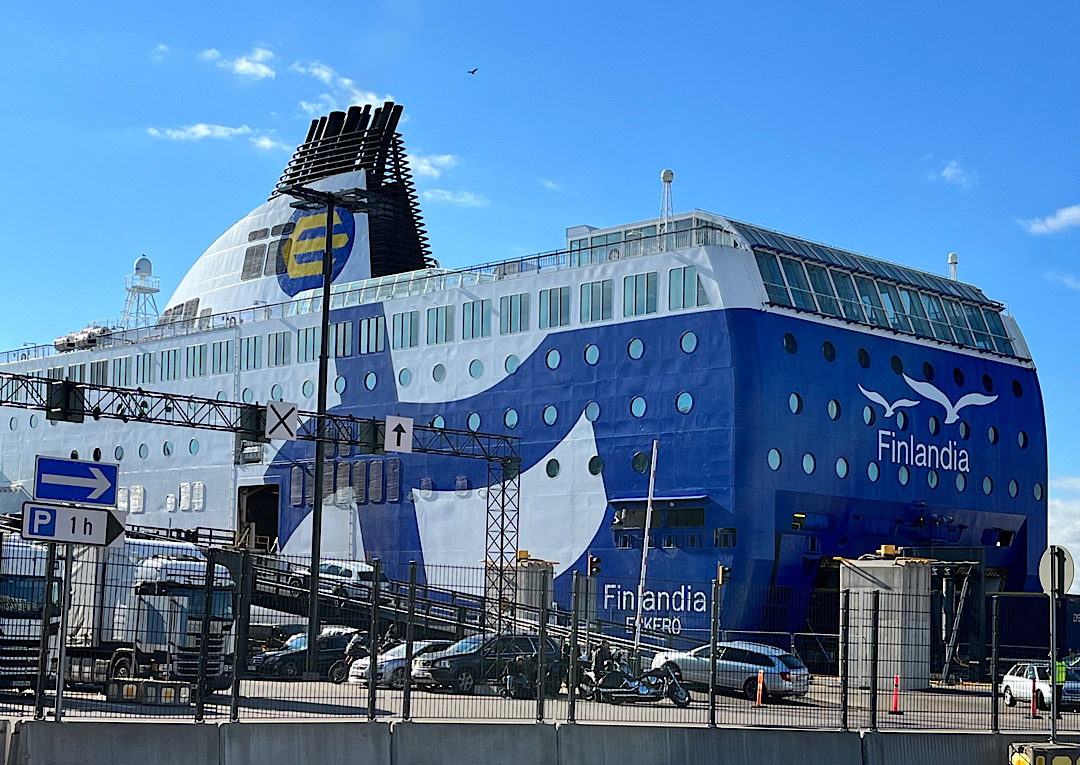
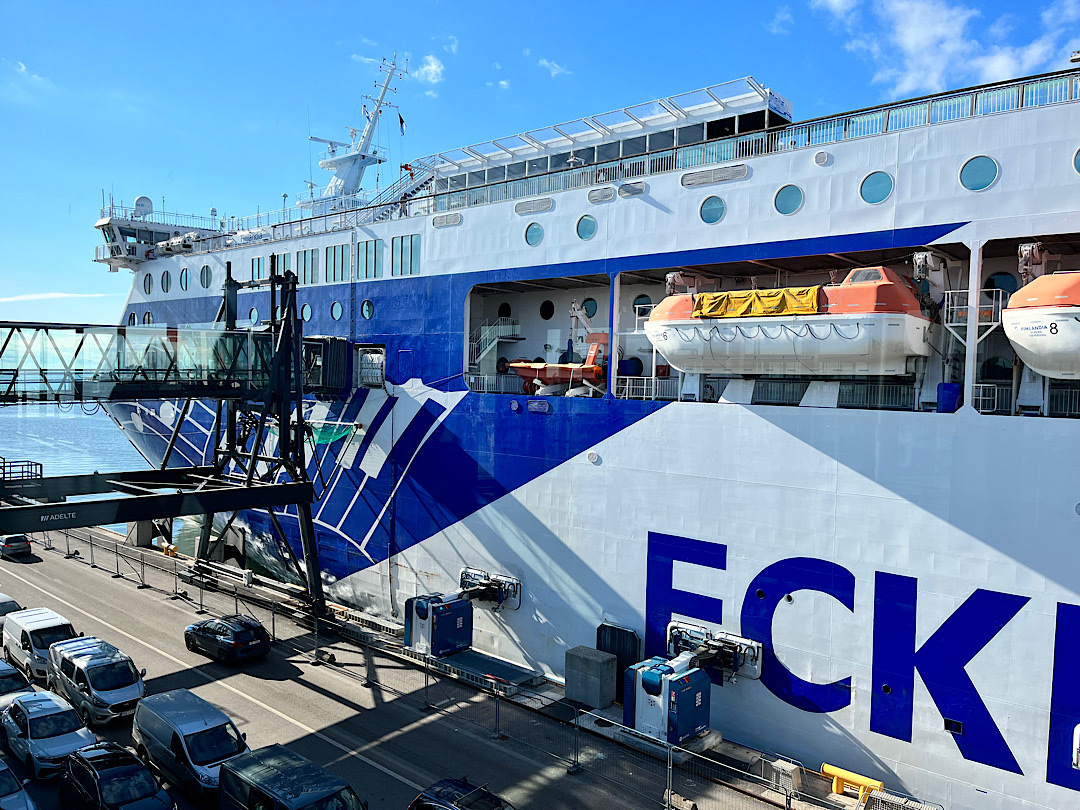
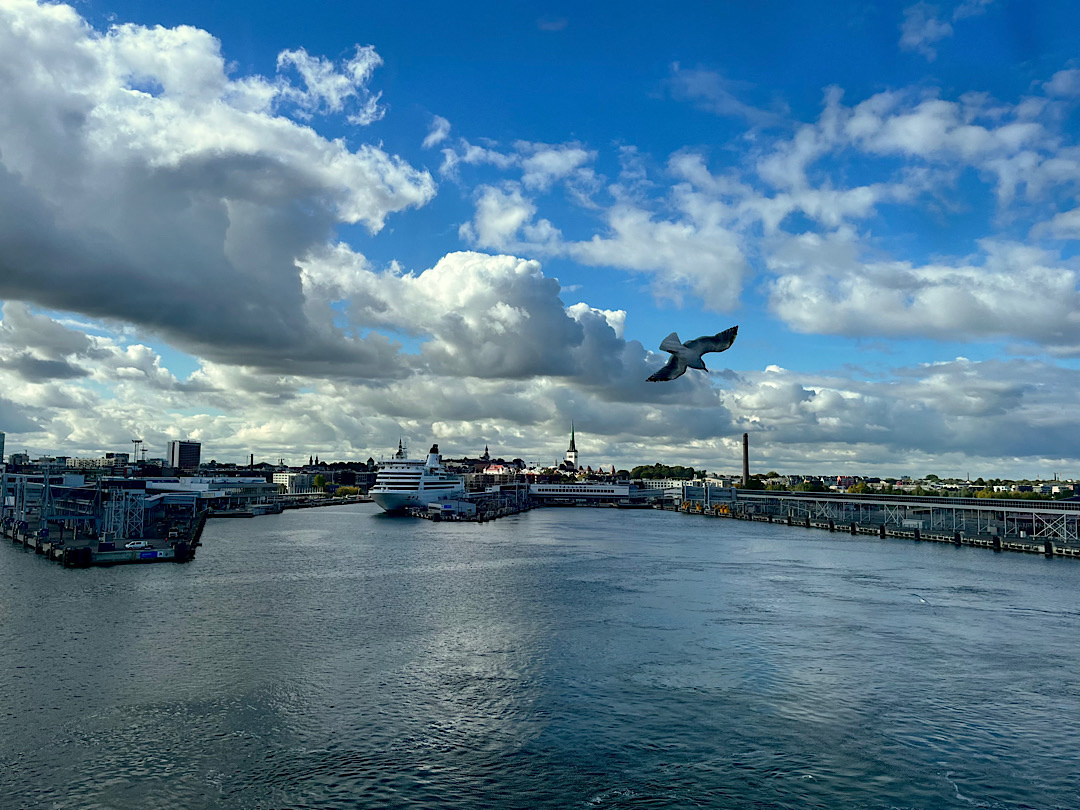
Not that there’s anything to dislike about Helsinki. Here was our first view of it, approaching on the ferry from Estonia:
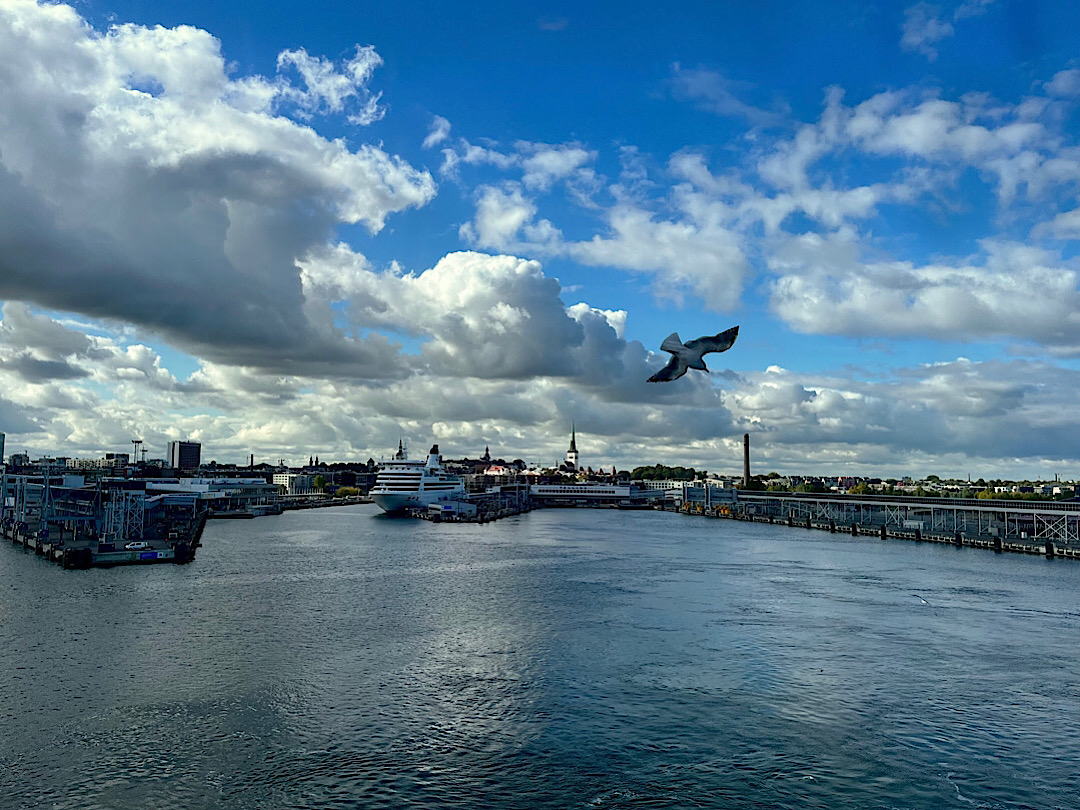
But it’s not much older than San Diego and looked perhaps less interesting. On our first full day (Friday, Sept. 23), Steve and I followed our pattern and roamed the streets, guidebook in hand. The weather was nippy but dry, and we spent more than five hours taking in many of the major sights.
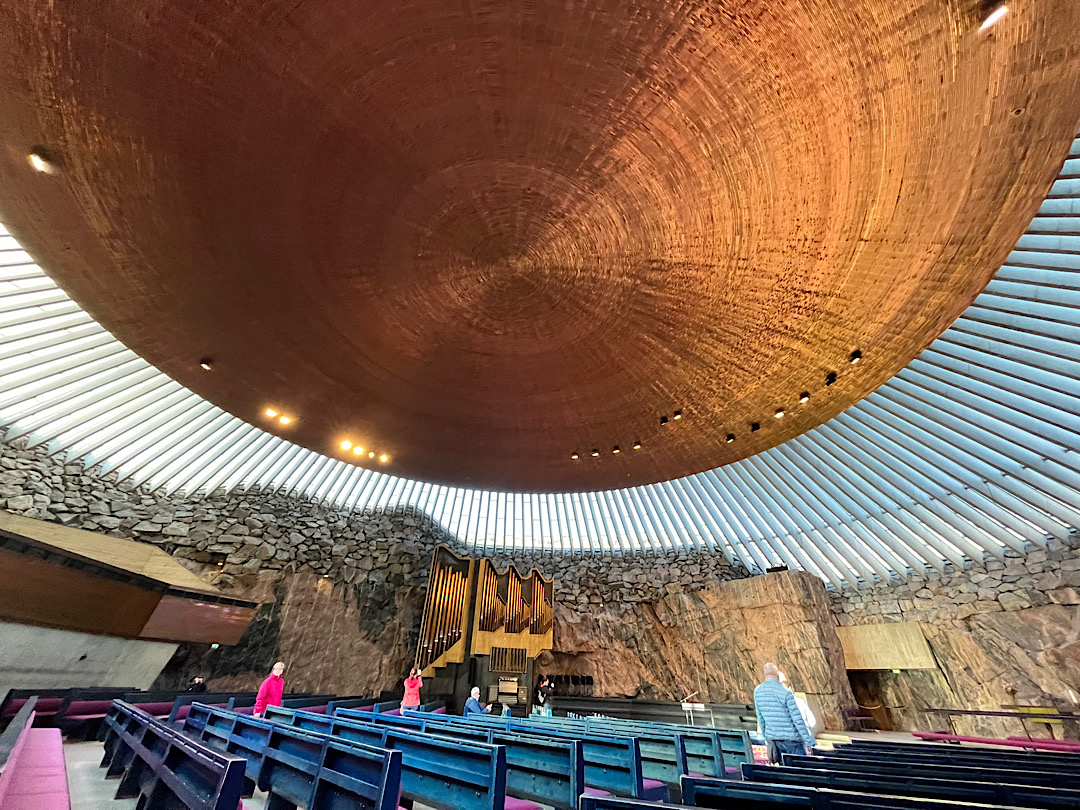
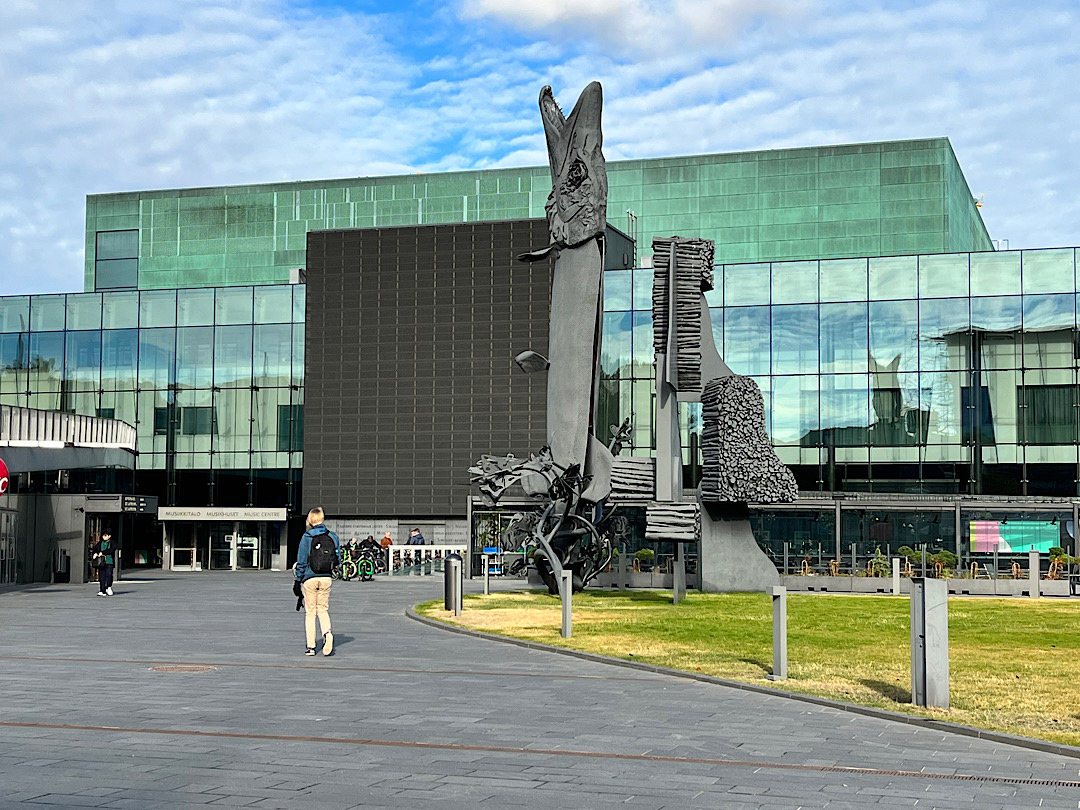
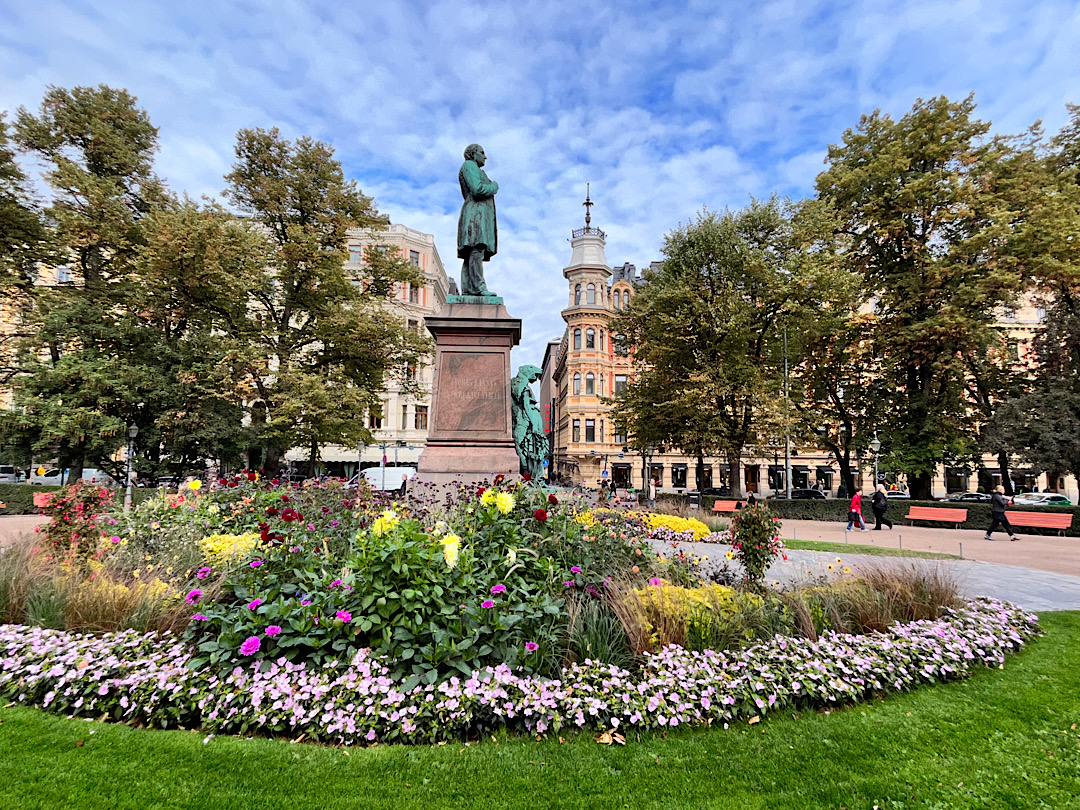
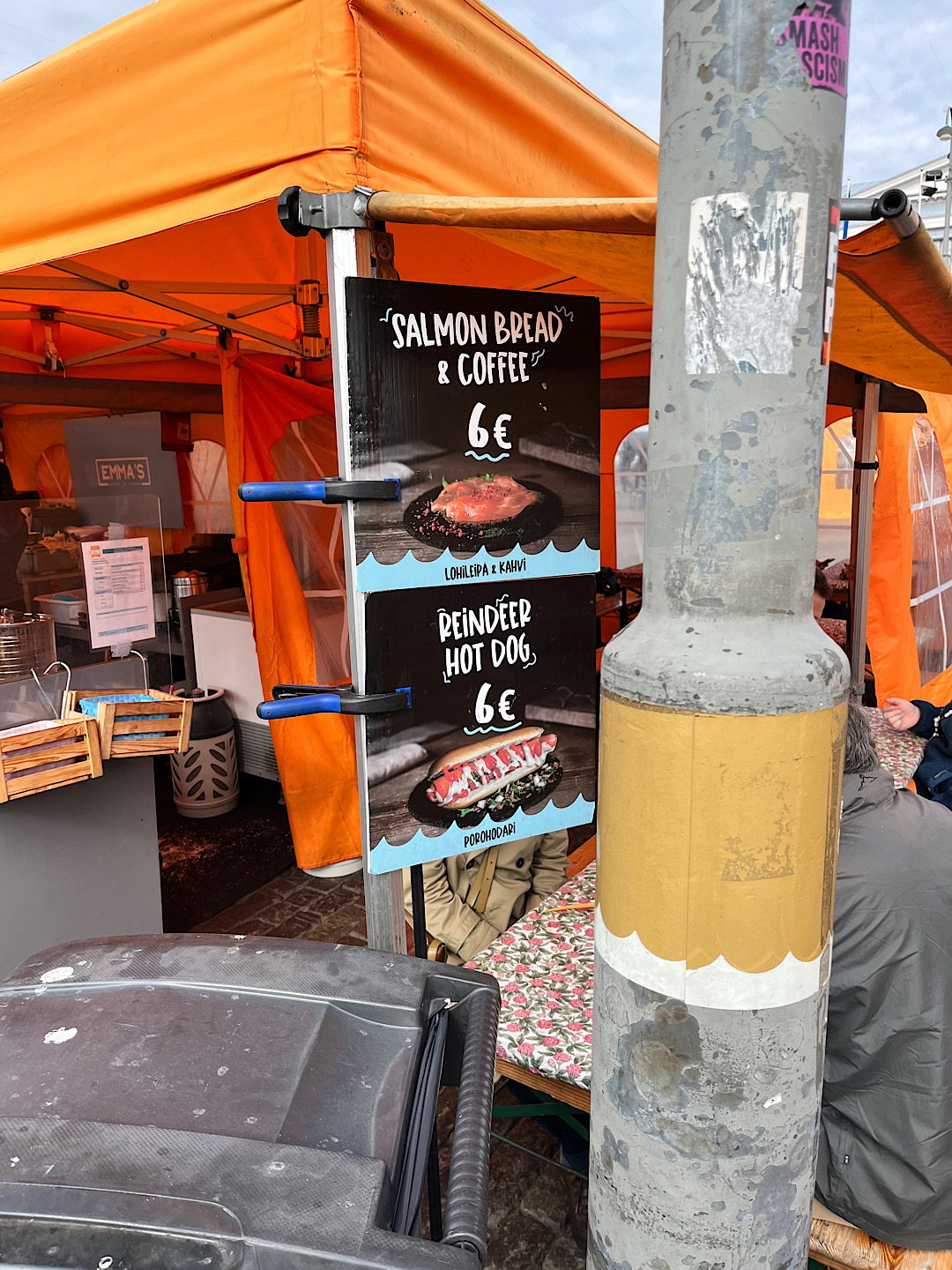
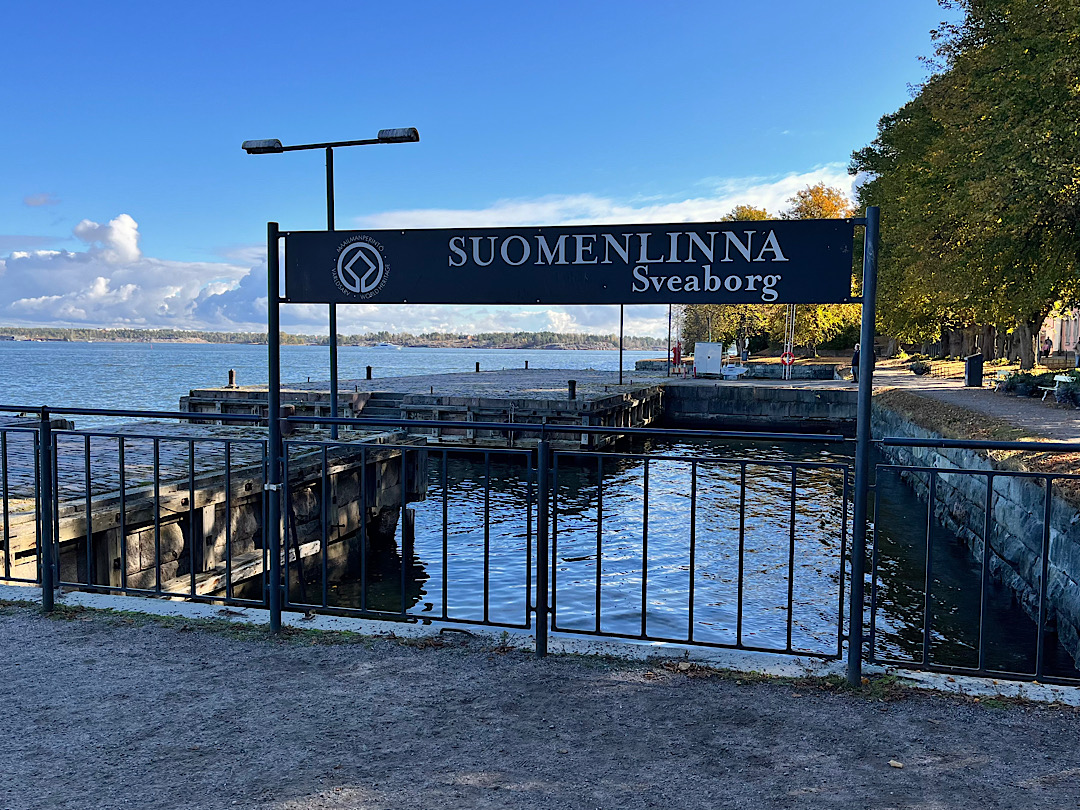
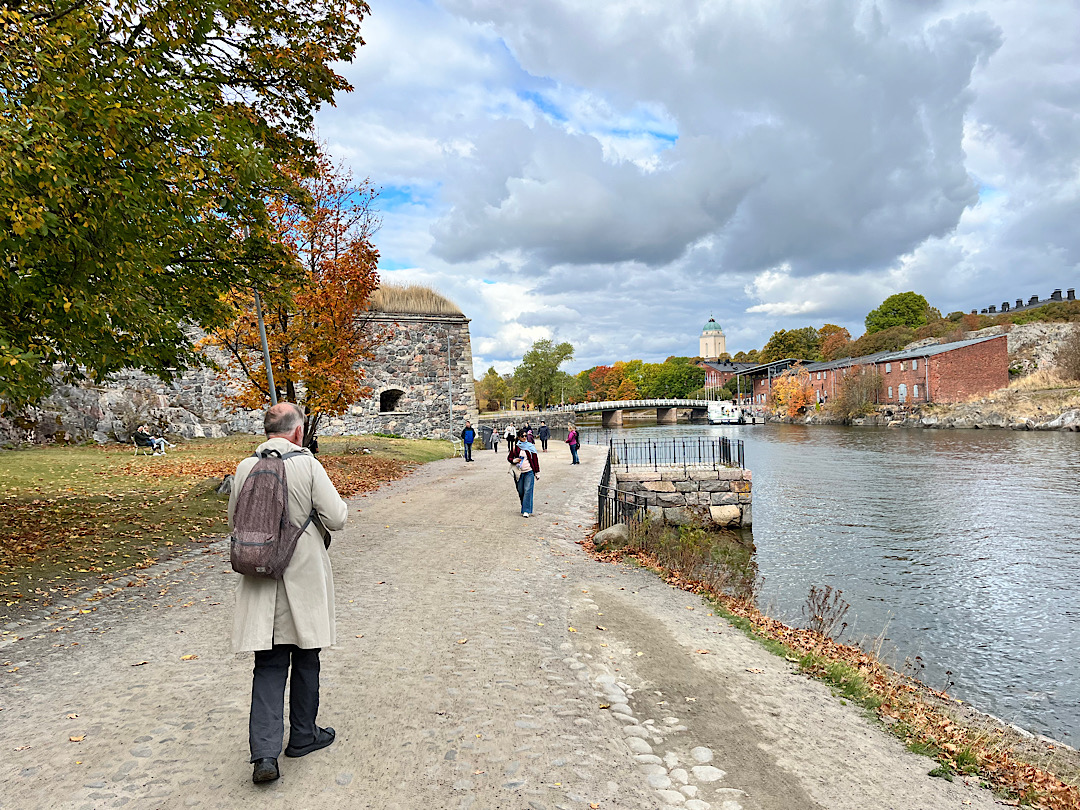
It was all pleasant, but not much to write home about, nor did our outing Saturday to the island fortress known as Suomenlinna provide any of what you might call excitement.
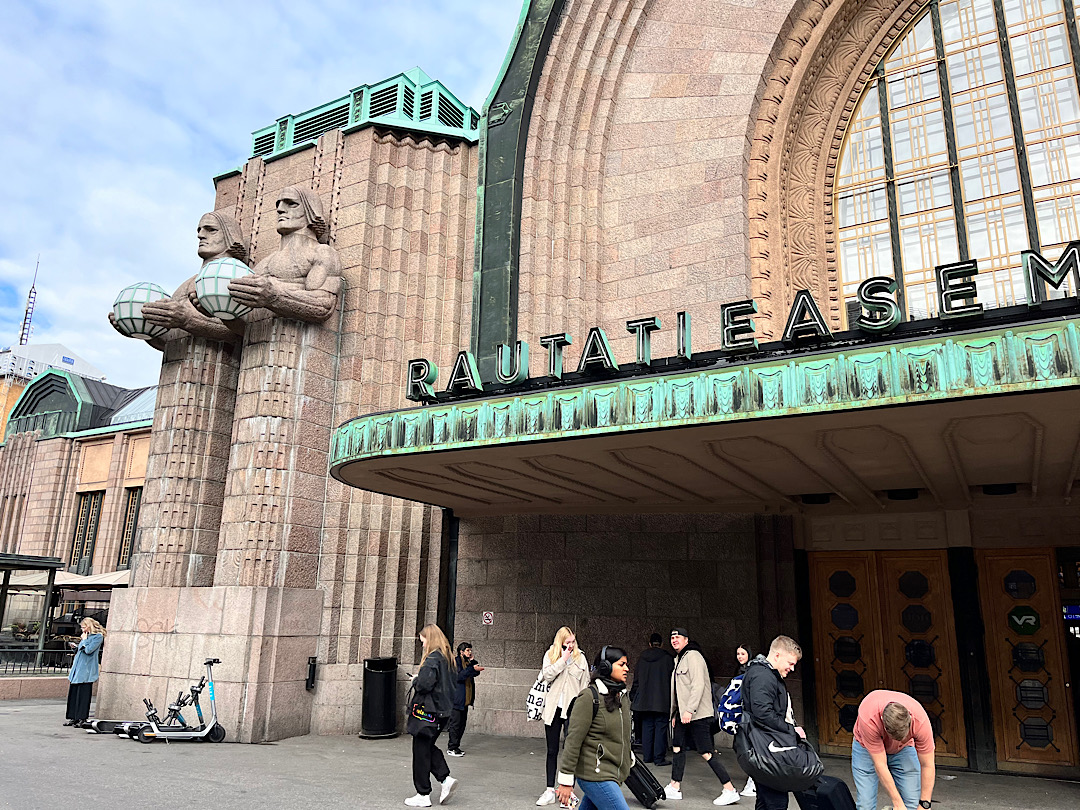
On Sunday, our last full day, we did a test run on the tram from our apartment to the central train station, a magnificent building to which fast airport trains connect frequently.
Then we walked to the central library nearby. It opened less than three years ago, and I can attest: both its design and contents are spectacular; it’s no mere book repository but rather a comprehensive cultural center.
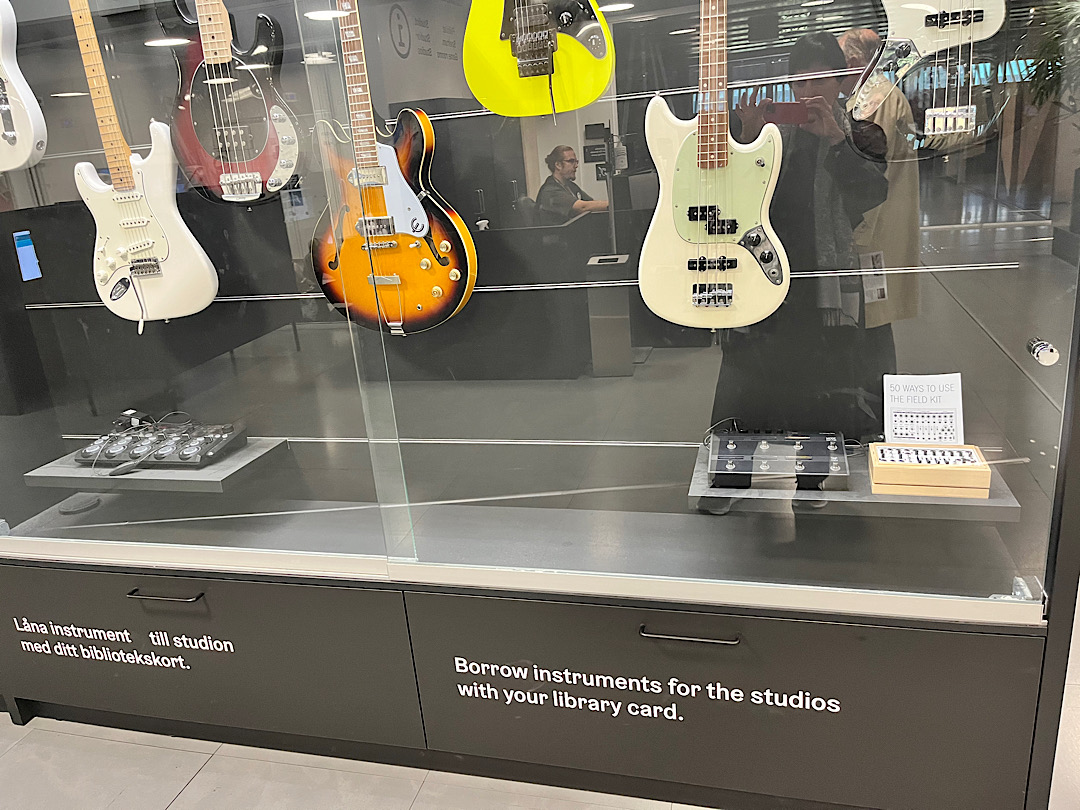
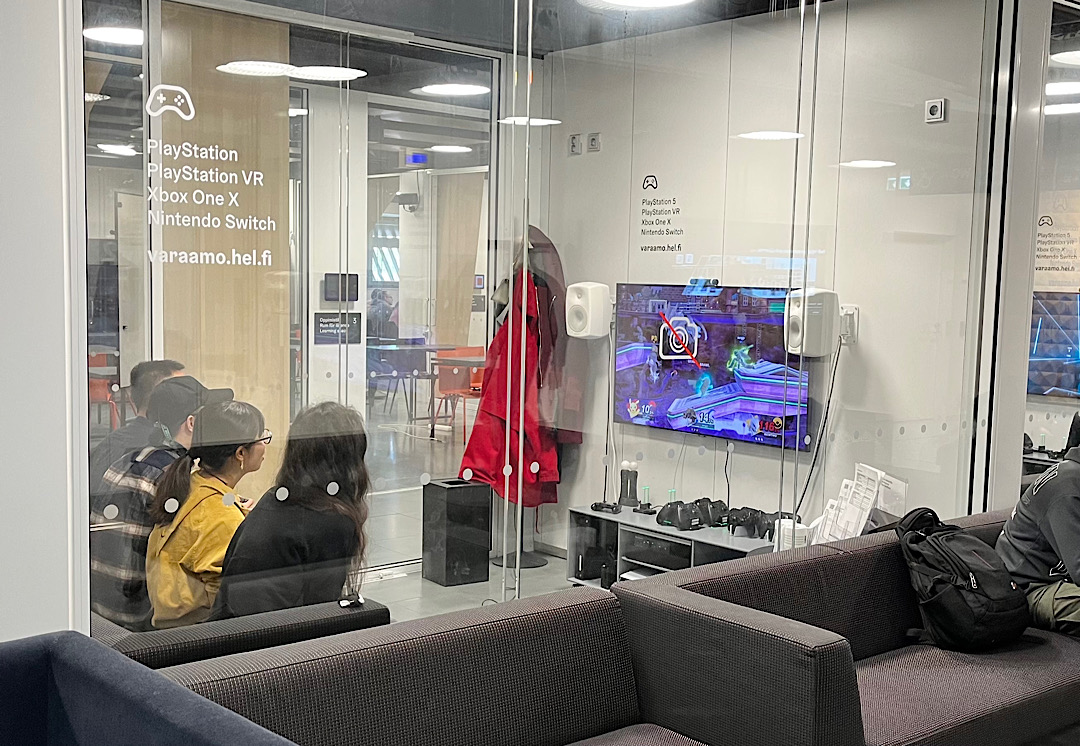
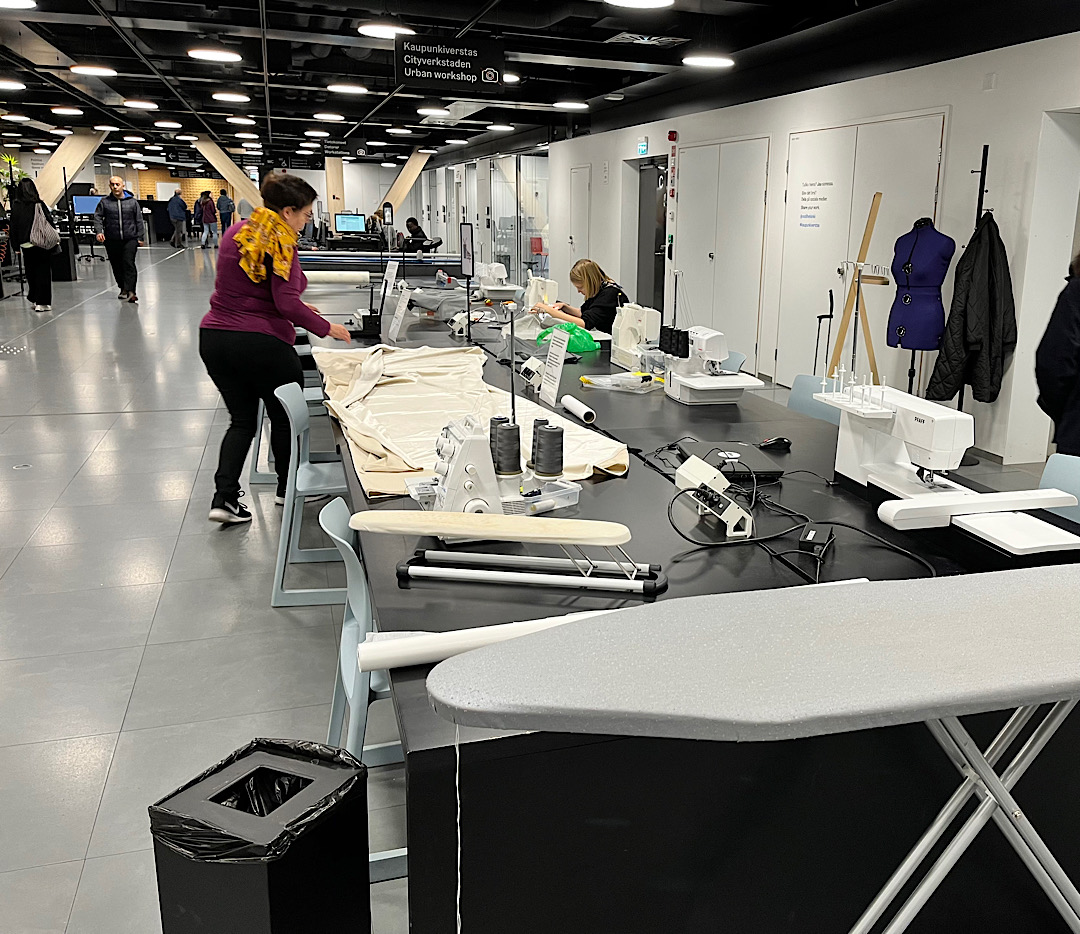

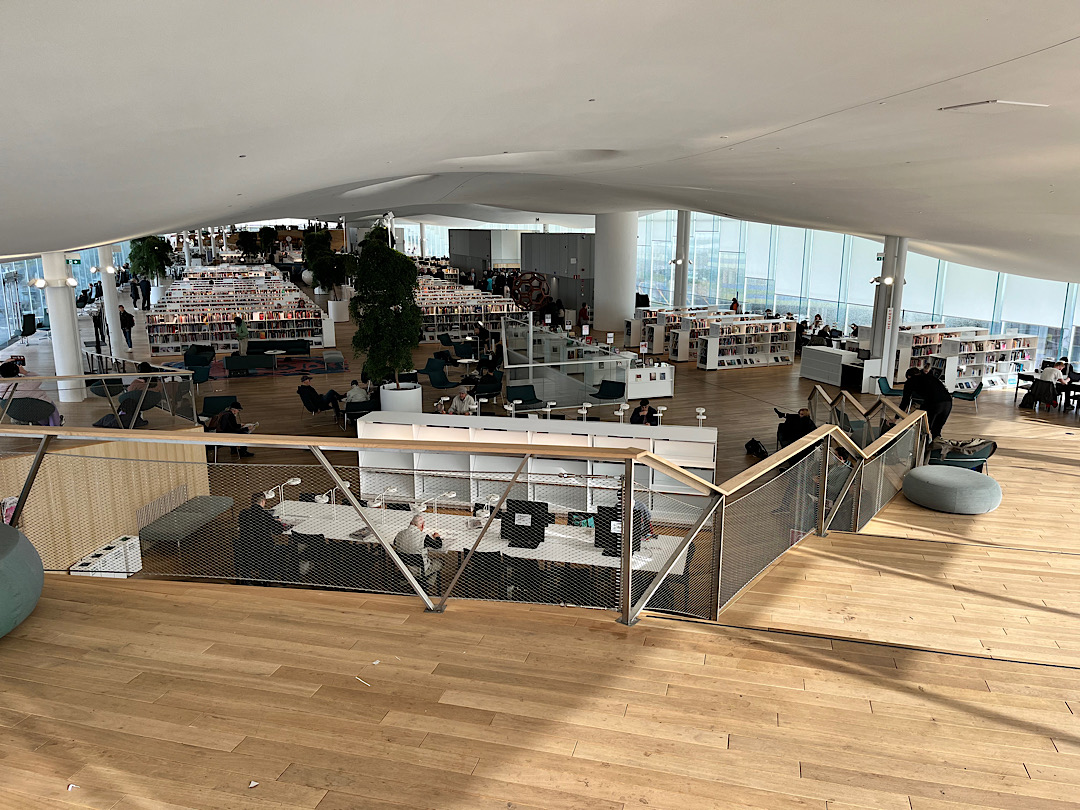
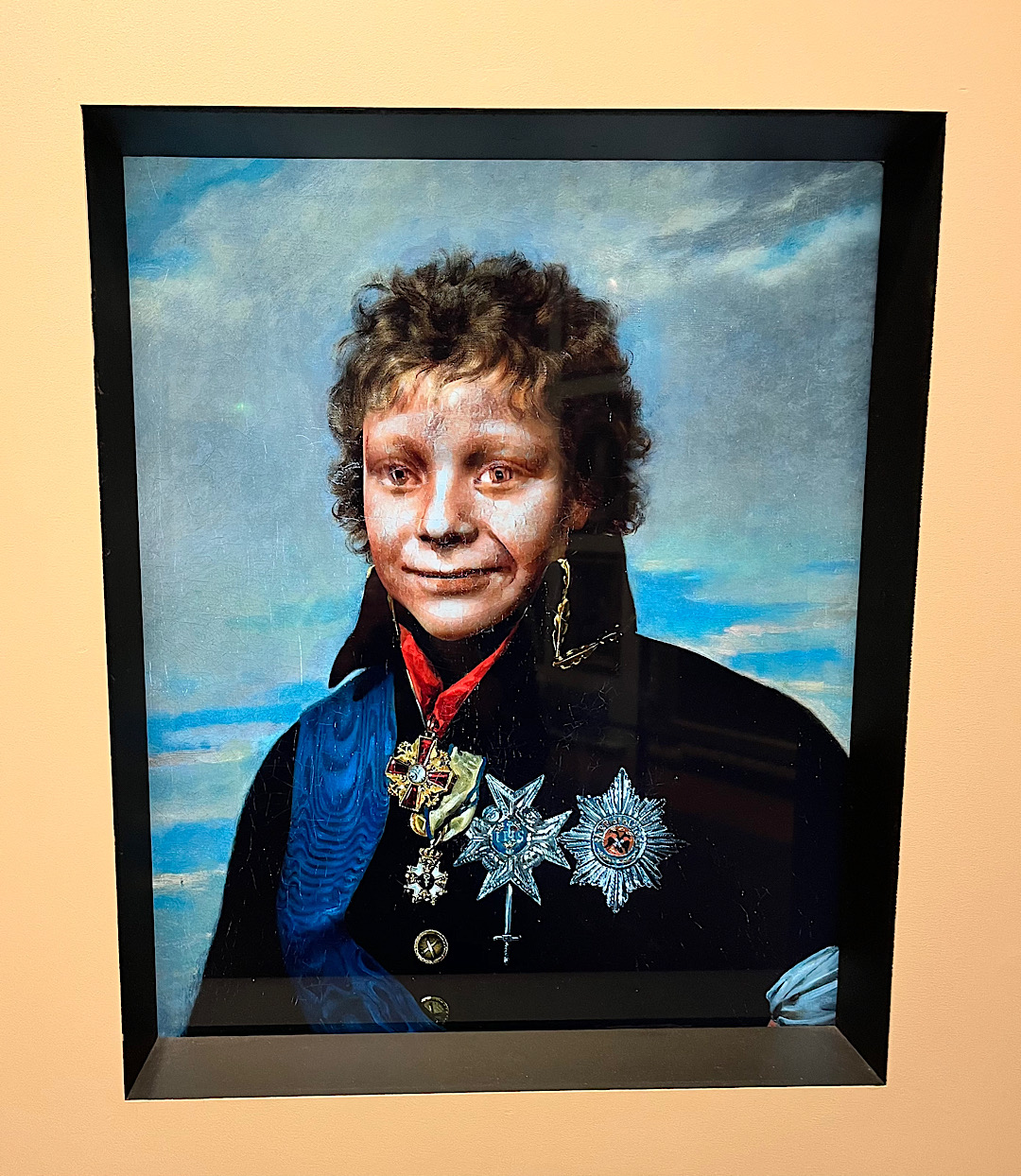
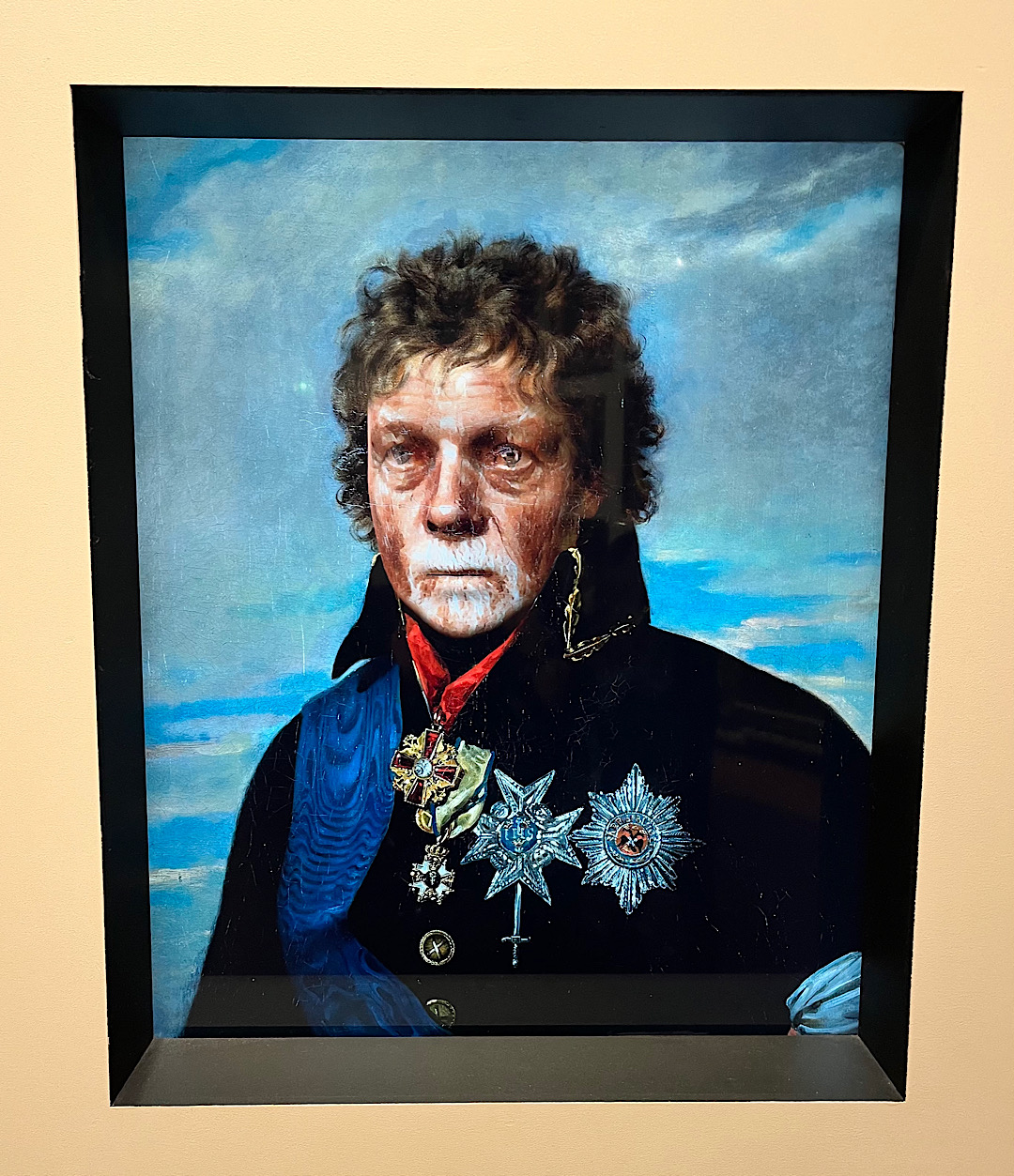
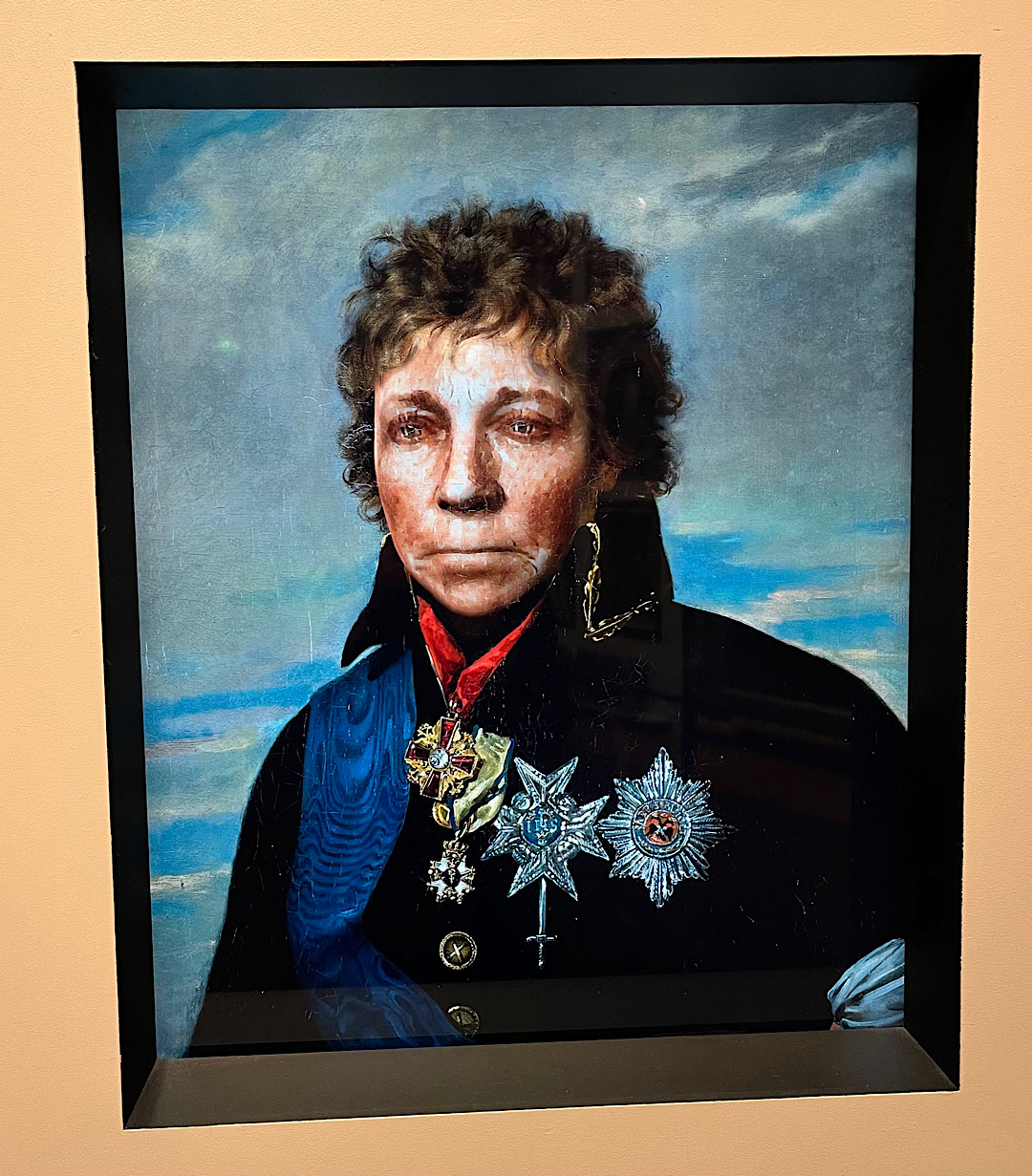
It made me briefly imagine moving to Helsinki just to get a library card. Instead we walked to the National Museum of Finland a few blocks away. The exterior looked almost grim. But inside we found the polar opposite of that boring grand ducal museum in Lithuania. The Finnish institution grabbed our attention with one clever exhibit after another. In a room that focused on medieval times, for example, the push of a button showed what x-rays had revealed about each of the carved wooden religious statues in the room — which trees they were hewn from, the original paint job, etc. Pushing a button in another gallery devoted to portraiture transformed some of the portraits into our (sort of) doppelgängers. (That’s Steve in the middle; I’m on the right.)
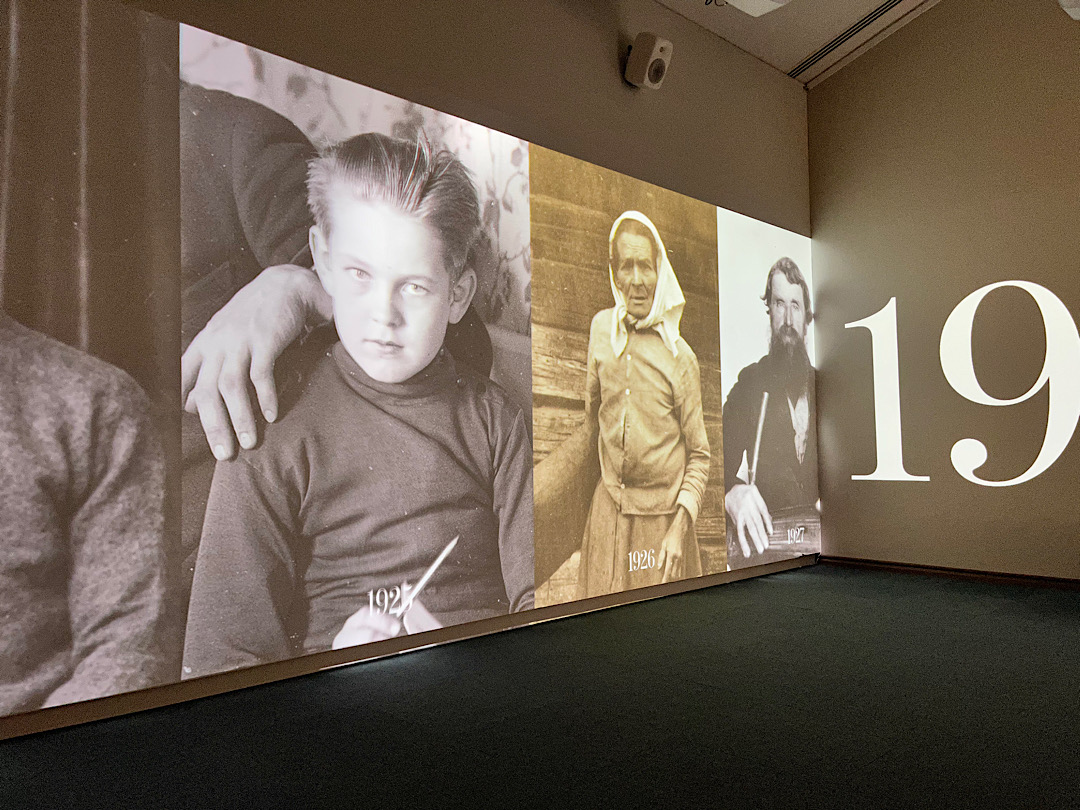
Some effects were simple but moving: a scroll of photos taken of individual Finns every single year from 1900 to the present.
In other rooms we learned about the Finnish love of coffee and the passion for heavy metal (along with headphones with which to listen to some of the country’s most famous headbangers.) Another video montage let visitors watch how the landscape around Helsinki evolved over centuries, compressed into just a minute.
We would have lingered but had to hustle to our sauna appointment. Steve, who hates both extreme heat and cold, had to be talked into this, but acceded, a good sport as always. I thought a sauna visit was important because saunas are such a big deal in Finnish culture and elsewhere in this part of the world (particularly Estonia). I’d read all my life about how these far-northern Europeans enjoy getting overheated then jumping naked into snowbanks (while beating themselves with birch switches?!) I’d always dismissed this custom as being somewhat deranged. When would I ever have a chance to get more insight into it?
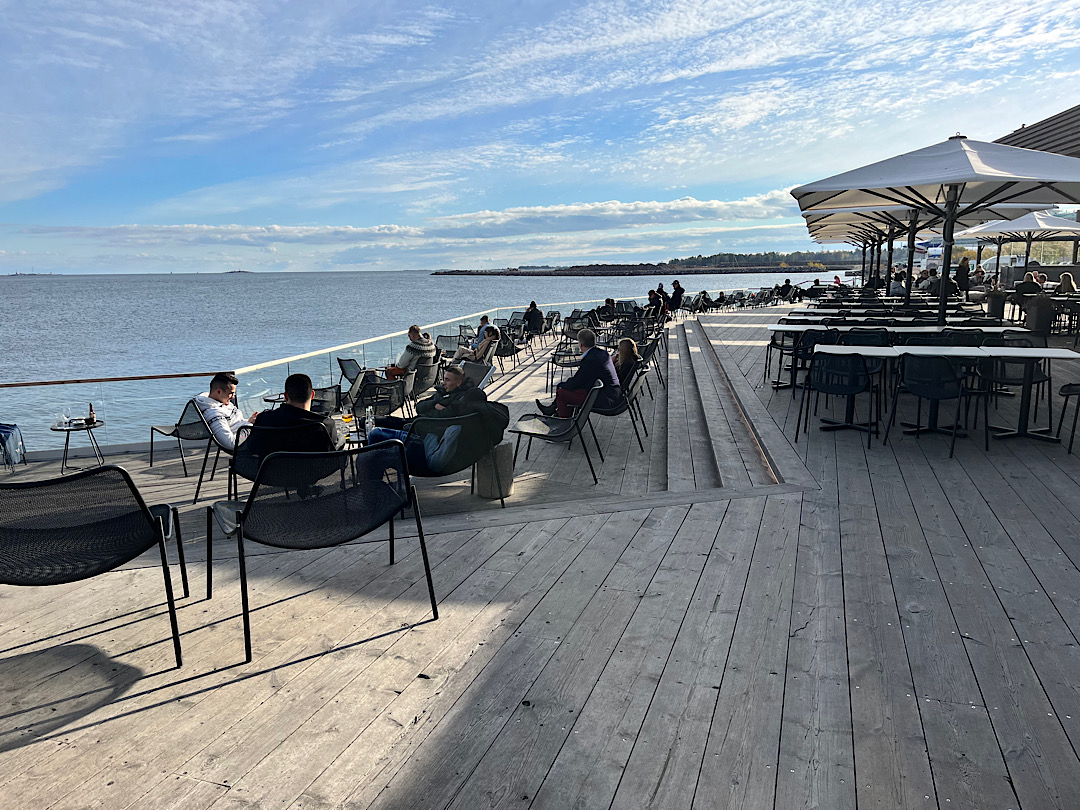
Visiting a sex-segregated facility, where the ladies and gents (usually naked) swelter separately seemed creepier than patronizing a sauna where Steve and I could don bathing suits and sweat together. The upscale Löyly offered this option. Housed in a low-slung wooden building on the waterfront, it took about 20 minutes to walk to it from our flat. An inviting bar and restaurant takes up a big chunk of the complex.
But we went inside and from the front desk, we collected towels and a locker key, then followed the instructions to each enter the changing room designated for our sex. After donning our swimsuits and showering, we met up and found the first of the facility’s two sauna rooms.
We pulled on a clear glass door and climbed up a steep set of steps to find a dimly lit L-shaped space lined with two levels of benches. I was startled by how packed it was. I’d had to make a reservation for 3:15 precisely, which I’d assumed was intended to control overcrowding. But the benches were so full it was hard for us to find a space to squeeze into. Once we did, I sized up the folks around us in the gloom. The vast majority looked to be in their 20s or 30s, with young men outnumbering the women. Some exchanged short comments with each other, and we heard some British accents, but clearly this wasn’t a conversation space. In short order, I started sweating, and the heat intensified whenever someone threw a dipper of water into the heating contraption at the base of the steps. After maybe 5 minutes, I was ready to get out.
We knew Löyly had two types of saunas, one “Finnish-style” (where the heat is produced with electricity) and a more traditional wood-fired one. The smell of burning wood in the second made it clear which was which. The wood-fired sauna felt at least as hot as the first had been, and it was even darker. Again we groped to find a perch. This time we struck up a conversation with the girl sitting next to us, an Ohio native who worked for a Finnish company and was visiting Helsinki for a business meeting.
She’d already gotten into the sea a couple of times, she told us; her evident survival inspired me. When I felt close to fainting from the heat, I signaled to Steve I was ready to take the plunge. At Löyly, you don’t literally jump into the Baltic (actually the Gulf of Finland); rather you walk to the end of a platform and descend a ladder. Normally, I’m someone who can’t enter a 75-degree swimming pool without shrieking. But this water was so cold it belonged to a different realm.
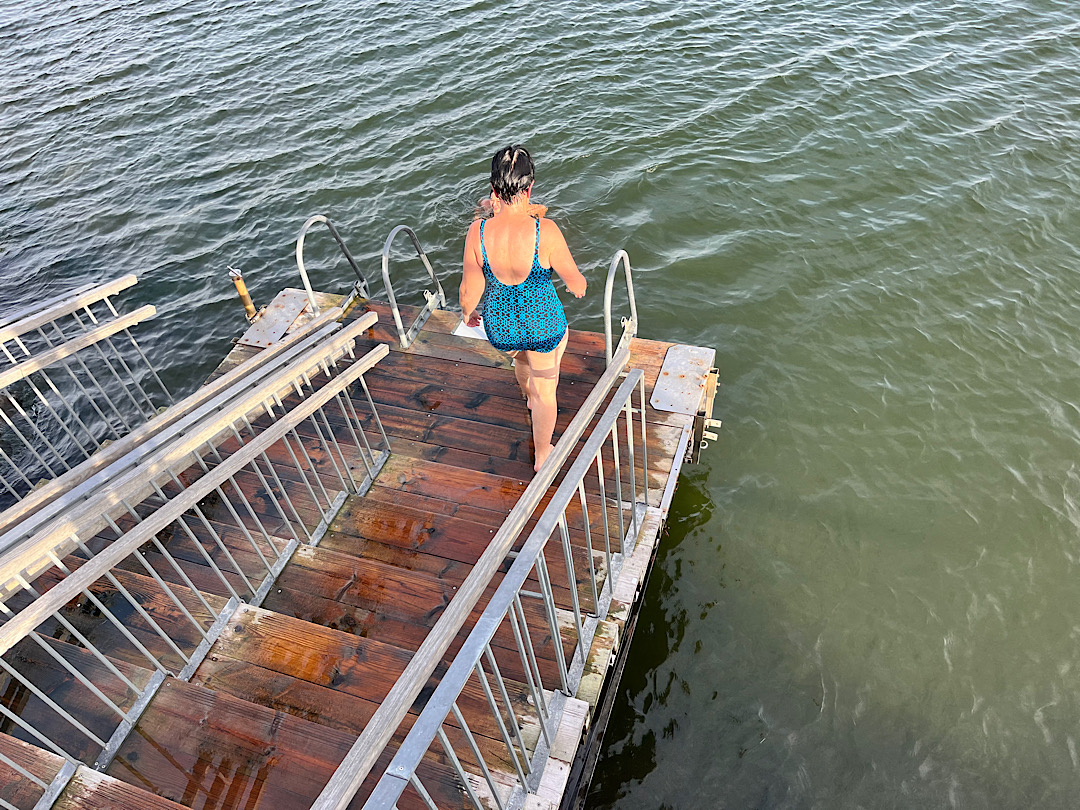
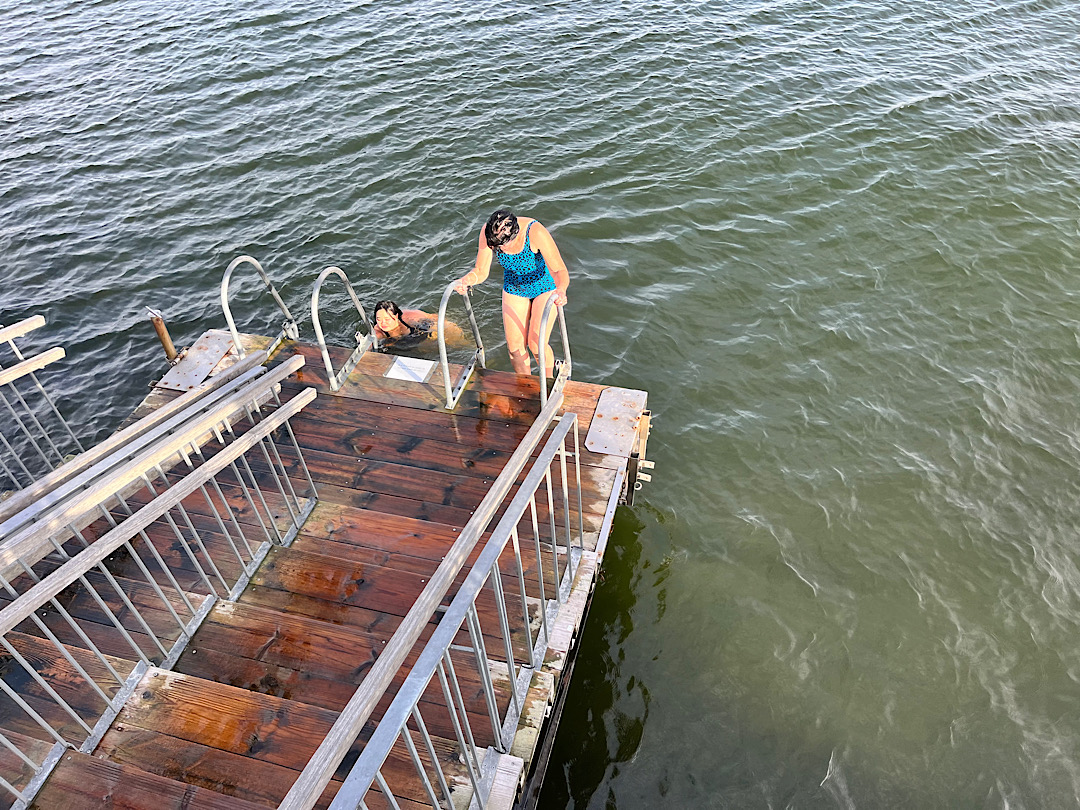
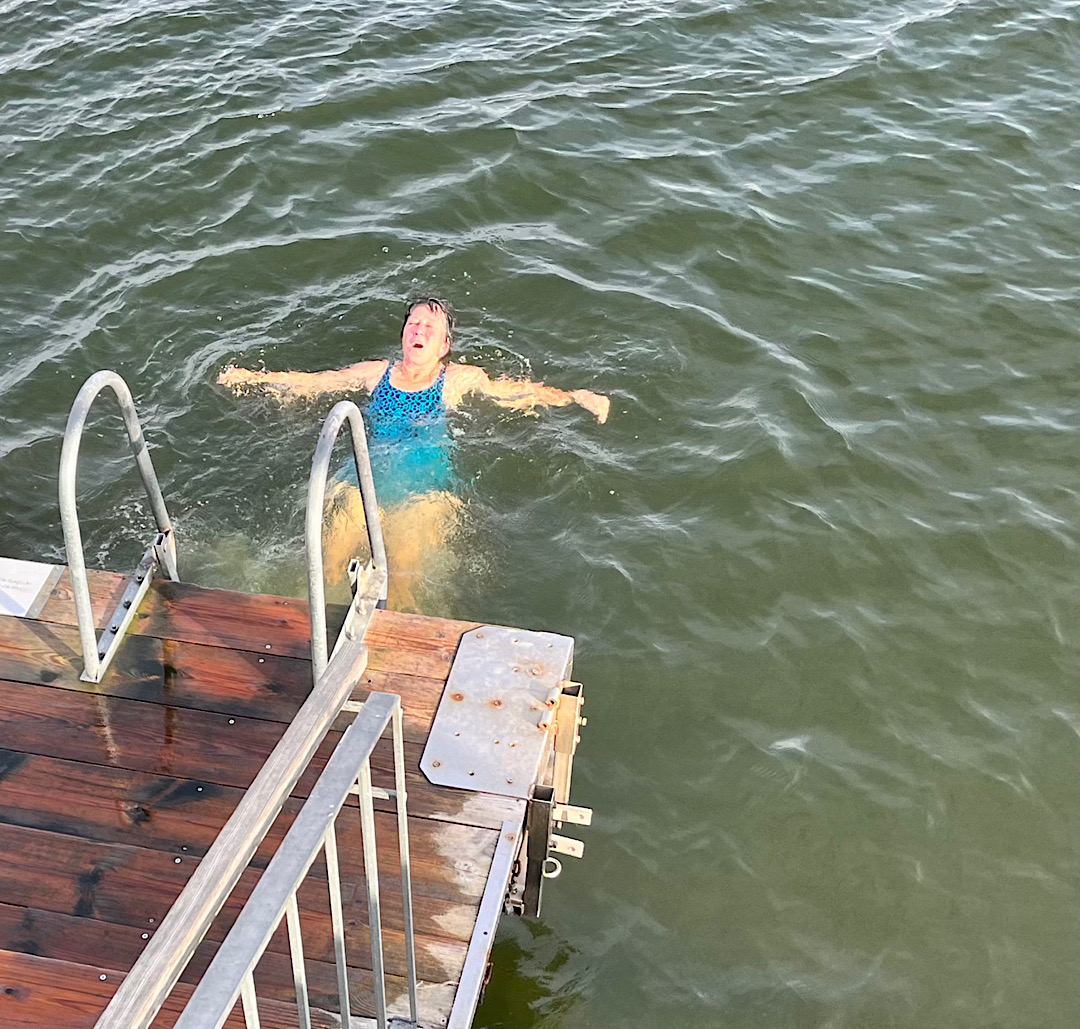
Unlike any swimming pool, there was no getting used to this cold — so intense it would suck the life out of anyone who lingered long. To the extent my brain was functioning, it registered amazement I was still breathing. I even treaded water; took a few strokes. After maybe 15 seconds I climbed out and stumbled back to the wood-fired sauna, which warmed me up as efficiently as it had the first time. After a while I went outside and re-entered the ice-water. Steve wouldn’t immerse himself, but at least he put his feet in.
I would have cycled between the heat and cold a few more times, but we had to shower, dress, and move on to our final dinner before starting the journey home. Steve ordered sautéed reindeer, while I savored little whitefish known as vendace, breaded, fried, and served on a mound of buttery mashed potatoes.
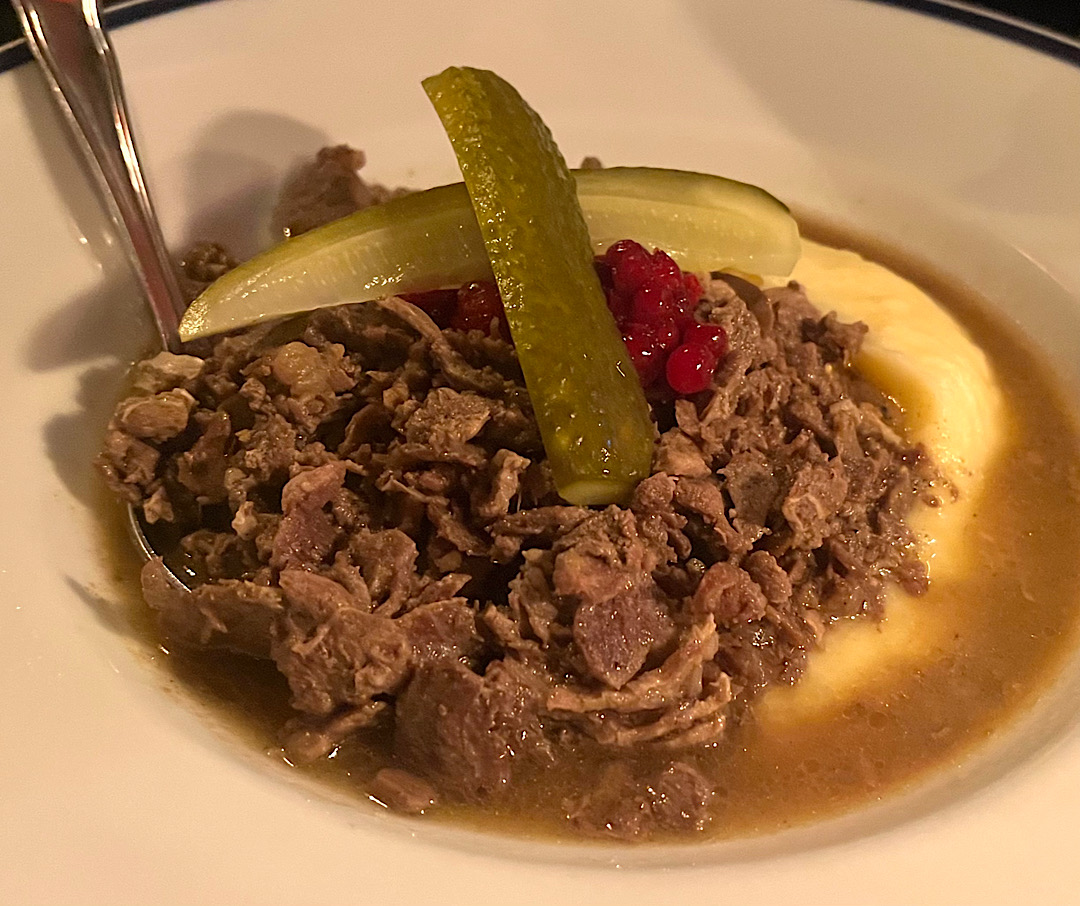
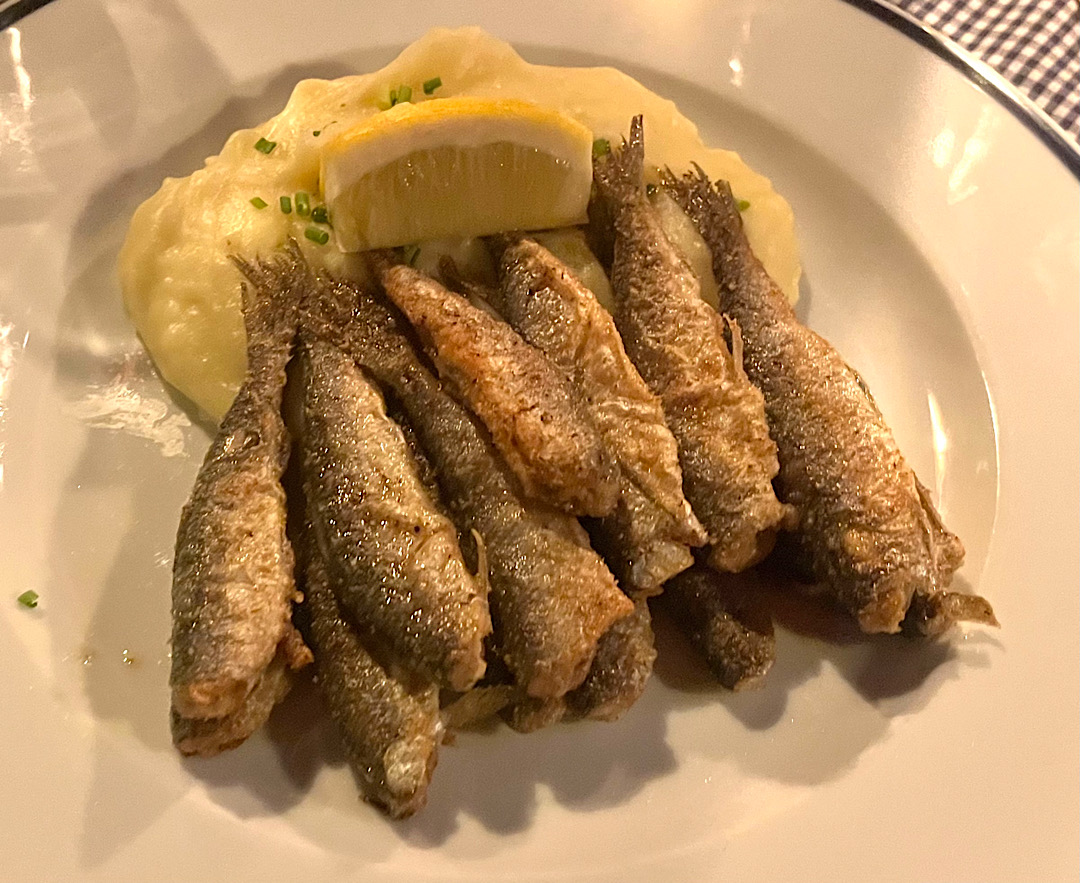
Both were delicious, as was virtually every meal we ate in all four countries on this trip. I felt so relaxed it was almost surreal, and it was hard not to credit the sauna for that. It took a little while, but I had learned something I didn’t expect, and not just about saunas.
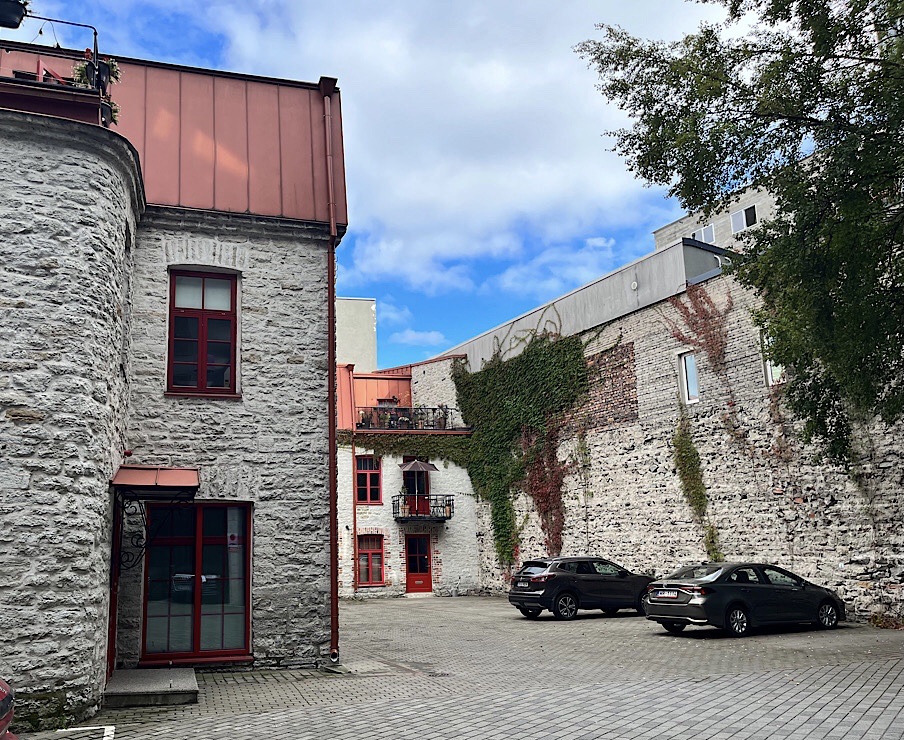
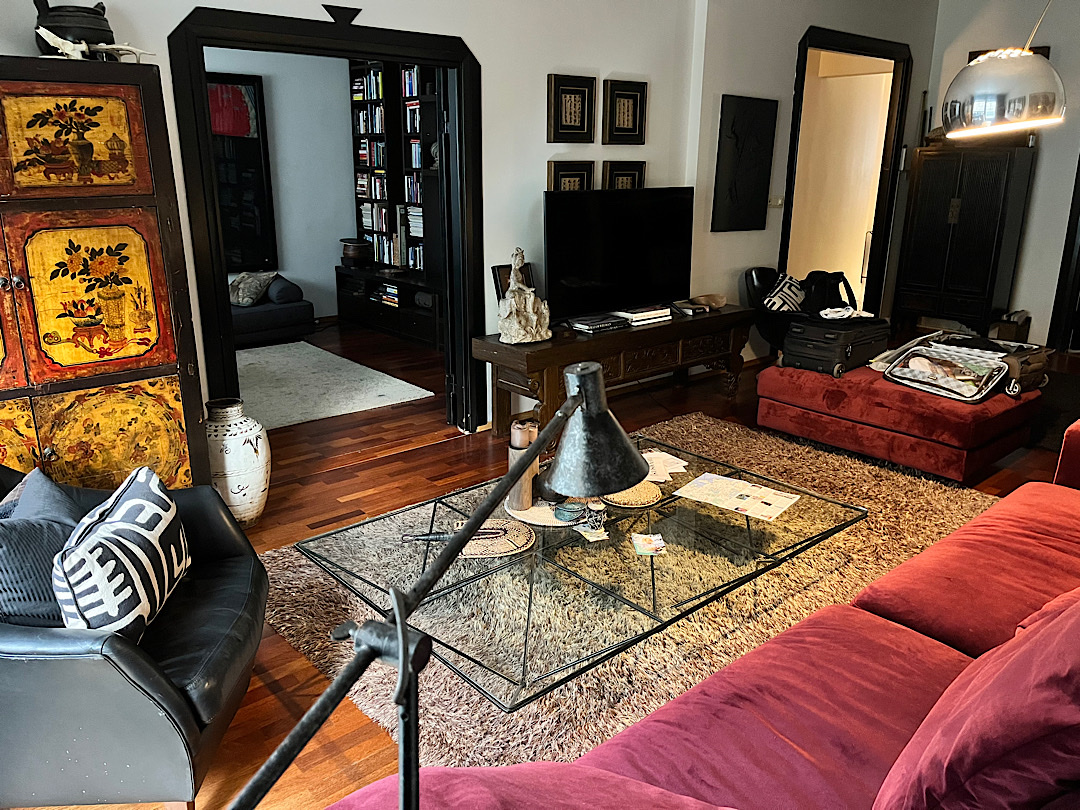
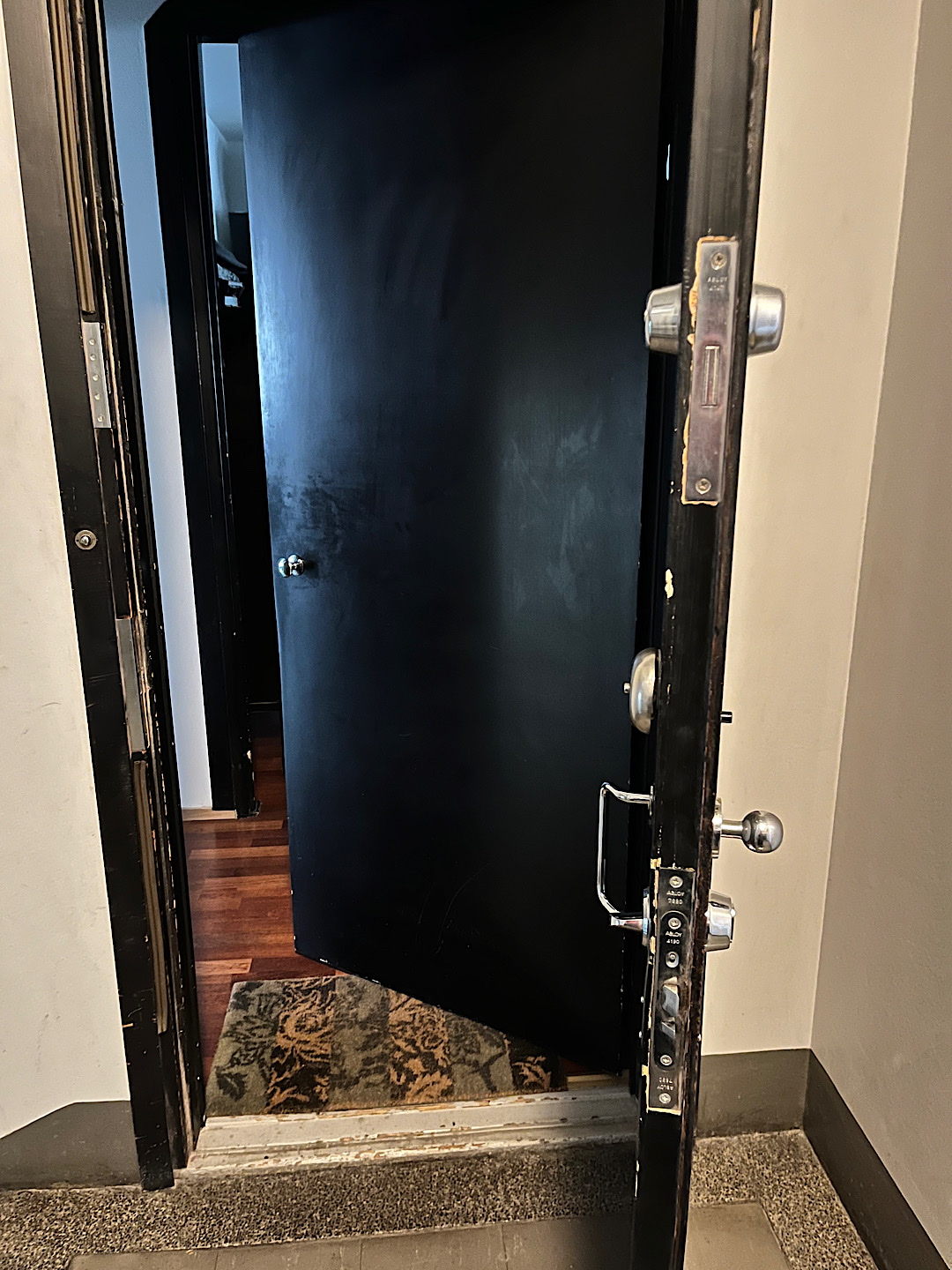
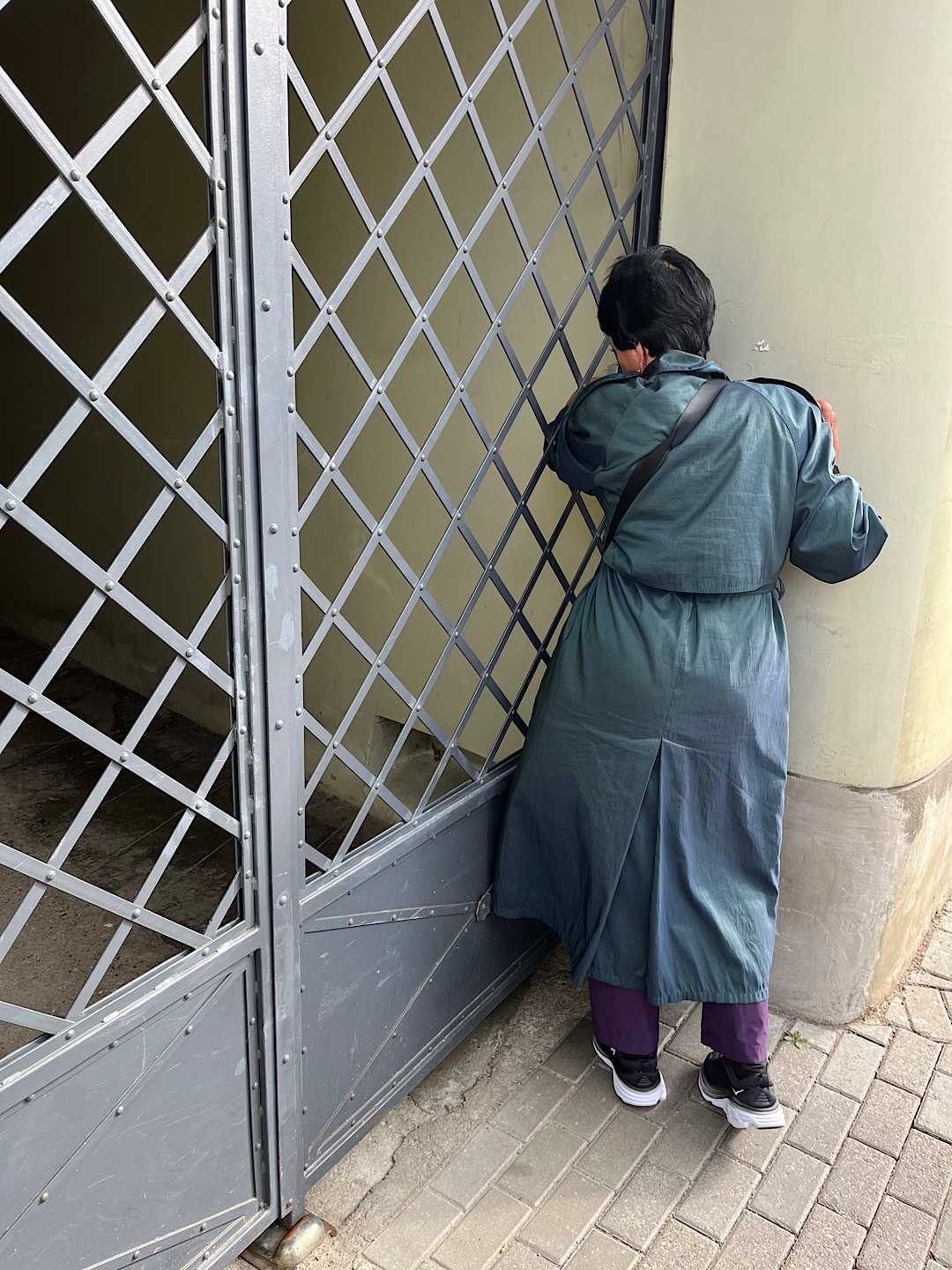 In an inner courtyard, we used the key from Daiva to get into the correct building, and up on the third floor, the key functioned perfectly to admit us.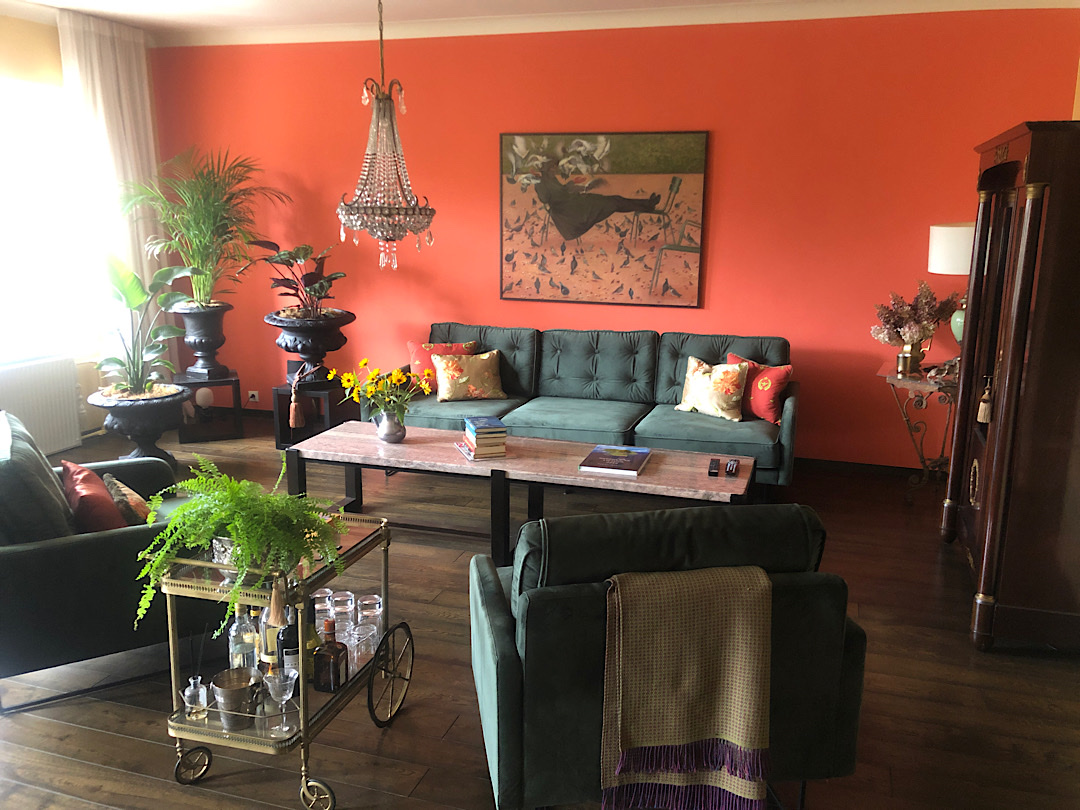

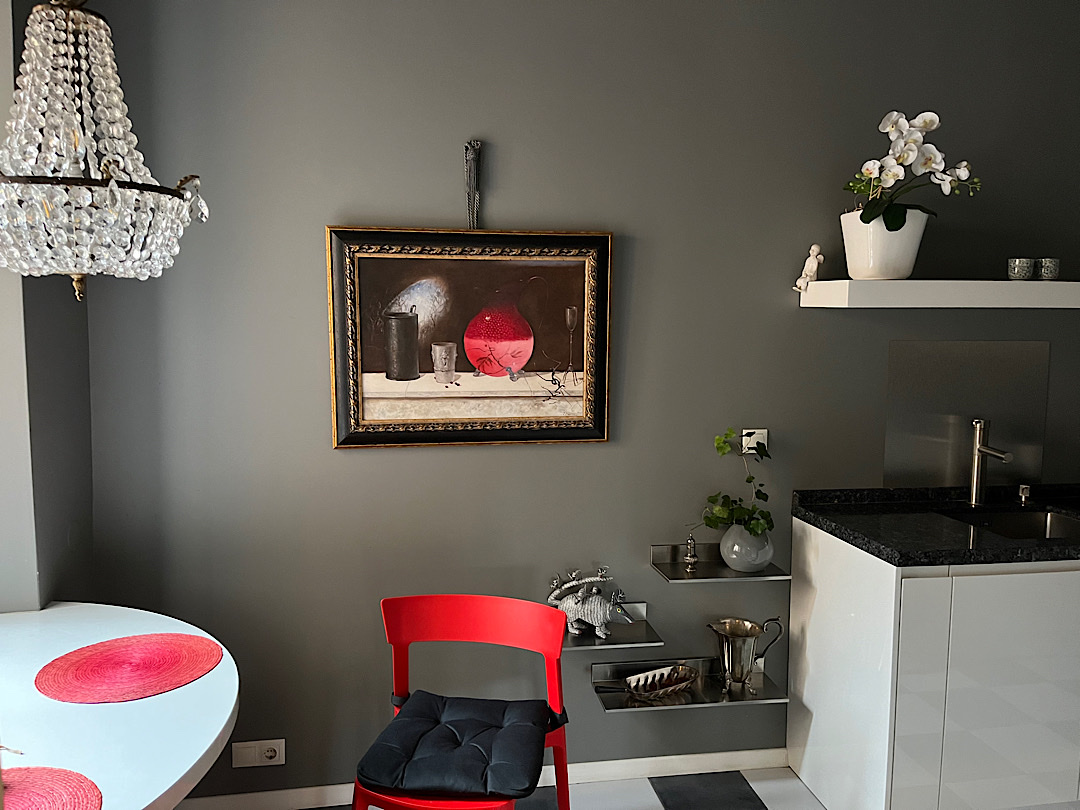
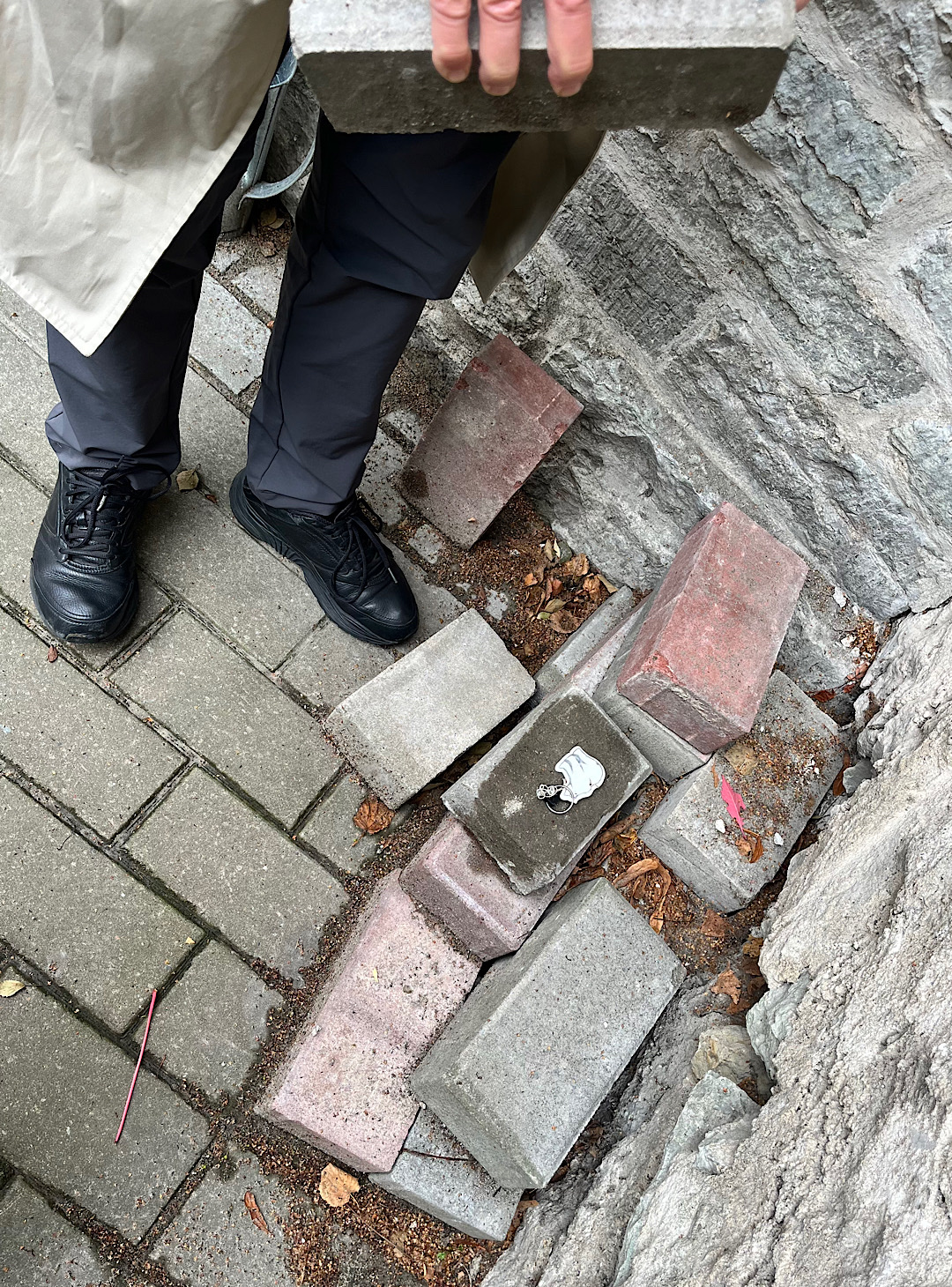
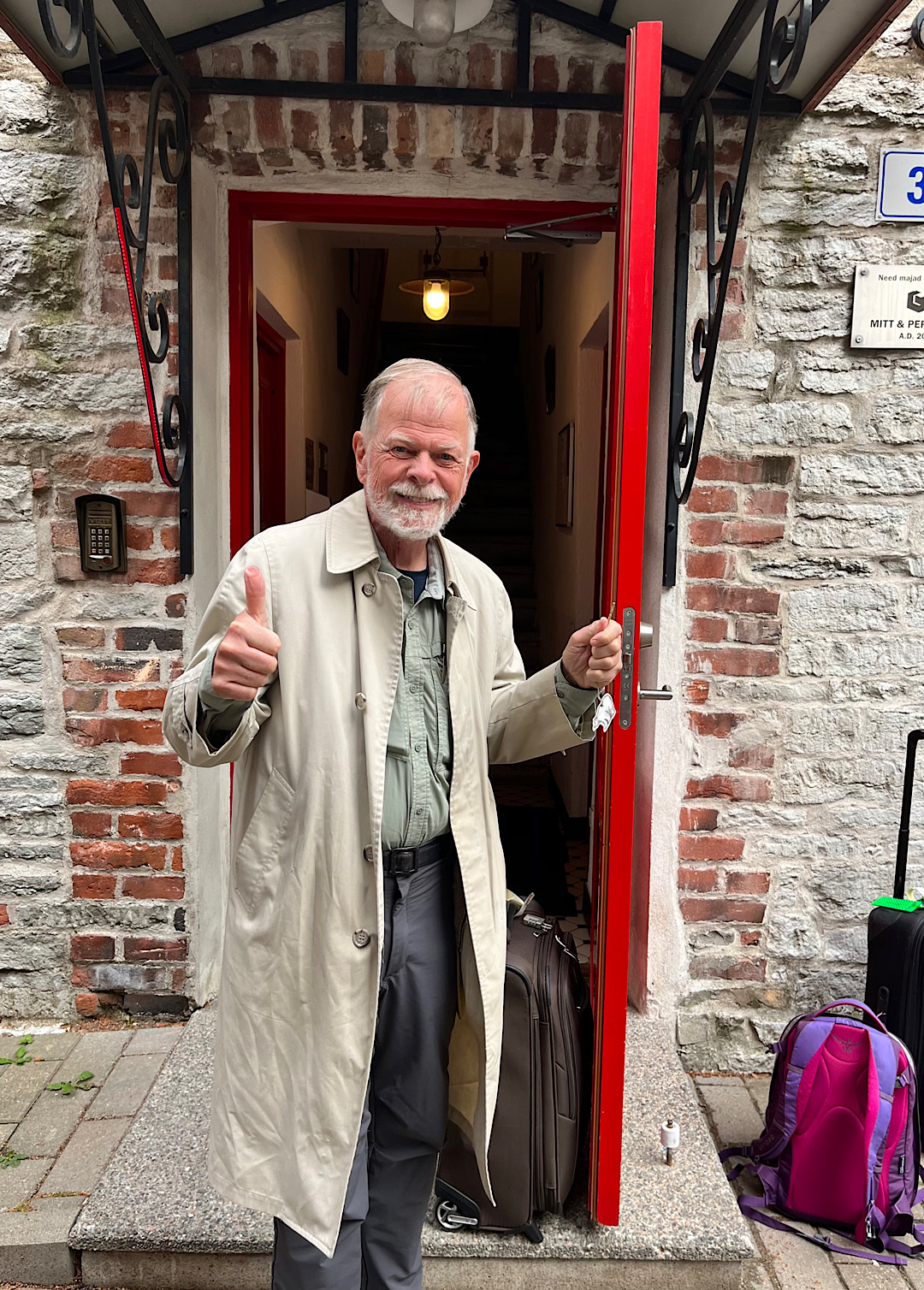
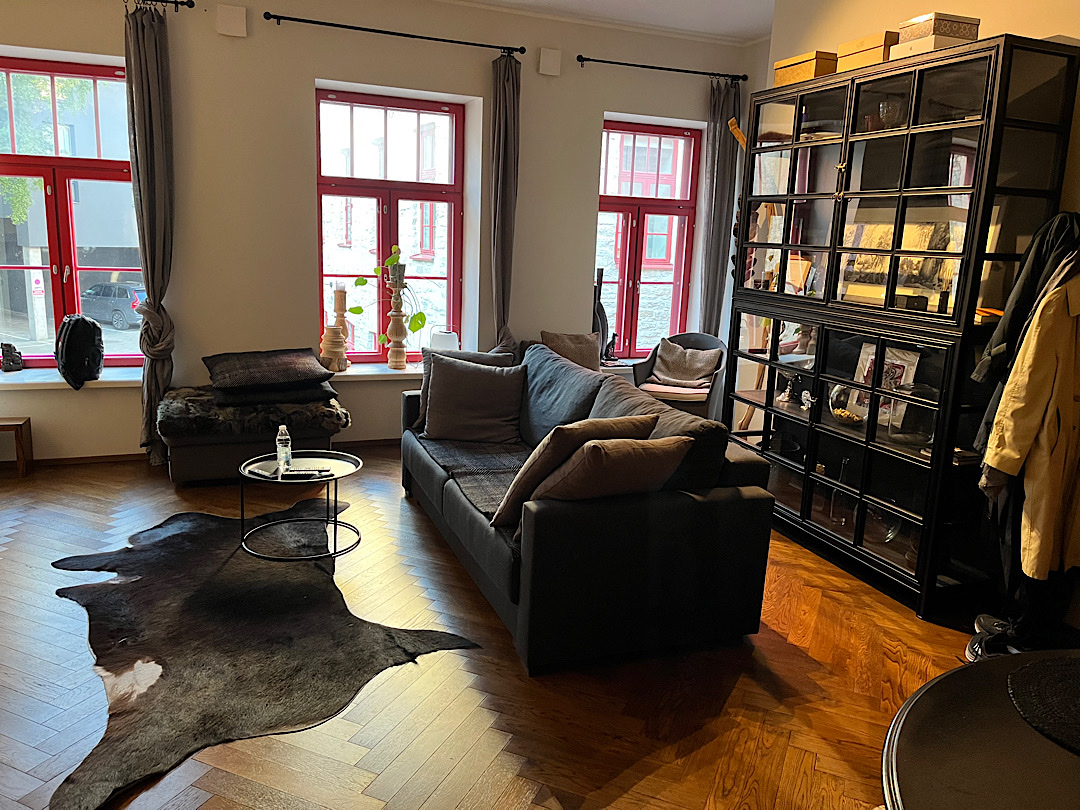
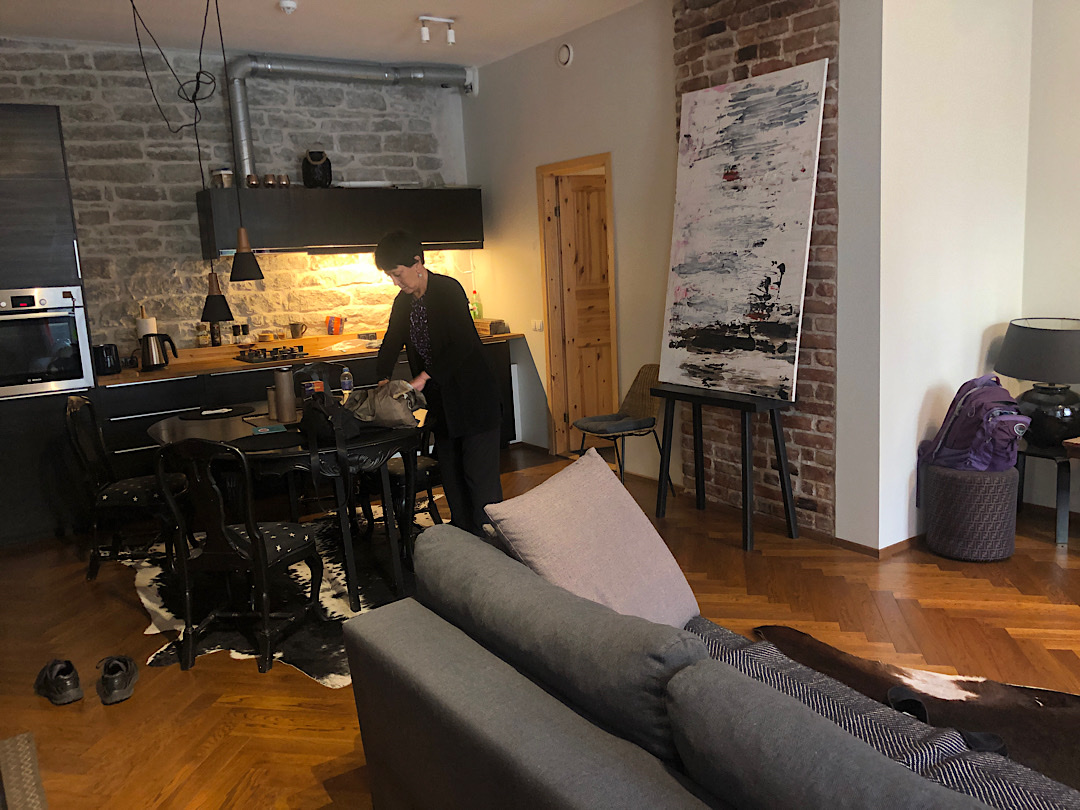
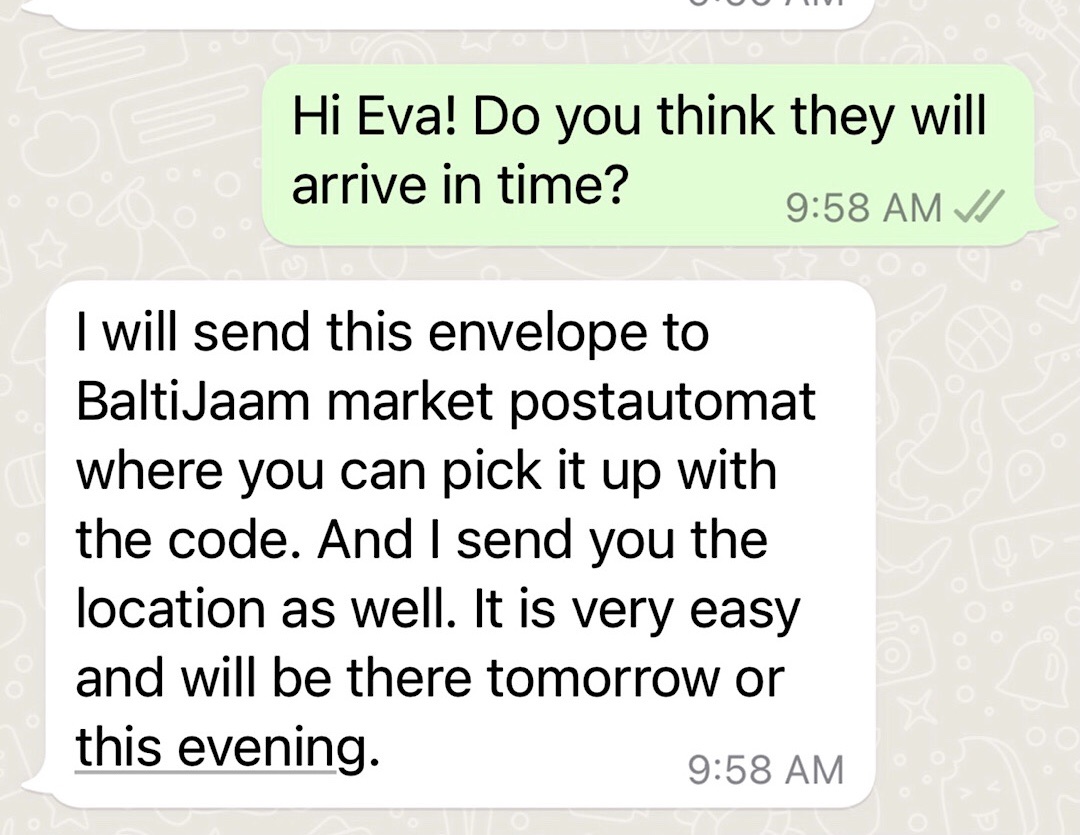
 When Lina finally texted me the six-digit code, I keyed it into the screen and one of the little doors popped open. Voila! There was the envelope containing the house key.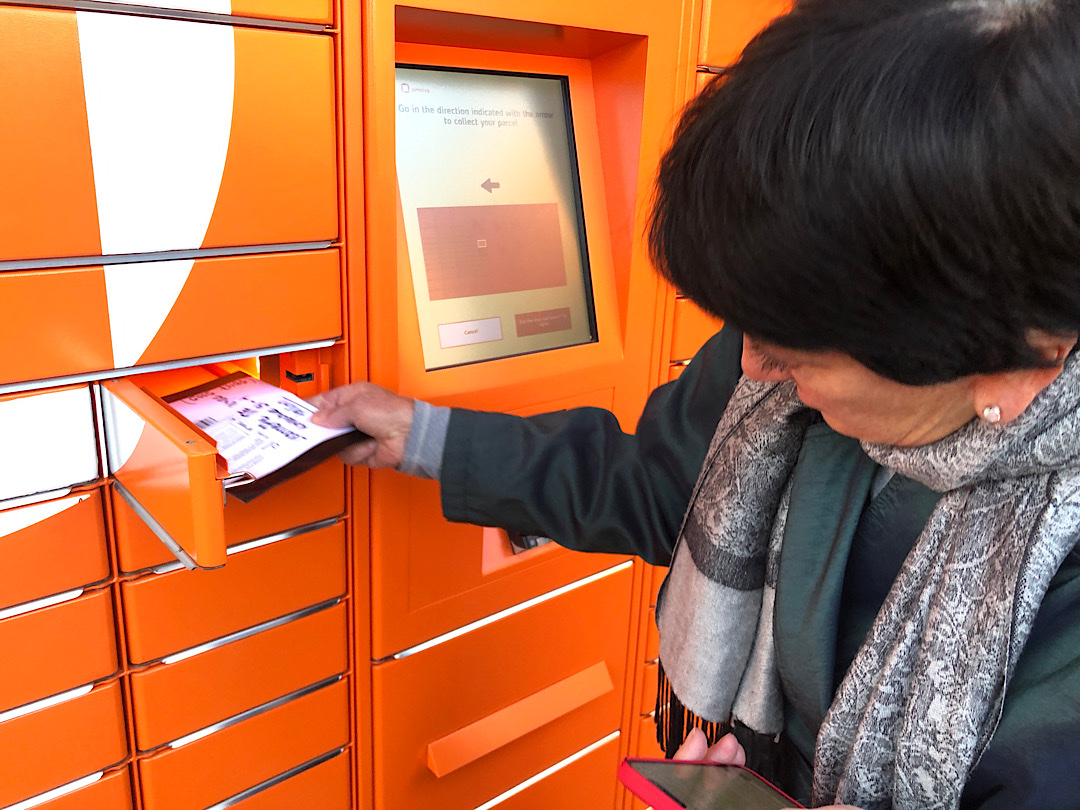
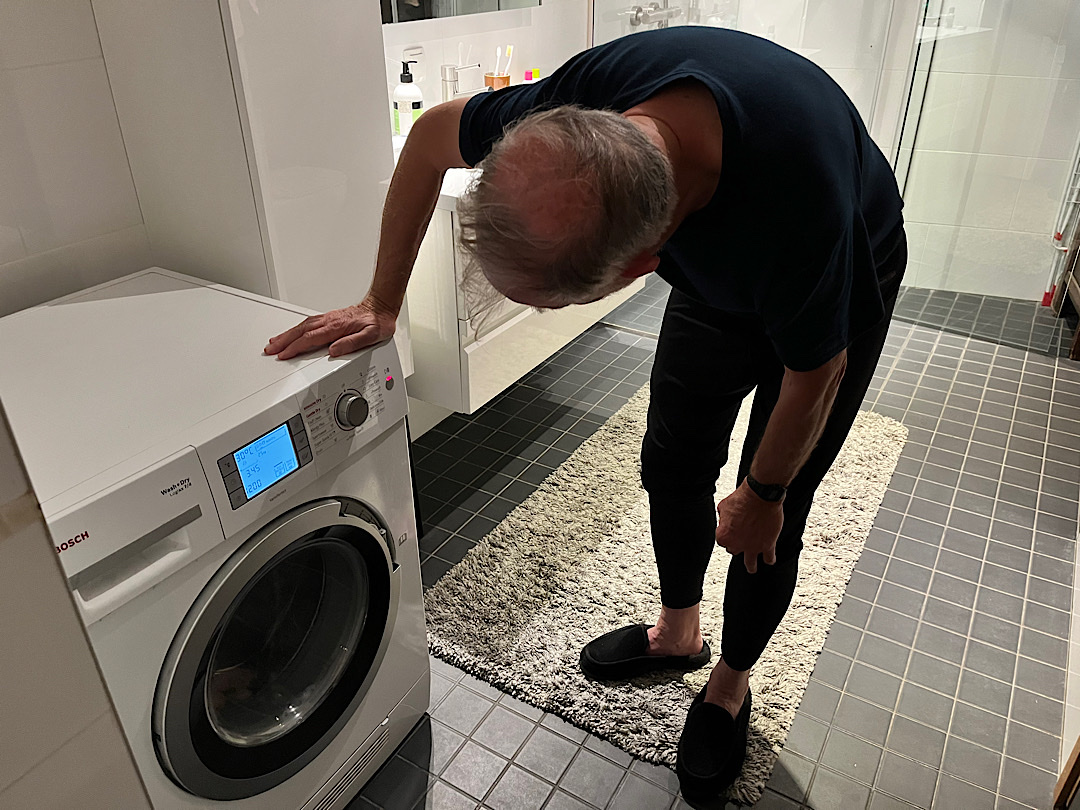
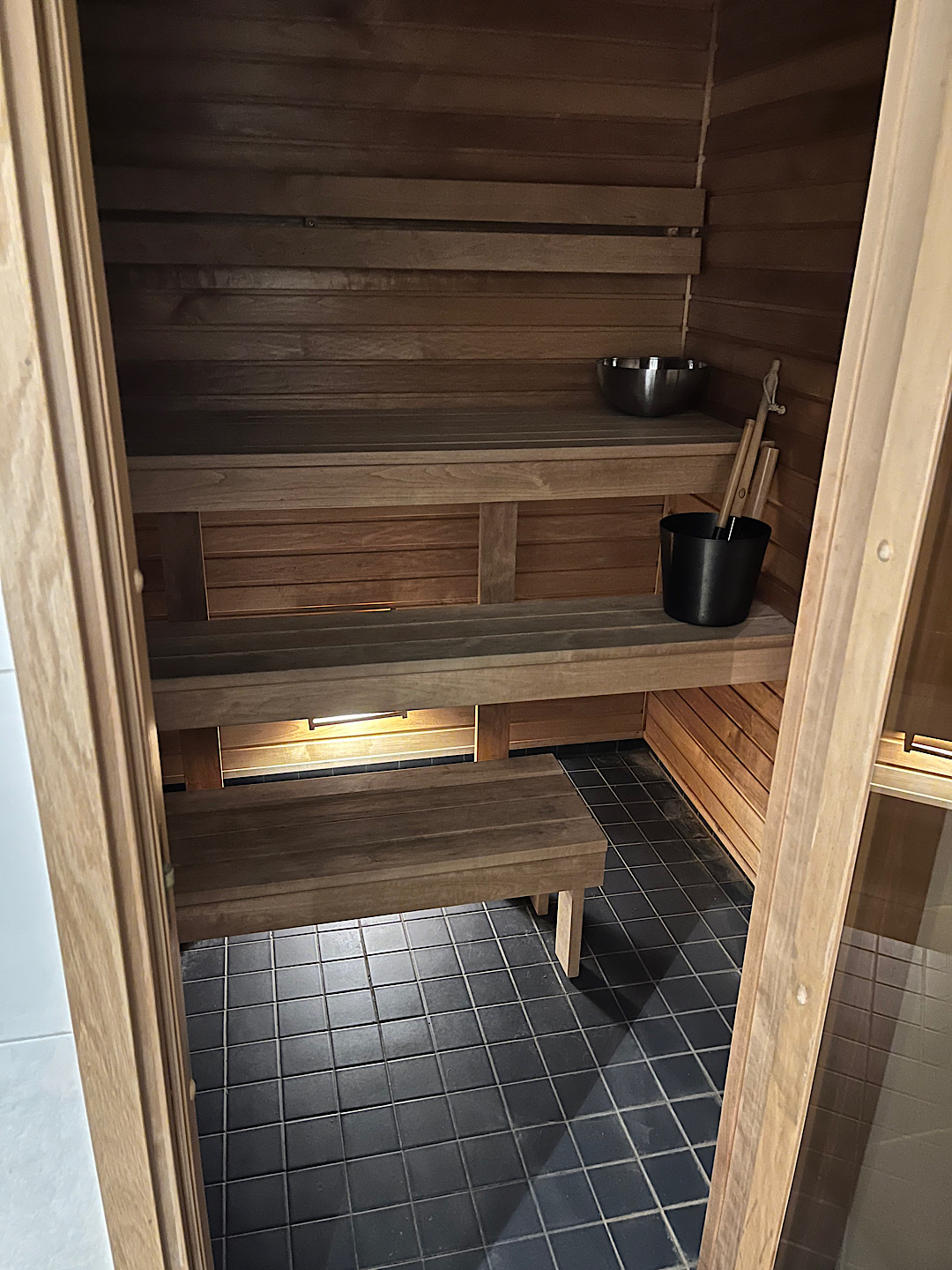 Lina’s scanty home instructions said it could be warmed up in 45 minutes. I had every intention of using it until Miina (our private guide on Tuesday) said the newspapers were reporting that heating up a home sauna just once would cost 50 euros (due to the sky-high cost of electricity.) I felt so kindly toward Lina by then that I resisted cranking up her sauna.

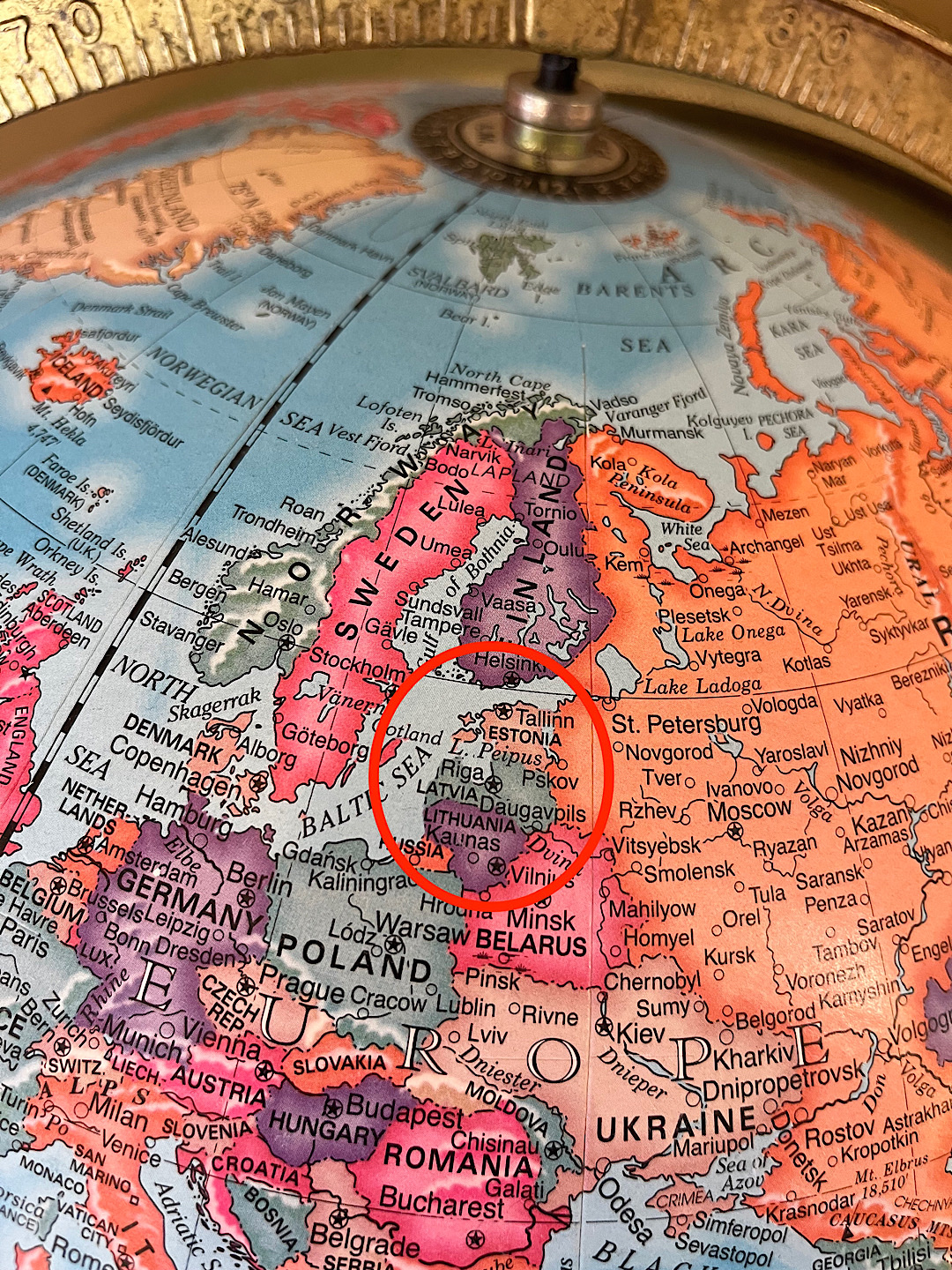
 This part of the world may be flat but it’s a metaphorical Tower of Babel, so complex I never considered trying to learn any of the local tongues. The folks in Lithuania, Latvia, Estonia, and Finland each have a different language. We were told that Lithuanian and Latvian are sufficiently related that folks speaking each at least can guess what the other is saying. The same is true for Estonian and Finnish, which belong to the “Finno-Ugric” language family. Still, here’s how you say “Thank you” in each.
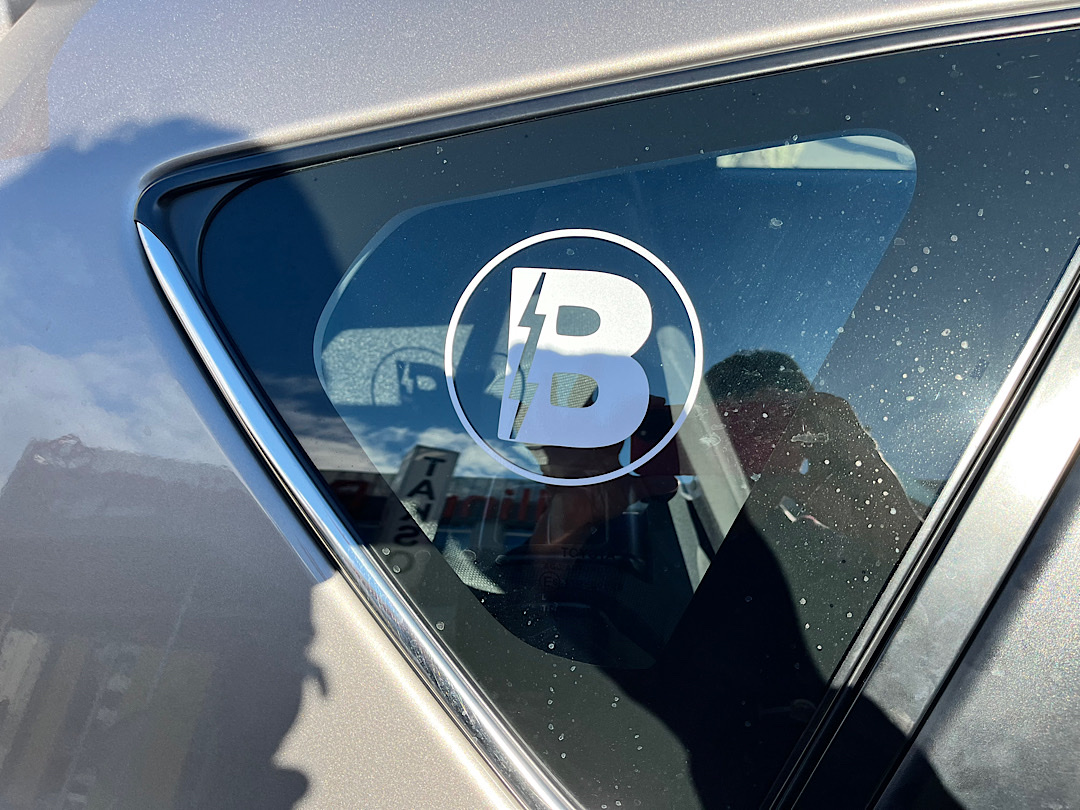
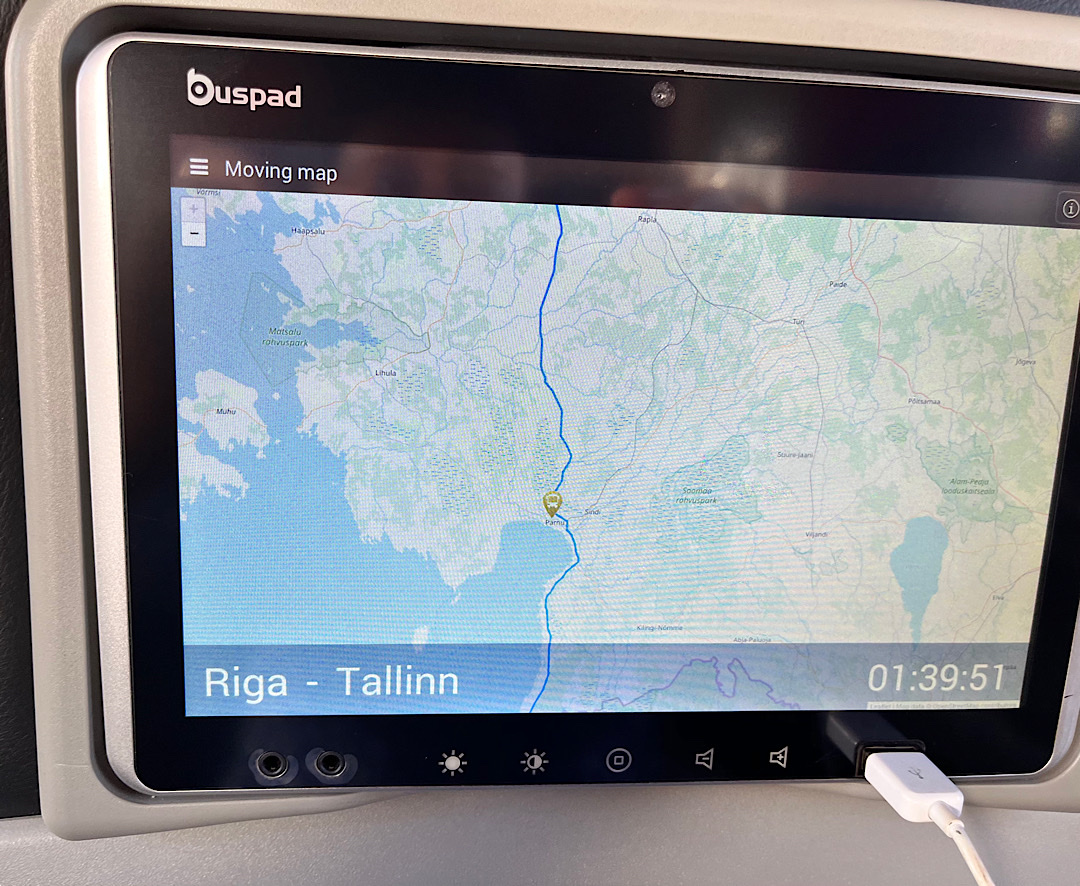
 These vehicles proved to be spotless and comfy, with amenities that included TV screens in the seat backs, a decent onboard toilet, and free hot coffee. The journeys from Vilnius to Riga and then from Riga to Tallinn each took less than 5 hours, gave us a look at the countryside, and cost only $26 a person for seats in the “premium” section of the bus. The rides were smooth enough for me to work on my blog posts.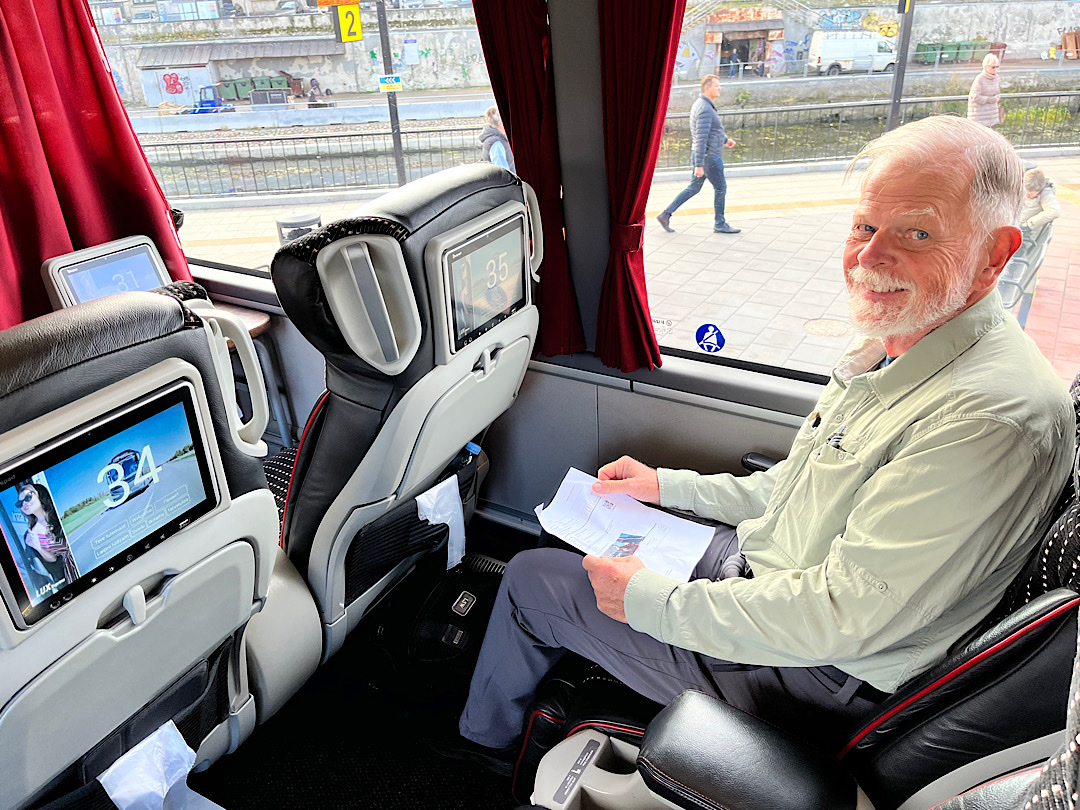
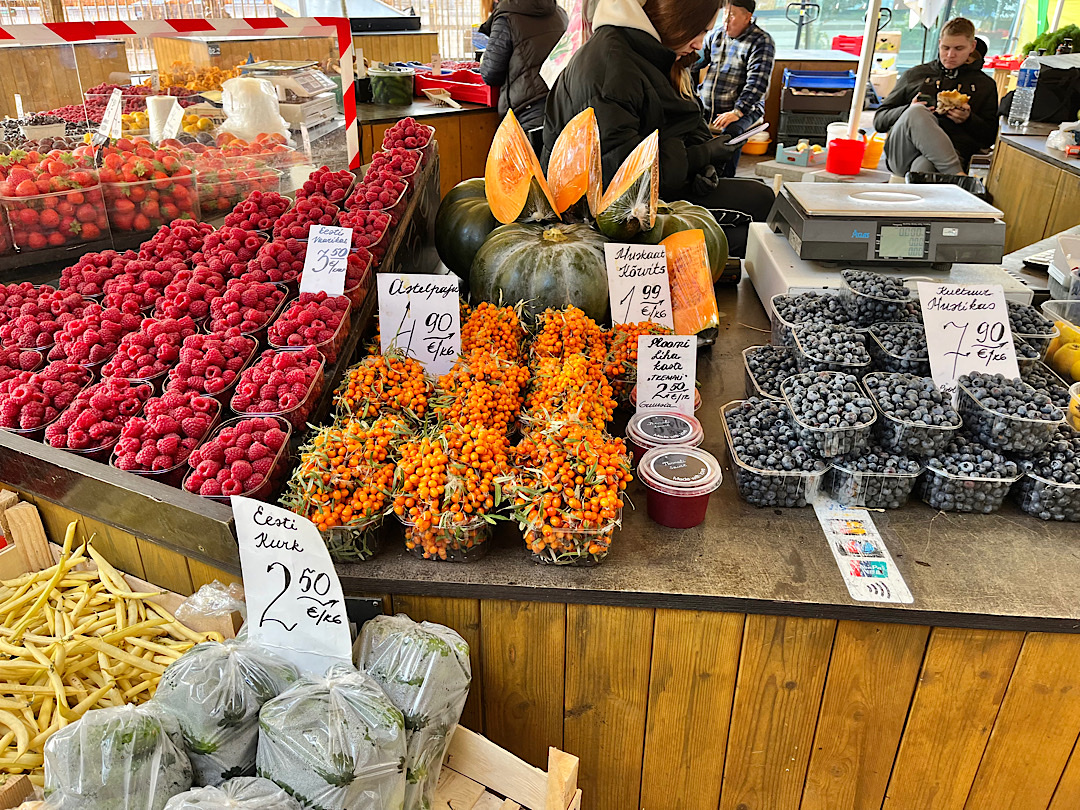 We took it in for a moment, then whizzed through the market in her wake as she showed us all manner of quirky stuff for sale: the distinctive felt hats folks wear in the sauna to keep their heads from overheating. Reflectors that everyone is legally required to affix to their clothing in winter as a safety measure.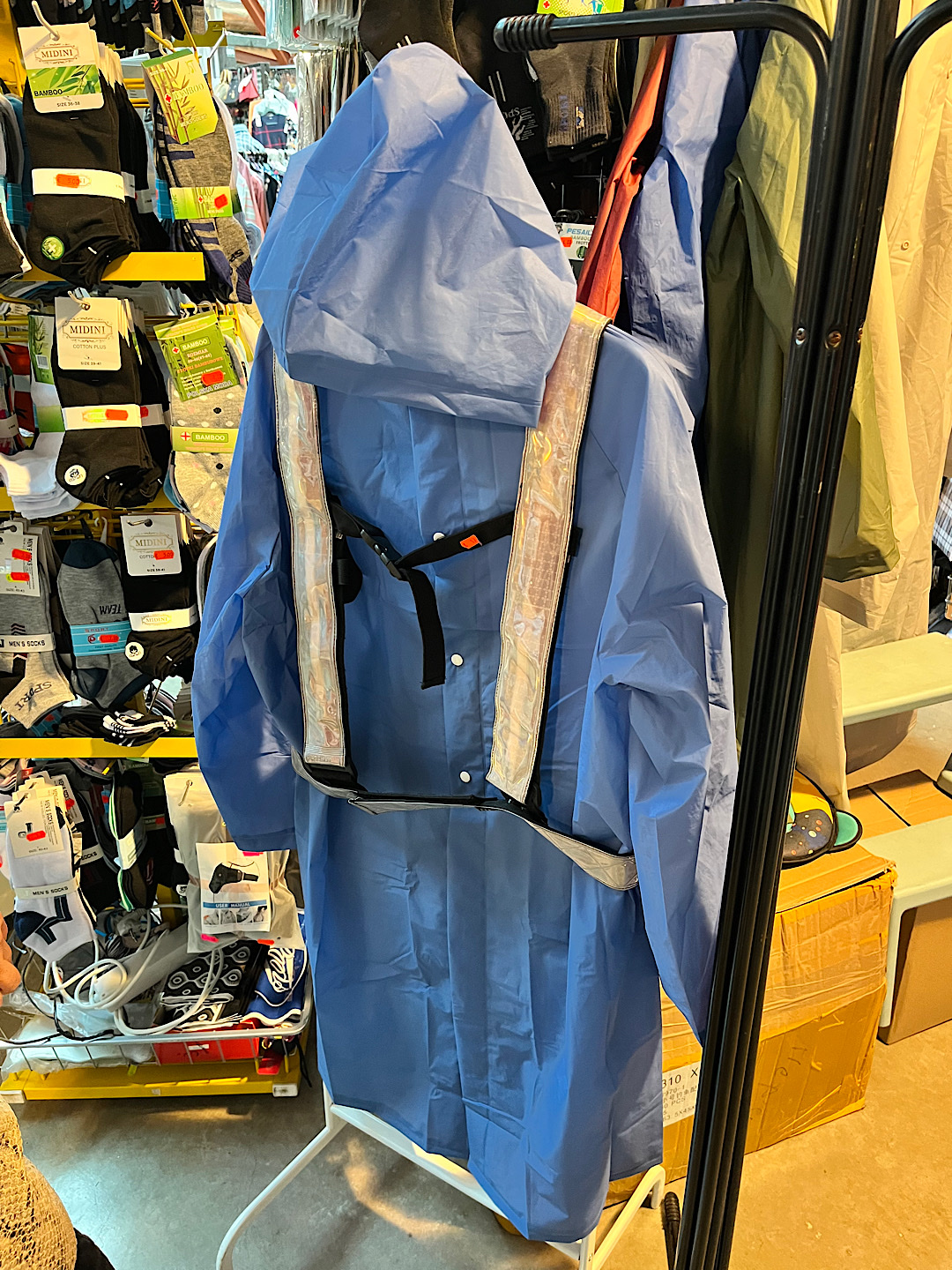
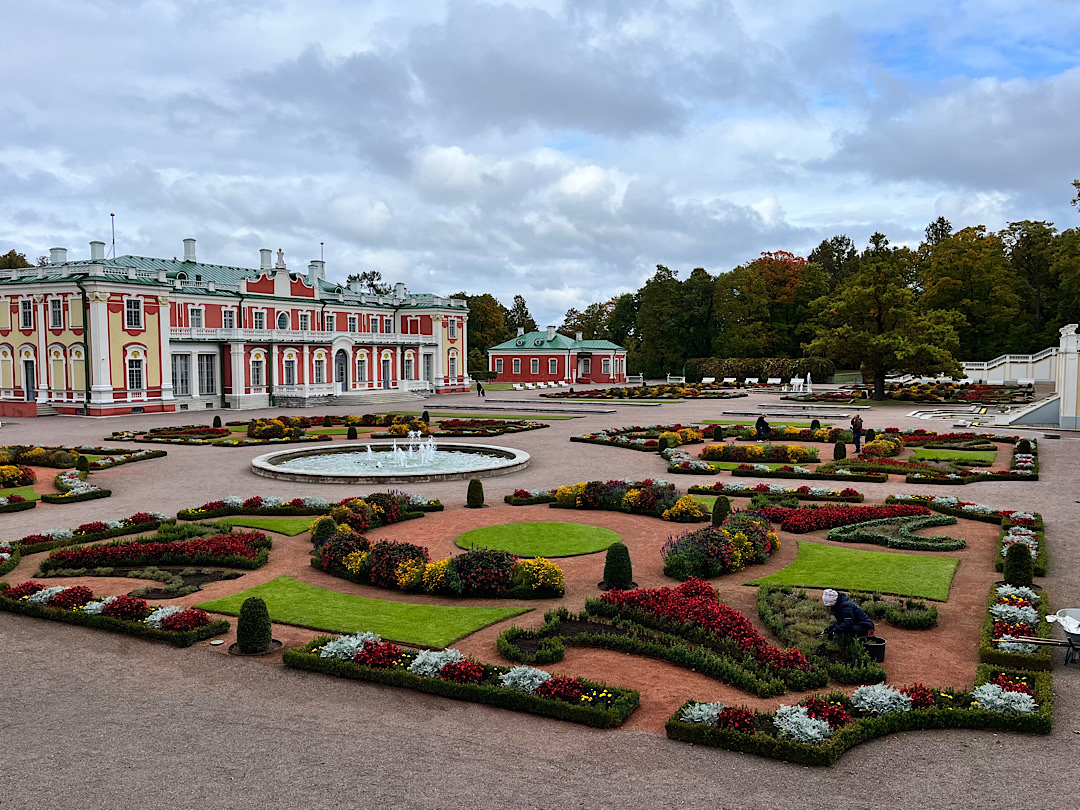
 Behind the palace is the official residence of the Estonian president. It’s Estonia’s White House (except it’s pink.)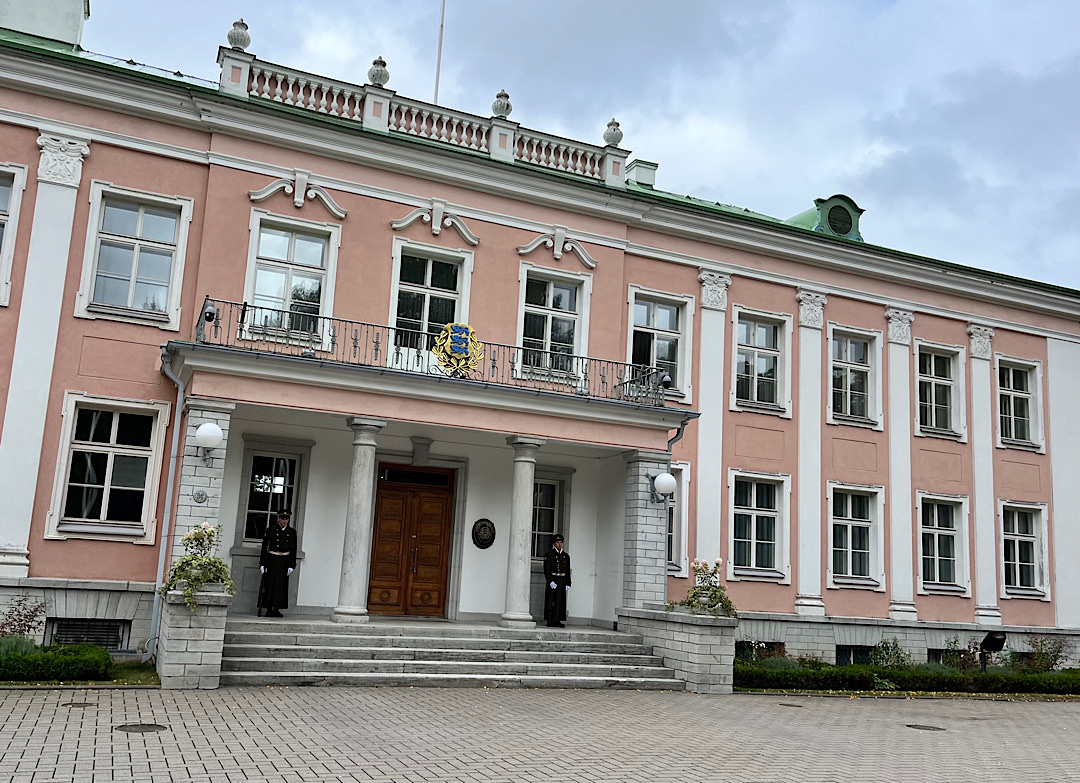
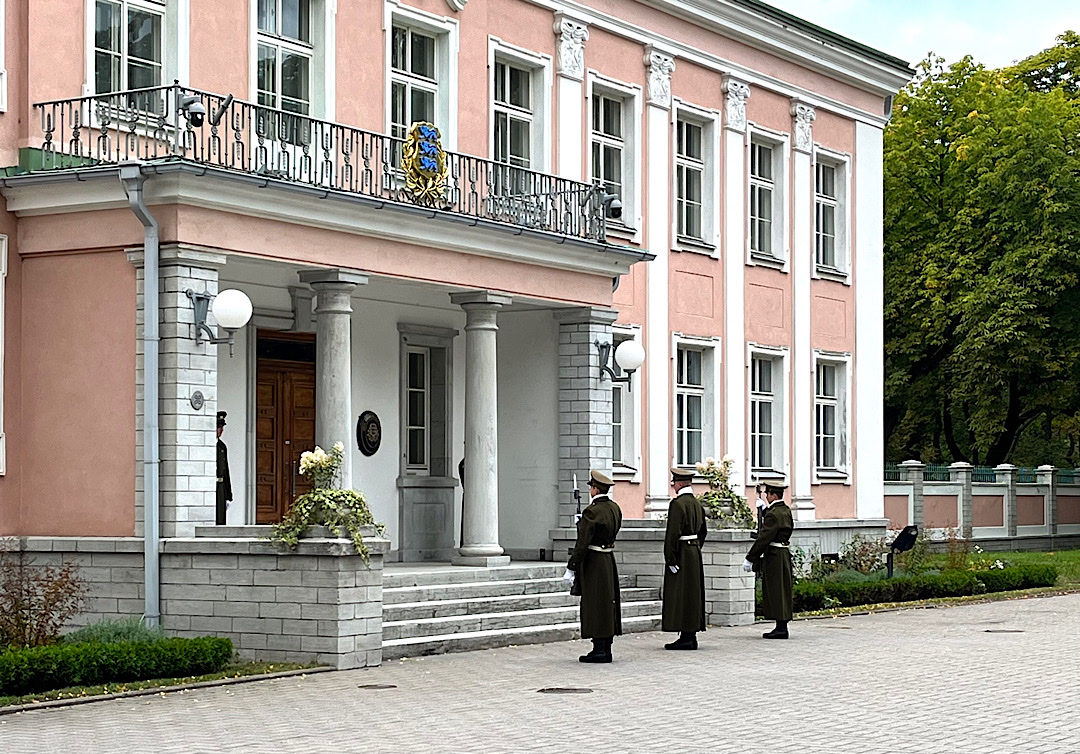 Also charming are the white boxes on the front lawn. They’re bee hives. (Miina said the president is into apiary.)
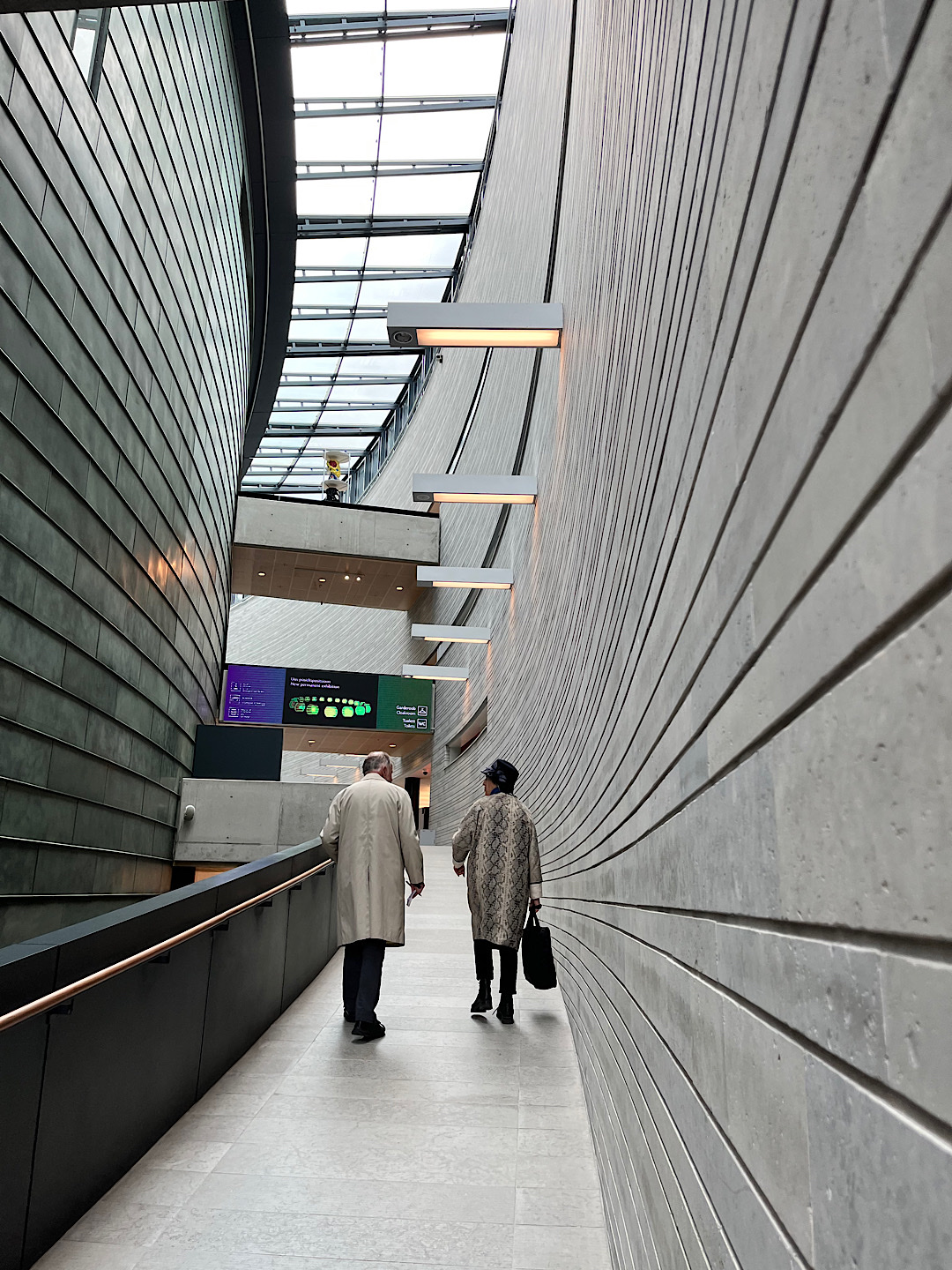
 In another part of the park, she led us to the Kumu art museum, a striking limestone, glass, and copper structure that houses the country’s biggest collection of Estonian art.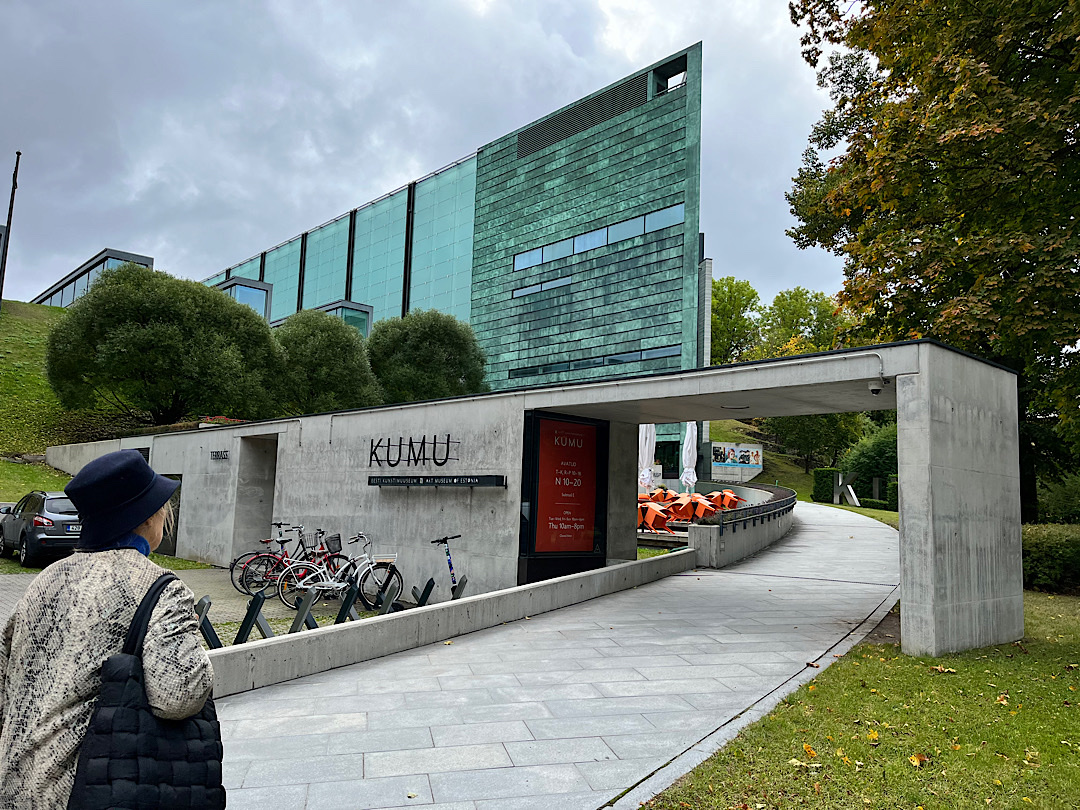
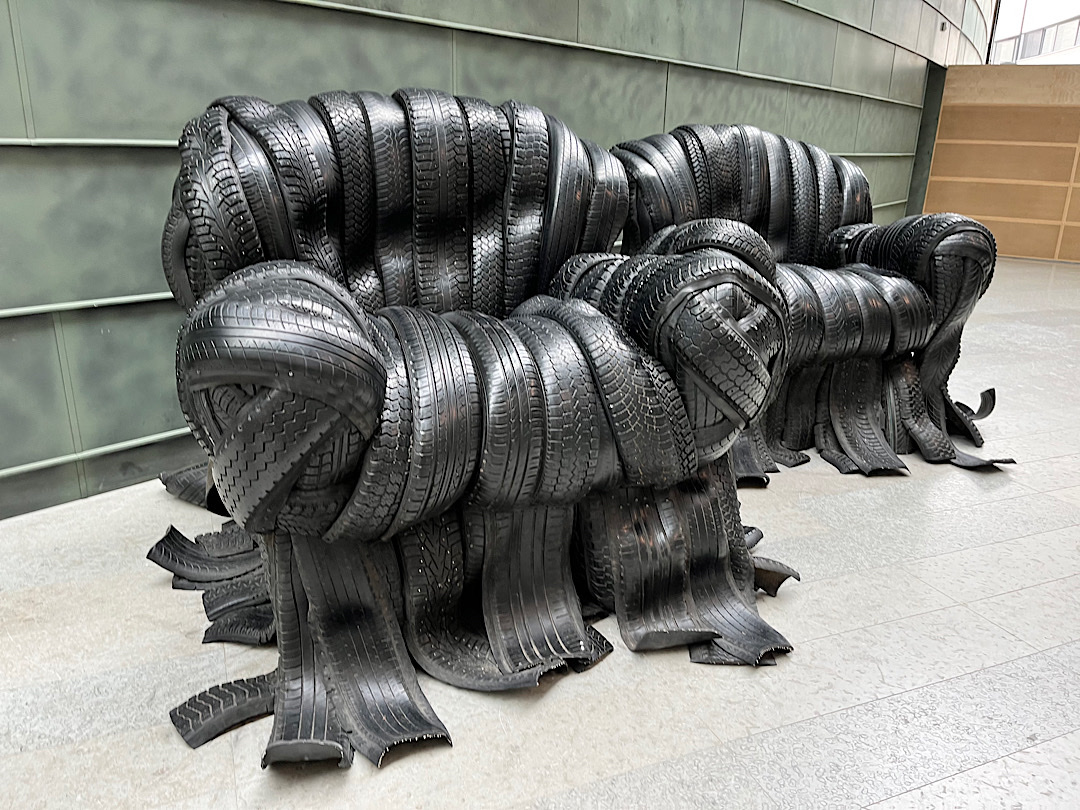
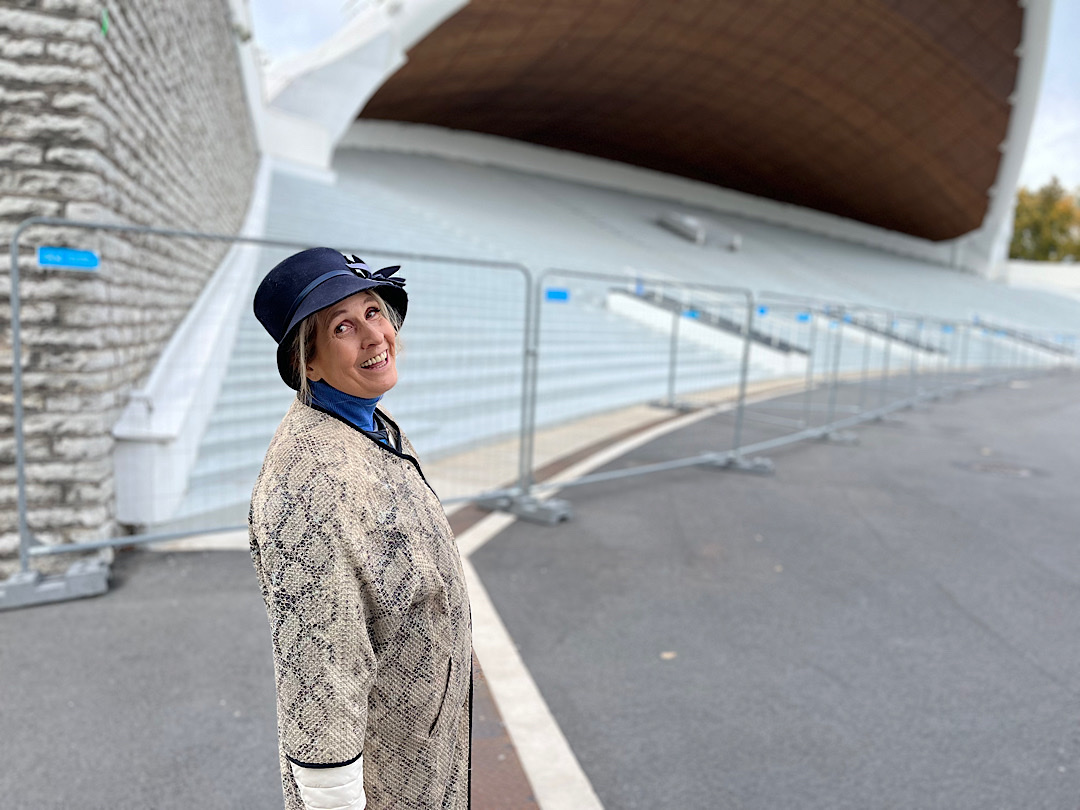 An idealistic 20-year-old at the time, Miina was in that crowd, and the emotions of the day played across her face as she told us about it. Then it was time for her to catch the train to the seaside. We said our goodbyes, not before she instructed us in what else we should do that in that afternoon.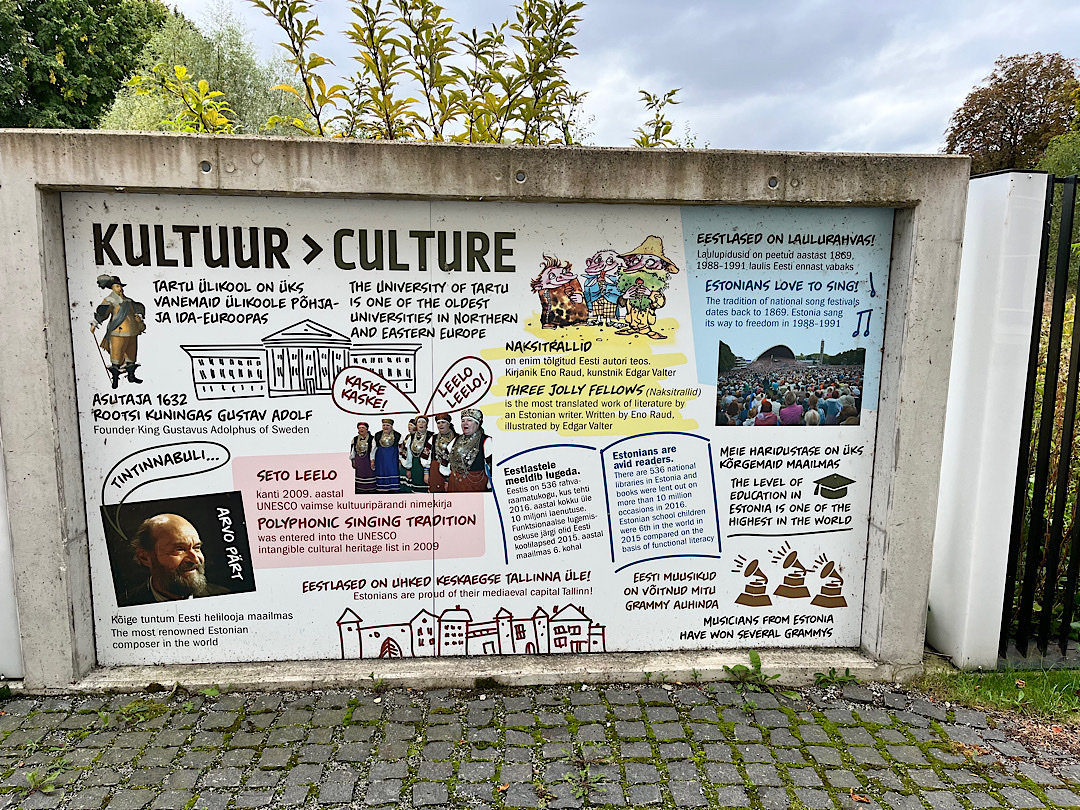
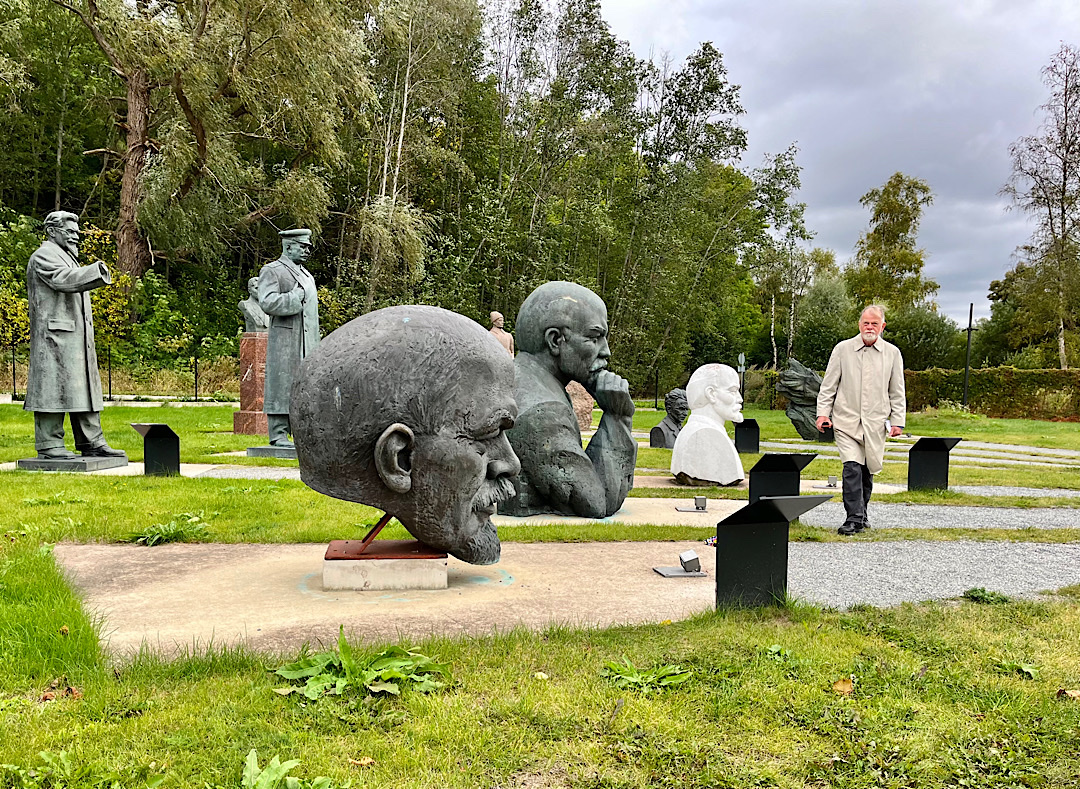
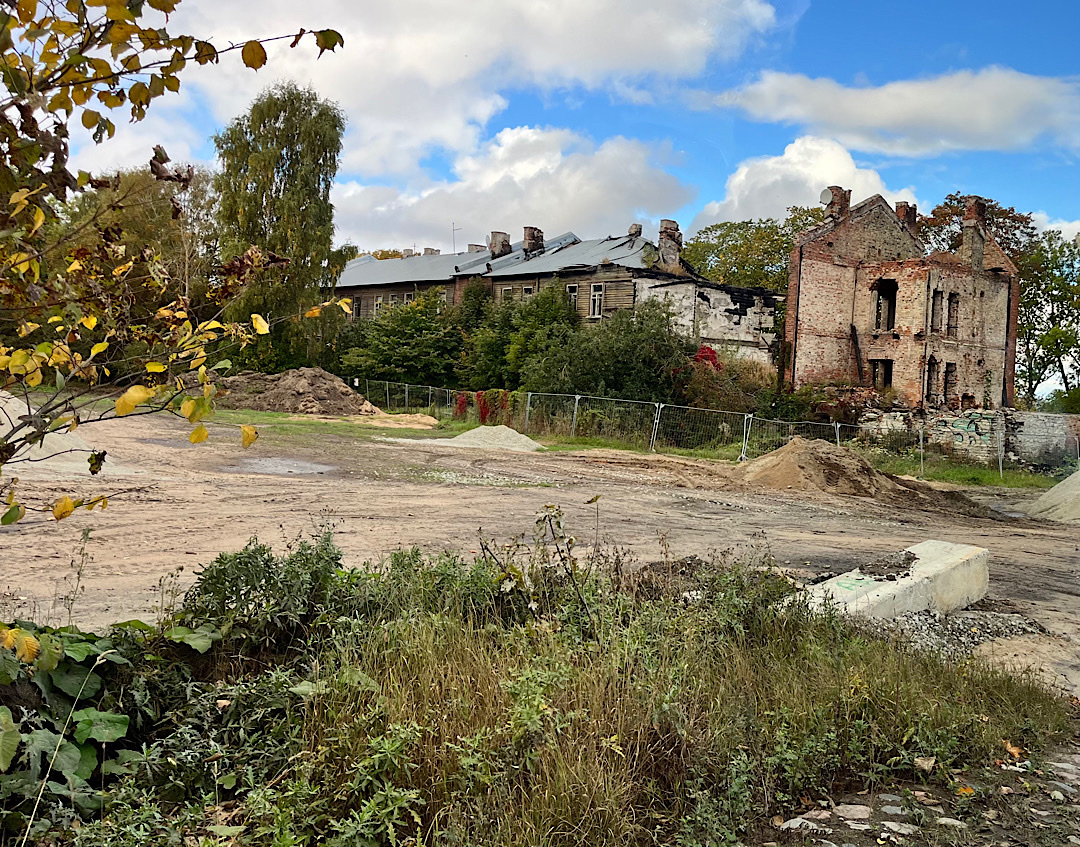
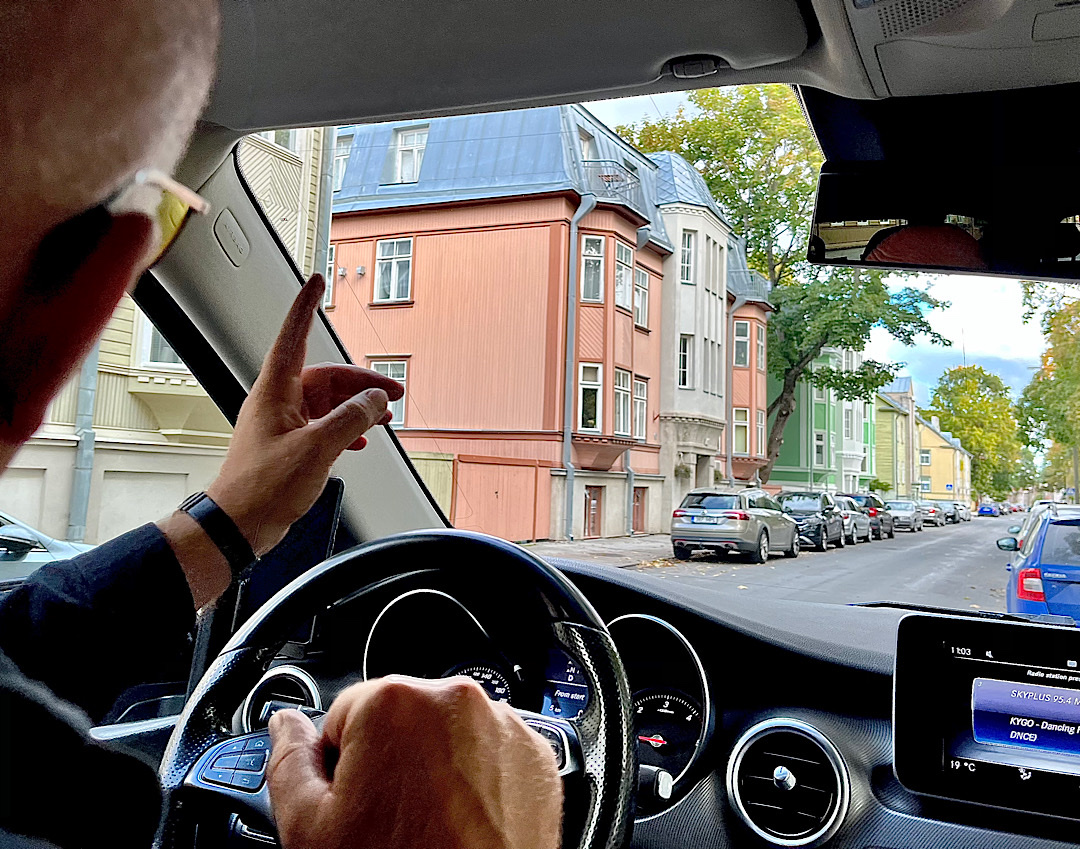
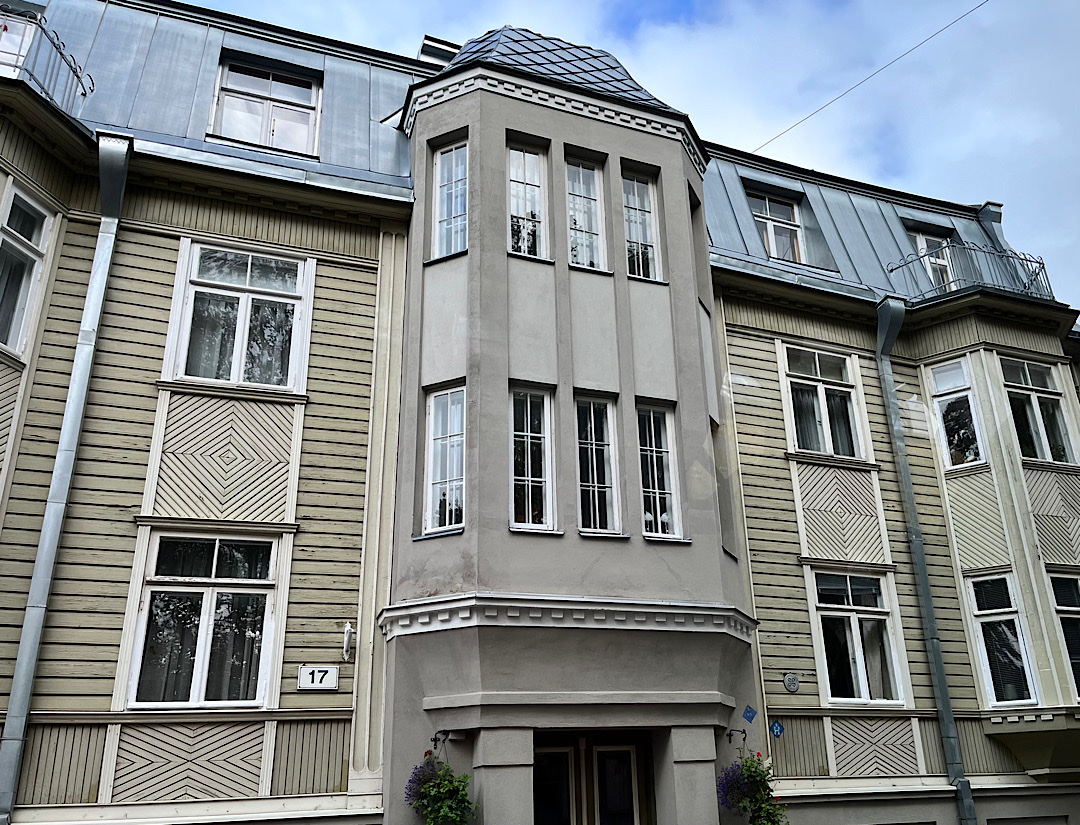


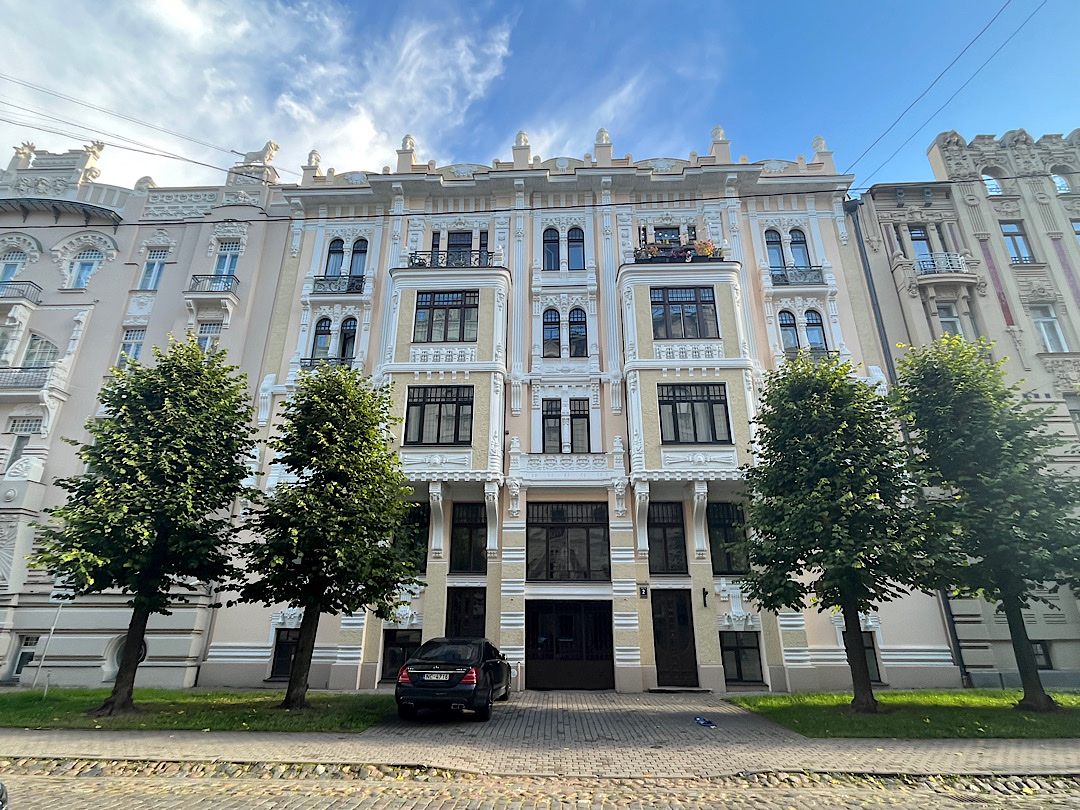

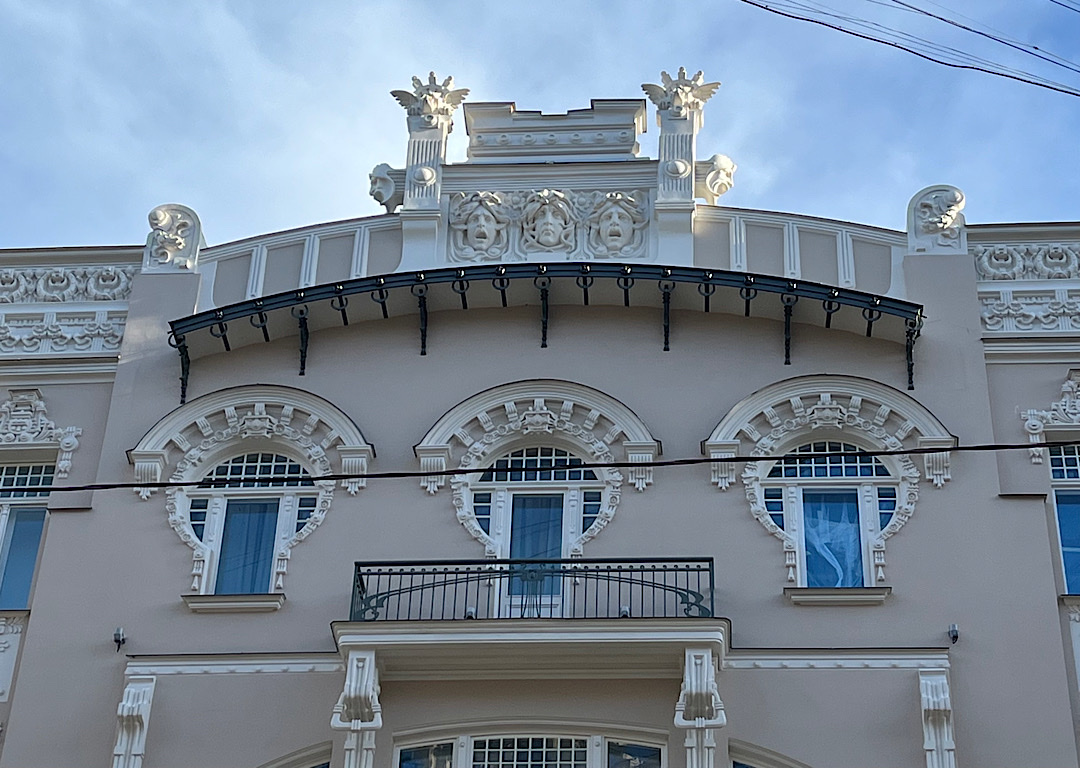

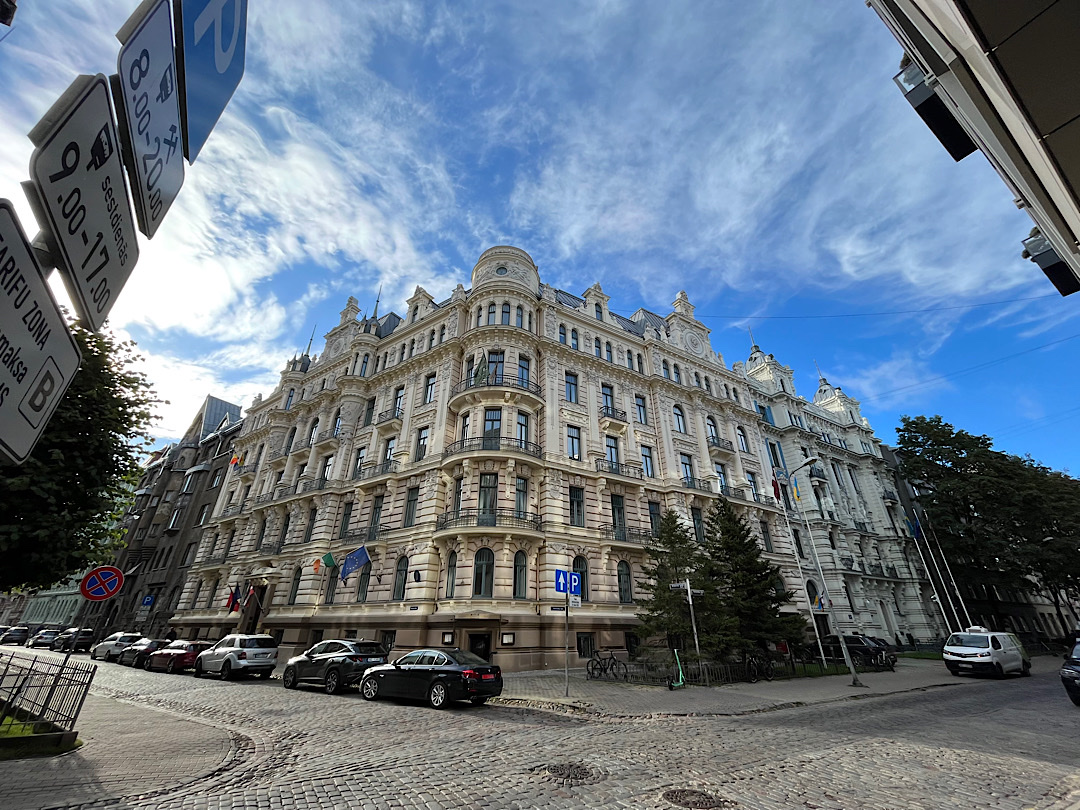
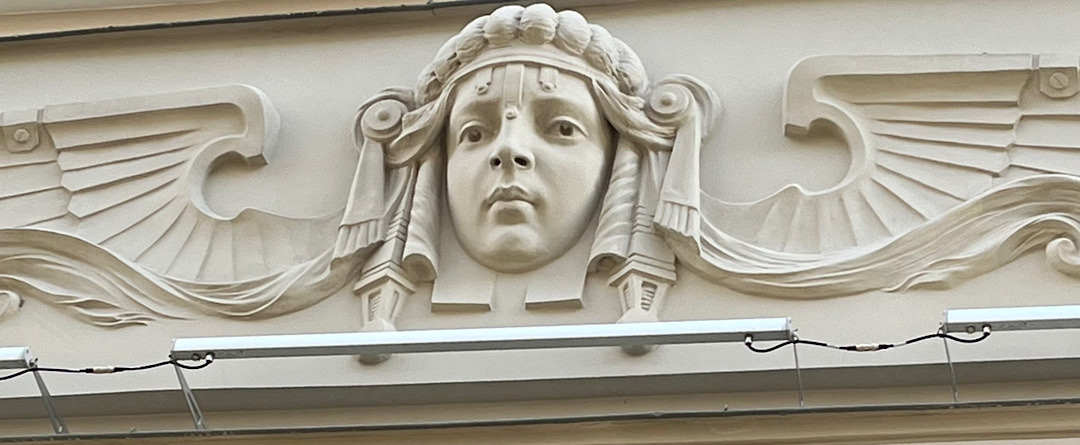

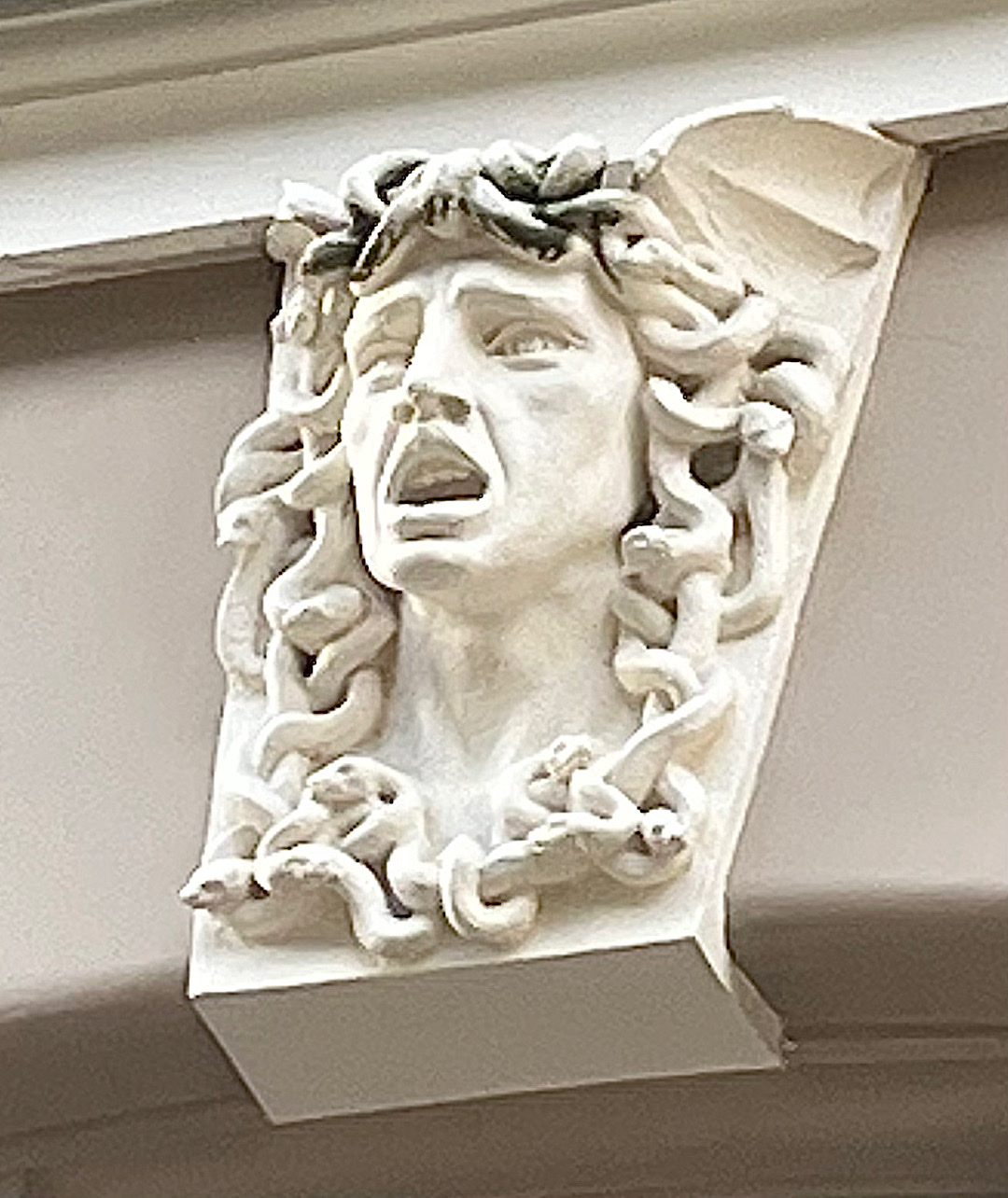
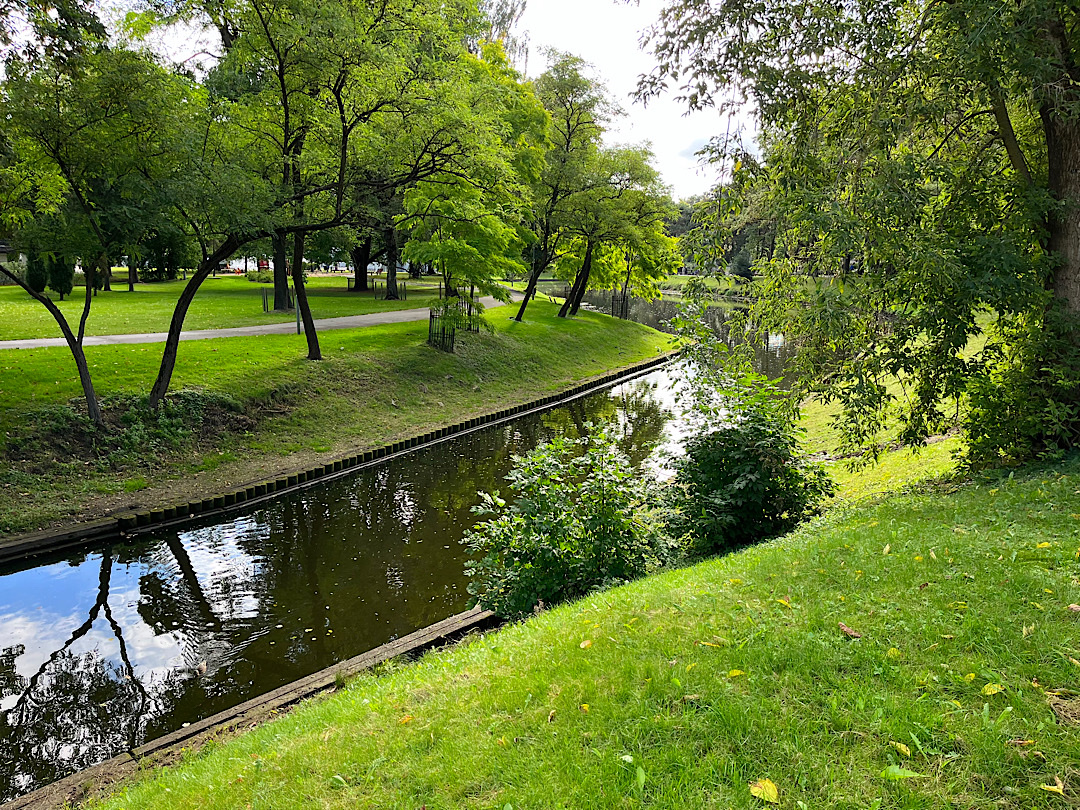 …and meandered through the twisting streets of the medieval old city…
 …a compact area crammed with ancient churches and more Art Nouveau treats and a stirring monument to Freedom that somehow survived the decades of repressive post-war Soviet rule.


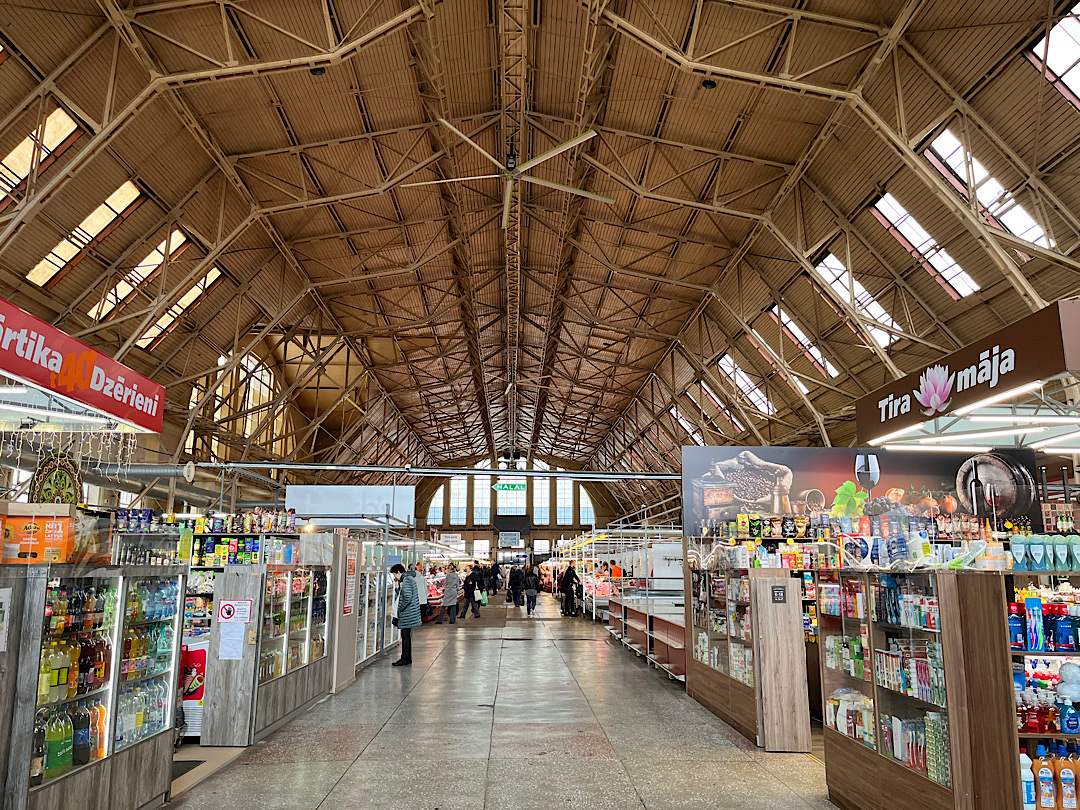
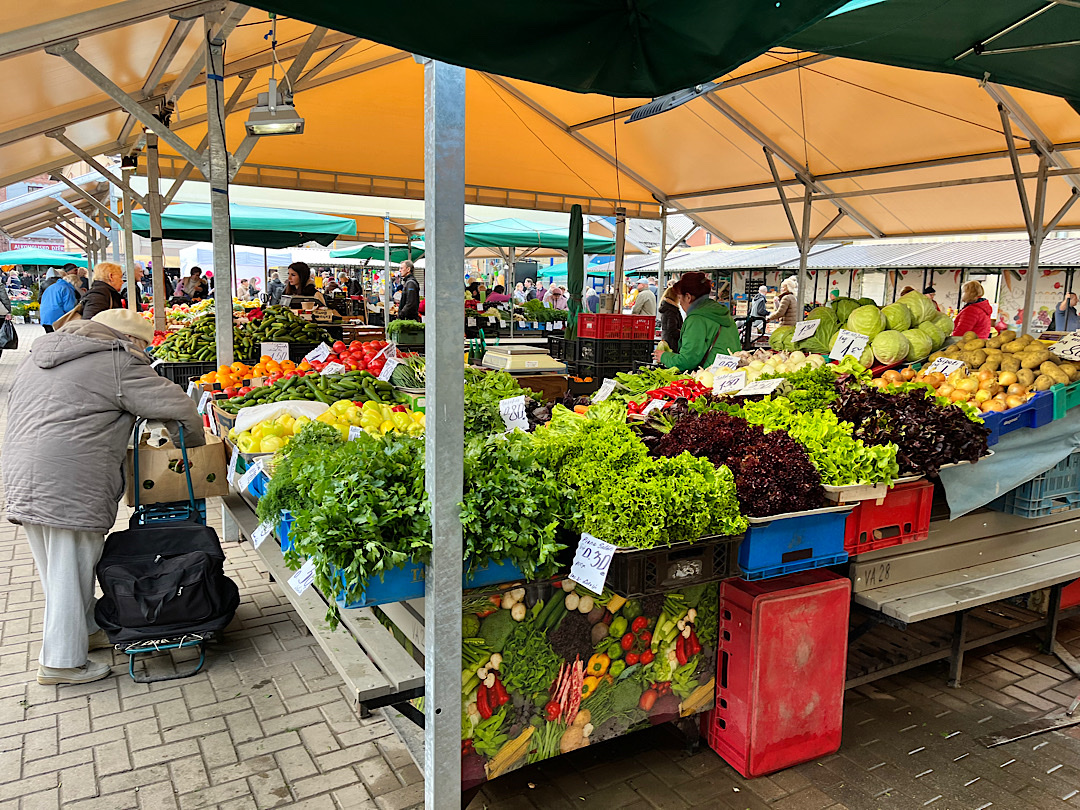
 From it we drank in excellent views of this oh-so-flat part of the world. Near the tower we could see the former World War I zeppelin hangers that have been turned into a huge central market — our next stop.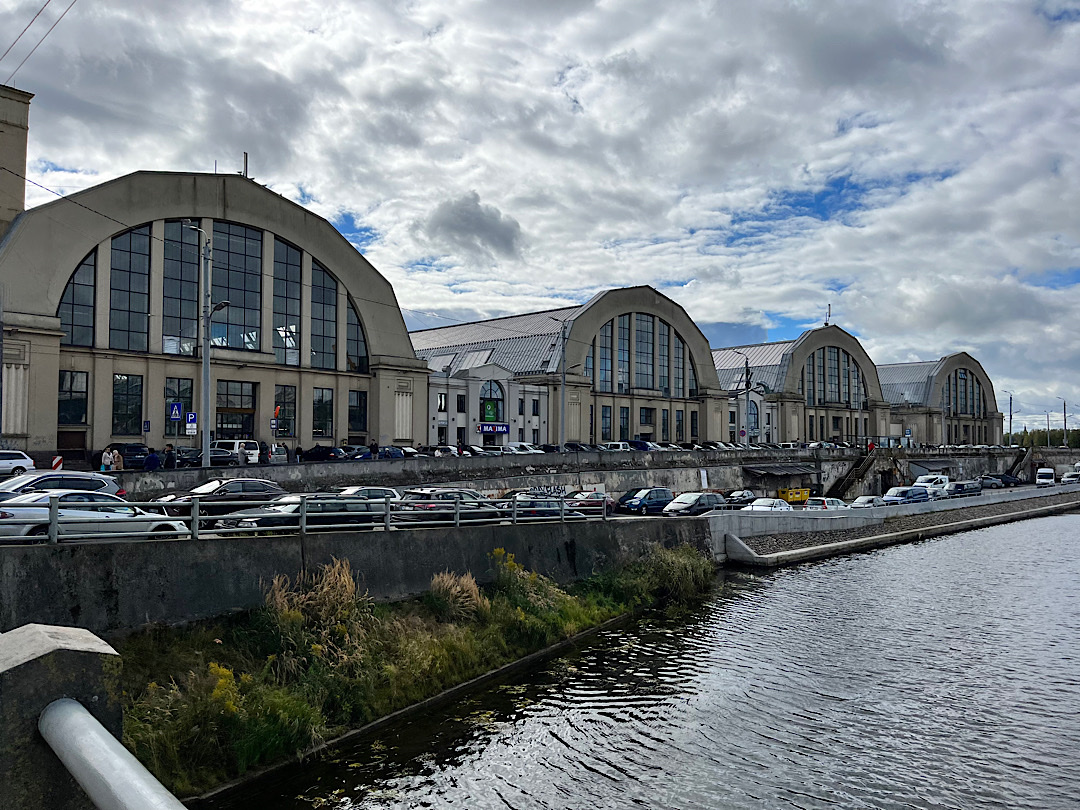

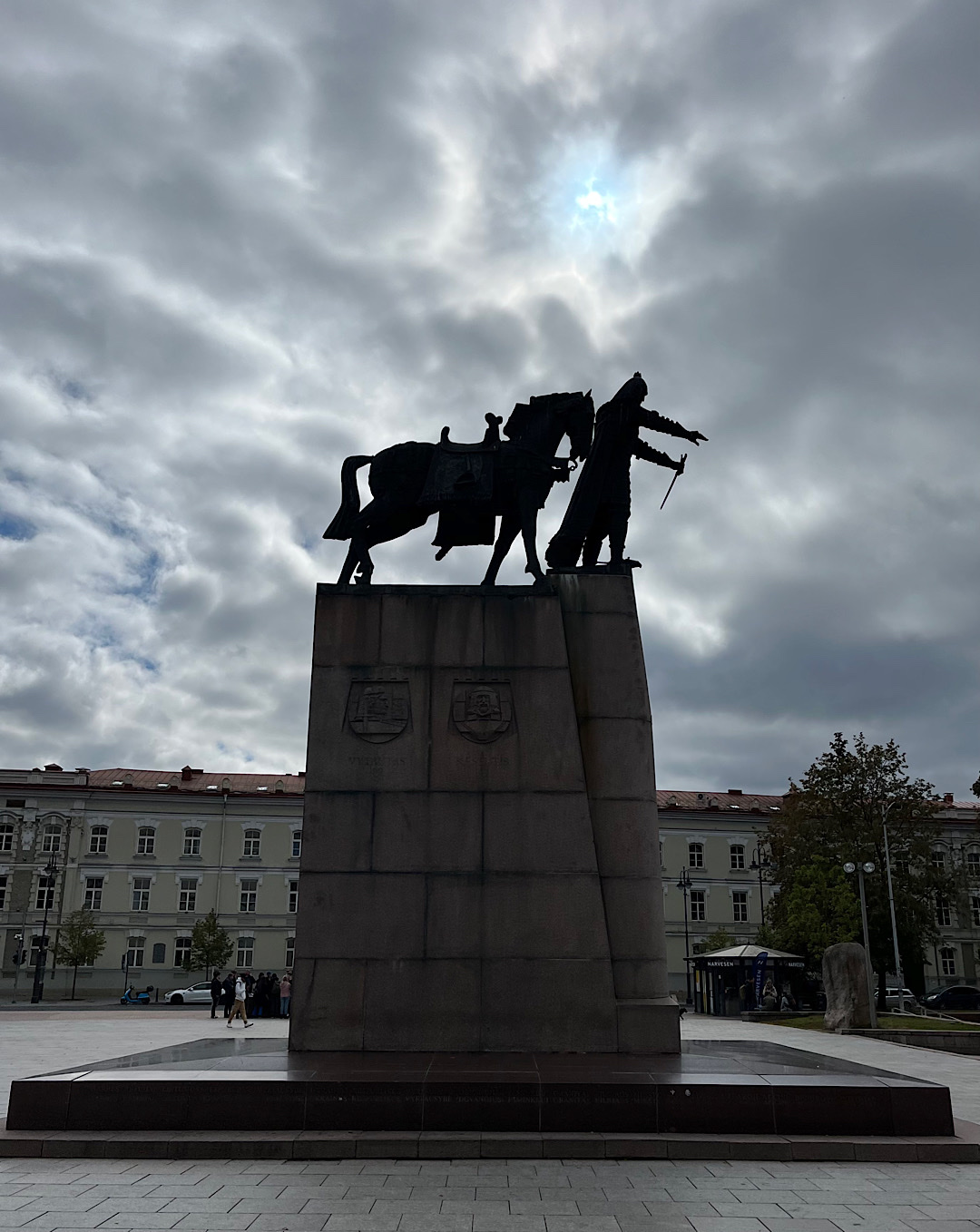
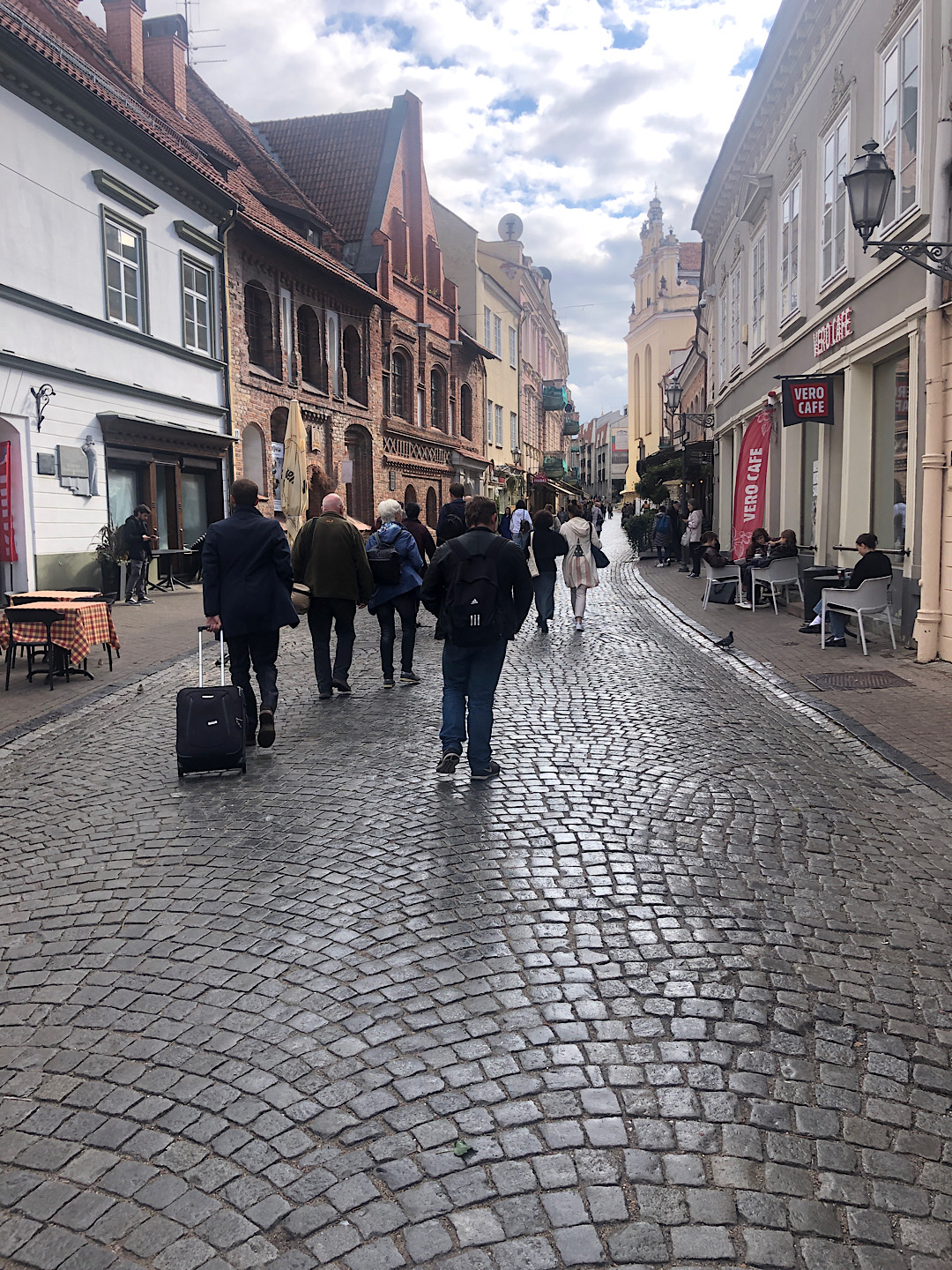
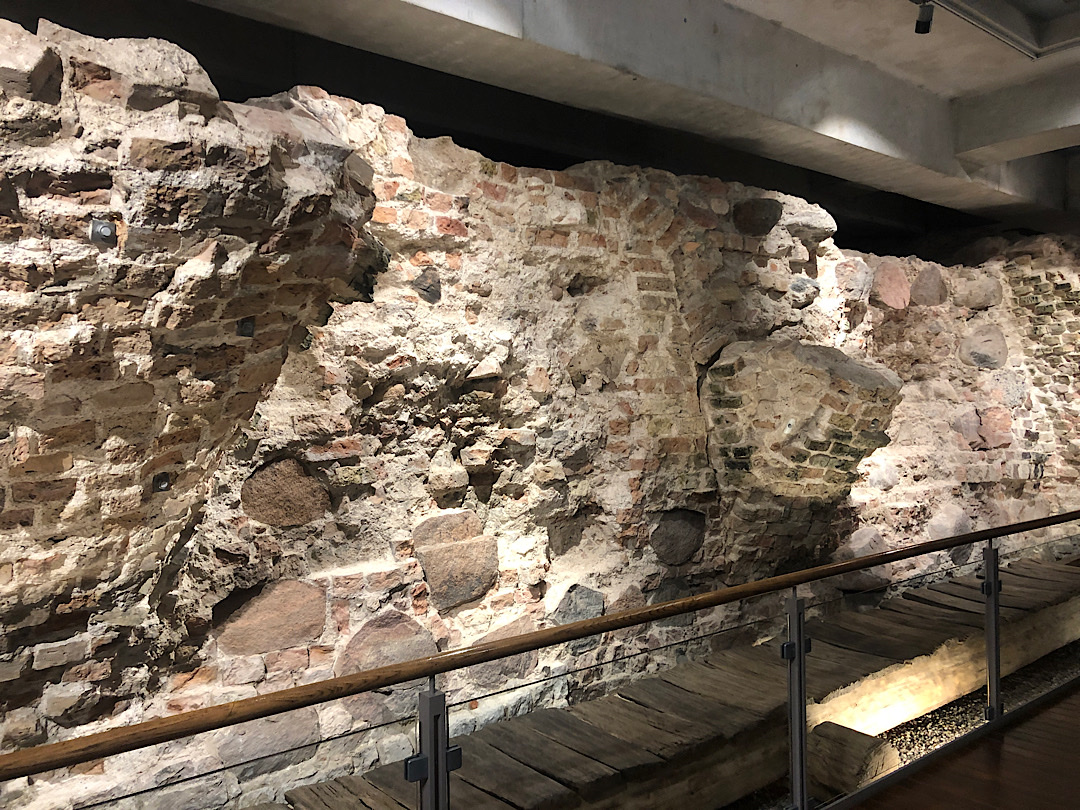 The narrator droned on and on but never mentioned any of what sounded like the really fetching parts of this history: archeological finds that go back to 9000 BC; pagans who roamed these forests and were the last hold-outs in all of Europe against Christianity; epic casts of bloodthirsty grand-dukes. We glimpsed these things from wordy posters on the walls. But they were almost indigestible.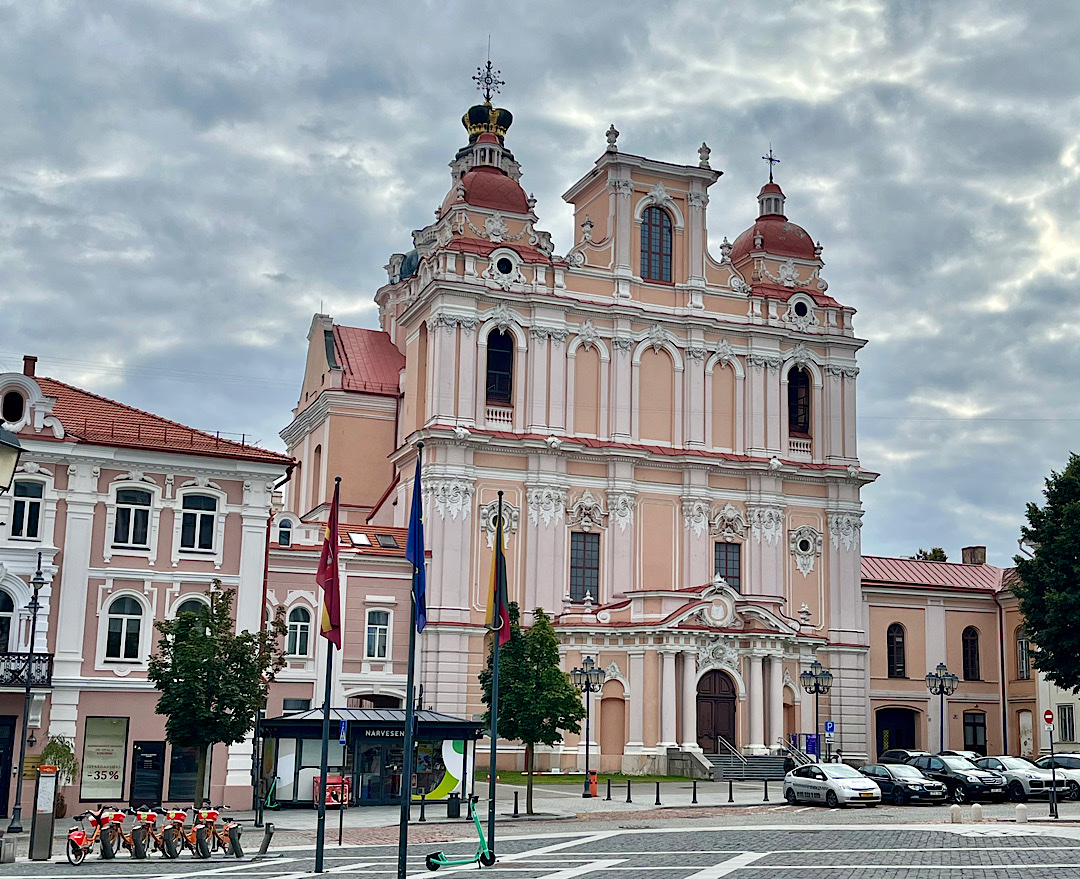
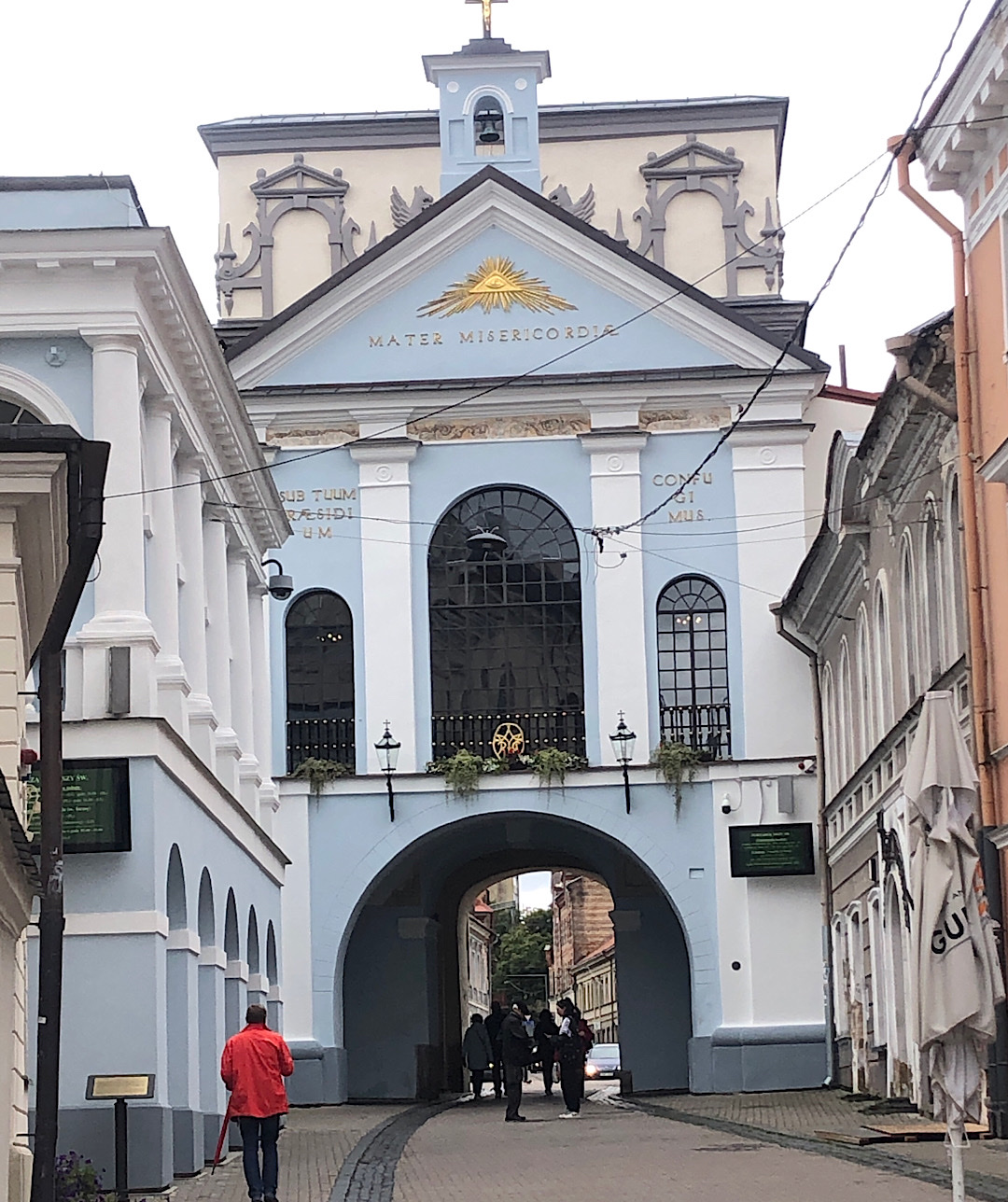
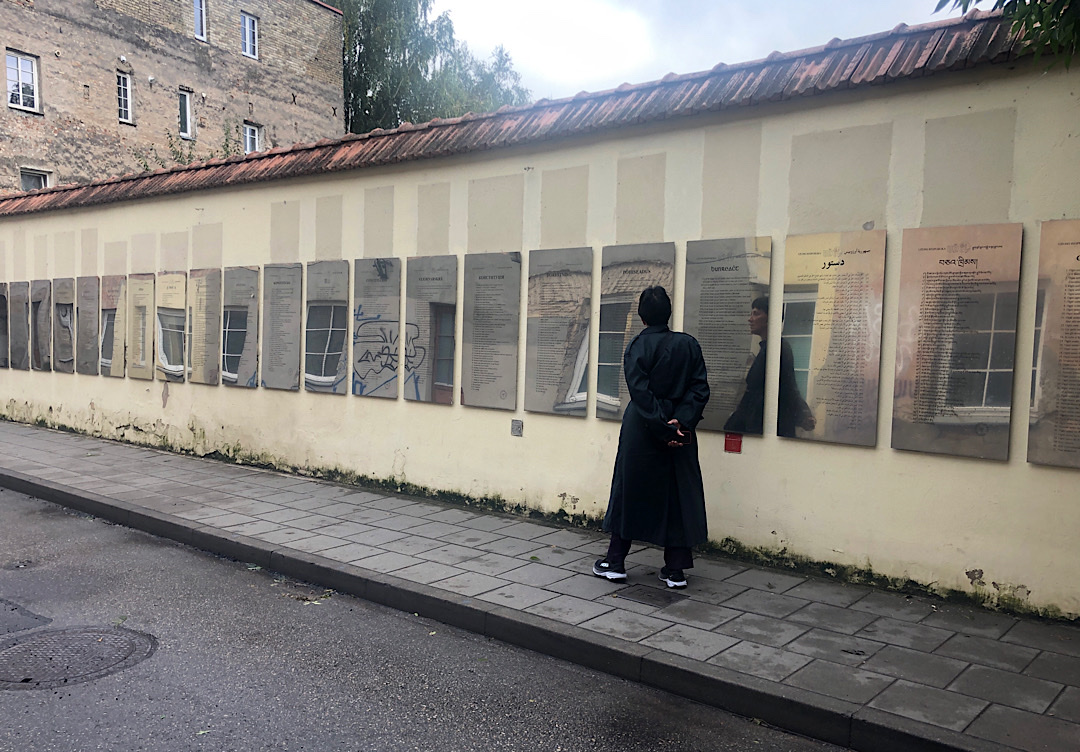

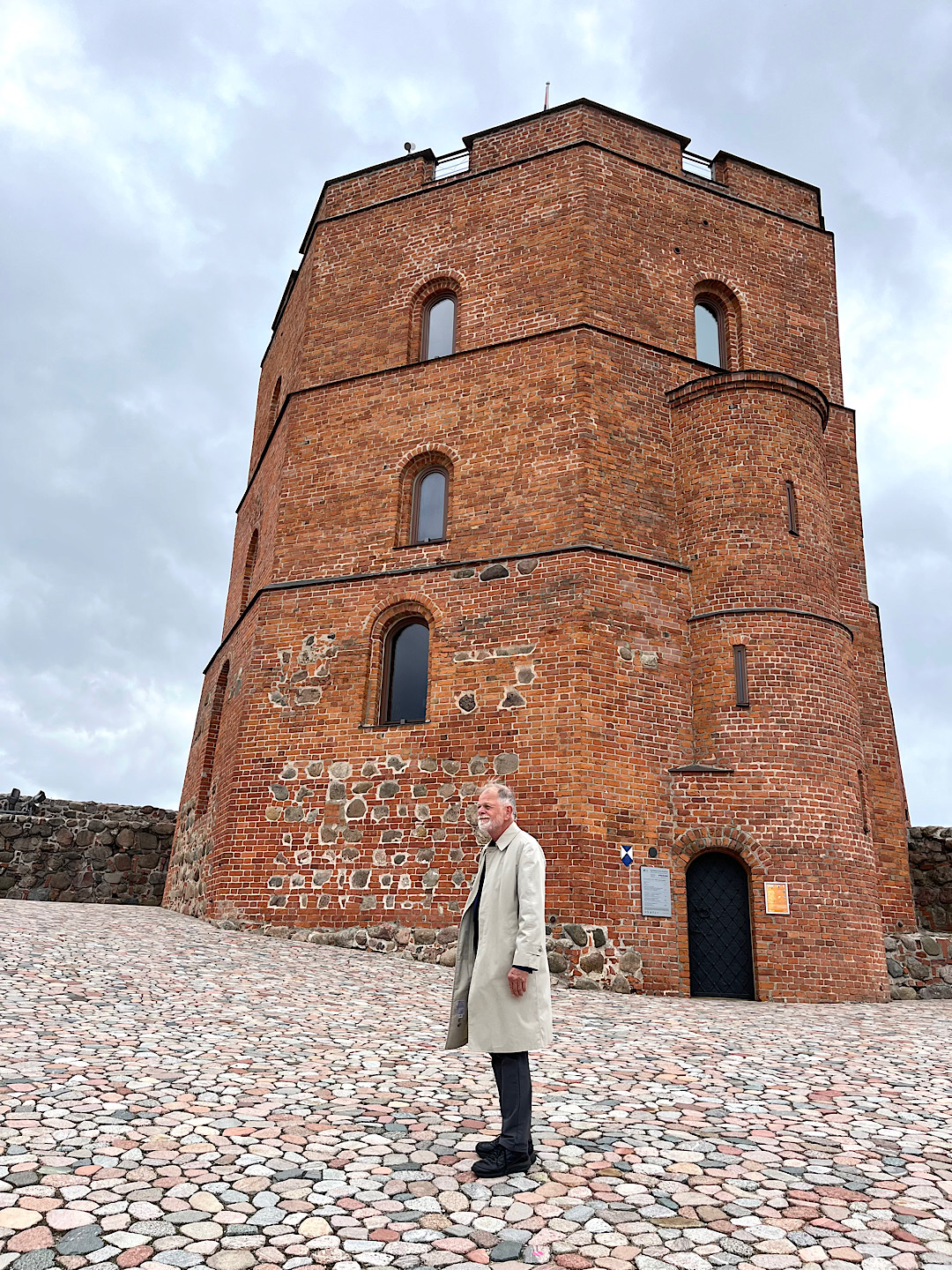 …I stumbled upon a couple of delights. A case set in the floor in one niche housed the skin of a strange creature studded with silvery needles. When I asked a guard if she spoke English, she looked embarrassed and said she didn’t know much. But she knew the creature’s name: wolf.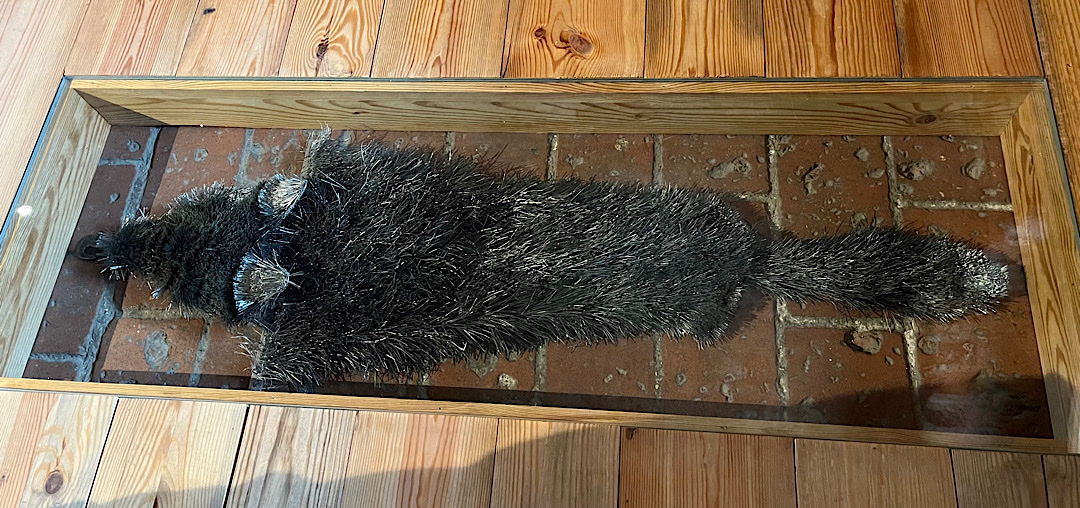
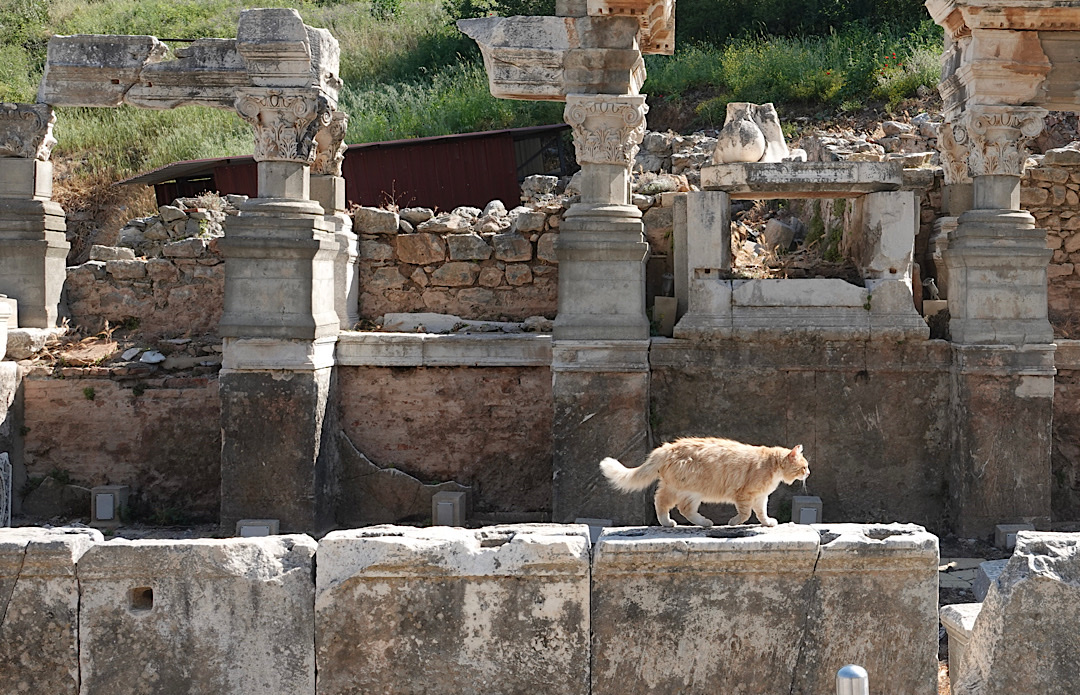
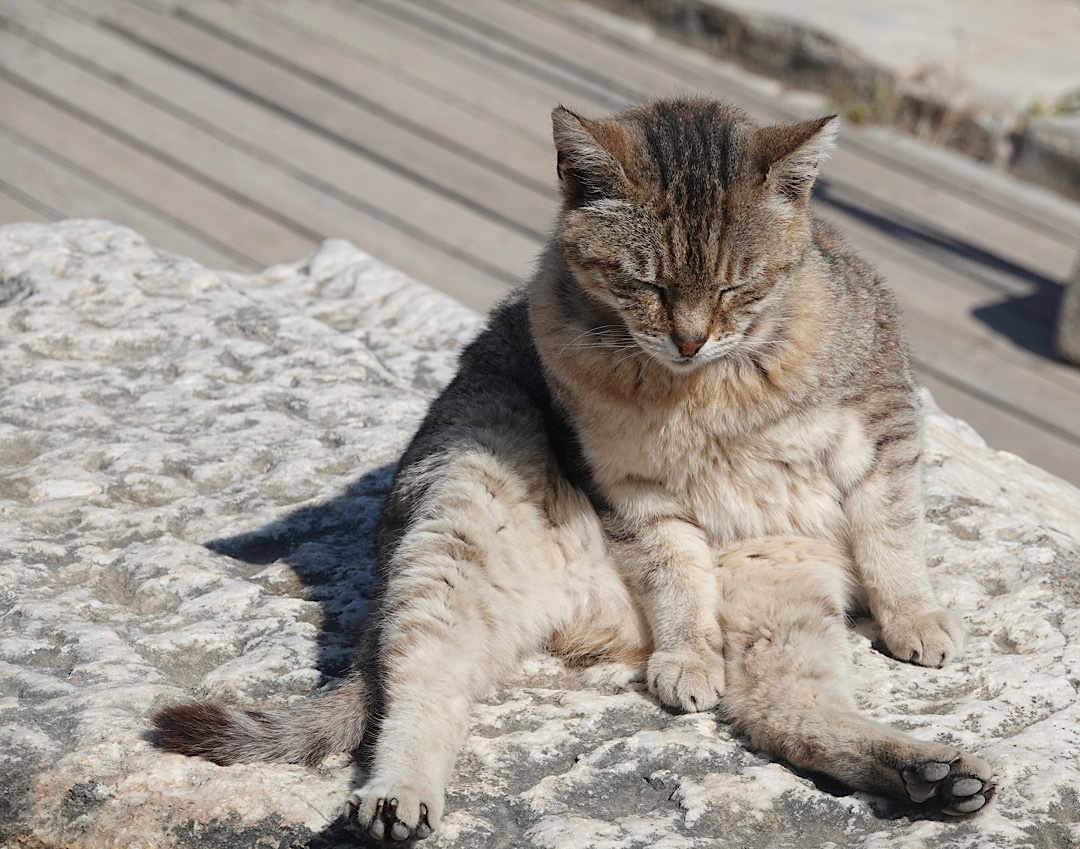 or snooze or just hang out wherever they feel like it.
or snooze or just hang out wherever they feel like it.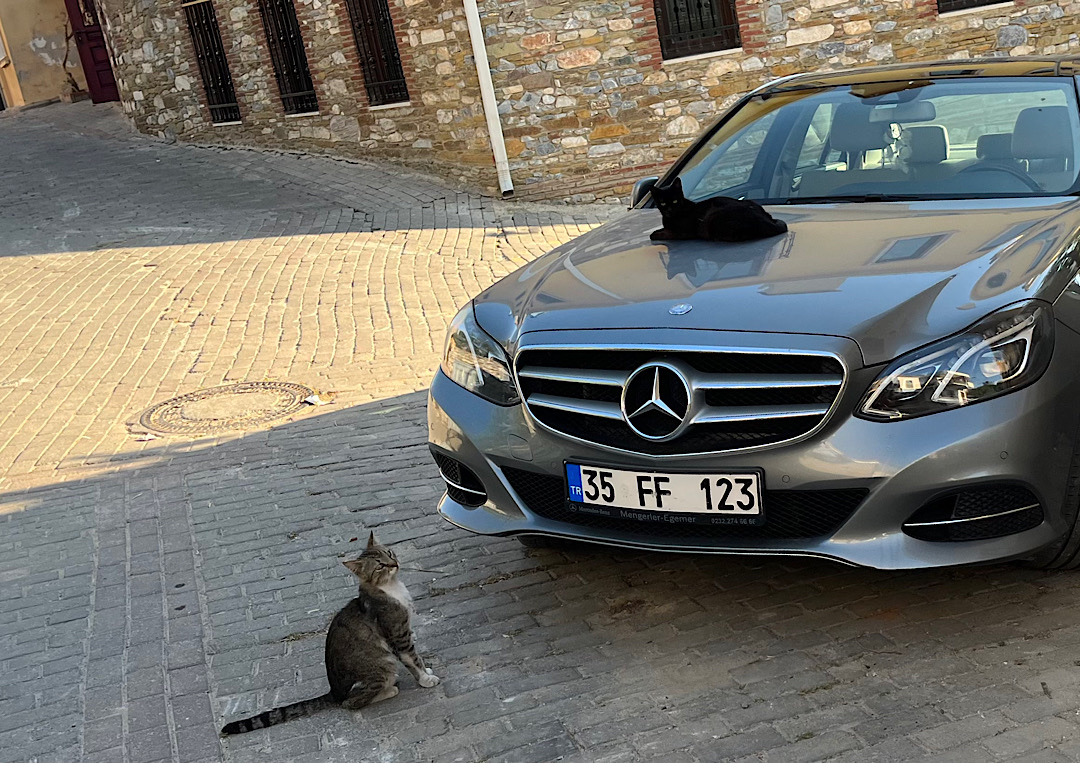 
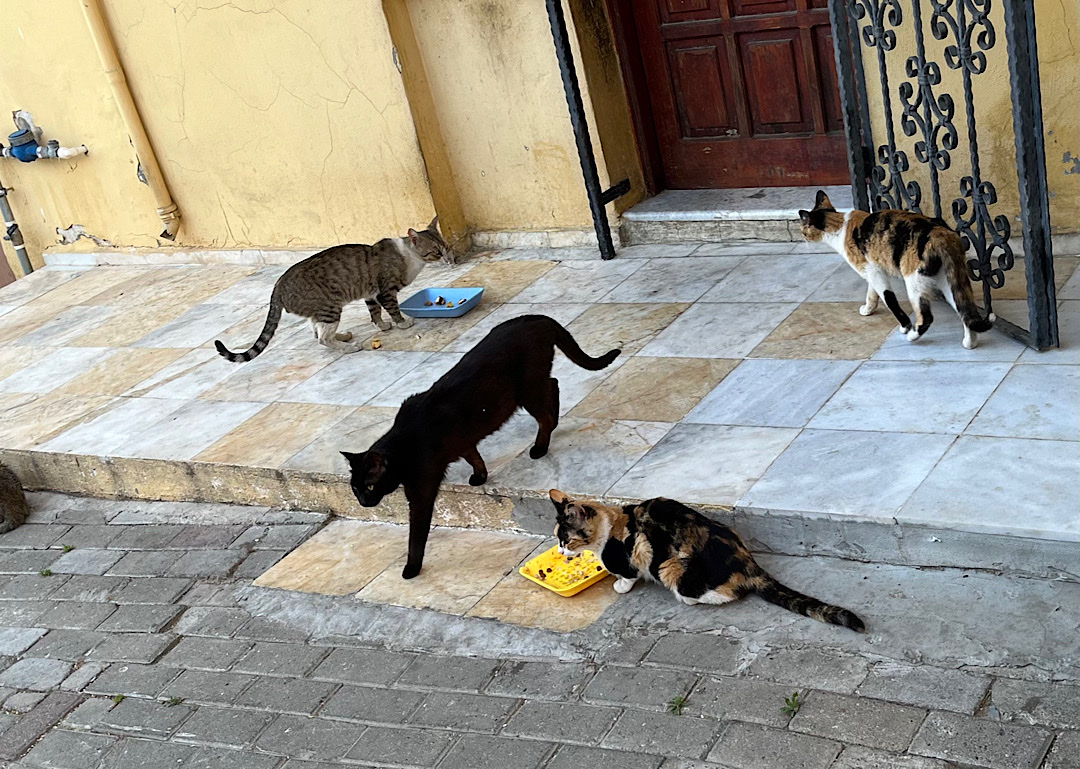
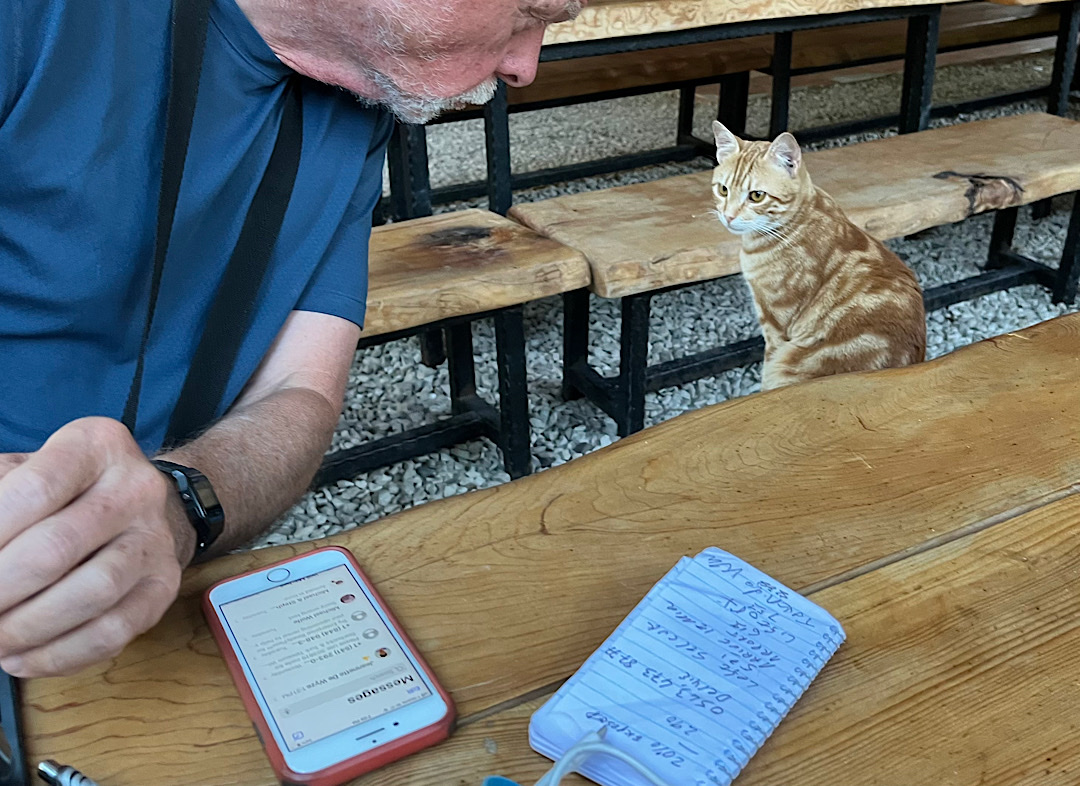
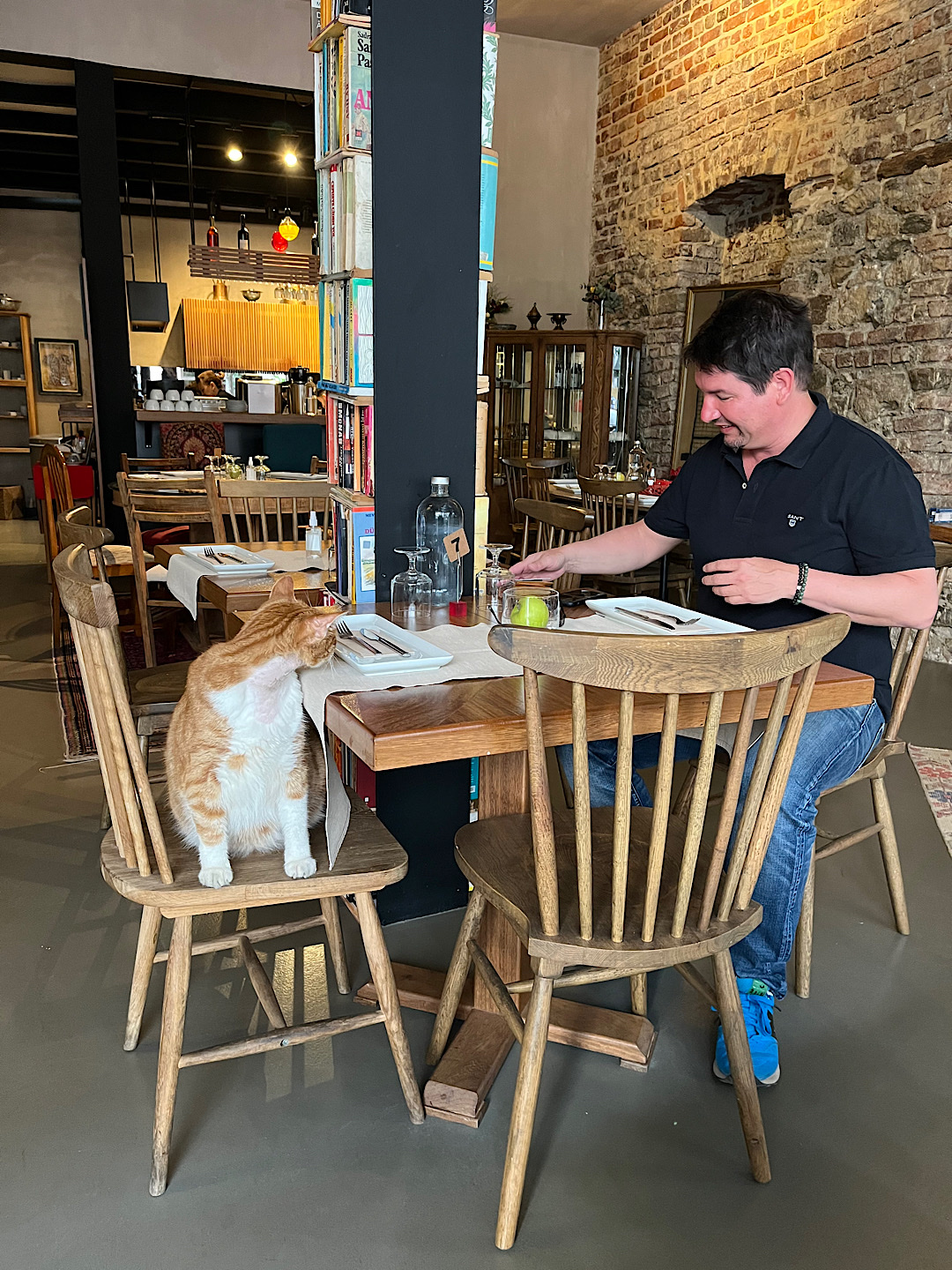 They’re clearly free spirits. Nobody owns them but people everywhere feed them – communal pets in the megalopolis.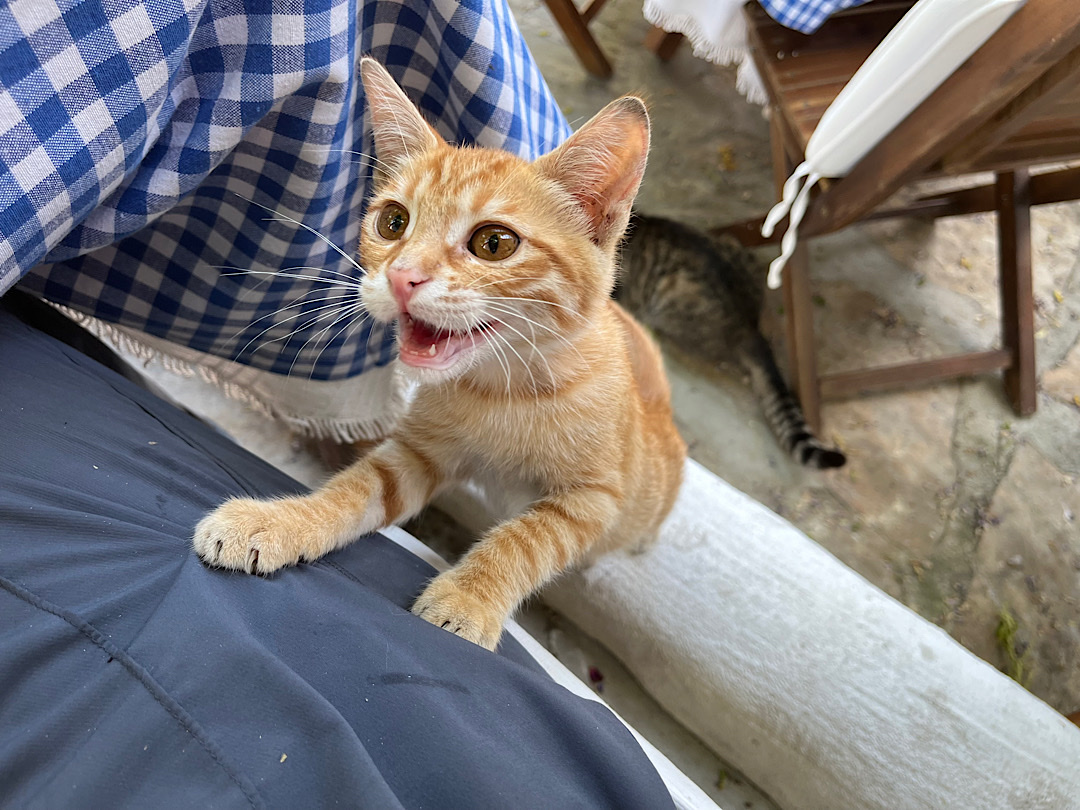
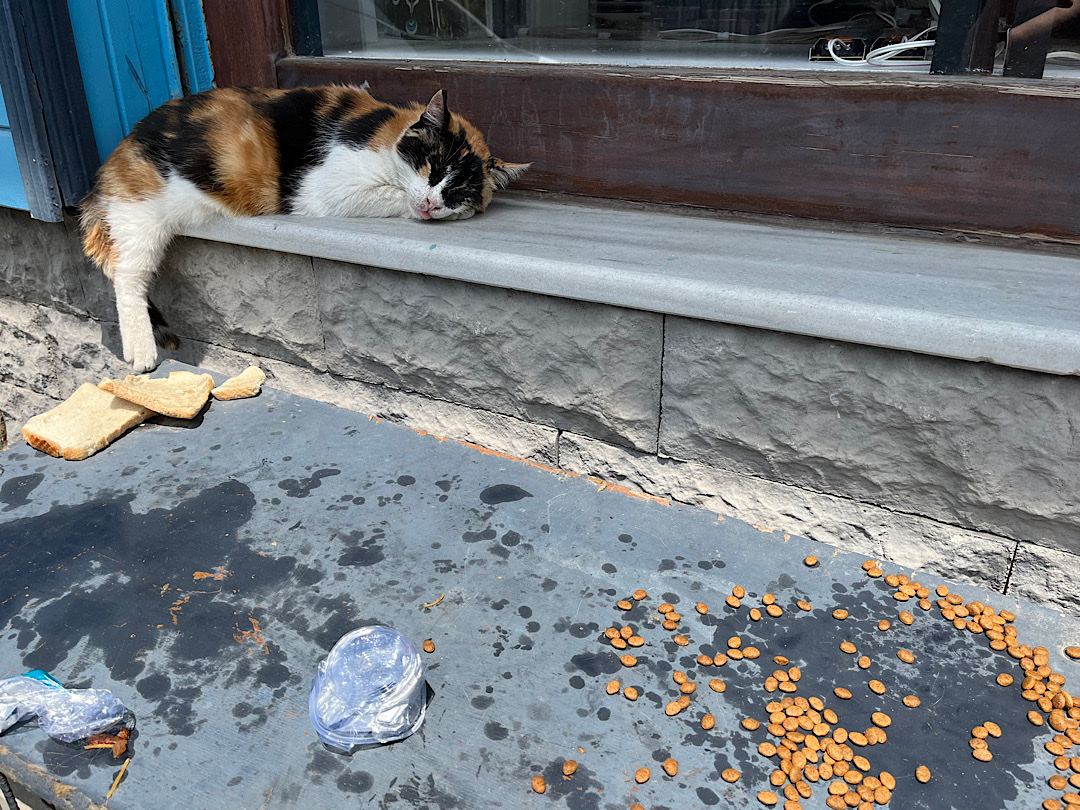
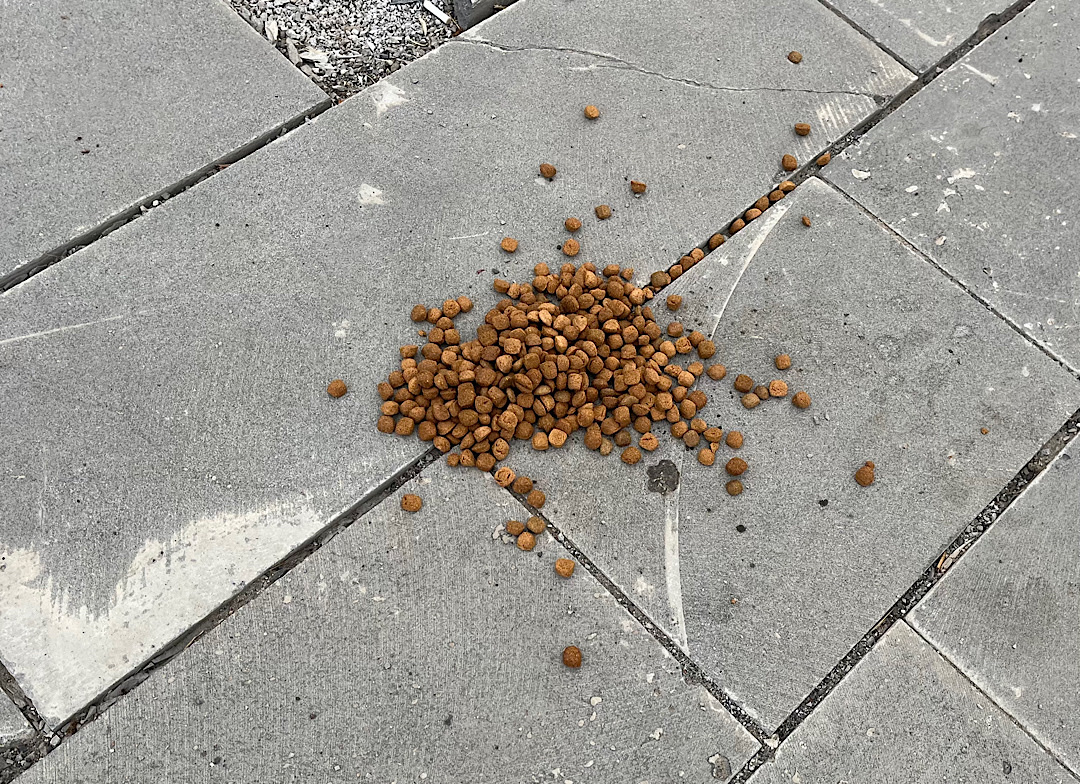
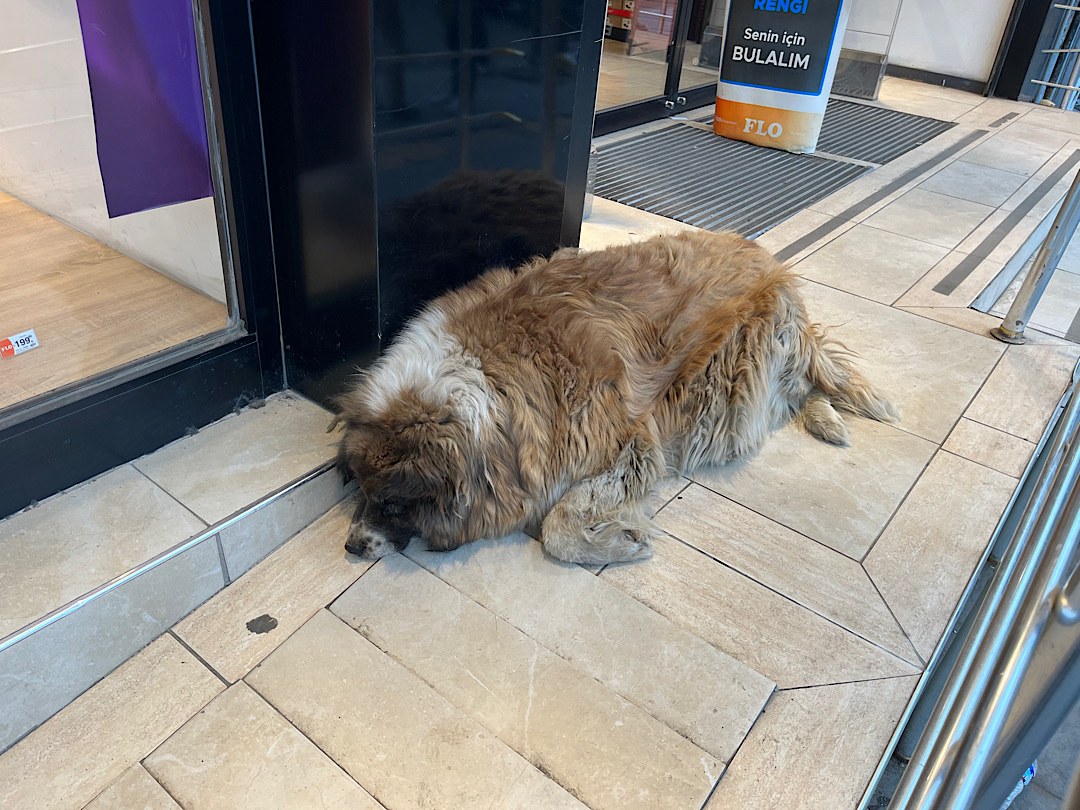
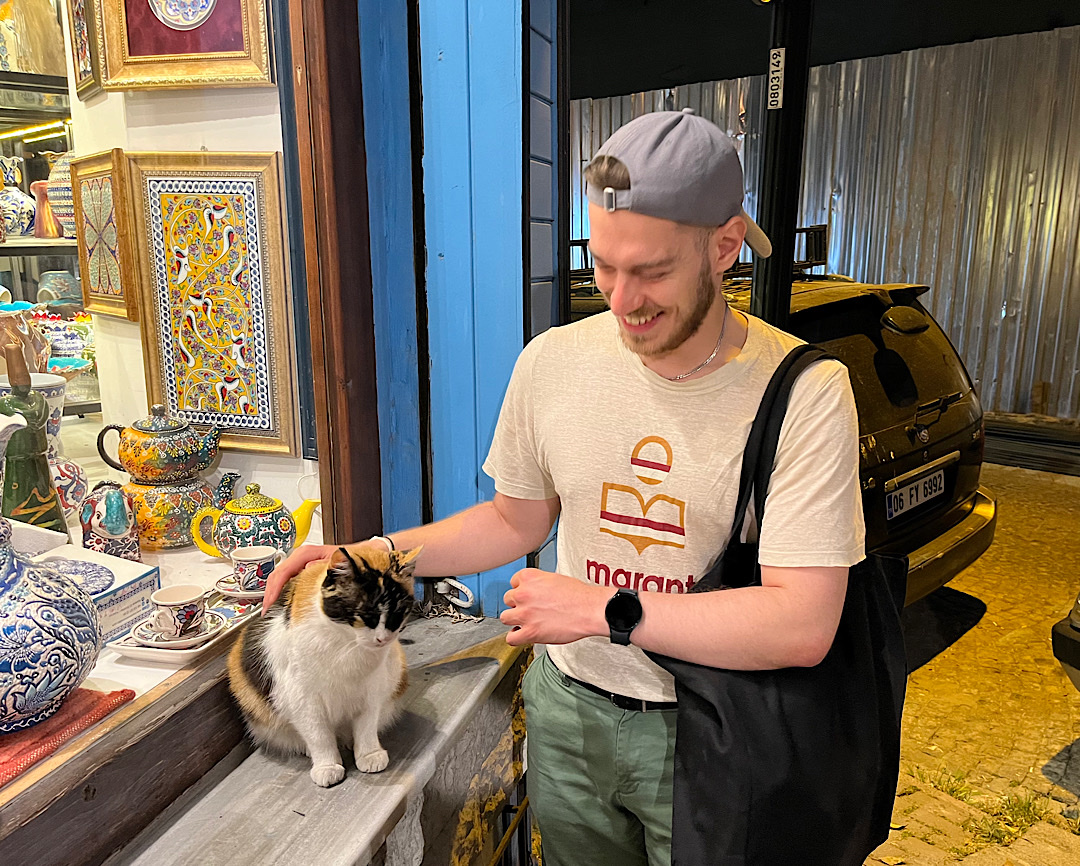
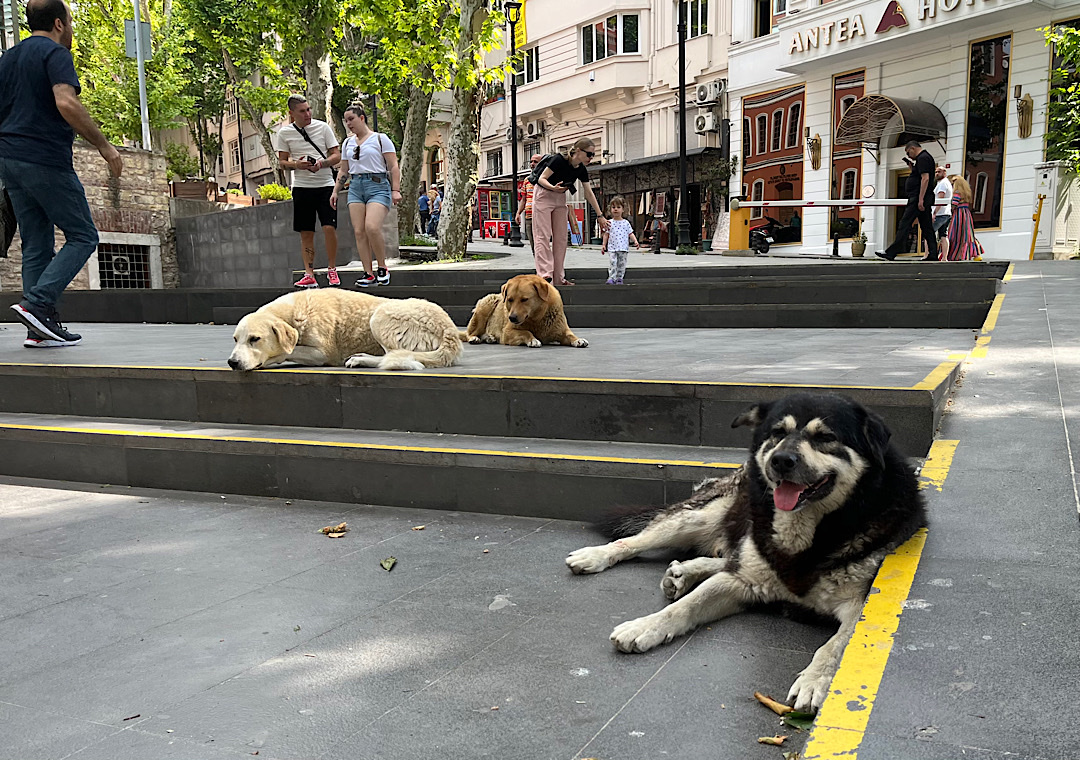 More than anything, they act like they own the place. I was jealous.
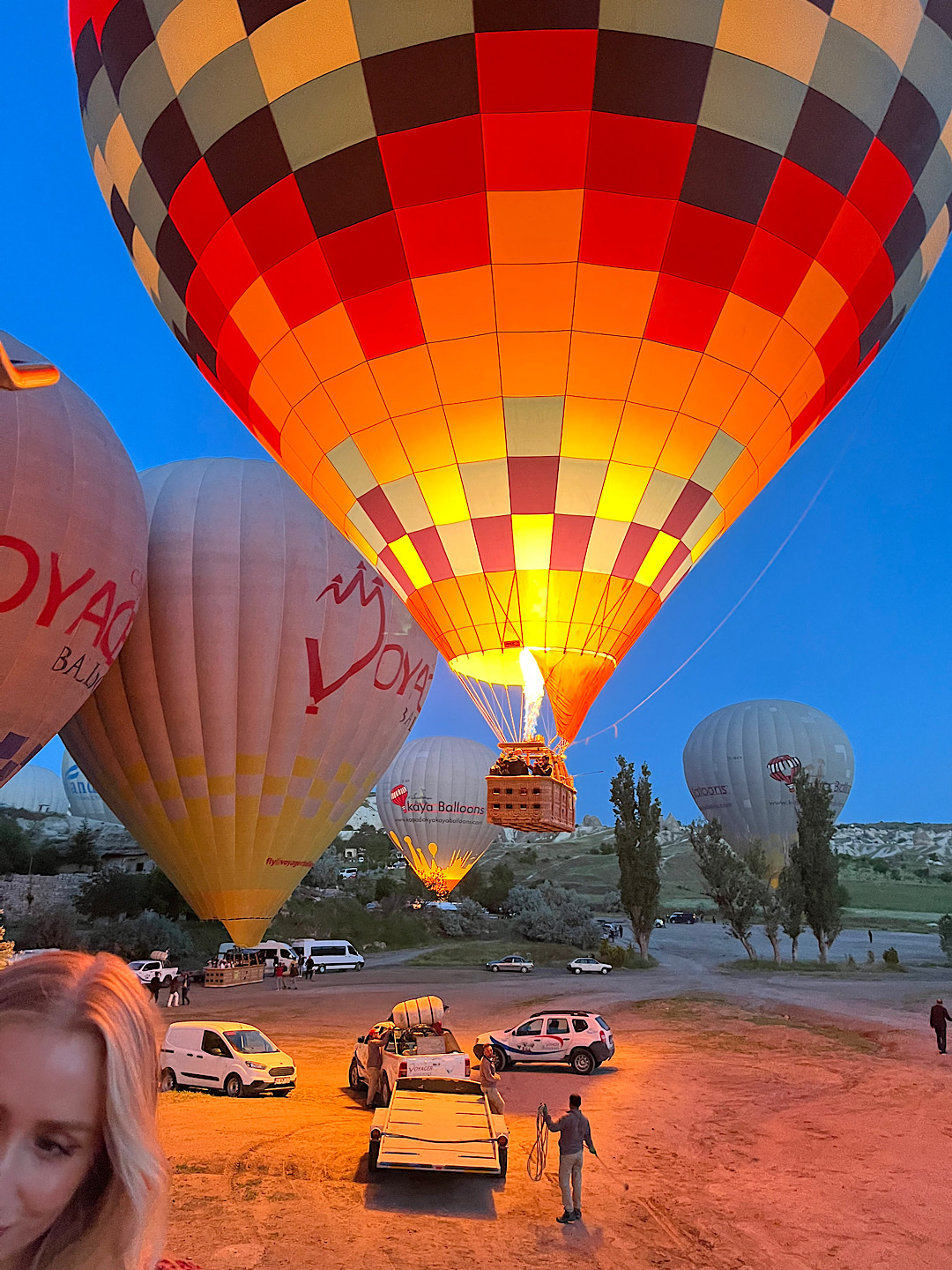
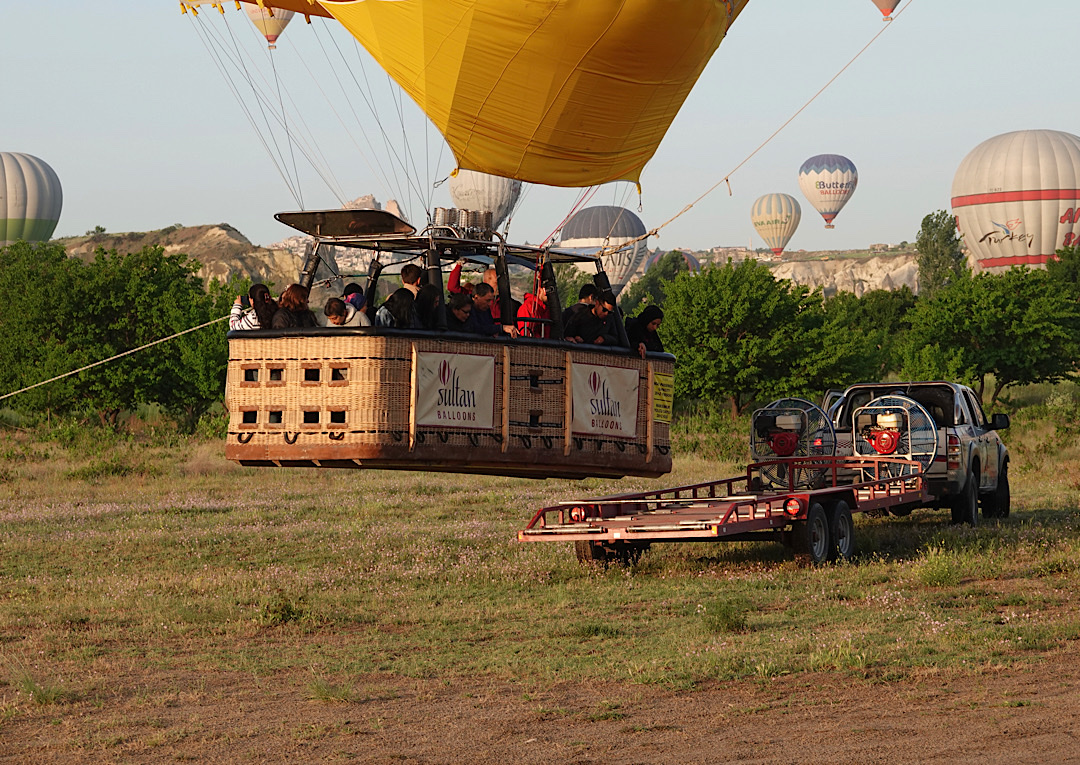
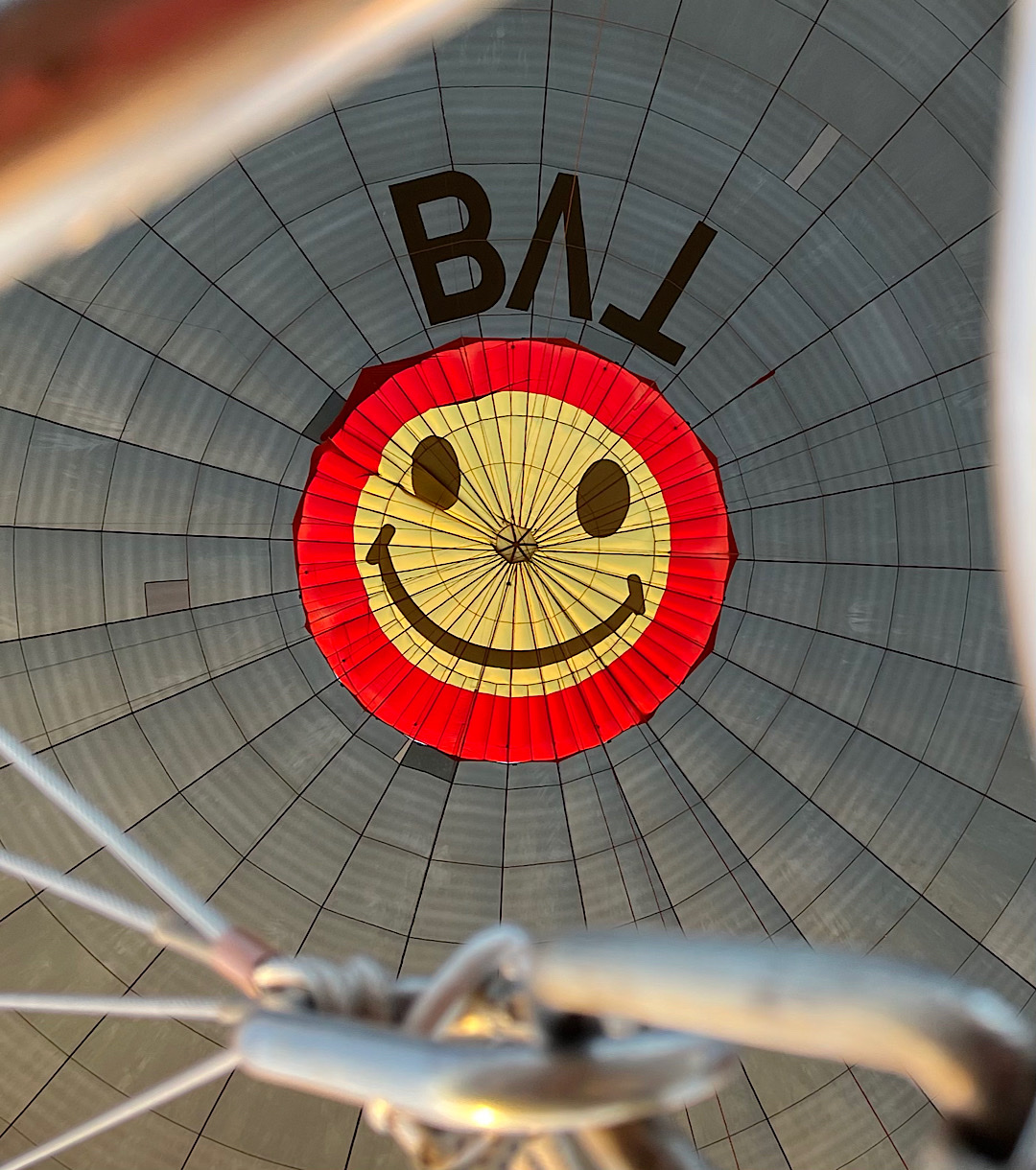
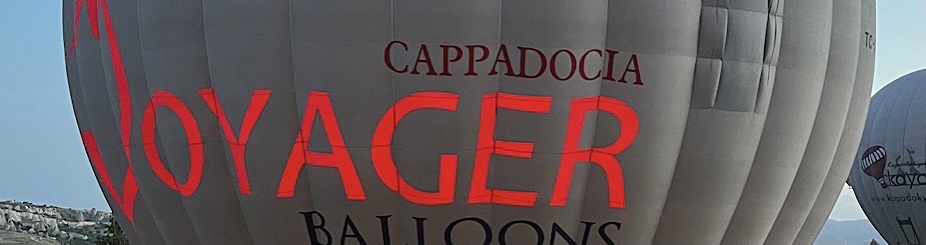 To squeeze the maximum fun into your birthday, here’s a handy tip: set your alarm for 3 in the morning! This will increase the amount of time you have to celebrate. If you happen to be in Cappadocia, as I was, you can be picked up by a van that will take you to a hot-air-balloon launch site. If the weather is cooperative, as it is for more than half the year, you can clamber into a basket holding 22 people and rise above one of the weirder landscapes on earth. After the ride, you can fill the remainder of the day with other amazing activities.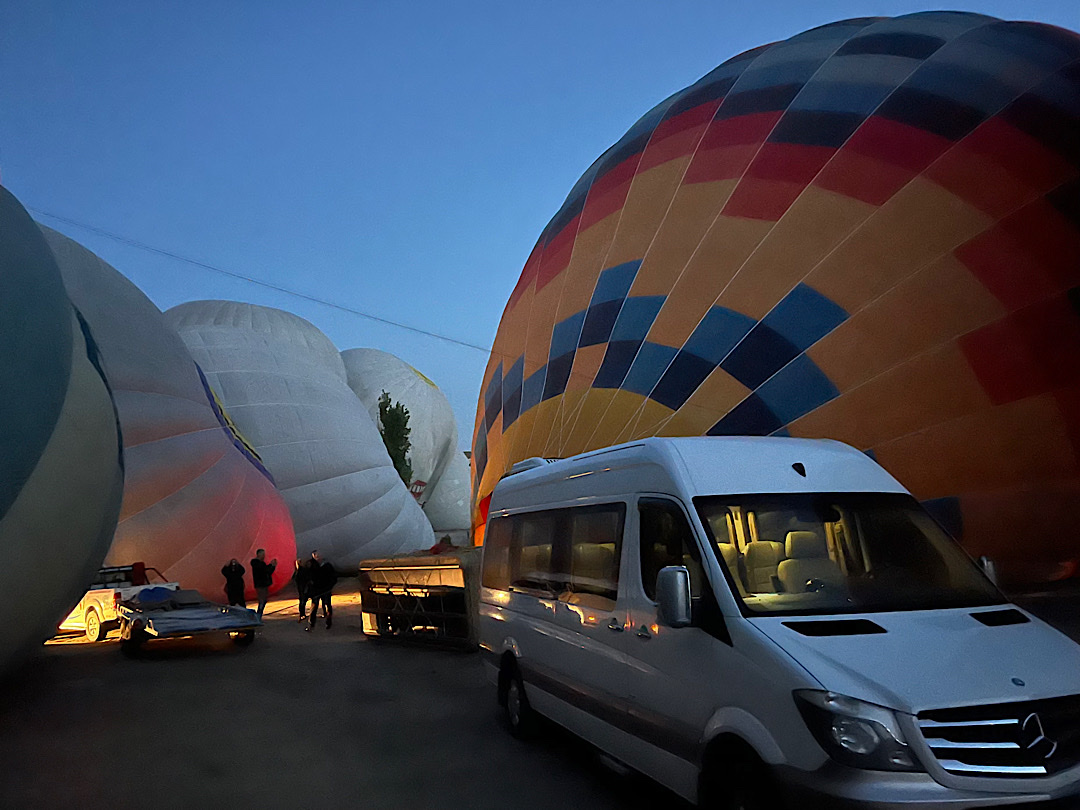
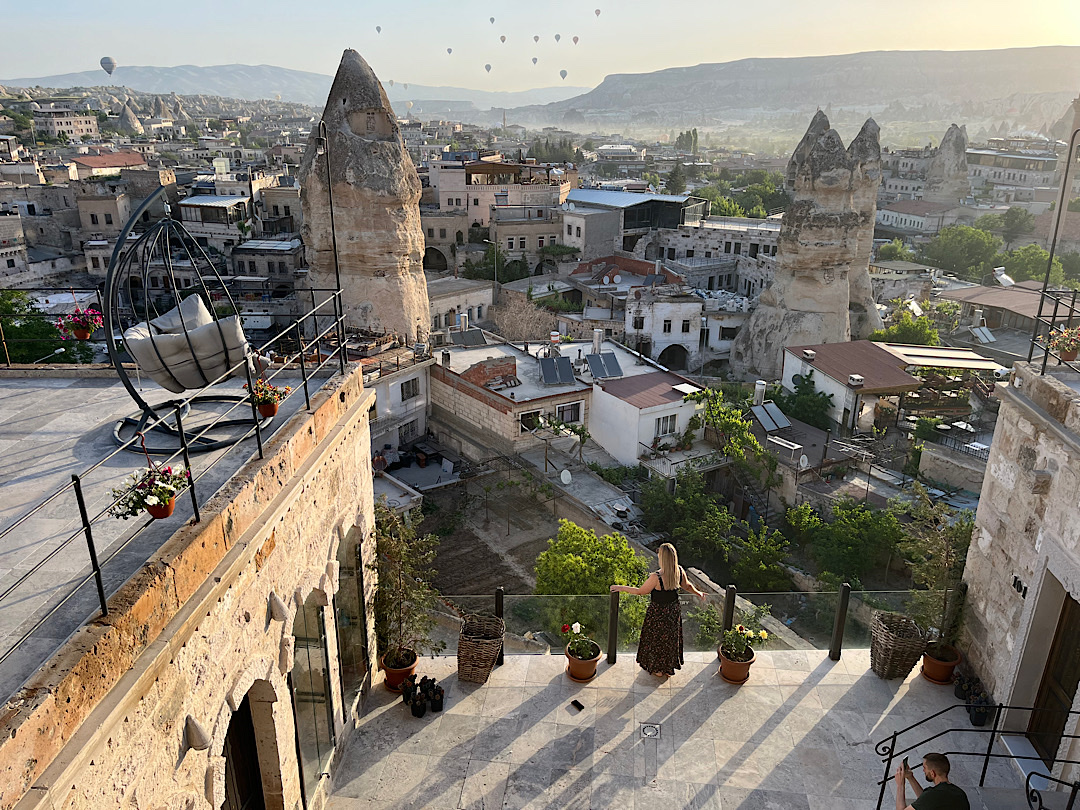
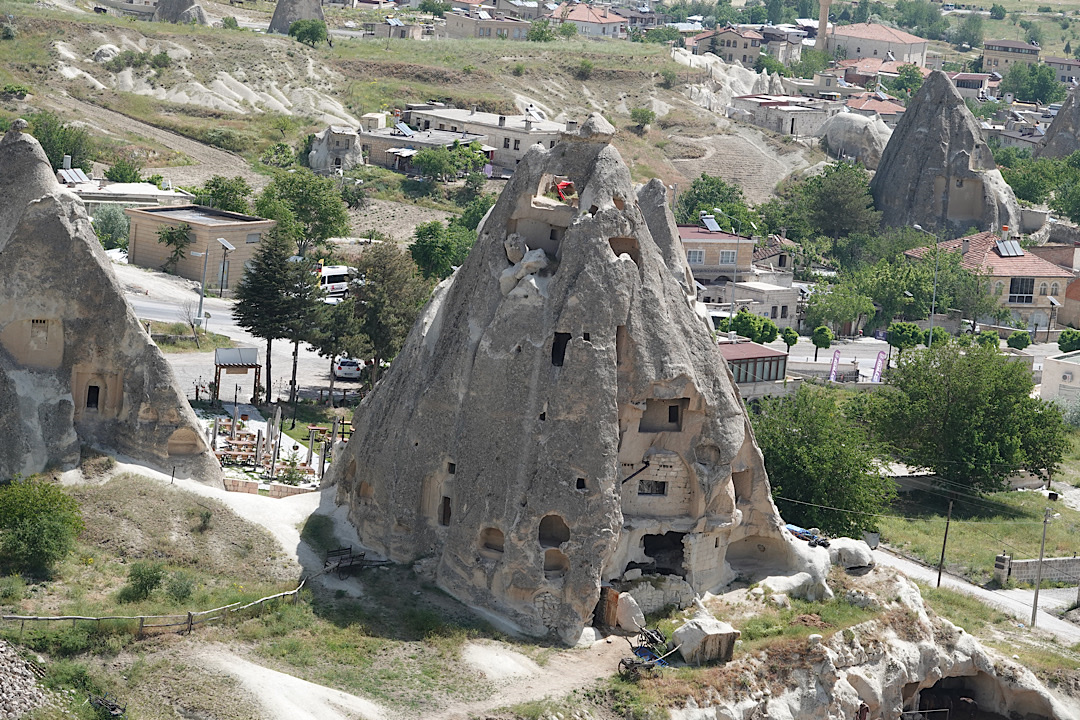
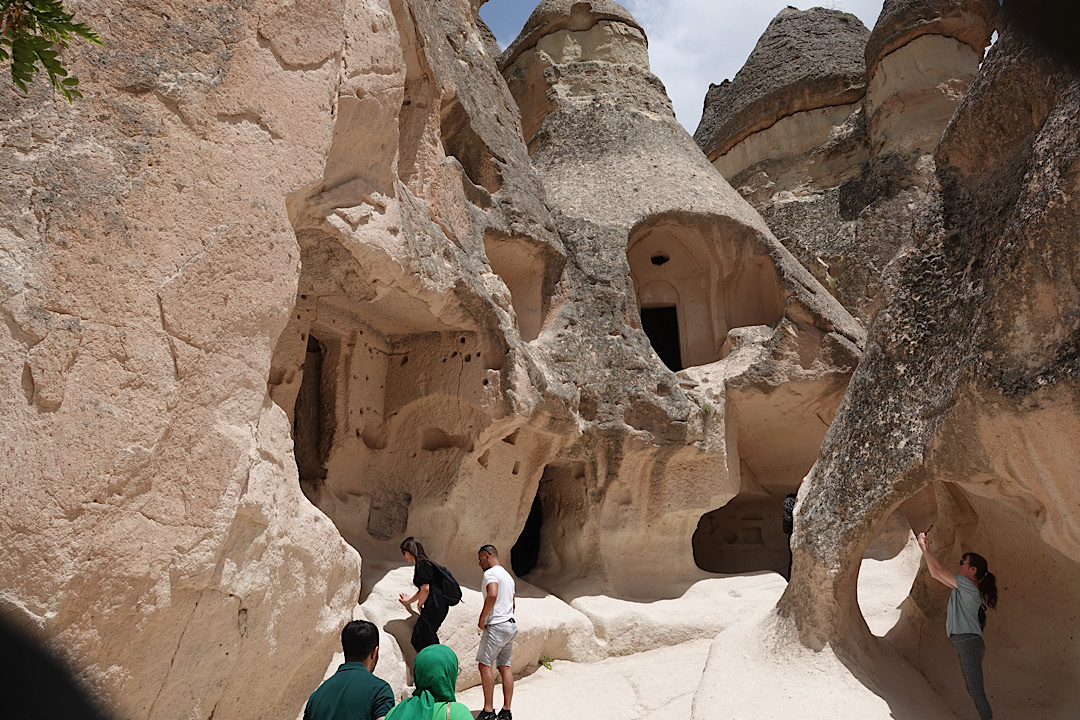
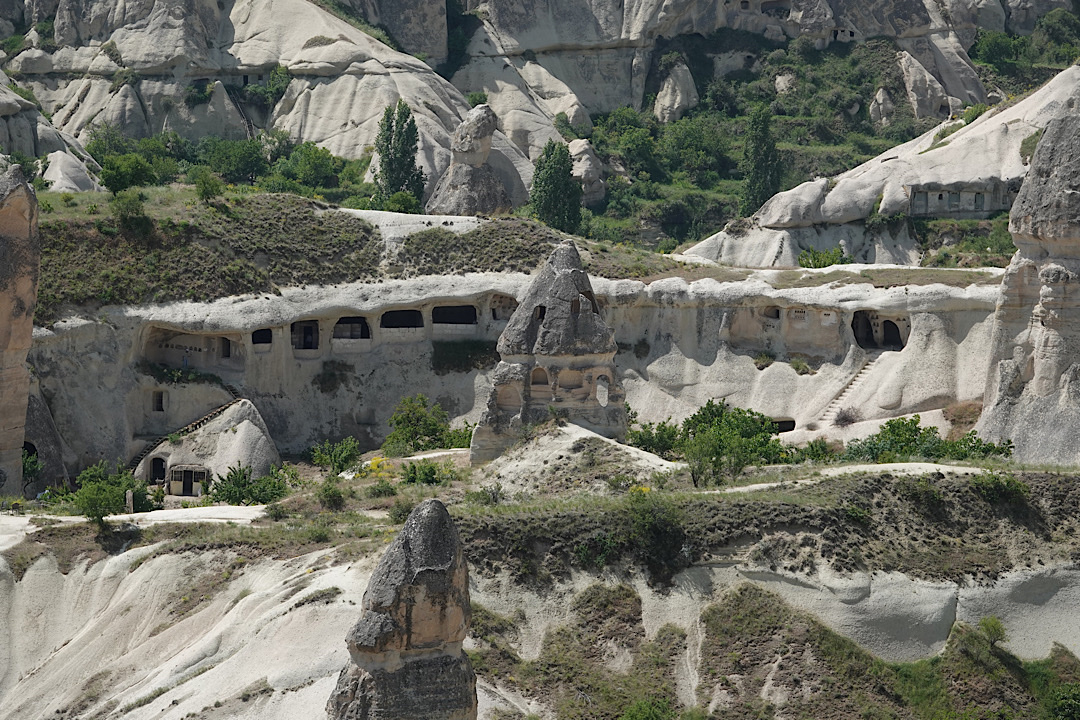
 I had expected the major payoff of this experience to be the view of Cappadocia’s famous rock formations — towering stone columns formed by the action of wind and water on soft volcanic ash deposits and known locally as “fairy chimneys.” (They reminded us of the hoodoos of Bryce Canyon.) The views were extraordinary.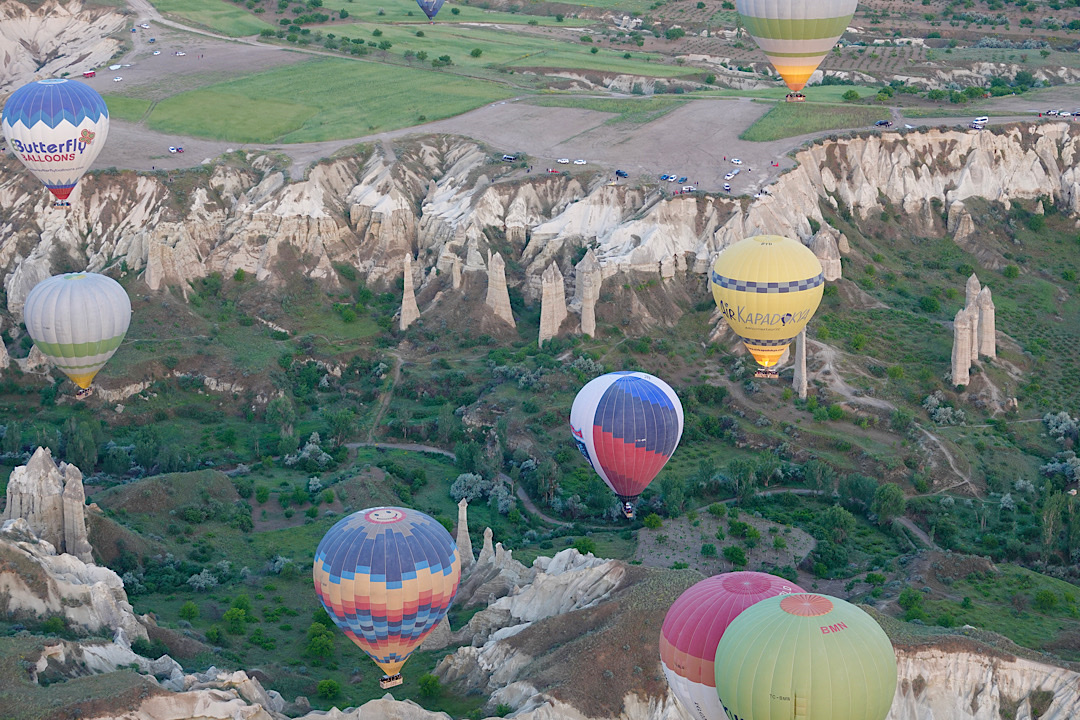
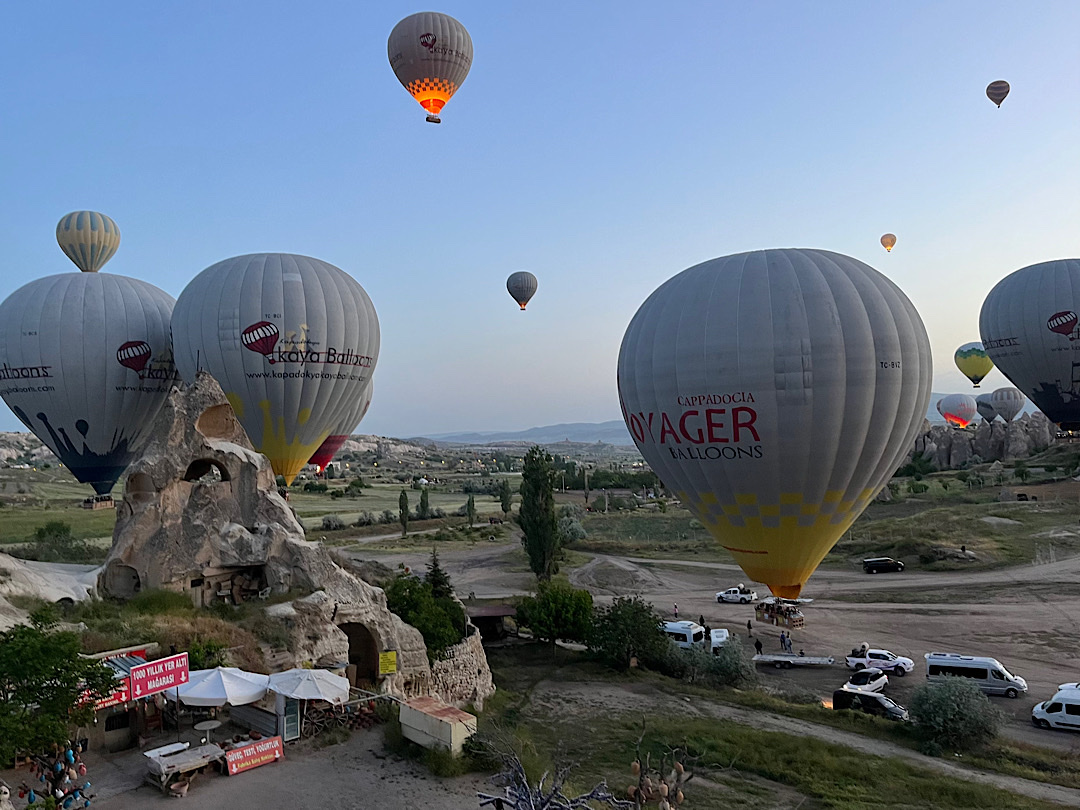
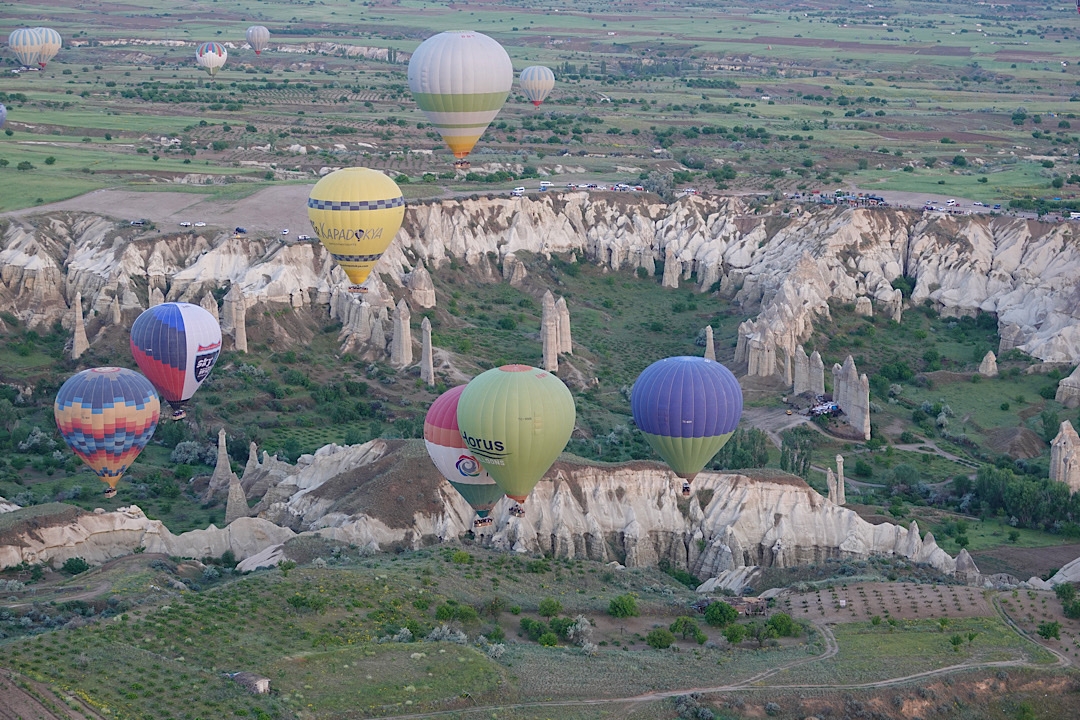 But even more wondrous was the sight of so many hot air balloons in every direction.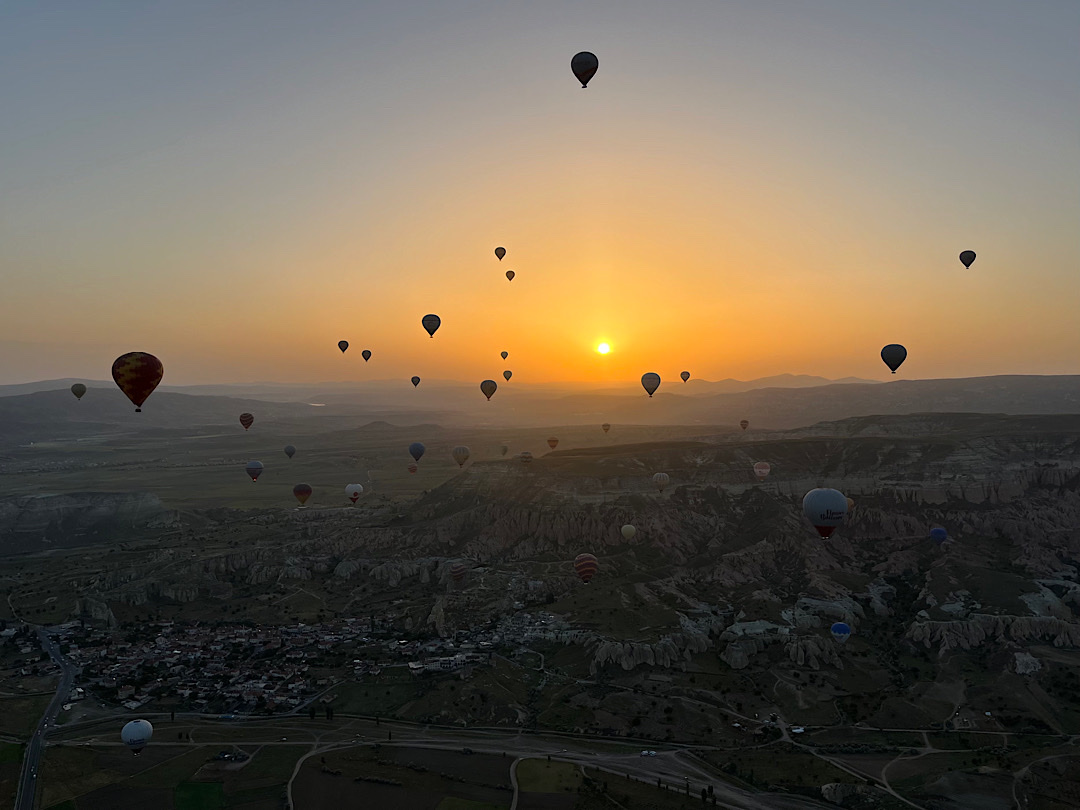
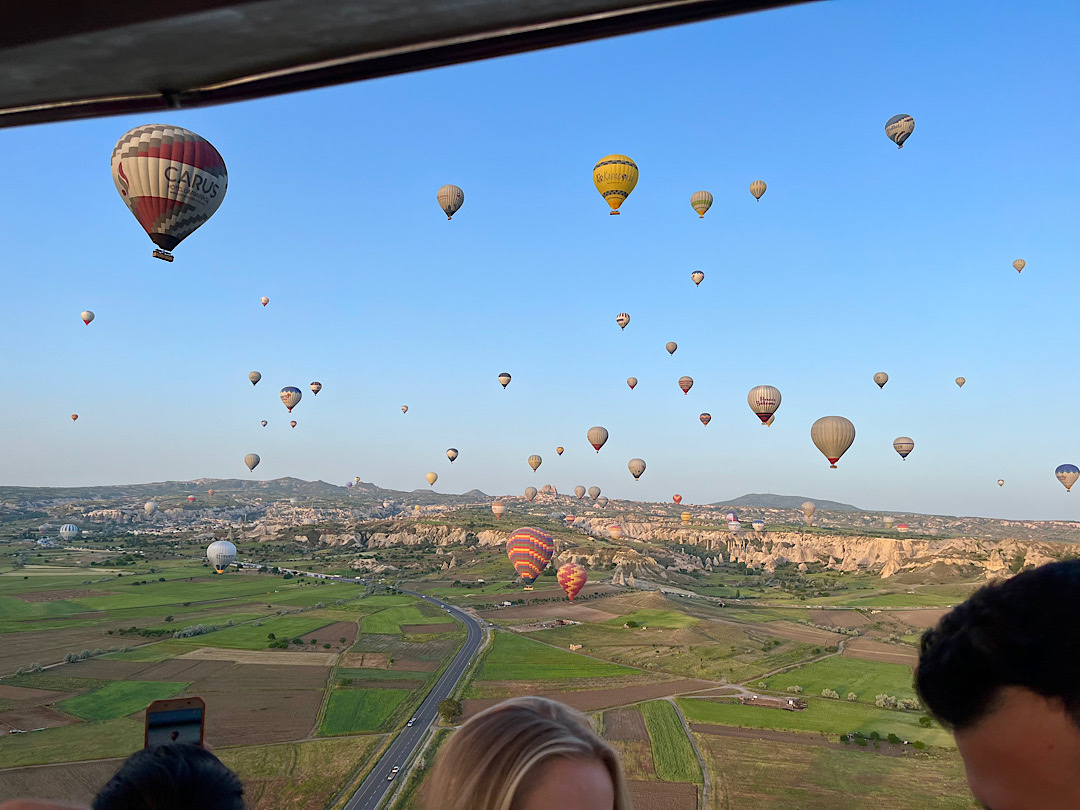 Ballooning only began here about 30 years ago, but powered by images on social media sites, it has burgeoned in the last decade or so. Our pilot Tuesday said more than 150 balloons carrying a couple thousand people now fly here more days than not.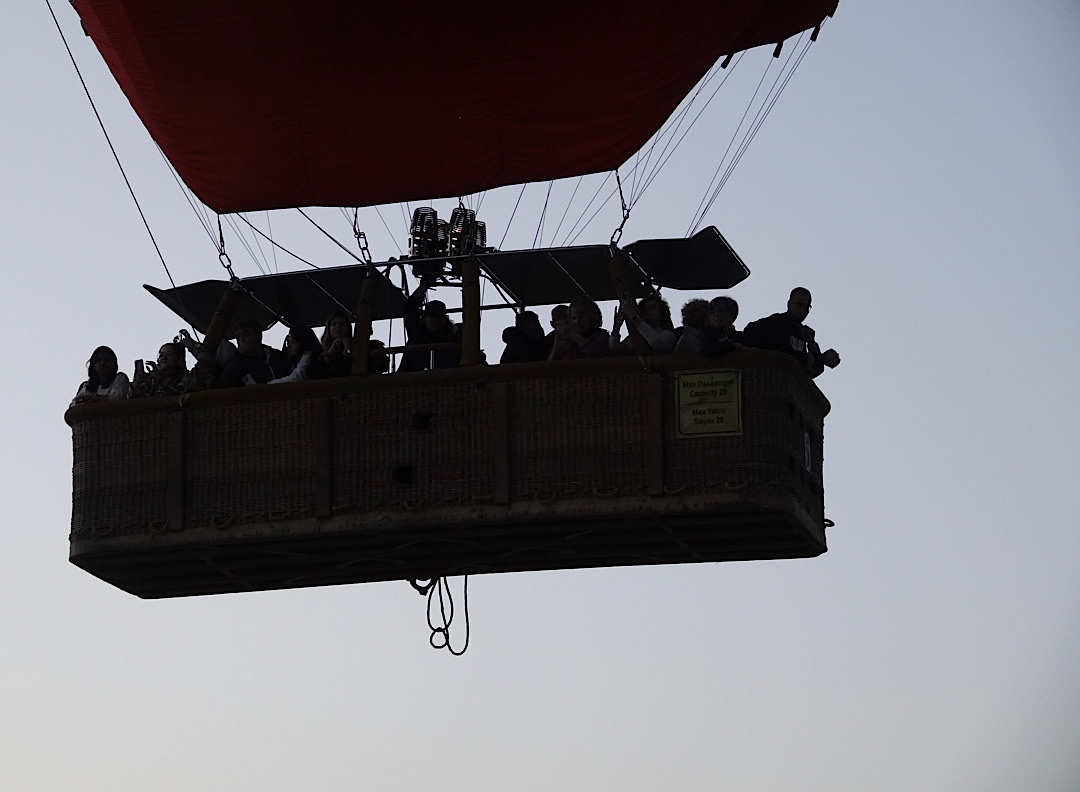
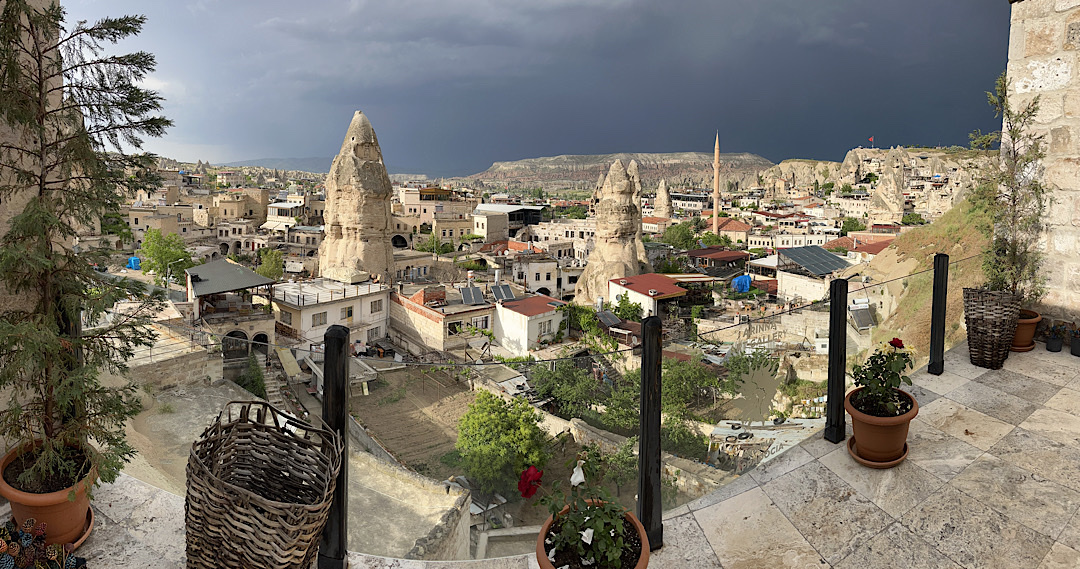 A view from the terrace outside our room.
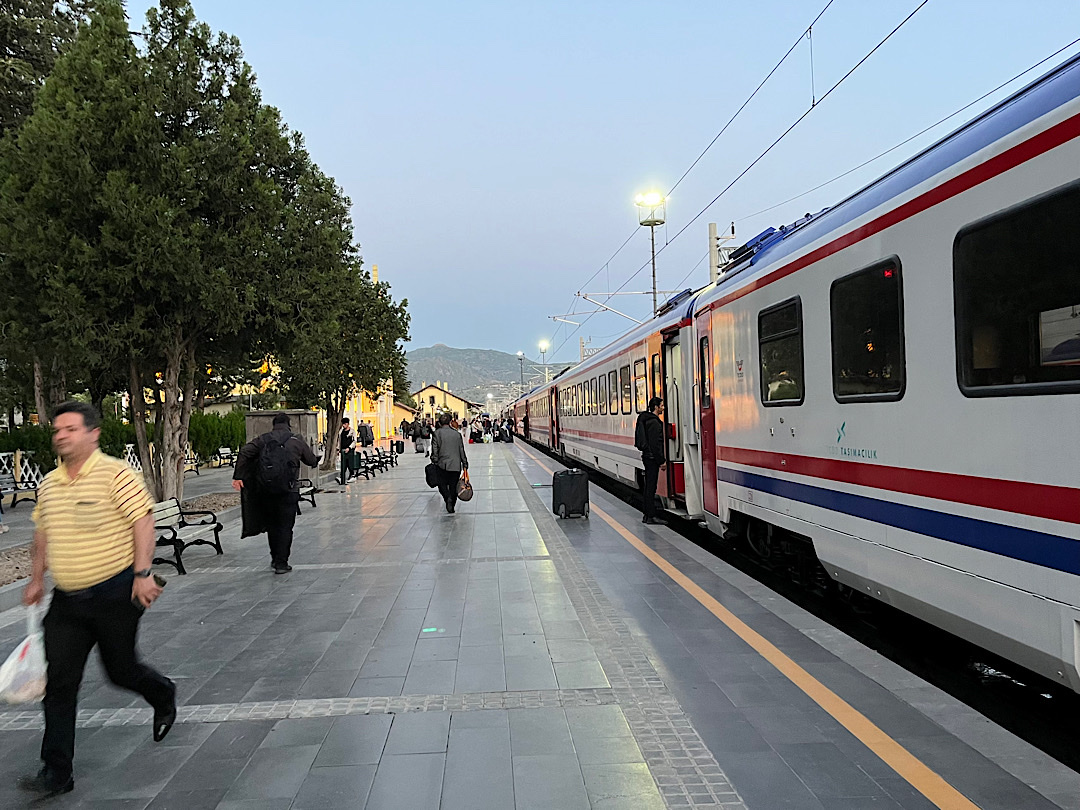
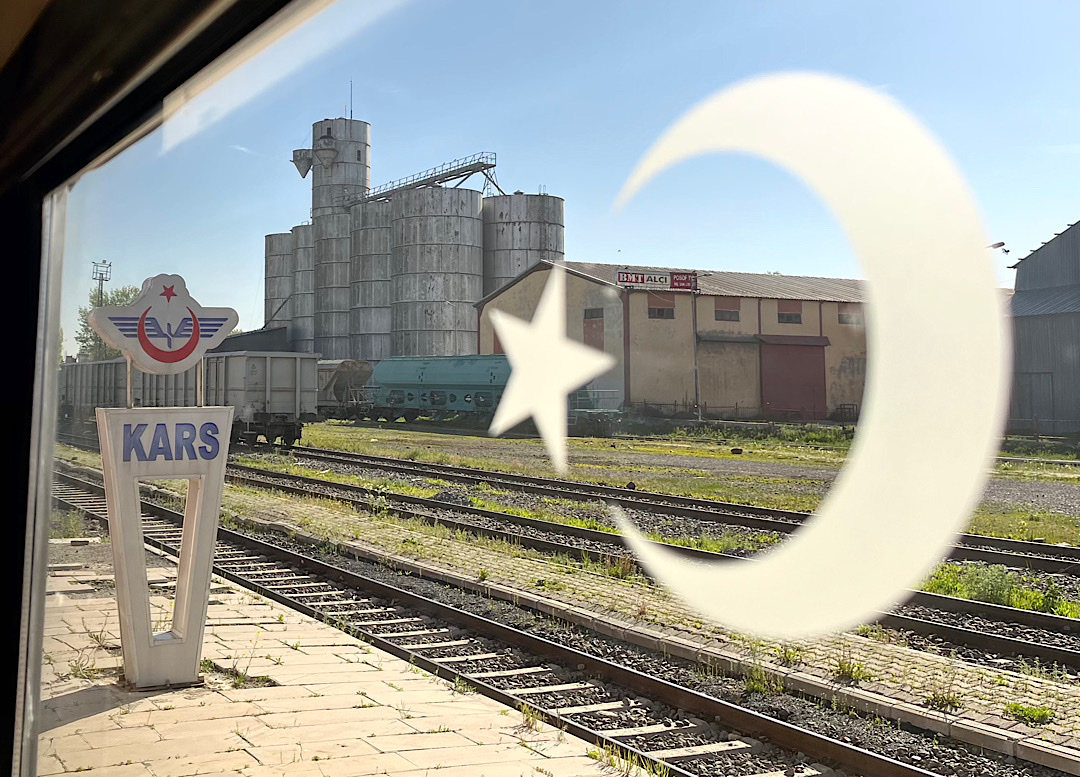 I’m starting this post aboard the Eastern Express, the Turkish train that runs all the way from Turkey’s capital to Kars, near the Armenian border in the east. Travel constraints forced us to take the train westward. We flew from Ankara to Kars Friday morning (5/27) and had a couple of hours that afternoon to explore the town and its citadel on our own.
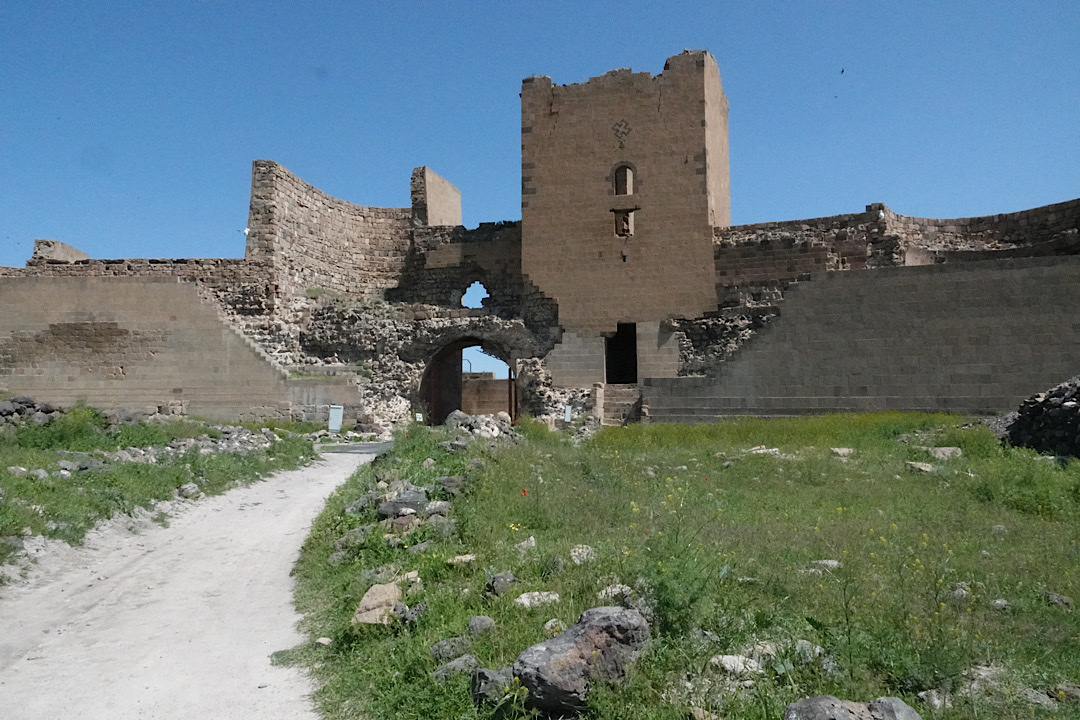
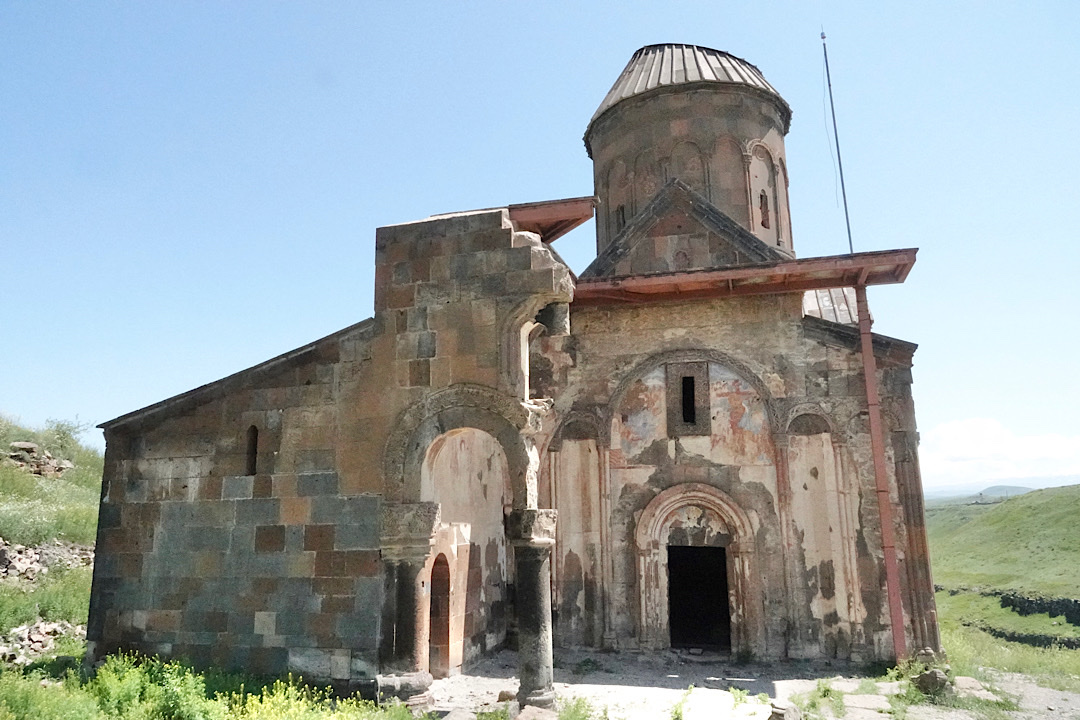
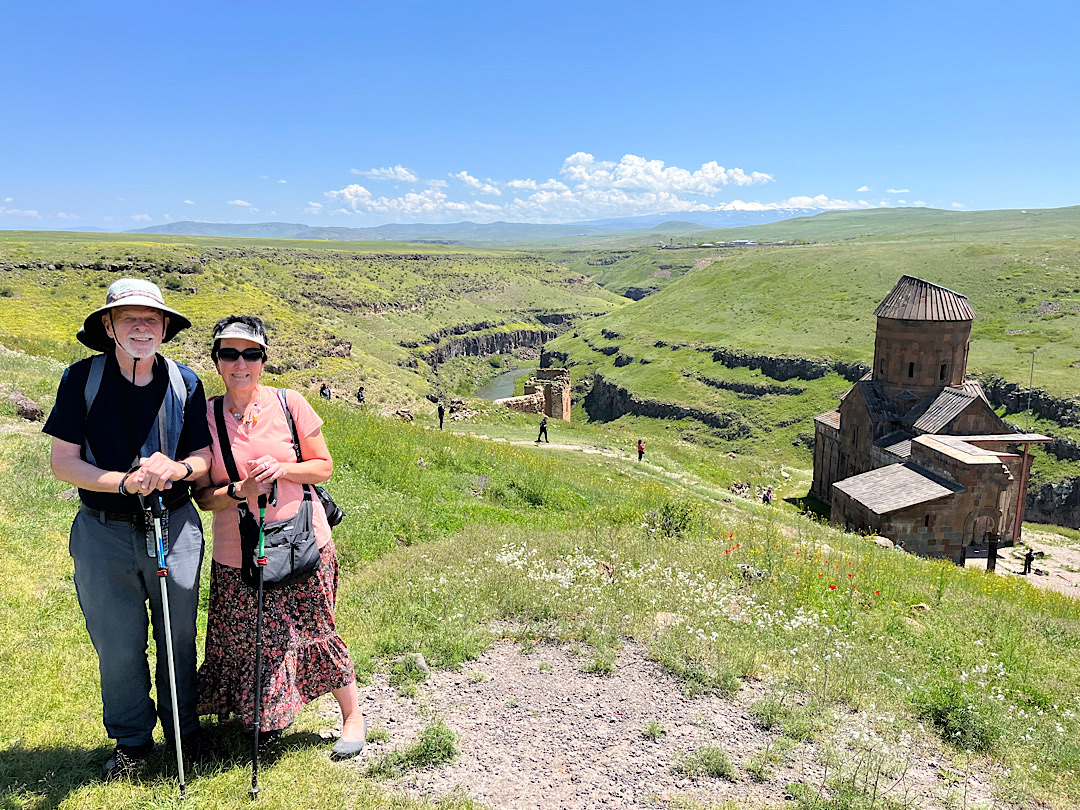


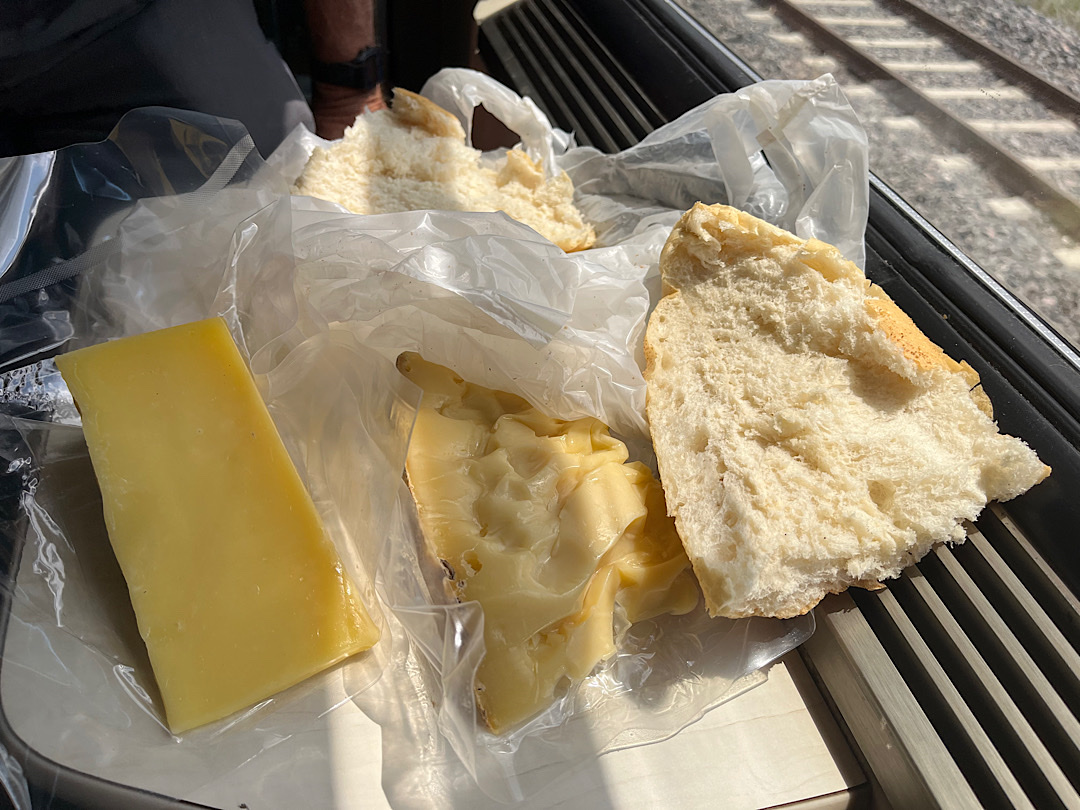 We had brought our own bread and cheese, so this was lunch. And dinner.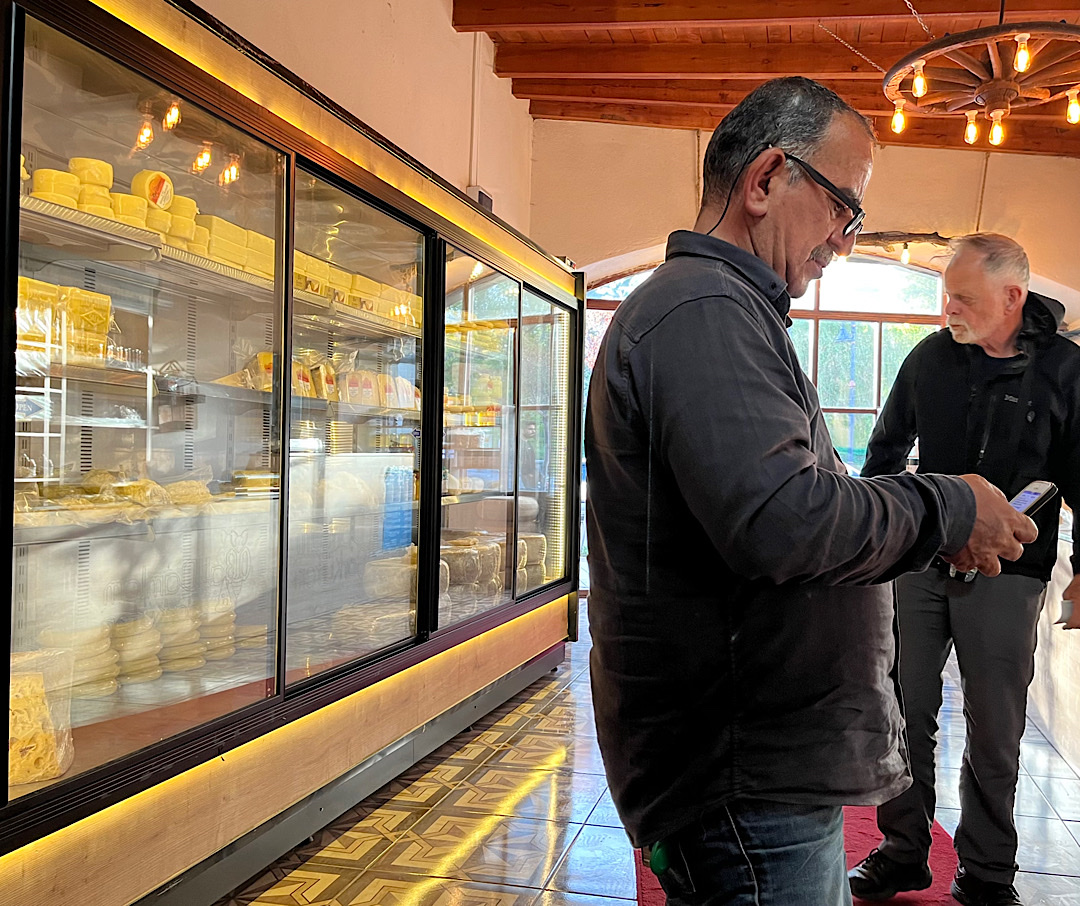
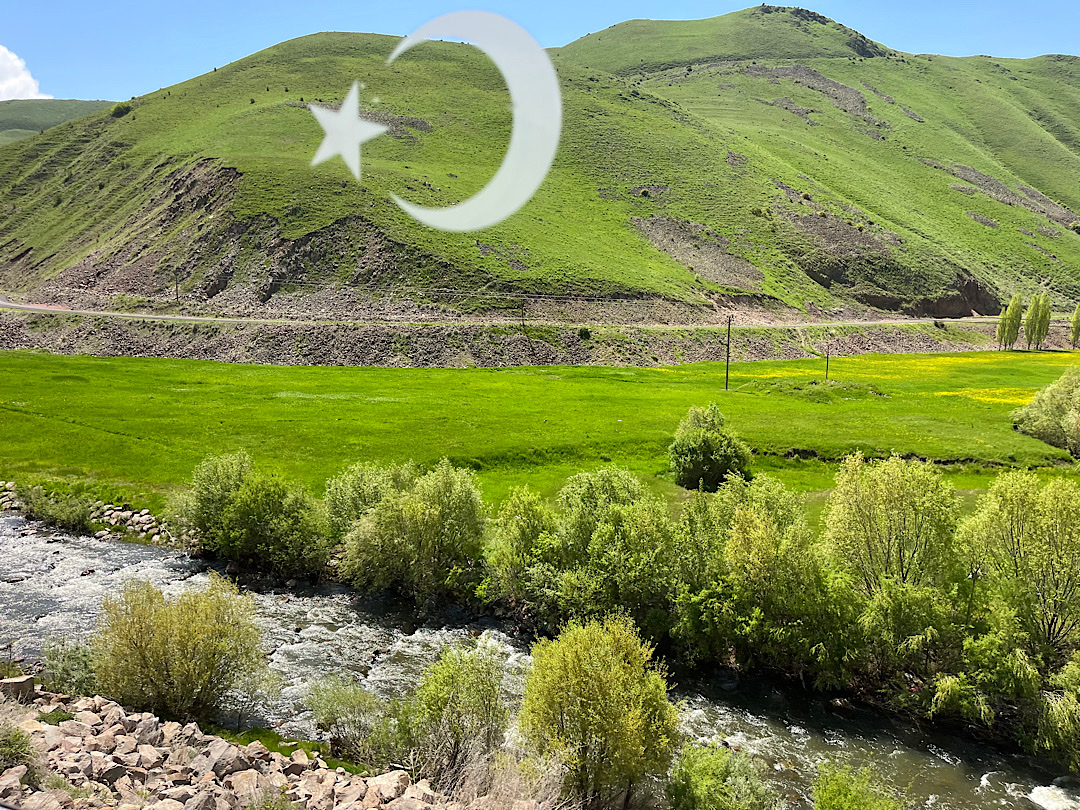
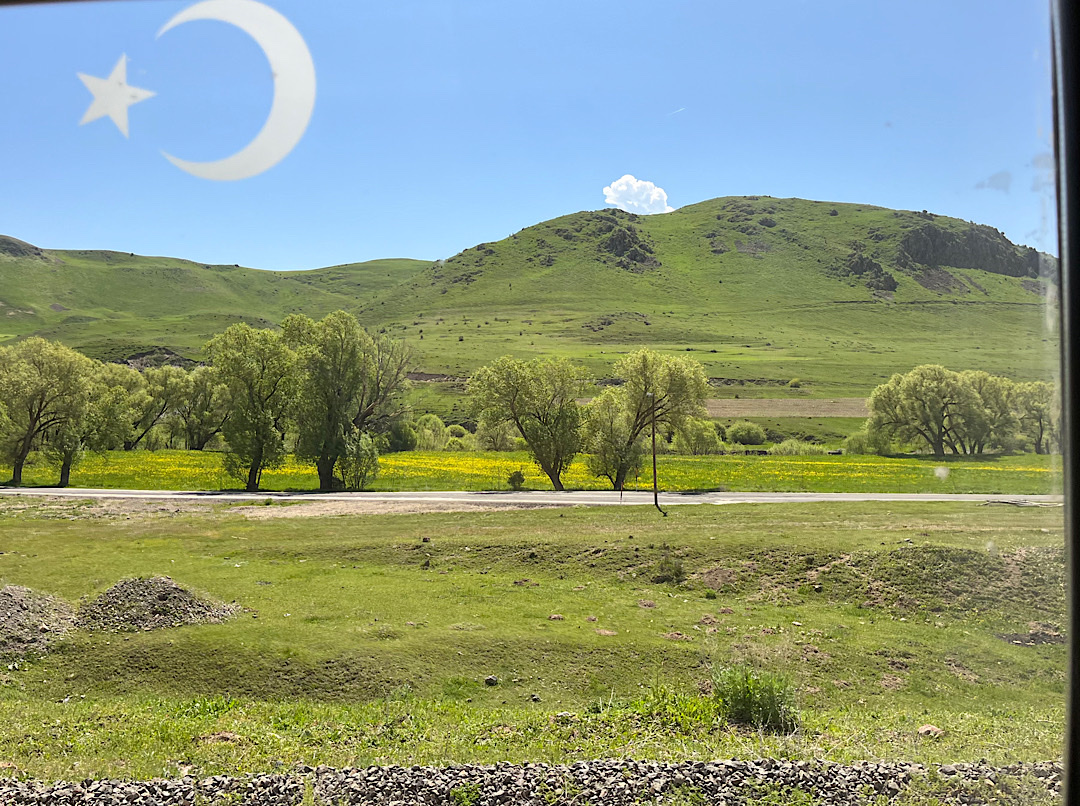
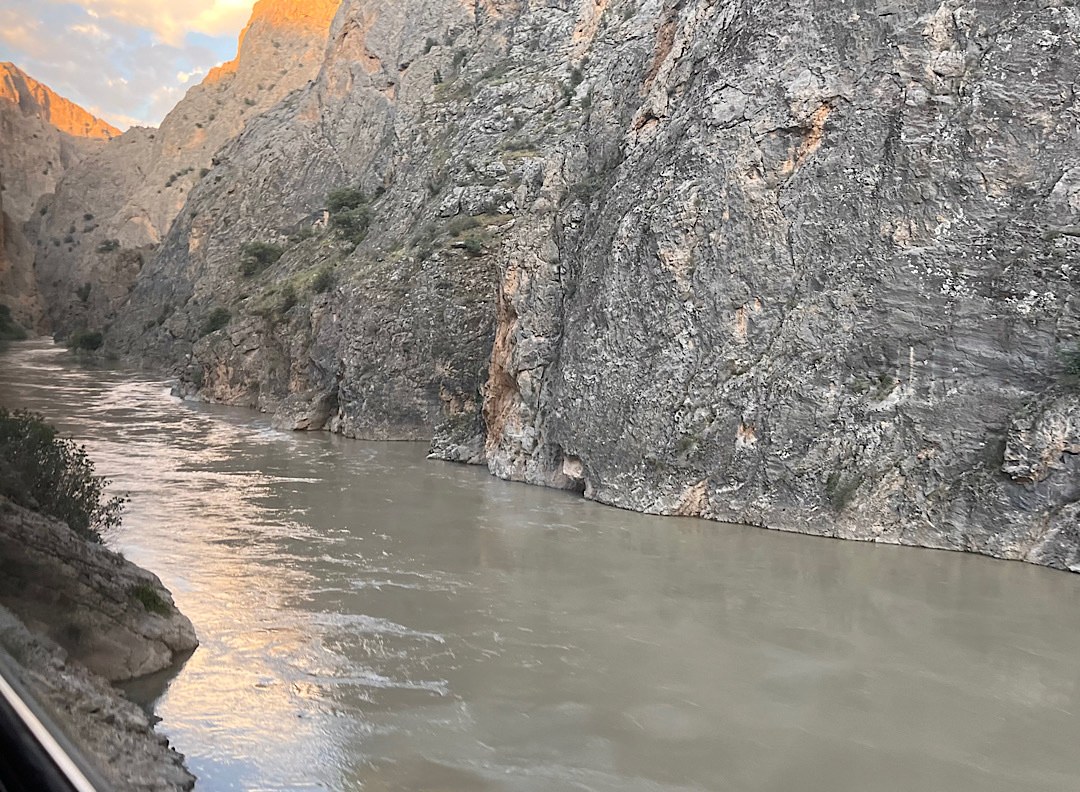
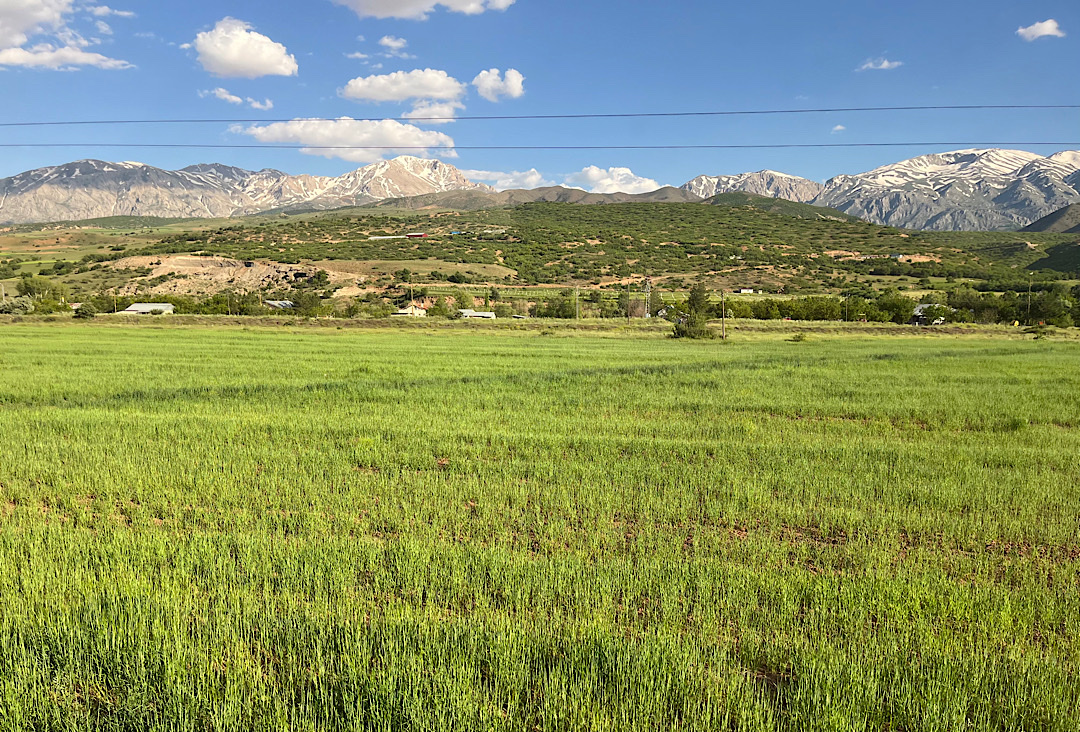 Most of what we saw from our window seemed as devoid of people as the American West.