 I first met the Mayans back in high school. I think I ran into them in my freshman-year world history course, though truth be told I remember nothing of whatever I learned. In my consciousness, they just became part of a jumble of Olmecs and Toltecs and other people who once rocked in Mesoamerica.
After Steve and I moved to San Diego and started traveling in Mexico (mid- to late-70s), we visited some Aztec archeological sites and one Mayan area (the Yucatán peninsula), and I became more aware that Mayans and Aztecs differed significantly. I must have learned some of the details of their differences. But all that detailed knowledge also evaporated.
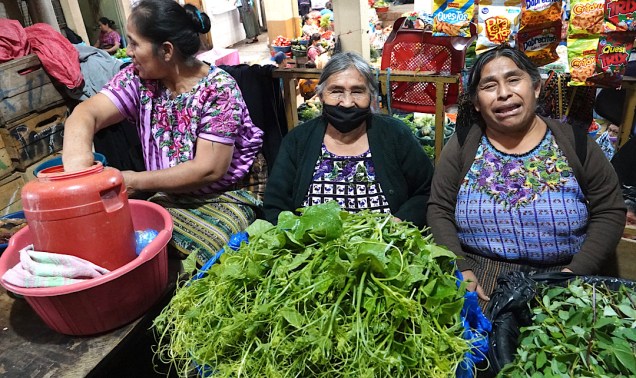
We started meeting Mayans from Day One of this trip. And the startling thing has been: they appear to be living, breathing people speaking Mayan languages, dressing as their ancestors did (at least the women), and seeing themselves as part of a contemporary culture whose roots go back to about a thousand years before Christ. Who knew?
Visiting Tikal last Tuesday kick-started my education (or re-education) on just how amazing the golden age of Mayan civilization was. At its peak 1300 years ago (when Europe was slogging unimpressively through its Dark Ages), Tikal was home to at least 250,000 people, maybe more. Much of the area they inhabited is still buried under thick jungle. Throughout the centuries, the Mayans did some warring and practiced some human sacrifice (though that was basically what Americans today would call capital punishment; a matter of killing captives.) Compared to the blood-thirsty Aztecs and Incas, they look like Quakers.
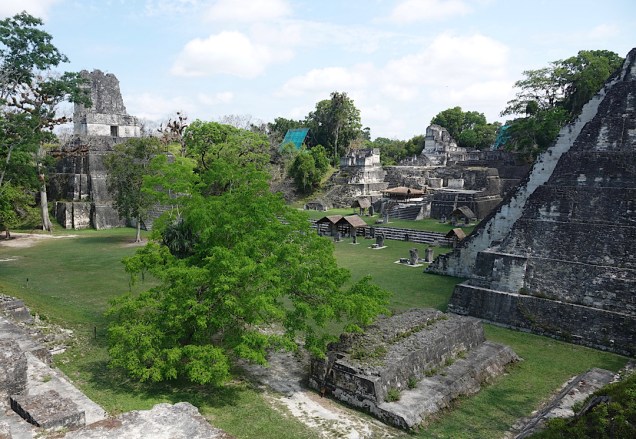
Instead of plundering, they concentrated on things like architecture and astronomy, fields in which they achieved astonishing sophistication. It’s a jaw-dropping experience to be strolling through the jungle and come to a clearing containing some massive structure as tall as a 20-story building. Tikal contains several of these. Some are astronomical observatories, some temples, some palaces.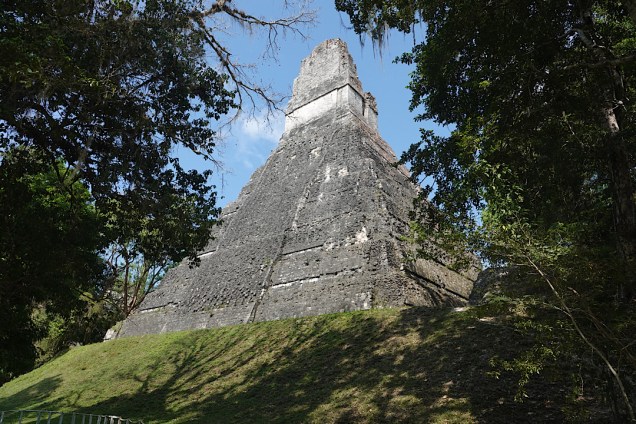
 The Mayans developed an advanced (base 20) mathematical system, and a hieroglyphic writing system that compared to that of the Egyptians.
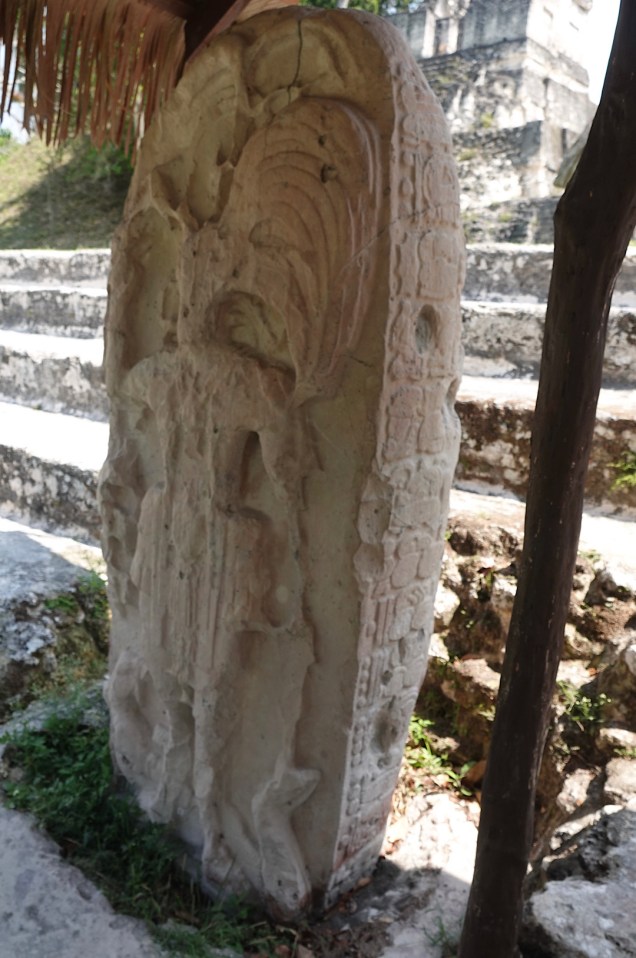 Some of the writing has been deciphered from stone markers such as this one. But our guide said that sadly, only three of their books have survived. The Spaniards burned all the rest — reportedly 1200 in just one morning.
The next day (after our harrowing flight in the thunderstorm), we had a driver transport us to the small town of Chichicastenango in the highlands. Every Thursday and Sunday, surrounding villagers stream into the center of town and set up their wares for sale. But although Chichi’s market has long been famous as one of Guatemala’s largest, we’d heard that the pandemic lockdown had cast a pall over it. Guatemala was closed to all air traffic for months, and although it’s welcoming visitors now, we’d heard that the market action was much reduced.
When we ventured out in brilliant sunshine early Thursday morning, that was hard to believe. If Chichi’s market is busier on Sundays (as we were told) and busier still in normal times, we were happy to be visiting in the midst of a plague. A large section of the center of town was crammed with mostly mask-wearing vendors in stalls, hawking everything from vegetables to hand-woven fabrics to flowers to pills for diabetics.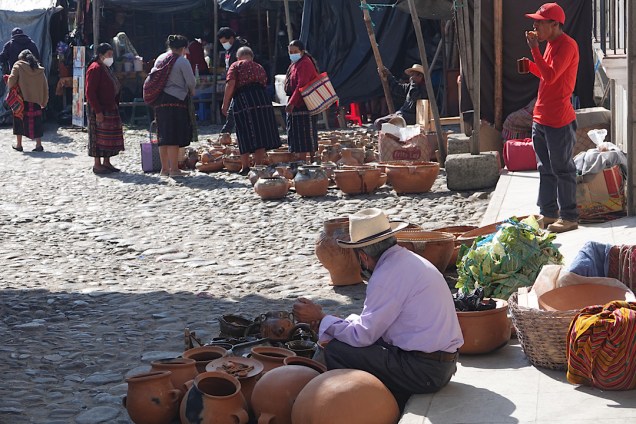
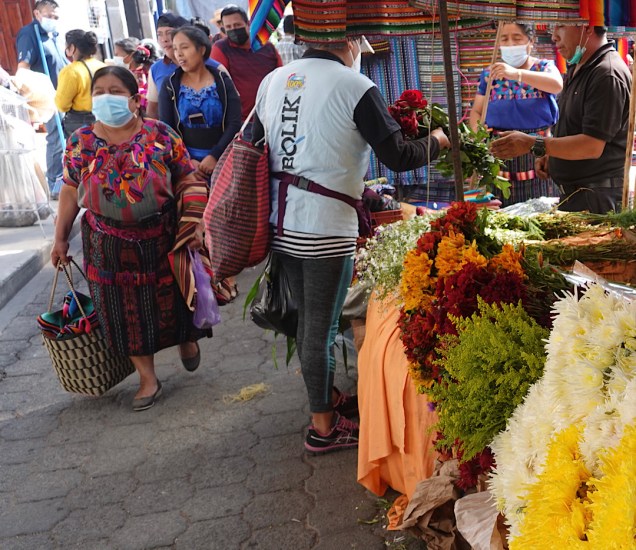
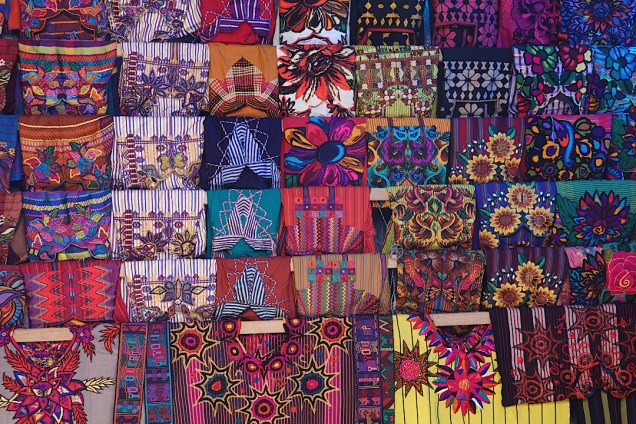
The place crackled with energy and color. Although Steve and I could not have been more conspicuous, we never felt hassled. Particularly mesmerizing were the skirts and tops and belts worn by almost every female. We asked ourselves: when’s the last time we’ve been in a place where virtually all the women weave cloth and turn it into outfits as striking as these?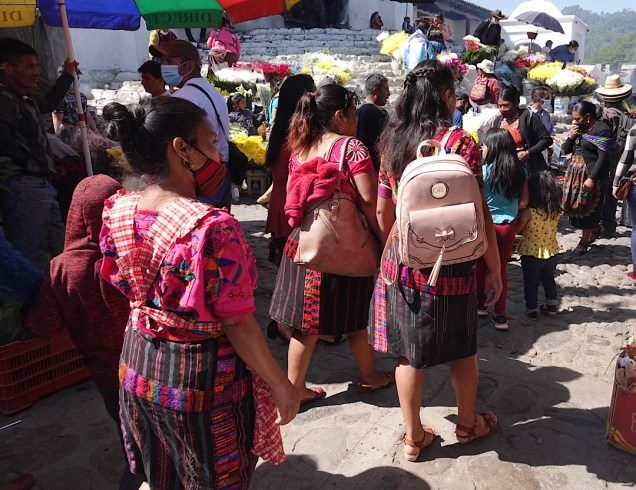
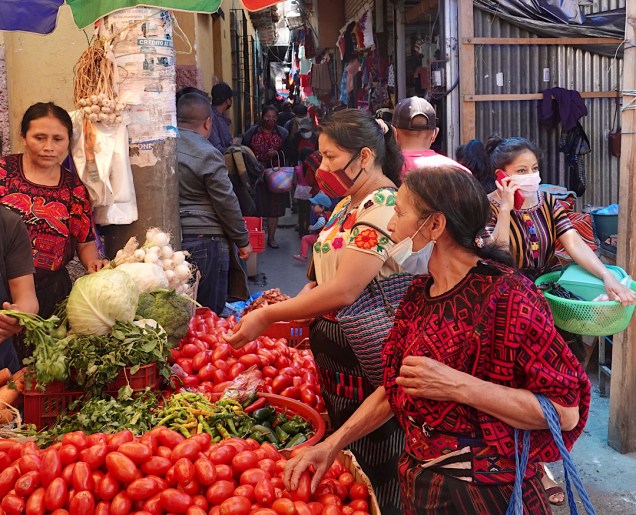

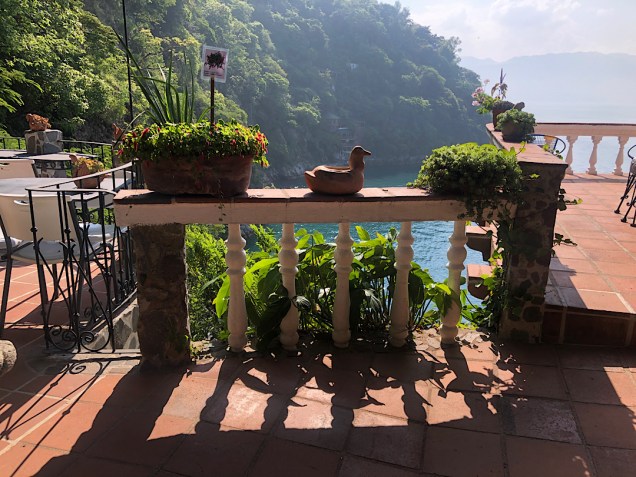
The next day, we heard an explanation of why Mayan men no longer wear their traditional outfits (they almost universally dress in second-hand shirts and pants imported from the US.) After spending the morning at the Chichi market, we were driven to Lake Atitlan, about 90 minutes away from the market town.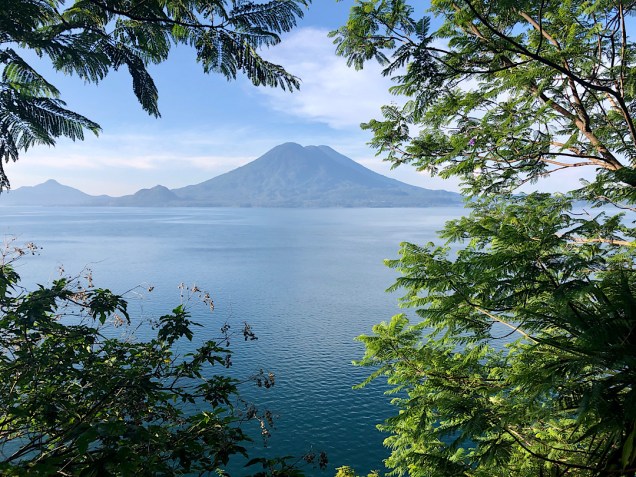 At the foot of the public pier in the town of Panajachel, we caught a launch to our hotel, La Casa del Mundo. Built starting in 1980 by a Guatemalan woman, Rosy Valenzuela, and her American husband (Bill Fogarty), it’s one of the most remarkable places I’ve stayed anywhere. Every cottage built on the vertiginous stone cliff commands heart-stopping views.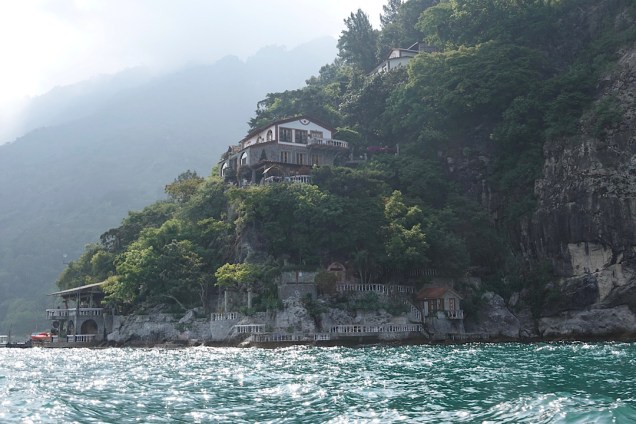
Stepping onto the balcony of ours, Steve exclaimed, “It’s like Lake Tahoe — with volcanoes!
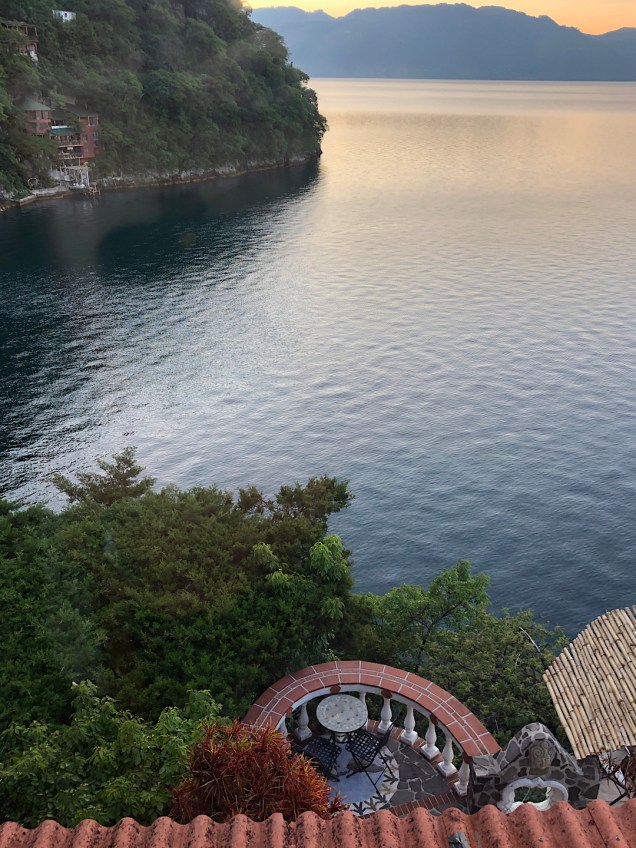 Friday, Steve and I visited three of the villages situated on the lakeshore not far from La Casa. Our guide was Alex, 29 (whose Mayan name I forgot to write down.) He and his three siblings first learned Tzutujil, one of the 23 Mayan languages. But all his classes in school were taught in Spanish, by government mandate, so the Mayans are also fluent in that. About 5 years ago, when Alex decided to become a tour guide, he learned to speak English (well) in an intensive program in Guatemala City to which he got a scholarship. These days he’s studying Hebrew because so many Israelis come to Guatemala on vacation (and to start businesses, like this one).
We spent six hours with Alex talking virtually non-stop. He told us how the village had built a public clothes-washing facility, but the women preferred doing their laundry in the lake.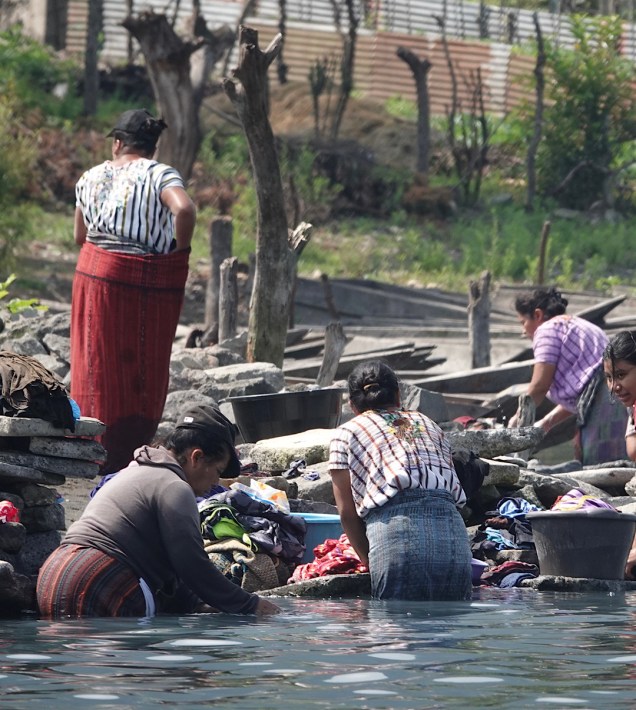
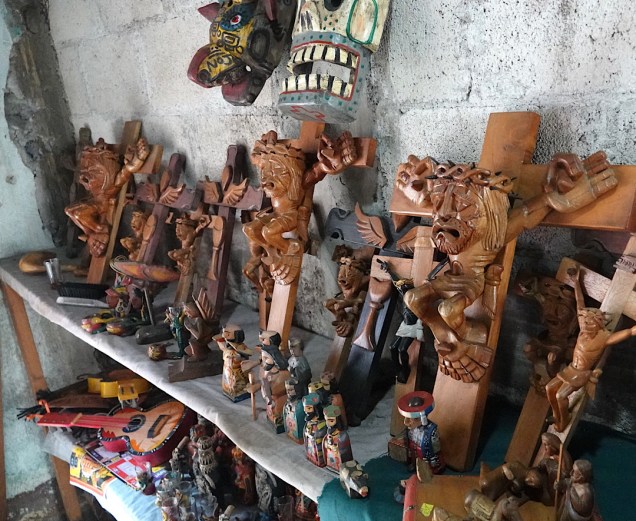
It was in the village of Santiago Atitlan that the subject of Guatemala’s civil war came up. Steve had read that even today, a quarter century after that bloody conflict ended, this topic should be broached with caution. But Alex was eager to explain it to us.
He said it ignited when Guatemala’s wealthy Spanish-descended oligarchs tried to grab yet more land from already impoverished Mayans in the highlands. Alex led us to the Catholic Church and school in Santiago where government soldiers assassinated the Oklahoma priest, Stanley Rother, in 1981 because of his work in giving refuge to Mayan political targets.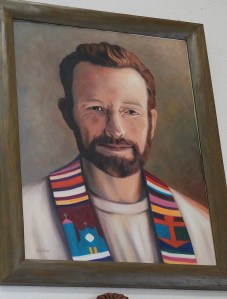
Alex said back then the soldiers had orders to target even ordinary Guatemalan campesinos, who were easily identifiable by their striped pants and colorful shirts. That’s why the men shifted to wearing Western-style garb, a habit that continues today.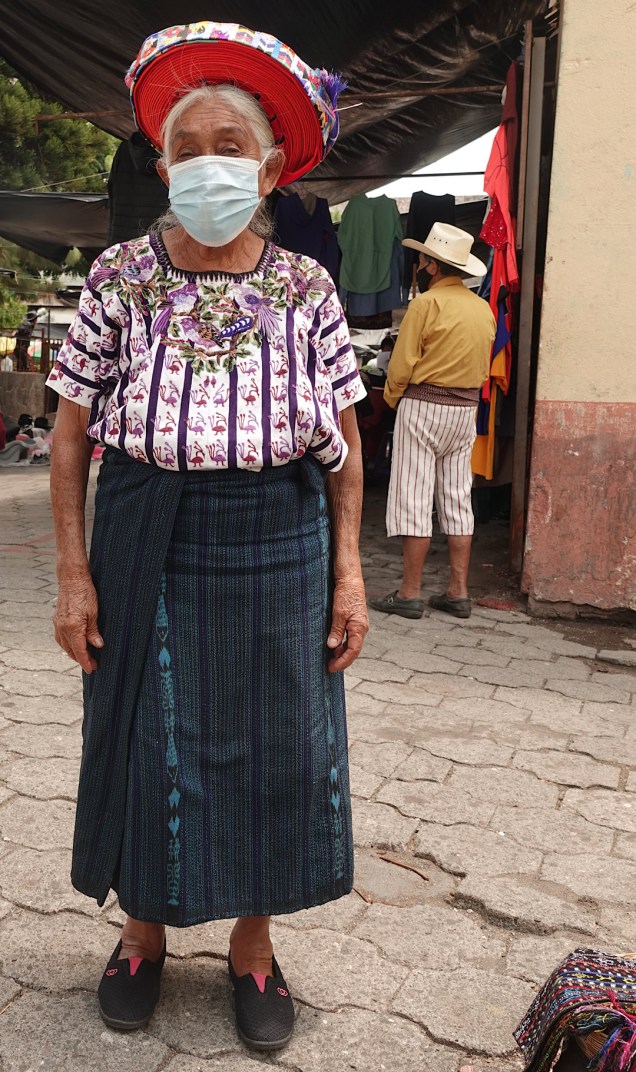
My favorite part of the tour was our stop in the village of San Juan, where we took a tuk-tuk from the waterfront to a women’s weaving cooperative. In the garden there, cotton plants taller than our heads bore balls of white, brown, and tan…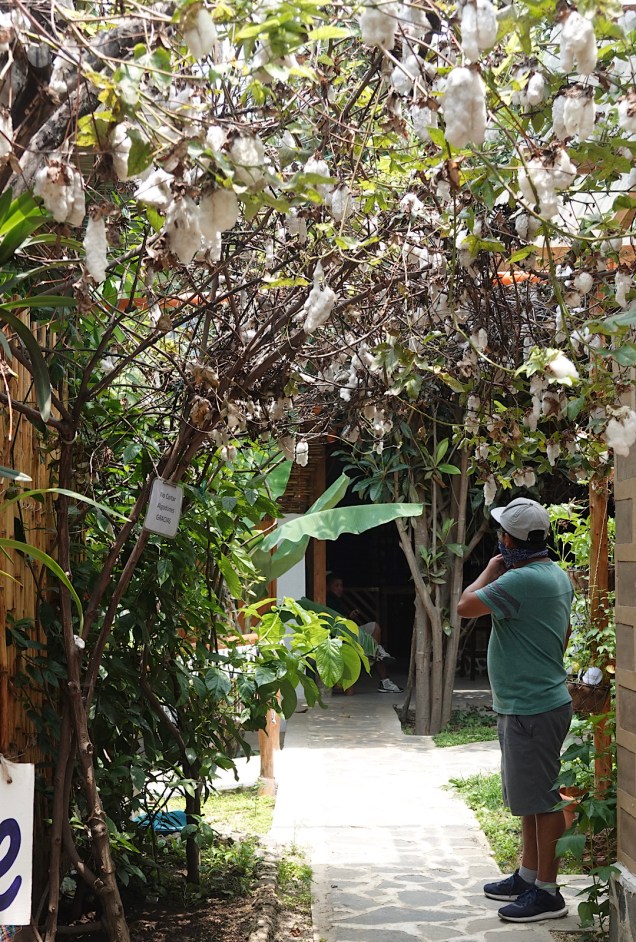
One of the women showed us the steps involved in turning the fuzzy balls into the gorgeous fabrics: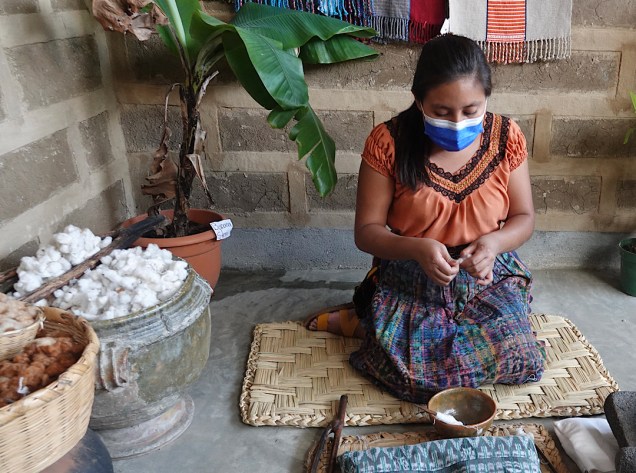 Pulling off a chunk and removing the seeds from it…
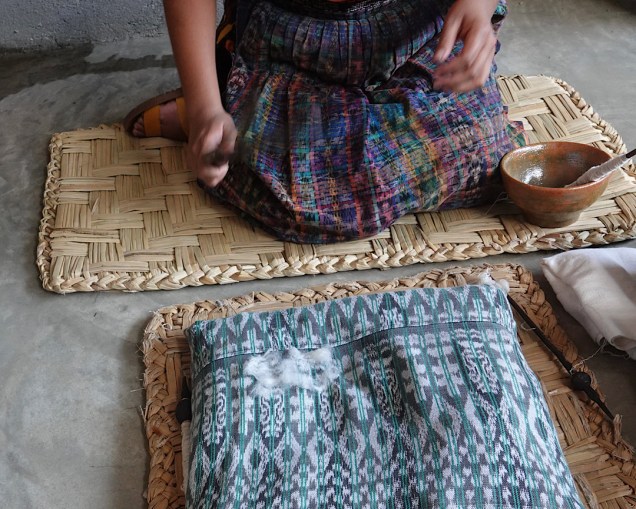 Beating the seedless chunk to make it smooth…
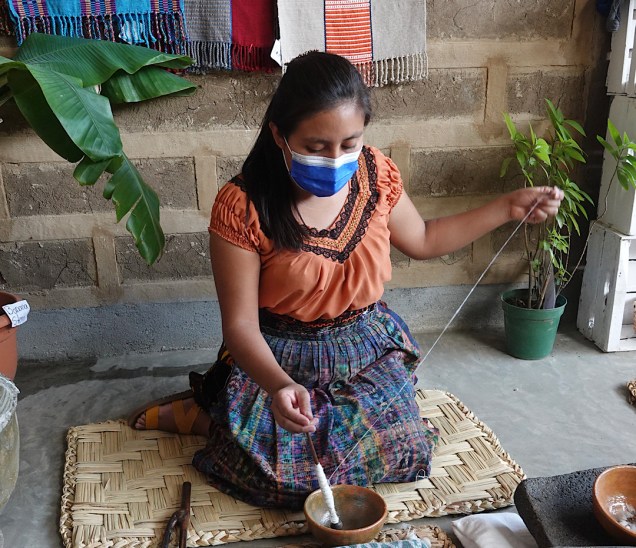 Then using a hand-held spindle to twist the fiber into thread.
She showed us the natural products (bark, charcoal, avocado leaves and seeds, insects, etc.) that she and her comrades use to dye the white cotton.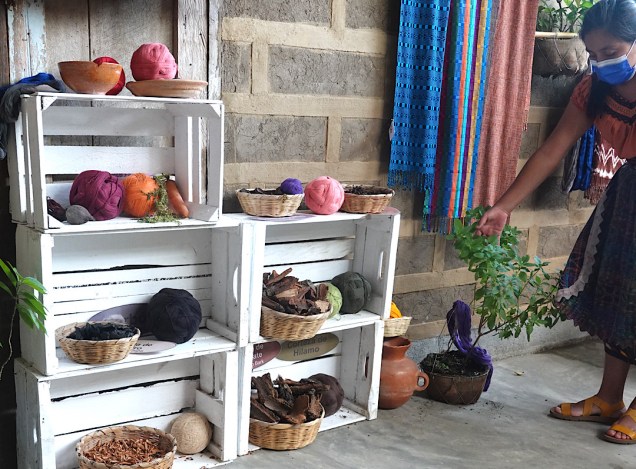

After setting up the patterns on a complex wooden frame, they strap on looms to weave the threads into the beautiful fabrics.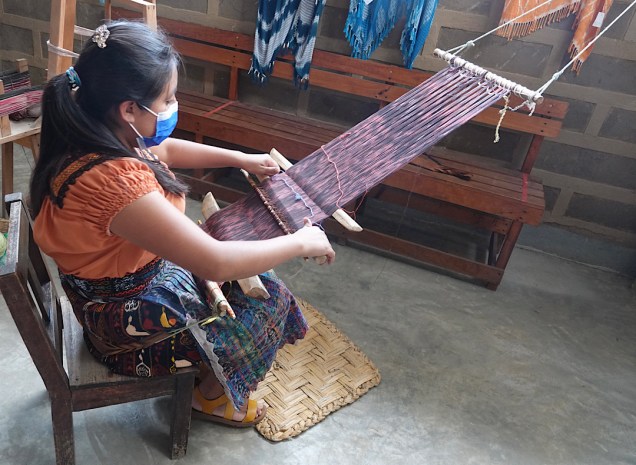 This is what is looked like, in action:
Every girl starts to learn these steps when she’s somewhere between 8 and 11, we were told. It’s not necessarily a career path (as a weaver), but just a mundane life skill in these parts, like cooking.
After leaving the Mayan heartland Saturday afternoon, we took a collective shuttle bus to the town of Antigua. It was the Spaniard’s capital in Guatemala for more than 200 years, and their administrative center for much of Central America. Then a fearsome earthquake all but destroyed the town in 1773, and the ruling elite built a new capital about 20 miles to the north. (It grew into the urban monster that’s Guatemala City today). But over the last two and a half centuries Antigua was repaired and rehabilitated. Today it exudes a hip charm and draws tourists from all over Guatemala and beyond.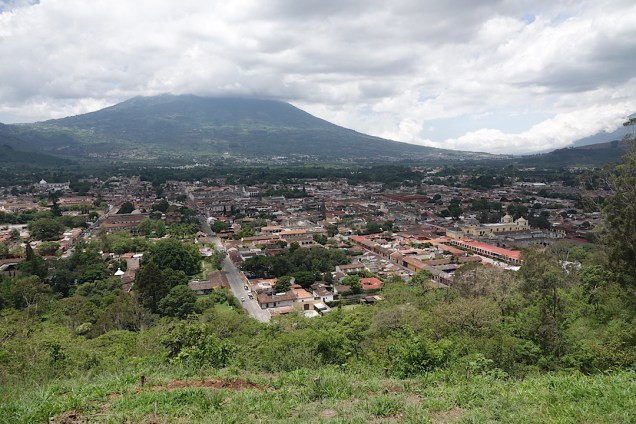
Steve and I had a delightful time walking around it for several hours Sunday morning. We were struck by how many more European-looking faces we saw. I can’t exactly say that bothers me. But for the first time in my life I found myself missing all the Mayans.
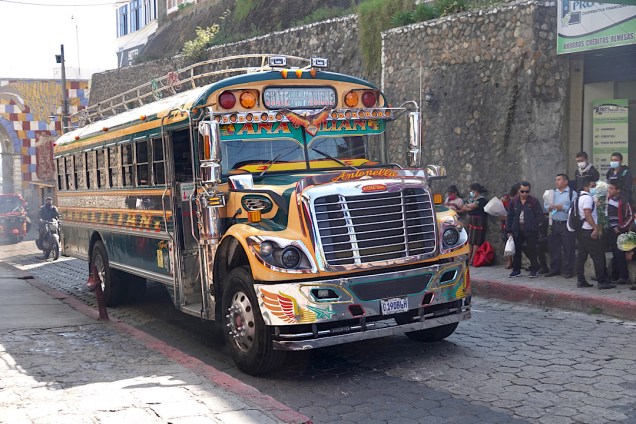 Someone might ask me: why would you take public buses to travel between cities in Guatemala? I might respond: why not?
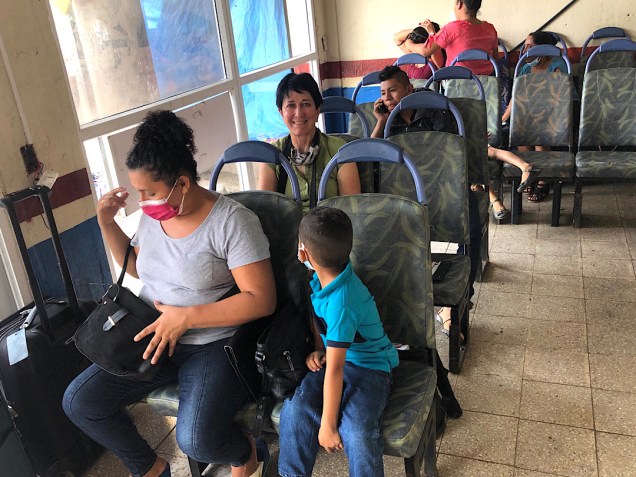
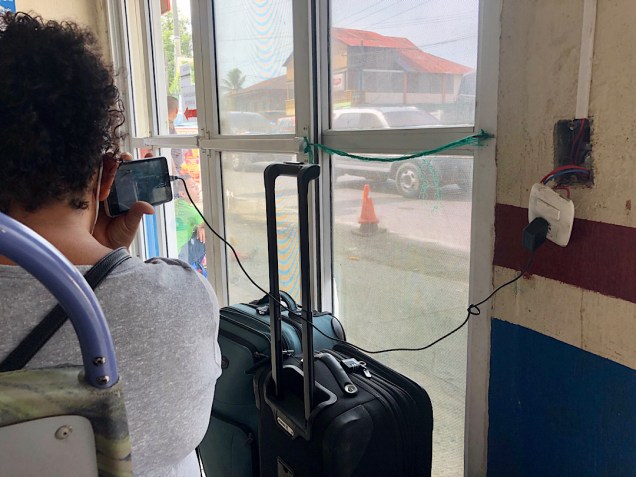
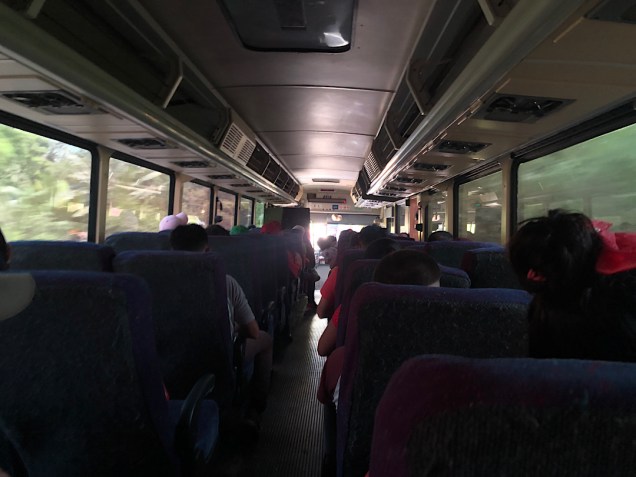
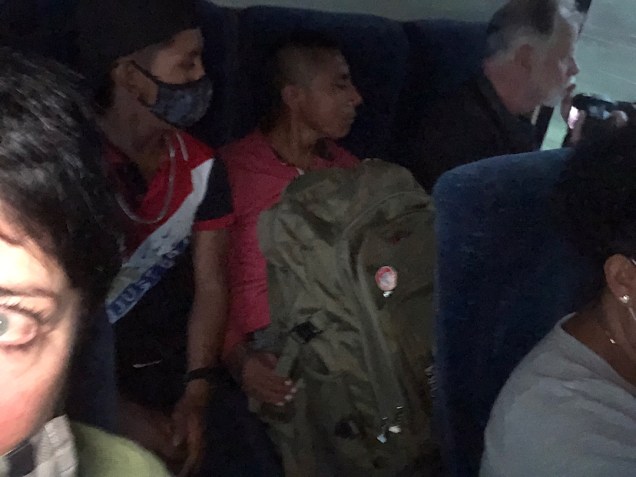

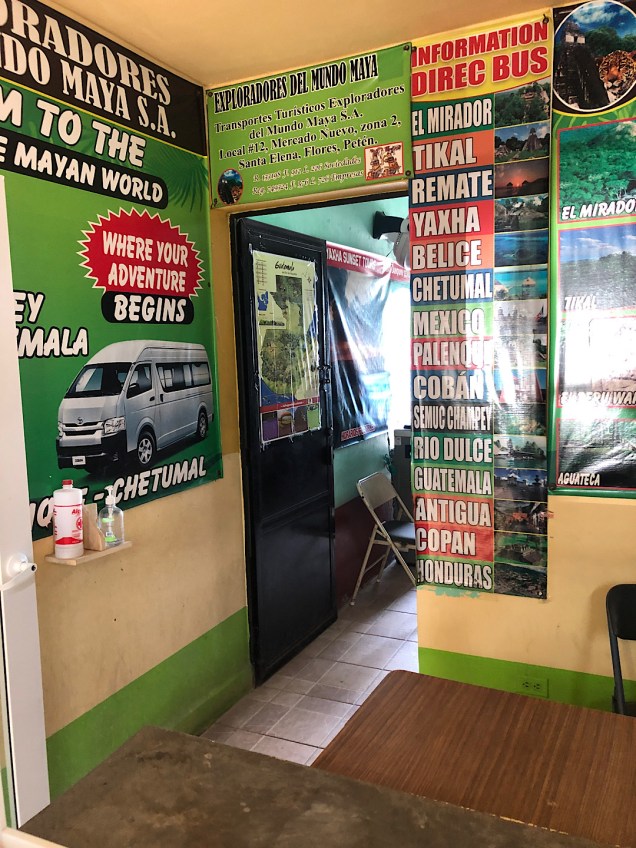
 Wilmer had said it would be a “chicken bus,” a Guatemalan institution. I had read that they are colorfully decorated former school buses that acquired new life here. They pick up and drop off passengers along certain routes. But a couple of guys on the van told me that at least in this part of Guatemala, a van could also earn the name just from the fact that stops on demand for passengers.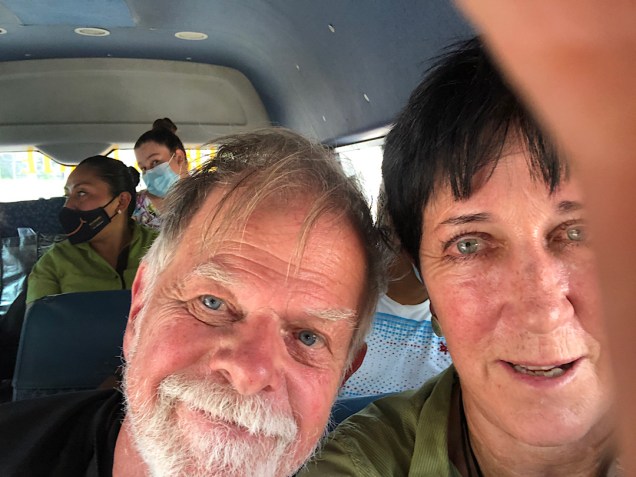
 Ironically, the 45-minute flight to Guatemala City was not terribly bumpy. Some rides are worst in anticipation.
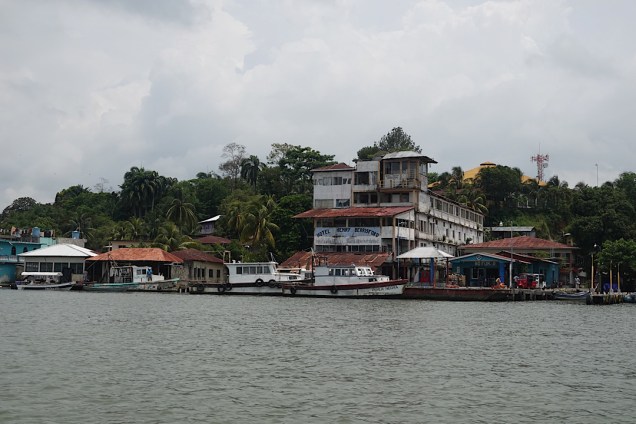
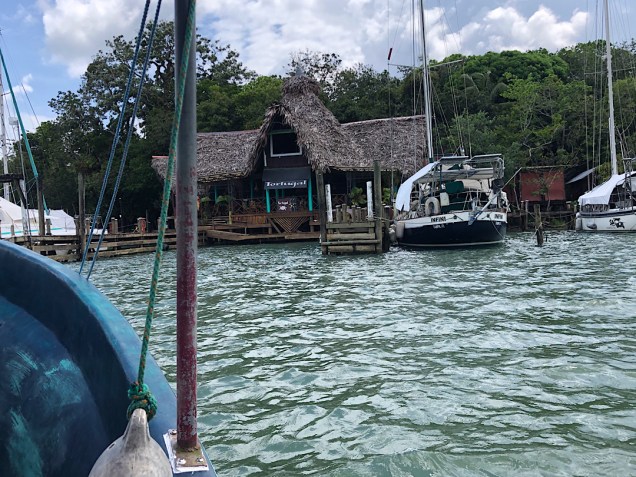 the sterns of the sailboats and cruisers lined up along the docks bore place names like Oakland and Alameda, California and Houston, Texas.
 They looked like nice yachts, but I was happier ensconced in La Casita Elegante.
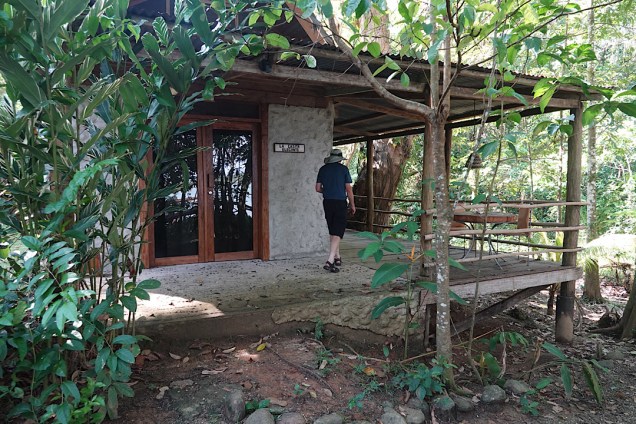 Located at the farthest reach of the property, it was more rustico than elegante, but I loved the wild jungle surrounding the back of it.
 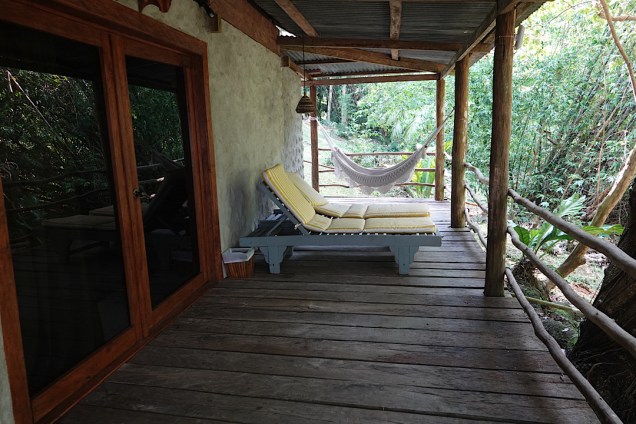 In the other direction, we enjoyed views of the river. And the dining room came equipped with two friendly young Guatemalan dogs.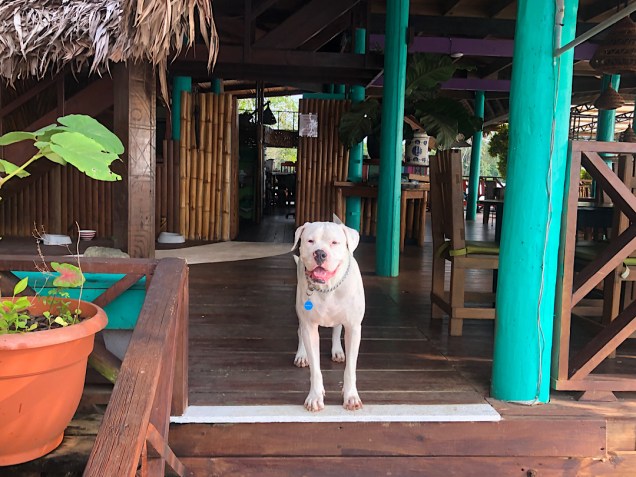
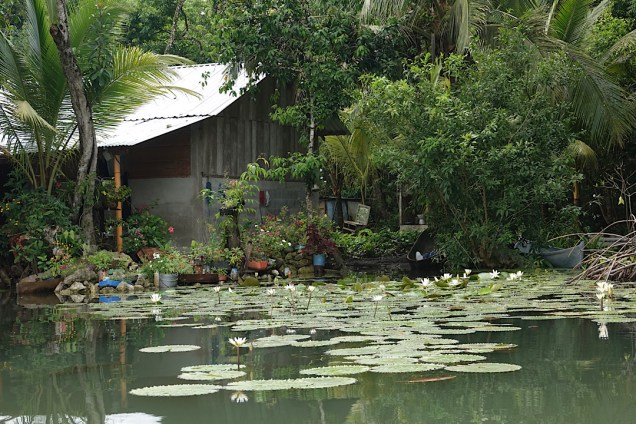
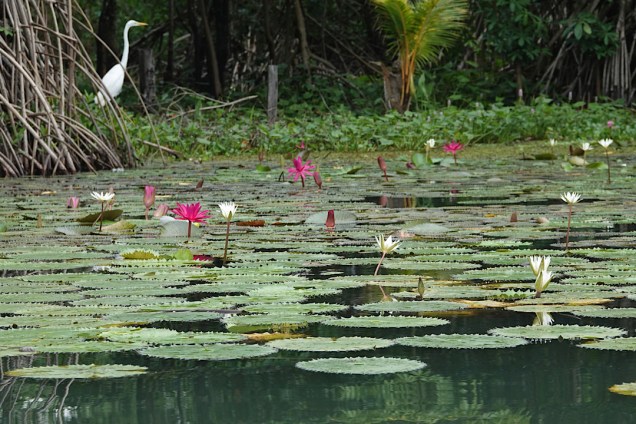
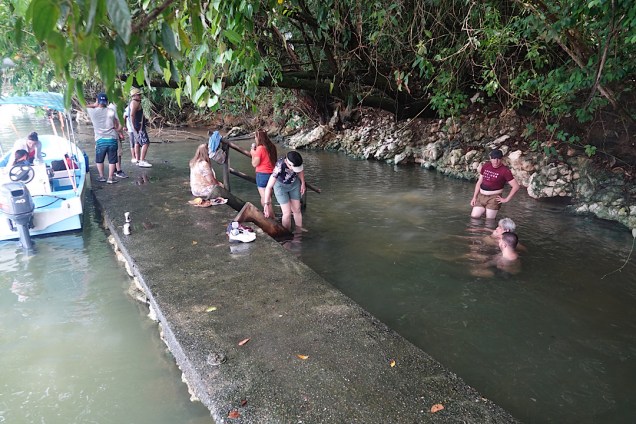
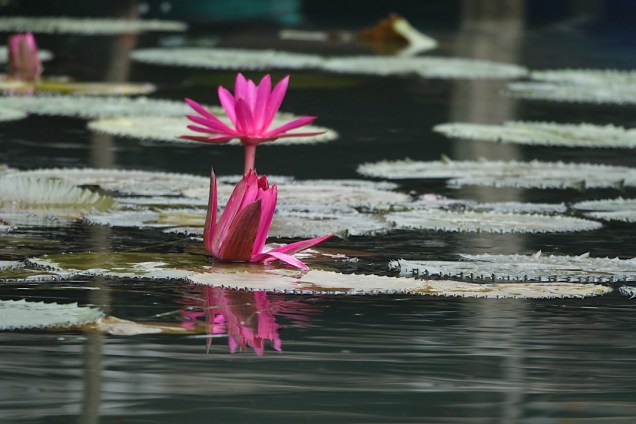 A bit further downstream, we stopped at a bankside establishment that was part restaurant, part tourist attraction. Steve and I each paid 15 quetzals (about $2) to the 67-year-old proprietor, Felix,
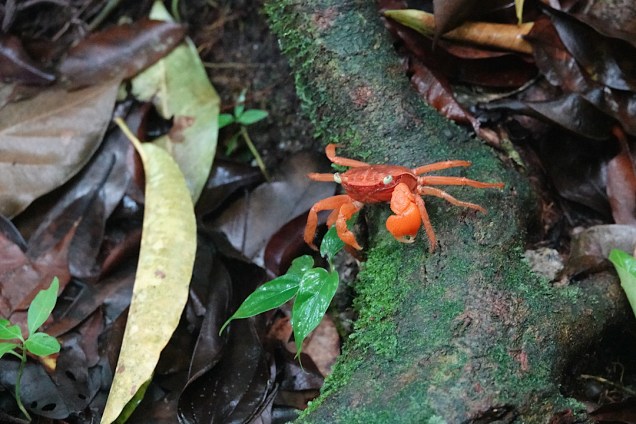
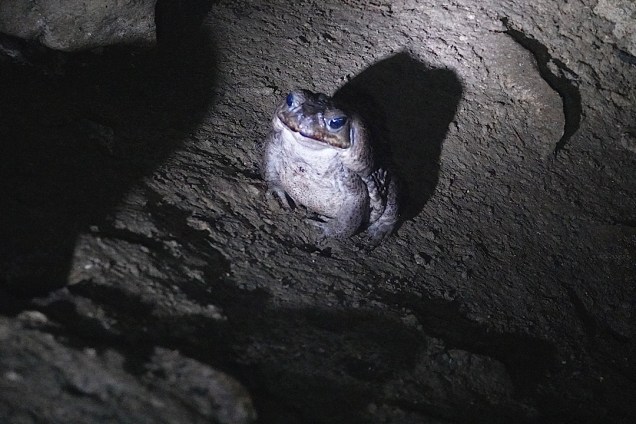
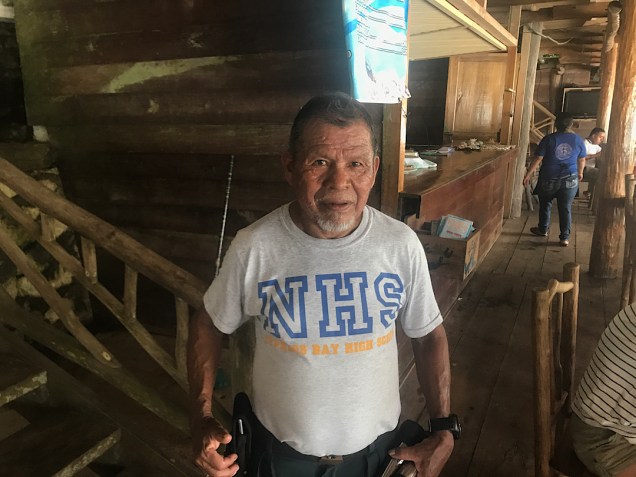 and he guided us up and down a plunging path to a creepy cave and natural sauna warmed by hot springs.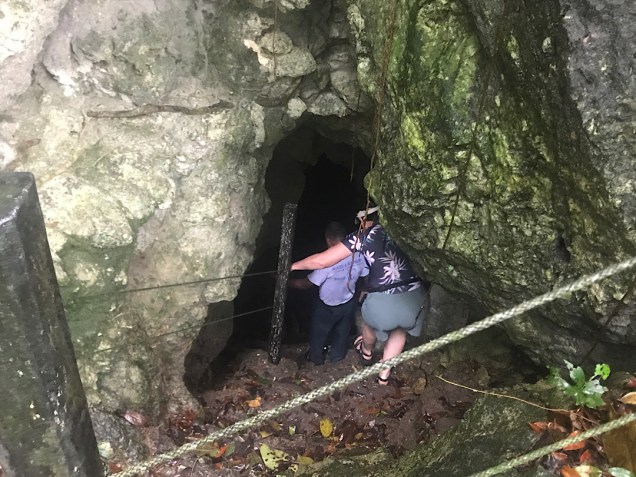
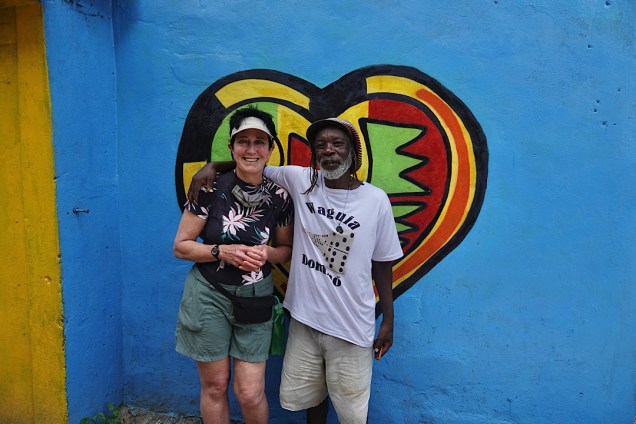
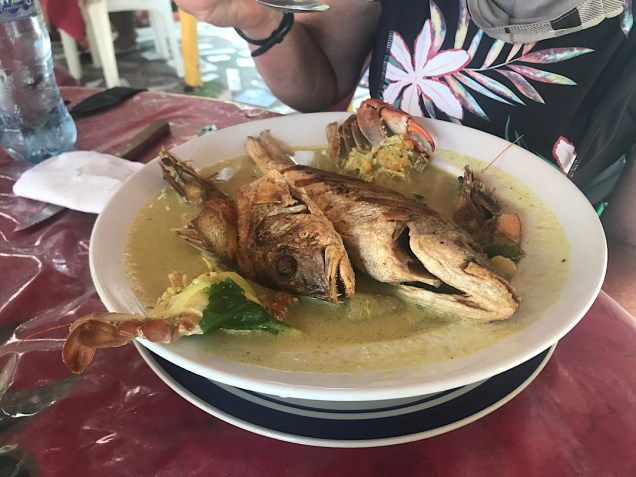
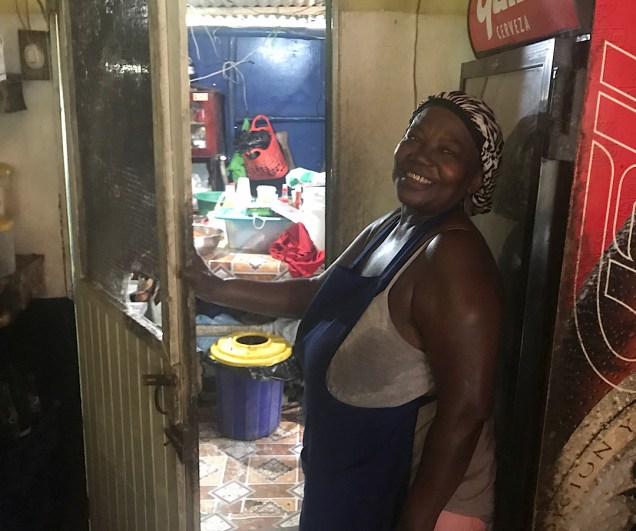
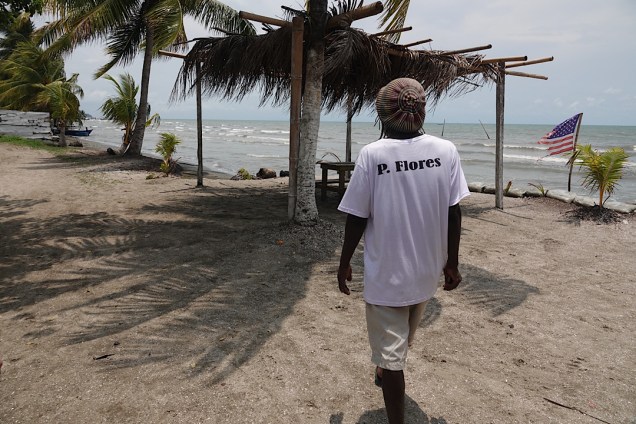 Steve and I have spent so much time in poor African villages in the last ten years, the Garifuna district almost felt like home. It was wretchedly poor. Most of the folks we passed looked tired.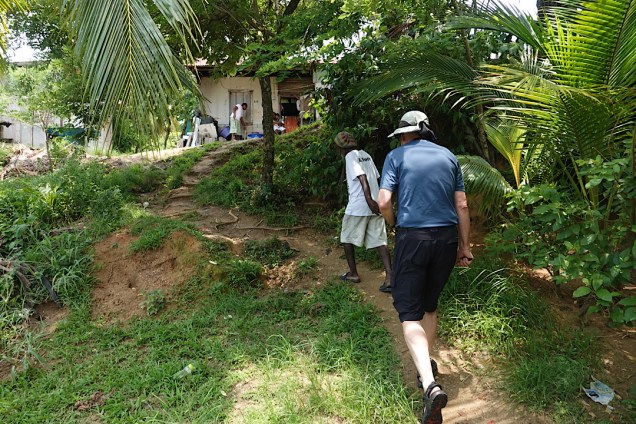
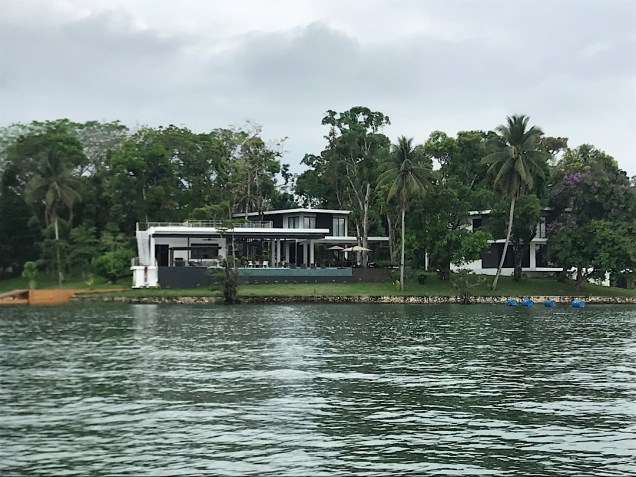 They were like the fancy mansions we passed on our drive with Alfredo, conspicuous, almost arrogant, in their wealth.
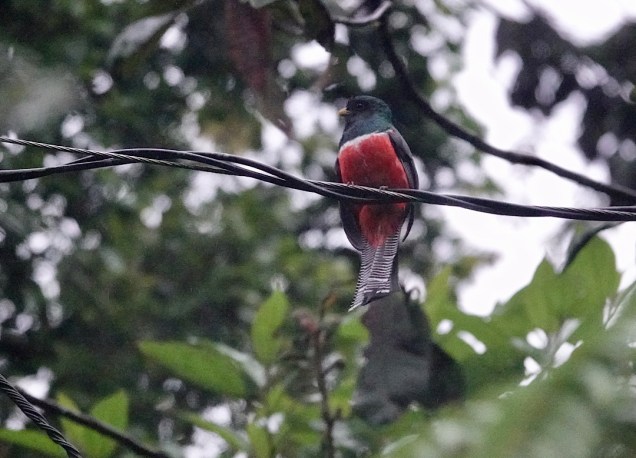
 I like beautiful birds as much as the next person, but I’m no serious birdwatcher. I would have said spotting any particular bird would never shape the itinerary of any of my trips. Still, I knew that resplendent quetzals, gorgeous and elusive birds laden with powerful symbolism, are an icon in this part of the world. When border politics forced us to cut Belize from our journey and gave us three extra days in Guatemala, we decided to try to (metaphorically) bag this mystical avian.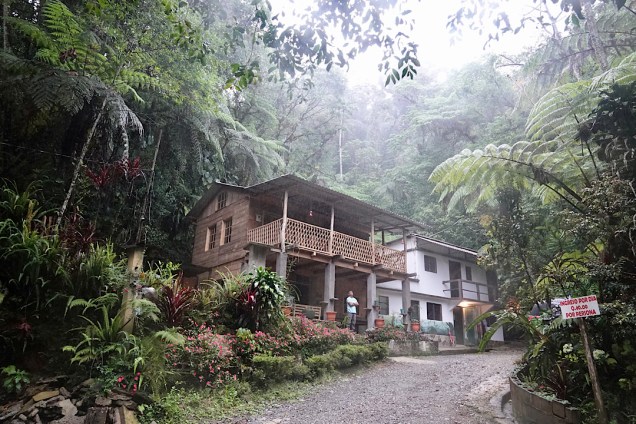
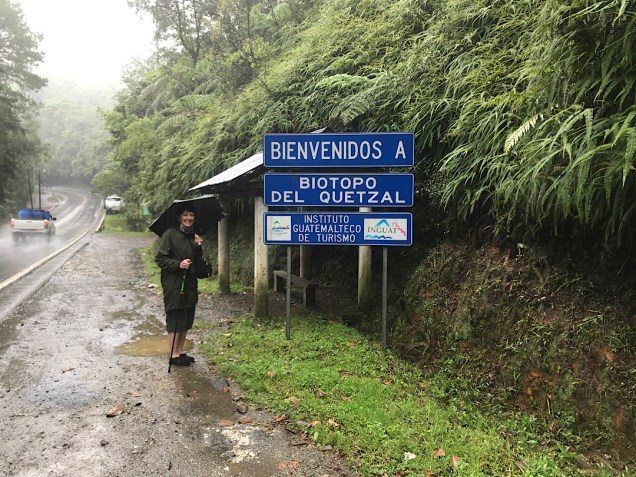

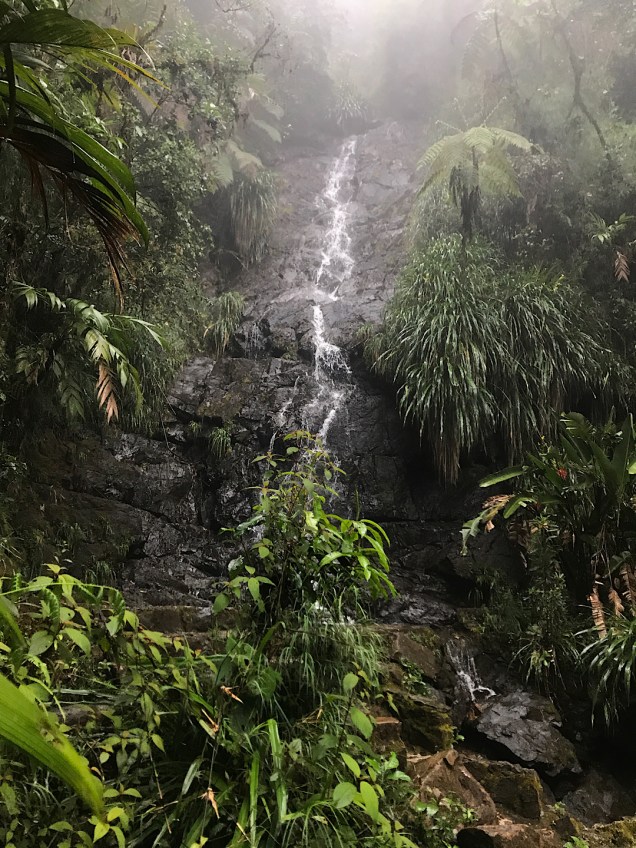 The trees protected us from the brunt of the rain, though droplets hitting leaves sounded like birds; they made me jump and crane my neck almost constantly, hoping to glimpse our quarry.
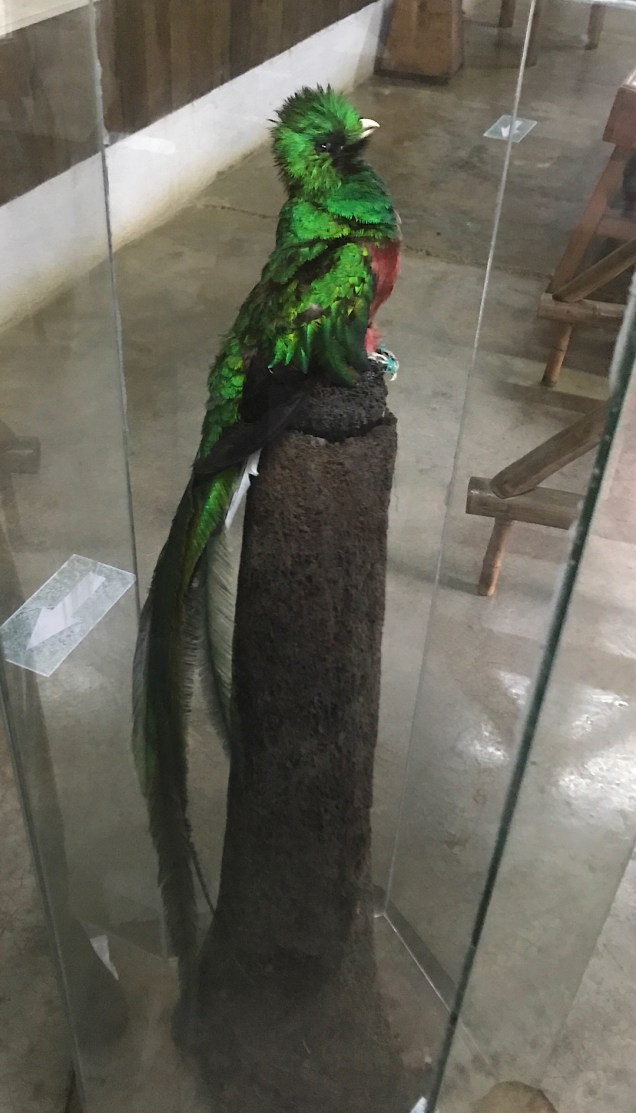 But back at the Ranchitos, the manager told us to be on the porch at 5:30 the next morning, “and you will see a quetzal.”
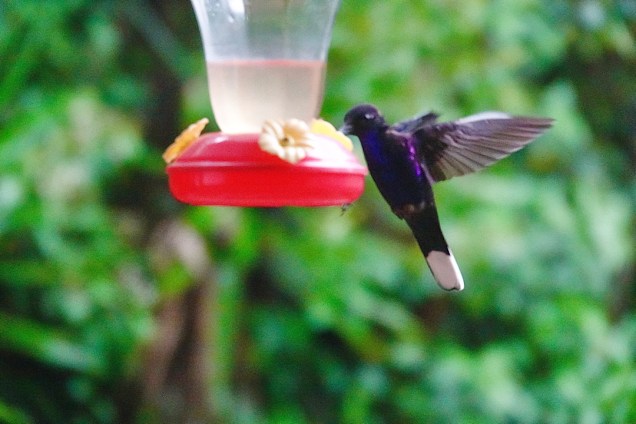
 We admired the big violet saber-winged hummingbirds whom we’d been seeing throughout our stay.
  We milled about and didn’t chat much.
 But then the creature flew to another perch.
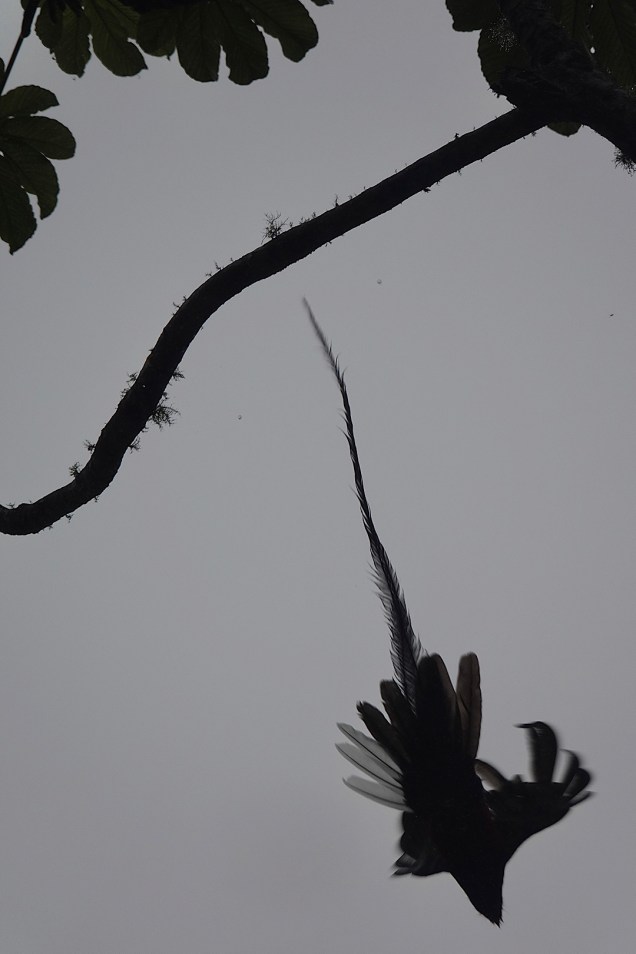
 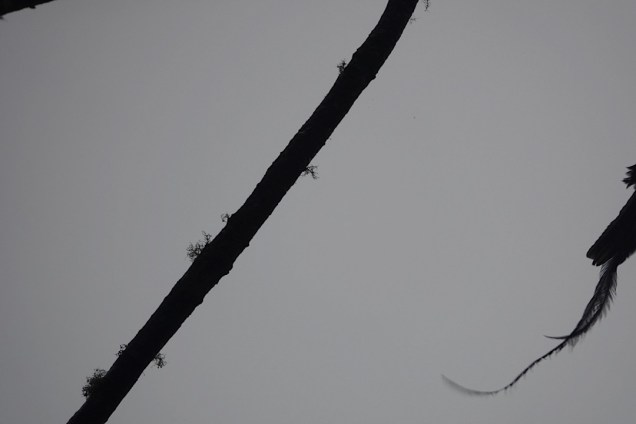 I stared at that tail and the manager yelled. The steely early morning light made it hard to make out the bird’s brilliant red chest, but the tail looked like nothing I’d ever seen on a bird before: unmistakably a quetzal, Alfredo and the manager concurred.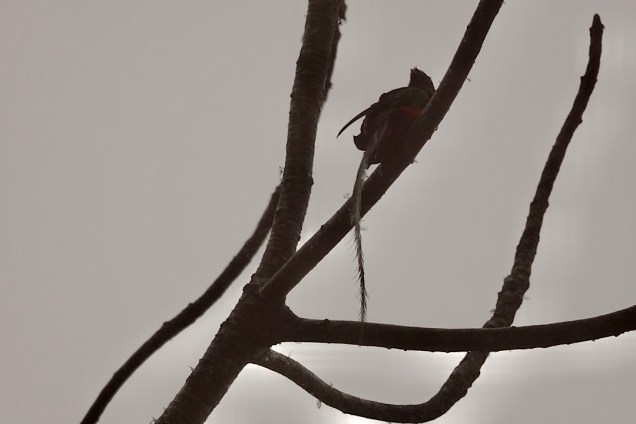

 He gave us boarding passes that let us go first through the jetway,
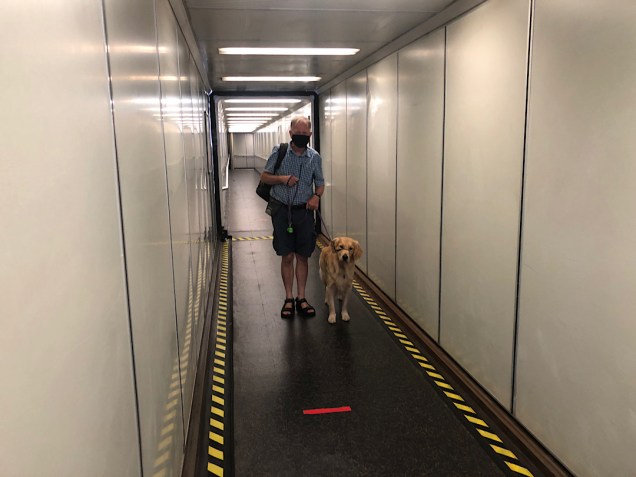 so we had tons of room, sitting in the first row. I Stayed in a perfect Down position when the flight attendant gave her speech,
  and although I got a little nervous during the take-off (and later, the landing), my p/M gave me the Lap command and let me look out the window. I found the sights out the window intriguing, if slightly creepy.
 Just as often, I napped.
 Frankly, I’m not a fan.
 And pretty soon the sun was shining again.

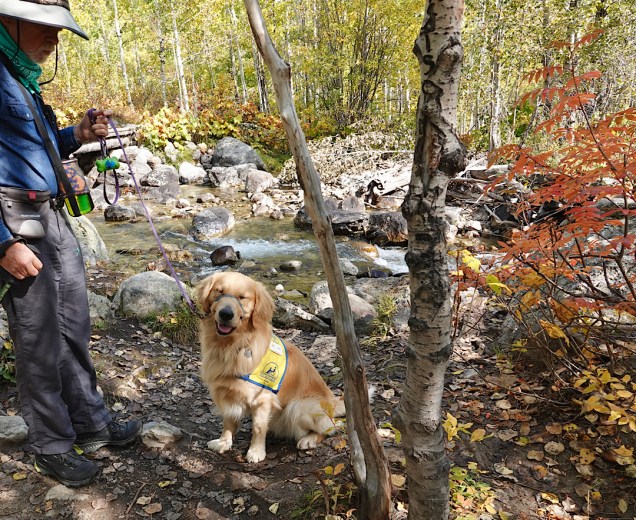


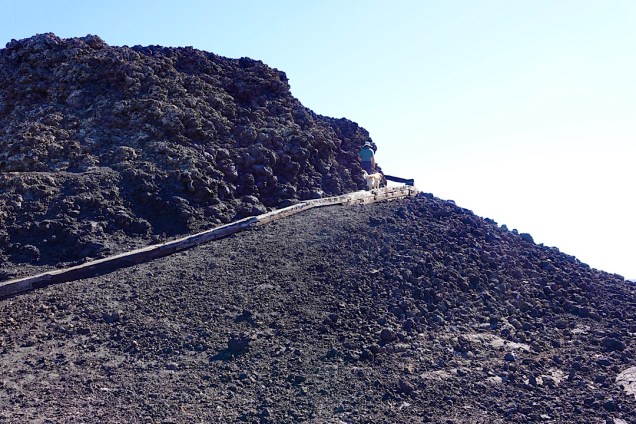


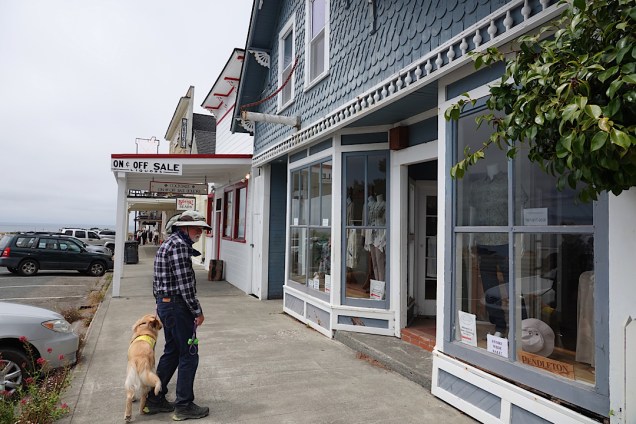 The coastal vistas were as beautiful and empty as any I’ve seen anywhere.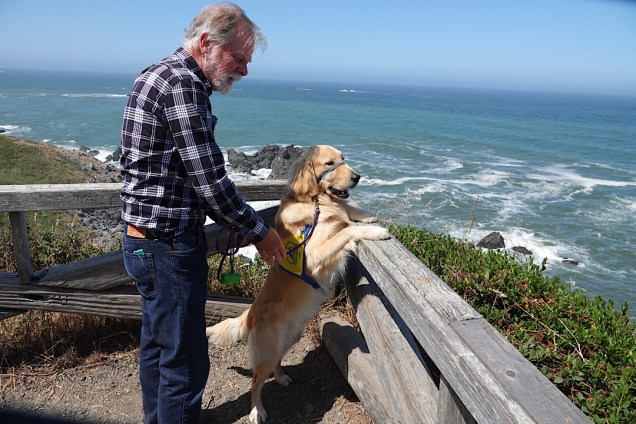
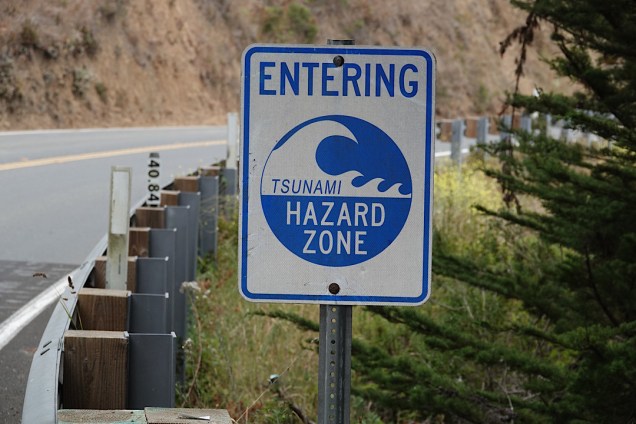 Then there’s the weather — gray, sodden, and dreary for much of the year. In the height of summer, we enjoyed some sunny spells, but the daytime highs rarely surpassed 60. Nights, the temperatures dipped into the 40s.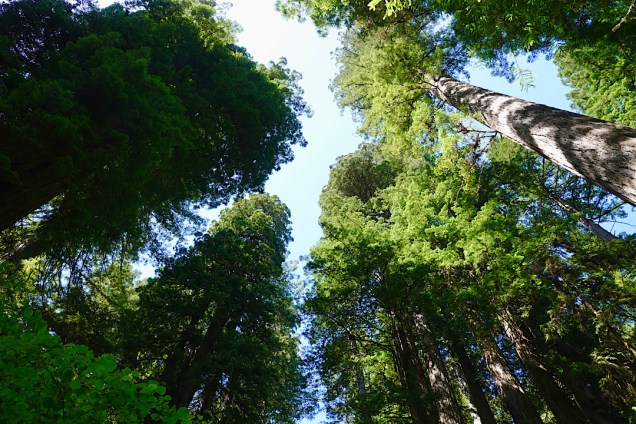
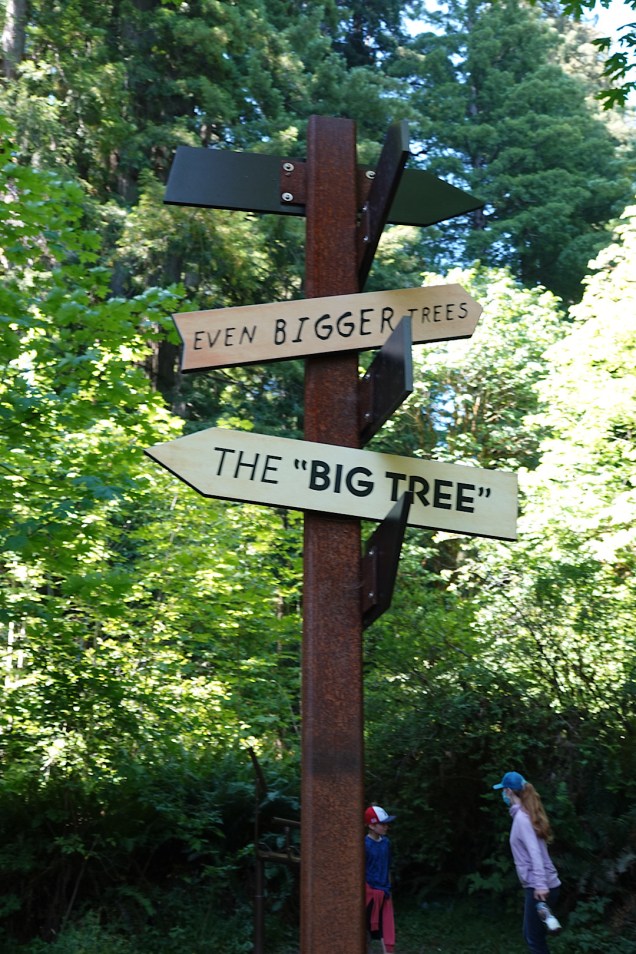
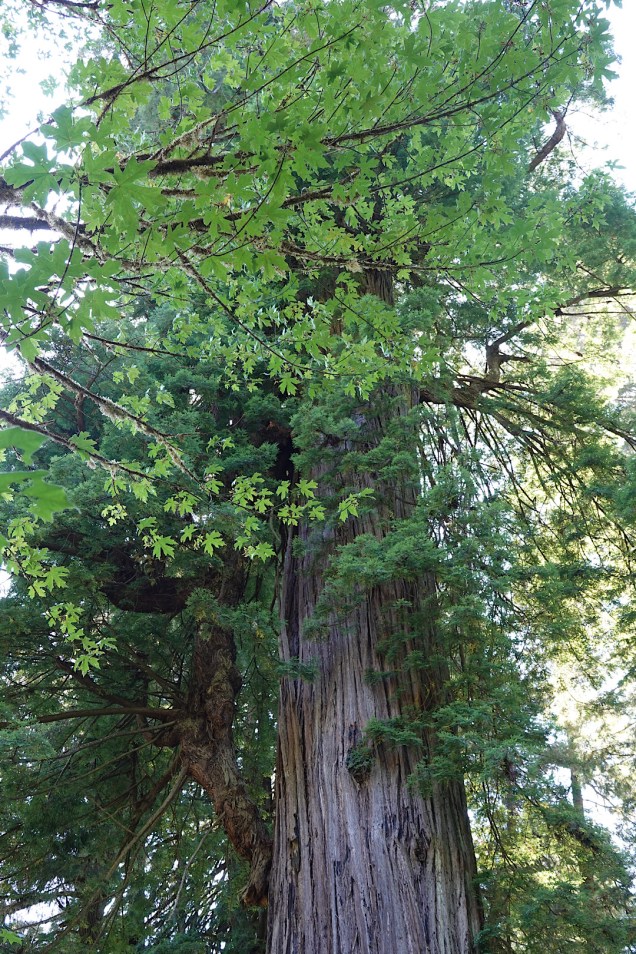
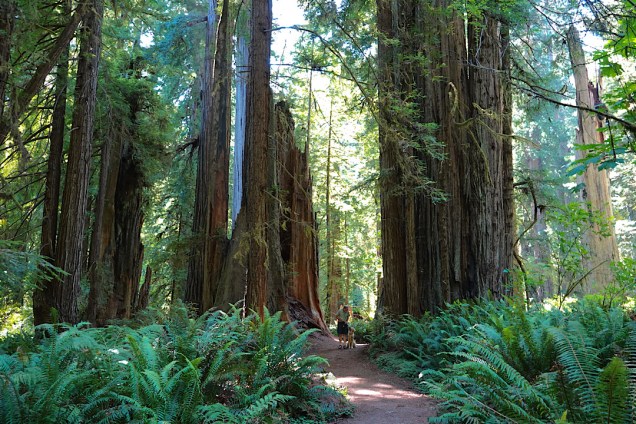
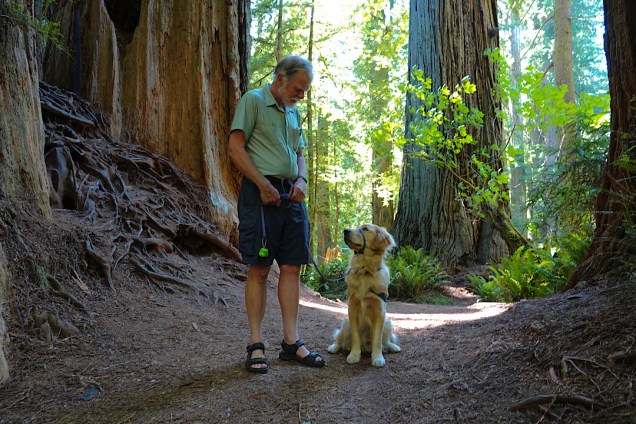
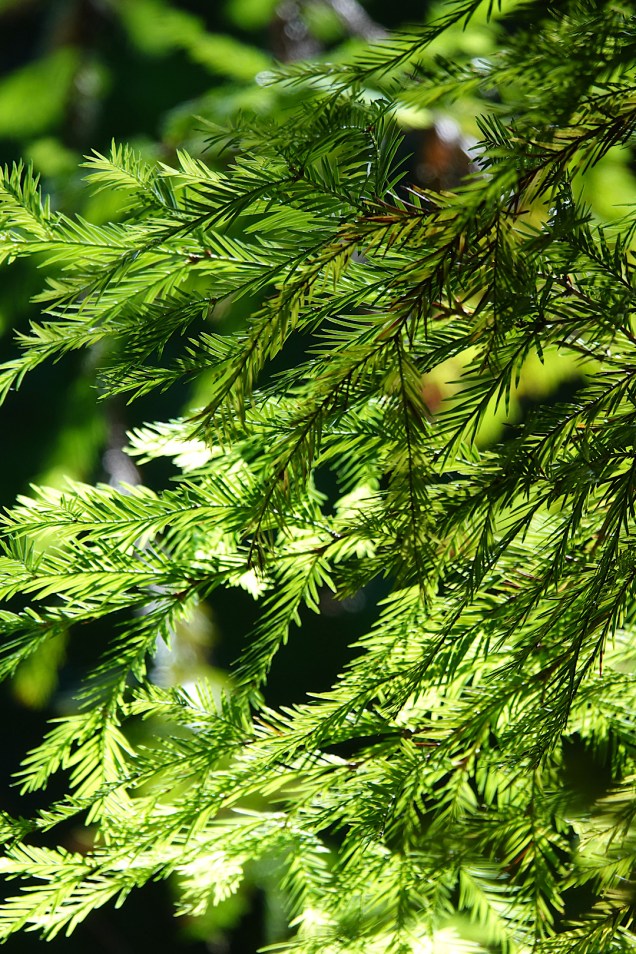 The path ahead of us invariably looked shorter than the trees were tall. The scented air invigorated me, and the sculpted shapes surrounding us often stopped us in our tracks.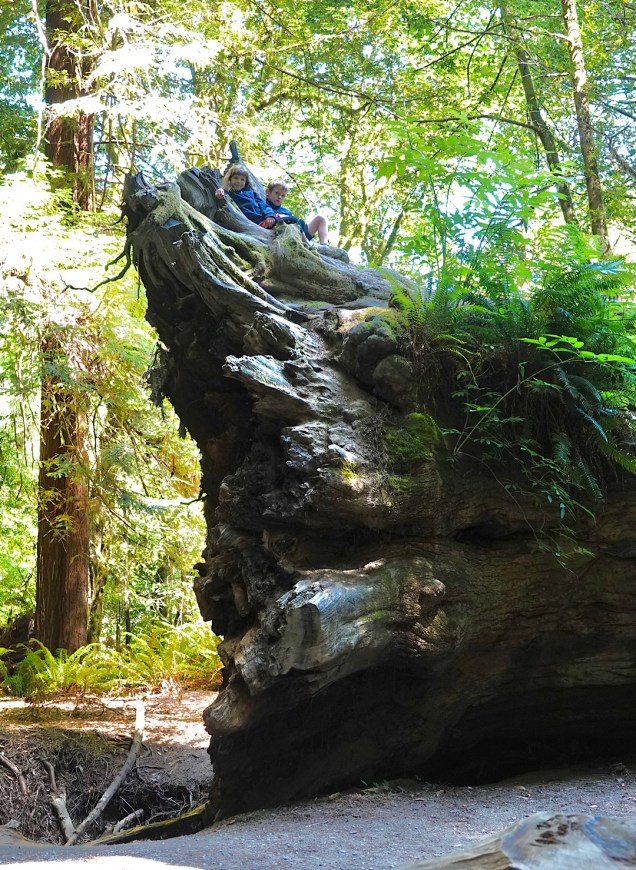
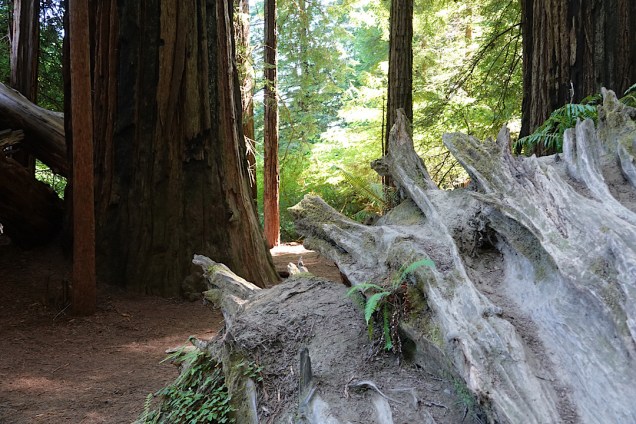
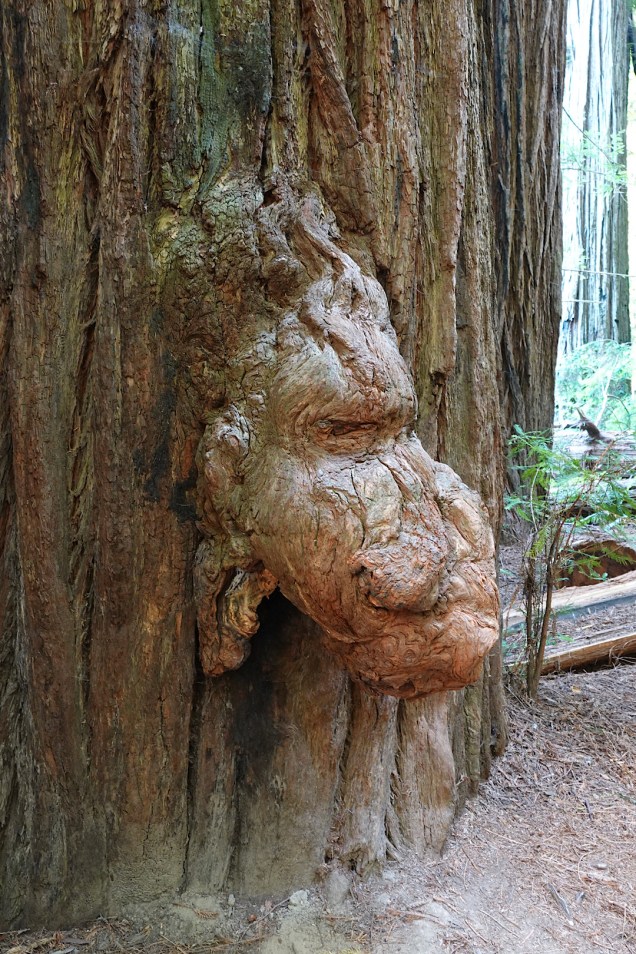
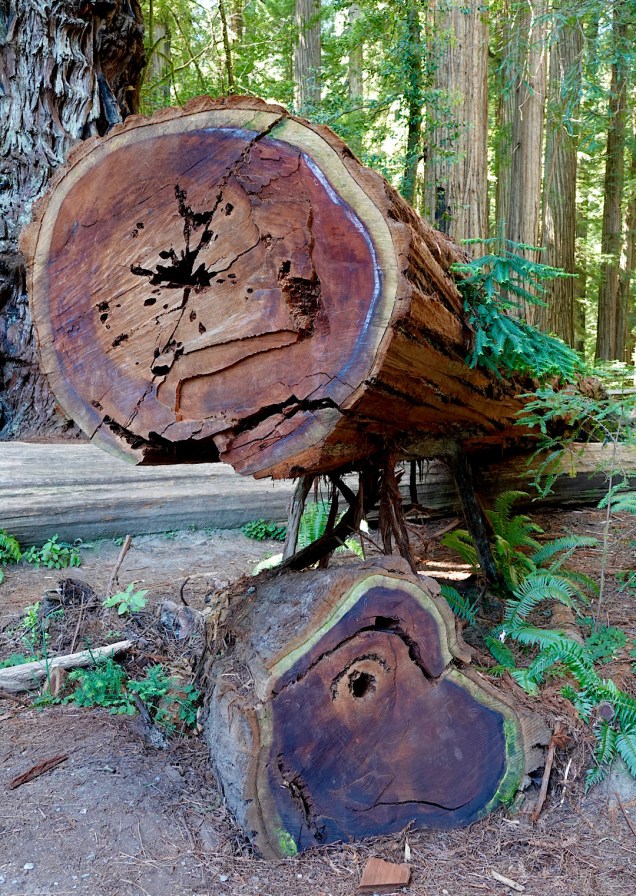
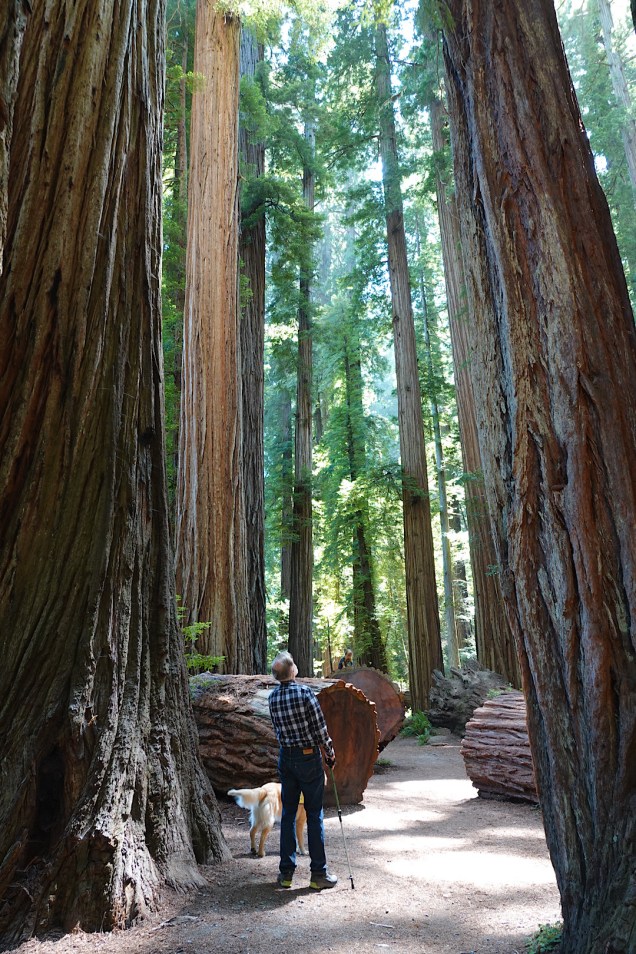 It’s a landscape that competes with the most breathtaking anywhere, I think, and yet it rarely shows up on lists of the natural wonders of the world.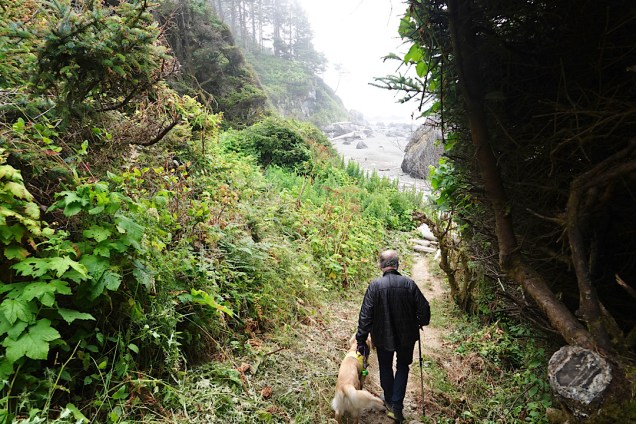
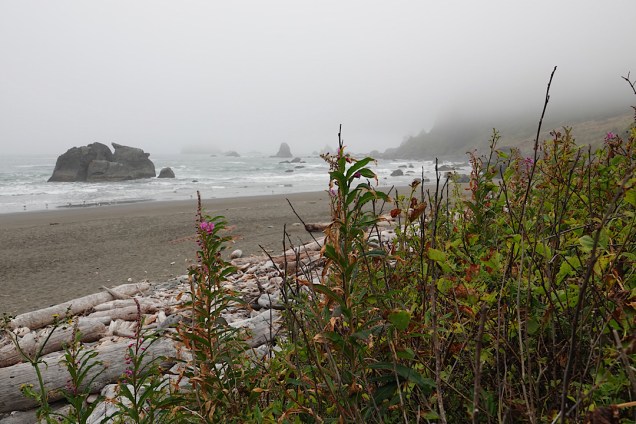 We spent an afternoon exploring a canyon whose walls are coated with ferns.
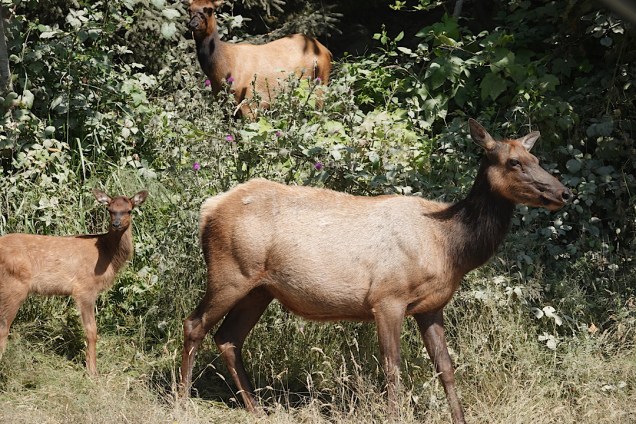
  We got close to wild elk.
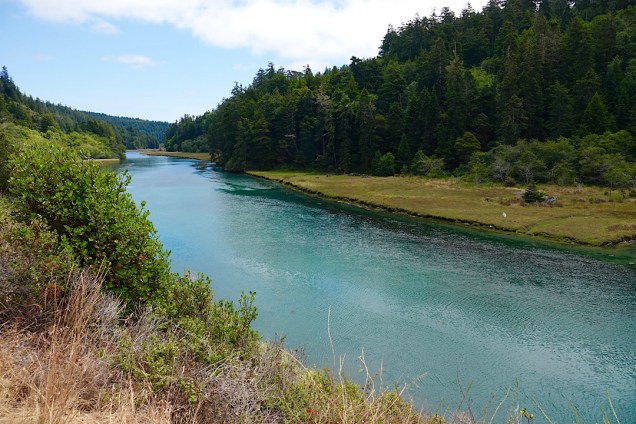
  Another morning we hiked up the mouth of the Big River.
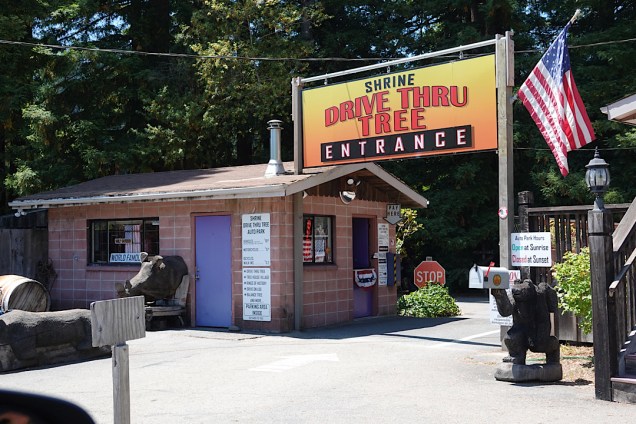
 We resisted paying to drive through one of the touristic tree wonders.
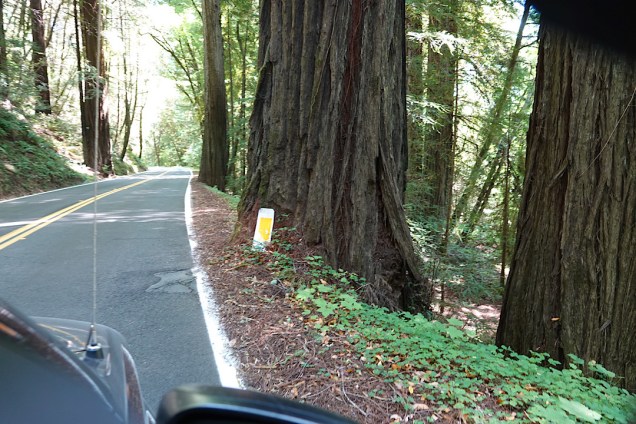
 But we drove the Avenue of the Giants, where the huge trees crowd so close to the road people put reflectors on them as a warning.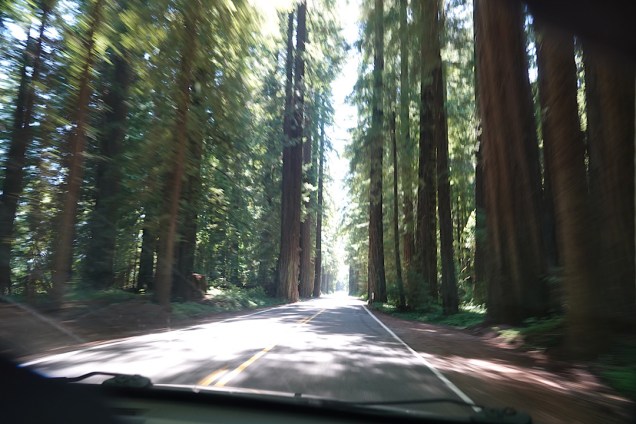
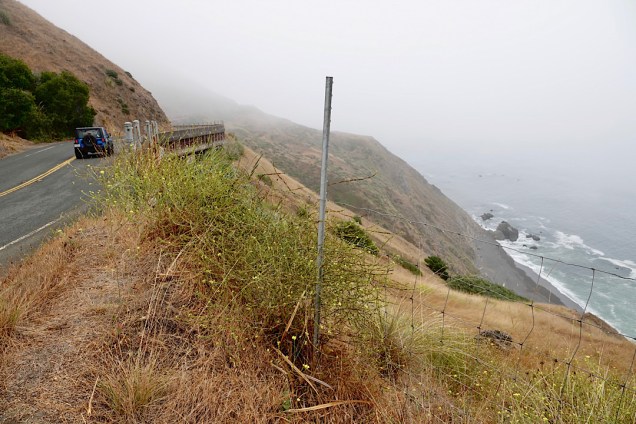 …until we crossed the Golden Gate Bridge and were back in Civilization. We slept in Santa Cruz last night and will spend our final night on the road in Santa Barbara. All that will be anticlimactic. Those hikes through the otherworldly, timeless woods were the climax.
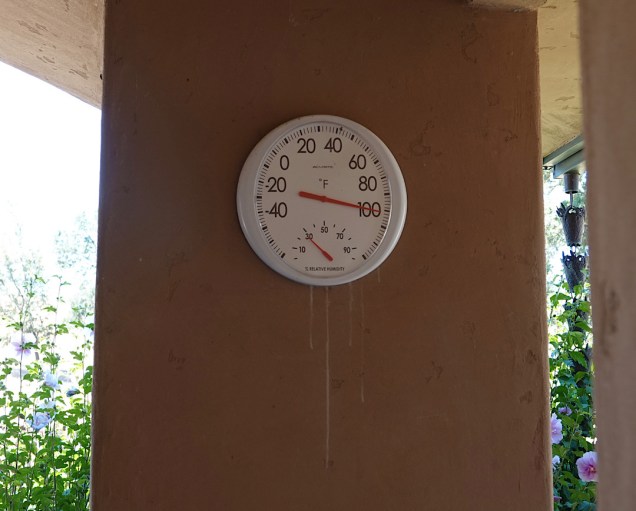 This summer marks my 30th anniversary as a home-exchanger. It was 30 years ago that Steve and I first traded our house in San Diego, that time for a spacious ground-floor apartment in a cool stone building in the most chic neighborhood in Paris. It had a private garden that opened onto a larger shared green space. After that we were hooked. Since then we’ve done almost 20 exchanges all over the planet.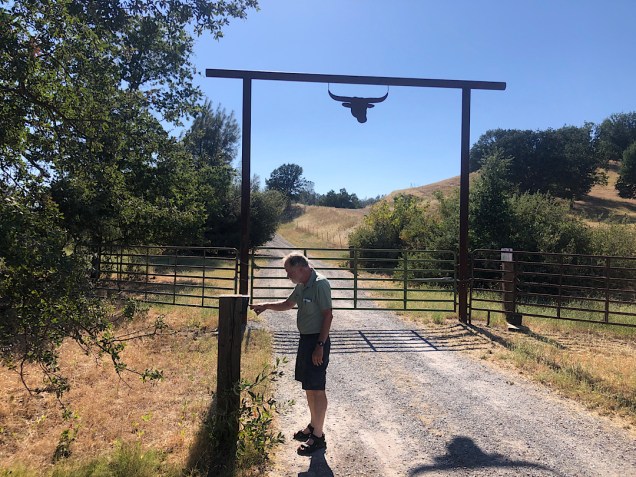
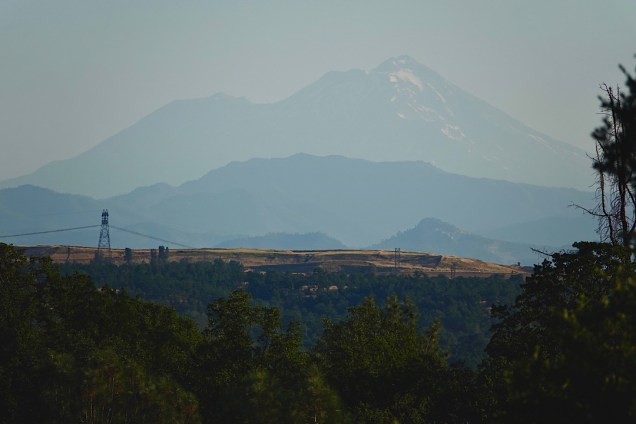
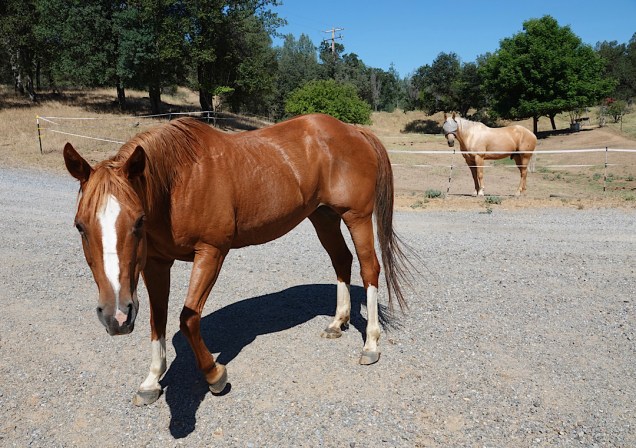
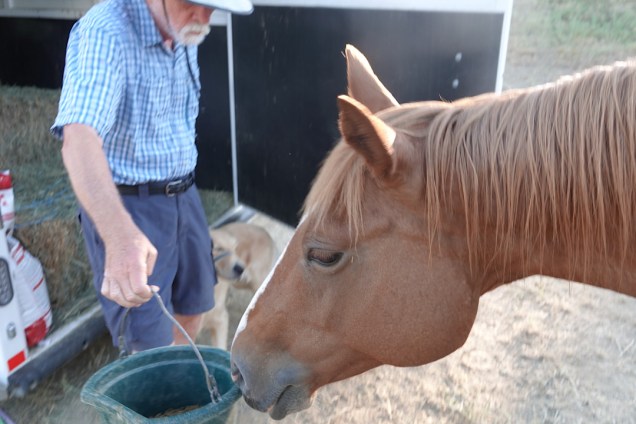
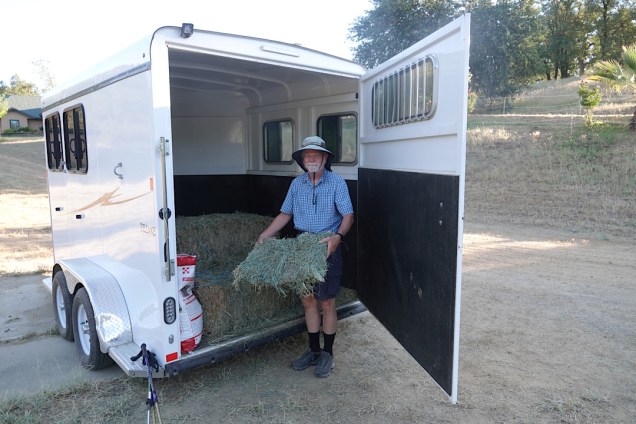
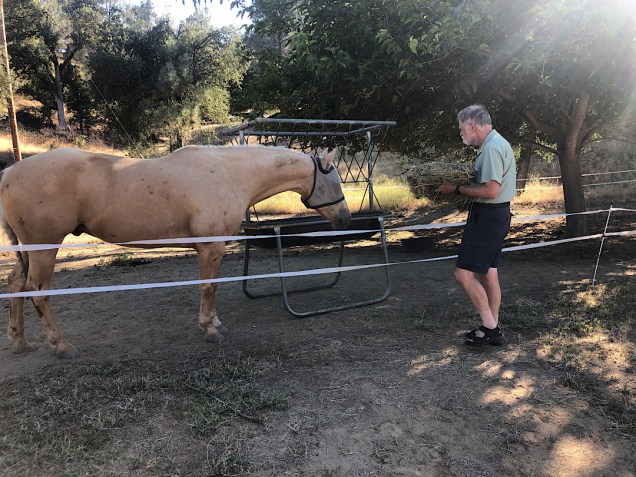
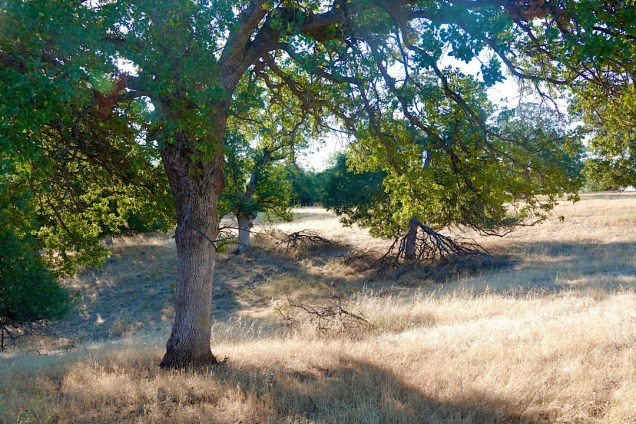
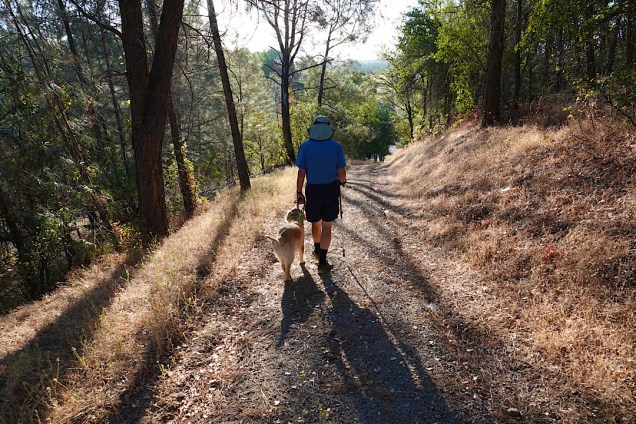 It’s a magical place filled with oak trees…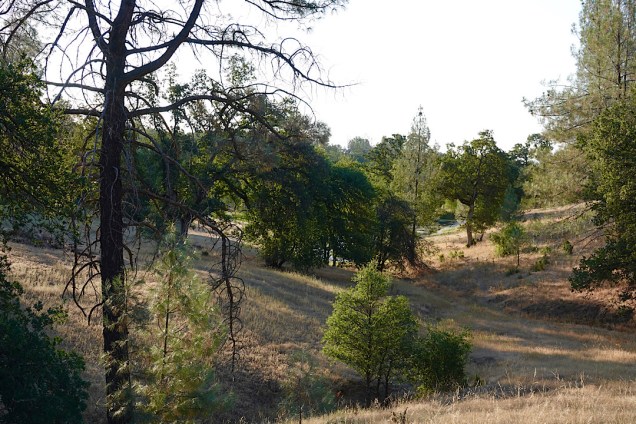
 manzanita…
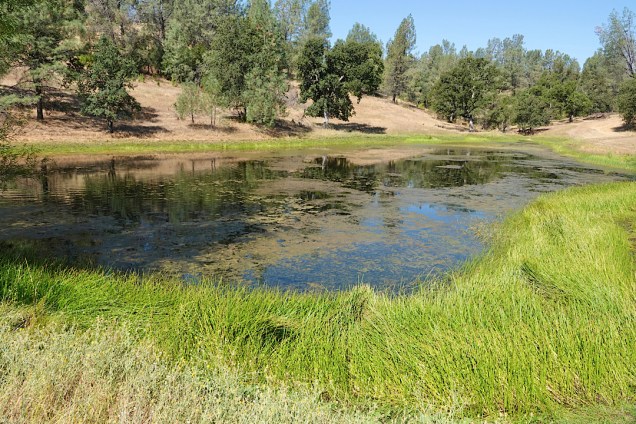
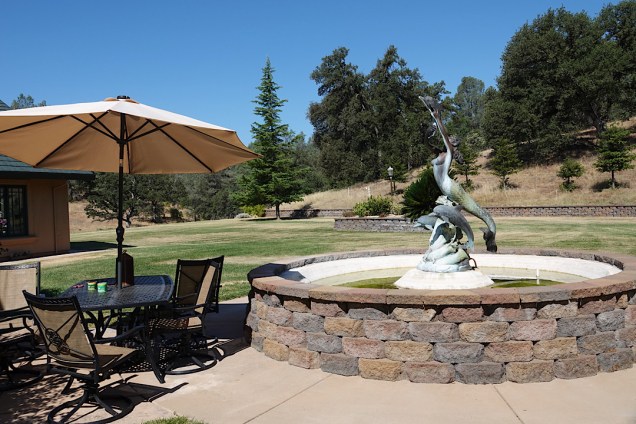
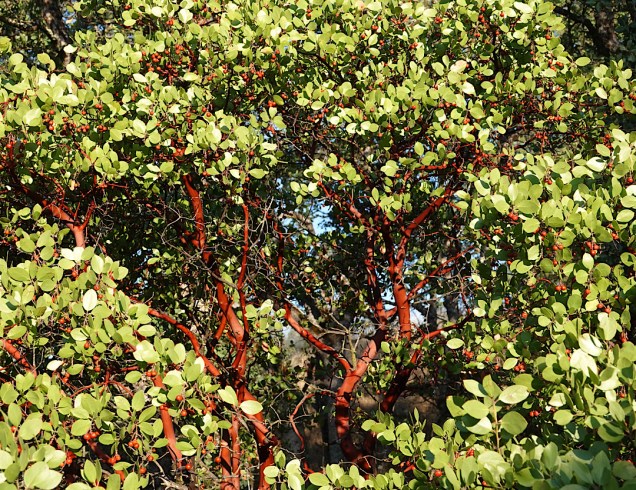 …and other native flora. Near the house, we can there’s a pond ringed with emerald grass.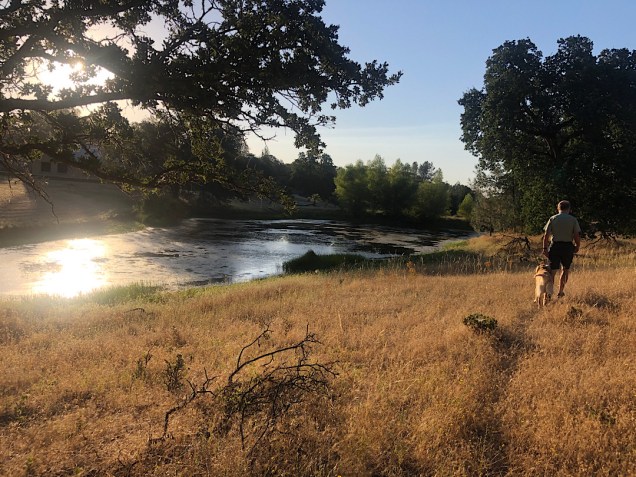
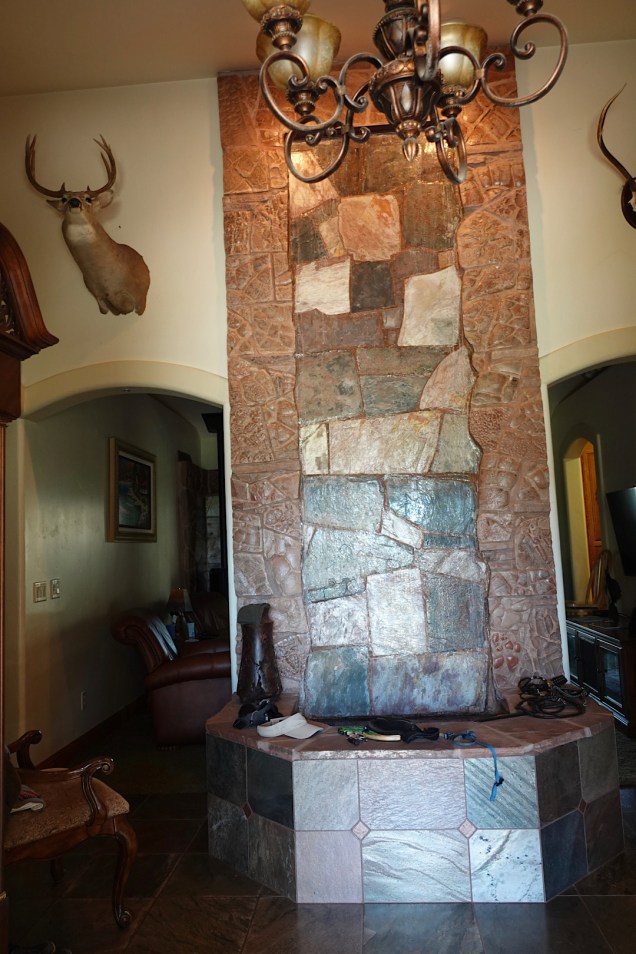
 On the afternoons when we decided not to venture out, we’ve hung out in the sprawling, baronial manor house. A swamp cooler protects the interior from the heat. (To my surprise, this system works as well as any air-conditioning unit and apparently costs a fraction of the price to run.)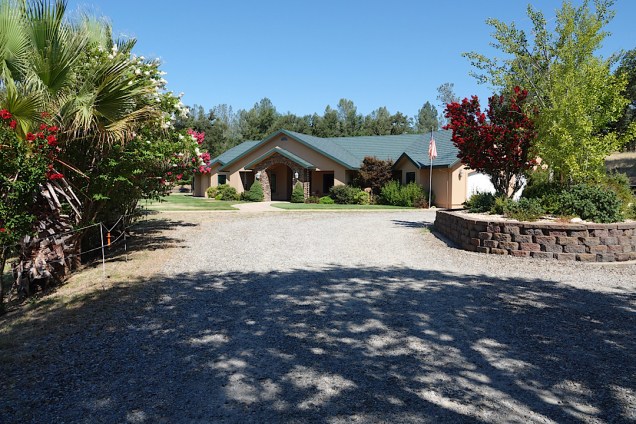
 Except that there’s an entrance booth manned by a state historic park ranger…
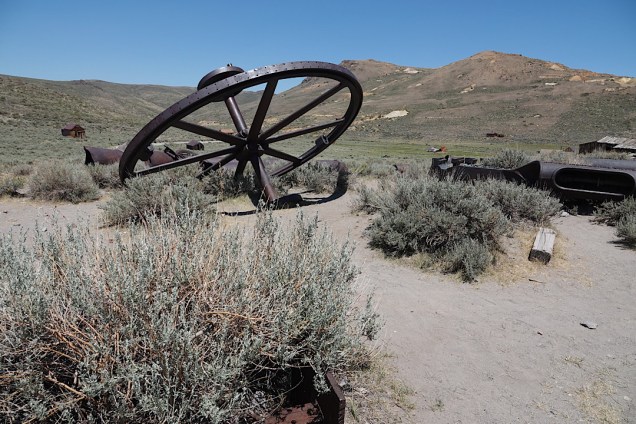
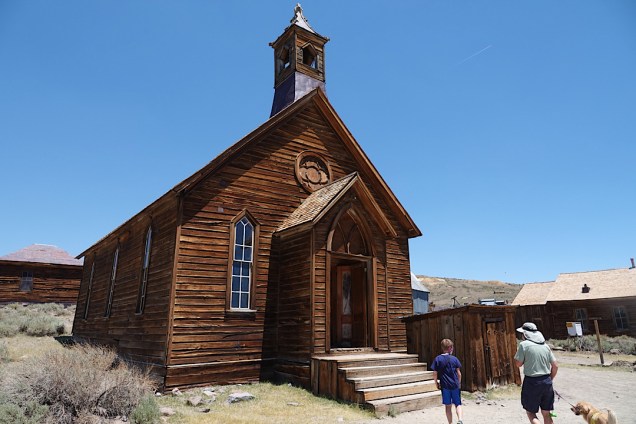
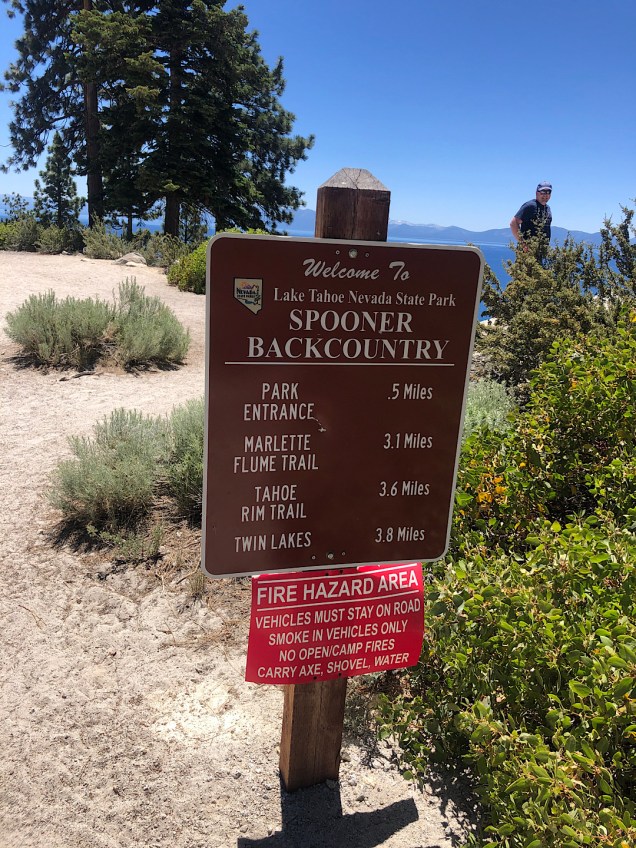
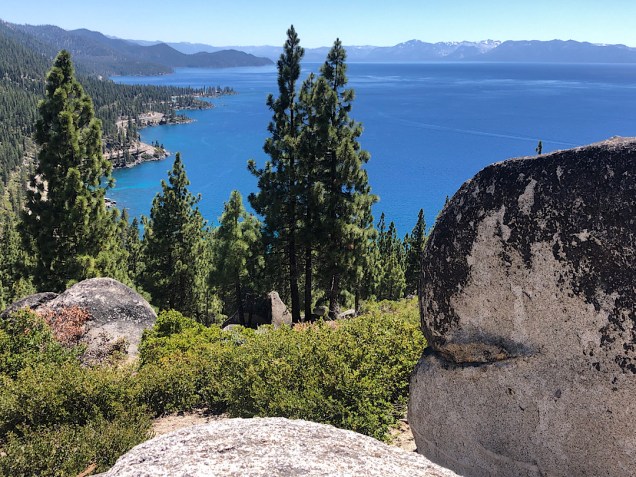

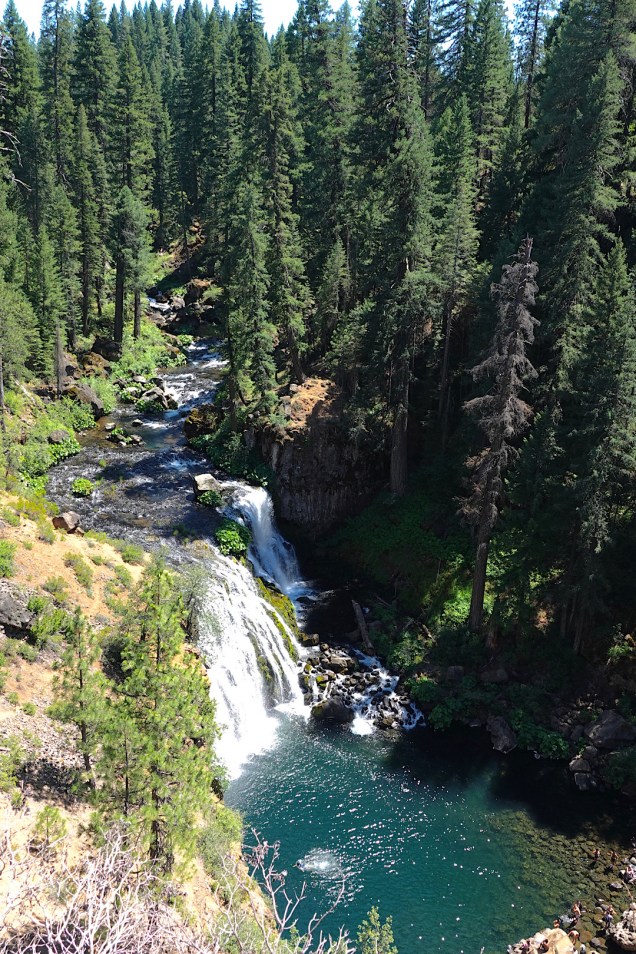
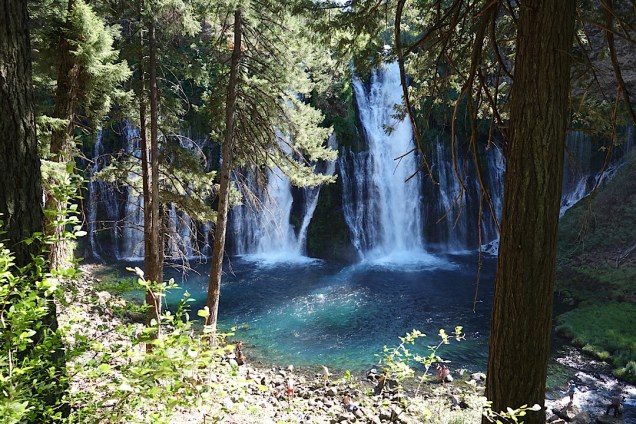
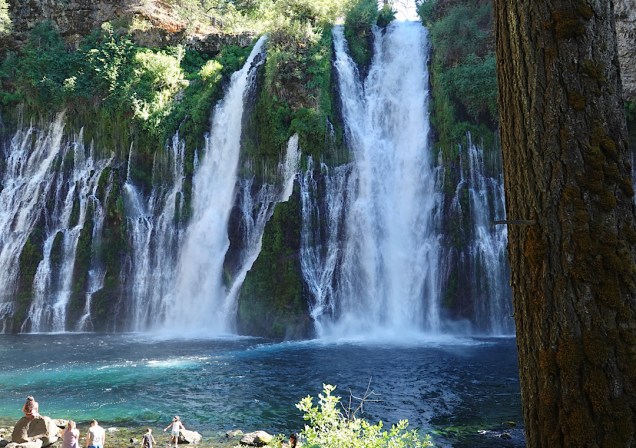


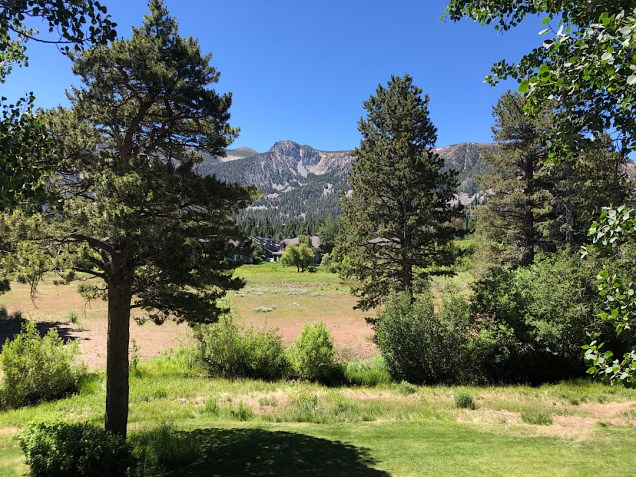

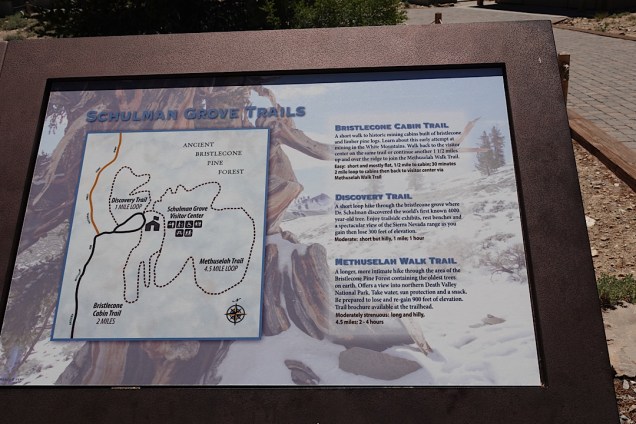 We chose the mile-long Discovery Trail. It led us to the section where in 1953 a dendrochronologist named Avery Schulman learned one night that he had just cut a core out of a tree whose rings indicated it was more than 4000 years old.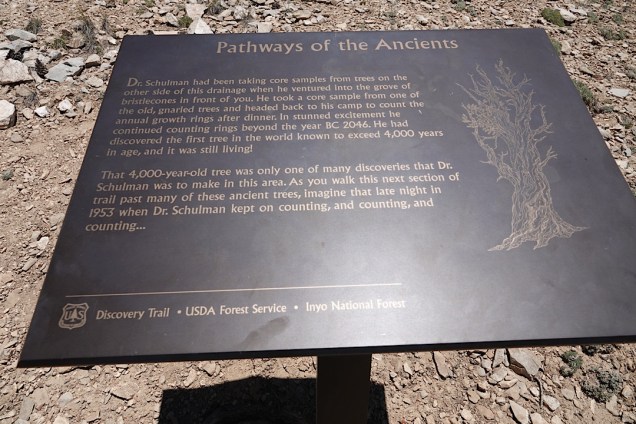
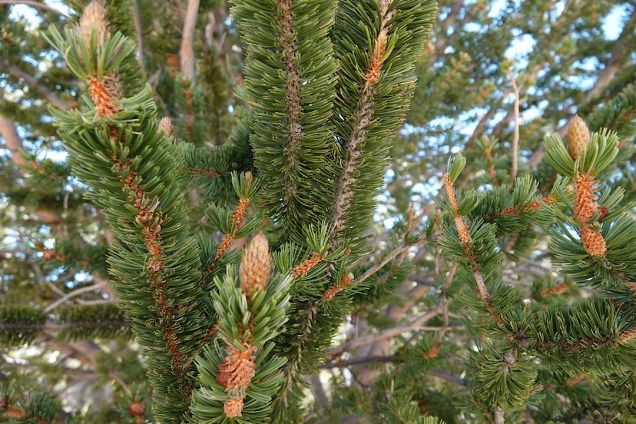
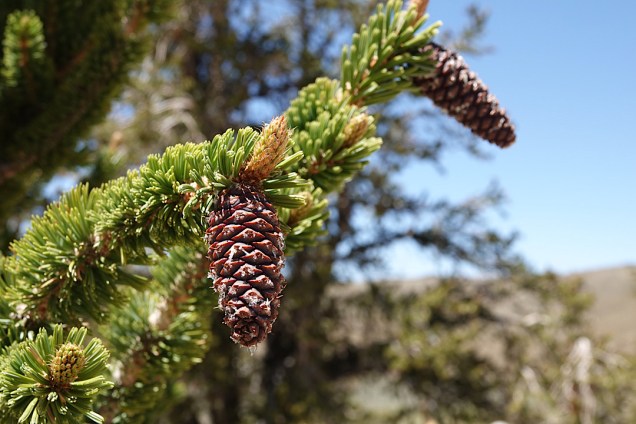
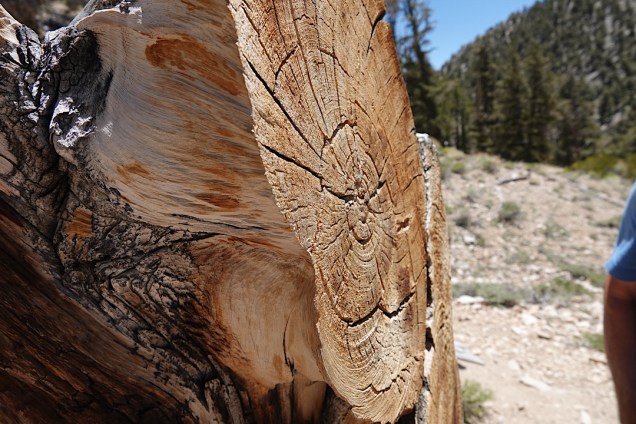 Over the millennia the bristlecone pine wood twists into weird sinuous forms, many of which are bare of vegetation.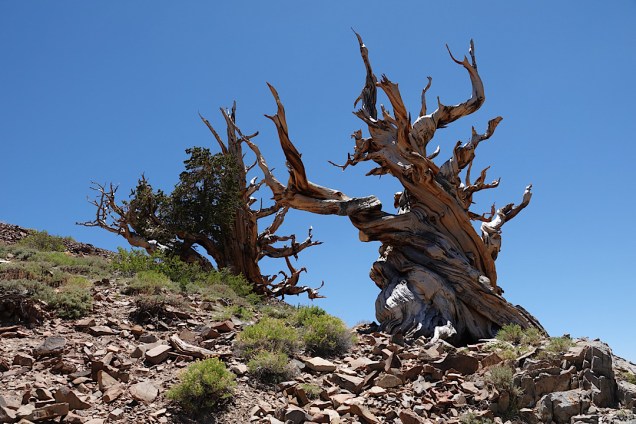
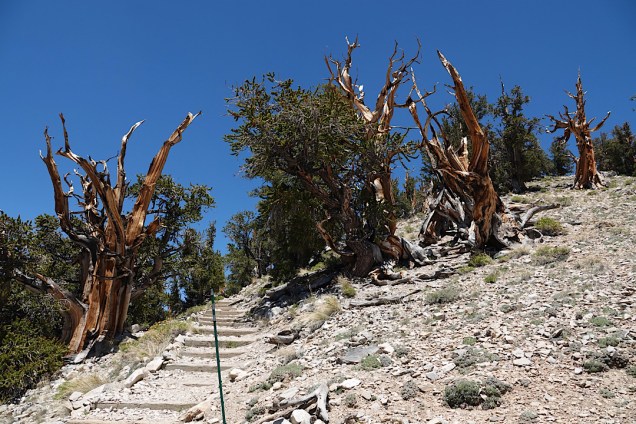
 But green branches cluster low to the ground. They make it clear that, though the trees may look half dead, they’re still very much alive. When Nero was burning Rome, some of these very specimens were already more than two thousand years old.
 At home and abroad