Many years ago, Steve and I had a friend who went to India. When she returned, she talked about her adventures, which included a visit to temples that bore remarkably erotic carvings. These shocked our friend so much — with their explicitness and wild invention — that the memory of them stuck with me. Steve and I wanted to include some temples on our itinerary, so why not the compound in Khajuraho?
From San Diego, I booked berths on an air-conditioned third-class sleeper train that was scheduled to leave Varanasi around 6 pm Wednesday and arrive in Khajuraho shortly before dawn the next day. But in a moment of true enlightenment (it came upon our arrival in Varanasi, when we stopped for some mysterious reason and then didn’t move for two hours even though our train was just outside the station), we realized we would probably loathe the 12-plus-hour night train. Amazingly, the next day we were able to book seats on a 32-minute flight on Jet Air, cancel our night train tickets, and even get a refund (about $14) for the tickets we didn’t use.
The flight was flawless: almost empty, on time, and we even got a little sandwich and water during our brief minutes aloft. Khajuraho has a new airport terminal that makes San Diego’s looks shabby, but we didn’t spend much time in it. By 2 pm we were at our hotel. We spent that afternoon relaxing, and at 8:30 the next morning, we set off with a guide arranged by the hotel.
With him, we took a tuk-tuk to the most important cluster of temples, what’s known as the Western Group. This is a vast compound covered with emerald lawns and huge old trees. Set among them are about a dozen structures. The area is breathtaking; even at a distance, it ranks among the greatest ceremonial sites Steve and I have visited: Angkor Wat, Machu Picchu, Teotihuacan.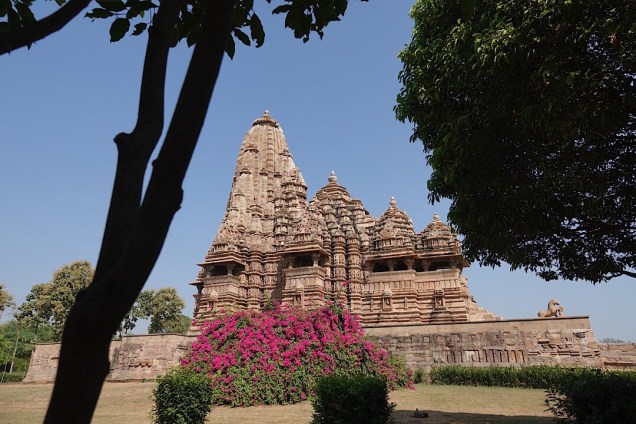
 These ladies were replanting the lawn with individual seeds.
Up close, it was even more amazing. Stone carvings cover almost every square foot of the thousand-year-old buildings and their interiors.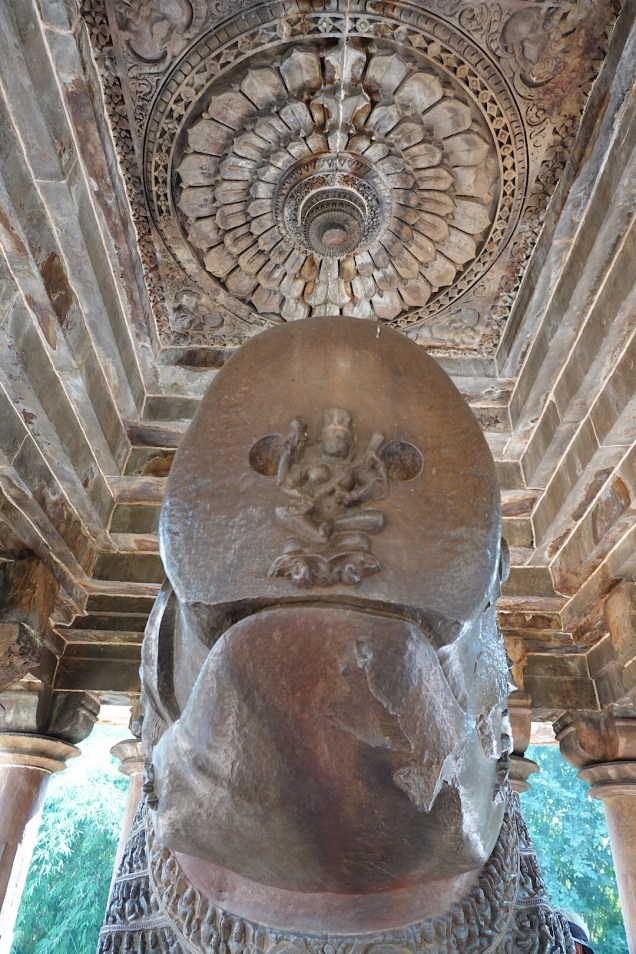 This is a huge sandstone wild boar– the third incarnation of the god, Shiva.
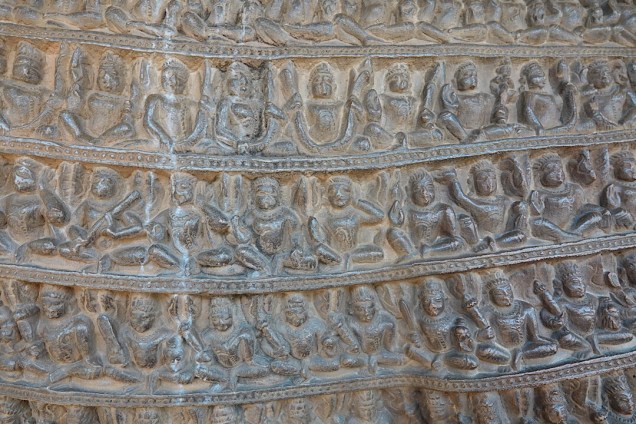 And this is some of what’s carved into his side.
As our guide escorted and instructed us, I realized I had gotten the wrong idea from what our friend described so long ago. It is true that every kind of sex is depicted: orgies…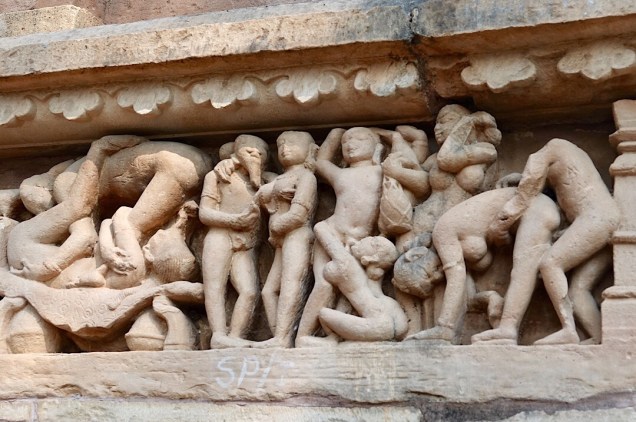 …wacky positions from the Kama Sutra, masturbation…
 …but it feels like every other aspect of human life is also captured. Soldiers slaughter each other with the aid of war elephants. A famous carving depicts a young woman applying her eye make-up.
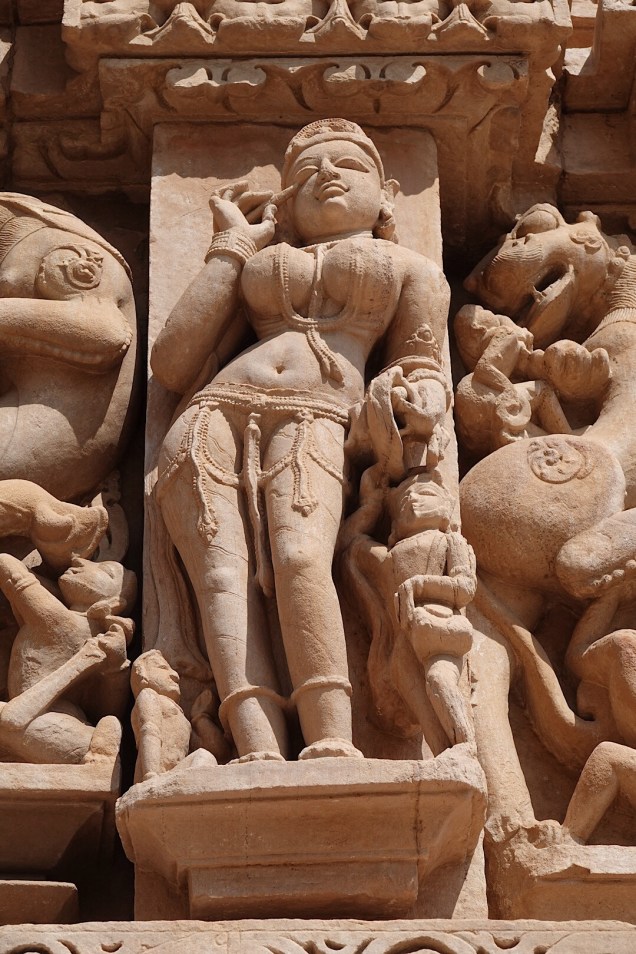 Another girl extracts a thorn from her foot:
 People bathe, stretch, drink together…
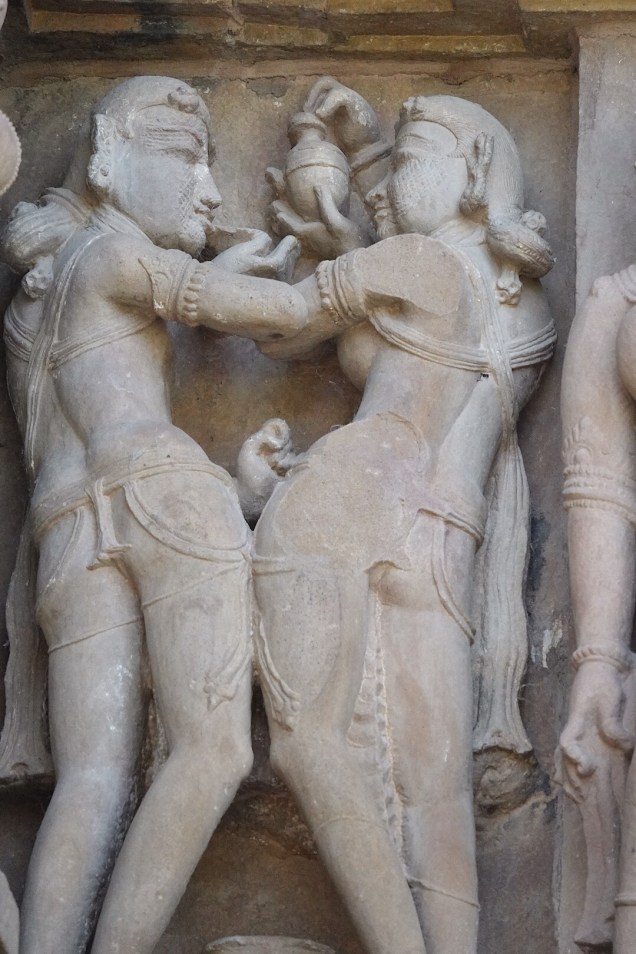 …listen to music.
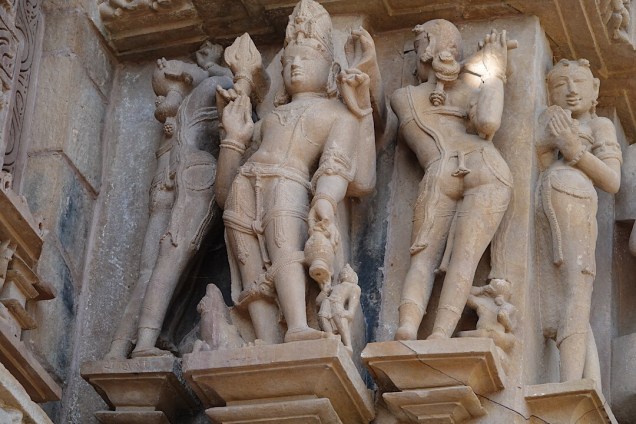 The carvers’ sense of humor is obvious. In one of the most infamous scenes, a man is fornicating with a horse, while two men on each side await their turn. A third covers his eyes in disgust at the barbarism — except that the carver makes it clear he’s peeking.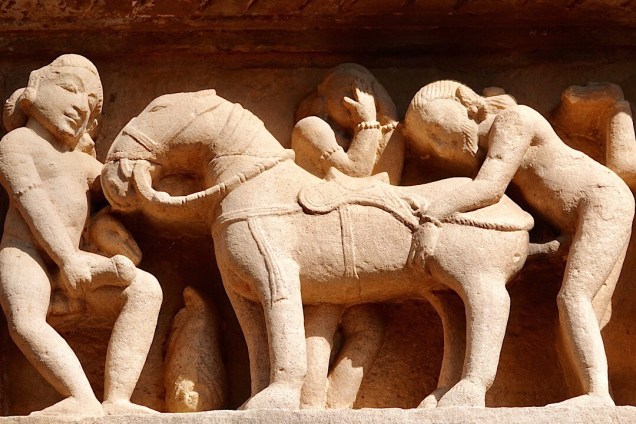
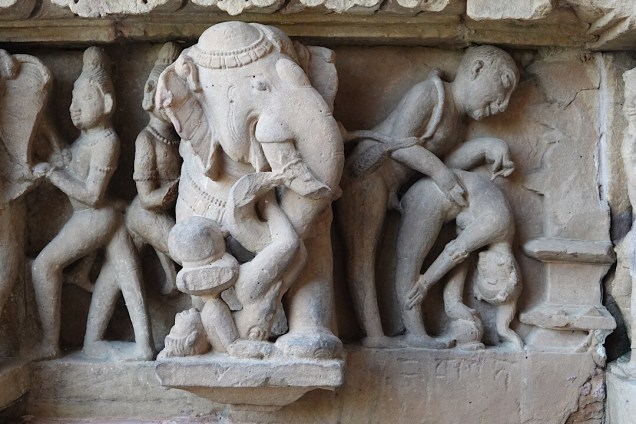 The elephant looks like he’s got a sense of humor too.
It’s splendid, brimming with life and motion. After about 90 minutes, Steve was so overwhelmed he yearned to wander through the whole site again, to better absorb it. But I wanted to visit the Jain temple compound on the other side of town, so I headed there with Karana, the guide.
Jainism is an alternative to Hinduism that began in the 6th Century BC. It rejects the idea of castes and preaches that liberation can be achieved by purifying the soul. The most important way of doing that is through non-violence. In an amazing stroke of luck for us, Khajuraho had been hosting a four-month-long Jain festival (that will wrap up this coming week). The compound grounds were jammed with Jains from all over the country, including some of the holiest men in all of India.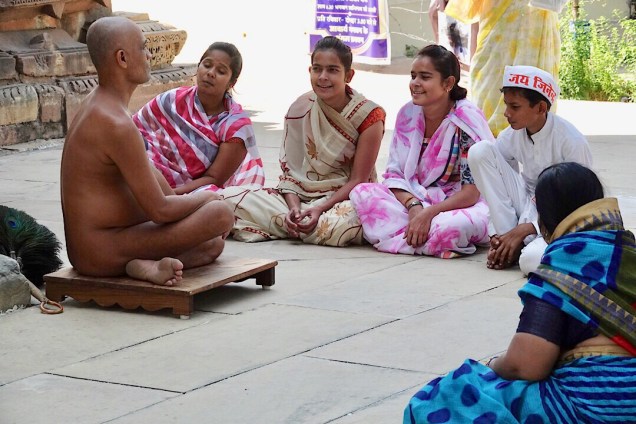 Some of the Jain monks never wear clothes. Like this one. Outside of the four-month-long monsoon season, where they congregate in some location (e.g. Khajuraho this year), the Jain monks wander naked through the countryside, praying and preaching and meditating.
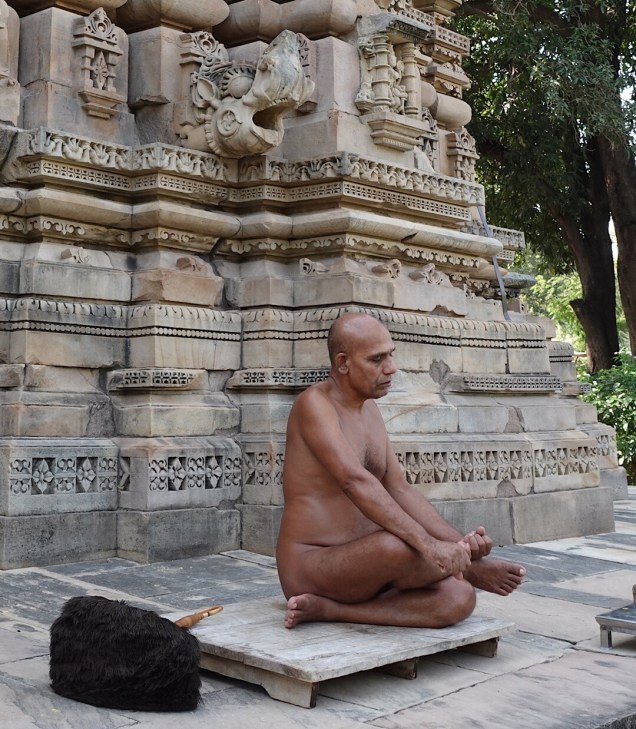 One of their only possessions is the brush they carry to sweep insects out of their path to avoiding injuring them.
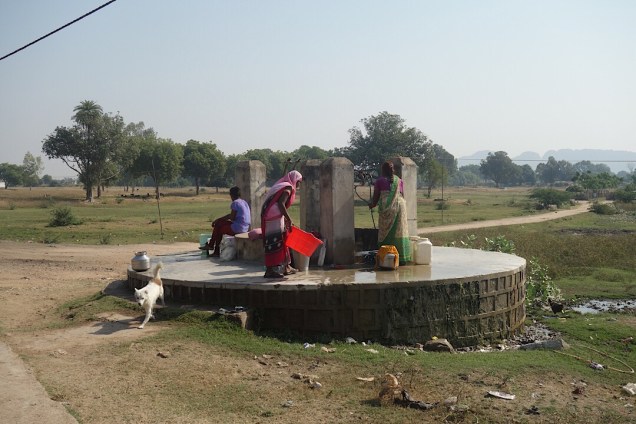
Steve and I saw even more temples the next day, though none as marvelous as those in the Western group. In the morning, we rented bicycles and pedaled through the town and countryside. If it weren’t for the smog, which seemed worse than that in Kolkata, the area would be lovely. 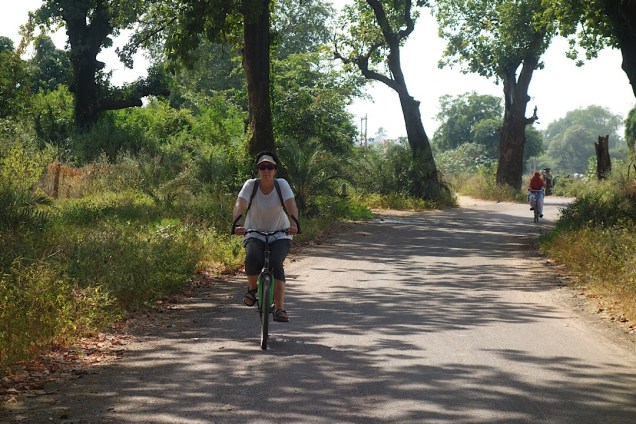 The city isn’t crowded, and there’s little traffic, so it feels quiet. A few temples are located in the surrounding farmland, and we cycled past folks drawing water from a well….
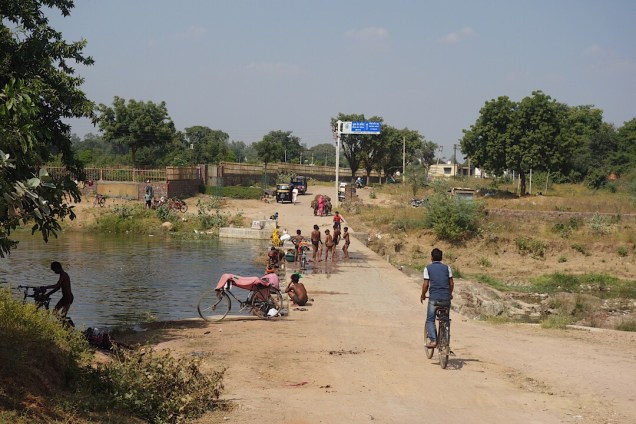
 ..and kids swimming and bathing in a local stream.
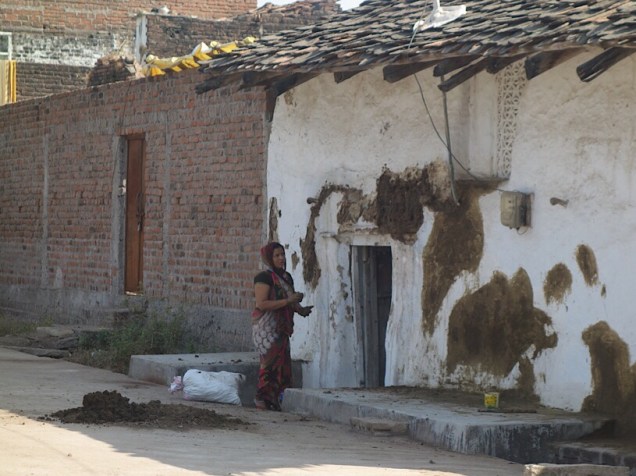
 We pedaled through a village where a woman was slamming handfuls of cow dung on the facade of her house (home maintenance? We weren’t sure.)
 I think it’s the only glimpse we’ll get of rural life in the heart of India. I’ll probably remember it as clearly as the riotous, naughty temple stone tapestry. But we’ve left it behind us now. I’m writing this on a train heading for the heart of Indian tourism. With luck, I’ll post it from our home stay in Agra, about a ten-minute walk from the Taj Mahal.
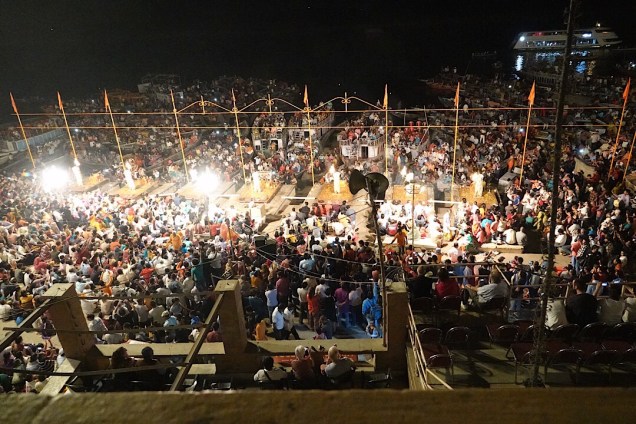 My photo doesn’t do it justice. It doesn’t clearly show all the small boats congregated in front of the seven platforms or the priest standing on each platform, and of course you can’t hear the continuous bells and the plaintive singing. Every night in Varanasi after sunset, before a vast assembly, the priests go through a complex ritual: blowing into conch shells, wafting incense dispensers, waving great silver candelabras. It’s part religious ceremony; part performance art.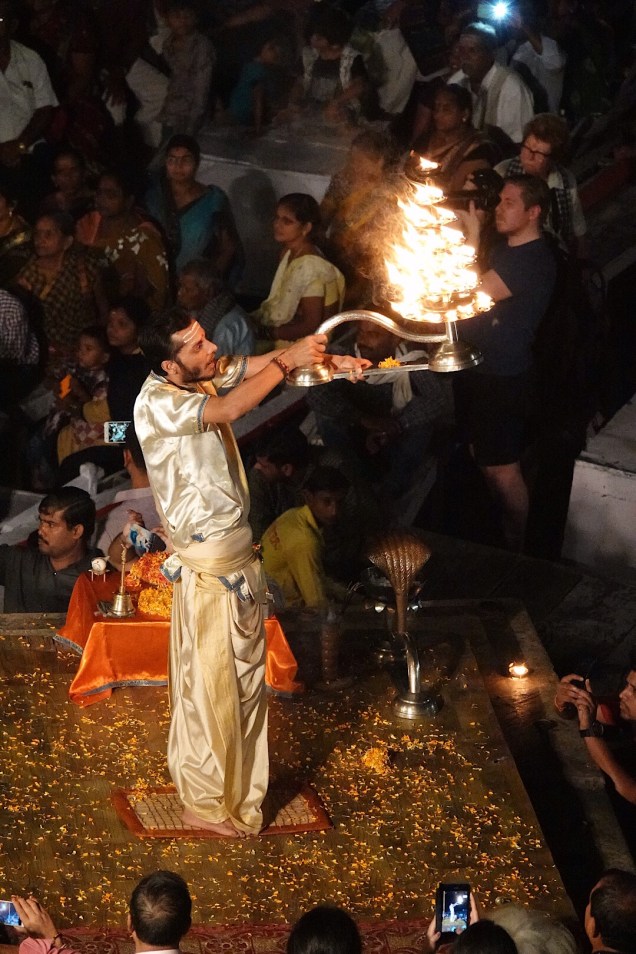
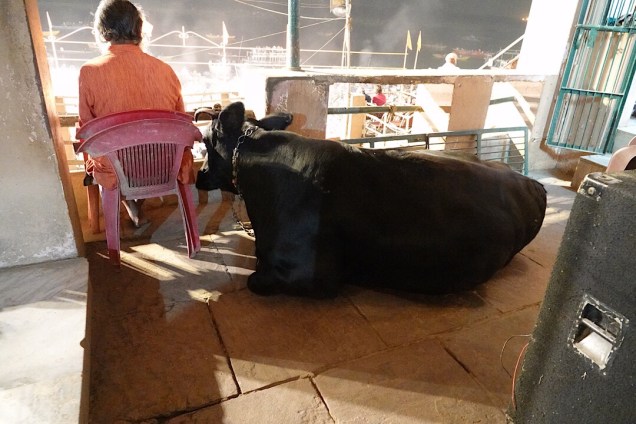
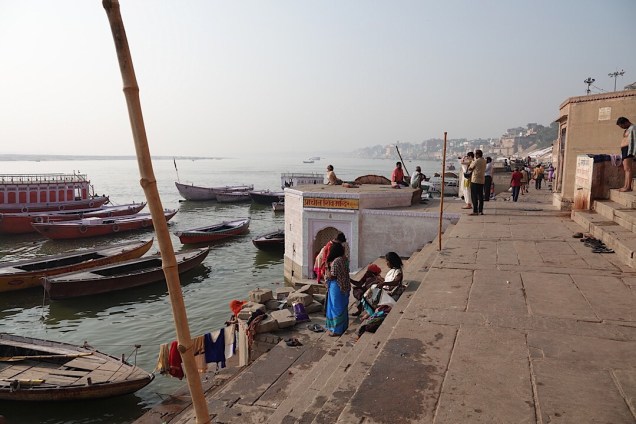 Strolling along these “ghats,” as they’re called, is endlessly entertaining. I’ve never felt more like I was on another planet. You see…
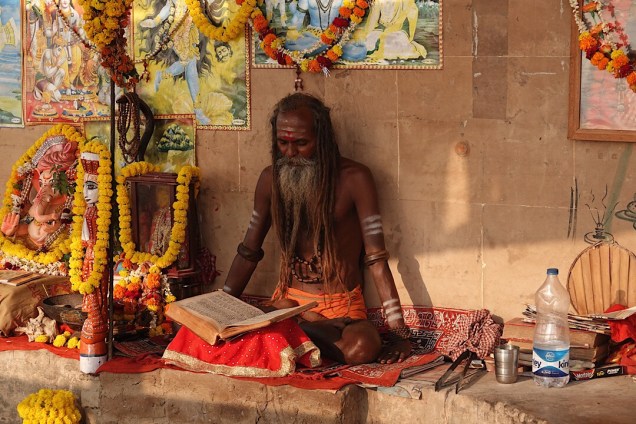 …holy men…
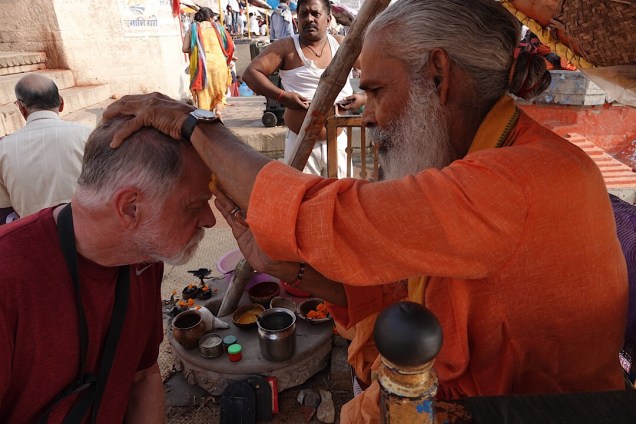 …some of whom will bless you. There are…
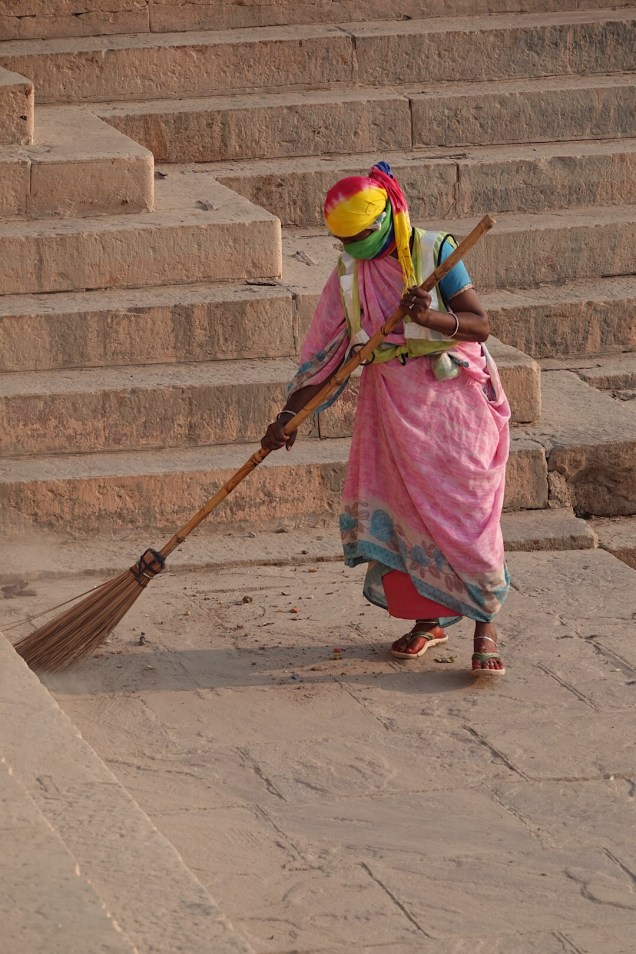 …ladies in saris tidying up…
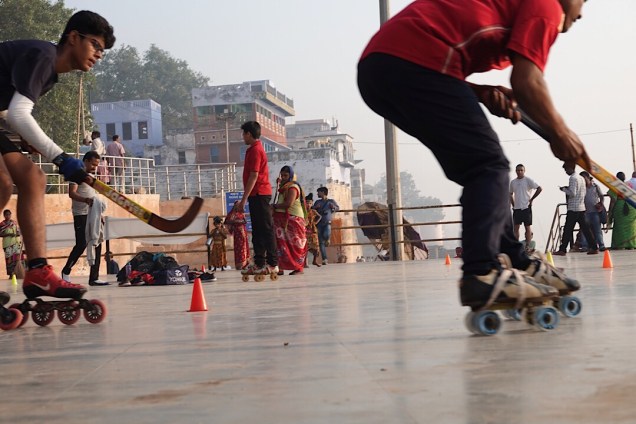 …kids playing street hockey…
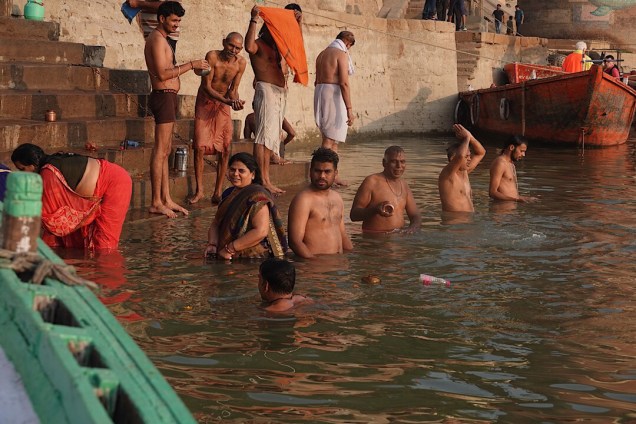 …pilgrims bathing….
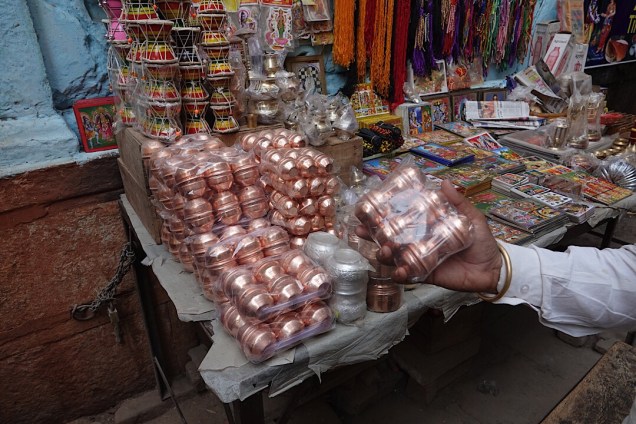 ..and shopping. These are sealed bottles of Ganga water, ready to take home for your friends. (To our friends, sorry. We resisted.)
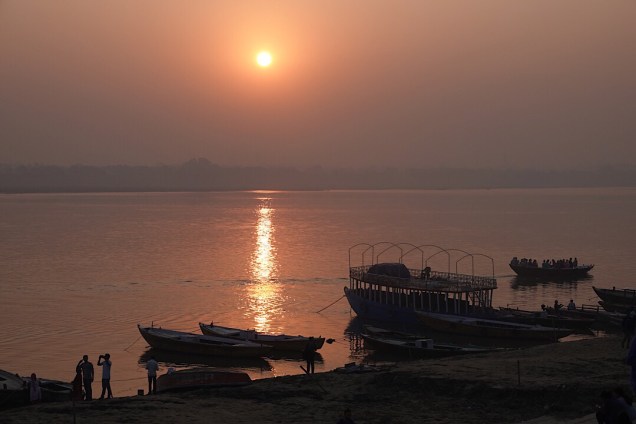 That’s not a typo. It was sunrise, not sunset. Varanasi’s air appears no cleaner than Kolkata’s.
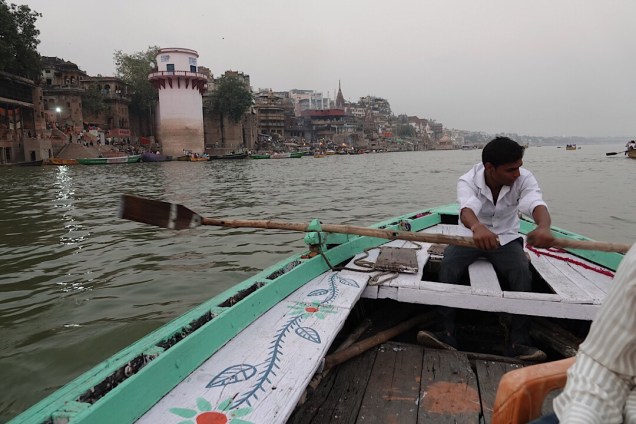 To our surprise, we smelled no ugly odors.
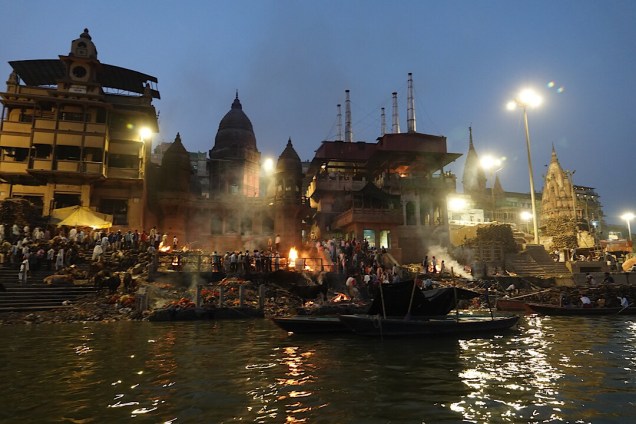 This is because the fires burn deodorizing banyan tree wood mixed with sandalwood, we were told.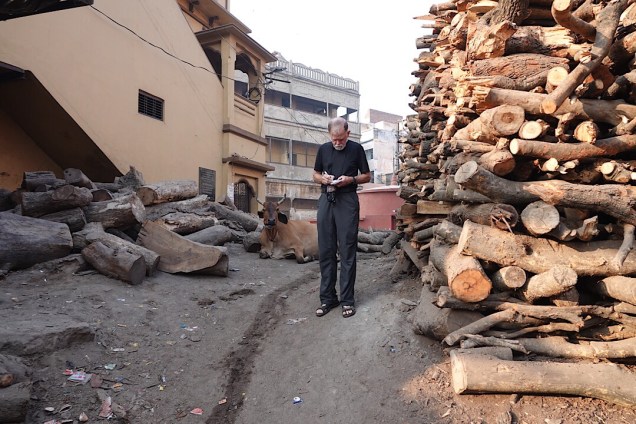
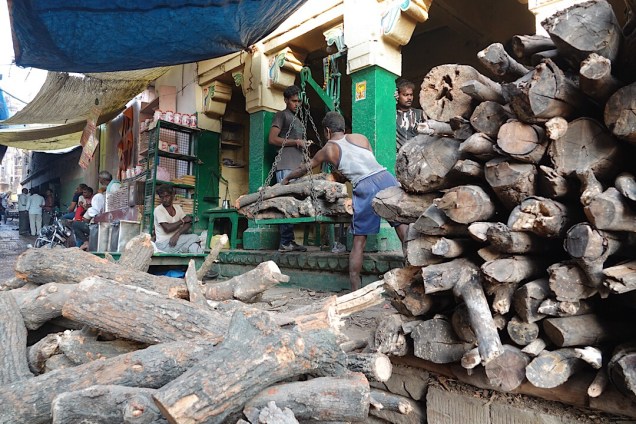 …and carefully weighed for each funeral pyre.
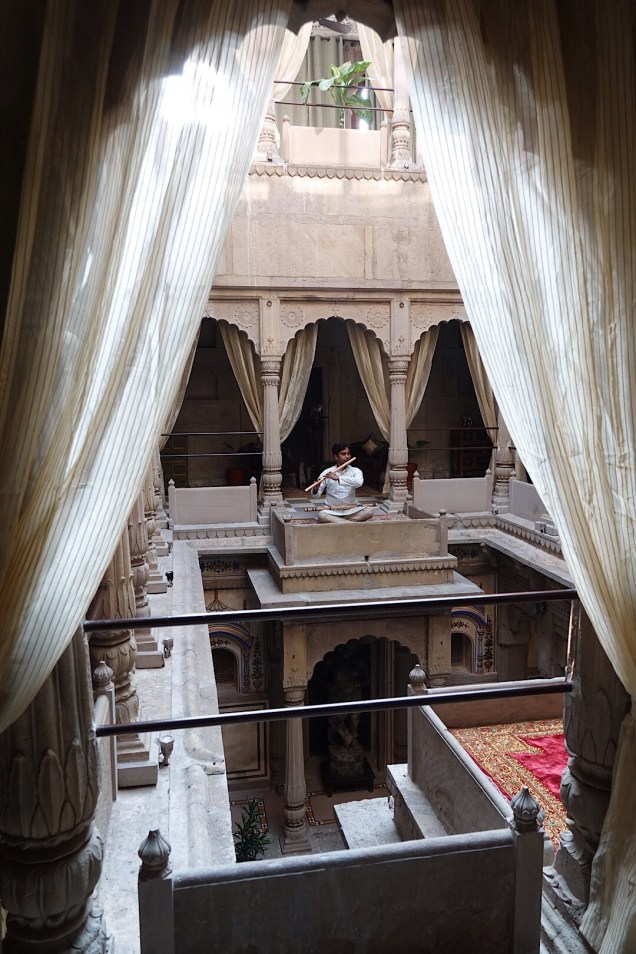 The other two nights we spent in a guesthouse that cost $14 a night. Compared to the palace, it was spartan. The rooms were spotless, but tiny. And the 31-year-old owner/operator was smart and knowledgeable and generous-hearted. When he unintentionally dropped and lost one of the paper clips we kept in our passports to mark the page with the Indian visa (which every hotel must photocopy!), we told him it was no big deal. But two days later he presented us with a replacement that he went out and bought for us. After we checked out to move to the palace, he invited us to return for his special spiced tea (masala chai). In the conversation we had while sipping it, he felt like a treasured old friend.
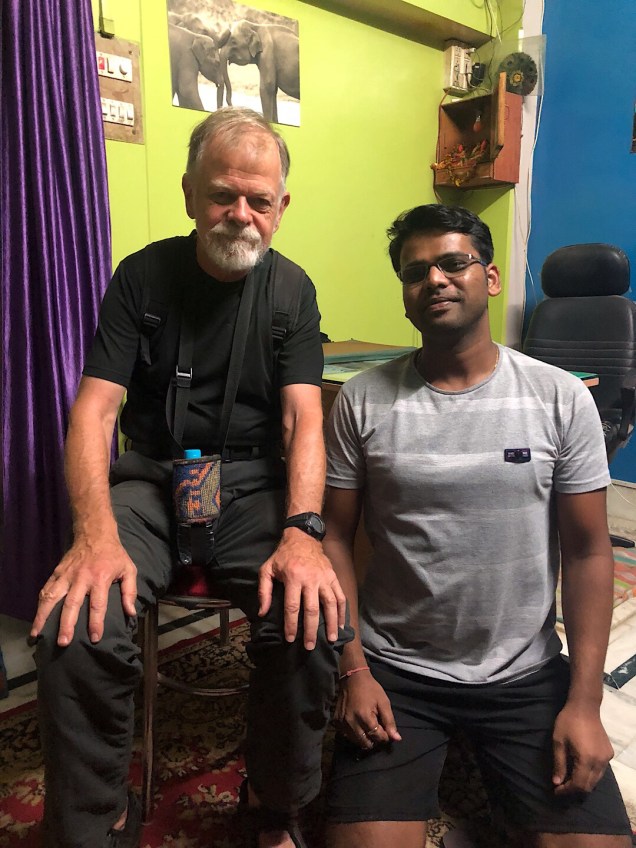 Steve and I sensed a peacefulness on the ghats of Varanasi, and Sonu said he feels it too. As hard as he works and as crazy as the guesthouse operation can get, he told us he tries to spend an hour or so by the river every day. It re-energizes him. I think there’s also beauty there which you can’t miss seeing.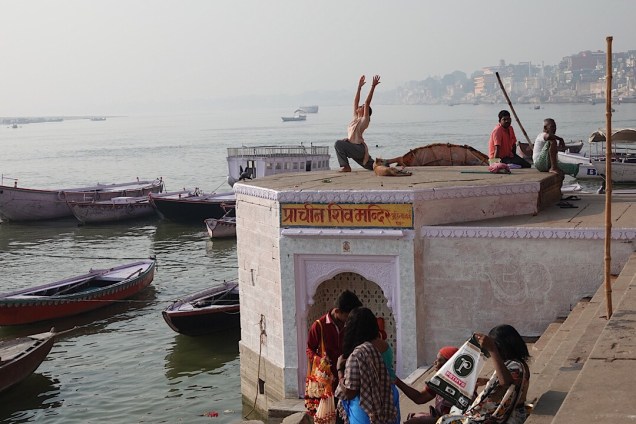
 I don’t call myself a Buddhist, but in recent years, I have found much to admire in the teachings of Siddhartha Gautama (the northern Indian prince who became the Buddha). About 2600 years ago, he famously found enlightenment in a specific place in India: sitting under a fig tree in what is now the small town of Bodhgaya. When I learned that a direct descendant of that tree was roughly on the path between Kolkata and Varanasi, I wanted to see it.
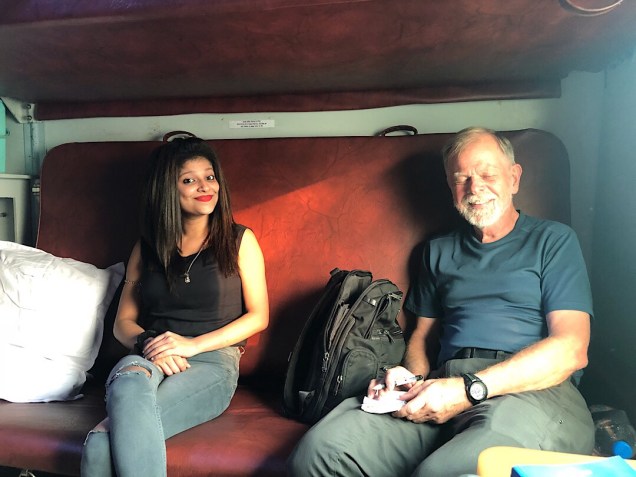 Sometime in the early afternoon, Steve noticed on our maps app that the train seemed to be headed away from Gaya, but we guessed it would take a turn south at Patna (the capital of the state, Bihar), and arrive at Gaya probably hours late. It was only about 3:30 that an announcement in Hindi caught Deepshri’s ears. “This train isn’t going to Gaya!” she exclaimed! “It’s going to Patna instead!”
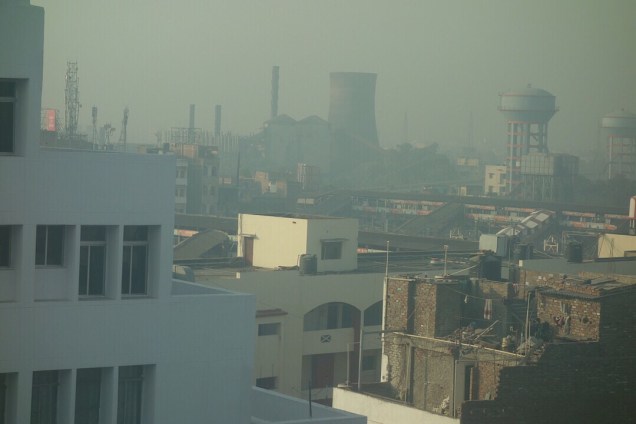 Dawn in beautiful downtown Patna, from our hotel window.
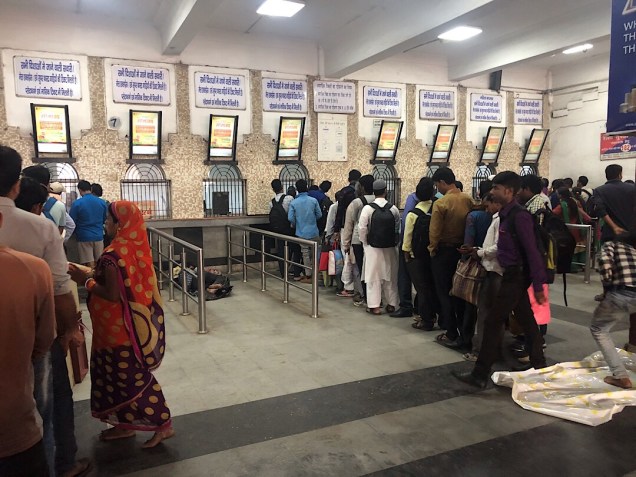 This was a big challenge for our puzzle-solving skills; we missed catching the 6:45 am express train, but we caught the express at 11:15, which not only left Patna on time; two and a half hours later, it also arrived in Gaya right on schedule. En route we were entertained by a wide-ranging conversation with a banker from Patna (to which about 6 other Indian guys in our immediate vicinity raptly listened.)
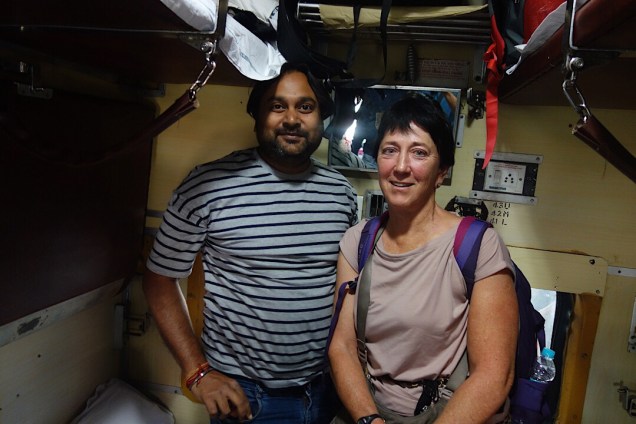 The banker and I
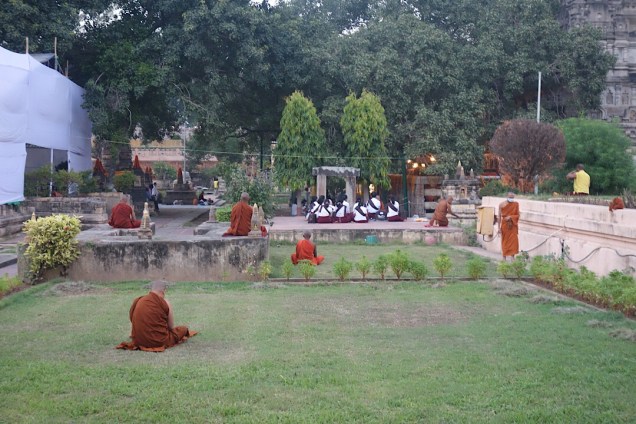
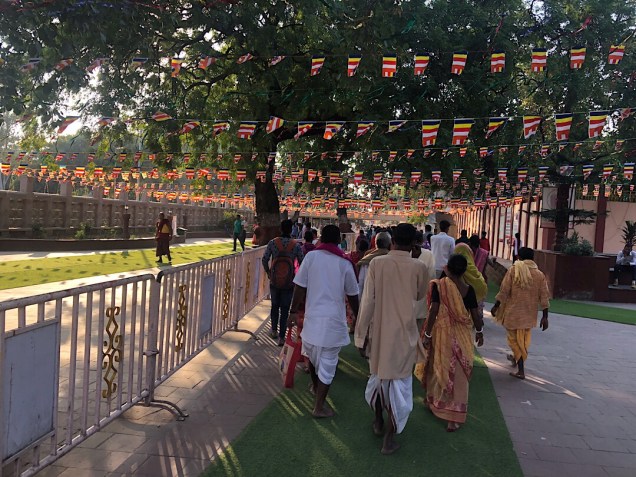 The mood was calm and serene. Outside the main entrance to the most sacred buildings, we had to deposit our cellphones in a locker and pass through a metal detector. (Apparently some wacko set off a bomb a few years ago.) We also hired a guide who turned out to be excellent.
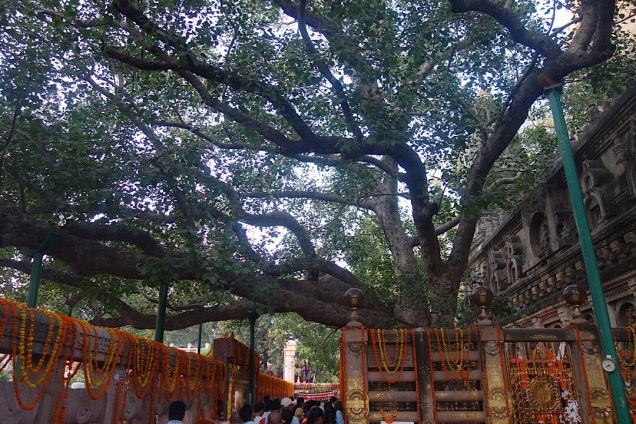 .
.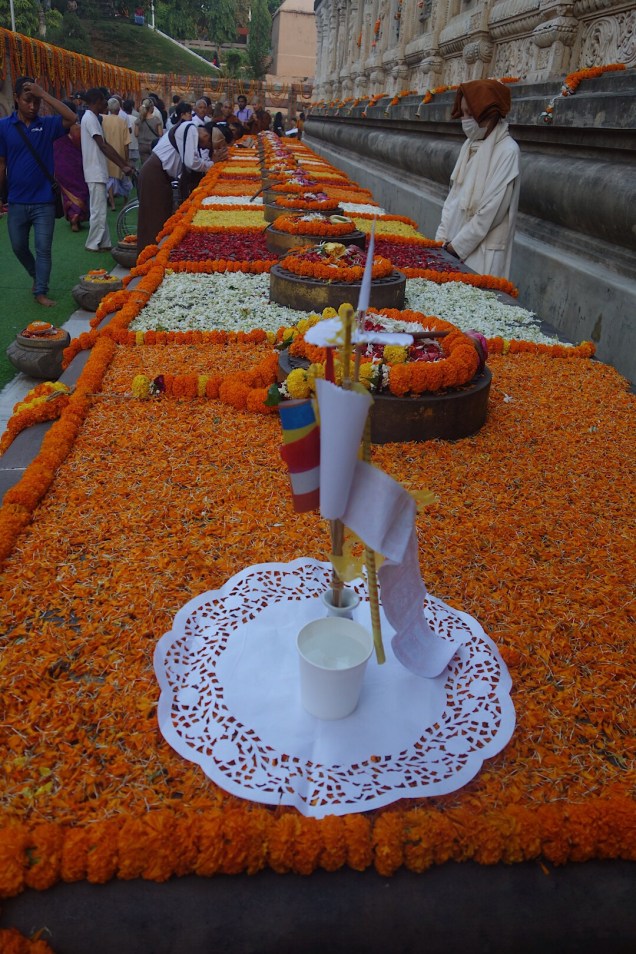 Devotees had prepared this offering to the tree.
 Like this…
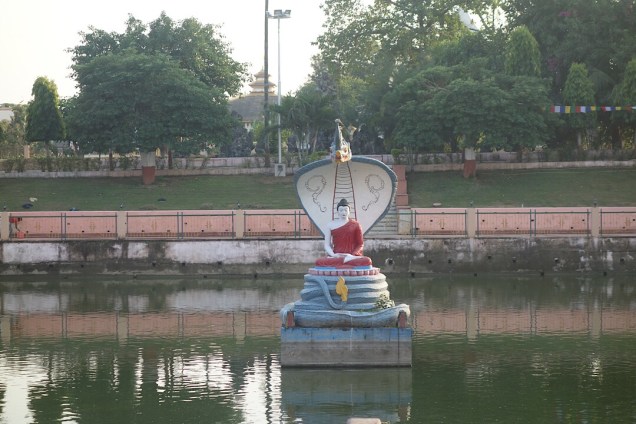 Or this…
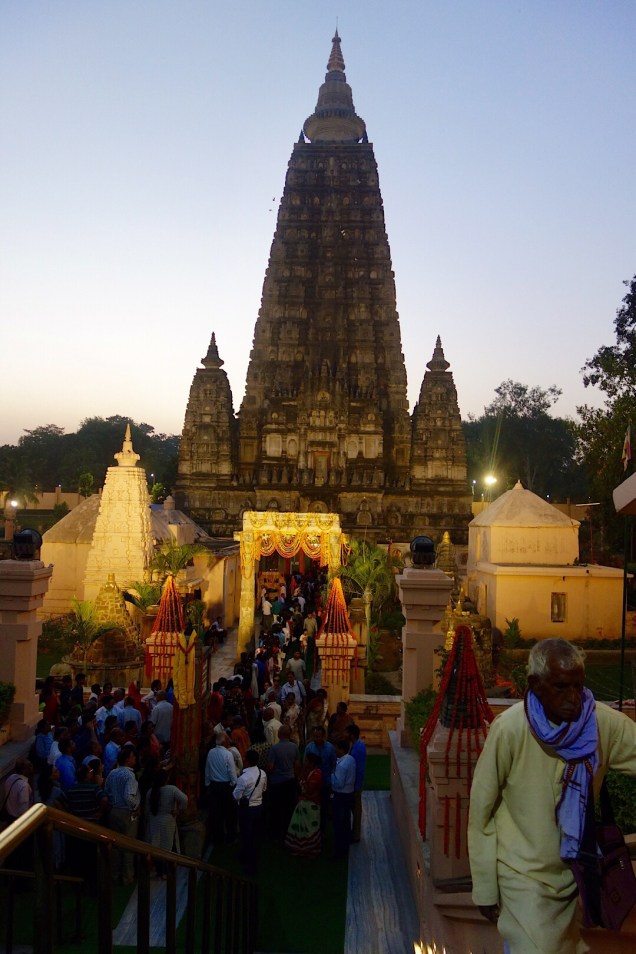 But it was growing dark, so we took another auto rickshaw back to the ugly Gaya flophouse. There we got to bed as early as we could. We knew we had to set the alarm for 4:15 to catch the train to the holiest spot in Hinduism.
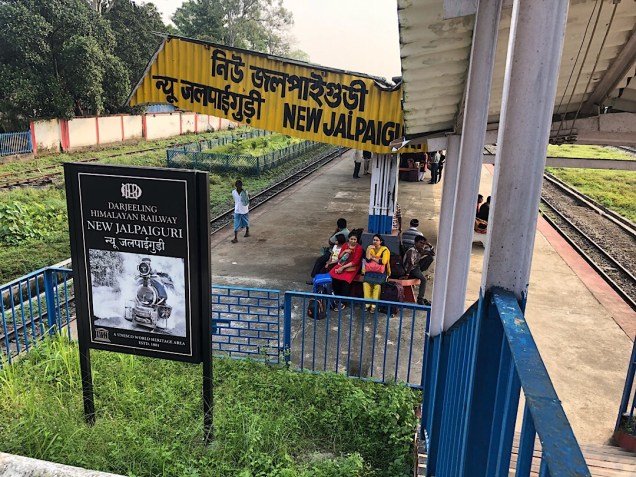 There was no sign of it at 8:30 or 9. Only about 9:10 did this contraption — call it an older brother of the kiddy train that operates next to the San Diego Zoo — chug into the station.
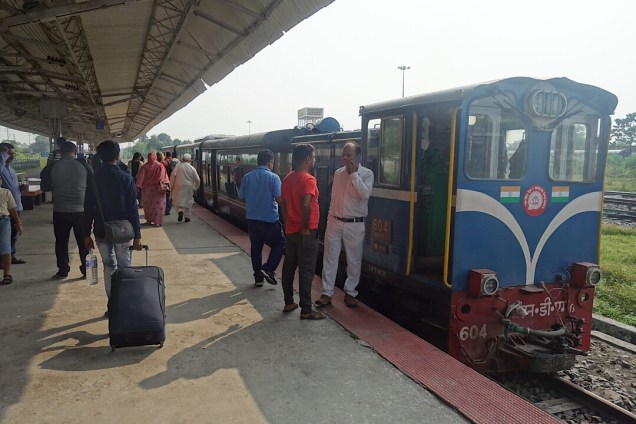 Pandemonium ensued as befuddled passengers (us chief among them) tried to figure out where to sit. Rail attendants seemed to be non-existent. But someone finally directed us to places in the “First Class” car, and around 9:30, we were off.
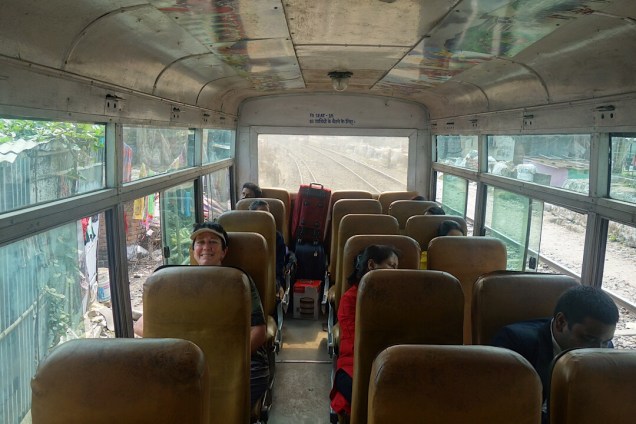 By the time we departed, every seat was full.
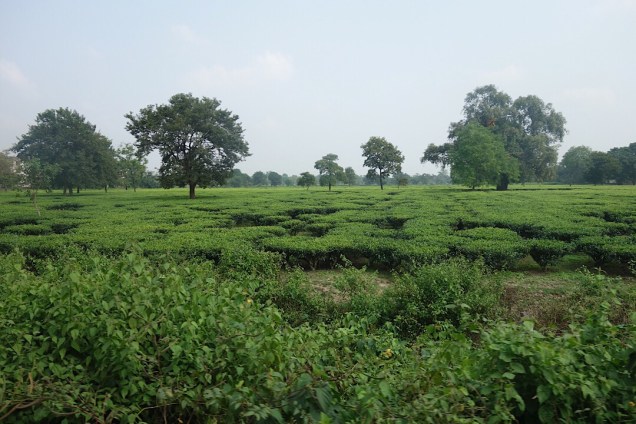 … then beautiful green forests filled with enormous trees or moving along the edge of jaw-dropping precipices.
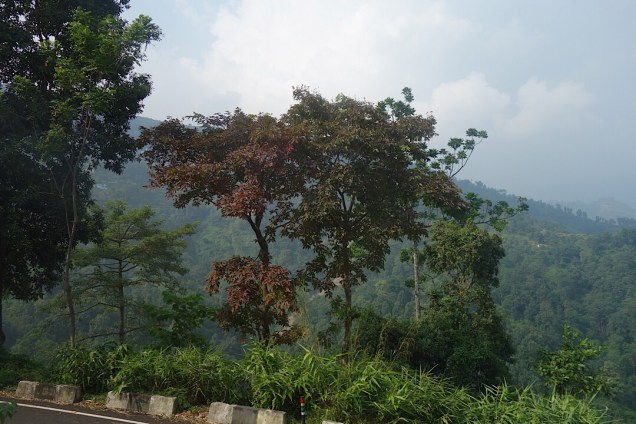 The train has big windows you can open wide, so at times it felt like we were hiking through those landscapes. It’s an engineering marvel, climbing from under 500 feet above sea level to more than 7000 in less than 50 miles. To accomplish this, it does some fancy tricks that include occasionally backing up and switching onto another track on a higher level. It also cuts across the paved (auto) road often, which is entertaining.
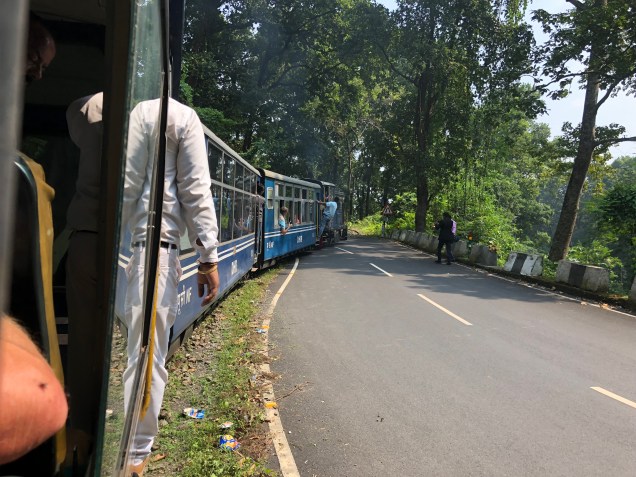 But by 3:30, our scheduled arrival time, when we were clearly hours from Darjeeling, stuck in a jolting hell overseen by workers who clearly did not care a whit what time got there, with only a hole in a tiny compartment to pee in, and only potato chips for lunch, we were pretty miserable.
 They captured images of their kids enjoying pony rides. They shopped for pashminas and visited the ancient Buddhist temple that adjoined our hotel.
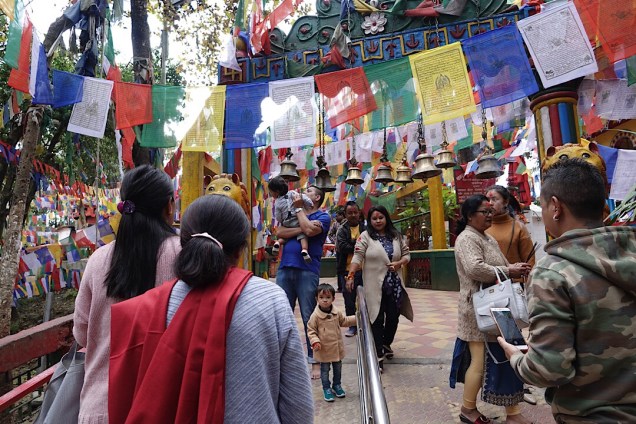 Some of them did what we did the second day: hiked about a mile to the excellent local zoo (specializing in Himalayan animals). The zoo grounds also contain the marvelous Himalayan Mountaineering Institute.
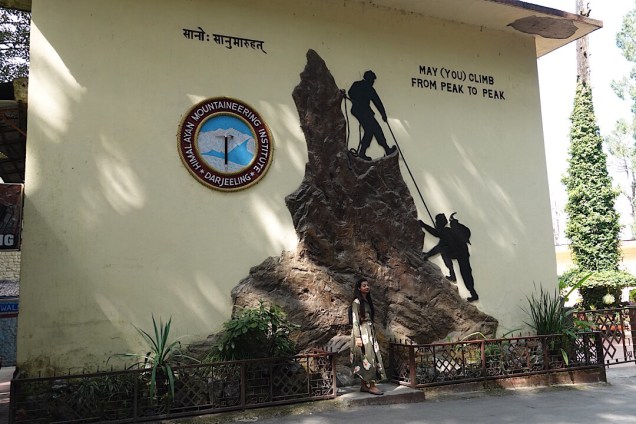 It trains aspiring peak-conquerers and also venerates the memory of past heroes, like Tenzin Norgay, who guided Sir Edmund Hillary to the first conquest of Mt. Everest.
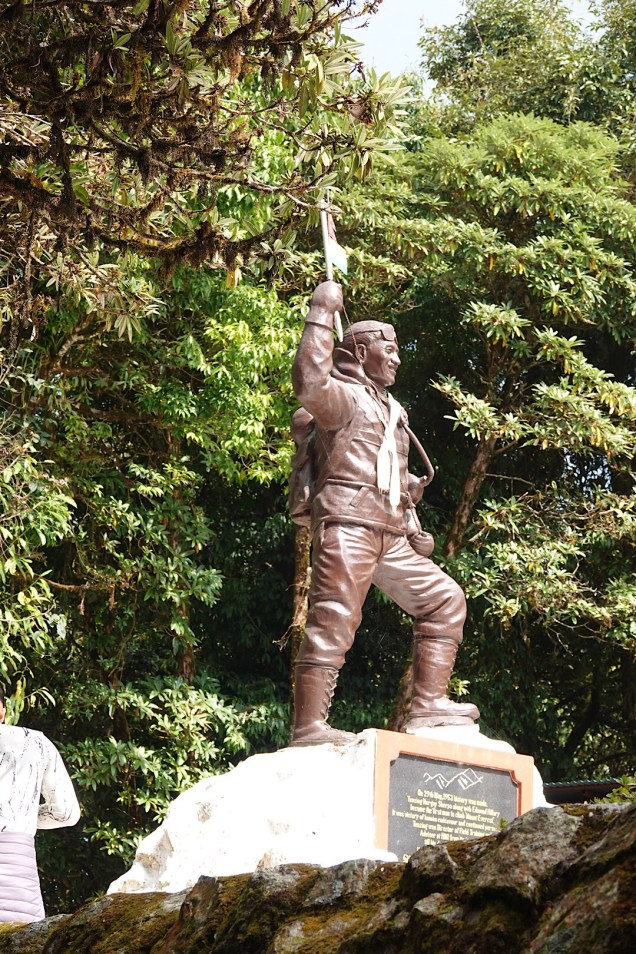 The museum displays some of the great sherpa’s gear from that historic climb.
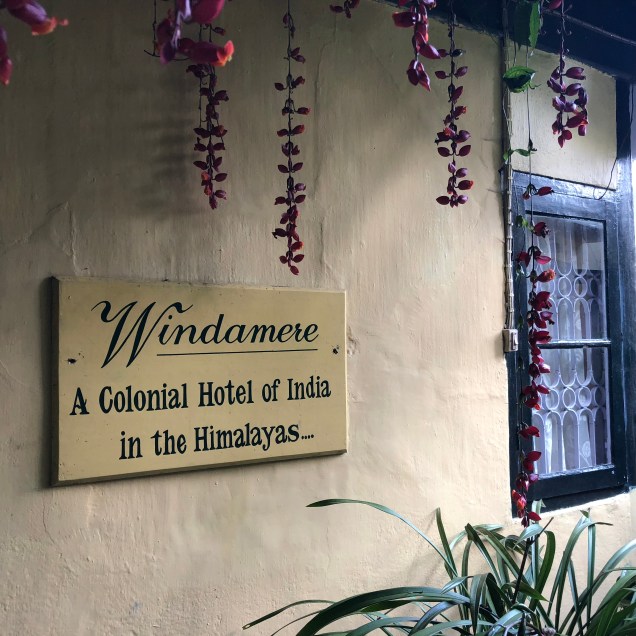 Happily, we were upgraded to a suite, the very one in which a young American student of Asia named Hope Cooke was staying in 1959 when she met and fell in love with the Prince of Sikkim, later marrying him and becoming queen.
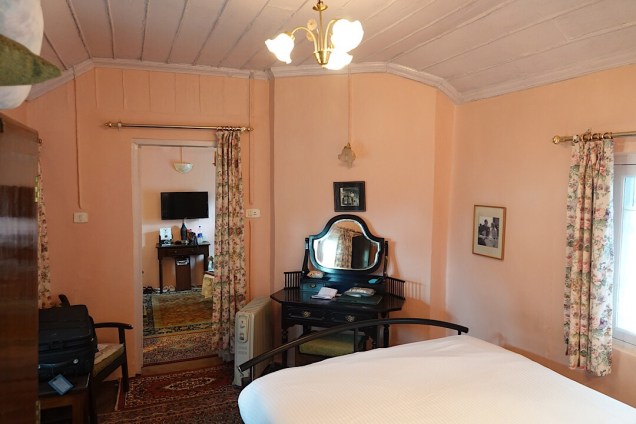 All the facilities today are a bit creaky, but where else have I ever been served five-course meals by white-gloved waters (and coffee kept warm under a knitted cozy)…
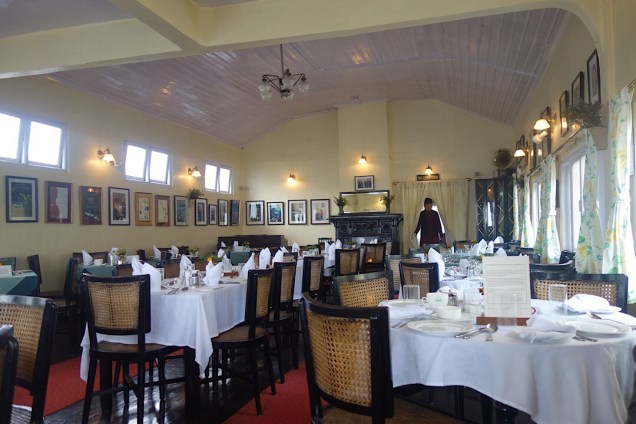 The Windamere’s dining room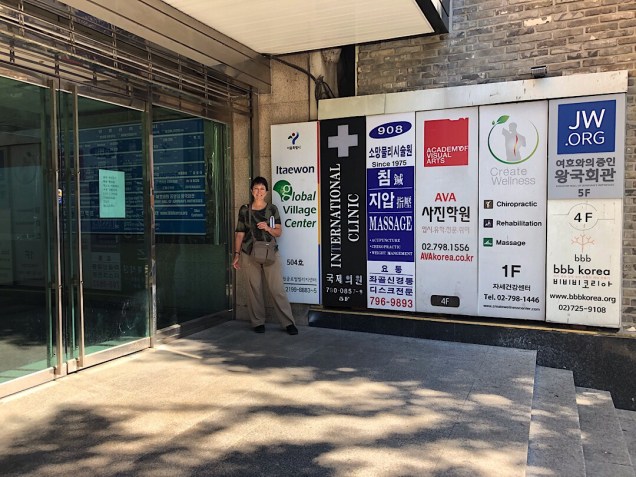
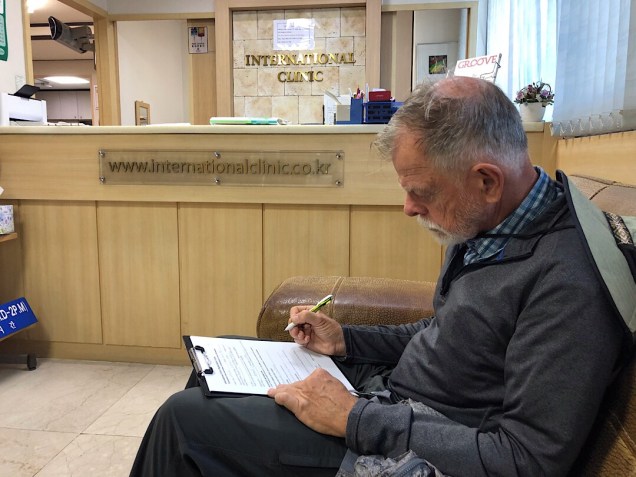 …and have our height, weight, temperature, and blood pressure checked. Then we were ushered in to see the clinic’s owner, Dr. Sooyoung Kim, an urbane guy dressed in jeans and a casual longsleeve shirt who spoke English like an American. We chatted with him about what we wanted (vaccinations against Japanese encephalitis (for me) and cholera (both of us). He approved our plan and sent us off for processing by his efficient nurse.
 But we wouldn’t be able to take the second dose for another week. And during that time, we had to travel to Kolkata via Singapore.
 It surely got warmer than 2 to 8 degrees Celsius (what I think was the recommended temperature range) for several hours. I don’t know what difference that makes. If we don’t get cholera or traveler’s diarrhea, I don’t know if the Dukoral will deserve the credit. But I’d sure like to think it did.
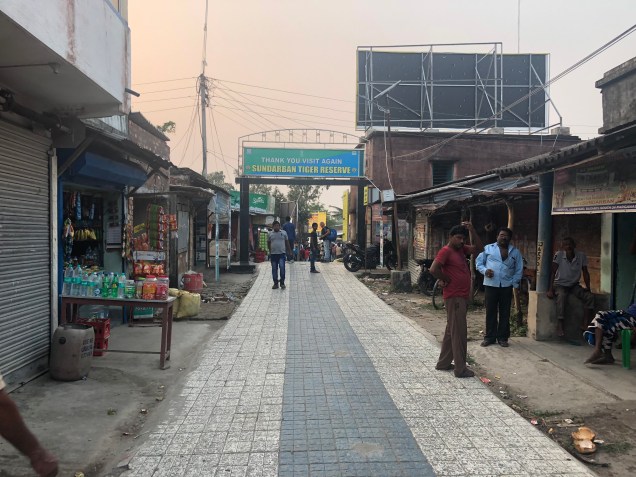
 We didn’t go there to suffer. Rather, we wanted to see one of the geographic wonders of the world. The Sundarbans is the enormous estuary where some of India’s biggest rivers — the Ganges, the Brahmaputra, and others — split into dozens of branches and flow into the Bay of Bengal. The area includes both an Indian and a Bangladeshi section. What grows there, mainly, are mangroves, the shrub which somehow learned to suck up seawater and excrete the salt. The Sundarbans mangrove forest is the biggest on earth. More than 80 species grow so densely you can’t see more then a few feet into them, and they shoot up stick-like “air roots” that can impale anything that steps on them. Despite that, a number of creatures survive in this harsh environment, the most famous being the Royal Bengal tiger.
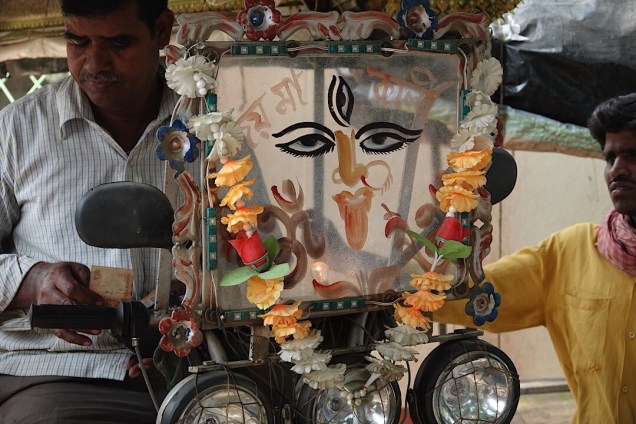 The road wasn’t horrible. We slowed more often for speed bumps than potholes. But the bouncy, uneven ride, the constant swerving and accelerating, the incessant horn-blowing wearied me.
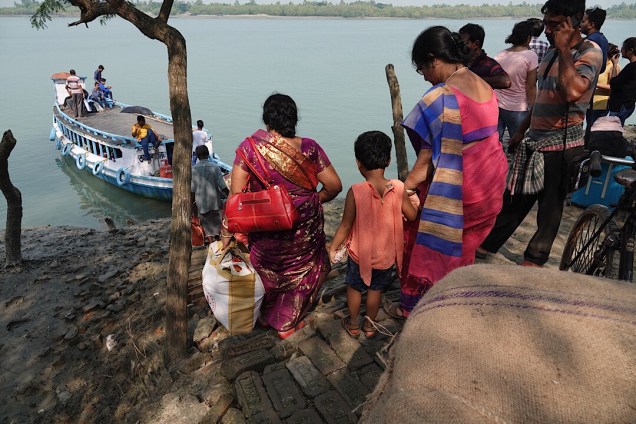 The village may be poor and backward, but the Indian ladies still dress sharply.
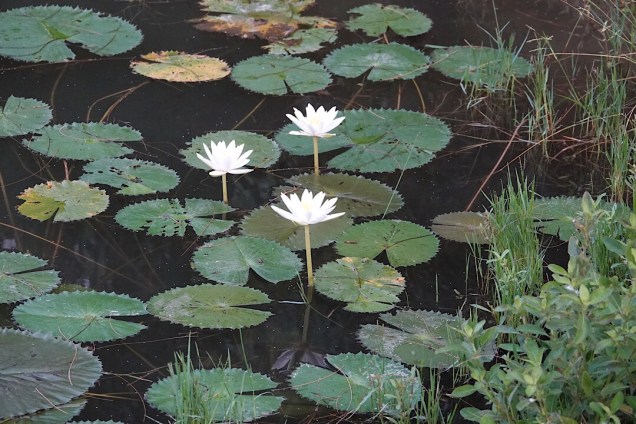 …where you can find unexpected beauty.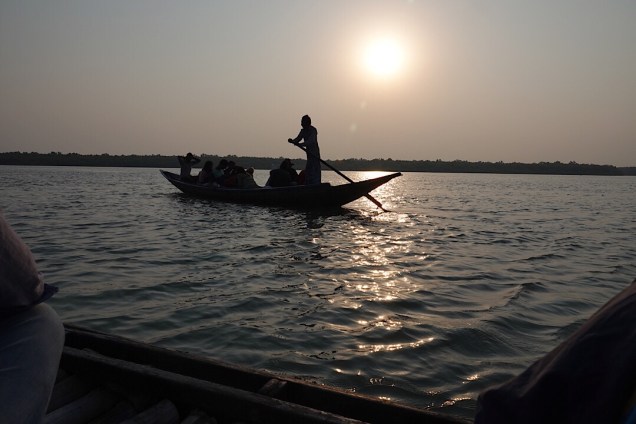
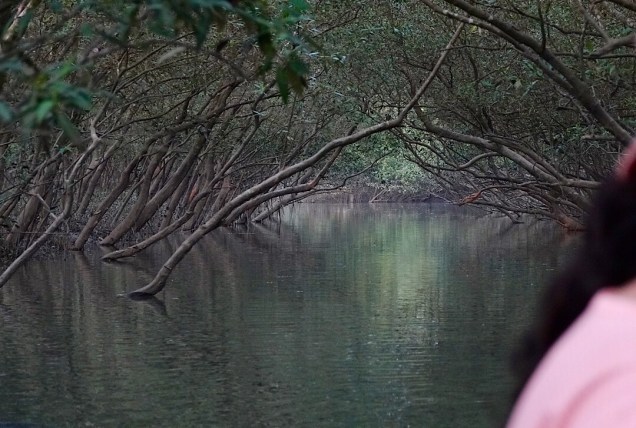
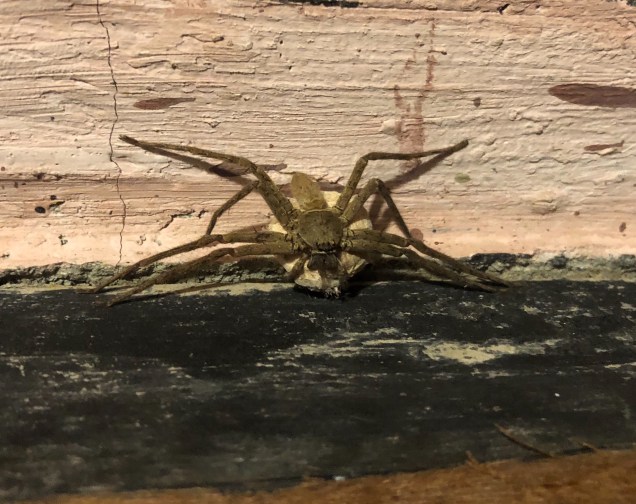 Where DID he go?
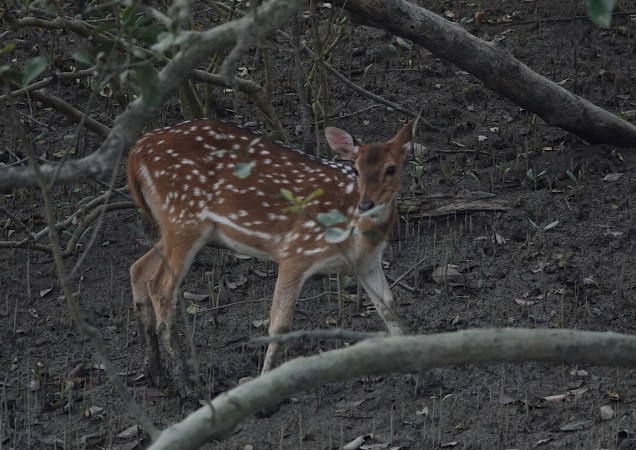 Indian spotted deer grazing near the riverbanks…
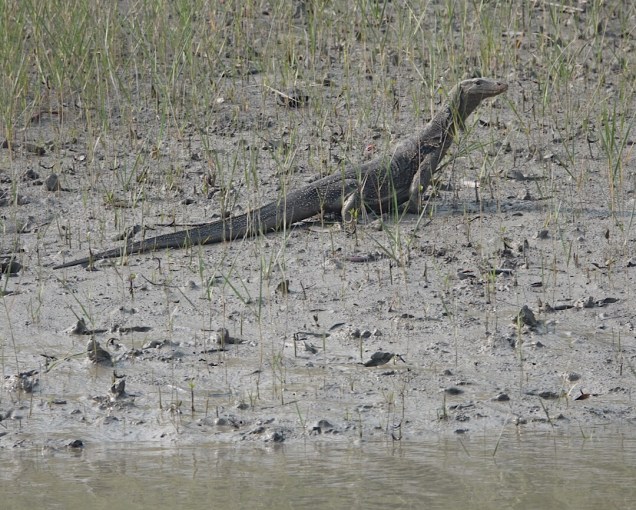 A 5-foot-long monitor lizard enjoying the sun.
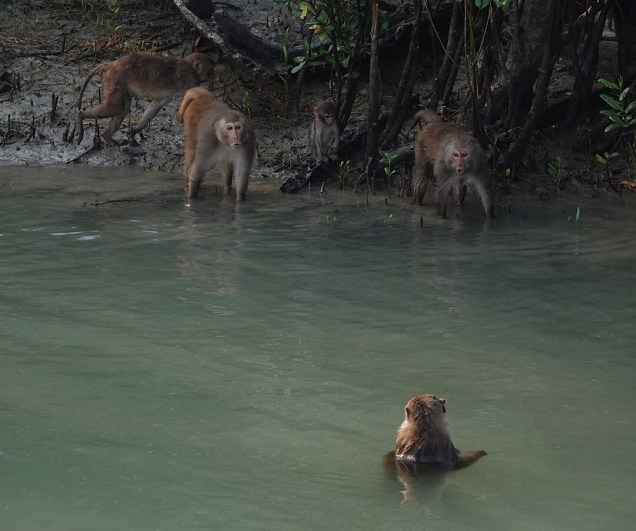 Macaques. We watched this group chase the one guy into the water. They seemed to be mad at him.
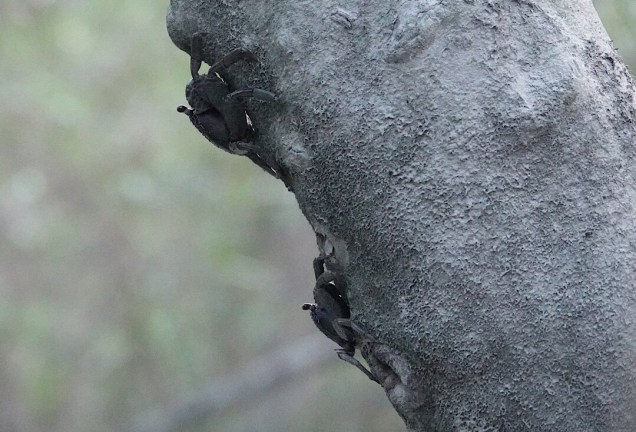
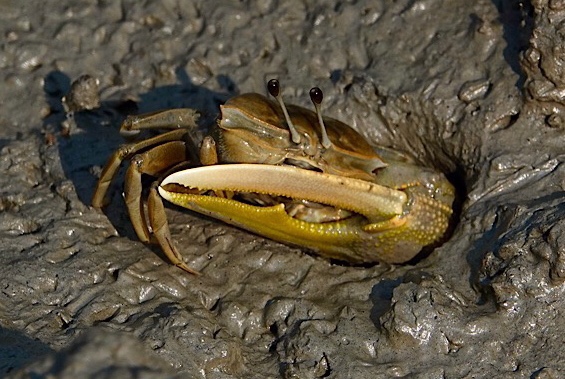 This is a yellow fiddler crab. Don’t you love his eyes?
 Most menacing was this mature crocodile. Alligators also ply these waters, but it’s the crocs who are murderous, taking down even tigers when they’re swimming from island to island.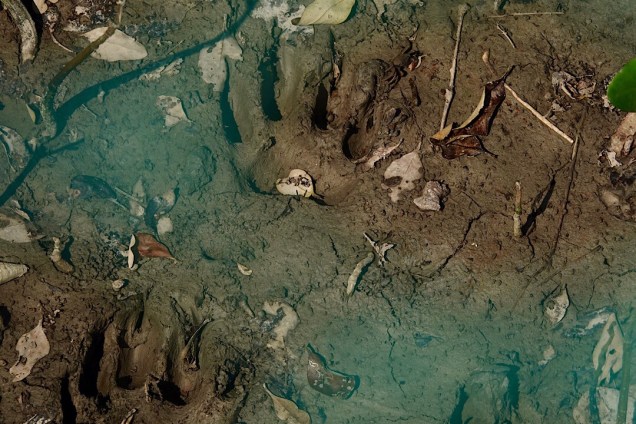
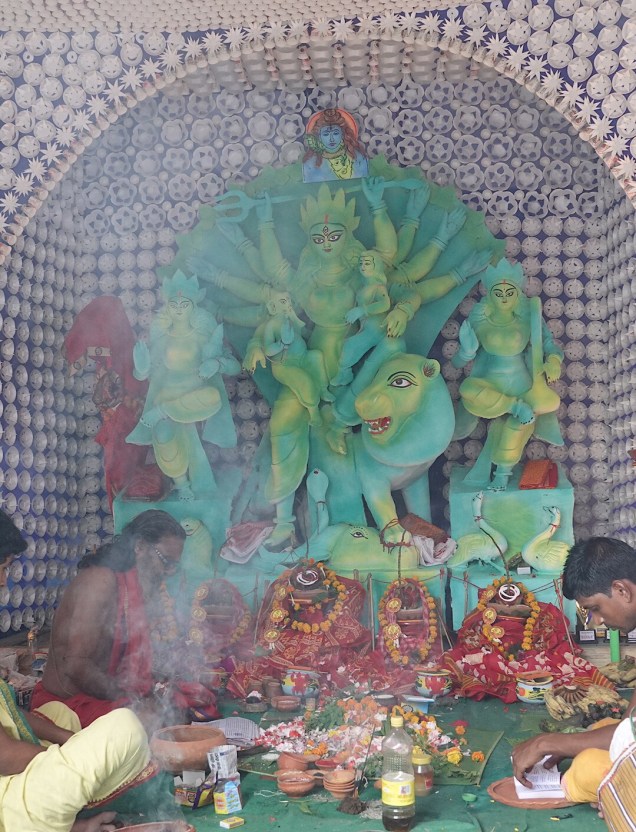

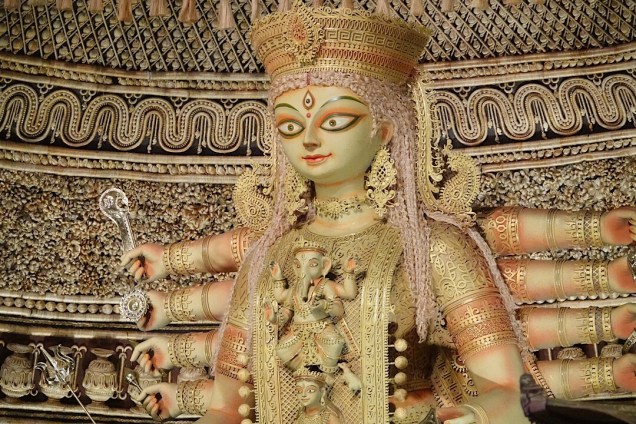
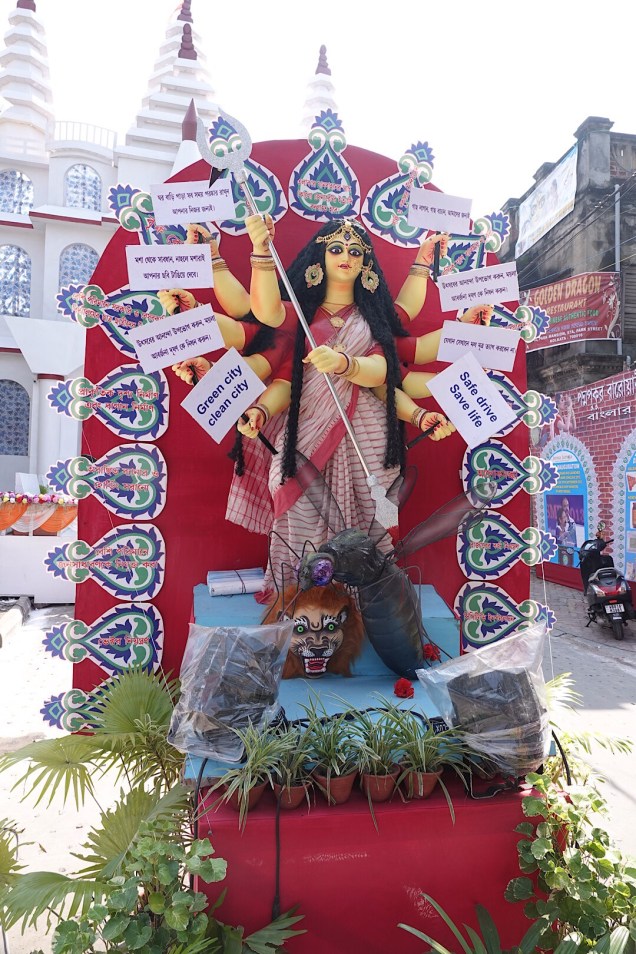 Outside its entrance, this version of the goddess preached various civic messages. Note that the evil she’s attacking is a mosquito.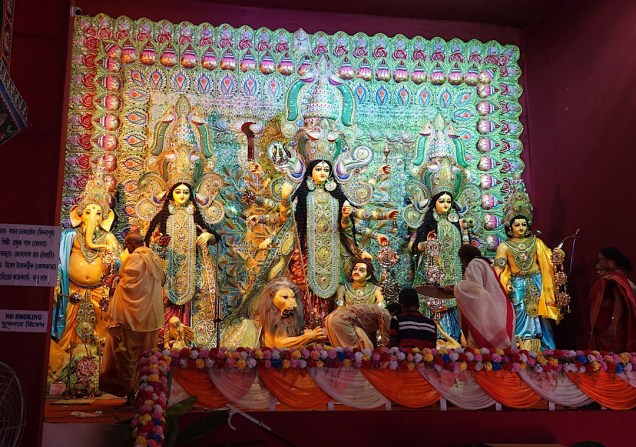

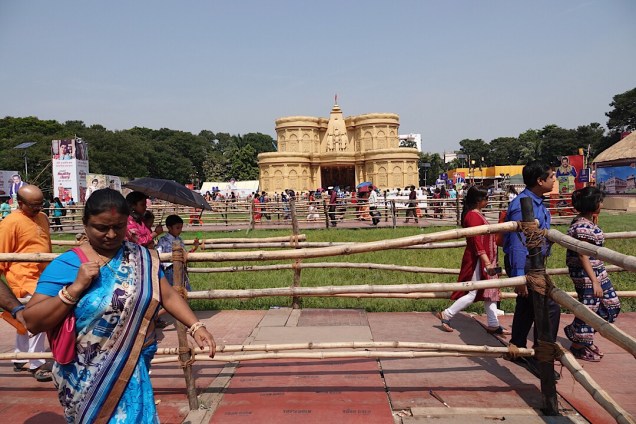
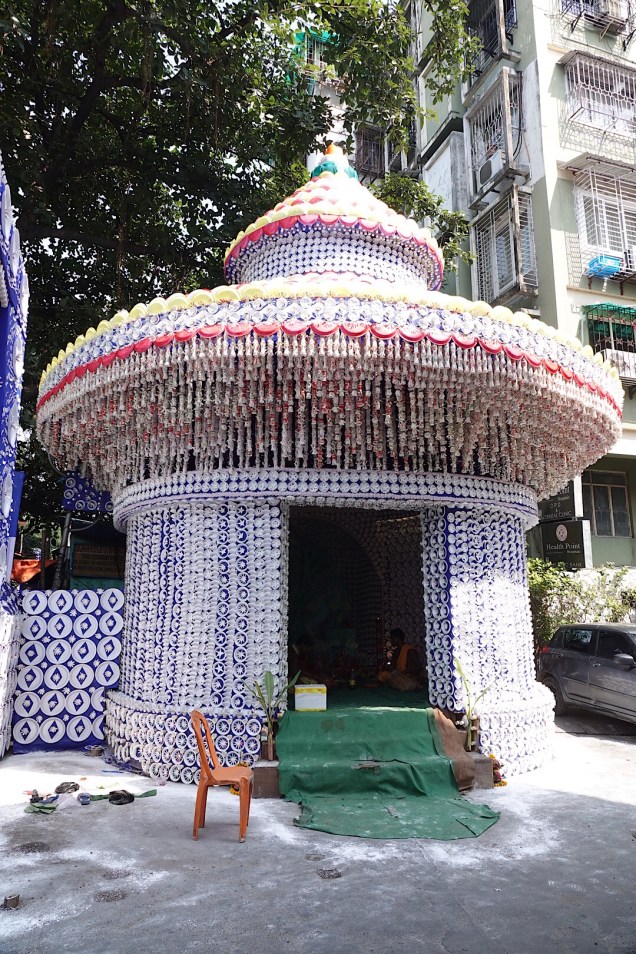
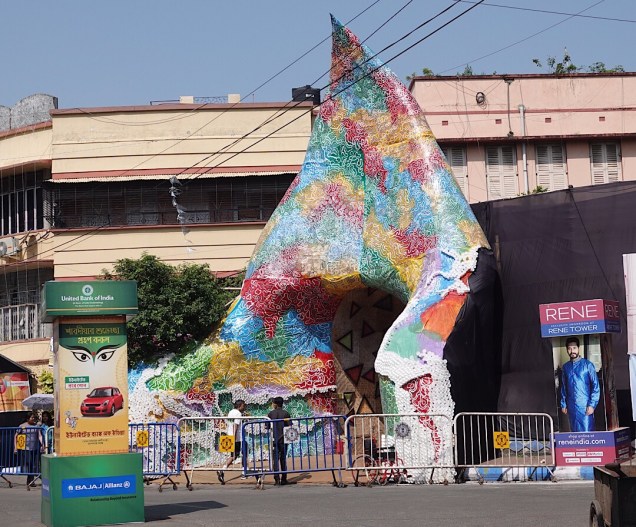
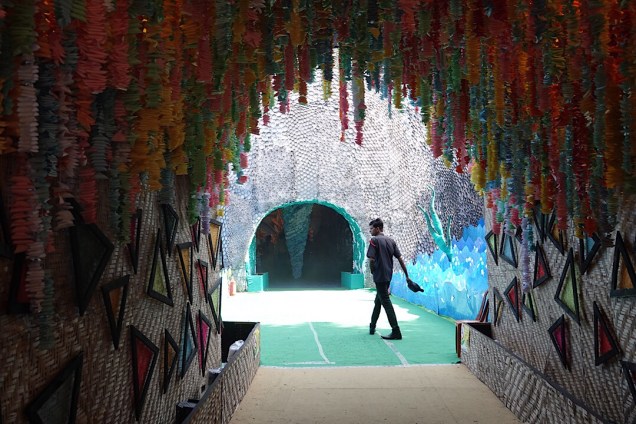
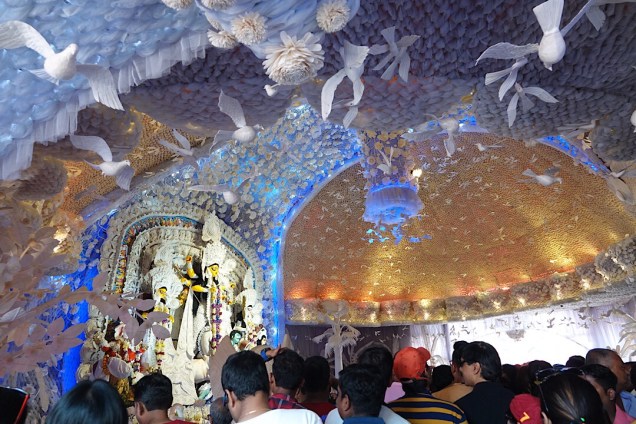
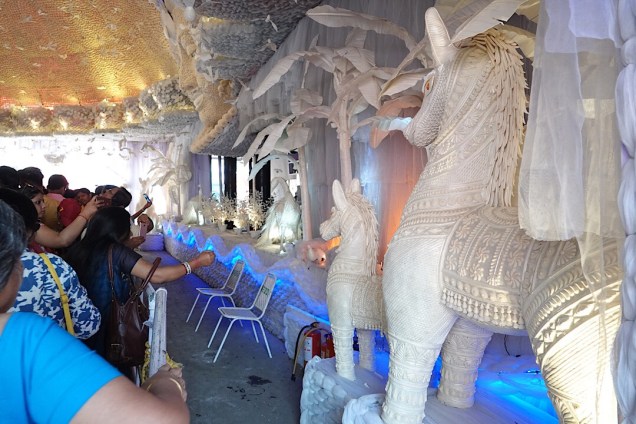
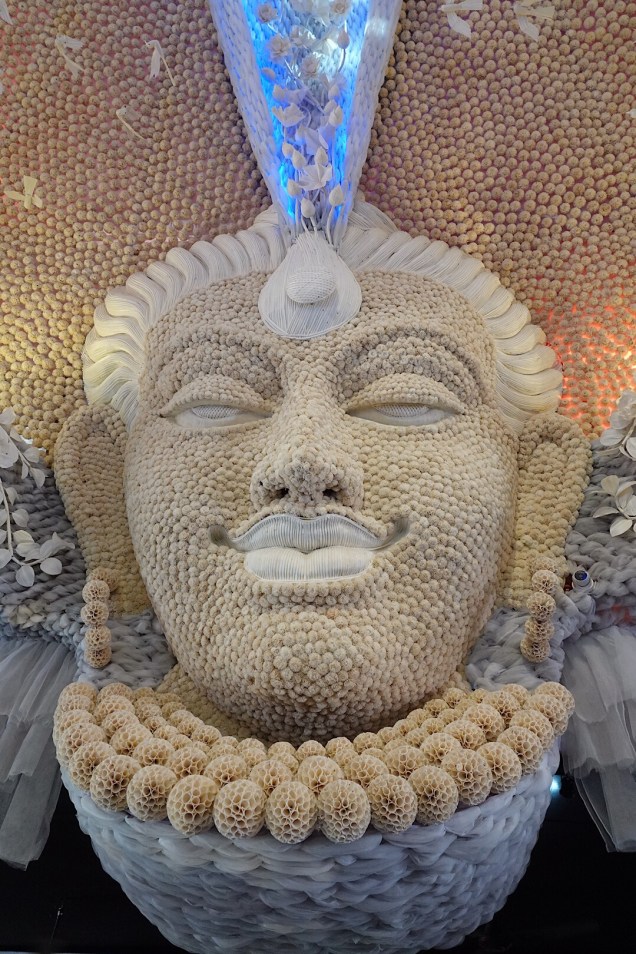

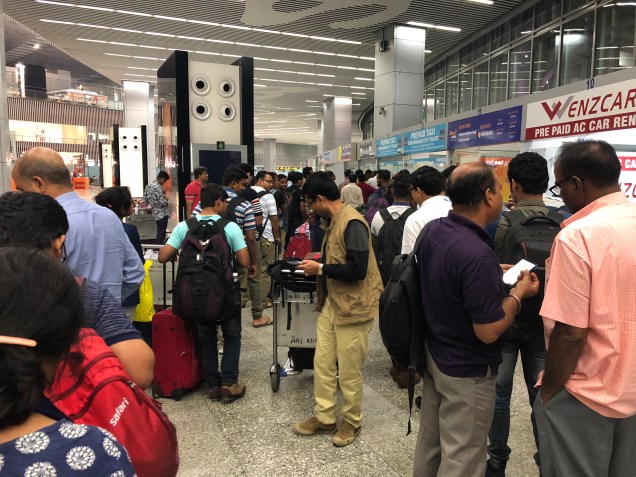
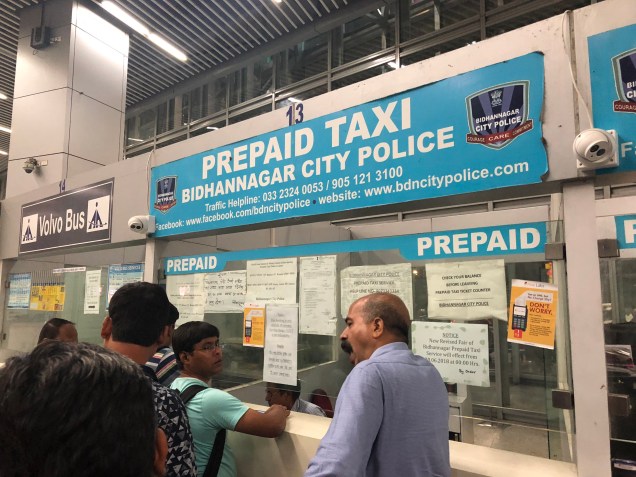 We didn’t reach ours until close to 12:30 (3:30 am Seoul time — and god knows what on our body clocks.) Weirdly, it took only a minute for us to pay for our ride (380 rupees or about $5.15), and out in the street, we quickly located the ancient taxi assigned to transport us. I can only guess that the line had moved so glacially because folks in front of us were going to more complicated destinations.
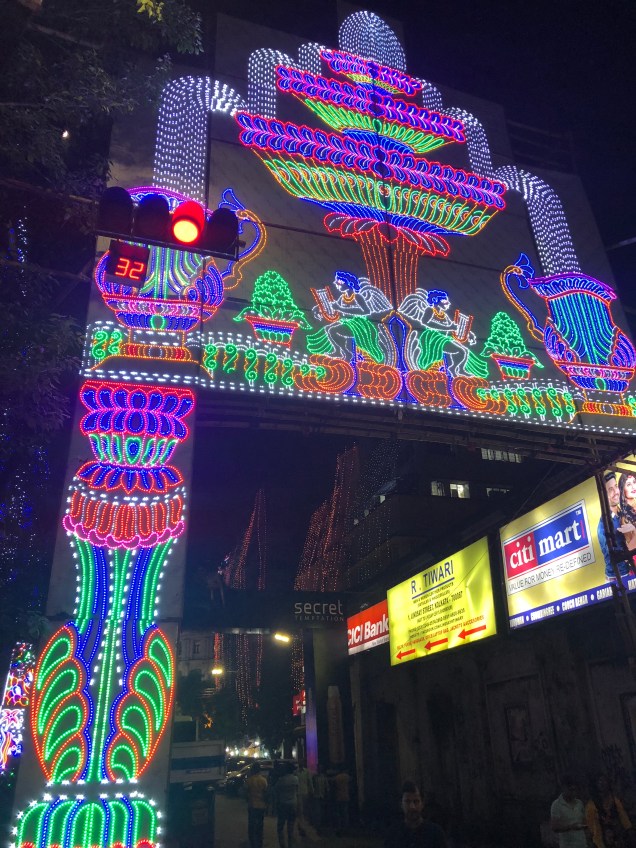 Occasionally we passed a floodlit shrine containing what appeared to be a multi-armed goddess.


 At home and abroad