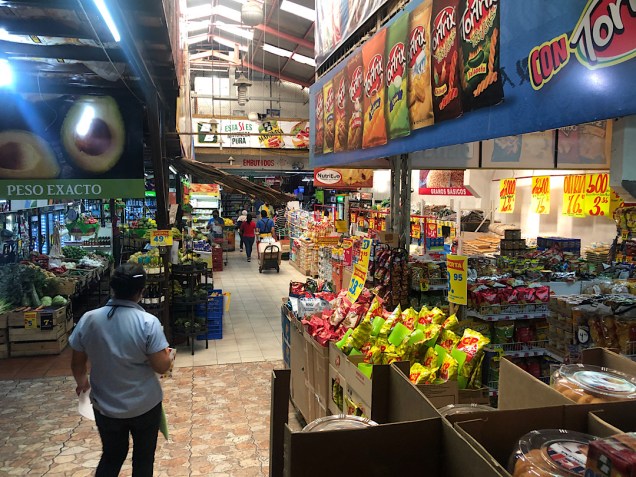
I thought I was done with blogging about our trip to Central America but then I remembered our cost-of-living experiment. I want to share that.
Early on, it struck me that Steve and I would be making lots of comparisons among the four countries we would be visiting (Guatemala, Panama, Costa Rica, and Nicaragua). We expected the costs of traveling in them to vary. But would we get a good sense of how much it costs to live in each? We decided to be Scientific.
Our idea was to create a theoretical “market basket” of common grocery items. We would record the prices starting in Antigua (Guatemala) and later at supermarkets in the three countries to follow, then compare them. Would this give us insight into the daily challenge of keeping a Panamanian household versus a Nicaraguan one? We would see!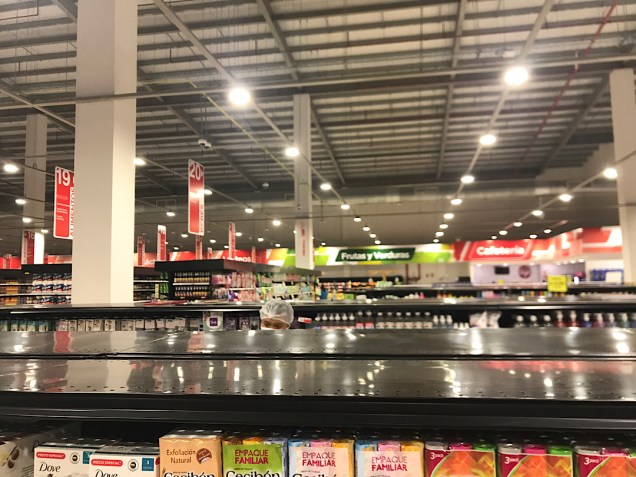
We had the most fun the first time we did it. Strolling up and down the aisles of a big supermercado we found near Antigua’s artisanal market, we scanned for essentials of modern living. The selection we came up with was:
- Toothpaste
- A bar of soap
- Toilet paper
- Powdered laundry detergent
- A can of Coke
- A bottle of vodka
- Bananas
- Kellogg’s cornflakes
Please note I’m NOT saying Steve and I are daily consumers of all those things. (I personally only indulge in Coke on the rarest of occasions.) But they seemed like reasonable representations of stuff folks everywhere buy often. And note that we did not actually buy these items — just wrote down what they cost.
The minute we started recording the prices, it became obvious we needed to be at least somewhat specific if we expected to make comparisons down the road. So we noted that 90 grams of Colgate toothpaste in the Guatemalan store cost 13 quetzals (roughly $1.68). We picked a brand-name bar soap (Dove, 135 grams for 14.5 quetzals/$1.87) and vodka (Skyy, .75 liter for 85.95 quetzals/$11.09), Coke (4.45 quetzals/57 cents for a 354 ml can) and Kellogg’s cornflakes (19 quetzals/$2.45 for a 530-gram box). But we decided to go with generic-looking toilet paper and detergent. Oh yeah, and bananas. How complicated could bananas be?
More than you might think — at least in Central America, where bananas come in multiple incarnations. For our Guatemalan “basket,” we recorded that the price of “criollo” bananas was 1.95 quetzals per pound.
A few days later, when we got to Panama and (eventually) found a large, modern supermarket, we saw that bananas (just one type, thank God) were priced both per pound (45 cents) and per kilo (.99 cents). But the Costa Rican supermercado we later visited in San Juan offered its customers a choice of banana types and, even worse, the prices were per banana. One for 40 colones/6.5 cents or 15 bananas for 350/56 cents) were the prices for the variety we arbitrarily selected. In Granada, Nicaragua, the price was 2.5 cordobas (7 cents) — again per banana.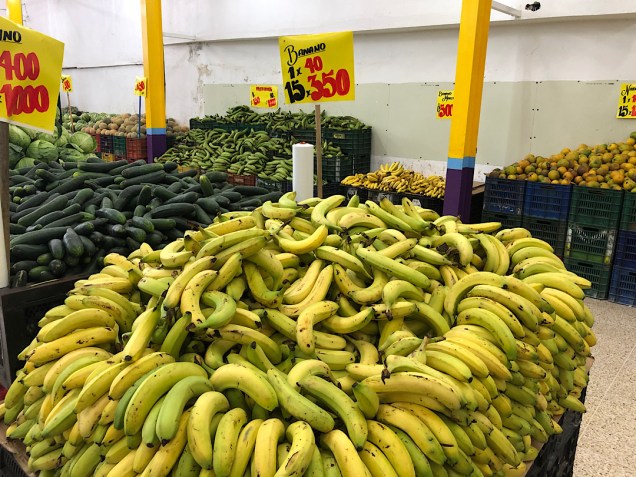
Other challenges soon were making me feel grateful I don’t make my living collecting data for the Bureau of Labor Statistics and its Consumer Price Index. For example in Panama we found 530-gram boxes of Kellogg’s Cornflakes on the shelf — but ONLY packaged with 67-gram cans of Pringles potato chips! If you hated Pringles but loved your flakes, you were out of luck. Skyy vodka could be swigged all over Guatemala and Panama, but it was absent from the shelves of the Costa Rican and Nicaraguan markets we targeted, so we settled on Smirnoff. That only came in liter (versus three-quarter-liter) bottles, and it was labeled 35% (a lower alcohol content than the 40% of Skyy). While we could price a 354 ml can of Coke in Guatemala, Panama, and Nicaragua, in our Costa Rican market it exclusively came in 600mm plastic bottles.
Despite this jumble, I finally (last week) added up the prices in each “basket” and converted the total to US dollars. I can report that (including their admitted inconsistencies), the Guatemalan basket came to $21.94, the Panamanian to $25.20, the Costa Rican one to $27.42, and the Nicaraguan to $32.76. That shocked us given the fact that Nicaragua is so much poorer than the other three, even Guatemala. But then we realized that the Nicaraguan liter of Smirnoff’s was a whopping $21.86 (compared to $12.54 for the very same bottle in Costa Rica and less for the smaller bottles of Skyy). Subtracting the alcohol put the basket totals more in line with the economic stature of the countries (Guatemala $10.85, Panama $15.70, Costa Rica $14.88, and Nicaragua $10.90).
For me the bottom line is that these numbers aren’t very interesting — certainly not enough to justify the work involved in collecting them. That’s not to say I regret doing it. The whole exercise forced Steve and me to interact with supermarkets in a more focused way than we normally do while traveling. It also probably made me a bit more skeptical of the BLS’s Consumer Price Index (just because I’ve seen how daunting it is to try and make such comparisons.) Still, I have no intention of trying to duplicate our experiment on our next trip that takes us across the borders of many diverse countries. We’re scheduled to depart on that one August 30.
But that’s another story.
 So why would you choose to travel around Central America during the pandemic?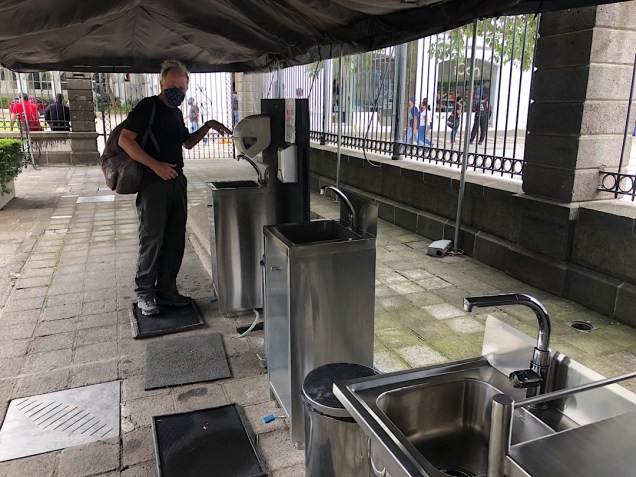
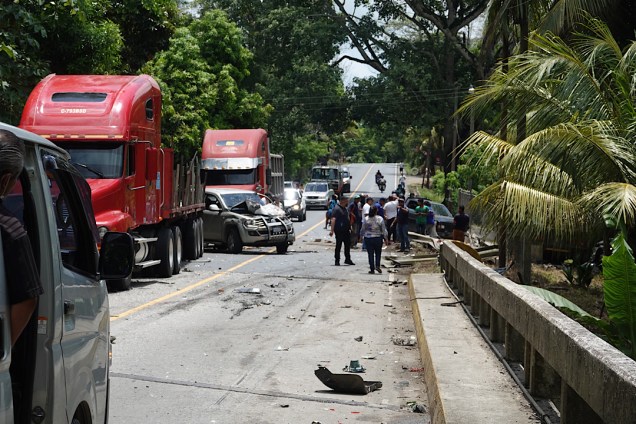
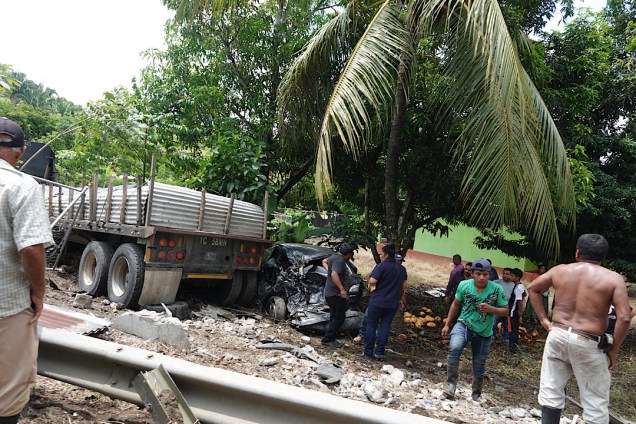
 We realized that a six-car crash had just occurred about three cars in front of us; people were still being extracted from the wreckage. Steve and Alfredo and I all shook our heads and cringed at the thought of how long we would likely be stuck in it.
 But minutes passed, and no police or emergency vehicles arrived, and cars in both directions began creeping past it.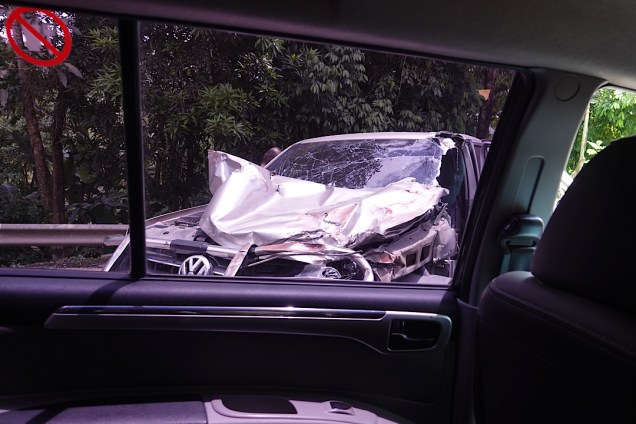
 I found a house-trading partner willing to accept guest points from us in exchange for a week’s stay in a building erected about 125 years ago. Its American owners restored it to pristine condition about five years ago. From the street it doesn’t look like much.
  But once beyond the metal gates and heavy wooden doors, we reveled in a 5,200-square-foot patch of paradise, configured around two open-air courtyards. The baronial master bedroom suite opened to them both. At the center of one was a beautiful garden surrounding a fountain…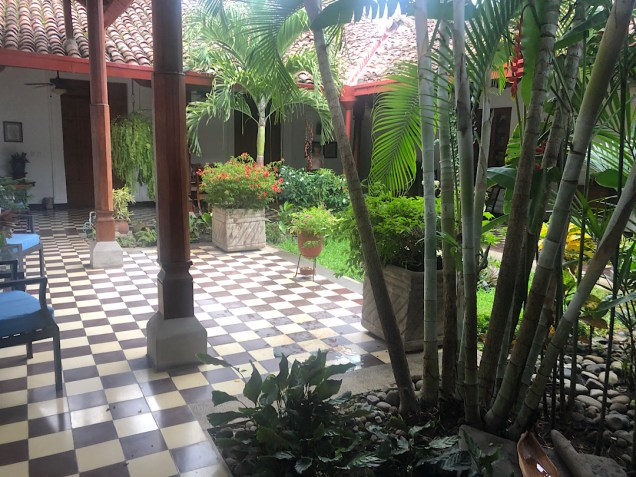
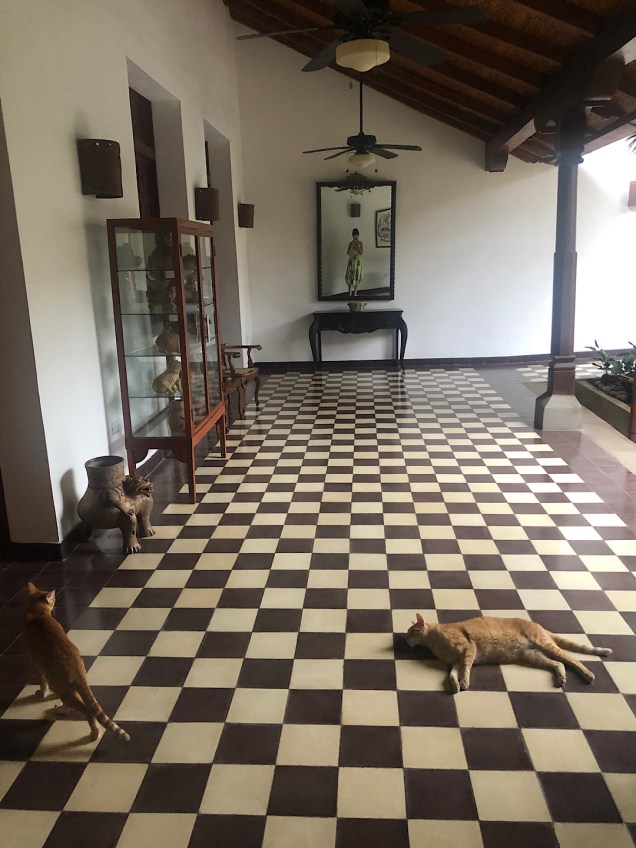 …while the other held the swimming pool and adjoined a spacious kitchen.
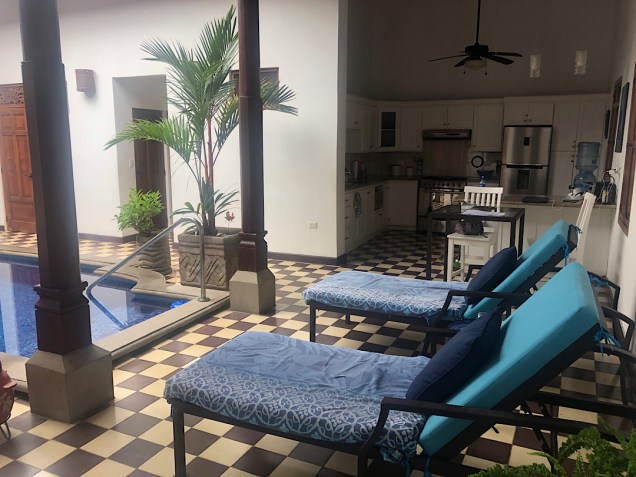 When we arrived (Wednesday, June 9), Steve and I felt tempted never to step outside this sanctuary.
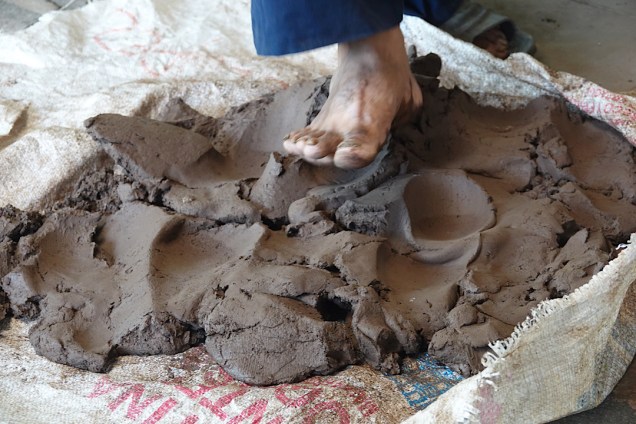 …spinning it into various shapes on a foot-driven potter’s wheel…
 … dipping it in colored muds that are allowed to dry before being polished and engraved.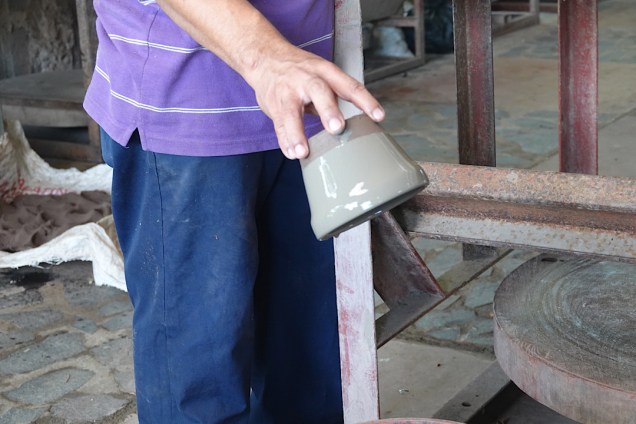
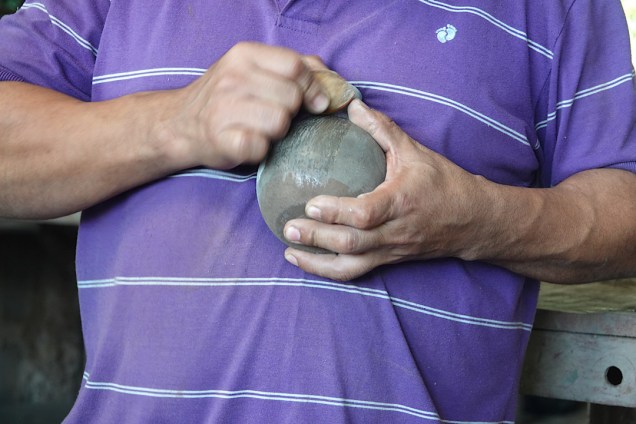
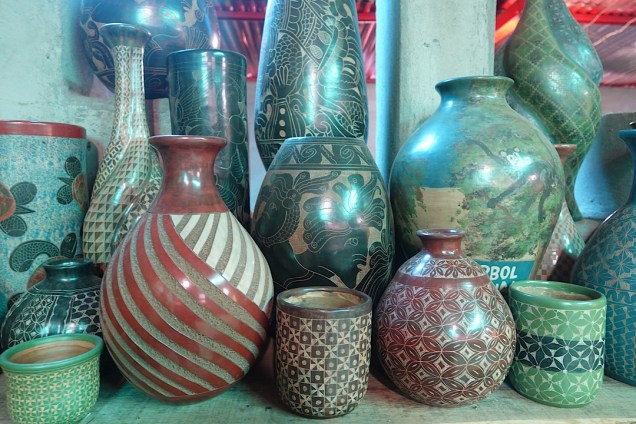
 They fire the end products in wood-fueled kilns that they heat to 900 degrees. The results were splendid.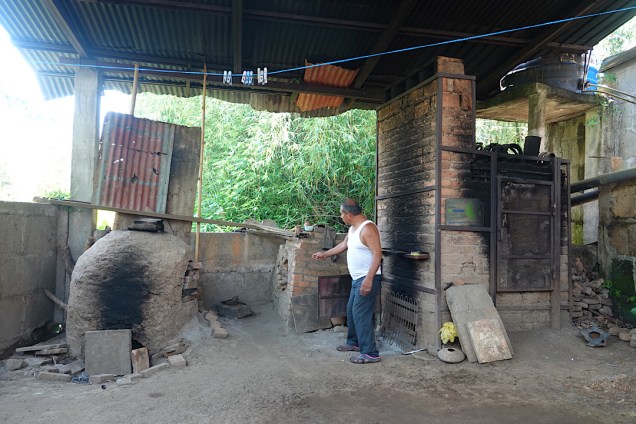



 …then motored up to one of the craters at the top. Steam was rising from a precipice.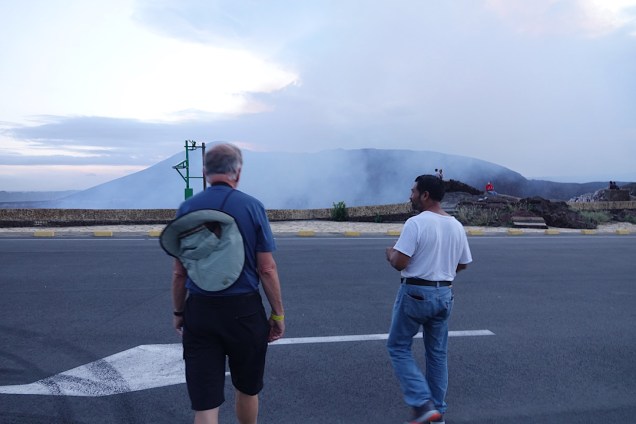
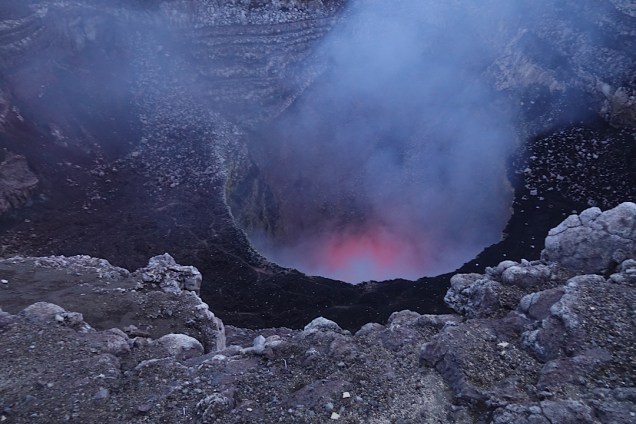
 and grow hellish.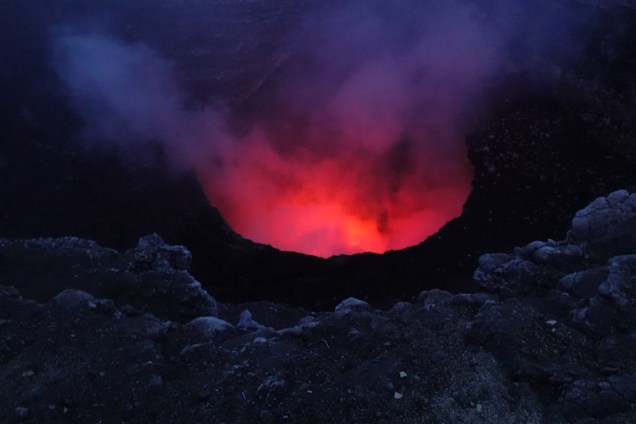
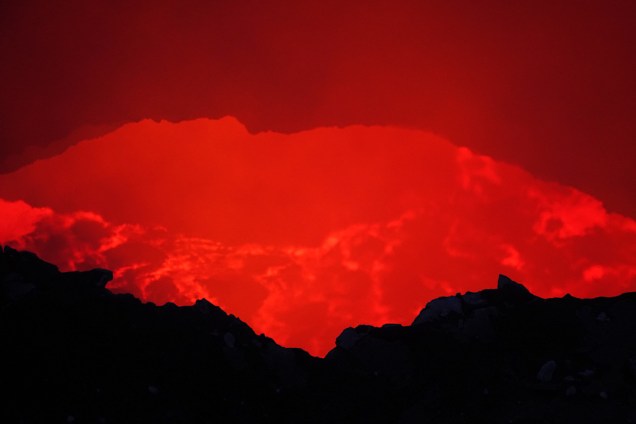 For seconds at a time, the smoke cleared and we could see the magma churning barely 1000 feet below. It felt creepy and thrilling and mind-boggling, like glimpsing the inferno… before driving back to our lovely hacienda 45 minutes away.

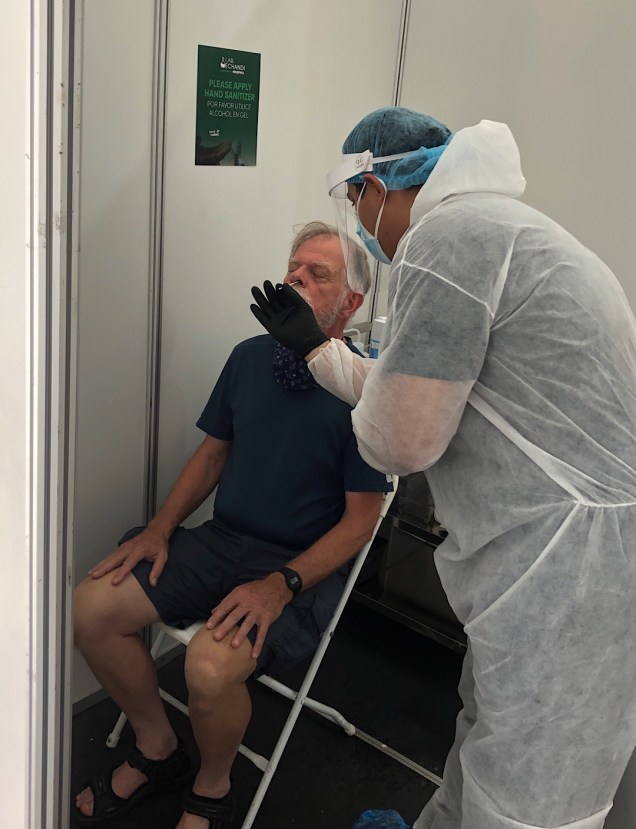 They let us get tested despite our having shown up early and said the results would be emailed to us sometime the next day. Less than 24 hours later, they showed up in my inbox — signed by a doctor, QR-coded, and, happily, Negative. The clerk at our hotel’s reception desk printed them out for us.
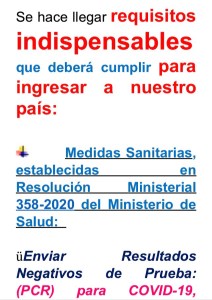 Of course we emailed them the test results as soon as we got them Tuesday. Within an hour, I received a reply… telling me I had to also submit the health form. I fired back another salvo, reminding them I had already submitted it. I attached a pdf as proof. Then we heard…..nothing. Nothing Tuesday, nor Wednesday morning, nor by the time the driver we had hired dropped us off at the land crossing.
 …and a showy while egret.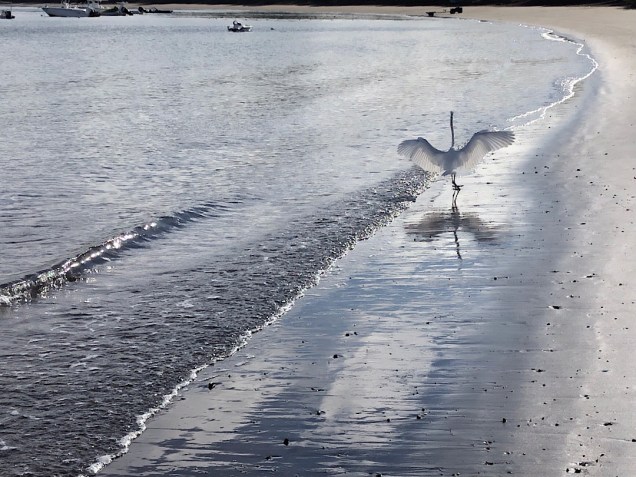
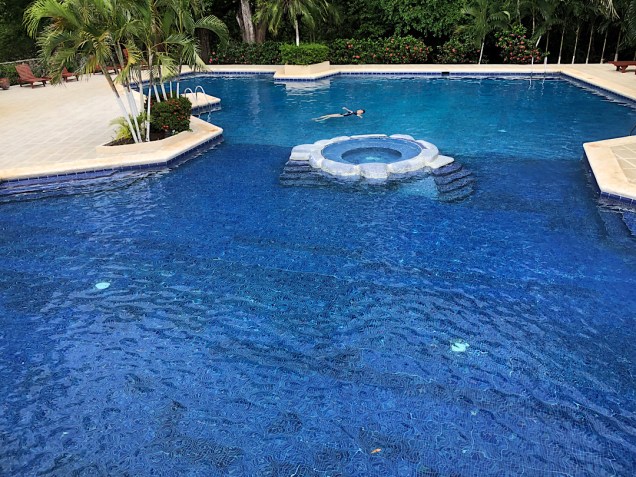

 When Steve and I left behind San Jose last Wednesday (6/2), weeks had passed since I watched a television show or movie. That morning we drove in our rented SUV to El Castillo, a tiny village (pop. 250) that clings to the slopes of Volcano Arenal in northwest Costa Rica. I had traded more of my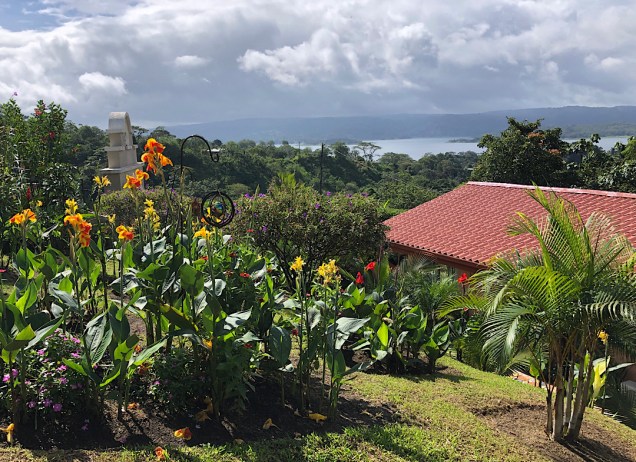
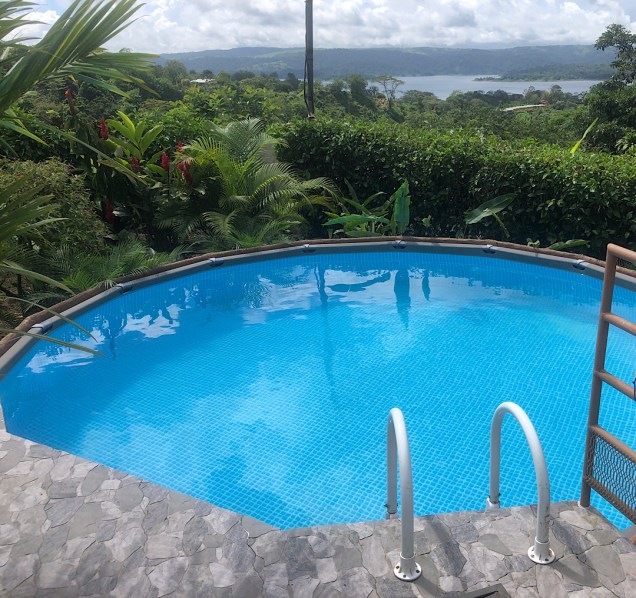
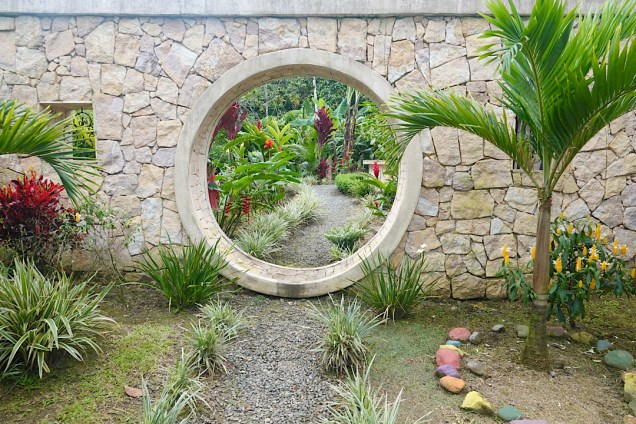 A moon gate on the grounds led to a private trail into the rainforest. We had our own little private swimming pool…
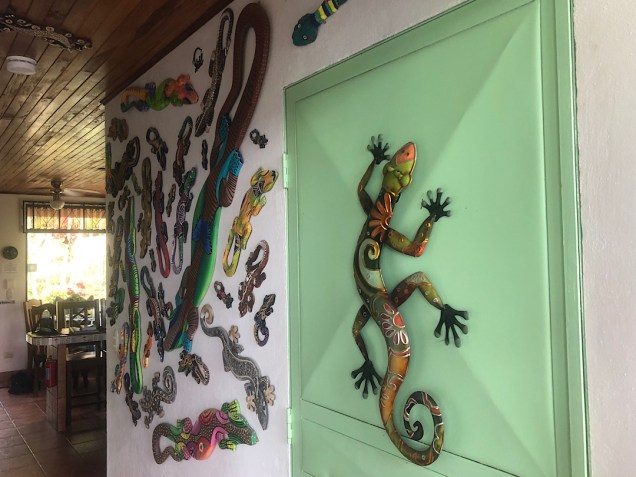
 ,,,hand-carved doors and other colorful decorations.
 We also found an extensive collection of DVD movies, through which Steve and I leafed Thursday night after dining on excellent burgers at a local joint named after the monkeys that serenaded us every morning with their barks and moans (Howlers). Craving some electronic entertainment, we decided to watch Soylent Green.
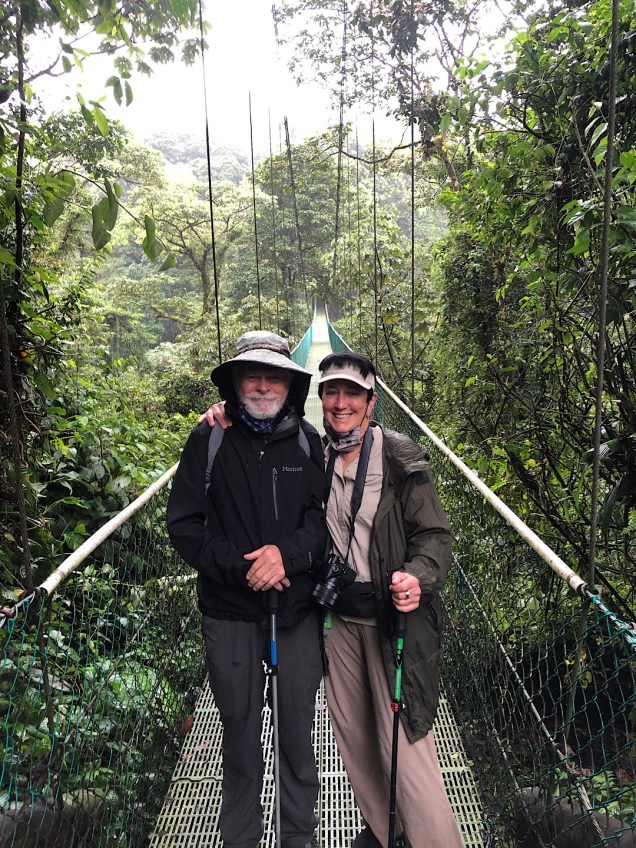 Across suspension bridges…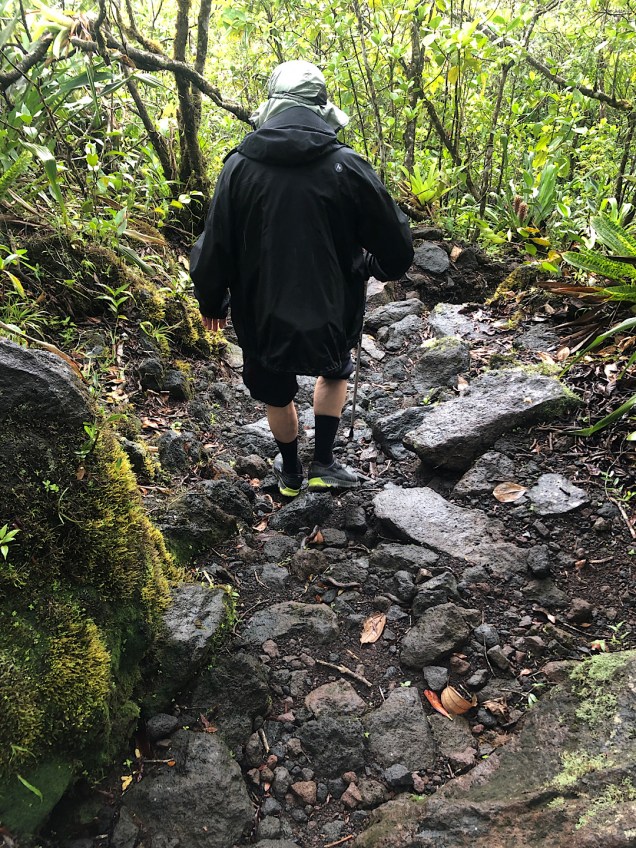

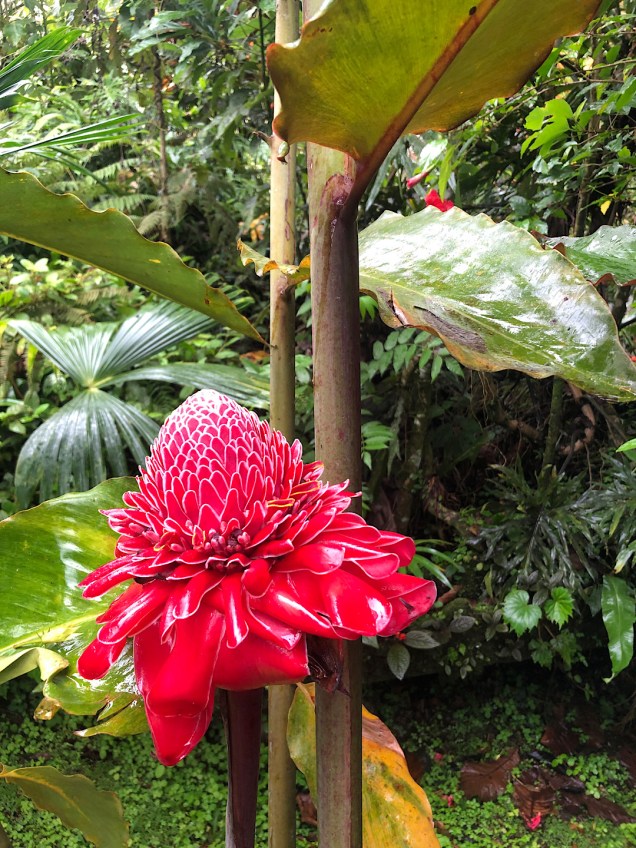

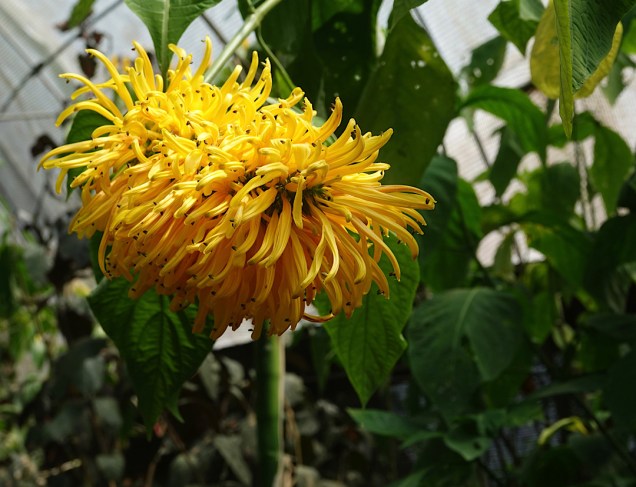
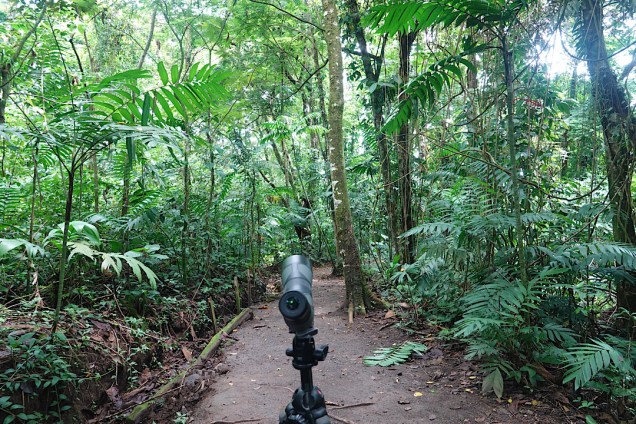
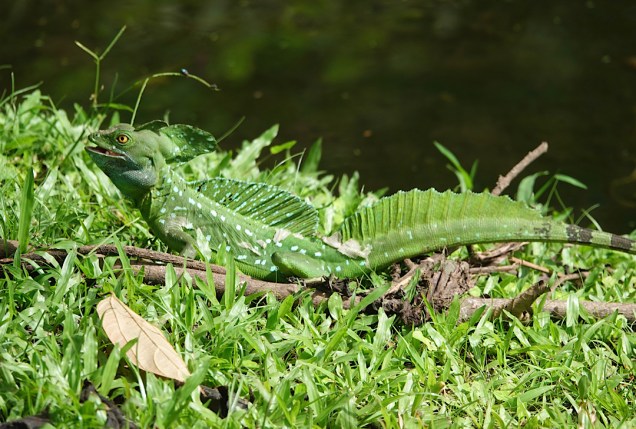 A green basilisk (known as the Jesus Christ Lizard because of its ability to walk on water) greeted us near the entrance, but we soon moved into the forest where Geovani scanned the canopy like someone taking in the headlines on Apple News. He pointed out a large male sloth that I would never in a million years have spotted in the leaves above us. For several happy minutes we watched him hang there, scratching at the parasites infesting his fur.
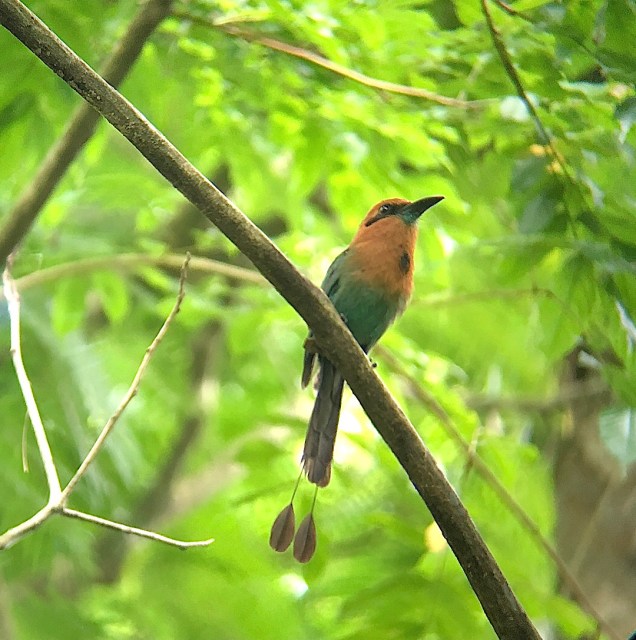
 Then Geovani heard a toucan, and we scurried after him to find and photograph it.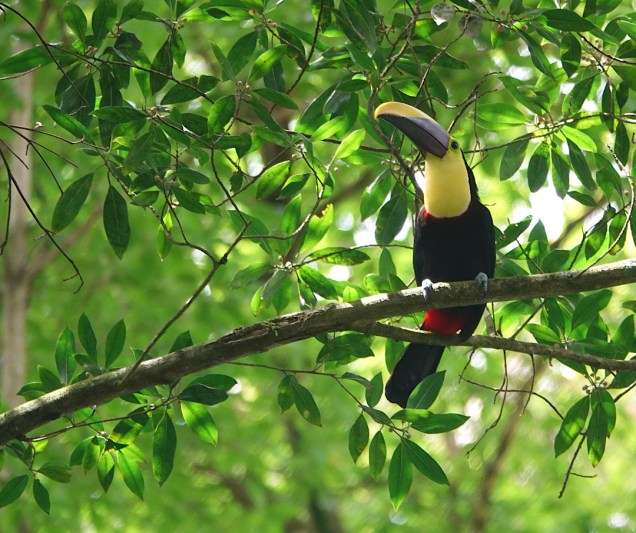
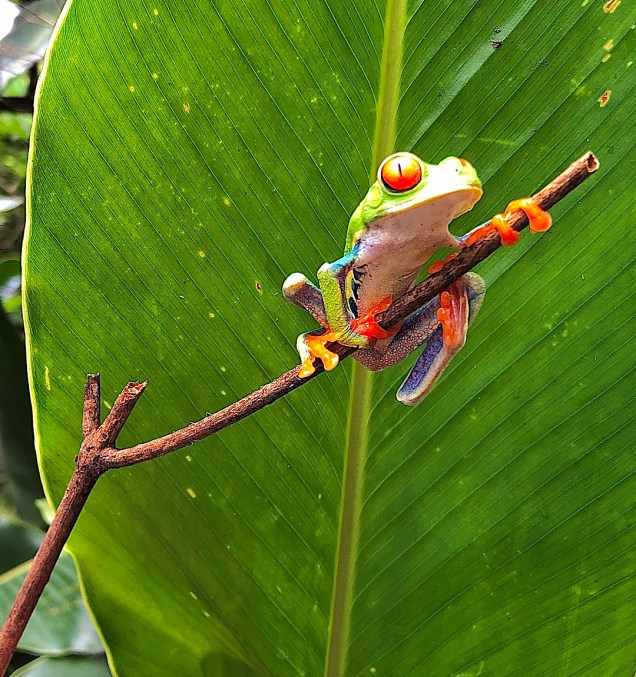

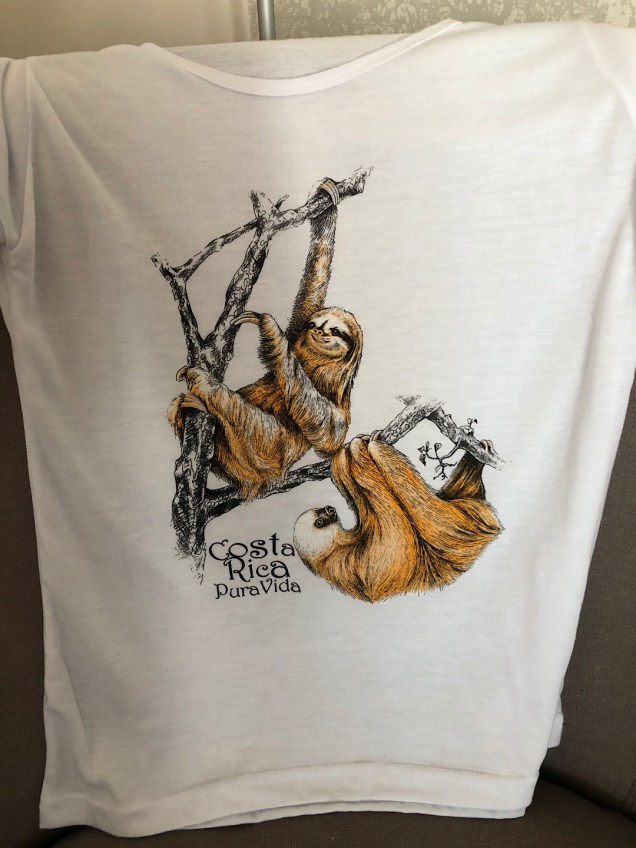 Sloths are native and iconic.
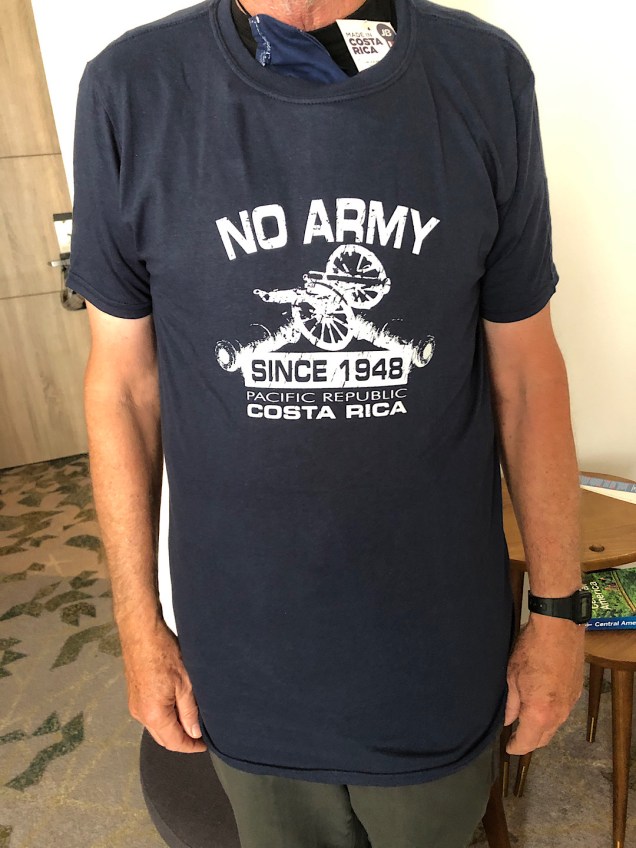 And one of their presidents in 1948 dismantled the country’s military. Costa Rica still doesn’t have one!
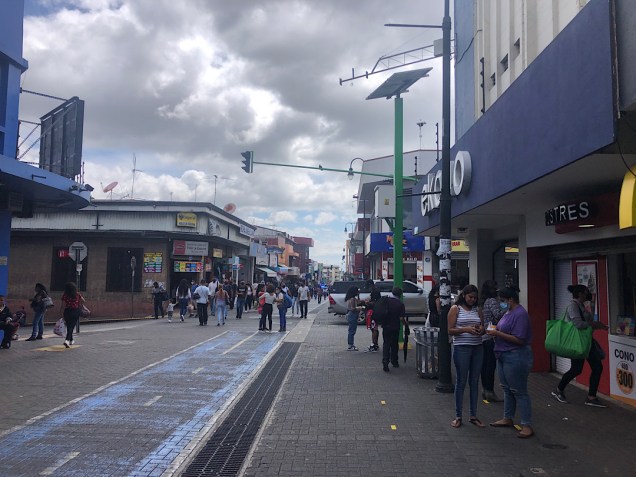
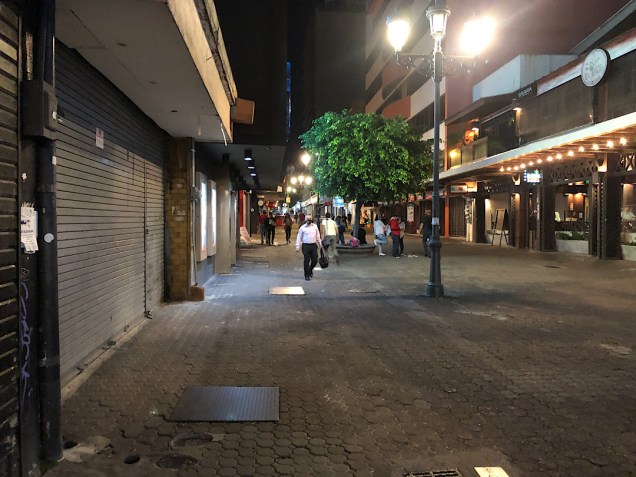 … which looked like this a little before 8 pm and walked the short block to Avenida 1, where the already-dim streets were darker and creepier. Almost all the storefronts were shuttered. Almost no one was out walking. But Google Maps insisted the Del Rey was just a block or two away. An online report had described the massive pink structure as sticking out like a sore thumb. This was true enough that we easily spotted it, but this thumb looked more dead than sore. Dark and lifeless, it made us wonder if it was yet another victim of Covid. Or had we simply been misinformed about its heyday?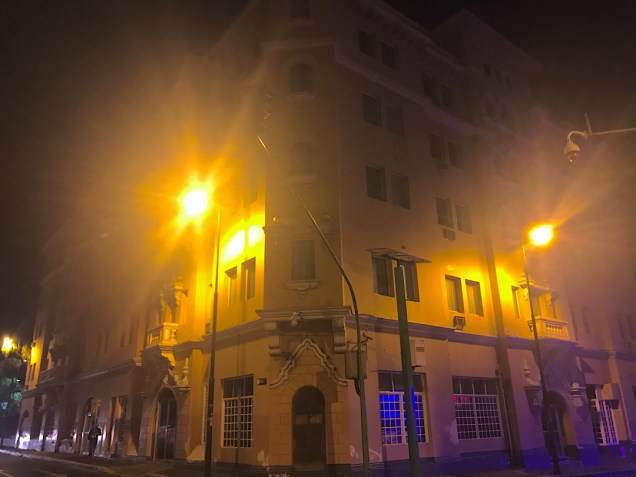
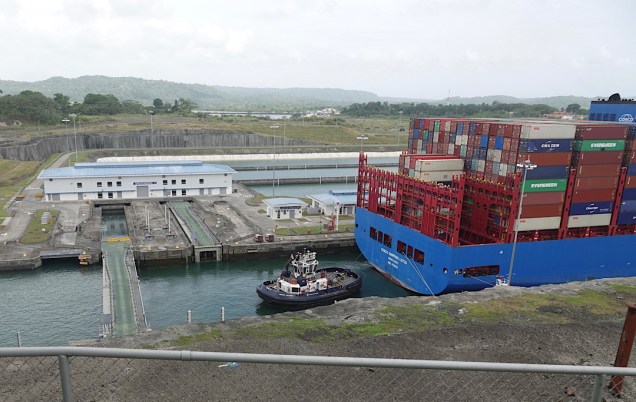
 On our first-ever visit to Panama of course we would want to see the Panama Canal — vaunted 8th wonder of the world, 107-year-old shortcut between Earth’s two greatest oceans, Number Two on Lonely Planet’s “15 Top Panama Experiences.” And for Steve and me, experiencing the Canal had turned into something more; it had become a quest; a semi-sacred mission.
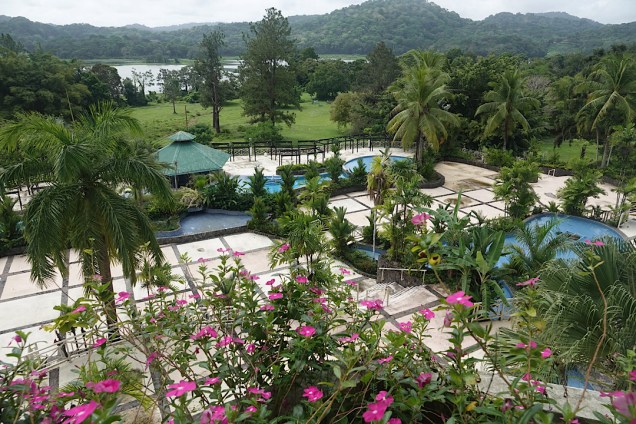
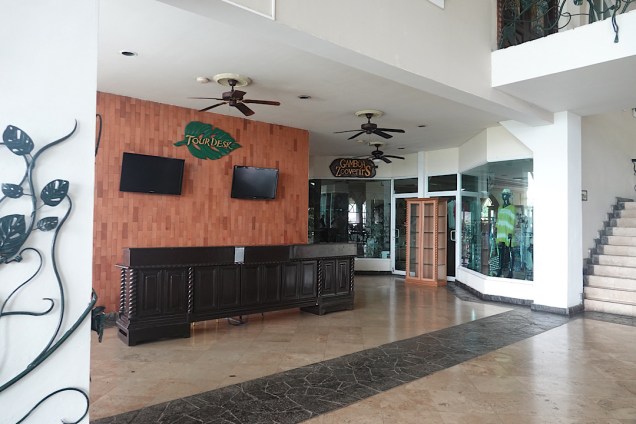
 In high spirits, we set out for the Gamboa Rainforest Resort about 2 kilometers away. There we hoped to sign up for a tour or two and if necessary make a reservation for dinner in the fancy restaurant there.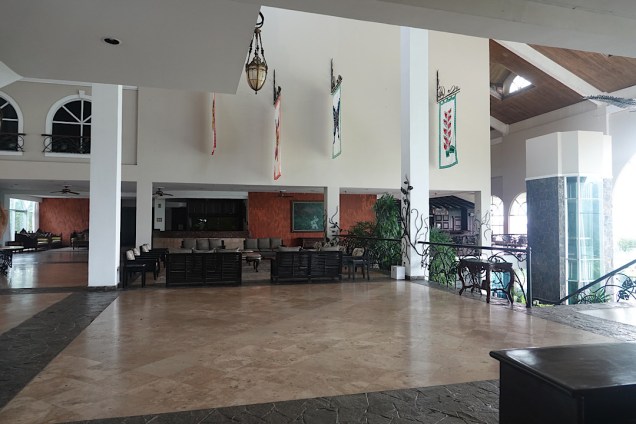



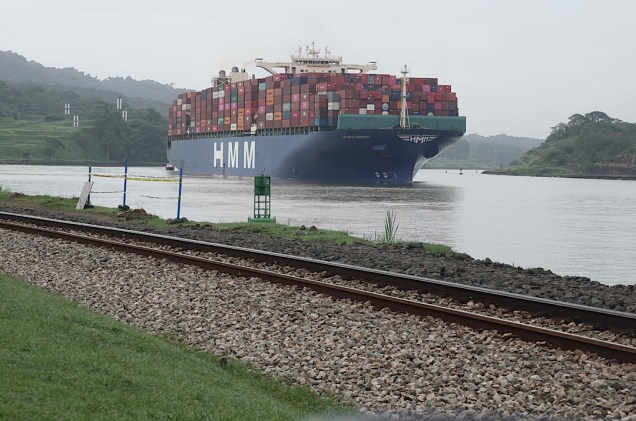 From the Puente de Gamboa, it would be easy to mistake the Canal for a workaday river. But Steve was all too keenly aware of what went into creating this portion of the waterway — the infamous Culebra Cut. The cut passes through Panama’s continental divide and the highest point on the canal route. It’s excavation bankrupted the French company that made the first attempt to dig an isthmian canal and cost the USA twice what was originally expected.
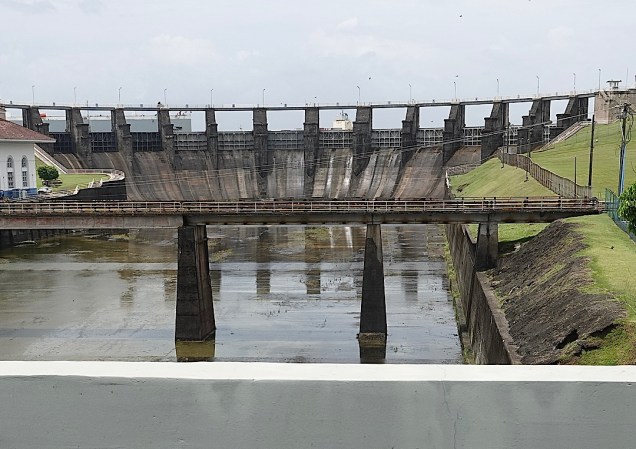
 We also looked forward to our visit the next day to the Miraflores Locks near Panama City. Steve was understandably crushed when he checked for directions on Google Maps Wednesday night and read that the its visitor center was closed because of the pandemic.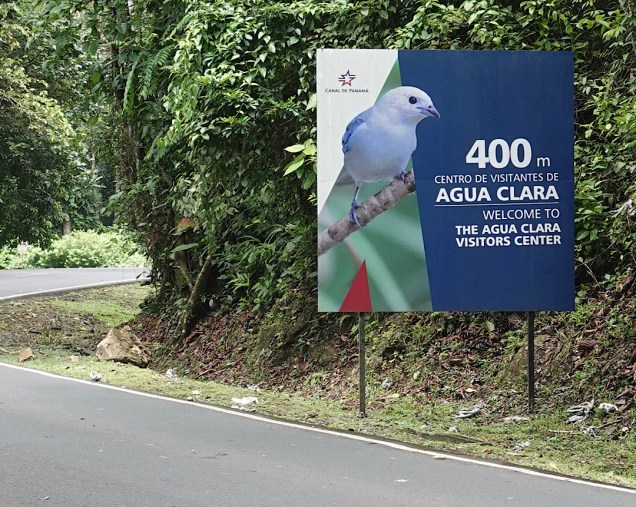
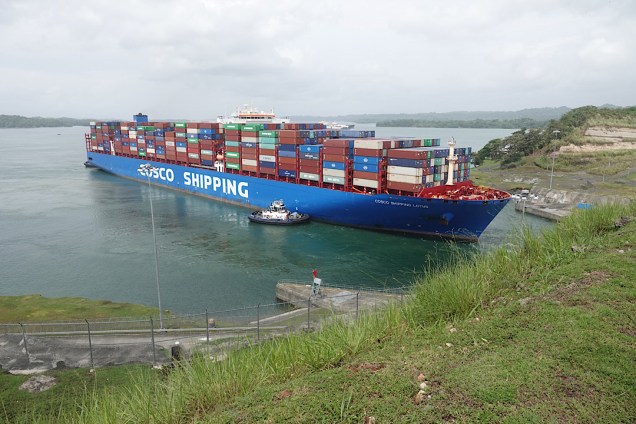
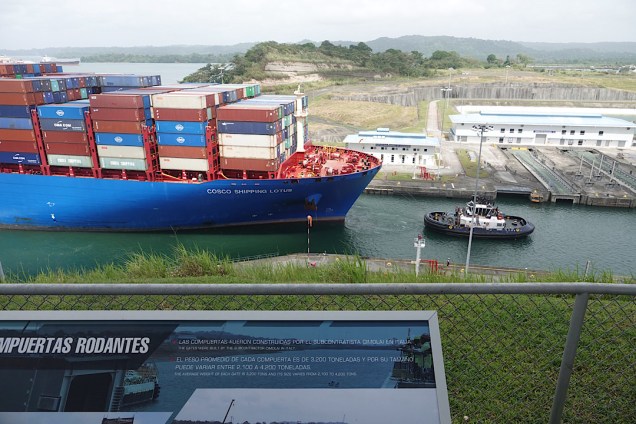
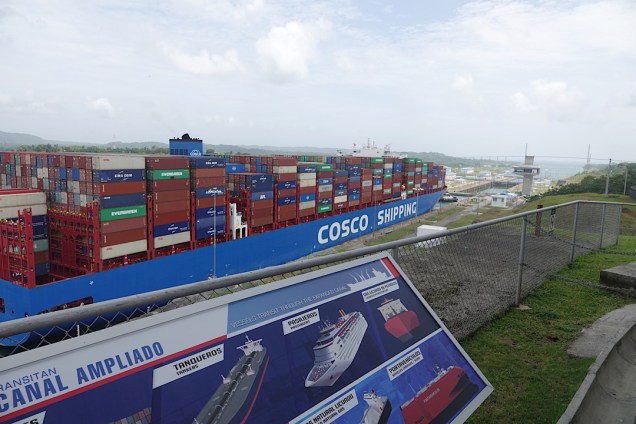
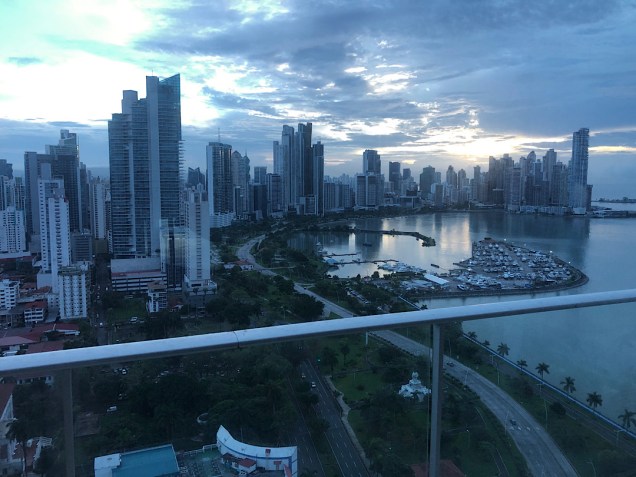
 We drove to Panama City, turned in our rental car, and took a taxi to The Sexiest Condo in Panama, which is how Vicki Marie S bills her unit on the 31st story of a high-rise overlooking Panama Bay. I used more of our home-exchange Guest Points to secure three nights for us here, and I have to say it is pretty sexy. Here’s the view of the city skyline from the balcony outside our bedroom with its king-sized bed.
 And the view of me wondering: how DOES one pole-dance, anyway?
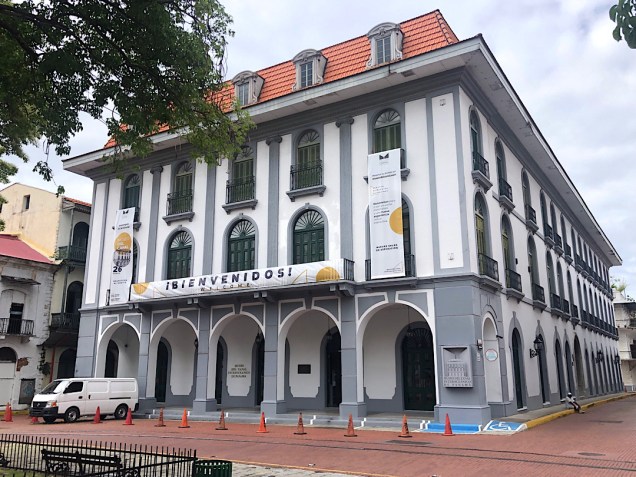 If not great, it’s respectable, and I think at last Steve feels sated. We’ll have all day tomorrow to participate in the Sunday morning Ciclovia, visit the natural history museum housed in a particularly colorful Frank Gehry structure, and eat more of the excellent local fish. Probably it will all be fun. Still, I think we’ll depart for Costa Rica Monday most impressed by how much luck we had in understanding the greatest engineering achievement of all time.
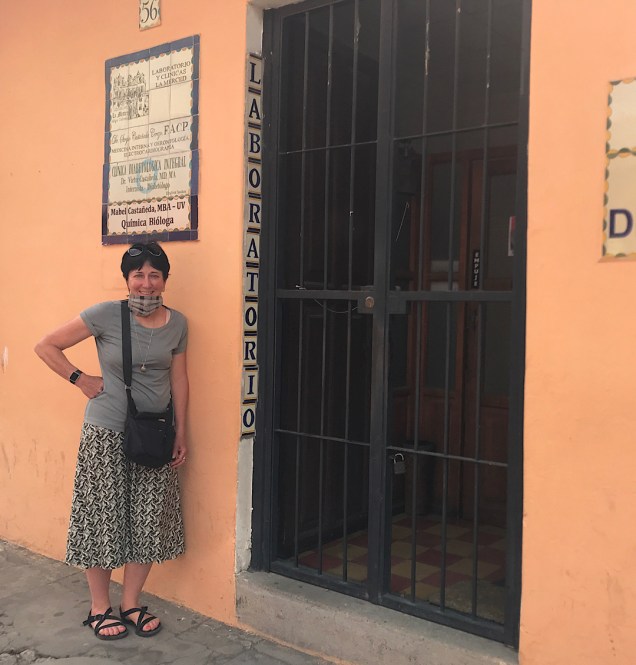 Monday morning promptly at 7, we walked the few blocks to the clinic. Iron bars blocked entrance into its unprepossessing foyer, and for a moment we wondered if it was closed. Then I noticed a cord attached to a bell behind the bars. I reached through and yanked. A moment later, the gate buzzed. We pushed our way in.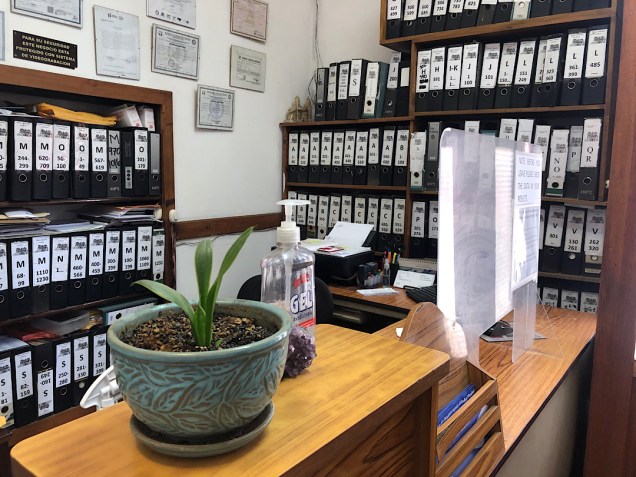
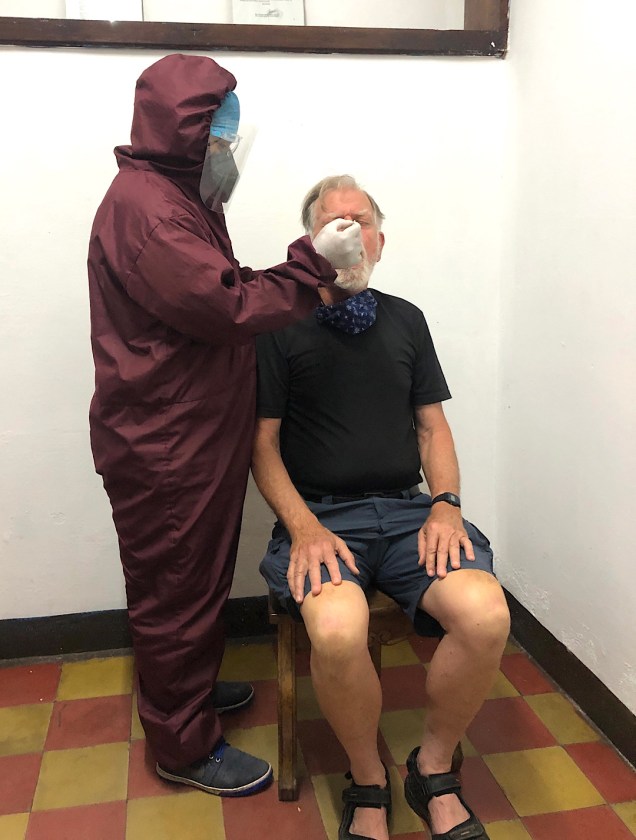 We were instructed to return in a half-hour for the results. We got coffee at a nearby cafe, then went back. Another tug on the bell; another confrontation with the inhospitable receptionist. She didn’t say a word but pulled out two pieces of paper and began folding them.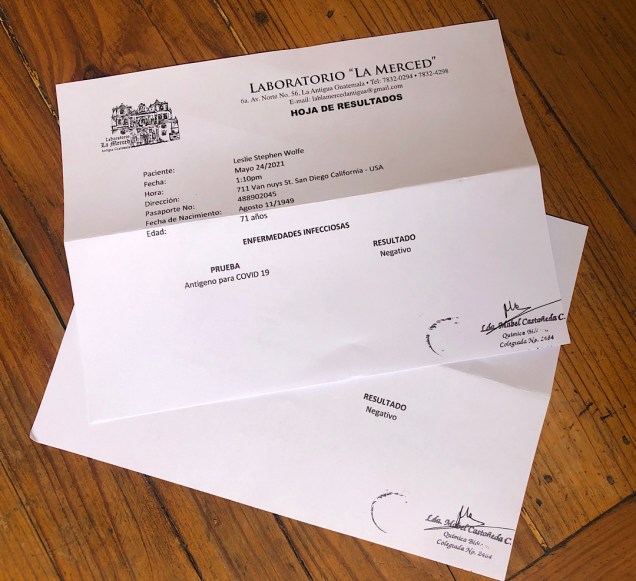
 I first met the Mayans back in high school. I think I ran into them in my freshman-year world history course, though truth be told I remember nothing of whatever I learned. In my consciousness, they just became part of a jumble of Olmecs and Toltecs and other people who once rocked in Mesoamerica.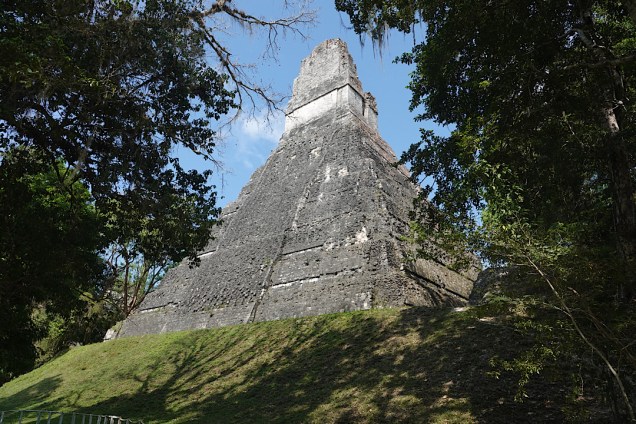
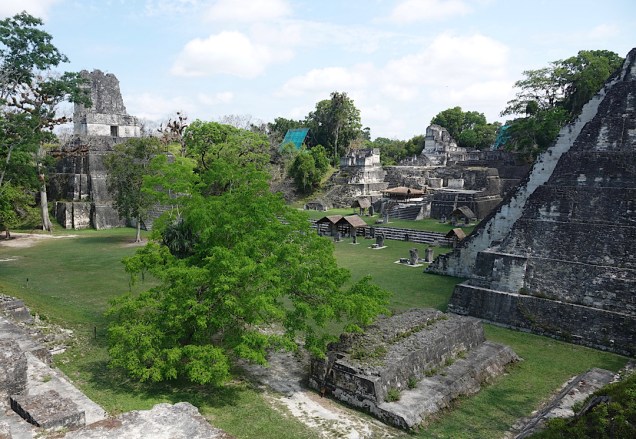 The Mayans developed an advanced (base 20) mathematical system, and a hieroglyphic writing system that compared to that of the Egyptians.
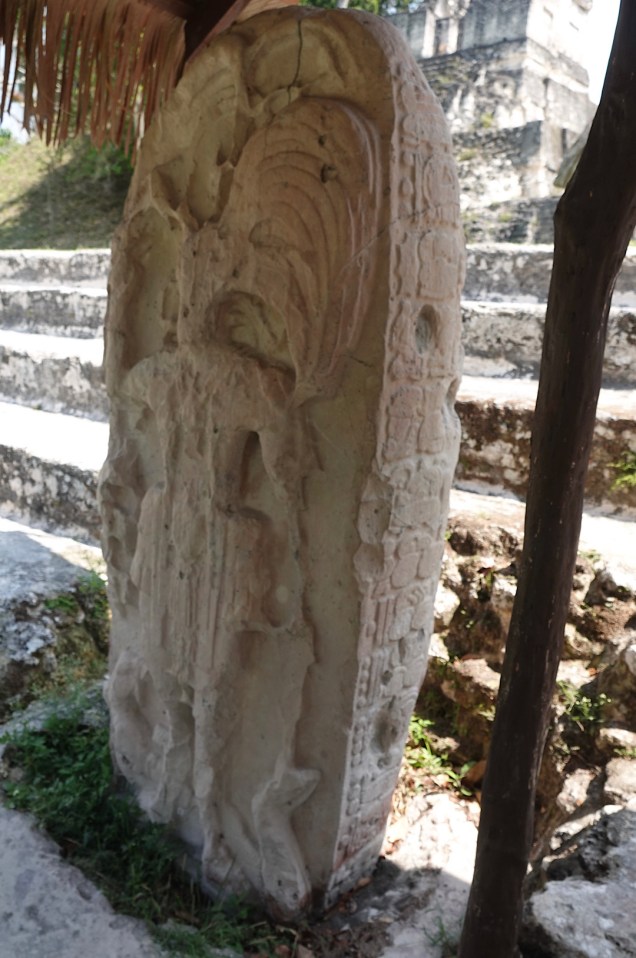 Some of the writing has been deciphered from stone markers such as this one. But our guide said that sadly, only three of their books have survived. The Spaniards burned all the rest — reportedly 1200 in just one morning.
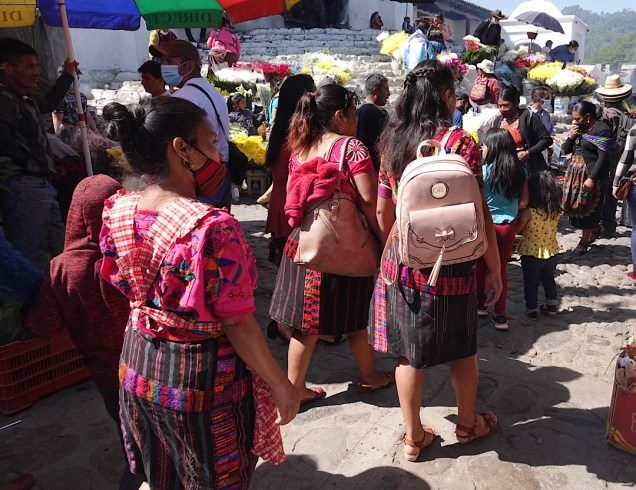
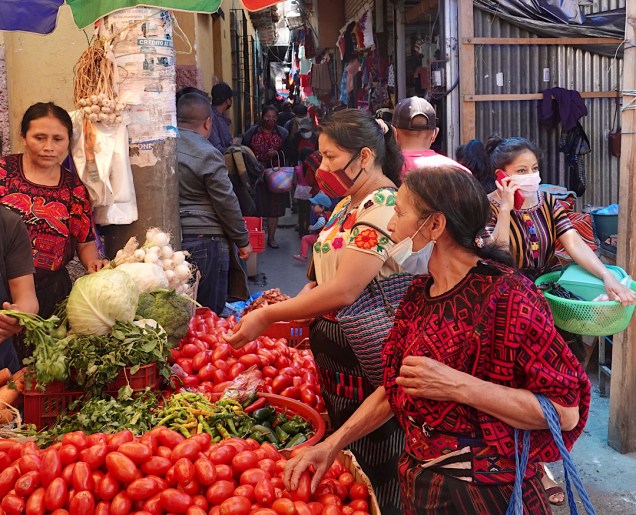
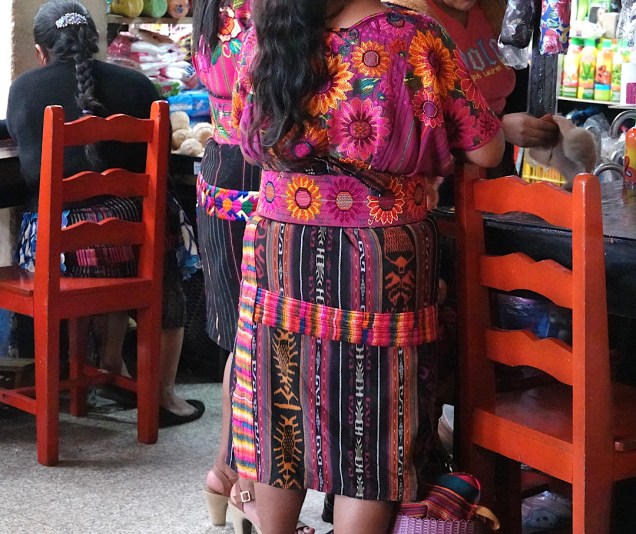
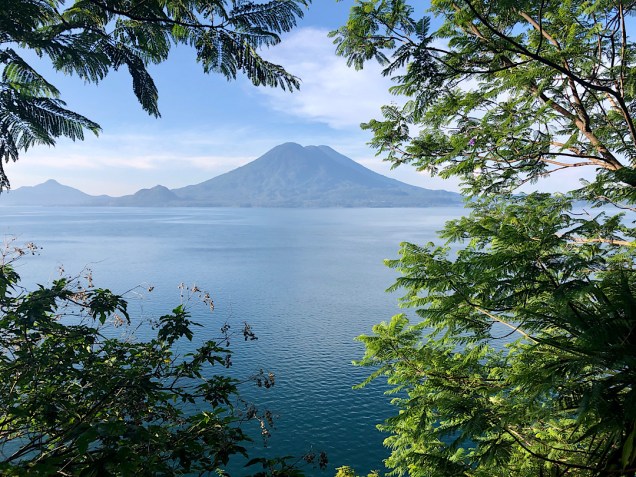 At the foot of the public pier in the town of Panajachel, we caught a launch to our hotel, La Casa del Mundo. Built starting in 1980 by a Guatemalan woman, Rosy Valenzuela, and her American husband (Bill Fogarty), it’s one of the most remarkable places I’ve stayed anywhere. Every cottage built on the vertiginous stone cliff commands heart-stopping views.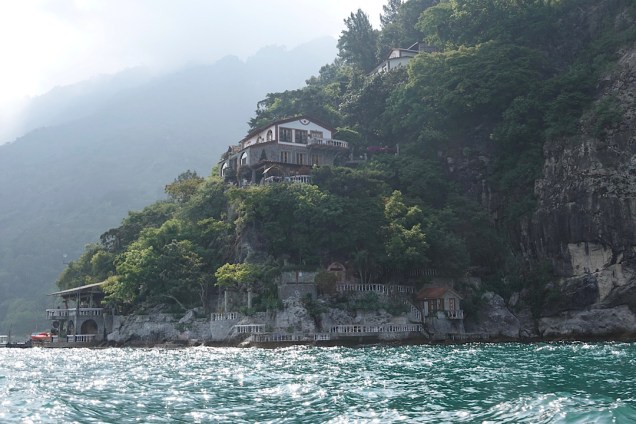

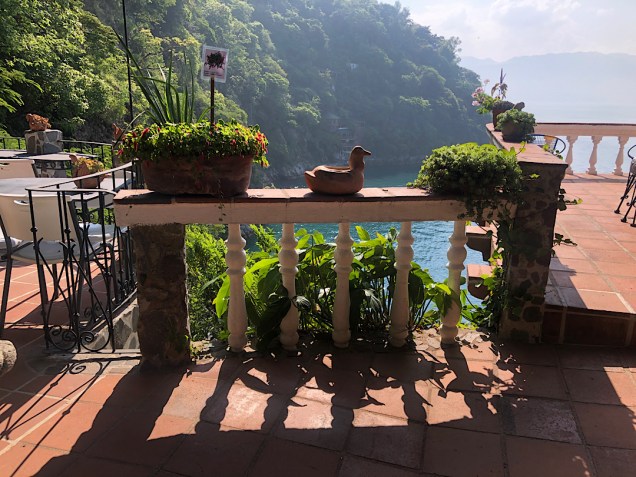
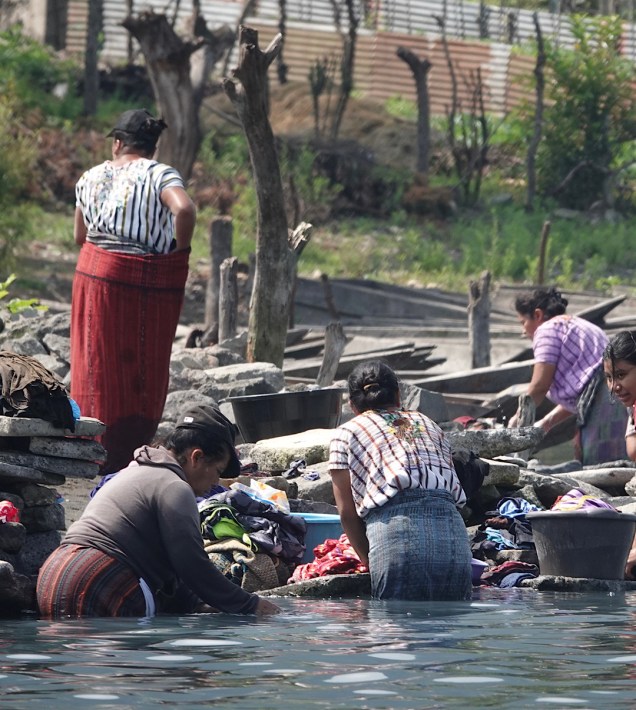
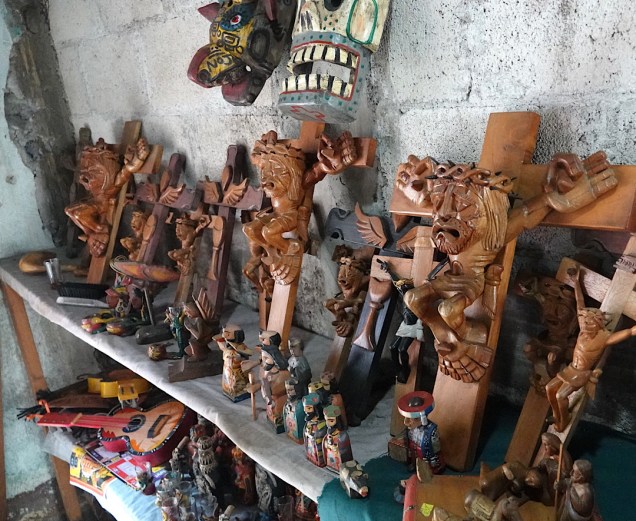
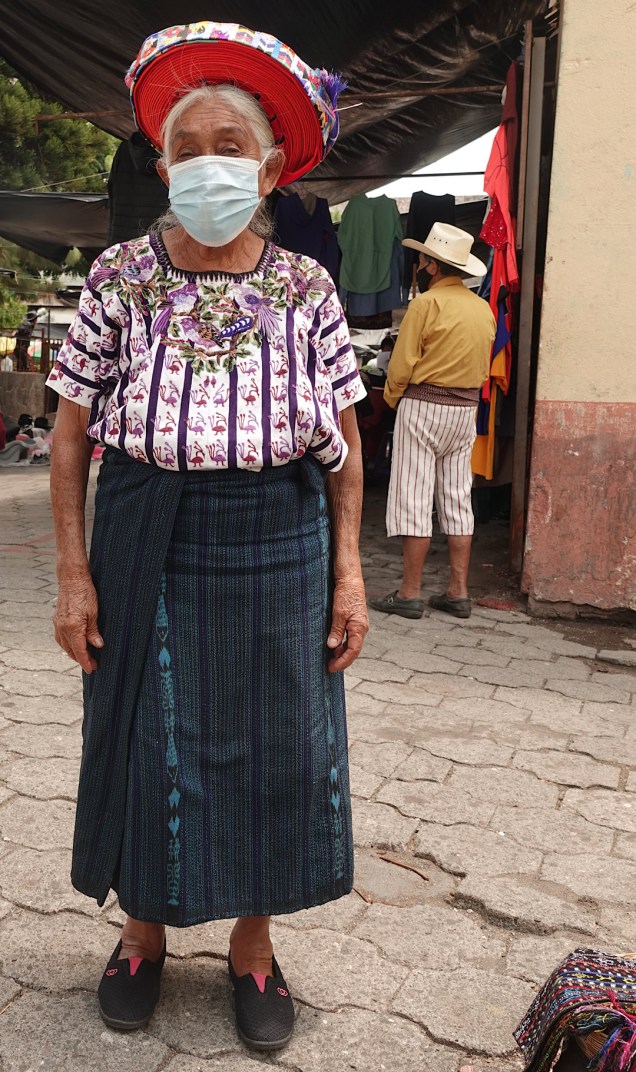
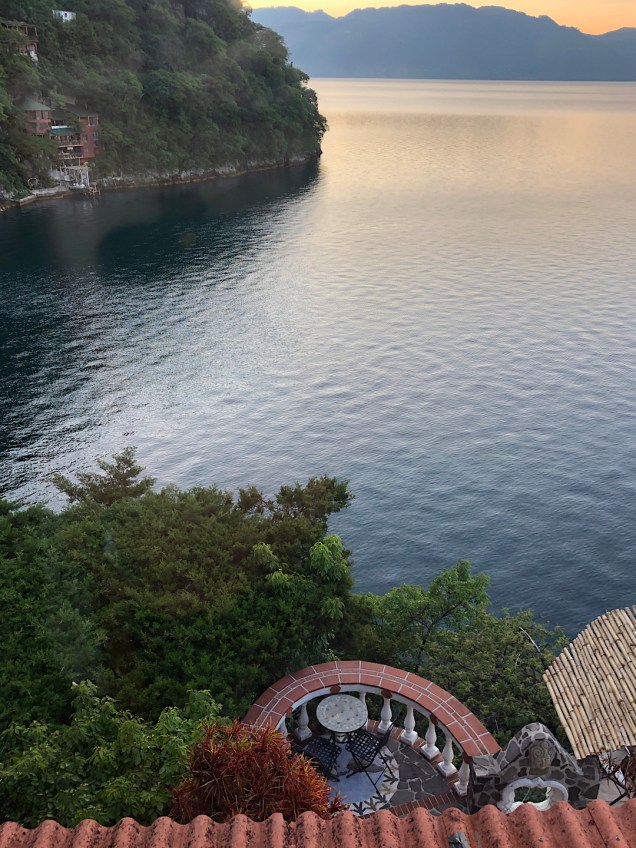 Friday, Steve and I visited three of the villages situated on the lakeshore not far from La Casa. Our guide was Alex, 29 (whose Mayan name I forgot to write down.) He and his three siblings first learned Tzutujil, one of the 23 Mayan languages. But all his classes in school were taught in Spanish, by government mandate, so the Mayans are also fluent in that. About 5 years ago, when Alex decided to become a tour guide, he learned to speak English (well) in an intensive program in Guatemala City to which he got a scholarship. These days he’s studying Hebrew because so many Israelis come to Guatemala on vacation (and to start businesses, like this one).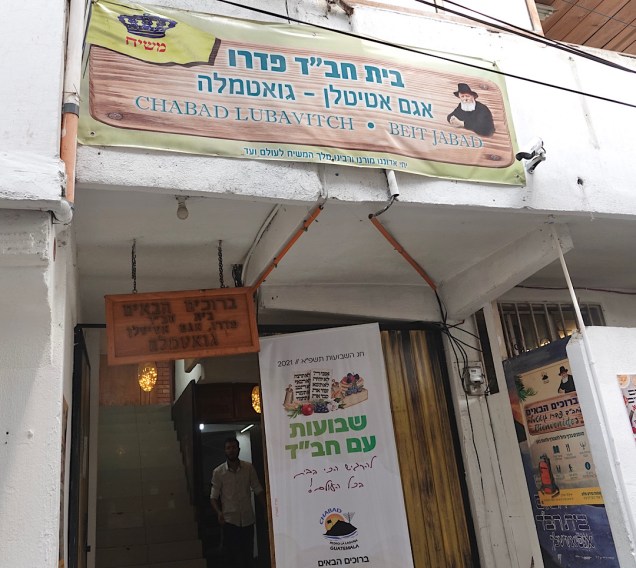
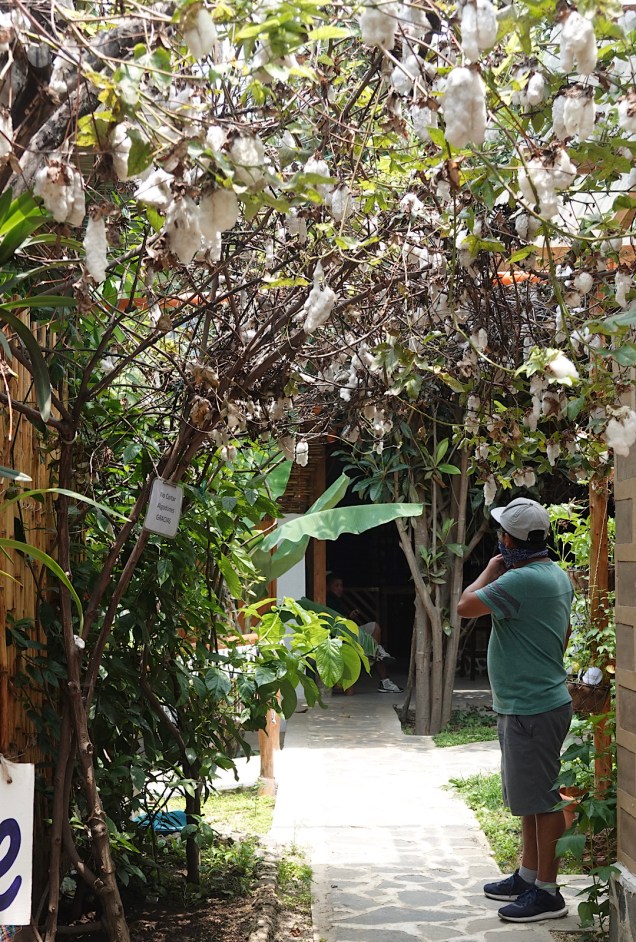
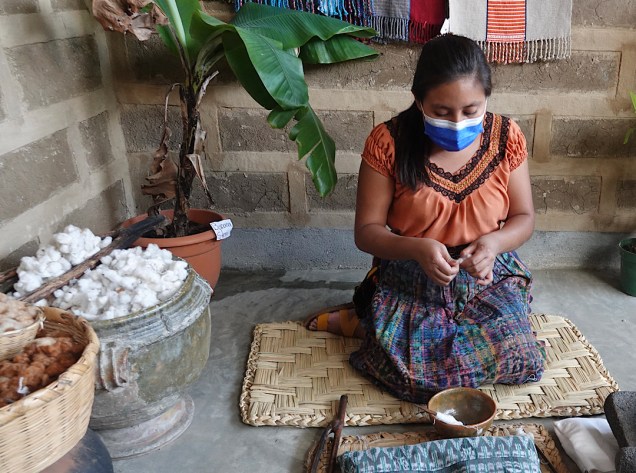 Pulling off a chunk and removing the seeds from it…
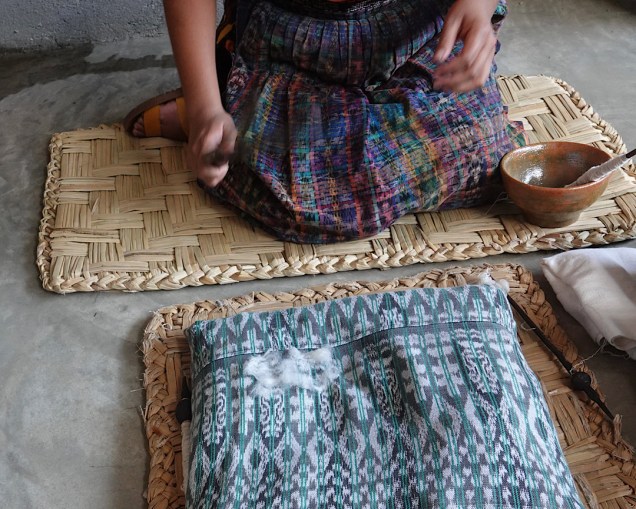 Beating the seedless chunk to make it smooth…
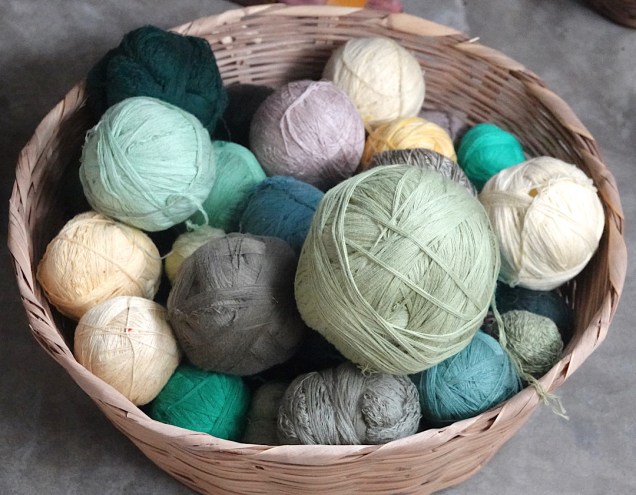
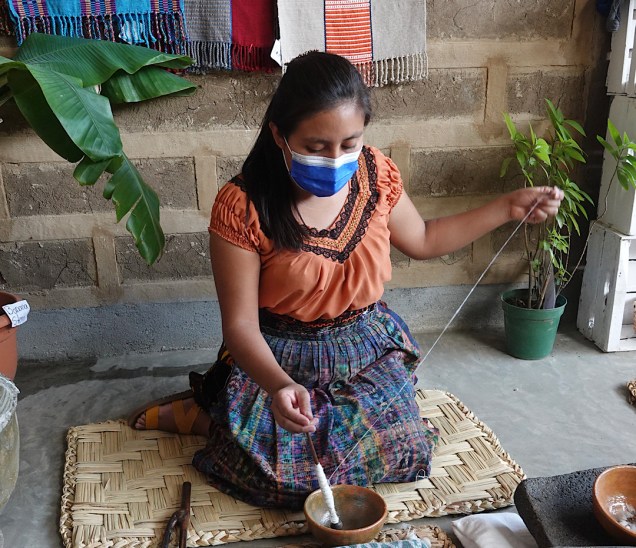 Then using a hand-held spindle to twist the fiber into thread.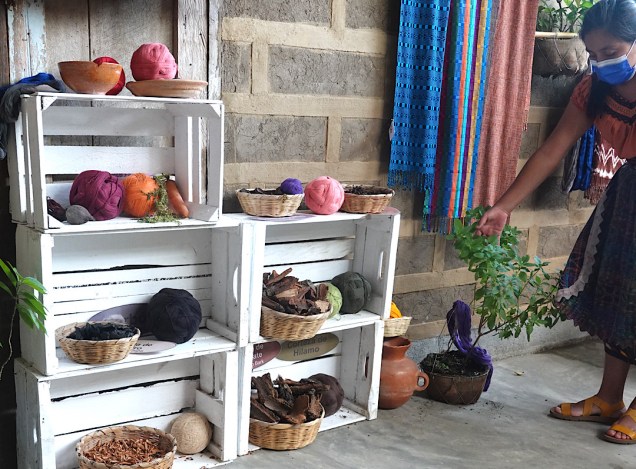
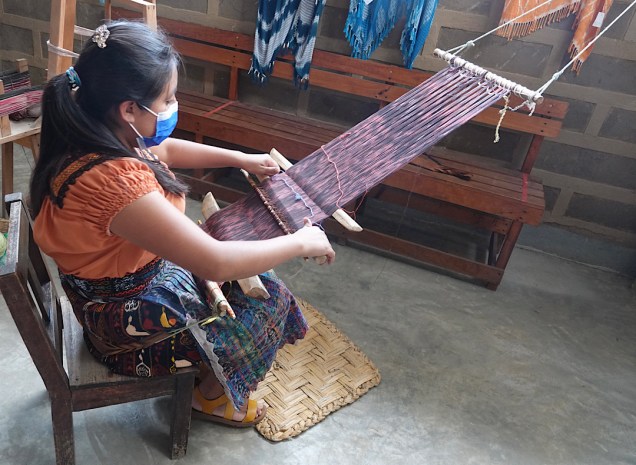 This is what is looked like, in action:
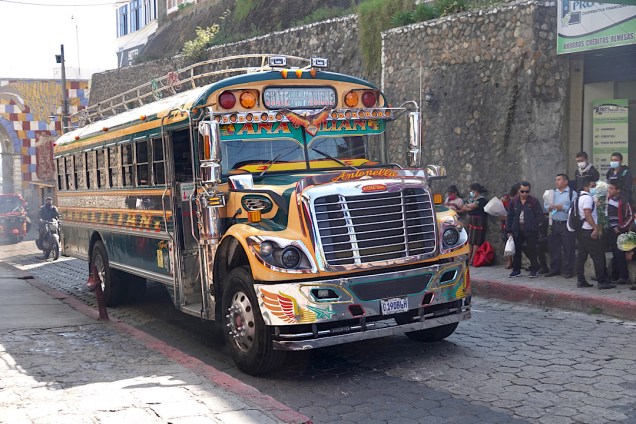 Someone might ask me: why would you take public buses to travel between cities in Guatemala? I might respond: why not?
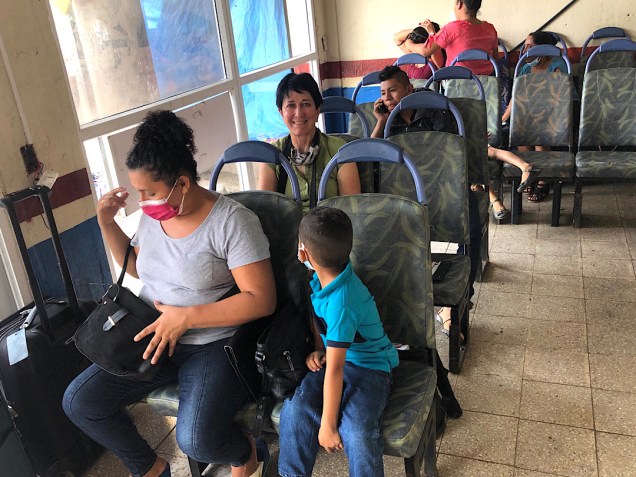
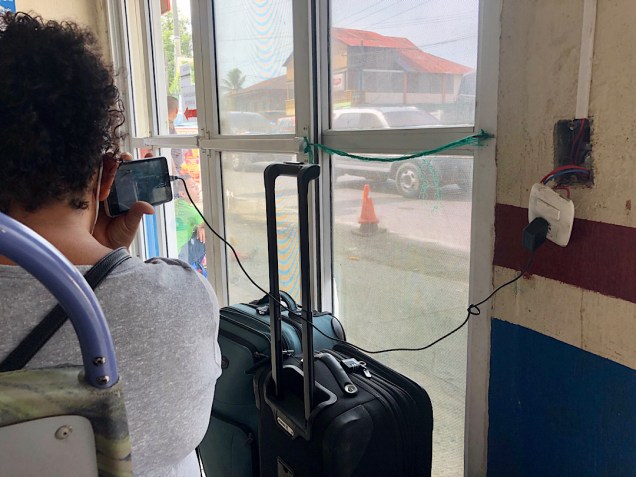
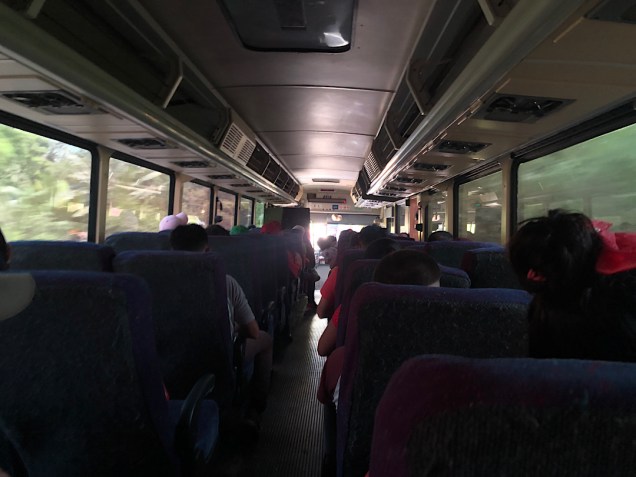
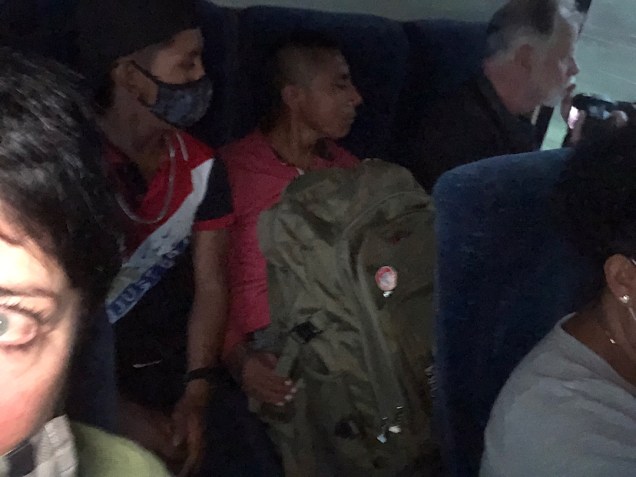

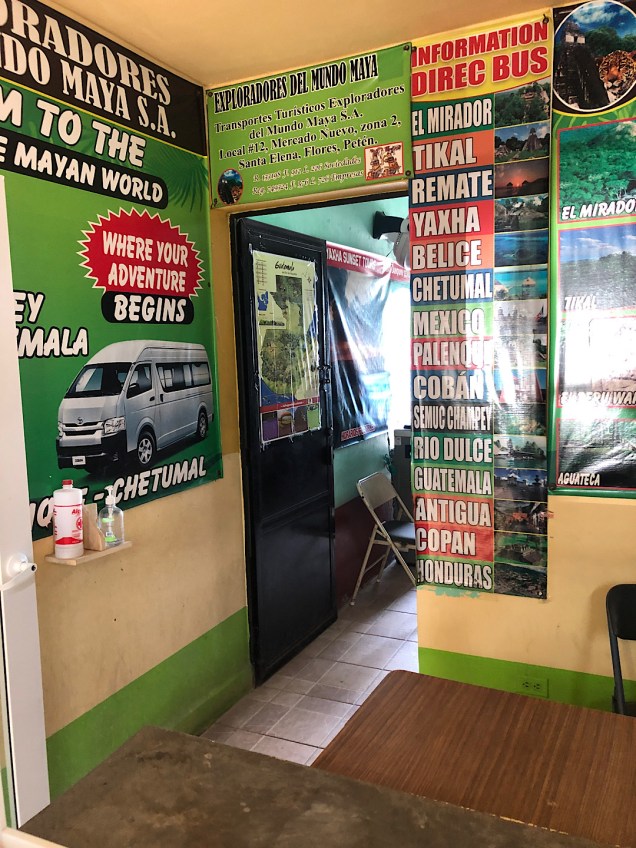
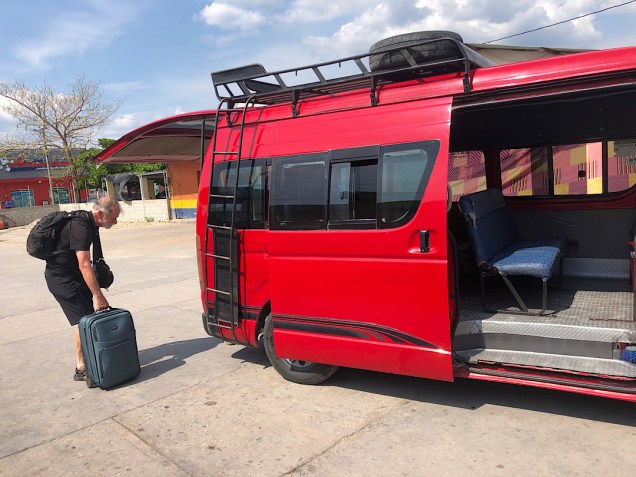 Wilmer had said it would be a “chicken bus,” a Guatemalan institution. I had read that they are colorfully decorated former school buses that acquired new life here. They pick up and drop off passengers along certain routes. But a couple of guys on the van told me that at least in this part of Guatemala, a van could also earn the name just from the fact that stops on demand for passengers.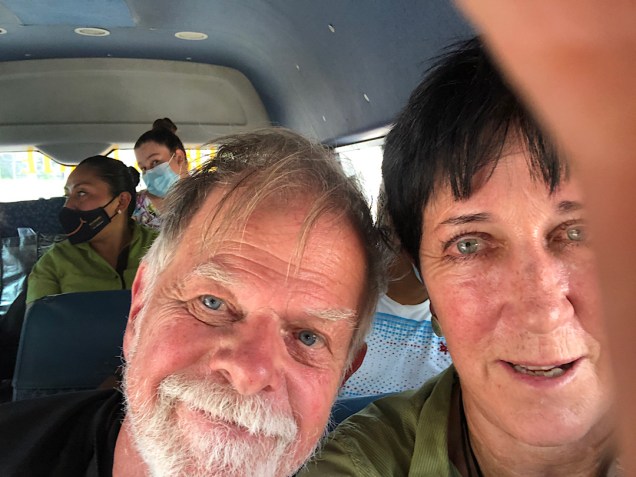
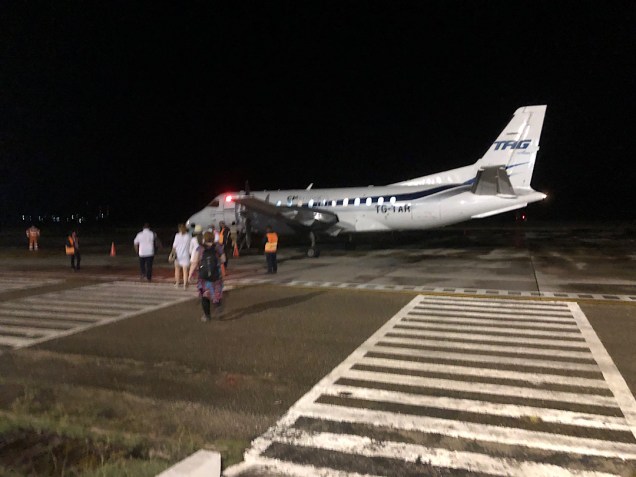 Ironically, the 45-minute flight to Guatemala City was not terribly bumpy. Some rides are worst in anticipation.
 At home and abroad