As I explained in my last post, Steve and I made this trek to Africa because of the Ugandan grannies. But after flying here via Qatar (and stopping there for three nights), the granny research consumed only four days. It seemed a shame to come halfway around the world, then turn around and go home after such a short time. Also, another adventure called to us.
Several years ago, Steve and I became aware of the plight of the bonobo (along with chimpanzees, Homo sapiens’ closest relative left on earth). There’s a bonobo sanctuary in the heart of Africa that is doing great work for this crucially important but highly threatened species. After visiting the grandmother project, Steve and I wanted to visit that sanctuary.
This isn’t easy. Lola Ya Bonobo (literally “Paradise for Bonobos”) is located outside the city of Kinshasa in the Democratic Republic of Congo. The second largest country in Africa, the DRC is also one of the most tragic. It’s ridiculously rich in resources, mineral and physical, yet it’s one of the poorest countries in the world, with one of the bloodiest histories. It does not welcome tourists. As far as I could make out, it has no tourist industry. To go there, someone has to invite you, the invitation has to be approved by multiple ministries in the Congolese capital, and you have to send your passport to the DRC’s embassy in Washington DC to receive the crucial stamp.
Transportation options are limited, but the Rwandan airline does fly to Kinshasa nonstop from the capital of Rwanda, Kigali. The flight is only two and a half hours long, and Rwandair has an excellent reputation. The only problem (for us) was that this flight only operates a couple of times of week. Steve and I couldn’t get to Kigali from Nyaka (the Ugandan village where the granny program is based) on Sunday, and the next nonstop wasn’t until Wednesday (i.e. tomorrow).
Happily what initially looked like an irritating delay turned out to be a pleasure. I learned that we could be driven from Nyaka to Kigali via the site of Uganda’s most beautiful lake, Lake Bunyonyi. We planned to hole up there for two nights, review the work we’d done in Nyaka, and write about it. But yesterday morning, we couldn’t resist spending a few hours in a boat on the lake.
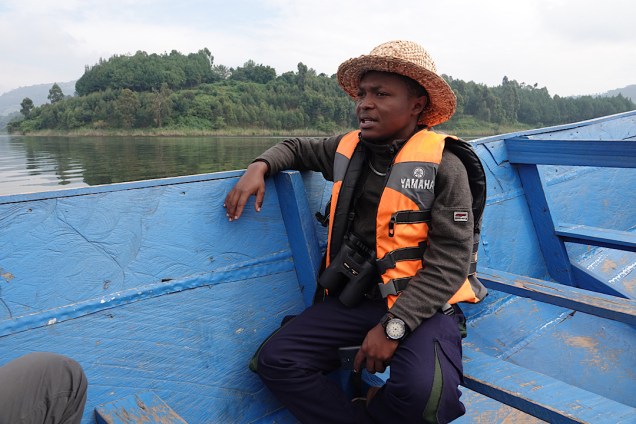
For $20 a person, the hotel where we were staying arranged for a motorboat, a guy to drive it, and a soft-spoken 23-year-old guide named Rabson. Rabson looked very young, but he’s been guiding for about three years, and I quickly found him to be quick-witted, conscientious, and knowledgeable.
The morning had started off a little drizzly, but as we putted along, the sky cleared. Lake Bunyonyi is the deepest lake in Uganda, and it’s filled with 29 islands, most uninhabited. It has no dangerous animals like crocodiles or hippos, and almost no fish.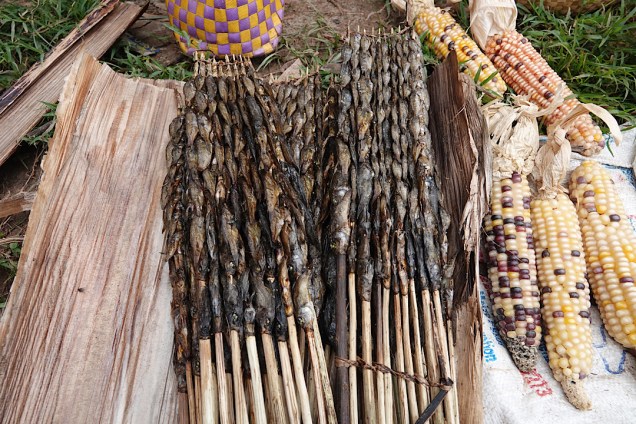
The islands create a landscape that reminded me a bit of the New Zealand fiordlands. But the steep hillsides surrounding the water are an intense tropical green, dotted with banana groves. People swim in the lake, and it provides drinking water to the local villagers.
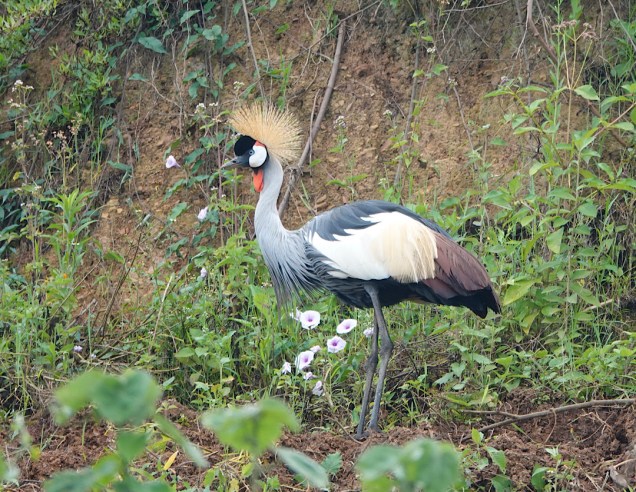
Rabson loves birds, and he pointed out many interesting specimens to us, including these.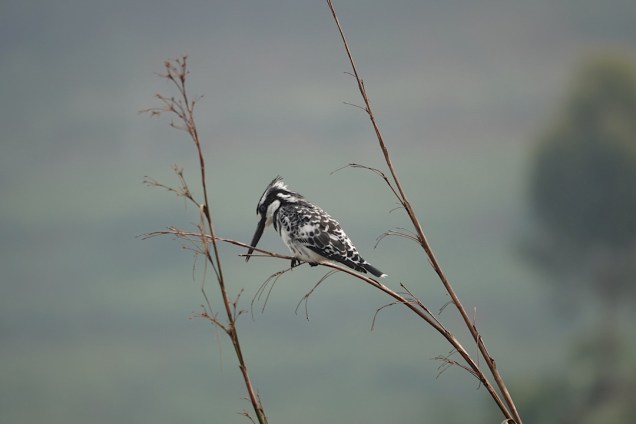
He recounted the history of some of the islands. Then he began talking about something that startled me: namely, how most kids in Uganda reach puberty without knowing anything about menstruation.
When girls suddenly begin to bleed, it shocks and horrifies their classmates. Girls have no access to sanitary pads, so they use torn-up t-shirts or leaves or other crude substitutes for sanitary pads that sometimes trigger infections. But Rabson had met someone who was trying to do something to change that and he wanted to take us to meet her.
Steve and I had seen so many African marketplaces over the past few days, I wasn’t dying to see another, but we held our tongues. We sensed it was important to Rabson to share this.
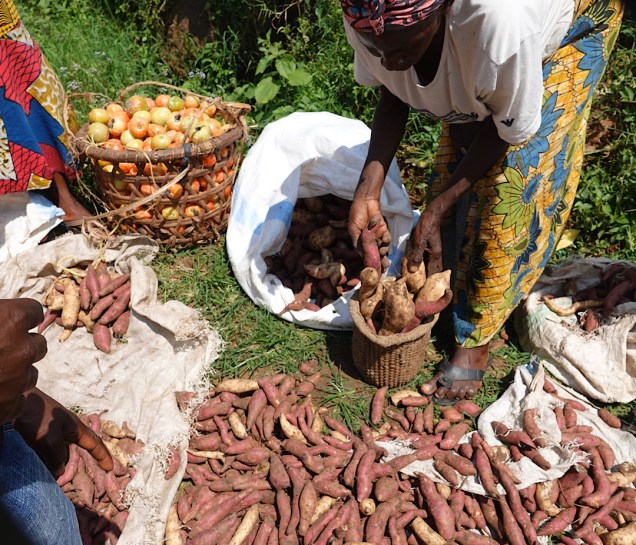
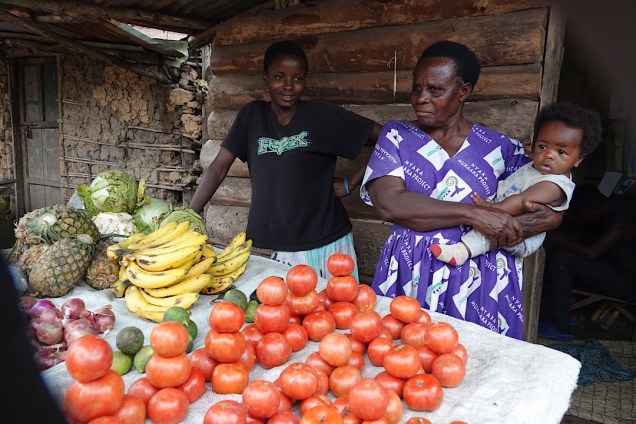
Our boatman pulled up to a dock on the mainland. We disembarked and walked into the jumble of stalls and food sellers that takes shape there every Monday and Friday. We followed Rabson up the dirt path to a compact wooden shack, where a friendly face beamed at us from a window, welcoming us. Rabson pointed out the poster on the front of the building, explaining the project, then his friend Harriet Rwosa stepped out and invited us inside.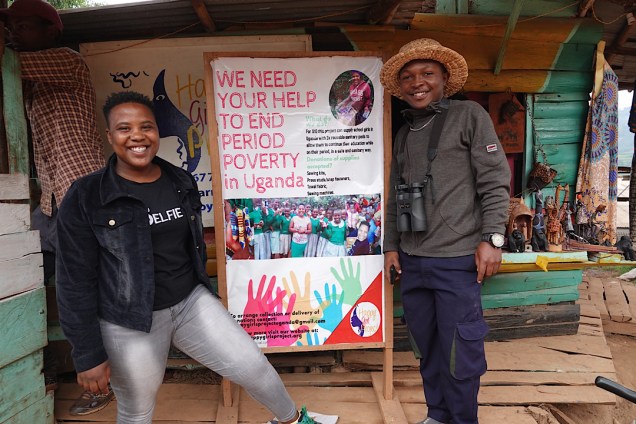
If someone told me Harriet was educated in England, I would have believed them; her English is excellent, an ebullient flood of words. But she’s lived all her life in this village. We learned that she’s 27 and married. But she only went through the local high school. Although she yearned to continue on at a university, her parents lacked the money to send her. Like most girls, in her school years Harriet had experienced menstruation as a curse. Every month it kept her out of class, causing her to to fall behind her male peers, a new experience for her. Time had passed, and somehow she’d gotten the idea to design and market cheap, reusable sanitary pads that would enable girls to continue their education, even while menstruating. About a year and a half ago, she’d made her first pads on a little foot-powered Singer sewing machine, and she had marshaled the funds to create a little craft shop to support the purchase of materials to make more pads. Some were lined with a soft toweling. For others Harriet uses a local fabric that resembles flannel. It costs more, she told us, but it’s also more absorbent.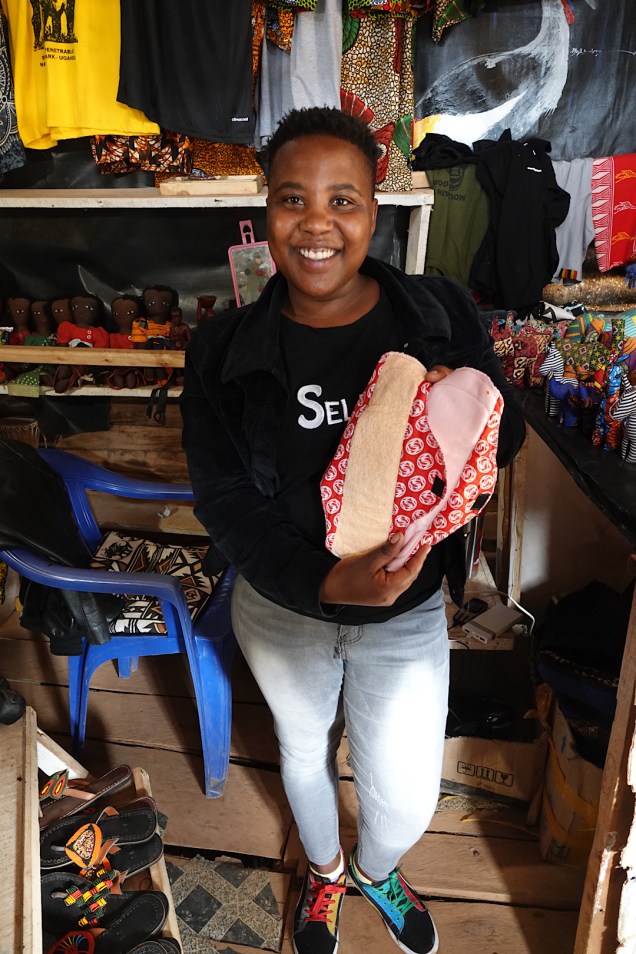
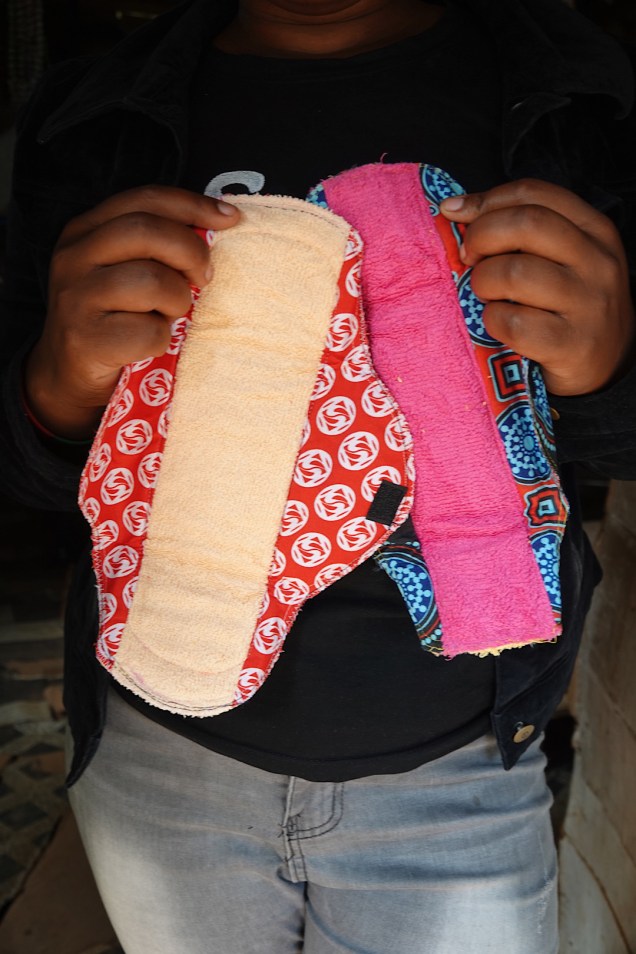
For $10, you can buy 3 pads for a girl. I gave her $20.
As inspiring as Harriet was, I felt equally moved by Rabson, who believes in what Harriet is doing and is trying to help any way he can. As we walked back to the motorboat, he told us he had been bird-watching on one of the bigger islands when he happened to meet Harriet, there to pass out pads at the island high school. She told him about the project, and Rabson immediately understood its importance. One day when he was in the fifth grade of primary school, he had shared a bench with a 13-year-old girl. When she stood up at the end of class, blood stained her clothing and the bench. Today Rabson mimes the reaction of the other kids; their shock at the sight of this frightening blood. They jeered, hooted, cruelly mocked their classmate. She was so mortified and humiliated, she never came back to school. Rabson says not long after this incident, she was married and had a child, but her husband later left her. Her life was ruined for lack of a sanitary pad, something that Rabson still clearly finds appalling today.
He disapproves of giving out free condoms, without also handing out pads to girls. Having sex is something you choose, he declared. But you don’t have a choice about menstruating.
This is true. Hearing Ugandan 20-somethings testify to it, seeing some moved to action by it, inspired me and touched my heart. It made me wish I could return to make a documentary about passionate, energetic Harriet and the lives she’s already changing.
I almost certainly won’t have a chance to do that; it’s not my talent. But I’m grateful to be able to write about her here. I’m thrilled to be spending the night in a really nice hotel in central Kigali, overlooking the Hotel Mille Collines (the inspiration for the cinematic Hotel Rwanda.) I’m happy to have a good fast internet connection to publish this post. In just a few hours, we’ll take that flight to the Congo, where it’s unlikely we’ll have much in the way of WiFi or phone service. But I plan to write every day about our experience in the bonobo sanctuary, and I’ll post the results as soon as possible.
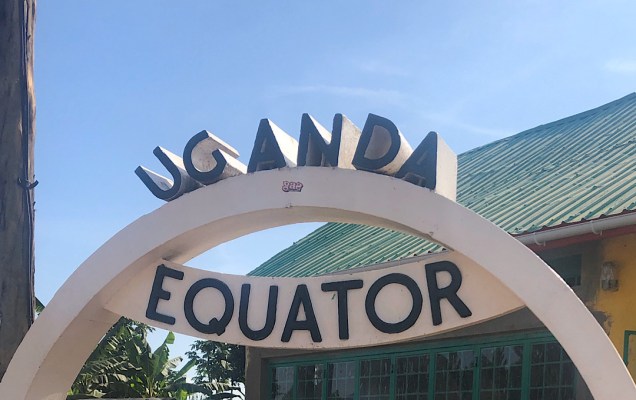 When you drive west from Kampala along the Masaka Road, heading in the general direction of Rwanda and the Congo, about two hours outside the Ugandan capital you cross the equator. I’ve done this twice, and both times it’s been a jolly experience.
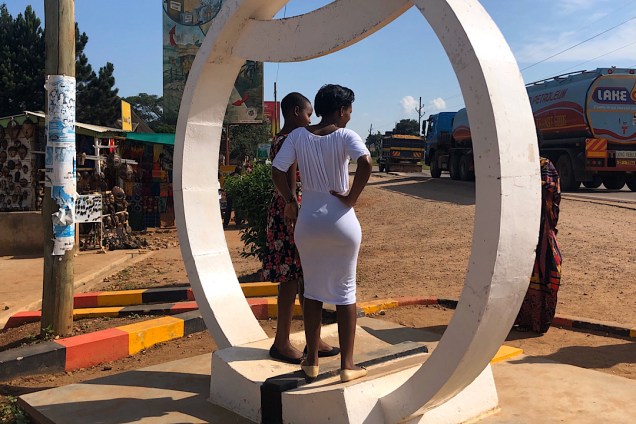
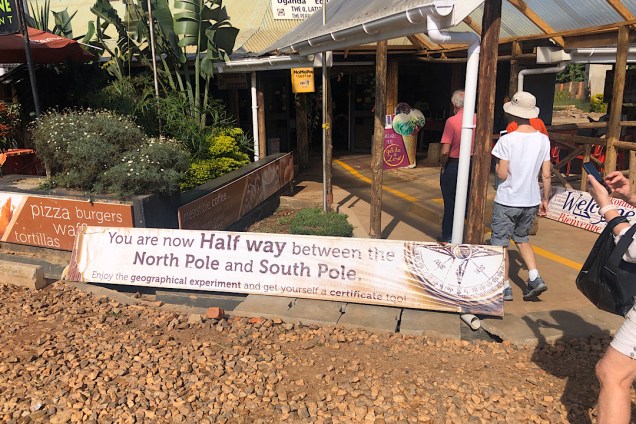 The Ugandans have erected circular structures on both sides of the highway, to mark the invisible line that divides the northern hemisphere from the southern one. Both Africans and visitors from other continents get a kick out of standing with one foot on each side of the line. Folks queue up to get their pictures taken.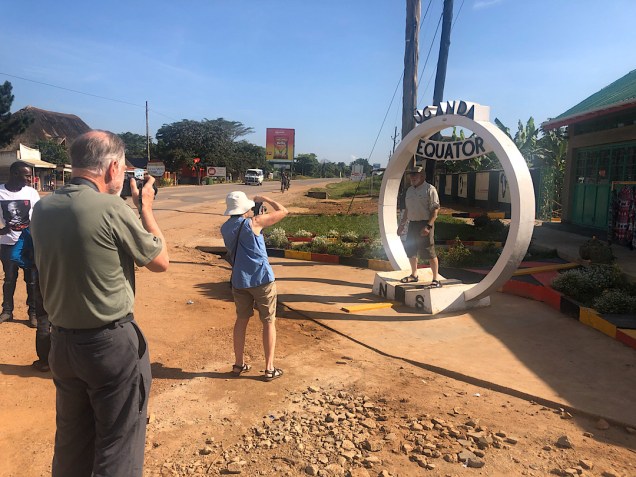
 You can buy coffee or a snack or a host of souvenirs.
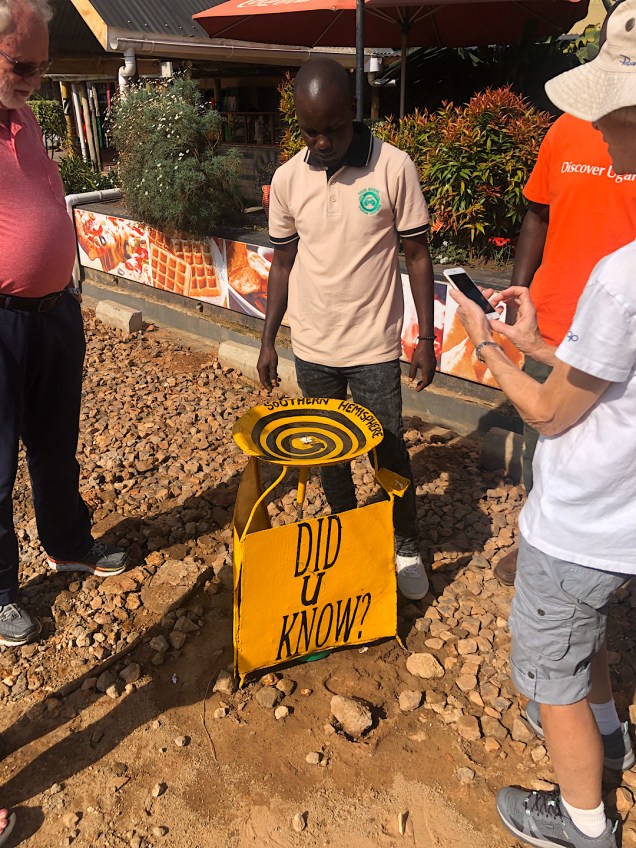
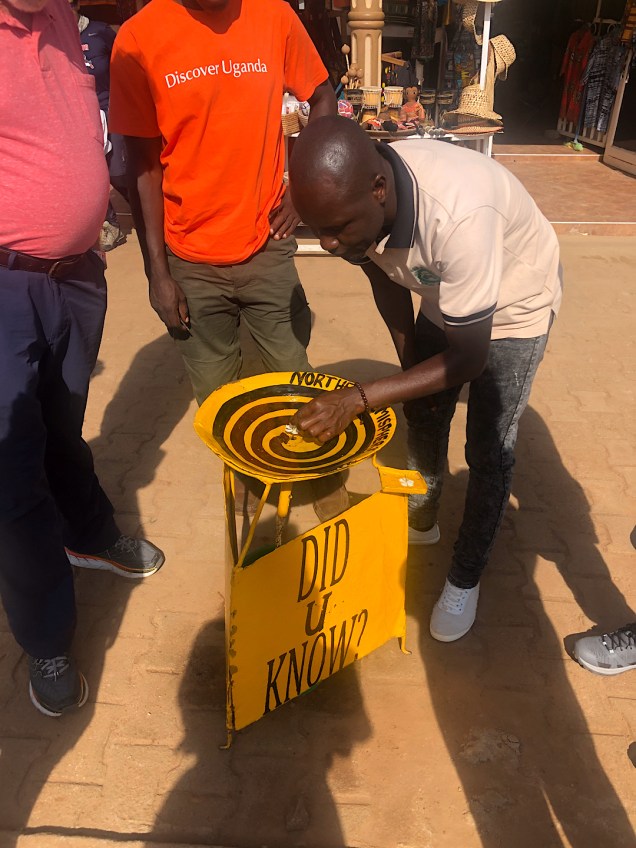 And whether it’s true of not, you can get a certificate attesting you have witnessed it in person.
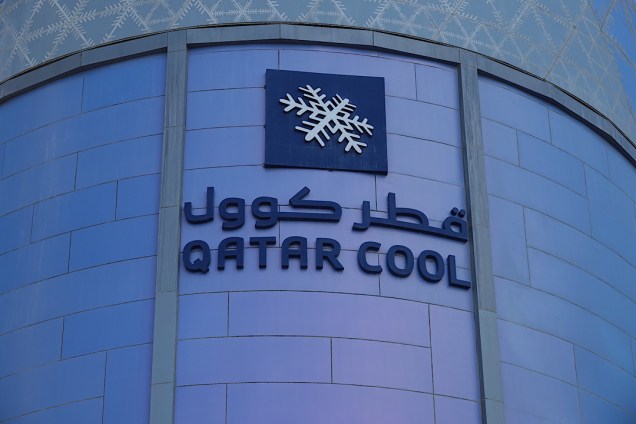 Sad as we were to lose half a day of the time we’d planned to spend in Doha (capital of the little Arabian kingdom of Qatar), Steve and I still managed to cram a lot into the remaining day and a half. I formed some strong opinions and was most captivated by three things:
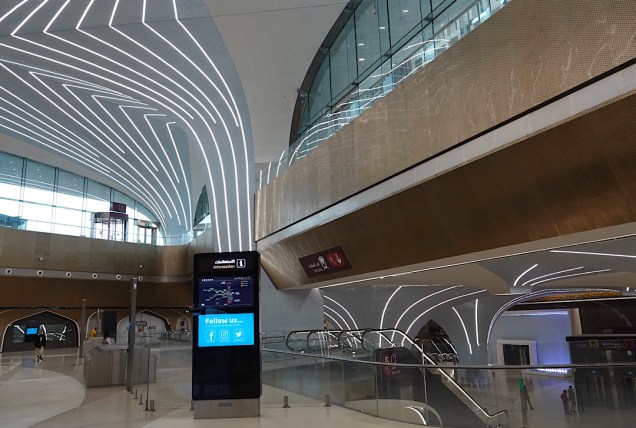 A brand-new business district (Msheireb) appears to be built but is (mostly) still not yet occupied. The slightly older business district known as West Bay rivals Shanghai in the flashiness of its skyline.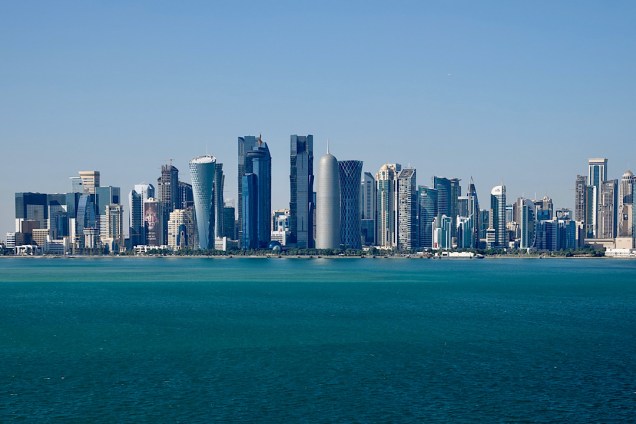
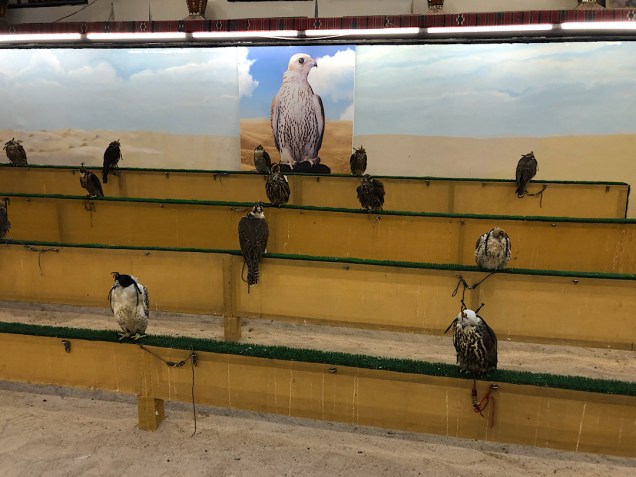
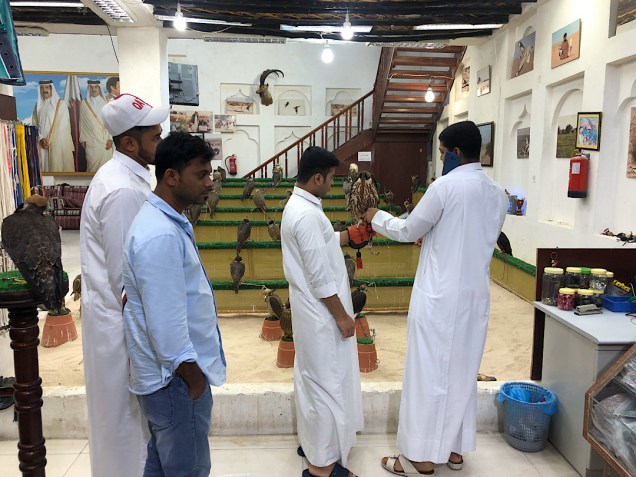
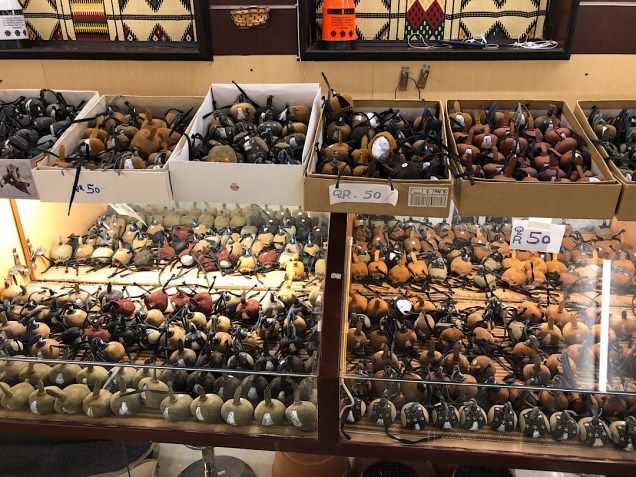
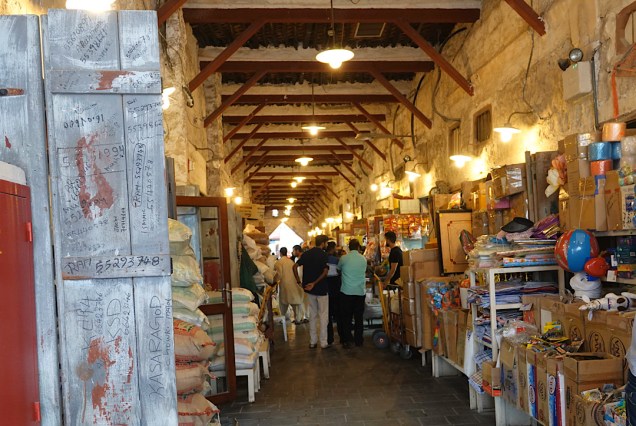 The Qatari vendors don’t ever hustle or hassle visitors. It was pleasant, if a trifle bland. What seemed quite extraordinary, however, was the nearby falcon souq. Falcons are an ancient, still venerated, part of Arab cultures. But we’ve never seen such a concentration of shops selling nothing but falcons and falconry gear. Qataris train the raptors to hunt (for sport), and the shopping we observed looked very serious. One merchant told us the cheapest birds go for 2000 reals (about $550), while the biggest and most gorgeous ones fetch 200,000 to 300,000 ($55,000 to $83,000).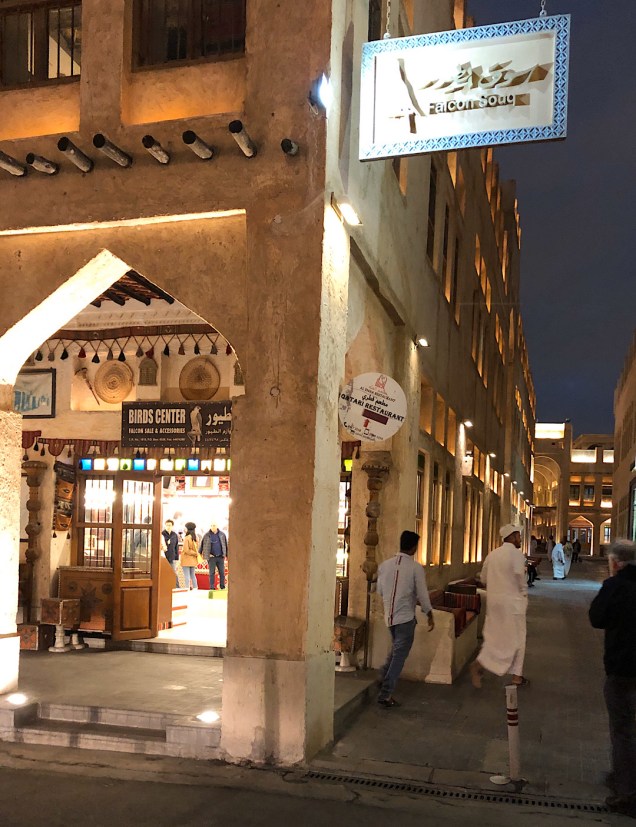
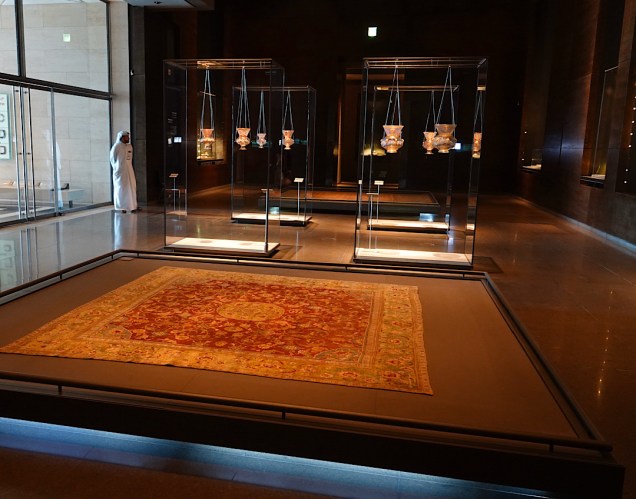
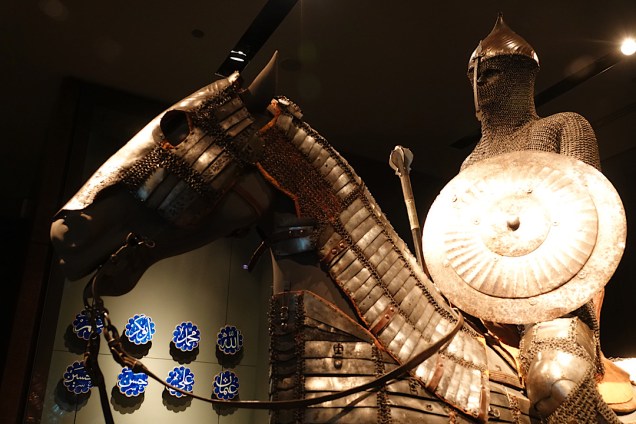 …armor to ceramics, and much more. The building, exquisite on its own, interplays beautifully with the striking site.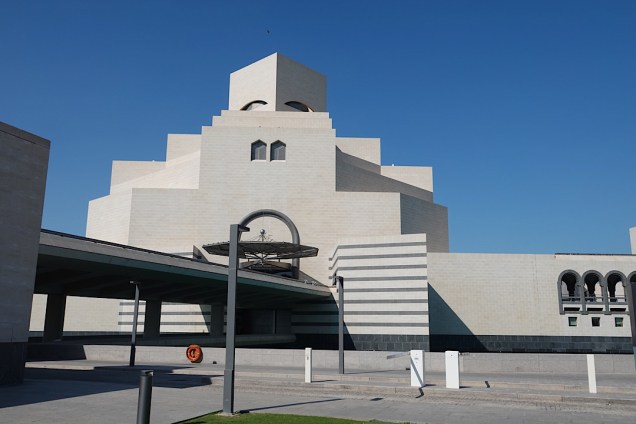
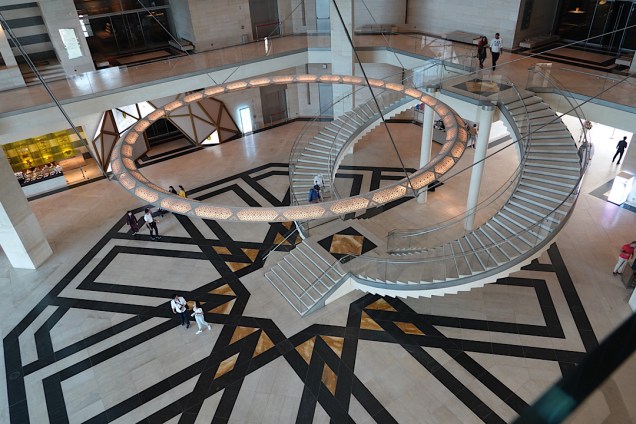
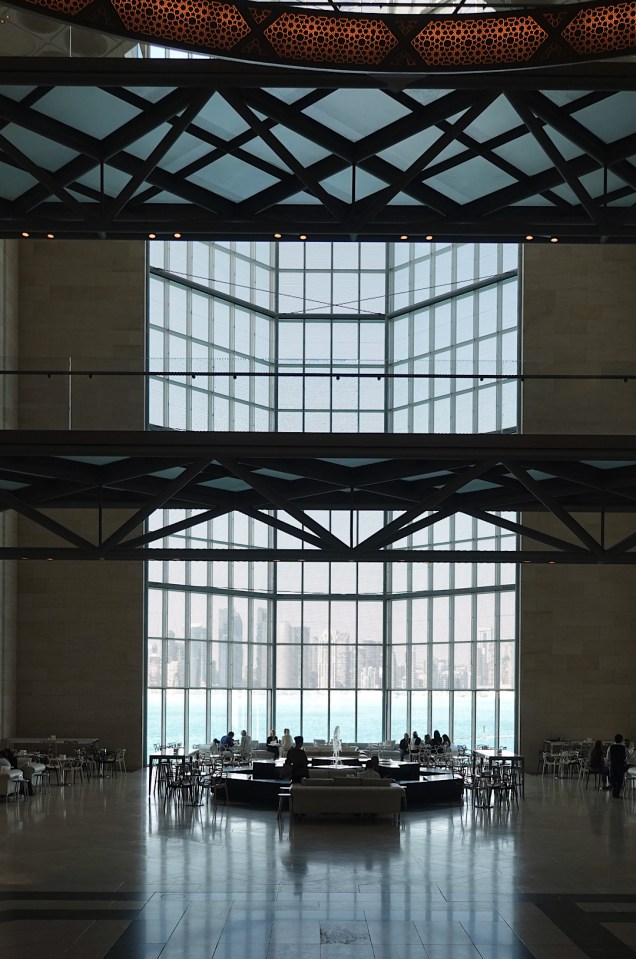
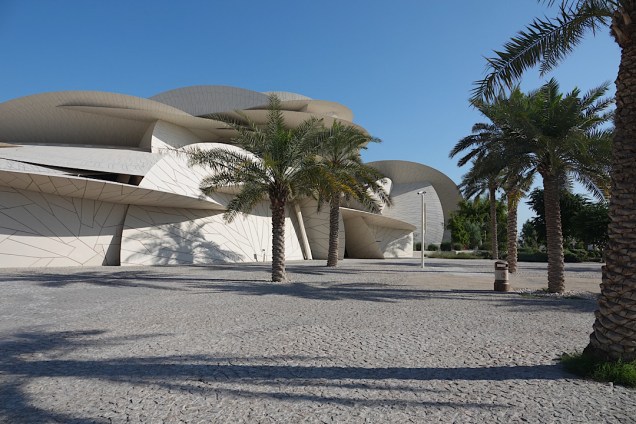 We walked in hoping to erase some of our almost-complete ignorance of the country, its history, and recent development. In less than three hours, we succeeded. Or more accurately, the museum’s designers did, through story-telling tools combined in ways we’ve never experienced anywhere else. No gallery is a simple cube. Rather, walls meet obliquely, creating complex spaces, and most of those walls are used as giant projection screens, filled with mini-movies that, together with music and other sound effects, complement the objects and interactive displays.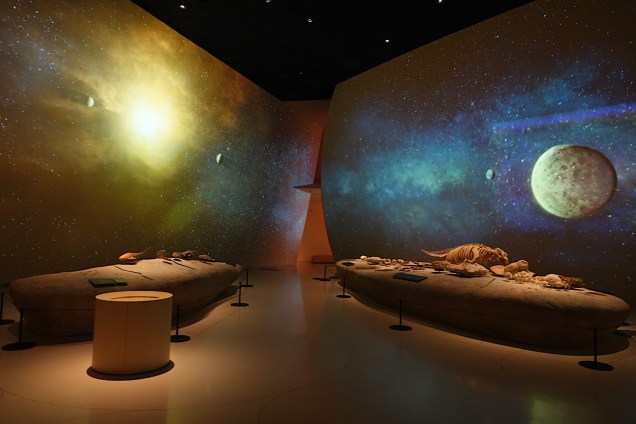
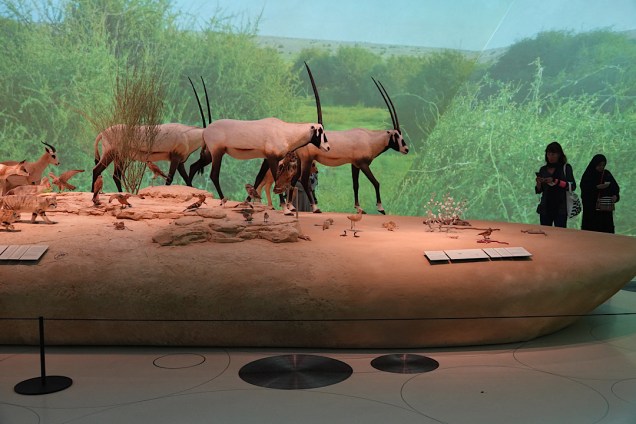
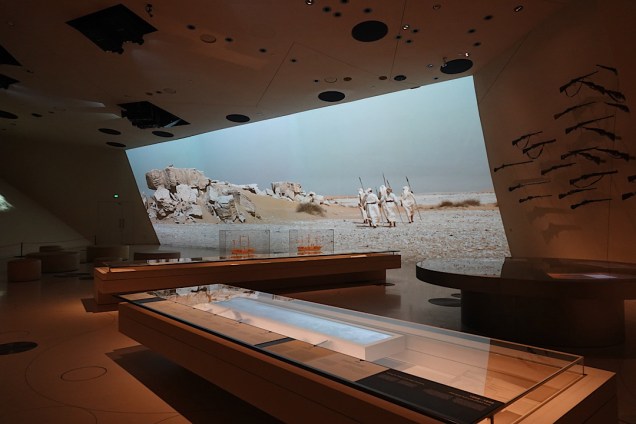 You start out a million years ago, and stroll right up to the present (including most of a gallery devoted to the onerous embargo placed in 2017 on Qatar by its Arab neighbors, harsh treatment that continues today. A clear understanding of what underlies that brouhaha is one of the few things we failed to come away with.)
 …and stroll up the wide boulevard that runs alongside the metro station. Cars whizzed by, but we saw almost no other pedestrians. After walking just a few blocks, we were about to turn around, when a wacky architectural detail caught my eye. I captured it with my telephoto lens, then wheeled to return to the metro station. At that point, a youngish man dressed in the long white gown and headgear that locals wear stepped up to us and asked if we had IDs. “Who are you?” we queried. “Police,” he replied.
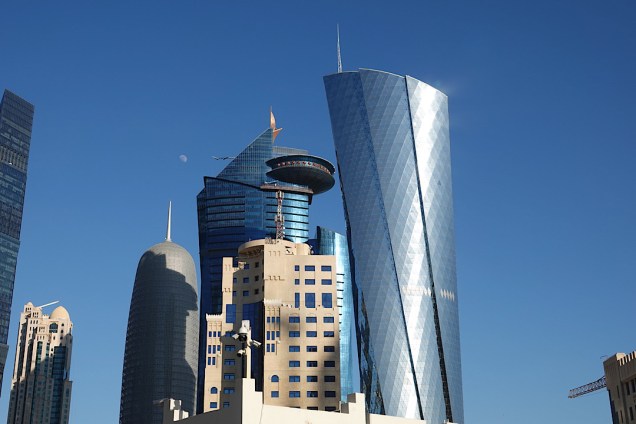 …and this: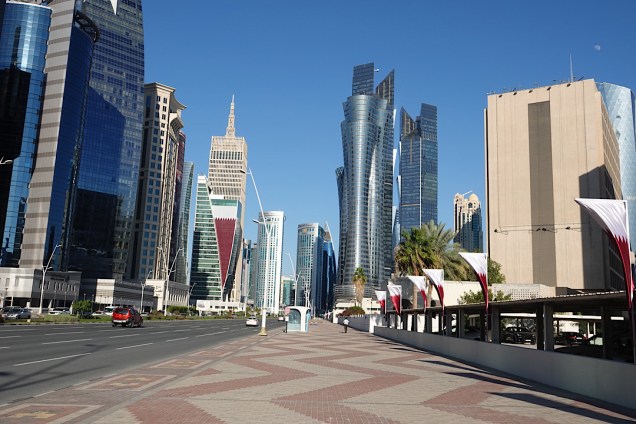
 But how threatening should that be?)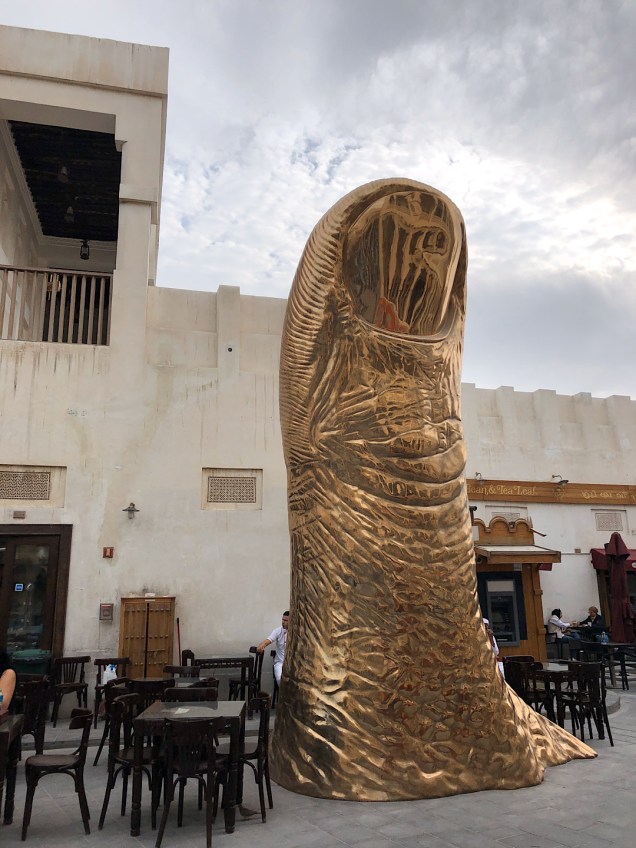
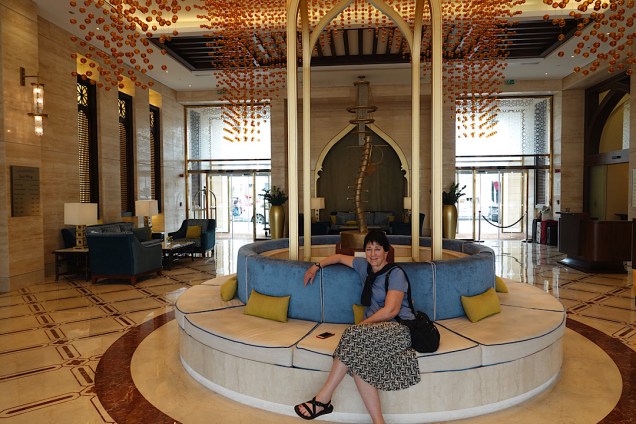
 We had scored inexpensive tickets traveling on Alaska Airlines from San Diego to Boston, and then continuing on Qatar Airways to Doha, the capital of Qatar. These tickets would enable us to stay in Doha (a place we’ve never visited before) for three nights before continuing on to Entebbe in Uganda.
 More than eleven and a half hours after we’d entered the airport, our 747 lifted off from the tarmac.
 While flying home Saturday, I reflected on our four weeks in New Zealand. Kiwis kept asking us along the way, “What have you enjoyed most?” And I couldn’t tell them. We enjoyed so many things. You might think it’s a no-brainer; that everyone should go to New Zealand, even you. But the truth is more complicated, I think.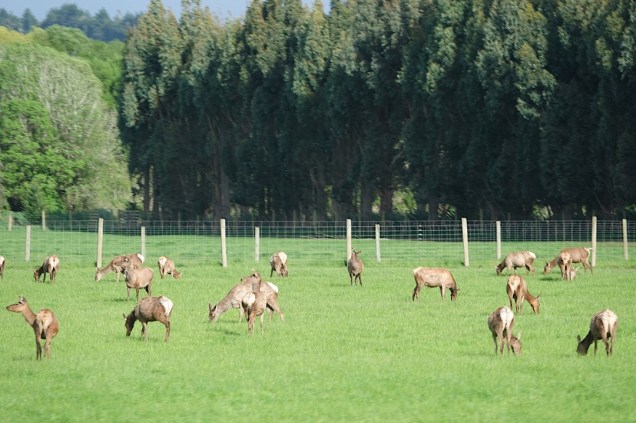
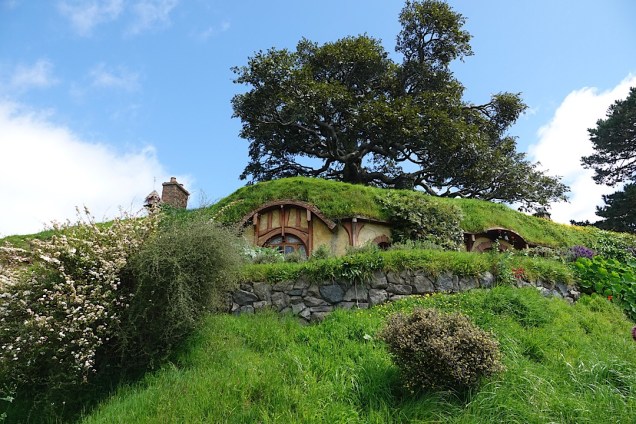 We drove through stretches of the South Island interior that felt like the American Southwest. We hiked through tropical rainforests that filled me with a sense of rapture. We floated through those caves illuminated only with incandescent larvae. We walked on beaches devoid of people but filled with sensuous driftwood.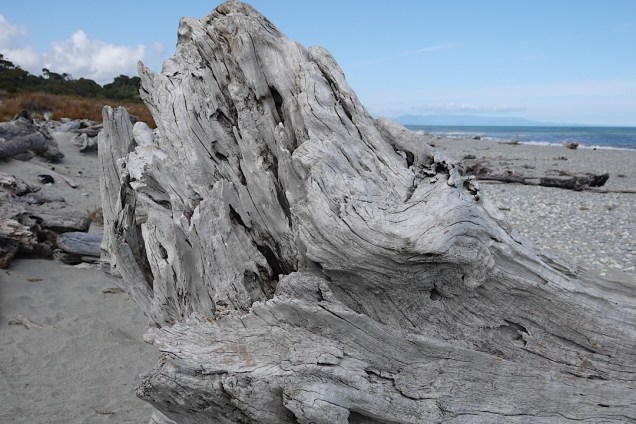
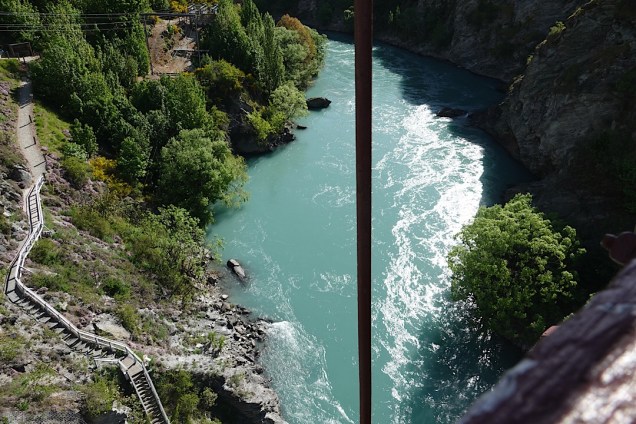
 …watching a dad ignore his toddler daughter making her way up the climbing wall at the fabulous playground in Christchurch…
 … or trekking with the gang on the Routeburn in the storm. It made us suspect New Zealanders relish the wild adventure options themselves.
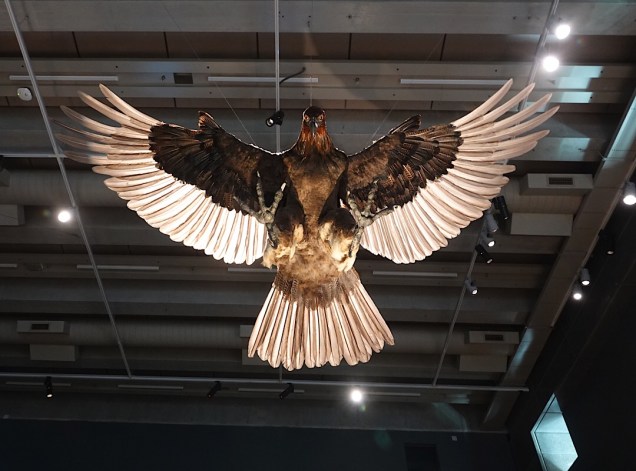 The Maoris brought invasive dogs and rats, and other animal (and botanical) invaders followed. Battles between the natives and the alien predators are being fought intensely today.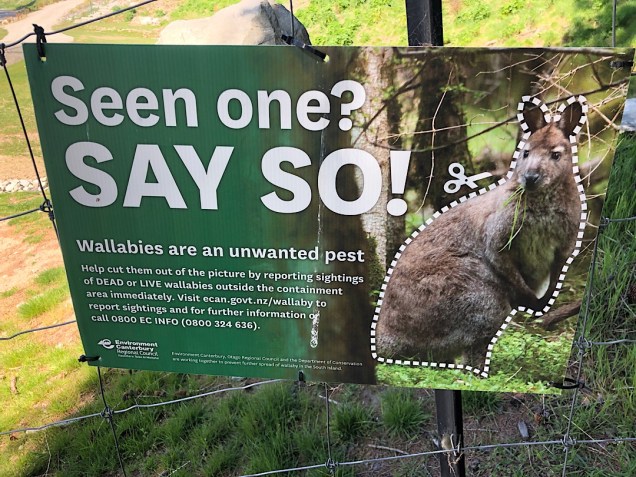

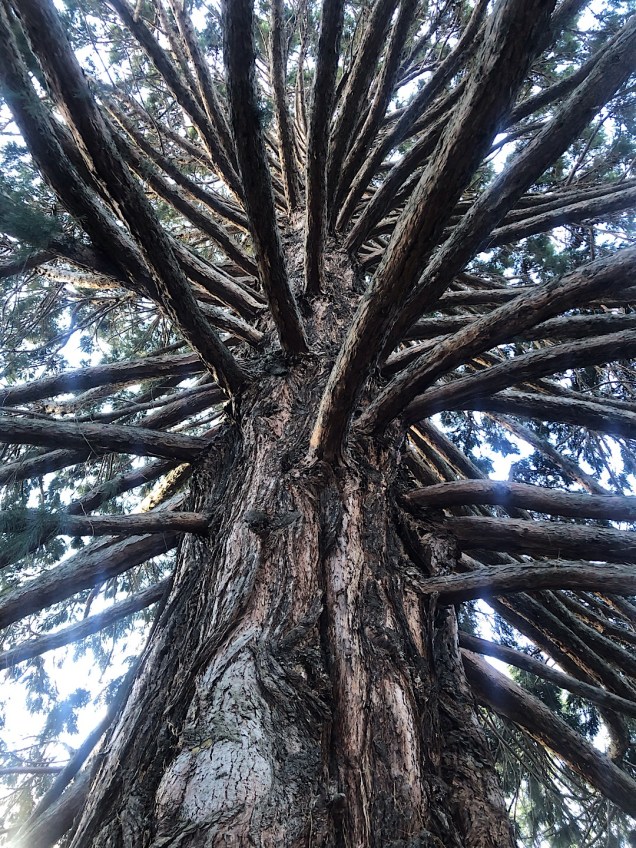
 and magnificent trees.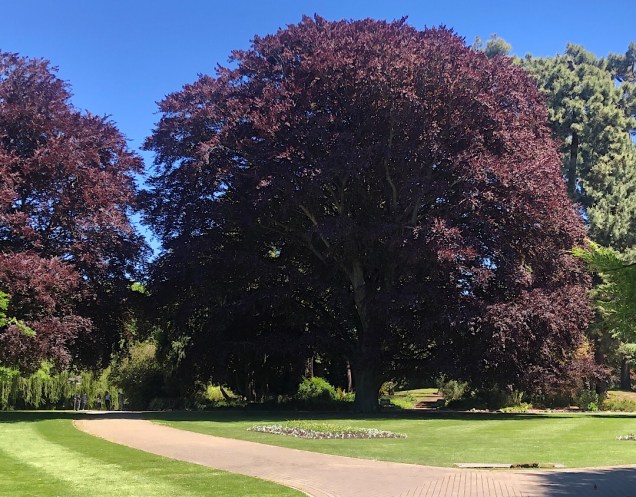

 I knew two bad earthquakes hit Christchurch in 2010 and 2011, but they didn’t become real for me until the night Steve and I were eating dinner in Kaikoura. Looking out the window next to our table, Steve exclaimed, “Is that a bobcat?” The animal he was staring at seemed too small to be that, but it lacked a tail. “He lost it in the earthquake,” our waitress (the wife of the owner) told us. Her house in Christchurch had also collapsed, she added, and she and her husband had lost the five restaurants they owned. They’d recently moved to Kaikoura, trying to start over. This lady was a hearty, jokey sort of person, but the way her face subtly tightened when she talked of the disaster betrayed how overwhelming it had been. Watching her face, I struggled to keep mine composed.
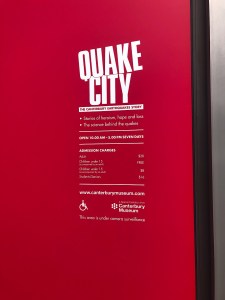 One of the things that shocked me most was learning that the two earthquakes which all but destroyed the central city were far from the worst that’s expected for this region. The huge fault, the one capable of moving with a force of more than magnitude 8, runs up the east side of the southern Alps, just an hour or two outside Christchurch.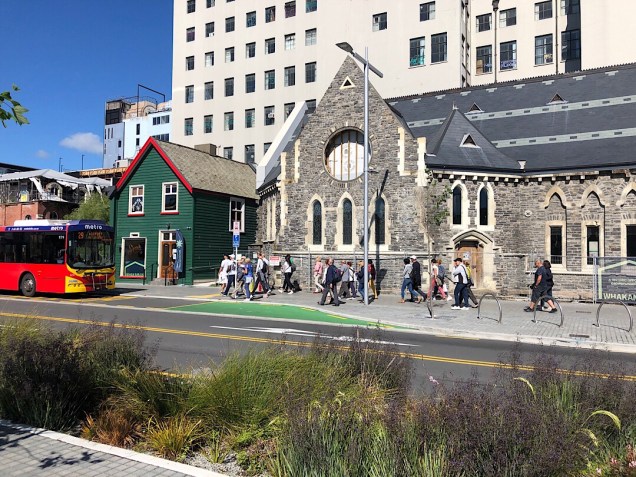
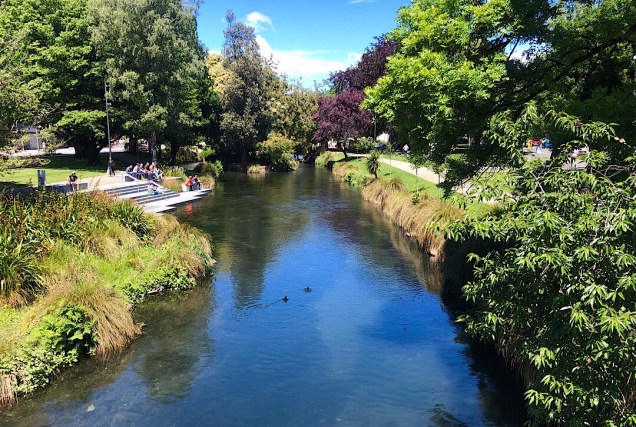
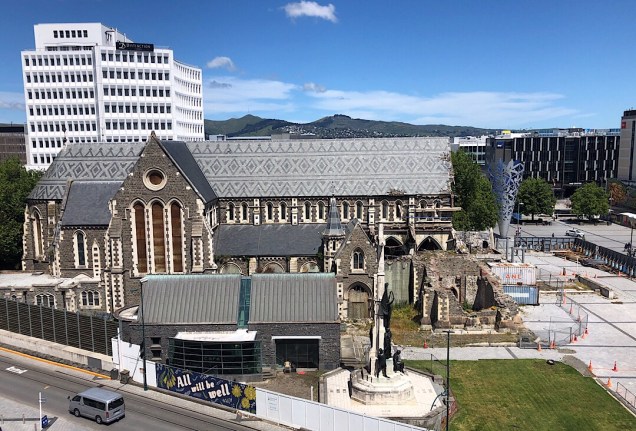 But there are urban centers in America’s rust belt that look worse. And few cities anywhere have mounted the kind of makeover that’s underway here.

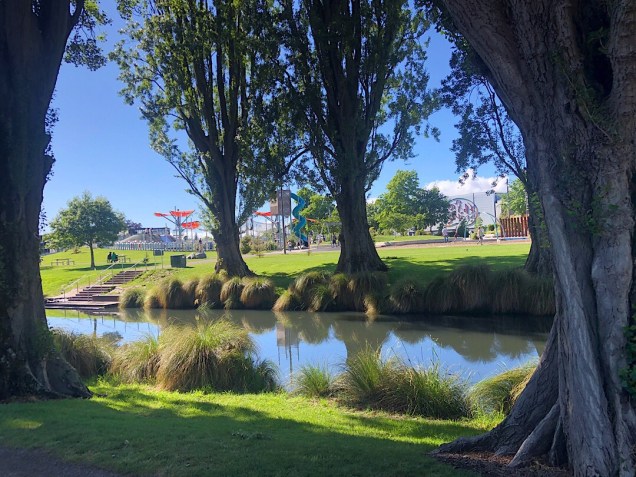
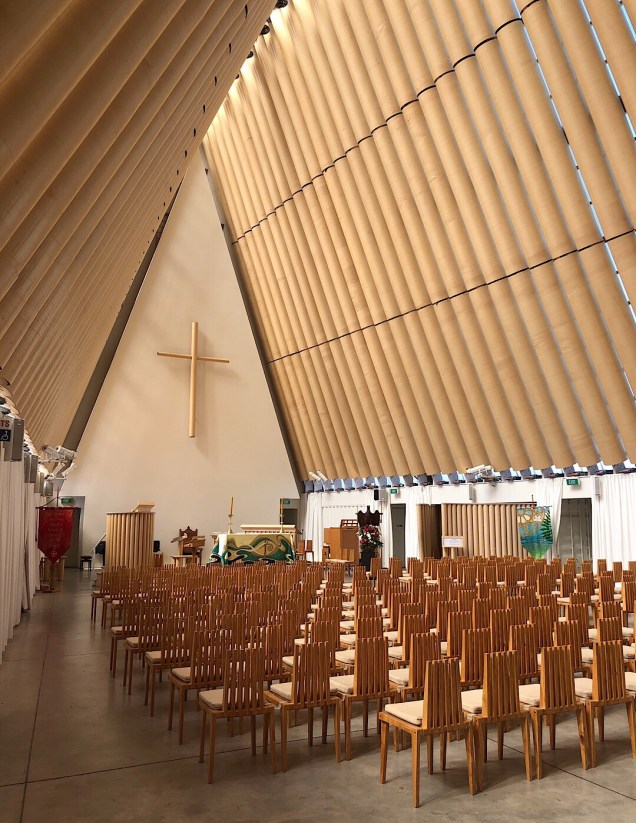
 There’s much more to come, including rebuilding the cathedral, finishing the zoomy convention center that’s supposed to start operating next year…
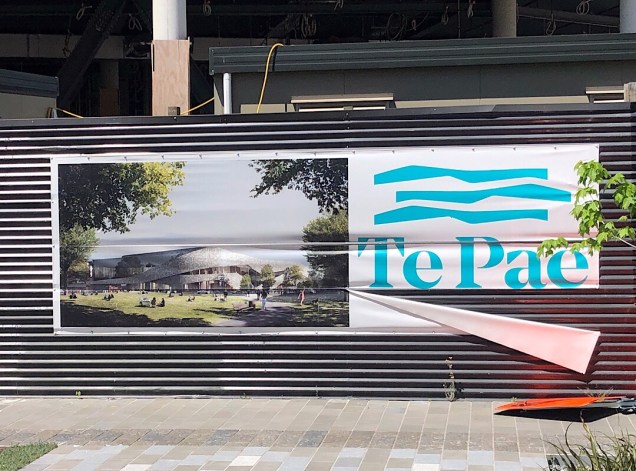 …and building a deluxe sports complex…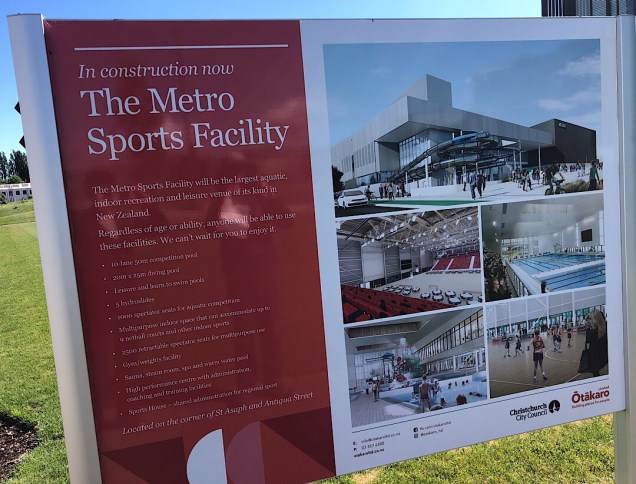

 Artists have been commissioned to paint murals on the sides of newly revealed building sides…
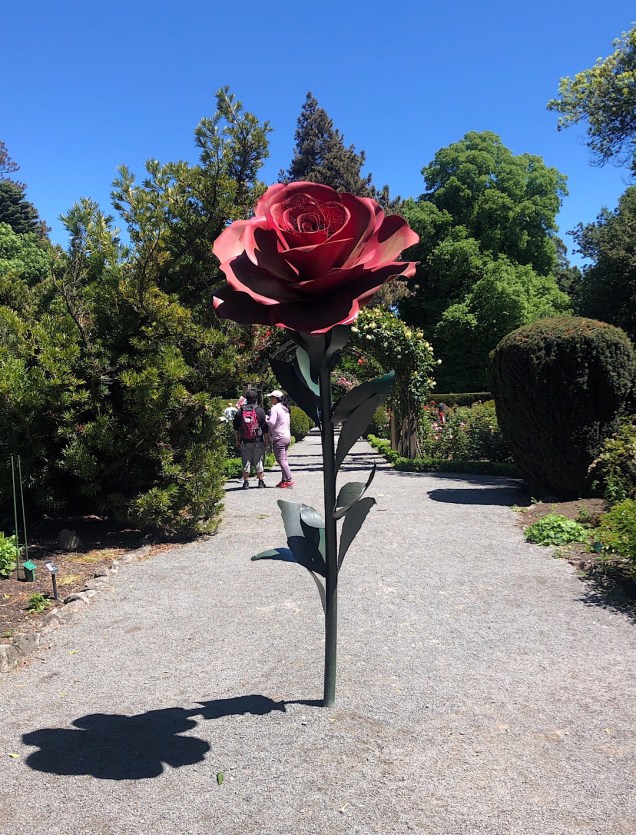
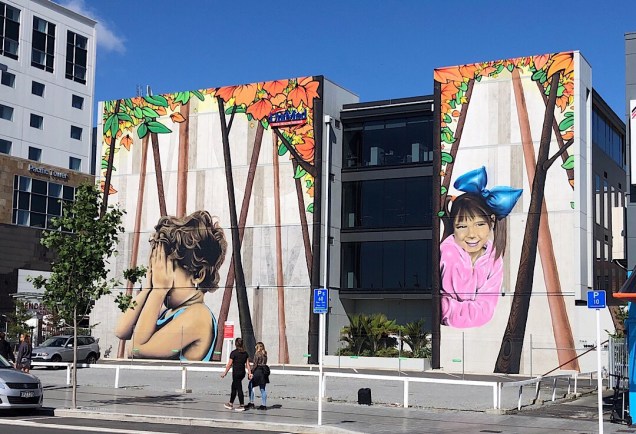 … and create other works to fill the civic gaps.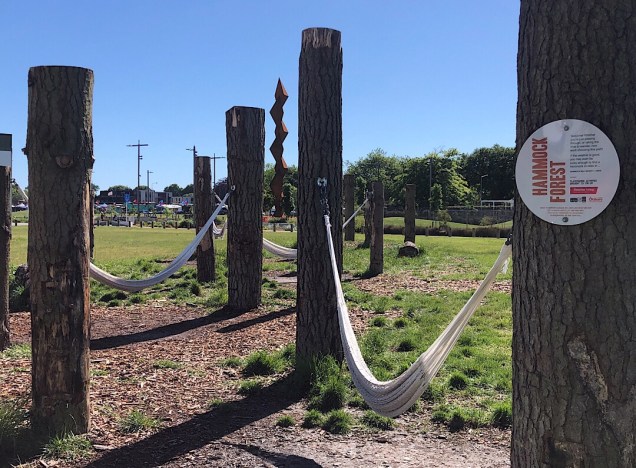
 Around noon Wednesday, we returned Car #3 and added up the total mileage covered with our three rentals. Steve safely piloted us a total of 2,124 miles. He says it felt like twice that long. The extra concentration required by the left-side driving on narrow roads never ceased to be tiring, although after three-plus weeks, it was far less foreign than when we started. We never regretted making this as much of a road trip as we did; the freedom it gave us was delicious. But we also were so happy we were able to shorten the driving portion, just a bit.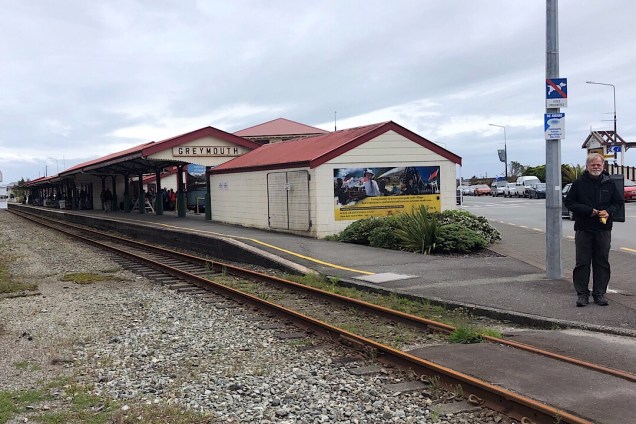
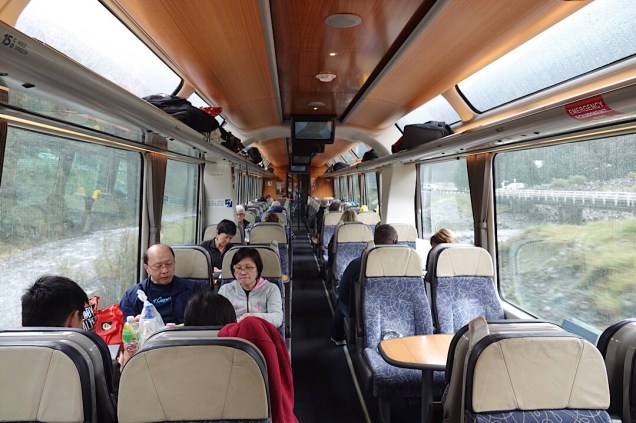 optional pre-recorded guiding commentary, an open-air viewing car…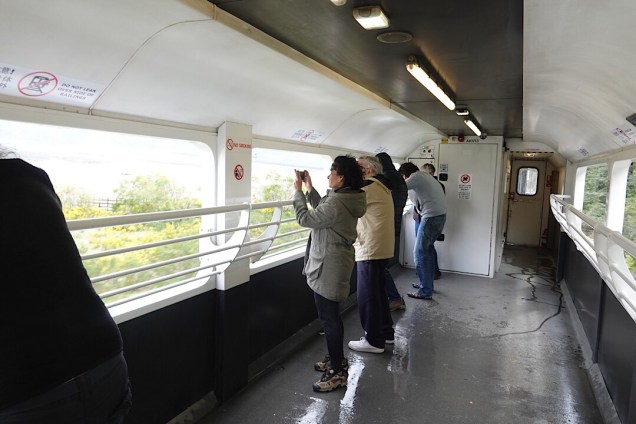
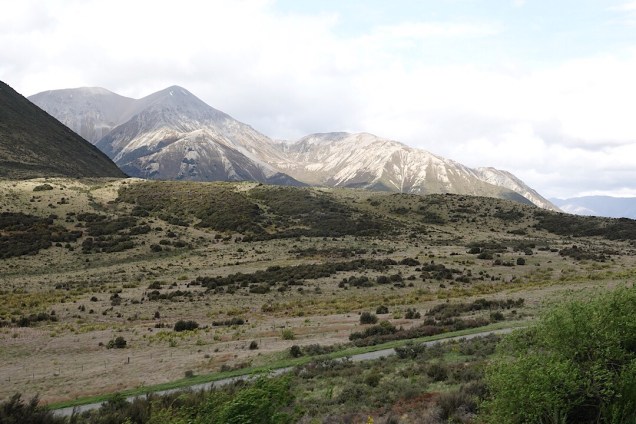
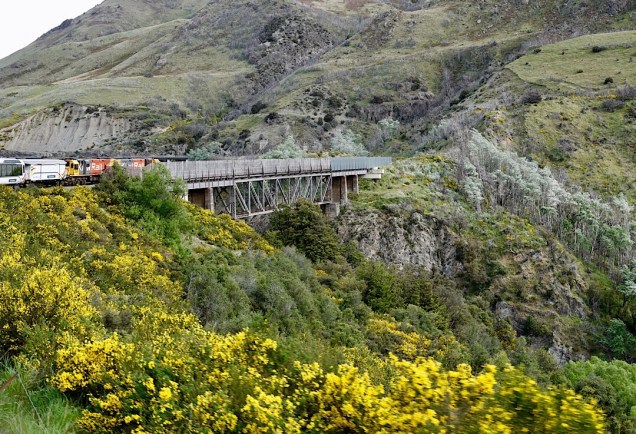
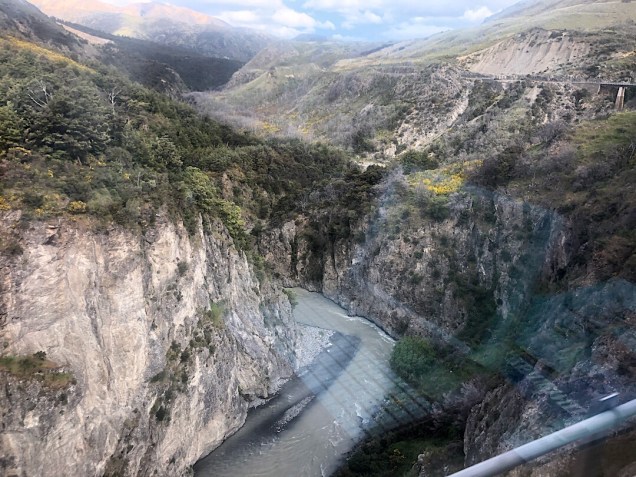
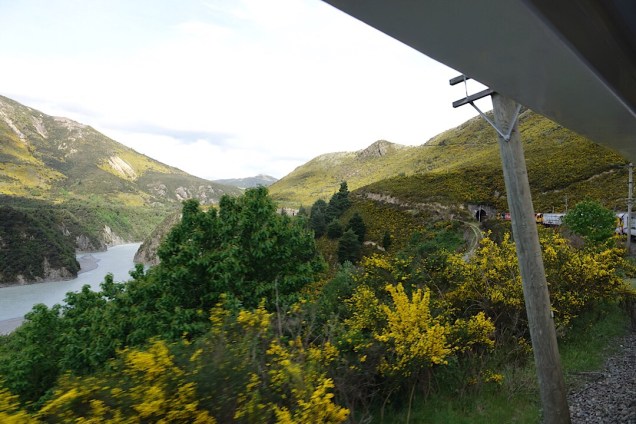
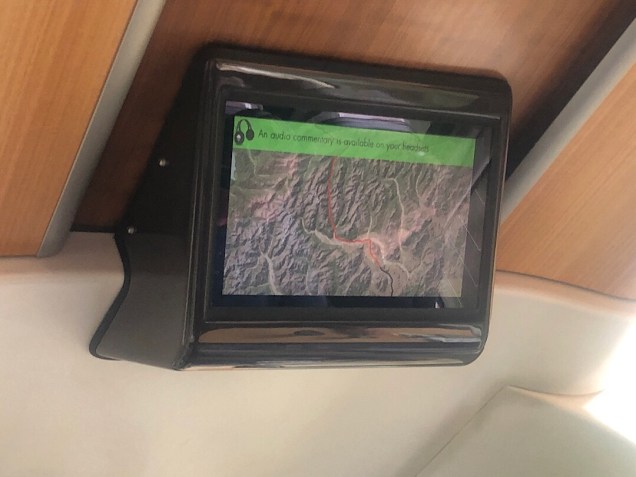 But who would choose to look up at them with scenes like this outside the window?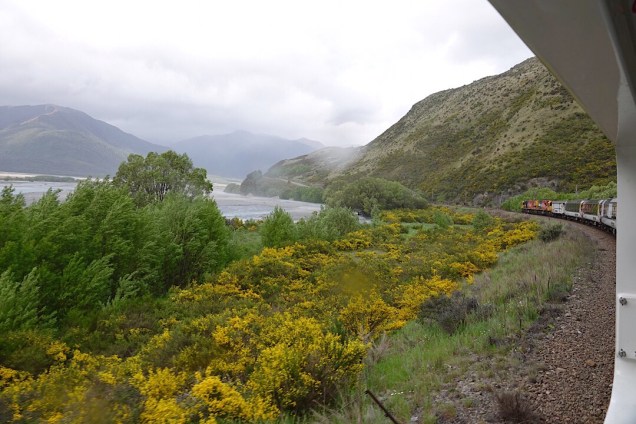

 At home and abroad