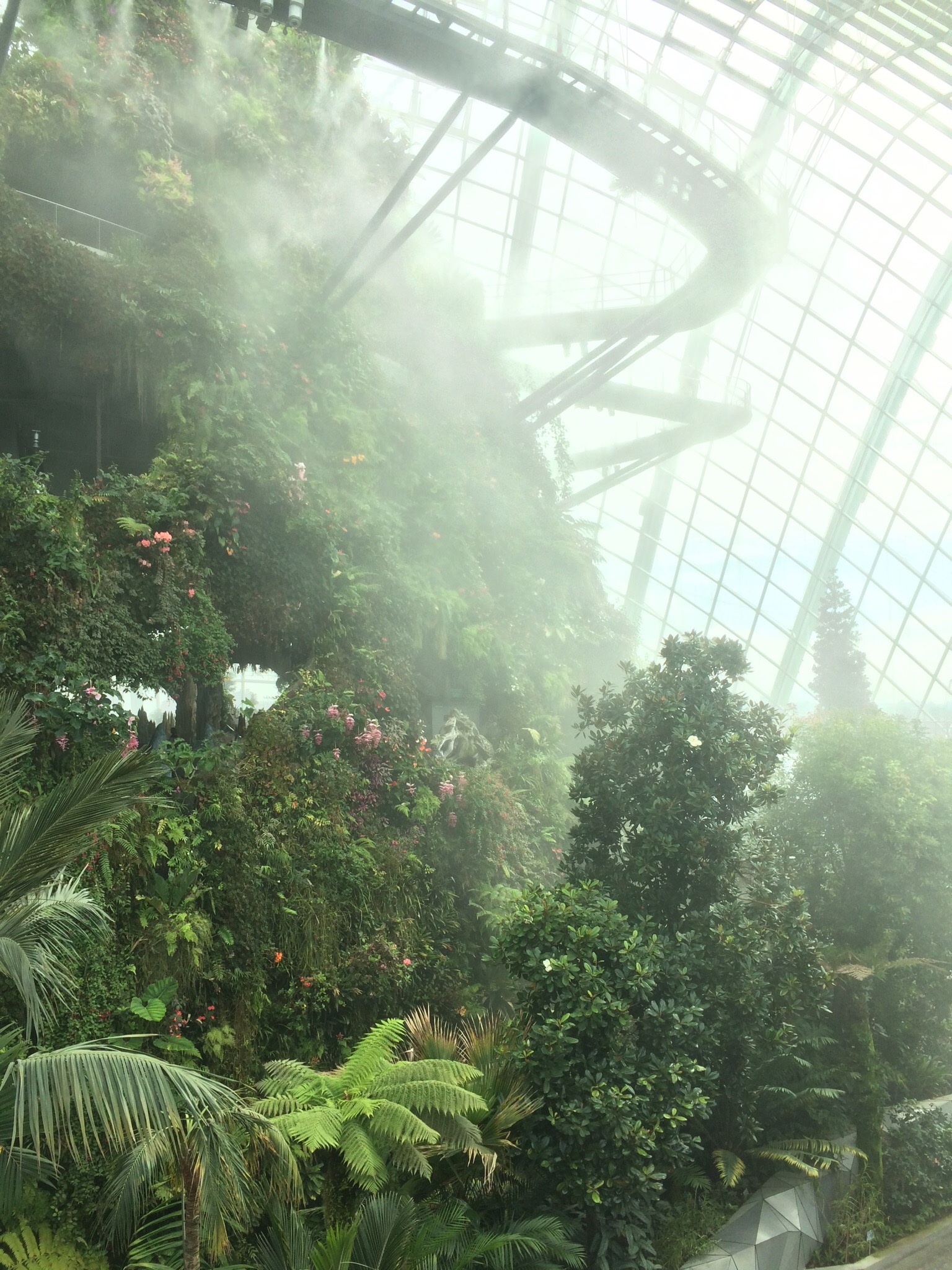
For our last day in Singapore, we took a closer look at a couple of the city’s most dumbfounding landmarks. One, weirdly, is a public park, the Gardens by the Bay, built in 2012 at a cost of more than a billion Singapore dollars, and now one of the city’s premier tourist draws. It’s free to enter much of it, but you have to pay to enter the two enormous “biodomes.” One of them, the Cloud Forest, was the most fantastic plant-exposition-space I’ve ever seen.
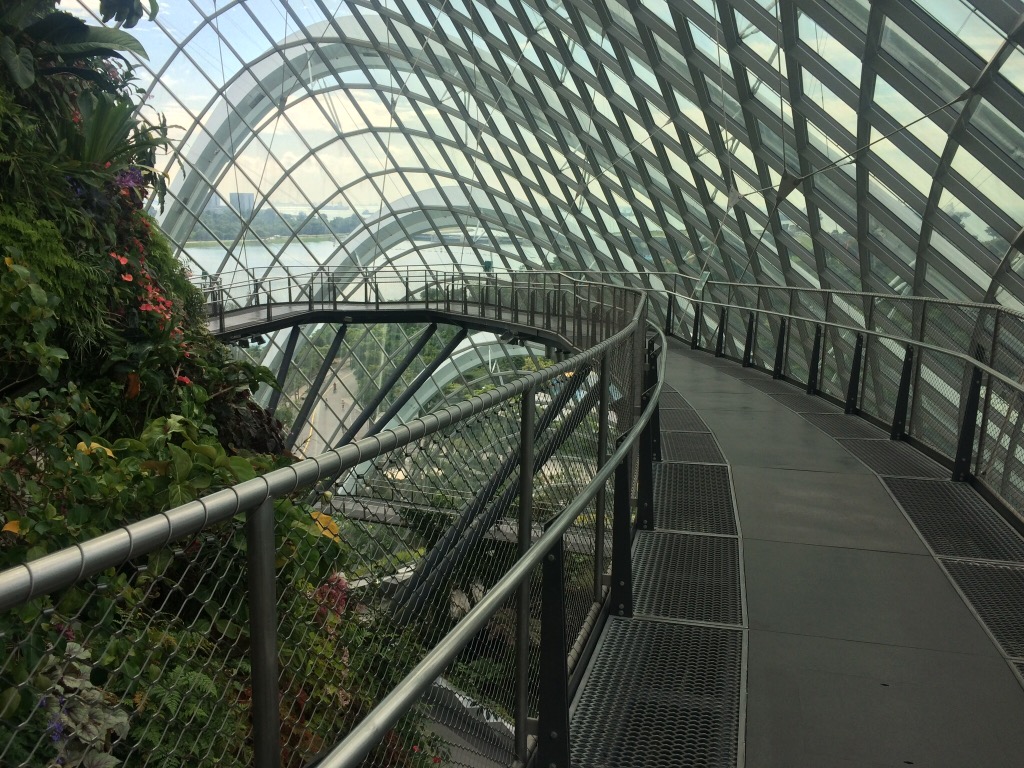
We got there early to beat the crowds and took the elevator up to the top of the 10-story-tall artificial mountain that’s at the dome’s heart. It’s been planted with many of the rare and beautiful plants that grow at high altitudes in the tropics. From the top, you stroll down walkways that simultaneously bring you close to the exquisite flora while taking in dizzying views of Singapore’s science-fictional skyline.
I was almost rubbing my eyes like a cartoon character at all the beauty — botanical, architectural, sculptural. After we staggered out, all but dazed by it, we moved on to visit the adjoining Flower Dome, which proved to be well done but paled in comparison to the wonders of the Cloud Forest and seemed much more mundane (probably because it showcases plants from the world’s drier Mediterranean regions — like our home.)
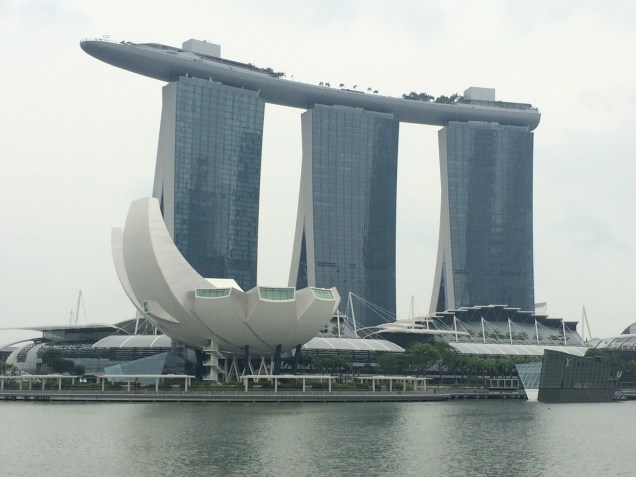
We ate lunch at a hawker center within the park then did a lightning tour of Marina Bay Sands, the eye-popping hotel and casino that adjoins the urban gardens. It’s very Vegas (perhaps in part because it’s owned by Nevada gaming magnate Sheldon Adelson).
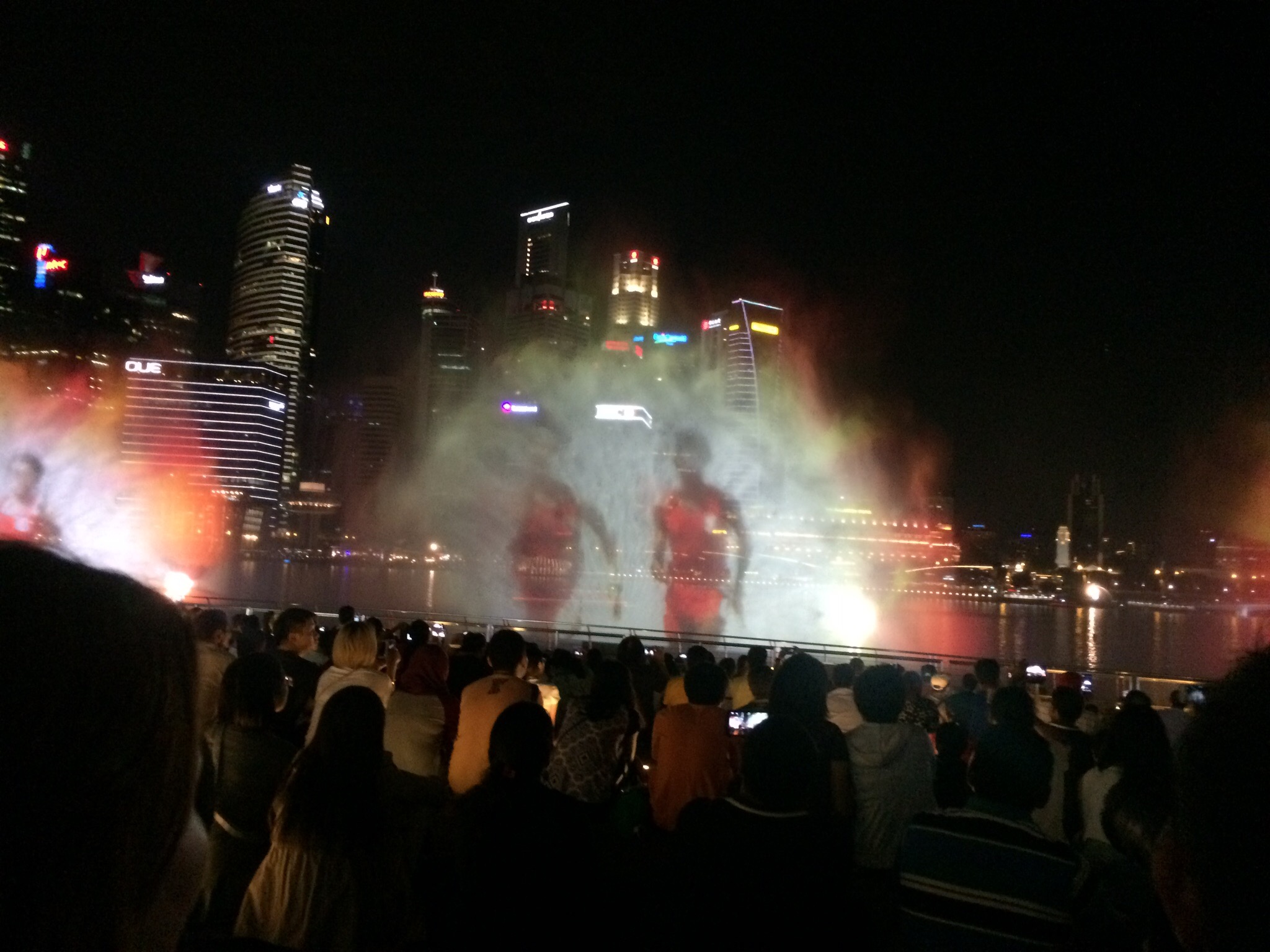
But we weren’t sneering at it; that’s hard to do. In fact, after returning to our hotel to pack and eating our final dinner (in Chinatown), we returned to the enormous plaza between the Sands and the reservoir (aka Marina Bay). We’d heard that a free, superb sound and light show was presented nightly at 8. When we arrived shortly before then, hundreds of people had gathered in anticipation of it.
I wondered: what do you do to impress a 21st-century horde? I found out that what works pretty well is to puff a wall of fog at several spots along the waterfront, with the glittery Singaporean nightscape behind it. Then with rousing music surrounding the crowd, you project on that ephemeral misty “screen” primal images of human happiness: young lovers kissing, parents gazing rapturously at their babies, children romping in the surf, beaming elders. If incoherent, it also somehow felt magical.
We didn’t linger, but rather, as soon as the mist dissipated, Steve and I raced through the passageways back to the Gardens by the Bay, to ascend to the top of one of its “supertrees.”
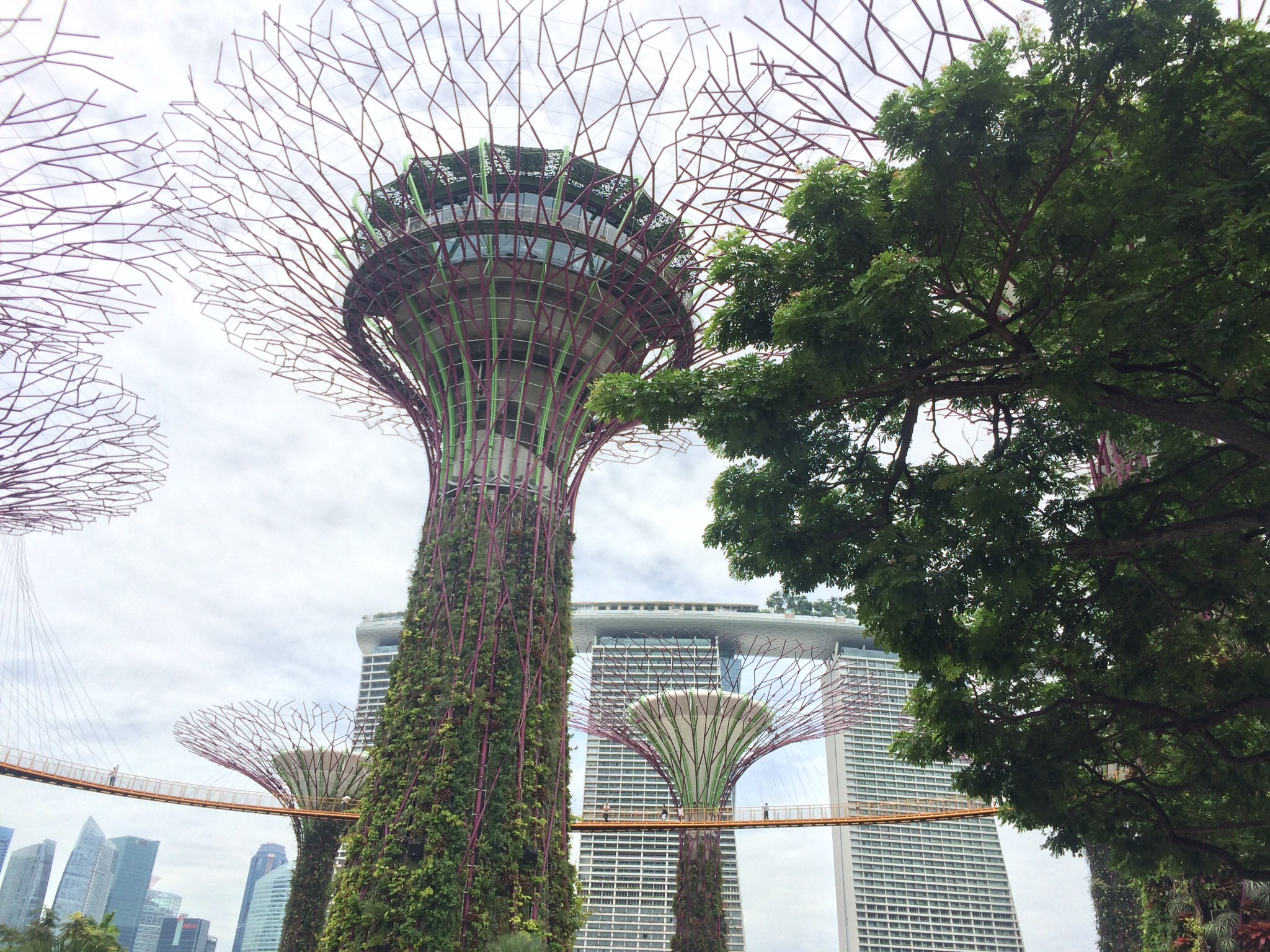
Here’s what the supertrees look like in the daytime, with the Marina Bay Sands in the background. At night they shine.
On the roof, we sipped wine and gazed some more at the incomparable skyline, until a few minutes before 8:45, when we descended to take in the free spectacle staged nightly in the supertree plaza. Music began to pulse, and the trees sprang to lighted life — changing color and all but dancing to the sound track, which consisted exclusively of songs from late 20th-century American and British musicals: Chicago, Evita, Les Miserables, Fiddler on the Roof, and more. This was both oddly beautiful and simply odd, and once again I felt ecstatic to be a part of the epic cultural mash-up.
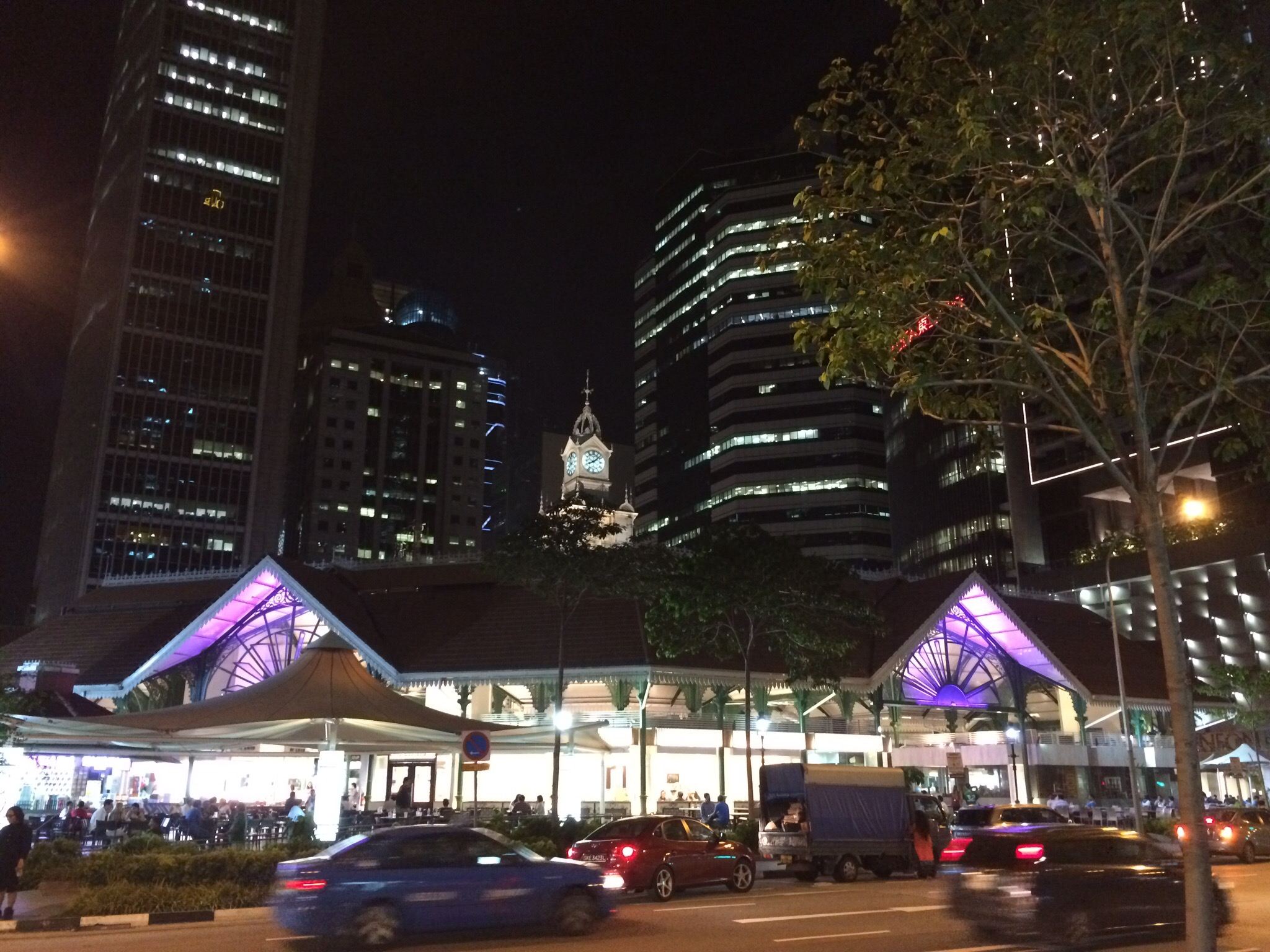
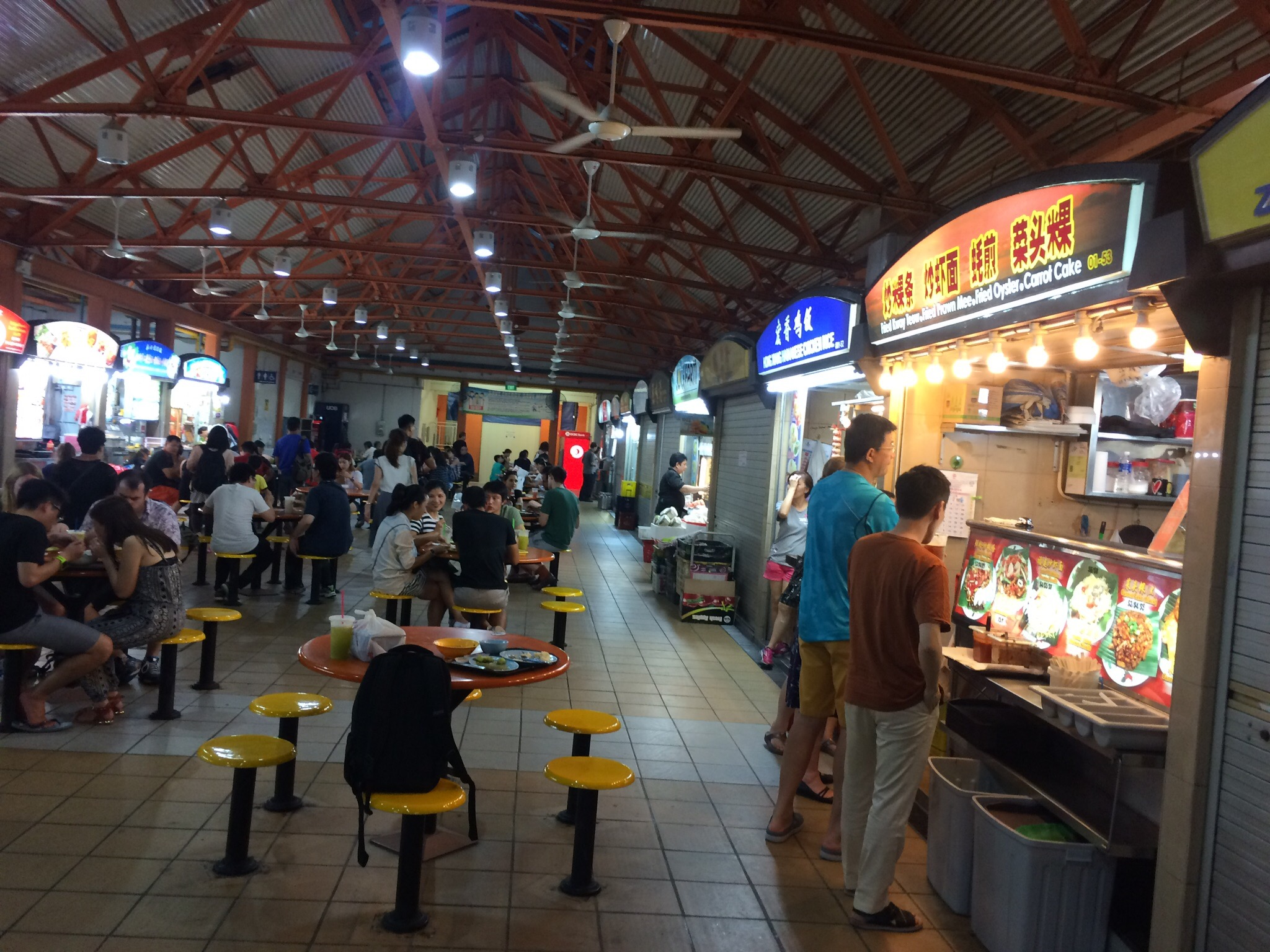
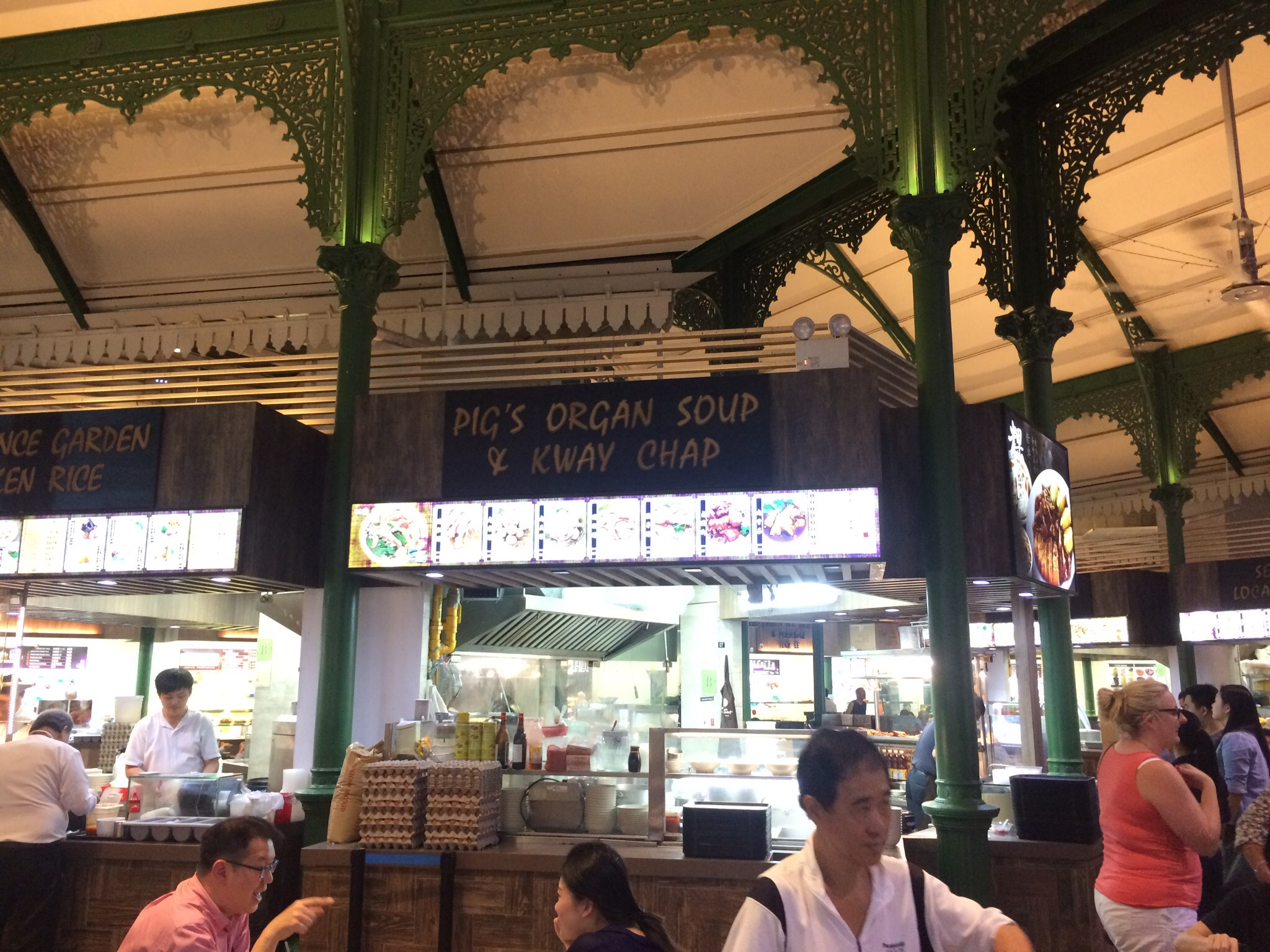
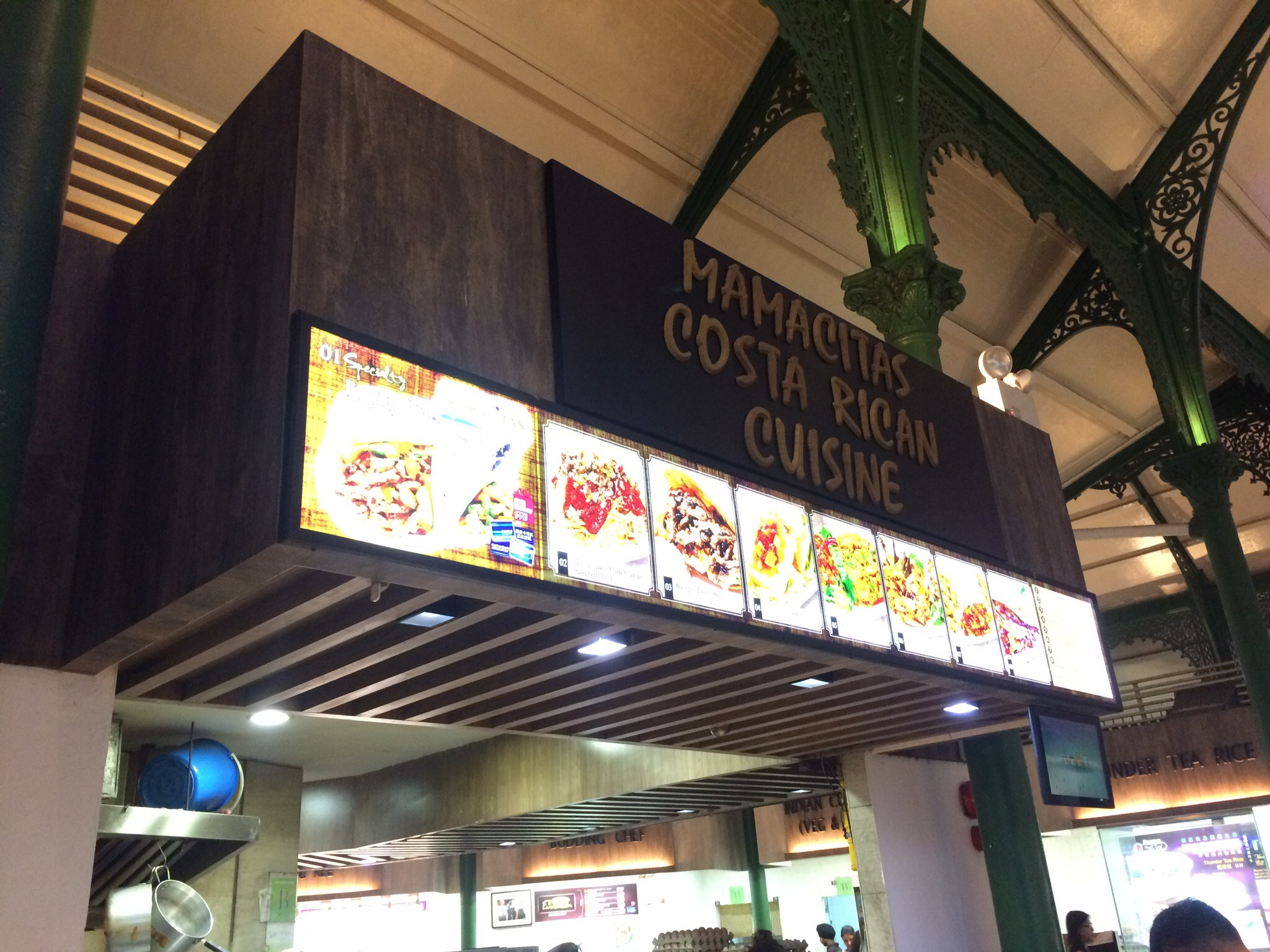
Among the many delicious aspects of our visit to Singapore has been the food. Our guide on the bike tour that first morning was blunt. “Every single Singaporean is a foodie,” he declared. Most people don’t cook at home, he said, at least in part because they can choose from such a vast profusion of excellent dishes, many available at rock-bottom prices. Of course it’s also possible to pay a lot in restaurants. Singapore regularly shows up on lists of the world’s most expensive cities. But it also is blessed with dozens upon dozens of so-called “hawker centres,” each offering a head-spinning number of Items to eat.The Lao Pa Sat center in the downtown business district. We ate there two nights.The Maxwell Street centre in Chinatown
We did most of our eating in the centers. They’re are a bit like American food courts, except they lack air-conditioning and an industrialized approach to food production. A handful may have branches in a couple of centers, but most aren’t chains. Everything is cooked on the spot after the order has been placed. I read that Michelin’s recently published guide to Singaporean dining includes a number of hawker centre stalls.
Some of the offerings were too weird for us to consider:
In other nearby stalls, I noted salted egg and barbecued crayfish, various kinds of squid, prawn balls, fried fritters and fried oyster egg, salted egg with bitter gourd, and shark’s fin soup for sale.
I’d happily try this in LA. But in Singapore? No way.
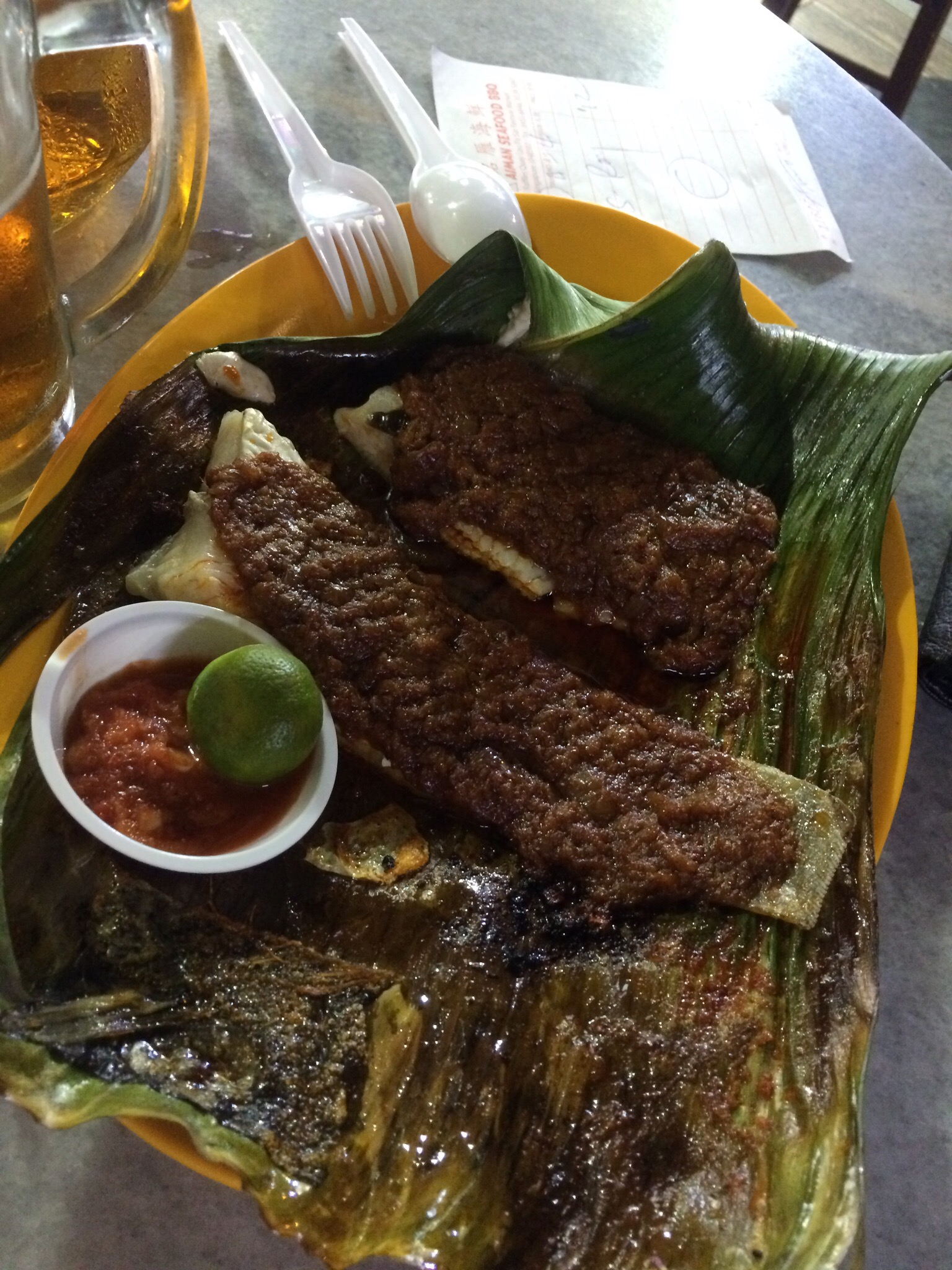
Still, we were reasonably adventurous. At the recommendation of our bike-tour guide, we ate barbecued sting ray…
The texture reminded me of sole!.
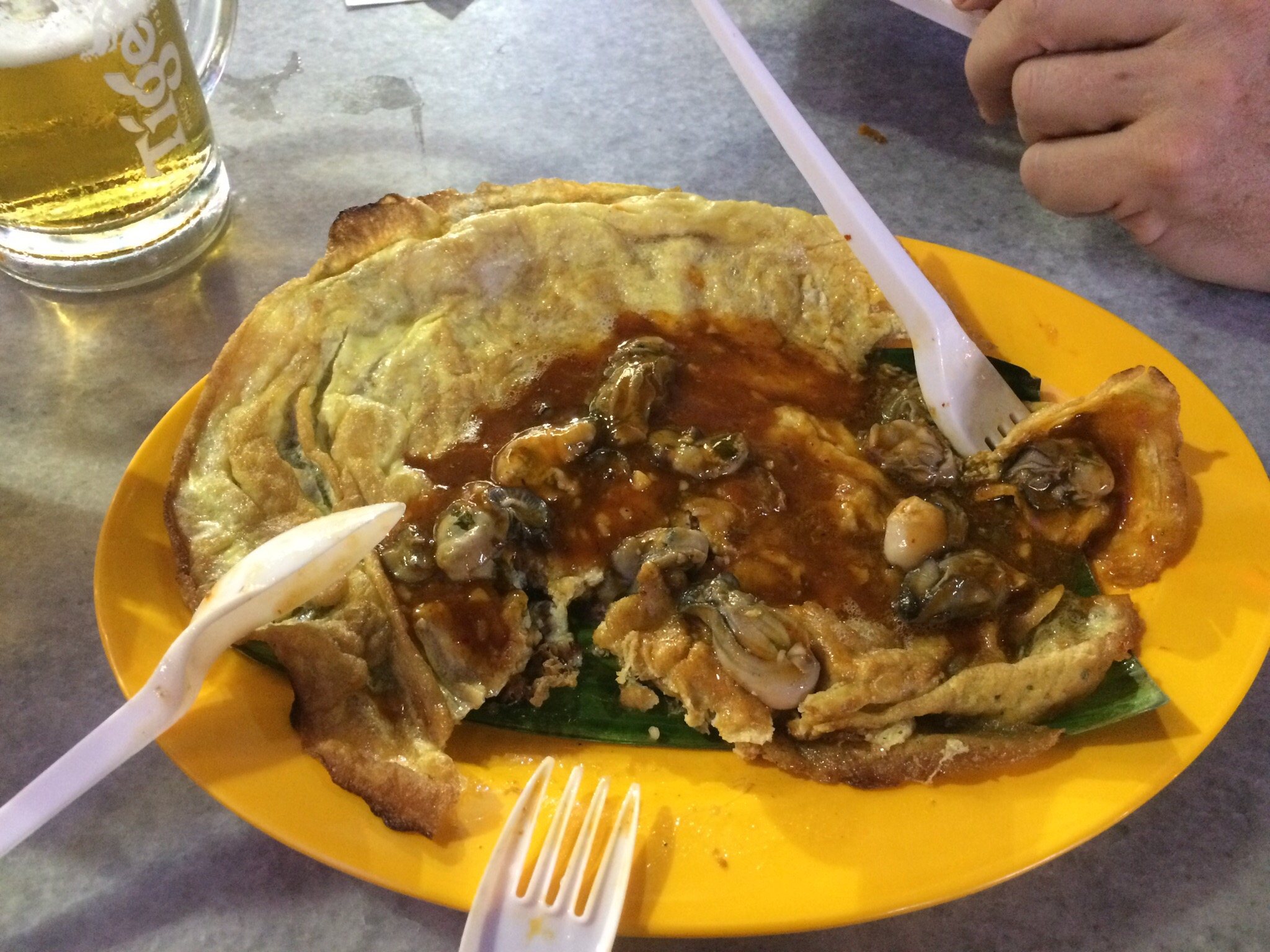
… and oyster omelette…
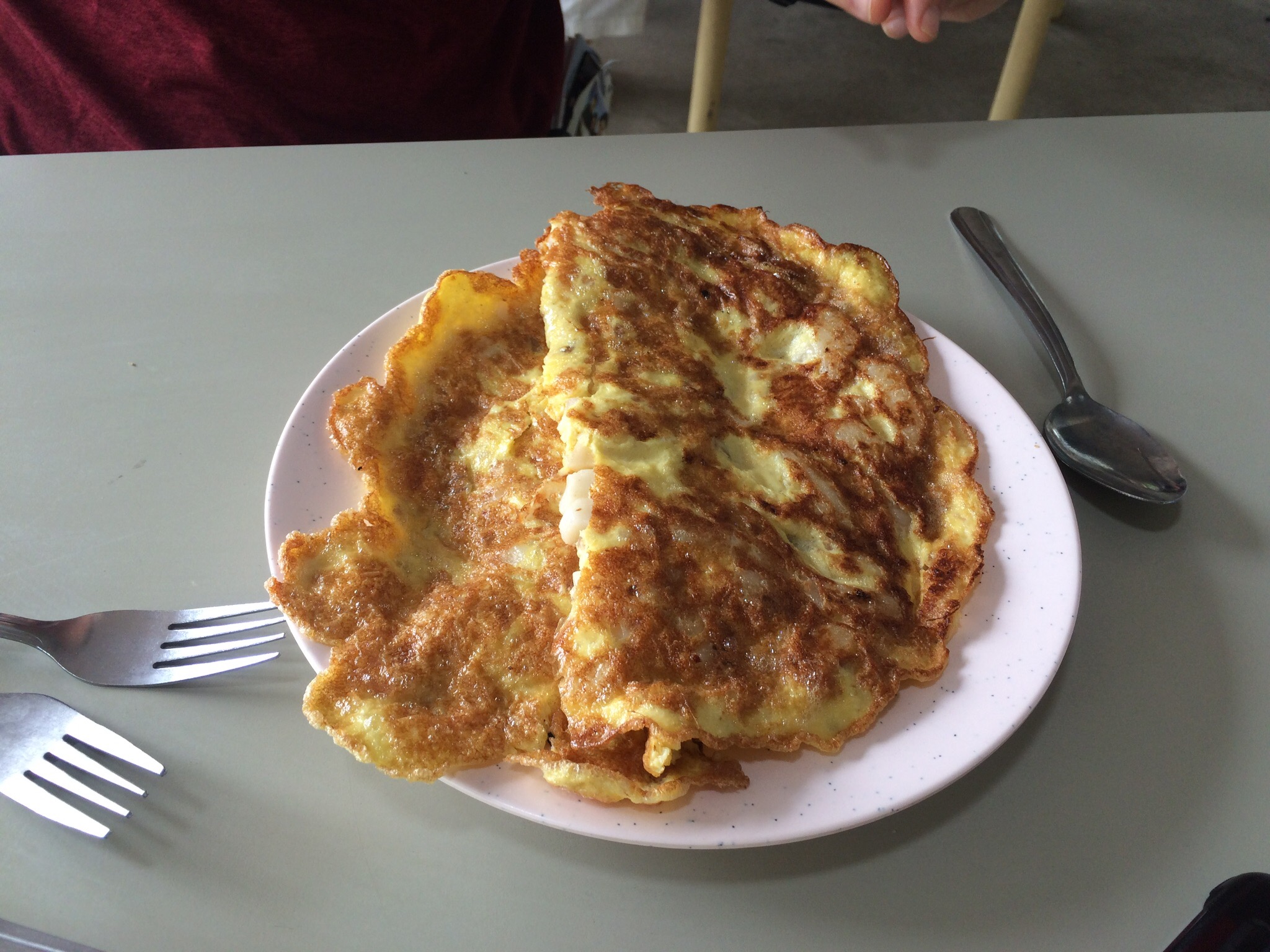
….and something that the locals call “carrot cake.”
Looks a lot like omelette too. But it’s filled with chunks of a mysterious ingredient.
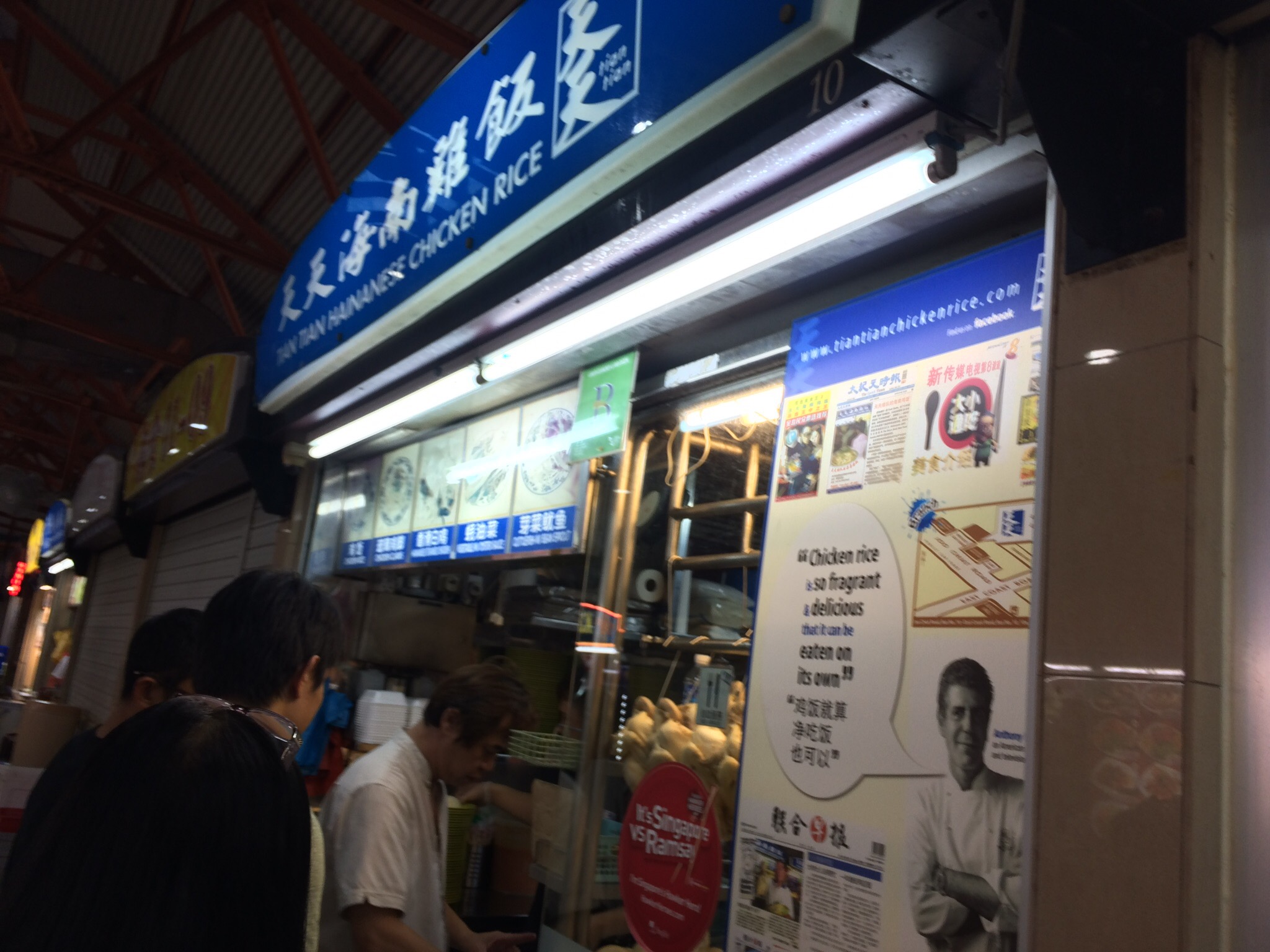
On our last night, we sought out one of the most beloved local dishes — Hainan chicken rice — at the stall in Chinatown where Anthony Bourdain swooned over its deliciousness (His photo is prominently displayed on the Tian Tian stall.)
It was tasty, but we thought our noodles with roast duck was even more irresistible. We gobbled both dishes down with stir-fried bean sprouts and good Singaporean beer, and the total came to just over $15 for the two of us.
There are so many things we didn’t have time to try — even at McDonald’s!
Since “ebi” in Japanese means shrimp, I assume that these were shrimp burgers. But what the heck is a honeydew McSlurry?!
It makes me imagine coming back just to eat more.
Late Wednesday afternoon, a few hours after we arrived in Singapore, I was re-reading a long blog post that I had printed out months ago about taking the train from Bangkok to Singapore (a journey that Steve and I will begin, in reverse, on Sunday). In writing about his time in Singapore, the post’s author had mentioned that he’d taken a bike tour of the city — something I had completely forgotten, even though Steve and I had a wonderful experience touring Bogota, Colombia by bike in May. I all but slapped myself on the forehead. We did some quick research; made a quick call. Found that we could join the morning tour the next day.
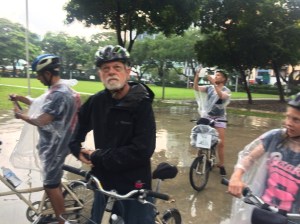
That’s how we came to be in Singapore’s financial district, wearing bike helmets and ready to set off at 8:30 Thursday morning with Alfian, our 27-year-old bike-tour guide. Our fellow bikers were a British guy of Indian descent named Joe, and a Norwegian woman traveling with her 12-year-old daughter. Alfian had given us our orientation lecture, and we were ready to roll out the door, when the skies opened up, unloosing a drenching downpour.
Alfian seemed only a little dismayed. He predicted it wouldn’t last long and advised us to get a coffee at the nearby Starbucks. We did, but by 9, it was not only still raining, but crackling with lightning and explosions of thunder. Alfian made a phone call to someone and pronounced that the rain was actually only gentle. He suggested that we carry on, and everyone in the group agreed. So off we pedaled into the thunderstorm.
He was right. The downpour and pyrotechnics didn’t last much longer, and the part we experienced felt emblematic of this place overall — dramatic and beautiful and refreshing and actually quite safe. For the vast majority of our three-plus hours with Alfian, we pedaled on level sidewalks or bike paths. None of it was in scary, chaotic traffic. My sleeveless arms were damp, and the breeze generated by the biking cooled me; it was a little like generating our own air conditioning. Best of all, biking and chatting and stopping for photos was a perfect way to see some of Singapore’s many marvels.
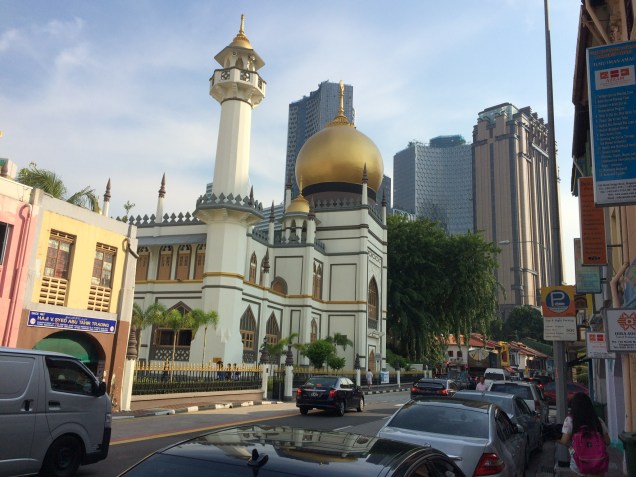
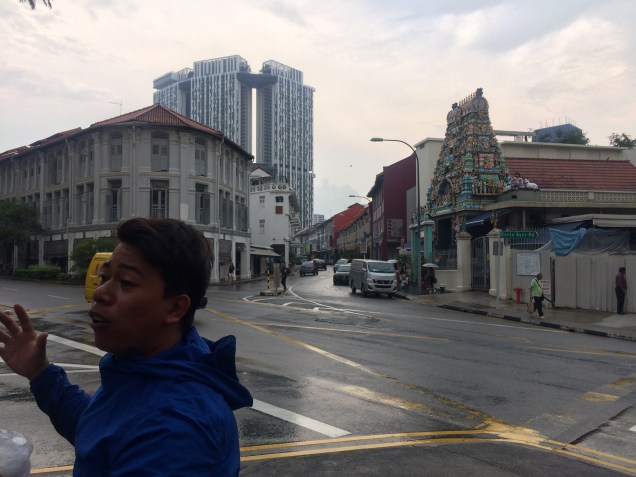
I’m embarrassed to admit how little I knew about the place before coming here. But we’ve made up a lot of ground in the last 24 hours. I now understand how this little island at the tip of the Malay peninsula came to be an independent country (no doubt about that!) in 1965, and I’ve gotten a little insight into how the humble one-time fishing village (symbolized by the mermaid) has become transformed into the economic lion it is today — one of the wealthiest and most productive societies in the world. The bike tour yesterday made it crystal clear that the city center is a physically astounding place. Parts of it retain the grandiose classical and Victorian edifices built by the one-time British rulers. The humble but colorful vernacular architecture of their one-time inhabitants (Chinese, Malay, Indian) has been preserved in a couple of enclaves.
A park in the Little India areaThe iconic Sultan Mosque, in the center of the historic Muslim district
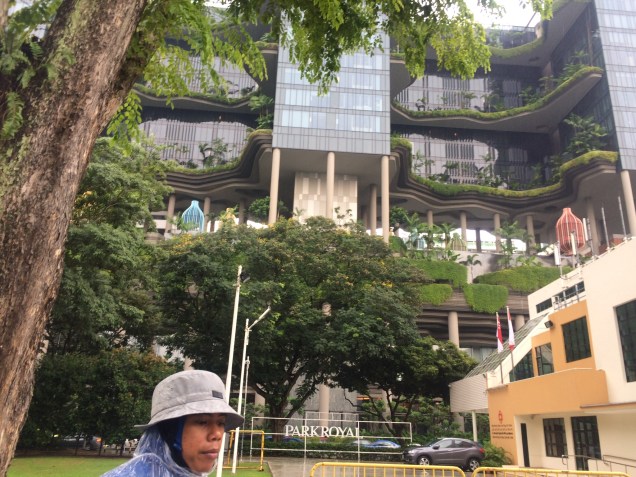
Elsewhere the Singaporeans have constructed some of the most incredible looking high rises I’ve seen anywhere. They rival (or surpass) the wonders of today’s Shanghai skyline.
The population is multinational — though 74% are ethnic Chinese (many of whose antecedents poured in here in the early 1800s, when Singapore first began thriving as a free port. But about 12% are ethnic Malay, and a similar number are Indian. (Everyone else makes up the other 2%). What charms and delights me is that although the city-state looks and feels intensely Asian, for the most part, people are speaking English (or Singlish, as the weirdly inflected local tongue has been nicknamed). All children study it in school (along with their “native” ethnic language). You can walk anywhere, day or night, and be safe; talk to everyone, and be understood.
Thursday afternoon we spent an hour at the National Museum. Friday we covered a lot more ground; took the metro and a city bus out to the city’s zoological complex in the rainforest. Although the zoo here is reputed to be one of the world’s best, we figured didn’t have the time to do it justice. But Steve and I are total suckers for rivers, and we couldn’t resist a quick visit to the adjoining “River Safari” park devoted to showcasing 8 of the greatest rivers in the world (the Mississippi, Nile, Congo, Mekong, Yangste, Amazon, Ganges, and Mary).
The entrance to the River Safari park — an homage to some of the manatees who are featured prominently
Then we metro’d to the Orchard Street, Singapore’s over-the-top concentration of insanely expensive designer shopping palaces.
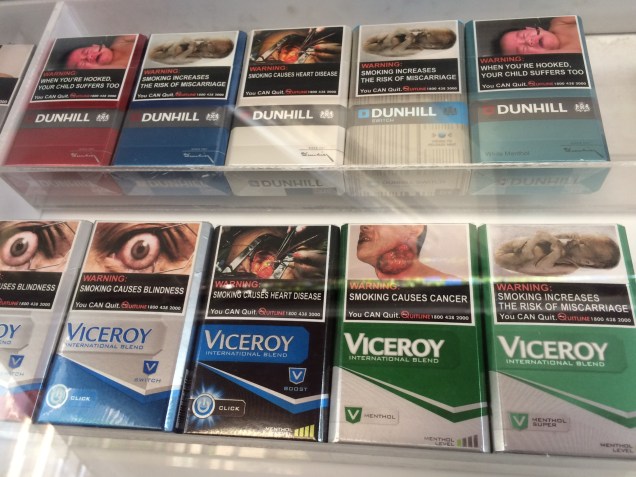
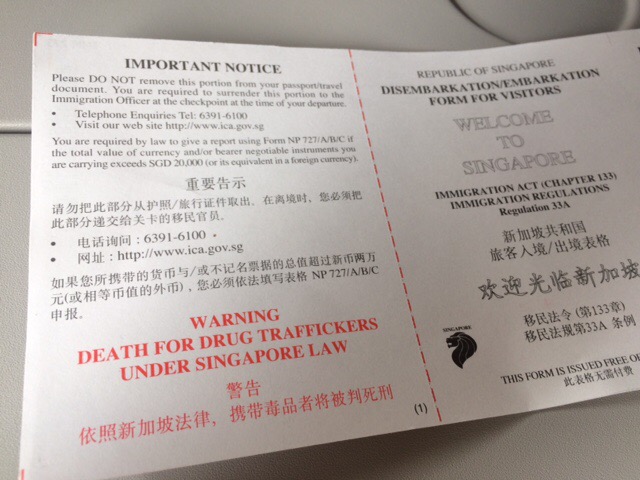
Along the way we have been amused by a few reminders that the infamous Singaporean social control still persists. There was that notice about executing drug dealers (on the immigration form). And Alfian told us they still cane rapists and other criminals here. I haven’t seen any warnings about chewing gum (though they probably don’t sell it in the stores), but I did gasp at the cigarette packages.
Every package of every brand is plastered with a grisly image.
This is a food-obsessed society, but vendors no longer can sell their wares on the street, where it’s too hard to police their sanitary standards. Instead they’ve been moved into wondrous indoor facilities. But that’s the subject of another post. For now, we only have one day left to begin absorb what would probably take a month – or a year to begin to understand.
A little sad that we wouldn’t see Taiwan’s beautiful countryside, I felt intrigued by the recommendation I read from a couple of travel writers. They said a 40-minute metro ride could take one to one of the hot springs towns created by the Japanese during their 50-year occupation of this island last century. The outing sounded almost too good to be true: bucolic, potentially relaxing, and something that could be accomplished in just a few hours. So yesterday morning, off we went.
Using the splendid Taipei metro system, it was cheap (about $1.10 per person) and easy to reach Beitou. But it sure didn’t feel like the ride took us out into the country; the town feels more like a prosperous suburb, albeit one surrounded by not-so-distant lush and rugged and potentially undeveloped mountains. Even though our stop was the end of the line and it was a Tuesday morning in October, the train discharged a bunch of passengers along with us: young couples, families, and older folk. A thick knot of restaurants and shops surrounded the station, but everyone seemed to stream toward a long woodsy park created along both sides of the Beitou Stream, so we went with the flow.
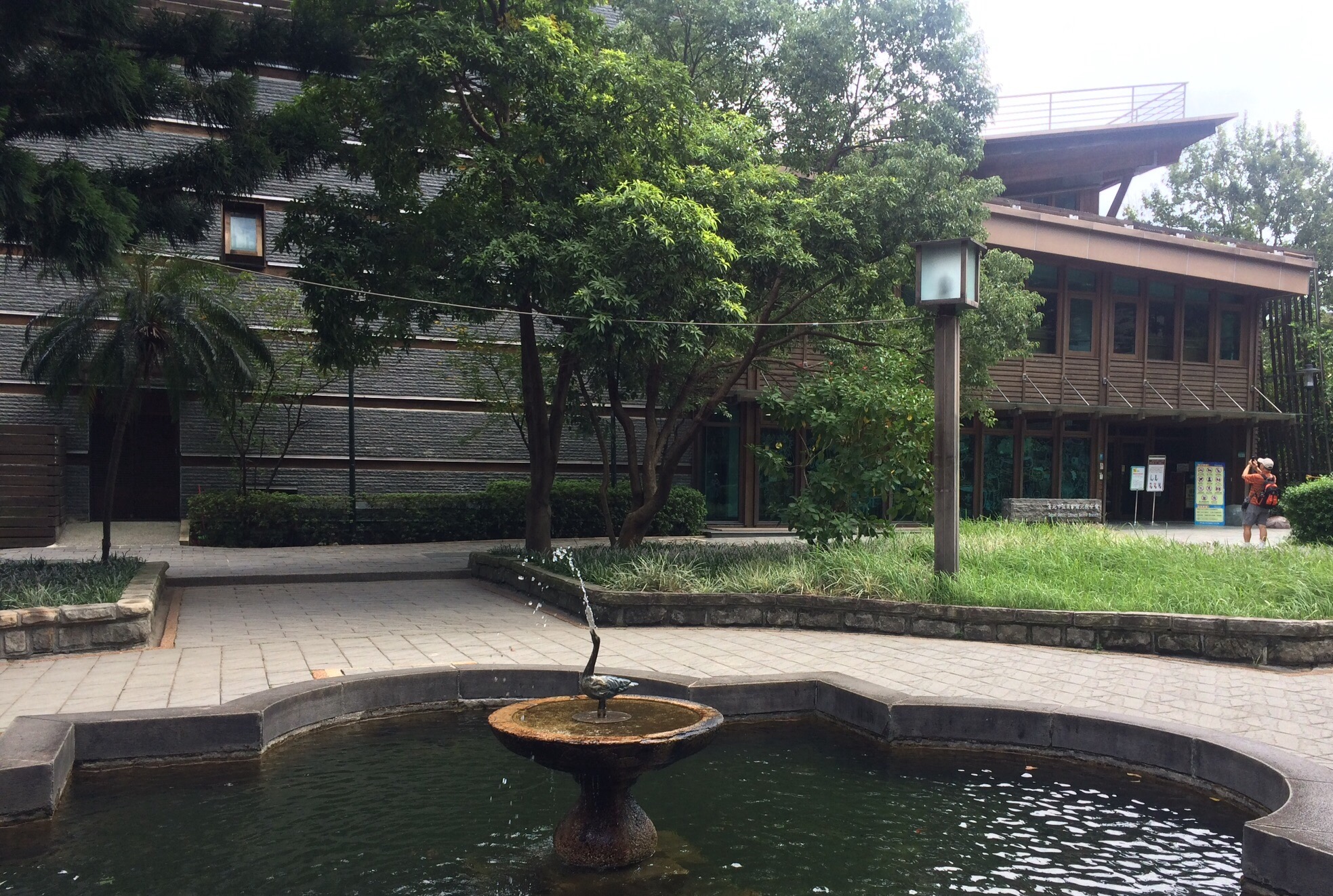
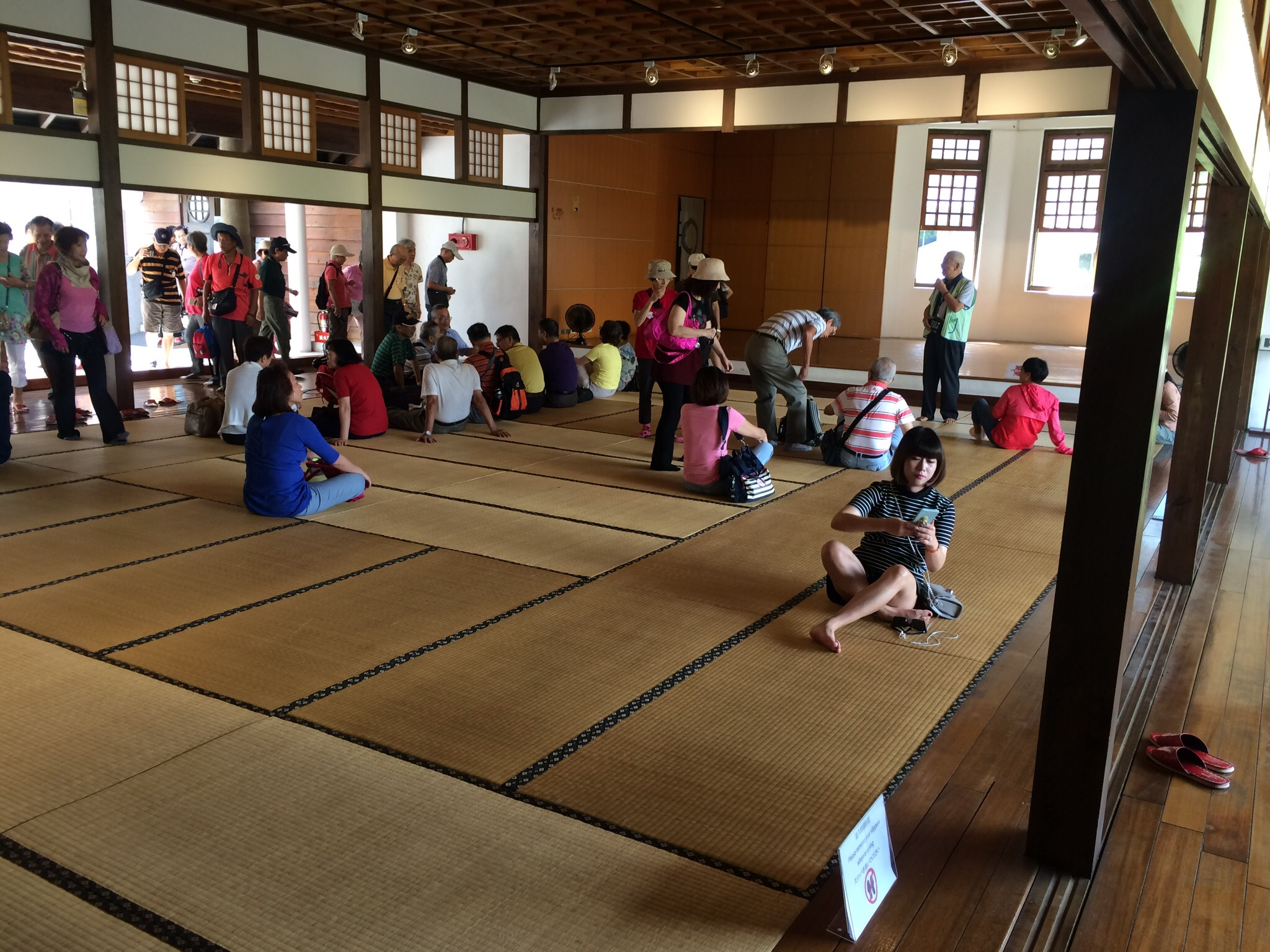
It swept us to the town’s principal sights. These included a beautifully ecosensitive branch of the Taipei city library, designed with a plethora of nooks so tranquil I longed to stay and study something in one of them. A few minutes further down the path, we found the town’s hot spring museum. It contained a few replicas of soaking pools and a huge tatami-lined hall where the Taiwanese tourists seemed to get a big kick out of sitting on the straw mats and pretending to be Japanese.
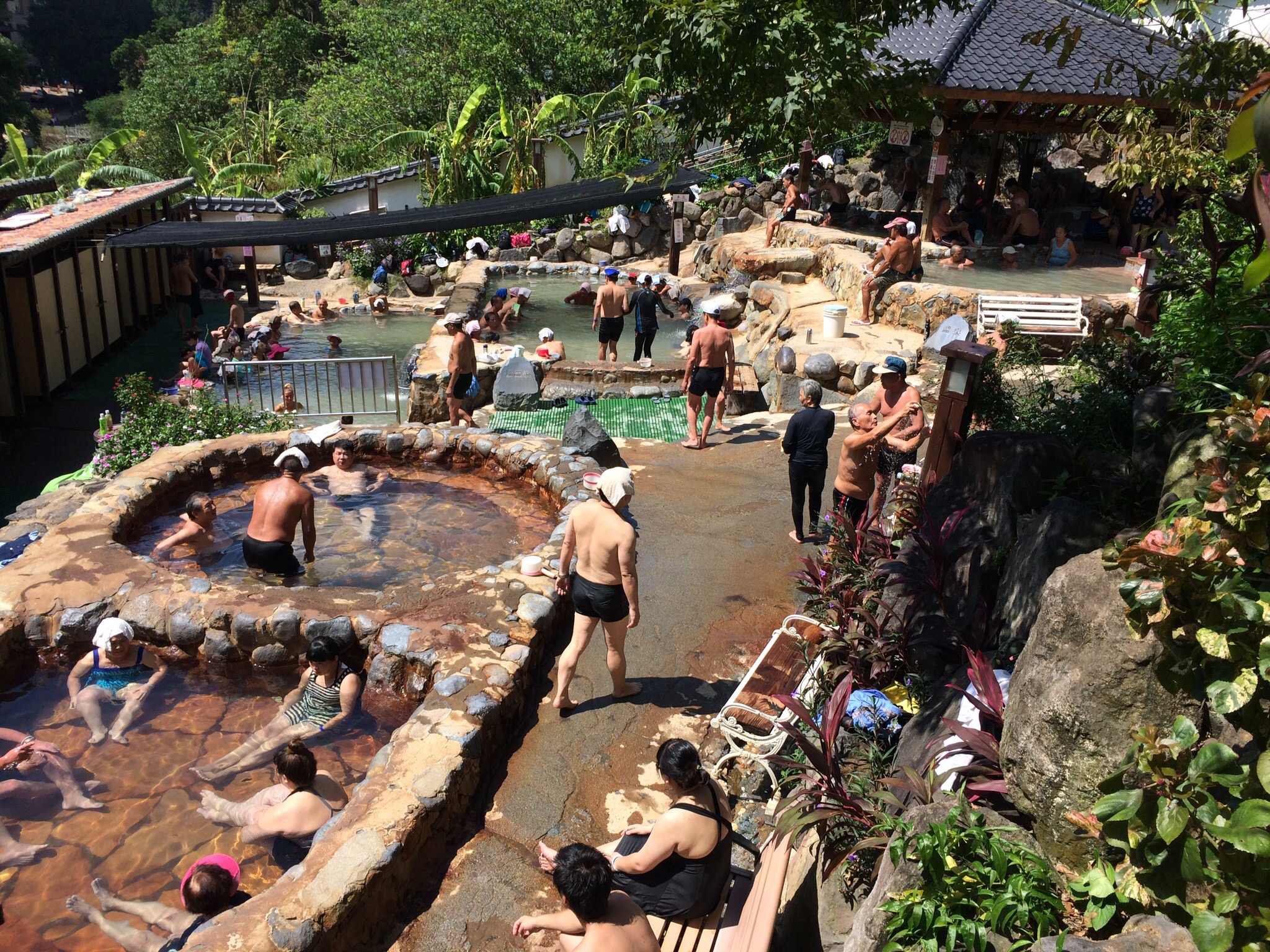
The Millenial Hot Springs facility was a bit further down the trail. We’d read that this was the cheap date in town for getting a soak, and since we were more interested in the sociology than the actual hot springs, we paid the 80 Taiwan dollars (about $2.55 US for two) and soldiered in. (We’d brought our bathing suits but not towels, so buying a flimsy one set us back another $1.60)
Inside we changed and eased into the first pool of hot water, which a sign declared to be 38-40 degrees C (100-104 F). It was hot but tolerable, and after a few minutes we moved up to the next dipping station (104-109 F), which we found to be hotter but still bearable. In the final pools at the top, we could only submerge ourselves in the 111-113-degree water for a minute. But we’d seen enough. If we’d come with a bunch of friends, the way the locals did, it would have made sense to move back down to the cooler levels to gossip and absorb more of the supposedly healing minerals. Alternatively, Beitou has plenty of tonier, more expensive spas we could have patronized. But then we would felt obliged to linger. And what we lacked more than anything was time.
Seeing Beitou’s last two major sights took no more than a half hour.
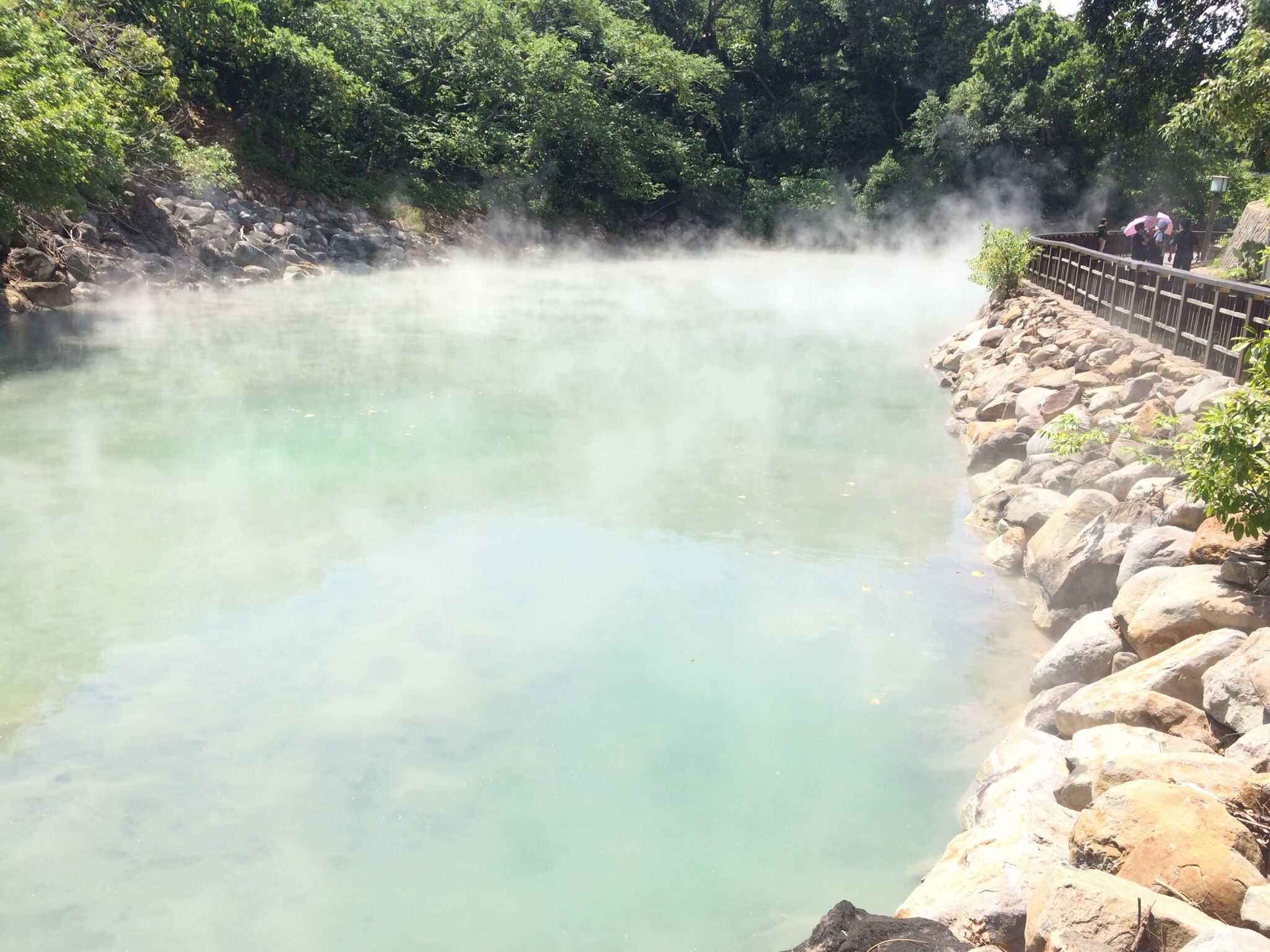
This most interesting of these was the very short walk up the “Thermal Valley.” It felt like strolling past a gigantic pot of sulfurously smelly boiling water.
Then it was time to find lunch and return to central Taipei, where we spent what was left of the afternoon resting and walking more and packing for our morning flight Wednesday.
Now I’m writing this at 35,000 feet, bound for Singapore. I have to add that Taipei’s airport and this EVA Air plane have both shown us some additional sights that made our eyes widen. In the airport, we noted rooms where waiting passengers can go in and shower (they looked similar to private bathrooms). I’ve never seen that before. But the airport is very, very short on the sort of sundries ubiquitous in America airports. I had 140 Taiwanese dollars left (about $3.50US) after we changed money, and though we searched and searched, we almost couldn’t find anything to spend it on. There were mountains of designer purses and French perfume and high-end luggage and other fancy goods, but not a single package of gum or a chocolate bar for sale. Finally, I found a little box of cookies that I’m sure will fill my sugar craving some night.
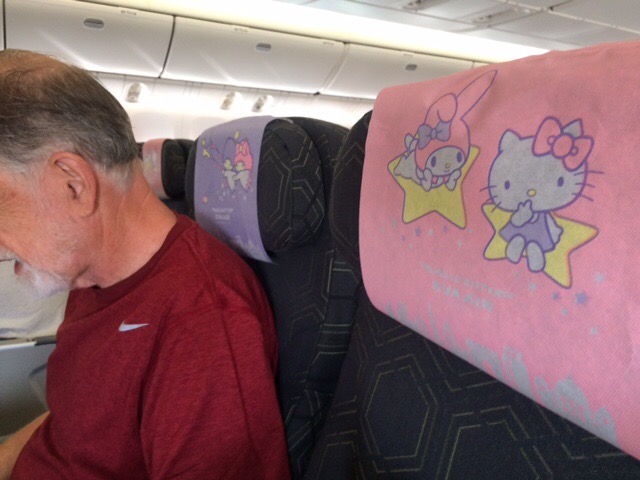
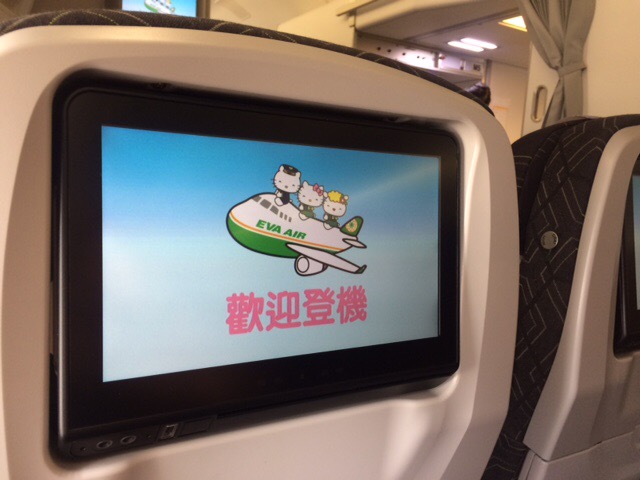
We passed a “reading lounge” stocked with books, and much weirder, a “Hello Kitty”-themed lounge open to the public. A couple of adult men and women seemed to be hanging out in it, but no kids.
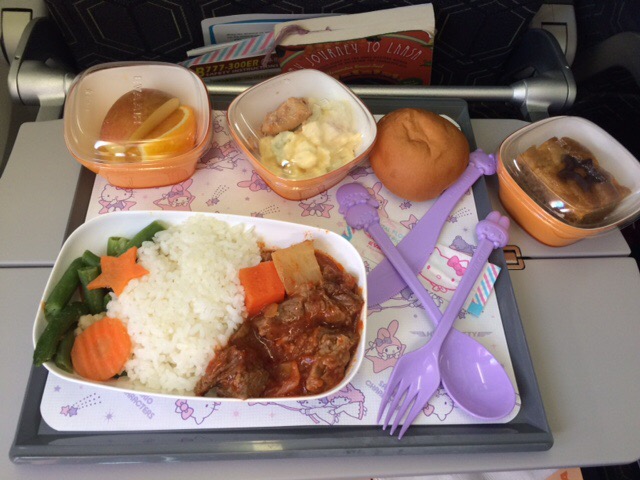
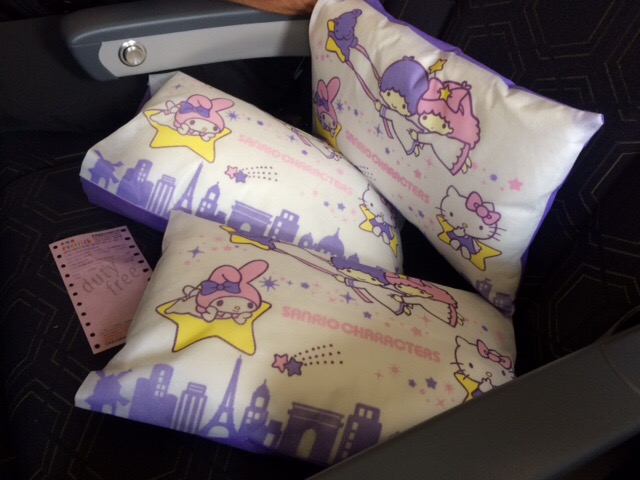
For anyone allergic to Hello Kitty, this flight also would be a trial. The interior of our 777 is soaked with the iconic Japanese brand.
I have no idea why it is nor time to find out. I have to fill out my arrival form for Singapore — while silently giving thanks that I haven’t packed any narcotics for sale on this trip.
To be honest, one of the reasons we came to Taiwan is because I wanted to add another country to the list of those I’ve visited. That wasn’t the only reason. Because we were flying to Singapore on EVA Air (Taiwan’s well-respected airline), we could spend a few days on this beautiful island off the coast of China at no extra cost for the transportation. Such a stop would help break up the grimly long trip from Los Angeles (13-plus hours just to Taipei alone). Steve could once again see the city that he and his mom toured for a day (via bicycle rickshaw!) back in 1958 (when it took them 3 weeks to cross the Pacific by freighter).
So yesterday, when I learned (was reminded?) that Taiwan is not universally recognized to be a separate country, I was dismayed. (Somehow, I thought the Chinese along the line gave up their claims to it. Which, apparently they haven’t.) But after some reflection, I’ve decided I don’t care. I think Taiwan deserves to be on my list at least as much as Tibet and Palestine. And even if isn’t a separate country, after less than 24 hours here, we’ve seen much to justify a visit. Here are three things that have most impressed us:
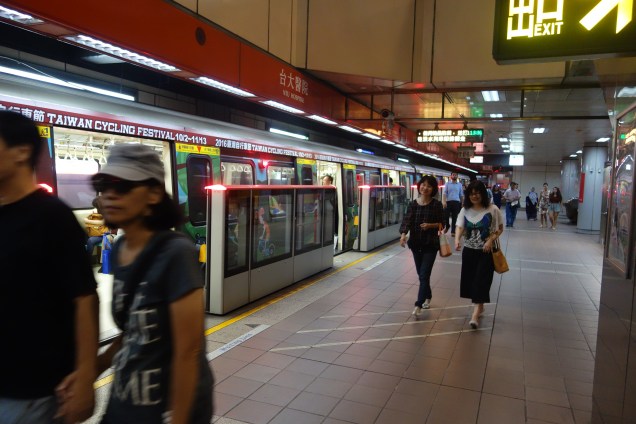
1) Taipei has one of the best public subway systems we’ve used anywhere in the world. We figured it out almost instantly. Even though we can’t read most of the signs, they include enough Roman lettering to enable non-Chinese speakers to get by. All the trains are immaculate and quiet and they come along every 5 minutes or less.
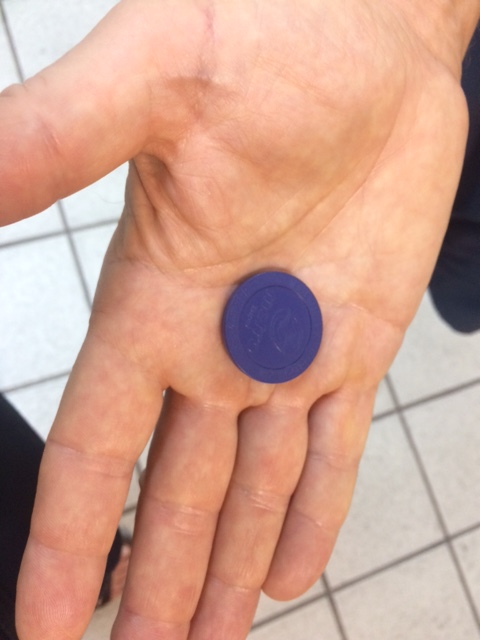
Best of all is the brilliant way the systems handles single-ride payment. From easy-to-use machines, you buy tokens that look like cheap poker chips.
But they have some kind of electronic signaler in them, so when you touch them to a pad at each turnstile, they make the gates open. At the end of your ride you insert them into a slot that lets you exit. Most rides cost about 60 cents.
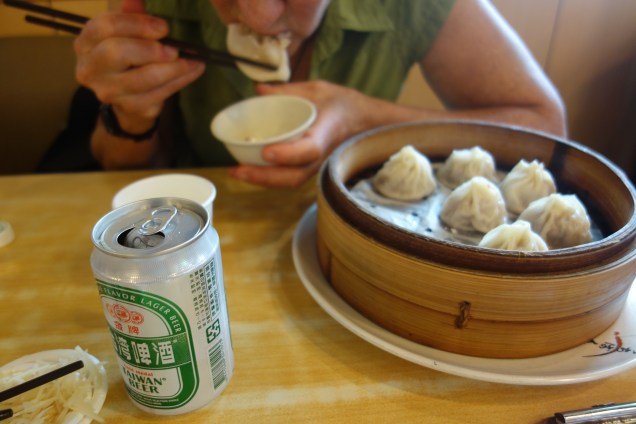
2) This is a city of passionate eaters. That seems true of most of the Chinese-influenced cities I’ve ever visited. But it meant on our very first day, we had two great meals, both in atmospheric joints. For lunch, we made our way to one of the supposedly best sources of meat-stuffed dumplings in the city — a gritty jammed second-story room above a sweltering kitchen open to the street. We ordered two types of dumplings, fat ones filled with seasoned ground pork and smaller ones served with soup broth, and each one felt like a gift.
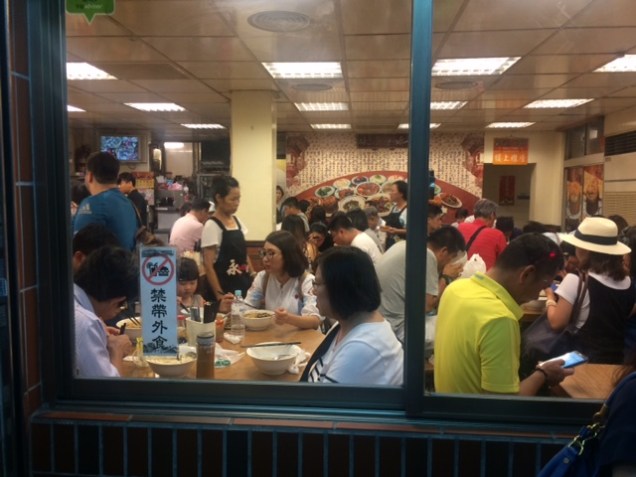
You bit into the delicate packaging of pasta to encounter a delicious present within. We ate dinner in another dive reputed to have the best beef noodles in the city. The line to get in stretched out into the street even when we arrived after 7:30.
But all the families and working folk inside ate fast and paid fast; no sitting around and gabbing and digesting at those tables. We followed suit, then hit the street in search of a current fad in Taipei — soft-serve ice cream.
3) Though Taipei feels extremely Chinese in many ways, almost everyone seems to speak at least a bit of English. Children start to study it in grade school and continue into secondary school. And folks young and old don’t seem afraid to use it. That’s one thing that makes the place feel friendly. Within just a few hours of our taking to the street, we had a late-middle-age guy stop his bike and roll it up to us to ask if we needed help finding someplace. (We actually did — but just didn’t realize it when he asked us) Despite their linguistic skills, the locals never seem to use them to hustle or harangue visitors to buy stuff. That may be because so few Westerners come here. Steve and I counted no more than a dozen or two out of the thousands upon thousands of people we walked by our first day here. It also may reflect how prosperous people are here. According to the CIA Fact Book, the Taiwanese rank just behind Germany in their economic output per person — ahead of Britain, France, Canada, and Japan!
One thing they spend their money on is karaoke. Every floor of the Party World building is devoted to it. Our walking tour guide told us many young people like to start around 11 p.m and sing until dawn.
If we had more time to range out into the country, I’m sure we’d find even more to dazzle us. But we have only one more full day in Taiwan before pushing on to the strange little city-state of Singapore.
This afternoon I was reading about Typhoon Megi, a storm with winds as strong as a Force 4 hurricane. It hit Taiwan Tuesday, killing 4 people and injuring more than 100. Hundreds of flights into and out of Taipei’s airport were canceled or delayed, and more than 2 million households lost power. Normally, I probably wouldn’t care, but Steve and I are taking off on a flight to Taiwan Saturday, so I’m paying more attention to that part of the world. We could have planned to go 6 days earlier, or the typhoon could have arrived 6 days later. But we dodged that disaster, and I’m optimistic we’ll avoid others over the coming weeks.
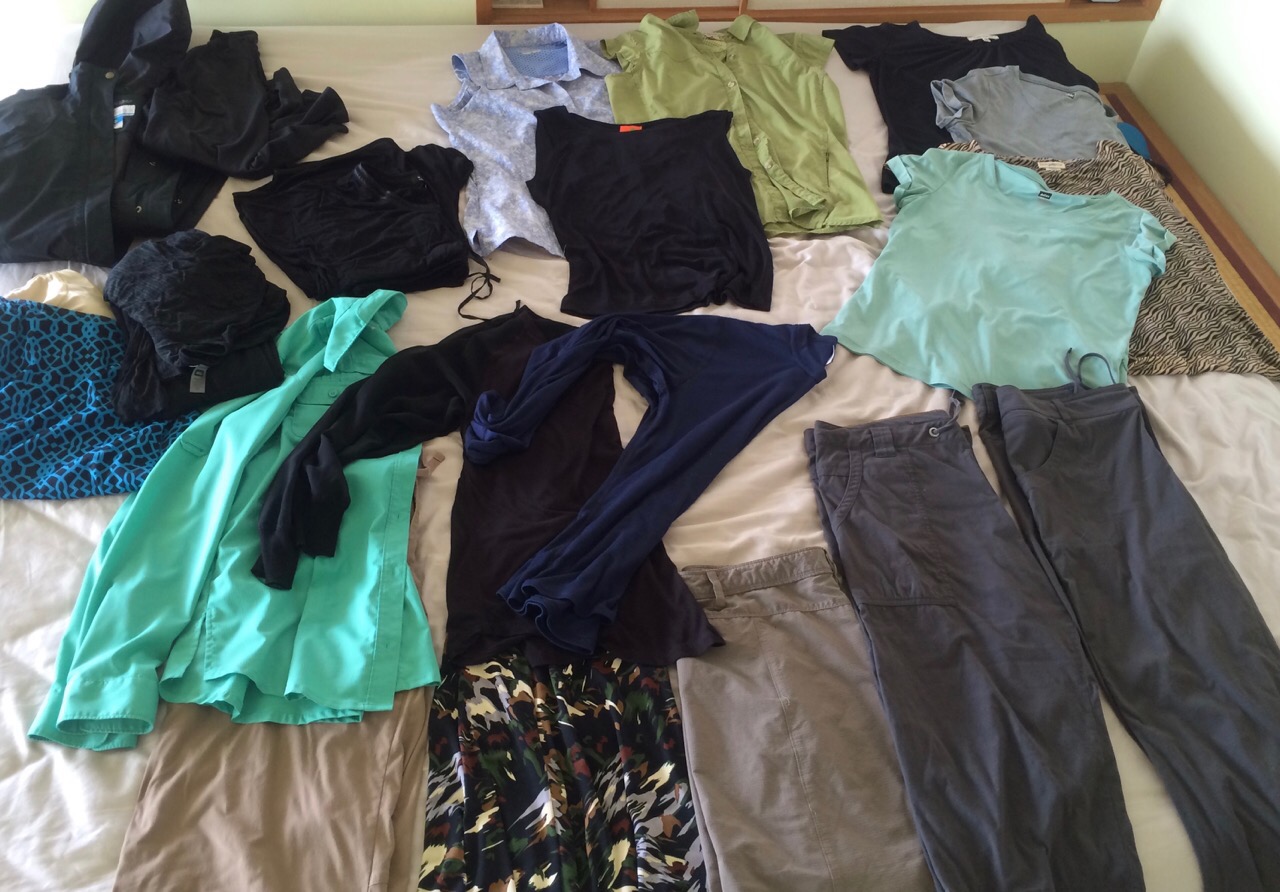
Not that this trip won’t pose some challenges. We’ve never been on the road for as long as we’re expecting to be this time — 4 weeks and 5 days. We’re sticking to our “carry-ons-only” rule, even though we’ll spend more than 2 weeks near the equator, followed by a return to the Himalayas near the end of October. Here are most of the clothes I’m taking:
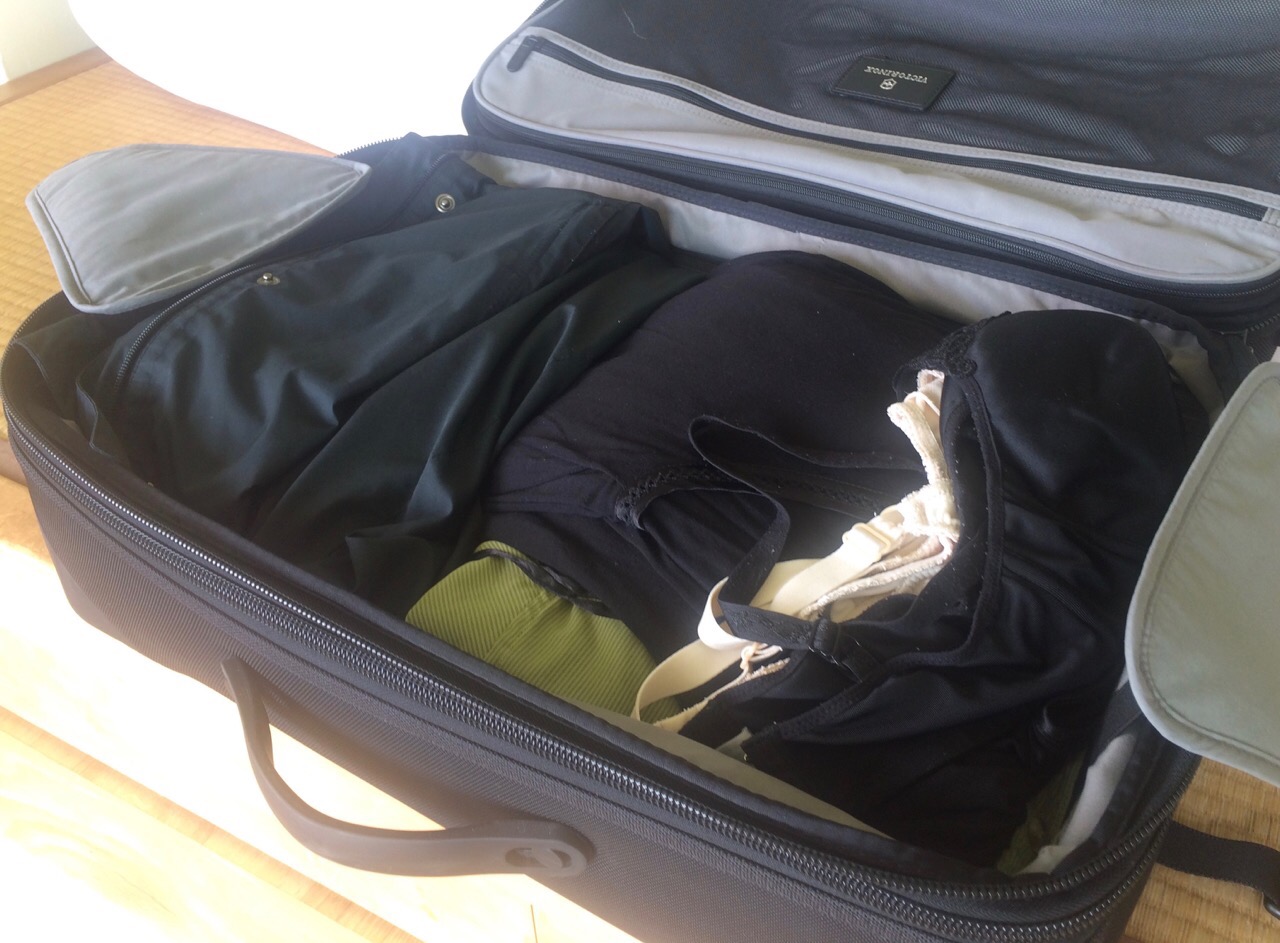
They fit easily within my carry-on:
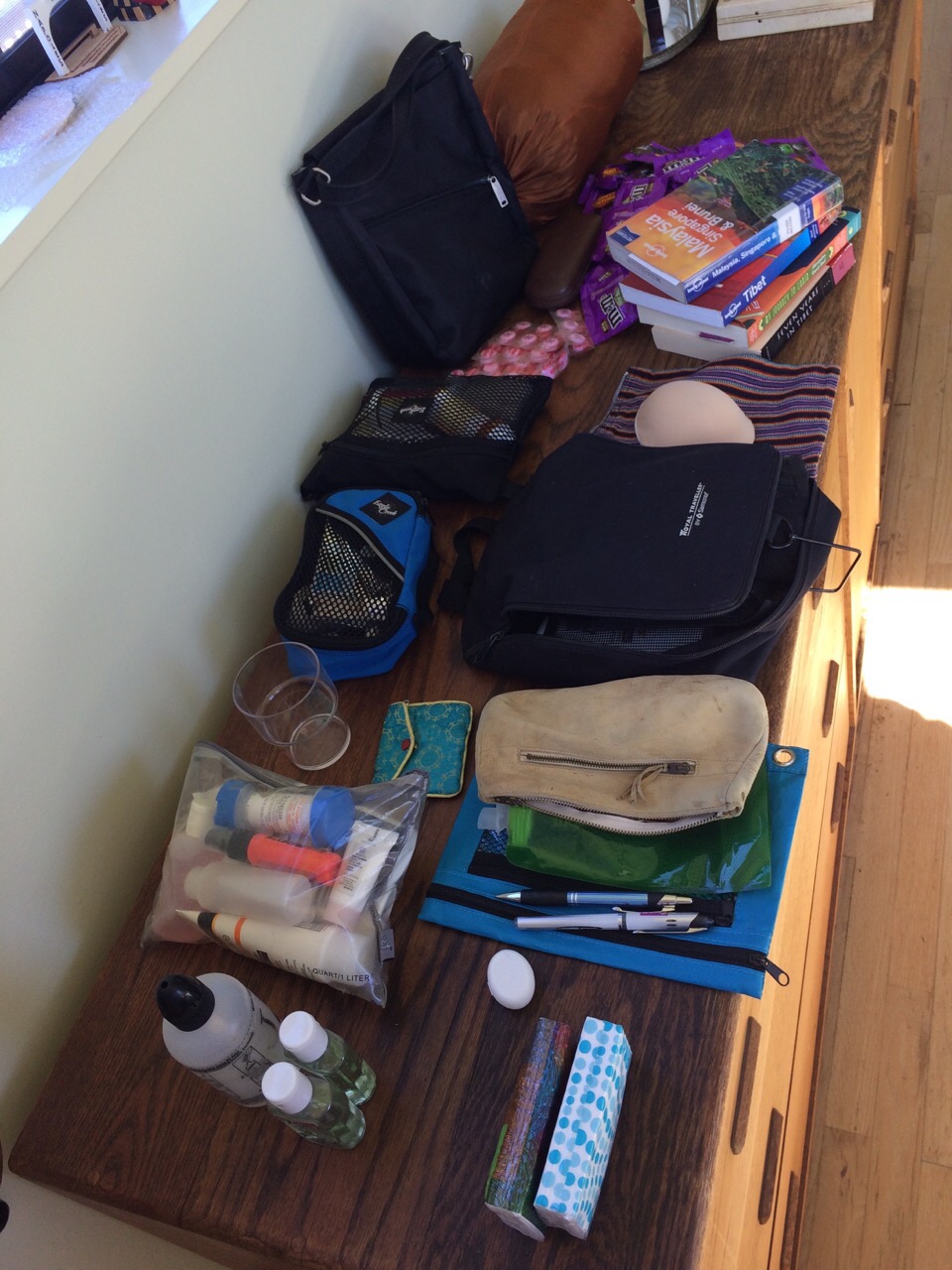
But then there’s all the rest of the Stuff — the daily and emergency medicines, the books, the toiletries, the hiking poles and emergency M&Ms. The down jacket (in the orange stuff sack). And more.
We think all of that will fit too, but we’ll have to push down when we zip. Will we have taken enough? We’ll see. One of the things we’re NOT taking is any dictionary. Instead we’ll be relying on Google Translate, and another question for me is: how well will it work in these countries where we not only speak not one word of the language (Malay in Malaysia; Tibet) but are also illiterate (Taiwan and Thailand and China)?
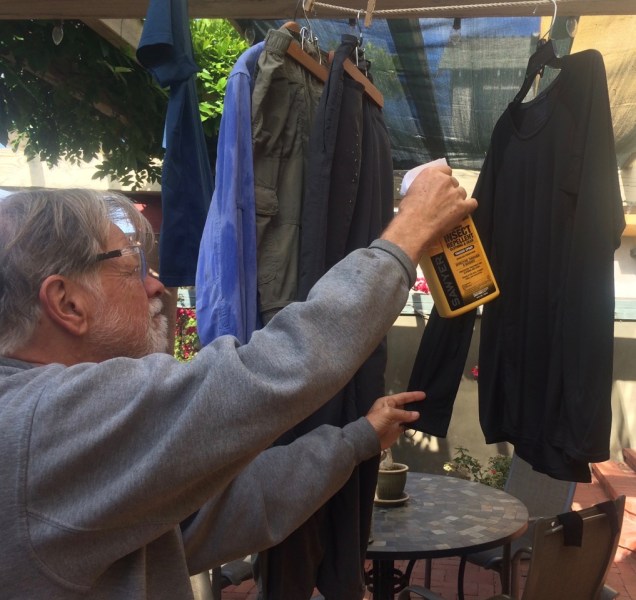
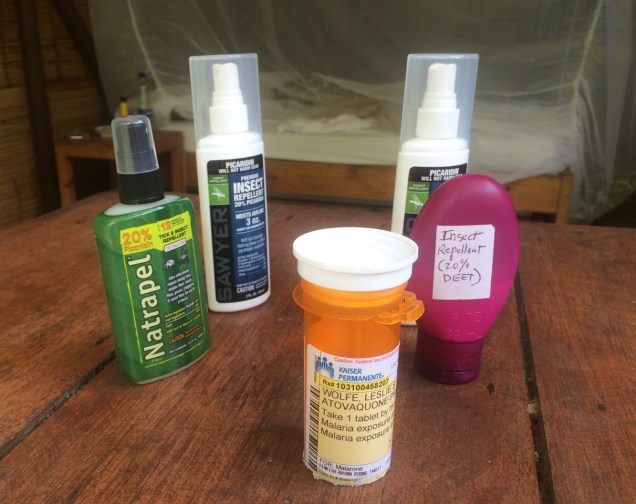
We bought our tickets for Colombia last summer, long before the word Zika entered the daily headlines. By last winter, when it became clear that Colombia had the second-greatest number of cases (after Brazil), I began joking about our upcoming trip to Zikalandia. I don’t think any of us seriously considered not going — but we did get serious about trying to avoid exposure. We bought large bottles of permethrin at REI and sprayed several sets of clothing with it.
We stocked up on various forms of bug repellant, plus Steve and I got anti-malarial medication to help protect us from that danger during our stay in the jungle.
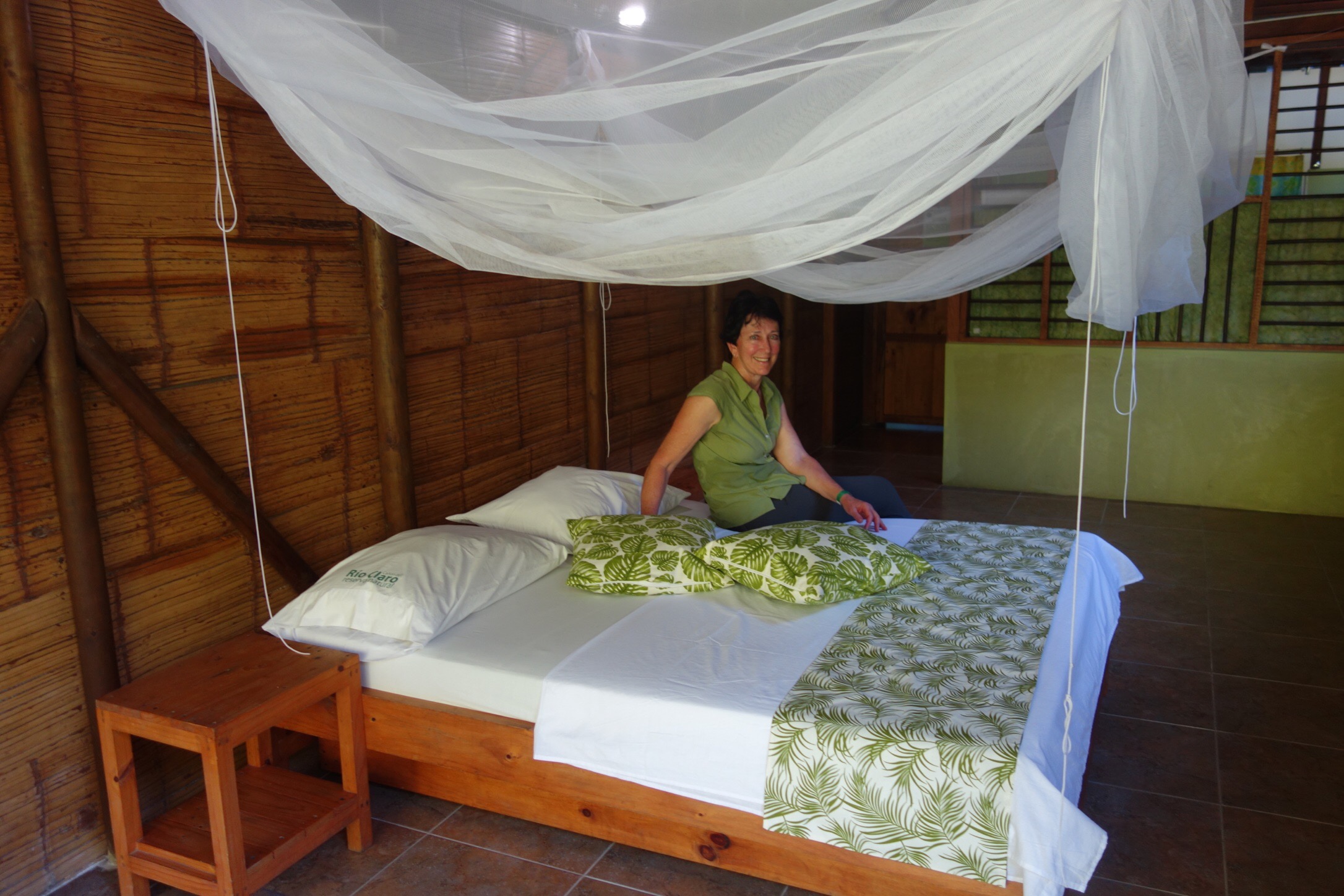
I was more consistent than I’ve ever been about spraying myself with picaridin or smearing on DEET (or both). And when I saw the mosquito netting over our bedroom in the cabana at Rio Claro, it gave me a warm and fuzzy feeling.
And yet…we were aware of very few mosquitoes — indeed few bugs of any kind — anywhere during the trip, even in Cartagena and the river valley. None of us ever heard that creepy high-pitched whine, and none acquired any itchy welts. I noted a few tiny suspicious bumps, and Steve had one obvious red splotchy spot that looked like a bite. But from what? A spider? A mite? Something else?
Now that we’re home, we have 4 more nights of the anti-malarial medication to down. I guess it will take a few weeks to see if any final souvenirs of our travels in Zikalandia develop.
When it comes to partaking in Colombian night life, I’d give us an A for effort, but a C- for accomplishment. This is sad. The streets of Cartagena and Medellin throb with the sound of salsa, and guidebooks rhapsodize about how you can dance till dawn. Our friend Howard reported witnessing hours of dance action when he was here last spring. Given that Michael and Stephanie met through salsa (and are polished dancers), enjoying a true Colombian salsa club seemed imperative.
We tried first in Cartagena at the Habana Club, the venerable Cuban institution. The interior is cool and retro, and I enjoyed my Cuba Libre, but we learned that the band wouldn’t begin to play until sometime after 10:30 – too late for Steve and me that night. Although Michael and Stephanie stayed later, they reported the next morning that there had been so little room for dancing (in between the bar and the tables) they weren’t tempted to join in for long.
In Medellin, we tried again. This time our destination was a club where Howard’s young fellow travelers had danced long after midnight. Travel writers rave about this place, and reports of a 9-piece live band on Thursday and Saturday nights further encouraged us. (This was last Thursday night.) After dinner, Michael, Stephanie, Steve, and I grabbed a taxi, arriving at the club around 9:30. The presence of a bouncer at the front door who extracted a 10,000-peso (about $3.50) cover charge from each of us seemed promising. Recorded salsa, cranked up to a deafening volume, filled the dim interior. But inside we found only one other couple, huddled over a bottle of agua ardiente. We ordered drinks and waited. This time we learned that the band wouldn’t arrive until 11, and none of us had the fortitude to hunker down and wait.
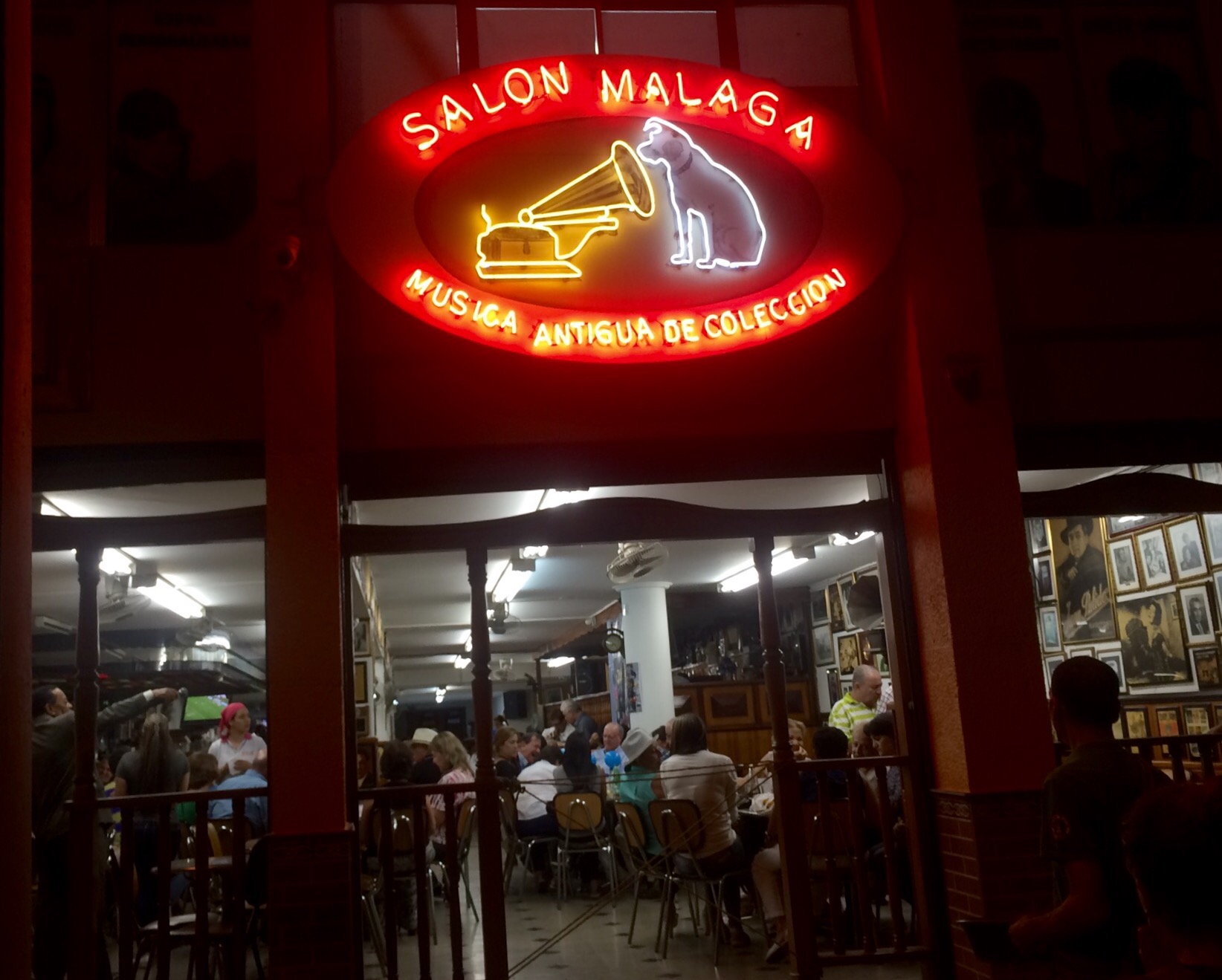
Michael and Stephanie flew home from Medellin early Saturday. But Steve and I had one more night in the big city, and I knew how I wanted to spend it — enjoying tango. Although Buenos Aires is the obvious Mecca for that, Howard had told us about his visit to a Medellin tango bar, Salon Malaga, and before the trip, I had confirmed a local enthusiasm for tango when I learned online that an international tango festival was scheduled to unfold (sadly, just days after our departure.) I checked Salon Malaga’s website and read about the weekly “tango show” they hosted every Saturday at 5:30 pm. When we were in Buenos Aires, Steve and I had enjoyed a superb tango performance at a local cultural center; in the hope of seeing something similar, I called and made a reservation for us.
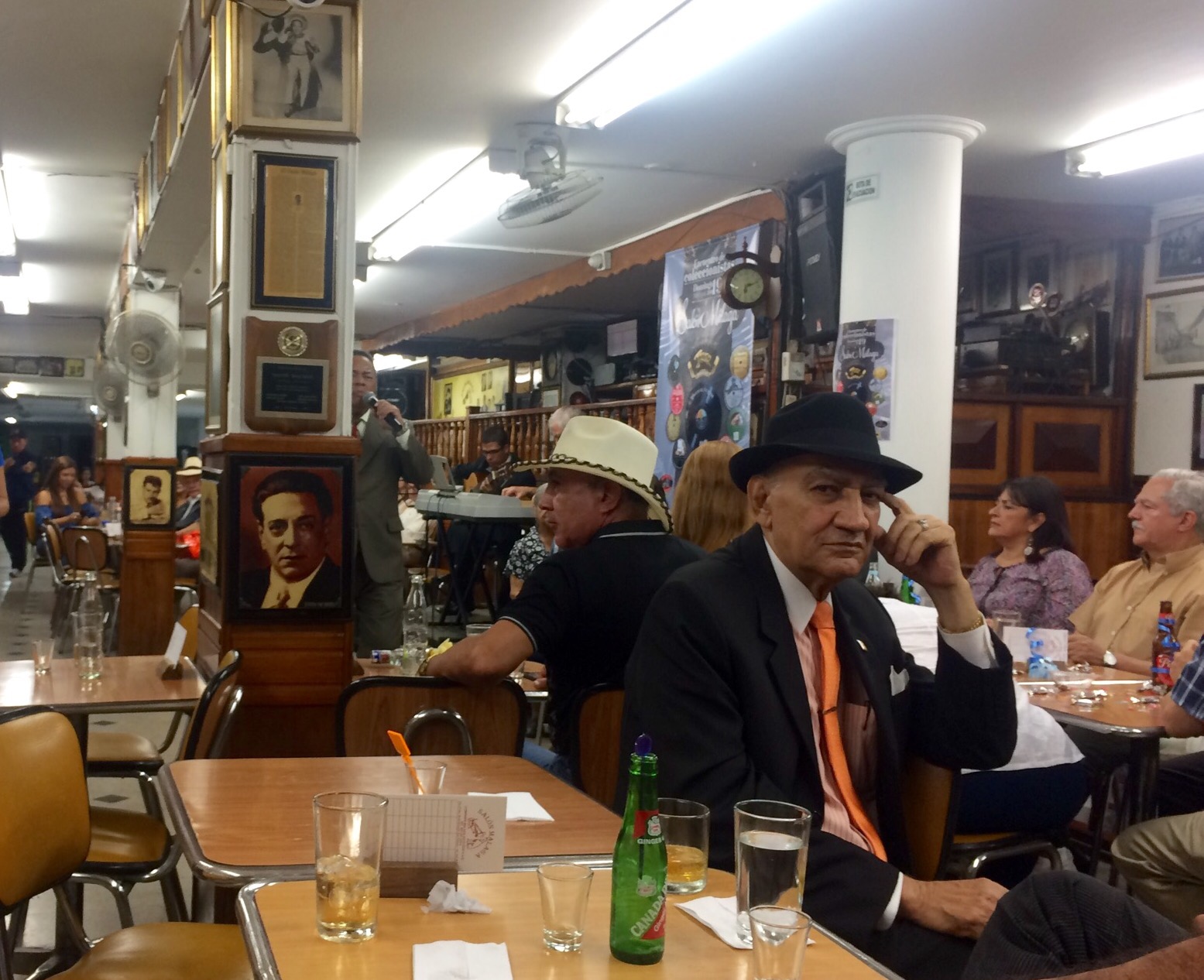
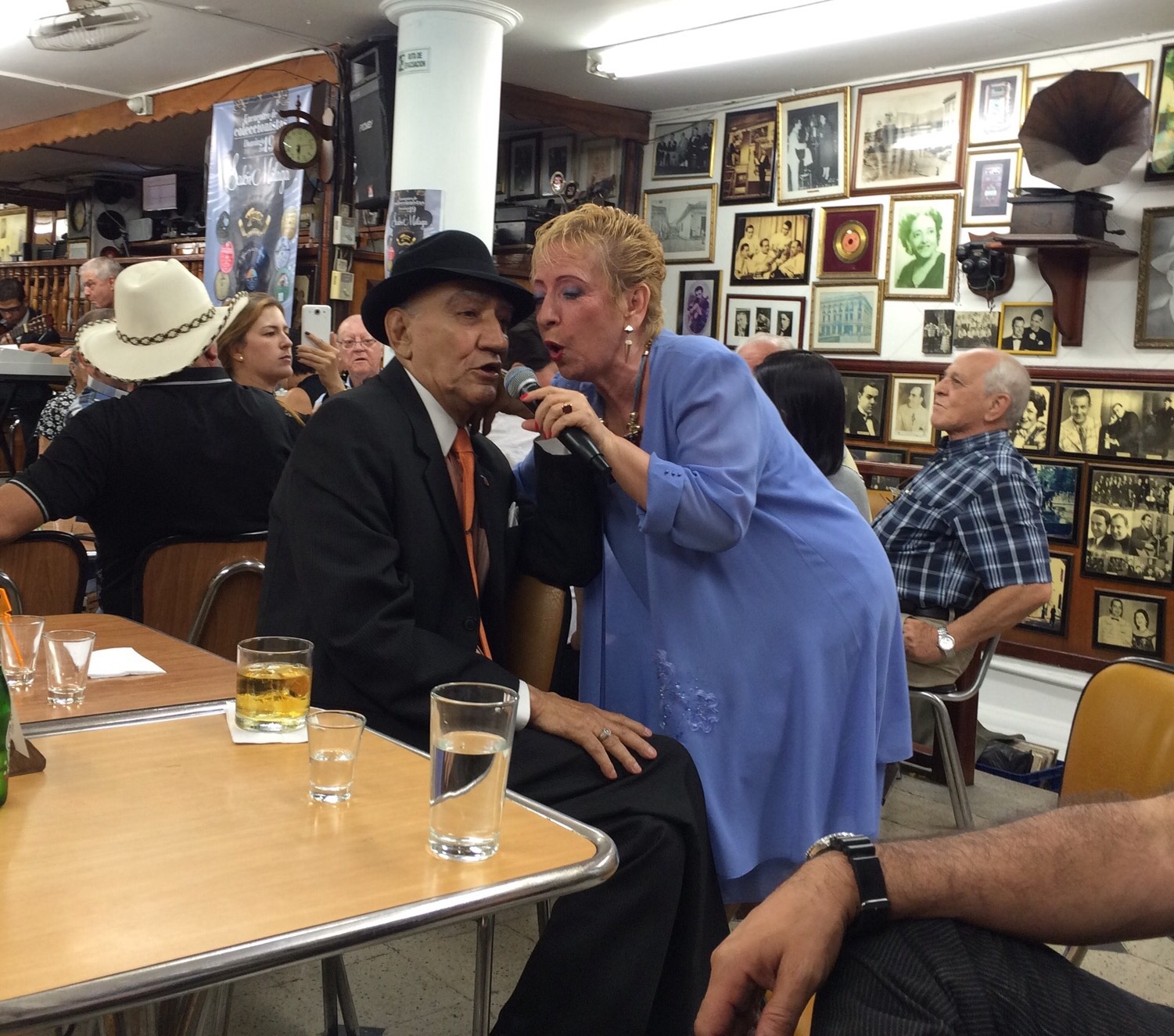
Once AGAIN, after we arrived and settled in at a table, no sign of any show was evident. Still, the scene at the Malaga was pretty entertaining.Almost every inch of wall and pillar space held photos, records, newspaper articles, plaques and awards, and more. At the table next to us, a very tall man in a black suit and fedora nursed a whiskey on the rocks. His shirt collar was white but the rest of it was covered with tangerine stripes that perfectly matched his tie. He fixed me with a penetrating stare. His tablemate had clearly tossed back so many shots of agua ardiente that his speech was slurred, and I couldn’t understand much of it, but what I picked up was that Black Fedora was a great tango artist from Argentina. This seemed credible (he certainly looked the part).
What I couldn’t believe was that no food was to be had at the Malaga. Every other institution in Colombia seems to offer food for sale, including the ubiquitous street vendors. To meet the requisite minimum expenditure, it seemed our best choice was a bottle of Argentine malbec. Drinking that on our empty stomachs would probably only improve our tango-dancing prowess, we reasoned.
Sometime long after 6, a guitarist and a keyboard guy did arrive and played tango classics as well as one can without most of the classic tango instruments. The club owner (manager? Impresario?) sang several songs and then yielded the floor to a grand dame of tango who belted out several numbers with great style. But neither of they (nor his tipsy companion) could persuade Black Fedora to take the stage. He did deign to join in with the Dama at one point, and his tango-singing ability was truly impressive.
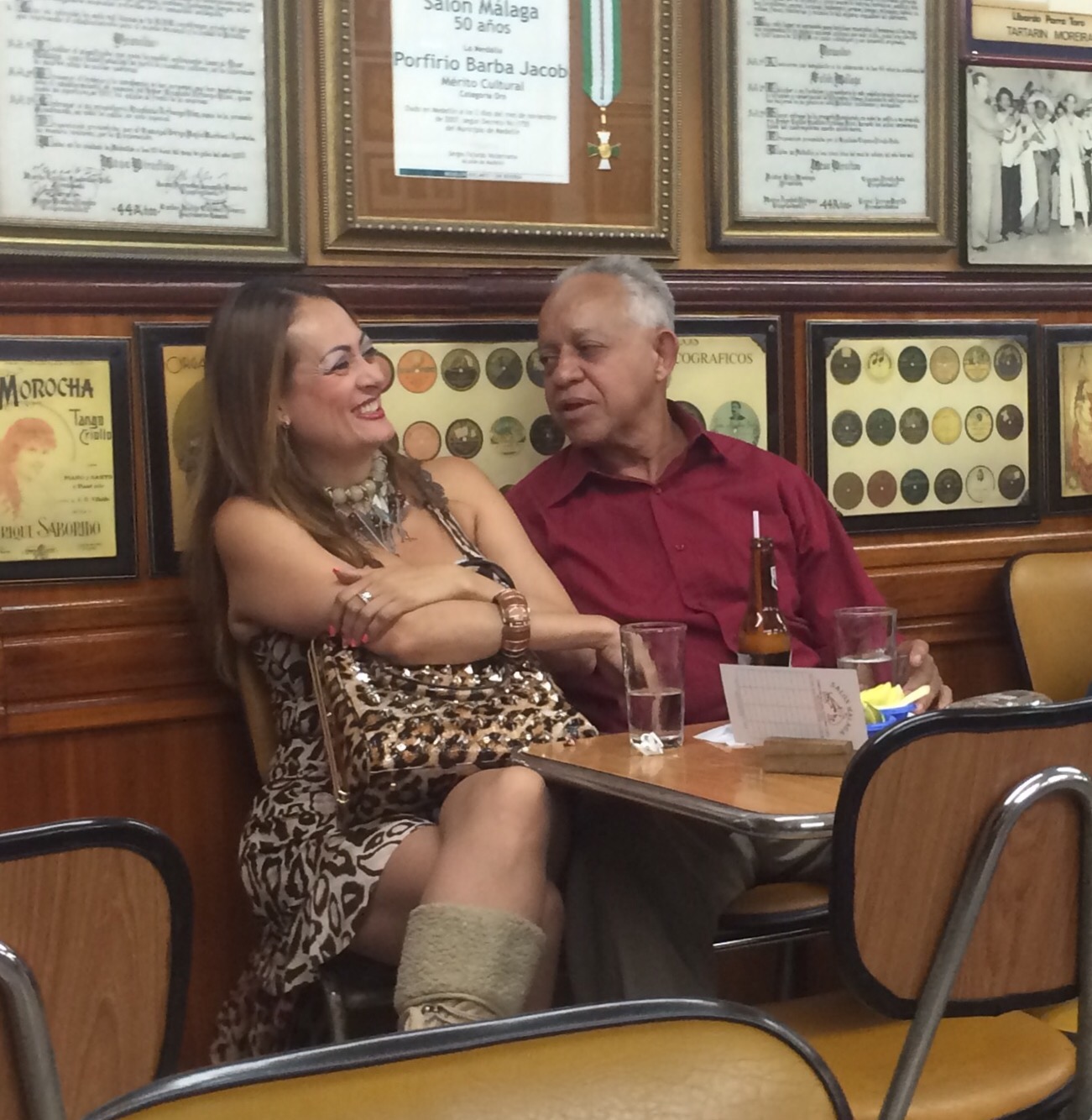
Throughout all of this, no one was dancing! Thiswould have been unimaginable in Buenos Aires. If not splendid, the Malaga’s music certainly was danceable. But I noticed that almost none of the women were wearing anything resembling dance shoes; I saw flats and even sneakers.
She was wearing boots trimmed with fake fur and 5-inch heels.About this point, I also remembered that the video clip Howard sent me, taken during his visit here, showed the club jammed with people dancing what looked suspicously like …salsa. Having polished off our bottle of wine and getting hungrier by the minute, Steve and I finally gave up…
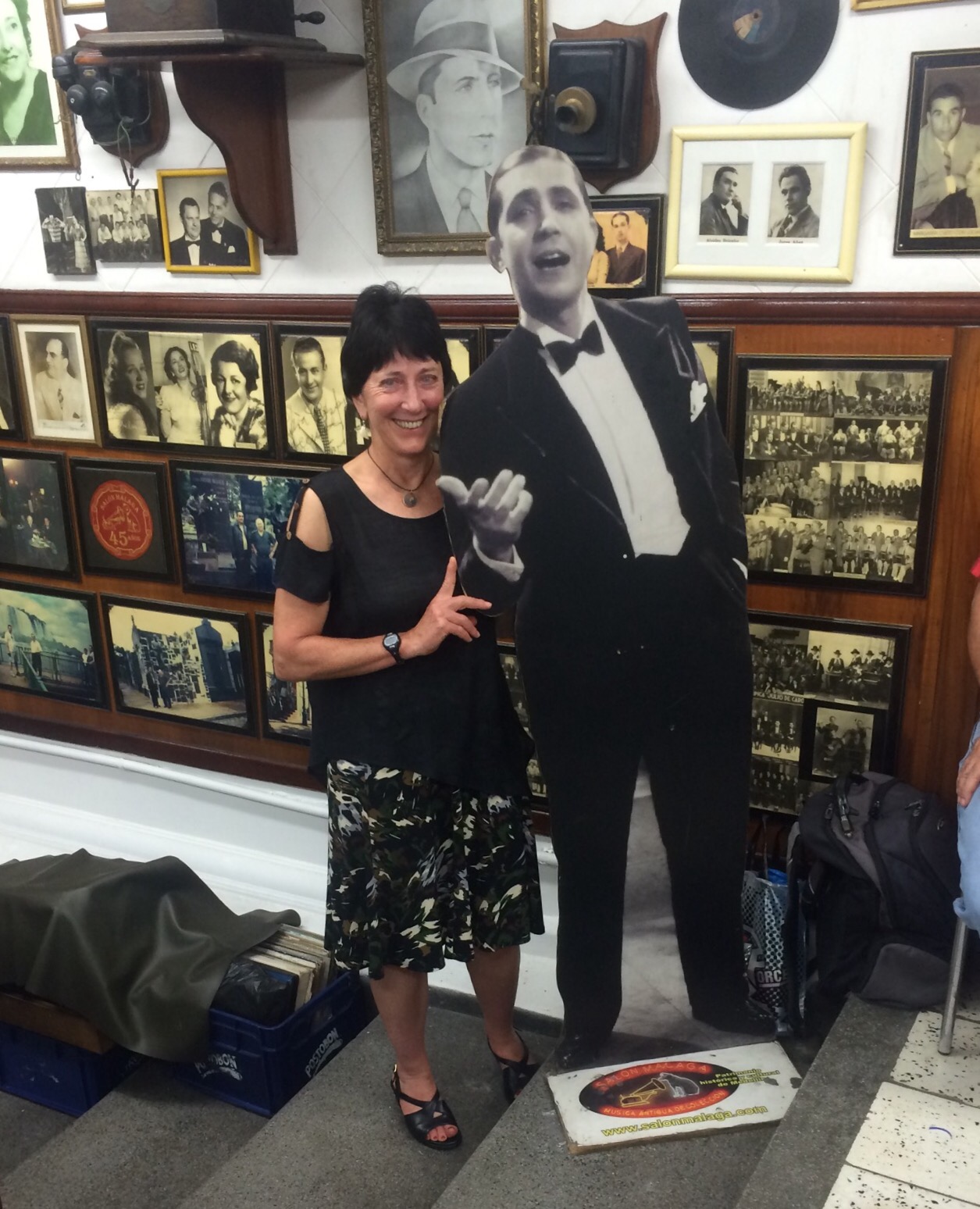
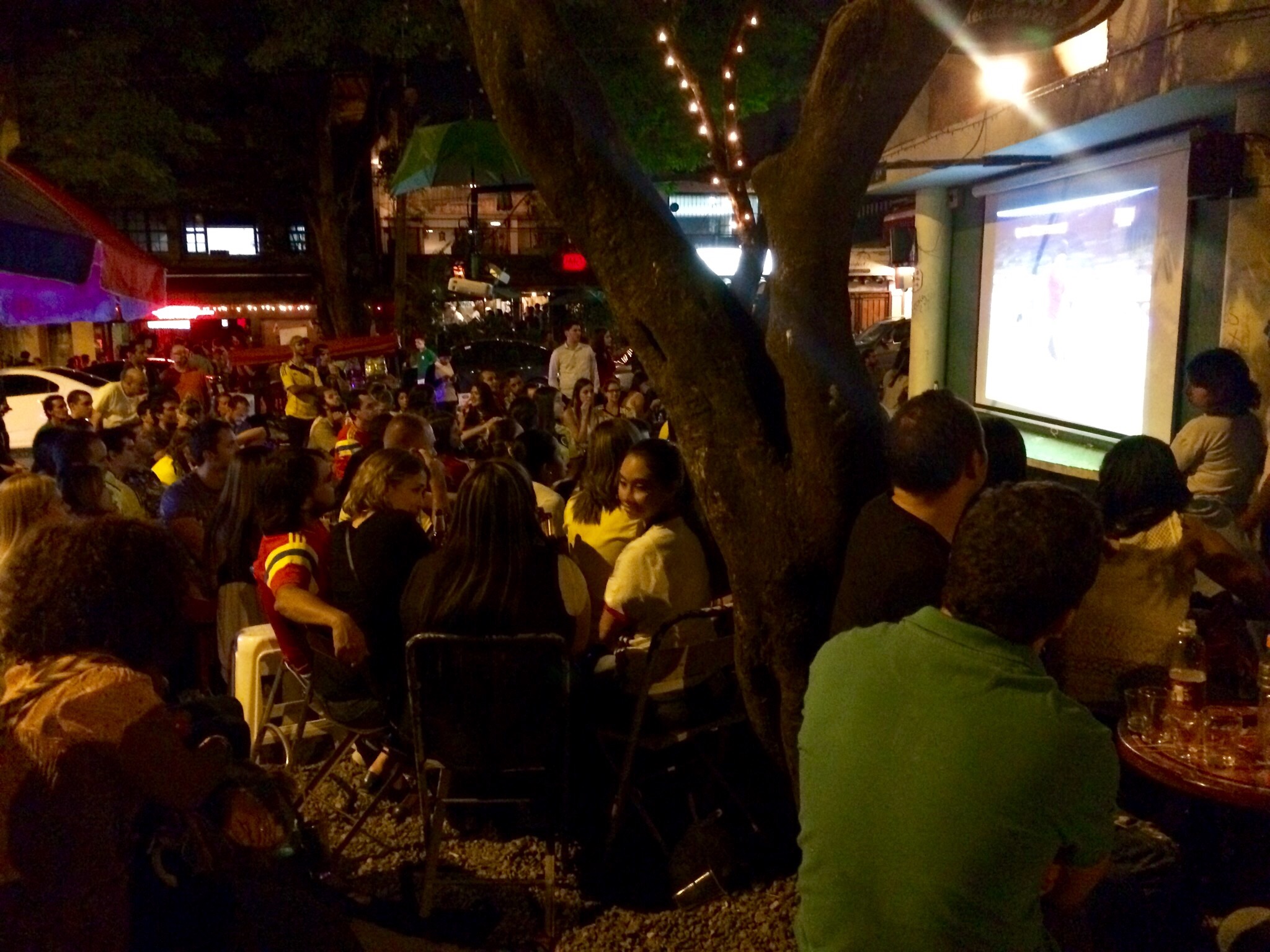
…but not before Steve photographed me with Carlos Gardel, the great tango composer who died (young) in a plane crash in Medellin.Why the tango club and tango festival if people don’t actually dance tango? I have no idea. Maybe like their salsa-dancing counterparts (and the tango-dancing ones in Buenos Aires), Medellin’s tangueros don’t go out until much, much later. As for us, we returned to the excellent Italian joint where we ate the first night, across from our hotel. We were lucky to get a table. It was the final game for Colombia in the first round of the Copa America, and every restaurant in El Poblado was jammed. Fans spilled out of the restaurants and into the streets. They screamed ecstatically, when Colombia scored a second point against the 3 racked up by Costa Rica. But the rally never turned into a rout. Everyone looked a bit deflated, and I could relate to the frustration of getting close — but not close enough — to achieving something that would have felt so good.
In the course of our travels, Steve and I have met many people, usually young but not always, who’ve embarked on big adventures, traveling for months. These folks typically have general itineraries, but they don’t book every hotel or figure out how to get from one point to another in advance. Because they have lots of time, they can play it by ear. We’ve never done that; I try to squeeze the most into the limited time we have by being super-organized. But on this trip, we finally had an opportunity to wing it.
When I was planning the trip, it made the most sense for us to fly home from Bogota, rather than Medellin (as Michael and Stephanie did). We also had a few more days, and I read about what sounded like would be a great place to visit en route back to the capital: an ecological reserve set within a deep marble canyon carved by the Rio Claro, a tributary of Colombia’s great Magdalena River. A two-night stay there would enable Steve and me to experience another of Colombia’s major biospheres: tropical rainforest.
Lonely Planet said countless buses traveled daily between Medellin and Bogota, and most would drop us off in front of the reserve. Sunday morning, after checking out of our hotel in El Poblado, we caught a taxi to the north bus terminal, hoping the guidebook’s advice was accurate. I talked to the guy in the information booth, and he said there were many, many choices. Within minutes, we had bought seats on a shiny Swedish-made Flota Magdalena directo (48,000 pesos — about $16 — for the two of us). Our printed tickets said “Rio Claro,” and with the assistant bus driver, we confirmed that the bus indeed would get us to Rio Claro in about 3 hours (mas o menos).
We took off a bit late and made a couple of unscheduled stops so that the cute girl passenger could take her Chihuahua out to pee. But I got Google maps to work on my phone, and it too confirmed our progress toward the big river. We also were sitting in the first seats behind the driver’s compartment, so I felt confident that he and his assistant wouldn’t forget about letting us off at our destination. Roughly 20 minutes after we would have arrived (had the bus been operating on schedule) we stopped in a town named Doradal to let off two other passengers. I took the opportunity to ask the driver how much longer it would be to Rio Claro,
“What?” he shot back irritably. “We already passed it. You didn’t tell me you wanted to get off there!’
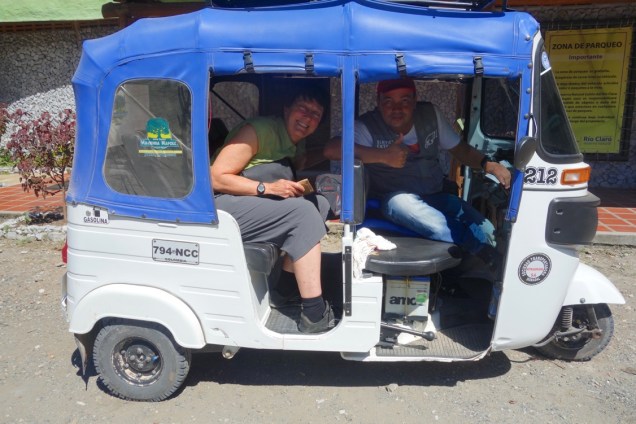
Some squawking ensued (mostly issuing from me), but we got ourselves and our bags off the bus and learned that a taxi could take us back. This cost an extra $12 or so for a 25-minute ride in a South American style tuk-tuk.
It’s nice to learn that if the bus doesn’t get you there, a tuk-tuk will come to the rescue.
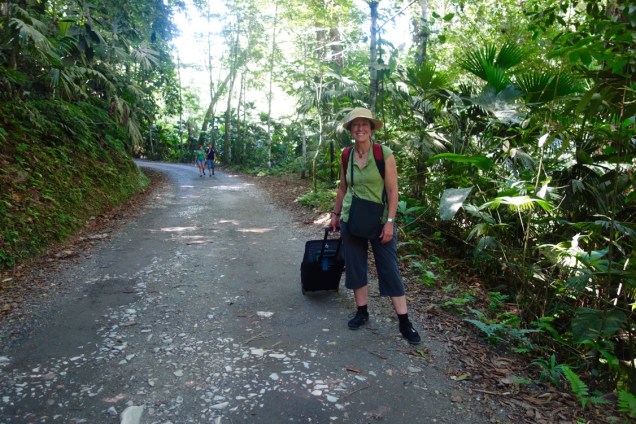
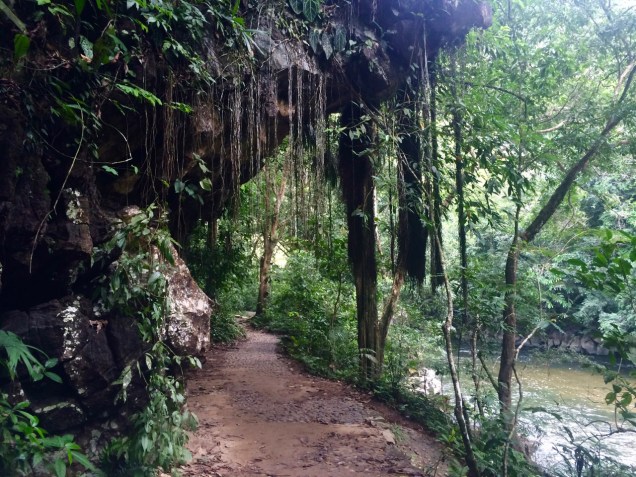
A little before 2, we walked into the reserve’s reception hall, where I was happy to hear that our reservation was in order. (Making the reservation had been another complicated exercise.) Our adventure in improvisional transit didn’t quite end there. We had to haul our rolling bags down a half-mile-long dirt and stone path that took us deeper and deeper into the sweltering jungle.
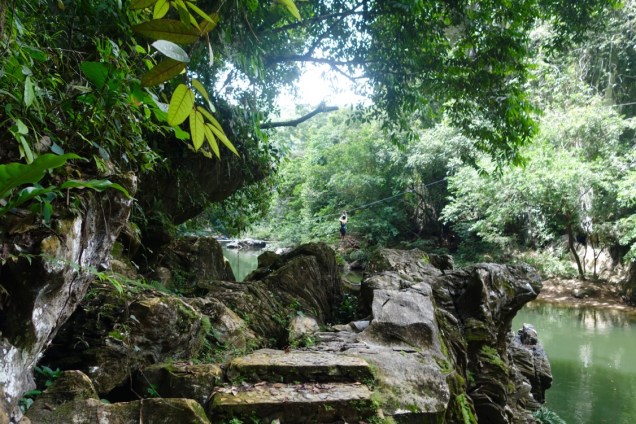
We got the key to our room from the Reserve’s activity center, then we had to lug all our stuff another half-mile along the river to a flight of steps mostly paved with rough marble stones.
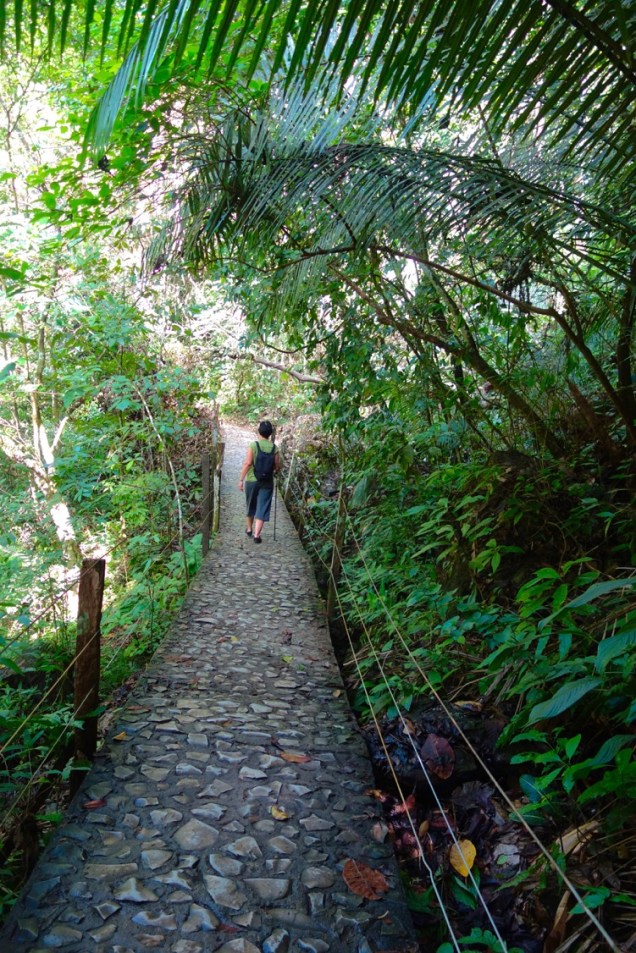
The path also included some footbridges, like this one finished with chunks of marble.
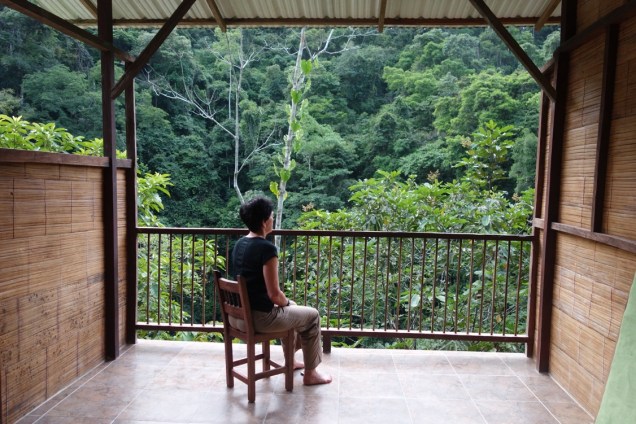
We hauled our bags up the 104 steep stairs that led to our private cabana (roughly $60 a night, all meals included). As soon as we opened the door, it all seemed worth it.
One whole side of our large room was open to the jungle. A superb spot for meditation!
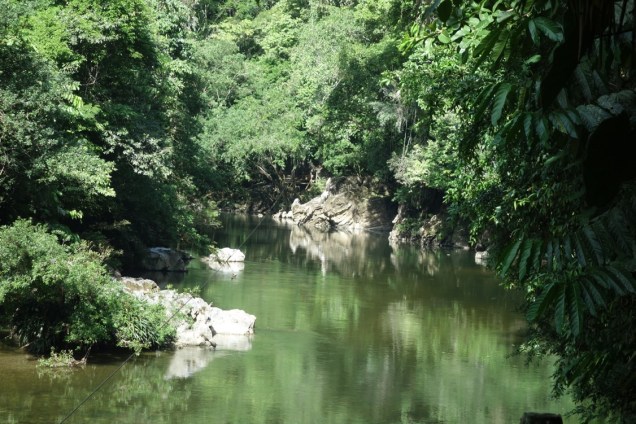
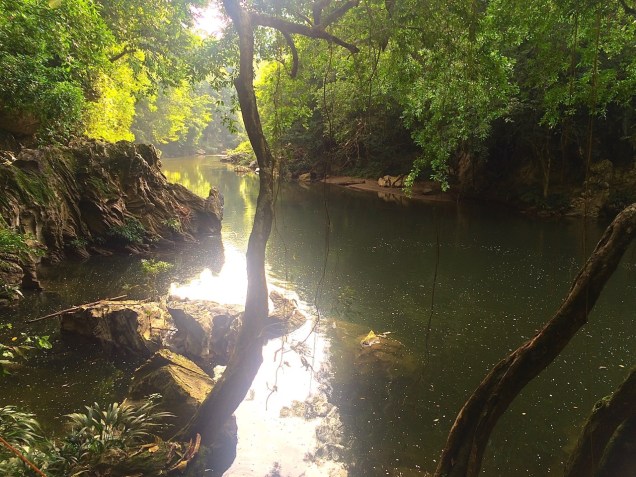
Despite the climb, despite all the sweat which at times literally streamed from us, the reserve was a magical place. We learned that it is privately owned by a local cattleman-cum-conservationist. It includes more than 1000 hectares (almost 2500 acres), much of which at least appears to be virgin forest. The river may not be crystal clear (claro), but after seeing far murkier looking Colombian rivers, we could understand the choice of the name.
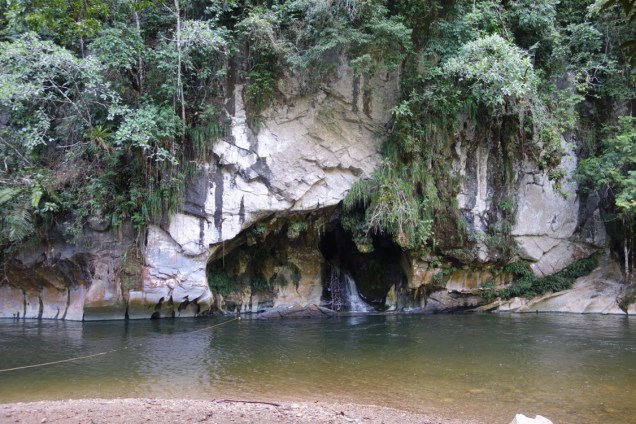
The vegetative landscape is almost indescribable. You could spend a week staring at it and not count all the types of trees and shrubs and ferns and bromeliads and other riotous plants that compose it. Although the river’s rapids range from only Level 1 to Level 3 (depending on the water level), the rushing water sounded loud even from our cabana so far above it. Over the millennia, the force of the water has carved a magnificant network of caves into the marble.
In addition to gaping at the staggering beauty of the place, a number of more structured activities are offered to visitors, several of which Steve and I took advantage of. On Monday, we hiked for more than an hour on the riverside trail, and then I enjoyed my first experience with zip-lining. (Steve declined, claiming he needed to be able to get me to the hospital).
The course included three separate lines that enable you to zoom over the river. Steve also served as photographer. Can you spot me?
That turned out to be unnecessary, so in the afternoon we took part in a three-hour rafting excursion that had us paddling through the gentle rapids but also swimming in the river, hanging out in a huge cave, being drenched by a bankside waterfall.
Technologically, the reserve was pretty austere — no wi-fi and very little cell-phone service. That’s why I couldn’t post anything for several days. We left the reserve Tuesday morning (via taxi to Doradal and then bus on to Bogota), and on that final leg of our Colombian exploration, the bus didn’t break nor did we miss our stop. We went home, but that’s nothing to blog about.
The entrance to the reserve is right by the side of the road and pretty flashy. A little hard to miss.
I didn’t expect to fall in love with any place that instantly conjures up images of drug-fueled violence. I’ve liked most of the South American cities I’ve visited: Buenos Aires, Cartagena, Montevideo, Arequipa, Bogota, Cuzco — even dreary Lima had its charms. But I’ve never fantasized about moving to any of them, as I did in Medellin. That’s my test of when a place has really hooked me.
Let me count some of the hooks.
First, the setting is strikingly beautiful. Medellin developed along the banks of a river that rushes through a valley. Lushly forested mountains rise almost 4000 feet above the valley floor. Although poor settlements have crept up some of the vertiginous hillsides, they look like glittering tapestries embroidered on the green fabric, rather than blight. Frequent rain washes the air clean, but we had at least partial sun and temperatures in the 70s and low 80s every day of our stay. Medelliners boast that they live in the City of Eternal Spring.
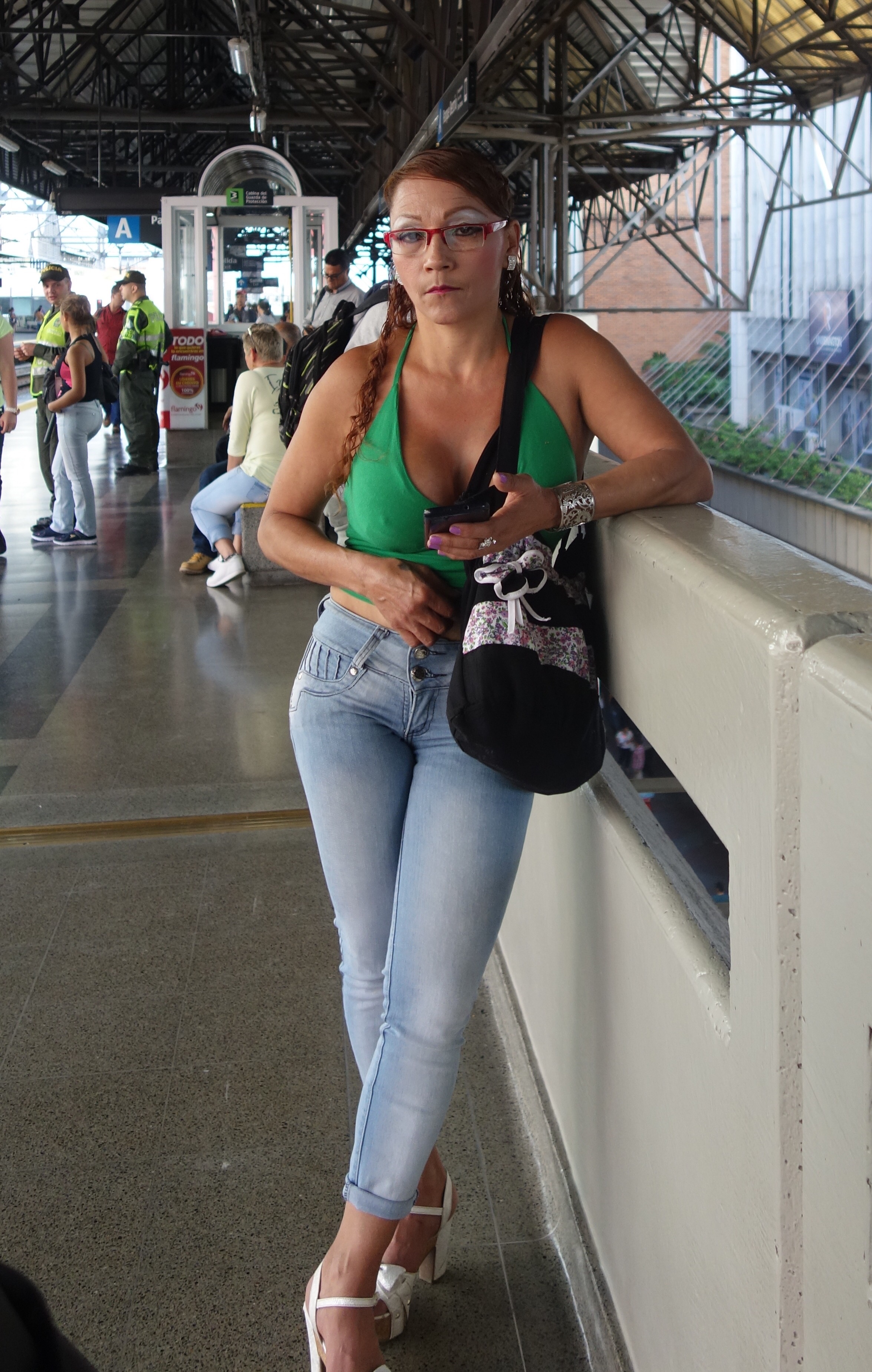
The energy of the Paisas (as the folks in this region are known) is palpable. Streets and plazas crackle with all manner of activity. At times I mused that it reminded me of New York. But New Yorkers are tenser, more harried. The folks in Medellin have a relaxed sensuality, expressed in part in the way women dress — Haute Slut, Steve and I came to think of it. Females from 14 to 70-plus pour themselves into skin-tight jeans, often shredded strategically to reveal more skin. They wear lots of jewelry and carry flashy purses. Necklines plunge to show off cleavage that’s often enhanced with silicone. (Plastic surgeons thrive here.)
She’s got the look.
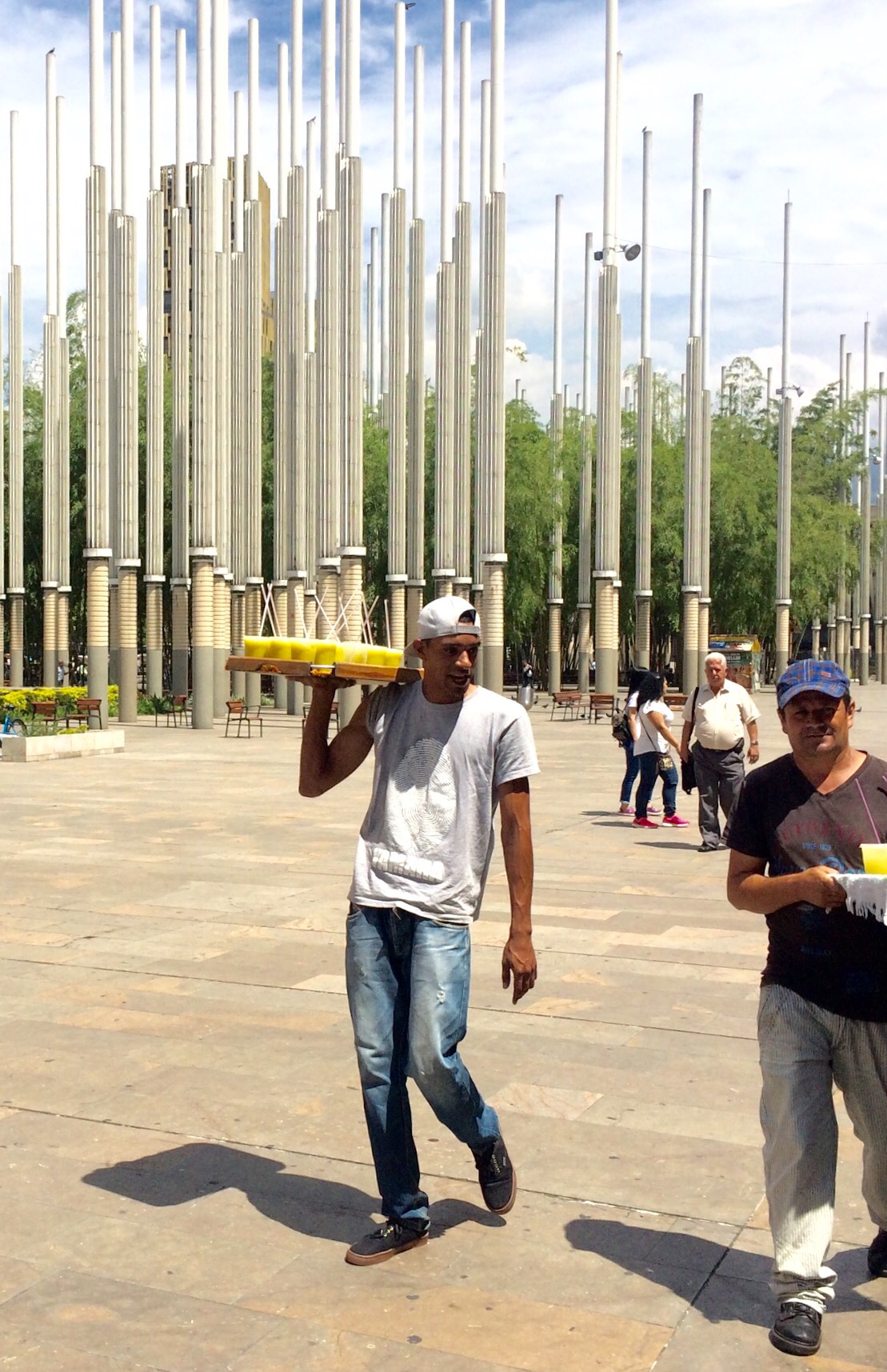
The men clearly are appreciative. We enjoyed the interplay that developed between our walking-tour participants and some local lime-juice vendors. The juice salesmen flirted, cajoled, implored us to buy some of their tasty drinks. They sold some to a couple of the pretty European young women on the tour. Finally, they peeled off, with one of the guys calling out, “Adios mi amor!”
“Which one are you talking to?” our guide shouted after him.
“She knows,” the juice-vendor shot back, slyly.
The flirtacious juice vendors
Some of the blatant sex is sleazy: tables of hard-core DVD porn in the pedestrian streets (right next to other tables filled with animated kid fare and shoes and jewelry and t-shirts and a hundred other types of wares. We were fascinated to learn the most common place to find flesh-and-blood sex for sale. Prostitutes lean against the walls of big churches in the centro, or strut through the ecclesiatical plazas. Apparently Colombian men appreciate the convenience of being able to dash into the church and ask forgiveness after a quick coupling in a nearby cheap hotel room.
The prostitution is legal, according to our guide. In contrast, violent crime seems to have disappeared from large parts of the cityscape. Pockets still exist where muggers roam, and you wouldn’t want to venture there at night. But we felt safe catching taxis in the street and walking in a wide variety of neighborhoods. In a broad sense, Medellin feels like a city that has come back from the dead.
Back in the late 80s and early 90s, it was THE most dangerous city on the planet. Hernan, our marvelous walking tour guide, said it was even more dangerous than Beirut, then in the grip of a civil war. Medellin’s besieged inhabitants were dealing with the consequences of many internal struggles. It was a city of not just muggers and pickpockets but one where men threw grenades and set off bombs in public spaces; where warring drug lords launched the most bloodthirsty attacks against their rivals and their rivals’ allies. The 50-year-old political and military war between Colombia’s Communist revolutionaries and their fascistic counterparts on the right added poisonous fuel to the fires.
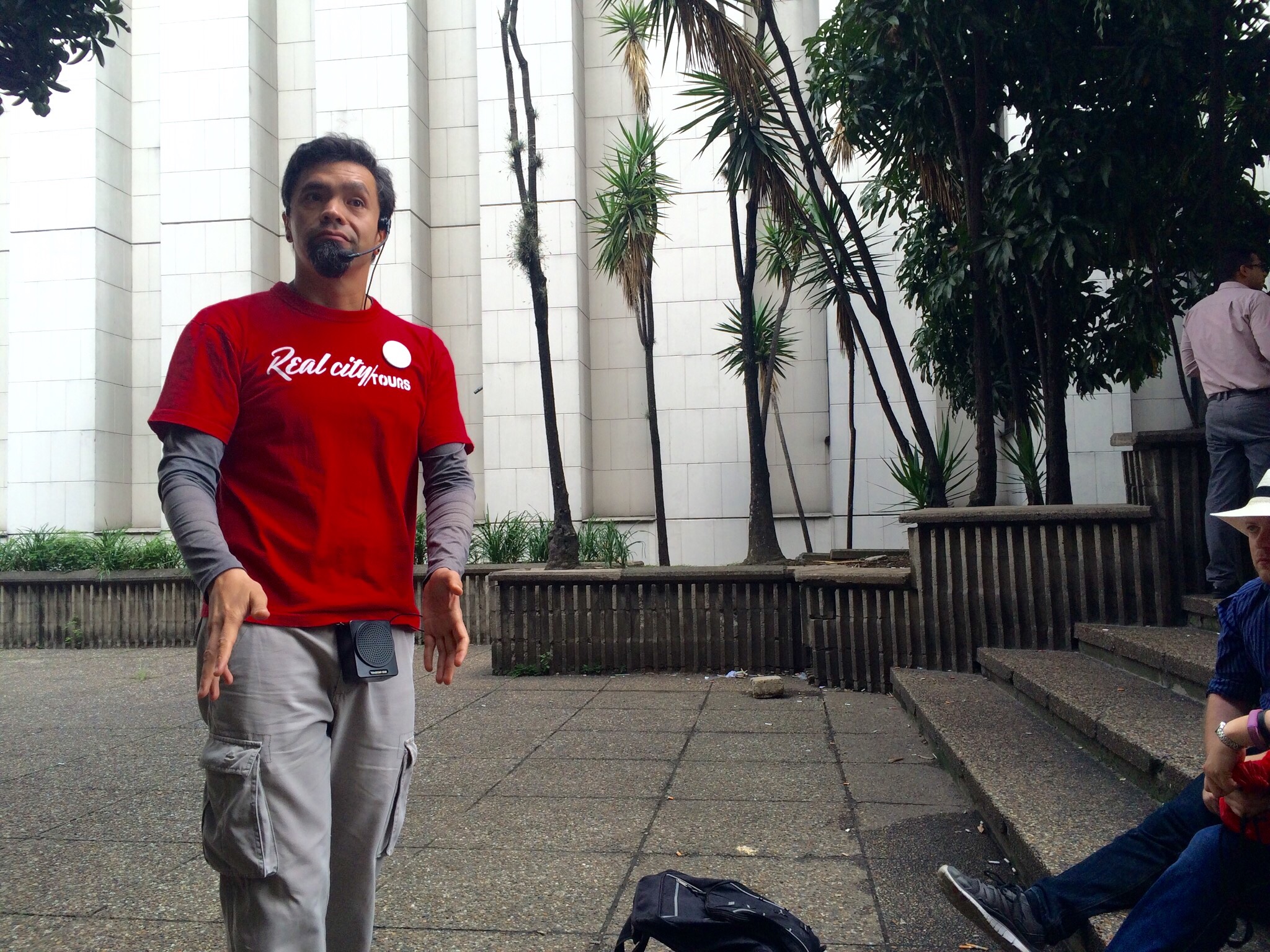
Hernan, a former college professor, was one of the best guides we’ve had anywhere
Today residents boast that the city ranks among the safest in South America. Multiple factors have contributed to this, and I won’t even try to explain them. (I understand them better now but still by no means completely.) One is that a heavy-handed strong man (former president Alvaro Uribe) worked hard in the early 2000s to establish what he called a “security platform.” Lots of rights got trampled on during that process, but the overt violence was quelled. At the same time, access to education was expanded dramatically. Six years ago, the government opened negotiations with the left-wing rebels who have fomented so much shocking violence and kidnappings over the years. Hernan, the guide, said another important component was the Medellin government’s embrace of something locals refer to as “democratic architecture.”
What that jargon translates to is investing tax dollars to transform decaying, crime-ridden sites into spaces that foster community. We visited two of the most prominent examples of this, and both dazzled me.
In a couple of neighborhoods, the city has built a cable-car system to carry folks up the tortuous grade. So mostly it’s middle-class and poor folks whose lives have been significantly improved. Still, for tourists like us, it provides a fascinating aerial view of all the life unfolding below: dogs barking on balconies, orange-suited workers sweeping the streets, children walking next to their mothers.
Higher up the hillside, small farms appear.
The cable car line we took up (free to Metro riders) connects with a second cable route that continued on past the barrios to skim us for five minutes? ten? over wild forest, finally terminating at a huge nature preserve and park.
Then you skim over a impenetrable looking forest
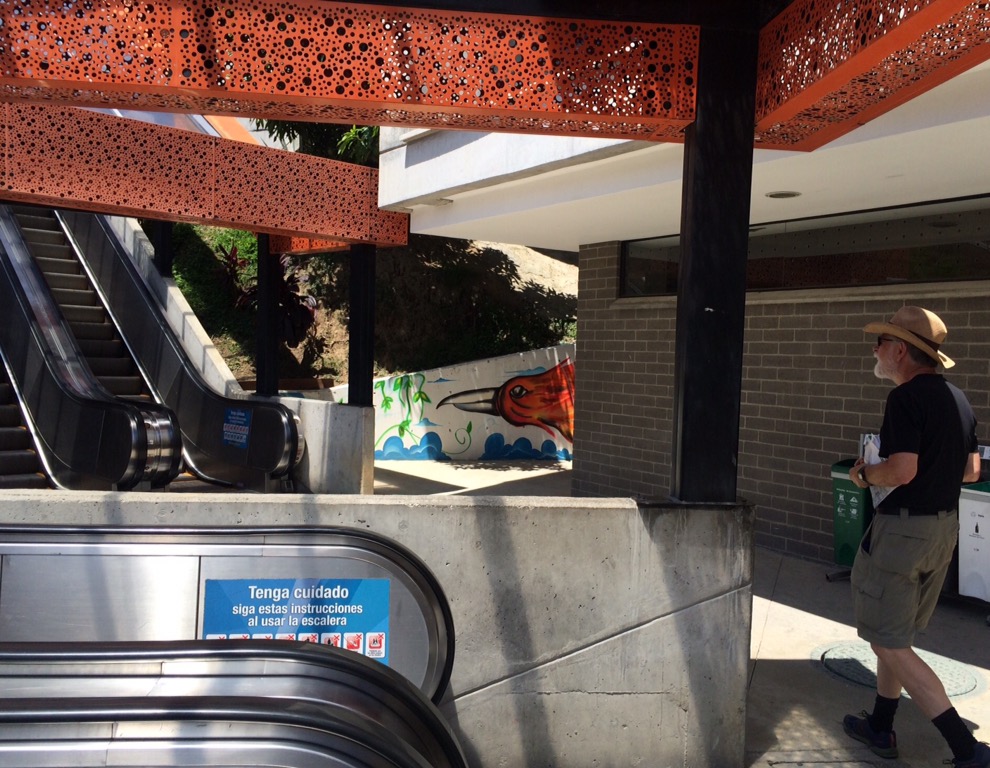
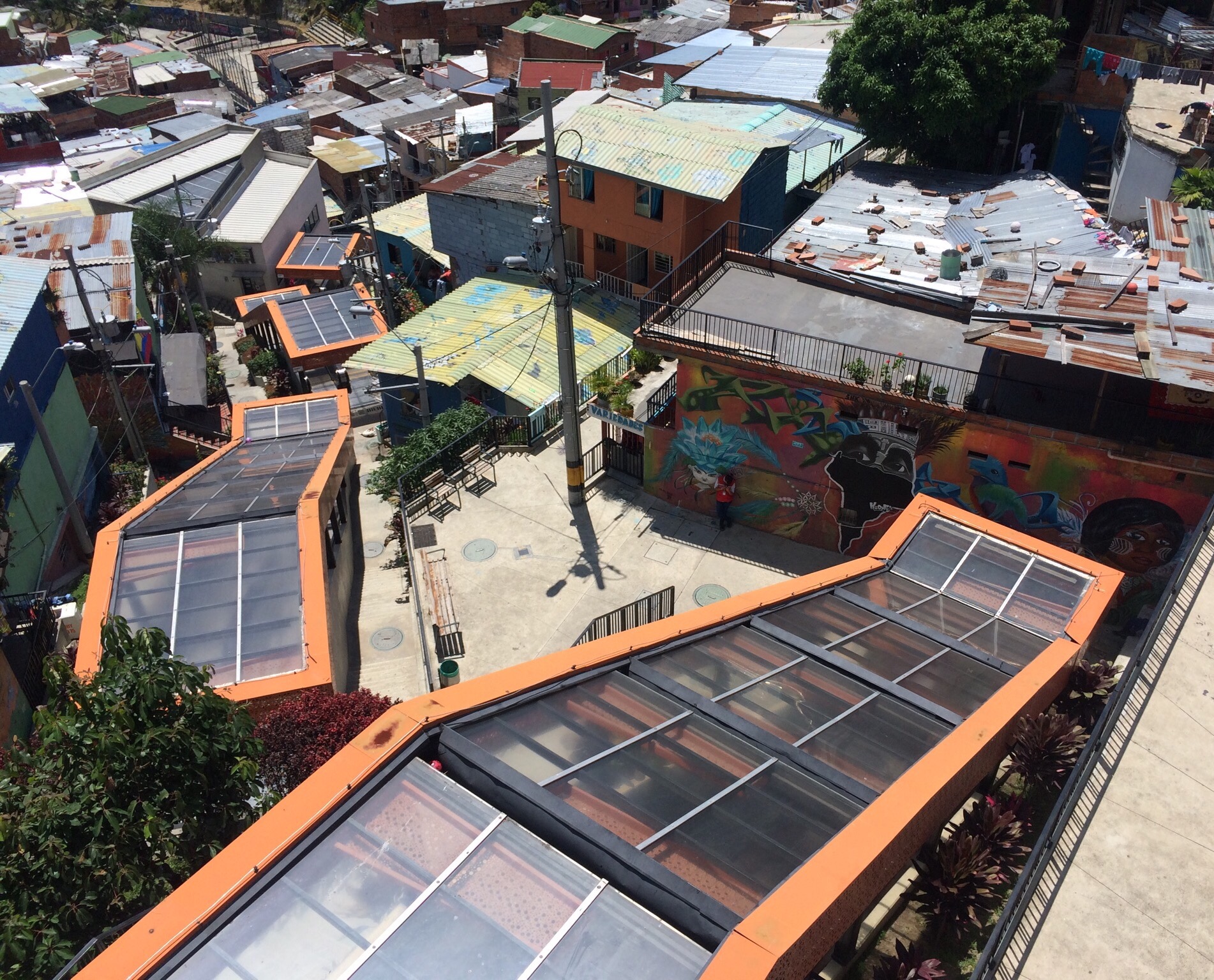
Yesterday, after Mike and Stephanie departed for their trip home, Steve and I took the metro to another neighborhood to see the series of six escalators that have been built there. They too are free to ride, and they make it easier to survive in this densely vertical community where there are no roads for cars. Along with fantastic murals, large signs have been posted thanking visitors for coming. I lost count of the number of locals who greeted us with warmth and obvious pride.
Looking dwn on the escalators that carry people up into the Commun 13 neighborhood.
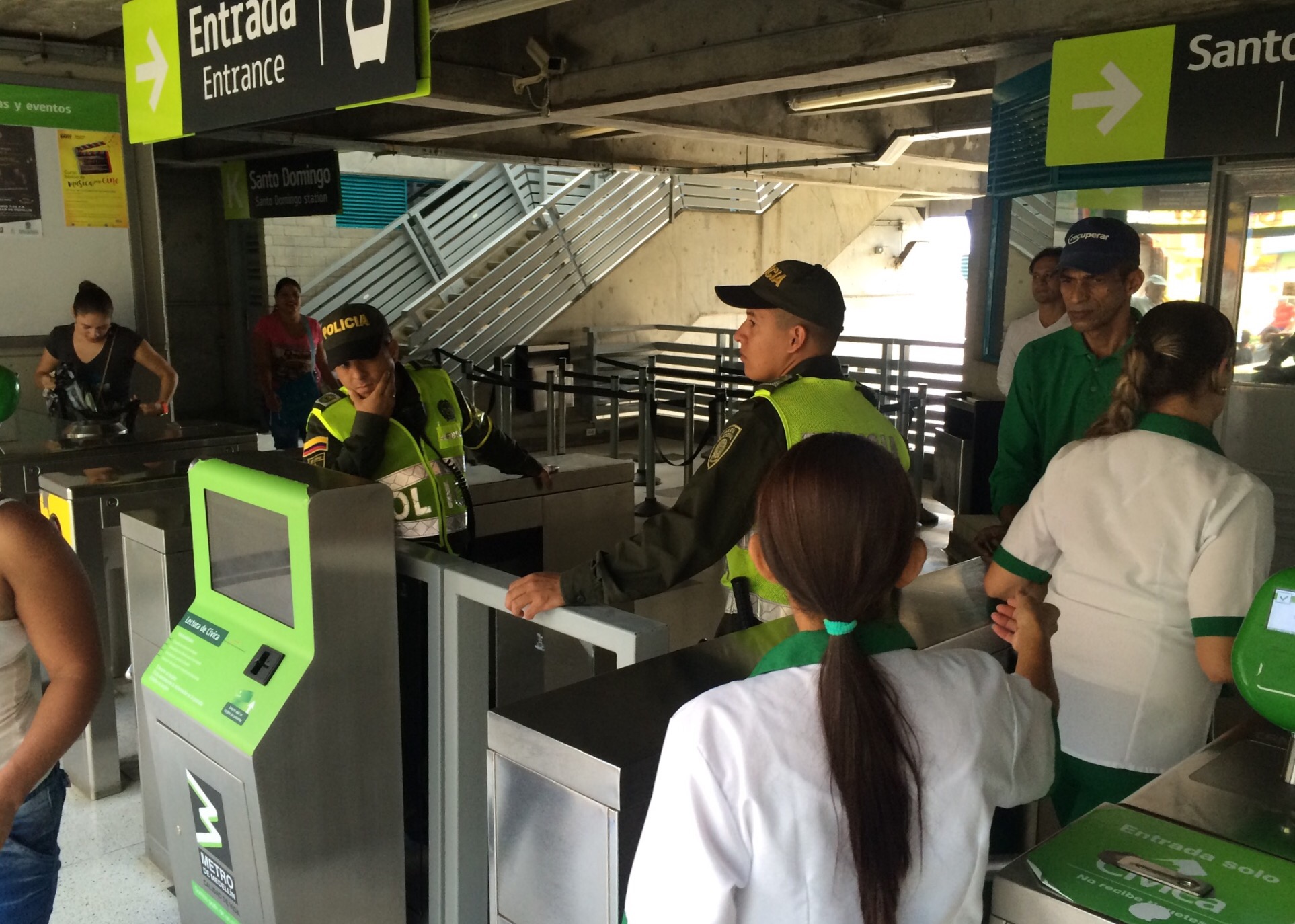
On Medellin’s metro, which we rode many times, I saw other evidence of bountiful courtesy. The system is not very extensive. It runs on elevated track, and mainly along the riverbed, but we learned that it was easy to connect from it to inexpensive (and ubiquitous) taxis.
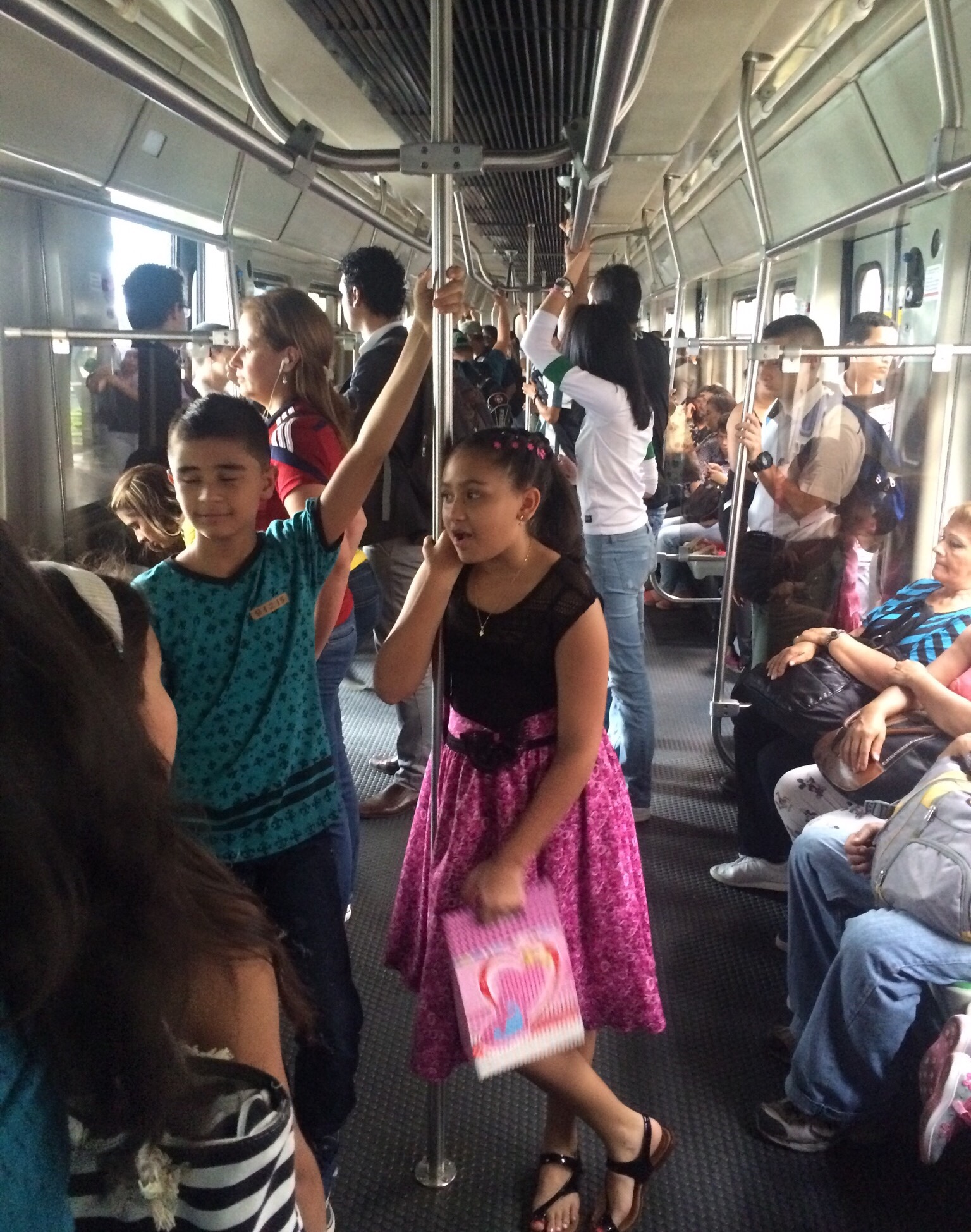
Metro rides only cost about 75 cents, and the cars come along often. Although the system is now 20 years old, no part of it has been defaced or graffitied; everything looks spotless and gleaming. Several times I witnessed young men or women rise to offer their seats to mothers carrying small children, or once, to an elderly nun.
Hernan said this is because the metro was built during the city’s darkest days, when Medellin was a hellish place. The creation of the metro gave people hope. It helped carry Medellin’s residents into a time of rebirth. That’s why they’re proud of it; why they cherish it.




 You bit into the delicate packaging of pasta to encounter a delicious present within. We ate dinner in another dive reputed to have the best beef noodles in the city. The line to get in stretched out into the street even when we arrived after 7:30.
 But all the families and working folk inside ate fast and paid fast; no sitting around and gabbing and digesting at those tables. We followed suit, then hit the street in search of a current fad in Taipei — soft-serve ice cream.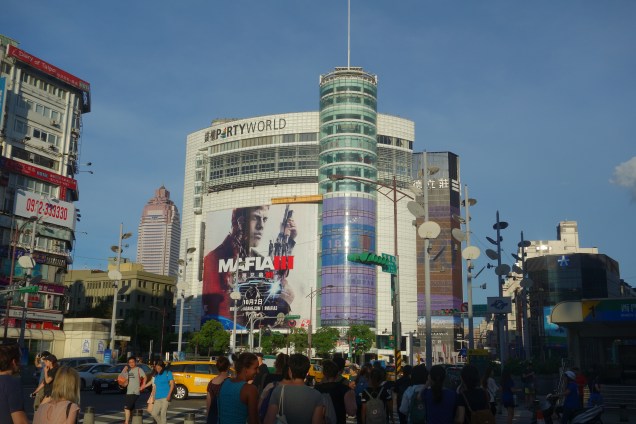



 At home and abroad