 I don’t call myself a Buddhist, but in recent years, I have found much to admire in the teachings of Siddhartha Gautama (the northern Indian prince who became the Buddha). About 2600 years ago, he famously found enlightenment in a specific place in India: sitting under a fig tree in what is now the small town of Bodhgaya. When I learned that a direct descendant of that tree was roughly on the path between Kolkata and Varanasi, I wanted to see it.
From my clean, orderly desk in San Diego, this seemed reasonable. The Indian Railway website said several days a week a train left Howrah Station in Kolkata at 8:15 am that would arrive in the city of Gaya around 2:50 pm. From Gaya to Bodhgaya was supposed to be only a 30 or so-minute ride in a taxi or auto rickshaw. Lonely Planet said if there was space, we could stay at the peaceful Root Institute for Wisdom Culture, located in “a tranquil, tree-shaded part of town.” A double room with a private bathroom would cost about $20 a night, and we could join in the daily 6:45 am meditation session. As soon as I could, I made a reservation for two nights.
Our journey started off so well! The previous week, Steve and I had walked to Howrah Station to scope out the place. It’s a vast, churning complex, but we managed to find the platform we would depart from. On the actual departure morning, we checked in at the “Enquiry Office,” where the English-speaking clerk scrutinized my printed reservation and instructed us to board at Platform 9. We found our compartment (C in coach H1), took our seats, and chugged out of the station exactly on time.
Just two weeks into our Indian travels, we’ve identified a pattern in our interactions with the locals. We’ll take our seats next to someone on a train or a plane, and at first our seat mates are circumspect. We wonder if they even speak English. (Many people do, but more do not.) After a while, someone will ask one of us a question (often “What is your country?). We answer, and we’re off on a long, entertaining, invariably eye-opening gabfest.
This has happened over and over, and the Poorva Express to Gaya was no exception. One of our compartment mates was Swapan Chakraborty, a 43-year-old entrepreneur (clothing manufacturing and small hotels, among other things.) Another, Deepshri Bhattacharya, was a beautiful and perky 24-year-old who worked as a communications manager for a company off-sourcing customer service. (A third passenger, a 60-year-old business associate of Swapan, didn’t appear to speak any English.) For hours, we chatted happily about everything from the Bihari coal-mining industry to Deepshri’s dreams of graduate study in Canada.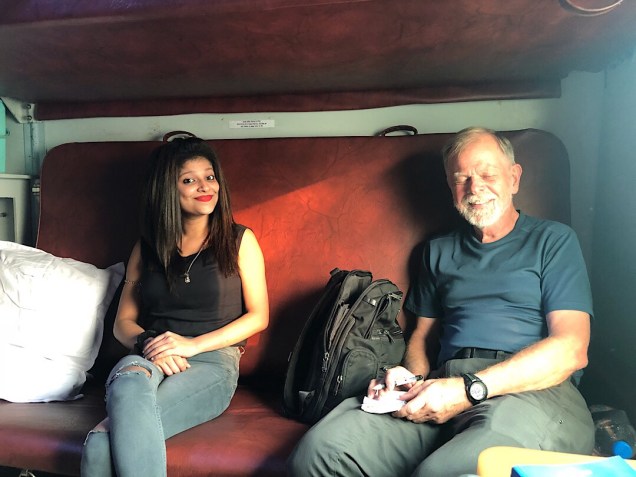 Sometime in the early afternoon, Steve noticed on our maps app that the train seemed to be headed away from Gaya, but we guessed it would take a turn south at Patna (the capital of the state, Bihar), and arrive at Gaya probably hours late. It was only about 3:30 that an announcement in Hindi caught Deepshri’s ears. “This train isn’t going to Gaya!” she exclaimed! “It’s going to Patna instead!”
“What?!?” I croaked.
After consultation with one of the conductors, who early in the trip had taken our ticket printout, scrutinized it carefully, and checked us off his own list, everyone agreed that sometime between when I bought the ticket (back in July) and now, the railway authorities had changed the routing. But no mechanism appeared to exist to let us know this, including the conductor’s reading of our ticket just a few hours earlier.
If there was a silver lining to this little travel tornado, it was the time we spent brainstorming with Swapan and Deepshri about what we should do. We could catch one of the local trains in Patna and arrive in Gaya before 10 pm, Swapan insisted. Or we could hire a taxi to drive us directly to Bodhgaya (but that would be expensive; it would involve driving for 3-4 hours in the dark, and we had no idea whether the Root Institute reception desk would even be open whenever we arrived.)
Here I should mention that while in Darjeeling, I had decided maybe we shouldn’t stay at the Root Institute for two nights. Our train to Varanasi on Saturday morning would be departing from Gaya at 5 am. From my orderly desk at home, I’d figured we’d have to get up at an ungodly hour (3:30 am?) but we could then take a taxi from the Root Institute to Gaya in time to catch the that pre-dawn Varanasi train. After our nightmare ride on the toy train, however, I began to think maybe it was insane to assume this would work. So I’d made a reservation online for a hotel in Gaya after our one night near the famous bodhi tree.
With the news of the routing change, and knowing that we had a hotel in Gaya for the next night, Steve and I finally came up with this plan: get off the train in Patna, find a hotel there, then catch a morning train to Gaya. We’d miss the Root Institute entirely, and this made me sad. But with luck, we reasoned, we might arrive by noon, drop off our suitcases at the Gaya joint I’d booked, and have most of the afternoon at the Buddhist holy site.
This is mostly what we did. Pulling into Patna, we exchanged tearful goodbyes with our new best friends for life, Deepshri and Swapan. Then we disembarked into pandemonium; if you told me 50,000 people were crammed into the station and its immediate surroundings, I’d believe it. Somehow we dragged our suitcases up and down multiple sets of stairs — 14 stories worth, according to my iPhone’s Health app), and shouldered our way out of the throng to check in at the City Centre Hotel, included in our guidebook and within sight of the train station. To say it lacked charm is an understatement. But we walked from it to a good South Indian vegetarian restaurant we found with the help of Google Maps, slept well enough…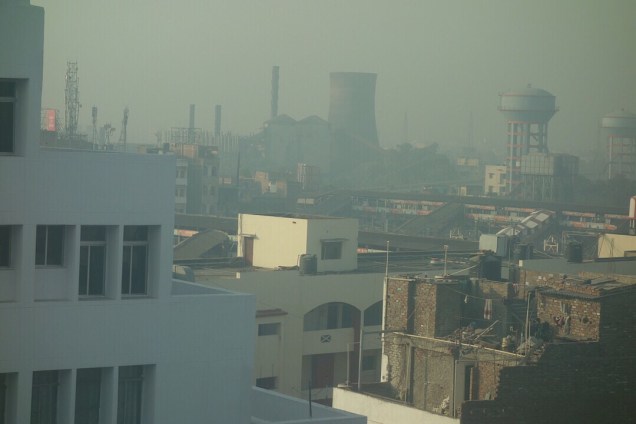 Dawn in beautiful downtown Patna, from our hotel window.
…and the next morning, in the madhouse of the station, miraculously secured tickets to Gaya.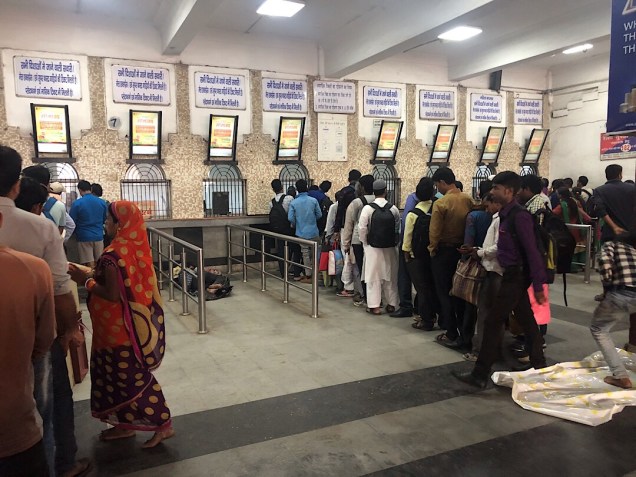 This was a big challenge for our puzzle-solving skills; we missed catching the 6:45 am express train, but we caught the express at 11:15, which not only left Patna on time; two and a half hours later, it also arrived in Gaya right on schedule. En route we were entertained by a wide-ranging conversation with a banker from Patna (to which about 6 other Indian guys in our immediate vicinity raptly listened.)
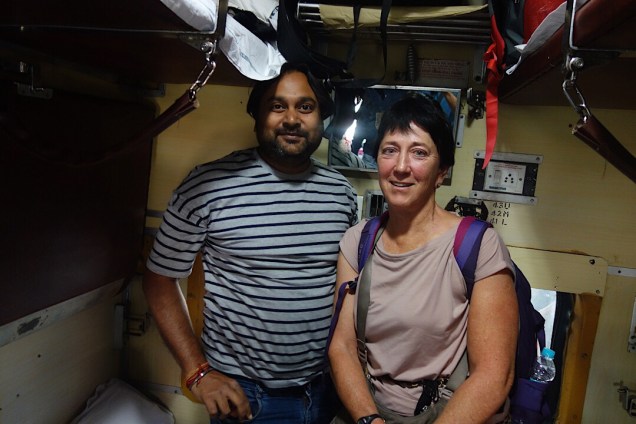 The banker and I
The Gaya hotel was even worse than the one in Patna, but we didn’t linger after dropping off our bags. We were on a mission.
The auto rickshaw rides to and from Bodhgaya were jarring, terrifying, indescribably loud; by the time we reached our destination, I felt like blood should be running from my ears from the audible assault. But I’m happy to report the main temple complex, a pedestrian-only zone, is lovely. Steve and I strolled down a broad clean pathway along with hundreds of other pilgrims under rows of fluttering flags.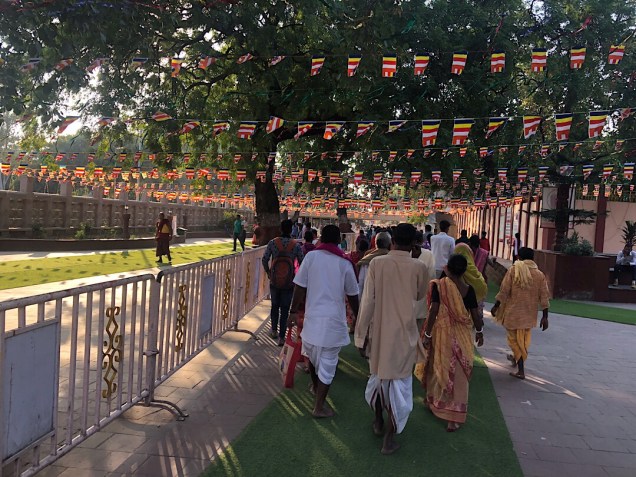 The mood was calm and serene. Outside the main entrance to the most sacred buildings, we had to deposit our cellphones in a locker and pass through a metal detector. (Apparently some wacko set off a bomb a few years ago.) We also hired a guide who turned out to be excellent.
He showed us the highlights: a beautiful meditation garden, numerous shrines, a dramatic, enormous temple structure — and growing next to it, the famous tree. It is a massive, tangled creature but only 140 years old, our guide told us, the fourth generation of the tree that sheltered the Buddha-to-be.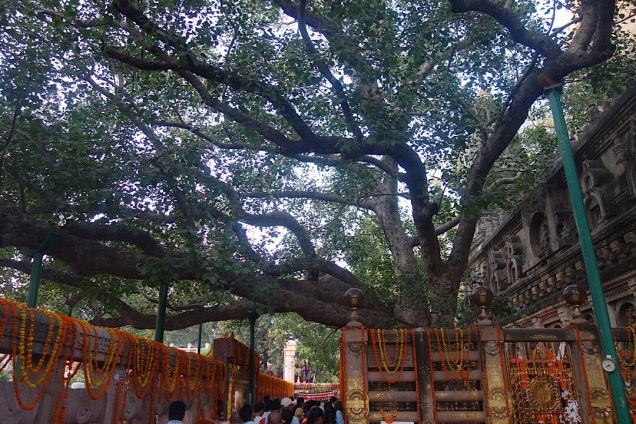 .
.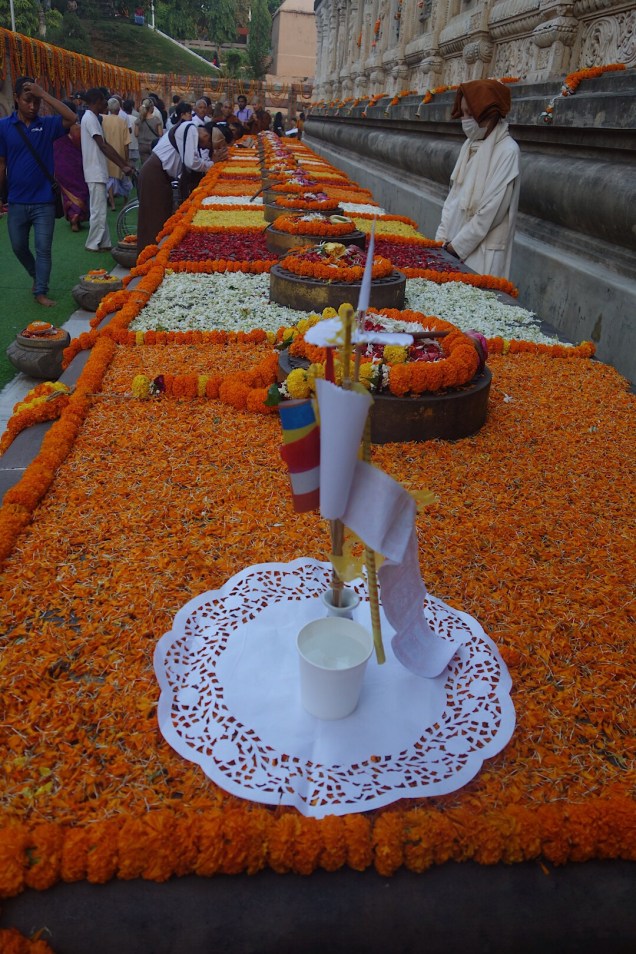 Devotees had prepared this offering to the tree.
Buddhists from all over the world shuffled past it and congregated near it. We noted Tibetans doing their bizarre prostrations; acetic looking Japanese, Burmese Buddhists, Indian Buddhists, others meditating in groups. It was a bit chaotic, and I longed to instead meditate in the lovely garden or some other peaceful spot…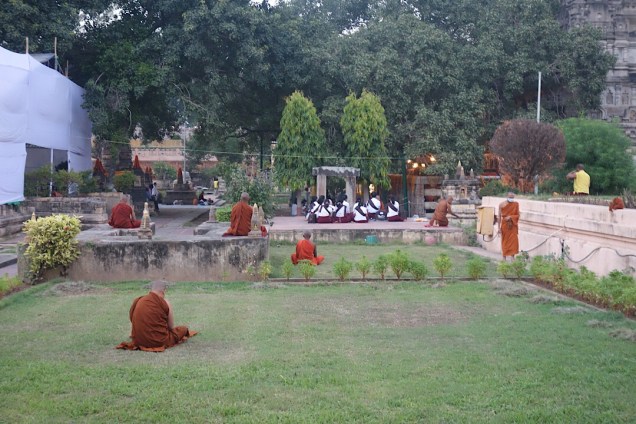 Like this…
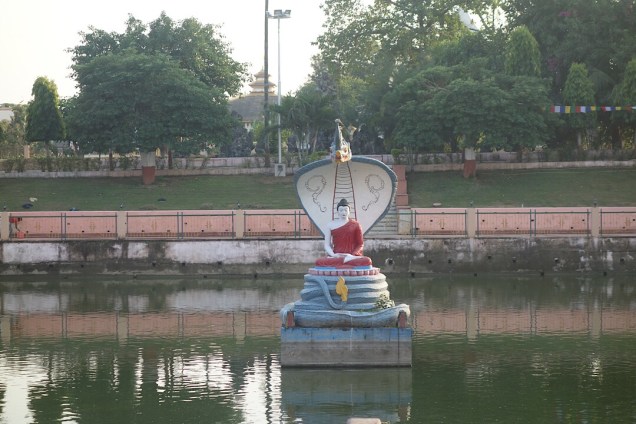 Or this…
Or to stay until dark, when our guide said the grounds were most beautiful.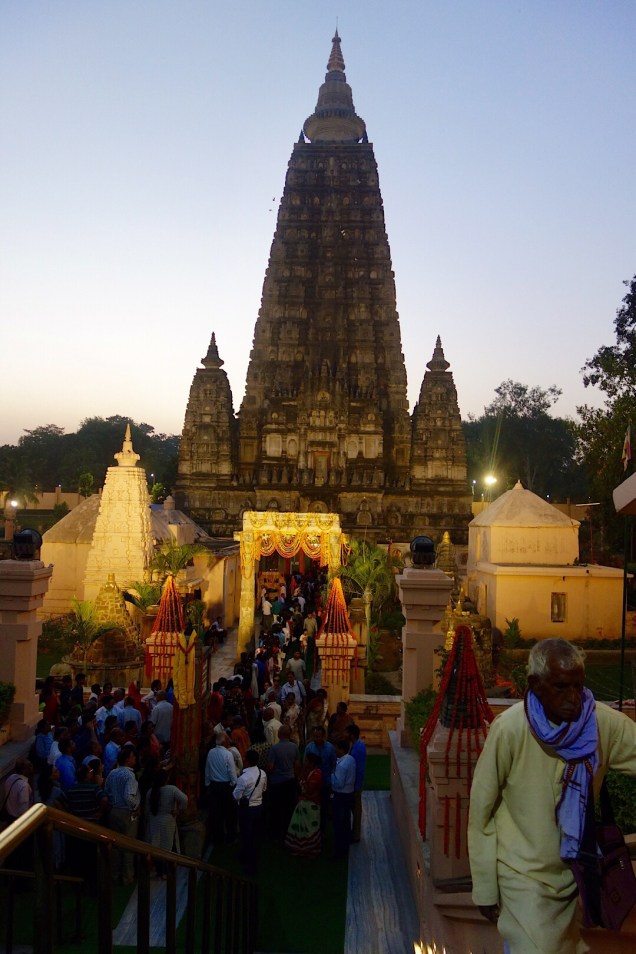 But it was growing dark, so we took another auto rickshaw back to the ugly Gaya flophouse. There we got to bed as early as we could. We knew we had to set the alarm for 4:15 to catch the train to the holiest spot in Hinduism.
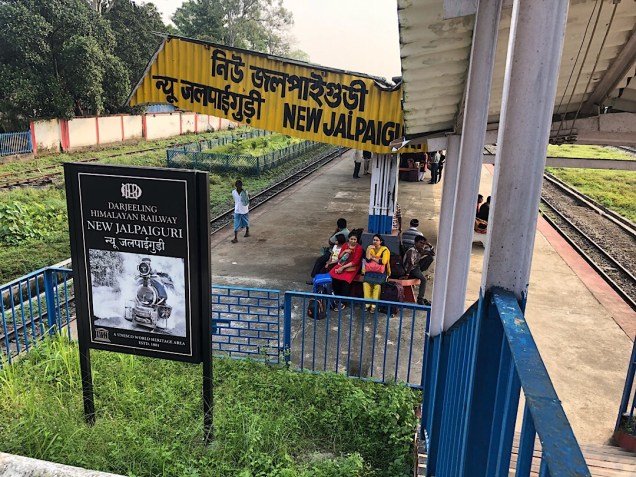 There was no sign of it at 8:30 or 9. Only about 9:10 did this contraption — call it an older brother of the kiddy train that operates next to the San Diego Zoo — chug into the station.
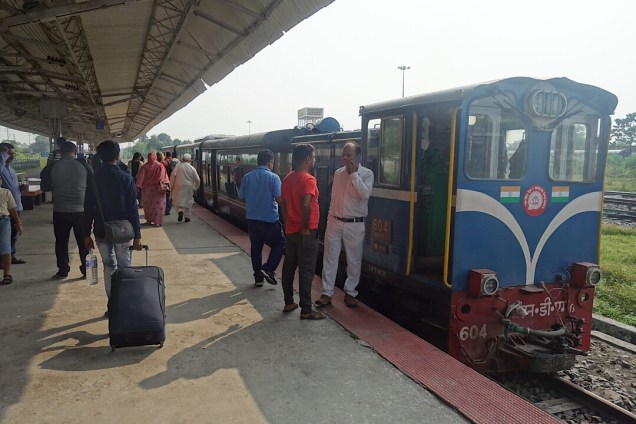 Pandemonium ensued as befuddled passengers (us chief among them) tried to figure out where to sit. Rail attendants seemed to be non-existent. But someone finally directed us to places in the “First Class” car, and around 9:30, we were off.
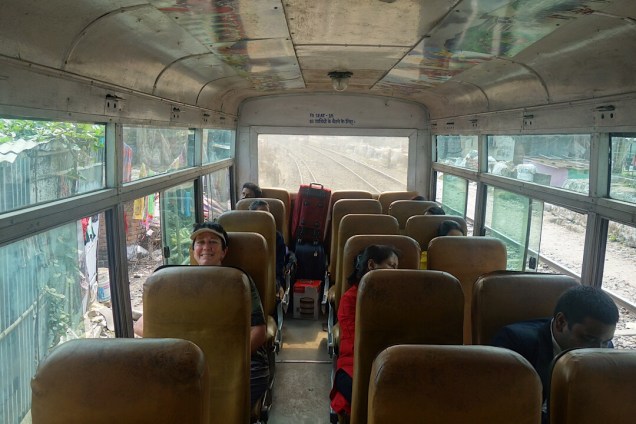 By the time we departed, every seat was full.
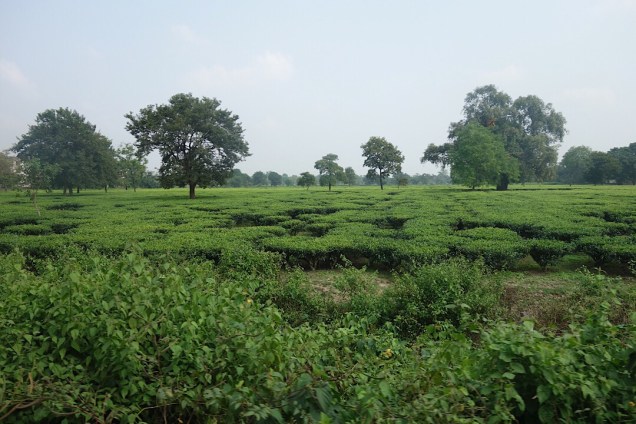 … then beautiful green forests filled with enormous trees or moving along the edge of jaw-dropping precipices.
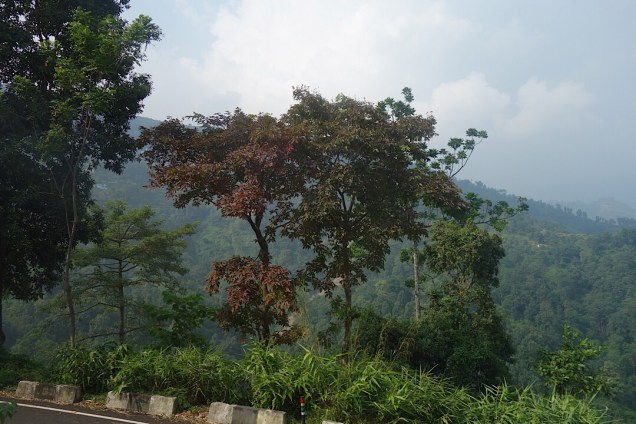 The train has big windows you can open wide, so at times it felt like we were hiking through those landscapes. It’s an engineering marvel, climbing from under 500 feet above sea level to more than 7000 in less than 50 miles. To accomplish this, it does some fancy tricks that include occasionally backing up and switching onto another track on a higher level. It also cuts across the paved (auto) road often, which is entertaining.
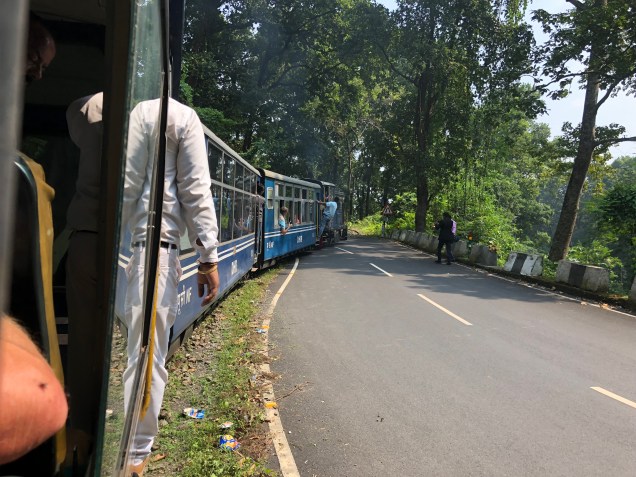 But by 3:30, our scheduled arrival time, when we were clearly hours from Darjeeling, stuck in a jolting hell overseen by workers who clearly did not care a whit what time got there, with only a hole in a tiny compartment to pee in, and only potato chips for lunch, we were pretty miserable.
 They captured images of their kids enjoying pony rides. They shopped for pashminas and visited the ancient Buddhist temple that adjoined our hotel.
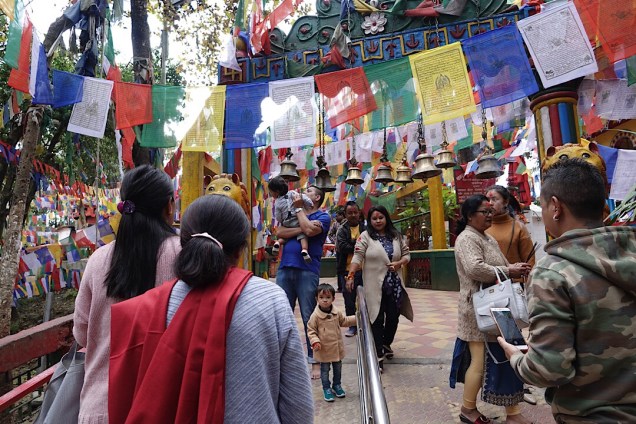 Some of them did what we did the second day: hiked about a mile to the excellent local zoo (specializing in Himalayan animals). The zoo grounds also contain the marvelous Himalayan Mountaineering Institute.
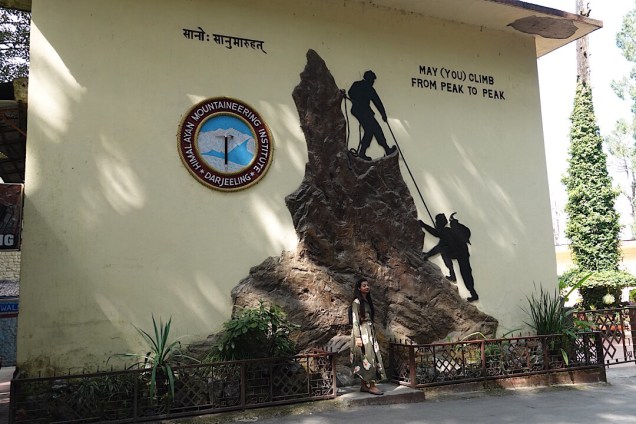 It trains aspiring peak-conquerers and also venerates the memory of past heroes, like Tenzin Norgay, who guided Sir Edmund Hillary to the first conquest of Mt. Everest.
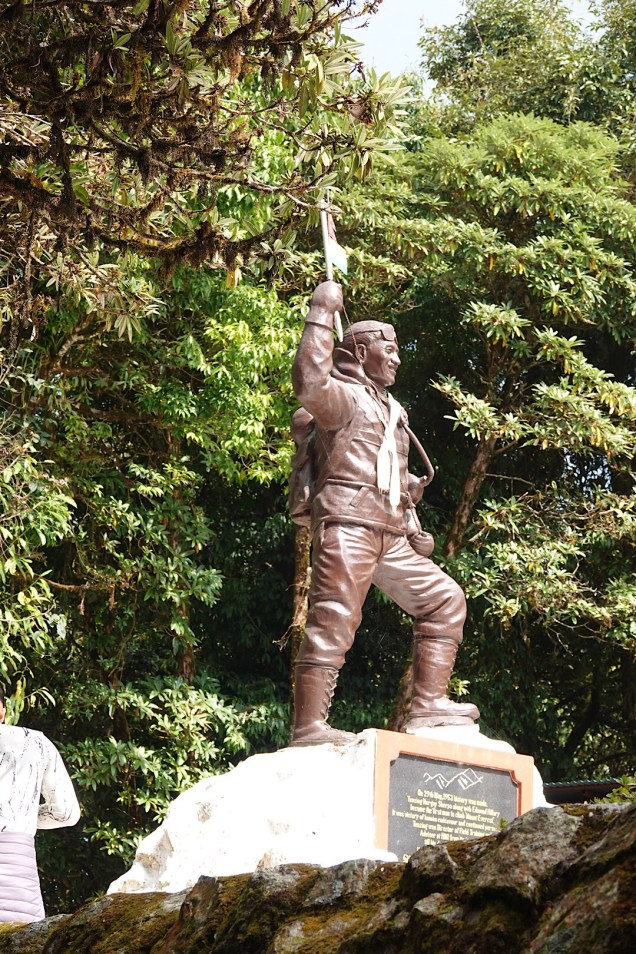 The museum displays some of the great sherpa’s gear from that historic climb.
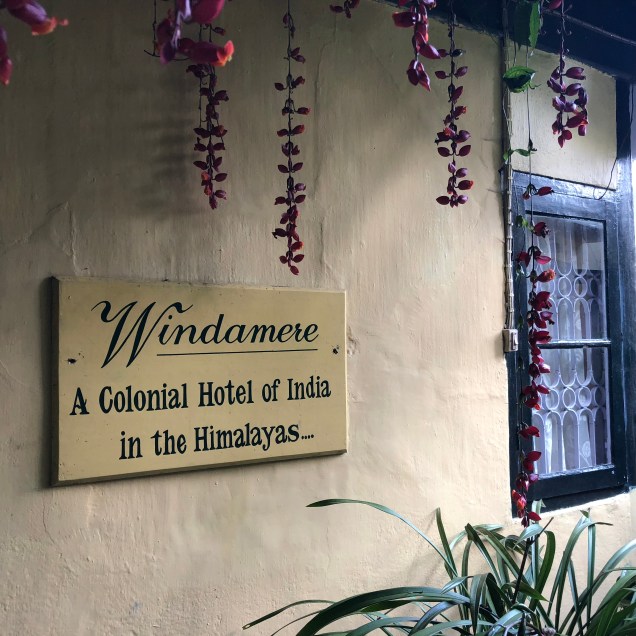 Happily, we were upgraded to a suite, the very one in which a young American student of Asia named Hope Cooke was staying in 1959 when she met and fell in love with the Prince of Sikkim, later marrying him and becoming queen.
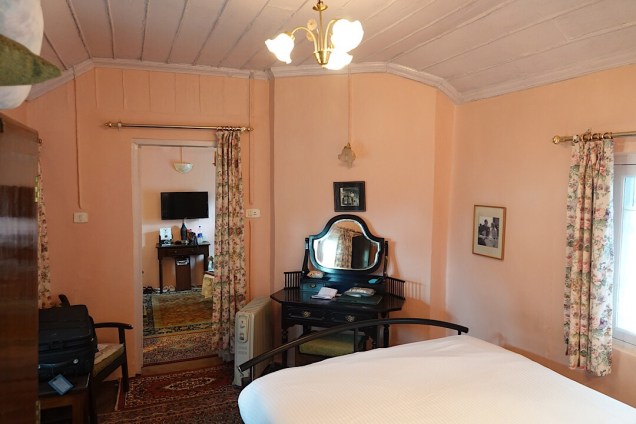 All the facilities today are a bit creaky, but where else have I ever been served five-course meals by white-gloved waters (and coffee kept warm under a knitted cozy)…
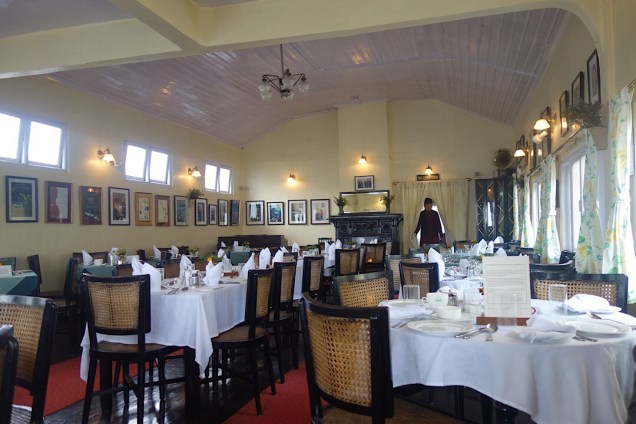 The Windamere’s dining room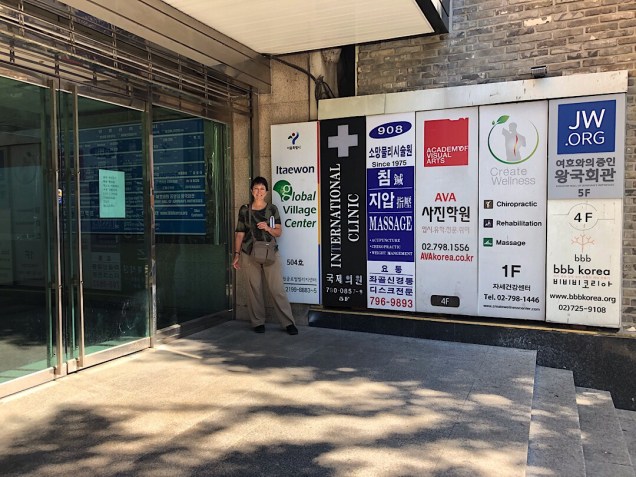
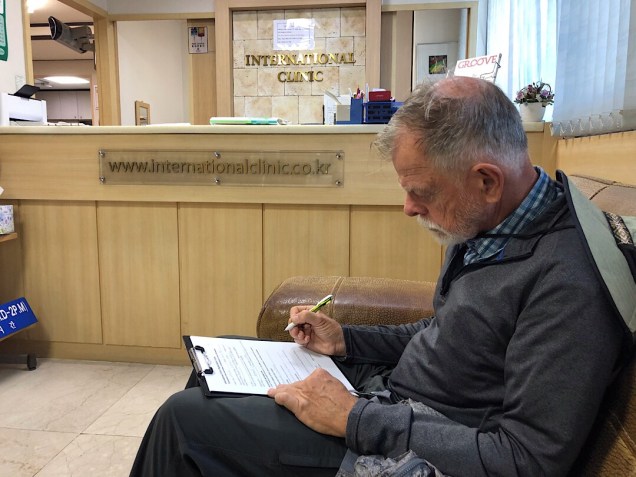 …and have our height, weight, temperature, and blood pressure checked. Then we were ushered in to see the clinic’s owner, Dr. Sooyoung Kim, an urbane guy dressed in jeans and a casual longsleeve shirt who spoke English like an American. We chatted with him about what we wanted (vaccinations against Japanese encephalitis (for me) and cholera (both of us). He approved our plan and sent us off for processing by his efficient nurse.
 But we wouldn’t be able to take the second dose for another week. And during that time, we had to travel to Kolkata via Singapore.
 It surely got warmer than 2 to 8 degrees Celsius (what I think was the recommended temperature range) for several hours. I don’t know what difference that makes. If we don’t get cholera or traveler’s diarrhea, I don’t know if the Dukoral will deserve the credit. But I’d sure like to think it did.
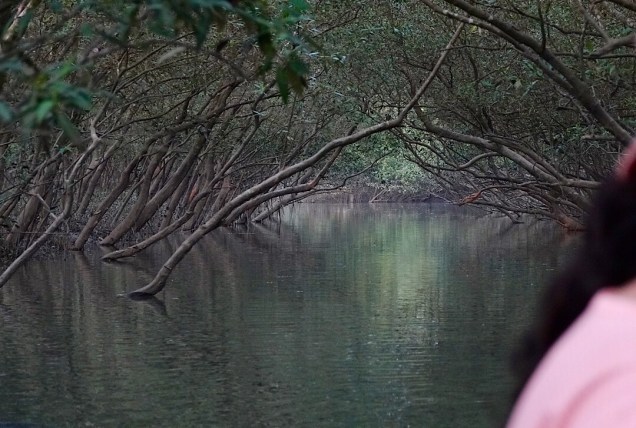
 We didn’t go there to suffer. Rather, we wanted to see one of the geographic wonders of the world. The Sundarbans is the enormous estuary where some of India’s biggest rivers — the Ganges, the Brahmaputra, and others — split into dozens of branches and flow into the Bay of Bengal. The area includes both an Indian and a Bangladeshi section. What grows there, mainly, are mangroves, the shrub which somehow learned to suck up seawater and excrete the salt. The Sundarbans mangrove forest is the biggest on earth. More than 80 species grow so densely you can’t see more then a few feet into them, and they shoot up stick-like “air roots” that can impale anything that steps on them. Despite that, a number of creatures survive in this harsh environment, the most famous being the Royal Bengal tiger.
 The road wasn’t horrible. We slowed more often for speed bumps than potholes. But the bouncy, uneven ride, the constant swerving and accelerating, the incessant horn-blowing wearied me.
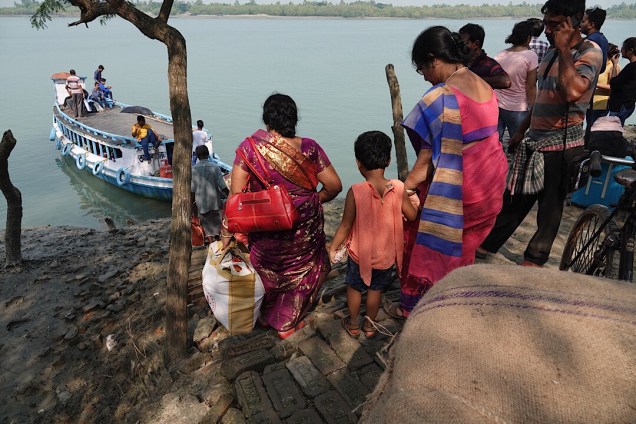 The village may be poor and backward, but the Indian ladies still dress sharply.
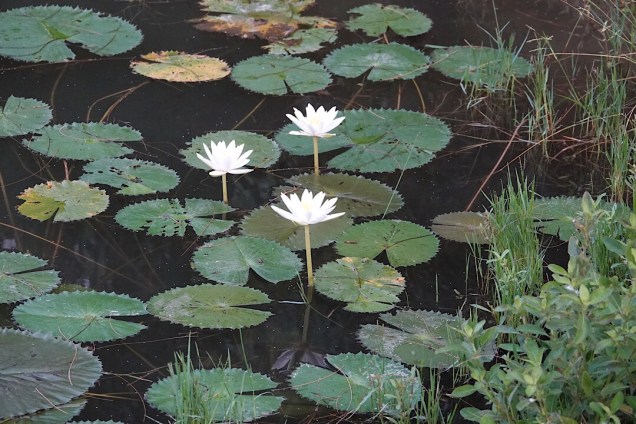 …where you can find unexpected beauty.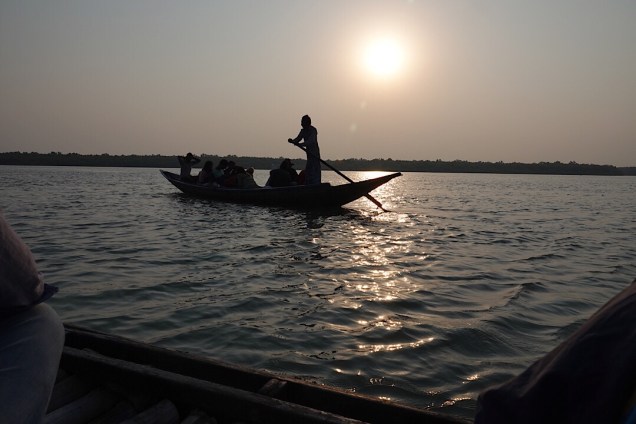
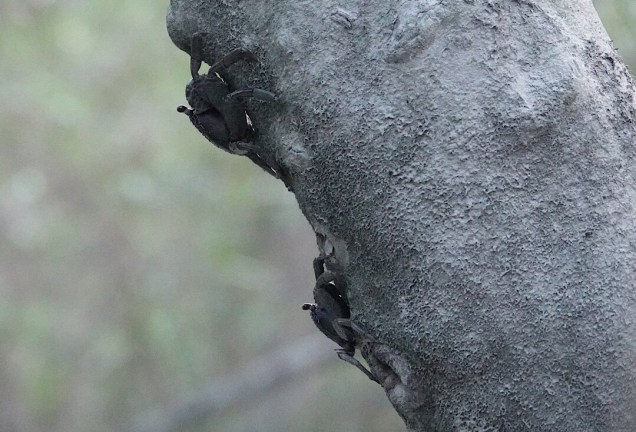
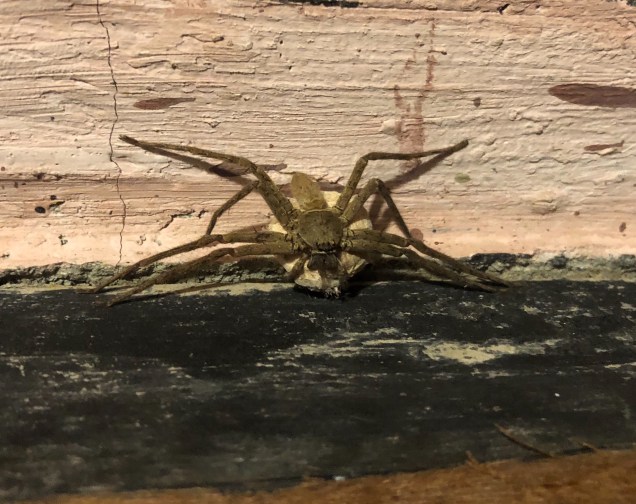 Where DID he go?
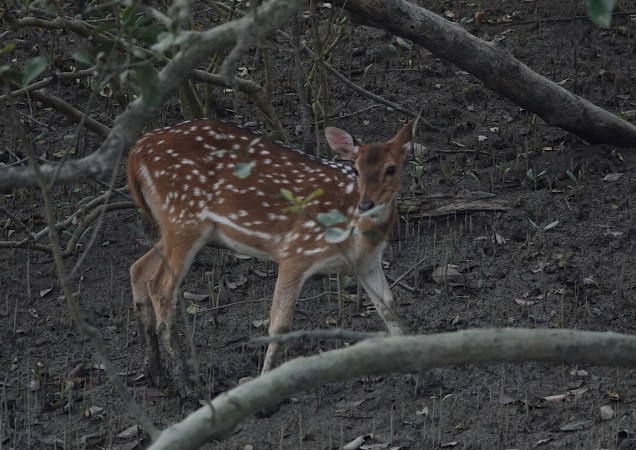 Indian spotted deer grazing near the riverbanks…
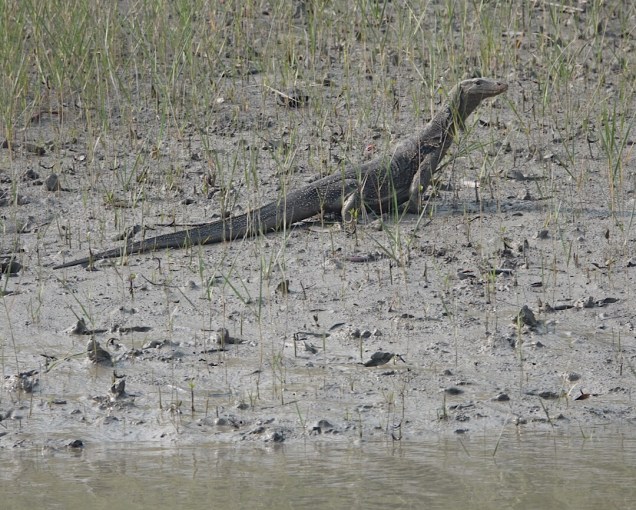 A 5-foot-long monitor lizard enjoying the sun.
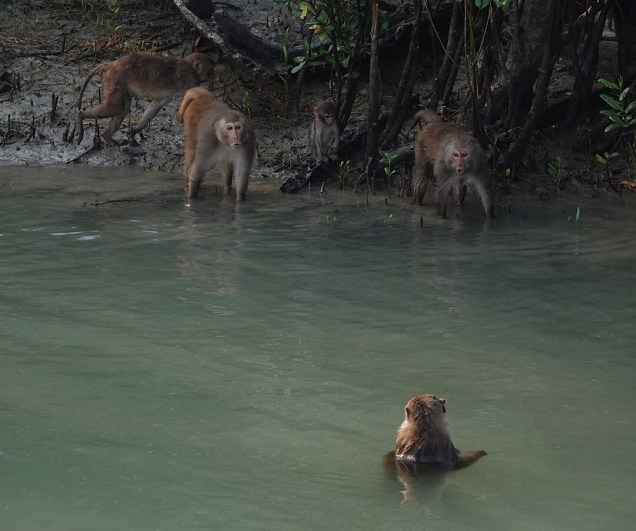 Macaques. We watched this group chase the one guy into the water. They seemed to be mad at him.
 This is a yellow fiddler crab. Don’t you love his eyes?
 Most menacing was this mature crocodile. Alligators also ply these waters, but it’s the crocs who are murderous, taking down even tigers when they’re swimming from island to island.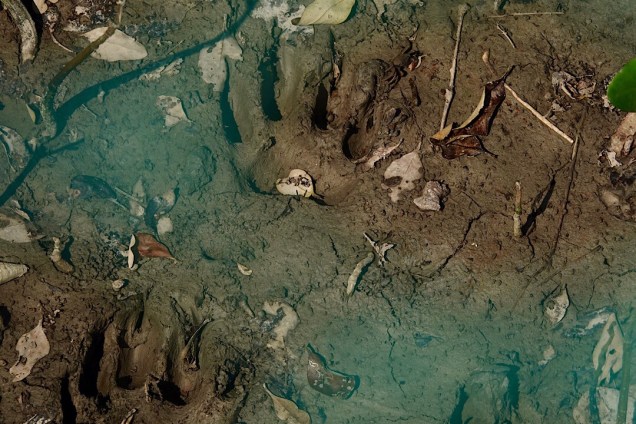
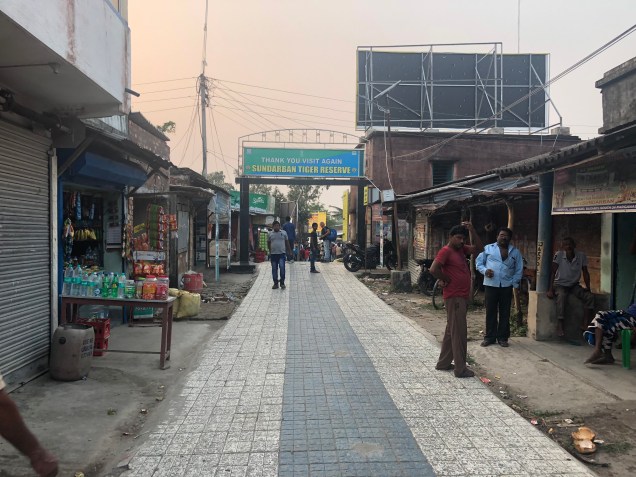
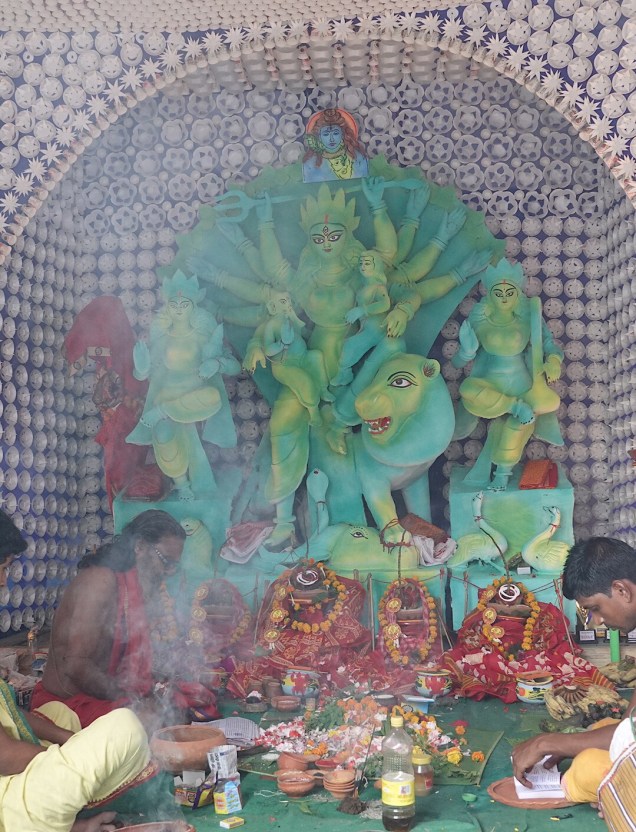

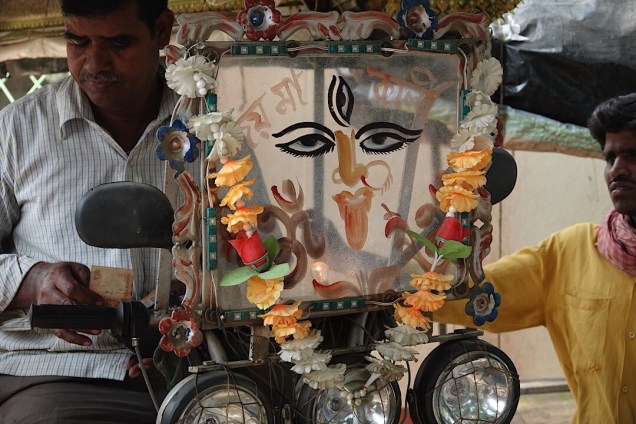
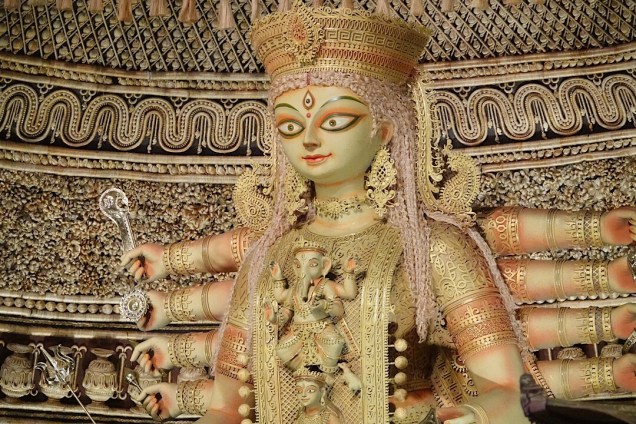
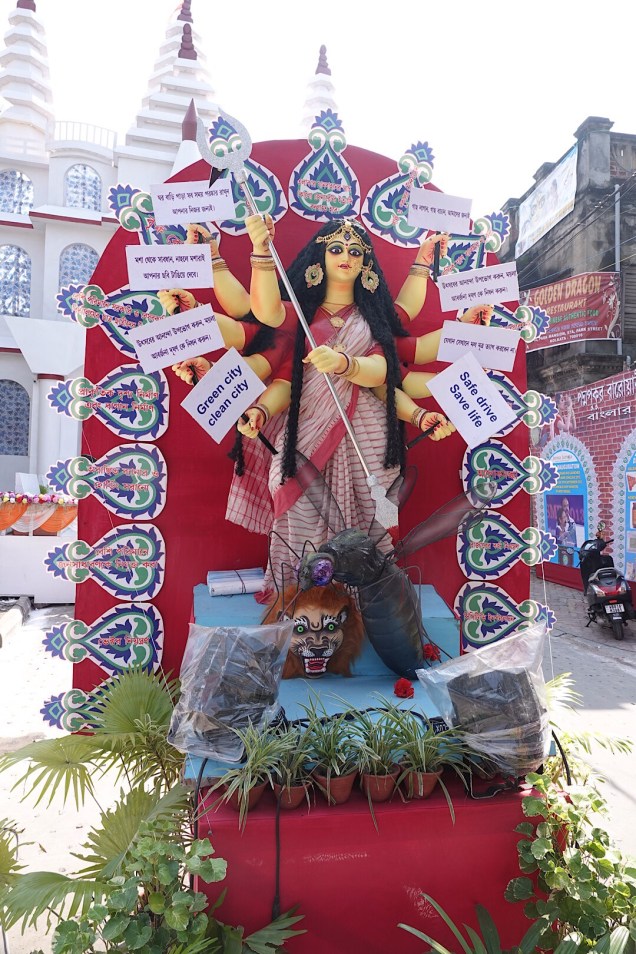 Outside its entrance, this version of the goddess preached various civic messages. Note that the evil she’s attacking is a mosquito.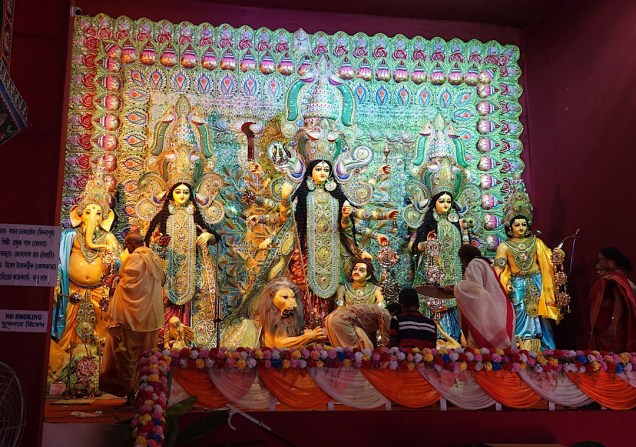

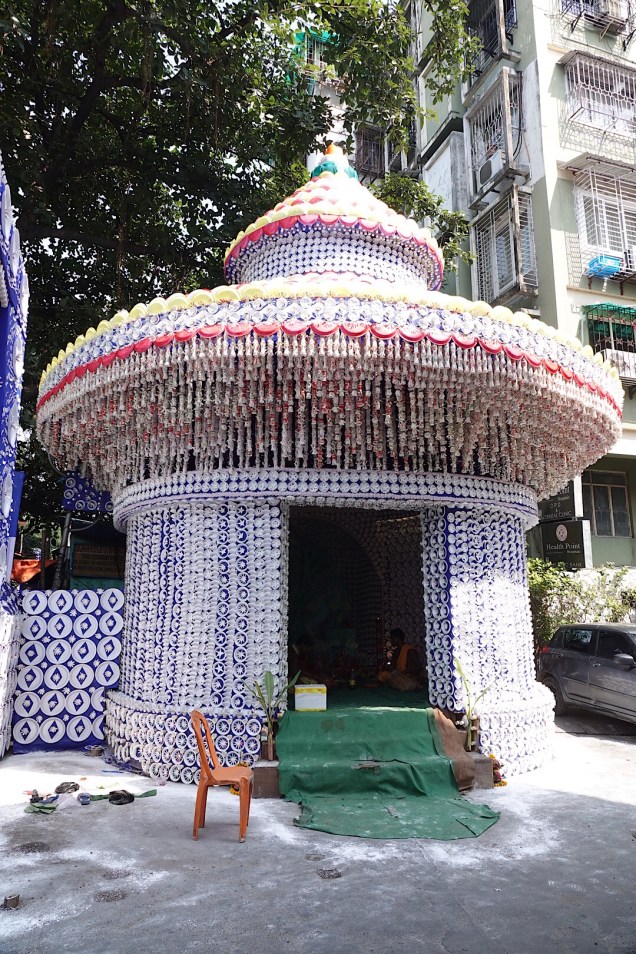
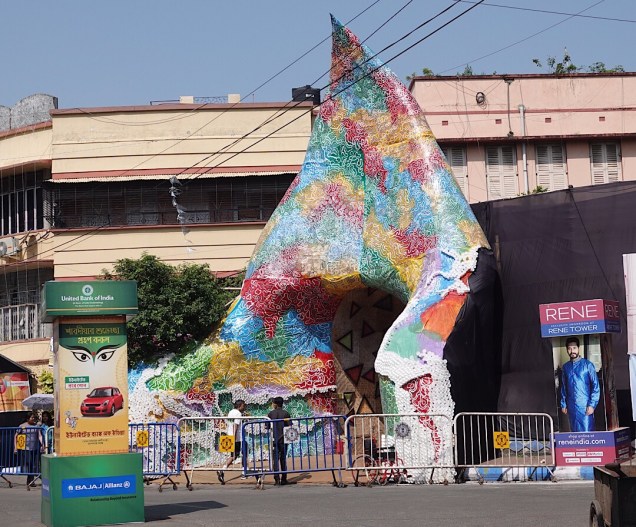
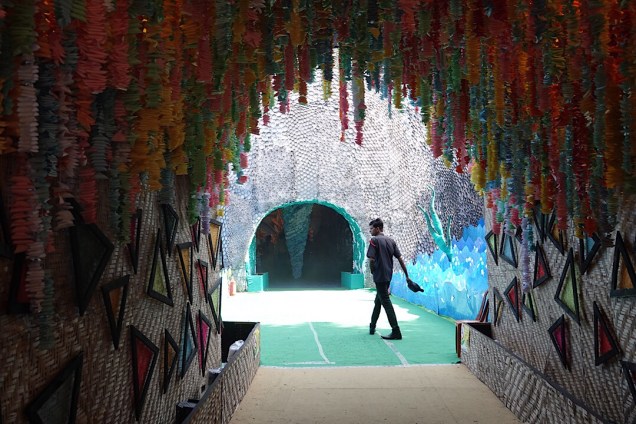
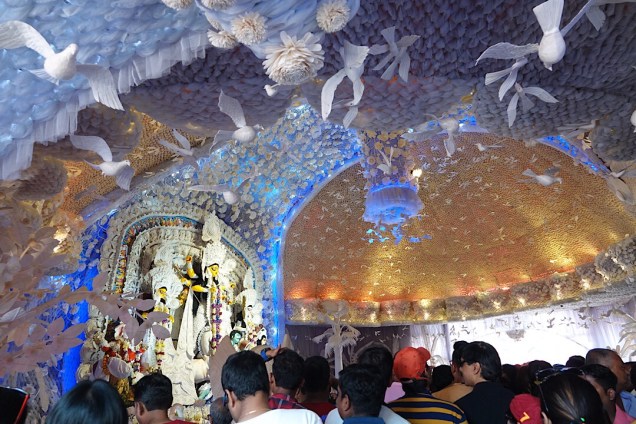
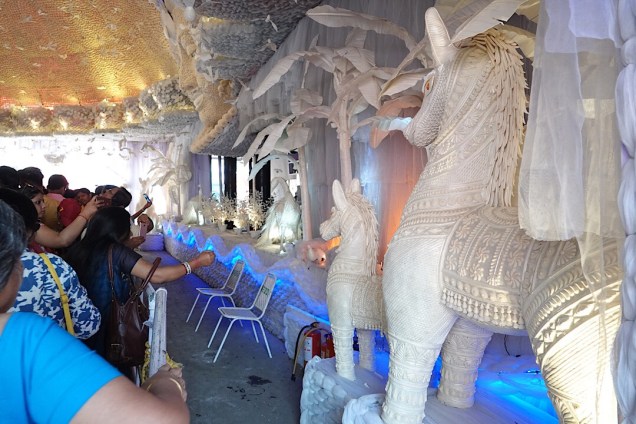
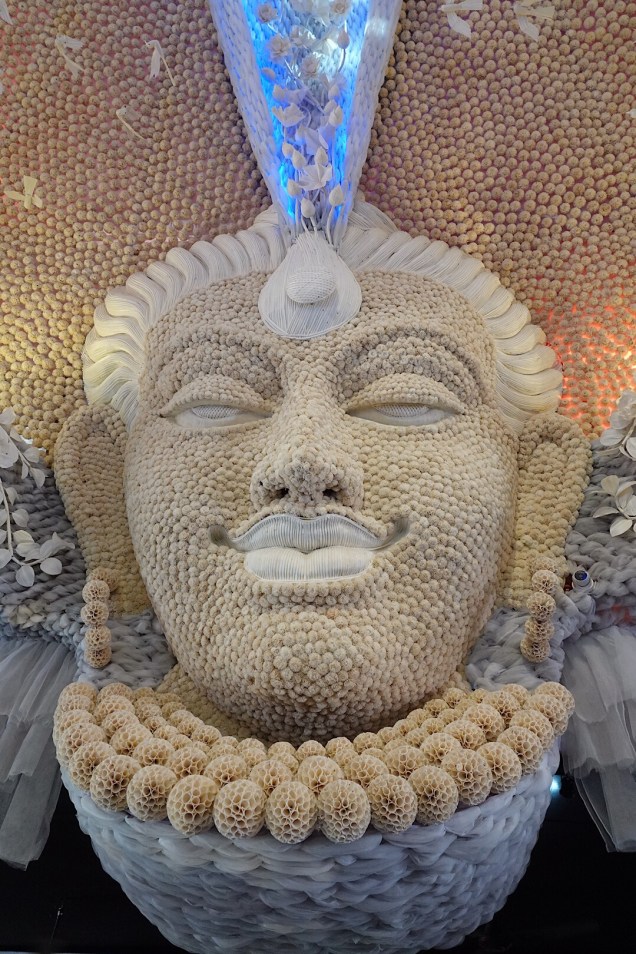

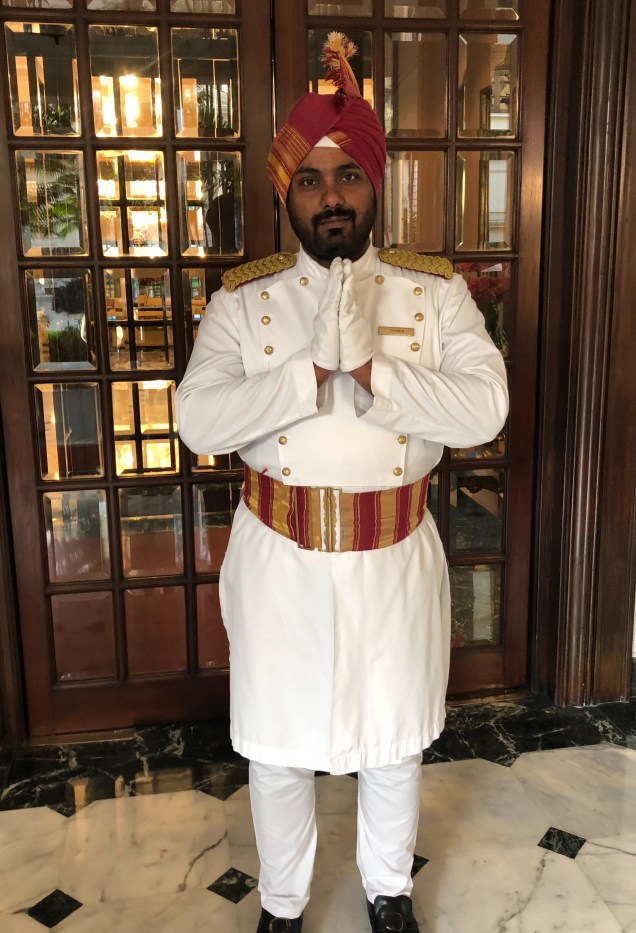
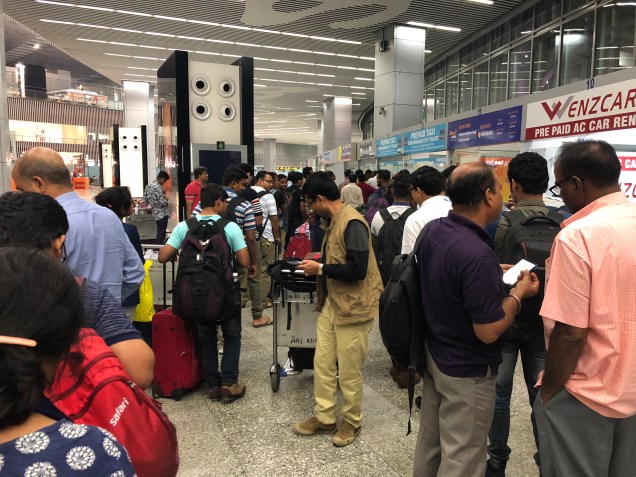
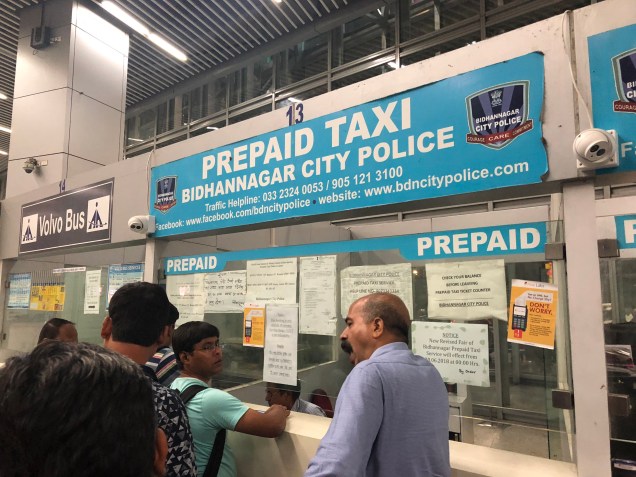 We didn’t reach ours until close to 12:30 (3:30 am Seoul time — and god knows what on our body clocks.) Weirdly, it took only a minute for us to pay for our ride (380 rupees or about $5.15), and out in the street, we quickly located the ancient taxi assigned to transport us. I can only guess that the line had moved so glacially because folks in front of us were going to more complicated destinations.
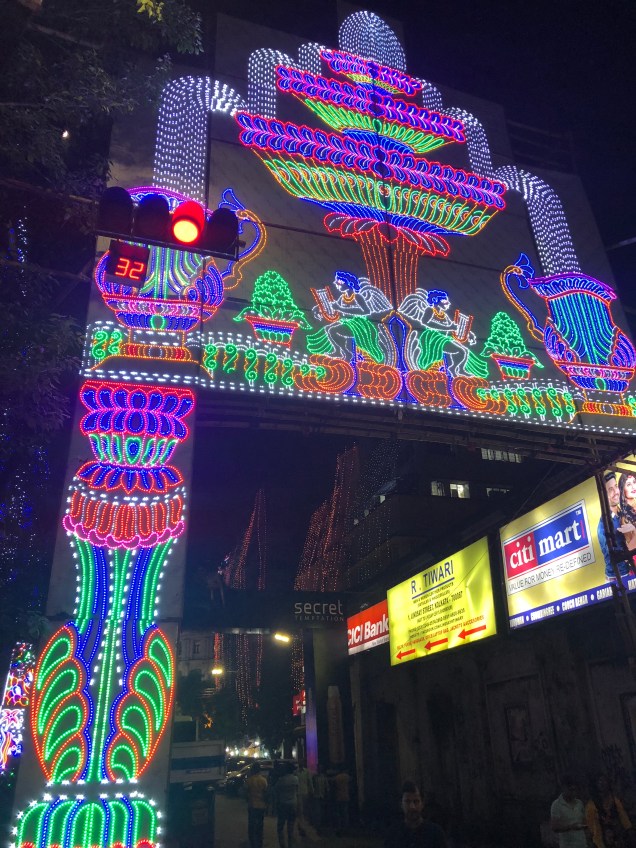 Occasionally we passed a floodlit shrine containing what appeared to be a multi-armed goddess.
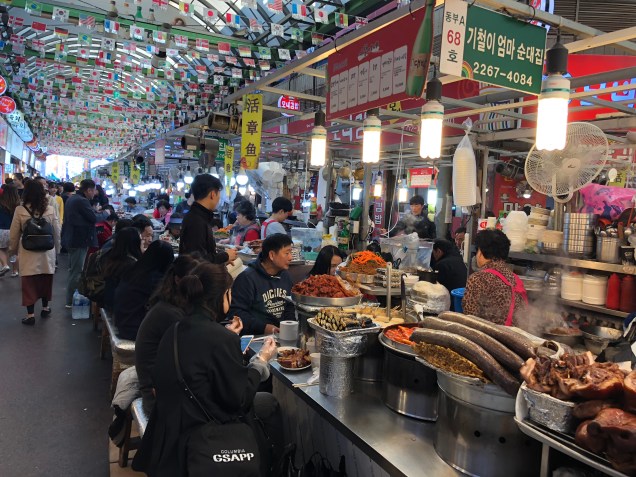
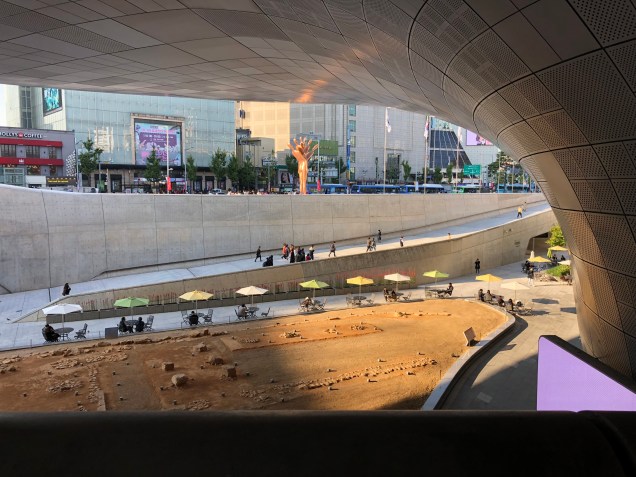
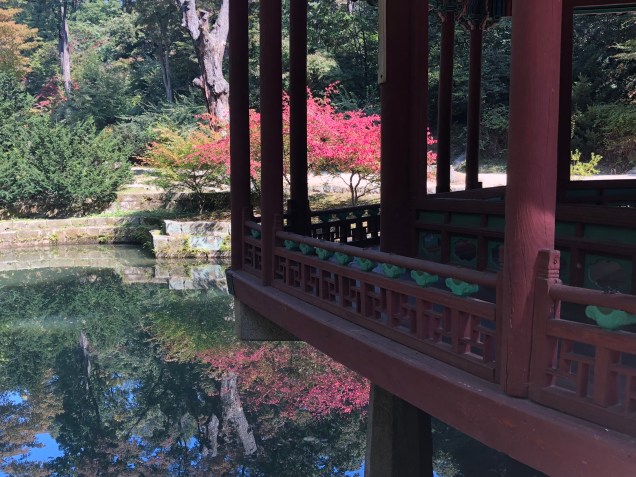


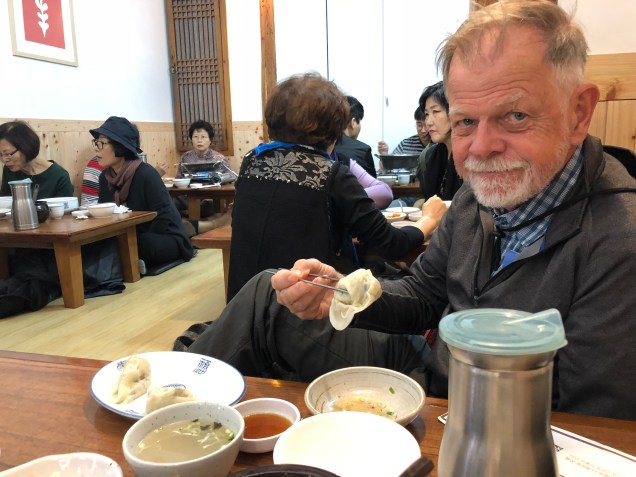
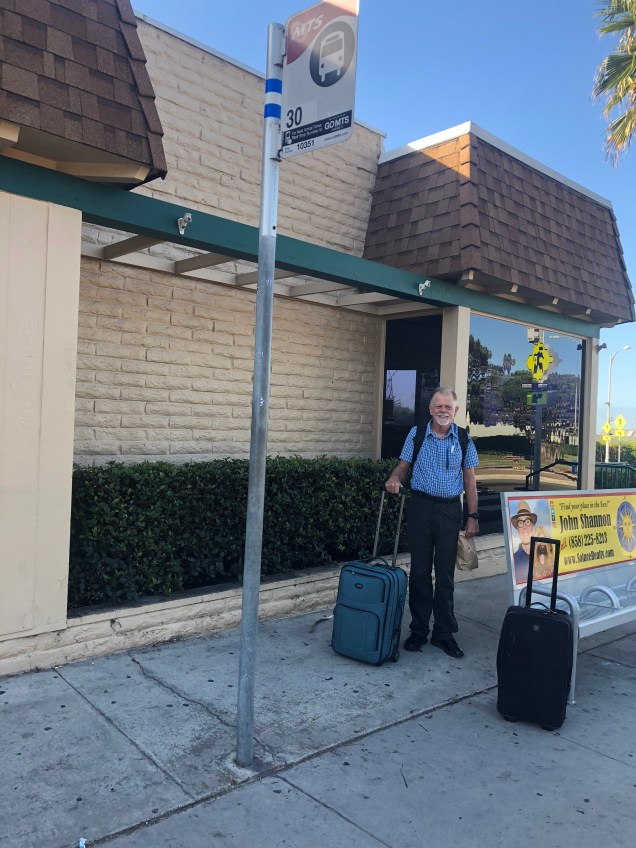
 In nine days, Steve and I will depart on the longest trip of our lives: seven weeks in India, a week and a half in Sri Lanka, and a few days of South Korea and Japan (in transit). As I’ve planned the arrangements, the question I’ve been asked most is: aren’t you afraid of getting sick?



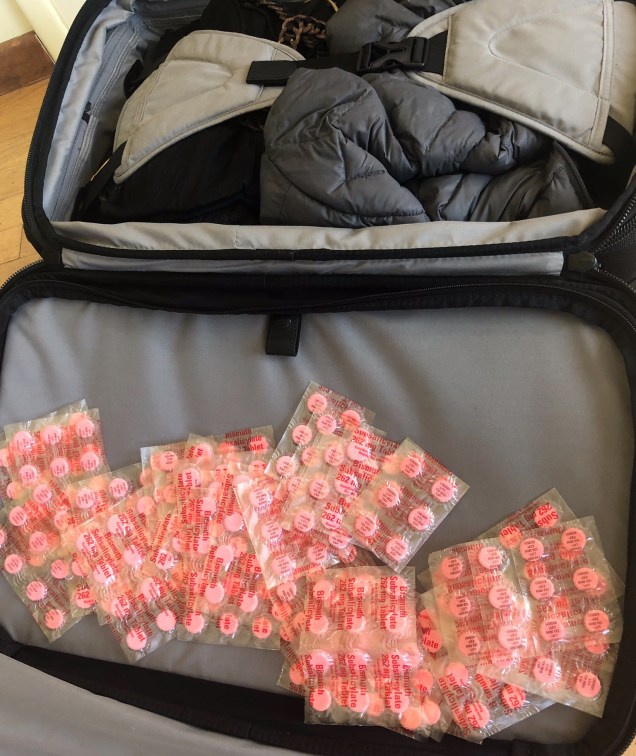
 At home and abroad