French Elevator Hell

My sons have had previous experience with French elevators. When we were here for a few days in 1997, they found the elevator up to our friend Olivia’s apartment hilarious. It was just a normal French elevator — so unbelievably tiny and slow it seemed like a cartoon. It amused them no end to take it up and down, and so when Michael arrived yesterday afternoon, one of the things I was eager to share with him was the elevator in the Gilon-Villes’ building.

I think it shocked him with its smallness (despite his previous experience) and then tickled as it transported him and his two suitcases up to our flat on the fifth floor. Hours later, when we returned from the Christmas soiree at Olivia’s (in Neuilly), I smiled wickedly and urged both boys into the telephone-booth-sized space (Steve and I took the stairs.)

I had expected they would joke with each other on the ascent, but what I didn’t expect was that the door would not open once they reached their destination. Numerous button pushes later, we all concluded: they were stuck. It was 10:30 on a Sunday night. What to do?

What did NOT work was phoning the two separate “emergency” numbers on the elevator door. My French isn’t great, but I think the recording I got when I called each basically communicated the idea that I should leave a message and someone would get back to me… eventually.

Next I tried going down to each lower floor and pushing the call button. No dice. The boys tried pushing all the buttons within, including one that sounded a piercing alarm. (But that was so nerve-wracking they only did it for brief periods of time.)

Eventually, our neighbor on the fourth floor poked her head out and inquired about the ruckus. SHE knew what to do, descending to the foyer on the ground floor where, it turned out, the critical button was stuck. But she lectured us that the problem was that our sons weighed too much for both of them to be riding in the elevator together. I felt insulted. Together they amount to no more than 160 kilos (350 pounds), and the sign inside the elevator clearly proclaimed that the fateful limit was two persons weighing 180 kilos.

No matter. Our neighbor was convinced it was all our fault. Once she’d rescued us, though, she sweetly bade me bonne nuit.

And y’know… once Michael and Elliot were released, all was again well with the world. After a shower and change of clothing, Michael earlier in the afternoon had insisted he was up for attending Olivia’s party, his grueling journey notwithstanding. The party was magical, staged in O’s huge, airy, peaceful apartment in Neuilly and attended by not one but two serving assistants, who deftly offered delicious sandwich slivers and multiple desserts and endless glasses of champagne. An intriguing assortment of thoughtful and charming individuals filled the salon with conversation. Everyone in my family loved it, so the vertical entrapment afterward came as we were awash in happiness.

Today has been filled with equal pleasures: an outing to Notre Dame, a quick lunch back at the apartment, a dash down to the Gran Palais, where a friend of Olivia’s helped us secure tickets into the incredible Monet retrospective (even though they’ve been sold out for weeks? months?) At times the exhibition moved me to tears, and all the other men in my family appreciated it to one degree or another.

At 6 we rendezvoused with Olivia at the venerable LaDurree on the Champs Elysees for coffee and wondrous pastries (shocking by San Diego standards to be consumed at 6:30 but normal here.) We returned home and enjoyed an excellent dinner just down the block from our building. Mike, Steve, and I walked up the stairs afterward. Elliot ascended in the lift.

Party Time!

Michael has arrived, albeit SIX hours late. I had to wait at the Arrivals door for almost three hours for him. But all’s well to be reunited. In a few minutes, we’ll depart for the little soiree Olivia is hosting in our honor at her home.

Photos coming soon!

Christmas on rue Dupuis

If anyone ever pays me to fly to Paris and stay in a hotel, I’ll do it. But otherwise, I cannot imagine voluntarily choosing any accommodation here other than an apartment. The one we’re staying in now, traded with the Famille Gilon/Ville, is at least the fifth one I’ve experienced over the years. Not all were house trades, though the longest one was, in 1990.

Today, more than ever before, I love the coziness of our situation. Outside the windows of the large dining room, I can see snow driving down, but it’s warm and well-lighted here, and I’ve got excellent wifi access to the Internet on my IPad.

Of all the house trades I’ve done since that first in 1990, I have to say I think this place has the most eccentric layout. It’s on the fifth floor, and it’s possible it used to be what we Americans would call a garret — or more likely a number of garrets or maid’s quarters that at some point were combined into a single quite large residence. The kitchen is modern and user-friendly, and I count comfortable sleeping accommodations for at least two sets of couples and a single. I call the layout eccentric because of things like the fact that:
— you walk directly from the front door into the dining room, and
— to get to two of the three bedrooms, you have to pass through the largest bathroom (but then again there are three rooms with toilets, which seems itself a luxury)
— to bathe or use the toilet in that largest central bathroom, you must secure three doors (and close the blinds on a window)

None of this is a problem, really, and adds to the charm of the accommodations. My only complaint is the almost total lack of places for Steve and me to put any of our clothes. The king-sized bed in the room where we’re sleeping is comfortable, but there’s barely room to walk around two sides of it, let alone stash a suitcase anywhere. We’ve found few drawers for clothing anywhere in the house, and all of them are stuffed to bursting.

Our solution has been to adapt one of the couches in the living room as a suitcase stand. We dug up and commandeered a few (3-4?) hangers, and the rest of our things we’re handing on the giant green plastic saguaro cactus in the dining room (which makes a more than adequate coat rack!).

Beyond that, all is trivial, and the neighborhood (the upper Marais) couldn’t be livelier, better-stocked, more beautiful or historic — everything one could want in a Paris neighborhood in this season of good cheer. Even here in the flat, the G/V’s have provided lovely touches of Christmas: a little (5-foot?) decorated tree in the living room, ornaments hung here and there throughout the rooms.

If Michael’s plane (due in about 75 minutes) can just land successfully at Charles de Gaulle and I can manage to get him safely back here, the final detail will be perfect.

In the War Against Bugs

Steve's still wearing at least one of his bandaids. Our arms ached, but that was our only reaction.

We got our immunizations yesterday — typhoid, flu, meningococcus, tdap(typhoid/diphtheria/pertussis), along with the pills we will take to protect us against malaria during our upcoming trip to West Africa. For previous trips in recent years, we’ve gotten shots for yellow fever, hepatitis A and B, and polio.  Surely we’re ready to go anywhere on earth now…

A whopping big instrument

As part of the University of Chicago’s Family Weekend just past, I visited the second largest musical instrument ever built. Living as I do in San Diego, home to the biggest outdoor pipe organ in the world, how could I resist?

Rockefeller Chapel, home of the largest instrument ever built

Chicago’s musical whopper is the carillon housed in the university’s Rockefeller Chapel. A carillon is a set of bells in a tower that can be played with a keyboard. Many folks thinks San Diego’s California Tower (in Balboa Park) contains one, as every quarter hour, bells ring out, and the bells play songs at regular intervals. But that’s illusory — a merely electronic carillon consisting of tiny chimes whose sound is magnified and projected through speakers.

One the U Chicago monster bells

The Chicago carillon is the real deal. Its 72 bells weigh around 100 tons (second only to the identically named Laura Spelman Rockefeller Memorial Carillon in New York City’s Riverside Church.) The Chicago carillon’s biggest bell, at 18 and a half tons, is the second largest bell on earth (second only to the NYC carillon’s 20-tonner).  The Chicago carillon’s second largest bell weighs 13 tons — as much as London’s Big Ben. (It’s smallest bell, in contrast, weighs only 10 pounds.)

A dark and creepy passage in the tower

For our tour, master carilloner Wylie Crawford first led us up a spiral of more than 250 steps to enjoy the spendid views at the top of the tower.

Then we followed him to the room housing the carillon’s keyboard, where he entertained us with a clamorous rendition of “Love Story.”

You can listen to him play on the Chicago carillon here.

Safety

Thursday afternoon, March 18, 2010
The single biggest question I had before we left for South Africa had to do with safety. Would concerns about crime limit our ability to move around freely; to enjoy beng here? Now that we’re about to leave I can answer: that hasn’t been a problem.

I know the least about Johannesburg, as we had so little time there, and all of it came right after our arrival. The stories about crime are worst there (and indeed the morning we left, one of the employees at our B&B didn’t show up for work because a close friend of hers had been robbed and stabbed (not fatally)). Likewise, we had so little time in Durban, I can’t really judge it.

But from that point on, it’s been fine. Out on the Wild Coast and on the Dolphin Trail, I felt safer than I do at home (where I wouldn’t think of leaving my doors unlocked at night). And when we arrived in Cape Town last Saturday, we asked Hannes (the co-owner of our B&B) where we could safely walk in Cape Town. Anywhere in Green Point (their neighborhood) at any hour day or night, was his answer. Anywhere in the rest of central Cape Town during the day, he continued, though we might want to be a bit more cautious after dark.

Hannes, a collector of fine china and antique silver who looked to be in his late 50s, seemed a prudent fellow. His romantic partner, David, once worked in the perfume industry. The rooms of the B&B are all named after famous perfumes. It seemed unlikely he would steer his guests into the jaws of death. So for two nights in a row, we dined at the Waterfront, and on the 25-minute walk home we shared the dark streets with so many other pedestrians, I felt very comfortable.
Yesterday we got even more ambitious on foot. We’d moved out to the suburbs by then (staying in the home of a very generous house-trading contact), so we drove our car to the Bo-Kaap district in the center of town, parked it, and set out on what turned out to an almost-6-hour-long meander. The Bo-Kaap is the very old Muslim quarter, now in the grip of gentrification, but still distinguished by its colorful and distinctive architectural signature. While it was interesting to explore, I enjoyed even more walking the length of Long Street, an amazing medley of restaurants, boutiques, bookstores, record stores, porn shops, bars, backpacker hotels, surf shops, locksmiths. Many buildings have balconies, and that, along with wrought-iron work, made it feel a bit like New Orleans.

We also visited two museums, both excellent. One focused on the gold treasures of West Africa and the other presented the infamous history of Cape Town’s District 6 (whose name probably inspired the title of the recent sci-fi movie). This was once a seedy but vibrant enclave near the heart of the old city filled with immigrants. Unusually multiracial, it must have been a lot like New York’s Lower East Side early in the 20th Century: grubby and raucous and zesty. But in the early 60s, the South African government re-classified it as a White district and began ordering the vast majority of the residents to move out. Hundreds of thousands of people had their property confiscated; their homes bulldozed. Most were relocated to a grim, sand-blasted and barren plain a half-hour from their former homes. The museum beautifully captures how traumatic this was for most of those affected.

We also strolled through the beautiful Company Gardens park, and we picked our way through a couple of open-air craft markets (where I was intrigued to note that almost none of the vendors harangued us to patronize them — de riguer for Egyptian street hawkers — nor did anyone seem inclined to bargain.) When we paused once to study our map, a passerby asked if we needed help. At another point, when we really were disoriented and asked a security guard for directions, he led us for several blocks to get us pointed toward where we needed to go.

These were clean, busy streets, filled with commerce. The vast majority of the people moving through them (90%? 95%?) were black. It was a pleasure to share the cityscape with them, at ease.

This morning we throttled back even further. Anticipating the grueling flight to come (at 9 p.m. tonight we start what will amount to almost 24 hours of straight air travel), we’d saved a visit to the Kirstenbosch Gardens for last. This is a World Heritage Site, and deservedly so. Located on an enormous spread of land not far from where we’re staying, it’s one of the great gardens of the world, celebrating the incredibly diverse plant life of this region. I learned that that diversity puts San Diego’s to shame (with something like 94 species per 1000 square kilometers here, versus 14 in Australia, and a puny 12 in California!) We walked through arboreal tunnels formed by gigantic trees: camphors, yellowwood, podocarpus, emerging onto huge lawns edged by African heathers and protea and grasses. At least, the weather was perfect: mid-70s, no trace of the demonic wind that’s tormented us every other day. I lay down on the grass at one point, listening to the birdsong, thinking about how much more pleasurable it was than sitting in a coach seat on an airplane, savoring one of those moments when it really WAS about the destination, rather than the journey.

But now it’s time to head for the airport, to journey again.

Good hope

Tuesday night, March 16 2010
As we anticipated this trip, Steve several times commented that he expected we would be seeing some of the most beautiful landscapes on earth. And we have, but I have to say our encounters with the inhabitants of those landscapes — human and animal — have been at the forefront of our attention. Today was different. Our interactions with other humans was limited to jockeying for photo-op positions with the Chinese, British, Dutch, English, French and other tourists we encountered throughout the day. As we drove from our hotel to the Cape of Good Hope, the physical world took center stage.
Actually, we did have two memorable animal encounters. One came after we had entered Table Mountain National Park, toward the bottom of the long cape that Cape Town sits astride. We passed sign after sign warning of the highly endangered baboons who inhabit the area. They bite. They are wild animals who must not be approached or fed! If you feed them, you will be fined!! We didn’t need the warning, as we’d already heard stories about these creatures, as clever and menacing as the bears of Yosemites. So we neither fed nor approached the troop of about 20 animals — little babies, juveniles, adults — who stopped traffic on one section of the road. One of the biggest baboons clutched what looked like a woman’s duffel bag. Pilfered? We couldn’t tell, but two rangers grimly followed the troop on foot, one with a mean-looking leather whip in his hand. I think he cracked it, sending the baboons off the road and away from additional human contact.
The other animal interaction came on our return drive back to town. In the little town of Boulder Beach, we detoured to see the resident colony of African penguins there. We’d already been introduced to these birds yesterday, during our brief visit to the excellent aquarium at the Waterfront. The African penguins (once known as jackass penguins because they supposedly make a braying noise) are only about a foot tall, and their black and white plumage is set off with a band of pink eye shadow. They were very cute as the marine biologist parceled out fish, which they swallowed whole.
But it was wonderful to see them in the wild this afternoon — hundreds of them lining the beaches and grooming each other and waddling around and sitting on eggs. If Boulder Beach is a tame suburban setting, the wind today made it a savage place. It whipped the water into a mass of white caps. Some of the gusts shoved and jostled us, like bullies, and after we’d climbed back into the car, our skin and scalps felt like sandpaper.
Despite the wind, the sun shone brightly all day long, and the drive to the tip of the cape was splendid. Just outside Cape Town, we wound along roads that hugged the steep cliffs, overlooking huge white beaches encrusted with picturesque towns. By turns, the water looked cobalt blue, then clear turquoise, then emerald green. It made me think of a combination of the most beautiful coastline in both Hawaii and California. Later, approaching the tip of the cape, the land grew starker, stonier, and clad in fynbos, the South African version of coastal chaparral, but lusher and more beautifully colored than any chaparral I’ve seen.
Our primary goal for this outing was the Cape of Good Hope, often thought of as the tip of Africa, the southernmost point, the place where the Indian and Atlantic oceans meet. It’s none of those — those honors go to Cape Argulhas, several hundred kilometers further south. Still it felt a little like an omen to me to be standing with Steve on this wild and beautiful spot, on our 36th wedding anniversary, rounding another important landmark on this fantastic journey, with good hope for what we’ll find further down the road.

The brightest and least corrupt city

Tuesday morning, March 16, 2010
I woke up Sunday morning feeling like a Biblical plague victim. In addition to the shingles (fading but still annoying), sore throat, sore knee, and wracking insomnogenic cough I’ve been dealing with for days, my eyes were glued shut with the unmistakable evidence of conjunctivitis — pink eye! But after two aspirin and two good cups of coffee (one of the many virtues of the inestimable B&B where we’re staying), we took to the streets of Cape Town. An instant tonic!

We dropped off a bag of reeking clothes at the 24-hour laundry on the high street (just a few blocks away) and learned that we could pick up our washed and folded clothes in a few hours. We visited the nearby 24-hour pharmacy and bought more of the cough medicine that seemed to help Steve last week. We’d learned that a world-famous cycling race would be taking place in the city — the Cape Argos, I think it’s called, with something like 35,000 riders from all over the world competing over a grueling 66-mile course –and the start and finish were located just blocks from our hotel. It was a rousing scene: flags flying, peppy pop music playing over the loudspeakers, supporters cheering, the excited voice of an announcer. Again the crowd was predominantly white, and I noted with amusement the OSHA-like tone of the sign affixed to a rope barrier surrounding one sandy area. “Potential tripping hazard.” This American-style safety consciousness struck me as quaint, considering that this is a country where young girls routinely get raped by HIV-infected men who believe sex with a virgin will cure their ailment. (That ailment afflicts some 10% of South Africans, btw — the highest AIDS infection rate in the world.)

Paul Theroux in Dark Star Safari records that when he arrived in Cape Town, it struck him as being “the brightest and least corrupt” city he’d ever seen. I could understand what he meant. The wind was blowing hard, scrubbing the sunny skies of any evidence of pollution. The Waterfront shopping center, redeveloped in the 90s, reminded me of Fisherman’s Wharf. It’s wildly touristy, jammed with several malls and dozens upon dozens of restaurants, but maybe because it adjoins the section of the waterfront that’s still an working port, I liked it more than I do the San Francisco institution or the Disneyesque Seaport Village in San Diego. I would have enjoyed spending several more hours poking around.

But we had other touristic missions to attend to. After lunch, we drove to the Table Mountain Cable Car station. Hiking to the top of the iconic massif had been near the top of my Cape Town To Do list. But given my cough and still-recovering knee, we’d decided it might be more prudent to simply take the cable car. Alas the strong winds had forced its closing for the afternoon. The few vendors clustered next to the cable car entrance looked bored. A white guy at a t-shirt stall was tossing raisons to a big black bird with dramatic red epaulets on its wings. “Red-wing starling,” he informed us. “Member of the raven family.” He enthused about how intelligent the birds were; claimed they could identify individual human faces and come when called. They were serially monogamous and fiercely territorial. “If another male came along when the male was here, it would be terrible.” He shuddered. Did they peck at each other with their beaks, I asked. He grimaced, like a man recalling a ritual disemboweling. He said the male redwings stabbed at each other, savage. He tried to entice the female closer with additional raisons, but she wouldn’t comply. “Must have already had her fill.”

In the late afternoon, we spent 45 minutes at the South African Museum, a disappointing hodge-podge. But an excellent Indian dinner at the Waterfront lifted our spirits, and everything about our trip to Robben Island yesterday morning went well. Steve commented afterward that the notorious holding ground for South Africa’s black male political prisoners didn’t hold any surprises for him, being featured as it was, in the recent movie Invictus. For me, though, there were a few, One of our guides was a fellow who served time on the island between 1984 and 1991 for a terrorist conviction. He old us his “terrorism” had been ignited by his outrage over the disparities between black and white educational standards in the 1970s, when the government was spending about 47 rands per year, on average, for every black child, and 2,000 for every white one. Another surprise was learning that 9 former prison guards are included among the 150 hardy individuals who live on the island full-time. Why haven’t they been attacked and driven away, long ago? But Mandela’s most searing message was the need for reconciliation, and we’ve heard it repeated over and over in our travels here.

After recording his initial good first impression, Theroux added that he soon learned about Cape Town’s frightening crime statistics. He also visited a township here, like the ones we saw Saturday as we drove in from the wine country: squalid, unspeakably crowded, an implosion of impoverished humanity that makes Tijuana’s shanties look buccolic in comparison. With only two and a half days left until we head for the airport, I doubt we’ll see much of such misery. We’ll depart with a woefully meager view of what’s here. But I’ve become resigned to that here, in one of the most complicated places I’ve ever visited.

White Folks Fun

Sunday evening, March 14
On our first day in South Africa, when we drove around Johannesburg with our guide, Danie, Steve and I were both struck by how much the center city reminded us of an aging city in the US heartland, Detroit, say, or Cleveland. But Friday when we left the famous “Garden Route” (between Port Elizabeth and Mossel Bay) behind us and a few hours later entered the South African “Winelands” region, we felt transported instead to the European Alps. Our destination for the night was Franschhoek, once a French Huguenot settlement and now one of the most important centers in the world’s 9th largest wine-making country. Surrounded by tall and rugged mountains, the town occupies a huge green valley. Vineyards have been staked out on the valley floor, and they also climb up the foot of the slopes. It reminded me of Switzerland… or Galt’s Gulch… or some combination of the two.

In Franschhoek we were staying in the “guest room” of a couple named Marilyn and Charles Chance, and we arrived too late in the afternoon to visit any wineries. The Chance’s room for rent was large, pretty, and outfitted with a king-sized bed and excellent linens, with its own entrance from a beautiful garden located within a gated housing development designed to look like a vineyard. We didn’t enjoy it as much as it deserved, as we were harried from the long day of driving 75 mph on narrow 2-lane roads with lots of passing. Instead we walked around the town for a bit, then headed for Le Bon Vivant, recommended by our guidebook.

The guidebooks say that Franschhoek is where you find the finest cooking in South Africa, and this restaurant was cited for being one of the best. So we threw caution to the winds and ordered the five-course tasting menu (actually six, including the little seafood-mouse-topped-with-cucumber salad amuse-bouche), accompanied by five different wines. Considering that we’d enjoyed a five-course feast at the Phantom Forest in Knysna, as well as a complicated and superbly executed meal at The Fernery (our last stop on the Dolphin Trail adventure), we probably should have shown more restraint. But would a pilgrim to mecca not visit a mosque? How could we dine in the gastronomic capital of South Africa without seeing what one of their best chefs could do? (Such was our reasoning).

It was all extremely impressive: other mousses (tomato, raspberry), intriguing meat combinations (medallions of grilled eland atop roasted pork, things I’d never tasted ever (cold smoked eel soup!). I’m not enough of a foodie to declare how this part of the world compares to other haut cuisines in other regions, but it certainly was a respectable competitor, and the skill and thoughtfulness was evident not just in the fine restaurants. Yesterday we ate lunch at one of the wineries, and (still feeling overindulgent about the previous night’s repast), we only ordered starters. Mine turned out to be a healthy pile of smoked salmon on blue-cheese-flavored shortbread, served along with a mushroom mousse, baby salad greens and an asparagus coulis. (Steve’s “beef baguette” starter was so huge, he could hardly work up any appetite for the rest of the day.) The lunch offerings, plus a bottle of water, cost $18 (including the tip).
More than just the food Impressed us. The last Dolphin Trail hotel and the place we stayed the next night, in Knysna, both ranked among the best commercial lodgings I’ve ever experienced anywhere. In both, we occupied wooden chalets, superbly equipped with amenities I’ve never seen before (insect repellant! flip-flops! raincoats!) along with the more standard teas and coffee and biscotti and creams and lotions. The king-sized beds in both were clad in zillion-thread satiny cottons. Both commanded unique views. Our chalet at The Fernery (which, btw, is also a working commercial fern farm) overlooked a deep, wild gorge leading to the ocean, and you could slide and fold up an entire wall in the bathroom, climb into the oversized tub, light the candles and gaze upon the wilderness without any barrier between you and it. You couldn’t open up the bathroom walls at the Phantom Forest, but they incorporated so much spotless glass it felt as if they were open. And they provided protection from the vervet monkeys who thrive in this forest (and at one point came to check out our patio — and us.)
These hotels were our big splurge of the trip, and they carried a cost beyond dollars. Unlike everywhere else we’d stayed up to then, it wasn’t possible to easily engage with other guests (overwhelmingly white, as were the other diners at the Bon Vivant). Indeed they were designed to insulate each couple or small group within little bubbles of luxury. While this is a marvelous thing if you want to bathe outdoors, other travelers often can be entertaining (at least to us).

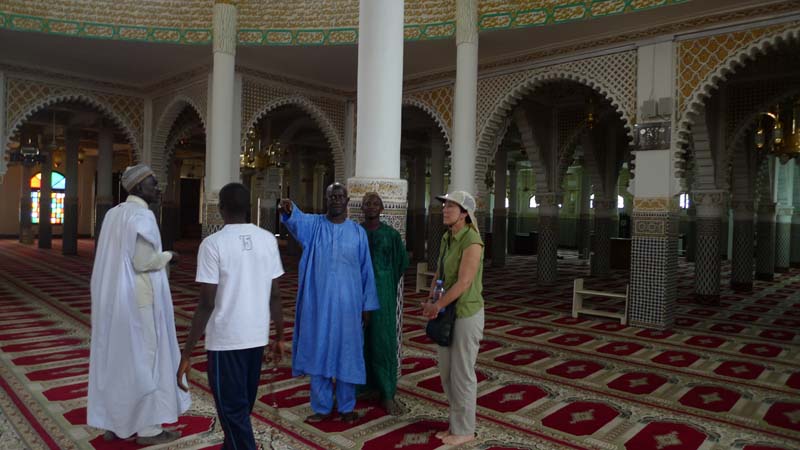
Similarly, the pleasures of our wine-tasting outing yesterday sprang principally from the excellence of the wine and the extreme beauty of a couple of the wineries. The weather was sublime, we motored over gently rolling hills, vines pressing in close on each side, and found ourselves in elegant, opulent tasting rooms with heart-stopping views of the Stellenbosch valley; they were at least the equal of anything I’ve seen in the Napa Valley. At the Engelbrecht Els winery, we sat out on a stone terrace to taste the four bold reds. Nearby a guitarist played softly and sang American ballads. Other murmuring white people sat at other tables.

It was easy to imagine we were in a glossy, prosperous country, filled with mostly white-skinned inhabitants, and protected from any hint of strife. We were glad to experience it, and we could understand why other travelers with a greater passion for wine or more miserable home climates might want to come here and hunker down. But more than one night would not have interested us. We were happy to press on to Cape Town, our current and final site for South African explorations.

Goodbye to the Dolphin Trail

Wednesday evening, March 10
Sadly, we saw no dolphins today. (We hear January is the best time for that.) We saw no otters, either, though there was plenty of otter dung. Apparently their practice is to rise early from their dens among the rocks along the ocean, then creep up the streams that trickle down from the bluffs, snacking on fish and crustaceans and whatever else they can find. They ascend for about 1000 feet, chill out up at the top, then make their way back at the end of the day.

Stan also pointed out where porcupines had dug under bushes, seeking tasty roots and ants. Polecats do something similar, and we saw those scratchings too. We failed to spot any bush pigs or snakes, and the closest we came to baboons today was a couple of deposits of their excrement, “You can recognize it because it looks a lot like human’s, ” Stan told us. Still, for all that we failed to see, for as much as much as my (bad) left knee aches at the moment, this two-day hike has to rank among the most memorable of my life.

For one thing, our weather luck was wonderful. It was so hot when we drove from Pt. Elizabeth to the park Monday morning that the air flowing through the vents into our (un-air-conditioned) car felt like it was coming from the heater. An hour after we checked into the park cabin, the moisturizer in the tube in my suitcase was still hot to the touch. But Tuesday (the first day of our hike) dawned much cooler and a mix of clouds and sun made the trekking ideal. Today was even mistier, even foggy at times, but that too felt refreshing. By the time we stopped for our final picnic lunch, distant thunder was rumbling, and we expected we might get soaked in the final stretch before we reached the Fernery lodge. The rain held off, however, until just a few minutes ago. Now it’s pouring amidst thunder and lightning, a goodsend in this parched region.

At the picnic in the woods, where another Fernery employee named Marius had arrived to set up a table filled with homemade bread, gourmet cheeses, cold cuts, salad, and a pudding pie, Marius asked if we usually hike when we travel. Although there’ve been a few memorable exceptions (e.g. the Inca Trail), we had to say no. And the question made me wonder why we’d chosen to do so here. Why escape into nature for two days, when our goal has been to gain better understanding of the people and cultures within South Africa?

Getting to know Stan actually did wind up advancing that goal nicely. Our leave-taking yesterday was emotional; it amazes me what a relationship one can form in just two days. Beyond that, however, I’d have to say I’d suspected the physical beauty of this trail would justify hiking it. And it did. The plant life alone was enchanting — so many plants that are fixtures of life in San Diego — agapanthus, calla lilies, ice plant, society garlic — growing wild here, and so much many more wonderful things I’d never seen.

We climbed up the sides of cliffs so steep I was gasping at the top, followed trails frighteningly close to murderous abysses, penetrated dark, green leafy sanctuaries that Stan called “the jungle,” but then amended, when pressed. True jungles are actually a bit wetter than these “Afro-montane forests,” he said. But they felt jungly, filled as they were with hidden vervet monkeys and baboons, exotic snakes, huge insects.

Best of all, I think, was the second day, when we descended from the Misty Mountain Reserve to the shoreline, which we followed for several hours. Here the sea meets the land not on sandy beaches but at huge black Table Mountain sandstone formations thickly veined with quartz. The layers have been tilted over the eons by almost 70 or 80 degrees, and the edges worn away so that they look not like delicate lines in a block of solid rock, but rather enormous pancake stacks, with jagged, frayed edges. It almost made me dizzy to look at them — as of the world had turned sideways and I had somehow remained off-kilter. The first time we reached a shore like this, Steve and I both quailed. How could we traverse the daunting jumble of rock? We learned the answer as we followed steady, sure-footed Stan: the formations actually provided dozens of footholds at every turn. You just had to take your time and find them.

Stan was off work today, so Marius drove us in a Land Rover back to the park, along a dirt road that 50 years ago was the only way route for vehicles to get from Cape Town to Pt. Elizabeth. It was an interesting drive, through pine plantations and dairy farms, and when we arrived back at the park, we took an even more amazing trip, on a boat up the narrow gorge through which the Storms River flows to the sea.

Now we’ve into the Phantom Forest Eco-Reserve, recommended by our friends the Zatkins. Tomorrow we’ll set off on the Road More Traveled by tourists — along the so-called Garden Route, to the cape wine country for a day, then finally to explore Cape Town until next Thursday next, when we fly home. It will probably be less adventurous than what we have been experiencing. But I’m guessing it still won’t feel like we’re back in Kansas yet.