In the land of the merlion

Late Wednesday afternoon, a few hours after we arrived in Singapore, I was re-reading a long blog post that I had printed out months ago about taking the train from Bangkok to Singapore (a journey that Steve and I will begin, in reverse, on Sunday). In writing about his time in Singapore, the post’s author had mentioned that he’d taken a bike tour of the city — something I had completely forgotten, even though Steve and I had a wonderful experience touring Bogota, Colombia by bike in May. I all but slapped myself on the forehead. We did some quick research; made a quick call. Found that we could join the morning tour the next day.

That’s how we came to be in Singapore’s financial district, wearing bike helmets and ready to set off at 8:30 Thursday morning with Alfian, our 27-year-old bike-tour guide. Our fellow bikers were  a British guy of Indian descent named Joe, and a Norwegian woman traveling with her 12-year-old daughter. Alfian had given us our orientation lecture, and we were ready to roll out the door, when the skies opened up, unloosing a drenching downpour.
img_0163

Alfian seemed only a little dismayed. He predicted it wouldn’t last long and advised us to get a coffee at the nearby Starbucks.  We did, but by 9, it was not only still raining, but crackling with lightning and explosions of thunder. Alfian made a phone call to someone and pronounced that the rain was actually only gentle. He suggested that we carry on, and everyone in the group agreed. So off we pedaled into the thunderstorm.

He was right. The downpour and pyrotechnics didn’t last much longer, and the part we experienced felt emblematic of this place overall — dramatic and beautiful and refreshing and actually quite safe. For the vast majority of our three-plus hours with Alfian, we pedaled on level sidewalks or bike paths. None of it was in scary, chaotic traffic. My sleeveless arms were damp, and the breeze generated by the biking cooled me; it was a little like generating our own air conditioning. Best of all, biking and chatting and stopping for photos was a perfect way to see some of Singapore’s many marvels.

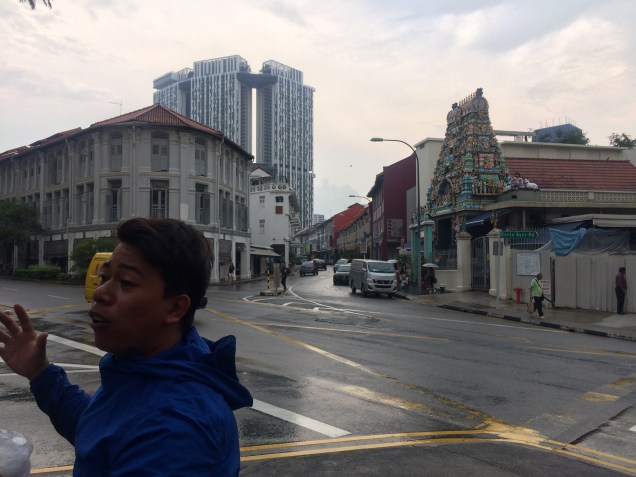
I’m embarrassed to admit how little I knew about the place before coming here. But we’ve made up a lot of ground in the last 24 hours. I now understand how this little island at the tip of the Malay peninsula came to be an independent country (no doubt about that!) in 1965, and I’ve gotten a little insight into how the humble one-time fishing village (symbolized by the mermaid) has become transformed into the economic lion it is today — one of the wealthiest and most productive societies in the world. The bike tour yesterday made it crystal clear that the city center is a physically astounding place. Parts of it retain the grandiose classical and Victorian edifices built by the one-time British rulers. The humble but colorful vernacular architecture of their one-time inhabitants (Chinese, Malay, Indian) has been preserved in a couple of enclaves.

img_0156
A park in the Little India area
img_0148
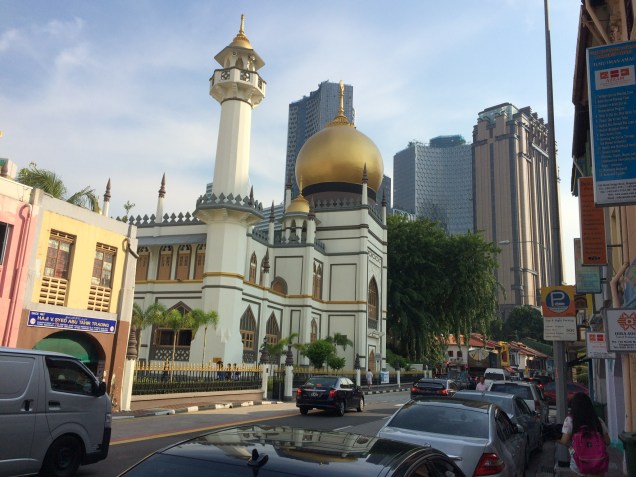
The iconic Sultan Mosque, in the center of the historic Muslim district

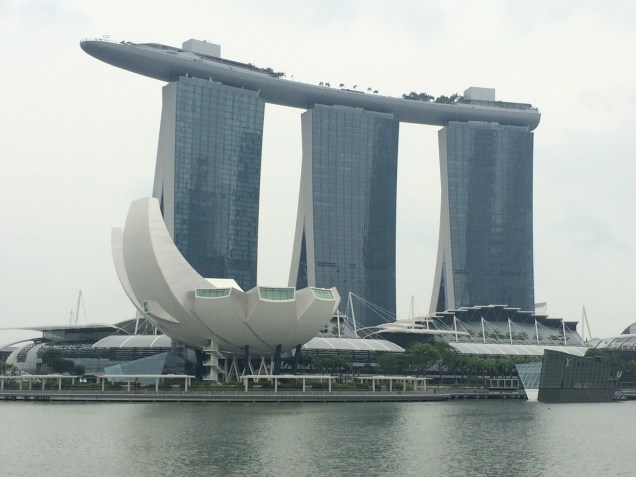
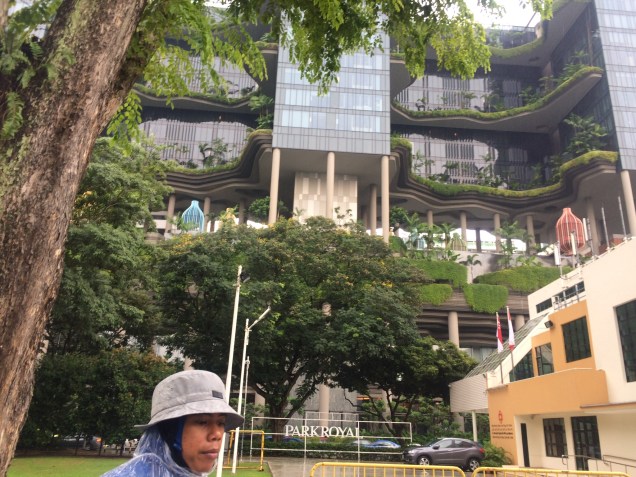
Elsewhere the Singaporeans have constructed some of the most incredible looking high rises I’ve seen anywhere. They rival (or surpass) the wonders of today’s Shanghai skyline.
img_0164

img_0162

image

The population is multinational — though 74% are ethnic Chinese (many of whose antecedents poured in here in the early 1800s, when Singapore first began thriving as a free port. But about 12% are ethnic Malay, and a similar number are Indian. (Everyone else makes up the other 2%). What charms and delights me is that although the city-state looks and feels intensely Asian, for the most part, people are speaking English (or Singlish, as the weirdly inflected local tongue has been nicknamed). All children study it in school (along with their “native” ethnic language). You can walk anywhere, day or night, and be safe; talk to everyone, and be understood.

Thursday afternoon we spent an hour at the National Museum. Friday we covered a lot more ground; took the metro and a city bus out to the city’s zoological complex in the rainforest. Although the zoo here is reputed to be one of the world’s best, we figured didn’t have the time to do it justice. But Steve and I are total suckers for rivers, and we couldn’t resist a quick visit to the adjoining “River Safari” park devoted to showcasing 8 of the greatest rivers in the world (the Mississippi, Nile, Congo, Mekong, Yangste, Amazon, Ganges, and Mary).

img_0196
The entrance to the River Safari park — an homage to some of the manatees who are featured prominently

Then we metro’d to the Orchard Street, Singapore’s over-the-top concentration of insanely expensive designer shopping palaces.

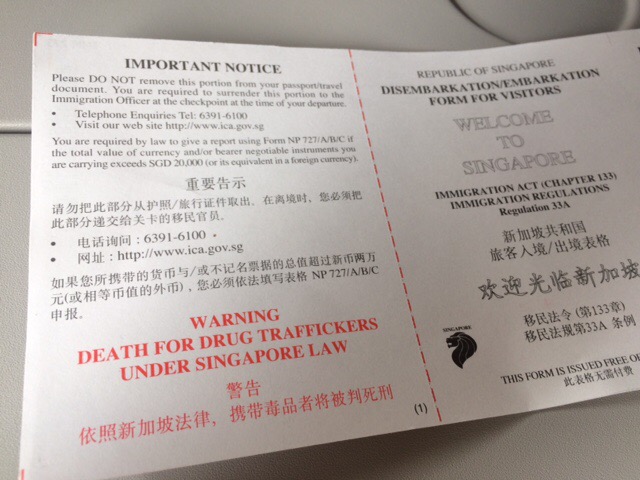
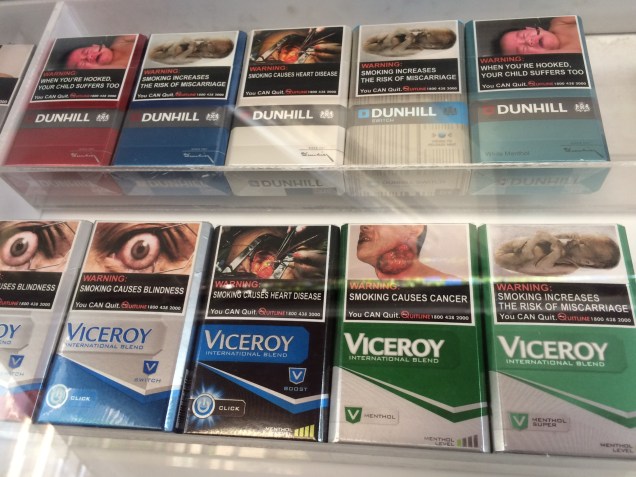
Along the way we have been amused by a few reminders that the infamous Singaporean social control still persists. There was that notice about executing drug dealers (on the immigration form). And Alfian told us they still cane rapists and other criminals here.  I haven’t seen any warnings about chewing gum (though they probably don’t sell it in the stores), but I did gasp at the cigarette packages.
image
Every package of every brand is plastered with a grisly image.


This is a food-obsessed society, but vendors no longer can sell their wares on the street, where it’s too hard to police their sanitary standards. Instead they’ve been moved into wondrous indoor facilities. But that’s the subject of another post. For now, we only have one day left to begin absorb what would probably take a month – or a year to begin to understand.
In hot water

A little sad that we wouldn’t see Taiwan’s beautiful countryside, I felt intrigued by the recommendation I read from a couple of travel writers. They said a 40-minute metro ride could take one to one of the hot springs towns created by the Japanese during their 50-year occupation of this island last century. The outing sounded almost too good to be true: bucolic, potentially relaxing, and something that could be accomplished in just a few hours. So yesterday morning, off we went.

Using the splendid Taipei metro system, it was cheap (about $1.10 per person) and easy to reach Beitou. But it sure didn’t feel like the ride took us out into the country; the town feels more like a prosperous suburb, albeit one surrounded by not-so-distant lush and rugged and potentially undeveloped mountains. Even though our stop was the end of the line and it was a Tuesday morning in October, the train discharged a bunch of passengers along with us: young couples, families, and older folk. A thick knot of restaurants and shops surrounded the station, but everyone seemed to stream toward a long woodsy park created along both sides of the Beitou Stream, so we went with the flow. 

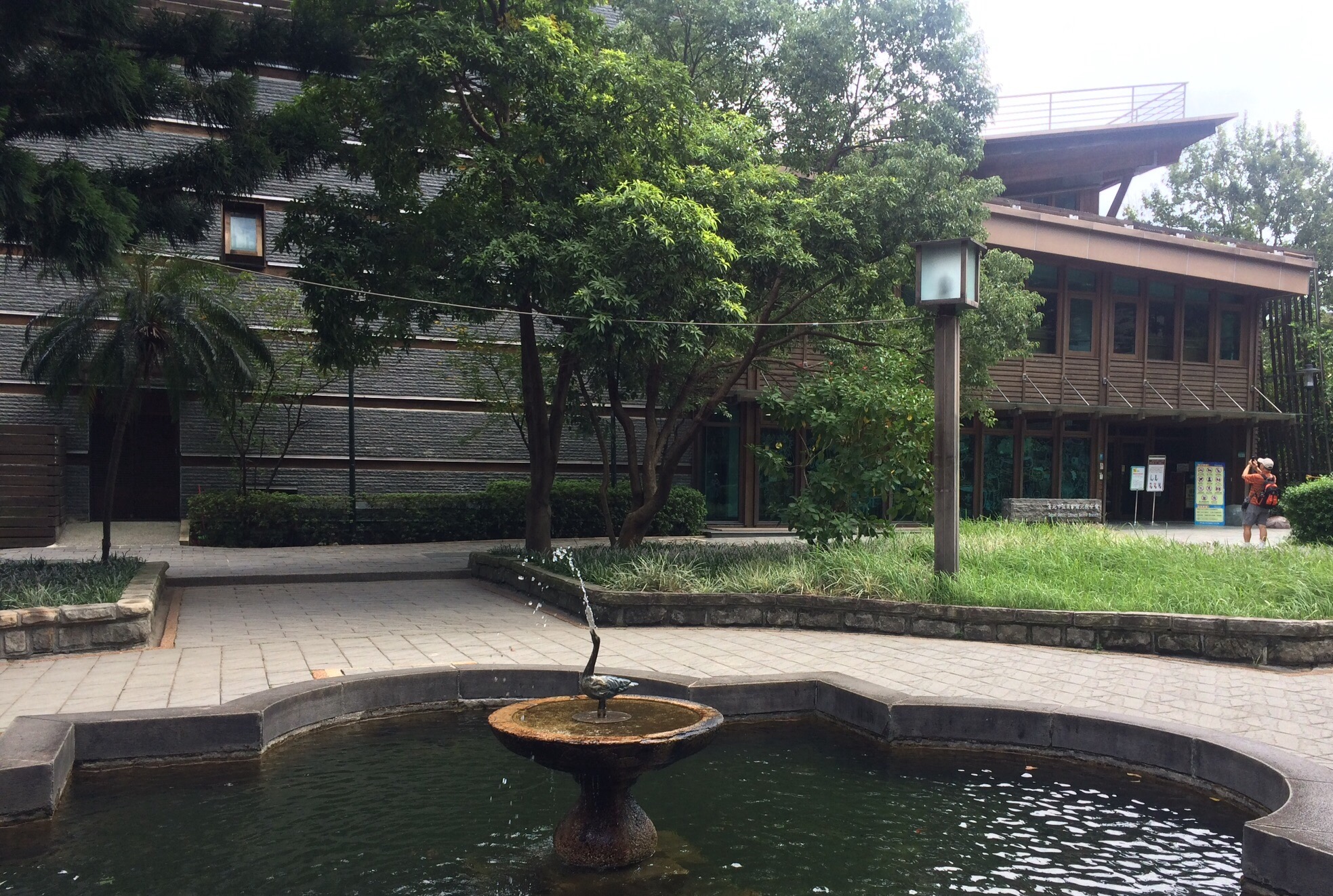
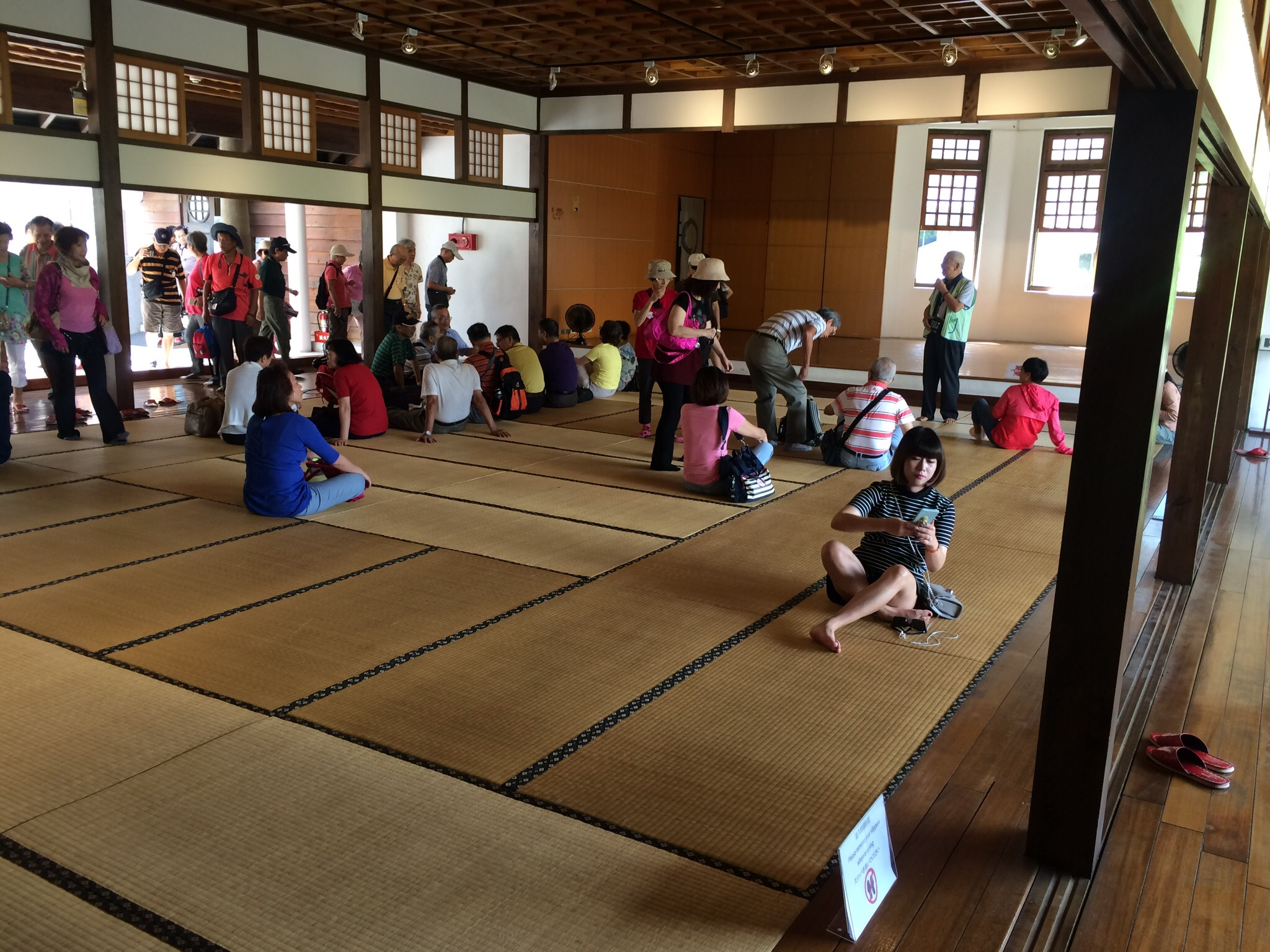
It swept us to the town’s principal sights. These included a beautifully ecosensitive branch of the Taipei city library, designed with a plethora of nooks so tranquil I longed to stay and study something in one of them. A few minutes further down the path, we found the town’s hot spring museum. It contained a few replicas of soaking pools and a huge tatami-lined hall where the Taiwanese tourists seemed to get a big kick out of sitting on the straw mats and pretending to be Japanese. 

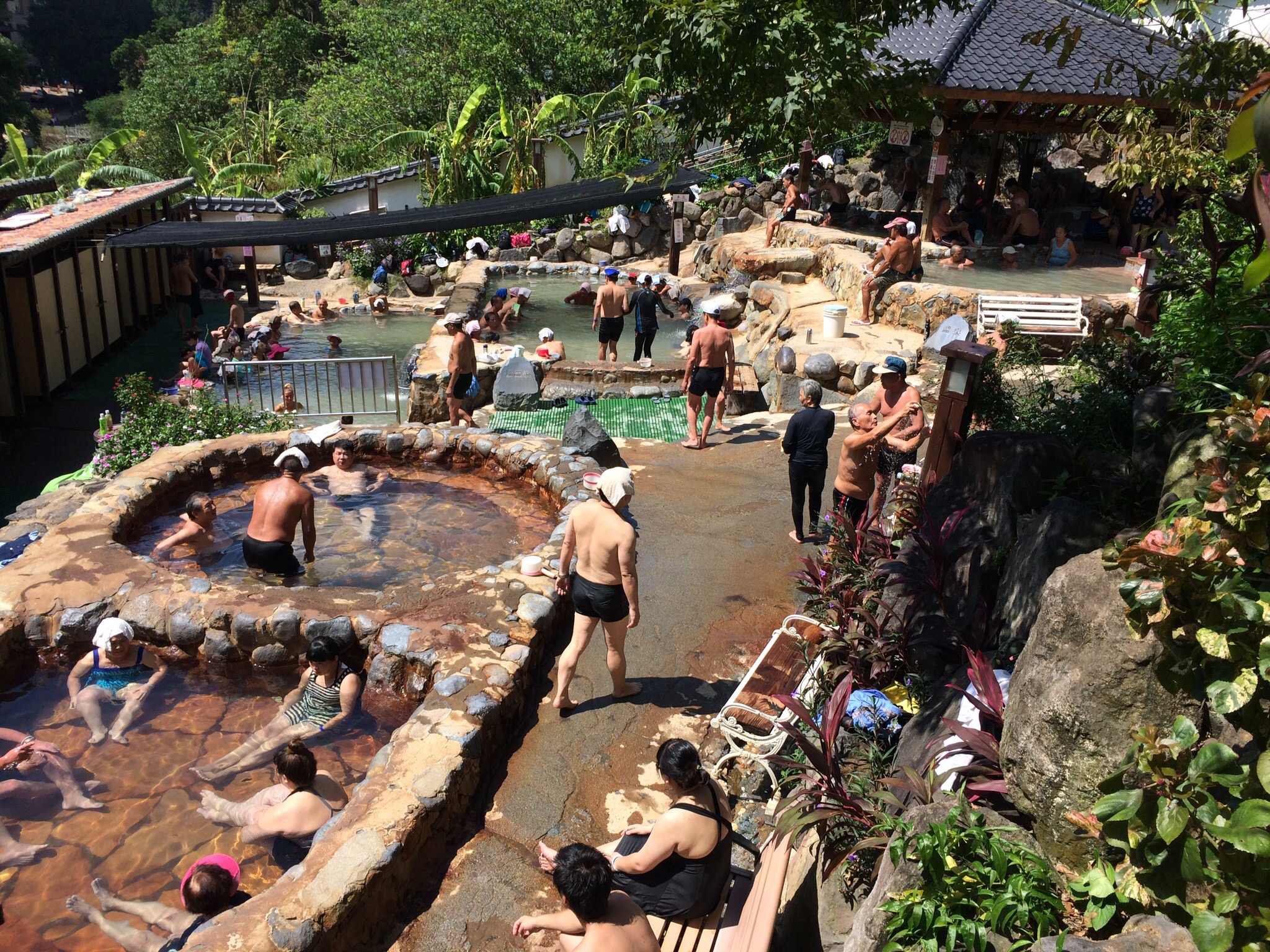
The Millenial Hot Springs facility was a bit further down the trail. We’d read that this was the cheap date in town for getting a soak, and since we were more interested in the sociology than the actual hot springs, we paid the 80 Taiwan dollars (about $2.55 US for two) and soldiered in. (We’d brought our bathing suits but not towels, so buying a flimsy one set us back another $1.60)


Inside we changed and eased into the first pool of hot water, which a sign declared to be 38-40 degrees C (100-104 F). It was hot but tolerable, and after a few minutes we moved up to the next dipping station (104-109 F), which we found to be hotter but still bearable. In the final pools at the top, we could only submerge ourselves in the 111-113-degree water for a minute. But we’d seen enough. If we’d come with a bunch of friends, the way the locals did, it would have made sense to move back down to the cooler levels to gossip and absorb more of the supposedly healing minerals. Alternatively, Beitou has plenty of tonier, more expensive spas we could have patronized. But then we would felt obliged to linger. And what we lacked more than anything was time. 

Seeing Beitou’s  last two major sights took no more than a half hour. 

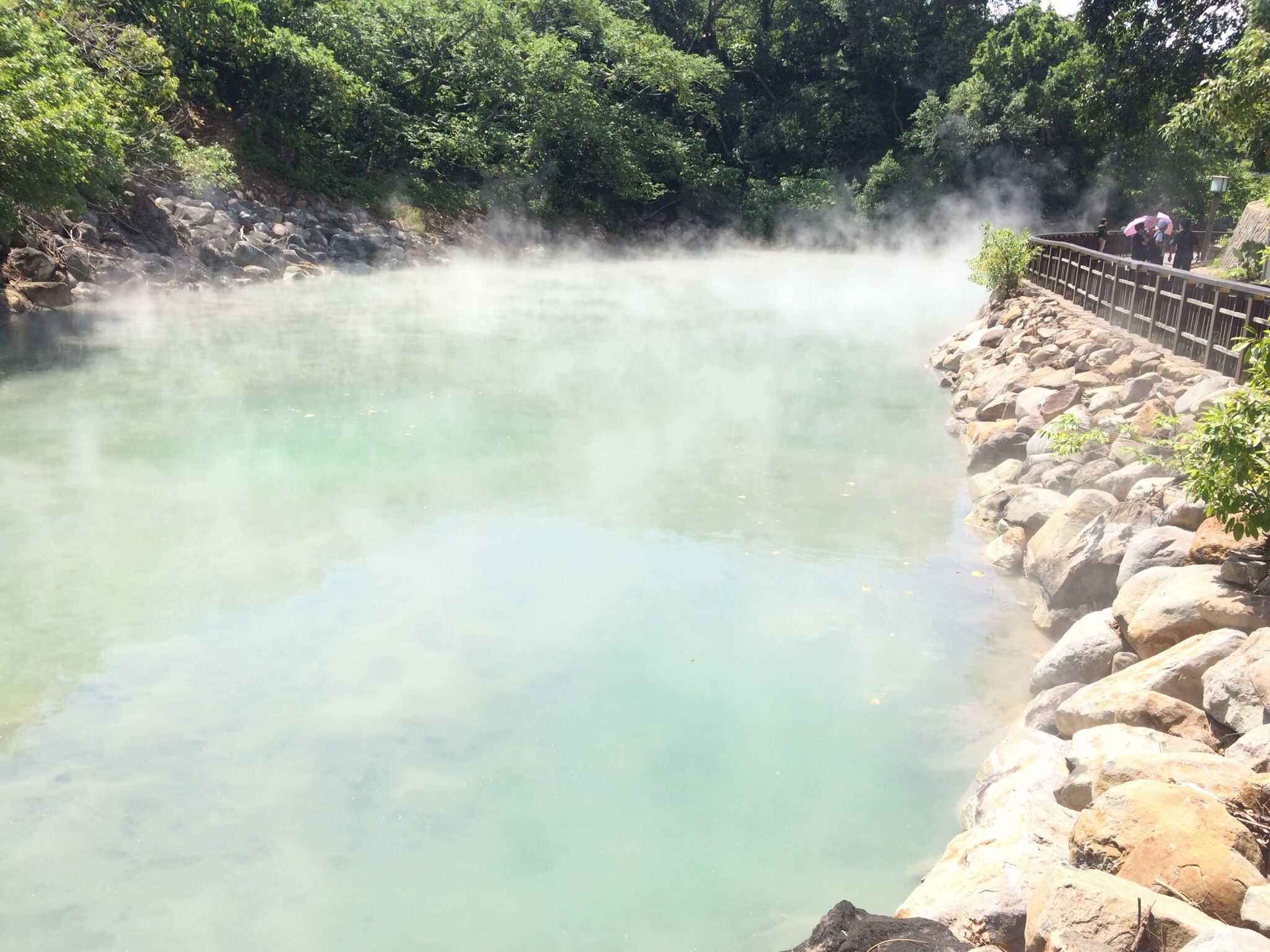
This most interesting of these was the very short walk up the “Thermal Valley.” It felt like strolling past a gigantic pot of sulfurously smelly boiling water.

Then it was time to find lunch and return to central Taipei, where we spent what was left of the afternoon resting and walking more and packing for our morning flight Wednesday.

Now I’m writing this at 35,000 feet, bound for Singapore. I have to add that Taipei’s airport and this EVA Air plane have both shown us some additional sights that made our eyes widen. In the airport, we noted rooms where waiting passengers can go in and shower (they looked similar to private bathrooms). I’ve never seen that before. But the airport is very, very short on the sort of sundries ubiquitous in America airports. I had 140 Taiwanese dollars left (about $3.50US) after we changed money, and though we searched and searched, we almost couldn’t find anything to spend it on. There were mountains of designer purses and French perfume and high-end luggage and other fancy goods, but not a single package of gum or a chocolate bar for sale. Finally, I found a little box of cookies that I’m sure will fill my sugar craving some night. 

We passed a “reading lounge” stocked with books, and much weirder, a “Hello Kitty”-themed lounge open to the public. A couple of adult men and women seemed to be hanging out in it, but no kids. 

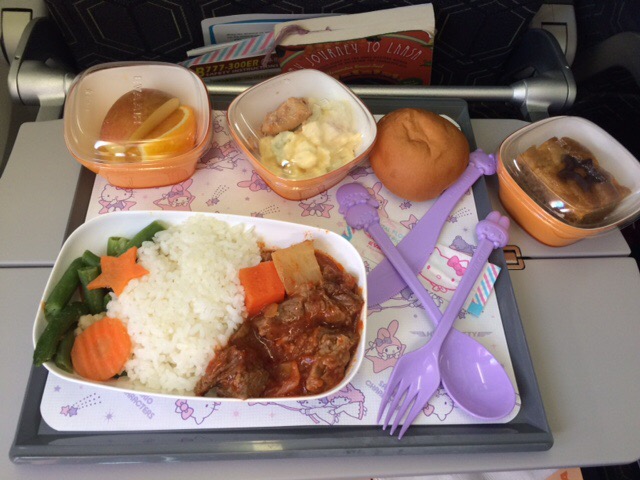
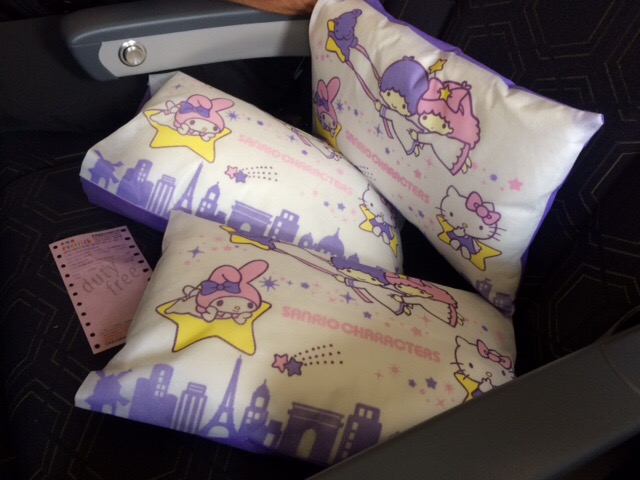
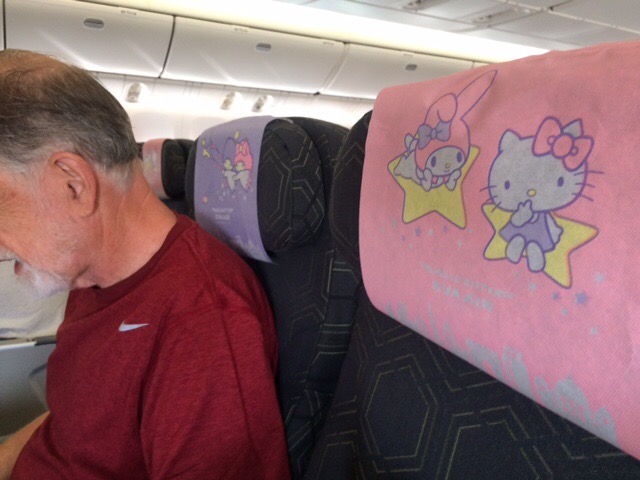
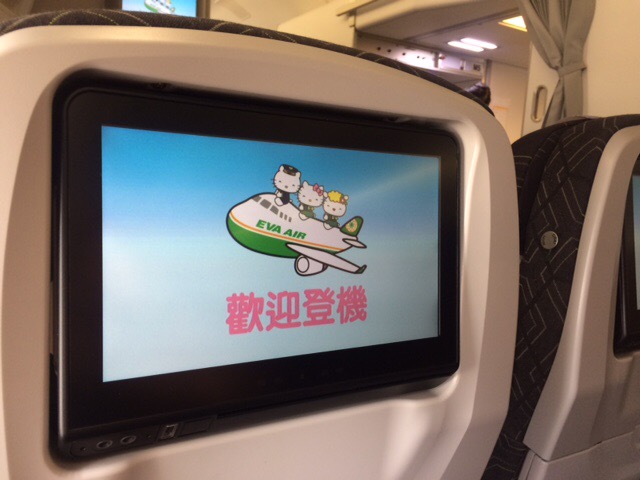
For anyone allergic to Hello Kitty, this flight also would be a trial. The interior of our 777 is soaked with the iconic Japanese brand. 


I have no idea why it is nor time to find out. I have to fill out my arrival form for Singapore — while silently giving thanks that I haven’t packed any narcotics for sale on this trip.


Three reasons to like Taiwan even if it isn’t a country

To be honest, one of the reasons we came to Taiwan is because I wanted to add another country to the list of those I’ve visited. That wasn’t the only reason. Because we were flying to Singapore on EVA Air (Taiwan’s well-respected airline), we could spend a few days on this beautiful island off the coast of China at no extra cost for the transportation. Such a stop would help break up the grimly long trip from Los Angeles (13-plus hours just to Taipei alone). Steve could once again see the city that he and his mom toured for a day (via bicycle rickshaw!) back in 1958 (when it took them 3 weeks to cross the Pacific by freighter).

So yesterday, when I learned (was reminded?) that Taiwan is not universally recognized to be a separate country, I was dismayed. (Somehow, I thought the Chinese  along the line gave up their claims to it. Which, apparently they haven’t.) But after some reflection, I’ve decided I don’t care. I think Taiwan deserves to be on my list at least as much as Tibet and Palestine. And even if isn’t a separate country, after less than 24 hours here, we’ve seen much to justify a visit. Here are three things that have most impressed us:

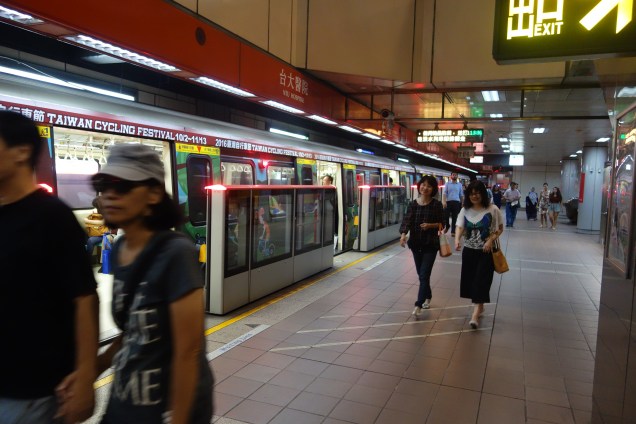
1) Taipei has one of the best public subway systems we’ve used anywhere in the world. We figured it out almost instantly. Even though we can’t read most of the signs, they include enough Roman lettering to enable non-Chinese speakers to get by. All the trains are immaculate and quiet and they come along every 5 minutes or less.image

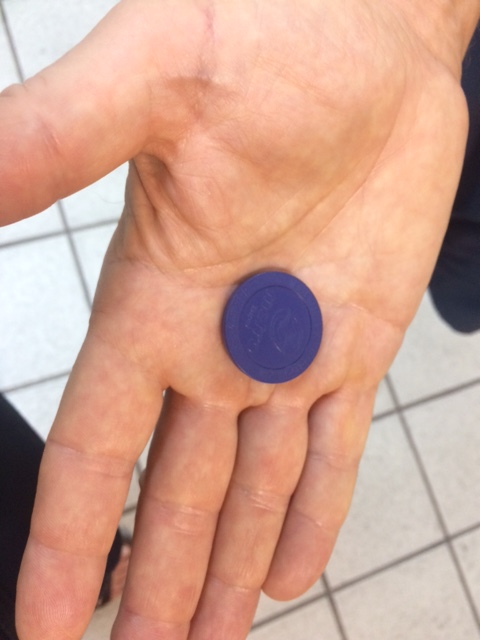
Best of all is the brilliant way the systems handles single-ride payment. From easy-to-use machines, you buy tokens that look like cheap poker chips.image

But they have some kind of electronic signaler in them, so when you touch them to a pad at each turnstile, they make the gates open. At the end of your ride you insert them into a slot that lets you exit. Most rides cost about 60 cents.

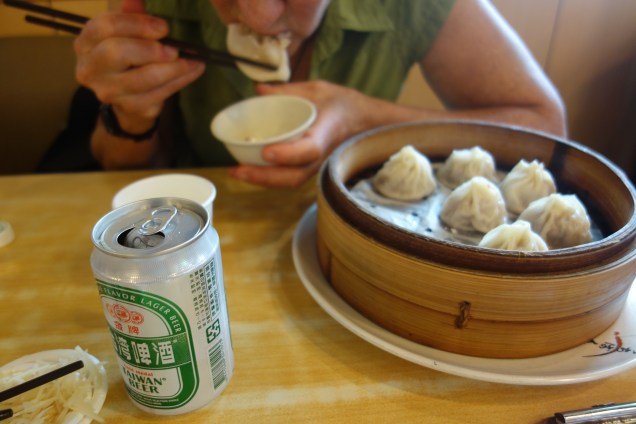
2) This is a city of passionate eaters. That seems true of most of the Chinese-influenced cities I’ve ever visited. But it meant on our very first day, we had two great meals, both in atmospheric joints. For lunch, we made our way to one of the supposedly best sources of meat-stuffed dumplings in the city — a gritty jammed second-story room above a sweltering kitchen open to the street. We ordered two types of dumplings, fat ones filled with seasoned ground pork and smaller ones served with soup broth, and each one felt like a gift.

imageYou bit into the delicate packaging of pasta to encounter a delicious present within. We ate dinner in another dive reputed to have the best beef noodles in the city. The line to get in stretched out into the street even when we arrived after 7:30.
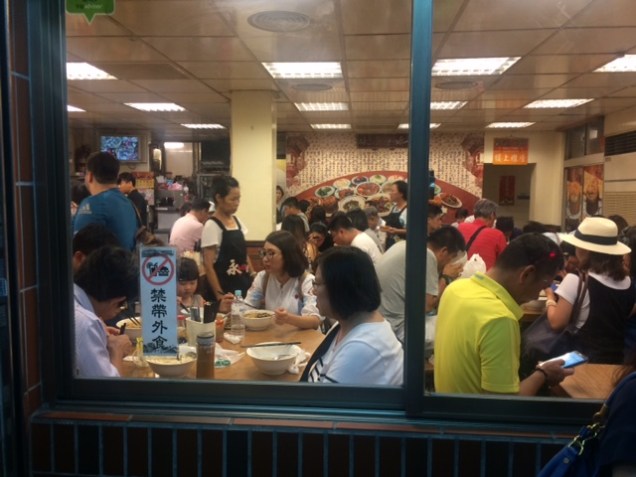
imageBut all the families and working folk inside ate fast and paid fast; no sitting around and gabbing and digesting at those tables. We followed suit, then hit the street in search of a current fad in Taipei — soft-serve ice cream.
3) Though Taipei feels extremely Chinese in many ways, almost everyone seems to speak at least a bit of English. Children start to study it in grade school and continue into secondary school. And folks young and old don’t seem afraid to use it. That’s one thing that makes the place feel friendly. Within just a few hours of our taking to the street, we had a late-middle-age guy stop his bike and roll it up to us to ask if we needed help finding someplace. (We actually did — but just didn’t realize it when he asked us) Despite their linguistic skills, the locals never seem to use them to hustle or harangue  visitors to buy stuff. That may be because so few Westerners come here. Steve and I counted no more than a dozen or two out of the thousands upon thousands of people we walked by our first day here. It also may reflect how prosperous people are here. According to the CIA Fact Book, the Taiwanese rank just behind Germany in their economic output per person — ahead of Britain, France, Canada, and Japan!

image
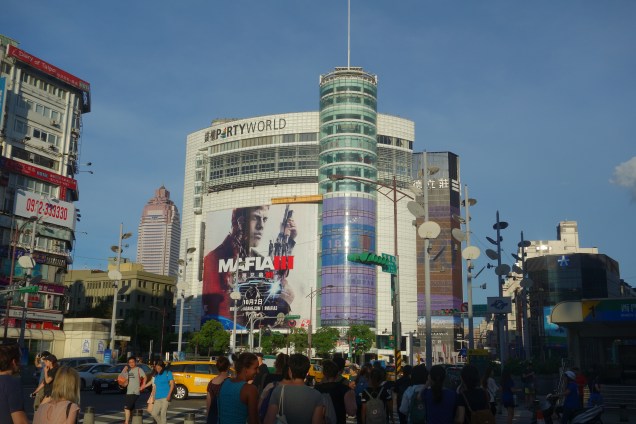
One thing they spend their money on is karaoke. Every floor of the Party World building is devoted to it. Our walking tour guide told us many young people like to start around 11 p.m and sing until dawn. 

If we had more time to range out into the country, I’m sure we’d find even more to dazzle us. But we have only one more full day in Taiwan before pushing on to the strange little city-state of Singapore.