Bicycling to Mauritania

Thursday, January 13

The city of St. Louis (pronounced San Loo-wee, of course) is a World Heritage Site that fills a narrow island in the mouth of the Senegal River. This was the first place Europeans established a settlement in West Africa, and for many years it served as the capital of both the Senegal and Mauritania colomies. Many of the old French colonial buildings survive, and a handful of them have been well-maintained — enough to make it easy to imagine how splendid this place could be (if most of the buildings weren’t peeling or crumbling or shattered.)
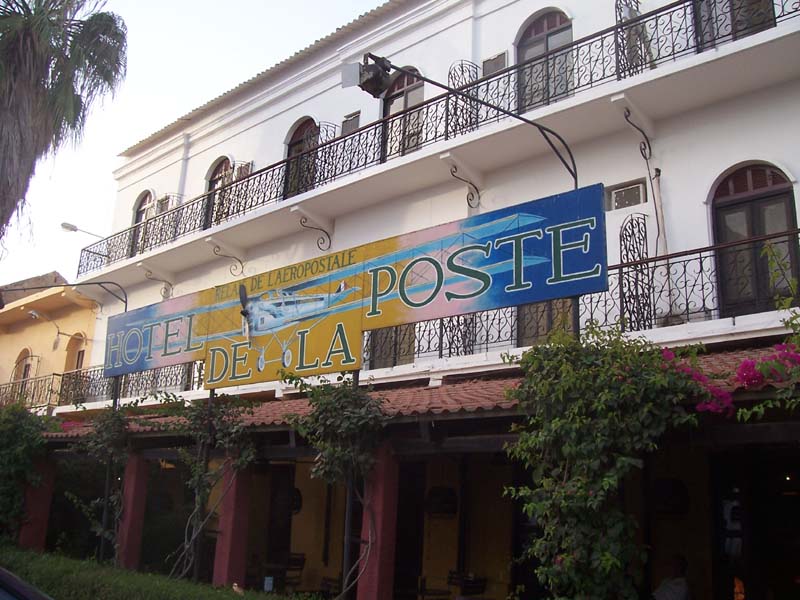
The Hotel de la Poste is a rare example of well preserved 19th century French architecture in St. Louis.

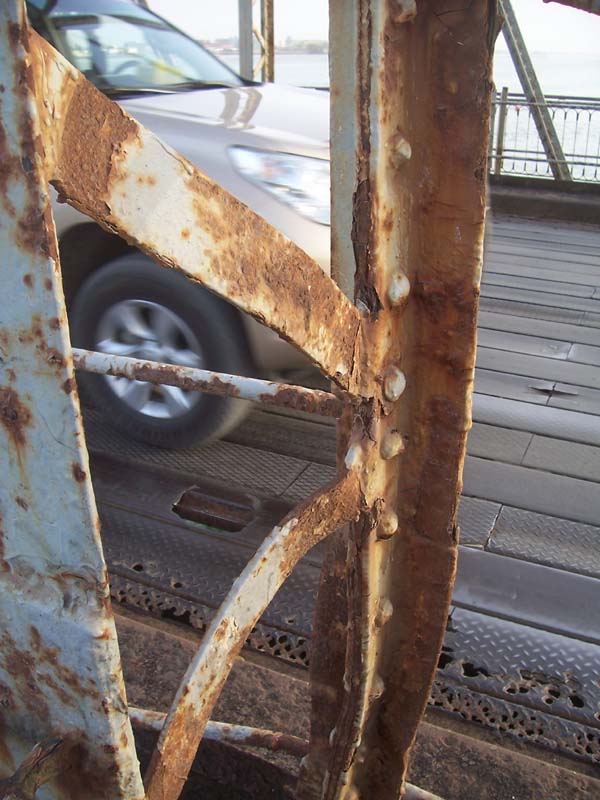
The architectural heritage includes a rotating bridge designed by Gustave Eiffel that spans the broader, eastern part of the river between the island and the mainland. (We’ve learned that it first served on the Danube but was relocated here at some point.) Today half the original structure is buckled and rusting, but amazingly, it’s being replaced, section by section, with new steel segments.

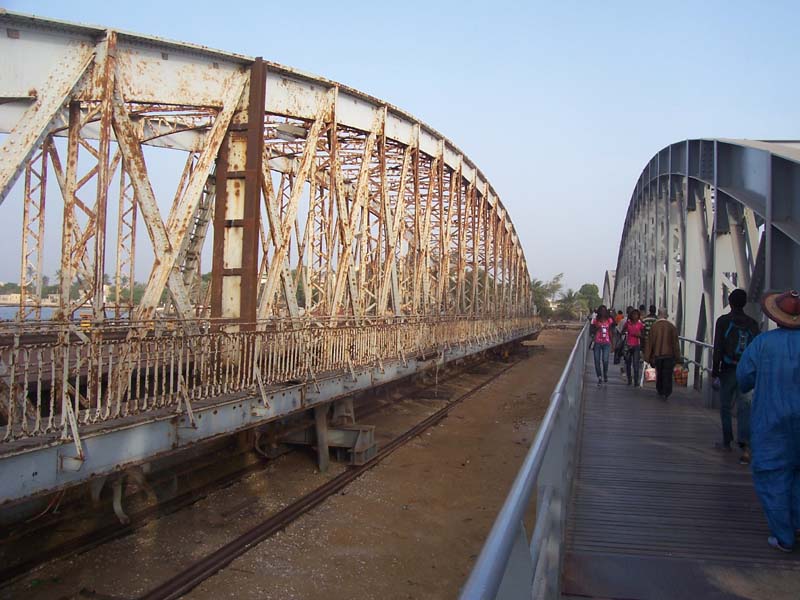
The elegant lines of Gustav Eiffel's bridge evoke his more famous tower in Paris.
The bridge is being replaced in sections, each faithful to Eiffel's design but employing moden materials.
Corroded and buckling, Eiffel's original iron bridge could not be expected to stand much longer.

Steve and I enjoyed walking over it and through the town, which reminded us of a miniature and Africanized Manhattan: the cool buildings, a couple of art galleries. There are even some tourists — almost all French. I think the only Americans who come here are Peace Corps workers or their parents.  We were amused when one tall shop owner approached us in the street and asked if we were French, then Belgian? English? German? Swedish? Swiss? He finally gave up, and when we confessed our true nationality, he smiled hugely and showed us the image of Barack Obama on his backpack.

We’ve also loved our hotel here, the Mermoz (named after the French Charles Lindbergh, who in 1930 flew from a spot just down the street to Brazil.) The hotel isn’t located on the island, but rather on the long, narrow peninsula that separates the river from the Atlantic Ocean. After an initial night in one of the dark, noisy $50 “standard” rooms near the restaurant and reception area, we upgraded to a huge lovely room that cost around $100 but had a private patio facing a beach at least twice as wide as the one in front of the Hotel Del.
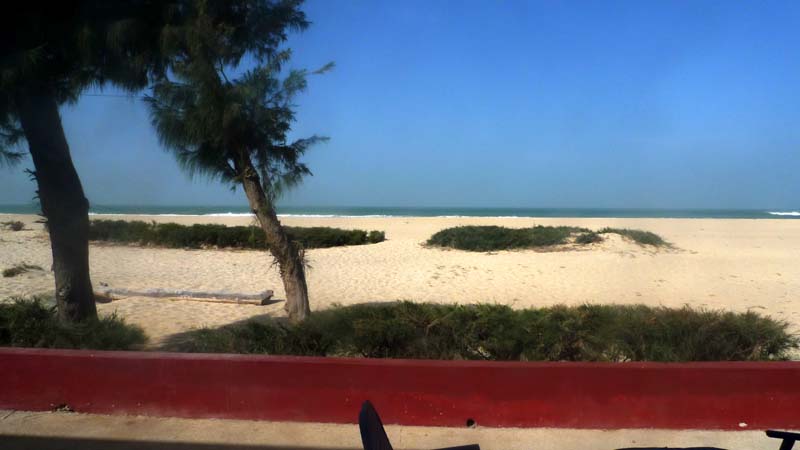
Beach at the Hotel Mermoz

The hotel is a longish taxi ride or a 50-minute walk from the island/city. We walked it twice, and I think what we saw along the way will stick with us even more than the conventional sights here.  We’ll remember the beachside cemeteries that stretch on and on, for maybe a quarter of a mile. Before them we passed the large, modern-looking Ndor ice plant where we watched young men carrying out large trays of ice on their heads, and transferring the trays into trucks.
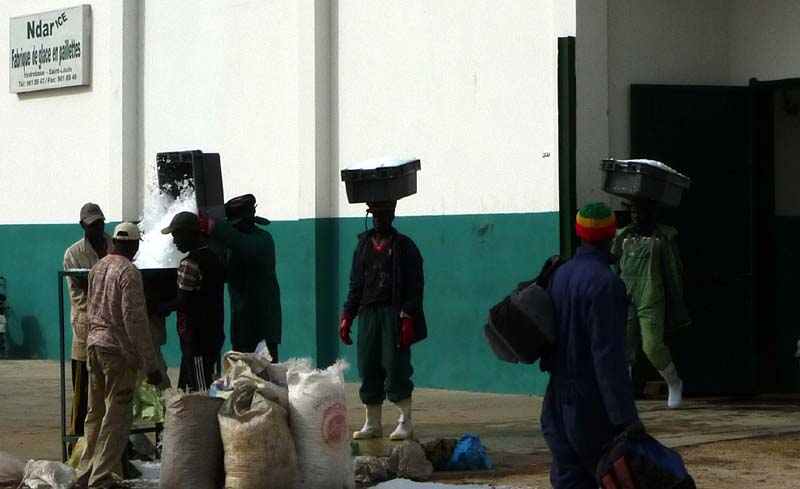
Loading ice in St. Louis

Yesterday morning, we saw the trucks in action. About 10:30, we came to the first of the wooden fishing boats pulled up close to the river’s edge. Every boat, new or old, is painted with bright colors and complex designs (a cheery counterpoint to the tough dangerous life these men who fish with nets must lead.)  Strong young men were wading out to the boats and filling large bins with fish, then carrying the bins (again on their heads) to trucks parked nearby. They would dump one bin of fish into two empty bins, which were then filled with ice, later to be trucked to inland places like Kolda (so people like Laura’s host mother could serve us delicious fresh fish with our rice.)
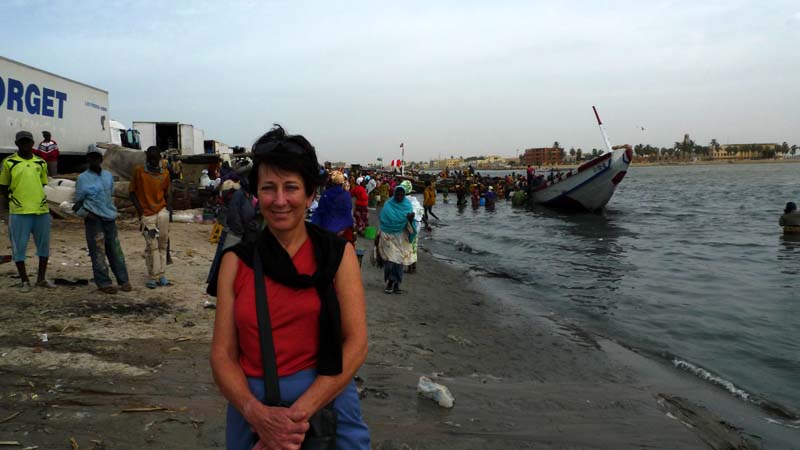
Unloading the morning catch in St Louis

It was a crazy, bustling, fantastic scene: at least 100 boats and what looked like thousands of people — most of them purposeful, dealing with the catch of the day or selling items ranging from beignets to SIM cards to those who did. Some folks waited to spring into action, like the ladies in their amazing Senegalese gowns and headgear. Some of them would later carry buckets of the fish to markets or restaurants around town; others would dry or smoke fish on the riverfront. We threaded our way among them, and while a child here or there commented on our status (“Toubabs!”), for the most no one seemed to even notice our presence.  I felt a bit like a time traveler wearing an invisibility cloak. 

Finally, we made our way onto the island, where we rented bicycles for a couple of hours. We spent some time exploring the streets (not many) that we hadn’t already seen on foot. But I was most intrigued by the notion of biking to the old Mauritanian border. 

The desert country of Mauritania lies just on the other side of the river, and I’d read that an old frontier post, no longer functional, could be found a few kilometers to the north on the peninsula where our hotel was located.  So we headed there. For a while we rode on pavement, but then the road gave way to dirt and then sand. 

Eventually, the buildings stopped and the sand was so deep we could no longer ride. We pushed our bikes through it for a while, but then decided if we want to get to Mauritania, we’ll have to find some other path.
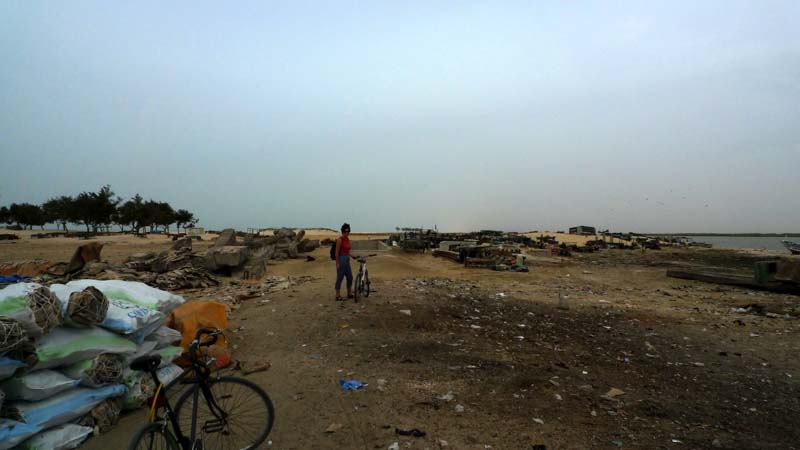
The Mauritanian border lies a kilometer or so across the sand dunes.

Ragged roads

Tuesday, January 14
I’ve been sleeping soundly everywhere on this trip, but Sunday night I barely got 4 hours. During dinner, Heather, the English owner of our lodge, got to talking about the ferry across the Gambia (the only way to cross this huge river that divides the country in two). She recalled how one of the last times she’d taken it, someone had loaded a truckful of cattle on board, and they’d broken loose.  “It’s was awful. They panicked, and they were scratching the sides of all the cars with their horns. And one poor creature fell overboard. Don’t know what happened to it.”

I could only imagine how the passengers, many of whom share the same space with the cars and trucks, had reacted. But worse things have been known to occur, Heather continued, mentioning that at least one ferry had sunk since she moved to the Gambia in 2006. Most of the passengers had died (few Africans know how to swim). “The bodies were never recovered, but the awful thing was that later, hundreds of flip-flops washed up, not far from here.” At first she had found that weird, but then she’d realized they must have come from the drowning victims.

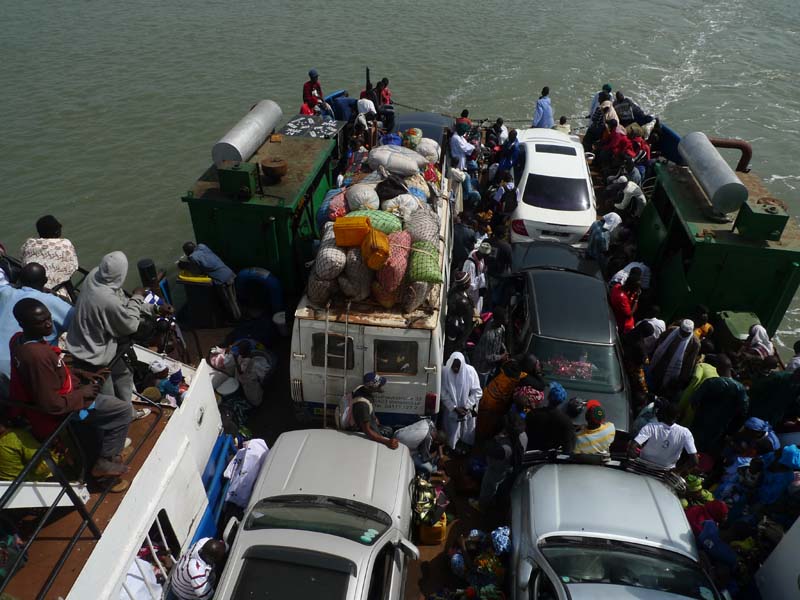
Afternoon crossings on the Gambia river ferry are more crowded and more colorful than early morning trips.

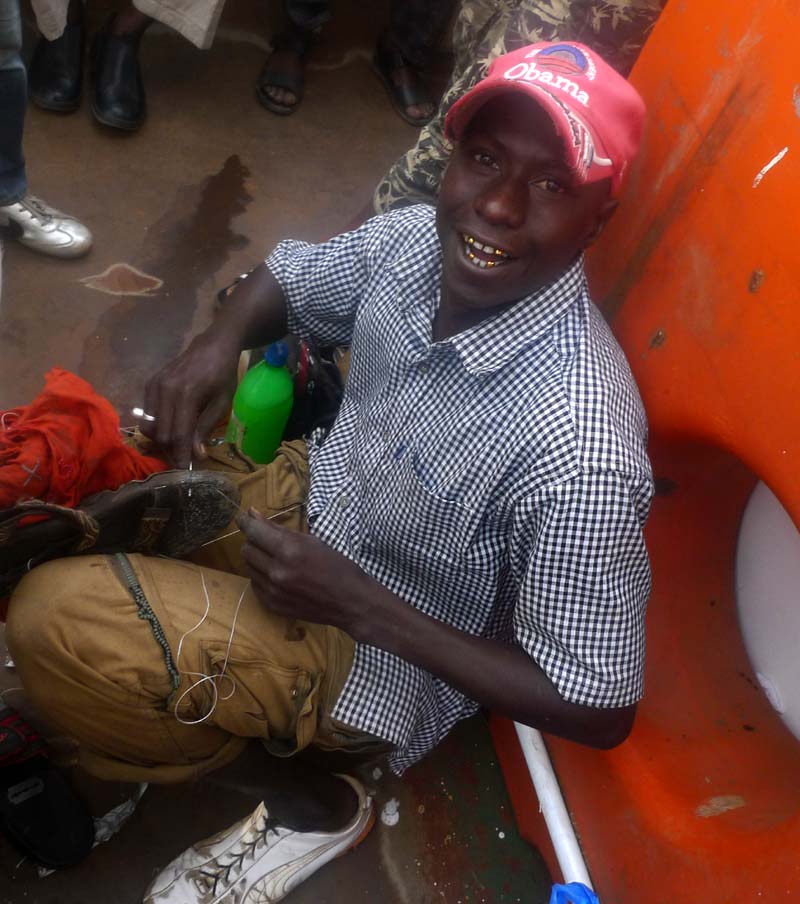
So I tossed and turned, thinking not only of our morning ferry ride but also of what we faced after it. As it turned out, the river crossing was great. Moses delivered us to the dock by 8 a.m., we bought tickets (30 cents apiece) from a delighted-looking man who asked me how we were enjoying our stay in the Gambia, we got a lovely spot at the rail of the upper deck (where the only farm animal I spotted on the main deck below was one woeful rooster), and the ferry turned out to be the fast one, making the passage in just 30 minutes. (The one we’d taken while traveling south was missing an engine and kept turning in circles. That trip took an hour.) Steve even had the fortune to stand next to a self-described Gambian “shoe doctor” who for $6 glued and stitched the soles of Steve’s failing Tevas before we reached the northern shore. (Only liberal applications of duck tape had been holding them together.)

Cobbler on the Gambia river ferry offered a 10-year warranty on repairs.

With little ado, we found a taxi to take us to the border and there got our passports stamped by inspectors from both governments. From the border we found a bush taxi heading for Thies, more than halfway to our ultimate destination (St. Louis). As during our first dewy-eyed ride in a sept-place (almost two weeks ago), we had to cram into the stuffy, filthy, shredded back seat along with a young woman passenger. But this ride took more than four hours (instead of two), and by the time we climbed out, we felt thoroughly sick of sept-place travel.

Still, I didn’t feel frightened during that ride, even though at times the road became so badly potholed, the drivers abandoned it altogether for the dirt shoulders or dirt tracks that paralleled the ruined road. In contrast, we felt like we were facing imminent death on the final segment of our journey (from Thies to St. Louis.)

The fixer who’d helped us buy our seats (all three middle ones, a much more comfortable ride) had assured me that our driver was exceptionally good.  Middle-aged, he wore flowing Senegalese robes and a traditional cap. I noted with approval that he seemed to inspect our vehicle before we took off. 

The road was excellent, if not terribly wide. Maybe that’s why he preferred driving down the center of it. The problem was it was one of the busiest routes we’ve traveled on yet. When we would approach the oncoming traffic, he would edge into our own lane clearing the vehicle ahead of us by a few feet. Time after time, I stifled screams. The most terrifying instant came with a huge bird (probably a vulture) swooped down and hit our windshield (fracturing it even more than it was to begin with). With traffic coming the other way, our driver swerved away from it and somehow retained control of the vehicle. I’ve had other scary rides in my travels (certain taxi drivers in Cairo and Shanghai come to mind). But they were relatively brief. This one lasted more than three hours. 

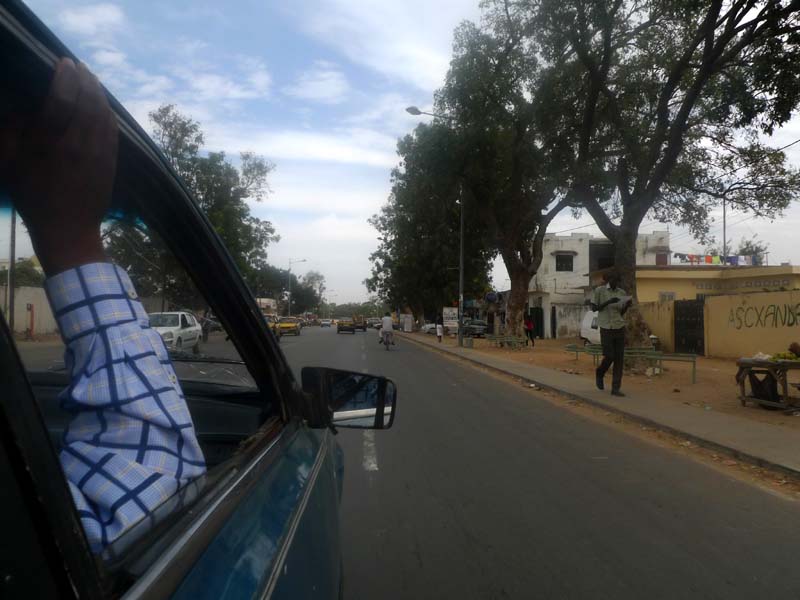
The broad, tree-lined main Boulevard of Thies as seen from the middle seat of a sept-place.

By the time we pulled into the St. Louis taxi park, more than 12 hours after leaving Heather and Moses’ elegant haven, both Steve and I were rigid with tension. But we reached our hotel just before dark, and our spacious room here opens onto a patio facing a huge, empty, glorious white beach. Last night we slept like the dead, today we’re taking it easy (writing and posting photos!). We’ll leave it till tomorrow to fully explore St. Louis.