One thing I have to say about the Promised Land (or the Holy Land or Palestine, or whatever you call the area we just explored): story-telling matters there. The stories about the events involving Abraham and his descendants, Christ and his followers, and Mohammed spread so widely and so inspired their audiences that they altered the course of human history. They’re still shaping it. Steve and I acquired a bunch of our own (humble) stories in the course of the trip, but my favorite, the one I’ll wrap up with, is unfolding in Nazareth.
I wasn’t even sure we should go there. It has an important church, commemorating the Angel Gabriel’s announcement to Mary that the young woman soon would be giving birth to a Very Important Baby (while still remaining virginal.) But I’d read comments from travelers who were unimpressed with the city. On the other hand, I was intrigued by the fact that Nazareth is the most important center for the relative handful of Palestinians who didn’t flee their homes because they were afraid of getting massacred (back in 1948) and eventually became Israeli citizens with full rights. About 85,000 Palestinian Israelis today live in Nazareth. Roughly 30% are Christians (Greek Orthodox and other flavors), while the other 70% are Muslims.
I also read about an intriguing guesthouse when I was researching where to stay. Deep within the Old City, the Fauzi Azar Inn was once an elegant private home. I splurged and booked us one night there. (At $132, including breakfast, it was our most expensive lodging of the trip.) Although it’s a bit tricky to find, we reached it without too much stress, and when we opened the low metal door and ducked into the beautiful stone courtyard, we felt we had made the right choice.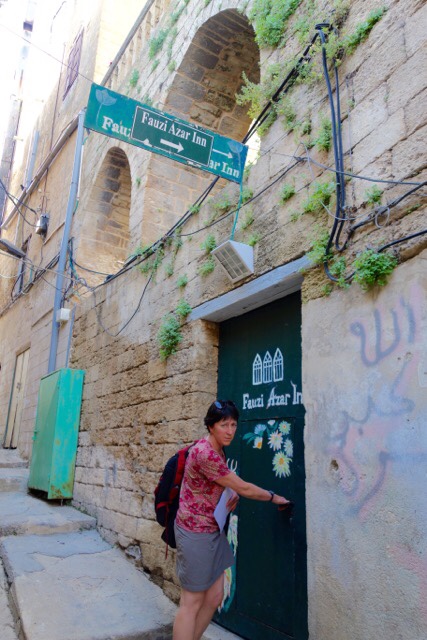
Our room was large and comfortable too, so the announcement that there would be a free tour of the Old City at 9:30 the next morning seemed almost gratuitous. But we had no better plan for scoping out the place. Steve and I showed up at the appointed time in the lobby, where an attractive woman in her early 40s greeted us. Suraida Shomar Nasser explained that she was one of the great-granddaughters of Fauzi Azar, the Palestinian Christian who built the mansion in 1830.
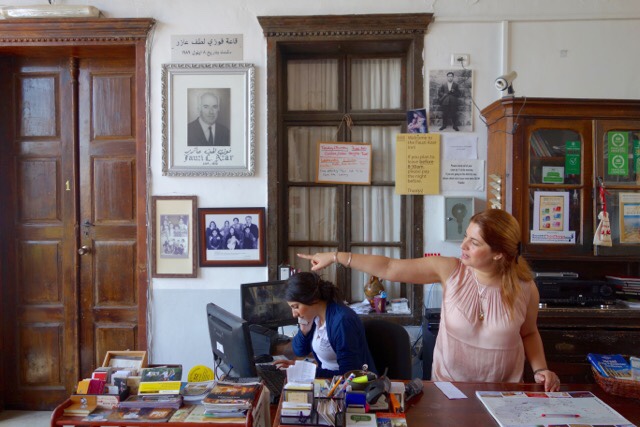
Suraida told us it came as a shock when, one day in 2005, a young Israeli Jew approached her. He was a hiker and backpacker, he said, and while traveling the world, he had noted the growing popularity of guesthouses. He thought Nazareth’s Old City could be a great place for one, and he’d heard that the lovely old Azar family home was unoccupied. He wondered if the family would be amenable to forming a partnership to renovate and open it to the public.
“Who sent you?” Suraida demanded. The Israeli secret service? The CIA? He denied this, but she pointed out the obvious. He was a Jew. She was a Palestinian. She didn’t hate him personally. But she could never, ever trust him.
Undeterred, he tracked down her mother, and chipped away at the older woman’s suspicion and distrust. Suraida describes being stupefied when her mother announced that she thought the family should work with him. “We have to rescue the house,” she said, “and this is the only way to do it.”
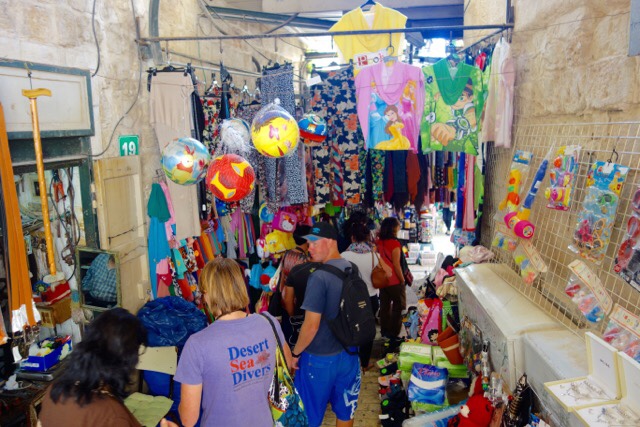
Suraida says she was still so appalled she refused even to visit the Inn when it first opened. (The young Jew had no money; instead he did the work to rehabilitate the building.) Months later, when Suraida finally made a call, the sight of strangers in her family’s home felt like an invasion. At the same time, she grudgingly acknowledged the transformation. In spite of herself, she had to admire it. In 2007 she began working as the inn’s manager. In the 8 years since, more sections of the house have been restored; today 13 guest rooms are available. The Jewish partner relentlessly pestered the city to begin collecting the trash that made the quarter look like a slum; today the streets are clean. Many storefronts are still shuttered, but more and more businesses have been moving back. Ten other guesthouses have opened within the past four years. “Today the Old City is flourishing,” Suraida declared.
It’s still vulnerable. We got some insight into just how fragile the renaissance is from Linda Hallel, the volunteer who leads the inn’s daily free tour (after Suraida recounts the history).
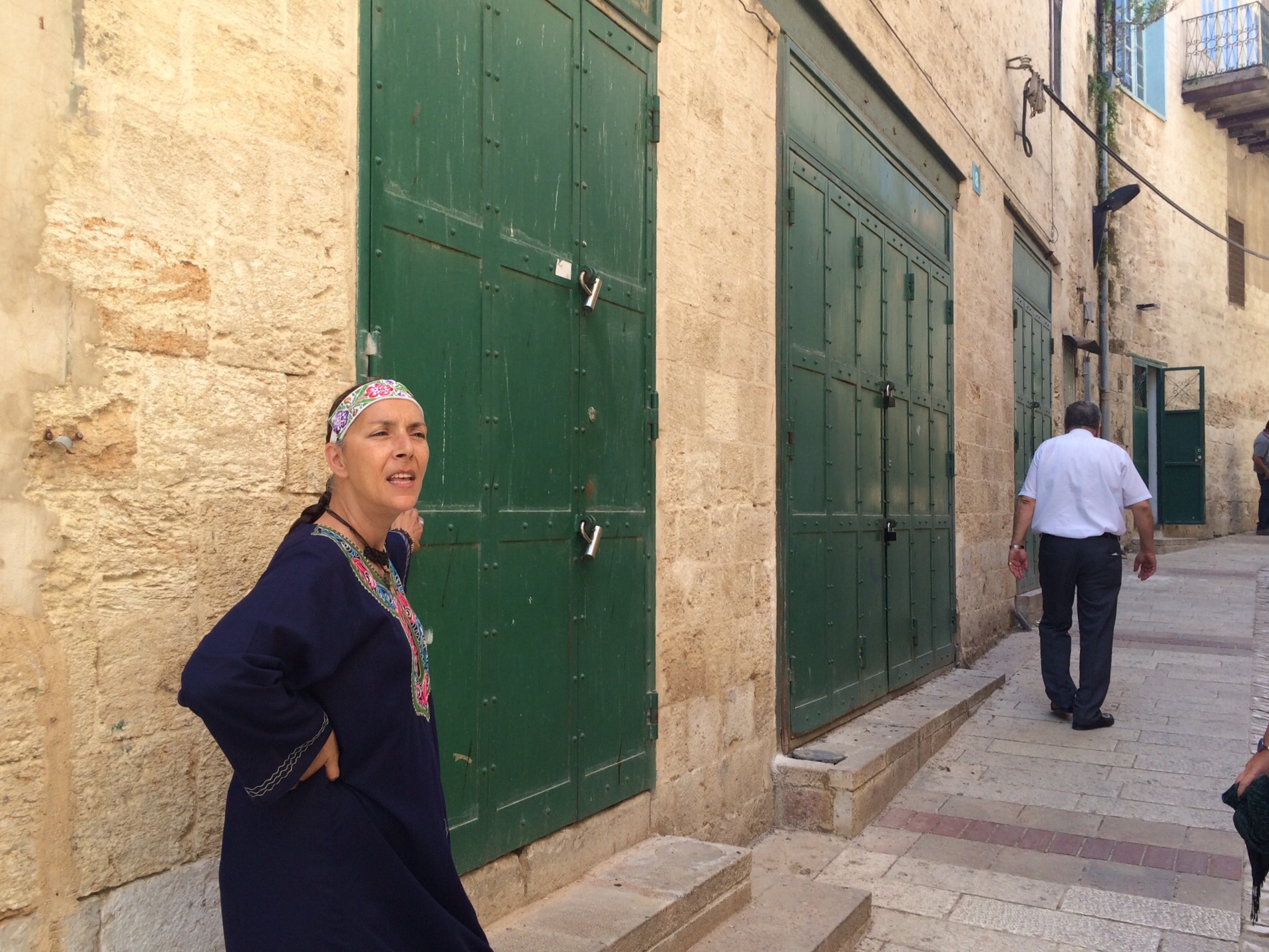
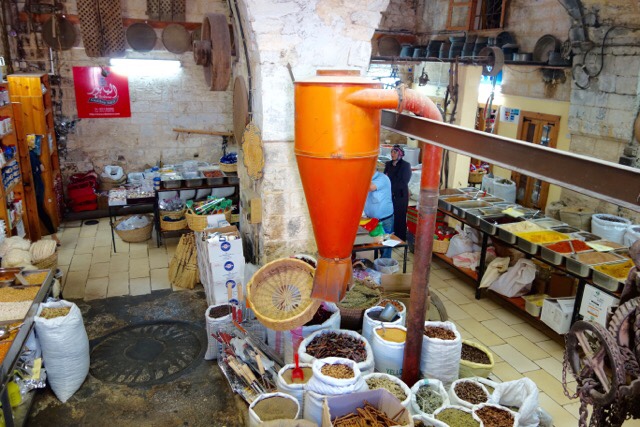
Born in Michigan, Hallel arrived in the Galillee six years ago and worked for some months as a guide on the Jesus Trail. But she’d fallen in love with the Inn and its principals and was willing to develop a non-political tour that would steer clear of conventional sights. Instead she wanted to give the inn’s guests a peek into the inner life of the community. It’s been a big success, but during the Gaza war last summer, tourism in Nazareth plunged so sharply almost all the staff was laid off. In addition to keeping up the tour-leading, Linda had worked for free as the Inn’s receptionist seven days a week for months. Now tourists finally were returning. The upturn in the Old City’s fortunes seemed evident as Hallel led us through the stone-lined passages for more than 2 hours. We spent time in the 100-plus-year-old spice shop that’s reputed to make the best zaa’atar (a Middle Eastern spice mix) in the world.
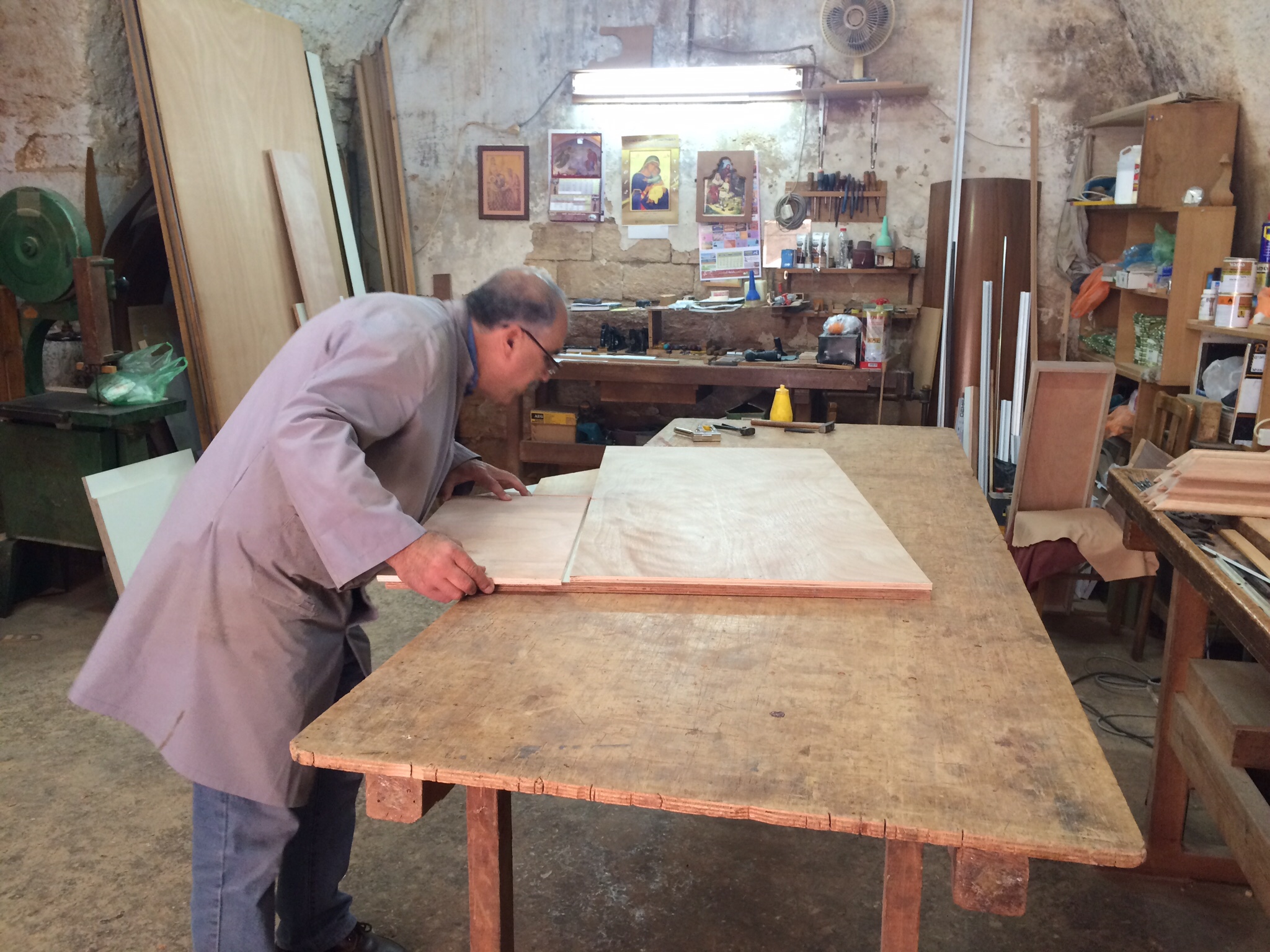
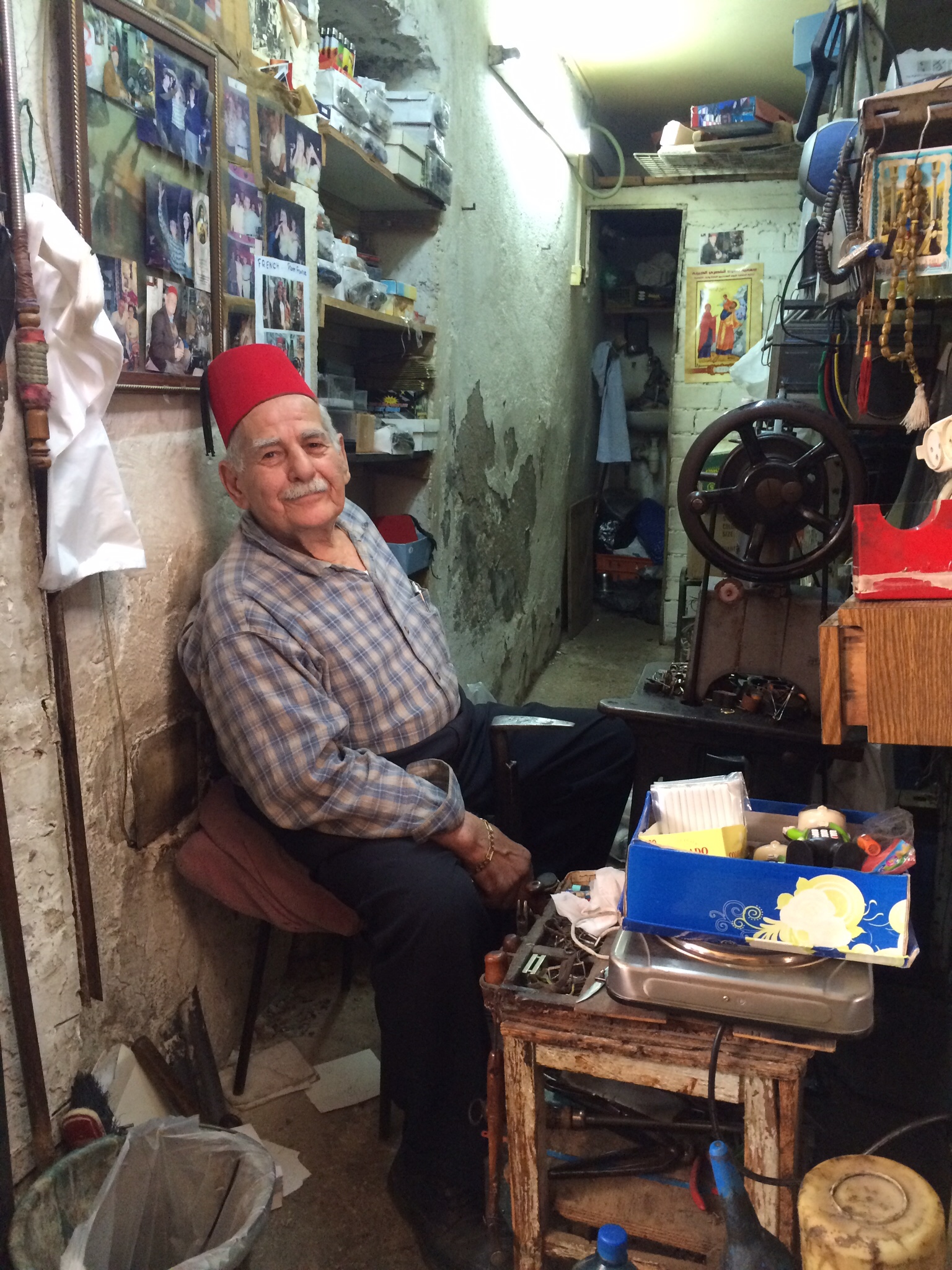
Throughout our stay in Israel, Steve and I spent a lot of time discussing the country’s future. There’s so much to be pessimistic about — the entrenched positions, the poisonous distrust, the burgeoning barriers. What we saw in Nazareth gave me a tiny sliver of hope. It reminded me that, once in a while, extraordinary people can develop visions of new ways to act. If their ideas became contagious, if they circulate far enough, things change.
 Posted with Blogsy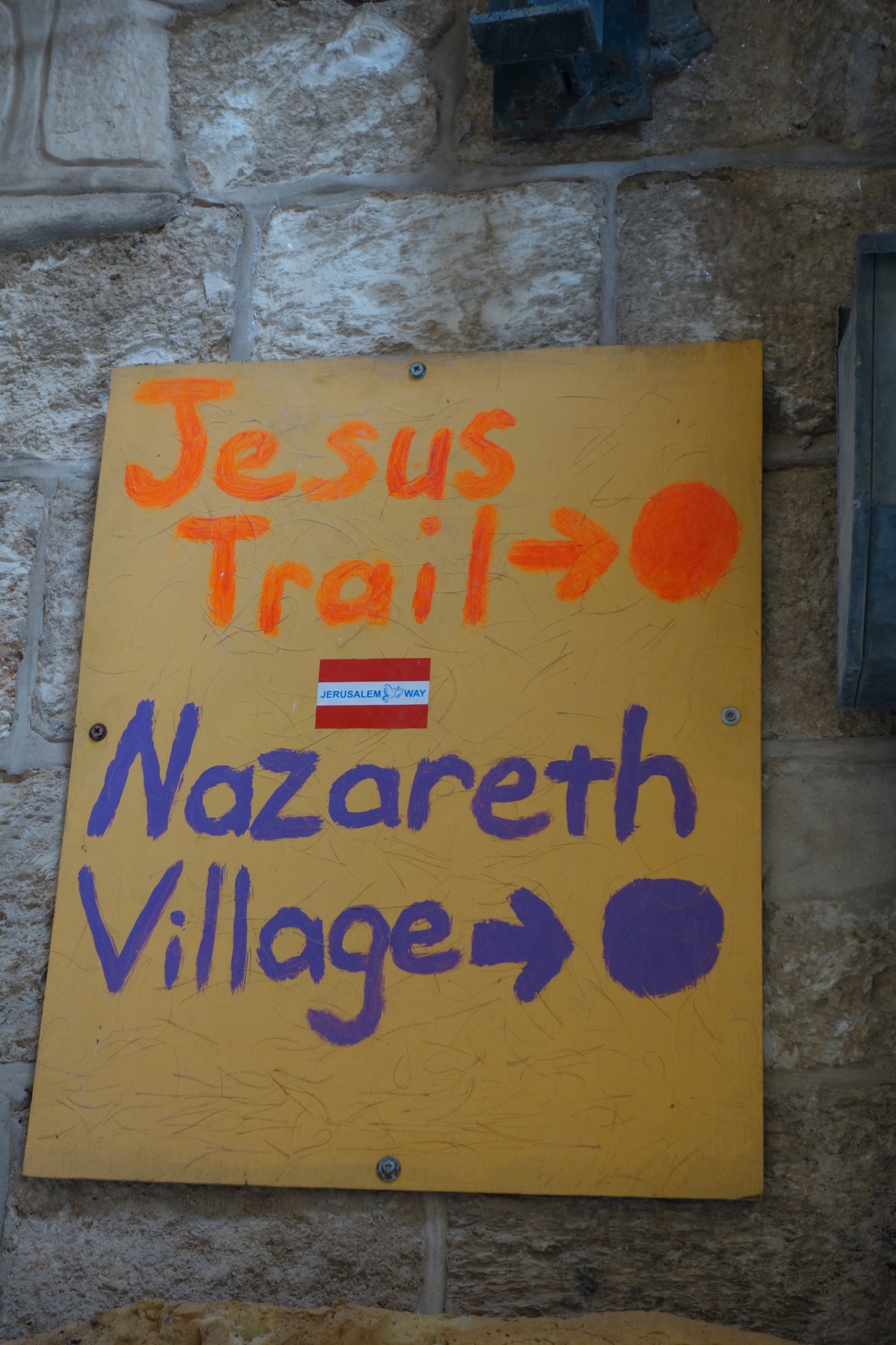


 At home and abroad