We didn’t spend all our time on Grenada seeking out blood-soaked sites. We indulged in classically touristic pastimes too, the most fun being the snorkeling tour we took Friday morning. Steve and I don’t snorkel often, but whenever we’ve done it in recent years, we’ve loved it. Grenada is surrounded by warm waters and a healthy community of sea life, and it also boasts something unique: the world’s first underwater sculpture park. We couldn’t miss that.
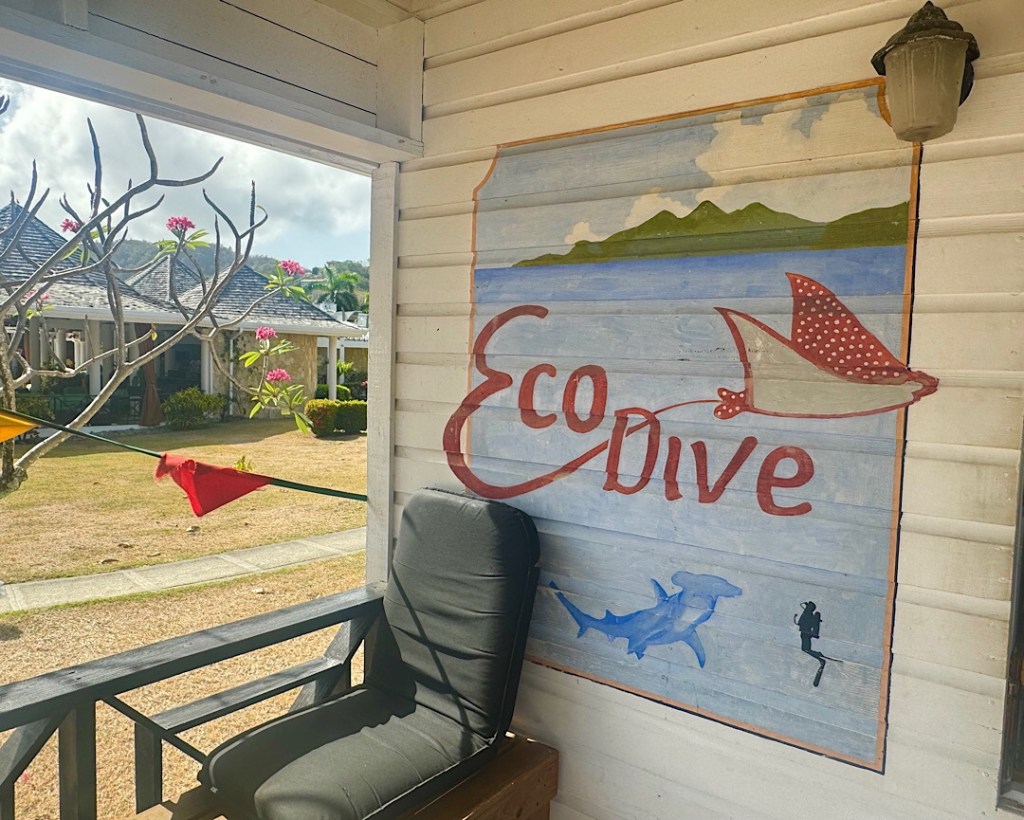
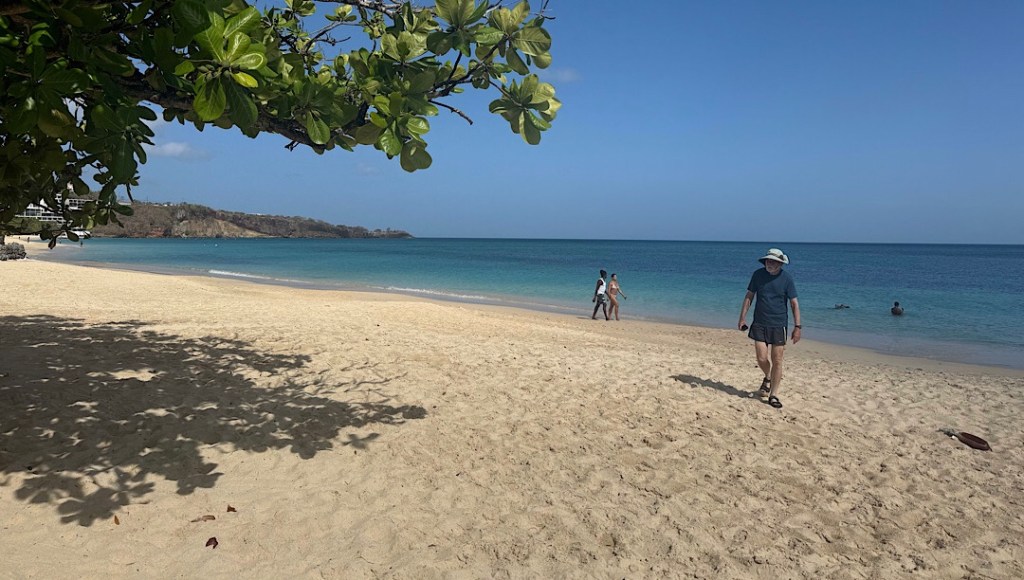
We woke up to hot sun and clear skies, and when we arrived at the Eco Dive outlet on Grand Anse Beach shortly before 9, the mood among the customers gathered there was ebullient. Just seeing Grand Anse is enough to lift one’s spirits. Consistently ranked among the world’s best beaches, its powdery sand arcs for a couple of miles beside placid turquoise water.
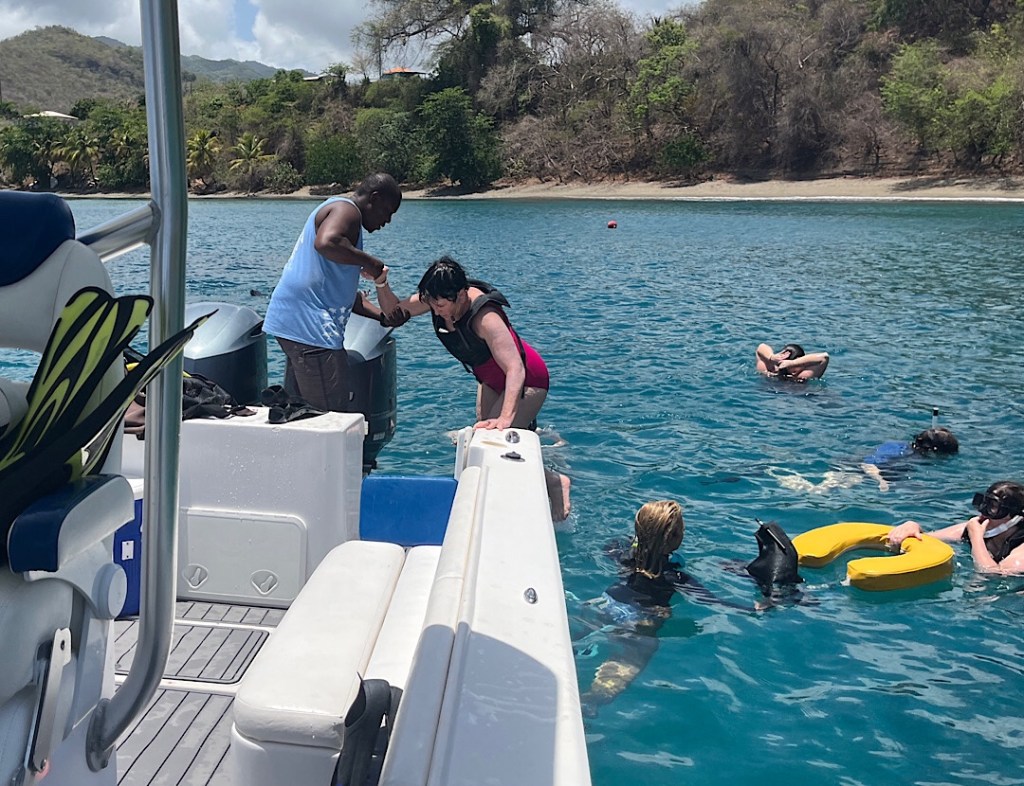
The dive shop outfitted us with flippers, then we climbed aboard a powerboat big enough to hold about a dozen snorkelers (almost all Brits, Americans, and Canadians) and a crew of two. Soon we were motoring north toward Molinere Bay.
The autumn of 2004 was a very bad time to be anywhere on Grenada, including this bay. In early September, a hurricane named Ivan began smashing its way through through the Caribbean. That megastorm blew down most of the island’s nutmeg and cacao trees. It tore up its coral reefs, killed 39 people, and wrecked some of the most prominent human buildings. In the aftermath of the devastation, a British “eco-artist” named Jason de Caires Taylor got the idea of placing a bunch of concrete and stainless steel art pieces in the ruined coral beds to spur the blooming of new underwater life. The Grenadian governmemt signed off on the plan and today marine biologists say all these efforts have worked. Coral is growing on and around the sculptures, and a host of fish and other creatures has settled into the neighborhood. The park also has become a powerful tourist attraction.
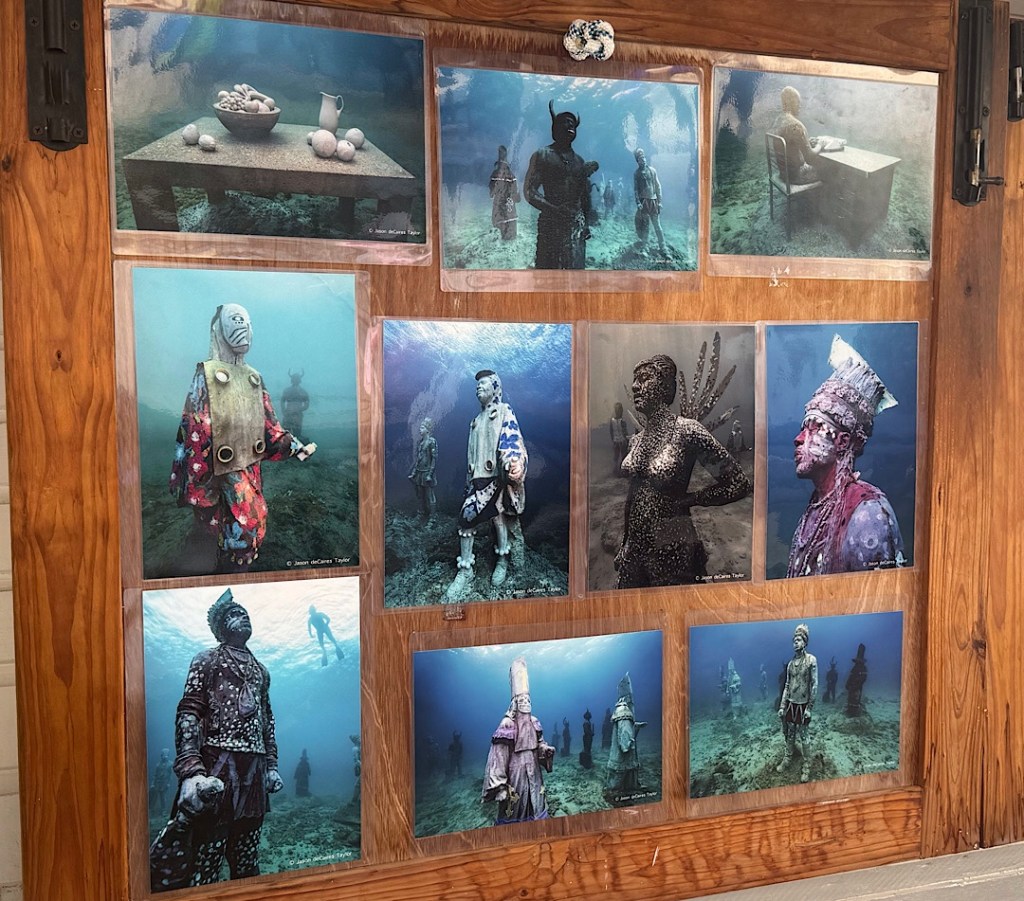
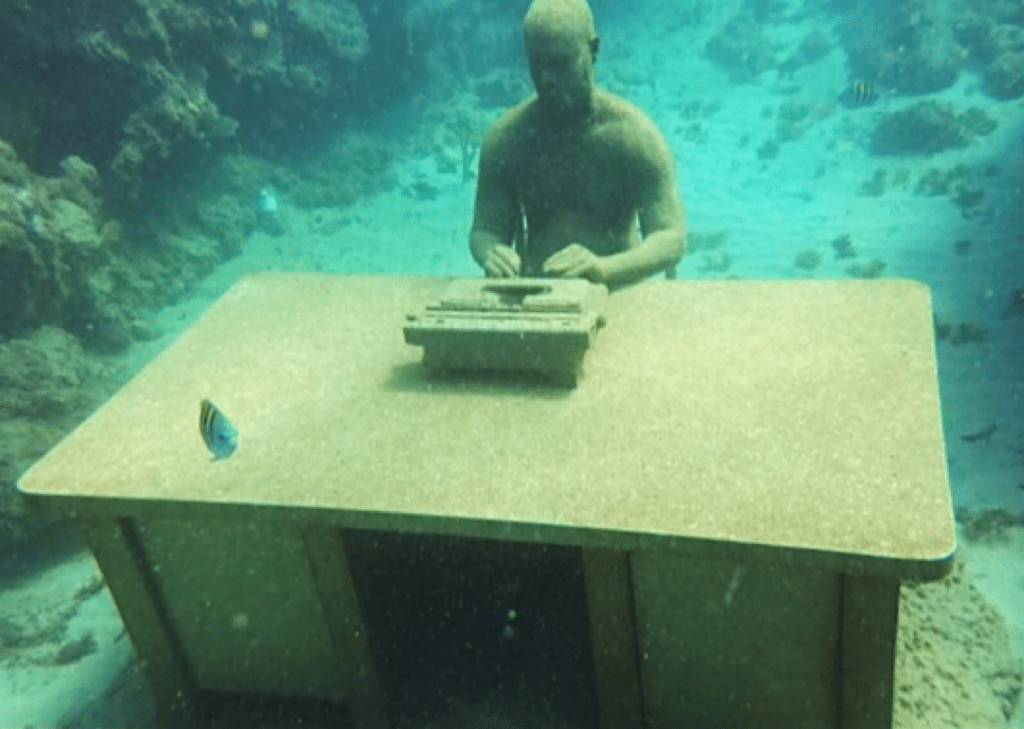
I wasn’t wearing scuba gear and didn’t carry an underwater camera, so I didn’t capture the striking images one can take amidst the submerged art pieces (though you can see some here.) In exchange for traveling light, I got to float over the art pieces, feeling a bit like a human drone, flying without effort in the company of myriad beautiful fish. Over time, the effect of saltwater and sea life has been eerily transforming the sculptures, which are placed at depths ranging from roughly 10 to 25 feet. It might have been cool to get nose-to-nose with them, but I never exerted the effort to dive down. And it also was great to swim alongside a guide who could explain what they all represented. My favorite was one called The Lost Correspondent.
Most of our other touristic endeavors unfolded in the capital of the island, St. George’s, which over the centuries has climbed haphazardly up the steep hillsides surrounding a pretty little bay. Sadly, when we tried to visit some of the town’s most important sites, we found them closed for renovation, including the old fort where Maurice Bishop and his top advisors were gunned down 40 years ago. Only one gallery in the Grenada National Museum was open (but it focused on the indigenous population, which was our strongest interest.)
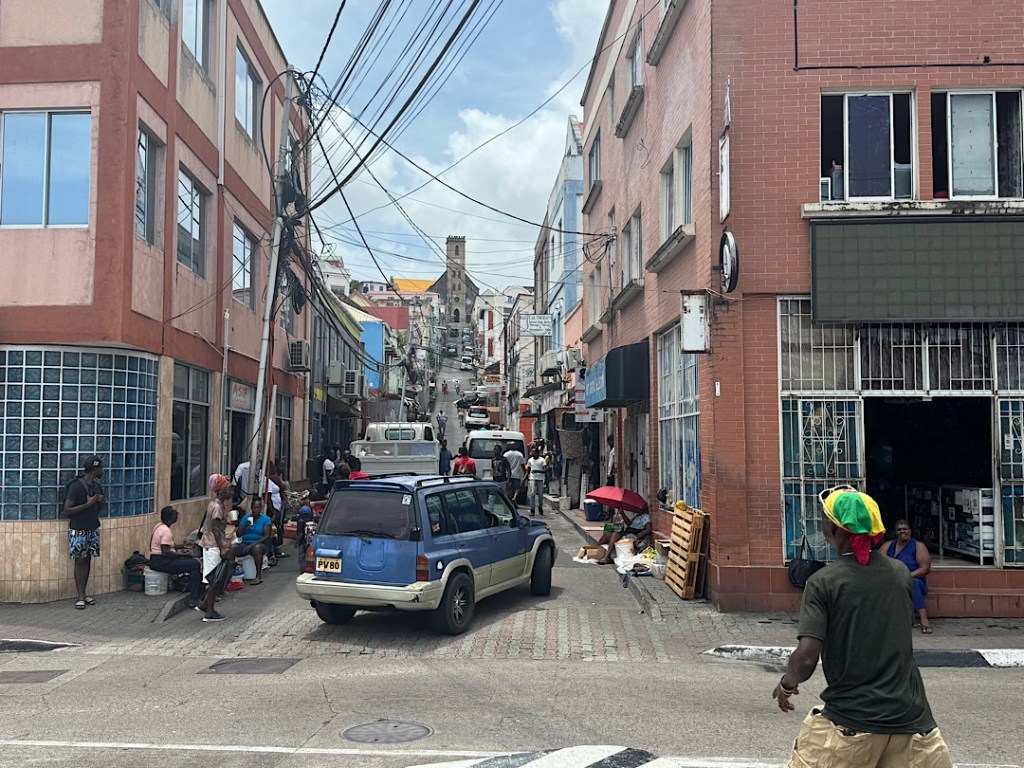
When we were driving around the island, Grenada most reminded me of Bali — all those spectacular seascapes and steep green mountains. But when I voiced this observation, Steve scoffed, pointing out that unlike Bali, Grenada has no ancient Hindu or Buddhist temples. Plus it’s filled almost entirely with black people, more than 80% of whom are descendants of African slaves.
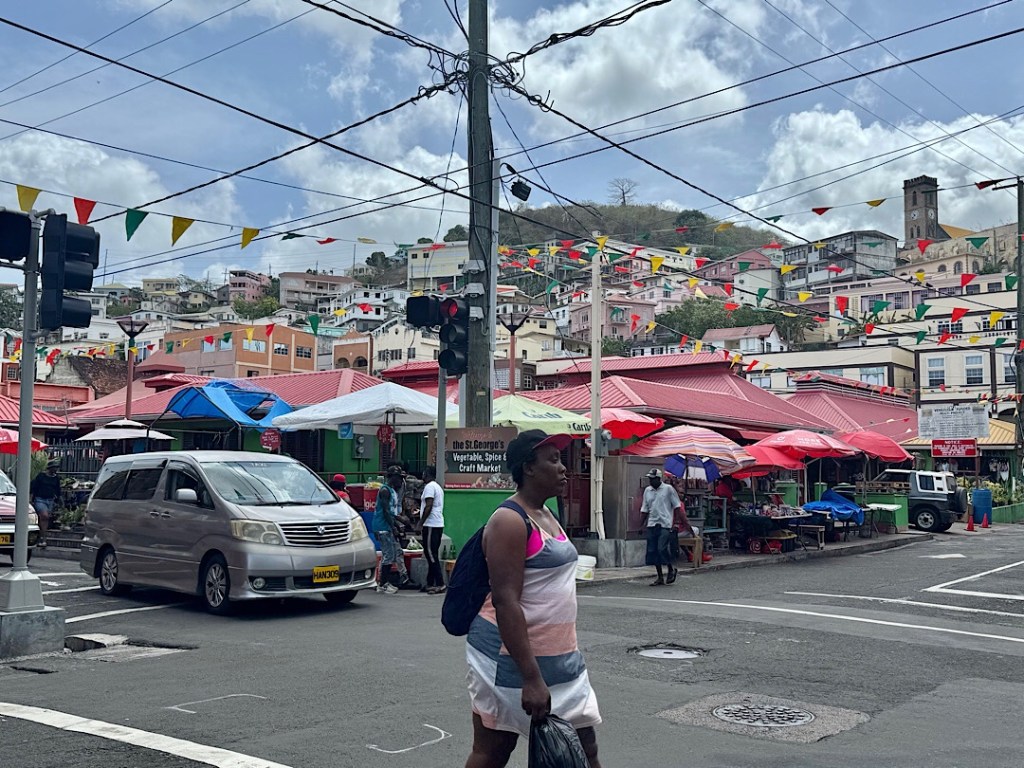
As dreadful as that history was, I have to say virtually everyone we interacted with could not have been more friendly. (Everyone speaks English here.) When we prowled through the spice market in St. George’s Saturday morning, no one pestered us to buy stuff. They did ask if we were enjoying our time on the island, and when we said yes they shone with delight.

I never expressed to the Grenadians my nagging worry that if luxury villas continue being built and cruise ships bring more and more visitors, getting around on Grenada’s twisty narrow roads could turn into the nightmare that getting around Bali has become. Bad as it is here, it’s nowhere near that bad yet, and maybe Grenada is far enough off the beaten path to avoid Bali’s fate.
Anyway, it’s behind me now. Last night we made the 25-minute flight from St. George’s to the airport at the southern end of St. Lucia, where we only have two full days to try and experience this little country. Is that possible? Stay tuned.
 At home and abroad