Fairbanks is roughly 140 miles south of the Arctic Circle, so even on the summer solstice, the sun still sets. During our two nights there, it dipped below the horizon at 11:38 pm and dawned again just before 4 am. What I didn’t realize is how this would throw my sense of time out of whack. At 5:30 pm the first afternoon, I felt like it was noon. When we were heading to bed around 10, the sky outside our window looked like it does around the time I’m making dinner in the summer back home.
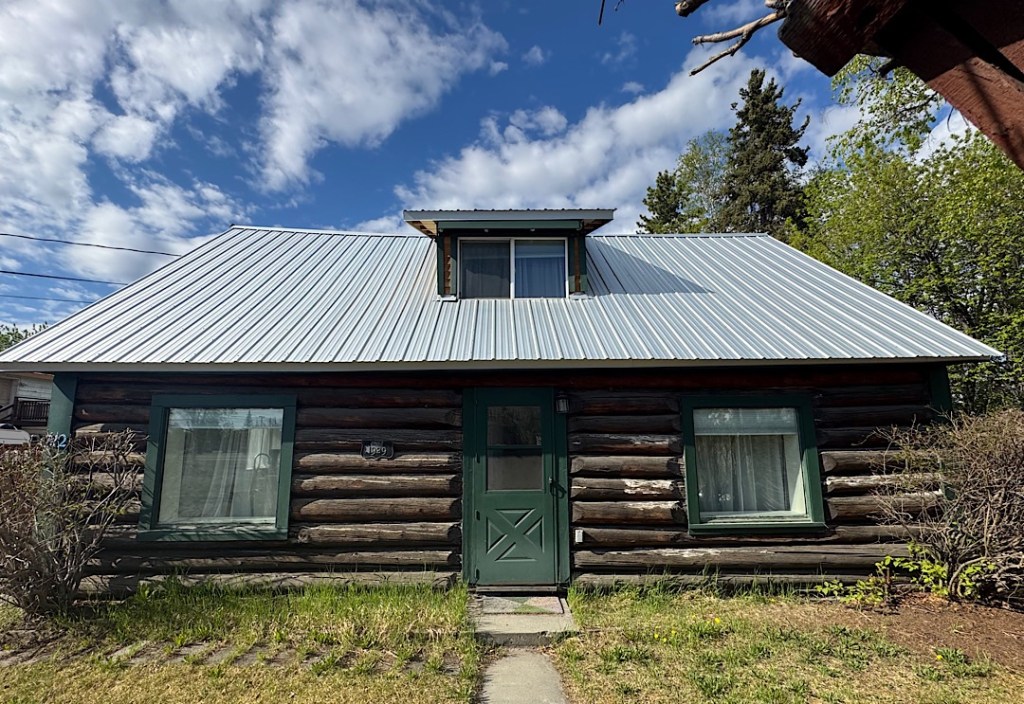
Even at 1:30 in the morning, when I got up to pee, the world outside was still bright.
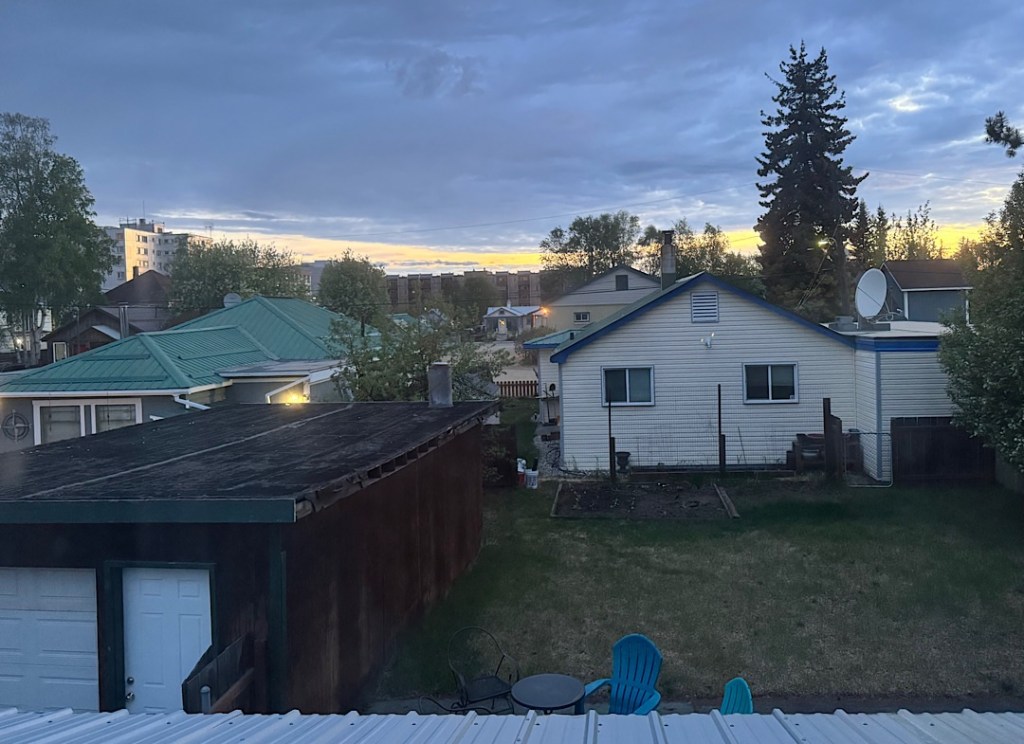
It unnerved me, but the weird novelty was one of several things that made Fairbanks more interesting than it had appeared on our way from the airport to our Airbnb Thursday morning. “It kind of makes Cincinnati look like Paris,” Steve marveled, gazing out on the strip malls; the seedy bungalows; the scattered, unattractive commercial buildings. The thought of the 40- to 50-degree-below zero temperatures common in the winter did not increase its attractiveness.
Three great museum experiences helped change my opinion. The Morris Thompson Cultural and Visitors Center, where we headed first thing Friday morning, quickly impressed me with the clarity of its exhibits. Some described life in Fairbanks throughout the seasons. Others shared fascinating history, both social and natural. One example: local chickadees cache tens of thousands of seeds through the summer, and in the fall their hippocampuses (the part of the brain responsible for spatial memory) increase in size by 30% as they grow new nerve cells. Toward the end of winter, their brains return to their normal size. Another: the hibernating arctic ground squirrels get so cold, sleep is impossible. But every few weeks they start shivering and warm themselves back to a body temperature that enables dreaming. After about 24 hours, they drop back into hibernation again; they use up about 80% of their winter fat reserves repeating this cycle.
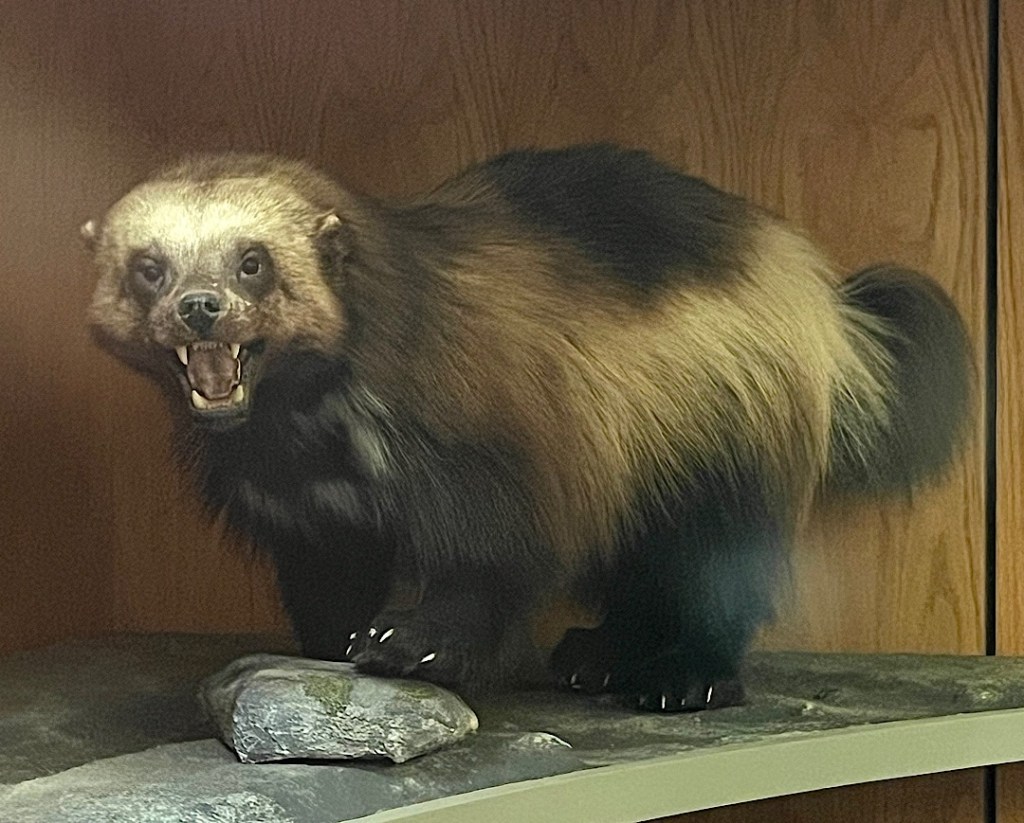
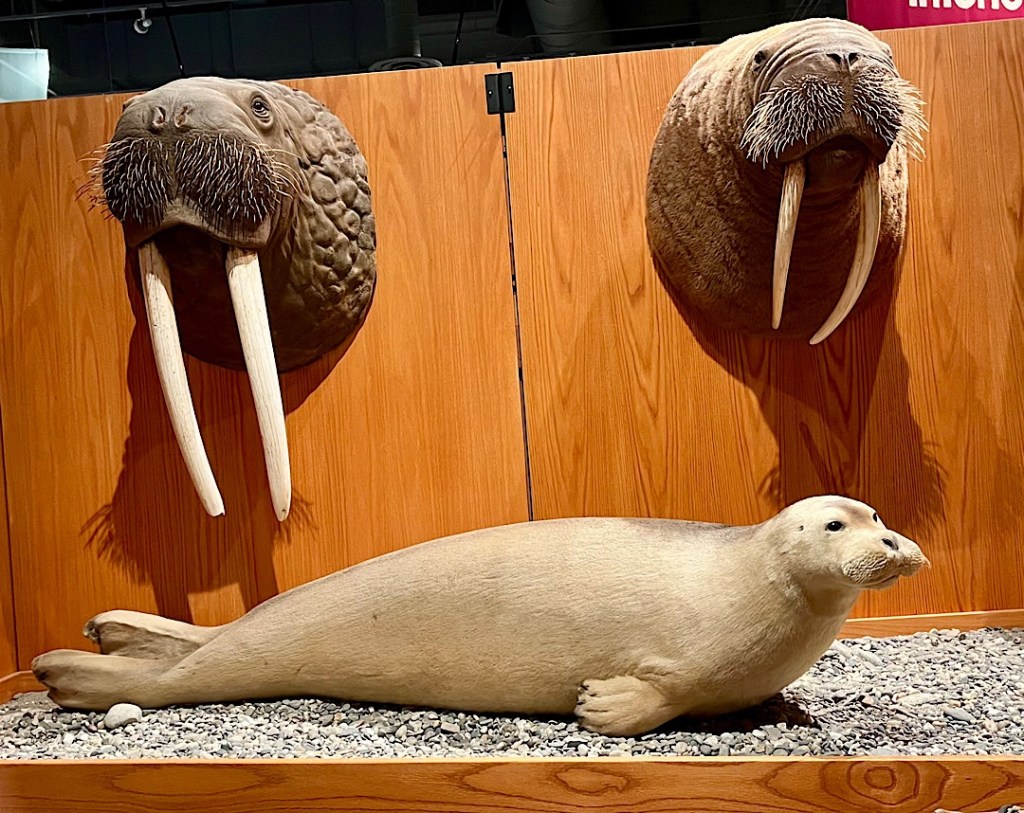
In the afternoon, we got a Lyft to the University of Fairbanks’ Museum of the North. There what most impressed me were the magnificent stuffed animals — not just the requisite towering grizzly (Otto) but most of the other mammalian stars of this part of the world.
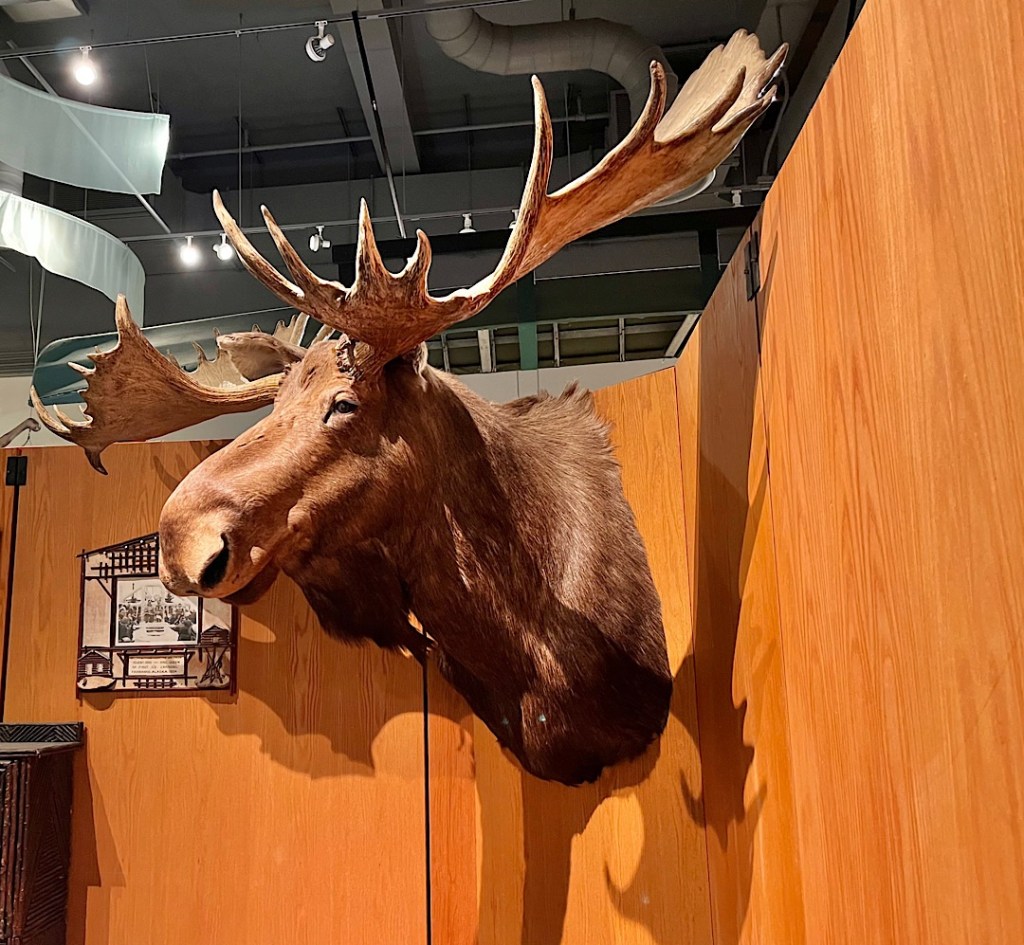
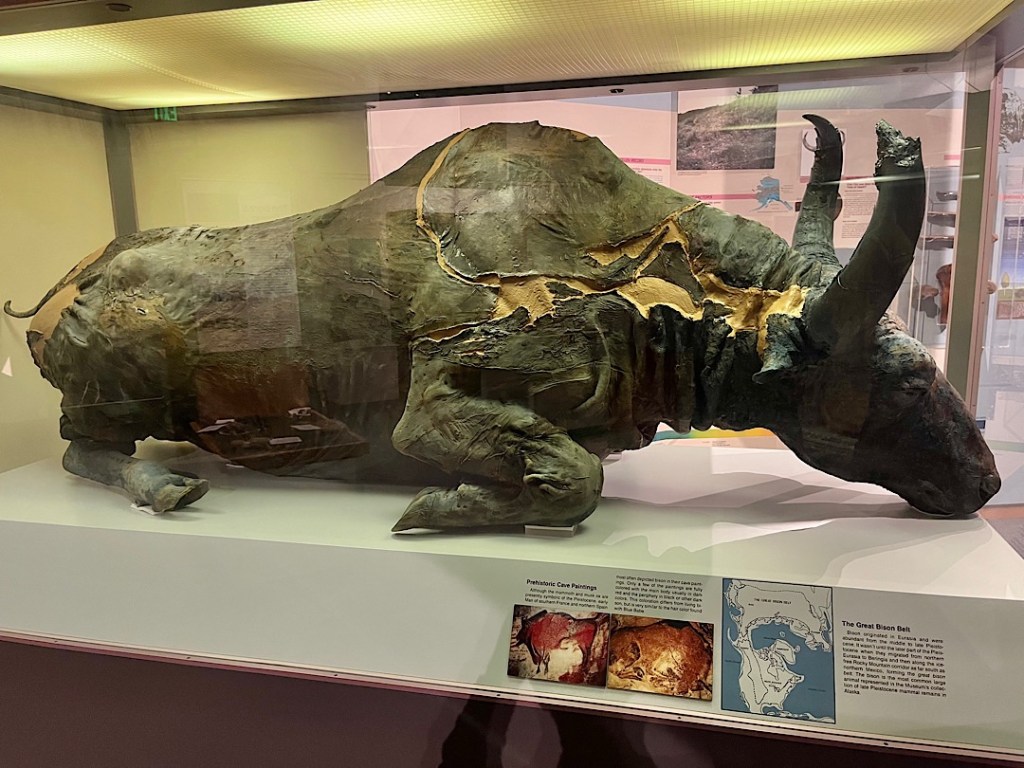
Steve and I also watched an excellent film about the Aurora Borealis and learned that Fairbanks is the place to see it.
For dinner, we walked to the first Thai restaurant to open in Fairbanks. The food was tasty; the waitresses friendly and welcoming, but most extraordinary (to me) was what this place spawned. Since it opened in 1989, Thai House employees left the mother ship and opened their own sub-arctic eateries. Many were drive-throughs, which the Alaskans loved. Friends and relatives back in Thailand heard about their success and followed in their footsteps. Today Fairbanks reportedly has one of the highest concentration of Thai restaurants in North America, even though the year-round Thai population remains tiny.
We got another peek into Fairbanks in the winter after dinner, when we strolled to the Fairbanks Ice Museum. It’s housed in a former movie theater…
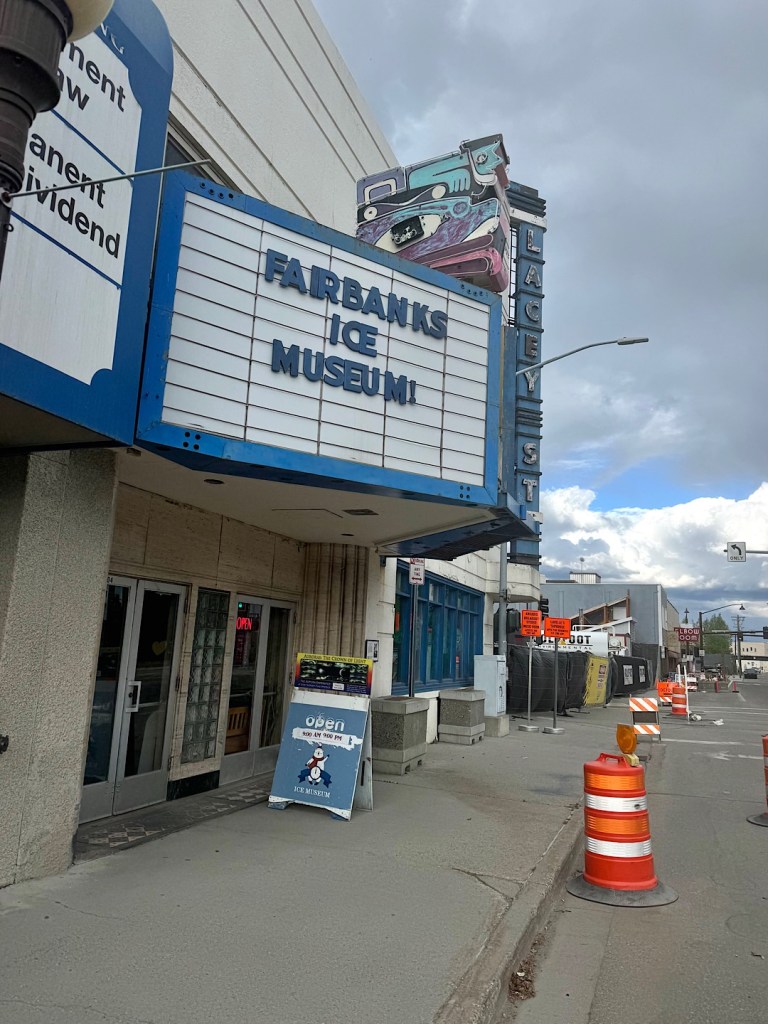
…where the ticket taker told us business would be picking up in June, as the summer season unfolded in earnest. For this night, we were the only customers. Beyond the former movie screen we found a rack holding heavy parkas. We each donned one, entered the freezing inner quarters, and strolled by a life-size dog sled team carved from ice.
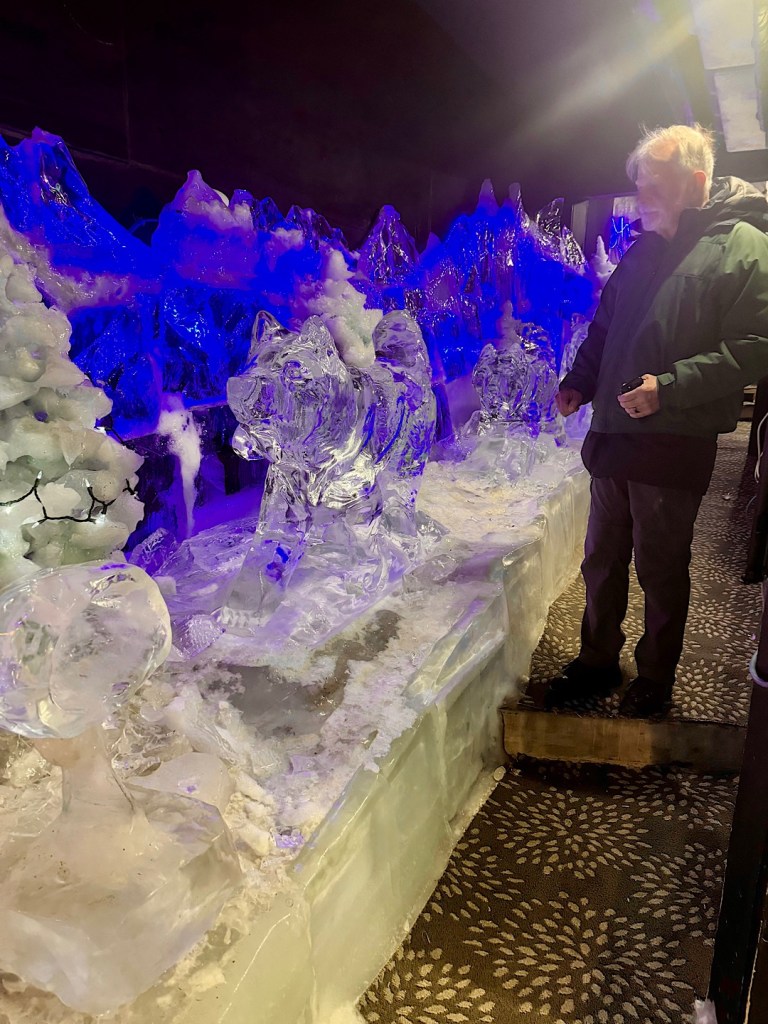
Beyond them, we took pictures of some of the other creations.

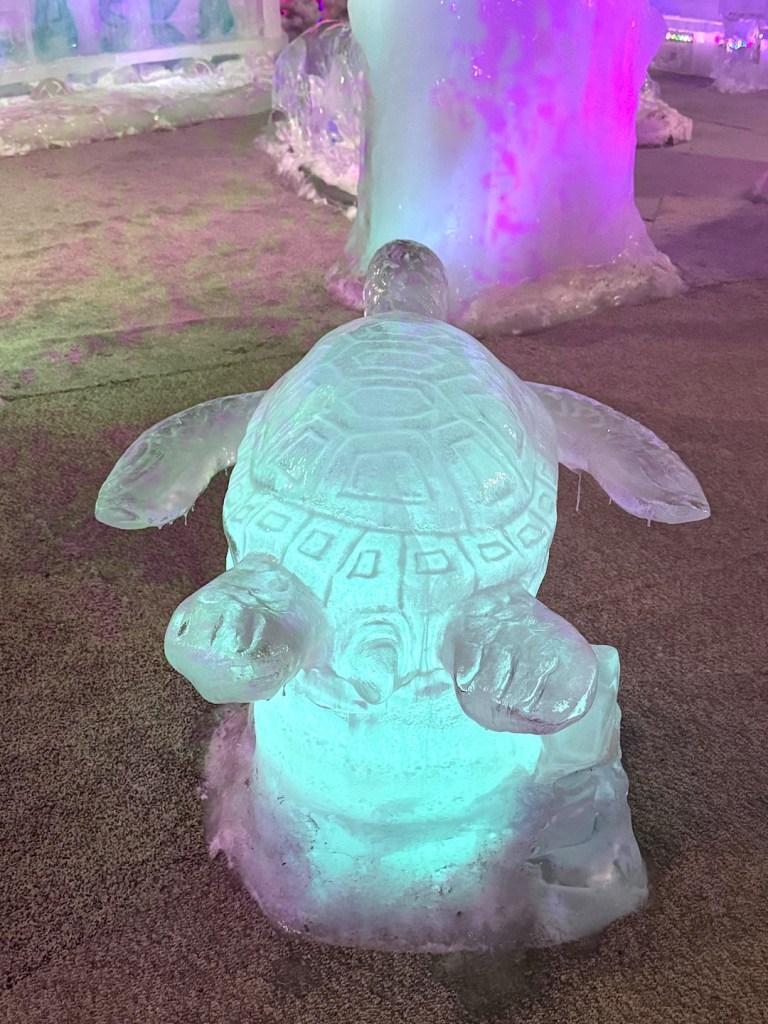
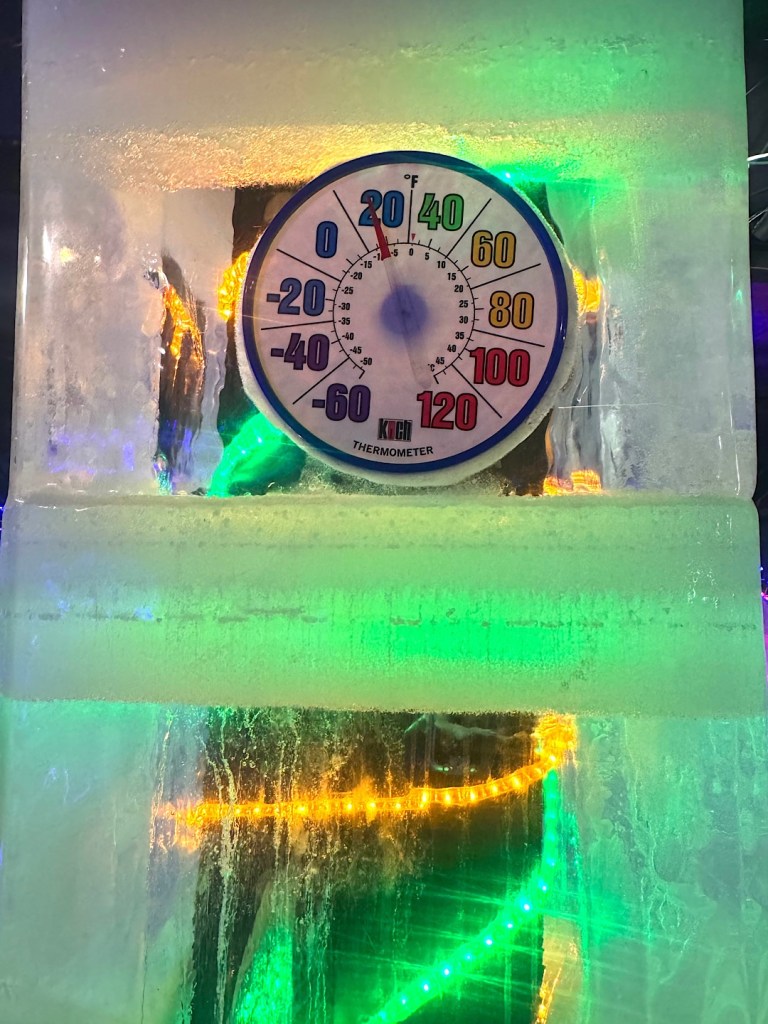
Then I rode down a solid ice slide so fast I was afraid I would smash into Steve, who was photographing this spectacle from the bottom.
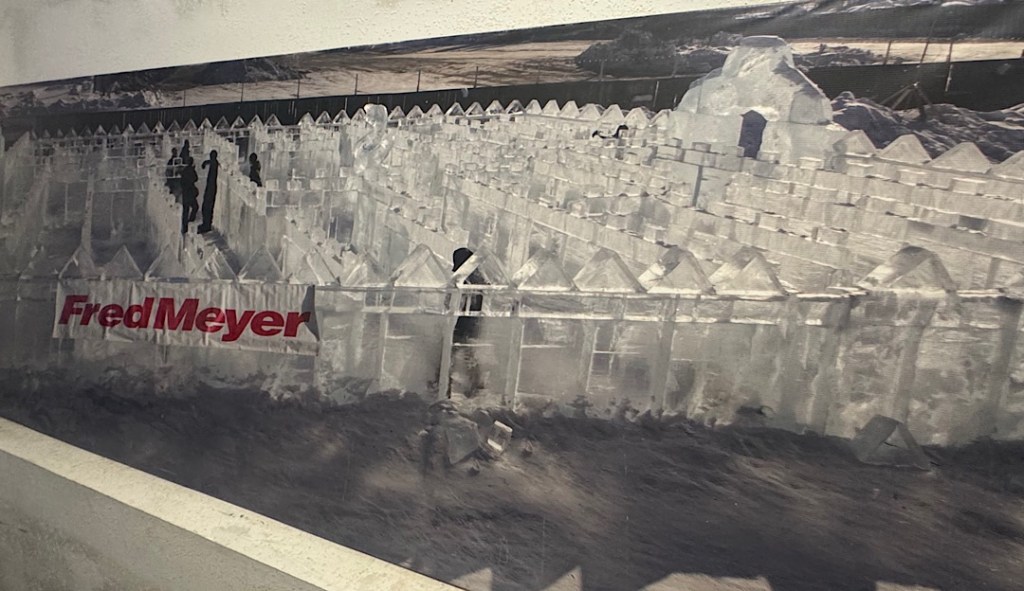
I learned that every February and March, ice carvers from around the world stream into Fairbanks to participate in a big competition. At that time of year, the Northern Lights dance in the heavens almost every night. Dog-mushing teams are racing. To my surprise, I feel tempted to come back.
 At home and abroad