Local fauna

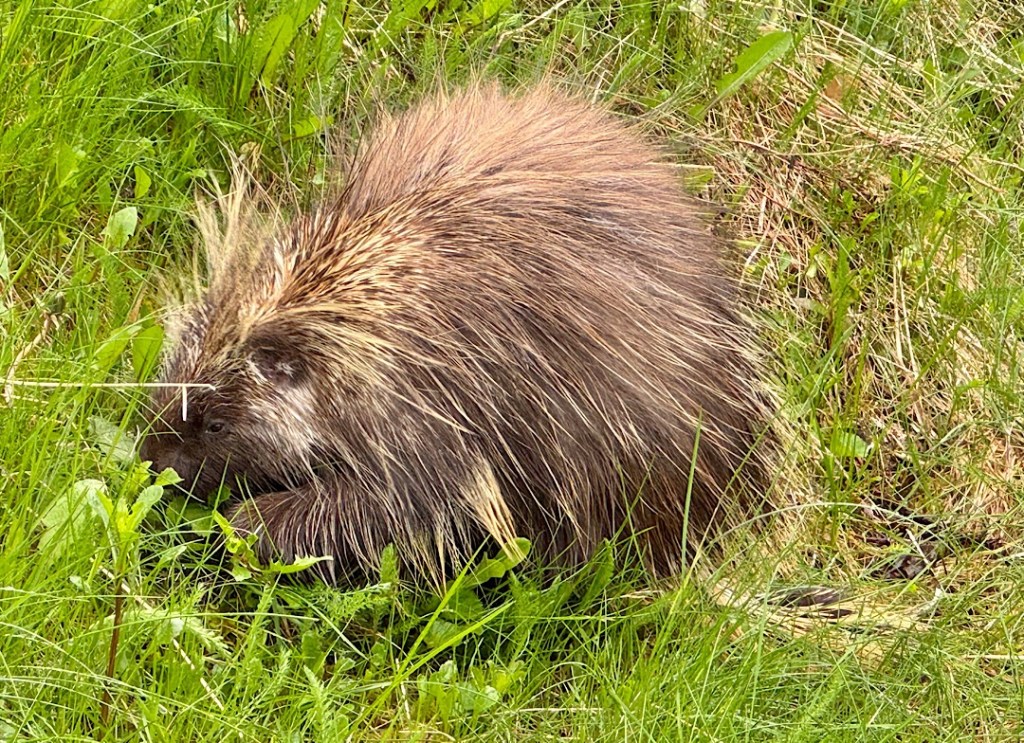
Thursday I saw a porcupine for the first time in the wild. This guy was outside the Mendenhall Glacier visitor’s center, nibbling like crazy on the greenery surrounding him. He looked like he was trying to ignore all the tourists taking pictures. But they were making him nervous.

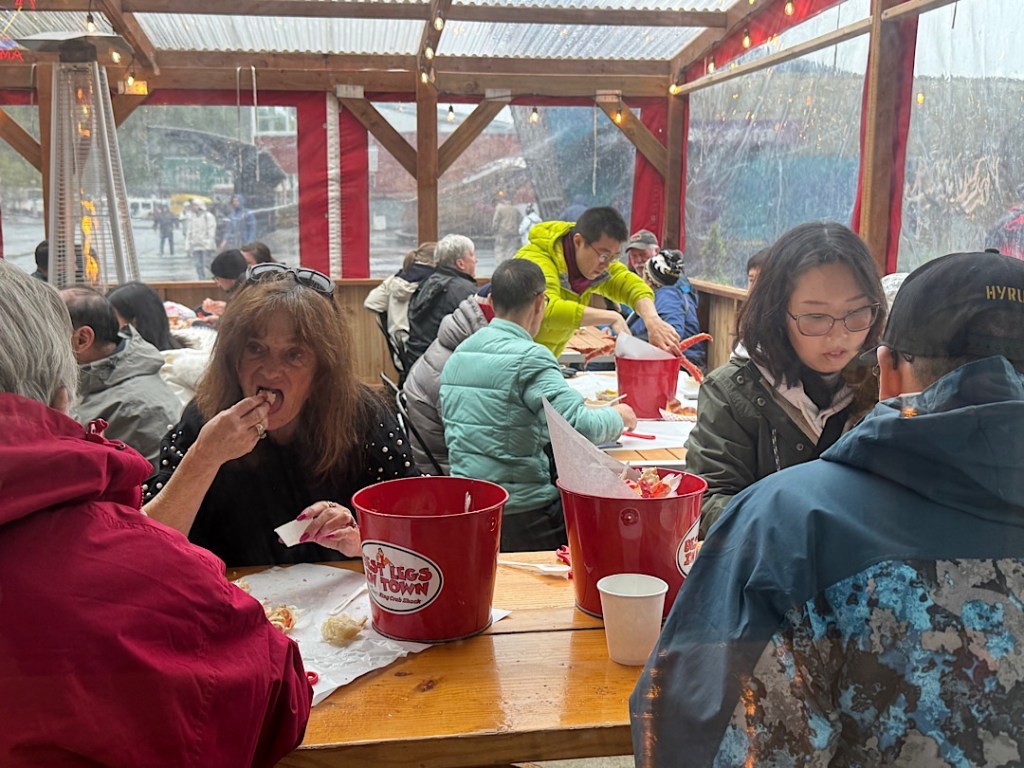
That night we encountered another stellar denizen of this part of the world: the Alaskan king crab. We didn’t see one of the actual crustaceans (which can have a leg span five feet wide). But their parts are on multiple restaurant menus, priced at $75 to $85 a pound.
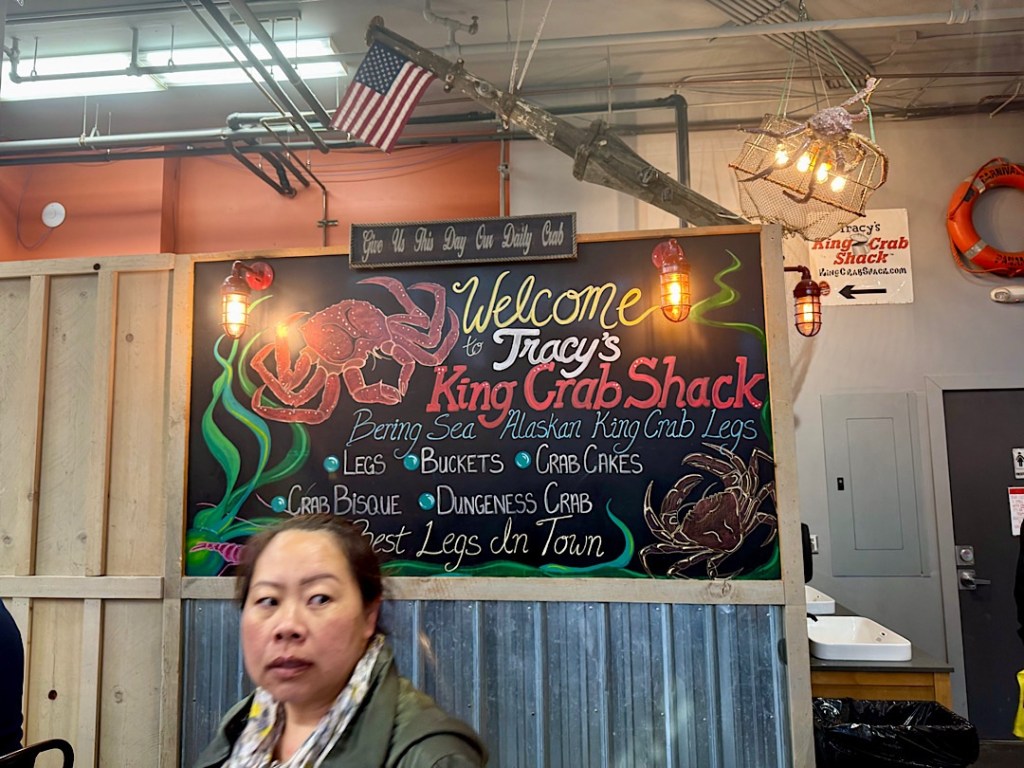
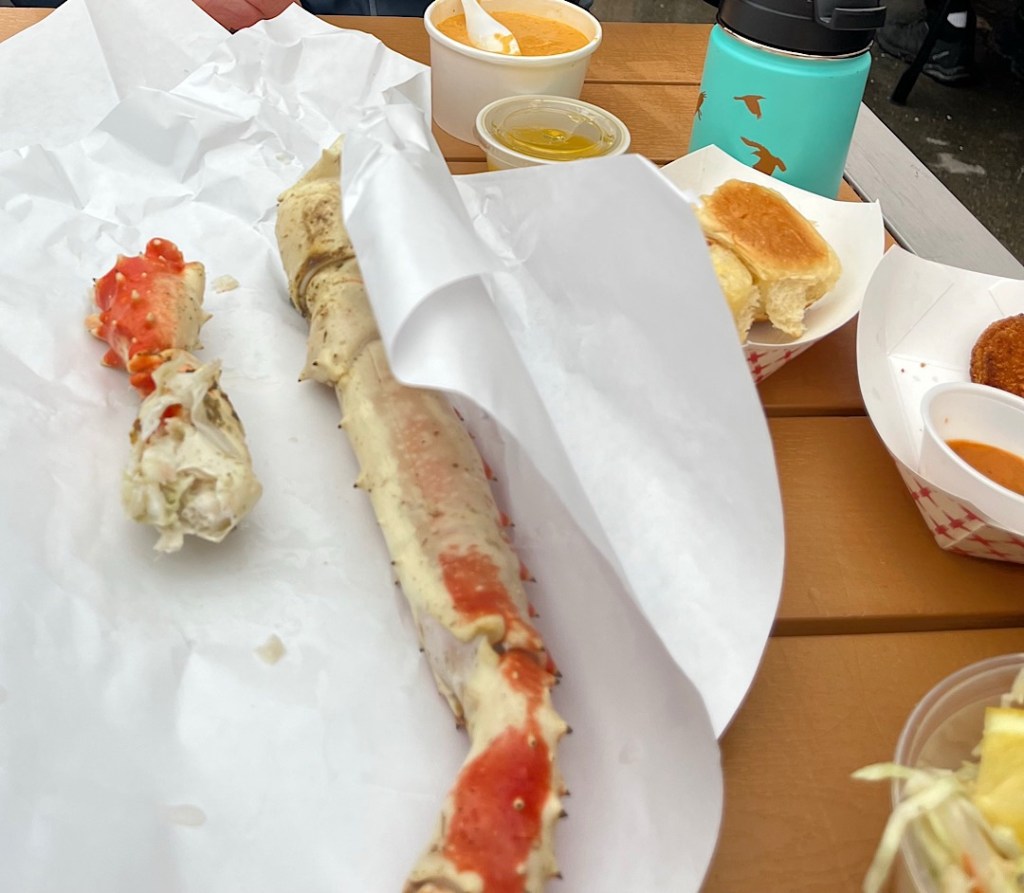
Steve and I shared a single leg for dinner Thursday, along with crab bisque and a couple of crab cakes, all extraordinarily delicious.
All around us people had ponied up for bucketloads of legs and were digging in with gusto.

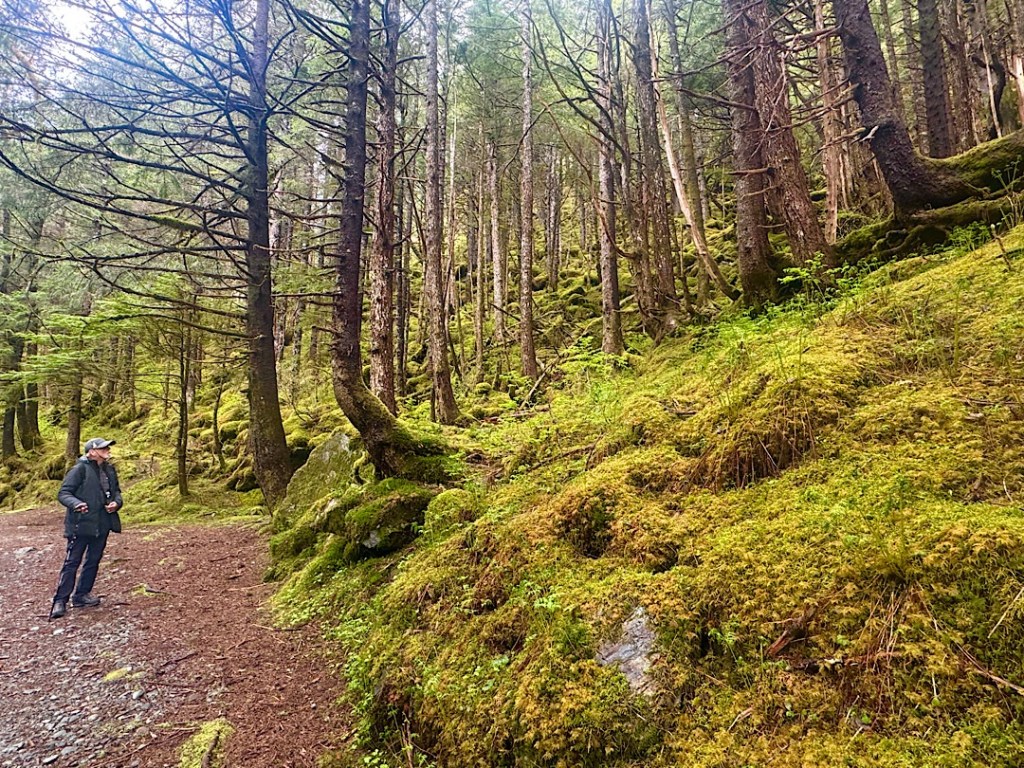
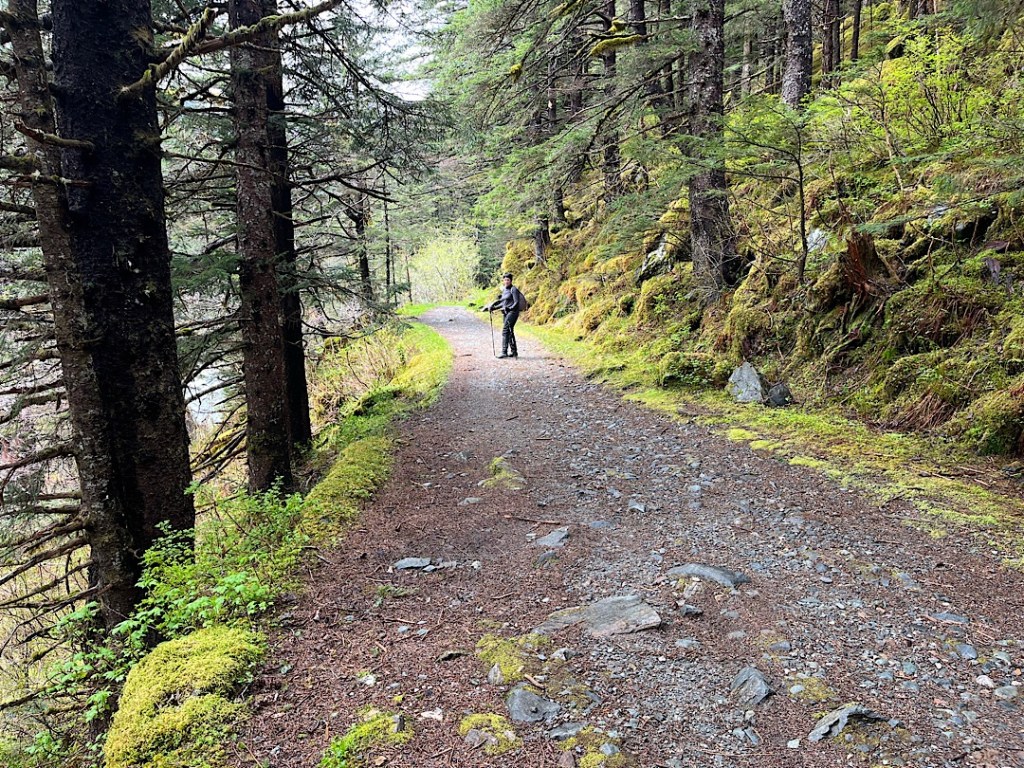
The two of us almost stumbled over another porcupine Saturday morning, when we hiked on what’s left of Alaska’s first road. Known today as the Perseverance Trail, it was built in the late 1880s to serve early miners.
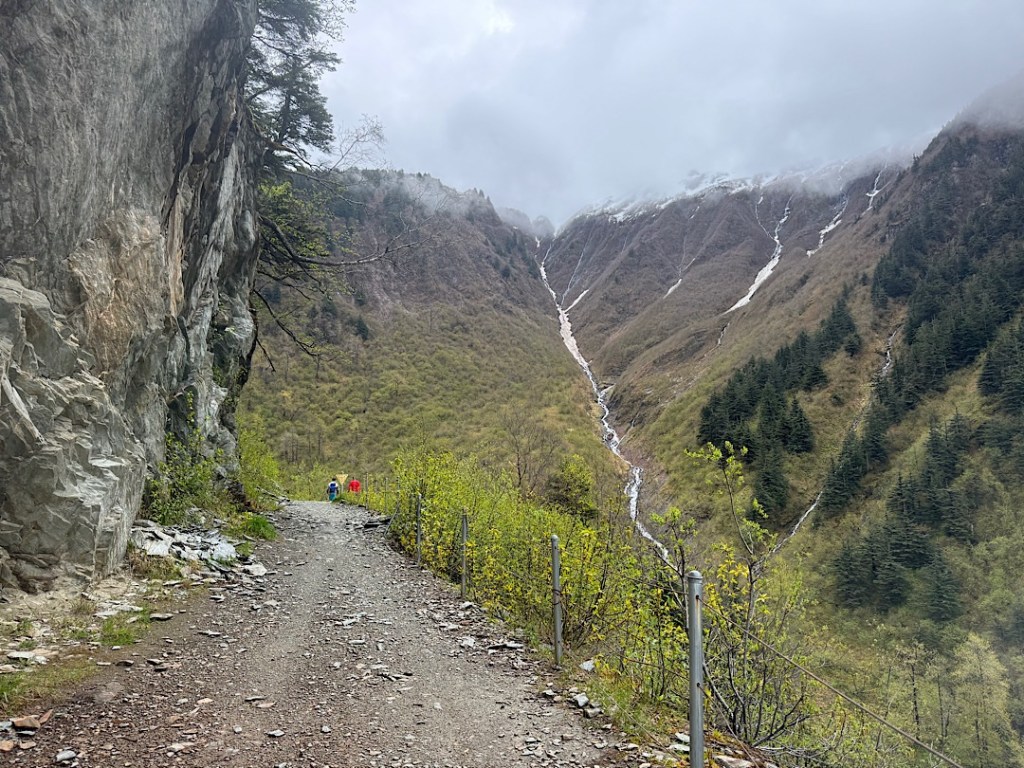
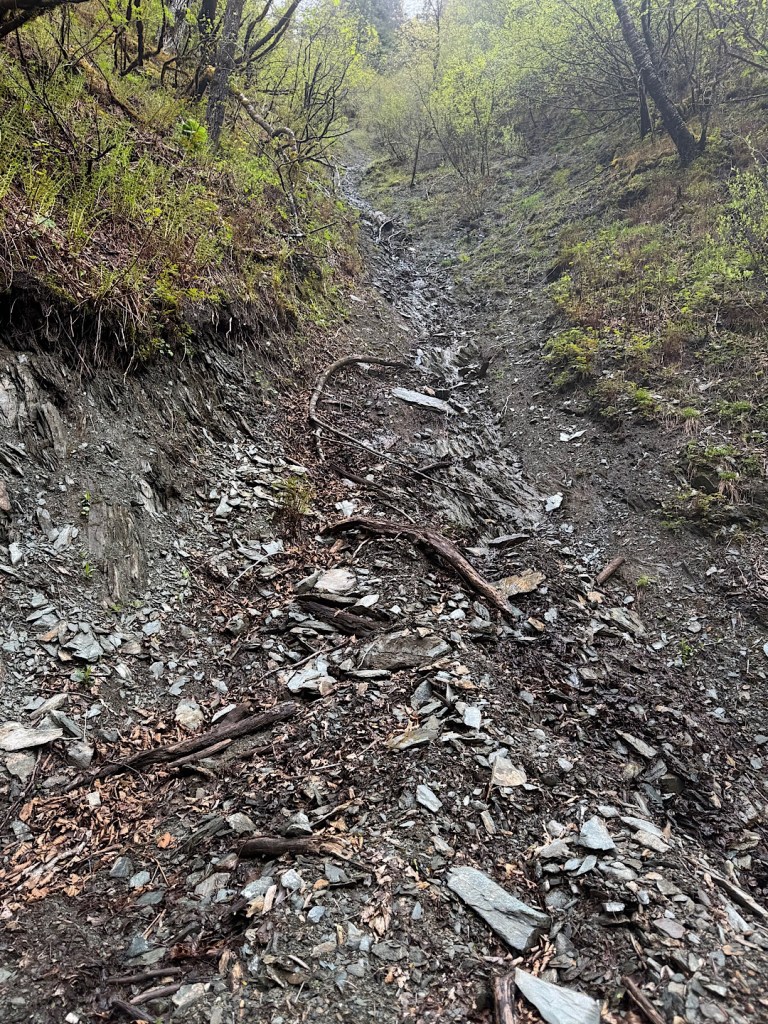
Today parts of the trail retain remnants of those impressive early days.
In other places, they’re long gone.
The path leads through some of the most beautiful forest I’ve ever hiked in.

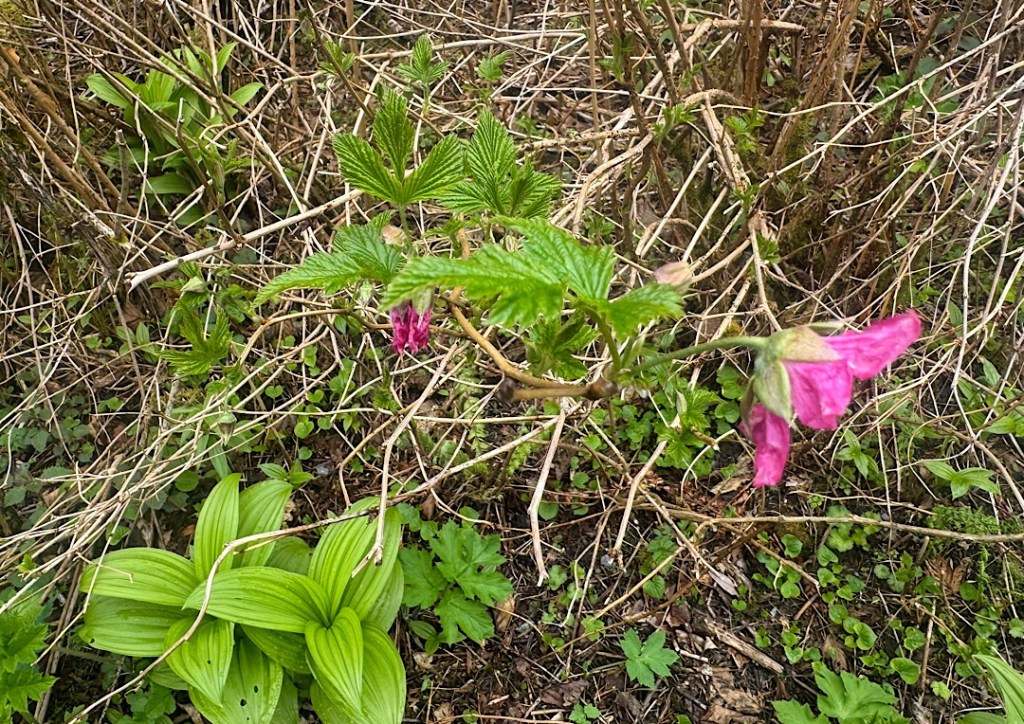
Salmon berries were only just beginning to flower, which may partly explain why we didn’t see any black bears. God knows there were plenty of signs warning of their presence — and other dangers Sunday when we climbed up Mt. Roberts to the top of the cable car that carries cruise-ship passengers up the almost-vertical mountainside.
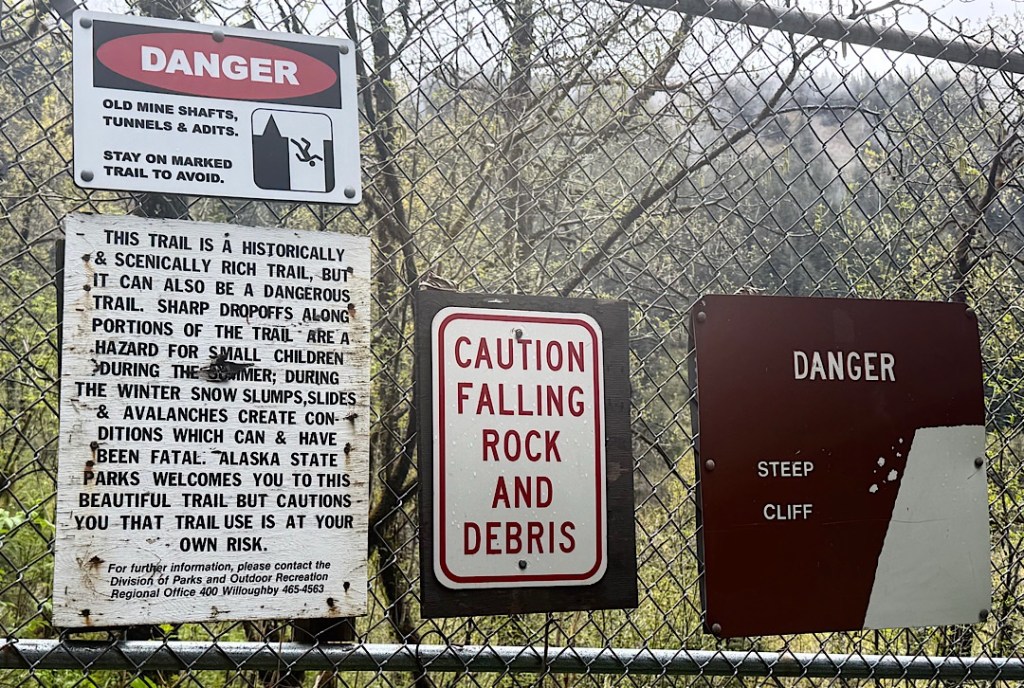
Wolves live in those woods, too. But I was told moose prefer other parts of Alaska. It struck me I’ve never seen a live moose anywhere, in neither zoo nor the wild, so I would be most excited to see one of them.

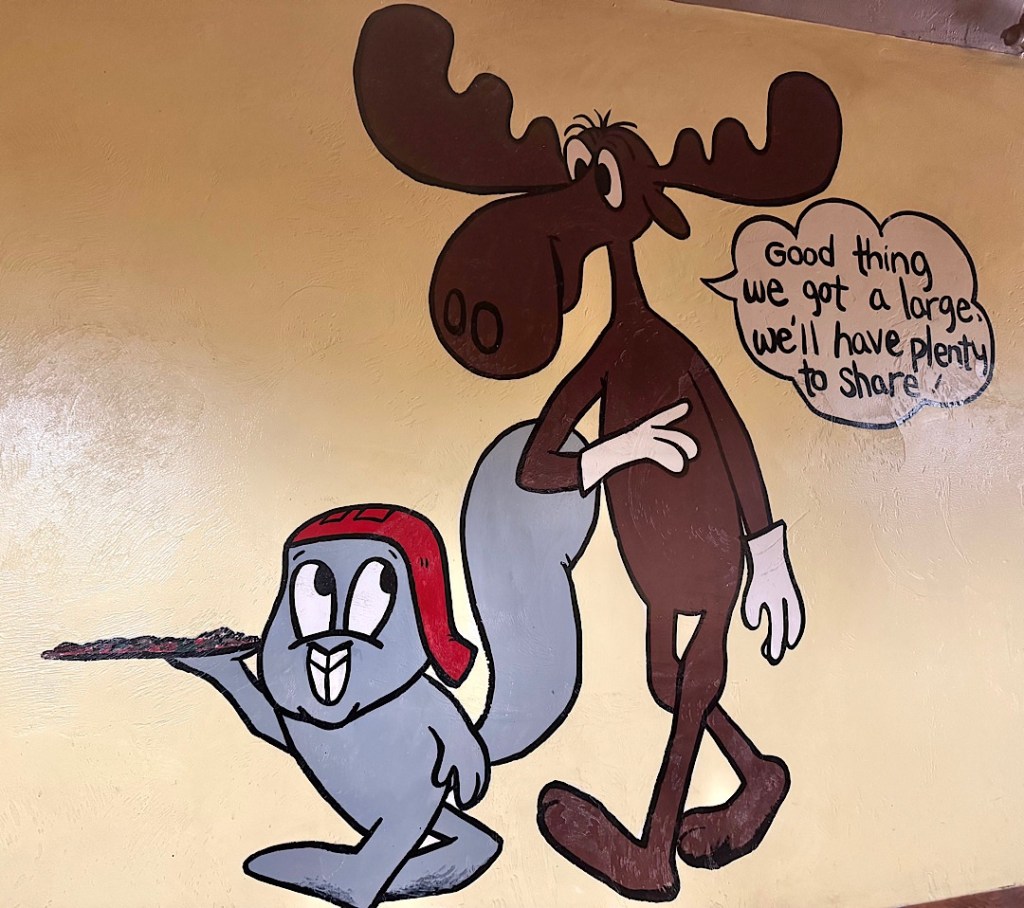
We did eat in downtown Juneau at Bullwinkle’s Pizza Saturday night. Juneauites have been devouring pizza there under images of the cartoon moose for more than 50 years.
The pizza was good, but the restaurant interior was pretty forlorn. We chose it only because Bullwinkle’s is just around the corner from the Elizabeth Peratrovich Hall, where the Lionel Hampton Big Band was performing that night. I’d heard that Juneau organizes a music festival every May, and the big band would be performing for the finale that Saturday night. I’d gotten tickets, and Steve and I had decided to take the free pre-concert dance lesson at 6 pm (hence the need for an easy, close dinner.)
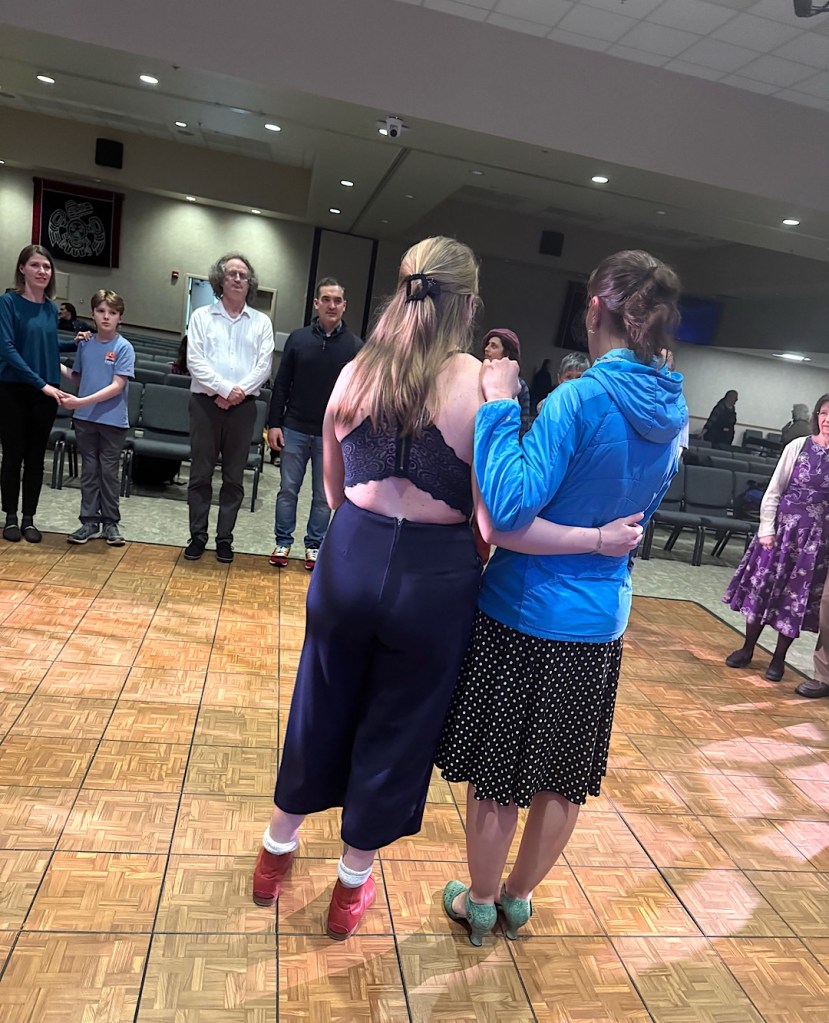
We walked in to the hall to find at least a dozen folks already gathered around the teacher, a pretty blonde with a bear paw tattooed on her left shoulder blade. Gamely, she and her assistant demonstrated Lindy and jitterbug moves to the “class.” To me it seemed a wildly ambitious effort; the instructors were racing through a repertoire that Steve and I once learned (sort of) over the course of a couple of years. But soon enough it was time for the dance students to clear the floor so the performance could begin.
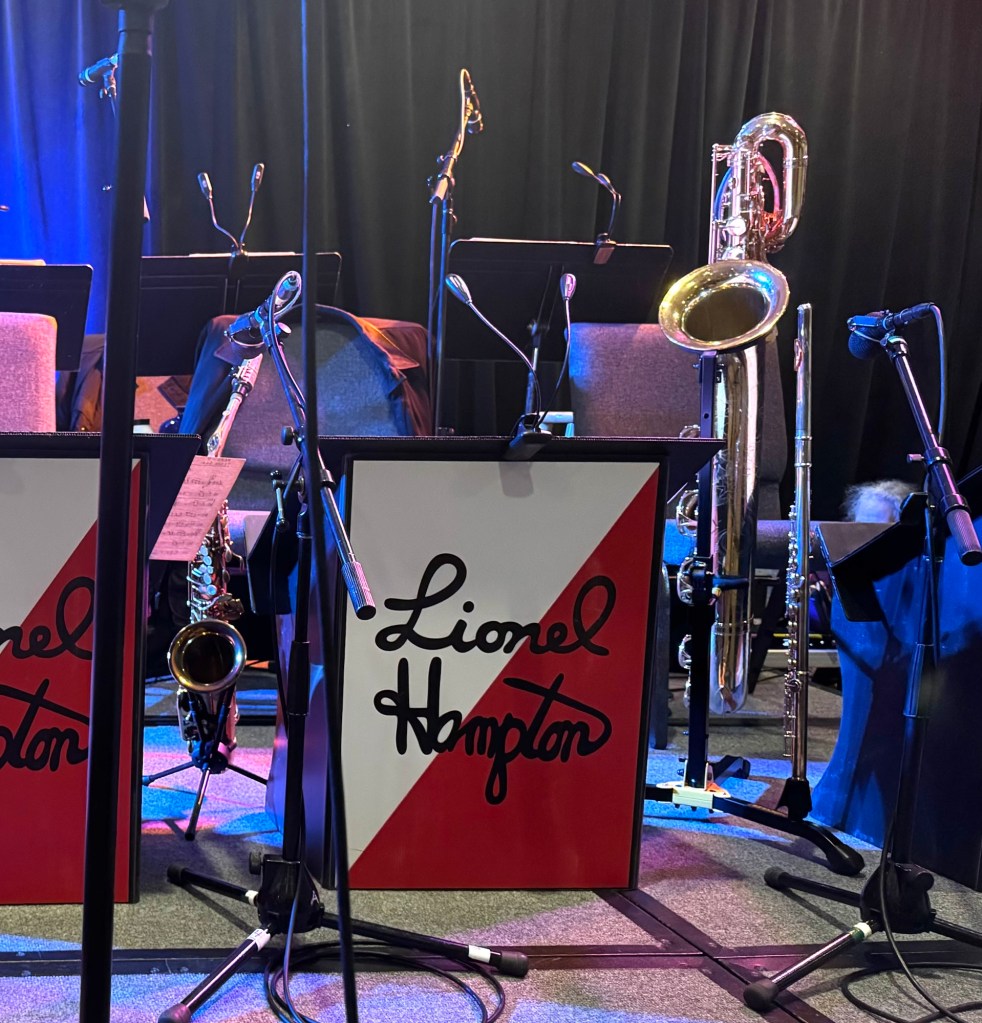
Lionel himself has been dead for more than 40 years, but the band is still playing his arrangements; indeed some of the 10 members were in the group when the great vibraphonist was still leading it. The ensemble proved energetic and accomplished, and more-confident dancers soon filled the dance floor.

Steve and I joined them for one number, but it reminded us how far out of practice we are, so mostly we watched. I found myself wondering if the scene would look very different were the band playing at some Kiwanis hall in San Diego. I spotted way more boots on the feet in the Juneau crowd. But mostly they just looked like ordinary American Homo sapiens, having fun.

Scenery

My worst fear was not being eaten by a grizzly bear. Instead the Apple Weather prediction for our time in Juneau looked so grim — temperatures ranging from barely above freezing to the mid-40s, with rain every day — I worried we might not want to venture outside. What fun would that be?

I need not have fretted. True, we emerged from the airport terminal Wednesday afternoon into a chilly, damp world, but we’ve been more than comfortable moving around in it. My gear choices were good! For this trip, I bought a waterproof Norwegian (Helly Hanson) raincoat, and yesterday I wore it over two lightweight thermal tops and a down jacket. On my legs I had rain pants over thermal long-johns. For footwear I dusted off the hiking shoes in which I trekked on New Zealand’s Routeburn Trail 8 years ago.

It all worked so well I got too warm at one point and had to stow the down jacket in my day pack! (It compresses down into a compact stuff sack.) And the rain proved to be only intermittent, never intensifying to much more than a drizzle; often stopping altogether.

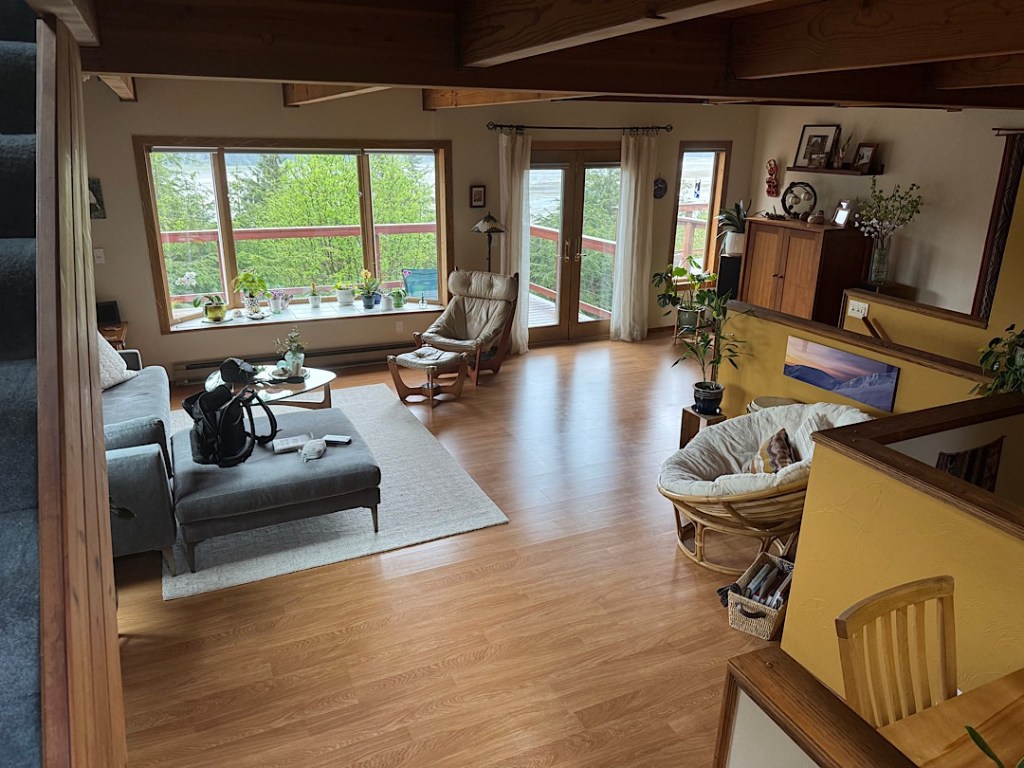
We’re in a wonderful exchange home here, just a 10-minute Uber ride from the airport. The expanse of windows in its living room open onto a big deck with sweeping views of Douglas Island across the Gastineau Channel.

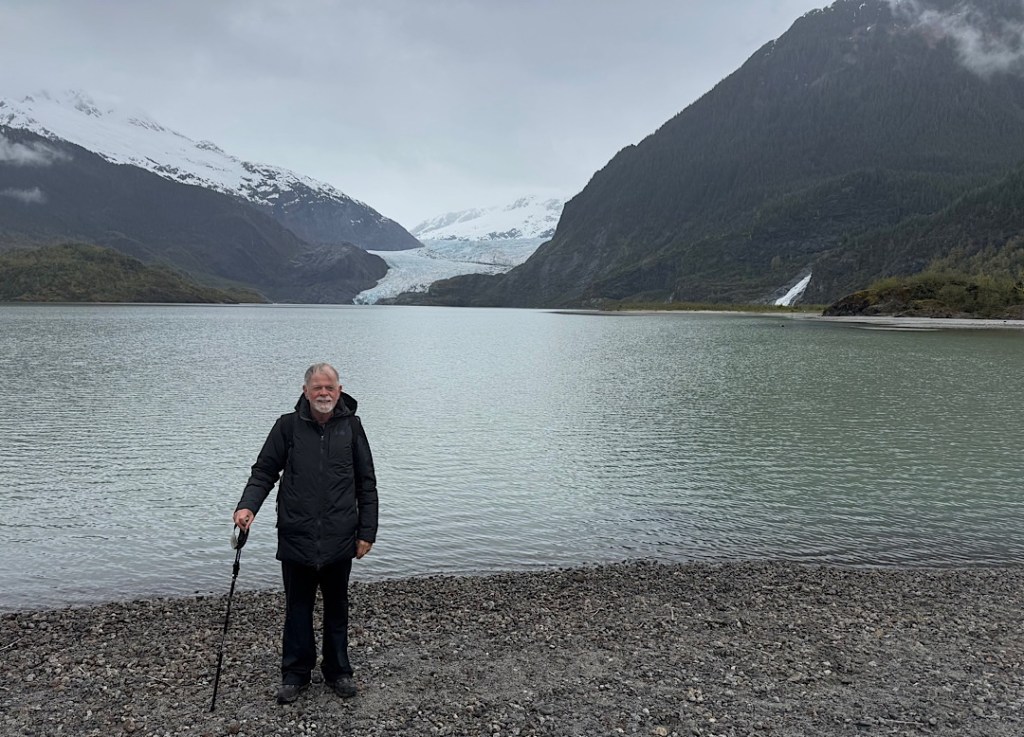
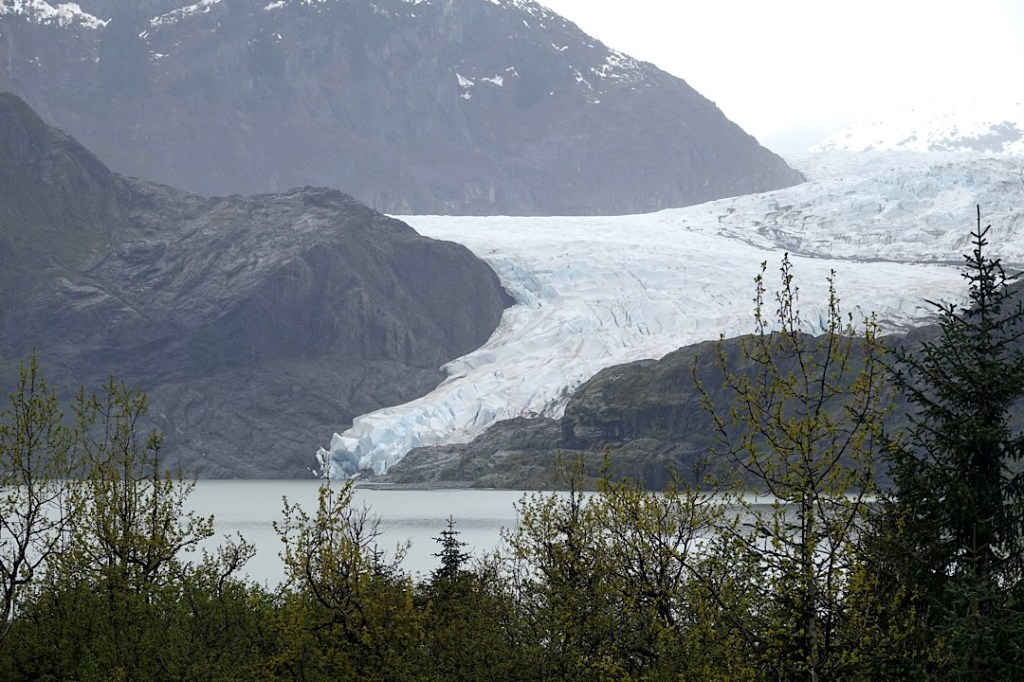
Our trading partners are also letting us use their Honda CRV. We drove it yesterday (Thursday) to Juneau’s #1 touristic attraction for the last 150 years: one of the easiest places in North America to see a glacier up close. It took us barely 15 minutes to reach the Mendenhall Glacier parking lot. We had a delightful time exploring the complex.

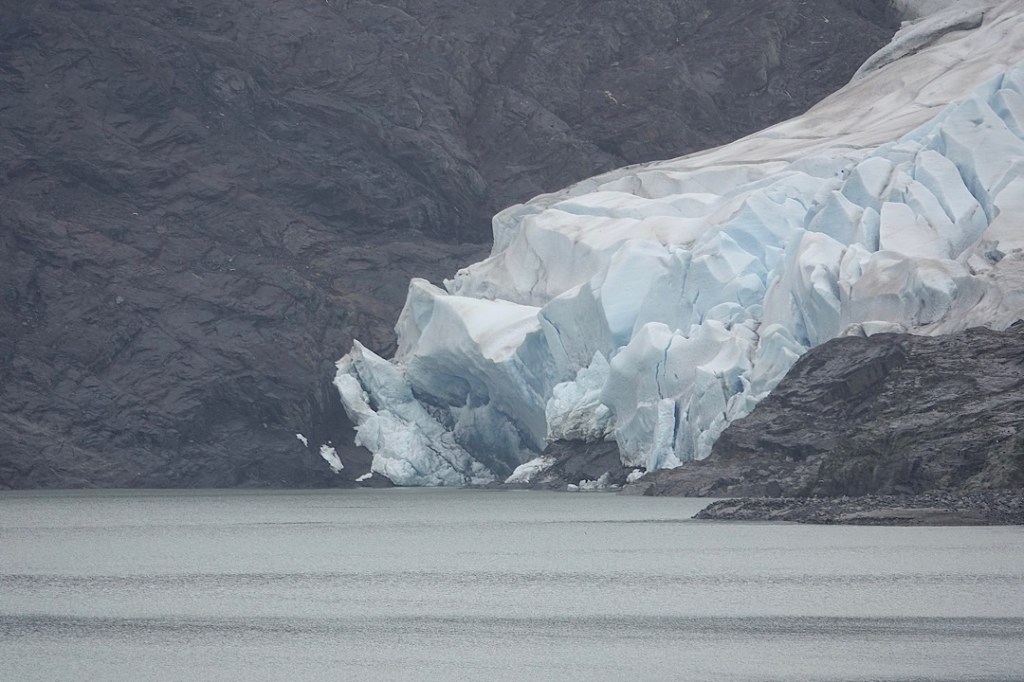
This is Mendenhall Lake into which the ice river deposits its calves.
My telephoto lens helped us see the chunks about to break off.
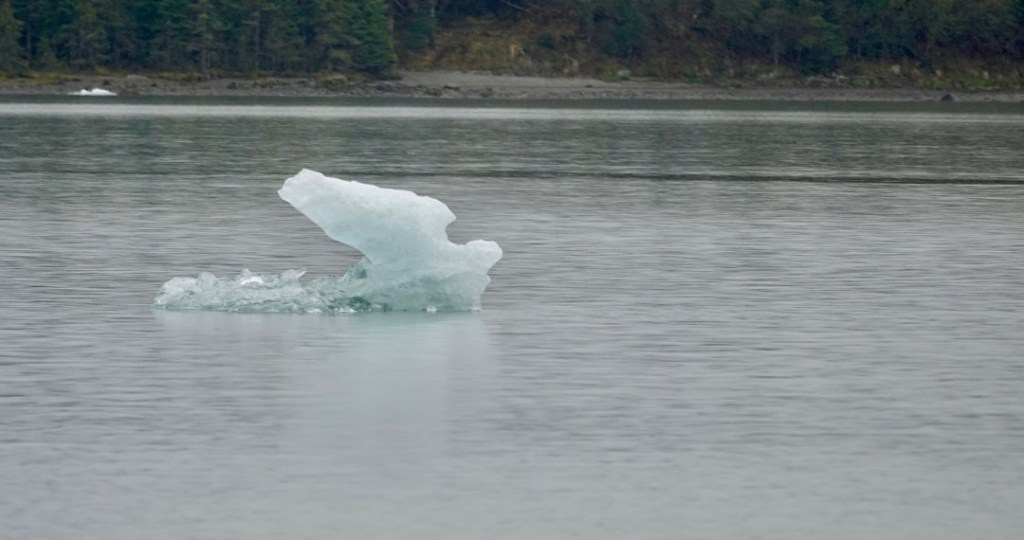
My very first iceberg (tiny but elegant)
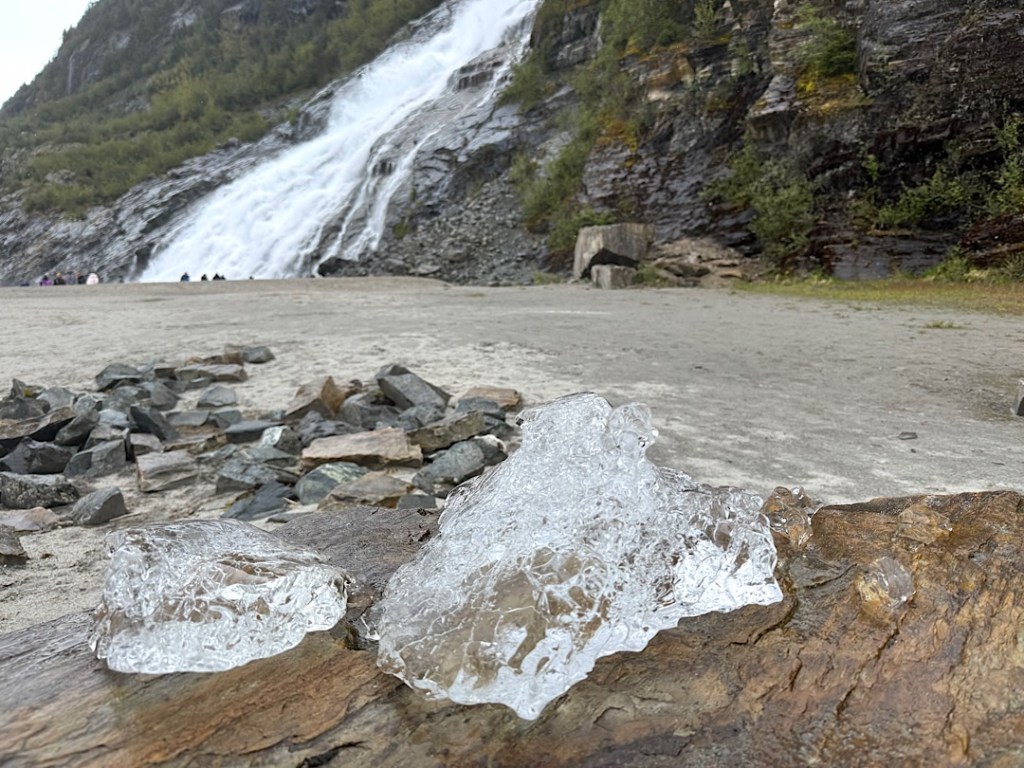
Someone transported this one to the beach leading to Nugget Falls.
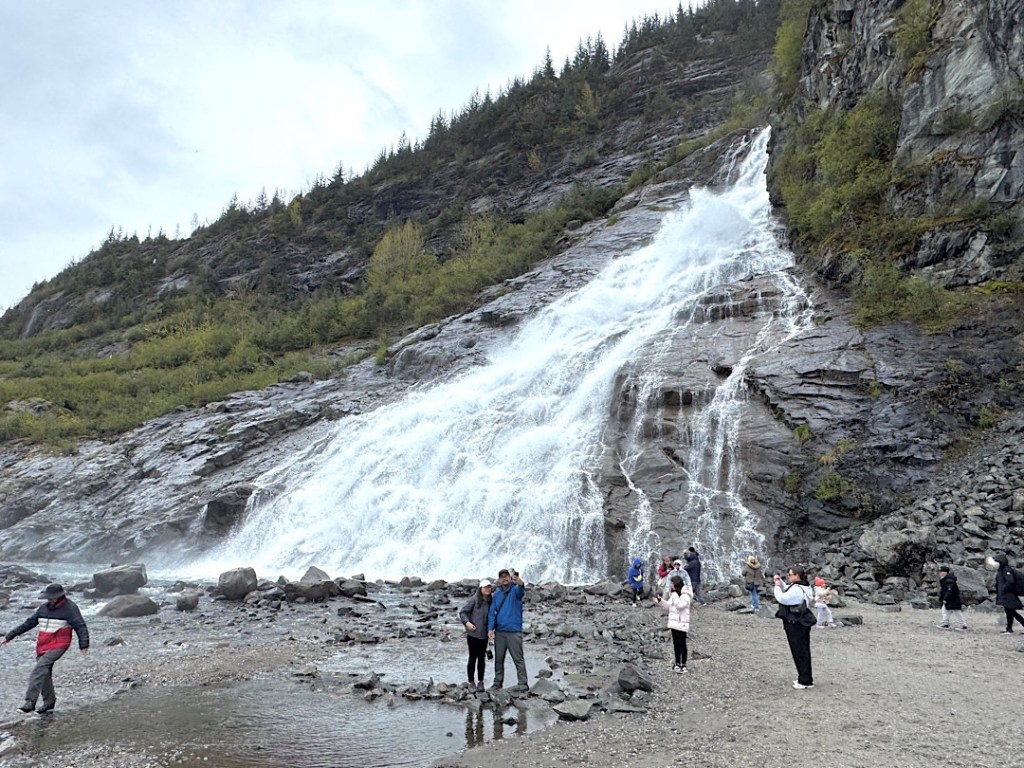
The waterfall itself was nothing to sneer at.

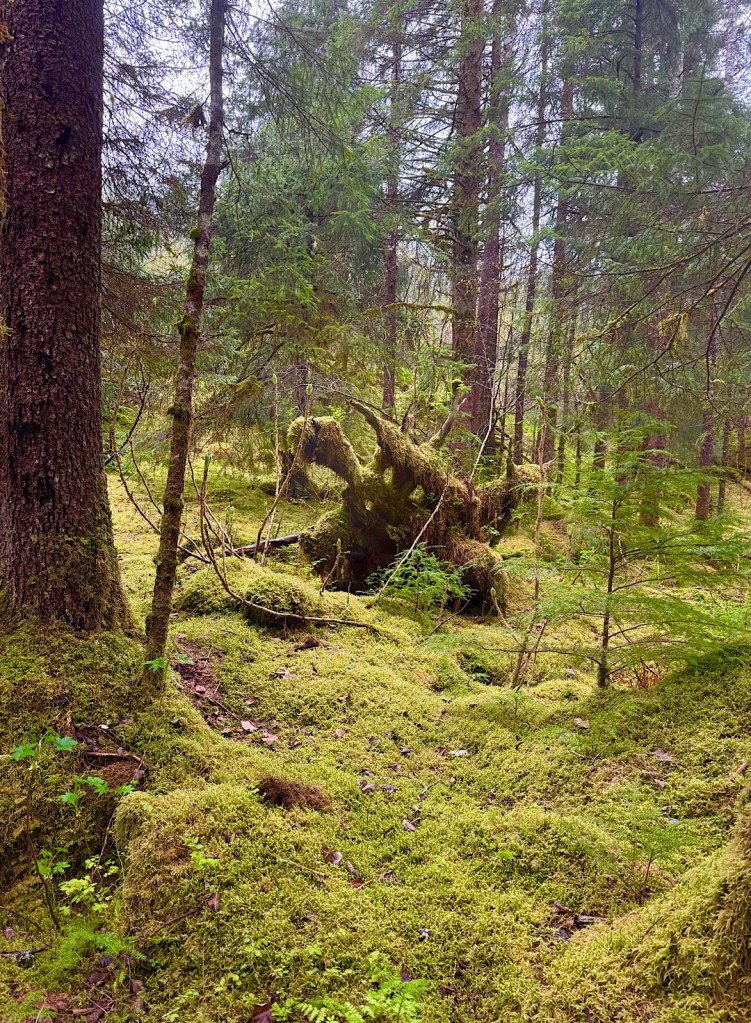
This is all within the Tongass National Forest — the largest temperate rain forest in the world. The visitor’s center was jammed with cruise-ship passengers, but we met almost no one on the nearby Trail of Time. Its misty pathways led us through a landscape lushly upholstered with mosses and a profusion of other plants.

It felt primordial but to our astonishment, we learned the glacier had covered much of this trail less than 100 years ago. It retreated to leave behind bare rock. All the dense green beauty has developed since then.

This viewpoint provided photos documenting how dramatically the landscape has changed.

After just one day, I felt amazed by Juneau’s scenery. Another feature of that scenery also has been striking. Our hosts in the exchange home left a list of (dumb) tourist questions that they advised (tongue in cheek) against asking. “What elevation are we at?” was one. “Sea level” is the proper answer. (“That water out there, that’s the sea.)

Now that I’m here, I understand why visitors might ask that. The scenery makes me feel I’m deep in some mountain holdfast; dramatic peaks jut skyward in every direction, cut through with deep valleys. For most of my life I’ve only seen scenery like this far, far from the ocean. This place feels different.