Riding in an Uber car on modern four-lane freeways from Johannesburg’s airport to our Airbnb flat, both Steve and I reeled from the culture shock. After the squalor of Kampala and the poverty in rural Uganda (and everywhere in Zimbabwe), what we saw of the South African megalopolis reminded us of LA. Except maybe glossier and more prosperous.
The Airbnb turned out to be the best I’ve ever booked.

After settling into it, we walked past fancy commercial buildings and apartments to an Italian restaurant recommended by our Airbnb host. We ate delicious pasta (accompanied by a good pinotage wine and yummy ice cream.)
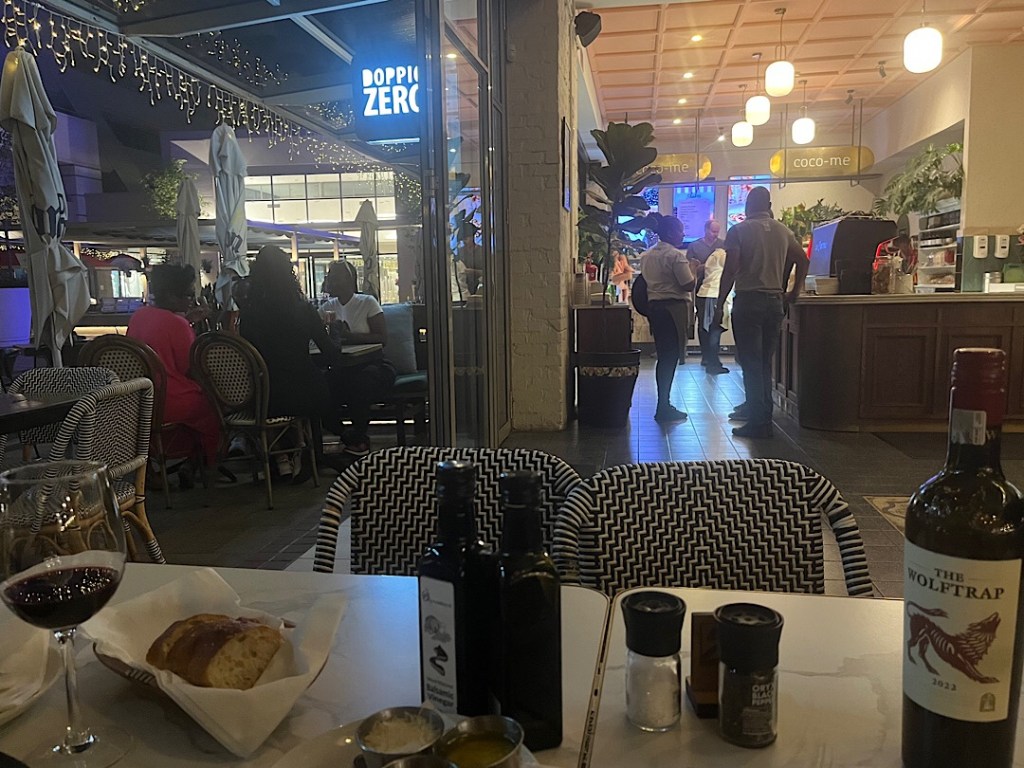
I felt like I was in a dream. I’d expected the city to be worse than when we whizzed through it in 2010. Instead it seemed better.
Before that trip 13 years ago (our first to sub-Saharan Africa), Steve had declared Joburg was so dangerous he never wanted to go there. He had relented but we’d only stayed for two nights, and what we saw suggested crime indeed was nightmarish. More recently we’d read about daily power outages (“load-sharing”) and the battered economy. Some of the white South Africans we met last year cruising in Turkey seemed tensely, almost desperately, eager to evacuate.
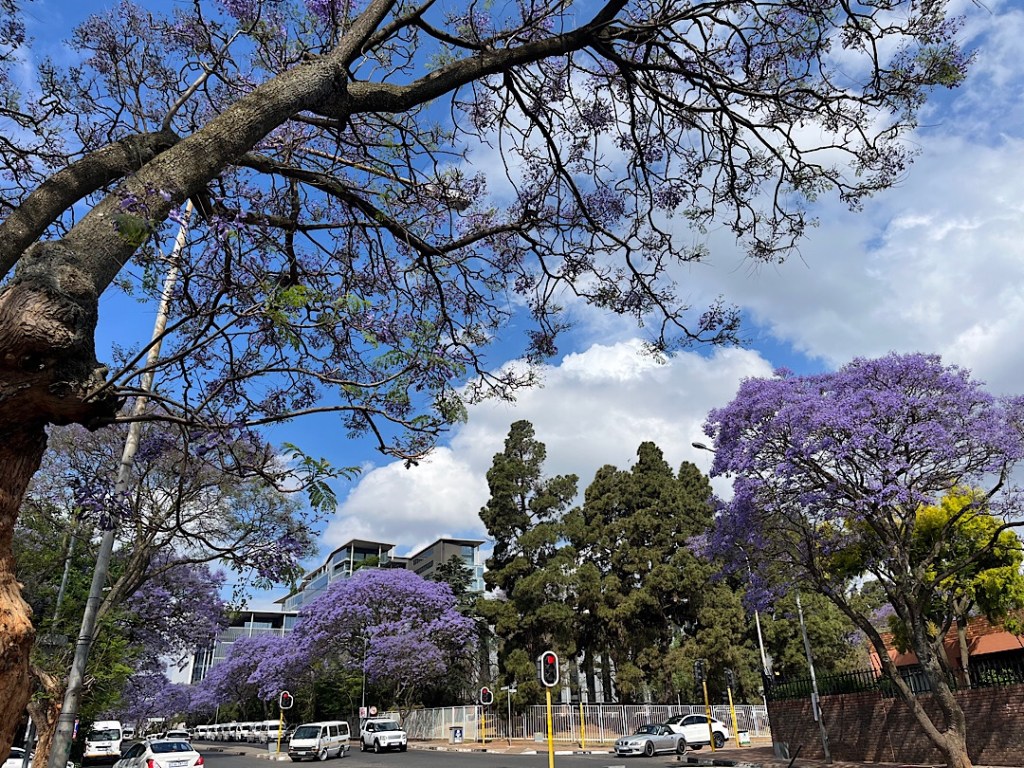
Yet the neighborhood we stayed in this time, Rosebank, appeared to be an order of magnitude posher than La Jolla. A multiracial mix of pedestrians strolled its tree-lined streets alongside us (at least during the day).
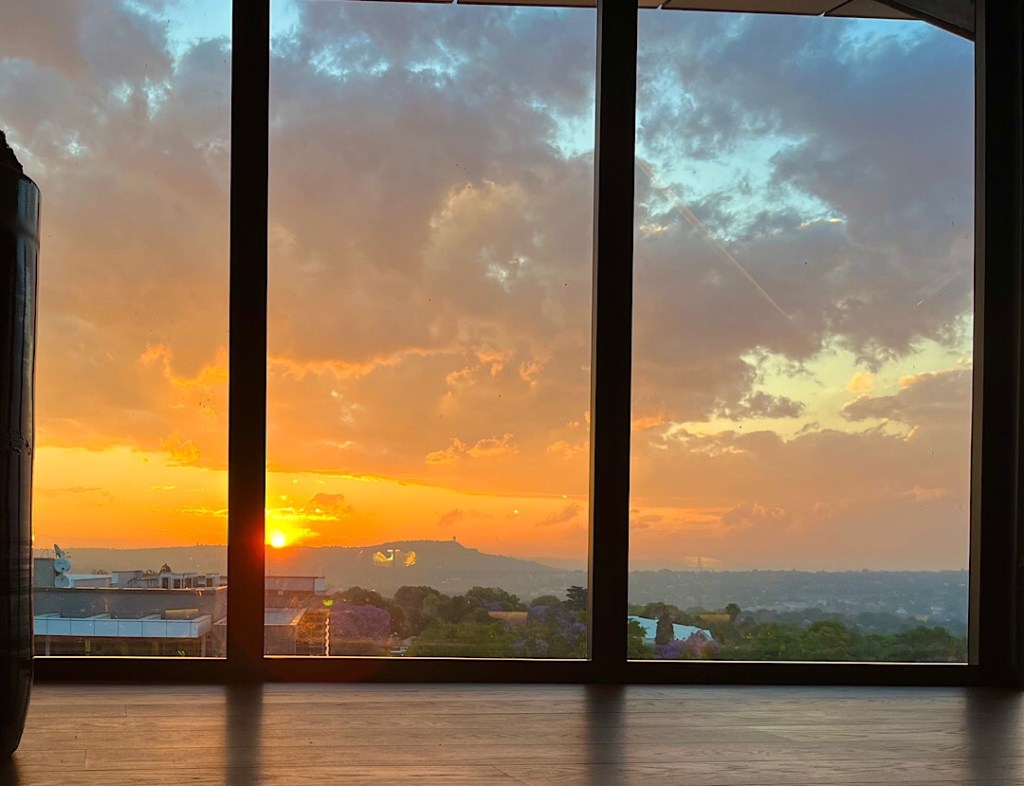
We dined at a top-notch restaurant on the top floor of this building.
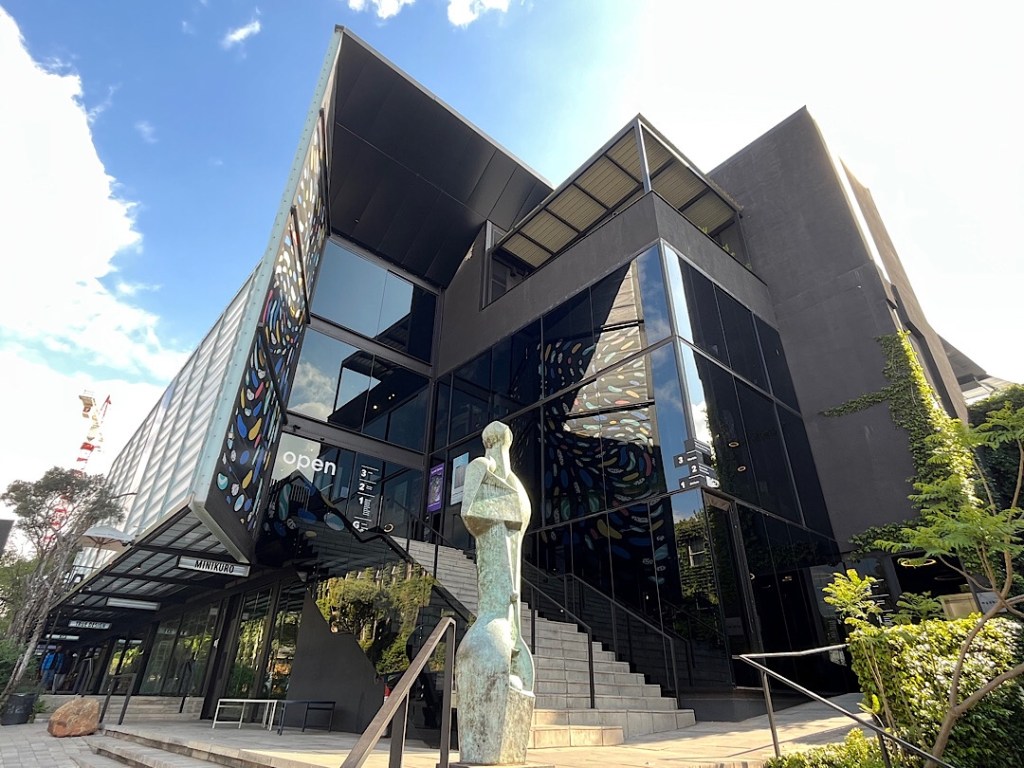
The next day we went back to visit a ground-floor gallery that a New York Times reporter recently praised as the best in the city.
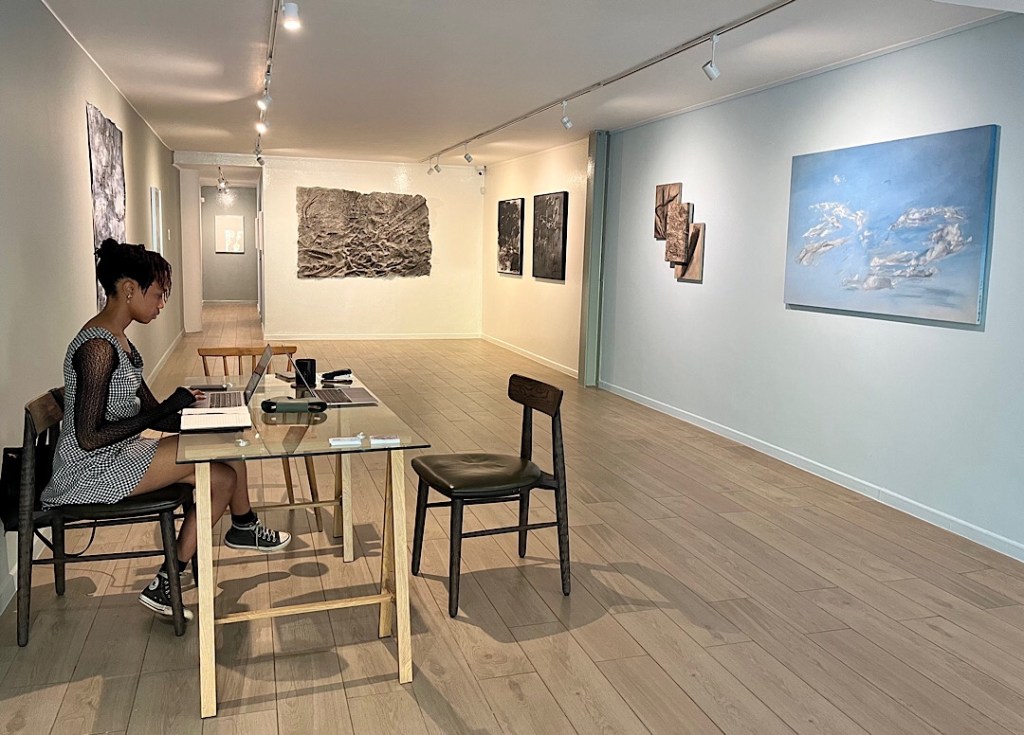
This past Tuesday (10/17), we took the impressive Gautrain (subway) one stop north of Rosebank to the even fancier Sandton area.

A short walk from the station took us to Nelson Mandela Square.
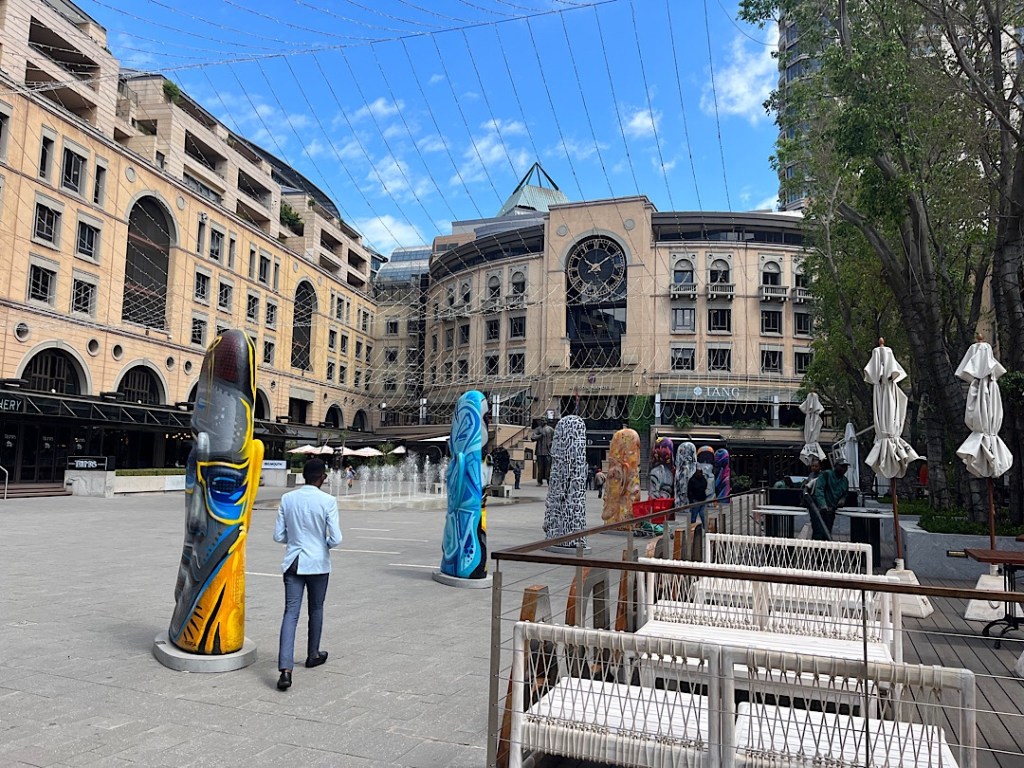
It’s both a tribute to South Africa’s great leader and former president…

…as well as a luxe indoor shopping mall.
It connects to the near-legendary Sandton City, a shopping Mecca so over-the-top all we could compare it to were some malls in Las Vegas or Dubai.
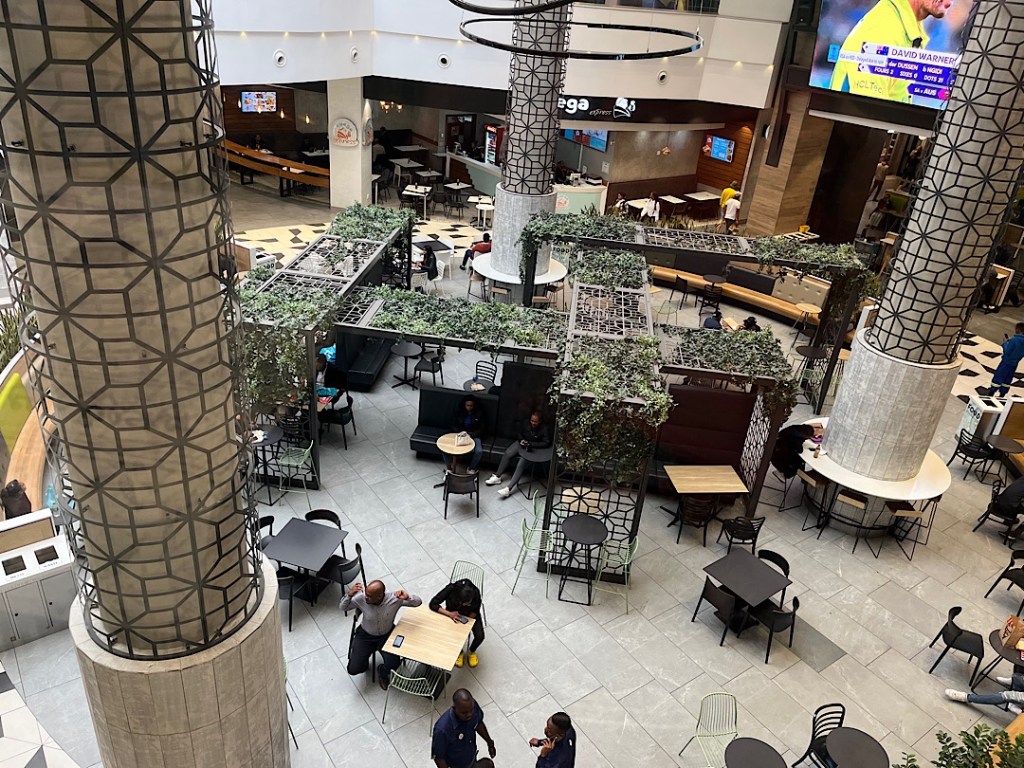
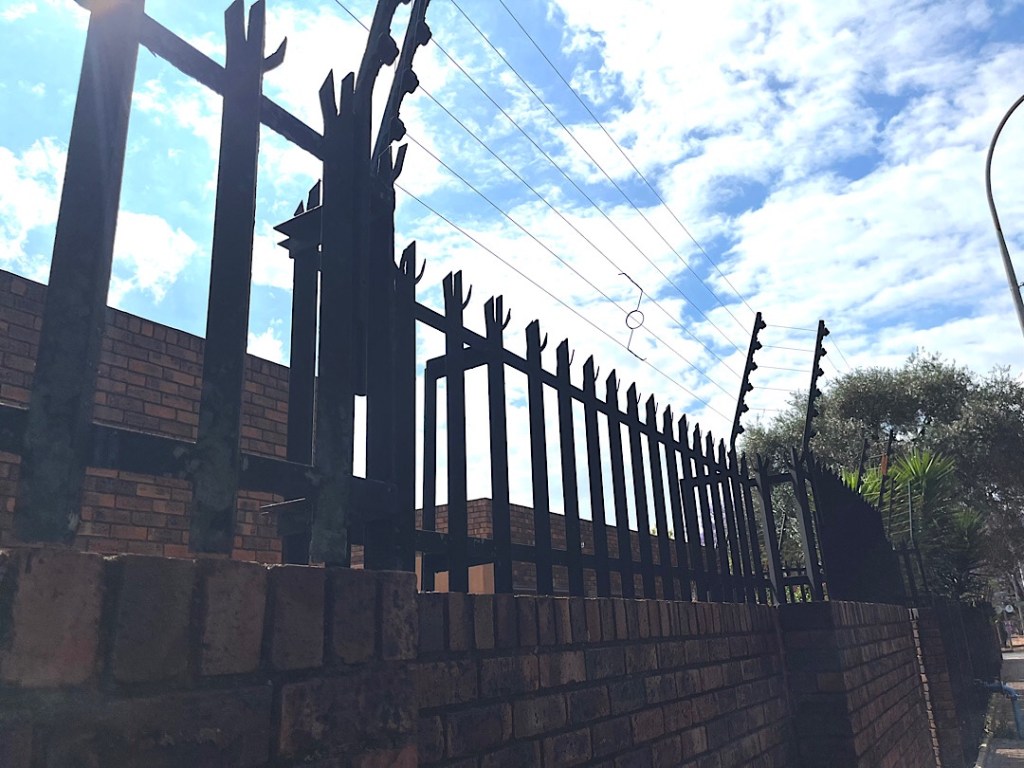
All this was interesting, but it didn’t make either of us yearn to move to Jozi (the city’s more affectionate nickname). Luxury window-shopping might be entertaining for an hour or two, but the ubiquitous security cameras and guards and electrified fencing make it clear almost everyone here feels they have to protect themselves from local bad guys.
That’s also the case in Hillbrow and Berea, but I felt much more alive and engaged throughout our three-hour excursion there. My old friend Megan and her husband Andrew were in Jozi a few months ago, and they had taken and loved the tour organized by an 11-year-old nonprofit called Dlala Nje. I looked at the organization’s website and signed Steve and me up for an outing offered on the day after we flew in from Victoria Falls. From Rosebank, we took an Uber, which is super-cheap and (along with Bolt) works superbly throughout the city. Our black driver looked dubious as we approached our destination.
“What are you guys doing here?” he asked, concerned.
We told him we were there for a walking tour, and he seemed dumbfounded. “Are you sure you want me to let you out here?” he pressed when we reached the Ponte City tower. We told him it was okay.
And it was — delightfully! I hadn’t realized it, but not that long ago, residents considered Hillbrow and the adjoining Berea neighborhood to be the scariest communities in the city. That hadn’t always been the case. Once upon a time (circa 1970), the area was an enclave of the white elite, the most elegant part of town. But in the late 1980s, as the apartheid system began to crumble, it became a magnet for artists where people of different races ignored the rules and interacted. Trevor Noah’s Swiss father and Khosa mother played out their relationship (and conceived their famous son) in an apartment in the neighborhood. The white powers-that-were found this intolerable and retaliated by cutting off all city services, including police protection and maintenance. White property owners fled to areas like Rosebank and Sandton, and Hillbrow degenerated. Squatter landlords took over some of the buildings, charging rent to folks desperate for shelter. Brutal, often violent muggings became commonplace. Hillbrow’s once-posh landmark, the cylindrical 50-plus-story Ponte City tower, filled with thousands of tenants willing to live without water or electricity. They tossed their trash into the central light well. At one point, the stinking pile reached the 14th story.
Two charming young men, Delight and Alvaro, guided our group of five (a pair of Chinese newlyweds from Sydney, a solo Japanese woman named Kimi, Steve, and me). The young South Africans acknowledged that in the late 90s and early 2000s, the area was dangerous. But things had improved, they insisted. We still needed to be on guard against phone-snatchers and pickpockets. But if we looked confident and stuck with them, we’d be fine.
Some of the streets we walked through reminded Steve and me of the bad parts of New York City during its most blighted years, or sections of the west side of Chicago in our youth: garbage strewn all over the broken pavement, hungry young men lurking like jackals. Delight warned us not to take any photos as we passed once-beautiful buildings that had been stripped of all their windows and metal innards by addicts who sold the material to buy cheap, bizarre heroin mixtures the likes of which I’d never heard.
But in the very next block, the change was startling. I didn’t see as much as a gum wrapper on the well-kept sidewalks. A little grocery store stood on one corner, and we passed women who looked like middle-class housewives.
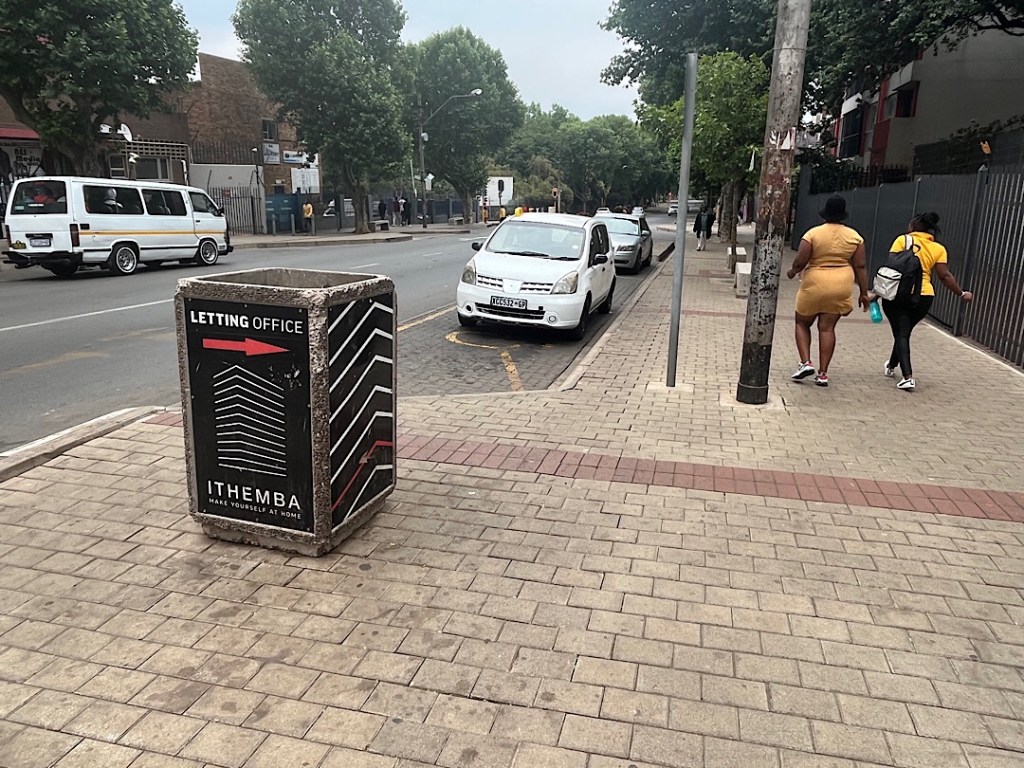
Delight explained that a Cape Town-based property developer named Ithemba had made a deal with the city government to take over several of the highjacked buildings, renovate them, and rent them out. (The developers still didn’t own the buildings, but it was clear to everyone their original owners could never reclaim them because of the back taxes they would owe.) Ithemba hires private contractors to clean and police the streets. Rents in their buildings are higher than the squatter landlords had been charging their tenants. But the city was now getting some revenue, neighboring buildings also were being upgraded, and a piece of the urban jungle was again a decent place to live.
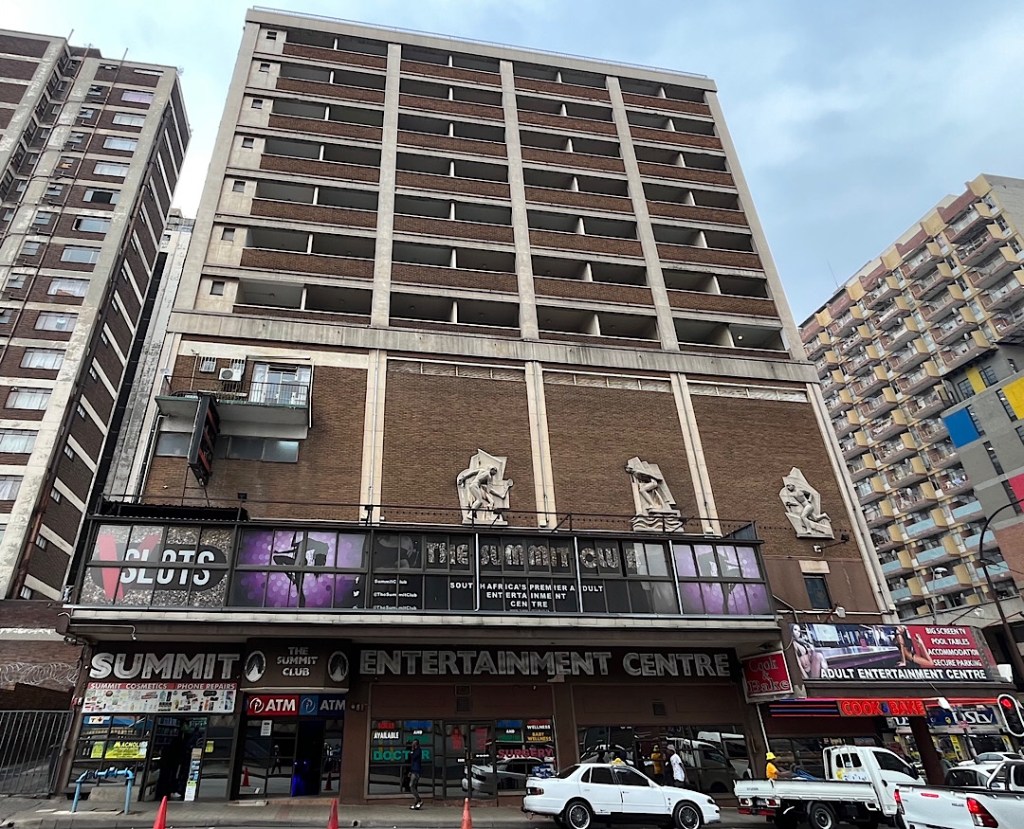
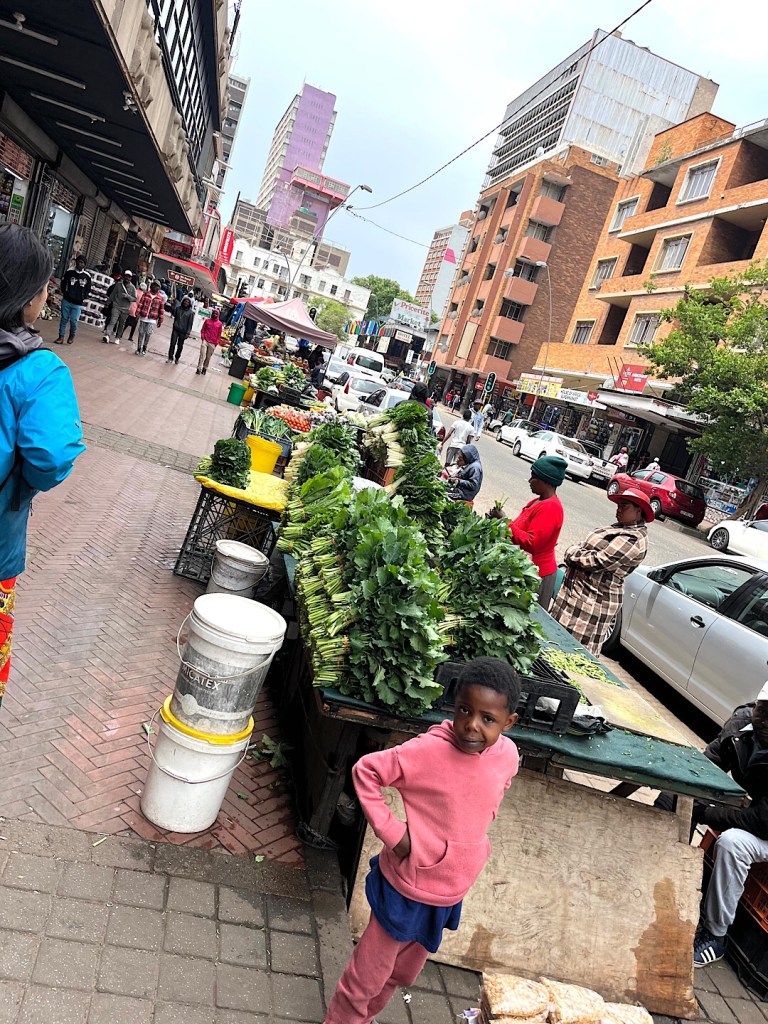
Along Hillbrow’s main commercial street, Delight pointed out a one-time athletic club that turned into a strip club and brothel decades ago.
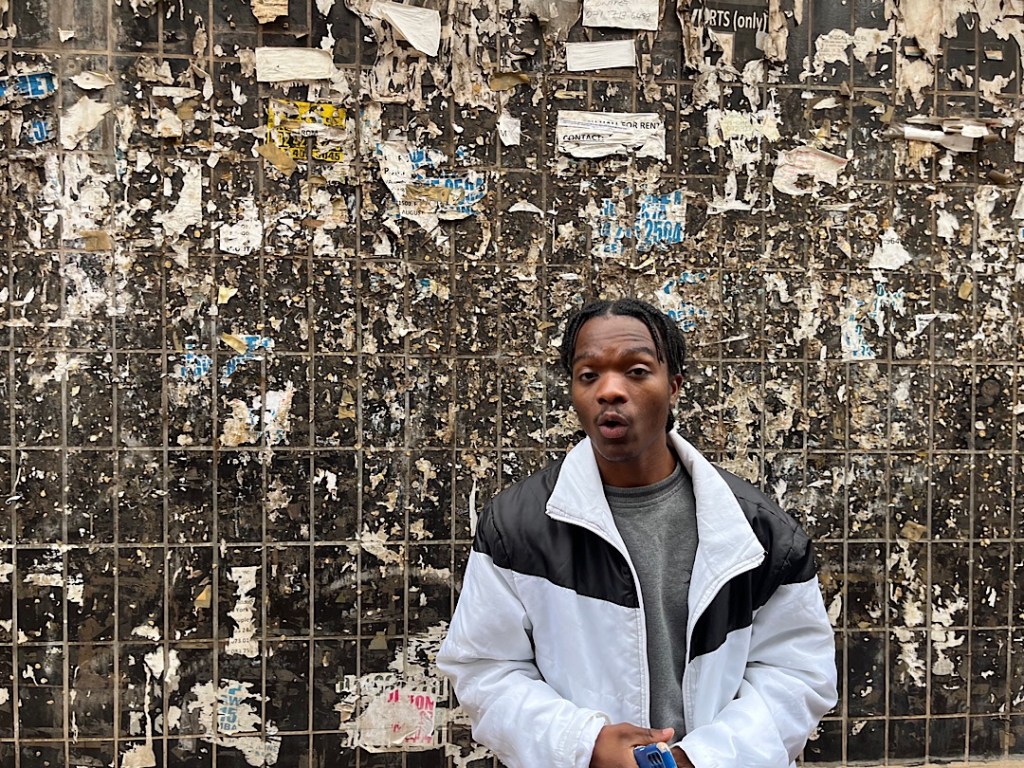
He stopped at the community’s version of eBay.

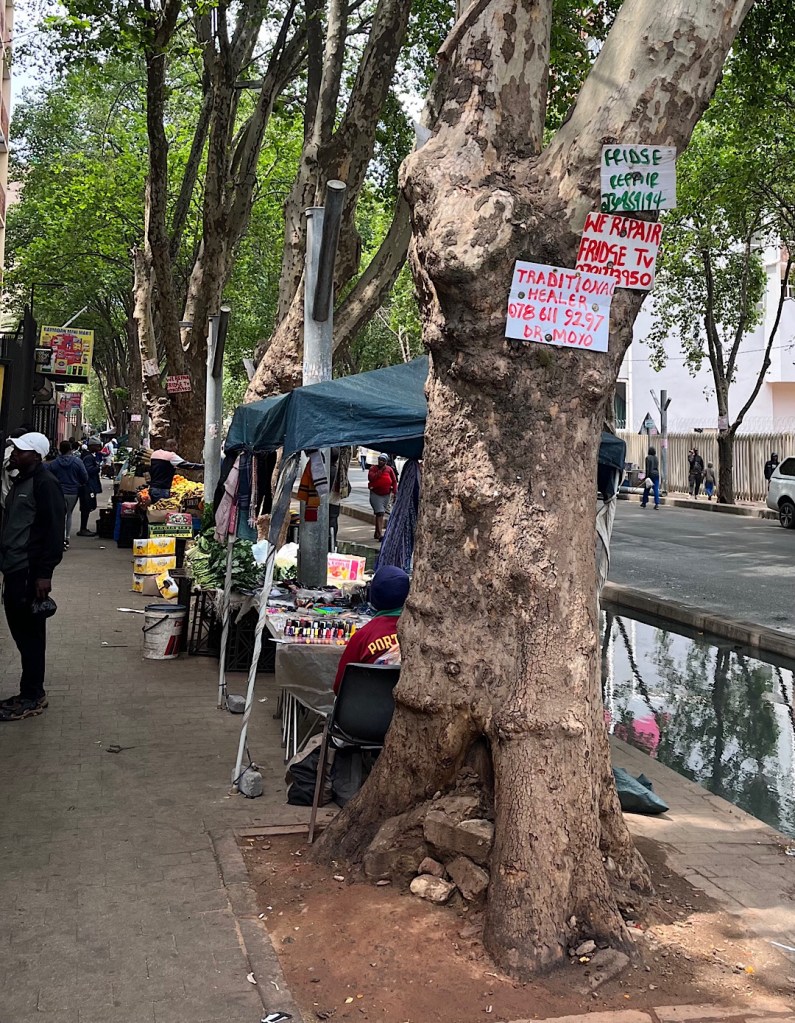
The energy and enterprise on the streets were palpable.
We wound up where we’d started — back at the Ponte City tower.
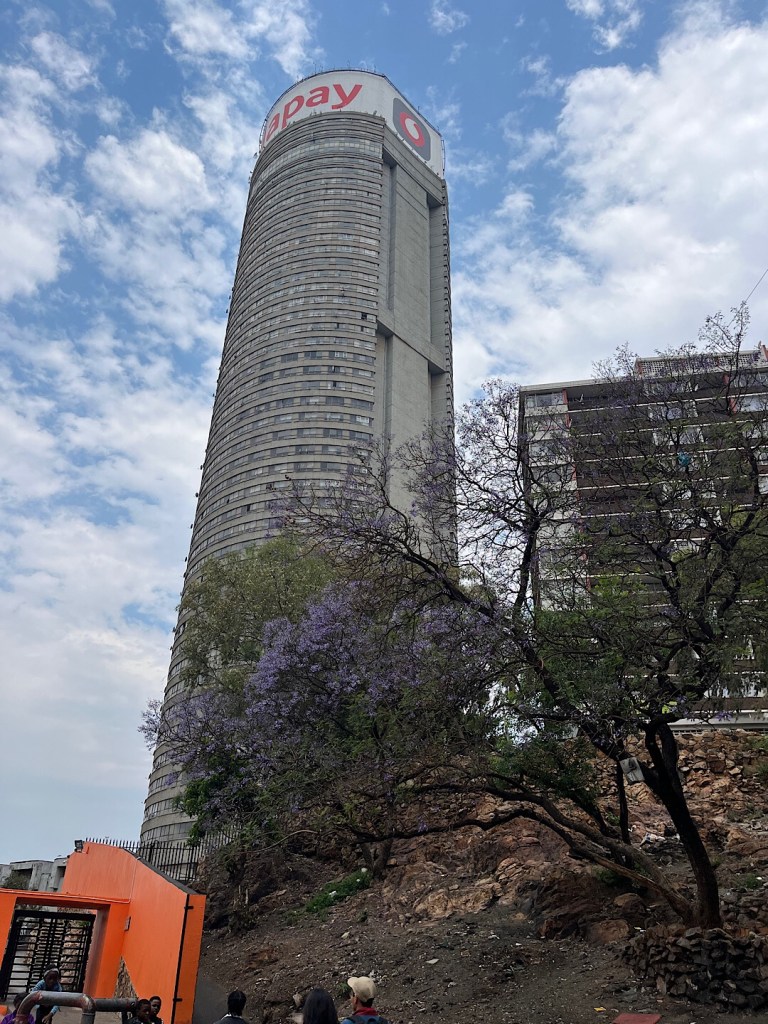
It’s been renovated too, and if not the gleaming showcase it once was, all the garbage has been cleared out. Once again it’s a decent place to live.
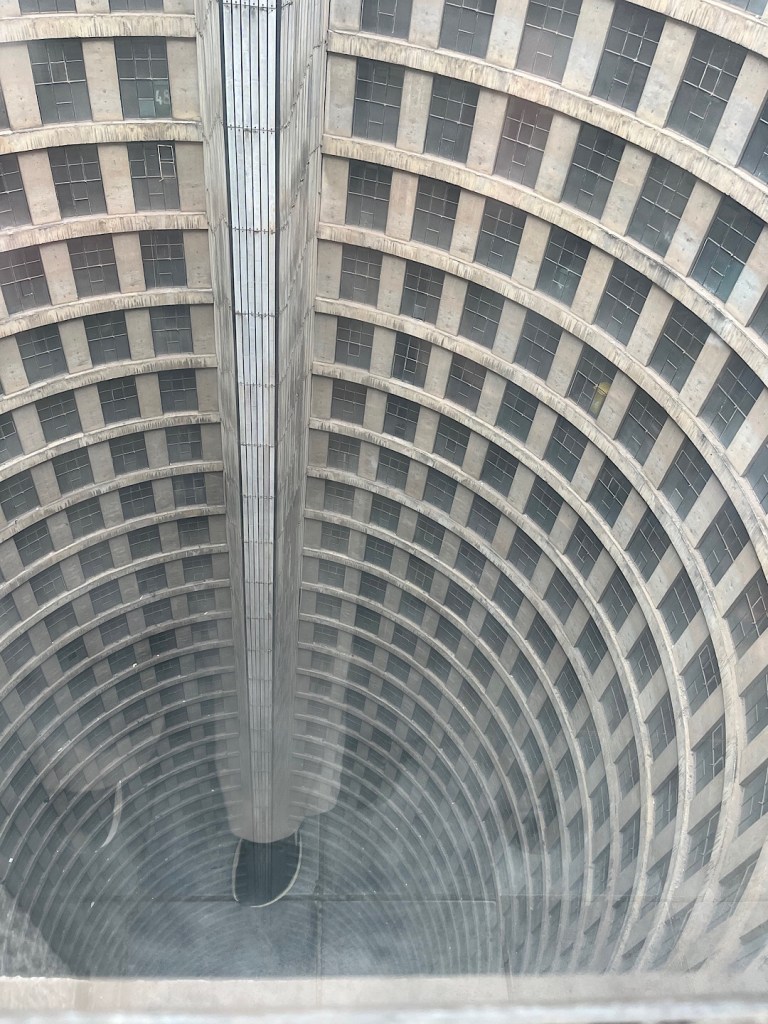
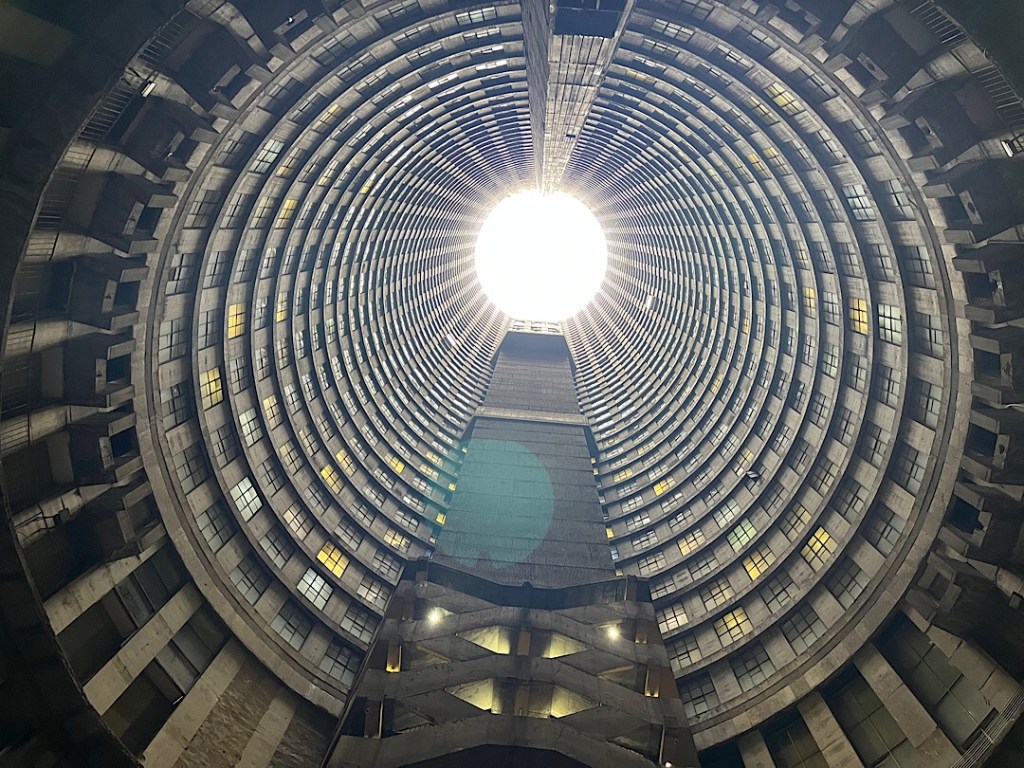
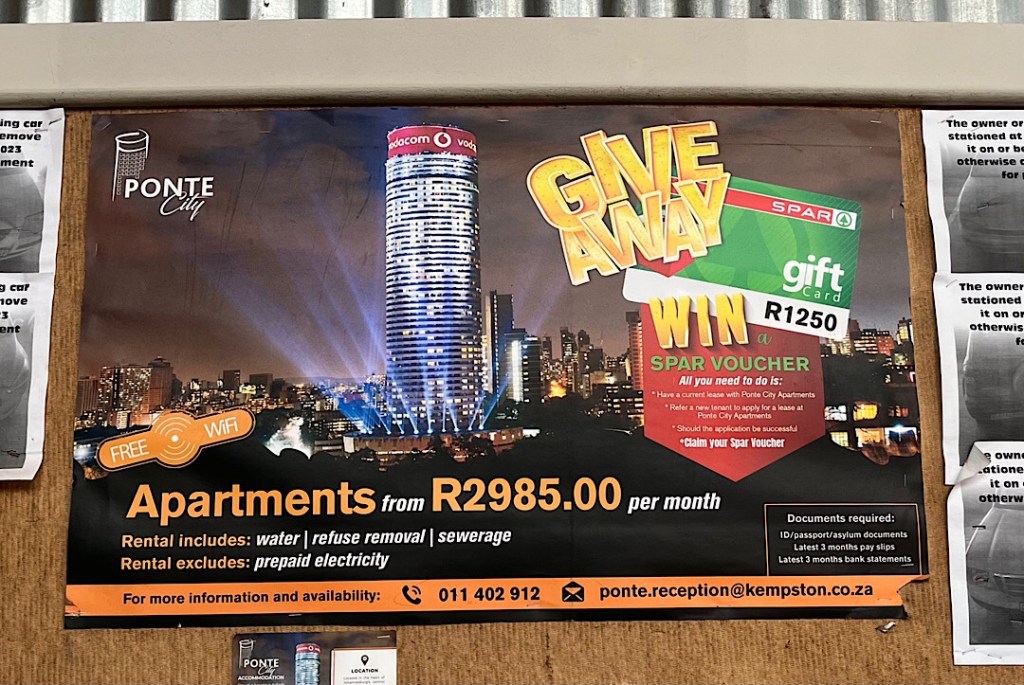
It didn’t tempt me to move there any more than Sandton’s luxury condos did. Still, for all South Africa’s problems, Hillbrow made me feel more optimistic about the future.
 At home and abroad