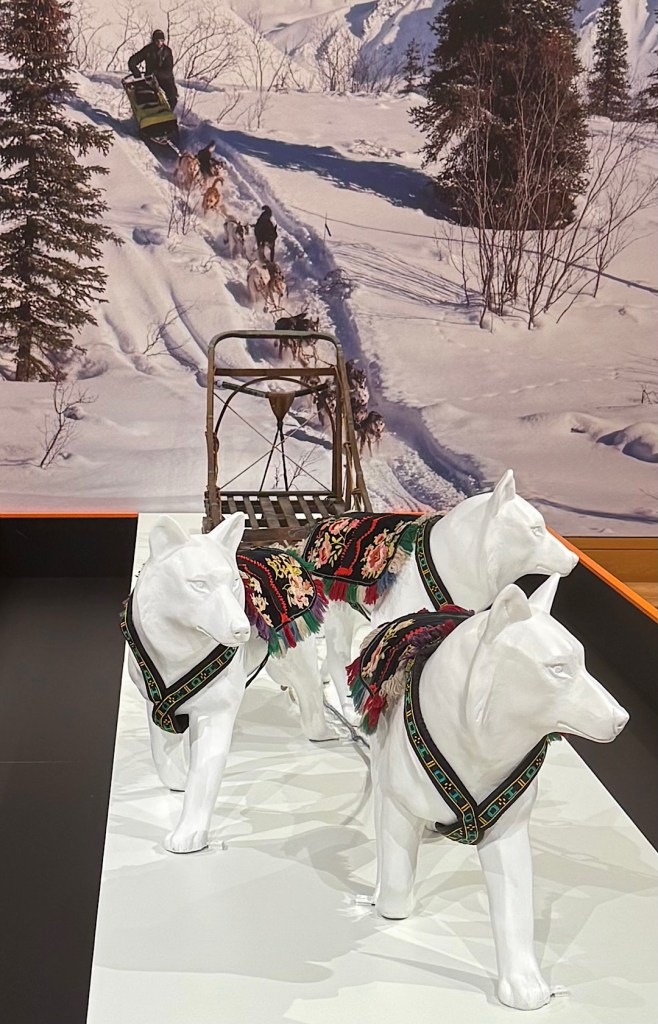
There came a moment Tuesday afternoon, our first full day in Anchorage, when the Huskies were being readied to tow an ATV and they could not contain themselves. The furry brindle-colored dog in the lead position let out a yip, and then a full-throated scream. His tail was wagging, as were those of his canine teammates. A cream-colored dog with a short coat keep leaping up, straining against his line to move forward. I wouldn’t say they were barking. It was more like yodeling with joy.
Spending some time at the Happy Trails kennels with these sled dogs and their humans was so much fun, I could have joined in the chorus. It was not a pleasure we’d anticipated. Steve and I had missed an opportunity to visit the sled dog kennels at Denali (the only national park in the United. States to maintain a dog team.) But we did watch a short film in the visitor’s center about them, and it inspired me to go online first thing Tuesday morning to see if we could visit a kennel in greater Anchorage. I saw that the Happy Trails staff would be giving a tour that afternoon, and we could still get tickets.
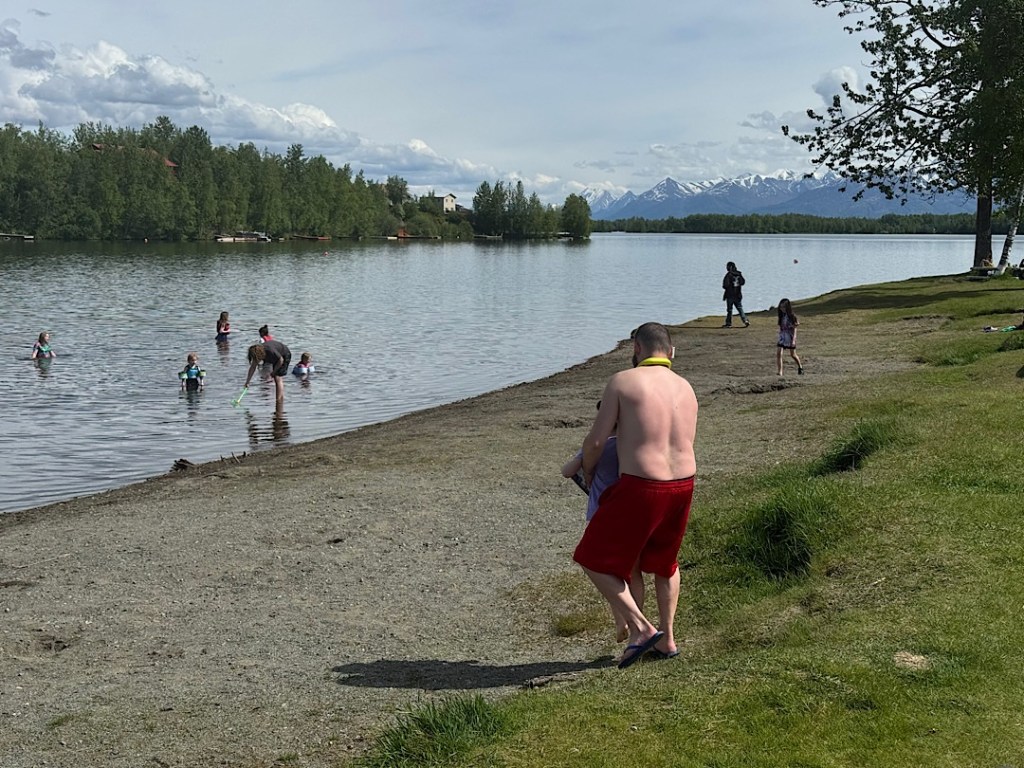
The kennels are located about an hour outside the city. Happily, our Anchorage house-trading partners also let us use their bright red Toyota Tundra. We climbed into it and drove north, stopping at an agricultural office in the Matanuska Valley. The friendly receptionist said it was too early to see any of the giant vegetables for which this region is famous. Nor were any farm tours being given. So we continued on to Wasilla (birthplace of Sarah Palin’s political career) and ate our picnic sandwiches on a pretty lake.

One of the folks who greeted us in the reception hall was a fit older guy with a roguish grin, who introduced himself as Martin Buser. Within minutes it was clear Martin is the charismatic heart of Happy Trails. He’s a 39-time finisher and four-time winner of the legendary Iditarod dogsled competition, that hellish 1,000-mile-long endurance race across some of the most difficult terrain on the planet.
Martin’s staff also includes Sue Allen, who entered and completed the race in 2004 and 2008 (while also holding down her full-time job as a schoolteacher). Another staffer, Chad Stoddard, did the race in 2021 and 2022 and hopes to compete again.
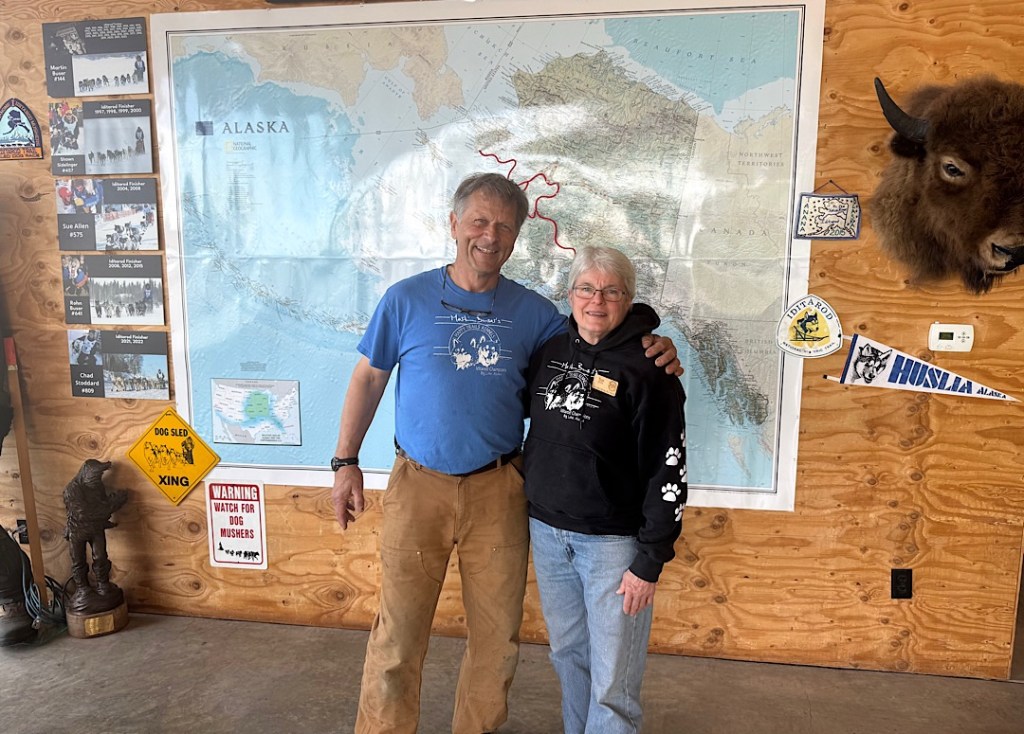
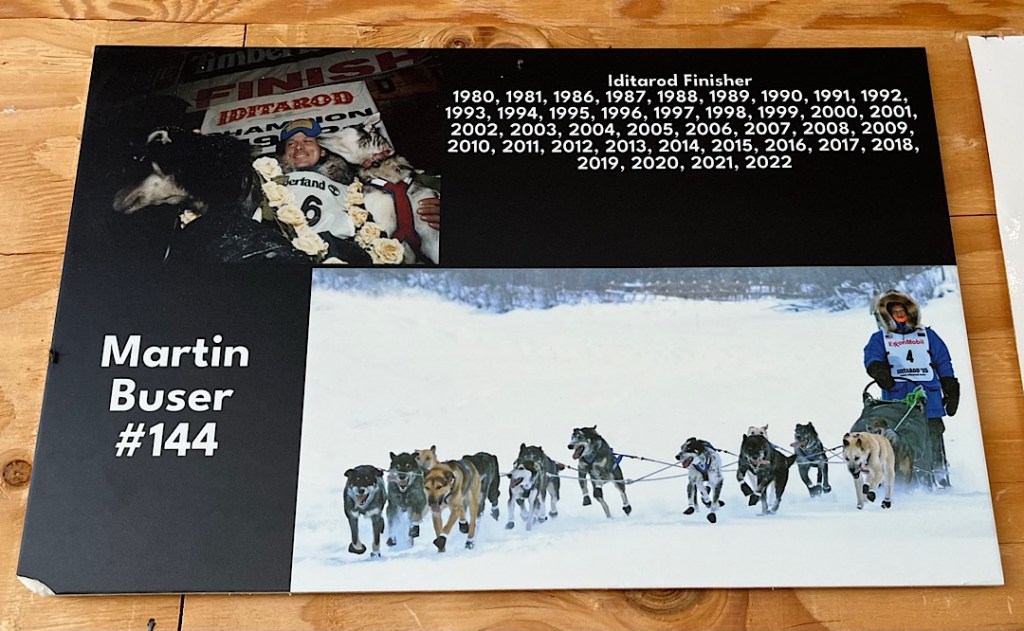
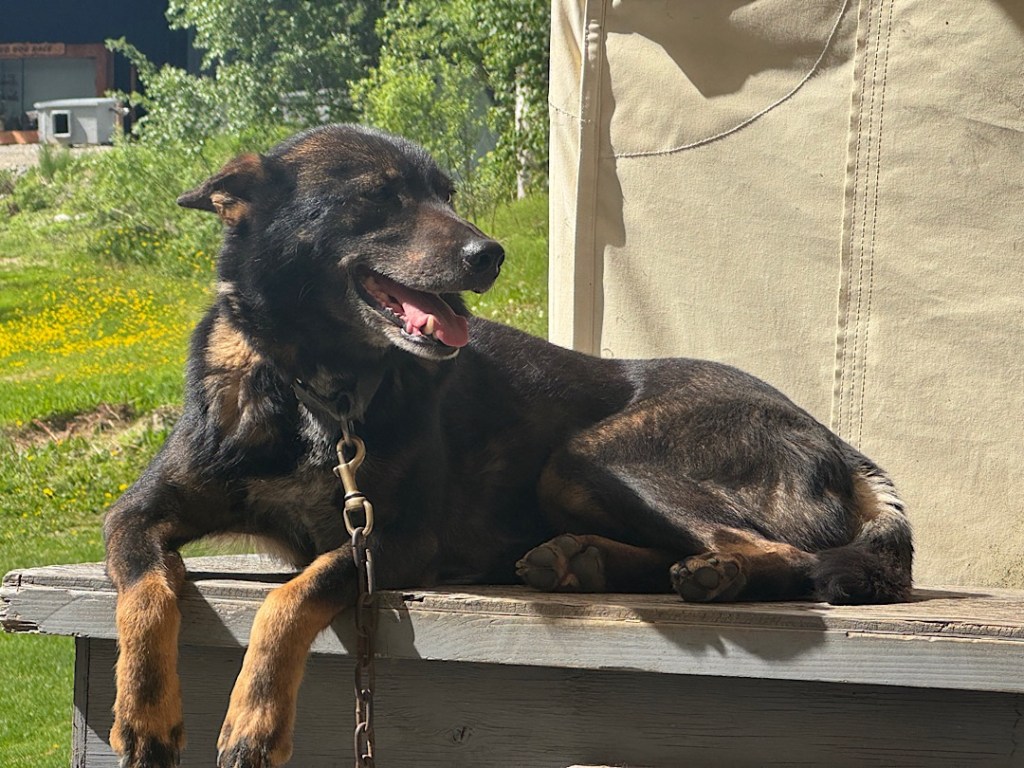
Martin, 67, completed his last race three years ago; he told us that after 39 runs he didn’t want to subject his body to more extreme ordeals. But he’s still very much at the center of the sport. He ran his first two races (in 1980 and ‘81) with purebred Siberian huskies — that super-furry dog with upright ears and (often) blue eyes. Then he began crossing them with other breeds known for their speed, e.g. Salukis and short-haired pointers. His cross-breeds proved so much faster that within short order, all the other leading dog-mushers were following suit. These “Alaskan Huskies” are a motley crew but Sue told us no one uses anything else for racing any more.
Martin doesn’t sell the puppies he breeds. Sue said one of Martin’s sons may compete with them again, as may Chad, plus Martin has developed his operation into a major showcase and tourist attraction, offering dog-powered sled rides to visitors in the winter and summer tours to folks like us (and big buses full of cruise ship passengers).
Happily, one of those buses had just departed so it was only Steve and me and two couples with their kids learning about dog-sledding Tuesday afternoon. We watched a film, then Chad connected five dogs to their pulling rig; that’s when they started yodeling with excitement.
Chad raced them around a gravel track…

… and Sue explained that in the summer, when there’s no snow, Martin and his assistants train the dogs on the ATV. Unlike the service dogs Steve and I raise (who learn 35-40 verbal commands from us before they move on to the professional trainers), these canine athletes basically must master just two: Gee (meaning go to the right) and Haw (left). They do most of the serious preparation in the winter, working with bigger teams and connected to sleds. In the summers, they mostly get their exercise by romping with their fellows in nearby meadows.

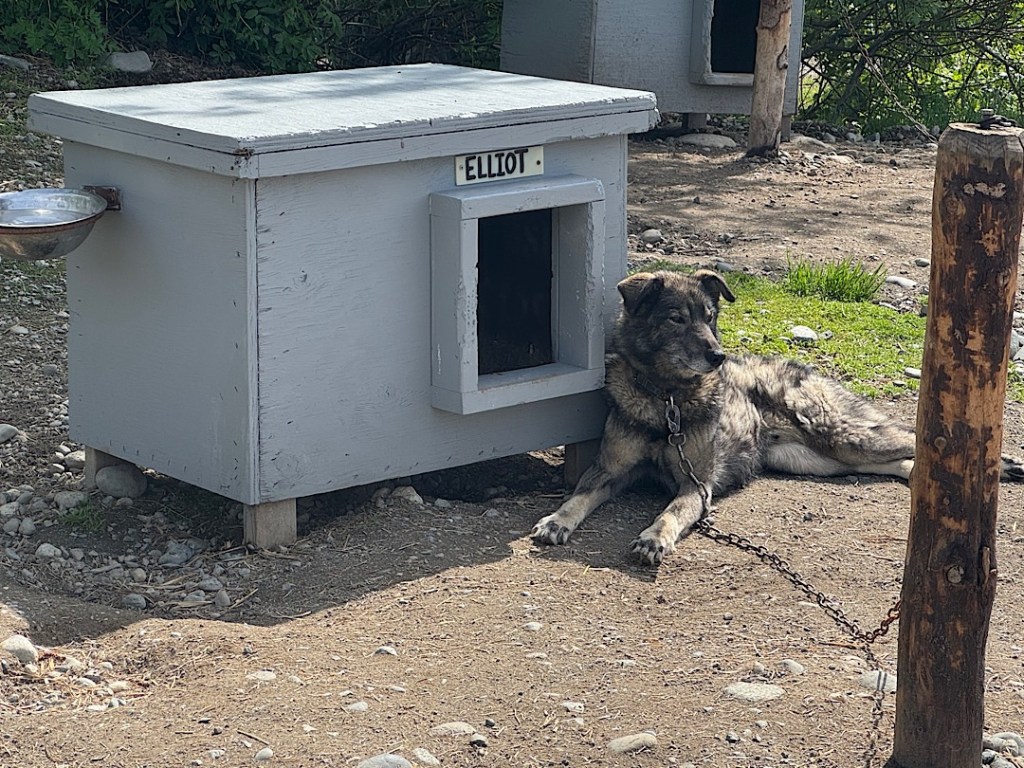
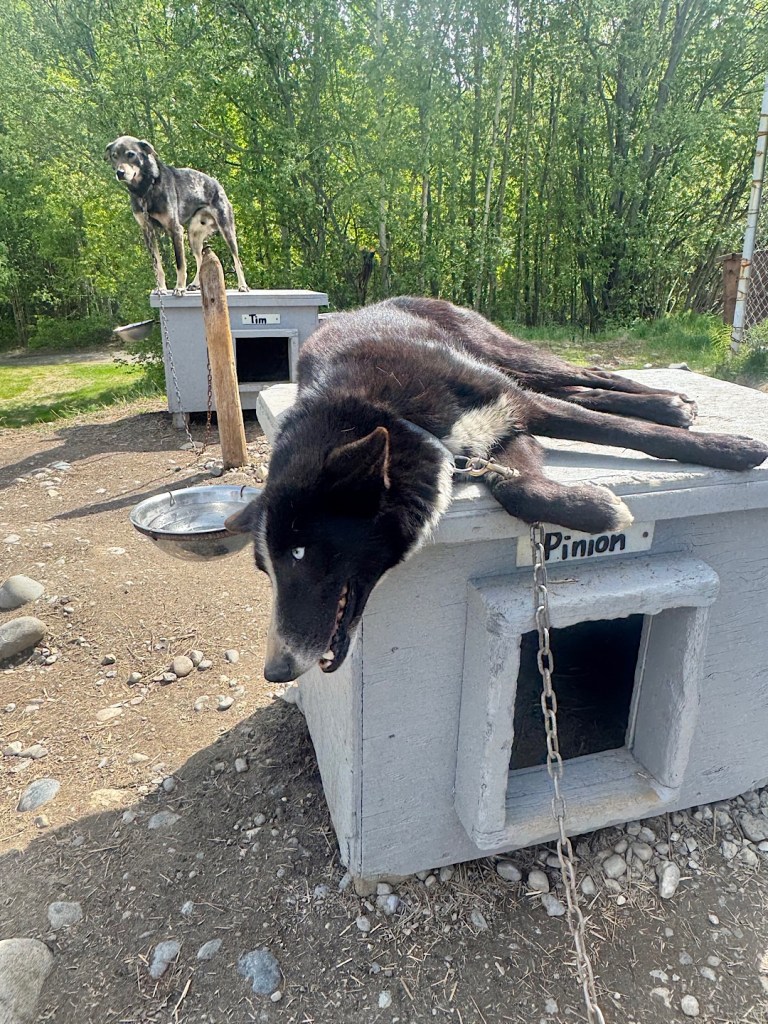
We meandered out to the Happy Trails housing tract, an array of something like 70 dog houses. I admired all the dogs but had mixed success petting them. Some basked in the attention, while others were more aloof.
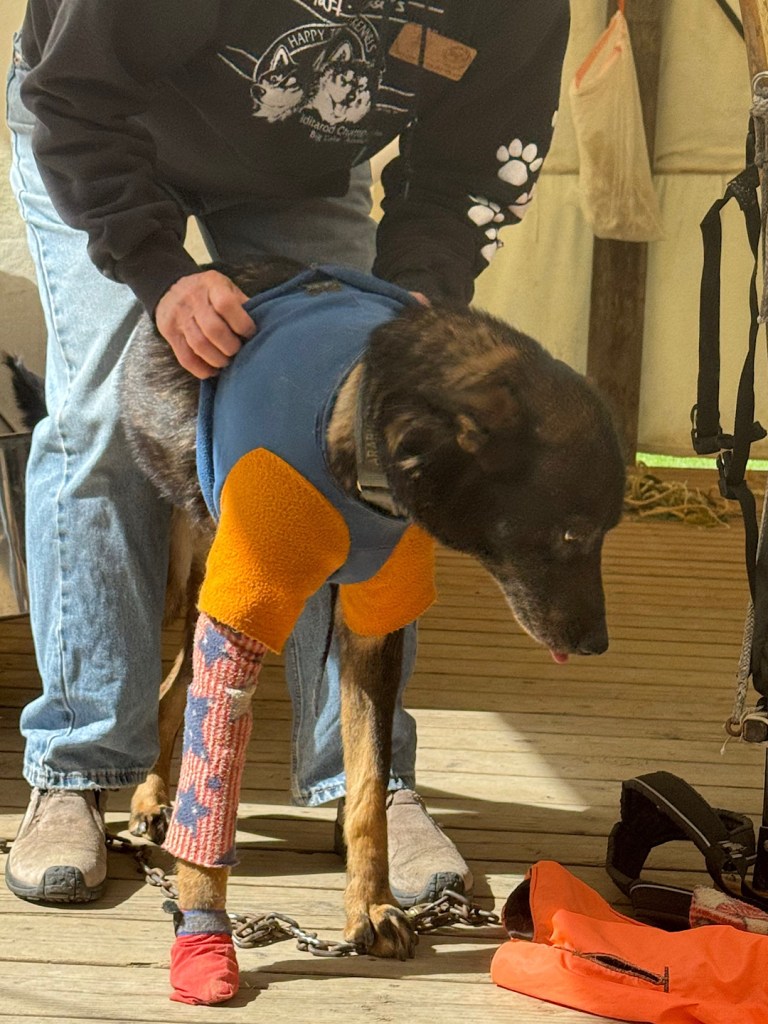
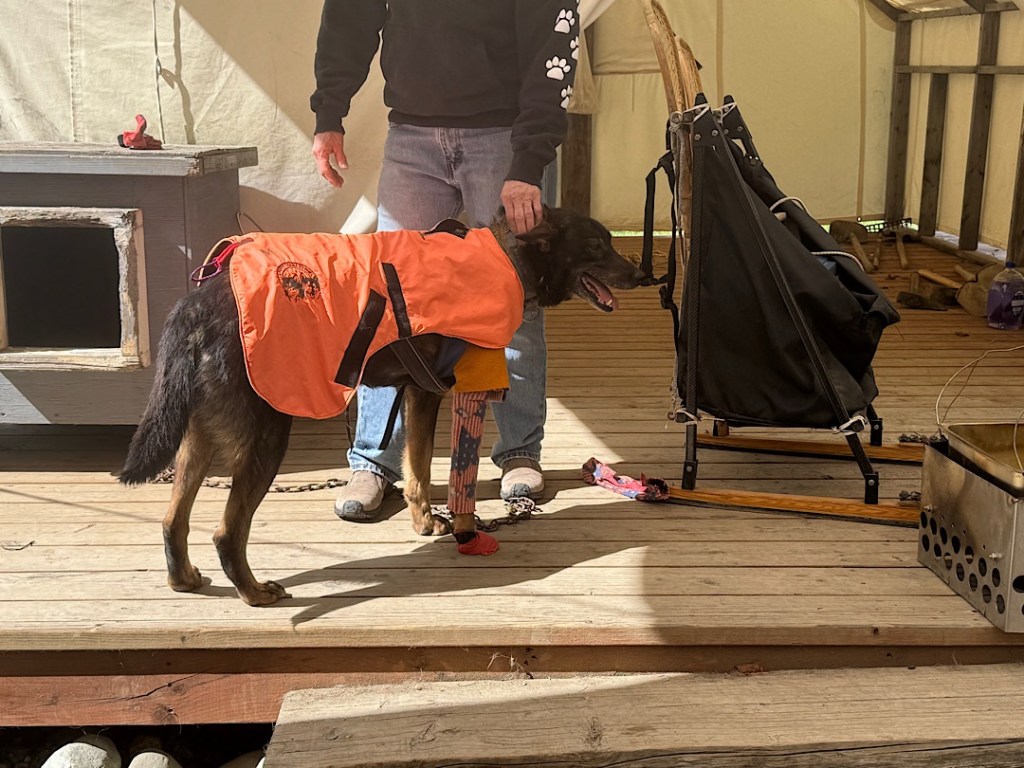
Sue led us to an amphitheater where she used a dark female named Arabica to demonstrate the gear that Iditarod competitors commonly wear.

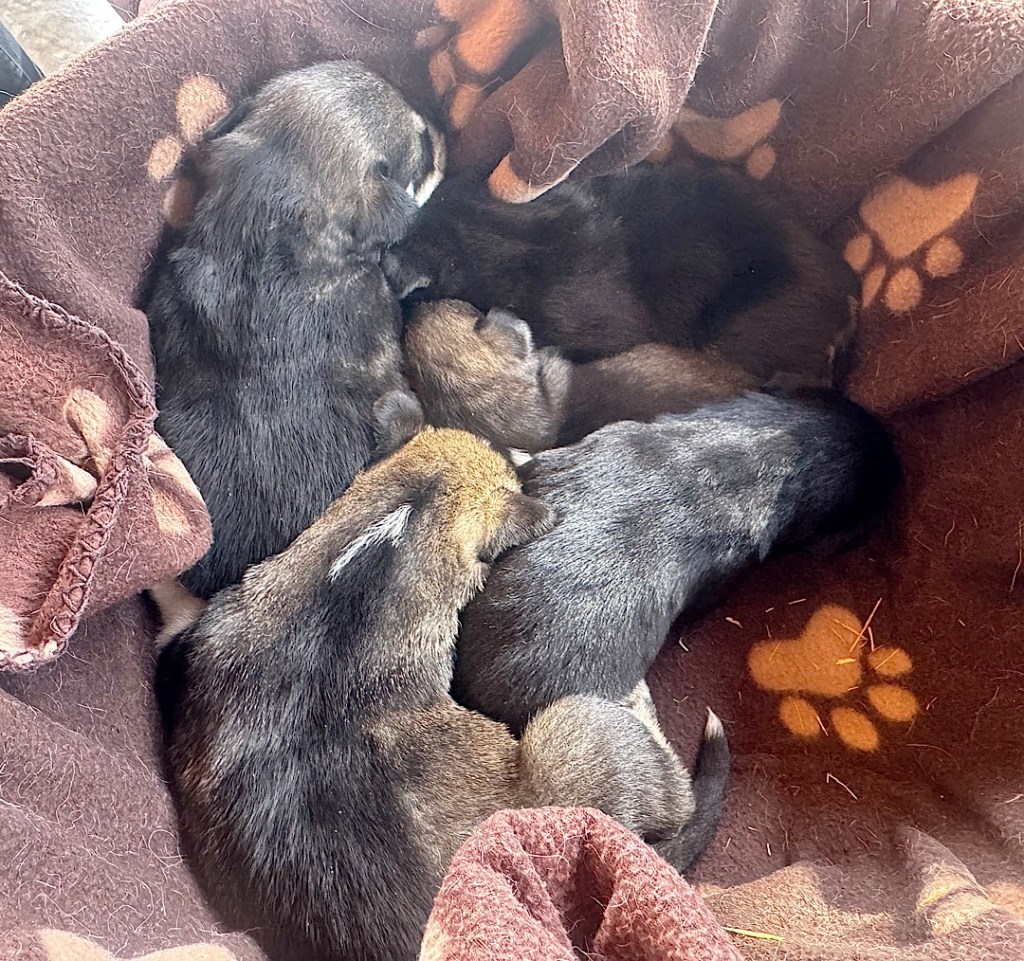
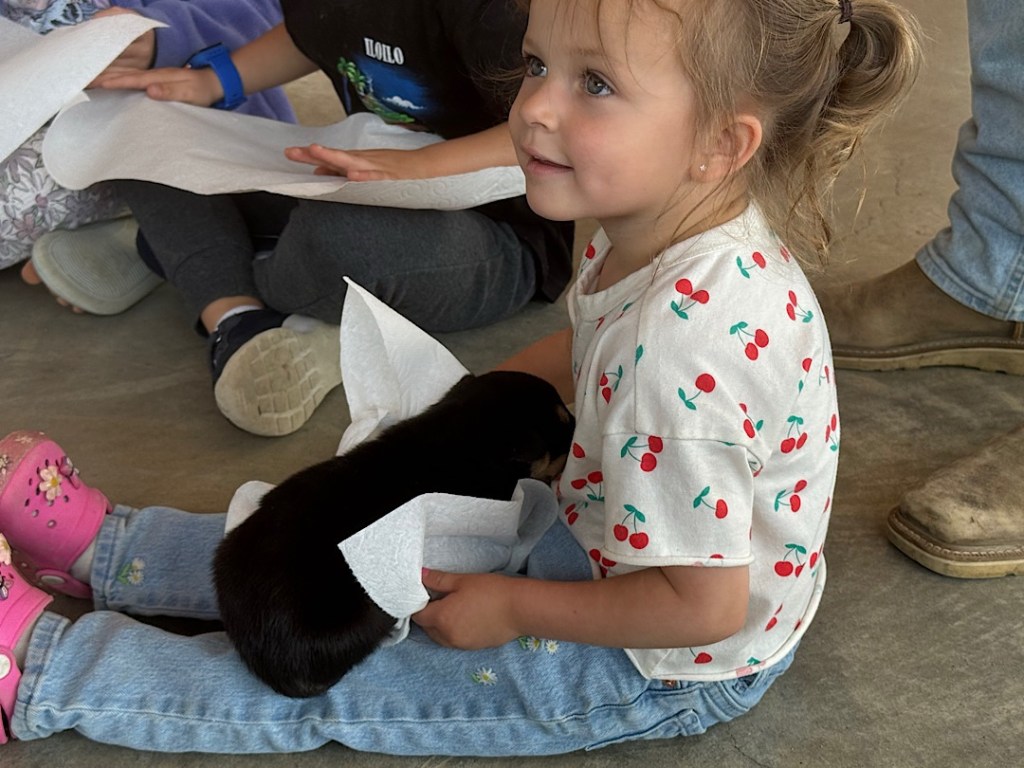
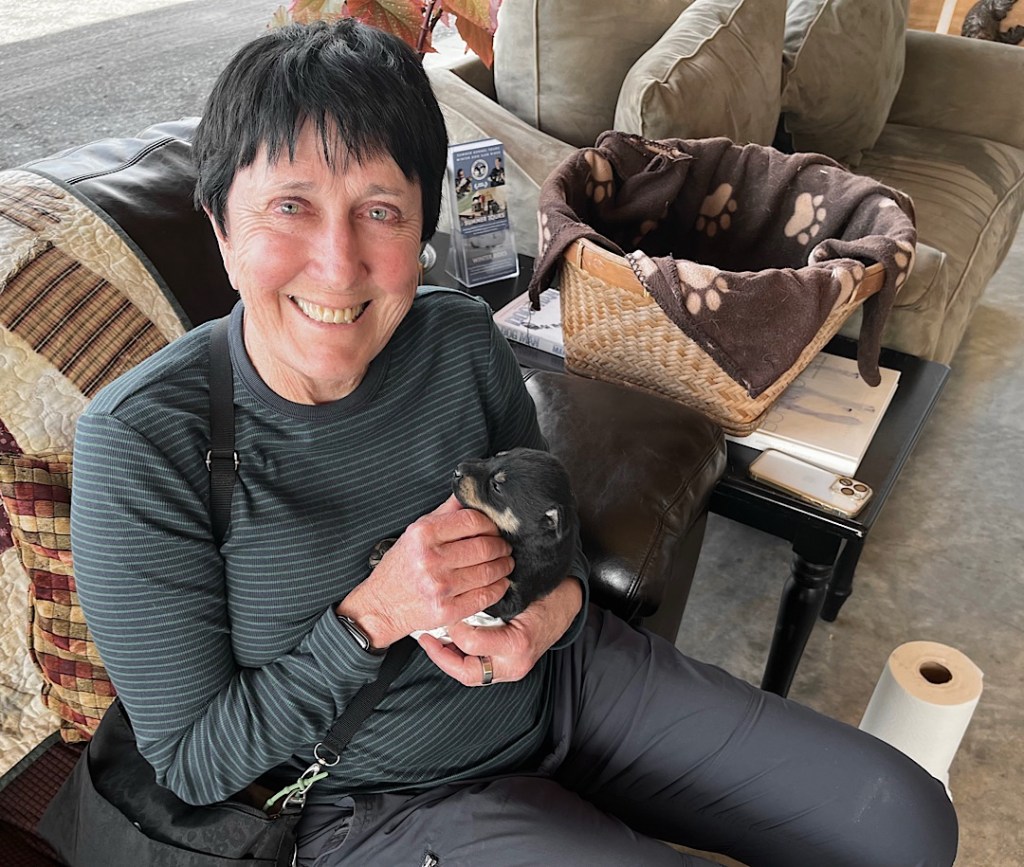
The grand finale, back in the entry hall, came when Sue brought out a basket of two-week-old puppies. We took turns cuddling them.
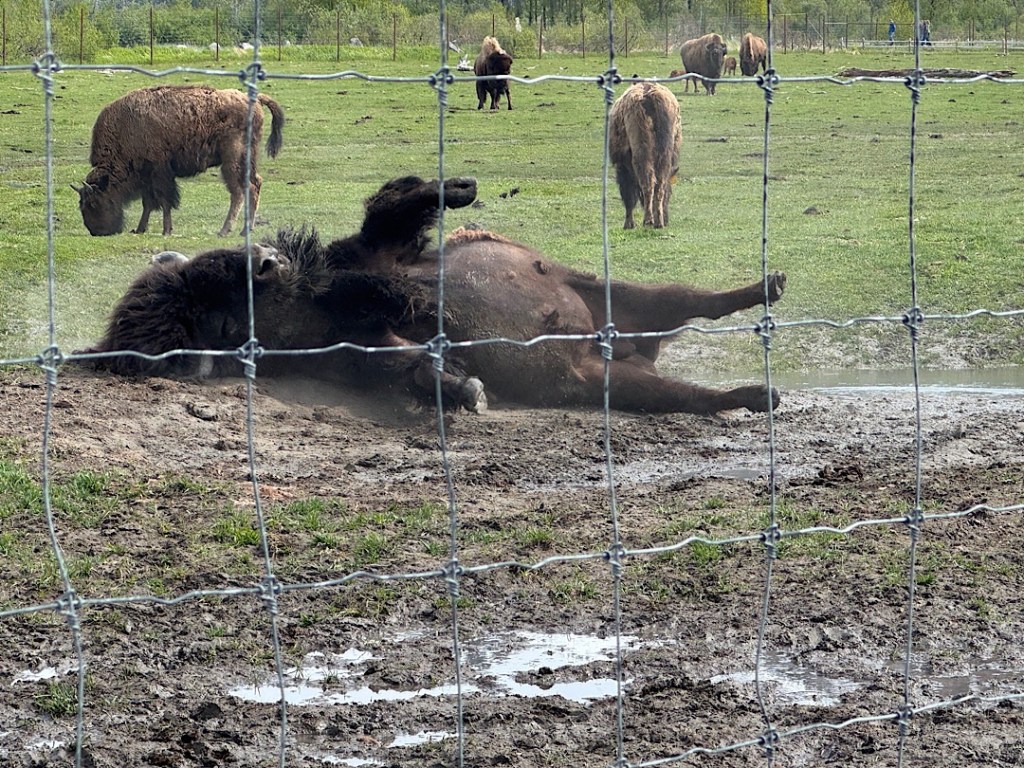
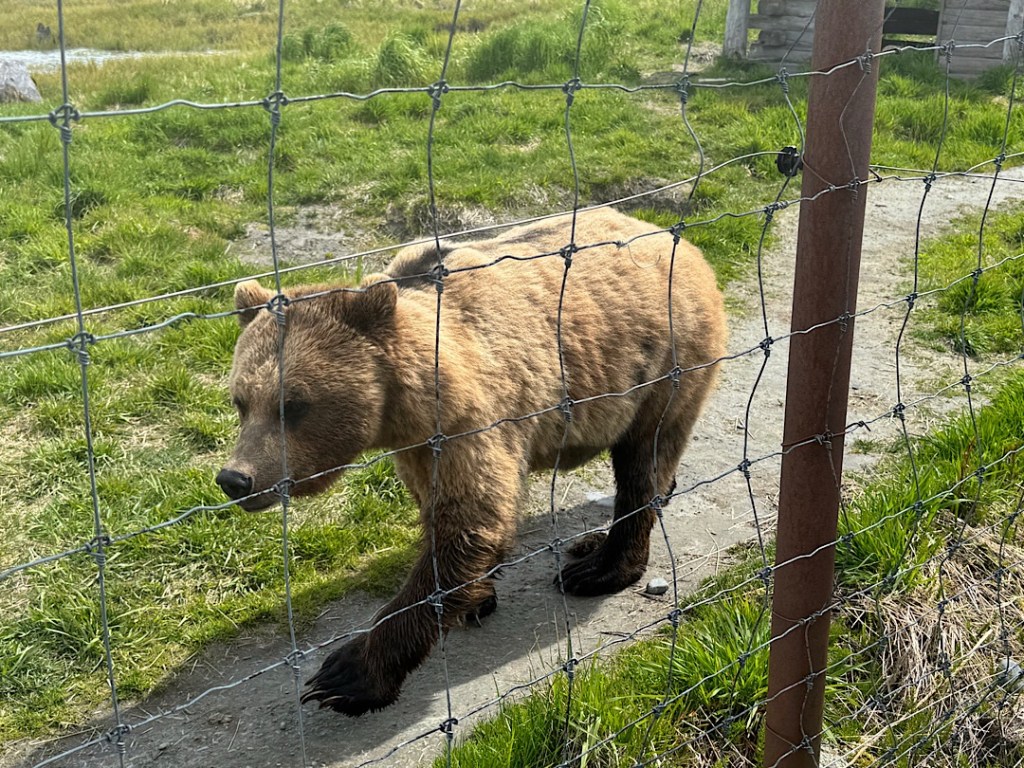
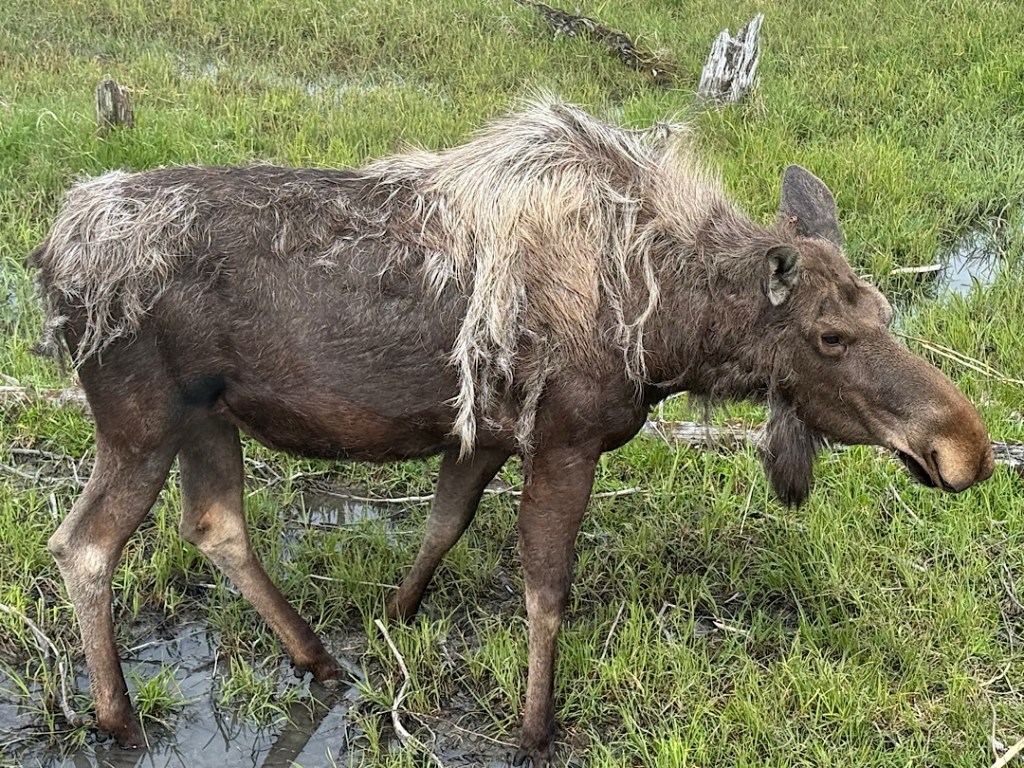
Over the next few days, Steve and I spent a lot of time at the Alaska Native Heritage Cultural Center and the Anchorage Museum. We drove to the an animal preserve where we took many pictures of Alaskan beasts that included…
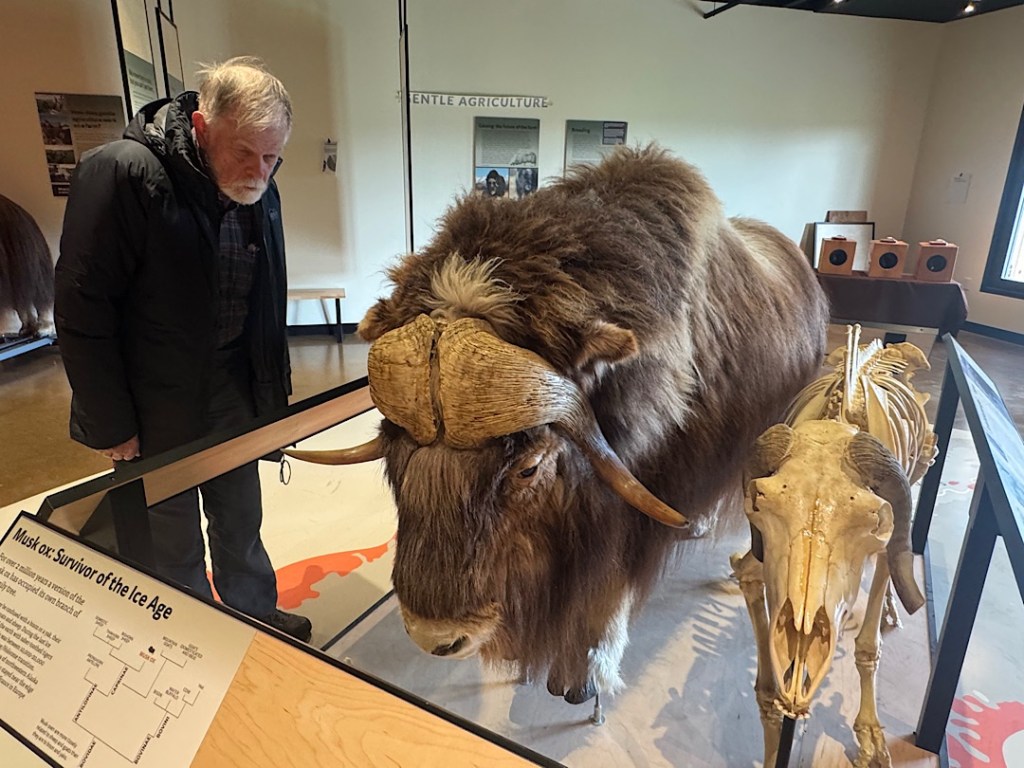
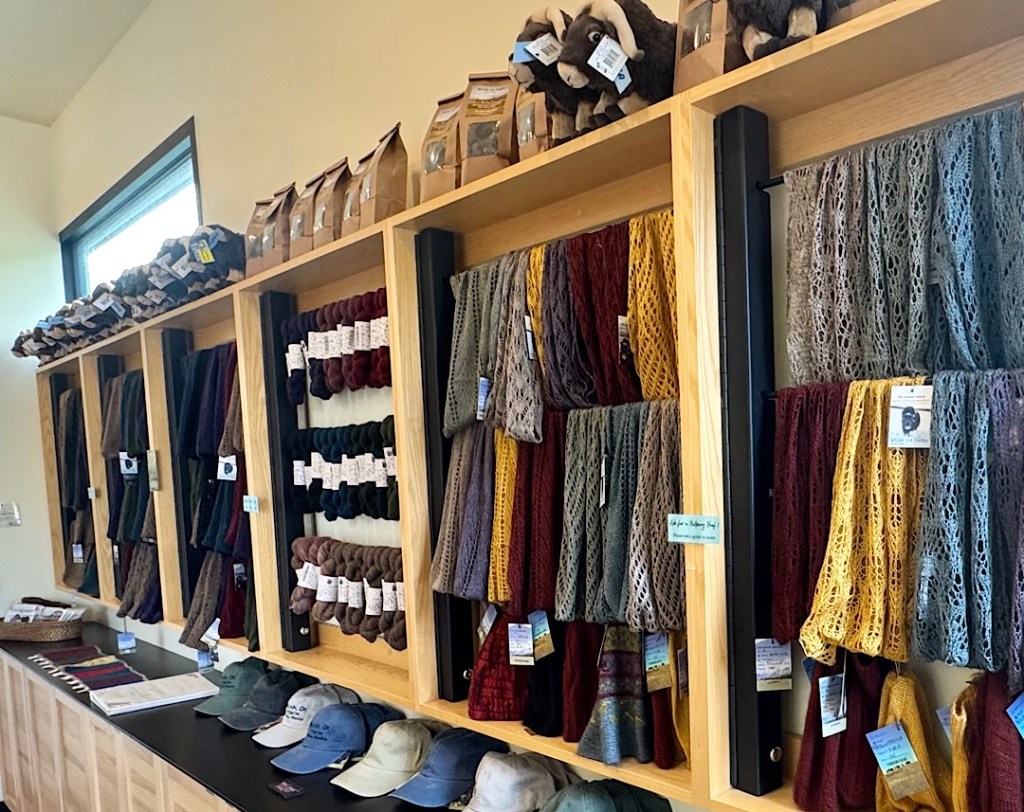
We visited another operation dedicated to bringing back musk oxen (who produce fabulous undercoats that can be turned into beautiful knitted goods.) We ate some terrific seafood.
For me, however, nothing compared with those sunny hours immersed in a culture of strong and heroic dogs. We’re now in Seward, where we’re about to move on to the next phase of this amazing adventure: glaciers!
I just wish we could see them by dogsled.
 At home and abroad