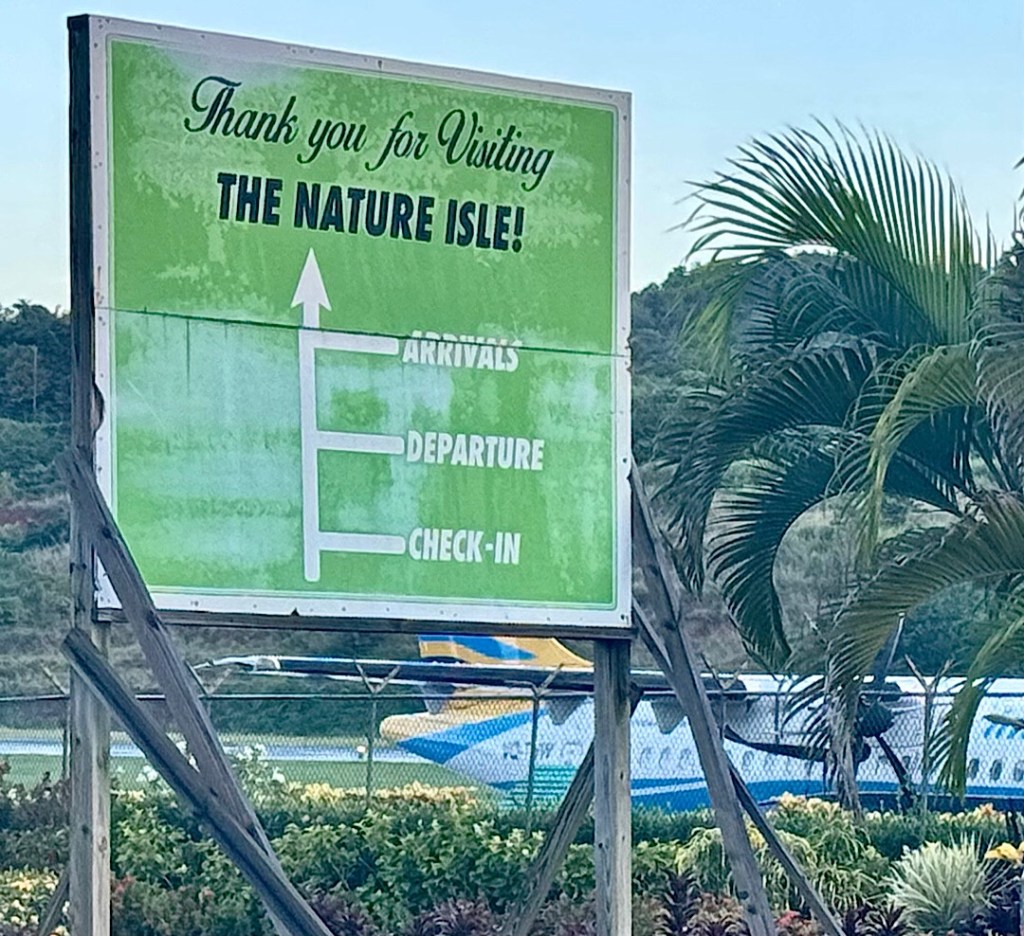
Dominica has been dubbed the Nature Island, just as Grenada is known as the Spice Island. For us, though, it was the Lucky Island.
A couple of things about this place (which folks pronounce “Do-min-EE-ka”) were lucky for its pre-Colombian inhabitants. Unlike most of the Lesser Antilles, Dominica has no good natural harbor. It’s also the youngest land in all the Caribbean. Created by volcanoes about 25 million years ago (compared to its 50-million-year-old-ish neighbors), it still has 9 active volcanoes (supposedly the highest concentration on Earth.) Because it’s so young, the terrain is steeper and more rugged, with few flat places suited for growing sugar cane. At first no Europeans were even sure they wanted it. (Then the English and French squabbled over it for a couple of centuries.)
No roads were built anywhere on Dominica until the 1960s. Today big development plans are brewing. Someone’s erecting what supposedly will be the world’s longest aerial tram up to Boiling Lake at the top of the island. Construction on a new international airport has turned a part of the northern coast into a scene of stunning destruction.
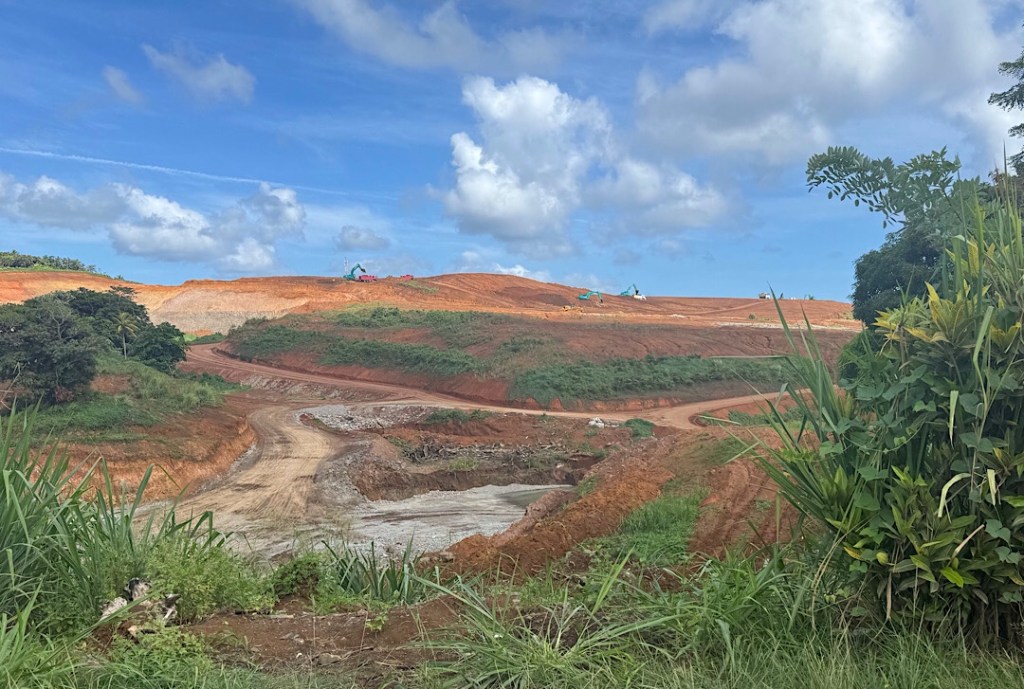
Despite all this, much of what we saw of Dominica felt wild, barely influenced by humans.
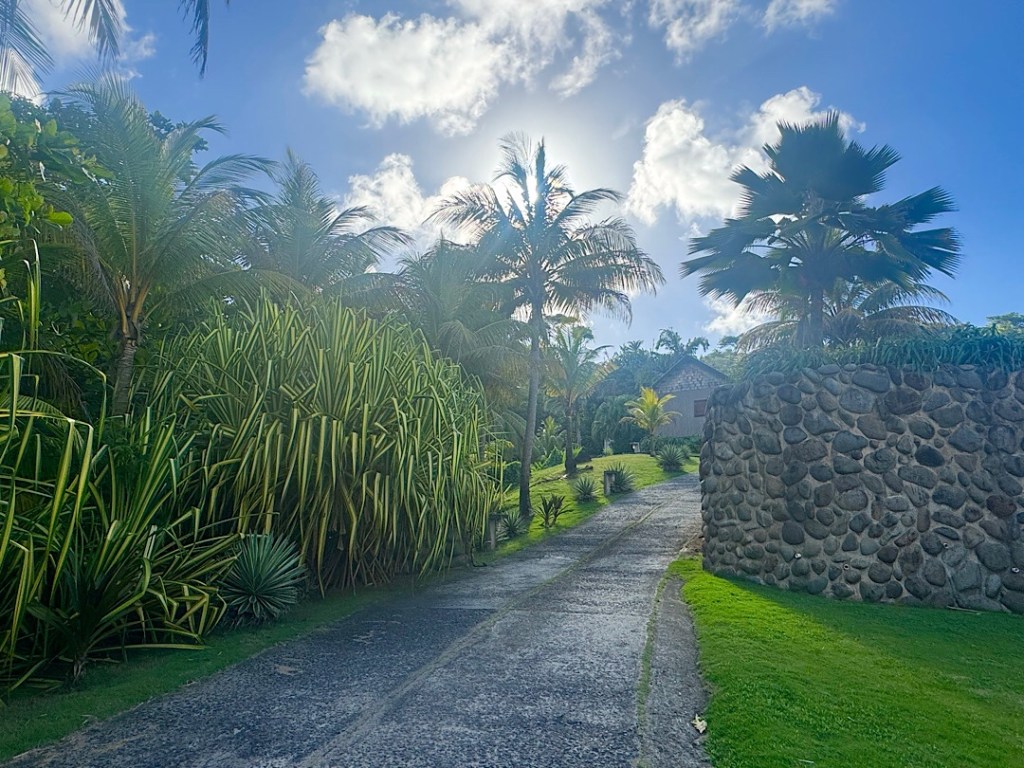
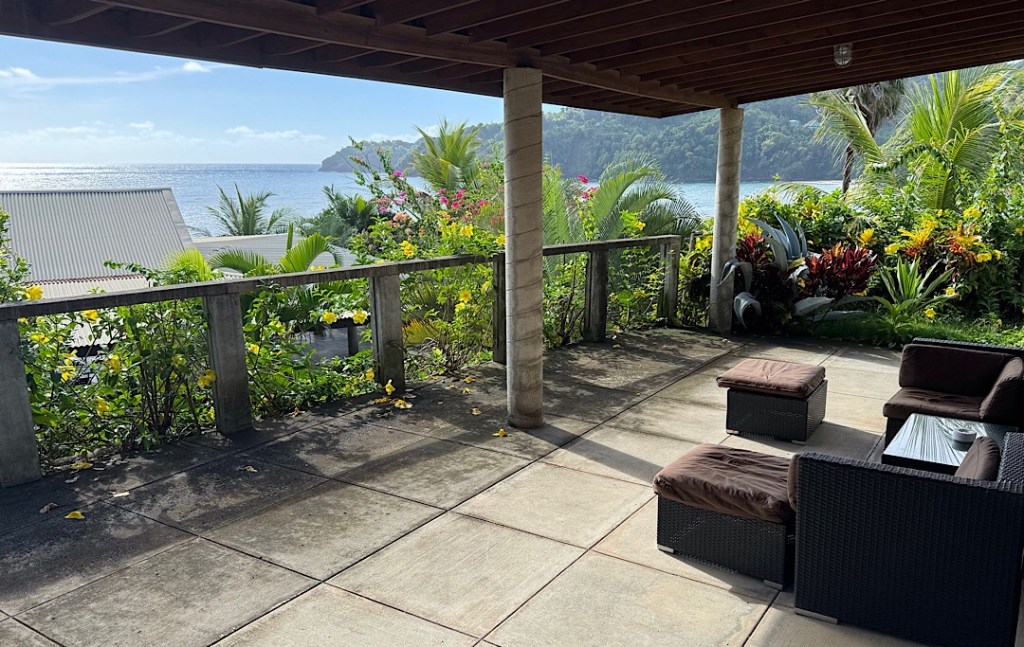
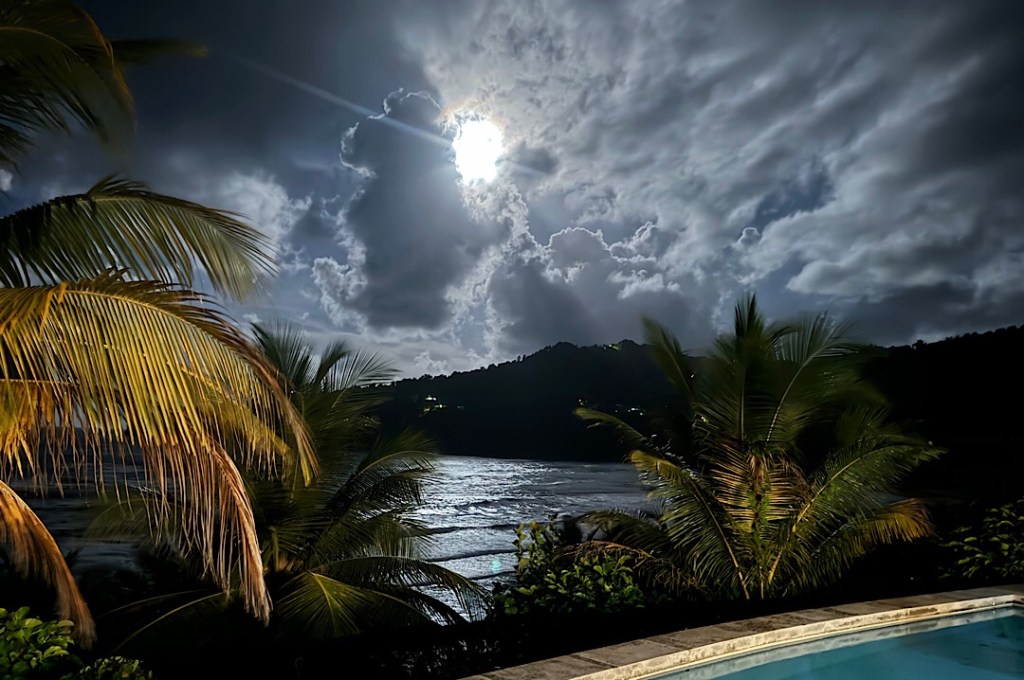
Our luck started with where we wound up staying. As for all our Caribbean destinations, I searched for offerings on homeexchange.com where I could use my fat store of guest points. There weren’t many choices, but I found a little boutique hotel, Pagua Bay House, whose owner, Rick, messaged me that I could use my points to book one of his six rooms if he still had free ones three months before our arrival. (He did.)
In his written communications, Rick was terse, and I worried about what we might find when we got there. But the place turned out to be lovely, and at breakfast Wednesday morning, Rick and his wife Alicia dazzled me with their warmth and charm.
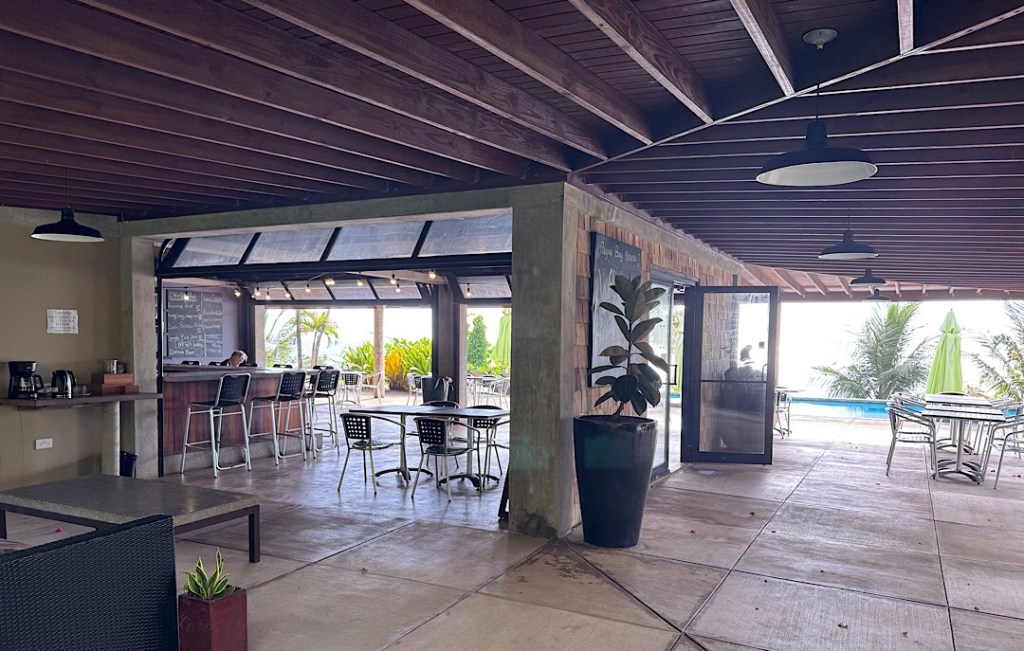
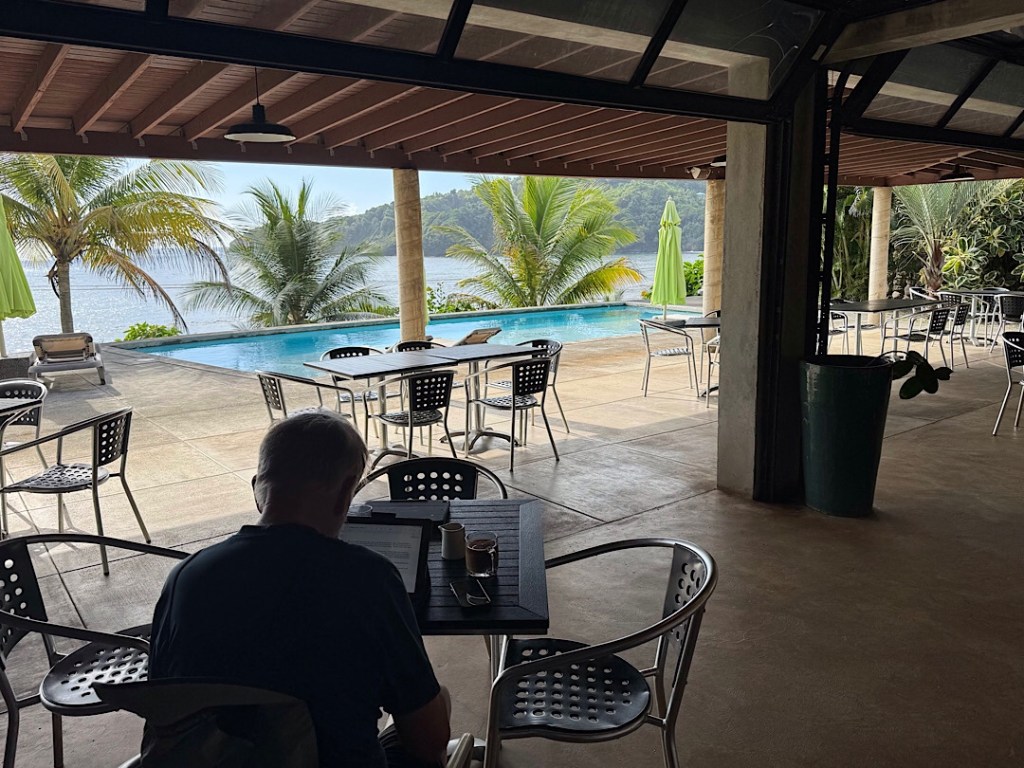
Wednesday morning Alicia was bursting with suggestions for how we could spend our time; she offered to set us up with guides on Thursday and Friday. She also confirmed that Pagua Bay House is situated less than 5 miles from the largest enclave of indigenous people remaining in all the Caribbean. The history of those who lived here before the Europeans arrived and what happened to them interests both Steve and me, so we headed for the Kalinago Territory as soon as we finished our breakfasts.
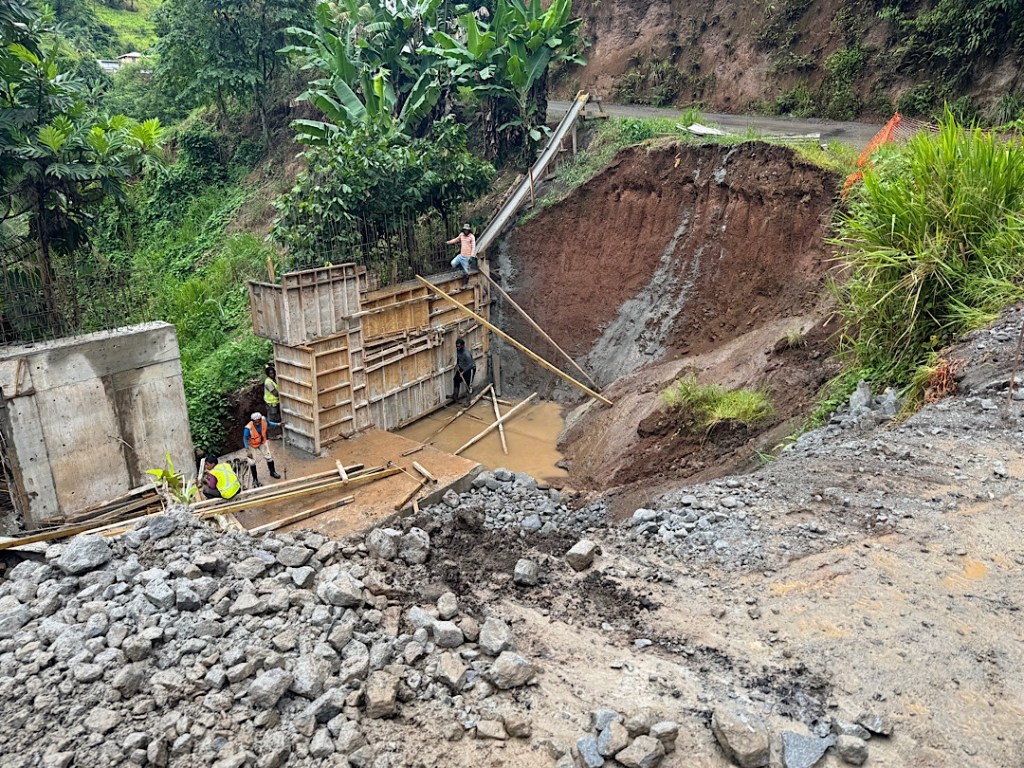
The road to the territory was dreadful, but crews were working to repair it.
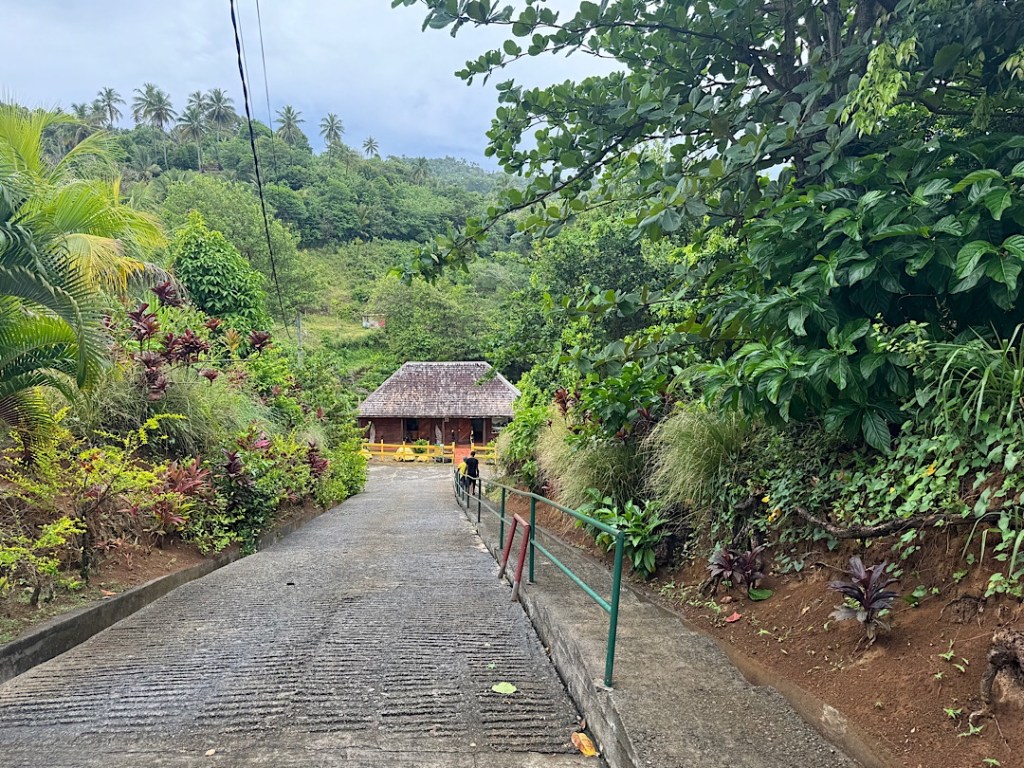
At the end of the road we found a thoughtful visitor center and a bright young man named Kendrick who toured us around the heart of this community of 3500 people.
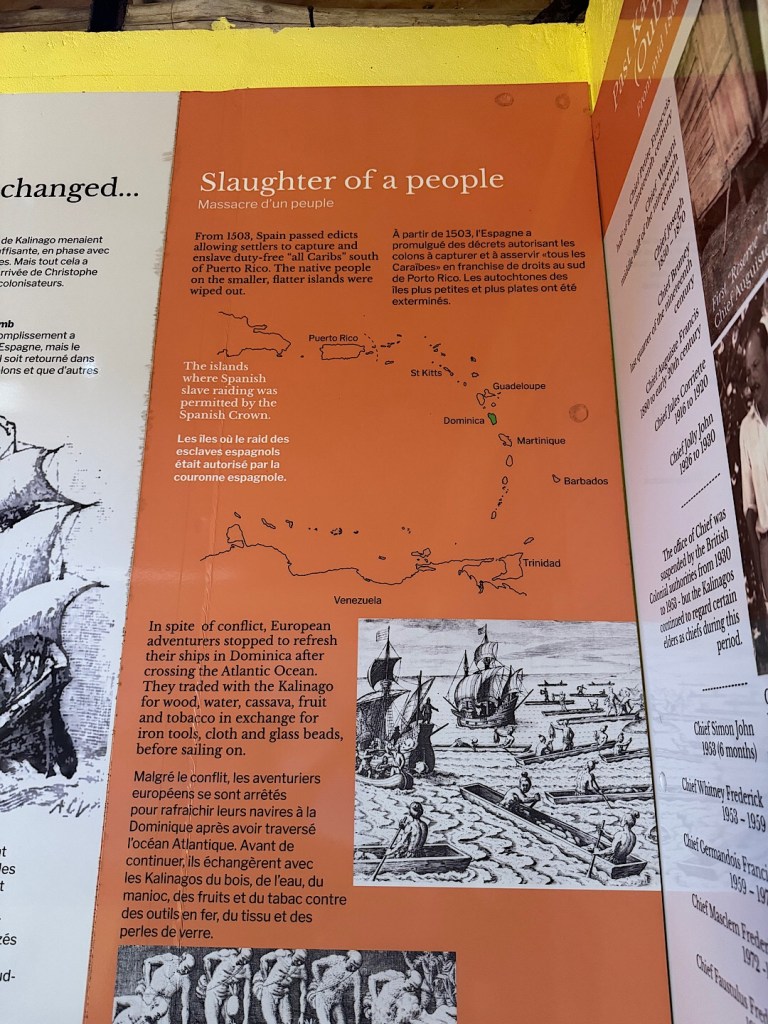
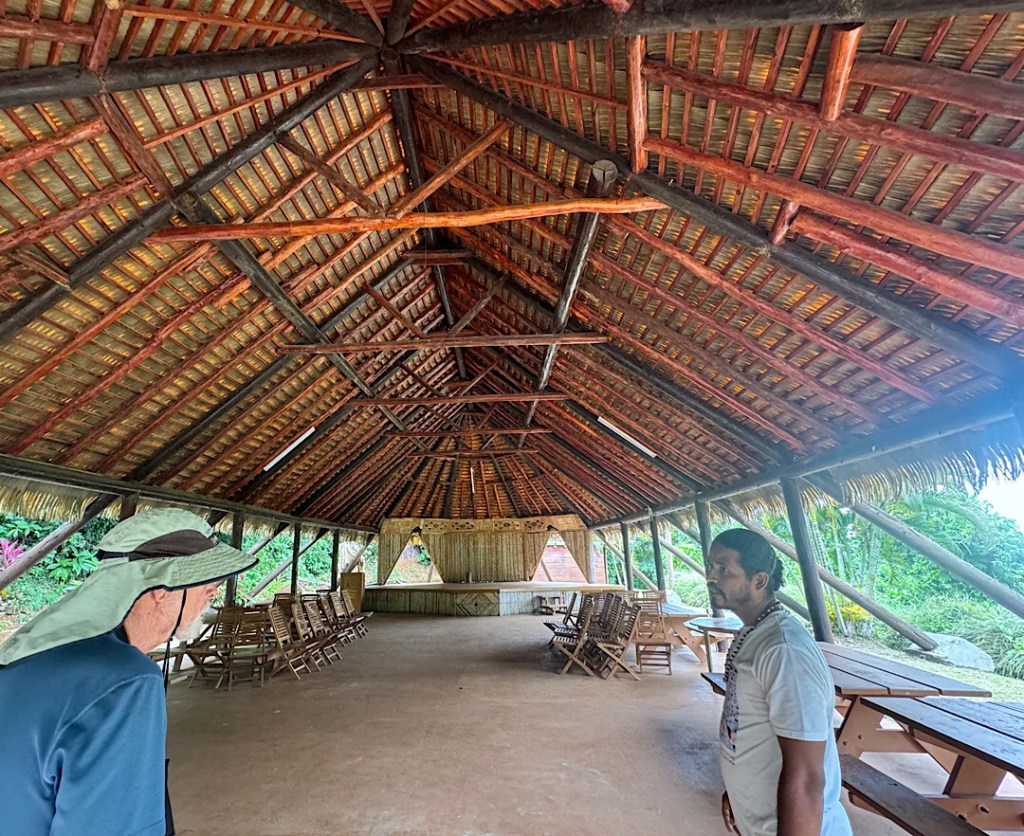
We learned a lot, but it was nothing compared to what we got the next day from Elvis. Steve and I drove for almost 90 minutes back to Roseau (where our ferry landed), then we spent more than 6 hours exploring the Morne Trois Pitons national park (a World Heritage Site) with this guy. “Like drinking from a fire hose,” Steve summed up the experience.
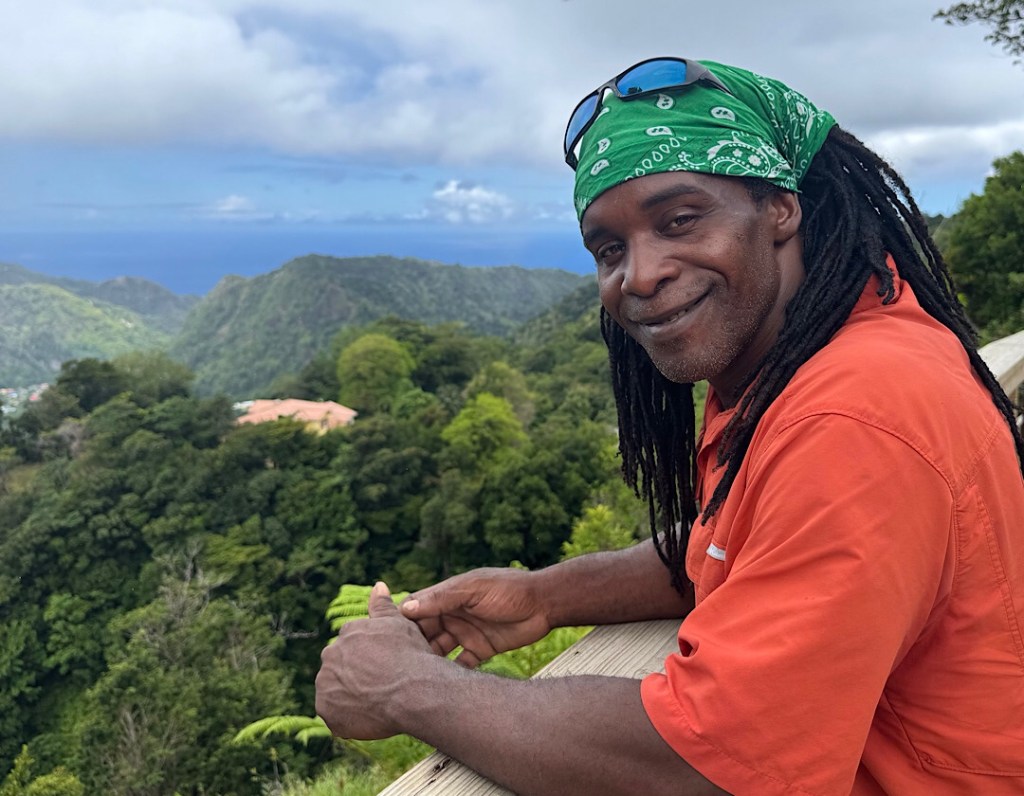
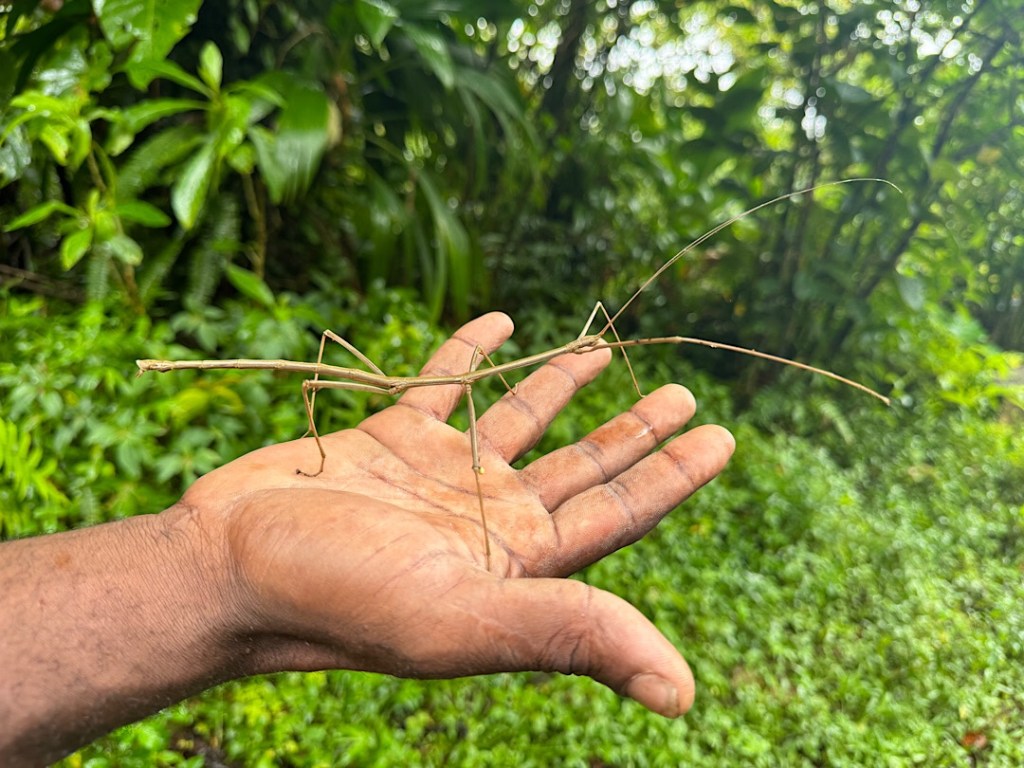
Elvis commandeered the wheel of our rental car and drove us up through transitional forest, then rainforest, then cloud forest. He was the kind of keen-eyed expert who could spot a walking stick on a tree yards away and pluck it off for us to admire…
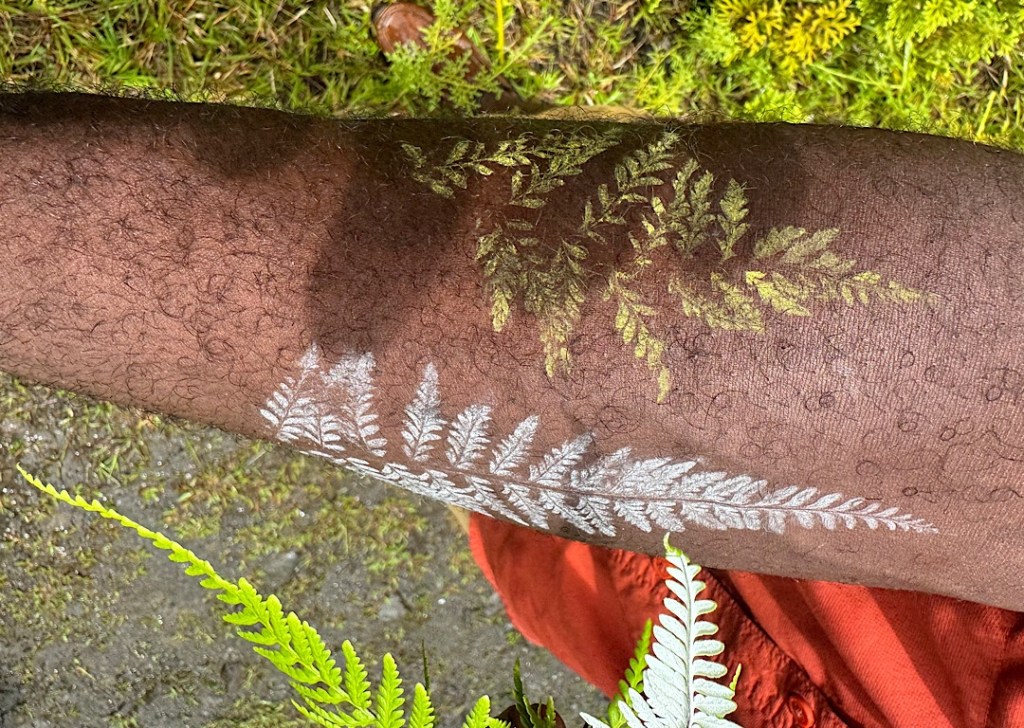
…Who could tattoo his forearm with the spores of fern fronds.
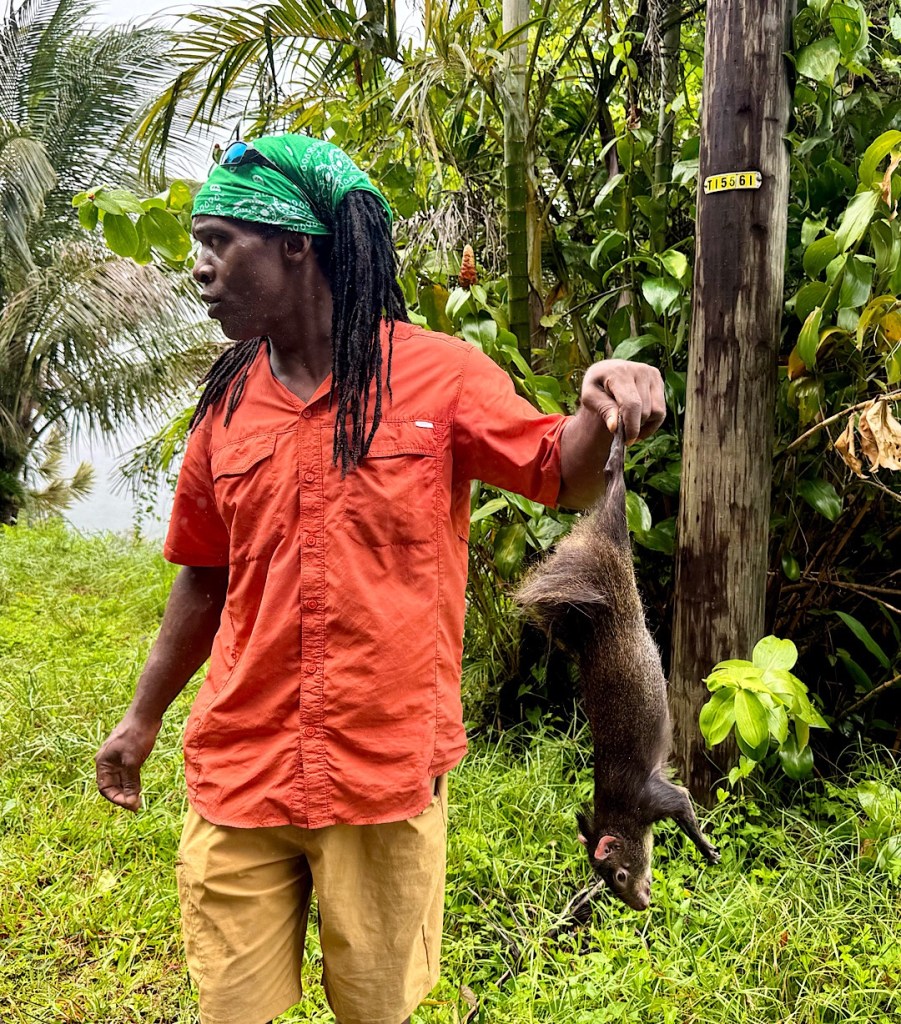
…Who when we came upon a freshly killed agouti in the middle of the road, retrieved and cached the beast for a friend who would cook it for dinner.
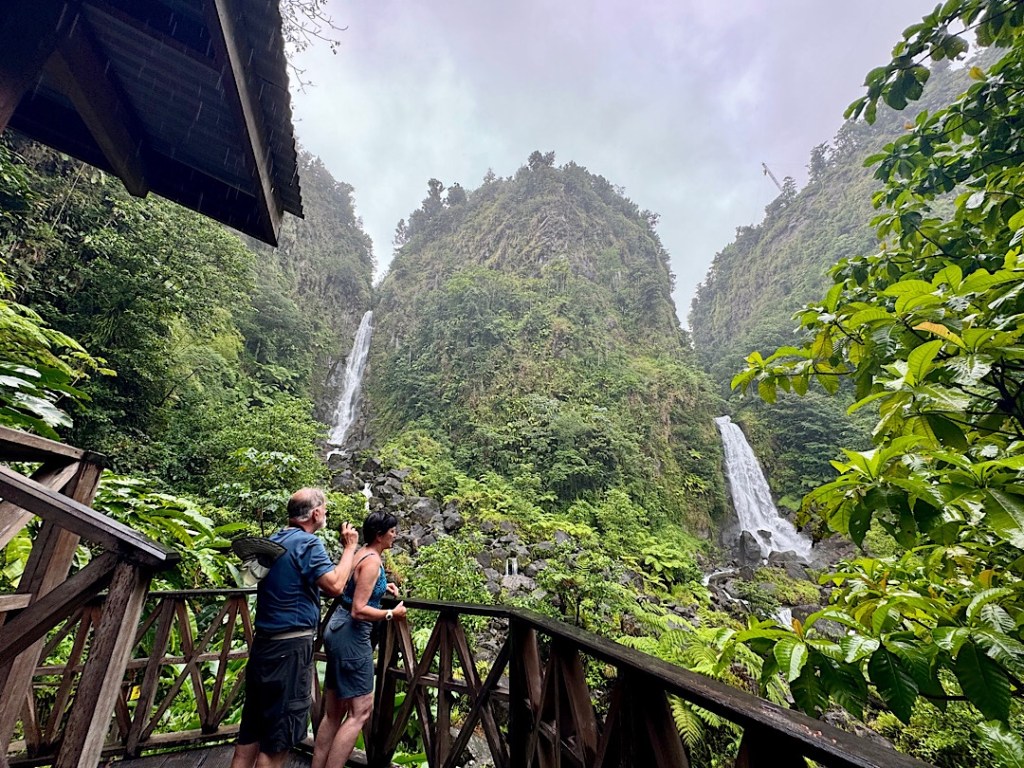
He took us to the impressive Trafalgar Falls…
…and to a little hot springs off the beaten path where the three of us literally soaked in beauty.
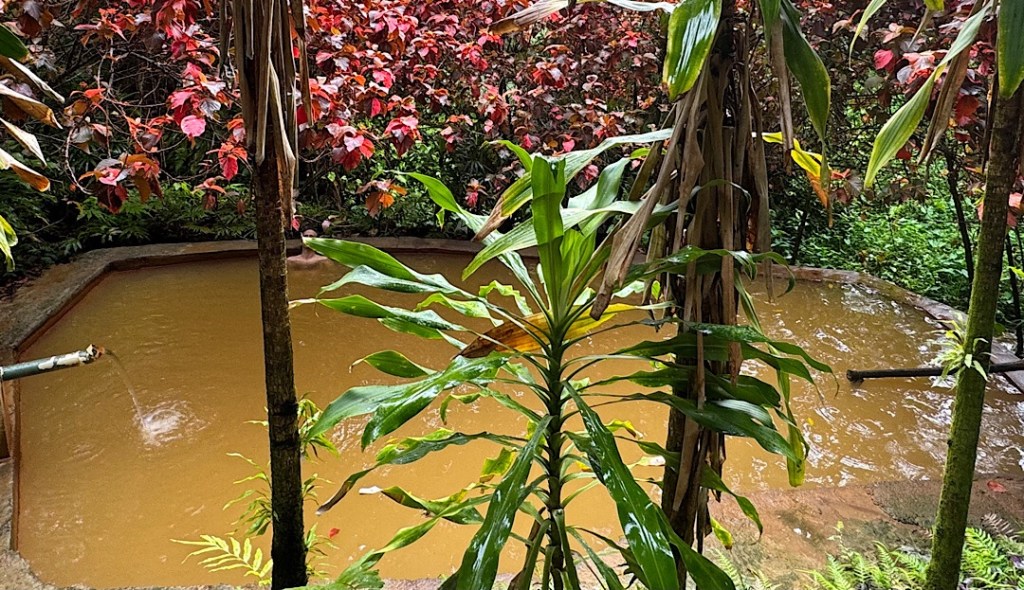
His knowledge of the profusion of plants was encyclopedic, and Elvis seemed to know almost as much about Dominica’s history, archeology, and geology.
I’ve learned over the years that a good guide can change your view of the world; add layers of insight and meaning to what’s around you. Elvis was a world-class guide, and it was purest luck (and the fact that late May is the beginning of the low season) that we were able to book him at the last minute. The same fortuitous combination enabled us to spend a big chunk of Friday with Bertrand Jno Baptiste, aka “Dr. Birdy.”
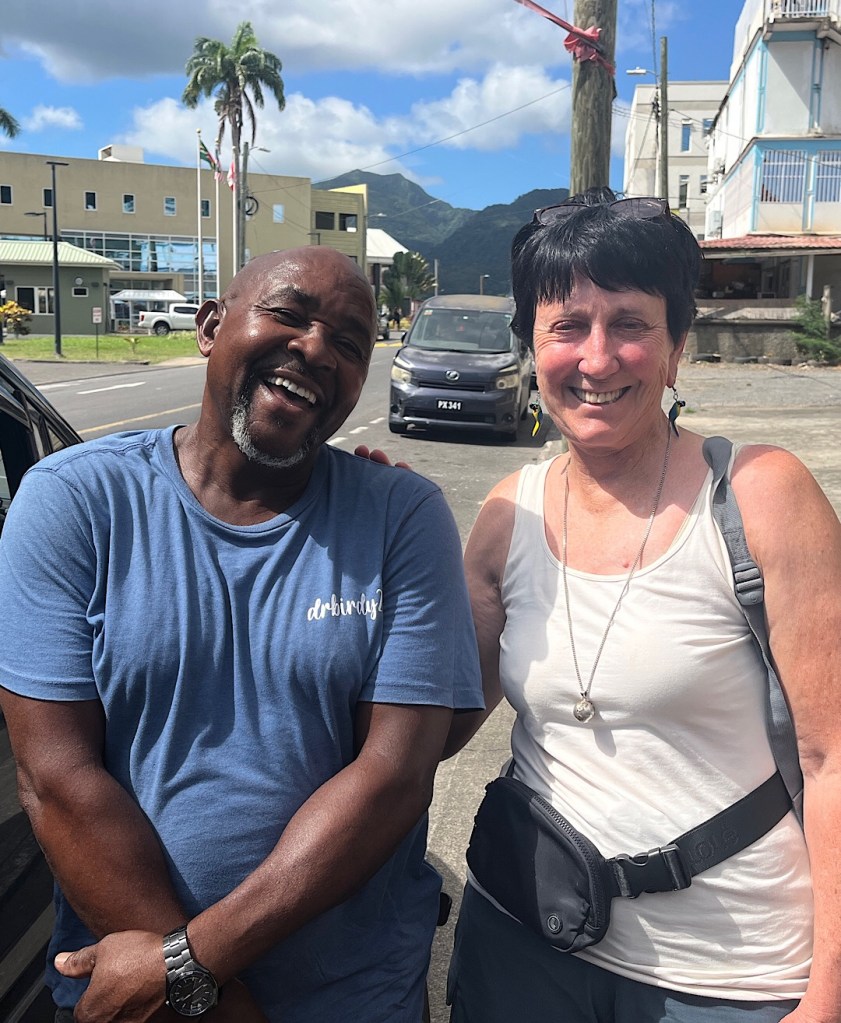
Birdy, who’s now 63, fired a slingshot at a beautiful local bird when he was 11, and you can still hear some of the horror in his voice when he recalls watching it die in his hand. He vowed to never again kill any bird. Instead he started learning about them. That became a passion and it led him to a career with Dominica’s national wildlife service. Birdy now knows more about the Dominican avian community than anyone in the world; he wrote the definitive Birds of Dominica (published in 2005). He has a hearty, effusive spirit that made our time together a pleasure.
He drove us high up into the Morne Diablotin national park in the northeast section of the country, stopping periodically to check certain trees where he knew certain birds hang out.
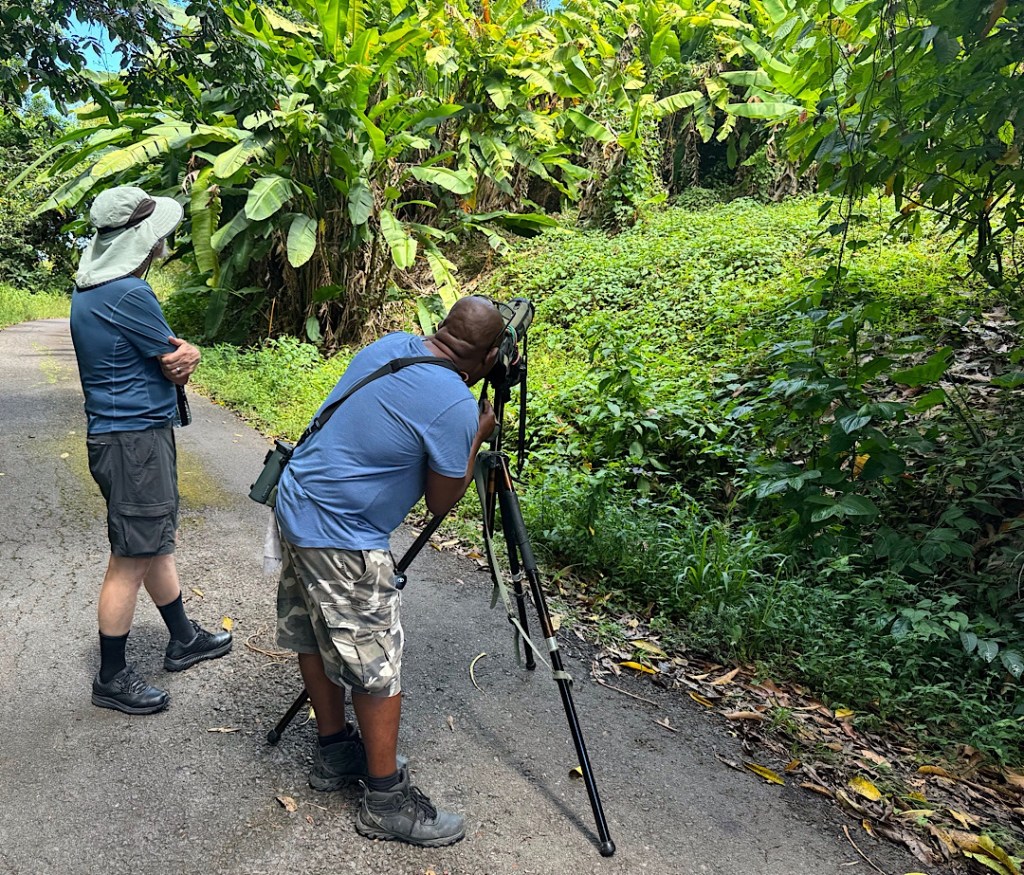
Finally, we parked and hiked into the old-growth forest, a cool, magical realm that’s home to the rarest of all Amazon parrots, the hefty Amazonas imperialis, aka the Imperial Parrot or the Sisserou.

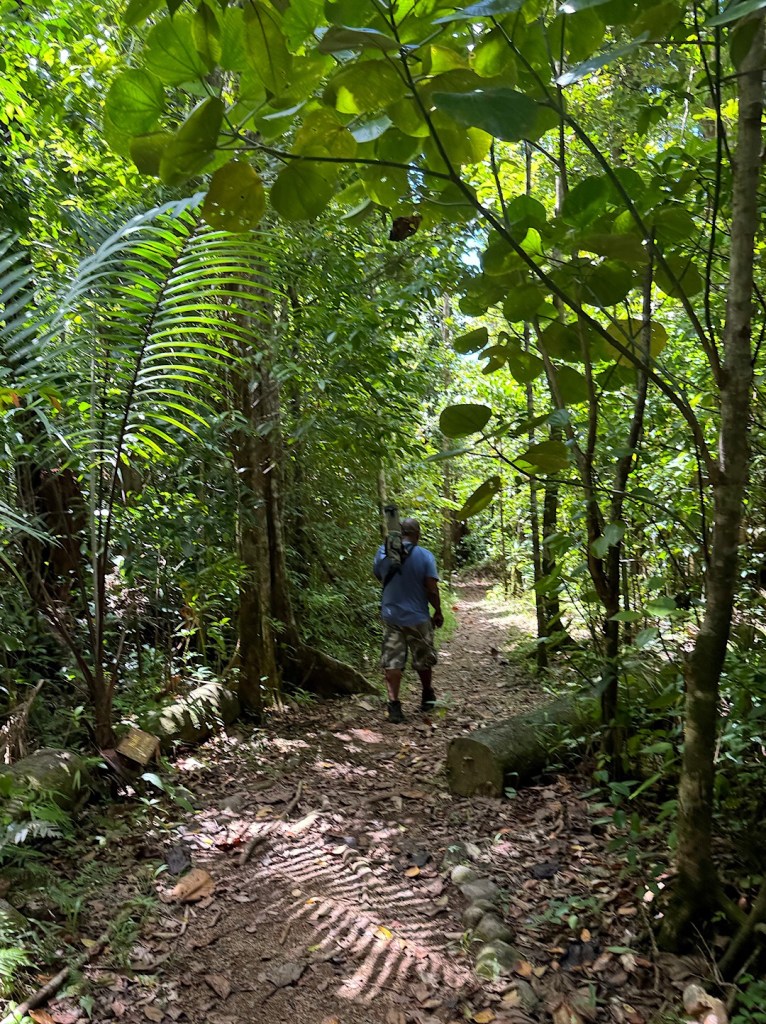
Under Birdy’s tutelage we spotted more than a dozen types of birds, including a charming, tiny Antillean crested hummingbird (smallest of the four types of Dominican hummers.)
We could also hear parrots. But they seemed to be hiding. For a while I thought our luck had run out. Then driving to the exit, Birdy braked hard and pointed to a presence on a nearby branch: a young male member of the island’s other resident parrot, the smaller red-necked or “Jaco” species.
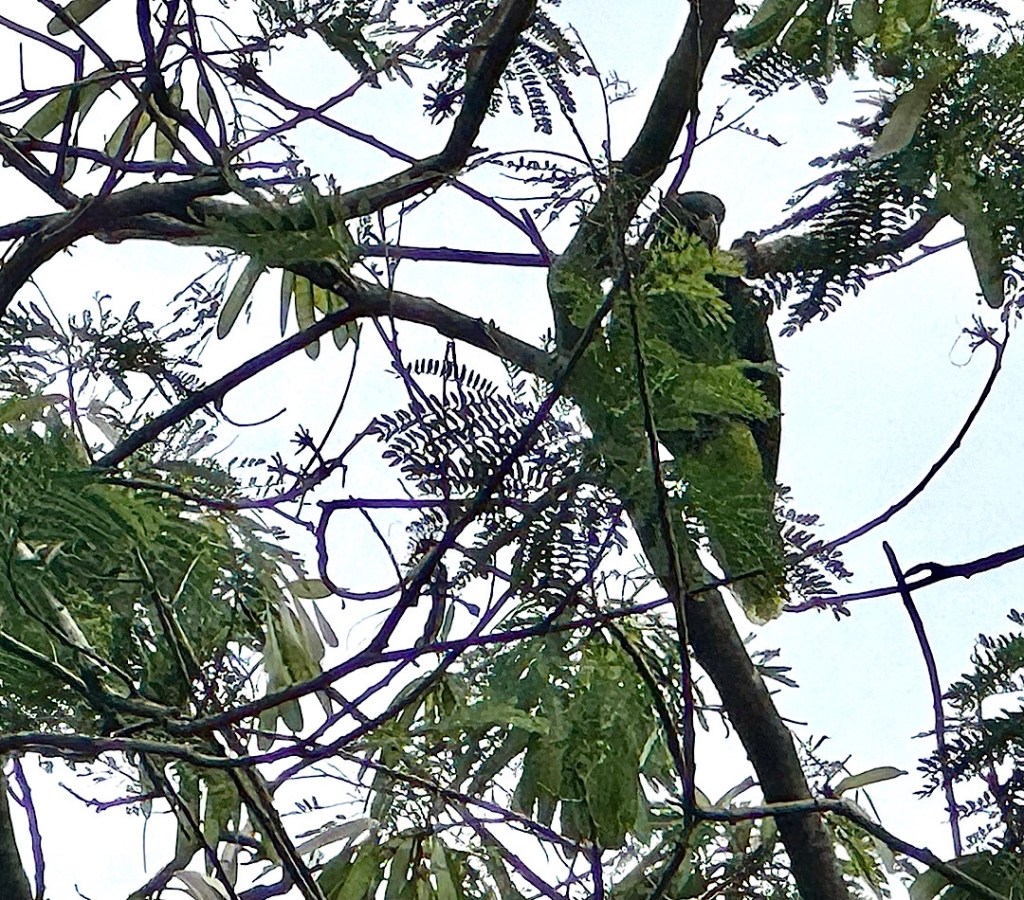
It wasn’t an Imperial. You can’t win them all, but it felt like we had at least partly filled our quest. And then Steve and made it back to Pagua Bay without getting killed on the road. That felt very lucky.
 At home and abroad