I haven’t written about it, but lectures filled many hours of our time on the Greg Mortimer. We attended talks about the geology of South Georgia, the history of whaling, photography, the Falklands War, the carbon-sequestering capacity of peat bogs and kelp beds, a field biologist’s guide to animal research, and more. For the most part, they were good, if a bit nerdy. I probably won’t remember much, but it helped to pass all the days at sea.
More unforgettable were the sights, however, and the Falkland Islands were no exception. We spent four days prowling among little-visited outposts and got a mix of disappointments and sunny marvels.
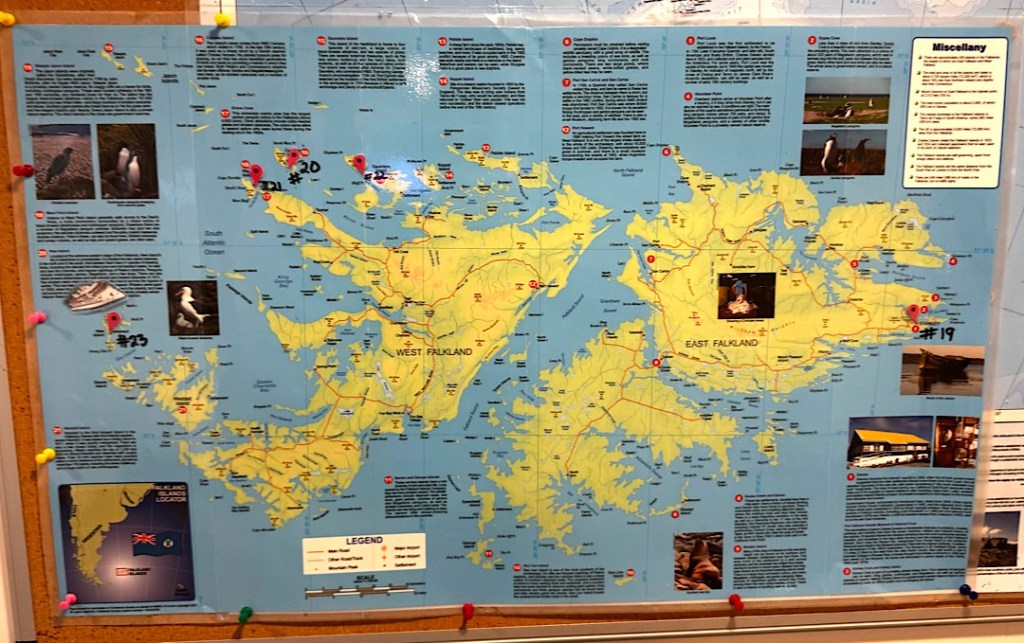
Shortly after sunset a week ago (March 19) we pulled out of Stanley’s harbor with high expectations. Gaby, our expedition leader, had explained that our first stop would be an island called Steeple Jason at the far northwestern edge of the archipelago. She sounded so happy, it was infectious. With luck, she’d explained, we’d visit a colony of black-browed albatross that might contain up to 200,000 of the amazing birds.
But luck wasn’t with us. By the next morning we had reached the island, but dangerously high surf was pounding the beach where the crew had hoped to land our Zodiacs. Gaby had a backup plan: motoring to the other side of the island. This took several hours, only to confront us with more impossible wind and swell and breakers. Disappointment seeped throughout the ship as we slogged to our next target: Carcass Island. There we finally scored.
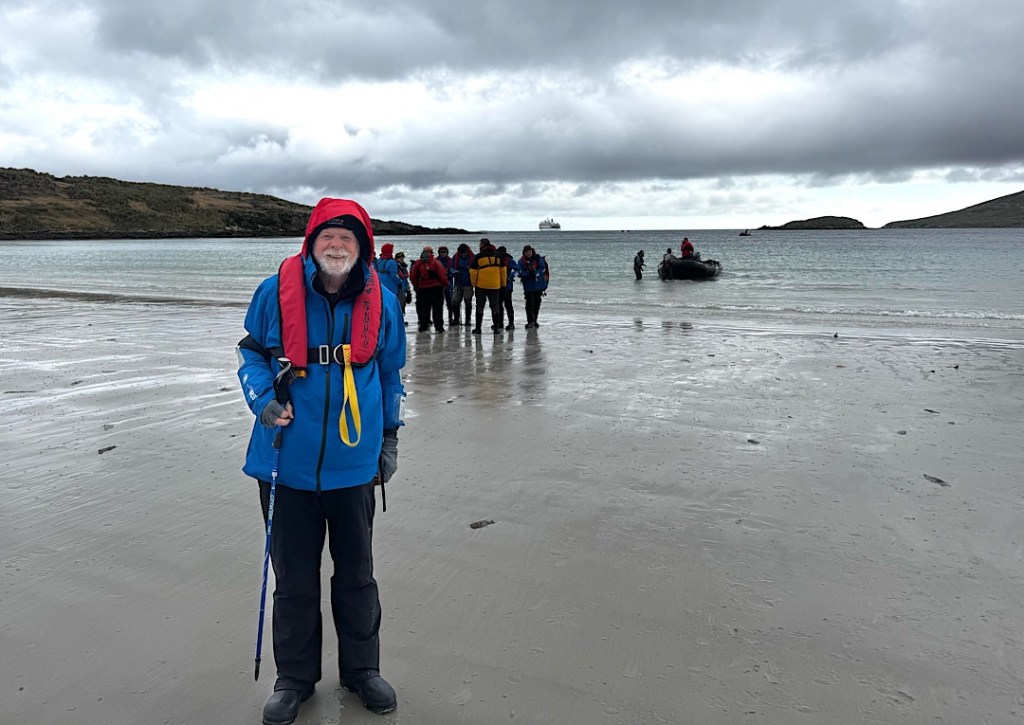
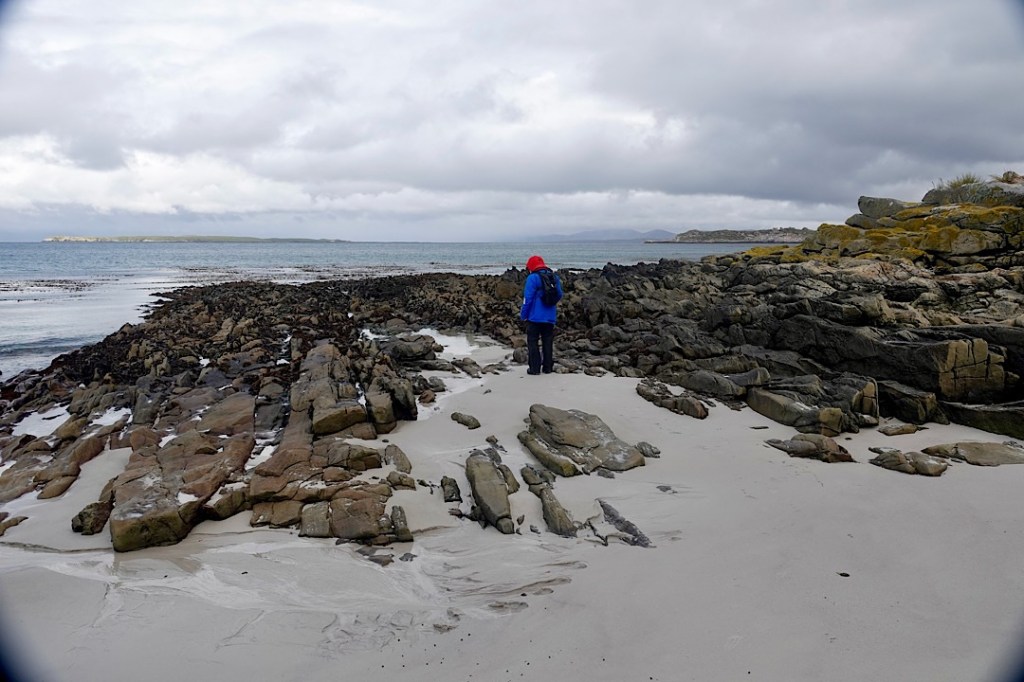
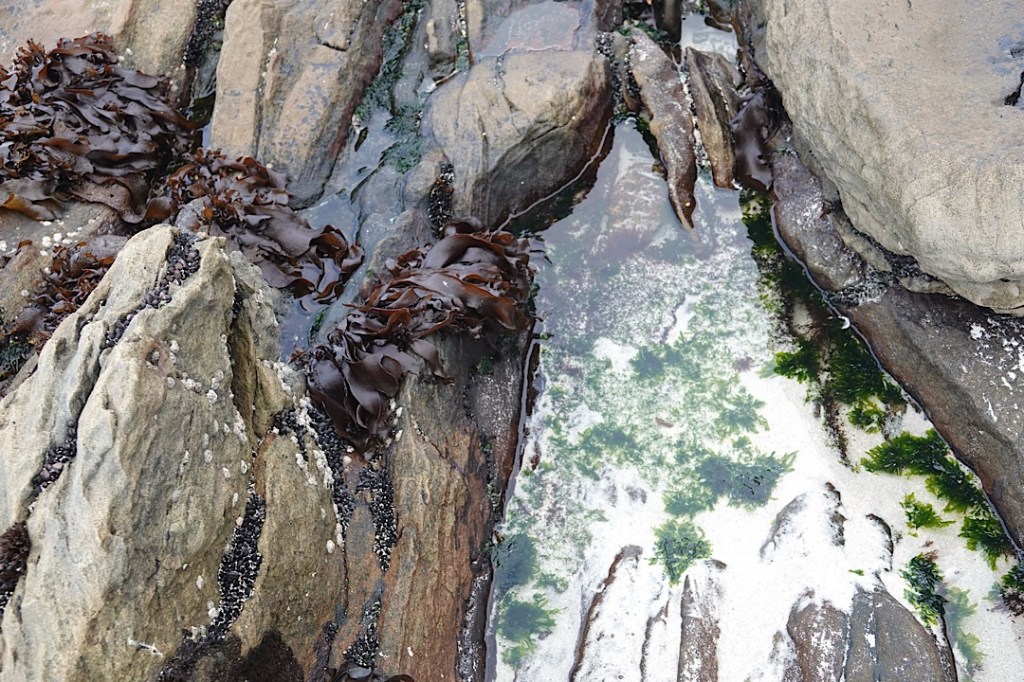
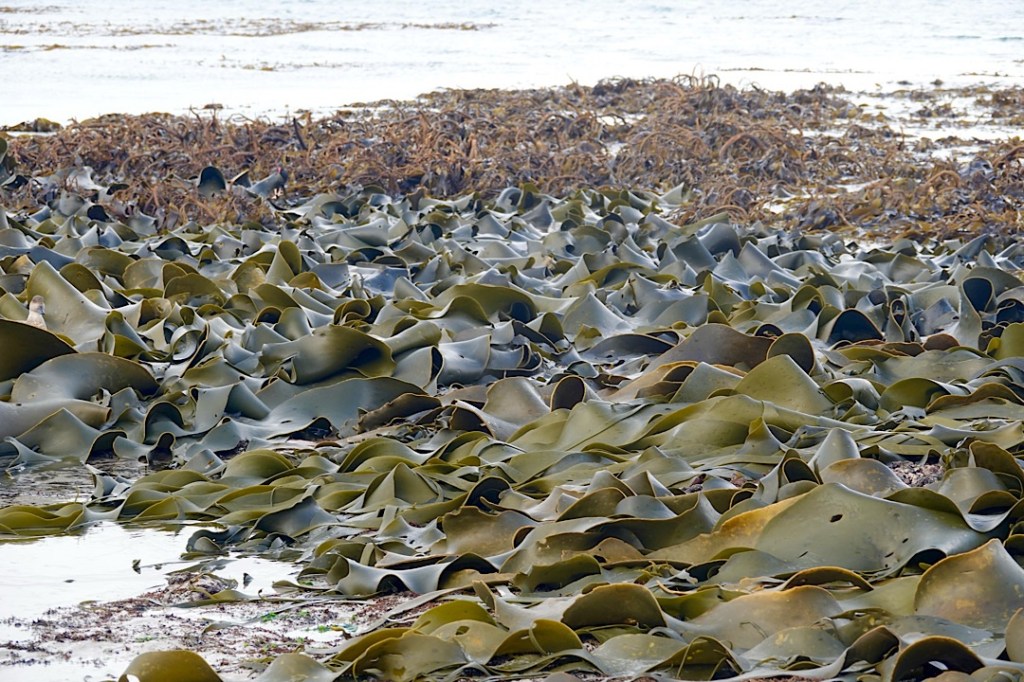
A 15-minute hike brought us to a white sand cove on the far side of the island. Exploring the tide pools and taking in the bird life occupied us for the next hour and a half.
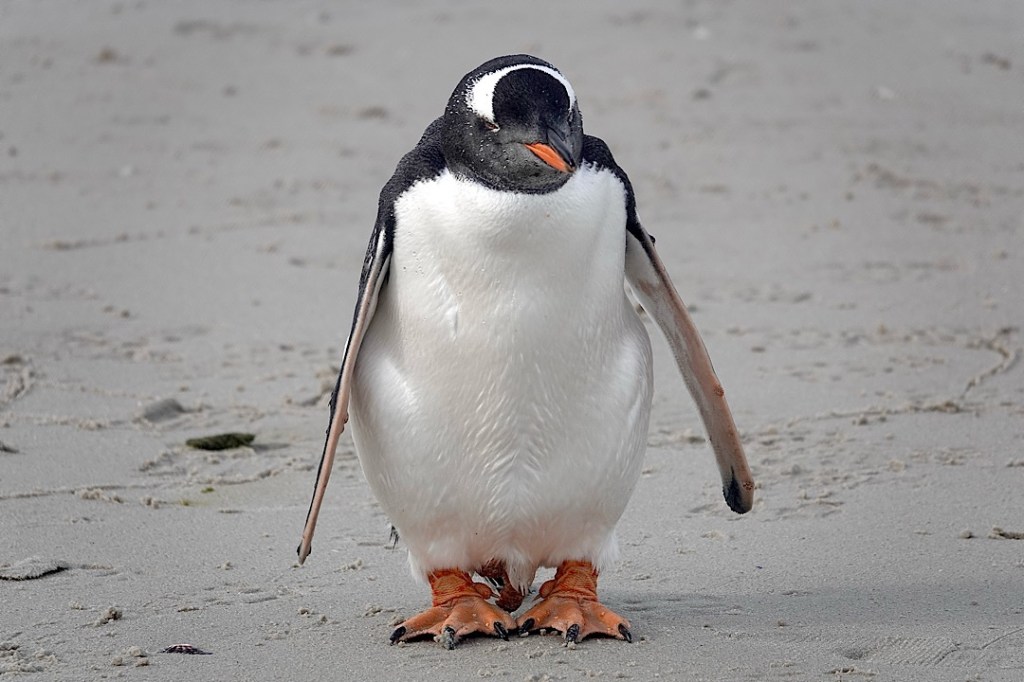
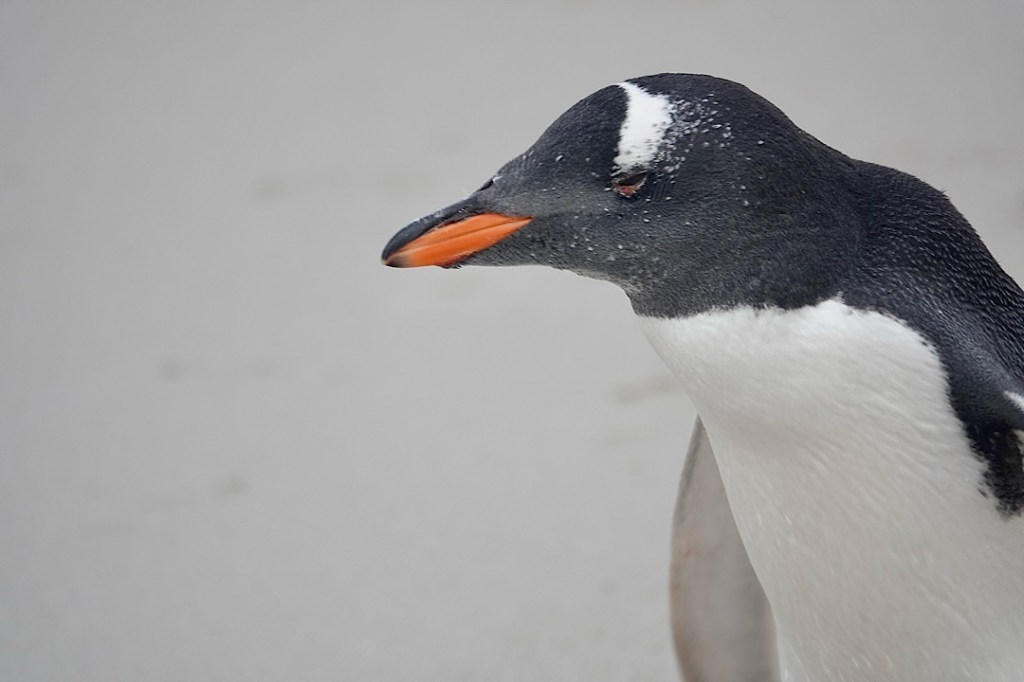
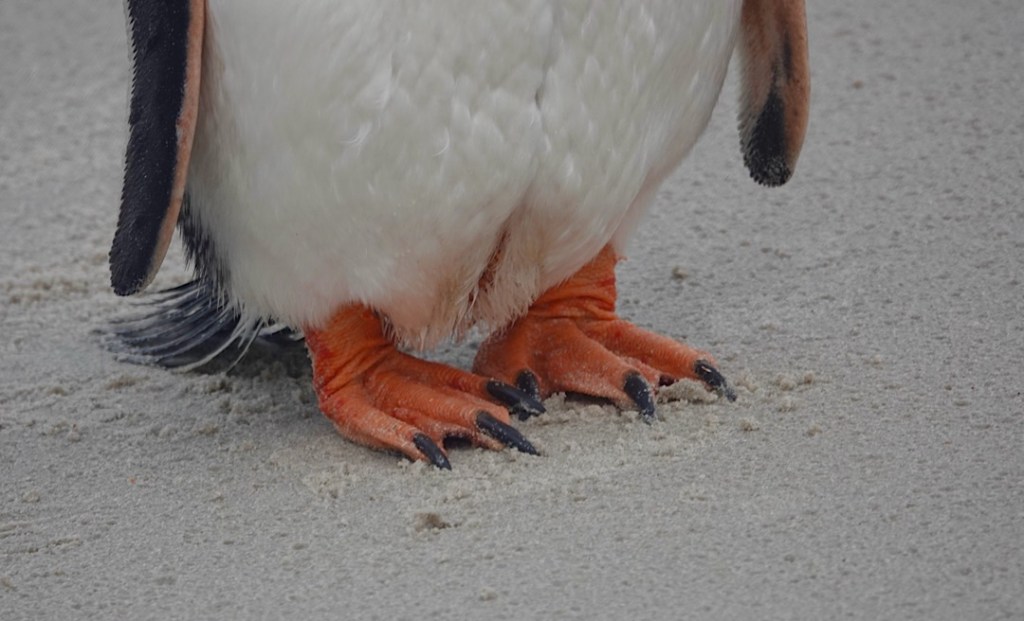
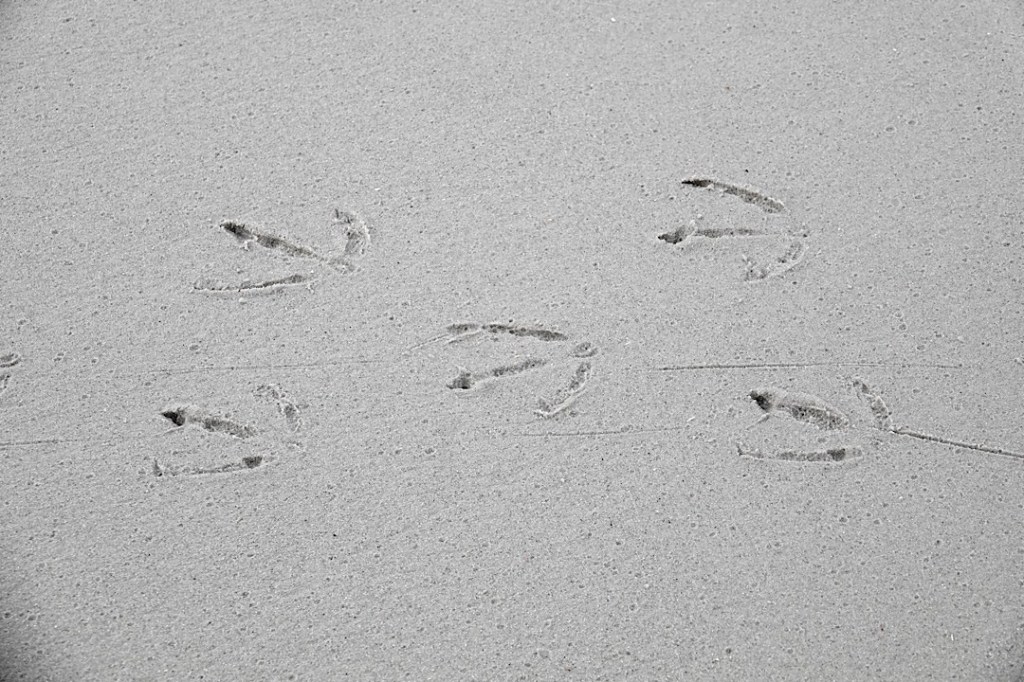
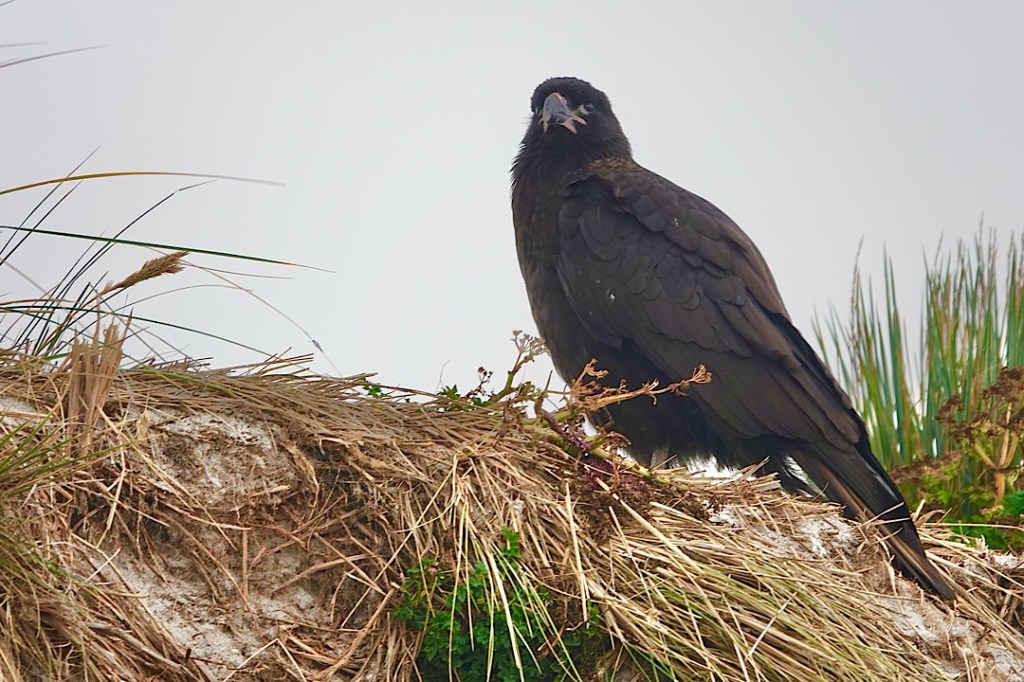
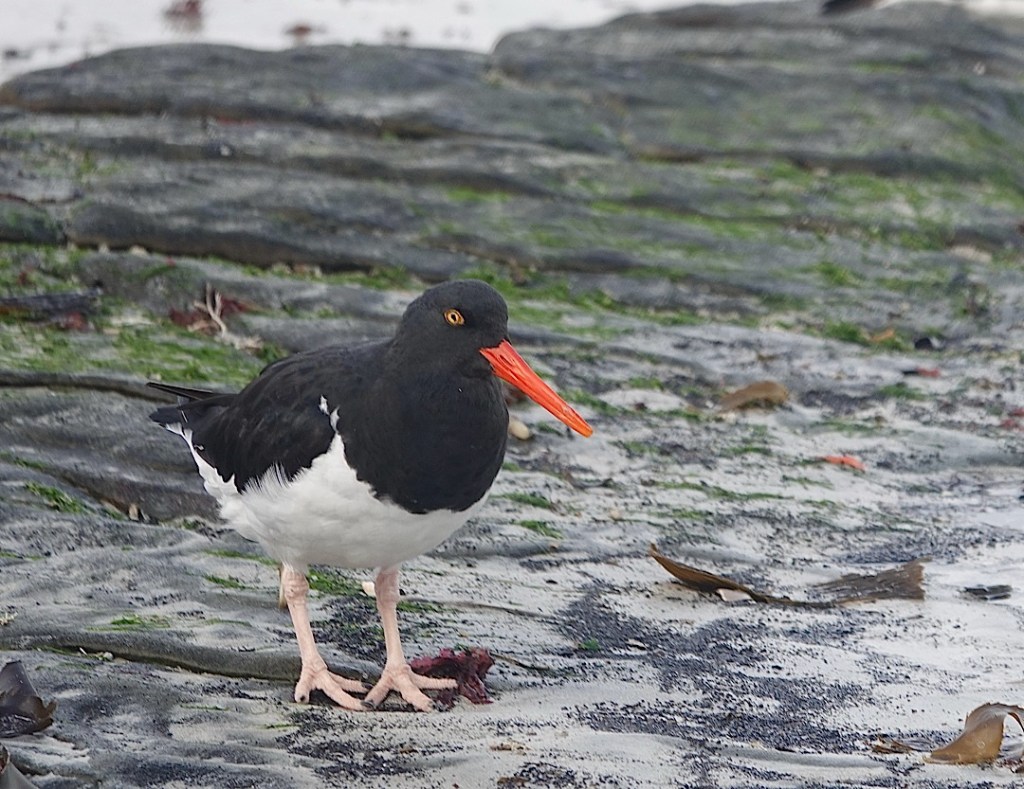
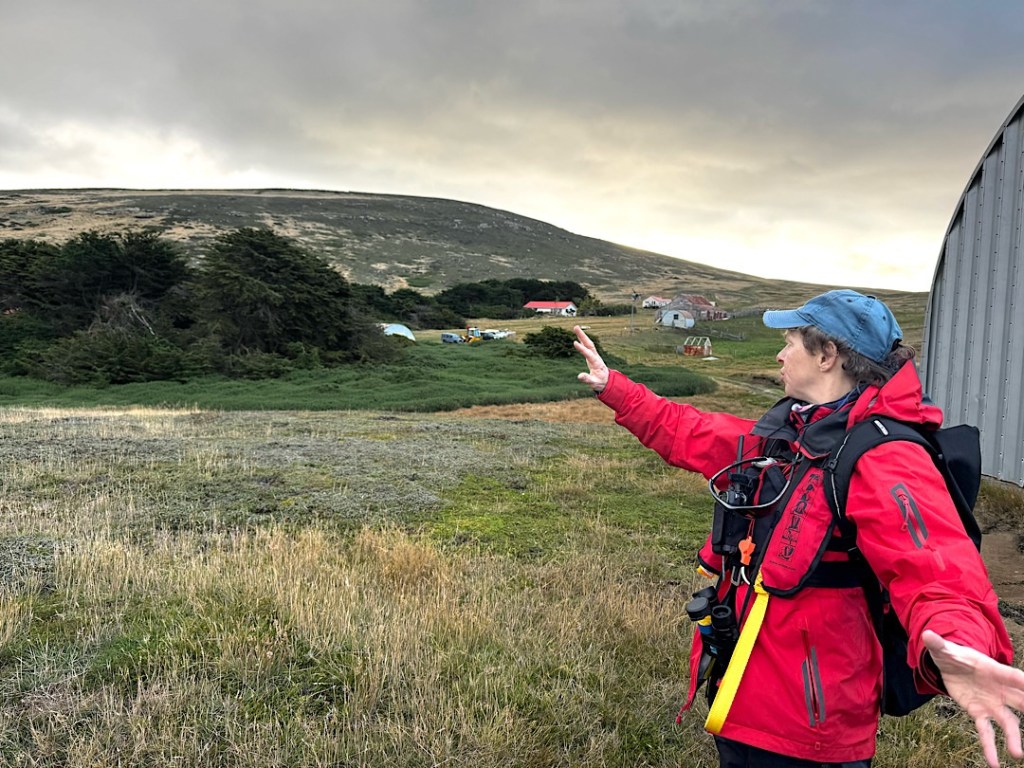
The birds stayed on the beach, but about 20 of us then hiked the two and a half miles to the island’s only settlement.
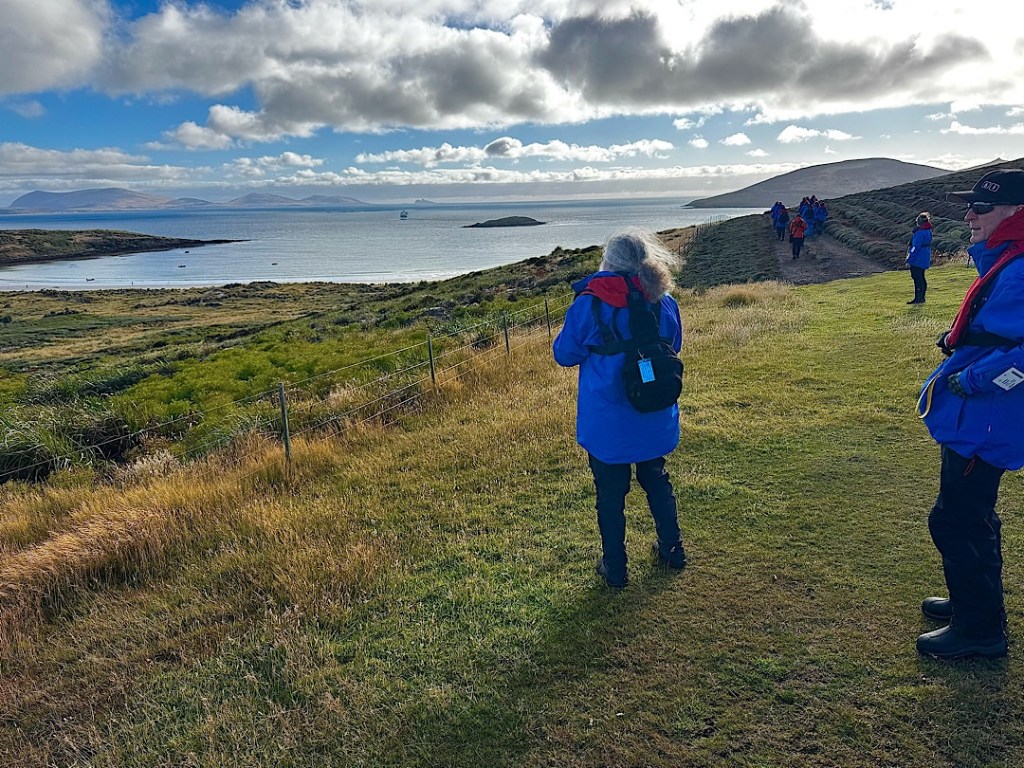
Our destination for the next day was West Point Island, where azure skies and a docile sea made our landing carefree.
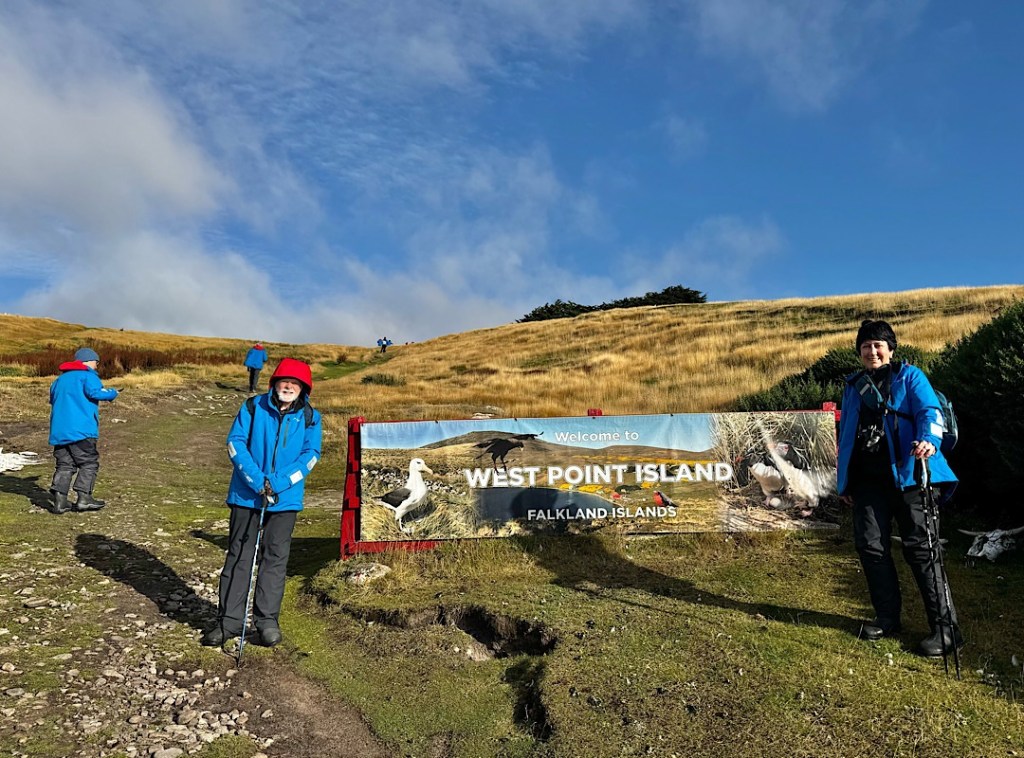
Again we started by hiking, this time on a path leading to a rookery that harbored two of the species we’d most lusted to encounter.
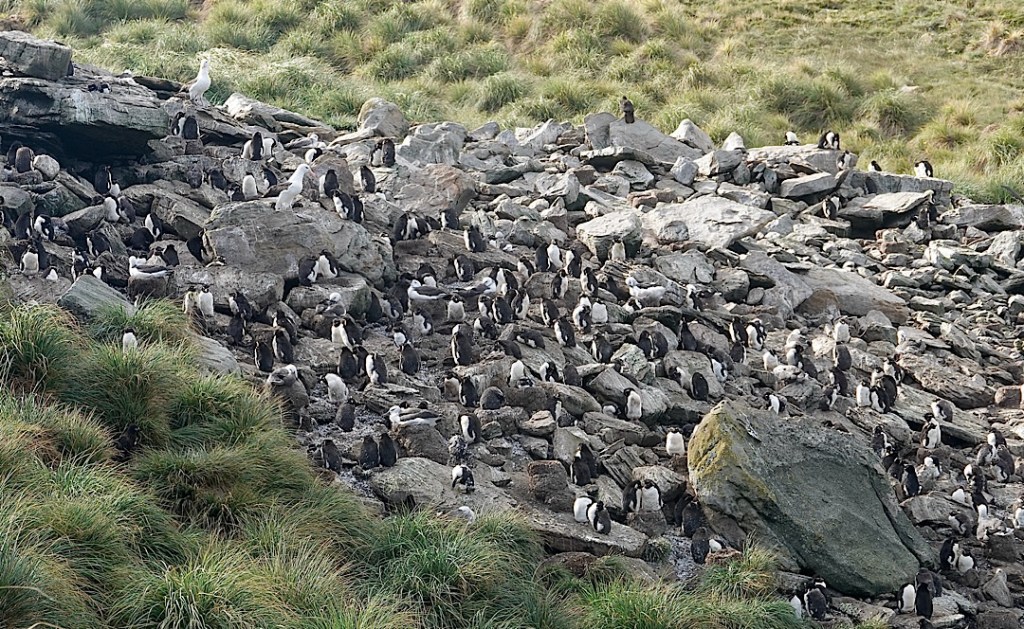
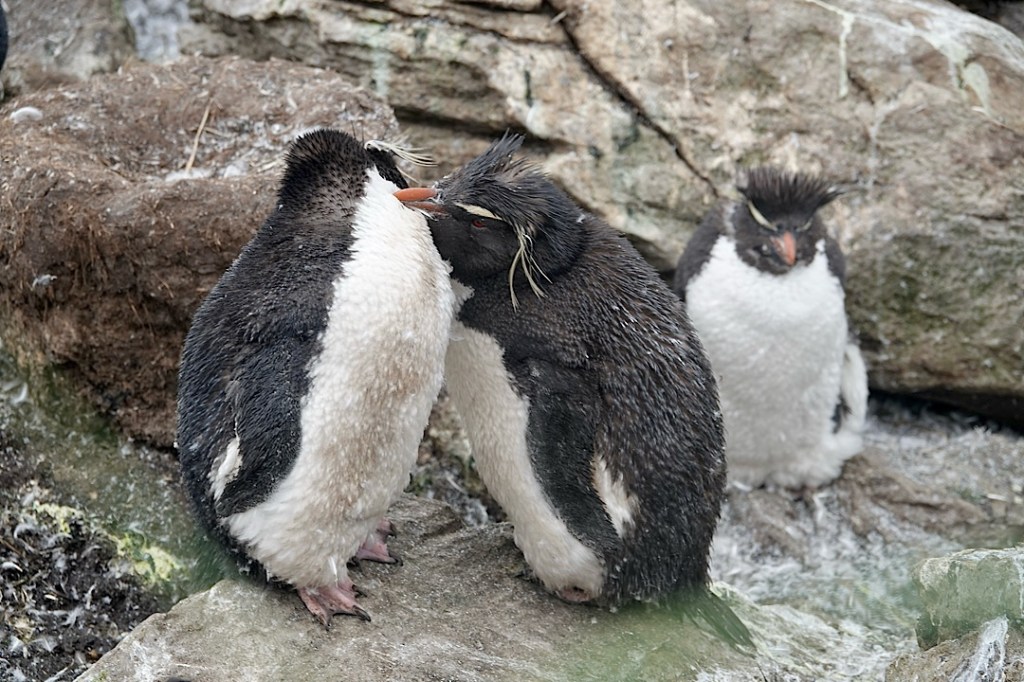
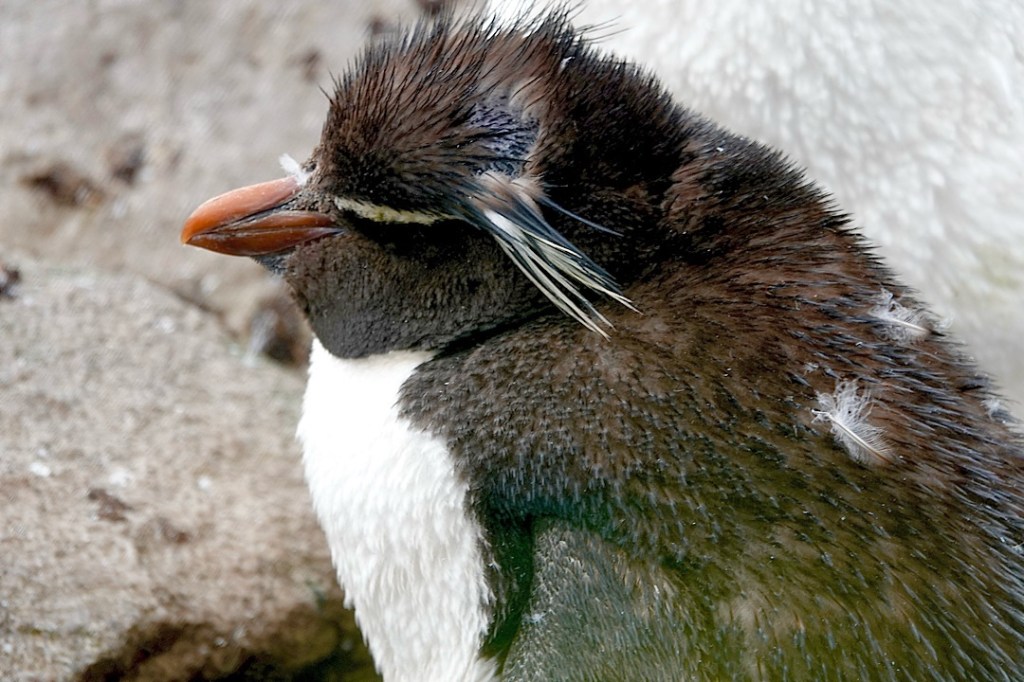
In contrast, the black-browed albatrosses look like they’re scowling.
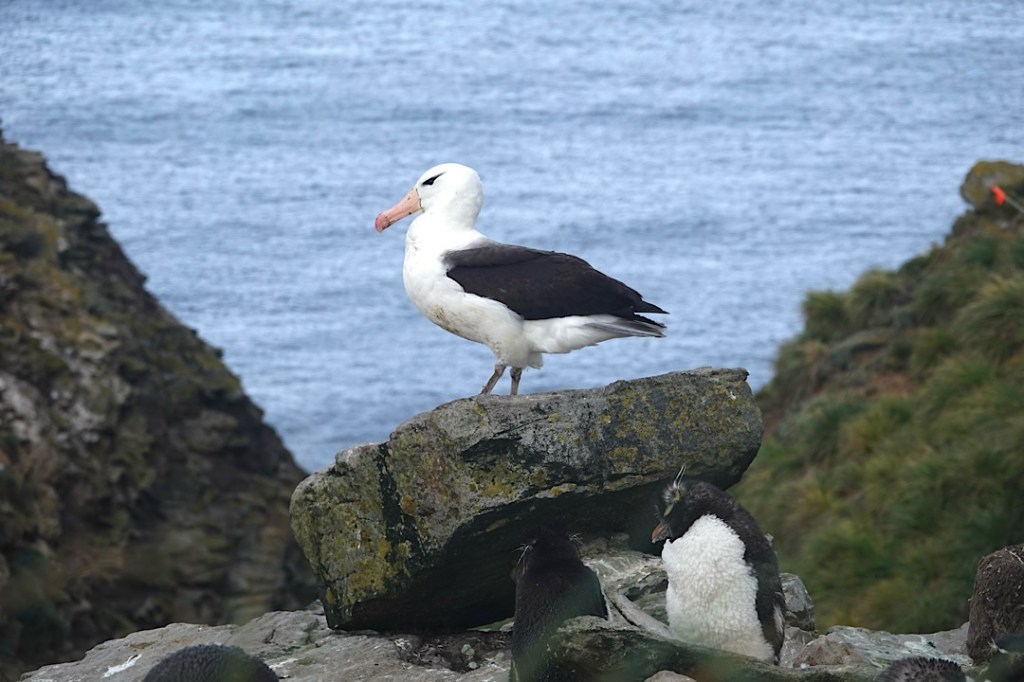
The albatrosses that filled the rookery that morning were all juveniles who’d hatched just a few months ago. Many were still molting, shedding the fluffy down that kept them warm as chicks.
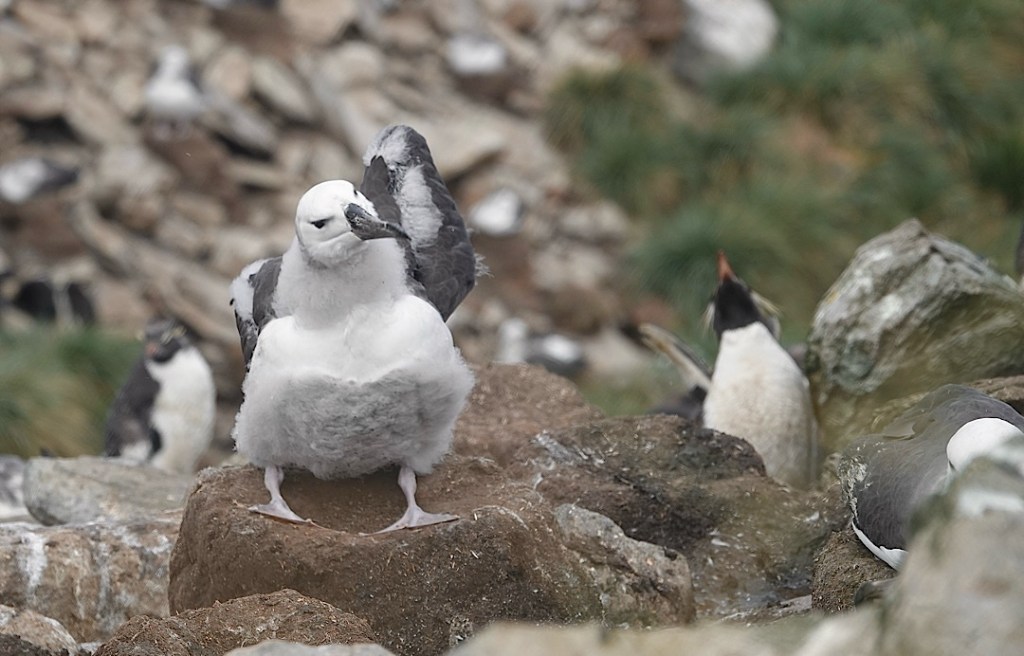
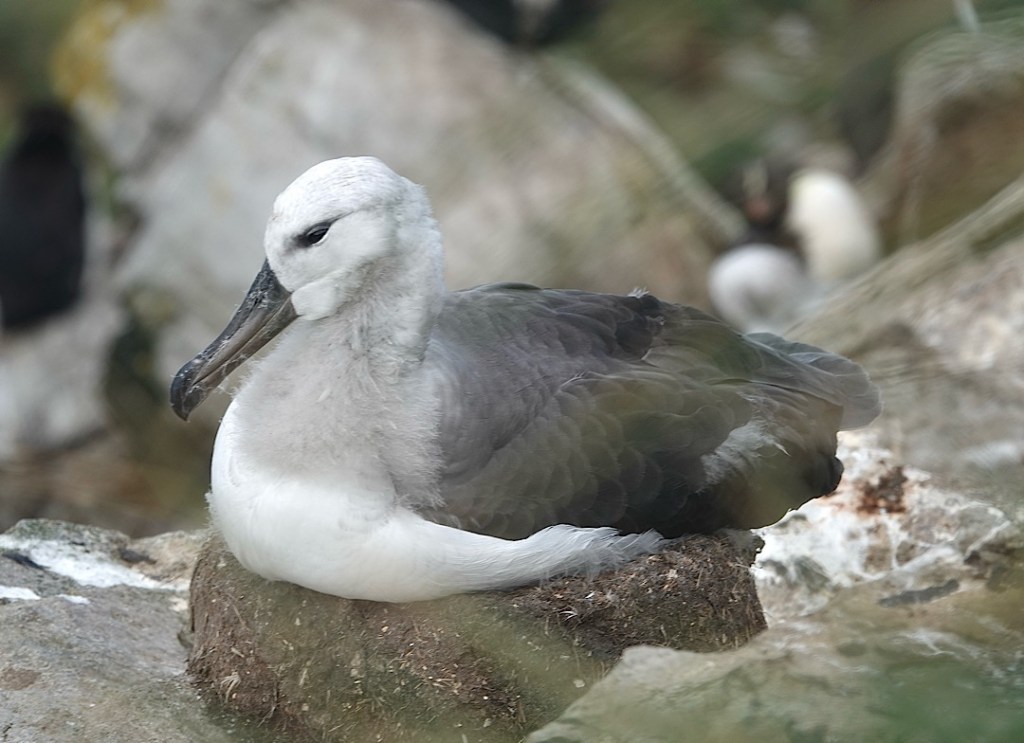
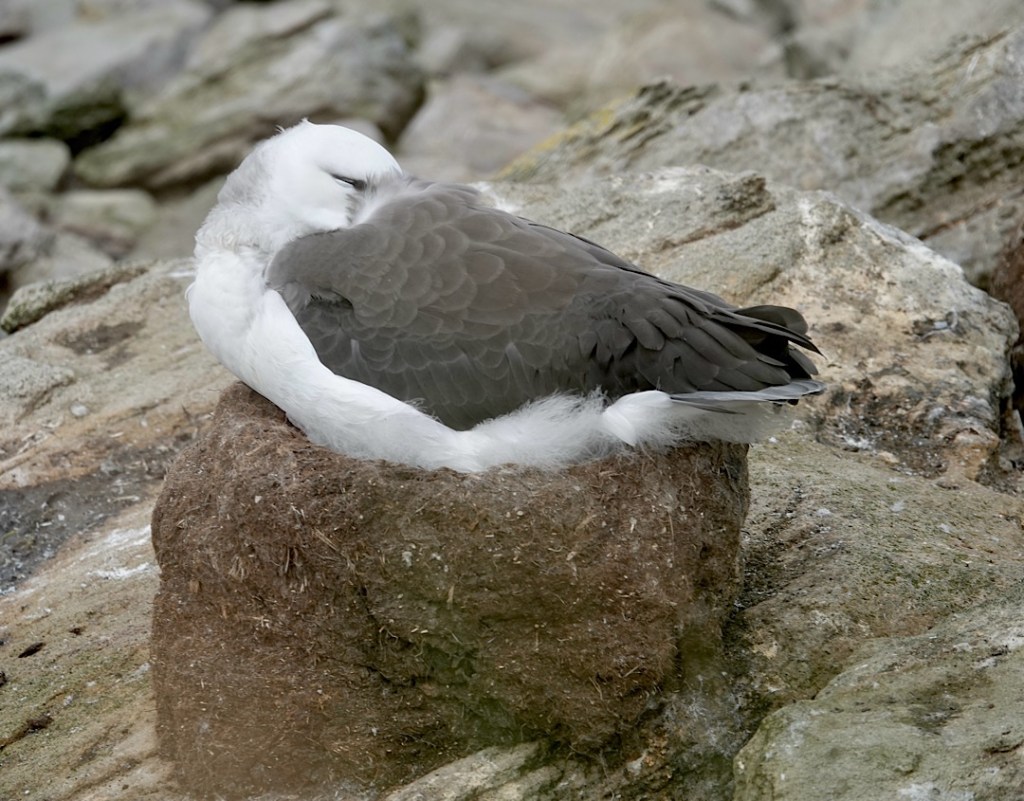
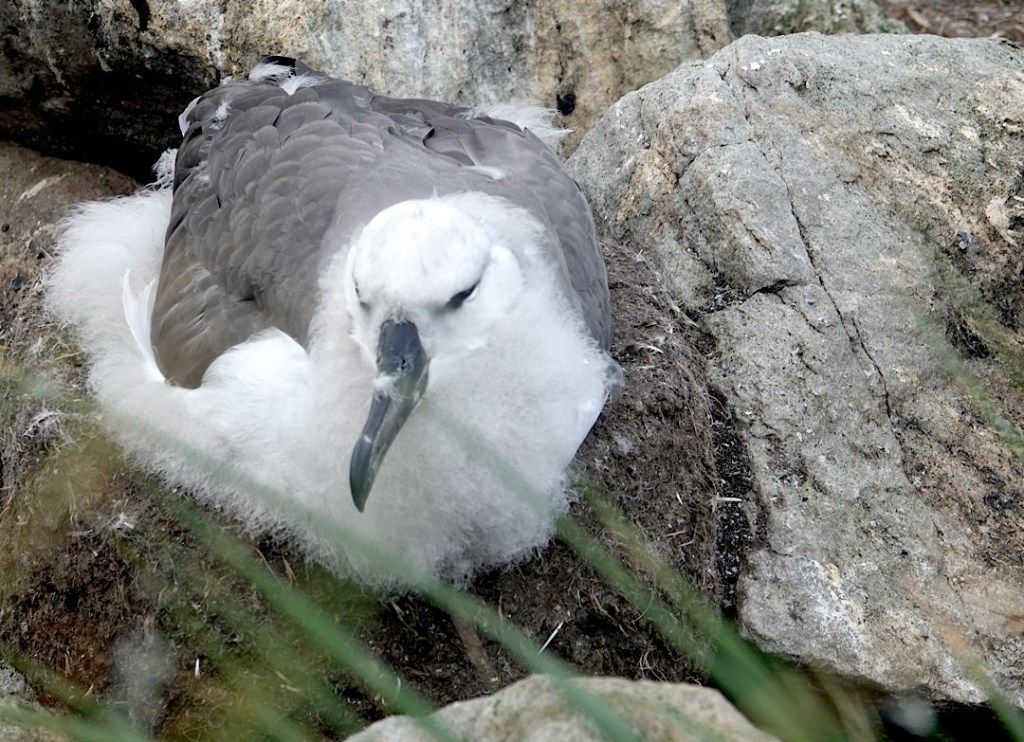
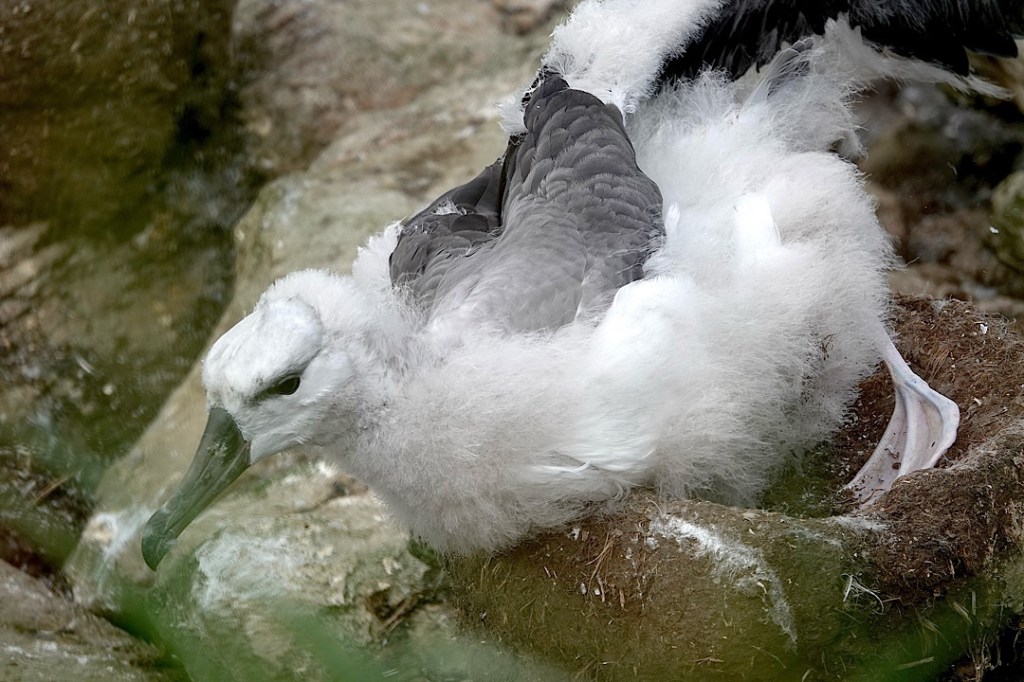
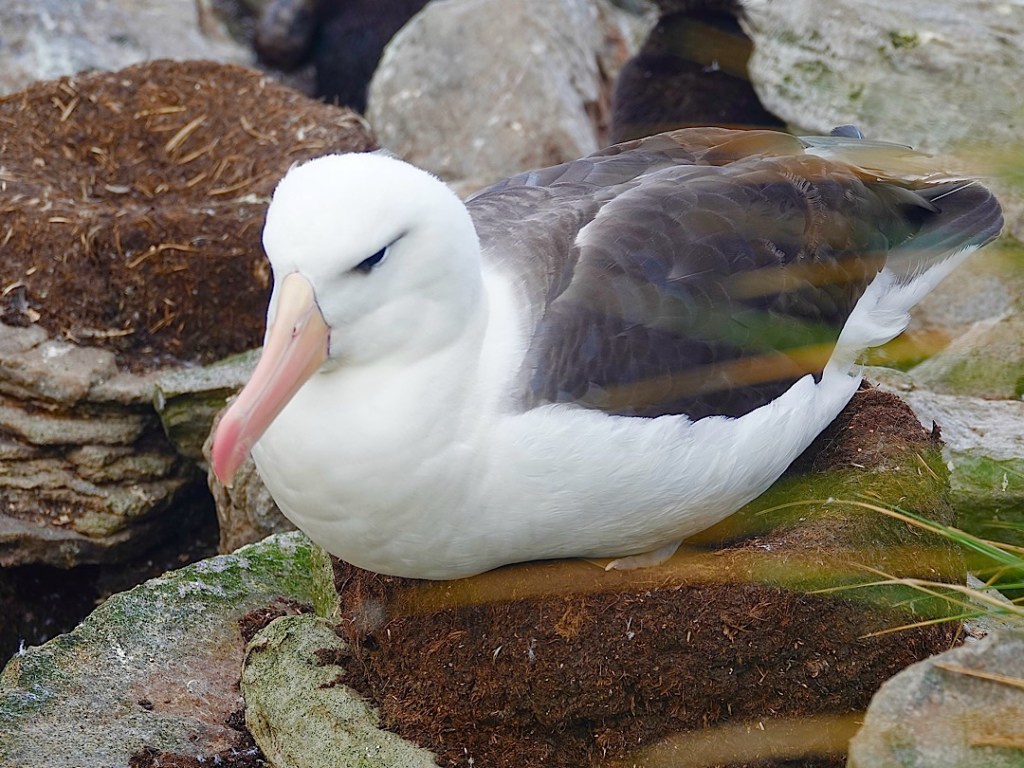
We learned that once the youngsters took off, they would not land for several years. They would ride the wind currents, swooping down to the sea to catch their fishy meals, rarely flapping their wings. When they finally reached sexual maturity, most would then return to this very cliffside to mate and have chicks, using the same nests in which they posed for us.
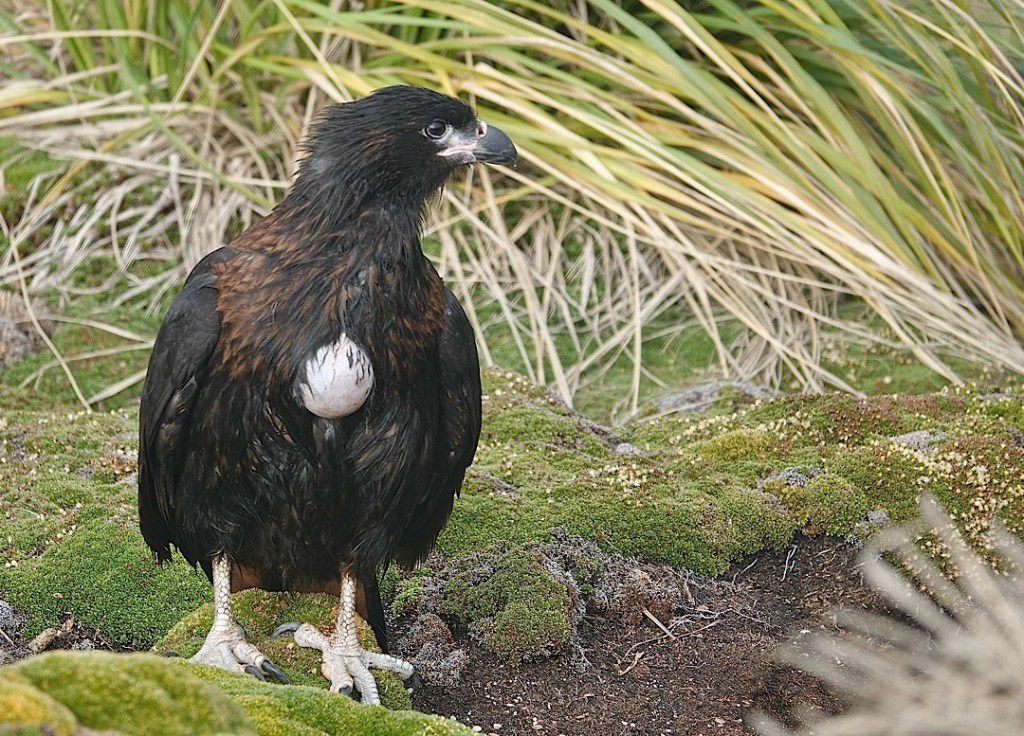
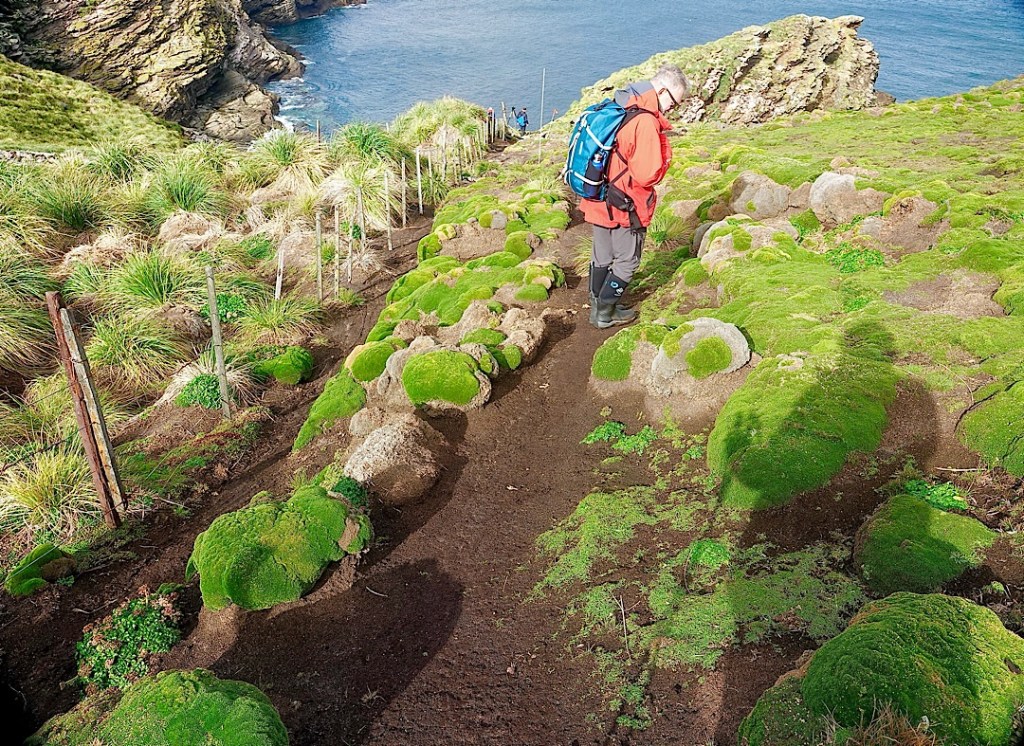
The plant life was magical too.
Back on the ship, spirits were high. And that evening Gaby gave us reason to expect more great sights the next day on Saunders Island, home to four different penguin species and other wildlife. When we got there Sunday morning, however, high surf again made any landing impossible. So we churned through another long sea day.
The news worsened that evening. Gaby showed us detailed charts of the massive low pressure system bearing down on us — the first of a series of extraordinary storms. The predicted wind and swells were worse, Gaby said, than any she’d seen in all her years of Antarctic excursions. Still she wasn’t quite ready to give up and run for home. She announced a plan to visit New Island, one of only two in the Falklands owned by the national conservancy. We could try to enjoy a few hours there Monday, and then make for Ushuaia as fast as possible.
I privately doubted we’d be able to disembark, but the next day couldn’t have been more lovely; we got off the boat early.
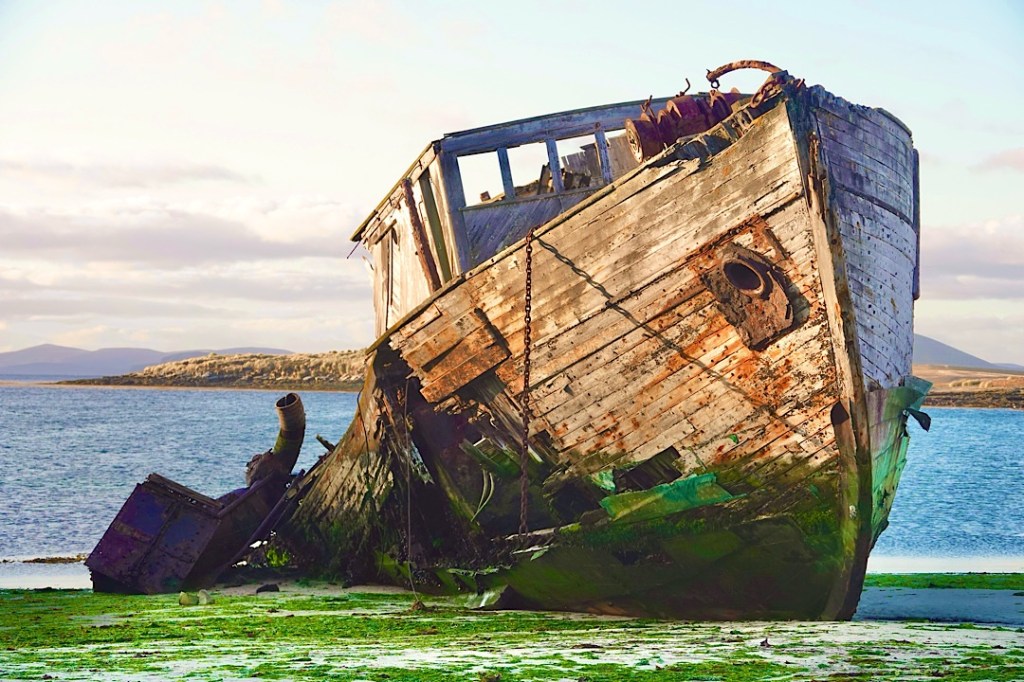
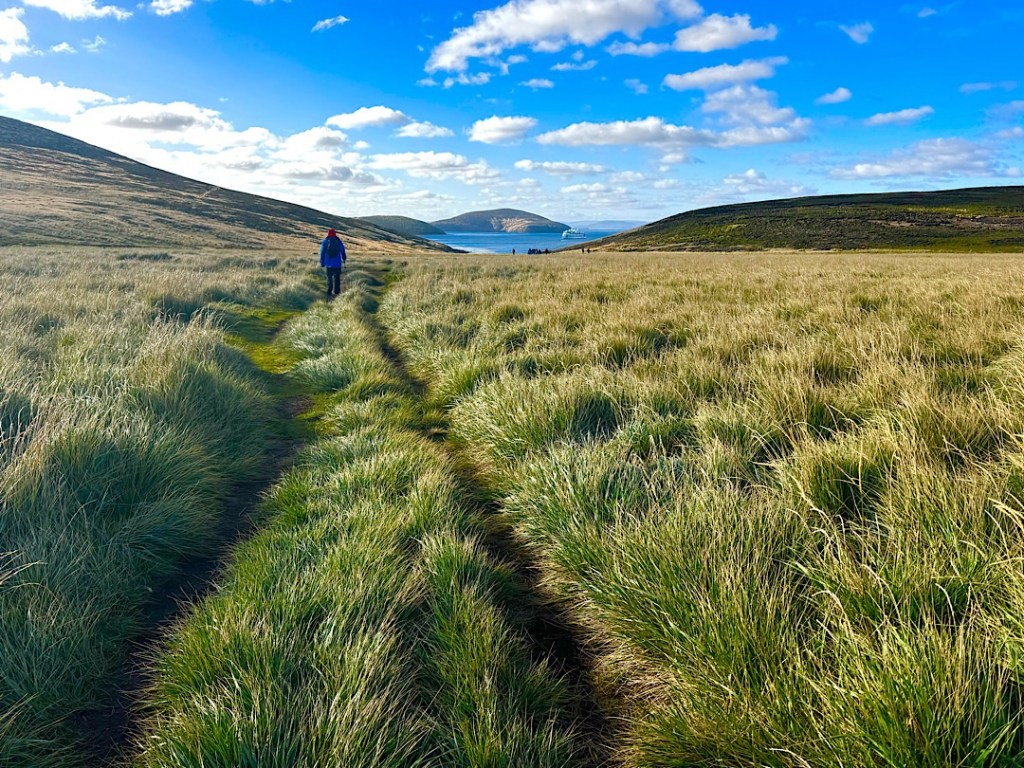
… then followed through lush tussac grass that climbed gently at first and then got challenging. Slippery mud and small boulders under foot made the going tricky.
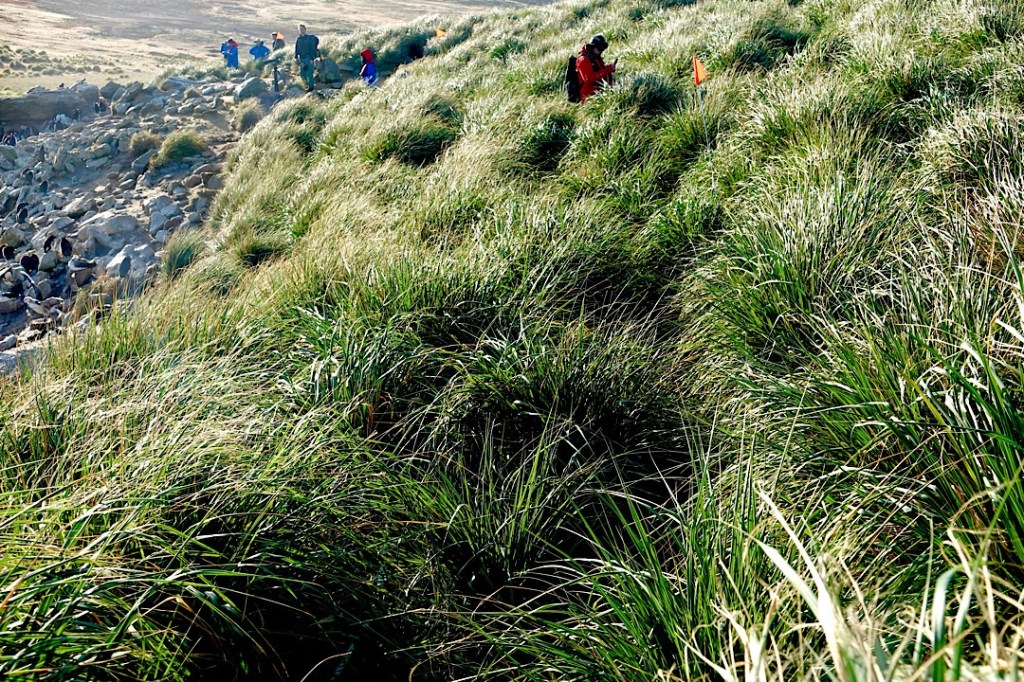
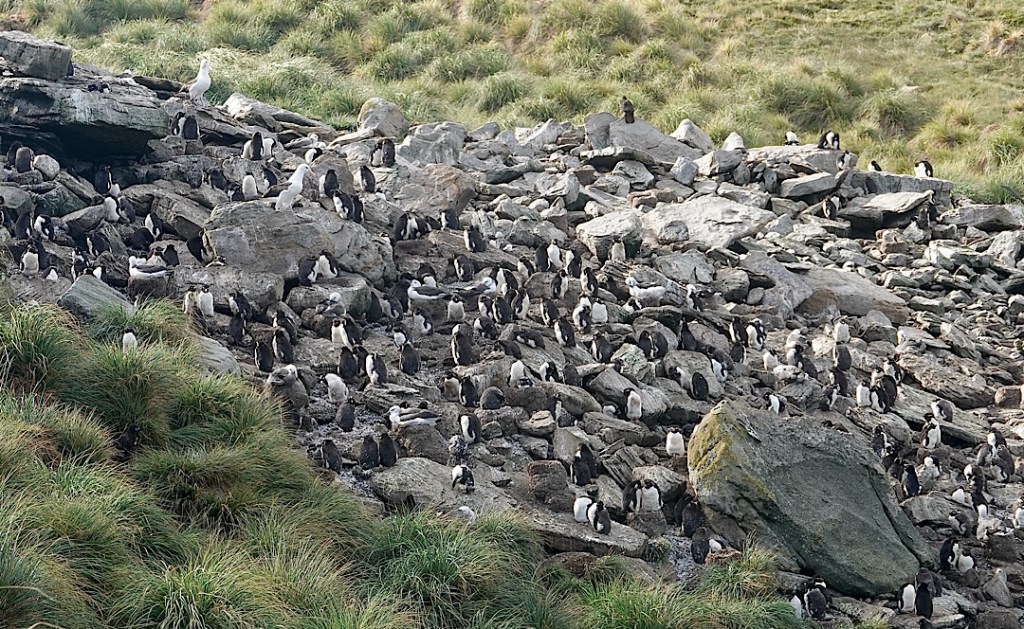
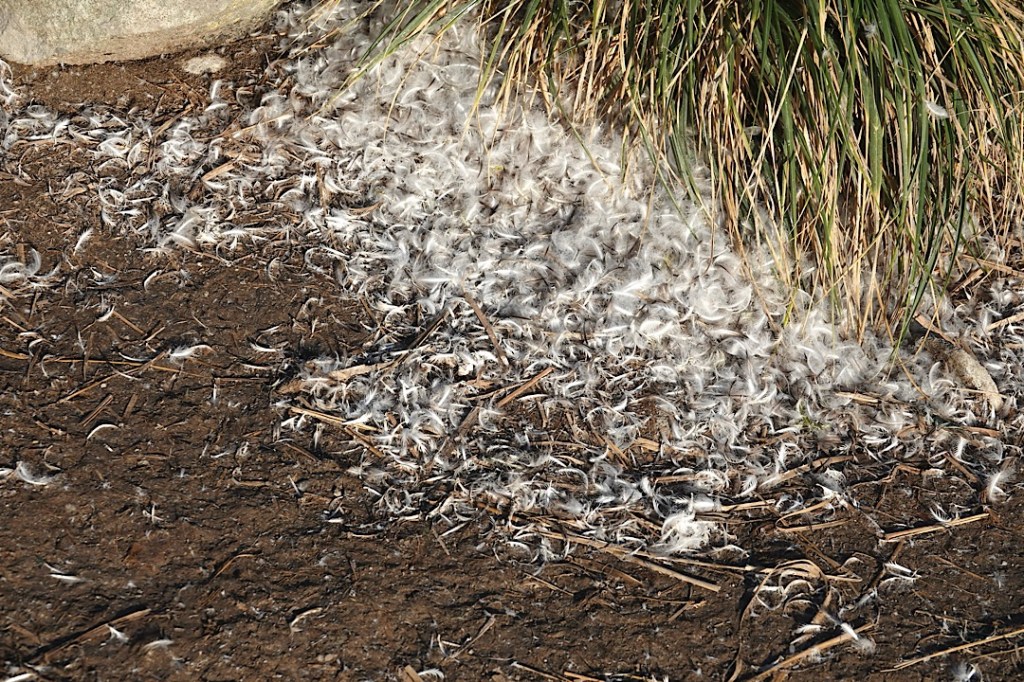
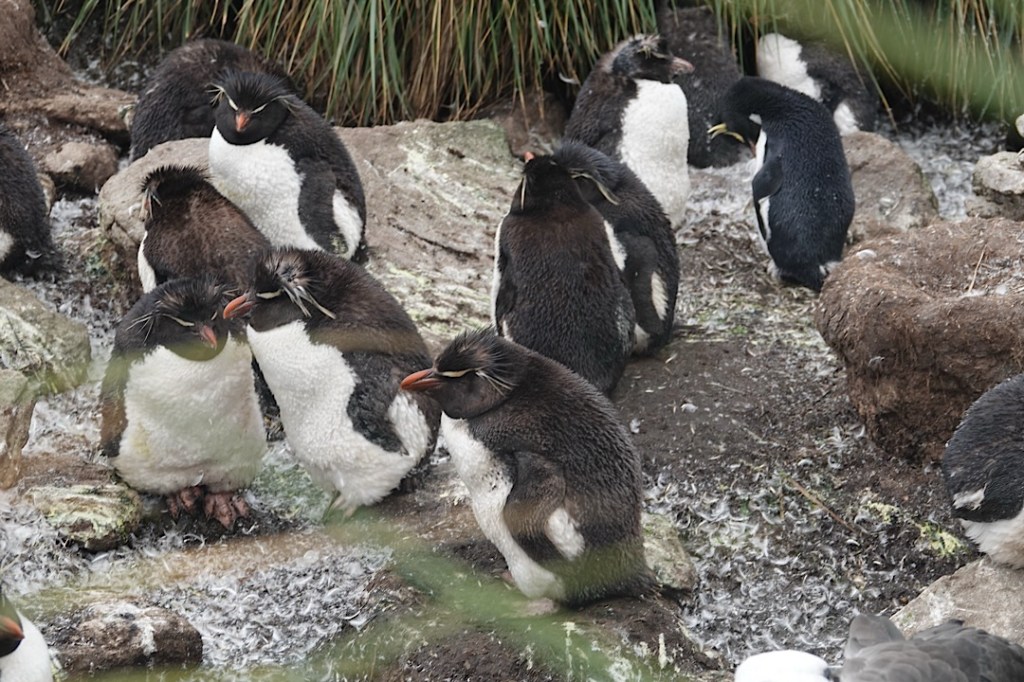
Piles of feathers, like the remains of some epic pillow fight, hinted at the main activity here: more molting.
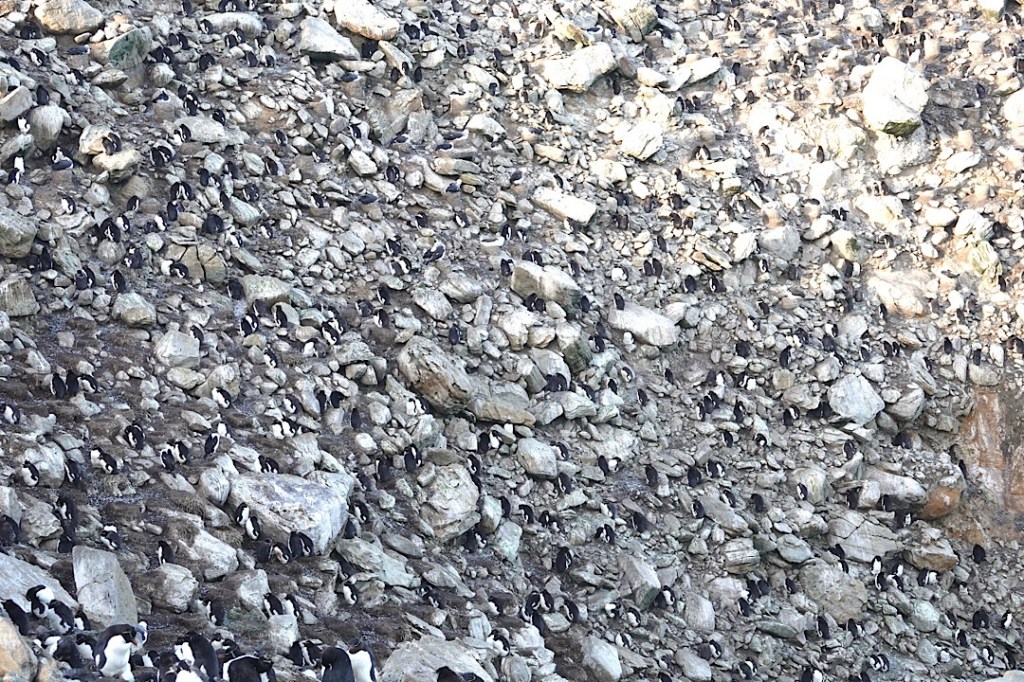


As stunning as the albatrosses are aloft, the rockhoppers won the charm competition on the ground.

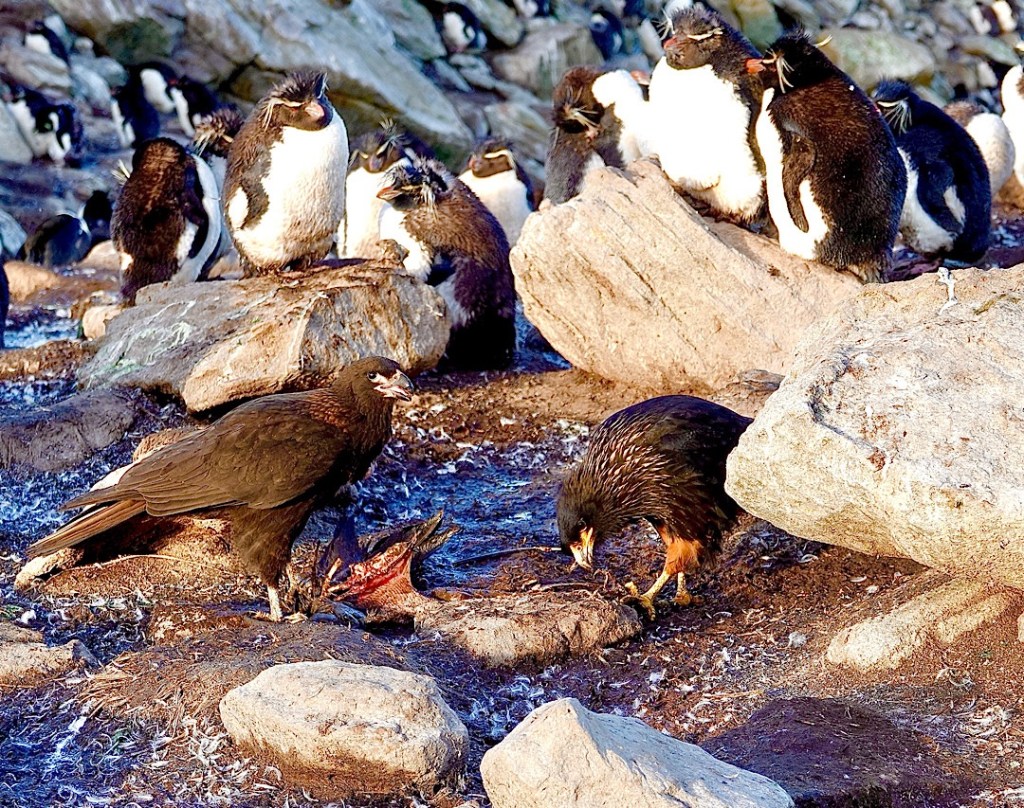
We only stayed on New Island for a few hours, then had to return to the ship and head off into some of the roughest seas of the trip. We might reach Ushuaia by Wednesday, Gaby said. Or it could take a day or two longer if the sea got really bad. Or the authorities could close the port altogether.
But all we could do was press on.
 At home and abroad